

The Monthly Ledger
Every first Sunday of the month, I sat at my kitchen table with my laptop open and a cup of coffee going cold beside me, and I moved money. Not small amounts — we're talking mortgage payments, tuition installments, a monthly operating cushion for Emily's early business experiments, utility buffers for my parents when the bills ran high. I had a spreadsheet that would have looked familiar to any of my corporate clients: color-coded rows, projected balances, variance columns. The same discipline I applied to managing seven-figure portfolios at work, I applied here, at this table, in my pajamas, before the rest of the city woke up. Ten years of first Sundays. Ten years of transfers that went out like clockwork, each one tagged with a purpose — mortgage, tuition, support, contingency. I never thought of it as sacrifice. That word implies reluctance, and I didn't feel reluctant. I felt useful. I felt like the load-bearing wall in a structure that would have otherwise shifted. The coffee cooled, the confirmations came through one by one, and the morning settled around me the way it always did — quietly, without ceremony, the weight of ten years of transfers folded into something that simply felt like routine.
 Image by RM AI
Risk Assessment
I used to tell junior analysts that the difference between a good investment and a great one was the quality of your assumptions. Garbage in, garbage out. The same principle applied to how I thought about the money going to my family each month. I wasn't just writing checks — I was funding outcomes. My parents keeping their home was a stability investment. Liam finishing his degree was a human capital investment. Emily's early ventures were higher-risk, sure, but every portfolio needs a growth position. I had run the numbers enough times to feel confident in the structure. The transfers were sustainable against my income, my emergency reserves were intact, and my own retirement contributions hadn't been touched. By any reasonable metric, the portfolio was performing. I reviewed the outgoing totals that Sunday morning the way I reviewed any position — methodically, without sentiment. The mortgage line, the tuition line, the business support line, the parental household buffer. Each one where I expected it. I was closing the spreadsheet when my banking app pushed a notification to my phone: this month's total family transfers had cleared my usual threshold by a margin I hadn't budgeted for.
 Image by RM AI
The First Call
The call came on a Tuesday evening in October, three years ago. I remember because I was still at my desk, finishing a client report, when my mother's number appeared on my phone. She never called on weeknights without a reason. Her voice, when I picked up, had that particular quality — thin and careful, like she was measuring each word before she let it out — that told me something was wrong before she said a single specific thing. She explained it in pieces. My father's hours had been cut again, more than they'd let on. The mortgage lender had sent a formal notice. They had thirty days. She kept apologizing, which was the part that was hardest to hear, because she had nothing to apologize for. I closed my client report without saving it and opened a new spreadsheet. I asked her to read me the exact figures from the notice. She did, her voice steadying a little once she had something concrete to do. I ran the numbers while she talked. By the time she finished, I already knew what I was going to say. I told her I would handle it. I told her not to call the lender back until she heard from me. I drove to my parents' house that weekend, and when I walked through the door, my father was sitting at the kitchen table. He looked up at me, and something in his expression — the particular exhaustion of a proud man who has run out of options — stayed with me long after I drove home that night.
 Image by RM AI
Paperwork and Relief
I brought the paperwork on a Saturday morning, printed and organized in a folder the way I would have prepared documents for a client meeting. My father met me at the door. He was dressed like he always dressed when something felt formal to him — collared shirt, pressed slacks — even though we were just sitting at his own kitchen table. I laid out the transfer authorization forms and walked him through each page. He listened without interrupting, which was his way. When I finished, he put his hand flat on the stack of papers and said, quietly, that I didn't have to do this. He said it the way people say things they need to say but don't actually mean as an objection — because the relief was already visible in the set of his shoulders, in the way he exhaled. My mother came in from the kitchen and saw the signed forms on the table, and she put her hand over her mouth. She thanked me four times in the space of a minute. I told her it was fine, that it was just math, that I had run the numbers and they worked. But sitting there, watching the tension drain out of both of them, I understood that it wasn't just math. There was something clarifying about being the person who could step in when the structure started to fail. I drove home that afternoon with the signed copies on the passenger seat, and the feeling that settled in my chest wasn't pride exactly — it was something quieter and more solid than that.
 Image by RM AI
Present Day Routine
Back in the present, that same first Sunday of the month, the mortgage payment was just a line item. I processed it the way I processed everything else — methodically, without the weight it used to carry. Three years of transfers had turned what once felt like a rescue into infrastructure. I moved through the rest of the spreadsheet: Liam's final semester costs, the household buffer for my parents, the operating support for Emily's boutique. Each line confirmed, each transfer queued. I refilled my coffee and sat back down. The morning was quiet, the kind of quiet that only exists before the city fully commits to being awake. I was reviewing the variance from the banking notification — still trying to locate which line item had drifted — when my email loaded in the background. Most of it was the usual Sunday accumulation: newsletters, a client digest, a calendar reminder. But one message sat above the rest, flagged and bolded, the sender name reading Emily and the subject line marked urgent.
 Image by RM AI
Liam's Tuition Crisis
About a year after I took over my parents' mortgage, my younger brother Liam called me from his campus apartment on a Wednesday afternoon. I could hear it in his voice before he got to the point — that particular register of controlled panic that people use when they're trying not to sound as scared as they are. His financial aid package had been revised mid-year. An administrative error, they said, but the result was a gap he couldn't cover. He was looking at withdrawal paperwork. He'd already talked to the financial aid office twice. I asked him to stop talking and give me the numbers. He read them off, and I pulled up my savings account in another tab while he spoke. The gap was significant but not impossible. I told him to close the withdrawal form. I told him I would call the bursar's office on Monday and arrange direct payment for the remainder of his program. He started to say something about paying me back, about timelines, about interest — I cut him off. I told him his one job was to focus on his coursework and let me handle the rest, and I meant it without reservation.
 Image by RM AI
The Student and the Bills
After that call, I restructured my monthly outflows again — tuition, housing, a textbook allowance — and Liam did exactly what he said he would. He sent me updates without being asked: assignment grades, professor feedback, a note when he'd finished a paper he was proud of. I appreciated the updates less as accountability and more as evidence that the investment thesis was sound. He wasn't coasting. He was working. I could see it in the specificity of what he shared — not just grades but the reasoning behind them, the courses he was finding difficult, the ones that were clicking. It was the kind of progress that justifies a long position. Two years in, the arrangement had settled into its own rhythm, and I had stopped thinking of it as an intervention and started thinking of it as simply how things were. I was at my desk on a Thursday evening, reviewing a client file, when my phone buzzed with an email from Liam's university — an automated notification from the registrar's office confirming that he had been named to the dean's list for the fall semester.
 Image by RM AI
Emily's Business Plan
Emily had asked for the meeting two weeks in advance, which I noted because she wasn't usually that organized about logistics. She showed up to the coffee shop on time — also notable — with a printed document in a clear plastic sleeve and a practiced calm that I recognized as someone who had rehearsed their opening. The business plan was thorough, I'll give her that. Market analysis, demographic targeting, a location shortlist with foot traffic data, a three-year financial projection with two scenario models. She walked me through it section by section, her hands moving over the pages with the kind of focused energy that made it hard to dismiss outright. I asked questions the way I would in any pitch review: margin assumptions, lease terms, inventory turnover, break-even timeline. She had answers, not always perfect ones, but she had them. There were optimistic assumptions baked into the revenue projections — the kind of thing I would flag in a client deck — but the underlying structure wasn't unsound. I sat with the document open in front of me long after she finished talking, reading back through the numbers, testing each projection against the assumptions that supported it, giving every line the same careful attention I would have given anything that crossed my desk professionally.
 Image by RM AI
Merger-Level Scrutiny
I took the business plan home in its plastic sleeve and spread it across my kitchen table that night, the way I would with any document that deserved a second pass without someone watching my face. I went through it line by line — not to find reasons to say no, but because that's the only way I know how to read numbers. The cash flow projections were optimistic in the first year, the way most first-year projections are, but the assumptions underneath them were traceable. She'd sourced the foot traffic data from a legitimate retail analytics firm. The lease comps were accurate for the neighborhood. The inventory turnover rate she'd modeled was conservative enough to survive a slow quarter. I built my own version of her three-year model in a separate spreadsheet, stress-testing the revenue line at sixty percent of her projections, then fifty. Even at fifty, the business didn't collapse — it just took longer to break even. I flagged two assumptions I'd want to revisit with her: the marketing spend in year two felt light, and the staffing model assumed she'd be doing more herself than was realistic. But those were refinements, not structural failures. I sat back in my chair sometime after midnight, the spreadsheet still open, and felt something I hadn't expected — the quiet satisfaction of a plan that had actually held up.
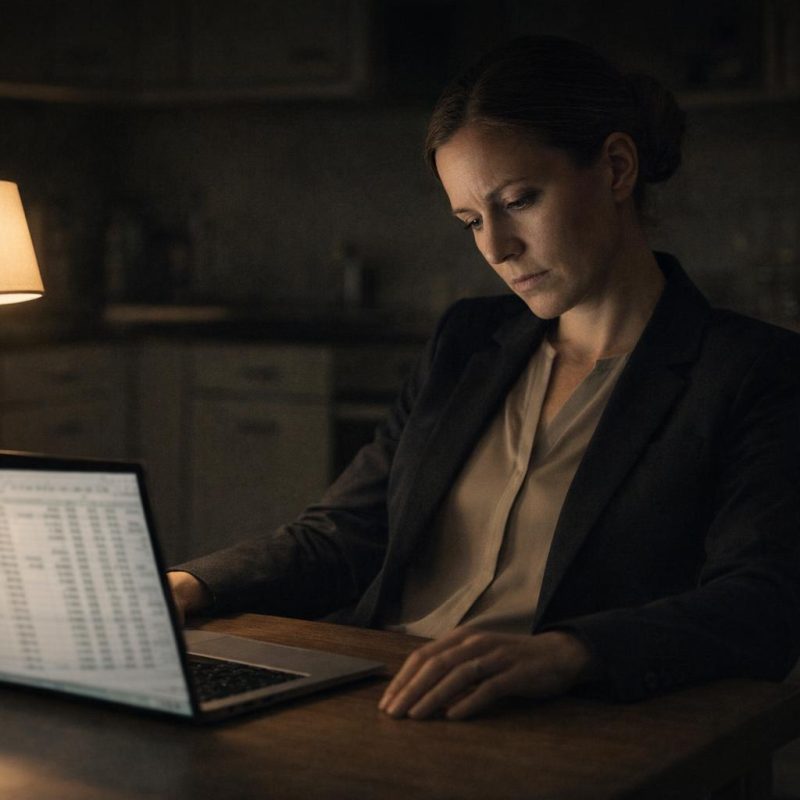 Image by RM AI
Seed Funding
I transferred the seed capital in two tranches — the first to cover the lease deposit and first three months of rent, the second timed to hit before her initial inventory order needed to clear. It wasn't a loan in the traditional sense; we structured it as an investment with a repayment schedule that kicked in after month eighteen, giving the business time to find its footing before it had to service any debt. Emily signed the lease on a Tuesday. She sent me a photo of herself holding the keys outside the empty retail space, grinning in a way I hadn't seen from her in years — unguarded, almost disbelieving, like she hadn't fully expected it to happen. Over the next several weeks I watched the space transform through a steady stream of updates: paint swatches, fixture deliveries, a rack system going up along the back wall, the first inventory boxes stacked in the corner. She had an eye for it, I'll say that. The layout she chose was clean and considered, nothing overcrowded. On the morning of the soft opening I drove over early, before the first customers arrived, and stood in the doorway while she walked me through the floor. Then she turned back to the entrance, slid the key into the lock, and pushed the door open for the very first time.
 Image by RM AI
The Engagement
Two years before any of this, Greg had taken me back to the restaurant where we'd had our first date — a small Italian place with low lighting and a wine list that was longer than the food menu. I'd assumed it was just a Thursday. He'd made the reservation without telling me, which wasn't unusual for him; he liked managing the details of an evening, liked the moment when a plan he'd been holding quietly finally landed. We were halfway through the second bottle when he set down his glass and reached into his jacket pocket. I remember thinking, in the half-second before I understood what was happening, that he'd forgotten something — his phone, maybe, or a card. The ring was simple, which surprised me. I'd expected something more elaborate from him, something with more presence. But it was a single stone on a plain band, and when he said he'd chosen it because it looked like something I'd actually wear every day, I felt the logic of it settle into place. I said yes before he finished the sentence. I called my mother from the parking lot, still in my coat, my voice embarrassingly unsteady. That night I lay in bed with my hand resting on top of the covers, feeling the unfamiliar weight of the ring against my finger and the particular stillness that comes when the future suddenly has a shape.
 Image by RM AI
Wedding Preparations
The wedding planning happened in the margins of everything else — conference calls on lunch breaks, venue walkthroughs on Saturday mornings, seating charts drafted on Sunday nights after I'd cleared my work inbox. My mother came with me to the catering tasting and took notes in a small spiral notebook she'd bought specifically for the occasion, which I found quietly moving. Emily had said yes to being maid of honor without hesitation, and she threw herself into the dress selection with the kind of focused enthusiasm she usually reserved for her own projects. Greg came to more of the planning meetings than I'd expected him to. He had opinions about the flowers — which surprised me — and a strong preference for the string quartet over the DJ, which did not. There were moments in those months when I'd look across a table at him mid-conversation about centerpieces or menu cards and feel something that was hard to name precisely: a kind of settled certainty, the way a well-structured portfolio feels when every position is doing what it's supposed to do. The venue was booked, the dress was fitted, the invitations had gone out. I was standing in my kitchen one evening, reviewing the final timeline the coordinator had sent over, when I noticed the date at the top of the page — three weeks out.
 Image by RM AI
The Phone
It was a Sunday morning, ordinary in every way. Greg was in the shower and I was still in bed, half-awake, reaching for my phone to check the time. His was closer — on the nightstand on his side — and I picked it up without thinking, the way you do when something is within reach and yours isn't. The screen lit up with the notification. I wasn't trying to read it. I read it anyway. The name at the top wasn't one I recognized, but the message below it was not ambiguous. I sat up. I read it again, slower, the way you re-read a number in a spreadsheet when the figure doesn't match what you were expecting. It still said the same thing. I scrolled up — just enough to see that this was not a new conversation, that there were timestamps going back weeks, that the tone throughout was not the tone of something that had just started. I set the phone back on the nightstand exactly as I'd found it, screen down. The shower was still running. I sat on the edge of the bed with my hands in my lap, and the room around me was completely quiet, and I stayed there in that quiet for a long time — long after the water had stopped, long after I heard him moving in the other room — just sitting with words I could not unread.
 Image by RM AI
Locks Changed by Nightfall
I waited until he left for his Sunday run. The moment the door closed I was already moving — not frantically, but with the kind of focus that comes when emotion gets compressed into task. I called a locksmith first. They quoted me two hours and I said I'd pay for one. Then I pulled his suitcase from the hall closet and packed it the way I would have packed for a business trip: efficiently, without sentiment. Clothes, toiletries, the charger on his nightstand, the book on his side of the bed. I carried the bag to the landing outside the front door and went back inside. The locksmith arrived in ninety minutes. I watched him work and didn't make conversation. When he handed me the new keys I tested each lock twice, then stood in the hallway of my own apartment and took a slow breath. Greg came back forty minutes later. I heard him try the key, heard the pause, heard him try it again. He knocked. I didn't answer the door, but I spoke through it — clearly, without raising my voice — and told him his bag was on the landing and that we were done. He said my name twice. He said other things after that, but I had already stopped listening. I sat down on the floor of my hallway, back against the wall, and let the silence of the apartment settle around me like something I had chosen.
 Image by RM AI
Family Rally
My mother arrived within two hours of my call, which told me she'd left the moment she hung up the phone. She came through the door with a container of soup she'd somehow had time to make, or maybe had already made — I didn't ask. Liam showed up an hour after that, still in the clothes he'd been wearing when I texted him, and the first thing he said was that he wanted Greg's address. I told him I didn't need that and he said he knew, but he still wanted it. Emily came that evening and stayed until past midnight, sitting on the couch beside me with her legs tucked under her, not filling the silence with anything unnecessary. She was the one who said it plainly, at some point in the late hours when the soup was gone and the apartment had gotten dark around us — that Greg had never been good enough, that she'd had a feeling about him she'd never known how to say, that someone who could do this was never who he'd presented himself to be. I was too hollowed out to weigh any of it carefully. But I remember the particular sharpness of the moment when she leaned forward and said, with a certainty that surprised me, that he was a fraud who had never deserved a single thing I gave him.
 Image by RM AI
Soup and Solidarity
The days after that had a texture I hadn't experienced before — not grief exactly, more like the sensation of operating on a system that had lost its primary input. I went through the motions: I showered, I answered emails, I ate when someone put food in front of me. My mother came every day for the first week. She would arrive in the late morning, heat something on the stove, and sit at my kitchen table while I worked, not requiring conversation, just present. There was a bowl of soup in front of me most afternoons whether I'd asked for it or not. Liam called every evening and always opened with some variation of the offer to drive to Greg's apartment, which I declined every time, and which I understood was his way of saying he was still angry on my behalf and intended to stay that way. I didn't have the bandwidth to manage anyone else's emotions, so I let them both do what they needed to do. What I noticed, somewhere in the middle of that first week, was that I was not getting through the days on my own reserves. I was getting through them because someone kept showing up — because the soup kept appearing, because the phone kept ringing — and without that, I wasn't sure I would have moved at all.
 Image by RM AI
Emily's Vigil
Emily showed up on a Tuesday with two bags of groceries and what I can only describe as a mission. She cleared her schedule — told me she'd rescheduled three client meetings and handed off a boutique delivery to someone else — and she just stayed. For three days she was on my couch, in my kitchen, at the foot of my bed when I couldn't sleep past five in the morning. She let me talk about Greg in circles without once checking her phone or steering me toward a conclusion. When I ran out of words she filled the silence with stories — embarrassing ones, mostly about herself, the kind designed to make me feel like the more functional person in the room. She called Greg every name I hadn't let myself say out loud, and she said them with a conviction that felt like she was personally offended on my behalf, like his behavior was an affront to something she held sacred. I believed her. I had no reason not to. And then on the third afternoon she did an impression of him ordering wine at a restaurant — the little performative pause before he said the vintage — and something cracked open in my chest, and I laughed for the first time since he left.
 Image by RM AI
Survivable Loss
Somewhere in the weeks that followed, the weight shifted. Not gone — I want to be clear about that — but distributed differently, like a load that had been redistributed across more points of contact so no single beam was bearing all of it. My mother kept coming. Liam kept calling. Emily texted every morning, sometimes just a single emoji that meant nothing and everything at the same time. I started to notice that I was getting through full days without the specific hollow feeling that had been my constant companion since Greg left. I started to imagine, cautiously, what the next year might look like — not with excitement, just with the tentative recognition that there would be a next year, and that it might contain things worth showing up for. The loss hadn't shrunk. I had just grown slightly larger around it, and I understood that the growing had not happened alone. Whatever I had managed to rebuild in those weeks, I had not built it from my own reserves. I had built it from the daily, unremarkable, persistent fact of people who kept showing up — soup on the stove, a phone ringing at seven, a text that asked nothing and offered everything. That quiet accumulation of presence was the only reason any of it felt survivable.
 Image by RM AI
Work as Escape
I went back to the office with the kind of focus that only comes from having nothing else to protect. When your personal life has been reduced to rubble, there is a strange freedom in the professional — every problem has a defined scope, every variable can be isolated, every outcome can be measured against a baseline. I started arriving before seven and leaving after eight. I volunteered for the Hargrove restructuring analysis that two senior analysts had quietly declined, and I finished it two days ahead of schedule. I took on a secondary engagement in the same week without being asked. My manager noticed. His manager noticed. I could feel the shift in how I was being looked at in meetings — not with pity, which I had been bracing for, but with something closer to recalibration, like they were updating a prior estimate. The work didn't fix anything. I want to be honest about that. It didn't touch the part of me that still reached for my phone at nine in the evening out of old habit, or the part that still did the math on a future that no longer existed. But it gave me eight, sometimes ten hours a day where the only questions that needed answering were ones I actually knew how to answer. There was a specific relief in that — in problems that yielded to the right formula.
 Image by RM AI
Rising Through Ranks
The performance reviews came back in November and mine was the strongest I'd received in four years at the firm. My manager used the phrase 'exceptional analytical rigor' twice in the written summary, which is not the kind of language that appears in a document unless someone above him has already read it. I was assigned to the Meridian Capital account in the same week — a client the firm had been cultivating for two years, the kind of account that doesn't go to analysts who are considered provisional. I noticed the change in the texture of my days: the emails I was copied on, the rooms I was invited into, the way certain conversations paused slightly when I walked in and then resumed with me included rather than around me. I had spent a decade building toward something I couldn't quite name, and for the first time it felt like the structure was actually taking shape beneath my feet. I was careful not to read too much into any single signal — that was a professional habit I'd developed early, the discipline of not pricing in an outcome before the data confirmed it. So when the calendar notification appeared on a Thursday afternoon — a meeting request from Richard Holt, senior partner, marked confidential — I sat with it for a full minute before I let myself react.
 Image by RM AI
The Singapore Opportunity
Richard Holt's office had the particular stillness of a room where significant decisions had been made and then quietly filed away. He offered me coffee, which I declined, and then he set a single printed page on the desk between us and let me read it before he said anything. It was a project brief for a fourteen-week engagement with a regional infrastructure consortium based in Singapore — the kind of assignment the firm typically reserved for partners or analysts being actively considered for that track. He explained the scope with the measured efficiency of someone who had delivered good news before and understood that the news itself was sufficient. I read the brief twice. The client was significant. The deliverables were complex in exactly the ways I found interesting. The team I would be leading was small and senior. I had spent ten years doing work that was designed, in aggregate, to make me the kind of person who got handed a brief like this one, and sitting across from Richard Holt in that quiet office, I understood that the aggregate had finally resolved into something concrete. I told him yes before he finished the sentence that contained the question. He smiled in the way that suggested he had not expected a different answer. Walking back to my desk, the brief still in my hand, I felt the full weight of what had just been placed there.
 Image by RM AI
Holiday Timing
I mapped the timeline that evening at my kitchen table with a calendar and a highlighter, the way I would approach any project with a fixed end date and multiple dependencies. The engagement began the first week of November and ran through the second week of January. Fourteen weeks, clean and unambiguous on paper. I marked the start date. I marked the end date. And then I kept going, filling in the weeks between, and somewhere around the third week of November the highlighter stopped moving. Thanksgiving fell squarely inside the window. So did Christmas. So did New Year's Eve, and the quiet family dinner my mother hosted every year on the twenty-seventh, the one where she made the same lamb dish she'd been making since I was nine and everyone stayed too late and complained about it the next morning. I had not missed a single one of those dinners in my adult life. I sat with the calendar spread open in front of me for a long time after that, the highlighter capped in my hand. The math was not complicated. The assignment was fourteen weeks. The holidays were inside those weeks. Both things were simply true at the same time, and I let them be true without trying to resolve them yet. What settled over me in that kitchen, quietly and without drama, was the recognition that this year, for the first time, those tables would be set without me.
 Image by RM AI
Family Glue
I had been the one who sent the group text every October asking about Thanksgiving. I had been the one who confirmed the headcount, coordinated the timing, figured out who was driving and who needed a ride. For years I had hosted Christmas Eve at my apartment — the good dishes out, the playlist running, the extra folding chairs borrowed from my neighbor down the hall. It wasn't that anyone had formally assigned me this role. It had just accumulated, the way certain responsibilities accumulate around the person who shows up consistently and doesn't wait to be asked. I thought about what the holidays would look like without that coordination — whether the group text would go out at all, whether someone else would think to ask about the headcount, whether the timing would simply drift and the gathering would happen later, smaller, quieter. I wasn't sure if I was worried about the family or about my own sense of being necessary to it, and I didn't examine that distinction too carefully. Then my phone lit up on the table beside me — a text from my mother, asking whether I was thinking of hosting Thanksgiving this year or whether she should start planning something at the house.
 Image by RM AI
Professional Determination
I sat with my mother's text for longer than it deserved, which told me something about where my head was. The rational case was not complicated: this assignment was the kind of opportunity that does not repeat, the kind that either advances a career or marks the point where advancement stops. I had spent ten years building the credentials that made someone like Richard Holt hand me a brief like that one. Missing one holiday season was not a sacrifice — it was a rounding error against a decade of compounding effort. My family would understand. They had always understood when work required something of me, because work had always been the engine that made everything else possible. I drafted a reply to my mother that I didn't send yet, because I wanted to have the formal conversation with Richard first. I pulled up his email, read the acceptance language one more time, and typed my confirmation. The reply was four sentences: professional, clear, unambiguous. I read it once, then sent it before I could find a reason not to.
 Image by RM AI
Departure Preparation
The confirmation email from Richard sat in my sent folder like a signed contract with myself, and I treated it accordingly. I pulled up a blank document and started building the Singapore preparation checklist the same way I approached any complex project: sequentially, with dependencies mapped and deadlines attached. Work visa application, international banking access, housing research, medical clearance, laptop encryption for overseas compliance. Each item got a due date and an owner, and the owner was always me. The professional side of the list came together quickly — I had done international travel before, just never for fourteen weeks at a stretch. It was the personal side that required more thought. My gym membership needed to be paused. My mail needed to be forwarded. My plants needed a home with a neighbor who actually remembered to water things. And then I got to the line item I should have thought of immediately but somehow hadn't: the monthly transfers. The mortgage payment. Liam's tuition installment. The boutique operating support for Emily. The household top-up for my parents. Fourteen weeks meant four transfer cycles, and I couldn't be sitting in a Singapore conference room at midnight manually processing payments. I needed to automate all of it before I left.
 Image by RM AI
Monthly Ledger Review
I opened the family financial spreadsheet the way I opened it every month — without ceremony, without dread, the same way a pilot runs a pre-flight checklist. It was a habit built over years, and habits that old stop feeling like effort. The columns were familiar: mortgage, utilities top-up, Liam's tuition installment, Emily's boutique operating support, parents' household account. Each row had a date, an amount, a confirmation number, and a status field. Every status field in the current month read the same word: complete. I scrolled back through the previous six months the way I sometimes did before automating anything, just to confirm the pattern was stable before I handed it to a scheduled system. The numbers were consistent. The mortgage payments had gone out on the third of every month without exception. Liam's tuition installments tracked cleanly against his academic calendar. The boutique support had varied slightly month to month, which was normal — Emily had always managed her requests around inventory cycles. My parents' household account showed the same modest top-up I had been sending since my father's hours were cut. Everything was accounted for, every line documented, every transfer confirmed. I closed the laptop and sat back, and for a moment the whole arrangement felt exactly like what it was supposed to be: a system that worked.
 Image by RM AI
Preparation and Transfers
The week before departure had a particular texture to it — dense and slightly pressurized, like the last hour before a long flight when every small task suddenly feels urgent. I processed the monthly family transfers on schedule, the same as always, and watched the confirmation numbers populate the spreadsheet one by one. The mortgage. The tuition installment. The boutique support. The household top-up. Four transfers, four confirmations, four green status fields. On the professional side, I was handing off three active client files to colleagues, writing transition notes detailed enough that someone else could step in without losing momentum. My visa had cleared. My housing in Singapore was confirmed — a furnished apartment near the office, practical and unremarkable, which was exactly what I needed. I sent my mother a brief message letting her know the automated transfers were being set up and that she shouldn't worry about the household account while I was away. She replied with a string of heart emojis and a note about keeping warm on the plane, which made me smile despite myself. By Thursday evening, both systems — the professional and the personal — were running on parallel tracks, each one tended and documented and handed off to its next responsible party. I sat at my desk in the quiet of the apartment and felt, for the first time in weeks, that everything was genuinely in order.
 Image by RM AI
Balancing Demands
The final days before departure compressed in the way they always do — each hour carrying slightly more weight than the one before it. I was coordinating last-minute handoffs with two colleagues, fielding questions from the Singapore team about my arrival timeline, and still managing the ordinary administrative noise that doesn't pause for international assignments. I had gotten good at compartmentalizing: work tasks in one window, personal logistics in another, family communications in a third. It was a system that required maintenance, but it held. My mother had called twice, both times to ask whether I had packed enough warm layers for the flight, and I had reassured her both times with the same patience. Liam had sent a brief text wishing me luck, which I appreciated for its efficiency. The boutique support transfer had gone through without issue, and I had noted it in the ledger the same way I noted everything — date, amount, confirmation number. I was reviewing the Singapore office briefing documents when my laptop chimed with a new email notification. The sender was Emily. The subject line read: *Quick question about the boutique account* — and I set the briefing document aside to open it.
 Image by RM AI
Operational Cushions
Emily's email was brief and cheerful in the way her emails usually were — a few lines about a new inventory order she wanted to move on before the season shifted, and a request for an additional operational cushion to cover the gap before the next scheduled transfer. The amount was reasonable. The explanation was plausible. I approved it the same afternoon and updated the ledger. But something made me scroll back through the request history before I closed the tab, and I noticed that this was the fourth such request in six months. Not the monthly transfer — those were separate, scheduled, automatic. These were the in-between requests, the ones that arrived with a specific reason attached: a supplier opportunity, a cash flow gap, a seasonal inventory push. Individually, each one had made sense. Collectively, looking at them in a single column, the frequency had a different quality to it. I sat with that observation for a moment without doing much with it. Business had rhythms I didn't always understand from the outside, and Emily had always been the one managing the day-to-day. Retail was unpredictable. Inventory timing was complicated. I closed the request history and filed the approval, and the thought settled somewhere in the back of my mind — not urgent, not alarming, just present, the way a small irregularity sits in a spreadsheet before you decide whether it means anything.
 Image by RM AI
Boutique Performance
I had asked Emily to send quarterly performance summaries when I first started funding the boutique, and she had — reliably, if not always on time. I pulled up the most recent one that evening, partly out of habit and partly because the request history I had reviewed the day before was still sitting quietly in the back of my mind. The numbers looked good. Sales were up compared to the same quarter the previous year. Foot traffic had increased. She had added two new product lines that appeared to be performing. By any standard metric, the boutique was doing well — better than well, actually. And yet the operational cushion requests had been climbing at the same time. I ran the comparison the way I would have run it for any client file: revenue trending upward, expenses trending upward faster, gap covered by external funding. In a business I was analyzing at arm's length, that pattern would have prompted a follow-up question about cost structure. But this was Emily's business, and Emily was managing it, and there were a hundred legitimate explanations for rising operational costs in a growing retail environment — staffing, lease adjustments, supplier pricing, the general friction of scaling. I noted the comparison in the ledger margin the way I noted anything I wanted to revisit, and closed the file. The slight gap between the sales figures and the funding requests stayed with me longer than I expected it to.
 Image by RM AI
Inflation and Costs
I had spent enough time in financial analysis to know that a single data point is not a pattern and a pattern is not a conclusion. The retail sector had taken a beating from inflation over the past two years — input costs, freight, supplier minimums, all of it had climbed in ways that didn't always show up cleanly in a small business's revenue line. A boutique that was growing its sales could still be running tighter margins than it had the year before, and the gap would show up exactly where I was seeing it: in the operational requests, in the cash flow timing, in the space between what came in and what went out. That was a reasonable explanation. It was probably the correct one. I made a note to ask Emily about her cost structure when I had a longer window to talk, filed it under non-urgent, and moved on. I was reviewing the automated transfer schedule one final time before departure when a banking notification came through on my phone — a summary alert I had set up on my parents' linked household account. I opened it out of routine. Their monthly expenses had been running higher than the baseline I had established for them, and the increase wasn't new. Looking at the alert history, it had been creeping upward for the better part of four months.
 Image by RM AI
Frugal Lifestyle
My parents had always been careful with money in the way that people are when they've had to be — not anxious about it, just precise. My father tracked grocery receipts. My mother comparison-shopped for everything from dish soap to winter coats. When I had taken over the mortgage and started sending the household top-up, they had been almost apologetic about accepting it, as though the help itself was a kind of debt they intended to repay through frugality. That was the baseline I had built my numbers around. So I pulled up the detailed transaction history on the household account and went through it the way I would have gone through any file that didn't quite balance. The top-up amount hadn't changed — I was sending the same figure I always had. But the account was drawing down faster than it should have been, which meant their own spending had increased. The categories weren't alarming: groceries, utilities, the occasional pharmacy charge. Nothing extravagant. But the totals were running fifteen to twenty percent above what I had seen in the same months the previous year, and my parents' habits didn't change without a reason. I sat with the numbers for a few minutes, turning the question over without landing on an answer. Then I picked up my phone and pulled up my mother's contact, and typed out a message asking if everything was all right with the household expenses.
 Image by RM AI
Reassuring Explanations
My mother picked up on the second ring, which meant she'd been near her phone — she usually let it go to four. I asked about the household account in the way I'd learned to ask her about money: sideways, framed as a routine check rather than a concern. She didn't hesitate. The water heater had gone in February, she said, and the plumber had charged more than they'd expected for the pipe work underneath. Then there were Robert's prescriptions — his doctor had adjusted two of them, and the new formulations weren't covered the same way under the plan. She mentioned a co-pay increase she'd been meaning to tell me about. Each explanation arrived in the right order, with the right amount of detail. It all sounded like the kind of thing that happened to people their age, the ordinary accumulation of a house getting older and a body requiring more maintenance. I told her I'd adjust the top-up to account for the prescription change and she thanked me in that quiet way she had, like gratitude was something she rationed carefully. By the time we hung up I felt mostly settled — the numbers had a story now, and the story was plausible. But somewhere underneath the arithmetic, something small and formless stayed put, and I couldn't quite account for it.
 Image by RM AI
Continuing Transfers
The transfers went out on the fifteenth, same as always. I had set them up years ago with the kind of careful automation that was supposed to remove friction — the mortgage direct debit, the household top-up, Liam's education fund contribution, the small buffer I kept in the family account for emergencies. Watching them process felt less like a decision and more like weather: something that happened on a schedule, reliable and unremarkable. I had adjusted the top-up slightly to account for what my mother had described, and that felt like due diligence, like I had done the responsible thing and could now close the file. Singapore was six weeks out and the preparation was consuming the bandwidth I might otherwise have spent second-guessing a water heater bill. There were handoff documents to finalize, a sublet to confirm, a storage unit to book for the furniture I wasn't shipping. The family finances were a system I had built to run without me, and the point of a well-built system was that it didn't require constant supervision. I processed the confirmations, filed the receipts, and moved on. The giving had its own rhythm by then, steady and unquestioned, like breathing.
 Image by RM AI
One Week Out
I counted back from the departure date on a Tuesday morning and came up with seven days exactly. There was something clarifying about that number — not alarming, just precise, the way a deadline becomes real only when it fits inside a single week. I had been working toward Singapore for months in the abstract, but seven days was a different kind of fact. I went through my checklist the way I went through everything: methodically, without sentiment. The work handoffs were documented and signed off. My apartment sublet was confirmed with a start date that gave me a two-day buffer. The storage unit was booked. I had forwarded my mail, notified the relevant institutions, and set up the international banking access I'd need on the other end. The family transfers were automated through the end of the year, which had felt like prudence when I set it up and still felt like prudence now. I sat at my desk that evening with the checklist mostly green and the city going quiet outside the window. Everything that could be closed had been closed. I pulled up my travel confirmation and checked the departure date one more time: seven days.
 Image by RM AI
Emily\'s Announcement
Emily called on a Thursday afternoon, which was unusual — she was more of a text person, had been since she got the boutique running and her days filled up. I answered expecting logistics, maybe a question about the family dinner I'd half-committed to before Singapore. Instead I got a sound I hadn't heard from her in years: pure, unguarded excitement, the kind that doesn't leave room for composure. She was engaged. She said it twice, like she needed to hear it land in the air between us. I felt the surprise move through me and then something warmer behind it — she was my younger sister and she was happy, genuinely happy, and that part was simple even if nothing else about my own history with engagement was. I asked her how he'd proposed and she described it in the kind of detail that meant she'd already told the story several times and loved telling it. I asked about a timeline and she laughed and said they hadn't gotten that far yet. She hadn't said his name. I hadn't asked. We stayed on the phone for nearly forty minutes, and by the end of it I was smiling at my own kitchen wall, caught up in something uncomplicated and warm.
 Image by RM AI
The Expensive Ring
We met at the coffee place near her boutique, the one with the small marble tables she'd always liked. Emily arrived already wearing the ring, her left hand angled slightly outward in the way people do when they want you to notice without having to ask. I noticed. It was a solitaire, round cut, set high on a thin band — the kind of setting that reads as classic but requires a stone of real quality to carry it. I reached across and held her hand to look properly, the way you're supposed to, and she beamed. She talked about the proposal again, about wedding venues she'd already started researching, about whether she wanted a long engagement or a short one. I listened and asked the right questions and meant most of them. But part of my attention had stayed on the ring. I knew enough about jewelry from a period of my own life I didn't revisit often to make a rough estimate. The stone alone was likely two carats, possibly more. The setting wasn't off-the-shelf. I thought about what the boutique turned over in a good month, what I knew of her margins, what a ring like that would have cost. I held my coffee cup and let the number sit quietly in the back of my mind.
 Image by RM AI
Parental Enthusiasm
The family dinner was at my parents' house, the same table we'd eaten at for thirty years, but the energy in the room was different — louder, more expansive, like someone had turned a dial up without announcing it. My mother had made three dishes instead of her usual two and had set out the good placemats, the ones that only came out for Christmas and the occasional birthday. My father, who expressed enthusiasm the way most people expressed mild interest, was animated in a way I hadn't seen in years. He kept refilling Emily's water glass and asking her questions about the proposal, laughing at the parts that weren't especially funny. My mother kept touching Emily's arm. It was lovely, genuinely — Emily was glowing and the room was warm and I was glad to be there. But somewhere between the second dish and the dessert my father set down his fork, looked around the table with the satisfied expression of a man who had been waiting to say something, and announced that he wanted to host an engagement party.
 Image by RM AI
Elaborate Plans
The engagement party, as my parents described it over the next hour, was not the kind of gathering I associated with them. My mother talked about a venue — an actual venue, not the backyard, not the church hall they'd used for Liam's graduation — and about hiring someone to handle the food. My father mentioned a guest list that kept expanding as he spoke, cousins I hadn't seen in a decade, neighbors, people from their church group. They wanted a sit-down dinner, not a buffet. They wanted flowers on the tables. My mother said the word 'caterer' with the ease of someone who had already been thinking about it for a while. I sat across from them and kept my expression warm and open, because the room called for warmth and I genuinely wanted to give it. But I was also running a quiet parallel calculation. These were the same two people who had apologized for accepting my financial help. The same two people whose household account had been running over budget for months. The same two people who comparison-shopped dish soap. The plans they were describing would cost several thousand dollars at minimum, and neither of them had paused to mention where that money was coming from. Something about the gap between who they had always been and what they were now proposing sat with me long after the dishes were cleared.
 Image by RM AI
Offering to Help
I heard myself offer before I had fully decided to. It came out the way those offers always did — smoothly, without friction, like a reflex that had been practiced so many times it no longer required conscious input. I said I'd cover the catering, that it was my contribution to the celebration, that Emily deserved a proper party. My mother's face opened with relief before she'd even finished thanking me. My father nodded in the way he did when something had been resolved that he hadn't known how to resolve himself. Emily reached across the table and squeezed my hand and said I was the best, which was the kind of thing she said easily and meant in the moment. I smiled and meant it too, mostly. The familiar satisfaction was there — the sense of being useful, of having the means to make something easier for people I loved. But underneath it, quieter than the gratitude in the room, the questions I hadn't asked were still there. About the ring. About the household account. About caterers and venues and a guest list that kept growing. I had offered anyway. That was the part I kept coming back to, sitting with the weight of it long after the evening ended: the offer had come first, and the questions had stayed behind.
 Image by RM AI
Pride and Unease
I told myself the offer made sense. Emily was my younger sister, the party was a reasonable expense, and I had the means to cover it without strain. That was the rational framing, and I held onto it the way you hold onto a well-structured argument when the data underneath it keeps shifting. The satisfaction was real — I won't pretend otherwise. There is something that functions like pride in being the person a family turns to, the one who can smooth the edges of a celebration and make it feel effortless. But the numbers kept surfacing. The ring alone had been beyond what I'd expect from Emily's current revenue. The household account requests had increased in frequency and size over the past several months. And now a catering bill that would have covered a quarter of my own annual discretionary budget. I ran the figures the way I ran everything — quietly, in the background, while the rest of me smiled and nodded and signed the check. The column wouldn't balance, and I couldn't trace the variance to any source I recognized. It was more like a ledger with a missing line, something I couldn't account for but couldn't dismiss either. I kept telling myself I was overthinking it. But the column wouldn't close, and I couldn't stop running the numbers.
 Image by RM AI
Early Arrival
I arrived thirty minutes early, which was the kind of thing I did without thinking — show up before you're needed, make yourself useful before anyone has to ask. I'd planned to help my mother in the kitchen, maybe set the table, do whatever small tasks would make the evening run more smoothly. The drive over had been fine. I'd even felt something close to anticipation, which was not an emotion I associated with family gatherings lately. I parked and let myself in through the side door, the way I always did, calling out as I stepped into the entryway. Nothing came back. No sound of pots, no low murmur of the television my father kept on in the background, no footsteps on the hardwood. I stood in the kitchen doorway and looked at the counters. They were clear. The stove was cold. There was no sign that anyone had been cooking, or preparing, or doing anything that suggested a dinner party was two hours away. I called out again, louder this time. The house held the particular quiet of a space that had been recently vacated — not empty, but waiting. I set my bag down on the kitchen table and listened. Not a sound came back.
 Image by RM AI
The Guest List
I moved through the kitchen into the living room, thinking maybe my mother had stepped outside or was upstairs getting ready. The room looked undisturbed — throw pillows in their usual arrangement, the side lamp on, the faint smell of the candle she kept on the mantle. Normal, except for the quiet. I was about to call out again when I noticed the papers on the coffee table. A printed sheet, folded once and then opened flat, the kind of thing you'd set down in a hurry and mean to come back to. I picked it up without thinking much about it. It was a guest list — names arranged in two columns, some with checkmarks beside them, a few with handwritten notes in the margin. I scanned it the way I scanned anything, top to bottom, quickly. Family names I recognized. A few of Emily's friends from the boutique. Some names I didn't know. And then, near the bottom of the second column, a name I knew better than almost any other name in my life. I read it twice. Then a third time. The paper was still in my hands, but I had stopped seeing the rest of it. Greg's name sat there on the list, printed in the same clean font as everyone else's.
 Image by RM AI
Frozen Moment
I stood there holding the guest list and tried to find a rational explanation, the way I always did when a number didn't make sense — work backward, look for the error, assume the most benign cause first. Maybe it was an old list. Maybe someone had pulled a template from a previous event and hadn't cleared all the names. Maybe there was another Greg, someone from Emily's circle I'd never met, and the last name was just out of view in the margin. I tilted the paper slightly, as if the angle might change what I was reading. It didn't. The name was his. I was certain of that much, even as the rest of my thinking refused to organize itself into anything coherent. My pulse had moved into my throat. I set the list back on the coffee table carefully, the way you set something down when you're not sure your hands are steady. There was a sound somewhere at the back of the house — a door, maybe, or a voice carried through a window — but I didn't move toward it. I just stood in the middle of the living room with the quiet pressing in around me, the list on the table in front of me, and the particular stillness that comes before something you're not ready to understand.
 Image by RM AI
The Backyard
The sound came again — voices, low and unhurried, drifting in from the backyard. I walked to the patio door and looked through the glass. Emily was standing near the garden gate with the easy posture of someone entirely at home in the moment. Her hand was tucked into the crook of a man's arm, fingers curled around his sleeve in the particular way that belongs to people who have stopped thinking about how they touch each other. I recognized the set of his shoulders before I saw his face. The way he stood, the slight tilt of his chin, the practiced ease of his posture — I had spent three years learning that posture. My younger sister looked up at him and laughed at something he said, and he turned his head, and I saw his face clearly through the glass. My parents were there too, standing a few feet away, my mother with her hand pressed to her chest the way she did when she was moved by something, my father nodding with the slow gravity he reserved for moments he considered significant. The pieces didn't arrive one at a time. They arrived all at once, a complete picture assembling itself in the space of a single breath, and the ground shifted under everything I thought I had understood about the last two years.
 Image by RM AI
The Discreet Transition
I didn't move. I don't think I could have. The patio door was still between me and them, and I stayed where I was, one hand braced against the frame, watching through the glass. My mother said something I couldn't fully hear, and then Greg turned toward her and nodded, and she reached out and touched his arm the way she touched the arms of people she had already decided to love. Then her voice lifted just enough to carry through the door. She said she was grateful he had handled the transition so discreetly — that it had made everything so much easier for the family. The word discreet landed in my chest like a stone dropped into still water. I watched my younger sister lean into him slightly, and he said something back to my mother that made her smile in the relieved way she smiled when a difficult thing had been resolved. My father, who had never been a man of easy words, stepped forward and put his hand on Greg's shoulder. He said it plainly, in the measured tone he used for things he meant completely: that he was glad Greg was getting his new beginning, and that Emily deserved every bit of the happiness ahead of her.
 Image by RM AI
Boutique Funds
I stayed in the shadow of the doorway and did not breathe. My mother was still talking, her voice carrying the warm, unburdened quality it had when she felt a situation had resolved itself well. She said she didn't know how they would have managed without my generosity — that my support with the family finances had made so many things possible. She said it the way you say something you've said before, something that has become a comfortable truth in the telling. Then she said that without it, Emily and Greg wouldn't have had the foundation they needed to start properly. I heard the word foundation and felt something in my chest go very still. The boutique's operational cushions. The inventory advances. The months of transfers I had approved without detailed accounting because I had trusted that the money was going where I was told it was going. I had handed over those funds one careful transfer at a time, believing I was investing in my younger sister's business. I stood there with that understanding settling into me like a figure finally entered into the correct column, and the weight of it did not move.
 Image by RM AI
Mortgage Help
I ran the numbers in my head the way I always did — automatically, without choosing to. The mortgage payments I had taken over had freed up several hundred dollars a month in my parents' budget, compounded across eighteen months. I had thought of it as relieving pressure on a fixed income. Standing there in the shadow of the doorway, I understood what that pressure relief had actually purchased. The engagement party my mother had been so eager to plan. The ring I had noticed and said nothing about. The down payment on whatever came next for Emily and Greg. My parents' savings had not gone where I had assumed. Every dollar I had absorbed from their obligations had moved somewhere else, into a future I had not been invited to see. I had been the silent underwriter of an arrangement I hadn't known existed, funding a life being built around the space where mine used to be. The math was not complicated. It never had been. I just hadn't been given the correct variables. I stood in the quiet of that doorway with the full sum of it laid out in front of me, and there was nothing left to calculate.
 Image by RM AI
Ten Years of Leverage
Ten years. I ran the full ledger in my head one more time, standing there in the dark where none of them could see me. The mortgage payments I had absorbed. The tuition I had covered for Liam. The boutique startup costs I had quietly underwritten for Emily because I believed in her, because she was my younger sister and that was what you did. The emergency transfers, the bridged gaps, the times I had moved money without being asked because I could see the shortfall coming before anyone else did. I had treated my family like a portfolio I was responsible for managing — and they had treated me like a line item they could quietly redirect. Every dollar I had given had been received with gratitude that, I now understood, had never been about me. It had been about what I made possible. The engagement party. The ring. The future being assembled in this backyard while I was kept at a careful distance. They had not betrayed me in spite of my generosity. They had used it. That was the part that sat in my chest like a stone I couldn't shift. I had funded the infrastructure of my own replacement. I took one breath, steadied my hands, and stepped into the light.
 Image by RM AI
Caught Out
The conversation stopped the moment they saw me. Not gradually — all at once, like a circuit breaking. My mother's hand went to her mouth. My father went very still. Greg took a half-step back, which told me everything I needed to know about his conscience. Emily didn't flinch. That was the thing I kept coming back to as I stood there in the center of the yard, letting the silence do its work. I had expected something — a flash of shame, a dropped gaze, the involuntary tell of someone who knows they've been caught. What I got instead was my younger sister squaring her shoulders and lifting her chin, her expression settling into something I could only read as challenge. Not guilt. Not even discomfort. Greg looked away first, finding something interesting in the middle distance. Linda made a small sound that wasn't quite a word. Robert stood with his hands at his sides, jaw tight, eyes fixed somewhere past my shoulder. Nobody moved toward me. Nobody spoke. I stood there and I catalogued all of it — every face, every posture, every careful non-response — with the same detachment I would bring to a balance sheet. Emily's jaw was set, her eyes steady, her chin still raised.
 Image by RM AI
True Love
My mother found her voice first, which surprised me. She started with 'you have to understand' — four words that have never once preceded anything worth understanding. She talked about love, about how these things happen, about how nobody planned it this way. My father added something about not wanting to hurt me, about how they had been trying to find the right moment, as though there existed a correct scheduling window for what they had done. I listened. I had always been good at listening — it was part of the job, sitting across from people who needed to explain themselves while you waited for the number that actually mattered. Linda's voice caught twice. Robert looked at the ground more than he looked at me. They spoke about Emily's happiness, about Greg being good for her, about how they hoped I could eventually understand. The words came in the right order and hit none of the right marks. They did not mention the mortgage. They did not mention the boutique. They did not mention ten years of transfers that had freed up every dollar they had just spent on someone else's future. When they finally ran out of sentences, the quiet that replaced them felt exactly as substantial as everything they had said.
 Image by RM AI
Emily's Defiance
I stopped listening to my parents and looked at Emily instead. Really looked at her, the way you look at a document when you suspect the numbers have been altered — carefully, without assumption, checking each line against what you know to be true. She hadn't moved. She hadn't softened. The chin was still up, the shoulders still set, and her eyes met mine with something that wasn't quite anger and wasn't quite confidence. It was closer to certainty. The certainty of someone who has already decided the outcome is fair. I had spent years watching my younger sister navigate the world with the quiet assumption that things would work out for her — that people around her would adjust, accommodate, absorb the cost. I had been one of those people. I had absorbed the cost willingly, because I loved her, because I thought that was what family meant. What I saw in her face now was not the expression of someone who had done something wrong and gotten caught. It was the expression of someone who had done something she believed she was owed. There was no remorse in it. There was no apology forming behind her eyes. There was only the steady, unblinking look of someone who had decided, somewhere along the way, that she deserved exactly this.
 Image by RM AI
Empty Words
My parents tried again. Linda moved through timing — how Emily and Greg had grown close slowly, how it wasn't something anyone had chosen, how these things couldn't be controlled. Robert said they had thought it was better to wait until I was in a stronger place, which was the most expensive sentence anyone had ever said to me. They talked about circumstances, about how complicated it had all been, about how much they had worried about my feelings throughout. Not once did either of them say the word money. Not once did they reference the mortgage I had been covering, the boutique I had funded, the decade of transfers that had kept this family solvent while they were quietly building a future around my absence. The explanations were careful and complete and addressed almost nothing that had actually happened. I watched my mother's hands move as she spoke — that familiar anxious flutter — and I felt something I hadn't expected, which was not anger but a kind of clarity so total it was almost peaceful. They had run out of new things to say. They were cycling back through the same justifications now, softer each time, like a recording losing power. And then, finally, they stopped. The silence that followed had more honesty in it than anything they had said.
 Image by RM AI
De-Linking
I didn't respond. There was nothing to respond to. Instead I reached into my bag and took out my phone, and I opened my banking app the way I would open any working document — with focus, without ceremony. I heard my mother say my name. I didn't look up. The mortgage autopay was the first thing I found. I had set it up eighteen months ago, timed to pull on the third of every month, reliable as anything I had ever built. I cancelled it. The confirmation appeared on screen in the same clean font the app always used, indifferent to the occasion. Then I moved to the shared account I had opened for household expenses — the one Linda had access to, the one that had covered utilities and groceries and the small emergencies that came with an older house. I began the process of removing her as an authorized user. Greg said something I didn't catch. Emily said his name, low and sharp. I kept my eyes on the screen and moved to the next item: the standing transfer I had set up for Emily's boutique operating costs, the one that had been running quietly in the background for two years. My thumb hovered over it for exactly one second. Then I watched my mother's face go pale as she understood what I was doing.
 Image by RM AI
Systematic Dismantling
I cancelled the boutique transfer. The app confirmed it in the same neutral language it used for everything — no drama, no ceremony, just a timestamp and a status change. I heard Emily pull in a breath but I didn't look up. The shared household account closed next, the balance zeroed and the access revoked in the same sequence of taps I had used to build it. Then I went back to the beginning and worked through every standing authorization I had ever set up — the ones for utilities, the one for the property tax installment I had been covering since my parents refinanced, the small recurring transfer I had quietly added after my father's car needed work two winters ago. Each one had a confirmation screen. Each one I cleared. My family stood in a loose cluster near the table and nobody spoke. I could feel them watching. I could feel the specific quality of that silence — the kind that comes when people are doing arithmetic and not liking the answer. Robert sat down heavily in one of the garden chairs. Linda had both hands pressed flat against the table. Emily stood very still, her earlier defiance replaced by something that looked, for the first time, like calculation. When I reached the last standing transfer and cancelled it, the screen read: No active recurring payments.
 Image by RM AI
True Cost
I put my phone back in my bag and looked at them. All of them. My mother, my father, my younger sister, and the man who had once asked me to marry him and was now wearing my sister's future like a new suit. I gave them a moment to finish the math. It didn't take long. Robert's face had gone the color of old concrete. Emily was very still in a way she hadn't been before, the defiance finally drained out of her, replaced by something that looked like the first honest reckoning she'd had all evening. Greg had his arms crossed and his jaw set, but his eyes were moving — from me to Emily to Linda — the way eyes move when someone is trying to locate an exit. The boutique. The mortgage. The household account. The property tax. The car fund. Ten years of infrastructure, cancelled in under four minutes. I watched them absorb it the way you watch a market correction register across a trading floor — the moment when the number on the screen stops being abstract and becomes real. Linda was the first one to speak. She looked at me with something between desperation and disbelief, and she said, "What are we supposed to do now?"
 Image by RM AI
Rope to Tie
I let Linda's question sit in the air for a moment. Then I answered it — not for her, but because the answer deserved to be said out loud, at least once, by someone who actually understood what had happened here. I told them that for ten years I had been building something I thought was a safety net. A floor beneath all of us. Something that would hold if the worst came. What I hadn't understood — what I understood now with complete clarity — was that they had taken that net and used it to keep me tethered. To a house that wasn't mine. To a family story that cast me as the provider and never once asked what I was paying beyond the money. To a version of my own life where my future was always the last item on the budget. I told them they had funded their comfort with my grief. That Emily's boutique, Greg's easy confidence, this dinner, this table — all of it had been built on a foundation I poured while I was still bleeding. I looked at each of them one last time. Then I picked up my bag, turned toward the door, and walked out without looking back.
 Image by RM AI
Singapore Departure
My alarm went off at four-fifteen and I was already awake. I had packed the night before — efficiently, the way I pack for work trips, nothing sentimental, nothing I would regret leaving. I made coffee in the dark kitchen of my apartment and stood at the window while the city was still quiet. My phone had been lighting up since midnight. Linda, three times. Robert, once, which surprised me. Emily, twice, with a voicemail I didn't play. Liam, a long text I scrolled past without reading. I turned the screen face-down on the counter and finished my coffee. The car to the airport arrived at five-thirty. I loaded my bags, locked the door, and didn't look at the building when we pulled away. At the gate, I sat with my boarding pass and felt something I hadn't expected — not grief, not triumph, just a quiet and unfamiliar lightness, the kind that comes when you finally set down something you've been carrying so long you forgot it had weight. The plane lifted off just after seven. I watched the city fall away beneath the clouds and felt, for the first time in years, like the only obligation I carried was to myself.
 Image by RM AI
Prestigious Assignment
Singapore hit me like a clean balance sheet — everything in its right column, nothing bleeding into the margins. My accommodations were modest and precise, a serviced apartment twelve minutes from the client's regional headquarters, and I liked it immediately for what it wasn't: it held no history, no accumulated weight, no one else's name on anything. I was on-site by my second morning, and the work absorbed me the way good work always does — completely, without apology. The engagement was a restructuring analysis for a mid-size logistics firm expanding across Southeast Asia, the kind of problem that rewards patience and punishes assumptions. I ran the numbers. I stress-tested the projections. I sat in rooms with people who wanted my actual opinion and listened when I gave it. There were no performances here, no family dynamics encoded into every transaction, no one treating my competence as a resource to be quietly harvested. Just problems with identifiable variables and solutions that held when you tested them. I worked late most nights and didn't mind. I ordered food I'd never tried and ate it at my desk while reviewing models, and somewhere in the middle of the third week I noticed that the low-grade tension I'd carried in my shoulders for years had simply gone quiet.
 Image by RM AI
Learning the Cost
Six weeks in, I blocked the numbers I hadn't already muted. It wasn't a dramatic decision — it was a risk management one. I had identified the exposure and I closed it. Linda had sent eleven messages across two platforms before I did it. Emily had tried a different approach, a single message that opened with 'I know you're angry' and closed with a question about the mortgage timeline that told me everything I needed to know about what the message was actually for. I didn't respond to any of them. I had no information about what they were navigating now, and I found, with some surprise, that I didn't need it. Whatever they were working through, it was built from choices they had made with full knowledge of what those choices cost. My Singapore contract extended by another month, and I accepted without hesitation. I started running in the mornings along the waterfront, a habit I'd always meant to build and never had time for. I opened a separate savings account — my name only, no joint access, no secondary beneficiaries — and set up an automatic transfer the morning the first Singapore paycheck cleared. The account had one purpose: a future I was building entirely on my own terms.
 Image by RM AI
KEEP ON READING

The 20 Most Recognized Historical Figures Of All Time
The Biggest Names In History. Although the Earth has been…
By Cathy Liu Oct 4, 2024
10 of the Shortest Wars in History & 10 of…
Wars: Longest and Shortest. Throughout history, wars have varied dramatically…
By Emilie Richardson-Dupuis Oct 7, 2024
10 Fascinating Facts About Ancient Greece You Can Appreciate &…
Once Upon A Time Lived Some Ancient Weirdos.... Greece is…
By Megan Wickens Oct 7, 2024
20 Lesser-Known Facts About Christopher Columbus You Don't Learn In…
In 1492, He Sailed The Ocean Blue. Christopher Columbus is…
By Emilie Richardson-Dupuis Oct 9, 2024
20 Historical Landmarks That Have The Craziest Conspiracy Theories
Unsolved Mysteries Of Ancient Places . When there's not enough evidence…
By Megan Wickens Oct 9, 2024
The 20 Craziest Inventions & Discoveries Made During Ancient Times
Crazy Ancient Inventions . While we're busy making big advancements in…
By Cathy Liu Oct 9, 2024