

I Took A DNA Test To Find My Birth Family. What I Found Instead Will Haunt Me Forever
The Email That Changed Everything
It was a Tuesday morning, the kind that doesn't announce itself as anything special. I was at my desk clearing out the overnight backlog — a meeting reschedule, two Slack digests, a newsletter I'd never actually subscribed to — when it appeared between a shipping confirmation and a calendar reminder. The subject line read: Your DNA Results Are Ready. I remember staring at it for a second longer than I stared at anything else in that inbox. There was nothing alarming about it. I'd been waiting for it, technically. I'd paid for it, mailed the kit, moved on with my life. But something about seeing those words in plain text made me set my coffee down. My cursor drifted to the link. I didn't click it yet. The office hummed around me — keyboards, the distant coffee machine, someone laughing in the hallway — and I just sat there with the email open, the link glowing blue on my screen. I wasn't afraid. I wasn't even particularly excited. I was just aware, in some quiet, unnameable way, that the moment before I clicked felt different from the moment after it would.
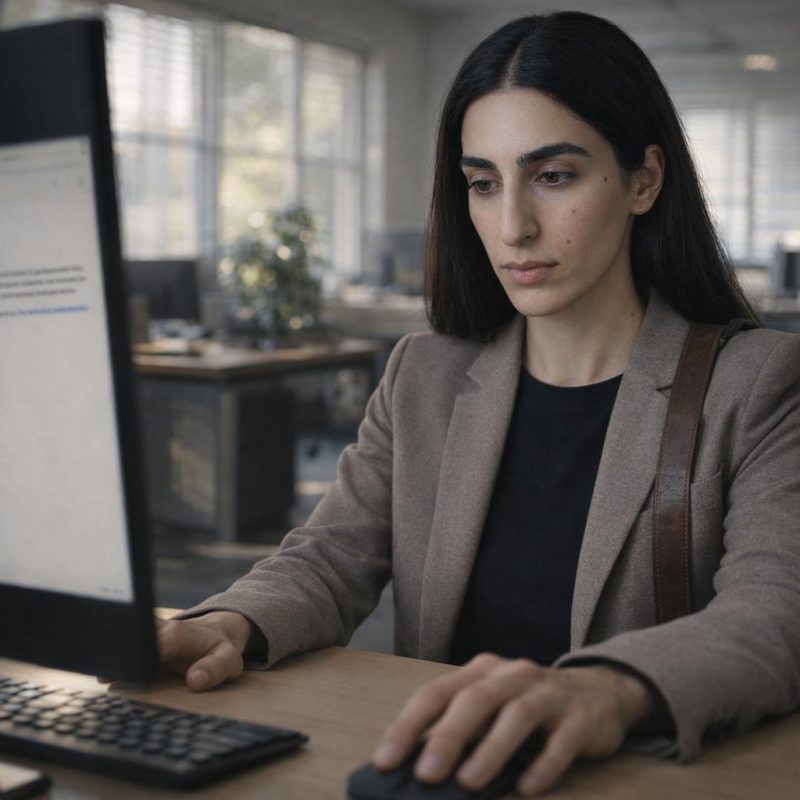 Image by RM AI
The Day They Told Me
I was eight years old the afternoon Susan and Richard sat me down on the living room couch. I remember the couch cushions were the scratchy kind, and I kept running my thumb along the seam because I didn't know what else to do with my hands. They were both crying before either of them said a word, which scared me more than anything — I'd never seen Richard cry before. Susan took my hand in both of hers, her fingers warm and a little shaky. Richard sat so close his knee was touching mine, like he needed the contact as much as I did. They told me my biological mother had been very young, that she hadn't been able to take care of me, and that they had gone through everything — everything — to bring me home. Richard stared at the carpet for a long moment before he looked back up at me. I didn't cry. I wasn't sure I fully understood. But I remember feeling the weight of how much they meant it, the way Susan's grip tightened around my hand, and then her voice caught on the words she'd probably rehearsed a hundred times: "We chose you. We would choose you every single time."
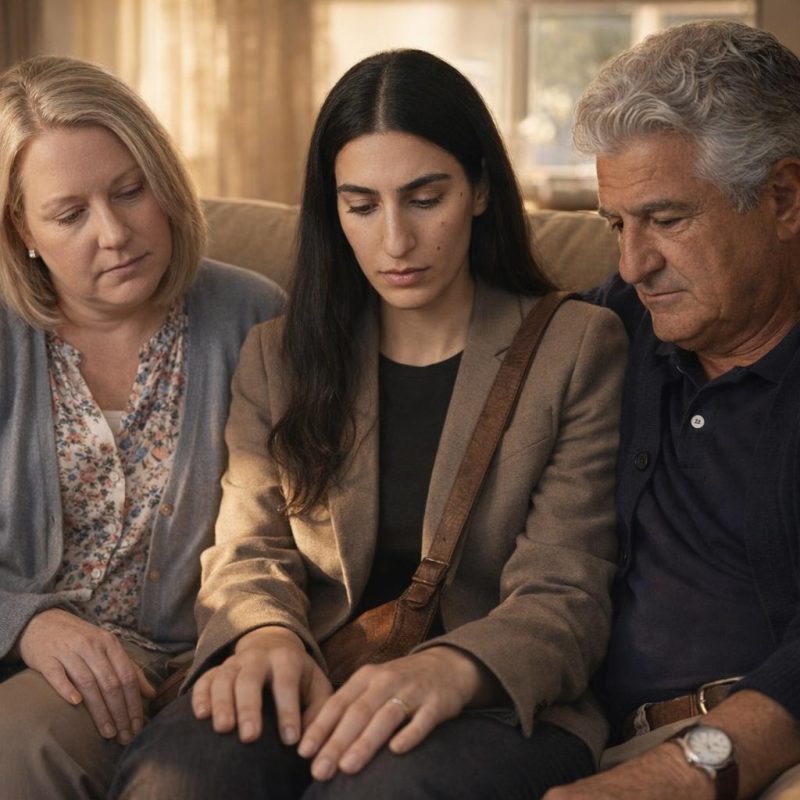 Image by RM AI
Every Game, Every Play
Here's what I know about being loved: it shows up in folding chairs. Richard had one of those old aluminum ones with the fraying nylon straps, and he dragged it to every single soccer game — home games, away games, the ones in October when the wind came sideways off the fields and everyone else stayed in their cars. He always had a thermos. He always stayed until the last whistle. Susan made glitter posters for my high school graduation, the kind with my name in three different colors and a hand-drawn star in each corner. I was mortified. I kept every single one of them in a box under my bed for years. When I didn't get into my first-choice college, Richard sat with me at the kitchen table until past midnight, not saying much, just being there while I worked through it. That was the thing about them — they stayed. Through the awkward years, the difficult years, the years I wasn't particularly easy to love. I never once felt like a placeholder or a consolation prize. When I eventually decided I wanted to know more about where I came from biologically, it wasn't because something was missing. It was just curiosity — the natural kind, like wanting to see the map of where you started before you knew where you were going.
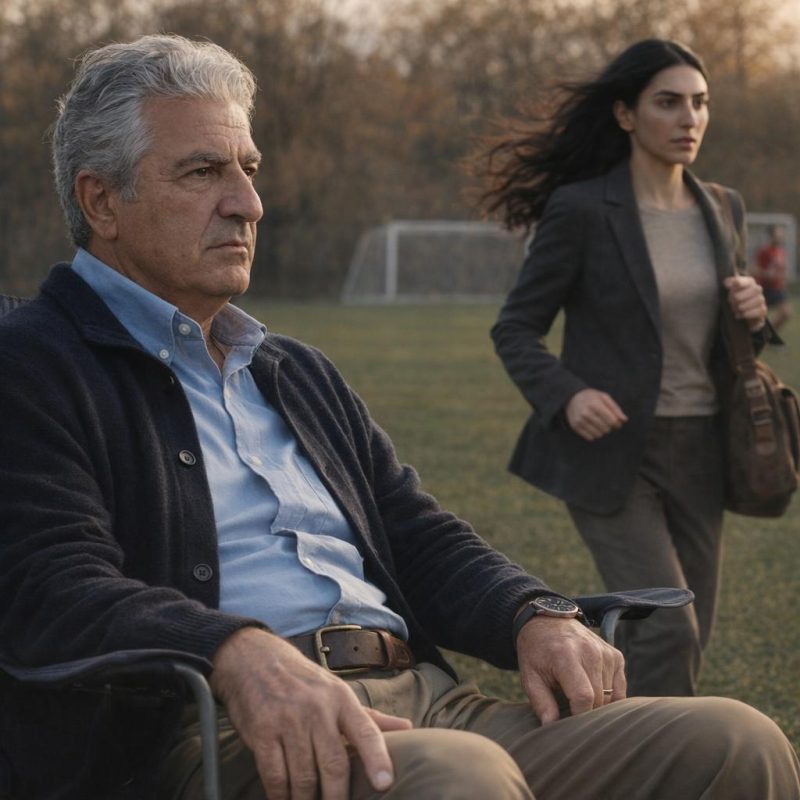 Image by RM AI
The Shift in the Air
It didn't happen every time, but it happened enough that I noticed. I'd bring up something about biological family — usually practical stuff, like whether I should flag anything on a medical intake form — and the air in the room would shift in this small, hard-to-name way. Susan's hands would find something to do: straighten a napkin, reach for her glass, smooth the tablecloth. She'd steer the conversation somewhere else so smoothly that by the time I registered the turn, we were already talking about something entirely different. Richard went quiet in a way that was different from his regular thinking quiet. His regular quiet was present. This one sent him somewhere else — his eyes would drift toward the window or the wall, focused on nothing I could see. I always told myself it made sense. Of course it would be complicated for them. Of course questions about another family would land differently for parents who had worked so hard to build this one. So I'd change the subject along with them, and I told myself that was kindness. But sometimes, later, I'd find myself thinking about the way Richard's eyes went somewhere far away — and the fact that they stayed there long after dinner was over.
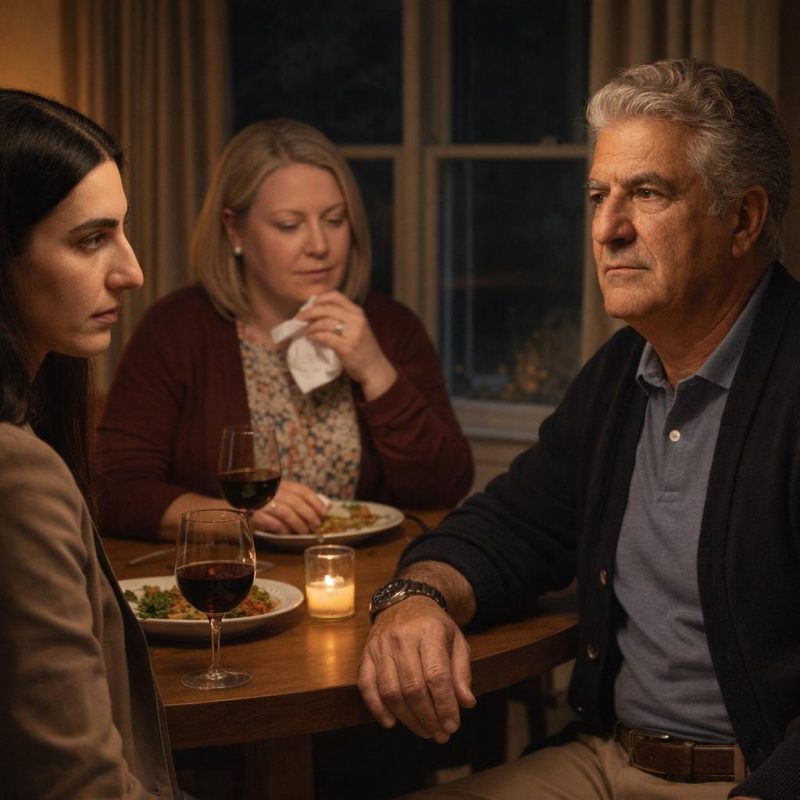 Image by RM AI
Twenty-Seven
I turned twenty-seven on a Tuesday, which felt appropriately undramatic. By Thursday I was researching DNA ancestry kits at my kitchen table with a second cup of coffee going cold beside me. The thing that finally pushed me over the edge wasn't sentimentality — it was a medical intake form. Third time in two years I'd written 'unknown' next to family history, and something about doing it a third time made the word feel heavier than it had before. I spent an evening reading comparison articles, checking database sizes, scrolling through forum threads from other adoptees who'd found half-siblings or traced ancestry back four generations. Some of their stories made me tear up a little. Most of them just made me curious in a way that felt clean and uncomplicated. I wasn't looking for a replacement family. I wasn't trying to answer some deep wound. I just wanted to know the shape of where I came from. It was past midnight when I finally stopped second-guessing myself. The laptop was open, the kit page loaded, my credit card sitting on the table next to my cold coffee. I felt nervous the way you feel before something you can't undo — not afraid, just aware that some doors only open one way. I moved the cursor to the purchase button and clicked.
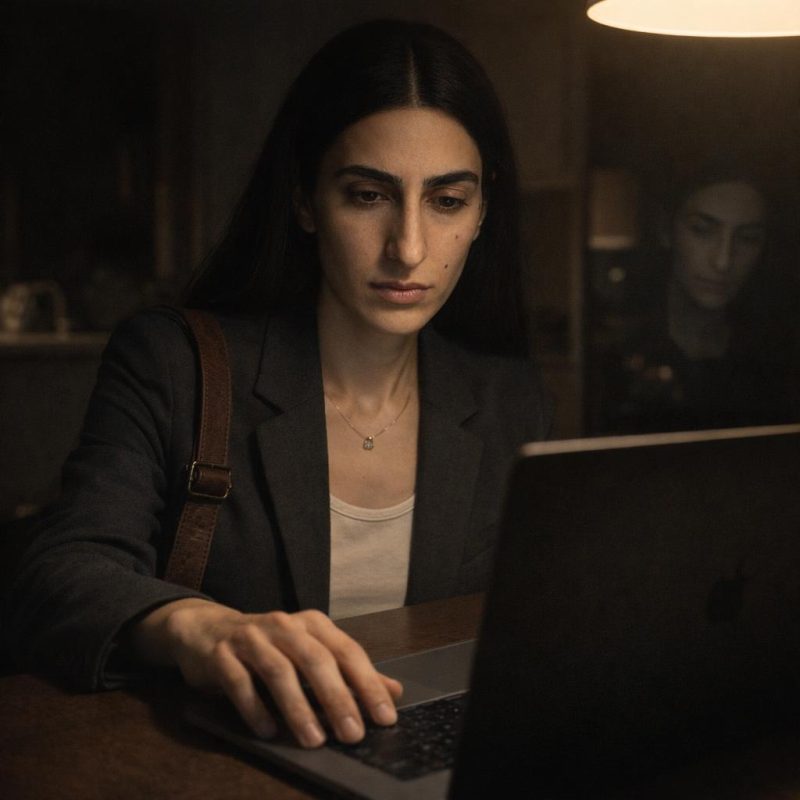 Image by RM AI
Spit, Seal, Mail
The kit arrived on a Wednesday in a slim white box that looked almost disappointingly ordinary. I opened it at the kitchen counter, read through the instruction sheet twice — I'm the kind of person who reads instruction sheets twice — and laid everything out in order before I started. The tube, the funnel cap, the biohazard bag, the prepaid return envelope. It was all very clinical and a little anticlimactic, which I appreciated. I followed each step with the same focus I'd give a work task: no food or drink thirty minutes prior, fill to the line, cap it, seal it, bag it. The whole thing took maybe ten minutes. I tucked the sealed envelope into my bag that night so I wouldn't forget it in the morning. Monday, on my way to the train, I stopped at the blue mailbox on the corner of Elm and Fifth the way I always did when I had something to mail. I dropped the envelope in, heard the soft thud of it landing at the bottom, and kept walking. I didn't pause. I didn't feel anything particular. I was already thinking about the meeting I had at nine.
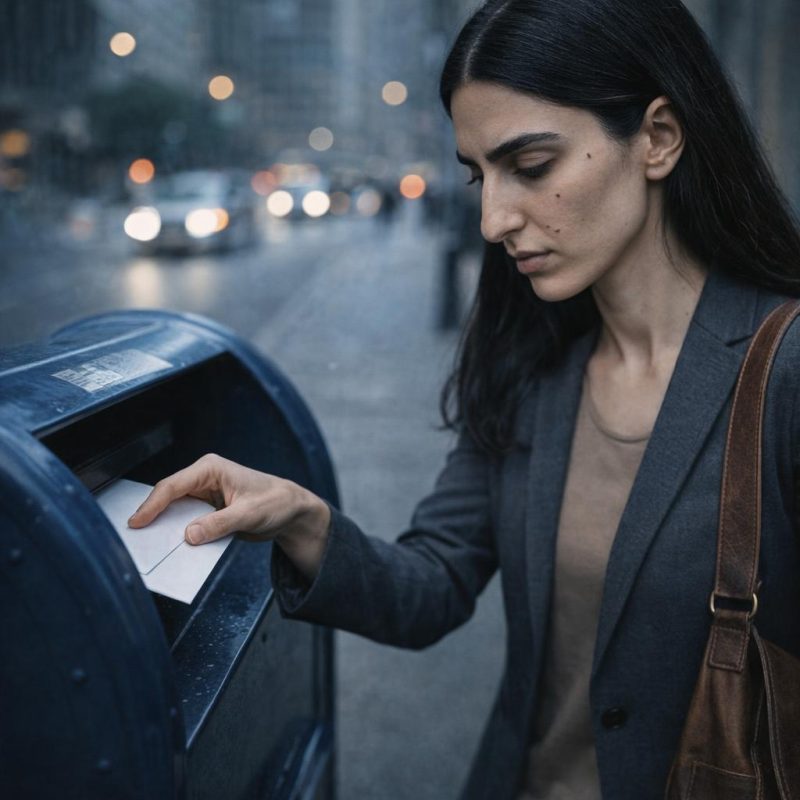 Image by RM AI
The Swallow
Work swallowed the next few weeks whole. There was a product launch that kept slipping its deadline, a team restructure that generated more email threads than actual decisions, and a Friday afternoon fire drill that somehow turned into a full weekend of catch-up. The DNA test slid to the back of my mind the way things do when life gets loud — not forgotten exactly, just filed somewhere I wasn't actively checking. I didn't log into the testing company's website. I didn't mention it to anyone. It existed somewhere in a lab, doing whatever labs do, and I was here doing spreadsheets and eating lunch at my desk and texting Maya about whether we were still on for Saturday. Life felt ordinary in the best possible way — full of small tasks and low stakes and the comfortable rhythm of days that don't ask too much of you. I wasn't waiting for anything. I wasn't counting down. The question I'd mailed away was just sitting somewhere quiet, and so was I. Then one evening, between a work calendar reminder and a promotional email, a notification landed in my inbox: your results are almost ready.
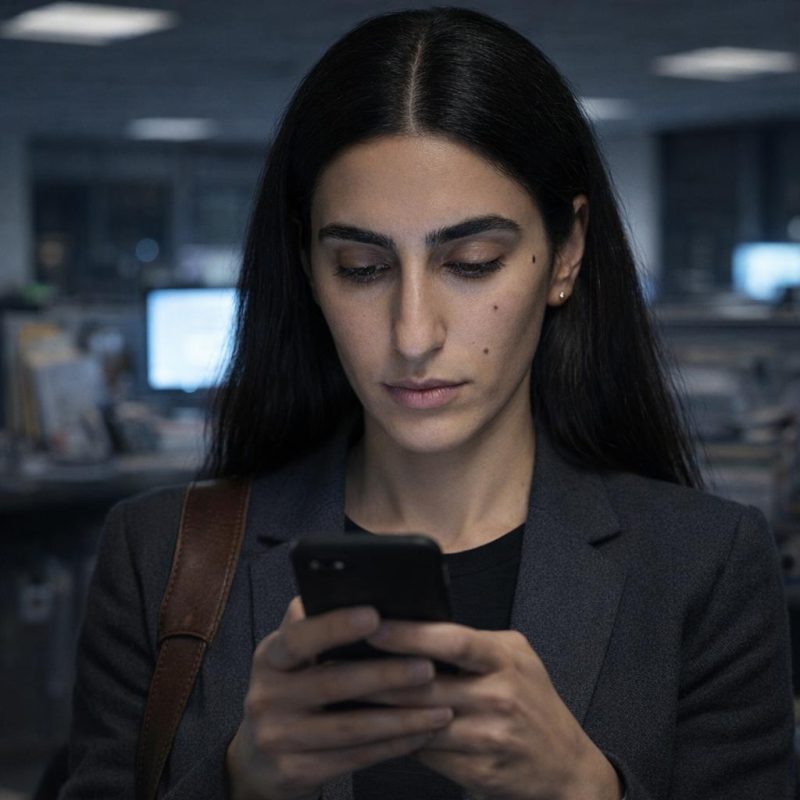 Image by RM AI
In Passing
I drove out to Susan and Richard's on a Sunday, the kind of visit with no particular agenda — lunch, some catching up, maybe a walk if the weather held. The conversation moved the way it always did: Richard's ongoing project in the backyard, Susan's book club, a neighbor's new dog that apparently had opinions about the fence. Somewhere between clearing the lunch plates and Susan putting the kettle on, I mentioned the DNA test. Casually, the way you'd mention anything. I said I'd mailed it a few weeks back, that I was waiting on results, that it was one of those things I'd been meaning to do. Susan's hands stopped moving. She was holding a dish towel, and for just a moment, she wasn't doing anything with it. Richard looked up from the table. There was a beat of silence — brief, the kind that could mean anything — and then Susan asked when exactly I'd sent it. Richard asked whether the results were back yet. I said not yet, probably another week or two. Susan went back to folding the towel. Richard nodded and looked back down. The conversation moved on, and I let it. I didn't think much of it at the time. The kitchen felt the same as it always had, warm and familiar, the kettle just beginning to hiss.
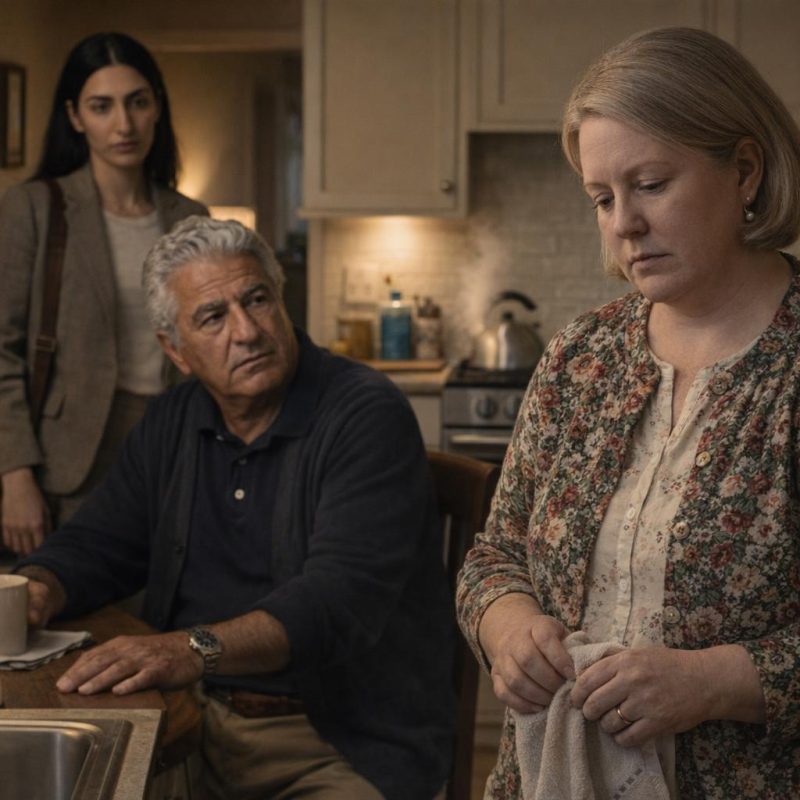 Image by RM AI
The List
Richard called the next morning, which wasn't unusual in itself. What was unusual was the pace of it — the way he'd pause after each question, like he was moving down a list. He asked how the matching algorithm worked. He asked whether the test compared full DNA sequences or just specific markers. I answered as best I could, pulling up the FAQ page on my laptop while we talked, reading bits of it back to him. Then he asked what percentage match counted as a close relative. I told him fifty percent — that a fifty percent match would be a parent or a full sibling. There was a silence after that. Not the kind where someone is thinking of their next question. Just silence. I could hear Susan somewhere in the background, not speaking, just present. Richard came back and asked whether the results were private. He asked whether other people in the database could see my profile, whether strangers could find me through the site. His voice was careful, measured, the way it gets when he's trying not to sound worried. I told myself it was the internet-safety thing — he'd always been cautious about that kind of stuff. The silence after the fifty percent answer sat with me longer than I expected, though I couldn't have said why.
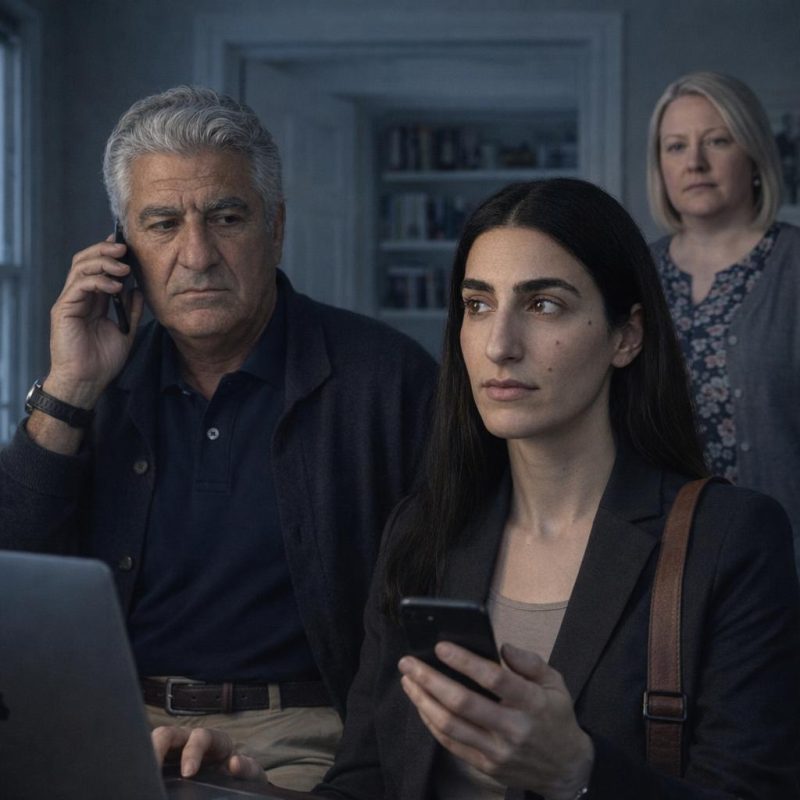 Image by RM AI
Overprotective
By the time we got to the privacy settings, I was trying not to laugh. Not at him — at the situation. Richard had clearly done some reading, or maybe Susan had, and now he was walking me through a list of concerns that sounded like something from a mid-2000s internet safety pamphlet. I told him the site had privacy protections built in. I told him I could control exactly who saw my profile, that I could set it to only share with confirmed matches, that the company had strict data policies. He said 'mm-hmm' in the way that means he's heard you but isn't convinced. I explained that I wasn't posting my home address anywhere, that this was just a genetics database, that millions of people used these services without incident. He asked one more time whether strangers could reach out to me through the platform. I said yes, technically, but that I could manage my settings, and that honestly, that was kind of the point — finding connections. He went quiet again. I told him there was nothing to worry about. The call ended a few minutes later, and I sat there half-smiling, thinking this was exactly the kind of thing he'd always done — triple-checking the locks, reading the fine print on everything. Classic Richard.
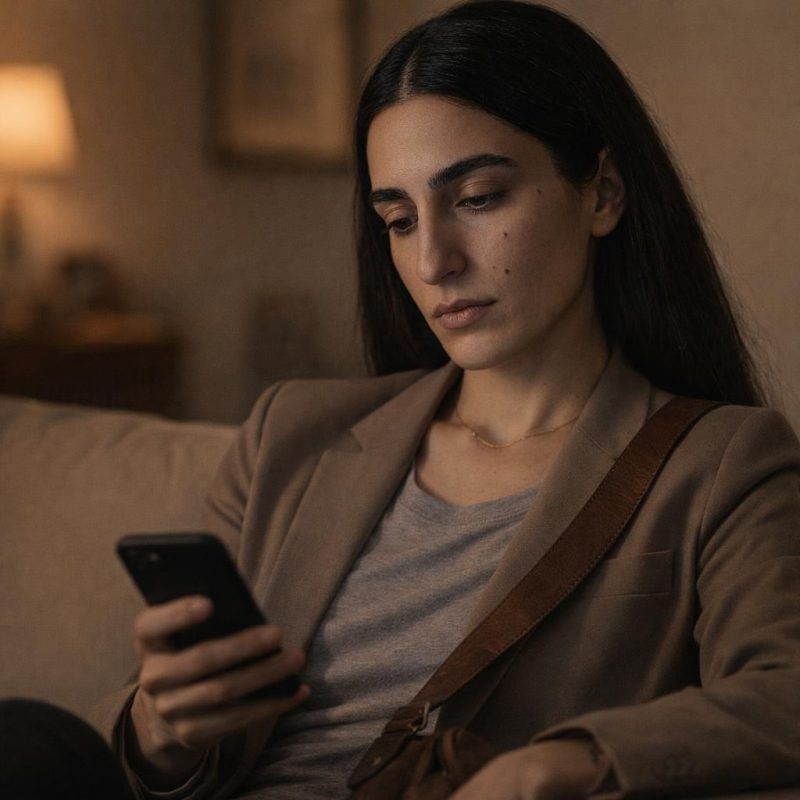 Image by RM AI
Results Ready
The email came on a Tuesday afternoon, subject line: Your DNA Results Are Ready. I was at my desk with the door closed, which felt appropriate — I'd been half-watching for it for days. I clicked through expecting what I'd always imagined: a colorful pie chart, maybe some percentages I could screenshot and text to Maya. Forty percent this, twenty percent that. Something to laugh about over drinks. The page loaded, and I leaned forward. There was no pie chart at the top. What loaded first was a list — names, dozens of them, organized into rows with labels beside each one. Second cousin. Third cousin. Third to fourth cousin. The list went on, neat and orderly, stretching further down the page than I'd expected. I scrolled slowly, taking it in. Each entry had a small profile icon, an estimated relationship, a percentage. I hadn't anticipated this part — I'd known intellectually that DNA tests showed matches, but seeing it laid out like this, all these people who shared something biological with me, was different from knowing it abstractly. I stopped scrolling and just looked at the screen for a moment, the list sitting there quietly in front of me.
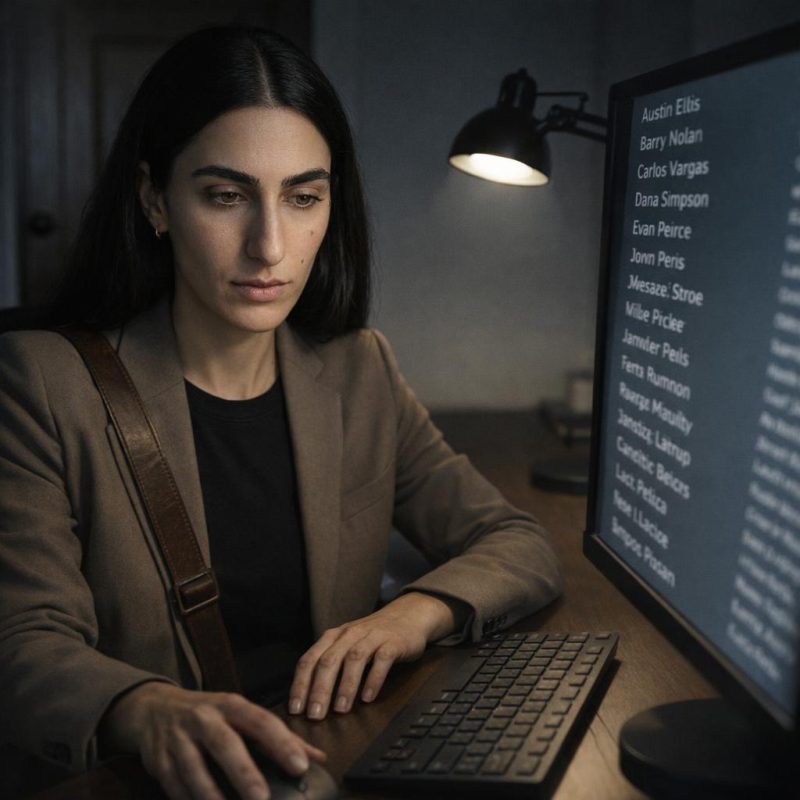 Image by RM AI
Unfamiliar Names
I started at the top and worked my way down, the way I do with anything — methodically, name by name. Henderson. Kowalski. Okafor. Patel. Nguyen. I read each one carefully, waiting for something to catch. A name I recognized, a surname that matched something from the fragments Susan and Richard had shared over the years. There had always been a loose story — a young woman, a small town somewhere in the Midwest, circumstances that made adoption the right choice. I'd never pushed for more than that, but I'd held onto the outline. I kept scrolling, looking for anything that fit. Nothing did. The surnames kept coming — unfamiliar, geographically scattered, none of them landing anywhere near the shape of the story I'd been carrying. I tried not to read too much into it. Adoptee DNA results were complicated, I knew that. Matches came from all branches, not just the biological mother's side. There were probably explanations I wasn't thinking of. I reached the end of the first page, sat back, and then leaned forward and started scrolling again from the top.
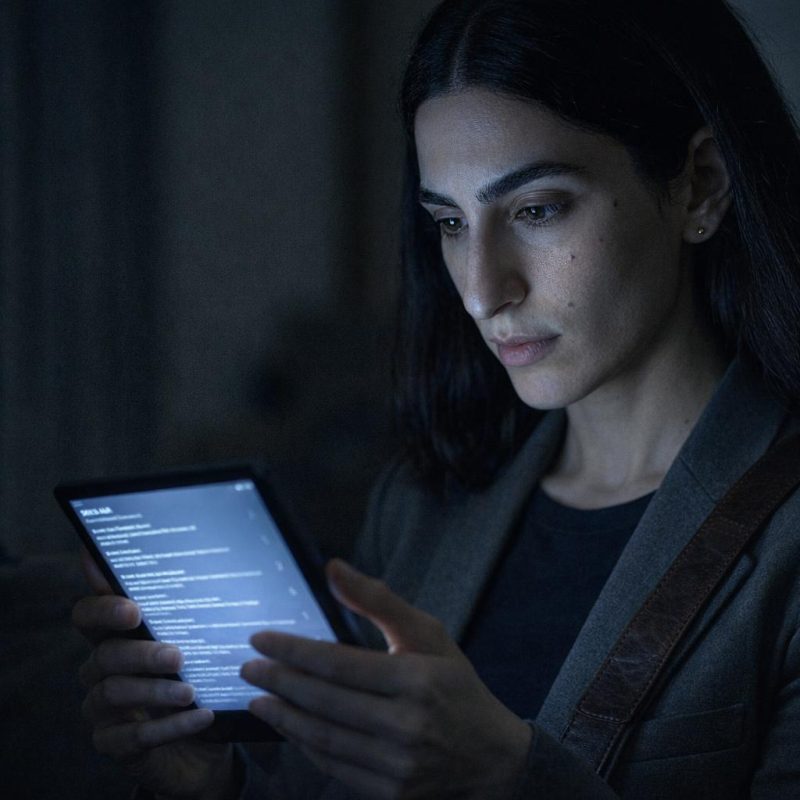 Image by RM AI
The Notepad
I pulled out a notepad that evening — an actual paper one, the kind I use for work when I need to think through something without a screen in front of me. I opened the family trees attached to each match and started writing down every surname that appeared more than once. I thought a pattern might emerge if I could just see it all laid out. Henderson showed up twice. Kowalski three times. I wrote them down, drew lines, tried to build something that looked like a map. The map kept collapsing. I'd find two matches who shared a surname and then realize their trees didn't overlap in any meaningful way. I cross-referenced the shared matches, looking for a cluster that might point somewhere. Nothing held. I went back to the beginning and started over. Then I did it again. Somewhere around two in the morning I got up, made tea, and sat back down. By the time the light outside started to change, my eyes ached and the notepad was covered in names — surnames circled, crossed out, connected by lines that led nowhere. None of them meant anything. I sat there with the notepad open in front of me, the page dense with writing that still hadn't told me a single thing I needed to know.
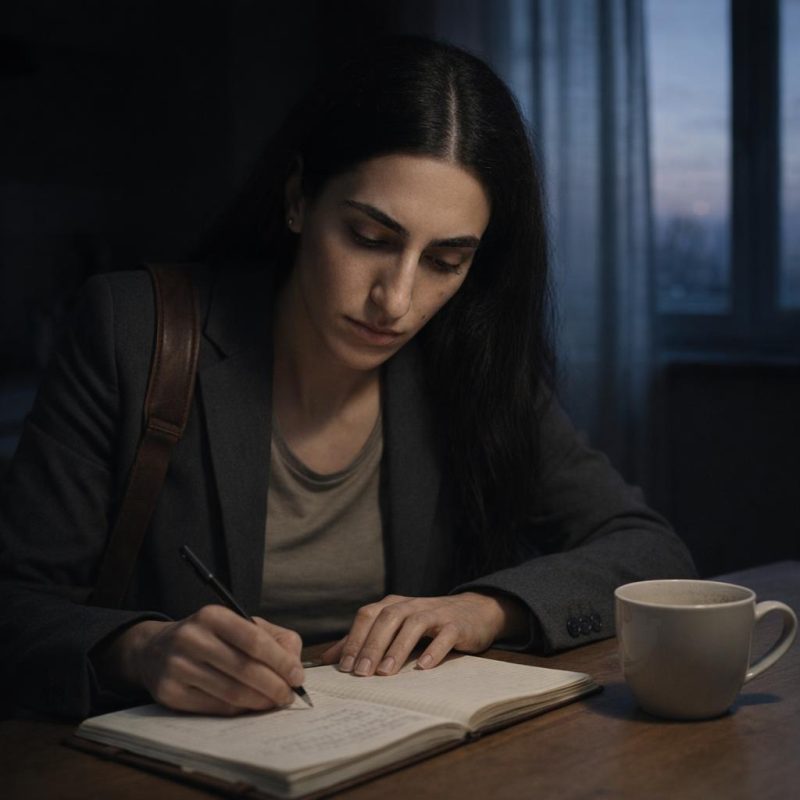 Image by RM AI
The Fragments
I went back to the fragments the next day, trying to be precise about what I actually remembered versus what I'd filled in over the years. Susan had mentioned a young woman — that much I was sure of. Small town, Midwest, she'd said once, when I was maybe twelve and had asked more directly than usual. Richard had added something about the circumstances being difficult, that the woman had wanted a better life for me. I'd built a quiet picture from those pieces over the years, nothing dramatic, just a shape. I went through the match list again, this time specifically looking for anything that pointed toward the middle of the country. I checked the location information attached to each family tree, searched for surnames that felt geographically rooted in that region. I waited for one fragment to line up with something on the screen. Nothing did. The locations scattered — East Coast, Southeast, Pacific Northwest, international. I searched for the names Susan and Richard had mentioned, the ones I could remember clearly enough to spell. They weren't there. I went through it twice more, slower each time. The absence of any alignment sat with me, quiet and unresolved, like a question I hadn't quite finished forming.
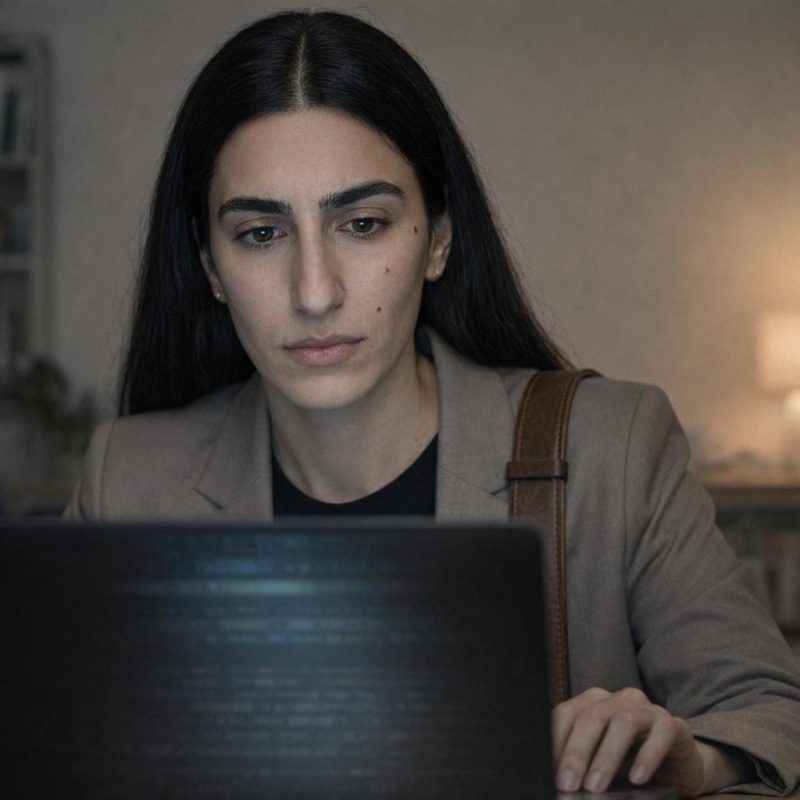 Image by RM AI
The Void
I sat with the list open on my screen for a long time that night, not scrolling anymore, just looking at it. These were people who shared my blood. That was a fact the test had confirmed. And none of them connected to anything I'd been told. There was no young woman from the Midwest in the data. There were no surnames that matched the fragments of the story I'd been given. There was just this list of strangers, organized by percentage, pointing somewhere I couldn't identify. I'd always held the adoption story loosely — it was never a detailed thing, more of an outline than a narrative. But I'd assumed the outline was real. Now I kept turning it over, wondering if I'd missed something, if there was a gap in my methodology rather than a gap in the story itself. Maybe I was searching wrong. Maybe the matches I needed were further down the list, or in trees I hadn't opened yet. I told myself that was probably it. But the feeling that had been building quietly for days didn't go away when I told myself that. I closed the match list, opened a new browser tab, and typed 'how to access original adoption records' into the search bar.
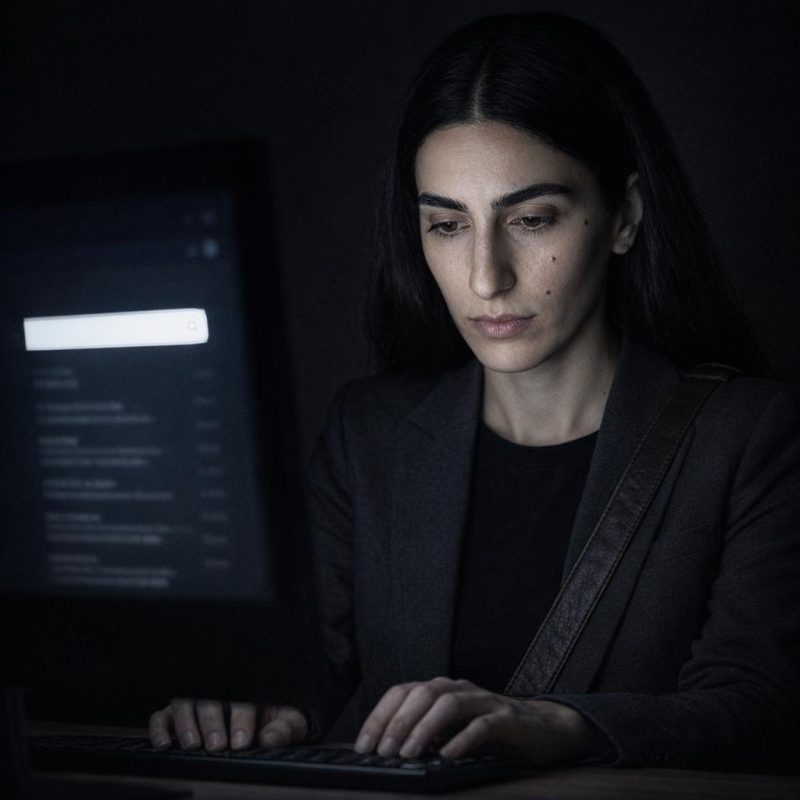 Image by RM AI
The Counselor
I found the genetic counseling contact on the testing company's website and called on a Thursday morning, half-expecting to be put on hold indefinitely. Instead I was connected within a few minutes to Dr. Patricia Webb, who introduced herself in the measured, unhurried way of someone used to delivering complicated information. I explained what I was looking at — the adoption, the story I'd been given about a Midwest origin, the match list that didn't seem to reflect any of that. She asked me to walk her through the details, and I did, slowly, while she pulled up my profile on her end. She was quiet for a moment, reviewing. Then she started talking through what she was seeing. The strongest matches in my results clustered in regions that had no connection to the Midwest — she named them specifically, carefully, without editorializing. She noted that the pattern of matches was consistent across multiple relationship levels, not just one or two outliers. I asked her directly whether the results could be consistent with a Midwest adoption. She paused before answering, the kind of pause that has weight to it. Then she said the matches didn't align with a Midwest adoption.
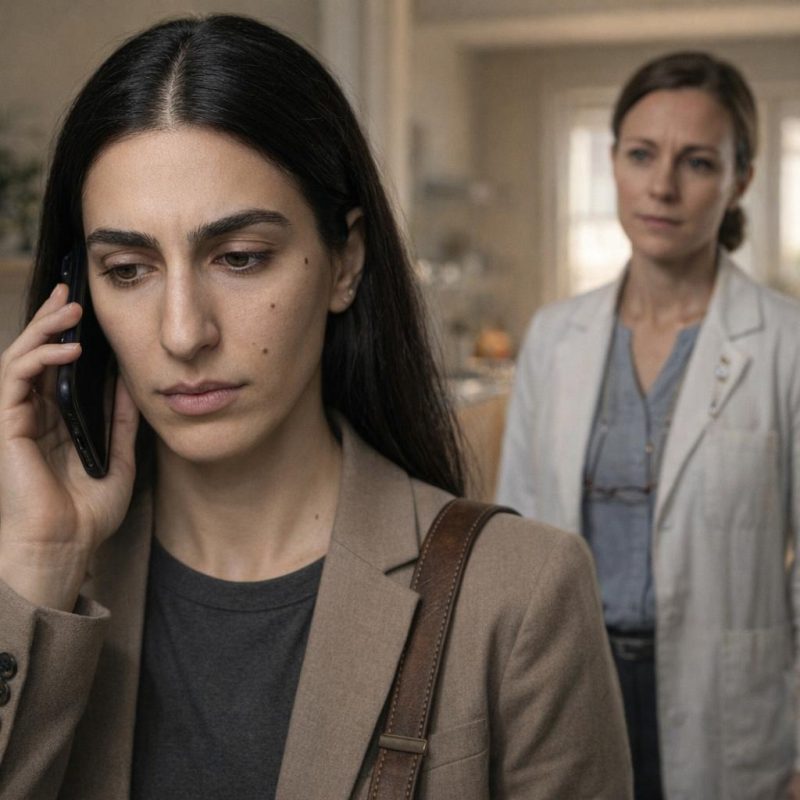 Image by RM AI
The Spreadsheet
After my call with Dr. Webb, I needed to do something with my hands. I opened a new spreadsheet and started entering every DNA match I had — surname, estimated relationship, and whatever location data the profiles showed. It took a couple of hours. I color-coded by relationship tier: close family in red, second cousins in orange, third and fourth cousins in yellow. Then I sorted by geographic region and just stared at what came back. The Midwest barely registered. A handful of names, nothing that clustered, nothing that reinforced each other. But as I scrolled through the location column, the same state kept appearing. Texas. Not once or twice — over and over, across multiple relationship tiers. I went back and checked my entries, thinking I'd made a data error somewhere. I hadn't. The strongest matches, the ones flagged as second cousins or closer, were concentrated in one place. I sorted the column again just to be sure. The screen filled with Texas, Texas, Texas — and the adoption story I'd grown up with had never once mentioned Texas.
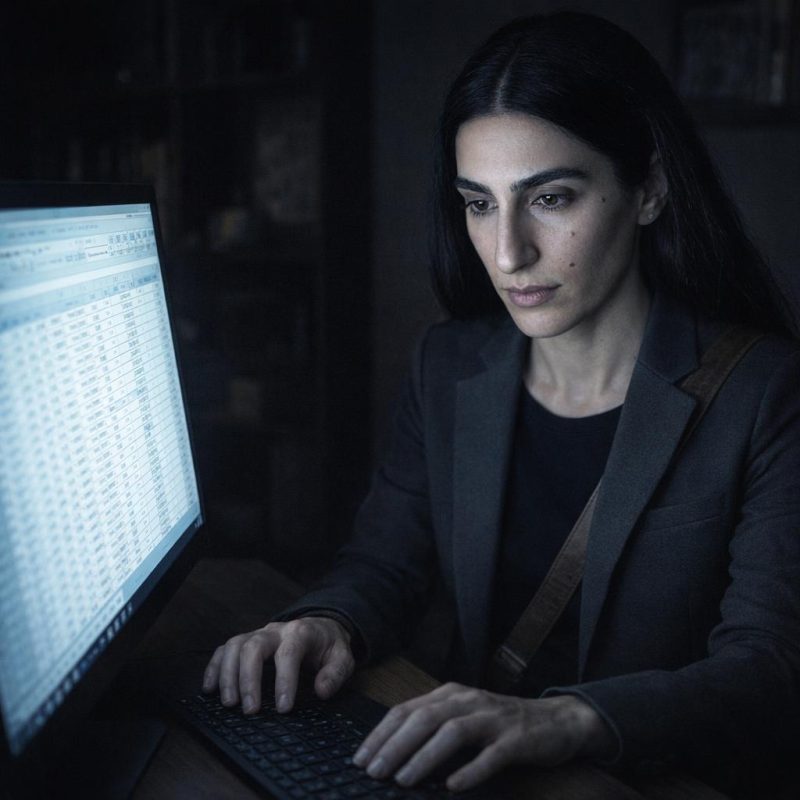 Image by RM AI
The Doubt
I sat with the spreadsheet open for a long time after that, not adding anything, just looking at it. The strongest matches were in Texas. The adoption story said a small town in the Midwest. Those two facts sat side by side in my head and refused to fit together. I tried to work through the explanations. Maybe my biological mother had grown up in Texas and moved to the Midwest before I was born. Maybe the family had roots in Texas but had been living somewhere else by the time of the adoption. I typed those possibilities into a notes column and read them back. They weren't impossible. But they felt thin, the way an explanation feels when you're constructing it to fill a gap rather than because it actually fits. The 'chosen' story — the one Susan and Richard had told me my whole life, the one about a young woman in the Midwest who couldn't keep her baby — had always felt complete. Solid. Now there was a seam in it I hadn't noticed before, and I didn't know yet what was on the other side. I closed the laptop and sat in the quiet, and the weight of not knowing settled somewhere in my chest and stayed there.
 Image by RM AI
Reaching Out
There was one match that kept drawing my eye — a third cousin with a detailed family tree attached to her profile. She'd filled in four generations, with surnames and locations and little notes beside some of the entries. It was more than most people bothered with. I opened the messaging feature and sat there for a few minutes before I started typing. I introduced myself as a DNA match, mentioned that I was adopted and trying to understand my family background, and asked if she'd be willing to share a little about her family history. I kept it light. I didn't mention the discrepancy with the Midwest story, didn't say anything about the Texas cluster in my data. I just said I was curious about connections and hoped she didn't mind me reaching out. I reread the message three times, adjusting a word here and there, making sure it didn't sound desperate or strange. Then I clicked send before I could second-guess myself again. The message appeared in my outbox with a small timestamp beside it, and I leaned back in my chair and looked at it — just sitting there, waiting for someone on the other end to decide whether to answer.
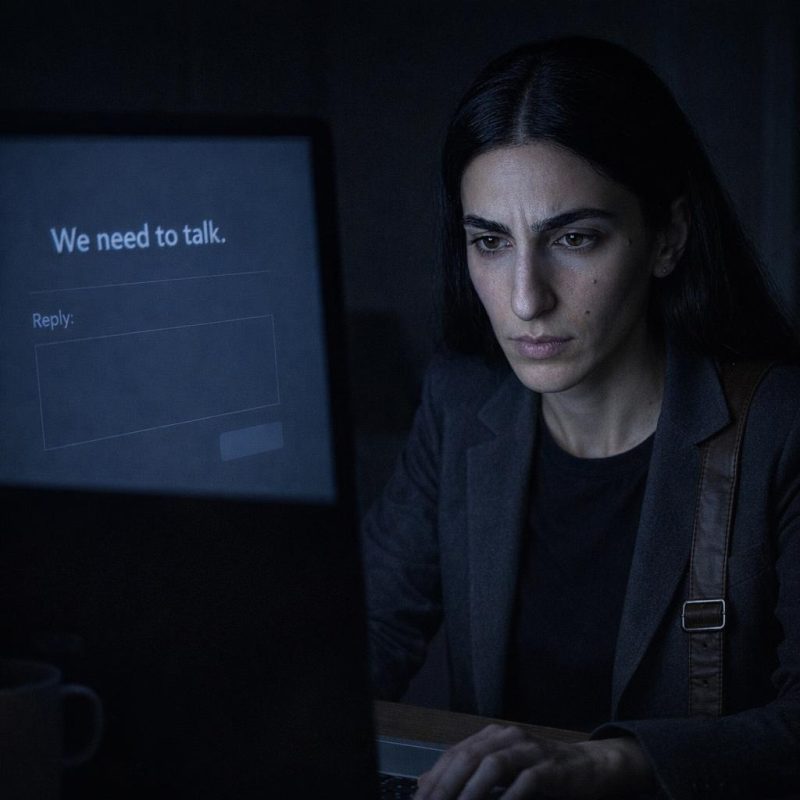 Image by RM AI
The Avoidance
At some point that week I picked up my phone to call Susan and Richard. I got as far as pulling up their contact and then I set the phone back down. I kept imagining how the conversation would go — me asking, casually, whether they knew anything about Texas connections in my biological family's background. I could picture Susan's face, the way she'd tilt her head and think about it. I could picture Richard going quiet. And I couldn't figure out what I was hoping they'd say. If they said no, I'd be back where I started. If they said something that didn't add up, I didn't know what I'd do with that. I told myself I needed more information first. I told myself it wasn't fair to bring them a question I couldn't even fully articulate yet, that I might be reading patterns into data that had a perfectly ordinary explanation. The rationalization felt reasonable enough that I almost believed it. But underneath it was something simpler — I wasn't ready to hear an answer that changed things. So I put the phone in my pocket and went back to the spreadsheet, and kept searching on my own.
 Image by RM AI
The Questions That Wouldn't Stop
Susan called on Tuesday evening, just to check in. She asked how the DNA research was going, and I told her I was still sorting through the matches, nothing definitive yet. She said that sounded like a lot of work and we talked for a few minutes about other things before hanging up. Then she called again Wednesday afternoon. Same question, almost word for word — had I found any interesting matches, was anything standing out. I gave her the same vague answer. Thursday morning she called a third time, and this time she asked whether I'd reached out to any of the matches directly. I said I'd sent one message and was waiting to hear back. She said that was exciting, and her voice had that warm, encouraging tone she'd always used when I was doing something she wanted to support. I told myself she was just being interested, that she'd always been involved in my life and this was a big thing I was doing. But I noticed the calls. Three days in a row, the same questions cycling back around. I'd never thought of Susan as someone who repeated herself. I sat with that small observation after we hung up Thursday, not sure what to do with it.
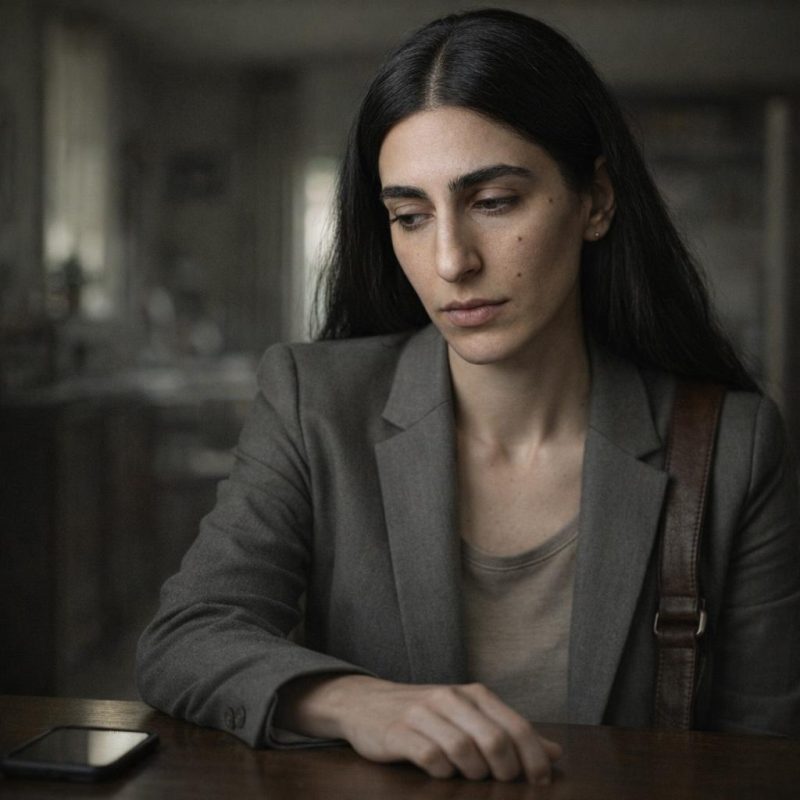 Image by RM AI
The Silence at Dinner
I drove out to Susan and Richard's for dinner on Friday. The table was set the way it always was — the good placemats, the candles Susan lit even for ordinary weeknights. Richard made his usual pasta and we talked about his garden and a show Susan had been watching and whether I needed my car looked at before winter. It felt normal. Then, somewhere between the salad and the main course, I mentioned that I'd been going through the DNA matches more carefully, organizing them into a spreadsheet. Richard's fork stopped moving. He set it down on the edge of his plate, very deliberately, and looked at the table. Not at me. At the table. Susan asked me right away whether I'd found anything useful, her voice coming in a beat too fast, pitched a little too bright. Richard didn't look up. I watched him for a moment — the set of his jaw, the way his hands stayed still on either side of his plate. Susan steered the conversation toward something about a neighbor's renovation, and Richard nodded along without saying anything. He didn't eat much after that. By the time I helped clear the dishes, his plate was still mostly full, and he hadn't looked up from it for the better part of an hour.
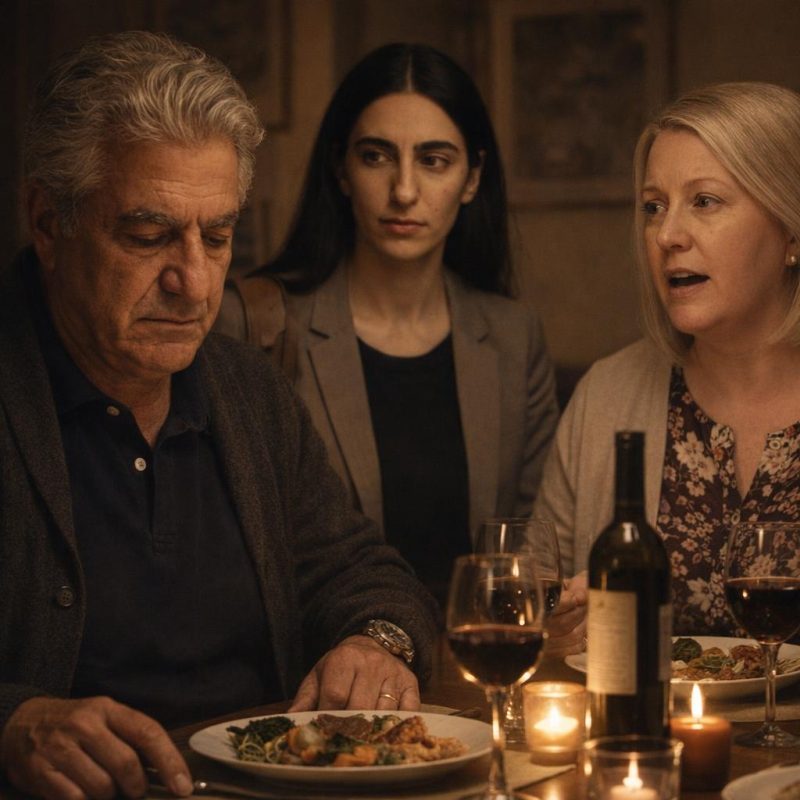 Image by RM AI
The Texas Connection
The notification came on a Saturday morning while I was making coffee. I almost missed it — a small banner across the top of my phone screen from the testing site. I set the mug down and opened the app. The third cousin match had written back. Her name was Diane, and she'd written a long, friendly message, the kind that made it clear she'd been hoping someone would reach out. She introduced herself, mentioned that she loved connecting with DNA matches, and then launched into her family history with obvious enthusiasm. Her family had been in Dallas for three generations. She named specific counties, specific towns outside the city. She mentioned her grandmother's side going back to a small community east of Dallas, and her grandfather's family from further west. She asked if any of those places meant anything to me, whether I had Texas connections I was trying to trace. I read the message twice, slowly. Then I went back to the adoption story in my head — the one about a young woman from a small town in the Midwest, far from anywhere like this. Diane's family had never left Texas. Three generations, rooted in Dallas, and her DNA said we were family.
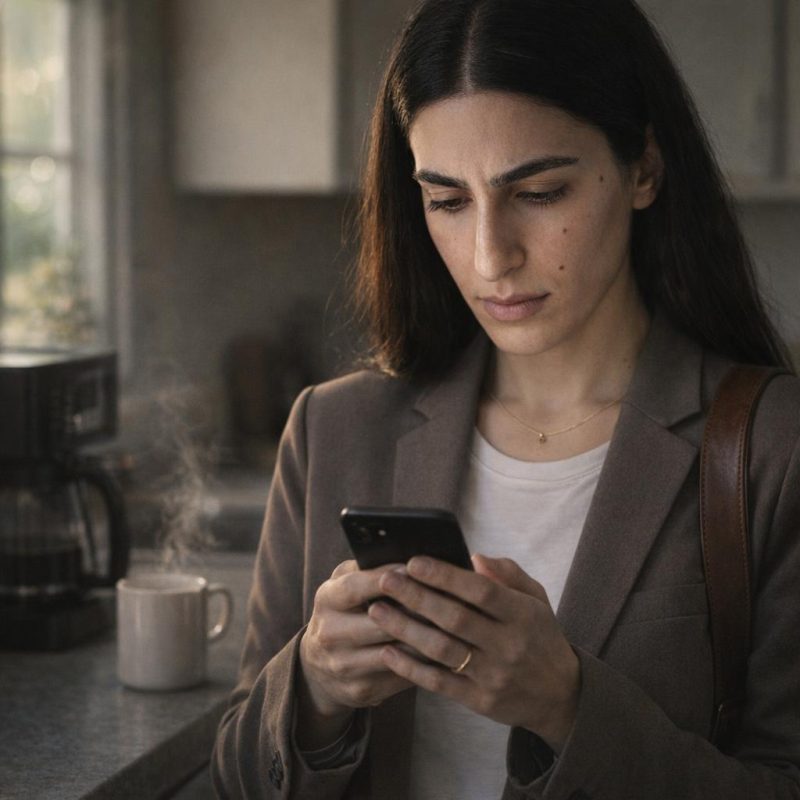 Image by RM AI
The Careful Question
I went back to Susan and Richard's a few days later. I'd been turning over how to bring it up, and I'd settled on casual — just mentioning it the way you'd mention something mildly interesting, not a confrontation, just a question. We were sitting in the living room with coffee when I said I'd heard back from one of my DNA matches, and that her family had been in Texas for generations. I asked, as lightly as I could manage, whether the biological family might have had any Texas connections. Susan paused. It was a short pause, but I caught it. Then she said she didn't think so, that everything they'd been told pointed to the Midwest, that the agency had been very clear about that. Richard glanced at her once and then looked at his coffee cup. I asked if they were sure about the Midwest detail, whether it was possible there'd been some confusion. Susan said that was what they were told during the adoption, and her voice was even and unhurried, and then she was already asking whether I wanted more coffee and reaching for the pot. I watched her hands move to the napkins on the side table, straightening them against the wood — once, then again, though they hadn't been crooked to begin with.
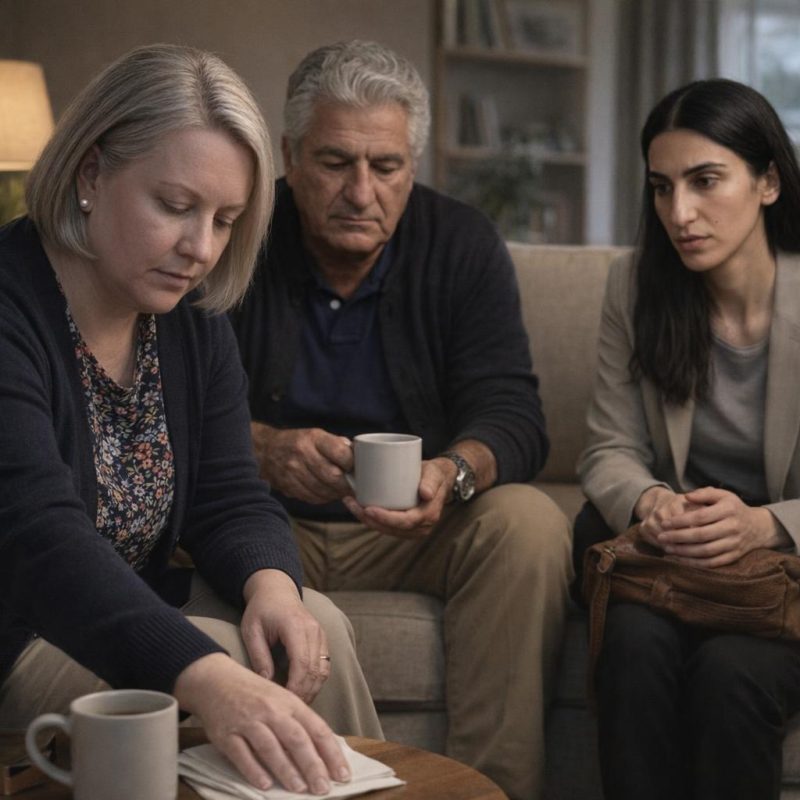 Image by RM AI
The Absence
That night I opened the DNA platform again and decided to be methodical about it. I'd been circling the data for weeks, but I hadn't sat down and actually mapped it against what Susan and Richard had told me. So I did. I filtered by state, starting with Illinois, then Ohio, then Indiana — the Midwest corridor they'd described. Nothing strong came back. A handful of distant matches, fourth cousins and beyond, the kind of thin connections that show up for almost everyone. I searched the surnames they'd mentioned over the years, the ones that had come up in passing conversations about my biological family. None of them appeared. I tried variations, alternate spellings, maiden names I'd guessed at. Still nothing. I looked for any match that might suggest a young birth mother in her late teens or early twenties in the mid-nineties. The data didn't support it. I went through the list twice more, slower the second time, giving every entry a fair look. The Texas matches kept surfacing — strong, consistent, geographically clustered. The Midwest was empty. Not sparse. Not thin. The column where that part of the story should have lived held nothing at all.
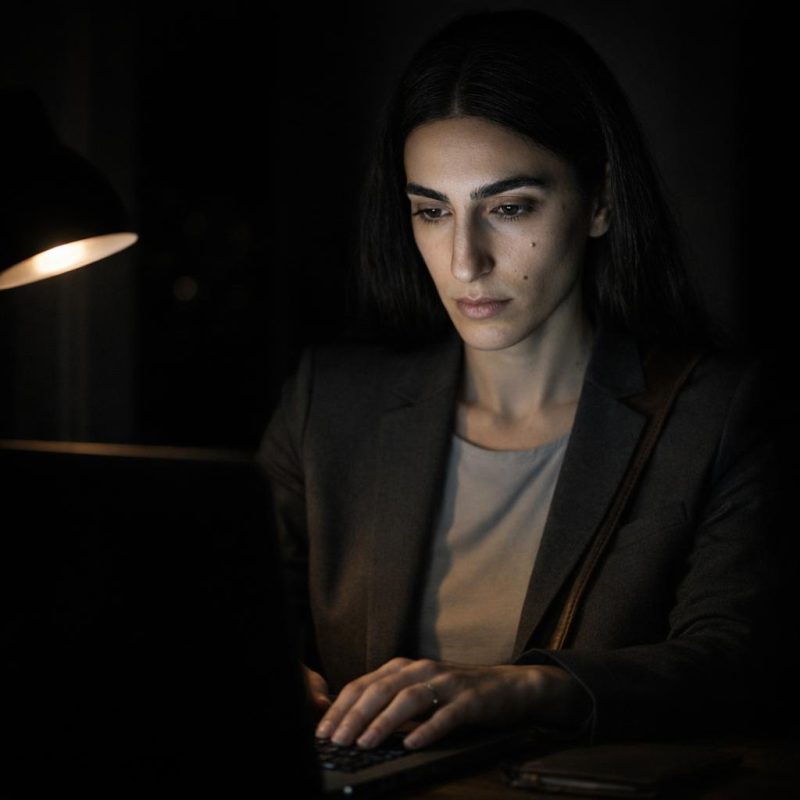 Image by RM AI
The Second Cousin
I'd been sorting the matches by relationship strength for a few days, refreshing the list each morning the way you check the weather even when you already know it's going to rain. Then one morning a new entry sat near the top that hadn't been there before. The label read second cousin, and the shared DNA percentage was 3.125. I stared at that number for a moment. I knew enough by then to understand what it meant — shared great-grandparents, a real biological connection, not the statistical noise of a distant match. I clicked through to the profile. The location listed was Dallas, Texas. The family tree attached to the profile was detailed, going back four and five generations, and every place name in it was somewhere in Texas. This was the closest biological relative I'd found. Not a hint or a suggestion — an actual second cousin with a documented family history, and all of it pointing to the same place the other strong matches had been pointing. I sat back and looked at the percentage again. 3.125. It was a small number that meant something large, and I felt the size of it settle over me like a change in air pressure.
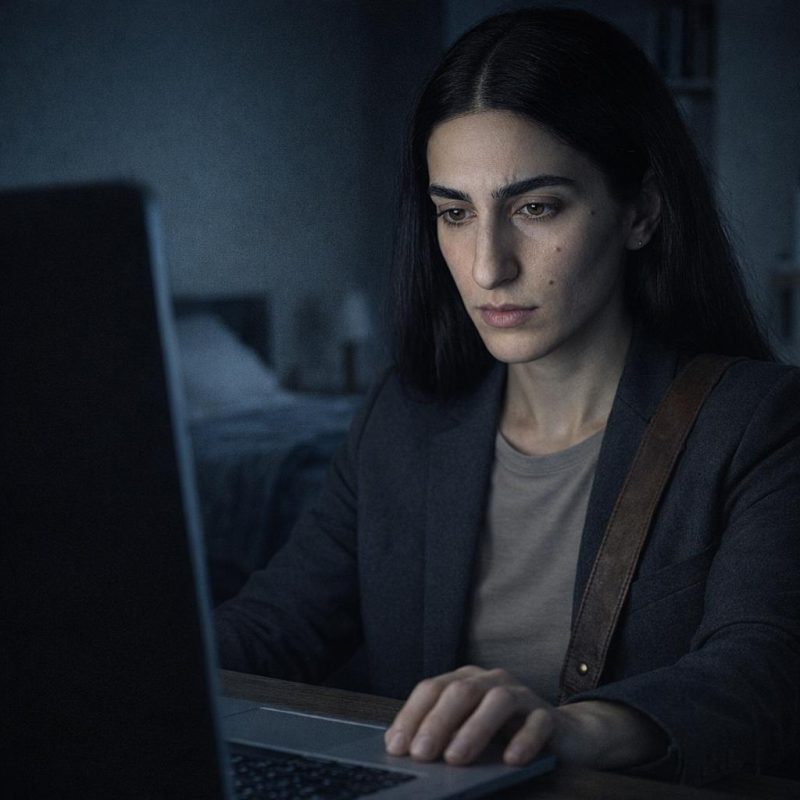 Image by RM AI
The Theory
It was past midnight when I finally stopped pretending I was just doing research. I'd been at the kitchen table for three hours, the DNA results open on my laptop, a cold cup of tea beside me that I'd forgotten to drink. I had the second cousin match. I had the Texas clustering. I had the empty Midwest column. I had Susan straightening napkins that didn't need straightening, and Richard looking at his coffee cup instead of at me. I'd been holding all of it at arm's length, telling myself I didn't have enough to draw any conclusions, that there were explanations I hadn't thought of yet. But sitting there in the quiet of my apartment, I couldn't keep the thought at bay anymore. I pulled my notebook toward me — the one I'd been using to track the matches — and I opened it to a blank page. I picked up the pen. I sat with it for a moment, the tip hovering just above the paper. Then I wrote it down slowly, four words in the middle of an otherwise empty page: what if they lied.
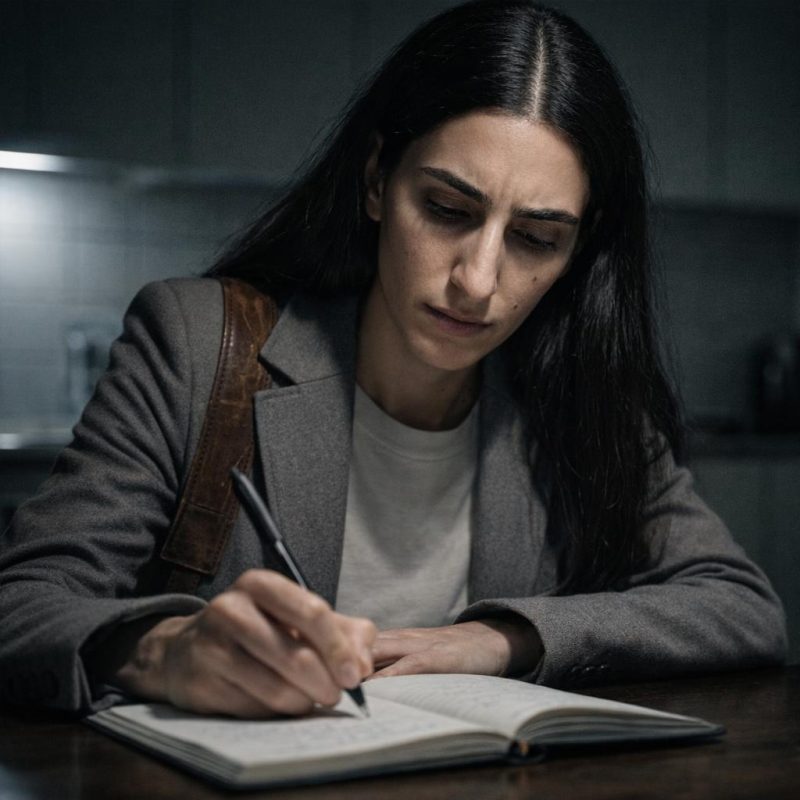 Image by RM AI
Elena
The notification came through two days later while I was eating lunch at my desk. A new message on the DNA platform — I almost didn't open it right away, because I'd been getting occasional messages from distant matches and most of them were polite dead ends. But the name on this one stopped me: Elena Vasquez. I didn't recognize it. I set down my fork and opened the message. She introduced herself as a DNA match and said she'd been searching for family for a long time. She said she'd come across my profile and that something about it had made her want to reach out. She asked, carefully and without pressure, whether I thought we might be related, and whether I'd be willing to talk. She included her phone number at the bottom. The tone of the message was measured, like someone who had written and rewritten it before sending — hopeful but trying not to be, careful not to ask for too much. I read it three times. Each time I got to the end, something in my chest shifted in a way I couldn't quite name, something that felt like standing at the edge of a door I hadn't known was there.
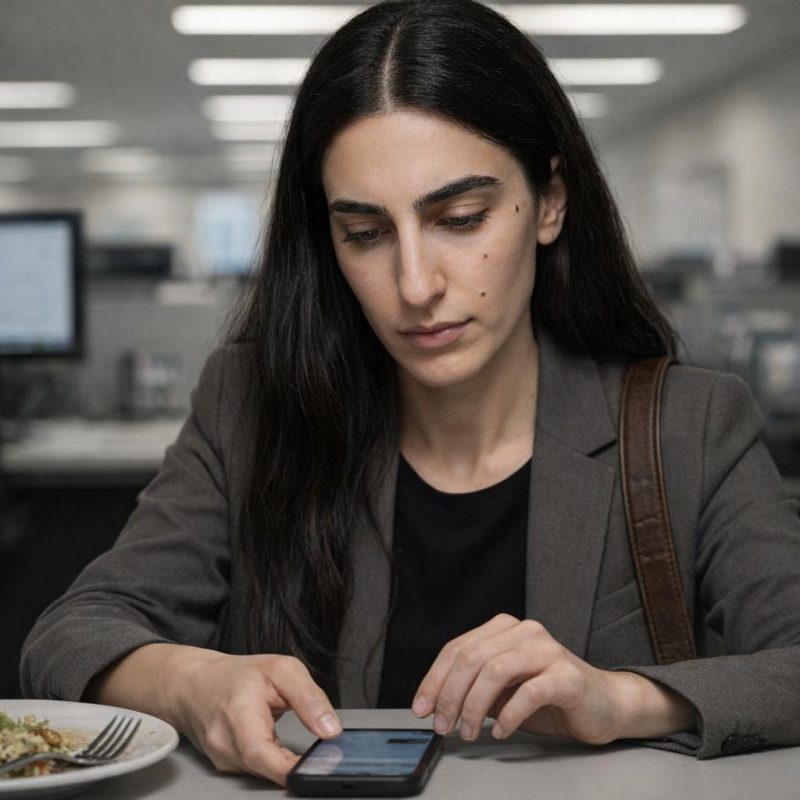 Image by RM AI
The Photograph
I wrote back the same evening and told her I was open to talking. Her reply came within the hour. She thanked me, said she was glad, and then at the end of the message she asked if it would be all right to share a photograph of herself. I said yes. The image came through a few minutes later. I opened it and just sat there. Elena was in her mid-forties, standing somewhere outdoors with soft light behind her. It was her eyes that hit me first — the shape of them, the way they were set in her face. Then the line of her jaw, the way her mouth sat at rest. I'd spent my whole life looking at my own face in mirrors and photographs and never seeing it in anyone else's. Not in Susan's face, not in Richard's, not in any relative I'd ever met. I opened my phone's front camera and looked at myself, then back at the image on my screen. I held them side by side for a long time. The similarity wasn't something I had to talk myself into or squint to find. It was just there, plain and immediate, the way a word looks wrong when you've been staring at it too long — except this was the opposite of that. This was something finally looking right.
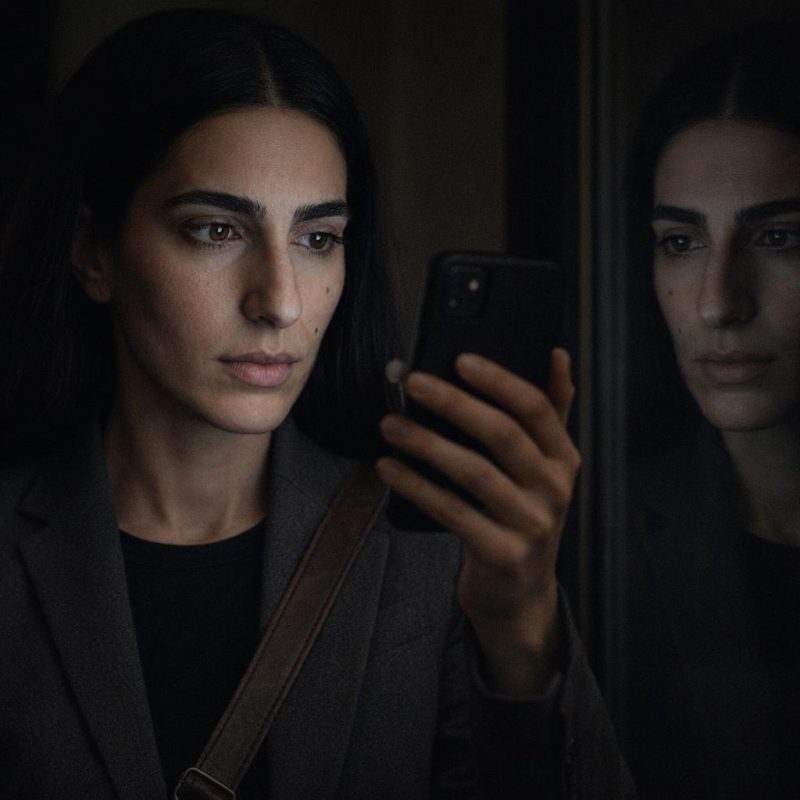 Image by RM AI
The Call
We scheduled the video call for a Saturday morning. I'd cleaned my apartment the night before without meaning to, the way you tidy up when you're nervous and need something to do with your hands. When the call connected and Elena's face appeared on the screen, I felt my breath catch. The resemblance had been striking in the photograph, but in motion it was something else entirely — the way she tilted her head when she was thinking, the way her expression shifted before she spoke. We were careful with each other at first, asking surface questions, talking about where we lived and what we did. She asked about my life and I asked about hers, and slowly the conversation loosened. She had a warmth to her that felt familiar in a way I couldn't account for. At some point she mentioned that she'd been searching for a long time, and her voice changed when she said it — quieter, more careful. I asked how long. She looked at the camera directly, and then her voice broke: she'd been searching for twenty-seven years.
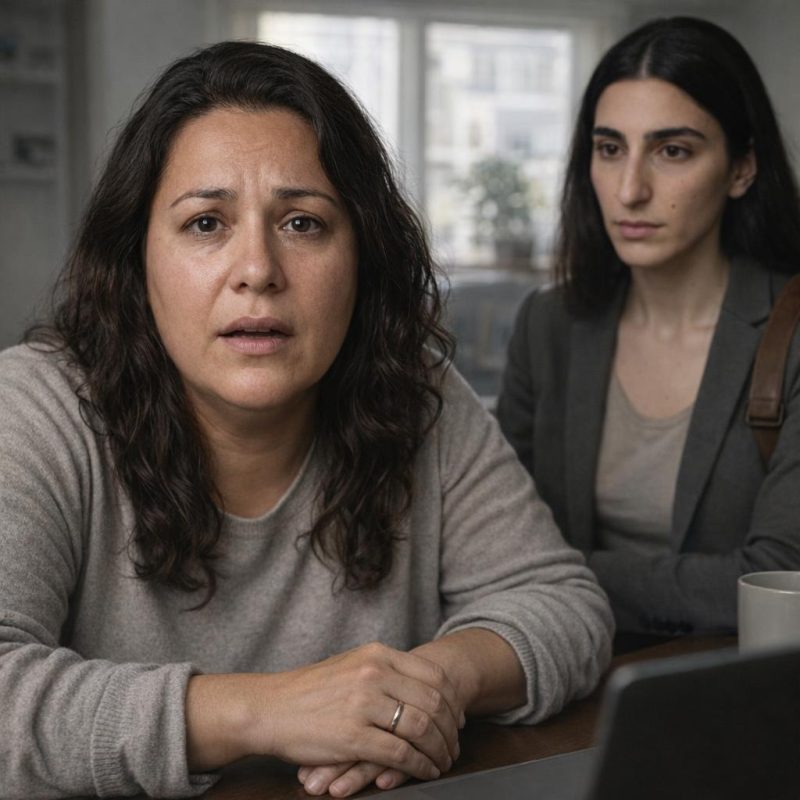 Image by RM AI
The Hospital
We stayed on the call for another hour after that. Elena composed herself quickly — I got the sense she'd learned how to do that, how to hold the grief at a functional distance so she could keep moving. We talked about smaller things for a while, letting the weight of what she'd said settle. Then her expression shifted again, and she said there was something she needed to tell me. She took a breath. She said she'd had a baby in 1997. She said the baby had been taken from the hospital. Not placed for adoption, not given up — taken. She used that word specifically, and I heard the difference. Her eyes filled as she said it, and she didn't look away from the camera. I didn't ask her to clarify. I didn't say anything at all. I just sat there with the screen in front of me, the word moving through my mind the way a sound does after the room goes quiet — not loud anymore, but still completely present. Taken. I kept hearing it in the space between her sentences, in the silence after she stopped speaking, in the stillness of my own apartment around me.
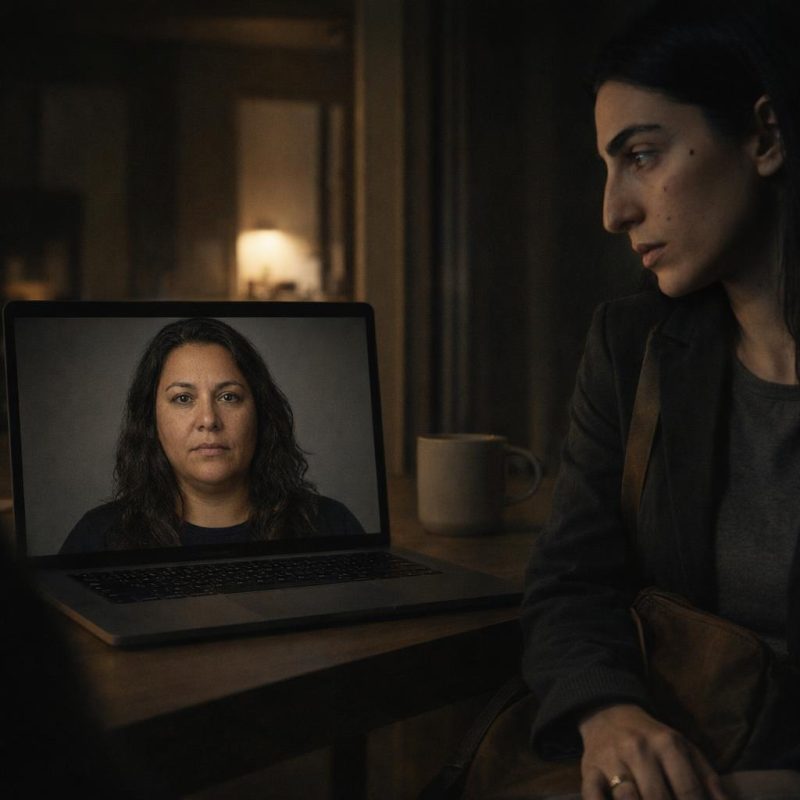 Image by RM AI
The Date
Elena said she'd kept documentation from the beginning. Her voice was steadier now, deliberate. She said she'd never stopped adding to it, even in the years when she had nothing new to add. She reached off-screen for a moment and came back holding a piece of paper. She held it up to the camera. It was a hospital record, worn at the edges, the kind of document that had been handled many times. I leaned toward my screen. There was a date on it, handwritten, near the top of the page. I read it once. Then I read it again. The month, the day, the year — all of it matched my birthday exactly.
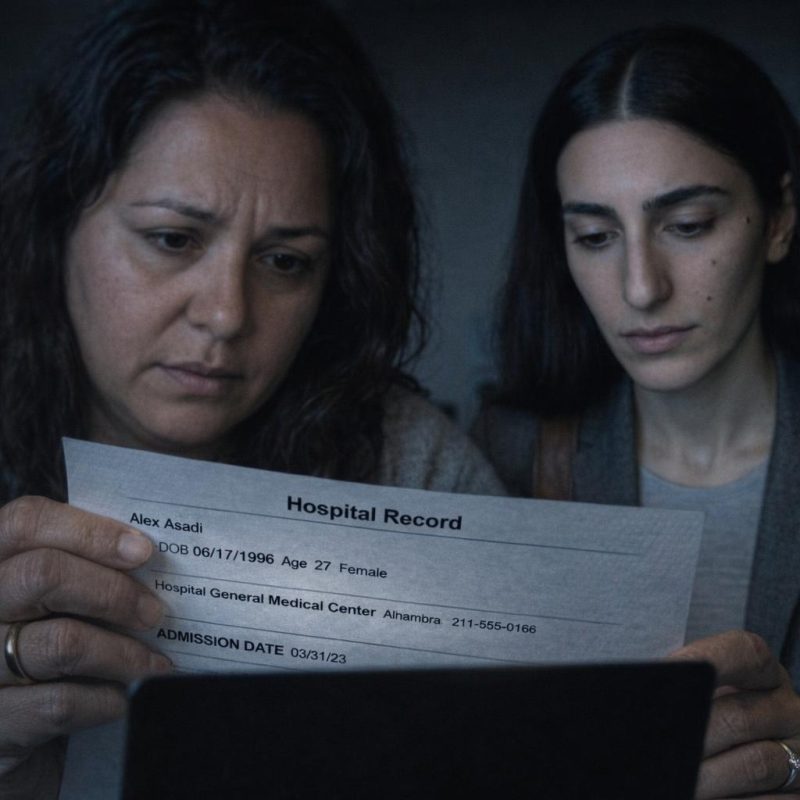 Image by RM AI
The Search
After the call ended, I sat there for a long time with the laptop still open, Elena's face gone from the screen but somehow still in the room with me. I didn't know what to do with my hands. I didn't know what to do with any of it. Eventually I opened a new browser tab and typed the words slowly, like I was afraid of what would come back: Texas hospital missing infant 1997. The results loaded in under a second. I stared at the page. There were dozens of articles. Dozens. I'd expected maybe a handful — a few isolated incidents I could sort through methodically. Instead I was looking at a wall of headlines, each one representing a family, a baby, a mother who had gone home without her child. I clicked through several of them. Some cases had been resolved. Others were still listed as open, the children never found, the families still waiting. I bookmarked article after article, my stomach turning with each one. I hadn't understood, not really, how many times this had happened. How many lives had been split apart in exactly this way. I closed the laptop eventually, but the number of those headlines stayed with me long after the screen went dark.
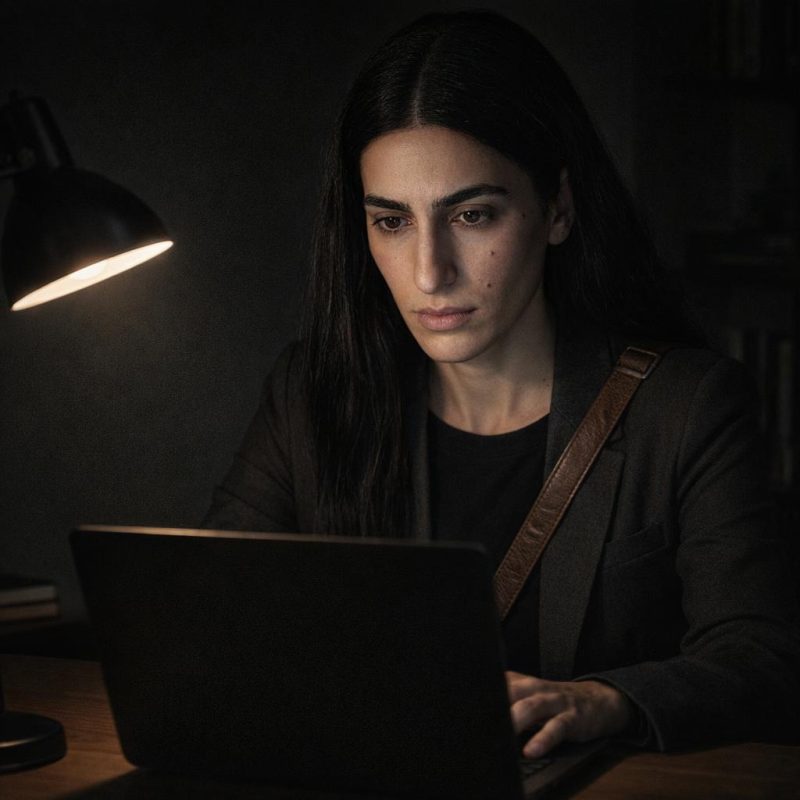 Image by RM AI
The Article
I went back to the search the next morning, this time more focused, narrowing by city and date range. I was looking for something specific now — a case that matched what Elena had described. It took about an hour before I found it. A Dallas newspaper archive, dated three days after my birthday. The headline used the word abduction. I read the article twice before I let myself absorb it. It named Elena Vasquez as the mother. It described a newborn girl taken from the maternity ward during a shift change, the details matching what Elena had told me almost word for word — the timing, the ward, the way the staff had initially assumed a transfer error. There was a photograph embedded in the article, grainy from the scan but unmistakable. A younger Elena, maybe twenty years old, sitting in what looked like a hospital waiting area. She was holding a baby blanket. Her arms were curved around it the way you'd hold an infant, but the blanket was empty. She was looking just past the camera, not at it. I sat with that image for a long time. The blanket. The way her arms hadn't let go of the shape of something that wasn't there anymore.
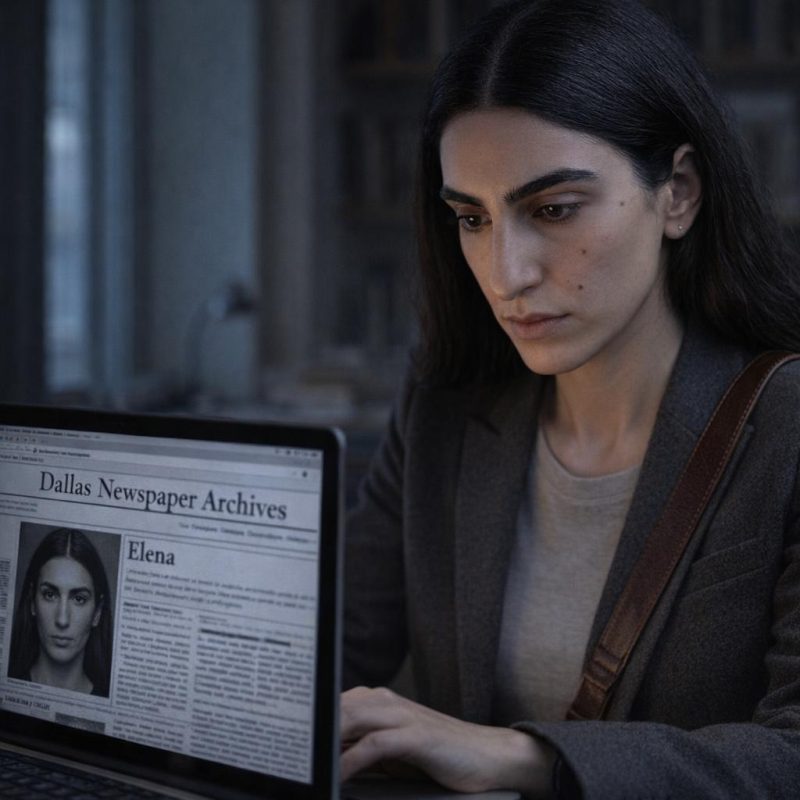 Image by RM AI
Maya
I called Maya at almost midnight. She picked up on the second ring, and before she even said hello I could tell from her voice that she already knew something was wrong. I told her everything. I started at the beginning — the DNA test, the Texas matches, the absence of anything connecting me to the Midwest story I'd grown up with. I told her about Elena's message, about the video call, about the hospital record Elena had held up to the camera. I told her about the article I'd found, the photograph, the empty blanket. Maya didn't interrupt once. She just listened, and I could hear her breathing on the other end of the line, steady and present, and that alone made something loosen in my chest that I hadn't realized I'd been holding tight for days. When I finally stopped talking, there was a short silence. Then she asked a few careful questions — dates, names, whether I'd saved the article. Her voice was calm in the way Maya's voice always gets when she's thinking hard. She said I needed to call the police.
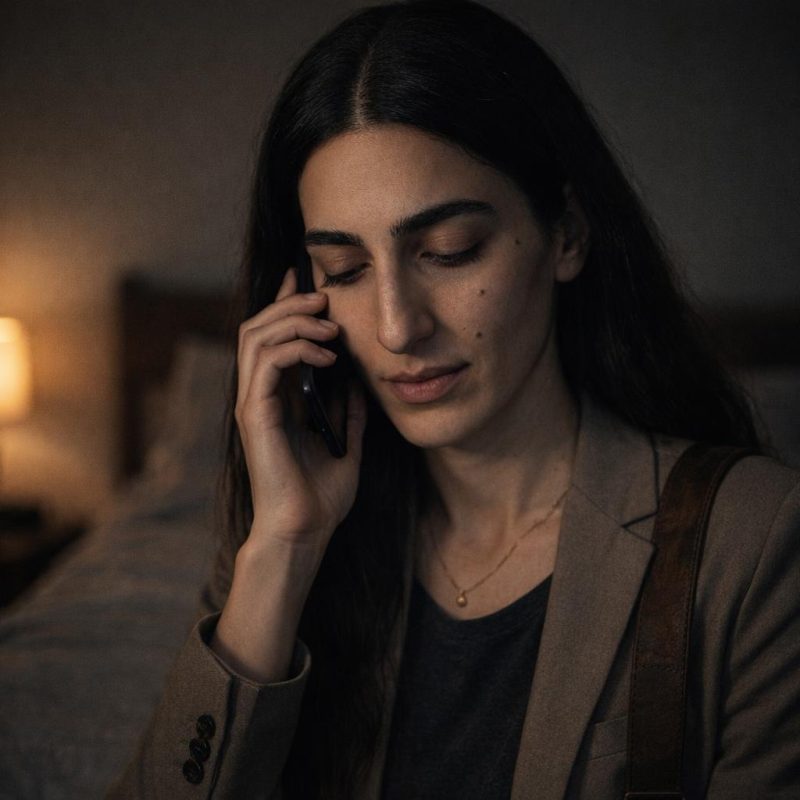 Image by RM AI
The Decision
I stayed on the phone with Maya for another hour after that. She offered to come over, but I told her I was okay, and I mostly meant it. What I needed wasn't company — it was to think out loud with someone who wasn't going to fall apart. Maya was good at that. She let me work through it. I kept circling back to Susan and Richard, to what it would mean if I made this call, what it would set in motion. Maya didn't push me. She just reminded me, quietly, that Elena had been searching for twenty-seven years. That whatever I was afraid of, Elena had been living with something worse for longer than I'd been alive. That landed somewhere it needed to. I opened my laptop while Maya stayed on the line. I wasn't sure who to contact or how — I didn't know if this was a local matter or a federal one or something else entirely. I typed cold case detective Dallas Texas into the search bar and started reading through the results, writing down names and numbers on the notepad I kept by my desk. My hand was steadier than I expected. The search results filled the screen.
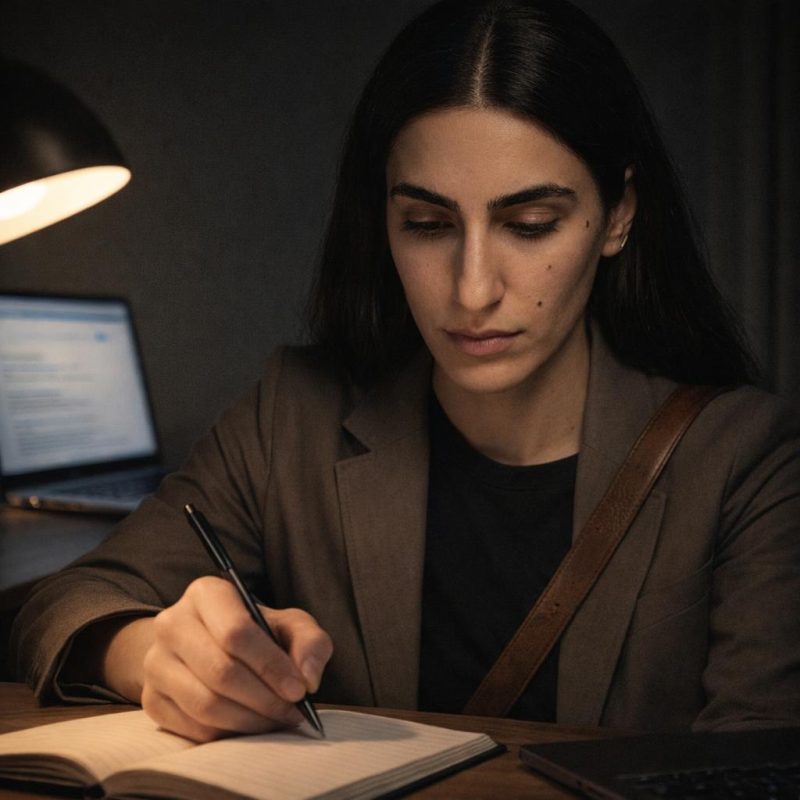 Image by RM AI
The Contact
I found his name about twenty minutes into the search. Detective James Morrison, Dallas PD, cold cases division. There was a brief profile in a local news piece from a few years back — a feature on unsolved cases, the kind of article that runs on slow news weekends. His name appeared again in a follow-up piece about infant abduction cases from the late nineties. And then I found it: a single paragraph in an older article that mentioned Elena's case specifically, and Morrison's name attached to it. He'd been working it for years. I sat with that for a moment. Someone had been looking. Someone official had been looking this whole time. I found a department contact email through the Dallas PD website and spent the next forty minutes drafting a message. I explained who I was, that I'd taken a consumer DNA test, that I'd matched with a woman named Elena Vasquez, and that I'd found a 1997 news article that I believed was connected. I attached my DNA results as a PDF. I reread the email five times, changing small things each pass — a word here, a sentence there — until I couldn't find anything else to adjust. Then I clicked send.
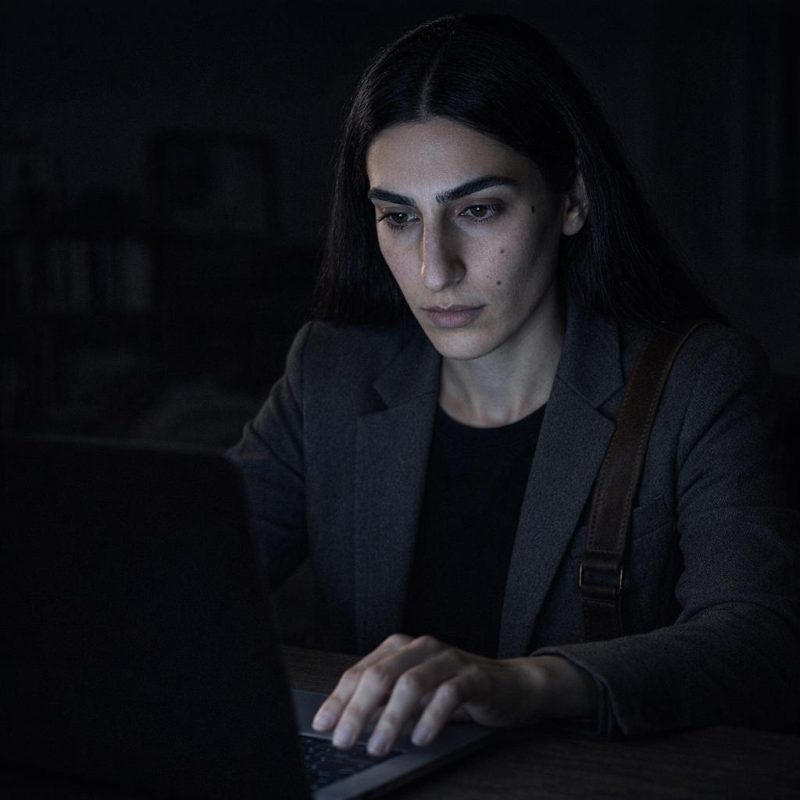 Image by RM AI
The Meeting
Morrison replied within eighteen hours. He asked if I could meet in person, suggested a coffee shop near downtown, and gave me two time options. I picked the earlier one. I arrived fifteen minutes before he did and chose a corner table near the back, away from the door, away from the counter noise. He walked in right on time — early fifties, salt-and-pepper hair, a folder tucked under one arm. He had the kind of face that had seen a lot and learned not to show most of it, but his eyes were kind when he shook my hand and sat down across from me. He thanked me for reaching out. He said he'd reviewed my email and the attached results carefully. Then he told me he'd been working Elena's case for eight years, that she had filed a missing persons report in 1997 that had never been closed, and that the case had remained active in the system the entire time. He opened the folder on the table between us. I don't know what I'd expected — a few pages, maybe. What he set down was thick. Worn at the edges. The kind of file that accumulates over years of someone refusing to stop looking. I rested my hands in my lap and looked at it.
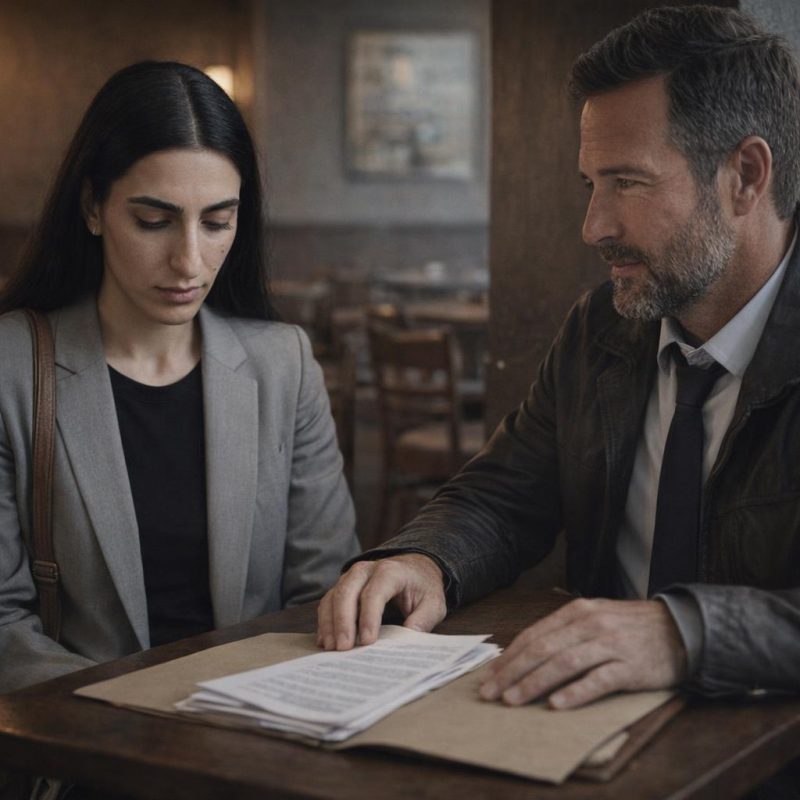 Image by RM AI
The Confirmation
Morrison walked me through the next steps in the same measured tone he'd used for everything else — careful, unhurried, like he'd explained this process before and understood it needed space to land. He said the consumer DNA match was compelling but that they needed an official comparison to move forward, one that would hold up as legal evidence. He explained that the test would compare my DNA directly against Elena's, that she had already agreed to provide a sample and was waiting on my decision. He said the results would take a few days once both samples were submitted. He slid a form across the table toward me. A consent form, two pages, with my name typed at the top — he'd prepared it before the meeting. I read through it slowly. The language was precise and clinical, full of terms I had to read twice to follow, but the meaning was clear enough. I was agreeing to participate in an official investigation. I was agreeing to let the results become part of a legal record. Morrison set a pen on top of the form without saying anything. I picked it up. I signed my name on the line at the bottom of the second page. The form sat between us on the table, my signature still fresh on it.
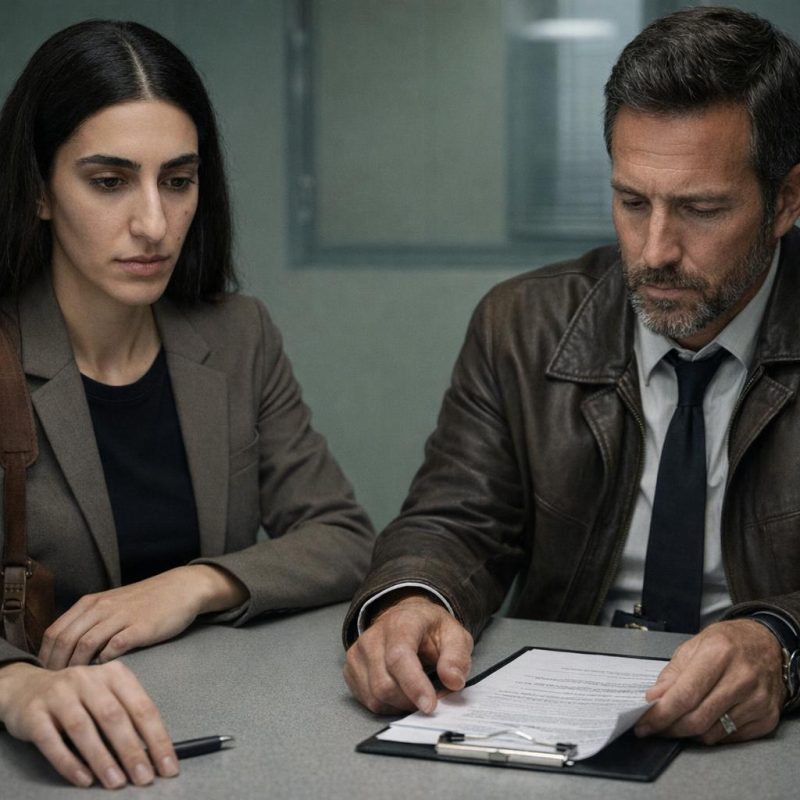 Image by RM AI
The Result
Three days later my phone rang just after nine in the morning. I saw Morrison's name on the screen and answered before the second ring finished. He asked if I was somewhere I could talk privately. I told him I was alone in my apartment. There was a brief pause — the kind that isn't hesitation so much as care, someone making sure they have your full attention before they say something that can't be unsaid. He told me the results had come back. He said the comparison had been conclusive. His voice was steady and professional, the same measured tone from the coffee shop, but I could hear him choosing his words with precision. I had sat down on the floor at some point without noticing — my back against the couch, knees pulled up, phone pressed hard against my ear. Morrison asked if I was okay. I said I thought so. He said we needed to meet again to talk about next steps, and I said yes, I understood, I would be there. Then he said it clearly, the way you say something when you need it to exist in the air between two people without any softening around the edges: ninety-nine point nine percent probability of maternity.
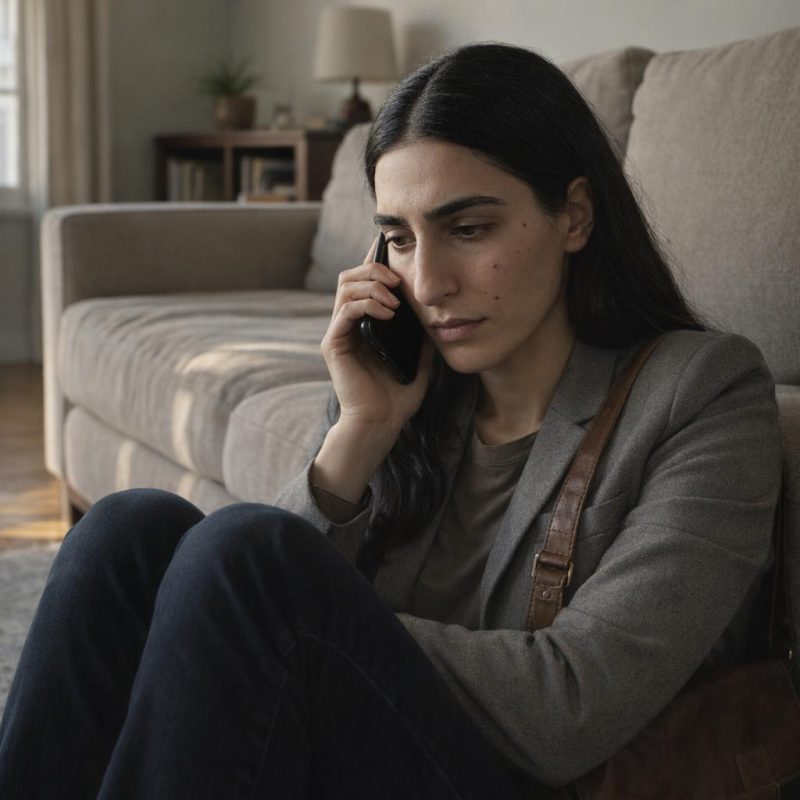 Image by RM AI
The Confrontation
I didn't call ahead. I drove the forty minutes to Susan and Richard's house with the printed DNA results on the passenger seat, folded once, and I didn't let myself think too hard about what I was going to say because I was afraid I'd talk myself out of it. Susan answered the door with that practiced smile, and it faltered the moment she saw my face. I asked them both to sit down. Richard came in from the kitchen, drying his hands on a dish towel, and something shifted in his posture when he saw me standing in the middle of their living room. I set the papers on the coffee table. I told them I needed them to explain the Texas connections — the DNA matches, the geographic clustering, all of it. Then I said Elena's name out loud. Susan's face went the color of old paper. Richard stood up, then sat back down like his legs had made the decision without him. Susan said she didn't know anyone by that name. Richard said the adoption had been legal and proper, that they'd been told my birth mother was from the Midwest. I asked them to look at the evidence in front of them. They exchanged a glance — brief, almost imperceptible — and then told me they had shared everything they knew. The silence that settled into that room after that was heavier than anything any of us said.
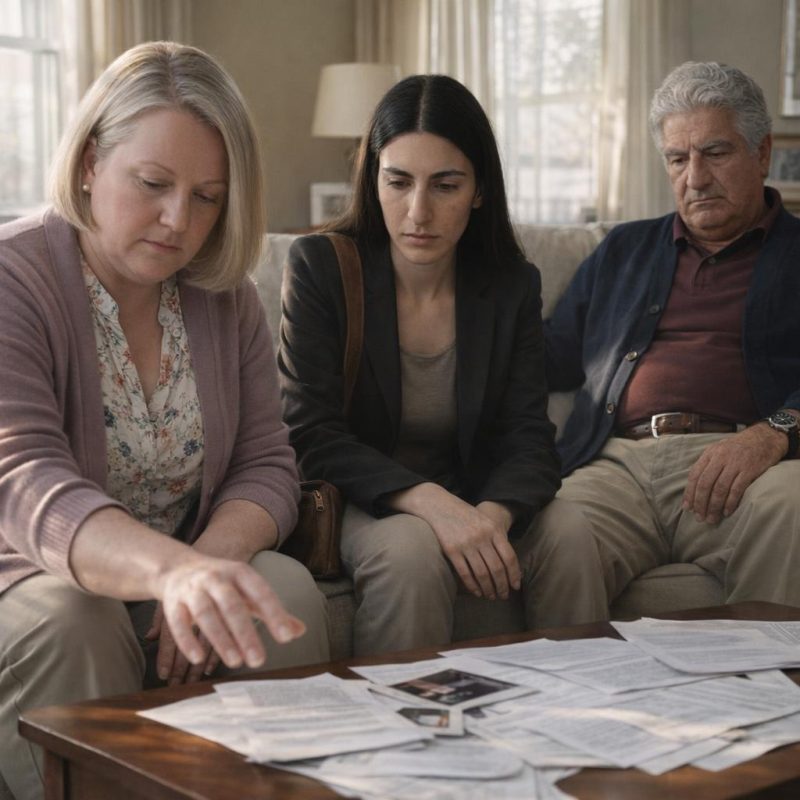 Image by RM AI
The Search
Susan said they needed a few things from the grocery store and asked if I wanted to come. I told them I needed to make a phone call and would wait at the house. I watched their car back out of the driveway from the front window, and then I stood there another full minute before I moved. I felt sick about what I was doing. I went to Richard's home office anyway. The desk drawers held tax returns going back fifteen years, insurance documents, a folder of old utility bills. I checked the bookshelf behind the desk — binders, reference manuals, a row of paperback thrillers. Nothing. I moved to the filing cabinet in the corner. The top two drawers slid open easily: more tax records, appliance warranties, a folder of Christmas card lists. Then I heard a car door outside and my whole body went rigid. I crossed to the window. It was a neighbor pulling into the driveway next door. I let out a breath and turned back to the cabinet. The bottom drawer didn't move when I pulled it. A small keyhole sat centered just above the handle, and no amount of pressure changed anything about that.
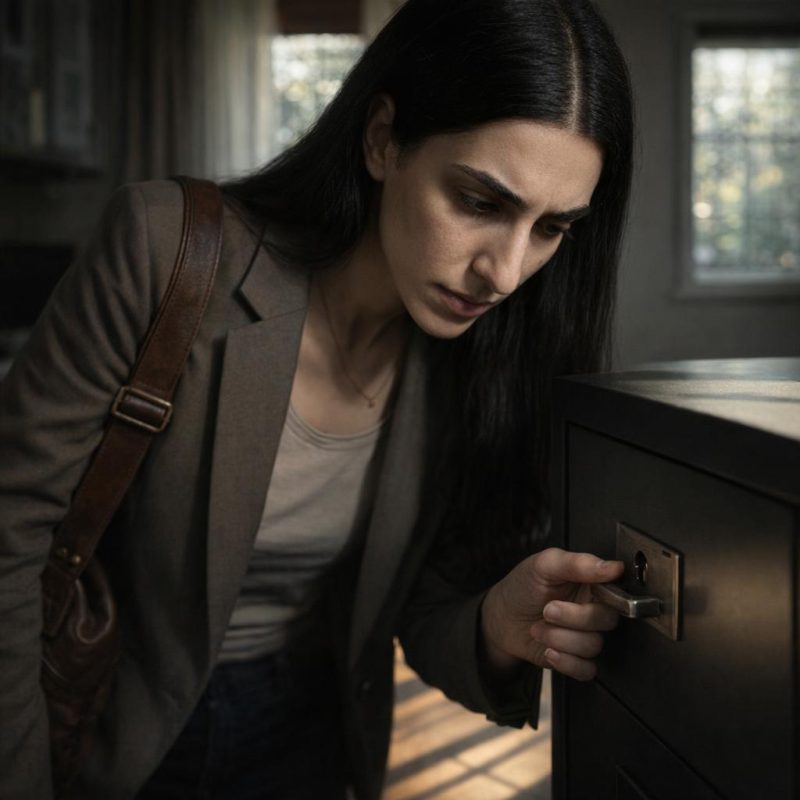 Image by RM AI
The Hospital
I went back to the closet and pulled down a cardboard box from the top shelf. It was heavier than it looked — old work materials, a coffee mug with a faded logo, a folded conference lanyard. I set it on the desk and started going through it layer by layer. Near the bottom, my fingers found something hard and flat. I pulled it out. It was a laminated badge, the kind with a clip on the back, and Richard's face looked up at me from it — younger, hair darker, the same steady eyes. The name of the hospital was printed in blue across the top. Dallas Memorial Hospital. Below his photo: Issue Date January 1996. My hands started shaking before I fully understood why. I kept digging. There was a letter underneath, printed on hospital letterhead, thanking Richard for his years of service and acknowledging his transfer effective March 1998. He had been there from 1996 through 1998 — the whole window. I sat down on the floor of the closet, the badge in my palm, staring at the name printed in blue: Dallas Memorial Hospital, the same city Elena had named, the same years she had described.
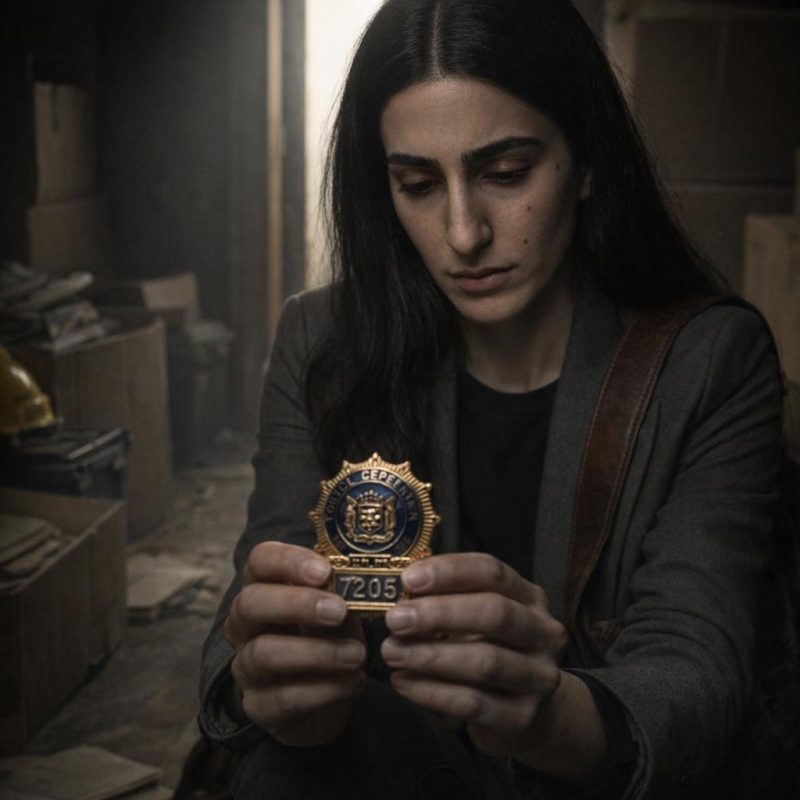 Image by RM AI
The Documents
I shoved everything back into the box and pushed it onto the shelf, but I kept the badge in my palm. When Susan and Richard came through the door I was standing in the hallway. I held the badge up without saying a word. Richard's face drained so completely it frightened me. Susan made a sound I'd never heard from her before — not quite a word, not quite a cry. I told them I needed the key to the bottom drawer. Richard stood there for a long moment, then turned and went to the desk. He opened the center drawer and set a small silver key on the surface without looking at me. My hands were shaking badly enough that it took two tries to get it into the lock. The bottom drawer held a row of manila folders organized by year. I found the one marked 1996–1997 and opened it on the desk. The first page was a certificate — official seal, typed entries, a signature at the bottom. Baby Girl Morgan. Stillborn. December 15, 1996. Behind it were Susan's hospital discharge papers from the same date. Behind those, adoption papers dated February 1997 listing a birth mother from Iowa. The dates made no sense stacked against each other like that. Susan was sobbing in the doorway. Richard stood frozen, staring at the open drawer.
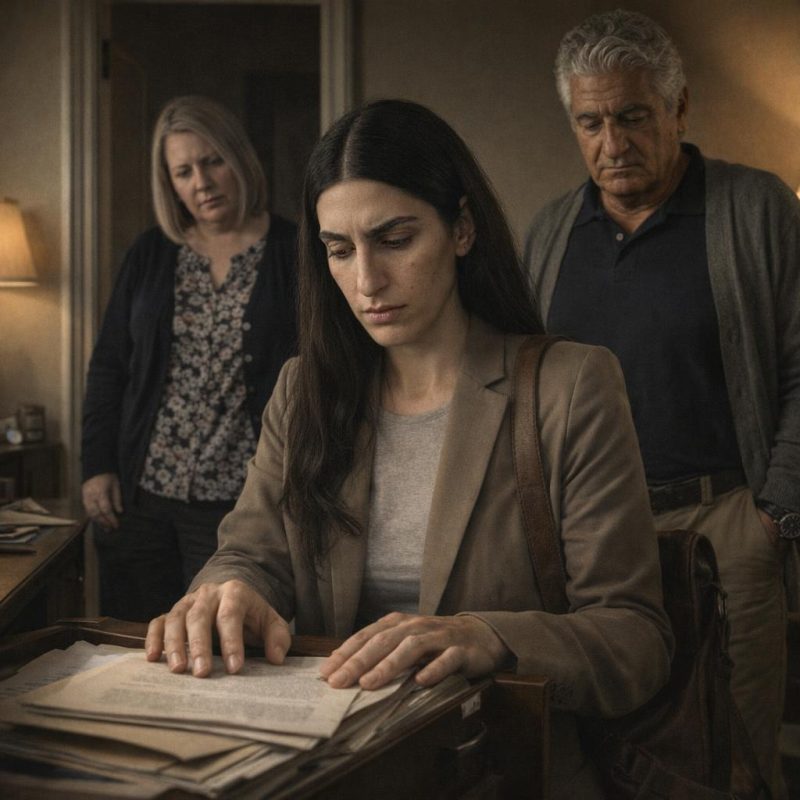 Image by RM AI
The Confession
I held up the death certificate and asked them to explain it. Susan folded into the armchair like something had gone out of her, and Richard moved to stand beside her without a word. Susan said she needed to tell me everything. She described losing the baby in December — the stillbirth, the silence in the delivery room, the way she said the world just stopped making sense after that. She said she couldn't accept it. She came to visit Richard at the hospital in January, and she walked through the maternity ward, and she saw a young woman with a newborn in a bassinet beside her bed. Susan said something broke open in her when she saw that baby. She waited until the nurses changed shifts. She said it like a fact, like a thing that had simply happened to her rather than a choice she had made. She took the baby from the bassinet while the mother was sleeping. Richard found out what she had done and helped her get out of the hospital. They drove through the night. She was crying the whole time she told me this, her hands pressed flat against her knees, and then she looked up at me and said, "I took you because I couldn't lose another baby."
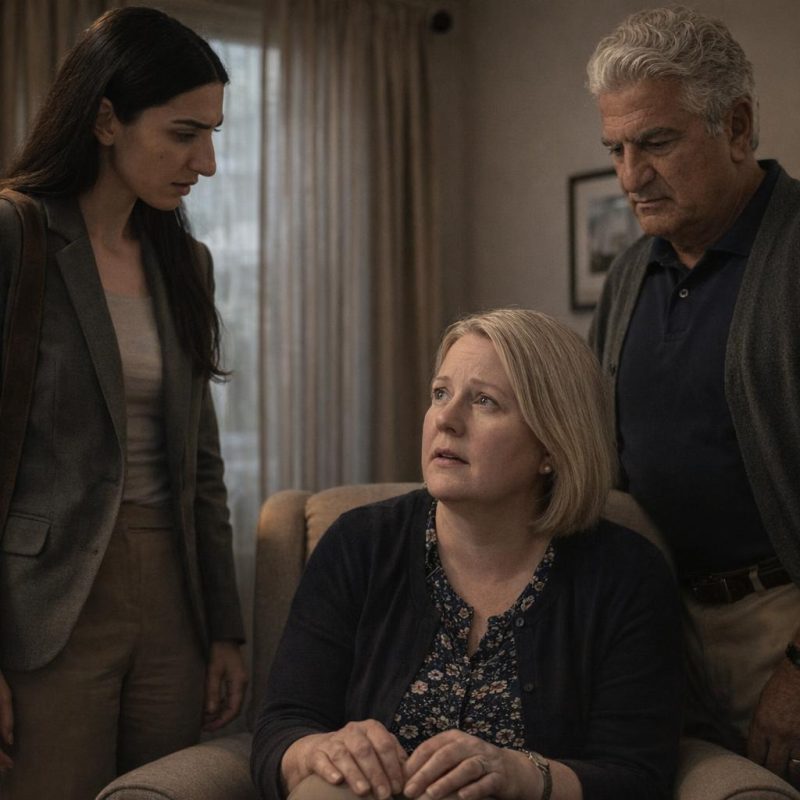 Image by RM AI
The Accomplice
I turned to Richard. I asked him how he did it — the documents, all of it. He sat down heavily in the chair across from me and stared at his hands for a moment before he started talking. He said he worked in hospital administration and had access to birth records and medical files. He created a new birth certificate listing Susan as my mother. He destroyed the original hospital records of what had happened that night — the intake logs, the bassinet assignment, anything that could connect us to Dallas. He filed falsified adoption papers in Iowa after they relocated, chose Iowa specifically because that's where they'd decided to settle. He said he knew it was wrong. He said he did it to protect Susan, to keep what was left of their family from falling apart. He transferred to a different hospital in 1998 and they moved and tried to build something that looked like a normal life. He said he had been terrified every single day for twenty-seven years — every news alert, every knock at the door, every time I asked about my birth family. Susan reached over and took his hand while he was still talking. I watched them hold onto each other, and Richard said the words quietly, almost to himself: he had gone into that records room and erased every trace of who I actually was.
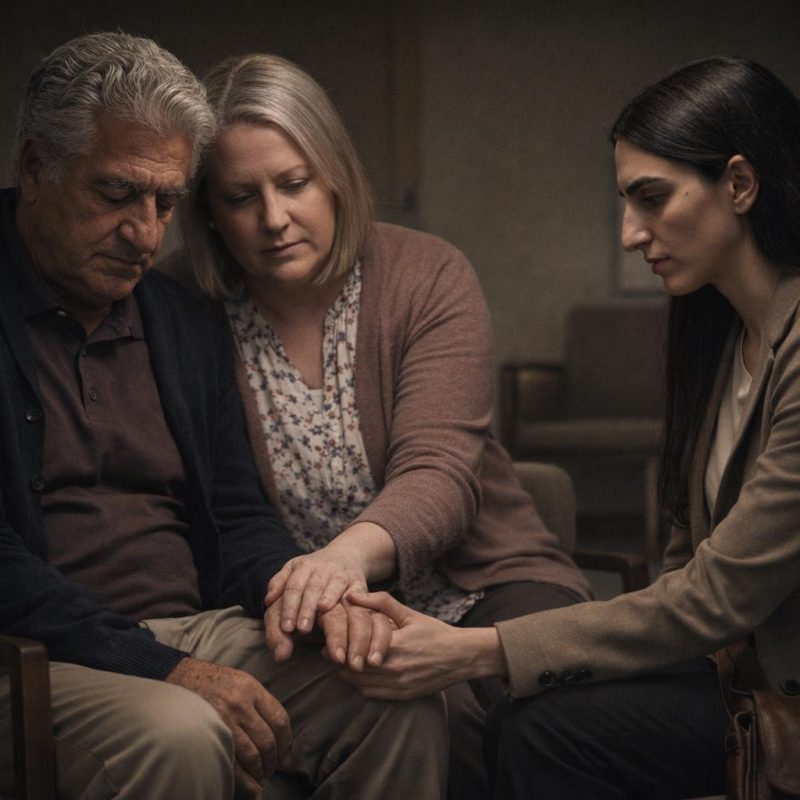 Image by RM AI
Twenty-Seven Years
Susan talked for a long time after that. She described the early years — jumping at the sound of the doorbell, watching the news every night, Richard scanning headlines about missing children cases. She said there were moments, more than once, when they almost told me the truth. Richard said they could never find the right words, and then enough time passed that the words seemed impossible. They told themselves I was better off, that Elena had moved on, that the life they were giving me was real enough to justify what they'd done. They built the adoption story when I was eight — practiced it, refined it, told it until it felt almost true. I sat there listening and I kept thinking about specific things: the soccer games Richard never missed, the way Susan used to leave notes in my lunch, the birthday dinners, the arguments about curfew, the ordinary texture of twenty-seven years. All of it real. All of it also something else entirely. Richard said they knew the DNA test would expose everything. Susan said she'd been sick with fear from the moment I mentioned it. Every memory I had of feeling loved and known and safe in that house now sat alongside the knowledge of what it had cost someone else, and I couldn't find a way to hold both things at once.
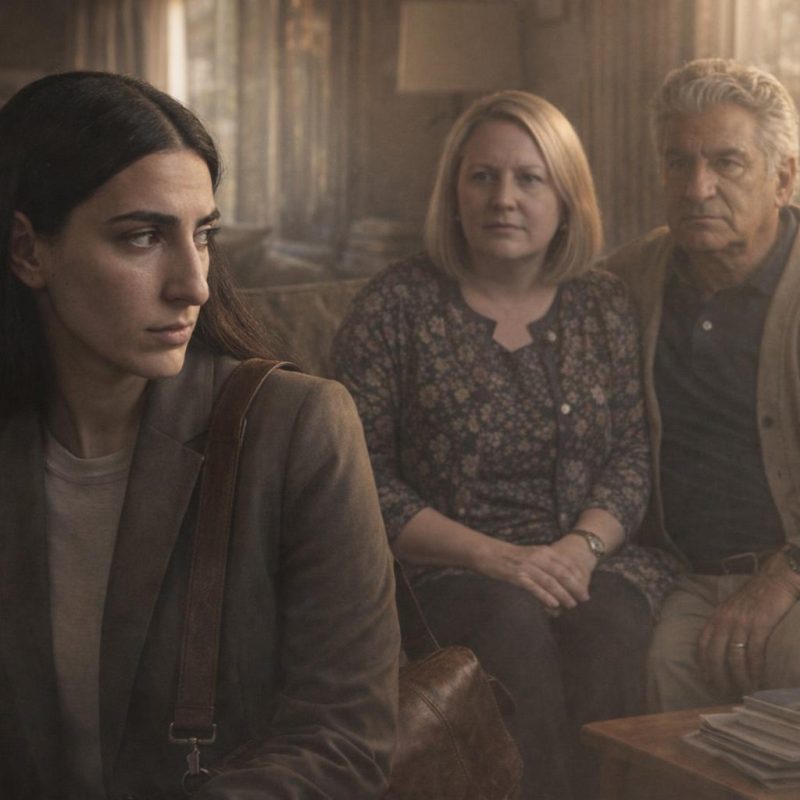 Image by RM AI
The Recognition
I sat there and let the memories come. Every time I had asked about my birth family — the careful redirections, Susan's eyes going soft and distant, Richard suddenly needing to check something in the other room. I had read those moments as tenderness, as grief over a complicated past. Now they arranged themselves differently. Richard's questions when I first mentioned the DNA test weren't about my privacy. Susan's phone calls asking how the research was going weren't curiosity. The adoption story they told me at eight, the one about being chosen and wanted and special — I remembered Susan's eyes filling with tears when she told it, and I had always thought she was moved by the beauty of it. She was crying because she knew every word was a lie. Every deflection, every subject change, every gentle steering away from the question of where I really came from had been in service of one thing: keeping me from finding out. I looked at them sitting across from me, still holding hands, and I understood that the person I thought I was — the story I had carried about myself my whole life — had been built entirely around their need to never be found out.
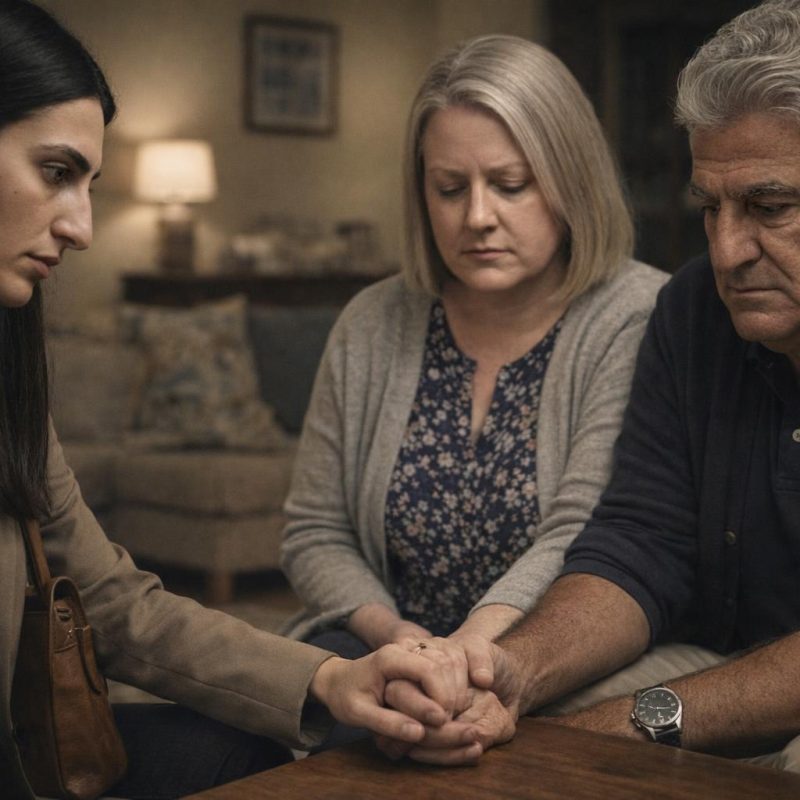 Image by RM AI
Leaving
I stood up. My legs felt like they belonged to someone else, but they held. Susan reached for my arm the moment I moved — her fingers closing around my wrist the way they had when I was small and about to step into traffic. I pulled away. Not roughly, but completely. Richard said we needed to keep talking, that there was more context, more they wanted me to understand. I told him there was nothing more to say right now. Susan started crying harder, the kind of crying that used to undo me completely, and I felt something in my chest go very quiet and very still. She said they could explain everything, that if I just stayed they could make me understand why. I told her she already had explained. That was the problem. Richard asked what I was going to do, and I said I didn't know yet, and that was the most honest thing anyone had said in that room all day. I picked up my bag. Susan followed me to the door, still talking, her voice breaking on my name. I opened the front door and stepped out into the cold air. It hit my face like something real. I pulled the door shut behind me and walked to my car without looking back.
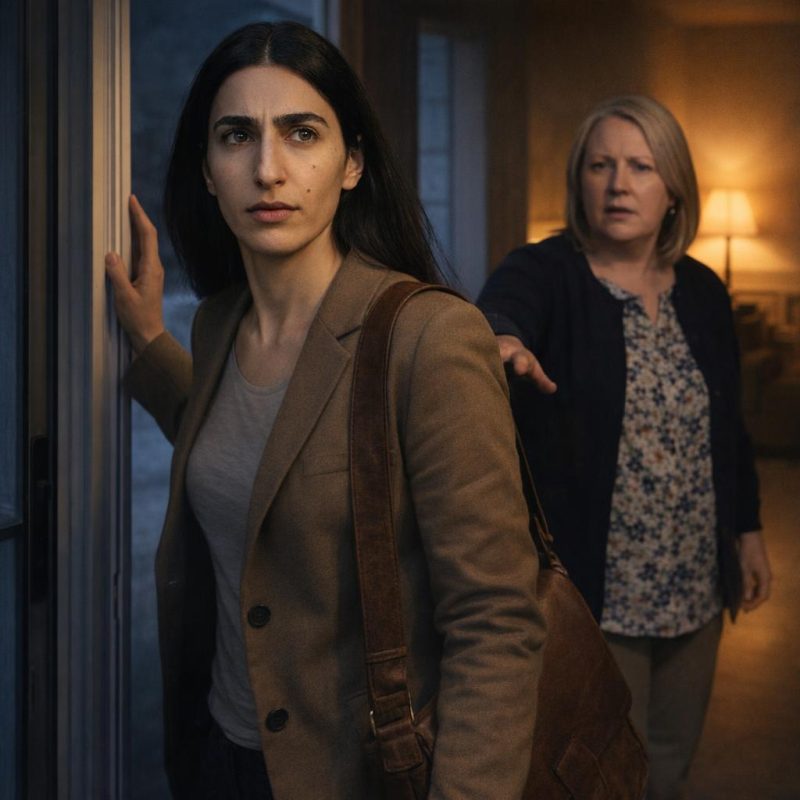 Image by RM AI
The Call
I sat on the floor of my living room for a long time before I picked up my phone. Not the couch, not a chair — the floor, with my back against the coffee table and my knees pulled up. It felt like the right place to be. I found Morrison's number and called it. He answered on the second ring. I told him I had information about Elena's case, and he asked immediately if I was safe. I said I was alone in my apartment. Then I started talking. I told him about the hospital badge, the documents, the way Susan's hands had moved when she finally stopped pretending. I told him about Richard's role in the paperwork, the forged records, all of it. Morrison listened without interrupting once, which I hadn't expected. When I finished, he asked if I still had access to the documents. I told him I had photographed everything before I left. He said the photos would be enough to move forward. Then he asked if I was prepared for what came next. I told him I needed to do this for Elena. There was a pause, and then Morrison said he would need to bring Susan and Richard in for questioning.
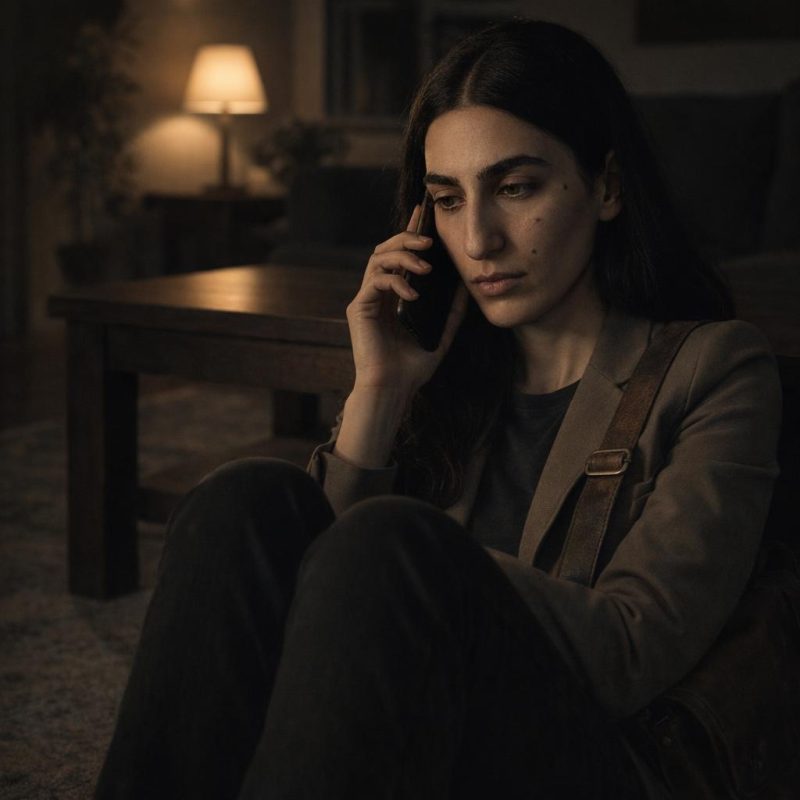 Image by RM AI
The Arrest
Morrison texted me about two hours after we hung up — officers en route, he said. I drove over without fully deciding to. I parked down the street from the house I grew up in, far enough back that I was just another car at the curb. Two police cruisers turned onto the street first, then Morrison's car behind them. I watched the officers walk up the front path, the same path I had walked up ten thousand times. Richard answered the door. I could see him from where I sat — the way his shoulders dropped when he saw the uniforms. Susan appeared behind him a moment later. Morrison held something up, and Richard stepped back to let them in. For a while there was just movement behind the windows, shapes passing back and forth through the lit rooms. Then the front door opened again. Susan came out first, and even from that distance I could see she was crying. Richard walked behind her with his head down. They were put into separate cars. Morrison stood in the driveway and looked down the street in my direction. I didn't know if he could see me. The police cars pulled away, and the street went quiet, and I sat with the knowledge that I had been the one to make that call.
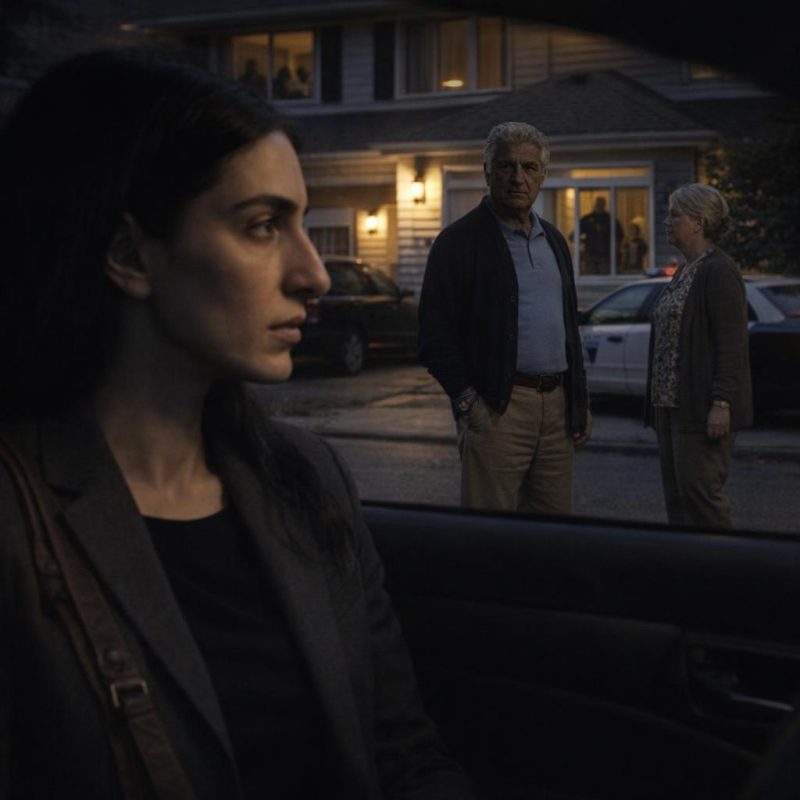 Image by RM AI
The Charges
Morrison called that evening. He said they were both in custody and had given statements. Then he walked me through the charges, reading them in that careful, measured way of his — kidnapping of a minor, falsifying government documents, identity fraud. He said Susan had confessed again to the officers, and that Richard had confirmed his role in the cover-up. He explained what the legal process would look like from here: arraignment, likely a trial, months of proceedings. He asked if I had legal representation. I told him I hadn't thought about needing a lawyer, and he said gently that I should probably consult someone soon, that my position in the case was complicated. He mentioned the media — said the story would likely break within days, that these cases attracted attention. He asked if I wanted him to reach out to Elena, and I told him I'd call her myself. Before he hung up, he said he was sorry I was going through this. I thanked him and set the phone down on the kitchen counter. The word had been sitting in my chest since he first said it — kidnapping. Not adoption gone wrong, not a desperate choice, not a complicated situation. Kidnapping. I sat at the kitchen table and let the word settle into everything it meant.
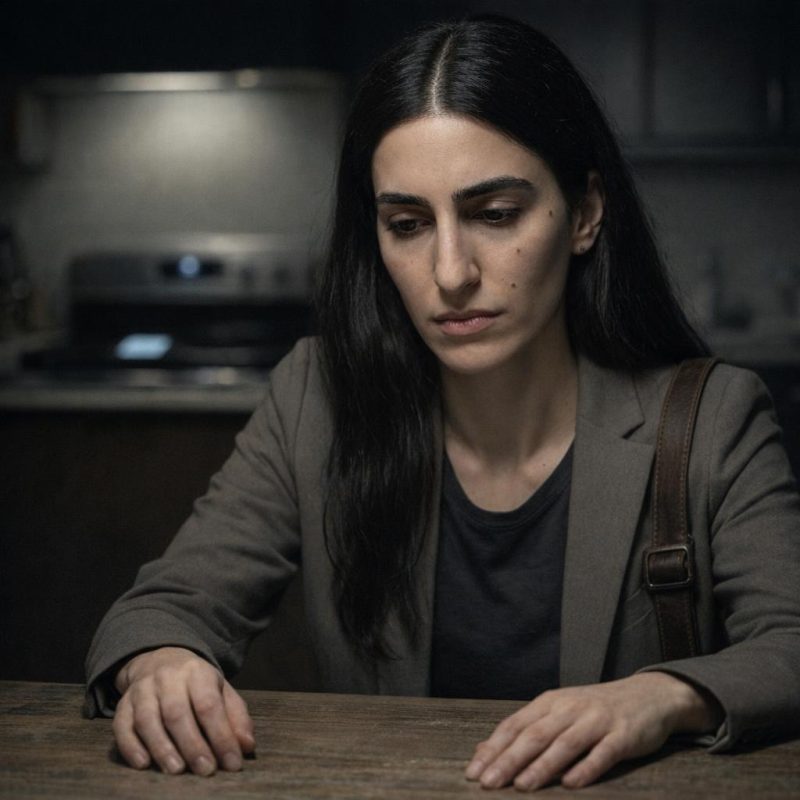 Image by RM AI
The Story Breaks
I woke up to forty-seven notifications. The first article had gone up sometime around three in the morning — 'Couple Arrested in 27-Year-Old Kidnapping Case.' My name was in the third paragraph. Elena's name was in the second. I read it once and then put the phone face-down on the mattress and stared at the ceiling. Texts came in from people I hadn't spoken to since high school, from a cousin I barely knew, from a number I didn't recognize at all. Reporters called twice before eight. I turned the phone off. Maya showed up at my door an hour later with two coffees and didn't ask if it was a good time. She sat with me on the couch and after a while she opened her tablet and showed me how far it had spread — multiple outlets, some with photos of Susan and Richard from what looked like old social media, one with a scan of the original missing persons report from 1997. There were comment sections. Strangers were discussing my life, my parents, my face, what I must be feeling. Maya closed the tablet before I could read much. She said I didn't need any of that right now. She was right. But I had already seen the headline, and there was something deeply disorienting about watching your own life become a story someone else was telling.
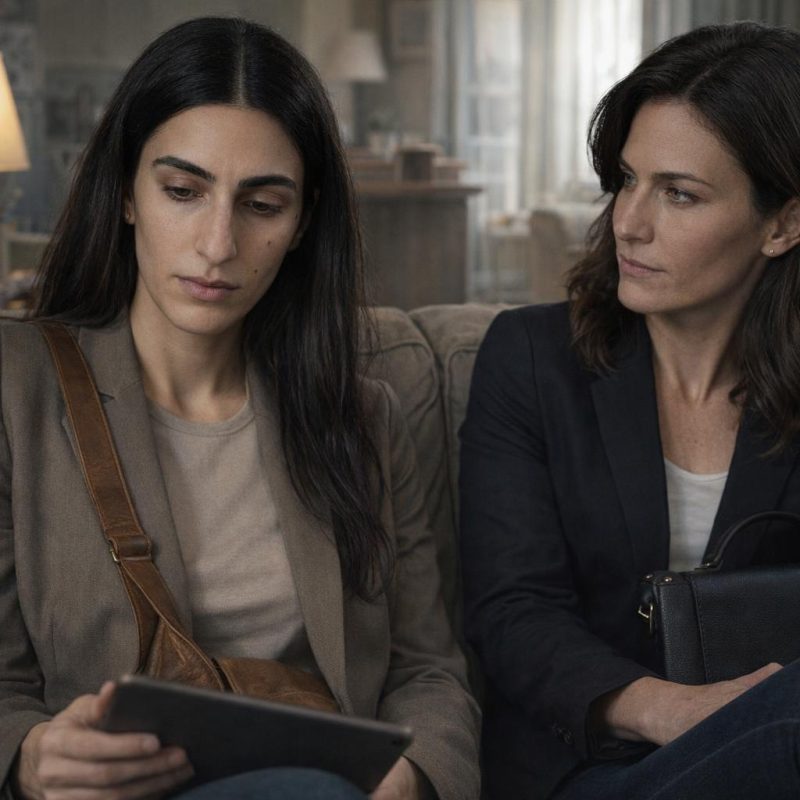 Image by RM AI
Elena
I got to the restaurant twenty minutes early and sat facing the door. When Elena walked in, I knew her immediately — not just from the video calls, but from something harder to name, something in the way she moved through the room scanning for me. We hugged at the entrance, both of us a little stiff, neither of us sure how hard to hold on. We sat at a corner table and for a moment neither of us said anything. Her hands were shaking around her water glass. I noticed her eyes — the shape of them, the slight downward tilt at the outer corners. I had looked at my own eyes in mirrors my whole life without knowing where they came from. Elena thanked me for finding her. I said I was sorry it had taken so long. She said it wasn't my fault, and the way she said it made me believe her. We talked about the arrest, about Morrison, about what came next. Then she reached into her bag and took out a photograph — small, slightly worn at the edges. It was from the hospital. A newborn, hours old, wrapped in a striped blanket. Me, before I had a name I knew. Elena's eyes filled. Mine did too, before I could stop them. We sat in silence for a moment, and then I reached across the table and took her hand.
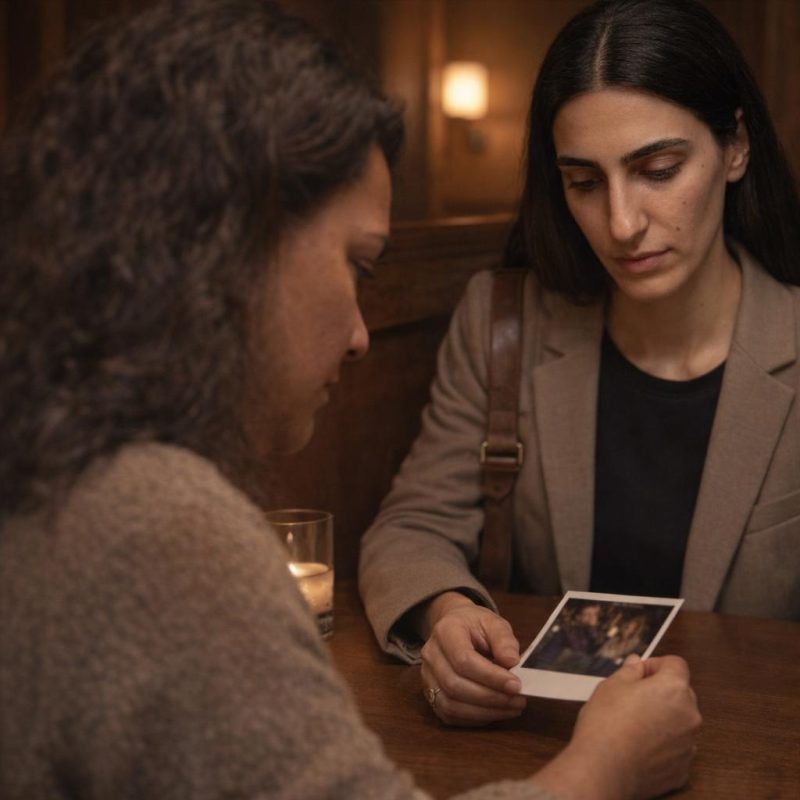 Image by RM AI
The Missing Years
Elena had been nineteen. She told me that quietly, like she was still getting used to saying it out loud. Scared but excited, she said — she'd felt me move for the first time on a Tuesday afternoon and called her mother from a payphone. She described the labor, the exhaustion, the moment they placed me on her chest. She had named me Sofia. I had never known that. She said it like an apology and a gift at the same time. She fell asleep a few hours after the birth, and when she woke up the bassinet was empty. The way she described the next hours — the running, the nurses, the lockdown that came too late — I had to set down my coffee cup because my hands weren't steady. She told me about the years after: the police who questioned her like a suspect, the missing children organizations, the apartment in Dallas she never left in case I came back. She said she looked at the face of every young woman she passed for twenty-seven years. Her parents had helped her search until they couldn't anymore. My biological father had left before I was born. There were so many people shaped by one morning in a hospital corridor. We were both crying by the time she finished, not loudly, just steadily, the way you cry when the grief is too old and too large for anything else. Twenty-seven years sat between us on that table, and neither of us had any way to give them back.
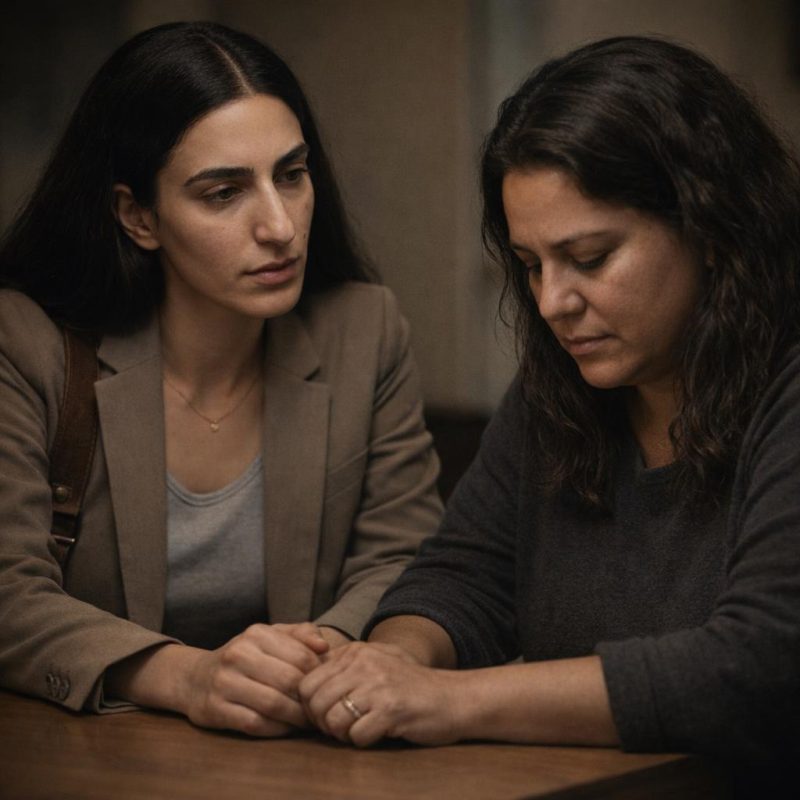 Image by RM AI
The Last Visit
The visitation room was smaller than I expected — a table, chairs bolted to the floor, fluorescent light that made everyone look tired. Susan looked smaller than I remembered. Richard's face was drawn in a way I hadn't seen before, even in the worst moments of the last few weeks. Susan apologized before I had fully sat down. Richard said they had never meant to hurt me. I told him they had. I told them both that they had hurt Elena too, that they had taken twenty-seven years from her and handed them to themselves, and that I had spent my whole life loving people who were keeping that from me. Susan said she knew. Richard said they would accept whatever punishment came. I asked how they could have done it — not just once, in a hospital room in a moment of grief, but every single day for twenty-seven years. Susan said she hadn't been thinking clearly after the stillbirth, that it had started before she understood what she was doing. Richard said he should have stopped her and didn't. Susan reached across the table toward my hand. I pulled mine back. I told them I had loved them. I told them I still did, and that I didn't know what to do with that. Then I told them I didn't know if I could ever forgive them.
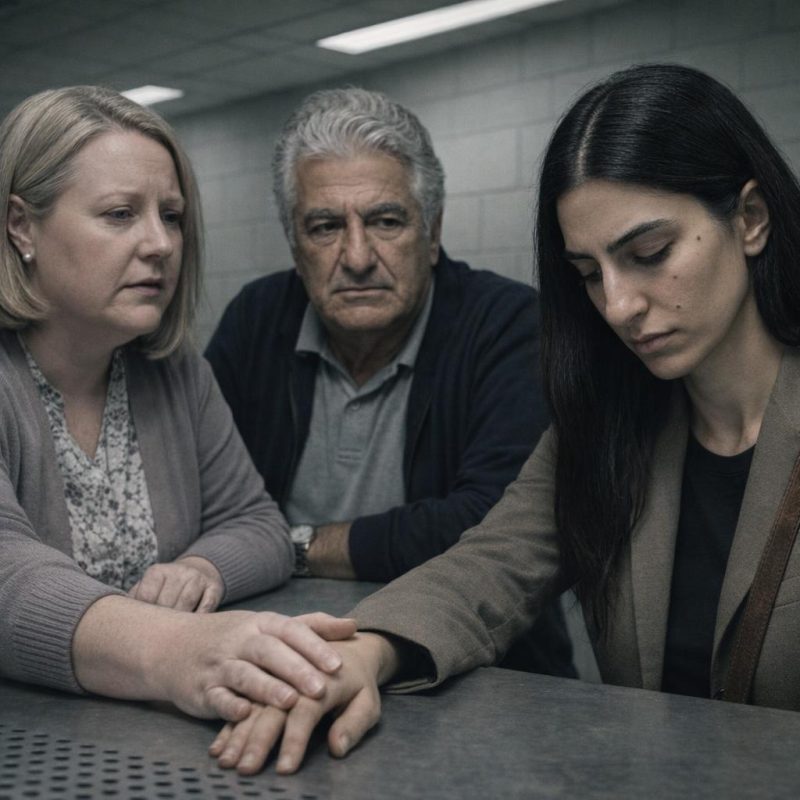 Image by RM AI
Goodbye
I told them I had been spending time with Elena. Susan's face changed when I said her name — not anger, something closer to grief, which I hadn't expected. I told them Elena was my biological mother, and that I needed to build a relationship with her. I said it as plainly as I could because I didn't have the energy to soften it anymore. Richard said he understood. Susan asked if I would visit them again. I said I didn't know. I said I needed time and space and to figure out who I was now that I knew the truth. Susan said they would always love me. Richard said I would always be their daughter. I told them I was never theirs to keep — that I was Elena's daughter first, and that they had made a choice that wasn't theirs to make. Susan asked if I would at least let them know how I was doing, someday. I said maybe. Richard said he was sorry. I said I knew. I stood up and walked toward the door. Susan said my name one last time. I turned. She said, 'I'm sorry we took you.' I nodded. Then I walked out, and the door closed behind me with a sound that felt like a period at the end of a very long sentence.
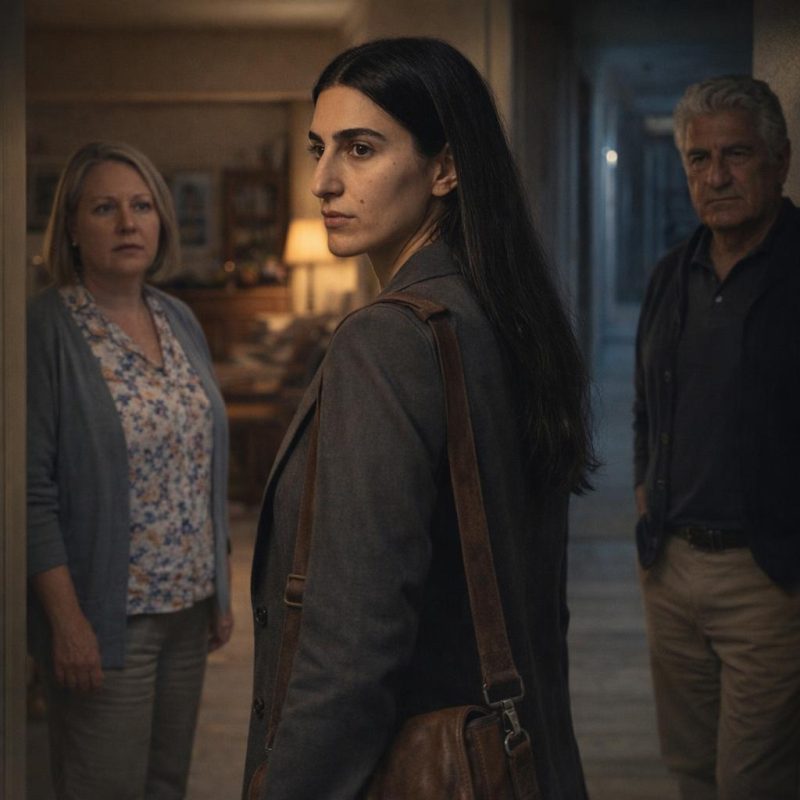 Image by RM AI
Six Months Later
Six months after the arrest, Elena and I had dinner together every Thursday. It had started awkward — two people who shared blood but not history, passing the bread basket and talking about the weather — but somewhere around week six it stopped feeling like an audition and started feeling like something else. Maya had come to one of those dinners, and afterward she told me she liked Elena, which meant more to me than I expected it to. I had met Elena's parents, my biological grandparents, in a coffee shop in October. Her mother had held my hands for a long time without saying anything. I was in therapy twice a week, working through things I didn't have words for yet. The trial date was set for next month, and I would have to testify, which I was trying not to think about too hard. Elena had been patient with me in a way that felt deliberate and careful, like she understood that rushing would break something fragile. I was learning her habits — the way she stirred her coffee counterclockwise, the way she laughed with her whole face. I saw myself in those gestures, and it was strange and right at the same time. We were building something that had no template. Maya squeezed my arm one night leaving the restaurant and said she was proud of me, and I let myself believe her.
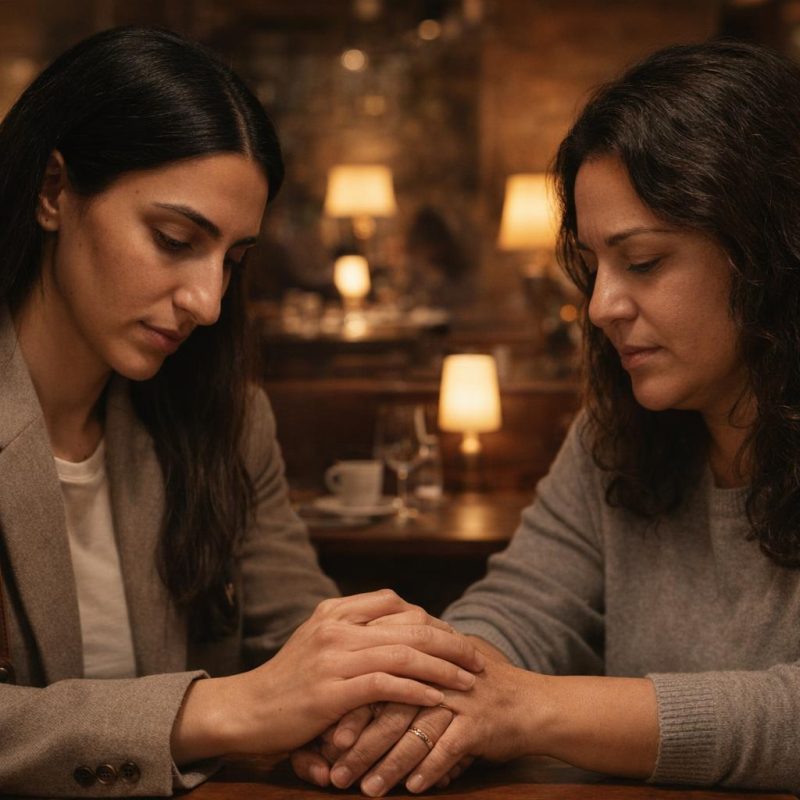 Image by RM AI
What Family Means
Susan and Richard pleaded guilty three weeks into the trial. The judge acknowledged, on the record, that the case was unlike anything she had seen — that the harm was real and the love was also real, and that the law could address one of those things but not both. I testified about the impact. I also testified about the birthday cakes and the hospital waiting rooms and the way Richard used to check under my bed for monsters until I was embarrassingly old. I said all of it because it was true, and because leaving it out would have been its own kind of lie. The media coverage had been brutal for a while, and then it faded, the way things do. I had changed my legal name to include both Morgan and Vasquez. Elena had supported that without hesitation, which told me something about who she was. Maya had helped me fill out the paperwork and bought me dinner after. I thought about family a lot now — what it meant, what it cost, what it could survive. Susan and Richard had loved me, and that love had grown from something they had no right to take. Elena was my biological mother, and we were still learning each other. Maya had been constant through all of it. I used to think family was a simple thing. I understood now that it was the most complicated thing I had ever tried to hold.
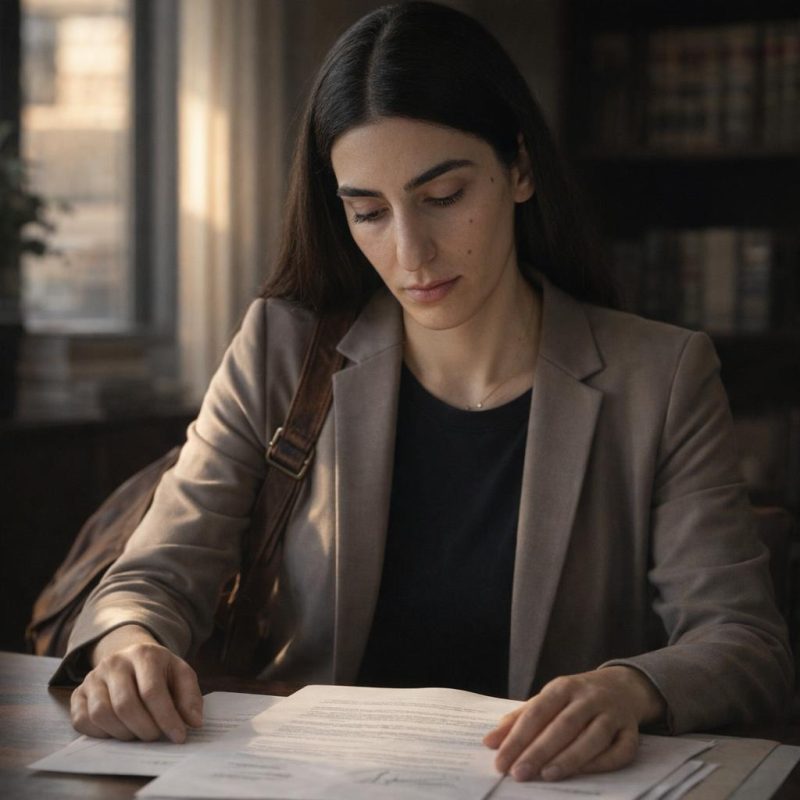 Image by RM AI
The Map
Elena's living room was full of photographs. She had warned me, but I wasn't prepared for it — faces going back generations, arranged on shelves and walls like a map someone had been drawing for a hundred years. She walked me through them slowly. Her mother as a teenager. Her father in a military uniform. Cousins, aunts, a great-grandmother who had the same jaw I saw in my own mirror every morning. I stood there for a long time without speaking. Then Elena pulled out a small album from a drawer and opened it to a hospital photo — a newborn in a white blanket, eyes closed, impossibly small. I asked if I could have a copy. She said she had been waiting to give me the original. I held it in both hands. I thought about the DNA test I had taken on a Tuesday night with a glass of wine and no real plan, just a quiet wanting to see where I had started. I had the map now. It had cost me the life I thought I knew — the clean story, the uncomplicated love, the parents I believed I understood. It had given me the truth, and the truth had given me this room, these faces, this woman standing beside me who had spent twenty-seven years not knowing if I was alive. I looked at Elena. She looked back at me. I set the photo down carefully on the shelf, next to all the others, and left my hand resting on it.
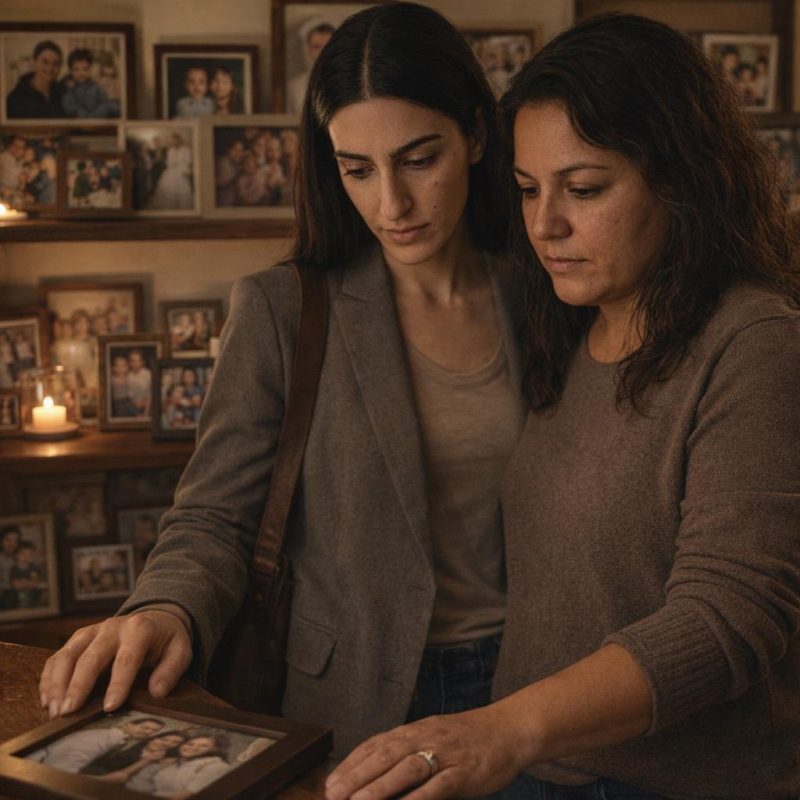 Image by RM AI
KEEP ON READING
The 20 Most Recognized Historical Figures Of All Time
The Biggest Names In History. Although the Earth has been…
By Cathy Liu Oct 4, 2024
10 of the Shortest Wars in History & 10 of…
Wars: Longest and Shortest. Throughout history, wars have varied dramatically…
By Emilie Richardson-Dupuis Oct 7, 2024
10 Fascinating Facts About Ancient Greece You Can Appreciate &…
Once Upon A Time Lived Some Ancient Weirdos.... Greece is…
By Megan Wickens Oct 7, 2024
20 Lesser-Known Facts About Christopher Columbus You Don't Learn In…
In 1492, He Sailed The Ocean Blue. Christopher Columbus is…
By Emilie Richardson-Dupuis Oct 9, 2024
20 Historical Landmarks That Have The Craziest Conspiracy Theories
Unsolved Mysteries Of Ancient Places . When there's not enough evidence…
By Megan Wickens Oct 9, 2024
The 20 Craziest Inventions & Discoveries Made During Ancient Times
Crazy Ancient Inventions . While we're busy making big advancements in…
By Cathy Liu Oct 9, 2024