

I Exposed My Coworker's Sabotage With a Coffee Machine and Got His Job Plus a 20% Raise
I Exposed My Coworker's Sabotage With a Coffee Machine and Got His Job Plus a 20% Raise
Three Years of Data
Monday mornings at the office had a rhythm I'd come to rely on. I'd get in around eight, pour the first coffee of the day, and settle into my desk before most of the floor had even logged on. Three years at Meridian Financial had given me that — a kind of quiet ownership over my own routine. I'd started as a mid-level analyst fresh out of a data consulting role, and I'd spent those three years building something I was genuinely proud of: a client retention framework that had become the unofficial template for the whole analytics department. The models I'd built, the dashboards I'd refined, the client relationships I'd cultivated one careful conversation at a time — none of it had happened by accident. I kept meticulous records. I documented everything. I ran my numbers twice before I ran them once in front of anyone else. It wasn't perfectionism exactly — it was more like respect for the work. My portfolio had grown from eleven accounts to thirty-one, and every single one of those clients had renewed at least once under my management. I wasn't the loudest person on the floor, and I didn't need to be. The data spoke clearly enough. Sitting there that Monday with my coffee going warm beside me and the city still waking up outside the window, I felt exactly like what I was — someone who had put in the work and had the results to show for it.
 Image by RM AI
The Retention Numbers
The quarterly metrics meeting was held in the second-floor conference room, the one with the long glass table that always made everything feel slightly more formal than it needed to be. Richard ran it the way he ran most things — efficiently, with minimal small talk. He pulled up the department-wide comparison chart about twenty minutes in, the one that stacked every analyst's client retention rate side by side for the quarter. I'd seen versions of this chart before, but this one had been updated with the new client satisfaction scores, and the numbers were sharper than I'd expected. My retention rate sat at ninety-four percent. The department average was seventy-eight. Richard paused on that slide longer than he usually did. 'These numbers are strong across the board,' he said, 'but I want to call out the consistency we're seeing at the top end.' He didn't editorialize much beyond that — Richard wasn't the type — but he held eye contact with me for a beat before moving on, which was about as close to a compliment as he got in a group setting. I wrote down a few notes out of habit, even though I already knew every figure on that slide. The client satisfaction scores had come back higher than last quarter too, which meant the retention wasn't just contractual — clients were actually happy. I closed my notebook and looked back at the screen, my name sitting at the top of that column, and felt the quiet, solid weight of a number that didn't need any explanation.
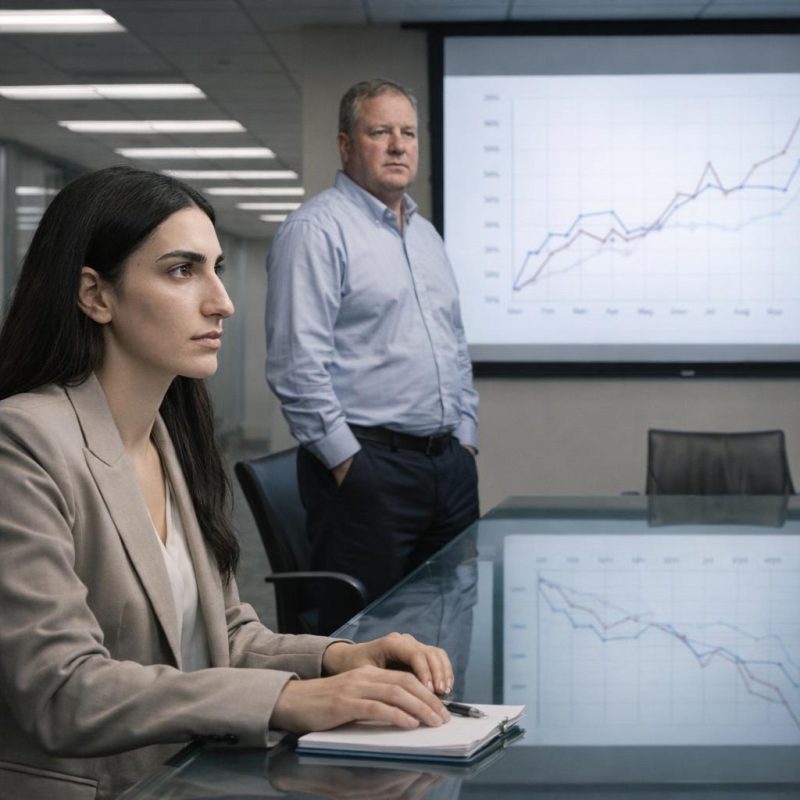 Image by RM AI
The Desk Next to Mine
Julian sat about four feet to my left, which in an open-plan office meant we shared a kind of involuntary proximity without sharing much else. We'd been desk neighbors for almost two years. We said good morning. We occasionally commented on the weather or complained about the slow Wi-Fi in the east corner of the floor. If one of us was on a call, the other kept the noise down. It was the kind of functional, low-maintenance coworker relationship that actually makes a long workday easier — no friction, no drama, just two people doing their jobs in the same general space. That particular afternoon I was deep in a data migration for one of my mid-tier accounts, the kind of painstaking work that requires you to hold three spreadsheets in your head simultaneously and not blink too hard. Julian was working through something on his own screen, headphones on, occasionally typing in short focused bursts. I noticed he'd brought in a nicer coffee than usual — one of the branded cups from the place two blocks over — but that was about the extent of my observation. We didn't overlap on clients. We didn't collaborate on projects. We were just two analysts doing parallel work in adjacent chairs. By the time I finished the migration and saved my final validation file, the floor had thinned out and the overhead lights had shifted to their evening setting. Julian had already packed up and left without my noticing. The space beside me was quiet, the way it always was.
 Image by RM AI
Lunch in the Break Room
The break room at Meridian was nothing special — a row of microwaves, a refrigerator that someone had labeled with passive-aggressive sticky notes, and a round table that seated six if nobody minded their elbows touching. But it was where I'd built most of my actual friendships at the firm, and that counted for something. Priya had claimed the chair closest to the window as her unofficial spot, and most days I'd find her there with her lunch already half-eaten and some piece of office news ready to share. She had a gift for noticing things — not in a gossipy way, more like she just paid attention when other people had already stopped. That Tuesday she was telling me about a vendor meeting that had apparently gone sideways in a very entertaining fashion, and I was laughing hard enough that I nearly spilled my soup. We talked about her weekend plans, about a new restaurant she wanted to try in the neighborhood, about whether the firm's holiday party would be as awkward as last year's. It was easy conversation, the kind that doesn't require any effort and leaves you feeling lighter than when you sat down. A couple of other colleagues drifted in and out, and the table got louder for a while before settling back down. By the time I balled up my napkin and stood to go, I'd been in there almost forty minutes without noticing. Walking back to my desk, I carried that easy, uncomplicated feeling with me — the particular warmth of knowing exactly where you belong.
 Image by RM AI
The Whitmore Account
The Whitmore account had been a slow burn for the better part of three months. They were a mid-sized investment services firm, long-tenured clients, but their satisfaction scores had been drifting downward for two quarters and there had been quiet internal talk about whether they'd renew. I'd gone back through eighteen months of their usage data and identified three specific friction points that nobody had formally flagged — reporting lag, a dashboard feature they'd stopped using after a UI update, and a response-time gap in their dedicated support tier. I put together a remediation proposal, walked their account lead through it on a call, and then followed up twice more over the next six weeks. The contract extension came through on a Thursday afternoon — three years, full-tier service, with a modest upsell on the analytics package. I sent the confirmation to Richard and went back to my other work. I didn't think much more about it until the following Monday morning, when Richard appeared at the entrance to the main floor and spoke loudly enough that the whole analytics section could hear him. 'I want everyone to know that the Whitmore account just signed a three-year extension,' he said, 'and that happened because of some very thorough, very patient work.' He looked directly at me when he said it. Priya caught my eye from across the room and gave me a small, satisfied nod. A few people clapped. Richard's voice carried across the floor: 'That's the kind of result that moves the whole department forward.'
 Image by RM AI
The Promotion That Wasn't
I wasn't trying to overhear the conversation. Richard had pulled Julian into the small alcove near the printer bank — the spot people used when they wanted a semi-private word without booking a conference room — and I happened to be at the filing cabinet two feet away, working through a folder I needed before my afternoon call. I caught enough to understand what was happening. The senior analyst position that had been posted internally three months ago had gone to someone in the Boston office. Richard's tone was even and professional, the way it always was when he was delivering news he hadn't made himself. Julian said something I didn't catch, and Richard responded with something about the decision being made at the regional level. Then it was over. Richard walked back toward his office. Julian stood at the printer for a moment, not printing anything, just standing there with one hand resting on the machine. I closed the filing cabinet quietly and went back to my desk without saying anything. It wasn't my conversation to enter. I felt a vague sympathy — I knew what it was like to want something and have it go sideways through no fault of your own — but I didn't know Julian well enough to say anything useful, and I suspected he wouldn't have wanted me to. I pulled up my afternoon prep notes and got back to work. Julian returned to his desk a few minutes later and put his headphones on. The quiet that settled over his side of the floor had a different texture than usual.
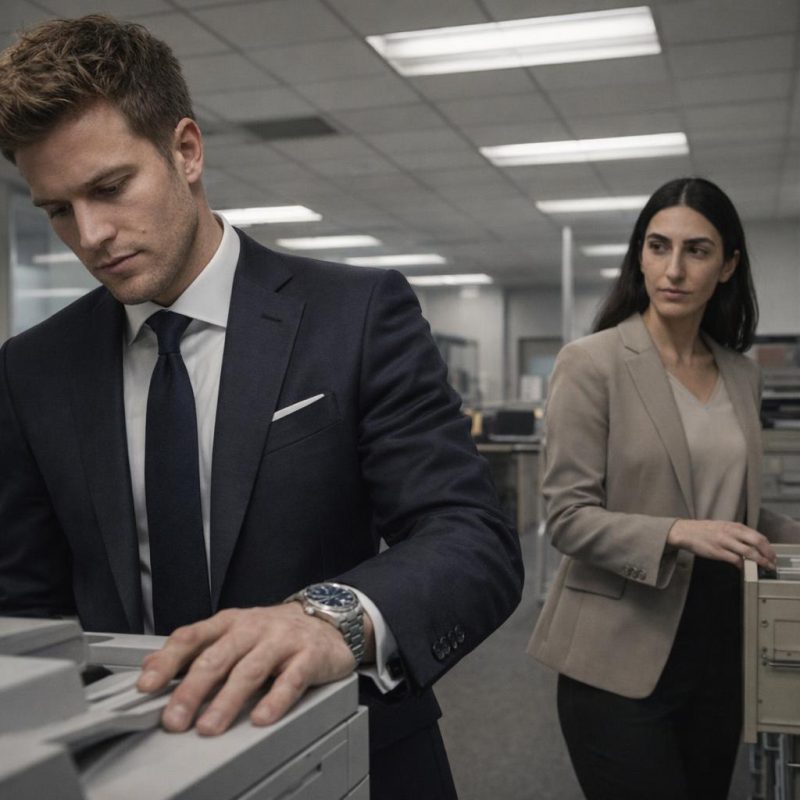 Image by RM AI
The Quarterly Review
The quarterly review meeting two weeks later had a different feel from the start. It was the same room, the same long glass table, the same agenda Richard sent out the night before — but something in the air was off in a way I couldn't immediately name. People were a little too focused on their laptops. The usual pre-meeting side conversations were shorter than normal. Priya sat down next to me and gave me a look I couldn't quite read before turning toward the front of the room. Richard ran through the numbers methodically, the way he always did, and the metrics were solid — nothing alarming, nothing to explain the atmosphere. Julian was there, seated at the far end of the table. He contributed once, a brief comment about a client segment report, and then went quiet for the rest of the meeting. He wasn't hostile or visibly upset — just contained, like he'd drawn a perimeter around himself and was staying inside it. A couple of people directed questions toward his end of the table and he answered them briefly and correctly, but nobody pushed for more. I kept my own contributions professional and on-point, the same as always, but I found myself glancing around the room more than I usually did, trying to locate whatever it was that felt misaligned. The meeting wrapped up and people began gathering their things. Before Richard had even finished his closing remarks, Julian had already stood, collected his notebook, and walked out through the conference room door.
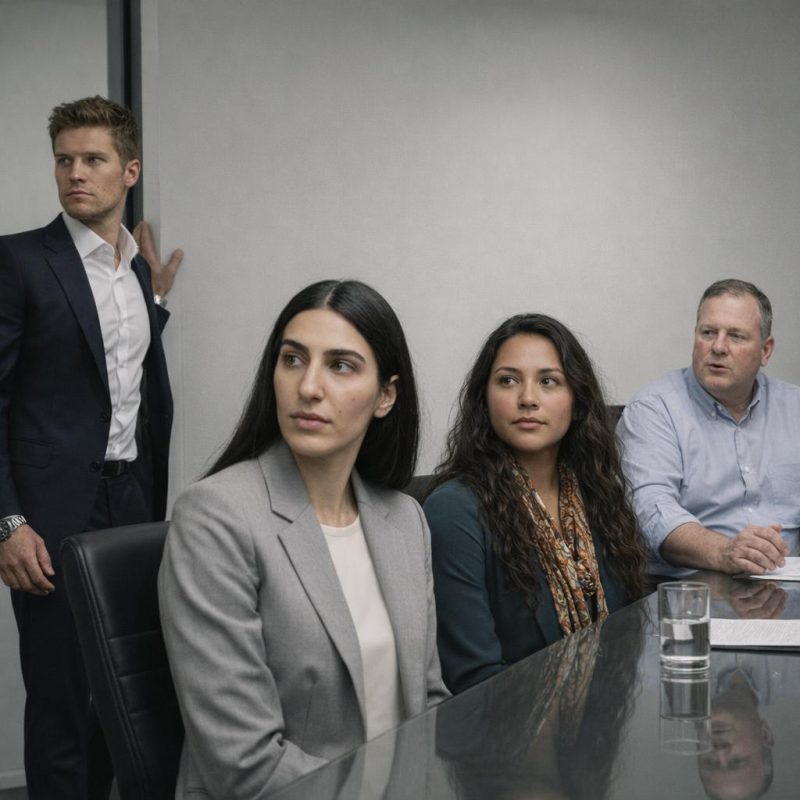 Image by RM AI
The Executive Floor
The company's end-of-quarter mixer was held on the executive floor, which most of us only visited for all-hands meetings and the occasional formal review. The space was noticeably quieter than our floor — better furniture, better coffee, the kind of ambient calm that comes with a higher budget. I'd been there about twenty minutes, talking through a client segmentation question with one of the product managers, when Marcus appeared at my elbow. He introduced himself as VP of Operations, though I already knew who he was — his name came up in department-wide communications often enough. He was polished in the way that senior executives tend to be, easy with small talk, asking the right questions without seeming to push. He mentioned the Whitmore extension, said he'd heard good things about the retention work coming out of our team. I gave him a brief overview of the methodology — nothing proprietary, just the general framework — and he listened with the kind of attentive nod that suggested he was actually following along rather than just waiting for his turn to speak. Richard joined us briefly, added a few words about the department's overall numbers, and then drifted toward another conversation. Marcus and I exchanged a few more pleasantries before he excused himself. It was a perfectly ordinary interaction, the kind that happens at every company event. I refilled my coffee and turned back toward the room, and that was when I noticed Marcus standing near the far wall, his drink in hand, his eyes moving steadily across the analytics team.
 Image by RM AI
The Second Pass
The news spread the way office news always does — quietly, through the kind of sideways conversation that happens near the printer or in the elevator. Priya caught me on my way back from a client call and mentioned it almost as an aside: Julian had been passed over again. There was a senior analyst role that had opened up two weeks earlier, and apparently he'd made no secret of wanting it. He'd mentioned it in team meetings, dropped it into conversations with Richard, done everything short of putting a sign on his desk. The position went to an external hire instead. I felt genuinely bad for him when I heard that. Two rejections in the same year is rough on anyone, and Julian was good at his job — detail-oriented, thorough, the kind of person who remembered the specifics of a client file months after the fact. I told Priya as much, and she nodded but didn't say anything more. I went back to my desk and tried to focus on the segmentation report I'd been building all morning. About an hour later, I heard Richard's office door open. Julian walked out, and even from across the room I could see it — the tight set of his jaw, the way he moved back to his desk without looking at anyone, the expression on his face that was something past frustration and not quite anything I had a word for.
 Image by RM AI
The Coffee Machine Ritual
I'm not sure when I started noticing Julian's coffee routine, exactly. It wasn't something I set out to track — it just became one of those background patterns you absorb without meaning to, the way you eventually know which coworker always microwaves fish on Fridays. Every morning, somewhere between eight-fifteen and eight-thirty, Julian would head to the breakroom and spend a solid fifteen minutes at the smart coffee machine. The machine itself was a recent addition — one of those high-end commercial units that connected to an app, let you program custom drink profiles, track your order history, the whole thing. Most of us used it to get a flat white in under two minutes and move on. Julian treated it like a ritual. He'd pull out his phone, tap through the app, and then stand there while the machine ran through its cycle, sometimes adjusting settings mid-brew. I'd pass through on my way to refill my water bottle and he'd be there, unhurried, watching the machine like it owed him something. I didn't think much of it. Some people need their morning coffee to be exactly right before the day can start — I understood that impulse even if I didn't share it. It was just one of those small, fixed things about the office day, as reliable as the nine o'clock calendar reminder that nobody ever actually attended on time. Some routines just become part of the furniture.
 Image by RM AI
The Cold Shoulder
The client database update should have been a straightforward two-person coordination job — the kind of thing Julian and I had handled without friction before. I sent him the initial outline on a Tuesday, flagged the three access points that needed his sign-off, and asked if he had time to connect later that week. He replied the same afternoon: four words, no greeting, no availability offered. I followed up Thursday with a calendar invite. He declined it without a note. I tried a different approach and stopped by his desk to ask if a quick fifteen-minute call would work — he said he was in the middle of something and would get back to me. He didn't. By the end of the following week I'd managed to piece together most of what I needed from the shared drive and a brief exchange with the systems team, but there were still two items that technically required his input, and I'd had to flag them as pending in the project notes. I wasn't angry about it, exactly. More puzzled. We'd never been close, but we'd always been functional — the kind of collegial that gets work done without requiring much personal investment. Whatever had shifted, I couldn't identify it. I went back to my desk and looked across the open floor at his empty chair, and the distance between us felt wider than the actual space between our desks.
 Image by RM AI
The Olive Branch
I decided to try the direct approach. It felt a little awkward, but I'd rather feel awkward for five minutes than spend another two weeks working around someone I sat forty feet from. I stopped at the coffee machine on my way in one morning and ordered two drinks — my usual and what I was fairly sure was Julian's order, based on watching him use the app enough times to have a rough idea. I set his cup on the edge of his desk and said something low-stakes about the system migration timeline, just to give us something neutral to talk about. He looked at the cup, then at me, and his expression didn't change much. He said the migration was Richard's call and he hadn't been looped in on the details. I said something like, fair enough, I just thought it might affect the shared client files we'd been trying to sync. He nodded once, slowly, and then looked back at his monitor. I stood there for a second longer than was comfortable. I asked if he had a few minutes to catch up on the pending items from last week. He said he was too busy right now.
 Image by RM AI
The Database Migration
The database migration had been on the project calendar for six weeks, and the day it finally landed on my plate felt both overdue and slightly overwhelming. The client portfolio attached to this system represented a significant chunk of the company's annual revenue — the kind of number that gets mentioned in board presentations — and the migration required moving everything cleanly without a single record out of place. I spent the morning mapping every access point, cross-referencing the existing security protocols against the new system's requirements, and building a log of every credential touch so the audit trail would be airtight. My admin credentials were the primary key for three of the seven data clusters, which meant I was the one authorizing each transfer segment and signing off on the integrity checks. I documented everything: timestamps, access sequences, the specific fields I'd verified at each stage. It was painstaking work, the kind that doesn't look impressive from the outside but matters enormously if something goes wrong later. By mid-afternoon I had a clean draft of the migration map and a full access log ready for the systems team. I saved two backup copies in separate locations, flagged the document for Richard's review, and closed my laptop. The work was solid. I knew it was solid. There's a particular kind of quiet satisfaction that comes from finishing something careful and getting it exactly right, and I sat with that for a moment before moving on to the rest of my afternoon.
 Image by RM AI
The HR Conversation
I'd gotten into the habit of stopping by the HR floor on mornings when I arrived early, mostly because the coffee up there was better and Lisa kept a bowl of those individually wrapped dark chocolates on her desk that I had absolutely no willpower around. That particular morning she was already at her desk when I knocked on the open door, and she waved me in without looking up from her screen. We ended up talking for the better part of an hour. Her daughter was in the middle of college application season, and Lisa had that particular brand of exhausted pride that parents get when their kid is doing something genuinely impressive but the process is quietly destroying everyone involved. We talked about that for a while, and then the conversation drifted to the new benefits enrollment window and a question I had about the dependent care provisions. Lisa pulled up the relevant documents and walked me through them with the kind of patience that made me feel like I wasn't wasting her time even though I probably was. She asked how things were going on my floor, and I gave her the honest version — busy, a little tense lately, nothing I could put my finger on. She listened without jumping to fix anything, which was its own kind of relief. By the time I finally stood up to leave, the morning had moved faster than I'd expected. There's something genuinely restorative about talking to someone who actually listens without an agenda.
 Image by RM AI
The Strange Comment
I got back to my desk a little after ten and found Priya perched on the edge of the chair beside mine, scrolling through something on her phone with the distracted energy of someone who was actually waiting rather than actually reading. She looked up when I sat down and said she'd been meaning to catch me. I asked what was up. She set her phone face-down and said it was probably nothing, but she'd noticed Julian had been off lately — more than just the usual stress. She said he'd stopped joining the team for lunch, that he'd been leaving early some days and arriving late others, that a couple of people had tried to include him in the informal project check-ins and he'd declined without explanation. I told her I'd noticed the distance too, and mentioned the database coordination situation without going into detail. Priya nodded like that confirmed something she'd already been thinking. She said she didn't know if it was the promotion thing or something personal, but it had been going on long enough that it wasn't just a bad week. She glanced toward his desk — he wasn't there — and then back at me. She said she was worried about him.
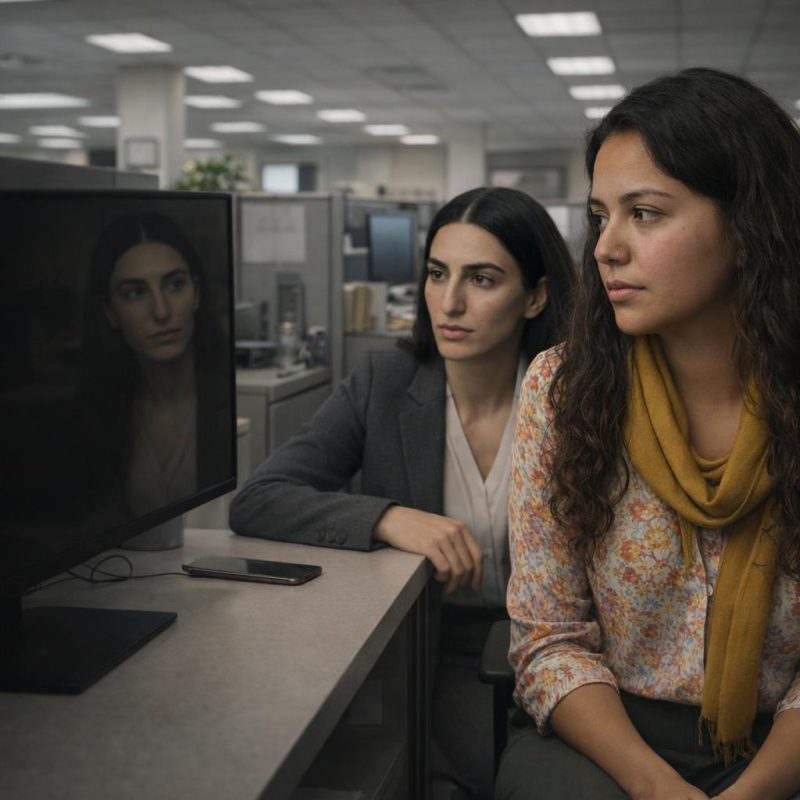 Image by RM AI
The Accusation
I was in the middle of a perfectly ordinary Tuesday — updating a client contact list, half-listening to the ambient noise of the open floor — when Richard's office door opened hard enough that I heard it from across the room. I looked up. He was already moving, and his face was the kind of red that doesn't come from a short walk. He crossed the floor in maybe ten seconds and stopped at my desk, and then his fists came down on the surface with a crack that made the person two rows over flinch visibly. He said my name like it was an accusation. He said the Hargrove client database had been wiped. He said it happened at nine-fourteen that morning, and that the system log showed my admin credentials authorizing the deletion. His voice was loud enough that I could see people at the far end of the floor turning in their chairs. I tried to say something — I started to say I'd been in HR all morning — but he wasn't finished. He said we were talking about a multi-million dollar client relationship and that if I had any explanation I'd better have it ready for the emergency call he was setting up in the next thirty minutes. I looked past him for a half-second and caught Julian at his desk, very still, watching. Then Richard said my name again and I looked back at him, and the whole floor had gone completely quiet around us.
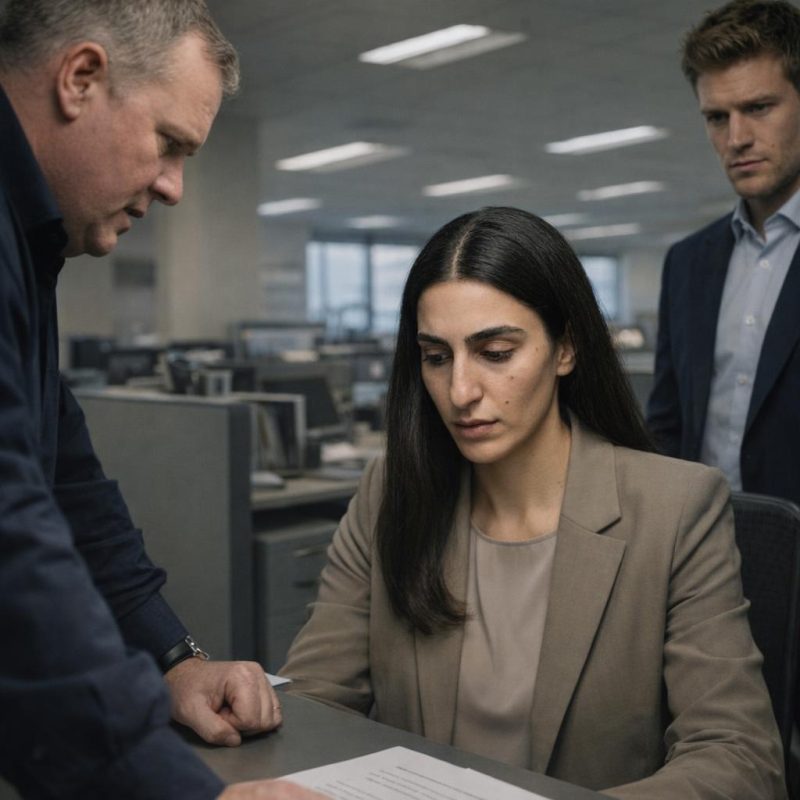 Image by RM AI
The Threat
Richard wasn't slowing down. He leaned over my desk and said the deletion had been logged at nine-fourteen AM, my credentials, my access token, my authorization signature on the record. He said the Hargrove account represented eleven years of relationship-building and that whoever had done this had effectively torched it. His voice had climbed past the point where people pretend not to listen — I could see heads turned all the way to the windows. Priya had gone completely still at her desk, her eyes on me, and I could feel the weight of every person in that room deciding something about me in real time. I tried to keep my breathing even. I tried to think in a straight line. The timestamp was nine-fourteen. That was a fact. I needed to hold onto facts. Richard straightened up and said that pending a review with corporate, this was grounds for immediate dismissal, and that he had the authority to call building security right now. I heard the words but they seemed to arrive from a distance, like sound traveling through water. Then he said it plainly, no qualifier, no hedge — terminated immediately.
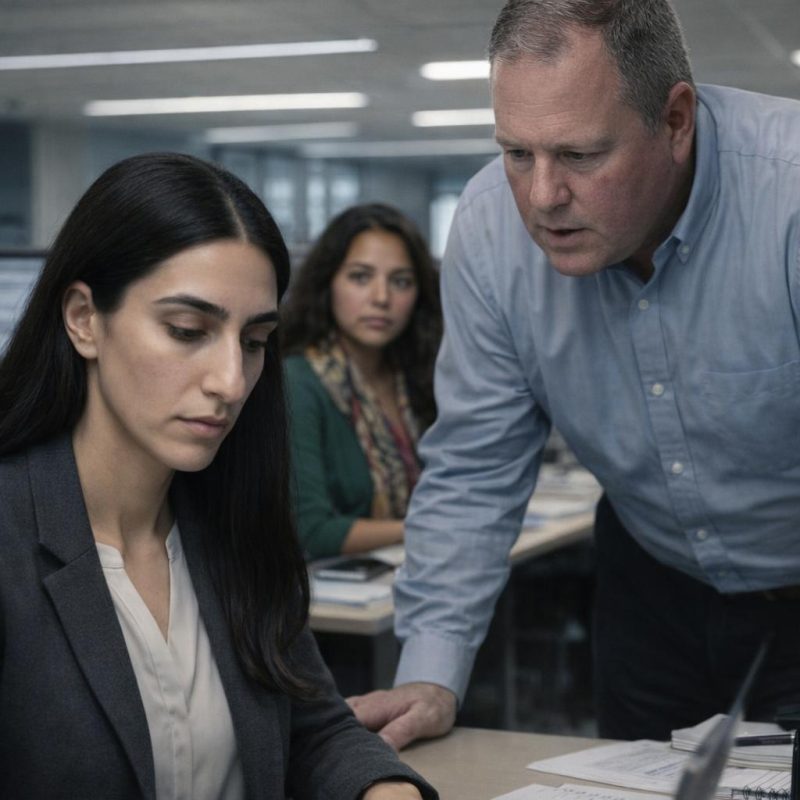 Image by RM AI
The Smirk
The floor was still quiet. Richard had stepped back slightly, and I think he expected me to crumble or argue or start crying. I did none of those things, mostly because something across the room had pulled my attention in a way I couldn't ignore. Julian was standing near the water cooler, arms loosely crossed, and he wasn't doing what any normal colleague would do in this situation. He wasn't looking away out of secondhand embarrassment. He wasn't leaning over to whisper something to the person next to him. He was watching me, and there was something in his expression that didn't fit the moment at all. I'd worked near Julian for two years. I knew what his concerned face looked like, his neutral face, his trying-to-look-busy face. This wasn't any of those. His jaw was relaxed. His shoulders were down. He had the look of someone watching a process complete successfully. I turned back to Richard before Julian noticed me staring, but the image stayed with me — that expression, that particular quality of stillness. Something about it didn't add up, and I couldn't shake the feeling that it should.
 Image by RM AI
The Alibi
Richard was still talking — something about HR protocol and documentation — but I had stopped processing the words. My mind had gone somewhere quieter and more useful. Nine-fourteen AM. That was the timestamp. I made myself hold it there and work backward. I had left my desk before eight-thirty. I remembered because I'd grabbed my notebook and my coffee and headed straight to Lisa's office for what turned into a longer conversation than either of us planned. We'd talked about the Q3 onboarding review, and then somehow about the new badge-access rollout, and Lisa had pulled up three different spreadsheets. I hadn't looked at my phone once. I hadn't gone back to my desk. I hadn't touched my computer. I knew this the way you know something you lived through — not reconstructed, just remembered. At nine-fourteen, I was sitting in a chair on the other side of the building, watching Lisa scroll through a staffing document. My credentials had been used. My computer may have been accessed. But I had not been the one doing it, and the certainty of that settled into me like something solid and load-bearing.
 Image by RM AI
The Request
Richard had drawn a breath to continue, and I cut in before he could. I didn't raise my voice. I didn't match his energy. I just said his name, clearly, and waited until he looked at me. Then I told him I had been in Lisa's office in HR from before eight-thirty until well past nine-thirty, and that she could confirm every minute of it. I told him the nine-fourteen timestamp was real, but that someone else had used my credentials, and that before he made a decision that couldn't be undone, I was asking for ten minutes with the head of IT. He stared at me. I think the composure surprised him more than the claim did — he'd been expecting a different kind of response, and this wasn't it. He said he didn't see what IT was going to tell him that the access logs hadn't already. I said the access logs were exactly what I wanted to look at, and that ten minutes was all I needed. The room was still listening. I could feel it. Richard looked at me for a long moment, jaw tight, and then gave a short nod. I heard my own voice in the silence after — steady, level, nothing shaking in it.
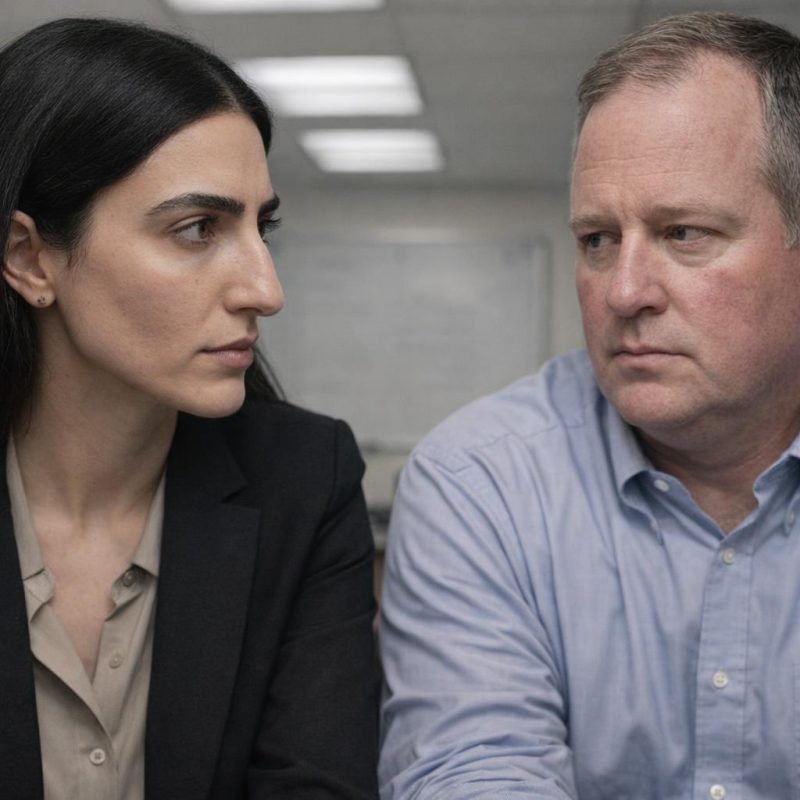 Image by RM AI
The Hardware Angle
Richard followed me to the small conference room off the main floor, and I could tell from the set of his shoulders that he was granting me rope, not a lifeline. He sat down and crossed his arms and said he hoped I understood what was at stake here. I said I did. Then I stood at the whiteboard and thought through it out loud, partly for him and partly for myself. The server logs were the obvious place to look. They were also the place where someone careful would have covered their tracks — access tokens could be spoofed, timestamps could be manipulated if you knew the right points of entry. Going straight at the logs felt like walking into a room someone had already cleaned. I needed something that hadn't been anticipated. Something passive. Something that recorded without being asked to. I'd been turning this over since the moment I'd seen that timestamp, and somewhere in the back of my mind a different thread had been pulling loose. It wasn't the servers I wanted. It was something smaller, something that sat on the network quietly and logged what it saw without anyone thinking to scrub it. The path I'd been ignoring suddenly looked like the only one worth taking.
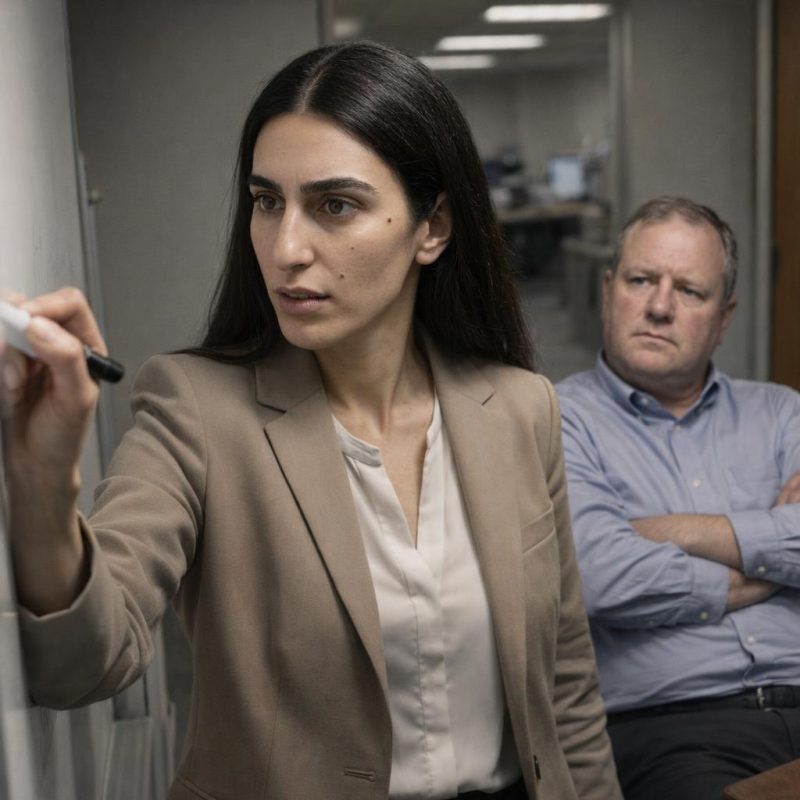 Image by RM AI
The Breakroom Proposal
I asked Richard to come with me to the breakroom, and I asked him to bring Owen Park, the head of IT. He looked at me like I'd suggested we check the parking garage, but he made the call. Owen arrived two minutes later with a laptop bag over one shoulder and the particular expression of someone who has been pulled away from something complicated — slightly distracted, already problem-solving. I'd worked with Owen on a network migration the previous year and knew he was the kind of person who followed a technical thread wherever it went without needing it to make sense first. I led them both to the breakroom and stopped in front of the coffee machine — the new smart unit facilities had installed in March, the one with the companion app and the touchscreen interface. Richard looked at the machine, then at me, then back at the machine. He asked, with genuine restraint, what exactly we were doing in here. I told him I wanted Owen to run a localized network packet check on the coffee machine's internal logs. Richard said nothing for a moment. Owen tilted his head slightly and looked at the machine with what I can only describe as professional interest. I stood there and let the weight of what I was proposing settle into the room.
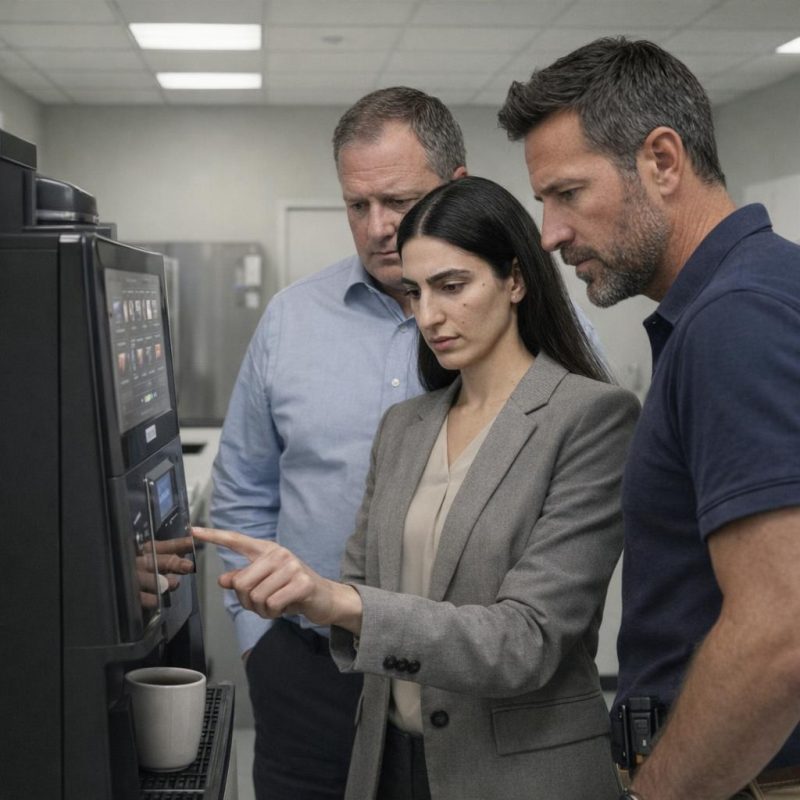 Image by RM AI
The IoT Network
Owen set his bag on the counter and looked at me, and I could tell he wanted the technical explanation before he committed to anything. I gave it to him straight. The coffee machine ran on a separate IoT subnet — not the main corporate network, not the secured server environment. It was a lighter local network, the kind that facilities sets up for smart appliances and never really hardens because nobody thinks of a coffee machine as a security surface. The machine's app-ordering function required it to log nearby devices automatically — specifically, it pinged and recorded the MAC addresses of any Bluetooth or Wi-Fi enabled device that came within roughly three feet of its antenna. It did this passively, continuously, as part of its proximity-ordering feature. The logs were stored locally on the machine's internal module and almost certainly hadn't been touched, because nobody would think to touch them. Owen nodded slowly while I talked, and I saw him working through it — checking the logic, finding the gaps, not finding any. Richard stood with his arms still crossed, but his expression had shifted from impatient to something harder to read. I had laid out the theory as cleanly as I could. Now it either held up or it didn't, and those technical details were the only thing standing between me and the door.
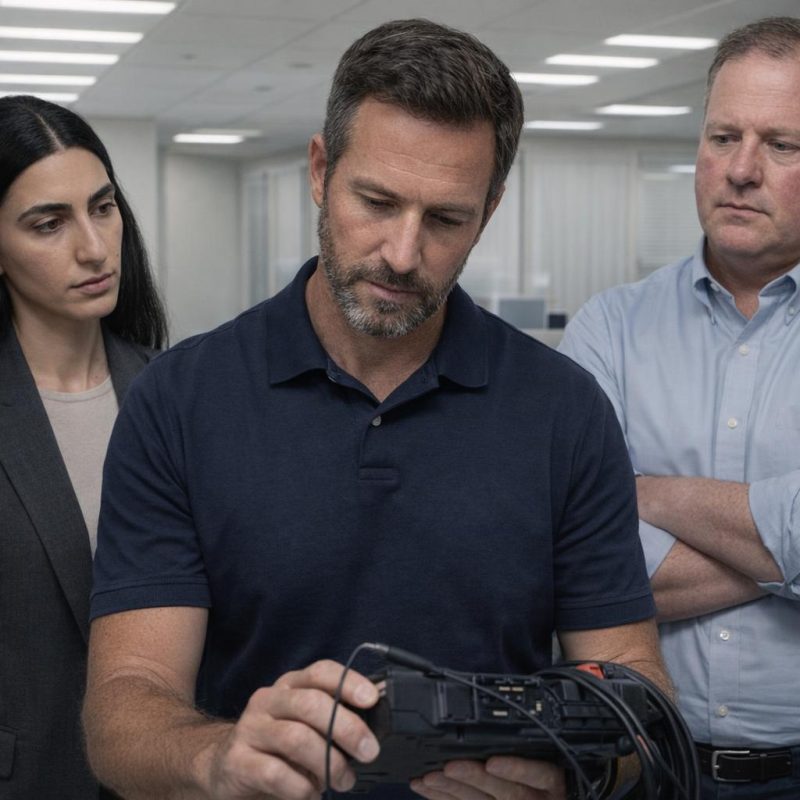 Image by RM AI
The Service Port
Owen unzipped his bag and pulled out a slim diagnostic laptop and a short service cable. He crouched down and found the machine's service port behind a small panel on the lower left side — he'd clearly worked with this model before, because he didn't hesitate. The cable went in, the laptop opened, and he started typing. Richard stood against the counter with his arms crossed, watching Owen work, not saying anything. I stood on the other side of the machine and kept my eyes on the laptop screen, though from my angle I could only see the reflection of Owen's face in it, focused and unreadable. The extraction process wasn't fast. Owen pulled up a terminal window and ran a sequence of commands, and the screen filled with lines of text that scrolled past too quickly for me to follow. He said it would take a few minutes. Richard checked his watch once. I didn't check anything. I just stood there in the hum of the refrigerator and the low electrical sound of the machine doing what it always did, and let the quiet work of data extraction fill the room around me.
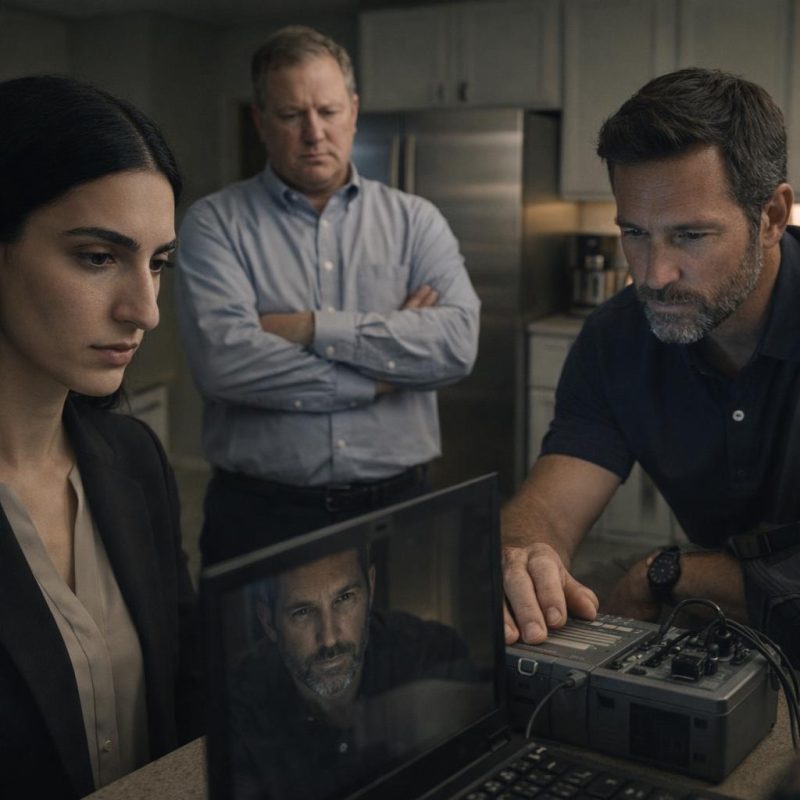 Image by RM AI
The MAC Address
Owen's fingers slowed on the keyboard. He leaned closer to the screen, then typed one more command, and the terminal output stopped scrolling. He said, quietly, that he had something. The Wi-Fi access logs had captured every device that connected to the breakroom network that morning, and each one had a unique hardware identifier — a MAC address that doesn't change, doesn't lie, and can't be spoofed by accident. Owen pulled up a filtered view and cross-referenced the device registry against the corporate enrollment database. Richard pushed off the counter and came around to look. I moved to Owen's side without thinking. The log showed a personal smartphone — not a work-issued device — positioned within three feet of the coffee machine at 9:14 AM. Owen pointed at the packet volume column and said that was the part that didn't fit. A normal coffee order generates maybe a dozen data packets. This device had pushed over four hundred encrypted packets in a ninety-second window. That kind of traffic, Owen said, was consistent with a credential injection script running in the background. Richard said nothing. I said nothing. Owen scrolled right to reveal the device's registered owner field, and the name sitting next to that MAC address was Julian's.
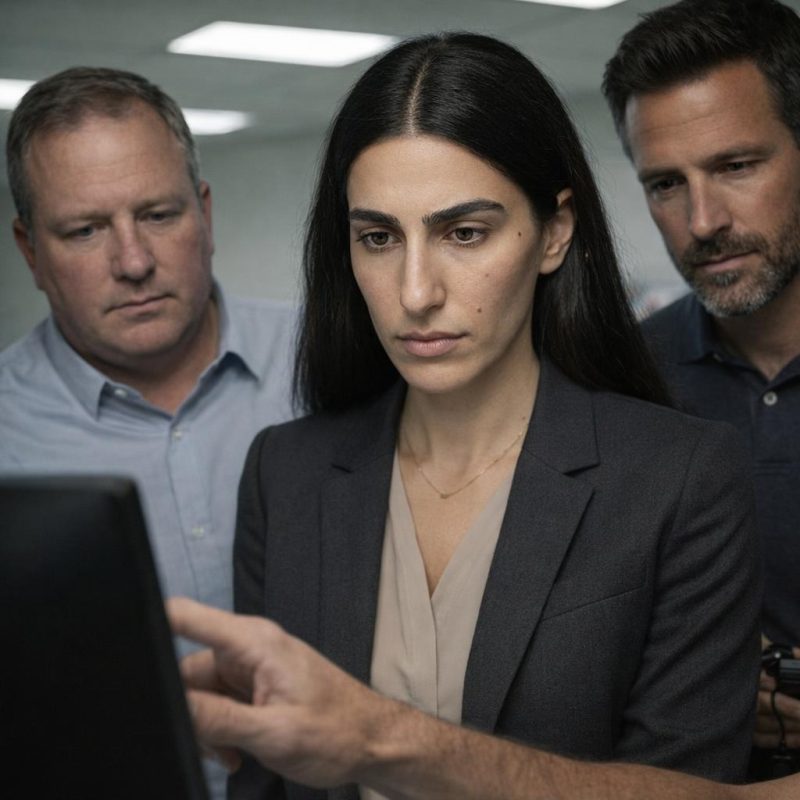 Image by RM AI
The Printout
Owen sent the log file to the breakroom printer without being asked. The machine hummed for a few seconds and spat out two pages, and he picked them up, squared them against the counter, and handed them to Richard without a word. Richard took the printout and read it the way someone reads something they're hoping will contradict itself — slowly, going back to the top, checking the timestamps again. Julian was standing in the doorway by then. I hadn't heard him come in, but there he was, leaning against the frame with his arms loosely crossed, wearing the expression he always wore when he thought he already knew how a conversation was going to end. Richard looked up from the pages. He looked at Julian. He looked back down at the pages once more, and then he set them on the counter and turned to face Julian fully. Whatever Julian had been expecting, it wasn't that look. The easy confidence drained out of his face in stages — the slight smile first, then the set of his jaw, then the color in his cheeks — until he was standing there pale and very still, staring at the printout on the counter like it was something he couldn't quite make himself believe was real.
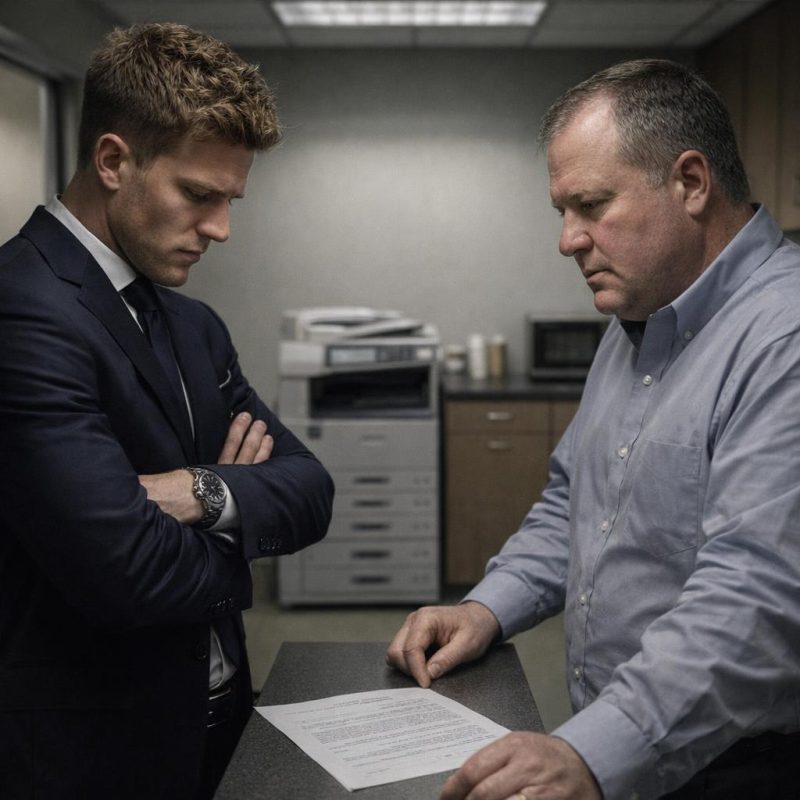 Image by RM AI
The Firing
Richard didn't raise his voice. That was the part I hadn't expected. After everything — the public dressing-down in front of the department, the way he'd looked at me like I was already guilty — I'd braced for an explosion. Instead he spoke in a low, flat register that was somehow worse. He told Julian his employment was terminated, effective immediately. Julian started to say something — I caught the word 'misunderstanding' before Richard cut him off with a single raised hand. Richard told Owen to secure the full log file and the printout for the corporate legal team. Then he turned back to Julian and said that his personal phone was to be surrendered to security before he left the building, and that the legal department would be in contact regarding a formal investigation. Julian's mouth opened and closed. He looked at me once — just once — and I kept my expression neutral and held his gaze until he looked away. Richard picked up his own phone and made a call, and I heard him say, clearly and without hesitation, the words corporate espionage.
 Image by RM AI
The Escort
Two security officers arrived within ten minutes. I'd gone back to my desk by then, but the whole floor had a clear sightline to Julian's workstation, and nobody was pretending to work anymore. Julian came out of the breakroom corridor with one officer on each side of him, carrying nothing — they hadn't let him stop at his desk. He walked through the open-plan floor with his eyes fixed straight ahead, and the room was so quiet I could hear the carpet under his shoes. Priya appeared at my elbow from somewhere and didn't say anything, just stood there beside me. A few people near the windows turned to watch. A few others looked down at their keyboards and then looked up again anyway. Julian reached the elevator bank, the doors opened, and he stepped in without turning around. The officers followed. The doors closed. I stood there for another moment, and then I looked back across the floor toward the row of workstations along the far wall, where Julian's desk chair sat empty, his monitor still on, a half-finished coffee cup beside the keyboard.
 Image by RM AI
The Aftermath
Richard came out onto the floor about twenty minutes after the elevator doors closed. He walked to the center of the open-plan area — not to a conference room, not to a doorway, but right into the middle of the floor where everyone could see him — and he asked for the department's attention. The room went quiet fast. He said that earlier that morning he had made a serious accusation against a member of the team without sufficient evidence, and that the accusation had been wrong. He said my name clearly, in front of everyone, and he said that I had done nothing wrong and that the evidence confirmed it. He said he owed me an apology and he was giving it now, publicly, because the accusation had been public. His voice was steady but his jaw was tight and he didn't quite meet my eyes when he said it, which told me more about how much it cost him than the words themselves did. Priya squeezed my arm once, lightly. People around the floor exchanged glances. I said thank you, and I meant it, even though I was so tired by then that the words felt like they were coming from somewhere outside me. The room slowly went back to its ordinary sounds, and I sat down at my desk and just breathed for a while.
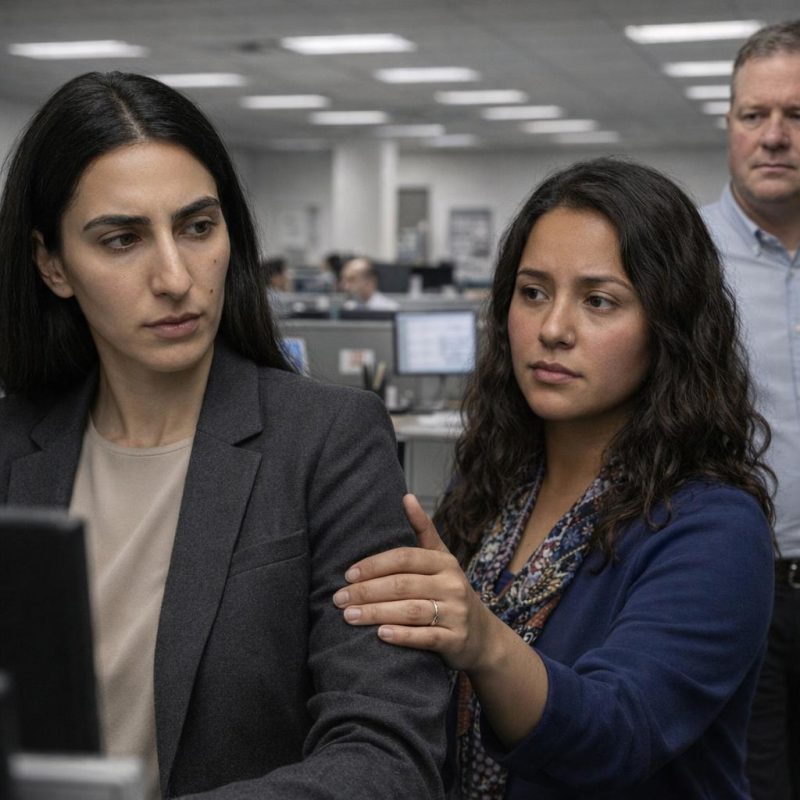 Image by RM AI
The Offer
Richard knocked on my office doorframe the next morning at eight forty-five, before most of the floor had filled in. He was carrying a manila folder and a printed org-chart update, and he asked if he could sit down. I said yes. He set the folder on my desk and opened it without preamble. Julian's client portfolio — the full tier-one book, fourteen accounts, three of them flagship contracts — was being transferred to me, effective that day. There was a title change attached: Senior Account Manager, with the updated reporting structure already signed off by HR. And there was a compensation letter, one page, with a number at the bottom that represented a twenty-percent increase over my current salary. Richard said the raise had been approved the previous afternoon and that Lisa had expedited the paperwork. He said he wasn't going to pretend the timing was a coincidence. I looked at the letter for a moment, then at the org chart, then back at Richard. I told him I'd take it. He nodded, stood up, shook my hand once — firm, brief — and left. I sat alone in the quiet of my office with the folder open in front of me, and the morning light came through the window and fell across the page, and I let myself feel the full weight of what had just shifted.
 Image by RM AI
The New Territory
I spent the rest of that day and most of the next working through Julian's client files. The portfolio was dense — fourteen accounts with different contract structures, different renewal cycles, different points of contact, some of them with relationship notes going back three years. Most of it was organized well enough that I could follow the logic, and I started building a priority list based on renewal dates and recent activity. By mid-afternoon of the second day I'd gotten through eleven of the fourteen accounts and had a reasonable picture of what each one needed in the short term. The last three were the larger flagship contracts, and I saved those for when I had more time to read carefully. I opened the first of them — a manufacturing client with a long contract history — and started working through the access log attached to the account file, which tracked every internal user who had pulled the client's data. The log was supposed to show routine account management activity. Most of it did. But near the bottom, one entry repeated at irregular intervals over the past six weeks, always late in the evening, always from an access point that wasn't Julian's registered workstation.
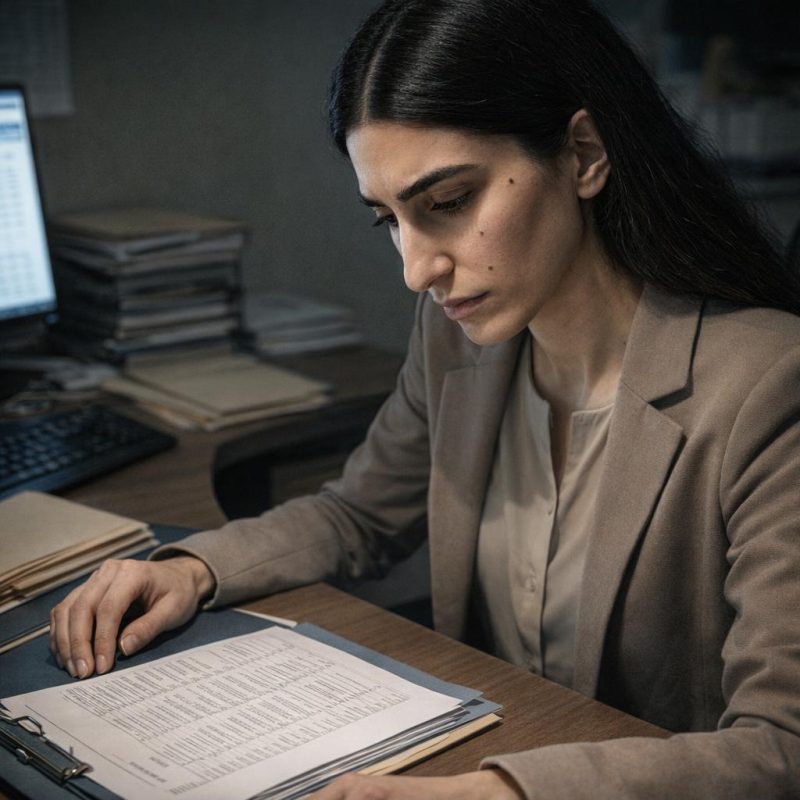 Image by RM AI
The Learning Curve
I flagged the entry and set it aside, telling myself I'd look at it more carefully once I had a baseline for what normal activity looked like in these accounts. The rest of that first week moved fast. I made introductory calls to all fourteen clients — some of them had already heard about the transition through their usual contacts, a couple hadn't, and I spent extra time on those to make sure the handoff felt smooth rather than abrupt. Most of them were professional and straightforward, and by Thursday I had a working sense of each client's priorities and communication style. Priya stopped by my office on Friday afternoon with two coffees and told me, with genuine warmth, that she was glad things had landed the way they did. We talked for a while about the accounts, about the new title, about what the next quarter was going to look like. After she left I sat at my desk with the updated client list in front of me, and the work felt like mine now — not inherited, not provisional, just mine — and that was a feeling I hadn't expected to arrive so quietly.
 Image by RM AI
The First Glitch
The week after Priya's visit, I settled into a rhythm with the expanded portfolio — client calls in the morning, documentation in the afternoon, the kind of steady productive pace that makes you feel like you've finally got your footing. So when I pulled up the Hartwell account on Tuesday and noticed that two of the contact fields had changed since my initial review, I stopped and looked at it twice. The data wasn't wrong exactly — the phone number was a digit off, the secondary email had a character transposed — but I had notes from my first pass, and those notes didn't match what was on the screen now. I ran the standard troubleshooting steps: checked the edit history, looked for a sync conflict, verified whether anyone else had touched the record. Nothing came back clean. The edit history showed no changes. No sync flag. No user activity on the record at all. I flagged it, documented what I'd found, and told myself it was probably a system hiccup — a database write that hadn't logged correctly, something mundane like that. I'd seen stranger things in legacy systems. I moved on to the next account and kept working. But the Hartwell record sat in the back of my mind for the rest of the afternoon, quiet and unresolved, the way a small thing does when it doesn't quite fit anywhere.
 Image by RM AI
The Pattern Emerges
By Thursday of that same week, the Hartwell issue had company. The Delacroix account showed a reporting field that had reverted to an older value — one I'd updated during my first week. I fixed it, documented it, and chalked it up to a possible sync issue between systems. Then on Friday, the Pemberton account threw an error when I tried to run the standard quarterly summary — a permissions conflict the system couldn't resolve on its own. I put in a ticket and moved on. But by the following Monday, when the Nguyen account flagged a data mismatch on a field I hadn't touched since onboarding, I stopped pretending these were unrelated. Four issues in less than two weeks, each one small enough to dismiss on its own, each one requiring time to document and resolve. I pulled up my issue log and looked at the list. None of them were catastrophic. None of them had affected client deliverables yet. But they were adding up in a way that felt less like bad luck and more like something I couldn't name. I was still staring at the log when the third error message of the week appeared in my inbox.
 Image by RM AI
The Targeted Problems
That evening I stayed late and built a proper spreadsheet — every issue logged since I'd taken over the expanded portfolio, sorted by account, date, error type, and resolution status. It took about an hour. When I finished and looked at the full picture, something shifted in my chest. Every single problem — all seven of them at that point — had occurred in accounts that had come from Julian's former portfolio. Not one error in any of the twelve accounts I'd managed before the transition. My original clients were clean. The inherited ones were not. I went back through the log twice, thinking I'd missed something, that I'd miscategorized an entry or forgotten an issue from my original accounts. I hadn't. The line was clean and absolute: Julian's former accounts on one side, mine on the other, and all the problems sitting neatly on Julian's side of that line. I sat back in my chair and looked at the screen. A random system failure doesn't sort itself that neatly. Hardware degradation doesn't respect portfolio boundaries. I couldn't explain it, and I couldn't prove anything, but the distribution wasn't random — the numbers on my screen made that much plain.
 Image by RM AI
The IT Consultation
I called Owen the next morning. We'd worked together during the original investigation, and I trusted his read on technical patterns more than anyone else in the building. I walked him through the spreadsheet — the dates, the account names, the error types, the clean split between the inherited portfolio and my original one. He was quiet for a moment after I finished. Then he asked me to send him the full log and the system tickets. I did, and he called back about forty minutes later. He said the error types weren't consistent with normal system degradation — they were too varied for that, hitting different fields and different functions across different accounts, but always landing just inside the threshold where they'd require manual intervention without triggering an automated alert. He said the pattern looked less like a system problem and more like something applied from outside. I asked him what he meant by that. He said he wasn't ready to call it anything definitive yet, but that the targeting was too precise for coincidence. I wrote that down word for word. Then he paused and said, in a quieter voice, that he'd seen this kind of thing before.
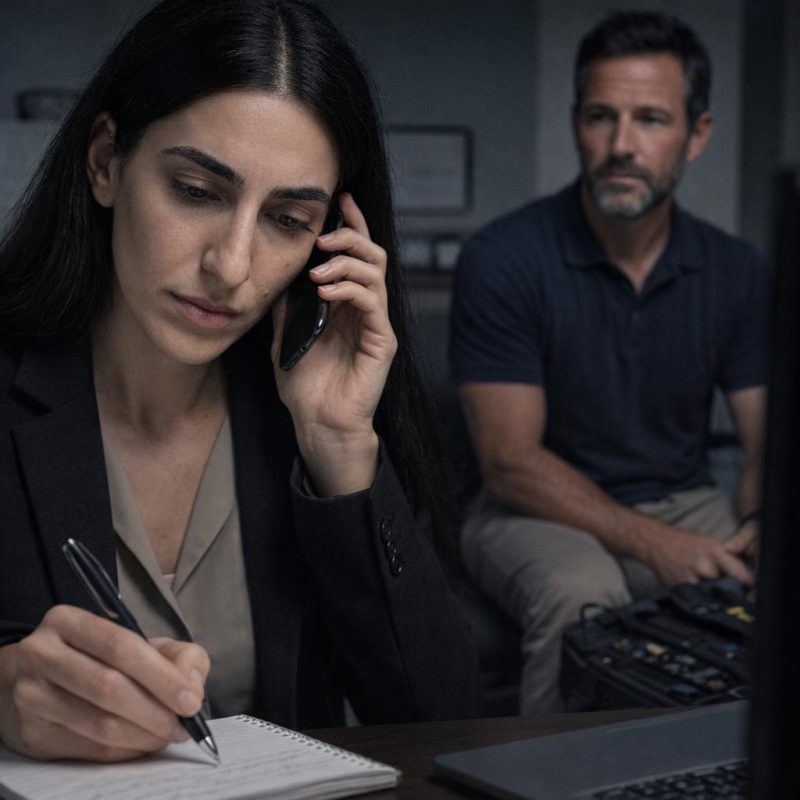 Image by RM AI
The Unexpected Visit
Marcus stopped by my desk the following afternoon. I hadn't seen him since the early days after the promotion announcement — he'd sent a brief congratulatory email at the time, professional and unremarkable — so his appearance in my corner of the floor felt slightly out of place. He said he was doing informal check-ins with the team leads on the expanded accounts, making sure the transition hadn't created any friction points. His tone was easy, collegial, the kind of executive warmth that's hard to argue with. He asked how the onboarding had gone, whether the clients had been receptive, whether I'd had any trouble getting up to speed on the inherited portfolio. I told him the transition had gone smoothly overall. He nodded and asked a follow-up — whether I'd run into any technical hiccups, the way new portfolios sometimes had legacy data issues. I said there had been a few minor things I was working through. He said that was normal, that Julian's accounts had always been a little rough around the edges administratively. He smiled when he said it, easy and offhand, and then asked one or two more questions before wrapping up and heading back toward the executive corridor. I watched him go and tried to identify what was sitting wrong about the conversation. I couldn't find it exactly — but the careful attention he'd paid to every answer I gave stayed with me long after he'd turned the corner.
 Image by RM AI
The Pointed Questions
I kept thinking about that conversation through the rest of the afternoon. Marcus had mentioned three specific accounts by name — Hartwell, Pemberton, and Nguyen. He'd framed it casually, the way you'd reference well-known clients in a portfolio you'd overseen at a distance. But those were exactly the three accounts where the most significant errors had occurred, and I hadn't mentioned any of them by name during our conversation. I'd said there were minor technical hiccups. That was all. I went back through the exchange in my head, trying to remember whether I'd let a name slip, whether he'd seen something on my screen when he walked up. My monitor had been showing a client summary, not the error log. He hadn't been close enough to read it anyway. A VP overseeing multiple departments doesn't typically carry that level of granular detail about a mid-level manager's individual account list — not unless he'd been briefed specifically, or had been paying closer attention to my portfolio than his role would normally require. I couldn't explain how he'd known those names. I couldn't prove he shouldn't have known them. But the precision of it sat in my chest like a stone I couldn't put down.
 Image by RM AI
The Security Review
I requested access to the security logs for the affected accounts the next morning, citing the ongoing data inconsistencies as justification. IT approved the request by noon. I spent most of that afternoon going through them — access timestamps, login sources, session durations, the kind of granular record-keeping that most people never look at unless something has already gone wrong. The logs for my original accounts were clean and consistent: my credentials, the standard system processes, nothing unusual. The logs for the inherited accounts told a different story. There were gaps I couldn't account for, sessions that had opened and closed in patterns that didn't match normal user behavior, and timestamps that fell outside business hours on days when the office had been closed. I cross-referenced everything against the error log I'd built. The timing lined up. Whatever had touched those accounts had done it in the windows just before each error appeared. I was still working through the Pemberton log when a flag caught my eye — an access attempt from an IP address I didn't recognize, one that didn't match any location in the company's internal directory.
 Image by RM AI
The Insider Knowledge
I ran the IP address through every internal resource I had access to. It didn't match any of our office locations, any of our approved remote-access nodes, or any vendor system I could find in the documentation. I flagged it and kept pulling the thread. What I found over the next two hours was harder to sit with than a single unfamiliar address. The access methods used across the affected accounts weren't simple. Whoever had touched these records understood how our permissions architecture was layered — they'd moved through it in a way that avoided the standard audit triggers, hitting the gaps between automated checkpoints rather than tripping them. That kind of navigation takes more than general IT familiarity. It takes specific knowledge of how this company's systems were built and where the monitoring has blind spots. Julian had been in account management. He knew the client-facing side of our platforms, the same tools I used every day. This was something else — something that pointed toward someone with a much deeper map of the infrastructure than Julian had ever needed. I sat with the logs spread across two monitors and let that land. Whatever this was, it was bigger than one disgruntled former colleague working alone.
 Image by RM AI
The Advanced Tools
Owen pulled up the tool signatures on his secondary monitor and walked me through what he was seeing. I'd expected to find something clumsy — a script-kiddie approach, maybe a repurposed open-source exploit. What he showed me was neither of those things. The spoofing methods used in the recent attempts were enterprise-grade: layered identity masking, rotating credential injection, and a packet-level obfuscation technique that Owen said he'd only seen deployed in two previous cases, both involving contracted security professionals. I asked him to pull Julian's employment record and cross-reference it against the technical certifications on file. Julian had standard account management credentials, a couple of vendor platform badges, nothing that touched network architecture or penetration tooling. Owen confirmed it flatly — the gap between what Julian's record showed and what someone had used against our systems wasn't a small one. It wasn't the kind of gap you close with a YouTube tutorial or a weekend of tinkering. Whoever had used these tools either had years of specialized training or had been handed something purpose-built by someone who did. I sat back and looked at the two columns Owen had laid out side by side — Julian's documented skill set on the left, the tool signatures on the right — and the distance between them just sat there, quiet and impossible to explain away.
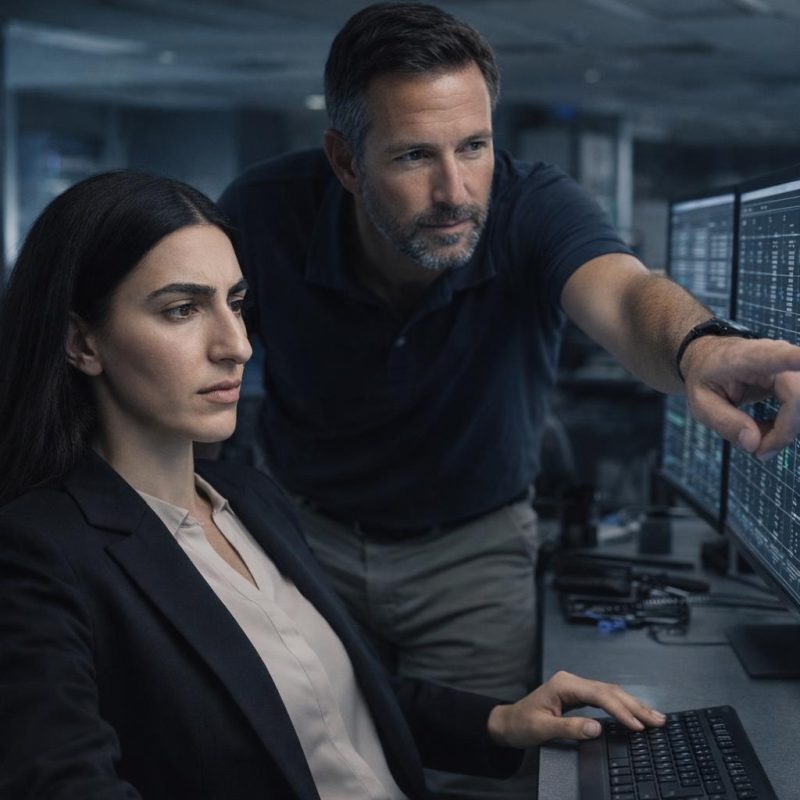 Image by RM AI
The Encrypted Trail
Owen had been quiet for about twenty minutes, running a deeper pass through the archived system logs, when he leaned back and said, 'There's something else here.' He'd found fragments — not complete messages, but partial data packets that had been routed through an encrypted channel and then scrubbed. Whoever had done the scrubbing had been thorough, but not thorough enough. Owen explained that when you delete encrypted traffic from a log, you can remove the content, but the structural ghost of the transmission often stays behind — the handshake timestamps, the packet-size signatures, the routing nodes. He'd been stitching those ghosts back together. What they showed was a pattern of coordinated communication between two endpoints, not one person working alone. The exchanges were consistent across several weeks, with a rhythm that looked less like casual contact and more like ongoing instruction. I asked Owen how far back the timestamps went. He scrolled to the earliest fragment and pointed at the date. The first transmission had occurred weeks before the database incident — weeks before Julian had even been formally disciplined. I stared at the date on the screen and felt the floor shift slightly beneath everything I thought I'd already figured out.
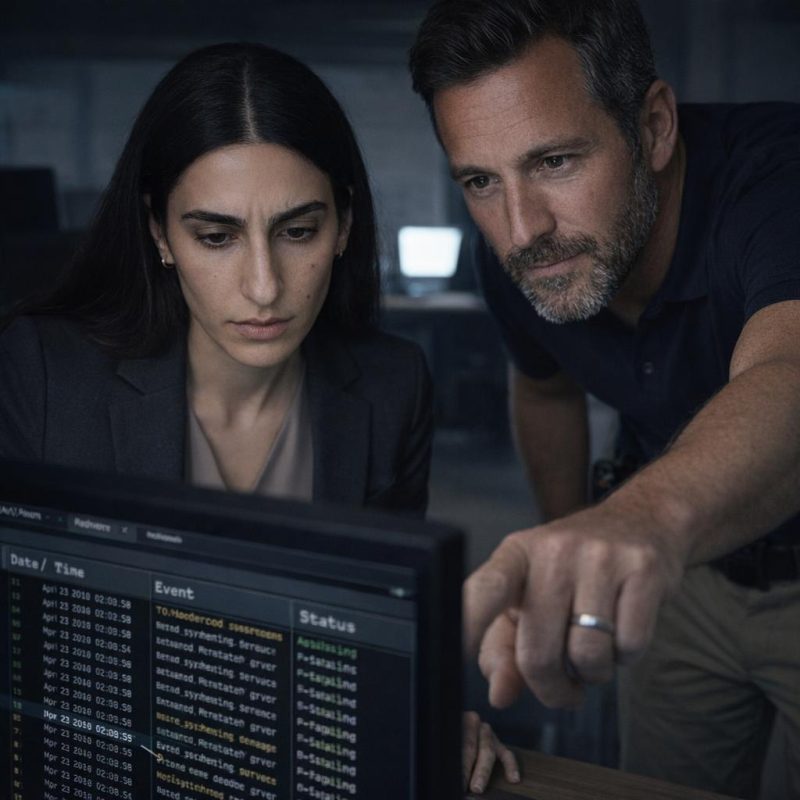 Image by RM AI
The Second Device
Owen kept pulling on the thread. He traced the second endpoint in the communication pattern — the one that wasn't Julian — back through the routing nodes, looking for where it had originated inside our network. It took him the better part of an hour. I watched him work methodically, cross-referencing MAC addresses against the device registry, eliminating possibilities one by one. When he finally stopped typing, he didn't say anything right away. He just pointed at the screen. The device that had sent and received those encrypted coordination messages wasn't registered to a standard employee workstation. It carried executive-level network privileges — the kind of access tier that only existed for a small group of people at the top of the org chart. The access logs placed it physically inside corporate headquarters, connected to our internal network, not a remote node. I leaned in closer. The device registration entry showed a clearance classification I'd only ever seen attached to senior management accounts. Owen pulled up the privilege tier documentation to confirm what we were looking at. The entry on his screen showed a device class reserved exclusively for director-level and above.
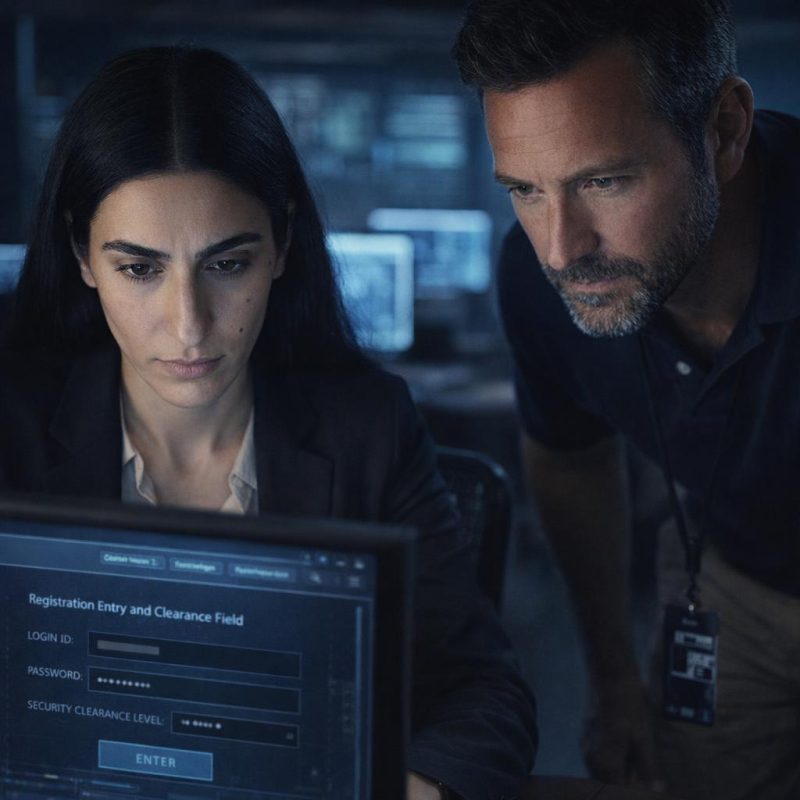 Image by RM AI
The IP Address
Owen ran the IP address from the most recent sabotage attempts through his mapping software. I'd given him the address I'd flagged from the access logs — the one that didn't match any approved remote node or vendor system — and he'd been running it against the building's internal network topology for the last thirty minutes. The software worked by correlating IP assignments against the physical port registrations in each section of the building, floor by floor. I watched the progress bar move and tried to keep my breathing steady. Owen had done this kind of trace before and he'd told me the results were reliable to within a single office in most cases, assuming the assignment hadn't been spoofed at the hardware level. He didn't think it had been. The mapping finished. Owen leaned forward and studied the result for a moment before turning the monitor slightly toward me. The software had placed the IP address on the executive floor. I could see the building schematic on screen, the highlighted corridor, the specific room the trace had resolved to. Owen tapped the screen once. The office number was right there.
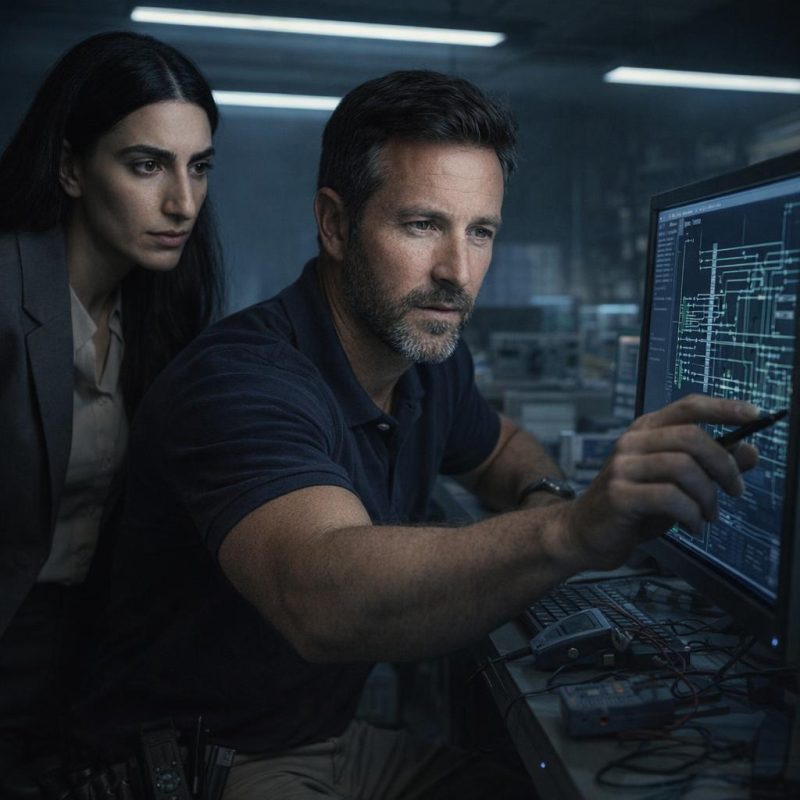 Image by RM AI
The VP's Office
Owen pulled up the full registration record for that office. The name attached to it was Marcus Aldridge, VP of Operations. I read it twice. Then I looked at the encrypted communication fragments again, and Owen walked me through the message content he'd been able to partially reconstruct. The instructions were specific — which access points to use, which audit triggers to avoid, which deletion method would register as user error in the system logs. The enterprise-grade spoofing tools we'd identified earlier had been pushed to Julian's machine from that same IP address. The timestamps showed the first transfer had happened weeks before the database incident, right around the time my promotion had been announced internally. Owen pulled up the org chart without me asking. My new role sat directly below Marcus's territory on the operations side. I thought about every company event where Marcus had nodded at me across the room, every hallway conversation where he'd been perfectly pleasant, every meeting where he'd said nothing that could be held against him. The whole time, the tools were already on Julian's machine. Marcus had been running this from the executive floor, and I had never once looked up.
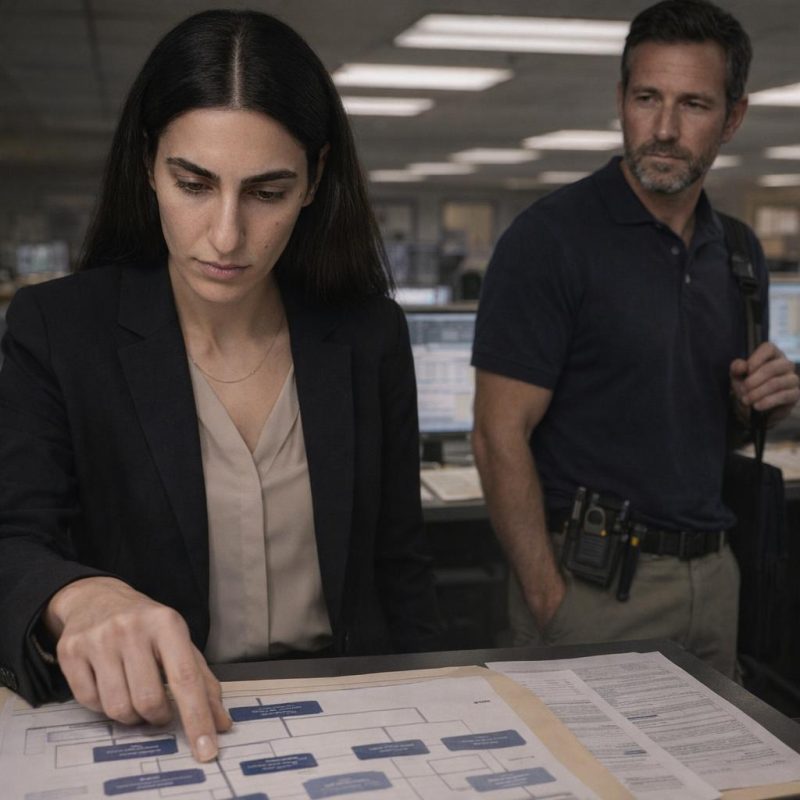 Image by RM AI
The Scope of Betrayal
Owen printed everything — the device registration, the IP trace, the reconstructed message fragments, the tool transfer logs, the timestamps. He laid it out in chronological order across his desk and I went through it piece by piece. The planning had started before Julian's second promotion denial. That was the part I kept coming back to. Marcus hadn't reacted to my advancement — he'd anticipated it and moved first. The coordination between him and Julian had run for weeks, with Marcus providing the tools, the method, and what looked like step-by-step guidance. And the whole time, at the quarterly all-hands, at the department lunch in March, at the hallway conversations I'd had with him about client strategy, he'd been exactly what he always was: composed, collegial, faintly encouraging. I thought about the March lunch specifically — he'd asked about my caseload, said something about my trajectory being impressive. I'd taken it as a genuine compliment. Owen stacked the printed pages into a folder and set it on the desk between us. I didn't reach for it right away. I just sat there with the full weight of how many weeks that folder represented.
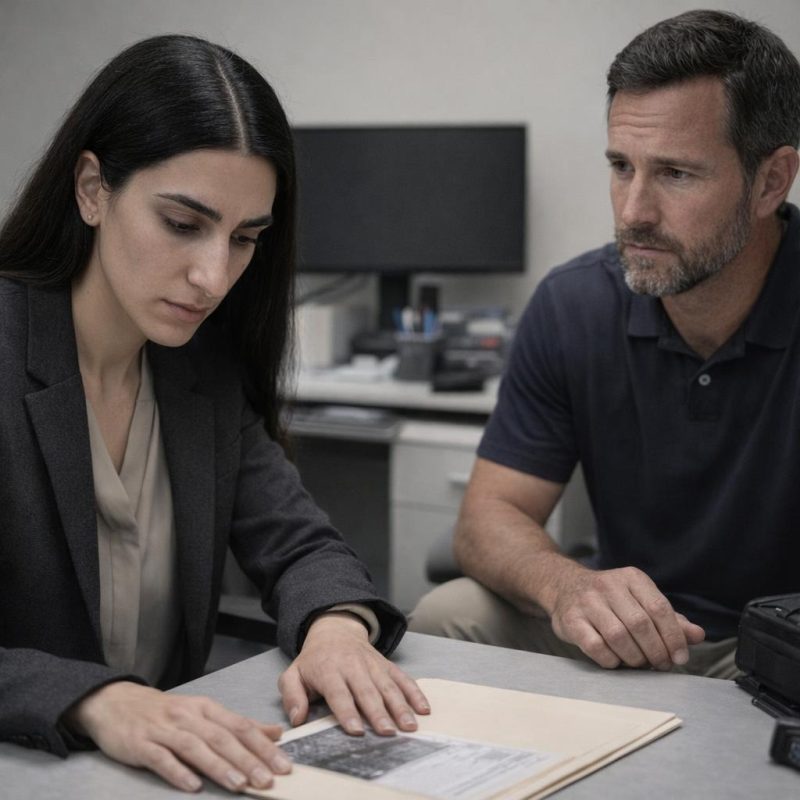 Image by RM AI
The Territorial Threat
Owen pulled Marcus's personnel file and set it alongside the org chart. I hadn't asked him to — he'd thought of it himself, which told me he was thinking the same thing I was. Marcus had been VP of Operations for six years. His territory covered the operational infrastructure that my new role had been carved out of. When the company had restructured my position upward, they hadn't announced it as a succession track, but the reporting lines made the implication clear enough. My role now sat one level below his, with overlapping domain responsibilities and a direct line to the same senior leadership he reported to. Owen pointed out that two of the three competency areas listed in my updated job description were areas Marcus had historically owned exclusively. I read through the org chart slowly. The restructuring hadn't just elevated my title — it had placed me in a position where strong performance on my part would naturally raise questions about whether his layer of the hierarchy was still necessary. I thought about that in the context of everything in the folder. The org chart sat open on Owen's desk, my name and Marcus's connected by a single thin line, and I understood now exactly what that line had looked like to him.
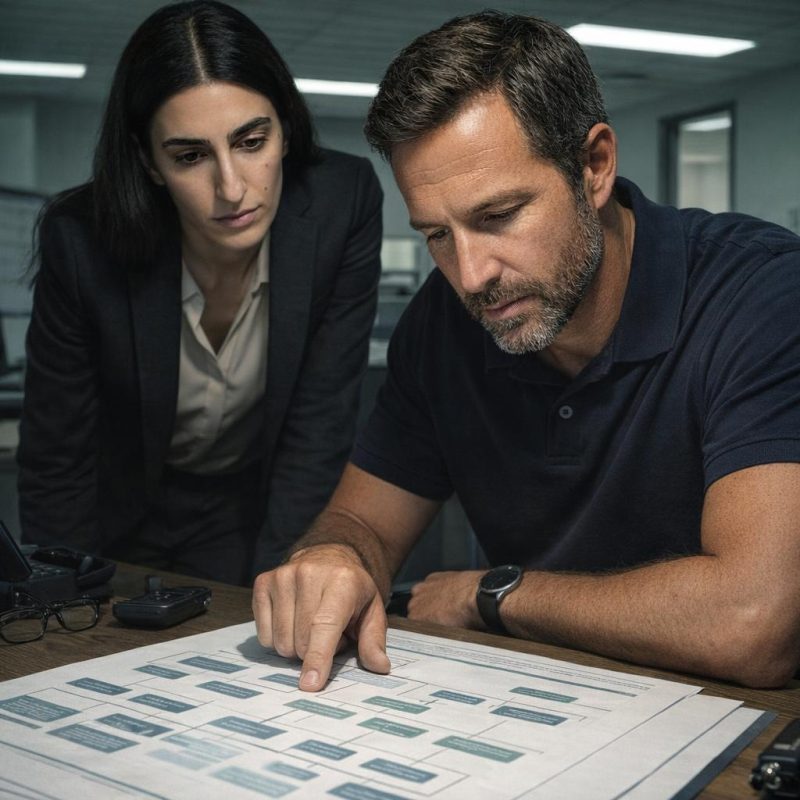 Image by RM AI
The Alliance
I called Lisa that afternoon and asked if she had an hour. I didn't tell her what it was about over the phone — just that it was serious and that I needed her in person. She came to Owen's office, which I think surprised her. Owen had the folder ready and the monitor queued to the key log entries. I let the evidence speak first. Lisa was quiet as she read — the kind of quiet that isn't neutral, that has weight behind it. She went through the printed pages methodically, pausing at the reconstructed message fragments, pausing again at the device registration. Owen walked her through the technical confirmation points without editorializing. When she finished the last page, she set it down carefully and looked up at Owen, then at me. She asked two clarifying questions — both precise, both the kind an HR manager asks when she's already thinking about what the documentation needs to look like for a formal action. Then she picked up the folder again and read the first page a second time. Her expression shifted as she read — something in it going still and flat in a way I hadn't seen from her before.
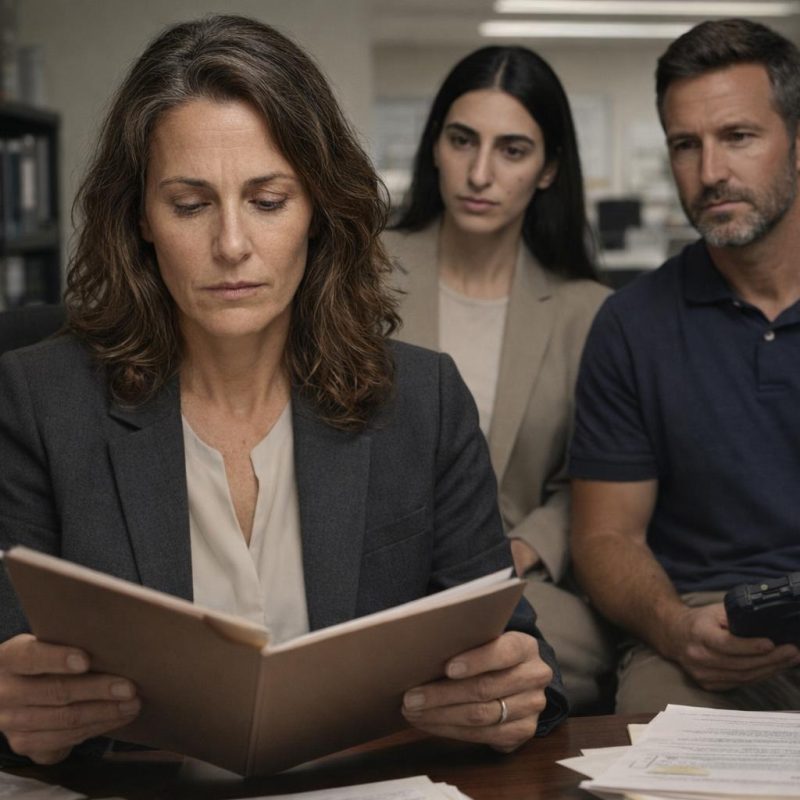 Image by RM AI
The Documentation
The three days after Lisa read that folder were the most focused I'd felt in months. We commandeered Owen's office and turned it into something between a war room and an evidence vault. Owen handled the technical layer — pulling every network log, every device registration timestamp, every access record into a clean, sequenced file. Lisa handled the HR and legal framing, making sure each piece of evidence was labeled with the right compliance language and cross-referenced to company policy. I handled the narrative thread, writing the timeline that connected everything from the first anomaly in the database logs to the most recent sabotage attempt. We worked in shifts, checking each other's sections, flagging gaps, filling them. Priya brought us coffee twice and didn't ask questions, which I appreciated more than I could say. By the end of day two, we had a draft. By the end of day three, we had something that felt airtight — binders tabbed and indexed, a digital version with hyperlinked exhibits, a one-page executive summary that laid out the conspiracy in plain language. Lisa reviewed the final summary one last time, made two small edits, and slid it back across the desk. I turned to the last page of the evidence report and set it into place.
 Image by RM AI
The Decoded Messages
Owen had been working on the final encrypted message cluster for two days, and when he cracked the last layer of obfuscation, he didn't say anything dramatic. He just turned the monitor toward me and Lisa and said, 'Read these in order.' The messages were timestamped across a six-week window. The early ones were careful — vague enough to be deniable, the kind of language that could pass for mentorship if you squinted. But they got less careful as the weeks went on. By the fourth week, Marcus was specific. He told Julian exactly which credential string to use, exactly how to structure the deletion command so the logs would point back to my access profile. He told Julian to keep his own hands clean and let the system do the talking. And then, near the bottom of the thread, there was the one that made Lisa go very still beside me. It wasn't technical. It wasn't coded. It was a single direct sentence, sent from Marcus's account at 11:47 on a Tuesday night: 'Once she's out, the role is yours — I'll make sure of it.'
 Image by RM AI
The Compliance Meeting
Lisa and I spent the morning before the compliance meeting going through the presentation one final time. She had coached me on how to pace it — lead with the timeline, let the technical evidence build, save the decoded messages for last. 'Don't editorialize,' she said. 'The evidence does that for you.' I'd rehearsed the key points until I could deliver them without looking at my notes. I knew which slide would land hardest. I knew which question the head of compliance was most likely to ask, and I had the answer ready. Owen had prepared a one-page technical summary for anyone who needed the network evidence explained in plain language. The binders were stacked by the door, tabbed and labeled. My copy had small pencil marks in the margins — not scripts, just anchors, words to keep me on track if the room got heavy. Lisa checked her watch and said we had ten minutes. I straightened the binders, picked up my copy, and stood there for a moment in the quiet of the hallway outside the conference room, the weight of everything we'd built sitting solid in my hands.
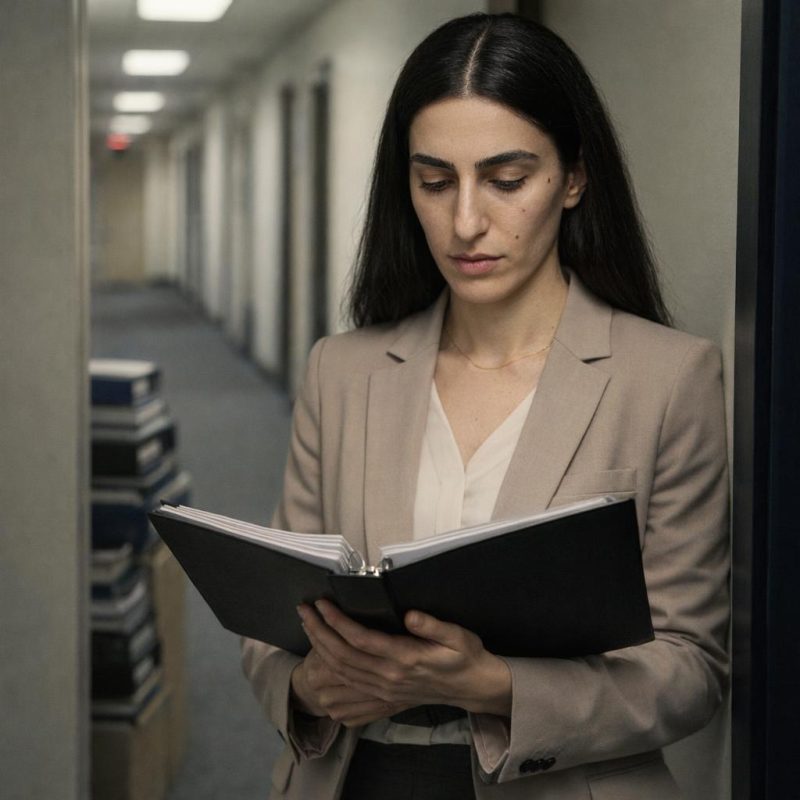 Image by RM AI
The Presentation
There were five of them on the other side of the table — the CEO, the head of compliance, two senior VPs I recognized from all-hands meetings, and Marcus, seated at the far end with his hands folded and his expression carefully neutral. Lisa sat to my left. Owen was at the corner of the table with his laptop open. I started with the timeline. I walked them through it from the first anomaly — the date, the access log, the credential string that didn't match my usual pattern — and I didn't rush. I let each piece land before moving to the next. When I got to the network logs, Owen pulled up the technical exhibits and walked the room through the device registrations without editorializing. When I got to the decoded messages, I read two of them aloud. I didn't look at Marcus while I read. I didn't need to. I finished with the executive summary, set my copy down, and said I was available for any questions. The CEO hadn't moved in several minutes. The head of compliance had her pen pressed flat against her notepad. The room held that particular kind of silence that doesn't ask to be filled.
 Image by RM AI
The Confrontation
The CEO let the silence sit for another few seconds before he turned to Marcus and asked him, in a very even voice, to walk the room through his understanding of the evidence. Marcus uncapped his pen. He said there were context issues with the technical interpretation, that network logs could be misread, that the credential data was circumstantial without corroborating testimony. His voice was measured and his posture was straight and he looked like a man who had survived difficult rooms before. The head of compliance asked him to be specific about which technical interpretation he was disputing. Marcus referenced the device registration timestamps. Owen opened his laptop and pulled up the raw log file and read the relevant entry aloud, including the device serial number registered to Marcus's corporate account. Marcus said the serial number could have been spoofed. Owen said the authentication certificate couldn't. There was a pause. Marcus set his pen down. He picked it up again. He said he'd need time to review the full technical record before responding further. The CEO said that was noted. I watched Marcus's hands on the table — the pen moving, stopping, the fingers pressing flat against the surface — and the careful steadiness he'd carried into the room had gone somewhere I couldn't quite locate anymore.
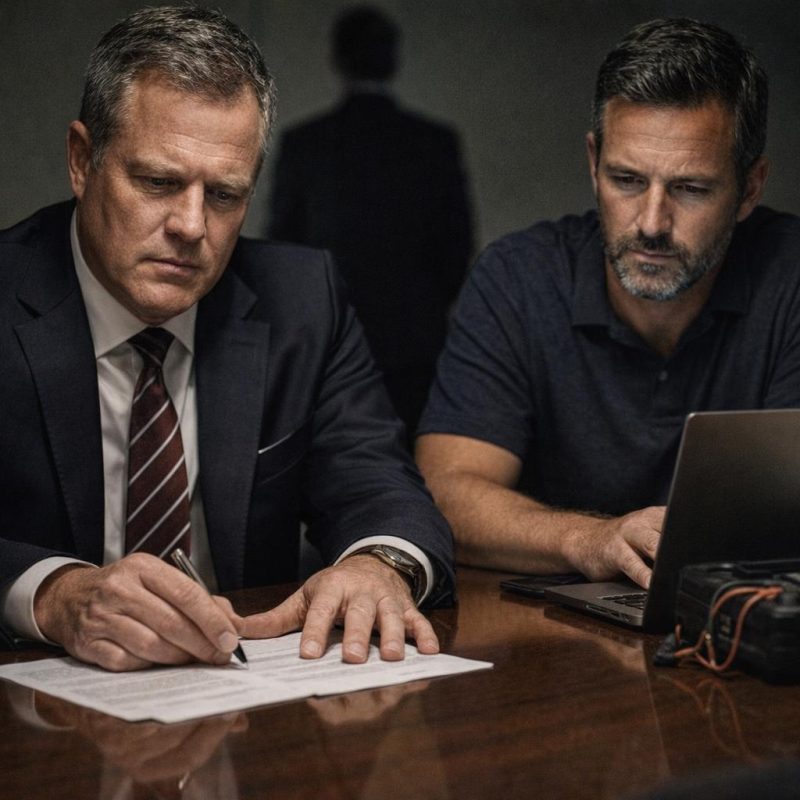 Image by RM AI
The Deflection Attempt
Marcus regrouped faster than I expected. He leaned forward and said Julian had been unsupervised with his credentials for months — that Julian had access to his login environment through a shared project folder, that it was entirely possible Julian had lifted the authentication data without his knowledge. He said it calmly, like a man presenting a reasonable alternative theory. The head of compliance wrote something down. I kept my hands still on the table. Owen waited until Marcus finished, then opened a second folder and said he had something else to add to the record. He explained that the coaching messages hadn't come through the corporate network at all — they'd come from a personal device, a mobile number registered to Marcus directly, routed through an encrypted messaging application that required biometric authentication to open. He said the timestamps on those messages matched the transmission windows exactly, and that biometric authentication eliminated the possibility of remote credential use. He laid out the documentation in a neat stack — carrier records, authentication logs, device registration — and slid it to the center of the table.
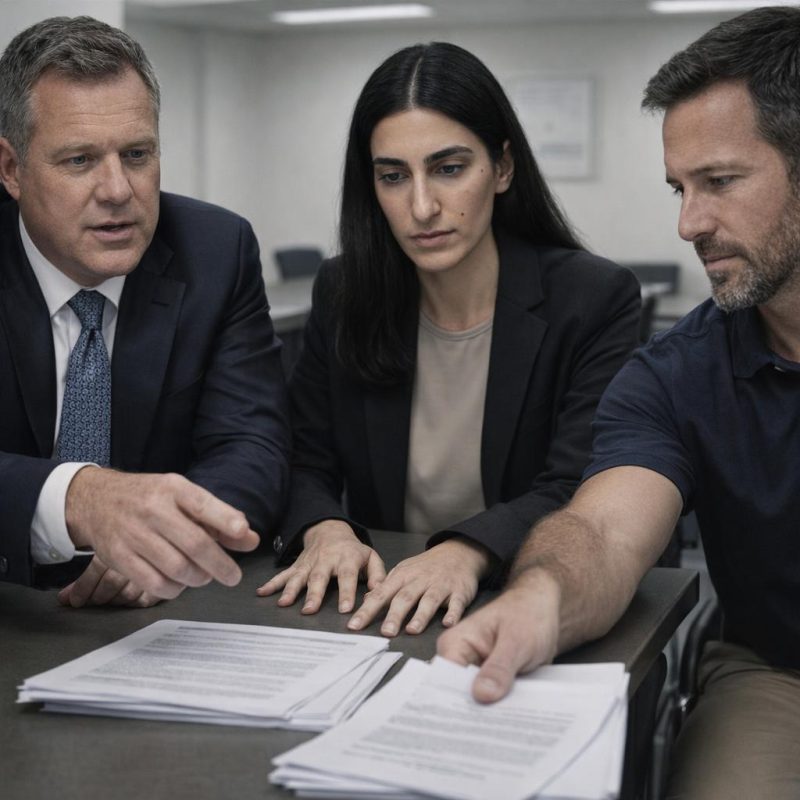 Image by RM AI
The Seized Evidence
The head of compliance cleared her throat and said there was additional material the room hadn't seen yet. She opened a folder of her own — thicker than I expected — and explained that Julian's phone had been seized as part of the preliminary inquiry and that the forensic team had completed their extraction two days prior. She passed printed copies around the table. The messages were a separate thread, running parallel to the encrypted channel Owen had decoded — a direct SMS exchange between Marcus's personal number and Julian's. They went back further than anything we'd found. The early messages were about me specifically: my project assignments, my performance reviews, the timeline of my promotion consideration. Marcus had been tracking it. As the thread moved forward, the messages became operational. There were instructions. There were contingencies. There were reassurances when Julian got nervous. I read through the stack slowly, page by page, until I reached a message near the middle of the thread, sent the week before the database deletion. It was short. Eleven words, no punctuation, no ambiguity: *make sure they blame her for everything*.
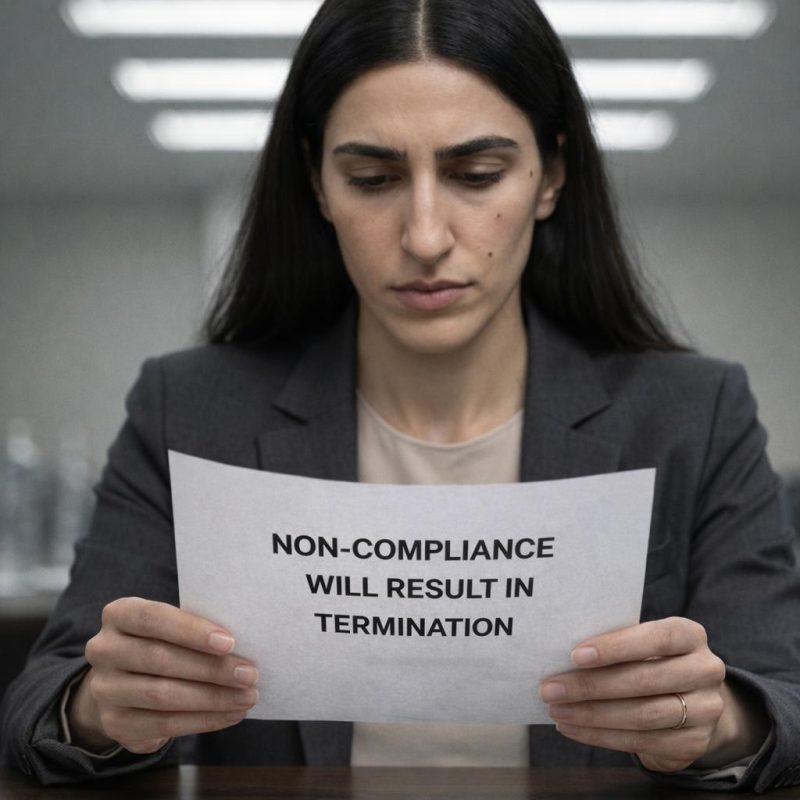 Image by RM AI
The Suspension
The CEO read the message twice. Then he set the page down, aligned it with the edge of the table, and looked at Marcus directly. He said the company was placing Marcus on immediate suspension pending a formal investigation to be conducted by an external firm. He said the legal team had already been briefed and that the company would be pursuing termination and referring the matter for review of potential legal liability. He said this in the same even tone he'd used for the entire meeting, which somehow made it land harder than if he'd raised his voice. Marcus started to say something. The CEO said he was done speaking for today. Lisa leaned over and said something quietly to the head of compliance. Owen closed his laptop. Marcus sat very still for a moment, and then the door opened and two members of building security stepped into the conference room.
 Image by RM AI
The Termination
Three days after the security team walked Marcus out of that conference room, the official announcement came through. I was sitting at my desk when Lisa appeared in my doorway and asked if she could come in. She set a printed memo on my desk — company letterhead, the CEO's signature at the bottom — and waited while I read it. Marcus had been terminated for corporate espionage and conspiracy to sabotage company operations. A civil lawsuit had been filed seeking financial damages. The matter had also been referred to law enforcement for review of potential criminal liability. Julian's termination had been processed separately the week prior, and that referral was already in motion too. Lisa said the external investigation firm had submitted their final report that morning and that the findings were unambiguous. Richard was standing just outside my office. He stepped in, nodded once, and said the company-wide announcement had gone out to all staff at nine a.m. I read the memo a second time, slower. Every line of it was exactly what the evidence had pointed to for weeks. I set it down on my desk, the CEO's signature facing up, and just sat there for a moment with it in front of me.
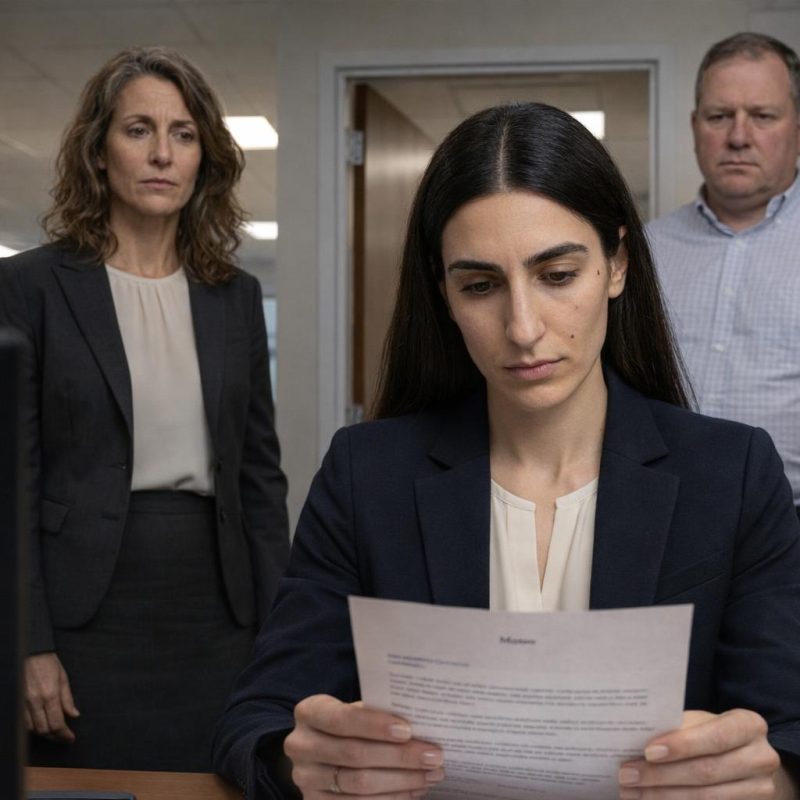 Image by RM AI
The New Protocols
The week after the termination announcement, Owen sent me a calendar invite with the subject line: Security Audit — Phase One. I showed up to the first session expecting to observe. Instead, Owen handed me a whiteboard marker and said they needed someone who understood both the operational side and the technical gaps, and that apparently that was me now. Lisa had already signed off on the scope — a full review of credential management, executive-level access controls, and the monitoring gaps that had allowed the sabotage to go undetected for as long as it had. We spent three days mapping every vulnerability the investigation had exposed. Owen walked through the technical architecture while I flagged the process failures — the places where a policy existed on paper but nobody was actually checking. By the end of the week, we had a draft framework for new protocols that the compliance team took into formal review. Lisa told me the CEO had specifically requested that I stay involved through implementation. I hadn't expected that. I'd spent months just trying to prove I hadn't done anything wrong, and now the same evidence trail that had nearly ended my career was being used to build something the whole company would rely on. Sitting in that conference room with Owen's diagrams spread across the table, I felt the weight of that shift settle quietly into place.
 Image by RM AI
The Promotion
Richard called me into his office on a Thursday afternoon and told me to close the door. Lisa was already there, seated across from his desk, which told me this wasn't a routine check-in. Richard sat down, folded his hands on the desk, and said the CEO had asked him to deliver something in person. He slid a formal offer letter across the desk — VP of Operations, Marcus's former title, with a compensation package that included a salary increase I had to read twice to believe. Richard said the company recognized that the investigation had put me through something no employee should have to navigate, and that the offer came with a formal acknowledgment of the company's failure to detect the conspiracy before it reached the point it did. He didn't dress it up. He said they'd missed it, and that was on leadership, not on me. Lisa added that the role had been restructured with clearer reporting lines and that I'd have direct input into the team I'd be building. I looked at the offer letter for a long moment. I thought about the morning I'd been called into Richard's office the first time, certain I was about to be fired. I thought about every late night, every document, every small detail I'd refused to let go of. I signed the letter and set the pen down, and the room was very quiet.
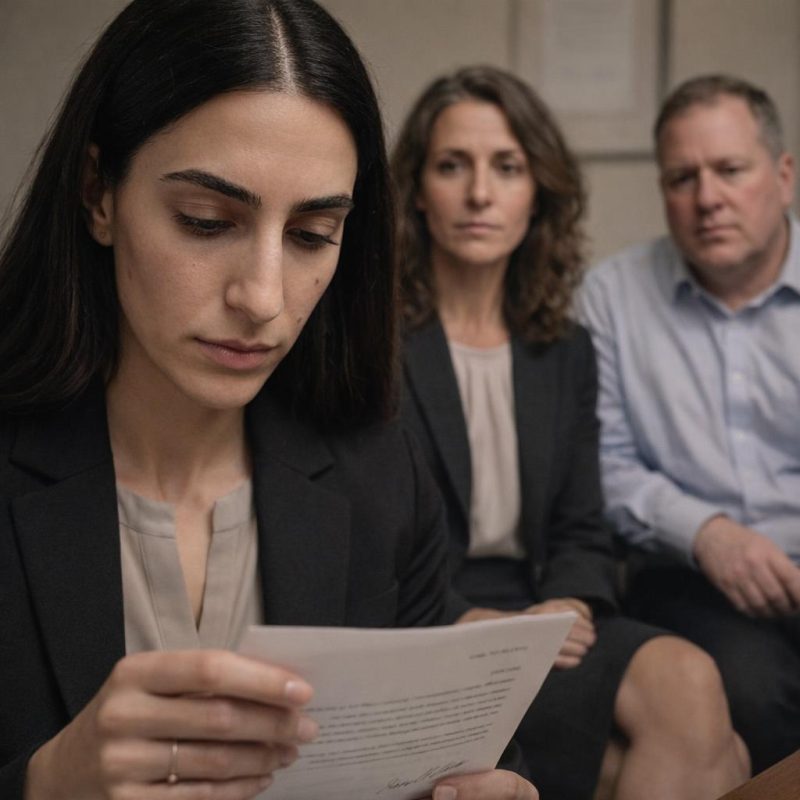 Image by RM AI
The Coffee Machine
My first morning as VP, I came in early and walked the floor before anyone else arrived. I stopped at the breakroom on my way to my new office. The coffee machine sat in its usual spot — same scratched panel, same slightly uneven drip tray — and I stood there for a second just looking at it. Priya found me there about ten minutes later, poured herself a cup, and said she still couldn't believe a coffee machine had brought down two executives and an entire conspiracy. I told her I couldn't either, honestly. She laughed and said I'd always been the most stubborn person she knew, and that stubbornness had apparently been a career asset. She wasn't wrong. I thought about the morning I'd noticed the access log discrepancy — how close I'd come to dismissing it as a system glitch, how easy it would have been to just let it go. I thought about Owen pulling the maintenance records, Lisa cross-referencing the badge data, Richard's face when the full picture finally landed in front of him. None of it had been fast or clean or easy. But I was standing here now, coffee in hand, with my name on a VP offer letter in my bag and a team meeting on my calendar for nine a.m. I took a sip, picked up my bag, and walked toward my office.
 Image by RM AI
KEEP ON READING

From GPS to the Wristwatch: 20 Military Innovations You Probably…
Battlefield Problems to Everyday Solutions. It's easy to take for…
By Christy Chan May 25, 2026
20 Mysterious Fossils That Paleontologists Still Can't Explain
Ancient Life Had a Weird Imagination. Fossils usually help scientists…
By Emilie Richardson-Dupuis May 25, 2026
20 Laws Created Because One Person Did Something Terrible
History Keeps Receipts. Long before laws had polished names and…
By Cameron Dick May 25, 2026
20 Dynasties That Proved Family Wealth Can Outlast Empires
Money Remembers. Empires like to pretend they are permanent. They…
By Cameron Dick May 25, 2026
20 Archaeological Finds That Sound Fake But Are Completely Real
The Past Refuses to Be Boring. Archaeology has a way…
By Annie Byrd May 25, 2026
20 Peace Treaties That Unraveled Instantly
When Peace Agreements Failed Almost As Soon As They Began.…
By Rob Shapiro May 25, 2026