

I Destroyed My Son-in-Law's Life to Protect My Daughter, Until I Found Out She Made Everything Up
I Destroyed My Son-in-Law's Life to Protect My Daughter, Until I Found Out She Made Everything Up
The Call That Changed Everything
It was eleven-thirty at night and I was already in bed when my phone lit up on the nightstand. I almost let it go to voicemail. I'm glad I didn't — and I'm not glad I didn't — depending on which version of that night I'm living in. Chloe's voice came through the line in pieces, broken up by crying so hard she could barely get words out. She said Mark had grabbed her during an argument. She said there were bruises on her arms, on her neck. She kept saying she didn't know what to do, that she was scared to stay in the house, that she needed me. I didn't ask questions. I didn't pause to think. Every instinct I had — thirty-two years of being her mother — fired at once, and I was already out of bed and reaching for my robe before she finished the sentence. I told her I was coming. I told her I would handle it. I told her she was safe now. I meant every word. I sat on the edge of the bed for just a moment after we hung up, her voice still in my ear, the weight of her tears still pressing against my chest like something I could physically hold.
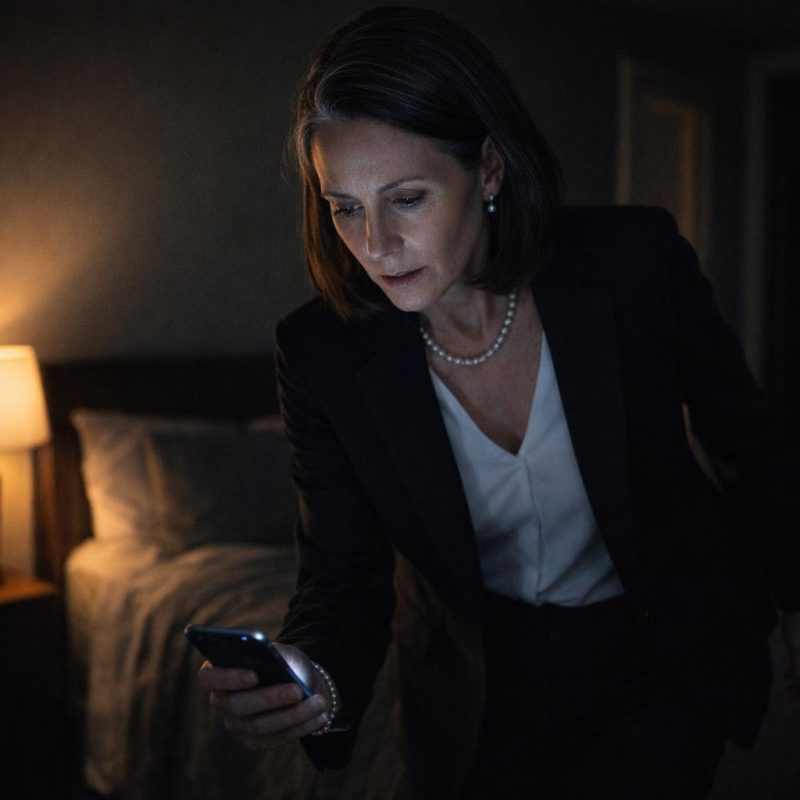 Image by RM AI
Confrontation at the Office
I didn't sleep that night. By seven the next morning I was dressed, my keys in my hand, and I had already decided what I was going to do. I knew where Mark worked — a mid-sized marketing firm downtown, twelve floors up in a glass building I had always thought looked too clean for the kind of man I now believed he was. I walked past the receptionist without stopping. She called after me but I didn't turn around. I knew the general layout from a company party Chloe had dragged me to two years before, and I found his section without much trouble. He was at his desk with headphones on when I walked up. I pulled one side off his ear and I told him, loudly enough that I didn't care who heard, exactly what Chloe had told me. I said the word abuser. I said it more than once. He stood up and started talking — something about a misunderstanding, something about needing to explain — and I cut straight through it. I told him there was nothing to explain. His supervisor had come out of a glass-walled office by then, and two other people had stopped typing, and I watched the color drain completely out of Mark's face as more of his coworkers turned to look.
 Image by RM AI
The Power of Influence
I made the first call from my car in the parking garage before I even left the building. I had three names in my head before I hit the street — people who moved in the right circles, who knew the right people, who could make a phone call of their own and have it mean something. I told each of them the same thing: that my daughter's husband had been hurting her, that he was dangerous, that any company keeping him on staff was taking on a liability they didn't understand yet. I kept my voice calm and measured. I didn't exaggerate. I didn't need to. The facts as I understood them were damning enough on their own. By early afternoon I had a message from the second contact saying that conversations had already been had. By evening, the third told me the termination was being processed. I sat in my kitchen with a cup of tea that had gone cold and I felt something settle in my chest — not happiness exactly, but a kind of grim, purposeful relief. He had hurt my daughter. He had put his hands on her. And now he would not have the comfort of a paycheck or a professional reputation to hide behind while she tried to rebuild her life. I felt no guilt about any of it. Not then.
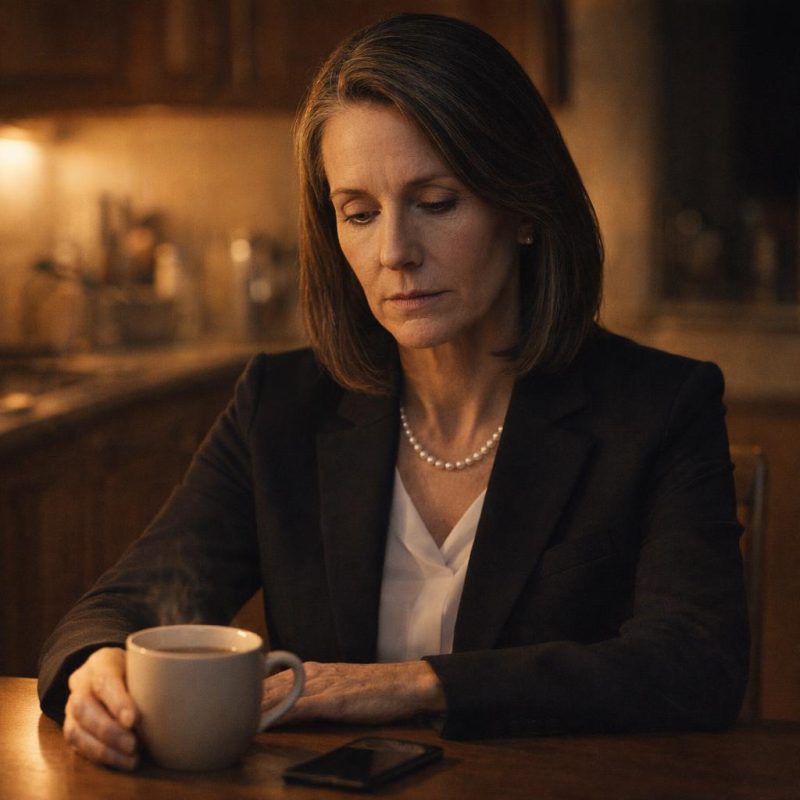 Image by RM AI
Poisoning the Well
The calls I made over the following two days were quieter than the ones before, but they carried just as much weight. I started with the neighbors on Chloe and Mark's street — a couple I had met at a barbecue the summer before, pleasant enough people who I knew kept an eye on the block. I told them what I had told the others: that Mark had been violent, that Chloe was frightened, that they should know who they were living next to. Then I called two women from the church group Chloe had attended on and off for years. Then a man named Gerald who ran the school fundraising committee that Chloe had volunteered for, where Mark had occasionally shown up to help. Each conversation followed the same shape. I spoke carefully, framed everything as concern, and let the details do the work. Every single person I spoke to said some version of the same thing — that they had no idea, that they were so sorry, that they would absolutely keep their distance. By the time I finished the last call I felt something close to satisfaction. I had built a wall around my daughter, brick by careful brick, and I sat with the quiet certainty that no one in that circle would give Mark's denials a moment of serious consideration.
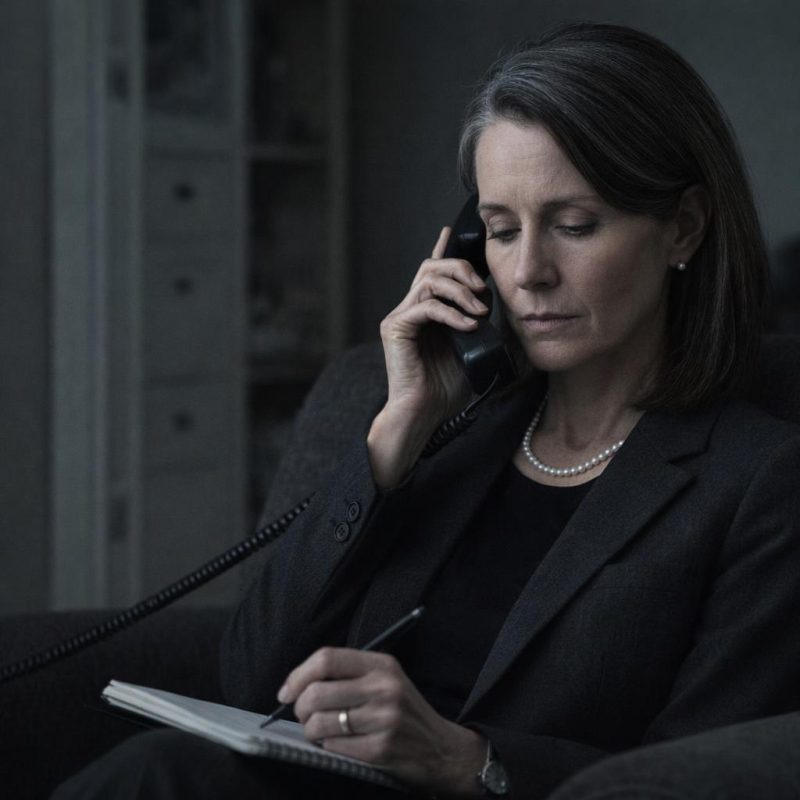 Image by RM AI
The Isolation
Thursday mornings had always been Mark's standing coffee meetup — a loose group of friends he'd known since college, guys who met at a place called Harlow's on Fifth every week without fail. Chloe had mentioned it enough times over the years that I knew the routine without having to ask. I told myself I was just driving past. I told myself I only wanted to see how things were settling. I pulled into a spot across the street just after nine and I sat there with the engine running. I waited. At one point I checked my own phone just to have something to do with my hands. The minutes stretched. I told myself that whatever I found, it would tell me whether my efforts had done what I intended. Then I put the car in drive and pulled slowly away from the curb — and through the window of Harlow's, I could see Mark still at his usual table, alone, his phone face-up in front of him, the door he kept glancing toward swinging open for a stranger.
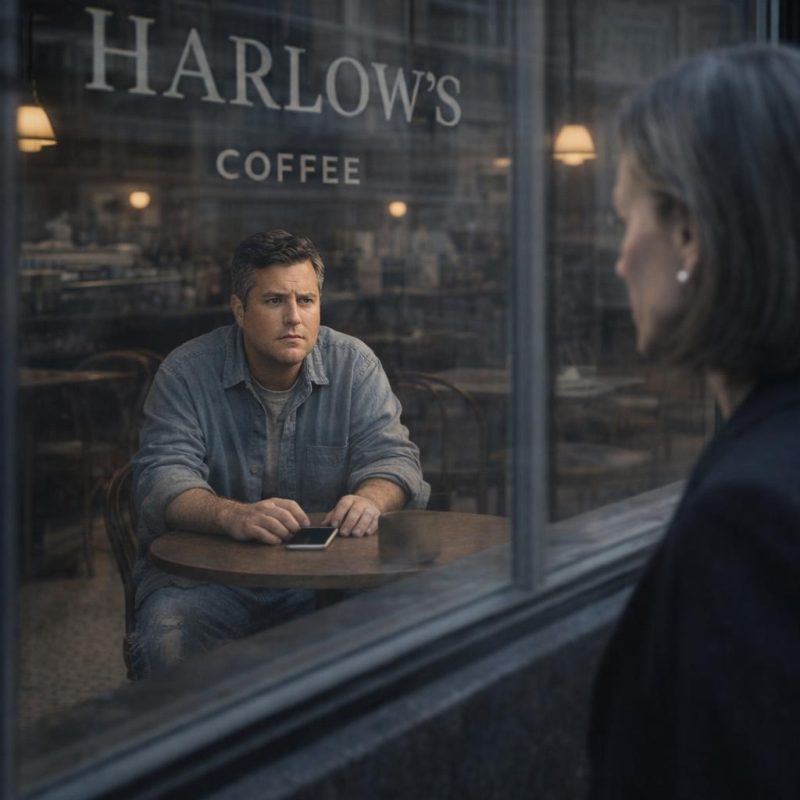 Image by RM AI
Legal Protection
Chloe wore a light blue cardigan to the police station, which I remember because it made her look younger than she was — more fragile, somehow, though I know now that's not a word I should trust my own instincts on anymore. I drove. She sat in the passenger seat with her hands folded in her lap and barely spoke until we got inside. The officer who took her statement was patient and thorough. He asked her to walk through each incident in order, and she did — three separate occasions, each with specific details I hadn't heard before. Dates. What room they were in. What had been said beforehand. I sat beside her with my hand over hers the entire time and I didn't let go once. Every detail she gave landed in me like something solid and true. I had no reason to question any of it. She was my daughter and she was sitting in a police station describing what had been done to her, and the only thing I felt was a fierce, aching need to make sure it never happened again. When she finished, the officer turned back to his desk without a word, and I watched his pen move steadily across the official complaint form.
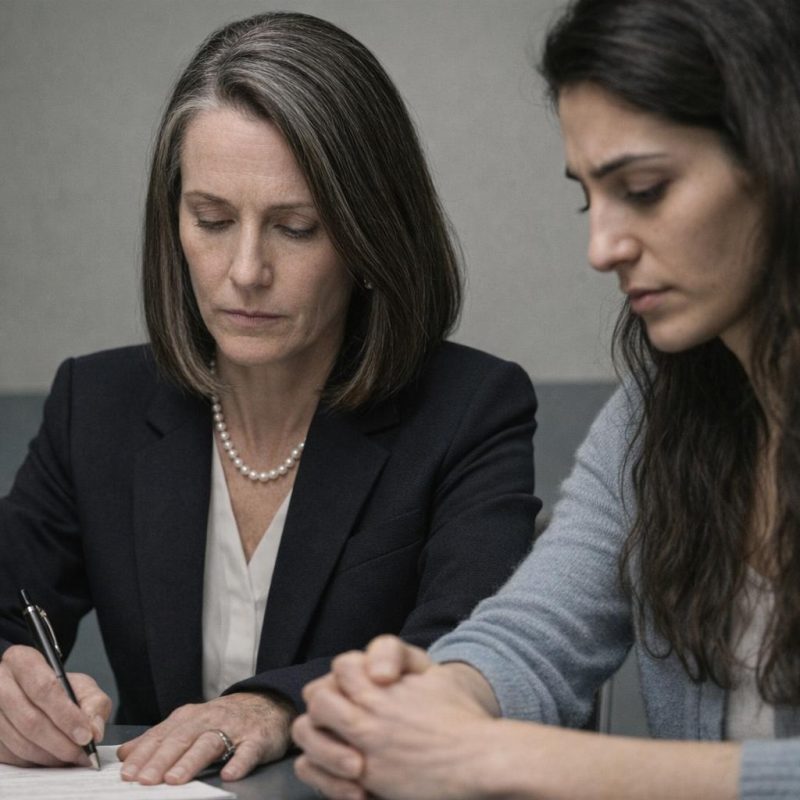 Image by RM AI
Eviction
The two officers arrived at the house on a Tuesday morning, just after nine. I was already there — I had stayed the night on Chloe's couch, unwilling to leave her alone. The restraining order had come through faster than I expected, and when the knock came at the door something in me went very still and very certain at the same time. Mark answered it himself. He hadn't known they were coming. I watched his face go through several things at once as they explained why they were there — confusion first, then something that looked like disbelief, then a kind of hollow stillness that I read, at the time, as guilt. He was given thirty minutes to collect what he needed. He moved through the house slowly, like a man trying to remember where he lived. At one point he stopped in the hallway and looked toward Chloe and started to say her name. One of the officers stepped forward and that was the end of it. Chloe stood beside me near the kitchen doorway and didn't look at him. I kept my hand on her shoulder. I told myself this was the moment everything got better. I watched the officers walk Mark through the front door and down the path to the street, one suitcase in his hand, the door closing behind them.
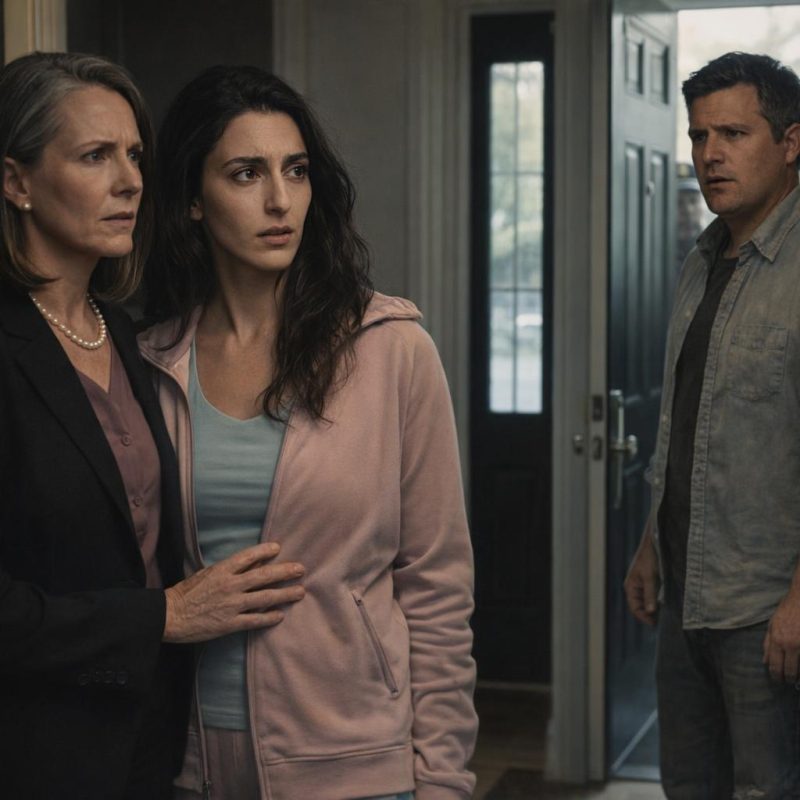 Image by RM AI
Victory Dinner
I made the reservation at Chloe's favorite restaurant myself — a place called Ardenne, all low lighting and white tablecloths, the kind of room that feels like a reward just for walking into it. She wore a dress I hadn't seen before, deep green, and she looked more like herself than she had in weeks. We ordered appetizers and she talked about the house — what she wanted to do with the spare room, whether she should repaint the kitchen, how much lighter everything felt now that it was just hers. I listened and I felt something I can only describe as relief so complete it almost felt like joy. I had done what a mother is supposed to do. I had seen the danger and I had moved toward it and I had not stopped until my daughter was safe. I raised my glass and told her she was the bravest person I knew. She smiled at that — a real smile, wide and easy — and reached for the wine list without hesitation, running her finger straight down to the bottom of the page before looking up at me with that smile still in place as she ordered the most expensive bottle they had.
 Image by RM AI
The Timeline Question
A few days after the dinner at Ardenne, Chloe came over for coffee. She sat at my kitchen table the way she always had at — legs tucked under her, both hands wrapped around the mug at — and we talked about nothing important for a while. Then she mentioned the anniversary trip. She said Mark had hurt her during that weekend, that something had happened in the hotel room that she'd never told me about. I set my mug down. I remembered that trip. I remembered the phone call she made from the airport on the way home, how she'd gone on about the suite and the room service and how romantic the whole thing had been. I'd saved a photo she texted me at — the two of them on a balcony, both smiling. I didn't say any of that. I just nodded and let her keep talking. Trauma does strange things to memory, I told myself. It reorders things. It buries what's too painful to carry in sequence. That was the explanation I reached for, and I held onto it. But after she left and the house went quiet, something small and formless settled in my chest that I couldn't quite name.
 Image by RM AI
Rapid Recovery
Chloe stopped by that Thursday wearing a sleeveless sundress, pale yellow, the kind she'd always looked beautiful in. She was in good spirits at — talking fast, laughing at her own jokes at — and I was glad to see it. But I kept finding my eyes going to her arms. Four days earlier I had seen bruises there. Dark ones, purple-edged, the kind that make you wince just looking at them. I had taken a photo on my phone because the lawyer said to document everything. Now I looked at her arms in the afternoon light coming through the kitchen window and there was nothing. Smooth skin, no yellowing at the edges, no fading marks. Nothing. I told myself I must have caught them in bad lighting that day. Or maybe she was better at covering things than I'd given her credit for at — good concealer, the right foundation. She'd always known how to put herself together. I didn't say a word about it. I poured more coffee and asked about the spare room she'd been planning to repaint. She launched into color swatches and I listened, and I let the thought go. But my eyes drifted back to her arms one more time before she left, resting on the unblemished skin where those dark marks had been.
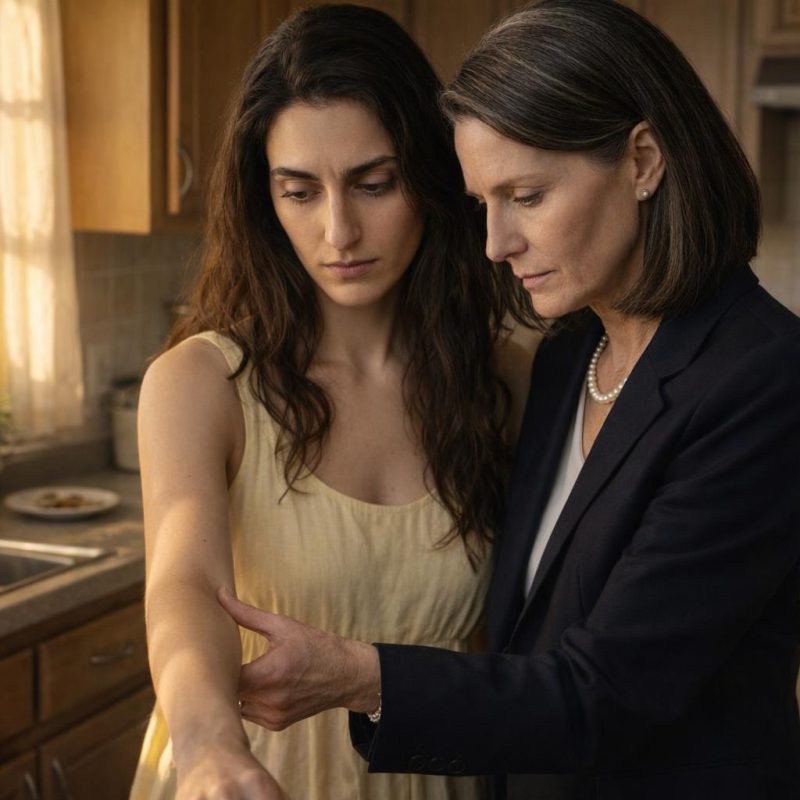 Image by RM AI
The Restaurant Sighting
I met my friend Patricia for lunch at the club on Friday. We'd known each other twenty years, the kind of friendship that runs on shared history and comfortable silences. We were halfway through our salads when she mentioned, almost as an aside, that she'd seen Chloe earlier that week. Tuesday night, she said, at Hargrove's at — that steakhouse downtown with the dark wood paneling and the forty-dollar entrées. Patricia said Chloe had been at a big table near the back, animated, laughing, the center of the whole group. I kept my face neutral. Tuesday night was the night Chloe had called me in tears, barely able to get words out, saying she couldn't stop shaking. I had sat on my bed for an hour after that call, just holding the phone. I told Patricia that Chloe had good friends around her right now, that it was healthy for her to get out, that people in pain don't grieve on a schedule. Patricia nodded and said of course, and we moved on to other things. I drove home telling myself I believed every word I'd just said. But the image Patricia had described at — Chloe laughing, easy and bright, not a shadow on her face at — stayed with me the rest of the afternoon in a way I couldn't quite shake loose.
 Image by RM AI
The Hidden Purchases
Chloe asked me to help her reorganize her bedroom closet on Saturday at — she wanted to donate some things and couldn't face doing it alone. I was glad to help. We worked through the hanging clothes first, then the shelves, and eventually I started pulling things from the back corner where bags and boxes had piled up. That's when I found them. Three shopping bags from stores I recognized at — the kind with the thick rope handles and the tissue paper folded just so. I didn't think much of it at first. I set them aside and kept working. Chloe appeared in the doorway and I watched her eyes move across the pile I'd made. She said she'd replaced some things with the insurance payout, that the claim had come through faster than expected. Her voice was easy, matter-of-fact. I nodded. But my hands felt strange, and the explanation sat in my chest without quite settling. I reached back into the corner for the last bag at — heavier than the others at — and pulled out the designer handbag Chloe swore was gone.
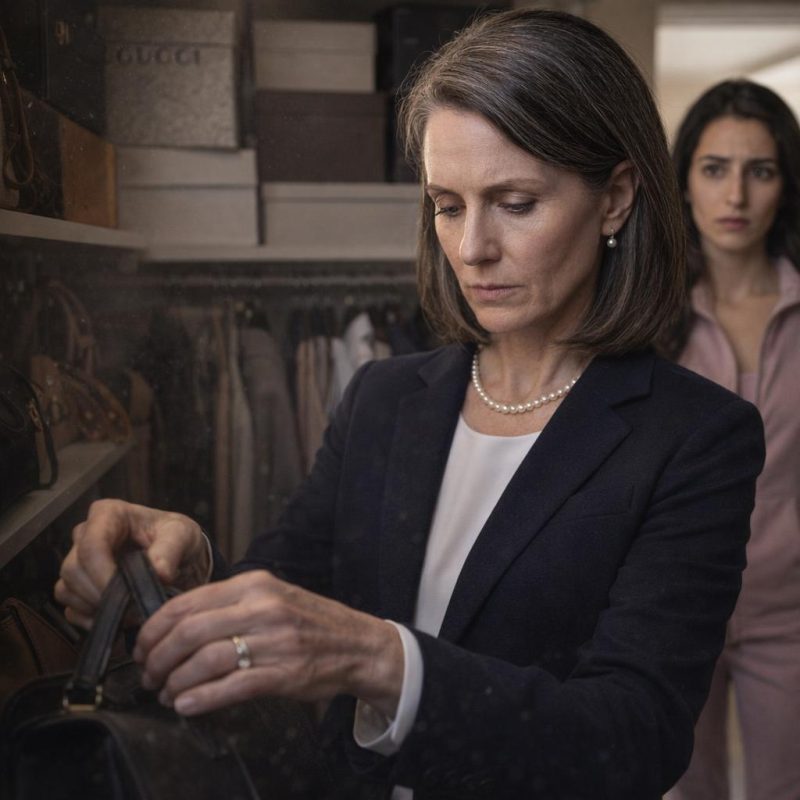 Image by RM AI
The Date Discrepancy
I sat down at my desk on Sunday to go through my calendar at — I had a dentist appointment to reschedule and a few things to sort out for the following month. I wasn't looking for anything. I was just flipping back through the weeks the way you do when you're trying to find a date. And then I stopped. The fourteenth. Chloe had told the detective that Mark locked her out of the house on the fourteenth, left her standing on the porch in the rain with nowhere to go. I had written it down when she told me, circled it, because I wanted to remember the details. But there on the fourteenth, in my own handwriting, was a dinner reservation. The three of us at — me, Chloe, and Mark at — at the Italian place on Birchwood. I remembered that dinner. The bread basket. The argument about whether to order dessert. Mark had driven Chloe home. I sat there staring at the page and told myself I must have the week wrong, that I was confusing one Sunday for another. Memory does that. It compresses things. I felt a flush of shame for even pausing on it at — what kind of mother sits with her calendar second-guessing her own daughter. I closed the planner and pushed it to the edge of the desk, but the list of details that didn't quite line up sat quietly at the back of my mind, refusing to scatter.
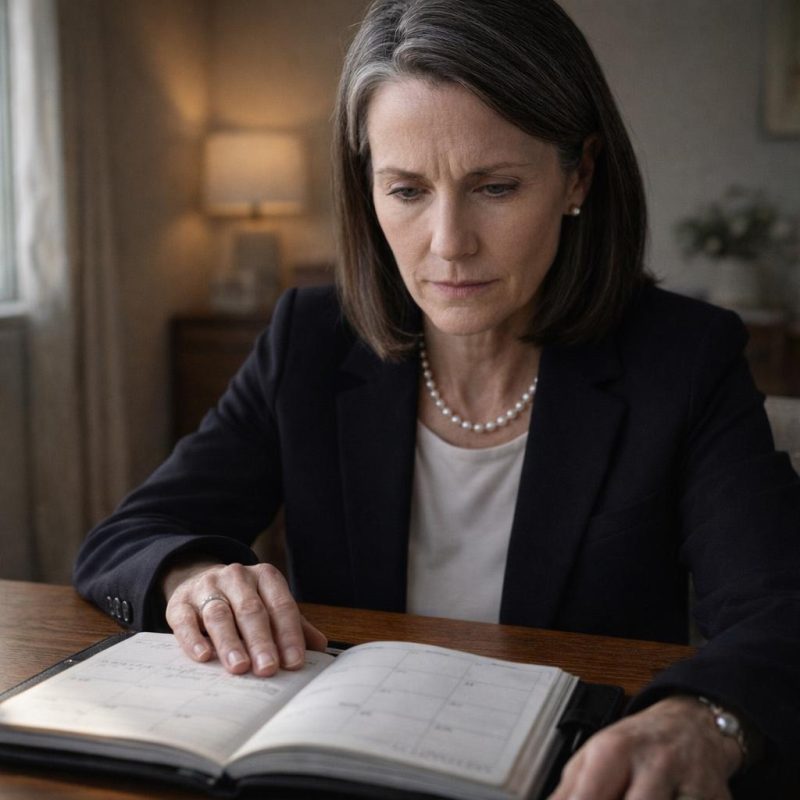 Image by RM AI
Mark's Voicemail
My phone rang on Monday afternoon while I was folding laundry at — a blocked number, which I never answer. I let it go and set the phone face-down on the dryer. A few minutes later the voicemail notification appeared, and something made me pick it up. I don't know why. I pressed play and stood very still. It was Mark. His voice was quieter than I remembered it, rougher at the edges, like something had been worn down in him. He didn't sound angry. That was the first thing I noticed at — no anger, just a kind of exhausted steadiness. He said he wasn't calling to cause trouble. He said he understood why I'd done what I did and that he didn't blame me for it. Then he said there were financial records at — account statements, transfer histories at — that didn't match what Chloe had told me, and that he thought if I saw them I would have questions. He asked for five minutes. Just five minutes, he said, and then I could walk away and never hear from him again if that's what I wanted. The message ended. I stood there with the phone in my hand and the laundry half-folded on the dryer, and I played it again. I didn't call back. But I didn't delete it either. The raw, worn-down sound of his voice asking for five minutes stayed with me long after I set the phone down.
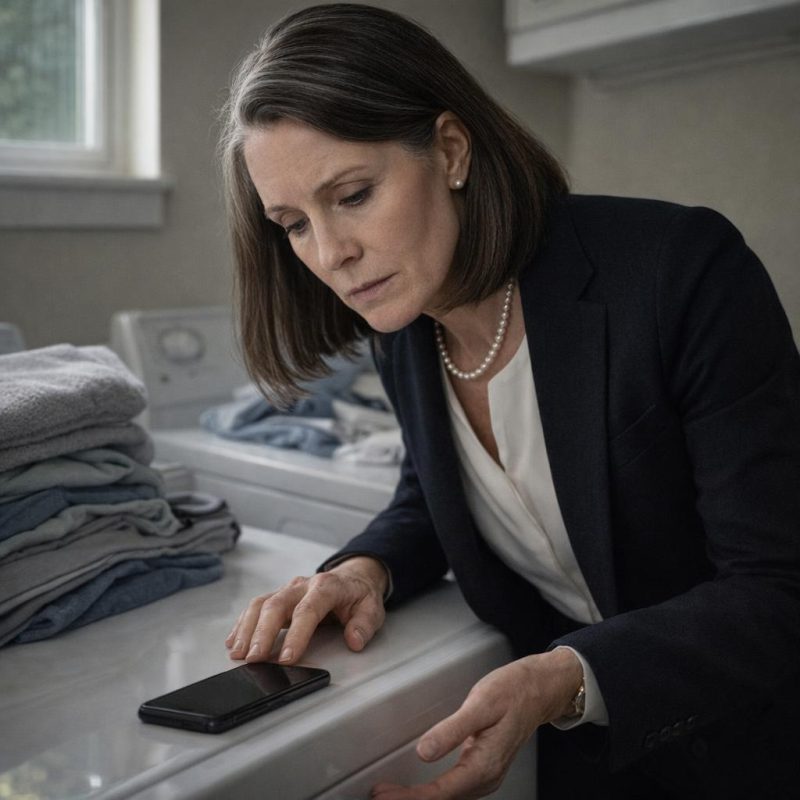 Image by RM AI
The Bank Visit
I told myself I was going to the bank to handle something routine at — a signature card, maybe, or a question about my own account. I told myself that right up until I pulled into the parking lot at seven fifty-eight in the morning, two minutes before they unlocked the doors. The truth was I hadn't slept well. I'd lain awake thinking about Mark's voicemail, about the calendar, about the handbag sitting perfect and unmarked in the back of Chloe's closet. I wasn't investigating. I was just going to look. There's a difference, I told myself, though I wasn't sure I believed it. The teller who helped me was young, neat, composed at — her name tag said Rachel. I explained that I was a joint account holder on a family account and that I needed to review some transaction history. She asked for my identification and the account number, which I had written on a slip of paper I'd been carrying in my coat pocket since the night before. She verified everything without any change in her expression, professional and unhurried. I smoothed the slip of paper on the counter while she typed. My hands were steady. I was proud of that, in a small, hollow way. Then I asked Rachel to pull up the joint account transaction history for the past thirty days.
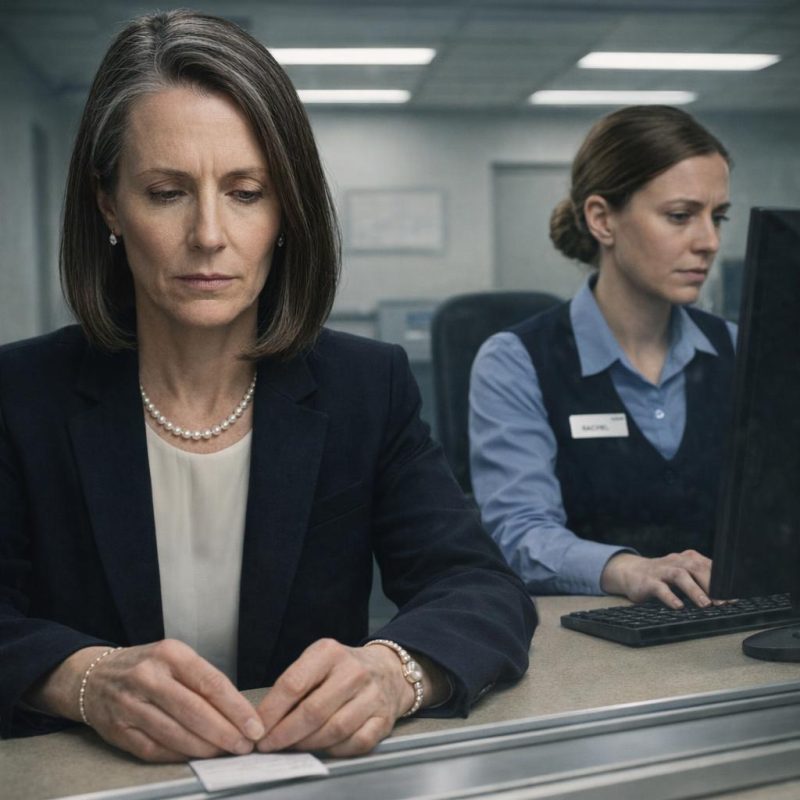 Image by RM AI
The Transaction Records
Rachel came back with a stack of printed pages, edges still warm from the printer. She set them on the counter and uncapped a yellow highlighter without being asked, which told me she'd already looked. She worked through the pages methodically, drawing lines under a series of outgoing transfers at — large ones, five figures each, spaced out across the past three weeks. I followed her finger down the column. The destination account number appeared on every highlighted line, the same string of digits each time, and it wasn't a number I recognized. It wasn't Mark's personal account. It wasn't a joint account. It wasn't anything Chloe had ever mentioned to me. I stood there with my hands flat on the counter and I went through the transfers one by one, trying to find an explanation that made sense. Rachel turned to the final page and drew a single yellow line under the last entry. The date on it was yesterday. The amount was everything that remained at — the balance I had helped build, the account I had co-signed, the money I had believed was being protected. Rachel set the highlighter down and said nothing, and I looked at the highlighted transfer dated yesterday, the one that had drained the account clean.
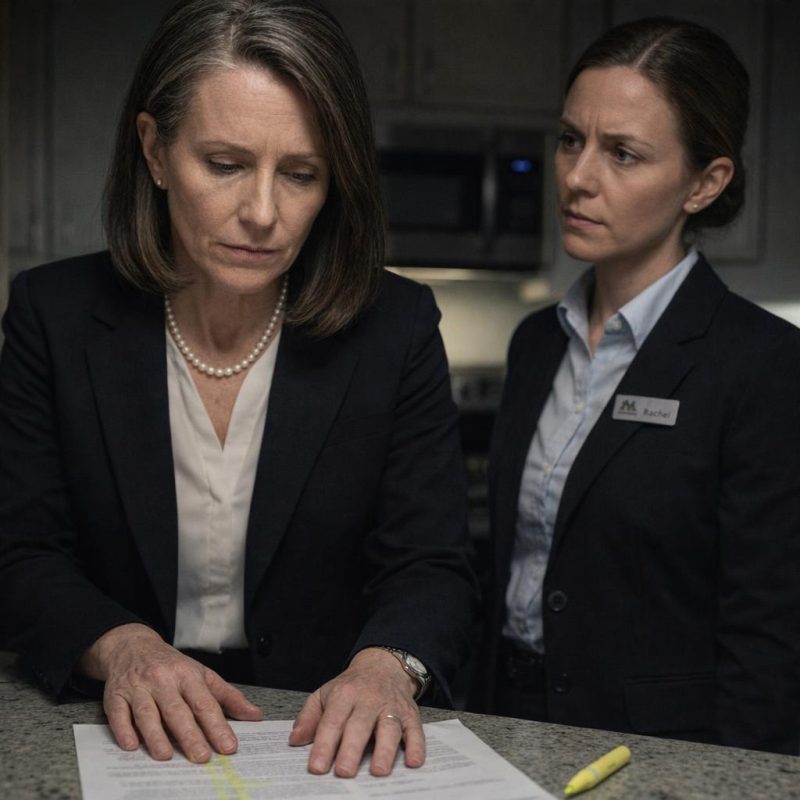 Image by RM AI
The Empty Account
Rachel slid the ownership summary page across the counter without me asking. I looked down at it. The account Chloe had told me Mark controlled — the one she said he used to keep her financially trapped, the one she cried about in my kitchen while I held her hand — had one name on it. Hers. Only hers. I read the line three times because I needed to be sure I wasn't misreading it. Rachel stood quietly on the other side of the counter, hands folded, giving me the space to process what I was looking at. I thought about every conversation I'd had with Chloe about the money. The way she'd described feeling helpless, cut off, dependent. The way I'd believed every word without asking a single follow-up question. The transfers were in her name. The destination account was in her name. The account she'd told me Mark weaponized against her was hers alone, always had been. My hands were flat on the counter and I couldn't feel them anymore. I thanked Rachel in a voice I didn't recognize and picked up the printed pages. Then I looked again at the ownership line — and the account she had told me Mark controlled had only her signature on the original application.
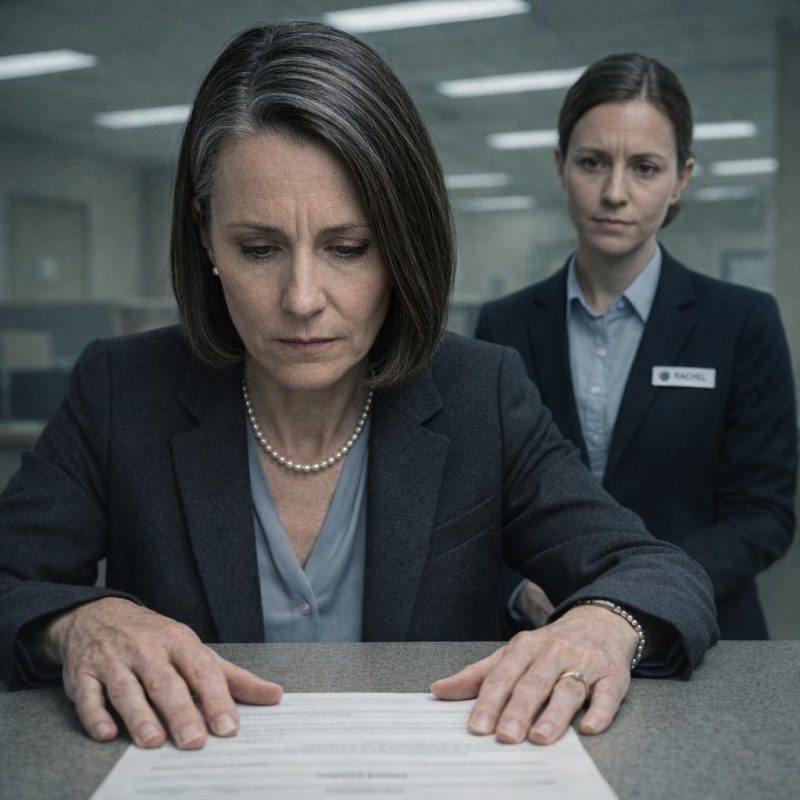 Image by RM AI
The Drive Across Town
I sat in my car outside the bank for a few minutes before I could make myself drive. The printed pages were on the passenger seat, face down, like I couldn't stand to look at them. I had the address Mark left in his voicemail — a shelter on the east side of town, a part of the city I'd never had reason to go. I typed it into my phone and pulled out of the lot. The route took me through neighborhoods that got quieter and grayer the further I drove. Smaller houses. Boarded storefronts. A laundromat with a handwritten sign in the window. I gripped the wheel with both hands and kept my eyes on the road. I kept thinking about Mark the way I'd first known him — the way he'd shown up to Sunday dinners with flowers for me, the way he'd laughed at my husband's old jokes out of genuine kindness. He'd had a career. An apartment. A life that made sense. I had helped take all of it apart, piece by piece, because my daughter asked me to and I never once stopped to ask why. The shelter's address appeared on my phone screen. I turned onto the block. The weight of what I had done pressed down on my chest like something I couldn't name and couldn't put down.
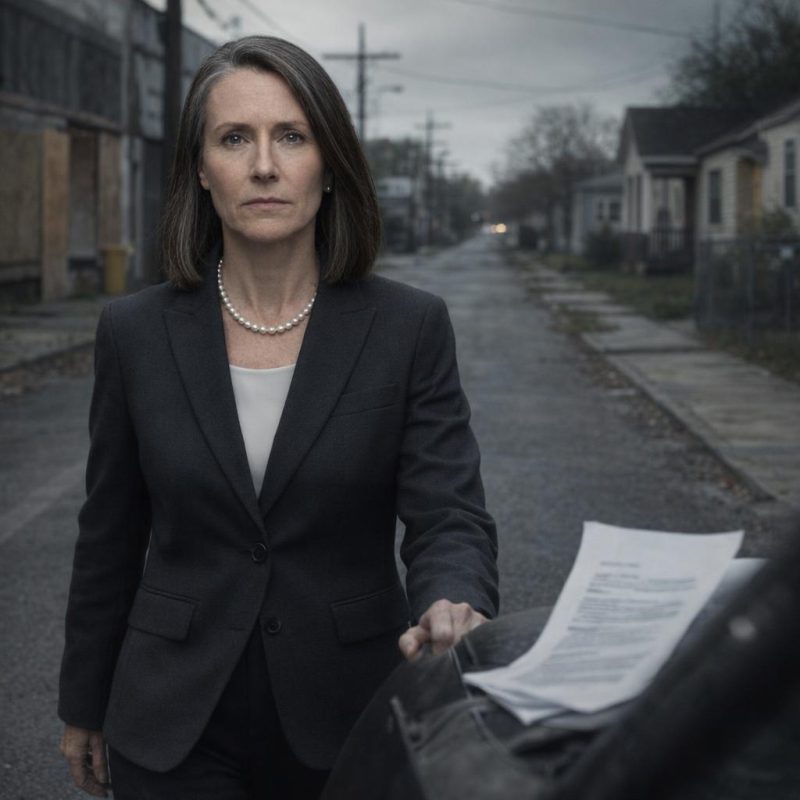 Image by RM AI
The Shelter
The shelter was a converted building near the end of a one-way street, with a hand-painted sign above the door and a line of people waiting along the outside wall. I parked across the street and sat there for a moment before I made myself get out. I walked toward the entrance slowly, scanning the faces of the people seated outside on folding chairs and upturned crates. Most of them didn't look up. I almost missed him. He was in the far corner, near a rusted metal chair pushed against the brick wall, his jacket pulled tight around his shoulders even though it wasn't that cold. He was wearing the same clothes I'd seen him in the day of the eviction. His face was pale and thinner than I remembered, and there were shadows under his eyes that hadn't been there before. He looked up when I got close, and something in his expression shifted — not anger, not warmth, just a kind of exhausted recognition, like he'd been expecting me and had run out of the energy to feel anything about it. I stopped a few feet away and couldn't find a single word. I just stood there looking at him, shivering slightly on that folding chair by the entrance.
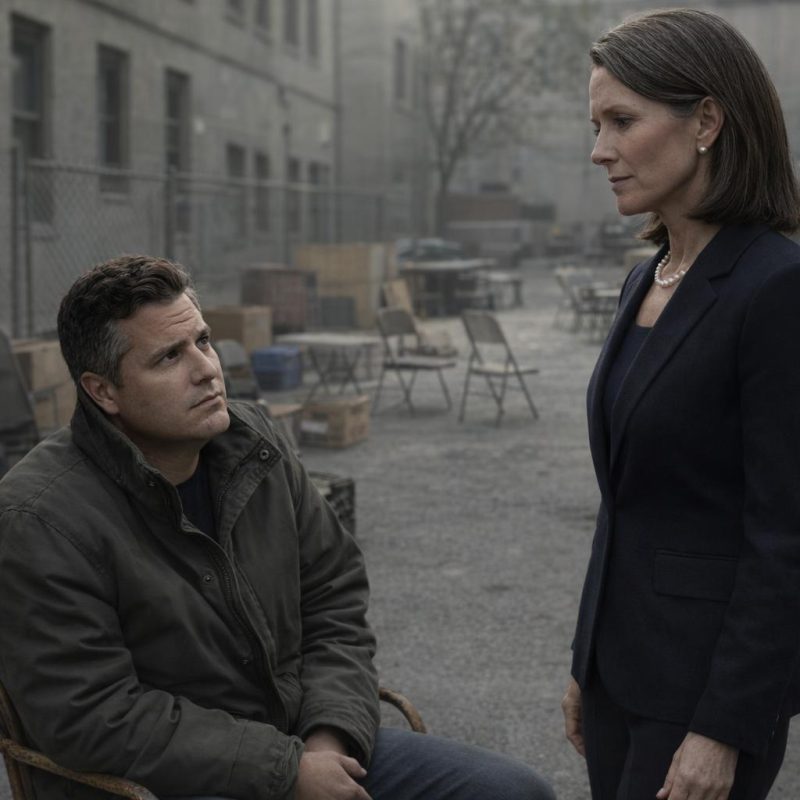 Image by RM AI
The Evidence
I handed Mark the coffee first — a paper cup from the gas station two blocks back, still warm — and then the sandwiches I'd grabbed from the cooler near the register. He took them without a word and set the bag on his knee. We sat like that for a moment, not speaking. He unwrapped the first sandwich and ate quickly, the way someone eats when they've stopped thinking about taste and are only thinking about the fact of food. I watched his hands. They were shaking slightly, just enough to notice. After a few minutes he reached into the inside pocket of his jacket and pulled out a phone with a cracked screen, the glass splintered from corner to corner. He didn't say anything. He just scrolled for a moment, then turned the screen toward me. It was a text conversation. Chloe's name was at the top. I leaned in and started reading, and the words didn't make sense at first — not because they were unclear, but because my mind kept trying to find another explanation for what they said. I scrolled down slowly. Then I stopped. The message on the screen was addressed to someone named Jess, and the words were in Chloe's name, and I could not find a way to read them that left any room for doubt about what I was looking at.
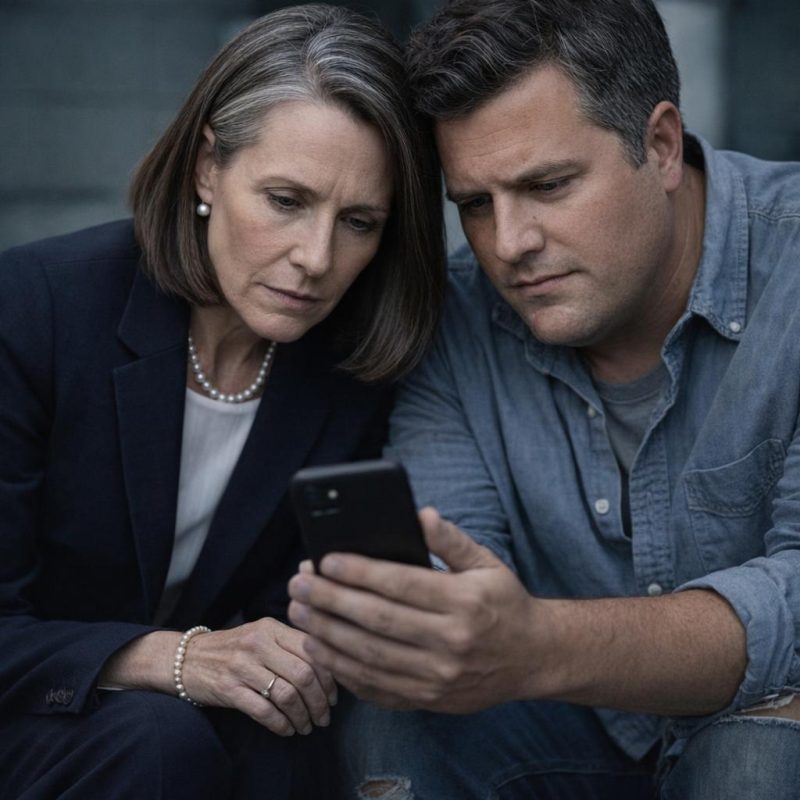 Image by RM AI
Coffee and Desperation
I made him sit back down when he tried to stand. I pulled the coffee and the sandwiches out of my bag and set them on the ground between us without making a production of it. He looked at the food for just a second before he picked it up, and that second told me everything about how long it had been since someone had offered him something without conditions attached. He ate fast, both hands wrapped around the sandwich, taking large bites and washing them down with sips of coffee that were probably still too hot. I didn't say anything. I just watched. There was nothing to say that wouldn't have sounded hollow — no apology that could fit inside a paper cup and a gas station sandwich. I had helped reduce a man who used to bring me flowers to someone eating on a folding chair outside a shelter because he had nowhere else to go. I had done that. Not alone, maybe, but I had done it. He finished the first sandwich and started on the second without looking up, and I sat with my hands in my lap and let the guilt settle where it needed to settle. When he finally wrapped both hands around the cup to steady it, I noticed the way his hands shook holding it.
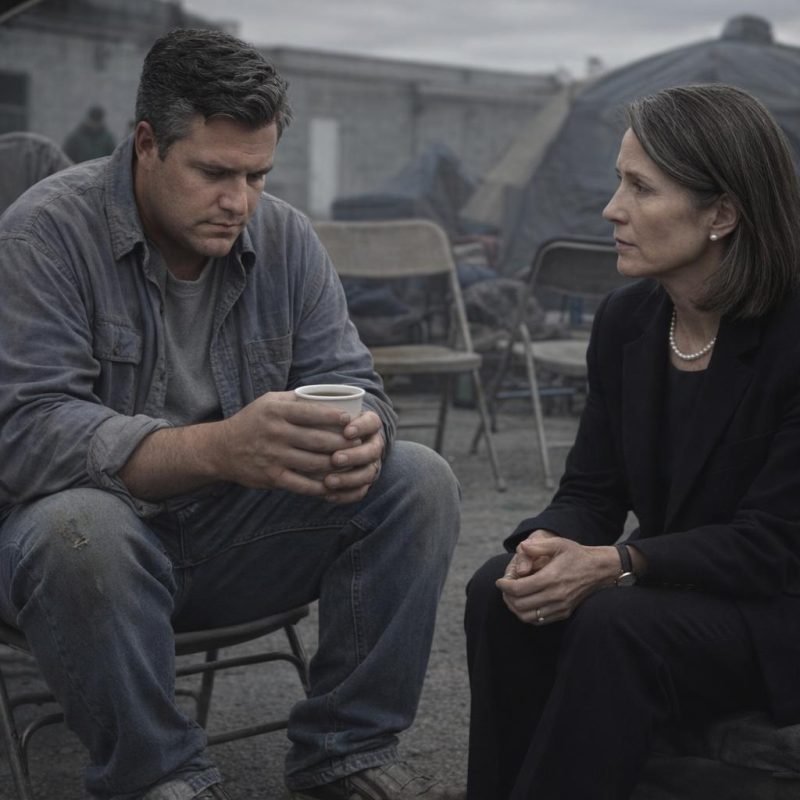 Image by RM AI
The Cracked Screen
Mark set the empty cup down on the ground beside his chair and was quiet for a moment. Then he reached into the inside pocket of his jacket — slowly, like the movement cost him something — and pulled out the phone. The screen was cracked badly, a web of fractures running from the top right corner all the way down, but the display still worked. He held it for a moment without looking at me, scrolling with his thumb, stopping, scrolling again. I could see the light from the screen reflected in his eyes. He wasn't reading it so much as finding something specific, navigating to a place he'd already decided to show me. When he found it, he stopped scrolling. He looked up at me then, just briefly, and there was nothing in his expression that I could read as anger or accusation. He just looked tired. He turned the phone around and held it out. I took it from him. The cracked glass pressed lightly against my palm, and I looked down at the screen without reading it yet, just holding it, feeling the weight of the phone in my palm.
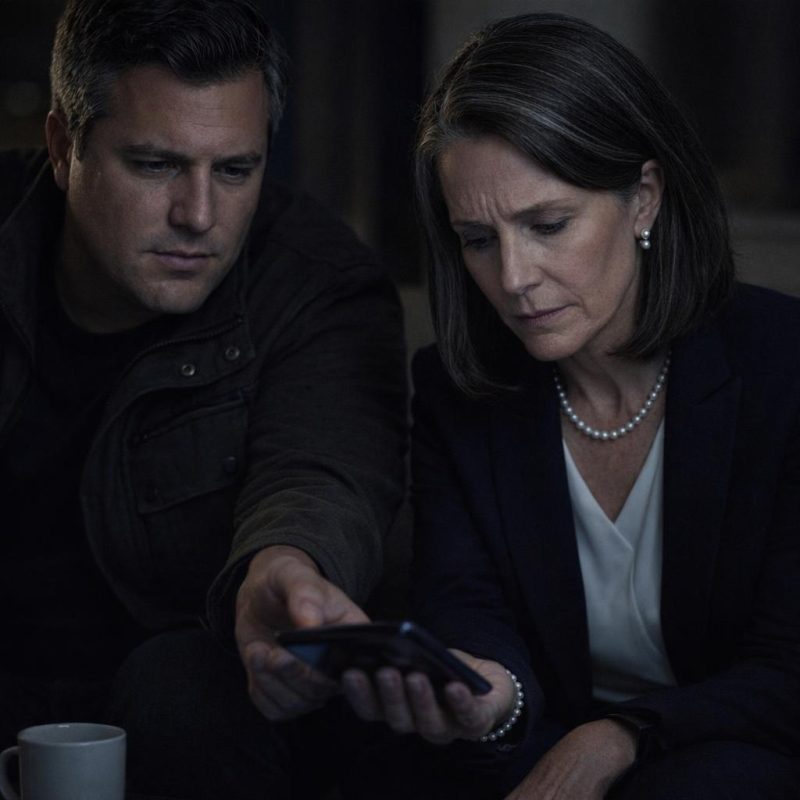 Image by RM AI
The Text Messages
The conversation at the top of the screen was between Chloe and someone saved as Jess. I started reading from the most recent message and then scrolled back to find the beginning, the way you do when you're trying to understand the shape of something. The early messages were casual — plans, complaints, the ordinary texture of two friends talking. Then the tone shifted. Chloe was describing the situation with Mark, but not the way she'd described it to me. There was no fear in it. There was something closer to excitement. I read a message where she talked about the restraining order like it was a logistical step she'd completed, something to check off. I read another where she described his reaction to being served the papers and used a word I won't repeat. My stomach turned. I kept scrolling. Jess asked questions and Chloe answered them with a kind of casual confidence that made the back of my throat tighten. I was looking for the place where it stopped making sense, where I could tell myself I was misreading the tone. I didn't find it. Then I reached a message near the bottom of the thread, and I read it twice to make sure I had it right — Chloe walking Jess through exactly which concealer to layer first and how to press the sponge to get the color to bloom like something real.
 Image by RM AI
Photographing the Evidence
My hands were shaking when I reached into my coat pocket for my own phone. Mark watched me without speaking. I opened the camera and held it over the cracked screen, trying to keep my hands steady enough to get a clear shot. The first photo came out blurred. I took it again. Then I worked my way back through the conversation methodically, one screen at a time, making sure the timestamp was visible in each frame, making sure Chloe's name stayed in the header. Mark held his phone at an angle that helped with the glare without me asking him to. We didn't talk. There was nothing to say that would have fit inside what we were doing. I photographed six screens in total, maybe seven — I lost count somewhere in the middle because I kept having to stop and breathe. The messages about the makeup were the last ones I captured. I framed the screen carefully, Chloe's name at the top, the date visible, the words exactly as she had written them to Jess. I pressed the shutter button. The flash from my camera lit up Chloe's words on that cracked screen — her own message, in her own name, describing what she had done.
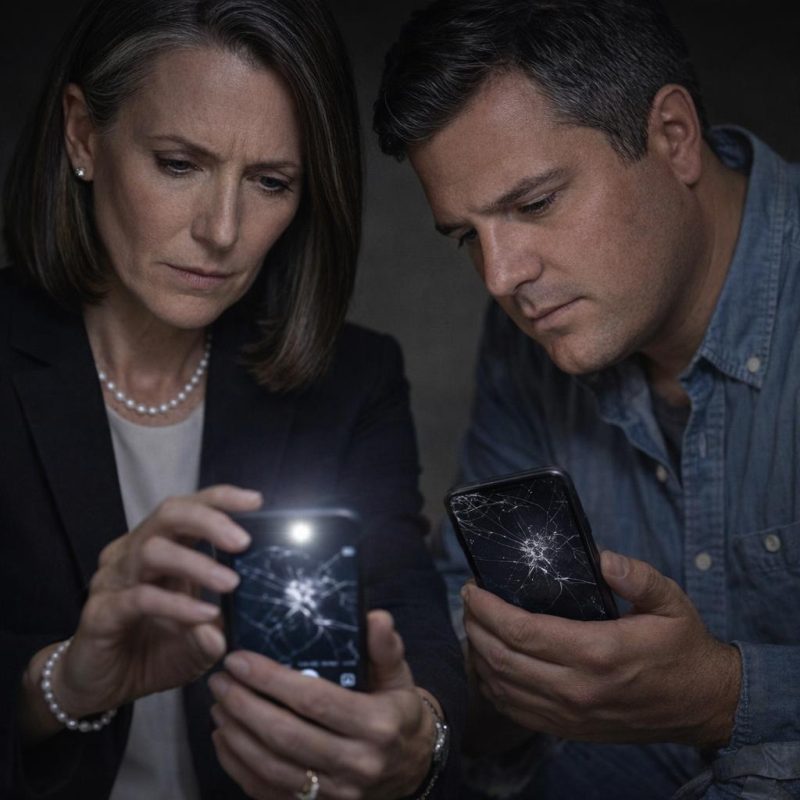 Image by RM AI
The Makeup Tutorial
Mark told me quietly, like he'd been waiting a long time to say it out loud. He said he found the supplies in the cabinet under the bathroom sink — bruise wheels, color-correcting palettes, a small sponge applicator still stained dark purple. He hadn't known what they were at first. He'd looked them up. Theatrical makeup. The kind used in film productions and stage performances to simulate injuries. He said Chloe had practiced the application, that she'd gotten good at it, that she'd learned how to layer the colors so the edges looked soft and real, the way a genuine bruise fades at the margins. I sat there and I thought about the marks I had seen on her arms. Dark purple, uneven, exactly the way I remembered them. I had touched her arm once, gently, and she had flinched. I had taken it all as truth without question. My stomach turned over slowly, like something heavy shifting in deep water. Mark said she'd bought the supplies from a specialty theatrical store downtown — a place called Stage & Screen Supply, two blocks from the arts district — and the name landed in my chest like a stone dropping into still water.
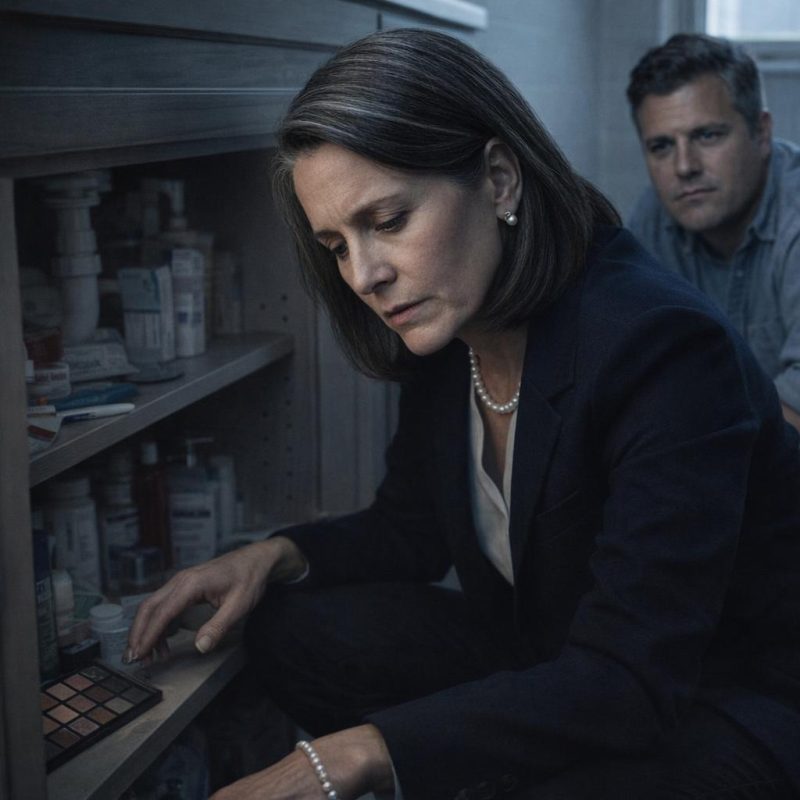 Image by RM AI
The Staged Photographs
He told me about the computer almost as an afterthought, like it was just one more thing on a list that had no end. They'd shared a laptop for a while, early in the marriage, before Chloe got her own. He'd gone looking for a tax document one afternoon and opened the wrong folder. There were photographs. Dozens of them, organized into subfolders by date, going back almost eight months. Each folder had a date in the name. Each one held multiple images — the same injuries photographed from different angles, in different lighting, some close up and some pulled back to show context. He said the timestamps on the files were spread across a long stretch of time, not clustered together. He closed the laptop and didn't say anything to her. He didn't know what to say. I sat with that for a moment — eight months of folders, each one dated, each one filed away. I had walked into her living room and seen her crying and believed I was rescuing her from something real. The photographs had existed before I ever arrived. The weight of that — the sheer, careful documentation of it — settled over me and didn't lift.
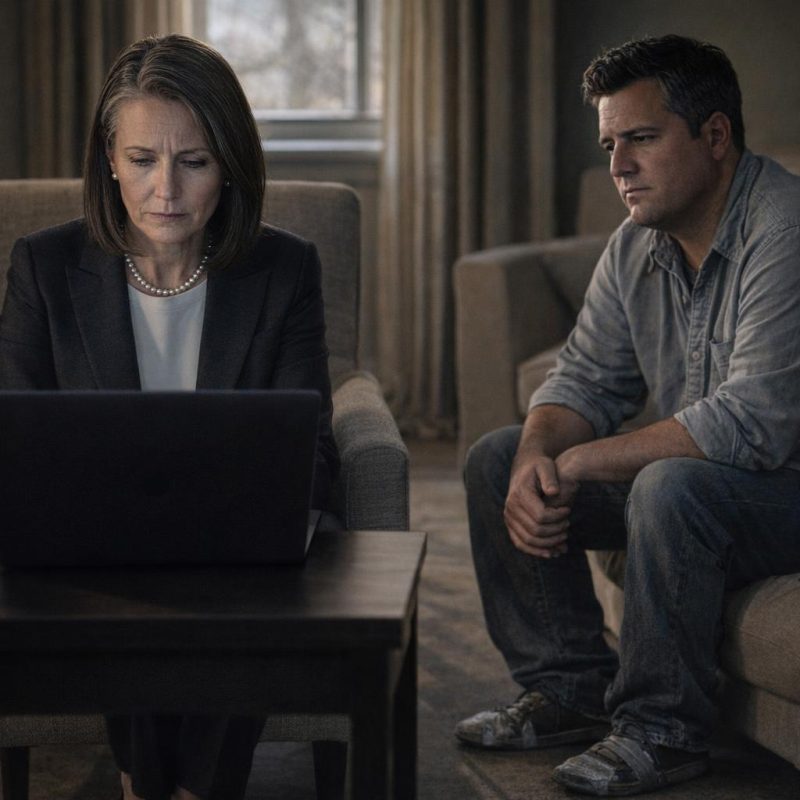 Image by RM AI
The Promise
I don't know exactly when I started crying. Somewhere between him describing the folders and the silence that followed, my eyes had filled without my permission. I wiped my face with the back of my hand and looked at him — really looked at him. He was thin in a way that spoke of months of not eating properly, and there were lines around his eyes that hadn't been there in the wedding photos I still had somewhere in a drawer at home. I had done this. Not entirely alone, but I had been the engine of it. I told him I believed him. I said it plainly, without qualifiers. Then I told him I was going to fix it — that I would go to his former employer, that I would find a lawyer, that I would take the evidence we had photographed and use it to pull apart every lie that had been told about him. He looked at me for a long moment. He didn't smile. He said, quietly, that he appreciated it. But his eyes held the careful distance of someone who had been promised things before. I felt the full weight of that distance. I told him anyway. I meant every word I said sitting outside that shelter, and I intended to prove it.
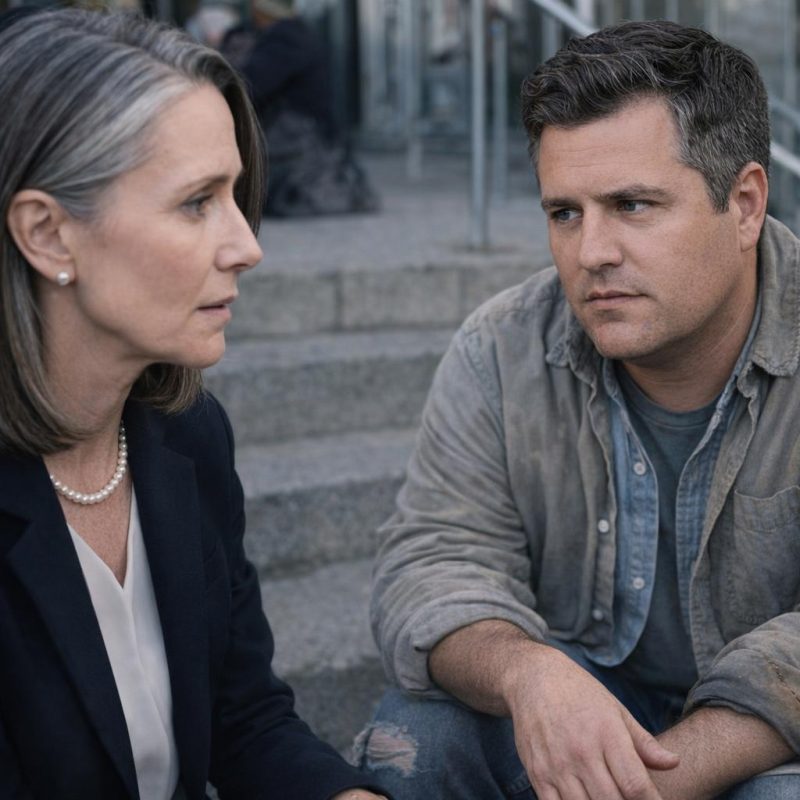 Image by RM AI
The Drive Home
The drive home took forty minutes and I remember almost none of it. I know I stopped at a red light on Meridian and sat there after it turned green until the car behind me honked. I know I took the long way without meaning to, ending up on the bypass road that runs past the old fairgrounds, adding fifteen minutes I hadn't planned for. My hands were on the wheel but my mind was somewhere else entirely — running through the photographs on my phone, the names Mark had given me, the dates on those folders he'd described. I kept thinking about sequence. Who to call first. Whether the lawyer needed to come before the employer, or the other way around. Whether Detective Hayes would hear me out or whether I had burned that bridge so thoroughly it couldn't be rebuilt. I thought about Chloe — not with the softness I'd carried for thirty-two years, but with something I couldn't quite name, something that sat uneasily alongside everything I thought I'd known about her. I had protected her from everything. I had never once imagined I might have been wrong about what she needed protecting from. The car was quiet around me, no radio, no sound except the road, and the thoughts that filled that silence were ones I couldn't have imagined having six weeks ago.
 Image by RM AI
Finding Legal Help
I sat down at my kitchen table with my laptop at nine o'clock that night and I didn't get up until after midnight. I searched for attorneys who handled false accusation cases, defamation, wrongful termination tied to fabricated claims. Most of the results were criminal defense lawyers, which wasn't quite right. I narrowed it down. I read reviews carefully, looking for language about cases involving domestic abuse allegations that turned out to be unfounded, about employers who had acted on unverified information. I made a short list — three names, printed on a single sheet of paper with their contact information and the specific cases mentioned in their client reviews. One of them, a woman named Patricia Holt, had handled two cases in the past four years involving false police reports and the professional fallout that followed. Her firm's website was plain and direct, no flashy promises, just a list of outcomes. I drafted an email to her just after eleven. I wrote it three times before I sent it. I didn't minimize what I had done — I said plainly that I had been the one who had made calls, who had spoken to his employer, who had pushed the narrative forward. The cursor hovered over the send button for a long moment. The weight of undoing what I had done sat in my chest like something I would be carrying for a very long time.
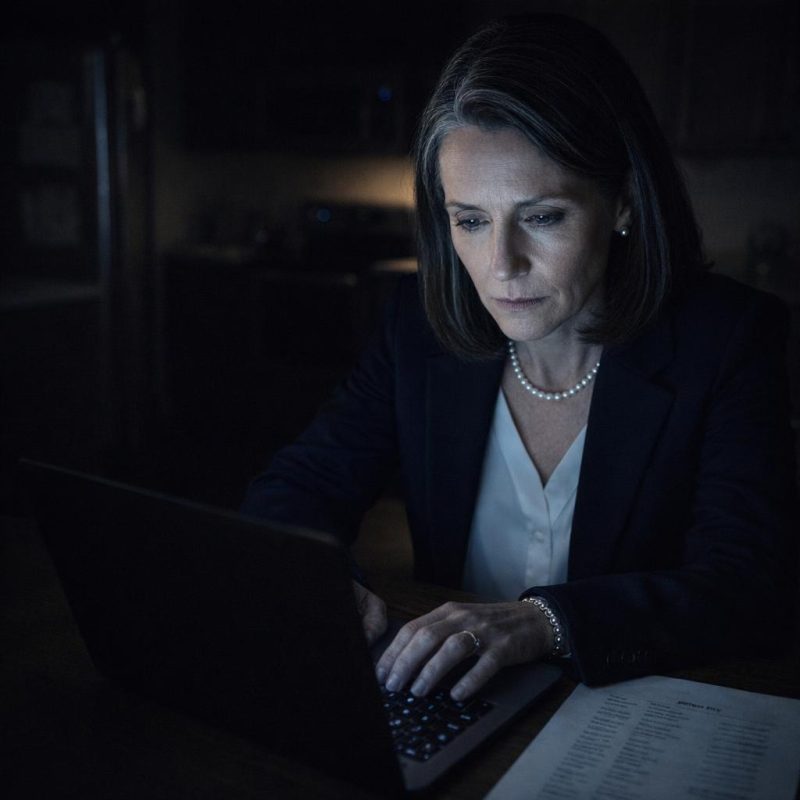 Image by RM AI
Security Footage Request
The police report listed three specific incidents with dates and locations. I started with the restaurant — a place called Harlow's on Fifth, where Chloe had claimed Mark had grabbed her arm in the parking lot after dinner. I found the number online and called just after ten in the morning. The manager who answered was polite but cautious until I explained that I was trying to gather information related to a legal matter and that I needed to know whether their security system archived footage. He put me on hold for several minutes. When he came back, he said their system retained recordings for ninety days on a rolling basis and that the date I'd given him fell within that window. He said the footage covered both the interior dining room and the exterior parking lot. I told him I would need a copy and that I could come in person with written documentation if required. He said that would be the right way to handle it and that I should ask for him by name — his name was Garrett. I wrote it down. I thanked him and hung up and sat very still for a moment. Then I called the second location on the list. The date I gave them fell outside their retention window. But Garrett had already told me the parking lot footage from Harlow's still existed.
 Image by RM AI
The Restaurant Footage
I picked up the drive from Garrett the following afternoon and brought it straight home. I plugged it into my laptop at the kitchen table and pulled up the file for the exterior parking lot first, then the interior dining room. The timestamp in the corner matched the date from the police report exactly. I watched them come in together — Chloe in a dark green dress I recognized, Mark holding the door. I watched them sit down. I watched them eat. For nearly two hours of footage I watched my daughter lean across the table, touch Mark's arm, laugh at something he said, turn in her chair to look at the room with an easy, unhurried expression. She looked relaxed. At one point she reached over and straightened his collar, a small, casual gesture, the kind you make without thinking. They left together, her hand briefly in his as they crossed the parking lot. I sat at that table for a long time after the footage ended, the laptop screen gone dark, the kitchen quiet around me. I had seen her face in that restaurant — open and laughing and completely at ease — and I couldn't stop seeing it.
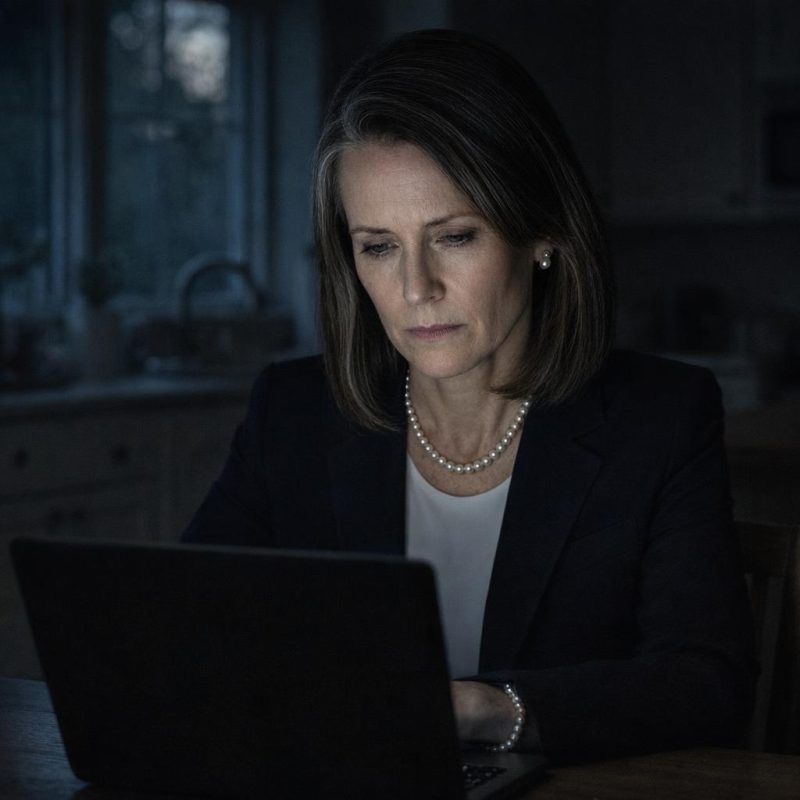 Image by RM AI
Contacting the Employer
I called the company the next morning. I had rehearsed what I was going to say, but when the receptionist answered I still had to stop and breathe before I asked for the human resources director. I was transferred twice. The second transfer put me through to a woman named Sandra Ellison, and I told her who I was. There was a pause on the line when I said my name — I had spoken to someone in that office before, months ago, and not kindly. I told her I had been wrong. I said it without softening it. I told her that the information I had provided about Mark had been based on accounts I now had serious reason to doubt, and that I had gathered documentation — security footage, timestamped records, written communications — that I believed directly contradicted the basis for his termination. She was quiet for a moment. Then she said that any new evidence related to a former employee's file would need to go through a formal review process. I told her I understood completely and that I was prepared to provide everything in writing. She said she would need to consult with their legal team first. Then she said she could schedule a meeting for the following week, and I wrote down the date before she finished saying it.
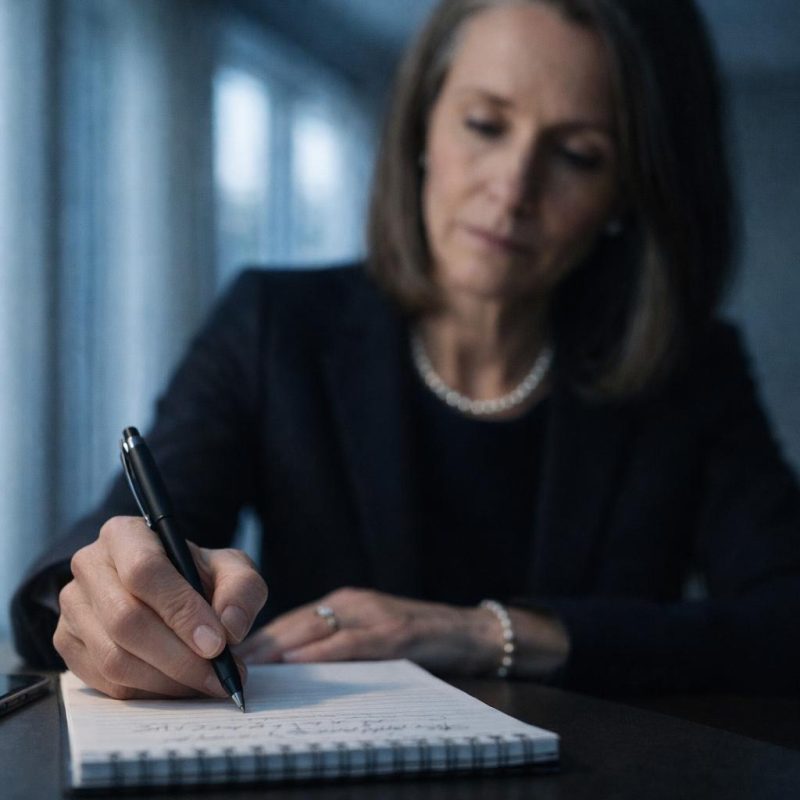 Image by RM AI
Spreading the Truth
The HR meeting was only the beginning. I had a list — I had actually written it out on paper, names in a column, because I knew if I didn't make it concrete I would find reasons to stop. The neighbors first. I called Patricia Hensley on a Tuesday morning, standing in my kitchen with my coffee going cold on the counter. I told her that the things I had said about Mark at the block association meeting were wrong. That I had been working from information I now had serious reason to doubt. She went quiet in a way that felt like judgment, and then she said, very carefully, that she had always thought Mark seemed like a decent man. That landed somewhere tender. I called two more neighbors that afternoon. I called three people from the church community the following morning. Each call followed the same shape — my voice steady at the start, then thinning as I explained that I had been deceived, that I had passed along accusations I could not now stand behind. Some people were kind. Some asked questions I couldn't fully answer. One woman from the church said, quietly, that she had wondered. I didn't ask what she had wondered about. By the end of the second day, I had made eleven calls. I sat at the kitchen table with the list in front of me, each name crossed off in ink, and the crossing-off felt nothing like relief.
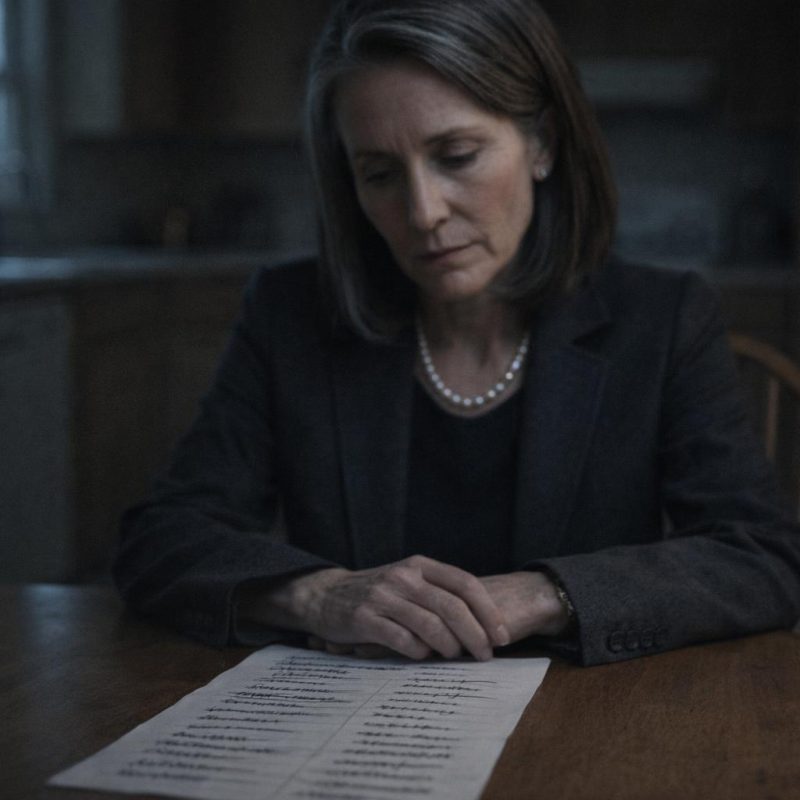 Image by RM AI
Searching Chloe's Room
I had been avoiding Chloe's old room. It sat at the end of the upstairs hallway with the door pulled almost shut, the way she had always left it, and for weeks I had walked past without looking in. But after the calls, after the list, I needed to understand more than I currently did. I pushed the door open on a Thursday afternoon and stood in the doorway for a moment before I went in. The room still smelled faintly like her — something floral, something I couldn't name. I started with the closet. Boxes on the upper shelf, a row of old shoes on the floor, winter coats pushed to one side. I went through the boxes carefully, setting each one on the bed. Old school papers. A photo album from high school that I set aside without opening. A zippered pouch with receipts inside — some of them recent enough to give me pause, though I couldn't say why. I moved to the dresser. The bottom drawer held journals, three of them, the kind with elastic bands around the covers. I didn't open them yet. I set them on the bed next to the photo album and kept moving, kept looking, though I wasn't entirely sure what I was looking for. The afternoon light shifted across the floor while I worked, and the room felt both familiar and completely strange to me.
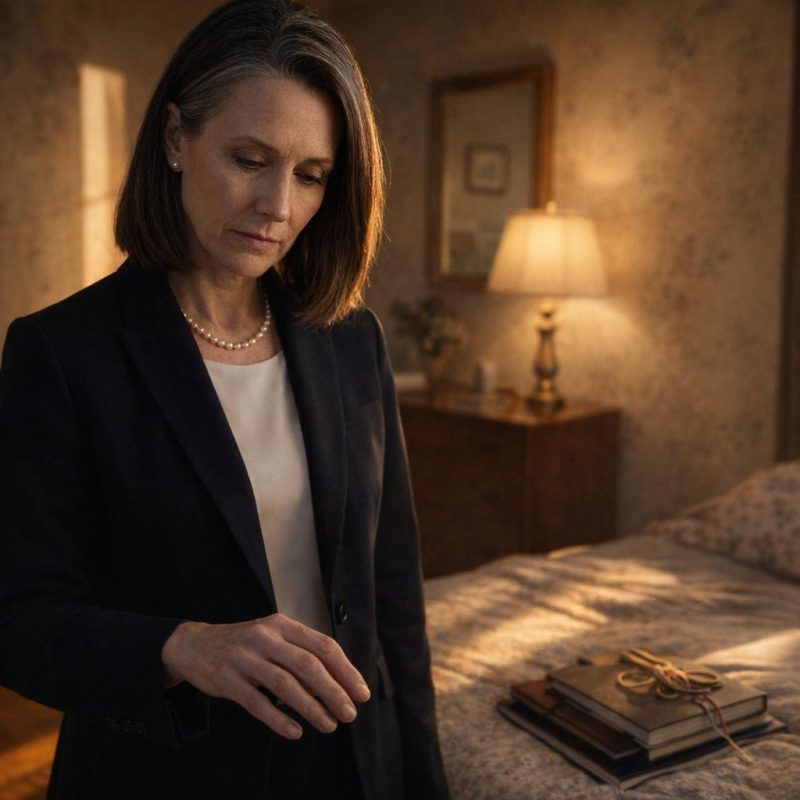 Image by RM AI
The Hidden Phone
I went back to the closet after I had been through the dresser. There was a stack of old sweaters on the top shelf — the kind she had worn in high school, folded loosely and pushed toward the back. I had already checked the boxes on that shelf, but I hadn't moved the sweaters themselves. I'm not sure what made me reach for them. Maybe it was just thoroughness. I pulled the stack forward and set it on the floor, and then I ran my hand along the shelf behind where they had been sitting. My fingers touched something hard and flat. I pulled it out and looked at it. It was a phone — cheap, the kind you buy prepaid at a drugstore, the kind that doesn't have your name attached to it. I turned it over in my hands. The plastic casing was scuffed but intact. I pressed the power button, not expecting anything, and the screen lit up. The battery indicator showed nearly full. I stood there in the middle of the room with the sweaters at my feet and the phone glowing in my hand, and the charge on that battery told me something I wasn't ready to think through yet — that someone had been here, in this room, recently enough to matter.
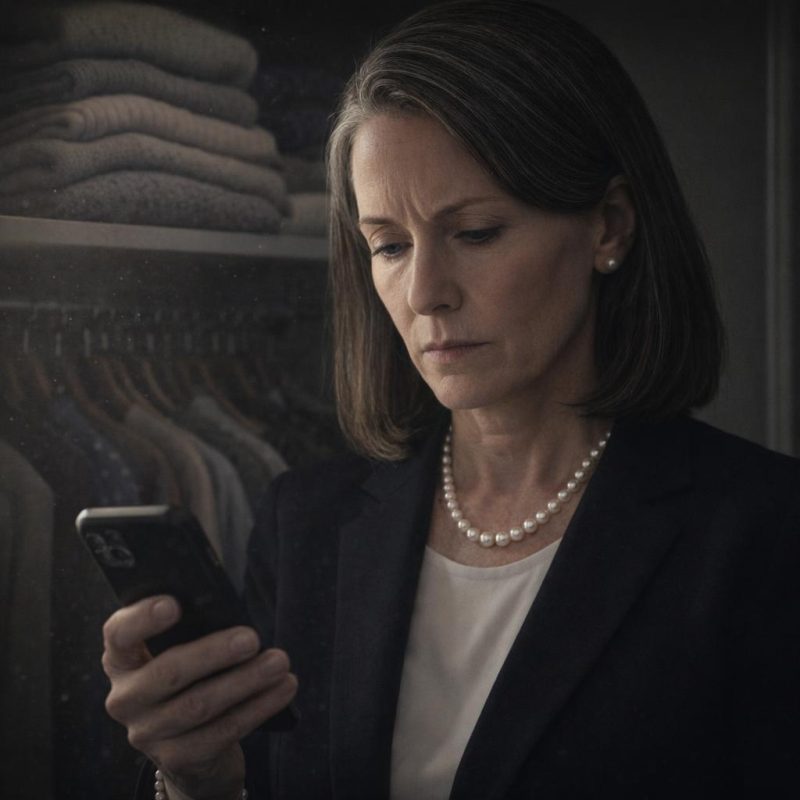 Image by RM AI
The Accomplice Revealed
I sat on the edge of the bed and opened the messages. There was one thread that ran longer than the others — a contact saved only as J. I scrolled up to find the beginning and started reading from there. The early messages were logistical, clipped, the kind of shorthand two people use when they've already talked through the details out loud. References to timing. References to lighting. One message from J said the bruising from the last round had faded too fast and they needed to wait longer before the next set of photos. Another said the angle on the shoulder hadn't looked right and listed what to try differently. I kept reading. There were messages about which marks photographed most convincingly, about what to say to make the story consistent, about how to position things so the timestamps would hold up. My hands had gone very still on the phone. I read the thread twice because I needed to be sure I was reading what I thought I was reading. The messages between Chloe and J laid out, in plain and practical language, the coordination behind photographs I had once held in my own hands and wept over.
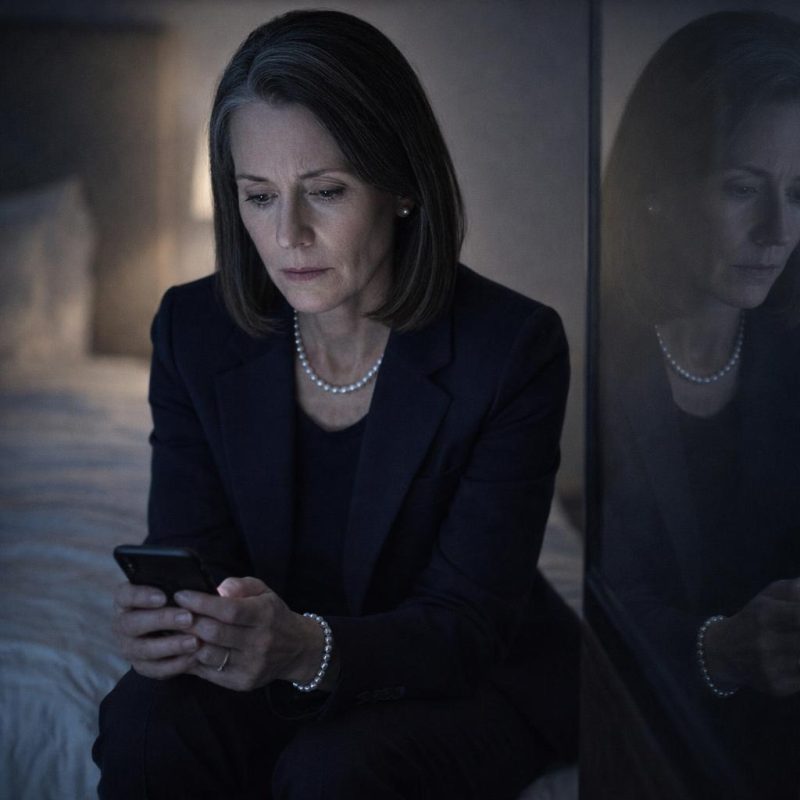 Image by RM AI
Remembering David
I set the phone face-down on the bed and sat there without moving for a long time. The initial J kept surfacing in my mind — just that one letter, saved that way, though I couldn't be certain of anything right now. And then something else surfaced. A memory I hadn't reached for in years. Chloe had dated someone before Mark — a man she had called David, back when she was in her mid-twenties. The relationship had ended badly, or so I had been told. She had come to me crying, more than once. She had described things that frightened me — a temper, she said, control issues, hands that moved in anger. I had believed her without question, the same way I had believed her about Mark. I had helped her leave that situation. I had told people about him, too, back then — not as many, not as loudly, but I had said things. I had shaped how people saw him. I sat on the edge of Chloe's bed with the phone face-down beside me and tried to remember his last name, tried to remember what had happened to him after Chloe left, and the harder I tried to remember, the colder the feeling in my chest became — until the memory of Chloe sitting at my kitchen table, crying about what he had done to her, came back to me all at once.
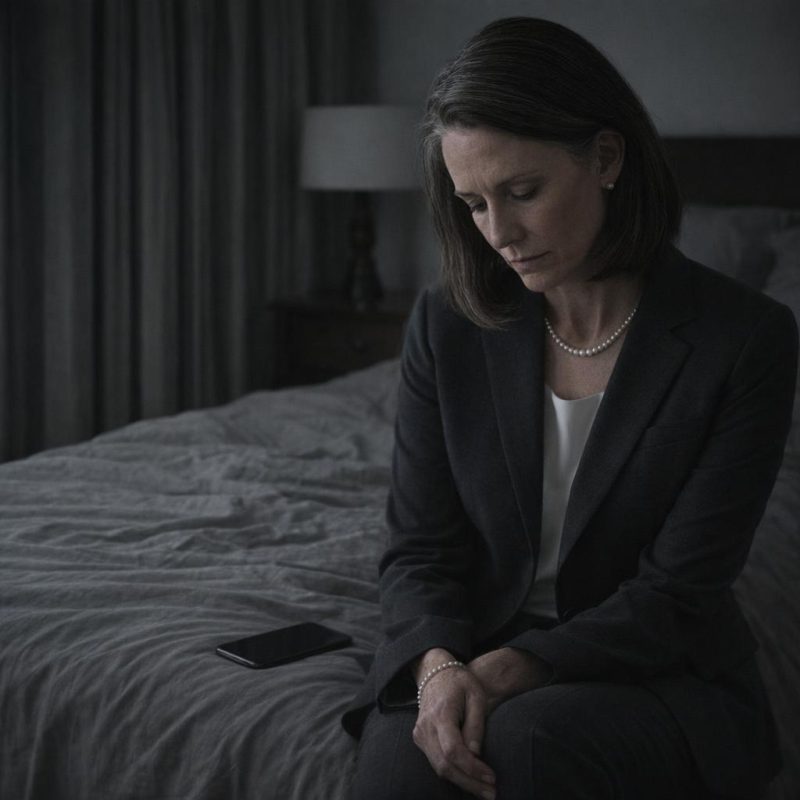 Image by RM AI
The Online Search
I took the burner phone downstairs and set it on the desk next to my laptop. My hands weren't entirely steady when I opened the browser. The name had come back to me by then — David, and then, slowly, the surname after it. I typed it into the search bar and then, after a moment, added Chloe's maiden name to narrow it down. The results loaded. There were several entries, a mix of things, and I scanned the list without clicking anything for a moment, the way you do when you're not sure you want to know what's on the other side of a link. Then I clicked the first one. It was a local news article from about five years back. I read the headline twice. I clicked the second link, then a third. I sat back in my chair and looked at the screen without reading for a moment, just looking at the shape of what was there — the dates, the names, the general outline of a story that had apparently played out in public while I had been paying no attention whatsoever. I hadn't known. I hadn't looked. I had heard Chloe's account and accepted it and moved on, and whatever had happened to him after that had happened entirely outside my awareness. I closed the laptop partway, not all the way, and sat in the quiet of the room with the weight of what I was about to read pressing down on me before I had even finished reading it.
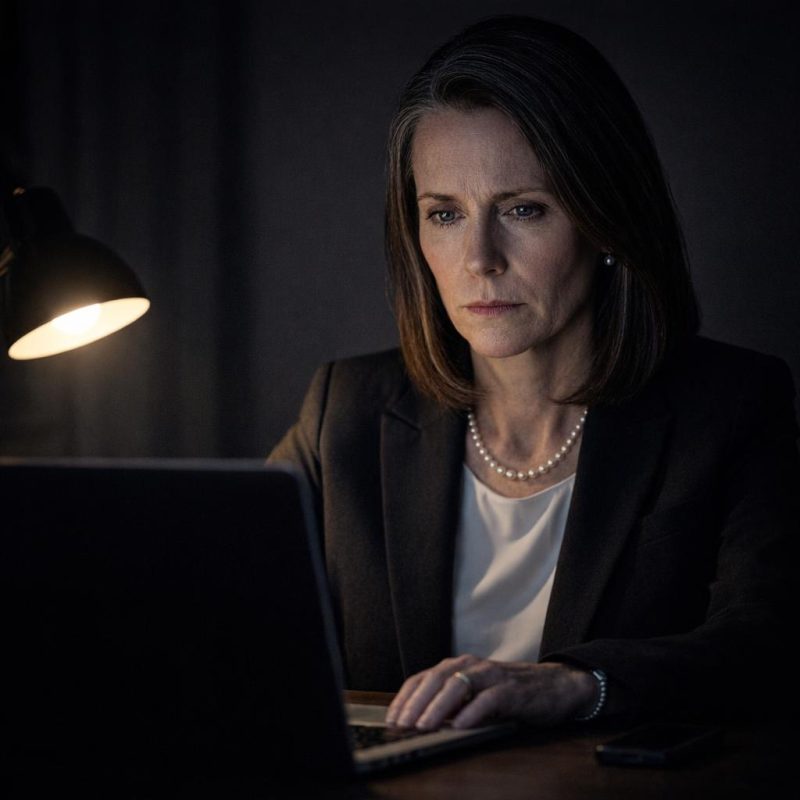 Image by RM AI
The Identical Pattern
I opened the laptop again and read everything I could find. There were four articles in total, spread across two local outlets. The man had lost his job at an engineering firm — terminated, one article said, following allegations made by a former partner. There had been a restraining order. There had been a police report. One article quoted Chloe by name, describing him as someone who had made her fear for her safety, someone whose behavior had escalated over the course of their relationship. I read that quote three times. The language was familiar in a way that made my stomach turn — not identical to what she had said about Mark, but close enough in shape and rhythm that something in me went very quiet. The timeline in the articles matched what I remembered of their relationship. The sequence of events — the allegations, the job loss, the legal filings, the public account of a man undone by his former partner's testimony — followed a shape I had recently learned to recognize from a different direction entirely. I didn't want to draw the conclusion that was forming. I pushed back from the desk and looked at the wall instead of the screen, as though the distance might slow down what I was putting together. It didn't. The details sat with me in that room, each one familiar, each one terrible in its familiarity.
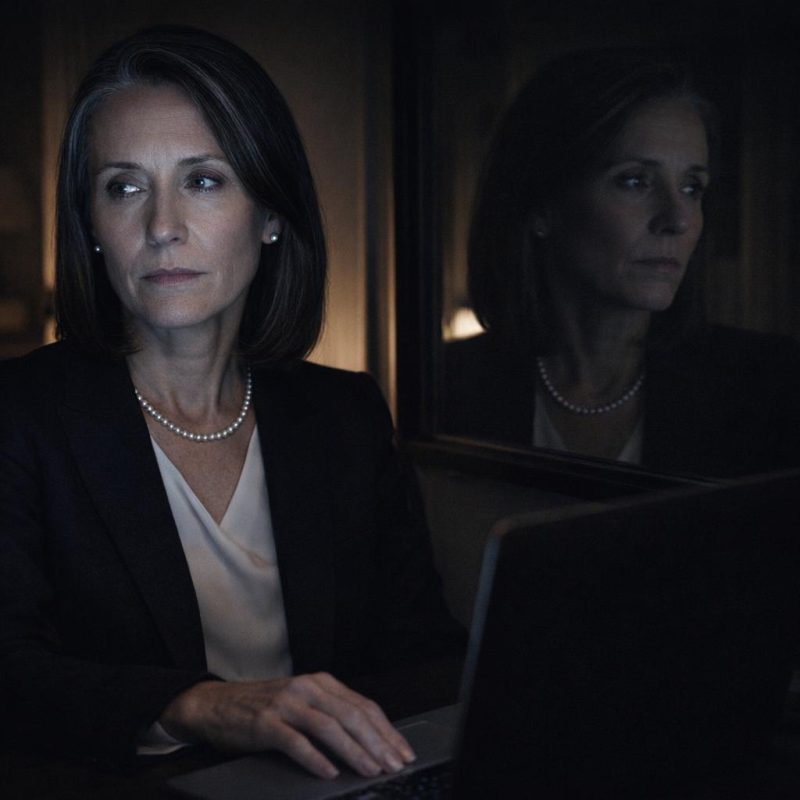 Image by RM AI
Finding David
I went back to the search the next morning. I hadn't slept well — I had lain awake with the articles cycling through my head, the quotes, the dates, the name of the engineering firm. In the daylight I pulled up a public records database I had used once before, when I was trying to track down a contractor who had disappeared mid-job. I typed in the name and the city and waited. The results came back with three possible matches. I worked through them one by one, cross-referencing the age and the employer listed in the news articles. The second match looked right. The address listed was an apartment complex on the east side of the city — not far, maybe twenty minutes from my house. I wrote the address down on the notepad beside the keyboard, tore the sheet off carefully, and folded it once. I sat there looking at the folded paper on the desk in front of me, thinking about what it meant to show up at a stranger's door with questions like the ones I was carrying.
 Image by RM AI
The Apartment Complex
I drove across town with the folded address on the passenger seat, smoothing it flat once at a red light like that would somehow help. The apartment complex was exactly what the listing had suggested — three stories of beige stucco, a parking lot with faded lines, a row of scraggly hedges along the front walk. Nothing remarkable. I pulled into a visitor spot and turned off the engine and just sat there. I had rehearsed something on the drive over — a few sentences, an explanation, an apology of sorts — but sitting in that parking lot, every version of it sounded wrong. I knew almost nothing about David except what I had read in those articles: the job he had lost, the apartment he had been forced out of, the reputation that had been dismantled piece by piece. I didn't know what he looked like now. I didn't know if he would slam the door in my face, and I wouldn't have blamed him if he did. I was Chloe's mother. That was the first thing he would see. I sat with my hands in my lap for a long time, watching the entrance, before I finally opened the car door and made myself walk toward it.
 Image by RM AI
The Closed Door
The second floor hallway smelled like carpet cleaner and something faintly fried, and the overhead light buzzed at a frequency that made my teeth ache. Apartment 2C was at the far end, past a fire extinguisher and a bulletin board with a single thumbtacked flyer. I stopped in front of the door and stood there for a moment before I knocked — three times, firm, the way you knock when you mean it. Then I waited. I heard movement almost immediately. Footsteps, unhurried at first, then slowing as they got closer. I could hear him on the other side of the door — the particular stillness of someone standing just inches away, listening. I waited for the handle to turn. It didn't. The footsteps had stopped right there, right at the threshold, and the door stayed closed. I didn't knock again. I just stood in that buzzing hallway, close enough to hear him breathing if I leaned in, and the silence between us felt like something with weight to it — all the years and damage and wrong turns compressed into a few inches of painted wood.
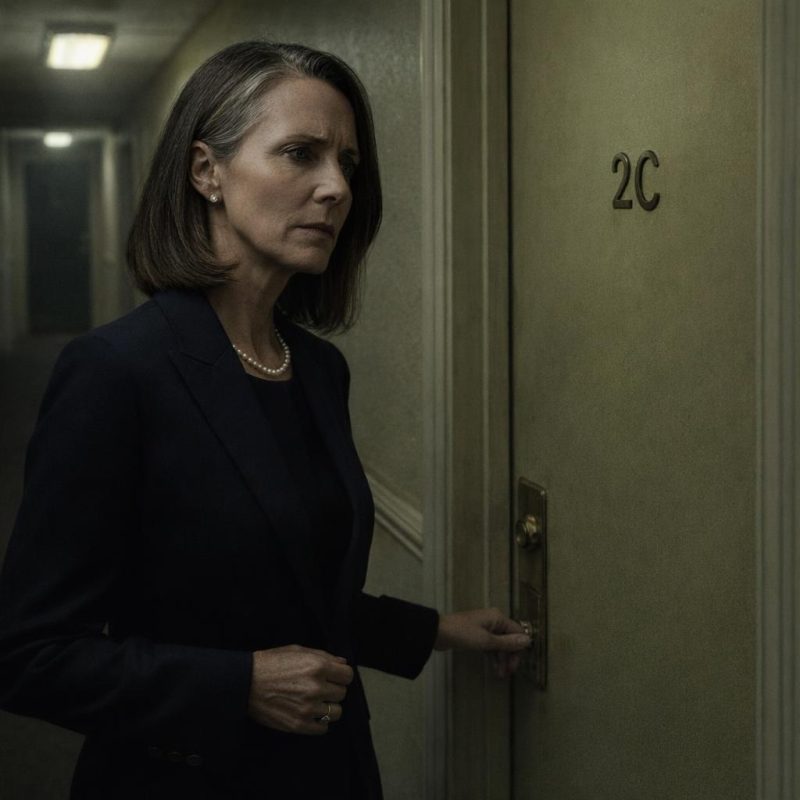 Image by RM AI
Pleading Through the Door
I pressed my palm flat against the door, not knocking, just resting it there. Then I started talking. I told him my name. I told him I was Chloe's mother, and I said it plainly, without softening it, because he deserved that much. I told him I had found the articles, that I had spent weeks trying to understand what had happened, and that I was not there to defend her or explain her away. I said I had a former son-in-law named Mark — that I had helped Chloe destroy him, that I had believed every word she told me and used every resource I had to make his life unlivable. I said Mark's name twice, slowly, because I needed David to understand this wasn't abstract. I told him I thought he deserved to know that what happened to him had happened again, to someone else, and that I was the one who had helped make it happen. My voice cracked somewhere in the middle of that last sentence and I didn't try to fix it. I stood in the hallway with my hand still on the door, waiting. Then I heard the deadbolt slide open.
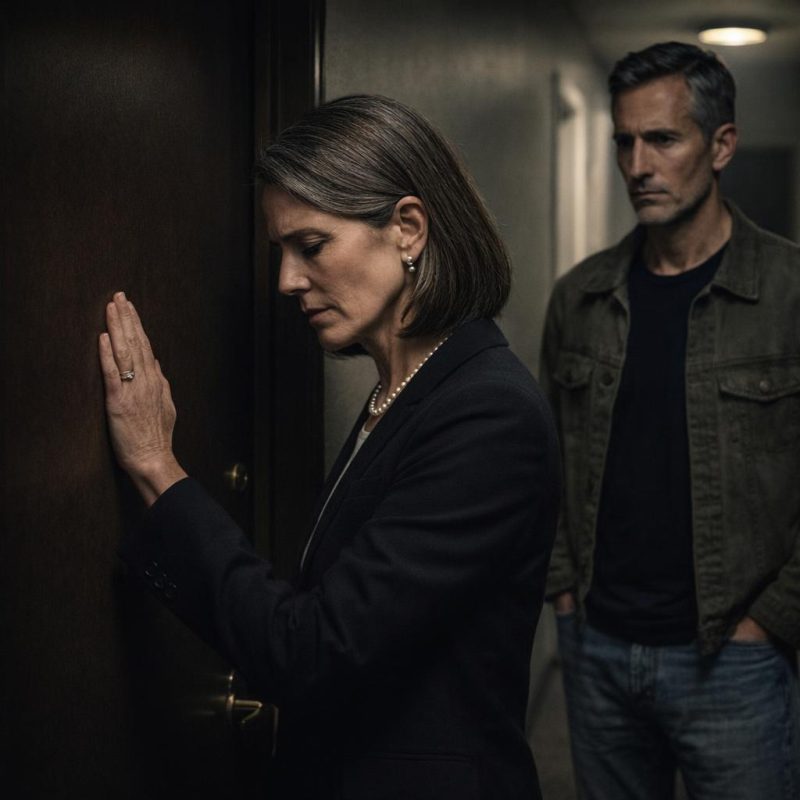 Image by RM AI
The Broken Man
He stepped back without a word and I walked in. The apartment was spare — a couch, a small table, two chairs, a bookshelf with books actually on it. No clutter, no decoration, nothing that wasn't functional. It had the feel of a place someone had arranged carefully because controlling the small things was the only kind of control left to them. David himself was lean in a way that looked like it had cost him something, with eyes that moved to the window and back before they settled on me. He looked older than the age I had calculated from the articles. He gestured toward one of the chairs at the kitchen table and I sat down. He stayed on the far side, arms loose at his sides, keeping the table between us. I noticed he didn't offer anything — no water, no coffee — and I understood that without needing it explained. I was not a guest. I was something he was deciding whether to tolerate. I looked at him across that small table and I saw it plainly: the careful stillness, the measured distance, the way his jaw held just slightly tight — the marks of a man who had learned that proximity to certain people carried a price.
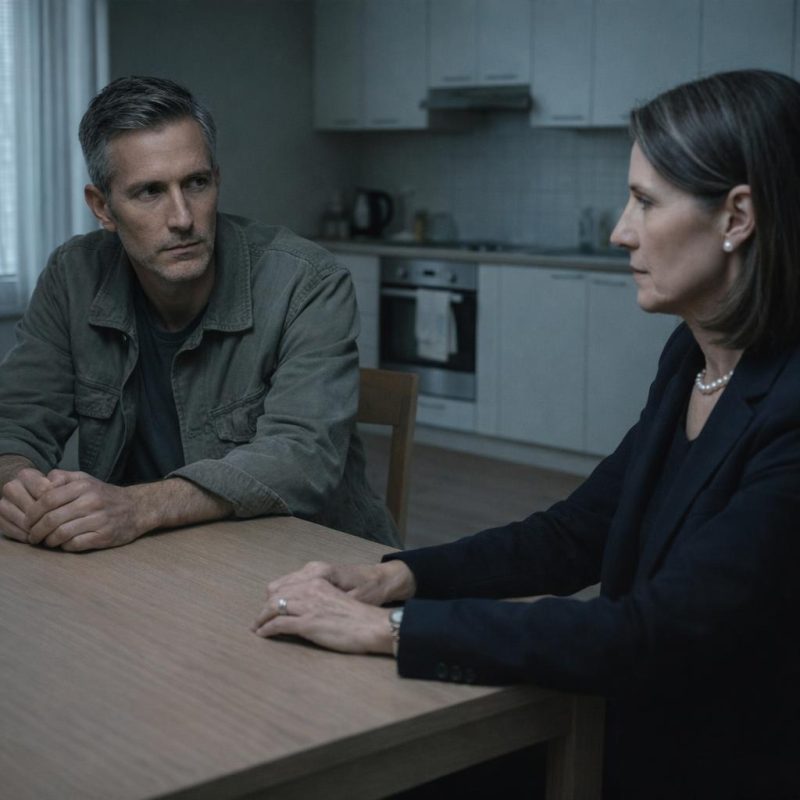 Image by RM AI
The Pattern Revealed
He talked for a long time. He had met Chloe six years ago at a work event — she had been warm, attentive, exactly what he had wanted. After about a year together, things shifted. He described the first accusation, the way it came out of nowhere after a minor argument, the photographs that appeared within days showing bruises he had never put there. He lost his job within two months. His landlord asked him to leave. His friends stopped returning calls. He said all of this in a flat, even voice, like he had told it before or had rehearsed telling it so many times that the emotion had worn smooth. I sat across from him and listened, and the longer he talked the colder I felt. The timeline. The financial accounts drained before he understood what was happening. The mutual friends turned one by one. I thought about Mark — about every specific thing I had watched happen to Mark — and the details lined up so precisely that my hands went still on the table in front of me. David looked at me and said it quietly, and each word landed like something dropped from a height: the fake bruises, the stolen accounts, the friends who stopped calling — he had lived every piece of it, five years before Mark did.
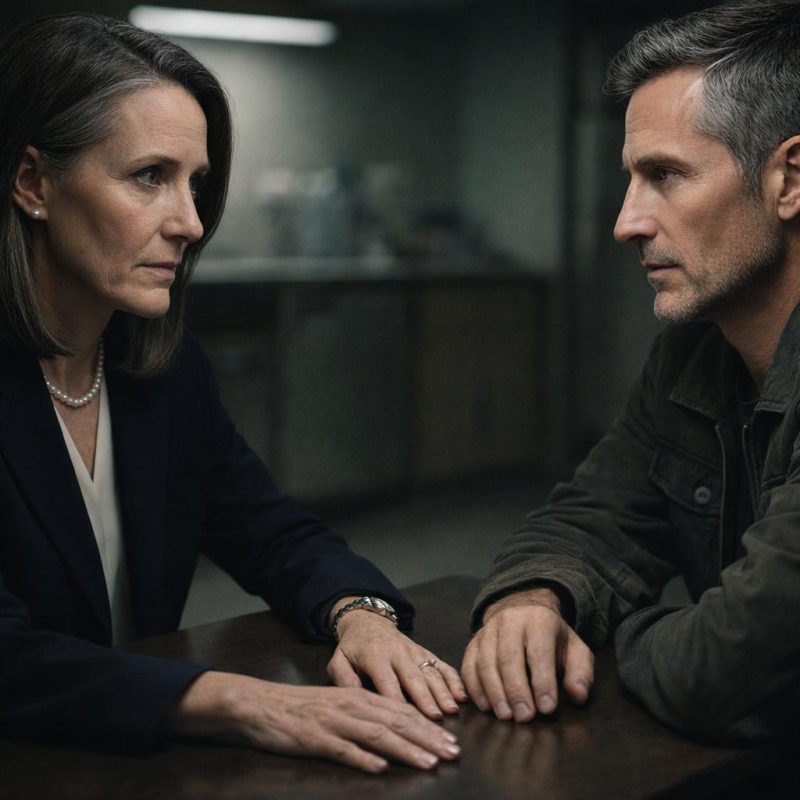 Image by RM AI
The Accomplice Connection
He said Jess's name and I felt my stomach drop. He described her as a constant presence from the beginning — always nearby, always helpful, always the one with the camera when it mattered. He said Jess had taken the photographs both times he had seen evidence of them, that she had been the one to show up at his workplace with a tearful account of what he had supposedly done. He pulled out his phone and showed me a screenshot — an old text thread he had kept, the way people keep things they know they'll need someday. The messages were between Chloe and a contact labeled only with a first initial, but the content was unmistakable: references to what had gone wrong the first time, what needed to be tightened up, what a better witness statement would look like. I read it twice. The language was practical, almost clinical — two people reviewing a process and identifying improvements. I thought about the burner phone messages I had found in Chloe's things, the same flat transactional tone, and something in my chest went very cold. David said Jess hadn't just helped — she had been there from the start, and by the time they came to Mark, they had already worked out what hadn't gone right the first time.
 Image by RM AI
The Dismissed Warning
David said he had tried to warn people. He said it quietly, without accusation, which made it worse. He had written letters, he said — to Chloe's family, to anyone he thought might listen. And then he looked at me, not unkindly, and said he had written to me. Something moved through me that I can only describe as the floor dropping. I remembered it. I had not let myself remember it until that moment, but I remembered it — a letter, handwritten, arriving maybe five years ago. I remembered Chloe standing in my kitchen saying David was harassing her, that he couldn't accept it was over, that I should throw it away without reading it. And I had. I had read the first paragraph, felt my protective instincts rise up like a wall, and put it in the recycling bin. I had never finished it. I had never given it a second thought. I sat across from David in his careful, sparse apartment and I could not speak. If I had read that letter — if I had done the one simple thing of reading a letter all the way through — Mark would never have become what he became: a man sleeping in his car, destroyed by the same hands I had helped. That unread letter sat somewhere in the past, irretrievable, and the weight of it didn't move.
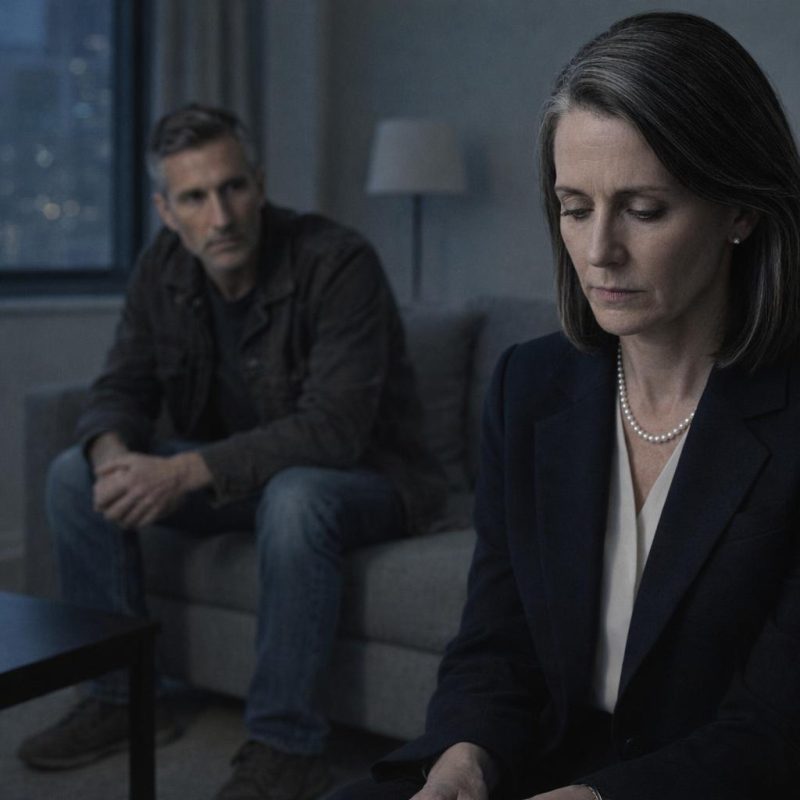 Image by RM AI
The Promise to Stop Her
I told David what I was planning to do. I told him about Detective Hayes, about the bank records, about the burner phone and the messages and the evidence I had been quietly assembling. I told him his account — his testimony, his screenshots, his timeline — would make the pattern undeniable in a way that my evidence alone couldn't. He listened without interrupting. When I finished, he was quiet for a moment, and then he asked me, in a voice that carried no hostility but no softness either, whether I was really prepared to do this to my own daughter. I told him Chloe had done this to herself. I told him I was not destroying her — I was stopping her, and there was a difference, even if it didn't feel like one from the outside. I told him I was sorry I had thrown his letter away. I told him that was something I would carry for the rest of my life and I wasn't asking him to forgive it. He nodded once, slowly. He said he would talk to the detective. I thanked him and stood up and he walked me to the door. I drove home in the dark with both hands on the wheel, and the decision I had made sat in my chest, settled and still.
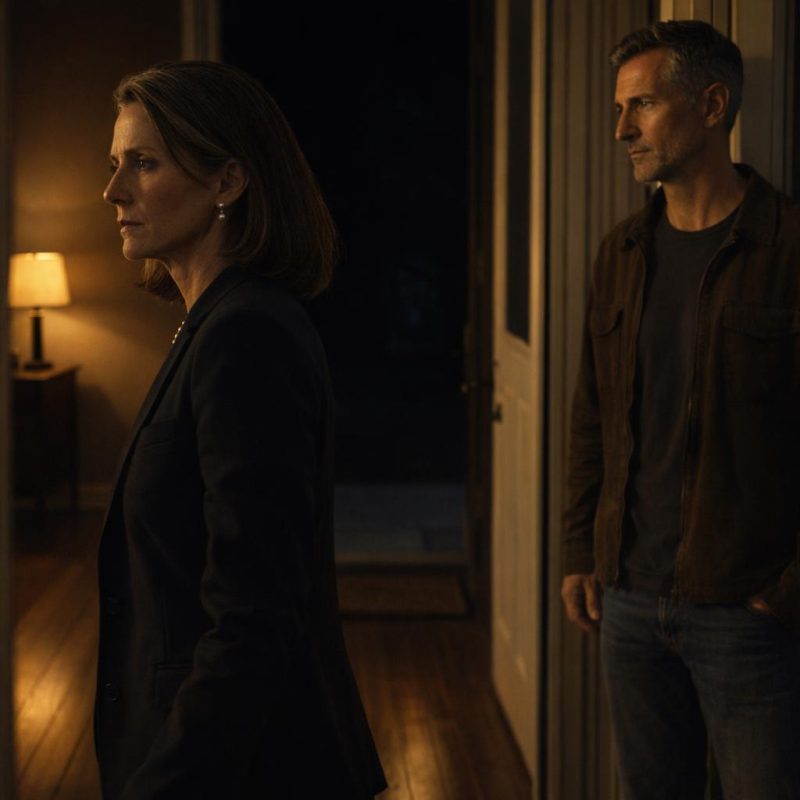 Image by RM AI
The Invitation
I drove home with the windows down even though it was cold. I needed the air. I needed something to keep me from going somewhere I couldn't come back from. By the time I pulled into my driveway, the decision had already settled into something harder than anger — something quieter and more deliberate. I sat in the kitchen for a long time before I picked up my phone. I had to get my voice right first. I had to sound like a mother who missed her daughter, not a woman who had spent the last several weeks dismantling everything her daughter had built on top of someone else's life. I dialed. Chloe picked up on the second ring, bright and easy, the way she always did when she thought everything was fine. I told her I'd been thinking about her. I told her I wanted to catch up, just the two of us, tea and cookies like we used to. I kept my voice warm. I kept it steady. I asked if tomorrow afternoon worked. She said yes without hesitating, and then she laughed and said she actually had some good news she'd been wanting to share with me.
 Image by RM AI
The Arrival
I was up before six the next morning. I cleaned things that didn't need cleaning. I rearranged the cups on the counter twice. I told myself I was just keeping busy, but the truth was I didn't know what to do with my hands when I wasn't moving them. By early afternoon I had the kettle filled and the good teacups out and a plate of shortbread on the table, and I stood in the kitchen doorway and looked at all of it and thought about how many times we had sat in this room together, how many times I had believed every word she said in it. I heard her car in the driveway at half past two. I heard the door of it close, light and careless, the way you close a door when you have nothing to hide. She came in carrying a white bakery box and wearing a yellow blouse, and she hugged me and said the house smelled wonderful, and I hugged her back and said I was so glad she came. I watched her set the box on the counter and pull out a chair and drop into it like she owned the room. She looked up at me with that wide, easy smile — the one I had trusted without question for thirty years.
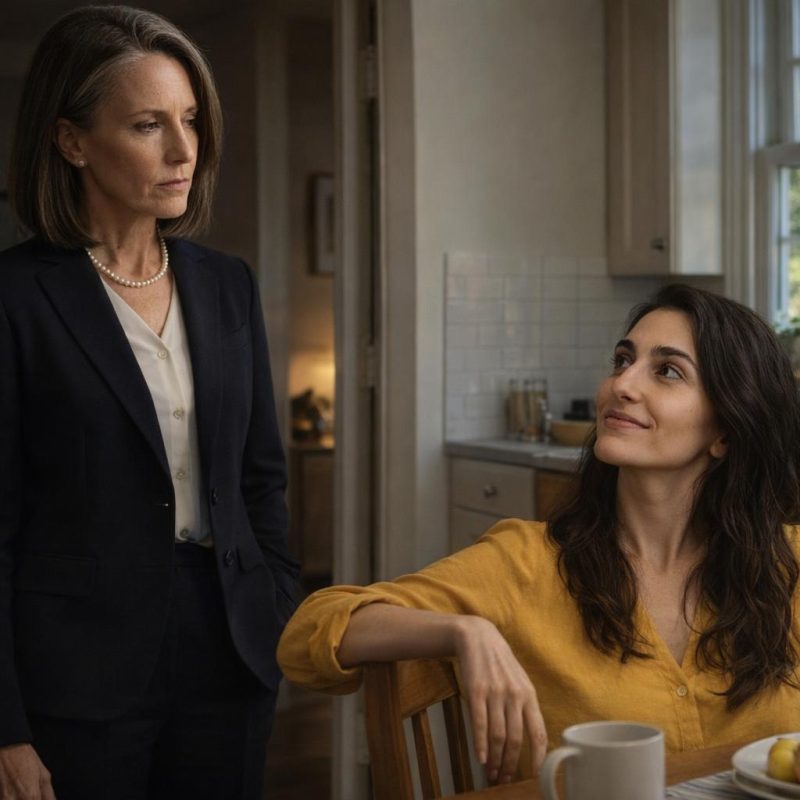 Image by RM AI
The Vacation Plans
I filled the kettle and set it on the burner and kept my back to her while she talked. She had been looking at flights to Portugal, she said. Lisbon first, then the Algarve coast. She'd found a travel agent who specialized in boutique hotels, the kind with private terraces and included breakfasts. She mentioned a figure — casually, the way you mention the weather — and I gripped the edge of the counter and did the arithmetic in my head without meaning to. That number didn't come from her salary. I knew what she earned. I knew what she spent. I had watched her struggle to cover rent two years ago and ask me for help with a car repair the year before that. The money she was describing so lightly, so happily, had a source, and I knew exactly what that source was. She said it felt like she was finally getting to live her life. She said she felt free. She laughed a little when she said it, like freedom was something she had simply found lying around, unclaimed, waiting for her. I kept my hands busy with the teacups. I kept my face pointed away from her. The kettle began to hiss on the stove, and I stood there listening to her talk about sunsets over the Atlantic, and every word landed somewhere deep and quiet and cold.
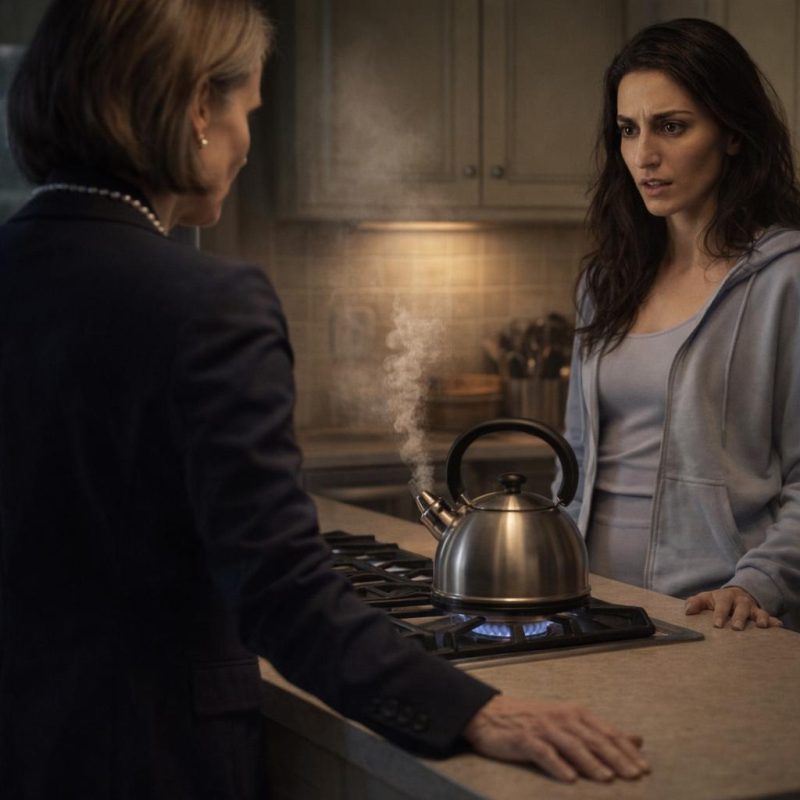 Image by RM AI
The Confession
I carried the teapot to the table and poured without speaking. Chloe wrapped both hands around her cup and smiled at me over the rim, comfortable and unhurried, and then she said, almost as an aside, that she still couldn't believe how easy it had all been. I set the teapot down. I asked her what she meant. She waved a hand like she was swatting away something small and said, oh, you know — the whole thing with Mark. She said people just believe what they want to believe, especially when a woman cries. She said the bruises had taken her maybe twenty minutes with the right makeup, and she giggled when she said it, a light, genuine giggle, like she was remembering a funny story from a party. She said the look on his face when the police showed up had been almost worth the whole ordeal. She shook her head, still smiling, and reached for a cookie. I sat across from her and I did not move and I did not speak. I had known, going into this room, what she had done. I had the evidence. I had David's testimony. I had the bank records. But knowing a thing and hearing it described in that voice, with that laugh, were not the same thing at all. The sound of it sat in the room long after she stopped talking.
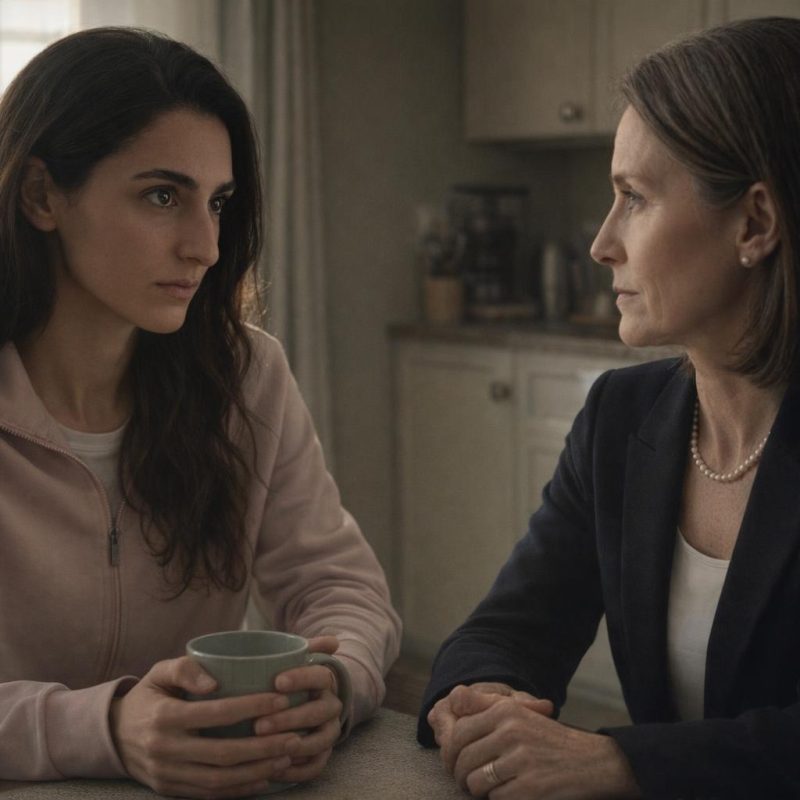 Image by RM AI
The Boiling Point
The kettle on the back burner had been sitting too long and it started to whistle, sharp and insistent, and I stood up from the table to take it off the heat. I wrapped my hand around the handle and lifted it and the heat came through the cloth immediately, radiating up into my palm. I turned around. Chloe was still at the table, still talking, something about the travel agent again, something about a villa with a pool. She hadn't noticed I'd moved. She was facing the window, one hand gesturing loosely, her voice bright and unhurried. I stood behind her chair with the teapot in both hands and I felt the heat of it against my fingers and I thought about Mark sleeping on a cot in a shelter. I thought about the look on his face when he'd talked about the night the police came. I thought about David's letter, the one I had thrown away without reading. The teapot was heavy. The steam was still rising from the spout. Chloe laughed at something she'd said herself and reached for her cup without turning around. I stood there for a long moment, not moving, not speaking, the heat of the pot radiating steadily into both my hands.
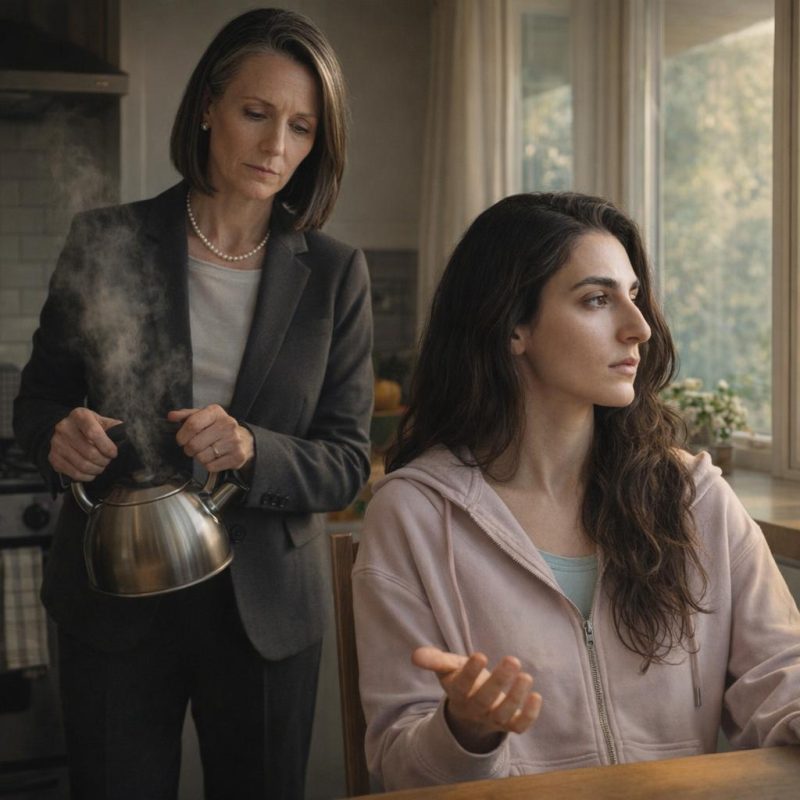 Image by RM AI
The Confrontation
I set the teapot down on the counter. I set it down carefully, without a sound, and I stood there for one more breath before I turned around and walked back to the table. I pulled out the chair across from Chloe and sat down and looked at her directly, and I waited until she stopped talking. She trailed off mid-sentence and tilted her head and asked if everything was okay. I told her I knew about the makeup. I told her I had seen the photographs — the originals, the ones taken before the bruises were applied, and the ones taken after. I told her I had the bank records showing every transfer out of the joint account in the weeks before she filed the police report. I told her I had driven to the shelter on Mercer Street and I had sat across from Mark in a folding chair and I had looked at what she had left him with. Chloe's mouth was still slightly open from whatever she'd been saying before I started. The easy warmth she'd carried in with her was gone now, replaced by something careful and watchful. She started to say my name, and then she stopped. Her smile had gone completely still.
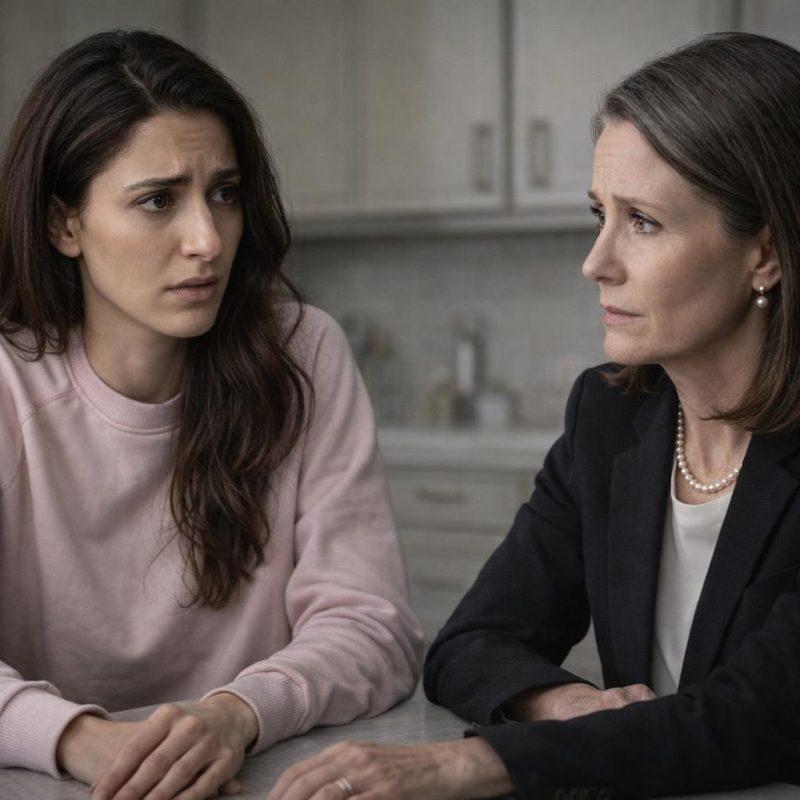 Image by RM AI
The Failed Manipulation
The tears came fast — they always had with her. Her eyes filled before I'd even finished my last sentence, and she reached across the table and put her hand over mine and said I had it wrong, that I didn't understand the full picture, that things between her and Mark had been complicated in ways she'd never told me. Her voice was soft and trembling and perfectly calibrated, and I recognized every note of it. I had heard that voice my entire adult life. I had rearranged my understanding of reality to accommodate that voice more times than I could count. I pulled my hand back. I told her I knew about the makeup artist she'd found online. I told her I had the name of the account she'd used to pay for it. She blinked, and for just a moment the trembling stopped — not gradually, not naturally, but all at once, like a switch. She looked at me, and the softness was gone, and what replaced it was something I had never let myself see before, something flat and assessing, and her jaw tightened once before she caught herself and tried to pull the tears back up. But they didn't come this time. Her face stayed still, caught between the performance she'd abandoned and whatever came next.
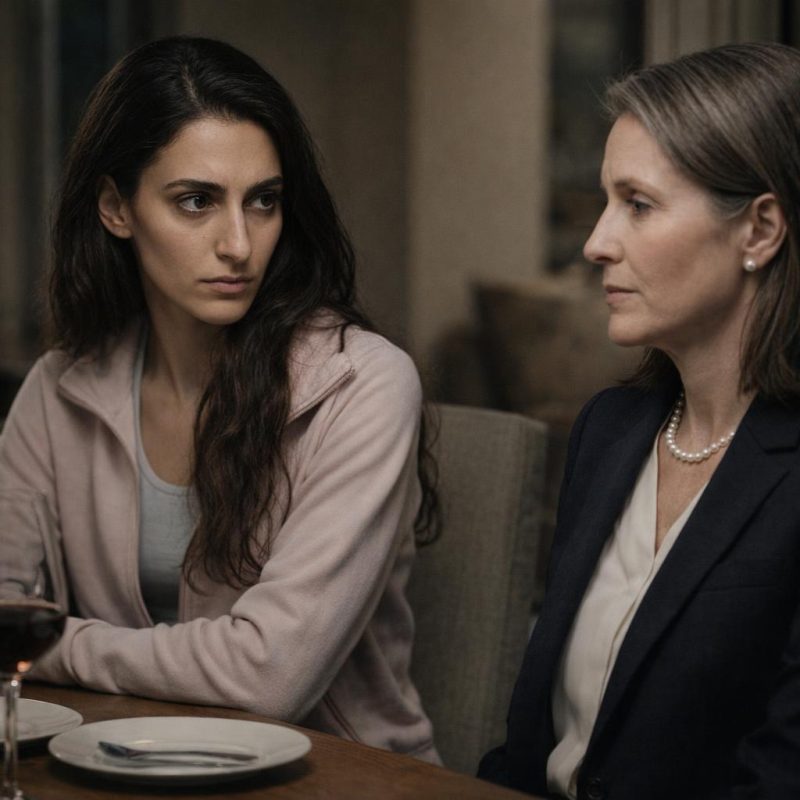 Image by RM AI
David's Name
I let the silence sit for a moment. Then I said his name. I said David Preston. I said it the same way I had set down the teapot — carefully, without drama, like I was placing something fragile on a hard surface. Chloe didn't move. She was still sitting with her hands flat on the table and her expression caught mid-calculation, and when she heard that name something happened to her face that I had never seen before. I told her I had driven to his apartment. I told her he had shown me the messages, the timeline, the photographs he had kept from when they were together. I told her I had sat in his kitchen and listened to him describe the same sequence of events — the accusations, the police, the financial collapse — and that his account and Mark's account matched in ways that couldn't be coincidence. I reached into my bag and set the burner phone on the table between us. I told her I had found it in the storage unit, and that the messages on it between her and someone named Jess described what she had done to David in enough detail to make the pattern clear. I watched the color leave her face — not gradually, but all at once, like something had been pulled from beneath her skin.
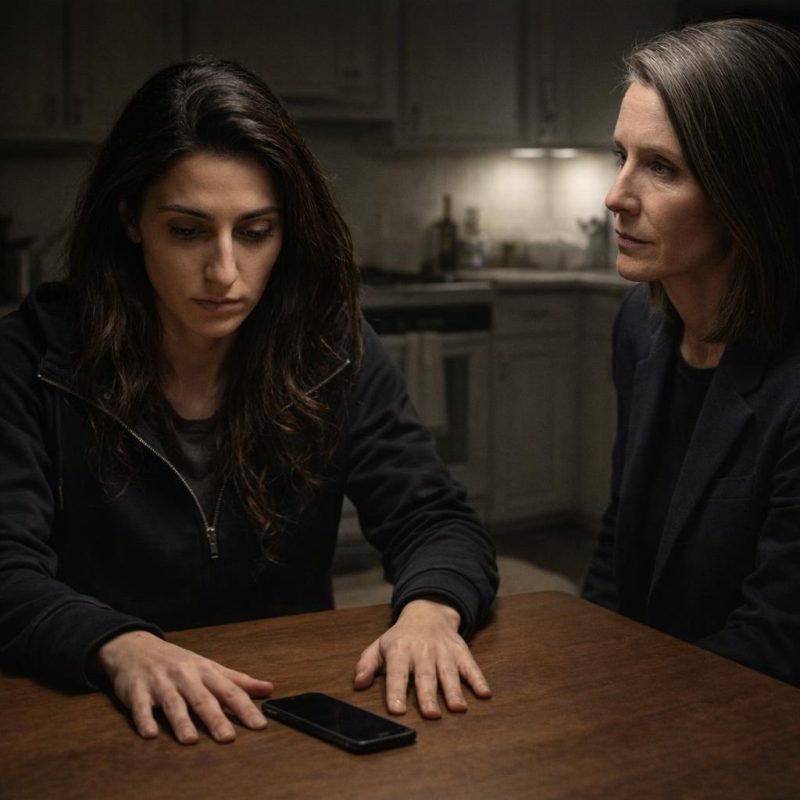 Image by RM AI
The Call
She didn't cry after that. The tears stopped like a faucet being turned off — clean, immediate, deliberate. She just looked at me, and for the first time in thirty years I saw my daughter's face without the performance layered over it. What was underneath was cold in a way I hadn't expected. Not angry. Not frightened. Cold. She told me I was making a mistake. She told me I had no idea what I was doing, that I was throwing away my family over a con man's lies. I picked up my phone from the counter without answering her. My hands weren't shaking anymore. I had been shaking for weeks — through the storage unit, through David's kitchen, through every sleepless night I'd spent trying to find another explanation — but standing there with the burner phone still on the table between us, I was steady. I dialed. Chloe said, very quietly, that I would regret this for the rest of my life. I believed her. I dialed anyway. She told me I was nothing to her. I kept my eyes on her face and I kept the phone to my ear, and then the line connected and a voice said, "Nine-one-one, what's your emergency."
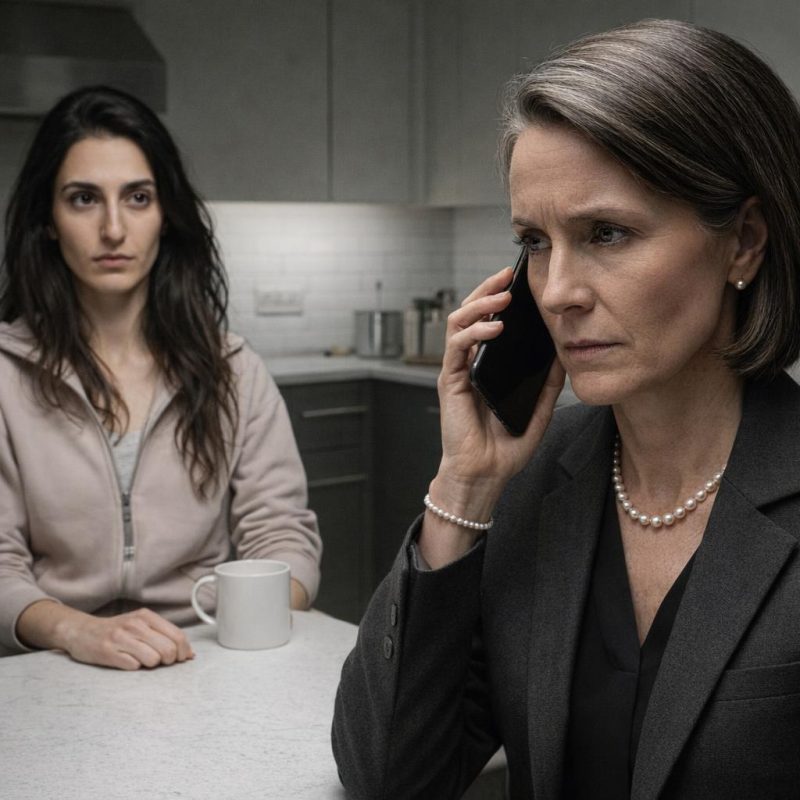 Image by RM AI
The Arrest
They came within twenty minutes. Two officers first, then Detective Hayes about ten minutes behind them, and I met them at the door with the folder I had put together — the bank records, the printed screenshots from the burner phone, the photographs David had given me, the timeline I had written out by hand the night before. I walked them through it at the kitchen table while Chloe sat in the living room saying nothing. She had gone quiet in a way that felt more dangerous than anything she had said before. Detective Hayes asked me careful questions and wrote everything down, and I answered him without flinching, even the parts that made me look like a fool. Especially those parts. When they told Chloe she was being detained pending charges — fraud, theft, filing false police reports — she looked at me one last time. Not with anger. With something that looked almost like curiosity, like she was filing me away somewhere. Then one of the officers guided her hands behind her back, and I stood in my own doorway and watched them walk her down the front path to the car. The door of the patrol car closed. I didn't move from the doorway for a long time after the taillights disappeared, and the night air settled around me, still and very quiet.
 Image by RM AI
Making Amends
The trial took four months. I testified twice — once for the prosecution's case and once in rebuttal when Chloe's attorney tried to characterize the burner phone as planted evidence. I sat in that witness box and I told the truth about everything, including my own part in it. I told them I had believed her without question. I told them I had pressured Mark's employer, that I had made calls and used my name and my connections to make his life smaller, and that I had done it because my daughter asked me to and I never once stopped to ask why. Mark was in the courtroom for both days I testified. He didn't look at me with hatred. That was almost harder to take than if he had. After the verdict came down, I contacted his former employer directly. It took three conversations and a written letter of correction before they agreed to review his file. David's situation required a different kind of work — an attorney, a formal petition, two months of waiting — but his record was eventually cleared. I won't pretend either of them came back whole. Mark found work, found an apartment, started sleeping indoors again. David got his name back. What I had taken from both of them couldn't be fully returned, and I understood that clearly, and I kept working anyway because stopping felt like one more thing I owed them not to do.
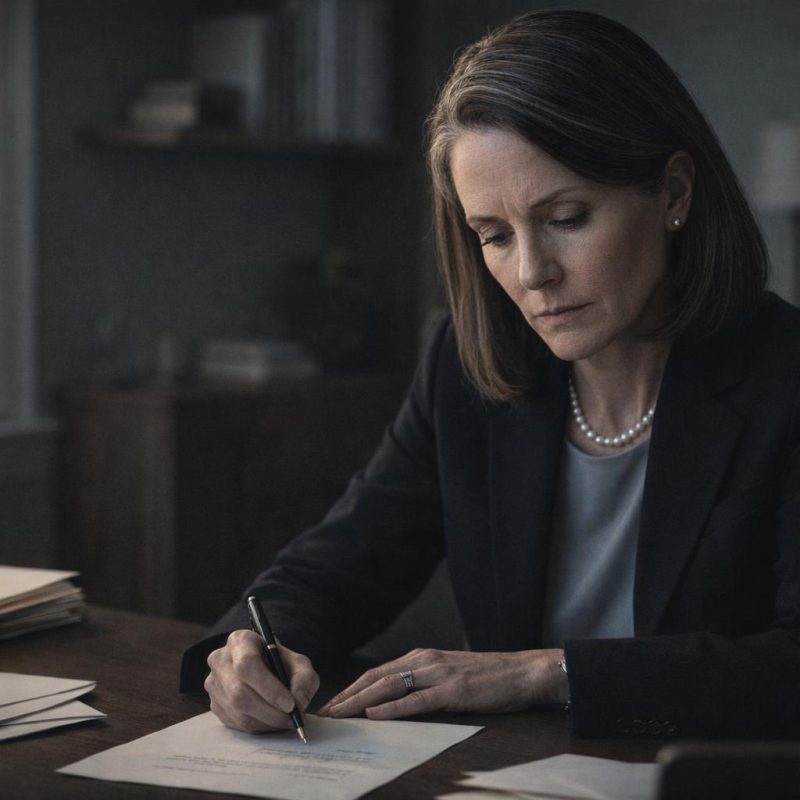 Image by RM AI
The Monster I Raised
It's been eight months since the trial ended. I sit in my kitchen most mornings now with coffee I let go cold, and I think about the things I should have seen. Chloe at eleven, telling a teacher a story so convincing the school called me in — and I had defended her without hesitation, never once asking whether the story was true. Chloe at seventeen, and the friend who stopped coming around, and the explanation Chloe gave me that I accepted because it was easier than the alternative. I had loved her so completely that I had made myself into a tool she could use, and I had used myself willingly, and two men had lost years of their lives because of it. I don't know if I raised the cruelty in her or simply failed to see it. I'm not sure the distinction matters as much as I once thought it would. What I know is that I had every opportunity to ask harder questions and I chose comfort instead. I write letters now to an advocacy group that works with people falsely accused. I answer their calls when they need someone to speak to families, to explain how easy it is to believe the wrong person when you love them. I do it because it's the only useful thing left. The rest — the part that doesn't have an action attached to it, the part that just sits in the chest like a stone — that part I carry.
 Image by RM AI
KEEP ON READING
20 Weirdest Historical Objects in Museums
Check Out the Pickled Heart of a Saint. Museums carry…
By Rob Shapiro Oct 1, 2025
20 Scariest Missing Persons Cases in History
Eerie Disappearances. There's something uniquely unsettling about a person who…
By Christy Chan May 1, 2026
20 Greatest Ancient Athletes In History
Ancient Olympics. Long before modern stadiums and multimillion-dollar endorsements, athletes…
By Sara Springsteen May 1, 2026
10 Phenomenal Mythical Creatures & 10 That Are Just Plain…
Legends Both Majestic And Peculiar. Do you ever wonder why…
By Chase Wexler Oct 1, 2025
10 Presidents Who Never Served In The Military & 10…
Commanders And Civilians In Office. Power can rise from very…
By David Davidovic Sep 1, 2025
20 Wars That Could Have Ended Much Sooner Than They…
Wars That Lasted Far Too Long. Wars are often remembered…
By David Davidovic Sep 1, 2025