

I Caught My Sister Installing Hidden Cameras In My Home Office — What I Found On The Memory Card Made Me Destroy Her Life
I Caught My Sister Installing Hidden Cameras In My Home Office — What I Found On The Memory Card Made Me Destroy Her Life
The Golden Child Returns
She showed up on a Tuesday afternoon with four pieces of matching luggage — the kind with the interlocking logo pattern that costs more than most people's rent. I hadn't heard from Clara in almost three months, and then there she was on my front porch, sunglasses pushed up into her hair, looking like she'd just stepped off a flight from somewhere expensive. She said she needed a break. The city was getting to her, she said — the pace, the noise, the pressure of it all. She used the phrase 'mental health reset' twice in the first five minutes. I didn't question it. That's the thing about family — you hear the words and you fill in the rest with whatever you want to believe. I carried two of her bags inside myself, showed her where to put her coat, and told her she could stay as long as she needed. My house had always been my quiet place, the one corner of the world I'd built exactly the way I wanted it. I watched her set her designer tote on the kitchen counter and look around slowly, taking it all in. The rooms felt smaller somehow, the air a little different, though I couldn't have said why that thought crossed my mind at all.
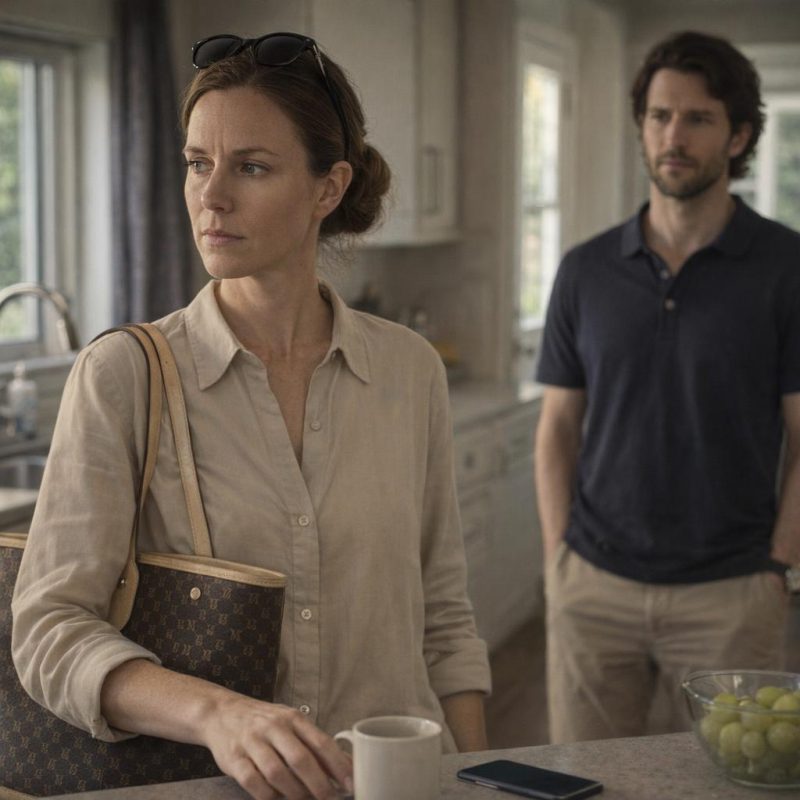 Image by RM AI
Stocking the Fridge
I told her to rest while I ran to the store. She'd always been particular about food — oat milk, not almond, a specific brand of sparkling water, the kind of crackers that come in the black box. I knew the list by heart without having to ask. That's what years of being the older brother does to you; you absorb the details without meaning to. I spent almost an hour in the aisles, picking up things I thought might make her feel at home, and I felt genuinely good about it on the drive back. When I got in and started unpacking the bags, Clara wandered into the kitchen and leaned against the counter, watching me sort through everything. She asked a few questions about the house — how long I'd had the place, whether I'd done all the renovations myself, which room I used for work. The questions felt easy and conversational, the kind of thing you ask when you're just getting reacquainted with someone's life. I told her about the office, pointed down the hallway, explained it was where I spent most of my day. I turned back to the groceries. When I looked up again, she was standing completely still in the office doorway, one hand resting on the frame, just looking in.
 Image by RM AI
The Guest Suite Tour
I walked her through the guest suite after dinner, and I'll admit I was a little proud of it. I'd spent three weekends on that room — new flooring, a proper reading lamp, blackout curtains, a mattress that cost more than I'd budgeted. I told her it was hers for as long as she needed. She ran her hand along the windowsill and said it was beautiful, and she meant it, I think. The window looked out toward the side yard, and if you stood at a certain angle in the hallway, you could see straight through to my office door. I pointed that out without thinking, just making conversation about the layout. Clara asked about my work schedule — when I usually started, whether I took breaks, if I ever worked evenings. I told her I kept pretty regular hours, nine to six most days, sometimes later when a deadline was close. She nodded like she was filing it away for future reference, but that's just how Clara listened — attentive, focused, like everything you said mattered. I'd always taken that as a compliment. Standing there in the doorway of the room I'd built for guests I rarely had, watching her settle in, I felt something I hadn't expected: a quiet, uncomplicated satisfaction at having her close again.
 Image by RM AI
Childhood Stories Over Wine
We opened a bottle of red after dinner and ended up on the sofa for two hours. Clara brought up the summer our parents drove us to the coast in that rusting station wagon, the one with the broken AC and the cassette player that only played one side of a tape. We laughed about things I hadn't thought about in years — the time she talked me into covering for her when she broke the kitchen window, the way I'd stood in front of our parents and delivered the most elaborate lie a twelve-year-old had ever constructed. She said I'd always been her protector. I told her that was just what brothers did. She asked about my current projects with what felt like genuine curiosity — not the glazed-over politeness people use when they don't really want to know, but actual follow-up questions, leaning forward with her wine glass balanced on her knee. I talked more than I usually do. There was something about the low light and the familiar rhythm of her company that made it easy. By the time we said goodnight, the bottle was empty and the room felt warm in the way that only old stories can make a room feel — like the walls had absorbed something good, and were giving it back slowly.
 Image by RM AI
The Architecture of Trust
The next morning she found me at my desk before I'd even made coffee, and somehow we ended up talking about the project I'd been building for the past two years. I don't usually explain my work to people outside the industry — the eyes glaze over fast — but Clara kept asking questions that pulled me further in. I walked her through the basic architecture, the encryption layer I'd spent months refining, the way the system handled client data in a way that most commercial solutions couldn't touch. She sat across from me in the spare chair, nodding, asking things like 'so that's proprietary to you specifically?' and 'how does that interact with the client's existing infrastructure?' I told myself she was just being engaged, the way she'd been the night before on the sofa. It felt good to have someone listen like the work actually mattered. I pulled up the interface on my laptop and showed her a few screens — nothing sensitive, just the front end. She leaned in to look. I was mid-sentence about the authentication protocol when I glanced over and saw her phone in her hand, screen angled slightly away from me, her thumb moving across it in short, deliberate strokes.
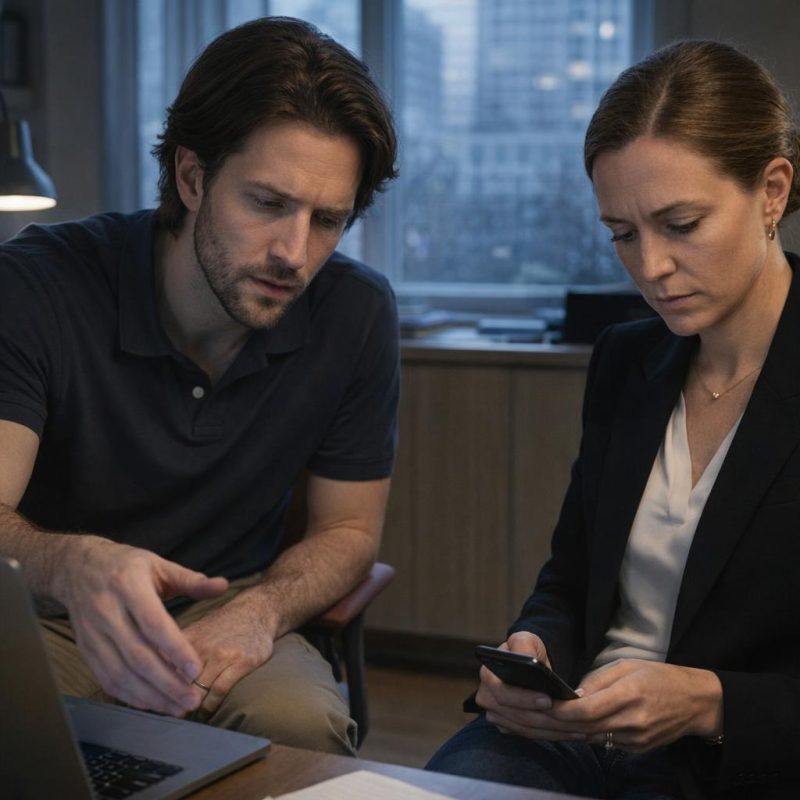 Image by RM AI
The Parents Call
My parents called while I was halfway through making pasta, which meant I had to wedge the phone between my ear and shoulder and keep stirring. My father got to the point inside of thirty seconds, the way he always did. He wanted to know why Clara had shown up at my house without warning. I told him she needed some time away from the city, that she'd seemed genuinely worn down when she arrived. There was a pause on his end that I recognized — the kind that meant he was choosing his words carefully. My mother took over and said, gently but directly, that Clara had a way of showing up when she needed something, and that I had a way of not noticing until it was too late. I told them they'd always been too hard on her. I said she was ambitious and that people mistook ambition for selfishness. I said she just needed her family right now. I'd said versions of all of it before — I could hear that as the words came out, the same sentences in the same order, worn smooth from use. Clara was somewhere behind me, in the living room I thought, though I hadn't heard her move. My own voice kept going, steady and familiar, making the same case I'd always made.
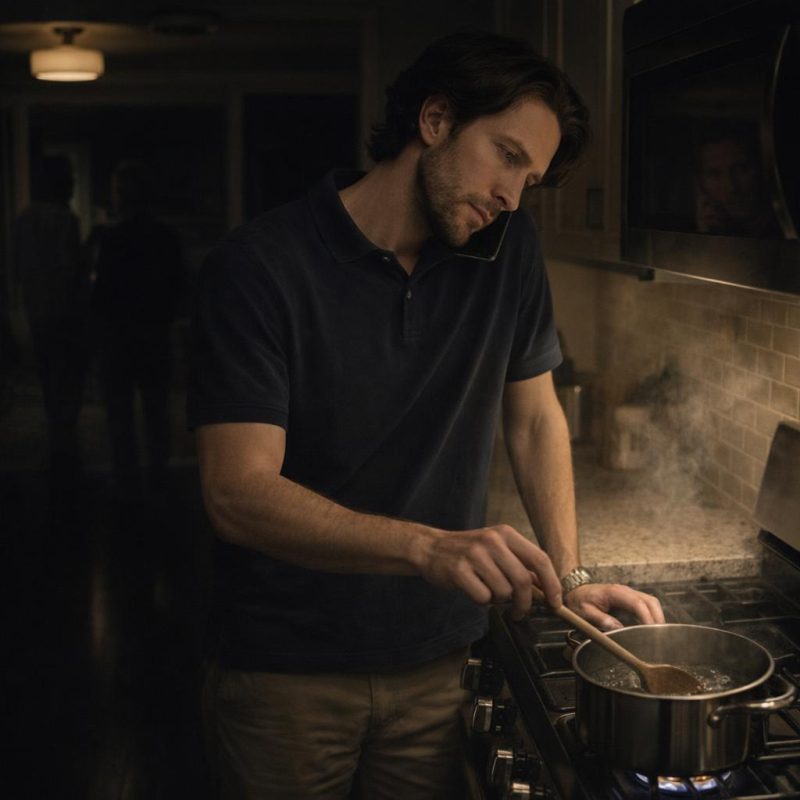 Image by RM AI
Sarah's Concerns
Sarah called from Seattle around nine, after Clara had gone to her room. I took the phone out to the back porch so I could talk without feeling like I was being overheard, though I told myself that was just habit. She asked how things were going, and I said fine, and she asked how long Clara was planning to stay, and I said I wasn't sure yet. There was a pause. Sarah had a particular kind of quiet that wasn't empty — it was the kind that meant she was deciding whether to say the thing she was already thinking. She said she remembered the last time Clara had needed a favor, and the time before that, and she asked whether I'd thought about what this visit might actually be about. I told her Clara seemed genuinely stressed, that this felt different from those other times. Sarah said she didn't doubt that Clara was stressed. She just wasn't sure the stress was the kind that a guest room and home-cooked meals could fix. I didn't have a good answer for that. We talked for a few more minutes about her conference, about the flight home, about nothing in particular. Then she said she'd been thinking about cutting the trip short and coming home a few days early.
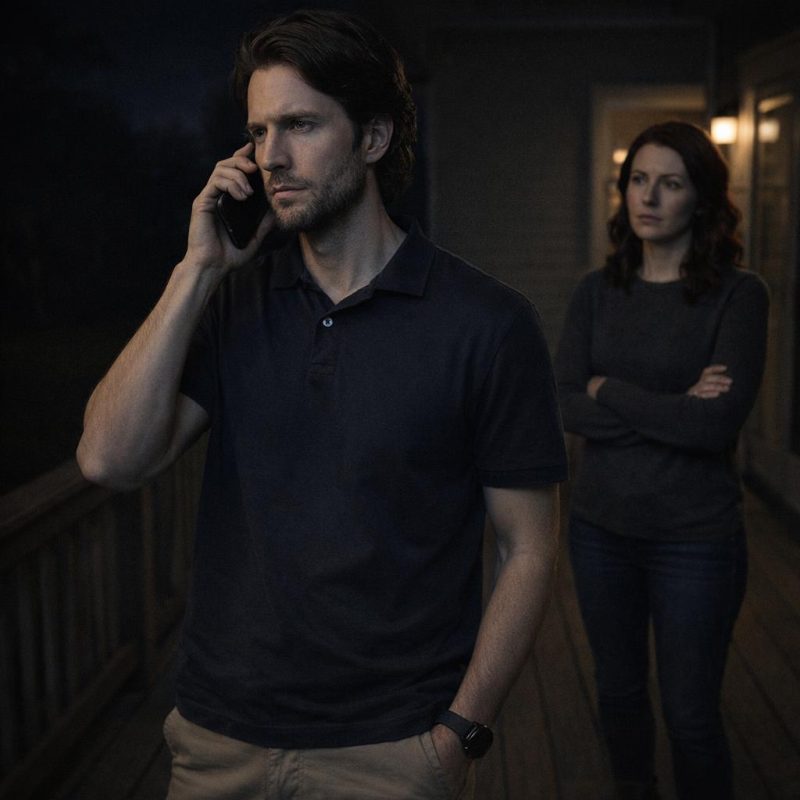 Image by RM AI
The Closed Door
Clara barely surfaced the next day. She came out for coffee around eight, said she hadn't slept well, and disappeared back down the hallway before I'd finished my first cup. I told myself she needed the rest — that was the whole point of her being here, after all. I went to my office and tried to work, and mostly I did. But the closed door at the end of the hall had a weight to it that I kept noticing. Not a sound, not a problem, just a presence. Around noon I heard movement — footsteps, the soft click of a door, then nothing. I went to the kitchen for water and glanced down the hallway out of habit. Her door was closed again. By mid-afternoon I'd checked the hallway twice more without meaning to, each time telling myself I was just stretching my legs. I wasn't worried, exactly. I didn't have a reason to be. But somewhere between the morning and the evening, without any single thing I could point to, the way I was moving through my own house had shifted — less settled, more aware, like I was listening for something I couldn't name.
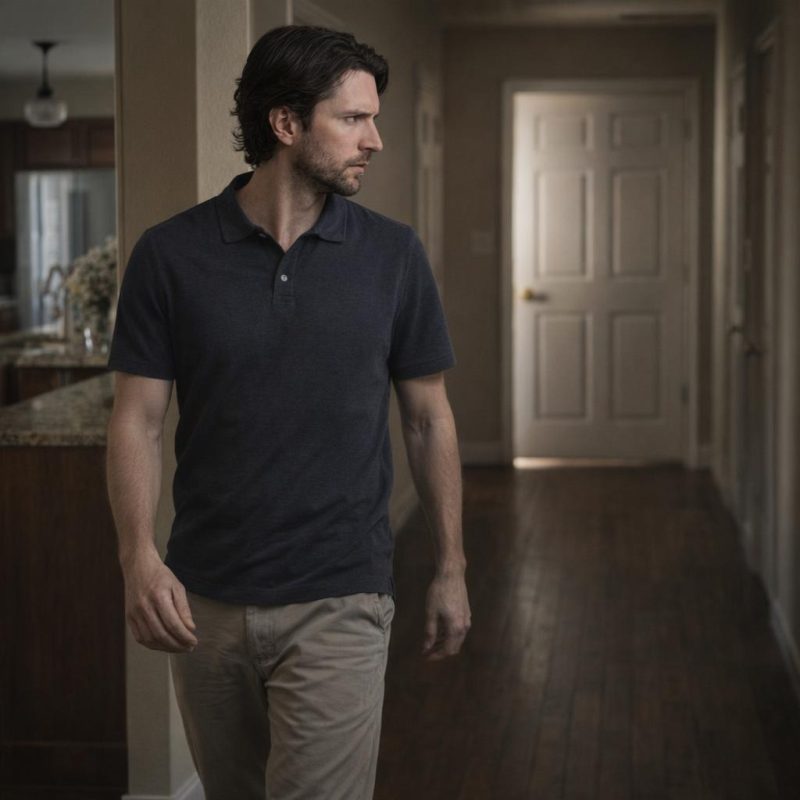 Image by RM AI
The Watched Feeling
I sat at my desk that morning with a client's codebase open across three monitors and told myself I was going to get through the backlog. For about twenty minutes, I did. Then something shifted — not a sound, not a movement, just a change in the quality of the air behind me, the way a room feels different when someone's standing in the doorway. I turned around. Nothing. The hallway was empty, the house quiet. I went back to the code. It happened again ten minutes later — that same prickling at the back of my neck, the kind that makes you straighten up without meaning to. I checked the doorway twice more over the next hour. Both times, nothing. Clara was somewhere in the house — I could hear the occasional soft footstep, the distant sound of a door — but she wasn't near my office. There was no reason for the feeling. I knew that. I told myself that. I put my headphones on and turned the music up and stared at the screen until the cursor stopped blurring. But even with the headphones in, even with the code finally moving again, the feeling didn't leave. It just settled in behind my shoulders and stayed there, quiet and patient, like it had nowhere else to be.
 Image by RM AI
The Quiet Sister
By the third day, Clara's pattern had become something I couldn't stop noticing. She'd surface for ten minutes — coffee, a glass of water, a brief pass through the kitchen — and then disappear again. Each time I tried to start a real conversation, she'd give me something short and vague and then find a reason to leave. I asked if she was sleeping okay. She said yes. I asked if she needed anything. She said no. Both answers came fast, almost before I'd finished the question, and neither one invited a follow-up. I started wondering if I'd done something to upset her, going back through the last few days looking for a wrong word or a misread moment. I couldn't find one. She wasn't cold, exactly — she'd smile when our eyes met, touch my arm when she passed — but the warmth felt surface-level, like something she was maintaining rather than feeling. The guest room door stayed closed most of the day. I'd walk past it on the way to the kitchen and feel the silence behind it like a physical thing. I'd known Clara my whole life, through every version of her moods and phases, and I couldn't place this one. The stillness coming off her didn't feel like rest. It felt like something else entirely, though I couldn't have said what.
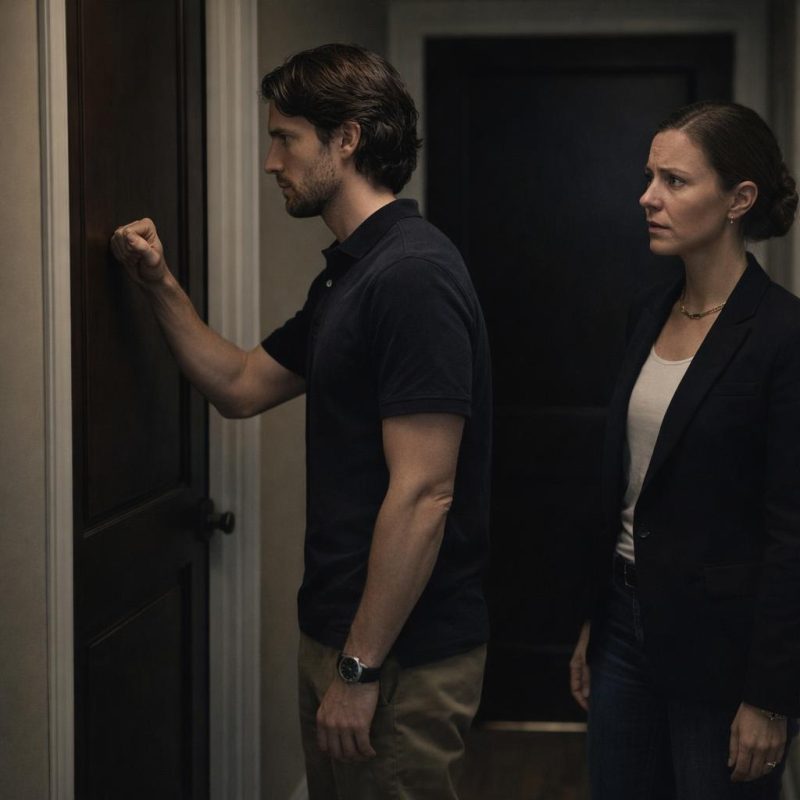 Image by RM AI
Breakfast Distraction
I made eggs the next morning, enough for two, hoping a proper breakfast might break whatever spell had settled over the house. Clara came out and sat across from me, which felt like progress. She wrapped both hands around her mug and stared at the table, and I started talking — easy stuff, nothing that required much from her. I asked about the startup, whether the funding round was still on track. She said it was fine. I asked about her apartment back home, whether her subletter was working out. She said yes, probably. Her phone buzzed twice on the table between us. She didn't look at it. I mentioned the summer we'd spent at our grandparents' place, the one where she'd convinced me to climb the water tower and I'd frozen halfway up. She smiled at that — a real one, I thought — but it faded before it fully arrived, and she went back to looking at her coffee. I ate. She didn't, much. The eggs went cold on her plate. I ran out of things to say somewhere around the second cup of coffee, and we sat in the silence that followed, the kind that fills a room when two people have stopped trying. She was right there across the table from me, close enough to touch. But whatever was going on behind her eyes, she'd taken it somewhere I couldn't reach.
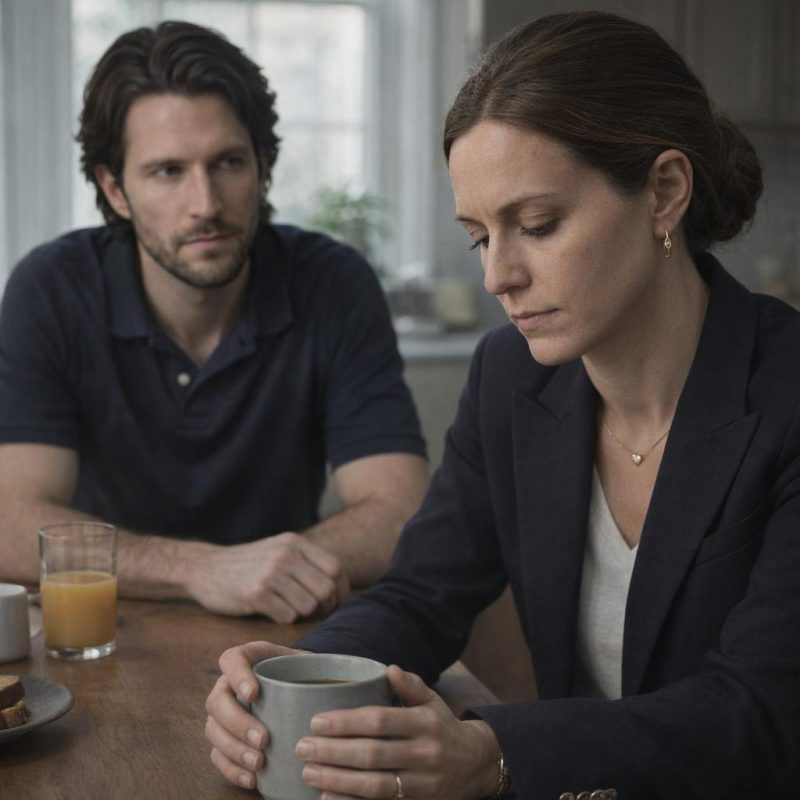 Image by RM AI
The Outside Call
I'd gotten into the habit of making a second coffee around ten, mostly as an excuse to move. The hallway between my office and the kitchen ran past the guest room, and I'd learned to walk it without thinking — just a stretch of carpet, a closed door, nothing to register. That morning I was halfway past when I heard her voice through the door. Not the low murmur of someone talking to themselves, but something sharper — clipped and tense in a way I'd never heard from her before. I stopped without deciding to. I couldn't make out most of it. Something about having it ready, something about not having enough time. Her voice dropped, then came back up again, and I caught the word 'access' before it dropped again. I stood there with my coffee mug going warm in my hands, not moving, not entirely sure why I wasn't moving. Then her voice came back up one more time, clear enough to carry through the door, and she said 'Friday' — hard and flat, like a deadline she was holding someone to.
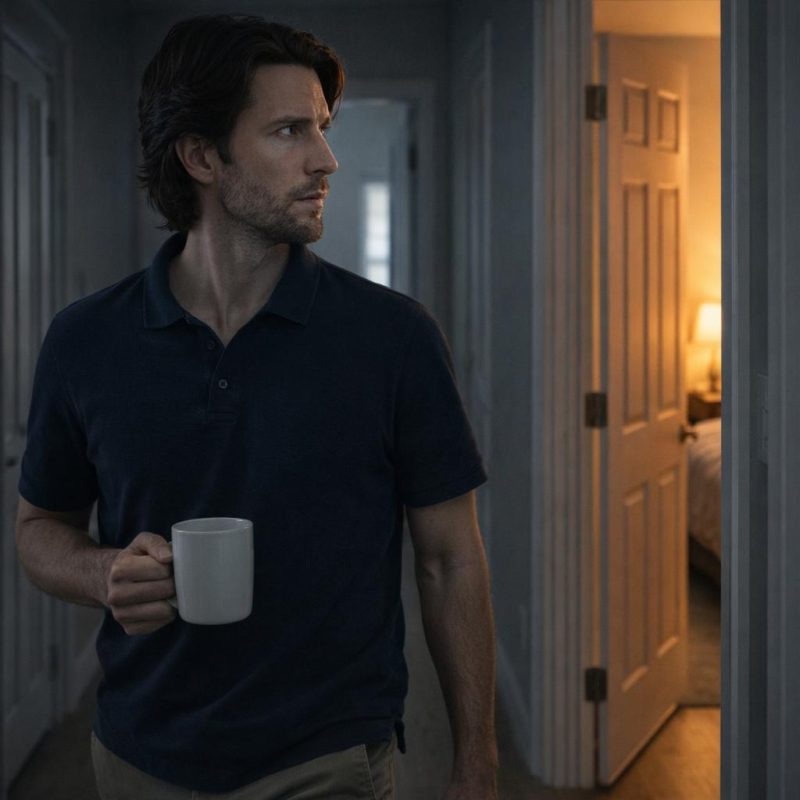 Image by RM AI
Morning Run Routine
The next morning Clara came out of the guest room in running clothes — fitted leggings, a technical jacket, new trainers that still had that unscuffed look. She said she needed to clear her head, that she'd been cooped up too long. I said that sounded like a good idea. She stretched in the driveway while I watched from the front window, one hand braced against the car, working through her calves with the focused efficiency of someone who knew what they were doing. Then she headed down the street and turned the corner and was gone. I stood at the window for a moment after she disappeared. I noticed, without quite meaning to, that the collar of her jacket had a small white tag still tucked inside it — the kind you fold back in before you leave the store. I didn't know why that detail stuck with me. I turned away from the window and walked back through the house, and somewhere between the front room and the kitchen I became aware of how different it felt. The air was the same temperature. Nothing had changed. But the low-grade tension I'd been carrying for three days had loosened, just slightly, like a knot that hadn't been untied so much as forgotten. I made coffee and sat at the kitchen table and let the quiet be quiet for a while.
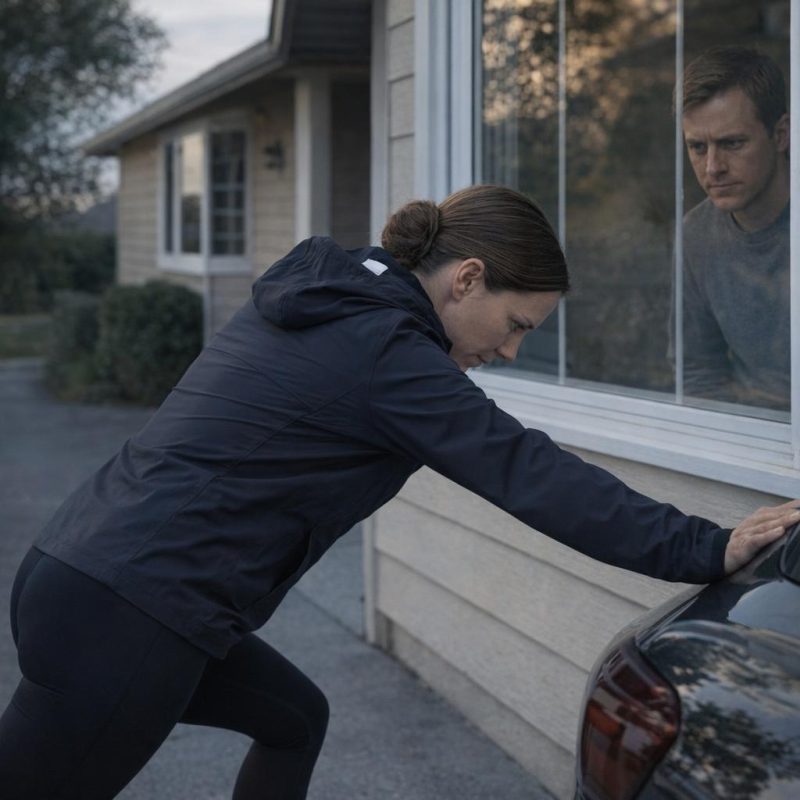 Image by RM AI
Towel Service
I'd been meaning to swap out the guest room towels since the day before and kept putting it off. With Clara out on her run, it seemed like the right time — quick, simple, done before she got back. I pulled a fresh set from the linen closet and carried them down the hall. The guest room door was ajar. I pushed it open with my shoulder and stepped in. The room was tidy in the way Clara always kept spaces — her bag zipped and squared against the wall, her toiletries lined up on the dresser, nothing out of place. It had the careful order of someone who didn't want to leave a mark. I crossed to the bathroom, swapped the towels on the rail, and came back out. I was about to leave when I noticed the lamp on the nightstand — the small ceramic one I'd had in that room for years — was dark. I reached for the switch out of habit. Nothing. I crouched down to check the outlet behind the nightstand and found the plug sitting loose on the floor, not connected to anything. I didn't remember it being unplugged. I reached behind the nightstand to plug it back in, my fingers searching along the baseboard in the narrow gap between the furniture and the wall, and the room sat around me in its ordinary afternoon quiet, unhurried and unremarkable, the way rooms do just before something changes.
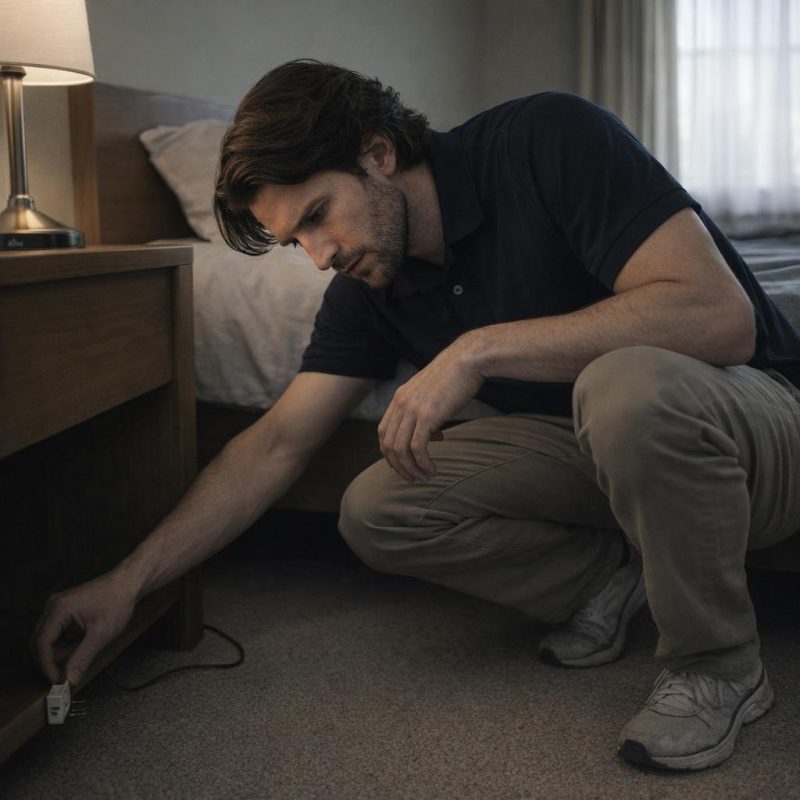 Image by RM AI
The Blue Light
My fingers found the outlet, but before I could seat the plug I saw it — a faint blue pulse reflecting off the white baseboard, low and rhythmic, coming from somewhere deeper in the gap. I told myself it was a charging cable. Clara had half a dozen devices; it made sense she'd have something plugged in back there. I stayed crouched, looking at the light. It pulsed again, slow and even, and something about the rhythm made me stay still instead of standing up. My hands had started doing that thing they do when my body knows something my brain hasn't caught up to yet — a faint tremor, barely there, the kind I get before a difficult conversation or a bad piece of news. I shifted my weight and leaned in closer. The light was coming from a small object wedged between the baseboard and the back leg of the nightstand, angled slightly upward. It didn't look like a cable. It looked like something that had been placed. I got both hands on the side of the nightstand and pulled it away from the wall.
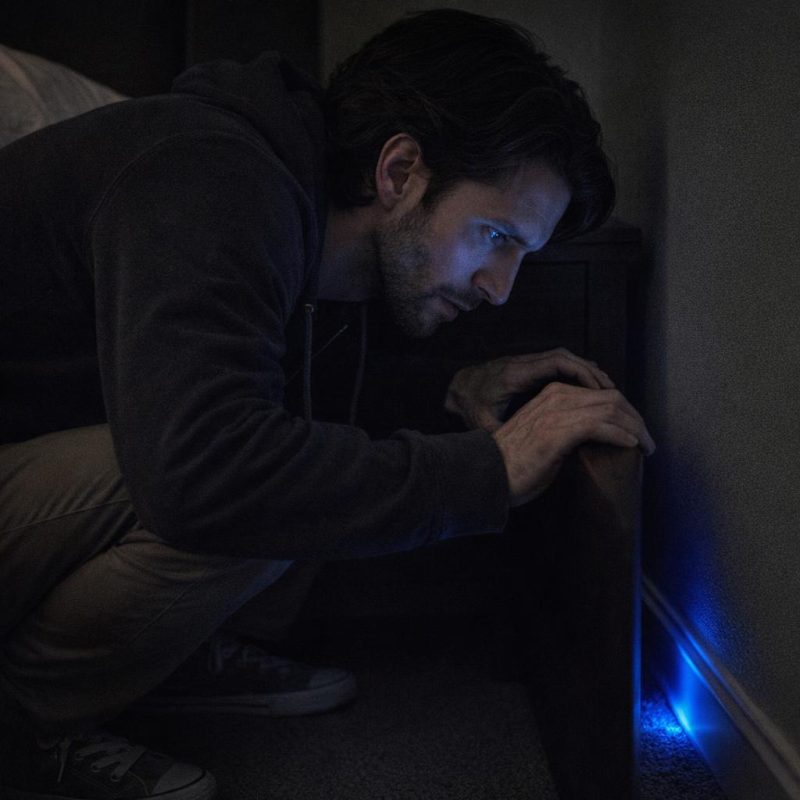 Image by RM AI
The USB Charger
The nightstand scraped across the hardwood and the gap opened up and I saw it clearly for the first time. It was small — no bigger than a standard USB wall adapter, the kind that comes in a three-pack and sits forgotten in a junk drawer. White plastic, two prongs folded out at the bottom, a USB port on the face. Ordinary in every way except one: just above the USB port, almost invisible against the white casing, was a lens. A small, dark, perfectly circular lens. My hands went numb. I stayed crouched on the floor, not moving, trying to make sense of what I was looking at. The device was plugged into the outlet behind the nightstand, but it wasn't charging anything. The lens was angled upward and outward, toward the door — the guest room door that Clara always left slightly ajar, the one that opened directly onto the hallway, the hallway that ran straight to my office. I reached out and unplugged it with fingers that didn't feel like mine. The blue light died. I turned the device over in my palm and looked at the lens, and then I looked up through the open doorway at the precise line of sight it had held — aimed directly at my desk.
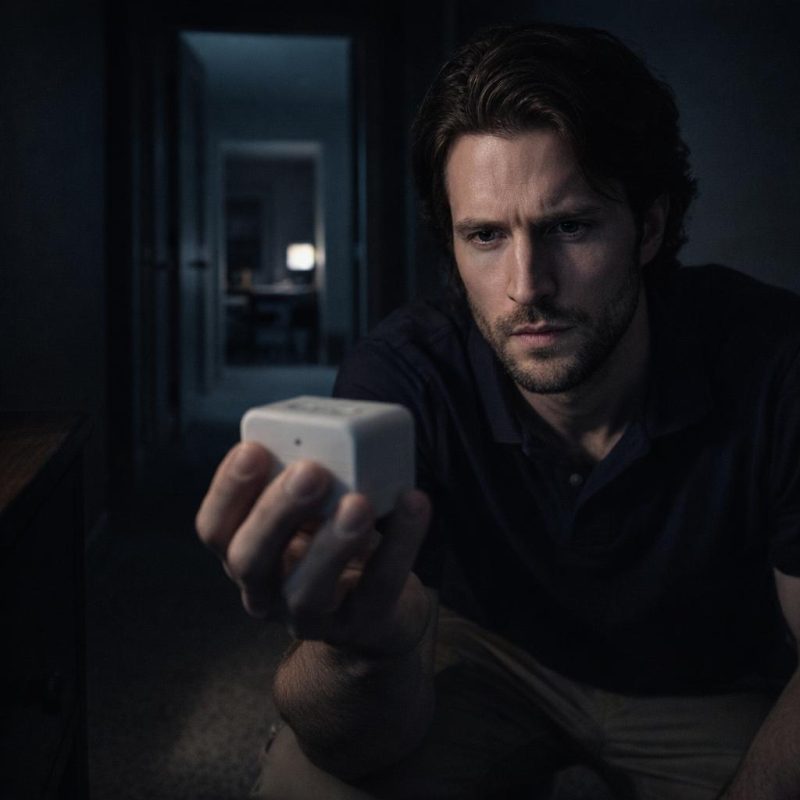 Image by RM AI
To the Office
I carried the device back to my office with both hands, like it was something that might detonate. My mind kept throwing up explanations — a security thing, a misunderstanding, some reason I hadn't thought of yet that would make this okay. None of them stuck. I set it on my desk and stood there for a second, just breathing, trying to get my hands to stop shaking. Clara had left for her run forty minutes ago. She usually did five miles, which meant I had maybe twenty-five minutes, maybe thirty if she stopped to stretch. I pulled up the clock on my second monitor and left it there, big and visible. The device sat under my desk lamp, ordinary-looking and terrible. I turned it over slowly, running my thumb along the seam until I found the slot — a thin rectangular gap on the bottom edge, barely wider than a fingernail. I pressed the edge of a paperclip against it and the card popped free into my palm: a microSD no bigger than my thumbnail, sitting there like it weighed nothing at all.
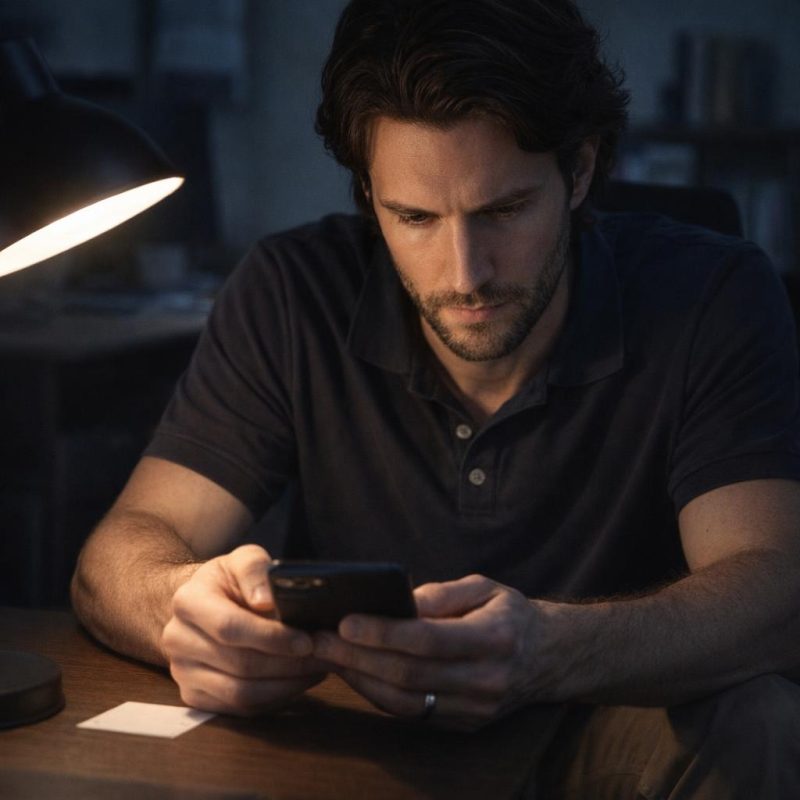 Image by RM AI
The Moment Before
I sat there with the card pinched between my thumb and forefinger, staring at the card reader slot on my laptop like it was a door I couldn't un-open once I walked through. Part of me — a bigger part than I wanted to admit — wanted to put it back. Slide the card into the device, plug the device back in behind the nightstand, push the furniture flush against the wall, and just pretend. Pretend I'd never crouched down to look. Pretend the lens wasn't there. I thought about Clara out on the street right now, running her usual loop through the neighborhood, earbuds in, ponytail swinging, looking like someone who had nothing to hide. I thought about how she'd smiled at breakfast and asked if we had any of that good coffee left. My finger hovered over the slot. I knew I had to look. Whatever was on this card, not knowing wasn't going to protect me from it. But for just that one moment, sitting in the quiet of my office with the clock ticking on the monitor, the not-knowing felt like the last solid thing I had left to stand on.
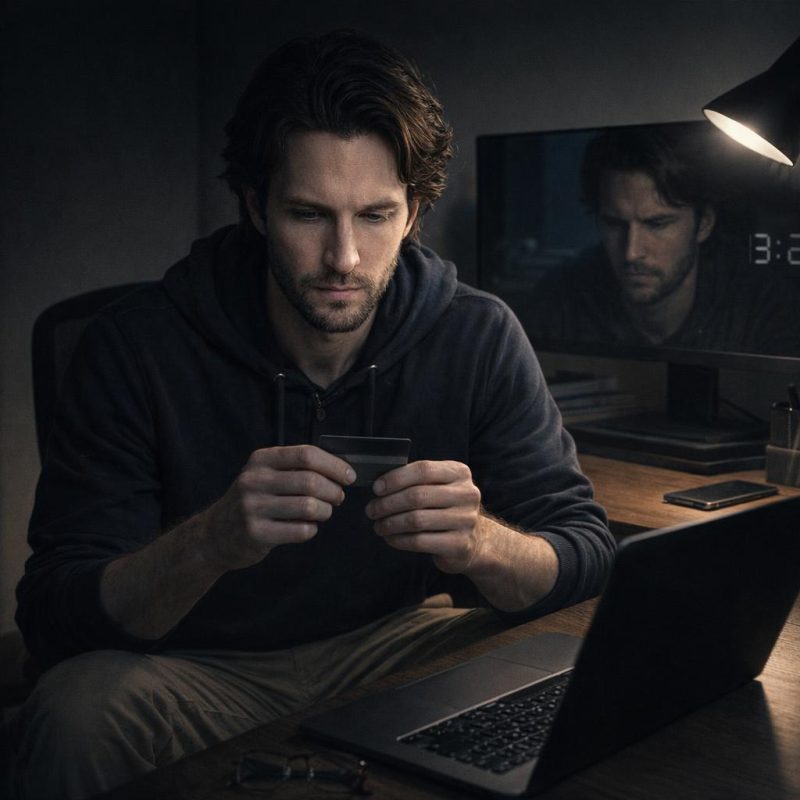 Image by RM AI
Pressing Play
I slid the card into the reader and waited for the folder to populate. Seven files. All video. The timestamps ran back four days, two or three recordings per day, each one a few hours long. I opened the oldest one first — two days ago, mid-morning — and the footage came up immediately. My own office. My own desk. Me, sitting exactly where I was sitting right now, hunched over the keyboard with my headphones on, completely unaware. The angle was wide enough to catch both monitors clearly. You could read the text on the screens if you leaned in. I watched myself type for almost a full minute without moving, without blinking, just watching this version of me who had no idea he was being recorded. The timestamp ticked forward in the corner. I watched myself reach for my coffee mug, take a sip, set it back down. Normal. Ordinary. Every private moment of concentration I'd had in that room, captured and stored on a card the size of a fingernail. I sat back in my chair and the wrongness of it settled over me like something physical, like a weight I hadn't agreed to carry.
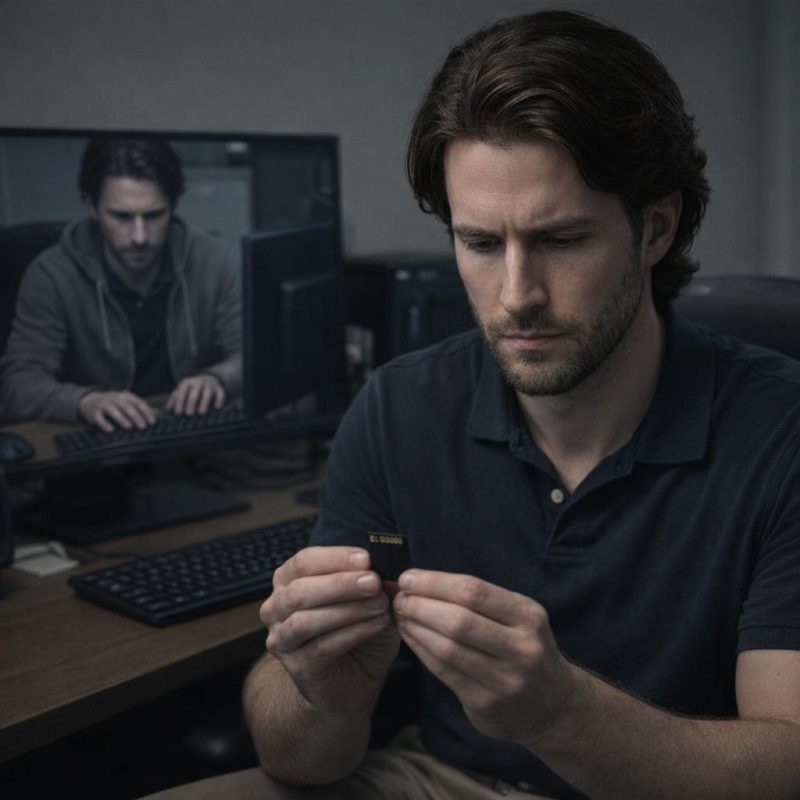 Image by RM AI
The Grocery Store Timestamp
I scrolled through the file list until I found yesterday afternoon — the two-hour window when I'd driven to the store to pick up groceries. Clara had mentioned she was craving that specific brand of sparkling water, the one they only stocked at the place across town, and I'd gone without thinking twice about it. I clicked the file and held my breath. For the first few seconds the office was empty, just the way I'd left it, afternoon light coming through the blinds. Then the door swung open. Clara walked in.
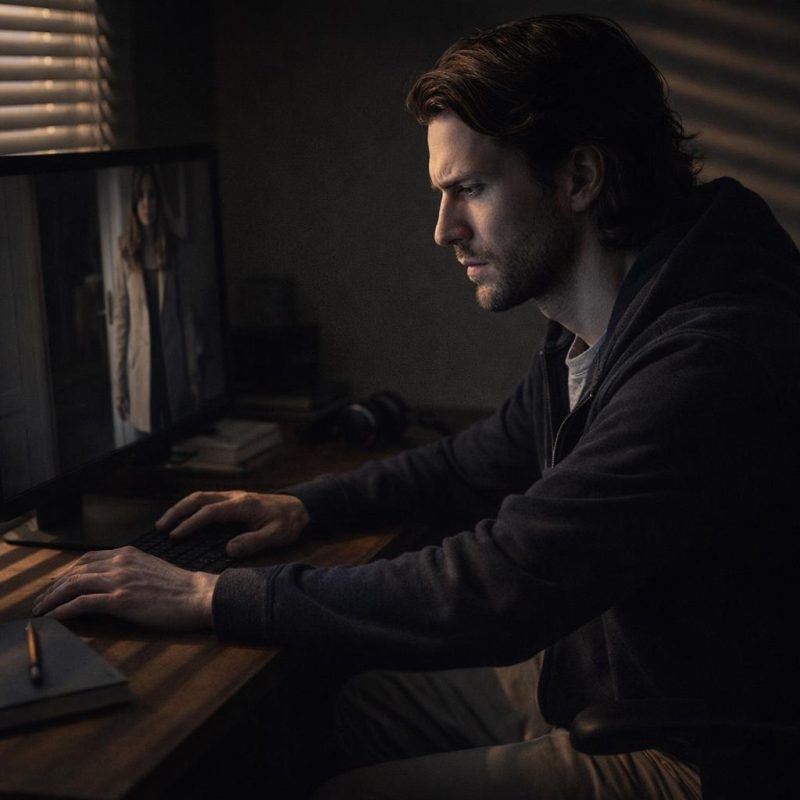 Image by RM AI
Scrolling Through My Work
She didn't pause at the doorway. She didn't look around the way someone does when they're not sure they should be somewhere. She walked straight to my desk like she'd done it a hundred times, sat down in my chair, and woke up my computer. I watched her navigate the folder structure without hesitating — no searching, no wrong turns. She went directly to the client contracts directory, opened it, and started scrolling. Then she pulled out her phone. She held it up and started photographing the screen, methodical and unhurried, one document after another. She moved through the contracts folder and then into the architecture files — the proprietary system design I'd spent the better part of two years building. She scrolled through those too, photographing as she went, her movements quick and efficient. The timestamp in the corner of the video kept ticking forward. I sat watching it, unable to look away, unable to fully absorb what I was seeing. By the time she finished and stood up from the chair, she'd been at my desk for just under eighteen minutes. Eighteen minutes. The cursor on my screen sat still, and the silence in the room felt like it had weight.
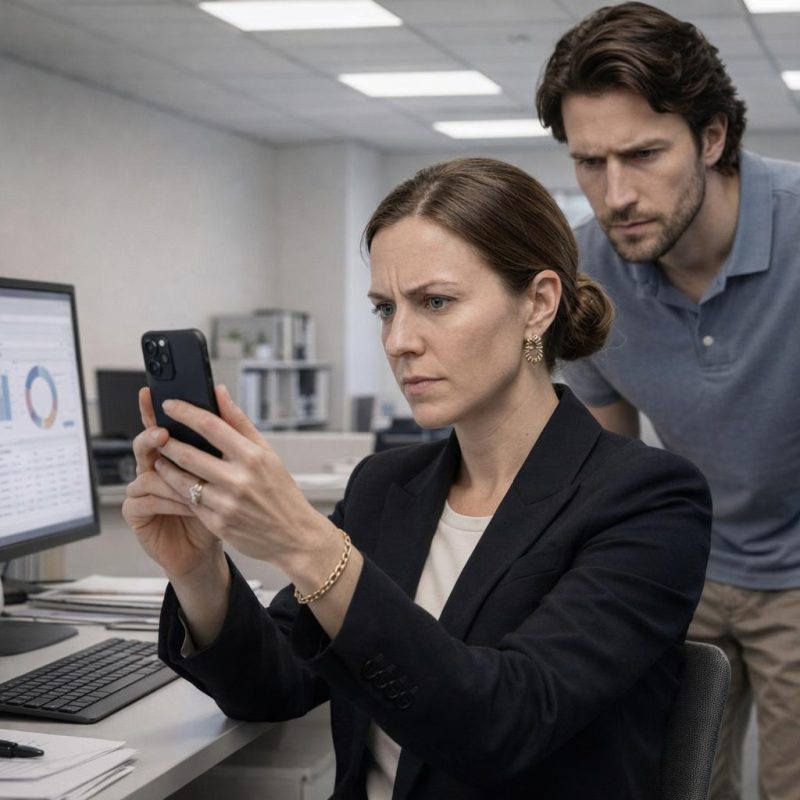 Image by RM AI
The Voice on Speaker
She didn't leave right away. I watched her stand beside my desk, phone still in hand, and then she set it face-up on the surface and tapped the screen. She put it on speaker. It rang twice. A male voice answered — low, unhurried, the kind of voice that sounds like it's always slightly ahead of the conversation. Clara's whole manner shifted the moment he picked up. The warmth drained out of her posture. Her shoulders dropped into something more settled, more businesslike, and when she spoke her voice came out flat and clipped, stripped of the softness I'd grown up hearing. I'd heard her use a hundred different tones over the years — the charming one for strangers, the wounded one for arguments, the bright one she put on for our parents. This wasn't any of those. This was something I didn't have a name for. She started talking about the architecture files like she was reading from a checklist, using terminology she'd never once used in any conversation with me. I sat there in my office watching the footage, and the woman on that screen felt like someone I had never met.
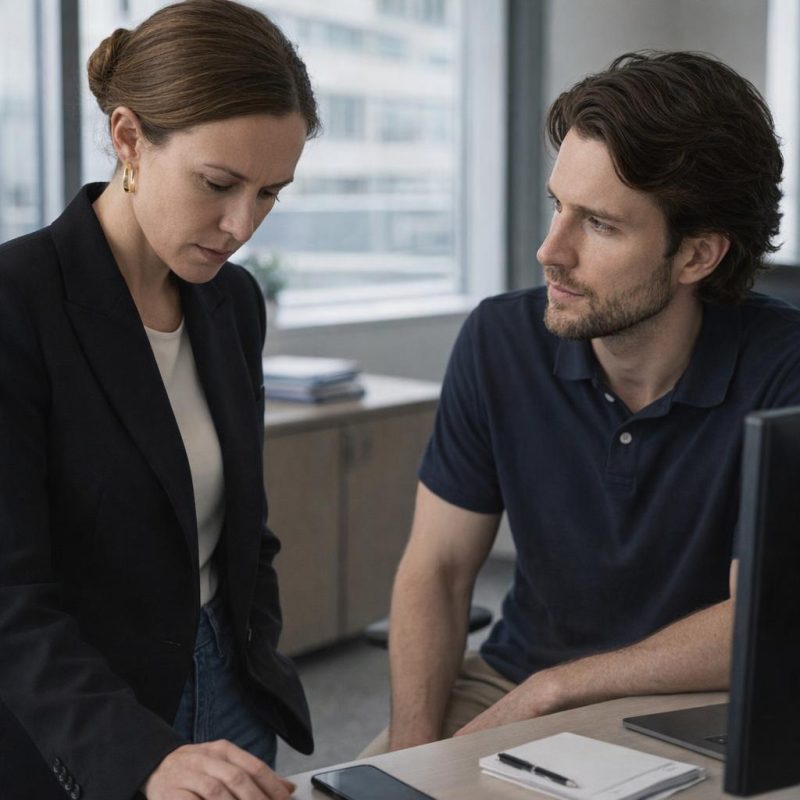 Image by RM AI
He's Got the Whole Architecture
She told him the architecture was complete. Not in progress, not nearly done — complete. She used that word twice. Then she started walking him through it: the encryption layer, the API structure, the way the authentication system was built. She described it accurately, which meant she'd understood what she'd photographed, or someone had helped her understand it. The man on the phone asked about timeline. Clara said they had what they needed. He asked about the source code specifically — whether she had the full repository or just the documentation — and she said she had both. Both. I'd never shared the repository with anyone. It lived on my local machine and a private backup drive I kept in the desk drawer. I sat there trying to work out how that was possible. Then she said something that stopped me cold. She was wrapping up, confirming something with him, and she said my name — not the way a sister says her brother's name, not with any warmth or familiarity. She said it the way you'd reference a line item. Flat. Incidental. Like I was just a detail she was accounting for.
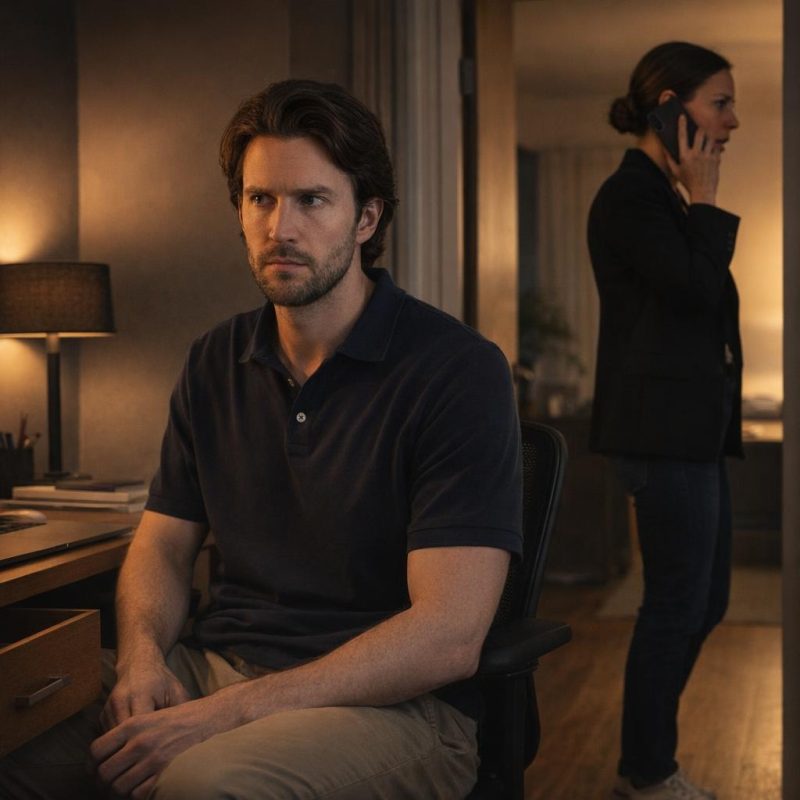 Image by RM AI
Marcus on the Line
The man on the phone kept talking. He asked about file formats — whether the architecture exports were in a readable schema or proprietary. He asked about transfer methods, whether she'd used a direct copy or a cloud sync, and whether there were any access logs that might flag the session. He wasn't guessing at the questions. He moved through them in order, each one following logically from the last, the way someone works through a checklist they've run before. His voice had a particular cadence to it — polished, unhurried, the kind of fluency that comes from doing something enough times that it stops feeling complicated. I'd heard voices like that at industry conferences, at pitch meetings, at the kind of dinners where everyone is selling something. Clara answered each question without hesitating. They went back and forth for another two minutes, and then she said his name to confirm something — and the name landed in my chest like a stone dropping into still water. Marcus.
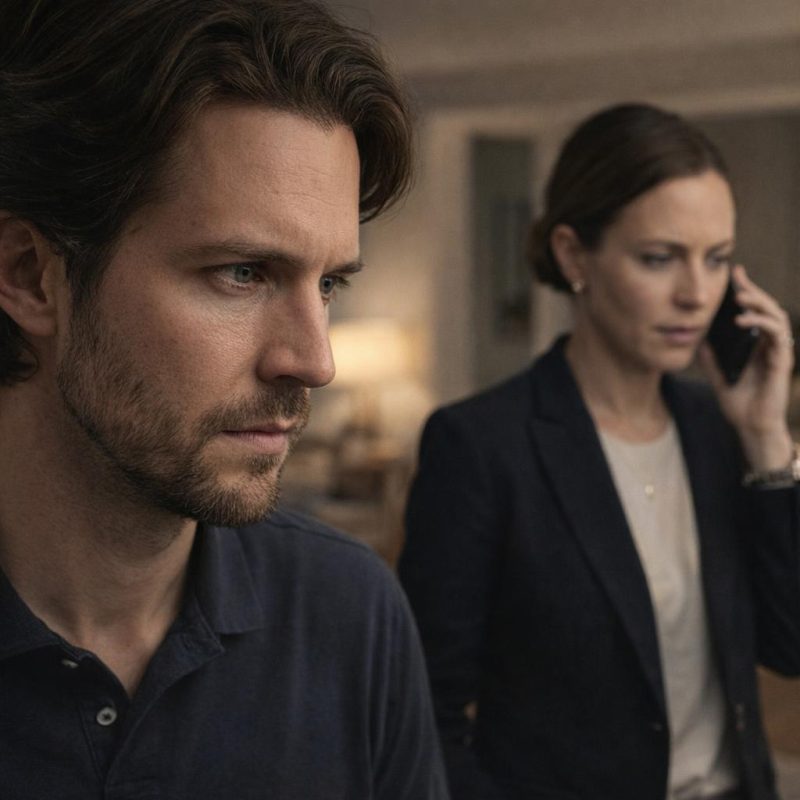 Image by RM AI
Friday Deadline
The conversation kept going after Marcus said his name. I pressed myself against the wall outside the office door and kept listening, barely breathing. Clara's voice had shifted into something I hadn't heard before — not the warm, slightly scattered version of my younger sister, but something clipped and transactional. Marcus asked if Friday was enough time. She said yes without a pause, said she'd have everything packaged and ready, that the source files would be clean and complete. No hesitation. No qualification. Just the flat certainty of someone who had already worked out the details. I stood there trying to remember the last time she'd spoken to me with that kind of confidence about anything. She never had. Not once. And then it hit me — Friday. She'd mentioned Friday when she arrived. Said she had a flight Sunday, needed the weekend to decompress. I'd thought nothing of it at the time. I'd been glad she was staying. The visit had a shape to it now that it hadn't had before, and the shape had a deadline built right into it.
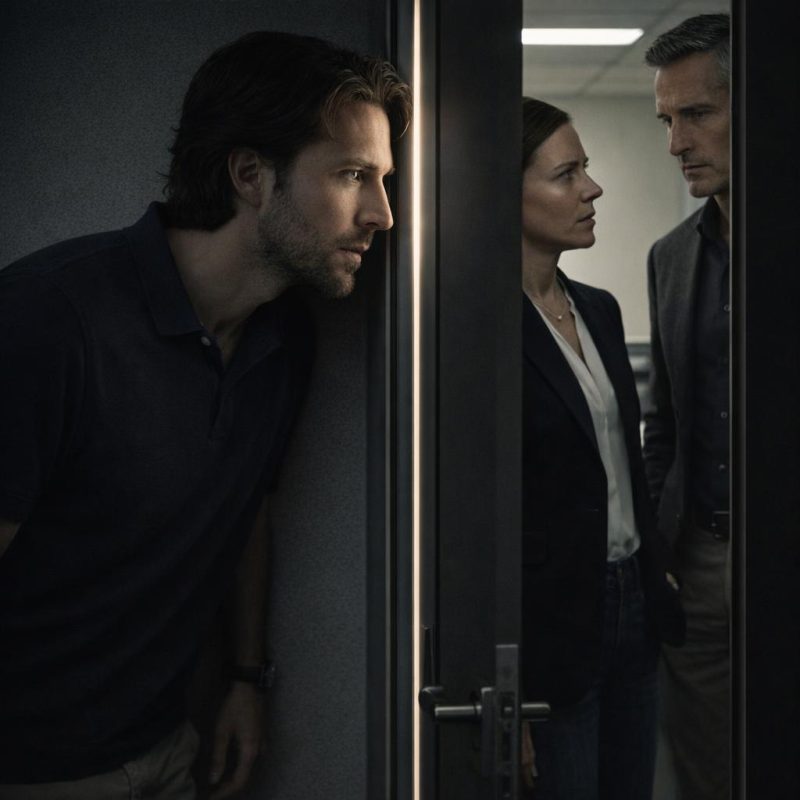 Image by RM AI
Too Stupid to Notice
I don't know how long I stood there before Marcus asked the question that changed everything. He asked if she was sure I wouldn't notice. There was a beat of silence, and then Clara laughed — not the laugh I knew, not the one from holidays and family dinners, but something looser and colder. She said I wouldn't notice a thing. She said I trusted her completely, that I always had, that it was honestly almost too easy. She called me naive. Then she said the word that I keep coming back to even now, the word that landed somewhere behind my sternum and just stayed there. She called me stupid. Said I was too wrapped up in my own work to see what was right in front of me. Marcus made a sound that might have been a laugh. I pressed my back against the wall and didn't move. I didn't breathe. I'd spent years defending her to people who'd tried to warn me. I'd told Sarah she was misreading things. I'd told my parents they were being unfair. And she had been in my house, in my office, laughing about how easy I was to fool.
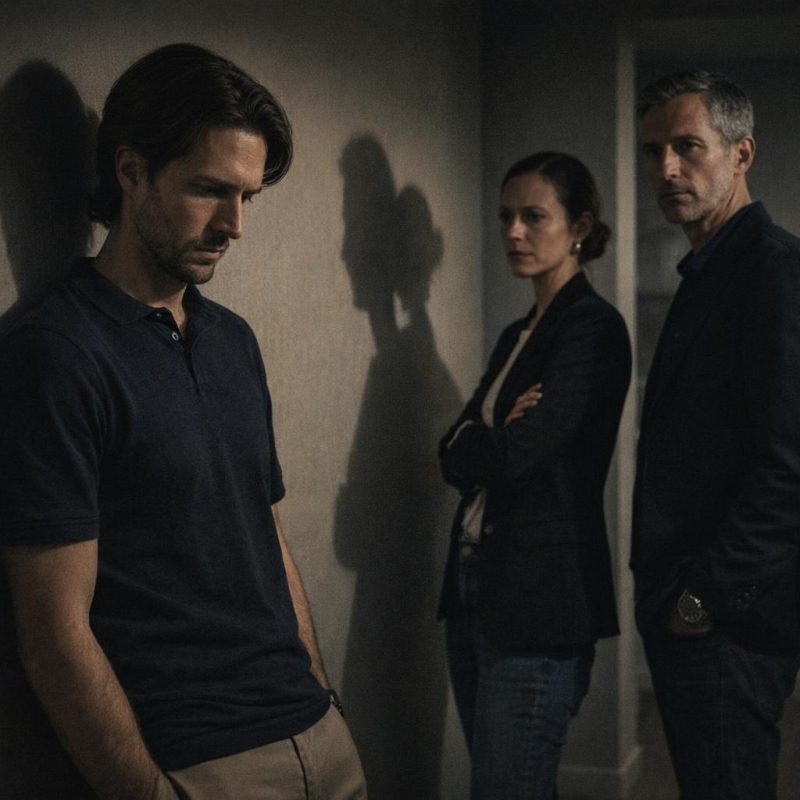 Image by RM AI
The Money I Loaned
I paused the footage and sat back in my chair. The room was dark except for the monitor glow, and I just let it be dark for a while. I kept thinking about the check. It was four years ago, maybe four and a half. Clara had called me excited, talking fast the way she did when she wanted something, pitching me on her first startup like I was a stranger at a demo day. She needed seed capital to get through the first quarter. She said it was a short-term loan, that she'd pay it back once the first round closed. The amount was close to everything I had saved at the time. I wrote the check anyway. I told myself it was what family did. She cashed it within two days. For a few months she sent updates — traction metrics, investor meetings, a logo redesign. Then the updates stopped. I waited. I told myself she was busy. I told myself she'd bring it up when she was ready. She never did. Not once in four years did she mention it. I had convinced myself that meant she was embarrassed, that she'd make it right eventually. Sitting in the dark now, I started wondering what else I had convinced myself of.
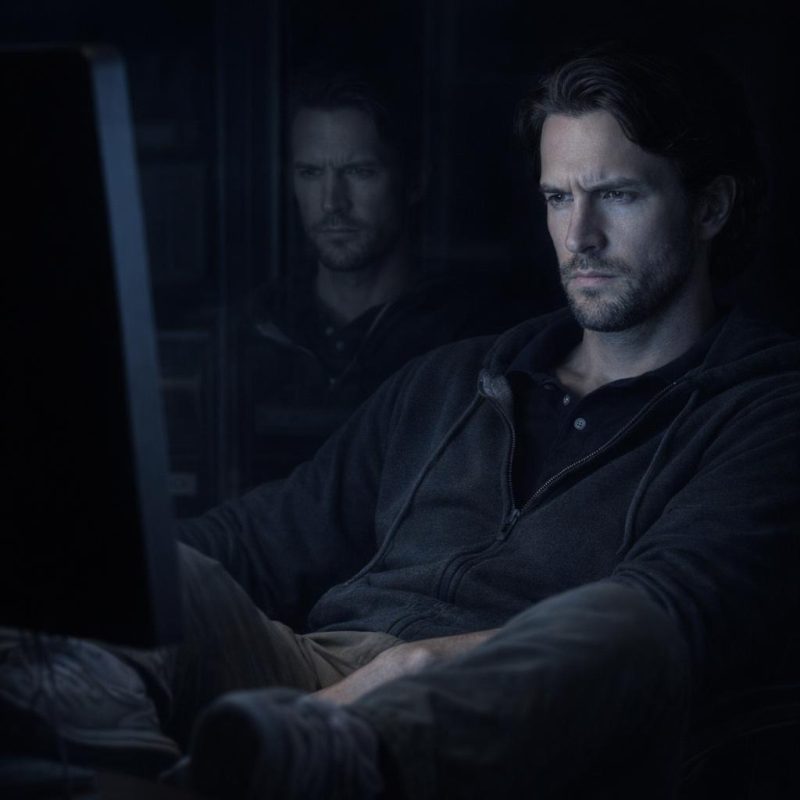 Image by RM AI
Rent and Excuses
I opened my email archive and typed her name into the search bar. I wasn't sure what I was looking for exactly — maybe I just needed to see it laid out in front of me, in timestamps and subject lines, the way you sometimes need to see a thing written down before you can accept it's real. The thread came up near the top. Three years ago. The subject line was 'quick favor' and the first message was two paragraphs of context I didn't need, followed by a number. She was between projects, she said. Just needed a bridge. A few weeks at most. I scrolled down. I had sent the first payment the same day she asked. Then the next month. Then the month after that. Six payments total, each one on time, each one met with a short reply that said something like 'you're a lifesaver' or 'I'll sort this out soon.' After the sixth month the emails stopped. No update. No thank you. No mention of paying it back. I sat there reading through the thread twice, and what got me wasn't the money. It was how little effort she'd put into the performance once she had what she needed.
 Image by RM AI
The Wedding Laugh
I closed the email window and sat with my hands in my lap. My wedding came back to me without warning — three years ago, the reception hall, the sibling dance that Sarah had insisted on because she thought it would mean something to me. I'd tripped about halfway through, caught my own feet somehow, and stumbled hard enough that a few people gasped. Clara had laughed. Not a quiet laugh, not a covered-mouth laugh — a loud, bright, carrying laugh that turned heads at three tables. I'd felt my face go red, and she'd squeezed my arm and said something like 'classic you,' and I'd laughed too because that was easier than not laughing. I remembered Sarah's face afterward. She'd given Clara a look I hadn't been able to read at the time, something flat and still, and later that night she'd said something careful about how Clara had a way of making things about herself. I'd told her she was reading too much into it. I'd said Clara was just having fun. I'd said it so easily, so automatically, the way I always did. Sitting here now, I couldn't remember a single moment where Clara had been embarrassed for me instead of entertained by me.
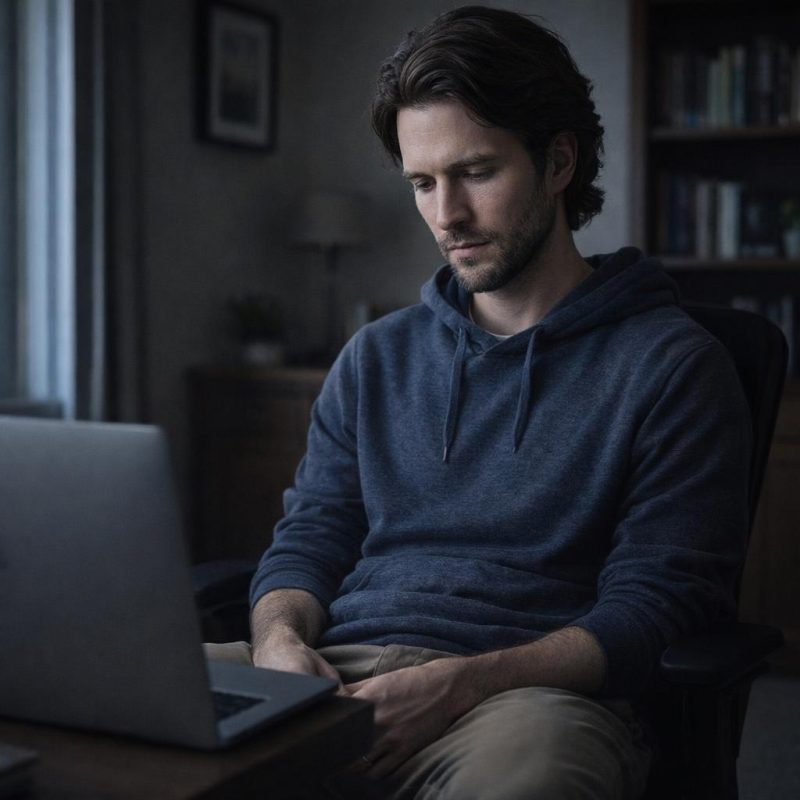 Image by RM AI
Resource to Be Mined
I looked back at the monitor. The footage was still paused on the frame I'd stopped it on — Clara standing at my desk, her hand near the keyboard, her face turned slightly toward the door as if checking she was alone. I stared at that image for a long time. I thought about the startup loan. The rent payments. The wedding. The phone call I'd just listened to through a closed door. I thought about every time I'd stepped in front of someone's criticism of her and taken the hit myself. And something in me went very quiet. Not the quiet of grief, exactly. Something colder than that. I thought about walking downstairs right now and confronting her. I ran through how it would go — the tears, the denial, the pivot to how I'd hurt her by not trusting her. I'd seen that performance before. I knew every beat of it. If I said something now, she'd have time to cover her tracks, and I'd have nothing but a paused video and a bad feeling. I needed to see how far this went. I needed to understand what I was actually looking at before I said a single word.
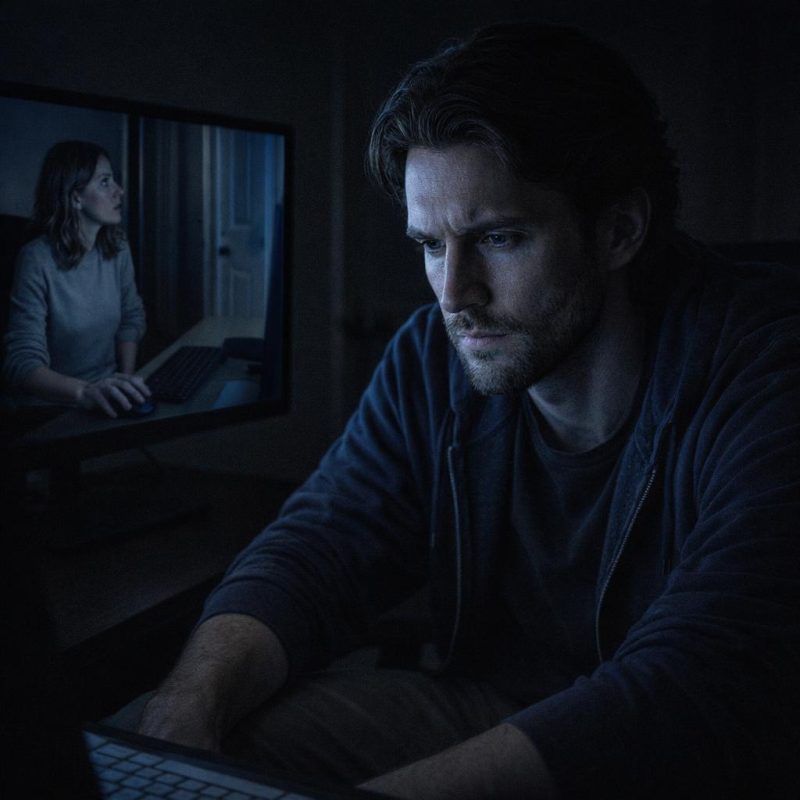 Image by RM AI
Watching Her Finish
I checked the clock in the corner of my screen. Clara had left for her run forty minutes ago. She usually went for an hour — she'd mentioned it at breakfast, something about a route she'd mapped through the neighborhood. That gave me roughly twenty minutes, maybe a little less if she cut it short. I hit play on the footage and watched the rest of it with the sound low, leaning close to the monitor. I took notes on my phone as I went — timestamps, file names I could make out when she turned the screen, the sequence of what she'd accessed. When the clip ended I sat back and looked at what I'd written. It was more than I'd expected. More organized, more deliberate-looking than I'd wanted it to be. I heard the front door open downstairs and Clara's voice calling up that she was back, that she was going to shower before dinner. I called back that sounded good. My voice came out completely normal. I sat in the dark office and listened to her footsteps on the stairs, and the steadiness in my own chest surprised me.
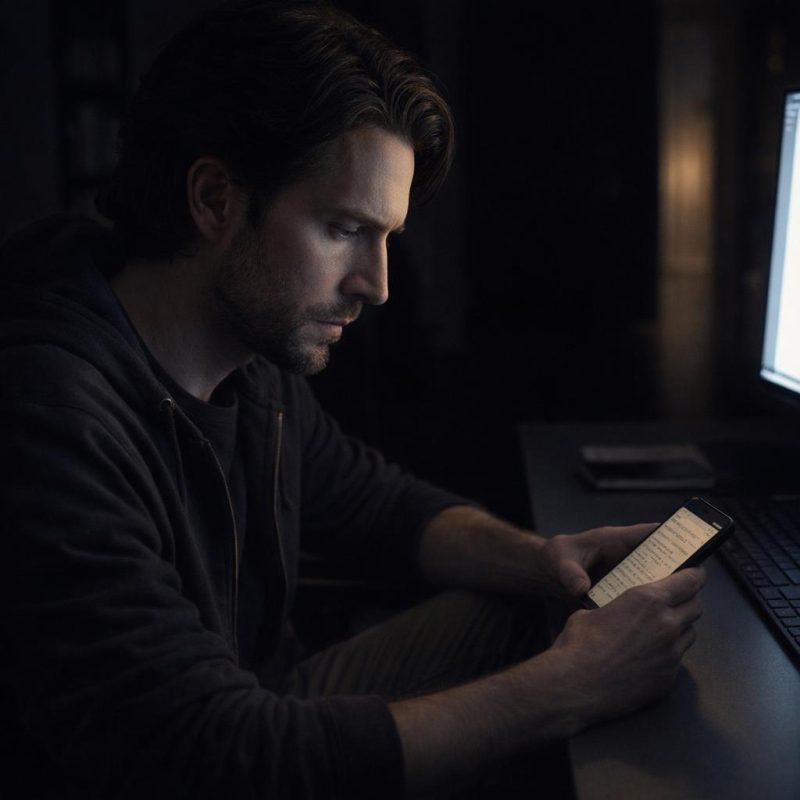 Image by RM AI
The Dummy Folder
I had maybe fifteen minutes before she'd be out of the shower. I opened a new folder on my desktop and sat for a moment with the cursor blinking in the name field. I needed something that would read as valuable at a glance — something that sounded like the last piece of a puzzle. I typed 'Final Encryption Keys' and hit enter. I moved the folder to the center of the desktop, not hidden, not obvious, just sitting there the way an important file sits when someone isn't trying to hide it. Then I opened it and dropped in three text files I'd created on the spot, named them with the kind of alphanumeric strings that look like they mean something. None of it was real. None of it connected to anything. But it looked exactly like the kind of thing someone would want if they were trying to make a copy of a system they didn't fully understand. I leaned back and looked at the screen. The shower was still running down the hall. The folder sat there on the desktop, patient and ordinary, and I felt something settle in my chest that wasn't quite calm but was close enough to work with.
 Image by RM AI
The Locking Script
I opened my code editor and sat for a moment with a blank file, the cursor blinking in the silence. The shower was still running. I had maybe ten minutes, maybe less. I started typing — not fast, not frantic, just steady, the way I always work when I know exactly what I need to do. The script was clean. Elegant, even. On execution, it would query the hardware identifiers of the device that opened the file, push those identifiers to a lock command at the firmware level, and simultaneously ping my server with a GPS coordinate pulled from the device's location services. I tested it on a virtual machine I keep partitioned for exactly this kind of work. The VM locked up in four seconds. The coordinate came through clean on my server dashboard. I ran it twice more to be sure. There was no hesitation in me, no second-guessing, no small voice asking whether this was too far. Whatever that voice usually says, it had gone quiet. I compressed the script, renamed it to blend with the other files in the dummy folder, and saved it inside.
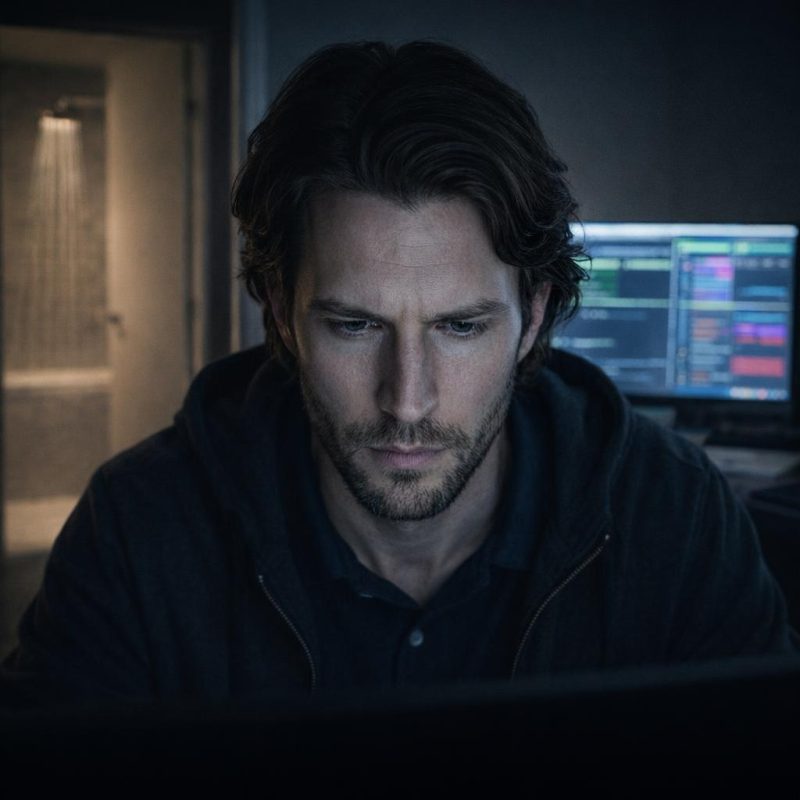 Image by RM AI
Positioning the Bait
I pulled up the desktop and looked at it the way a stranger would — someone who'd just sat down at my machine for the first time and was scanning for anything worth taking. The icons were too clustered on the left side, too obviously organized by someone who knew where everything was. I moved a few things around, spread them out, made it look like a working desk rather than a filing system. Then I dragged the dummy folder to the upper right corner. Not centered, not highlighted, not sitting alone like a trap. Just there, the way an important file sits when you're not trying to hide it but you're not advertising it either. I removed two other folders that might compete for attention and tucked them into a subdirectory. I stepped back from the screen — metaphorically, I mean, I just leaned back in my chair — and looked at the whole layout again. It read right. It read like a real workspace with one file that mattered more than the others. Then I heard the front door open downstairs, and the dummy folder sat in the upper right corner of my screen like a gift left out on a table.
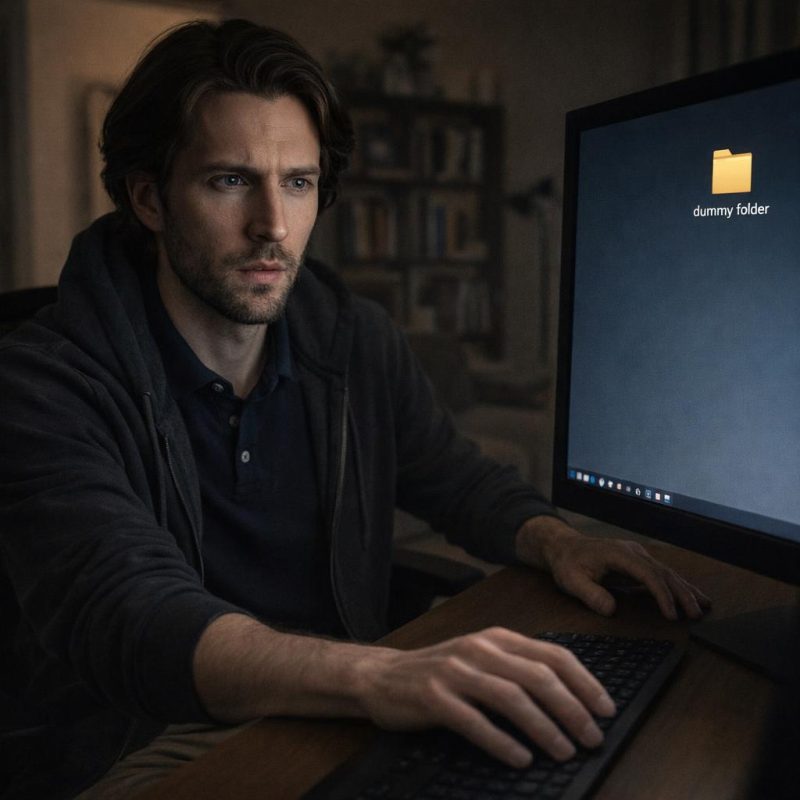 Image by RM AI
Glowing from Her Run
I was standing in the office doorway when she came through the front door. Clara was flushed from the run, her athletic gear damp at the collar and shoulders, her hair pulled back in a ponytail that had mostly held. She was smiling — that wide, easy smile she does when she wants to look like someone who has nothing on her mind. She dropped her keys on the entry table and looked up at me. 'Morning,' she said, a little breathless. 'How's the work going?' I told her it was fine, that I'd been on a few client calls, nothing exciting. She nodded like she was actually listening. She asked if I wanted coffee and I said I'd already had some. She stretched her arms above her head, said something about the trail being perfect this time of year, and headed toward the guest room to shower. I watched her go. The thing is, I'd seen that smile a thousand times. I'd always read it as warmth. Standing there in the doorway, I found myself watching the way she moved through my house — easy, unhurried, completely at home — and something about it felt like a performance I'd never noticed was a performance before.
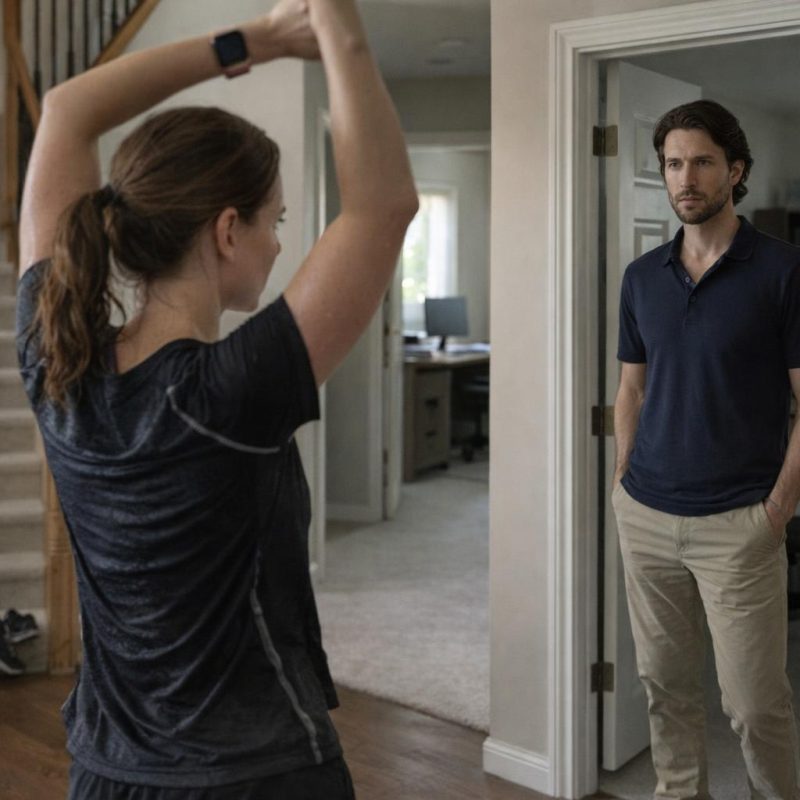 Image by RM AI
The Perfect Sister Act
She offered to cook dinner instead of lunch, said she'd found some things in the fridge that would go well together, and before I could answer she was already pulling out a cutting board. I leaned against the doorframe and watched. Clara moves in a kitchen the way she moves everywhere — like she's already decided how the room works and the room has agreed. She hummed something low and tuneless while she chopped, her knife strokes even and unhurried. She asked me about Sarah, whether we had any plans for the weekend, whether I'd heard from our parents lately. I answered each question with something short and true enough to pass. She laughed at something I said — I don't even remember what — and the laugh was warm and easy and landed exactly the way a laugh is supposed to land. I kept my face neutral and my voice level. I said the right things at the right intervals. And the whole time I was watching her hands move across the cutting board, watching the way she smiled at the vegetables like she was genuinely happy to be there, I found myself wondering what it would feel like to move through a room that way — so completely at ease, so unbothered by anything underneath.
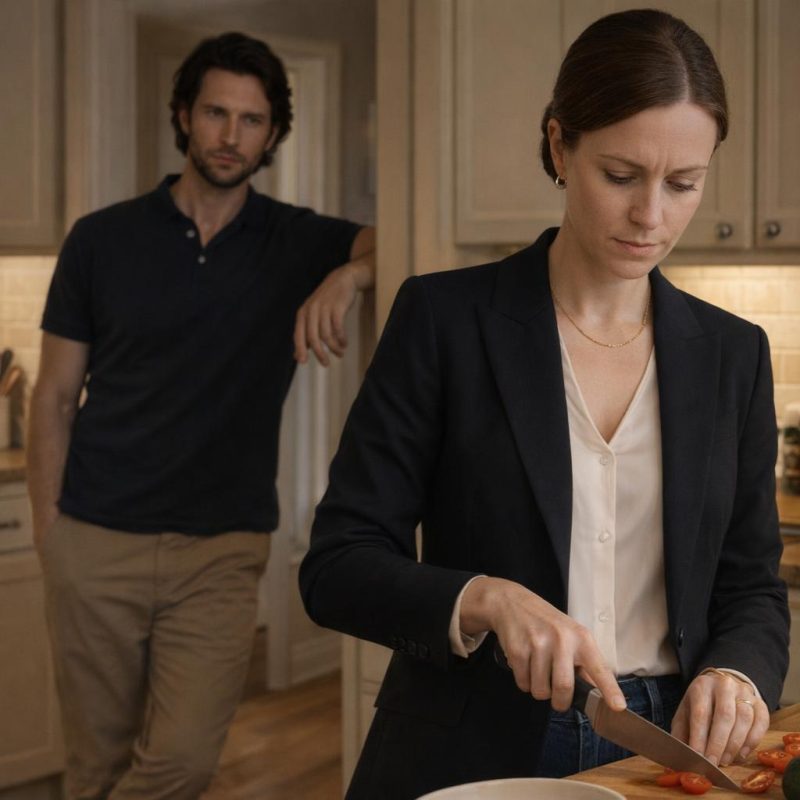 Image by RM AI
Surgical Precision
She asked me about my day while she stirred something on the stove, and I gave her the same vague answer I'd been giving all afternoon — client calls, a few emails, nothing worth getting into. She nodded and said that sounded exhausting, and her voice had exactly the right amount of sympathy in it. She asked about my day, I gave her nothing, and she moved on. I might have read that as consideration once — her not wanting to pry. Standing there watching her hands — the way she adjusted the heat without looking, the way she tasted the sauce and reached for the salt in one fluid motion — I wasn't sure what I'd been reading before. She said she was feeling much better, that the run had helped, that she always forgot how much she needed to move when she was stressed. I said that made sense. She smiled at the stove. Every movement she made had that same quality — purposeful, contained, nothing wasted. I'd grown up watching those hands. I thought I knew what they meant. Standing in that doorway, I wasn't sure I'd ever really looked at them before.
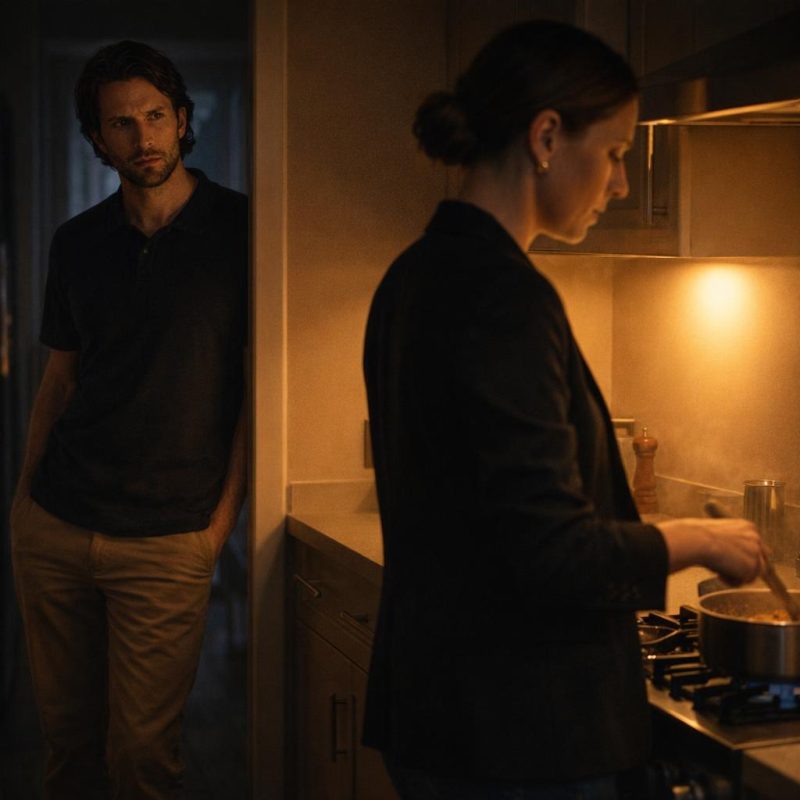 Image by RM AI
Not a Person
She set the table the way she does everything — with complete attention to how it would look. The plates were centered, the silverware aligned, the glasses placed at the same angle on both sides. She stepped back and tilted her head slightly, checking it, then adjusted one fork by maybe a centimeter. I watched from the hallway and excused myself to wash my hands. I didn't go to the bathroom. I went to the bedroom, pulled my laptop off the nightstand, and opened the server dashboard. My hands were steady. The logs loaded in a few seconds. There was an access attempt on the dummy folder — timestamped eleven minutes ago, while I'd been standing in the kitchen watching her chop vegetables. The device identifier was unfamiliar. The GPS ping was still processing. I stared at the timestamp for a moment. Eleven minutes ago she had been right there, humming, asking me about Sarah, adjusting the heat on the stove. And somewhere in that same window, something had touched my bait file.
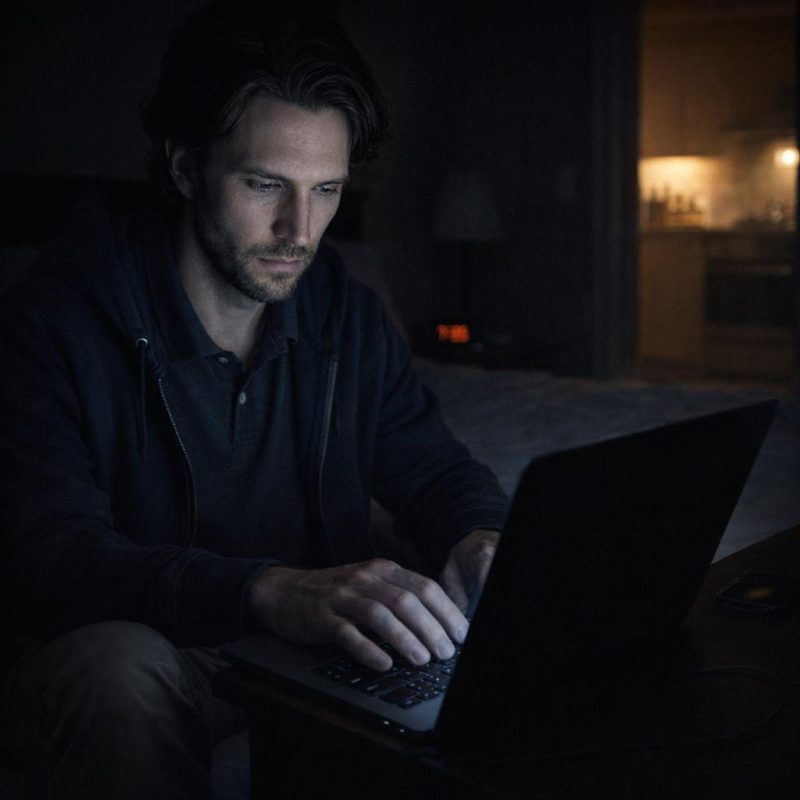 Image by RM AI
Dinner Theater
I closed the laptop and went back to the kitchen. Clara was already seated, pouring wine, and she looked up and smiled when I came in. The food was laid out between us like something from a magazine — the kind of meal that takes effort and looks like it didn't. I sat down across from her and put my napkin in my lap and picked up my fork. She talked about her startup, something about a pitch she had coming up, a potential partnership she was excited about. I made the right sounds. I asked one question, something generic about the timeline, and she answered it with the kind of enthusiasm that fills a room. I ate. The food was good. That almost made it worse. Outside, the light was going flat and orange the way it does in the early evening, and it came through the kitchen window and caught the rim of her wine glass. She was still talking. I was still nodding. The food sat between us, warm and carefully made, and the quiet underneath all her words felt like the only honest thing in the room.
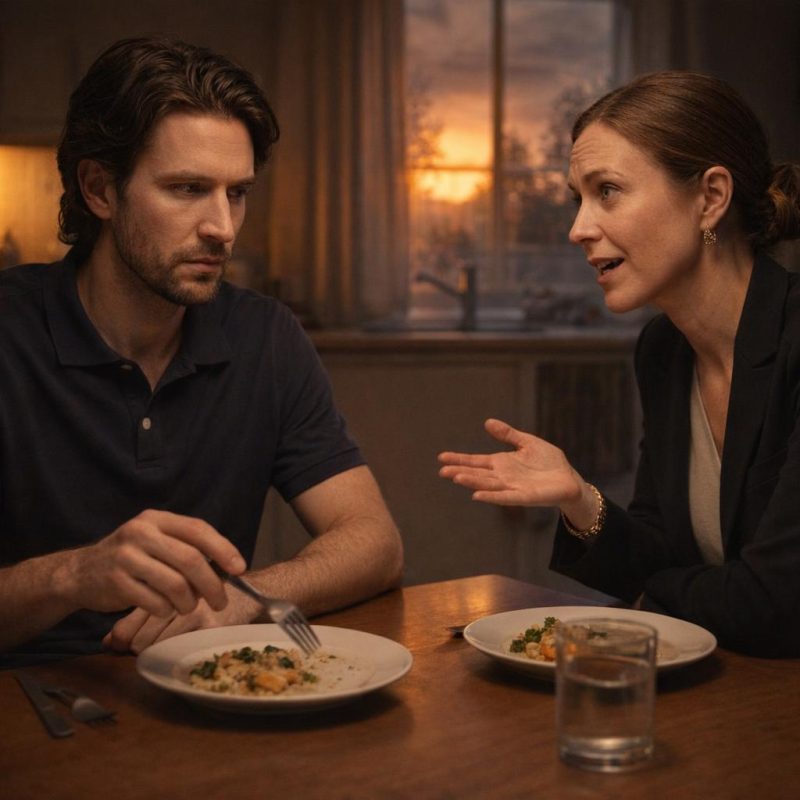 Image by RM AI
You Were Always a Pushover
She refilled her wine and leaned back in her chair, and her voice shifted into that softer register she uses when she's about to say something she wants to sound like a memory. She started talking about when we were kids — the summer our parents had that trophy cabinet in the hallway, the one with the glass door. She said she'd knocked a trophy off the shelf by accident and I'd told our parents I did it. She laughed, shaking her head like it was the most endearing thing she'd ever heard. 'You were always like that,' she said. 'Always trying to make sure nobody was upset. It's adorable, honestly. You just — you never wanted anyone to be unhappy, even when it cost you.' She called me a pushover, but she said it warmly, with a laugh still in her voice. I kept my fork in my hand and my face where it needed to be. I said something like, yeah, I guess that's true. She smiled at me over the rim of her glass, and her eyes had that particular brightness in them — the kind that isn't quite warmth, isn't quite amusement, but sits somewhere between the two like it's deciding which one to become.
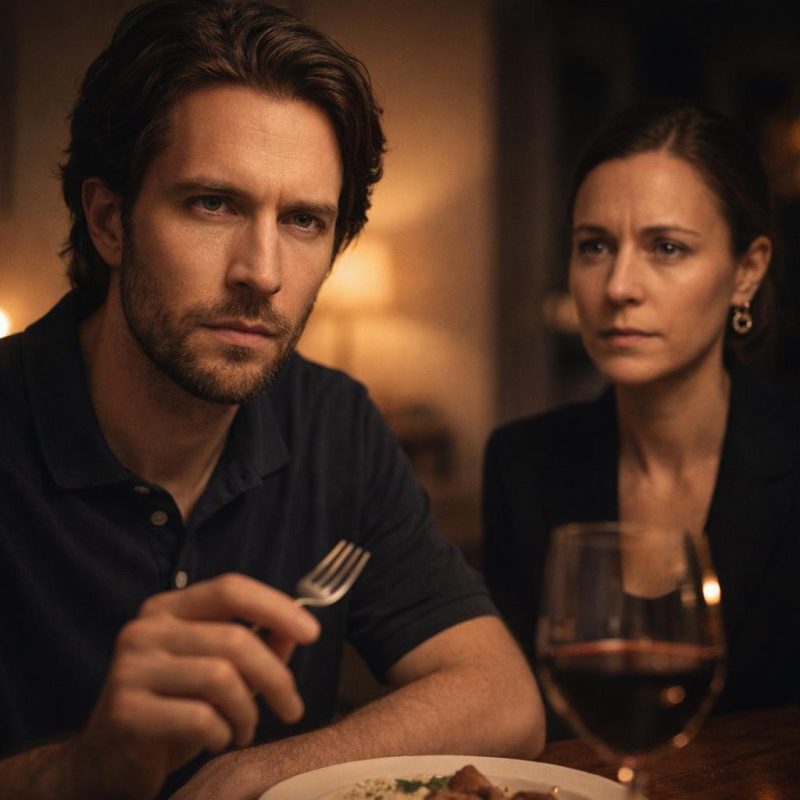 Image by RM AI
Adorable and Disposable
She kept going, refilling her glass without asking if I wanted more, settling back into her chair like she owned the room. The childhood stories kept coming — the time I covered for her when she broke the neighbor's window, the time I lent her my birthday money and never asked for it back. She framed each one as evidence of something charming about me, something she found genuinely endearing. 'You've always been like that,' she said, tilting her glass toward me. 'You just — you give. You don't even think about it. Most people calculate, but you just give.' I said something noncommittal and moved food around my plate. My knuckles had gone white around the fork. She laughed softly, like she was describing a golden retriever. 'Honestly, it's your best quality. You're just — you're easy, you know? Easy to love, easy to read, easy to count on.' She smiled at me over the rim of her glass, warm and unhurried, and then she said it plainly, like a fact she'd long since settled: 'You're a resource, Ben. A real one.'
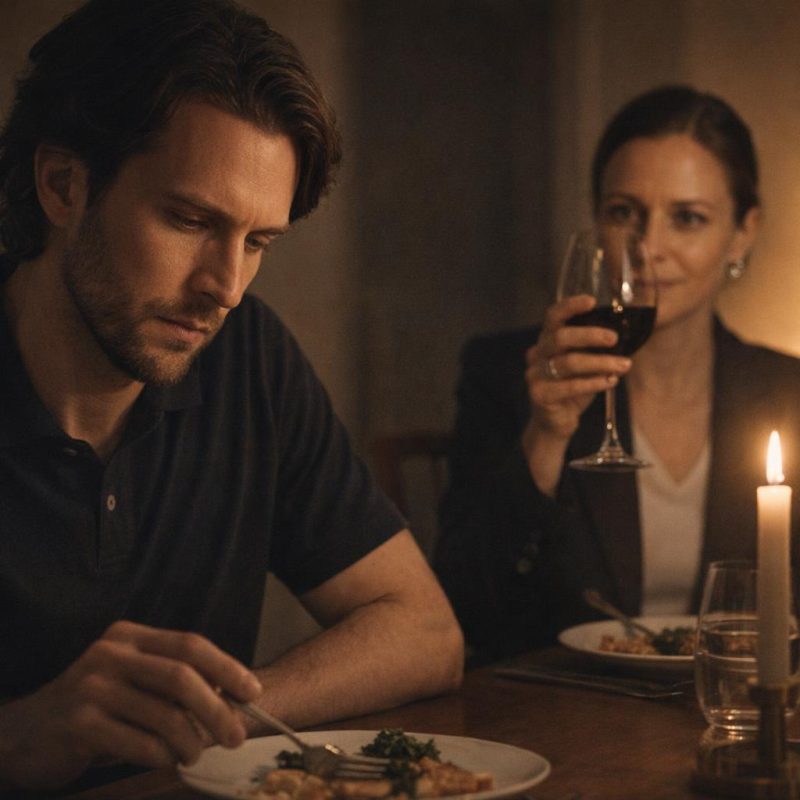 Image by RM AI
The Server Confirmation
I excused myself around nine, said I needed to use the bathroom, and kept my voice level the whole way down the hall. I locked the door, ran the tap, and pulled out my phone. The server logs loaded in under ten seconds. The dummy folder — the one I'd seeded with convincing-looking file names and nothing real — had been accessed at 7:43 PM. That was when Clara had supposedly been in the shower. I cross-checked the GPS ping from the device that had connected to the folder. The coordinates resolved to within twelve feet of the guest room. I sat on the edge of the tub and stared at the screen for a moment. The timestamp, the location, the access log — all of it lined up exactly the way I'd expected it to, and somehow that made it worse, not better. I splashed cold water on my face, dried my hands, and checked my expression in the mirror. Then I walked back down the hall and sat across from my younger sister and asked her if she wanted more wine.
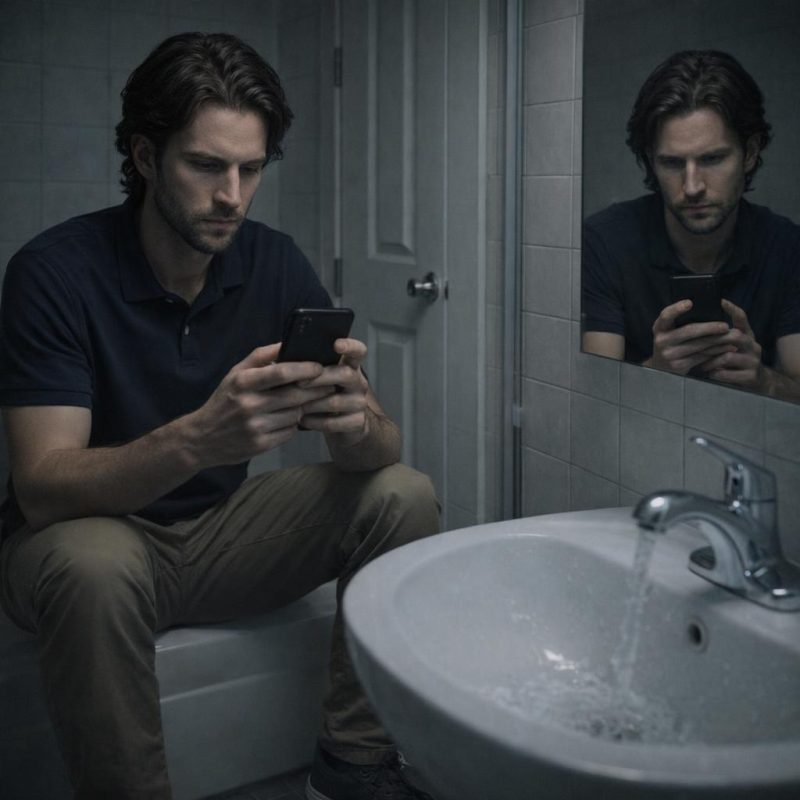 Image by RM AI
Digging Deeper
Clara had moved on to talking about the city — a restaurant she'd been to, a gallery opening she'd attended, names I didn't recognize dropped like I should. I made the right sounds. Under the table, I had my laptop open on my knees, screen angled toward my side of the table, brightness turned down. I'd been meaning to go through the older footage files for two days and hadn't had the chance. I opened a folder from Tuesday and started scrolling. Most of it was nothing — Clara walking through the office, picking things up, putting them down. Then I found a clip from that afternoon, around three o'clock. She was sitting at my desk, her back mostly to the camera, but her phone was propped against my monitor at an angle. She was photographing something on the screen. I paused the clip and leaned closer. The phone screen was partially visible in the reflection off the monitor glass — and on it, something that looked like a document with a header I couldn't quite read from this resolution, but the layout was unmistakably formal.
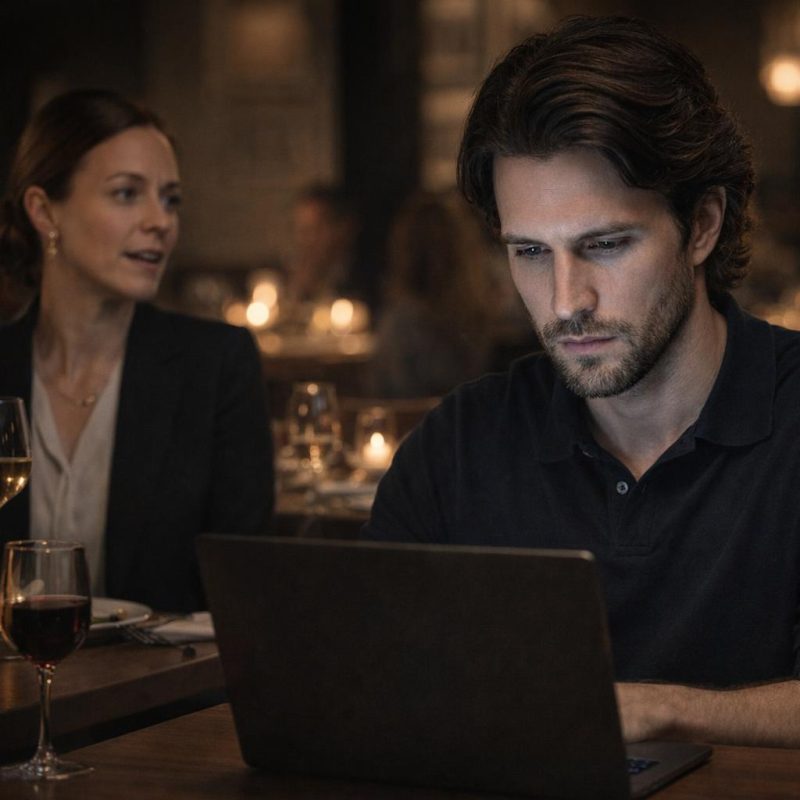 Image by RM AI
Legal Letterhead
I kept my face pointed at Clara while I worked the trackpad with one hand, pulling the frame into the editing tool I'd installed for exactly this kind of thing. She was describing a rooftop bar, something about the view, and I nodded at the right intervals. The image sharpened in stages. The document on her phone screen came into focus slowly — a letterhead at the top, a law firm name I didn't recognize, and below it a dense block of text. I zoomed in on the header. The words were small but legible now. 'Criminal investigation' sat in the top line, bold and unambiguous. Below it, a case reference number. Clara laughed at something she'd just said and I laughed too, a half-second behind. I took a screenshot of the frame and saved it to an encrypted folder. Then I zoomed in on the body text, scrolling the crop down past the header, past the case number, past the opening paragraph. Midway down the page, in a section that appeared to be a summary of allegations, two words sat side by side: 'embezzlement charges.'
 Image by RM AI
The Criminal Truth
I excused myself again — said I needed to grab something from my office — and this time I sat down at my actual desk and opened a browser. I typed the law firm name from the document alongside Clara's full name. The results came back in seconds. Court filings. Public record. Her name was right there in the case index, listed as the respondent in a civil fraud action that had escalated to criminal referral three weeks ago. I clicked through. The summary was clinical and thorough: misappropriation of investor funds, falsified financial statements, a startup that had taken in nearly two million dollars and produced nothing but paperwork. The charges had been filed on a Tuesday. She'd called me that Thursday asking if she could visit. I sat back in my chair and looked at the ceiling. The mental health break. The sudden warmth. The wine and the childhood stories and the way she'd called me a resource with a smile on her face. The filings listed a co-respondent: Marcus Chen, named as a facilitator in the asset concealment. The whole visit snapped into a shape I couldn't unsee.
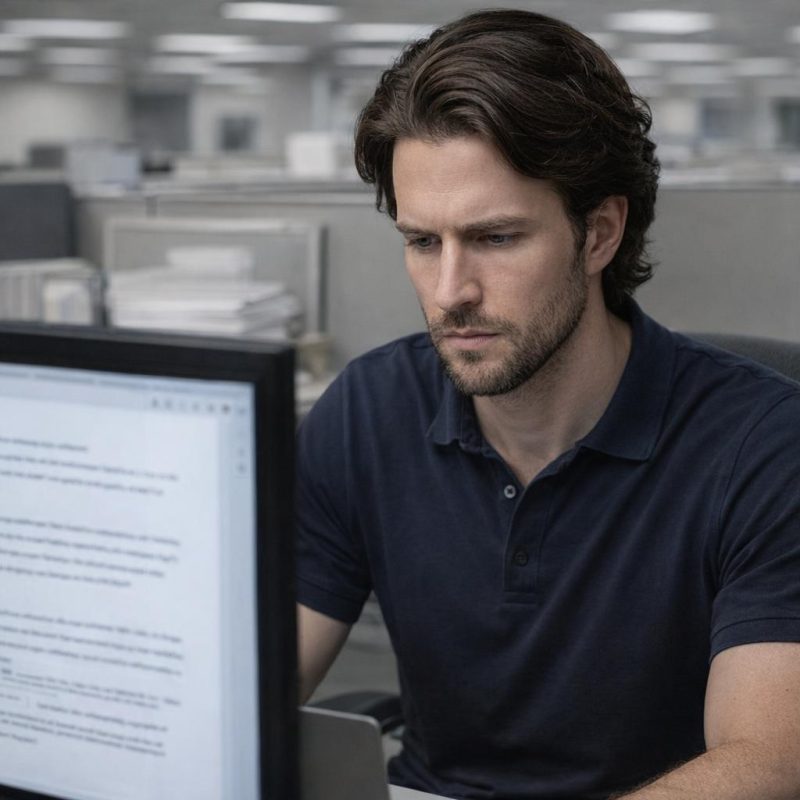 Image by RM AI
Reframing the Visit
I walked back to the table and sat down. Clara was stacking the dinner plates, humming something under her breath, completely at ease. I watched her move around my kitchen like she belonged there. Every small thing she'd done since she arrived — the hug at the door, the compliments about the house, the way she'd steered every conversation back to my work — it all looked different now. The mental health break wasn't a break. It was a window. She needed somewhere safe to operate from, somewhere nobody would question her presence, and I had given her a guest room and a set of keys and told her to make herself at home. The Friday she'd mentioned — casually, in passing, as the day she was thinking of heading back — wasn't a loose plan. It was a deadline. She would have taken what she needed and left, and I would have stood in the driveway waving her off, and that would have been the last time I ever saw her. She set a plate down in front of me with a warm smile, and the weight of that sat in my chest like something that had been there a long time without a name.
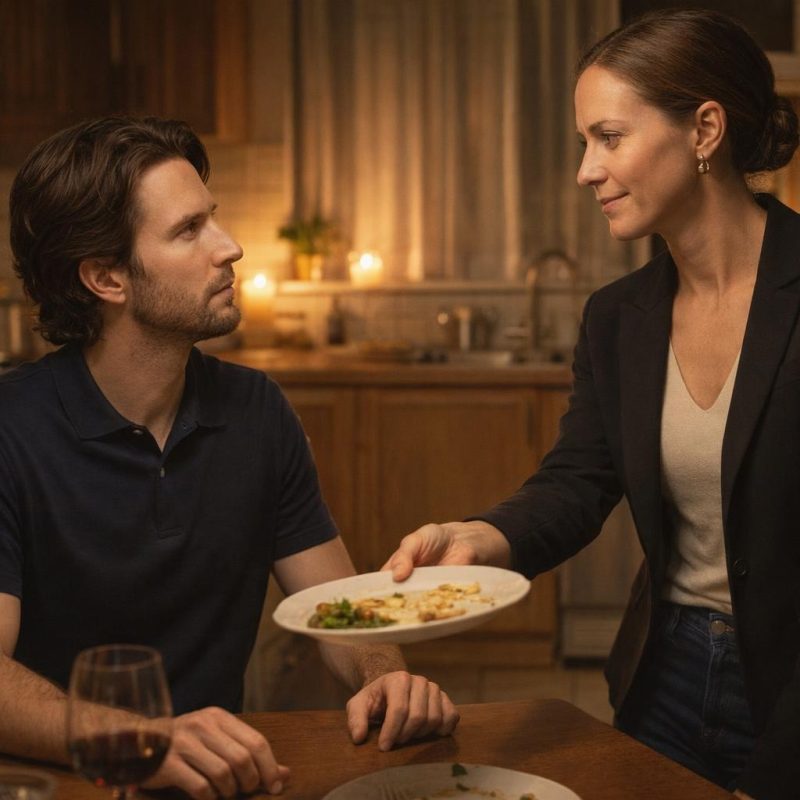 Image by RM AI
Marcus the Facilitator
Clara offered to do the dishes and I told her to go ahead, that I'd keep her company in a minute. I stayed at the table and opened my phone. I searched Marcus's name — his full name, the one on the business card she'd left on the counter. The first few results were professional profiles, the kind that look curated. But I went deeper. His name appeared in a 2019 tech industry piece about a startup collapse in Austin — he'd been a consultant brought in during the wind-down. The CEO of that company had relocated to Portugal six months before the civil trial concluded. I found two more companies. Different industries, similar patterns: Marcus listed as an advisor in the final months, executives who became difficult to locate afterward. One had resurfaced under a different name in the Cayman Islands, according to a footnote in a financial fraud newsletter I found on the fourth page of results. He wasn't just helping Clara move the code. He knew how to move people — accounts, identities, exit routes. The sound of water running in the kitchen and Clara humming the same tune from dinner settled over the apartment, and I sat with the full shape of it.
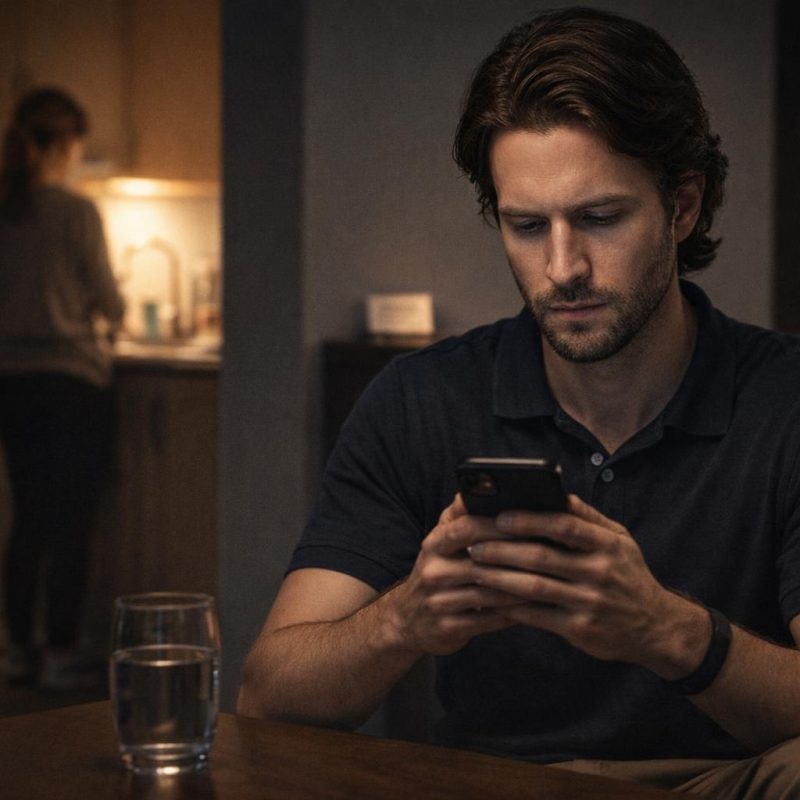 Image by RM AI
The Final Con
I sat at the table and listened to her hum. She was rinsing glasses now, stacking them carefully, doing everything right. That was the thing about Clara — she always did everything right, right up until she didn't. She'd come to my home and eaten my food and slept in my guest room and called me a resource with genuine warmth in her voice, and every single moment of it had been in service of a plan that ended with her gone and me left holding the damage. She would have taken the code, handed it to Marcus, converted it into something liquid, and disappeared before I'd had any reason to suspect a thing. I would have found out eventually — maybe from a lawyer, maybe from a news alert, maybe from my parents calling to tell me Clara had vanished and did I know anything. She never intended to face what she'd done. Not to her investors, not to the people she'd defrauded, and certainly not to me. I watched her dry her hands on the dish towel and turn around with a smile, and something in me went very quiet and very certain: she was going to face all of it.
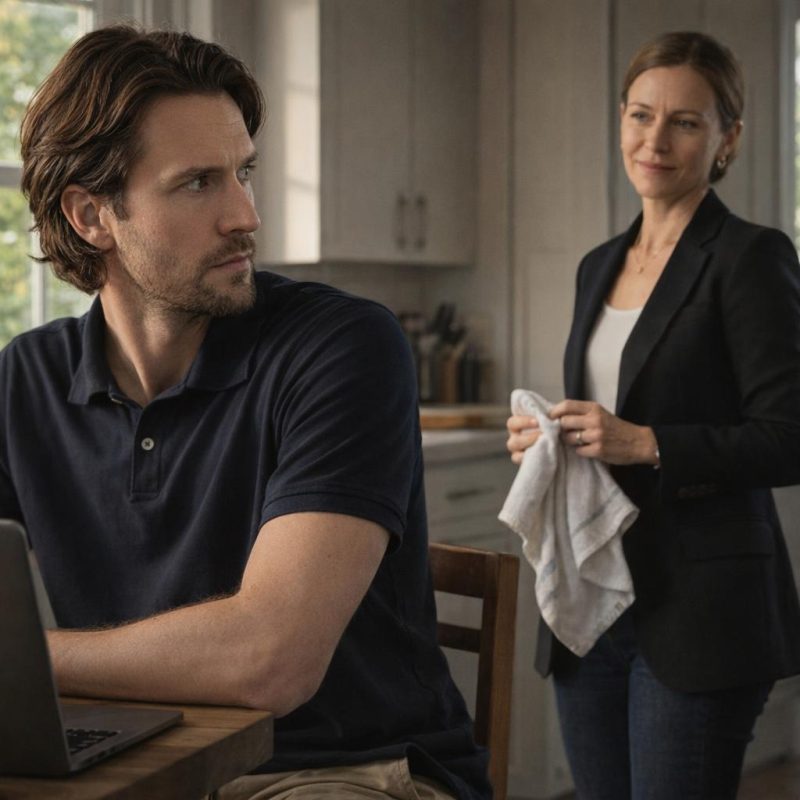 Image by RM AI
The Authority Question
I sat in my office with the door closed and the lights low, the house quiet around me. Clara was in the guest room — I could hear the faint sound of the television through the wall, some late-night show she'd put on to wind down. I had the FBI's Internet Crime Complaint Center pulled up on one screen and the fraud division's direct tip line on the other. I had everything they'd need. The camera footage. The server logs. The court documents showing active prosecution in two states. The GPS data from her locked laptop. I could have dialed the number, given them her name and my address, and had someone at the door before she woke up. I sat there with my finger hovering over the call button for a long time. The thing was — if I called right now, it would be over in a way I couldn't control. Lawyers would get involved. Evidence would get sealed. She'd be processed through a system that might let her minimize, deflect, negotiate. She'd never have to sit across from me and see that I knew. She'd never have to watch her own face on that screen. I set the phone down on the desk. The weight of what I was holding — and what I was choosing not to do yet — settled over the room like something physical.
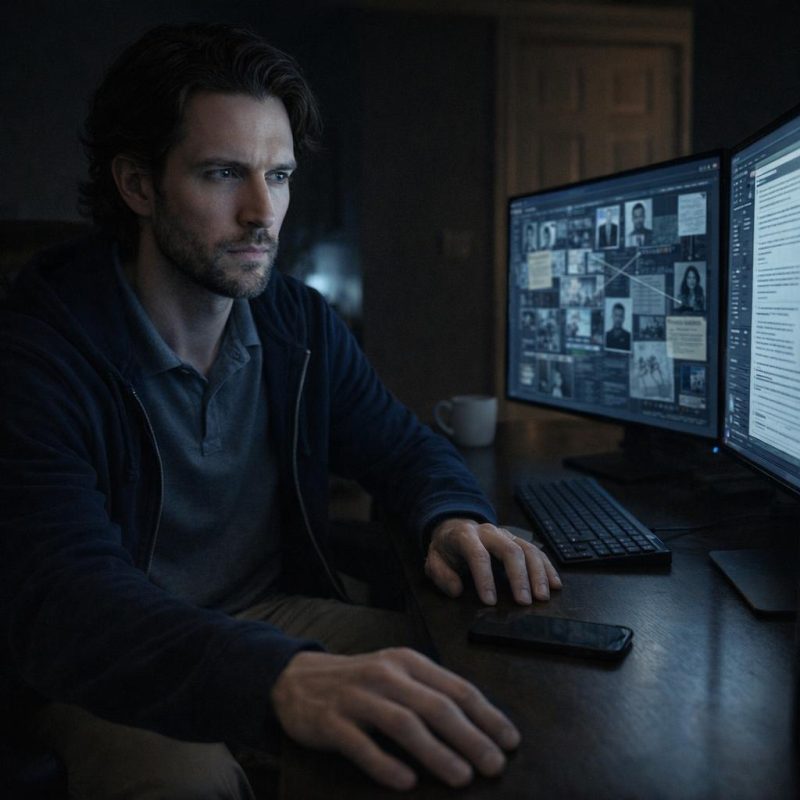 Image by RM AI
The Confrontation Plan
I didn't sleep. By three in the morning I'd given up pretending I might and moved back to my desk. I opened a new folder and started building. The camera footage went in first — timestamped, labeled, clipped into segments so nothing could be dismissed as ambiguous. Then the server logs, showing every access attempt on the dummy folder, every failed probe, every moment her machine had touched my network. Then the court documents, pulled from the public records database, printed to PDF with the case numbers visible. Then the GPS coordinates from her locked laptop, cross-referenced against the timestamps on the footage. I arranged everything in chronological order, the way you'd present a case to someone who needed to understand it in sequence. I wasn't angry while I worked. That surprised me a little. I was just precise. Every file named, every clip trimmed, every document bookmarked at the relevant page. By five-thirty, the folder was complete. I sat back and looked at it — a clean, quiet archive of everything she'd done. I closed the laptop, set it on the corner of the desk where I could reach it easily, and waited for the sun to come up and for Clara to come downstairs.
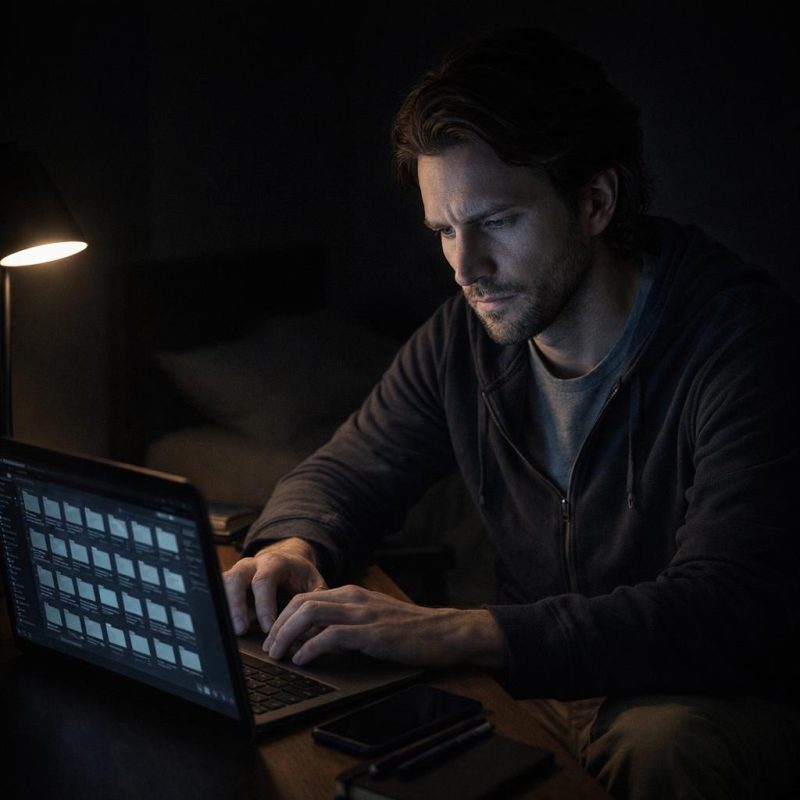 Image by RM AI
Dessert and Reckoning
She came down around nine, looking rested, wearing the kind of casual clothes that still somehow looked expensive. I had coffee ready and the dessert I'd made the night before — a simple tart, something I'd put together while she was sleeping, because I needed something to do with my hands. She sat at the table and said it smelled amazing. I set the plates down and she smiled at me, that warm, easy smile she'd been using my whole life, the one that said everything was fine and always had been. She talked about leaving tomorrow, maybe the day after, depending on traffic. She said the visit had been exactly what she needed — a chance to decompress, to feel like herself again. I nodded and refilled her coffee. She said I was a good cook and that I'd always been the steady one in the family, the one who kept things together. I said thank you. My hand was in my pocket, fingers resting against the small hard edge of the camera. The kitchen was warm and bright and completely ordinary. She was still smiling, still talking, still entirely certain that she had won. The morning light came through the window and lay across the table between us, and I let it sit there.
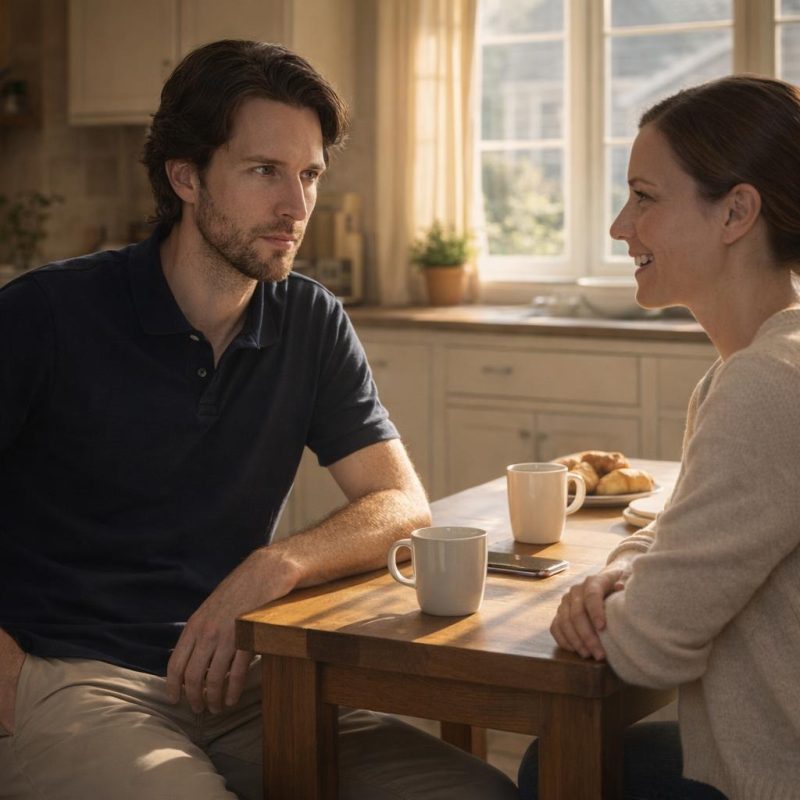 Image by RM AI
The Camera on the Table
She was mid-sentence — something about a restaurant she wanted to try on the drive home — when I reached into my pocket. I didn't interrupt her. I just set the camera on the table between our dessert plates, lens facing up, the small device sitting there in the morning light like an ordinary object. The blue indicator light was dark. It had done its job. Clara's fork stopped. Not dramatically — just stopped, halfway between the plate and her mouth, suspended there for a moment before she lowered it slowly. She looked at the camera. Then she looked at me. Her face didn't collapse or crumble. It went still in a way that was almost more telling — the kind of stillness that happens when every muscle decides at once to stop performing. She didn't say anything. I didn't say anything. The refrigerator hummed somewhere behind me. Outside, a car passed on the street. The camera sat between us on the table, and the silence that came down over the room had a weight to it that no words I could have chosen would have matched.
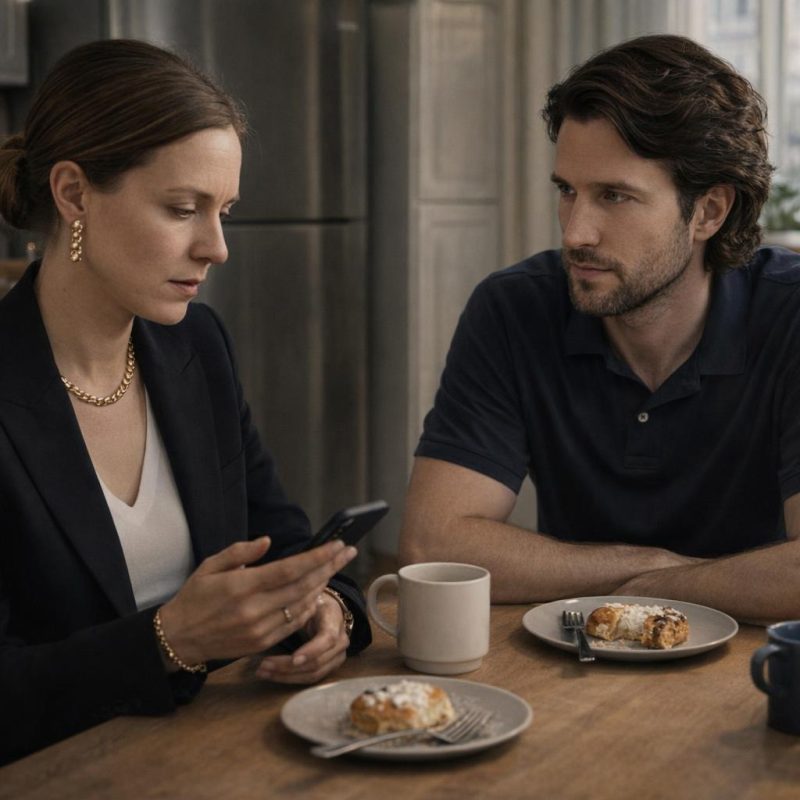 Image by RM AI
What's That
She set her fork down with careful precision, the tines touching the plate without a sound. Then she looked up at me and asked, in a voice that came out measured and even, what that was. Not panicked. Not guilty. Just a question, the way you'd ask about an unfamiliar kitchen gadget. I didn't answer. She looked at the camera again, then back at me, and something shifted behind her eyes — just a flicker, there and gone. She tried a smile. She asked if this was some kind of joke, her voice carrying just enough lightness to suggest she thought it might still be salvageable. I didn't smile back. I didn't explain. I reached over, opened the laptop I'd positioned on the table before she came downstairs, and turned the screen toward her.
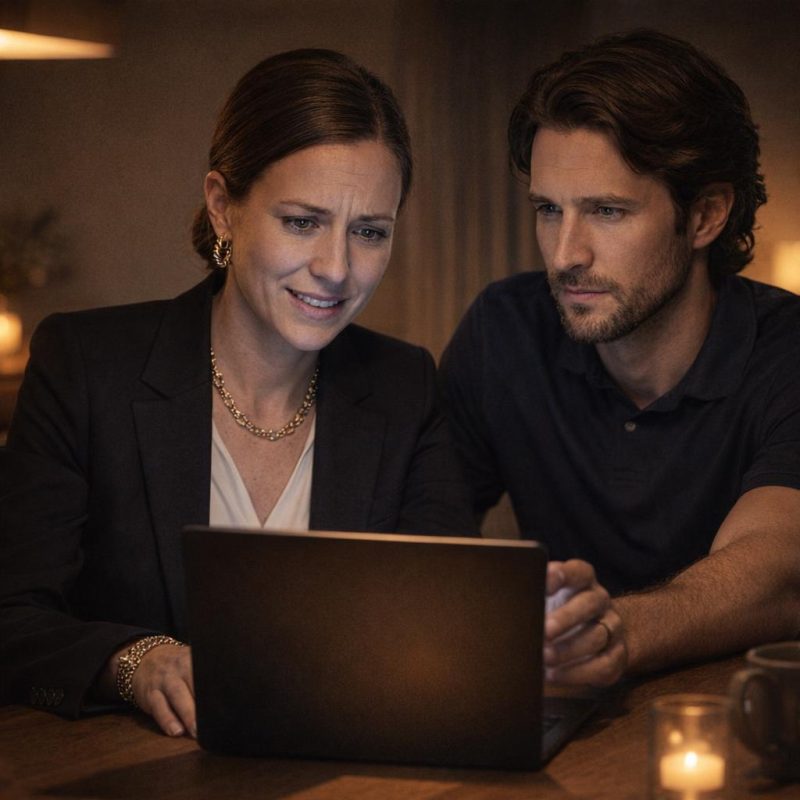 Image by RM AI
The Footage Plays
The footage was clear. There was no way to misread it. The timestamp in the corner showed the date and time, and the figure on screen was unmistakably Clara — at my desk, at my computer, moving through files with the kind of focused efficiency that told you she'd done this before. Her voice came through the laptop speakers, low and unhurried, talking to Marcus. She said I was too distracted to notice. She said I trusted too easily. She said it almost fondly, the way you'd describe a flaw in someone you'd long since stopped respecting. Marcus's voice answered, and they talked about the transfer like it was already done. Clara's hands, across the table from me, found the edge and gripped it. I watched her watch herself. The color left her face in stages — first the warmth, then the composure, then something underneath that I didn't have a name for. She opened her mouth once. Nothing came out. She closed it again. I let the clip run to the end, then I reached over and paused it. I looked at her. She looked at the frozen frame on the screen. What she didn't know yet — what I hadn't told her — was that her board of directors and her venture capital firm had received the same footage, along with everything else, forty-eight hours ago.
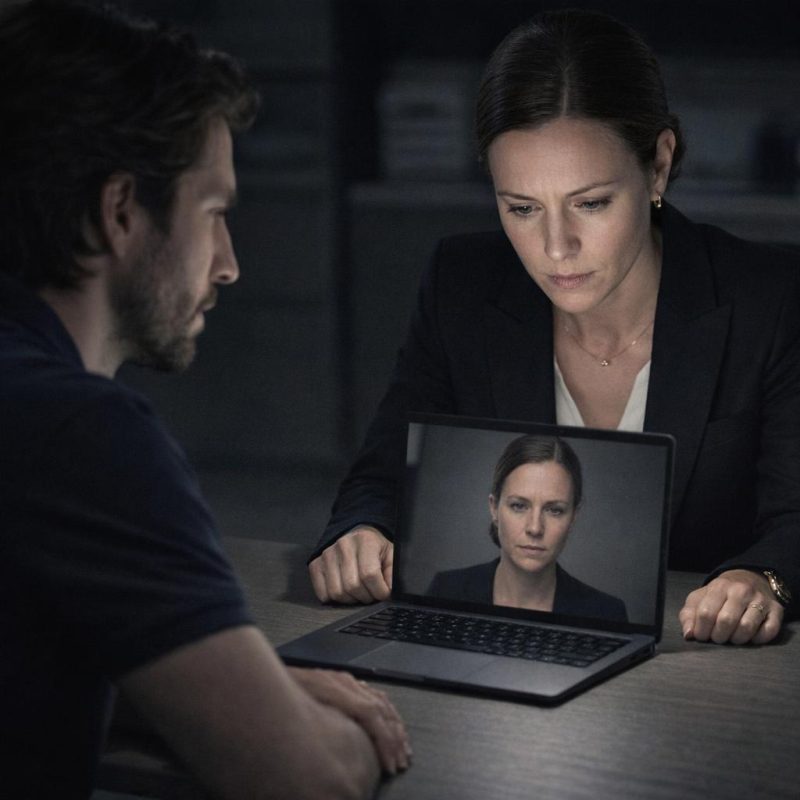 Image by RM AI
The Social Experiment Lie
The silence lasted about four seconds. Then Clara laughed. It came out high and a little breathless, and she pulled her hands back from the table edge and waved one of them in the air like she was clearing smoke. She said it was a prank. She said she'd been planning to tell me about it. She said she was working on a social media series about trust and vulnerability in close relationships, and I was going to be featured, and she'd meant to ask permission but the timing had never been right. The words came fast, each one arriving before the last one had fully landed, and her hands kept moving — gesturing, smoothing the tablecloth, reaching toward me and then pulling back. She said Marcus was just helping her produce it. She said the whole thing was completely harmless. She said she was sorry if it looked bad out of context. I watched her work through the story, watched her find the edges of it and push against them, watched her decide it was holding. Then I reached over to the laptop and opened the next file. I turned the screen toward her so she could see the court documents — her name at the top, the case numbers, the charges listed in plain language — and I watched her go still.
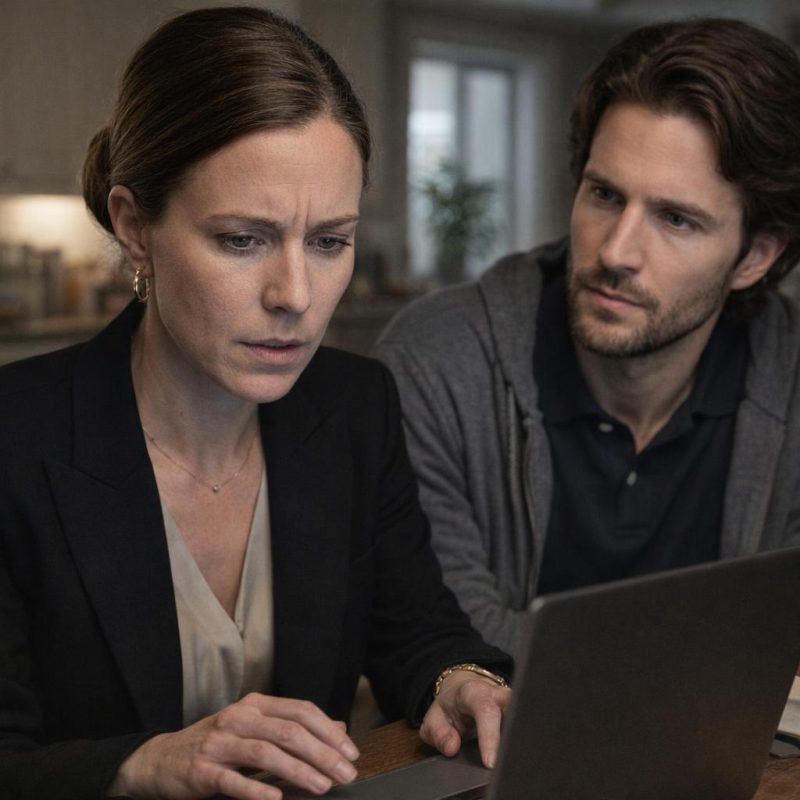 Image by RM AI
The Truth Laid Bare
I walked her through it without raising my voice. The server logs first — every timestamp showing her machine probing the dummy folder, every failed attempt recorded and dated. Then the GPS data from her locked laptop, which placed it precisely in my office during the hours the footage covered. Then the court documents, two states, active prosecution, her name spelled correctly on every page. She sat across from me and the color in her face went from pale to something closer to gray. I told her I'd already sent everything — the footage, the logs, the documents, the GPS data — to the FBI fraud tip line three days ago. I told her the same package had gone to her board and to the venture capital firm that had backed her last round. I told her I had confirmation receipts for all of it. Her hands, flat on the table, started to shake. Not a tremor — a visible, sustained shaking that she didn't try to stop or hide. She didn't speak. She didn't look at me. She just sat there with the full weight of what she'd built and what she'd lost pressing down on her all at once, and the kitchen that had felt so ordinary an hour ago held nothing now but the sound of her breathing and the ruin she'd made of everything.
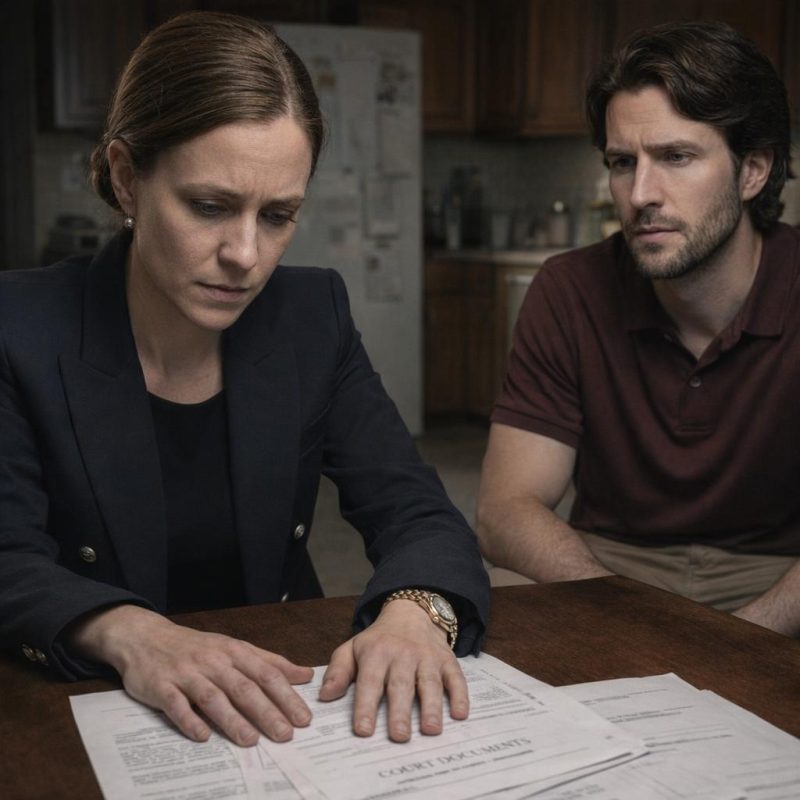 Image by RM AI
One Hour
I stood up slowly, pushed my chair back, and told her she had one hour. One hour to pack whatever she could carry and get out of my house. I told her the FBI had everything — every file, every timestamp, every frame of footage — and that wherever she drove tonight, they'd already be building the case that would follow her there. She stared at me for a long moment, and then something in her face cracked open. Not grief. Rage. She came up out of her chair and her voice went from silence to a scream in about half a second. She called me vindictive. She called me ungrateful, said I'd never understood what she'd sacrificed for this family, said I was destroying her life over nothing. I let her go. I didn't interrupt, didn't raise my voice, didn't move. When she finally ran out of words, I pointed toward the stairs. Just pointed. She looked at my hand, then at my face, and whatever she saw there stopped her cold. She grabbed her phone off the table and her voice dropped to something low and shaking. "You'll regret this," she said. I kept my arm raised, finger toward the stairs, and said nothing.
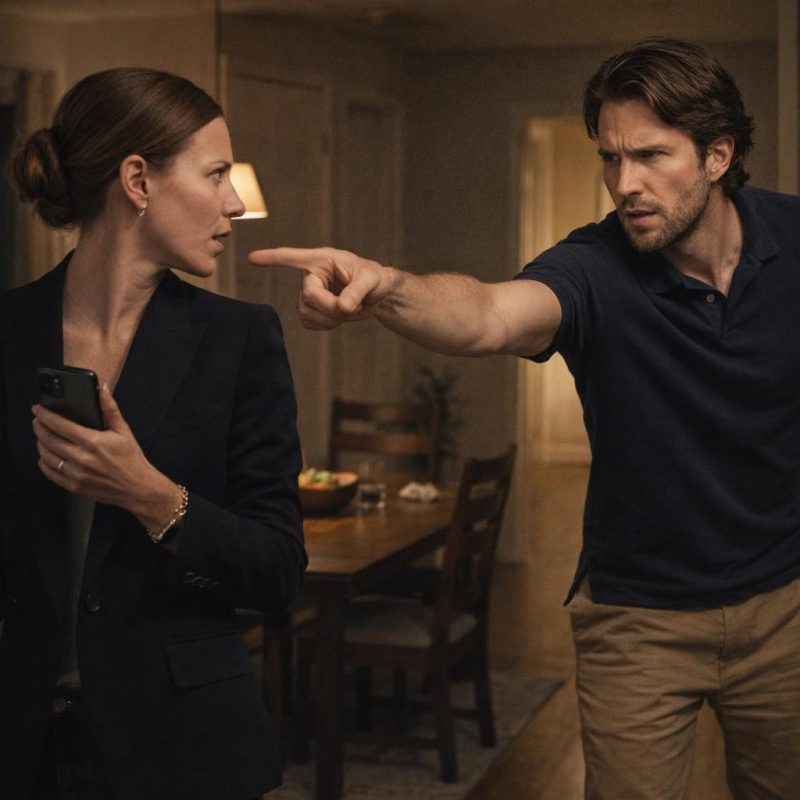 Image by RM AI
The Scramble
She went up the stairs fast, and within thirty seconds the sounds started. Drawers yanked open and shoved shut. Something heavy hitting the floor — a lamp, maybe, or one of her oversized toiletry bags. Her voice came through the ceiling in fragments, high and broken, talking to someone on the phone. I couldn't make out the words, just the pitch of it — that particular register of someone who has run out of options and is still trying to negotiate. I sat back down at the table and poured the last of the wine. I didn't pace. I didn't go upstairs to check on the noise. I just sat there while the chaos moved through the ceiling above me like a storm passing over a house that had already been through worse. Another crash. More muffled crying. The sound of wheels on hardwood — her luggage being dragged across the guest room floor. It went on for close to forty minutes. I finished the wine. I set the glass down. And somewhere in the middle of all that noise and wreckage overhead, I noticed that the tightness I'd been carrying in my chest for months had gone quiet.
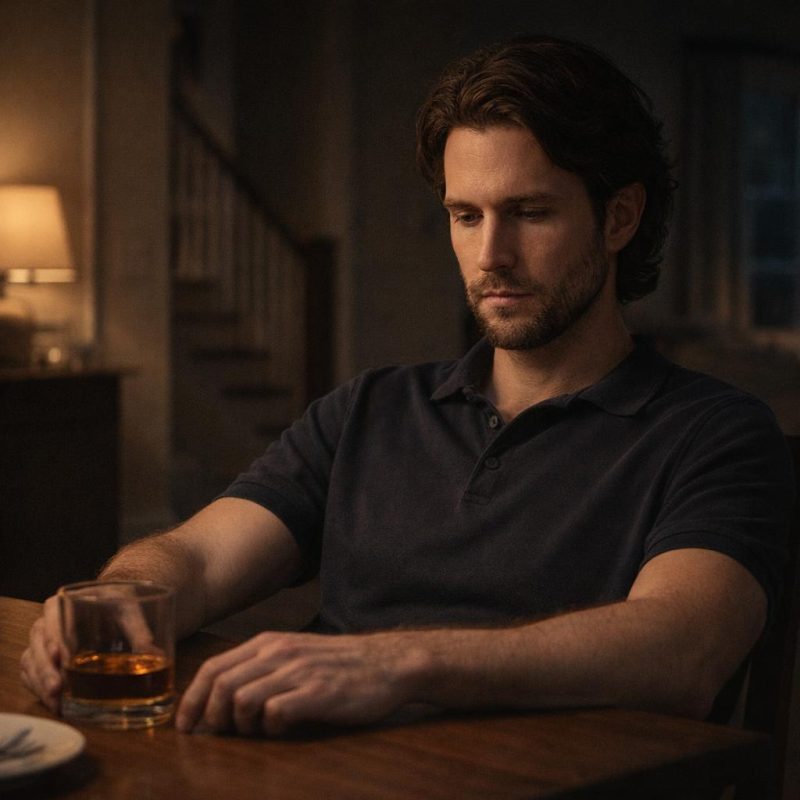 Image by RM AI
The Door Slams
She came down the stairs in stages — one suitcase first, bumping hard against each step, then a second, then a carry-on bag slung over her shoulder. Her makeup had tracked down her face in dark lines and her hair, always so carefully managed, had come loose on one side. She stopped at the bottom of the stairs and looked at me across the length of the hallway. The look wasn't sadness. It was the kind of hatred that comes from someone who has never been held accountable before and can't process what accountability actually feels like. She said something — I registered the shape of the words but not the meaning, something about me being alone, something about deserving what was coming. I didn't respond. She grabbed the handle of the larger suitcase, yanked open the front door, and dragged everything through it without looking back. The door hit the frame so hard the windows on either side of it shuddered in their casings. A few seconds later I heard her car engine turn over, the headlights sweeping briefly across the front window, and then the sound of tires on the driveway fading into nothing. The house held the silence like it had been waiting for it.
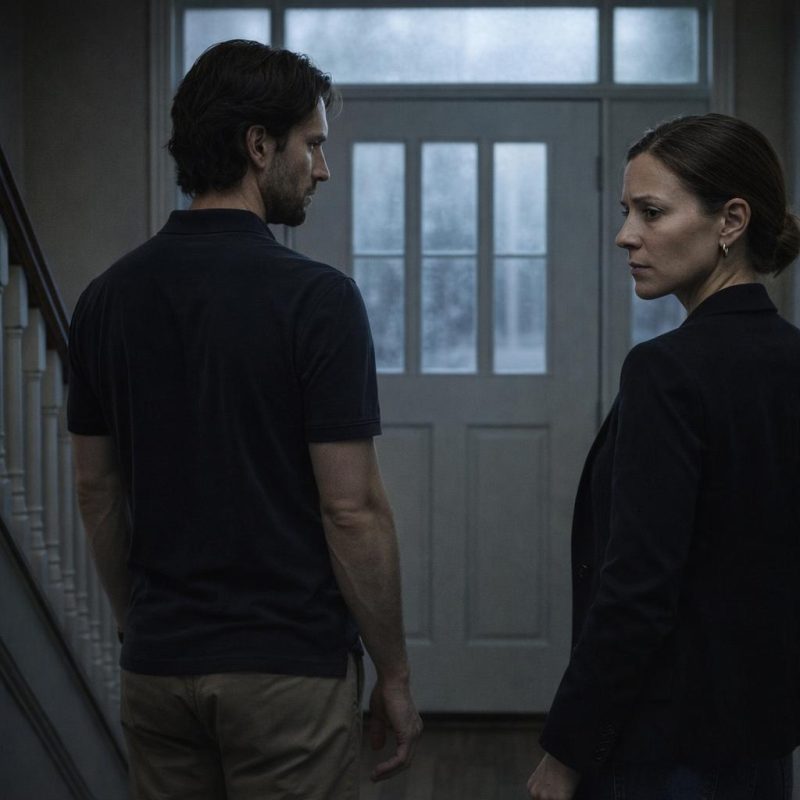 Image by RM AI
Home Again
I sat at the table for a long time after that. I didn't turn on the television. I didn't pick up my phone. I just sat in the quiet and let it settle around me. The wine glass Clara had poured for herself earlier was still sitting at her place, untouched. I moved it to the counter, then came back and sat down again. I looked at the kitchen — the table, the chairs, the window above the sink with the dark outside pressing against it — and it felt like mine again in a way it hadn't in weeks. The feeling of being watched, that low-grade awareness I'd been carrying since I found the first camera, was gone. Not fading. Gone. I thought about what I'd lost. A sister, technically. But the version of her I'd been grieving for years — the one I'd defended and covered for and believed in despite everything — that person had never really existed. What had existed was a performance, and the performance was over. I got up, rinsed both glasses, turned off the kitchen light, and walked through my house in the dark, room by room, until I reached my office. I sat down at my desk, opened my laptop, and changed every password I owned.
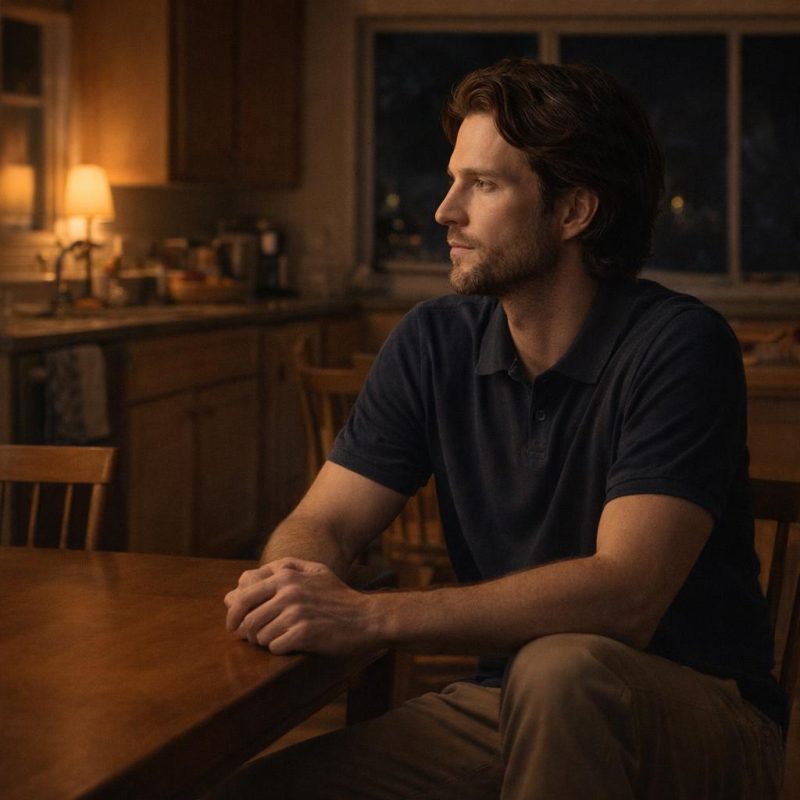 Image by RM AI
KEEP ON READING

20 Greek Gods We Don't Often Talk About
Step Aside, Zeus. Greek mythology isn’t only about Zeus and…
By Elizabeth Graham Jan 16, 2026
10 Historic Courtship Practices That Should Be Brought Back &…
Old-School Dating Was a Mix of Charming & Unhinged. Historic…
By Emilie Richardson-Dupuis Jan 20, 2026
Pooches Of The Past: Extinct Dog Breeds
Unknown authorUnknown author on WikimediaDogs have been showing up in…
By Elizabeth Graham Jan 27, 2026
The 20 Craziest Silent Films Ever Made
When Silence Let the Madness Speak. Silent cinema didn’t just…
By Chase Wexler Jan 5, 2026
Legendary Tales: 20 Most Fascinating Mythical Creatures from Folklore
Mythological Beasts. Stories about mythical creatures endure for a simple…
By Christy Chan Jan 16, 2026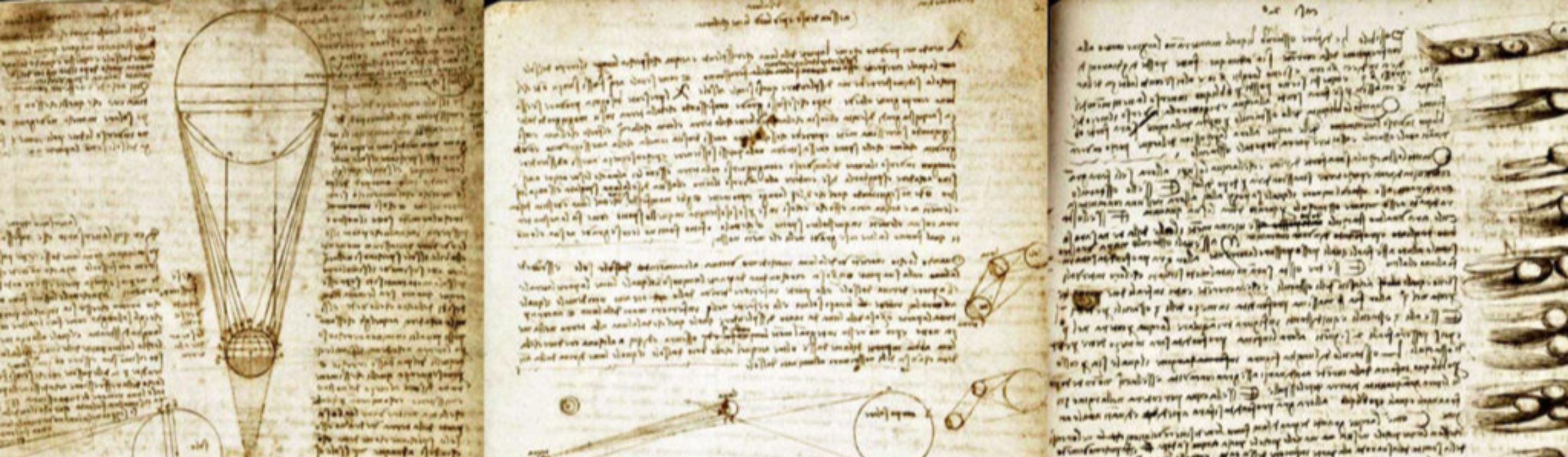
The three most expensive historical artifacts ever sold at auction
Attributed to Leonardo da Vinci on WikimediaAuctions are where history…
By Emilie Richardson-Dupuis Jan 9, 2026