

I Became Queen of Great Britain After Burying All 17 of My Children—This Is My Story
The Child Who Wept Without Reason
I came into the world already weeping. Not from hunger or cold, the way other infants cry, but from something the physicians called defluxion — a condition of the eyes that kept them perpetually watering, red-rimmed and sore, as though my body had decided grief was its natural state before I had any reason to grieve. My father James was consumed by matters far larger than a weeping infant daughter. Politics, religion, the precarious business of being a Stuart in a kingdom that had already beheaded one Stuart king — these were the things that filled his days. He would look in on me sometimes, standing at the doorway of the nursery with that rigid bearing of his, and I could see even then that I was a complication rather than a comfort. My mother Anne Hyde was kinder, but she was already fighting something inside her own body that she did not yet have a name for, and her visits were brief and distracted. I would reach for her hand and she would give it, but her eyes were always somewhere else. I did not understand any of this at the time, of course. I only knew that the room was often quiet, that the nurses changed frequently, and that a small, persistent ache had taken up residence in my chest that no amount of warm milk or rocking seemed to touch.
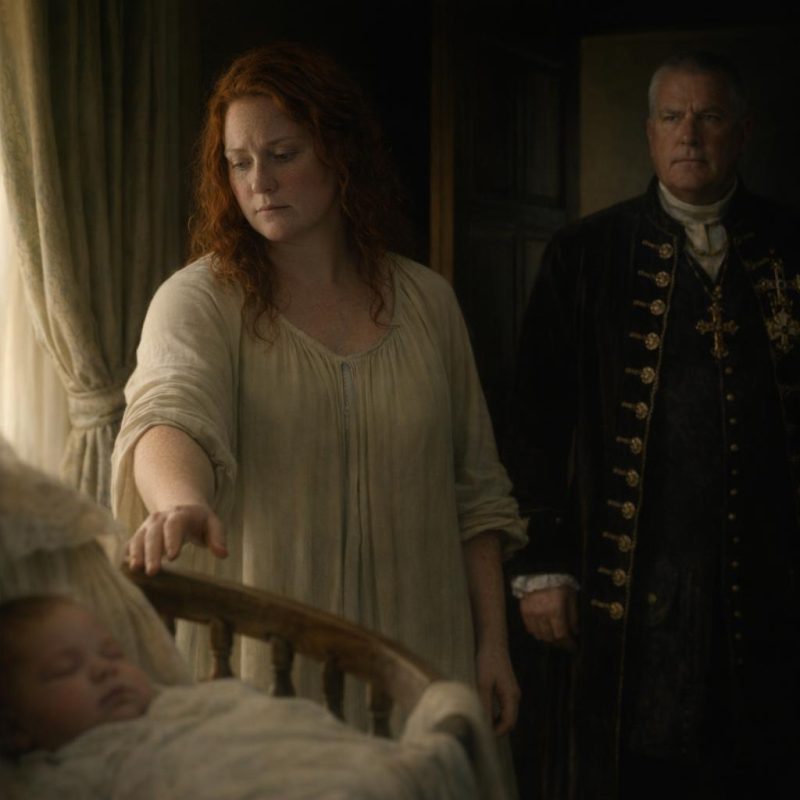 Image by RM AI
Across the Sea to a Stranger's Arms
They sent me to France when I was still small enough that the sea crossing felt like the end of the world. The ship pitched and rolled, and I pressed my face against the coat of whichever attendant had been assigned to hold me, certain we would all drown before morning. We did not drown. We arrived at a grey, unfamiliar shore, and I was delivered to my grandmother Henrietta Maria like a parcel that had been redirected. She received me in a room hung with dark tapestries, dressed in the kind of black that had stopped being mourning and become simply a way of life. She was not unkind. She bent down and examined my face with sharp, assessing eyes, and said something in French that I did not yet understand. Her household was full of Catholic prayers and English exiles and the particular silence of people who had survived catastrophe and were not sure what to do with themselves afterward. I was frightened of her at first — frightened of the stiff formality, the unfamiliar language, the way everyone moved as though they were performing a ceremony I had not been taught. But she was consistent, and consistency was something I had not had much of, and I began, cautiously, to find my footing. Then one evening she sat beside me after prayers and told me, in careful simple words, that my grandfather had been taken out into a courtyard and beheaded by his own people.
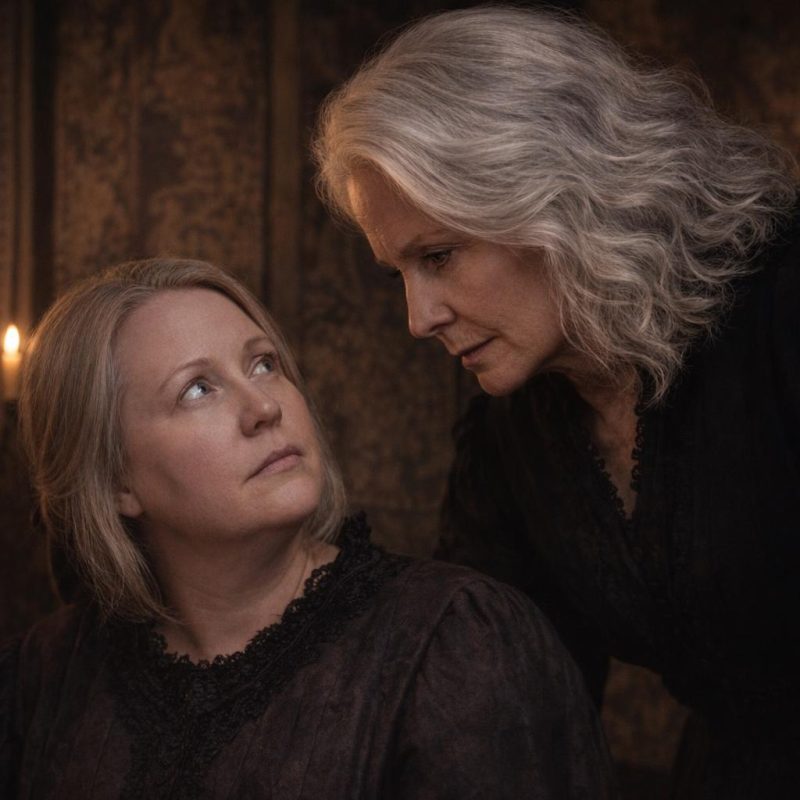 Image by RM AI
The First Grave I Knew
She fell ill not long after that evening. I had barely learned the rhythms of her household — which prayers came at which hours, which servants to avoid, how to sit still through the long formal dinners — when the coughing began and the physicians started arriving with their grave faces and their whispered consultations in the corridor. I would stand outside her chamber door sometimes, listening to the sounds inside, not fully understanding what I was hearing but understanding enough. The household changed around her illness the way a house changes around a storm — everything quieter, everything slower, everyone watching the sky. She died on a morning in late summer, and I stood at her funeral in a chapel that smelled of incense and old stone, wearing black that was too large for me, watching the candles burn. I did not cry. My eyes had been weeping since birth, but that morning they were dry, which seemed wrong somehow, as though my body had used up all its tears on things that mattered less. The priests spoke in Latin. The other mourners wept with the practiced grief of people who had buried many things. I stood among them feeling very small and very separate, already aware that arrangements were being made, that letters were being written, that I would be moved again to someone else's care. The hollow feeling that settled into me then was not quite sadness and not quite fear — it was something quieter than both, and heavier.
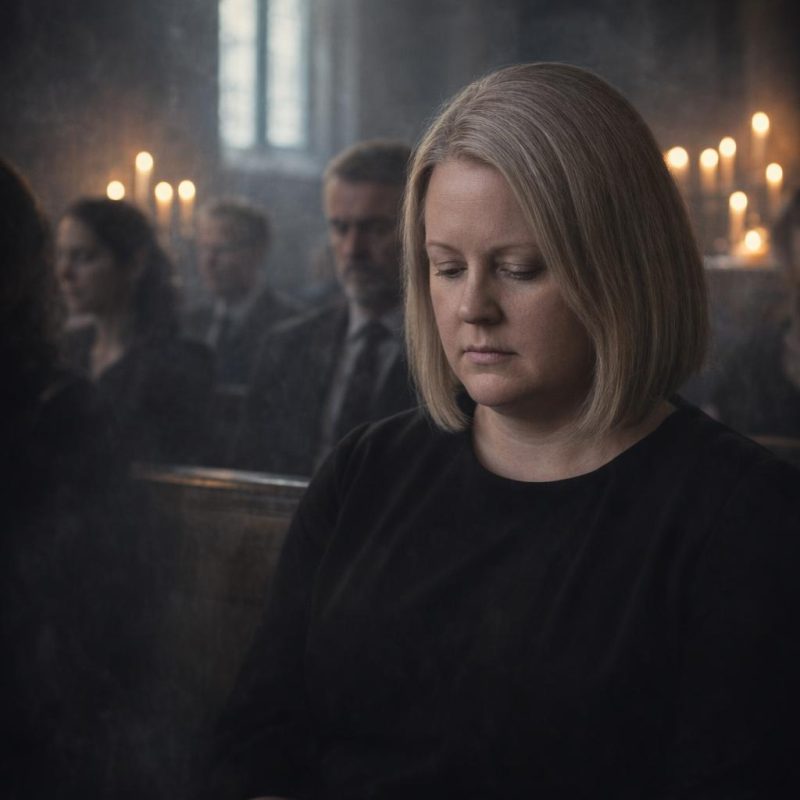 Image by RM AI
A Year of Borrowed Kindness
My aunt, the Duchess of Orleans, was everything my grandmother had not been — warm where Henrietta Maria had been formal, quick to laugh where my grandmother had been solemn, genuinely curious about me in a way that felt startling after so long being treated as an inconvenience. She would sit with me in the afternoons and ask what I had been reading, what I had been thinking, whether I was happy. I did not know how to answer that last question. I had not been asked it before. Her household was livelier, full of music and conversation and the kind of easy affection that I had only ever observed from a distance. I began, slowly and with great caution, to let myself feel something like settled. She took an interest in my education, arranged for proper French lessons, made sure I had companions my own age. For the first time in my short life, I felt as though someone had looked at me and decided I was worth the trouble. I should have known better than to trust it. I had already learned, in the way that children learn things they cannot yet articulate, that the people who sheltered me had a habit of leaving. So when she began to tire more easily, when the color left her face and the laughter came less readily, I recognized the signs before anyone thought to explain them to me — and the recognition sat in my stomach like a stone.
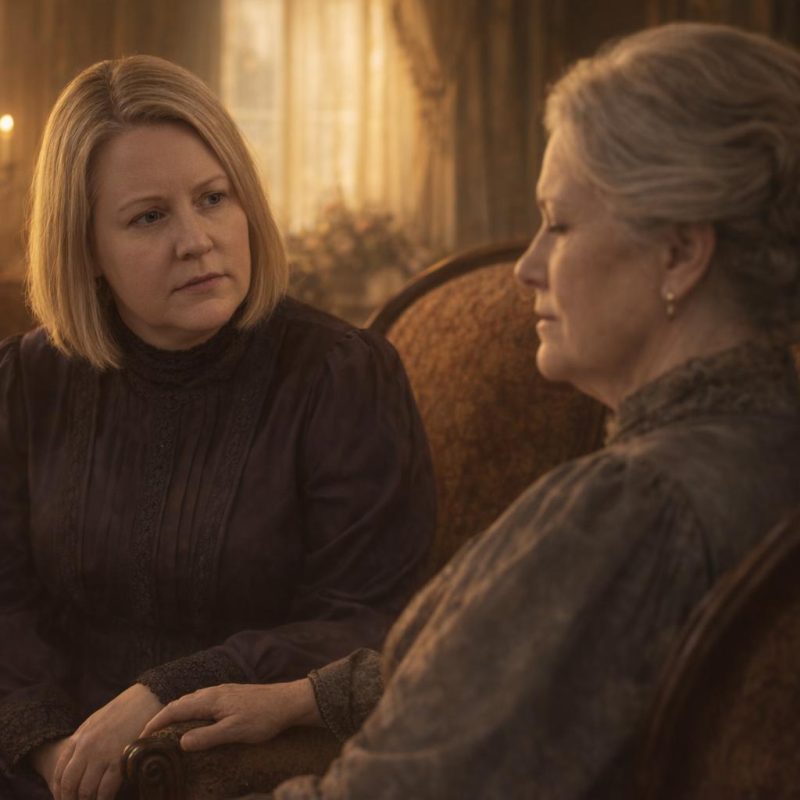 Image by RM AI
The Return to a Country I Barely Knew
She died in the spring, and by summer I was on another ship, crossing back to a country I had left so young it barely existed in my memory. I was seven years old and I had already buried a grandmother and an aunt, and the crossing felt less frightening this time — not because I had grown braver, but because I had grown quieter inside, the way a room goes quiet after something has been broken and swept away. England arrived grey and damp, exactly as I had left it. I was brought to court with the brisk efficiency of a household managing a minor logistical problem, and the servants who received me were polite and impersonal in equal measure. I had been told my mother was unwell. I had been told this in the careful, vague language that adults use when they want to prepare a child without actually preparing them for anything. I walked through the door expecting illness and found something else entirely — a woman sitting in a chair by the window who wore my mother's name and my mother's title but whose face had been hollowed out and reshaped by something I had no word for yet, her skin pulled tight over bones that seemed too close to the surface, her eyes still kind but sunk deep into shadows that had not been there before, and I stood in the doorway unable to move because I did not recognize her.
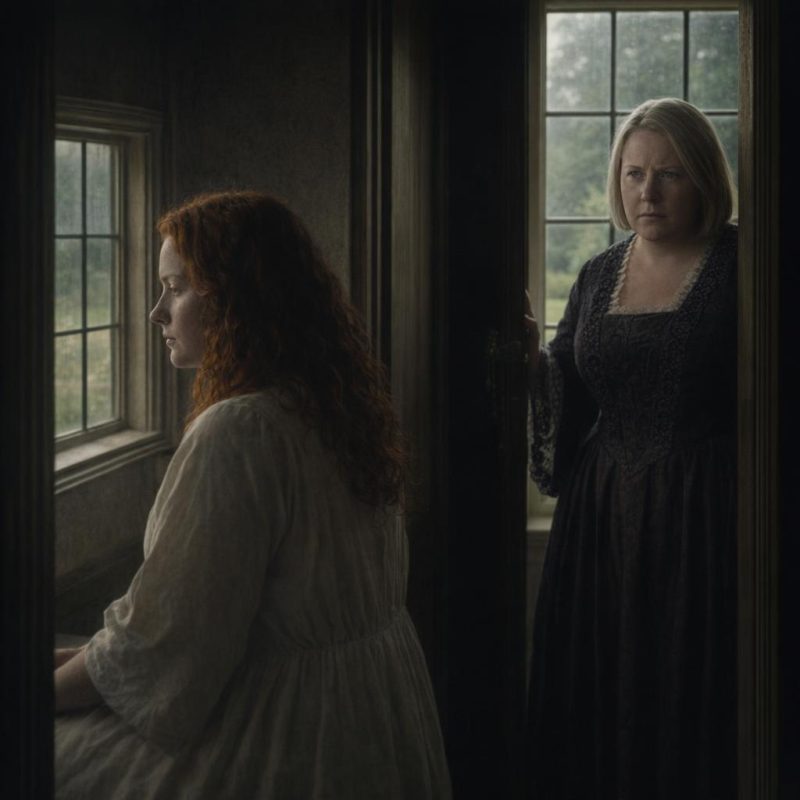 Image by RM AI
The Mother I Never Had Time to Know
The months that followed were a long, slow lesson in helplessness. I sat beside her bed as often as they would let me, watching her grow lighter, as though the illness were gradually removing everything that was not strictly necessary. She would hold my hand sometimes and talk to me in a low voice about small things — the garden, a book she had loved, whether I was eating properly — and I would answer carefully, the way you answer someone you are afraid of startling. My father James came and went. He stood at the foot of her bed with his hands clasped and his face arranged into an expression of appropriate grief, but he did not sit with her the way I sat with her, and he did not hold her hand. He would look at me sometimes with something that might have been helplessness, but he never reached across the distance between us to say anything that might have helped either of us. I was eight years old and I had already learned that grief was something you carried alone. She died on a morning in March, the light coming thin and pale through the window, and the room went very still in the way rooms do when the thing that has been expected finally arrives. My father stood at the foot of the bed. I sat beside it. Between us, the silence was absolute.
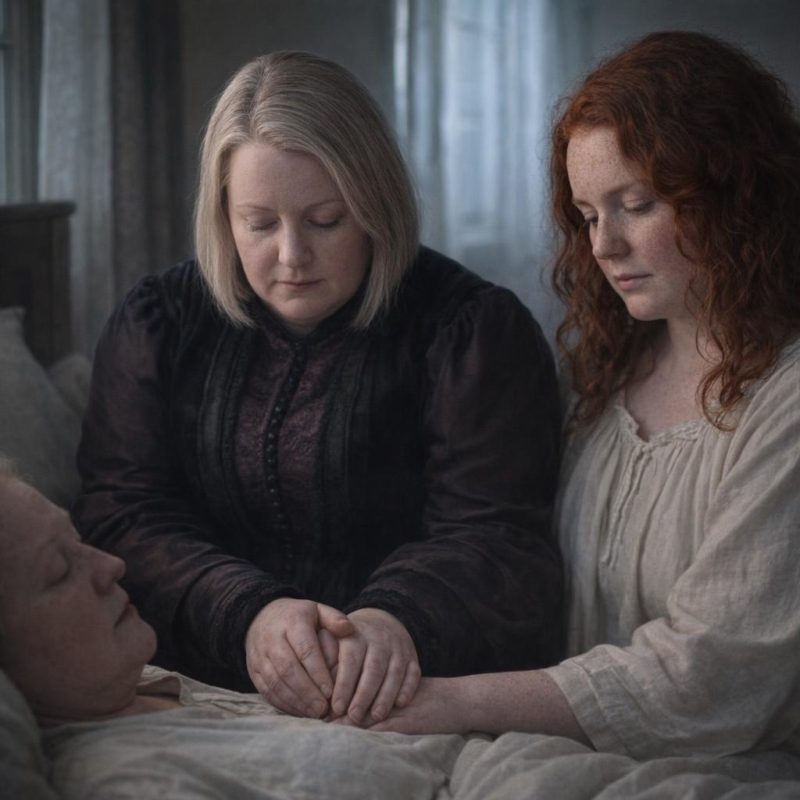 Image by RM AI
The Teenage Bride Who Became My Stepmother
My father did not grieve long. Within two years of my mother's death, the court was full of whispers about a new bride, and then the whispers became an announcement, and the announcement became a reality that arrived from Italy in the form of a girl barely fifteen years old named Mary of Modena. I was ten, which meant my new stepmother was closer to my age than to my father's, a fact that no one seemed to find as strange as I did. She was beautiful in a dark, foreign way, and she carried herself with the uncertain dignity of someone who had been told she was important but was not yet sure she believed it. She was also devoutly Catholic, which meant that my father's household, already drifting in that direction, now tilted further still. I watched her move through the rooms that had been my mother's rooms, touching things with careful hands, and I felt something I could not quite name — not hatred, not grief exactly, but a kind of displacement, as though I had been moved one step further from the center of something I had never quite belonged to anyway. The marriage was controversial in ways I was only beginning to understand. Then one evening, passing an antechamber where two courtiers stood talking in low voices, I caught enough words to stop me cold — something about a Catholic heir, about succession, about what it would mean for the Protestant daughters if the new duchess produced a son.
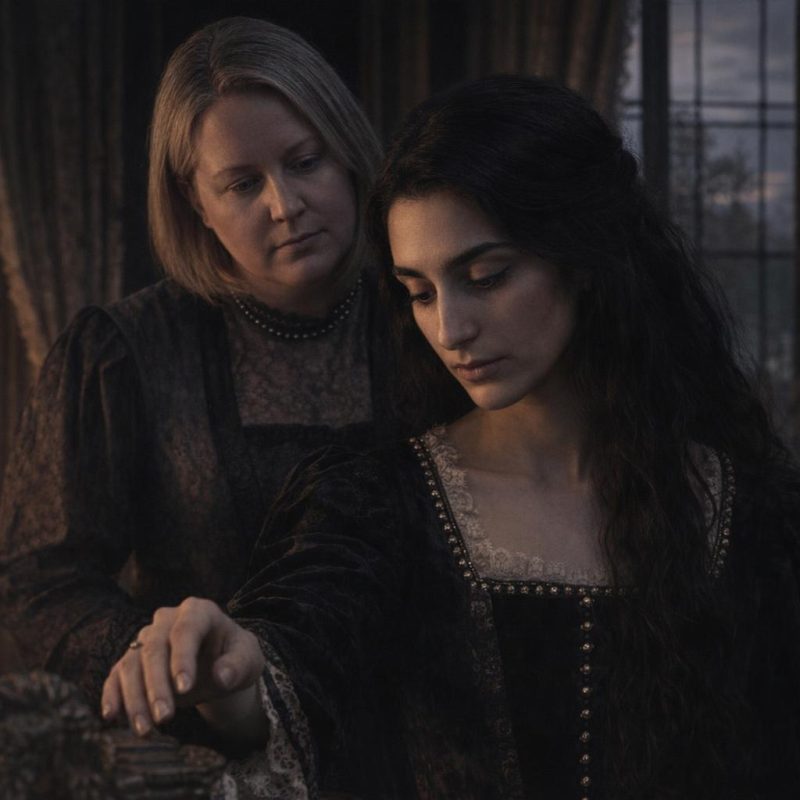 Image by RM AI
The Girl Who Saw Me
Richmond Palace was quieter than the court, which suited me well enough by then. I had grown accustomed to the margins — to being the daughter who was managed rather than cherished, the princess who was housed and educated and largely left to her own devices while the real business of the kingdom happened elsewhere. I was twelve or thirteen when Sarah Jennings came into my life, and I remember the first time I saw her with the particular clarity you reserve for things that change you. She was five years older than me, which at that age felt like a vast and impressive distance, and she moved through a room as though she had already decided it belonged to her. She was sharp and funny and entirely unimpressed by the things that were supposed to impress people, and she directed all of that sharp attention at me as though I were genuinely interesting, as though the things I thought and felt were worth her time. No one had ever made me feel that way before. Not my father, not my tutors, not the succession of caretakers who had managed my childhood with varying degrees of warmth and efficiency. She would sit with me for hours, talking about everything and nothing, and I would find myself saying things I had never said aloud to anyone. The relief of it was almost physical — the simple, extraordinary relief of being known.
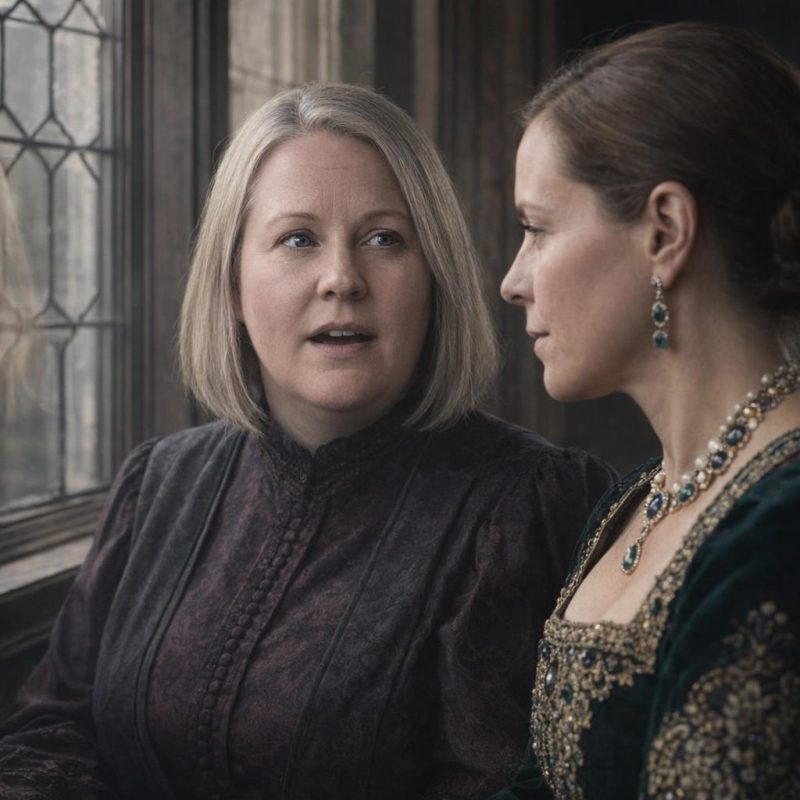 Image by RM AI
The Mirror I Found in Her
Looking back, I think what I was really hungry for was someone who would stay. My mother had died when I was eight. My grandmother had sent me home from France. My father had retreated into his faith and his politics, and my sister Mary had her own life, her own concerns, her own particular brightness that left little room for me. And then there was Sarah. She came every day, or close enough to it that the exceptions barely registered. She would settle herself beside me as though she had nowhere else she would rather be, and she would ask me things — real questions, not the polite inquiries of courtiers — and then she would actually listen to the answers. She remembered what I had told her the week before. She noticed when I was tired or sad before I had said a word. She had opinions about everything, and she shared them freely, and somehow her certainty made the world feel less frightening. I had spent so much of my life feeling like a problem to be managed, a duty to be discharged, and Sarah made me feel like a person worth knowing. I cannot explain, even now, what that meant to me. I only know that for the first time in as long as I could remember, I did not feel alone in the world.
 Image by RM AI
The Voice That Became My Own
It happened gradually, the way most important things do — so slowly that I could not have named the moment it began. Sarah had opinions about everything, and they were always so clear, so certain, so fully formed, that mine felt thin and uncertain by comparison. When she spoke about my father's conversion to Rome, her voice pulled tight and flat, and I found myself nodding before she had finished the sentence. She said that a Catholic king was a danger to England, that his faith was not a private matter but a political catastrophe waiting to happen, and I absorbed her words the way dry ground absorbs rain — completely, without resistance. I had my own unease about my father's choices, of course, but it was vague and shapeless until Sarah gave it edges. She made it into something I could hold and examine and call my own. I trusted her because she had never given me reason not to, and because the alternative — forming my own judgments about things I barely understood — felt impossibly lonely. When my father finally made his Catholicism public and the court erupted into whispered scandal, I already knew exactly what I thought about it. Or I believed I did. Sarah looked at me across the room and said, quietly and without hesitation, that his faith would cost him everything.
 Image by RM AI
The Comfort of Her Certainty
The court that year felt like a house where someone had left all the windows open in a storm — everything rattling, nothing secure, the air full of a cold that got into your bones no matter how close you stood to the fire. My father's Catholicism was no longer a rumor or a whispered suspicion; it was a fact that people argued about openly, in corridors and drawing rooms and, I suspected, in letters to foreign courts. I did not fully understand the politics of it. I was not yet old enough, or perhaps not yet educated enough, to trace all the threads of what his conversion meant for the succession, for Parliament, for the Protestant settlement that so many people seemed to feel was the only thing standing between England and catastrophe. But Sarah understood it. She explained it to me in terms I could follow, with a patience and a clarity that I found enormously comforting. She told me who could be trusted and who could not. She told me what my father's choices meant for me, for my future, for my faith. And I let her. I let her carry the weight of understanding so that I did not have to, and I felt the relief of it settle over me like something warm, like the particular quiet that comes after a long and frightening noise finally stops.
 Image by RM AI
The Sister Who Outshone Me
Mary came to court that spring, and the room changed the moment she walked into it. I watched it happen from somewhere near the wall — the way heads turned, the way conversations paused and then resumed at a slightly different pitch, the way people seemed to arrange themselves around her without quite meaning to. She was taller than me, and more beautiful, and she moved with a kind of easy authority that I had never managed and suspected I never would. She said the right things to the right people. She laughed at the right moments. She wore her position as naturally as she wore her clothes, and it suited her in a way that made me feel, by contrast, like someone wearing a costume that did not quite fit. I was not jealous, exactly — or perhaps I was, but it was a dull, resigned sort of jealousy, the kind that has given up hoping for anything different. I had always known that Mary was the daughter my father had wanted, the one who looked the part, the one who made the Stuart name seem like something worth having. Sarah stood beside me and said nothing for a long moment. Then Mary turned to speak to someone across the room, and the candlelight caught her profile, and every eye in the room followed her.
 Image by RM AI
The Body That Betrayed Me
My eyes had always been the most visible sign that something in me was not quite right. They watered constantly — in cold air, in candlelight, in the middle of conversations when I most needed to appear composed. People were kind about it, mostly, but kindness has its own particular sting when it is offered in place of the pretense that nothing is wrong. As I grew older, I became more aware of my body as a collection of limitations rather than a source of anything like pride. I was not graceful. I was not striking. My health was unreliable in ways that were difficult to predict and impossible to conceal. I tired easily. I caught every chill that passed through the palace. I watched other young women move through the world with a physical ease that seemed entirely foreign to me, and I felt the distance between us as something permanent, something written into me at a level I could not reach or change. Sarah never made me feel ugly, which was its own kind of gift. She would sit with me on the bad days and talk about other things entirely, as though my weeping eyes and my aching joints were simply weather — unpleasant, unremarkable, not worth dwelling on. I was grateful for that. But gratitude is not the same as peace, and in the quiet after she left, the knowledge of what I was and was not settled over me like something I had simply learned to carry.
 Image by RM AI
The Thoughts That Were Never Mine
There came a point — I cannot say exactly when — where I stopped being able to tell the difference between what I thought and what Sarah had told me to think. It was not that she commanded me, or that I felt any pressure in the ordinary sense. It was softer than that, and stranger. She would express an opinion, and I would feel it slot into place inside me as though it had always been there, as though I had simply been waiting for someone to say it aloud. When I tried to form a view on something without her — some small matter of court life, some question of who was trustworthy or what ought to be done — I found myself reaching for her voice the way you reach for a candle in a dark room. Not because I was afraid, exactly, but because the dark felt so much larger without it. I consulted her on everything. What to wear to a particular occasion. How to respond to a letter that had unsettled me. Whether a certain person's friendship was worth cultivating. She always had an answer, and her answers always felt right, and I stopped examining whether they were mine. I did not experience this as a loss. I experienced it as the deepest possible form of closeness — the sense that two people had become so thoroughly known to each other that the boundaries between them had simply dissolved.
 Image by RM AI
The Father Who Chose His Faith Over His Daughters
My father called me to him one afternoon in a room that smelled of incense and cold stone, and I remember thinking that even the air around him had changed. He had always been distant, but this was something different — a distance with a direction to it, as though he were moving away from me toward something I could not follow. He spoke about his faith with a fervor that made me uncomfortable in ways I could not fully articulate. It was not the faith itself, or not only that — it was the way it seemed to have replaced everything else, the way it sat between us like a third presence in the room. Sarah had warned me that this conversation was coming. She had told me what it would mean, what he would ask, what I would need to say. I had listened and nodded and told myself I was prepared. But sitting across from my father, watching his face as he spoke about Rome and salvation and the true church, I felt something I had not expected — a grief that had nothing to do with politics and everything to do with the simple fact that he was my father and he was looking at me as though I were an obstacle rather than a daughter. Then he said, in a voice that carried no uncertainty at all, that a man's soul was worth more than any crown, and more than any child who refused to follow him toward the light.
 Image by RM AI
The Divide Between Faith and Blood
He asked me to attend mass with him. He did not phrase it as a request — it had the shape of an expectation, the kind that assumes its own answer. Sarah had spent the previous evening sitting with me, her voice steady and certain, telling me that this was the moment, that everything I was and everything I believed depended on what I said next. I had gone to bed with her words filling my head and woken with them still there. When I stood before my father and told him that I could not, that my conscience would not permit it, that I was Protestant and intended to remain so, I heard Sarah's conviction in my own voice more than I heard my own. My father said nothing for a long moment. He had the kind of stillness that is not peace but its opposite — the stillness of something held very tightly. I felt the grief of it move through me, the particular sorrow of choosing correctly and losing something irreplaceable in the same breath. I had expected anger, and anger came, but it came later. What came first was something quieter and harder to name. He looked at me — really looked at me — and his eyes were flat and dark, and whatever had lived in them when he looked at me as a child was simply gone.
 Image by RM AI
The Certainty She Gave Me
Sarah was waiting for me when I returned to my rooms, and the relief I felt at the sight of her was almost embarrassing in its intensity. She took both my hands and told me I had done the only right thing, the only brave thing, and her certainty wrapped around me like something warm and solid in a room full of cold drafts. I told her what my father's eyes had looked like afterward — that flat, extinguished quality — and she listened without flinching, nodding as though she had already known it would go exactly that way. She said that a father who would ask his daughter to betray her faith was not a father worth grieving over, and I held onto that sentence for days afterward, turning it over when the guilt came back in the night. She had a way of giving me the words I needed before I had found them myself, and I was grateful for it, deeply and completely grateful. I did not question it. Why would I? She was the one steady thing in a life that kept shifting beneath my feet. It was only much later, lying awake in the small hours, that a strange thought surfaced — quiet and almost shapeless — and I could not recall the last time I had made a single decision without first asking what Sarah thought.
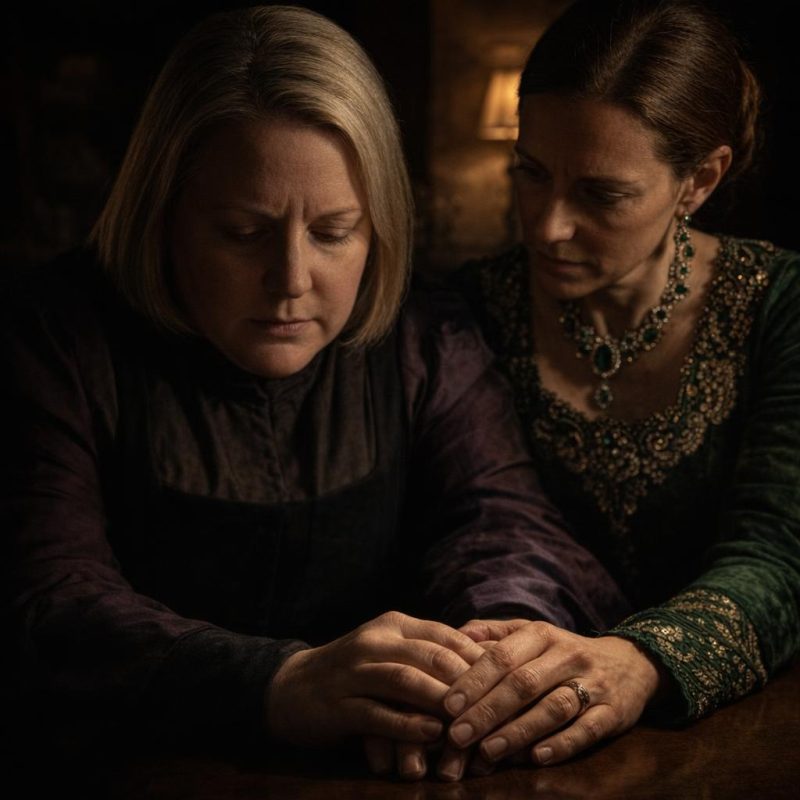 Image by RM AI
The Question of Marriage
The conversations began in rooms I was not invited into. I would hear my name spoken through half-closed doors, attached to the names of foreign princes and Protestant dukes, and I understood that I was being measured against political needs I could not fully see. Sarah told me what she heard — she always heard things — and she would sit with me in the evenings and lay out the possibilities like cards on a table, her voice brisk and practical, as though we were discussing someone else's future entirely. There was a French candidate briefly, and a German one, and each time a name surfaced I would try to imagine a face and find only blankness. I asked Sarah once whether she thought any of them might be kind, and she gave me a look that was almost pitying. Kindness, she said, was not the point. The point was alliance, religion, and the succession. I knew she was right. I had always known it, in the way you know things you would rather not. I was a princess of England, and my hand was a piece of policy, not a gift I had any right to give. I sat with that knowledge in the evenings, in the particular quiet that falls when everyone else has somewhere to be, and felt the loneliness of it settle into me like cold water finding its level.
 Image by RM AI
The Prospect of Prince George
His name came to me through Sarah first, as most things did. Prince George of Denmark — she said it with a slight lift of her brow that meant she had already formed an opinion and was deciding how much of it to share. He was Protestant, she said, which was the essential thing. He was not ambitious, which was either a virtue or a failing depending on how you looked at it. He had no enemies worth mentioning, no great passions, no history of cruelty. I listened and tried to find something to object to and could not. When I finally met him, he was exactly as described — pleasant-faced, unhurried, with a manner so gentle it was almost startling after years of court sharpness. He spoke to me carefully, as though he genuinely wished to be understood rather than merely impressive. Sarah watched from across the room with an expression I could not quite read, and afterward she said he would do, which from Sarah was something close to high praise. I did not love him. I did not expect to. But he had looked at me without calculation, without agenda, and something in me that had been braced for worse slowly, cautiously, began to ease. I thought that perhaps kindness, if it was real and consistent, might be enough to build a life upon.
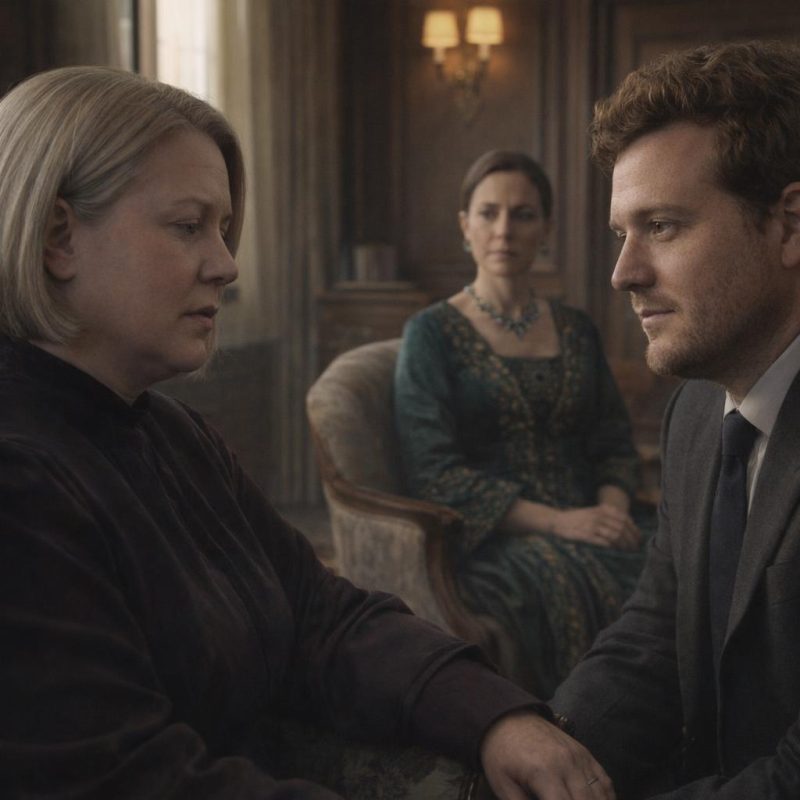 Image by RM AI
The Marriage of Convenience and Unexpected Comfort
Sarah told me about John Churchill on a Tuesday afternoon, in the same matter-of-fact tone she used for everything, as though the news were simply another item to be noted and filed away. She was going to marry him. He was capable, well-regarded, rising. She said it all very efficiently, and I sat there nodding and saying the right things — that I was glad for her, that he was a fine choice, that she deserved happiness — and every word was true, which made it no easier to say. I was glad for her. I was also terrified in a way I could not explain without sounding like a child. She had been the fixed point around which my days organized themselves for so long that I could not quite picture the shape of my life without her at the center of it. She told me, firmly and with some impatience, that nothing would change between us, that marriage altered nothing essential. I believed her because I needed to. The wedding was small and quick, the way practical people arrange such things, and I stood among the witnesses and watched her speak her vows to another person with a steadiness that I could only admire and could not match, and somewhere beneath my genuine happiness for her, the old fear — the one that had lived in me since my mother died — stirred and asked whether I was about to lose her too.
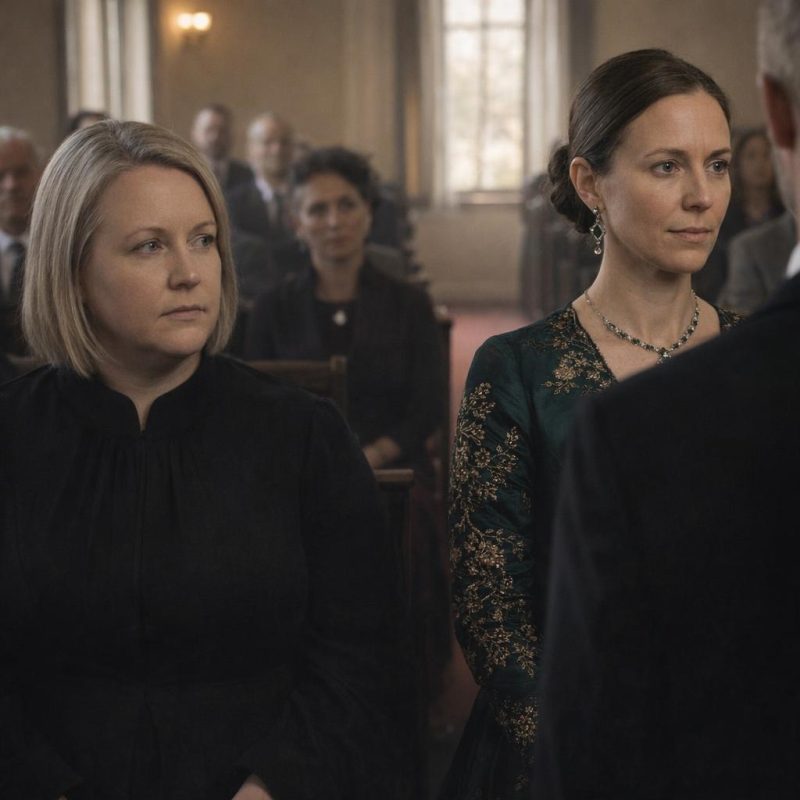 Image by RM AI
A Husband Who Offered Gentleness
The ceremony was held in the Chapel Royal, and my father attended with the careful blankness of a man performing a duty he had not chosen. George stood beside me in his Danish formality, a little stiff, a little earnest, and when the moment came for him to take my hand his grip was warm and unhurried, as though he had all the time in the world and intended to use it gently. I had braced myself for the day the way you brace for something you cannot avoid — shoulders set, breath shallow, waiting for it to be over. But George said his vows without flourish and without irony, and there was something in his plainness that I had not expected to find moving. Sarah stood among the attendants, composed and watchful, and my father stood apart, and the court filled the space between them with its usual performance of celebration. That evening, when the formalities had finally released us, George asked whether I was tired and whether I would like him to leave me in peace, and the question itself — the simple, undemanding courtesy of it — undid something in me that I had been holding tightly for a very long time. I had been treated as a problem to be managed for so many years that being treated gently felt almost foreign, and I sat with that feeling long after the candles had burned low.
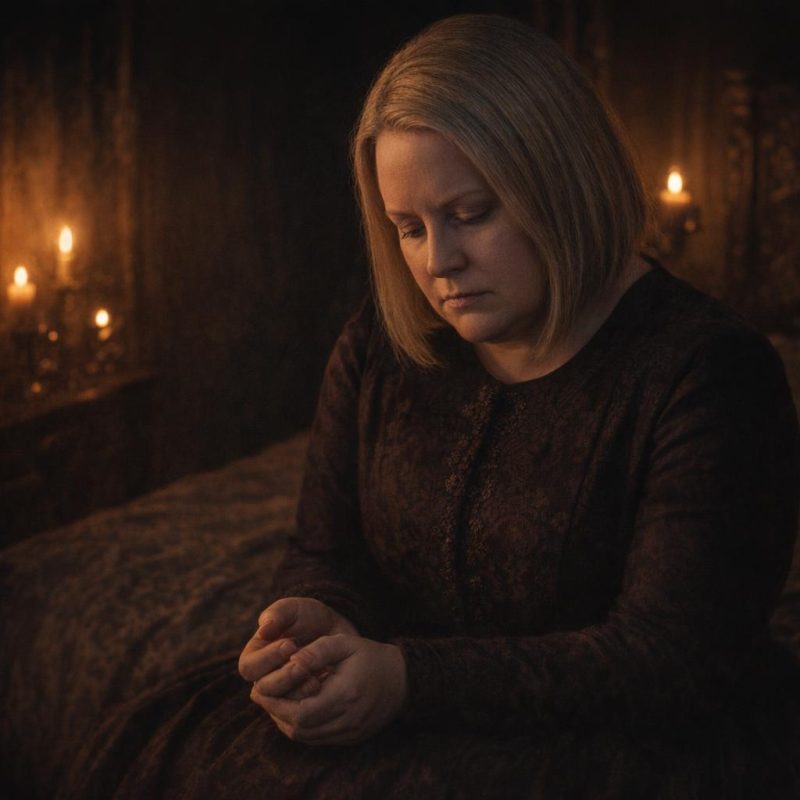 Image by RM AI
The Early Days of Marriage
The months settled into a rhythm I had not anticipated — quiet, unhurried, marked by George's steady presence and his absolute refusal to be anything other than what he was. He was not witty. He was not ambitious. He did not fill a room with energy or leave it feeling diminished when he departed. He was simply there, reliably and without drama, and I found that I was grateful for it in a way I had not expected to be. I told Sarah as much one afternoon, and she listened with the patient expression she wore when she thought I was making the best of something. She was not wrong, exactly. I had hoped, in some private and unexamined part of myself, for something more — for the kind of marriage that felt like a discovery, like finding a country you had not known existed. What I had instead was companionship, and George's gentle deference, and the knowledge that he would never wound me deliberately. Sarah remained the person I turned to when I needed to think aloud, when I needed to feel understood rather than merely accommodated. George gave me peace. Sarah gave me everything else. I understood, without quite putting it into words, that this was the shape of my life now — comfortable, bounded, and quietly short of what I had once, in some unguarded moment, allowed myself to want.
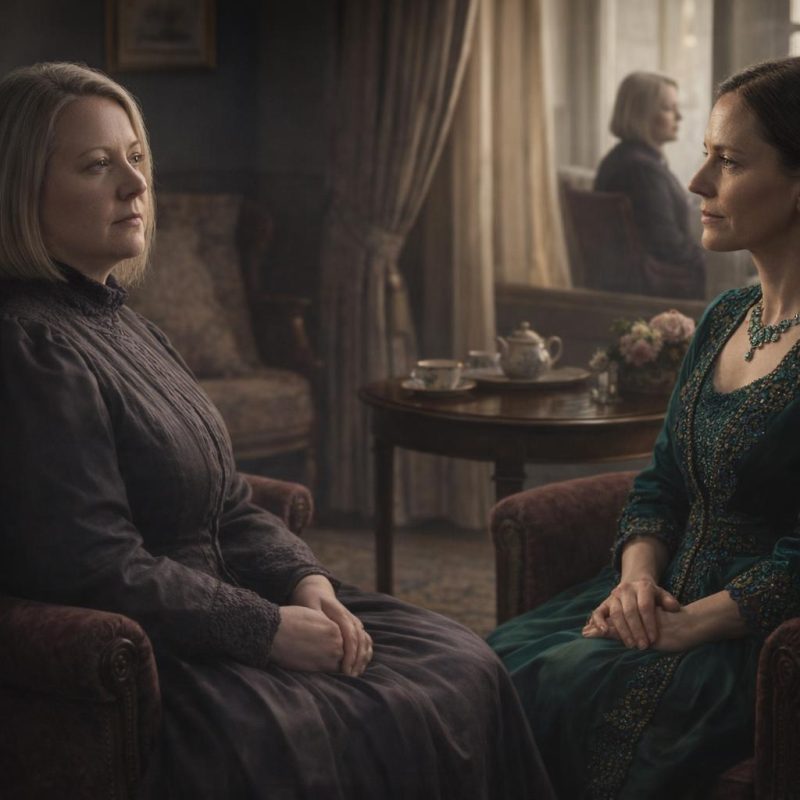 Image by RM AI
The Hope of an Heir
The news came to me first as a suspicion, then as a certainty confirmed by the physicians, and then as something the entire court seemed to know before I had fully absorbed it myself. I was with child. George received the news with a warmth that was entirely characteristic of him — no performance, no grand declaration, just his hands around mine and his face open with something that looked very much like uncomplicated joy. Sarah was more brisk about it, practical in the way she was practical about everything, already thinking about what it meant, who needed to be told, what arrangements would need to be made. The court celebrated with the enthusiasm of people who understood that an heir was a political necessity, and I moved through their congratulations feeling both seen and strangely invisible, as though the child inside me were the real subject of everyone's attention and I were merely the vessel carrying it. The physicians gave me instructions. George hovered with gentle solicitude. Sarah organized. And I lay awake at night with my hand pressed flat against my stomach, trying to feel something beneath the anxiety — trying to locate the hope I knew was in there somewhere beneath all the fear. Then one evening, in the particular stillness just before sleep, I felt it — the faintest flutter, barely there, like a moth against glass — and I let myself believe, just for that moment, that this child would live.
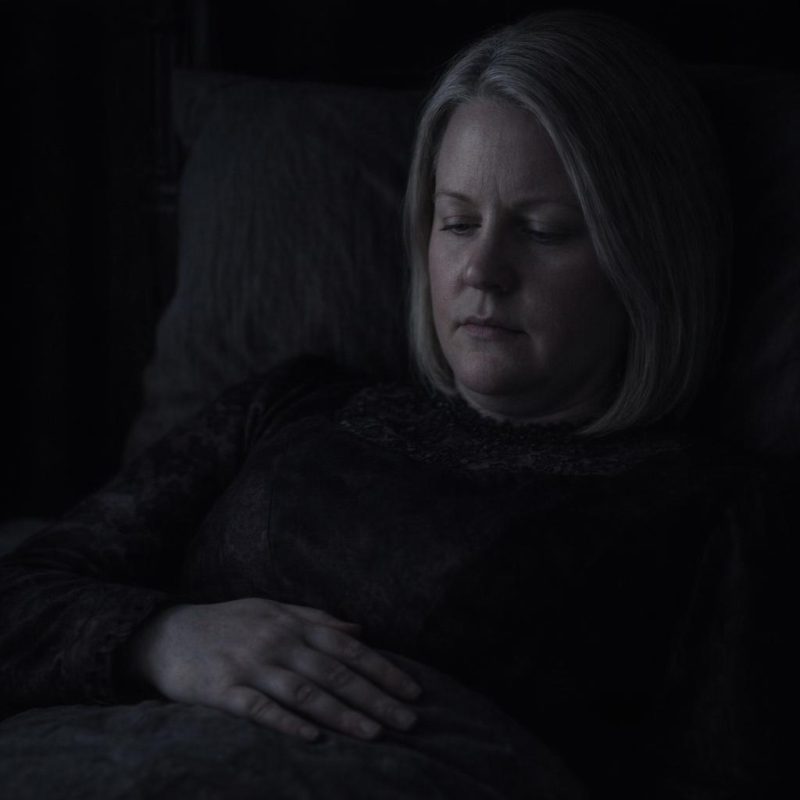 Image by RM AI
The First Loss
It began with pain in the night — sudden and specific, the kind that does not leave room for doubt. I called out and George was there almost immediately, his face pale in the candlelight, and then the physicians came, and then Sarah, and the room filled with the quiet controlled urgency of people who already knew what was happening and were managing it rather than preventing it. It was over before morning. The physicians spoke to me in careful, measured voices, and I heard the words they used and understood them and felt nothing for a long moment — just a strange, flat silence where feeling should have been. George wept, which surprised me. He sat beside the bed with his head bowed and his shoulders shaking, and I watched him and could not find my own tears yet. Sarah held my hand and said nothing, which was the right thing, the only right thing. In the days that followed, the grief came in waves — for the child I had never held, for the future I had briefly allowed myself to imagine, for the body that had failed at the one thing a queen's body was required to do. I had known loss before. I had lost my mother, my grandmother's warmth, my father's regard. But this was different. This loss had come from inside me, and as I lay in that bed staring at the ceiling, I felt something settle into my bones — a cold, quiet weight, like the first stone laid in a foundation I had not asked to build.
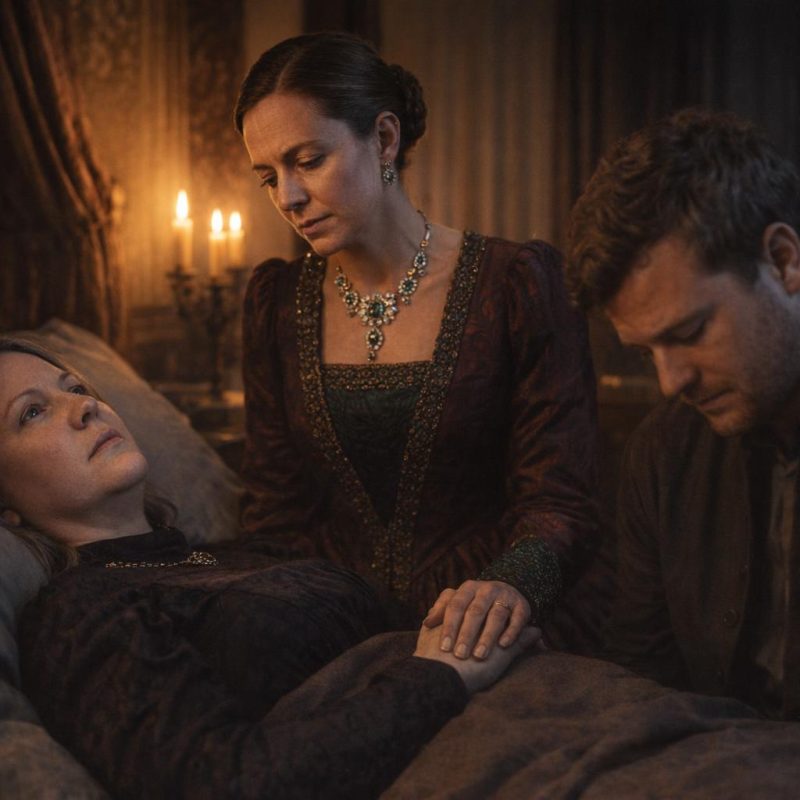 Image by RM AI
A Crown Built on Controversy
My uncle Charles died in February, and before the month was out my father was King James II of England. I was still recovering — still tender in ways I could not name — when the day of his proclamation came, and I stood among the household and watched the ceremony with a feeling I could not quite name. The celebrations turned uneasy almost at once, the cheers in the streets thinning and the pamphlets beginning to appear. My father's Catholicism was not a secret, had never been a secret, but there is a difference between tolerating a Catholic duke and crowning a Catholic king, and the people of England felt that difference in their bones. George said little, as George always did, but I could see the worry behind his mild eyes. Sarah said a great deal. She came to me one afternoon and sat close and spoke in that low, certain voice she used when she wanted me to understand something was not a matter of opinion. She said England would not bear it. She said the Protestant faith was not a preference but a foundation, and that a king who undermined it undermined everything. I listened and felt it pulling against the love I still carried for my father, and I did not know how to hold both things at once. Then, one evening, I heard two of the household men speaking in the corridor outside my door — their voices low, their words careful — and one of them said that there were already men in the north who believed the king's reign would not last the decade.
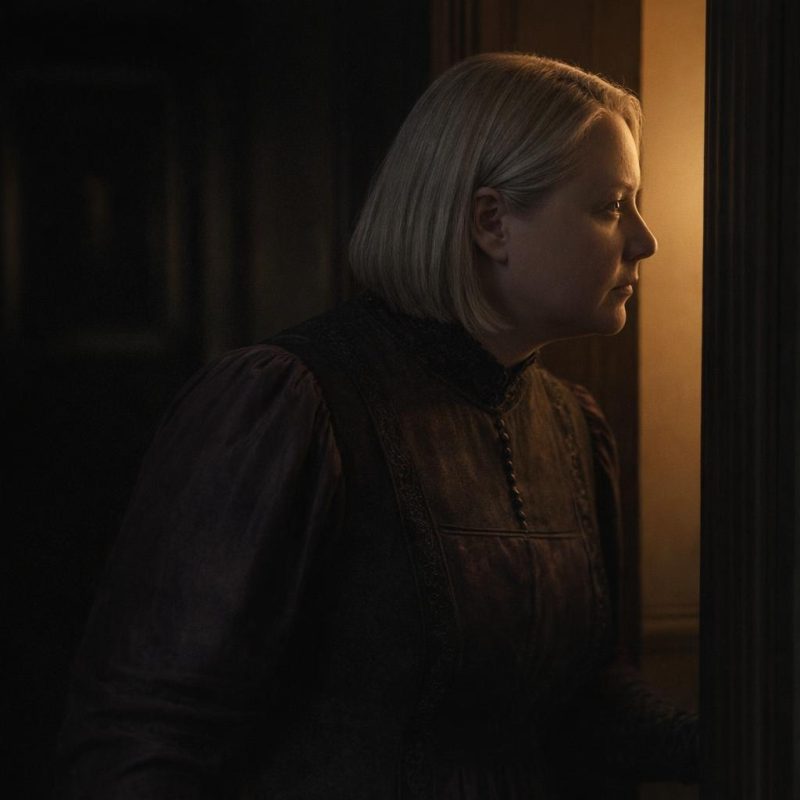 Image by RM AI
The Accumulation of Empty Cradles
The second pregnancy ended the same way the first had — in the night, in pain, in silence. The third came and went before I had allowed myself to fully believe in it. By the fourth I had learned not to speak of it too soon, not to let the hope take root too deeply, because pulling it out later cost more than I had left to spend. George wept each time, quietly and without complaint, and I loved him for it even as I could not always find my own tears. Sarah was there through all of it — sitting with me, holding my hand, saying the practical things that needed saying when I could not speak at all. The physicians used different words each time, careful words, words that meant the same thing dressed in different clothes. I began to dread the particular quality of morning light that came with early pregnancy, the tenderness, the fragile hope that arrived before I could stop it. After the fifth loss — or perhaps the sixth, the numbers had begun to blur at the edges — I lay in the dark and felt something go quiet inside me. Not peace. Nothing so gentle as that. It was more like a door closing in a room I had not known I was still keeping open. George took my hand in both of his and held it, and I let him, and neither of us said anything, because there was nothing left that words could reach.
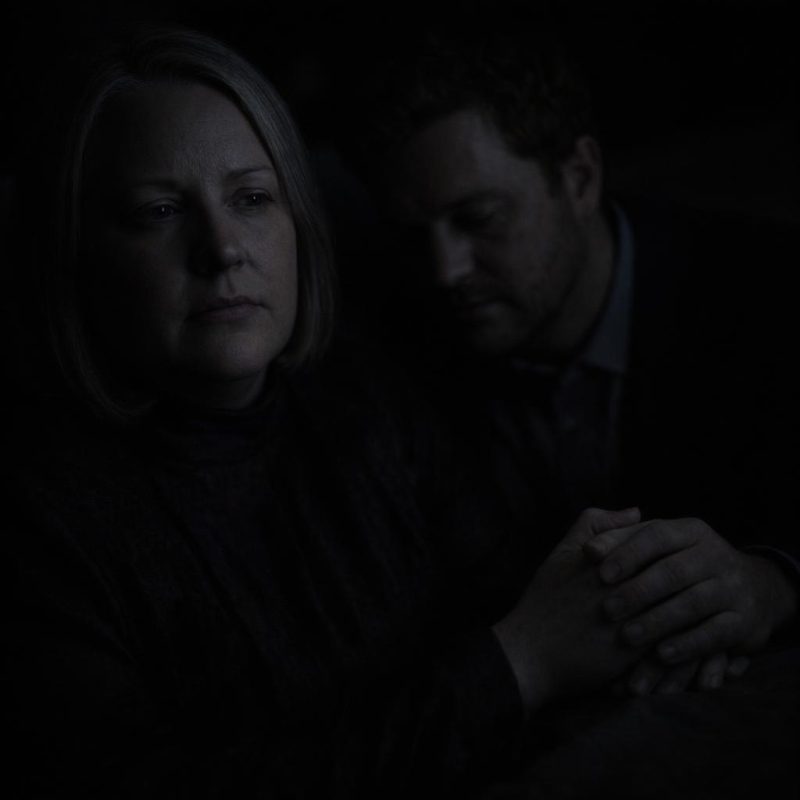 Image by RM AI
The Warming Pan Conspiracy
Mary of Modena had been my father's spouse for years without producing a living child, and then suddenly, in the tenth year of their marriage, she was with child. I heard the announcement and felt something cold move through me that I could not entirely explain. She was young still, yes, but the timing of it — the political timing, the desperate Catholic need for a male heir — sat wrong in a way I could not dismiss. Sarah came to me within hours, her voice low and her eyes sharp, and she said what others were only whispering: that the pregnancy had appeared too conveniently, that the birth had been attended by too many strangers and too few trustworthy witnesses, that a warming pan had been carried into the chamber before the child appeared. I had not been present at the birth. None of the Protestant ladies had been. A son was announced — a healthy Catholic son, a new Prince of Wales — and my place in the succession, which had felt like solid ground beneath my feet, suddenly felt like something I had only imagined. I wrote to my sibling Mary in the Netherlands and told her I did not believe the child was real, that I could not believe it, that everything about the circumstances felt constructed. I could not prove any of it. But the unease of it settled into me and would not be shaken loose — a suspicion too heavy to set down, too unverifiable to fully name.
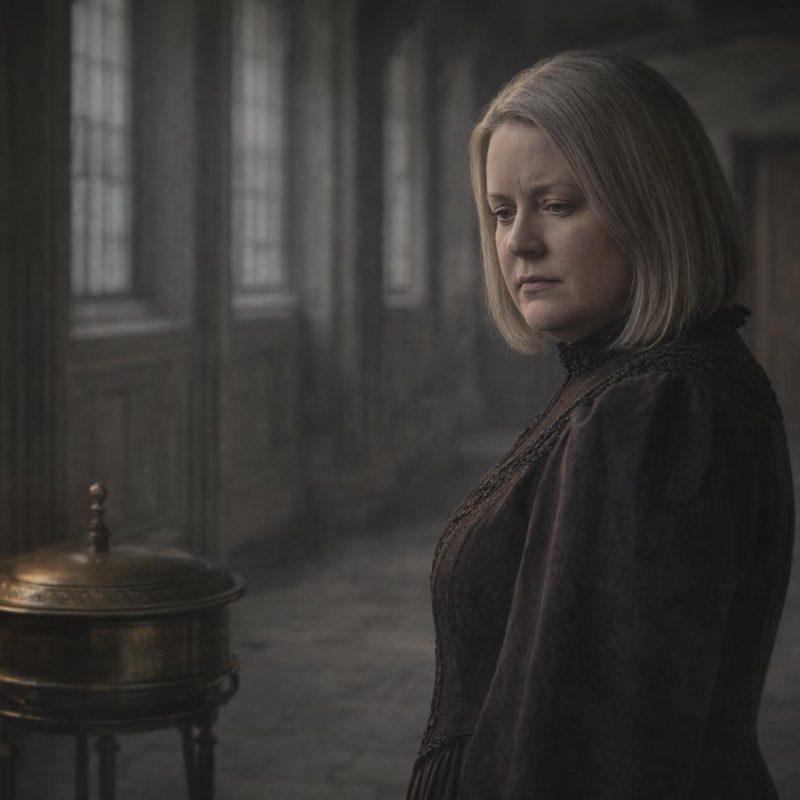 Image by RM AI
The Invitation to Invade
The letter came through Sarah, as most things did in those days. Protestant nobles — men of title and standing, men who had served my father and found they could not continue — had written to my brother-in-law William in the Netherlands and invited him to bring an army to England. I read the words and sat very still for a long time. Sarah did not give me long to sit. She came and stood near the window and laid it out plainly: my father's reign was built on a faith England would not accept, the warming pan child had changed everything, and if William did not come then the Catholic succession might hold and everything the Protestant cause had suffered for could be lost. George said he would support whatever I decided, and I believed him, because George had never once said a thing he did not mean. I thought about my father — his stern face, his absolute certainty, the way he had always seemed to love his faith more than he loved his children. I thought about my mother, who had died in that faith and left me before I could ask her what it had cost her. I thought about the children I had lost and the country I might one day be asked to govern. The choice felt like stepping off a ledge in the dark. But I made it. And when I had made it, I felt something settle — not peace exactly, but the particular stillness that comes after a long and terrible decision has finally been reached.
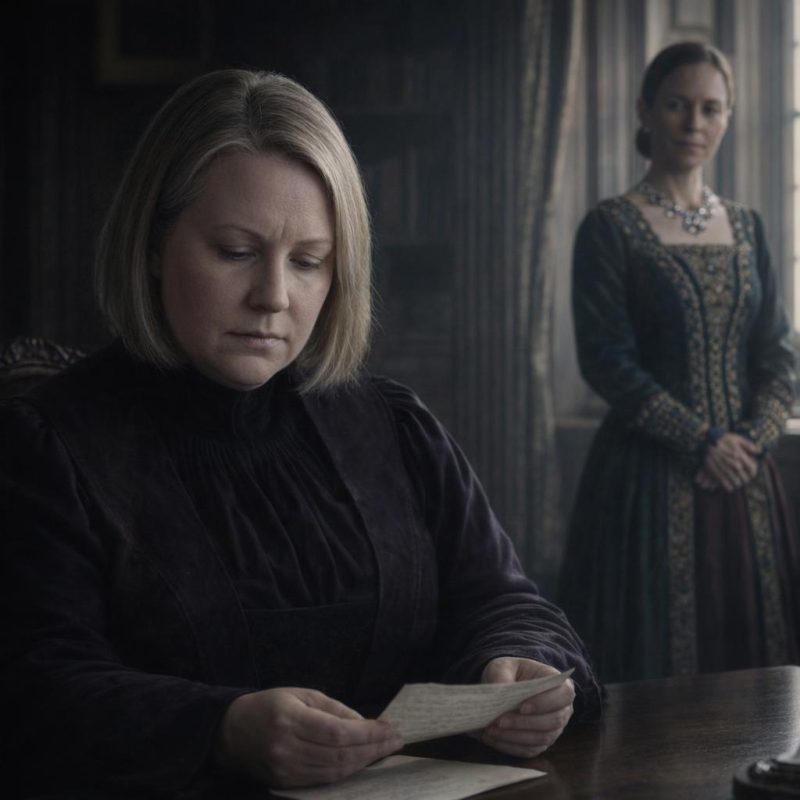 Image by RM AI
Flight in the Rain
It was raining the night we left — a cold, driving November rain that soaked through everything and turned the torchlight into smears of orange against the dark. Sarah had arranged it all: the route, the horses, the people who would look the other way. I dressed quickly and without ceremony, and I did not allow myself to look too long at the rooms I was leaving. George was steady beside me, his hand at my elbow on the wet steps, his breath visible in the cold air. We moved through the back of the palace and out into the night, and the rain came down and the horses were nervous and Sarah kept us moving, always moving, her voice low and certain in the darkness. I thought about my father somewhere inside those walls, asleep perhaps, not yet knowing. I thought about the last time I had seen his face — the rigid set of his jaw, the absolute conviction in his eyes — and I wondered if he would understand, or if understanding was something I had no right to ask of him. We rode for hours through the wet dark, the city falling away behind us, the road uncertain ahead. By the time the rain began to ease, there was no going back, and I think I had known that before we ever left. The life I had lived inside those walls was finished, and the cold and the dark and the mud on my hands were the only ceremony it would get.
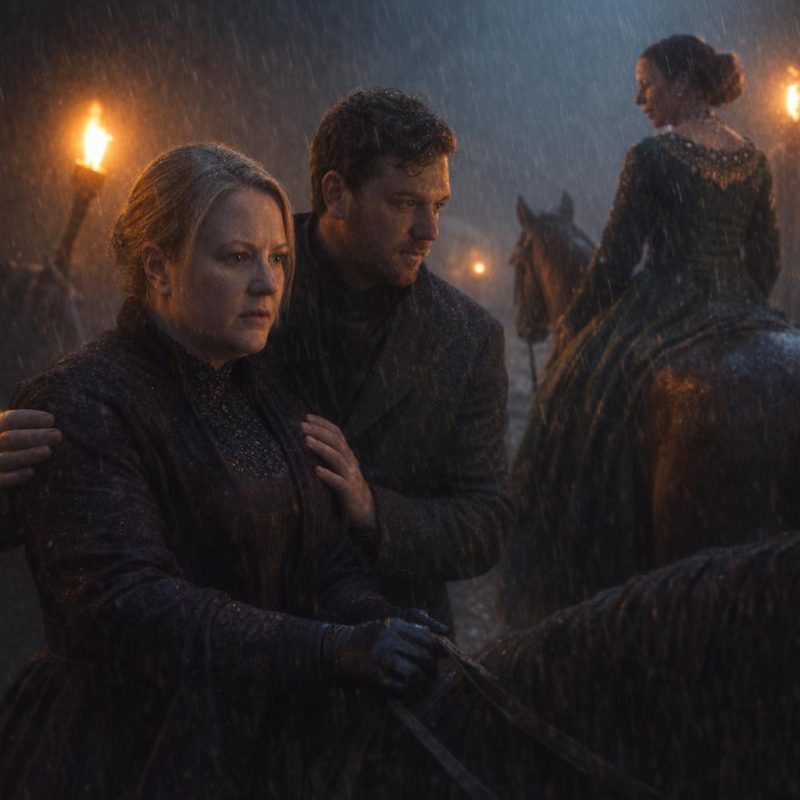 Image by RM AI
The Exile of a King
William's army moved through England almost without resistance, and my father's support dissolved the way frost does — not broken, just gone. James fled before a battle could be fought, slipping out of England in the night like a man who had already accepted what the morning would bring. I heard the account secondhand, then third, each telling slightly different, but the shape of it was always the same: a king departing in darkness, without ceremony, without the dignity his office should have afforded him. Mary and William were invited to take the throne as joint monarchs, and the thing was done with a speed that left me breathless. Sarah told me I had chosen correctly, and I believed her, and the belief did not make it easier. There was one moment — a brief audience, arranged by others, before my father crossed to France — when I was in the same room as James. He did not speak to me directly. He stood at the far end of the chamber in his traveling coat, and when his eyes found mine across the distance, his face went very still. Not angry. Something past anger — something that had already finished with anger and moved on to a place I had no name for. He held my gaze for a long moment, and then he turned away, and I watched his back as he walked toward the door.
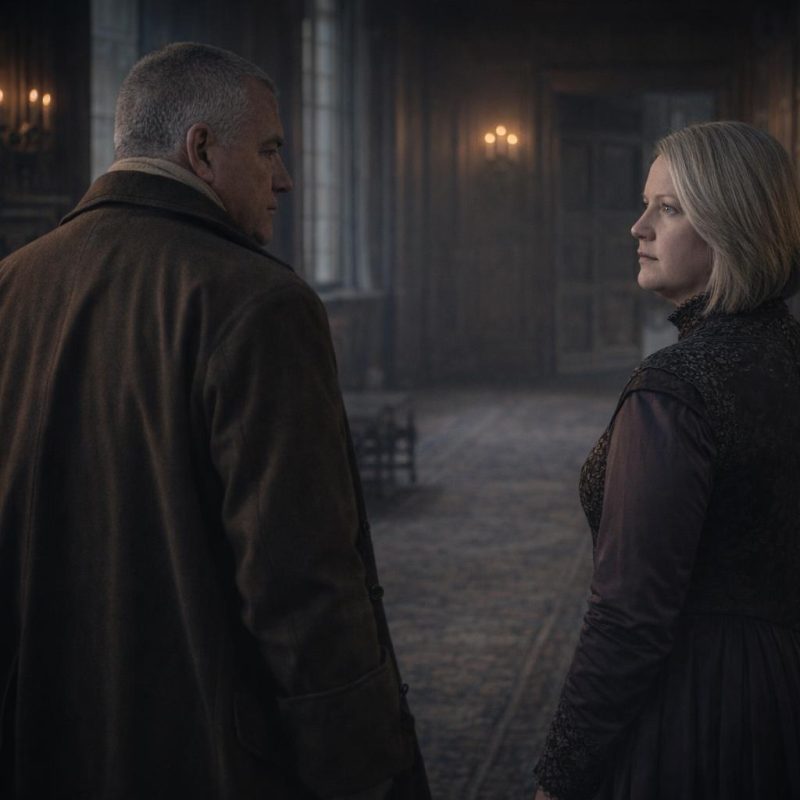 Image by RM AI
Losses Under a Sister's Reign
My sibling Mary wore the crown with a grace I could not help but admire, even when admiring it cost me something. She and William ruled together, and the country seemed to exhale — the Protestant succession secured, the Catholic threat receded, the crisis resolved. I watched from the edges of the court and tried to feel glad, and sometimes I managed it. But my own life continued its grim rhythm beneath the surface of all that relief. I became pregnant again during the first year of Mary's reign, and again the year after, and again after that. George held my hand through each loss with the same quiet devotion, his grief as steady and undemonstrative as everything else about him. Sarah came and sat with me and said the things that needed saying. The physicians came and went. The cradles stayed empty. I began to feel that the court's celebration of my sibling's reign was a kind of light I was standing just outside of — close enough to see it, too far to feel its warmth. Mary sent kind messages. I believed they were sincere. But there is a particular loneliness in grieving while the world around you has decided it is done with grief, and I carried that loneliness through those years like a stone in my chest that no one else could see or lift.
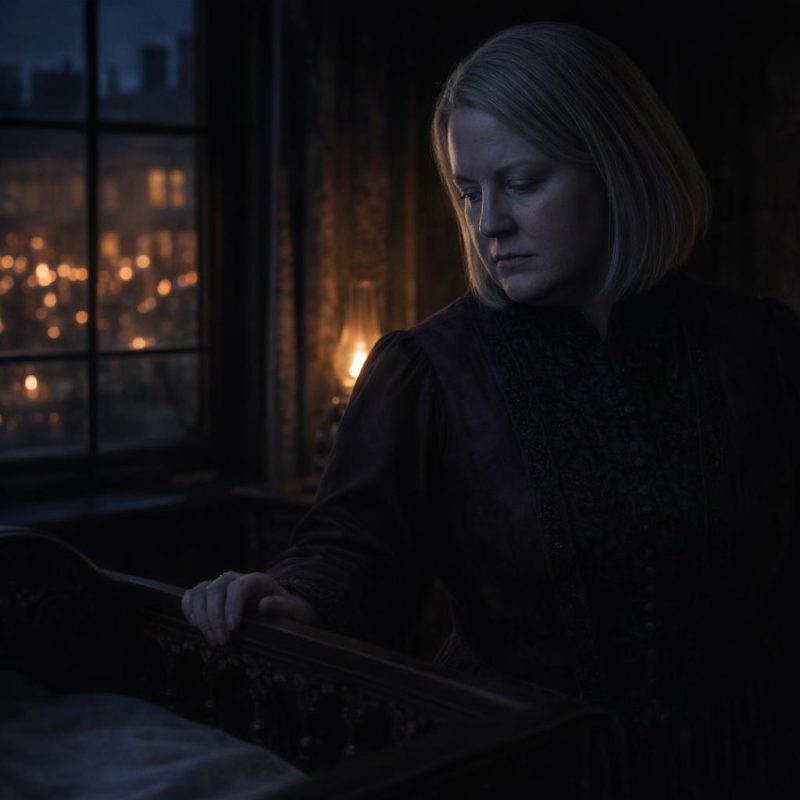 Image by RM AI
The Miracle of Gloucester
He was born in July, small and pale and furiously alive, and I did not breathe properly for the first hour of his life. I had been through this before — the birth, the brief terrible hope, the silence that followed. So I lay there and watched the physicians and waited for the thing I had learned to expect. But he kept breathing. He cried, a thin reedy sound that was the most extraordinary thing I had ever heard, and he kept crying, and the hours passed and he was still there. George wept openly, without any attempt at composure, and I had never loved him more than in that moment. Sarah declared him perfect and healthy and said it with such force that I almost believed her before I had finished being afraid. We named him William, and in the weeks that followed I watched him with a terror that never entirely left me — checking the rise and fall of his small chest, counting his breaths in the dark. But he grew. Slowly, uncertainly, with a fragility that never quite disappeared, but he grew. By the time he had survived his first months I allowed myself, carefully and with both hands, to hold the thing I had not dared to hold in years — the plain, astonishing fact of a living child in my arms.
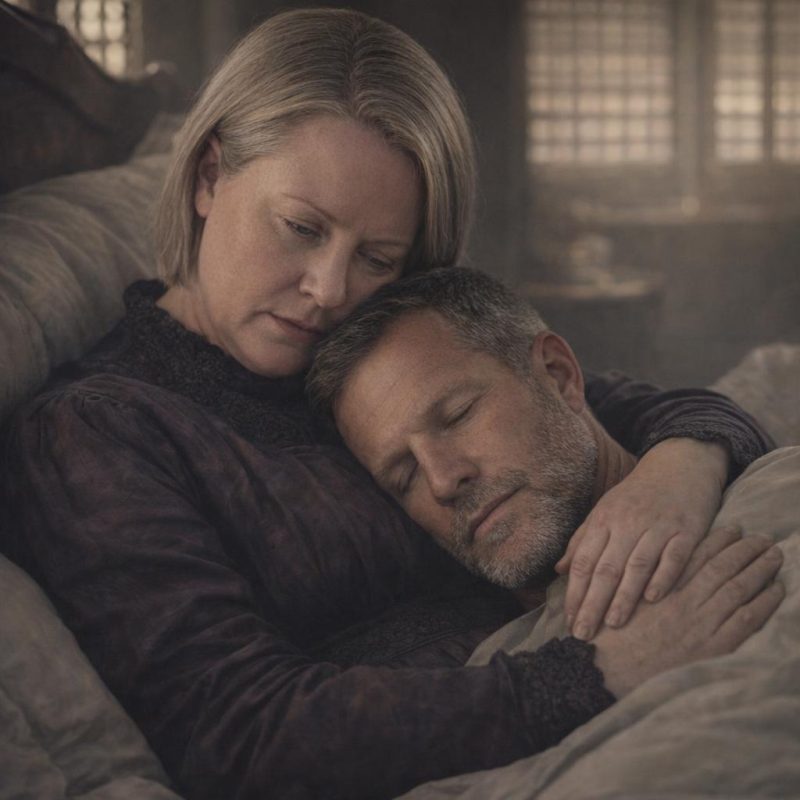 Image by RM AI
The Fragile Prince
He was three years old before I stopped counting his breaths in the dark. Even then, I never fully stopped. William's head was larger than it should have been — the physicians had a name for it, something Latin and clinical that did nothing to explain the fear that lived in my chest every time I looked at him. His body was small, almost delicate, and he tired easily in ways that other children did not. But his mind — his mind was extraordinary. He would ask questions that made George laugh with surprised delight, and he had a sweetness about him that made everyone who met him love him immediately. Sarah fussed over him with genuine warmth, and George would spend whole afternoons on the floor with him, patient and devoted in a way that made my heart ache with something close to happiness. Close to it, but never quite there. Because I had buried too many children to trust happiness entirely. I watched him run across the garden one afternoon, laughing at something George had said, and I felt the joy of it and the terror of it in the same breath — the two things so tangled together by then that I could no longer tell where one ended and the other began.
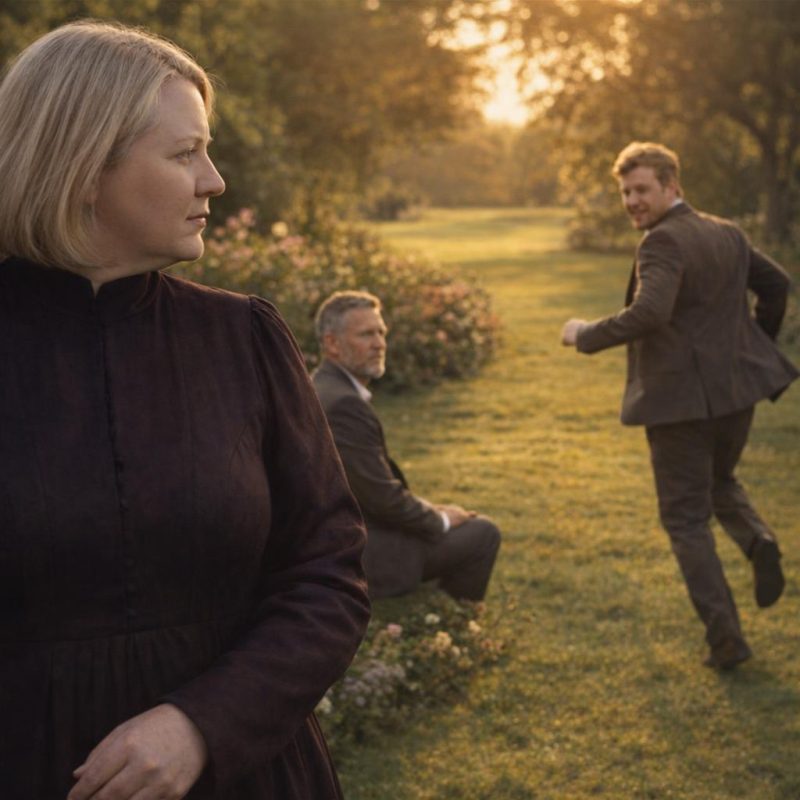 Image by RM AI
The Coldness Between Sisters
There had been a time when Mary and I wrote letters that felt like reaching across a room to hold each other's hand. That time was gone. I could not have told you exactly when it ended — it happened the way most losses do, gradually and then all at once. William's influence over her was total, and I understood that she was queen and I was merely the heir, but understanding a thing does not make it hurt less. She grew formal with me in ways that felt deliberate, her letters arriving less frequently and carrying less of herself when they did arrive. Sarah told me it was William's doing, that he resented my household and my independence, and I believed her because it was easier than believing my sister had simply chosen distance. There were disputes over money, over appointments, over the size of my establishment — small things that accumulated into something that felt very large. When we were in the same room, Mary was composed and correct and entirely unreachable. I would look at her across a formal dinner and try to find the girl who had shared my childhood, and I could not find her anywhere in that composed and queenly face. The loneliness of it settled into me quietly, the way cold settles into a house when the fires have been left too long untended.
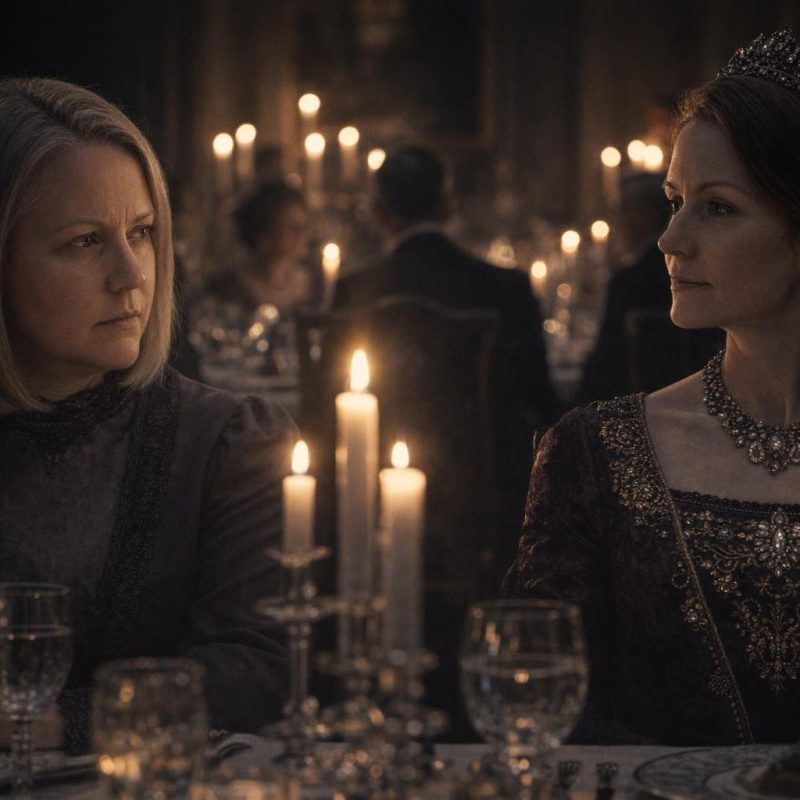 Image by RM AI
The Visible Hand
I had always told myself that Sarah simply understood me better than anyone else did — that our agreement on most things was proof of how well-matched we were as friends, not proof of anything else. But there were moments, small and quickly dismissed, when something snagged at the edge of my attention. I noticed that my opinions on household appointments had a way of arriving fully formed, as though I had always held them — and yet, when I tried to trace where they had come from, I found I could not quite account for them. I noticed that my positions on certain political matters — matters I had once felt uncertain about — seemed to have settled into convictions I could not entirely explain, and I wondered sometimes whether I had thought them through as carefully as I believed. George would sometimes look at me with a mild, puzzled expression when I spoke about such things, and I would feel a brief flicker of something I could not name before I pushed it away. Sarah was my dearest friend. She had been with me through every loss, every grief, every dark year. To question her influence felt like ingratitude of the worst kind, and I was not an ungrateful person. I told myself this firmly and often. But one afternoon, speaking with one of my ladies about a matter of no great importance, I heard myself use a phrase — a very particular turn of words — and something cold moved through me, because I had heard those exact words from Sarah's mouth not three days before.
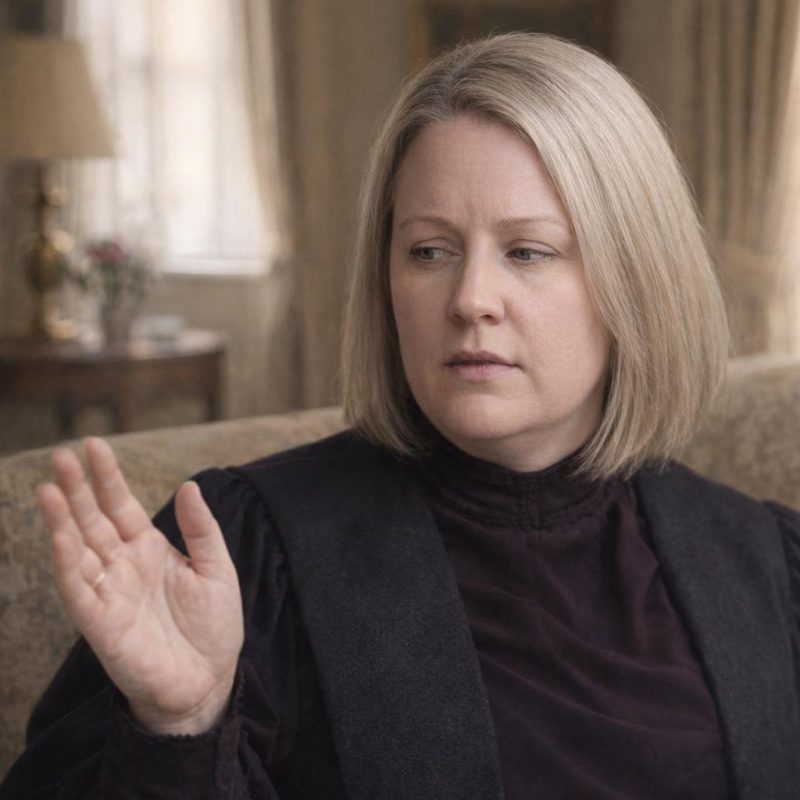 Image by RM AI
The Death of a Queen
The news came in December, and it came quickly, the way the worst news always does — no time to prepare, no warning sufficient to the thing itself. Mary had taken ill. Smallpox, they said, and I felt the floor shift beneath me because I knew what smallpox meant, had seen what it could do. I sent word immediately, but William's court kept me at a distance that felt both political and personal, and I was not permitted to see her before the end. She was thirty-two years old. Thirty-two, and queen, and gone within days of the first reports reaching me. I sat with that number for a long time afterward — thirty-two — turning it over as though it might eventually make sense. We had not been close, not truly, not for years. But she had been my sister, the girl who had shared my earliest memories, and grief does not require closeness to be real. I wept for her and for the girl she had been before politics and William and the weight of a crown had made her someone I could no longer reach. And then, when the weeping had quieted enough for thought to return, I understood what her death meant in the plainest possible terms: William still sat on the throne, and I was next.
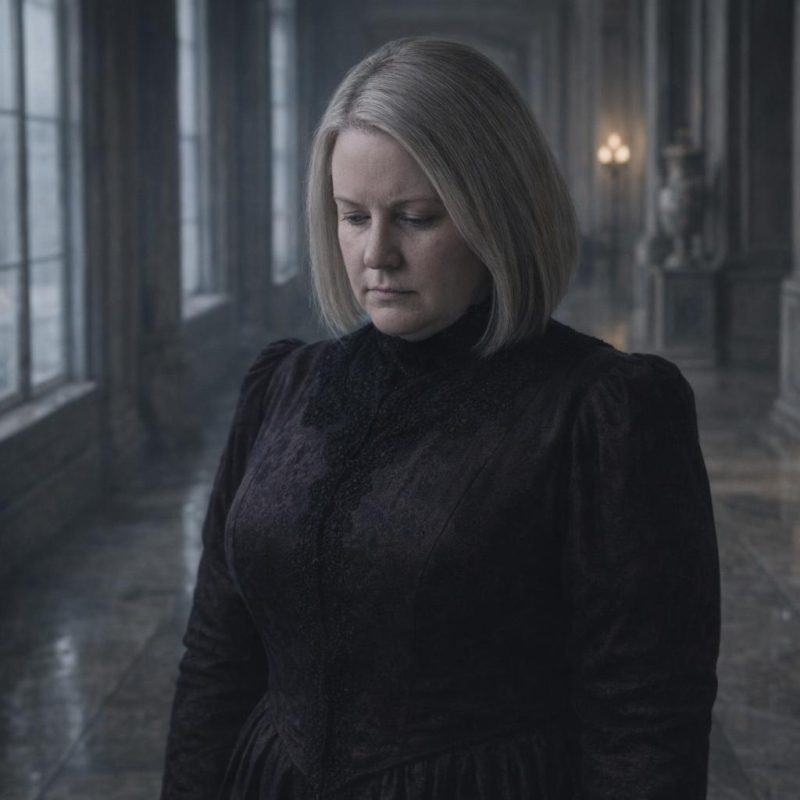 Image by RM AI
The Heir Apparent's Burden
William did not soften toward me after Mary's death. If anything, the distance between us grew more pronounced — he ruled alone now, and I was the heir he had never wanted, the reminder that the Stuart line would continue through me rather than through him. His court treated me with the careful courtesy one extends to someone whose importance cannot be ignored but whose presence is not entirely welcome. Sarah said I should assert myself more, and perhaps she was right, but the weight of what I now represented made assertion feel dangerous rather than empowering. The kingdom's future ran through me, and through William — my son, my fragile, brilliant, beloved boy who was growing into something remarkable despite everything his body worked against him. He was nine years old and already showing a seriousness of purpose that made the courtiers speak of him with genuine hope. I watched him practice his lessons with a concentration that reminded me painfully of myself at his age, and I felt the full terrible arithmetic of it: if William died without an heir, the crown passed to me; if I died without an heir, the succession fractured entirely. My son was not merely my child anymore. He was the answer to a question the whole kingdom was asking, and I watched him one evening bent over his books, small and pale and utterly unaware of the weight the world had placed upon his narrow shoulders.
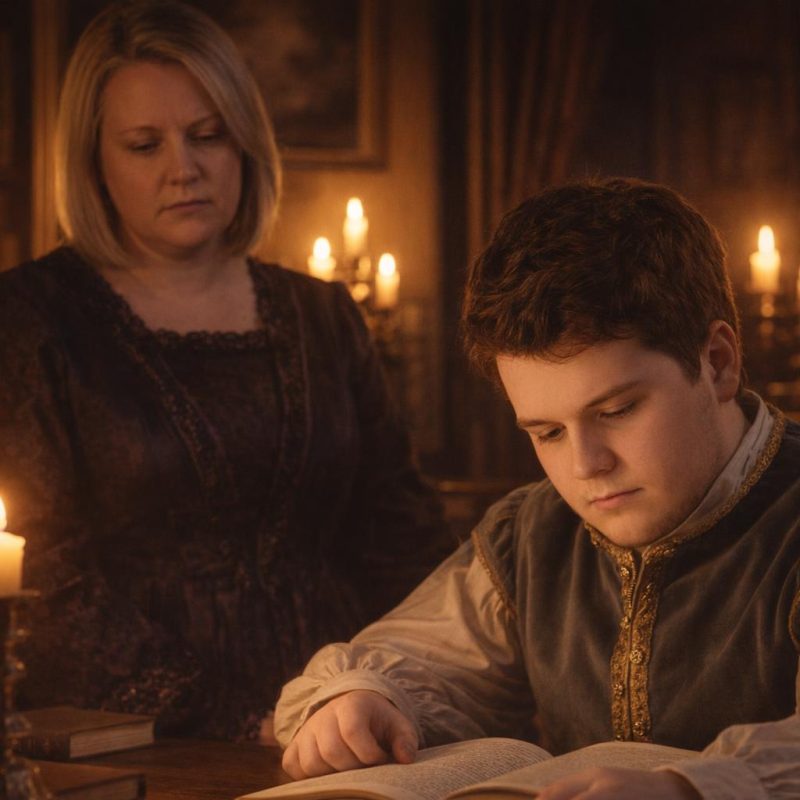 Image by RM AI
The Fever That Took Everything
He fell ill on a Thursday. By Saturday I knew it was serious. By Monday I had stopped leaving his room. The fever came on fast and fierce, the way fevers do in children who have never had much reserve to draw on, and the physicians came and went with their grave faces and their careful words that said everything and promised nothing. George sat on one side of the bed and I sat on the other, and we did not speak much because there was nothing to say that would help. Sarah was there, somewhere in the house, but I was not aware of anything beyond that small pale face on the pillow and the sound of his breathing, which changed by the hour in ways that terrified me. He was eleven years old. He had survived things that should have taken him a dozen times over. I held his hand and I talked to him and I told him he was going to be all right, which was the only lie I have ever told with my whole heart, because I needed it to be true more than I had ever needed anything. On the fourth day, just before dawn, his breathing changed for the last time. George made a sound I had never heard from him before and have never heard since. The room was very quiet after that — a silence so complete it seemed to press against the walls, and I sat in it with my son's hand still in mine, unable to move, unable to think, unable to do anything at all but remain.
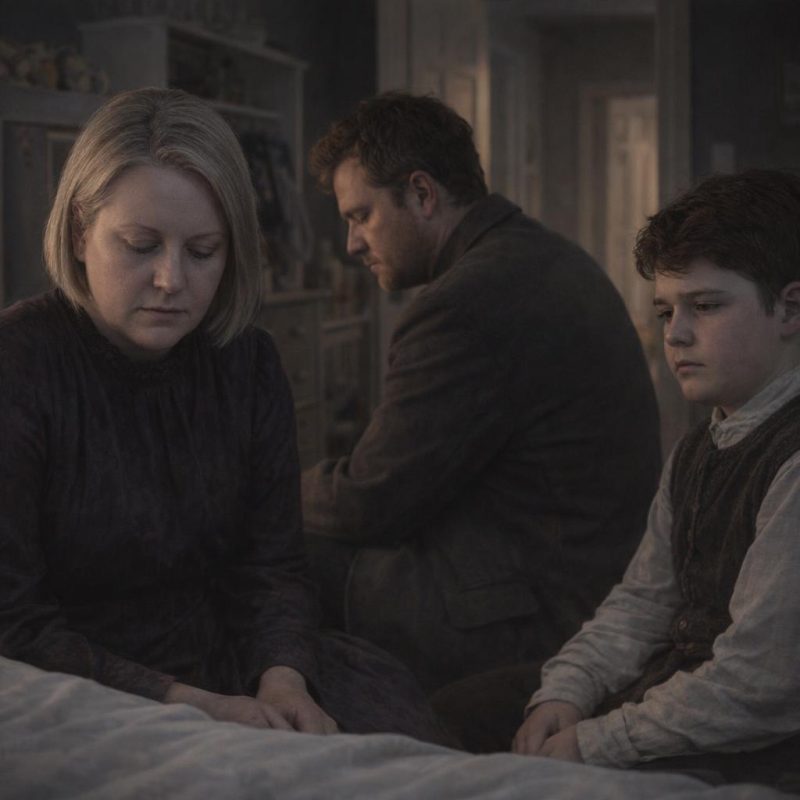 Image by RM AI
The Grief That Broke Me
The weeks that followed are difficult to account for. I know that people came and went, that George tried to speak to me, that Sarah was present in the house, that meals were brought and largely left untouched. I know these things the way you know facts you have read rather than lived — at a remove, without weight. My body, which had already been through more than any body should reasonably survive, began to fail in new and specific ways. My legs swelled. My joints ached with a persistence that made movement feel like punishment. I did not sleep so much as lose consciousness for short periods and then return to the same grey waking. George held my hand and wept quietly and I could feel his grief alongside mine, but I could not reach him through it. Seventeen pregnancies. Seventeen children lost, in one way or another, and now the one who had lived — the one I had let myself love without reservation, the one I had allowed myself to believe in — was gone too. Sarah spoke to me of duty, of the future, of what was still required of me, and I heard her words from a very great distance, as though she were calling down into a well. There was nothing left in me that cared about any of it. There was only the absence where my son had been, vast and permanent and entirely without comfort.
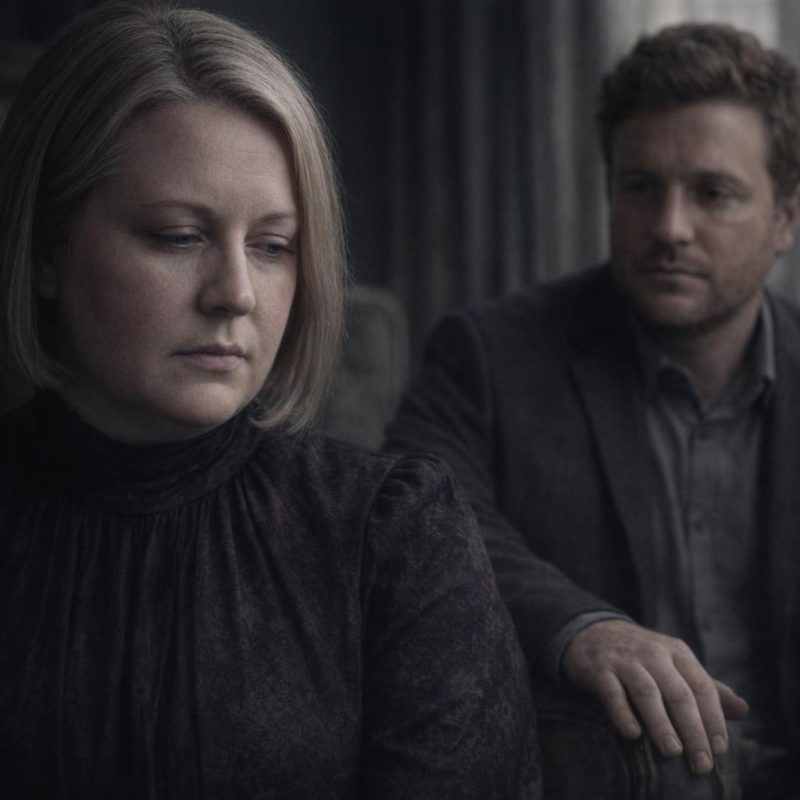 Image by RM AI
The Cruelty in Her Comfort
It was perhaps two weeks after the funeral when Sarah sat with me in my rooms and said the things she had come to say. I had been staring at nothing in particular, which was how I spent most of my time then, and I was grateful for her presence in the dull, automatic way I was grateful for anything that interrupted the silence. She spoke first of practical matters — correspondence that needed answering, appointments that required my attention — and I let the words wash over me without catching them. Then she said something about grief, about how it was important not to let it consume one entirely, about how William — my William, my boy — would not have wanted me to stop functioning. Her voice was even and measured, and the words were not wrong exactly, but something in the way she said them landed strangely, too brisk, too certain — the tone of someone moving through a list rather than sitting beside a person in pain. I looked at her then, really looked, and she met my gaze with an expression I could not quite read. I said nothing. She continued speaking, and then she said something — a single sentence, quiet and matter-of-fact — and the warmth went out of me entirely, as though someone had opened a window in the middle of winter.
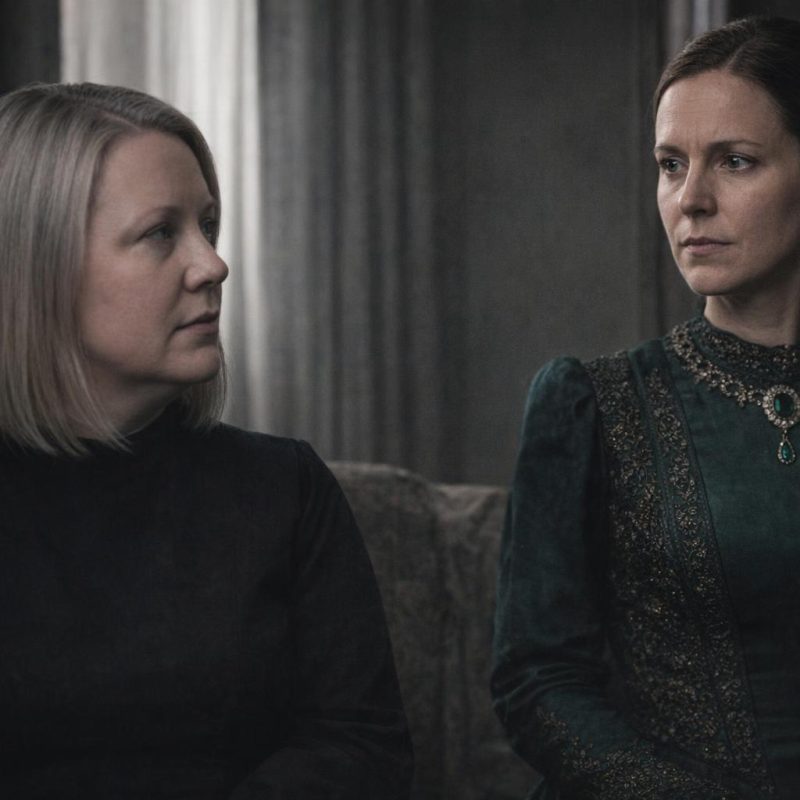 Image by RM AI
The Words That Cut Deeper Than Grief
The days after William's funeral blurred into one another, and Sarah kept coming. I had expected her visits to soften as the weeks passed, but they did not. She would arrive with her lists and her certainties, and she would speak to me about duty and strength and the importance of not surrendering to grief, and I would sit there in my chair with my swollen legs and my hollow chest and try to absorb what she was saying. George would sometimes be in the room, and I noticed how differently he moved around me — quietly, carefully, as though I were something fragile that deserved protecting. He would bring me tea without being asked, or simply sit beside me without speaking, and the warmth of that was so different from what Sarah offered that the contrast began to press on me in ways I could not ignore. She was not cruel in any obvious way. Her words were not wrong. But they landed like instructions rather than comfort, like a physician's orders rather than a friend's hand. I began to dread her visits in a way I had never dreaded anything connected to her before, and that dread itself frightened me. I kept telling myself I was being ungrateful, that she was trying to help. But something in the space between what I needed and what she gave me had grown too wide to pretend away.
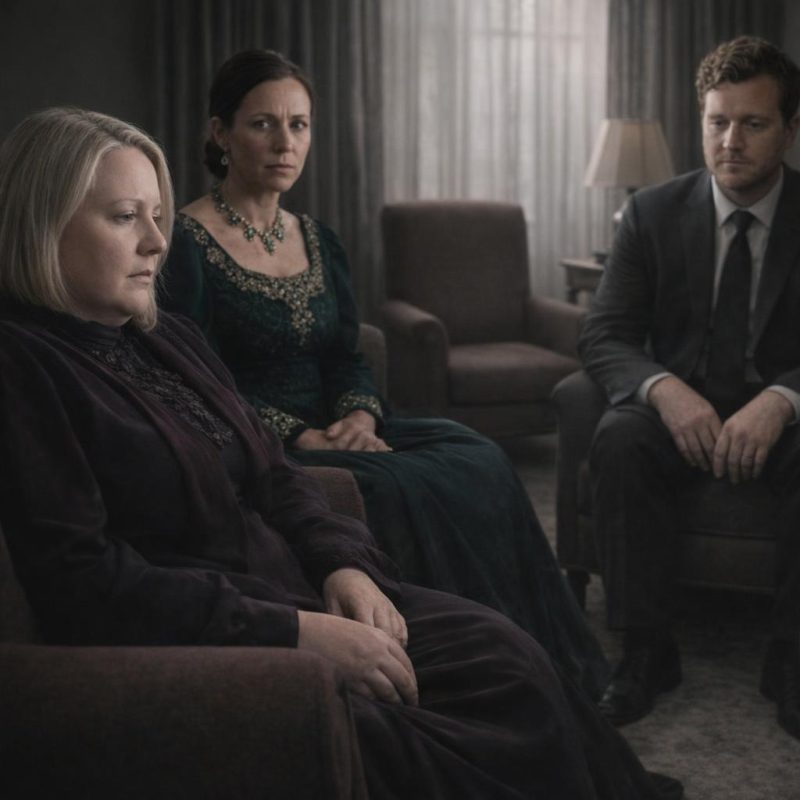 Image by RM AI
The Throne I Never Wanted
William III died in March of 1702, thrown from his horse when it stumbled on a molehill, and the illness that followed took him within the fortnight. I was told the news quietly, in my rooms, and I remember sitting very still afterward and waiting to feel something I could name. What came was not grief exactly — I had spent so much of myself on grief already — but a kind of grey settling, a recognition that the world had shifted again and that I was now required to step into a space I had never wanted. I was thirty-seven years old, and I had buried seventeen children, and now I was Queen. Sarah was there almost immediately, efficient and purposeful, already speaking of proclamations and household arrangements and the shape of the court to come. George took my hand and held it without speaking, and I was grateful for the silence of him. The coronation preparations began while I was still wearing mourning in my heart for my son, and I moved through the days of planning as though watching myself from a distance. I had imagined, as a girl, that a crown might feel like arrival. Standing in those rooms, surrounded by ceremony and expectation, I understood only that it felt like another weight added to all the others I already carried.
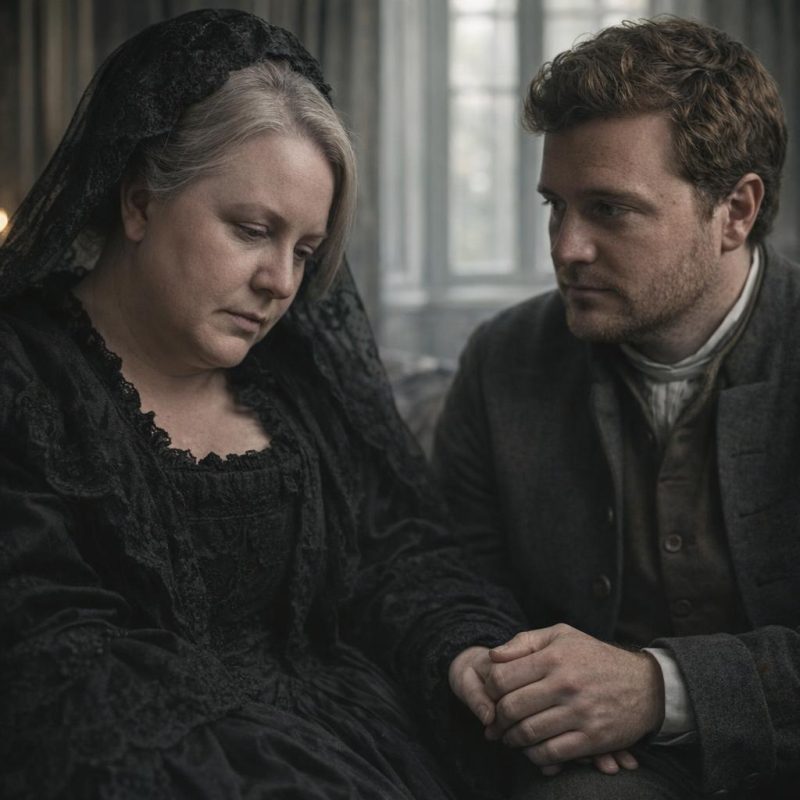 Image by RM AI
The Coronation of a Grieving Queen
Westminster Abbey was magnificent that day, and I knew it was magnificent because everyone around me said so, and because I had eyes enough to see the candles and the cloth of gold and the faces turned upward in something that looked like joy. I moved through the ceremony as I had been instructed, and I said the words I was required to say, and I felt the crown settle onto my head with a physical weight that surprised me even though I had been told to expect it. Sarah stood where she had positioned herself, close and visible, her expression composed into something that read as pride. George was near enough that I could feel his steadiness without looking at him, and that steadiness was the only thing that felt entirely real to me in that vast and gilded space. I thought of my son. I thought of the sixteen before him. I thought of how each of them had been a small, brief hope, and how the throne I now occupied had been purchased not with ambition but with loss. The crowds outside roared when the moment came, a sound that rolled through the stone walls and filled the Abbey from floor to vault, and I sat with the crown upon my head and felt nothing at all.
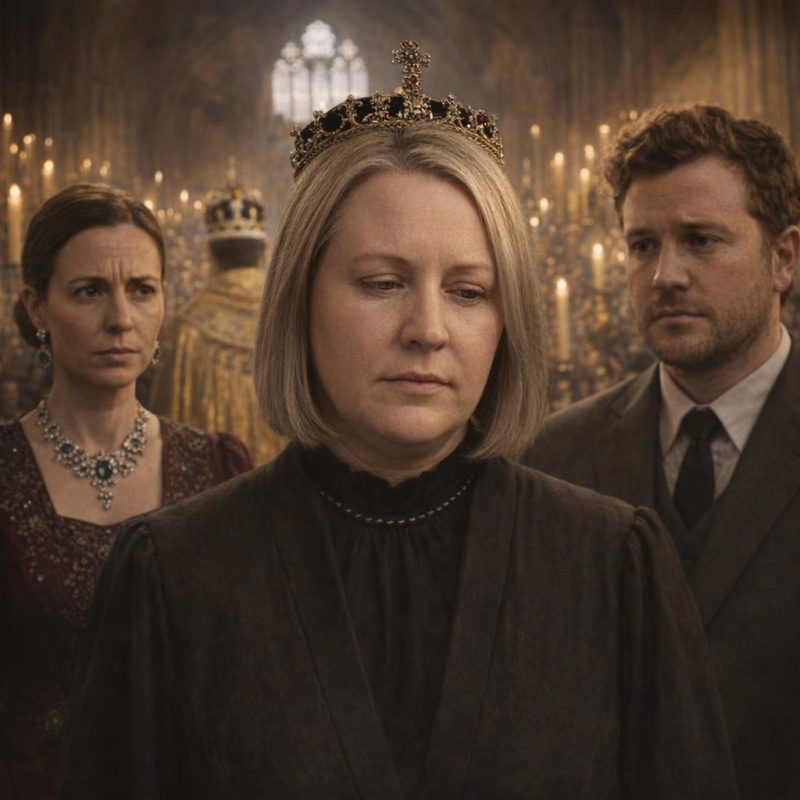 Image by RM AI
The Control I Had Not Seen
I had assumed, in some vague way, that becoming Queen would mean becoming more fully myself — that the authority of the crown would translate into authority over my own days. What I found instead was that the shape of my reign had already been drawn before I arrived to inhabit it. The household appointments had been made. The court positions had been filled. My schedule arrived each morning already arranged, and when I looked at who had arranged it, the answer was always the same. Sarah moved through my court with a confidence that went beyond friendship, speaking for me in rooms I had not entered, redirecting courtiers who came to me with questions I had not yet been given the chance to answer. I tried, on several occasions, to assert a preference — a small thing, a matter of who should attend me at a particular hour — and each time I was met with Sarah's objections, delivered with such certainty that I found myself retreating before I had fully understood why. George noticed. He said nothing directly, but I caught the look he gave me once when Sarah spoke over my answer to a minister's question, a look that was quiet and careful and full of something he was choosing not to say. I asked for the household appointment ledger one afternoon, and when it was brought to me, every page bore the marks of Sarah's hand.
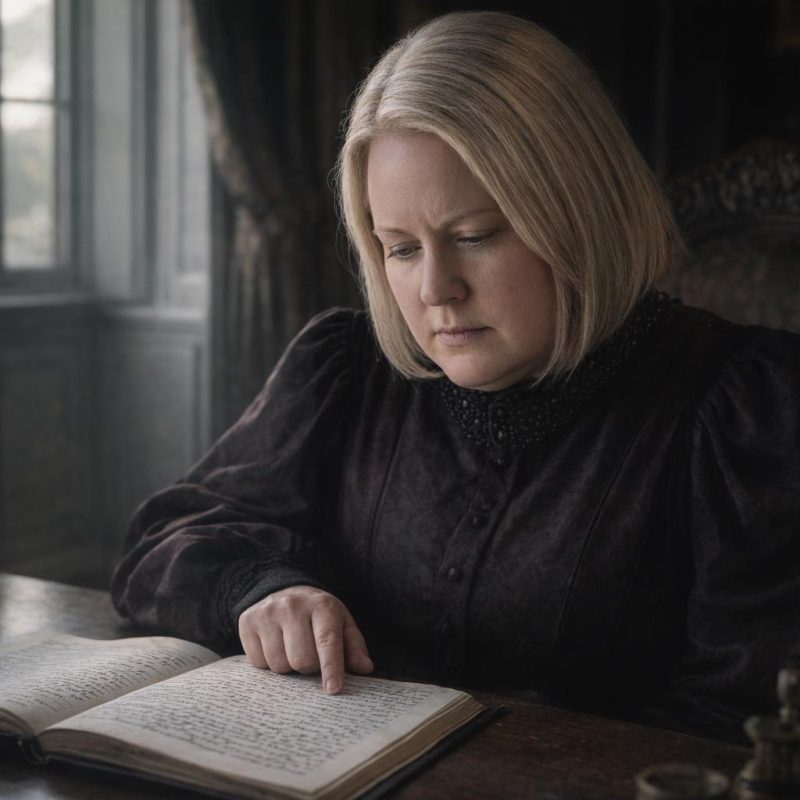 Image by RM AI
The Friendship That Was Always a Lie
It was a letter I was never meant to see — left in a folio that had been brought to me by mistake, tucked between papers meant for another desk. I almost set it aside unread. I wish, sometimes, that I had. But I opened it, and I read it, and the words Sarah had written to a correspondent I did not recognize described me in terms so contemptuous, so casually cruel, that I had to read the passage twice before I could accept that it was real. She called my grief excessive and embarrassing. She described my dependence on her as useful. She wrote about the appointments she had secured for her family through my name, listing them with a satisfaction that made my stomach turn, and she referred to the management of my moods as a task she had long since mastered. I sat with that letter in my hands for a very long time. George found me there and read it himself, and I watched his face go still in a way I had never seen before. I turned the number over in my mind like a stone — thirty years of her voice in my ear, her hand in my decisions, her presence at every grief and every joy — and the shattering weight of it settled on me all at once: I had been used, and managed, and mocked for thirty years, and not one moment of the friendship I had built my life around had ever been real.
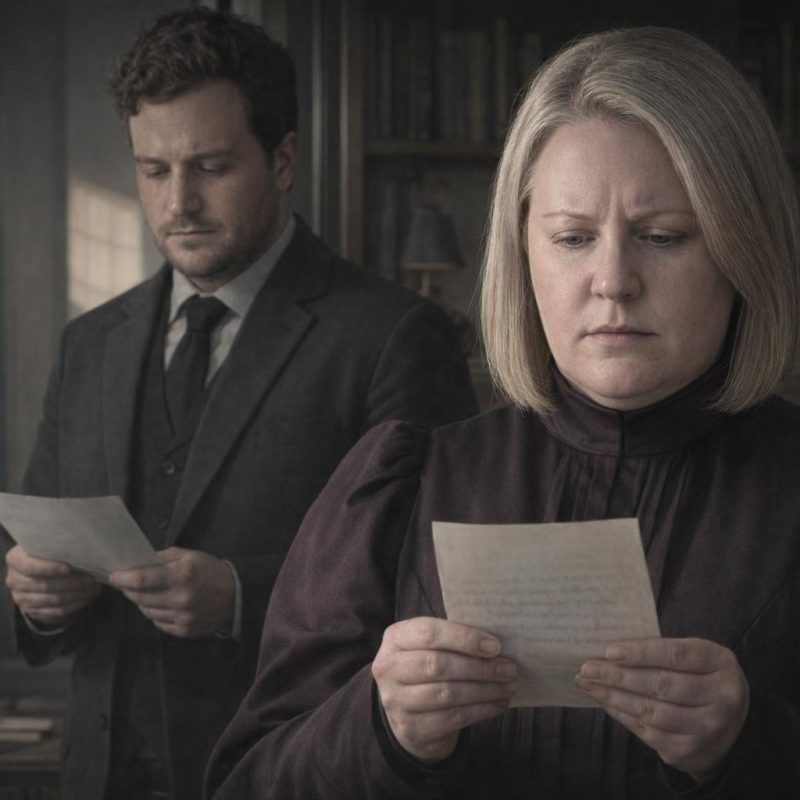 Image by RM AI
The Gentle Kinwoman
Abigail had come into my household quietly, the way she did everything — without announcement, without demand, slipping into the work of service as though she had always been there. She was Sarah's poor relation, which was how she had come to me, and I had not expected much from her beyond competence and discretion. What I found was something I had almost forgotten existed. She brought me a tisane one evening when my legs were particularly bad, and she set it down without fuss, and then she asked — simply, without any agenda I could detect — whether I was comfortable, whether there was anything else I needed. It was such a small thing. But she asked it the way a person asks when they genuinely want to know the answer, not the way a person asks when they are performing concern for an audience. I looked at her plain, soft face and her quiet eyes, and I felt something loosen in my chest that had been pulled tight for longer than I could easily measure. George had noticed her too, and told me once that she seemed a good soul, and I thought he was right. Sarah had not yet paid her much attention — she was too insignificant, too unassuming, to register as anything worth watching. And then Abigail sat with me one afternoon while I wept, and she did not tell me to stop, and she did not speak of duty, and for the first time since my son died, someone simply let me grieve.
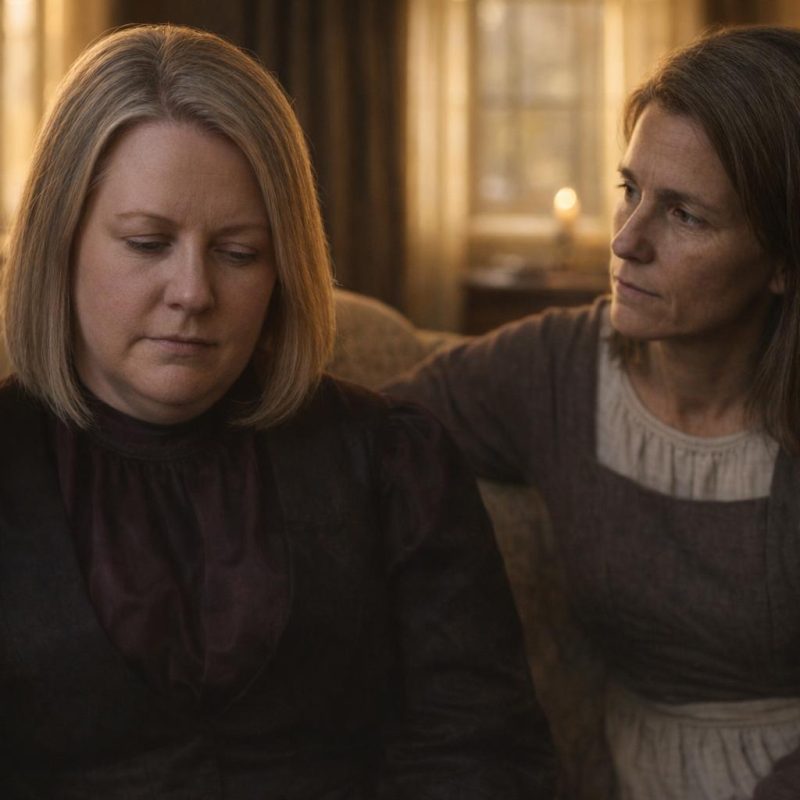 Image by RM AI
The Affection That Grew in Silence
The affection grew the way quiet things grow — slowly, without drama, taking root in the small repeated moments rather than in any single event. Abigail would read to me when my eyes were tired. She would sit with me in the evenings when the court had emptied and the silence became too large to bear alone. She never asked for anything. She never positioned herself, never angled for appointments or whispered about other courtiers or steered our conversations toward her own advantage. She simply came when I needed company and withdrew when I needed solitude, and the ease of that — the uncomplicated ease of it — was something I had not known I was starving for. George told me once, with his gentle smile, that I seemed more like myself lately, and I thought he was right, though I could not have said precisely when the change had begun. I found myself telling Abigail things I had not told anyone — about my children, about the particular weight of each loss, about the way grief accumulates rather than fades. She listened without flinching, without offering remedies or corrections, and when I finished she would sometimes simply say that she was sorry, and mean it. After so many years of being managed, of being handled and directed and spoken over, the experience of being genuinely heard settled over me like something I had not known I was missing.
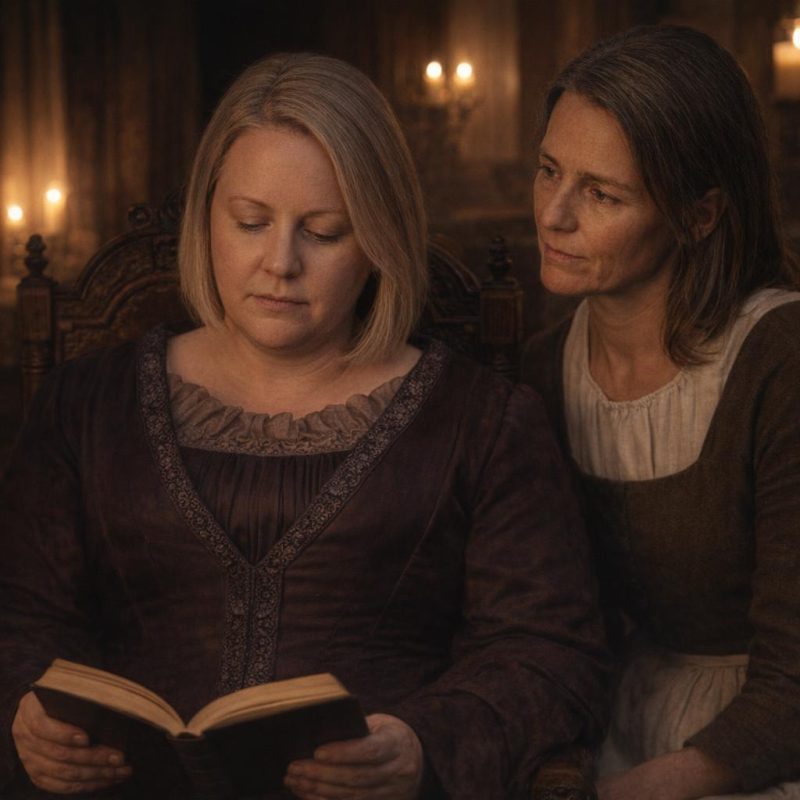 Image by RM AI
The Union of Two Kingdoms
The Act of Union passed in 1707, and I signed my name to it and became the first monarch of a unified Great Britain, and the ministers around me were pleased, and the celebrations were considerable, and I performed my part in all of it with the diligence I had always brought to duty. Sarah was there, of course, and she made certain that those who mattered understood how much of the political groundwork had passed through her hands, and I let her have that, because I no longer had the energy to contest it and because I knew now what her accounting of things was worth. Abigail stood quietly at the edge of the room and caught my eye once, and the look she gave me was simply kind — no calculation in it, no claim. George held my hand during the formal signing, his fingers warm and steady against mine, and I was grateful for him in the deep, uncomplicated way I had always been grateful for him. I thought, as I set down the pen, that I had done something real — that two kingdoms joined was not nothing, that history would record this day as a triumph. But the room felt very large, and the triumph felt very distant, and when the ceremony was over and the ministers had gone, I sat alone at the long table with the candles burning low and felt only the particular silence of a life lived mostly in loss.
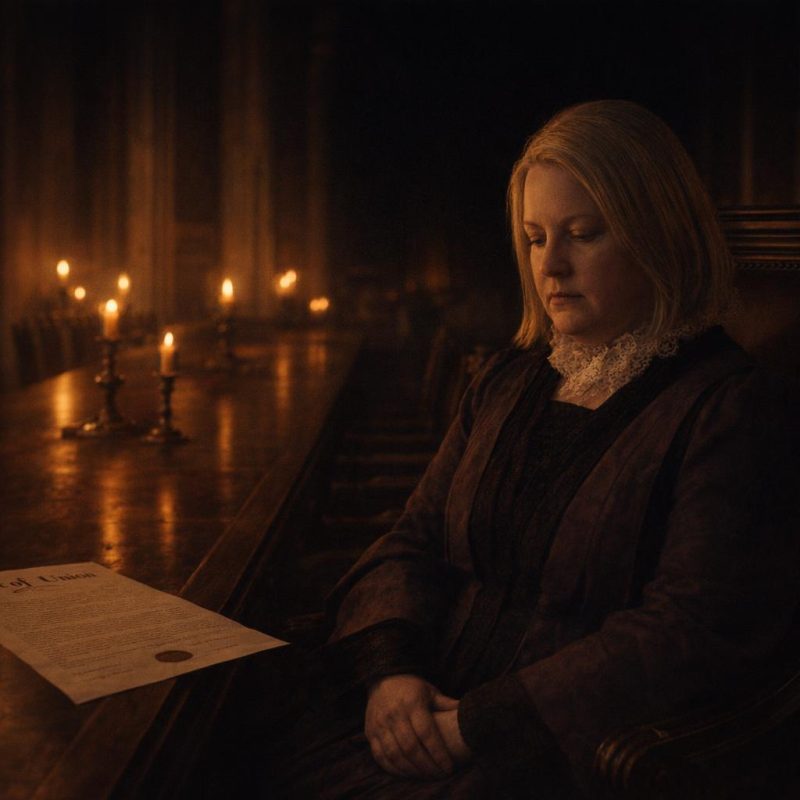 Image by RM AI
The Victories Built on Suffering
The dispatches from Blenheim arrived on a Tuesday, and the court erupted in the kind of joy I had not seen since before the wars began. Marlborough had done something extraordinary — something that would be written about for centuries — and I was genuinely proud, genuinely grateful, because those were my soldiers and my treasury and my name behind every cannon and every march. But Sarah was in the room before the ink was dry on the reports, and she moved through the celebration the way a woman moves through a room she already owns. She spoke of John's genius, of his sacrifice, of what the family had given to the crown, and the words were not wrong exactly, but the weight she put behind them was a kind of invoice. The grants she requested were considerable. The honors she expected were enumerated with a precision that left no room for gratitude, only transaction. George squeezed my hand once and said nothing, which was his way of saying everything. Abigail stood near the window and kept her eyes down, but I caught the small tightening around her mouth when Sarah named the next figure. I signed what was put before me. I always signed. And I watched Sarah accept the honors of a grateful court for victories bought with my money and won under my authority, as though the crown itself were merely a detail she had graciously permitted.
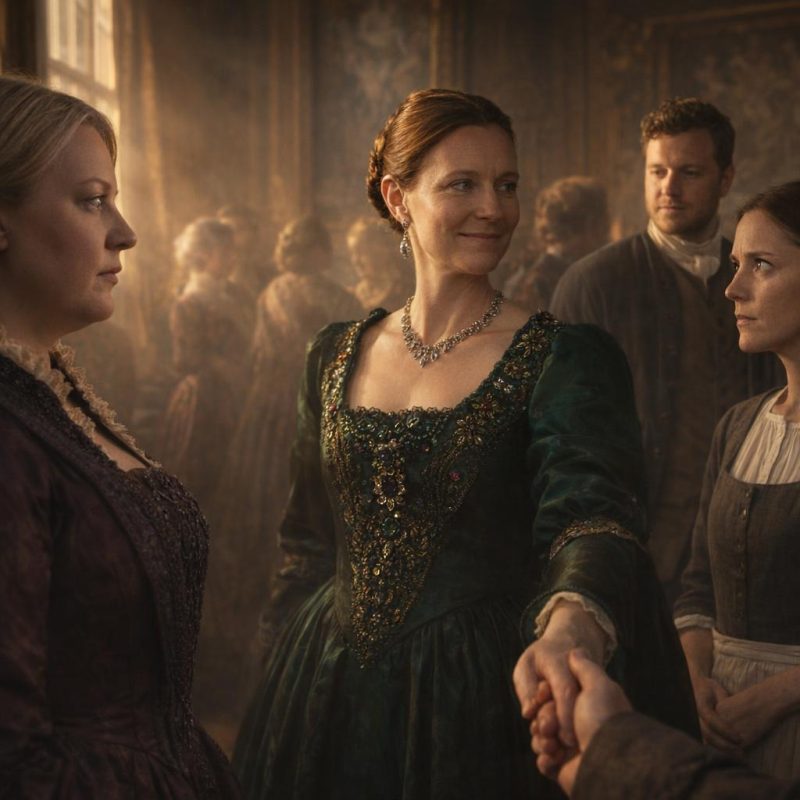 Image by RM AI
The Arrogance That Could No Longer Be Borne
There was an afternoon in the gallery at St. James's when Sarah said something to me in front of four courtiers that I have never been able to fully set aside. I had offered an opinion on a matter of household appointment — a small thing, the kind of decision that was mine by every right of crown and custom — and she turned to me with that particular expression she had perfected over the years, the one that managed to be a smile and a dismissal at once, and she said that I really ought to leave such things to people who understood them. The silence that followed was the loudest thing I had heard in years. I saw the courtiers exchange glances. I saw one of them look away. George was not in the room, but Abigail was, and she went very still in the way she did when she was trying not to react. I felt the heat rise in my face and I held it there, behind my eyes, because I was the Queen of Great Britain and I would not weep in a gallery. But the humiliation was complete and visible and witnessed, and when I returned to my apartments that evening, Abigail found me sitting at my writing table with my hands flat on the surface, and she said nothing, and I was grateful for that too. The whispers had already started before I reached the door.
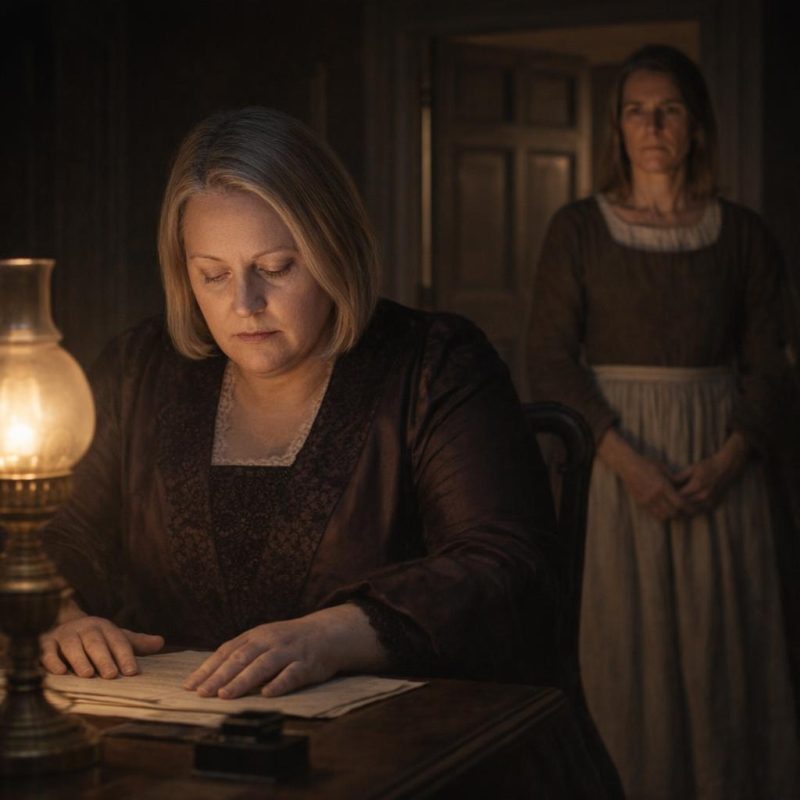 Image by RM AI
The Breaking Point
I had rehearsed the words so many times that by the morning I finally spoke them, they felt worn smooth, like stones carried too long in a pocket. I sent for Sarah and she came in the way she always came — certain of her welcome, certain of her ground — and I let her settle before I spoke. I told her that I could no longer receive her as I had. I told her that the friendship between us, whatever it had once been, was finished. She stared at me for a moment as though I had spoken in a language she did not recognize, and then the shock collapsed into something harder. She told me I was making a catastrophic mistake. She told me I would regret it. She told me, in a voice that climbed steadily toward something I can only call fury, that I did not understand what I was doing, that I never had. I did not move. George was in the next room and I knew it, and Abigail was somewhere behind me, and I held onto that knowledge the way you hold onto a railing in the dark. I told Sarah again, quietly, that it was over. She left the room still speaking. The door closed behind her, and the silence that settled over me was not empty — it was the first silence in thirty years that belonged entirely to me.
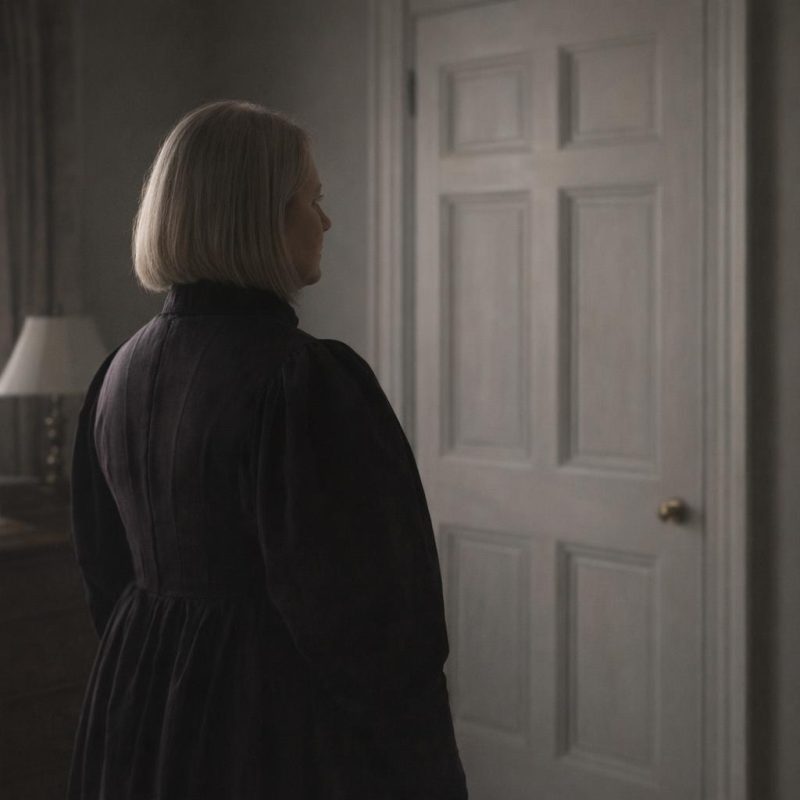 Image by RM AI
The Vengeance of a Discarded Favorite
She did not go quietly. I had not expected her to, but I had perhaps underestimated the particular shape her anger would take. Within weeks, word reached me that Sarah was telling stories — to anyone who would listen, to anyone who might one day read — stories in which I was slow-witted and easily led, a woman who had stumbled into a crown she could not manage without guidance. She spoke of memoirs. She spoke of letters. She had kept everything, she said, every note I had ever written her in the years when I had written with my whole heart, and she intended the world to know what those letters contained. George sat with me one evening while Abigail read aloud from a report of what Sarah had been saying in certain drawing rooms, and I watched his face go through something careful and controlled, and when Abigail finished he simply said that Sarah had always known where the doors were and had chosen the windows instead. It made me laugh, which I had not expected. The fear was real — I will not pretend otherwise. The thought of those letters, of my private grief and private weakness laid out for public consumption, was a cold and specific dread. But I had lived through seventeen losses and a revolution and thirty years of Sarah Churchill, and I was still here, still queen, still upright in my chair. The dread sat in my chest like a stone, and I let it sit.
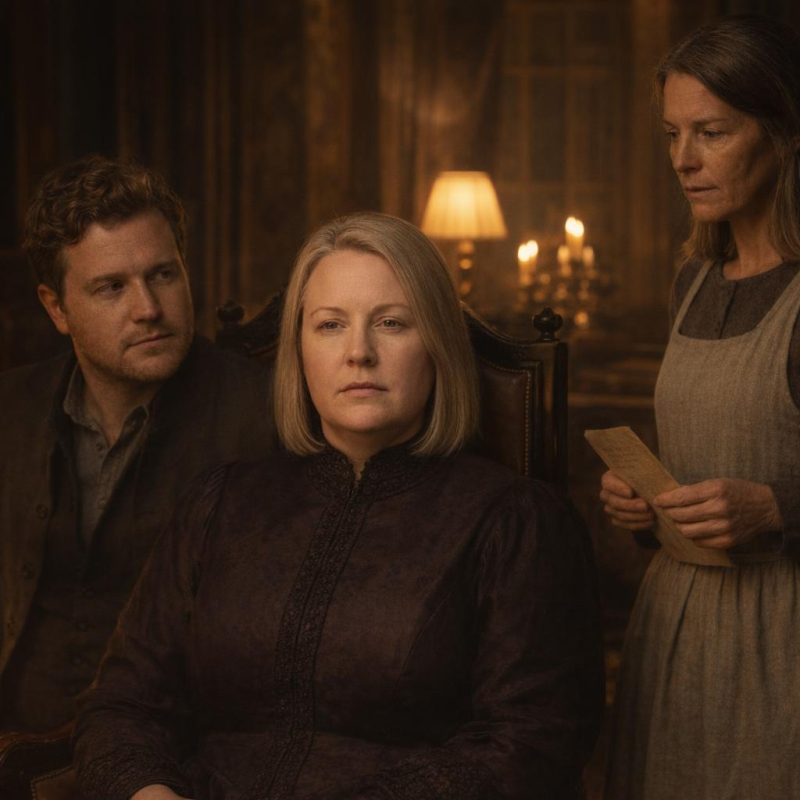 Image by RM AI
The Parliamentary Battles
The break with Sarah did not happen in a vacuum, and Parliament made certain I understood that. The Whigs had been her allies and they became my opponents with a speed that suggested they had been waiting for the opportunity, and the Tories were not much easier, because they wanted things from me that I was not always willing to give. I sat through sessions and received ministers and read dispatches and signed documents, and all of it was done from a chair that had to be carried, because my legs by then were so swollen with gout that walking was a negotiation with pain I usually lost. Abigail managed the flow of people to my rooms with a quiet efficiency that I depended on more than I could say. George came each evening and sat with me, and sometimes we did not speak at all, just sat together in the way of two people who have run out of words but not out of need for each other. The succession question hung over everything like weather — Hanover on one side, the Jacobites on the other, and my own body making the urgency of it impossible to ignore. I was the Queen of Great Britain and I was doing my work, and the work was enormous, and I was so very tired. The gout moved up from my feet and the dispatches kept arriving and I kept reading them, because there was no one else.
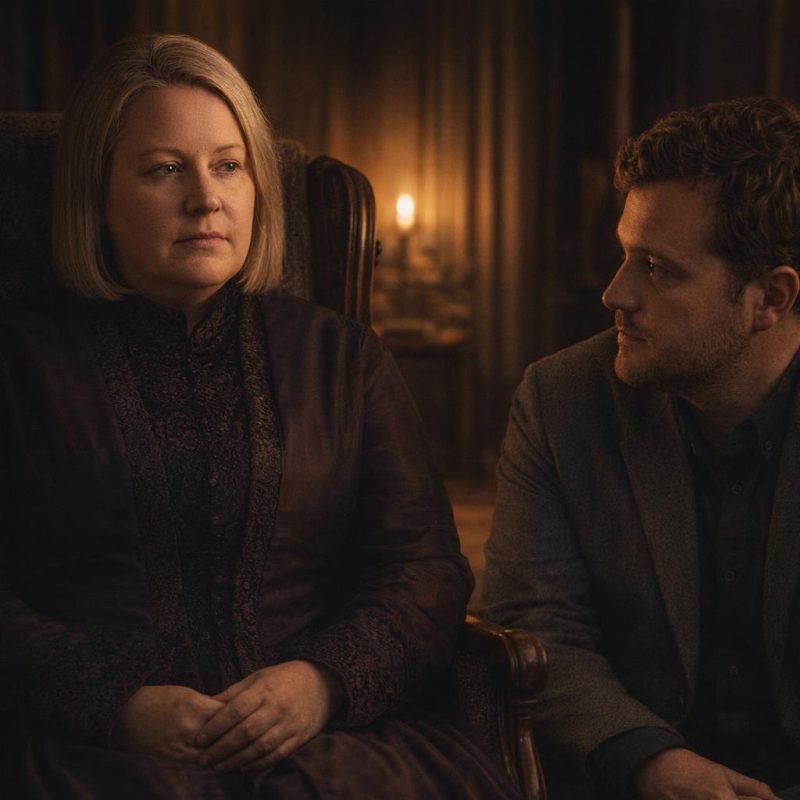 Image by RM AI
The Body That Became a Prison
There was a mirror in my dressing room at Kensington that I had stopped looking at directly, the way you stop looking at something that has begun to frighten you. Abigail helped me dress each morning with a gentleness that was itself a kind of mercy, working around the swollen joints and the weight that had accumulated on my frame through years of grief and immobility and the particular cruelty of a body that had been pregnant seventeen times and had nothing to show for it but ruin. The chair they carried me in had been specially made — wide enough, sturdy enough — and I had learned not to think about what it meant that such a chair was necessary. George walked beside it when he could, his hand sometimes resting on the armrest near mine, and I was grateful for that small geography of closeness. The court had learned not to stare, or at least to stare with more discretion than they once had. Abigail never stared. She simply moved through the work of caring for me as though it were the most natural thing in the world, and on the days when the pain was very bad she would sit nearby and read to me in her quiet voice until I could breathe again. One morning she held the mirror for me at an angle I had not anticipated, and the woman looking back at me from the glass was someone I had to work to place.
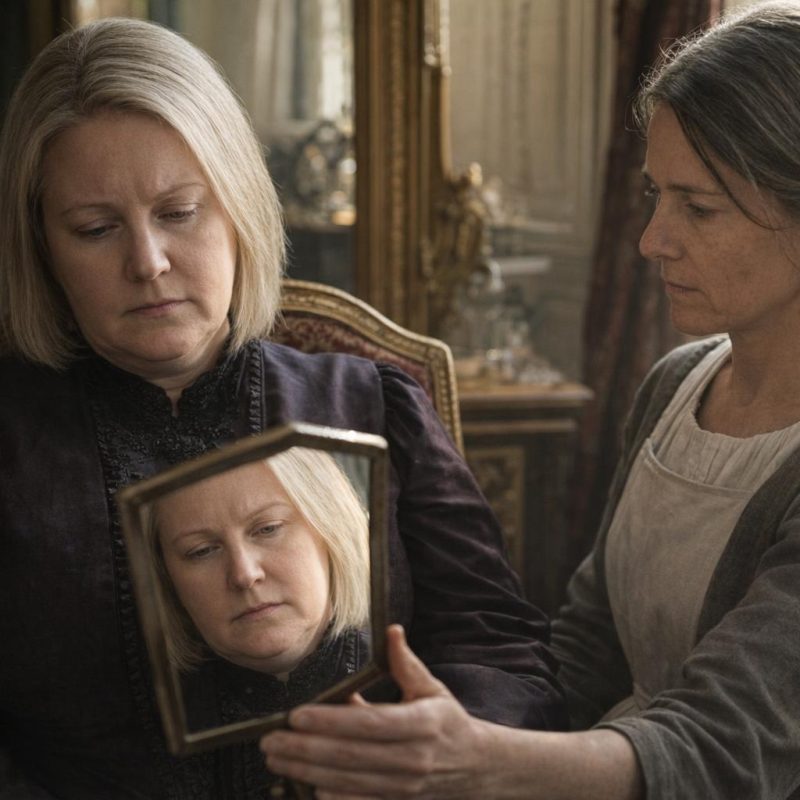 Image by RM AI
The Strokes That Stole My Strength
The first stroke came in the night, and I knew what it was before anyone told me, because my mother had died of something that moved through the body like a thief and I recognized the feeling — the sudden wrongness, the way the left side of my face went distant and strange. Abigail was there within minutes, and she did not panic, which was the thing I needed most. The physicians came and said the things physicians say, and I listened to them from somewhere slightly removed from myself, the way you listen to weather reports when you are already standing in the rain. There was a second episode some weeks later, and after that my speech came out slower than I intended it, the words arriving at the surface with a slight drag that I could hear and could not correct. My political enemies heard it too. There were whispers about capacity, about fitness, about whether the crown sat on a steady head. I received those whispers the way I had received everything difficult in my life — by continuing. I held my audiences. I signed my documents. I made my ministers come to me when I could not go to them, and I made them wait when I needed a moment to gather the words that had begun to scatter. I was not going to hand this kingdom to anyone while I still had breath to claim it. I pressed my seal into the wax and the mark held firm.
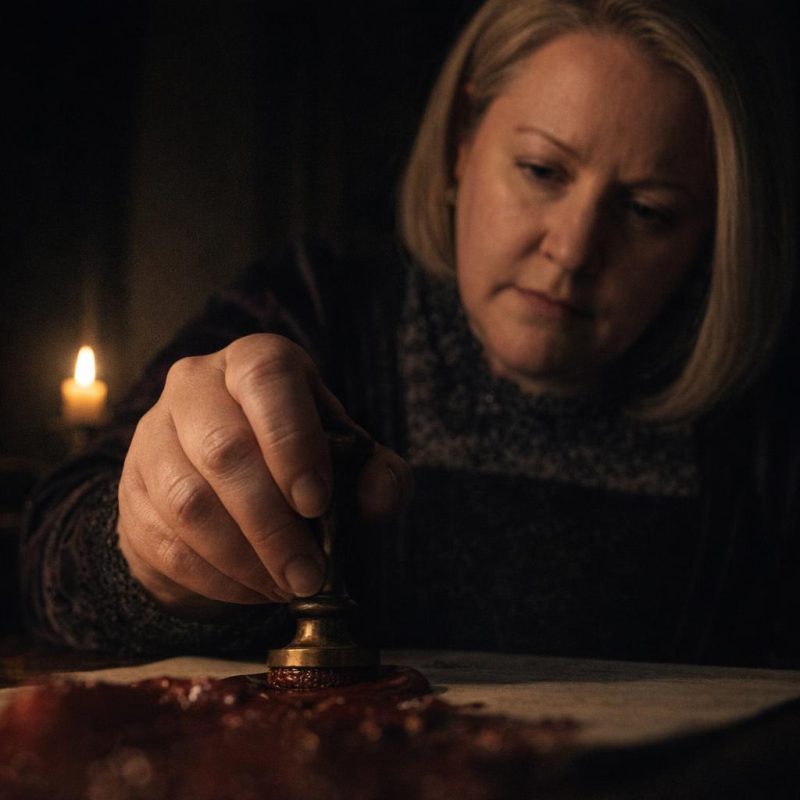 Image by RM AI
The Fevers That Marked the End
The summer of 1714 arrived with a heat that felt personal, the kind that settles into swollen joints and makes every hour a negotiation. The fevers began in late July — not the sharp fevers of infection but the slow, deep kind that move through you like a tide coming in, and I knew, in the way I had known things about my own body for thirty years of suffering, that this was different from the other times. Abigail kept the room cool and changed the cloths on my forehead and spoke to me in the low steady voice she used when she was frightened but would not show it. George sat at the edge of the bed and held my hand, and I could feel that his hands were trembling slightly, though his face was composed. I thought about the succession with the clarity that illness sometimes brings — the Hanoverian line, the documents, the ministers who needed to understand what I wanted and what I would not permit. I asked Abigail to bring me paper. I asked her to help me sit upright. Death was close enough that I could feel it in the room, and I turned my face from it and reached for the pen, because the kingdom I was leaving behind still needed my hand upon it before I could go.
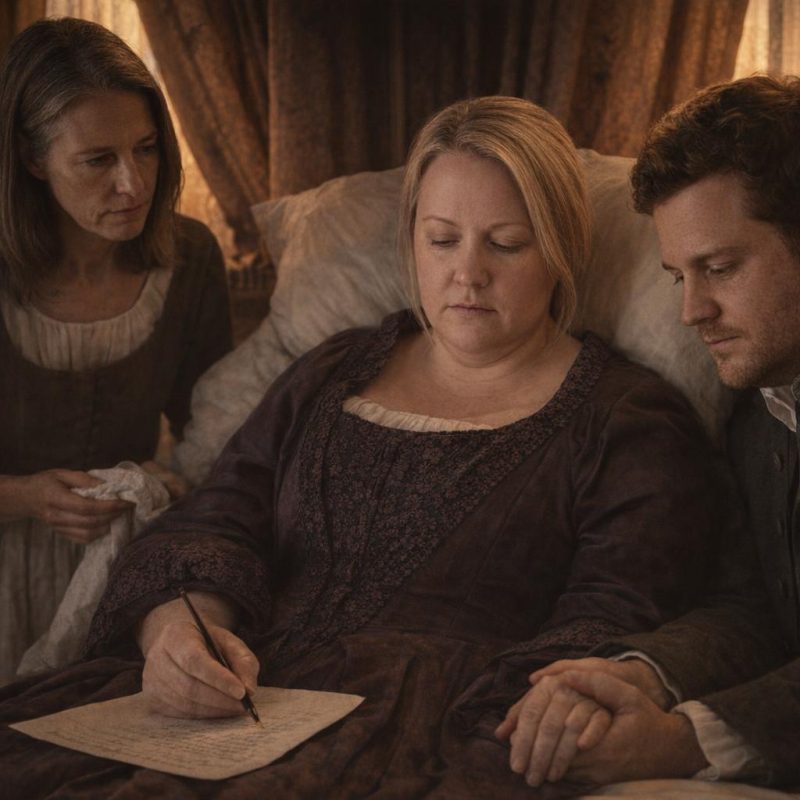 Image by RM AI
The Last Stuart Monarch
Abigail changed the cloth on my forehead and I lay still, watching the light move across the ceiling the way I had watched light move across ceilings in so many rooms across so many years. I was the last of them. That thought had been sitting with me for days now, quiet and enormous. My mother Anne Hyde was gone before I was old enough to understand what losing her meant. My grandmother Henrietta Maria, my father James, my sister Mary — all gone. George, my spouse, my gentle and unremarkable George who had held my hand through every small coffin and every empty cradle — gone these six years. And the children. All seventeen of them. I had given my body to the task of continuing the Stuart line until my body had nothing left to give, and still the line ended here, in this bed, with me. The Hanoverians would come. I had signed the papers. I had done what the kingdom required. I had been a good queen in all the ways that mattered and in none of the ways that had ever felt personal to me. I reached for Abigail's hand and she gave it without a word. I had gained a throne and lost every single person I had ever loved — and the throne would outlast me by centuries while their names were already fading.
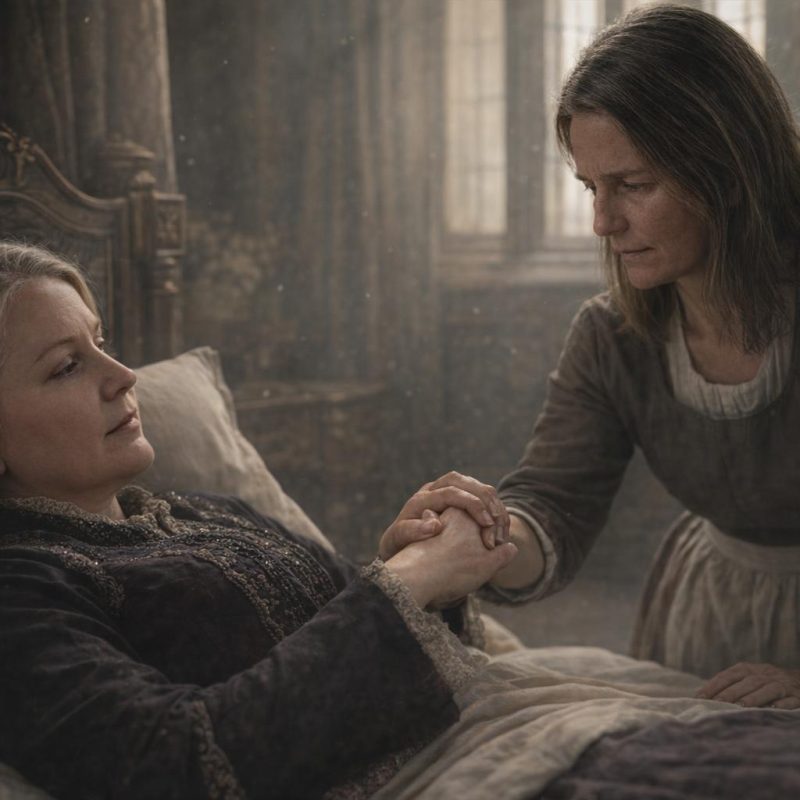 Image by RM AI
The Mercy of Death
August came in heavy and close, the air thick with the kind of heat that makes breathing feel like labor. My body had been laboring for so long. The gout had spread beyond my legs into something that felt systemic, something that had taken up residence in every joint and refused to leave, and the fevers came and went like visitors who no longer bothered to knock. Abigail sat beside me through the nights, her hand resting near mine on the coverlet, and I was grateful beyond words for her quiet presence — for the fact that she had never needed me to be more than I was. I thought about what I was leaving. A kingdom, unified. A succession, secured. A church, protected. These were not small things. I had done them while my body broke apart beneath me, while grief accumulated like sediment in my chest, while the world asked more of me than any person should be asked to give. I was not afraid. That surprised me, a little — I had expected fear at the end, but what I felt instead was something closer to the loosening of a knot that had been pulled tight for fifty years. The pain was receding. The room was very quiet. I let myself go still, and the weight of everything I had carried settled gently into the silence around me.
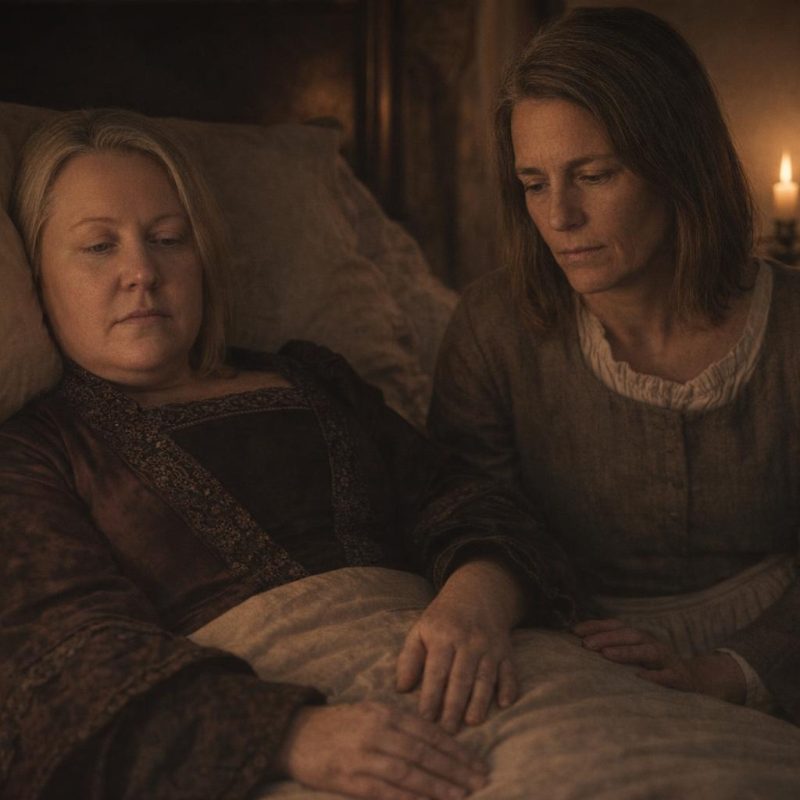 Image by RM AI
The Seventeen Graves I Carried
In the last of the light, they came to me. Not as visions — I was past the point of visions — but as a kind of knowing, the way you know a room you have lived in for years even in total darkness. The first one, the boy born still in 1684, the one I had never held. Then the others, one after another, the small faces I had memorized and then been forced to release. The daughters who had not drawn breath. The sons who had breathed for hours and then stopped. William of Gloucester, my sweet and fragile boy with his oversized head and his bright eyes, who had lived eleven years and given me eleven years of something close to ordinary love before he too was taken. I had carried seventeen of them. I had buried seventeen of them. People spoke of my losses as political facts — the succession crisis, the Hanoverian necessity — but they had been my children. They had been the truest thing about me, truer than the crown, truer than the treaties, truer than any of it. I had spent my life as a queen and my grief as a mother, and now, at the end, the queen was falling away and only the mother remained. I did not know what waited beyond this threshold. But I hoped — I held the hope carefully, the way you hold something fragile — that they were there, and that they were whole, and that somewhere in whatever came next, I would finally get to keep them.
 Image by RM AI
The Heavy Coffin of a Hollow Queen
They say it took fourteen men to carry my coffin. I have thought about that number — fourteen men, straining under the weight of what I had become. My body had expanded across the years of illness and grief and immobility until it was almost unrecognizable as the girl who had once run through the gardens at Richmond, the young woman who had danced at court before the gout took my legs and the pregnancies took everything else. There is something almost darkly fitting about it. I had been so full — full of children who did not survive, full of duty that never relented, full of a grief so constant it had become structural, load-bearing, the thing that held the rest of me upright. And yet I had felt so hollow. That is the contradiction I carried to my grave: a body that weighed more than most queens and a heart that had been emptied seventeen times over. I was the last Stuart monarch. I had outlived my parents, my sibling, my spouse, my children, my friends, and most of my enemies. I had held the kingdom together through war and union and succession crisis and the slow erosion of my own health. I had done what was asked of me. I had done more than was asked of me. And when they finally lowered me into the ground at Westminster, what remained was not a woman who had failed to produce an heir — it was a queen who had given everything she had, and then given more, and the kingdom she left behind stood as the only monument she ever got to keep.
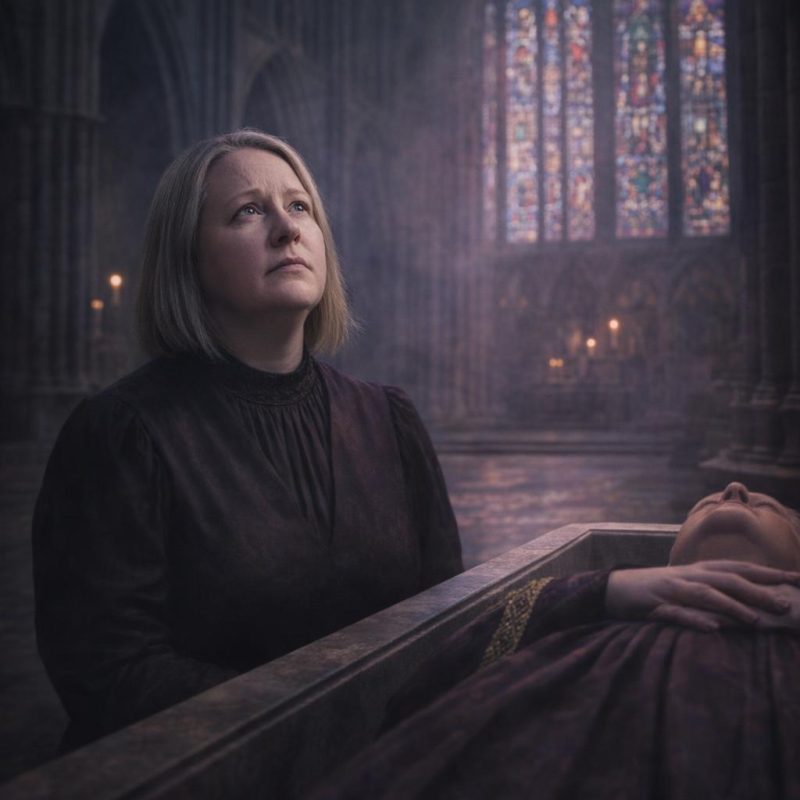 Image by RM AI
KEEP ON READING
20 Weirdest Historical Objects in Museums
Check Out the Pickled Heart of a Saint. Museums carry…
By Rob Shapiro Oct 1, 2025
20 Scariest Missing Persons Cases in History
Eerie Disappearances. There's something uniquely unsettling about a person who…
By Christy Chan May 1, 2026
20 Greatest Ancient Athletes In History
Ancient Olympics. Long before modern stadiums and multimillion-dollar endorsements, athletes…
By Sara Springsteen May 1, 2026
10 Phenomenal Mythical Creatures & 10 That Are Just Plain…
Legends Both Majestic And Peculiar. Do you ever wonder why…
By Chase Wexler Oct 1, 2025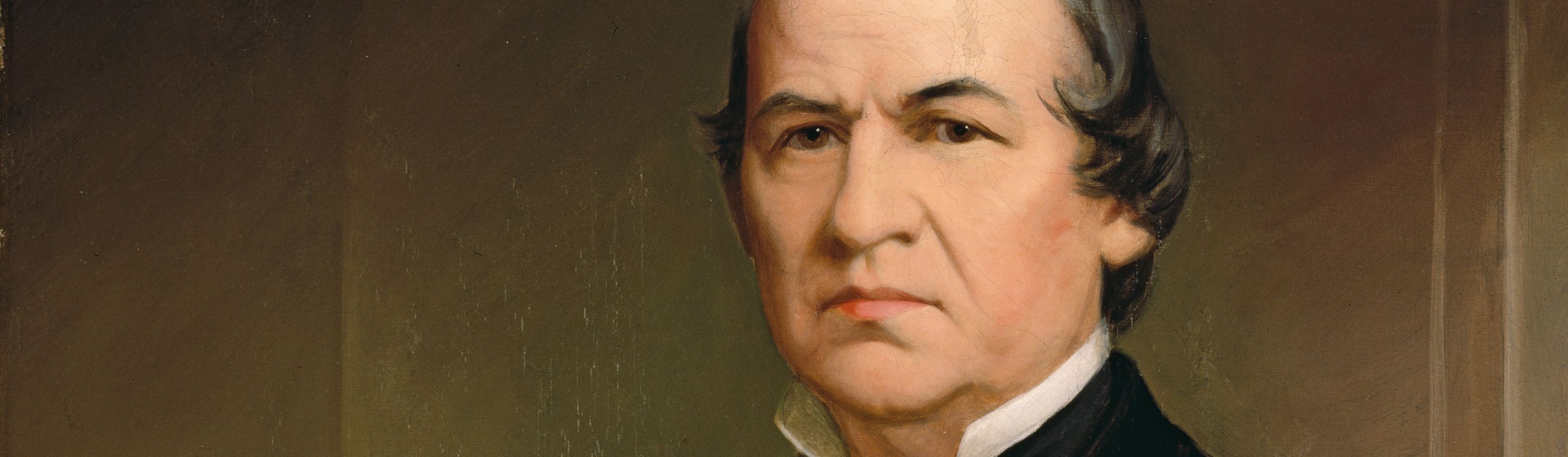
10 Presidents Who Never Served In The Military & 10…
Commanders And Civilians In Office. Power can rise from very…
By David Davidovic Sep 1, 2025
20 Wars That Could Have Ended Much Sooner Than They…
Wars That Lasted Far Too Long. Wars are often remembered…
By David Davidovic Sep 1, 2025