

Why Some of History's Wealthiest Families Lost Everything Within Three Generations
Why Some of History's Wealthiest Families Lost Everything Within Three Generations
 Unknown authorUnknown author on Wikimedia
Building an enormous fortune is an impressive accomplishment, but preserving that wealth across multiple generations presents an entirely different challenge. Throughout history, powerful industrialists, successful merchants, and prominent business owners have accumulated enough money to seemingly guarantee their descendants a comfortable future. Yet extravagant lifestyles, changing economic conditions, and disagreements over family businesses have sometimes caused these fortunes to diminish remarkably quickly.
The popular saying "shirtsleeves to shirtsleeves in three generations" reflects the idea that one generation builds wealth, another enjoys it, and a third loses it. Although this isn't a universal rule, several prominent historical families experienced substantial financial declines within a relatively short period. Their stories demonstrate that even an extraordinary inheritance doesn't necessarily guarantee lasting financial security.
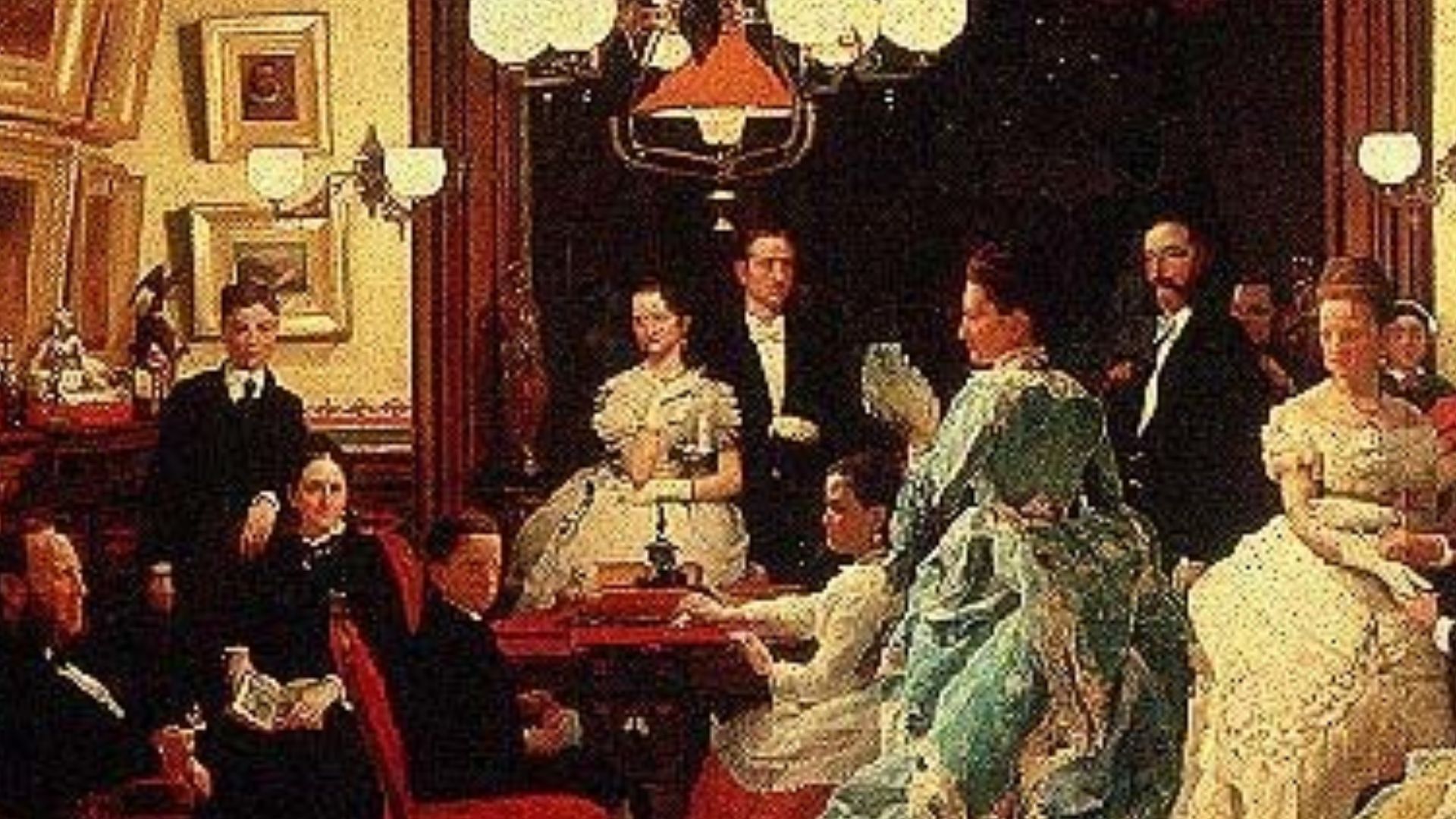
One of the best-known cases of successive generations losing previously acquired wealth must be that of the Vanderbilts, who made their money from various forms of transportation. At the time of his death, Cornelius Vanderbilt was worth around $100 million, largely as a result of shipping and railroads. This fortune was roughly doubled by his son, William Henry Vanderbilt, before being passed on to his children.
Many of the children squandered large amounts of this money on lavish living. Vast country properties, grand townhouses, parties, and pastimes all served as testaments to the almost unlimited sums at their disposal. All of these would have been very expensive to maintain, irrespective of the success or failure of their various investments.
It would be easy for even very substantial sums to erode over time if expenses were greater than the returns generated. Numerous servants, a number of houses, and so on would all be extremely expensive, especially if regarded as "normal" day-to-day requirements. It may be hard for heirs accustomed to this standard of living to scale down significantly once their incomes start to decline.
Generosity toward various causes and good works would have been another factor in dissipating some of the great fortunes accumulated over the years. Many rich men and women gave generously to universities, museums, and a wide range of other establishments and causes. These are all beneficial gifts for posterity but represent further sums not passed down to later generations.
Changing Industries Made Established Businesses Vulnerable
 Unknown authorUnknown author on Wikimedia
Not every disappearing fortune can be attributed to irresponsible spending, as economic developments have also contributed to the decline of prominent business dynasties. Families that accumulated their wealth through railroads, manufacturing, or other dominant industries couldn't necessarily depend on those businesses remaining profitable indefinitely. New technologies and changing consumer preferences regularly challenged companies that had previously enjoyed decades of success.
It took more than three generations for the fortunes of the Strohs to wane, but they are a useful case study of poor business and other decisions eroding family wealth. Stroh's was, at one point in the 1980s, the third-largest beer producer in the U.S., but it made a number of poorly judged acquisitions and became highly leveraged. Competition and a failure to keep up with changing trends led to the eventual sale of most of the beer business in 1999.
The dangers of a large proportion of total family assets being tied up in one business are obvious. Falling profits could erode the capital value of shareholdings, reduce income from dividends, and result in fewer jobs for family members. Widening the range of investments would obviously lessen the effects of such a scenario, but this may require selling some shares in the family business.
Periods of economic decline and recession have been notoriously hard on many rich families. Share prices and the value of many bank assets and properties fell drastically in the 1930s, taking many previously comfortable fortunes down with them. Good management of family finances could be of little avail when whole sectors of the economy were adversely affected.
Dividing Wealth and Passing Down Financial Knowledge
An overlooked challenge of preserving inherited wealth is that families tend to grow considerably over successive generations. A successful entrepreneur might leave a substantial fortune to four children, who eventually divide their respective inheritances among their own descendants. Unless the underlying assets continue appreciating sufficiently, individual family members will receive progressively smaller portions of the original fortune.
Problems over the management and direction of a business will often add to this difficulty if there are a number of family members with shareholdings. It's common for some to wish to plow everything back into the business, whereas others may wish for more generous dividends to meet their living expenses. The problem may be magnified with each succeeding generation and its varying requirements.
There's also the question of whether an appropriate degree of financial acumen will be passed down alongside the inherited wealth. The head of a profitable business may well have extensive business and financial skills that one or more of their offspring may not have acquired. So, providing for their education and training may be just as desirable as deciding upon the disposition of the capital.
Interestingly, researchers have questioned whether the frequently cited three-generation rule accurately reflects the longevity of family wealth and businesses. Selling a successful company doesn't necessarily constitute financial failure, and plenty of families preserve their prosperity through diversified investments rather than continued ownership of their original enterprises. Ultimately, maintaining generational wealth depends less on an inevitable historical pattern than on adaptability, sensible spending, effective communication, and responsible financial management.