


Why Silver Is The Weakness Of So Many Mythological Creatures

If you’ve ever watched a werewolf movie, you already know the drill: someone yells “silver,” a weapon appears, and the monster suddenly has a very bad evening. That idea shows up so often that it can feel like ancient law, as if every supernatural being signed the same contract. The truth is messier, more interesting, and a little funnier than that, because folklore rarely agrees with itself for long.
Silver became “the monster-stopper” because it sits at a sweet spot between symbolism and practicality. It’s bright, valuable, and culturally loaded with meanings like purity, protection, and lunar mystery. Add in the fact that you can actually make things from it, and you’ve got a perfect ingredient for stories that want a single, memorable weakness.
A Metal With Symbolic Muscle

Across a lot of Western tradition, silver gets framed as a “clean” metal, the kind of thing you’d trust near sacred spaces or solemn promises. You can even see that mindset in religious language about refining, where silver is purified by fire until it’s fit for use. That image helped writers and storytellers treat silver as the opposite of corruption, which makes it a satisfying weapon against creatures coded as “tainted.”
Old-school alchemy gave silver an extra layer of drama by tying it to the Moon, which is basically folklore’s favorite mood lighting. In alchemical symbolism, silver is commonly linked with the lunar sphere, and the Moon has long been associated with cycles, changeability, and transformations. If a creature’s whole deal is shapeshifting, cursing, or slipping between identities, lunar symbolism makes silver feel like the right counterweight.
There’s also a very literal reason silver “feels” powerful: it shines as it means it. The U.S. Geological Survey notes that pure silver has the highest optical reflectivity of any metal, which is another way to say it’s spectacularly good at bouncing light back. Optical suppliers even quantify this in practice, with protected silver coatings commonly offering average reflectance above 97% across the visible and near-infrared range. When stories set up evil as something that hates light, silver’s brilliance reads like a natural enemy.
Silver That Reveals the Unseen
Sometimes silver’s role in monster lore is less “kills the beast” and more “exposes the truth,” which can be just as dangerous in a supernatural story. Mirrors are the classic example, because they’re tied to identity, souls, and the fear of being seen too clearly. Modern mirror-making includes “silvering,” a process famously credited to the chemist Justus von Liebig in 1835, when silver coatings helped make glass mirrors far more accessible. That history matters because once mirrors became common, they became useful props for writers who wanted visual proof that something wasn’t human.
Bram Stoker plays that card hard in Dracula when Jonathan Harker realizes the Count doesn’t appear in the shaving mirror. The moment is framed as unmistakable evidence that something is profoundly wrong, not just an odd trick of the light. Even if the novel doesn’t claim “silver hurts vampires,” it absolutely leans on the idea that reflections can betray hidden nature.
Silver’s relationship with images goes beyond mirrors, which is where the lore gets delightfully circular. The USGS notes that silver halides are photosensitive and that chemistry was foundational to traditional film photography. Once you know that, it’s easier to see why modern vampire and monster stories love the idea of silver-adjacent tech “catching” what shouldn’t be visible. Even when a story isn’t chemically accurate, it’s building on a real-world link between silver and capturing reality.
How Pop Culture Locked It In
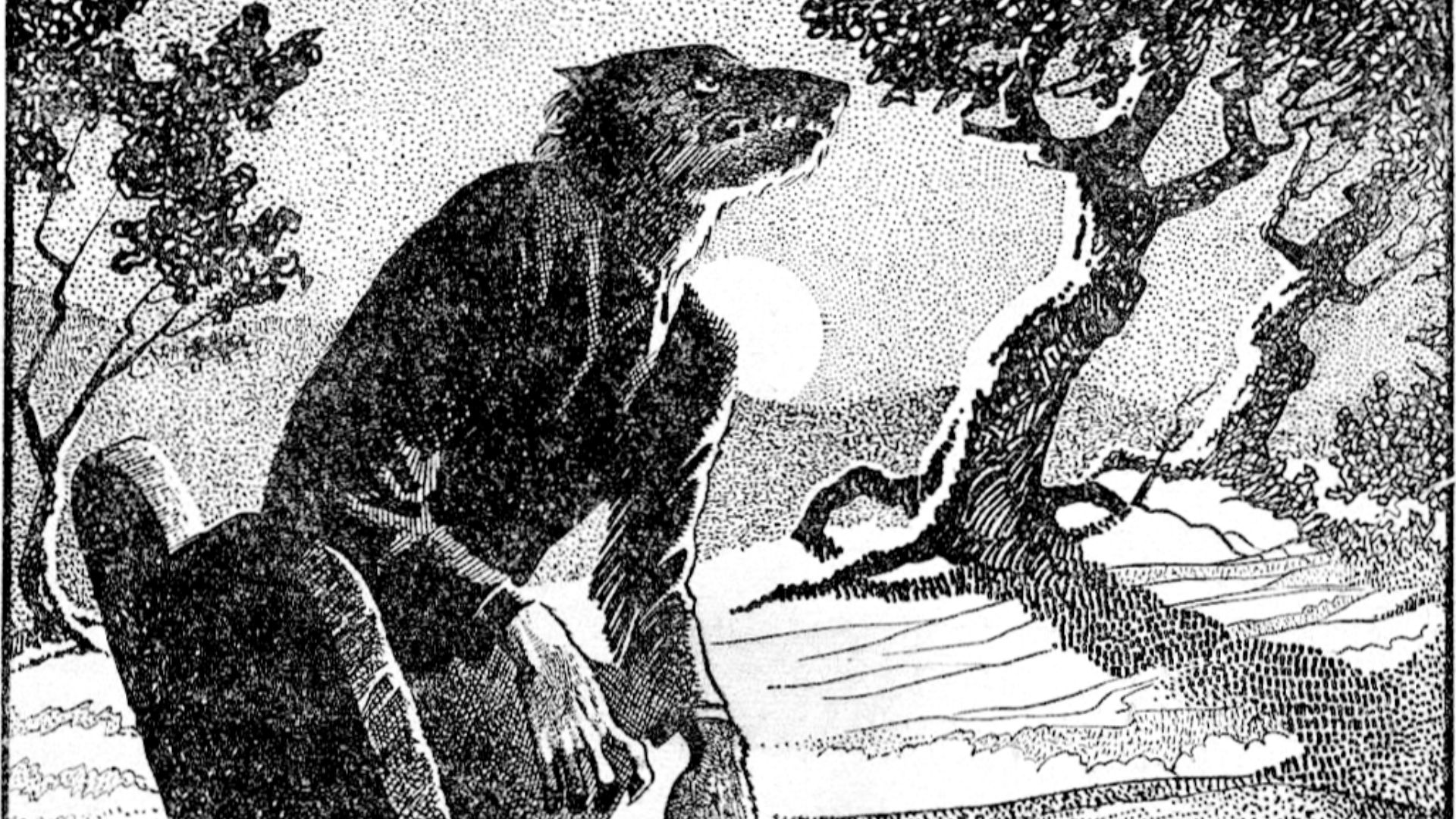
Silver as a monster weakness shows up in older folklore, but modern pop culture helped standardize it into something close to a rule. A great example is the Brothers Grimm tale “The Two Brothers,” where a witch laughs off lead bullets until the huntsman loads his gun with silver bullets. The story treats silver as a special material that bypasses supernatural protection, which is basically the “silver bullet” concept before it became a cliché. It’s a clean, dramatic beat: ordinary weapons fail, then silver changes the outcome.
Werewolves, though, are where silver really cemented its brand. The 1941 film The Wolf Man spells it out bluntly in dialogue: a werewolf “can only be killed by a silver bullet, or a silver knife… or a stick with a silver handle.” That line didn’t invent every shred of werewolf tradition, but it did help popularize a simple vulnerability that later books, comics, and movies could reuse without explanation. Once audiences learn a rule like that, storytellers keep it because it’s efficient and instantly understood.
Then there’s the famous “silver bullet” legend attached to the Beast of Gévaudan, a real historical crisis that spiraled into monster mythology. Modern retellings often claim the beast was killed with a blessed silver bullet, yet reputable summaries typically describe the “silver” detail as rumor or later embellishment rather than firm contemporary documentation. National Geographic discusses the story as a lingering rumor, and the “silver bullet” folklore is also frequently traced to later literary shaping rather than battlefield paperwork. In other words, silver didn’t win because it was always historically consistent; it won because it made the story feel complete.
KEEP ON READING
20 Powerful Ancient Egyptian Gods That Were Worshipped
Unique Religious Figures in Ancient Egypt. While most people are…
By Cathy Liu Nov 27, 2024
The 10 Scariest Dinosaurs From The Mesozoic Era & The…
The Largest Creatures To Roam The Earth. It can be…
By Cathy Liu Nov 28, 2024
The 20 Most Stunning Ancient Greek Landmarks
Ancient Greek Sites To Witness With Your Own Eyes. For…
By Cathy Liu Dec 2, 2024
10 Historical Villains Who Weren't THAT Bad
Sometimes people end up getting a worse reputation than they…
By Robbie Woods Dec 3, 2024
One Tiny Mistake Exposed A $3 Billion Heist
While still in college, Jimmy Zhong discovered a loophole that…
By Robbie Woods Dec 3, 2024
30 Lost Treasures That Vanished From History
Buried treasure, missing artefacts, legends of ancient gold in them…
By Robbie Woods Dec 3, 2024