


Siberia’s Biggest Mystery Boom
On a summer morning in 1908, something arrived over remote central Siberia, lit up the sky, hit the atmosphere hard, and released a blast so powerful it knocked people off their feet, shattered windows, and flattened the surrounding forest. The weird part is that the landscape looks like it was hit by a giant hand rather than a rock. There was no obvious impact crater, no neat pile of debris, and no leftover objects explaining what could have occurred. Over a century later, the best explanations come from careful fieldwork, eyewitness reports, and physics models that try to understand what actually happened.
1. The Day Of
The event occurred on June 30, 1908, near the Podkamennaya Tunguska River region of central Siberia. The explosion happened around 7 am, with many folks already out and starting their day.
 Svetlana Sibiryakova on Wikimedia
2. A Fireball Crossed the Sky
Multiple witnesses described a bright object moving across the sky, sometimes described as bluish or white, with a strong glare. Accounts differ on direction and details, but the shared idea is sudden brightness followed by a violent shock.
3. The Forest Fell
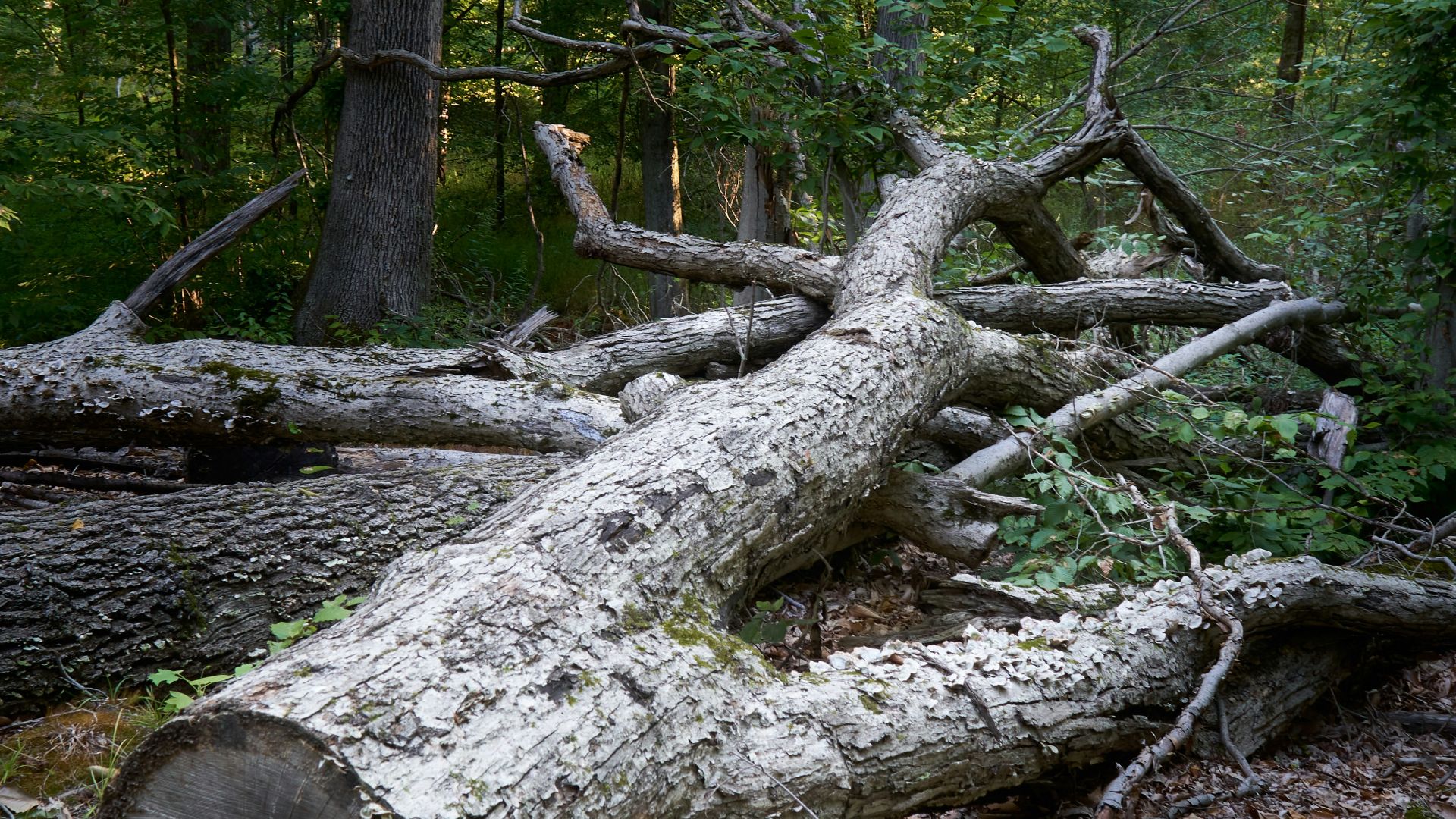
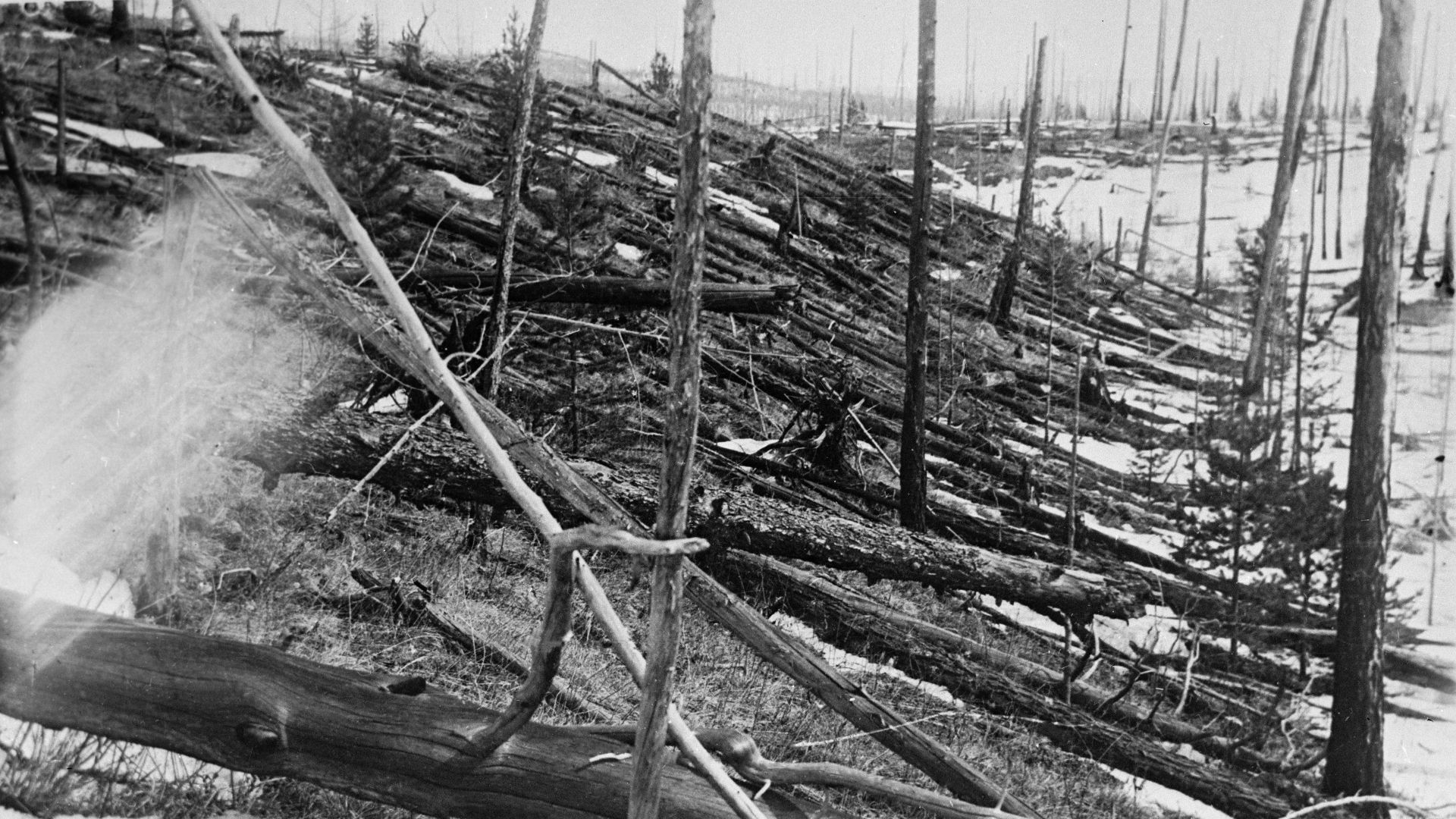
Roughly 2,000 square kilometers of taiga forest were knocked down, over tens of millions of trees. The fallen trunks formed a broad, radial pattern that spread outward from a central zone, which is one reason researchers concluded the force came from above rather than from a ground-level explosion.
4. No Obvious Impact Crater
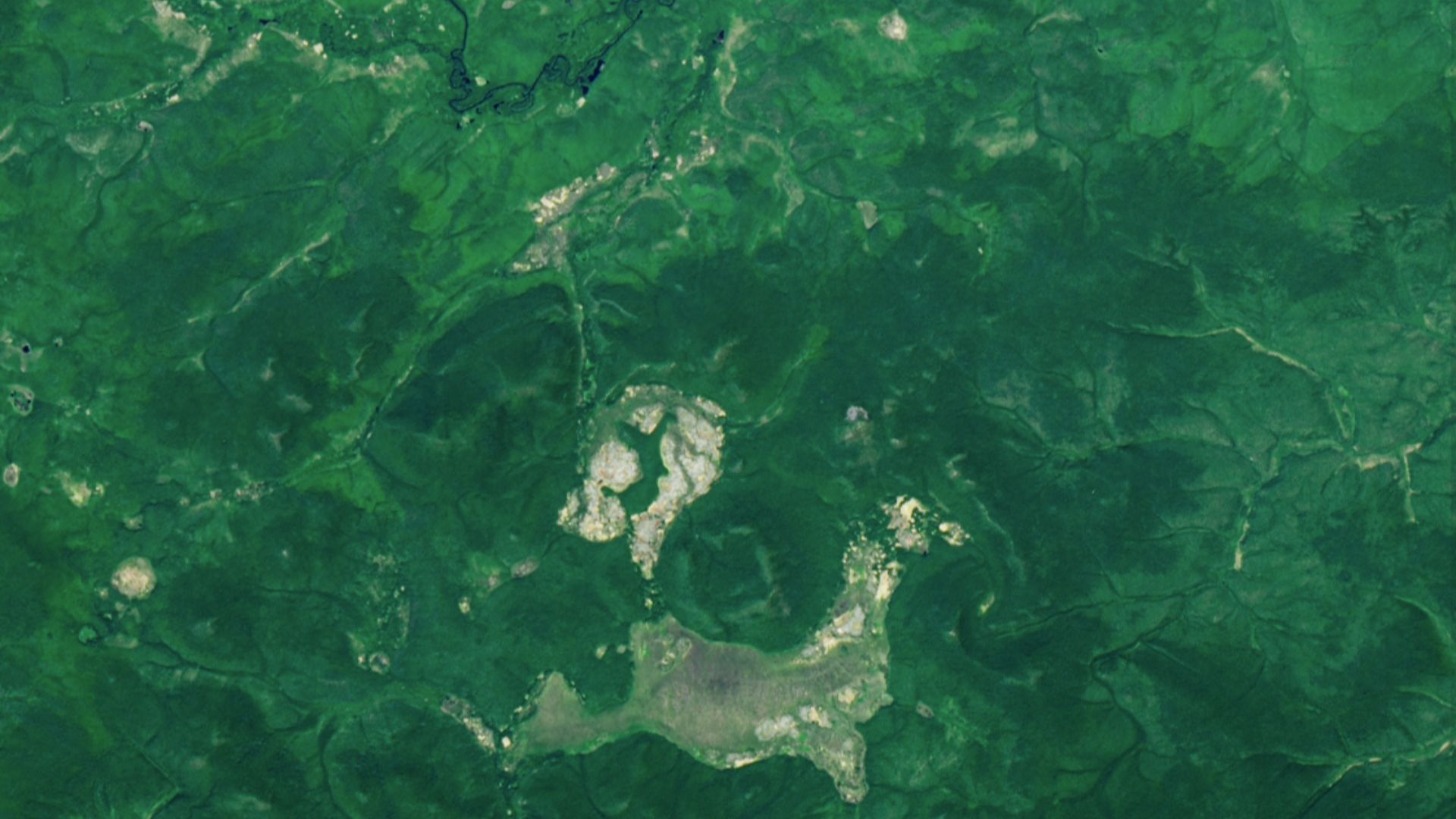
Investigators never found a traditional impact crater that matches an object large enough to cause that much damage. That absence steered mainstream research toward an airburst, where an incoming body breaks apart and releases energy in the atmosphere before reaching the ground.
5. Trees Stayed Standing at Ground Zero
Near the center of the devastation, many trees were left standing upright, stripped of branches and scorched, like poles. That “telegraph pole” look fits a blast wave that came downward and outward, snapping and flattening trees farther away while leaving some central trunks upright.
 Leonid Kulik, the expedition to the Tunguska event on Wikimedia
6. The Shockwave Traveled Far
People hundreds of miles away reported hearing loud detonations, feeling ground tremors, or seeing windows shake. Seismic stations across Eurasia registered the disturbance, which helped later researchers estimate the event’s power even without direct physical remains.
 Buddha Elemental 3D on Unsplash
7. Pressure Waves Were Recorded
Atmospheric pressure waves from the explosion were detected by instruments far from Siberia, including microbarographs in Europe. Those records were part of the early, serious confirmation that the event was not just some small local event.

8. Night Skies Glowed Afterward
For days after the blast, observers reported unusually bright night skies across parts of Europe and Russia, with some accounts describing enough light to read at night. The most accepted explanation involves high-altitude dust or aerosols that scatter sunlight long after sunset.

9. The Energy Was Enormous
Most modern estimates place the energy release in the range of several megatons of TNT, often cited around 10 to 15 megatons, though the range varies by model. That puts it well above any conventional explosion and explains why the forest damage stretches so widely despite the remote location.

10. Airburst Fits the Damage Best
An airburst explains several oddities at once, including the lack of a crater, the radial treefall, and the standing trunks near the center. Models typically place the main blast several kilometers above the ground, with estimates often around five to 10 kilometers, depending on the assumed object and trajectory.
11. The Object Was Probably Modest
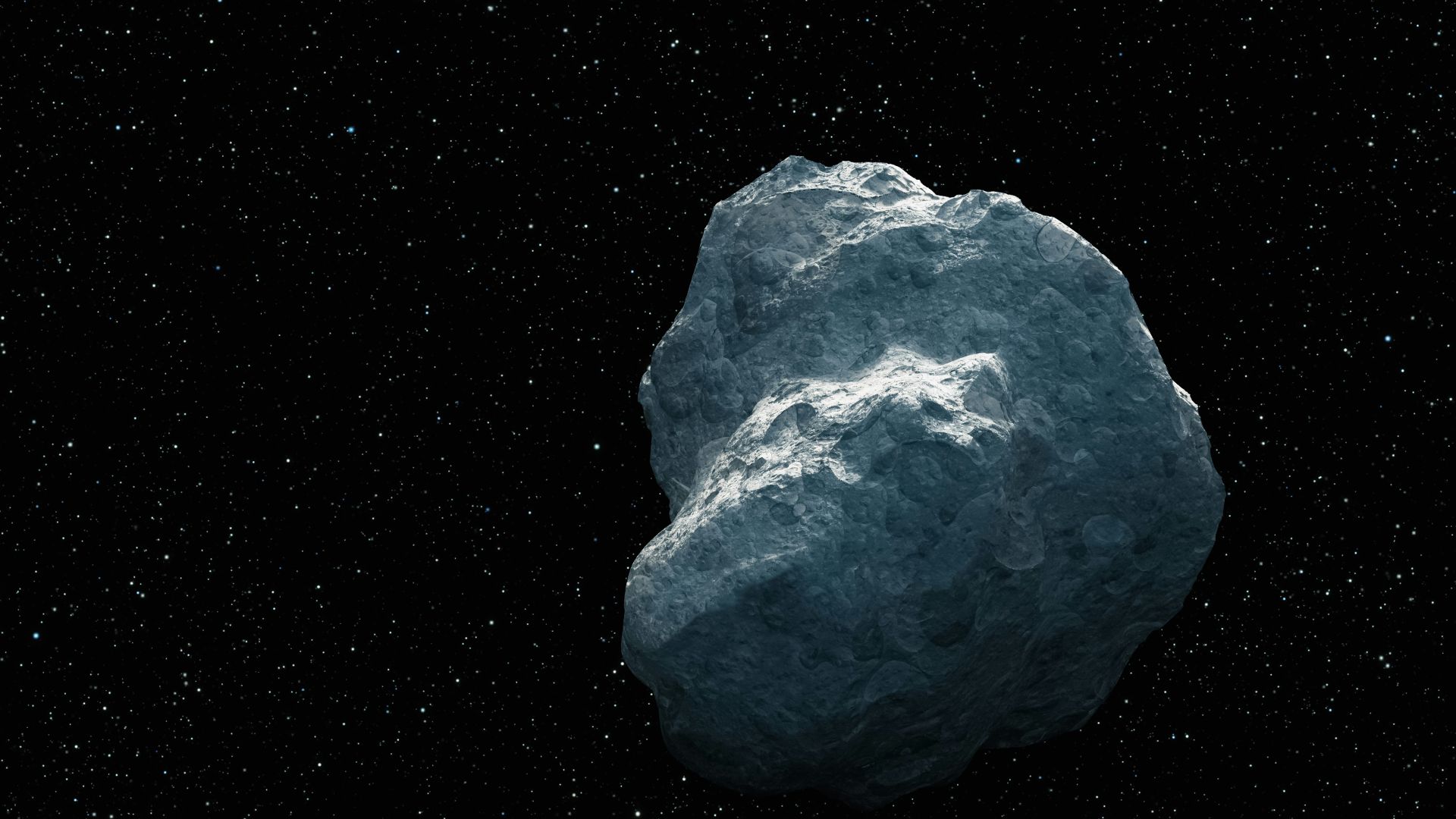
Researchers generally estimate the incoming body at something like tens of meters across, so not very big at all. An object within the 50 to 80 meter range is frequently modeled, though some models allow for different sizes depending on speed and breakup behavior.

12. Comet Versus Asteroid Debate
For decades, some scientists favored a comet fragment because a largely icy body could explode in the atmosphere and leave fewer solid remnants. Others argue that the observed effects and the geochemical hints in the region fit a stony asteroid better, and the debate tends to hinge on how much material should have survived to reach the ground.
 NASA Hubble Space Telescope on Unsplash
13. Kulik’s Expeditions Changed Everything
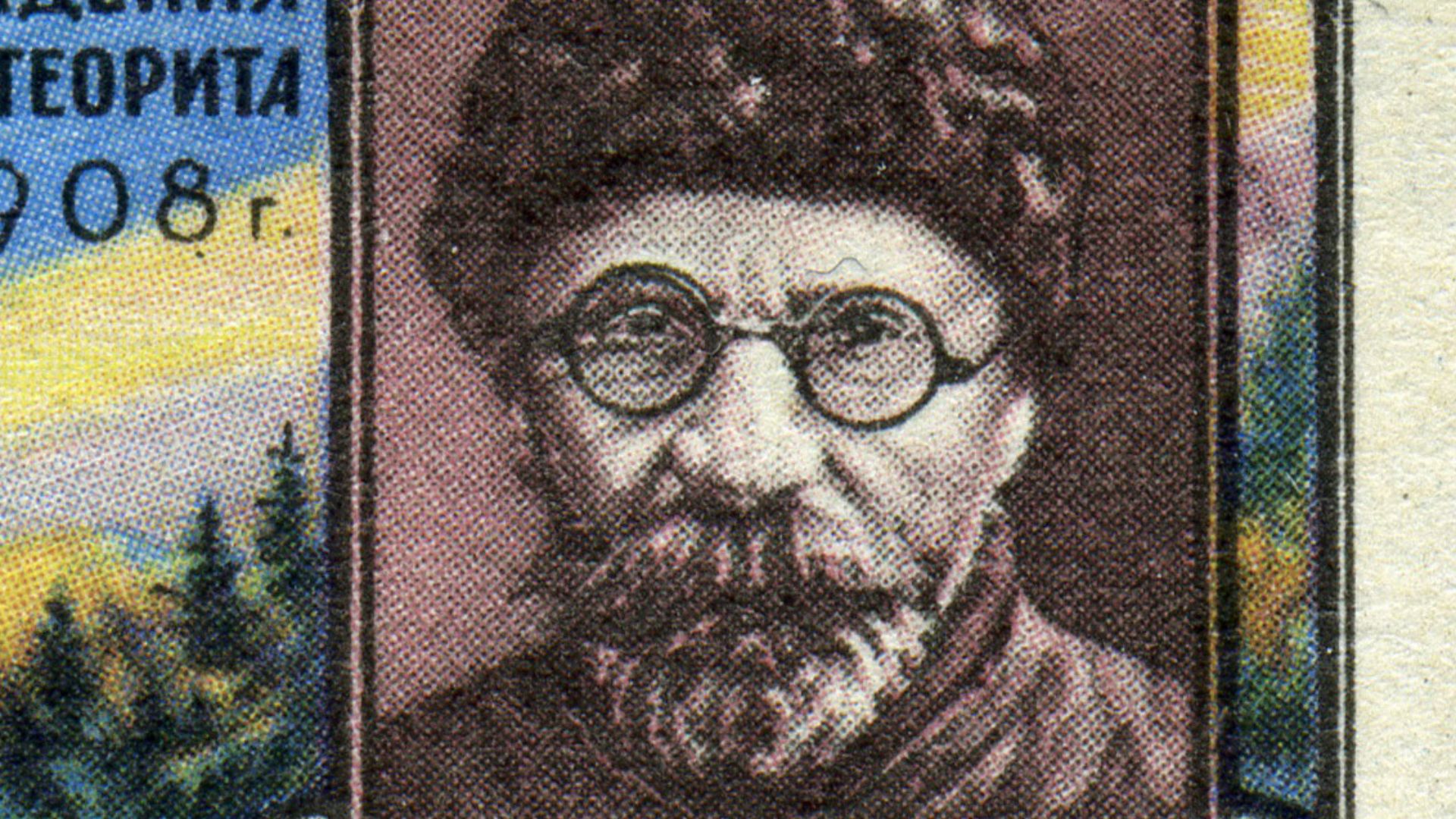
Leonid Kulik, a Russian scientist, led early expeditions in the 1920s that documented the flattened forest in detail. His team mapped the damage, interviewed local people, and took photographs that still shape how the world imagines Tunguska, because they captured the scale before logging and regrowth softened the visual impact.
14. The First Visits Were Delayed
The event happened in a remote region with difficult travel, and Russia went through major political upheaval in the years that followed, including war and revolution. Those realities slowed organized scientific investigation, which meant valuable time passed before systematic surveys could begin.

15. Peat Bogs Became Evidence Vaults
The area’s peat bogs turned into a kind of natural archive, trapping tiny particles over time in layered deposits. Researchers have analyzed peat cores for microscopic spherules and chemical signatures that might reflect extraterrestrial material, since larger fragments proved elusive.

16. Tiny Spherules Show Up
Multiple studies reported microscopic glassy or mineral-rich spherules in peat layers dated to around 1908, sometimes with elevated nickel content consistent with meteoritic material. These finds do not offer a foolproof explanation, yet they support the idea that something from space disintegrated and spread debris over the region.

17. Iridium Claims Stay Cautious
Iridium is often associated with meteorites, and Tunguska research has included efforts to detect abnormal iridium levels in soils and peat. Results have been mixed and debated, which is why responsible summaries avoid treating any single chemical marker as a final answer.

18. Eyewitness Records Are Messy
Accounts were gathered years after the event in many cases, often through translation and under difficult field conditions. Witnesses described heat, bright light, and a series of bangs, yet their details vary in ways that make exact trajectory reconstruction challenging.

19. The Region Was Sparsely Populated
The explosion occurred over a largely uninhabited stretch of taiga, home to Evenki communities and a small number of settlers. That limited human casualty count is part of the reason Tunguska is studied as a near-miss scenario, since a similar airburst over a city would have been catastrophic.
 Vyacheslav Argenberg on Wikimedia
20. The Wild Theories Never Won
Tunguska has attracted claims involving exotic physics, secret weapons, and extraterrestrial craft, mostly because the event leaves room for the imagination. Mainstream researchers keep returning to atmospheric entry models as they match the best physical evidence, the treefall geometry, and the instrument records without needing extra assumptions. The mystery today is less about whether something from space arrived and more about the exact composition, breakup process, and trajectory that produced such an odd, clean-looking blast.
KEEP ON READING
The story of Ching Shih, the Woman Who Became the…
Unknown author on WikimediaFew figures in history are as feared…
By Emilie Richardson-Dupuis Dec 29, 2025
Einstein's Violin Just Sold At An Auction—And It Earned More…
A Visionary's Violin. Wanda von Debschitz-Kunowski on WikimediaWhen you hear…
By Ashley Bast Nov 3, 2025
This Infamous Ancient Greek Burned Down An Ancient Wonder Just…
History remembers kings and conquerors, but sometimes, it also remembers…
By David Davidovic Nov 12, 2025
The Mysterious "Sea People" Who Collapsed Civilization
3,200 years ago, Bronze Age civilization in the Mediterranean suddenly…
By Robbie Woods Mar 18, 2025
10 Wars Won By Deception & 10 Lost By Overconfidence
When Strategy Matters More Than Strength. Military history is filled…
By Rob Shapiro Jun 19, 2026
20 Soldiers Who Defied Expectations
Changing the Rules of the Battlefield. You’ve probably heard plenty…
By Annie Byrd Feb 10, 2026