


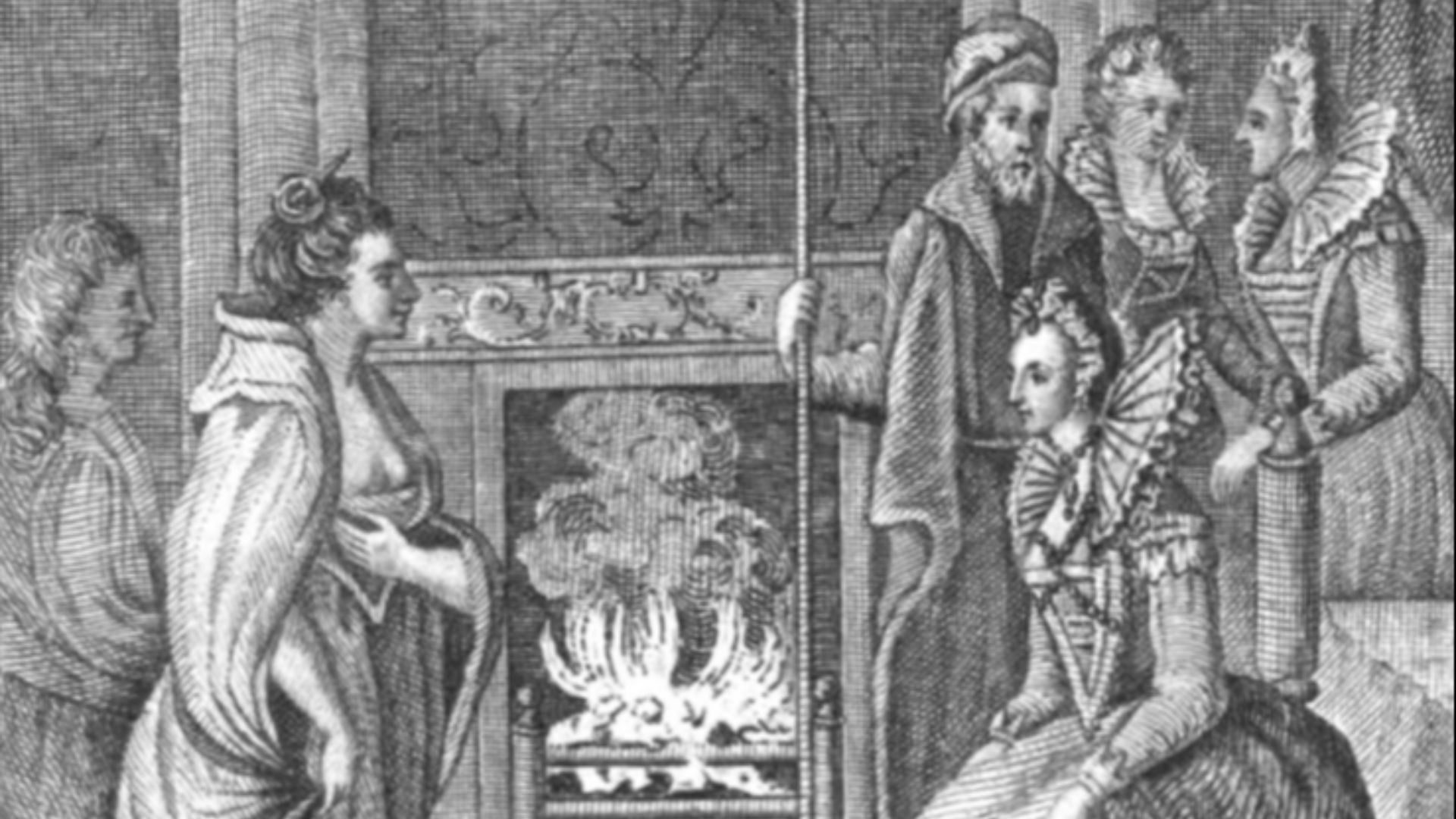
 Unknown authorUnknown author on Wikimedia
In the summer of 1593, a 60-something Irish chieftain sailed to Greenwich Palace and requested a meeting with the Queen of England. She had no invitation and no royal mandate. What she had was a fleet of ships, decades of defying English authority along the western coast of Ireland, and two family members sitting in an English prison. Elizabeth I agreed to see her, and what followed was one of the stranger diplomatic encounters of the Tudor period.
Her name was Grace O'Malley, known in Irish as Gráinne Mhaol, and she is one of the most documented and least celebrated figures of the 16th century. Her petition to Elizabeth I survives in the State Papers held in London, providing a detailed account of her biography, her grievances, and what she wanted. What the documents don't fully capture is what kind of person walks uninvited into a Tudor court and walks back out having negotiated as a peer.
She Built Her Power on the Water
Grace was born around 1530 into the O'Malley clan of Connacht, in what is now County Mayo on Ireland's western coast. The O'Malleys were a maritime family whose influence ran along the Atlantic coastline and out into the islands of Clew Bay. Their clan motto, Terra Marique Potens, meaning powerful by land and sea, wasn't rhetorical flourish. They controlled the fishing and trading routes of that stretch of coast with an authority the English crown would spend decades trying to dismantle.
She sailed from a young age and was commanding her own vessels by adulthood, leading a fleet that at various points numbered around 20 ships. Her operation combined legitimate trading, the collection of tolls from ships passing through waters her clan claimed, and outright piracy when the occasion called for it. She raided coastlines as far as Scotland and targeted cargo ships in the Irish Sea. The line between maritime trade and piracy in 16th-century Atlantic waters mostly came down to who was doing the accounting.
Her first marriage to Donal O'Flaherty of another powerful Connacht family gave her access to additional territory and resources. When he was killed, she reportedly held his men together and extended her own influence rather than retreating into widowhood.
Her second marriage, to Richard Burke, known as Iron Richard, is documented in at least one account as a trial arrangement that Grace ended after a year by locking her new husband out of his own castle and declaring the business finished. Whether fully accurate or partially embellished, her contemporaries found the story plausible enough to keep repeating.
The Man Who Made the Meeting Necessary
By the late 1580s, Grace's operations had attracted the sustained attention of Sir Richard Bingham, the English governor of Connacht. Bingham was effective in the specific sense that he was very good at crushing resistance, and he made dismantling Grace's influence his deliberate project. He confiscated her cattle, broke apart her alliances, and at one point had her arrested and prepared for execution before she was released.
The conflict reached a breaking point in 1593 when Bingham imprisoned Grace's son Tibbot Burke and her half-brother Donal-na-Piopa. Grace had accepted the authority of the English crown when it suited her and resisted it when it didn't, which was a reasonable position for anyone navigating the political realities of Tudor-controlled Ireland. With her family imprisoned and her power base being methodically taken apart, she went over Bingham's head in the most direct way available to her.
Her petition to Elizabeth, preserved in the State Papers, made her case with considerable precision.
She outlined her history, acknowledged the complicated relationship between her clan and the crown, and asked for the release of her family members and some form of protection from Bingham's continued interference. She apparently felt no obligation to wait for bureaucratic channels to process the request, which is why she got on a boat and showed up in person.
What Happened When the Two Women Met
The meeting at Greenwich in 1593 is documented in the State Papers and in later accounts, though the more colorful details come from sources written well after the fact. What the record agrees on is that the two women met, conversed in Latin as Grace spoke no English and Elizabeth spoke no Irish, and reached some form of agreement between them.
The story that Grace refused to bow to Elizabeth, on the grounds that she owed fealty to no foreign queen, has circulated for centuries. It may reflect actual events or may reflect what later generations wanted to believe about her character. What the records do confirm is that Elizabeth issued letters ordering Bingham to release Tibbot Burke and to ease his campaign against Grace's interests. The outcome was real, regardless of how the conversation in between was conducted.
Grace O'Malley died around 1603, the same year as Elizabeth I, giving the end of their parallel lives a symmetry that feels almost too neat for history.
She spent her final years back on the Irish coast, reportedly still active at sea into her seventies. The English colonial project eventually succeeded in dismantling the clan system she had spent her life operating within. For one afternoon in Greenwich, though, two women who had each built formidable power through entirely different means sat down and worked something out between themselves, which is more than most people ever get.
KEEP ON READING
The Brutal Realities Of Gladiator Life Beyond the Arena
David Cruz asenjo on PexelsWhen most people think of gladiators,…
By Rob Shapiro Mar 31, 2026
The Volcano Winter That Nearly Toppled Europe
Collin Ross on UnsplashMost people, if asked to name a…
By Cameron Dick Mar 31, 2026
From School Plays To Starting A Cult: 20 Of The…
The Books That Made Us. Many people will tell you…
By Farva Ivkovic Jan 31, 2025
20 Facts About Jane Grey, The Forgotten Queen Of England
A Quick, Messy, and Tragic Reign. Lady Jane Grey never…
By Maria Cruz Jan 31, 2025
20 Priceless Historical Art Pieces Rescued By The Monuments Men
Protecting Human History. While the soldiers on the front lines…
By Sara Springsteen Mar 31, 2026
Almost Every Ancient Statue Has a Missing Nose, And It's…
Gary Todd from Xinzheng, China on WikimediaWalk through the classical…
By Elizabeth Graham Mar 31, 2026