The Dog Who Became One Of The Most Decorated Soldiers Of World War I
Most army mascots get a nickname and maybe a photo in a regimental scrapbook. Stubby got seventeen battles, a promotion earned through actual conduct in the field, and a place in the Smithsonian that still draws people who had no idea a dog could end up there. His story tends to sound exaggerated the first time someone hears it, mostly because it is easy to assume a stray mutt found wandering a Connecticut parade ground could not possibly have done the things people claim he did.
He was not bred for any of it. Stubby showed up as a stray on the Yale University campus in the summer of 1917, while the 102nd Infantry Regiment trained there before shipping out, and there was nothing about him that suggested a military career. What happened over the following two years turned him into one of the most talked-about soldiers of the entire war, dog or otherwise, and the record of it is unusually well documented for an animal.
From Stray Puppy To Smuggled Soldier
Private J. Robert Conroy started feeding the dog scraps around the training grounds and the two grew attached fast enough that Conroy could not bring himself to leave him behind. When the regiment shipped out for France aboard the SS Minnesota, Conroy hid Stubby under his overcoat and got him aboard without anyone noticing until they were already at sea.
Once discovered, Stubby could have been sent back on the next available transport. Instead, according to accounts passed down through the regiment, he saluted a commanding officer by raising a paw to his brow, a trick Conroy had taught him, and the officer let him stay. That single moment turned an accidental stowaway into an official member of the 102nd Infantry, attached to the 26th Yankee Division.
From there Stubby was treated less like a mascot and more like a soldier who happened to walk on four legs. He wore a specially fitted gas mask, learned to recognize the whistle and rumble of incoming artillery before the men around him could, and stayed close to the trenches rather than the rear areas where most animals attached to a unit would have been kept.
The Battles, The Gas, And The Spy He Caught
Stubby spent about eighteen months at the front and took part in four major offensives and seventeen battles, a record few human soldiers in the regiment could match for sheer time under fire. Early exposure to mustard gas nearly killed him, but it left him unusually sensitive to the smell afterward, and he began alerting soldiers to gas attacks before the alarm even sounded, running through the trenches barking and, in at least one documented case, biting a sleeping soldier awake in time.
His most famous moment came in the Argonne, where he caught a German soldier mapping out Allied trench positions. Stubby chased the man down and held him by the seat of his breeches until American troops arrived to take him prisoner. Conroy's commanding officer was reportedly impressed enough by the capture that he promoted Stubby to the rank of sergeant, making him the first dog on record to receive rank through actual combat service in the United States Army.
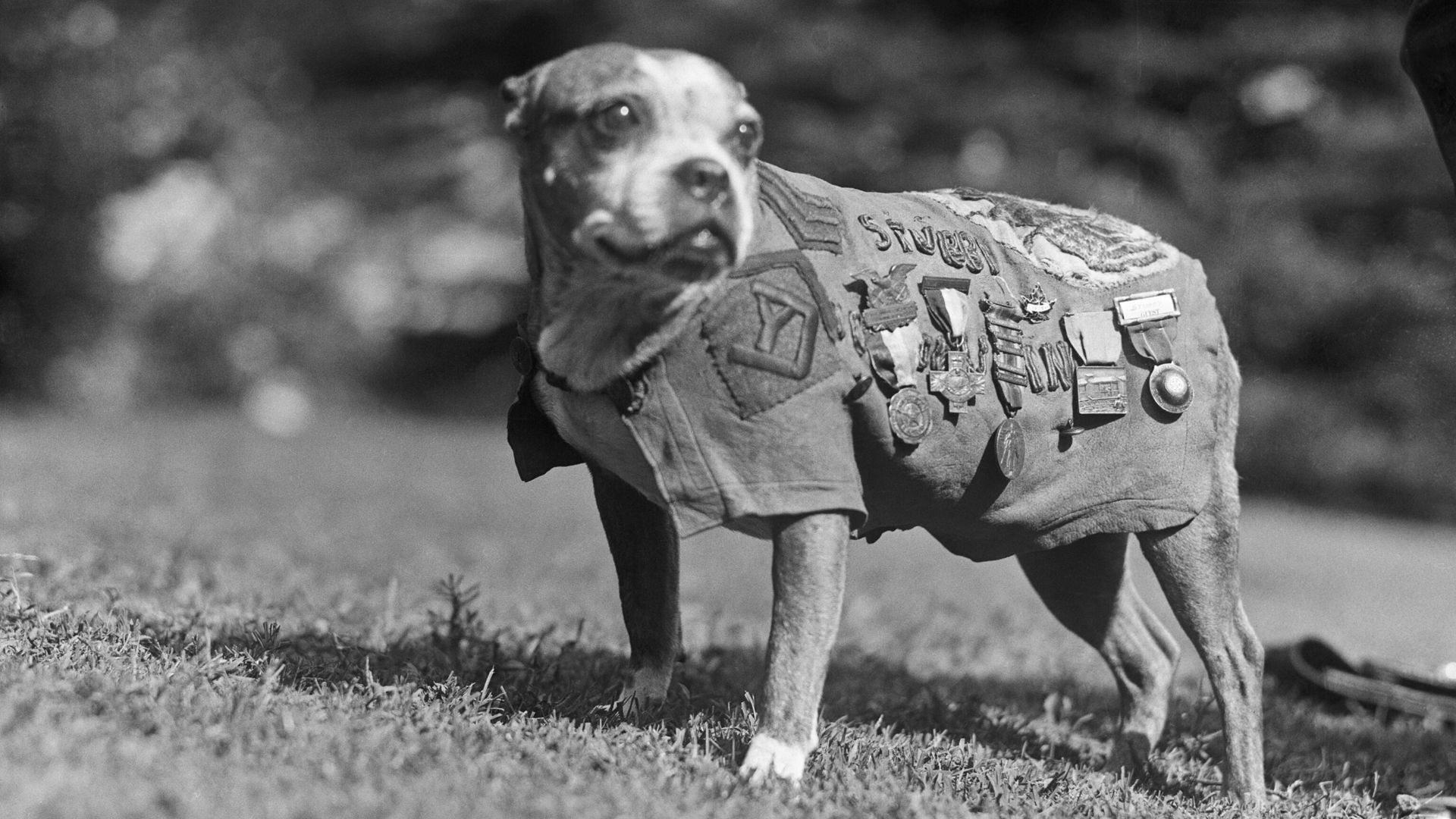
He was wounded twice, most seriously in 1918 near Château-Thierry, when shrapnel from a German grenade tore into his chest and leg during an advance. He recovered in a field hospital alongside the men he served with, and while he was healing, women in the town sewed him a chamois coat, the same coat that later held his medals and became one of the more recognizable images associated with him.
The Homecoming That Made Him A Legend
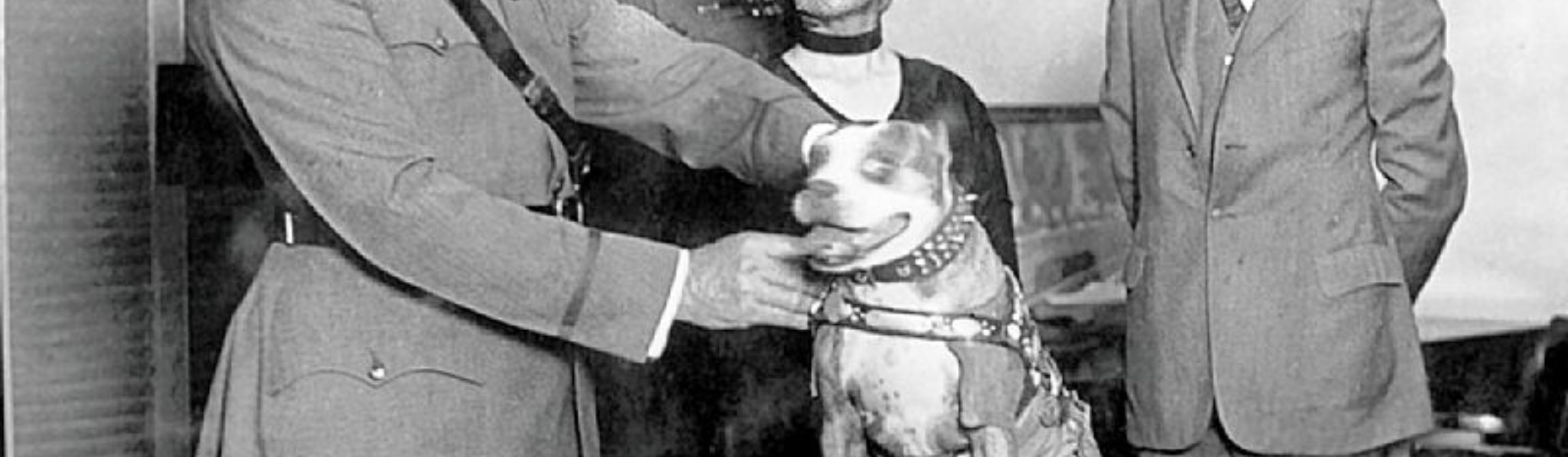
Stubby came home a celebrity, and the country treated him like one. He met President Woodrow Wilson at the White House, and later Presidents Calvin Coolidge and Warren Harding as well, and he was made a lifetime member of the American Legion, the Red Cross, and the YMCA, organizations that rarely extended that kind of recognition to anyone, let alone a dog.
Conroy went on to study law at Georgetown University, and Stubby went with him, eventually becoming the unofficial mascot of the Georgetown Hoyas football team. He would trot the sideline during games and, according to several newspaper accounts from the period, nudge a football around the field during halftime, which the crowd apparently found as charming then as it sounds now.
Stubby died in 1926, in Conroy's arms, and his story did not end with burial. His hide was preserved through taxidermy and mounted over a plaster cast of his body, and the mount eventually made its way to the Smithsonian's National Museum of American History, where it remains on display. People still stop in front of the case today, read the small placard, and stand there a little longer than they expected to.
KEEP ON READING