A Language Carved To Last
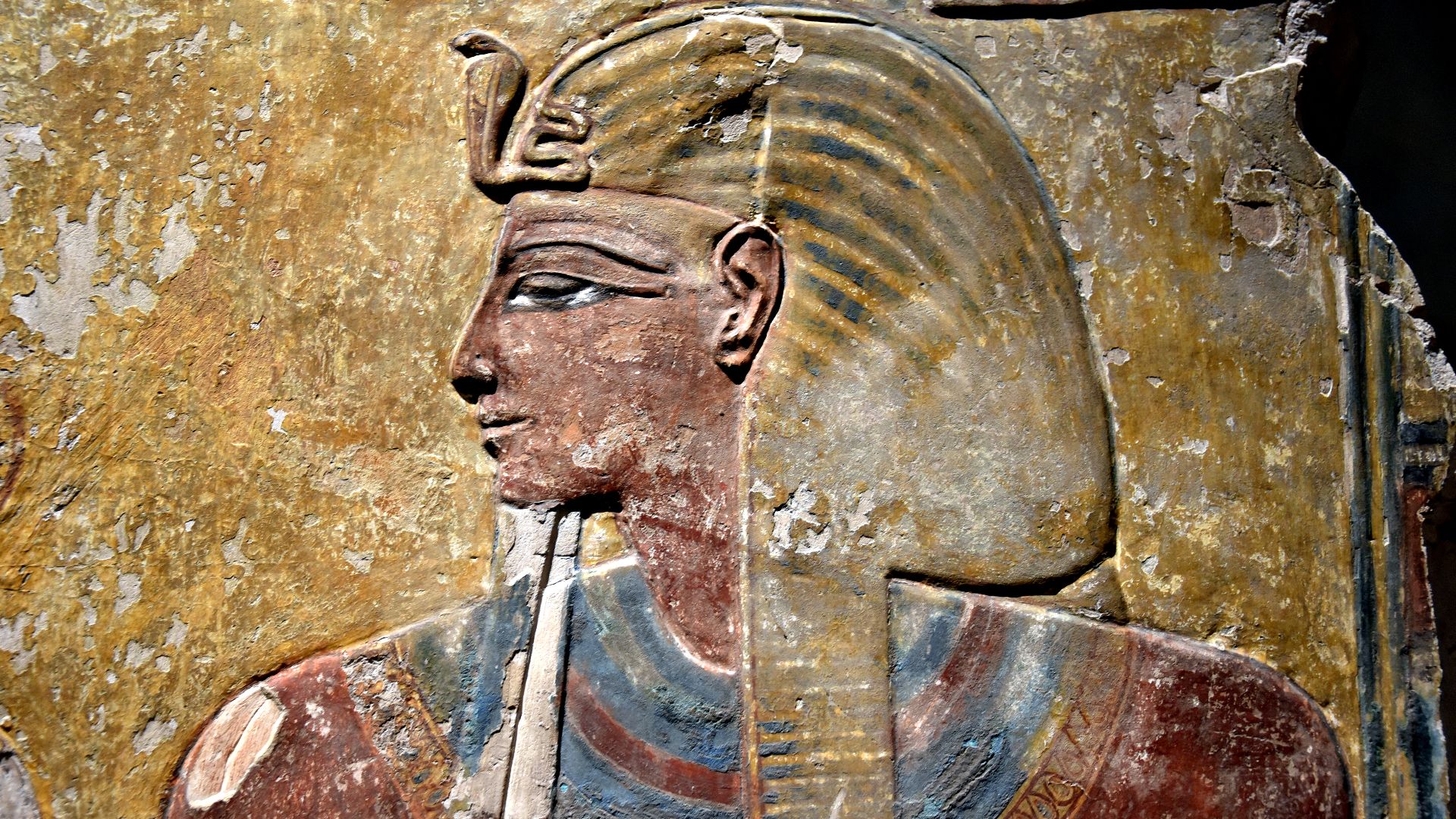
Hieroglyphics are unique, ancient writings. They combine images, symbols, and phonetic elements into a visual language that’s both structured and expressive. Civilizations like the Egyptians used them to document law, religion, trade, astronomy, death, and daily life. Wondering about the age-old stories they hold? Here are 20 hieroglyphics that once shaped how people understood the world around them.
 Osama Shukir Muhammed Amin FRCP(Glasg) on Wikimedia
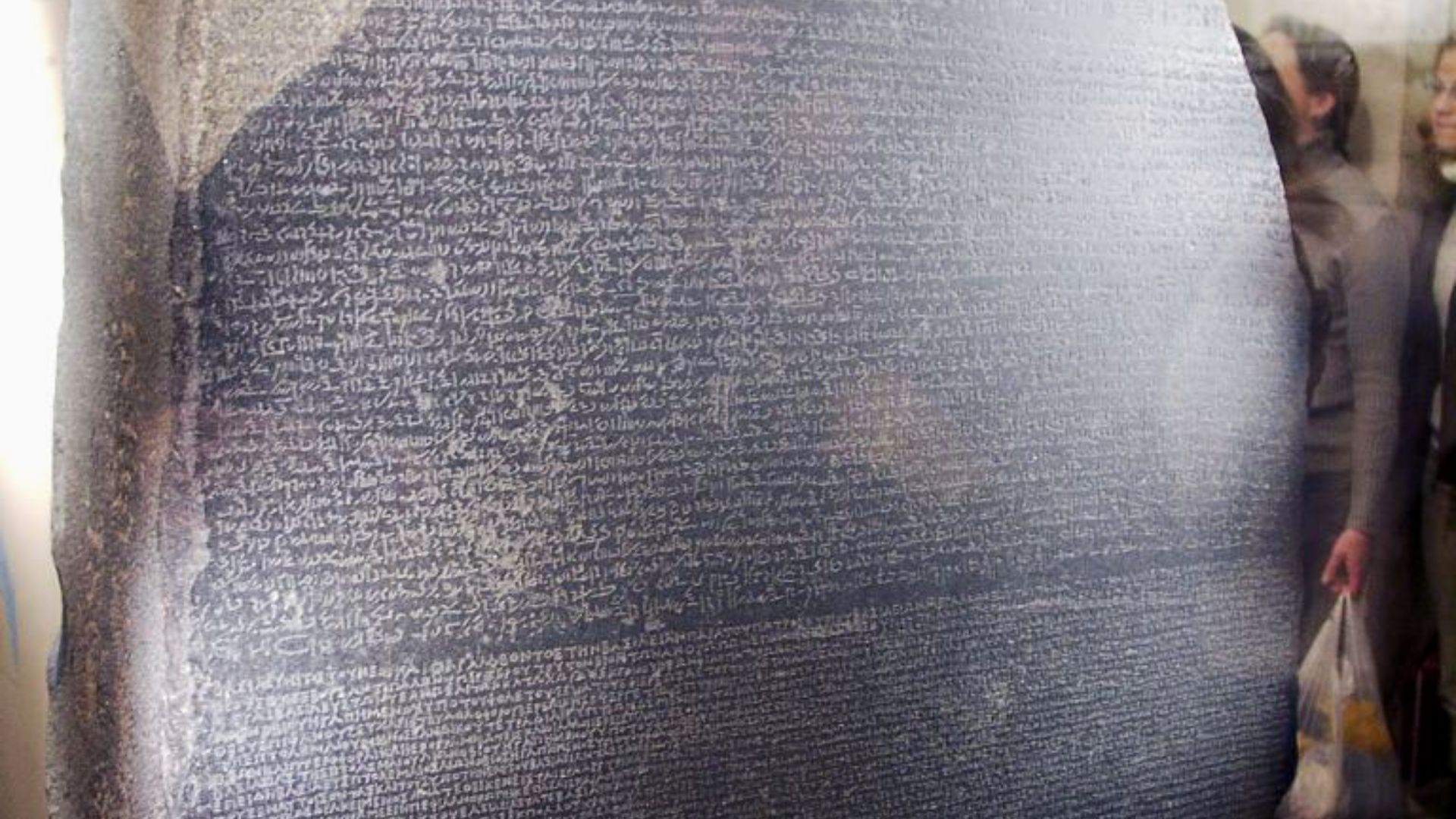
1. The Rosetta Stone
Discovered in 1799 near the town of Rosetta in Egypt, this inscribed slab bore a royal decree repeated in three scripts: Greek, Demotic, and Egyptian hieroglyphs. The stone became the keystone to deciphering a forgotten language, with Jean-Francois Champollion leading the effort in the 1820s.
 No machine-readable author provided. Matijap assumed (based on copyright claims). on Wikimedia
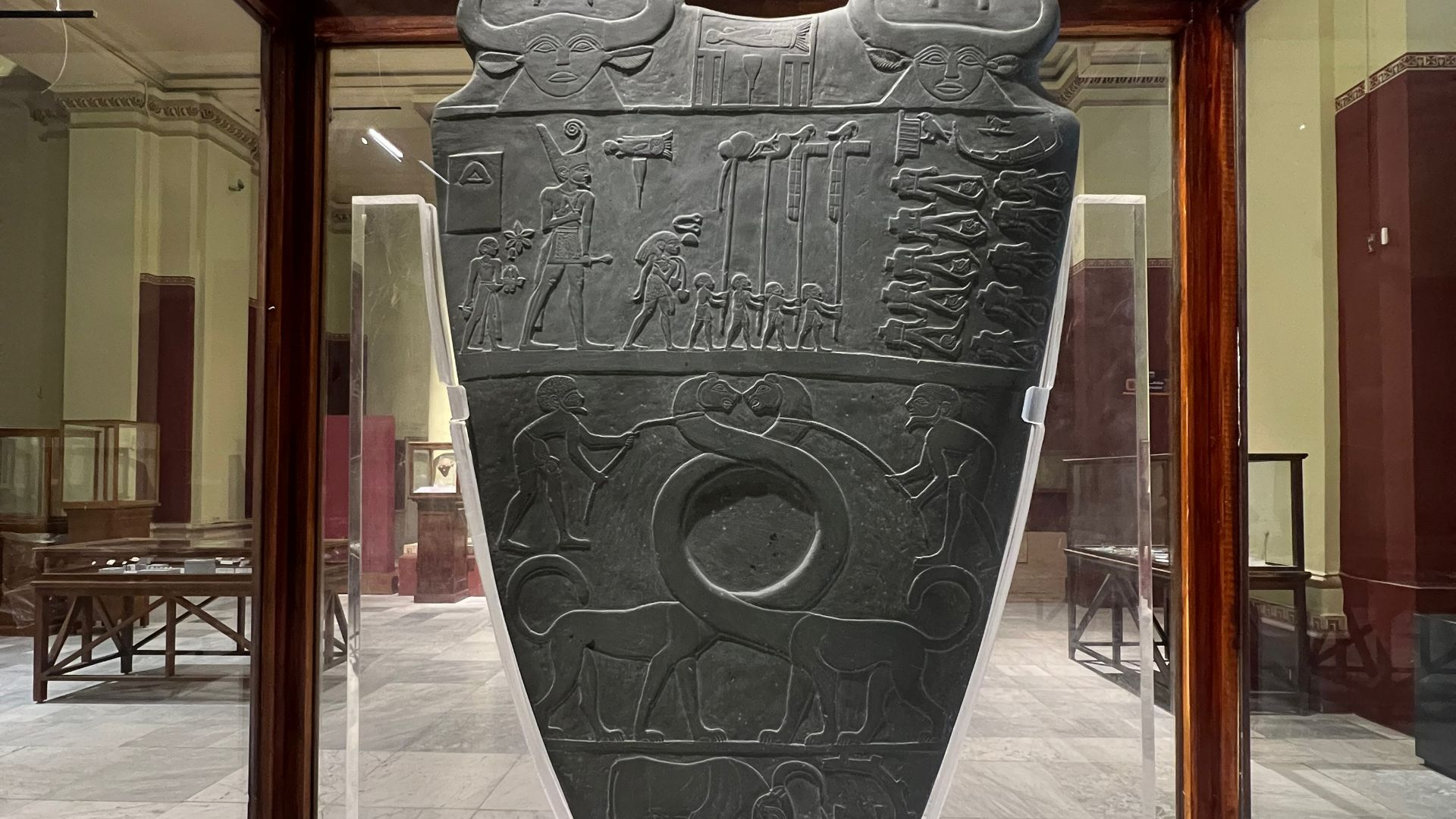
2. The Narmer Palette
Powerful symbolism dominates this 31st-century BCE slate. You can also see Narmer, Egypt's first pharaoh, wearing both Upper and Lower Egypt crowns. Carved for the ceremony, not combat, the palette marked Egypt's political birth with a visual punch.
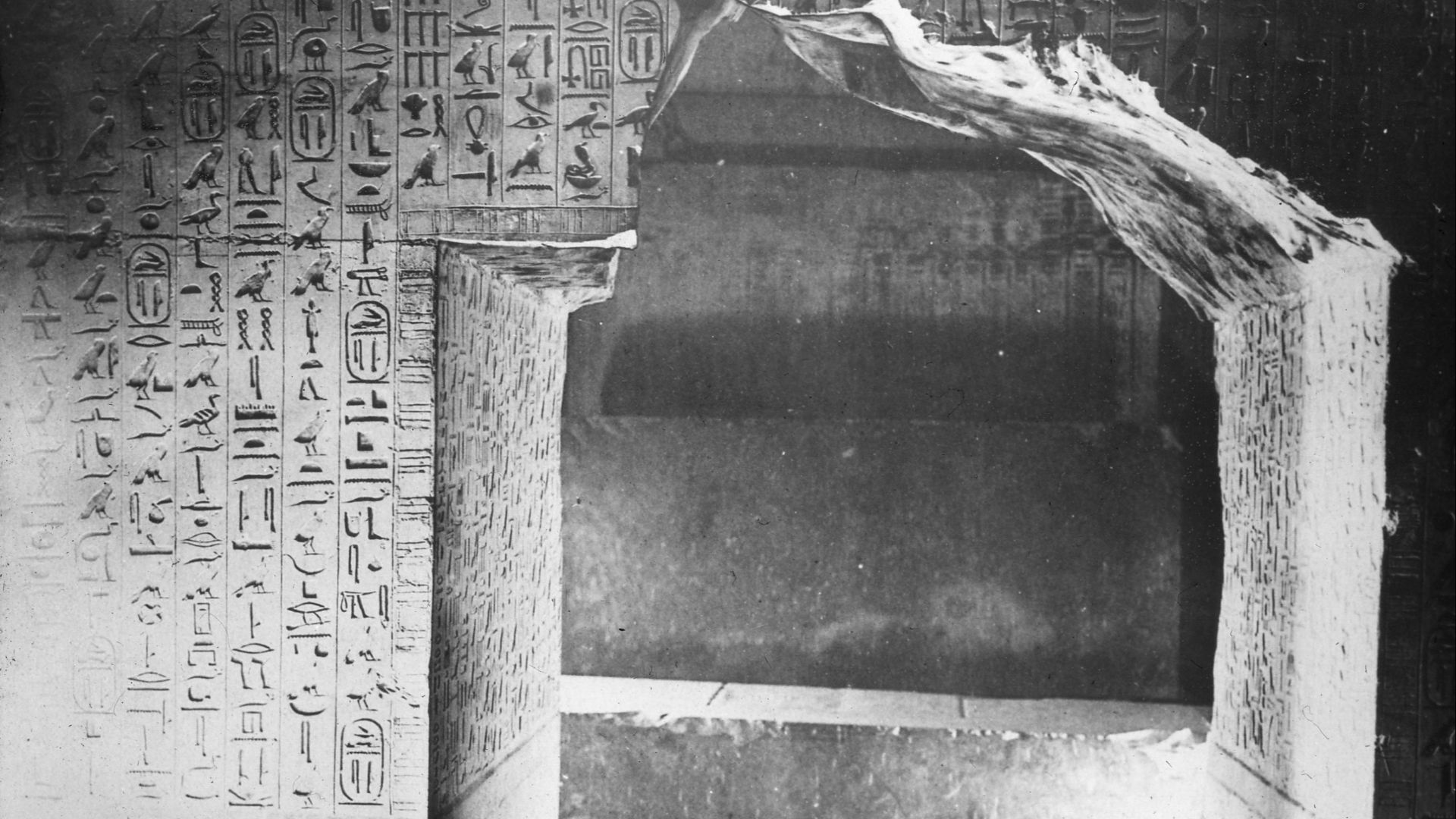
3. Pyramid Texts Of Unas
These are the Pyramid Texts—the oldest religious writings in human history. Etched into the interior walls around 2350 BCE, these inscriptions provided the deceased pharaoh with spells and divine knowledge to safely reach the afterlife.
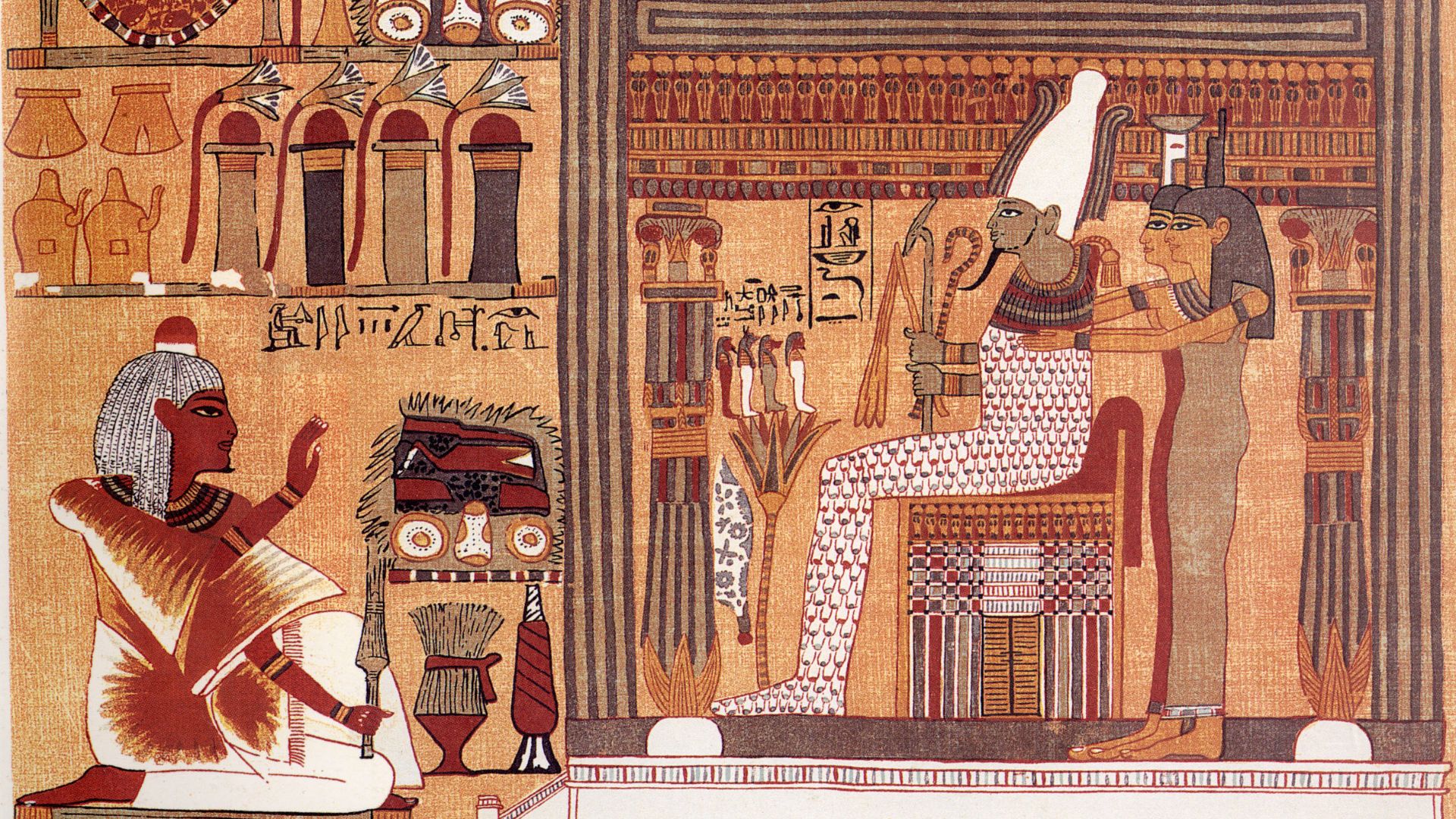
4. Book Of The Dead (Papyrus Of Ani)
Rather than rely solely on temple inscriptions, Egyptians sometimes carried their sacred instructions with them—even into death. This scroll isn’t one book but a curated compilation of spells designed to guide the soul. These portable texts show how deeply personal faith had become.
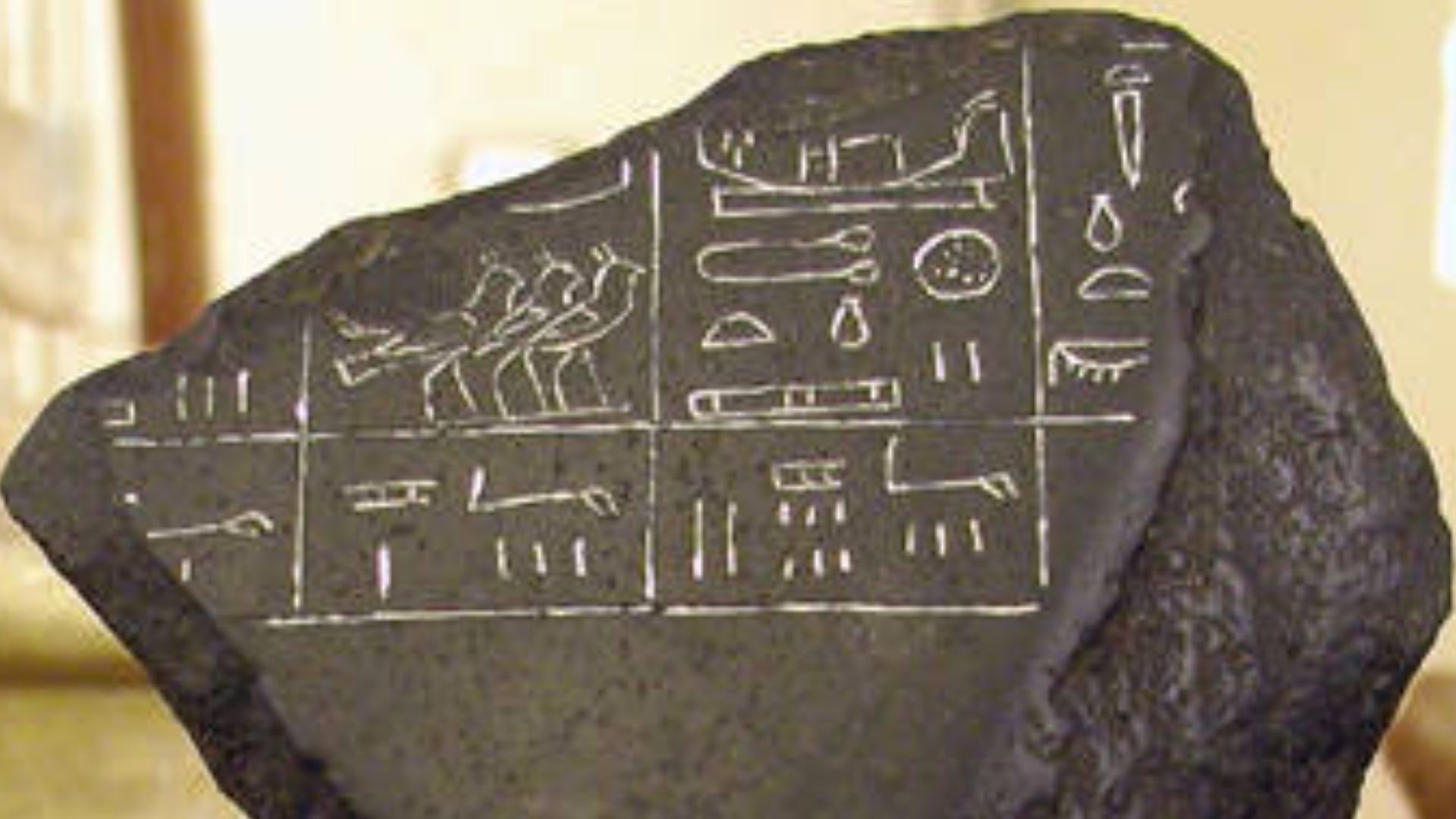
5. The Palermo Stone
Carved from black basalt, the Palermo Stone captures the pulse of early Egyptian kingship. Dating to Egypt's Fifth Dynasty, it offers a chronological framework extending into the earlier predynastic period. The stone functioned like a permanent historical ledger, safeguarding memory in the medium of eternity.
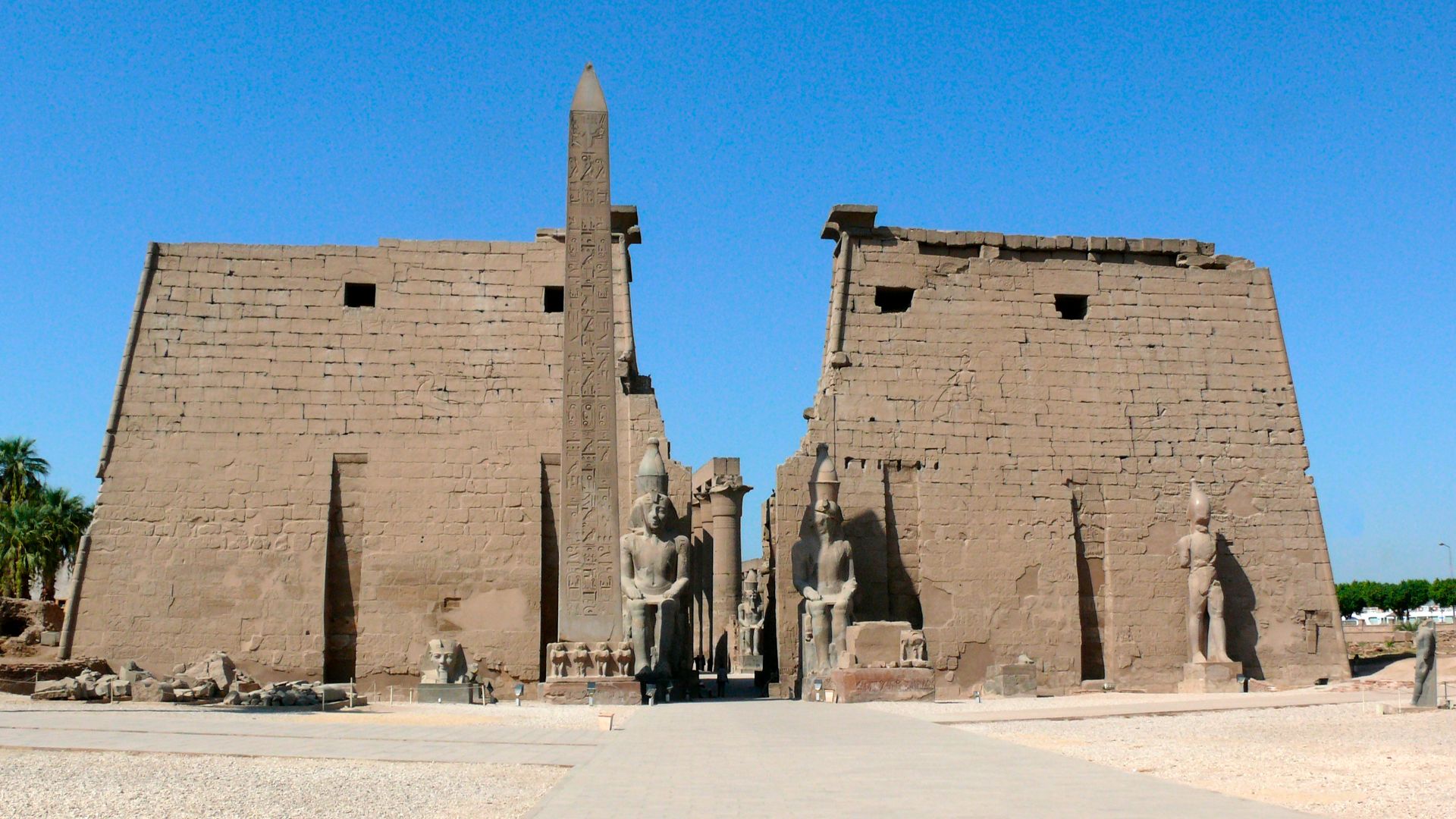
6. The Luxor Obelisk
Towering now in Paris, the Luxor Obelisk once stood before the Temple of Luxor, where it told the story of Pharaoh Ramses II with bold precision. Even relocated from its desert home, the monument still radiates that ancient voice of divine kingship.
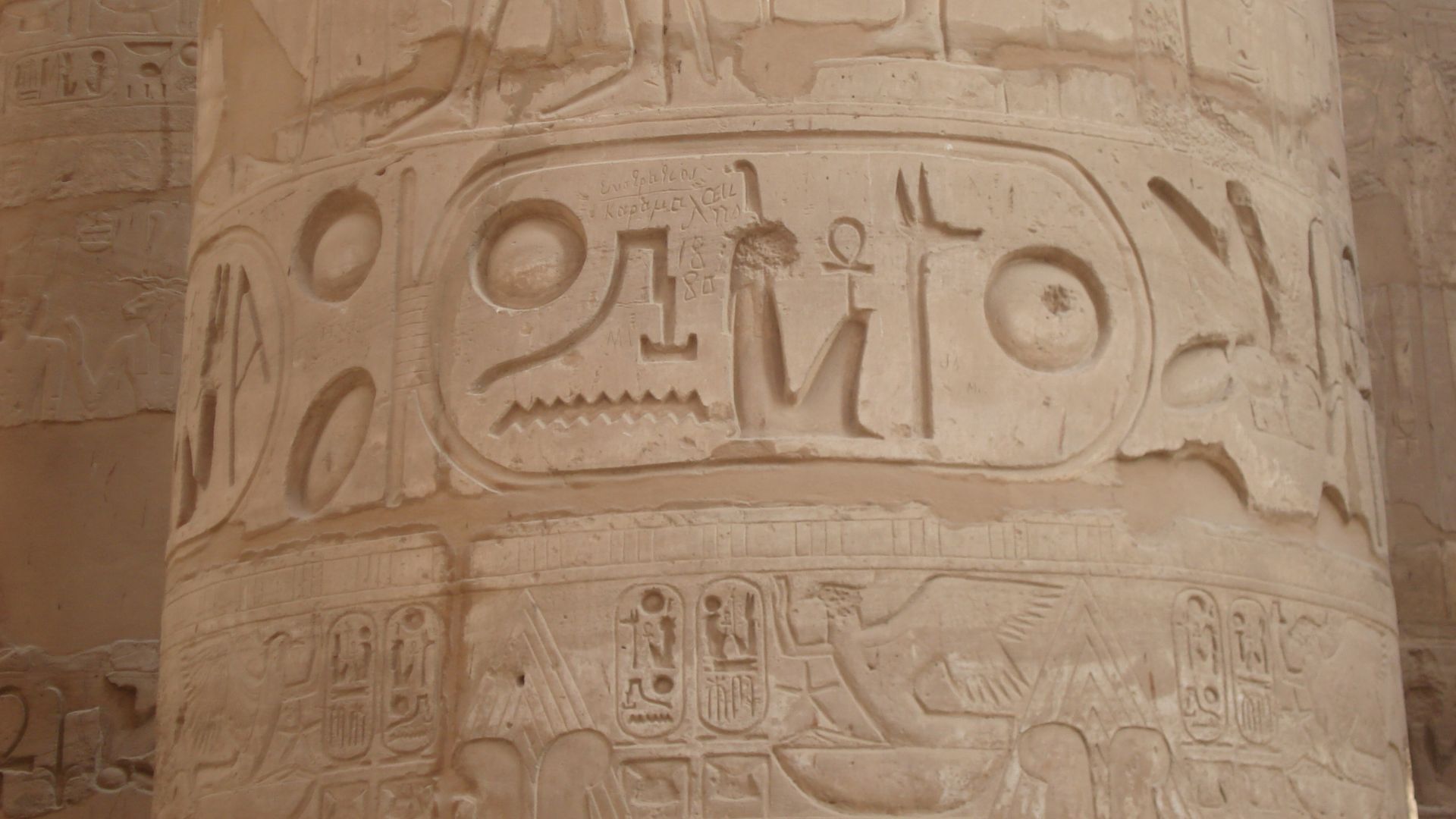
7. Karnak Temple Inscriptions
Step inside the Karnak Temple, and the very walls roar with declarations of conquest and cosmic alignment. Seti I, Ramses II, and others used Karnak as a stage to announce divine favor, victory in battle, and religious devotion.
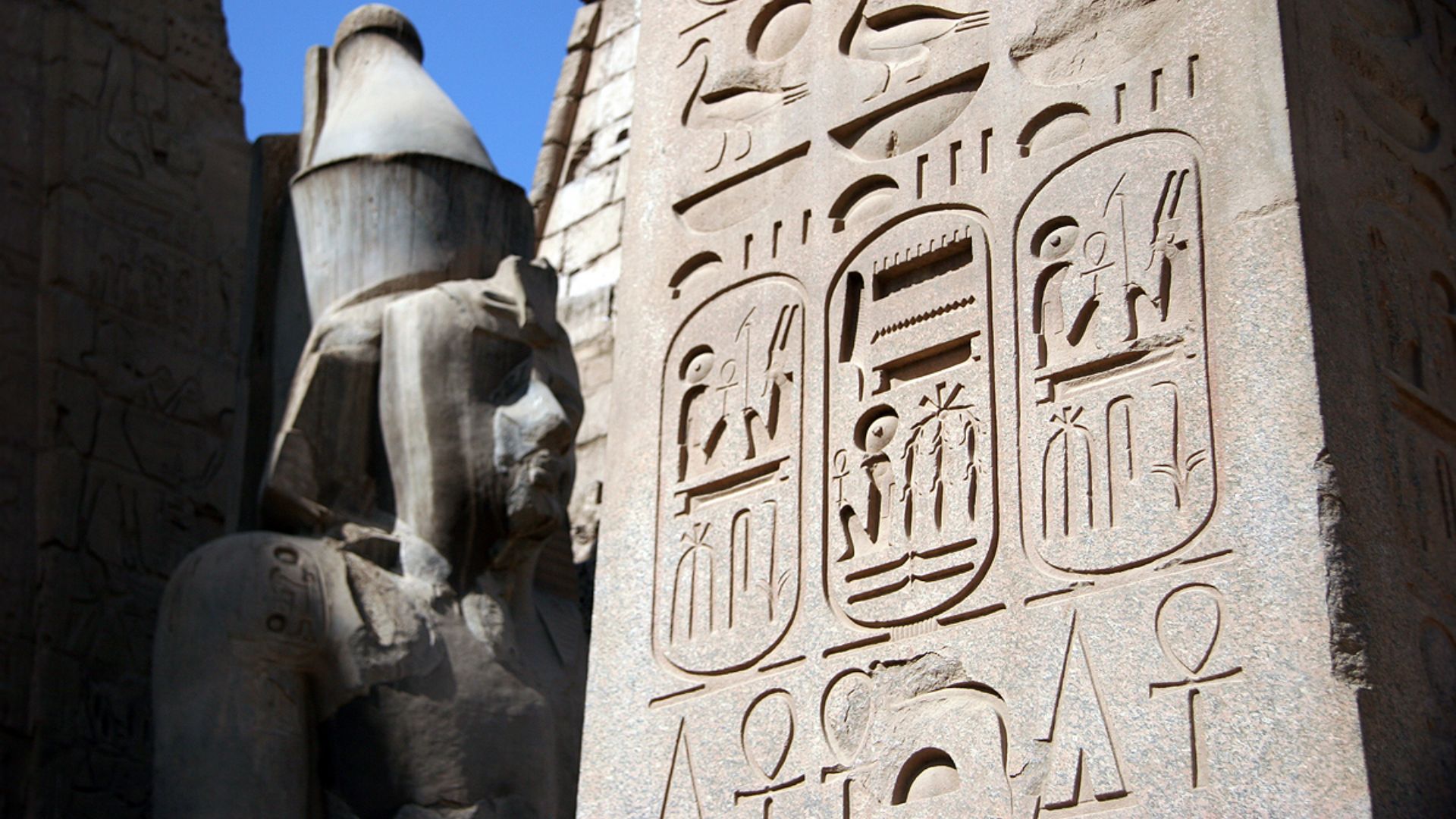
8. Luxor Temple Hieroglyphs
Myth becomes a biography at Luxor Temple. One of the most striking sequences shows the divine birth of Pharaoh Amenhotep III. According to the carvings, the god Amun visited Queen Mutemwiya disguised as her husband, ensuring the child born was of divine origin.
9. Edfu Temple Inscriptions
The Temple of Edfu preserves one of the most complete mythic tales carved into stone. Dedicated to the falcon god Horus, the walls tell the gripping narrative of Horus's battles against his uncle Seth. Scenes unfold like chapters, where each hieroglyph plays a role in restoring divine order.
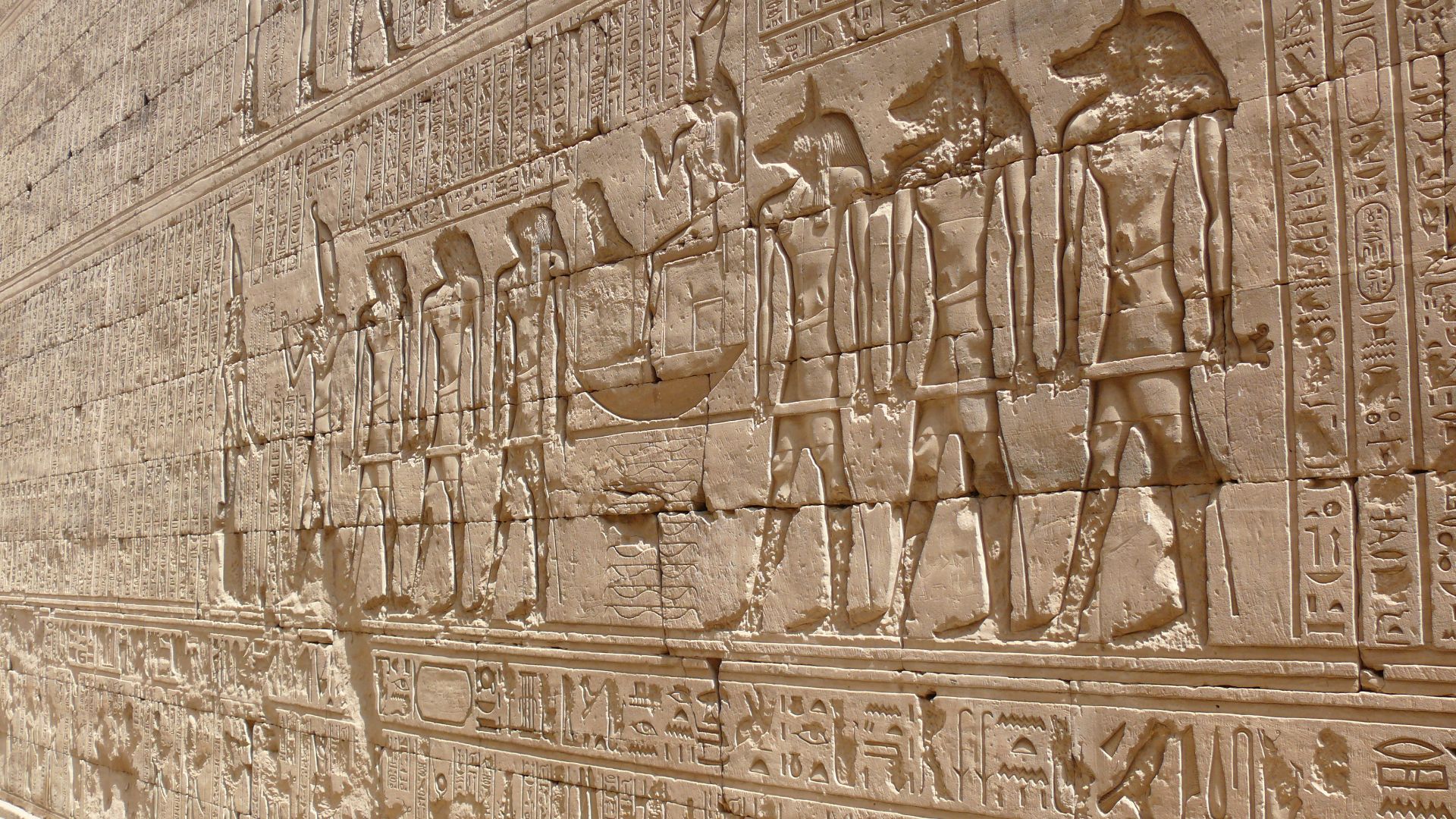
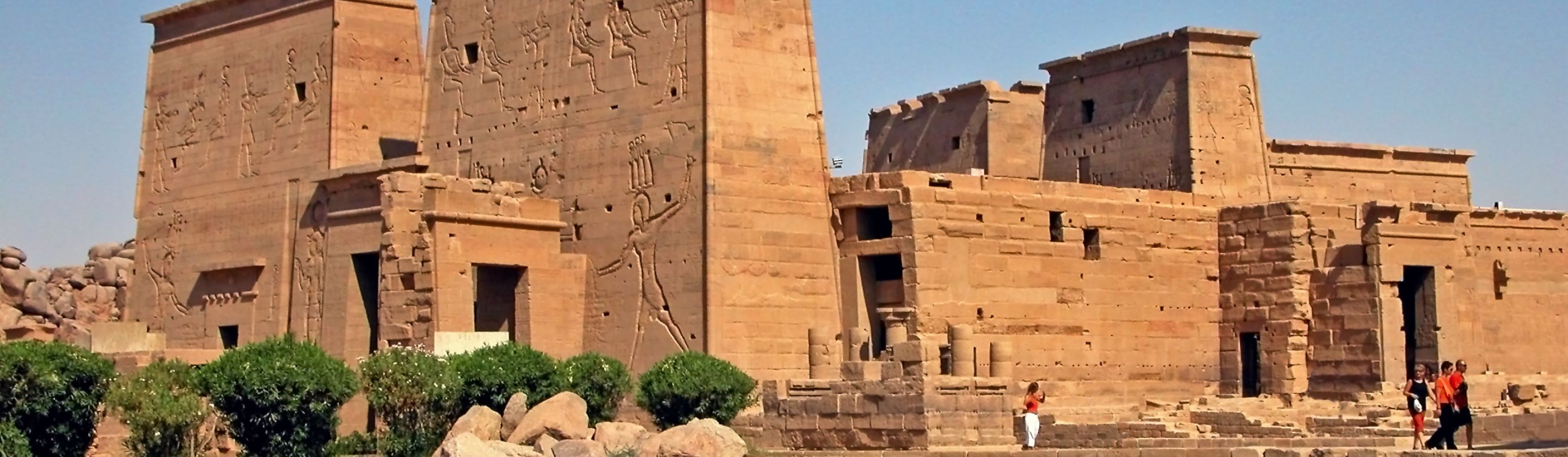
10. Philae Temple Inscriptions
On the island of Philae, inscriptions carved in the last whispers of ancient Egypt pay tribute to the goddess Isis. Even as Christian influence grew, these hieroglyphs clung to tradition. Interestingly, the final known hieroglyphic inscription in Egypt was made here in the 4th century CE.
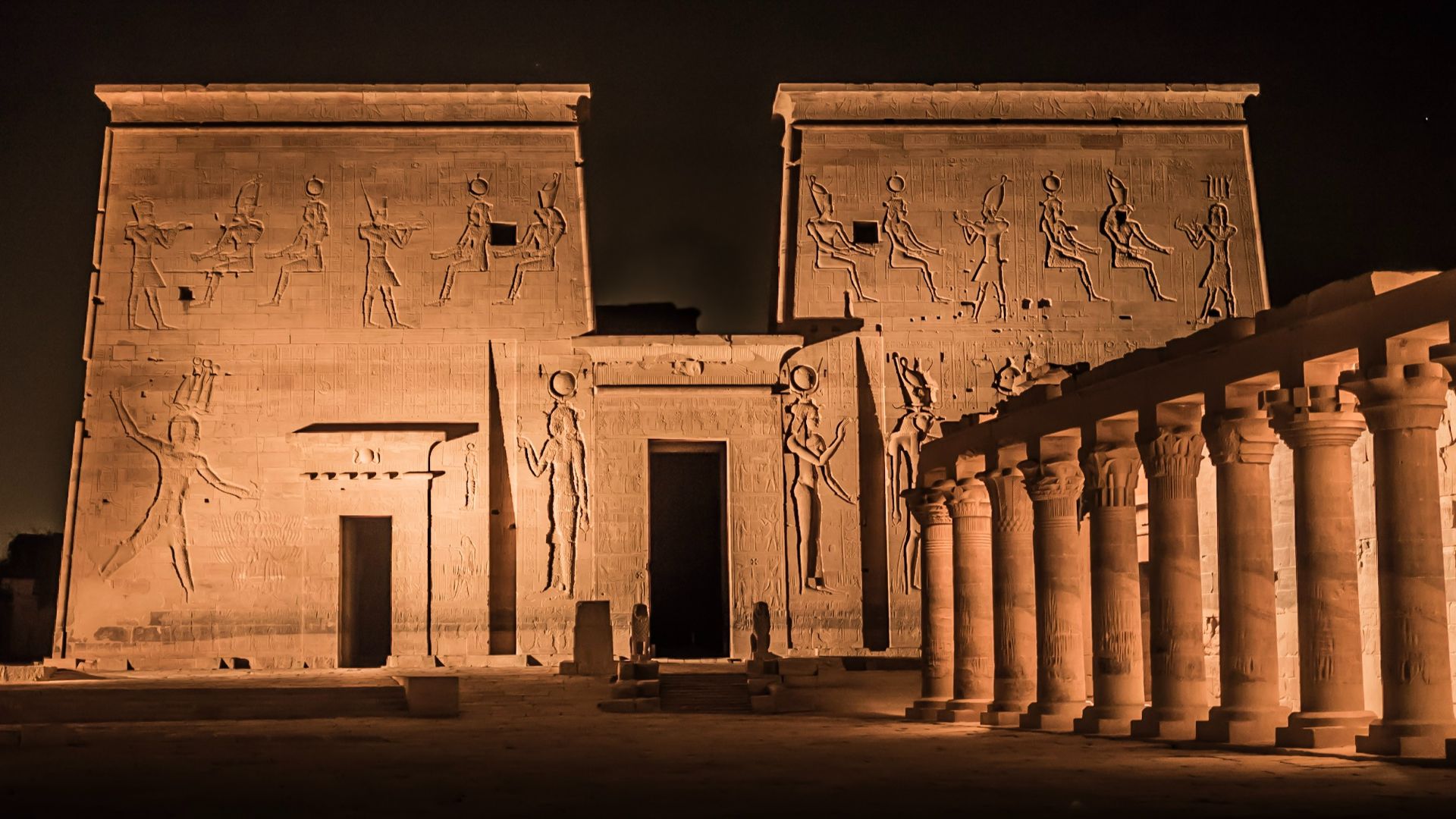
11. Dendera Zodiac Ceiling
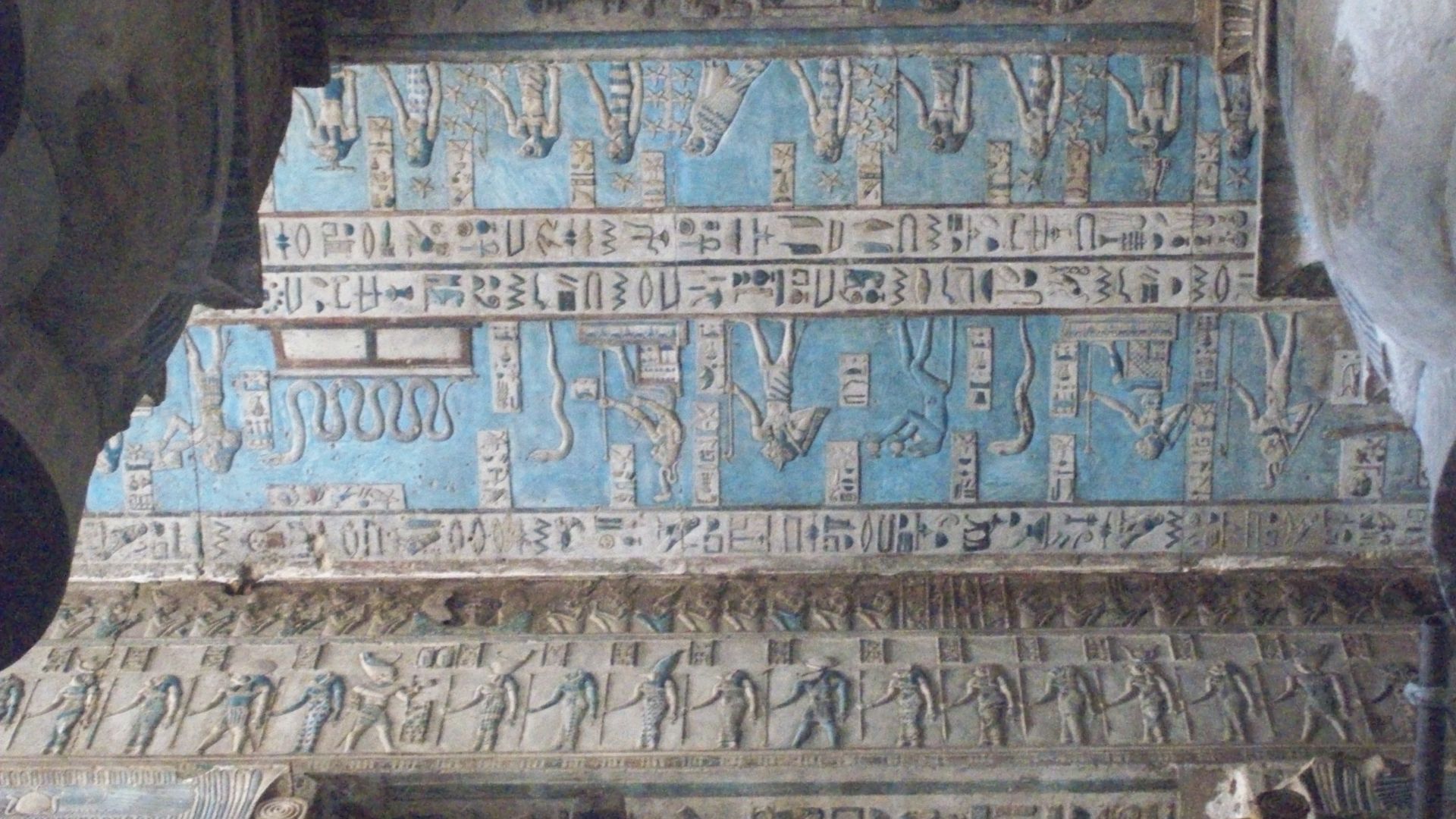
Gaze upward in the Temple of Hathor, and you will find the stars mapped in divine ink. The Dendera Zodiac, etched into the ceiling, depicts celestial bodies and deities in circular harmony. With figures drawn from both Egyptian and Greek traditions, the ceiling unites two cultures in symbolic skywriting.
 Institute for the Study of the Ancient World on Wikimedia
12. Abydos King List
Inside Seti I’s temple at Abydos, a carved corridor features a list of 76 kings, linking him directly to Egypt’s sacred past. Notably, some rulers were deliberately excluded, which reveals political tensions even in sacred stone. Hieroglyphs here are just a curated memory.
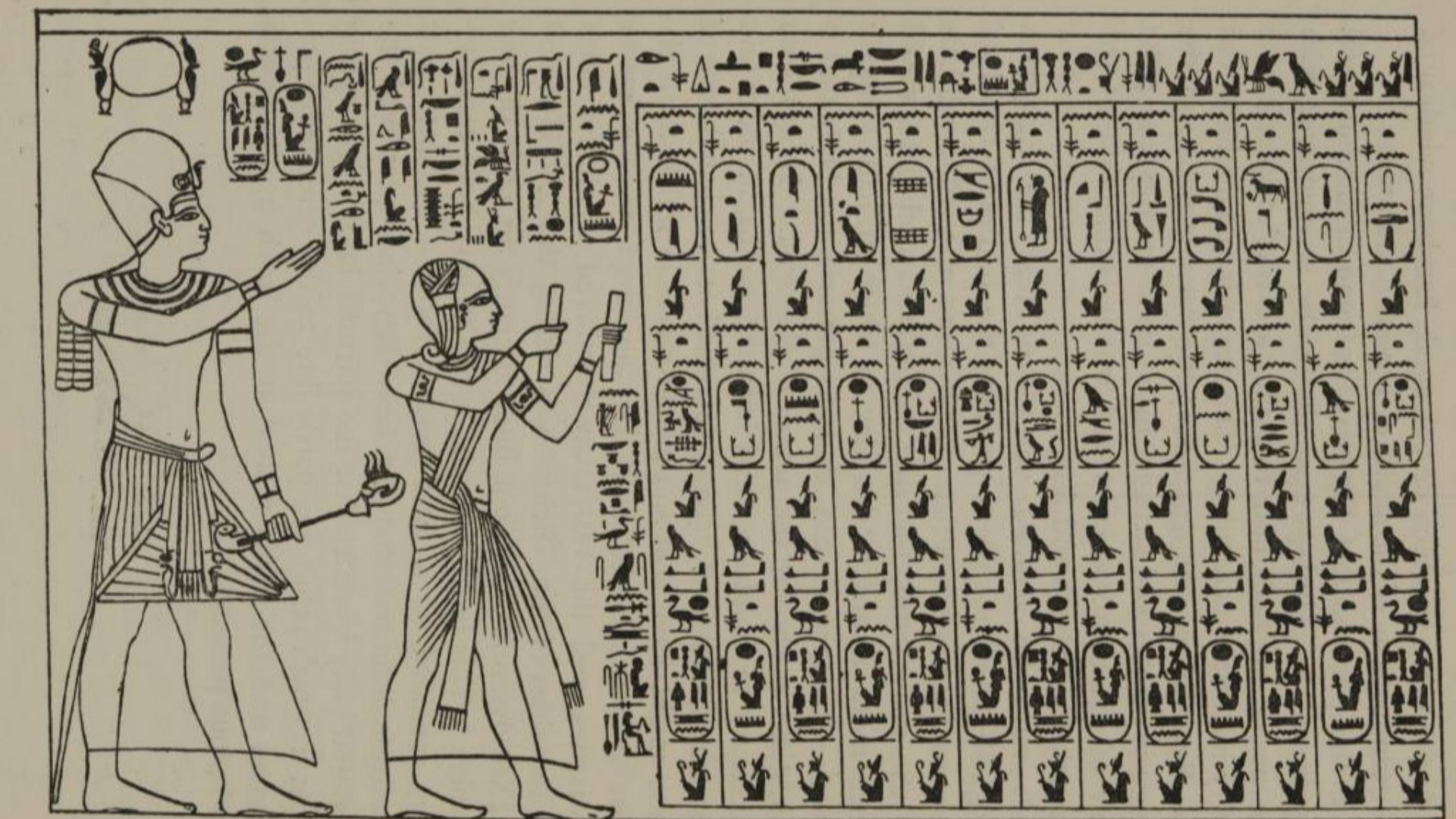
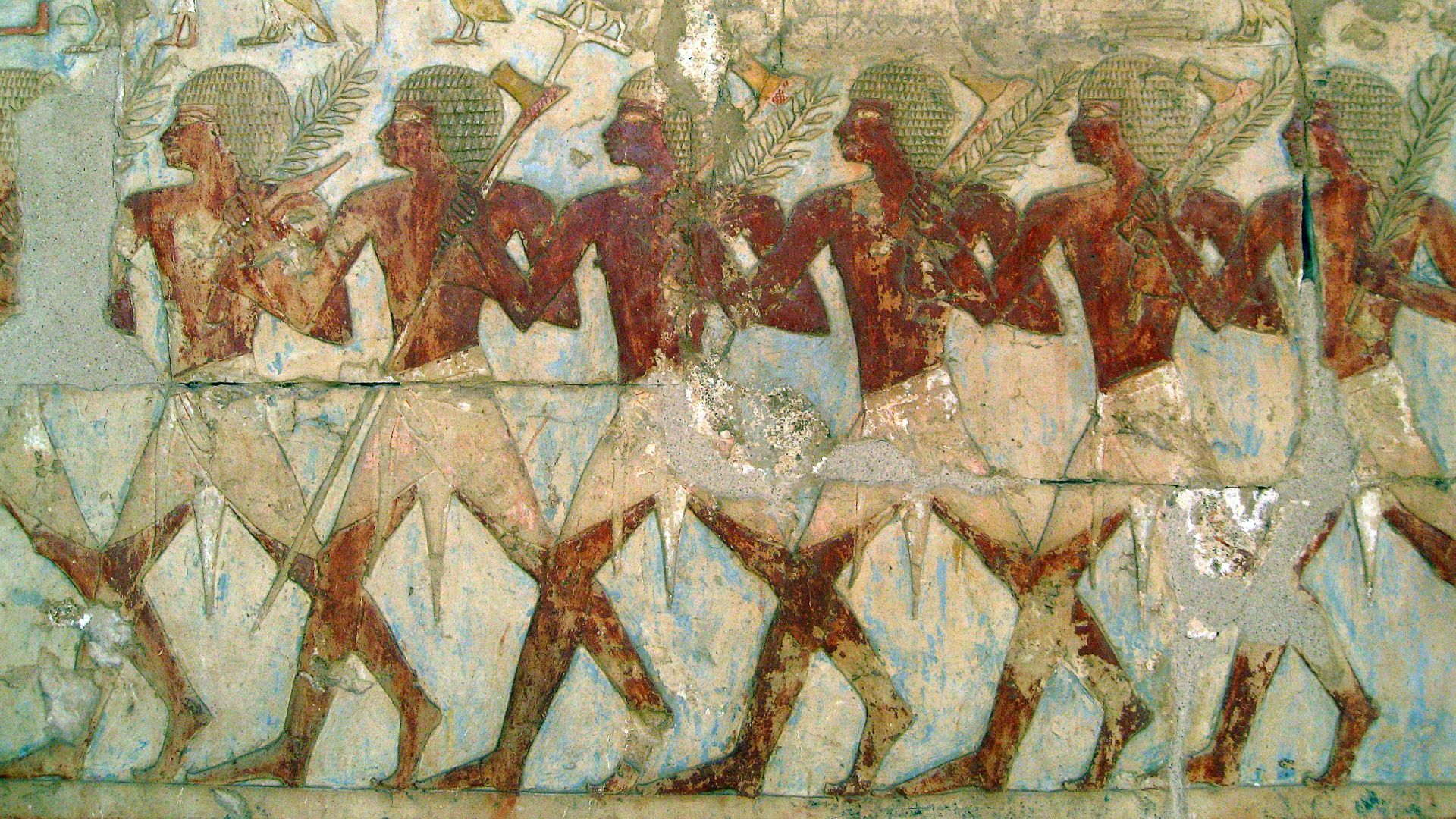
13. Hatshepsut's Divine Birth Scene
At Deir el-Bahari, Queen Hatshepsut’s legitimacy as pharaoh gets encoded in sacred myth. Wall scenes show Amun choosing her mother, Queen Ahmose, and breathing life into Hatshepsut's destiny. Through them, Hatshepsut is no longer just royal—she's divine by design.
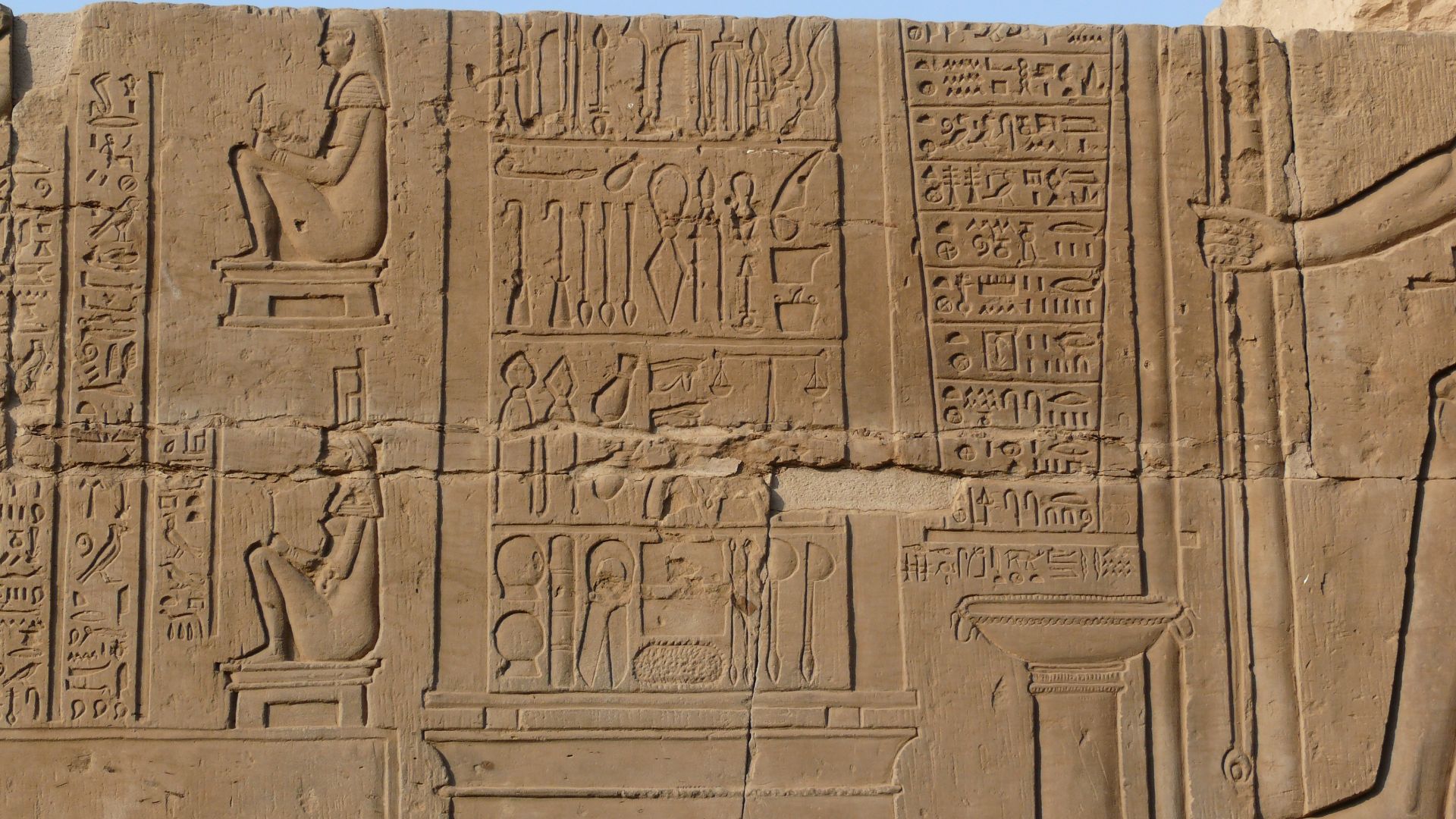
14. Kom Ombo Medical Inscriptions
Walk the temple of Kom Ombo, and you’ll find surgical instruments carved beside gods. The temple, shared by Sobek and Horus, includes one of the rare surviving medical texts from antiquity. Diagrams and hieroglyphs offer glimpses into treatments, diagnoses, and procedures.
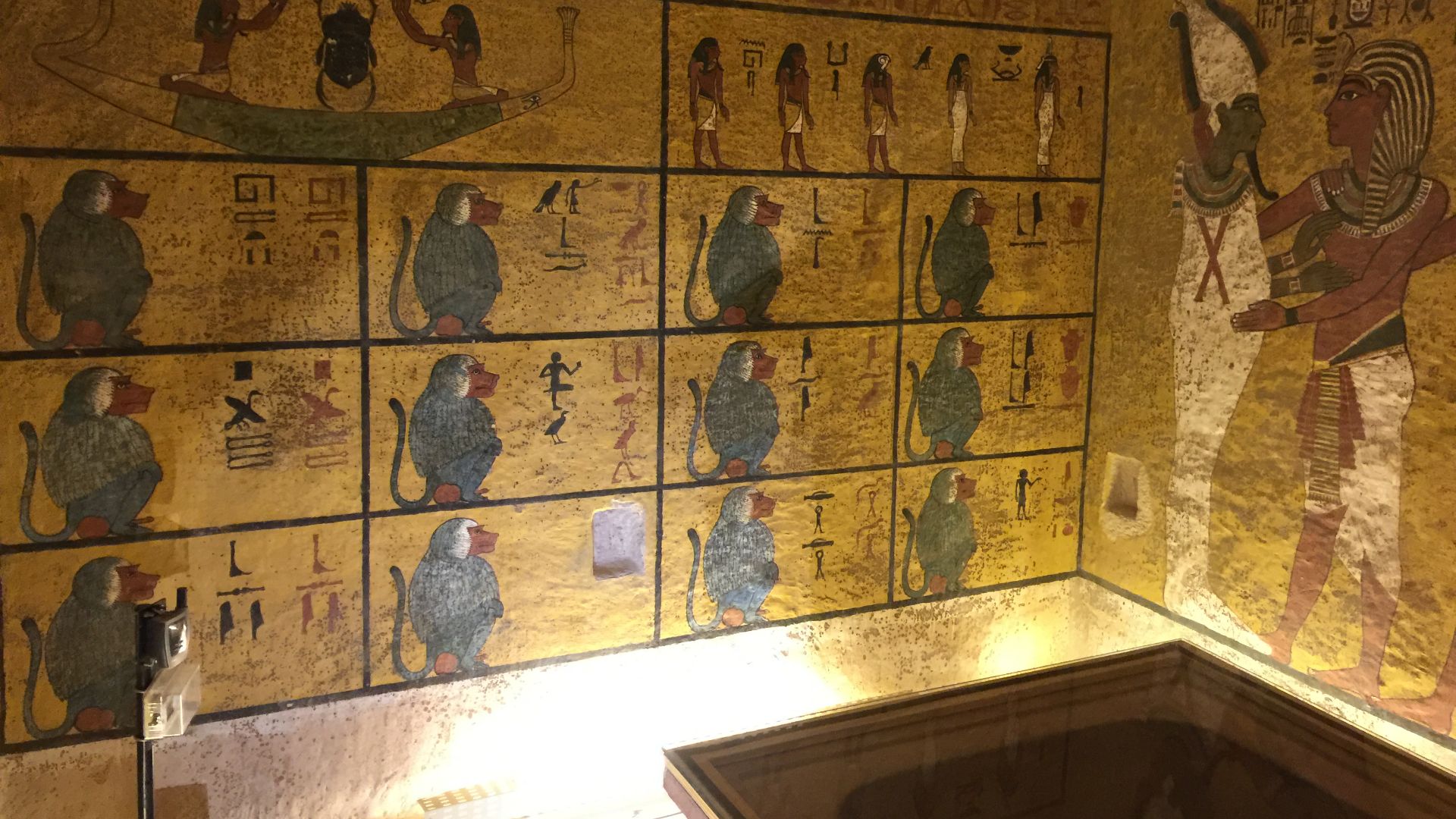
15. Tutankhamun's Burial Chamber Texts
Though his reign was brief, Tutankhamun's tomb tells a rich story. Inside his burial chamber, painted hieroglyphs detail rituals of transformation. Many scenes also show priests performing ceremonies that ensure his rebirth among the stars.
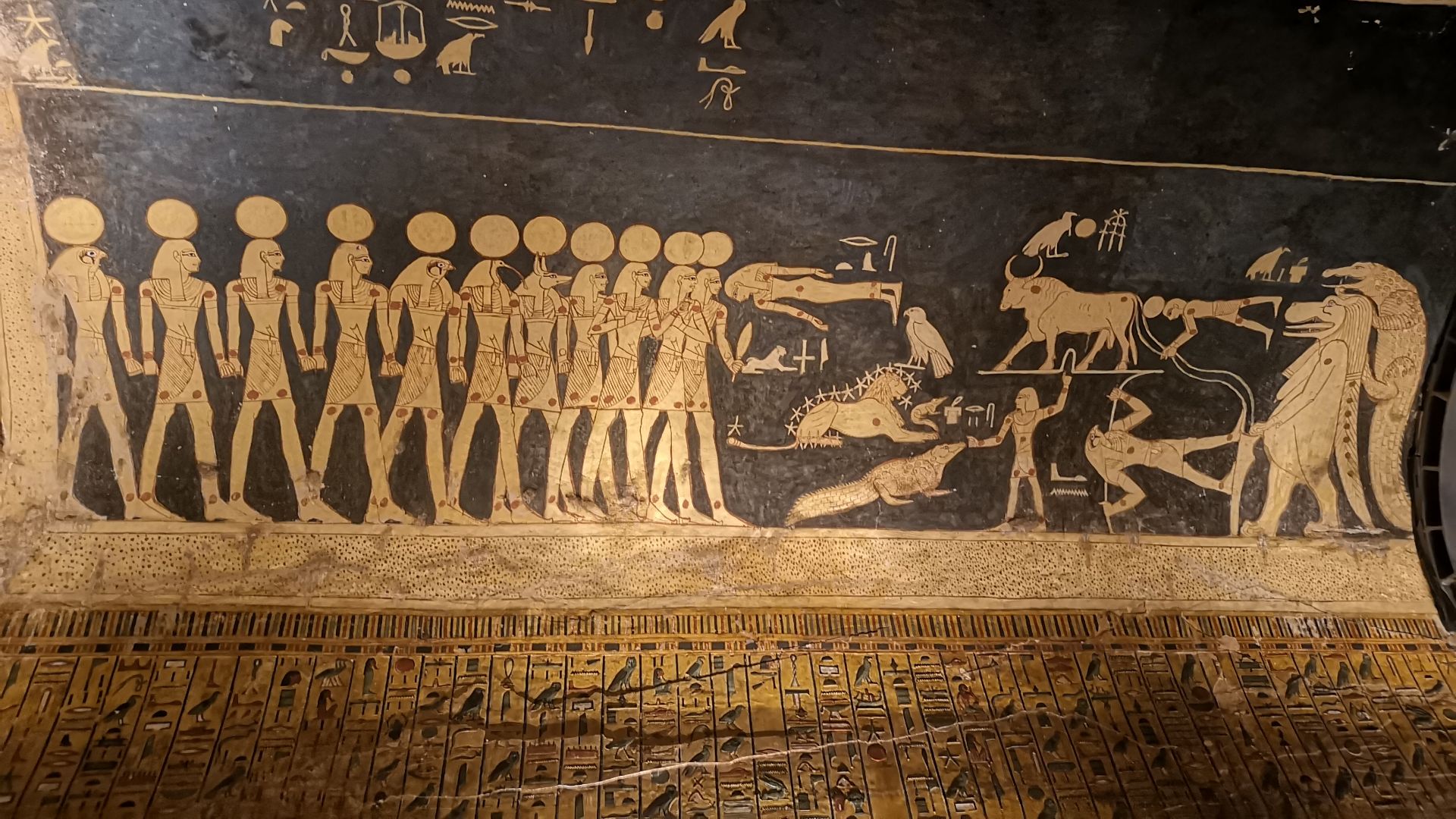
16. Seti I's Tomb Inscriptions
Among the most elaborate tombs in the Valley of the Kings, Seti I's KV17 dazzles with color, depth, and textual abundance. Wall after wall showcases detailed depictions from sacred books like the Amduat and the Book of Gates.
 Carole Raddato from Frankfurt, Germany on Wikimedia
17. Nefertari's Tomb Inscriptions
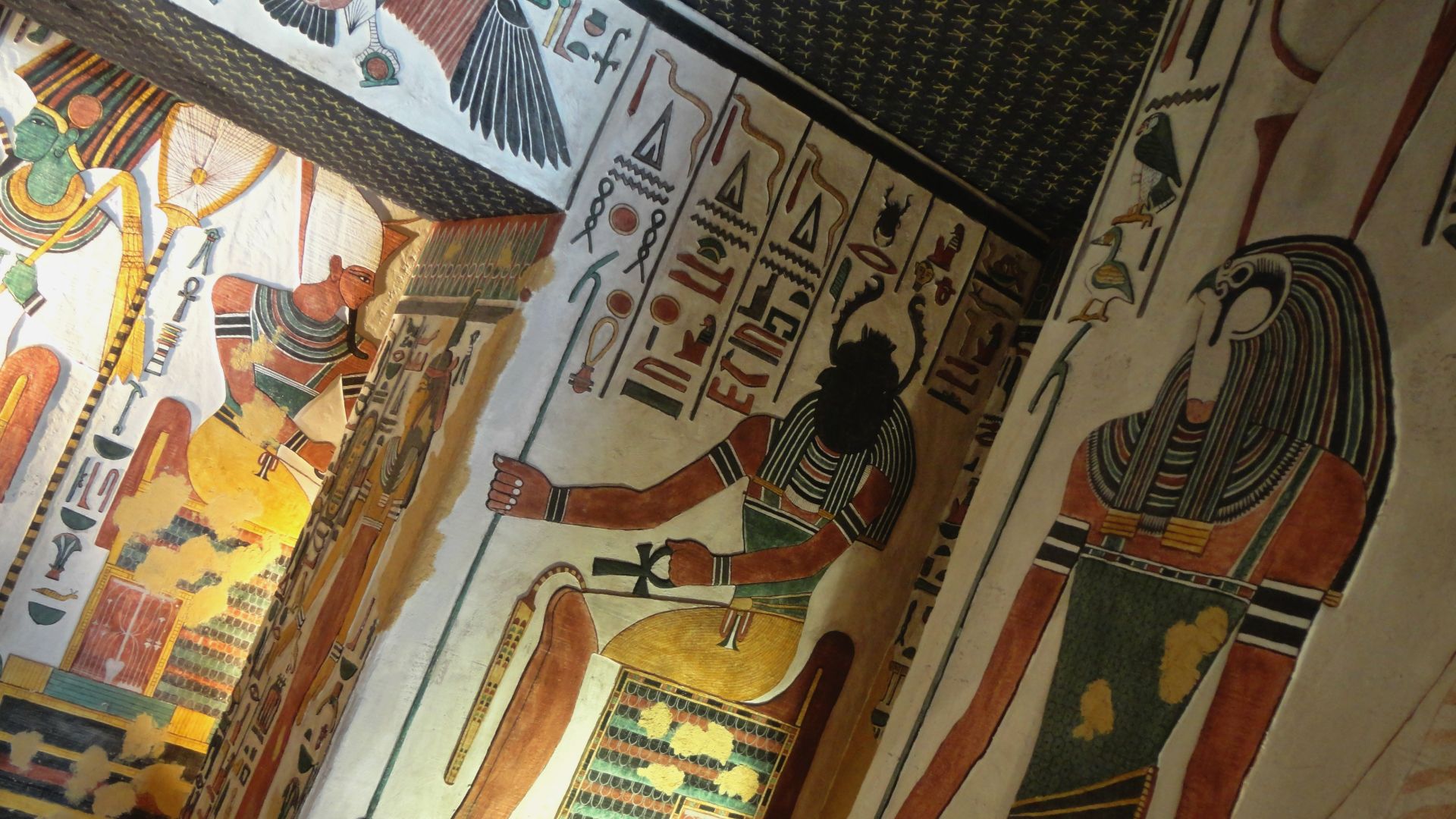
Queen Nefertari's tomb overflows with grace and myth. Painted in vibrant reds, blues, and gold, the hieroglyphs lead her through the afterlife. Gods like Hathor and Anubis receive her, and every line serves as both prayer and path.
 Juan Carlos Fonseca Mata on Wikimedia
18. Ramesses VI's Tomb Hieroglyphs
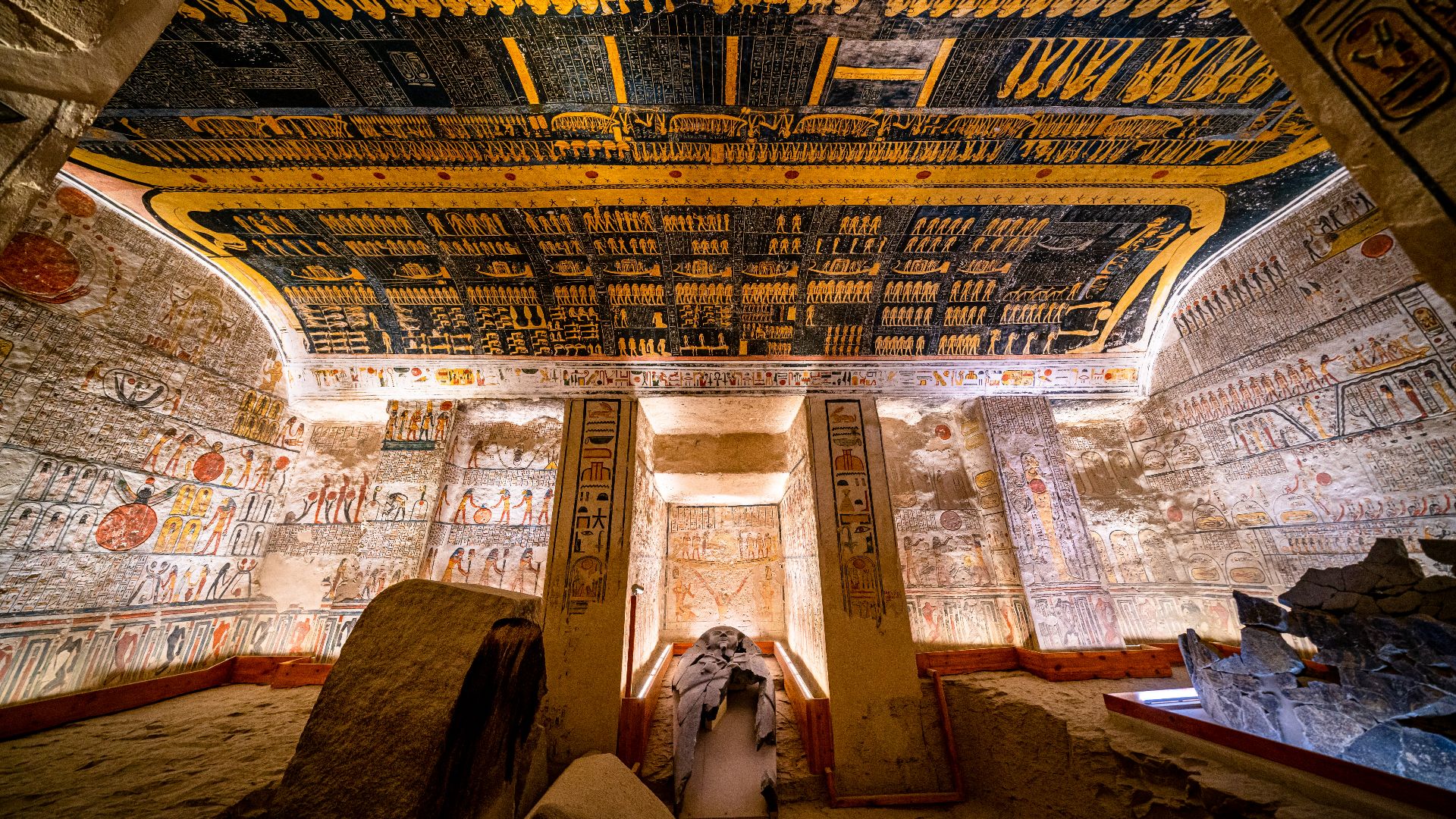
Deep beneath the earth lies the tomb of Ramesses VI, where the walls read like chapters of cosmic instruction. The Book of the Earth and the Book of Caverns stretch across surfaces, explaining the sun’s nightly journey.
19. Sennedjem's Tomb Inscriptions
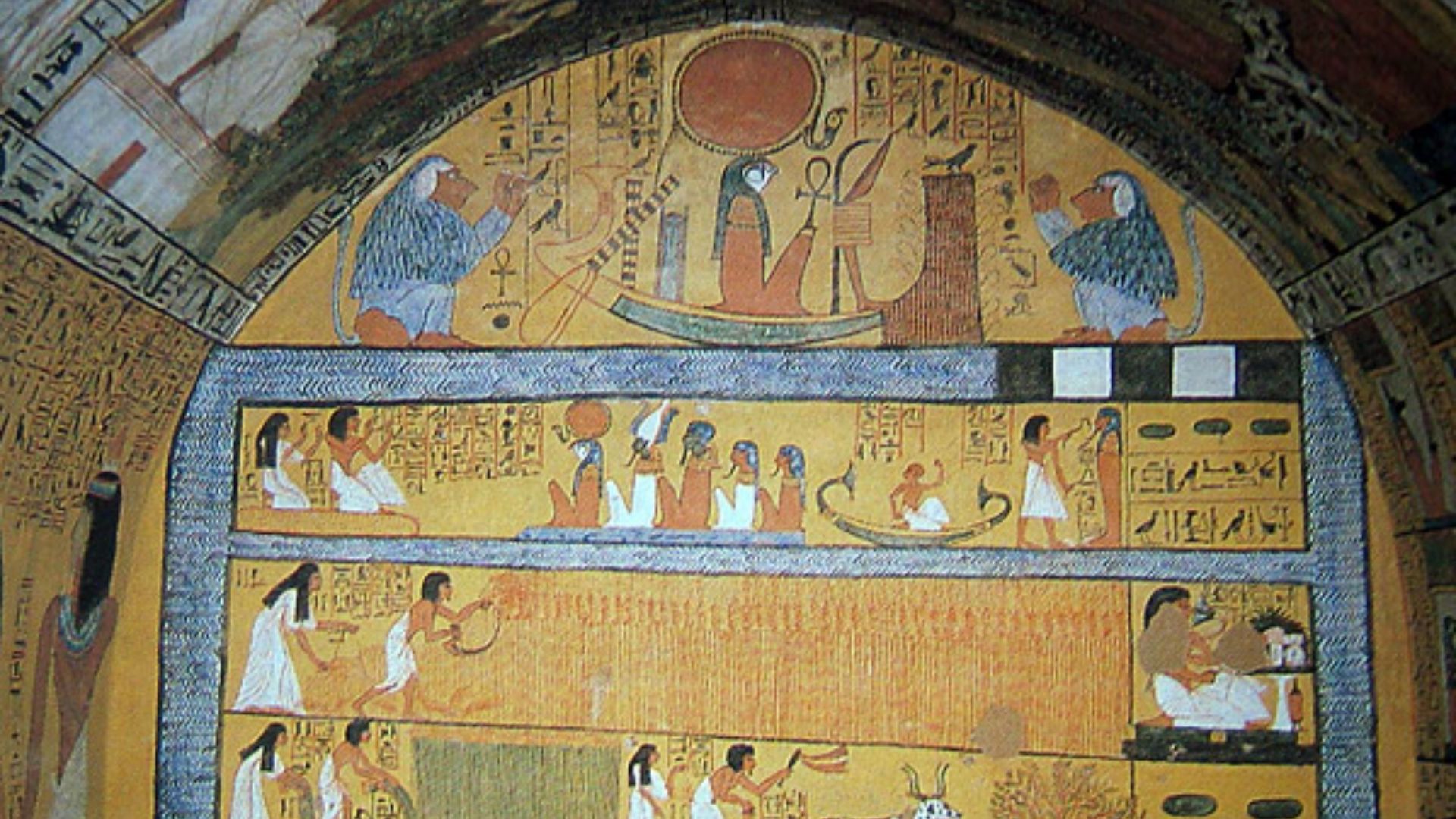
A worker in the Place of Truth, Sennedjem's tomb is a gem of devotion. Unlike pharaohs' tombs, this one celebrates the afterlife through a lens of personal faith. Hieroglyphs depict peaceful farming in the Field of Reeds, turning honest labor into everlasting reward.
 AnonymousUnknown author on Wikimedia
20. Rekhmire's Tomb Inscriptions
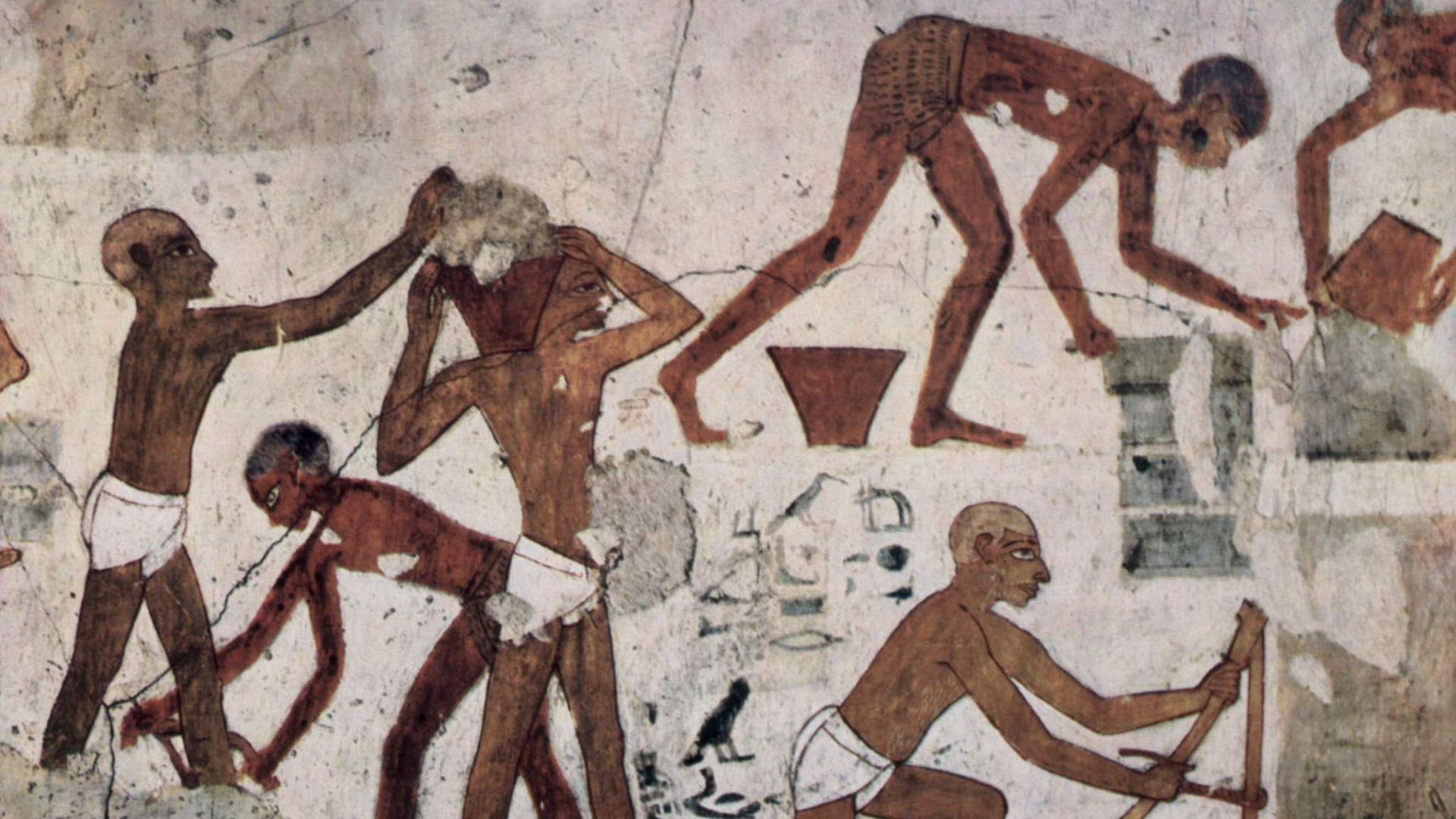
The tomb of Vizier Rekhmire reads like a manual of governance. Hieroglyphs here describe duties, courtly rituals, and daily functions of the state. Scenes show tribute from foreign lands, harvest festivals, and ceremonies. Through them, everyday service becomes sacred, and the mundane turns eternal.
KEEP ON READING