

The Year Without a Summer: How a Volcanic Eruption Nearly Wiped Out Civilization
The Year Without a Summer: How a Volcanic Eruption Nearly Wiped Out Civilization
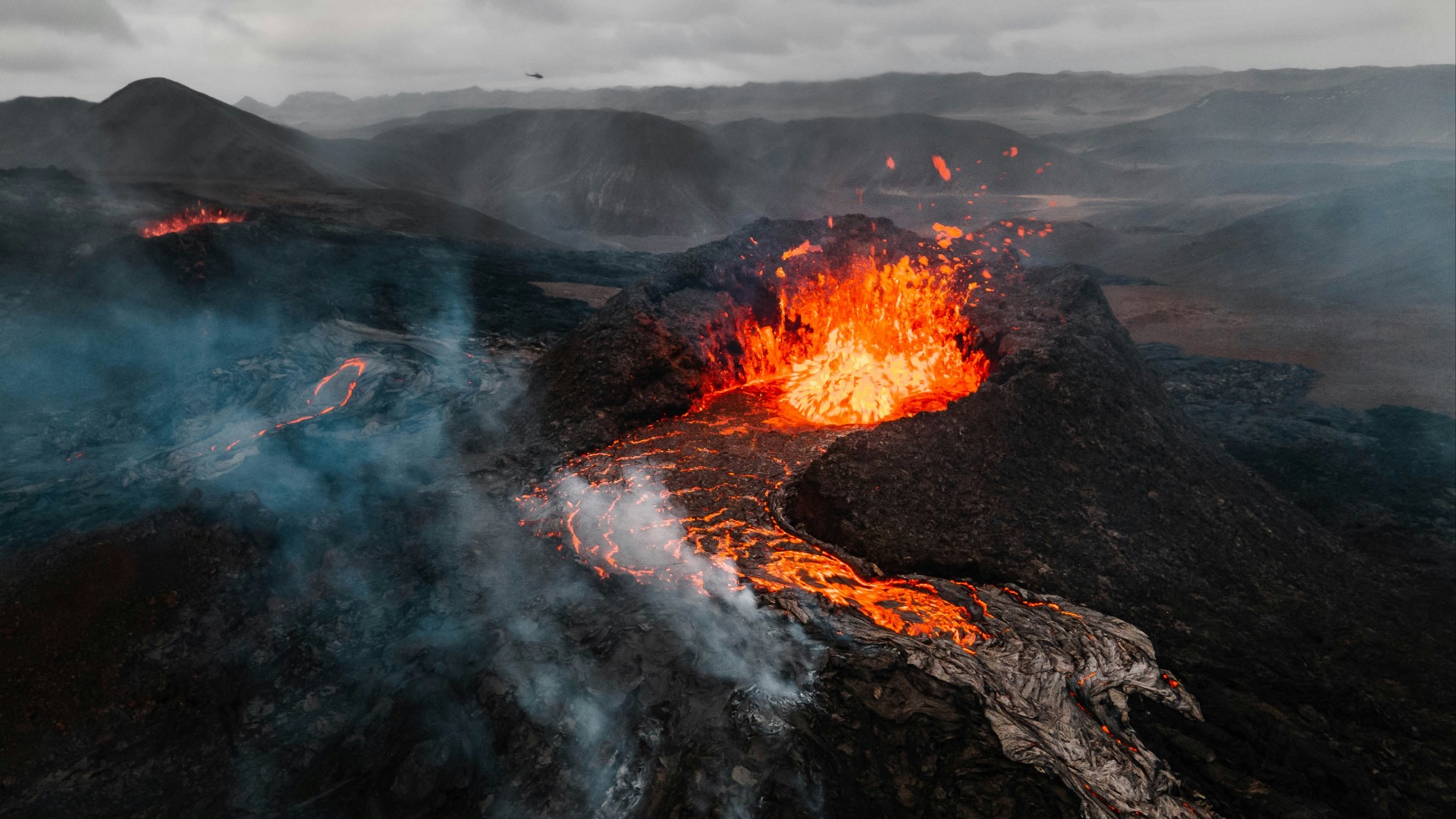
In 1816, much of the Northern Hemisphere experienced something deeply unsettling: a summer that never arrived. Temperatures dropped sharply across North America, Europe, and parts of Asia; crops failed on a massive scale; and millions of people faced the very real threat of starvation. It wasn't a slow-moving climate phenomenon or a centuries-long shift—it was the direct aftermath of a single catastrophic volcanic eruption that had occurred just one year before.
The culprit was Mount Tambora, a volcano on the Indonesian island of Sumbawa, and its April 1815 eruption remains the most powerful in recorded human history. What followed was a cascade of agricultural collapse, food riots, mass migration, and cultural transformation that permanently altered the trajectory of entire nations. If you think of climate disruption as a modern concern, this event is a stark reminder that nature has always had the capacity to upend civilization without warning.
The Eruption That Shook the World
Mount Tambora had been showing signs of increased volcanic activity for several years before its catastrophic climax on April 10, 1815. The eruption sent a column of ash and gas approximately 43 kilometers into the stratosphere, and its explosive force was estimated at roughly 100 times greater than the 1980 eruption of Mount St. Helens. The explosion was heard as far as 2,600 kilometers away, and the surrounding regions were buried under layers of volcanic ash that suffocated crops and fouled water supplies for months.
The immediate human toll was staggering. An estimated 80,000 people died as a direct result of the eruption, and though only a fraction of those deaths were caused immediately by pyroclastic flows, tsunamis, and falling ash, it was still one of the deadliest volcanic disasters ever recorded. Entire villages on Sumbawa and the neighboring island of Lombok were obliterated almost instantly, and the agricultural land that survivors depended on was rendered unusable for years afterward. Many more died in the months that followed from famine and disease across nearby regions.
What set Tambora apart in terms of global impact was the sheer volume of sulfur dioxide it injected into the upper atmosphere—an estimated 60 megatons of sulfur, often described as roughly 120 megatons of sulfur dioxide equivalent. These aerosols spread across the planet over the following months, forming a persistent layer that reflected incoming solar radiation back into space and caused a measurable drop in global average temperatures of around 0.4 to 0.7°C throughout 1816. The effects were felt across much of the Northern Hemisphere, especially in North America, Europe, and parts of Asia, while other communities around the world had no idea what was causing the unusual cold.
A World Thrown Into Crisis
The consequences of Tambora's volcanic winter were felt most acutely in agricultural communities across the Northern Hemisphere. In New England and Canada, snowfall was recorded in June, and frost struck in July and August, months that should have represented the height of the growing season. Corn crops were wiped out across New England, and in some areas, farmers reported harvesting almost nothing at all, leaving entire communities without enough food to survive the winter.
Europe was hit just as hard. Countries including France, Germany, Switzerland, and Ireland experienced widespread crop failures that triggered severe food shortages and, in some cases, outright famine; grain prices soared across the continent, and food riots erupted in several cities as desperate populations struggled to meet basic needs. The situation in Ireland was particularly grave, with a typhus epidemic compounding the effects of the famine and killing tens of thousands of people who were already severely weakened by hunger.
Asia wasn't spared, either. Parts of China and India experienced unusual cold and disrupted monsoon patterns that devastated harvests and contributed to widespread hunger throughout those regions. In the Yunnan province of China, the failure of rice crops was so severe that farmers were forced to abandon their land and relocate entirely, setting off internal migrations that reshaped local communities for generations. The global scope of the crisis made it clear just how interconnected the world's climate and food systems truly were, even in the early nineteenth century.
The Unexpected Legacy
Not all of Tambora's consequences were immediate acts of destruction; some played out over the following decades in surprisingly far-reaching ways. The widespread death of horses in Europe—many of which perished due to extreme feed shortages—prompted German inventor Karl von Drais to develop an early precursor to the bicycle in 1817, a vehicle that didn't rely on animal power or feed to operate. It was a practical response to a logistical crisis, and it set off a chain of innovations in personal transportation with effects that are still visible today.
The summer of 1816 also left an unexpected mark on literature. Stranded indoors near Lake Geneva by the relentlessly gloomy weather, a group that included Mary Shelley, Percy Bysshe Shelley, and Lord Byron spent their time competing to write ghost stories. Mary Shelley's contribution eventually became Frankenstein, one of the most enduring works of fiction in the English language, born in part out of a volcanic catastrophe thousands of miles away.
In the United States, the agricultural failures in New England pushed tens of thousands of settlers westward into the Ohio Valley and beyond, accelerating the country's westward expansion significantly. Entire communities uprooted themselves in search of more fertile land, and the population shifts that followed reshaped the young nation's political and economic geography for decades to come. All in all, what began as a volcanic eruption on the other side of the world ultimately left its fingerprints on American history in ways that few people today fully appreciate.
KEEP ON READING
The Year Without a Summer: How a Volcanic Eruption Nearly…
Tetiana GRY on UnsplashIn 1816, much of the Northern Hemisphere…
By Christy Chan May 12, 2026
So Who Really Found America First?
L. Prang & Co., Boston on WikimediaFor a long time,…
By Sara Springsteen May 12, 2026
The Role Of Food In Shaping Ancient Civilizations
Peter Holmboe on PexelsFood influenced nearly every aspect of ancient…
By Rob Shapiro May 12, 2026
20 Dark Chapters of History Most People Never Learned in…
The Parts of the Past That Don’t Fit Neatly on…
By Annie Byrd May 12, 2026
20 Figures Who Accomplished More Before Age 20 Than Most…
Youthful Ambition in Action. If you ever feel like you're…
By Sara Springsteen May 12, 2026
The History of Cats in Istanbul
Kirill Veprikov on UnsplashCats are such a familiar part of…
By Emilie Richardson-Dupuis May 12, 2026