

 Augustus Washington on Wikimedia
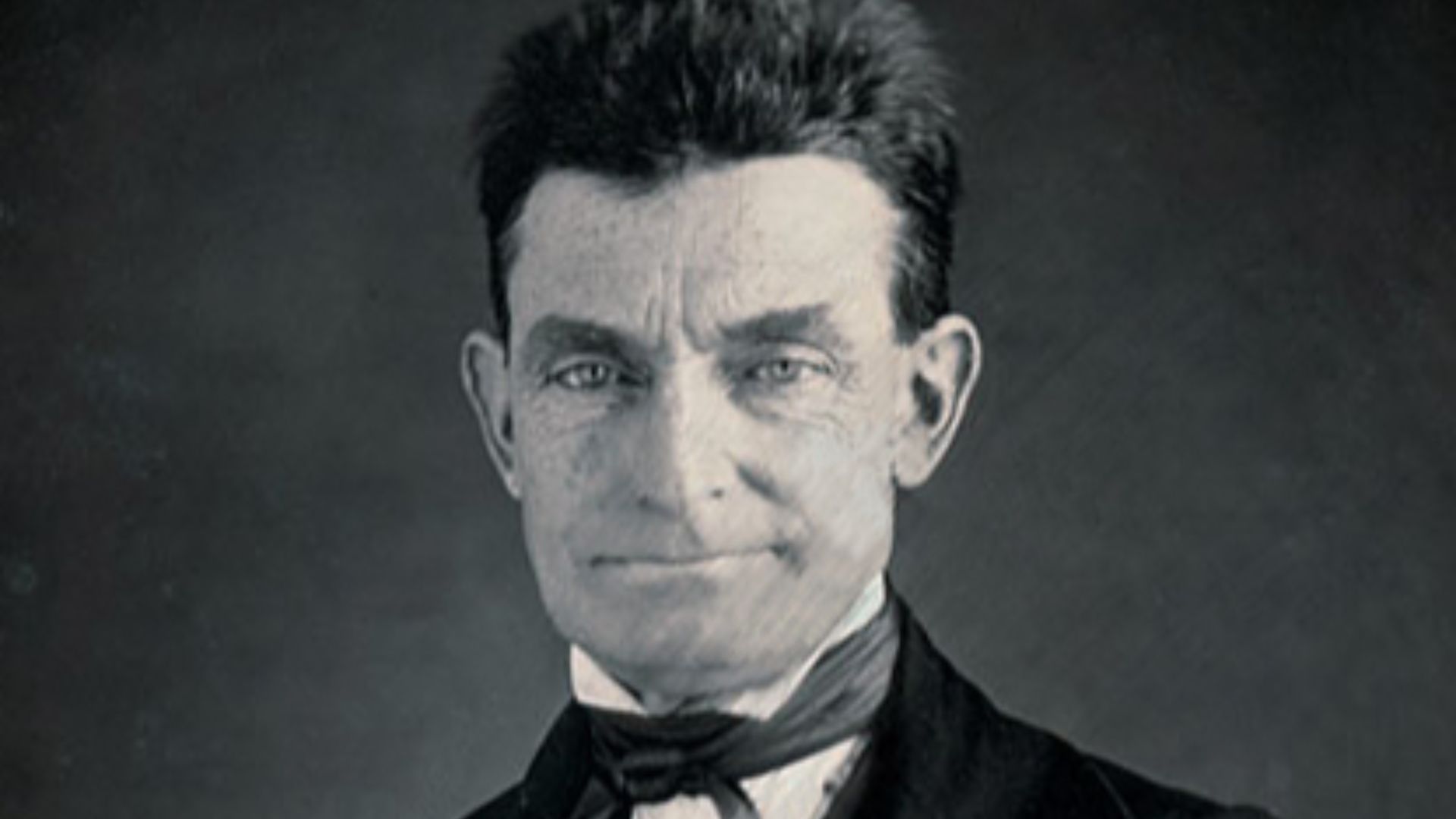
Most figures in American history get filed neatly into hero or villain. John Brown refuses that filing. He was a deeply religious man who murdered people in cold blood, a failed businessman who managed to accelerate a war, a figure who was hanged as a traitor and mourned as a saint on the same day. Born in 1800, Brown was an evangelical Christian of strong religious convictions who believed he was an instrument of God, raised to strike what he called the death blow to slavery in the United States. Understanding him means sitting with the discomfort of someone whose ends and means are impossible to fully reconcile.
The country Brown lived in was one where peaceful abolitionism had spent decades failing. The Missouri Compromise had crumbled. Brown was dissatisfied with abolitionist pacifism, saying of his contemporaries, "Talk! Talk! Talk! That will never free the slaves. What is needed is action—action!" He meant it literally. What followed was one of the stranger and more consequential trajectories in American political history, from a Kansas creek in 1856 to a Virginia armory in 1859, with the Civil War warming up just behind him.
Blood in Kansas
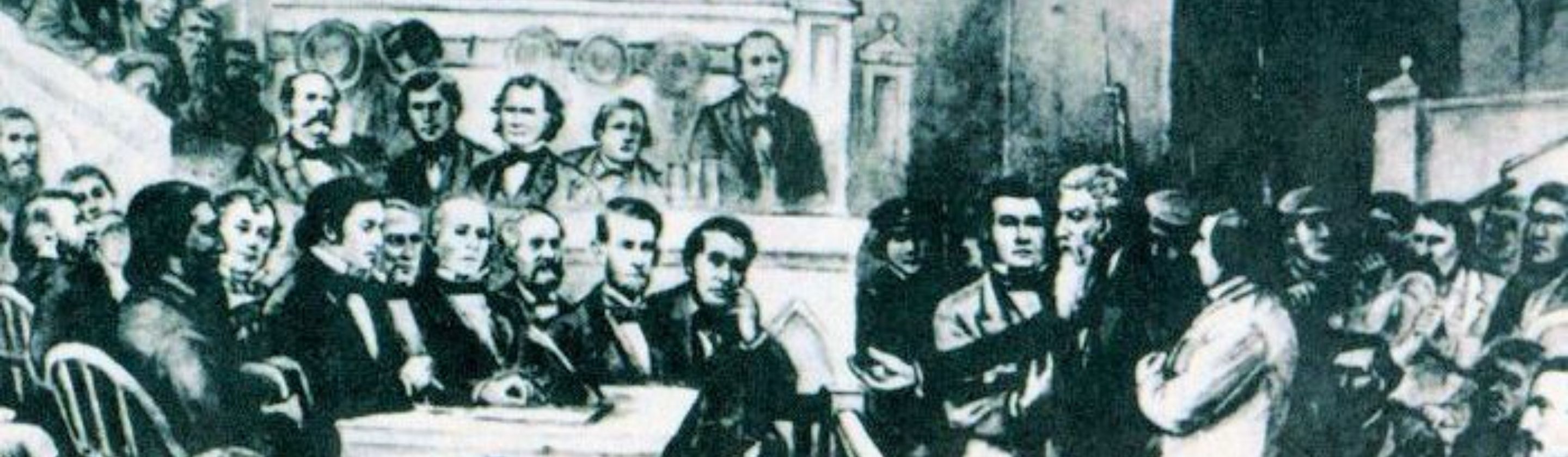
The 1854 Kansas-Nebraska Act threw open the question of whether new territories would be slave or free, and both sides flooded Kansas with settlers ready to fight over the answer. It was in this climate, already soaked in violence, that Brown first made his name. On the night of May 24, 1856, Brown, five of his sons, and three associates murdered five pro-slavery men at three different cabins along Pottawatomie Creek in Kansas. Brown had been enraged by the sacking of the anti-slavery town of Lawrence several days before and by the vicious caning of Senator Charles Sumner on the floor of the U.S. Senate.
The killings were not battlefield deaths. Brown's men abducted the settlers from their homes at night, escorting them into the darkness before killing them with broadswords. Brown himself shot one of the fallen men in the head. The Pottawatomie Massacre, as it became known, horrified people on both sides of the slavery debate. Mahala Doyle, whose husband and two sons were among the dead, later wrote to Brown: "O how it pained my Heart to hear the dying groans of my Husband and children." She noted they had owned no slaves and never expected to.
The massacre was the match to the powder keg that precipitated the bloodiest period in Bleeding Kansas history, three months of retaliatory raids and battles in which 29 people died. Brown fought on through that summer, commanding anti-slavery forces at the Battle of Black Jack and defending the town of Osawatomie, where his son Frederick was shot dead. By fall he had slipped out of Kansas, already planning something larger.
The Raid That Changed Everything
Brown's plan for Harpers Ferry was, in retrospect, either visionary or delusional depending on your read of it. He had conceived a "Subterranean Pass-Way," an armed underground railroad stretching through the Allegheny and Appalachian mountains, linked by forts manned by abolitionists and free Black men who would raid plantations, run fugitives north to Canada, and systematically destroy the economic value of slave property. Harpers Ferry was meant to be the spark that ignited this broader insurgency.
On the night of October 16, 1859, a band of 22 armed men slipped out of a darkened Maryland farmhouse and began a silent procession to Harpers Ferry, Virginia, a bustling town perched at the confluence of the Shenandoah and Potomac rivers about five miles away. Among them was Brown, his two sons, a fugitive slave from South Carolina, a Black student from Ohio, two Quaker brothers from Iowa, and a group of radicalized men from Connecticut, New York, Pennsylvania, and elsewhere. They seized the federal armory with surprising ease. Then Brown waited for the enslaved population to rise and join him. They didn't.
By morning Brown and his men were surrounded. A company of U.S. Marines arrived on October 17, led by Colonel Robert E. Lee and Lieutenant J.E.B. Stuart. On October 19, the soldiers overran Brown and his followers. Ten of his men were killed, including two of his sons. Brown was wounded, captured, tried by the state of Virginia for treason and murder, and convicted. John Wilkes Booth was a spectator at his execution.
A Martyr More Useful Dead Than Alive
Brown's six weeks between capture and execution turned out to matter more than the raid itself. He used the courtroom with unexpected calm, expressing that he had acted in accordance with divine principles and moral imperatives, and emphasizing what he saw as the hypocrisy of his prosecution. The newspapers covered every word. A country already fracturing along sectional lines now had a symbol each side could use.
On the day of Brown's execution, church bells tolled in several northern cities and many abolitionists hailed him as a martyr. Ralph Waldo Emerson remarked that Brown would make the gallows glorious like the cross. Southerners viewed the raid and the Northern reaction as evidence that abolitionists would stop at nothing to destroy their way of life, making compromise increasingly impossible. The very failure of Harpers Ferry had made Brown more dangerous than success would have.
The Harpers Ferry raid and Brown's trial, covered extensively in national newspapers, escalated tensions that in the following year led to the South's secession and the American Civil War. Southerners feared that others would soon follow Brown's footsteps, encouraging and arming slave rebellions. The war Brown had tried to start with 22 men and a seized armory arrived eighteen months after his death, fought by hundreds of thousands. Union soldiers marched to a song bearing his name.
KEEP ON READING
20 Powerful Ancient Egyptian Gods That Were Worshipped
Unique Religious Figures in Ancient Egypt. While most people are…
By Cathy Liu Nov 27, 2024
The 10 Scariest Dinosaurs From The Mesozoic Era & The…
The Largest Creatures To Roam The Earth. It can be…
By Cathy Liu Nov 28, 2024
The 20 Most Stunning Ancient Greek Landmarks
Ancient Greek Sites To Witness With Your Own Eyes. For…
By Cathy Liu Dec 2, 2024
10 Historical Villains Who Weren't THAT Bad
Sometimes people end up getting a worse reputation than they…
By Robbie Woods Dec 3, 2024
One Tiny Mistake Exposed A $3 Billion Heist
While still in college, Jimmy Zhong discovered a loophole that…
By Robbie Woods Dec 3, 2024
30 Lost Treasures That Vanished From History
Buried treasure, missing artefacts, legends of ancient gold in them…
By Robbie Woods Dec 3, 2024