

Food influenced nearly every aspect of ancient civilization, from where people settled to how economies developed and political systems expanded over time. Long before refrigeration or modern transportation existed, communities depended heavily on local crops, livestock, fishing, and water access for survival. The ability to produce reliable food supplies often determined whether a civilization could remain stable and continue growing.
As societies became more advanced, food also shaped trade routes, religious customs, military power, and social structure in ways that still affect cultures today. Agricultural success allowed cities to expand and populations to increase far beyond what smaller hunting communities could support. Although wars and rulers dominate much of recorded history, food production quietly remained one of the most important foundations behind every major civilization.
Agriculture Allowed Permanent Settlements To Develop
Early human groups were mostly nomadic because they relied on hunting and gathering to survive. Once agriculture developed in areas like Mesopotamia, Egypt, and the Indus Valley, people could settle near fertile land and dependable water sources permanently. Farming created more predictable food supplies, which reduced the need to move constantly in search of resources.
The Fertile Crescent became one of the earliest centers of agriculture because rivers and rich soil supported crops like wheat and barley very effectively. Reliable harvests allowed populations to grow steadily, leading to larger villages and eventually organized cities. As food production increased, societies could support workers who specialized in jobs beyond farming, including metalworking, construction, trade, and administration.
Ancient Egypt depended heavily on the Nile River, whose annual flooding deposited nutrient-rich soil across farmland. Farmers learned to organize planting seasons around these predictable floods, which strengthened food security for centuries. Surplus grain storage also helped Egyptian society survive weaker harvests and periods of environmental difficulty more successfully than many neighboring regions.
Food Trade Connected Distant Civilizations
As civilizations expanded, food became one of the main forces driving long-distance trade. Regions lacking certain crops or natural resources exchanged goods for grains, oils, spices, wine, and preserved foods produced elsewhere. These trade systems improved diets while also strengthening economic and political relationships between distant societies.
Salt became especially valuable because it allowed meat and fish to be preserved long before refrigeration existed. Civilizations throughout Europe, Africa, Asia, and the Middle East traded salt extensively since preserving food made transportation and long-term storage far easier. In some areas, salt became so valuable that governments taxed it heavily or fought for control over major supply routes.
Spices also played a major role in ancient trade because they improved flavor and helped preserve food naturally. Pepper, cinnamon, cloves, and other spices traveled across trade routes linking Asia, the Middle East, and Europe for centuries. Since these ingredients were difficult to transport and often expensive, wealthy households viewed them as symbols of status and influence as much as culinary ingredients.
Food Reflected Power And Social Structure
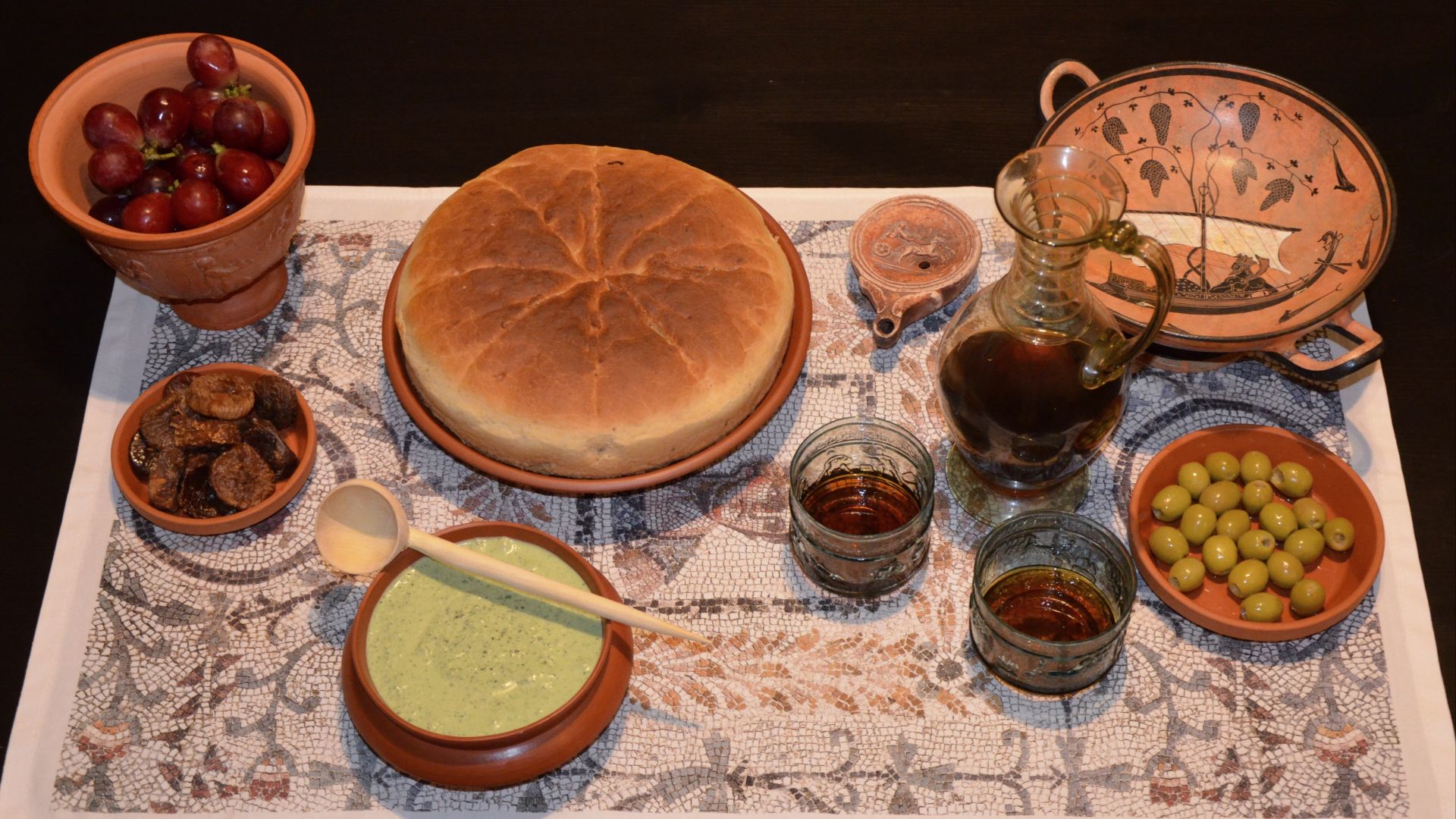 Carole Raddato from FRANKFURT, Germany on Wikimedia
In many ancient societies, access to certain foods reflected wealth, authority, and social position very clearly. Wealthier citizens often consumed more meat, imported ingredients, fine wine, and elaborate meals than ordinary laborers or farmers could afford regularly. Large feasts became public demonstrations of power because food abundance symbolized prosperity and political stability.
Ancient Rome offers one of the clearest examples of food connected closely to social hierarchy. Wealthy Romans hosted elaborate banquets featuring seafood, fruits, expensive spices, and exotic dishes intended to impress guests and reinforce status. Meanwhile, ordinary citizens depended much more heavily on staples like bread, olive oil, porridge, and legumes for daily survival.
Religion also shaped food practices throughout the ancient world in significant ways. Certain animals were viewed as sacred, while harvest festivals and ceremonial offerings connected food directly to spiritual beliefs and cultural traditions. Food shortages, droughts, or failed harvests could weaken governments quickly because feeding large populations remained one of the most important responsibilities of ancient rulers.
The history of ancient civilization cannot really be separated from the history of food because survival, trade, politics, and culture all depended heavily on reliable nourishment. Agriculture allowed permanent settlements to grow, trade routes connected distant societies through valuable ingredients, and food access often reflected wealth and political authority within growing empires. While military victories and famous rulers remain central parts of history, the ability to grow, store, and distribute food shaped the ancient world just as powerfully as any war or kingdom ever did.
KEEP ON READING

10 Greatest Quarterbacks Of All Time & 10 That Are…
Do You Disagree?. Few topics in sports generate as much…
By Farva Ivkovic Dec 2, 2025
The story of Ching Shih, the Woman Who Became the…
Unknown author on WikimediaFew figures in history are as feared…
By Emilie Richardson-Dupuis Dec 29, 2025
20 Shakespearean Words, Translated For A Modern Audience
What’s In A Word?. Shakespeare was a wordsmith of the…
By Breanna Schnurr Dec 17, 2025
20 Inspiring Stories From Native American History
Incredible Stories Of Resilience And Endurance. Many of us didn't…
By Ashley Bast Dec 17, 2025
You Think You Have Problems? These Royal Families Were Cursed
Boasson and Eggler St. Petersburg Nevsky 24. on WikimediaHeavy is…
By Ashley Bast Dec 5, 2025
MH370: The Plane That Can't Be Found
Anna Zvereva from Tallinn, Estonia on WikimediaEleven years after Malaysia…
By Christy Chan Dec 10, 2025