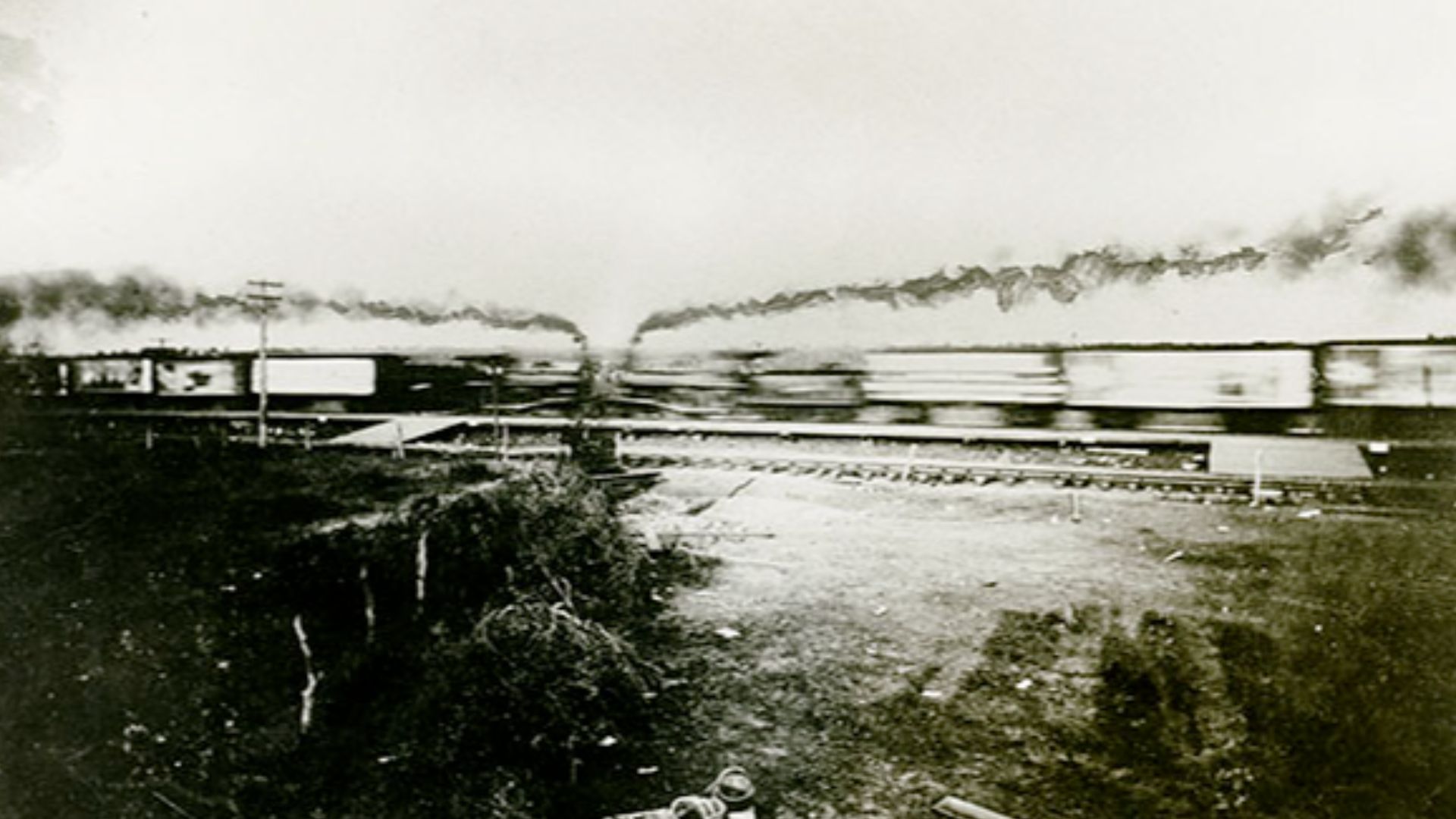
 Jervis C. Deane (b. 1860) on Wikimedia
The Katy railroad had a slow year in 1896. Money was tight nationwide, seats were going empty, and the company's passenger agent thought he knew how to fill them. His name was William George Crush, and his plan was to run two locomotives into each other at full speed in front of the largest crowd he could assemble.
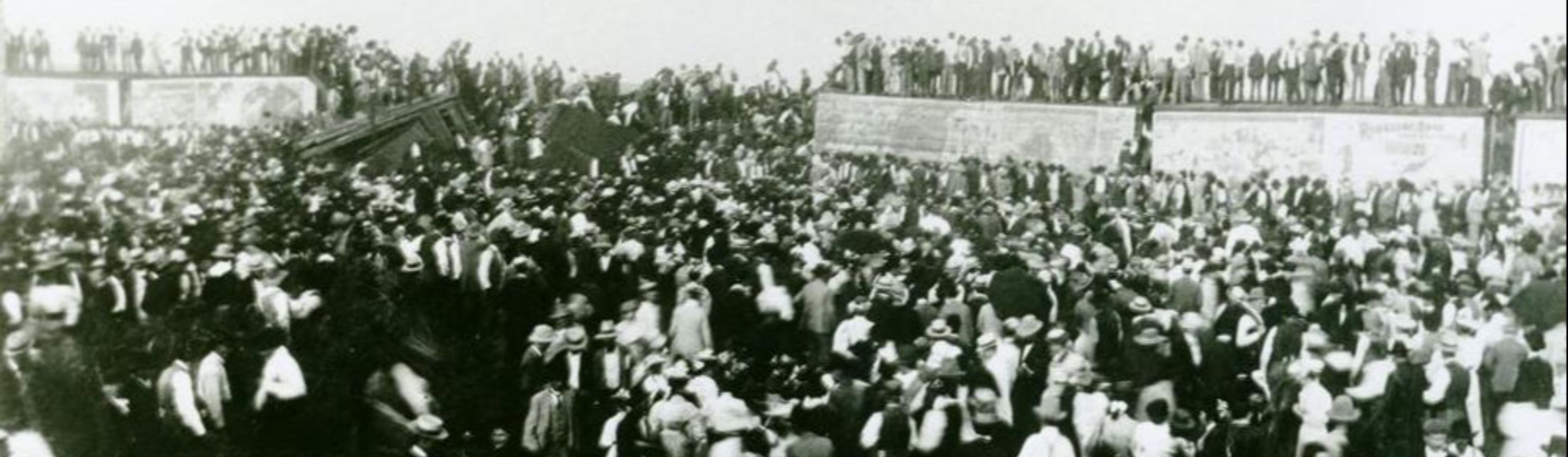
He got his crowd. Roughly 40,000 people turned up on a September afternoon in a valley north of Waco, enough to make the spot the second-largest city in Texas for a few hours. The collision went the way he'd promised. The boilers were the part nobody had planned on.
The Railroad Wanted the Attention
Crush pitched the stunt as a way to get the Missouri, Kansas and Texas Railroad into every newspaper in the country, and the company gave him two retired engines to wreck. He'd been friendly with P. T. Barnum, and the showmanship came naturally. When he asked the company's engineers whether the boilers would survive a head-on hit, one of them warned they might explode and was overruled.
The engines got a paint job for the occasion. No. 999 went green with red trim and No. 1001 red with green, both of them 35-ton machines built in the 1870s, and each one was given six boxcars covered in advertising. Crush sent them around the state beforehand so people could get a look at what was going to be destroyed. Towns along the line turned out to see the engines roll through.
Getting there cost two dollars round trip from anywhere in Texas, and watching was free. Thirty-three excursion trains ran that day. For a family looking at a long dull September, a cheap train ride to a carnival with a wreck at the end of it was an easy sell.
Crush, Texas, Existed for a Single Day
Crews picked a shallow valley ringed by three hills about 15 miles north of Waco. The slopes worked as a natural grandstand, and four miles of temporary track went down through the bottom.
The town went up around that track and came down again within a week of the crash.
Crush drilled two wells and ran pipes out to spigots so the crowd would have water. A man from Dallas was brought in to operate a dozen lemonade stands, and a restaurant went up inside a circus tent borrowed from the Ringling brothers. The carnival attractions were modeled on the midway from the Chicago world's fair three years earlier. Crush also built a wooden jail and hired 200 constables to patrol the grounds. He seems to have had a realistic view of what a crowd that size gets up to on a free afternoon.
Ten thousand people had arrived by ten in the morning. The four o'clock start slipped because trains were still unloading, and the crowd kept pushing past the rope that marked the safe distance. A little after five, Crush rode out in front of them on a white horse and threw his hat in the air. The engines started moving.
The Boilers Were Not Supposed to Explode
Each engine backed up a mile. The crews opened the throttles and tied down the whistle cords, then jumped off about thirty yards in. That left two screaming trains closing on each other at something near 50 miles an hour.
They met and reared up, and both boilers let go at once, throwing iron and scalding water out over the slopes.
A driving wheel traveled more than 2,500 feet before it came down among the spectators. A teenager named Ernest Darnall, watching from a mesquite tree, was struck between the eyes by a hook off a wrecking chain and died where he sat. Accounts put the toll at two or three dead and several dozen hurt, some of them scalded, some burned by metal that was still hot when they picked it up. The official photographer, Jervis Deane, was standing less than a hundred feet from the track when a flying bolt took out his right eye.
The company fired Crush before nightfall and hired him back within days, once the stunt made papers nationwide. Deane took $10,000 and a lifetime pass on the Katy, and once surgeons had dug out the shrapnel from he injuries he suffered, he ran a notice in a Waco paper saying he'd gotten the loose screws out of his head and was open for business again. Scott Joplin wrote a march about it that same year.
KEEP ON READING