

 Ewen Montagu Team on Wikimedia
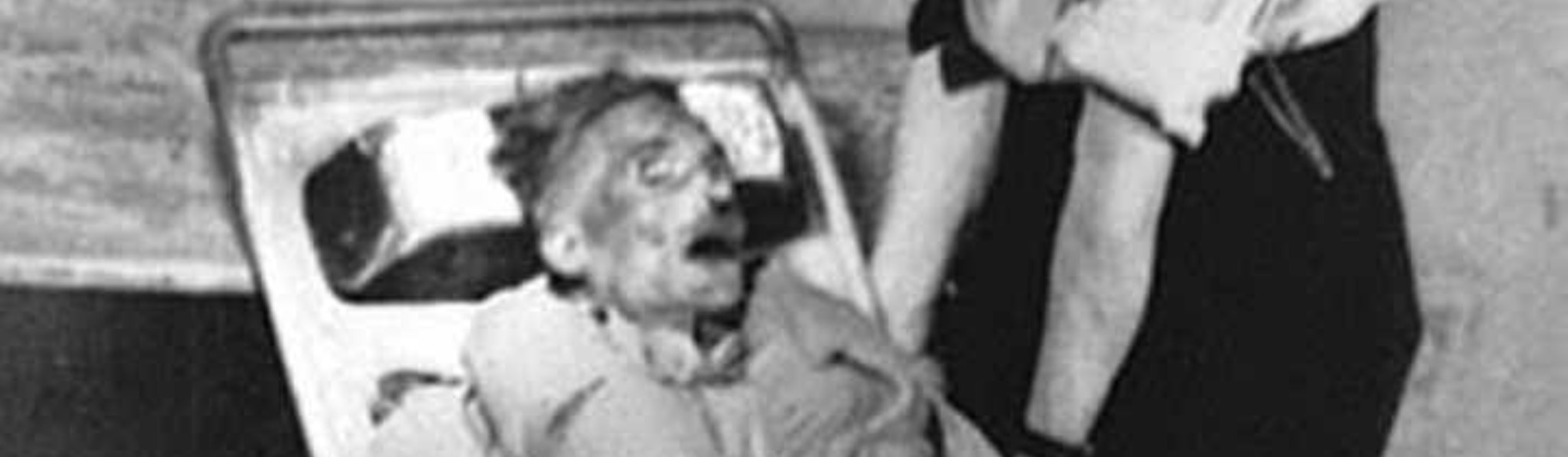
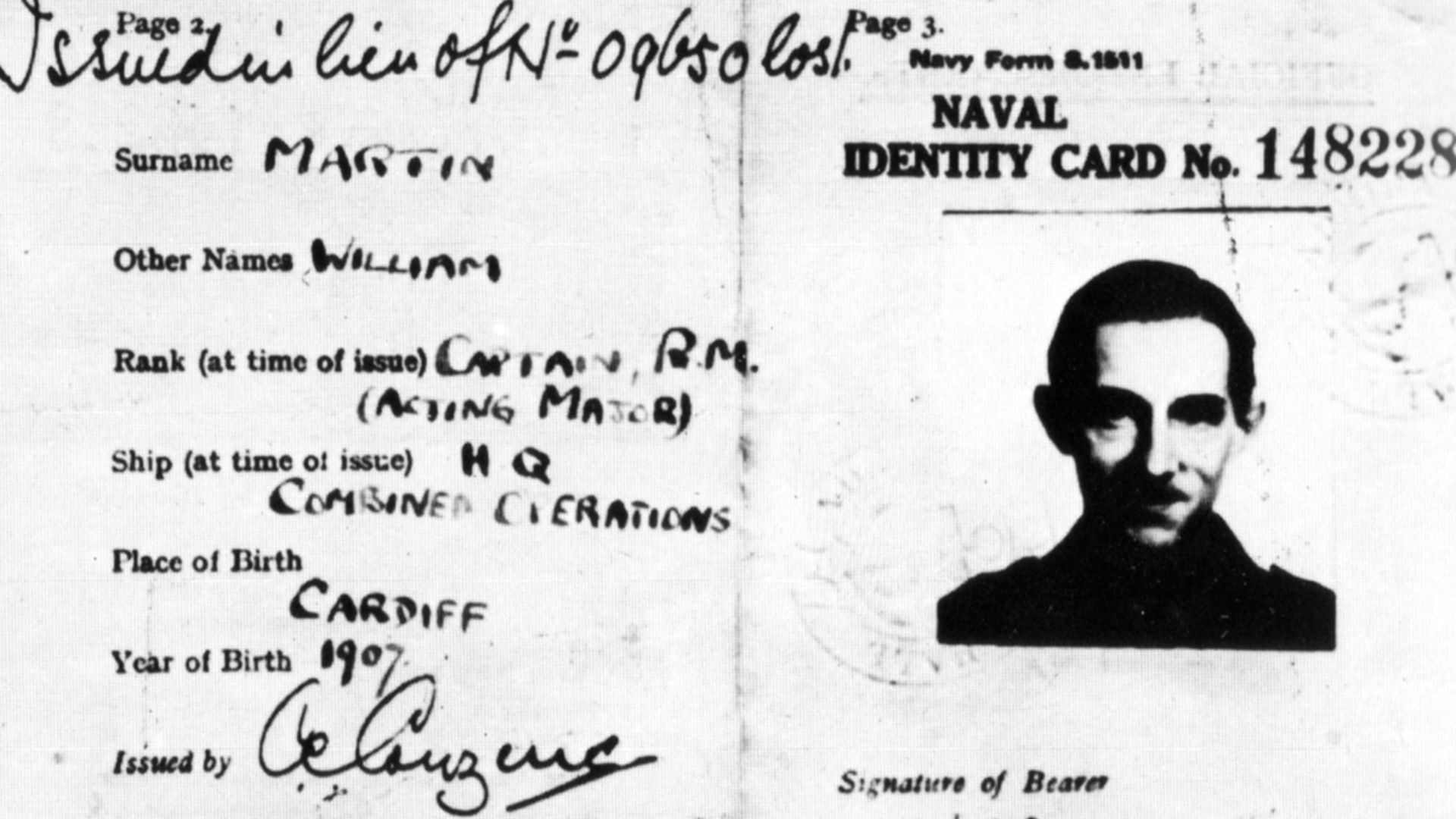
In April 1943, a dead man washed ashore on the coast of southern Spain near Huelva. He was carrying a briefcase full of classified British military documents, wore the uniform of a Royal Marines officer, and had identification naming him as Major William Martin. The German intelligence service retrieved those documents, studied them carefully, and concluded that the Allied invasion of occupied Europe would target Greece and Sardinia. Every single piece of that chain of events was fabricated.
Operation Mincemeat remains one of the most audacious deception operations in military history. The plan, hatched by British intelligence officers Ewen Montagu and Charles Cholmondeley under the umbrella of the London Controlling Section, involved constructing an entirely false identity for a corpse, attaching fake top-secret letters to its body, and dropping it into the sea near Spain in the hope that German agents would intercept the documents before neutral Spanish authorities could return them. The goal was to convince Hitler that the Allied invasion of Sicily was actually going to happen somewhere else. It worked.
Finding a Body, Building a Man
The logistical problem the planners faced first was finding a suitable corpse. British intelligence needed a body that would pass a Spanish medical examination as someone who had died by drowning, ideally with some plausible connection to air travel over water. In January 1943, pathologist Sir Bernard Spilsbury confirmed that a body could be used without raising suspicion if it had recently died of pneumonia, since fluid in the lungs could be mistaken for drowning under a cursory examination. Glyndwr Michael, a Welsh vagrant who died of rat poison in London, was selected. His cause of death remained classified by the British government until 1996.
Creating a convincing identity took months of meticulous work. Montagu and Cholmondeley constructed William Martin's life in extraordinary detail, including a fiancée named Pam, whose photograph was actually that of Montagu's real colleague Jean Leslie, along with love letters, an overdue bill from a tailor, a letter from a worried father, and ticket stubs from a London theater. They even tucked in a stern note from his bank about an overdraft. Individually, none of these details would fool anyone. Together, they created the texture of a real life being interrupted.
The classified documents themselves were the centerpiece. A letter from Lieutenant General Archibald Nye to General Harold Alexander made oblique but readable references to the actual invasion target being elsewhere, with Sicily mentioned as a deliberate feint.
British intelligence understood that German counterintelligence was sophisticated enough to be suspicious of anything too clean, so the letters were written with the casual ambiguity of genuine high-level military correspondence rather than the neat exposition of planted intelligence.
The Drop and the Deception
HMS Seraph, a British submarine, deployed the body on April 30, 1943, approximately a mile off the coast of Huelva. The location was chosen carefully. A British intelligence officer had confirmed that a German agent in Huelva, Adolf Clauss, maintained contact with Spanish officials and would likely be among the first to know if a body with sensitive materials washed ashore. The water temperature and current patterns near Huelva had been calculated to ensure the body would reach shore in reasonable condition.
Spanish authorities recovered Major Martin that same day and notified the British vice-consul, but German agents had already photographed the documents before they were officially returned. The Spanish military intelligence service, working alongside German contacts, passed the contents directly to the Abwehr, Germany's military intelligence organization. The British knew the documents had been read because of how the envelope seals had been disturbed, even though the Spanish maintained they had been returned untouched.
Hitler received the intelligence and believed it. Documents released after the war, including post-war interrogation records of Abwehr officers and the published diaries of Joseph Goebbels, confirmed that German high command redirected significant defensive resources toward Greece and Sardinia. Field Marshal Erwin Rommel was sent to inspect Greek defenses.
The German 1st Panzer Division was moved from France to the Peloponnese. When the actual Allied invasion of Sicily launched on July 10, 1943, the island's defenses were materially weaker than they would otherwise have been.
What the Operation Actually Achieved
Measuring the precise impact of a deception operation on a military campaign is genuinely difficult, and historians have debated how much of Sicily's relatively swift fall owed to Mincemeat versus Allied firepower, logistics, and Axis morale. The island was captured in 38 days, between July 10 and August 17, 1943, with Allied casualties totaling roughly 22,000. Sicily then served as the launching point for the invasion of mainland Italy, which pulled the country out of the Axis alliance and forced Germany to stretch its defenses further south than it had planned.
What the declassified records show clearly is that German troop movements before the invasion reflected genuine belief in the false intelligence. Roger Hesketh, who compiled the official history of Allied deception operations, concluded that Mincemeat ranked among the most successful strategic deceptions of the entire war. Montagu published his own account in 1953 under the title The Man Who Never Was, which became a bestseller and was later adapted into a film in 1956. The title captures the operation's central achievement: they hadn't just redirected troops, they had made the Germans trust a man who had never existed.
The operation also shaped how large-scale deception would be institutionalized in Allied planning going forward. Operation Bodyguard, the broader deception strategy that preceded the D-Day landings in 1944, drew directly on the lessons of Mincemeat, including the importance of layered false identities, the value of human detail in forged documents, and the specific vulnerabilities of German intelligence to well-constructed paper trails. The corpse of Glyndwr Michael, buried in Huelva under another man's name, had accomplished something that divisions of soldiers could not: it made an enemy army defend the wrong beach.
KEEP ON READING
10 Explorers Who Changed Maps Forever & 10 Who Never…
The Triumphs and Tragedies of Exploration. Exploration has always shaped…
By Rob Shapiro Apr 9, 2026
The War Fought Over a Bucket
Zairon on WikimediaIn November 1325, a group of Modenese soldiers…
By Cameron Dick Apr 9, 2026
The 20 Most Common Names You Hear Repeatedly In History…
Names Rich With History. Remembering dates and places throughout history…
By Cathy Liu Apr 9, 2026
10 Book Bans That Backfired & 10 That Worked
When Censorship Misfires. Book bans get talked about as if…
By Cameron Dick Apr 8, 2026
20 Times in History Fashion Trends Were Genuinely Dangerous
Looking Stylish Hasn't Always Been a Safe Hobby. Fashion has…
By Emilie Richardson-Dupuis Apr 8, 2026
20 Historical Figures Who Were More Dangerous Than They Seemed
Power Hidden Behind a Calm Face. History is full of…
By Annie Byrd Apr 8, 2026