

When This Thing Fell From Space, Everyone Knew the World Was Forever Changed
 Alessandro Ferrari on Unsplash
On a crisp October evening in 1957, the horizon did not just hold the setting sun; it held the beginning of a brand-new era for humanity. When the Soviet Union launched Sputnik 1, the world’s first artificial satellite, it was not just a piece of metal falling into orbit; it was a loud, clear signal that the heavens were no longer out of reach. One might imagine the surprise of onlookers who looked up to see a “new star” crossing the sky, knowing that for the first time, something man-made was looking back down at them.
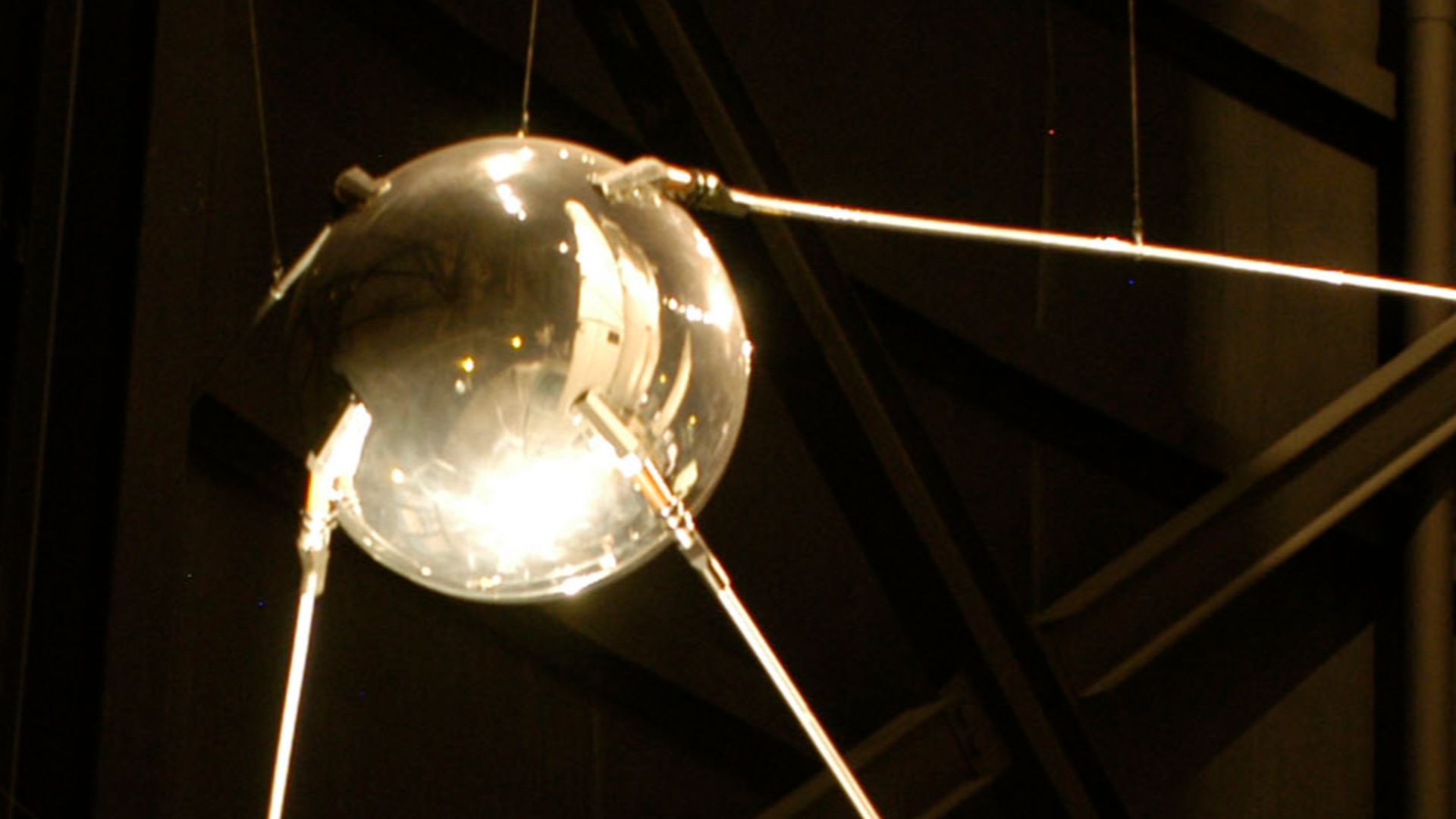
The launch of this polished metal sphere, roughly the size of a beach ball, sent shockwaves through living rooms and government offices across the globe. It was not merely a scientific achievement, but a psychological pivot point that fundamentally altered how humanity viewed its place in the universe. Suddenly, the vast expanse above was not just a canvas for dreams, but a competitive arena for technology, politics, and survival. This singular event transformed the Cold War from a terrestrial struggle into a frantic race toward the stars.
The Beep Heard 'Round the World
 U.S. Air Force photo on Wikimedia
Sputnik 1 may have raced across the sky at an orbital velocity of eight kilometers per second and shone metallic silver in the sunlight, but what marked its passage most vividly were the dots and dashes emitted by its radio transmissions. A steady electronic beep came through ham-radio receivers worldwide, audible proof that the Soviet Union had taken the next step. It was difficult to imagine how intimidating that sound was to the West, which believed it held the technological advantage. The Soviets had just demonstrated that the barrier of the sky had been breached, and their symbolic victory was on display for all to see.
Eighty-four minutes after one pass of Earth, it would return and pass again over different regions of the planet several times each day, inspiring dread in ways never before considered. It was not the sphere itself that was frightening; after all, it was only about the size of a beach ball. The realization that if a rocket could send a beeping satellite into space, it could just as easily deliver a warhead was something the world had to confront. Within days, observers were glued to rooftop telescopes, tracking the visible satellite as it moved across the stars. For the first time in human existence, there was a shared awareness that humanity was no longer alone above Earth’s atmosphere.
The beep stopped when the batteries finally died after twenty-two days, but Sputnik could not be “unheard.” Mere days earlier, the Soviet Union had successfully launched the world’s first satellite into orbit. The shock forced scientists and engineers around the world to reevaluate how it had been achieved while their own attempts continued to fail on launch pads. Along with creating the now-common discipline of satellite tracking, the world gained its first real data on the density of the upper atmosphere by observing Sputnik’s path overhead. Humanity had been struck with a sudden realization of technological vulnerability, yet the satellite itself remained a simple object with four whip antennas.
A Catalyst for Educational and Social Revolution
The sight of Sputnik streaking across the night sky did more than frighten politicians; it ignited a massive overhaul of the American education system. Suddenly, there was an urgent national realization that the next generation needed to be highly trained in math, physics, and engineering to keep pace with this new frontier. The satellite became a symbol that helped drive increased funding into science programs and the creation of more rigorous academic standards in schools. It shifted cultural focus from domestic comfort toward high-tech innovation and intellectual development.
This new emphasis on scientific literacy was not merely aimed at creating more efficient ballistic missiles. It was about preparing humanity for a world in which technology was rapidly advancing and global tension was rising. Months later, Congress passed the National Defense Education Act, which funneled millions into scholarships and educational materials for promising technical students. One small satellite helped reshape what children across the United States would learn in science classrooms. The race to the Moon did not begin on Earth alone; it began with a generation of students being told they could change the world simply by asking questions.
In addition to transforming education, the “Sputnik moment” unified the world through a childlike sense of awe and heightened competition. Suddenly, terms such as orbital velocity and escape velocity became part of everyday conversation, even among those who did not fully understand them. Traditional barriers between scientific experts and the general public began to blur. Humanity was no longer simply composed of people on Earth; there was a growing sense of being part of a larger cosmic community.
The most direct and lasting consequence of Sputnik’s launch was the urgent consolidation of American aerospace efforts, leading to the creation of NASA in 1958. Before this, multiple branches of the military competed for funding and direction, but the perceived threat of Soviet dominance in space forced a unified civilian approach to exploration. This moment marked the transition of space travel from science fiction into a structured, government-supported reality. The organizational shift paved the way for everything from early weather satellites to the historic Apollo Moon landings.
KEEP ON READING

The story of Ching Shih, the Woman Who Became the…
Unknown author on WikimediaFew figures in history are as feared…
By Emilie Richardson-Dupuis Dec 29, 2025
Einstein's Violin Just Sold At An Auction—And It Earned More…
A Visionary's Violin. Wanda von Debschitz-Kunowski on WikimediaWhen you hear…
By Ashley Bast Nov 3, 2025
This Infamous Ancient Greek Burned Down An Ancient Wonder Just…
History remembers kings and conquerors, but sometimes, it also remembers…
By David Davidovic Nov 12, 2025
The Mysterious "Sea People" Who Collapsed Civilization
3,200 years ago, Bronze Age civilization in the Mediterranean suddenly…
By Robbie Woods Mar 18, 2025
When This Thing Fell From Space, Everyone Knew the World…
Alessandro Ferrari on UnsplashOn a crisp October evening in 1957,…
By Sara Springsteen Apr 7, 2026
20 Soldiers Who Defied Expectations
Changing the Rules of the Battlefield. You’ve probably heard plenty…
By Annie Byrd Feb 10, 2026