
The Carnival Attraction That Saved Thousands of Premature Babies
 commons.wikimedia.org on Google

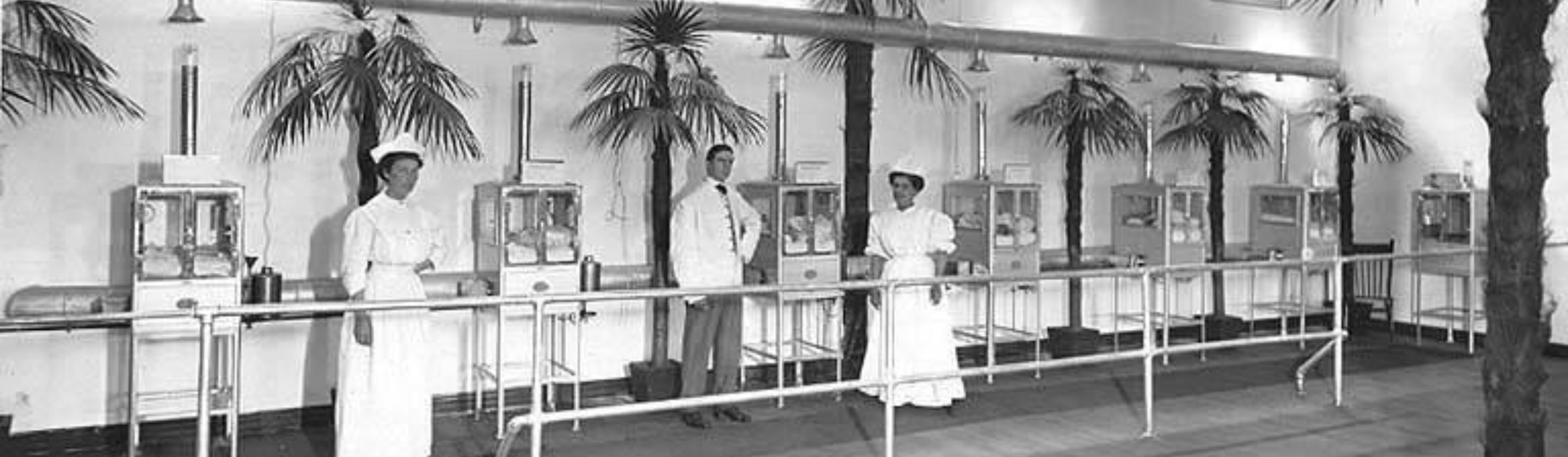
Imagine walking along the Coney Island boardwalk, past sword swallowers and tattooed performers, and coming across a building with a sign reading Life Begins at the Baby Incubator. For 25 cents, visitors could step inside and see rows of glass incubators holding premature babies, some born weeks before their due dates.
It sounds like a bizarre attraction, but those babies were receiving care that many hospitals couldn't offer at the time. For roughly four decades, a man named Martin Couney ran the exhibit and helped save thousands of premature infants whose chances of survival might otherwise have been slim. The admission fees paid for their care, and their parents didn't owe a penny.
It Started as a Berlin Exhibit
The first show opened at the 1896 Berlin Exposition as the Kinderbrutanstalt, which translates roughly to child hatchery. Couney took six premature infants from the city's Charité hospital, babies the doctors there expected to die, and set them up in incubators in front of a paying public. All six survived the two-month exposition, and more than 100,000 visitors paid to watch them do it.
He took the idea on the road after that, to London and then to Paris in 1900. His US debut came in Omaha in 1898, where the rural crowds were thin. The Buffalo show in 1901 sat in the fair's amusement section and drew better crowds. Afterward the Children's Hospital of Buffalo bought several incubators of its own, which was the kind of result he was after.
Couney settled in the United States for good in 1903 and soon had a permanent home at Luna Park, where the incubators ran every summer until 1943. A second exhibit at Dreamland lasted until the park burned in 1911. In between, he moved the operation to world's fairs, including Chicago in 1933 and New York in 1939, where a Yale pediatrician came by to film the babies.
How the Quarter Paid for the Care
Couney took babies regardless of race or class, and the admission fees covered the bills. Those ran to about $15 a day per infant in 1903, which was serious money then. The crowds were big enough to keep it going for decades, and the babies' names were kept off the displays.
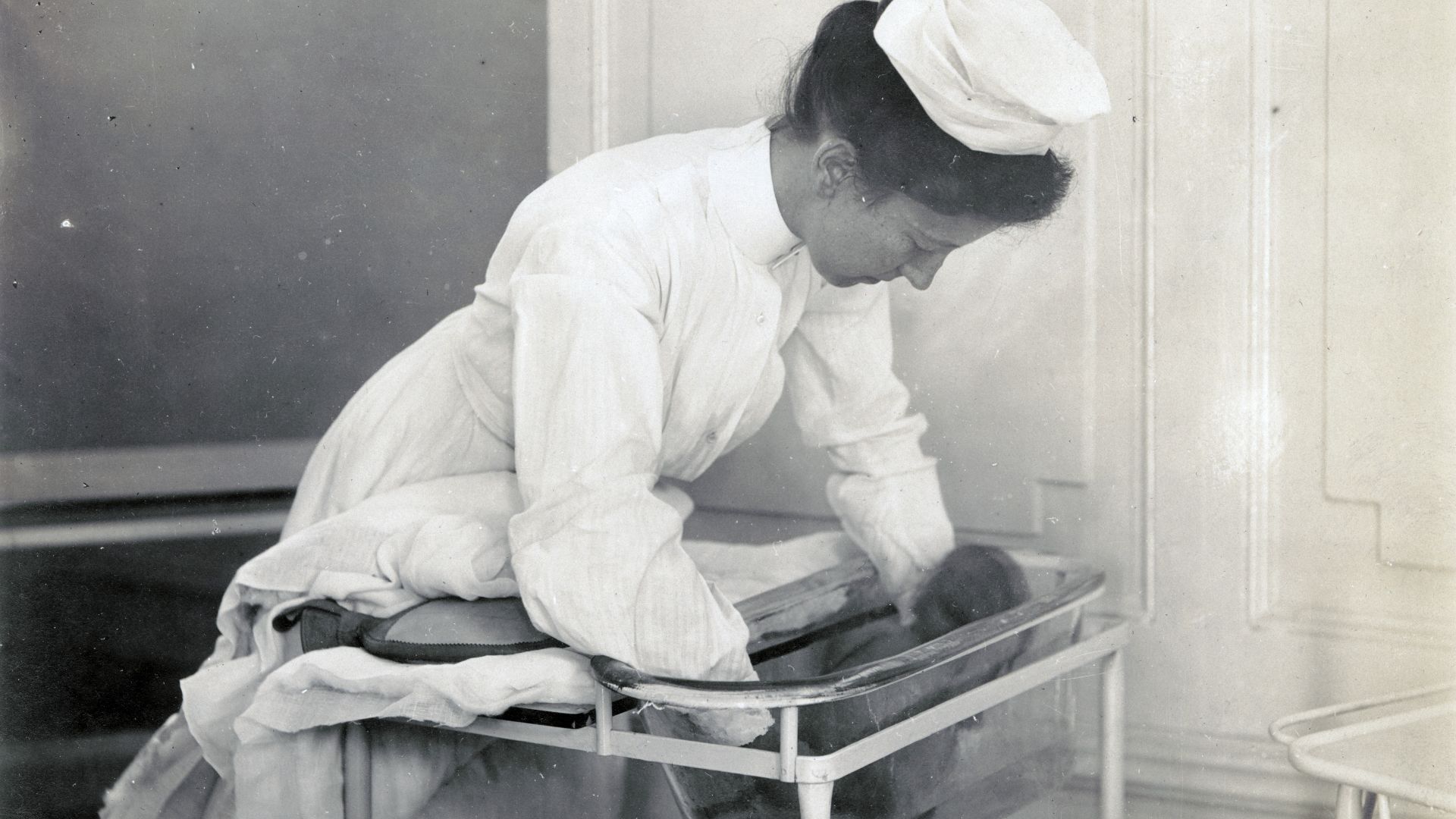
The care itself was strict. His staff included five wet nurses and a team of trained technicians, his daughter among them as a nurse. The wet nurses had to follow a controlled diet, since whatever they ate reached the babies. At the Chicago fair the infants wore doll's clothes and knitted bonnets, which made them look even smaller to the people filing past.
That Chicago exhibit, in 1933 and 1934, was run alongside a local pediatrician named Julius Hess. Hess had already acknowledged his debt to Couney in a 1922 textbook. Of the 58 babies cared for there in 1933, 41 came back the next summer for a homecoming party.
The Doctor With No Diploma on File
Couney said he studied medicine in Leipzig and Berlin, but a later biographer found no record of it, and the National Library of Medicine couldn't locate a German medical thesis under his name. Records suggest he first came to America at about 19, under the name Cohn. The 1910 census listed his job as surgical instruments, and by 1930 it said physician. He also claimed to have invented an incubator, though no US patent for one has been found.
His own count was about 8,000 babies treated and roughly 6,500 saved. Those figures can't be fully verified, though the doctors of the day tended to respect the work, and he counted the president of the American Medical Association as a friend. He had said he would keep going until city hospitals opened proper incubator wards. The crowds and the money thinned out in his last Coney Island seasons. By 1940 he was complaining that he used to do better business with a fraction of the visitors, and when receipts dropped he cut the admission by a nickel rather than start charging parents. After the exhibit closed in 1943, he retired.
Some of his babies lived long enough to tell the story themselves. Kathy Meyer, born eight weeks early in 1939, said that without Couney she wouldn't be here at all. Lucille Horn was born premature in 1920, and the hospital had nothing to offer her, so her father carried her to Coney Island. In a 2015 interview with her daughter, she remembered her father saying she was so tiny he could hold her in his hand.
KEEP ON READING