
Chicago Couldn't Move The Bean, but It Once Lifted an Entire City Block
 John Barber, and Henry Howe on Wikimedia
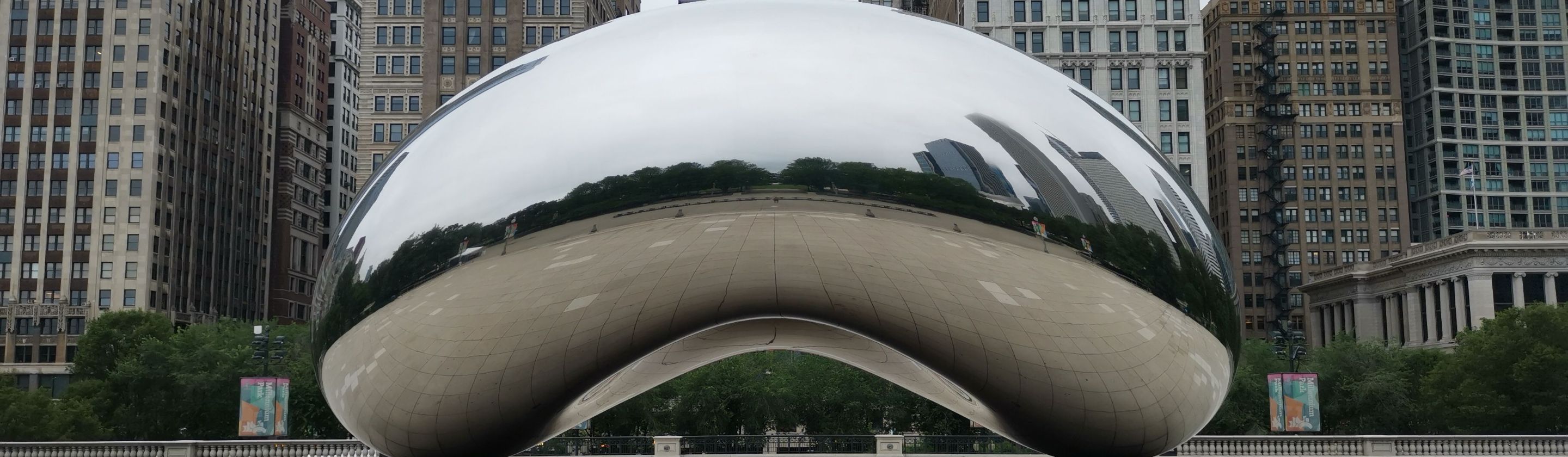
Chicago has never been a city that shies away from unusual ideas, but its latest attempt to move a major landmark didn't exactly go according to plan. On November 8, 2026, hundreds of people gathered in Millennium Park to push the city's famous Bean sculpture seven inches to the left. Despite their enthusiasm, the 110-ton stainless steel structure didn't budge.
The event was inspired by an internet conspiracy theory claiming someone was trapped inside the sculpture, but it also brought attention to a fascinating piece of Chicago history. More than 160 years earlier, engineers successfully lifted an entire row of enormous buildings several feet into the air. Unlike the recent gathering, this extraordinary undertaking wasn't a joke, and it actually worked.
Why Chicago Once Needed to Raise Its Buildings
During the mid-1800s, Chicago had a serious problem with its geography, particularly the swampy land on which much of the city stood. Its streets frequently turned into muddy disasters whenever it rained, making even ordinary transportation surprisingly difficult. Some roads became so waterlogged that horse-drawn wagons could barely navigate them, creating constant headaches for residents and businesses.
Unfortunately, the muddy streets were only part of the problem, as the city's relatively flat landscape made proper drainage extremely difficult. Sewage and stagnant water accumulated throughout neighborhoods, creating unsanitary conditions that contributed to devastating outbreaks of diseases such as cholera. The disease killed approximately one in every 20 Chicago residents in 1854 alone.
City officials eventually recognized that Chicago desperately needed a proper sewer system, but installing one presented an unusual engineering challenge. Because the city sat so close to the level of Lake Michigan, there wasn't enough natural elevation for wastewater to flow through underground pipes by gravity. Rather than abandon their plans, engineers proposed an ambitious solution: build the sewers above the existing streets, cover them with soil to create higher roads, and raise the surrounding buildings to match. The new system would then carry sewage and stormwater toward the Chicago River.
Beginning in the 1850s, workers gradually elevated streets and buildings throughout downtown Chicago, sometimes by several feet. Some parts of the city were ultimately raised as much as 14 feet. The solution was undeniably ambitious, especially considering that construction crews didn't have access to the sophisticated hydraulic equipment available today.
The Incredible Day Engineers Lifted an Entire City Block
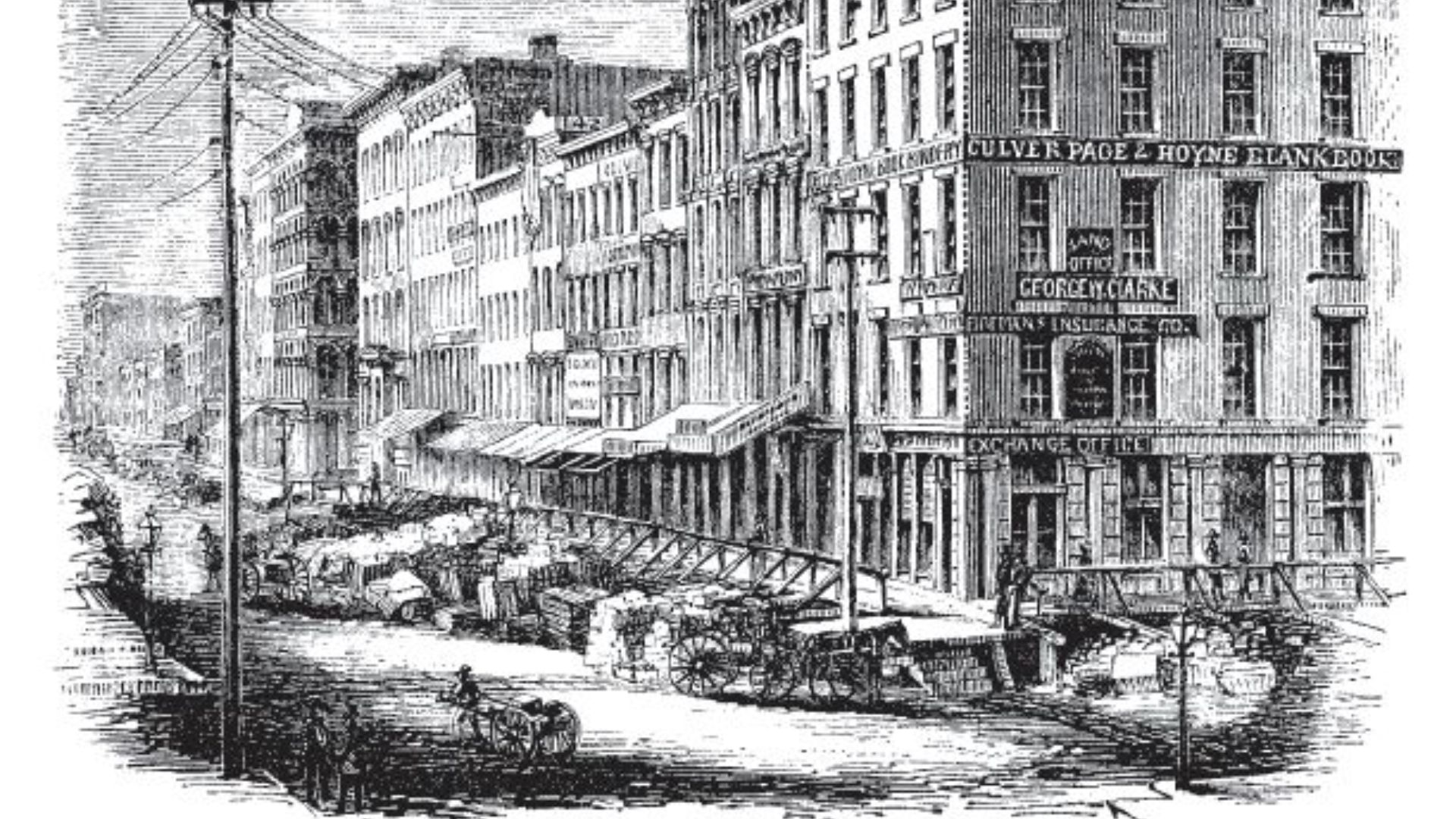
By 1860, Chicago's engineers had become remarkably confident in their ability to raise enormous structures without causing significant damage. That year, several contracting firms took on their most ambitious project along Lake Street, between Clark and LaSalle Streets. Their goal was to elevate a continuous row of commercial buildings measuring approximately 320 feet long and weighing an estimated 35,000 tons.
The buildings included stores, offices, printing establishments, and the impressive Marine Bank building, with several structures standing four or five stories tall. Rather than demolish everything and start over, engineers decided to raise the entire row approximately four feet above its existing foundations. The undertaking required extraordinary coordination, particularly because the buildings were connected along one of Chicago's busiest commercial streets.
To pull this off, construction crews positioned approximately 6,000 jackscrews beneath the enormous structures, allowing workers to lift the buildings gradually. Teams operated the screws in a carefully coordinated sequence to make sure everything rose evenly without placing dangerous stress on the structures. Even small differences in elevation could have damaged walls, shattered windows, or compromised the buildings' structural integrity.
Perhaps the most surprising detail was that the businesses inside didn't even have to close while the buildings were being raised. Contemporary newspaper reports described merchants carrying on with their daily activities while pedestrians gathered outside to watch the remarkable operation unfold. Some merchants even reported better business because the spectacle attracted so many curious customers.
The project was completed successfully, marking one of the most impressive engineering achievements in Chicago's early history. According to a National Park Service historical study, the operation cost approximately $17,000 and was accomplished without breaking a single windowpane. Considering the enormous weight involved and the limited technology available, that was quite an accomplishment.
The Forgotten Engineering Achievement That Changed Chicago
One of the men involved in the operation was George Pullman, who later became famous for developing luxurious railroad sleeping cars. Before establishing his railroad empire, Pullman had already gained considerable experience raising buildings throughout Chicago. His involvement in the Lake Street project showcased the engineering expertise that helped establish his reputation as an ambitious businessman.
The success of Chicago's building-raising operations also transformed how the city dealt with its infrastructure problems. Rather than allowing its difficult geography to restrict development, Chicago invested in large-scale engineering projects that made continued growth possible. The new drainage system helped reduce standing wastewater and made downtown streets considerably more practical, although the city's sewage problems wouldn't be fully resolved for decades.
Although the Lake Street operation attracted enormous attention at the time, its significance has largely faded from public memory. Artist Edward Mendel commemorated the achievement in a detailed lithograph showing the elevated buildings and the construction activity beneath them. Today, visitors walking through downtown Chicago might never realize that parts of the historic city were physically lifted to make room for the infrastructure beneath their feet.
The idea of hundreds of Chicagoans trying to push the Bean seven inches to the left might seem completely absurd, especially considering the sculpture weighs 110 tons. But when you look at what the city's residents accomplished more than 160 years ago, perhaps the stunt doesn't seem quite so crazy after all. Chicago once managed to lift an entire row of occupied buildings several feet into the air, proving that even the most improbable engineering challenges aren't necessarily impossible. Of course, the difference is that those 19th-century engineers came prepared with 6,000 jackscrews rather than a few hundred enthusiastic volunteers.