
History is full of examples showing that words matter, especially when they appear in legal agreements between governments and nations. A single phrase can shape borders, determine political authority, and influence generations of people. When those words are translated from one language into another, the stakes become even higher because subtle differences in meaning can completely change how each side understands the agreement.
One of the best-known examples is the 1840 Treaty of Waitangi in New Zealand. Although historians generally agree that many factors contributed to the conflicts that followed, differences between the English and Māori versions of the treaty played a significant role in creating misunderstandings about sovereignty and governance. Rather than being caused by one mistranslated word alone, the disputes grew from several translation choices, demonstrating how language can have lasting political consequences.
The Treaty That Meant Different Things to Different People
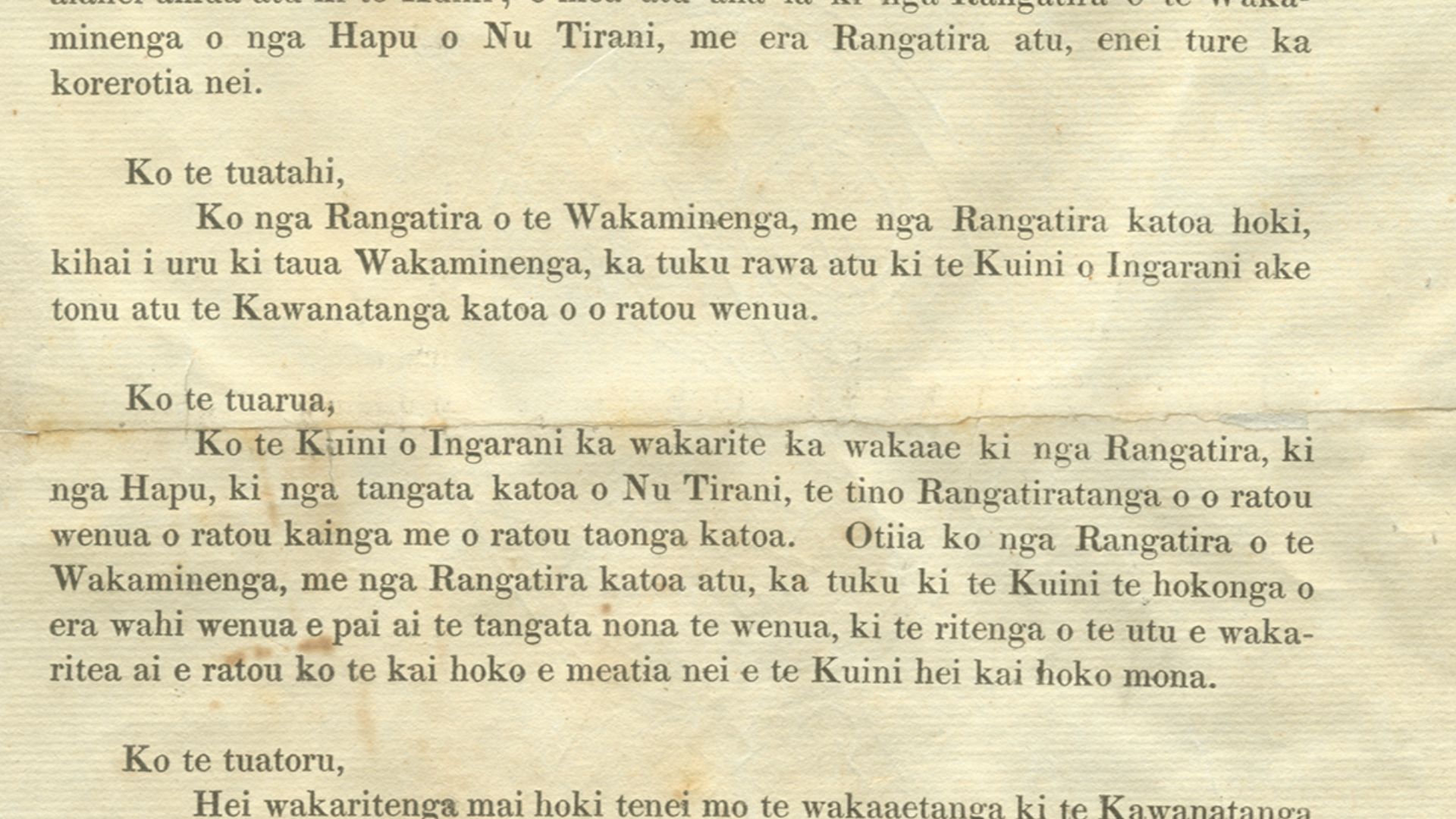 Archives New Zealand on Wikimedia
The Treaty of Waitangi was signed in 1840 between representatives of the British Crown and many Māori chiefs. Britain wanted to establish a formal government while recognizing certain Māori rights and encouraging peaceful settlement. The agreement was produced in both English and Māori because many of the chiefs spoke Māori rather than English.
One of the most debated terms in the treaty involves the English word "sovereignty." In the Māori text, translators used the word "kawanatanga," which was derived from the word "governor." Many scholars argue that this term suggested a limited form of governance rather than the complete transfer of sovereign authority that appeared in the English version.
Another key difference centered on the Māori word "rangatiratanga." The Māori version promised the continued exercise of rangatiratanga over lands, villages, and treasured possessions, a concept often associated with chieftainship, authority, and self-determination. The English text described the protection of property rights, but many historians believe that translation did not fully capture the broader meaning understood by Māori leaders.
These differences didn't immediately produce open conflict. At first, many people believed the treaty would create a cooperative relationship between Māori communities and the British Crown. However, as colonial administration expanded and land disputes became more common, the contrasting interpretations became increasingly difficult to reconcile.
Misunderstandings Grew Into Larger Disputes
As British settlement increased during the following decades, government officials often acted according to the English understanding of the treaty. Many believed Britain had acquired full sovereignty over New Zealand through the agreement. At the same time, numerous Māori leaders maintained that they had agreed to allow British governance while retaining substantial authority over their own communities.
Those conflicting expectations affected decisions involving land ownership, political authority, and legal jurisdiction. Land sales became especially controversial because not every community interpreted treaty obligations in the same way. What one side viewed as lawful expansion could appear to the other as a violation of promises made only a few years earlier.
The tensions eventually contributed to a series of armed conflicts known as the New Zealand Wars, fought primarily between the 1840s and the 1870s. Historians emphasize that these wars had multiple causes, including disputes over land, colonial expansion, political control, and differing interpretations of the treaty. Translation issues were an important part of that broader picture rather than the only explanation.
It's tempting to imagine that everything came down to one incorrect word, but history is rarely that simple. Language differences amplified misunderstandings that already existed alongside competing political goals and economic interests. The treaty became a focal point because each side sincerely believed its own interpretation reflected the agreement that had been made.
The disagreement also showed how difficult it can be to translate ideas between cultures with different traditions and systems of authority. Words connected to leadership, ownership, and governance often carry deeper meanings than their direct translations suggest. When those meanings are not fully understood, agreements can become open to very different interpretations over time.
Today, the Treaty of Waitangi remains one of New Zealand's most important constitutional documents. Courts, historians, and the Waitangi Tribunal have spent decades examining both language versions to better understand what the signatories intended in 1840. Modern scholarship recognizes that both texts must be considered when interpreting the treaty's meaning.
The story also highlights the remarkable challenge of translation itself. Some words simply don't have perfect equivalents in another language because they reflect different cultural traditions and political concepts. Translators often have to choose the closest available term, even when no option fully captures the original meaning. International agreements today typically involve teams of legal experts, linguists, and diplomats who carefully compare every version of a document before it is signed. Multiple official language editions are often reviewed repeatedly to reduce the risk of misunderstandings. Even with modern technology and extensive preparation, negotiators remain aware that precision matters.