When Beauty Preserves Pain
A picture is worth a thousand words. You've probably heard that expression before. You've likely also heard that "art imitates life." And as most of us know, life, unfortunately, isn't always pretty. The artists we've admired throughout history know this all too well, too, which is why they've often been able to illustrate scenes of anguish and tragedy heartbreakingly well. From executions to illness, loss, shipwrecks, and war, the 20 artworks on this list depict poignant stories. Please be warned that some of them may be triggering.
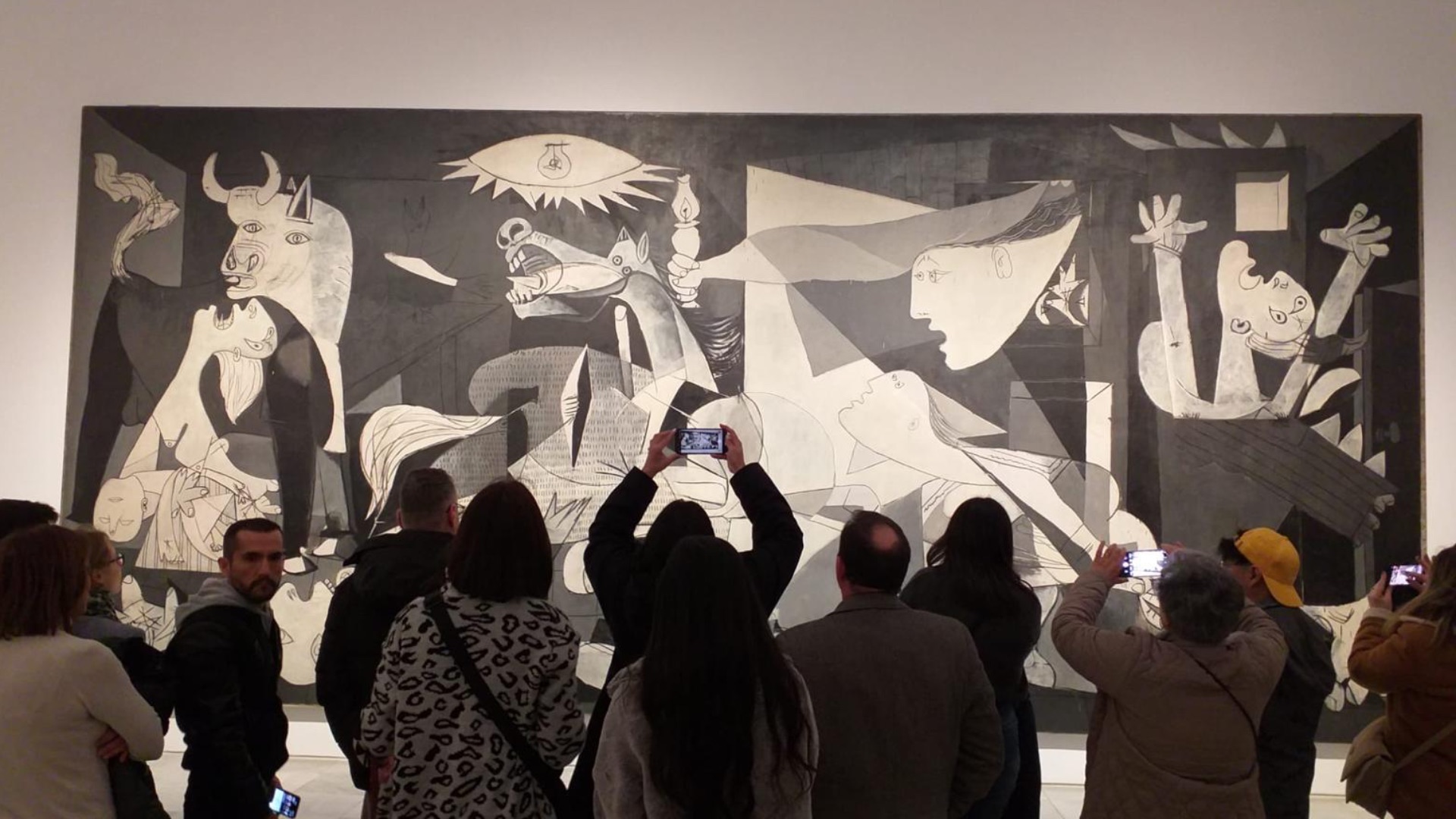
1. Guernica by Pablo Picasso
Guernica was painted in response to the April 1937 bombing of the Basque town of Guernica during the Spanish Civil War, when German and Italian forces left much of the town in tatters. Instead of depicting a traditional battle scene, though, Picasso filled the enormous black-and-white canvas with tortured grief, including terrified animals.
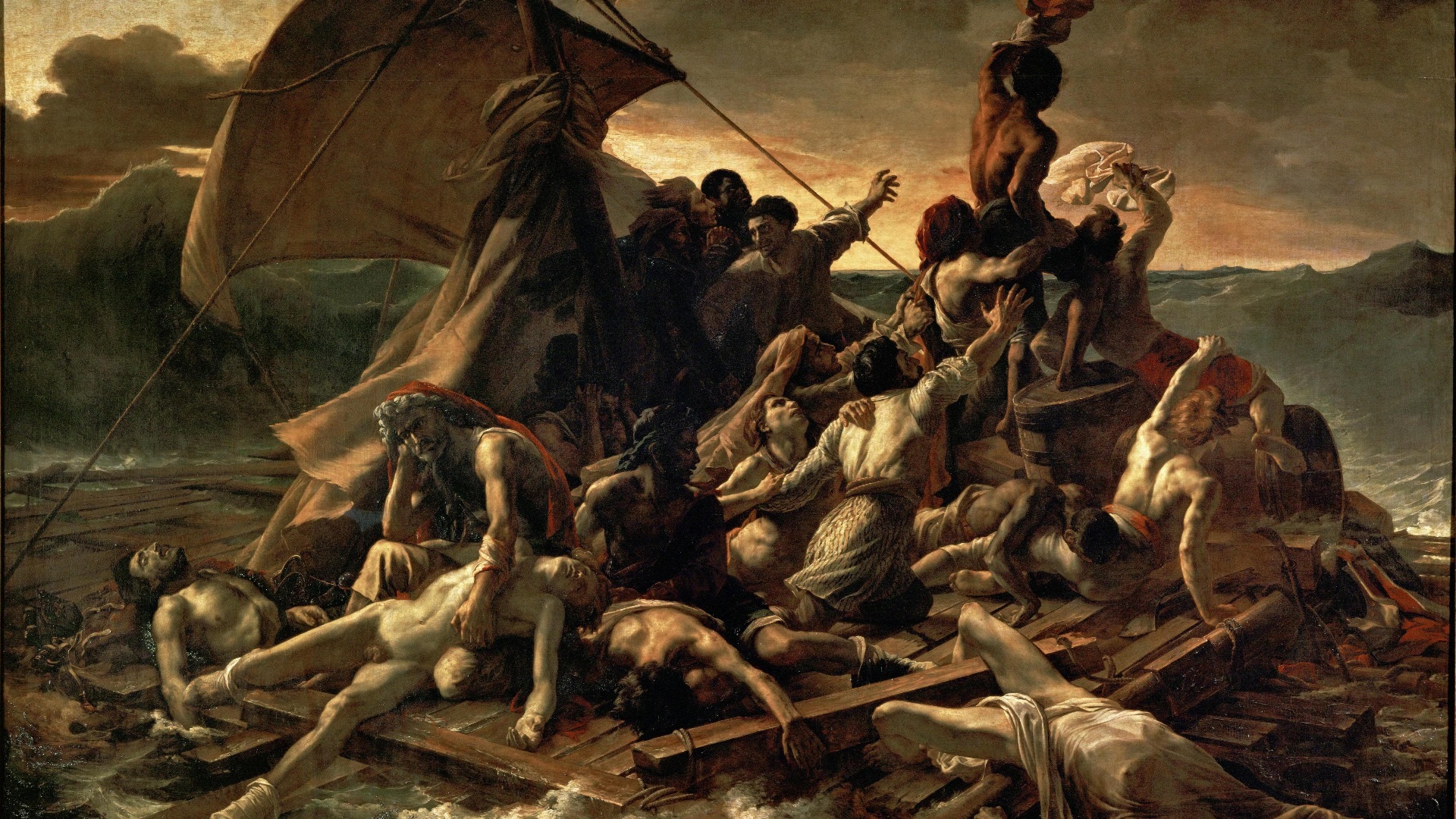
2. The Raft of the Medusa by Théodore Géricault
This tragic painting was based on the 1816 wreck of the French naval frigate Méduse, where only 15 of roughly 150 people on a broken raft survived after suffering through nearly two weeks of starvation, dehydration, and violence. To keep true to the event behind it, Géricault meticulously interviewed survivors and even studied human remains while he worked on this piece.
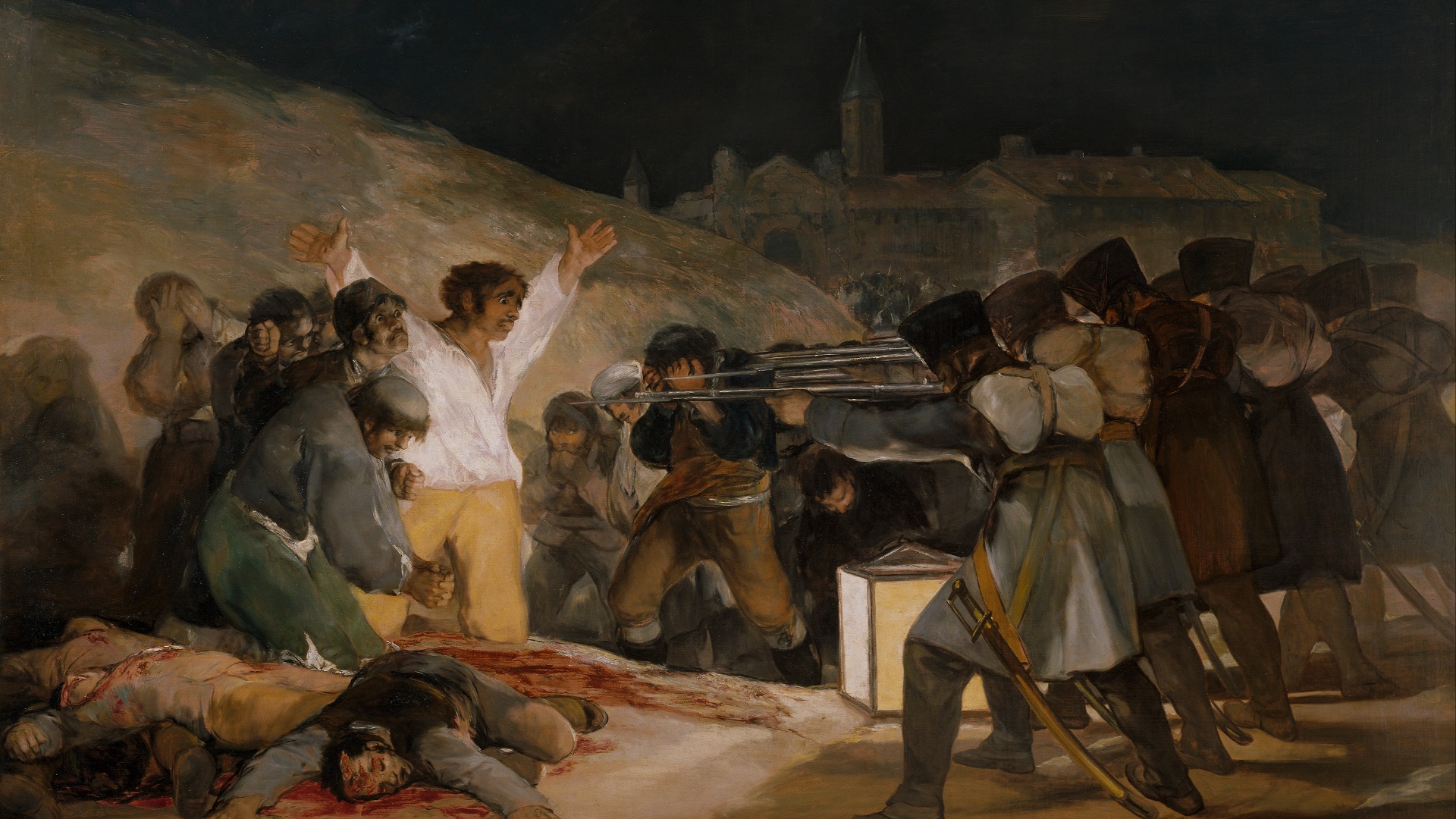
3. The Third of May 1808 by Francisco Goya
Though painted in 1814, six years after the fact, Goya's piece is no less heartbreaking. After an uprising against Napoleon’s occupation of Madrid, The Third of May 1808 illustrates the devastating scene of Spanish civilians lifeless at the feet of a central victim, while others wait for their turn.
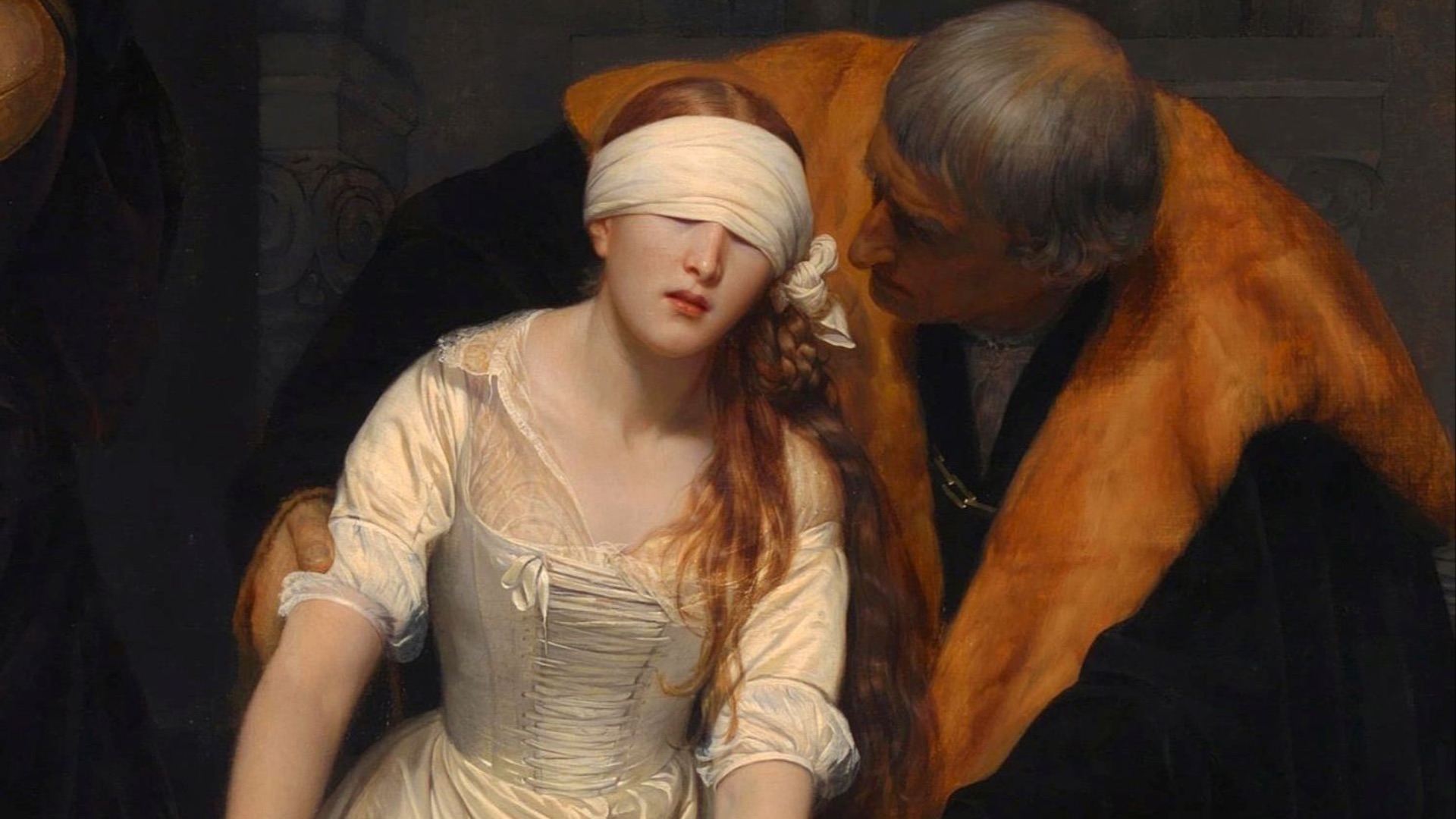
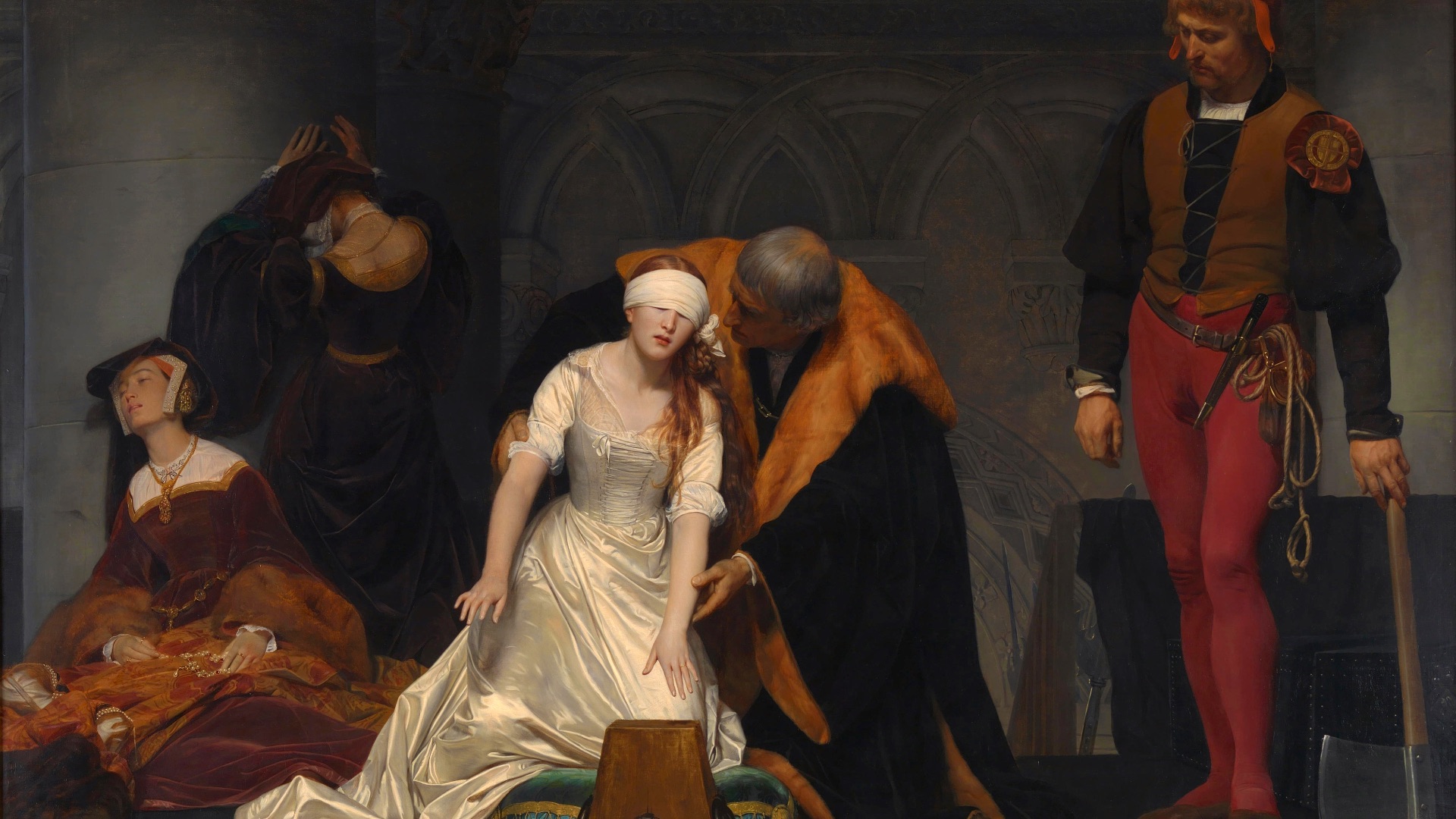
4. The Execution of Lady Jane Grey by Paul Delaroche
To prevent Catholic Mary Tudor from becoming queen, Lady Jane Grey was thrust onto the English throne in July 1553. Her reign would only last for nine short days. When she was eventually convicted of treason and led to the execution block, she was merely 16 or 17 years old.
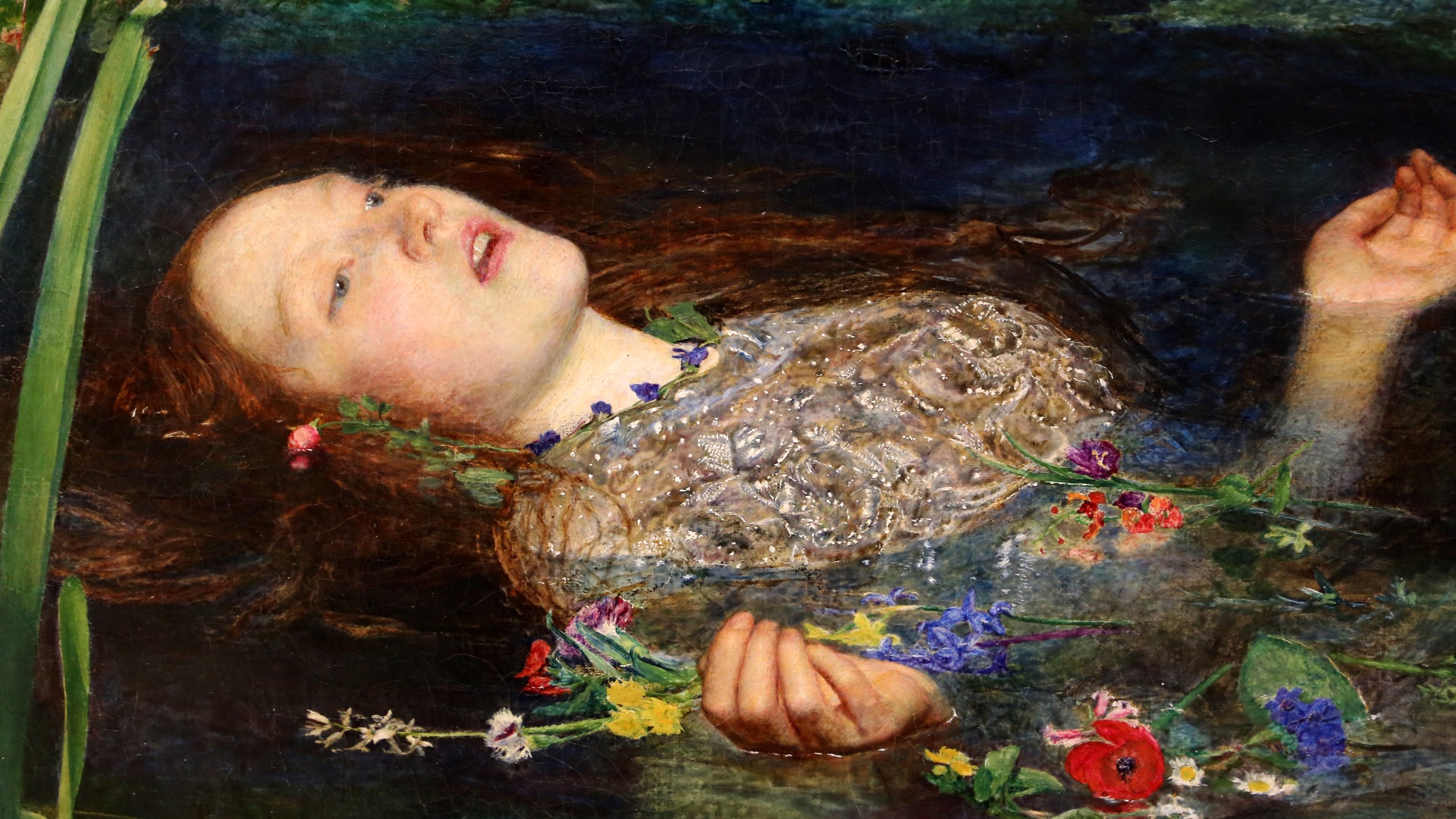
5. Ophelia by John Everett Millais
Anyone who has read Shakespeare’s Hamlet will likely be familiar with Ophelia, the young woman who drowns after experiencing unbearable grief and psychological distress. Perhaps the character's fate had a hand in this painting, as model Elizabeth Siddal reportedly fell seriously ill after one session when the underwater heating lamps went out.
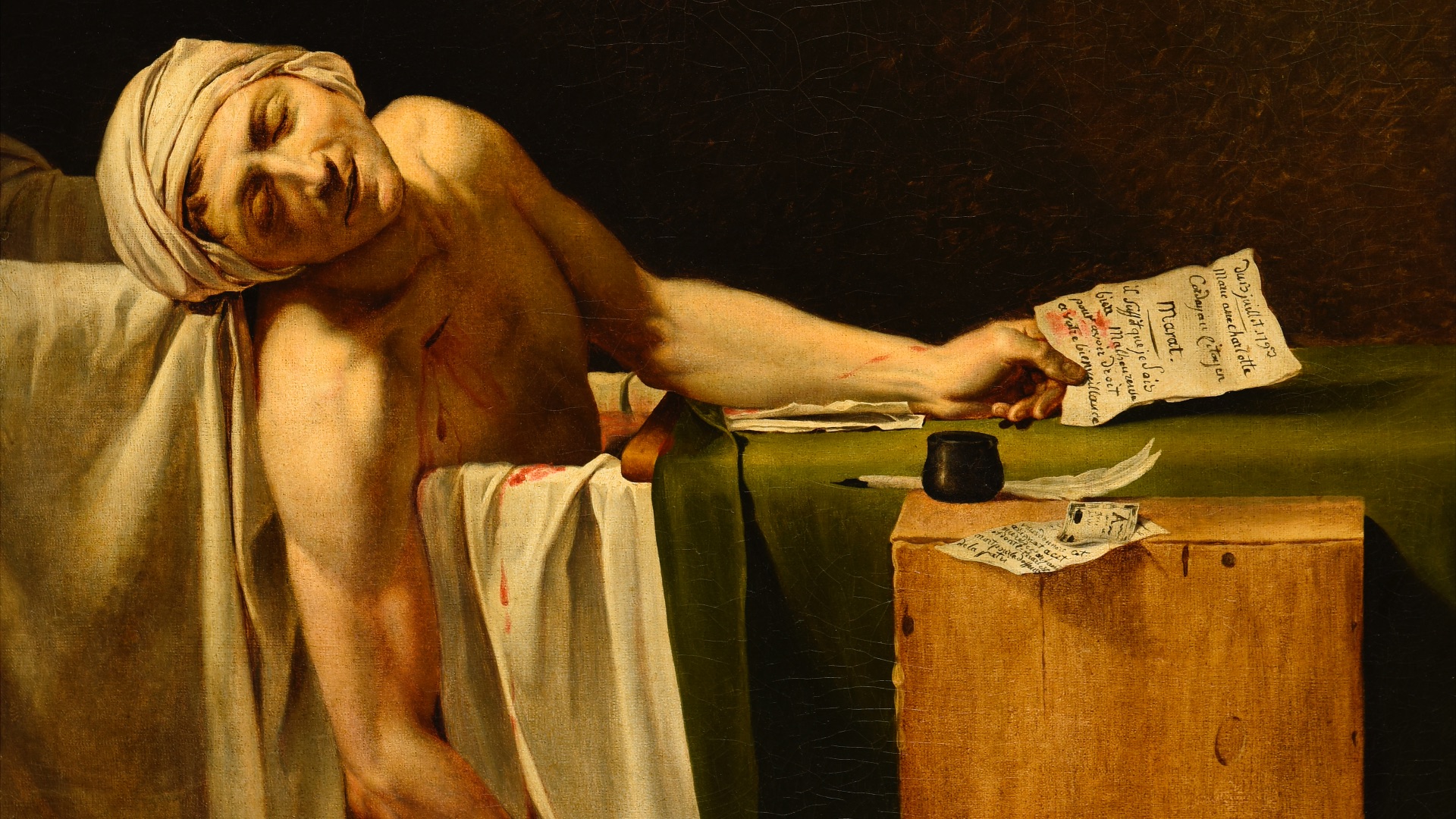
6. The Death of Marat by Jacques-Louis David
While working on the night of July 13, 1793, French Revolution radical journalist and political figure Jean-Paul Marat was assassinated in his bathtub by Charlotte Corday. David, who shared Marat's views, decided to reimagine the gruesome scene to forever preserve the mourning.
 Jacques-Louis David on Wikimedia
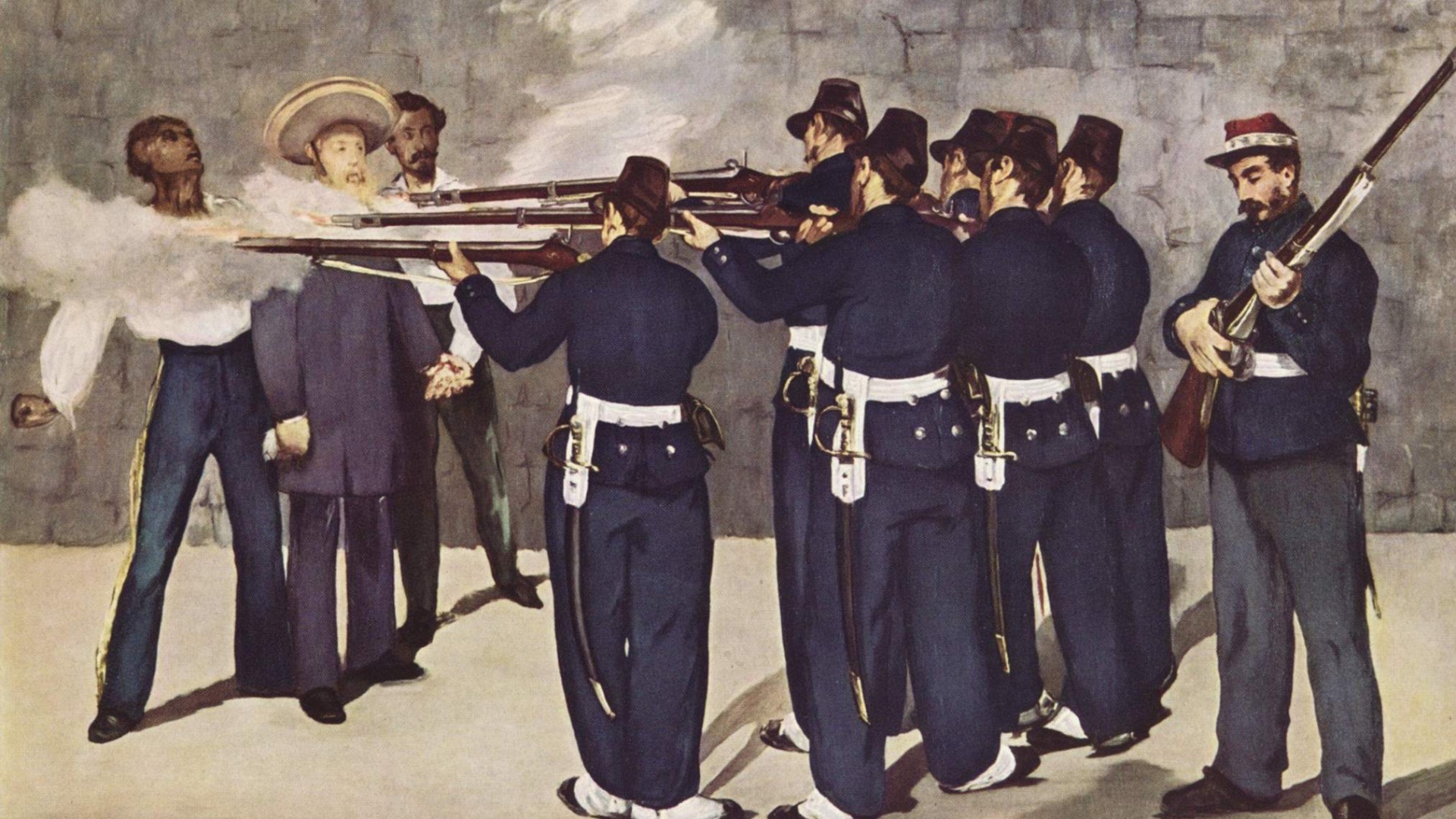
7. The Execution of Emperor Maximilian by Édouard Manet
Thanks to Napoleon III of France, Maximilian of Austria rose to the position of emperor of Mexico in 1864—but things backfired when the French forces withdrew, and he was executed in June 1867. Though several versions of the event were painted by Manet, some were suppressed by French officials.
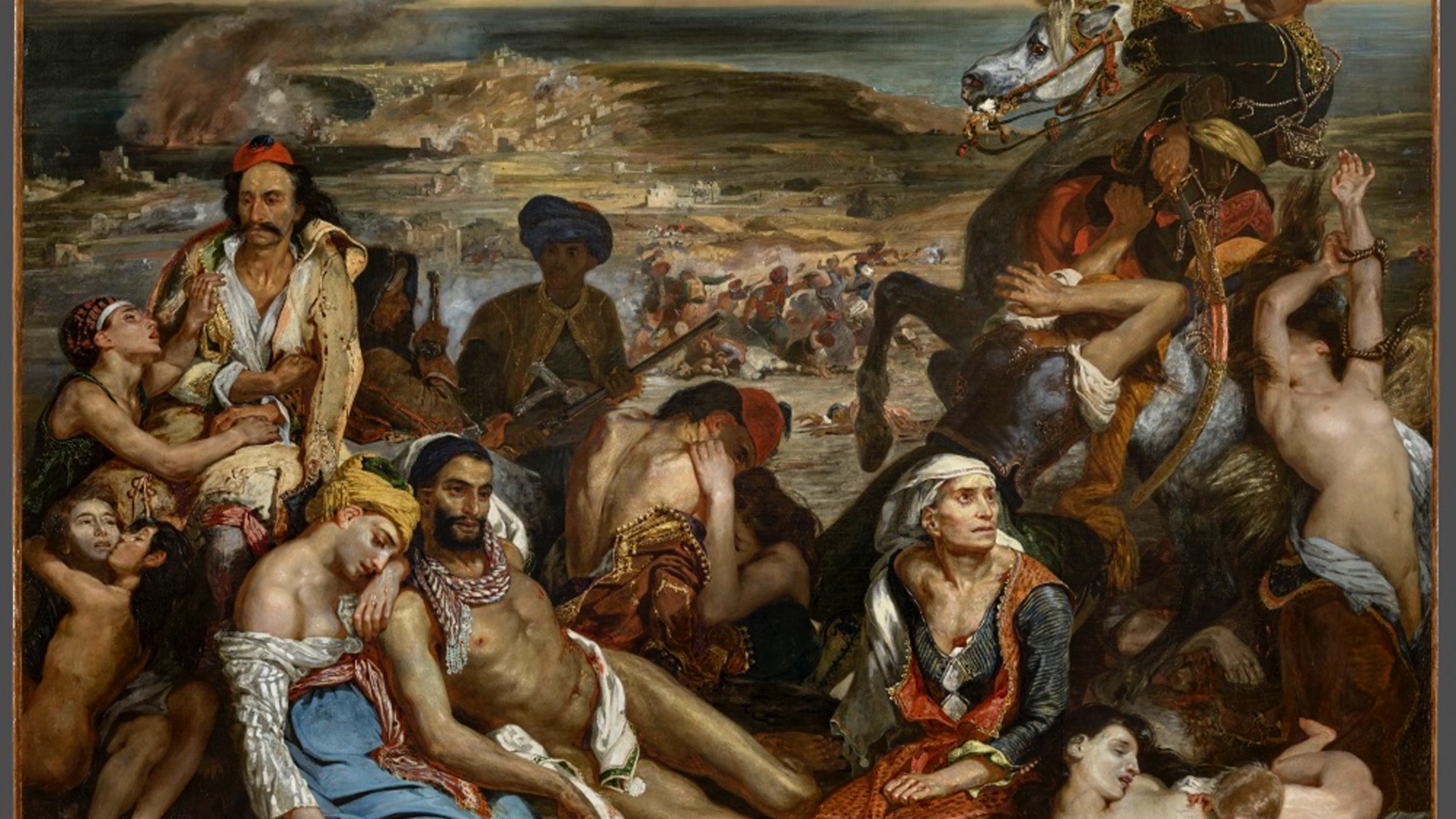
8. The Massacre at Chios by Eugène Delacroix
During the Greek War of Independence, Ottoman forces attacked the island of Chios and took the lives of thousands of residents while many others were sold into slavery. The wretched faces of these civilians fill Delacroix's canvas as they're held captive and waiting for their uncertain fates.
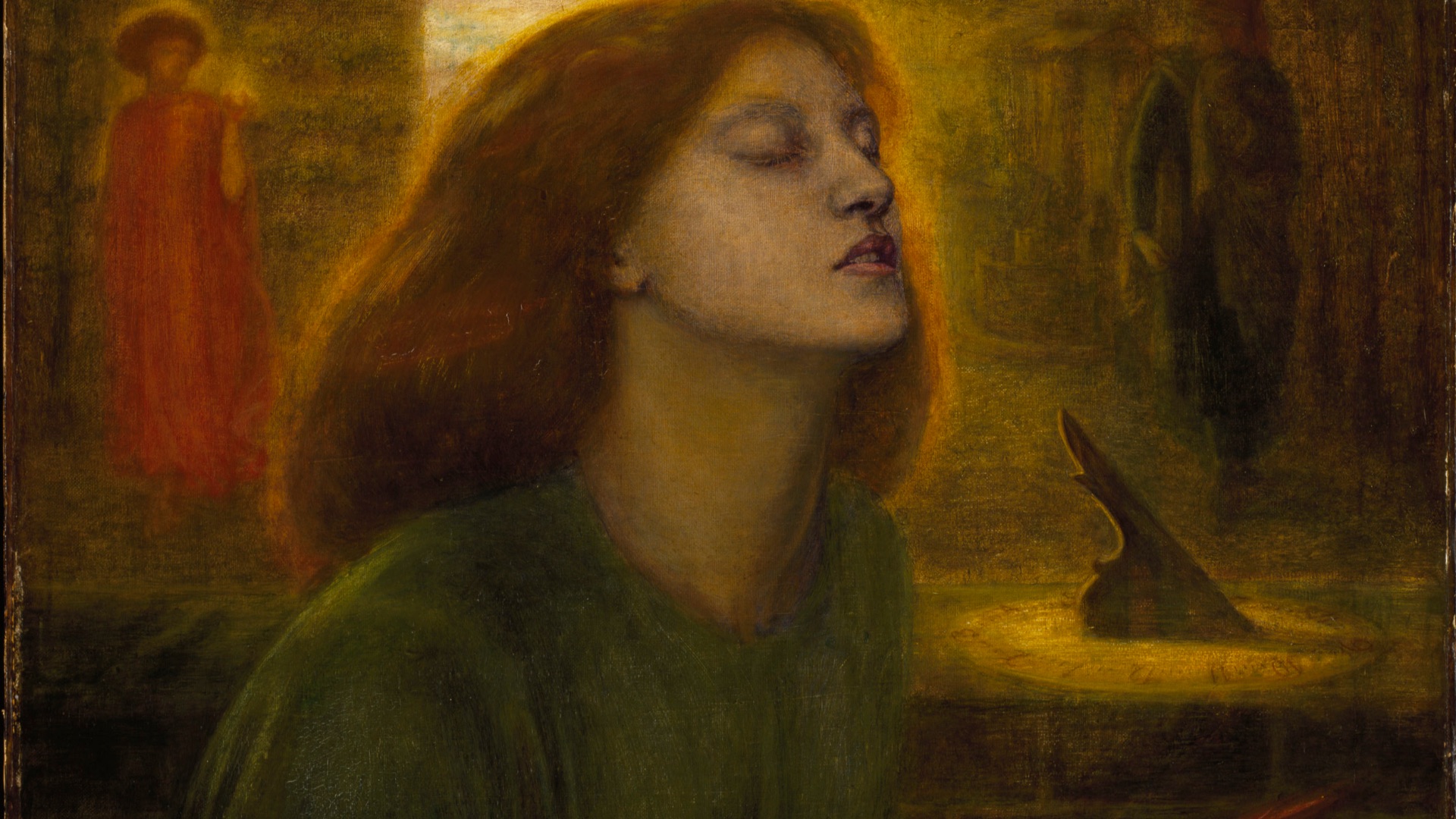
9. Beata Beatrix by Dante Gabriel Rossetti
The model for Ophelia didn't drown or perish from hypothermia, contrary to what you might assume, but instead overdosed on laudanum in 1862. Her husband later preserved her spirit in painting, presenting her as Beatrice, the deceased woman idealized in the writings of Italian poet Dante Alighieri.
 Dante Gabriel Rossetti on Wikimedia
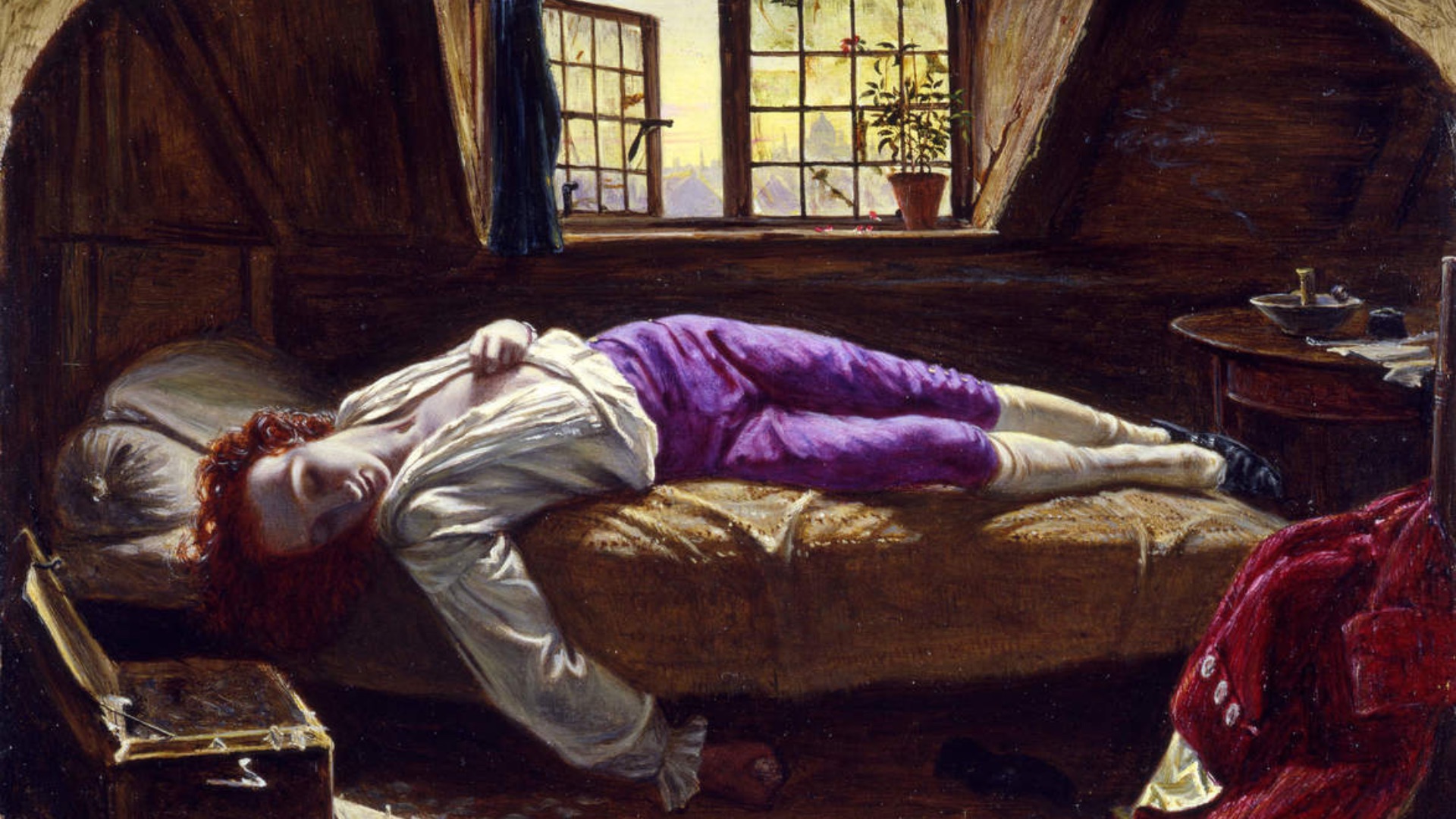
10. Chatterton by Henry Wallis
A gifted English writer, Thomas Chatterton was struggling both financially and professionally when he died from poisoning at only 17 years old, likely self-inflicted. Meek and impoverished, Wallis drew him exactly as such: the withering figure of the young artist lay perched on the bed beside torn papers and an empty bottle.
11. The Broken Column by Frida Kahlo
The Broken Column shows the viewer the lasting effects of a devastating accident Kahlo had survived as a teenager: in it, her torso is torn open, a damaged classical column standing in place of her spine, nails covering her skin. It's not hard to see the severe chronic pain she'd been constantly experiencing.
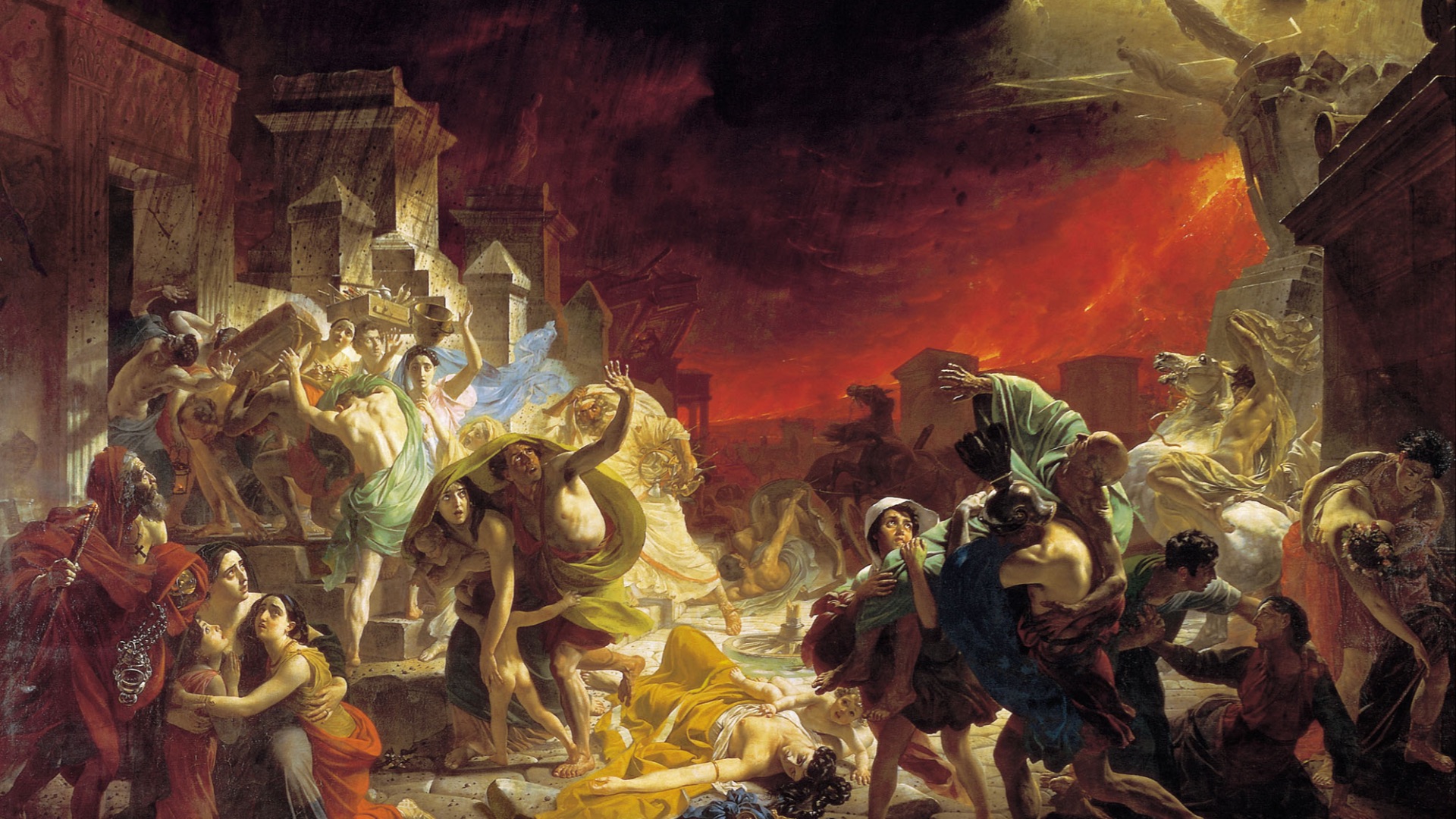
12. The Last Day of Pompeii by Karl Bryullov
What did the final hours of Pompeii look like when Mount Vesuvius erupted in A.D. 79? In Bryullov's rendition, he pictures residents fleeing from ruin while a hellish sky looms over them. To draw even more realism into the piece, it's said that he studied the excavated city and incorporated details inspired by horror and loss he found there as well.
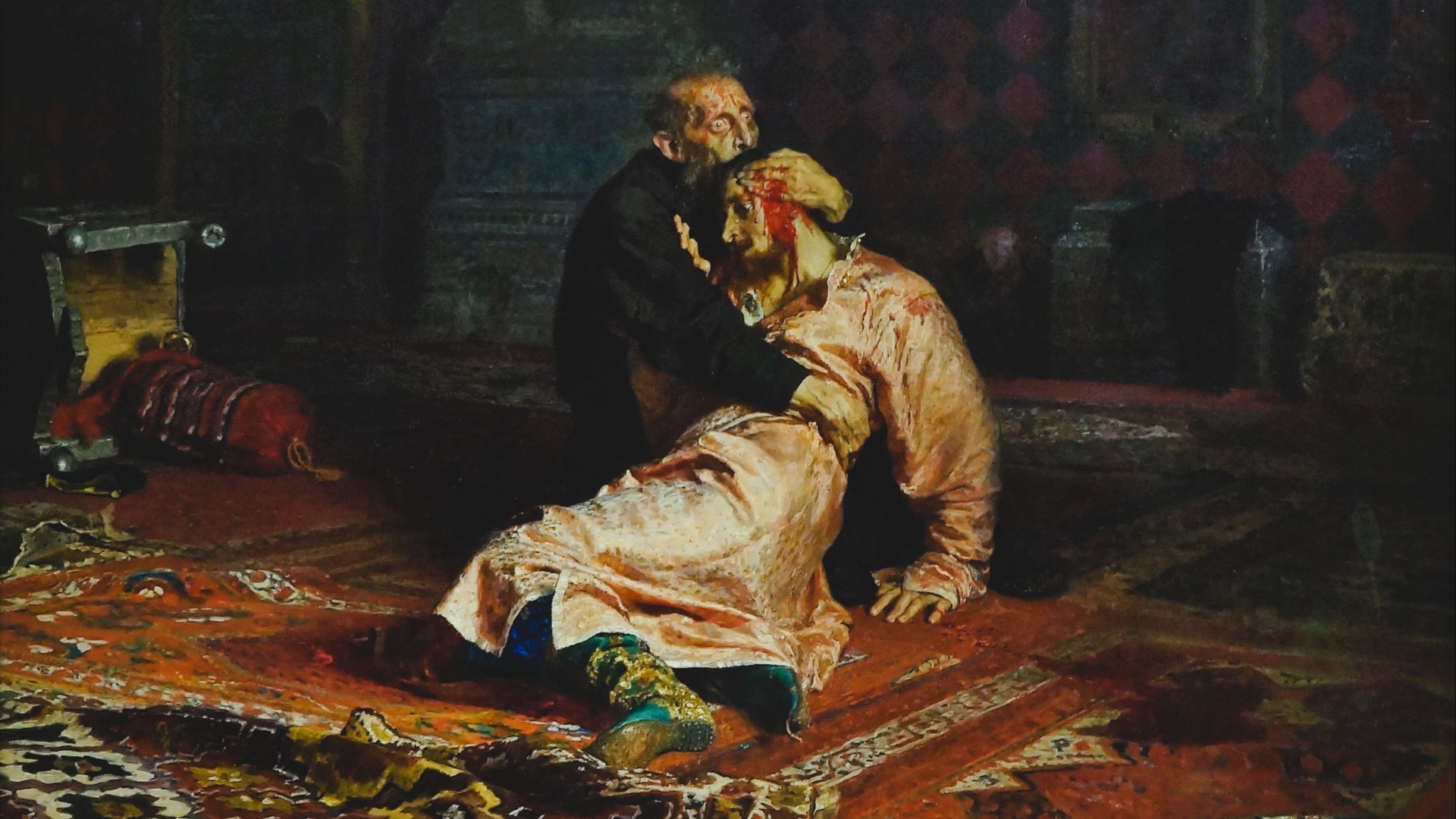
13. Ivan the Terrible and His Son Ivan by Ilya Repin
Though Ivan Ivanovich's death remains disputed by historians, Repin took on the interpretation widely agreed by most and ran with it. In his painting, he depicts Ivan the Terrible clutching his dying son after fatally wounding him during an argument, and the anguish on his face as the immediate horror and regret set in is almost palpable.
 Pierre André Leclercq on Wikimedia
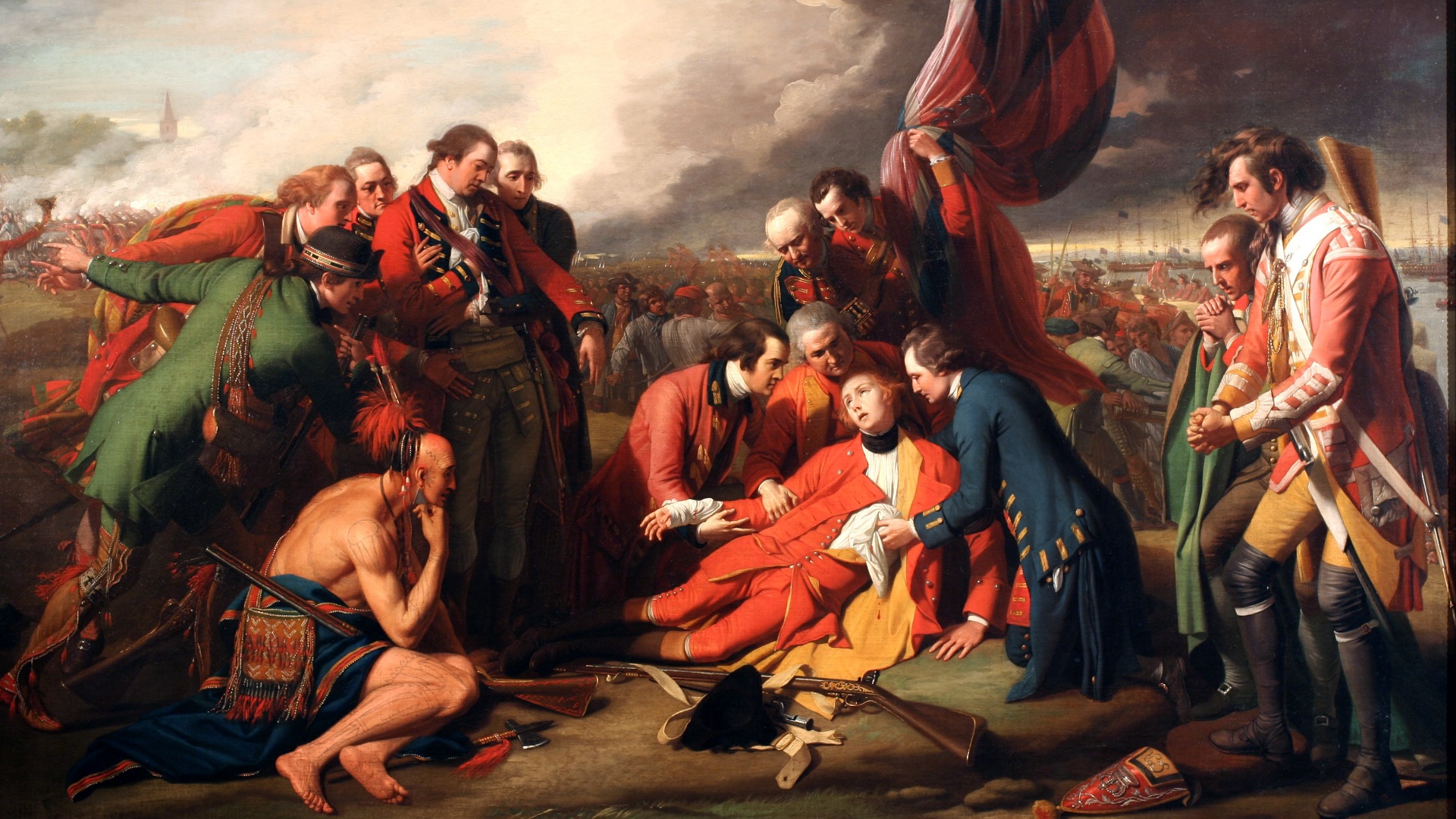
14. The Death of General Wolfe by Benjamin West
Benjamin West’s 1770 painting portrays the final moments of British general James Wolfe during the Battle of the Plains of Abraham in 1759, slumped over. While the scene illustrated is technically more of an artistic embellishment than a historically accurate event, the painting nonetheless highlights the tragic trade-off for victory.
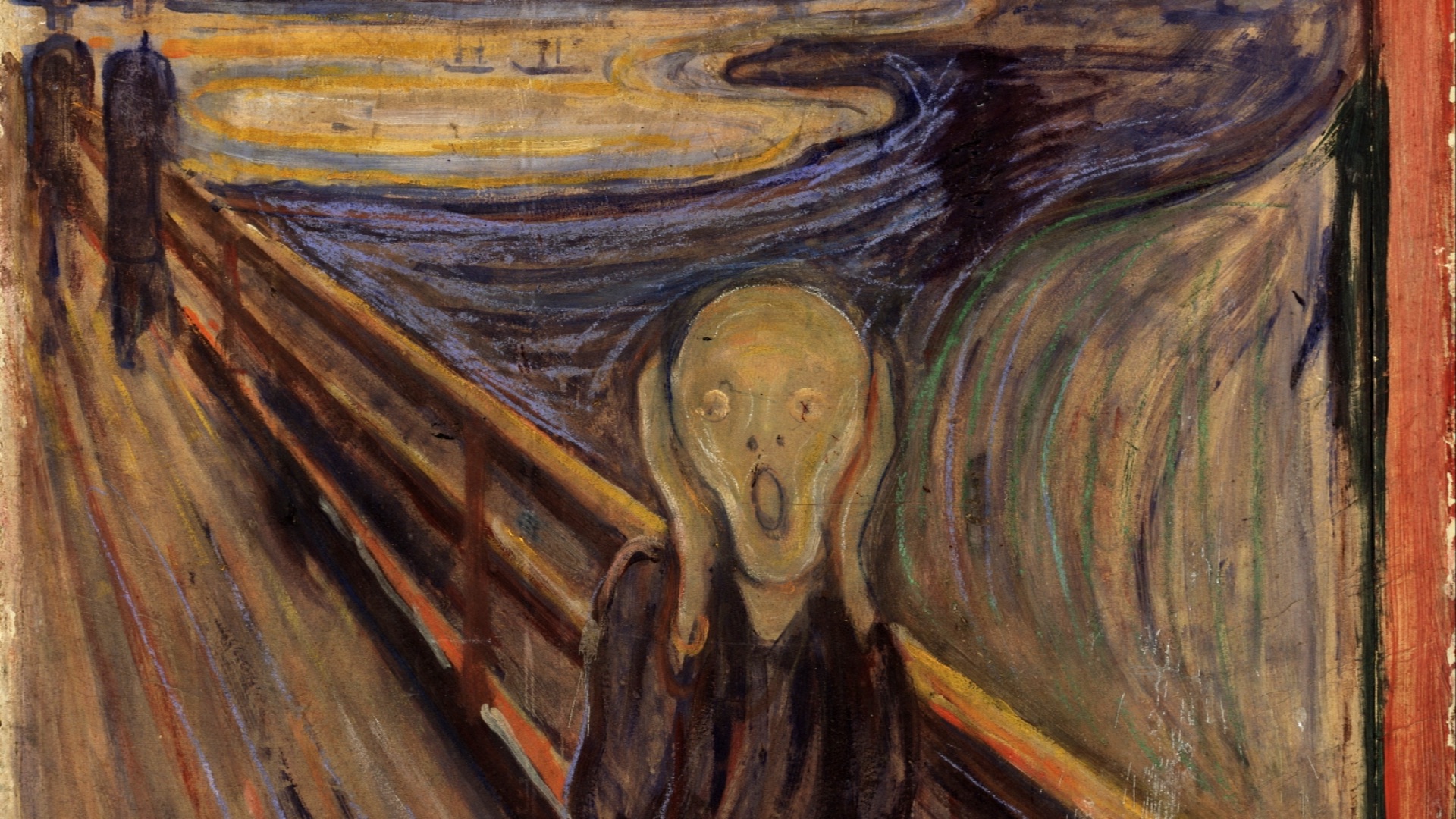
15. The Scream by Edvard Munch
Having lost both his mother and sister to tuberculosis at a young age, Munch was no stranger to illness and tragedy growing up. If struggling through grief wasn't enough, he also regularly experienced anxiety, depression, and periods of emotional instability. All of it would boil to a point, and The Scream eventually emerged from a moment of horrific dread while he'd been walking along a path during a blood-red sunset.
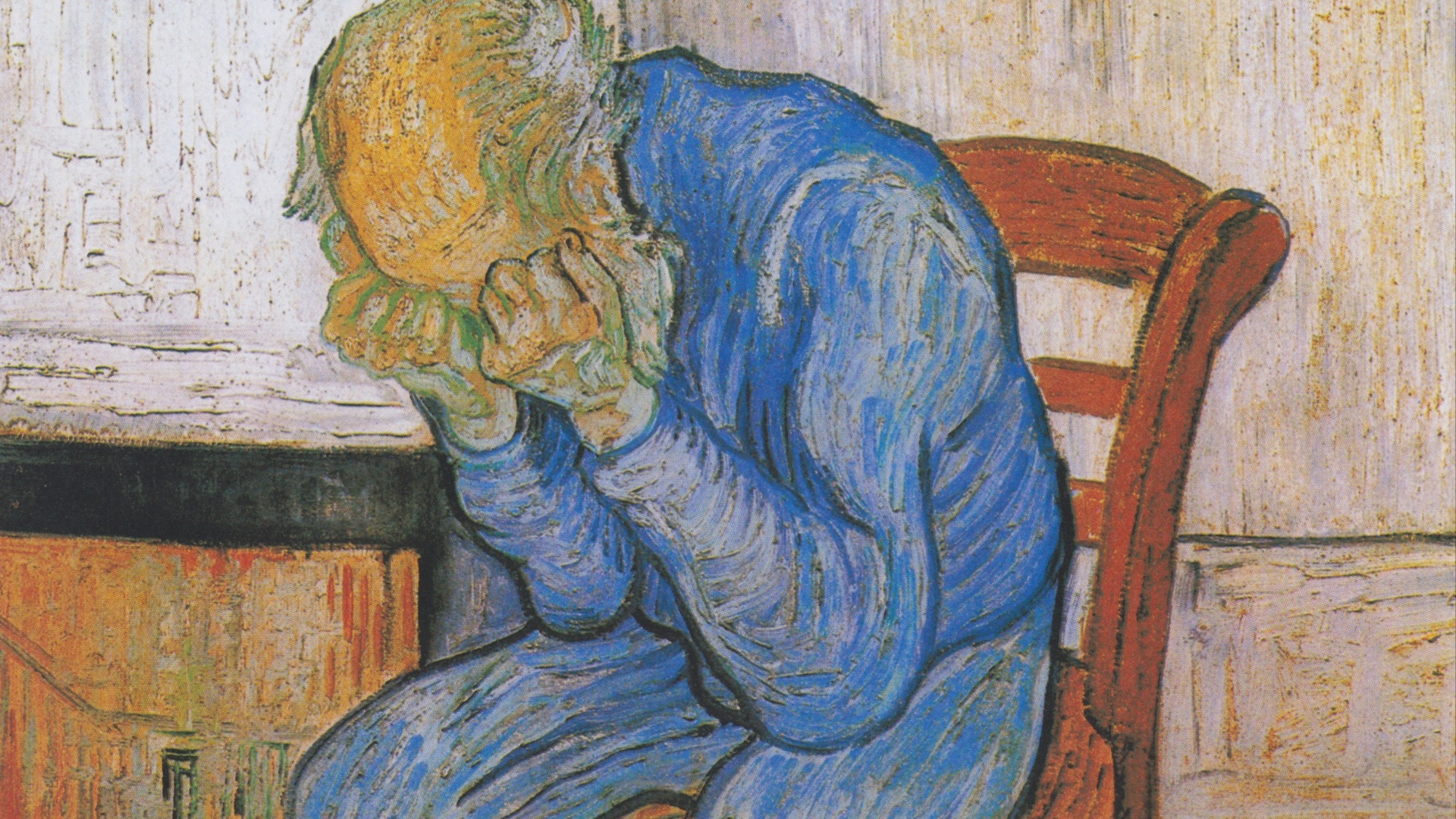
16. At Eternity’s Gate by Vincent van Gogh
This painting of an elderly man was actually a piece Van Gogh had returned to several times, and he finally produced a painted version in 1890 while he'd been receiving treatment at a psychiatric hospital in Saint-Rémy. Unfortunately, Van Gogh would die later that year from a fatal gunshot wound, giving the despairing figure in this piece a more heartbreaking meaning.
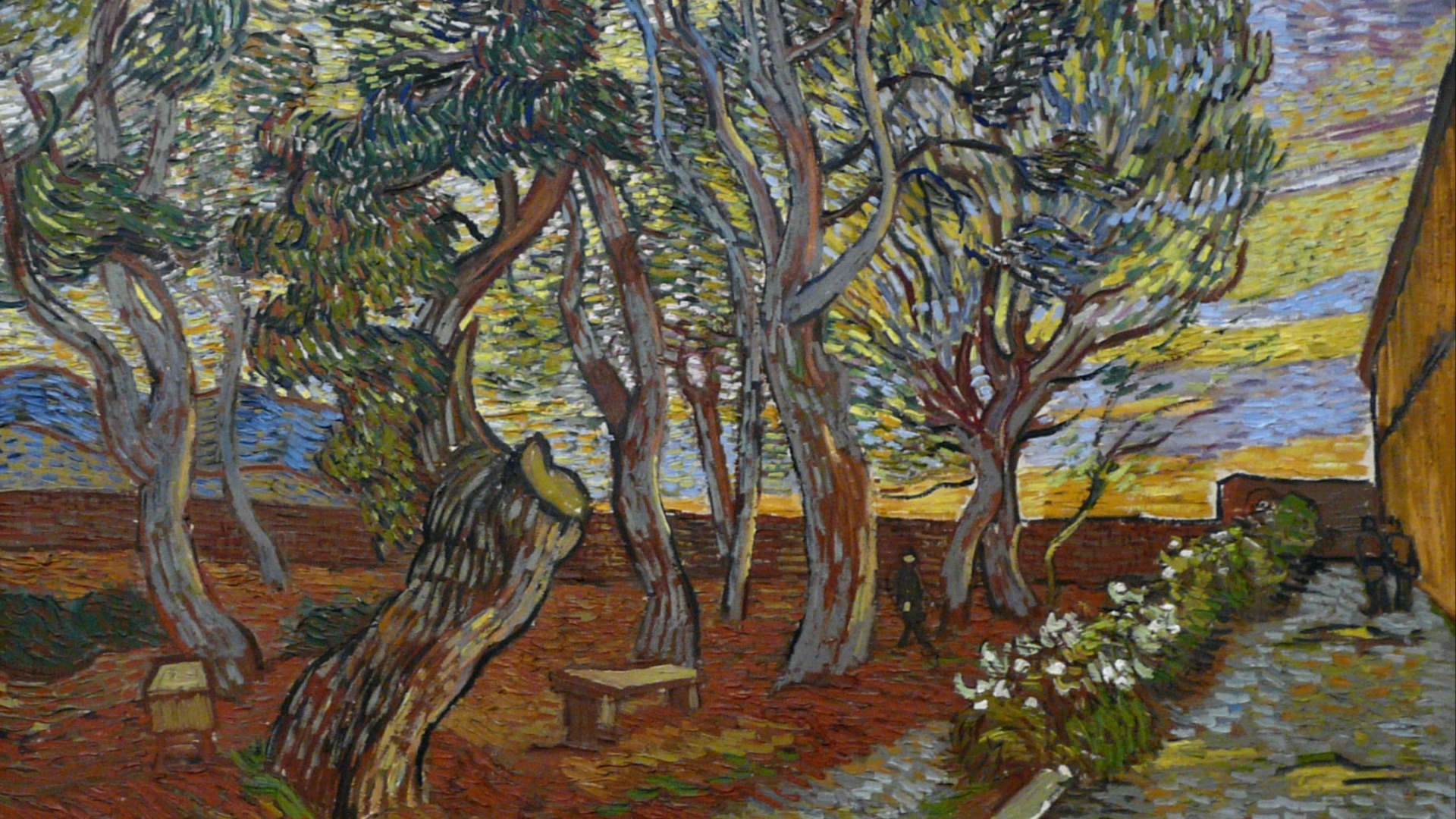
17. Garden of the Asylum by Vincent van Gogh
Another painting by Van Gogh, Garden of the Asylum depicted the very hospital Van Gogh had admitted himself to in May 1889. Despite the severe episodes he'd faced while he was confined indoors, he completed over 100 paintings during his year at the institution, and this garden scene was only one of many.
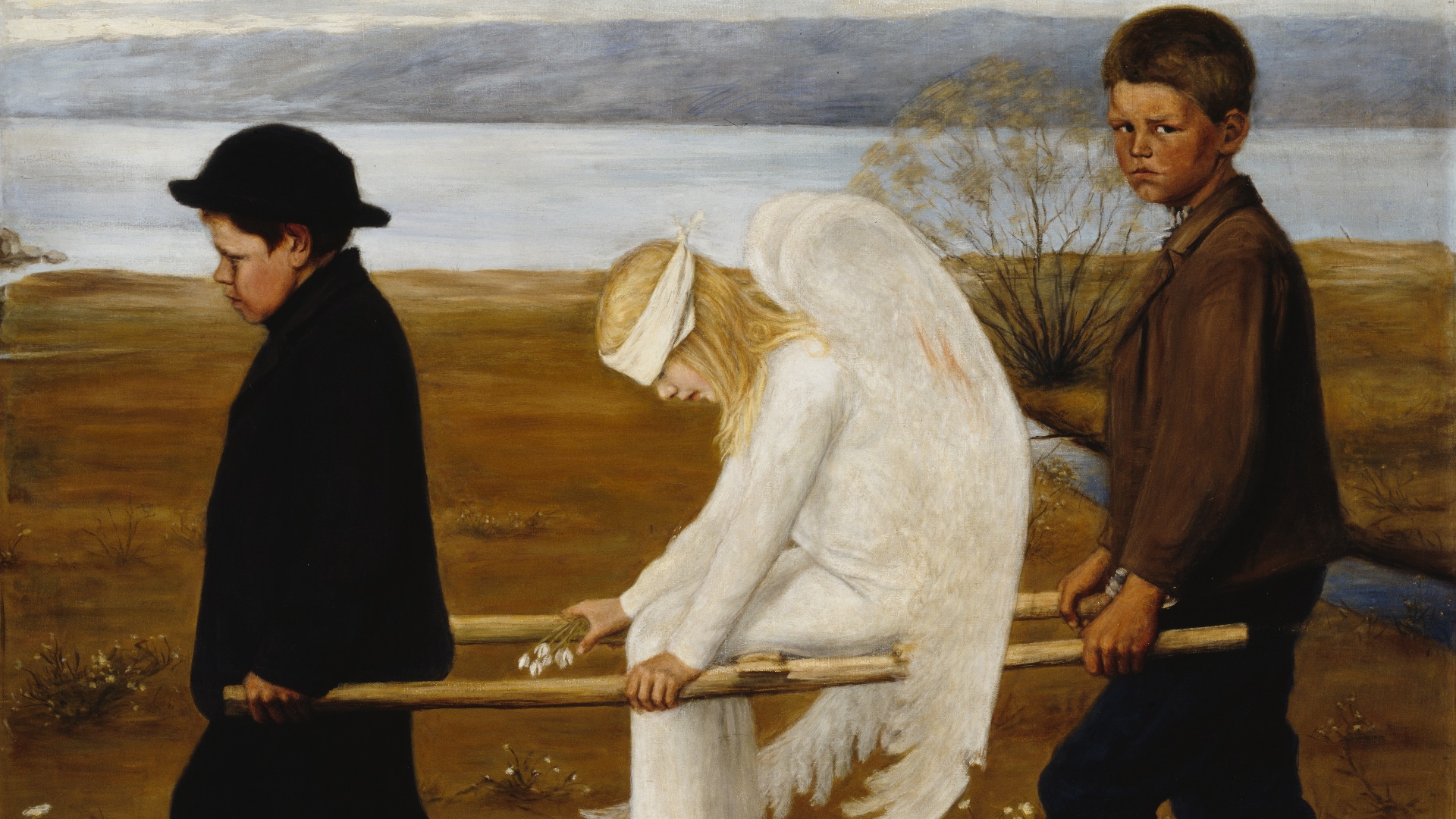
18. The Wounded Angel by Hugo Simberg
The inspiration behind this piece came from a period of recovery Simberg had been subjected to. Though there isn't a fixed explanation, the work shows two boys carrying an injured, blindfolded angel on a stretcher. Whether it's the bleak landscape or the hunched celestial being, many have interpreted the painting to reflect suffering, vulnerability, and recovery.
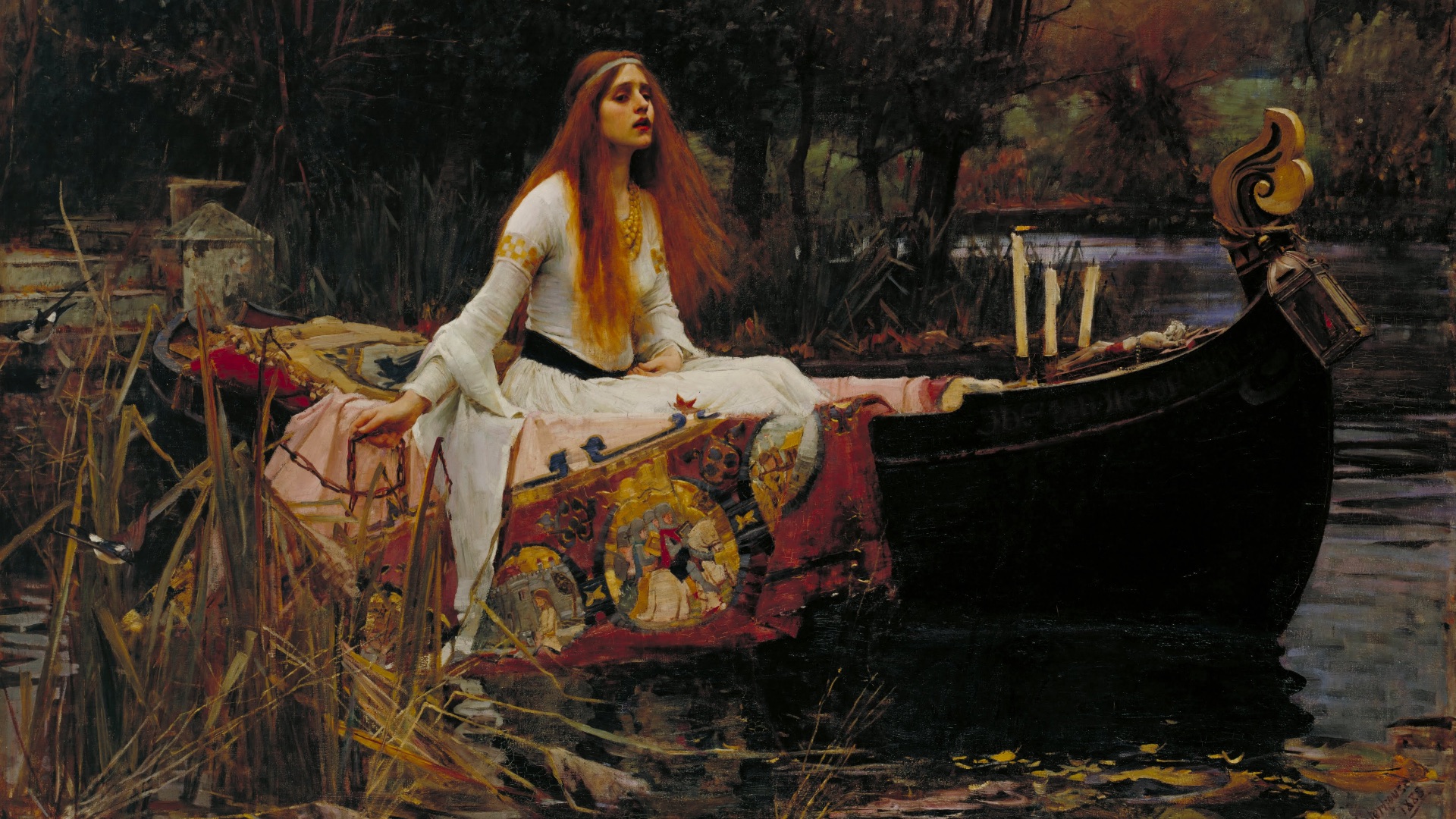
19. The Lady of Shalott by John William Waterhouse
The Lady of Shalott is based on the well-known lyrical ballad by 19th-century poet Alfred Tennyson of the same name, which is about a noblewoman who has been condemned to forced to live isolated in a tower. Waterhouse's painting brings the poem to life by showing the beginning of her journey toward Camelot—though it's a trip that will end with her death before she ever reaches her destination.
 John William Waterhouse on Wikimedia
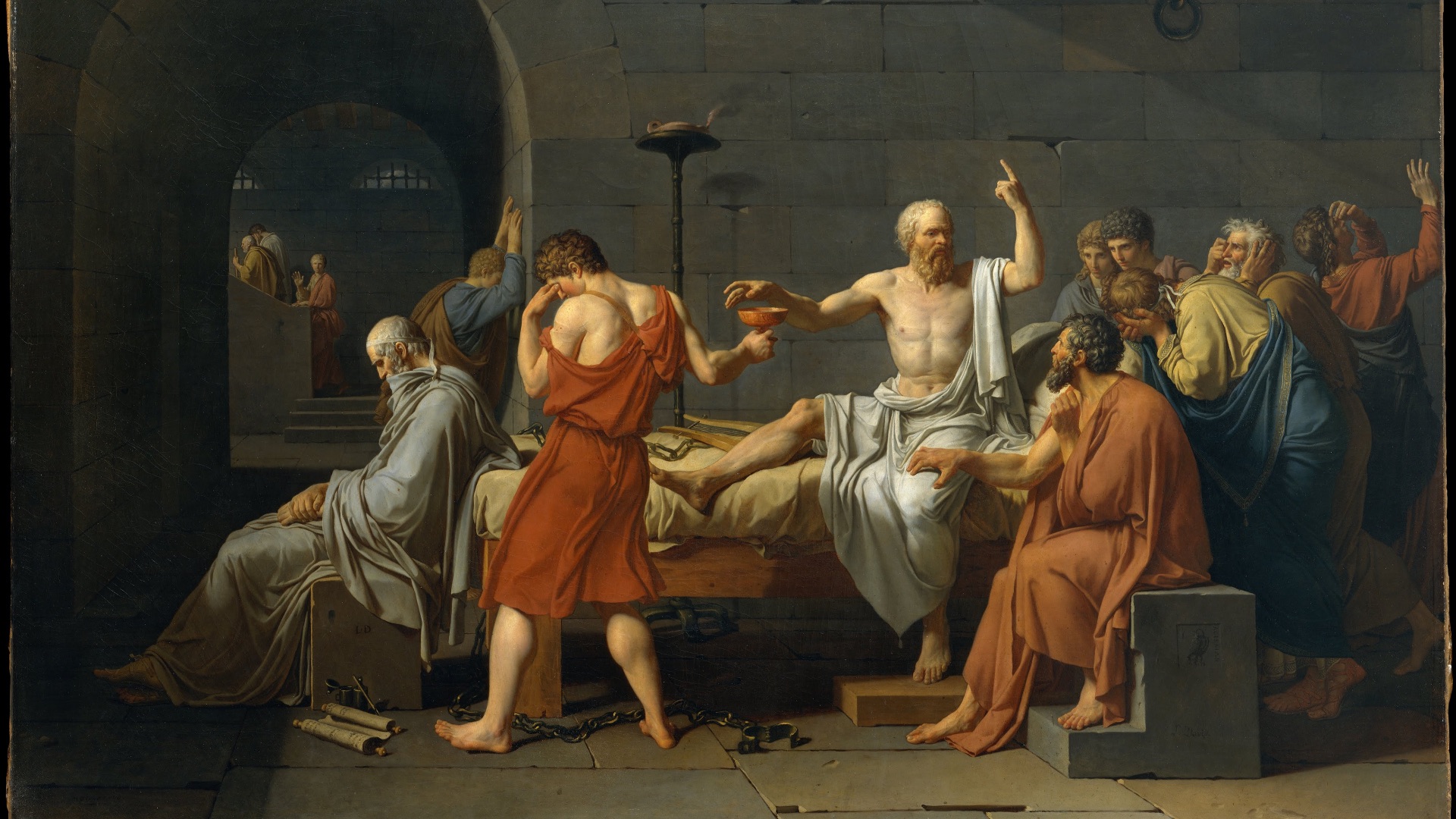
20. The Death of Socrates by Jacques-Louis David
You'd think one of the most important philosophers of the ancient world would put up more of a fight during his execution, but, as David’s 1787 painting depicts, the final moments for Socrates were apparently uneventful. While his disciples were in utter despair, all Socrates did was reach toward the cup of poisonous hemlock that would end his life.
 Jacques-Louis David on Wikimedia
KEEP ON READING