Imagine living near the seaside your whole life, only for the ocean to literally walk away overnight. Residents along the Aral Sea have had decades to watch this environmental nightmare happen before their eyes, transforming what was once the world’s fourth-largest inland sea into what can only be described as a salty dust bowl. Considering how large this massive body of water once was, you’d think it would take some type of worldwide catastrophe to cause it simply disappear off the map. Instead, it was entirely manmade.
The ruins left behind tell the tragic tale of human greed and arrogance in upsetting the natural balance of ecosystems the world over. The water may be long gone for good, but don’t let that stop you from visiting if you ever get the chance. All you’ll see is dry land for miles around, but the truly surreal experience comes when you spot remnants of the Soviet fishing fleet, half-buried in sand, sitting upright in the desert like beached whales.
How Did the Aral Sea Dry Up?
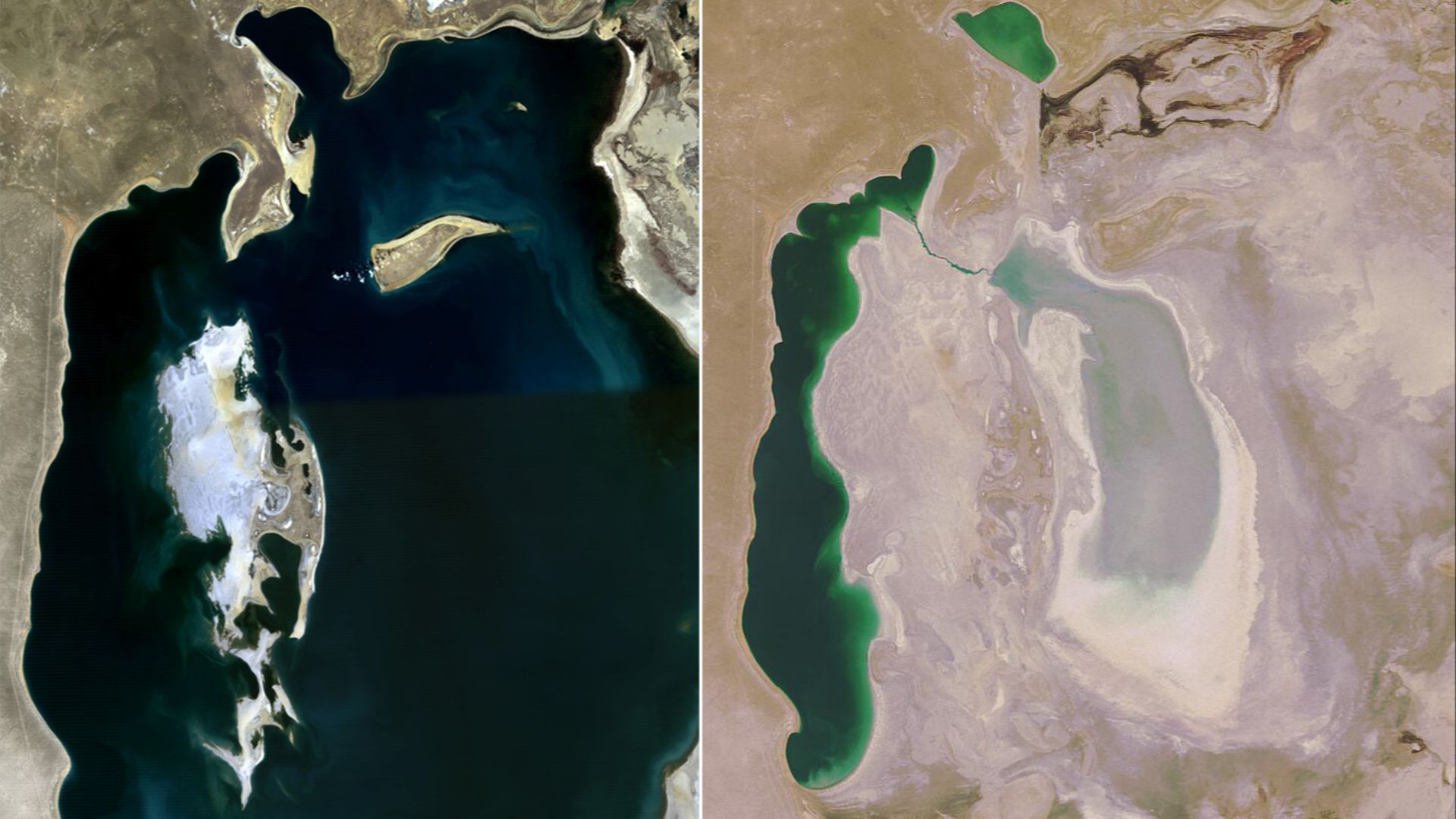 NASA, derivative work by Zafiroblue05 at en.wikipedia on Wikimedia
In the 1960s, Soviet planners determined that the desert regions of Central Asia would make for ideal locations to cultivate cotton crops. They reasoned that the Aral Sea, fed by two large rivers, was inefficient with its water by having it run downstream. By diverting both rivers into manmade canals to irrigate fields, they could both boost cotton production and build up a thriving desert economy. But they also severed the only natural inlet that fed into the body of water.
At first, the slowdown of incoming water went unnoticed. But by the 1980s, it was clear something was very wrong. You can imagine how terrifying it was for fishermen along the shore to see their docks slowly become a small pond and then disappear entirely within the course of 10 years. Every year that passed, the amount of water that remained in the sea would become saltier as more of it evaporated, ending fish populations that had survived for generations.
Production came first, and any ecological impact was barely worth mentioning on the expense report. Soviet engineers knew the water levels might drop as a result of their project, but they likely didn’t anticipate it would begin breaking into several separate lakes that would eventually disappear altogether by the early 2000s. When officials finally conceded that the disappearance of the sea was anyone’s problem but Mother Nature’s, it was already too little too late.
Row Upon Row of Ghost Ships
When you visit the remains of the Aral Sea, head to what is now known as the “Cemetery of Ships” just outside of Muynak. There, you’ll find Soviet cargo ships literally lined up like tombstones protruding from the ground. Some of these ships weigh over 600 tons and were once the pride of the Soviet fishing industry, but now they’re permanently marooned by miles of sand and seashells. It really is something out of a post-apocalyptic movie.
Alone, Mother Nature has taken its toll on these vessels as the unforgiving desert climate bleached away paint and corroded their metal hulls. As you walk along the rows of rusting ships, you’ll notice unique fractal patterns that the oxidation has created over the years. The unfortunate reality is that some of these massive vessels were even used as an opportunity for scrapping by locals left high and dry after the economy collapsed.
On your stroll through the cemetery, you’ll learn just how many livelihoods disappeared along with the water. Climate changes brought on by the desert replacing a massive body of water have created hotter summers and colder, more extreme winters for those who live in the surrounding areas. The once bustling coastline is now populated by oxidized hulls that serve as monuments to generations of families who once lived there.
Saltier than the Sea Itself
What makes matters worse is that the water that was pumped out of the Aral Sea didn’t simply leave behind sand. For decades, tons of pesticides and fertilizers were dumped into the sea during cotton production runs. Now, when winds whip through the region, they kick up “salt storms” loaded with toxins that were left behind in the sea’s former bed. Respiratory illnesses are sadly common in local villages affected by the salt storms.
Thankfully, not all hope is lost. To the north of what remains of the former sea, Kazakhstani government officials constructed a dam in partnership with the World Bank to trap what little water still flowed through the Syr Darya. The Kokaral Dam was able to slowly raise water levels in what is now known as the Small Aral Sea, jumpstarting the ecosystem enough to allow select fish populations to flourish once more. It’s given a new generation the chance to relive what their parents and grandparents once had.
KEEP ON READING