


The Quiet of Juniper Hollow Drive
My name is Jeanette "Jeanie" Rowe, I'm 61, and I've lived on Juniper Hollow Drive long enough to know which porch light flickers, which dog barks at squirrels, and which neighbors bring casseroles when life falls apart. You know how neighborhoods have their own heartbeats? Mine's got a slow, steady rhythm—mailboxes that creak on the same hinges they've had since the 90s, sprinklers that start at 6:15 sharp, and folks who still wave when they drive by. My next-door neighbor, Maris Caldwell, was one of the good ones—the kind of woman who remembered birthdays without Facebook reminders, kept birdseed in her freezer for the cardinals, and waved from her garden like the world was still safe. We weren't best friends exactly, but we were the steady sort of close: shared holiday cookies, watched each other's houses during vacations, traded gossip in small, careful doses. She'd bring over her famous lemon bars "just because it's Wednesday," and I'd save her the crossword from my Sunday paper. That's why when my phone rang last Tuesday and I heard about Maris passing unexpectedly, the air seemed to leave the street all at once. The quiet that settled over Juniper Hollow Drive wasn't just the absence of her humming while she gardened—it was the kind of quiet that makes your chest ache with the knowledge that some spaces, once emptied, can never really be filled again.
 Image by RM AI
The Wake
Maris's wake was held at Hillside Funeral Home, a place I'd been to more times than I cared to count over the years. The room smelled of lilies and that particular sadness that hangs in the air when someone leaves too soon. Neighbors from Juniper Hollow filled the chairs—Mr. Peterson with his cane, the Millers holding hands, even cranky Mrs. Donovan who complained about Maris's wind chimes every summer. I stood by the photo display, staring at a picture of Maris laughing at last year's block party, when I felt a hand on my elbow. It was Colton, Maris's son. I'd only met him a handful of times over the years—holidays, mostly, when he'd drive up from the city. His eyes were red-rimmed, his tie slightly crooked. "Jeanie," he said, his voice sounding practiced, like he'd rehearsed what he was about to say. "Can we talk privately for a minute?" We stepped into a quiet hallway, where he glanced around before reaching into his jacket. "Mom wanted me to have this," he said, slipping a plain, sealed envelope into my hands. It felt heavier than paper should. "I just... I can't deal with it right now. Could you keep it safe for me? Just for a few days, until things settle." His eyes wouldn't quite meet mine. "Don't open it, okay?" I nodded, tucking it into my sweater pocket without question. Grief makes people strange, and I figured it was something personal—maybe a letter, maybe will-related. "Of course, honey. Take all the time you need." What I didn't know then was that envelope wasn't just paper and ink—it was a ticking bomb disguised as a favor.
 Image by RM AI
Promises to Keep
The funeral was exactly what you'd expect—gray skies that matched everyone's mood, wind sharp enough to make your eyes water (a convenient excuse for those of us fighting back tears), and that awkward dance of hugs from people who only touch you when someone dies. Colton barely spoke, just nodded mechanically as people offered condolences. Maris's sister, Darlene, did enough emoting for both of them, crying so loudly during the service that heads turned. When I finally got home, I kicked off my sensible black pumps and placed Colton's envelope in my kitchen drawer, tucking it carefully beneath the dish towels like it was something precious. "I'll give it back when he's ready," I promised myself, pouring a glass of merlot that I absolutely deserved after a day like that. The neighbors had done what neighbors do—my countertop was a casserole convention, each dish wrapped with care instructions and return-by dates. As I was storing the third tuna noodle creation (why is that always the go-to grief food?), my hand brushed against the drawer where I'd hidden the envelope. Something about it suddenly bothered me—not the weight, which was substantial for paper, but something else. I pulled it out, studying it under my kitchen light, and that's when I noticed what I'd missed at the wake: the address written in Maris's unmistakable looping handwriting. It was addressed to me, alright, but the message above my name made my blood run cold: "To Jeanie Rowe—If anything happens, do NOT give this to Colton."
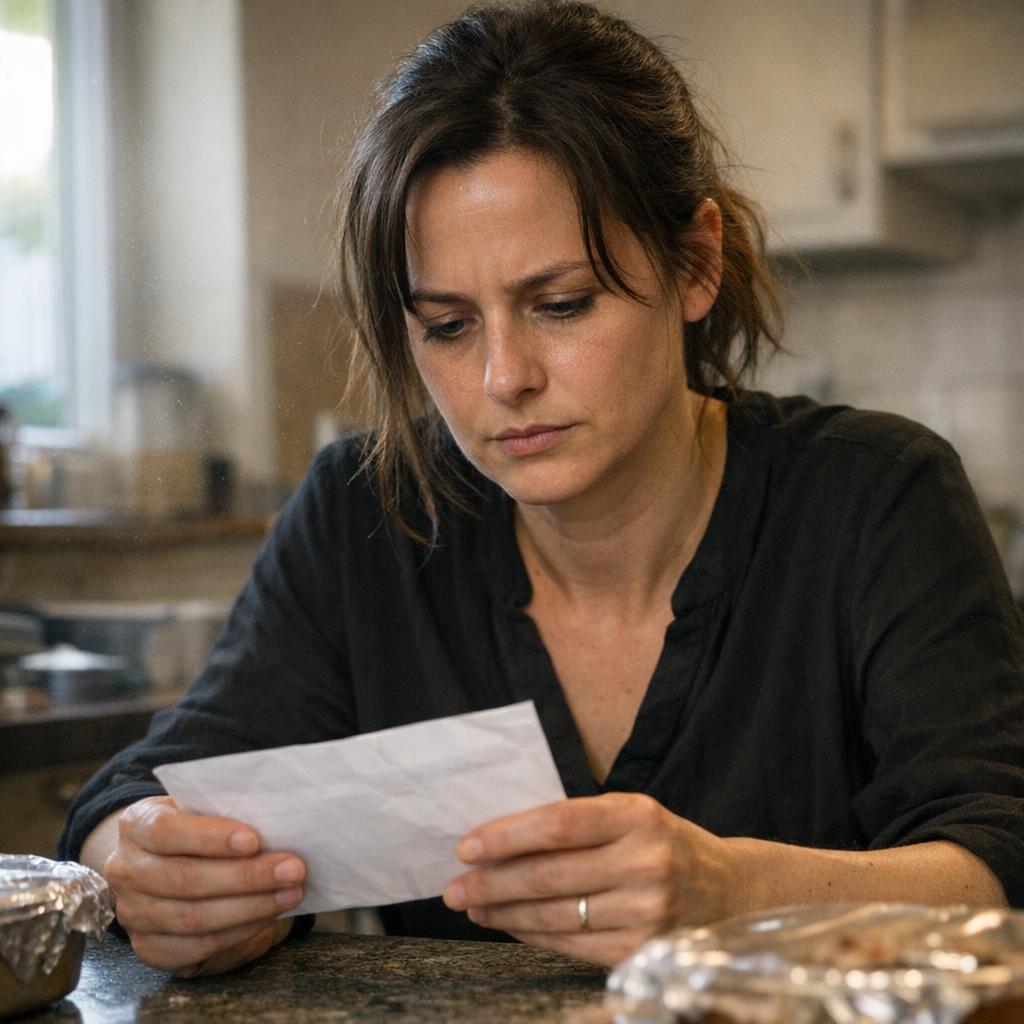 Image by RM AI
The Address
I stared at the envelope in my trembling hands, the wine glass forgotten on the counter. My stomach dropped so hard I had to grip the edge of the kitchen counter to steady myself. The room seemed to tilt slightly as I traced Maris's familiar handwriting with my fingertip. 'To Jeanie Rowe—If anything happens, do NOT give this to Colton.' The words practically screamed off the paper. How had I missed this at the wake? The realization hit me like a physical blow—Colton had specifically asked me to keep safe something his mother had explicitly warned me not to give him. My mind raced through our interaction at the funeral home, his carefully rehearsed tone, the way his eyes wouldn't meet mine. It wasn't grief making him strange; it was something else entirely. I sank into my kitchen chair, the envelope suddenly feeling like it weighed a hundred pounds. Maris had planned for this exact moment. She'd used me—quiet, reliable Jeanie from next door—as her hiding place, knowing Colton would never suspect. The seal was slightly lifted at one corner, like someone had opened and resealed it. Had Colton already looked inside? My heart pounded in my ears as I realized I was caught in the middle of something I didn't understand. Whatever was happening on Juniper Hollow Drive went far deeper than neighborly casseroles and borrowed cups of sugar. And now I had to decide: honor my promise to a grieving son or respect the final warning of a woman who'd trusted me enough to make me her secret keeper.
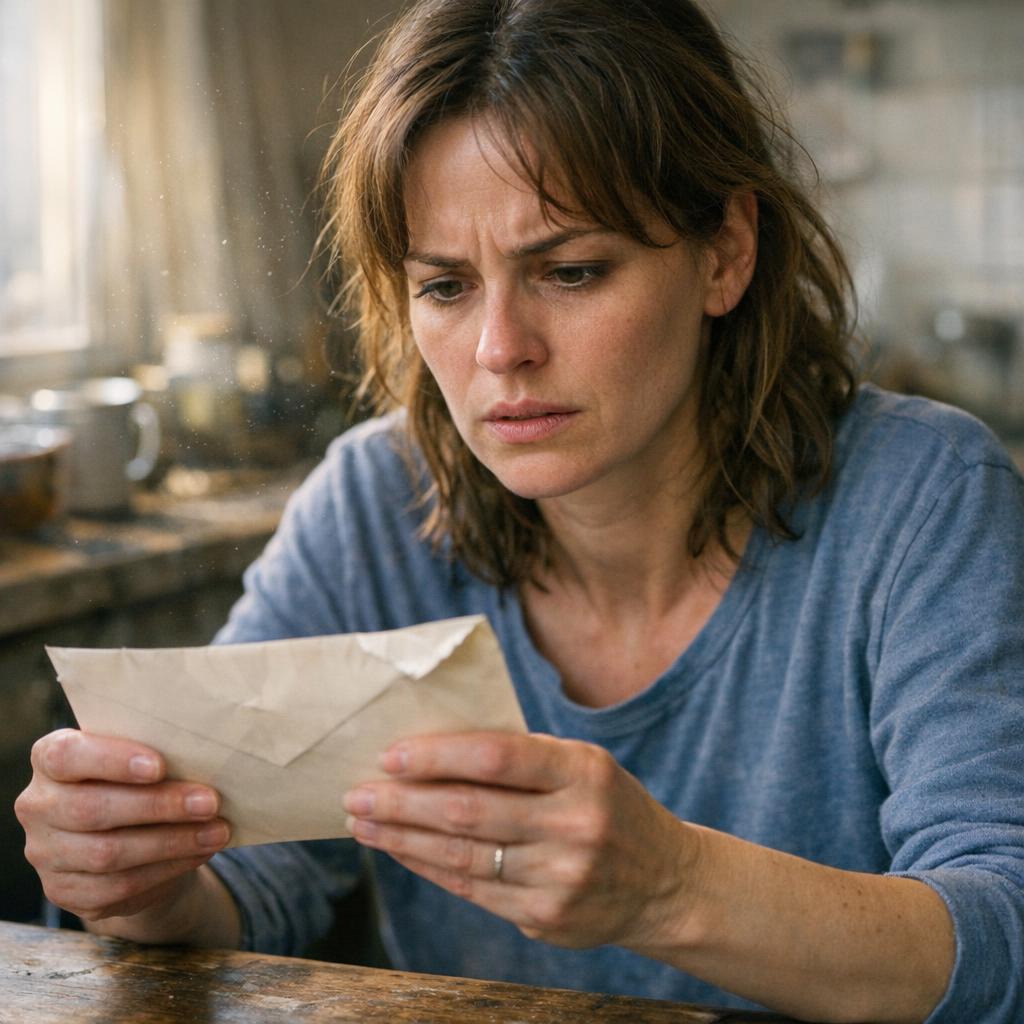 Image by RM AI
The Seal
I stared at that slightly lifted corner of the envelope like it was a neon sign flashing 'OPEN ME.' You know that feeling when you're holding something you shouldn't open, but every fiber of your being is screaming that you must? That was me, sitting at my kitchen table at 10:30 PM, still in my funeral clothes, debating ethics with myself. "It's addressed to me," I reasoned, tracing Maris's handwriting with my fingertip. "And clearly something's wrong here." The seal had definitely been tampered with—not ripped open, but carefully lifted and reattached, the kind of detail only someone who's opened thousands of envelopes over decades would notice. I took a deep breath and made a decision I hoped I wouldn't regret. "I'm just checking for instructions," I whispered to my empty kitchen, as if Maris might be listening. "Just making sure I don't make a terrible mistake." With trembling fingers, I slid my thumb under the flap and gently broke the seal. The paper made a soft tearing sound that seemed to echo through my silent house. I hesitated one last time, thinking about Colton's red-rimmed eyes, his request to keep it safe. But then I remembered the warning in Maris's handwriting—a warning she'd written knowing that someday I might be exactly where I was now, caught between loyalty and truth. I pulled out the contents, and what I found made my blood run cold. There wasn't just one item inside—there were three, and each one told a different part of a story I never imagined was happening right next door.
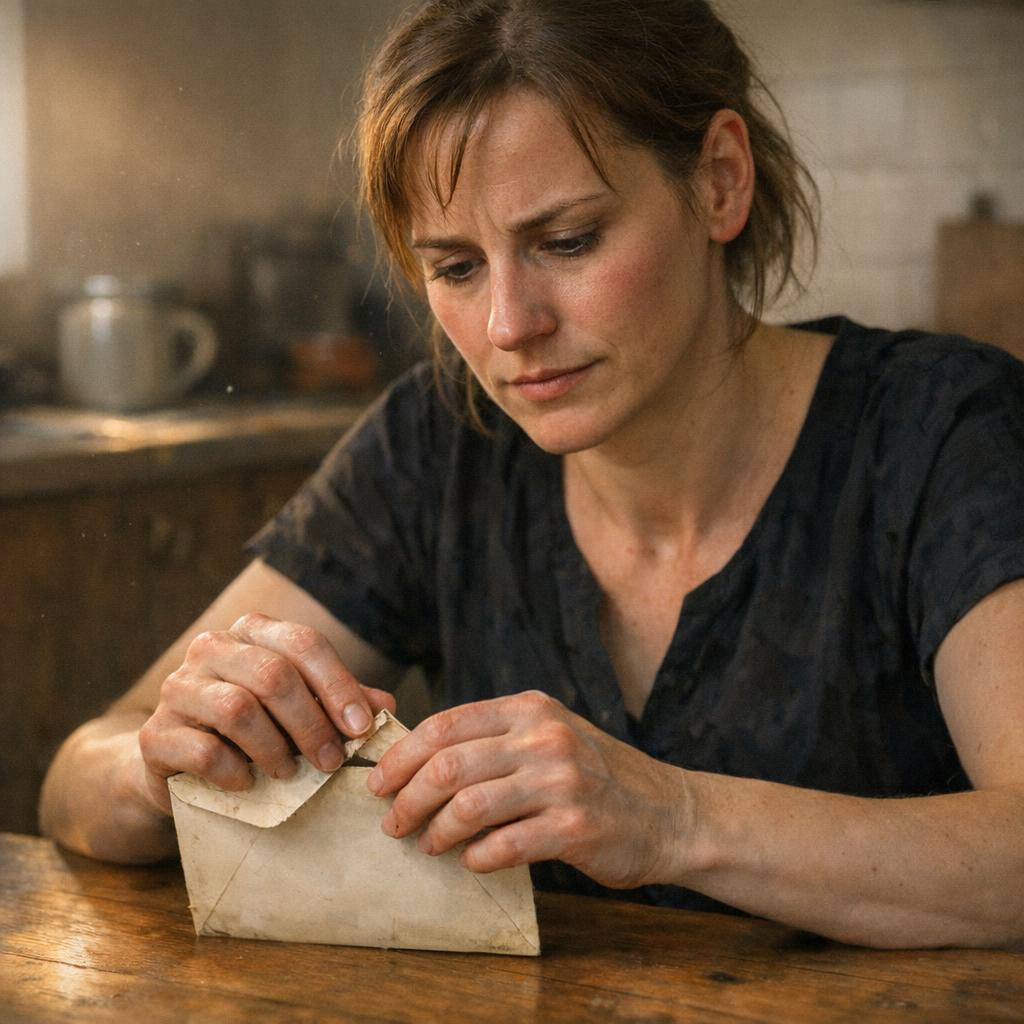 Image by RM AI
Three Items
I spread the contents of the envelope across my kitchen table, my hands trembling so badly I nearly knocked over my forgotten wine glass. Three items lay before me, each more unsettling than the last. A handwritten letter on Maris's cream stationery. A photocopy of what looked like a property deed with highlighted sections. And most ominously, a small USB drive carefully taped to an index card. My eyes were immediately drawn to the first line of the letter: 'Jeanie, if you're reading this, I'm gone, and Colton has already lied to you.' The words hit me like a physical blow. I had to grip the edge of the table to steady myself as I continued reading, each sentence making my heart pound harder against my ribs. The kitchen clock ticked loudly in the silence as I absorbed what Maris had entrusted to me. This wasn't just neighborhood drama or family squabbles—this was something darker, something calculated. The letter detailed things I couldn't have imagined happening right next door, behind Maris's cheerful wave and carefully tended roses. I glanced at the USB drive, wondering what recordings it contained, what voices I might recognize if I plugged it in. The photocopy of the deed had sections circled in red pen, with Maris's neat handwriting in the margins pointing out things that made my stomach twist. I suddenly felt like I was holding a ticking bomb—one that could destroy lives, including possibly my own. And the worst part? The person who wanted it back was coming for it, and he had no idea I now knew exactly why.
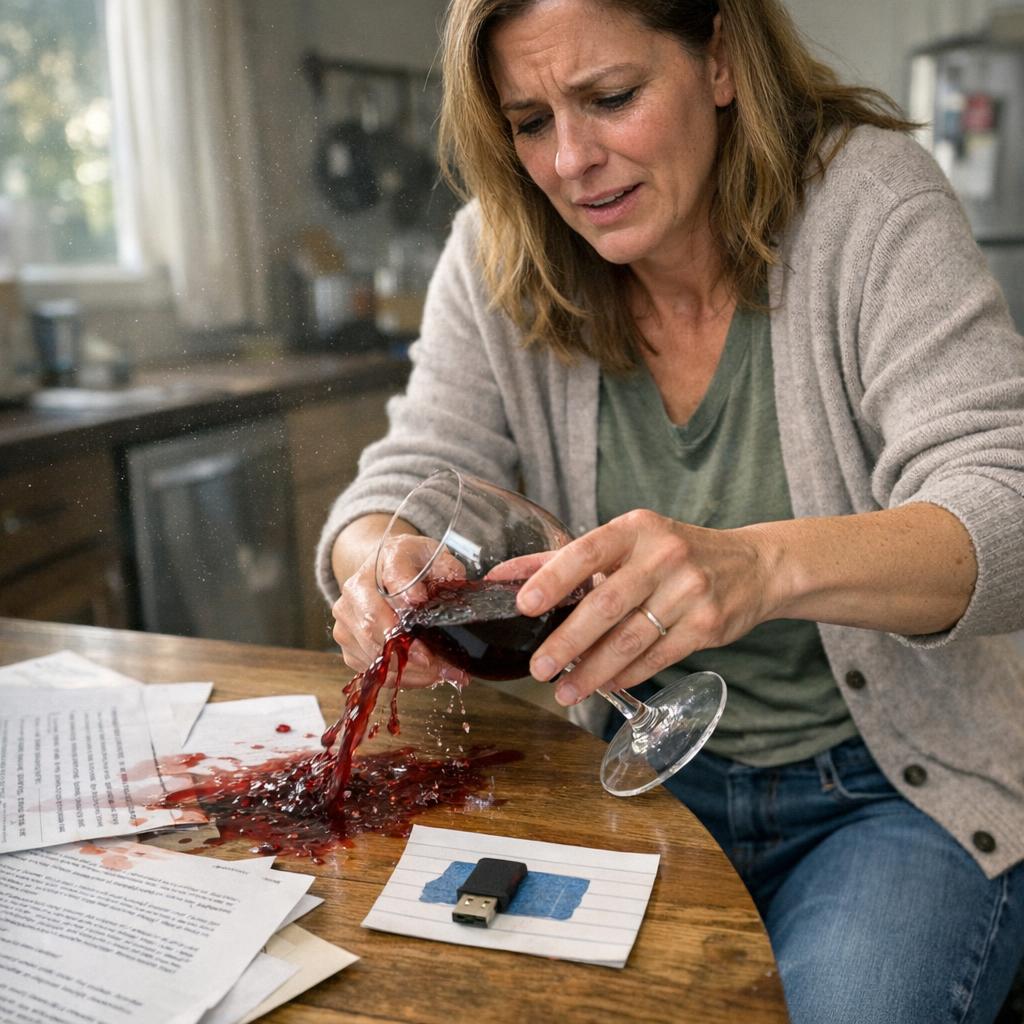 Image by RM AI
Maris's Letter
I smoothed out Maris's letter on the table, my reading glasses perched on the end of my nose as I tried to make sense of what I was seeing. 'After Richard died,' she wrote, 'Colton convinced me to sign what he called "simple paperwork" to help manage my finances.' My heart sank as I read how her own son had manipulated her into transferring partial ownership of her home—her only real asset—through what she called "a series of legal tricks." The letter detailed how, when Maris eventually discovered what had happened, she tried to quietly fix things without family drama. But Colton had been one step ahead, intercepting her mail, redirecting bank statements to a PO box she didn't know about, and—this part made me grip the table edge—convincing her doctors she was becoming "confused" and "paranoid." I remembered how Maris had seemed more withdrawn last spring, how she'd mentioned doctor's appointments but brushed off my offers to drive her. The deed copy showed some kind of legal addendum with language I couldn't fully understand, but Maris's notes in the margin spelled it out clearly: Colton planned to sell her house immediately after her death, and he'd already promised the profits to someone else. I felt sick. How many times had I waved to him from my driveway, thinking he was just a busy son who visited when he could? How many times had Maris sat on my porch swing, sipping tea, keeping this terrible secret?
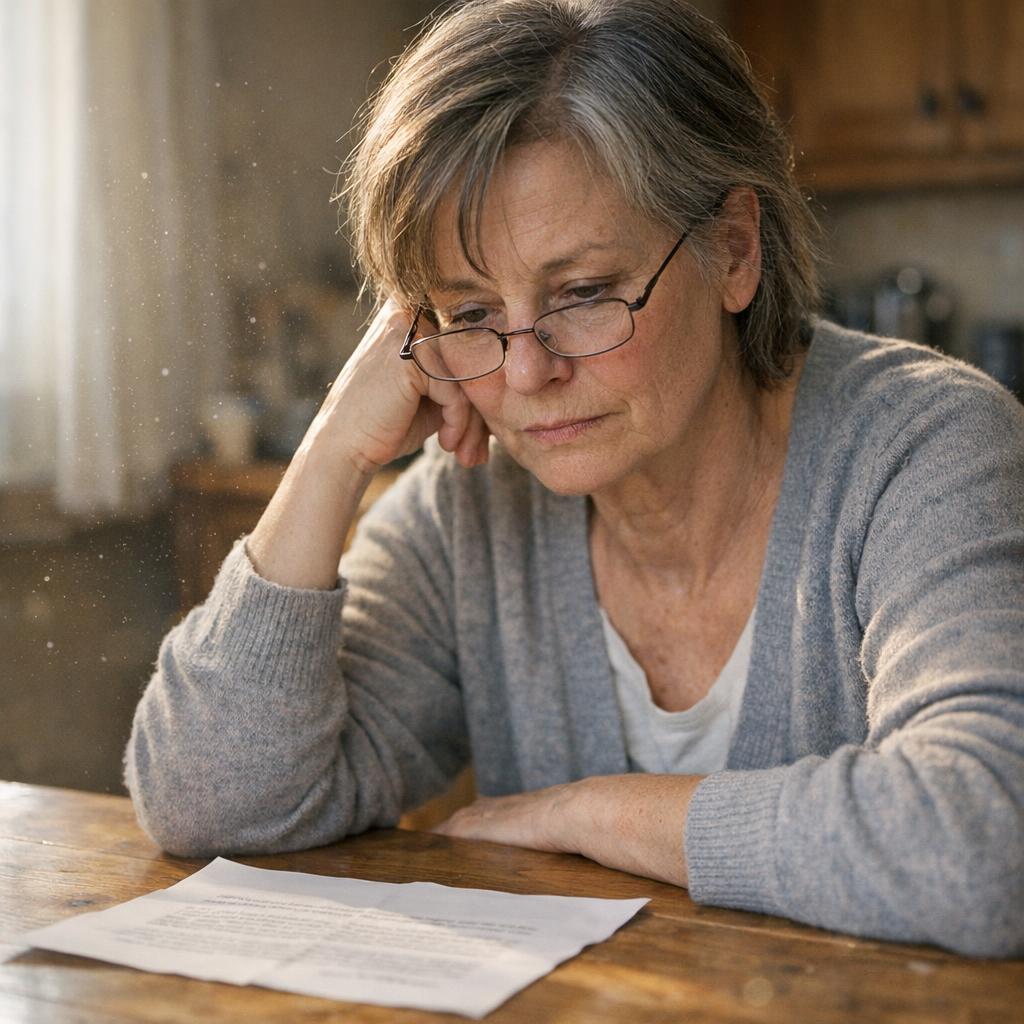 Image by RM AI
The Deed
I squinted at the deed copy, wishing I'd paid more attention when my late husband handled our paperwork years ago. The legal jargon swam before my eyes—words like "quitclaim" and "beneficial interest" that might as well have been written in ancient Greek. But Maris's neat handwriting in the margins told the real story. She'd highlighted sections and drawn arrows, creating a roadmap through the legalese. According to her notes, Colton had maneuvered her into signing over partial ownership of her home—that beautiful craftsman with the wraparound porch where we'd shared countless glasses of iced tea. The addendum showed some kind of transfer that gave him control without her fully understanding what she was signing. What made my stomach clench wasn't just the betrayal, but the note at the bottom: "Already promised sale proceeds to K.M. - $175,000 due by January." Who was K.M.? And what kind of trouble was Colton in that required that kind of money? I remembered how Maris once mentioned Colton had "investment troubles" a few years back, but she'd brushed it off as youthful mistakes. Now I wondered if those mistakes had grown teeth and were coming to collect. The most chilling part was realizing this wasn't just about greed—it was about desperation. And desperate people rarely stop at paperwork when something stands in their way.
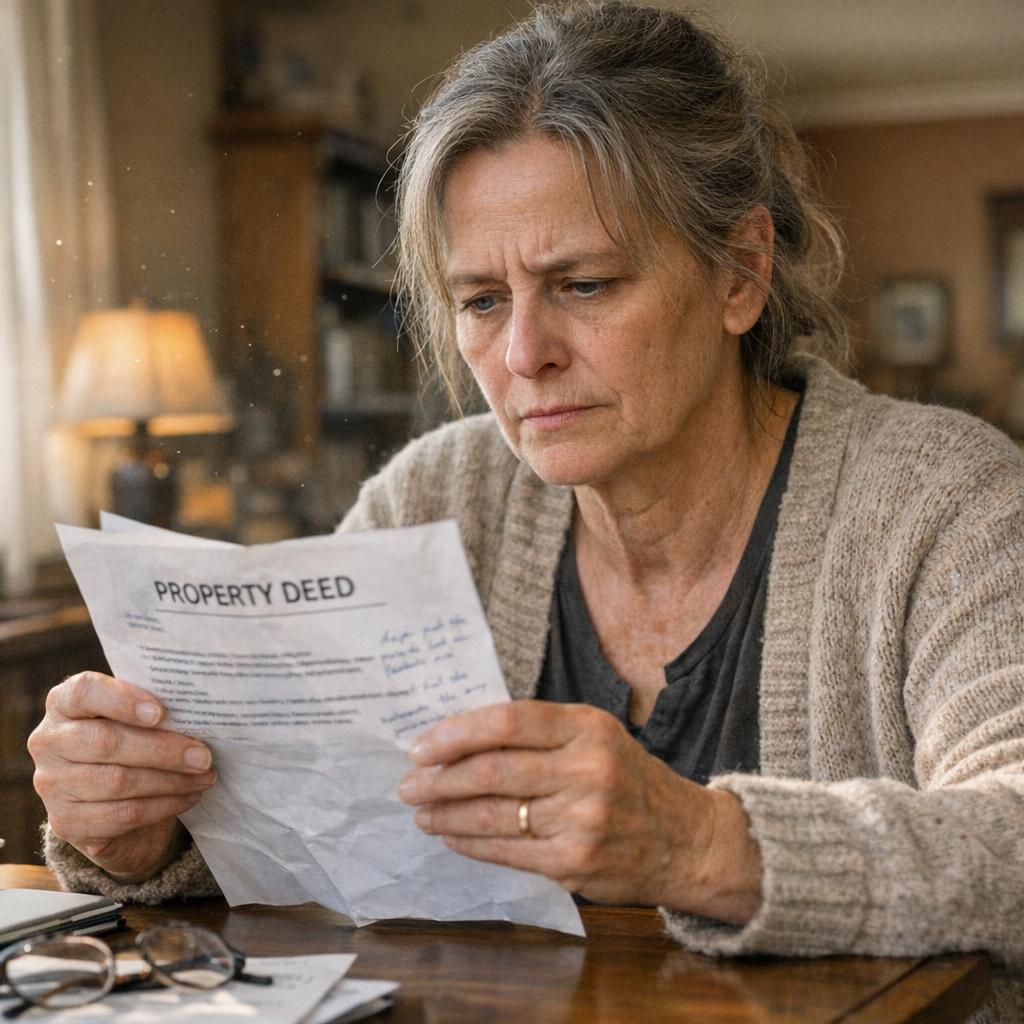 Image by RM AI
The USB Drive
I stared at the small USB drive taped to the index card, feeling like I was in one of those crime shows my daughter keeps telling me to binge on Netflix. This tiny piece of plastic held recordings—actual evidence—of Colton discussing how he was "handling" his own mother. My fingers hovered over it, trembling slightly. Was I really prepared to hear Maris's voice again, especially like this? To listen to her son plotting against her? Part of me wanted to pretend I'd never seen any of this, to shove everything back in the drawer under my dish towels and return to my comfortable life of crossword puzzles and neighborhood gossip. But that ship had sailed the moment I broke the seal on that envelope. I glanced at my laptop sitting on the kitchen counter, its screen glowing softly in the dim evening light. If I plugged this in, I'd be crossing a line—from concerned neighbor to active participant in whatever mess Colton had created. But if I didn't, I might miss crucial information that could protect me or honor Maris's final wishes. "What would you do?" I whispered to the empty kitchen, as if Maris might answer from beyond. The USB drive seemed to grow heavier in my palm as I made my decision. Sometimes being a good neighbor means doing the uncomfortable thing, even when every instinct tells you to mind your own business. I took a deep breath, walked to my laptop, and plugged in the drive before I could change my mind. What I heard in the next twenty minutes would change everything I thought I knew about the family next door—and make me realize just how dangerous my position had become.
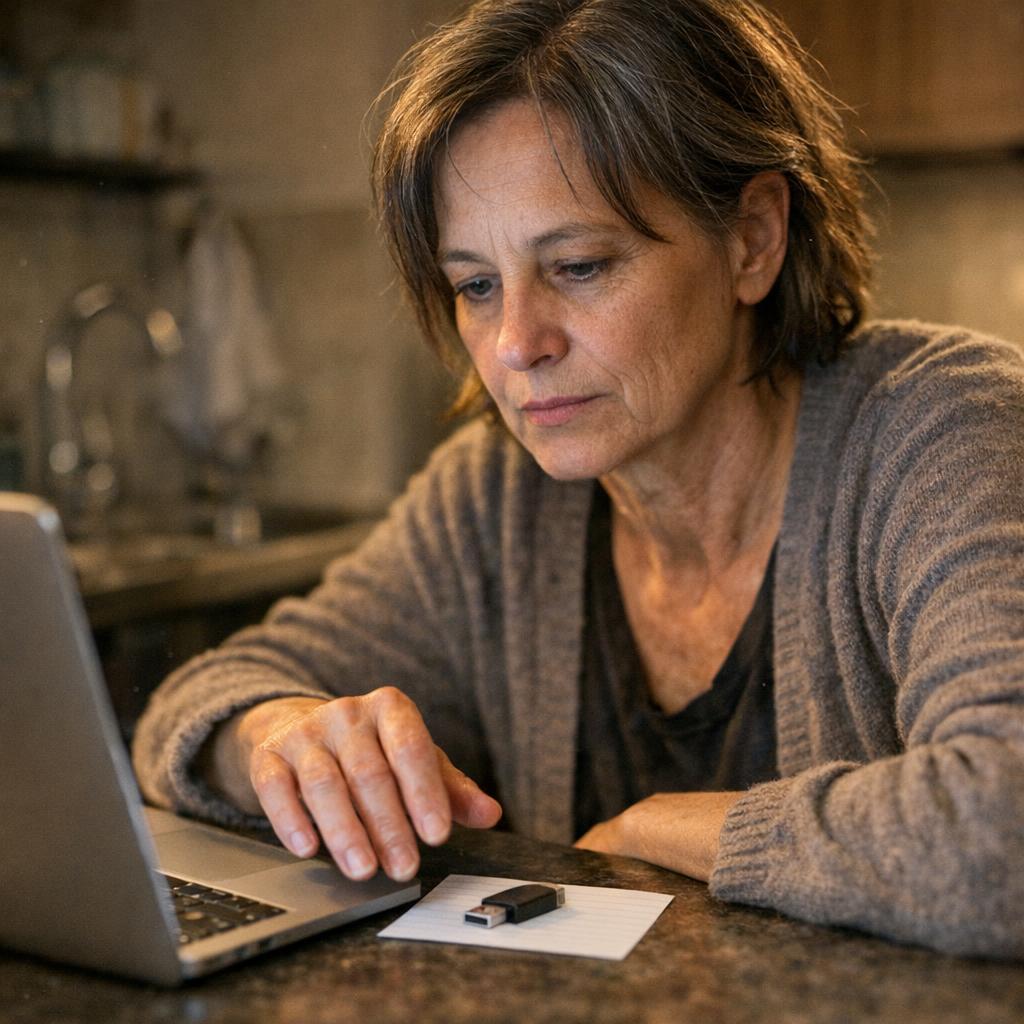 Image by RM AI
The Last Request
I stared at Maris's final words, my hands trembling as I re-read her warning: 'If Colton finds out you have this, he will try to take it. He will not stop.' The kitchen suddenly felt too quiet, too exposed. My tea had gone cold, forgotten as I sat processing the weight of what I'd stumbled into. This wasn't just neighborhood drama—this was the kind of thing people disappeared over in those true crime podcasts my daughter keeps recommending. I'd known Maris for fifteen years, shared garden cuttings and holiday recipes, yet somehow missed that her life had become a silent nightmare. How well do we really know the people living just feet away from us? The heater clicked on, making me jump. Outside, a car door slammed, and I found myself peering through the blinds like some paranoid character in a thriller. But was it paranoia if someone really was after what I had? I needed to find this attorney Maris mentioned, needed to pass this hot potato before Colton realized I knew the truth. I checked my doors—both locked—and tried to think clearly. Tomorrow I'd figure out my next move, but tonight, sleep would be impossible. Every creak of my old house had me wondering: how far would a desperate man go to protect his secrets? And how had my quiet life on Juniper Hollow Drive suddenly become so dangerous?
 Image by RM AI
Morning Visitors
I was pouring my second cup of coffee the next morning when the doorbell rang. Through the peephole, I saw Colton standing on my porch, hands in his pockets, rocking slightly on his heels. The smile he flashed when I opened the door seemed rehearsed—too quick, too wide, not reaching his eyes. "Morning, Jeanie," he said, his voice casual but tight. "You've got that envelope, right?" Before I could answer, I noticed Darlene's silver Lexus parked crooked at the curb, like she'd been in a hurry. She stepped out, arms crossed over her chest, her face pinched with what I'd thought was grief yesterday but now recognized as something harder, more calculated. "We need to wrap up Mom's things," she called, walking up my path. "No reason for paperwork to be floating around." The way they stood—together, coordinated—made my skin prickle. These weren't grieving family members; they were a united front. I gripped my coffee mug tighter, feeling the warmth against my suddenly cold fingers. "I haven't had a chance to find it," I lied, surprised at how steady my voice sounded. "Everything from the wake is still in bags somewhere." Colton's smile froze for half a second before returning, warmer than before. "No worries," he said, taking a small step forward. "We can come in and help you look." That's when I understood exactly what Maris had meant by he will not stop.
 Image by RM AI
The First Lie
I kept my hand firmly on the doorknob, creating a barrier between them and my home—my safe space where Maris's secrets now resided. 'I've been so scattered since the funeral,' I said, forcing a sympathetic smile. 'You know how it is.' The lie felt foreign on my tongue; at 61, I'd built a life on straightforward honesty. But watching Colton's smile freeze then recalibrate, I knew I'd made the right choice. 'No worries,' he said, his voice honey-sweet as he took a small step forward. 'We can come in and help you look.' Behind him, Darlene's eyes darted past me, scanning what she could see of my living room. Were they looking for a drawer left open? An envelope sitting in plain sight? I clutched my coffee mug tighter, the ceramic burning against my fingers. 'That's so thoughtful,' I replied, 'but I'm actually heading out for errands. Doctor's appointment,' I added, piling lie upon lie. 'I can call you when I find it.' The way they exchanged glances—quick, loaded with unspoken communication—sent ice down my spine. These weren't grieving relatives; they were hunters who'd cornered their prey and were deciding which approach would work best. As I closed the door, promising to be in touch soon, I realized with startling clarity that the quiet life I'd built on Juniper Hollow Drive had just become a battlefield—and I was woefully unprepared for war.
 Image by RM AI
Closing the Door
I closed the door with a firmness that surprised even me, my heart hammering against my ribs like it was trying to escape. Through the frosted glass panel, I watched their silhouettes—Colton's tall frame leaning toward Darlene's shorter one, their heads close together in urgent conversation. The mask of grief Darlene had worn at the funeral had completely vanished, replaced by something cold and calculating that made my skin crawl. They weren't mourning; they were strategizing. I pressed my back against the door, as if my 61-year-old body could somehow barricade it against whatever was coming next. When they finally turned to leave, their movements were stiff with frustration, not sorrow. Colton glanced back at my house before sliding into Darlene's Lexus, and the look on his face—a mixture of determination and barely contained anger—sent a chill through me that had nothing to do with the December air. I suddenly understood with crystal clarity what Maris had meant in her warning: 'He will not stop.' This wasn't over. Not by a long shot. As their car pulled away from the curb, I realized my quiet life on Juniper Hollow Drive had just become something unrecognizable—a chess game where I didn't know all the pieces, and my opponent was willing to sacrifice anything to win.
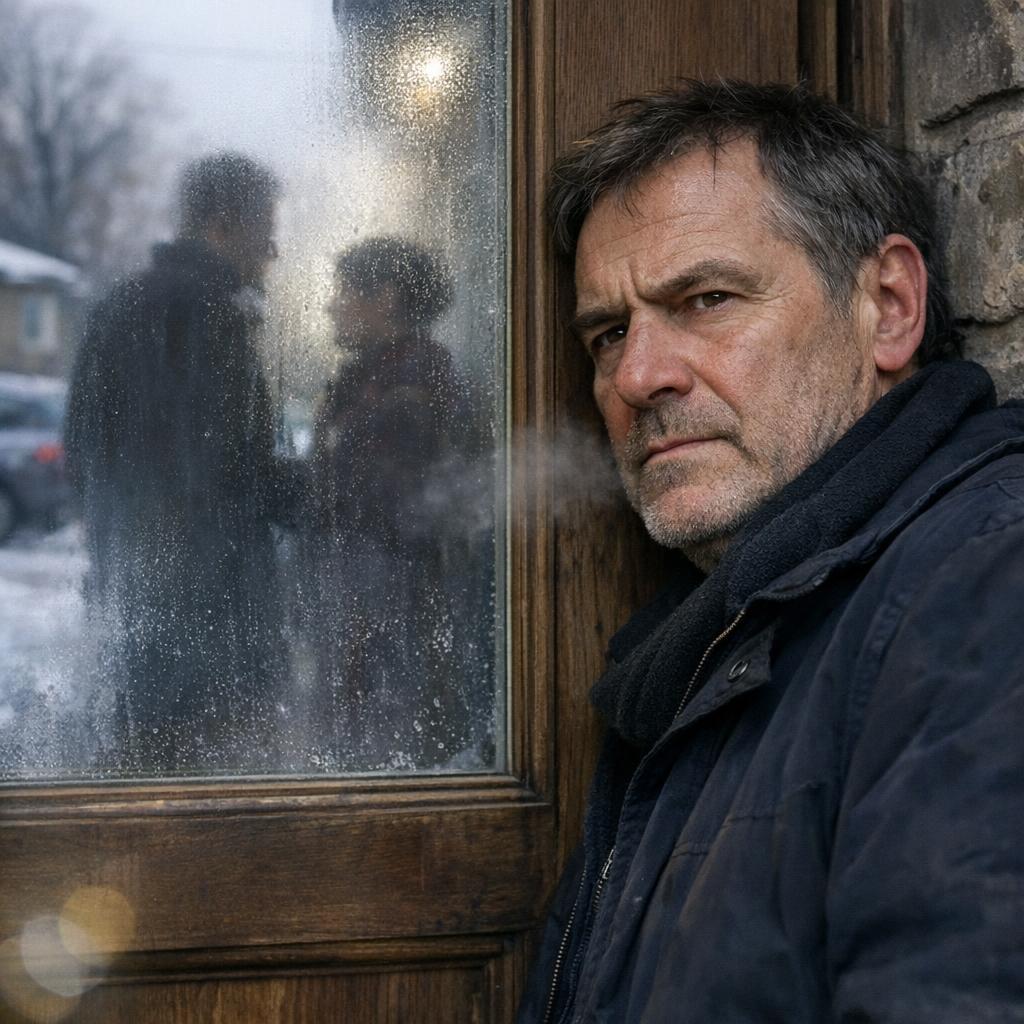 Image by RM AI
The Attorney's Office
I pulled into the strip mall where Maris's attorney was supposed to be, clutching the address she'd written in her neat handwriting. My confidence evaporated the moment I saw the 'FOR LEASE' sign plastered across the office door. The windows were empty, blinds removed, not even a forgotten paperclip left behind. I sat in my car, hands gripping the steering wheel, trying to process this new twist. A middle-aged woman watering plants outside the neighboring nail salon noticed my confusion. 'Looking for Greenfield & Associates?' she asked, leaning toward my open window. When I nodded, she shook her head sympathetically. 'Been gone about four months now. Mr. Greenfield retired suddenly—health issues, they said.' Four months ago. Right when Maris wrote that Colton started intercepting her mail. The timing wasn't coincidental. My mouth went dry as the pieces clicked together. Colton hadn't just been preparing to sell his mother's house—he'd been systematically removing anyone who might help her. I fumbled for my phone and dialed the number Maris had written anyway, hoping against hope. A man's voice answered, but it wasn't Greenfield. Different name, different firm. When I asked about Maris's attorney, there was a long pause before he said he'd 'purchased the practice' but had 'no access to previous client files.' My hands trembled as I hung up. This wasn't just about inheritance anymore—this was something calculated, something that made my skin crawl. Whatever Colton was involved in, he'd gone to extraordinary lengths to clear his path, and I was now standing directly in his way.
 Image by RM AI
Dead End Call
I sat in my car, staring at my phone like it might suddenly transform into something less terrifying. The number Maris had written for her attorney went straight to voicemail, but the voice wasn't Greenfield's. It belonged to someone named Harrington who 'couldn't come to the phone right now.' My fingers tightened around the steering wheel as reality sank in. This wasn't just a dead-end call—it was confirmation that Maris's safety nets had been systematically cut away. I glanced at my purse where the envelope sat hidden beneath my wallet and tissues. What I'd thought was just evidence was actually something far more dangerous: leverage. The kind people might do anything to get back. For the first time since this began, real fear—not just concern or worry—settled into my bones. I'd spent sixty-one years building a quiet life where the most dramatic thing that happened was Mrs. Peterson's dog digging up my petunias. Now I was sitting in a strip mall parking lot, clutching secrets that powerful people wanted buried, feeling like I'd stumbled into someone else's thriller movie. The sun was setting, casting long shadows across the empty attorney's office, and I suddenly felt exposed. What if Colton had followed me? What if whoever 'K.M.' was had people watching Maris's friends? I started my car with shaking hands, checking my rearview mirror twice before pulling out. Whatever was happening here was bigger than a son's greed—it was something that made people disappear, offices close, and attorneys 'retire suddenly.' And I was now holding the one thing that could blow it all wide open.
 Image by RM AI
Small Escalations
The next two days turned my quiet suburban life into something out of a low-budget thriller. I've lived on Juniper Hollow Drive long enough to know my routines, so when small things started changing, alarm bells rang louder than Mrs. Peterson's wind chimes in a storm. Tuesday morning, I found my mailbox completely empty—no bills, no flyers, not even those annoying credit card offers. The mail carrier swore she'd delivered everything as usual. That afternoon, a man in a work vest knocked, clipboard in hand, asking about roof estimates I'd supposedly requested. His eyes kept darting past me into my living room while I explained I hadn't called anyone. By evening, my phone was lighting up with unknown numbers that disconnected the moment I answered. Each night, Colton texted with artificial politeness: "Just checking in, Jeanie! Any luck finding that envelope yet?" The third message ended with "No rush, but I'll stop by tomorrow if that's easier." It wasn't a question. I started keeping the chain lock engaged, even during daylight hours. I moved Maris's envelope from the kitchen drawer to inside an old photo album nobody would think to open—pictures from a 1997 cruise my late husband and I took to Alaska. The most unsettling part wasn't the obvious surveillance; it was realizing how vulnerable my ordinary life had always been. All those years I'd felt safe behind my hydrangeas and deadbolts, never imagining that danger would arrive wearing a familiar face and a neighborly smile.
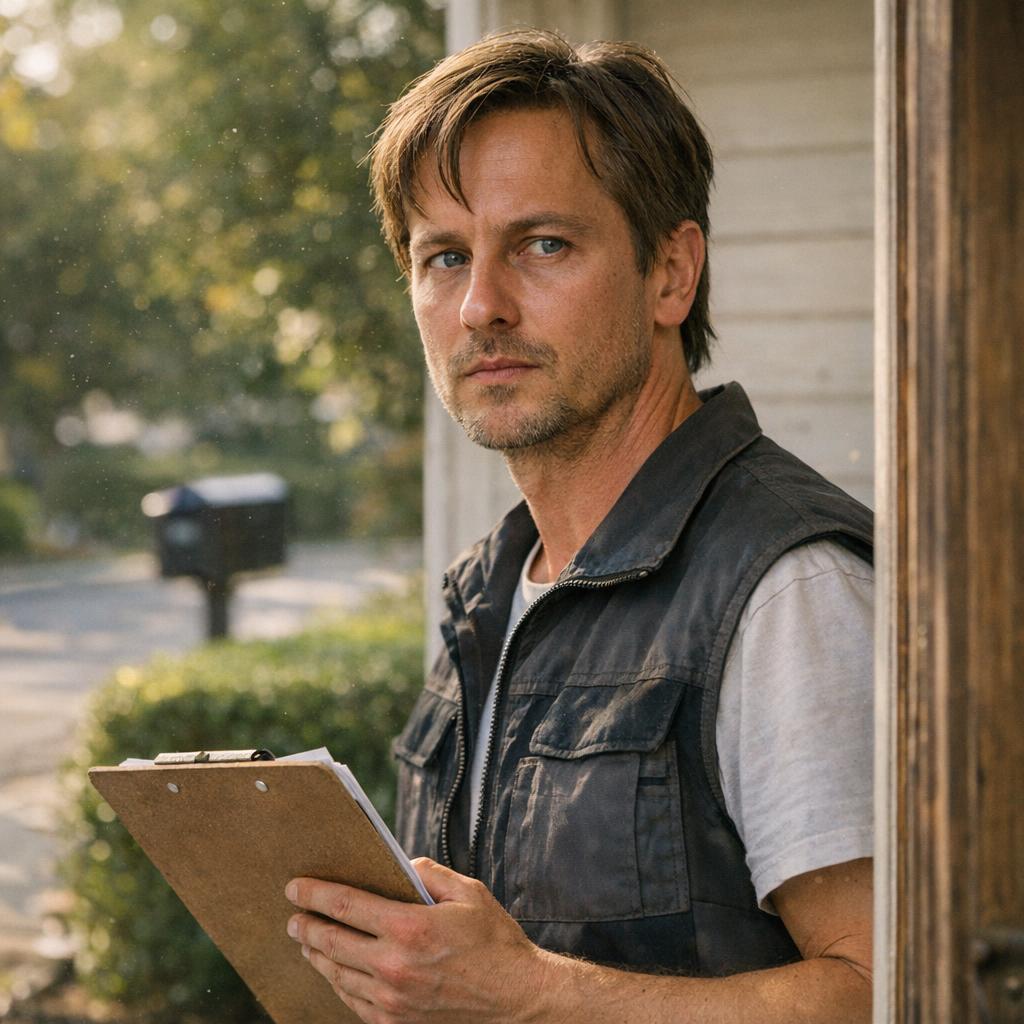 Image by RM AI
The Midnight Visitor
I was about to head to bed when my phone buzzed with a security alert. Squinting at the screen, I felt my blood turn to ice water. There, in grainy night-vision green, was Darlene—not just standing on my porch, but actually trying my front doorknob at 2:11 a.m. I watched in horror as she cupped her hands against my living room window, peering inside like she expected to find the envelope glowing like some kind of treasure map. This wasn't a concerned family member checking on an elderly neighbor—this was a break-in attempt, plain and simple. My hands shook as I replayed the footage three times, watching her methodical movements, the way she checked over her shoulder before testing the door. The casual visits and polite texts had escalated to midnight prowling in just three days. I suddenly felt exposed in my own home, like the walls had turned to glass. The security system I'd installed after Harold died—the one my son insisted was 'overkill for Juniper Hollow'—had just become my lifeline. I double-checked every lock, then pushed my heavy reading chair against the front door for good measure. Sleep was out of the question now. As I sat in my darkened kitchen, clutching my phone and jumping at every creak, I realized I couldn't handle this alone anymore. The stakes were clearly higher than I'd imagined, and whatever was on that USB drive was worth breaking and entering for. Tomorrow, I'd have to call for reinforcements—because if Darlene was willing to try my door at 2 a.m., what would she try next?
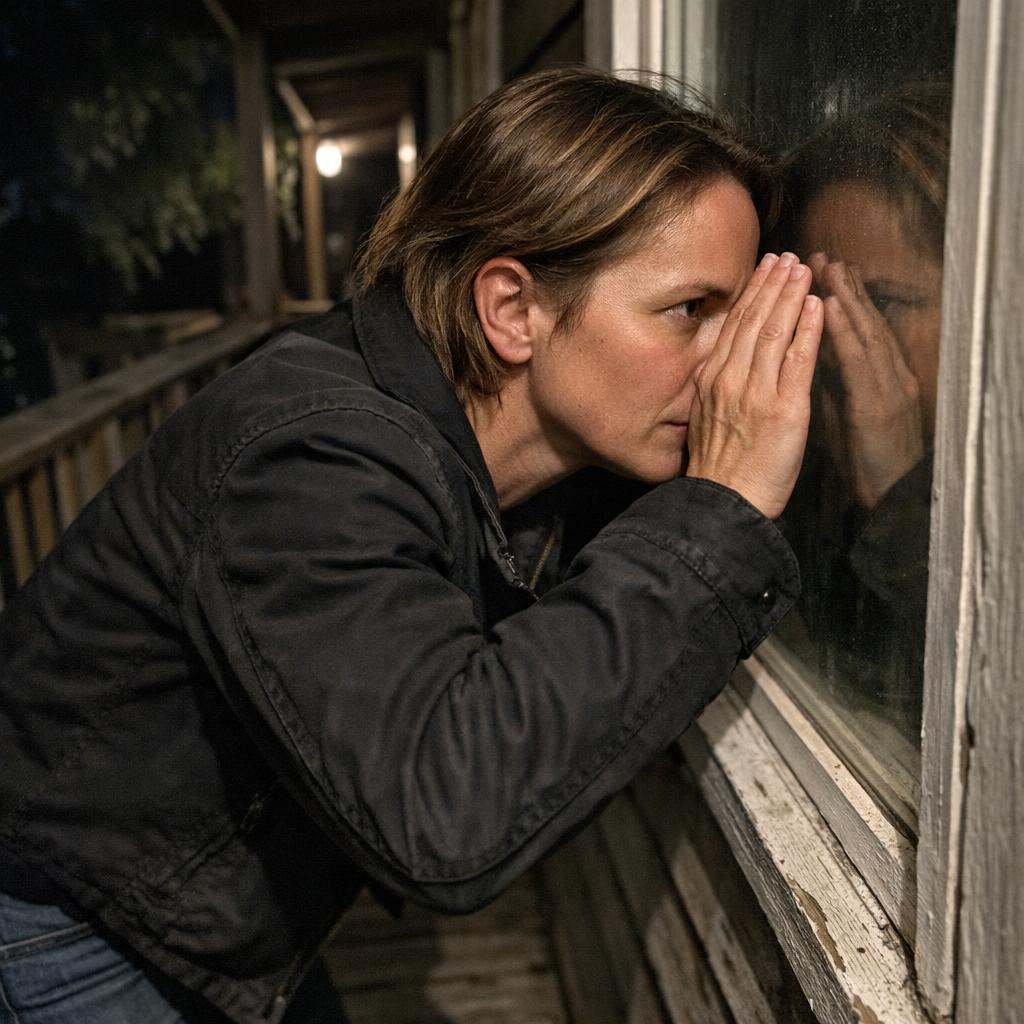 Image by RM AI
Calling Tessa
After that midnight doorknob incident, I knew I couldn't handle this alone anymore. My hands trembled as I dialed Tessa's number the next morning. Tessa Miller had been my rock since Harold passed—a no-nonsense retired paralegal with a steel-trap mind and the kind of loyalty you just don't find these days. "I'll be there in twenty minutes," she said after I gave her the abbreviated version, no questions asked. True to her word, she arrived with a legal pad, reading glasses perched on her silver bob, and a determined set to her jaw that made me feel protected for the first time in days. "Start from the beginning," she instructed, settling at my kitchen table like she was back in a law office. I laid everything out—the letter, the deed, the USB drive—watching her expression grow increasingly grave as I described Colton's visits and Darlene's midnight prowling. Tessa took meticulous notes, occasionally muttering things like "clear coercion" and "potential criminal conspiracy." When I finished, she removed her glasses and pinched the bridge of her nose. "Jeanie," she said finally, "this isn't just elder abuse. This is organized fraud, and they're panicking because you have proof." She tapped Maris's letter with her pen. "Let's read this again, line by line. There might be something we missed." As we pored over the documents together, I felt a strange mix of terror and relief—terror at what we might uncover, but profound relief that I wasn't facing this nightmare alone anymore.
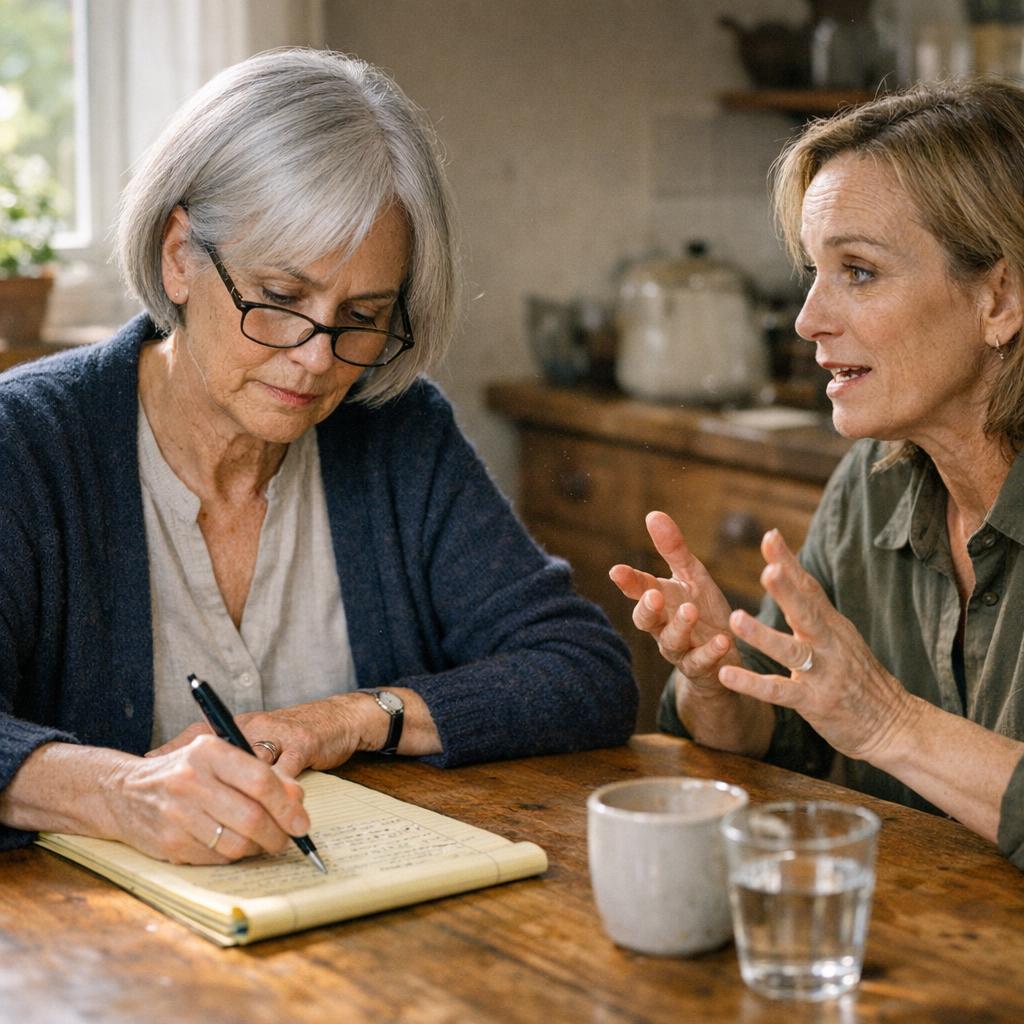 Image by RM AI
The Replacement Letter
Tessa adjusted her reading glasses and tapped one manicured finger on a line in Maris's letter I'd completely glossed over in my panic. "'If Colton brings Darlene, it means he already showed her the replacement letter,'" she read aloud, her voice dropping to a whisper on those last two words. My stomach clenched. "Replacement letter? What does that mean?" Tessa's eyes met mine, sharp with understanding. "It means Colton created a fake version of whatever Maris wanted to tell you. A counterfeit with his own narrative." The implications hit me like a physical blow. This wasn't just Colton scrambling to cover his tracks after his mother's death—this was premeditated. He'd anticipated Maris might try to expose him and prepared a backup plan. "So if I hadn't opened the envelope..." I started. "You would've handed over evidence that could've cleared his name completely," Tessa finished. "And whatever's on this USB drive would've been dismissed as the ravings of a confused old woman." I thought about how easily I'd believed Colton at the wake, how readily I'd accepted his story without question. The depth of his calculation made my skin crawl. This wasn't impulsive greed or opportunistic theft—this was a chess game he'd been playing for years, with moves planned several steps ahead. And now I understood why he and Darlene seemed so confident when they showed up on my doorstep. They weren't just looking for an envelope; they were ready to replace one truth with another.
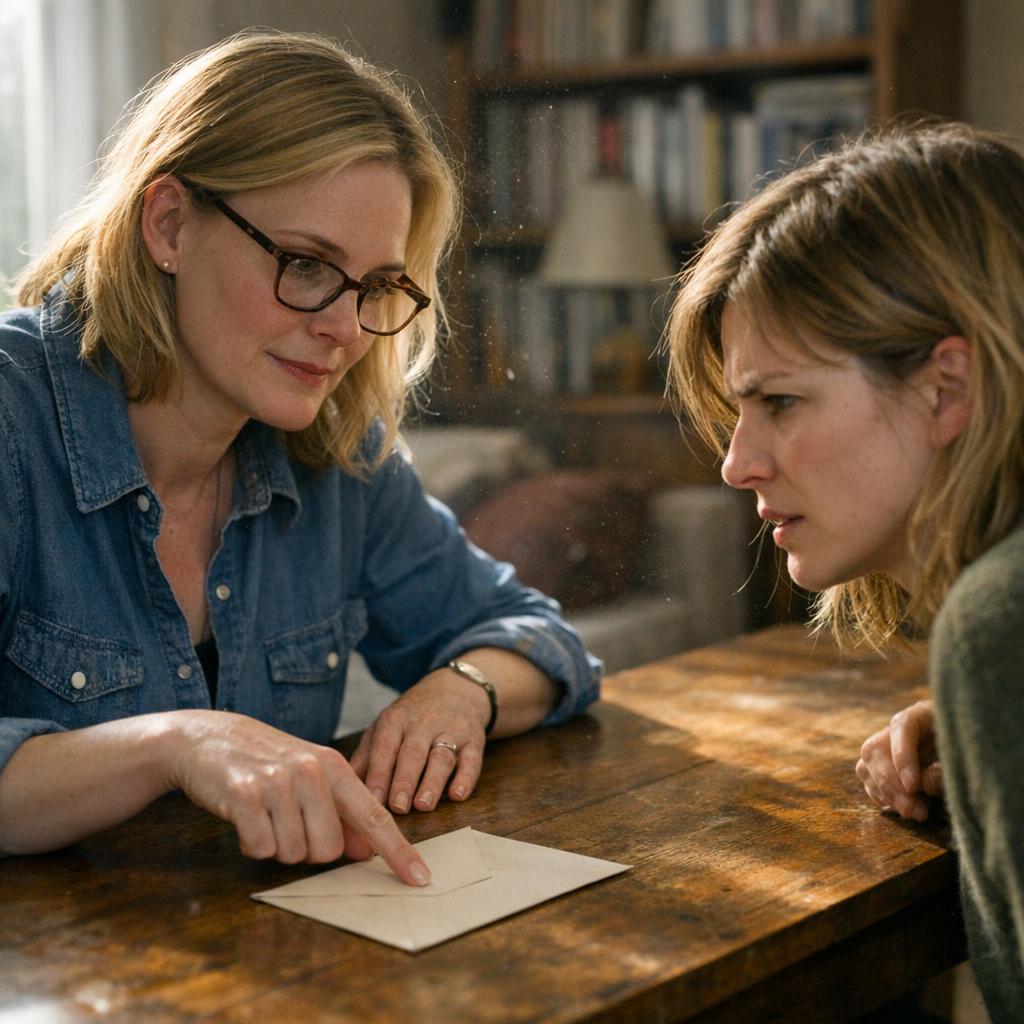 Image by RM AI
Hidden Impressions
Tessa's eyes narrowed as she flipped through the papers again. 'Wait a minute,' she murmured, holding one page up to the light. 'Look at this.' She pointed to faint indentations on the paper beneath Maris's letter—barely visible impressions where someone had pressed hard while writing on a page above it. 'Maris left another message.' My heart skipped. Tessa grabbed a pencil from her purse and began gently rubbing the lead sideways across the paper—an old investigator's trick I'd only seen in movies. Like magic, ghostly words emerged from the pressure marks: 'SAFE DEPOSIT... KEY... under... BIBLE... DO NOT TRUST...' The fragmented message appeared like a voice from beyond, Maris's final failsafe. 'She literally pressed her backup plan into the paper,' I whispered, my voice catching. 'So even if they stole her letter, traces would remain.' Tessa nodded grimly. 'Smart woman. She knew exactly what she was up against.' My mind raced to the small Bible Maris had given me years ago—the one she'd insisted I keep on my pantry shelf 'for emergencies.' I'd always thought it was just her gentle way of bringing faith into my home. Now I realized it was something far more calculated. 'I know exactly where to look,' I said, already heading for the kitchen. What other secrets had Maris hidden in plain sight, right under my nose all these years?
 Image by RM AI
The Bible's Secret
I rushed to my pantry, Tessa following close behind. There it was—the small burgundy Bible Maris had given me three Christmases ago, tucked between my recipe books and a jar of dried beans. 'She insisted I keep it here,' I explained, carefully pulling it down. 'Said everyone needs scripture in their kitchen for those tough days.' The book felt heavier than I remembered, its leather cover worn at the edges from Maris's hands. When I flipped it over, Tessa gasped. The back cover had a slight seam around its edges—almost invisible unless you were looking for it. 'She hollowed it out,' Tessa whispered, her voice filled with awe. I worked my fingernail along the seam until the false back lifted away, revealing a small compartment carved into the pages. There, nestled in the hollowed-out scripture, lay a small brass key glinting in my kitchen light. 'My God,' I breathed, lifting it carefully. 'She planned for everything.' The key was ordinary-looking—the kind that opens a safe deposit box at any bank—but in that moment, it felt like the most precious thing I'd ever held. Maris hadn't just left clues; she'd created an entire escape route for her truth, using me as the unwitting guardian. 'She knew they'd search her house,' Tessa said, shaking her head in admiration. 'But who would think to look in her neighbor's pantry?' I turned the key over in my palm, wondering what secrets it would unlock—and more terrifyingly, what Colton would do if he knew I was now just one step away from whatever he was so desperate to hide.
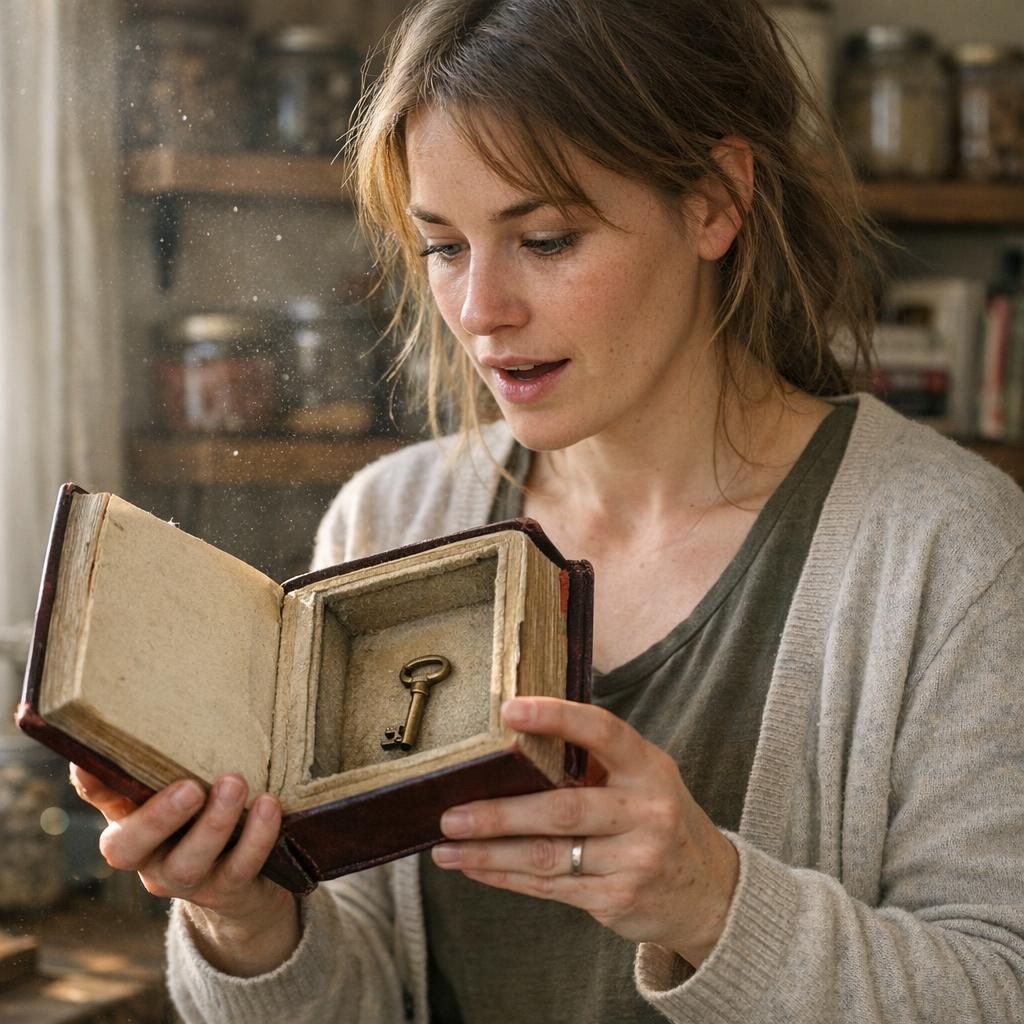 Image by RM AI
Listening to the Evidence
With trembling hands, I plugged the USB drive into my laptop while Tessa sat beside me, her face set in grim determination. 'Let's see what Maris wanted us to hear,' she said, squeezing my shoulder. The first recording began to play, and I felt the blood drain from my face. Colton's voice—not grief-stricken or concerned, but cold and calculating—filled my kitchen. 'Mom's getting suspicious about the deed transfer,' he said to someone. 'We need to move faster.' Darlene's voice responded with a laugh that made my skin crawl. 'Just hide her mail like we've been doing. She'll forget she even asked.' File after file revealed their conspiracy—casual discussions about 'handling' Maris, making her seem 'confused' to her doctors, and intercepting her attempts to contact her attorney. In one particularly chilling recording, Colton discussed a 'staged fall' that would put Maris in rehab temporarily, giving them time to process more paperwork. 'Once she's labeled unstable,' Darlene said, 'nobody will believe her anyway.' I covered my mouth, fighting nausea as I listened to them plot against the woman who'd baked them birthday cakes and knitted their Christmas sweaters. 'My God,' Tessa whispered, scribbling furiously on her legal pad. 'This isn't just elder abuse—this is criminal conspiracy.' The final recording made everything clear: Colton owed money to someone identified only as 'K.M.,' and Maris's house was the payment. What terrified me most wasn't just their cruelty, but how practiced they sounded—like this wasn't their first time silencing someone who stood in their way.
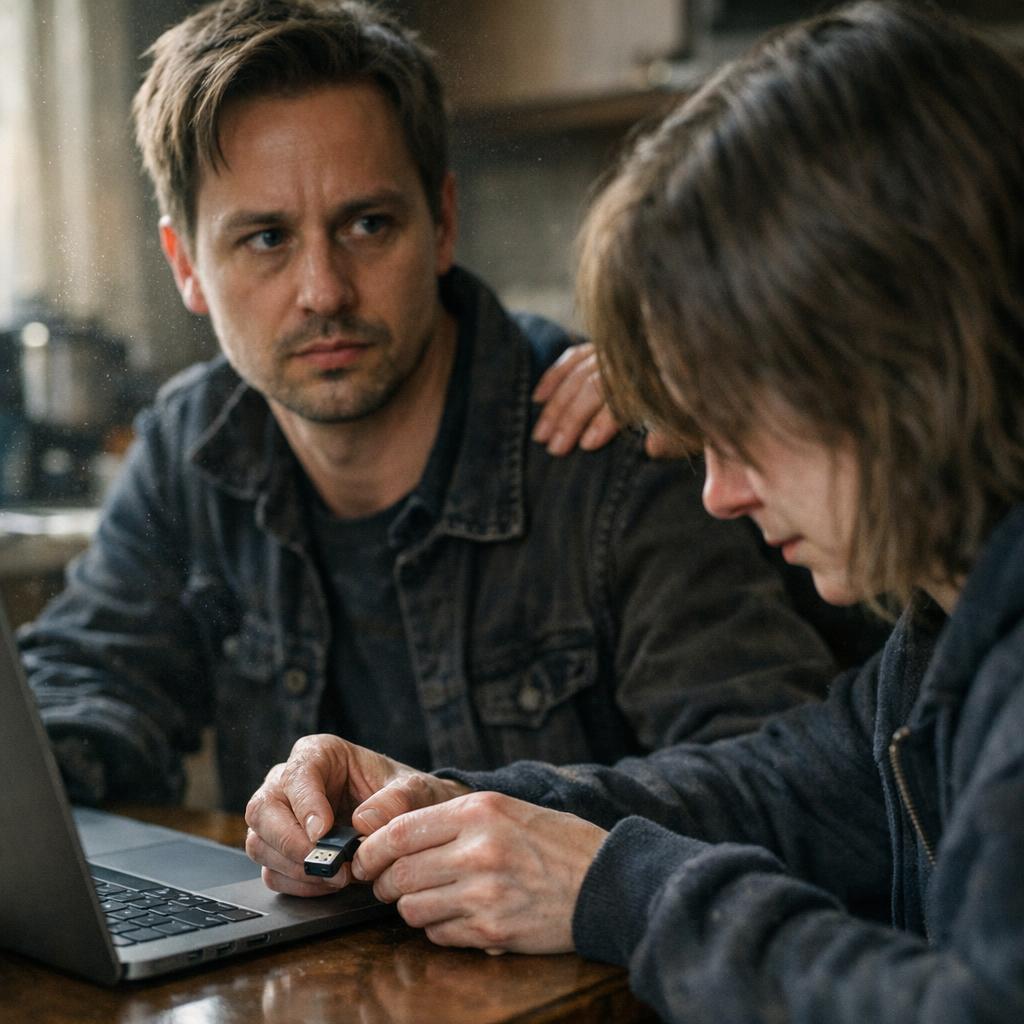 Image by RM AI
The Staged Fall
The recording that truly made my blood run cold was dated last February. I hit play and heard Colton's voice, casual as if discussing the weather: 'The fall worked perfectly. She'll be in rehab for at least three weeks.' Darlene laughed—actually laughed—and replied, 'Did you see her face when she hit the ground? For a second I thought we'd gone too far.' I felt physically ill, gripping the edge of my kitchen table as memories flooded back. I'd visited Maris at Pinecrest Rehabilitation after her 'accident,' bringing her favorite lemon squares and gossip magazines. She'd seemed so disoriented, her words slurring as she tried to tell me something about Colton moving things in her house. The nurses had patted my hand sympathetically, explaining that 'confusion is common after a fall at her age' and that 'the medication makes some patients paranoid.' I'd believed them completely. God help me, I'd even reassured Maris that Colton was taking good care of everything and she shouldn't worry. In the recording, they continued discussing how they'd convinced her doctor to prescribe 'something stronger' that made her 'more manageable' during family visits. 'Once you're labeled unstable,' Darlene said smugly, 'nobody questions when you sign things.' Tessa's face had gone ashen beside me. 'They drugged her,' she whispered. 'They physically harmed her and then used her recovery to manipulate her legally.' I remembered how, after Maris returned home, she'd seemed different—more hesitant, less likely to contradict Colton when he spoke for her. I'd chalked it up to age and recovery. Now I realized I'd witnessed the systematic dismantling of a woman's autonomy, disguised as loving family care.
 Image by RM AI
The Third Party
The most chilling revelation came when we reached the third recording. Darlene's voice, casual and almost bored: 'Don't worry about the paperwork. Rick knows a guy at the county office who'll push it through without questions.' Rick—Darlene's husband. The quiet one who always brought his famous potato salad to neighborhood cookouts and coached Little League. Tessa and I exchanged horrified glances as we realized the conspiracy extended far beyond just Colton and his sister. This wasn't just family greed; it was a network. 'That's why they're so desperate for this drive,' Tessa whispered, her finger hovering over the pause button. 'It implicates people with actual authority.' My mind raced back to Rick's promotion last year to some administrative position I'd never fully understood. How he'd suddenly started driving a nicer car. How he'd renovated their kitchen with marble countertops that Darlene had shown off at the block party. The recording continued with Colton laughing: 'K.M. says once this goes through, everyone gets their cut. County records are basically whatever we say they are.' I felt physically ill. The walls of my safe little world on Juniper Hollow Drive were crumbling around me. These weren't just bad relatives—this was corruption that reached into local government. And I was now holding evidence that could bring down not just a family, but potentially an entire system of people who'd been manipulating property records for God knows how long.
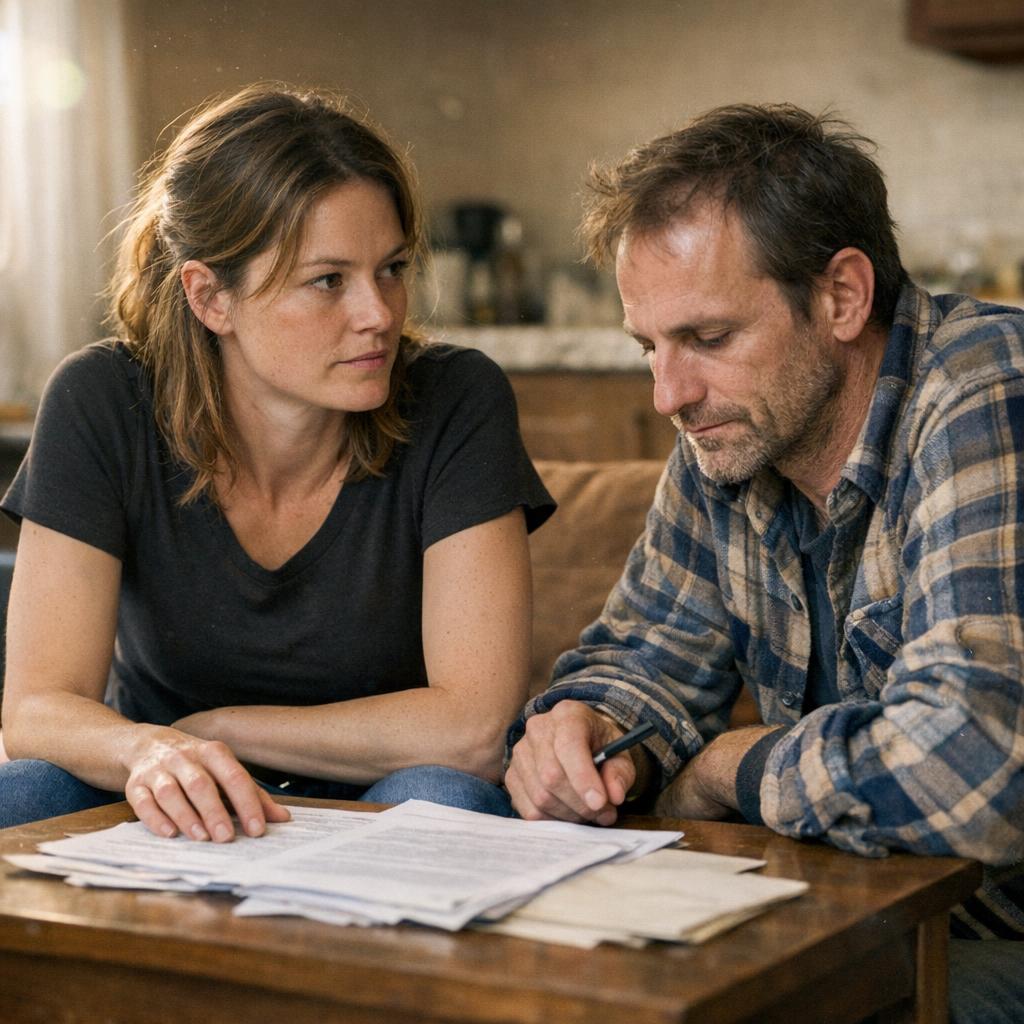 Image by RM AI
Making a Plan
"We need to be smart about this," Tessa said, her voice dropping to a whisper even though we were alone in my kitchen. "These people aren't just greedy relatives—they're organized and connected." I nodded, still reeling from what we'd discovered. The USB recordings had transformed my understanding of not just Maris's death, but the entire year leading up to it. Tessa pulled out a fresh legal pad and began sketching what looked like a battle plan. "First thing tomorrow, we visit First National on Oakwood—that's where Maris would have kept a safe deposit box. We use this key," she tapped the small brass key we'd found in the Bible, "and we document everything inside. Make copies, take photos." My hands trembled slightly as I poured us both more tea. "Shouldn't we just call the police?" Tessa shook her head firmly. "With Rick's county connections? Not yet. We need ironclad evidence first, and we need it secured in multiple locations." She was right, of course. This wasn't a Lifetime movie where the truth automatically wins. This was real life on Juniper Hollow Drive, where apparently people I'd waved to for years were capable of drugging an elderly woman and staging accidents. "What if Colton comes back before we're ready?" I asked, remembering his text about stopping by tomorrow. Tessa's eyes narrowed with determination. "Then we stall him. We play dumb. And we pray that whatever Maris left in that safe deposit box is enough to blow their whole operation sky-high."
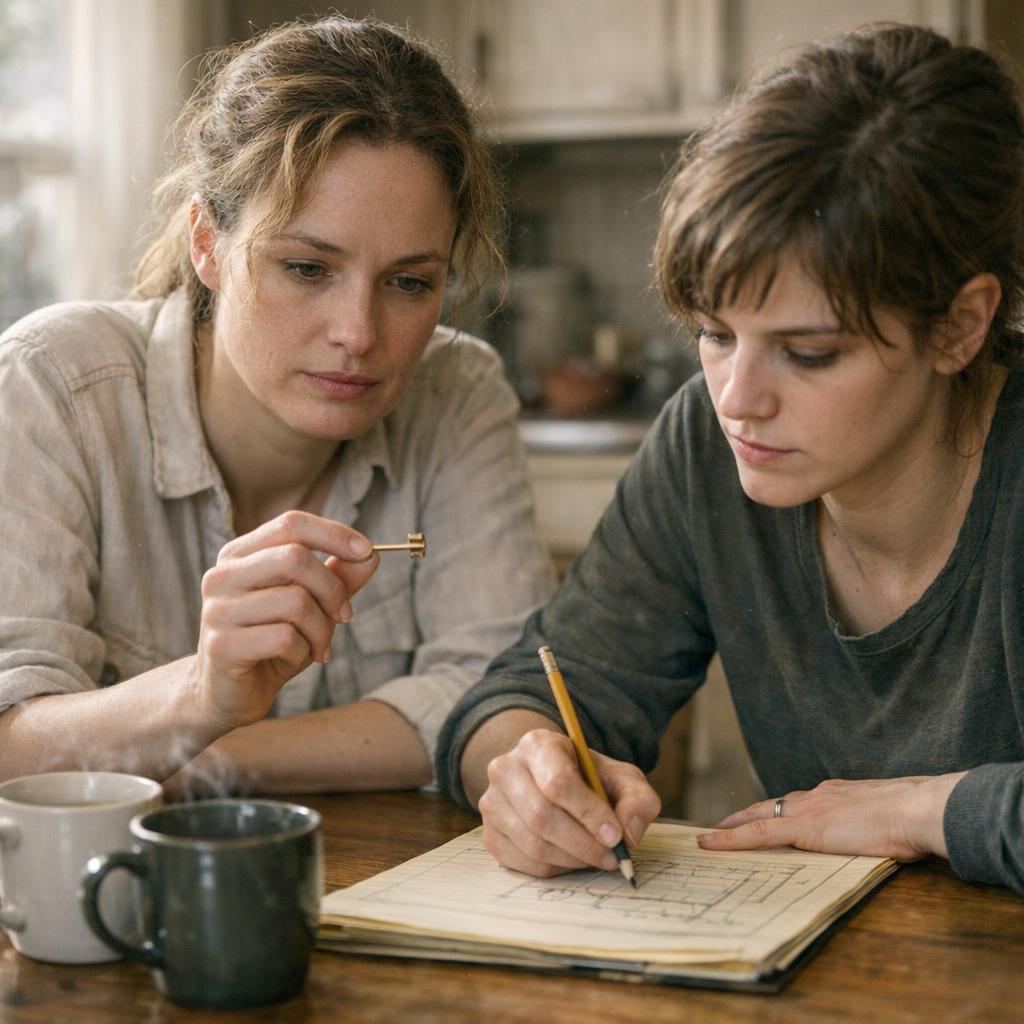 Image by RM AI
The Safe Deposit Box
The next morning, Tessa and I arrived at First National Bank on Oakwood Avenue right as they opened. My heart was pounding so hard I was sure the security guard could hear it. 'We'd like to access a safe deposit box,' I told the young woman at the desk, sliding over Maris's key and my driver's license. Her eyes flicked between us, hesitation clear on her face. 'Mrs. Caldwell is deceased,' she said carefully. Before I could fumble through an explanation, Tessa stepped forward with the confidence of someone who'd done this a thousand times. 'I'm Tessa Miller, retired paralegal. We're handling estate matters for Mrs. Caldwell.' She produced her old credentials and spoke in that authoritative tone that makes people comply without question. Ten minutes later, we were alone in a small viewing room with Maris's metal box between us. My hands trembled as I turned the key. Inside was exactly what Maris had promised: a thick manila envelope containing an updated will with Post-it notes marking key sections, a formal letter to the county clerk disputing the deed transfer (already notarized), and—most chilling of all—a second USB drive taped to an index card labeled 'COPY—GIVE TO POLICE IF ORIGINAL DISAPPEARS.' But what made my throat tighten was a handwritten note addressed to me: 'Jeanie, I'm sorry to put you in danger. You were the only person Colton never considered a threat. That's why I chose you.' Even from beyond the grave, Maris had thought of everything—including the fact that I'd be terrified by what I found.
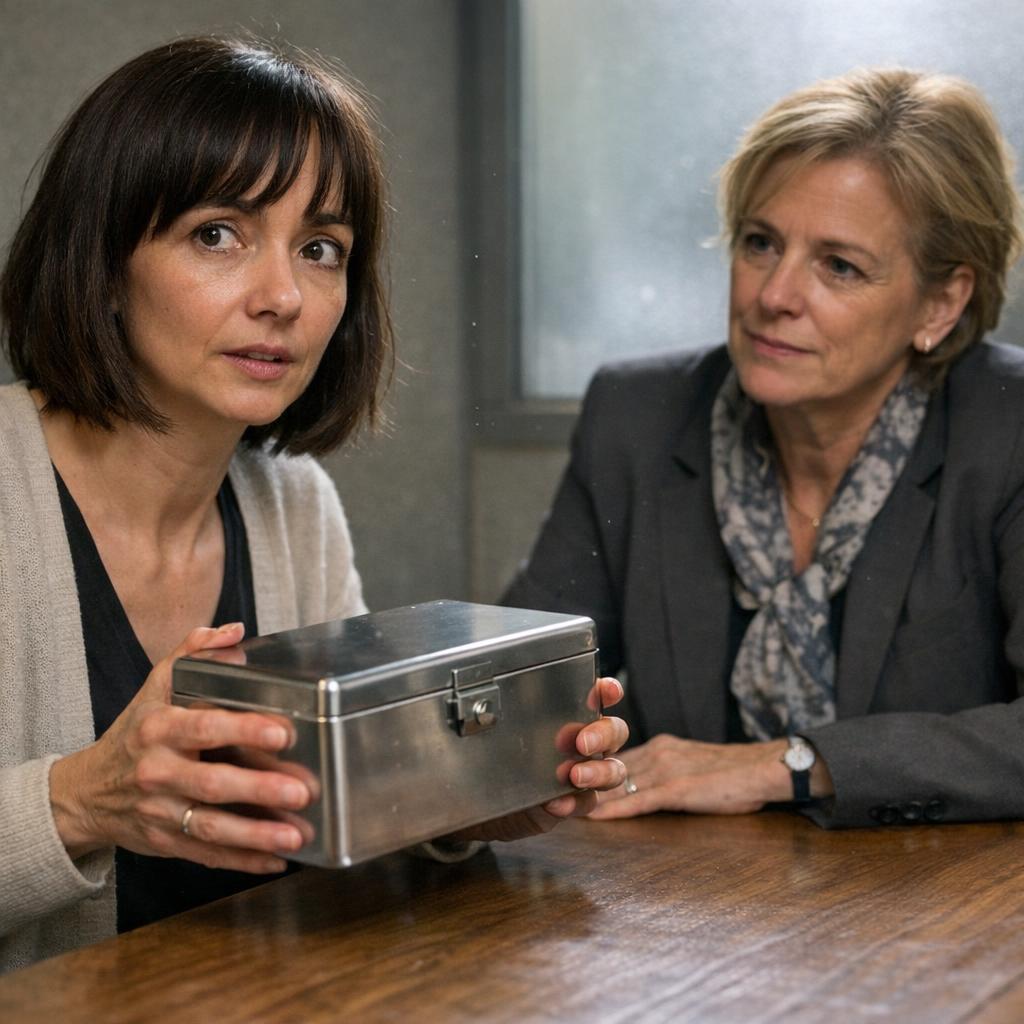 Image by RM AI
Maris's Apology
I stared at Maris's handwriting, my vision blurring with tears. 'Jeanie, I'm sorry to put you in danger. You were the only person Colton never considered a threat. That's why I chose you.' My hands trembled as I held the note, the weight of her trust suddenly feeling like a boulder on my shoulders. All those afternoons sharing tea on her porch, all those casual waves across our driveways—she'd been sizing me up, not just as a friend, but as her secret weapon. The realization hit me like a punch to the chest: Maris had been planning this for months, maybe longer. She'd selected me with surgical precision, knowing Colton would dismiss me as just another harmless old lady on the block. 'She was protecting you even while asking for your help,' Tessa said softly, reading over my shoulder. I nodded, unable to speak past the lump in my throat. How terrified Maris must have been, living in that house with people plotting against her, carefully crafting her defense while pretending everything was normal. She'd hidden keys in Bibles and messages in paper impressions, all while serving Sunday dinners to the very people trying to destroy her. And in her final act of resistance, she'd placed her trust in me—not because I was brave or clever, but because I was invisible to them. The irony wasn't lost on me: after sixty-one years of being underestimated, it was finally becoming my superpower.
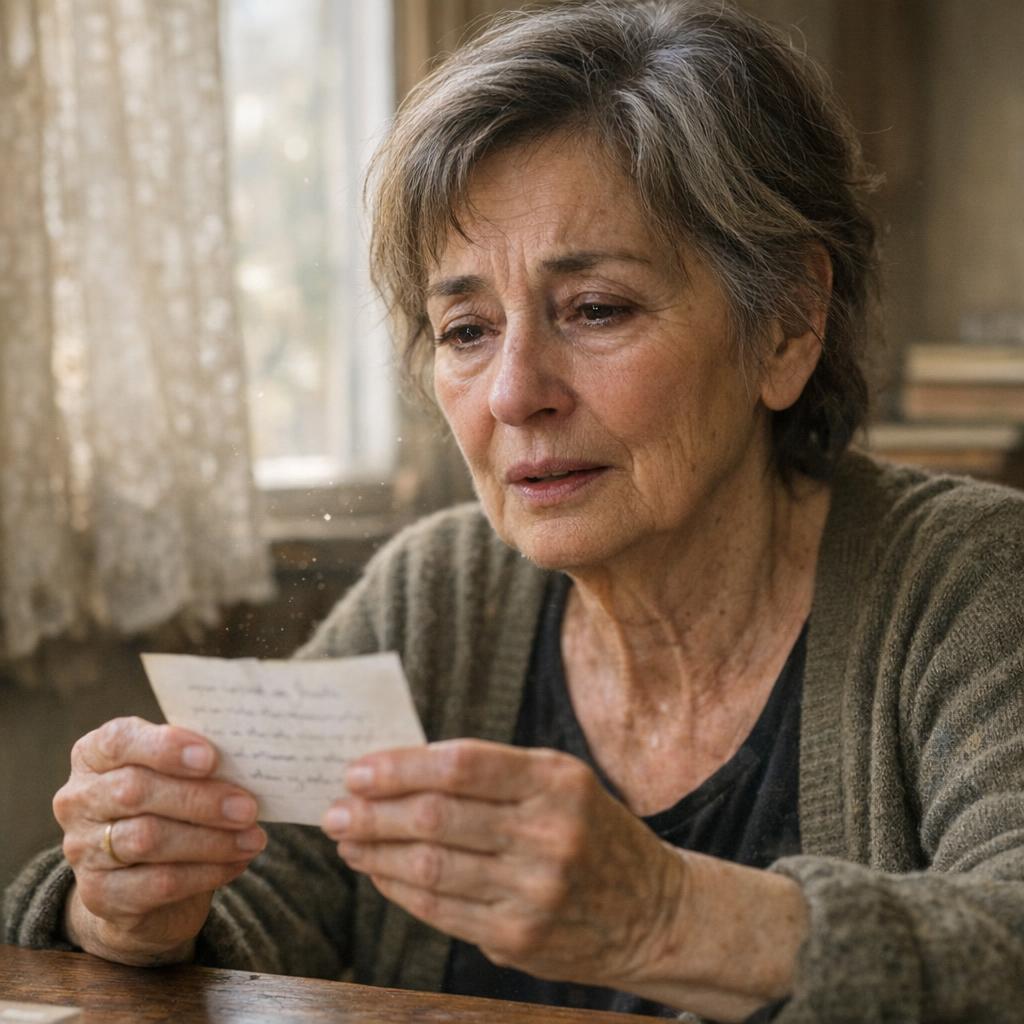 Image by RM AI
The Updated Will
With trembling hands, I unfolded Maris's updated will, and what I read made my heart both ache and swell with pride for my friend. 'I, Maris Eleanor Caldwell, being of sound mind...' The legal language was clear and precise, explicitly revoking any previous transfers of property—including the ones Colton had tricked her into signing. But what truly took my breath away was where she directed her estate to go: the majority to Juniper County Women's Shelter, with smaller provisions set aside for her grandchildren's education funds. Not a penny for Colton or Darlene. 'I make this decision,' she wrote in a personal note attached to the will, 'with full awareness of my children's actions and a clear understanding of their intentions toward me and my property.' She explained how she'd secretly visited a different attorney—one Colton didn't know about—after discovering their manipulation during her recovery from the 'fall.' Tessa let out a low whistle as she read over my shoulder. 'She cut them out completely. No wonder they're desperate.' I traced Maris's signature with my fingertip, imagining her sitting across from some lawyer, quietly planning this final act of defiance while still waving to her children from her garden. 'She was protecting other vulnerable women even in death,' I whispered, thinking of the shelter that would now receive her modest but meaningful estate. What haunted me most, though, was wondering exactly when Maris had realized her own children were her greatest threat.
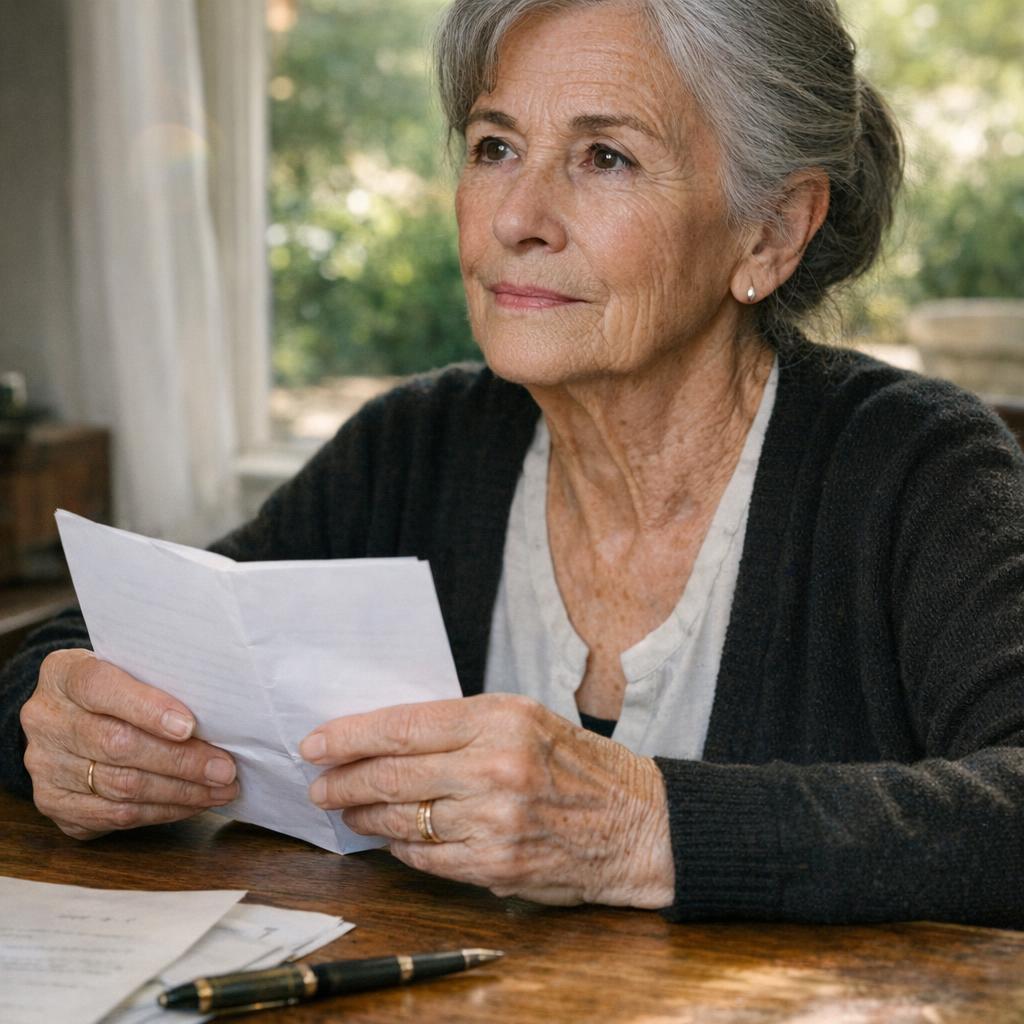 Image by RM AI
Making Copies
"We need copies of everything," Tessa insisted, her voice dropping to a whisper even though we were alone in my car. "Not just one set—multiple backups." We drove twenty minutes to a print shop in Westfield where nobody would recognize us. I felt like I was in some spy movie, clutching Maris's documents to my chest as we hurried inside. The young man behind the counter barely looked up from his phone as we used the self-service machines, making three complete sets of every document. I watched nervously as the USB drives cloned themselves, the progress bar creeping forward with excruciating slowness. "One set stays with you," Tessa said, organizing the papers into manila folders. "I'll take another. The third goes somewhere neither of us visits regularly." We settled on my sister's house in Lakewood—she'd keep anything for me without questions. As we stepped out into the bright afternoon sun, my heart nearly stopped. There, across the street, was a silver Lexus SUV that looked exactly like Rick's—Darlene's husband. The windows were tinted too dark to see inside, but the county parks sticker on the bumper was unmistakable. "Don't look," Tessa murmured, casually steering me toward my car. "Just keep walking normally." I clutched my purse with the folders inside, wondering if they'd somehow tracked us here, or if this was just a horrible coincidence. Either way, our time was running out faster than I'd thought.
 Image by RM AI
The Pie Bearer
I pulled into my driveway, exhausted from our document-copying mission, only to find Colton sitting on my porch swing with what looked like a homemade apple pie balanced on his knees. My stomach dropped. He stood up with a smile that didn't quite reach his eyes, the perfect picture of a grieving son seeking comfort. 'Jeanie! I was getting worried,' he said, his voice honey-sweet. 'Brought you Mom's famous apple pie recipe. Thought we could share a slice.' I forced my face into what I hoped was a neutral expression, unlocking my front door with hands I prayed weren't visibly shaking. 'That's so thoughtful,' I managed. As I invited him in—what choice did I have?—he set the pie down and touched my arm apologetically. 'I'm sorry if I seemed pushy about that envelope. Grief makes people act strange, you know?' Then, so casually I almost missed it: 'I was surprised to see your car all the way over in Westfield earlier. Don't you usually shop local?' My blood turned to ice. He'd been following me. Watching me. The pie suddenly looked less like a peace offering and more like a Trojan horse. I busied myself with coffee cups, buying time to text Tessa under the counter: 'Colton here. Knows we were in Westfield.' His reflection in my microwave door showed him scanning my kitchen counters, his eyes methodically searching for what he'd come to find.
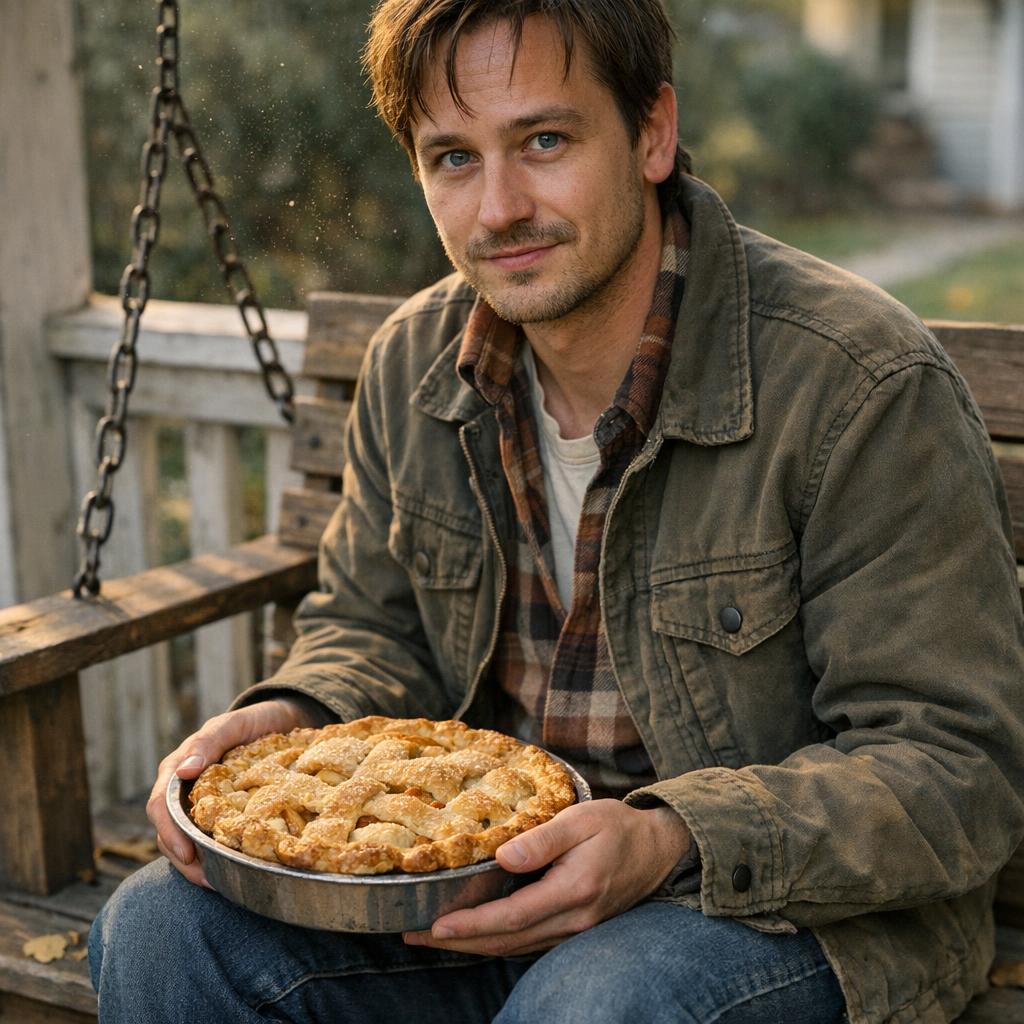 Image by RM AI
The Sudden Shift
I poured coffee for Colton, my hands trembling slightly as I set the mug in front of him. He took a sip, watching me over the rim with eyes that suddenly seemed calculating rather than grief-stricken. 'You know, Jeanie,' he said, setting the mug down with a deliberate click, 'I've been thinking about that envelope.' His voice had changed—the warmth evaporating like morning dew. 'I know you opened it.' My heart stuttered. 'Mom's handwriting was always messy, but I recognized the tape I used to reseal it after she wrote it.' He leaned forward, elbows on my kitchen table where we'd shared countless neighborly chats. 'Here's what's going to happen. You're going to give me everything—the letter, the USB, whatever else was in there—and we can pretend none of this ever happened.' His smile returned, but it was different now—cold, practiced, the kind of smile a predator might give before pouncing. 'If you don't,' he continued, his voice eerily calm, 'I'll tell the police you stole from Mom's house after the wake. I've already prepared a copy of a letter where she calls you a jealous neighbor who always coveted her things.' He pulled out his phone, waving it casually. 'It's all ready to go. So what's it going to be, Jeanie? The easy way, or the hard way?' I clutched my coffee mug, feeling the warmth seep into my palms as I realized with absolute clarity that this was exactly the moment Maris had prepared me for.
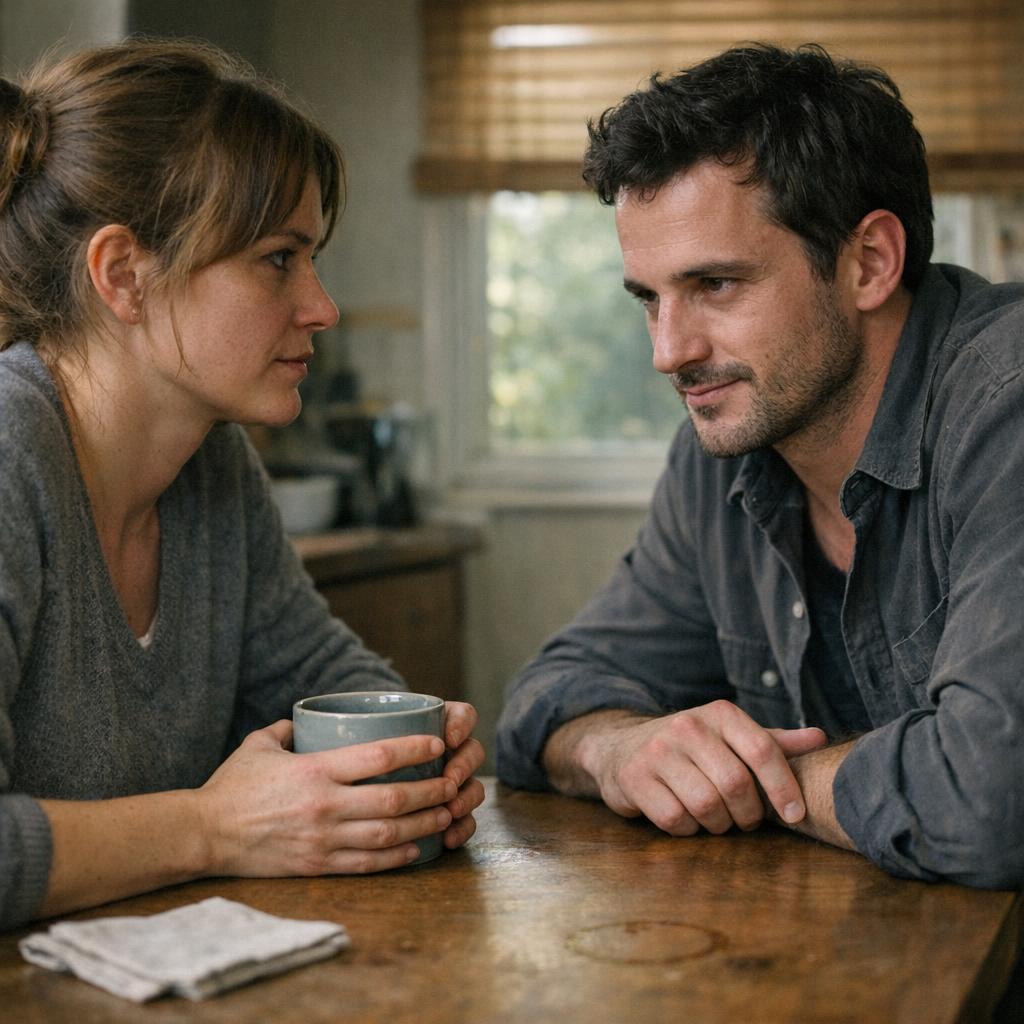 Image by RM AI
The Threat
I stared at Colton across my kitchen table, the man I'd known for years suddenly transformed into someone unrecognizable. His threat hung in the air between us, as tangible as the apple pie he'd brought as a prop. 'You're threatening me?' I asked, my voice steadier than I felt. He shrugged, all pretense of grief abandoned. 'It's just business, Jeanie. Nothing personal.' I took a slow sip of my coffee, buying time as my mind raced. For a moment, panic threatened to overwhelm me—this man had connections at the county office, had manipulated his own mother, had staged accidents. What chance did I, a 61-year-old widow from Juniper Hollow Drive, have against someone like him? Then I remembered Maris's words: 'You were the only person Colton never considered a threat.' That's when it clicked. I didn't need to outmaneuver him; I just needed to stall him. 'The envelope isn't here,' I said, watching his face darken. 'I need time to get it.' His eyes narrowed suspiciously, but I saw the calculation behind them—he still thought I was just a harmless old lady, easily intimidated. What he didn't know was that at this very moment, Tessa was executing our backup plan, sending copies of everything to people who couldn't be threatened with a fake letter on a phone. Sometimes being underestimated is the greatest advantage you can have.
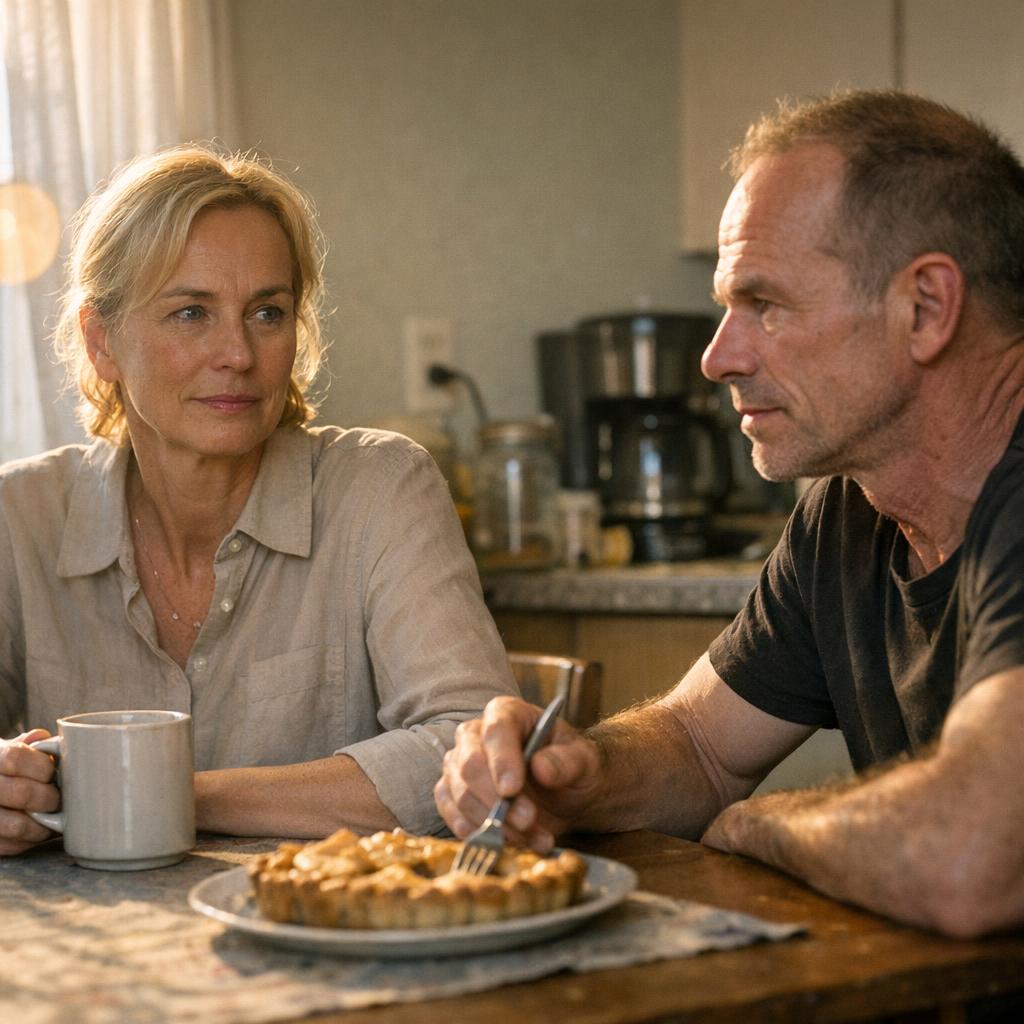 Image by RM AI
Stalling for Time
I refilled Colton's coffee cup with hands steadier than I expected, buying precious seconds as I texted Tessa under the table. Just a simple 'C here now' – our code to launch the plan we'd prepared. 'You know, I've been wondering about Maris's garden,' I said, gesturing toward the window where his mother's dormant rosebushes stood like sentinels. 'Will you keep it up?' Colton's impatience flickered across his face before he masked it with that practiced smile. 'The new owners can do whatever they want with it,' he said, drumming his fingers on my kitchen table. 'Property values in this neighborhood are skyrocketing.' I nodded sympathetically, asking innocent questions about the funeral costs and memorial arrangements, watching him grow increasingly smug as he explained his 'rights' to his mother's estate. 'Legally, that house has been partially mine for years,' he boasted, leaning back in his chair. 'Mom just didn't understand modern estate planning.' The casual cruelty in his voice made my stomach turn, but I kept my expression neutral, the way women my age have learned to do when men explain things we already understand. Each minute I kept him talking was another minute for Tessa to distribute those documents to people beyond his reach. What Colton didn't realize as he sat there, confidently outlining how he'd manipulated his own mother, was that he was no longer the only one recording conversations on Juniper Hollow Drive.
 Image by RM AI
Tessa's Action
While I kept Colton occupied with coffee and small talk, Tessa was executing our plan from her car parked just down the street. I imagined her hunched over her iPad, gray hair falling forward as she methodically attached files to emails with the precision of someone who'd spent decades preparing legal documents. She was sending everything—the attorney packet, audio copies, even my porch camera footage showing Darlene trying my doorknob at 2 AM—to the county clerk's office and the non-emergency police line. I'd never appreciated the quiet efficiency of a retired paralegal more than in this moment. Each minute I stalled Colton was another piece of evidence being secured beyond his reach. Tessa was also contacting the attorney mentioned in Maris's updated will, the one Colton knew nothing about. I pictured her voice, calm and professional, explaining the urgency of the situation while I sat across from the very man she was working against. There's something powerful about women of a certain age working in tandem—we become invisible to men like Colton, who see gray hair and assume harmlessness. But as I nodded sympathetically at his explanation of 'estate planning,' I knew the walls were closing in around him, one email attachment at a time. What he didn't realize as he sipped my coffee was that his power was evaporating with every click of Tessa's 'Send' button.
 Image by RM AI
The Phone Call
Colton was mid-sentence about 'handling the estate properly' when his phone buzzed. He glanced at the screen, frowned, and answered with a curt, 'What is it?' I couldn't make out Darlene's exact words, but her voice came through shrill and panicked, like someone who'd just discovered their house on fire. The transformation on Colton's face was something I'll never forget—the confident mask crumbling in real time, color draining until he looked almost gray. 'That's not possible,' he hissed, standing so abruptly his chair scraped against my linoleum. 'Who would—' He stopped, his eyes darting to me with a new understanding. I kept my expression neutral, the way I'd practiced in my bathroom mirror that morning, though my heart was doing jumping jacks. 'I have to go,' he snapped into the phone, then turned to me. 'This isn't over, Jeanie.' The threat hung in the air as he abandoned his half-empty coffee cup and strode toward my door. No more pretense of the grieving son, no more pie-bearing neighbor act. Just raw, undisguised anger as he realized his carefully constructed plan was unraveling. The door slammed behind him with enough force to rattle my china cabinet. Through my kitchen window, I watched him practically sprint to his car, phone already back at his ear. I waited until his taillights disappeared around the corner before I allowed myself to exhale. Whatever Darlene had told him had clearly changed everything—and I had a pretty good idea what it was.
 Image by RM AI
The Aftermath
I barely had time to collect myself before Tessa's car pulled into my driveway, tires crunching on the gravel with urgency. She burst through my door without knocking, her face flushed with adrenaline. 'The county clerk called Darlene directly,' she explained, catching her breath. 'Rick's secretary saw the documents come in and panicked.' We moved to my living room window, peering through the blinds like neighborhood spies. Across the street, Colton's BMW had screeched to a halt beside Darlene's car. Even from this distance, their body language told the whole story—wild gesticulations, Darlene repeatedly slapping the dashboard, Colton's face contorted in rage. 'They know we have everything,' Tessa said quietly. 'And they know we've distributed it.' I watched them argue for several minutes before they both climbed into Darlene's car and sped away, tires squealing against asphalt. The silence they left behind felt dangerous somehow. Tessa turned to me, her expression grave. 'Pack a bag, Jeanie. You're staying with me tonight.' When I hesitated, she added, 'People like Colton are most dangerous when cornered.' As I threw essentials into my overnight bag, I realized how quickly my quiet life on Juniper Hollow Drive had transformed into something unrecognizable. The most terrifying part wasn't what had already happened—it was not knowing what Colton might do next.
 Image by RM AI
Night at Tessa's
Tessa's guest bedroom felt both safe and strange that night—like hiding at a sleepover when you're decades past the appropriate age for such things. I sat perched on the edge of her floral comforter, jumping at every car that drove past, every branch that scratched against the window. "They can't do anything now, Jeanie," Tessa reassured me for the fifth time, setting a mug of chamomile tea on the nightstand. "The documents are already with the authorities." But logic couldn't quiet the hammering of my heart. Around 9 PM, Detective Morales called—a woman with a voice like gravel who spoke in clipped, efficient sentences. She wanted to meet us tomorrow morning at the station to discuss "the materials received." The way she said it—not accusations or allegations, but materials—made me feel like maybe, just maybe, someone official was taking this seriously. We were watching the late local news, both of us in our pajamas like teenagers at a slumber party, when the anchor's voice suddenly caught my attention: "Harold Winters, Records Administrator for Juniper County, has taken what officials are calling 'an immediate leave of absence' pending an internal review." Tessa and I locked eyes. Harold—Darlene's husband—the man Maris had mentioned in her recordings as the one who "knows a guy at the county office." The dominoes were starting to fall, and I couldn't help wondering which one would come crashing down on me next.
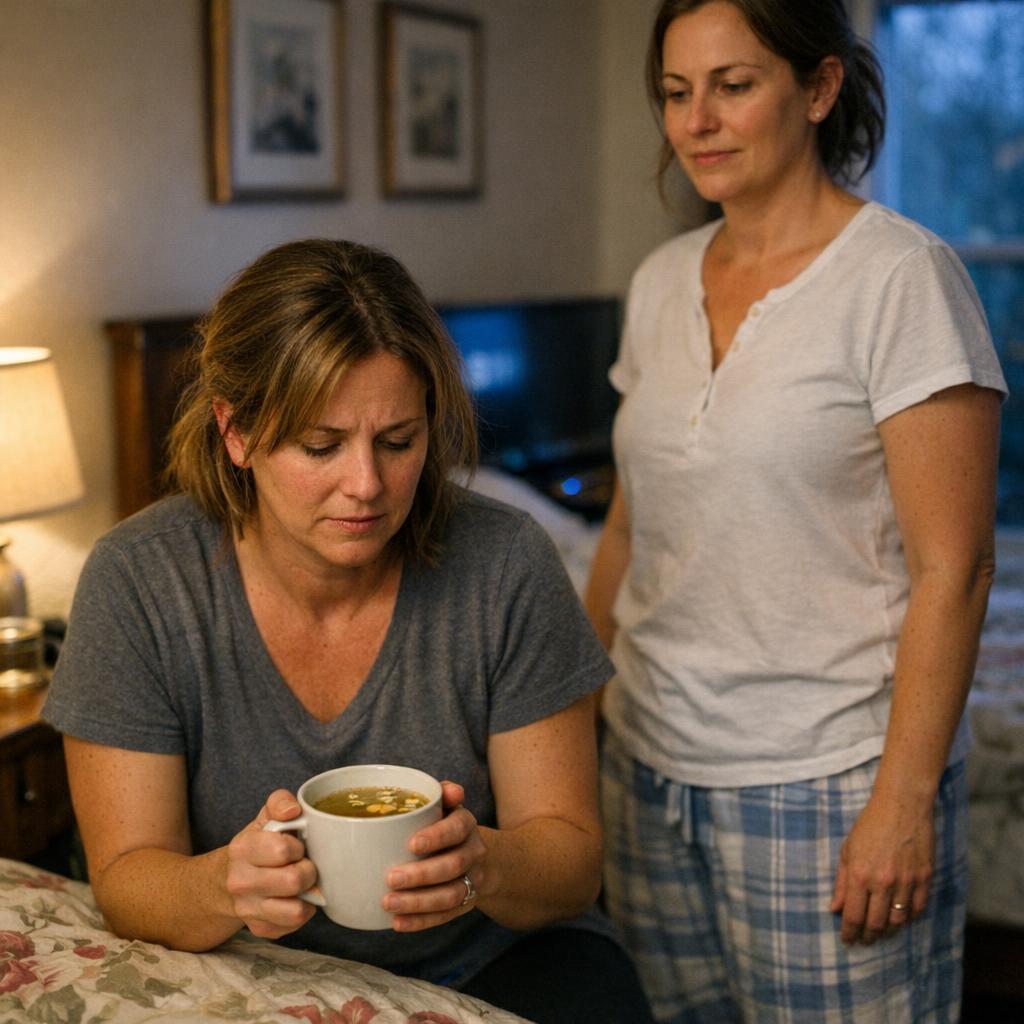 Image by RM AI
Meeting Detective Morales
The police station smelled like burnt coffee and industrial cleaner—exactly what you'd expect at 8:30 on a Tuesday morning. Detective Morales wasn't what I'd pictured; he was younger than me but with tired eyes that had clearly seen too much. His handshake was firm, his office cluttered but organized in a way that suggested method beneath the madness. "Mrs. Rowe," he said, gesturing for Tessa and me to sit, "I've reviewed the materials you sent." The way he said it—materials, not complaints or accusations—made my shoulders relax slightly. For the next hour, we walked him through everything: Maris's letter, the recordings, the porch camera footage of Darlene testing my doorknob at 2 AM. Detective Morales took meticulous notes, occasionally asking questions that revealed he'd already connected dots we hadn't even seen. "The county administrator's 'leave of absence' is just the beginning," he explained, leaning forward. "We're particularly interested in the staged fall incident. Elder abuse cases are priority for our department." When I asked if I could go home, his expression softened. "I'd recommend staying with your friend another night, Mrs. Rowe. Colton Caldwell seems to have... vacated his residence rather suddenly." The way he said it made my blood run cold. "Vacated?" Tessa asked sharply. Detective Morales closed his notebook. "His neighbor reported seeing him loading suitcases into his car around midnight. We're actively looking for him." As we left the station, I couldn't shake the feeling that while one threat might be temporarily gone, another was just beginning to take shape.
 Image by RM AI
The Legal Hold
Detective Morales called us back to the station three days later, his tired eyes now bright with something that looked like satisfaction. 'We've placed a legal hold on Mrs. Caldwell's property,' he announced, sliding a document across his desk. 'No sales, no transfers, nothing moves until our investigation concludes.' I felt a wave of relief wash over me – Maris's house would remain untouched, at least for now. But what he said next made my jaw drop. 'We found Mrs. Caldwell's original attorney, Mrs. Rowe.' He leaned forward, lowering his voice. 'Turns out Mr. Winters didn't just know "a guy" at the county office – he was the guy. He threatened to launch a full audit of the attorney's practice if he didn't drop Maris as a client.' Tessa gasped beside me. 'So he never retired?' 'Relocated,' Morales corrected. 'After receiving what he described as "concerning visits" from Mr. Winters and an associate.' I sat there, stunned at how elaborate the web of manipulation had been – how many people had been silenced, threatened, or pushed aside just so Colton and his accomplices could get their hands on one modest house on Juniper Hollow Drive. 'This is bigger than just family greed, isn't it?' I asked. Detective Morales nodded grimly. 'We're looking at potential elder abuse, fraud, intimidation, and possibly corruption charges.' He closed his folder with a snap. 'And Mrs. Rowe? We have reason to believe Colton may have been using his mother's property as collateral for something much more troubling than simple debt.'
 Image by RM AI
The Debt Revealed
Detective Morales called me the next morning, asking if I could come to the station again. 'We've uncovered some information about Colton's financial situation that you should know,' he said, his voice grave. When I arrived, he spread several documents across his desk—bank statements, loan agreements, and what looked like threatening text messages. 'Your neighbor's son wasn't just trying to cash in on his inheritance,' Morales explained. 'He was desperate.' Apparently, Colton had borrowed nearly $300,000 from Victor Harmon, a local businessman with known gambling connections, to start a high-end furniture import business. The business collapsed within eight months, but instead of filing for bankruptcy, Colton had convinced Harmon he could repay everything once he 'inherited' his mother's house. 'That's why he couldn't wait,' I whispered, the pieces finally clicking together. 'That's why he needed Maris to sign over partial ownership before she died.' Morales nodded grimly. 'We found evidence that Harmon was getting impatient. The last message he sent Colton read: "December deadline. Non-negotiable."' I felt sick realizing that Maris had died in early December—right when Colton's payment was due. 'Is Harmon dangerous?' I asked, my mouth suddenly dry. Detective Morales's expression told me everything I needed to know before he even spoke. 'Let's just say Mr. Harmon is now also under investigation, and we've assigned a patrol car to your street until we locate Colton.'
 Image by RM AI
Return to Juniper Hollow
After forty-eight hours of sleeping with one eye open at Tessa's, I finally returned to my house on Juniper Hollow Drive with Officer Ramirez as my escort. He methodically checked every room, closet, and even under my bed like we were playing some macabre game of hide-and-seek. "All clear, Mrs. Rowe," he said, handing me his card. "We'll have extra patrols in the area, and you call immediately if anything seems off." When his cruiser pulled away, I stood in my kitchen feeling like a stranger in my own home. Everything looked exactly as I'd left it—dishes in the drying rack, mail stacked on the counter, even my half-empty coffee mug from when Colton had arrived with his threats. And there it was—his apple pie still sitting on my counter, now dried out and sad-looking, a prop from a performance that had revealed the actor's true character. I wrapped it in a plastic bag and threw it in the trash, scrubbing my hands afterward as if they'd touched something contaminated. Standing at my kitchen window, I gazed across at Maris's empty house, its darkened windows like closed eyes. For decades, I'd found comfort in the predictable rhythms of Juniper Hollow Drive—the same neighbors, the same routines, the same sense of safety. Now I understood how thin that veneer of security had always been. As night fell, I double-checked every lock, set my new security system, and tried not to jump at every creak and groan of my old house settling. What terrified me most wasn't the thought of Colton returning—it was realizing how many secrets might be hiding behind all those other porch lights I'd thought I knew so well.
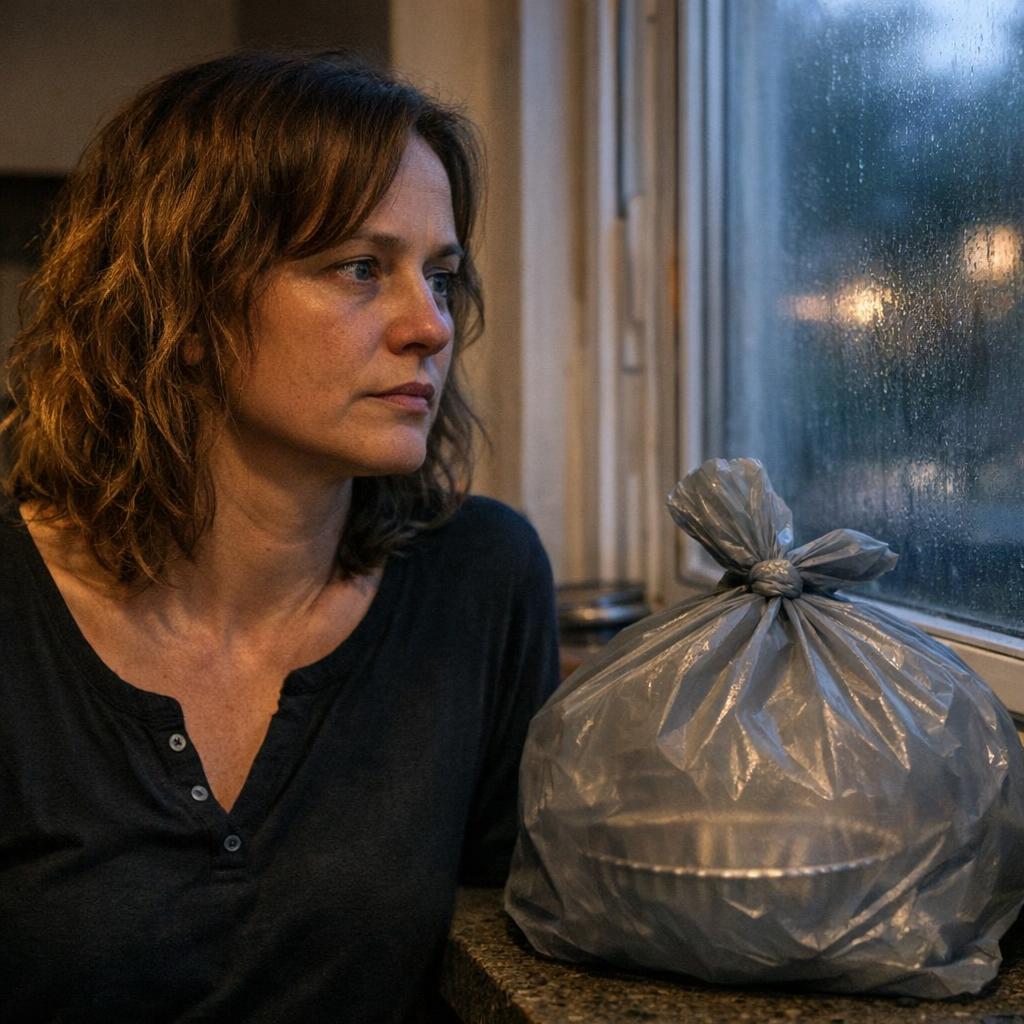 Image by RM AI
The Neighborhood Watches
News travels faster than wildfire on Juniper Hollow Drive. By noon the day after my return home, my doorbell had rung five times. First came Martha with her famous tuna casserole, eyes wide with concern that barely masked her curiosity. 'We're all just shocked, Jeanie,' she whispered, peering over my shoulder into my living room like she might spot Colton hiding behind my sofa. Then came the Hendersons with banana bread, the Wilsons with questions disguised as sympathy, and even Mr. Patel from three doors down who'd barely spoken ten words to me in fifteen years. 'The police car was here?' they all asked in slightly different ways. I found myself measuring my responses carefully, sharing just enough to satisfy without revealing details that weren't mine to tell. 'It's an ongoing investigation,' became my mantra, delivered with a tight smile that discouraged further probing. Standing on my porch watching Diane Forrester retreat with her barely-concealed disappointment and half-empty plate of snickerdoodles, I realized I was seeing my neighbors through Maris's eyes now. Which ones could I truly trust? Which smiles concealed calculation? Which offers of help came with strings attached? The street I'd known for decades suddenly felt like a stage where everyone—myself included—was playing a part. That evening, I noticed three different neighbors 'casually' walking their dogs past Maris's empty house, slowing to study its darkened windows. I wondered if they were genuinely concerned or just collecting material for their next phone call. The most unsettling part wasn't the investigation or even Colton's disappearance—it was discovering that after sixty-one years, I'd finally learned to question the very thing I'd always taken for granted: the safety of familiarity.
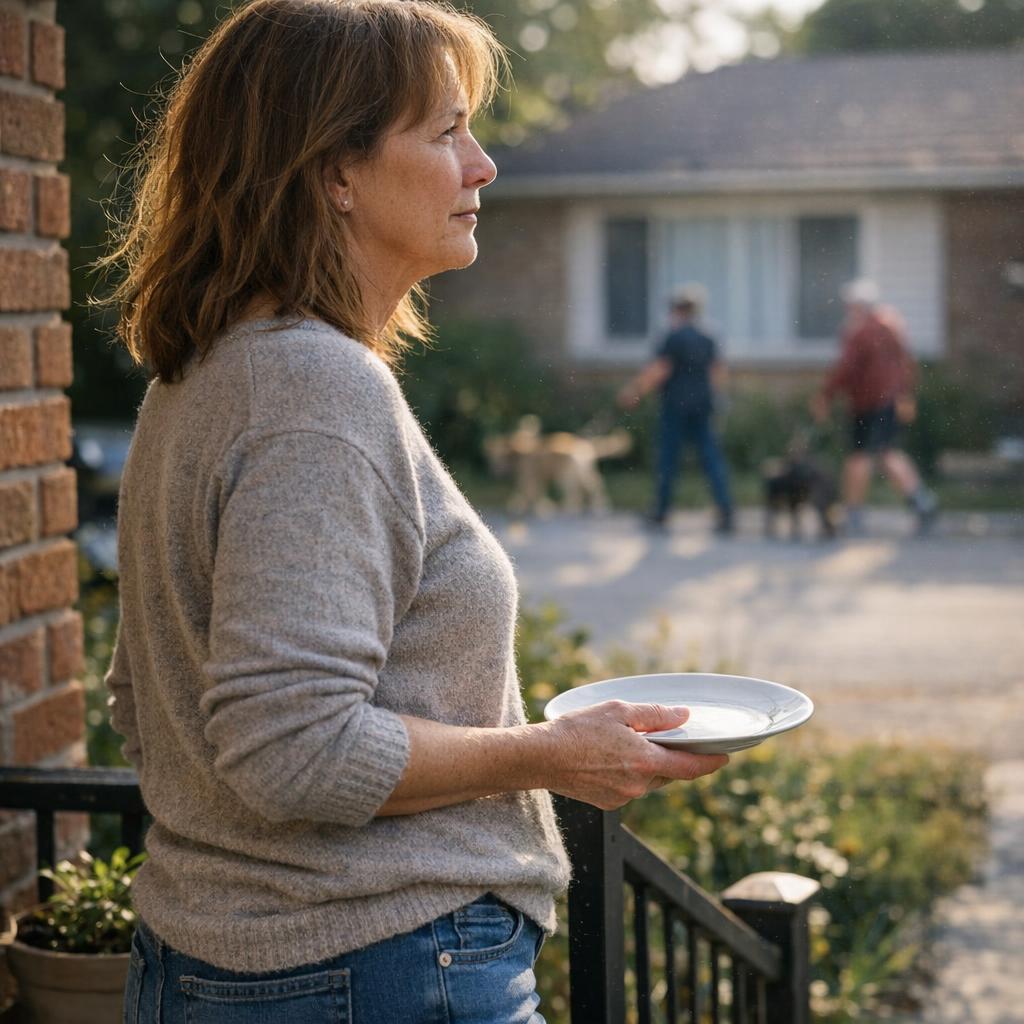 Image by RM AI
Colton's Capture
I was folding laundry when Tessa called, her voice breathless with excitement. 'They got him, Jeanie! Turn on Channel 7!' I fumbled for the remote, nearly knocking over my tea in the process. There he was—Colton Caldwell's mugshot filling my television screen, his practiced smile replaced by hollow-eyed defeat. The news anchor explained how border patrol had apprehended him trying to cross into Canada with fake identification and a suitcase full of valuables. 'He had Maris's jewelry,' Tessa added, her voice dropping to a whisper like someone might be listening. 'My contact at the station says they found her wedding rings, that antique brooch she always wore at Christmas, even the pearl earrings she inherited from her grandmother.' I sank onto my couch, a strange mixture of vindication and sadness washing over me. Those weren't just trinkets he'd stolen—they were pieces of Maris's history, memories she'd planned to pass down through generations. I remembered how she'd once shown me those pearls, telling me they'd survived two world wars and a house fire. 'What kind of son steals his dead mother's memories?' I asked, not really expecting an answer. The news cut to footage of Colton being led into the county jail, head down, shoulders hunched beneath his designer jacket. He looked smaller somehow, diminished without his confidence and charm to prop him up. Detective Morales appeared briefly on screen, his carefully measured statement revealing nothing while promising everything: 'This arrest is just the beginning of a much larger investigation.' I shivered, wondering exactly how deep this rabbit hole would go, and who else might be dragged into the light before it was over.
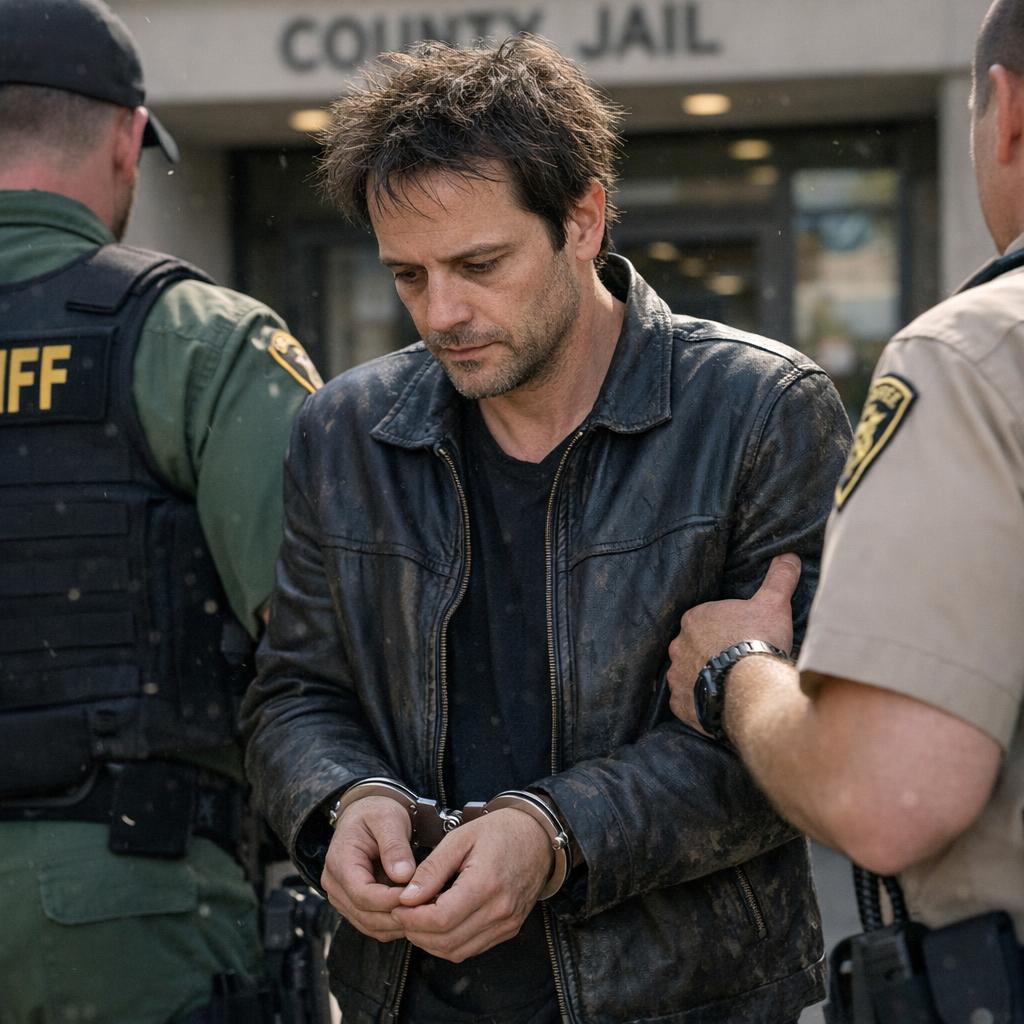 Image by RM AI
Darlene's Denial
I was folding sheets when the local news interrupted my afternoon show with 'breaking news.' There was Darlene, perfectly coiffed in a powder blue sweater set, dabbing at dry eyes with a pristine handkerchief. 'I had no knowledge of my nephew's actions,' she declared, her voice trembling just enough to seem authentic. 'I was simply trying to support Colton through his grief.' I nearly threw my remote at the TV. The performance was Oscar-worthy—the concerned aunt, the family protector, the innocent bystander. Two days later, Detective Morales invited me to the station and slid a manila folder across his desk. 'Thought you might want to see what we found,' he said quietly. Inside were transcripts of phone calls between Darlene and Colton, dated months before Maris's death. 'Once we get the old bat to sign,' Darlene had said, 'Harold can push the paperwork through before anyone notices.' In another, she'd laughed about how 'convenient' it was that I was 'too trusting to ask questions.' My hands shook as I read her explicit instructions on how to manipulate Maris's medication schedule to make her seem confused during attorney visits. Meanwhile, Harold had been placed on administrative leave from the county office, their country club membership had been 'temporarily suspended,' and three charity boards had quietly removed Darlene's name from their websites. The carefully constructed castle of respectability they'd built over decades was crumbling brick by brick. What terrified me most wasn't their schemes—it was realizing how completely I'd been fooled by people I thought I knew.
 Image by RM AI
The Medical Records
Detective Morales called me in again yesterday, his face grimmer than I'd ever seen it. 'Mrs. Rowe, we've subpoenaed Maris's medical records,' he said, sliding a thick folder across his desk. What I saw inside made my stomach turn. During Maris's 'recovery' from that supposed fall, she'd been prescribed a cocktail of medications that would have made a horse drowsy. 'These dosages are completely inappropriate for someone her age and weight,' Morales explained, pointing to highlighted sections. 'And guess who prescribed them?' The doctor's name—Dr. Lawrence Keller—meant nothing to me until Morales showed me a photo from the Oakridge Country Club newsletter. There was Dr. Keller, grinning broadly, his arm slung around Harold Winters's shoulders as they held up a trophy from some charity golf tournament. 'They've been friends for fifteen years,' Morales said quietly. I suddenly remembered visiting Maris during that time—how she'd struggled to finish sentences, how her hands trembled when reaching for her tea cup, how she'd sometimes look at me with momentary confusion before recognition dawned. 'She told me the pills made her foggy,' I whispered, tears burning my eyes. 'I thought it was just normal side effects.' The realization hit me like a physical blow: while I'd been bringing her soup and checking her mail, Maris had been systematically drugged into compliance by people who were supposed to protect her. And I—the neighbor who prided herself on noticing everything—had completely missed the signs that my friend was being medically abused right before my eyes.
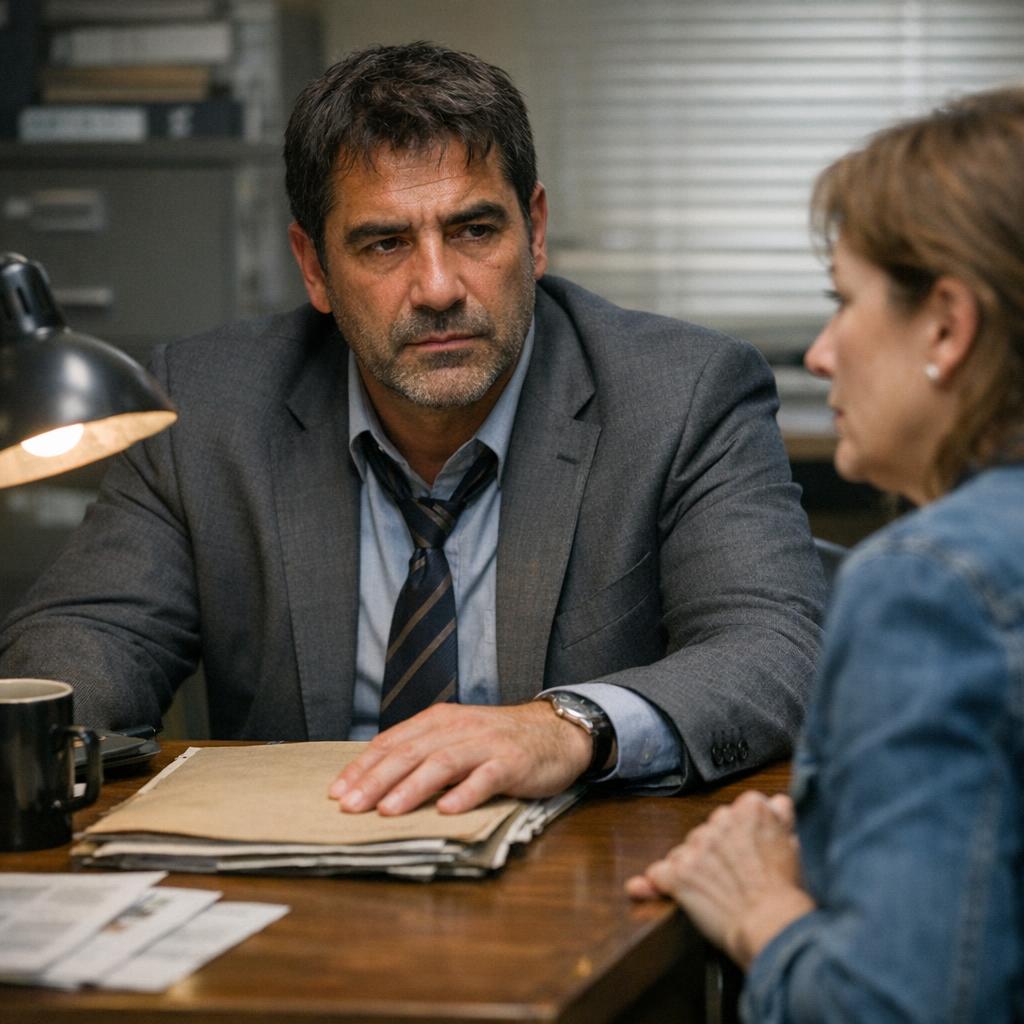 Image by RM AI
Maris's Grandchildren
The doorbell rang just after lunch on Thursday, startling me so badly I nearly dropped my teacup. I wasn't expecting visitors, and these days, unexpected visitors made my heart race. When I peered through the peephole, I saw three unfamiliar faces—a woman in her forties with tired eyes and two teenagers who bore an unmistakable resemblance to Maris. 'I'm Vanessa,' the woman said when I cautiously opened the door. 'Colton's ex-wife. These are Emma and Tyler... Maris's grandchildren.' The girl—Emma—had Maris's same heart-shaped face and determined chin. Tyler had her eyes, those gentle hazel pools that always seemed to notice everything. 'We've been following everything online,' Vanessa explained, her voice tight with emotion. 'Colton told us Maris was becoming senile, that she couldn't handle visitors. He limited their time with her to supervised visits every few months.' Emma stepped forward, tears brimming. 'We knew something was wrong. Grandma always remembered everything about us, but suddenly Dad was saying she couldn't even remember our birthdays.' My heart shattered as Tyler added quietly, 'The last time we saw her, she tried to slip me a note, but Dad caught her and said she was just confused.' I invited them in, watching as they moved tentatively through my living room, these three strangers connected to Maris by blood but disconnected from her final months by calculated lies. As I prepared tea with shaking hands, I realized I wasn't just a keeper of Maris's final message anymore—I was now the bridge between these children and the grandmother who had desperately tried to reach them before it was too late.
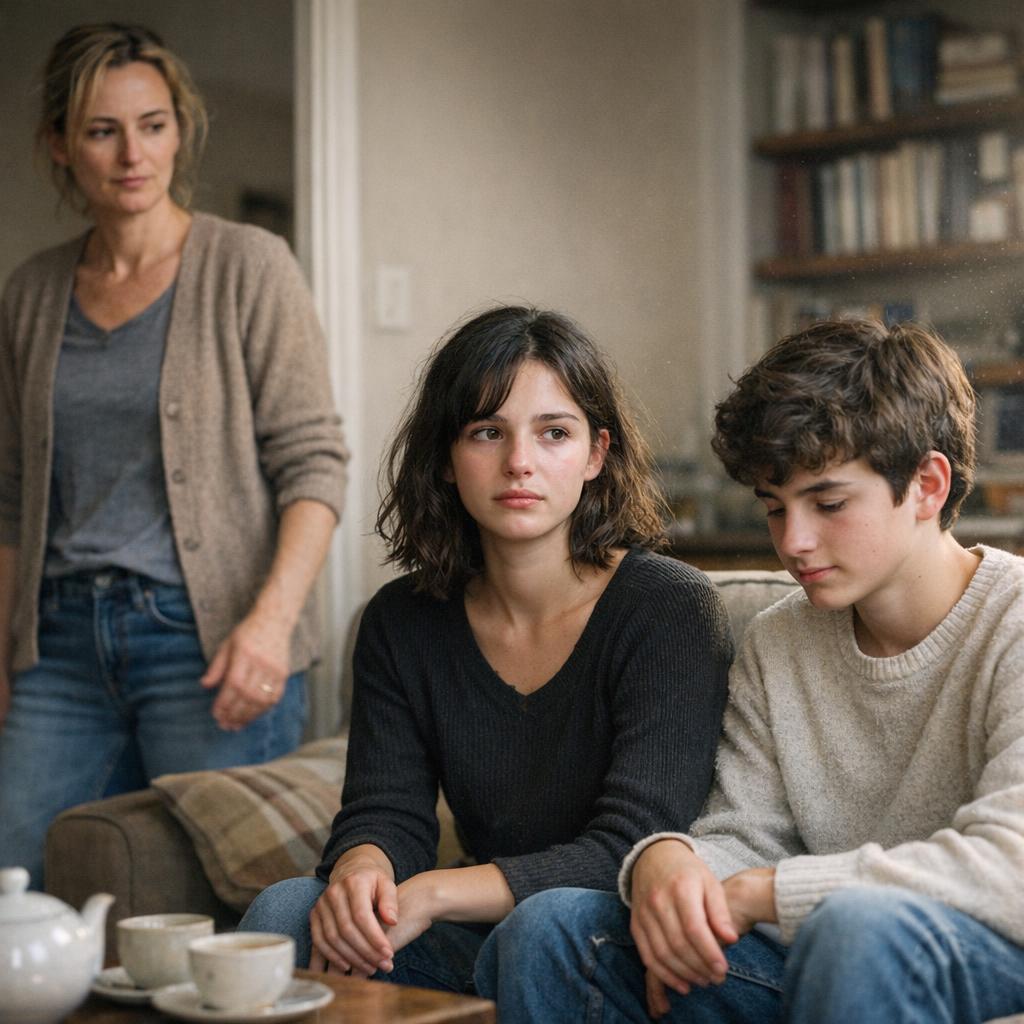 Image by RM AI
The Will Reading
The law office of Greenfield & Associates felt too warm and stuffy as I sat beside Tessa, clutching my purse like it might float away if I loosened my grip. Across the polished mahogany table, Darlene perched stiffly in her chair, her eyes fixed on some invisible point on the wall behind the attorney's head. She hadn't acknowledged my presence once, though her rigid posture screamed volumes about her fury. Mr. Greenfield—Maris's original attorney who'd been 'relocated' by Harold's threats—cleared his throat and began reading in that formal, measured tone lawyers seem to perfect in law school. 'To my grandchildren, Emma and Tyler, I establish trust funds of $50,000 each for their education...' I watched as Darlene's jaw tightened, her knuckles whitening around her designer handbag. When Mr. Greenfield announced that Maris's house—the very property Colton had schemed so desperately to control—was being donated to New Beginnings Women's Shelter, I heard Darlene's sharp intake of breath. Then came the part that made my own breath catch: 'To my dear neighbor Jeanie Rowe, I leave my complete set of gardening tools and the rose bushes along our shared fence line.' Mr. Greenfield handed me a sealed envelope. 'Mrs. Caldwell included this personal note as well.' Inside was a card with Maris's familiar looping handwriting: 'Thank you for being a true neighbor when others were merely playing the part. The best gardens grow from honesty and care, not obligation.' I pressed the card to my chest, fighting tears, while across the table, Darlene finally met my eyes with a look of such pure hatred that I understood immediately—this wasn't over, not by a long shot.
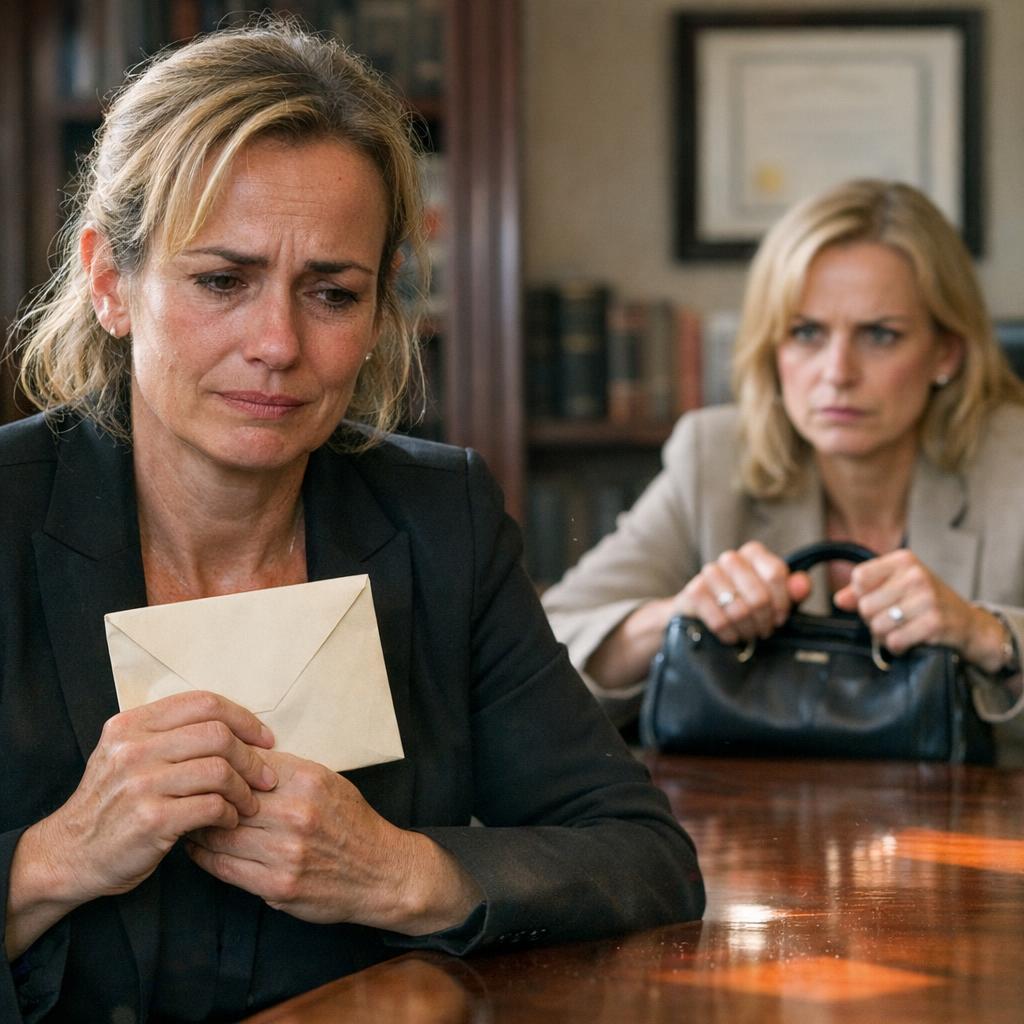 Image by RM AI
Colton's Plea Deal
Detective Morales called me on a rainy Tuesday morning, his voice carrying a mix of satisfaction and weariness. 'Mrs. Rowe, I thought you'd want to know—Colton's taken a plea deal.' I sank into my kitchen chair, fingers tightening around my coffee mug. 'What does that mean exactly?' I asked. Morales explained that Colton had agreed to admit to elder abuse, fraud, and attempted theft in exchange for a reduced sentence. 'But here's where it gets interesting,' he continued, his voice dropping slightly. 'He's rolling over on everyone—Harold Winters, Dr. Keller, even Victor Harmon.' My stomach tightened as Morales revealed that Maris hadn't been their only victim. Apparently, Colton's testimony was exposing a sophisticated scheme targeting at least seven other seniors in our county—all property owners without close family supervision. 'They called it "The Golden Harvest,"' Morales said with disgust evident in his voice. 'They specifically looked for elderly homeowners who seemed isolated or vulnerable.' I thought about all the quiet, elderly neighbors on our street—how many of them might have been next? The detective promised to keep me updated as the investigation expanded. After hanging up, I stood at my kitchen window, watching rain streak down the glass and blur the outline of Maris's empty house. I couldn't help but wonder: if Maris hadn't been brave enough to create that envelope, how many more lives would have been quietly dismantled by people wearing masks of concern?
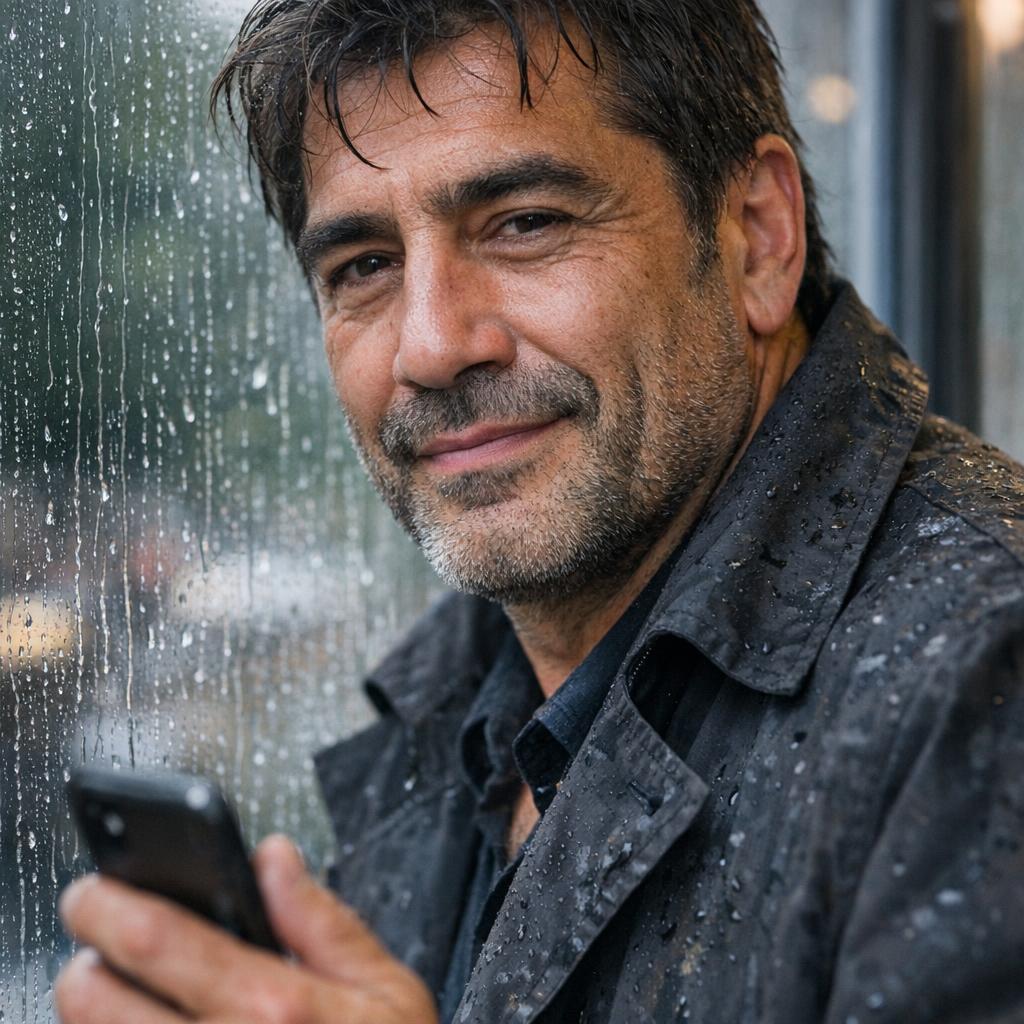 Image by RM AI
The Support Group
I never thought I'd be the type to sit in a church basement drinking bad coffee with strangers, but here I was, clutching a styrofoam cup while Tessa beamed at me like a proud parent. 'Just try it once,' she'd insisted for weeks. 'You're not alone in this.' The circle of metal folding chairs held only five people that Tuesday evening—myself, the group facilitator (a soft-spoken social worker named Diane), and three others who looked as uncomfortable as I felt. Patricia spoke first, a silver-haired woman with perfectly manicured nails that tapped nervously against her purse. 'My mother was 78 when that so-called financial advisor convinced her to restructure her retirement,' she said, voice trembling. 'He was connected to Harold Winters at the county office.' My head snapped up at the familiar name. As Patricia described the elaborate scheme—the missing statements, the 'courtesy visits' that always happened when family wasn't around—I felt a chill of recognition. Then Robert, a man about my age, shared how his uncle's caregiver had slowly isolated him from family while a 'helpful neighbor' convinced him to add names to his deed. By the time Elaine described her sister's experience with a doctor who kept increasing medication dosages after consultations with 'concerned family members,' I couldn't breathe properly. These weren't just similar stories—they were virtually identical playbooks. 'They target people who have property but limited social connections,' Diane explained gently. 'It's a predatory network, not random opportunists.' Walking to the car afterward, Tessa squeezed my arm. 'See? Maris wasn't just a victim—she was a whistleblower.' I nodded, my mind racing with a terrifying question: how many other Marises were out there right now, trying desperately to leave breadcrumb trails before their voices were silenced?
 Image by RM AI
Cleaning Maris's Garden
The attorney gave me permission to tend to Maris's garden before the women's shelter took ownership. It felt right somehow, using the gardening tools she'd left me—her final gift connecting us even after she was gone. I arrived early on Saturday, dew still clinging to the overgrown roses along our shared fence. I'd barely started when a car pulled up and out tumbled Emma and Tyler, Maris's grandchildren, eager to help. 'We brought gloves,' Emma announced, holding up a pair too large for her slender hands. As we worked side by side, pulling weeds and pruning dead branches, the kids peppered me with questions about their grandmother. 'Did she still make those lemon cookies?' Tyler asked. 'The ones with the powdered sugar that got everywhere?' I nodded, remembering how Maris would bring them over still warm from the oven. While Tyler cleared fallen leaves, Emma knelt beside me, her voice dropping to a whisper. 'Grandma never forgot us, you know. She sent us letters—secret ones.' My hands stilled on the pruning shears. 'Dad intercepted most of them,' she continued, 'but I found one hidden in a birthday card he didn't check carefully enough.' She pulled a folded paper from her pocket, creased and worn from countless readings. 'She wrote that no matter what Dad said about her memory, she would never forget us.' I blinked back tears, imagining Maris at her writing desk, desperately trying to maintain the connection Colton was determined to sever. What broke my heart most wasn't just the cruelty of keeping grandchildren from their grandmother—it was realizing how many other secret messages Maris might have sent that never reached their destination.
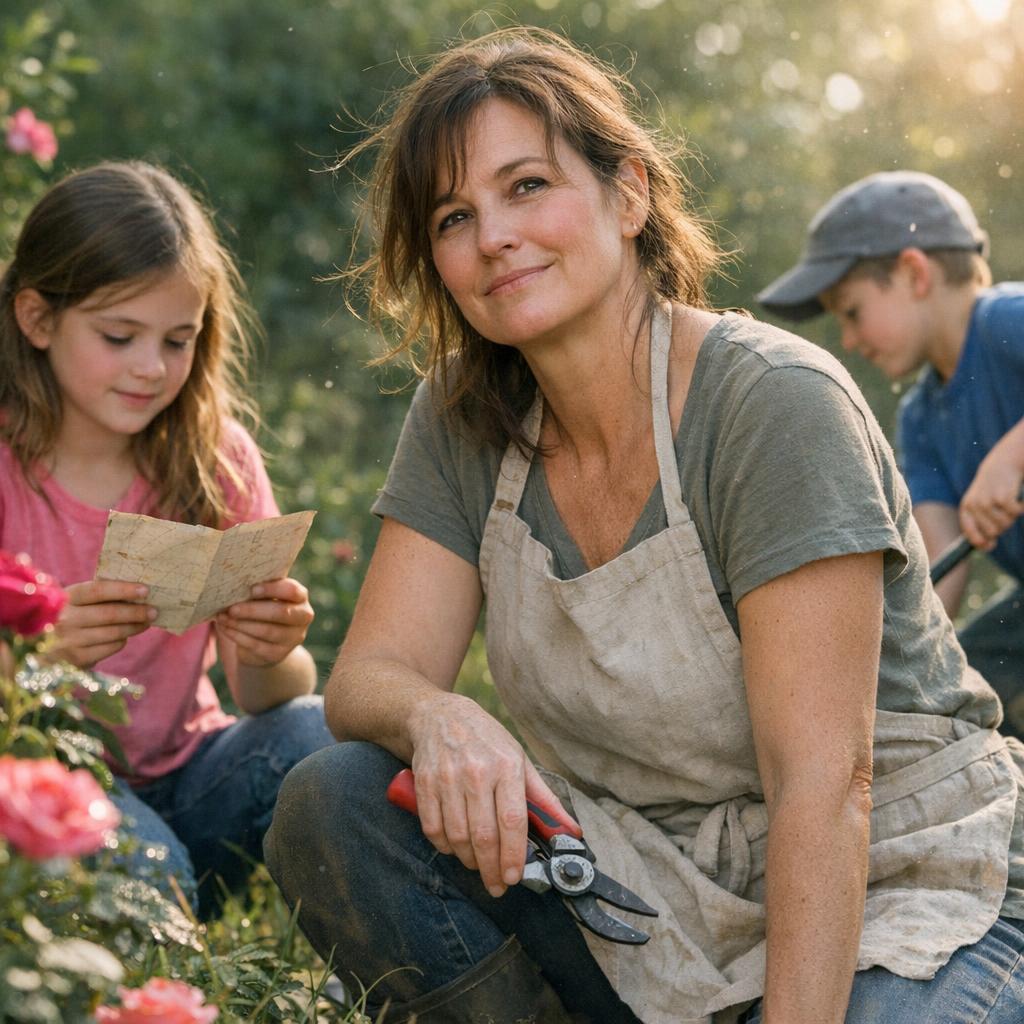 Image by RM AI
The Hidden Letters
"Do you think..." Emma hesitated, twisting a strand of hair around her finger. "Do you think we might find more of Grandma's letters in the house?" I glanced at the attorney's permission slip in my hand, then at these two kids who'd lost so much more than just their grandmother. "Let's find out," I said. The next morning, we entered Maris's house together, the air stale and heavy with absence. While Tyler examined framed photos he barely remembered being taken, Emma and I methodically searched drawers and cabinets. Nothing. Then, as I helped Emma reach a high shelf in the bedroom closet, my fingers brushed against something odd—a slight gap in the wood paneling. "There's something here," I whispered, pressing until we heard a soft click. A hidden compartment slid open, revealing a stack of envelopes tied with faded blue ribbon. "To Emma and Tyler," each one read in Maris's distinctive handwriting. We sat cross-legged on her bedroom floor as the children opened letter after letter—dozens of them, spanning months. "Remember how the roses bloomed late last year?" Maris had written. "Some beautiful things take time, just like the truth." In another: "No matter what your father says about my memory, I remember every moment with you both." Between garden updates and grandmother wisdom were carefully worded warnings: "Be careful who you trust with your treasures." As Emma read aloud, her voice breaking, I watched Tyler silently trace his grandmother's handwriting with his fingertip, as if trying to feel her presence through the paper. What broke my heart wasn't just the letters that never reached these children—it was wondering how many other voices had been silenced by people who claimed to love them.
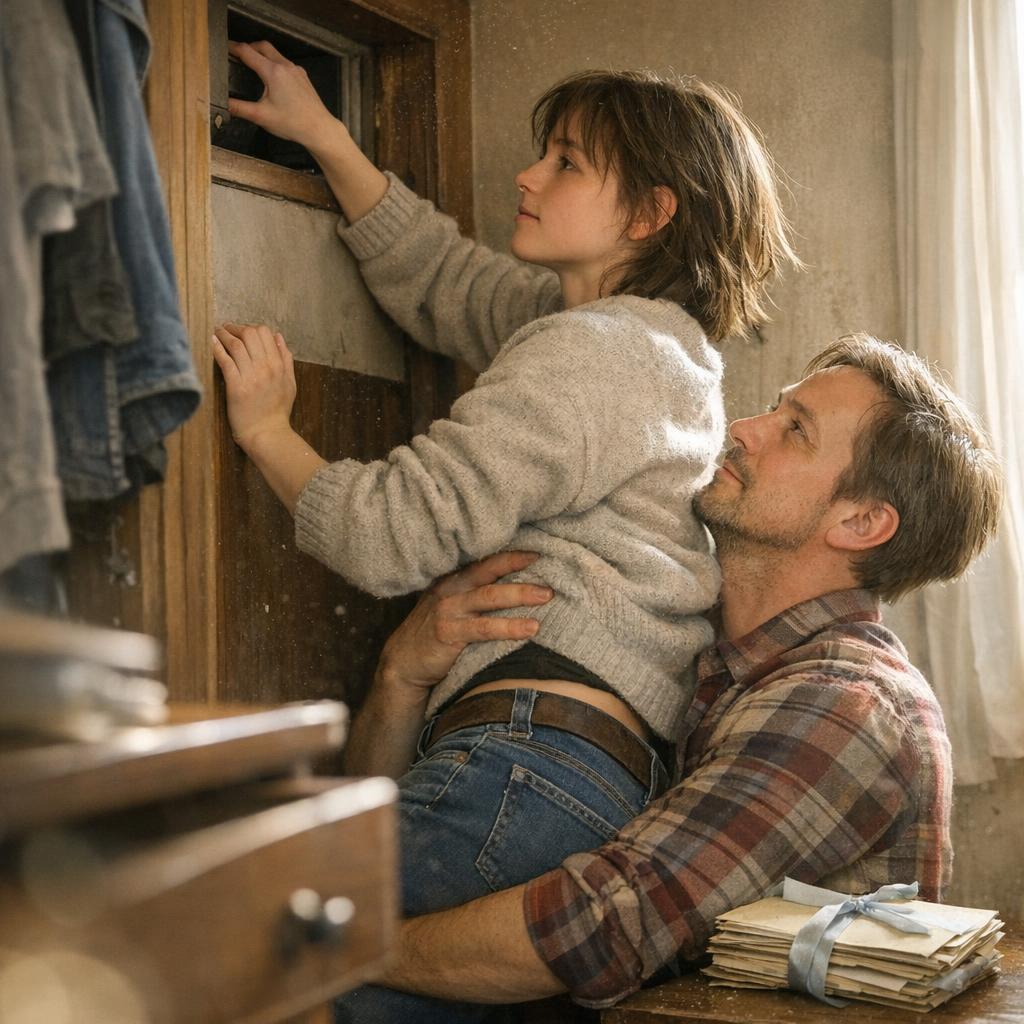 Image by RM AI
Darlene's Downfall
I was watering my front yard petunias when the news alert pinged on my phone. There it was in bold letters: 'Local Socialite Darlene Winters Charged as Co-Conspirator in Elder Fraud Scheme.' I nearly dropped the watering can. Within hours, our neighborhood group chat exploded with messages from people who'd just months ago been posting photos from Darlene's charity luncheons. 'I always thought something was off about her,' wrote Martha, who'd attended Darlene's Christmas party for fifteen straight years. 'Those eyes never smiled when her mouth did,' added Tom, who'd accepted landscaping awards alongside her at garden club. The next morning, I watched through my kitchen window as Darlene emerged from her house, designer sunglasses hiding her eyes even though the day was overcast. She carried expensive luggage to her Mercedes while her husband Harold loaded boxes into the trunk. Not a single neighbor came to help or say goodbye. Three days later, a 'For Sale' sign appeared on their manicured lawn, the same lawn where they'd hosted Fourth of July parties and Easter egg hunts for decades. I couldn't help but feel a strange mixture of satisfaction and sadness watching her carefully constructed life disintegrate. The woman who'd once judged everyone's holiday decorations and corrected pronunciations at book club was now fleeing in disgrace, leaving behind nothing but whispers and a property listing that described her home as having 'good bones'—ironic, considering all the skeletons that had been hiding in her closets.
 Image by RM AI
The County Investigation
I never imagined my quiet life on Juniper Hollow Drive would lead to me standing behind a podium at the county courthouse, my hands trembling as I adjusted the microphone. 'My name is Jeanie Rowe,' I began, my voice steadier than I felt. 'And my neighbor trusted me with her truth when everyone else was trying to silence her.' The room was packed—concerned citizens, reporters, and a row of stone-faced county officials who'd authorized the special task force investigating Harold Winters. Detective Morales sat in the front row, nodding encouragingly as I described the envelope, the recordings, the carefully orchestrated isolation that had nearly erased Maris's voice. 'Seven other victims,' he'd told me earlier that morning. 'All seniors, all homeowners, all manipulated through the same county office.' After my testimony, an elderly man approached me with tears in his eyes. 'They did the same thing to my sister,' he whispered. 'Nobody believed her either.' Walking to my car afterward, I noticed a familiar-looking woman hurrying away, her face half-hidden behind large sunglasses. It took me a moment to place her—she'd been Harold Winters' secretary for years. The way she clutched her purse to her chest made me wonder: was she running from something, or was she finally ready to share what she knew?
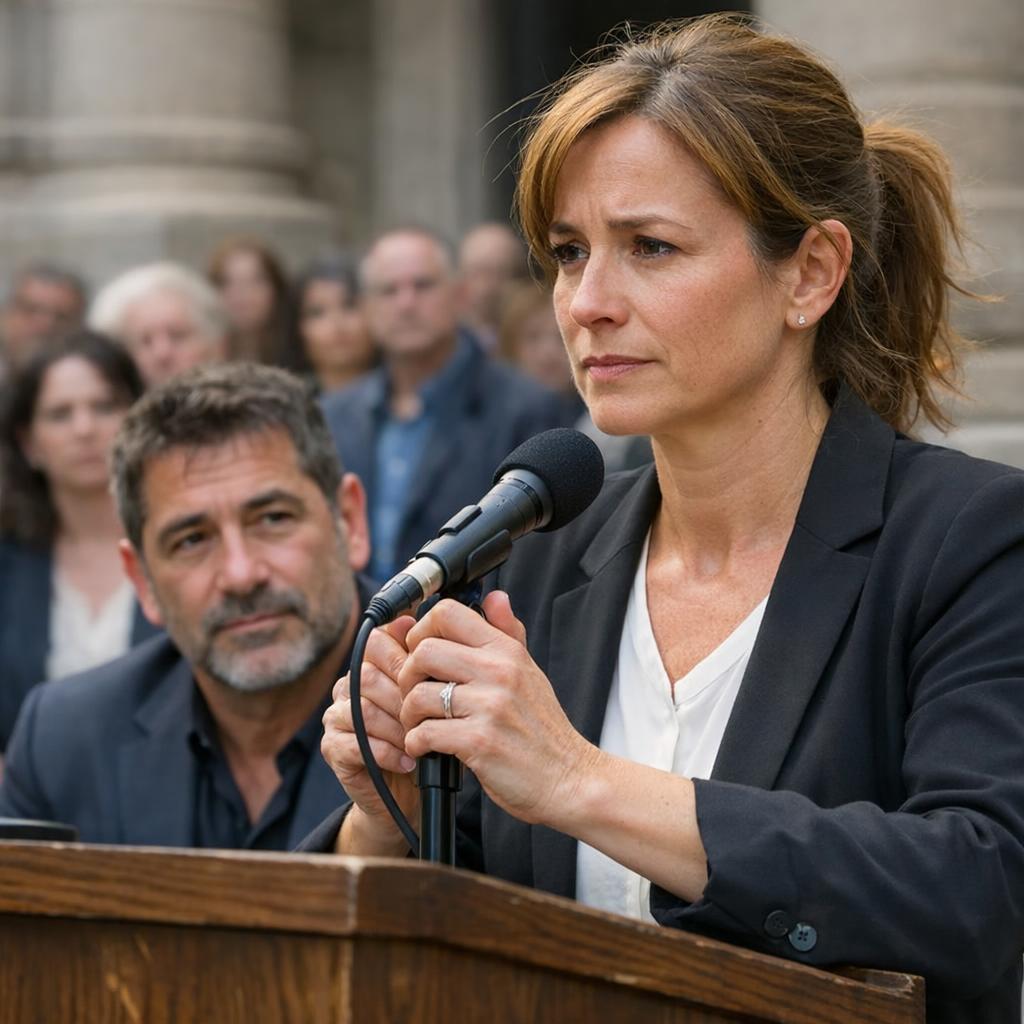 Image by RM AI
The Community Meeting
The community center's fluorescent lights buzzed overhead as I adjusted the microphone, my heart hammering against my ribs. 'My name is Jeanie Rowe,' I began, my voice wavering slightly. 'I'm here because my friend Maris couldn't be.' Sixty pairs of eyes stared back at me—mostly seniors, some adult children, a few social workers scribbling notes. I'd never been comfortable with public speaking, but Maris's story deserved to be heard. As I described the envelope, the recordings, the manipulation, heads began nodding in recognition. When I finished, hands shot up around the room. 'My daughter keeps asking me to add her to my deed—for convenience,' one woman said, her voice trembling. 'My nephew offered to manage my finances after my husband died,' added another. 'He got angry when I refused.' The elder law attorney who spoke after me, Ms. Patel, distributed bright yellow folders filled with resources. 'Financial abuse leaves fingerprints,' she explained, pointing to a checklist of warning signs. 'Isolation is always the first step.' Walking to my car afterward, an elderly man with a cane stopped me. 'I canceled my appointment to sign over my house tomorrow,' he whispered, clutching my hand. 'You saved me today.' I drove home with tears blurring my vision, realizing that Maris's final act of courage wasn't just saving herself—it was creating ripples that would protect countless others who might have become the next perfect targets.
 Image by RM AI
The Women's Shelter
The email from New Beginnings Women's Shelter arrived on a Tuesday morning, asking if I'd be willing to tour their facility and discuss plans for Maris's house. I agreed immediately, my heart both heavy and hopeful. When I arrived at their current location—a converted office building with security cameras and keypad entries—I was greeted by Elena, the program director, whose warm smile couldn't quite hide the shadows under her eyes. 'We're at capacity,' she explained, leading me through hallways where women nodded politely as we passed. 'Maris's gift couldn't have come at a better time.' In a small conference room, Elena spread out architectural drawings showing how they planned to convert Maris's three-bedroom home into transitional housing specifically for older women escaping abuse. 'We're calling it Maris's Haven,' she said, her voice softening. 'Would that be alright?' I nodded, unable to speak past the lump in my throat. Then Elena asked the question that broke me open: 'We noticed the beautiful garden. The women always find peace in growing things. Would you consider helping us establish something similar there? Maybe using Maris's tools, perhaps some cuttings from her plants?' I pictured Maris's roses blooming along a fence where frightened women might sit in the sunshine, finding moments of peace. 'She'd love that,' I whispered. 'She always said gardens were places where broken things come back to life.' What I didn't tell Elena was how desperately I needed this too—a way to transform Maris's tragedy into something that might help heal others who'd been silenced just like her.
 Image by RM AI
The Trial Begins
The courthouse steps felt like a mountain to climb that Monday morning. I gripped Tessa's arm as we navigated through a gauntlet of news vans and reporters shouting questions. 'Mrs. Rowe! How does it feel to be the whistleblower?' I kept my head down, focusing on the marble steps beneath my sensible shoes. Inside, the courtroom was all polished wood and tension thick enough to slice. Harold Winters sat at the defense table in an expensive suit that couldn't hide how small he suddenly looked. When Colton took the stand, I barely recognized Maris's son—jail had hollowed his cheeks and dimmed that charming smile he'd once flashed on my doorstep. 'It was called Operation Golden Harvest,' he testified, his voice flat as he described how they'd identified 'ideal targets'—seniors with equity-rich homes and limited family oversight. My stomach turned when he detailed how Dr. Keller would gradually increase medication dosages to make victims appear confused to their families. 'And Mr. Harmon?' the prosecutor asked. 'He provided the financial pressure,' Colton explained. 'I owed him from some bad investments. He said taking my mother's house would make us even.' During a recess, a young reporter cornered me near the restrooms. 'Your story could help so many people,' she insisted, holding out her business card. I tucked it into my purse without committing. Some truths deserve to be shared, but others—like the way Maris's voice shook on those recordings when she realized her own son was betraying her—those belong to the dead, not to the evening news. What haunts me most isn't the elaborate scheme they've outlined in court documents and testimony—it's wondering how many other Marises are out there right now, trying desperately to leave evidence before their voices are silenced forever.
 Image by RM AI
Maris's Haven
The morning of the ribbon-cutting ceremony dawned with the kind of perfect sunshine that feels like a blessing. Six months after Maris's death, her home had transformed into something beautiful and purposeful—a safe haven for senior women escaping manipulation and abuse. I stood on the freshly painted porch of 'Maris's Haven,' my throat tight with emotion as Elena welcomed the small crowd gathered on the lawn. The roses I'd transplanted from Maris's garden now lined the walkway, their blooms nodding in the gentle breeze like silent witnesses to this moment of redemption. 'My grandmother would have loved this,' Emma whispered beside me, her brother Tyler nodding in agreement as they clutched hands. I'd spent countless weekends here, directing volunteers on where to plant Maris's beloved perennials, showing them how to use her gardening tools properly. The backyard now featured raised beds accessible to those with mobility issues, a meditation bench beneath the old maple tree, and wind chimes that sang with the slightest breeze. Inside, three private bedrooms waited for their first residents—women who, like Maris, had faced betrayal from those they should have been able to trust. As Elena cut the ribbon and invited everyone inside for refreshments, I lingered in the garden, running my fingers over the handle of Maris's favorite trowel. 'We did it,' I whispered, hoping somehow she could hear me. What I didn't tell anyone was that I'd secretly planted forget-me-nots beneath every window—a private message to the friend whose final act of courage had created ripples none of us could have imagined.
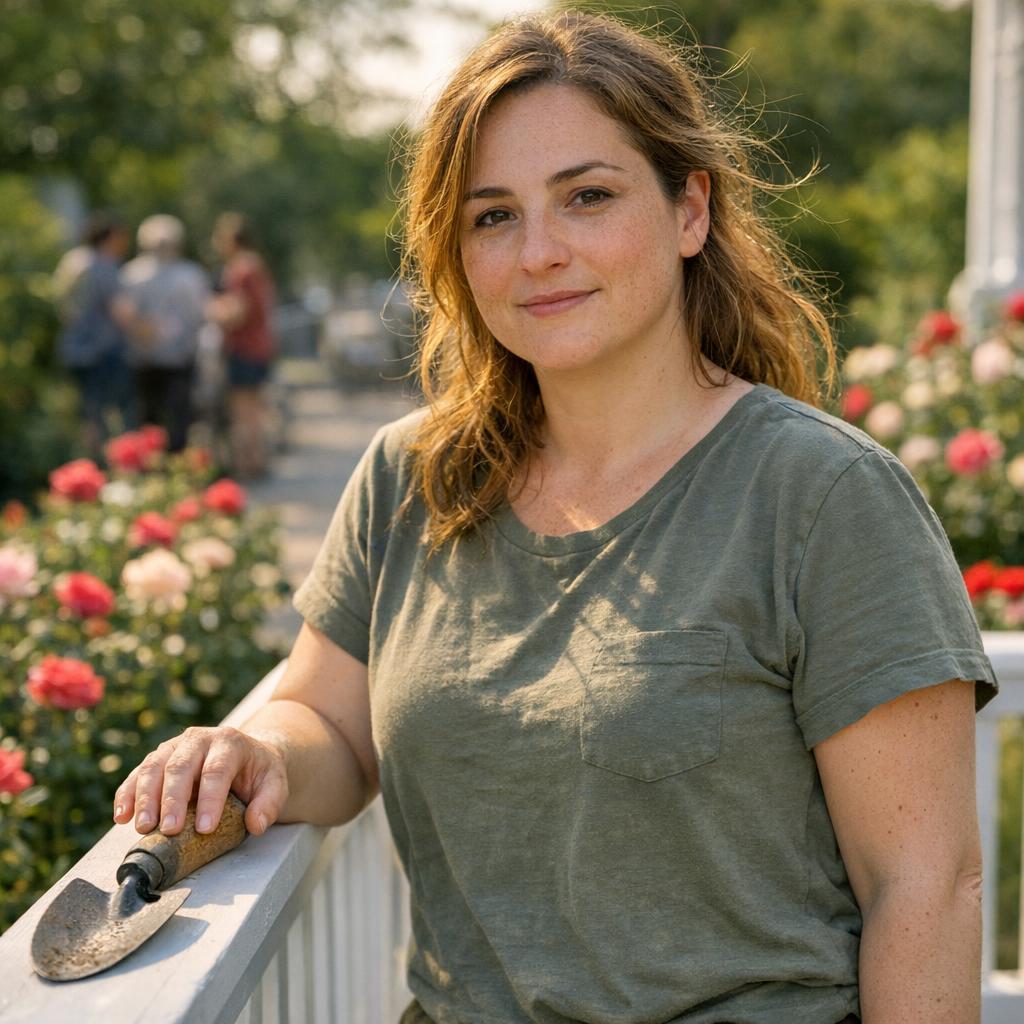 Image by RM AI
The Verdicts
The courtroom fell silent as Judge Harrington adjusted his glasses, his stern gaze sweeping over the defendants. I gripped Tessa's hand so tightly my knuckles turned white. 'In my thirty years on the bench,' he began, 'I've rarely seen such calculated cruelty disguised as family concern.' One by one, the verdicts came down like hammer blows. Harold Winters: guilty on all counts. Victor Harmon, the businessman who'd pressured Colton: guilty. When Darlene's sentence was announced—harsher than her son's despite her similar plea deal—she crumpled in her designer suit, mascara tracking down her face. 'The court notes the defendant's continued lack of remorse and failure to cooperate fully,' the judge stated, his voice cutting through her theatrical sobs. I felt no satisfaction watching these people's lives implode, only a hollow ache where anger had lived for months. Outside on the courthouse steps, Emma and Tyler stood waiting, their young faces solemn but unburdened. 'Grandma got her justice,' Emma whispered, leaning against my shoulder. I nodded, unable to speak past the lump in my throat. Justice for Maris felt like closing a book that was missing its final chapter—the one where she got to see her grandchildren grow up, where she tended her garden for many more seasons, where she lived the peaceful retirement she'd earned. As reporters swarmed around us shouting questions, I couldn't help wondering: how many families across our county were sitting down to dinner tonight, unaware that the person passing the potatoes was calculating the value of their home?
 Image by RM AI
One Year Later
It's been a year since Maris left us, and Juniper Hollow Drive feels like a different street entirely. The 'For Sale' sign on Darlene's lawn is long gone, replaced by a young couple with twins who've painted the shutters a cheerful yellow—erasing that cold, perfect aesthetic Darlene maintained for appearances. Maris's house, now officially 'Maris's Haven,' has welcomed four women in the past year, each one finding their footing after situations that mirror what Maris endured. I've watched Emma and Tyler blossom too. They visit me every other Sunday, helping me deadhead roses and sharing stories about their lives now that they're free from Colton's manipulations. 'Dad's letters from prison always ask for money,' Emma told me last week, rolling her eyes while repotting one of Maris's orchids I'd saved. 'We don't even open them anymore.' My kitchen table has become command central for the county's elder abuse prevention task force—a position I never imagined for myself at 61. 'You speak their language,' Detective Morales told me when he recruited me. 'You're the bridge between victims and the system.' Sometimes when I'm watering my garden in the evening, I catch myself looking over at Maris's old bedroom window, half-expecting to see her silhouette. The street knows different porch lights now, different dogs bark at different squirrels, but some things remain constant: I still know which neighbors bring casseroles when life falls apart. The difference is, now I understand that sometimes the most dangerous predators aren't strangers—they're the ones who know exactly which key fits your front door.
 Image by RM AI
The Envelope Ornament
December 7th marked one year since Maris left us. The morning was crisp, the kind of cold that seeps into your bones and reminds you that some absences never really warm up. I stood at her grave with an envelope-shaped ornament I'd crafted from copper wire and small beads that caught the winter sunlight. It wasn't fancy—just a simple outline of the thing that changed everything. "I kept my promise," I whispered, placing it carefully against her headstone. The cemetery was empty except for a groundskeeper in the distance, which felt right somehow. This moment wasn't for show. Walking back through Juniper Hollow Drive, I found myself cataloging details I'd never noticed before—the Hendersons' doorbell camera angled toward their walkway, Mrs. Patterson checking Mr. Abernathy's curtains to make sure they'd opened (their signal that he's okay), the three houses that keep porch lights burning all night. I'm not the same woman who once thought good fences make good neighbors. Now I know the truth: good neighbors watch the fences for cracks where predators might slip through. When Emma texted to ask if I'd visited her grandmother's grave, I sent her a photo of the ornament. "Perfect," she replied. "Dad's appeal was denied yesterday. Thought you should know." I smiled at my phone, thinking how Maris would appreciate the timing—her quiet justice still working its way through the world, even from beyond the grave. What she never could have predicted was how her final act of courage would transform me from a woman who baked welcome cookies into someone who now teaches a monthly workshop called "Trust Your Instincts" at the senior center.
 Image by RM AI
KEEP ON READING
The 20 Most Recognized Historical Figures Of All Time
The Biggest Names In History. Although the Earth has been…
By Cathy Liu Oct 4, 2024
10 of the Shortest Wars in History & 10 of…
Wars: Longest and Shortest. Throughout history, wars have varied dramatically…
By Emilie Richardson-Dupuis Oct 7, 2024
10 Fascinating Facts About Ancient Greece You Can Appreciate &…
Once Upon A Time Lived Some Ancient Weirdos.... Greece is…
By Megan Wickens Oct 7, 2024
20 Lesser-Known Facts About Christopher Columbus You Don't Learn In…
In 1492, He Sailed The Ocean Blue. Christopher Columbus is…
By Emilie Richardson-Dupuis Oct 9, 2024
20 Historical Landmarks That Have The Craziest Conspiracy Theories
Unsolved Mysteries Of Ancient Places . When there's not enough evidence…
By Megan Wickens Oct 9, 2024
The 20 Craziest Inventions & Discoveries Made During Ancient Times
Crazy Ancient Inventions . While we're busy making big advancements in…
By Cathy Liu Oct 9, 2024