


The Weight I Carry
My name is Zahra. At seventy-five, I sit on my porch in our small Moroccan village, watching the sunset paint the sky in hues of orange and pink. My adopted children bring me mint tea as their children play in the dusty courtyard. They see only a frail grandmother with weathered hands and a gentle smile. What they don't see is the weight I've carried inside me for nearly half a century—a secret so profound it has shaped my entire existence. As I rock gently in my chair, memories flood back like the seasonal rains, washing over me with both comfort and pain. I touch my abdomen absently, feeling the phantom heaviness that was my constant companion for forty-six years. No one in this village, not even my beloved adopted family, knows the true story of what happened back in 1955, when I was young and full of hope. Sometimes I catch my oldest granddaughter looking at me curiously, as if she senses there's more to her grandmother than stories and recipes. If only she knew the miracle—and burden—I carried within me all these years.
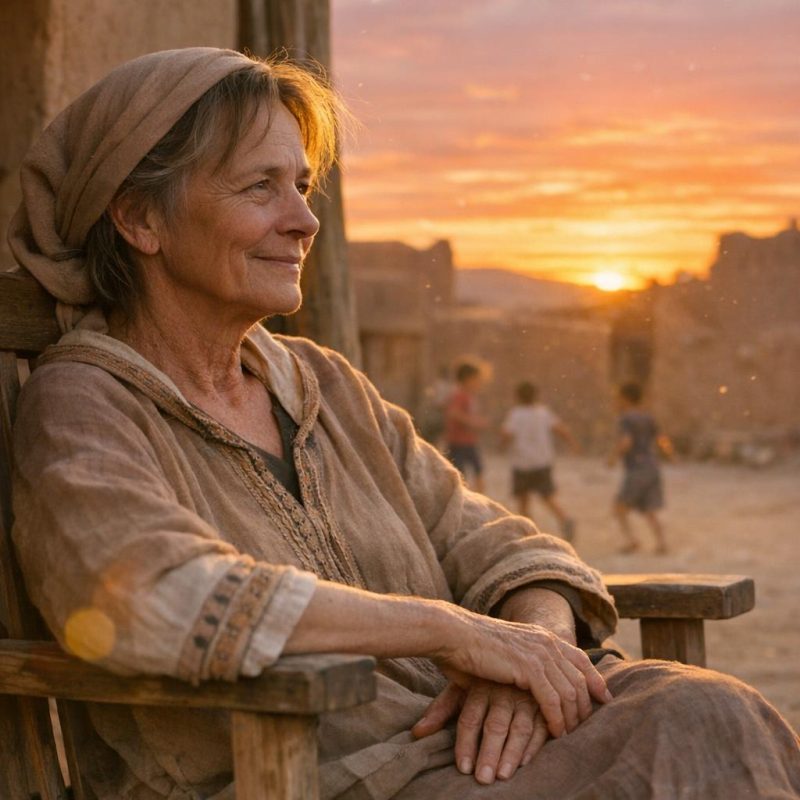 Image by RM AI
Morocco, 1955
In 1955, I was just twenty-nine, my skin still smooth and my eyes bright with dreams. Hassan and I had been married for two years, living in our small mud-brick home with its blue door that stood out against the dusty landscape of our village. When my monthly bleeding stopped and my belly began to swell, the village women nodded knowingly. 'Allah has blessed you,' they said. Hassan couldn't stop smiling. At night, his rough hands would caress my growing bump, whispering prayers for a strong son or a beautiful daughter—'Either would be a treasure,' he assured me. We were poor but happy, saving every dirham for the baby's needs. Hassan spent evenings after his work in the fields painting the tiny room adjacent to ours, carefully creating patterns of stars and moons on the ceiling. 'Our child will dream under the same sky that watched over our ancestors,' he said. I sewed tiny clothes from fabric scraps, imagining the small body that would fill them. The other village mothers brought gifts—a hand-carved wooden cradle, knitted blankets, tiny amulets to ward off the evil eye. How could I have known then that this joy would transform into a burden I would carry for nearly half a century? That the life growing inside me would become something else entirely?
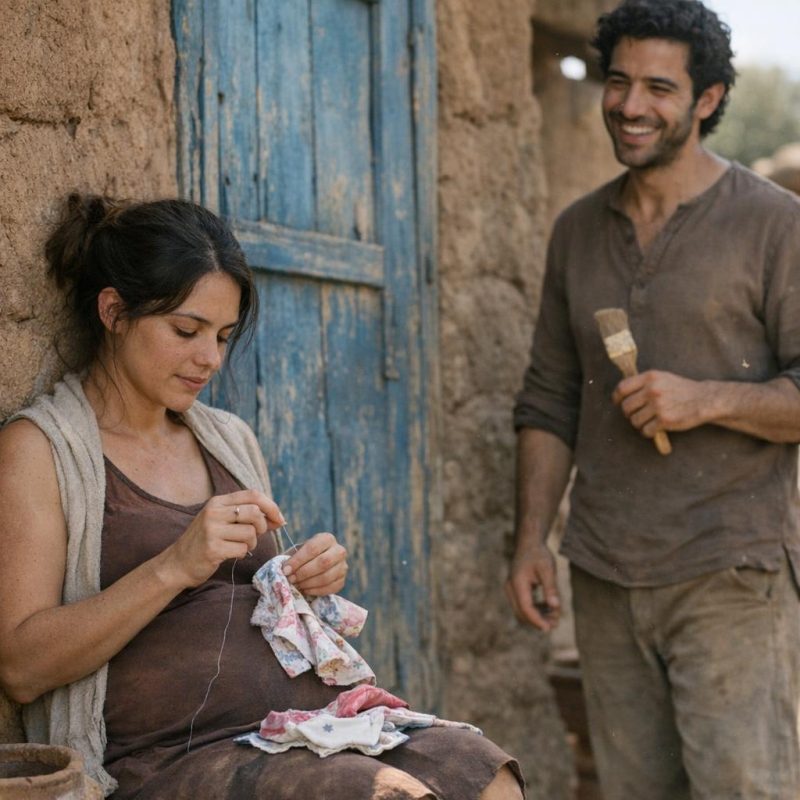 Image by RM AI
The Promise of New Life
As the weeks passed, my belly grew round and firm like the full moon. The village women, with their weathered faces and knowing eyes, brought me ginger root for the morning sickness that plagued me at dawn. 'Chew this slowly, Zahra,' they'd instruct, 'and the nausea will retreat like the tide.' They were right. Each evening, Hassan would return from the fields, his clothes dusty but his smile bright, and place his calloused hand on my swelling abdomen. 'Bismillah,' he'd whisper, 'may Allah bless you with strength and wisdom.' I remember the first time our baby kicked—I was kneading bread dough when I felt the flutter, like a bird's wing against my insides. I gasped so loudly that our neighbor came running! That night, Hassan and I celebrated with sweet mint tea, sitting cross-legged on our woven mat, planning dreams that seemed as solid as the mountains surrounding our village. 'Our child will go to school,' Hassan promised, though neither of us could read more than a few words. 'Our child will have choices we never had.' How tenderly we crafted these dreams, unaware that fate was weaving a different pattern altogether—one that would stretch across decades and transform not just my body, but my very soul.
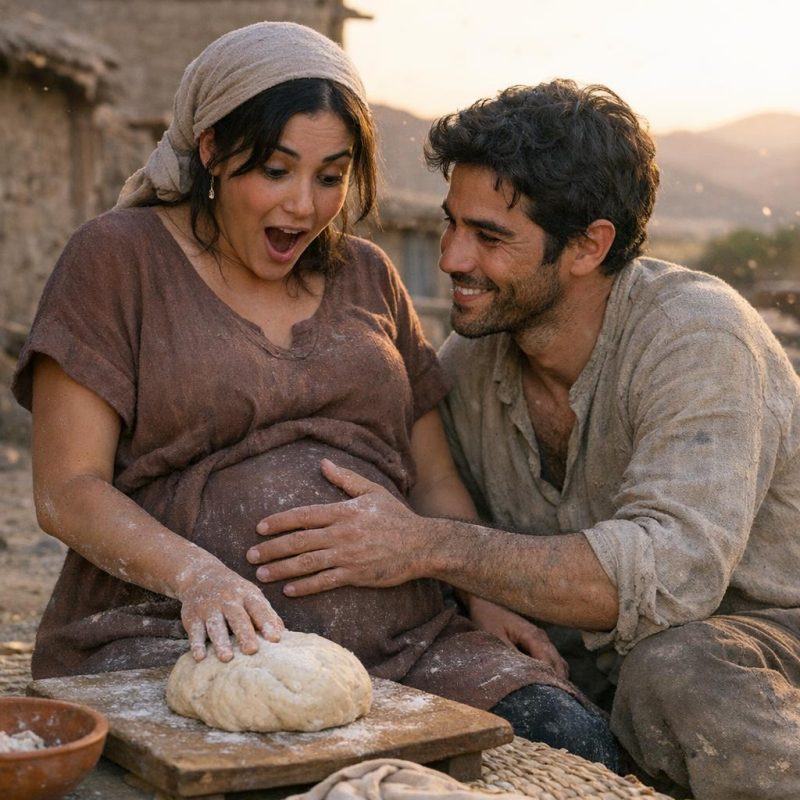 Image by RM AI
When Pain Began
The labor pains began like a thunderclap in the dead of night. I jolted awake, a scream caught in my throat as the first contraction tore through my body. 'Hassan!' I gasped, clutching my swollen belly. My husband's eyes flew open, panic replacing sleep as he scrambled to light the oil lamp. 'It's time,' I whispered. Within minutes, Fatima, our village midwife with hands as ancient as the Atlas Mountains, arrived at our door. 'Breathe, child,' she instructed, placing warm compresses on my lower back. But as the hours stretched like taffy—twelve, then twenty-four—her weathered face grew increasingly troubled. My screams echoed through our small home as Hassan held my hand so tightly I thought our bones might fuse together. 'The baby is stubborn,' Fatima murmured, applying more herbs to my belly, her prayers growing more urgent with each passing hour. By the second day, I was delirious with pain and exhaustion. The herbs no longer dulled the agony. Hassan's face blurred before me, his whispered prayers merging with Fatima's chants. 'Something is wrong,' I heard her whisper to my husband when she thought I couldn't hear. 'We must take her to the hospital in town.' The word 'hospital' sent a chill through me that even the searing pain couldn't mask. Little did I know that what awaited me there would haunt me for decades to come.
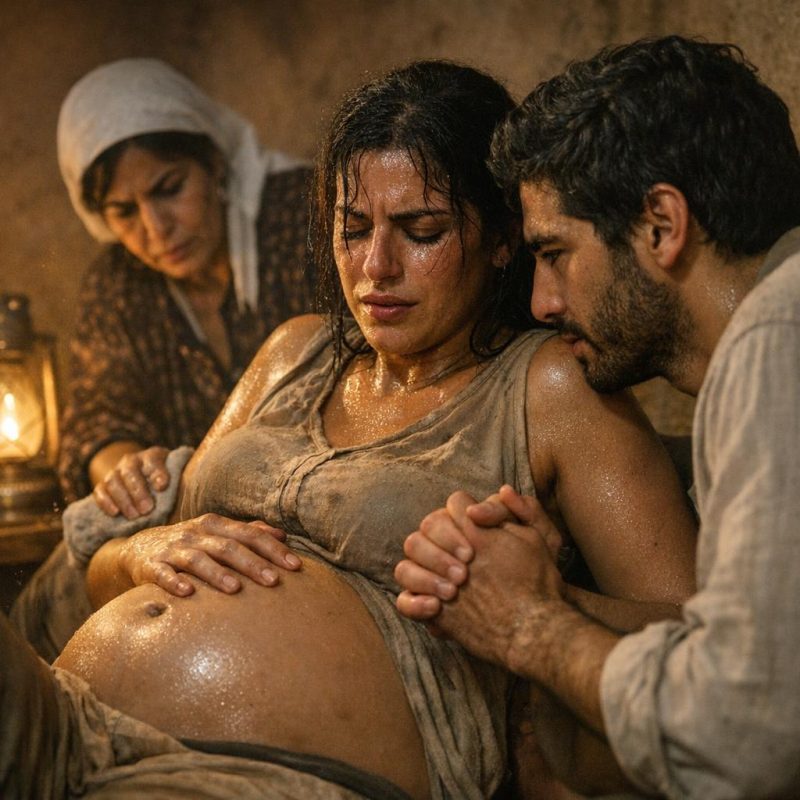 Image by RM AI
Forty-Eight Hours
Forty-eight hours of labor had drained every ounce of strength from my body. Each contraction felt like mountains collapsing inside me, and the breaks between them grew shorter, offering little relief. Outside our mud-brick home, the village elders gathered in a circle, their prayers rising like smoke into the night air. 'Ya Allah, protect Zahra and her child,' they chanted. I could barely focus on their words through my haze of pain. Hassan wiped my forehead with a damp cloth, his eyes hollow with fear. 'My love,' he whispered, 'we must go to the hospital now.' The word hung in the air like a death sentence. In our village, hospitals were places where people went to die, not to heal. But when Fatima placed her weathered hand on Hassan's shoulder and nodded gravely, I knew we had no choice. 'The baby will not come,' she said softly. 'And we are losing her.' They wrapped me in blankets and placed me in the back of our neighbor's cart. As we bumped along the dusty road toward town, each jolt sending fresh waves of agony through me, I clutched the small protective amulet around my neck and prayed. Little did I know that what awaited me at that hospital would change the course of my life forever.
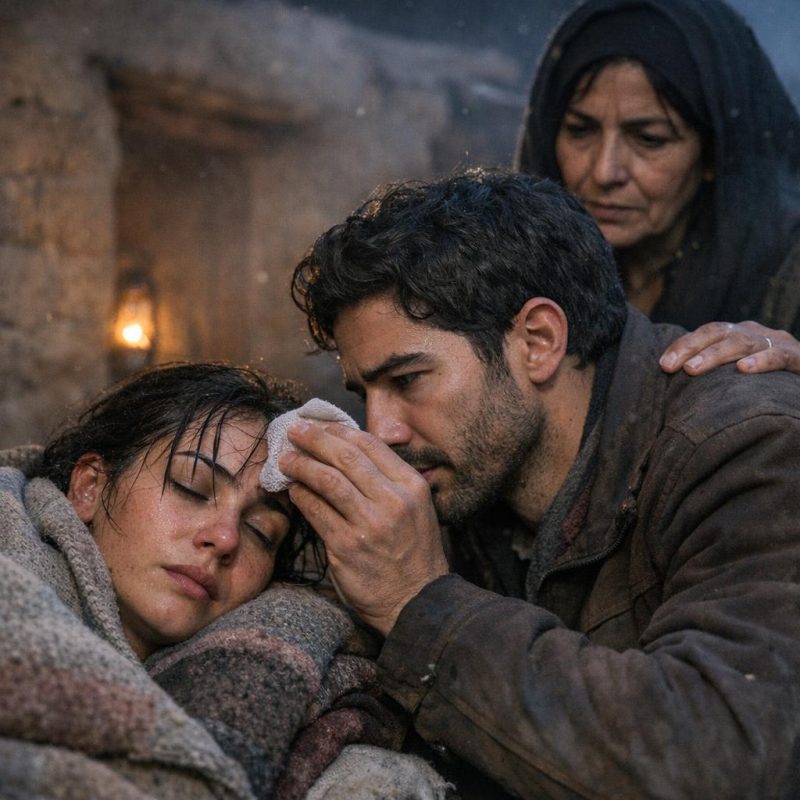 Image by RM AI
The Hospital
The hospital in 1955 was nothing like the sterile, organized places we know today. As Hassan and the neighbor carried me through the doors, the chaos hit me like a physical force. Patients were crammed into large, open rooms with barely a curtain for privacy. The air was thick with the sharp sting of disinfectant fighting a losing battle against the metallic scent of blood and the sour smell of sweat and fear. A doctor barked orders in French—a language I barely understood—as I was placed on a cold metal bed with thin, stained sheets. My screams joined a chorus of suffering that echoed off the bare walls. In the bed next to mine lay a young woman, her pregnant belly even larger than mine, her face contorted in agony. Hassan clutched my hand, whispering prayers, but I could see the terror in his eyes. The woman beside me suddenly let out a guttural cry that seemed to come from somewhere beyond human. The doctors rushed to her, shouting urgently as blood began to pool beneath her bed. I watched in horror as the light in her eyes dimmed, her hand falling limp as the doctors' frantic movements slowed to defeated gestures. In that moment, as I witnessed death claim both mother and child, a primal fear gripped my heart—a certainty that if I stayed in this place of death, I would be next.
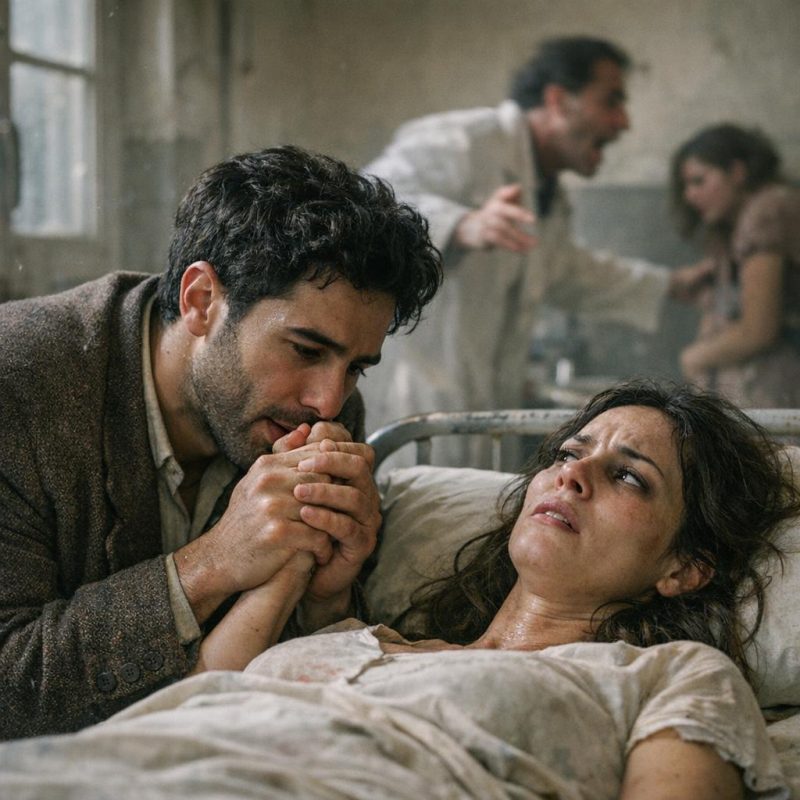 Image by RM AI
Witness to Death
The woman in the bed next to mine was young—perhaps even younger than my twenty-nine years. Her labor had started before mine, yet she was still fighting when I arrived. As her cries grew weaker, the doctors moved with increasing urgency around her bed. I couldn't look away. Blood began to pool beneath her, spreading across the floor like spilled wine. Her eyes—wide with terror—found mine across the short distance between our beds. In that moment, we weren't strangers anymore. We were sisters in the most primal battle women have fought since the beginning of time. I saw the exact moment life left her. Her gaze, which had been locked with mine in desperate solidarity, suddenly emptied. It was like watching a candle being snuffed out. The doctors pulled a sheet over her face while her newborn wailed—a terrible sound of arrival and loss intertwined. Something inside me shattered. Not my body, but something deeper—my faith, perhaps, or my courage. All I knew was that Death had visited the bed next to mine, and I was certain it was coming for me next. In that moment, I made a decision that would haunt me for nearly half a century.
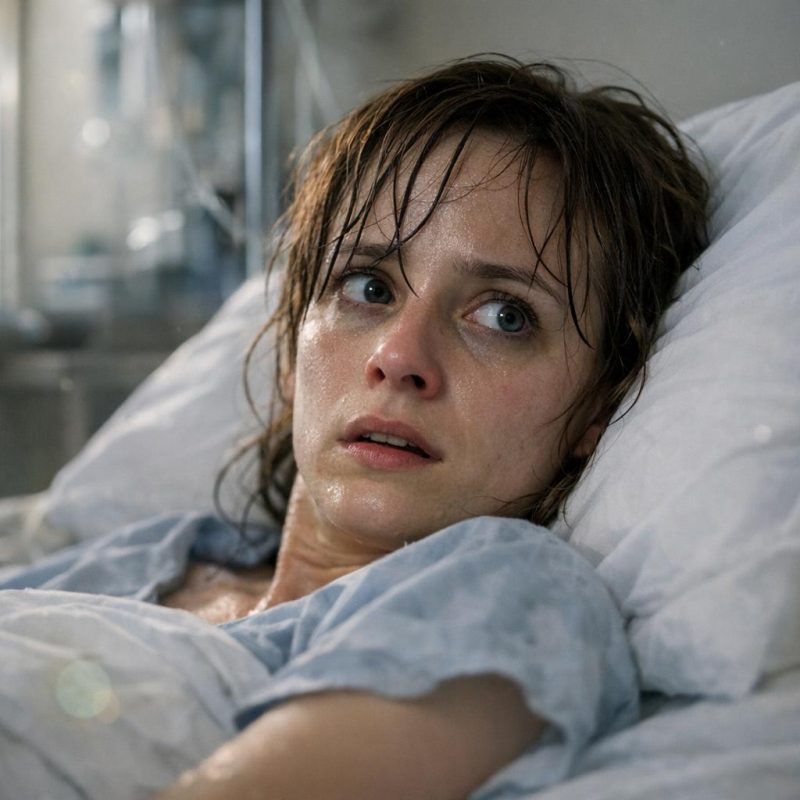 Image by RM AI
The Escape
Terror seized me like a vise. The woman's empty eyes haunted me as her sheet-covered body was wheeled away, her baby's cries echoing through the ward. I knew, with bone-deep certainty, that I would be next if I stayed in this place of death. When the nurses rushed to another screaming patient, I saw my chance. With shaking hands, I yanked the IV from my arm, wincing as blood beaded on my skin. Hassan had gone to the small prayer room—he wouldn't know until it was too late. I slid from the bed, my swollen feet hitting the cold floor. The contractions had mysteriously subsided, as if my body understood my desperate plan. I shuffled past moaning patients, clinging to walls for support, my hospital gown flapping open at the back. Nobody noticed the pregnant woman staggering through corridors—they were too busy fighting other battles against death. When the night air hit my face, I nearly wept with relief. I didn't know how I would make it back to our village, but I knew staying meant certain death. With one hand cradling my still-swollen belly and the other clutching my amulet, I disappeared into the darkness, unaware that the child within me had already begun a transformation that would bind us together for decades to come.
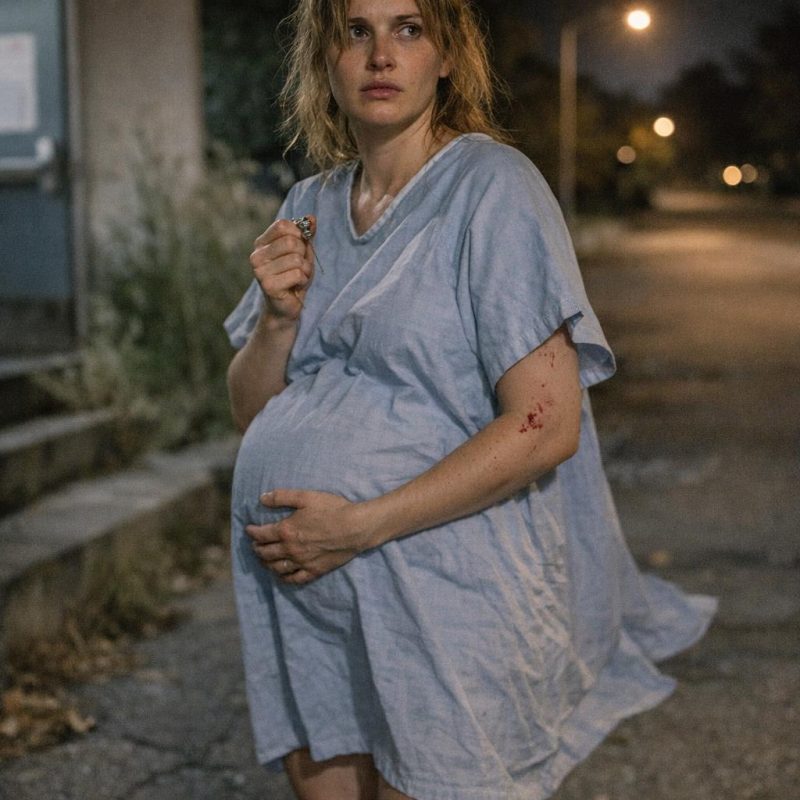 Image by RM AI
Return to the Village
I don't remember much about my journey back to the village. My feet carried me through the darkness, guided by instinct and desperation rather than conscious thought. When I finally collapsed at our doorstep, the sun was beginning to rise, painting the sky in hues of pink and gold that I barely registered through my pain. Fatima found me there, a crumpled heap of sweat-soaked clothes and terror. 'Ya Allah!' she cried, summoning the other women. They carried me inside, their strong arms cradling me like a child as I babbled incoherently about the dead woman, about death waiting for me in those sterile halls. 'The hospital is cursed,' I whispered, clutching at Fatima's sleeve. 'She died... the baby... I would have been next.' The women exchanged worried glances above me, applying cool cloths to my forehead as my labor pains mysteriously subsided. When Hassan burst through the door hours later, his face was ashen with fear and exhaustion. He had searched every corner of the hospital, convinced I had died somewhere in its labyrinthine corridors. 'Zahra,' he whispered, falling to his knees beside our bed, 'I thought I had lost you.' What neither of us realized then was that something had indeed been lost—but it would remain with me, hidden away, for nearly half a century.
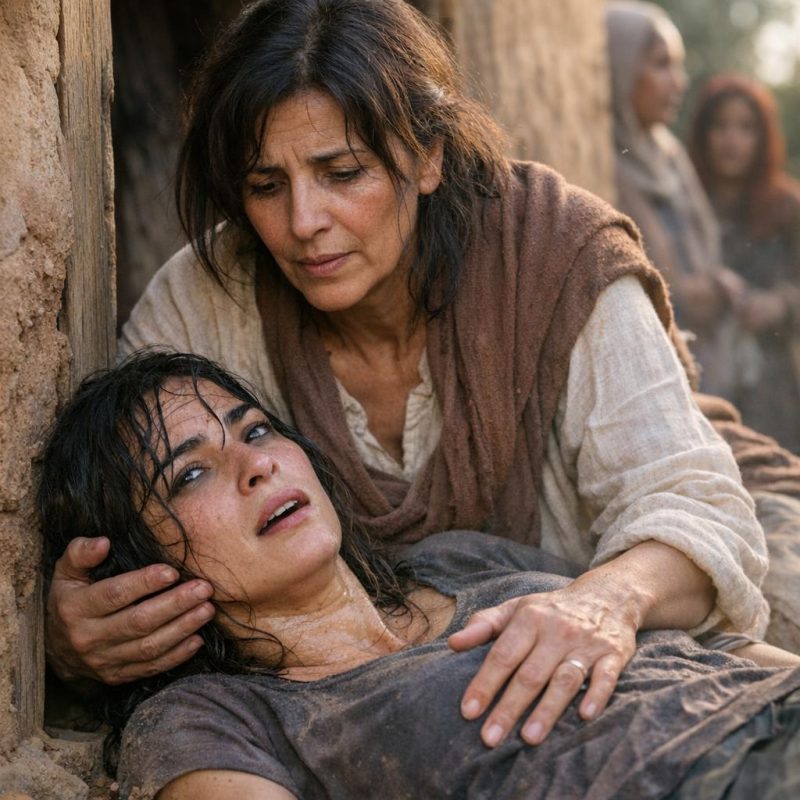 Image by RM AI
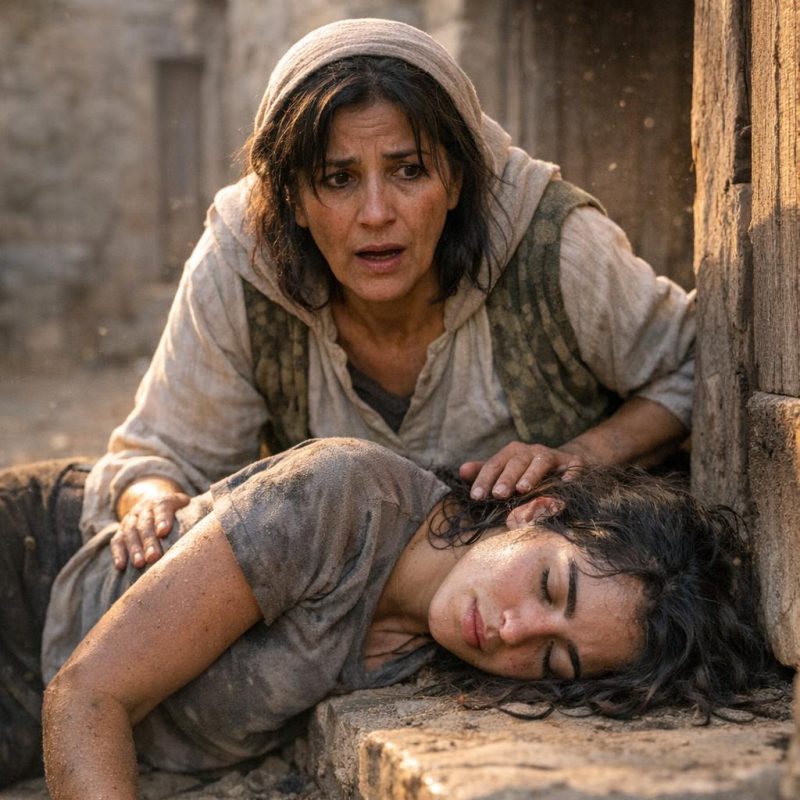 Image by RM AI
The Stillness
In the days that followed my escape, a strange stillness settled over our home. The contractions that had nearly torn me apart gradually weakened, like a storm passing into the distance. The pain that had been my constant companion for forty-eight hours faded to a dull ache, then to nothing at all. But something else disappeared too—something precious. I remember lying on our bed, Hassan's warm hand spread across my still-swollen belly, both of us waiting in silence for that familiar flutter, that reassuring kick that had become our nightly ritual. Minutes stretched into hours. Neither of us spoke our fears aloud, as if naming them might make them real. 'Perhaps the baby is just resting,' Hassan whispered finally, his voice cracking slightly. I nodded, clinging to this hope like a drowning woman to driftwood. In our culture, there were stories—ancient tales passed down through generations—of babies who could sense danger and would go dormant to protect their mothers. 'A sleeping child,' the old women called it. I wrapped this belief around me like a protective shawl, refusing to acknowledge the terrible stillness within me. What I didn't know then was that this silence would become my companion for decades to come, and that the child I carried was transforming into something our ancestors had only whispered about in hushed, fearful tones.
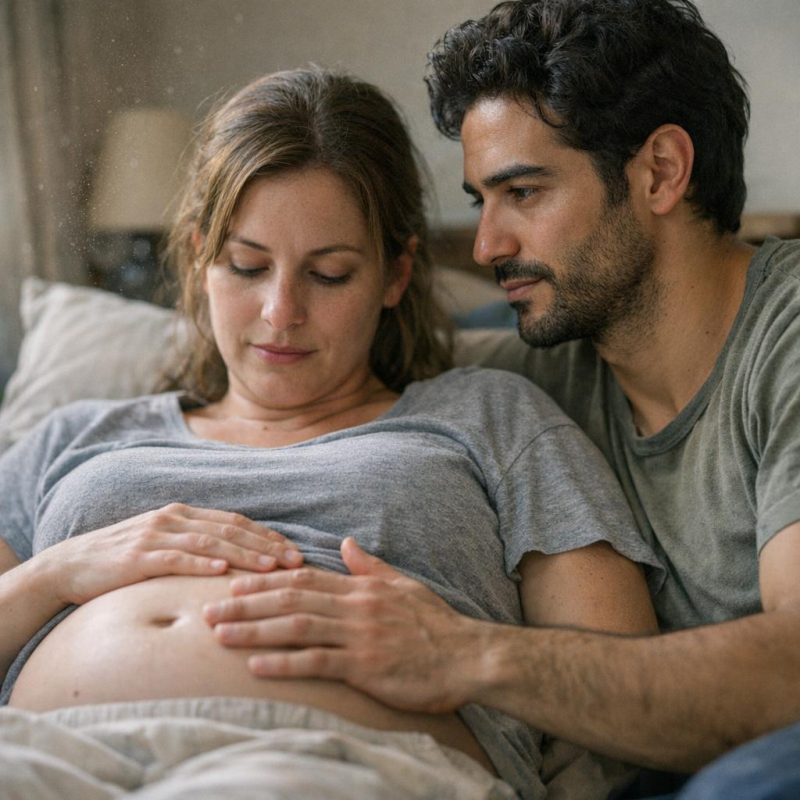 Image by RM AI
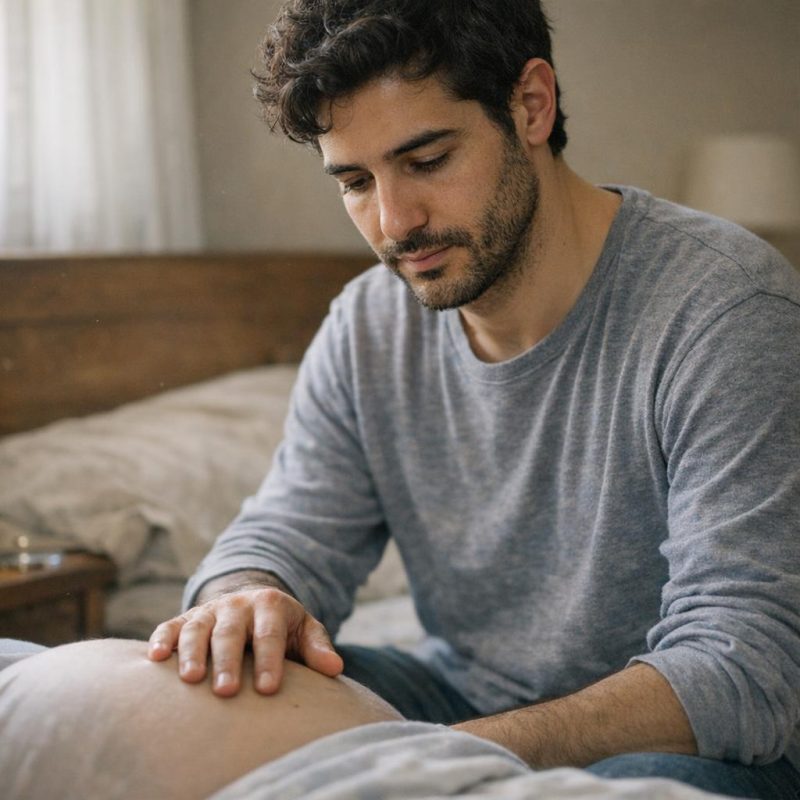 Image by RM AI
The Sleeping Child
Fatima became my lifeline in those dark days. Each morning, she would visit our home, her weathered hands gently probing my still-swollen belly. 'Your child sleeps, Zahra,' she would whisper, her eyes holding mine with unwavering certainty. 'Sometimes Allah makes a baby sleep in the womb when the time is not right.' She explained the ancient belief passed down through generations of Moroccan women—the 'sleeping child' phenomenon. I had heard whispers of such stories since childhood but never truly believed them until desperation made me a convert. Hassan would sit quietly in the corner during these examinations, his face a mask of hope and fear. 'How long will our baby sleep?' he once asked, his voice barely audible. Fatima's answer was as mysterious as the condition itself: 'Until Allah wakes it, or until the mother is ready.' The village women brought special teas and amulets, each swearing their grandmother or great-aunt had carried a sleeping child. I drank every bitter concoction, wore every charm, and prayed five times daily for my baby to either wake or be born. What none of us could have imagined was that this 'sleep' would last not months, but decades—and that the truth was far more extraordinary than even our ancient myths could have prepared us for.
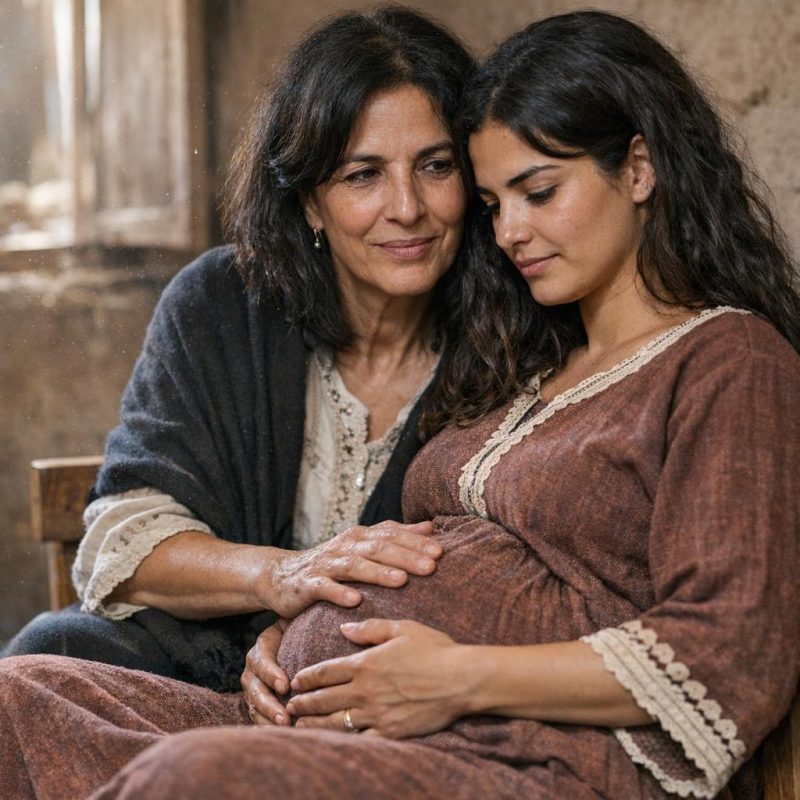 Image by RM AI
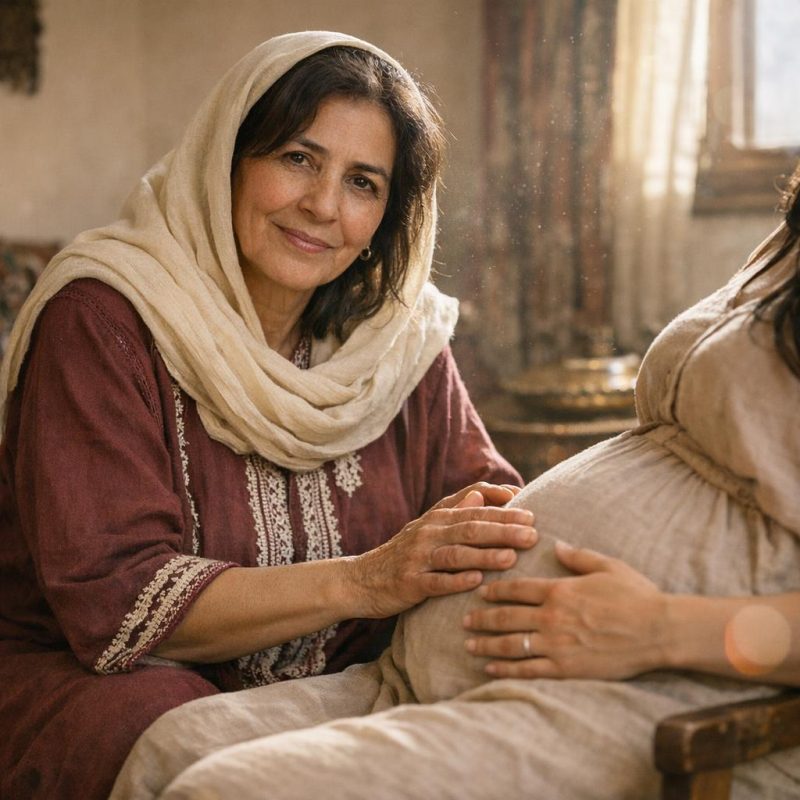 Image by RM AI
The Myth Takes Hold
As the weeks passed, our home became a gathering place for village elders who arrived with stories that fed my desperate hope. They'd sit cross-legged on our woven mats, sipping mint tea as they shared tales of other 'sleeping babies' throughout our region's history. 'My own cousin Aisha,' Hassan's mother declared one evening, her voice carrying the authority of her seventy years, 'carried a child that slept for two full years during the great famine. When food returned to our region, so did life to her womb!' The other women nodded vigorously, each offering their own family's miracle. I clung to these stories like lifelines, collecting them in my heart as evidence that my situation wasn't unique—or fatal. Hassan would listen silently from the doorway, his eyes meeting mine with a mixture of doubt and hope. At night, he'd whisper against my still-swollen belly, 'Wake when you are ready, little one. We will wait.' I began documenting these stories in a small notebook Fatima brought me, creating a precious archive of sleeping children who had eventually awakened. What I couldn't possibly know then was how long my own wait would be—and that the truth inside me was transforming into something far beyond what these ancient tales could explain.
 Image by RM AI
 Image by RM AI
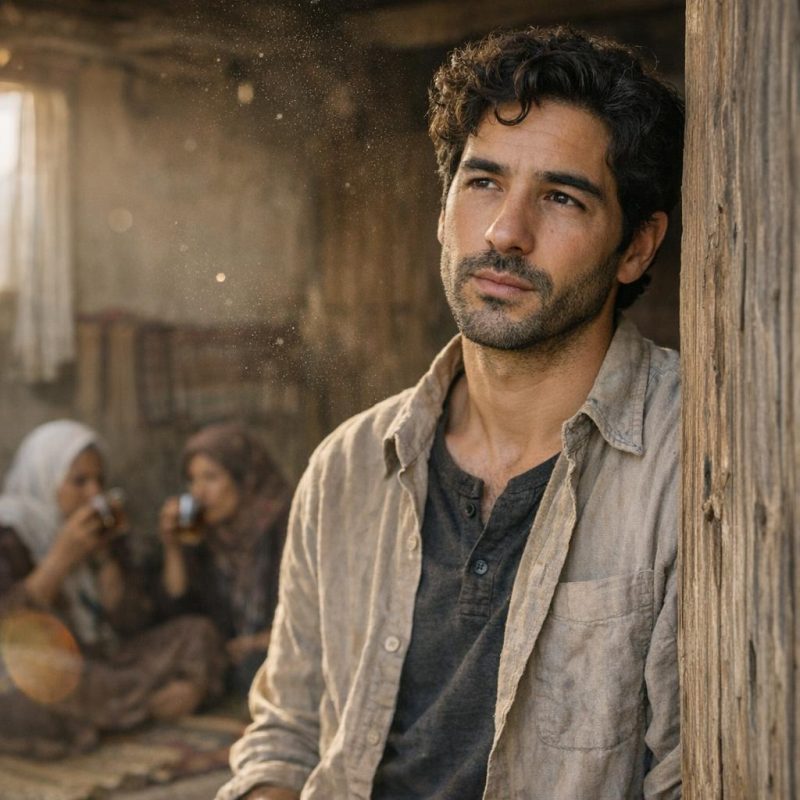 Image by RM AI
Changes Within
As the weeks passed, my body began to undergo a strange metamorphosis. The soft, yielding roundness of pregnancy gradually transformed into something rigid and unyielding. My belly remained swollen, but it felt different—harder, like clay baking in the sun. I'd press my fingers against it, feeling no movement, only an unnatural firmness that made my heart sink. 'It's part of the sleeping process,' Fatima assured me, though I caught the flicker of concern in her eyes. Fevers came and went like unwelcome guests, leaving me drenched in sweat on our thin mattress. Hassan would sit beside me through the night, applying cool cloths to my forehead while whispering prayers. 'Perhaps we should return to the hospital,' he suggested once, his voice barely audible. The mere mention sent me into such a panic that he never brought it up again. Instead, Fatima brought bitter herbal teas that made my tongue curl but seemed to chase away the worst of the fevers. 'Your body is adjusting,' the village women would say when they visited, their eyes avoiding my hardening belly. None of us understood that what was happening inside me defied both modern medicine and ancient folklore—my body was beginning a process so rare that it would one day leave doctors speechless.
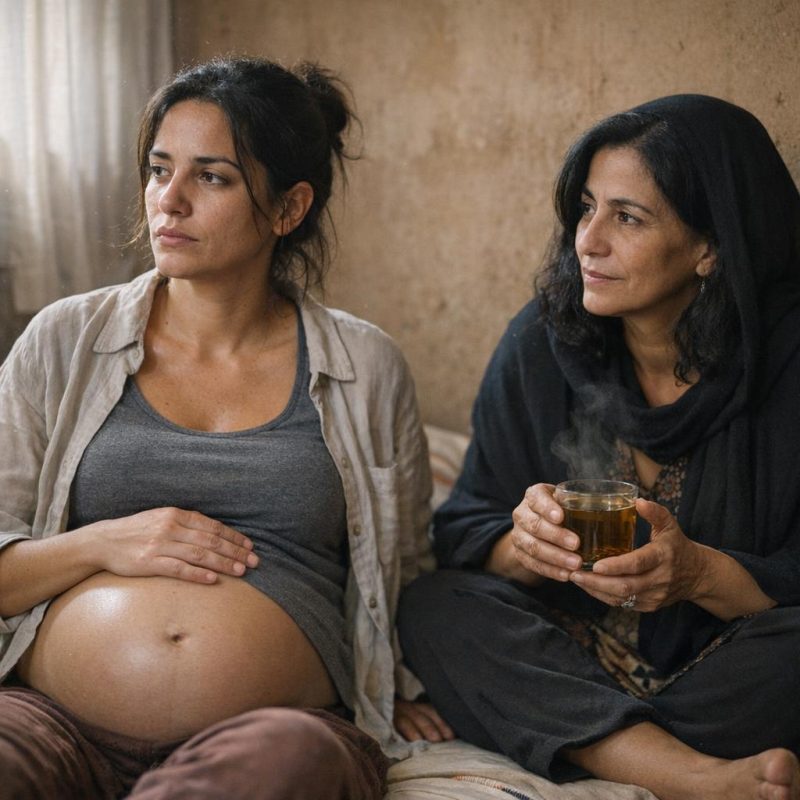 Image by RM AI
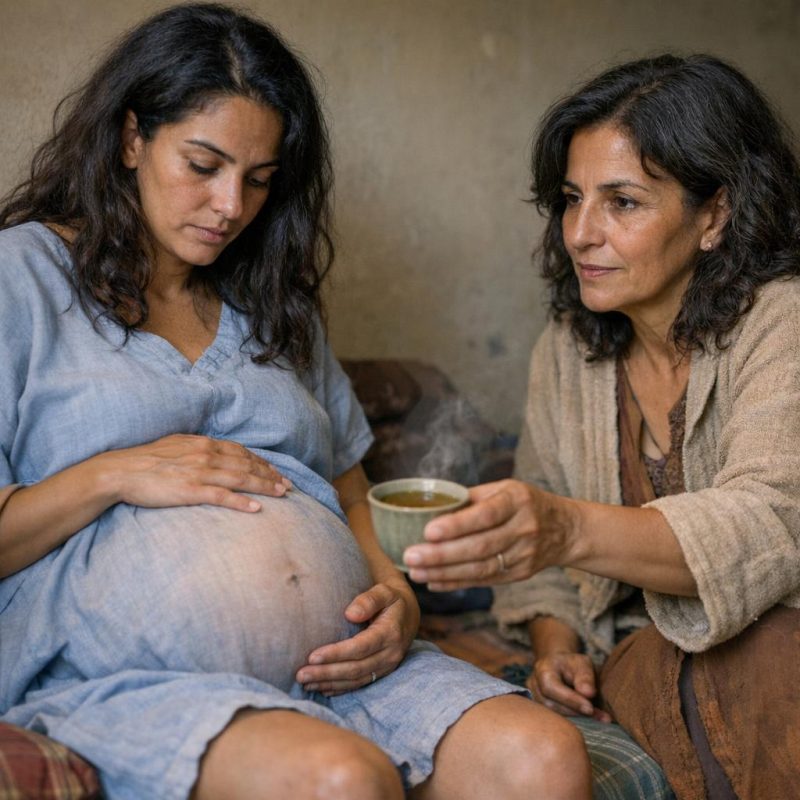 Image by RM AI
The Doctor's Visit
Three months after my escape from the hospital, Hassan finally convinced me to see the French doctor who visited our village monthly. I remember how my hands trembled as I prepared for his arrival, arranging cushions in our best room while Hassan hovered nearby, his eyes filled with worry. 'It's just a consultation, my love,' he assured me, but we both knew what was at stake. When Dr. Benoit arrived, his clinical gaze made me feel exposed, vulnerable. He spoke little Arabic, communicating through Hassan's cousin who knew some French. His cold hands pressed against my hardened abdomen, his brow furrowing deeper with each prod. 'C'est étrange,' he muttered, before turning to our translator. 'Perhaps a tumor,' he said, the word landing like a stone in still water. When he suggested I return to the city hospital for tests, something inside me snapped. I began screaming, clawing at Hassan's arms as he tried to calm me. 'No hospitals! They will kill me like they killed her!' The doctor backed away, clearly alarmed by my reaction. He left a packet of pills that I immediately threw into the fire once he was gone. That night, as Hassan held me while I sobbed, he whispered, 'No more doctors, I promise.' What neither of us realized was that this decision would allow my body to continue its extraordinary process, turning grief into stone within my womb.
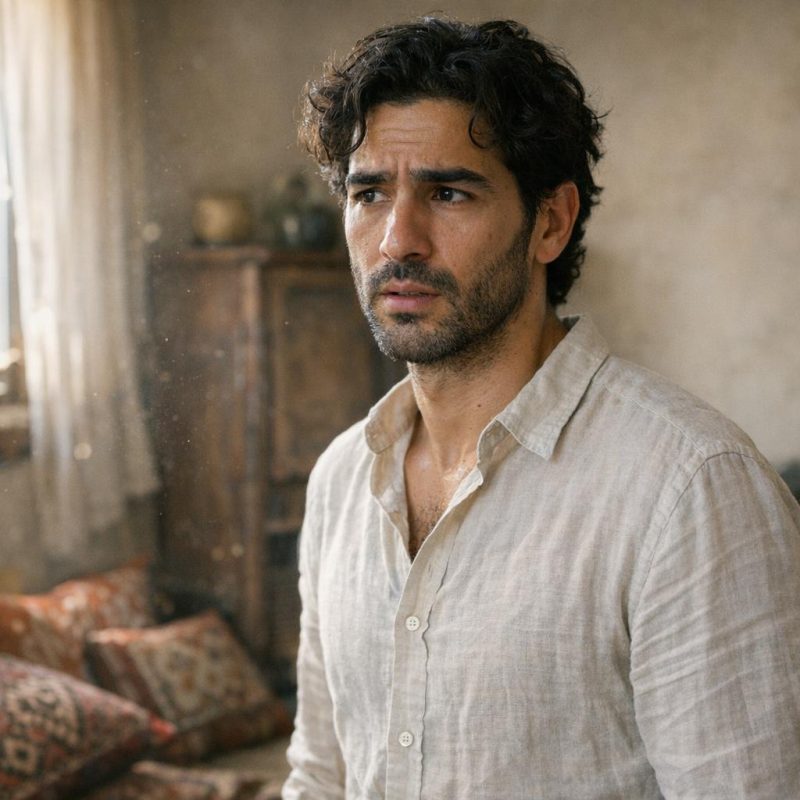 Image by RM AI
Acceptance of a New Normal
As the seasons changed, my body remained frozen in time. The hardened belly that once caused me such terror and grief simply became another part of who I was—like the small scar above my eyebrow from childhood or the calluses on my hands from years of weaving. Hassan and I developed an unspoken agreement to never mention the baby that never arrived. Instead, we focused on the rhythm of our daily lives—him leaving at dawn for the fields, returning with soil embedded in the creases of his hands, me preparing couscous and tending to our small home. The village gossip eventually moved on to newer tragedies and celebrations. Even Fatima stopped bringing her special teas, though her eyes still lingered on my midsection whenever she visited. 'You're looking well, Zahra,' she would say, and I would nod, grateful for the mercy of her silence. At night, Hassan's hand would sometimes rest on the hard curve of my abdomen as we slept, a gesture that evolved from hopeful waiting to simple habit. What had once been our greatest sorrow gradually transformed into our normal—a strange, silent companion that lived between us. Little did I know that this uneasy peace would last for decades, until the day my body could no longer maintain the secret it had worked so hard to protect.
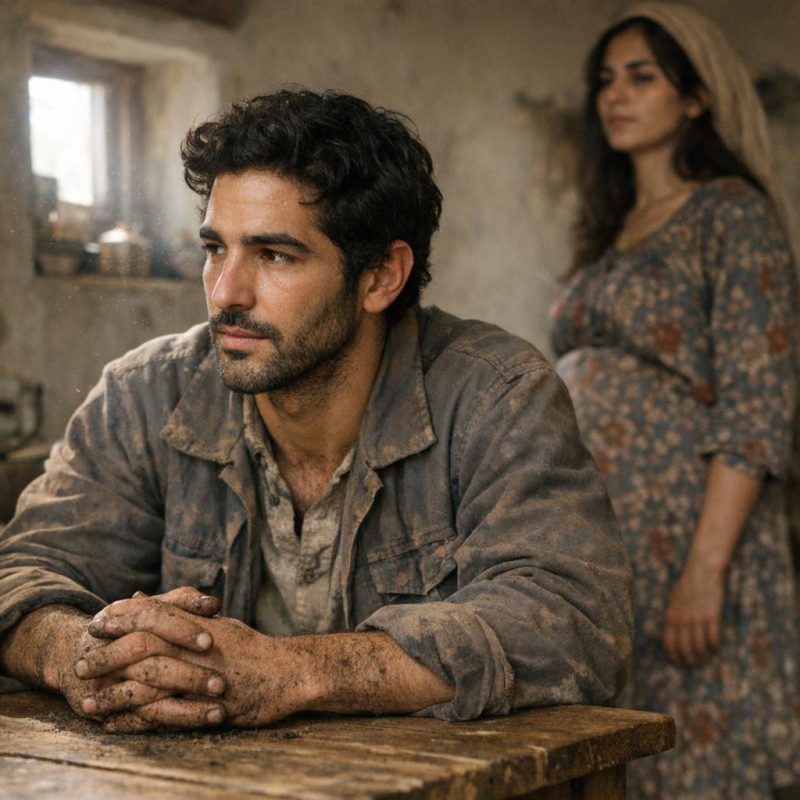 Image by RM AI
The Empty Cradle
The cradle stood in the corner of our bedroom for weeks after my return from the hospital, a silent monument to our shattered dreams. Hassan had spent months crafting it from olive wood, his hands lovingly sanding each slat until it was smooth as silk. One evening, I returned from fetching water to find him dismantling it piece by piece, his movements mechanical and precise. He didn't look at me as he carried the pieces to the storage room at the back of our home. That night, unable to sleep, I found him sitting beside the disassembled cradle, bathed in moonlight that streamed through our small window. His shoulders shook with silent sobs, tears glistening on his weathered cheeks. Without a word, I knelt beside him, wrapping my arms around his trembling frame. We held each other in the darkness, our grief too vast for words, mourning a child we couldn't bring ourselves to believe was truly gone. 'Perhaps,' Hassan whispered against my hair, 'when the baby wakes, I will rebuild it even more beautiful than before.' I nodded against his chest, clinging to this fragile hope like a lifeline. Neither of us could have imagined that the cradle would remain in pieces for decades, gathering dust alongside our dreams of parenthood.
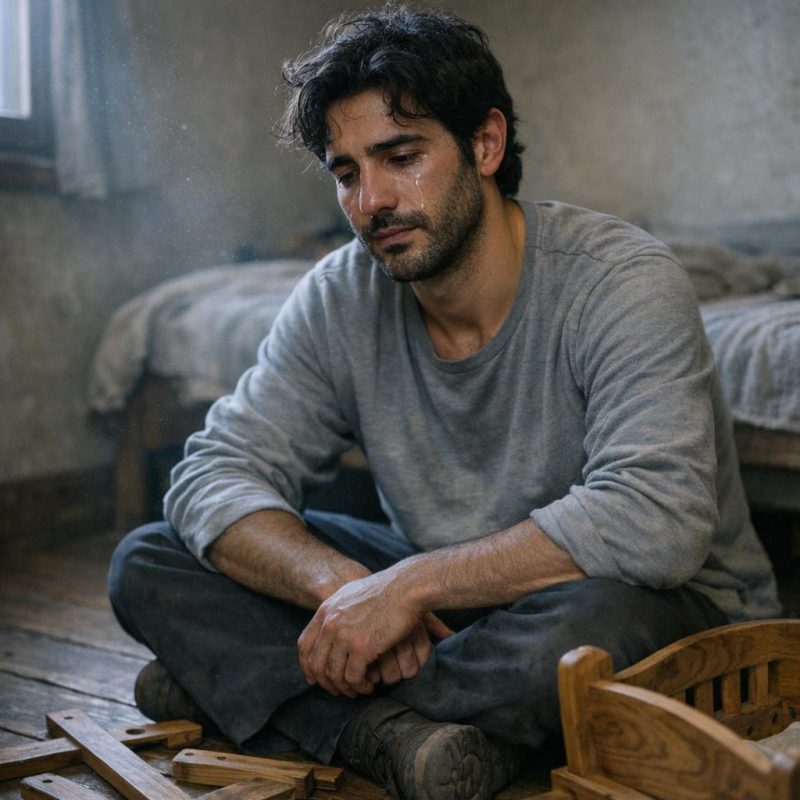 Image by RM AI
The First Year
The naming ceremony was a riot of color and joy—everything my life had ceased to be. I stood at the edge of the gathering, one hand resting on my hardened belly as I watched mothers bouncing babies on their hips, their faces alight with a happiness I once thought would be mine. The infant's wails during the blessing seemed to pierce straight through me, echoing in the hollow space where my own child's cries should have been. A year. A full year had passed since those forty-eight hours of agony, since I fled the hospital in terror, since my baby fell silent within me. The women no longer asked when my child would wake. Their pitying glances said everything their lips wouldn't. I felt Hassan before I saw him, his presence a familiar comfort in my sea of grief. Without a word, he slipped his calloused hand into mine, gently tugging me away from the celebration. We walked home in silence, the weight between us heavier than the stone forming in my womb. That night, as we lay in bed, he whispered, 'We could still have a family, Zahra.' I turned away, unable to explain that I already had one—it was just that my child and I had become something the world had no name for.
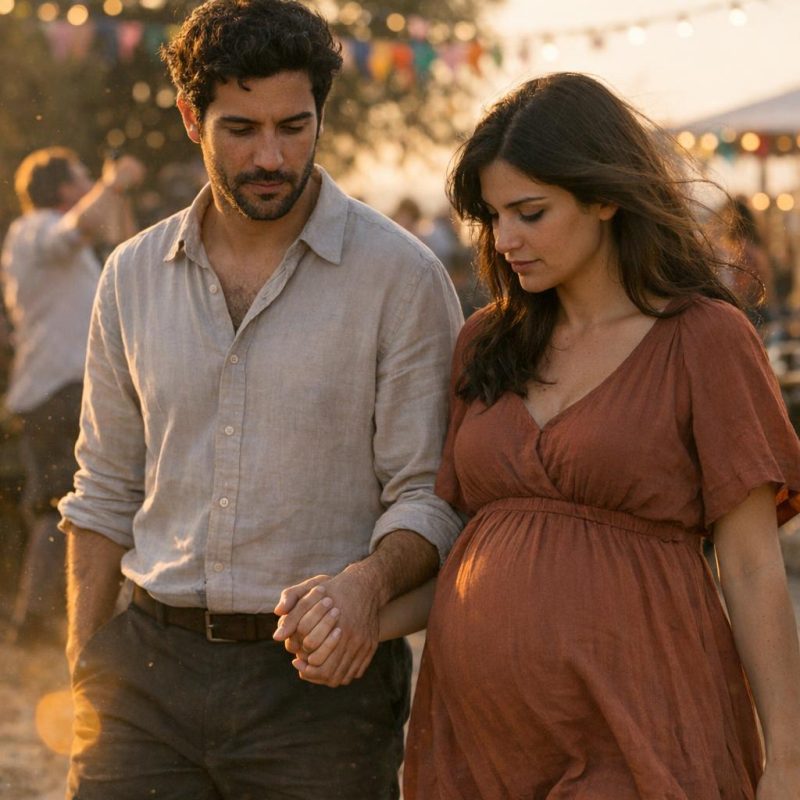 Image by RM AI
The Whispers
The whispers began like a slow-moving poison, seeping through our village until they reached my ears. 'She carries a djinn's child,' I'd hear as I passed the well, the women's voices dropping to hushed tones that weren't quite quiet enough. Children who once played near our home were suddenly called away when I approached, their mothers making subtle protective gestures against evil. I pretended not to notice when elderly women touched their amulets as I walked by in the market, their eyes fixed on my hardened belly. 'It's punishment from Allah,' they'd murmur, inventing sins I must have committed to deserve such a fate. Hassan, my gentle husband who rarely raised his voice, became a lion in my defense. 'My wife carries a sleeping child,' he shouted one evening at Youssef, who had suggested a special exorcism ritual. 'Speak of curses again, and you'll need your own healer!' The confrontation silenced the most vicious rumors, but the damage was done. I became the village curiosity—the woman whose pregnancy never ended, whose child neither lived nor died. What hurt most wasn't their fear or judgment, but how their whispers transformed me from a woman into a walking cautionary tale. If only they knew that the real curse wasn't what lay inside me, but the loneliness that surrounded me.
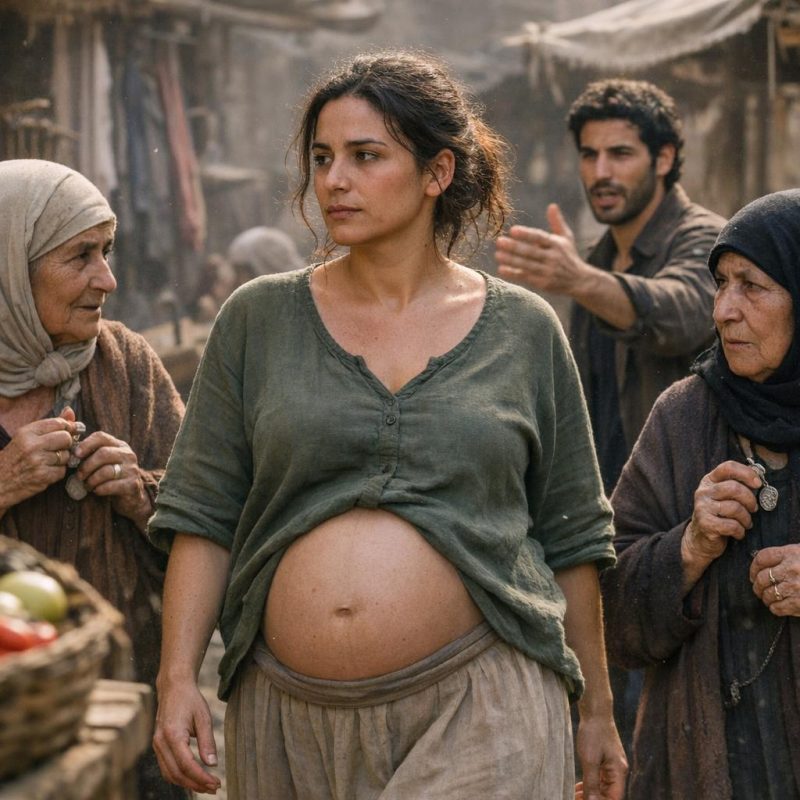 Image by RM AI
The Decision to Adopt
Two years passed, and the weight in my belly became as familiar as the lines on my palms. The whispers had quieted to occasional glances, but the emptiness in our home echoed with each passing day. Then fate intervened in the most heartbreaking way. Fatima burst into our home one morning, her eyes red with tears. 'Nadia died in childbirth,' she gasped between sobs. 'The baby lives, but there's no one to claim her.' I felt something stir inside me—not the child of stone, but something I thought had died long ago: hope. That evening, Hassan and I sat by our small fire, hands intertwined. 'We could give her a home,' he whispered, his voice trembling with possibility. The next day, we stood before the village elders, formally offering to take the orphaned girl. When they placed her tiny body in my arms, I named her Amina after my grandmother. As I held her against my hardened belly, I felt a strange communion between the child who never left me and the one who had just arrived. It was as if my sleeping baby had somehow sent this little one to us, knowing we had so much love to give. Little did I know that Amina would be just the beginning of our unconventional family's story.
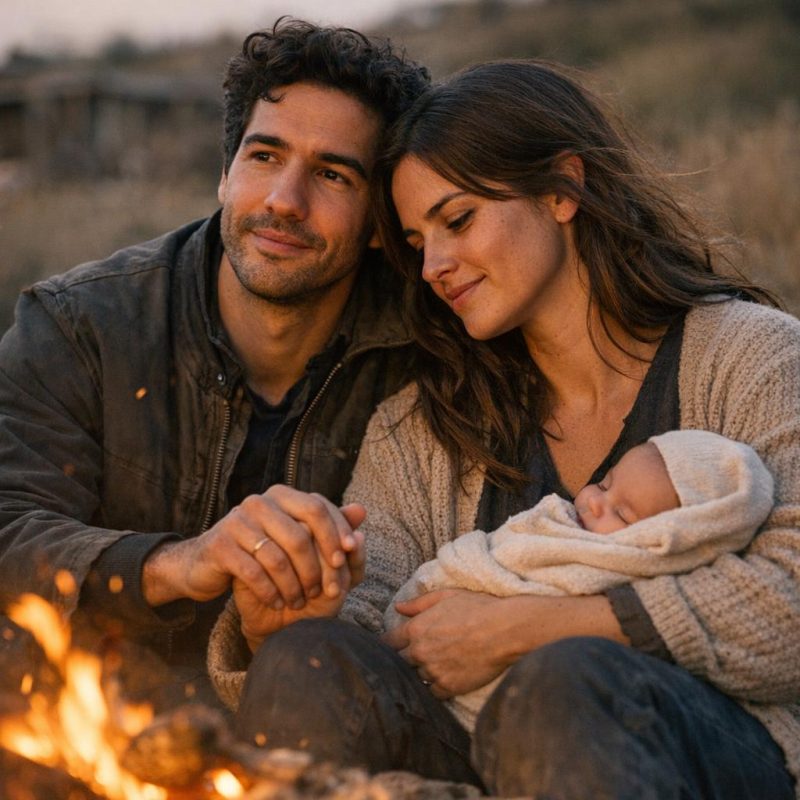 Image by RM AI
A New Kind of Motherhood
Amina's arrival transformed our home like the first rain after a drought. The tiny bundle with curious eyes became the center of our universe, giving purpose to days that had once stretched empty before us. I'd wake before dawn to warm her goat's milk, my hardened belly pressing against the edge of our wooden table as I worked. When she cried in the night, I'd cradle her against my chest, just above where my sleeping child rested, and sometimes I'd imagine they were somehow communicating with each other. Hassan, who had grown quiet in our years of waiting, found his voice again through fatherhood. 'Look, Zahra! She's trying to stand!' he'd exclaim, his hands hovering protectively as Amina wobbled on unsteady legs. The village women who had once whispered behind their hands now brought small gifts—a knitted cap, a wooden toy—their eyes softening when they saw how completely we had embraced this motherless child. With each milestone—her first word (baba), her first steps across our earthen floor—the stone inside me seemed to grow lighter, as if my unborn child approved of the sister we had given them. What I didn't realize then was how Amina's presence would eventually open our hearts to even more children who needed a home.
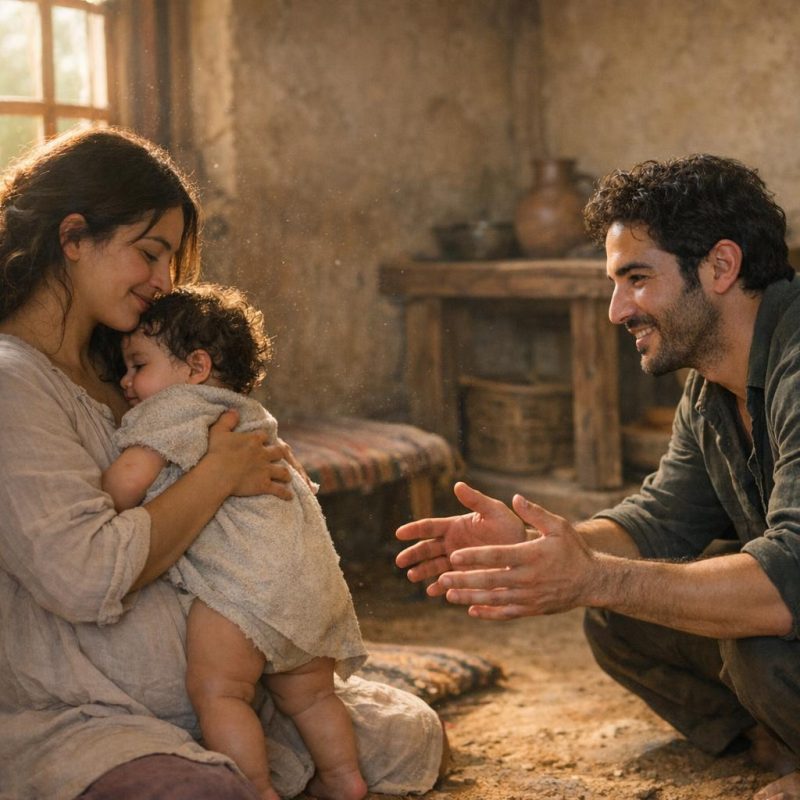 Image by RM AI
Our Growing Family
Five years after Amina came into our lives, drought ravaged the neighboring villages, leaving many children orphaned. That's when Youssef entered our home—a solemn seven-year-old with eyes that had seen too much sorrow. At first, he would sit silently in corners, watching our family with cautious curiosity. 'The boy needs time,' Hassan would whisper as we watched him pick at his food. Amina, now a chattering six-year-old, appointed herself his personal guardian, following him everywhere until his first reluctant smile broke through like sunshine after rain. Three years later, fate delivered another gift to our doorstep—literally. I found tiny Nadia wrapped in a threadbare blanket outside our home one morning, with nothing but a desperate note begging us to care for her. 'Another soul has found its way to us,' Hassan said, cradling the infant with practiced ease. Our neighbors no longer whispered about the hardened bump beneath my djellaba; instead, they marveled at how Allah had blessed the woman with the sleeping child with so many others to love. My unborn baby and I became the silent anchors of a home brimming with laughter, tears, and the beautiful chaos of childhood. Sometimes at night, as I listened to my children's breathing, I'd place a hand on my stone belly and wonder if my first child had somehow orchestrated this beautiful, unexpected life—sending me the family I was meant to have all along.
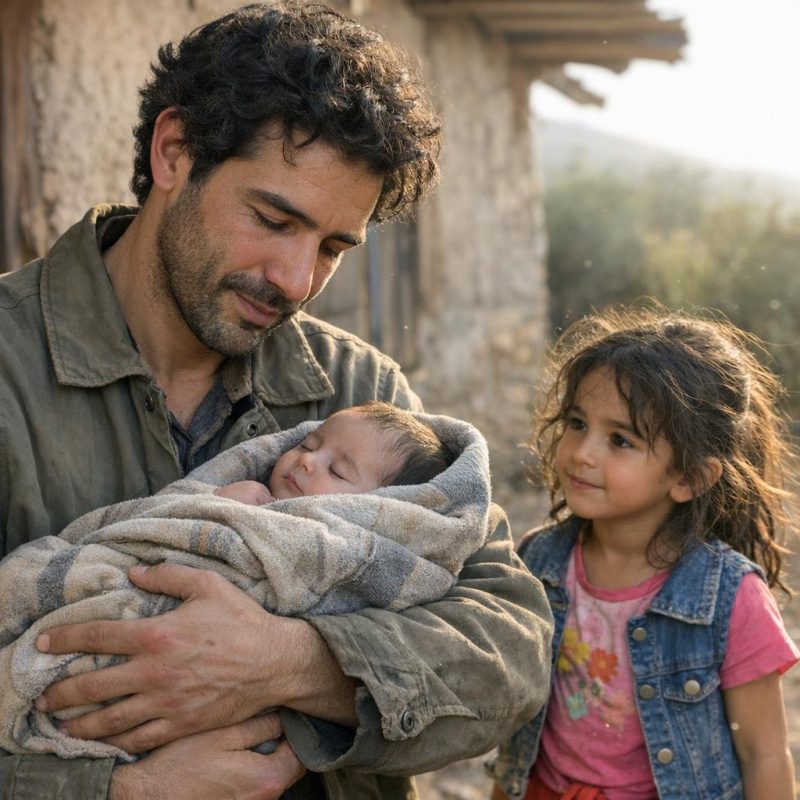 Image by RM AI
Questions from Amina
It was a warm afternoon when Amina, cross-legged on our woven mat, looked up from her doll and asked the question I'd been dreading for years. 'Mama, why is your belly still big if there's no baby coming out?' Her innocent eyes fixed on the hardened mound beneath my djellaba. The room seemed to still around us as Youssef and little Nadia paused their game, equally curious. My hands trembled slightly as I sat beside her, choosing my words carefully. 'There is a baby, my sweet one,' I explained, taking her small hand and placing it on my stone belly. 'But Allah has decided this child should sleep inside me.' Her eyes widened with wonder, not horror as I had feared. 'Like in the stories Grandmother Fatima tells?' she asked. I nodded, relief washing over me. 'Exactly so.' For days afterward, Amina would press her ear against my abdomen, whispering secrets and stories to her sleeping sibling. 'When will the baby wake up?' she asked one evening as I braided her hair. The question hung between us, heavy with a truth I couldn't bear to speak. 'Only Allah knows such things, my heart,' I whispered, my voice catching. What I didn't tell her was how the village doctor had warned me years ago that whatever was inside me was no longer a child that could awaken—but something else entirely.
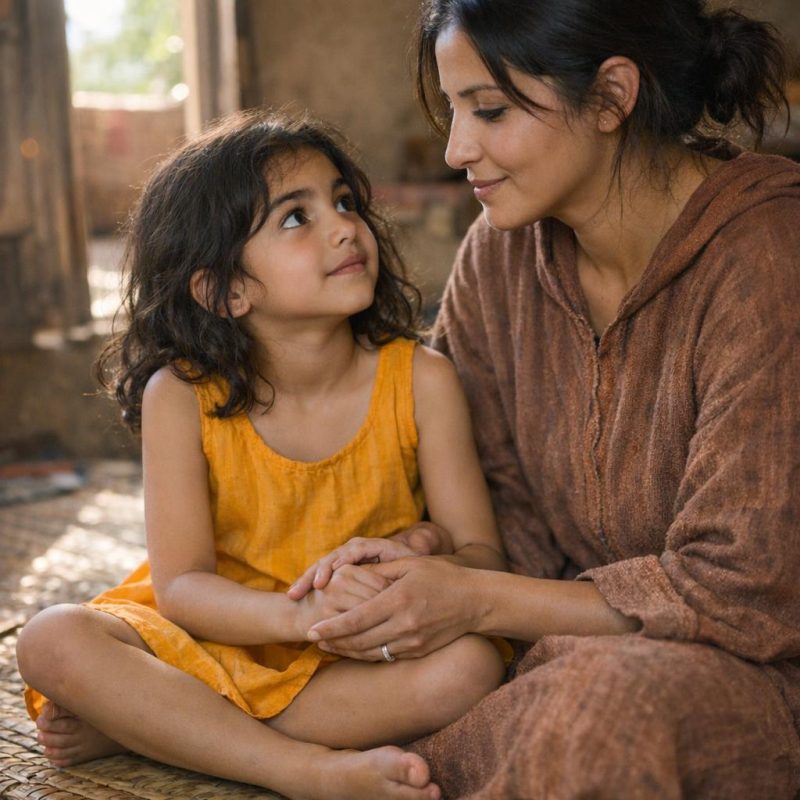 Image by RM AI
Image by RM AI
Hassan's Illness
Twenty years passed like a whisper, each day blending into the next as our adopted children filled our home with life. But as our family flourished, Hassan's health began to fade. It started with a cough that rattled his chest during the cold months—nothing serious, we thought. But unlike the seasonal illnesses that came and went, this one dug its claws deeper with each passing moon. The village doctor's face grew grave when he examined Hassan. "Tuberculosis," he said, the word hanging in our small room like a death sentence. The medicines came in small bottles with labels I couldn't read, their cost nearly emptying the clay jar where we kept our savings. Each night, as Hassan's breathing grew more labored, he would place his weathered hand on my hardened belly—a gesture unchanged by two decades—and whisper to our sleeping child. "Watch over your mother when I'm gone," he'd murmur, thinking I couldn't hear. "And you," he'd say, turning to me with eyes bright with fever, "promise me you'll care for all our children—even the one who still sleeps." I would nod, swallowing the bitter knowledge that I might soon face life without the only person who had never seen me as strange or cursed. What I didn't know then was that my sleeping child would soon demand attention in ways none of us could have imagined.
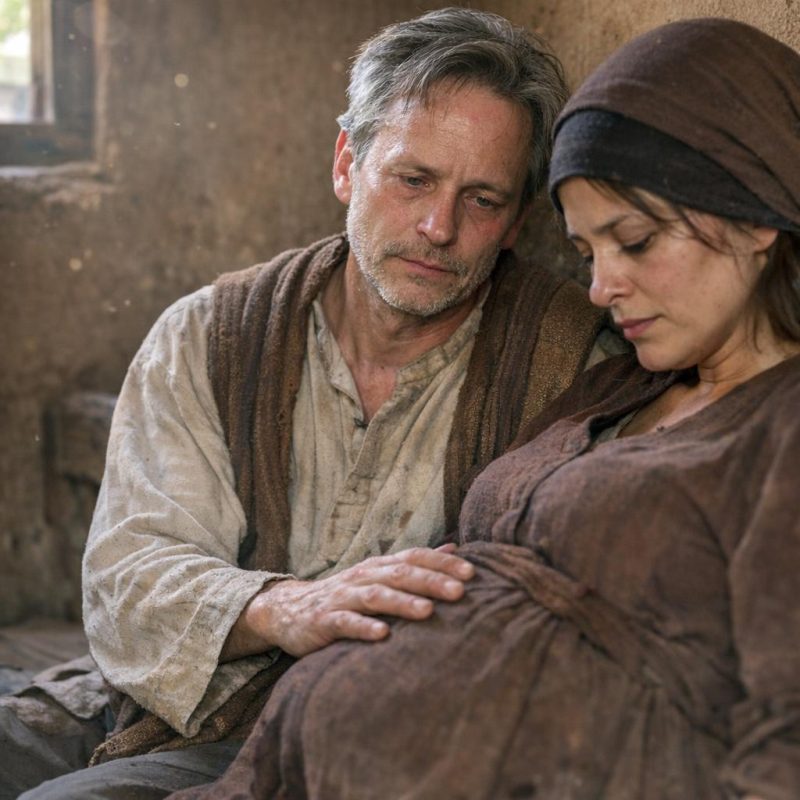 Image by RM AI
Losing Hassan
Hassan slipped away from us on a Tuesday evening, just as the muezzin's call to prayer filled the air. The tuberculosis had hollowed him out over months, leaving behind only the essence of the man I had loved for forty years. I sat beside him, one hand on his, the other resting on my hardened belly—a gesture that had become our silent ritual. Amina held his other hand, her tears falling silently onto the blanket. Youssef stood at the foot of the bed, strong and stoic like his adoptive father, while Nadia whispered prayers in the corner. 'My children,' Hassan rasped, his eyes finding each of them in turn, 'you have been Allah's greatest blessing.' Then his gaze met mine, and in that moment, I saw every memory we had ever shared—the young man who had waited patiently while I carried our sleeping child, the father who had opened his heart to orphans, the husband who had never once made me feel like a curiosity or burden. 'All my children,' he whispered, his fingers brushing against my stone belly one final time. When his hand went limp in mine, I didn't cry out. Instead, I felt something shift inside me, as if the child we had carried together for so long somehow knew its father was gone. What I couldn't have known then was that this shift was the beginning of something that would change everything.
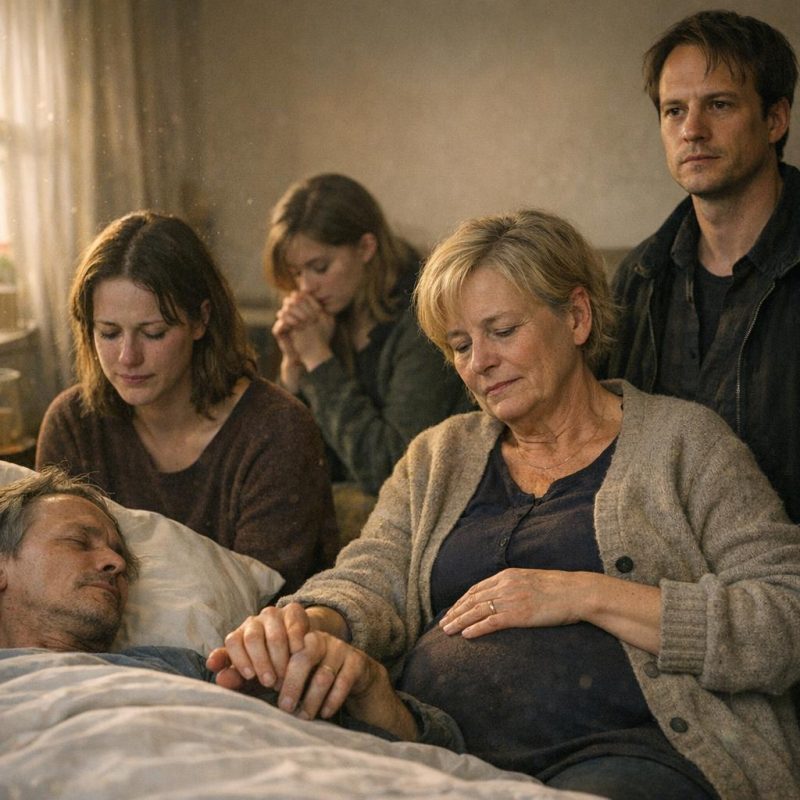 Image by RM AI
Life as a Widow
The morning after we buried Hassan, I woke to the rooster's crow and reached instinctively for the warmth that had occupied the space beside me for forty years. The emptiness hit me like a physical blow. Widowhood descended on me like a heavy cloak I hadn't asked to wear. Suddenly, at sixty-five, I was the sole keeper of our small farm—the olive trees, the goats, the vegetable patch that had been Hassan's pride. The village elders suggested I sell the land, their concern thinly veiling their discomfort with a woman managing property alone. 'I'll manage,' I told them firmly, channeling Hassan's quiet strength. At night, when the house fell silent and Nadia was asleep, I'd sit on our bed and speak to my hardened belly in hushed tones. 'Your father planted new fig trees last spring,' I'd whisper, running my weathered hands over the calcified mound. 'They're starting to bear fruit now.' Sometimes I swore I felt movement in response, though I knew it was impossible. My sleeping child had become my confidant, the only one who knew exactly how much I missed Hassan's gentle hands and knowing smile. What I didn't realize then was that my body was preparing to reveal a truth that had been hidden for nearly half a century—a revelation that would shake the foundations of everything I thought I knew about myself.
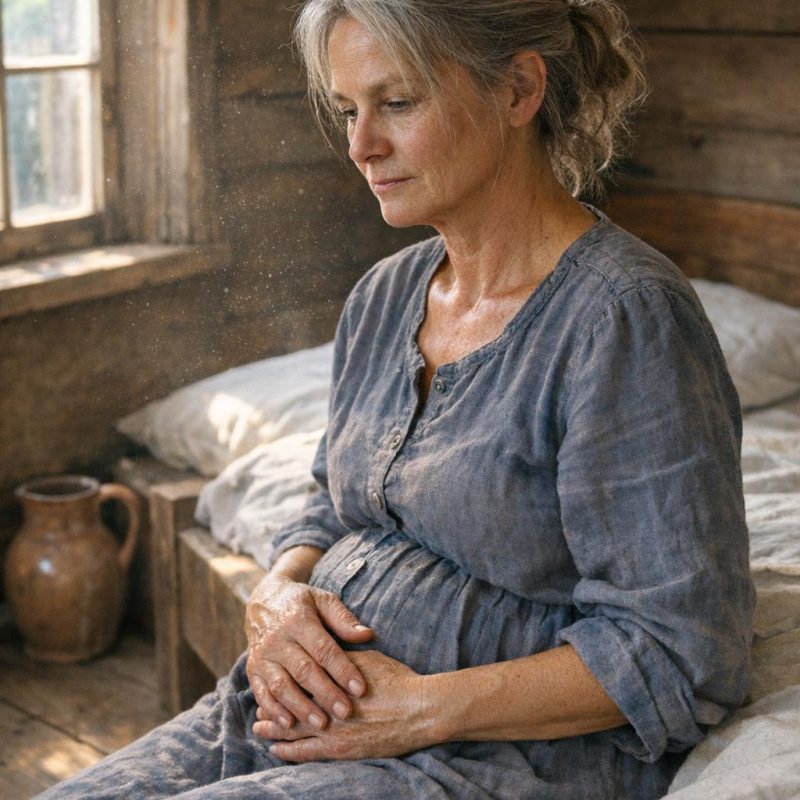 Image by RM AI
The Changing Village
Our village transformed slowly over the decades, like a flower unfurling one petal at a time. I watched as Morocco gained its independence, bringing winds of change that eventually reached even our remote corner of the world. First came the electric lines, strung between wooden poles like strange new vines. I remember the night they switched on the first streetlamp—children danced beneath it while elders muttered prayers, unsure if this light without fire was a blessing or curse. Then a proper school replaced the one-room building where children had learned by rote for generations. Finally, a small clinic opened, staffed by Dr. Karim, a young physician trained in Rabat with modern ideas and gentle hands. During a visit for a persistent cough, his eyes kept returning to my abdomen, which at seventy remained swollen and hard. 'Madame Zahra,' he said carefully, 'I would like to examine your... condition.' His scientific curiosity was evident, but so was his compassion. Still, I refused with a polite firmness that surprised even me. 'Some things are between a woman and Allah,' I told him, the memory of that hospital from forty-six years ago flashing before me—the dying woman, the panic, the flight that changed everything. What I didn't realize was that my body was already making decisions that would soon leave me no choice but to face what I had been carrying all these years.
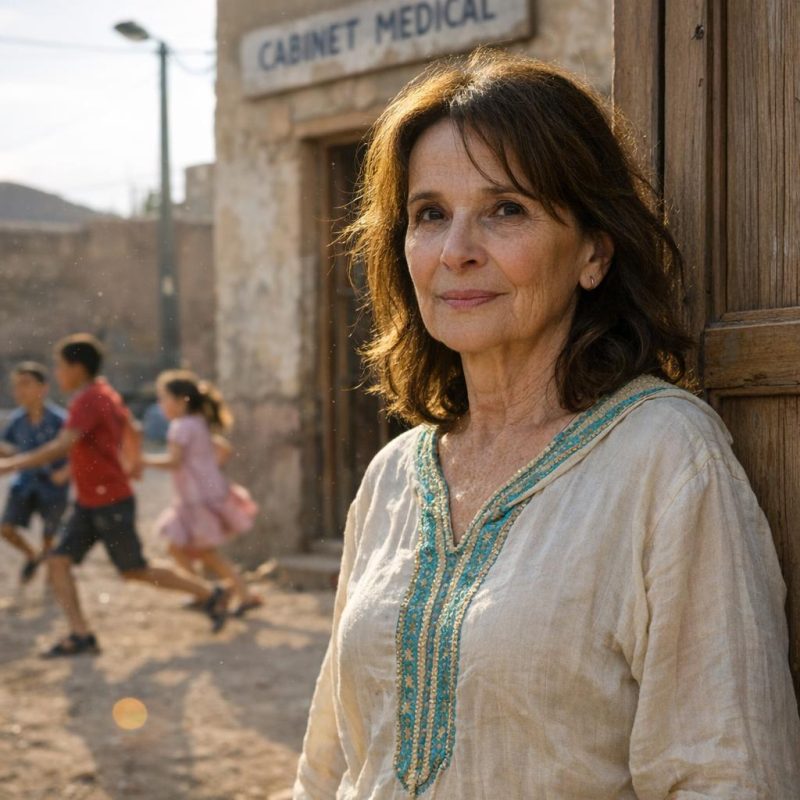 Image by RM AI
Amina's Wedding
Amina's wedding day arrived like a burst of color in the quiet rhythm of our lives. At forty-five, my firstborn adopted daughter glowed with a happiness that seemed to radiate from within as she prepared to marry Karim, a gentle-eyed schoolteacher from the neighboring village. As I helped her into her caftan, its emerald fabric embroidered with gold thread that caught the morning light, Amina suddenly paused. With a tenderness that made my heart ache, she placed her warm hand on my hardened belly—the same way she had since childhood. 'My brother or sister will be at my wedding in spirit,' she whispered, her eyes meeting mine without a trace of the discomfort others always showed. I couldn't stop the tears that spilled down my weathered cheeks. In that moment, I realized that while the village had always seen my condition as something strange or tragic, my children had accepted it as simply part of who I was—part of our family's unique story. The celebration that followed filled our courtyard with music and laughter, the kind Hassan would have reveled in. As I watched Amina dance with her new husband, I felt a strange sensation in my abdomen—not pain, but a shifting I hadn't experienced in decades. It was almost as if my sleeping child was stirring, joining in the celebration of their sister's happiness. I dismissed the thought, never imagining that this small movement was the first warning of what was to come.
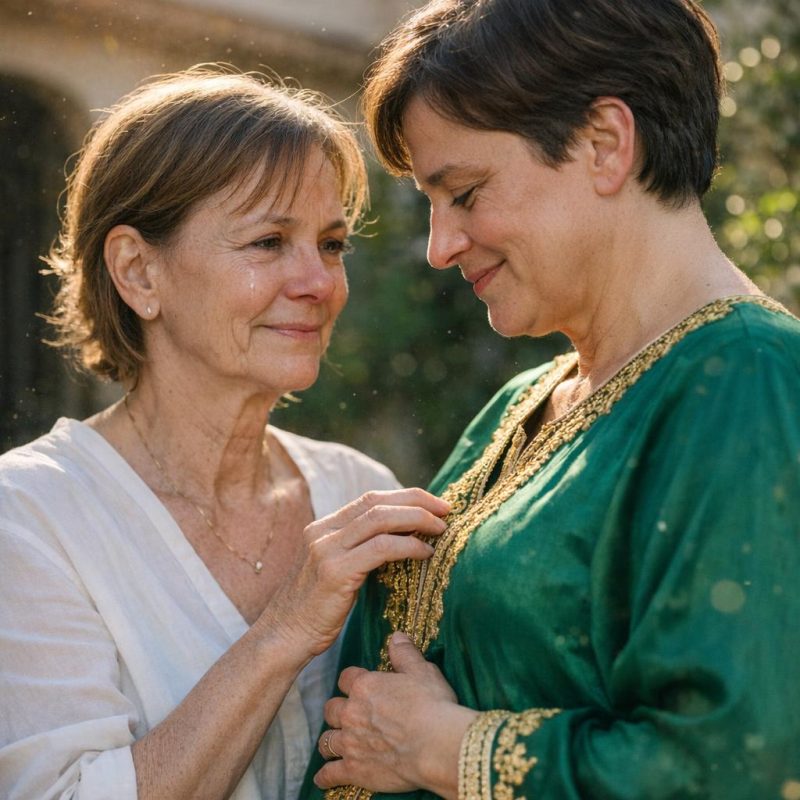 Image by RM AI
Becoming a Grandmother
The day Amina placed Samira in my arms, I felt a strange sensation—as if my sleeping child stirred in recognition of this new life. 'Look, little one,' I whispered to my hardened belly, 'you're an aunt now.' At seventy-five, I had become a grandmother, my weathered hands cradling a miracle I once thought would never touch our family. Samira had Amina's curious eyes and her father's gentle smile, a perfect blend of love made flesh. The irony wasn't lost on me—my body had never delivered my own child, yet here I was, surrounded by a family that had grown like wild jasmine, spreading and blooming in unexpected places. When Samira wrapped her tiny fingers around mine, I felt tears slide down my cheeks. 'She has your strength, Mama,' Amina said, watching us with glistening eyes. The village women who once whispered about my curse now brought sweets and blessings, marveling at how Allah works in mysterious ways. My stone baby and I had become the matriarchs of a thriving family, proof that motherhood comes in forms beyond birth. As I rocked Samira to sleep each night, singing the same lullabies I once sang to Amina, I sometimes wondered if my unborn child could hear us—if perhaps they had always been guiding me toward this fullness of life I never expected. What I couldn't have known then was that my body was preparing to reveal its final secret, one that would rewrite everything I thought I understood about the weight I'd carried for nearly half a century.
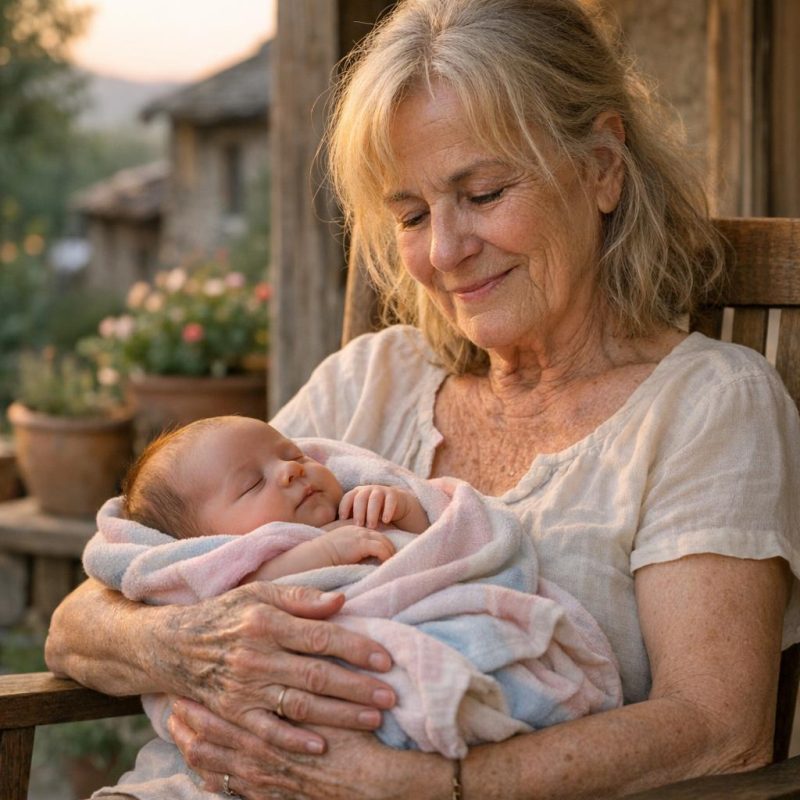 Image by RM AI
The Years Pass
The years flowed by like the gentle Oum Er-Rbia River near our village, carrying memories on its current. My adopted children grew tall and strong, each finding their own path in life. Youssef became a respected carpenter, his hands creating beauty from raw wood just as Hassan had taught him. Nadia, my youngest, surprised us all by becoming a teacher at the very school that had once been just a single room. As Morocco changed around us—paved roads replacing dirt paths, satellite dishes appearing on rooftops like strange metal flowers—my hardened belly remained constant, a silent companion through celebrations and sorrows. My grandchildren multiplied, filling our courtyard with laughter during Eid celebrations. They never questioned the stone hardness beneath my djellaba; to them, it was simply part of their grandmother, as natural as my henna-dyed hair or the wrinkles that mapped my face. 'Grandma Zahra's special belly,' little Karim called it once, patting it gently before running off to play. Sometimes, in quiet moments while kneading bread or hanging laundry, I would forget it was there at all—until a twinge or pressure reminded me of the sleeping child who had journeyed through life with me. What I didn't know was that after nearly five decades of silence, my body was preparing to speak its truth in a way I could no longer ignore.
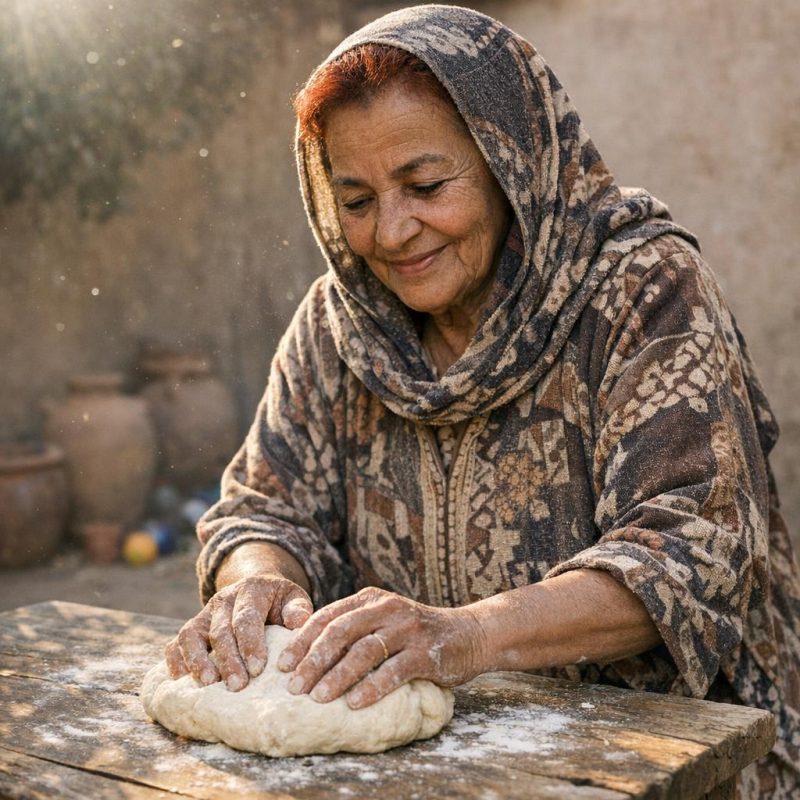 Image by RM AI
The First Pain Returns
It began on a Tuesday morning as ordinary as any other. I was kneading dough for the day's bread, my hands working from memory while my mind wandered to Samira's upcoming visit, when I felt it—a dull ache deep within my hardened belly. At first, I dismissed it as just another complaint from my aging body. At seventy-five, mysterious pains come and go like unwelcome guests. 'It will pass,' I told myself, continuing my work despite the discomfort. But as the sun crossed the sky, the pain grew teeth. By afternoon, it had transformed from a whisper to a scream, radiating from my stone belly through my entire body. The sensation was hauntingly familiar—the same fierce pain I had fled from forty-six years ago when I ran from the hospital, terrified and pregnant. As evening shadows stretched across our courtyard, the agony brought me to my knees. I collapsed beside our kitchen table, the half-formed loaves forgotten as I clutched my abdomen and gasped for breath. That's how Youssef found me, crumpled on the floor like a discarded djellaba, my face contorted in pain. 'Mother!' he cried, rushing to my side. His strong carpenter's hands gently cradled my shoulders as panic filled his eyes. 'What's happening?' But I couldn't answer him—couldn't find words to explain that the child who had slept inside me for nearly half a century might finally be demanding to be acknowledged.
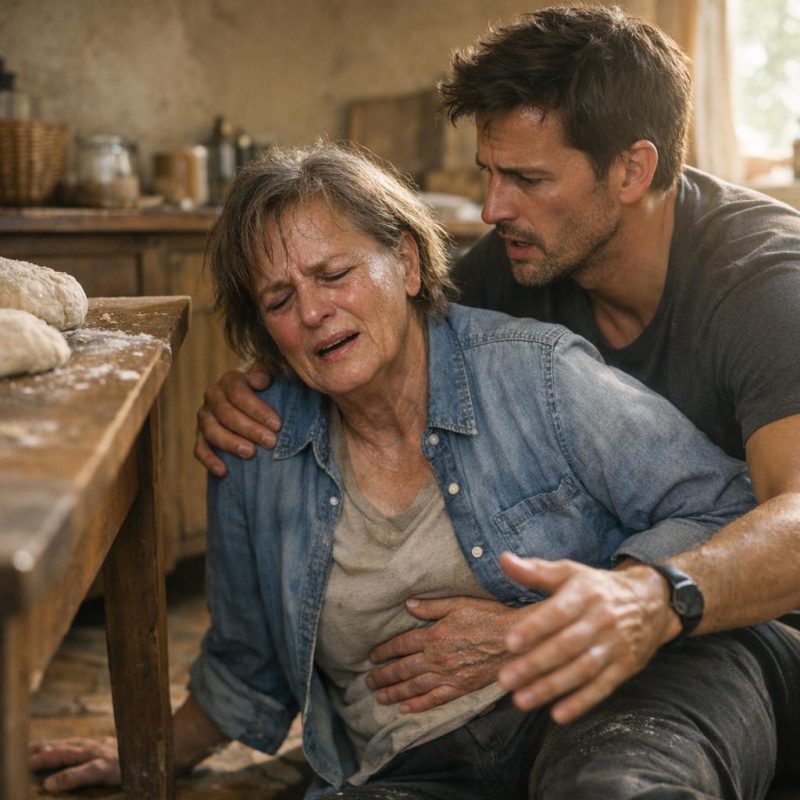 Image by RM AI
Youssef's Insistence
Youssef knelt beside me, his face etched with worry as I clutched my stone belly in agony. 'Mother, this isn't normal. You need real doctors, not village remedies,' he insisted, his voice firm but gentle. At fifty-two, my carpenter son had transformed into a successful businessman with a workshop in Casablanca. The traditional wooden carvings of our ancestors now adorned homes across Morocco and even Europe. 'The sleeping child has been with me for forty-six years,' I argued weakly, 'this pain will pass like all things.' But Youssef shook his head, the stubborn set of his jaw reminding me so much of Hassan that my heart ached. 'The world isn't what it was in 1955, Mother. There are scans that can see inside you, medicines that didn't exist before.' When another wave of pain left me gasping, he made the decision for both of us. 'I'm taking you to the hospital in Rabat tomorrow.' The word 'hospital' sent a cold fear through me, memories of that dying woman from decades ago flashing before my eyes. But as I looked at my son—this boy I had raised who now stood tall and certain—I realized I no longer had the strength to run away. Something was happening inside me, something that had waited nearly half a century to be revealed, and I was terrified of what the doctors might find.
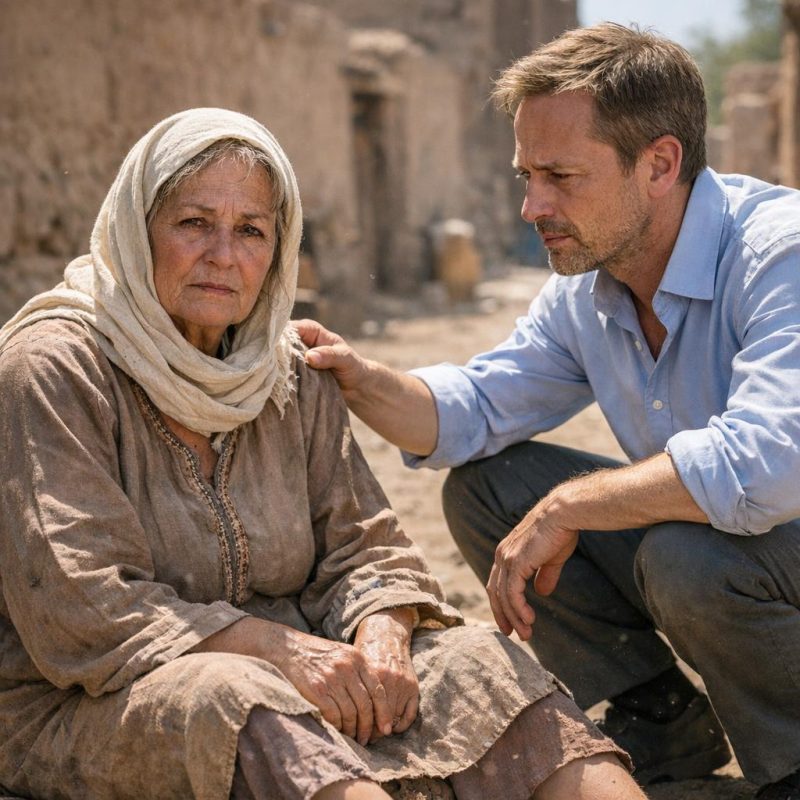 Image by RM AI
Return to the Hospital
The moment we passed through the sliding glass doors of Rabat's hospital, I felt my heart racing with memories I'd spent decades trying to forget. This place was nothing like the chaotic, terrifying hospital of 1955 where I'd watched a woman die in childbirth. The floors gleamed under bright lights, nurses moved with purposeful calm, and the air smelled of antiseptic rather than fear. 'It's alright, Mother,' Youssef whispered, his strong hand steadying me as I was wheeled through corridors that seemed impossibly modern. I clutched his fingers like a lifeline, my other hand protectively covering my hardened belly. 'The sleeping child doesn't like hospitals,' I murmured, the words tumbling out before I could stop them. 'We ran away last time.' I noticed the look Youssef exchanged with the young doctor walking alongside us – concern mixed with something else. Pity, perhaps? The pain surged again, stealing my breath and bending me forward in the wheelchair. 'Madame Zahra,' the doctor said gently in Arabic, not the French that officials usually used, 'we're going to take good care of you.' As they wheeled me toward a room filled with machines I'd never seen before, I couldn't shake the feeling that my body's longest-held secret was about to be exposed to the harsh light of modern medicine.
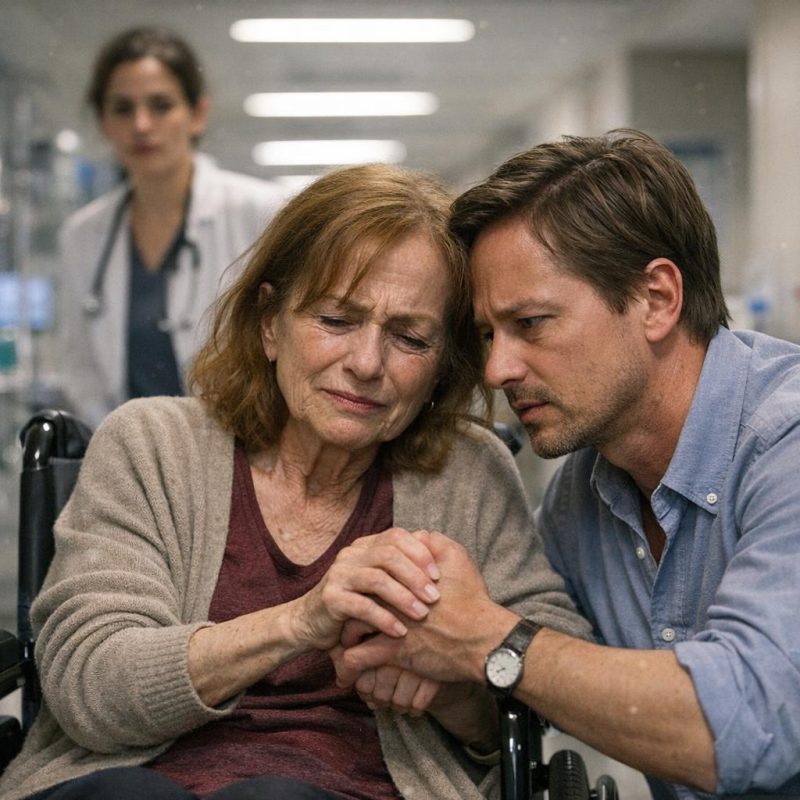 Image by RM AI
Professor Taibi
Professor Taibi wasn't what I expected. In my mind, specialists were cold, clinical people who saw bodies, not souls. But this distinguished man with salt-and-pepper hair and compassionate eyes looked at me—really looked at me—as I recounted my story. 'A sleeping child,' he repeated thoughtfully, not dismissing my words as the ramblings of a superstitious old woman. His hands were gentle as they pressed against my hardened abdomen, his touch professional yet respectful. I noticed how his expression shifted—a slight widening of the eyes, a thoughtful pursing of the lips—as his fingers mapped the strange contours beneath my skin. Youssef stood anxiously in the corner, watching every move. 'Madame Zahra,' Professor Taibi finally said, sitting back in his chair, 'I've been practicing medicine for thirty years, and I've never felt anything quite like this.' He spoke with a calm authority that somehow eased my fear rather than intensifying it. 'We need to take some images—scans that will show us what's inside.' He must have seen the panic flash across my face because he reached out and patted my hand. 'Don't worry. Whatever has been with you all these years, we'll face it together.' Little did I know that what those images would reveal would leave even this experienced doctor speechless.
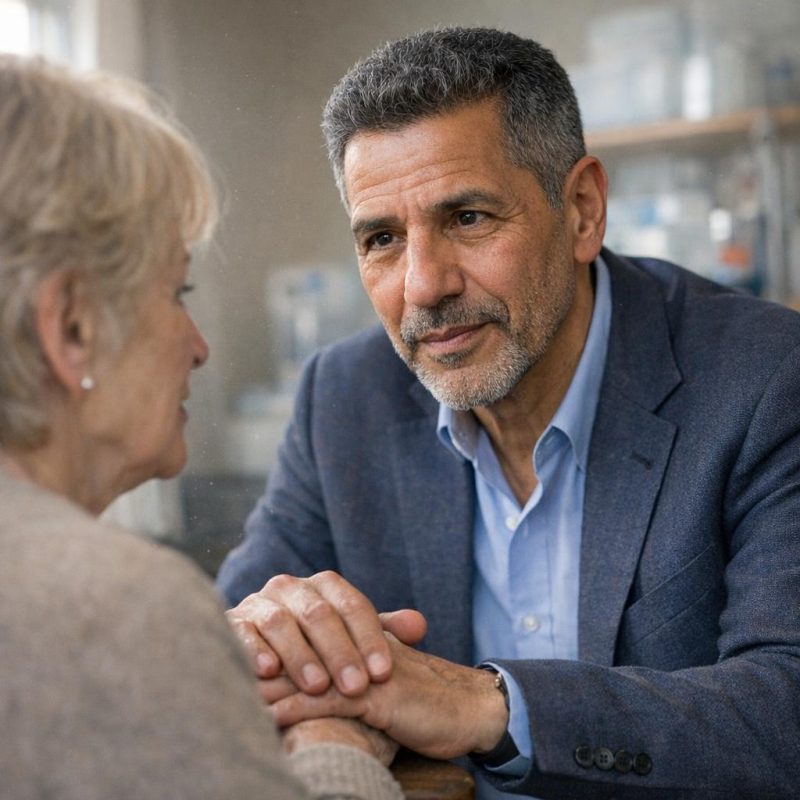 Image by RM AI
The Ultrasound
The ultrasound room felt like a confessional booth—dim, intimate, and filled with an expectant silence. I lay on the table, my seventy-five-year-old body exposed to modern technology for perhaps the first time. The young technician smiled reassuringly as she spread cold gel across my hardened belly, the same belly that had been my constant companion for nearly half a century. 'This won't hurt, Madame Zahra,' she promised, pressing a wand-like device against my skin. Her eyes remained fixed on the blue-lit screen beside us, a window into my body's longest-kept secret. I watched her face transform—first concentration, then confusion, her eyebrows drawing together as she moved the wand more deliberately. 'Excuse me,' she whispered, her voice suddenly tight. 'I need to get Professor Taibi.' When they returned, the professor's face was serious as he took the wand himself, his experienced hands moving it across the calcified mound that had once been my child. They spoke in rapid medical terms—words like 'calcification' and 'fetal remains' reaching my ears like distant thunder. But it was their expressions that told me everything—the widened eyes, the exchanged glances of disbelief. 'Madame,' Professor Taibi finally said, turning the screen toward me, 'I believe we've found your sleeping child.'
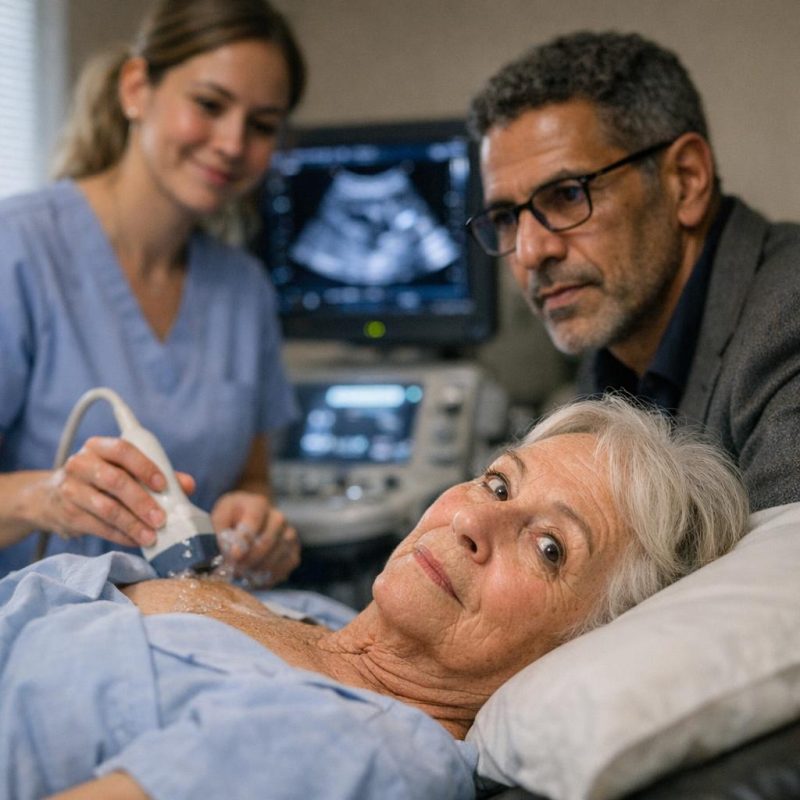 Image by RM AI
Not Cancer
Professor Taibi pulled a chair close to my hospital bed, his face a careful mask of professional composure. Youssef's warm hand enveloped mine, his grip tightening slightly as the doctor cleared his throat. 'Madame Zahra,' he began, his voice gentle but clinical, 'we initially suspected an ovarian tumor given your age and symptoms.' My heart stuttered at the word 'tumor,' and I felt my free hand instinctively move to protect my hardened belly—my sleeping child. 'Is it cancer?' I asked directly, my voice steadier than I felt. The silence that followed my question stretched like taffy, too long to be reassuring. 'No,' he finally answered, but the hesitation before that single word filled the room with unspoken complications. 'What we've found is... something else entirely.' He explained they needed more detailed images—an MRI scan—to confirm their suspicions. The way his eyes kept darting to my abdomen reminded me of villagers who couldn't help staring at my condition but were too polite to ask questions. 'Something else' could mean many things, but the careful way Professor Taibi chose his words told me that whatever was inside me was rare enough to make even this experienced doctor tread cautiously. As they wheeled me toward the MRI machine, I wondered if modern medicine was about to give a name to what village wisdom had simply called a sleeping child.
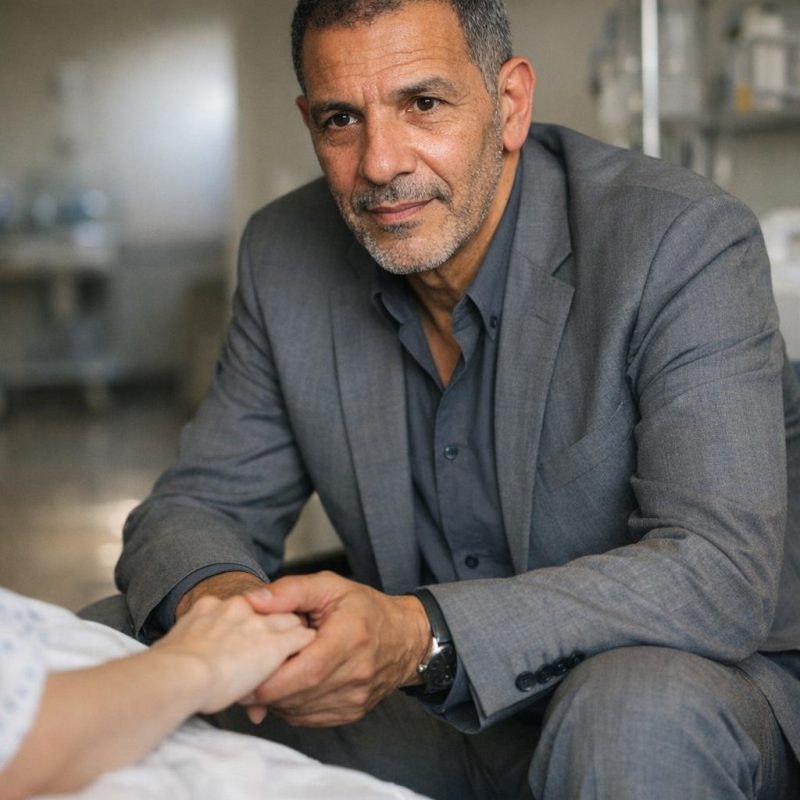 Image by RM AI
The MRI Machine
The MRI machine loomed before me like a giant metal coffin. 'It's just a scan, Mother,' Youssef reassured me, but his voice seemed distant as nurses helped me onto the narrow table. As they slid me into the gleaming white tunnel, panic clawed at my throat. I'd spent a lifetime avoiding hospitals, and now I was being swallowed by this monstrous machine. The technician's voice crackled through a speaker: 'Try to remain still, Madame Zahra.' The moment the thunderous banging began, I squeezed my eyes shut and started reciting the prayers my mother had taught me. In that confined space, with rhythmic pounding surrounding me, my life unfolded behind my closed eyelids—Hassan's gentle smile on our wedding day, Amina taking her first wobbly steps across our courtyard, Youssef proudly showing me his first carved wooden box, grandchildren climbing onto my lap despite my hardened belly. Through every memory, every joy and sorrow, my sleeping child had been there, a silent witness to my journey. Whatever the doctors discovered today, I realized with sudden clarity that this presence inside me wasn't just a medical anomaly—it had been my constant companion through a life that, despite its strange burden, had been wonderfully, unexpectedly full. When the machine finally fell silent, I felt an odd sense of peace. My secret was about to be revealed, and somehow, I was ready.
 Image by RM AI
The Diagnosis
Professor Taibi entered my room with three other doctors, their faces a mixture of fascination and concern. I clutched Youssef's hand as they arranged themselves around my bed like solemn judges. 'Madame Zahra,' Professor Taibi began, his voice gentle but direct, 'we have confirmed what your scans revealed.' The doctors exchanged glances before he continued, using medical terms that floated past me until one word caught in my consciousness like a thorn: 'lithopedion.' Stone baby. The room seemed to tilt as Professor Taibi explained that my sleeping child had not been sleeping at all. It had died inside me decades ago, and my body—in its ancient wisdom—had calcified the fetus to protect me from infection. 'Your body created a shell of calcium around the fetus,' he said, showing me images that looked more like archaeology than medicine. 'It's extremely rare. There are fewer than 300 documented cases in medical history.' I stared at the ghostly white shape on the screen, the unmistakable curve of a tiny spine, the suggestion of a head. For forty-six years, I had carried this child not in sleep but in stone. The village myth and medical reality collided in that moment, leaving me breathless. What I had interpreted as protection of my honor had actually been my body's desperate attempt to protect my life. As the doctors continued their explanation, I wondered how many other women's stories had been hidden beneath layers of myth and silence.
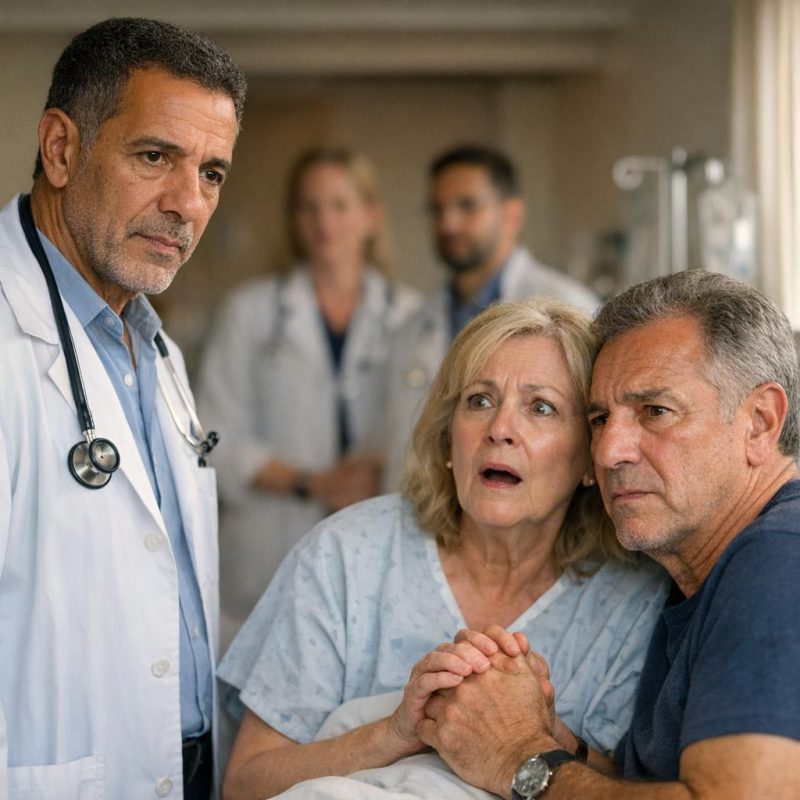 Image by RM AI
Medical Marvel
The doctors gathered around my bed like scholars examining a rare manuscript. 'Madame Zahra,' Professor Taibi explained, his voice filled with professional awe, 'your case is extraordinary—perhaps one of the longest documented lithopedions in medical history.' He showed me images on a tablet, pointing to the ghostly white outline that had been my companion for forty-six years. What had happened inside me was both a tragedy and a biological miracle. When my baby died in my womb all those years ago, instead of causing a deadly infection, my body had encased the fetus in calcium—creating a protective stone shell around it. 'Your body saved your life,' the female doctor added gently. 'It's an ancient biological defense mechanism, incredibly rare.' The pain I now felt, they explained, was from this calcified mass shifting and pressing against my other organs as my aging body changed shape. The younger doctors kept using the word 'fascinating,' but I saw in Professor Taibi's eyes something deeper—respect for the silent battle my body had fought for nearly half a century. What none of us realized then was that my stone baby would soon make me famous far beyond our village, turning this grandmother's tragedy into something that would change modern medicine's understanding of the human body's remarkable resilience.
 Image by RM AI
The Decision
Professor Taibi sat at the edge of my bed, his kind eyes meeting mine as he explained the situation. 'Madame Zahra, the lithopedion must be removed. At your age, the surgery carries risks, but leaving it could cause more complications.' His words hung in the air like heavy smoke. My children gathered around me – Youssef standing tall with worry etched across his face, Nadia clutching my hand, and Amina who had traveled all the way from Casablanca when she heard the news. 'Mother, please,' Youssef pleaded, 'let the doctors help you.' I closed my eyes, feeling the weight of my stone baby pressing against my organs. For forty-six years, this child had journeyed with me through life's joys and sorrows. I thought of Hassan, my beloved husband who had passed ten years ago. What would he say? I remembered our whispered promises under the stars, how we vowed to protect our children at all costs. 'I will do it,' I finally said, my voice stronger than I expected. 'It's time to deliver my firstborn.' Professor Taibi nodded solemnly, squeezing my shoulder. 'We'll schedule the surgery for tomorrow morning.' As my children embraced me with tears in their eyes, I couldn't help but wonder – after nearly half a century together, was I ready to say goodbye to the child who never was?
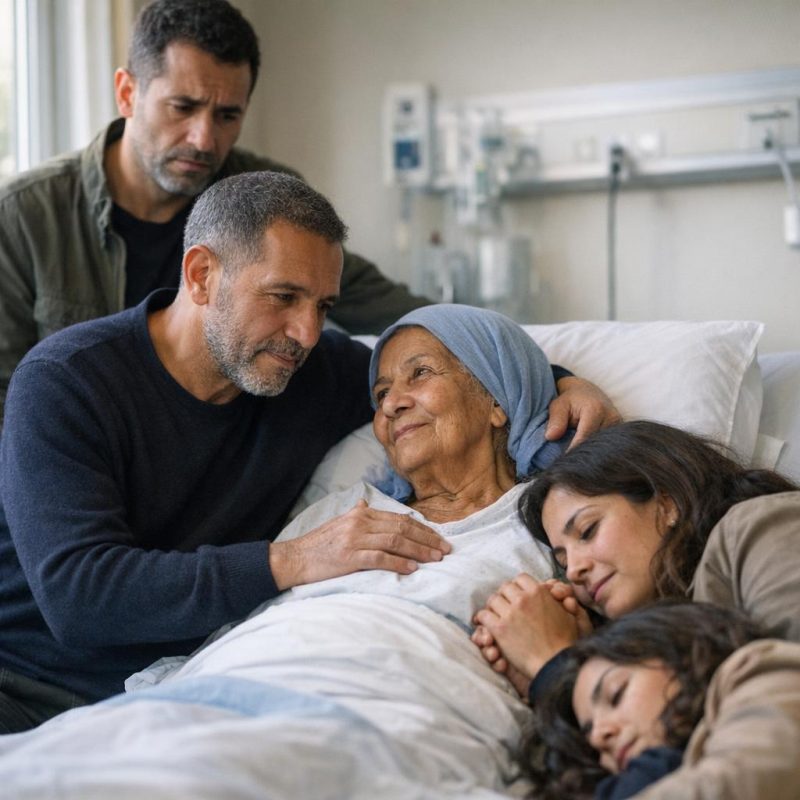 Image by RM AI
Preparing for Surgery
That night, the hospital fell quiet except for the occasional squeak of nurses' shoes on the polished floor. I lay awake, my weathered hands resting on the hardened mass that had been my constant companion for forty-six years. 'Tomorrow, we will finally meet properly,' I whispered to my stone baby. 'And then we will both be free.' I spoke softly in the darkness, telling stories of the life we had shared—the joys of raising Youssef, Nadia, and Amina, the sweet years with Hassan, the grandchildren who climbed onto my lap despite my strange belly. A young nurse named Fatima found me this way around midnight, talking to my unborn child as if it could hear. Instead of thinking me senile, she pulled up a chair beside my bed. 'Tell me about your child,' she said simply. And so I did. Until the first light of dawn painted the hospital walls pink, I shared the story of my sleeping child—how it had witnessed my entire adult life, how it had been both my burden and my secret strength. 'You know,' Fatima said as she adjusted my IV before her shift ended, 'some mothers carry their children in their hearts. You just carried yours differently.' Her words comforted me, but as the surgical team began to gather outside my door, I couldn't help wondering: after they removed this calcified child from my body, would I still feel its presence within me?
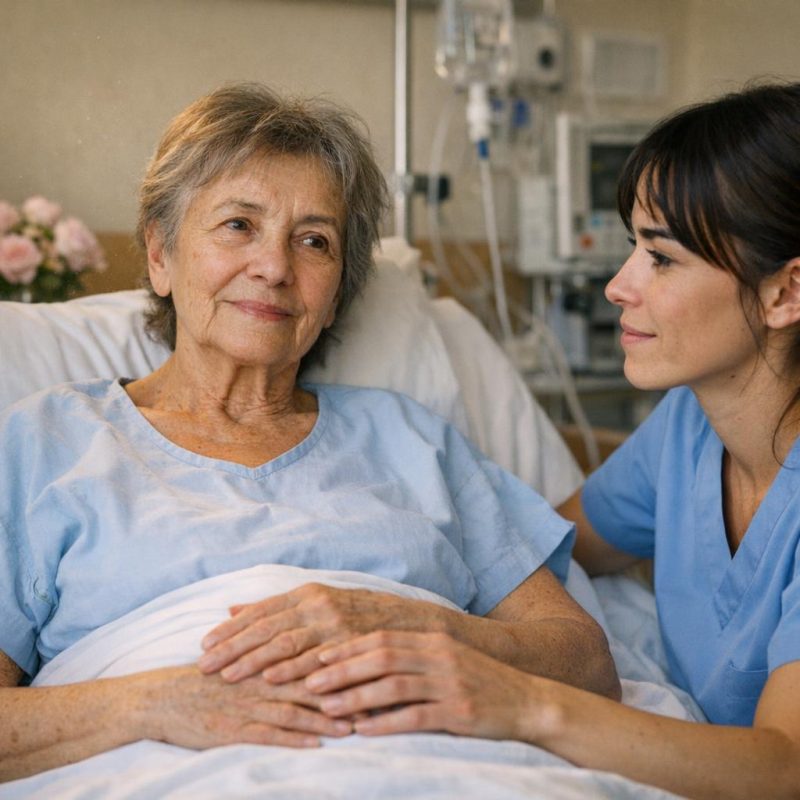 Image by RM AI
The Operation
The operating room was a blur of bright lights and masked faces as they wheeled me in. 'We'll take good care of you, Madame Zahra,' Professor Taibi assured me, his eyes kind above his surgical mask. As the anesthesia took hold, I felt myself drifting away from my body, from the stone child that had been my silent companion for nearly half a century. In my dreams, Hassan was waiting for me in our courtyard, looking just as he did when we were young. 'Zahra,' he called, his smile as warm as summer, 'come see our child.' Between us stood a small figure, face unclear but presence undeniable. For four hours, while I wandered through memories, Professor Taibi and his team worked with painstaking precision, carefully separating the calcified mass from organs it had fused with over decades. Outside, my children—Youssef, Nadia, and Amina—paced the waiting room, their faces etched with worry. The nurses later told me it was one of the most complex surgeries they'd witnessed, extracting a four-pound lithopedion that had become part of my very being. What none of us could have predicted was how I would feel when I finally woke up—lighter, yes, but also strangely empty, as if a piece of my soul had been removed along with my stone baby.
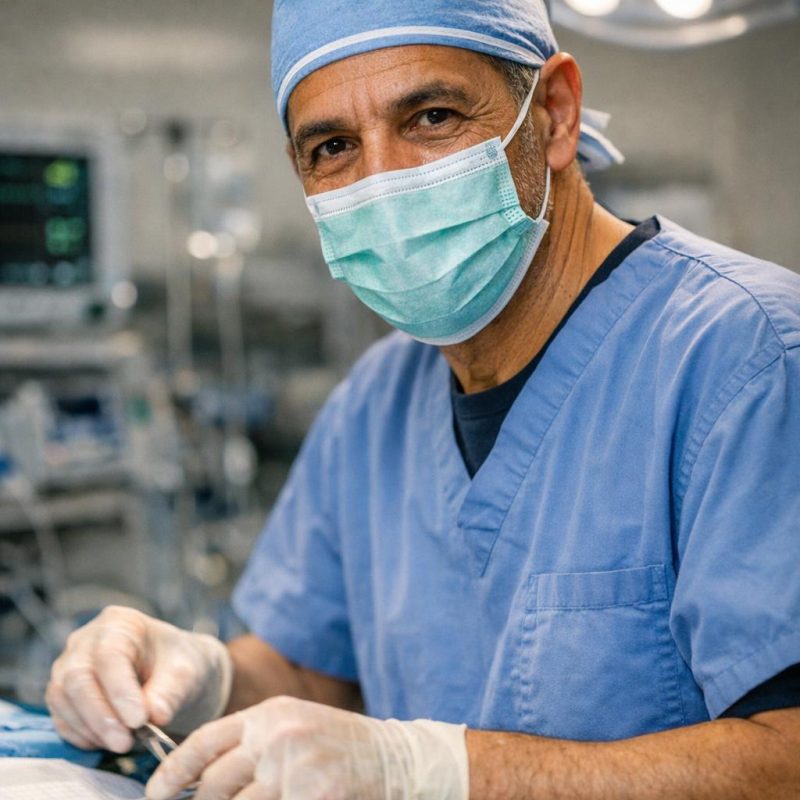 Image by RM AI
Waking Up Lighter
I woke to the gentle beeping of monitors, my mind foggy from anesthesia. The first thing I noticed was the strange emptiness where my hardened belly had been for forty-six years. My hands instinctively moved to my abdomen, finding only bandages and a flatness I hadn't known since I was a young woman. It felt like losing a part of myself—like saying goodbye to an old friend who had journeyed with me through life's hardest moments. 'How are you feeling, Madame Zahra?' Professor Taibi asked, appearing at my bedside with a gentle smile. His eyes held a mixture of professional pride and human compassion. 'The operation was successful,' he explained, pulling up a chair. 'We removed the lithopedion intact. It weighed nearly four pounds.' Four pounds. The weight of a newborn. The weight I had carried inside me since 1955. As my children rushed in, their faces bright with relief, I felt tears sliding down my weathered cheeks. 'Mother, you're going to be fine now,' Youssef assured me, squeezing my hand. But how could I explain to them that along with the physical lightness came a strange sense of loss? The stone baby had been my burden, yes, but also my constant companion through a lifetime of joys and sorrows. What Professor Taibi couldn't possibly know was that the photograph of my lithopedion he'd promised to show me would reveal something none of us were prepared to see.
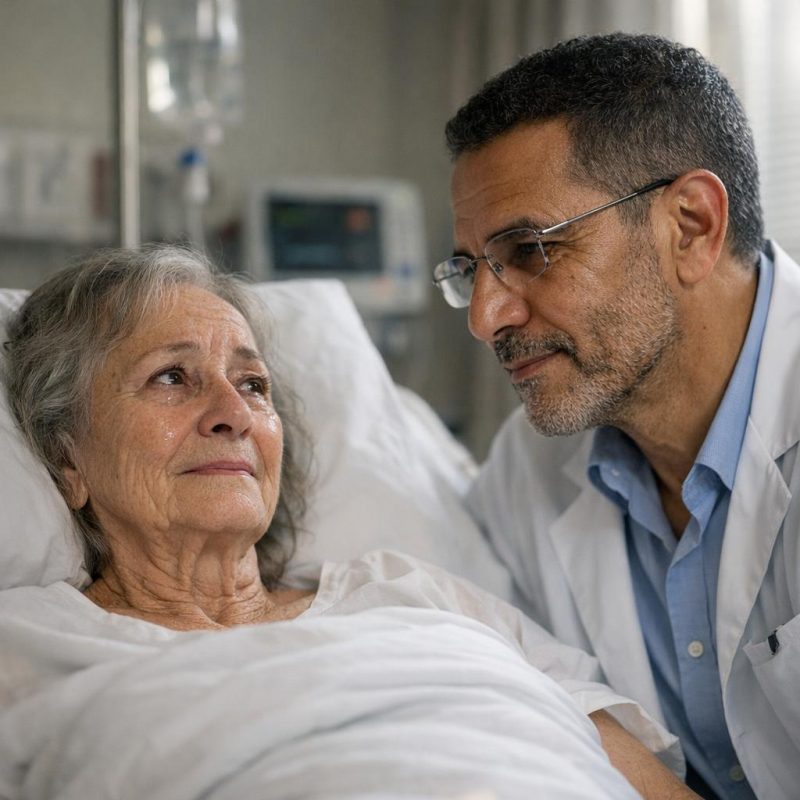 Image by RM AI
Seeing My Child
Three days after the surgery, Professor Taibi came to my room holding a manila envelope. 'Madame Zahra,' he said gently, 'would you like to see what we removed?' His eyes held a question—was I strong enough for this? I nodded without hesitation. 'This was my firstborn. I've carried this child longer than any mother should.' He warned me the images might be disturbing, but I waved away his concern. When he placed the photograph in my weathered hands, my breath caught. There, perfectly preserved in calcium, was a tiny human form, curled as if in peaceful slumber. I traced the outline with my finger—the small head, the curved spine, the suggestion of tiny fingers. Tears welled in my eyes, but not from horror or disgust. For the first time in forty-six years, I could truly see the child I had carried within me. 'My sleeping baby,' I whispered. Professor Taibi watched me carefully, perhaps expecting me to break down. Instead, I felt a profound sense of peace wash over me. This wasn't a medical anomaly to me—this was my child, finally delivered. As I handed the photograph back, I noticed something in the corner of the image that made my heart stop—a detail so small, yet so significant, that even the doctors had missed it.
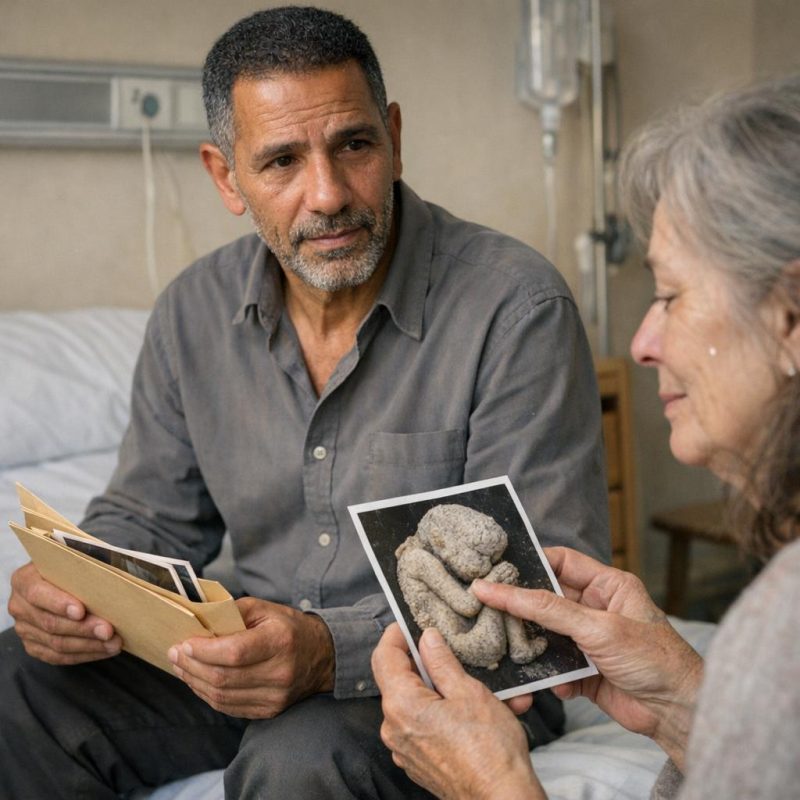 Image by RM AI
Medical Interest
Within days of my surgery, my quiet hospital room became a revolving door of medical professionals. Doctors I'd never met before would appear, speaking in hushed, reverent tones as if they were visiting a shrine. 'Madame Zahra,' Professor Taibi explained one morning, 'your case is extremely rare. Medical journals across the world want to publish your story.' He showed me a stack of requests from universities and research hospitals. The thought of strangers examining the most intimate details of my life made my stomach tighten. 'Will they use my name?' I asked. 'Not if you don't wish it,' he assured me, his kind eyes understanding my concern. 'Your privacy is paramount, but your case could help advance medical knowledge.' I thought of other women who might carry similar burdens, hidden beneath layers of myth and silence. 'They may study it,' I finally decided, 'but I am not a curiosity to be paraded before the world.' Professor Taibi nodded respectfully, promising to shield me from unwanted attention. That evening, as I watched the sunset from my hospital window, I wondered how many medical textbooks would someday feature my stone baby—my most private tragedy transformed into a footnote of scientific wonder. What I couldn't have known then was that one particular researcher would discover something in those calcium-encased remains that would change everything I thought I knew about my sleeping child.
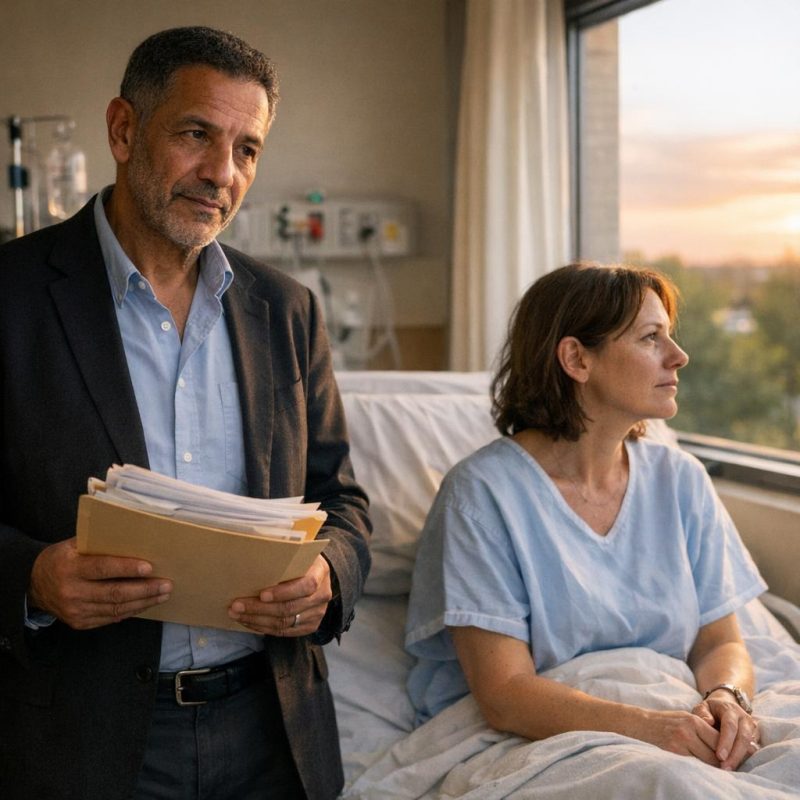 Image by RM AI
Recovery and Reflection
The hospital room became my sanctuary for reflection during those quiet recovery days. As I lay there, watching sunlight dance across the sterile walls, I finally had time to process the strange journey my body and I had taken together. For forty-six years, the myth of the 'sleeping child' had been my comfort, my explanation, my way of making sense of the unthinkable. It wasn't just a story I told others—it was the story I needed to tell myself. 'You know, Madame Zahra,' the night nurse said while changing my bandages, 'sometimes our minds create the shelter we need until we're strong enough to face the storm.' Her words resonated deeply. The village wisdom that had once seemed superstitious now appeared profoundly merciful. Science had eventually revealed my stone baby for what it truly was, but that didn't diminish the purpose the myth had served. It had carried me through decades of life—through marriage, through raising my adopted children, through becoming a grandmother—until I was finally ready to confront reality. As I touched my now-flat abdomen, I realized that both the scientific truth and the cultural myth had their own kind of wisdom. What I couldn't have anticipated was how this realization would change not just how I viewed my past, but how I would approach whatever time I had left.
 Image by RM AI
Naming the Child
One quiet evening during my recovery, as the hospital settled into its nighttime rhythm, Amina sat beside my bed, her fingers gently intertwined with mine. 'Mother,' she asked softly, 'did you ever name the baby?' The question caught me off guard. In all these decades, through all the silent conversations I'd had with the presence inside me, I had never given it a proper name. It had always been 'my sleeping child' or simply 'the baby'—as if naming it would make its loss too real to bear. I closed my eyes, feeling the strange emptiness where my stone baby had once been. 'No,' I whispered, 'I never did.' Amina squeezed my hand, waiting patiently as I searched my heart. After a moment that seemed to stretch across the forty-six years I'd carried my child, I knew. 'Ibrahim,' I said, my voice growing stronger with each syllable. 'His name is Ibrahim, after your father's father.' Saying it aloud felt like completing a circle that had remained open for nearly half a century—like finally writing the first page of a book whose middle and end I had lived with for decades. What I didn't expect was how this simple act of naming would bring dreams that night that would reveal something I had never dared to imagine about my stone child.
 Image by RM AI
The Burial Decision
A week after the surgery, Professor Taibi came to my room with a question I hadn't considered. 'Madame Zahra,' he said, sitting beside my bed, 'the medical team has completed their initial studies of your lithopedion. What would you like us to do with it afterward?' His question hung in the air, heavy with implications. I didn't hesitate. 'I want Ibrahim returned to me,' I said firmly, using the name I had finally given my firstborn. 'He deserves a proper burial according to our traditions.' The professor nodded respectfully, understanding that beyond the medical marvel, this was my child. Later that evening, when my children visited, I told them of my decision. 'We will bury him as family,' Youssef said, taking my hand. 'As our brother.' Tears welled in my eyes as Nadia and Amina nodded in agreement. For forty-six years, Ibrahim had been part of me, traveling through life's journey within my body. Now, he would have his own resting place, honored not as a medical curiosity but as a soul who never had the chance to live. What none of us could have anticipated was how the entire village would respond when they learned of our plans to bury my stone baby.
 Image by RM AI
Returning Home
Two weeks after the surgery, I returned to my village, my body lighter in a way that felt almost disorienting after forty-six years of carrying Ibrahim. The familiar dusty roads and whitewashed houses welcomed me home, but I was not the same Zahra who had left. As I walked through the village square, neighbors who had known me since childhood stopped and stared, their eyes drawn to my transformed silhouette. 'Zahra, what happened to you?' Fatima, my oldest friend, asked, her weathered hand reaching out to touch my now-flat abdomen. I invited her and several curious neighbors to sit with me under the old olive tree. There, I told my story simply and honestly – about the hospital in 1955, my terror, the 'sleeping child' I had carried for nearly half a century, and the medical miracle that had finally been revealed. As I spoke, I watched understanding dawn in their eyes. Many nodded knowingly; the myth of the sleeping child was woven into our cultural fabric, but none had ever witnessed its medical reality. 'Allah works in mysterious ways,' murmured old Hamid, who had once been our village imam. What surprised me most wasn't their shock or disbelief – it was how many women approached me privately afterward, whispering their own stories of loss and secrets carried for decades, as if my stone baby had somehow given them permission to finally speak their truth.
 Image by RM AI
Ibrahim's Funeral
Three months after my surgery, a small wooden box arrived at our home. Inside, carefully wrapped in white cloth, was Ibrahim—my stone baby, my firstborn who had journeyed with me for forty-six years. The next morning, our entire village gathered at the cemetery as the imam led Ibrahim's funeral prayers. I stood between Youssef and Nadia, with Amina holding my hand tightly as we watched the tiny grave being prepared. 'Bismillah,' the imam began, his voice carrying across the hushed crowd. 'Today we commit to Allah's care a child who never drew breath in our world, yet lived a lifetime within his mother.' Tears streamed down my weathered cheeks as neighbors who had known me for decades placed flowers around the grave. Many of them had watched me walk through life with my hardened belly, never knowing the truth I carried. 'Your son has brought our community together in a way I've never seen,' whispered Fatima, embracing me after the burial. As the villagers dispersed, I remained by the small mound of fresh earth, feeling strangely complete. Ibrahim had been my silent companion through marriage, motherhood, and widowhood. Now he had his own place in our world, honored not as a medical curiosity but as a beloved child. What I couldn't have known then was that Ibrahim's story would reach far beyond our village, touching lives in ways I never imagined possible.
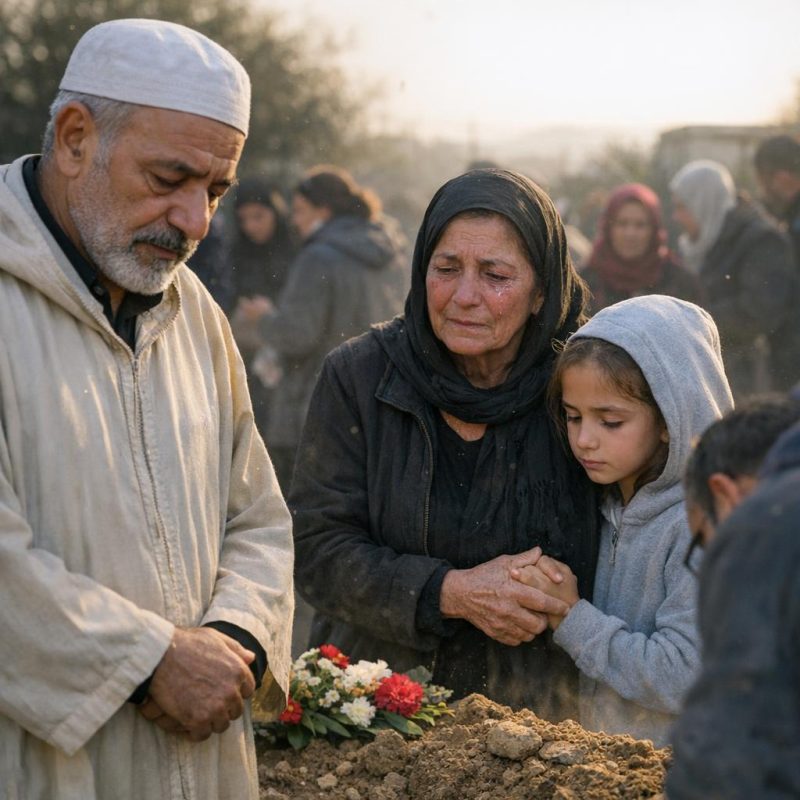 Image by RM AI
Ibrahim's Grave
On a crisp autumn morning, we laid Ibrahim to rest beside his father, Hassan, in our village cemetery. The small headstone we chose bore his name and a single year—1955—marking both his conception and passing. As I stood there, surrounded by Youssef, Nadia, and Amina, along with grandchildren who had only just learned of their stone uncle, I felt an overwhelming sense of peace wash over me. 'Look, Mother,' Amina whispered, pointing to a butterfly that had landed on Ibrahim's headstone. 'He's telling us he's at peace.' The imam's prayer carried on the gentle breeze as villagers placed small stones atop the grave in remembrance. For forty-six years, Ibrahim had been physically part of me, but now he had his rightful place in our family story. My adopted children linked arms with me, forming a protective circle as we said our final goodbyes. 'Our family is complete now,' I said, my voice steady despite the tears streaming down my weathered cheeks. 'All my children are accounted for.' What I couldn't have known then, as we turned to leave the cemetery, was that Ibrahim's grave would soon become something far more significant than just a final resting place for my stone baby.
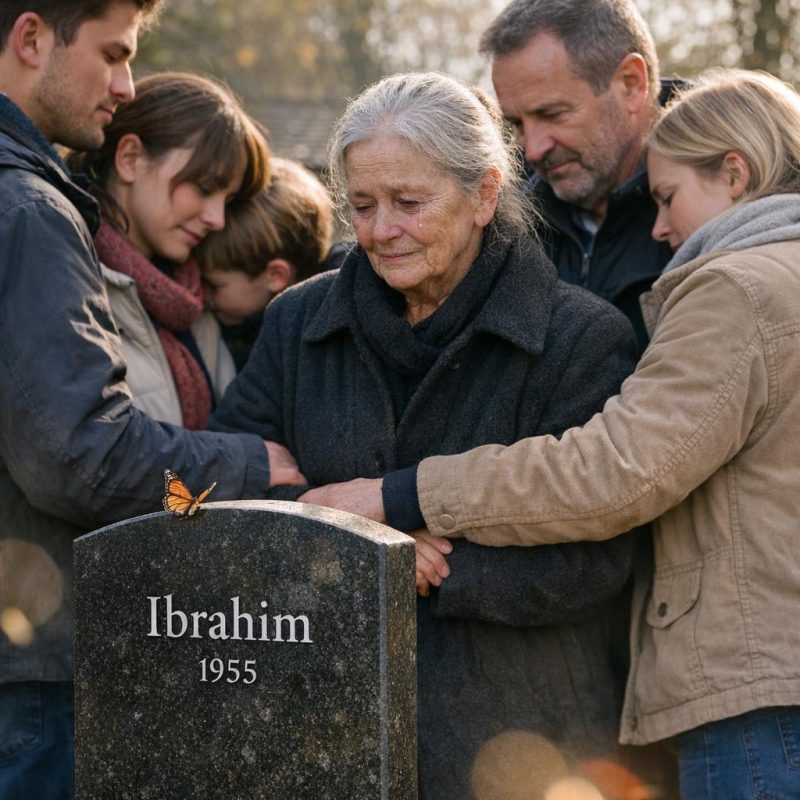 Image by RM AI
Learning to Live Lighter
The strangest part of my recovery wasn't the physical healing—it was learning to live without Ibrahim's weight. For forty-six years, that hardened mass had been my center of gravity, influencing how I stood, walked, and moved through the world. Now, at seventy-five, I found myself stumbling sometimes, my body confused by its newfound lightness. 'Mother, you're leaning to the right again,' Amina would gently point out, steadying me with her hand. My clothes hung oddly on my frame, as if they belonged to someone else entirely. One afternoon, Amina insisted we visit the market for new garments. 'You've worn the same style for half a century,' she said, holding up a colorful caftan. 'Time for a change, don't you think?' We spent hours trying on clothes, something I hadn't done since before my pregnancy in 1955. I caught my reflection in a shop mirror—a small, straight-backed woman I barely recognized. 'Look at you,' Amina whispered, her eyes shining. 'You're standing taller.' That night, as I folded my new clothes into my cedar chest, I found myself reaching unconsciously to touch my abdomen, expecting to feel that familiar hardness. The emptiness still startled me, like phantom pain from a limb long removed. What I couldn't have anticipated was how this physical transformation would soon be mirrored by something much deeper—a spiritual unburdening that would change everything.
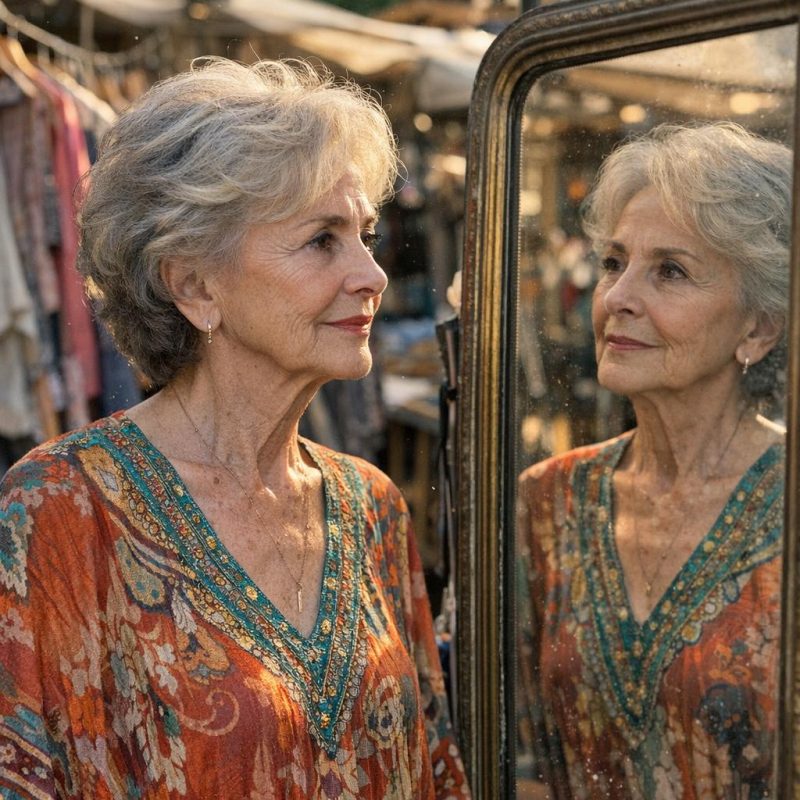 Image by RM AI
The Medical Journal
Six months after my surgery, a large envelope arrived from Professor Taibi. Inside was a copy of the prestigious medical journal that had published my case. My hands trembled as I opened it to find pages of clinical language describing my Ibrahim as a 'well-preserved lithopedion with complete calcification.' There were terms I couldn't understand—medical jargon about calcium deposits and fetal development—but what caught my eye was the image. There, in black and white for the world's medical community to see, was my sleeping child. 'They kept their promise,' I whispered, noting how they'd respected my privacy by listing me only as 'Patient Z, 75, from rural Morocco.' That evening, when my grandchildren visited, I showed them the journal. 'Grandmother is famous!' little Amir exclaimed, his eyes wide with wonder. Nadia gently explained that this wasn't about fame but about helping doctors understand rare conditions. 'Your grandmother's experience might help other women someday,' she told them. As I watched my grandchildren pass the journal around, pointing at the image with curiosity rather than horror, I felt a strange pride. Ibrahim, who never drew breath in this world, had somehow found his purpose. What I didn't realize then was that this medical journal would travel much further than I could have imagined, eventually reaching someone who would change everything I thought I knew about that night in 1955.
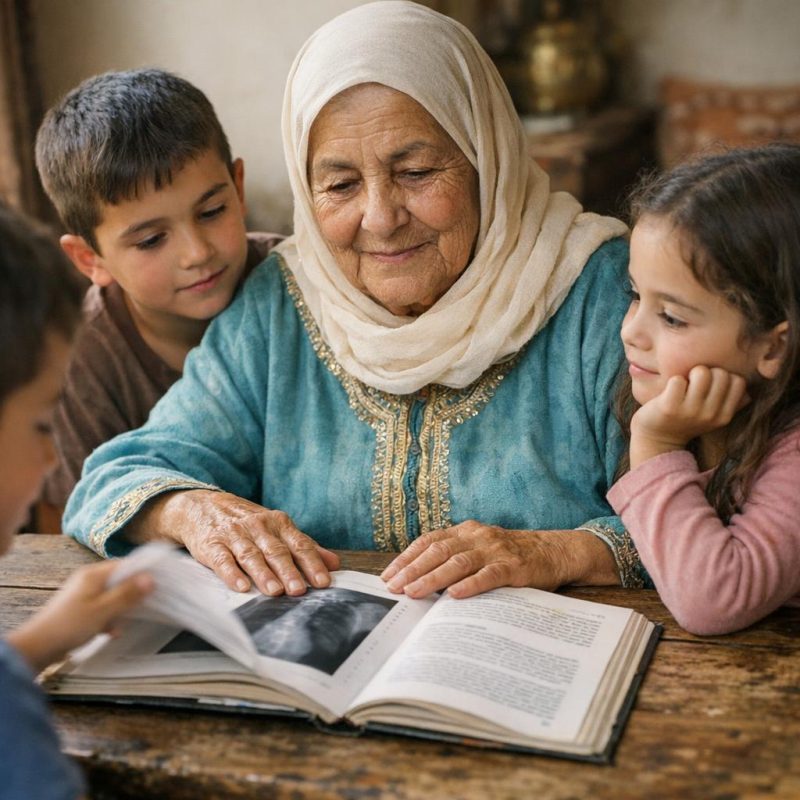 Image by RM AI
The Documentary Request
Eight months after Ibrahim's burial, Professor Taibi called with unexpected news. 'Madame Zahra, a French documentary filmmaker has contacted our hospital about your case. She wishes to tell your story.' My heart sank as he explained how the medical journal had caught the filmmaker's attention. 'She believes your experience could educate women worldwide,' he added gently. That evening, I gathered my children around our kitchen table, the same table where we'd shared meals for decades. 'They want to put me on television,' I explained, watching their expressions shift from surprise to concern. 'Like I'm some kind of curiosity.' Amina squeezed my hand while Nadia shook her head firmly. 'Mother carried this burden privately for forty-six years,' Youssef said. 'This isn't entertainment.' Despite our polite refusal, the filmmaker persisted with calls and messages, offering money, medical consultations, even a trip to Paris. The final straw came when she appeared unannounced in our village, camera crew in tow. Youssef, always my protector, stood at our gate like a sentinel. 'My mother protected her child for nearly half a century,' he told them firmly. 'Now I protect her.' As they finally drove away, I realized that some stories, no matter how medically remarkable, belong only to those who lived them. What I couldn't have known then was that someone else from my past had also seen the medical journal—someone who remembered that terrifying night in 1955 very differently than I did.
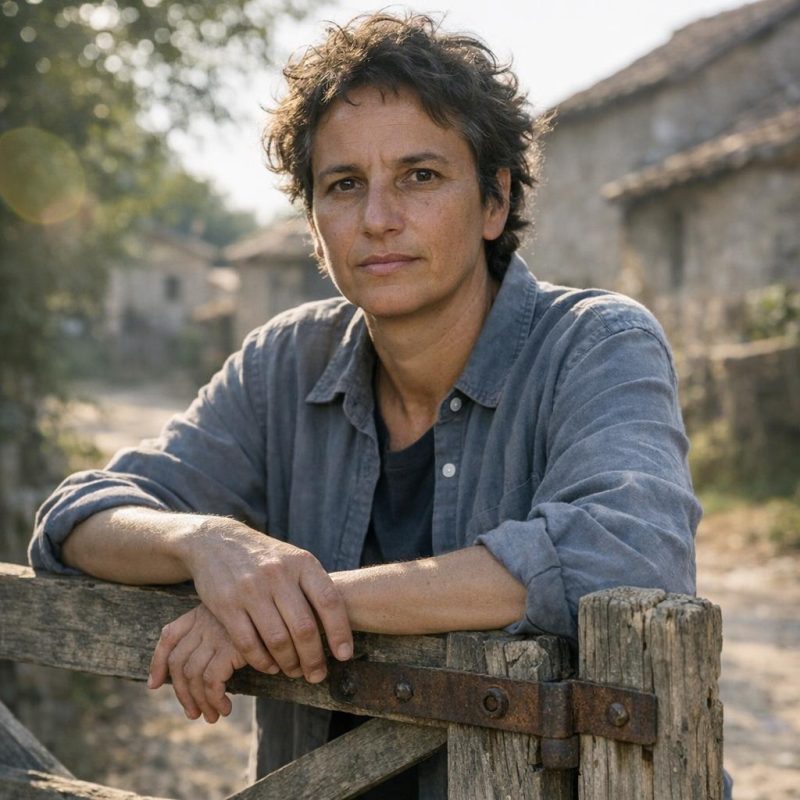 Image by RM AI
Dreams of Hassan
Six months after Ibrahim's removal, my dreams transformed into something unexpected. Hassan, my beloved husband who had passed years ago, began visiting me in my sleep. These weren't the hazy, forgettable dreams of old age—they were vivid reunions where the three of us sat beneath our olive tree, Hassan's laugh lines deepening as he watched Ibrahim toddle between us on sturdy legs. 'He has your eyes, Zahra,' Hassan would say, his voice exactly as I remembered. Some nights, we'd walk through fields of saffron, Ibrahim riding on his father's shoulders, pointing at birds with delighted squeals. I began looking forward to nightfall, to closing my eyes and finding my complete family waiting for me. 'You seem different lately, Mother,' Amina observed one morning as she helped me with breakfast. 'You're smiling in your sleep.' I simply nodded, keeping these precious reunions to myself. These weren't just dreams—they felt like visitations, as if the removal of Ibrahim's physical presence had opened a channel between worlds. What I couldn't explain to anyone was the growing certainty that these dreams were leading me toward something—or someone—I wasn't yet ready to face.
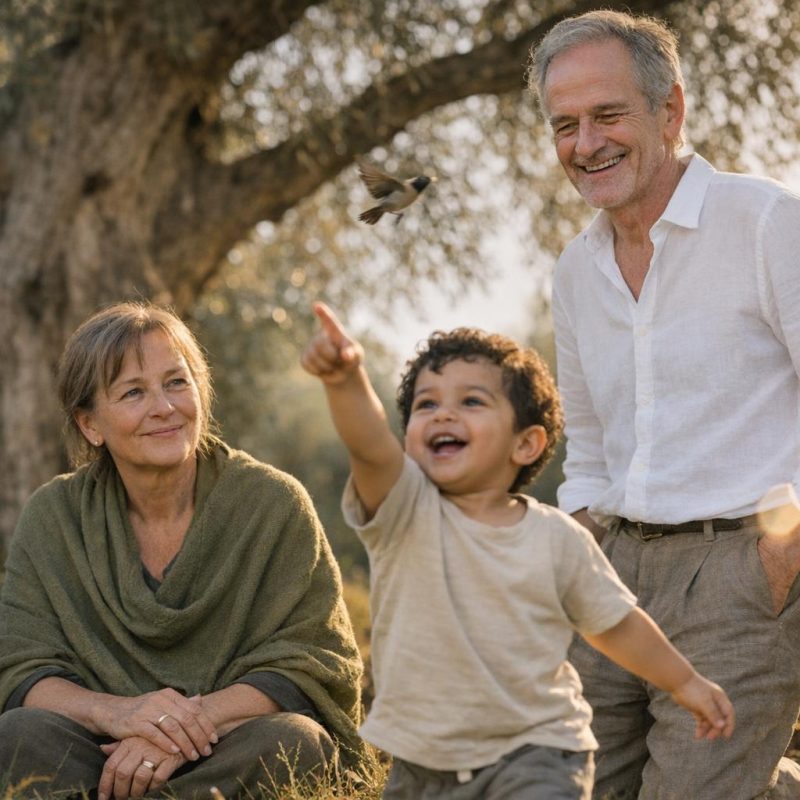 Image by RM AI
Visiting the Hospital Again
A year after Ibrahim's removal, I found myself doing something I never thought possible – voluntarily walking through the doors of a hospital. The same sterile smell that had once triggered my panic now seemed merely medicinal as I made my way to Professor Taibi's office for my follow-up examination. 'Madame Zahra!' he exclaimed, his face lighting up. 'You look ten years younger!' We both knew it wasn't just the physical transformation; it was the unburdening of a secret carried for nearly half a century. After confirming my recovery was complete, I asked him something that surprised even myself: 'May I see the maternity ward?' Walking those corridors, watching young mothers cradle their newborns against their chests, I felt a complex symphony of emotions – not the crushing grief I had expected, but something gentler, like the soft closing of a long-open door. A nurse noticed me lingering by the viewing window and smiled. 'Are you waiting for a grandchild?' she asked kindly. 'No,' I replied, my hand unconsciously touching my now-flat abdomen. 'I'm just making peace with an old memory.' As I turned to leave, I noticed a young woman in the corner, terrified and alone, her labor pains just beginning – and something pulled me toward her, as if Ibrahim himself were guiding my steps.
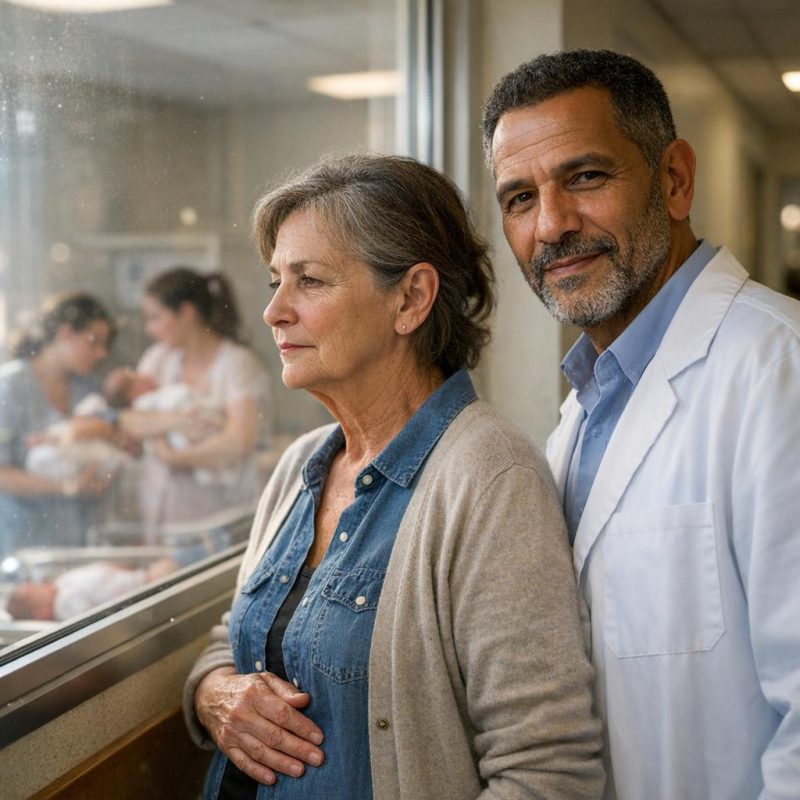 Image by RM AI
The Village Women
Word spread through our village like wildfire after Ibrahim's burial. Women began appearing at my door—first one or two, then small groups—bringing mint tea and questions. 'Is it true, Zahra? You carried a stone baby for forty-six years?' they'd ask, eyes wide with wonder and fear. Young pregnant women touched my arm nervously, seeking reassurance that their babies wouldn't meet the same fate. 'The sleeping child is not a blessing but a warning,' I told Fatima's daughter, who was seven months along and terrified of hospitals. 'Trust the doctors, child. They saved my life.' I found myself recounting my story in hushed tones at women's gatherings, watching understanding dawn in their eyes. The village midwife, initially skeptical of my 'modern ideas,' eventually asked me to accompany her on visits to reluctant mothers. 'Tell them what happened to you,' she'd whisper. 'They'll listen to you.' When Samira's labor stalled and she refused to go to the hospital, clinging to old superstitions, I held her hands and showed her my scar. 'I carried my fear for forty-six years,' I told her. 'Don't make the same mistake.' What I never expected was how my stone baby would eventually save not just Samira's life, but the lives of women I would never meet, in places far beyond our small Moroccan village.
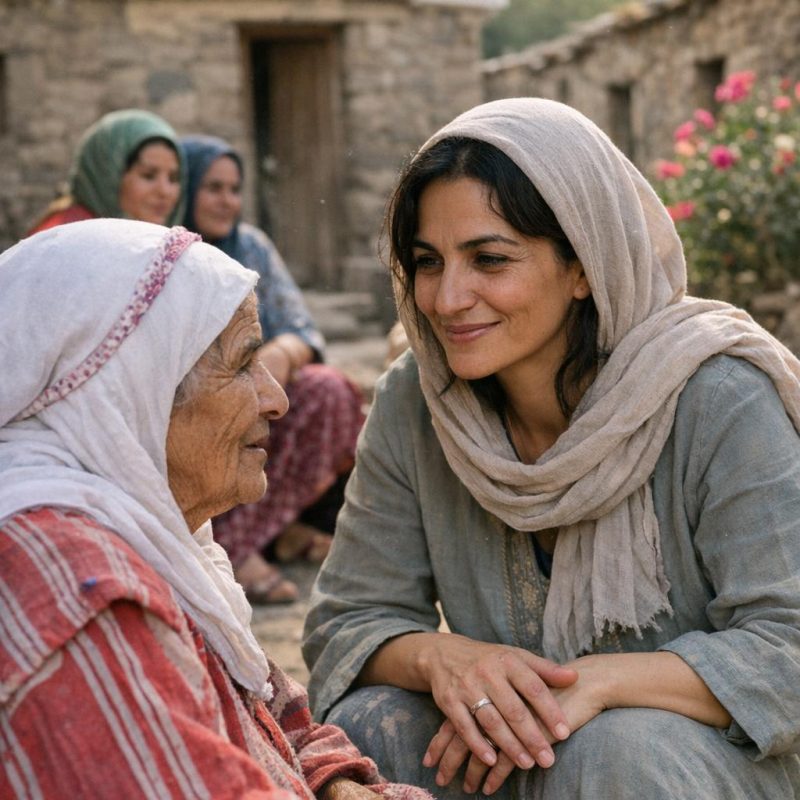 Image by RM AI
Writing My Story
One evening, as we sat beneath the olive tree in our courtyard, Nadia placed a leather-bound notebook in my hands. 'Mother, your story deserves to be remembered,' she said, her eyes gentle but insistent. 'Write it down—not for the doctors or journalists, but for the women who might need it.' Though I'd never finished school, I found myself drawn to the blank pages. That night, I dipped my pen in ink and began. 'My name is Zahra...' The Arabic script flowed from my fingers like water finding its path downhill, carrying decades of silence onto the page. Some evenings, I'd write until my arthritic hands cramped; other days, just a sentence or two before memories overwhelmed me. Youssef found me crying once, staring at the page where I'd described fleeing the hospital. 'This is healing you,' he observed, squeezing my shoulder. 'Like lancing an old wound.' As the notebook filled, I realized I wasn't just preserving Ibrahim's story—I was reclaiming my own. The village women began asking if they could read passages to their daughters, creating a circle of understanding that spanned generations. What I never expected was how my simple notebook would eventually find its way into the hands of someone who had been searching for me for nearly half a century.
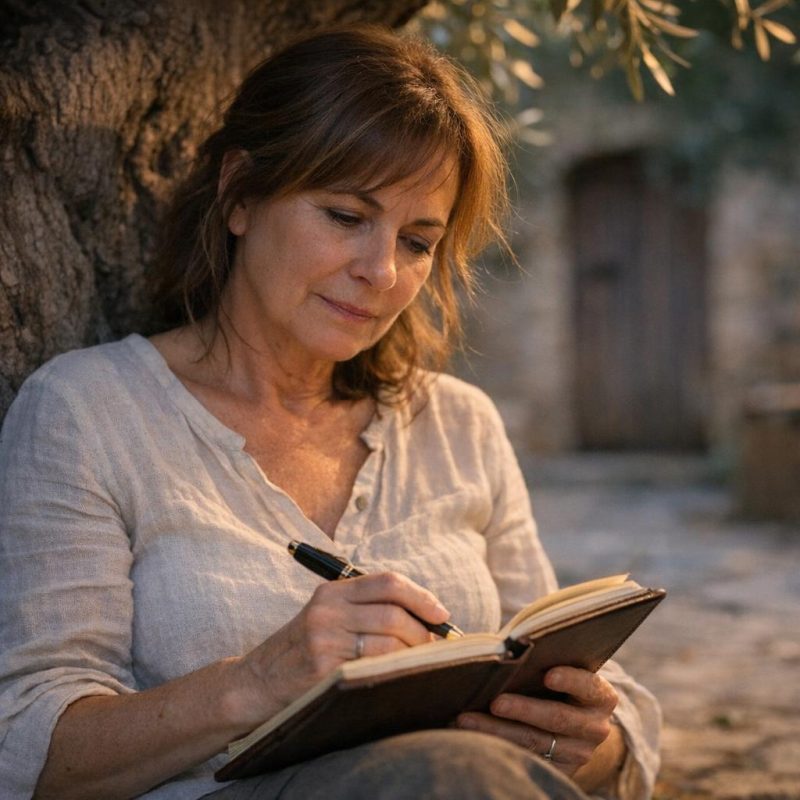 Image by RM AI
The Anniversary
One year after we laid Ibrahim to rest, our entire family gathered at his grave on a crisp autumn morning. My grandchildren, who had grown up hearing the story of their stone uncle, placed bright marigolds around the small headstone that bore just his name and the year 1955. 'Grandmother, do you think Ibrahim can see us?' little Amir asked, his innocent question bringing tears to my eyes. 'Yes, habibi. He watches over all of us now,' I replied, my weathered hand resting on his shoulder. As we stood in a circle around the grave, Youssef suggested we each share a memory of Hassan, connecting father and son in our family narrative. 'I remember how your father would sing while he worked in the fields,' I began, my voice steady despite the emotion swelling in my chest. 'Ibrahim would have inherited his beautiful voice.' One by one, my children and grandchildren added threads to the tapestry of our family story, weaving Ibrahim—who never drew breath in our world—into the very fabric of our lives. As we walked home together, Amina squeezed my hand. 'Ibrahim's journey was the longest of all,' she whispered, 'but he found his way home in the end.' What none of us realized then was that Ibrahim's story was about to reach someone who would change everything I thought I knew about that fateful night in 1955.
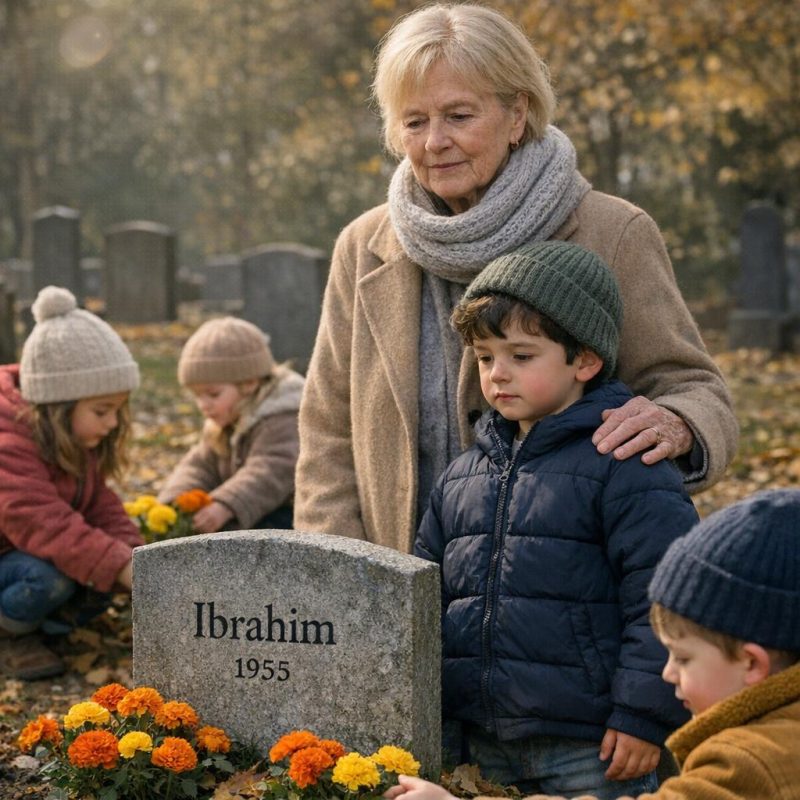 Image by RM AI
Professor Taibi's Visit
Two weeks after the anniversary of Ibrahim's burial, Professor Taibi's sleek city car appeared on our dusty village road during Eid celebrations. 'Madame Zahra!' he called, emerging with packages tucked under his arms. 'I hope I'm not intruding on your holiday.' My grandchildren swarmed him like bees to honey when they spotted the colorfully wrapped gifts. Over mint tea in our courtyard, the professor shared how my case had become something of a medical landmark. 'Your lithopedion has helped doctors identify three similar cases this year alone,' he explained, accepting a plate of my homemade baklava. What struck me most was watching this distinguished man of science—with his pressed shirt and polished shoes—sitting cross-legged on our cushions, laughing with village elders who still believed in djinn and evil eyes. 'Your experience bridges worlds, Zahra,' he said thoughtfully as the call to prayer echoed through the village. 'It validates both our ancient wisdom about the body's protective abilities and modern medicine's understanding of calcification.' As night fell and lanterns illuminated our gathering, I watched Professor Taibi join my son Youssef in traditional Eid prayers. In that moment, I realized Ibrahim's legacy wasn't just medical—it was bringing together beliefs that had seemed irreconcilable. What I couldn't have known then was that Professor Taibi hadn't come solely to celebrate Eid; he carried information that would shatter everything I thought I knew about that night in 1955.
 Image by RM AI
The Weight of Memory
Today, at seventy-six, I sit on my wooden porch watching my grandchildren chase each other through the yard where I once dreamed of Ibrahim's first steps. The physical weight I carried for nearly half a century is gone, but sometimes I still wake reaching for my abdomen, momentarily confused by its flatness. It's strange how the body remembers what the mind tries to forget. 'Grandmother, tell us about the stone baby again!' Amir calls, climbing onto my lap with the casual entitlement only a seven-year-old can muster. The other children gather around, having heard the story countless times but still fascinated. I've become something of a village legend now—the woman who carried her child for forty-six years. What was once my deepest shame has transformed into a strange gift, a testament to endurance that resonates with women across generations. 'My body protected him,' I explain, stroking Amir's hair, 'and in his way, Ibrahim protected me too.' My adopted children watch from the kitchen doorway, their faces soft with understanding. None of us could have predicted how Ibrahim's story would ripple outward, touching lives far beyond our small Moroccan village. But yesterday, a letter arrived that suggests Ibrahim's journey—and mine—isn't quite finished yet.
 Image by RM AI
KEEP ON READING
The 10 Youngest Monarchs In History & The 10 Oldest
Age Is Just A Number. Imagine being crowned king or…
By Chase Wexler Mar 11, 2025
You Think You Have Problems? These Royal Families Were Cursed
Boasson and Eggler St. Petersburg Nevsky 24. on WikimediaHeavy is…
By Ashley Bast Dec 5, 2025
You Can Thank This Greek-Canadian For Creating Pineapple On Pizza…
Love it or hate it, pineapple on pizza sparks debate…
By David Davidovic Dec 1, 2025
Yes, Female Gladiators Existed, And Here's Everything You Need To…
History of Women in Combat. Most people picture gladiators as…
By David Davidovic Jan 17, 2026
Yes, Australians Once Lost A Battle Against Flightless Birds
David Clode on UnsplashIn 1932, the Australian military went to…
By David Davidovic Nov 24, 2025
The Y2K Bug: Why Did Everyone Think Year 2000 Was…
Alan W on UnsplashOn December 31, 1999, people all over…
By Christy Chan Dec 22, 2025