She Thought She Could Treat Me However She Wanted Because Her Son Was Famous. Think Again.
She Thought She Could Treat Me However She Wanted Because Her Son Was Famous. Think Again.
The Charity Shop on Maple Street
I've been volunteering at the Maple Street Charity Shop for going on eleven years now, and I'll tell you straight — it's the best three afternoons a week I've ever spent. Tuesday, Thursday, Saturday, regular as clockwork. I sort donations in the back, work the register up front, and occasionally talk a stubborn price tag down from a shelf when my knees cooperate. The shop exists to support local families going through hard times — a bag of winter coats here, a set of dishes there, sometimes just a warm place to stand for a few minutes when the world feels too heavy. I'm sixty-eight years old, retired from twenty-five years of school administration, and I have exactly zero patience for nonsense and an enormous amount of patience for people. Those two things together make me reasonably good at the job. We're a small operation — a handful of regular volunteers, a part-time manager named Greta, and more donated ceramic owls than any town should reasonably possess. It's unglamorous work, and I wouldn't trade it for anything. Some days the shop smelled like old paperbacks and fabric softener, and that was enough.
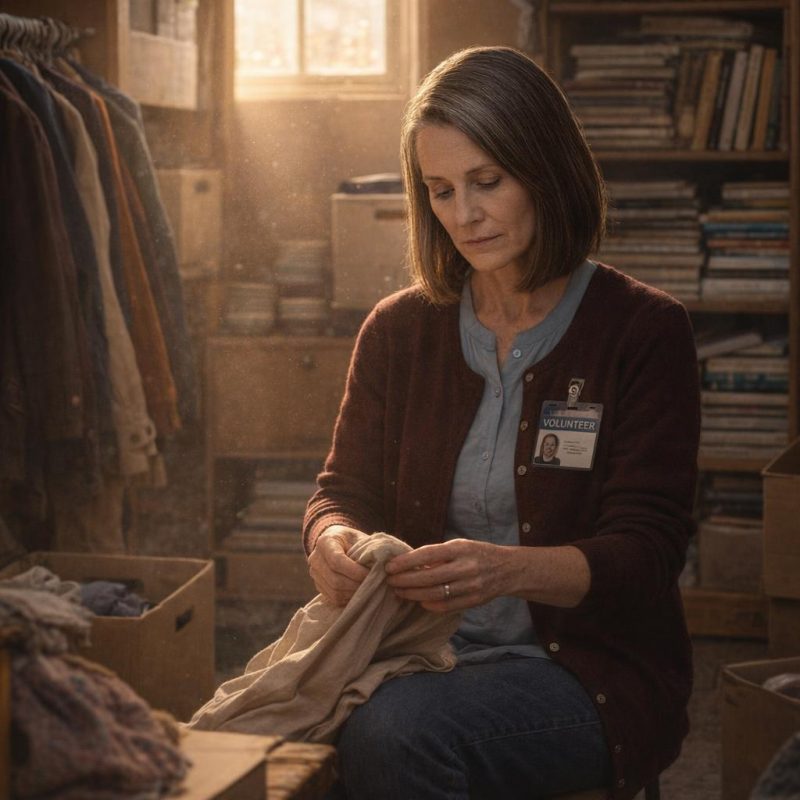 Image by RM AI
When a Movie Star Bought His Mother a Mansion
Word travels fast in a town this size, and the news that Daniel Hart — the Daniel Hart, the one from those action films my nephew watches on repeat — had bought his widowed mother a mansion on Crestwood Drive spread through every coffee shop and grocery aisle within about forty-eight hours. People were genuinely thrilled. There was talk of sightings, talk of charity galas, talk of what it might mean for local property values. The name Barbara started circulating alongside Daniel's, always with a kind of reverent excitement — his mother, people said, as though that alone made her someone worth knowing. I'll admit I was curious too. It's not every day a small town gets a brush with that kind of fame, and I'm not immune to a little excitement. I heard the name Barbara for the first time from Greta, who'd heard it from her neighbor, who'd apparently heard it directly from the woman at the post office. But then, maybe two weeks after the move-in, I was restocking a rack near the front window when Pete Navarro from the Italian place on Fifth Street stopped in, and the look on his face wasn't excitement at all.
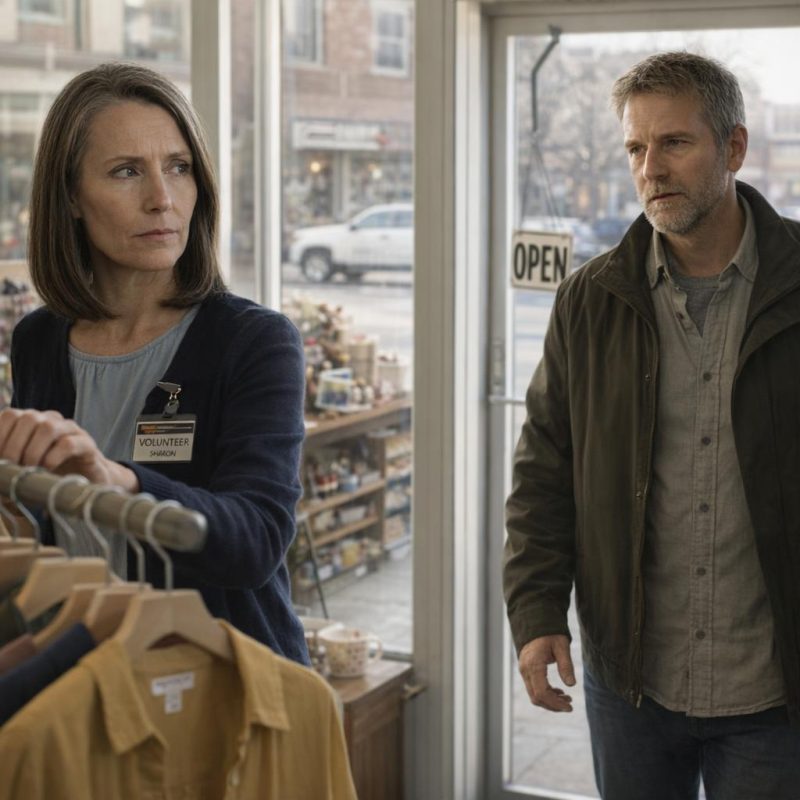 Image by RM AI
The First Visit
She came in on a Thursday afternoon in early October, and I knew immediately who she was — eighty-five if she was a day, blonde hair that had clearly had professional help staying that color, a coat that probably cost more than our monthly donation intake. Barbara moved through the shop the way some people move through spaces they've decided are beneath them — slowly, touching things with two fingers, setting them back down with a small sigh. I watched from behind the register as she held up a ceramic lamp priced at four dollars and asked me, with complete sincerity, whether we could do better than that. I explained, as pleasantly as I could, that the proceeds went directly to local families in need. She nodded as though I'd said something mildly interesting and then mentioned, almost as an aside, that her son was Daniel Hart. She said it the way you'd say a password. I told her the price was four dollars and that we appreciated her support. She set the lamp down without buying it and walked out, and the two other volunteers on shift that afternoon looked at each other across a rack of winter coats, and nobody said anything for a long moment.
 Image by RM AI
The Pattern Emerges
After that Thursday, I started hearing things. Not all at once — it came in pieces, the way small-town information always does, one story dropped into conversation like a stone into still water. The cashier at Hendricks Grocery told me Barbara had berated her for ten minutes over a coupon that had expired the previous week, and that at some point in the argument Barbara had asked, in a voice loud enough for the whole checkout lane to hear, whether the cashier knew who her son was. A neighbor two streets over from Crestwood said Barbara had threatened to have her gardener reported — for what, exactly, wasn't entirely clear, but the threat had included a reference to Daniel's influence in the community. The pharmacist's assistant mentioned Barbara had walked to the front of a line of waiting customers and simply announced she needed her prescription filled first. Each story had the same shape to it: a demand, a refusal or hesitation, and then the name. Do you know who my son is. I heard that phrase, in various forms, from four different people over the course of about two weeks. I didn't know what to make of it yet, only that the pieces kept arriving, and they all fit together in a way that sat uneasily with me.
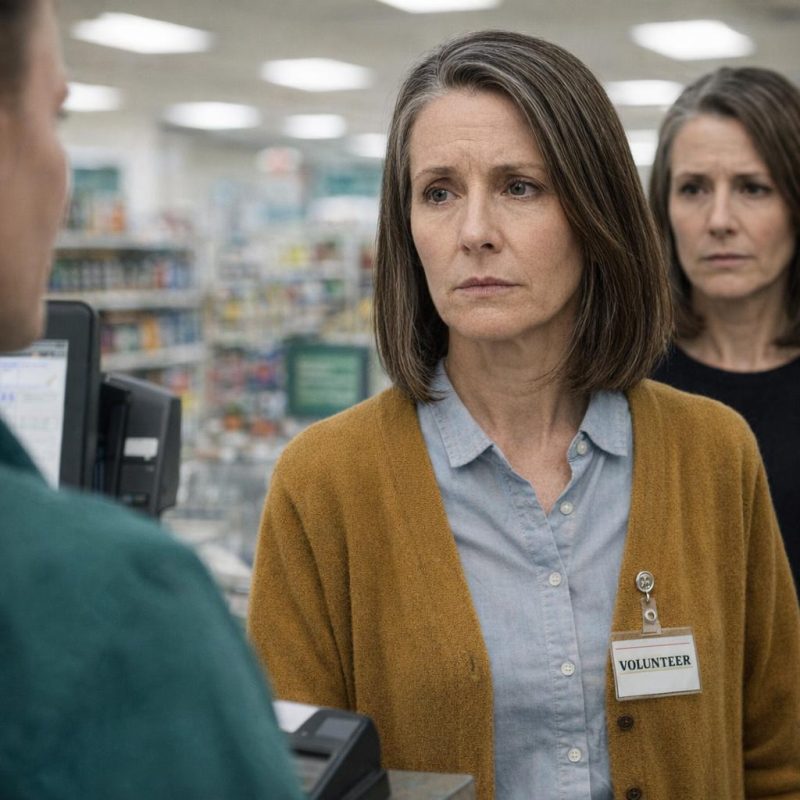 Image by RM AI
Conversations at the Counter
The charity shop has a way of becoming a gathering place when people need to talk, and that autumn it seemed like every business owner on the main strip found a reason to stop in. Frank Delgado, who runs the furniture store over on Birch Avenue, came in one Saturday morning under the pretense of dropping off a box of picture frames. He set the box on the counter and then stood there for a moment, and I could tell he had something on his mind. He said Barbara had come in asking for what she called a celebrity family discount, and when he'd explained that wasn't something he offered, she'd mentioned that Daniel had a lot of followers and that he paid attention to where his family was treated well. Frank said he hadn't known what to do with that. A few days later, the woman who owns the café on the corner told me something almost identical — Barbara had suggested, very pleasantly, that Daniel might mention businesses he appreciated to his audience. Both of them had felt the pressure without quite being able to name it as a threat. I stood behind the counter listening, and something about the way these stories kept arriving — each one a little more pointed than the last — made me feel like this had moved well past ordinary rudeness.
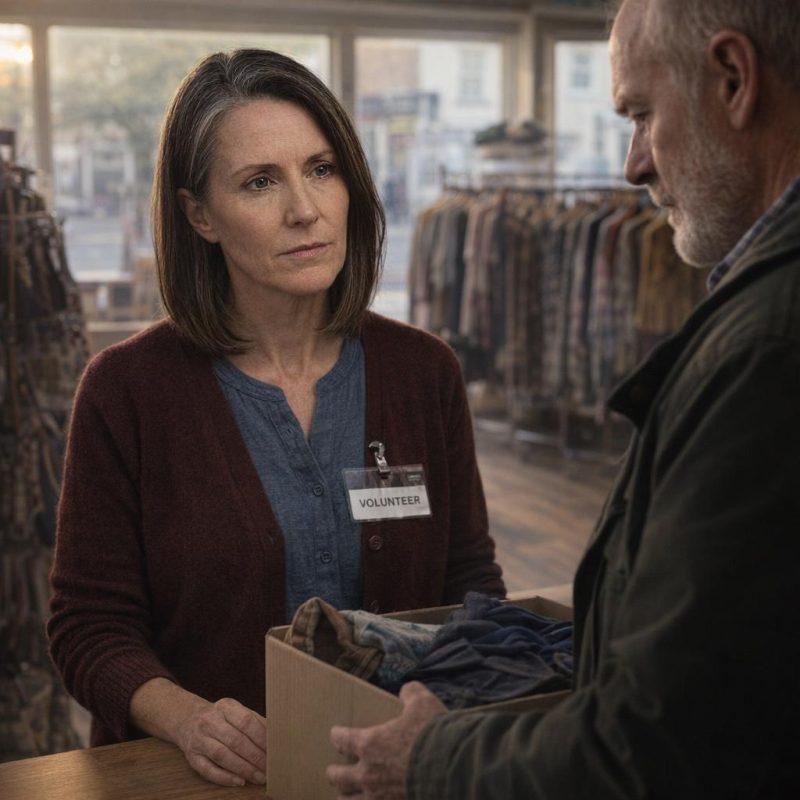 Image by RM AI
The Volunteer Meeting
We held our volunteer meeting on the second Tuesday of November, just the five of us around the folding table in the back room with bad coffee and a plate of Greta's shortbread. Everyone had heard something by then. Maureen, who volunteers on Saturdays, suggested we simply tell Barbara she wasn't welcome back, and for about thirty seconds that felt like the obvious answer. Then Patrice, who has been volunteering longer than any of us, pointed out that Barbara was Daniel Hart's mother, and the table went quiet. Someone mentioned that Daniel had a social media following in the millions. Someone else said they'd read he was particular about his family. Greta said she didn't want the shop to end up in some celebrity news story as the place that turned away a famous actor's elderly mother. I suggested we treat Barbara exactly as we'd treat any other customer — politely, firmly, no special discounts, no special treatment — and everyone agreed that was the right approach. But agreeing and feeling settled about it were two different things. As the meeting broke up and people gathered their coats, I looked around the table at women I'd worked alongside for years, and every face carried the same expression: not anger at Barbara, but something quieter and more uncomfortable — the plain fear of what Daniel Hart's name could do if any of us got on the wrong side of it.
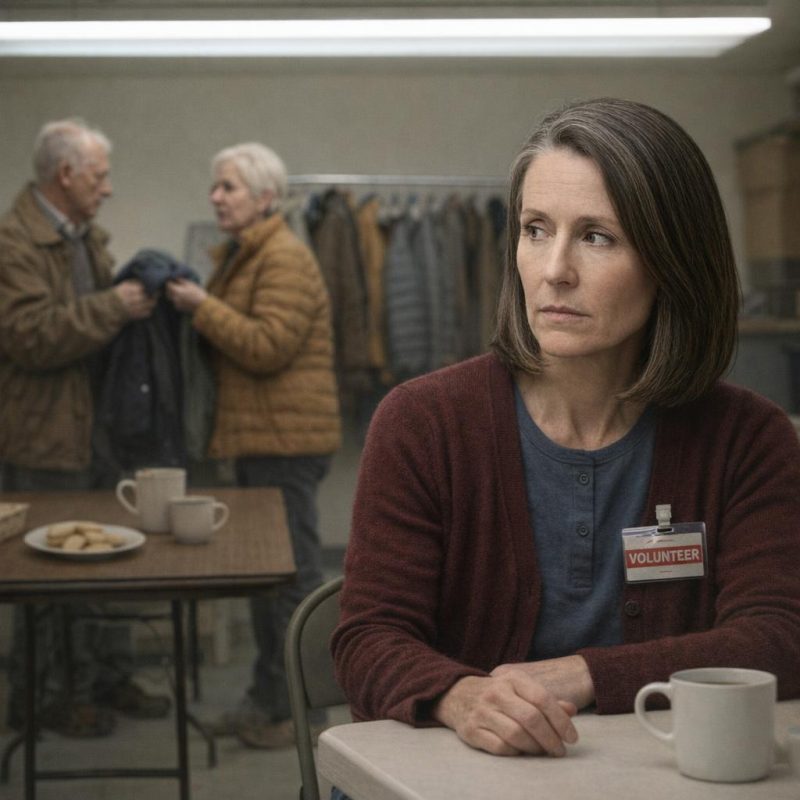 Image by RM AI
The Assistant Appears
Barbara came back the following Saturday, and this time she wasn't alone. The woman with her was younger — late thirties, dark hair pulled back in a neat ponytail, tailored blazer, the kind of put-together that reads as professional rather than fashionable. She introduced herself to me as Melissa, Barbara's personal assistant, and she said it with a pleasant, practiced smile that didn't quite reach her eyes. Melissa carried a small leather notebook and a pen, and from the moment they walked in she was the one doing most of the talking. She asked about our operating hours, our donation intake process, how many volunteers we typically had on a given shift. Barbara browsed the racks with her usual two-fingered examination of things, but she seemed more at ease than on previous visits — almost relaxed, as though having Melissa there had shifted something. I answered the questions straightforwardly, the way I would for anyone. Melissa wrote things down as I spoke, nodding in a way that felt attentive without being warm. Near the end of the visit, she asked, very casually, which volunteers had been on duty that afternoon, and when I glanced over I saw her pen moving across the notebook page, writing down the names I'd given her.
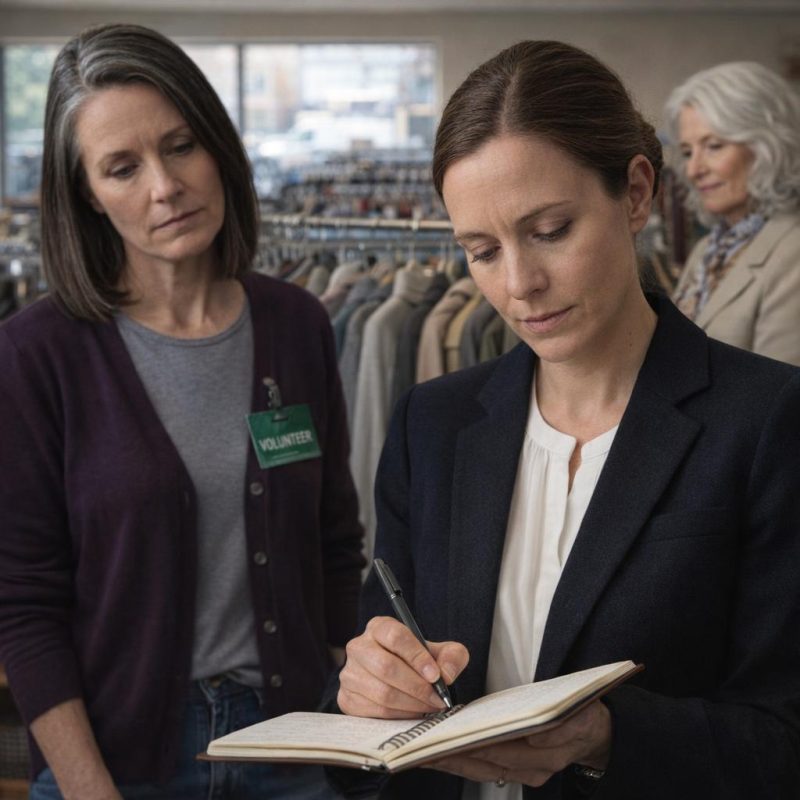 Image by RM AI
The Return Visit
They came back twice more that month, and each visit felt like a small escalation. Barbara wanted to see new donations before they were sorted and priced — she used the word first without any apparent awareness of how it sounded. She asked whether we kept a reserve of better items for regular supporters, and when I explained that everything went on the floor at the same time for everyone, she mentioned Daniel's charitable giving in a tone that implied a connection I wasn't making. Melissa was there for both visits, notebook open, asking careful questions about our pricing policies and how decisions got made about what was accepted. She was unfailingly polite, which somehow made it harder to object to anything specific. I held the line on every request — no previews, no holds, no tiered access — and Barbara left each time with that particular expression of someone who expects the world to eventually come around to their position. After the second visit I stood at the front window and watched them walk to the car, and I couldn't have told you exactly what was bothering me. Nothing had happened that I could point to. But the shop felt different after they left, in a way it hadn't before Melissa arrived.
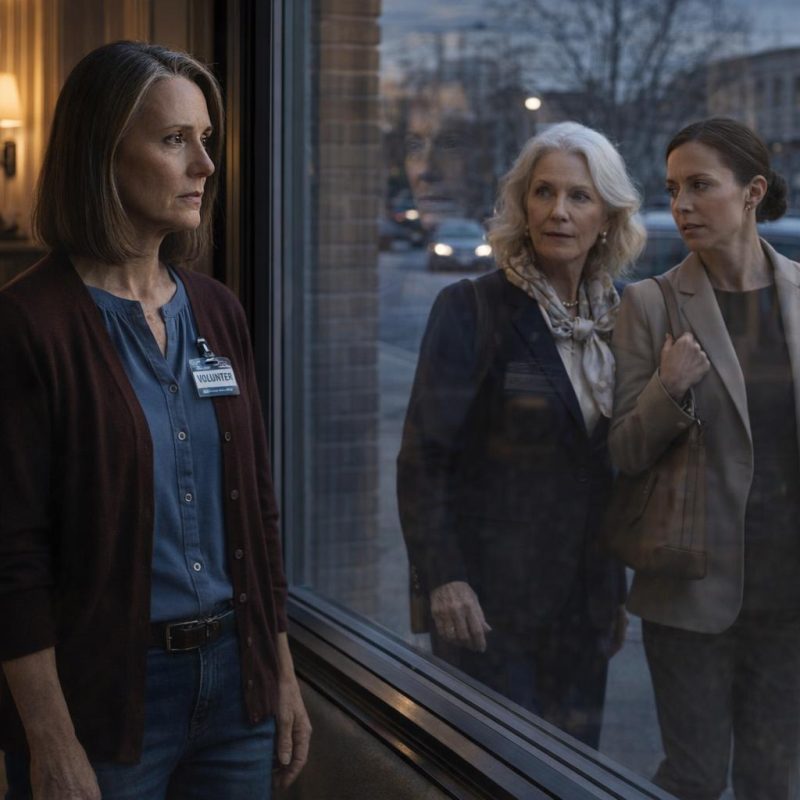 Image by RM AI
The Handbag Confrontation
It happened on a Tuesday, when the shop was as full as I'd seen it all month. Barbara came in with Melissa at her elbow as usual, and within ten minutes she was at the counter with a designer handbag — one of ours, marked at seventy-five dollars, which was already a generous price for what it was. She set it down and told me she'd take it for ten. Just like that. I asked if she'd seen the tag, and she said yes, she had, and that having Daniel Hart's mother photographed carrying one of our bags would be wonderful publicity for the shop. I told her, as evenly as I could manage, that we didn't price items based on who was buying them. She drew herself up and said I was disrespecting an elderly woman, and then, loudly enough for half the shop to hear, announced that her son donated more to charity than people like me earned in a year. Something in me just settled, very quietly, into a decision. I told her that her son being a movie star didn't make her one. The shop went completely silent. Barbara stared at me and said I would regret saying that. Melissa stood two steps back and didn't say a word, and the silence after Barbara turned and walked out felt like it had weight to it.
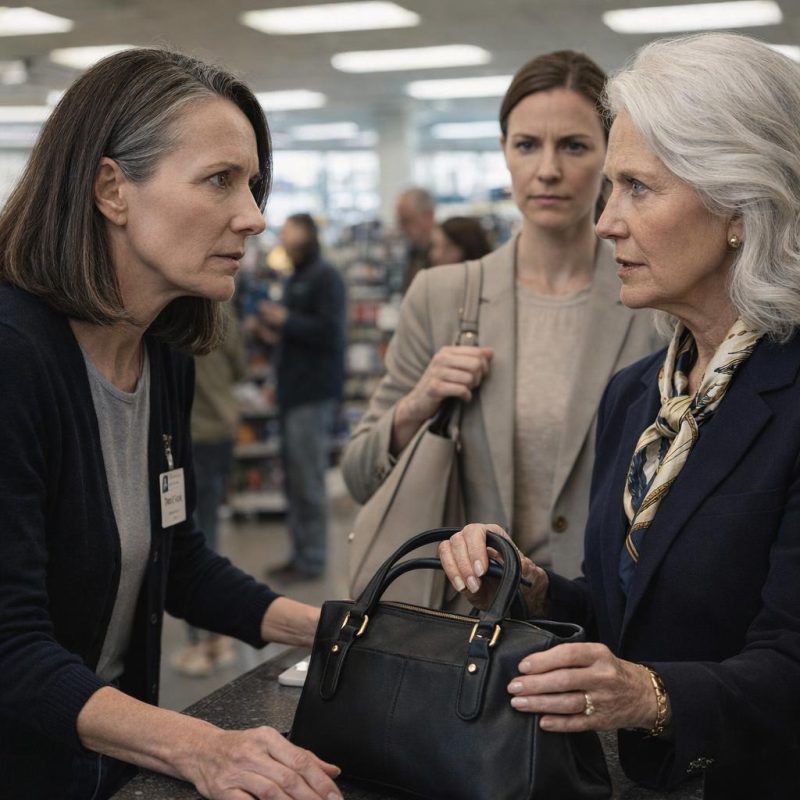 Image by RM AI
The Week of Worry
The week that followed was not a comfortable one. I replayed the confrontation more times than I'd like to admit — not because I thought I was wrong, but because I kept turning over the question of what it might cost the shop. Daniel Hart wasn't just a name on a donation check. He was the kind of person whose endorsement could open doors, and whose withdrawal could quietly close them. The other volunteers noticed I was distracted. One of them asked if I'd heard anything, and I said no, not yet. I checked the local paper online twice, half-expecting to see something. I told myself I'd done the right thing, and I believed it, but believing something is right doesn't always make the waiting easier. A week passed with no phone call, no letter, no visit from anyone in a suit. I started to think maybe Barbara's threat had been exactly what it sounded like — the exit line of someone who'd been embarrassed and needed the last word. I was in the back sorting a box of donated books when one of the younger volunteers called through that there was a car outside. I came to the front window and looked out at an expensive black SUV idling at the curb.
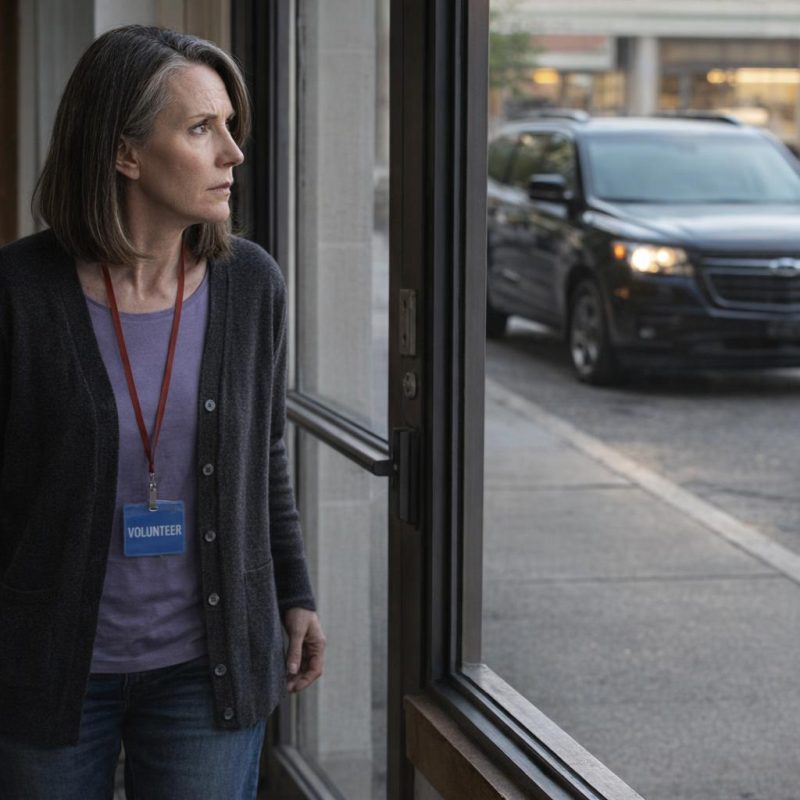 Image by RM AI
The Unexpected Visitor
He was taller than I expected, and younger-looking in person than on a screen, though the tiredness around his eyes aged him considerably. Daniel Hart walked into the shop with his hands in his jacket pockets and looked around the way people do when they're trying to get their bearings somewhere unfamiliar. One of our volunteers, a young woman named Petra, went over to him, and I watched from behind a rack of coats as he said something to her quietly. She turned and pointed in my direction. My stomach dropped. I walked toward him with what I hoped was a steady expression, and he asked if I was the manager. I said I was one of the coordinators, and he asked if we could speak somewhere private. I led him to the small office at the back — barely a room, really, just a desk and two chairs and a filing cabinet — and he followed me in without any of the impatience I'd been bracing for. He closed the door behind him. He didn't look angry. He looked, if anything, like a man who had been carrying something heavy for a long time and wasn't sure yet whether he'd found the right place to set it down.
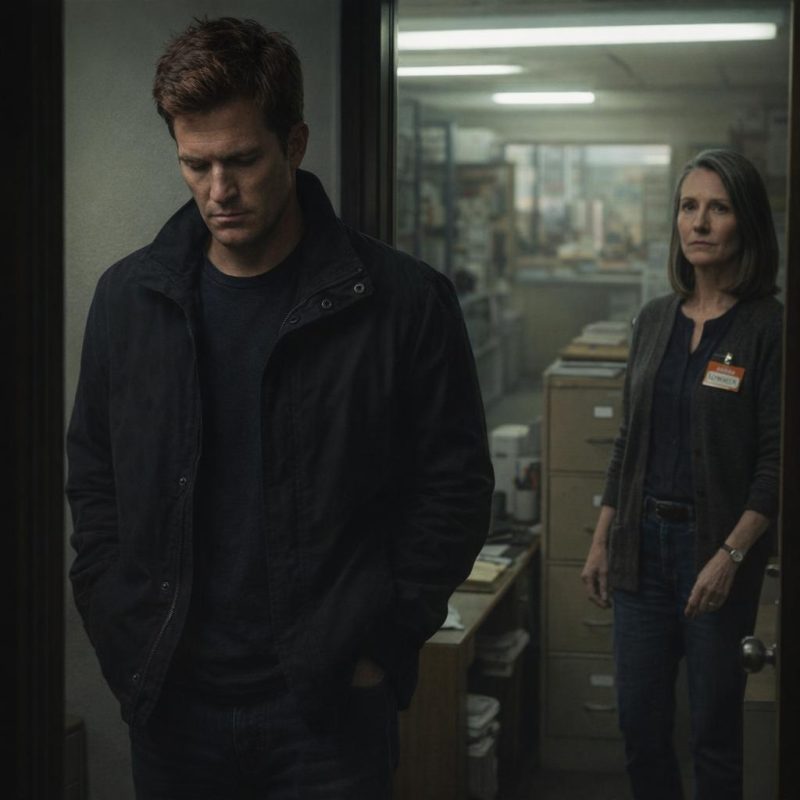 Image by RM AI
The Question
He sat down across from me and said he needed to know exactly what his mother had been doing. Not what he'd heard. What I had actually seen. I wasn't sure what I'd expected him to say, but it wasn't that. I started carefully, with the handbag — the seventy-five-dollar price, the demand for ten, the claim about publicity. He listened without moving. I repeated Barbara's comment about his charitable giving, the way she'd said it in front of a full shop, and something shifted in his expression, though he still didn't speak. I told him what I'd said in return, the remark about movie stars, and I watched for the moment he'd push back. He didn't. He just asked me to go on. I mentioned the earlier visits — the requests for previews, the questions about pricing policy, the way Barbara had implied his donations entitled her to different treatment. He asked me to tell him everything else I'd heard, not just what I'd witnessed myself. That was when it landed. He wasn't here to defend her. He was here because he already knew something was wrong, and he was trying to understand how wrong it had gotten.
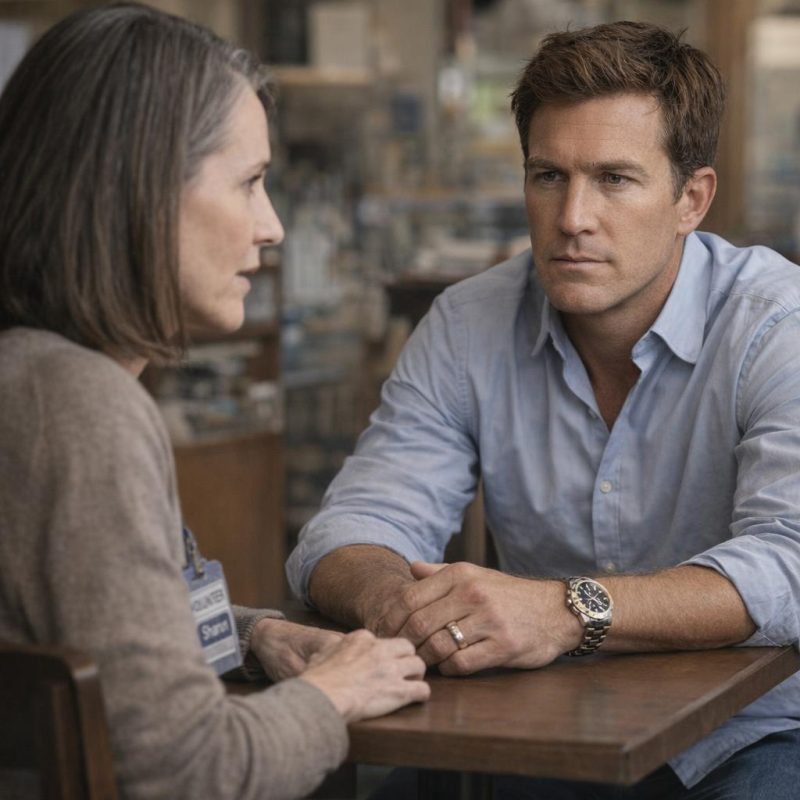 Image by RM AI
The Full Account
So I told him. I went through it as carefully as I could, trying to stick to what people had actually said to me rather than my own interpretation of it. The grocery store cashier who'd been reduced to tears after Barbara complained to the manager. The neighbor whose gardener had been berated over a hedge trimming. The restaurant that had been told, in front of other diners, that the service was an embarrassment. The pharmacy where Barbara had demanded to be served ahead of a queue and invoked Daniel's name when the pharmacist hesitated. The furniture store. The café on the high street. With each one, Daniel's expression got a little darker, not with anger directed at me, but with something that looked more like recognition. He asked specific questions — what exactly had she said, had she mentioned him by name, had anyone pushed back. He took notes on his phone, which surprised me. At some point I stopped and said I hoped I wasn't overstepping, and he shook his head and said no, he needed to hear it. When I finished, he sat quietly for a moment. There was something in the set of his shoulders that made me think this conversation had been a long time coming, and that he had been the only one having it.
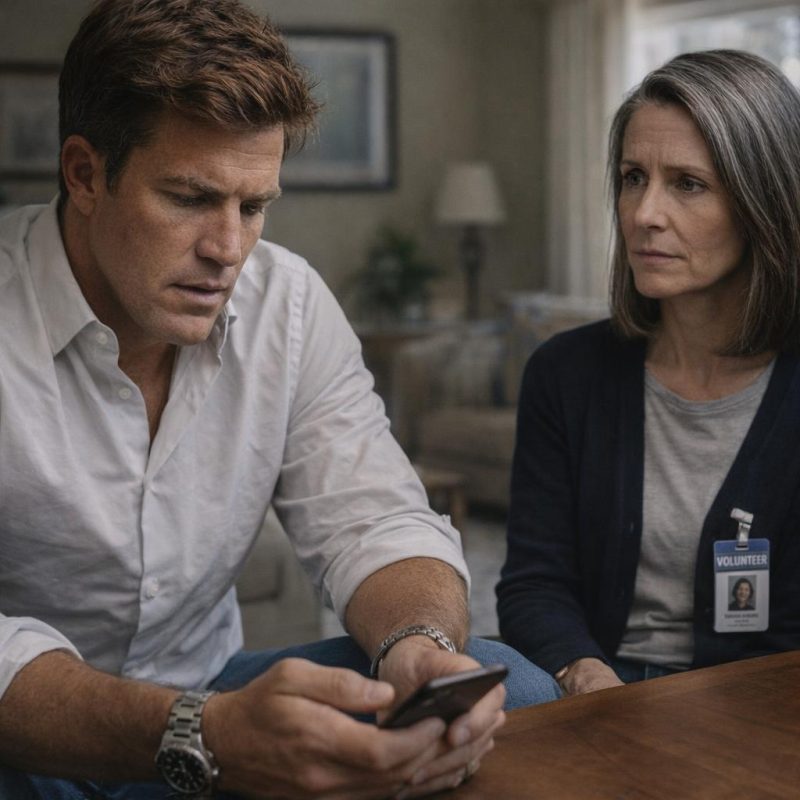 Image by RM AI
The Threats That Disturbed Him Most
He circled back to the furniture store story twice. He wanted the exact wording — not my paraphrase, but as close to Barbara's actual words as I could remember. I told him she'd implied that Daniel would hear about businesses that weren't cooperative, that he took an interest in how local people treated his family. Daniel's jaw tightened. He asked about the landscaper, and I told him what I'd heard — that Barbara had suggested the gardener's continued employment might depend on how accommodating he was. Daniel asked whether Barbara had specifically said she would tell him, or whether she'd left it implied. I said it had been implied, but clearly enough that the man had understood the message. Daniel nodded slowly and wrote something else on his phone. Then he asked the question I hadn't anticipated: had anyone actually contacted him directly about any of this. I said not that I knew of. He looked at the desk for a moment, and I had the sense that the answer mattered to him in a way I didn't yet fully understand. The room felt smaller than it had when we'd sat down, and the list of incidents between us had grown into something neither of us seemed quite ready to name.
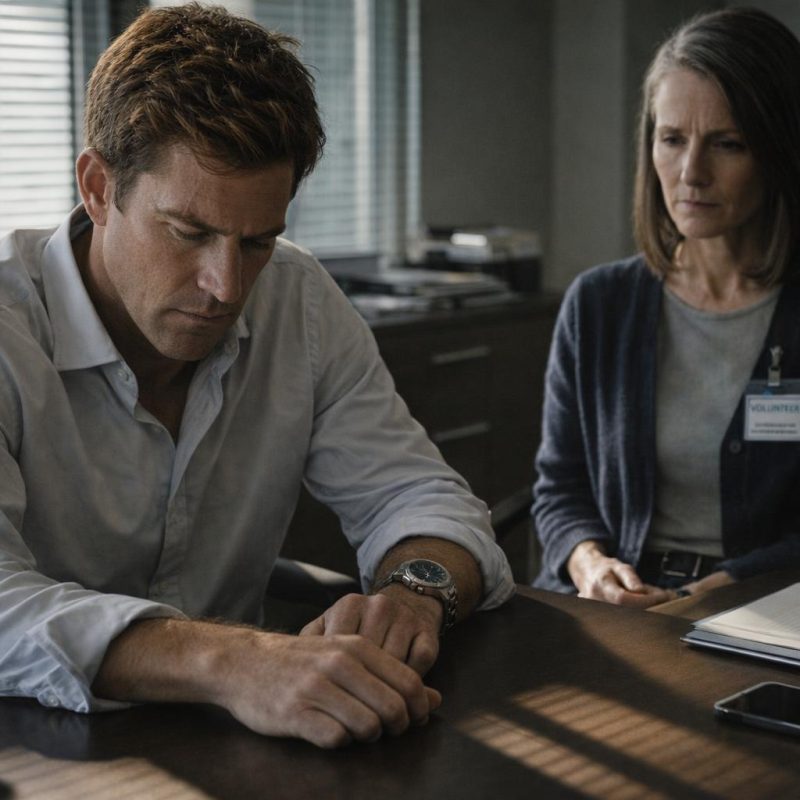 Image by RM AI
The Pattern Daniel Had Been Seeing
Daniel put his phone face-down on the desk and said he'd been receiving complaints for months. Not directly — through his management team, forwarded with notes asking how he wanted to handle them. A restaurant owner who said someone had threatened to have Daniel publicly criticize the business. A landscaper who claimed a representative of Daniel's had demanded free work. A furniture store that had received what they described as a message about celebrity discounts and expectations. Daniel said he'd read each one and been genuinely baffled, because he hadn't contacted any of them. He'd never heard of the landscaper. He'd never been to the furniture store. His team had assumed the complaints were from people trying to get attention or cause trouble, and he'd let them file the messages away because none of it seemed to connect. He said that on its own, each complaint had seemed too small and too strange to take seriously. Nobody wanted to publicly challenge a celebrity's family over something that might make them look petty. I understood that. I'd felt a version of it myself. He paused, and then said that one of the messages had come from a restaurant owner who claimed someone had called on Daniel's behalf and threatened to have the place mentioned negatively in an interview.
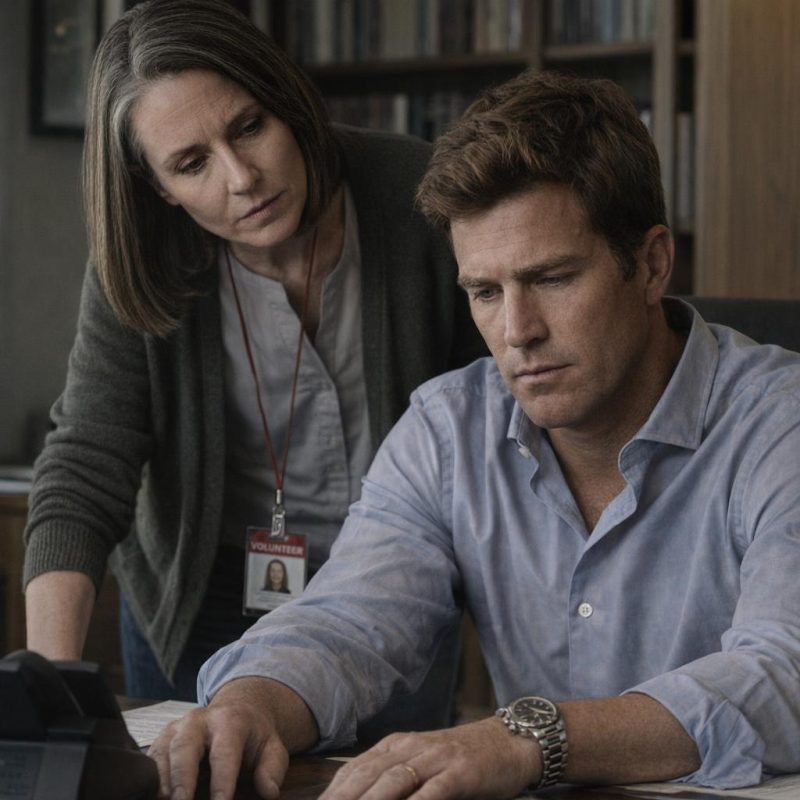 Image by RM AI
The Restaurant Owner's Story
The restaurant story came out in pieces. The owner had received a phone call from someone who said they were coordinating a visit for Barbara and needed a private table held. When the owner explained they didn't take reservations that way, the caller had suggested, very politely, that Daniel might bring up the restaurant in an upcoming press appearance — and that the mention might not be favorable. The owner had felt the pressure of that and agreed. Barbara had arrived, been seated immediately, and left without incident. The owner had felt uncomfortable enough afterward to write to Daniel's management team, but hadn't wanted to make a formal complaint. Daniel said when he'd asked Barbara about it, she'd told him the owner was lying, that people were jealous of their family and looked for ways to cause trouble. He said he'd believed her at the time because the story had seemed so specific and so petty that he couldn't imagine why anyone would fabricate it. But sitting across from me now, having heard the same shape of story repeated across a dozen different businesses, he said he wasn't sure what he'd believed anymore. I looked at him and thought about all the incidents I'd described, and something about the pattern felt wrong in a way I couldn't quite put into words yet.
 Image by RM AI
The Pattern Across Town
We went through them one by one, sitting at that small table in the back of the shop. The florist. The dry cleaner. The wine merchant on the high street. The woman who ran the alterations shop near the park. Each one had received some version of the same approach — a phone call, a visit, a politely worded suggestion that Daniel's goodwill was contingent on their cooperation. Each one had felt the pressure and said nothing publicly, because what were they going to do? Go to the papers and complain that a celebrity's elderly mother had been rude to them? Daniel listened with his hands flat on the table, and I could see the weight of it settling on him. He said that when complaints had reached him before, Barbara had always had an explanation — jealousy, misunderstanding, small-town resentment of people who had money. And he'd let those explanations stand, he said, because nobody wanted to be the person who picked a public fight with a celebrity's elderly mother.
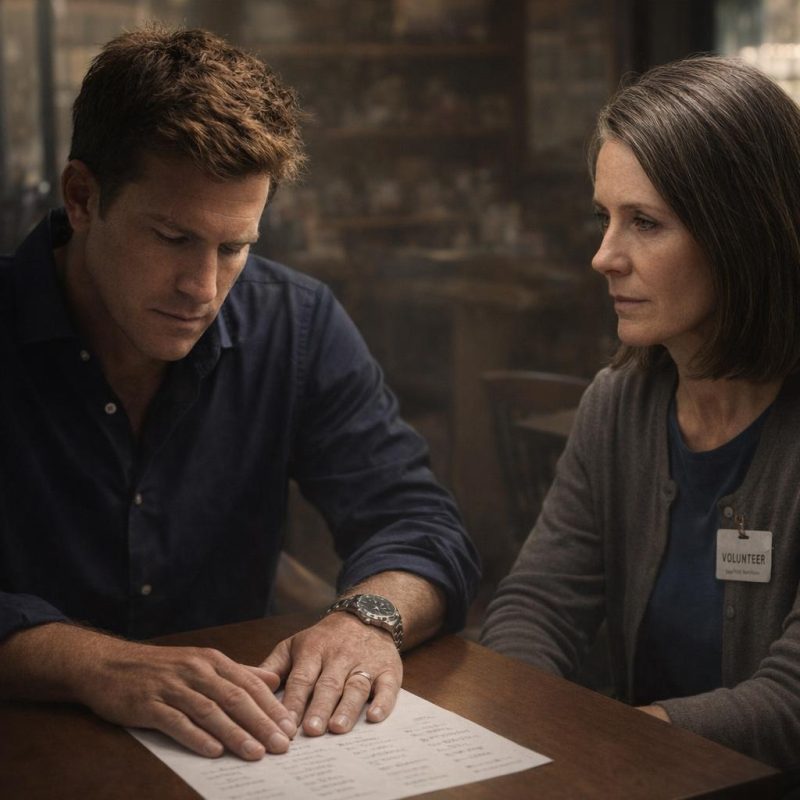 Image by RM AI
The Witnessed Account
Daniel asked me if I would write it all down. Not just the general shape of what had happened, but the specific words — what Barbara had said about his donations, what she'd implied about the consequences of not cooperating, the exact sequence of events from the moment she walked in. He said every other complaint he'd received had come secondhand, filtered through embarrassment or fear of retaliation. Business owners who'd been alone when the pressure was applied, with no one to corroborate what they'd heard. The charity shop was different, he said. There had been volunteers present. Customers. People who had witnessed the same moment from different angles. I told him I'd write it up that evening, and he nodded like that meant something real to him. I asked what he planned to do with it, and he said he needed to sit down with his mother and show her that this time there were people who could say exactly what had happened. I pulled a notepad toward me and started writing, and the scratch of the pen on paper felt heavier than I expected.
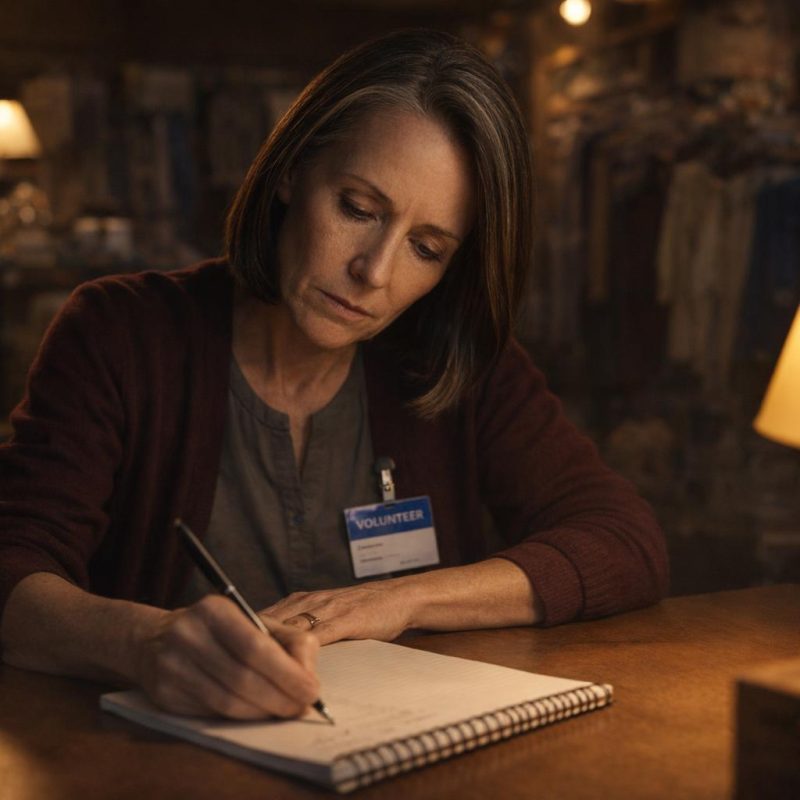 Image by RM AI
The Detail That Changed Everything
I finished writing the statement and slid it across the table. Then I mentioned, almost as an afterthought, that Barbara rarely came in alone. There was usually a younger woman with her — late thirties, dark hair, very polished, always in a blazer. She introduced herself as Barbara's personal assistant. Melissa, she'd said her name was. I told Daniel that Melissa was often the one who asked to speak to the manager, who took down names, who requested that invoices be sent to a particular email address. She had a way of making everything feel official, like she was simply handling administrative details on Barbara's behalf. Daniel went very still. He asked me to describe her again, more carefully this time, and I did — the ponytail, the minimal jewelry, the way she smiled without it quite reaching her eyes. He asked how long she'd been coming in with Barbara. I said several months, as best I could remember. His questions had shifted into something more focused and deliberate, and I didn't know what to make of that shift, only that the air between us had changed.
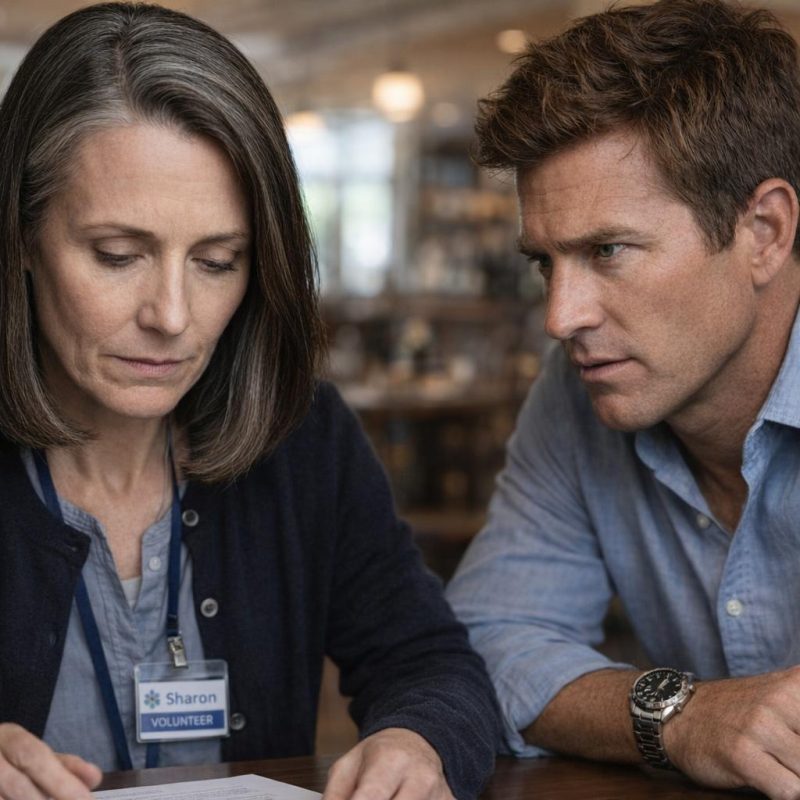 Image by RM AI
The Assistant He Never Hired
Daniel was quiet for a moment after I finished describing Melissa. Then he said he had never hired his mother an assistant. He'd set up a monthly allowance, arranged for a cleaner and a gardener through a reputable agency, made sure she had everything she needed to settle in comfortably. But a personal assistant — someone to accompany her to shops, to take notes, to speak on her behalf — that wasn't something he'd organized. Melissa was a name he didn't recognize. I asked if he was certain, thinking maybe it was something arranged through his management team without his direct involvement. He said he was certain. I told him Melissa had been present during several of the more difficult visits, that she'd sometimes been the one doing the talking while Barbara stood nearby. Something shifted in his expression — not panic exactly, but a kind of focused alarm. Then he asked me not to contact Barbara until he'd had a chance to look into things, gathered his jacket, and walked out of the shop faster than he'd walked in.
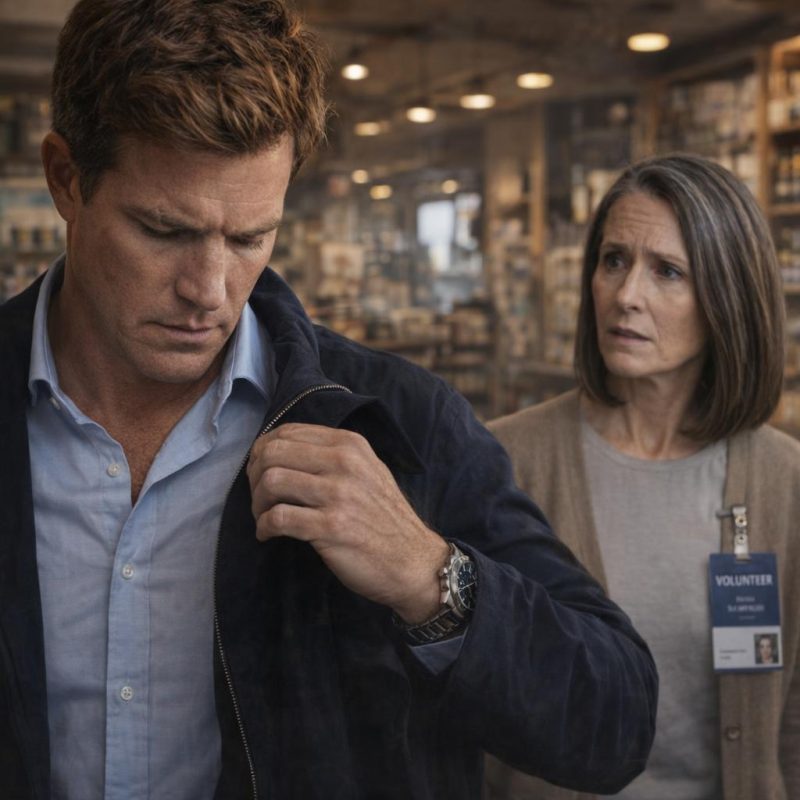 Image by RM AI
The Stranger in Barbara's Life
After Daniel left, I stood behind the counter for a while without doing much of anything useful. I kept replaying the moment his expression had changed — that stillness that came over him when I described Melissa. I'd assumed, up until that point, that the situation was complicated but essentially straightforward: an elderly woman behaving badly, a son trying to manage the fallout. But Daniel not knowing who Melissa was changed the shape of everything. I thought about all the times I'd seen Melissa in the shop, clipboard in hand, asking for names and contact details with that smooth, practiced efficiency. I'd taken her at her word because she'd seemed so entirely at home in the role. I wondered now whether Barbara had taken her at her word too, and what that meant. I'd promised Daniel I wouldn't contact Barbara, and I intended to keep that promise. But the not-knowing sat with me through the rest of that afternoon and into the evening, quiet and unresolved, like a question nobody had thought to finish asking.
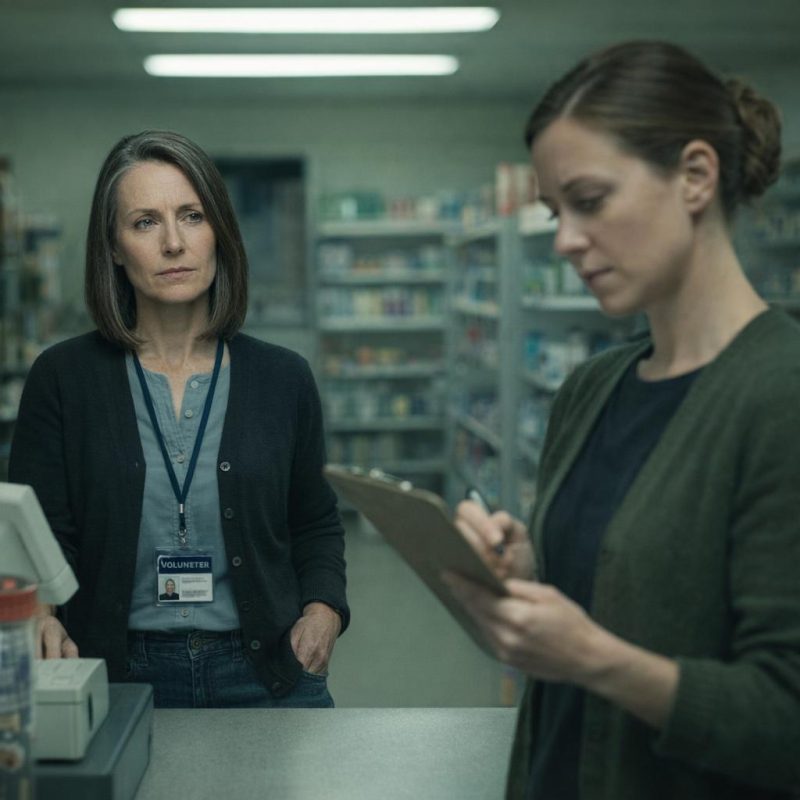 Image by RM AI
The Investigation Begins
Three days passed, then four. I went in for my regular volunteer shifts, sorted donations, helped customers, made tea. The other volunteers had noticed that something was different about me — Margaret asked twice if I was feeling all right, and I told her I was just tired. I kept Daniel's visit to myself. It wasn't my story to share, and I wasn't sure I understood enough of it yet to explain it to anyone else. I watched the door more than I usually did. Barbara didn't come in. Melissa didn't come in. The shop felt quieter than normal, though I knew that was probably just me projecting. I wondered whether Daniel had spoken to his mother yet, whether he'd found out anything about Melissa, whether the whole thing had resolved itself in some way I wasn't aware of. I checked my phone more than I needed to. There was nothing from Daniel. By the end of the week, the silence had taken on a texture of its own — not peaceful, just heavy, like waiting for weather that hadn't arrived yet.
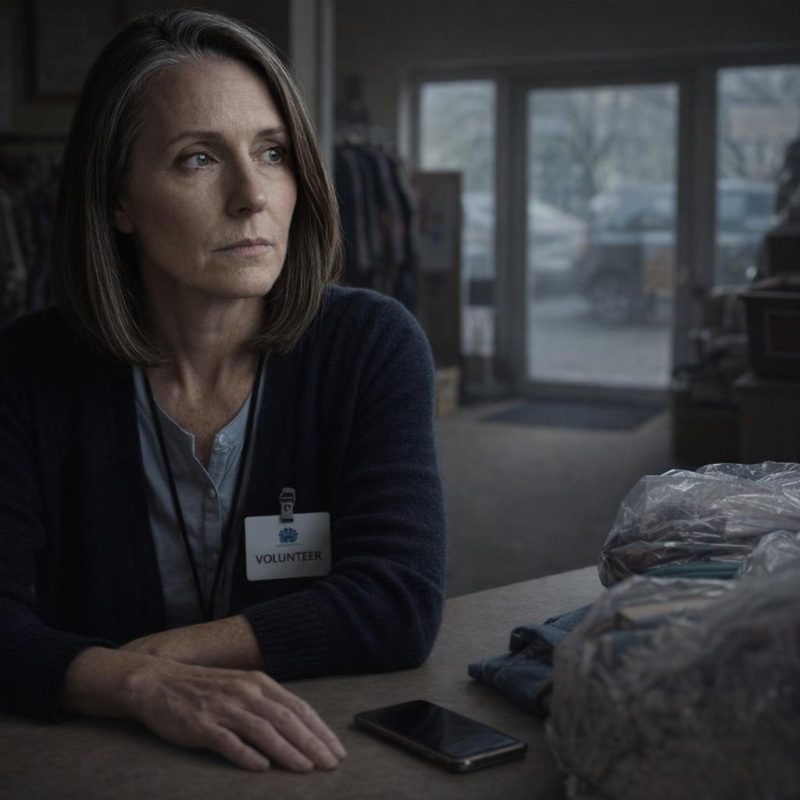 Image by RM AI
The Call
My phone rang on a Thursday afternoon while I was pricing a box of donated paperbacks. I didn't recognize the number at first, but when I answered, Daniel's voice came through clearly. He apologized for not being in touch sooner and asked if we could meet again. I said of course, and asked if everything was all right. He paused before answering, which told me something on its own. He said he'd learned some things about Melissa — about who she was and how she'd come to be in his mother's life — and that he wanted to go through it with me in person. I asked if we could meet at the shop after closing, and he agreed. I spent the rest of the afternoon trying to focus on the paperbacks and not doing a very good job of it. When I locked the front door that evening and turned back to the room, I felt the particular kind of stillness that comes just before something changes. Daniel arrived a few minutes later, sat down across from me, and said the situation was more complicated than he'd thought.
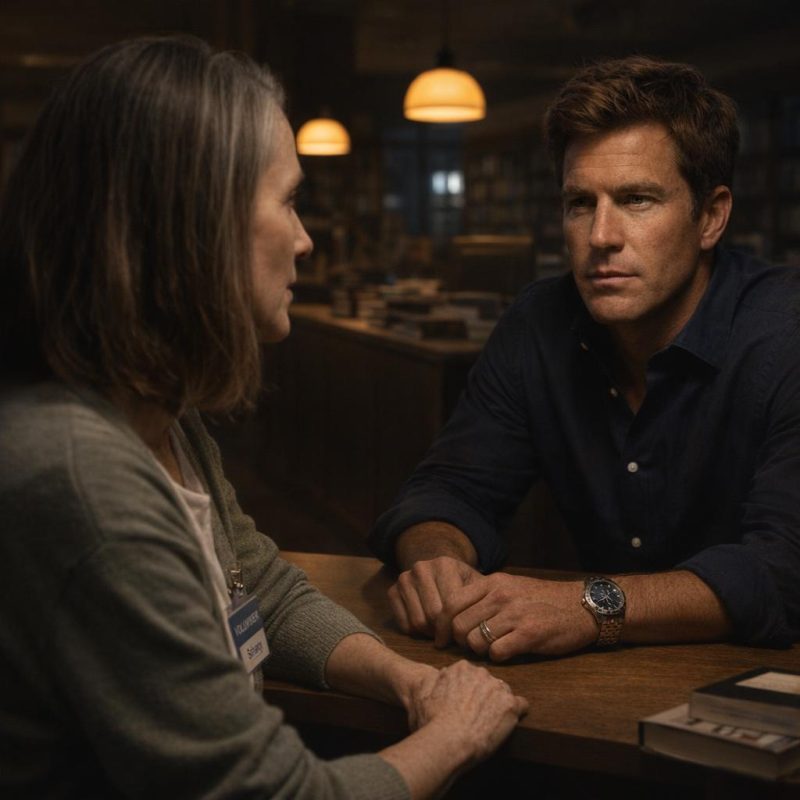 Image by RM AI
How Melissa Entered Barbara's Life
Daniel had put his team onto Melissa's background as soon as he'd left the shop. What they found was this: Melissa had approached Barbara within weeks of Barbara moving to town. Not months — weeks. Barbara had been lonely, Daniel said, and he looked uncomfortable admitting it. She'd moved to a place where she didn't know anyone, where her son's name opened doors but didn't fill an afternoon. Melissa had presented herself as a lifestyle coordinator — someone experienced in helping wealthy clients manage their social arrangements, their appointments, their relationships with local businesses. She'd offered to handle things Barbara found tedious or beneath her. Barbara had said yes. Daniel's team had pieced together a rough timeline from Barbara's diary entries and receipts, and he spread the pages on the table between us. I looked at the dates. Melissa had made herself a fixture in Barbara's daily life within the first month of Barbara's arrival in town.
 Image by RM AI
The Gradual Takeover
Daniel walked me through it methodically, the way someone does when they've spent days organizing something painful into something presentable. It started small, he said. Melissa offered to drive Barbara to appointments when the town was still unfamiliar. Then she started making the appointments herself. Then she began fielding Barbara's phone calls — screening them, Daniel said, deciding which ones Barbara needed to return. Within a few months, Barbara wasn't choosing which shops to visit or which restaurants to try. Melissa was suggesting all of it. Daniel rubbed the back of his neck and admitted he'd told himself his mother seemed happier, more settled, less anxious about being somewhere new. He'd taken that as a good sign. I listened and tried to keep my expression neutral, but something about the picture he was painting made my stomach tighten. This wasn't just helpful assistance. The shape of it was something else — something that had edges I couldn't quite name yet. And then Daniel said that according to the records his team had pulled, Melissa had been present for nearly every interaction Barbara had with local businesses.
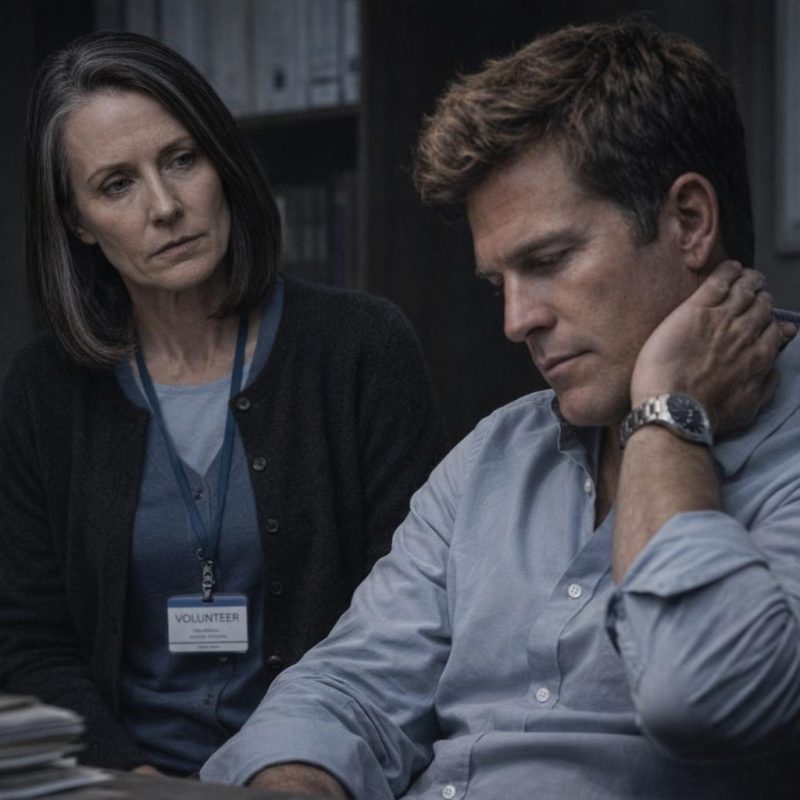 Image by RM AI
The Social Circle
Once Melissa had positioned herself as Barbara's constant companion, Daniel explained, she started working that position outward. She introduced herself around town not just as Barbara's assistant but as someone close to the whole family. She'd drop Daniel's name into conversations — not crudely, he said, but in the way that leaves an impression. She implied she might be able to get him to attend a local charity event. She suggested that a restaurant he liked might be worth mentioning to him if the food was good. Nothing explicit. Nothing you could point to and call a lie. But the implication was always there: that Melissa was a door, and if you treated her well, that door might open. Restaurants comped her meals. A spa offered complimentary treatments. Event organizers handed over VIP tickets. Businesses extended credit on luxury goods they'd never see paid back. Daniel said he'd never authorized any of it — never even knew it was happening until his team started making calls. I sat with that for a moment, trying to take in the full shape of what she'd built from nothing more than proximity to an old woman and a famous name she had no real claim to.
 Image by RM AI
The Benefits Melissa Collected
Daniel had a list. His team had been thorough. Free spa treatments at the most expensive salon in town — multiple visits over several months. Complimentary dinners at two different upscale restaurants, always for two, sometimes for four. A designer clothing account left open on extended credit that had never been settled. A luxury car service that had driven her to events and appointments without a single invoice being paid. VIP tickets to sold-out concerts and a private shopping appointment at a boutique that normally required a waiting list. An exclusive gym membership, signed over as a goodwill gesture by an owner who'd hoped Daniel might post about the place. Every single one of those businesses had extended themselves because they believed, or at least hoped, that something would come back to them — an endorsement, a mention, a photograph. Melissa had never promised any of that explicitly. She'd just let people fill in the blanks themselves. Daniel said that part quietly, like he was still working out how to feel about it. I understood the feeling. There was something almost elegant about it, in the worst possible way, and that made it harder to sit with.
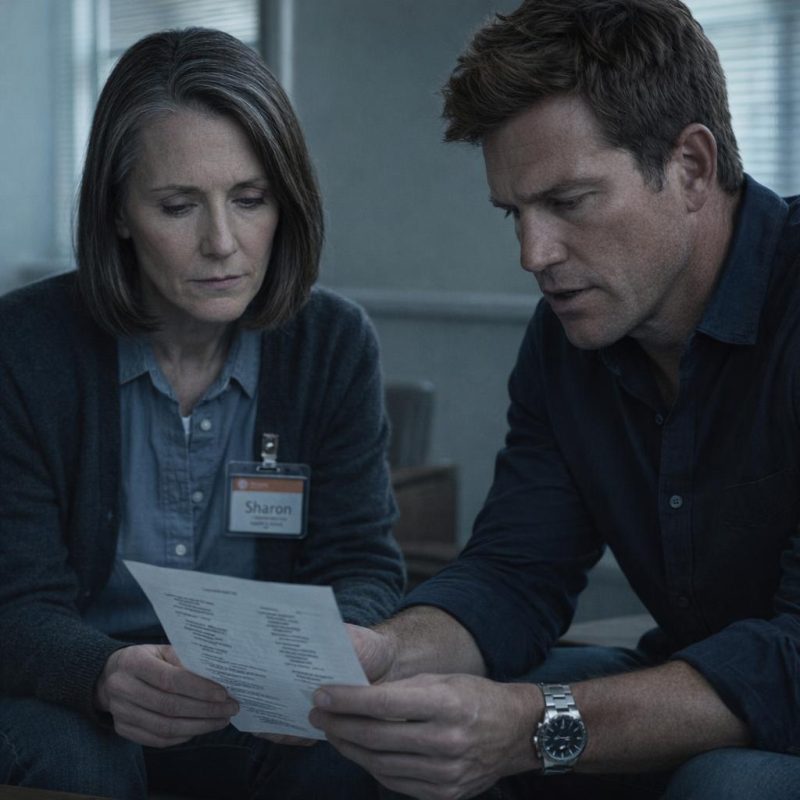 Image by RM AI
The Assumption of Innocence
I'd been listening to all of it with a particular feeling building in my chest — something between relief and guilt. Relief that there was an explanation. Guilt because of how harshly I'd judged Barbara in that shop. I told Daniel as much. I said it seemed clear to me that Melissa had found a lonely elderly woman and made herself indispensable, and that Barbara had probably had no real idea how far things had gone. I said I felt bad for some of the things I'd thought about her. Barbara was in her mid-eighties, new to town, missing her old life — of course she'd been vulnerable to someone like Melissa. I asked Daniel whether he was planning to sit down with his mother and help her understand what had been happening around her. I said I imagined Barbara would be relieved to know the truth. There was a pause. Not a long one, but long enough. Daniel's expression had shifted while I was talking — not dramatically, but enough that I noticed it. He wasn't nodding along. He wasn't agreeing with me. He looked at the table for a moment, then back at me, and said there was something else he needed to tell me.
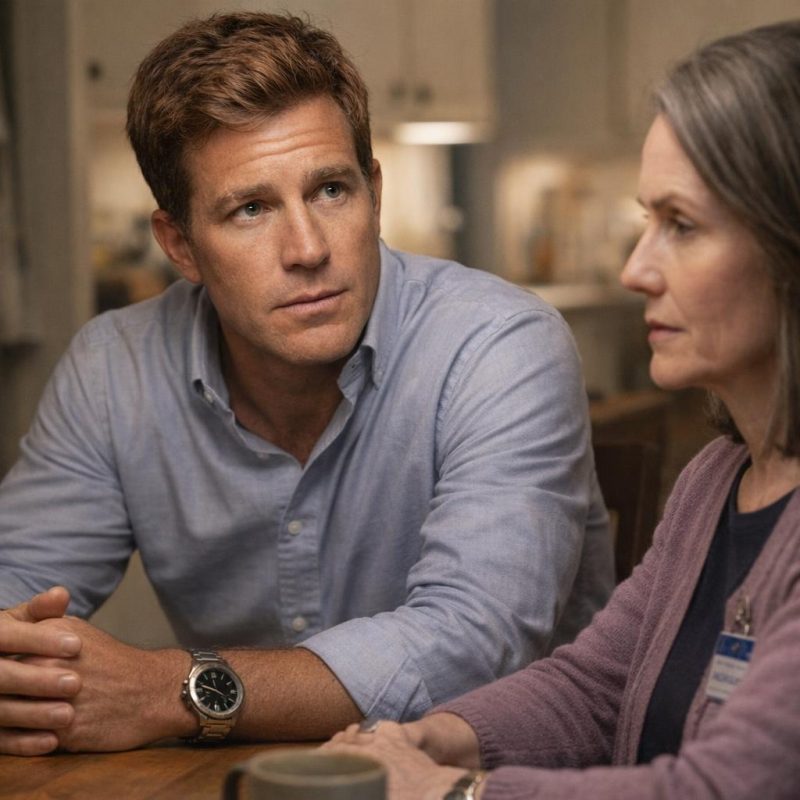 Image by RM AI
The Uncomfortable Truth Ahead
Something in the way he said it made me go still. Not the words themselves — they were plain enough — but the weight behind them. Daniel wasn't a man who seemed to choose his words carelessly, and he was choosing these ones very carefully. He asked if I was sure I wanted to hear everything. I told him I did. I said I'd rather understand the full picture than walk away with half of it. He nodded slowly and said his team had been thorough. They'd interviewed people — not just business owners, but neighbors, a couple of Barbara's acquaintances from her previous town, people who'd known her for years. He said the picture that came back was more complicated than he'd expected. He paused again, and I had the distinct sense he was giving me a moment to brace myself, though I couldn't have said for what. He said his mother wasn't as innocent in all of this as I seemed to think. I didn't say anything. I just waited, and the quiet between us felt like the moment before something shifts — that particular stillness that settles in when you sense the ground is about to move beneath you.
 Image by RM AI
The Second Meeting
He came back the next morning. I'd barely slept, turning over what he'd said the night before, trying to fit it into a shape that made sense. He brought a folder this time — printed pages, some of them with highlighted sections. He set it on the table between us and didn't make me wait long. His team had spoken to three of the business owners directly. They'd spoken to Barbara's neighbor from her previous town, a woman who'd known her for over twenty years. They'd gone through Barbara's own diary entries again, more carefully this time, looking at the language she used. Daniel said his mother had understood what she was doing. Not in a confused way, not in the way of someone being led somewhere without realizing it. She'd known she was using his name. She'd known the threats she made carried weight because of who he was. She'd understood that when she walked into a shop and implied consequences, people believed her. Melissa had encouraged it, yes — had suggested it, had been there beside her. But Barbara hadn't been dragged into anything. Daniel looked at me steadily across the table and said his mother had known exactly what she was doing.
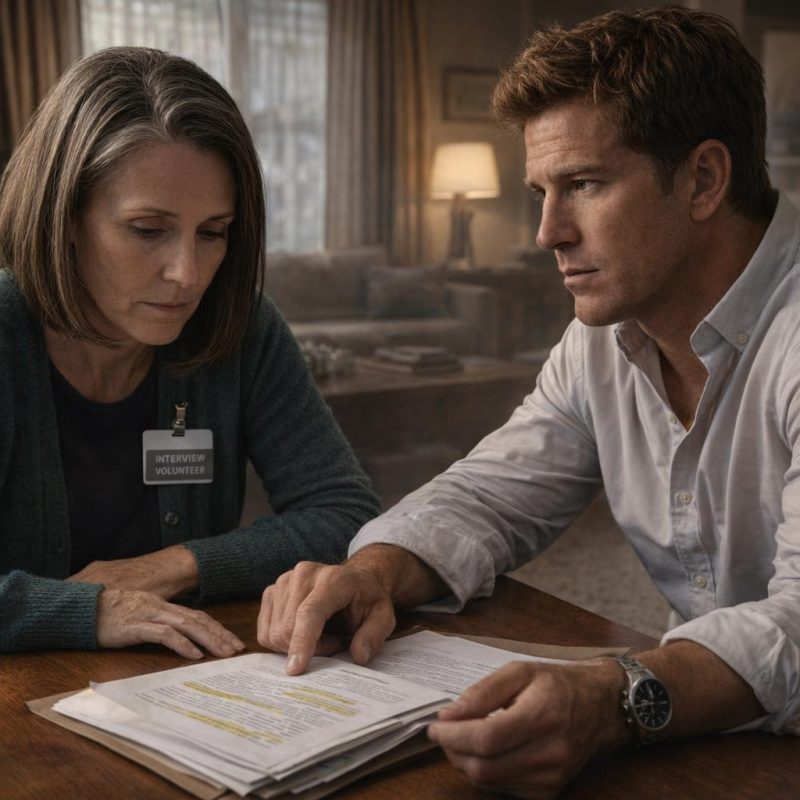 Image by RM AI
The Willing Participant
I sat with that for longer than was comfortable. I thought about the handbag incident — Barbara's voice, the way she'd invoked Daniel's name like a weapon she knew how to use, the performance of wounded dignity when I hadn't backed down. I'd replayed that scene so many times feeling guilty about my own sharpness. Now I was replaying it differently. She hadn't been confused. She hadn't been a frightened old woman lashing out because someone had taken advantage of her. She'd walked in knowing what she was doing and she'd done it anyway. And then, when it hadn't worked, she'd gone home and told her son a version of events that cast herself as the victim. I asked Daniel why. Why would she do that — a woman who, by all accounts, had raised him well, who he clearly still cared about despite everything. He said he'd been asking himself the same question, and that the answer had something to do with her life before the mansion. I felt the anger sitting in me, solid and quiet, not hot the way I'd expected — just there, like something that had been waiting to be named.
 Image by RM AI
Barbara's Ordinary Life
Daniel described his mother's life before the move with a kind of careful tenderness. She'd lived in a modest house in a town where nobody knew his name — or rather, where they knew it the way you know a name from a magazine, not as something that touched your daily life. She'd had friends there, real ones, people she'd known for decades. Daniel had called several of them. Every single one said the same thing: they'd never seen Barbara behave the way he was describing. She hadn't been demanding. She hadn't been entitled. She'd been a woman who brought casseroles when neighbors were sick and remembered everyone's birthdays. She'd lived quietly and independently and hadn't leaned on Daniel's reputation for anything. Then she'd moved into the mansion, into a town where his name meant something, and something had shifted. Daniel said he couldn't pinpoint exactly what had triggered it. He'd been trying to work that out. I asked him what happened after she arrived, what the first few months had looked like before things changed. He said that was exactly where Melissa came in.
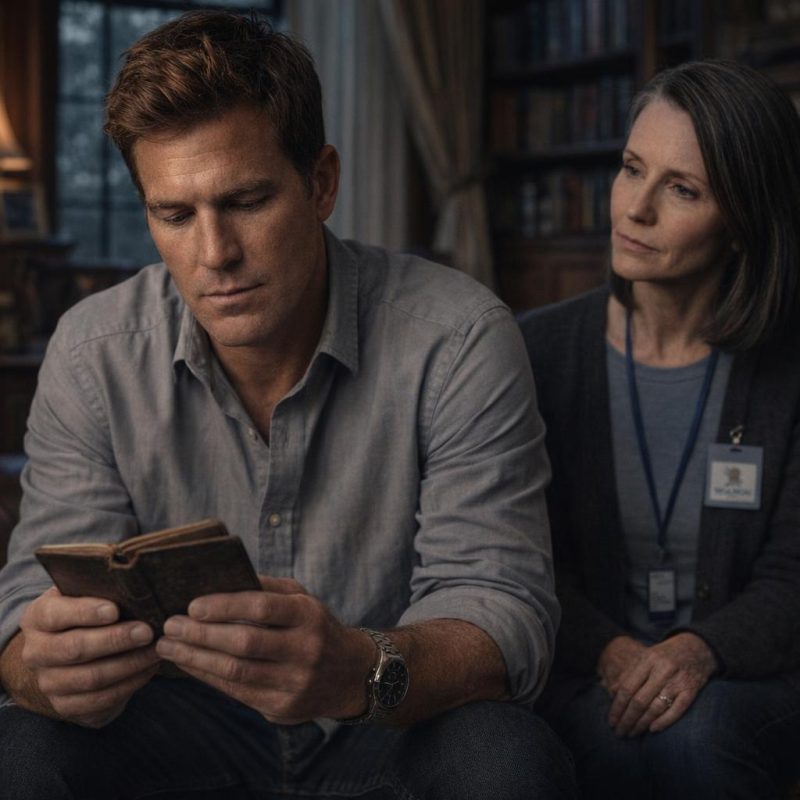 Image by RM AI
The Cultivation of Resentment
Daniel said Melissa had arrived in Barbara's life at exactly the right moment — or the wrong one, depending on how you looked at it. Barbara had moved into a world where her son's name opened every door, and somewhere in that transition, she'd started to feel invisible inside her own story. According to Daniel, Melissa seemed to notice that. She'd remind Barbara, again and again, that she deserved recognition in her own right. Not as a footnote. Not as someone's mother. As herself. He said Melissa would tell her things like, 'You built him, Barbara. Everything he is came from you.' And Barbara had believed it, because part of her had always felt it. The resentment had been there already, quiet and unexamined. Melissa hadn't created it — she'd just found it and kept returning to it. I sat there listening, trying to follow the shape of what he was describing, and I kept thinking about how much damage a single voice in someone's ear could do, if it always said the same thing.
 Image by RM AI
The Testing Strategy
Daniel explained that the resentment had found a kind of outlet. Melissa would encourage Barbara to walk into a shop or a restaurant and ask for something — an upgrade, a discount, a table that wasn't available, a product held back for other customers. She'd tell Barbara that businesses who truly valued their clientele would accommodate her without hesitation. Melissa framed it as a way of seeing who respected Barbara. And when they didn't — when a shop assistant politely said no, or a manager explained their policy — Melissa would be there afterward, telling Barbara that the refusal was personal. That people were jealous. That they didn't understand who they were dealing with. I recognized it immediately. The charity shop. The way Barbara had escalated so quickly when I held the line. The way she'd looked at me like I'd committed an offense rather than followed a rule. Every time someone pushed back, Melissa told her the other person was the problem.
 Image by RM AI
The Addiction to Attention
I asked Daniel whether his mother had ever pushed back on any of it — whether there'd been moments where Barbara questioned what she was doing. He was quiet for a second before he answered. He said there had been, early on. She'd called him once, maybe three months after Melissa came into the picture, and said something felt off about how she'd spoken to a restaurant manager. She'd been embarrassed. But by the next time he spoke to his mother, the embarrassment was gone. Replaced by indignation. He said that was when he understood what was happening — that his mother had found something that made her feel powerful and important in a way she never had before, and that feeling had become something she needed. The woman who'd brought casseroles to sick neighbors had found a different version of herself, and that version got attention and deference and a kind of status she'd never had. She'd chosen to keep going back to it.
 Image by RM AI
The Constant Reinforcement
Daniel walked me through the timeline month by month, and it was like watching a slow tide come in. The first incidents had been small — asking a boutique to hold items after closing, expecting a restaurant to seat her without a reservation. After each one, Melissa had told her she'd handled it perfectly, that she deserved to be treated that way. And so Barbara had pushed a little further the next time. Then a little further still. By the six-month mark, she was demanding refunds for things she'd used, expecting shops to turn away other customers to attend to her, dropping Daniel's name like a threat rather than a connection. Daniel said the worst incidents — the ones that had generated actual complaints, actual calls to his management team — had all happened in the final two months. Each time Barbara got what she wanted, the next demand came a little easier. I thought about how long that kind of drift takes to notice from the inside, and how invisible it must have looked to Barbara herself, one small step at a time.
 Image by RM AI
The Framing of Resistance
What struck me most, listening to Daniel, was the consistency of it. Not just that Melissa encouraged the behavior — but that she never once offered Barbara a different perspective. Not once. Daniel had gone back through everything his team had gathered, every account from people who'd witnessed Melissa with his mother, and not a single exception turned up. When Barbara was refused something, Melissa blamed the other person. When Barbara was embarrassed, Melissa reframed it as a victory. When someone tried to reason with Barbara — a manager, a staff member, even a well-meaning bystander — Melissa would pull her away, and for the next hour Barbara would hear only one version of what had happened. She never said, 'Maybe they had a point.' She never said, 'Perhaps we should let this one go.' Daniel's voice was flat when he said it, like he'd turned the fact over so many times it had worn smooth. His mother had spent months surrounded by one voice, one interpretation, one version of every event — and that voice had never once suggested she might be wrong.
 Image by RM AI
The Security Team's Investigation
Daniel shifted in his chair and his tone changed. Not dramatically — he didn't raise his voice or lean forward — but something in the register dropped, became more careful. He said his security team had been doing more than tracking Barbara's incidents. They'd been looking into Melissa herself. Her background, her contacts, her movements over the past year. He said they'd pulled phone records, looked at her financial activity, mapped out who she'd been in contact with and when. He paused there, like he was deciding how much to say next. I didn't push him. I'd learned by then that Daniel chose his words the way someone does when they're still processing something that doesn't quite fit the shape they expected. He said the data had suggested something beyond what they'd originally assumed — that Melissa's interest in Barbara might not have been purely about social access or reflected status. His team had needed more time before they could say anything definitive. But he said what they eventually found had changed the entire picture. I sat with that, the particular discomfort of a story that isn't finished yet.
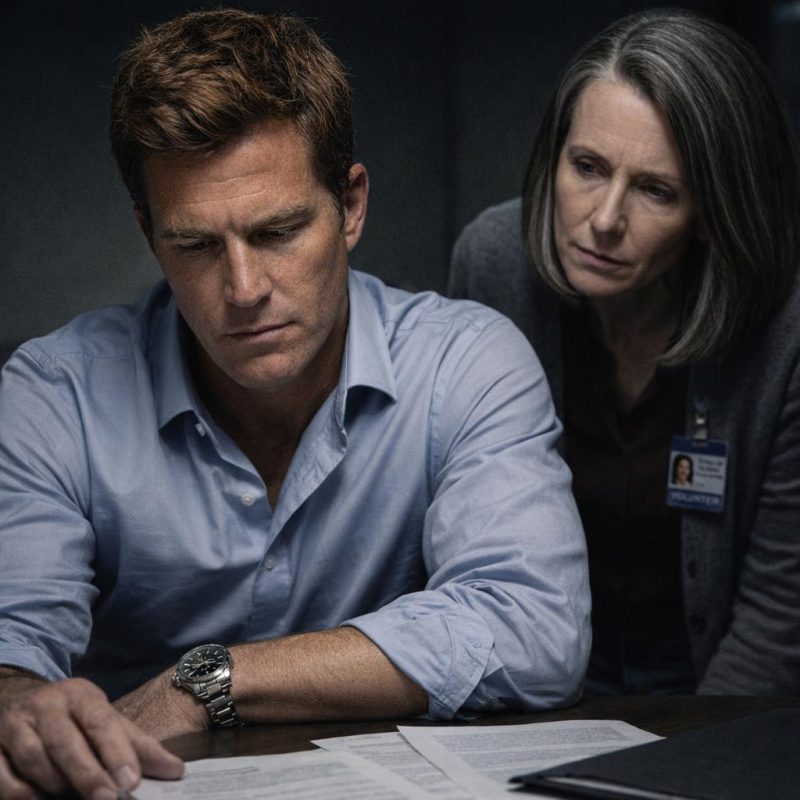 Image by RM AI
The Concerning Files
Daniel said his team had gotten into Melissa's phone. I didn't ask how — it wasn't the moment for that question, and honestly, I'm not sure I wanted to know. What he told me was that they'd found files. Not messages, not emails — files. Organized ones. He said the word 'organized' with a kind of emphasis that made my stomach tighten, because organized means intentional, and intentional means something different from opportunistic. He said the files were labeled, sorted, kept in a way that suggested they hadn't been accumulated carelessly. Melissa had been keeping records of something, and whatever it was, it had been important enough to her to maintain carefully over a long period of time. Daniel's expression hadn't changed much as he spoke, but his hands had gone still on the table in front of him. He said his team had realized, looking at those files, that what Melissa had been doing was more than manipulation. He said he needed to show me what they'd found. I sat there in the quiet of that kitchen, and the weight of not yet knowing pressed down on me like something physical.
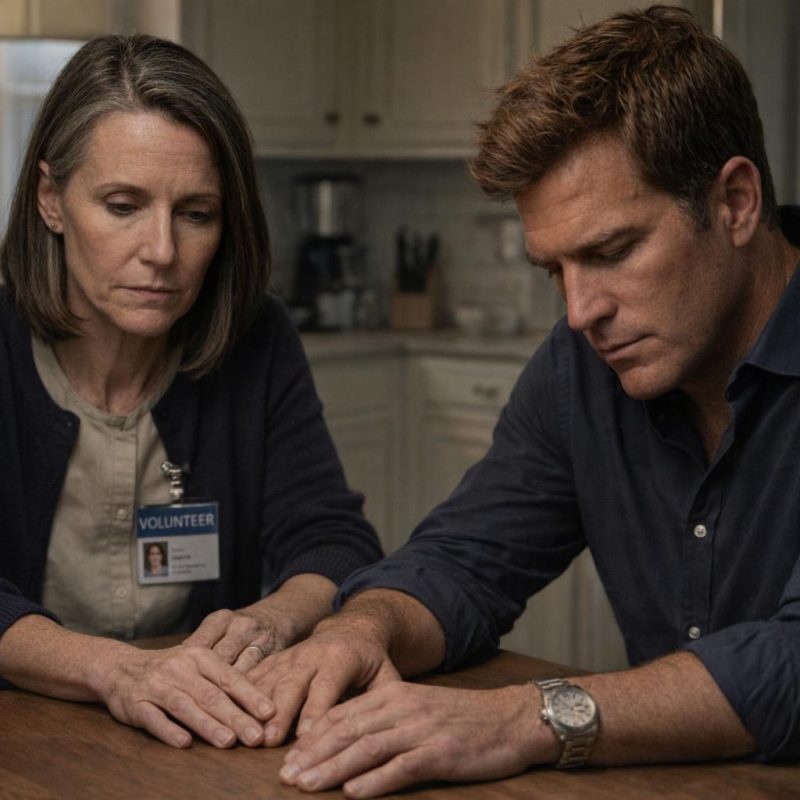 Image by RM AI
The Recordings
Daniel slid his phone across the table toward me. On the screen was a folder — and inside it, a list of audio files. Dozens of them. Each one labeled with a date and a location. I recognized some of the location names: shops in town, a restaurant I'd been to, a boutique on the high street. Daniel said Melissa had been recording Barbara. Every outing, every confrontation, every demand and refusal and escalating exchange — Melissa had been capturing it on her phone, standing close enough to catch every word. He said the files went back months, almost to the beginning of their arrangement. Barbara insulting staff. Barbara boasting about Daniel's connections. Barbara making threats, making scenes, making demands that no reasonable person would make. All of it preserved, date-stamped, filed away. I scrolled through the list without opening anything, just reading the dates, watching the months stack up. Daniel said his team had counted them when they first found the folder.
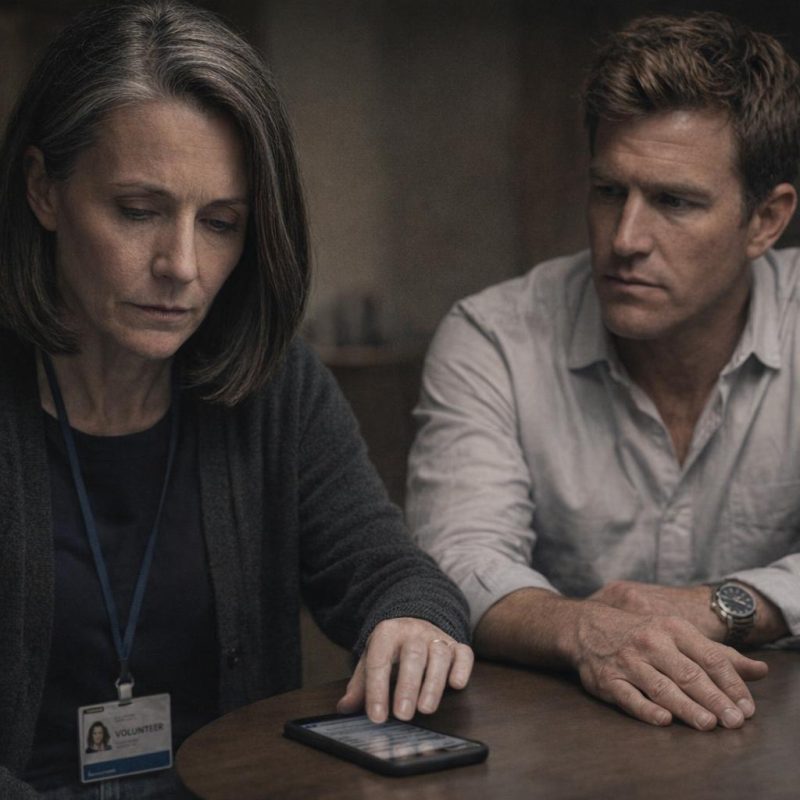 Image by RM AI
The Organized Collection
Daniel kept scrolling through the folder on his phone, and I watched the list go on longer than I'd expected. It wasn't just a handful of recordings. The files were sorted into subfolders — he showed me the labels. One folder for incidents in shops and restaurants. Another for what his team had labeled 'social boasting,' which apparently meant every time Barbara had dropped Daniel's name to get something she wanted. A third folder held recordings from private settings — dinner parties, car rides, phone calls Barbara had taken while Melissa was nearby. Each file had a date, a location, sometimes a brief description typed into the filename itself. Whoever had organized this had been thorough in a way that made my stomach turn. Daniel said his team estimated the collection covered nearly eight months of Barbara's life. Eight months of outings, errands, lunches, and confrontations — all of it captured and filed away. I thought about the charity shop. I thought about the afternoon Barbara had stood at our counter and made everyone in the room feel small. The idea that someone had been standing there with a phone, quietly preserving it, sat with me in a way I couldn't shake.
 Image by RM AI
Every Terrible Moment Preserved
Daniel told me some of what his team had actually listened to, and I wished he hadn't. There was a recording from a grocery store — Barbara berating a cashier over a loyalty card that hadn't been applied to her bill. Daniel said his team described it as relentless, the kind of dressing-down that would make anyone nearby want to disappear. There was another from a restaurant, Barbara threatening the manager with a bad review and then going further, saying Daniel would make sure the place never got a booking from anyone who mattered. He said that one was hard to hear. His own name, used like a weapon, in a voice that left no room for the other person to respond. Melissa had captured Barbara dismissing local residents as people who simply didn't understand what real success looked like. She'd recorded Barbara making demands that no reasonable person would make and then acting wounded when those demands weren't met. Daniel said some of the recordings were almost unbearable to sit through. I didn't doubt him. Just hearing the descriptions, I found myself imagining those recordings played out loud somewhere — in a courtroom, or worse, online — and the thought alone was enough to make me feel ill.
 Image by RM AI
The Pattern of Documentation
Daniel pulled up a different view on his phone — a timeline, the recordings arranged in chronological order rather than by category. The earliest entry sat near the top of the screen, and when he showed me the date, I leaned in to look more carefully. It was from the first week. Not the first month — the first week of Melissa and Barbara's arrangement. I asked Daniel if he was sure, and he nodded. His team had cross-referenced the date against Barbara's calendar. As I scrolled down, I could see the entries becoming more frequent. Early on, there were gaps of several days between files. By the middle of the timeline, there were sometimes two or three recordings in a single day. Daniel said the escalation in frequency matched the escalation in Barbara's behavior — the worse Barbara got, the more Melissa seemed to be there with her phone ready. I asked him why someone would do that from the very beginning, before they'd even had time to see how things would go. He said his team had been asking the same question for days. He handed the phone back to me, and I looked at that first date again — just days after Melissa had walked into Barbara's life.
 Image by RM AI
The Trap Becomes Visible
Daniel set his phone face-down on the table and rubbed the back of his neck. He said the thing that kept him up at night wasn't the recordings themselves — it was how willing his mother had been. Barbara hadn't been tricked into behaving badly. She'd done it freely, in public, in front of someone she'd invited into her life. Melissa hadn't needed to push very hard, if she'd pushed at all. Every scene, every demand, every cutting remark — Barbara had supplied all of it herself. Daniel said that was what made the whole thing so difficult to sit with. His mother had walked into something without understanding what it was, and her own behavior had done the rest. I asked him what he thought Melissa had intended to do with all of it. He said his team was still working through that, still pulling threads. But he said it plainly: whatever Melissa had been building toward, she'd been building it from the start. The recordings weren't random. The organization wasn't accidental. Something had been in motion from the moment Melissa had introduced herself to Barbara, and the shape of it was only now becoming visible.
 Image by RM AI
The Blackmail Scheme Revealed
Daniel picked his phone back up and set it down again without looking at it. Then he told me what his team had found. Melissa had not been documenting Barbara out of habit or curiosity. She had been building a portfolio — his word, and I could hear how much it cost him to say it. The plan, as his attorneys had pieced it together, was to wait. Melissa would spend months cultivating Barbara's trust, encouraging the lifestyle, smoothing the way for every indulgence and every scene. She would let Barbara become dependent on having her around. And then, once that dependency was established, Melissa would use the recordings as leverage. She would threaten to release them — to the press, to anyone who might be interested in what Daniel's mother had been saying and doing around town — unless Barbara paid to keep them private. Every recording was evidence. Every folder was a category of damage. The social climbing, the free services, the endless availability — none of it had been generosity. It had been patience. Daniel said his attorneys believed Melissa had been planning this from the very first week. I sat there and heard him say it, and the word that kept landing in my chest was blackmail.
 Image by RM AI
The Realization of Betrayal
I asked Daniel how his mother had taken it when he'd told her. He said he hadn't yet — that was the next conversation, and he wasn't looking forward to it. He sat quietly for a moment, and I could see him working through it. He said the part that made it complicated was that Barbara wasn't simply a victim. Melissa had exploited her, yes. She had moved in close and made herself indispensable and then quietly built a case against the woman who trusted her. That was a real betrayal, and Daniel wasn't minimizing it. But every word on those recordings was Barbara's own. Melissa hadn't put them there. She'd created conditions where Barbara felt comfortable saying them, maybe even encouraged it, but the cruelty had come from Barbara herself. Daniel said he needed his mother to understand both things at once — what Melissa had done to her, and what she had done to other people. He said he wasn't going to let her walk away from this treating herself as the only person who'd been wronged. I asked if he was going to involve the police. He said his attorneys were already handling the legal side of it. Then he looked at me and said he needed to go confront his mother, and he needed to do it today.
 Image by RM AI
The Confrontation Ahead
Daniel left, and I drove back to the charity shop and put my volunteer badge on and sorted donations for the rest of the afternoon. It was the most ordinary thing I could think to do, and I needed ordinary badly. I kept folding jumpers and checking price tags and thinking about Barbara sitting in that mansion, not yet knowing what was coming. I thought about how she'd stood at our counter and made my colleagues feel worthless, and I thought about how none of that had happened in a vacuum — someone had been standing nearby, listening, waiting. Days passed. I didn't contact Daniel. It wasn't my place to rush him, and I suspected the conversation with his mother wasn't going to be quick or clean. I went to my shifts. I had tea with a friend. I did the things that fill a week when you're waiting for news you can't do anything about. I found myself wondering, more than once, whether Barbara would actually hear what Daniel was telling her — not just the facts about Melissa, but the harder part, the part about her own choices. I didn't have a confident answer to that. Some people, when they're shown a mirror, find a way to look at everything in the room except their own reflection.
 Image by RM AI
Barbara's Denial
Daniel called on the fourth day. He sounded tired in the way people sound when they've had a conversation that took more out of them than they'd budgeted for. He said Barbara had not reacted well. When he'd first told her about the recordings, she'd refused to believe Melissa had been behind any of it — insisted Melissa was her friend, that there had to be some misunderstanding, that Daniel's team must have gotten it wrong. When he'd shown her the evidence, she'd gone quiet for a moment and then pivoted entirely. Suddenly everything was Melissa's fault. Melissa had manipulated her. Melissa had encouraged her to behave that way. The town had been unwelcoming from the start, which had made her defensive. The business owners had been difficult and deserved what they got. And then, Daniel said, Barbara had brought up the charity shop. She'd brought up me. Said I had started the whole thing, that I'd been hostile from the beginning and set the tone for how the town treated her. Daniel said he'd listened to all of it without interrupting. Then he'd told her he wasn't accepting any of it. I held the phone and let the silence sit between us, and what I felt wasn't anger exactly — it was something heavier and more tired than that.
 Image by RM AI
The Consequences Daniel Imposed
Daniel walked me through what he'd told her, and I have to say, he hadn't softened any of it. He'd told Barbara that she could no longer invoke his name in any business dealing, any conversation, any situation where she wanted leverage she hadn't earned herself. He'd told her that if he heard of her mistreating another service worker or business owner in this town, he would put the mansion on the market. Not as a threat he'd revisit — as a done thing. He'd also told her he would stop funding the lifestyle that had given her the platform to behave the way she had. Barbara had pushed back, apparently. She'd tried to reframe things, offered conditions, suggested compromises. Daniel said he'd listened to all of it and then repeated himself, word for word, without adjusting a single term. That was when she'd understood he meant it. I told him I respected how he'd handled it. He said there was one more condition he'd imposed — Barbara had to cut all ties with Melissa completely. I asked if she'd agreed. He said she had, and then he paused in a way that told me the story wasn't finished.
 Image by RM AI
Melissa's Threat Emerges
The pause didn't last long. Daniel said Melissa had contacted Barbara directly after being cut off — not to negotiate, not to explain herself, but to make a demand. She had told Barbara that unless a substantial payment was made, she would release the recordings publicly. All of them. The ones where Barbara berated the cashier, threatened the restaurant manager, used Daniel's name like a weapon. Melissa had given her a deadline. Barbara had panicked and called Daniel within the hour. He said his attorneys and security team had moved immediately, but that he'd also decided on a different approach — one that didn't involve paying Melissa anything or letting her control the timeline. I asked what he meant. He said Barbara needed to do something that would cost her far more than money, something that would strip Melissa's leverage entirely before the deadline arrived. I asked him what that was. He said his mother needed to apologize publicly — to the people she'd hurt, in front of the community, before Melissa could release anything. He said the amount Melissa had demanded was two hundred thousand dollars.
 Image by RM AI
The Public Apology Strategy
I sat with that for a moment. Two hundred thousand dollars, and Melissa's entire leverage rested on Barbara's shame. Daniel explained it plainly: if Barbara admitted everything herself, publicly and specifically, then the recordings became useless. You can't blackmail someone with a confession they've already made. He wanted Barbara to apologize to the people she'd mistreated — by name, without deflecting onto Melissa, without framing it as a misunderstanding or a difficult adjustment period. Just a direct accounting of what she'd done and who she'd done it to. He'd arranged for her to speak at the charity fundraiser our organization had been planning for months. He'd agreed to appear at the event himself, which had sent ticket sales through the roof. Barbara would speak on stage, in front of the whole community, and take responsibility without a safety net. I asked if Barbara had agreed. Daniel said she hadn't had much of a choice, and that she knew it. I thought about what it would actually cost a woman like Barbara to stand in front of this town and say she'd been wrong — and I understood, in a way I hadn't before, exactly how much Daniel was asking of her.
 Image by RM AI
The Fundraiser Preparation
The week before the fundraiser moved fast. Word had gotten out that Daniel Hart would be appearing, and ticket sales had done something none of us had ever seen — we sold out in under forty-eight hours and had a waiting list by the end of the day. The venue committee scrambled to expand seating. The other volunteers were giddy about it, talking about Daniel like they were preparing for a concert rather than a charity dinner. I helped set up tables, arranged centerpieces, confirmed the catering order, and smiled at all the right moments. I couldn't tell any of them what was actually going to happen that night. I couldn't explain why I kept pausing in the middle of tasks and staring at the stage we'd decorated with such care. I thought about the cashier at the grocery store, the restaurant manager, the landscaper — people who had been spoken to like they were nothing, who had no idea they were about to be named in a public apology by the woman who'd done it. I hoped it would mean something to them. I hoped it would land the way it needed to. The tablecloths were pressed and the centerpieces were straight, and the whole room felt like it was holding its breath.
 Image by RM AI
The Evening Arrives
By seven o'clock the venue was full, and the energy in the room was the kind you feel in your chest before anything has even happened. People had dressed up. I saw neighbors I recognized from the farmers market, regulars from the library, faces from the shops along the main street. The grocery store cashier Barbara had berated was there with her husband, wearing a blue dress and laughing at something her table companion had said. The restaurant manager stood near the back with a glass of water, looking relaxed in a way I hadn't seen him look in months. I moved through the room refilling water glasses and straightening chairs, watching people settle in with no idea what the evening actually held. They were expecting a brief speech from a celebrity, maybe a thank-you, maybe a check. The conversation around me was light and warm. Someone at a nearby table was already speculating about whether Daniel would take photos afterward. I knew what was coming and they didn't, and that knowledge sat in me like a stone — not heavy with dread exactly, but with the particular weight of something that cannot be undone once it begins.
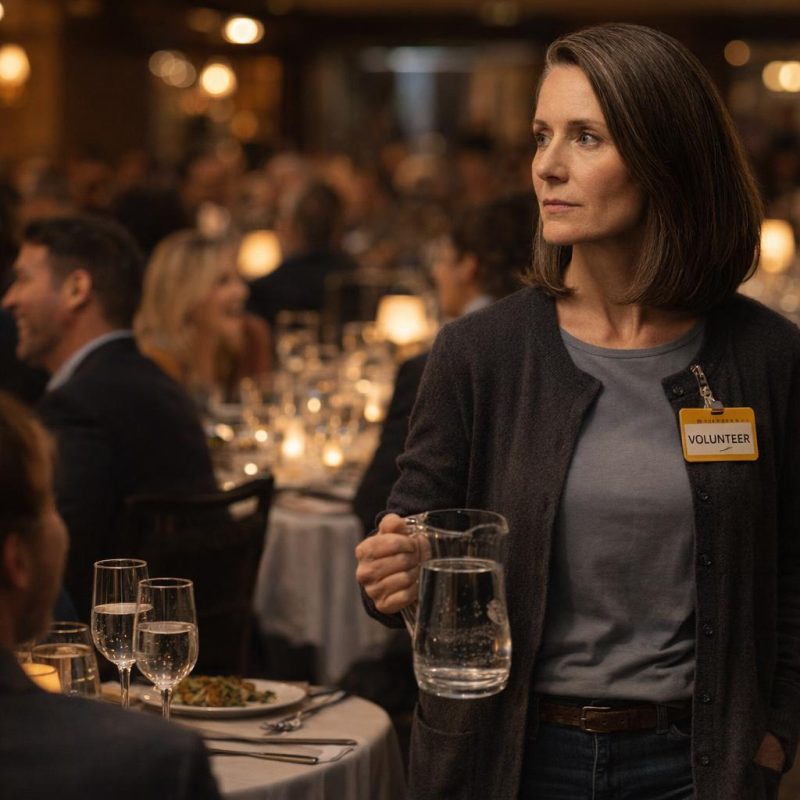 Image by RM AI
Daniel and Barbara Take the Stage
The applause started before Daniel had fully cleared the curtain. It rolled through the room in a wave, people rising from their seats, and for a moment the whole evening felt like it might just be what everyone had expected. Then Barbara walked out beside him, and the applause didn't stop so much as stutter — a few people trailing off, others continuing out of momentum, until the room settled into something uncertain. She was dressed conservatively, no statement jewelry, none of the performative elegance I'd seen her deploy before. Daniel stepped to the microphone, thanked everyone briefly for coming, said the evening meant a great deal to him, and then he stepped back. Barbara moved forward. The room went genuinely quiet — not the polite quiet of an audience waiting for entertainment, but the held-breath quiet of people who don't yet understand what they're watching. She didn't have notes. She stood at the microphone with her hands clasped in front of her, and I could see from where I stood near the side wall that her jaw was set and her posture was rigid in the way of someone holding themselves together by will alone. She said she needed to apologize.
 Image by RM AI
The Public Apology
She didn't rush it, and she didn't soften it. Barbara said she had used her son's name to intimidate people in this community, and that it had been wrong. She said she had treated service workers and business owners as though they existed to absorb her frustration, and that it had been wrong. She named the cashier at the grocery store — her actual name, which I hadn't known — and apologized for the way she'd spoken to her in the checkout line. She named the restaurant manager and apologized for the threat she'd made about his liquor license. She mentioned the landscaper. She mentioned two shop owners I recognized from the high street. She did not mention Melissa. She did not say she'd been going through a difficult transition, or that she hadn't understood the town's culture, or that stress had gotten the better of her. She just said what she'd done and said she was sorry. The room was so quiet I could hear the ventilation system. Then she looked toward the side of the room, found my face in the crowd, and said my name — said she owed me a specific apology for what had happened at the charity shop, and that she was sorry.
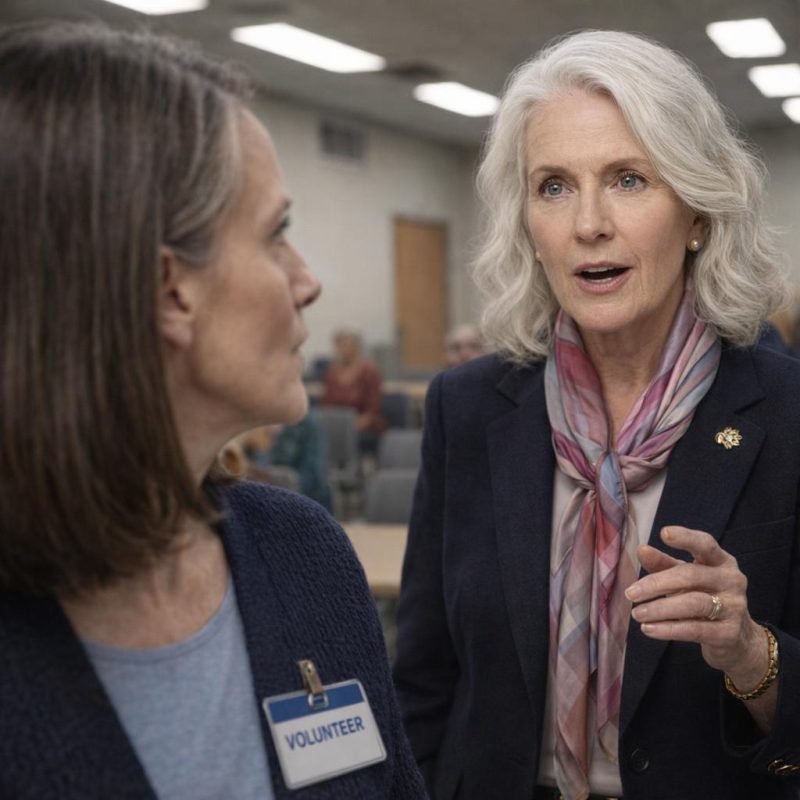 Image by RM AI
The Donation Announcement
The room was still processing Barbara's apology when Daniel stepped back to the microphone. He thanked his mother, and his voice was measured in a way that told me he'd rehearsed that part carefully. He said he wanted to announce a donation to the charity — a substantial one. The room warmed immediately, people nodding, a few beginning to applaud. Then he said the donation would not be coming from him. It would be coming from his mother. He explained, without drama, that Barbara would be funding it through the sale of items she had acquired since moving to town — the designer wardrobe, the jewelry, several luxury pieces she'd accumulated during what he called, with careful neutrality, her settling-in period. He named a figure. It was not a small one. The applause that followed was slower this time, more uncertain, people working out what they'd just heard. I watched Barbara standing beside him at the microphone. Her expression was composed in the way of someone who has decided composure is the only thing left available to them, and beneath it, visible to anyone paying attention, was the particular misery of a woman who had just watched something she valued very much walk out the door.
 Image by RM AI
The Aftermath of the Apology
The room emptied slowly, the way rooms do after something significant has happened — people lingering, not quite ready to let go of the feeling. I stood near the back and watched attendees file out, some of them still talking quietly, a few dabbing at their eyes. Daniel found me before I reached the door. He shook my hand and held it a beat longer than a handshake requires, and he said that what happened tonight started with me, in that charity shop, on an ordinary Tuesday. He said that without witnesses to that incident, he might never have known how far things had gone. I asked about Melissa. He said his attorneys had handled it — that once Barbara admitted everything publicly, the recordings lost whatever power they'd had over her. The extortion attempt collapsed, he said, and Melissa would be facing legal consequences. Then I asked the harder question: did he think his mother would actually change? He was quiet for a moment. He said he hoped so, but he wasn't certain. And standing there, I thought about what Barbara had really wanted all along — not wealth, not deference, but to be seen as someone in her own right, not simply as Daniel's mother.
 Image by RM AI
The Year That Followed
The months after the fundraiser moved the way months do when the drama has finally drained out of something — steadily, without fanfare. Word got around that Barbara had begun volunteering at a few local organizations. I heard it secondhand at first, the way you hear most things in a small community, and I'll admit I was skeptical. Skepticism felt earned. But the reports kept coming, and they were consistent: she showed up on time, she didn't mention Daniel, she treated the staff like people. Some community members never softened toward her — and honestly, I understood that. Forgiveness isn't owed, and some of what she'd done had left marks. But others cautiously made room for her. The moment that stayed with me came on a quiet Wednesday afternoon, when Barbara walked into the charity shop and asked if there was anything she could help with. No announcement. No performance. I put her to work sorting a bin of donated sweaters, and she spent the next two hours doing exactly that — folding, stacking, working through the pile without once asking for recognition or dropping her son's name into the conversation.
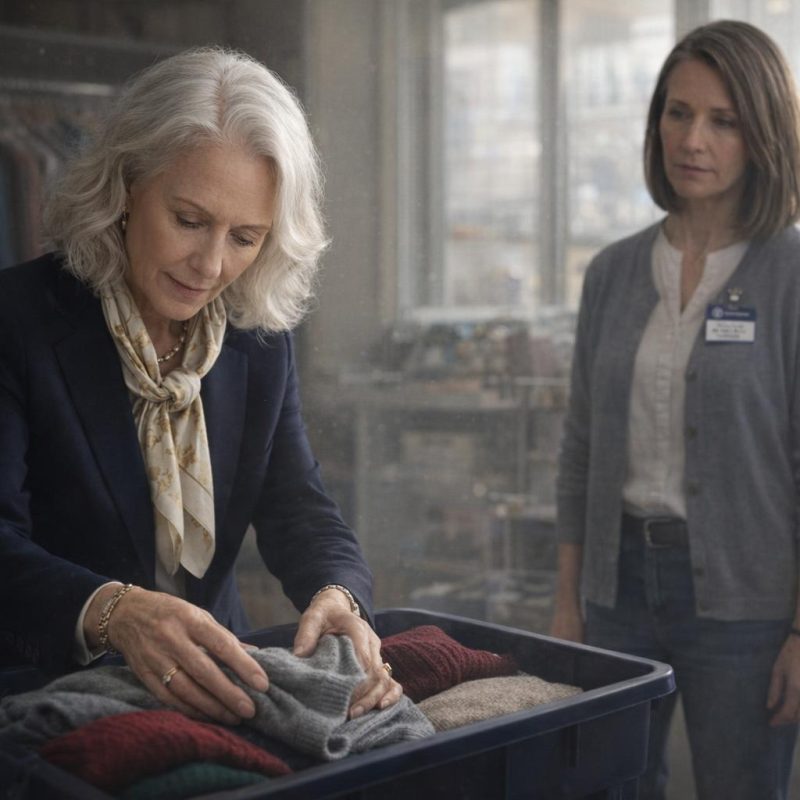 Image by RM AI
Daniel's Gratitude
Daniel came into the shop one last time on a Thursday morning, just before the holiday rush made everything chaotic. He wasn't dressed for anything in particular — jeans, a plain jacket, the kind of outfit that said he wasn't there to be noticed. He bought a paperback he probably didn't need and then stood at the counter and thanked me properly. He said I'd stood up to his mother when people with far more to gain from staying quiet had looked the other way, and that it had mattered more than I knew. I told him I hadn't been brave. I told him I'd just been irritated — that someone had come into my shop and behaved badly, and I wasn't built to let that go without saying something. He laughed at that, a real laugh, not a polished one. He said sometimes irritation was exactly what a situation needed. He told me his mother was doing better — slowly, imperfectly, but genuinely. He said he was keeping the mansion for now, that he wanted to give her the chance to prove herself in it. I wished him well, and meant it, and the warmth of that felt like something quietly earned.
 Image by RM AI
The Lesson That Stuck
I've thought about all of it more than I expected to — not obsessively, just the way you turn a smooth stone over in your pocket without meaning to. What struck me most, in the end, was the particular irony at the center of it. Barbara had wanted recognition. She wanted to be seen as someone substantial, someone worth knowing on her own terms. But the tool she reached for was Daniel's name, Daniel's fame, Daniel's reflected light — and the harder she leaned on it, the less visible she became as herself. People didn't see Barbara. They saw a celebrity's mother performing the role badly. Melissa had understood that insecurity and used it, which was its own kind of cruelty. But Barbara had made her own choices, and she'd had to live with where they led. What finally shifted things wasn't kindness or patience or careful intervention. It was the threat of becoming publicly known for exactly the behavior she'd been hiding behind the glamour. I was just a volunteer who refused to give an unearned discount. But sometimes that's enough — a small, ordinary refusal that refuses to move. The borrowed fame had made Barbara invisible to herself, and it took nearly losing everything for her to see it.
 Image by RM AI
KEEP ON READING