The Contest Entry
Six months after my divorce became final, I had gotten very good at disappearing. Not literally — I still went to work, still picked up groceries, still answered texts with enough words to seem fine. But I had stopped taking up space in any real way. My ex-husband's parting words had a way of echoing at inconvenient moments: that we had simply become different people, that it wasn't anyone's fault. Which somehow felt worse than if it had been. Cheryl showed up on a Tuesday with wine and a look on her face I recognized immediately — the look that meant she had done something she was about to explain rather than apologize for. She and a few of the others had entered me in a radio contest. A makeover and dinner with an eligible bachelor. I told her absolutely not. I told her I wasn't ready, that I was fine, that I didn't need to be fixed up like a charity project. She just sat there and let me finish. Then she refilled my glass. And I sat there holding it, aware of how long it had been since I'd let anyone do something kind for me without arguing first.
 Image by RM AI
Agreeing to Play Along
I spent the better part of that evening listing reasons why the whole thing was a terrible idea. I was sixty-one years old. I hadn't been on a date since the nineties, not really. The thought of a radio makeover felt like something that happened to other people — younger people, people who hadn't spent the last six months eating cereal for dinner and rewatching the same three shows. Cheryl listened to every objection and then said, very quietly, that I had been hiding long enough. She wasn't wrong, and I hated that she wasn't wrong. I thought about the last few years of my marriage, how I had learned to take up less and less space, to have fewer opinions, to need less. I thought about how invisible that had made me feel, and how I had somehow kept choosing it even after the divorce was final. So I told Cheryl fine. Fine, I'd stay in. It wasn't enthusiasm exactly — it was more like exhaustion with my own excuses. Two days later, I was standing in my kitchen making coffee when the radio cut through the morning quiet and I heard my name announced as a finalist.
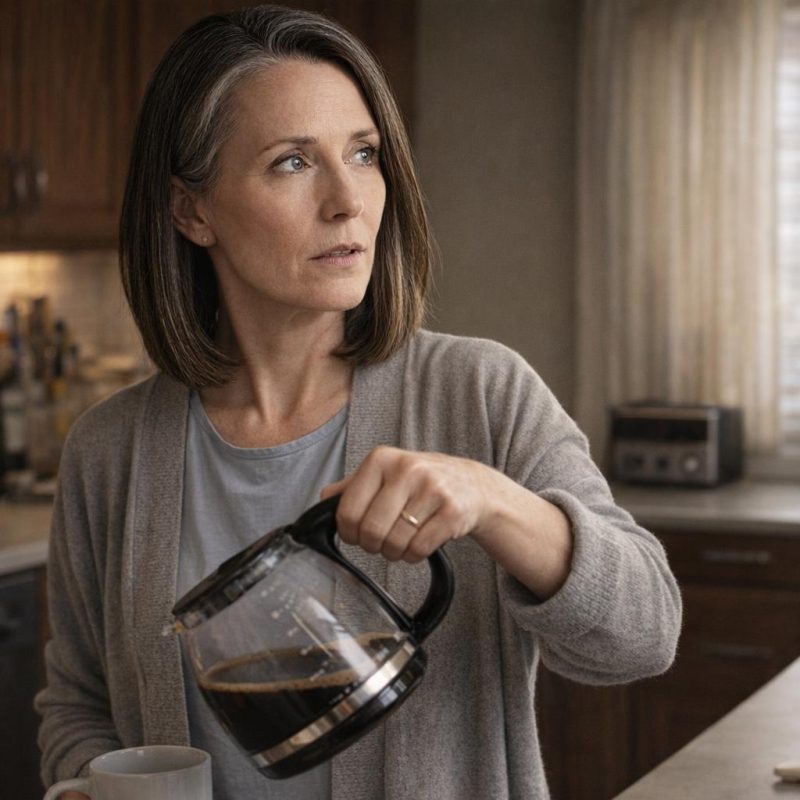 Image by RM AI
The Winner's Call
I nearly dropped the mug. Cheryl had warned me it might happen, but hearing it out loud — my actual name, on actual radio — was something else entirely. Rick Dalton's voice was exactly what you'd expect from a man who had been doing morning radio for twenty years: warm, confident, the kind of voice that made you feel like he was talking directly to you and only you. He said my name like he already knew me, like I was someone worth knowing, and I won't pretend that didn't feel good. He announced the makeover, the dinner, the whole package, and the studio audience responded with genuine noise — clapping, a few whoops. Cheryl called before Rick had even finished the segment, already crying a little, which made me cry a little, which I told her I absolutely was not doing. I called my sister. I texted the group chat. For the first time in longer than I could easily remember, I had something to tell people that wasn't a variation of I'm doing okay. The applause from the studio audience was still playing in my head when I finally sat down, and for a moment it felt like something I hadn't felt in a long time — like I mattered.
 Image by RM AI
The First Jokes
Rick called me again a few days later, live on air, to start talking through the makeover details. That's when the jokes started. He asked, with a laugh already built into his voice, whether I owned anything that wasn't from 1998. I laughed. What else do you do? He asked if I remembered dating before cell phones, before apps, before people swiped right on each other like they were choosing a Netflix show. I laughed at that too. His delivery was good — I'll give him that. Everything landed with the easy timing of someone who had been doing this for years, and the studio audience responded right on cue. I told myself it was just radio banter. I told myself this was how these segments worked, that you signed up for a little gentle ribbing when you agreed to be the contestant. I even made a joke back about my wardrobe, which Rick seemed delighted by. But somewhere underneath the laughing along, there was a small, quiet thing I couldn't quite name. Not offense exactly. More like the feeling of being the only one in the room who doesn't fully understand the joke. The laughter from callers in the background filled the silence, warm and easy, and I let it carry me along.
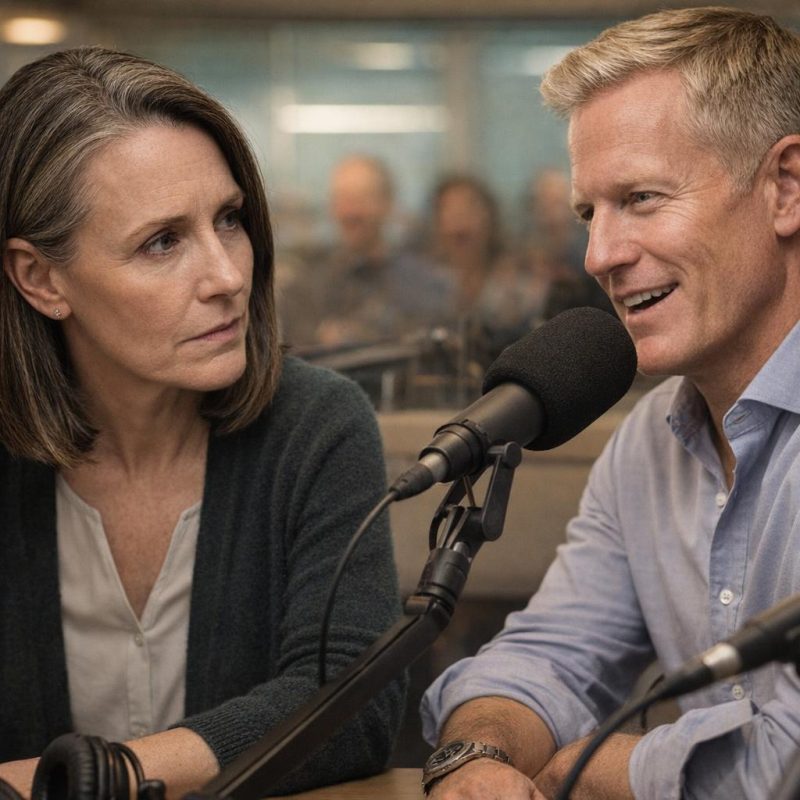 Image by RM AI
Telling Myself It's Harmless
Over the next few days, I kept telling myself the same thing: be a good sport. That was the deal, wasn't it? You enter a radio contest, you accept that the DJ is going to have some fun with it. Rick kept the jokes coming — my age, my wardrobe, my apparent inability to navigate modern dating — and I kept laughing along when friends played me clips, because the alternative was admitting that something about it bothered me, and I didn't want to be that person. The woman who couldn't take a joke. The contestant who made things awkward. I had spent enough of my life trying not to make things awkward. I reminded myself that radio personalities exaggerate everything for effect, that the whole point was entertainment, that none of this was personal. And mostly I believed it. Mostly. There was one moment that gave me a small pause, though I pushed past it quickly enough. Rick was wrapping up a segment and he said, almost offhand, that the show was going to turn my upcoming date into a real rescue mission. He said it with a laugh, easy and breezy, and the audience went along with it. I told myself it was just a throwaway line.
 Image by RM AI
The Jokes Turn Crueler
By the end of that first week, I had stopped tuning in voluntarily. I told myself it was just that I was busy, that I had other things to do in the mornings, that I didn't need to listen to every segment. But the truth was that something had shifted in the way Rick's jokes landed, and I couldn't quite explain it. The material was roughly the same — my age, my divorce, my apparent need for a complete overhaul before any man would consider spending an evening with me. But the edge on it had gotten sharper somehow. Less like someone teasing a friend and more like something I didn't have a clean word for yet. Friends were still sending me clips, still laughing, still saying things like you're such a good sport about this. And I was smiling back and saying the right things. But I had started to feel less like a contestant and more like a punchline, and the difference between those two things was beginning to matter to me in a way I hadn't expected. I told myself I was being too sensitive. I told myself this was what I had signed up for. But the discomfort had settled somewhere in my chest, quiet and stubborn, and it wasn't moving.
 Image by RM AI
Listener Suggestions
I found out about the listener call-in segment secondhand, the way I was finding out about most things by then — through clips my friends sent with little laughing emojis, not quite reading the room. Rick had opened the phone lines and invited listeners to call in with suggestions for my makeover. What I should wear. What I should do with my hair. What treatments might help me look, as Rick put it, a little more current. The calls kept coming, apparently. Friends sent me three separate clips over the course of one morning, each one a different stranger weighing in on my appearance with the casual confidence of someone who had been asked their opinion and was happy to give it. I sat at my kitchen table and listened to all three. I didn't laugh. I kept waiting for the moment where Rick would redirect, where he'd say something that pulled the segment back toward warmth, but it didn't come in any of the clips I heard. He just kept the calls rolling, kept the energy up, kept the audience engaged. I was starting to wonder whether agreeing to this had been a serious mistake. Then one of the clips cut to a caller suggesting the station throw in a gift basket of anti-aging cream as a prize add-on.
 Image by RM AI
The Rescue Mission
Rescue mission. I heard it again on Monday. Then Wednesday. Then twice on Thursday, once in a clip a coworker forwarded without any message attached, which somehow made it worse. Each time Rick said it, the audience laughed, and each time the laugh felt a little more comfortable, a little more settled, like the phrase had found its home in the bit and wasn't going anywhere. I started keeping a rough count in my head without meaning to. By Thursday evening I was fairly certain I had heard it five times in three days. I had drafted a message to the station twice and deleted it both times, because I didn't know what I would even say. That a joke bothered me? That a radio DJ had called my situation a rescue mission and I didn't find it funny? I could already hear how that would sound. I kept turning it over — whether I had misunderstood what the contest was supposed to be, whether I had walked into something I hadn't read carefully enough, whether the problem was the show or whether the problem was me. And then Thursday night, a friend sent one more clip, and I sat there listening to Rick say rescue mission for the fifth time in three days.
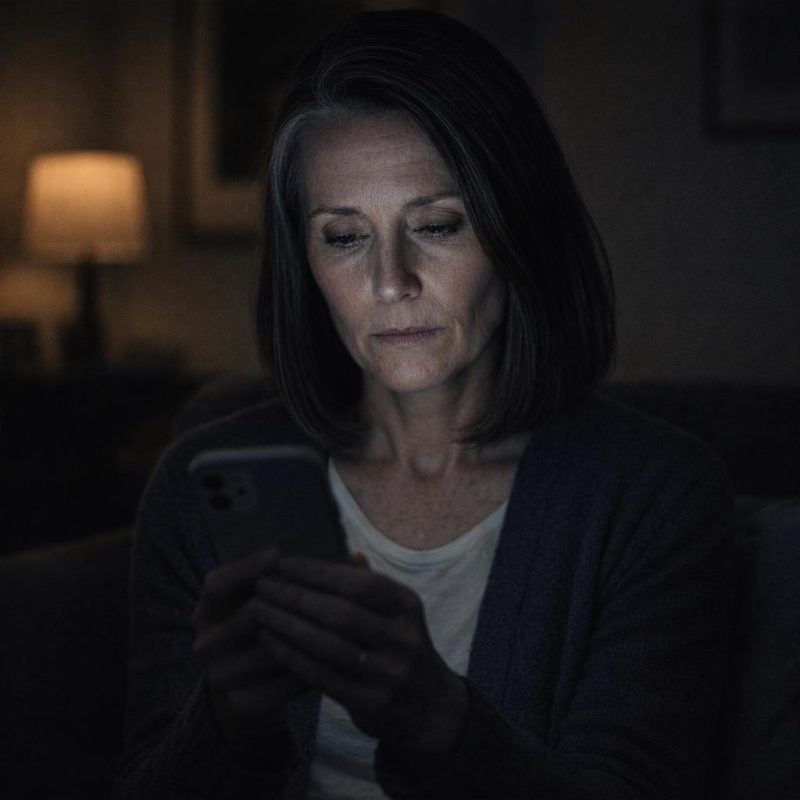 Image by RM AI
Avoiding the Radio
I stopped turning on the radio entirely. That was my solution — just don't listen. I unplugged the little kitchen radio I'd had for fifteen years and put it in the hall closet behind the extra blankets. Problem solved, I told myself. Except it wasn't, because the radio wasn't the problem. The problem was everyone I knew. My neighbor forwarded a clip on Tuesday with a string of laughing emojis, which I think she meant kindly. A woman from my book club sent one with a note saying she thought I was a good sport. My cousin in Dayton texted me a link with no message at all, just the link, which I stared at for a full minute before deleting without opening. I had started to feel like I was standing in the middle of a room where every door led back to the same place. I couldn't outrun something that kept arriving in my pocket. While we were still on the phone, my screen lit up — a text from her, a link to that morning's segment.
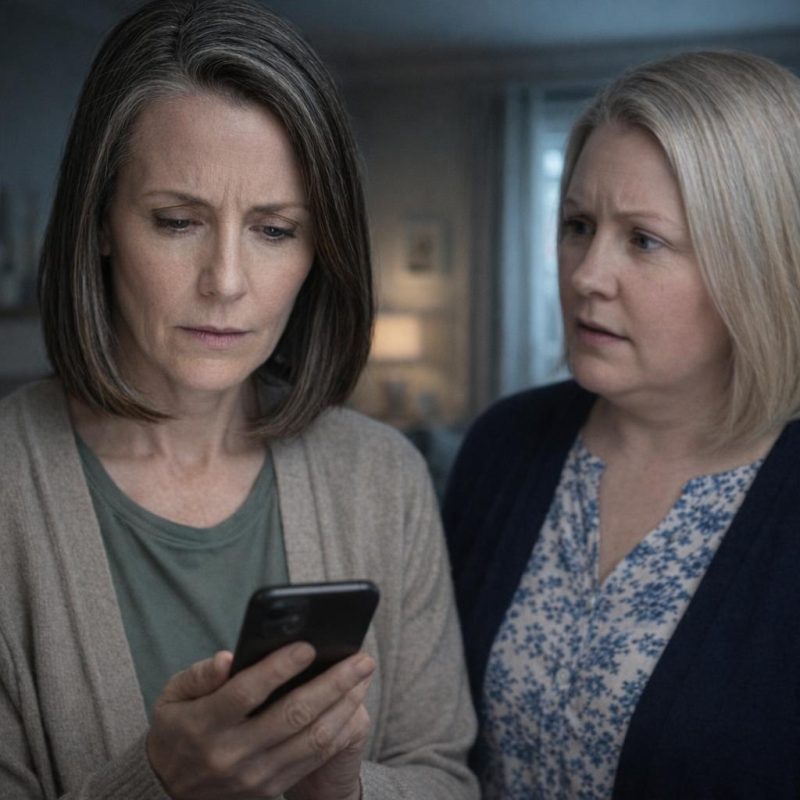 Image by RM AI
Recognized at the Grocery Store
I was in the cereal aisle, trying to decide between two boxes I didn't particularly want, when a woman stopped her cart next to mine and looked at me with that particular expression people get when they're about seventy percent sure they recognize someone. I smiled the way you do when you're hoping the moment will pass. It didn't. She asked if I was the woman from Rick's contest, the one who won the date. Her voice was friendly, genuinely warm, and I could tell she wasn't trying to be unkind. She said she'd heard me on the radio and thought I sounded lovely. I thanked her. I said yes, that was me. I had thought the humiliation was contained to the radio, to the people who happened to be listening at the right moment. Standing in that cereal aisle, I understood it had traveled further than I'd accounted for. The box of cereal sat heavy in my hands, and I just stood there.
 Image by RM AI
The Second Prize
I wasn't even trying to listen. I was driving back from the pharmacy, and I must have bumped the radio dial getting my seatbelt on, because suddenly Rick's voice was filling the car. I reached for the dial immediately, but not fast enough. He was asking his listeners — cheerfully, the way he asked everything — whether the bachelor deserved some kind of second prize for agreeing to take me out. He called it hazard pay. The audience laughed. A caller laughed. Rick laughed at his own joke the way he always did, that rolling laugh that filled the car like it owned the space. I pulled into a parking lot off the main road and sat there with the engine running. My hands were on the wheel and I wasn't going anywhere. I had been embarrassed before, plenty of times in my life, but this felt different — it felt public in a way that embarrassment usually isn't, spread out across the whole city like something spilled. I turned the radio off. The quiet that followed was the first real quiet I'd had in days, and I sat in it for a long time.
 Image by RM AI
Calling to Withdraw
I called the station from my car, still parked in that lot. I had the number pulled up on my phone from a week ago when I'd thought about calling and hadn't. This time I pressed it. A woman answered on the third ring, pleasant and professional, and I told her I was withdrawing from the contest. I gave her my name. She said she'd make a note of it. She didn't ask why. She didn't try to talk me out of it or transfer me to someone else. She just said she'd pass it along and thanked me for calling, and that was it. The whole thing took maybe four minutes. I sat there afterward feeling something I hadn't expected — not triumph exactly, but a loosening, like a knot I'd been carrying in my shoulders had finally let go. I drove home, made tea, and sat at my kitchen table thinking that I had done the right thing and that it was over. I was still sitting there, both hands around the mug, when my phone rang with a number I didn't recognize.
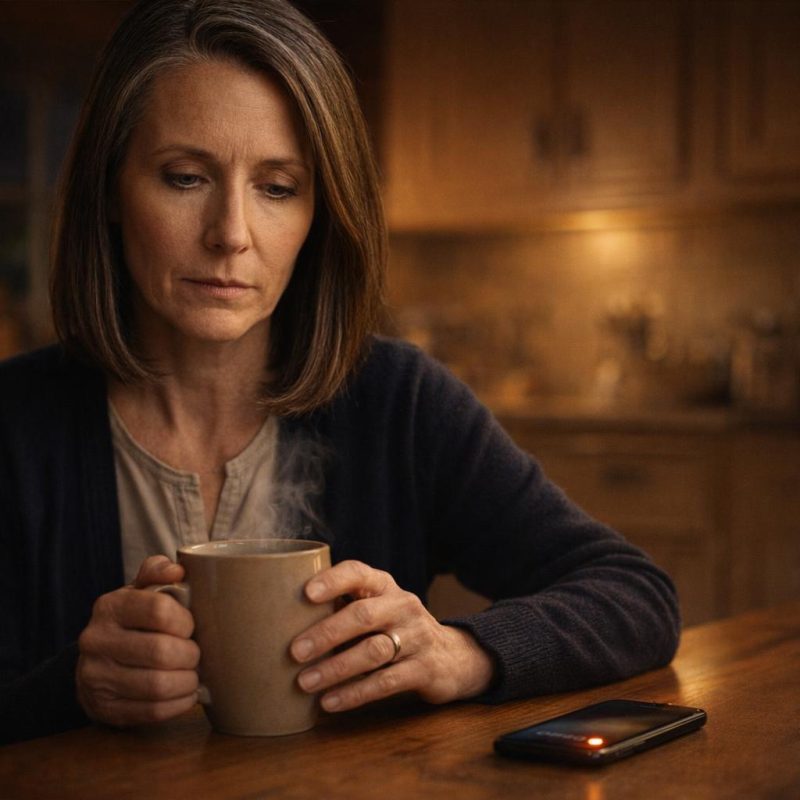 Image by RM AI
Paula's Call
I almost didn't answer. I let it ring twice, told myself it was probably a spam call, and then picked up anyway. The woman on the other end introduced herself as Paula. She said she was the producer on Rick's show and that she'd heard I had called to withdraw. Her voice was measured, careful in a way that made me pay attention — not cold, but deliberate, like someone choosing each word before setting it down. I said yes, I had withdrawn, and I asked how she'd gotten my number. She said the station had it on file from my contest entry. Then she said something that stopped me: she asked me not to quit yet. Not don't quit, not please reconsider — she said not yet, which felt like a different thing entirely. I asked her why. I didn't say yes right away. I stood in my kitchen holding the phone, trying to get a read on her. She waited without pushing, and that patience was what got me. There was something in her voice I couldn't quite name, something that felt like it had been carried a long time.
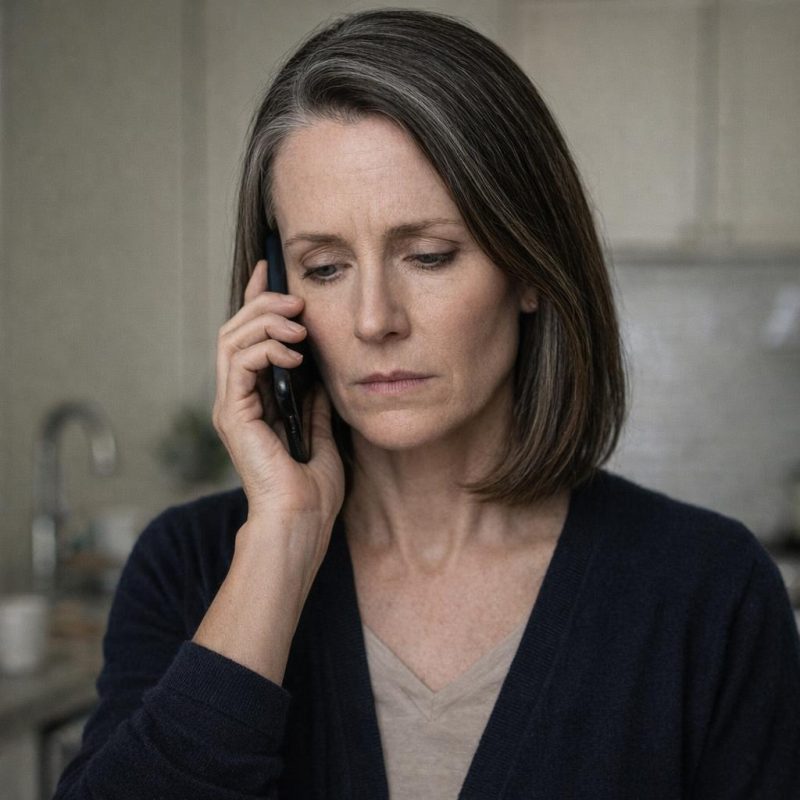 Image by RM AI
Rick Has Done This Before
We met at a coffee shop two days later, a quiet one on the east side that Paula had suggested. She was already there when I arrived, sitting with her hands around a cup she hadn't touched much. She looked like someone who had thought carefully about what she was going to say and in what order. She started by telling me that Rick had done this before — not once, not twice, but across multiple contests over nearly a decade. She said there was a pattern to it, that certain women tended to end up in the same position I was in, and that it wasn't coincidence. She didn't use the word targeted. She said selected, which somehow felt worse. I asked her how she knew all of this, and she said she'd been paying attention for a long time and had been keeping notes. She didn't elaborate on that yet, and I didn't push. The coffee between my hands had gone lukewarm, and I didn't notice until I finally reached for it.
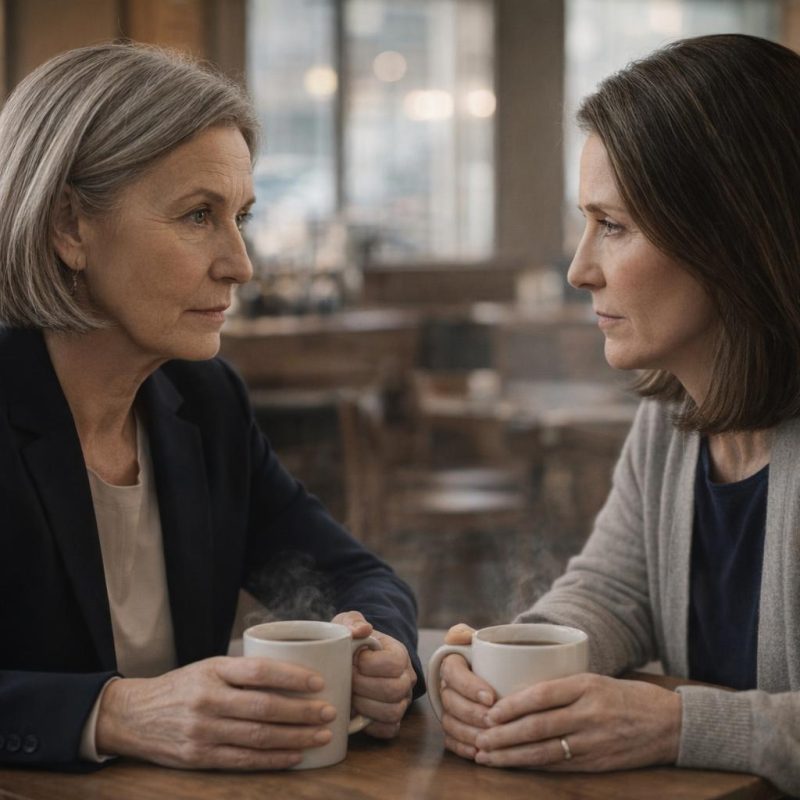 Image by RM AI
The Contest's Real Purpose
Paula wrapped both hands around her cup and explained how the contest worked — not the version that got advertised, the uplifting one about second chances and fun, but the version that actually ran. She said Rick had a type he looked for when he went through entries. Not a romantic type. A type that would generate a particular kind of listener response. She said the contest performed best, ratings-wise, when the audience felt a certain way about the contestant — when there was something they could laugh at without feeling too guilty about it. Management had received complaints before, she said, more than once, but the show's numbers were strong enough that the complaints hadn't gone anywhere. I asked her what she meant by a type, and she was quiet for a moment, like she was deciding how plainly to say it. Then the words came out flat and clear: older women, divorced women, nervous women.
 Image by RM AI
Rick's History
Paula described some of the previous contestants in broad strokes — she didn't use names, just details. A woman in her mid-fifties who had cried in the parking lot after a broadcast and never came back. Another who had called the station three times trying to reach someone who would listen. She said there had been at least four or five women over the years who had left the experience feeling genuinely humiliated, not just embarrassed the way you might expect from a radio contest, but something deeper and harder to shake. Then she told me about one woman who had actually filed a formal complaint with management. She said that woman had been brave about it, had put it in writing, had asked for a response. I asked what happened. Paula set her cup down and said that the morning after the complaint was filed, Rick went on air and spent ten minutes describing an unnamed contest participant who couldn't take a joke and wanted everyone to feel sorry for her. Management sent the woman a form letter. No action was taken against Rick.
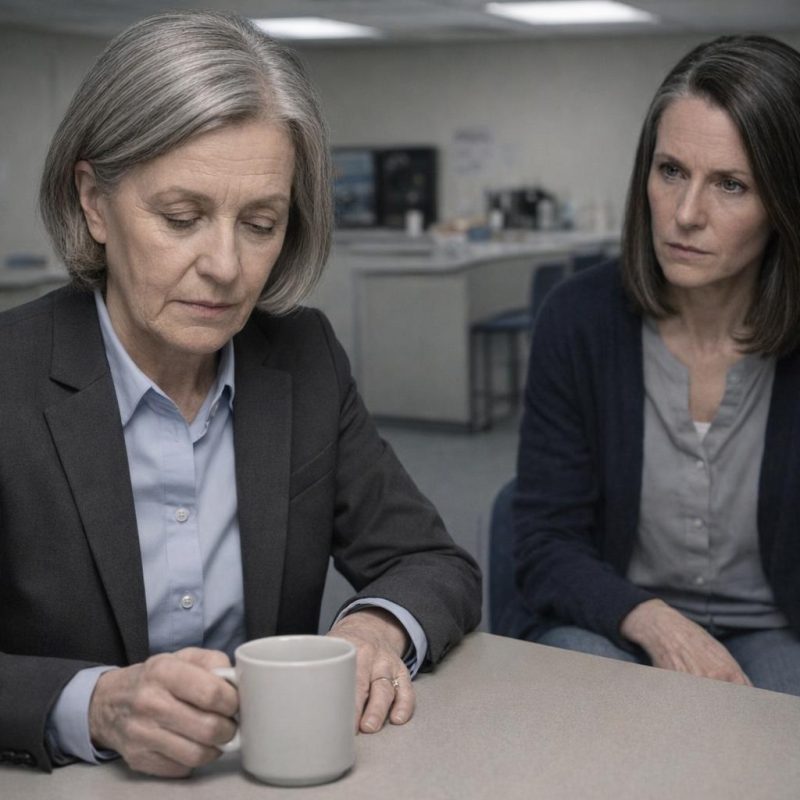 Image by RM AI
Paula's Objections
I asked Paula how long this had been going on, and she didn't hesitate. Years, she said. She'd raised concerns with management more than once — not casually, not in passing, but formally, in writing, with specific examples. Each time, she said, the response was some version of the same thing: Rick's show was the station's top earner, his numbers were strong, and his audience loved him. She told me that one executive had actually said, word for word, that Rick was the golden goose and nobody was going to start pulling feathers. I sat with that for a second. A golden goose. That's what they called it when a man spent years making women feel small on live radio. Paula said she'd learned pretty quickly that going through official channels wasn't going to work, that the math was simple — ratings protected him in ways that policies never would. She said it quietly, without bitterness, like someone who had already done all her grieving about it. Then she told me she hadn't stopped there. She said she'd been saving recordings.
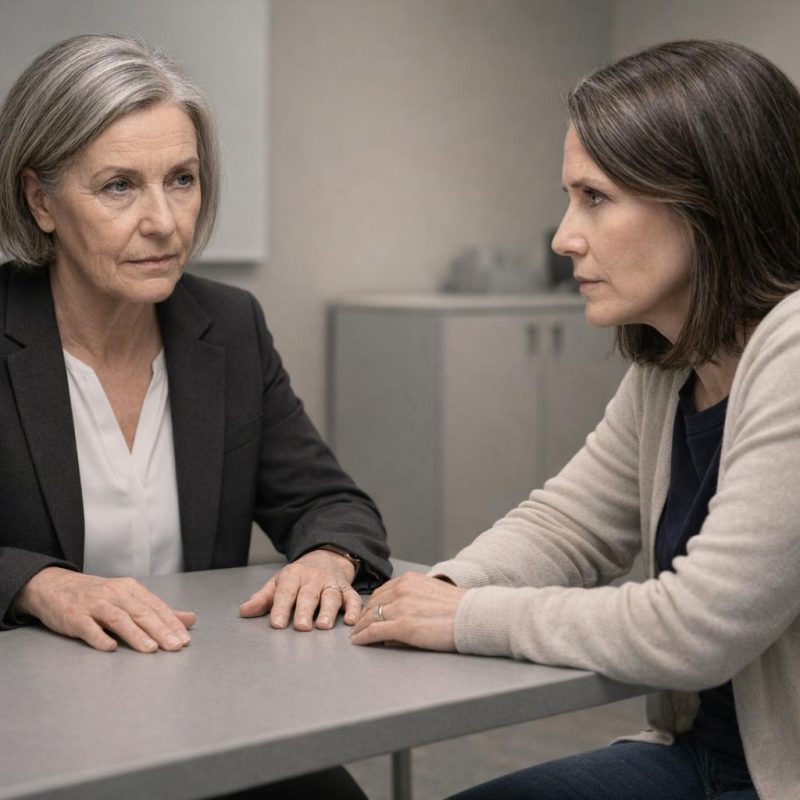 Image by RM AI
The Offer to Listen
I didn't say anything right away. Paula let the silence sit, which I appreciated, because I needed a moment to catch up with what she'd just told me. Recordings. Plural. She said she had them on a drive she kept at home, not at the station, and that some of them went back several years. She offered to play one for me — just one, she said, to give me a sense of what she had. I asked her what was on it, and she said it was Rick, during a commercial break, talking about a contestant. She said the microphone in the booth picked up more than people realized. I felt my hands go cold. Part of me wanted to say no, that I'd heard enough, that I already believed her and didn't need proof. But another part of me knew that wasn't true. I needed to hear it. I told her yes. Paula reached into her bag and pulled out her phone, and I folded my hands in my lap and waited, the room around us going very still.
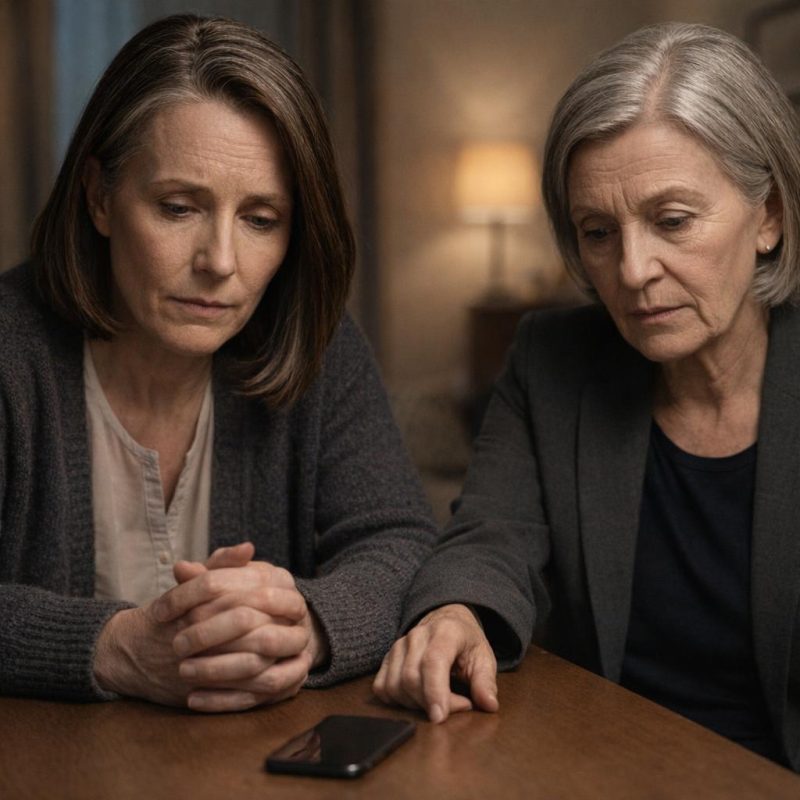 Image by RM AI
Perfect for Radio
The recording was short — maybe forty seconds. There was the muffled sound of a commercial playing in the background, and then Rick's voice came through, loose and easy, like he was chatting with a buddy at a bar. He said something about the photo submission, about how they'd picked a good one this week. Then he said it. He said my photo was perfect for radio. There was a beat of silence, and then someone else in the booth laughed — a real laugh, not polite, not restrained, the kind that meant he'd heard it before and still found it funny. Paula stopped the recording. I didn't move. I kept my eyes on the table in front of me and tried to breathe normally, which was harder than it sounds. I'd known, on some level, that something like this was possible. But hearing his actual voice say it, hearing the ease of it, the comfort of it, like it cost him absolutely nothing — that was different. The other person's laughter sat in the air between Paula and me long after the recording ended.
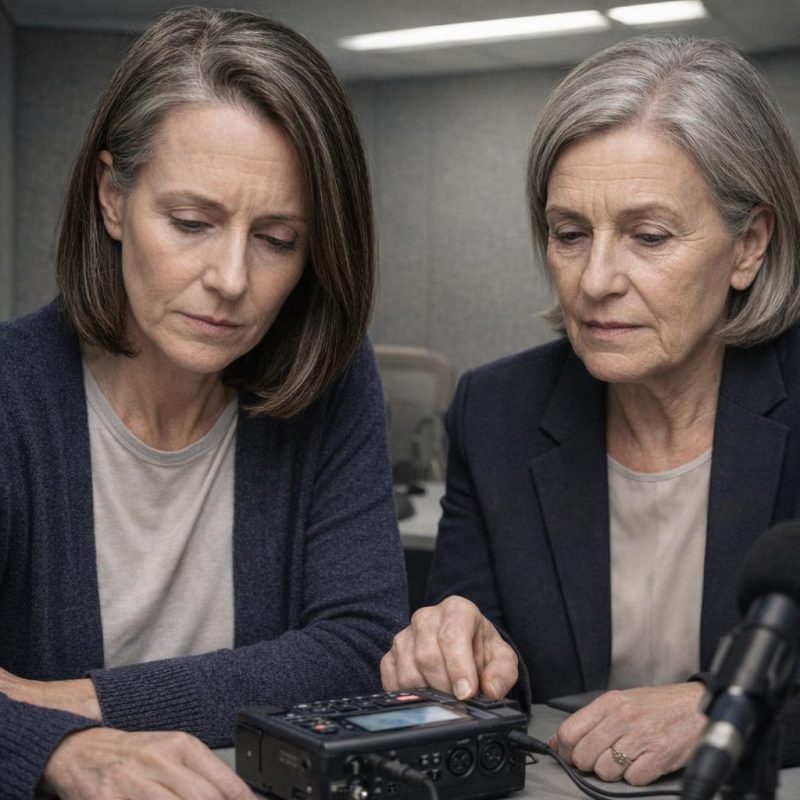 Image by RM AI
An Entire Week of Material
Paula didn't put the phone away. She said there was a little more, and asked if I wanted to hear it. I said yes before I'd fully thought it through. The recording picked back up where it had left off, Rick still talking in that same loose, entertained tone. He said the contest was good content, that they could stretch it. Then he said they could probably get a whole week of material out of watching an older woman convince herself she was Cinderella. I heard the words clearly. Older woman. Cinderella. He said it the way you'd say something obvious, something that didn't even need explaining, like the joke was so self-evident it barely qualified as a joke. Paula stopped the recording again. I sat very still. My hands were in my lap and I was aware of them in a way I usually wasn't, aware of how tightly I was holding them together. I wasn't embarrassed anymore. Whatever embarrassment I'd been carrying since the broadcast had burned off completely. What was left underneath it felt quieter and harder and a lot more useful.
 Image by RM AI
What Paula Said Was Mild
Paula set her phone on the table between us and looked at me carefully, like she was checking to see how I was holding up. I told her I was fine, which wasn't entirely true, but I was functional, and that felt like enough. Then she said something that stopped me cold. She said what I'd just heard was actually on the milder end. She said the recordings from a few years back were worse — that the comments were more specific, more personal, and that the laughter in the booth was louder. I felt my stomach drop in a way that had nothing to do with me anymore. I thought about the woman who had called the station three times and gotten nowhere. I thought about the one who had cried in the parking lot. I wanted to tell Paula to release everything right then — post it, send it to a journalist, do whatever it took to make sure people heard it. Paula seemed to read that on my face, because she shook her head slowly before I even finished the thought. She said releasing it now, the way I was imagining, probably wouldn't be enough. Then she said the older recordings went back further than I'd thought.
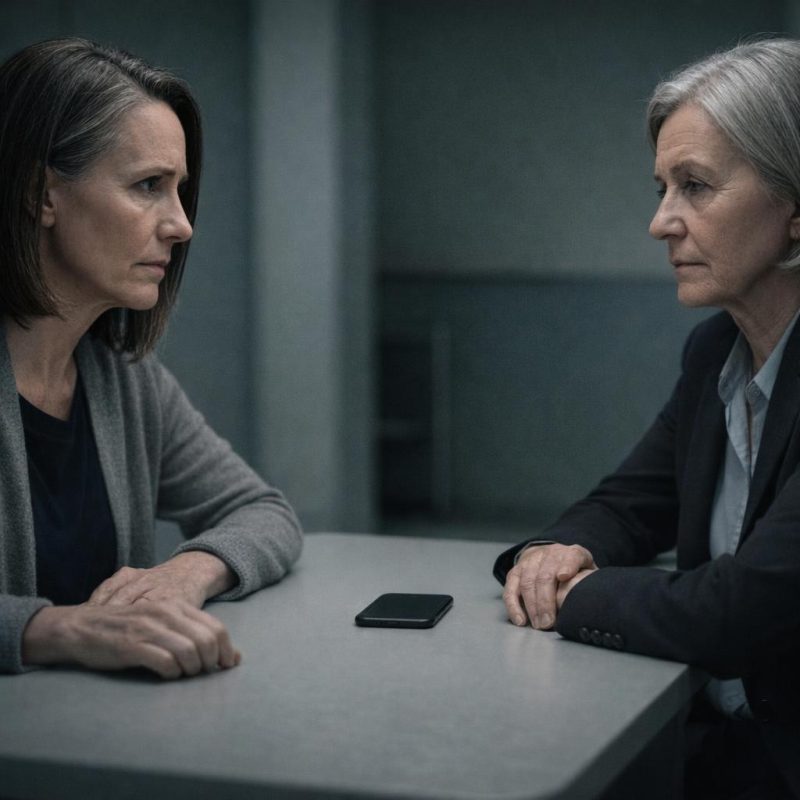 Image by RM AI
The Problem with Isolated Examples
I asked her why releasing them wouldn't be enough, because it seemed obvious to me that Rick's own voice saying those things would be damning on its own. Paula nodded like she'd expected the question. She said the station's lawyers would call them isolated incidents. She said they'd point to Rick's long career, his charitable appearances, his listener mail, and they'd frame the recordings as a crude entertainer having a bad moment off-mic — regrettable, maybe, but not a pattern, not a policy. She said management had already survived one formal complaint by doing exactly that. I thought about the form letter. I thought about how tidy that response had been, how efficiently it had closed the door. Paula said that what the recordings showed was a man being casually awful in private. What they needed to show was something more than that. She said isolated examples of bad behavior were easy to absorb and move past. I sat with that for a while, turning it over. The recordings felt like so much, and yet I was beginning to understand that feeling like a lot and being enough were two very different things.
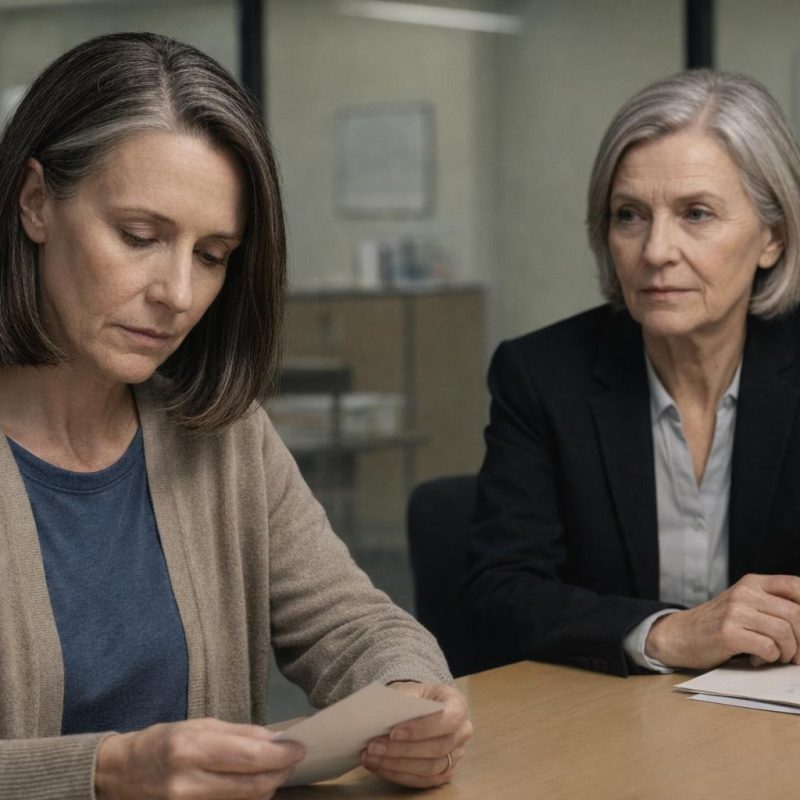 Image by RM AI
Proof of Production
I asked Paula what kind of proof would actually work, and she took her time answering. She said the difference between a crude entertainer and a systemic problem came down to one word: production. She said if Rick was just being awful on his own, off the cuff, that was one thing. But if the humiliation was built into how the contests were put together — if it was part of the structure, the selection process, the way segments were planned and timed — then it wasn't a personality flaw. It was a product. She said that kind of evidence would be harder for the station to dismiss, harder for lawyers to reframe as a bad day. I asked what that evidence would look like, and she said it would look like paperwork. Planning documents. Segment outlines. Notes about contestant selection. Things that showed the mockery wasn't spontaneous. I sat back in my chair and looked at her. She'd been thinking about this for a long time — I could feel the shape of it, how carefully she'd mapped it out. She said the word again, quietly, almost to herself. Produced.
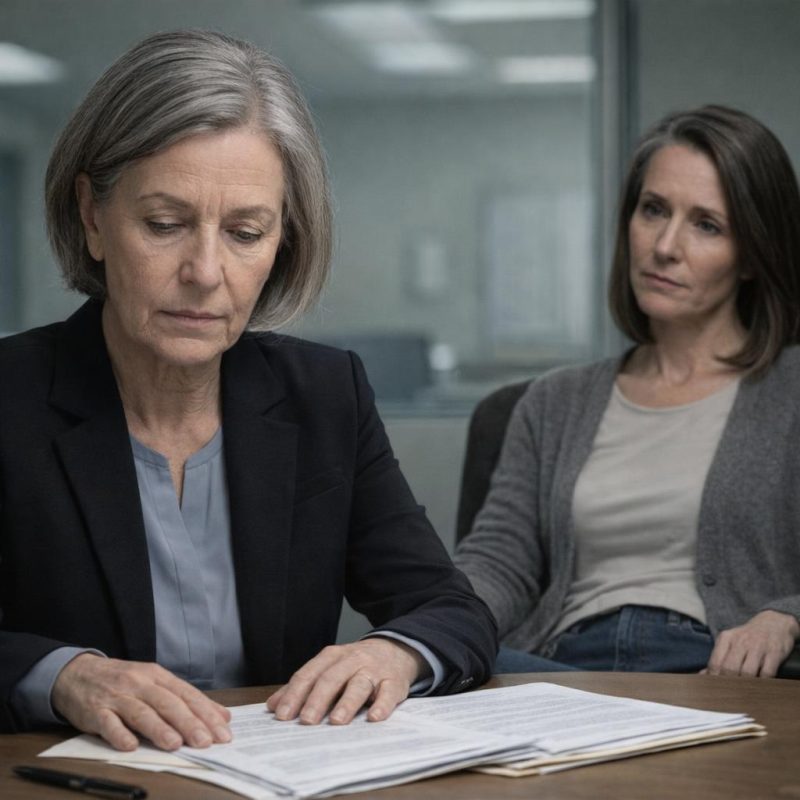 Image by RM AI
Agreeing to Stay
Paula didn't push me. She laid out what she'd told me, and then she went quiet and let me sit with it. I thought about walking away — I won't pretend I didn't. I thought about how easy it would be to say this wasn't my fight, that I'd already been humiliated once and I didn't owe anyone a second round. I thought about the woman who had filed the complaint and gotten a form letter. I thought about the one who had cried in the parking lot and never come back. I thought about how many more there might be, women I'd never know about, who had gone home and quietly decided they were the problem. Paula said she would do everything she could to protect me, that she wasn't asking me to do anything reckless. She said it was my choice, completely. I told her I'd stay in the contest. I'd keep showing up, keep playing along, and I'd help her get what she needed. Paula let out a slow breath and thanked me. And then neither of us said anything for a while, and the quiet that settled over the table felt like the beginning of something I couldn't yet name.
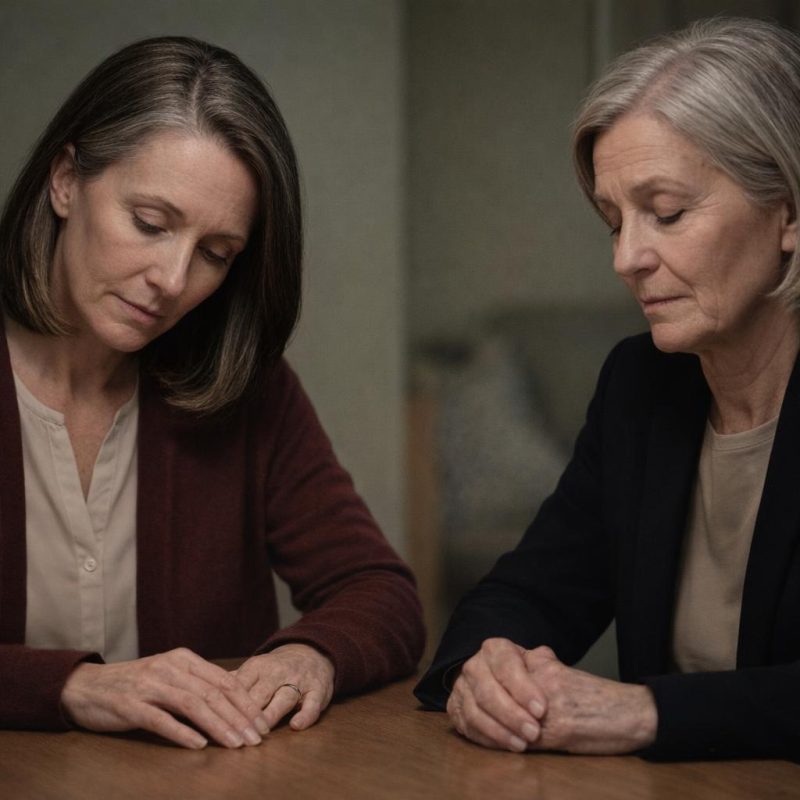 Image by RM AI
Rick's Announcement
I heard it on the drive home, which I hadn't planned. I'd turned the radio on out of habit, the way you do when the silence in the car gets too heavy, and there was Rick's voice filling the space before I could reach for the dial. He was doing his afternoon segment, all smooth transitions and practiced warmth, and then he said my name. He told his listeners that I had decided to continue with the contest. That I had, in his words, found my courage again. He said it like he was proud of me. Like he was a coach watching a nervous kid finally step up to the plate. There was a little pause after, the kind that's designed to land, and I could hear the smile in it. I sat at a red light with both hands on the wheel and my jaw tight, telling myself this was exactly why I'd agreed to stay. That this was the point. That I needed to hear it this way to remember what I was doing and why. The light turned green. I didn't move for a second. Then his voice came back through the speakers, warm and satisfied: she'd found her courage.
 Image by RM AI
Enduring the Mockery
The days between that broadcast and the makeover felt longer than they had any right to. Rick kept going. That was the thing I hadn't fully prepared for — not one bad moment, but a steady drip of them. He'd work me into the segment like a recurring bit, a little callback his regular listeners were apparently enjoying. The divorced woman who almost quit. The one who found her nerve. I forced myself to listen to a few of them, sitting at my kitchen table with my coffee going cold, because I thought I needed to know what he was saying. I did need to know. But needing to know and being able to hear it without flinching were two different things. Cheryl called twice to ask if I was sure about all this, and both times I told her I was fine, which was mostly true in the ways that mattered. I kept Paula's name out of it. I kept the whole arrangement out of it. I just said I wanted to see it through, which was also true, even on the mornings when Rick's voice came through the radio and I had to remind myself why I hadn't turned it off. The waiting had a weight to it I hadn't expected.
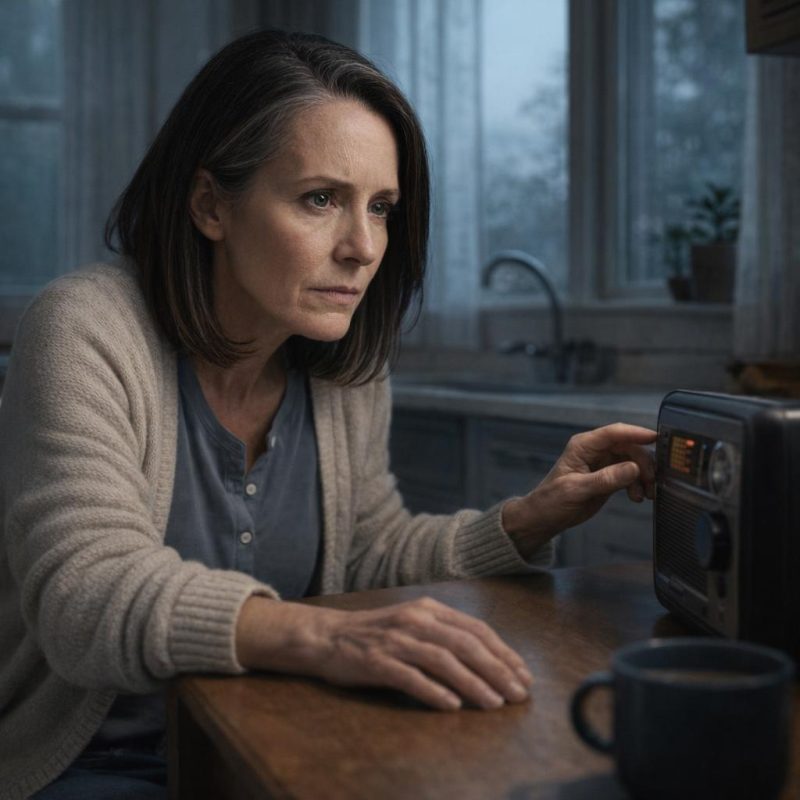 Image by RM AI
The Planning Sheets
Paula found me in the parking lot two days before the makeover, which I don't think was an accident. She'd timed it for when the building would be quiet, when there'd be no reason for anyone to notice us standing by my car. She had a folder tucked under her arm, and she held it close until she was sure we were alone. She said she wanted me to see something before I went in. That she thought it would help me understand what I was walking into. I told her I was listening. She opened the folder on the hood of my car, smoothing the top sheet flat with one hand, and started explaining what I was looking at. Planning sheets, she called them. Standard production documents for the contest segments. She walked me through the columns — suggested material, listener question categories, notes from the application review. She kept her voice low and even, like she'd rehearsed staying calm. I was trying to follow along, nodding, taking it in piece by piece. And then she turned to the second page and slid it toward me, and I looked down at what was written there, and my breath caught somewhere in my chest before I could stop it.
 Image by RM AI
Main Hook and Lonely Angle
I read it twice because I thought I'd misread it the first time. At the top of the column next to my name, in plain typed text, were two labels. The first was beside my age: main hook. The second was beside the line about my divorce: lonely angle. That was it. No softening, no context, no acknowledgment that these were details from a real person's actual life. Just labels. Clinical and tidy, the way you'd tag inventory. Paula stood across from me, quiet, watching. I looked up at her and then back down at the page. I thought about the afternoon I'd filled out that application at Cheryl's kitchen table, laughing about the questions, thinking it was a lark. I'd written about my age because the form asked. I'd mentioned the divorce because it seemed relevant to the whole single-woman-looking-for-a-date premise. I hadn't thought twice about it. I hadn't imagined anyone reading those answers and circling them. My hands had started shaking somewhere between the first read and the second, and I pressed them flat against the paper to make them stop. The page read: age — main hook.
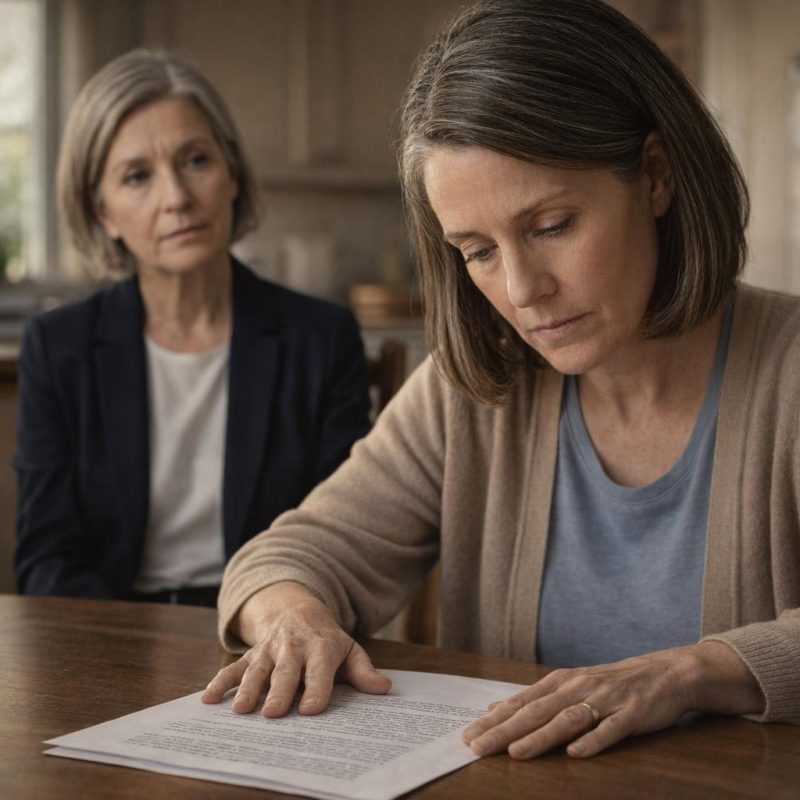 Image by RM AI
The Ranking Document
Paula let me sit with that for a minute before she reached back into the folder. She pulled out a second sheet, older-looking, the paper a little soft at the edges like it had been handled more than once. She set it down beside the first without saying anything right away, just let me look. It was a list of names — women's names, first names only — with numbers running alongside them in columns. The column headers used words like engagement lift and segment peak and audience retention. I didn't recognize any of the names. I scanned down the list slowly, trying to make sense of the numbers, and Paula quietly explained that the figures tracked listener response during each woman's segment. Higher numbers meant more reaction. More calls, more shares, more time spent on the moment. She said she'd held onto this document for a long time. I looked at the names again. Some of the numbers were very high. I thought about what it would have taken to generate a number that high, what kind of moment would have had to happen on air, and my stomach turned over. I kept reading down the column, name after name, number after number, and the list was longer than I'd expected.
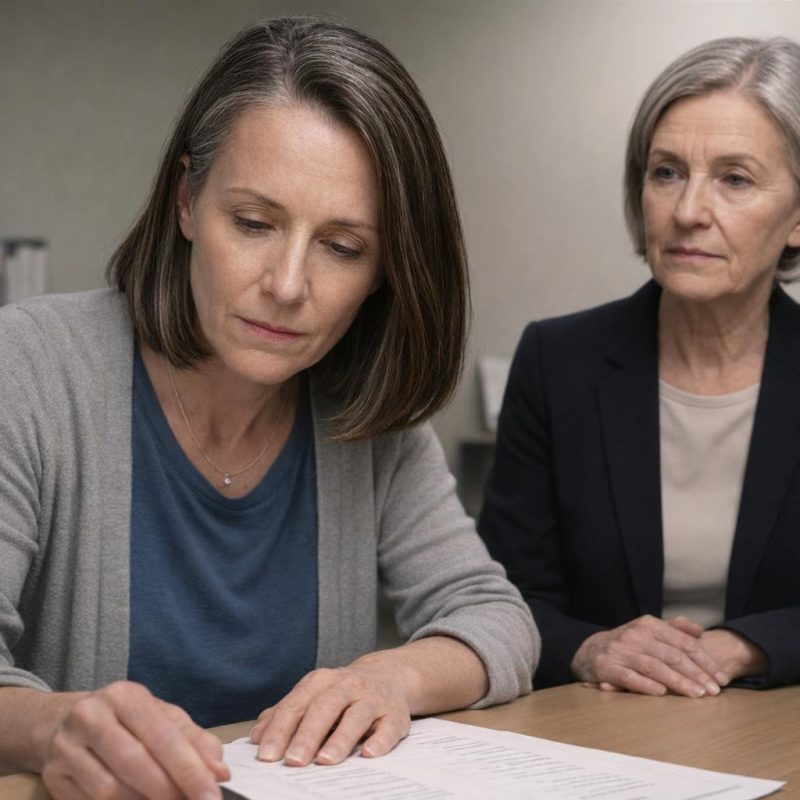 Image by RM AI
I Didn't Win
I stood there in that parking lot looking at those two sheets of paper and something settled in me that I hadn't wanted to let settle. I hadn't won anything. That was the part I kept coming back to. I'd called in on a Tuesday morning feeling spontaneous and a little silly, and I'd thought — I'd genuinely thought — that some combination of luck and timing had landed me a prize. I'd told Cheryl. I'd been pleased about it in that quiet way you let yourself be pleased when something small goes right. But I hadn't been lucky. Someone had read my application and seen a main hook and a lonely angle and decided I was good material. The contest wasn't a contest the way I'd understood the word. It was a selection. And I had been selected because someone behind a desk had looked at my age and my divorce and predicted, correctly, that I would make for an entertaining few minutes of radio. Paula didn't say anything while I worked through it. She just stood there, and the folder sat closed on the hood of my car, and the parking lot was very quiet around us. I held that understanding the way you hold something that's heavier than it looks.
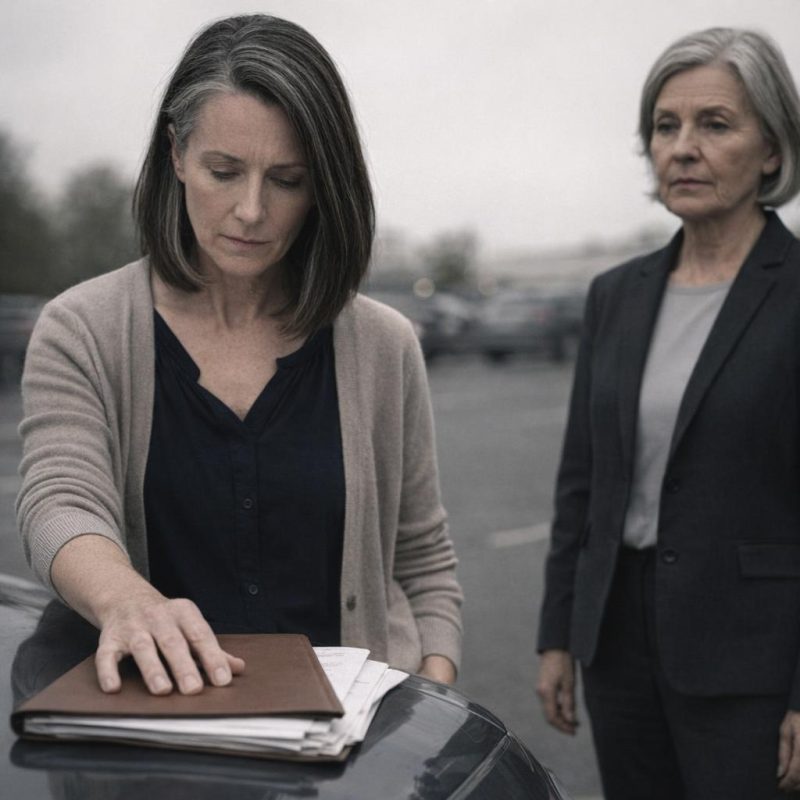 Image by RM AI
Discussing Strategy
After a while, Paula picked up the folder and we got down to the practical part of it. She said the makeover and the dinner were still the best opportunities we had, that they were the moments where the pattern would be most visible and most documentable. She said I should pay attention to anything that felt scripted — questions that seemed too specific, moments that seemed set up rather than spontaneous. She said to trust that instinct if it came. She was careful about how she talked about her own position, choosing her words the way you choose your footing on uneven ground. She needed to stay in place long enough for any of this to matter, she said. If she moved too soon or too visibly, it would fall apart. I told her I understood, and I meant it. I asked what would actually count as useful, what kind of documentation would hold up, and she walked me through it methodically — dates, direct quotes, anything in writing. She said timing was going to be everything. I listened and took it in and tried to match her steadiness, because she had clearly been thinking about this for longer than I had, and there was something in the careful, measured way she laid it all out that told me she wasn't doing this lightly.
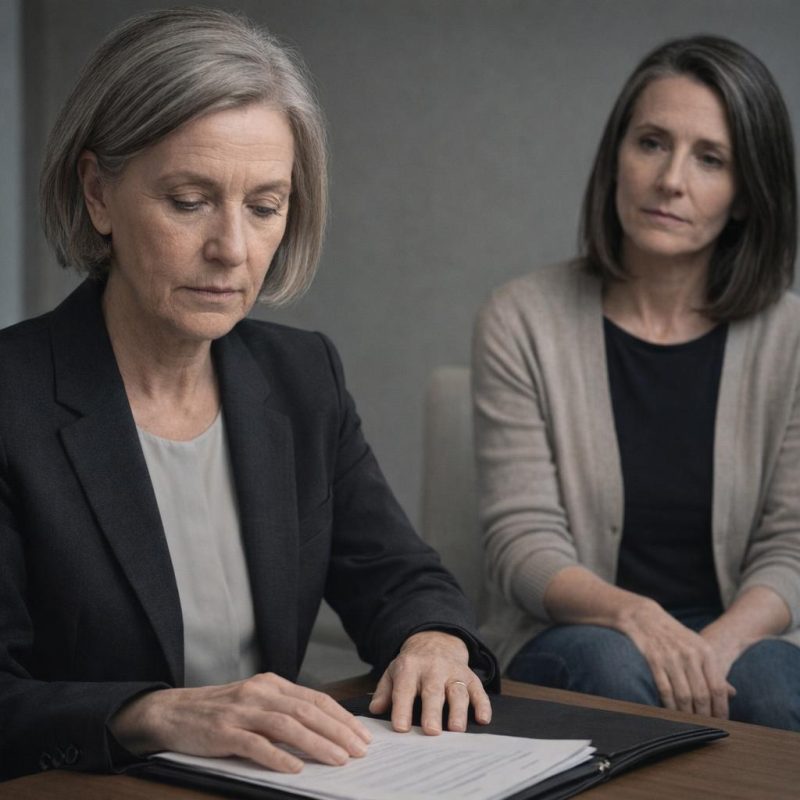 Image by RM AI
Meeting Daniel
The restaurant they'd chosen for the dinner was nicer than I'd expected, which I noted and then immediately felt cynical about, because by that point I was reading everything as a production choice. I'd spent the drive over reminding myself what this was. The bachelor they'd selected was named Daniel, and I'd built up a picture of him in my head over the past week — someone comfortable in front of a camera, someone who'd agreed to this because he liked the attention. I walked in with my shoulders back and my guard up, scanning the room the way you do when you're braced for something. A hostess pointed me toward a table near the window. There was a man sitting there, and when I got close enough that he could see me coming, he stood up. Not a half-rise, not the kind of gesture that's really just shifting in your seat. He stood up fully, the way people used to, and he looked at me directly, and there was nothing performed about it.
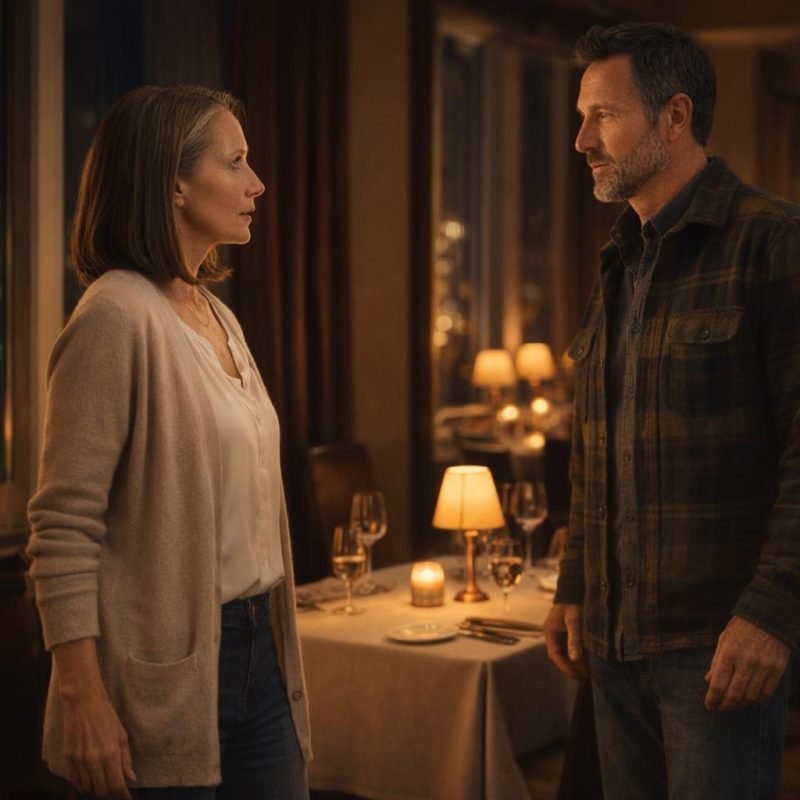 Image by RM AI
Daniel's Understanding
He told me his name was Daniel, that he was sixty-three, and that he'd lost his wife four years ago to a long illness. He owned a landscaping company he'd built from scratch over thirty years, and his hands showed it — calloused and weathered in a way that felt honest. I asked him, carefully, what he'd been told about the contest. He said the station had reached out and described it as a celebration — their words, he said — for people who were starting over after loss or major life change. He'd thought it sounded a little unusual, but the producer he'd spoken with had been warm and convincing, and he figured, why not. He said he'd wanted to do something outside his routine. He wasn't performing any of this. He wasn't watching to see how it landed. He just told me, plainly, the way you tell someone something true. I sat with my water glass and listened, and something in my chest that had been braced since I walked in the door started, very slowly, to ease.
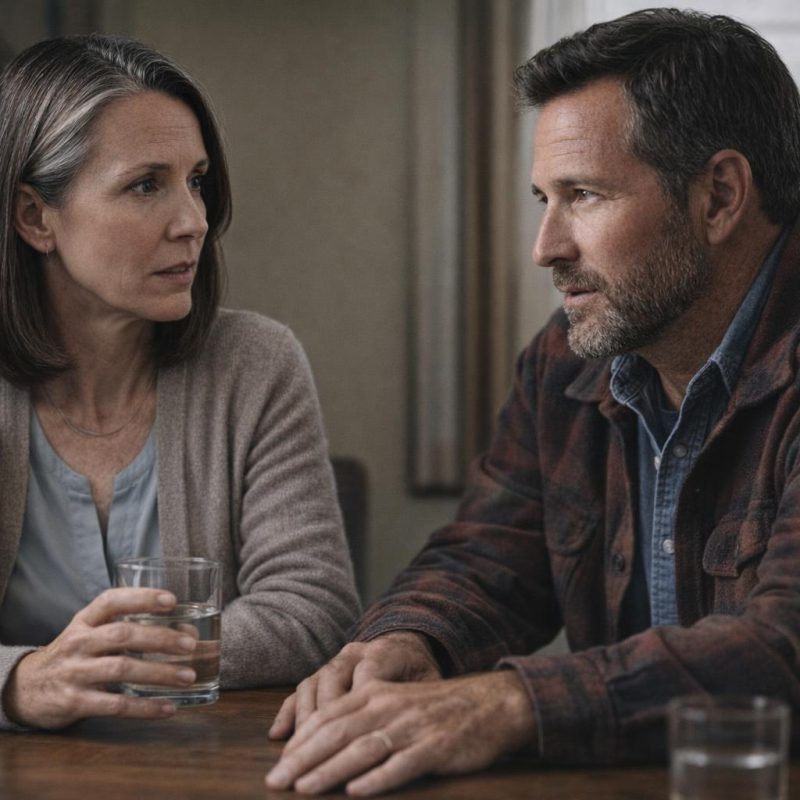 Image by RM AI
Explaining the Truth
I didn't plan to tell him everything. I'd walked in intending to be polite and careful and give nothing away. But he was looking at me like I was a person, and somewhere between the bread basket and the second glass of water, I started talking. I told him about the radio call, about Rick's voice going slick and performative the moment I was on air, about the makeover being announced like a punchline. I told him about the audience laughter and the way Rick had described me — the exact words, because I hadn't been able to forget them. Daniel didn't interrupt. He didn't offer reassurances or try to smooth it over. He just listened, and his expression moved through something I recognized as genuine — confusion first, then a kind of tightening around his eyes. By the time I finished, he'd set down his fork and wasn't touching it. He said, quietly, that he hadn't known any of that. I believed him. The anger that settled across his face wasn't performed — it was the kind that comes from actually caring.
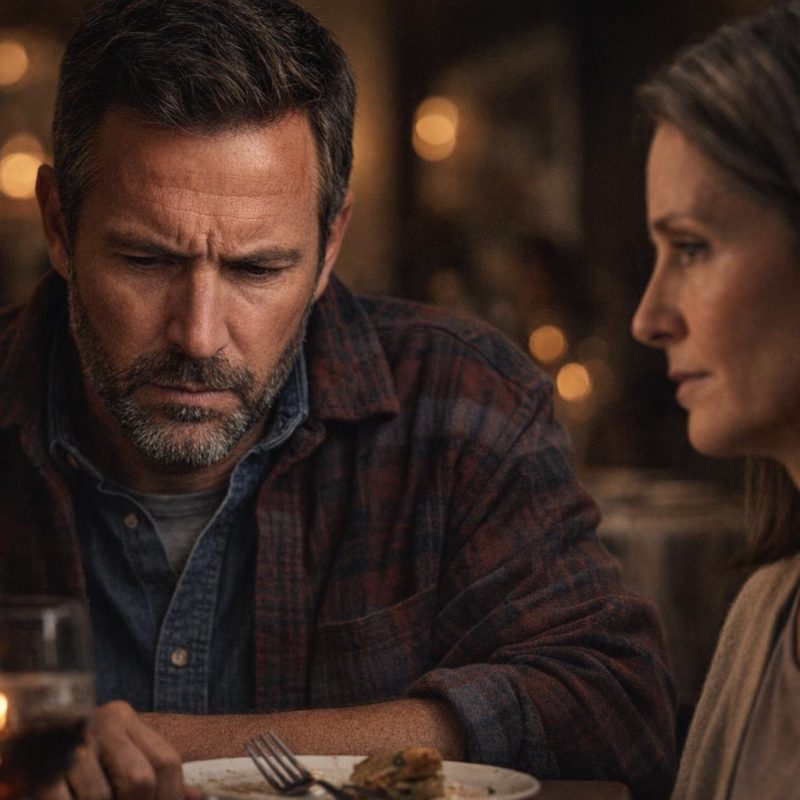 Image by RM AI
Rick's Private Instructions
He was quiet for a moment after I finished, and then he said there was something he needed to tell me. He'd gotten a call from Rick two days before our dinner. He described it as friendly, casual — Rick checking in, he'd thought at first. But then Rick had suggested that Daniel make a few jokes during the evening. Age-related, he said, with a kind of lightness that made it sound like nothing. Daniel had laughed it off uncomfortably and changed the subject. I asked him what else Rick had said. Daniel looked at me steadily across the table. He said Rick had mentioned, almost as an aside, that it wasn't a big deal, that the conversation would be picked up anyway — that there were hidden microphones.
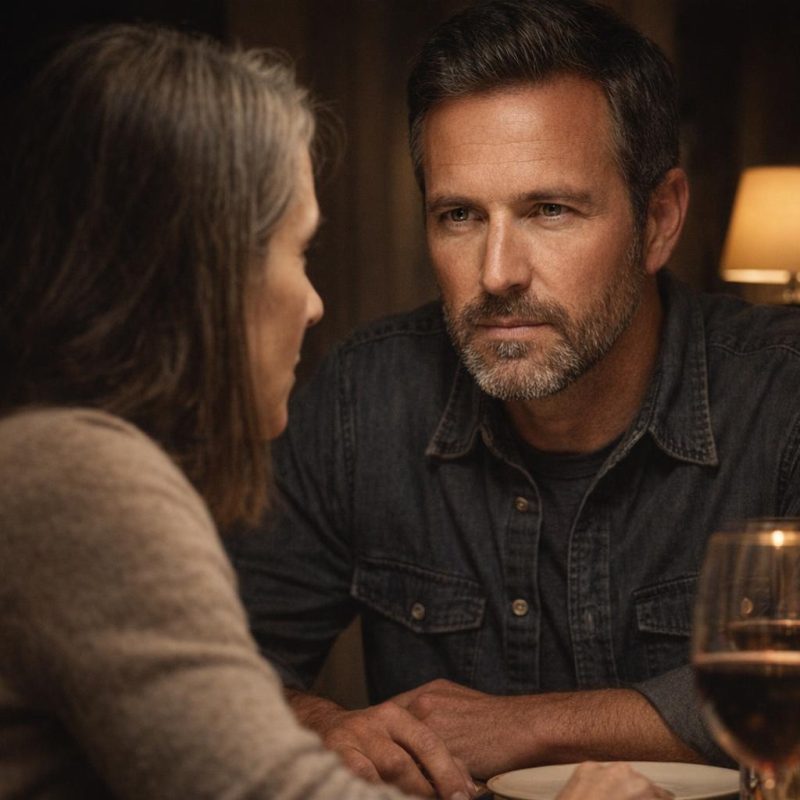 Image by RM AI
Pretending Disappointment
I set my glass down. Daniel kept going, because there was more. Rick had given him a specific suggestion for the moment he first saw me after the makeover — the reveal, Rick had called it. He'd told Daniel to let his expression fall just slightly. Not dramatically, Rick had apparently said, just enough to register. A small, visible disappointment. Daniel said he'd assumed at the time it was some kind of crude producer humor, the sort of thing you brush off and ignore. He'd had no intention of doing it. But sitting across from me now, telling me about it, he looked like he was still processing what it actually meant. I was too. The instruction Daniel had been given was to look at me and let his face show that I wasn't what he'd hoped for.
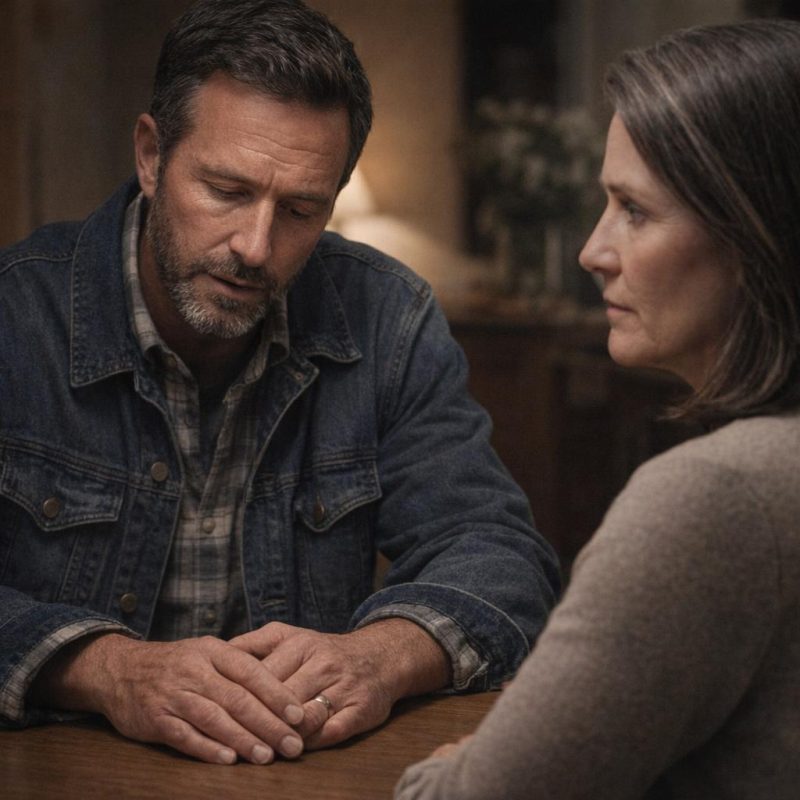 Image by RM AI
Recording the Dinner
We sat with that for a minute. The restaurant noise moved around us — silverware, low conversation, someone laughing two tables over — and none of it touched what was happening at our table. I turned it over slowly. If there were hidden microphones, then everything said at this dinner was going to Rick. He'd expected Daniel to deliver something usable — a joke, a sigh, a moment of visible letdown — and Rick would play it on air the next morning. That had been the plan. I'd walked in here thinking I was navigating a bad date, and the whole thing had been set up as a second act. But the microphones were still running. Whatever was said at this table tonight was still going to Rick. I looked at Daniel, and he was already looking at me, and his expression shifted into something I hadn't seen from him yet — a quiet, steady question, waiting for my answer.
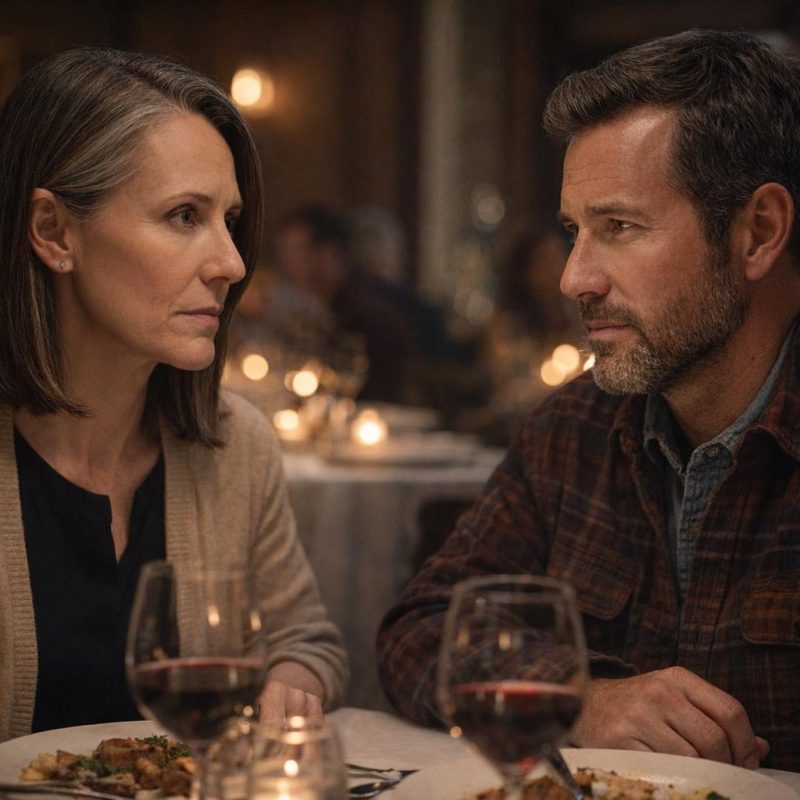 Image by RM AI
Paula's Opportunity
I excused myself and stepped outside to call Paula. I kept my voice low and told her what Daniel had said — the call from Rick, the suggested jokes, the specific instruction about the makeover reveal, and the microphones. There was a pause on her end that felt different from a normal pause. Then she said, say that again. I said it again. Another pause, shorter this time. When she spoke, something in her voice had changed — the careful, measured quality she usually carried had pulled back, and underneath it was something sharper and more alive. She said this was exactly what she'd needed. Not hoped for. Needed. She said hidden microphones meant documentation, and documentation meant Rick had left a record of his own instructions. I stood on the sidewalk outside the restaurant, the evening air cool against my face, and listened to the shift in Paula's voice as everything she'd been waiting for finally had somewhere to land.
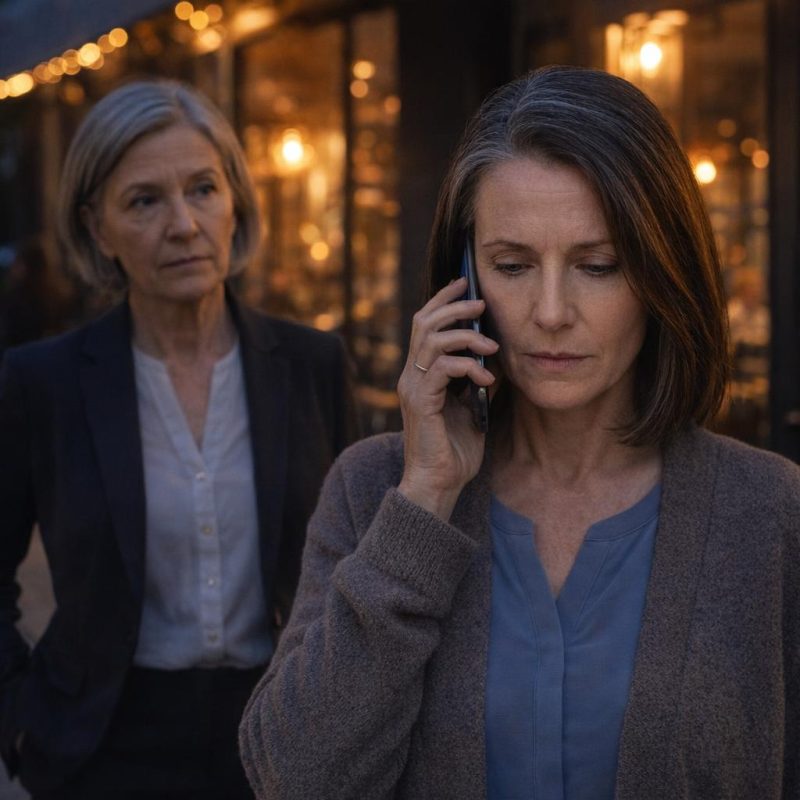 Image by RM AI
Agreeing to Proceed
Paula talked us through it on a three-way call, Daniel leaning across the table so he could hear. The plan was straightforward: we go through with everything exactly as scheduled. The makeover, the dinner, all of it. Daniel treats me the way he'd already been treating me — like a person he was genuinely glad to meet. We give Rick nothing. No awkward silences, no moments of visible discomfort, no material he can shape into a joke. Paula would be monitoring from her end, and she had her own documentation to add to whatever the microphones captured. When she hung up, Daniel and I sat across from each other in the quiet that followed. He asked if I was all right with it. I told him I thought so. He nodded slowly, and we didn't say much after that, just sat with the full weight of what we'd agreed to — the dinner that was already happening, the microphones already running, and the fact that we'd decided to walk back into it anyway.
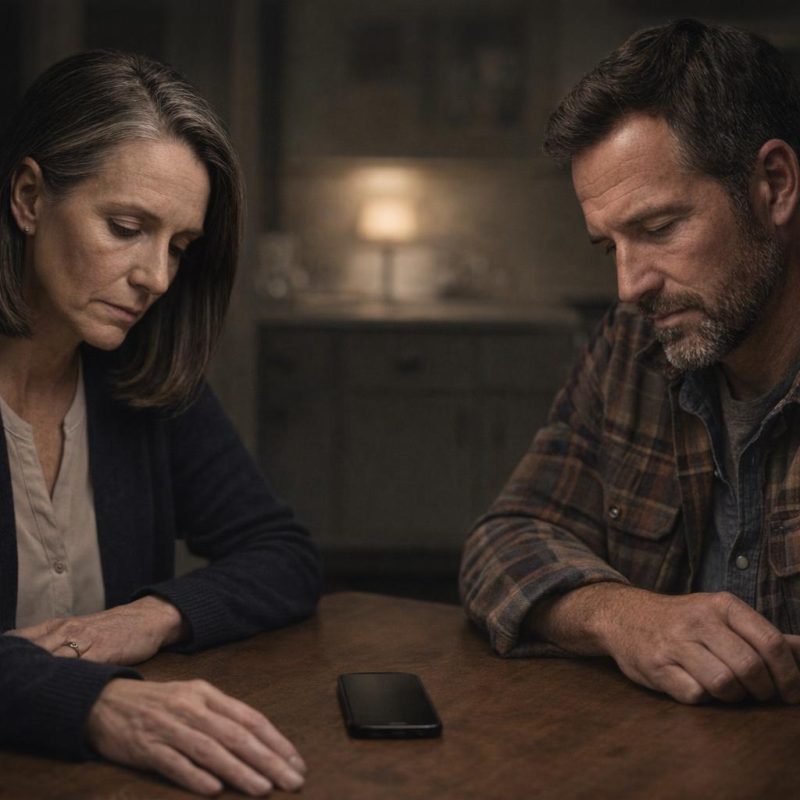 Image by RM AI
The Makeover
The makeover was scheduled for the morning before the dinner, and I showed up on time with my guard already up, braced for something that felt like being handled. The stylists were not what I'd expected. They were professional and unhurried, and nobody made a comment about what they were working with or what needed fixing. They just worked. It took a few hours. I sat in the chair and let it happen, and somewhere in the middle of it I stopped waiting for the joke. When they finished, one of them turned the chair toward the mirror. I looked. The woman looking back at me had my face — the same lines, the same gray coming in at the temples — but she was wearing it differently. Not younger. Not transformed into something unrecognizable. Just herself, clearly, without apology. I hadn't seen that in a long time. I sat very still and looked at her, and I couldn't quite remember when I'd stopped.
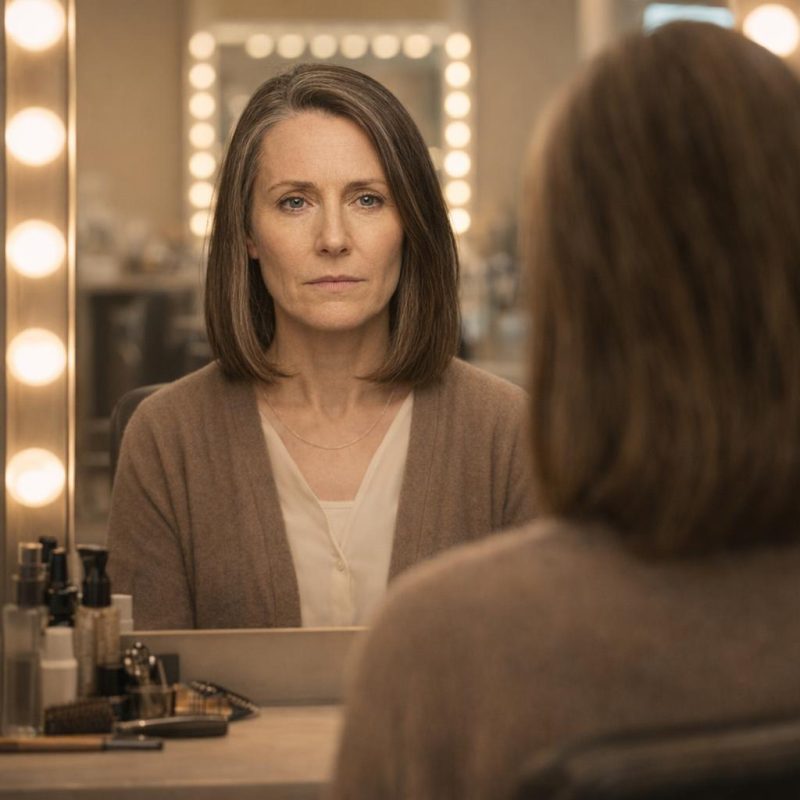 Image by RM AI
Preparing for Dinner
I stood in front of the mirror for a long time after the stylists left. The woman looking back at me still surprised me a little — not because she looked different, but because she looked ready. I ran through everything Paula had told me. Hidden microphones. Rick listening from somewhere off-site, waiting for a stumble, a moment of awkwardness he could replay on air the next morning. I knew what he was expecting. A nervous woman fumbling through a date she had no business being on. I wasn't going to give him that. I touched up my lipstick and told myself to stay in the moment, to be exactly who I was and nothing more. The trick wasn't to perform confidence. The trick was to stop performing altogether and just show up. I picked up my bag, checked the time, and took one slow breath. The restaurant was twenty minutes away. Rick would be listening. And I was going to give him absolutely nothing to work with.
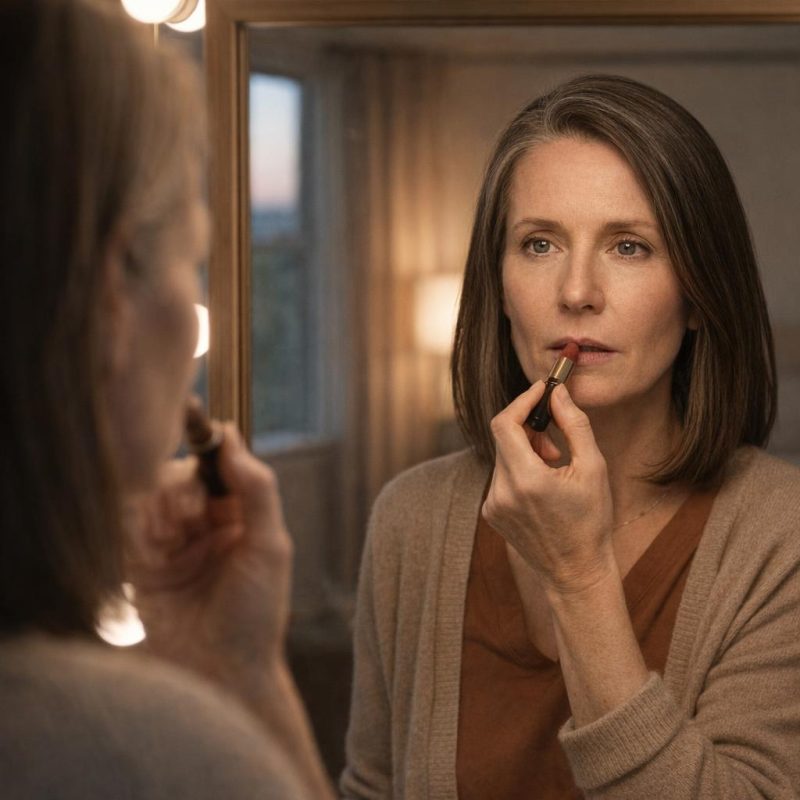 Image by RM AI
The Dinner Begins
Daniel was already at the table when I arrived, and he stood up when he saw me — not in a showy way, just quietly, like it was the natural thing to do. We shook hands and then laughed a little at how formal that felt, and something in my chest loosened slightly. The restaurant was warm and low-lit, the kind of place where conversations felt private even when they weren't. I was aware, underneath everything, that they weren't. Somewhere in the room, a microphone was picking up every word. I kept that thought at the back of my mind like a small stone in my shoe — present, but not the thing I was focused on. Daniel asked how the makeover had gone, and I told him honestly that it had been better than I'd expected. He smiled and said I looked like myself, which was exactly the right thing to say. We ordered, and the conversation found its footing, and the invisible listeners felt a little further away with every passing minute.
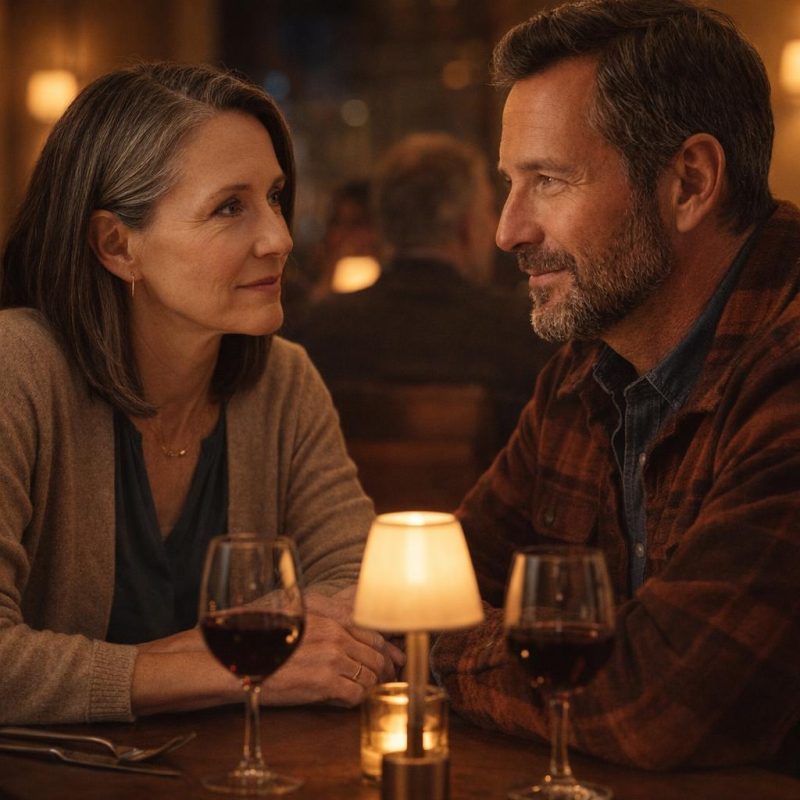 Image by RM AI
Rick Demands Something Funny
Daniel told me about a garden he'd been working on for months — a client who kept changing her mind about the roses, and how he'd finally just planted what he thought she actually wanted and waited to see if she noticed. She hadn't. She'd called it perfect. I laughed, and it was a real laugh, not a polished one. He asked about my life after the divorce, and I told him the honest version — the part where I had to figure out who I was when I wasn't somebody's wife anymore. He listened without filling the silence with reassurances, which I appreciated more than I could say. The conversation moved the way good conversations do, without anyone steering it. I wasn't performing. I wasn't managing anything. I was just talking to a man who seemed genuinely interested in what I had to say. Then my phone buzzed quietly in my lap. A text from Paula. It read: *He's been messaging me every ten minutes. Wants to know when something funny is going to happen.*
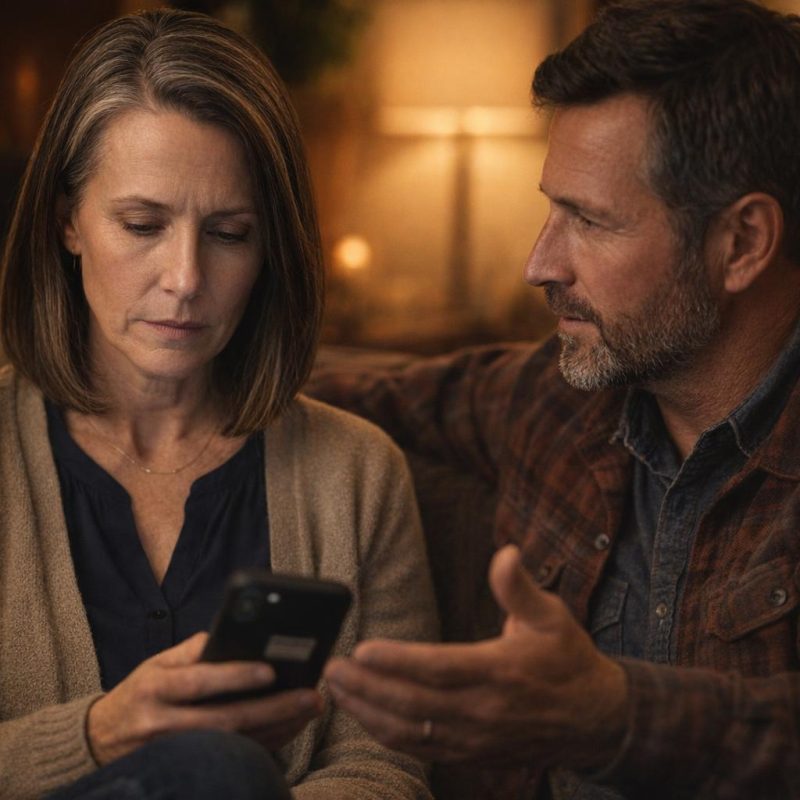 Image by RM AI
Genuine Enjoyment
I slipped my phone back into my bag and looked up at Daniel, who was in the middle of describing the time he'd accidentally planted an entire row of lavender where his client had wanted hedges. He did the voice — the client's voice, all clipped outrage — and I started laughing before he even got to the punchline. Not a polite laugh. The kind that catches you off guard and takes a second to stop. Daniel grinned, and then he was laughing too, and for a moment the restaurant felt like just a restaurant and the evening felt like just an evening. I noticed, somewhere in the back of my mind, that I'd stopped thinking about the microphones. I wasn't tracking my words or measuring my reactions. I was just there, at a table with a man who made me laugh, and it felt uncomplicated in a way I hadn't expected. He leaned forward and said something about how he hadn't laughed like that on a first date in years. The laughter came again, easy and unguarded, before I could think to hold it back.
 Image by RM AI
Paula's Truth
Paula was waiting near the side entrance when I came out. She'd texted me to meet her there, away from the restaurant's main floor. She looked composed the way she always did, but something was different — a tightness around her eyes, like she'd been holding something for a long time and was finally about to set it down. She said she needed to tell me something before the morning. I nodded and waited. She looked at the pavement for a moment, then back at me. She said she hadn't gotten involved because it was her job. She said she'd gotten involved because she knew exactly what Rick's show felt like from the inside — not as a producer, but as a contestant. I didn't say anything. She said it had been years ago, a different version of the same contest, and that Rick had been just as charming right up until the moment he wasn't. I stood very still in the cool air outside the restaurant. Then she said it plainly, without softening it: she had been a contestant too.
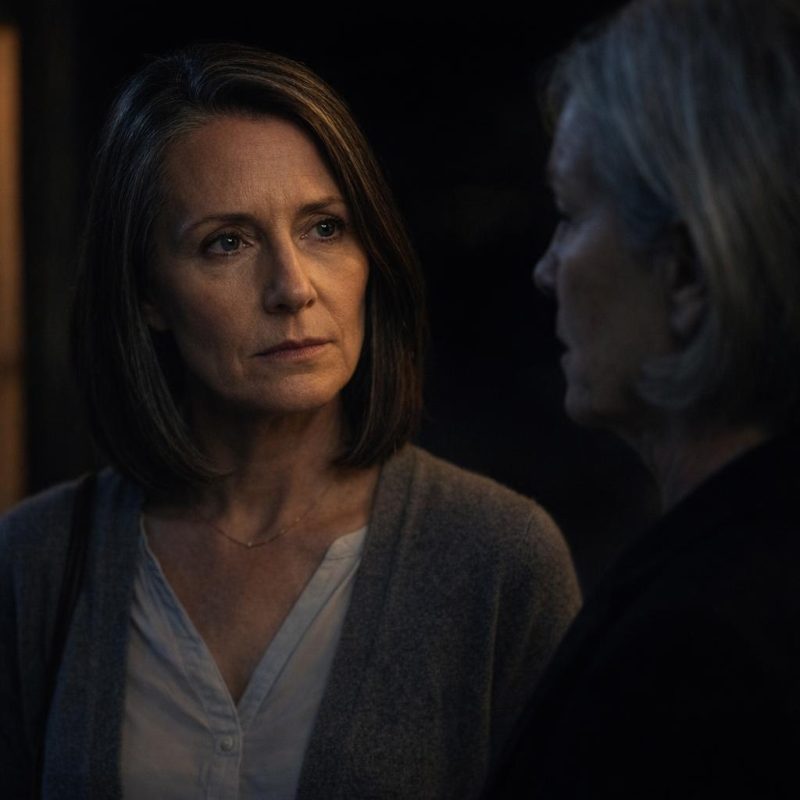 Image by RM AI
Years of Evidence
I asked her what had happened after. She said she'd been humiliated on air — not dramatically, not in one big moment, but in the slow, grinding way Rick preferred, where the joke builds so gradually that you don't realize you're the punchline until the audience is already laughing. She'd nearly quit broadcasting entirely. Instead, she'd applied for a production assistant role at the station, worked her way up, and eventually landed on Rick's show. I asked her why she'd stayed. She said she'd stayed because leaving felt like letting him win, and because from the inside she could see things no one else could. She'd been saving recordings, documents, producer notes — anything that showed a pattern. Every time Rick selected a new woman, every time the bit ran, she added to it. She said she'd watched it happen again and again, and each time she told herself she was waiting for the right moment. She paused, and her voice came out quieter than before: she said she'd watched it happen to woman after woman, year after year, and she had kept every single piece of it.
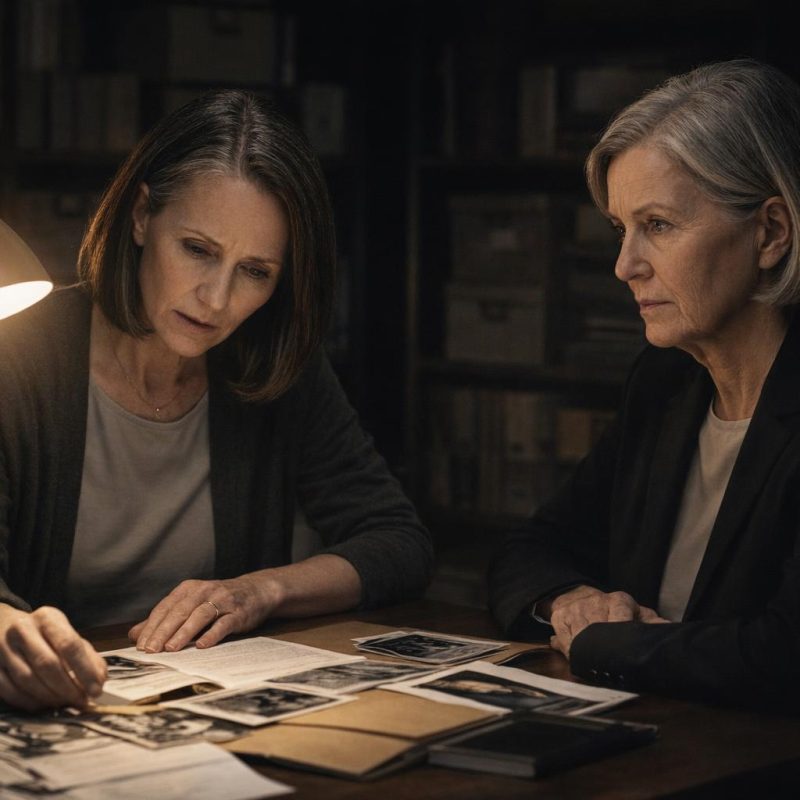 Image by RM AI
Connected by Experience
We stood there for a while without saying much. I didn't have words that felt adequate, and I don't think she was looking for any. What she'd described wasn't just patience — it was the kind of endurance that costs something, the kind you pay for in small installments over years until you've spent more than you ever planned to. I thought about what it must have taken to walk into that building every morning, to sit across from him in production meetings, to keep her face neutral while she filed away one more piece of evidence. I thought about all the women she'd watched go through it, knowing what was coming, knowing she wasn't ready yet. I wanted to say something that matched the weight of it, but nothing came. She wasn't looking for gratitude either — I could tell that much. She was just telling me the truth, finally, to someone who would understand it without needing it explained. The night air settled around us, and neither of us moved to fill the quiet.
 Image by RM AI
The Dinner Ends Successfully
Daniel texted me just after ten. It said he'd had a genuinely wonderful time and asked if I'd want to do it again sometime, without the microphones. I smiled at my phone in the dark of my car. The dinner had worked on every level it needed to. We'd talked, we'd laughed, we'd been two actual people having an actual evening — and none of it had been usable. Rick had listened for hours and come away with nothing. No stumbles, no awkward silences, no moments of desperation he could replay for his morning audience. Just a woman and a man who'd gotten along well over a decent meal. I sat with that for a moment. Not triumphant, exactly. More like the feeling of having braced for a fall that never came — the quiet, slightly disbelieving relief of still being on your feet. Whatever Rick had been waiting for, he hadn't gotten it. And the evening, against all reasonable expectation, had been genuinely good.
 Image by RM AI
Preparing for the Broadcast
Paula and I spent most of that evening on the phone, talking through every scenario we could think of. We both knew Rick wasn't going to let the dinner go quietly — that wasn't his style. He'd have listened to hours of audio and come away with nothing usable, and that would sting. A man like Rick doesn't absorb a loss; he reframes it. Paula figured he'd try to spin the date as dull, or imply Daniel had been too polite to say what he really thought. We talked through how to respond if he went that route, and how to stay quiet if staying quiet was the smarter move. Paula reminded me we still had everything — the recordings, the documents, the pattern laid out in black and white. Whatever Rick said on air tomorrow, we had the receipts. Daniel had already agreed to be available if we needed him, and Paula had confirmed he was ready to participate on a moment's notice. I felt the particular kind of calm that comes not from certainty, but from preparation. Then, just before midnight, my phone lit up with a text from Paula: "Don't sleep too late. Tomorrow's going to be interesting."
 Image by RM AI
Rick Tries to Salvage
I sat in my car in the driveway the next morning with the radio on, coffee going cold in the cupholder. Rick opened the segment with his usual easy confidence, like a man who had never once doubted himself. He told his listeners the dinner had gone fine — perfectly fine, actually — which was, he said, kind of the problem. He laughed his practiced laugh and said Daniel was clearly a gentleman, maybe too much of one to be honest about how the evening had really felt. He implied, without quite saying it, that a man that polite wouldn't tell a woman the truth to her face. It was slick. I had to give him that. He was trying to turn Daniel's decency into evidence against me, to make the absence of cruelty sound like pity. But I could hear something underneath the smoothness — a tightness, a slight over-explanation, the sound of a man filling airtime because he had nothing real to work with. Rick was spinning. And the spin was thin enough to see right through.
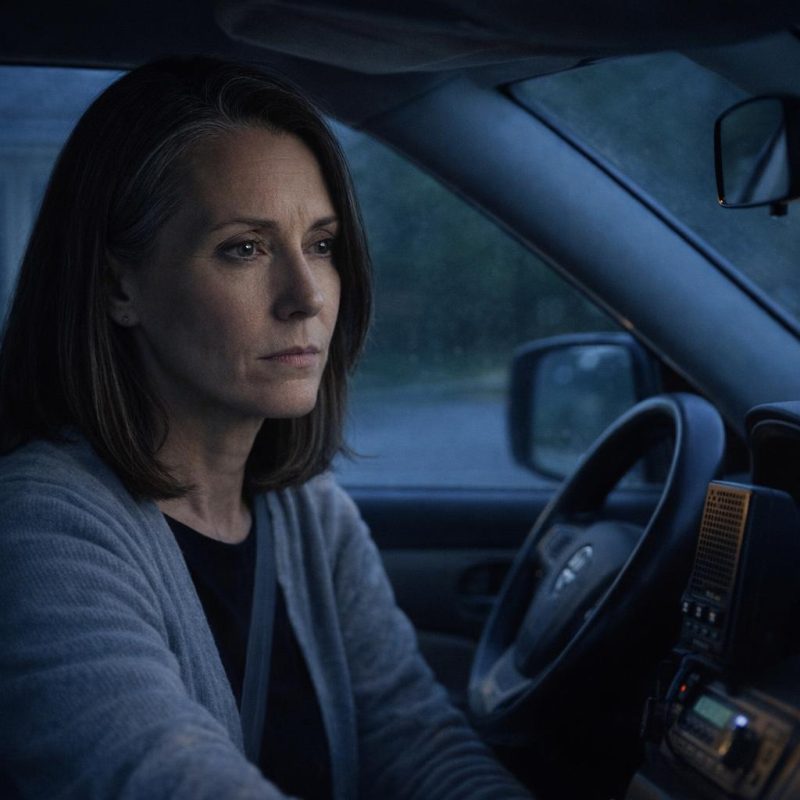 Image by RM AI
Daniel Calls Live
I was still sitting in the driveway when it happened. A caller came through — and I recognized Daniel's voice before he even finished saying his name. He identified himself calmly, said he'd been listening to the segment, and told Rick and the audience that he'd had a genuinely wonderful evening. His voice was steady, unhurried, the kind of calm that doesn't need to perform itself. He said I was warm and funny and easy to talk to. And then he asked his question. He said — and I remember every word — that he was curious why Rick had contacted him beforehand and suggested he express some disappointment about my appearance when he called in. He said it plainly, like he was asking about a scheduling mix-up. No accusation in his tone. Just the question, sitting there in the open air of a live broadcast. The studio went quiet. Not the brief quiet of a technical pause — something longer, something that had weight to it. I held my breath in the front seat of my car, and the silence on the radio felt like the whole city leaning in at once.
 Image by RM AI
Rick Stumbles
Rick recovered — or tried to. His voice came back in about three seconds, which is a long time on live radio. He laughed, but it was the wrong kind of laugh, a half-beat too late and a half-step too high. He said Daniel must have misunderstood, that it had been a joke, just some producer banter about playing up the drama for the segment. He said the show was entertainment, that everyone knew that, that Daniel was a great sport for calling in. The words came out in a rush, each one bumping into the next. He thanked Daniel, said they'd have to have him back sometime, and then — before Daniel could respond, before any caller could follow up — he cut to commercial. Just like that. Mid-conversation, mid-moment, gone. I sat in my car listening to an ad for a mattress sale, and I thought about how many times Rick had controlled a room by controlling the pace of it. He'd just tried to do it again. But this time, the room had already heard the question. The commercial break sat there on the radio like a door slammed a little too hard.
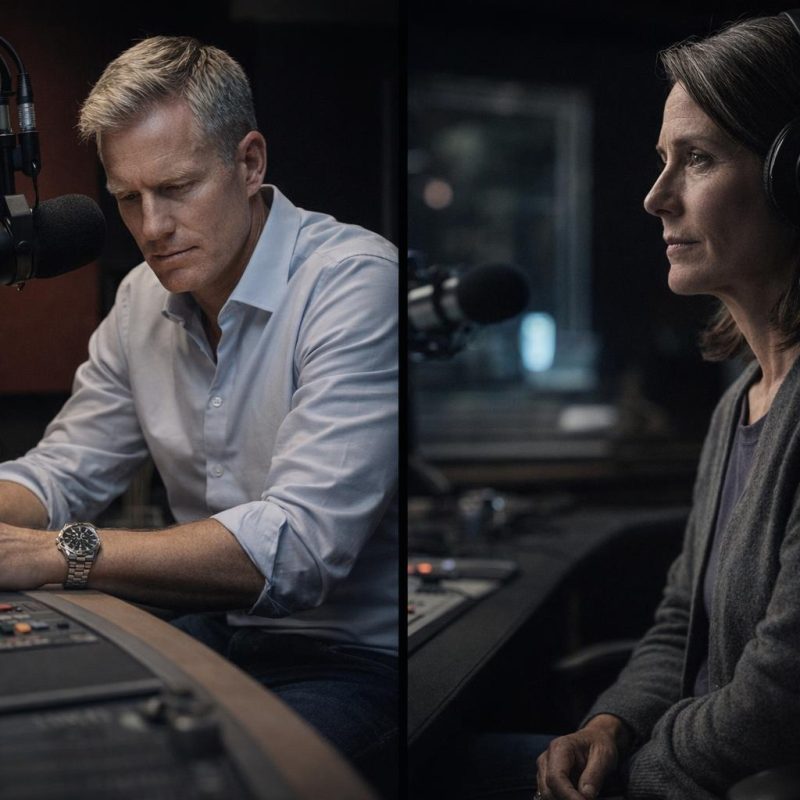 Image by RM AI
Listeners Ask Questions
Rick came back from commercial sounding like a man who had used the break to talk himself back into confidence. He tried to pivot to a traffic update, then a music tease, but the callers weren't having it. The first one asked, very politely, what exactly the producer banter had involved. Rick deflected — said it was all standard pre-show prep, nothing unusual. The second caller asked why a date contestant would be coached on his reaction at all. Rick's answer got longer and less specific. A third caller, a woman, said she'd been a contestant on a similar segment two years ago and that something similar had happened to her — that she'd been told beforehand the segment was going to be lighthearted, and then found herself the punchline of jokes she hadn't agreed to. Rick talked over her, moved to cut her off, but she'd already said it. I could hear his usual rhythm breaking apart, the smooth handoffs between jokes and music and banter going slightly ragged at the edges. He was still talking, still performing, but the audience had stopped following his lead. The calls kept coming.
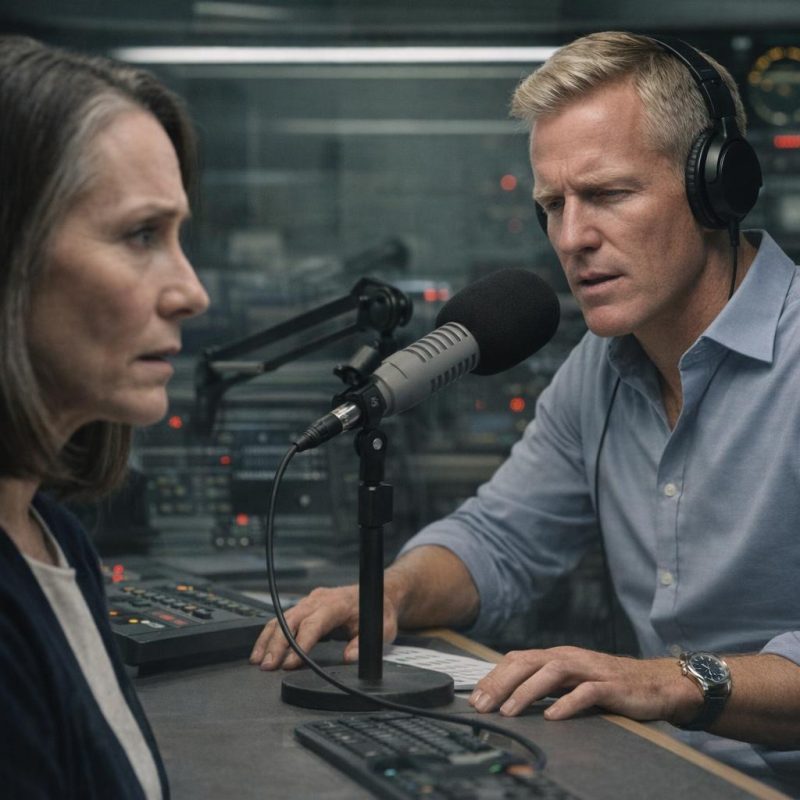 Image by RM AI
Former Contestants Come Forward
By midmorning, it had moved beyond the radio. Paula texted me a link to a local news station's website — someone had clipped Daniel's question and Rick's response and posted it, and it was spreading. Comments were filling up fast. Then the calls started coming into the station itself, not to the show but to the main line, from women who said they recognized what they were hearing. One of them, apparently, had called a local TV news desk instead. I found out later she'd been a contestant three years before me, that she'd gone on air expecting a fun segment and spent the next week fielding calls from people who thought the whole thing was hilarious. She described the setup in detail — the pre-show framing, the way the jokes had been structured, the feeling afterward of not quite being able to explain why it had hurt so much. Paula said her account matched the pattern almost exactly. I sat at my kitchen table reading everything I could find, and then my radio, still on low in the background, carried a voice I didn't recognize — a woman, calm and clear, telling her story live on a competing station.
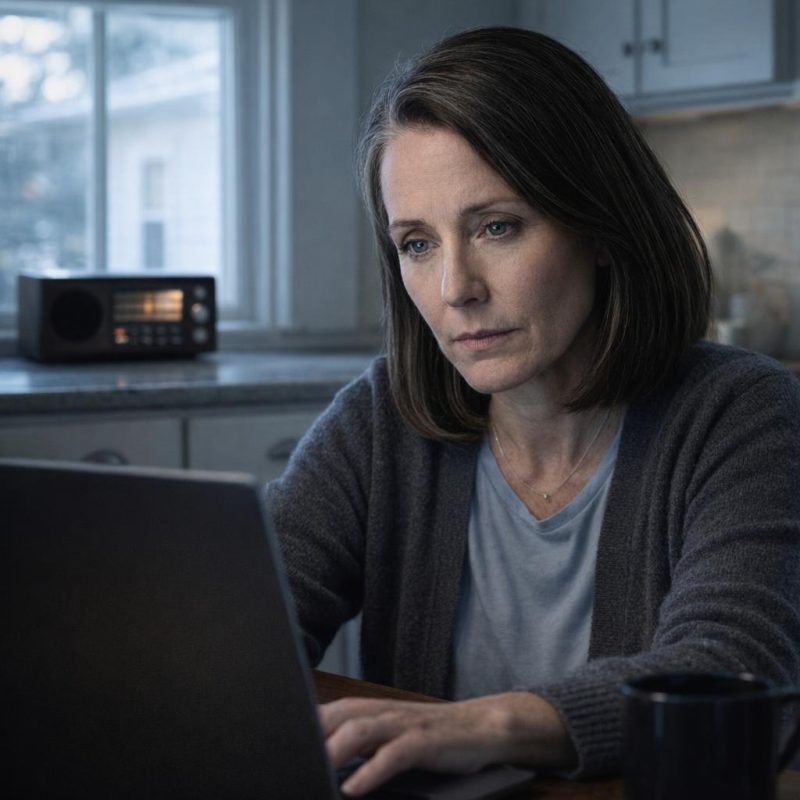 Image by RM AI
Management Announces Review
The station's statement came out just after noon. Paula forwarded it to me without comment, which told me everything I needed to know about how she felt. It was four paragraphs of careful language — phrases like "taking these concerns seriously" and "committed to a thorough internal review" and "we hold our programming to the highest standards." Nothing about Rick by name. Nothing about the contest specifically. Nothing that sounded like a decision had been made or was close to being made. It read like something written by someone whose first priority was making sure nothing in it could be quoted against them later. Paula called me twenty minutes after she sent it. She said she'd seen this before — the careful statement, the internal process, the quiet hope that the noise would die down before anyone had to do anything real. She said the last time something like this had come up, Rick had walked away without so much as a formal conversation. Her voice was steady but tight. "They protect what makes them money," she said. "Until it costs them more to keep him than to lose him."
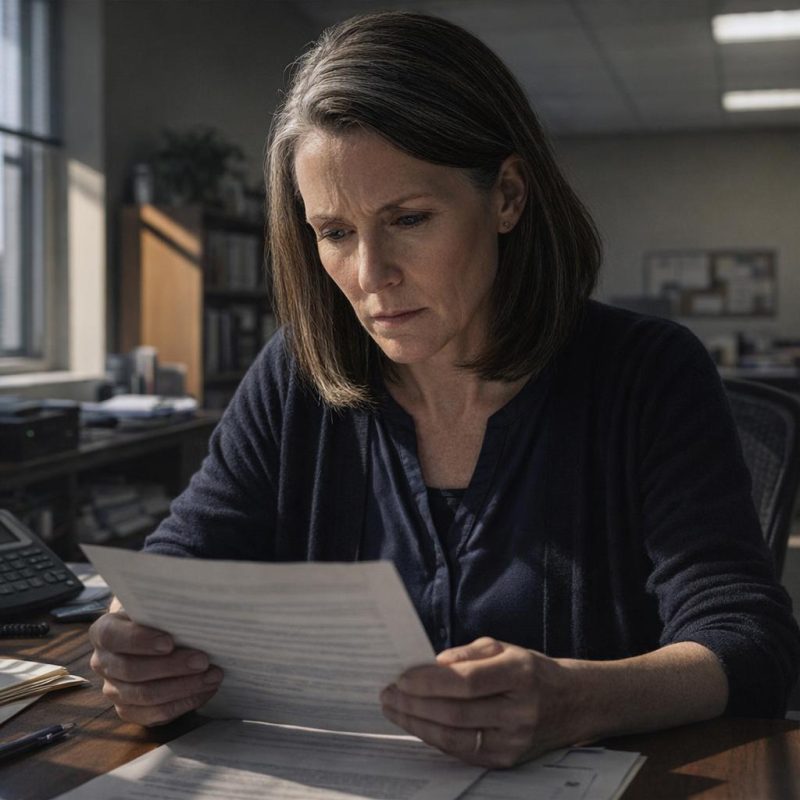 Image by RM AI
Paula Provides the Evidence
Paula had made her decision before she called to tell me about it. She wasn't asking for my opinion — she was letting me know. She'd spent years collecting what she had: recordings from production meetings, internal emails, show notes with Rick's handwriting on them, documentation going back further than I'd realized. She packaged everything and sent it to station management and, separately, to the corporate ownership group that held the station's license. She told me she'd put her name on it. All of it. I asked her if she was sure, and she said she'd been sure for a long time, that she'd just been waiting for a moment when it might actually matter. I didn't know what to say to that. I sat at my kitchen table after we hung up, thinking about what it had cost her to hold onto all of that for so long, and what it was costing her now to let it go. The afternoon went quiet around me. I watched my phone and tried not to think too hard about everything that was now out of our hands. Then the screen lit up with Paula's name, and her message read: "It's done. I gave them everything."
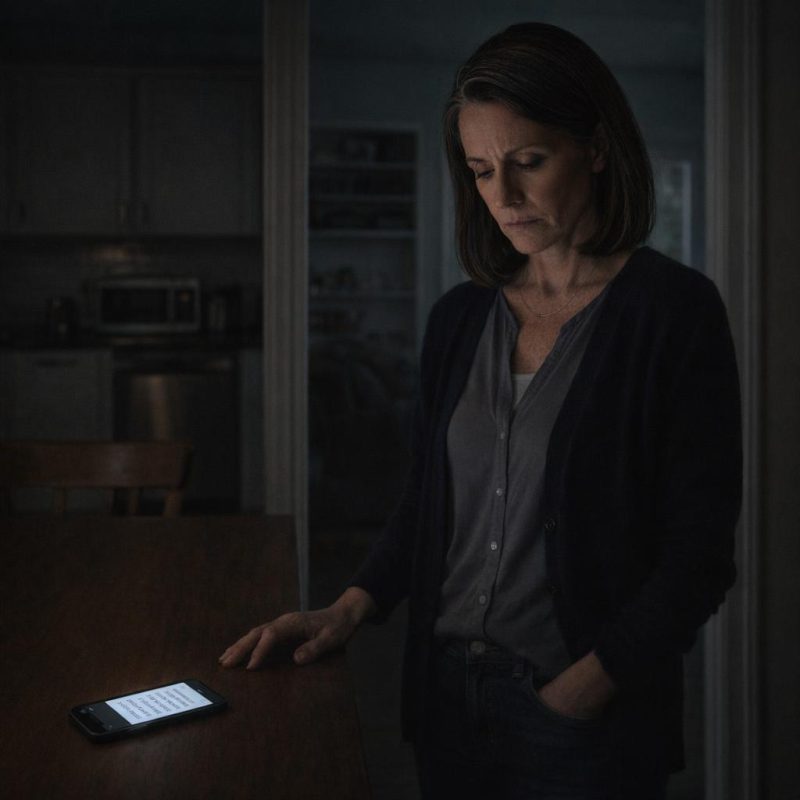 Image by RM AI
Removed from the Air
Two days after Paula sent everything, I sat in my kitchen with the radio on and Rick's voice filling the room like it always had — smooth, practiced, a little too comfortable with itself. He was talking about the controversy, which he called overblown. He said every contestant had come on the show willingly, that the whole thing was being misread by people who didn't understand radio humor. I sat there listening and thought about every woman who'd driven home afterward feeling smaller than when she'd left. He was mid-sentence — something about ratings reflecting what listeners actually wanted — when the audio shifted. There was a sound I couldn't quite place at first, voices in the background, movement near the microphone. Rick's voice changed register, not the practiced one anymore, something tighter underneath it. He said, "I'm in the middle of a —" and then the broadcast cut off. Not a song. Not a commercial. Just silence, flat and absolute, where his voice had been a second before.
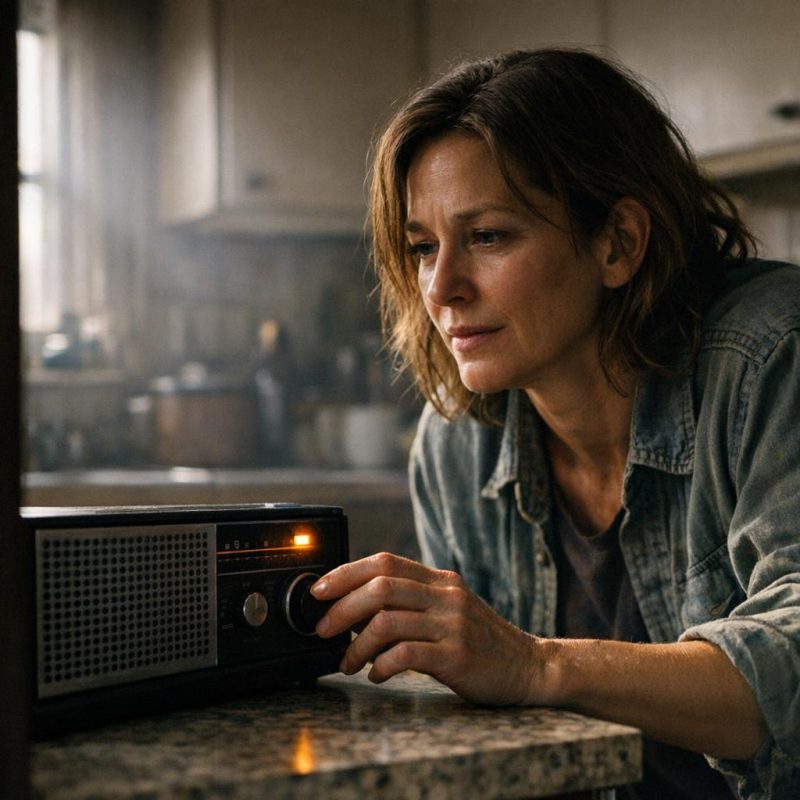 Image by RM AI
The Investigation Goes Public
The details came out over the following week, piece by piece, the way these things do when someone has kept careful records. Recordings from production meetings were released — Rick's own voice, caught after broadcasts, mocking contestants by name. He'd laughed about one woman's nervous laugh. He'd called another one a perfect target. There were internal documents showing he'd instructed staff to select contestants specifically for their mockability, that the humiliation wasn't accidental or improvised but built into the selection process from the start. The line that got repeated everywhere was one where he bragged that upset women generated better call-in numbers than happy ones. Advertisers started pulling out within forty-eight hours. Paula's name appeared in the coverage as the person whose documentation had made the investigation possible, and I was glad people knew it was her. I called her when I saw it. She didn't say much, just that it felt like putting something down she'd been carrying for a long time. I understood that. I sat with the phone in my lap after we hung up, and the quiet felt different than it had before — steadier, somehow, like something had finally settled.
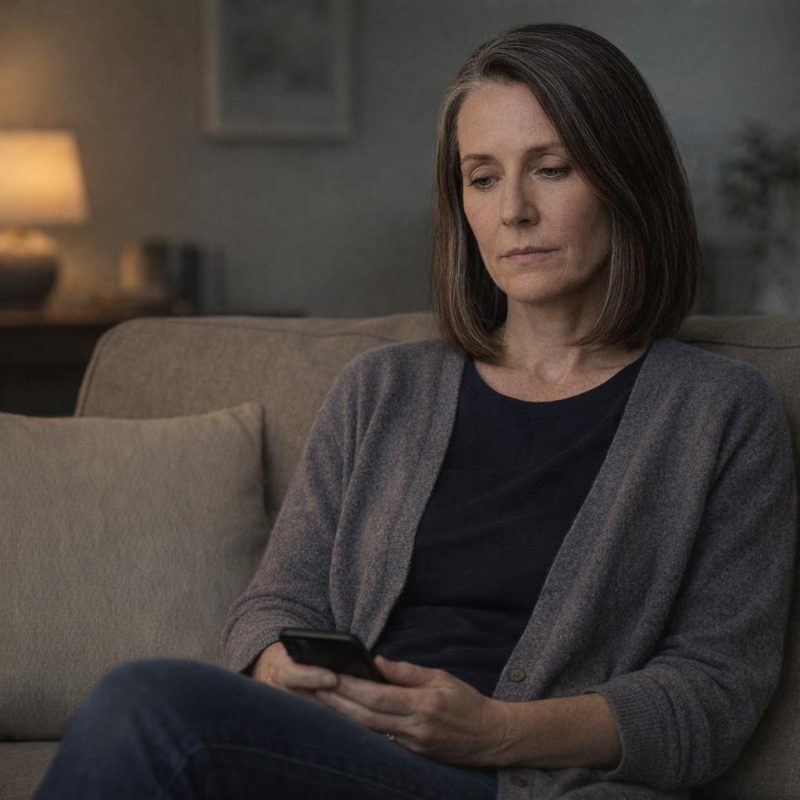 Image by RM AI
New Beginnings
Rick was officially fired about three weeks after the broadcast cut off. The station issued a public apology to former contestants and announced the dating segment was being permanently retired. Paula was offered a role helping rebuild the morning program — not behind the glass this time, but on air, with her name attached. She called to tell me and her voice had something in it I hadn't heard before, a kind of ease. I told her she'd earned it about ten times over. Daniel and I kept seeing each other. We didn't make a big announcement about it or define anything in particular — we just kept showing up for each other, dinners and long drives and the occasional afternoon where neither of us had anywhere to be. Months passed and it still felt easy, which was the thing that surprised me most. I'd half-expected the whole story to end when the contest did, like the connection had only existed inside that strange circumstance. But it hadn't. It had just kept going, quietly, the way good things sometimes do when you stop waiting for them to disappear.
 Image by RM AI
The Real Prize
I've thought a lot about what I expected when I walked into that radio station. I thought the worst thing that could happen was being laughed at on air, that I'd drive home embarrassed and spend a week avoiding the grocery store. I didn't expect to find out that the humiliation had been engineered, selected for, refined over years into something that worked reliably for ratings. I didn't expect Paula, or what she'd been carrying. I didn't expect Daniel, or how uncomplicated it would feel to sit across from someone who just seemed genuinely glad I was there. And I didn't expect to feel, at sixty-one, like something was actually beginning rather than winding down. Rick's recordings did him in — his own voice, preserved on equipment he controlled, saying things he assumed would stay private. He'd spent years building a record of exactly who he was. The real foolishness, it turned out, wasn't in a sixty-one-year-old woman entering a radio contest. It was in a man who never once considered that starting over wasn't the embarrassing part — being caught was.
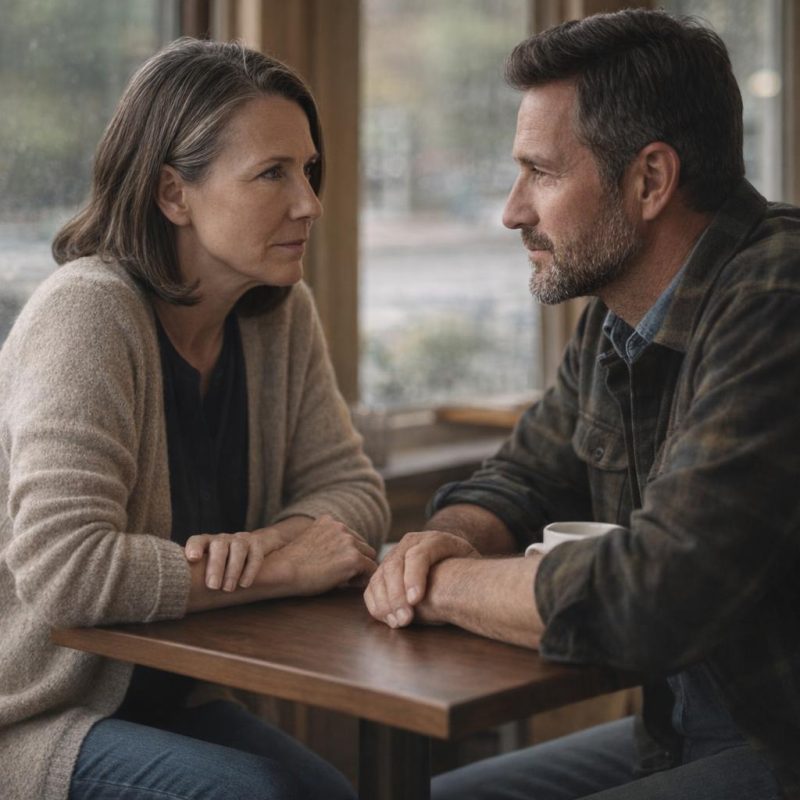 Image by RM AI