

My Son's Fiancée Memorized Everything About Me—Then Used It to Delete Me From His Life
My Son's Fiancée Memorized Everything About Me—Then Used It to Delete Me From His Life
The Tuesday Morning Everything Stopped
It was a Tuesday. That's the part that still gets me — not a holiday, not a milestone, just an ordinary Tuesday in October with the coffee brewing and the morning news on low. Robert was standing at the counter in his robe, the same spot he'd stood in for thirty-one years, and then he wasn't. He went down so fast I didn't even understand what I was seeing at first. I thought he'd dropped something. I thought he'd slipped. I was calling his name before I was even across the kitchen, and by the time I reached him I already knew, the way you know things you don't want to know. I called 911. I held his hand and talked to him while I waited, even though there was nothing to talk back to anymore. The paramedics were kind. They were efficient. They said the words and I nodded like I understood them, and then they were gone and the house was just — quiet. The coffee pot was still warm on the counter. Thirty-one years of Tuesday mornings, and the coffee pot was still warm, and Robert was not.
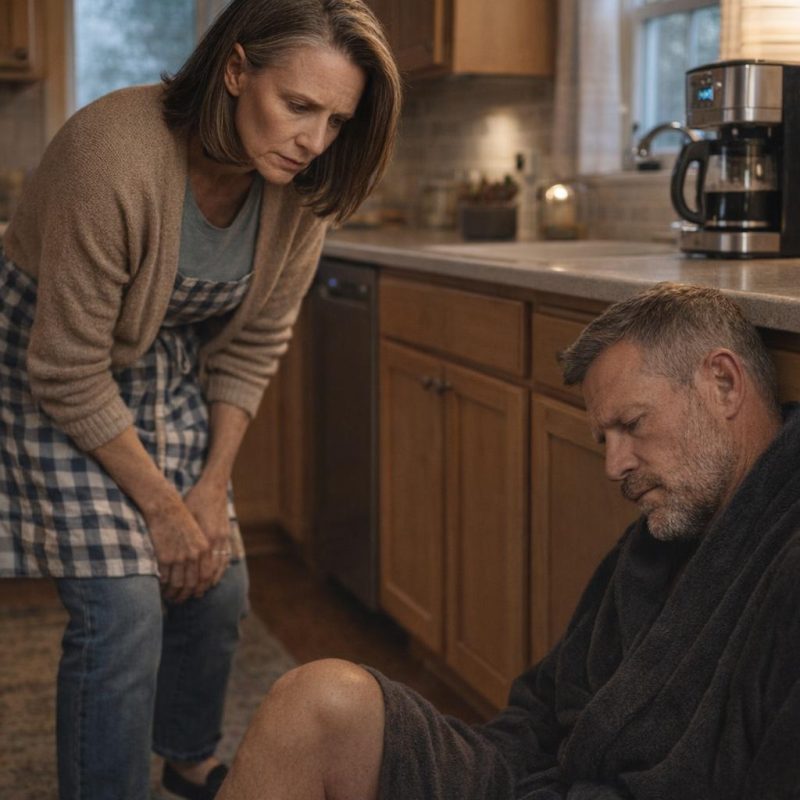 Image by RM AI
Four Hours in a Car
I don't remember making the call to Mark. I know I did it because he showed up, but the actual moment of dialing his number, of hearing it ring — that part is just gone. What I do remember is sitting on the kitchen floor for a long time after the paramedics left, my back against the cabinet where we kept the good dishes, staring at the spot on the linoleum where Robert had fallen. I remember the light changing. I remember the coffee going cold. At some point I moved to the couch, and at some point after that it got dark outside, and I just sat there in the dark because turning on a lamp felt like too much of a decision. I didn't eat. I didn't call anyone else. I just waited, though I couldn't have told you what I was waiting for. And then, somewhere around ten o'clock, I heard tires on the gravel driveway — that specific crunch that I'd know anywhere — and headlights swept across the living room wall.
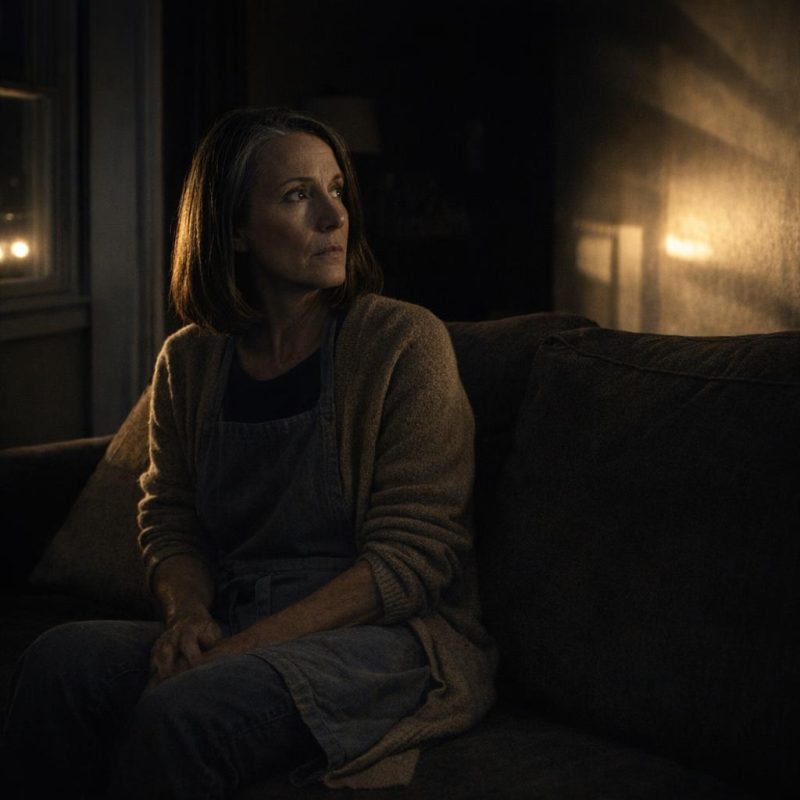 Image by RM AI
The First Sunday
The first Sunday after the funeral, Mark showed up at nine in the morning with a pot roast he'd started in his slow cooker the night before. He drove it four hours in a cooler, which is exactly the kind of thing his father would have done. We finished it together in my kitchen — the carrots, the potatoes, the whole thing — and we ate at the table where Robert used to sit at the head, and neither of us said much. We didn't need to. When we were done and the dishes were washed and I was already dreading the moment he'd have to leave, Mark leaned against the counter and said, 'What if we just did this every week? Same time, every Sunday.' I said yes before he finished the sentence. I didn't even think about it. Six o'clock, every Sunday. He said it like a promise, not a suggestion, and I held onto that like it was something solid I could press my hands against in the dark. We didn't shake on it or make a big deal of it. We just both knew it was real.
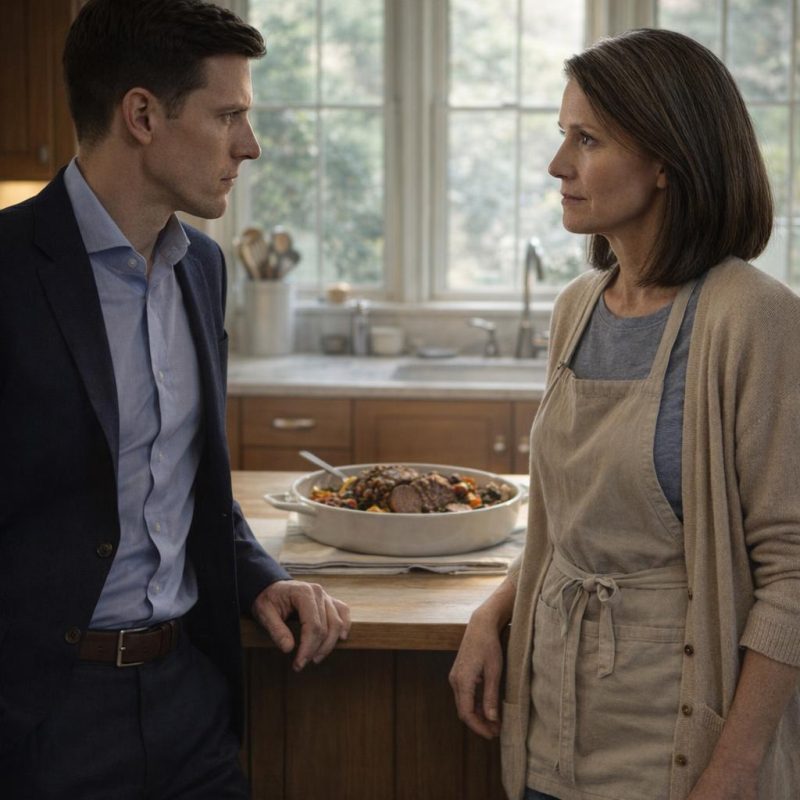 Image by RM AI
Morning Calls and Lunch Photos
It started without either of us planning it. Mark commuted forty minutes each way, and somewhere in the first few weeks after Robert died, he started calling me during that drive. Eight-fifteen, every morning, right as I was finishing my first cup of coffee. I started timing my mornings around it without realizing I was doing it — up by seven, coffee ready, sitting at the kitchen table by eight so I'd be settled when the phone rang. We'd talk about nothing, mostly. Traffic. Whatever he'd seen on the news. Whether I'd slept. And then at lunch he'd send me a photo — always a dog he'd spotted near his office building, some scruffy mutt or an enormous fluffy thing on a leash — and I'd send back a caption, and he'd send back a laughing emoji, and that was our whole language for a while. It sounds small. I know it sounds small. But when you're learning how to live inside a house that used to hold two people and now only holds one, small is everything. Those calls were the frame I hung the rest of my day on, and I didn't take a single one for granted.
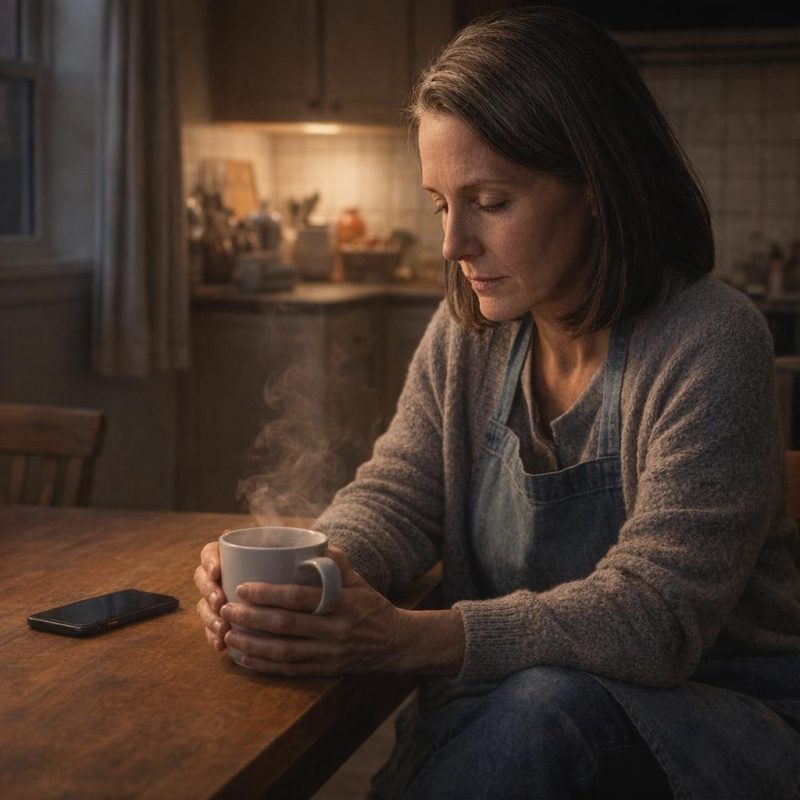 Image by RM AI
The Fortress
Looking back, I can see how it must have looked from the outside. Mark stopped making weekend plans that didn't include me. I stopped accepting invitations to things he wasn't part of. We talked every single day without exception — if he was traveling for work, he'd call from the hotel; if I was at Linda's, I'd step outside to take it. Sunday dinners were non-negotiable. We became, without ever discussing it, a unit. I told myself it was grief. I told myself we were just close, that some families are like this, that losing Robert the way we did had welded something between us that other people couldn't understand. And mostly I believed that. Then one afternoon at work — I was still doing part-time bookkeeping at the time — I was in the break room when two of my coworkers were talking nearby, not realizing I could hear them. One of them said something about how sweet it was, how devoted. And then the other one said, in a voice that dropped just slightly, that she'd never seen anything quite like it.
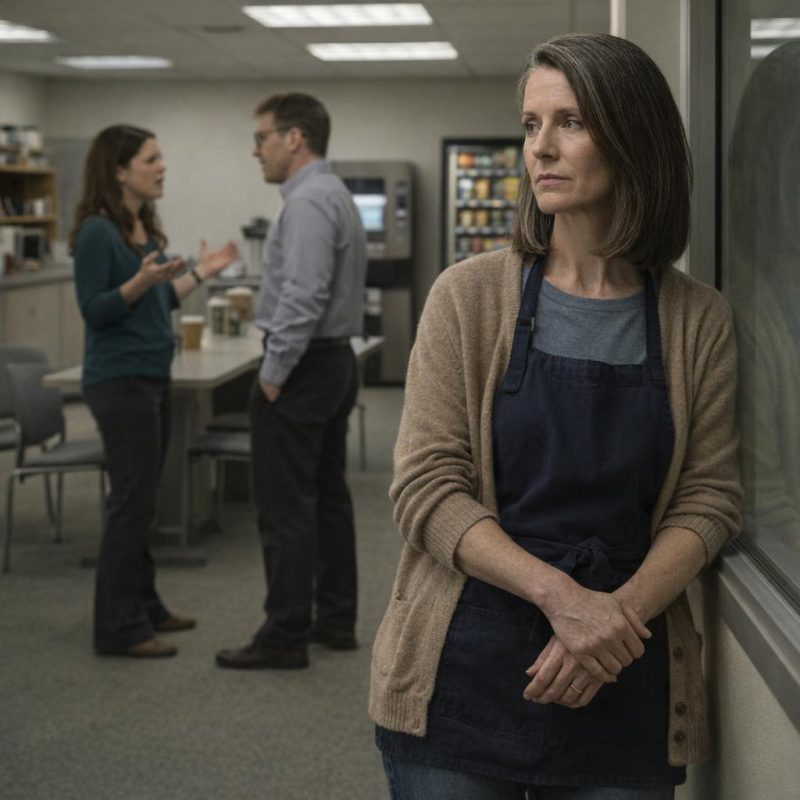 Image by RM AI
Years Like This
Here's the thing about time when you're inside a routine that works: it moves differently. It doesn't drag and it doesn't race — it just flows, steady and even, like water you've stopped noticing because it's always there. Sunday dinners became as automatic as breathing. The eight-fifteen calls never stopped. Mark got a promotion, then another one, and his suits got nicer and his office got bigger, but he still called from the car every morning and he still showed up at six on Sundays with something he'd picked up from the good butcher two towns over. I stopped thinking of the future as something uncertain. I stopped bracing for things to change. And then one afternoon in October — a Tuesday, because of course it was a Tuesday — I was writing out a check and I wrote the year and just stopped. I set the pen down. I counted backward. Ten years. Robert had been gone for ten years, and the calendar on the wall still had his handwriting on it from the month he died, and I had never taken it down.
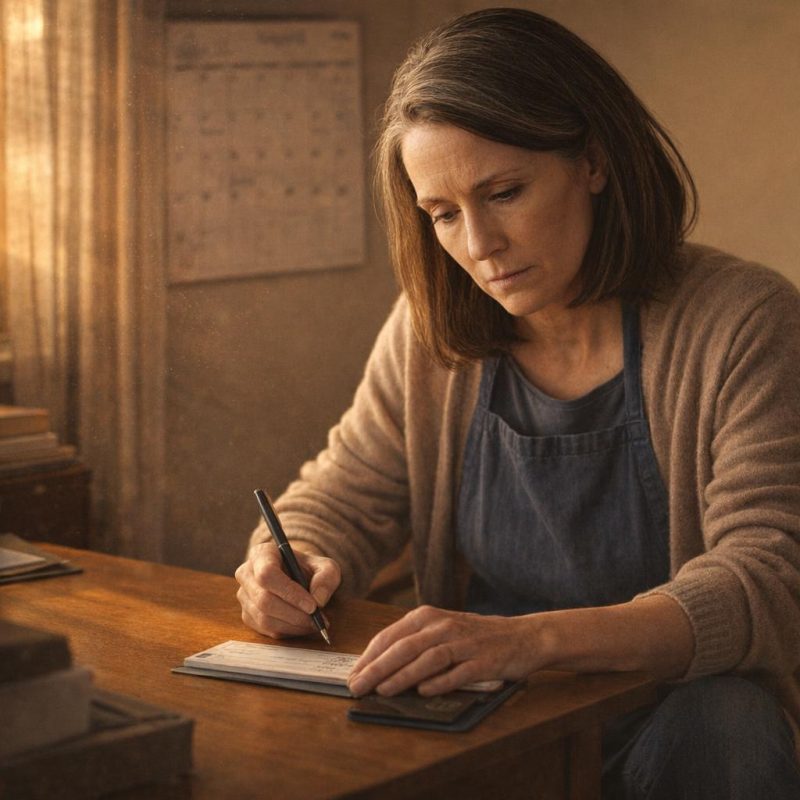 Image by RM AI
What People Say
People noticed. That's the thing I didn't fully account for — how much people notice, and how freely they'll say what they think about it. My friend Carol mentioned it at her kitchen table one afternoon, smiling over her coffee cup, saying how lucky I was to have a son so devoted. I smiled back and said I knew. An acquaintance at church said it was unusual, a man Mark's age, still so tied to his mother, and I felt something tighten in my chest but I kept my expression pleasant. Mark, for his part, genuinely did not seem to care what anyone thought. He'd laugh it off if it came up, or just change the subject, easy and unbothered in the way he'd always been. I told myself that was proof we were fine — that if something were wrong, he'd feel it too. And then at a neighborhood gathering, I was standing near the back by the food table when two women I barely knew were talking, and one of them used a word I hadn't expected to hear out loud, in that casual, certain way people use words they've clearly been thinking for a while.
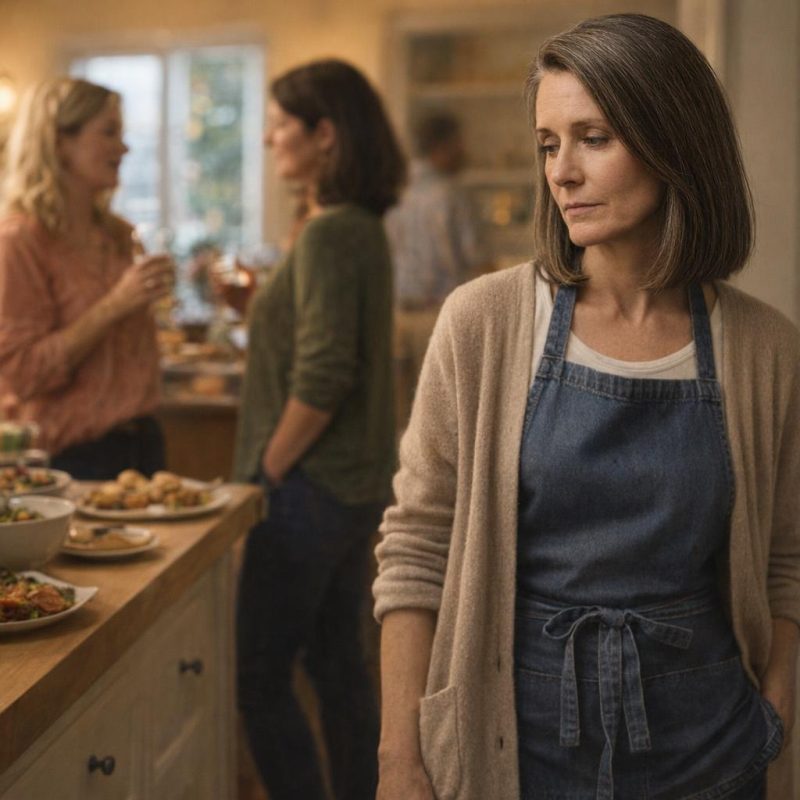 Image by RM AI
The Parking Garage Call
It was a Wednesday afternoon in March, and I was in the middle of repotting a plant on the back porch when my phone rang. I almost didn't answer — my hands were covered in soil and I figured it could wait. But it was Mark's name on the screen, and I never let Mark's calls wait. I wiped my hands on my jeans and picked up. He was calling from the parking garage at his office, I could tell from the echo, that particular hollow sound of concrete and fluorescent lights. He'd gotten the promotion. The big one, the one he'd been quietly working toward for two years. And before I could even respond, he said, 'I wanted you to know first. Before I told anyone else. I'm still sitting in my car.' I stood there on the back porch with dirt on my hands and my heart so full it almost hurt. He could have called his friends. He could have texted his whole contact list. But he sat in a parking garage and called me first, and that felt like every good thing I'd ever done as his mother confirmed in a single phone call.
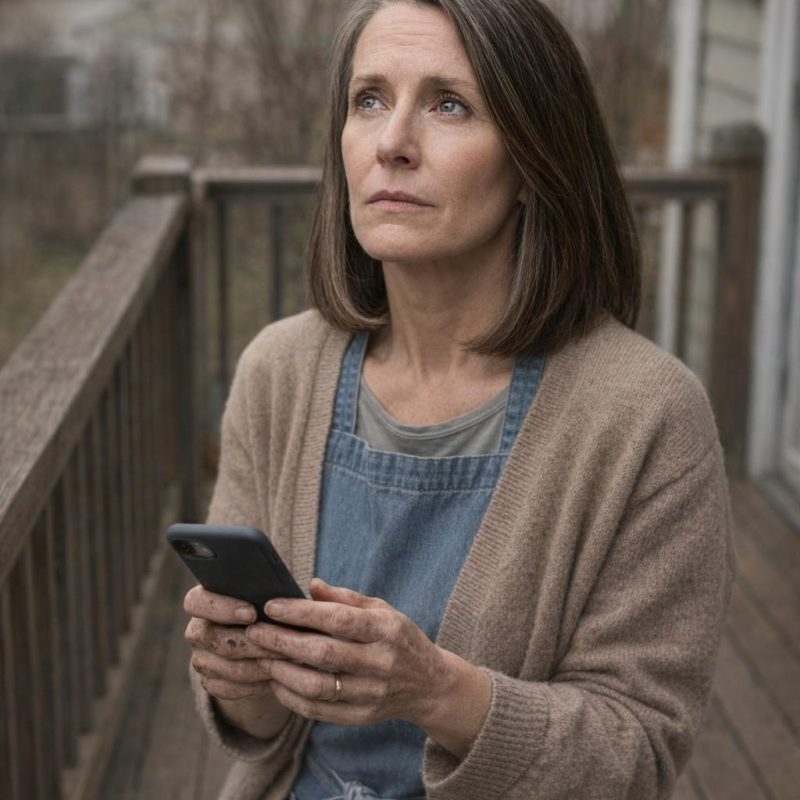 Image by RM AI
Maybe Someone Special
After the promotion call, we fell into a comfortable rhythm — Sunday dinners, morning check-ins, the occasional weeknight where he'd swing by just to raid my fridge and complain about his commute. And somewhere in the middle of all that, I started thinking about the next chapter. Not for me. For him. One Sunday I just came out with it, the way you do when you've been turning something over for weeks and finally run out of patience with yourself. I told him I hoped he was keeping his eyes open. That the job was wonderful, the apartment was wonderful, but that none of it meant as much without someone to come home to. I knew how that sounded — like every mother who ever lived. He laughed and said he'd been too slammed at work to even think about it. I told him that was exactly what a man said right before he blinked and turned forty. He laughed harder at that. But then he got quiet in that way he had, the way that meant he was actually listening, and he said he'd keep an eye out. I believed him. I sat there picturing Sunday dinners with someone new at the table, maybe a grandchild or two underfoot eventually, and the whole future felt wide open and full of good things.
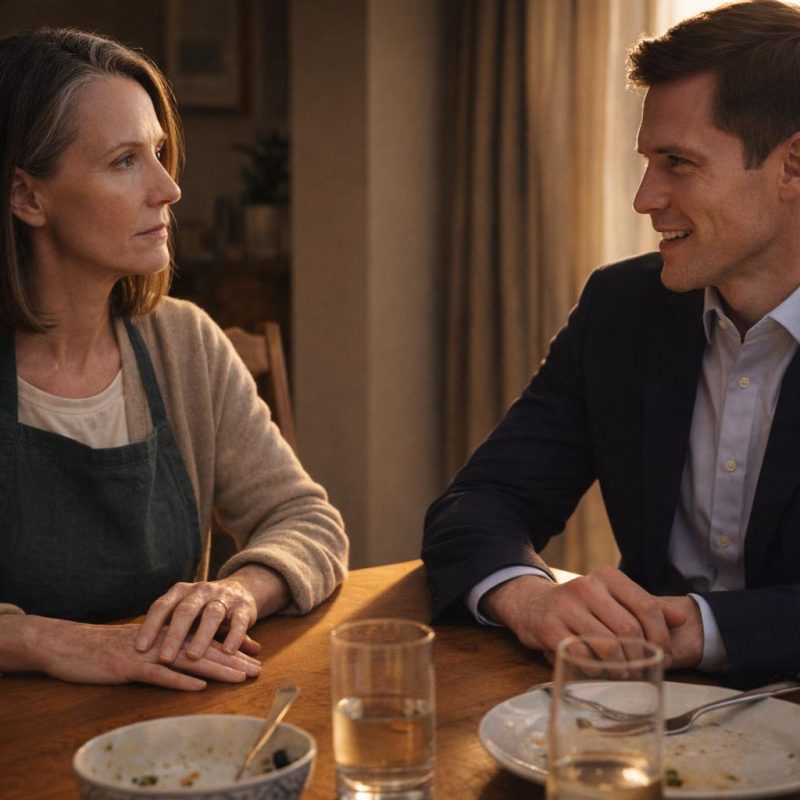 Image by RM AI
The Sunday Before
The Sunday before everything changed looked exactly like every other Sunday, which is the thing about ordinary moments — you never know you're inside the last one until it's already gone. Mark came over around four, same as always. I made pot roast because it was cold out and because it was his father's recipe and because some things you just keep doing. He set the table without being asked, which he'd been doing since he was twelve. We talked about nothing important — a coworker who was driving him crazy, whether I needed the gutters cleaned before spring, a documentary he'd half-watched and couldn't remember the name of. After dinner he helped with the dishes, same as always, me washing and him drying, the two of us standing at the sink the way we had for ten years. The kitchen smelled like rosemary and dish soap. The radio was on low. It was so completely, perfectly unremarkable that I didn't think to hold onto it. He picked up the last plate, dried it in slow circles, and set it in the cabinet. Then he turned to me with a look I hadn't seen before and said there was something he wanted to tell me.
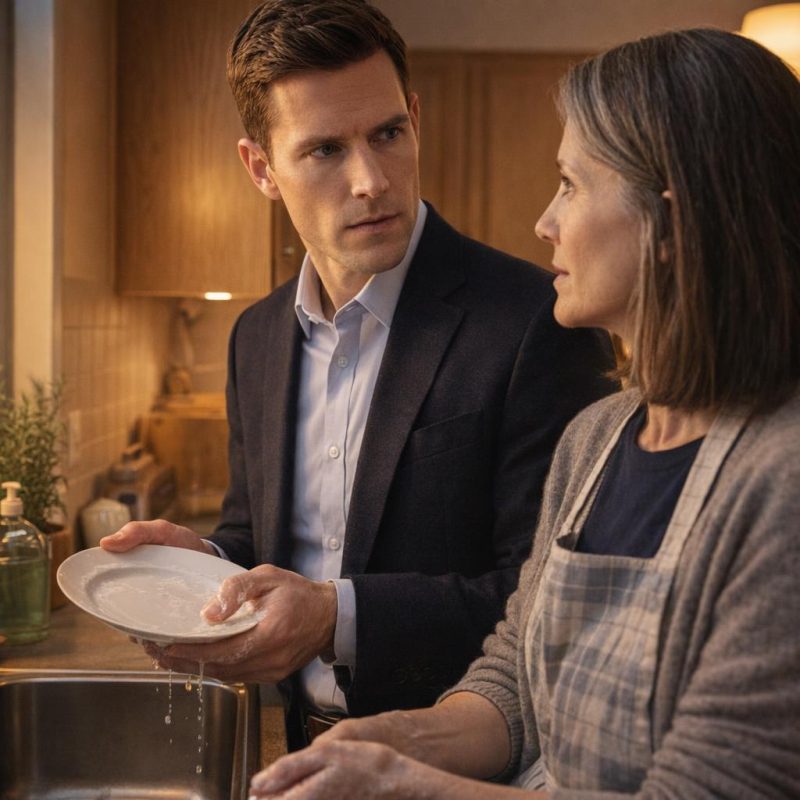 Image by RM AI
Someone Named Vanessa
He said it the way you'd mention the weather. Casual. Almost offhand. He said he'd been seeing someone for a few months and he thought it was getting serious. I put down the dish towel. Her name was Vanessa. She was finishing up a program on the East Coast — something in business, he said, though he was vague on the details in that way men are when they're still figuring out how to talk about someone new. I asked what she was like and he thought about it for a second, really thought about it, and then he said she was smart. Driven. He said the word intimidating like it was a compliment, which I suppose it was. I felt a little flutter of something — not quite nerves, not quite excitement, somewhere in between. I asked when I could meet her and he smiled and said soon, that she'd be back in a few weeks. I nodded and said that sounded wonderful and meant it. I went to bed that night thinking about her — this woman named Vanessa who my son found intimidating in a way that made him smile. That word sat with me longer than I expected it to.
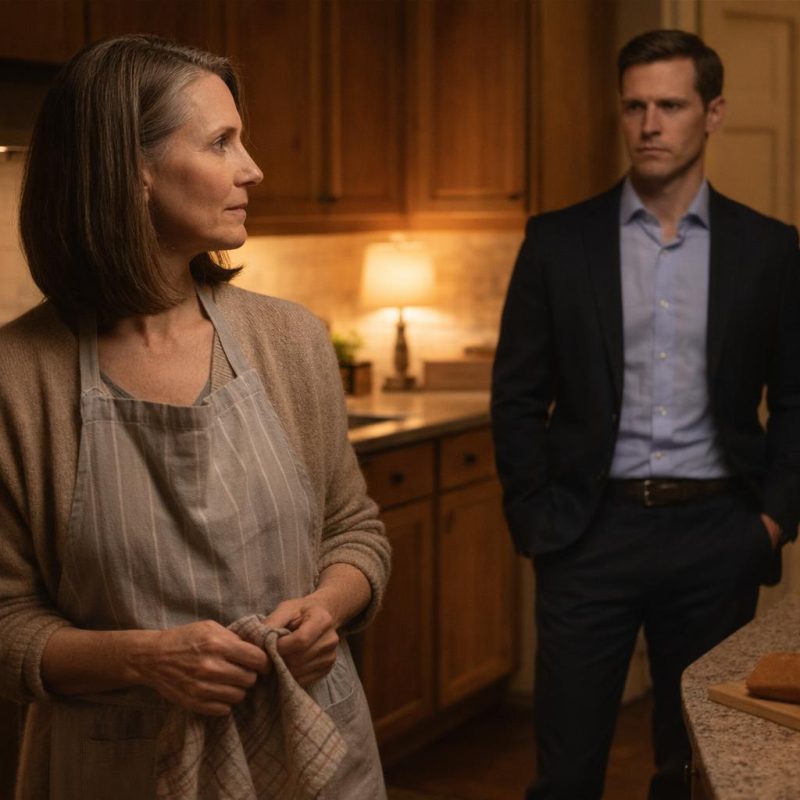 Image by RM AI
Preparing for Vanessa
I cleaned the house like I was expecting royalty, which, honestly, I kind of was. I did the baseboards. I did the baseboards, and I never do the baseboards. I planned the menu around Mark's favorites — pot roast again, because it was safe and good and the kind of food that said welcome without trying too hard. I changed my outfit three times. The first was too casual, the second was too formal, the third was the green cardigan I always feel like myself in, so I went with that. I wanted her to like me. I know how that sounds — I'm the mother, I'm the one who's supposed to be doing the evaluating — but I genuinely, desperately wanted this woman to walk into my house and think, yes, I can see why Mark loves her. I straightened the throw pillows one more time. I checked the roast. I moved a candle two inches to the left for no reason. And then, just as I was telling myself to calm down and act like a normal human being, I heard Mark's car pull into the driveway.
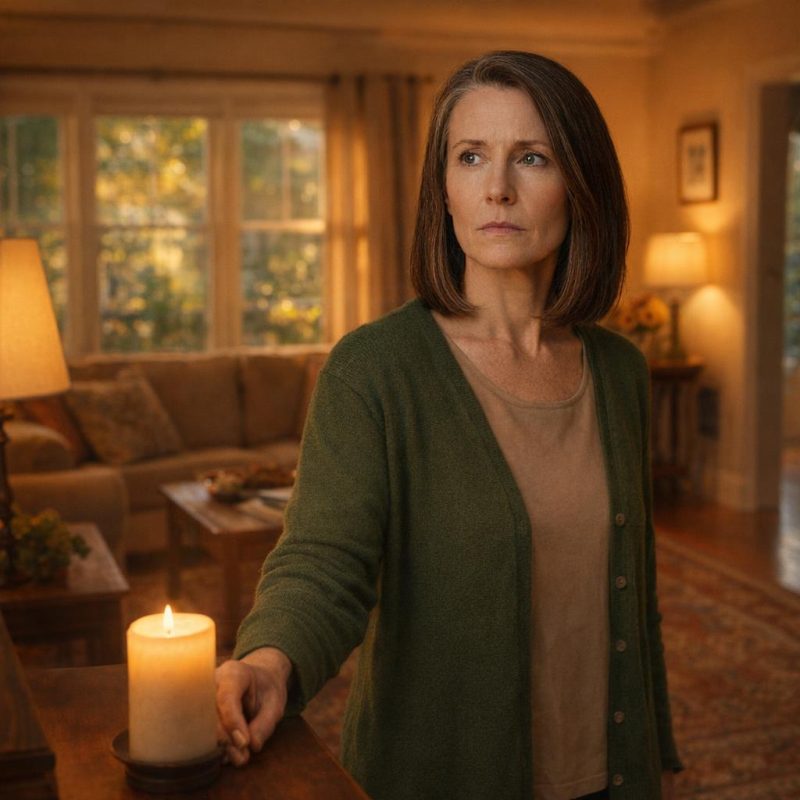 Image by RM AI
She Actually Helps
She walked in and the first thing she did was offer to help. Not in the polite, performative way where you say it hoping someone will say no — she was already moving toward the kitchen before I could answer. She had this easy confidence about her, the kind that doesn't need to announce itself. She asked about my friend Carol's hip surgery. I was so caught off guard I almost forgot to answer — I hadn't expected her to know anything about Carol at all. She helped set the table without being asked, found the silverware drawer on the second try, and complimented the house in a way that felt specific rather than automatic — she noticed the quilt on the armchair, asked where it came from. Dinner was easy. Conversation moved without effort. Mark kept glancing between us with this quiet, relieved look on his face, like he'd been holding his breath and finally let it go. By the time we cleared the plates, I'd stopped being nervous entirely. She just fit, somehow. The kitchen felt fuller with her in it, and that fullness settled around me like something I hadn't known I was missing.
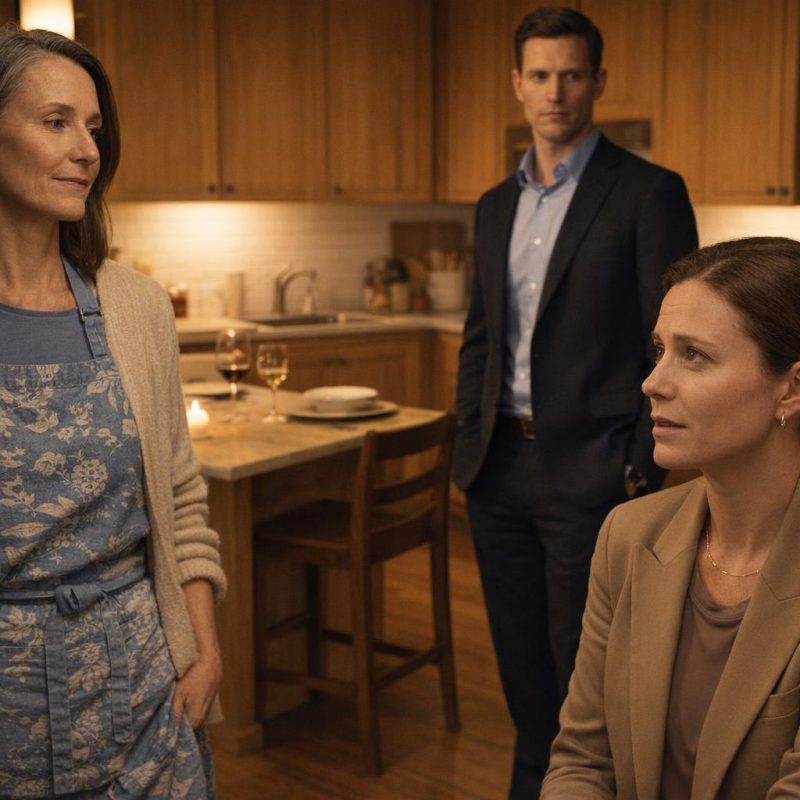 Image by RM AI
Mark's Favorite Things
Somewhere between the main course and dessert, Vanessa asked what Mark was like as a kid. Just like that, easy and curious, like she actually wanted to know. Mark groaned and said 'Mom, please don't,' which of course meant I absolutely had to. I told her about the phase where he would only eat macaroni and cheese if it was the exact right shade of yellow — not too orange, not too pale. I told her about the time he cried at a nature documentary because a penguin got left behind, and how he made me rewind it three times to make sure he'd understood correctly. She laughed at the right moments, but she was also leaning in, asking follow-up questions, wanting the details. What did he do on weekends? Did he have a best friend? What was the first thing he ever cooked? Mark sat there looking equal parts mortified and pleased, the way grown children do when someone is genuinely interested in who they used to be. I hadn't talked about those years so freely in a long time. It felt good to say them out loud to someone who wanted to hear them. The stories felt alive again, passed between us across the table like something warm.
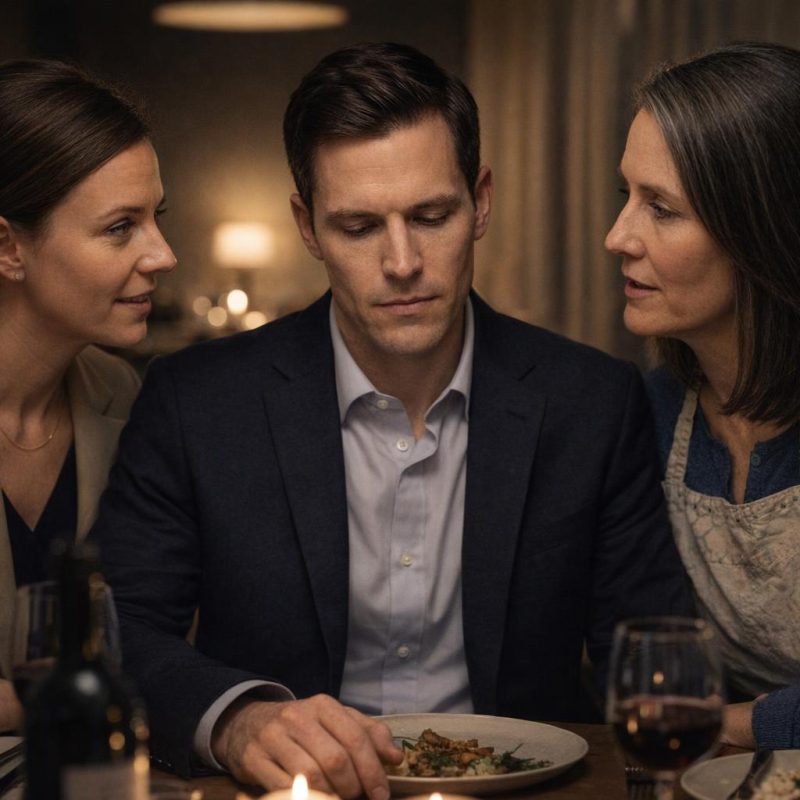 Image by RM AI
Learning the Recipes
We were washing up after dessert when Vanessa asked if I'd ever teach her the pot roast recipe. She said it quietly, almost carefully, like she wasn't sure how I'd take it. She said she wanted to be able to make it for Mark — his father's recipe, she called it, which meant Mark had told her where it came from. That detail hit me somewhere soft. I told her of course, that I'd be happy to, and I meant it more than I'd expected to. I went to the drawer where I keep the old recipe cards — the ones written in my mother-in-law's handwriting, the ones with the grease stains and the penciled-in adjustments I made over the years. I pulled out the pot roast card and stood there for a second, just holding it. It felt like a small act of trust, handing over something that had lived in that drawer for thirty years. But she'd asked so genuinely, and Mark looked so hopeful, and the whole evening had felt so right. I slid the card across the counter and placed it in Vanessa's hand.
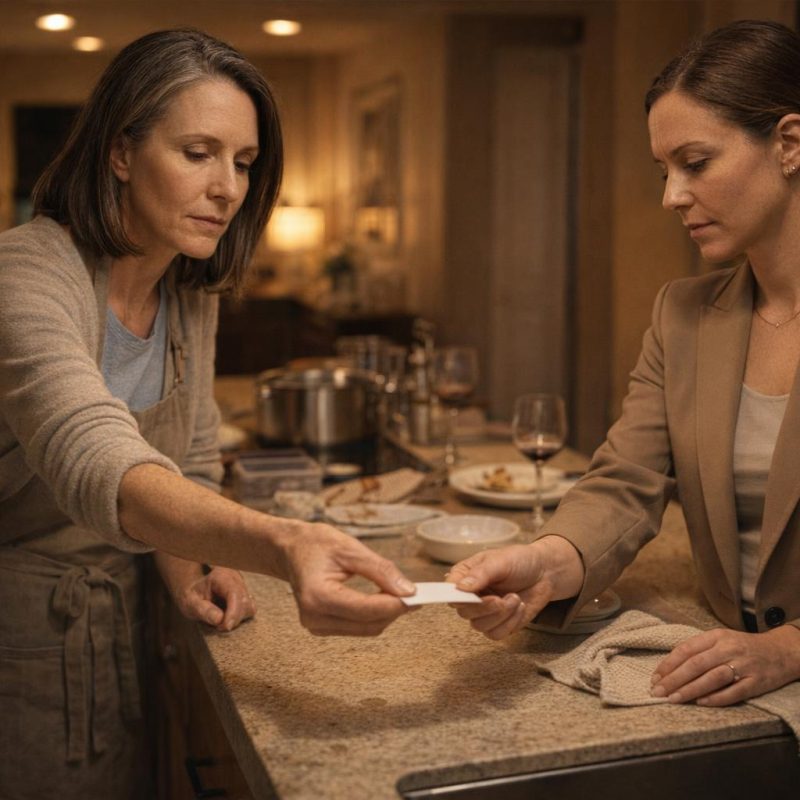 Image by RM AI
She Remembers Everything
Three weeks later she was back for Sunday dinner, and within ten minutes of sitting down she asked how Carol's hip was healing. I had to think for a second about what she meant. Carol's surgery had come up once, briefly, the very first night Vanessa visited — I'd mentioned it in passing while we were setting the table, the kind of throwaway comment you make to fill a moment. And yet there it was, pulled back out of thin air. She also asked whether I'd found a replacement for the leaky faucet in the guest bathroom, something I'd mentioned once and immediately forgotten I'd said. I looked at Mark across the table and he just smiled, like this was simply who she was. Later, after she'd gone home, I told him how thoughtful she was, how rare it was to meet someone who actually listened. He nodded and said yeah, she's always been like that. I drove home that night feeling genuinely lucky — that Mark had found someone so warm, someone who made you feel like what you said actually mattered.
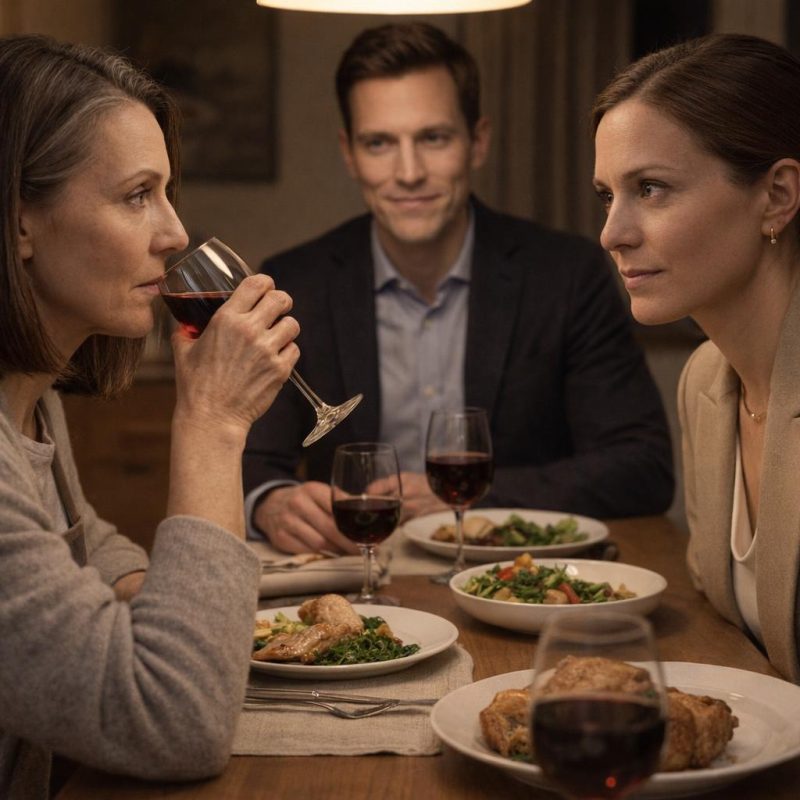 Image by RM AI
Teaching Her the Pot Roast
She asked if she could learn to make the pot roast. Not in a polite, offhand way — she actually called ahead and asked if she could come over on a Saturday morning so I could teach her properly. I said yes before she even finished the sentence. I hadn't made it since Robert died, and honestly I wasn't sure I could get through it without falling apart, but something about her asking made it feel like the right time. We stood side by side at the counter and I walked her through it the way Robert's mother had walked me through it thirty years ago — the sear first, always the sear, and you don't rush the onions no matter what anyone tells you. I told her about the first time I made it for Robert, how I'd gotten the timing wrong and served it an hour late and he'd eaten two helpings anyway and said it was perfect. She laughed at that, a real laugh, and asked me what he was like in the kitchen. We talked about him for almost two hours while the roast did its slow work in the oven. And the whole time, she was writing everything down — every measurement, every temperature, every small thing I said about why we did it this way instead of another.
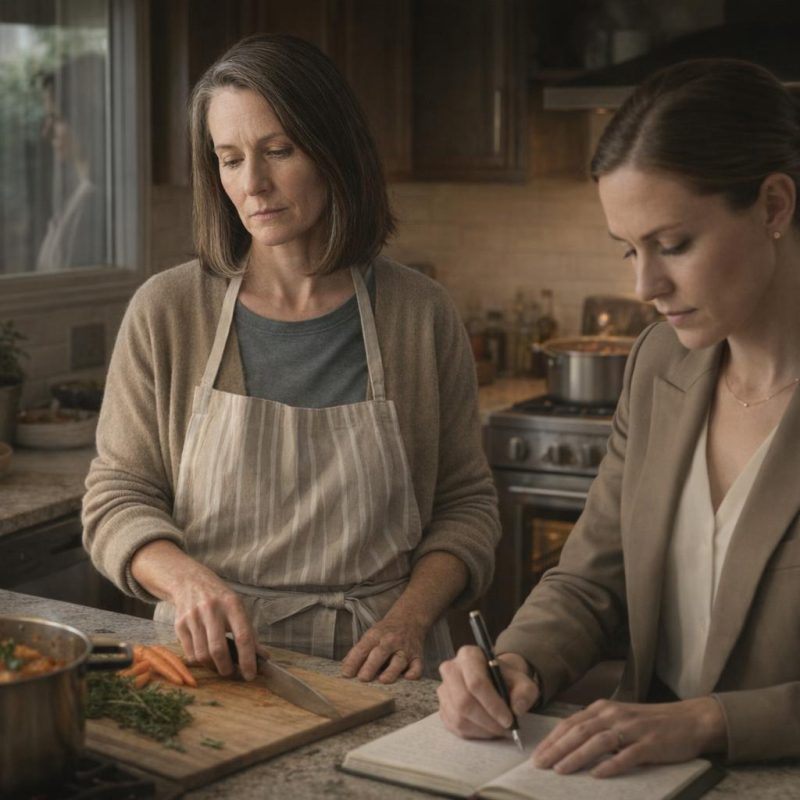 Image by RM AI
Lucky Twice
I called Linda that evening, still warm from the day. I told her about the cooking lesson, about how Vanessa had laughed at the story of Robert's late dinner, about how it had felt to talk about him in the kitchen again without it breaking me open. Linda listened the way she always does, quietly, letting me get through it. Then I said something I hadn't planned to say. I told her I thought I'd gotten lucky twice in my life. Once with Robert, and now with her — with Vanessa coming into Mark's life and, somehow, into mine too. Linda was quiet for a second and then she said, 'That's a big thing to say.' And I told her I meant it. I'd been so afraid after Robert died that Mark and I would just be the two of us holding the pieces together forever, and that would be enough but it would also be a little sad. Vanessa had changed that. She fit in the way people only fit when it's real. Linda said she was happy for us, and I believed her, and I sat there in my kitchen after we hung up feeling something I hadn't felt in a long time — like the future was going to be okay.
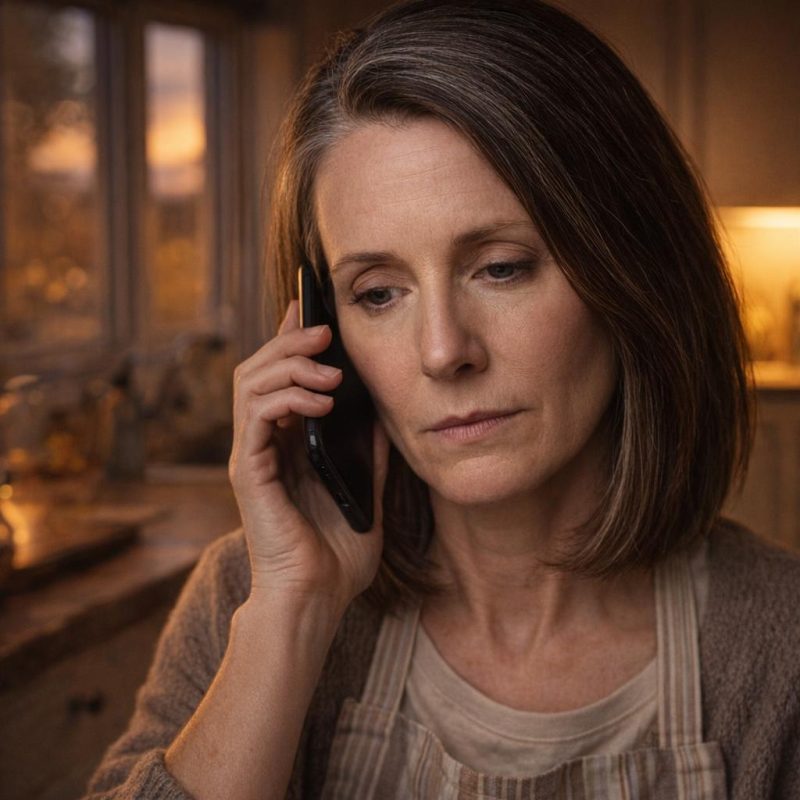 Image by RM AI
First Thanksgiving
She showed up two hours before dinner was supposed to start, which I hadn't asked her to do but which turned out to be exactly right. Mark was still picking up the wine and the rolls, so it was just the two of us, and she walked in, set her bag down, and asked what needed doing. Not in a guest way. In a let-me-help way. She already knew where the good mixing bowls were, already knew I kept the extra dish towels in the drawer by the stove. She didn't ask, she just moved. I handed her the green beans and she started trimming them at the counter while I worked on the gravy, and we talked about nothing in particular — her drive over, the neighbor's new dog, whether the cranberry sauce from scratch was really worth the effort — and it felt easy in a way I hadn't expected. When Mark came through the door and saw us both in the kitchen, he stopped in the doorway and smiled this slow, full smile, and I thought: yes, this is what it's supposed to look like. Dinner was warm and loud and nobody left hungry. Afterward, sitting with the last of the wine, I felt the particular quiet of a holiday that had gone exactly the way it was meant to.
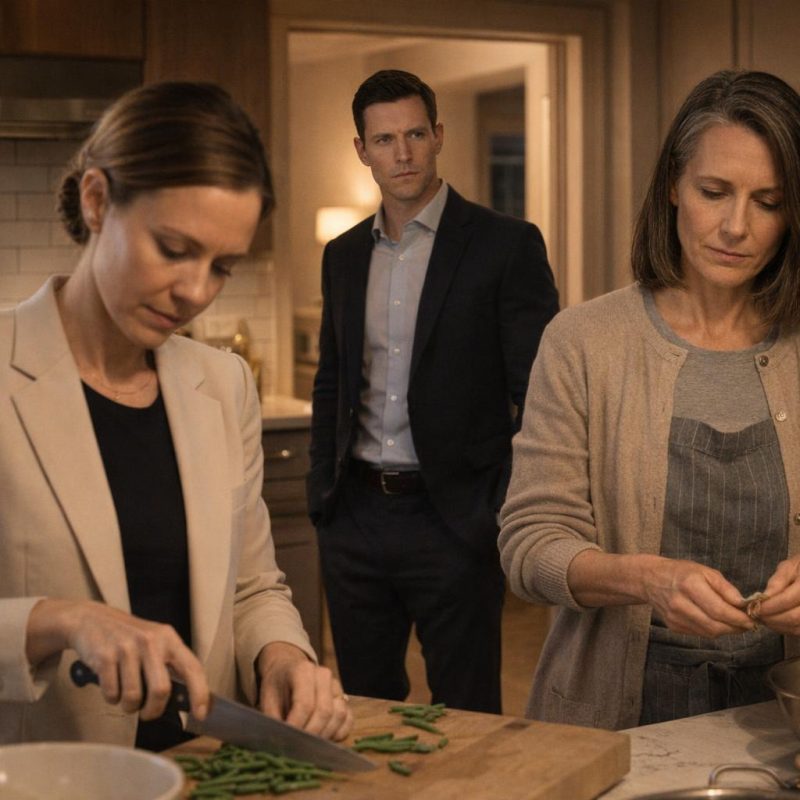 Image by RM AI
Where the Good Spoons Are
We were cleaning up after Sunday dinner — Mark was in the living room, Vanessa and I were doing the dishes — and I asked her if she could grab the good spoons from wherever they'd ended up. Without pausing, without looking around, she crossed the kitchen and opened the third drawer on the left. Not the first drawer, not the second. The right one, first try. I stood there with a dish towel in my hand and watched her pull them out and set them on the counter, and I felt this little rush of something warm. She knew. She'd been here enough times, paid enough attention, that she just knew. I thought about how long it had taken my own sister to remember where I kept things, and here was Vanessa, who'd been in my life less than a year, moving through my kitchen like she'd always been part of it. I didn't say anything about it. It felt like the kind of thing you'd embarrass someone by pointing out. But I noticed it, and it settled somewhere in my chest as evidence of something good — that she wasn't just visiting anymore, she was here. And I stood there watching her open that third drawer on the left without a moment's hesitation, the good spoons already in her hand.
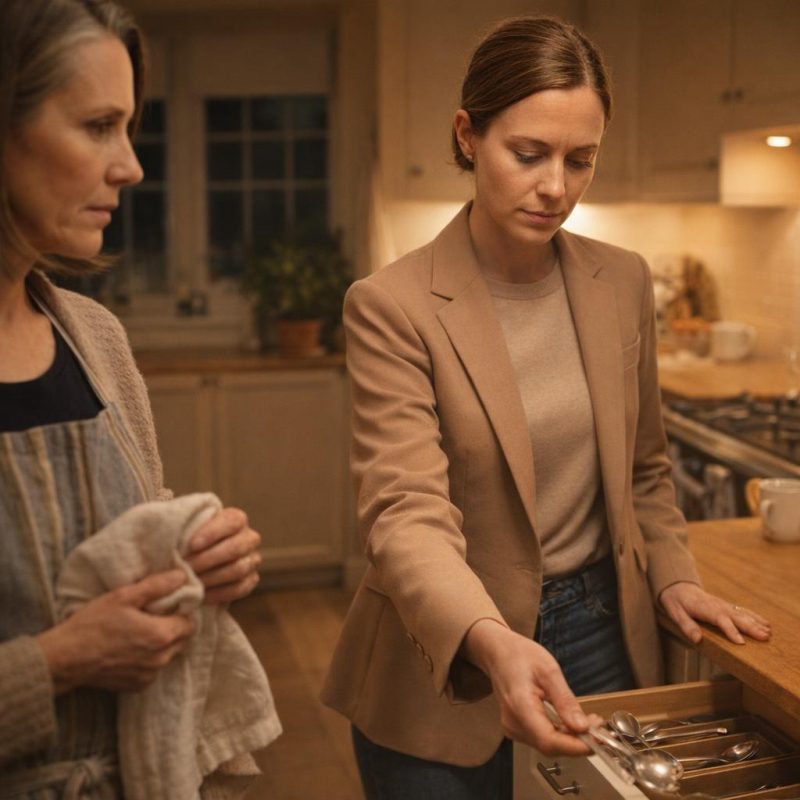 Image by RM AI
Perfect Gifts
She brought gifts at Christmas that stopped me cold. Not in a bad way — in the way where you have to sit down for a second because you weren't expecting to feel that much. There was a signed first edition of a novel I'd mentioned once, months ago, in passing, while we were waiting for the oven timer to go off. I hadn't even finished the sentence about it. And then there was a small framed print — a botanical illustration of the wildflowers that used to grow along the road where Robert and I had our first real date. I had told that story exactly once, at the kitchen table, while we were making the pot roast. I hadn't thought about it since. I looked at the print and then at her and I didn't know what to say. Mark was watching from across the room with this pleased, quiet look, like he'd known this was going to happen. I managed to thank her, and she waved it off the way gracious people do, said she just paid attention. I believed her. I sat with those two gifts in my lap for a long time after everyone had moved on to the rest of the afternoon, feeling the particular weight of being known by someone who had been listening all along.
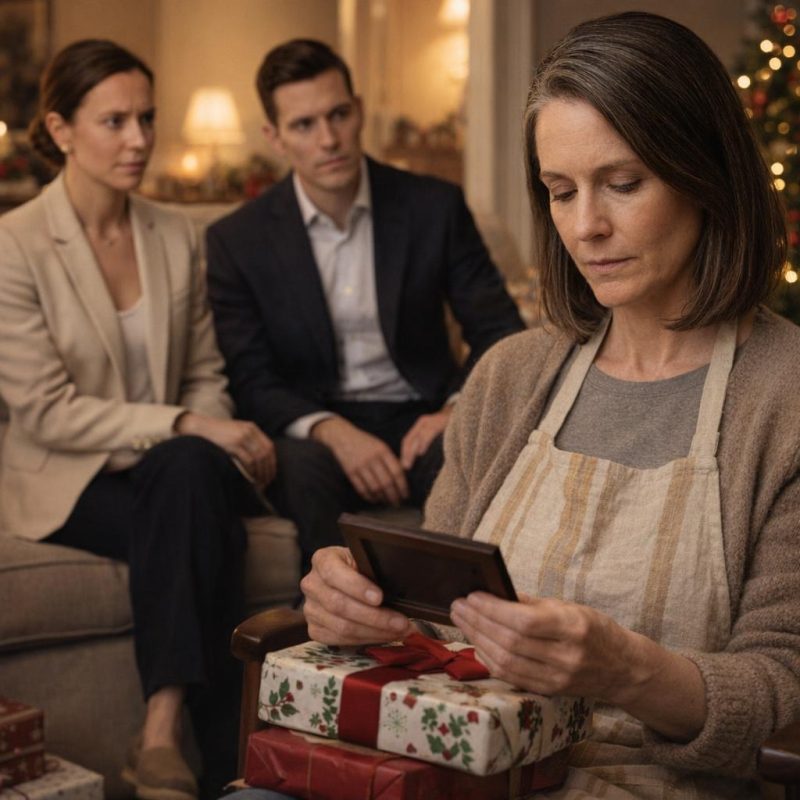 Image by RM AI
Vanessa Says
It started small enough that I almost didn't notice. We were at Sunday dinner — just Mark and me, Vanessa was at a work thing — and he mentioned a restaurant he'd been to with some colleagues. Said it was good but Vanessa thinks the one on Fifth is better, so they'd probably go there next time. Fine. Normal. Then later he brought up a project at work, something he'd been wrestling with for weeks, and said Vanessa thinks he should push back on the timeline. Also fine. People talk about their partners. That's what you do when you're in love. But then he said it a third time — Vanessa thinks the neighborhood they're looking at is overpriced — and I found myself quietly counting. Three times in one dinner. I didn't say anything. I told myself this was just what it looked like when two people were building a life together, when someone else's opinion started to matter as much as your own. Mark looked happy. He looked settled in a way he hadn't since before his father died, and I wasn't going to pick at that. I drove home and let it go. But somewhere in the quiet of the car, the rhythm of it stayed with me — the way his sentences had started to belong to someone else.
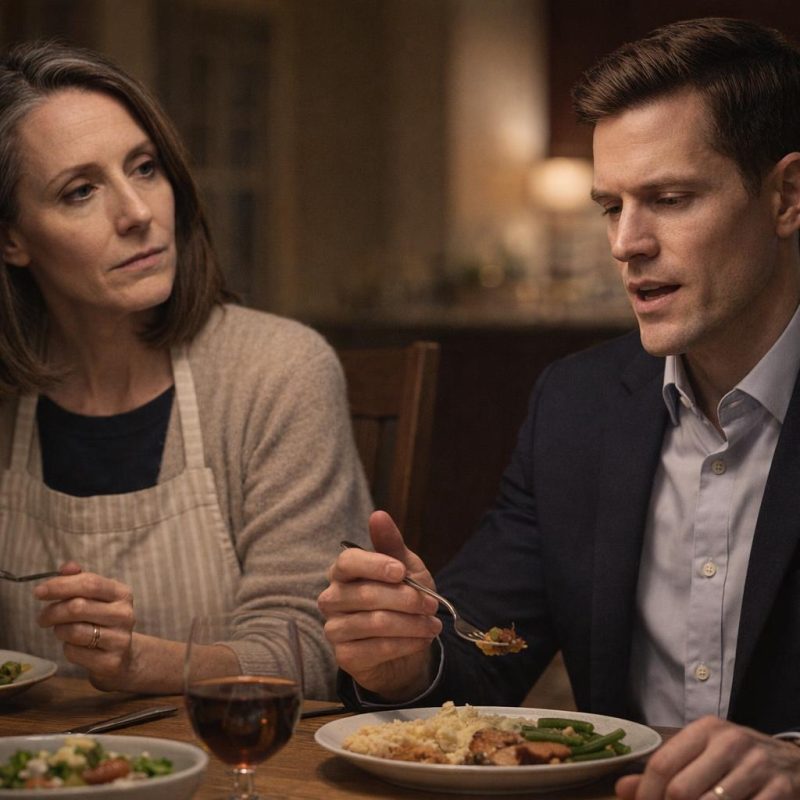 Image by RM AI
Vanessa Thinks
I asked him about his birthday dinner — just the two of us, the way we'd done it every year since Robert died. I suggested the Italian place on Maple, the one he'd loved since he was nineteen. He said he'd have to check with Vanessa, that she thought somewhere downtown might be nicer, better atmosphere. I said sure, of course, wherever works. Then I asked about his vacation plans, whether he was thinking about the lake house the way he used to every summer. He said Vanessa thinks the mountains would be better this year, that the lake house was a little dated. I nodded. I kept my face easy. But something small and uncomfortable moved through me, the kind of feeling you get when a room has shifted and you can't quite say how. I told myself it was normal. I told myself I was being one of those mothers who couldn't let go, who wanted her son to stay nineteen forever, and that wasn't fair to him or to Vanessa. He was happy. He was building something. That was the whole point. I was almost convinced. And then he said he'd have to check with Vanessa before he could tell me what time worked for Sunday — a question he would have answered himself without a second thought a year ago.
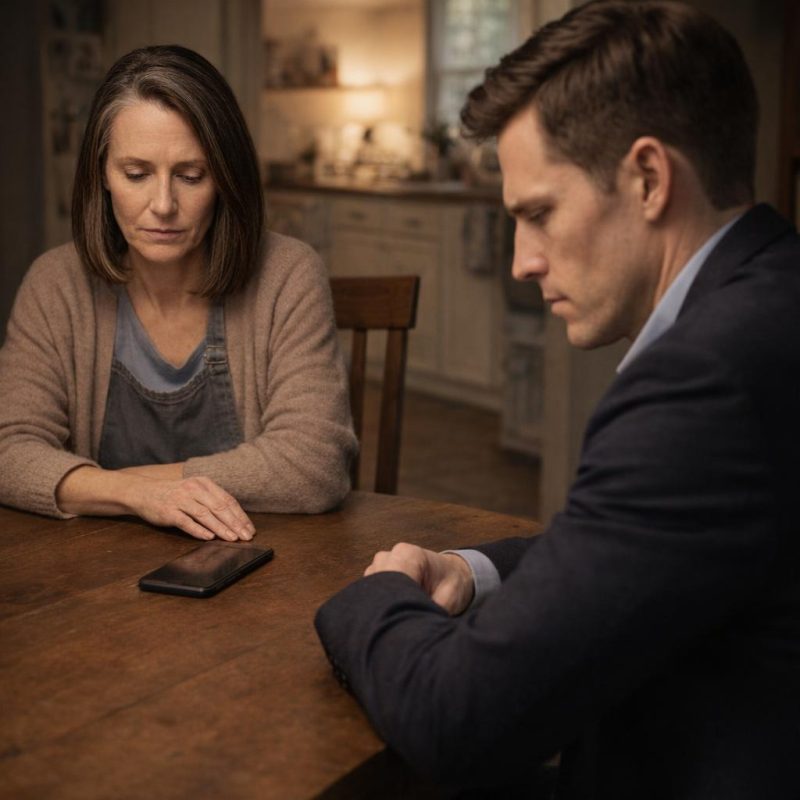 Image by RM AI
Small Decisions
He needed to check with Vanessa about Sunday dinner. He needed to check with her about the movie, about whether to drive or take the train, about which weekend worked for a visit. Each one was small. Each one made complete sense on its own. Couples coordinate. That's not a crime, that's just logistics. I told myself that every time I felt the little pang of it — the moment where I'd ask him something simple and watch him pause, reach for his phone, wait. I started wondering if I was being territorial. If I was one of those mothers who'd gotten too used to being the person Mark checked in with, and now that someone else had that role I was sulking about it like a child. That was an ugly thought and I sat with it. Maybe I'd leaned on him too hard after Robert died. Maybe the closeness we'd built in that grief had made me possessive without my realizing it. He seemed genuinely content — lighter, even. Vanessa made him happy and happy people defer to the people they love. I knew that. I repeated it to myself on the drive home. But somewhere between the highway exit and my front door, I caught myself wondering whether I was talking myself into something reasonable or just talking myself out of something true.
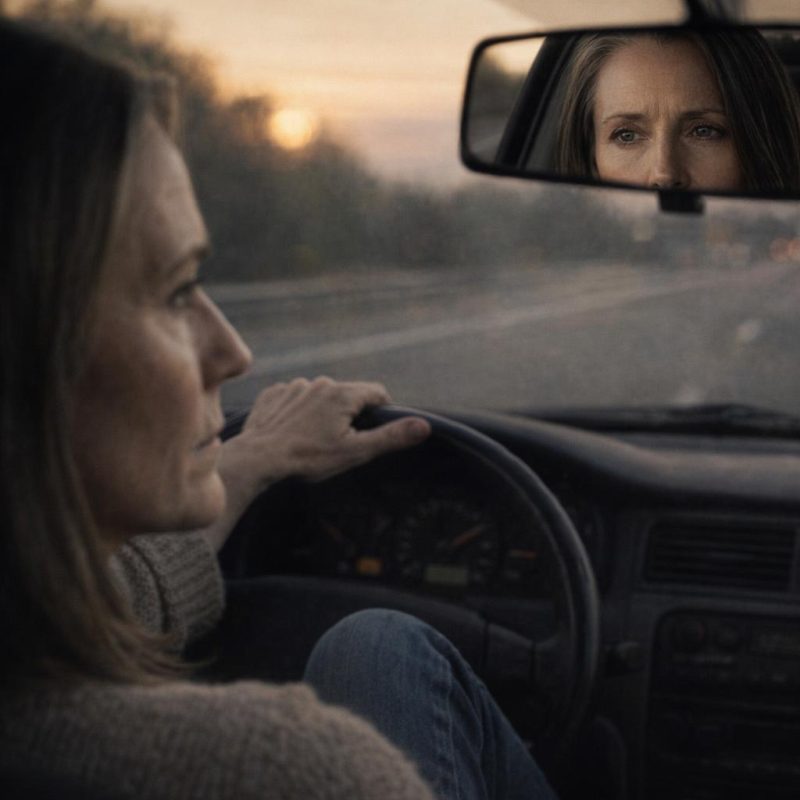 Image by RM AI
Feeling Replaced
I started noticing it in small ways. Vanessa remembered that Mark liked his coffee with exactly one sugar. She knew he got headaches if he skipped lunch. She kept his favorite snacks in her pantry and his preferred brand of ibuprofen in her medicine cabinet. All of it was thoughtful. All of it was exactly the kind of thing a loving partner does. And yet there was this ugly little voice in the back of my head that kept whispering: I used to be the one who knew those things. I used to be the one he called when his head hurt. I used to be the one who stocked the cabinet. I told myself I was being ridiculous. That this was what I'd wanted for him — someone who paid attention, someone who showed up. I told myself that love isn't a finite resource and that Vanessa knowing his coffee order didn't erase thirty-five years of me knowing everything else. I told myself all of that, very firmly, on a Tuesday afternoon while folding laundry. And then I sat down on the edge of the bed and felt it — the shame of being jealous of a woman for loving my son well.
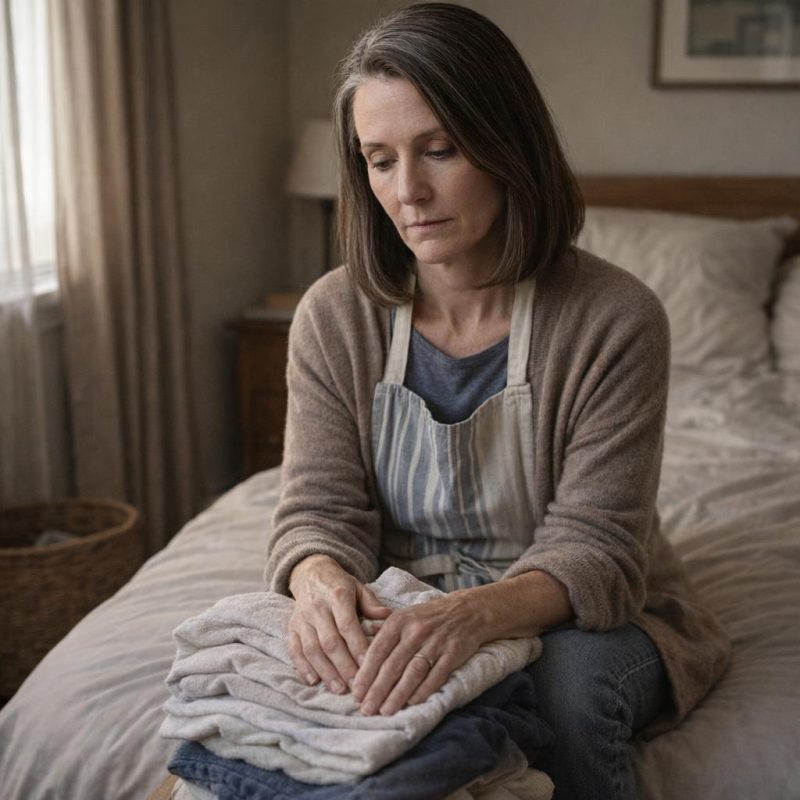 Image by RM AI
Every Topic
Sunday dinner used to have a rhythm to it. Mark would come in, drop his keys on the counter, and we'd just talk — the way we always had, easy and wandering, topic to topic without a map. But lately every conversation seemed to pass through the same invisible checkpoint. We got onto the subject of the election somehow, and before I'd finished my thought, Mark said, 'Vanessa thinks the whole primary system is broken.' We moved on to food — I'd made the lamb he loved — and he mentioned that Vanessa had been reading about regenerative farming and had some thoughts on where we source meat. I brought up his cousin's new baby and he said Vanessa believed strongly in not giving unsolicited parenting advice. I didn't say anything to any of it. I just kept passing the bread and refilling his glass and telling myself this was healthy. This was what it looked like when two people were genuinely building a life together. He wasn't parroting her — he was sharing. He seemed happy, genuinely lit up when he talked about her. I was glad for that. I was. But somewhere between the lamb and the dishes, I understood that there was no corner of the conversation left that didn't already have her name in it.
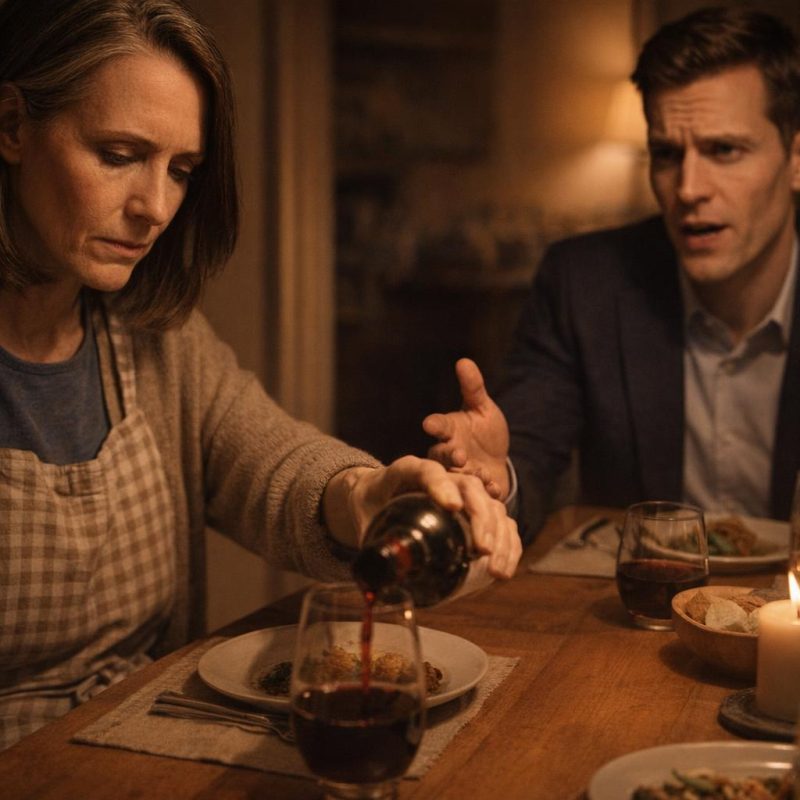 Image by RM AI
Checking First
I called Mark on a Thursday to invite him to his cousin's graduation party — a backyard thing, nothing formal, just family. He said, 'That sounds great, Mom, let me just check with Vanessa and I'll confirm.' And I said, 'Of course, no rush,' because what else do you say. But I stood there in my kitchen after we hung up and I felt it — this small, sharp thing I didn't have a clean word for. It wasn't anger. It wasn't even hurt, exactly. It was more like the feeling of reaching for something that used to always be there and finding the shelf empty. There was a time when I'd have asked and he'd have said yes before I finished the sentence. Not because he was careless about Vanessa's schedule, but because saying yes to his mother was just the default. Now I was a variable. Something to be confirmed pending approval. I told myself this was right and good and exactly what an engaged man should do. I told myself I'd have been worried if he hadn't checked with her. I told myself all the correct things, and I believed most of them. But the sting of it settled somewhere just below my sternum and stayed there long after I'd put the phone down.
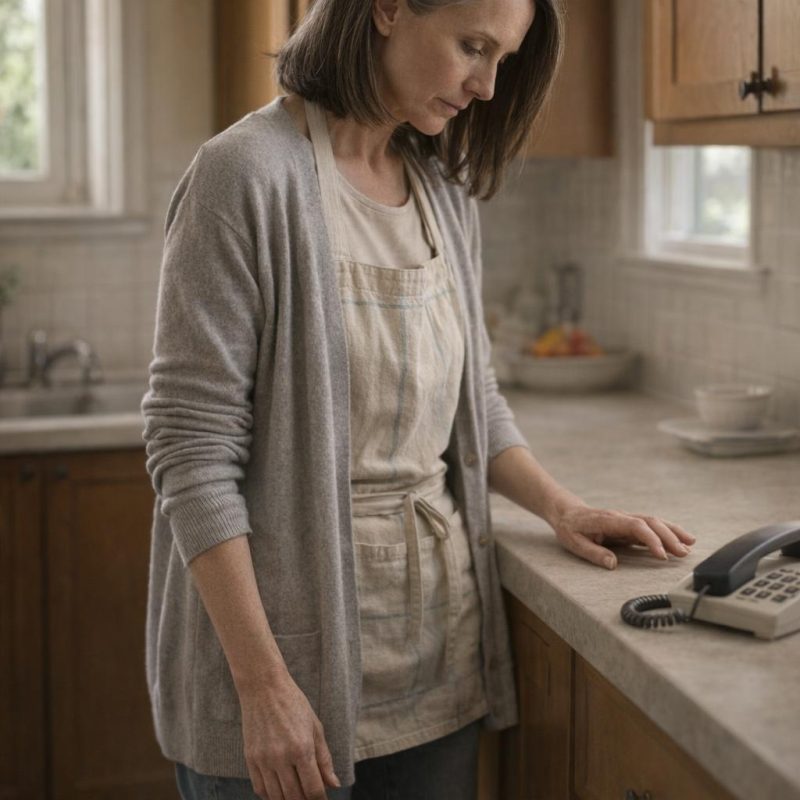 Image by RM AI
Am I Territorial?
I spent a whole Saturday afternoon just sitting with it — the feelings I'd been folding up and tucking away for months. And the longer I sat, the more I kept arriving at the same uncomfortable question: what if I'm the problem? Because here's the thing. Robert died and Mark stepped up. He called every morning. He drove out on weekends. He sat with me through the paperwork and the grief and the long silences, and I let him. I leaned into it. Maybe I leaned too hard. Maybe what I'd told myself was a beautiful mother-son bond was actually me holding on too tight, and now that he had Vanessa — now that he had a real partner, a future, a life that was his own — I was sulking because I wasn't the center of it anymore. That's an ugly thing to think about yourself. I sat with it anyway. I thought about my own mother-in-law, how I'd sometimes felt her hovering, and how Robert would gently redirect her, and how I'd been grateful for that. Was I becoming her? Was Mark going to have to gently redirect me someday? The thought made my stomach turn. I resolved, right there on that Saturday, to do better. To be the mother-in-law I'd always wished I'd had. And then I sat there asking myself whether I was being genuinely generous or whether I was just afraid of what I'd find if I kept looking.
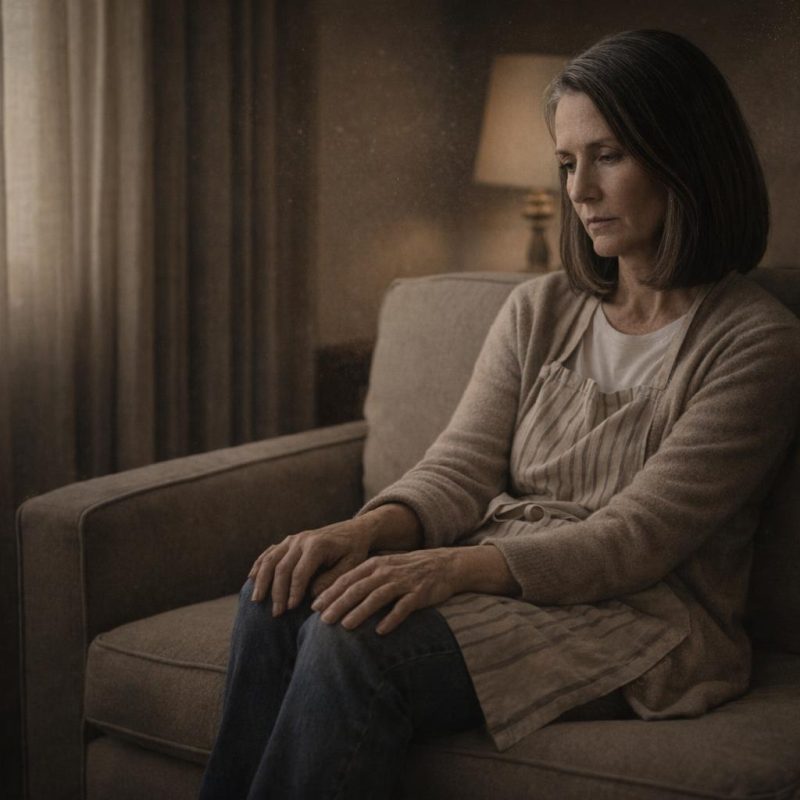 Image by RM AI
The Ring
They showed up on a Tuesday evening without warning, which should have been my first clue that something was happening, because Mark never just showed up on a Tuesday. He had a bottle of champagne under his arm and Vanessa was beside him in a cream-colored blouse, and before I'd even gotten the door fully open he was grinning in that way he used to grin as a kid — the whole face, nothing held back. He said, 'Mom, we have news,' and I looked at Vanessa's left hand and I saw it. I made a sound I didn't plan to make. I pulled Mark into a hug so hard he laughed, and then I turned to Vanessa and hugged her too, and I meant it — I genuinely meant it, both arms, the real thing. I was crying before the champagne was even open. We stood in my kitchen and I kept touching Mark's arm like I needed to confirm he was real, and I told them both I would help with anything they needed, anything at all, just say the word. Mark looked so happy it almost hurt to look at him directly. I poured the champagne into the good glasses — the crystal ones I only use for things that matter — and we toasted, the three of us, in my kitchen on a Tuesday night, and the glasses rang out bright and clear.
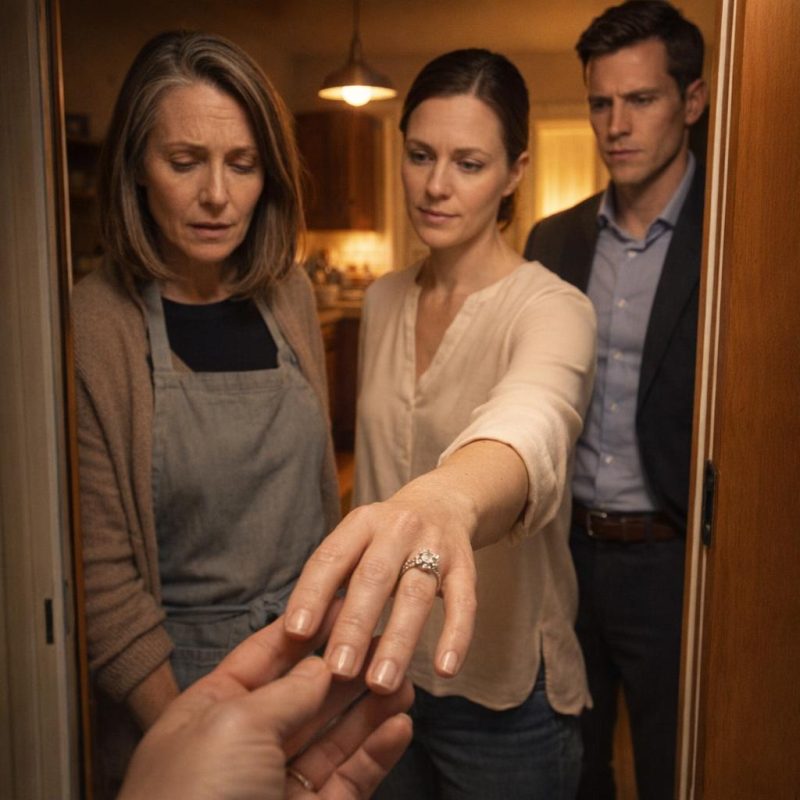 Image by RM AI
That Look
The celebration stretched into the evening. We ordered takeout because nobody wanted to leave, and Mark kept reaching over to squeeze Vanessa's hand, and she kept smiling that composed, perfect smile of hers. At some point she held her hand out to show me the ring again under the kitchen light, and I leaned in to look at it properly — it was beautiful, genuinely beautiful, a thin gold band with a single oval stone — and when I looked up from the ring I caught her expression. Just for a second. Mark was saying something behind me, laughing at his own joke, and Vanessa's eyes were on me, and her face was very still. Not cold, exactly. Not unkind. Just — settled. Quiet in a way I couldn't quite read. I didn't know what to make of it. I told myself I was reading into things, that I was so primed to feel displaced that I was inventing subtext in a happy woman's face. She was warm for the rest of the evening. She helped clear the takeout containers. She kissed Mark's cheek when he wasn't expecting it and he looked at her like she'd hung the moon. But later, after they'd gone and I was washing the champagne glasses alone, that stillness in her face stayed with me in a way I couldn't quite set down.
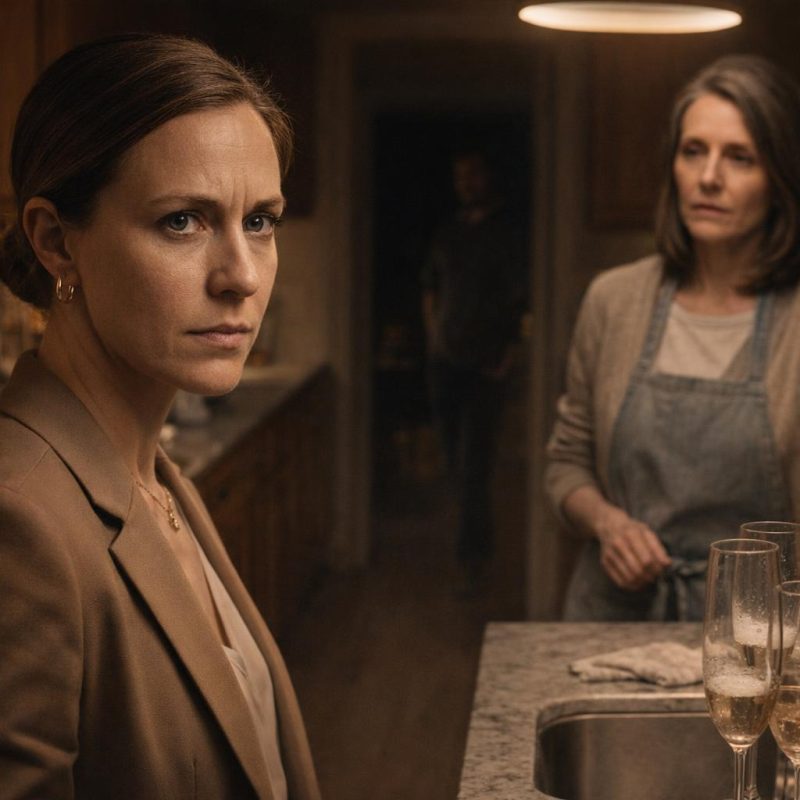 Image by RM AI
Offering to Help
A few days after the engagement, I called Mark and told him I wanted to help. I said it carefully, because I didn't want to overstep — I'd been thinking about that a lot, about where the line was. I told him I was happy to do vendor research, make calls, visit venues if they needed a second set of eyes. Whatever was useful. He sounded genuinely pleased. He said he'd talk to Vanessa and that he was sure she'd love the help. When Vanessa called me back that same afternoon, she was warm and specific — she mentioned a florist she'd been looking at and asked if I'd be willing to reach out and get pricing. It felt like being handed something real to hold. I wrote the florist's name down on the notepad I keep by the phone, the one with the little blue flowers on it that Mark gave me years ago, and I felt something loosen in my chest. This was how it was supposed to work. I was going to be part of this. Not in the way I used to be part of everything, not as the first call and the last word, but in a new way — a good way. I told myself that was enough. And sitting there with the notepad in my lap and the florist's name written in my own handwriting, I let myself believe it.
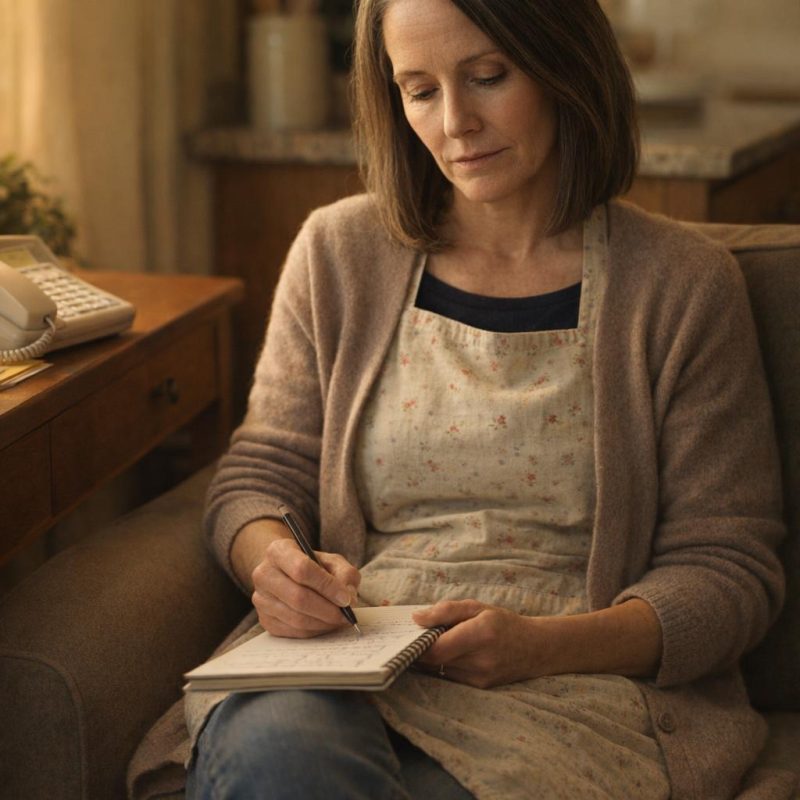 Image by RM AI
Venue Appointment
Mark called on a Sunday morning, which wasn't unusual. What he said was. He told me they had a venue appointment that afternoon and wouldn't be able to make dinner. I said, 'Of course, go, this is important,' and I meant it, mostly. He apologized twice and I told him twice not to. We hung up and I stood in the kitchen for a moment looking at the table I'd already set — two plates, the good placemats, the little dish of olives he likes. I put his plate back in the cabinet. I put the second placemat in the drawer. I left the olives out because I didn't know what else to do with them. I made myself a smaller portion and sat down and ate, and the kitchen was very quiet in the way it only gets when you're used to it being otherwise. I told myself this was fine. This was wedding planning. This was exactly the kind of thing that was supposed to happen when your son was building a life. I'd missed Sunday dinners before — holidays, travel, the occasional conflict. But this felt different in a way I couldn't quite name, and I sat with that feeling long after the plate was cleared, in the particular quiet of a chair that used to never be empty.
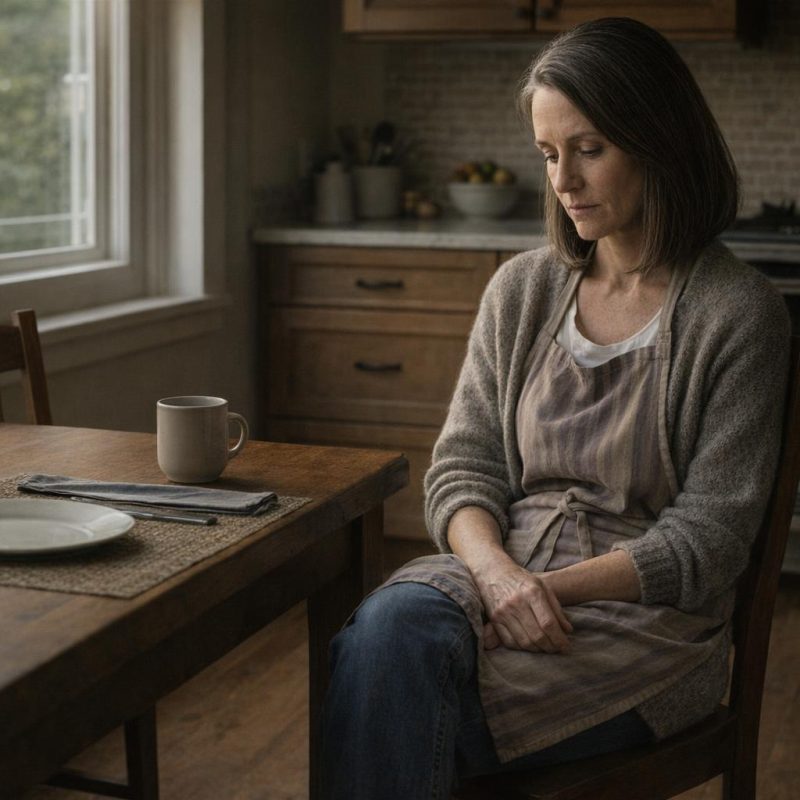 Image by RM AI
Garbage TV
I turned the television on around seven because the quiet had gotten too loud. I didn't pick anything — just landed on whatever was already playing, some home renovation show where people argue about countertops like it's a matter of life and death. I watched it without watching it, if you know what I mean. My eyes were on the screen but my brain was somewhere else entirely. I checked my phone twice. Then a third time. No messages. I told myself that was fine. They were probably still out, probably at dinner after the venue, probably having the kind of evening that becomes a story you tell at the wedding toast. I told myself that. I kept the volume a little higher than I usually do because the house had that particular kind of quiet that settles in when you're used to someone else's noise filling it. I made tea I didn't drink. I moved to the couch and then back to the armchair. By nine o'clock I had to admit, at least to myself, that Sunday evenings had always had a shape to them — and tonight that shape was gone.
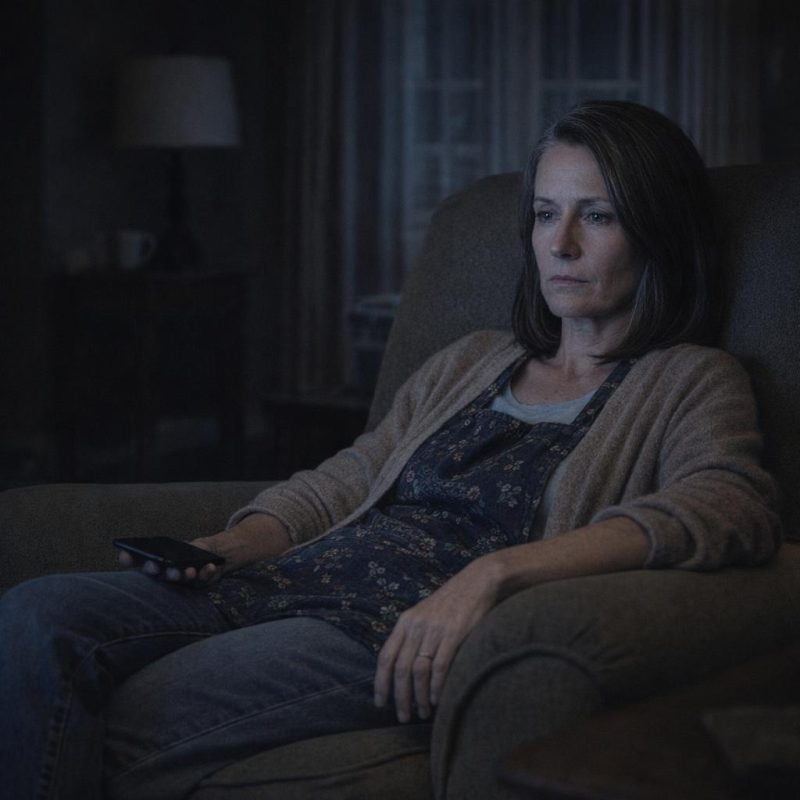 Image by RM AI
The Second Cancellation
He called on a Thursday to cancel the following Sunday. Not the day of, which I told myself was considerate. He mentioned cake tasting, then a florist appointment, then something about a venue deposit that needed to be sorted in person. I said, 'Of course, go, this is what planning looks like,' and I meant it, mostly. He sounded distracted in the way he gets when he's juggling too many things at once — short sentences, a little breathless, like he was already mentally somewhere else before we'd finished talking. I said I loved him and he said it back and we hung up and I stood in the kitchen for a moment. Then I went to the calendar on the fridge — the paper one I've kept for years because I like writing things down — and I looked at the Sundays. The little squares. Two of them now with nothing in them where his name used to be. I wrote 'wedding stuff' in the second one, same as the first, because I needed it to mean something ordinary. I told myself two Sundays wasn't a pattern. Two Sundays was just a busy season. But I left the calendar open on the counter, and I kept looking at those two small empty squares for the rest of the afternoon.
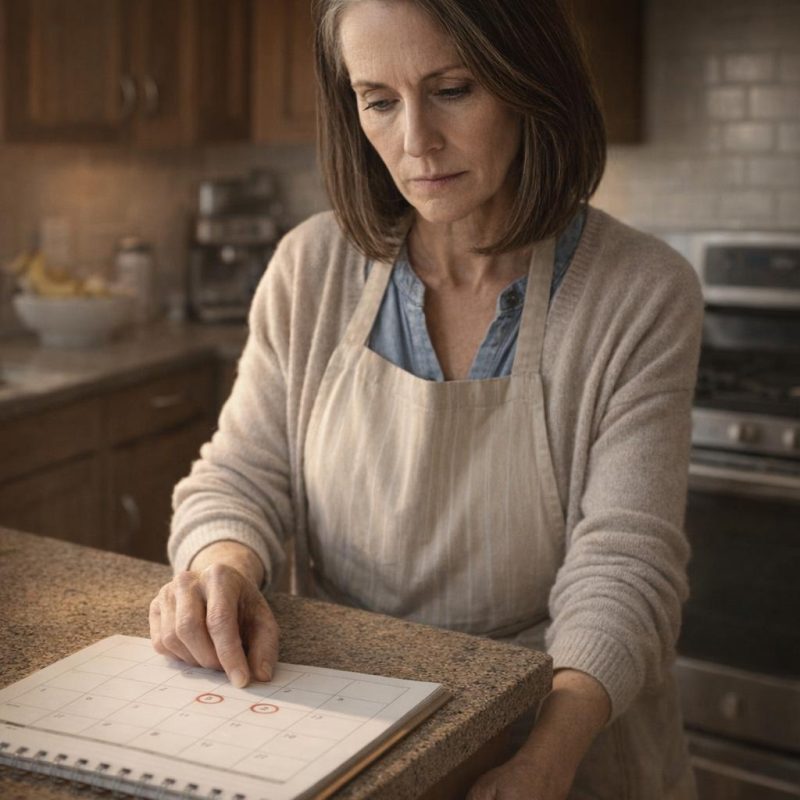 Image by RM AI
One Month
I didn't mean to count them. I was just looking for a dentist appointment I'd written down somewhere, flipping back through the weeks, and then I stopped. Four Sundays. Four little squares with 'wedding stuff' or nothing at all. We hadn't missed four Sundays in a row since Robert died, and even then Mark had driven over anyway, sometimes without calling first, just to sit in the kitchen and not be alone with it. These Sundays had been ours for years — through grief, through his job changes, through every hard thing. I thought about calling him right then. I even picked up my phone. But I put it back down because I didn't know what I'd say that wouldn't sound like an accusation, and I didn't want to be the mother who made wedding planning about herself. So I just stood there at the fridge, not moving. The calendar was still open on the counter — four empty squares, each one a Sunday that used to have his name in it.
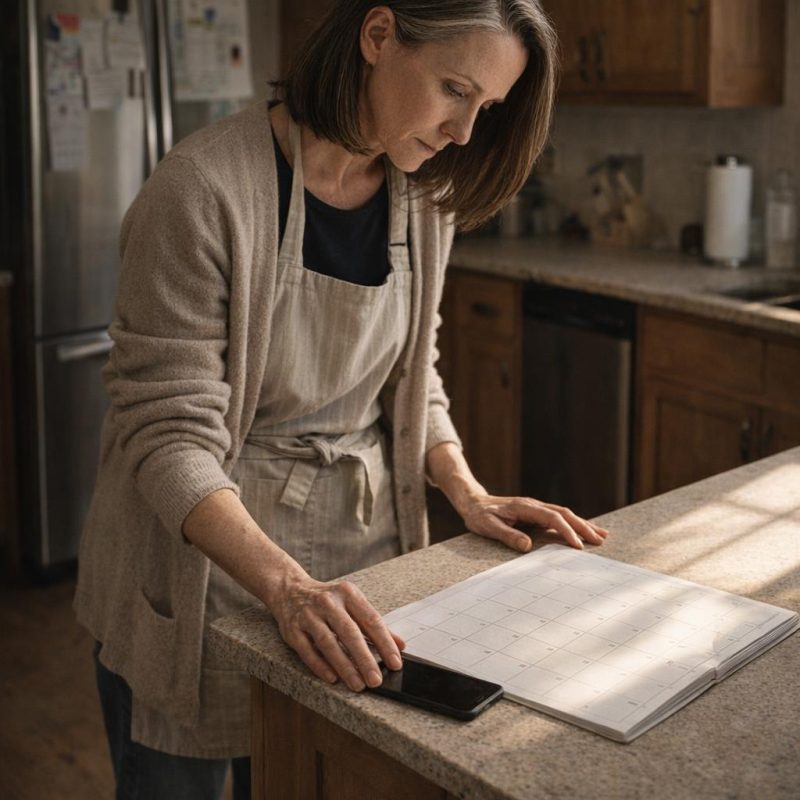 Image by RM AI
The Morning Calls Stop
I make coffee at eight ten every morning. That's not a new habit — it's been eight ten for years, because Mark used to call right around eight fifteen on his commute, and I liked having something warm in my hands when I heard his voice. I didn't even realize I was still doing it for him until I was standing at the counter one morning, mug in hand, watching the clock tick past eight fifteen in complete silence. I checked my phone. Nothing. I thought maybe he was running late, or stuck in traffic, or in an early meeting. I waited until eight thirty. Then nine. Then I stopped waiting and just drank my coffee alone, which is what I'd been doing anyway, I just hadn't admitted it yet. I went back through my call log that evening. It had been eleven days since he'd called during his commute. Eleven days of eight fifteen coming and going without a word. That call had been my daily proof that we were still okay — that whatever else was changing, the morning was still ours. I stood at the counter the next morning at eight ten, made the coffee anyway, and watched the clock move past eight fifteen in silence.
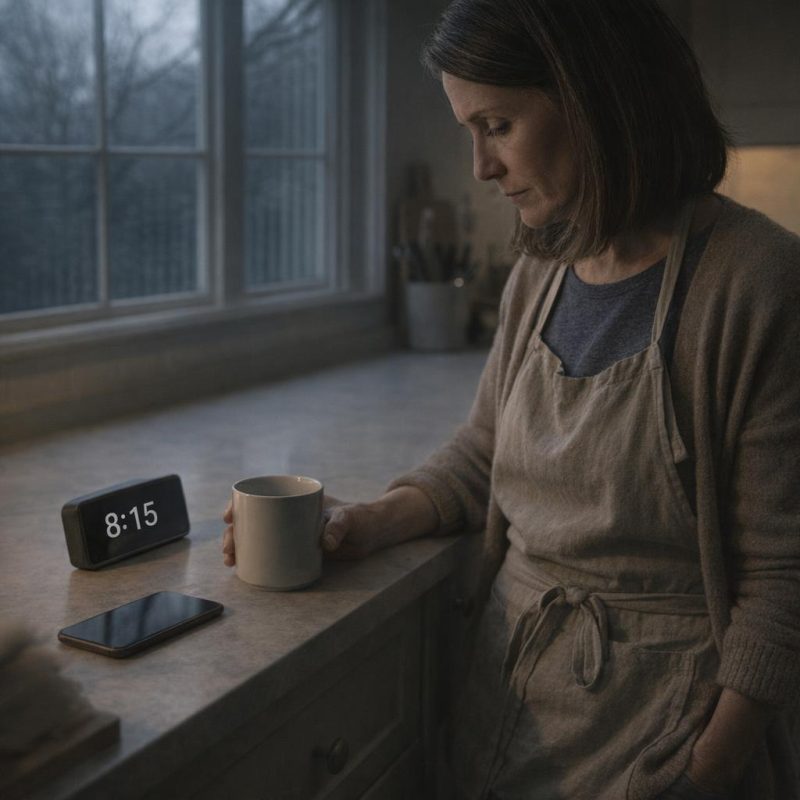 Image by RM AI
No More Dogs
It sounds ridiculous to grieve a dog photo. I know that. But you have to understand — it wasn't about the dogs. It was about the fact that he'd see some ridiculous golden retriever wearing a raincoat outside his office building and his first instinct would be to send it to me. That's what I'm talking about. That reflex. That 'Mom would love this' moment that meant I was still somewhere in the front of his mind in the middle of an ordinary Tuesday. I noticed the absence the way you notice a sound that's stopped — not all at once, but gradually, until the quiet becomes its own kind of noise. I scrolled back through our messages one evening, further than I meant to, and there they were: weeks and weeks of them. Blurry dogs. Dignified dogs. One extremely judgmental-looking cat he'd sent with the caption 'this is you when I'm late.' I laughed at that one even now, alone on my couch. Then I kept scrolling forward, toward the present, watching the photos thin out and then disappear entirely. The last one was six weeks ago. I opened the photo gallery in our thread and stared at where the pictures stopped.
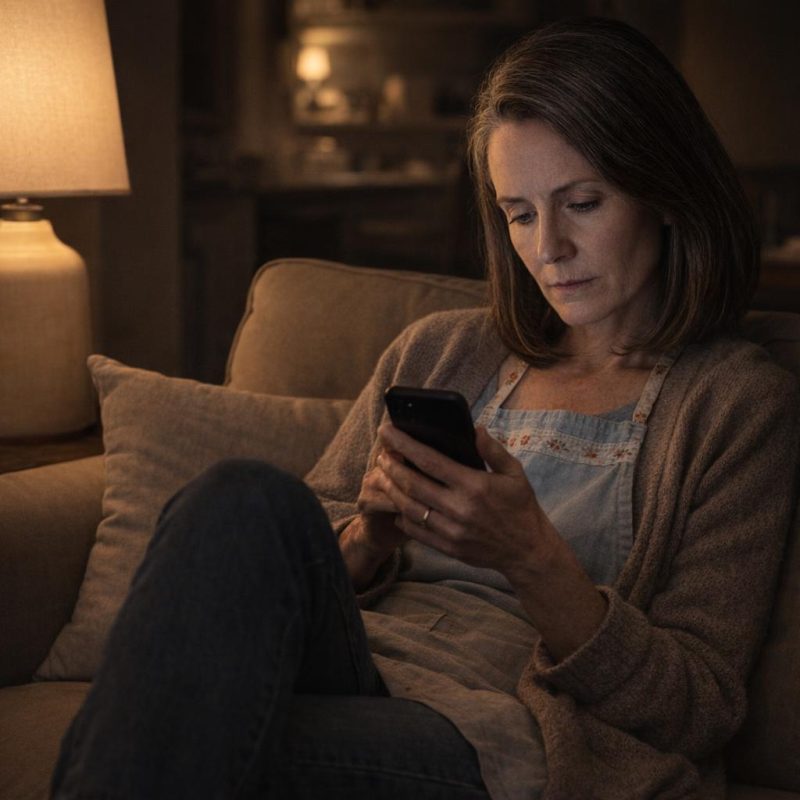 Image by RM AI
Vanessa Replies
I texted him on a Wednesday afternoon, nothing urgent — just a photo of the hydrangeas in the backyard that had finally come in, because he'd always liked them and I thought it might get a response. Three dots appeared almost immediately, which made me smile. Then the message came through and it wasn't from Mark. It was from Vanessa, using his phone, telling me he was resting after a long week and she'd let him know I'd reached out. Polite. Perfectly polite. I stared at the screen for a moment. I typed back 'of course, no rush, just wanted to share the flowers' because what else do you say. But I sat with it after I put the phone down. It wasn't the first time. There had been a Sunday two weeks back when I'd texted to ask if he wanted me to save him some soup, and Vanessa had replied then too — same tone, same careful politeness, same explanation that he was tired. I told myself it was kind of her to respond so he didn't have to. I told myself that. But something about seeing her name on his screen sat in my chest in a way I couldn't quite shake loose.
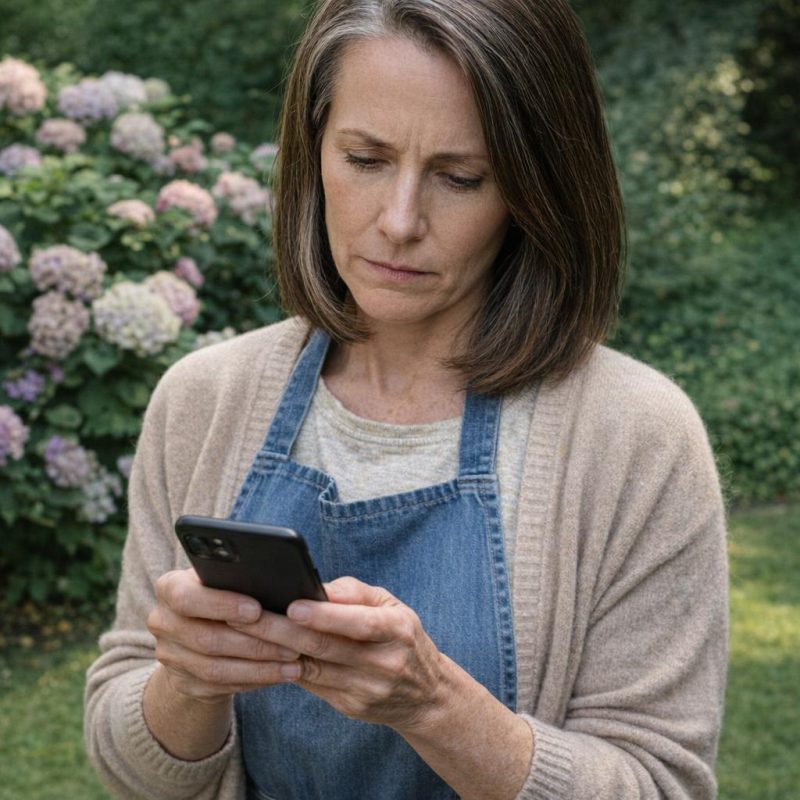 Image by RM AI
Always in a Meeting
I tried calling on a Monday. Vanessa answered on the second ring and told me Mark was in a back-to-back meeting situation and she'd have him call me when he surfaced. Her voice was pleasant, unhurried, like she had all the time in the world to explain why I couldn't speak to my son. I said thank you and hung up. I tried again Wednesday evening, thinking surely he'd be home and free by then. Vanessa answered again. Resting, she said. He'd had a brutal week. I said I understood. I tried a text on Friday, something light — just a joke about a news story I thought he'd find funny. The reply came from his number but it wasn't his voice: *He's tied up but I'll show him this, he'll get a kick out of it.* I sat with that for a long time. I wasn't angry, exactly. I kept telling myself she was helping, that she was looking after him, that this was what partners do. But I couldn't reach my son, and each time I tried I ended up with her voice instead of his — and I didn't know what to do with that.
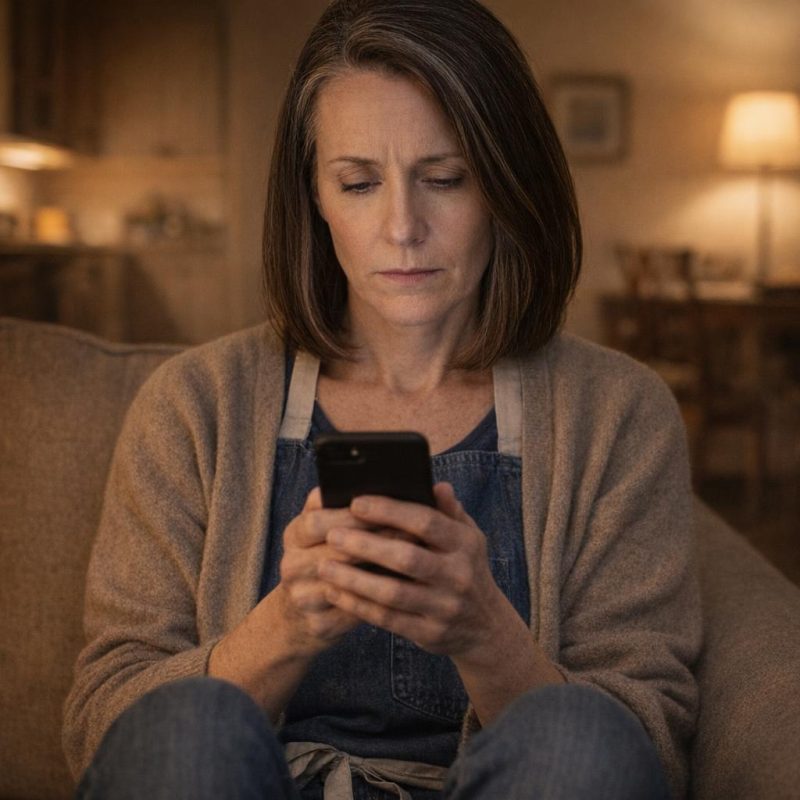 Image by RM AI
Vanessa Answers
I called on a Saturday morning because I thought the weekend might be different. I'd been telling myself all week that I just needed to catch him at the right time, that it was bad timing, that it wasn't what it felt like. I pressed call and it rang twice and then someone picked up. I said, 'Mark?' There was a half-second pause — just long enough to notice — and then Vanessa's voice came through, smooth and even. She said he was out running errands and she wasn't sure when he'd be back. I asked if she could have him call me when he got in. She said of course, absolutely, she'd pass it along. I thanked her. I hung up. I sat on the edge of the bed and looked at my phone and tried to remember the last time I'd actually heard my son's voice.
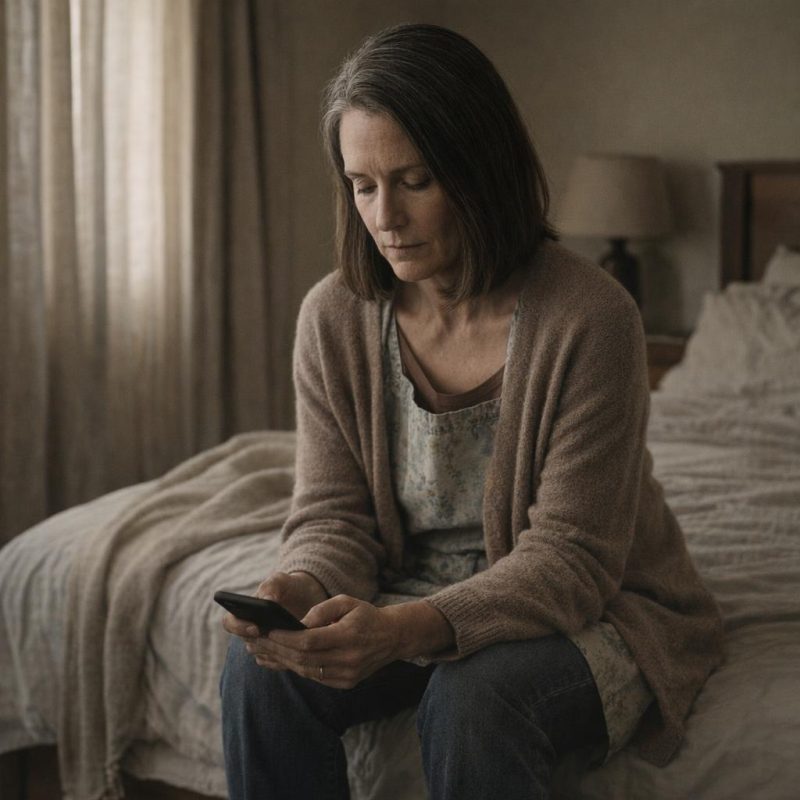 Image by RM AI
Trying to Reach Him Directly
I tried everything I could think of. I called his cell on a Tuesday morning, a Thursday afternoon, a Sunday evening — different times, like I was trying to catch a fish that only surfaced at odd hours. Every single time, it went to voicemail. I left messages that started confident and ended uncertain. Then I found his direct work number — the one on his old business card that I'd kept in the kitchen drawer — and I called that. A woman at the front desk said he was in a meeting and could she take a message. I gave my name. I said I was his mother. She was kind about it. He never called back. I sent an email to the personal address he'd had since college, the one with the stupid username he'd picked at seventeen and always meant to change. No reply. I texted at times I knew he used to be free — early morning before work, late evening after dinner. Each time, within an hour or two, Vanessa would respond from her own number. Cheerful. Helpful. Completely in the way. I'd sit there staring at her name on my screen where his should have been, and the quiet in the house felt like it had weight.
 Image by RM AI
The Communication Takeover
I sat down one afternoon and went through my phone the way you go through a drawer you've been avoiding — slowly, with a kind of dread. I scrolled back through weeks of attempts. Calls. Texts. That one email. And every single thread, without exception, ended the same way: Vanessa's name, Vanessa's words, Vanessa's smooth and perfectly reasonable explanations for why Mark wasn't available right now. He was tired. He was traveling. He was in the middle of something. She'd have him reach out when things settled down. Things never settled down. I tried to remember the last time I'd actually heard his voice — not a voicemail from months ago, not a memory, but a real live conversation where he said Mom and I said what and we talked about nothing important for twenty minutes the way we used to. I couldn't place it. The date was gone. I sat there with my phone in my lap and tried to figure out what I was supposed to do next, and I had nothing. No next move. No door left to knock on. Just the particular silence of someone who has been very efficiently, very politely, locked out.
 Image by RM AI
Remembering the Recipes
I don't know what made me start thinking about the recipes. Maybe it was the pot roast I made for myself that Tuesday — Robert's mother's recipe, the one I'd walked Vanessa through step by step in my own kitchen while she sat at the counter with that small spiral notebook open in front of her. She wrote down everything. Not just the ingredients — the order I added them, the exact temperature, the way I described knowing it was done by the smell rather than the timer. I'd thought it was sweet. Endearing, even. I'd thought, here is a woman who wants to learn, who wants to carry something forward. I remembered other afternoons like that one. The stories I'd told while we cooked. How Mark used to steal bites before dinner was ready. The way Robert took his coffee. The songs I used to sing to Mark when he was small and couldn't sleep. She'd asked about all of it, and I'd given all of it, freely, because she seemed to want to know me. I was pulling the pot roast out of the oven when I noticed it on the shelf by the back door — the small spiral notebook she'd left behind after her last visit, sitting there like it had always belonged.
 Image by RM AI
Guest, Not Participant
The wedding invitation came on a Wednesday, tucked between a water bill and a grocery store circular like it was nothing. Cream-colored envelope, my name and address printed in a clean serif font — not handwritten, printed. I stood at the mailbox for a moment before I went inside. I made myself a cup of tea first. I don't know why. Maybe I already knew I needed to be sitting down. I opened it at the kitchen table and read it twice. It was beautiful, honestly — thick card stock, elegant design, the kind of invitation you frame afterward. My name was printed inside with the same clean formality as the envelope. No note tucked in with it. No separate card from Mark saying, Mom, I can't wait for you to be there. Just the invitation, identical to what I imagined every other guest received. I thought about the mothers of grooms I'd seen at weddings over the years — standing in the receiving line, consulted about the flowers, asked about family traditions. I hadn't been asked about a single thing. Not the venue, not the date, not whether the weekend worked for me. The card stock was heavy and smooth between my fingers, and it read: *Ms. Diane [Last Name] is cordially invited.*
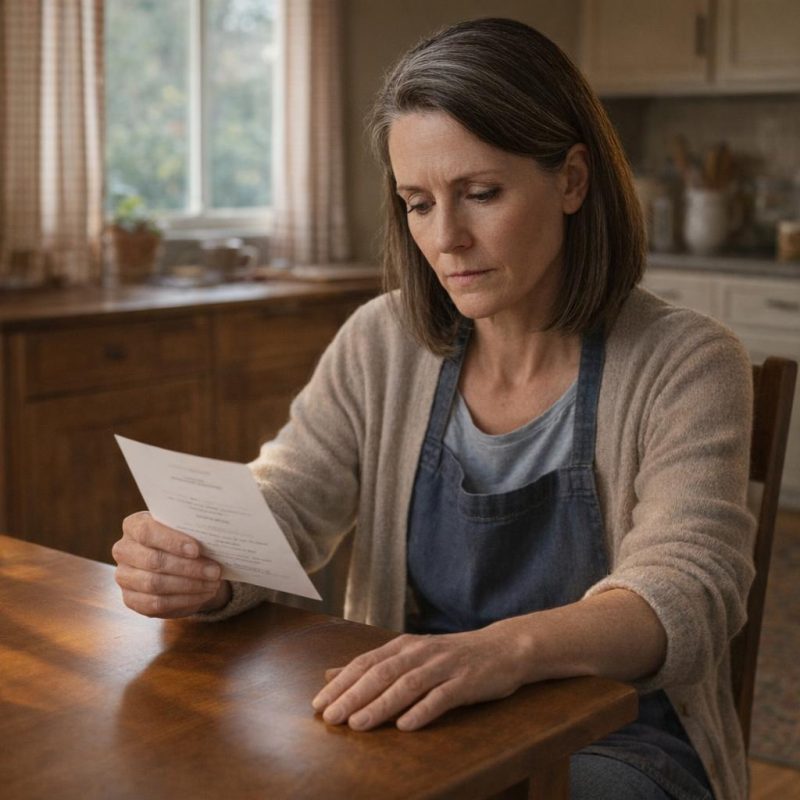 Image by RM AI
The Data Collection Scheme
It hit me all at once, the way those things do — not gradually, but like a light switching on in a room you've been stumbling around in the dark. I was sitting with that notebook in my lap, and I started flipping through it, and it wasn't just recipes. It was everything. The coffee order. The songs. The stories about Mark as a little boy. The way I described Robert. My routines, my preferences, the small private language of a family that had been ours for thirty years. She hadn't been learning how to know me. She'd been learning how to be me — or close enough that Mark wouldn't notice the difference. Every cooking lesson was a transfer of source material. Every personal question was an extraction. Every warm afternoon in my kitchen was a session I'd walked into willingly and called bonding. I thought about the look on her face the day of the engagement — that calm, settled expression, like someone who had just finished a very long project. I'd read it as happiness. I understood now what it actually was. She had studied me the way you study for a test you intend to ace, and somewhere along the way I had handed her every answer, and I hadn't even known there was a test.
 Image by RM AI
She Studied Me to Replace Me
Here's what I keep coming back to: I was never a person to her. I was a blueprint. Every time I thought we were connecting — every time I felt that small, hopeful warmth of thinking maybe this will be okay, maybe she genuinely likes me — she was taking notes. Not literally, not always, but in that sharp, cataloguing way of hers that I'd mistaken for attentiveness. I'd given her the pot roast. I'd given her the lullabies. I'd given her the story of how Robert proposed, the one I'd only ever told Mark and Linda. I'd handed over thirty years of being Mark's mother like it was a gift, and she had accepted it like inventory. The cruelest part isn't even that she did it. The cruelest part is that I helped. I was so relieved that she seemed interested, so grateful that someone was asking, that I opened every door and turned on every light and gave her the full tour. And once she had what she needed, I stopped being useful. That's the part that sits in my chest like something with actual weight — not the anger, though there's plenty of that, but the understanding that I was never the point. I was the research. And the moment the research was complete, I became the thing she needed Mark to move away from.
 Image by RM AI
Weaponized Psychology
What I couldn't figure out at first was how she got Mark to go along with it. Because Mark knew us. He knew what we were to each other — what those years after Robert died had cost us both and built between us. He wasn't a child who could be easily redirected. And then I started thinking about the language. The specific words Mark had used in that last real conversation, the one where he'd said he needed space and that our relationship had become a lot. Codependent. Enmeshed. Boundaries. Those aren't Mark's words. Mark's words are fine and yeah and I'll call you Sunday. Those are words from a vocabulary someone handed him, clinical and clean and impossible to argue with, because how do you tell someone that their therapist-approved terminology is being used as a weapon? She hadn't just replaced me in the kitchen. She'd replaced the story of us — rewritten our grief and our closeness and every phone call and every Sunday dinner into a pathology. Something he needed to heal from. Something a healthy adult man outgrows. And Mark, who had always wanted to do the right thing, who had always tried so hard to be good, had believed her. He thought he was getting better. The precision of it settled over me like something cold and exact.
 Image by RM AI
Mark Thinks We're Unhealthy
The thing about grief is that you think you know its shapes by now. You've lived inside it. You know the specific weight of losing someone who was supposed to stay. But this is a different kind of loss, and I wasn't prepared for it. Mark is alive. He's out there right now, probably having dinner, probably fine, probably believing with his whole heart that the distance between us is healthy and necessary and a sign of his own growth. He thinks he's becoming the man he's supposed to be. He thinks I'm the thing he had to set down to get there. And I can't call him to tell him that's not what we were. I can't send him the evidence of what we actually were to each other, because Vanessa has already gotten there first and named it for him, and her name for it is dysfunction. I used to know exactly how to reach my son. I knew which joke would make him laugh when he was in a bad mood, which stories he needed to hear when he was scared, what his silence meant versus what his words meant. None of that helps me now. He doesn't think he's lost — he thinks he's found something. And I sit with that, in the quiet of this house, where all that knowing has nowhere left to go.
 Image by RM AI
Pre-Wedding Blackout
The week before the wedding, I called Mark four times. Four times over seven days, which works out to not very many, and I was proud of myself for that restraint. I wasn't flooding him. I wasn't being the mother Vanessa had convinced him I was. I was just calling my son the week before his wedding, which is a thing mothers do. He didn't answer once. I left two voicemails — careful ones, measured ones, the kind where you listen back before sending to make sure you don't sound desperate even though you are. I sent three texts. Not long ones. Just checking in. Just thinking of you. Just I love you and I hope you're happy this week. None of them were answered. I sat with my phone on the kitchen table every evening and watched it not light up. I told myself he was busy. I told myself wedding weeks are chaotic and he'd call after. I told myself a lot of things that week, because the alternative was admitting what I already knew: that this silence wasn't temporary. That this was the preview. That this was exactly what the rest of my life was going to sound like. And then Friday came, and the wedding was tomorrow, and the phone still hadn't rung.
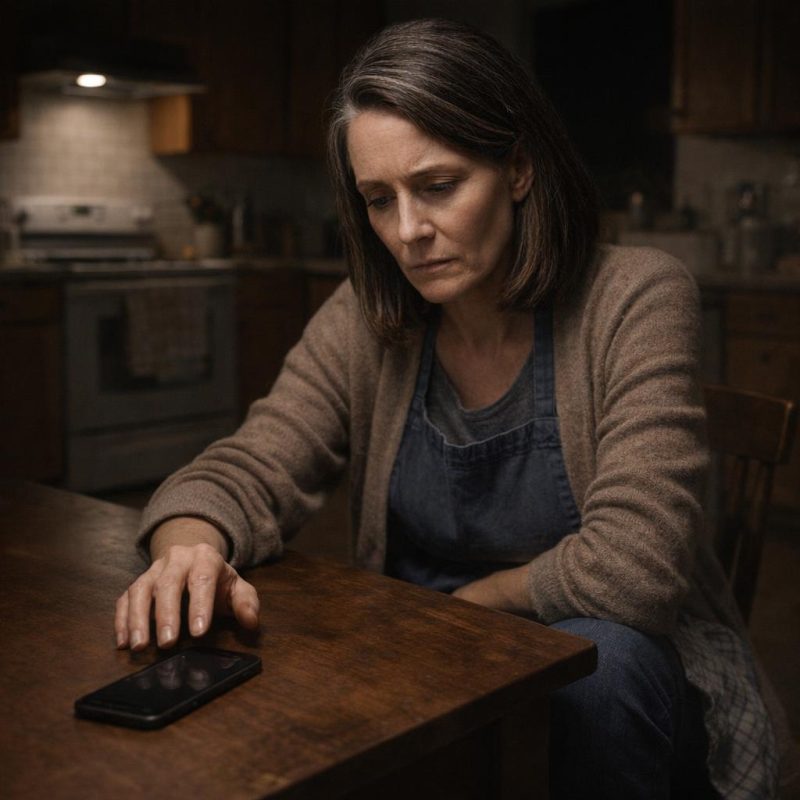 Image by RM AI
Getting Ready Alone
I got ready alone on a Saturday morning in October, in a house that had been quiet for so long I'd stopped noticing it. I'd bought the dress two months earlier — navy blue, because I wasn't going to wear beige to my own son's wedding no matter how invisible I already felt. I put it on by myself, zipped it up by myself, stood in front of the bathroom mirror doing my makeup with hands that wouldn't quite cooperate. I kept having to stop and breathe. I kept having to remind myself that mascara and crying are a bad combination, and that I was not going to cry in the car. No one called to ask if I needed a ride. No one called to say they were thinking of me. Linda had offered to come, but I'd told her I needed to do this part alone, which was either brave or stupid and I still don't know which. I thought about Robert while I was getting ready. I thought about how he would have straightened my necklace and told me I looked beautiful and meant it. I thought about how none of this would be happening if he were still here. And then I picked up my purse, walked to the front door, and looked back at the woman in the hallway mirror — dressed for her son's wedding, standing completely alone.
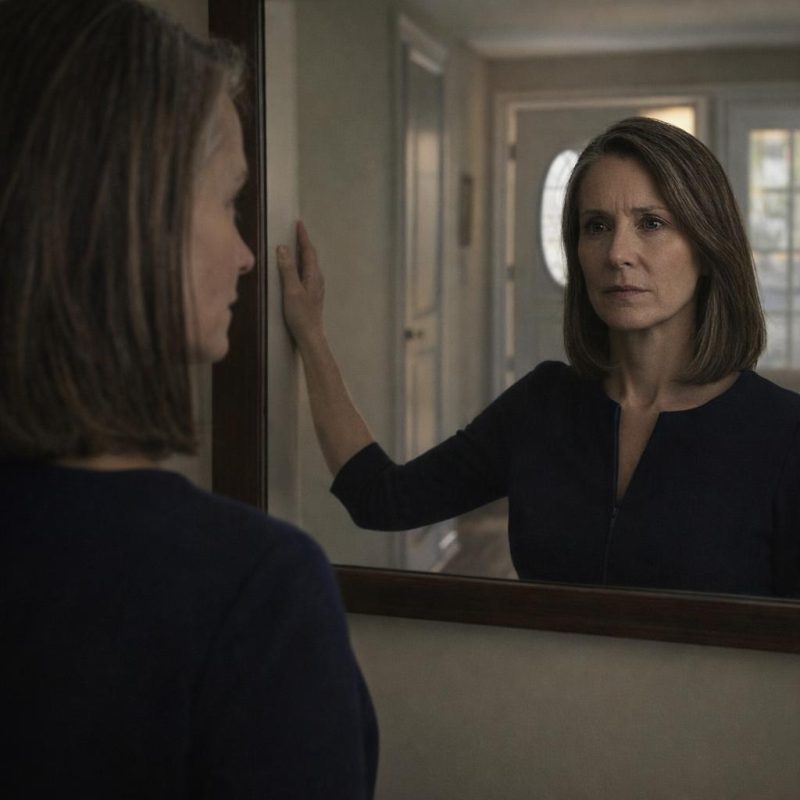 Image by RM AI
Third Row
They put me in the third row. Not the front, not even the second — the third, behind people I didn't recognize, behind a couple who kept leaning into each other and laughing softly at something on their phone. I sat down and smoothed my dress and told myself it was fine. The ceremony started and Mark walked out to the altar and I leaned forward just slightly, the way you do when you're hoping someone will look your way. He didn't. He stood up there with his hands clasped and his jaw set and his eyes fixed somewhere toward the back of the room, and then the doors opened and Vanessa came in and his whole face changed. I watched that happen. I watched him light up the way he used to light up when he was seven years old and I came to pick him up from school early for a surprise. That look used to be mine. I'm not saying that to be cruel to myself — I'm saying it because it's true, and because watching it land on someone else, in a room where I was seated in the third row like a family friend, was its own specific kind of grief. The vows started. He never once looked toward where I was sitting. The weight of that settled into me and stayed there, quiet and total, like something that had finally finished falling.
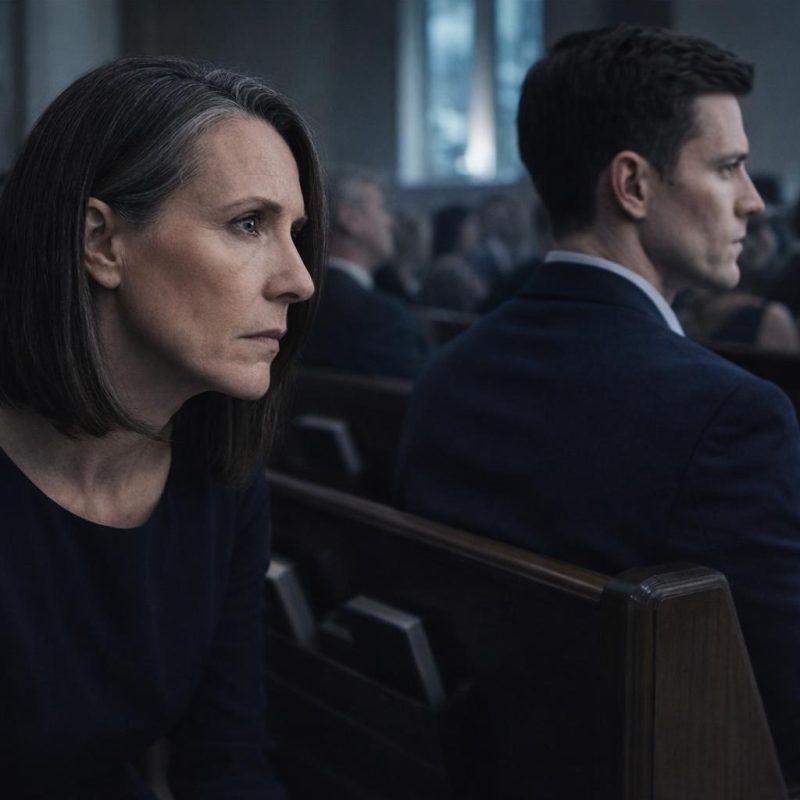 Image by RM AI
She's the Only One
When Mark said his vows, his voice didn't shake once. I've known that voice since it was a newborn cry, since it was a toddler asking why, since it was a teenager trying to sound older than he was. I know every register of it. And standing at that altar, saying words he'd clearly written himself, he sounded like a man who had been saved. That's the only word for it. He talked about finding someone who saw him clearly. He talked about being understood for the first time. He talked about building a life that was finally his own. And I sat in the third row and understood, with a clarity that felt like cold water, that every word was also about me. That the life he was building was being built away from something — and that something was us. Was the years after Robert died, the mornings on the phone, the dinners, the grief we carried together. He'd rewritten all of it. In his version, that closeness was a weight. Vanessa had given him the language to call it that, and he had believed her, and now he was saying it out loud in front of two hundred people with a ring in his hand. He looked at her like she was the answer to a question he'd been asking his whole life. The finality of it settled over me like a door closing softly in an empty house.
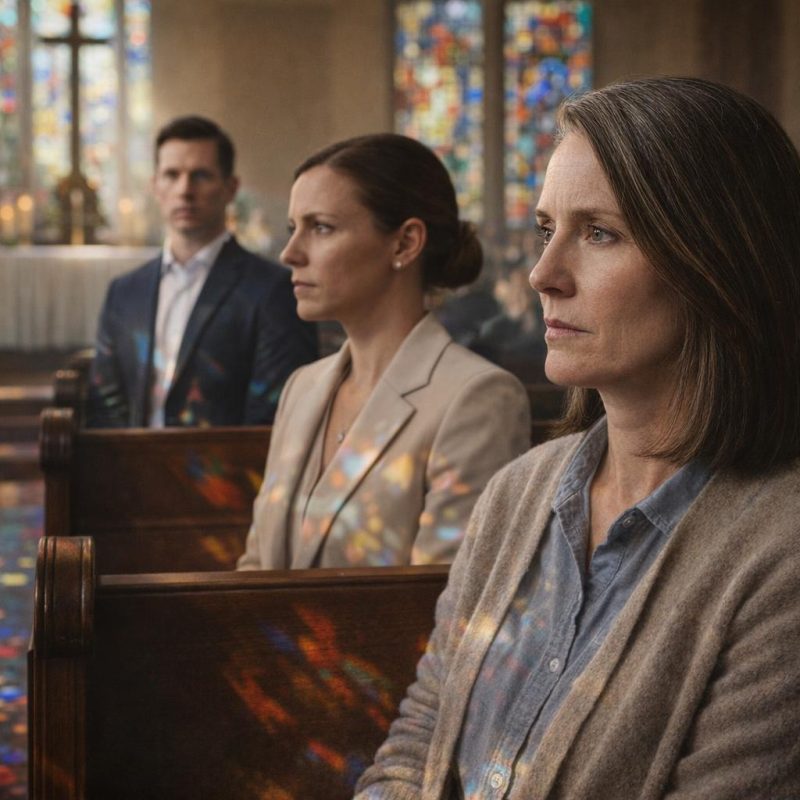 Image by RM AI
Distant Relative
My table at the reception was near the back, close to the kitchen doors, which swung open every few minutes with a rush of noise and the smell of whatever was being plated. I was seated with a couple from Vanessa's side who worked in finance, a college friend of Mark's I'd met once at a graduation party, and two women I didn't recognize at all who spent most of dinner talking to each other. The college friend — I think his name was Tyler — asked me how I knew the groom. I told him I was Mark's mother. He blinked. Said something like, oh wow, cool, and then turned back to his phone. That was the longest conversation I had at that table. No one from the wedding party came by. No one brought me into a toast or acknowledged the table or stopped to say hello. I watched the head table from across the room — Mark laughing, Vanessa touching his arm, her parents leaning in close, everyone glowing under the lights. I ate what was put in front of me. I drank one glass of wine slowly. I smiled when the toasts happened because I didn't know what else to do with my face. The music was loud enough that no one would have heard me if I'd said anything at all. The noise of the celebration pressed in from every direction, and I sat inside it like I was behind glass.
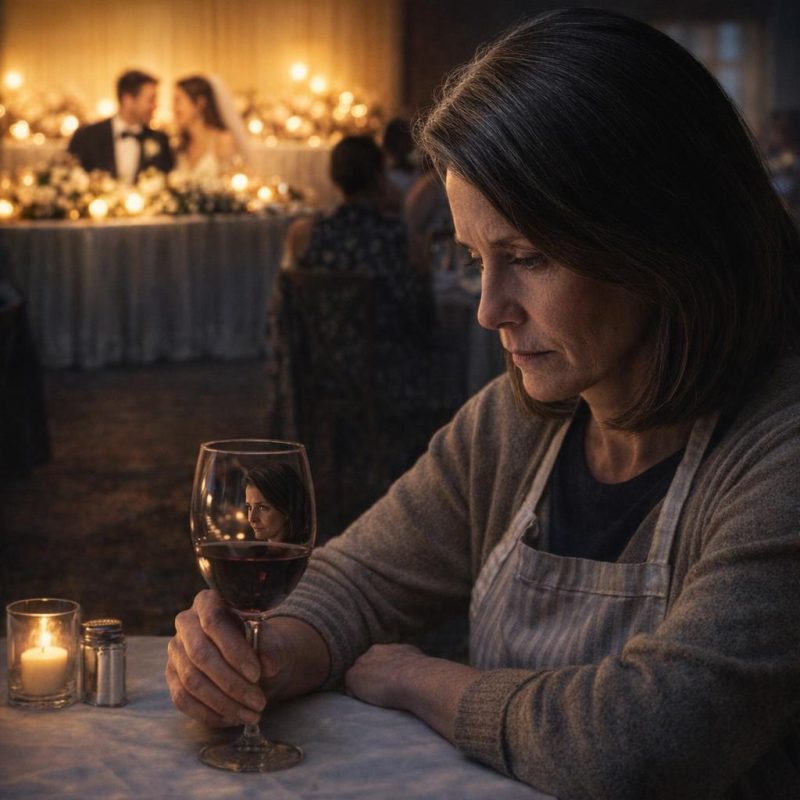 Image by RM AI
No Mother-Son Dance
I knew about the mother-son dance the way you know about traditions — because they exist, because they're expected, because I had watched them at a dozen weddings over the years and always felt something soft and warm in my chest when the groom walked across the floor to take his mother's hand. I had not let myself think about it too much in the weeks leading up to the wedding, because thinking about it meant hoping for it, and hoping had been getting expensive lately. But I thought about it at the reception. I sat at my table near the kitchen doors and I thought about it quietly, the way you think about something you're trying not to want. The first dance was announced and Mark and Vanessa moved to the floor and it was beautiful, I'll give it that — the song was something slow and the lights went low and everyone turned to watch. I watched too. And when it ended, I set my hands in my lap and waited. The room held its breath for just a moment. Then the DJ's voice came back over the speakers, bright and easy, already moving on to the next thing, and the dance floor filled with other couples, and I understood that there was nothing left to wait for.
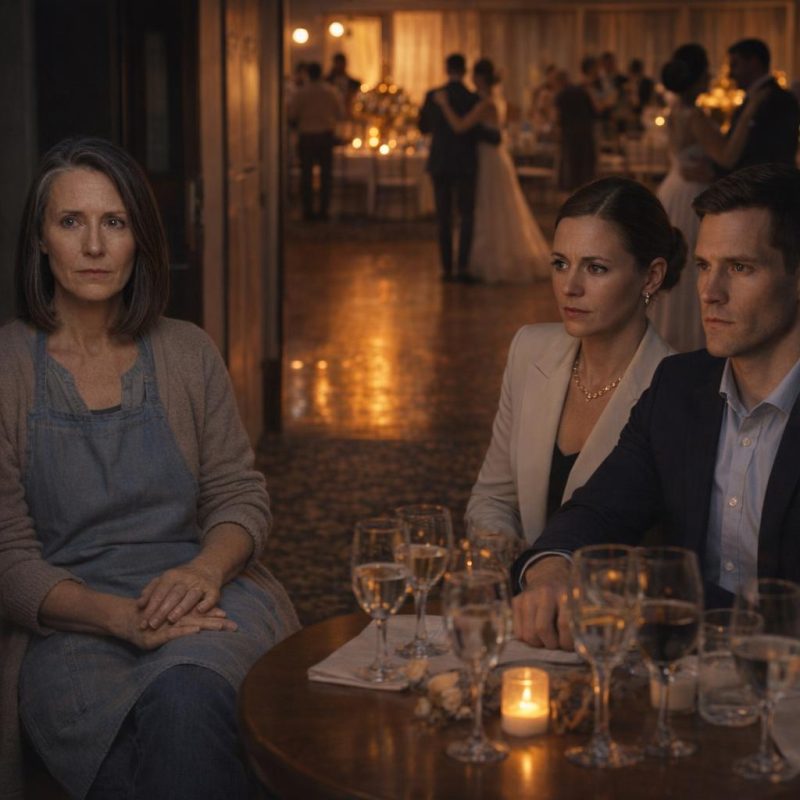 Image by RM AI
Vanessa's Triumph
I don't know exactly when I started watching Vanessa instead of Mark. Somewhere between the toasts and the cake cutting, my eyes just drifted to her and stayed there. She was at the head table, turned slightly toward Mark's side of the room, and she had this expression on her face that I can only describe as settled. Not happy exactly — happiness is warmer than that. This was something more like completion. She held her champagne glass loosely and her eyes moved across the room in a slow, unhurried sweep, taking in the tables, the guests, the whole arrangement of the evening. She looked like someone checking that everything was exactly where she'd put it. I'd seen that look before. I'd seen it the night of the engagement announcement, when she'd stood in Mark's living room and smiled at me with her eyes doing something entirely different from her mouth. I'd thought about that look for months afterward, trying to name it. Sitting at my table near the kitchen doors, I finally had a name for it. And then, as if she felt the weight of being watched, her gaze moved across the room and found mine — and for just a moment, her eyes met mine and held.
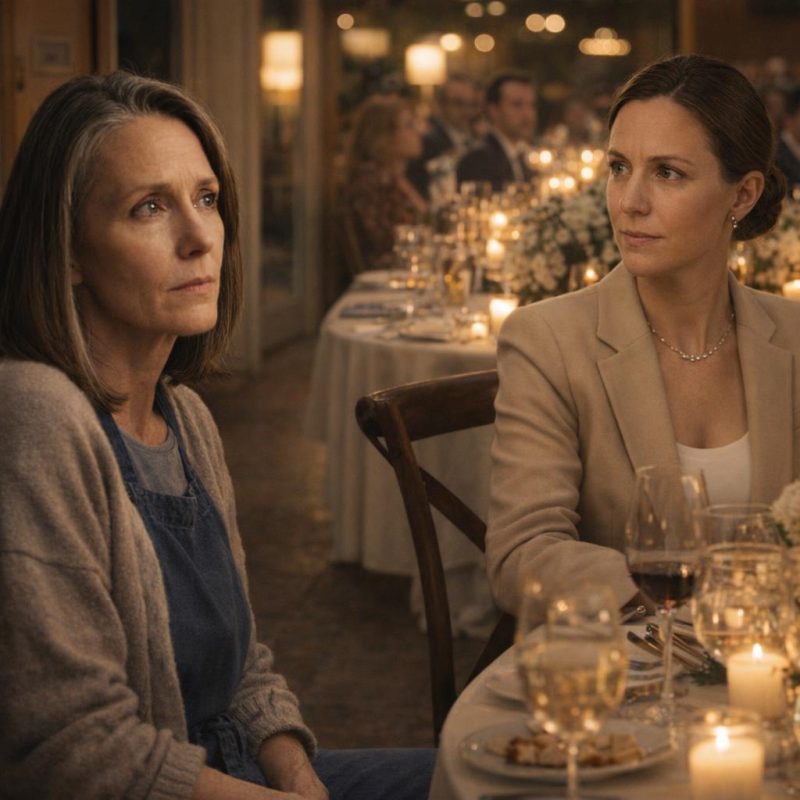 Image by RM AI
Leaving Early
I lasted until just after nine. I know because I checked my phone under the table like a teenager, and the screen said 9:07, and I thought: that's enough. That's as much as anyone could ask. I folded my napkin. I pushed my chair back slowly, the way you do when you're trying not to make a sound. The couple from Vanessa's side were deep in conversation. Tyler had moved to the bar. No one at my table looked up. I picked up my purse and stood, and I took one last look toward the head table — Mark was laughing at something, his head thrown back, Vanessa's hand on his arm — and then I looked away. I didn't go over. I didn't try to catch his eye or squeeze his shoulder or say anything at all. I just turned and walked toward the exit, past the bar, past the photo booth with its little line of guests, past the table of favors no one had touched. The music followed me all the way to the door. And then I pushed through it, and the night air hit me, and I was standing in the parking lot alone, the sound of the celebration muffled behind me like something happening in another life.
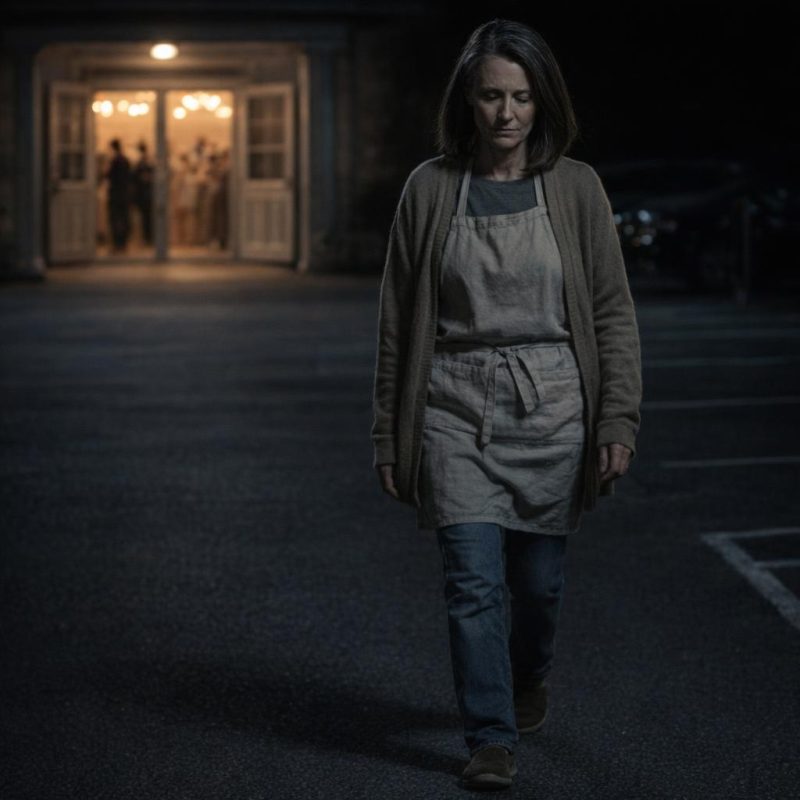 Image by RM AI
The Tomb
The drive home takes twenty-two minutes. I know because I've driven it a thousand times, and tonight I count every one of them. I don't turn on the radio. I don't call Linda. I just drive, hands at ten and two, watching the streetlights slide across the hood of the car like they don't know anything has changed. When I pull into the driveway, the house is dark. Of course it is. I left it that way. I sit in the car for a minute — maybe two — before I make myself go inside. I don't turn on many lights. Just the one in the kitchen, the small one over the stove that Robert always called the sad lamp because it was never quite enough. I set my purse on the counter. I take off my shoes. I sit down at the kitchen table in my mother-of-the-groom dress and I don't move. The house is so quiet I can hear the refrigerator hum. I've lived here for thirty-one years and I have never felt it this empty. My phone is on the table in front of me, screen dark, no notifications, no missed calls. It sits there, and I sit here, and neither of us moves.
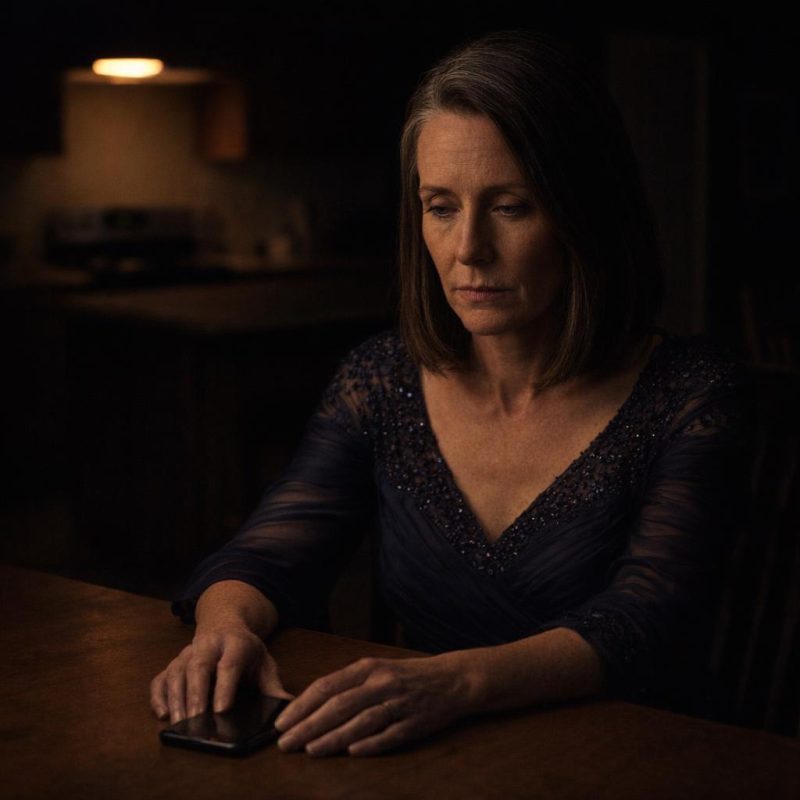 Image by RM AI
Days After
The days after the wedding don't announce themselves. They just arrive, one at a time, grey and ordinary, and I move through them the way you move through water when you're very tired. I stop checking my phone every hour. That takes about four days. By day six I stop checking it every morning first thing, which is harder than it sounds because for three years, Mark called before I'd even had my coffee. Just to talk. Just because. I understand now that those calls are done. Not paused, not interrupted — done. Vanessa's hold on him is complete, and I'm not saying that with bitterness anymore, or at least I'm trying not to. It's just the shape of things now. I start doing small tasks I've put off for months. I clean out the hall closet. I return three library books that are embarrassingly overdue. I sit on the back porch in the evenings and watch the light change and I let myself feel the size of what I've lost without trying to fix it or explain it or make it mean something useful. Some losses don't have a lesson. Some things just end. The quiet has stopped feeling like an accusation and started feeling like something I simply live inside now.
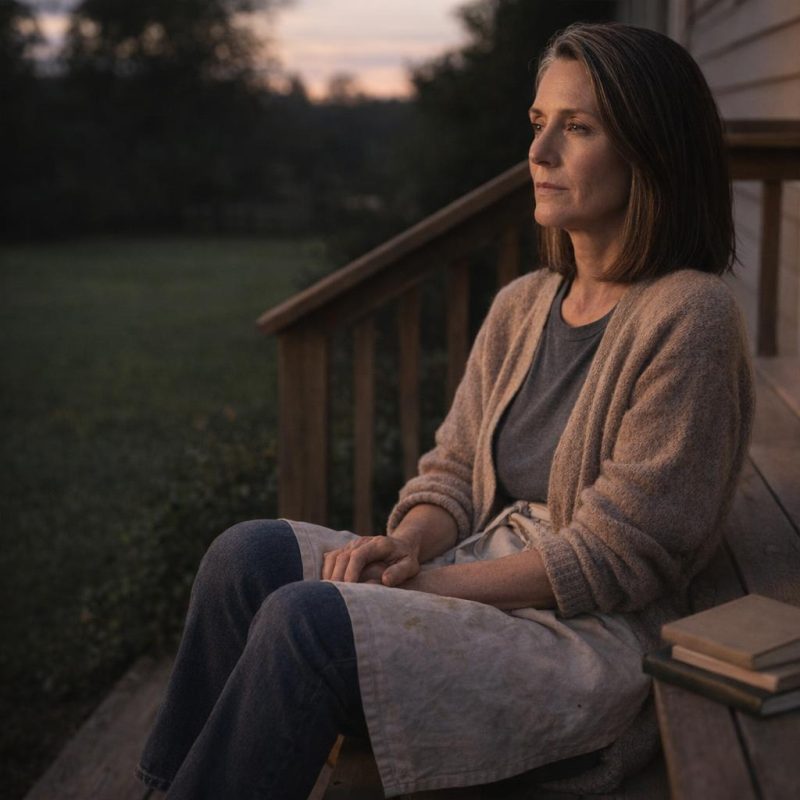 Image by RM AI
The Sourdough Starter
I've kept the sourdough starter alive for twenty-two years. I named it, which I'm aware is a little unhinged, but Robert thought it was charming, and Mark used to ask after it like it was a family member. I feed it every morning now the way I always have — a little flour, a little water, a stir, a cover, back on the counter by the window where the light is good. It bubbles. It rises. It does what it's always done, completely indifferent to everything that's happened. There's something almost insulting about that, and also something I find I need. Last Thursday I baked two loaves. Nobody was coming over. I knew that going in. I baked them anyway, and the house smelled the way it used to smell on Sunday mornings when Mark was in high school and Robert was still alive and the biggest problem we had was whether the crust would crack right. I ate one slice standing at the counter. I wrapped the rest and left it on Linda's porch the next morning without knocking. She texted me a photo of her toast and I laughed for the first time in what felt like weeks. The starter sits on the counter, fed and patient, and so do I.
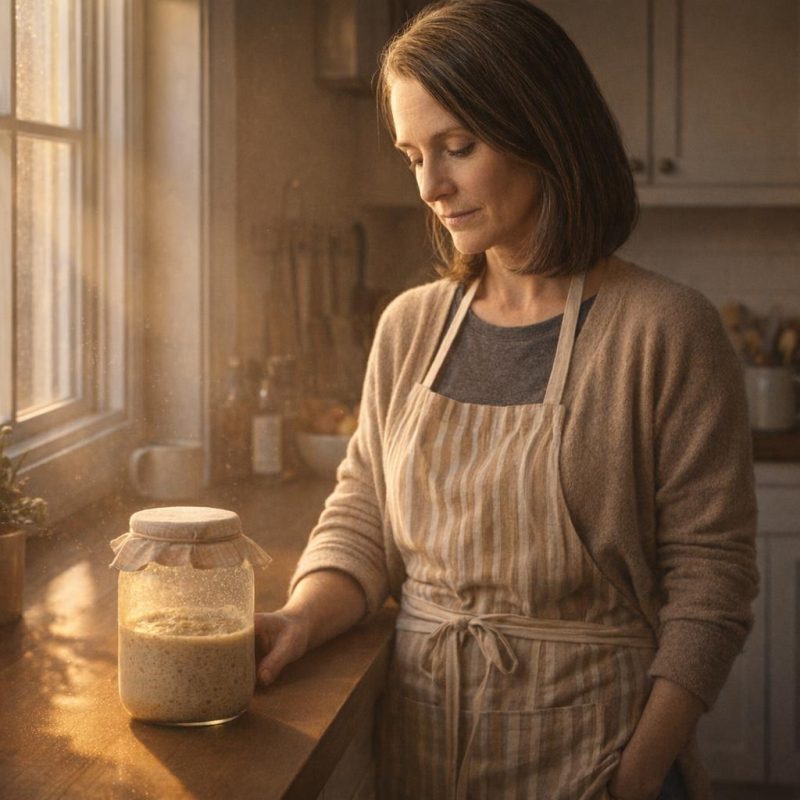 Image by RM AI
What She Took
Here is what Vanessa took: she took my son's mornings. She took the calls and the check-ins and the easy shorthand of a relationship built over thirty-four years. She took the version of Mark who still needed me sometimes, who called when he was scared or proud or just bored on a Tuesday. She studied me — my recipes, my stories, my grief, my habits — and she used every single piece of it to make herself indispensable to him and make me redundant. I taught her how to love him, and she used that education to show him he didn't need me anymore. I know that now. I've sat with it long enough that it doesn't make me shake the way it used to. What I also know is this: I survived Robert dying on a Tuesday morning with no warning and no goodbye. I survived the loneliest year of my life with a child who was also drowning and somehow we held each other up anyway. I survived a wedding where I left before the cake was cut and drove home alone and sat in the dark in a dress I'll probably never wear again. Vanessa took a great deal from me. But I am still here, still in this kitchen, still breathing, and the starter is on the counter, and the bread is cooling on the rack, and I am still here.
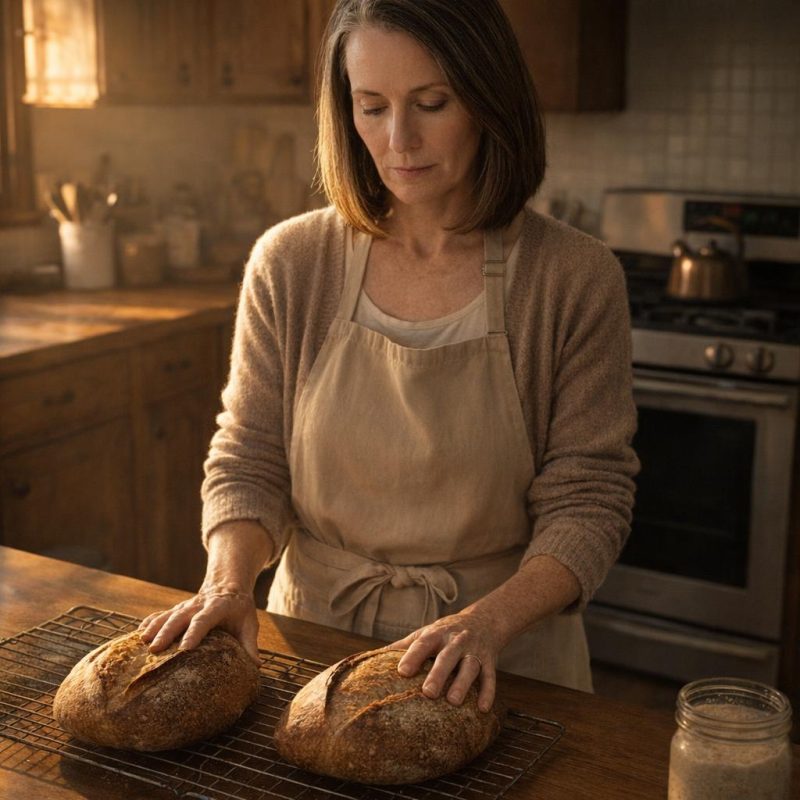 Image by RM AI
KEEP ON READING

The story of Ching Shih, the Woman Who Became the…
Unknown author on WikimediaFew figures in history are as feared…
By Emilie Richardson-Dupuis Dec 29, 2025
Einstein's Violin Just Sold At An Auction—And It Earned More…
A Visionary's Violin. Wanda von Debschitz-Kunowski on WikimediaWhen you hear…
By Ashley Bast Nov 3, 2025
This Infamous Ancient Greek Burned Down An Ancient Wonder Just…
History remembers kings and conquerors, but sometimes, it also remembers…
By David Davidovic Nov 12, 2025
The Mysterious "Sea People" Who Collapsed Civilization
3,200 years ago, Bronze Age civilization in the Mediterranean suddenly…
By Robbie Woods Mar 18, 2025
20 People In History Who Got Revenge In The Pettiest…
Documented Grudges. History tends to celebrate the bold move, the…
By Cameron Dick Jun 26, 2026
20 Soldiers Who Defied Expectations
Changing the Rules of the Battlefield. You’ve probably heard plenty…
By Annie Byrd Feb 10, 2026