

My Son's Ex-Wife Called Me Out of the Blue. What She Told Me Changed Everything I Thought I Knew About the Man I Raised.
My Son's Ex-Wife Called Me Out of the Blue. What She Told Me Changed Everything I Thought I Knew About the Man I Raised.
The Unexpected Call
I've always thought of myself as someone who knows her son. Michael was the kind of kid who brought me flowers on Mother's Day without being reminded, who called every Sunday just to check in. Even now, at thirty-six, he still does. So when his marriage to Sarah ended two years ago, I believed him when he said they'd just grown apart. These things happen, right? People change, want different things. It seemed sad but... normal. I hadn't spoken to Sarah in months—not since she'd moved out and the divorce was finalized. We'd exchanged a few polite texts early on, the kind where you both pretend everything's fine, but then we'd drifted into silence. So when my phone rang that Tuesday afternoon and her name lit up the screen, I just stared at it. My hand hovered over the phone, my mind racing through possibilities. Was she remarrying? Did she need something from the house? The ringing continued, insistent. I almost let it go to voicemail. But something—I still don't know what—made me reach for it.
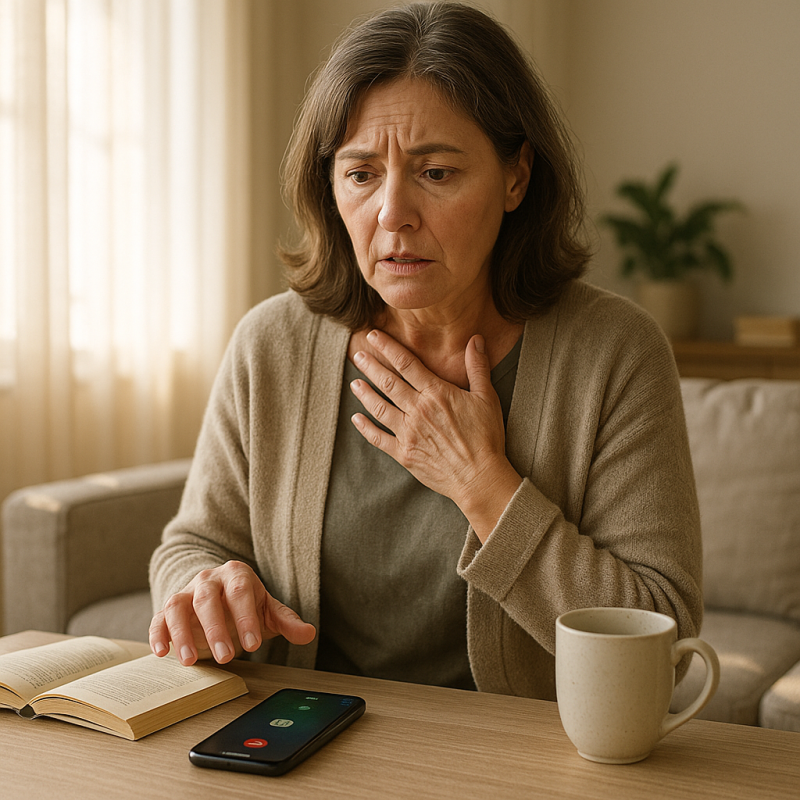 Image by RM AI
Things You Should Know
"Hi, Sarah," I said, keeping my voice carefully neutral. There was a pause on the other end, just long enough to make me wonder if she'd pocket-dialed me by accident. Then she spoke, and her voice was warm but... careful. Like she was choosing each word before letting it out. "Linda. Hi. Thank you for answering." She told me she'd been thinking about making this call for weeks, maybe longer. That she'd picked up the phone a dozen times and put it back down. My shoulders tensed. I could feel myself preparing defenses, forming rebuttals to whatever rehashing of the past was coming. People don't call their ex-mother-in-law out of nowhere unless they want something, right? Or unless they're angry. But Sarah didn't sound angry. She sounded... measured. Deliberate in a way that wasn't hostile. "There are some things I think you should know," she said quietly. "About the marriage. About Michael." My first instinct was to defend him—he's my son, after all. But something in her tone made me pause instead of immediately hanging up.
 Image by RM AI
Small Specific Things
Sarah didn't launch into accusations or dramatic claims. Instead, she started describing specific moments. Small things. She told me about a conversation they'd had about her work, how she'd been excited about a project and he'd interrupted to explain why her approach was wrong. How he'd done it with this patient tone, like he was helping her understand something she couldn't grasp on her own. She mentioned a dinner party where she'd told a story and he'd corrected details that didn't matter—the restaurant name, the day of the week—until she'd just stopped talking. Another time when she'd suggested a vacation spot and he'd spent twenty minutes listing reasons it was impractical before proposing his own idea. None of it sounded... dramatic. I kept waiting for the big reveal, the affair or the abuse or whatever justified this call. But Sarah just kept describing these small incidents in her calm, precise way. The specificity bothered me. These weren't vague complaints. She remembered exact phrases, specific dinners, particular conversations. I found myself listening instead of arguing, though I couldn't have told you why.
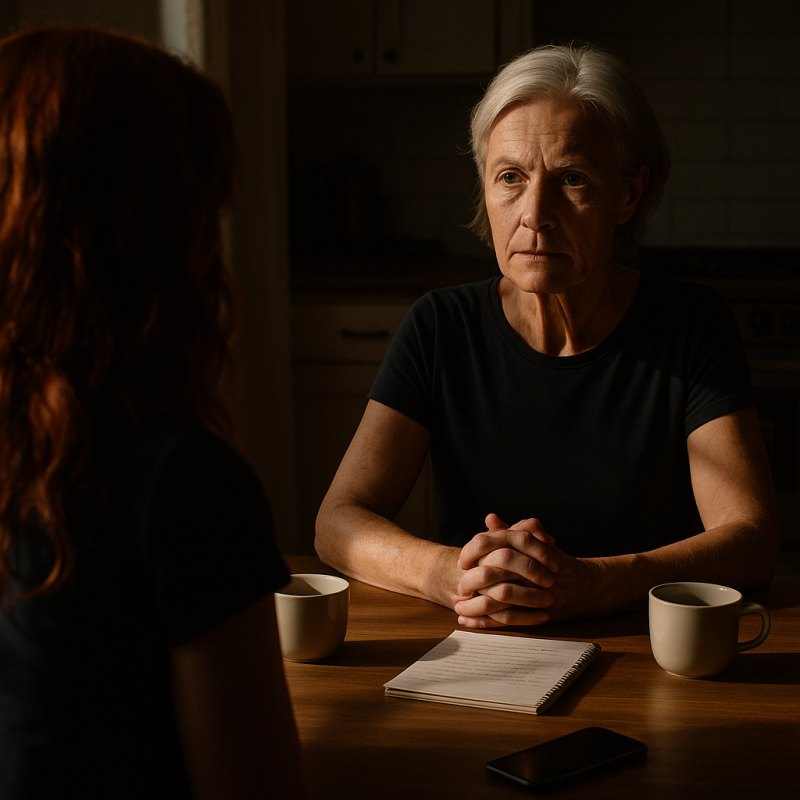 Image by RM AI
Patterns I'd Witnessed
Then Sarah brought up the family dinner from two years ago, the one we'd hosted for Michael's birthday. I remembered it clearly—we'd grilled steaks, had too much wine, laughed about old stories. "Do you remember when I mentioned that article I'd read?" Sarah asked. I did, vaguely. Something about urban planning. "Michael cut me off mid-sentence to explain why the author was wrong. He used that tone—you know the one. Patient but... dismissive. Like he was educating me." I'd noticed the interruption, I realized. I'd even felt a small flicker of something at the time. But I'd explained it away as Michael being passionate about the topic, maybe stressed from work. Sarah mentioned the Christmas gathering too, when Michael had corrected her pronunciation of a word in front of everyone. I'd been there. I'd heard it. At the time, I'd thought nothing of it—just a small moment, easily forgotten. But now Sarah was describing things I'd witnessed with my own eyes, and the unease that crept through me felt like cold water.
 Image by RM AI
Sitting With It
The call ended with Sarah saying she'd said what she needed to say. No demands, no requests. Just... information she thought I should have. I sat there afterward, phone still in my hand, staring at nothing. The afternoon light slanted through the kitchen window, and I watched dust motes drift through it while my mind turned the conversation over and over. When Robert came home an hour later, I was still sitting there. "Sarah called," I told him, trying to make it sound casual. Almost curious, like I was reporting something odd rather than something that had shaken me. I walked him through the conversation, presenting it as neutrally as I could. Robert listened without interrupting, his hands in his pockets, his expression unreadable in that way he has when he's thinking hard about something. When I finished, he was quiet for a long moment. Then he asked, "What do you think?" I admitted I didn't know. I wanted to dismiss it, but I couldn't quite manage it. Robert's next question was quieter, almost reluctant: "What if she's right?" That question lodged itself somewhere in my chest and wouldn't leave.
 Image by RM AI
Replaying Old Memories
I spent that evening alone while Robert worked in his study. I kept replaying moments from Michael and Sarah's marriage, examining them with this new, uncomfortable attention. I remembered visits where Sarah had seemed withdrawn, sitting quietly while Michael dominated conversations. At the time, I'd assumed she was just tired or introverted. Some people are. But now I wondered if there was more to that silence. There was a Thanksgiving—three years ago, maybe four—where Michael had interrupted Sarah repeatedly while she was talking about her job. I'd noticed it then, I realized. I'd even felt a small twinge of irritation on her behalf. But I'd explained it away. Michael was excited, wanted to share his own stories. He didn't mean anything by it. Except... what if he did? What if those interruptions meant exactly what they looked like? I thought about how Sarah's voice had gotten quieter over the years of their marriage. How she'd stopped offering opinions at family dinners. I'd attributed it to her getting more comfortable, not feeling the need to perform. But what if I'd been watching her disappear and calling it comfort?
 Image by RM AI
His Version
I made myself recall Michael's version of the divorce, testing it against what Sarah had said. He'd told me they'd grown apart, wanted different things. The explanation had seemed reasonable—sad but understandable. These things happen to good people. But as I turned it over in my mind, I realized how vague it had been. Michael had never given me specific examples of what they'd disagreed about. Never explained what different things they'd wanted. He'd described the split as mutual, a joint decision made by two adults who'd realized they weren't compatible. Yet Sarah had been the one to move out. Sarah had been the one to file. If it was truly mutual, why had she been the one to leave? I'd never asked that question. I'd accepted Michael's narrative because questioning it felt disloyal, like I was choosing sides against my own son. But now those gaps bothered me. The vagueness that had seemed tactful before now felt like... what? Evasion? I didn't want to think that. But I couldn't stop thinking it either.
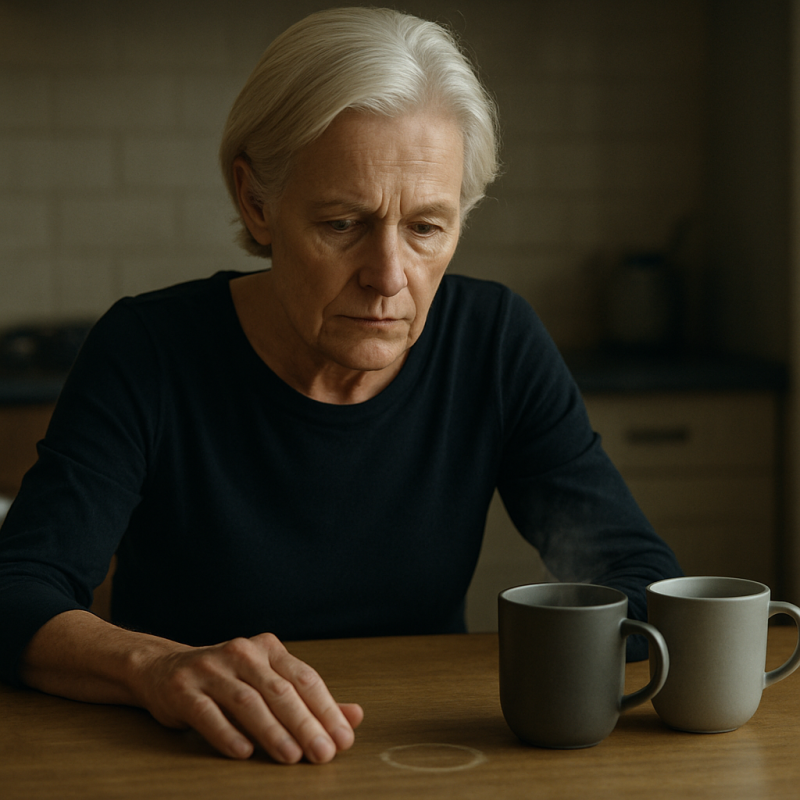 Image by RM AI
The Sunday Call
Michael called Sunday afternoon, right on schedule. He always calls on Sundays. "Hey, Mom," he said, his voice warm and familiar. He asked about my week, told me about a project at work, sounded exactly like himself. I tried to listen objectively, analyzing his tone and word choices in ways I never had before. I found myself noting small things—how much of the conversation was him talking, how few questions he asked about my life. He mentioned a frustration at work, a colleague who'd mishandled a client meeting. The way he described it, the colleague sounded incompetent, careless. Michael's tone was dismissive, almost contemptuous. It was the kind of story he'd told a hundred times before. I'd always sympathized, agreed that some people just don't have what it takes. But now I heard something else in it. That patient, superior tone Sarah had described. The certainty that he was right and others were wrong. Nothing he said was obviously problematic. The conversation was pleasant, normal. But I felt like I was hearing him through different ears, and I couldn't shake the feeling that everything had changed.
 Image by RM AI
The Dismissal
Near the end of our call, I mentioned Sarah's name. Just casually, like it was nothing. "How's Sarah doing these days?" I asked, trying to sound like I was making general conversation. Michael's response came so fast it almost cut me off. "Wouldn't know, Mom," he said, his tone pleasant and light. "We don't really keep in touch." Before I could say anything else, he was already moving on, telling me about his plans to go hiking that weekend with some friends from work. The transition was seamless, practiced even. Nothing about it was rude or defensive. He didn't snap at me or shut me down. But the smoothness of it... that's what stuck with me. After we hung up, I sat there replaying that moment. The way he'd deflected without seeming to deflect at all. I couldn't point to anything specific that was wrong. He'd answered my question, technically. But something about how quickly he'd moved past it, how effortlessly he'd redirected the conversation, felt off in a way I couldn't quite explain.
 Image by RM AI
Second-Guessing
I spent the rest of the afternoon telling myself I was overthinking everything. Maybe Sarah had her own reasons for framing things the way she did. Breakups made people rewrite history, didn't they? That was normal, natural even. I wanted to believe I was being unfair to Michael, reading malice into ordinary conversations because Sarah had planted doubt in my mind. I tried to convince myself that one phone call had colored everything since, making me see problems where there weren't any. But every time I thought I'd talked myself down, the concerns crept back. The specific things Sarah had mentioned kept surfacing. The way she'd described feeling small. The patience in Michael's voice that wasn't really patience at all. I'd sit down to read or make dinner, and those details would float up again, uninvited. I realized I couldn't just unhear what Sarah had told me, no matter how much I wanted to. The knowledge was there now, sitting in my chest like something heavy I couldn't put down.
 Image by RM AI
Photographs
I pulled out the photo albums from Michael and Sarah's marriage. I'm not sure what I was looking for exactly, but I needed to see them again. The wedding photos came first—both of them genuinely happy, Sarah's smile bright and unguarded. I moved through the years slowly, looking for signs I'd missed. In so many pictures, Sarah stood slightly apart from Michael, her body angled away just a bit. Had she always done that? I'd never noticed the physical distance before. There was a picture from their fifth anniversary dinner at that Italian place they loved. Sarah was smiling, but now that I really looked at it, the smile seemed strained. It didn't reach her eyes the way it had in the wedding photos. In several pictures, Michael's hand rested on Sarah's shoulder. I couldn't tell anymore if it looked affectionate or possessive. The images themselves hadn't changed, obviously. But my interpretation of them had shifted completely, and I wondered how I'd looked at these photos dozens of times without seeing what I was seeing now.
 Image by RM AI
Outside Perspective
I called my sister Claire because I needed to talk to someone who would actually listen. Claire's always been more pragmatic than me, more direct. I explained Sarah's call, the growing unease I'd been feeling, trying to frame it like I was probably just overthinking everything. "I mean, I'm sure I'm reading too much into normal stuff," I said, hoping she'd agree. Claire listened without interrupting, which wasn't like her at all. Usually she jumps in with opinions before I'm halfway through a story. When I finally finished, there was this pause. Then she asked, "Have you considered that Sarah might be telling the truth?" The question hit me harder than it should have. I'd been dancing around that possibility for days, but hearing Claire say it out loud made it real in a way it hadn't been before. I'd called her hoping for reassurance, expecting her to tell me I was being silly, that of course Michael wasn't like that. Instead, she'd asked the one question I'd been avoiding asking myself directly.
 Image by RM AI
Questions I Didn't Want to Answer
Claire started asking me specific questions about the marriage, and I found myself struggling more than I expected. "Did you ever see Michael be cruel to Sarah?" she asked. "No," I said immediately. That felt certain. "What about dismissive?" That one made me hesitate. Dismissive felt different, harder to define. "I don't know... maybe sometimes?" Claire asked if Sarah had ever seemed uncomfortable around Michael. I remembered moments where Sarah had gone quiet during family dinners, but that could mean anything, couldn't it? Then Claire asked if Michael had ever spoken badly about Sarah to me. I recalled several conversations where he'd mentioned Sarah being "too sensitive" or "overly emotional" about things. At the time, I'd sympathized with his frustration. Some people were more sensitive than others—that was just reality. But now those comments felt different, though I couldn't explain why. The context had shifted somehow. When Claire asked if Sarah had ever seemed afraid of Michael, I said no right away. But even as the word left my mouth, it felt less certain than I wanted it to.
 Image by RM AI
Cracking Defense
I started defending Michael to Claire, listing all the reasons he couldn't have been the problem. "He's my son," I said. "I raised him. I know his character." Michael had always been thoughtful, considerate, a genuinely good person. I heard myself building the case, stacking up evidence of his goodness like I was in court. Claire didn't argue with me. She just listened, which somehow made it worse. When I finally ran out of things to say, she asked quietly, "Why are you working so hard to convince me?" The question stopped me cold. Because I realized I wasn't trying to convince her at all. I was trying to convince myself. I heard how defensive I sounded, how much energy I was putting into explaining away Michael's behavior, justifying things that maybe didn't need justification if they were actually fine. "I need to think about this more," I told her. "I understand," Claire said. After we hung up, I sat there feeling less certain about everything than I had when I'd picked up the phone.
 Image by RM AI
The Decision to Watch
I realized I couldn't keep going like this, stuck between doubt and denial. I needed to either prove Sarah wrong or face the possibility that she might be right. I told Robert I wanted to spend more time with Michael, to observe him more carefully. Robert looked at me for a long moment. "Are you sure you want to do this?" he asked. He pointed out that once I started really looking, I might see things I couldn't unsee. The warning was fair. I knew what he meant. There was safety in not knowing, in keeping things the way they'd always been. But I couldn't live with the questions anymore. They were eating at me, making me second-guess every memory, every conversation. "I have to know," I said. Robert nodded slowly. He said he'd support me, but I could see the worry in his face. He was thinking about what this might do to our family if I found something I didn't want to find. I felt both determined and frightened, like I was standing at the edge of something I couldn't come back from.
 Image by RM AI
Dinner Observations
I invited Michael over for dinner, trying to act normal while watching everything he did. The evening started pleasantly enough—typical conversation about his work, his life, nothing unusual. I listened carefully to how he spoke, watching for the patterns Sarah had described. Then Michael told us about a disagreement he'd had with a friend from work. The way he described it, the friend sounded completely unreasonable, overly emotional about something minor. "I tried to help him see the situation more clearly," Michael said, shaking his head. "But he just wouldn't listen to reason." The phrasing made my stomach tighten. Sarah had mentioned Michael saying almost exactly that during their arguments—that he was just trying to help her see things clearly, that she wouldn't listen to reason. Michael presented himself as the calm, rational one trying to help someone who was being irrational. Robert was quiet beside me, eating his dinner. Michael seemed completely unaware of how his story sounded. But I heard it. The parallel was too specific to ignore, and I realized Sarah's words were echoing in my son's voice.
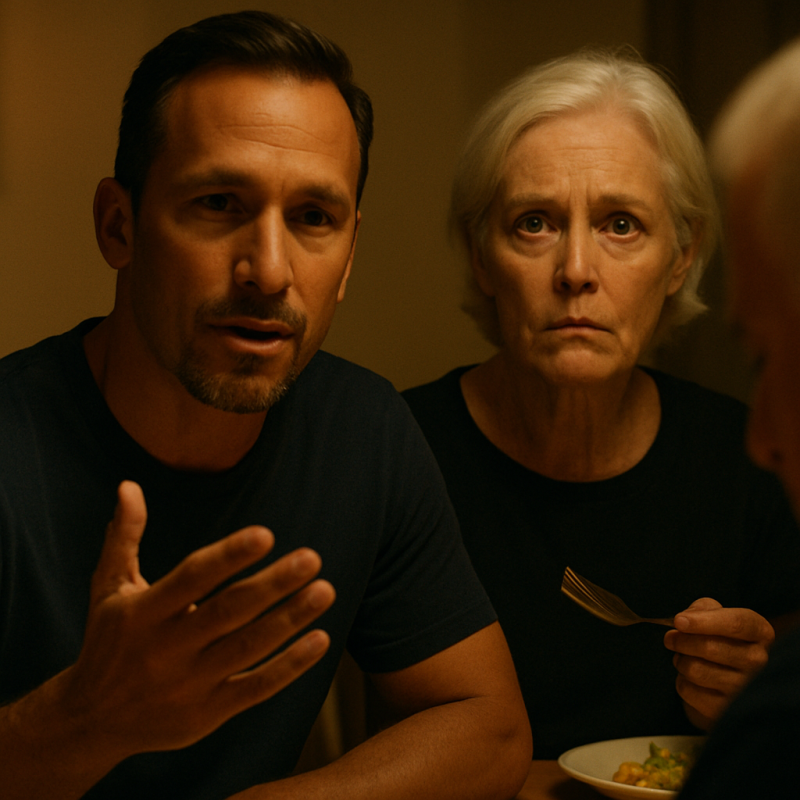 Image by RM AI
Matching Patterns
As dinner continued, I found myself cataloging Michael's words in a way I never had before. He told us about a colleague who'd gotten upset about feedback Michael had given her. "I was just trying to help her improve," he said, cutting into his chicken. "But she took it personally. Some people just can't handle constructive criticism." Robert nodded absently. I stayed quiet. Then Michael mentioned a neighbor who'd complained about where he parked his car. "He completely overreacted," Michael said with that easy smile. "I tried to explain the logic of my parking spot, but he wouldn't listen to reason." There it was again—that exact phrasing Sarah had used. Someone being unreasonable, someone not listening to reason, Michael just trying to help. When Robert gently suggested that maybe the neighbor had a point about the parking, Michael dismissed it with a laugh. "You're too nice, Dad. Sometimes people just want to be upset." Each story individually seemed normal enough. Michael sounded reasonable, measured, like someone dealing with difficult people. But together... together they formed something I couldn't ignore. In every conflict Michael described, he was the calm one, the rational one, and everyone else was overreacting or being too sensitive. I'd come to this dinner hoping to prove Sarah wrong. Instead, I was finding evidence that she was right.
 Image by RM AI
Reaching Out to Jennifer
That night, I couldn't sleep. I kept replaying Michael's words, hearing Sarah's voice underneath them. Around midnight, I got out of bed and opened my laptop. I searched for Sarah's friends on social media, scrolling through profiles until I found Jennifer's name. I remembered her from years ago—sharp eyes, direct way of speaking, always seemed to notice things. Her profile was mostly private, but I could send a message. I typed and deleted three different versions before settling on something simple: "Hi Jennifer, this is Linda, Michael's mother. I know this is unexpected, but I'd like to talk to you about Sarah and Michael's marriage if you're willing. I have some questions I need answered." My finger hovered over the send button for a full minute. Sending this message meant crossing a line. It meant I was actively investigating my own son. It meant I believed there might be something to investigate. I hit send before I could change my mind. Then I checked my phone every five minutes for the next hour, my heart jumping each time the screen lit up. When Jennifer's response finally came, it wasn't what I expected. No surprise, no questions about why I was asking. Just: "I wondered when someone would ask."
 Image by RM AI
Meeting Arranged
Jennifer and I exchanged several messages over the next day, arranging when and where to meet. She suggested a coffee shop I'd never heard of, somewhere across town. "It's quiet," she wrote. "And away from places Sarah and I usually go." I understood—she wanted privacy for whatever she was going to tell me. Jennifer asked what had prompted me to reach out now, after all this time. I told her about Sarah's call, about the things she'd said, about watching Michael at dinner and hearing patterns I couldn't unhear. There was a long pause before Jennifer's next message appeared. Long enough that I thought maybe she'd changed her mind about meeting. Then: "I'm glad you're asking. I really am. But I need you to know—I'm sorry you have to hear this." My hands were shaking as I read those words. Sorry I had to hear what? What had Jennifer witnessed that made her respond like that? I confirmed the meeting time—tomorrow afternoon, two o'clock. I set my phone down but couldn't stop staring at Jennifer's message. She'd been waiting for someone to ask. She had things to tell me that she was sorry I'd have to hear. I was about to cross into territory I couldn't come back from, and I knew it.
 Image by RM AI
Coffee and Careful Questions
I arrived at the coffee shop twenty minutes early, ordered tea I didn't drink, and sat at a corner table watching the door. Jennifer arrived exactly on time, looking tired but composed. We made awkward small talk for maybe two minutes before I couldn't stand it anymore. "I need to understand what happened," I said. "Between Michael and Sarah. I need to know what you saw." Jennifer wrapped both hands around her coffee cup and took a slow breath. "It's hard to describe," she said finally. "Because it didn't happen all at once. It was so gradual that by the time I realized what I was seeing, years had passed." She looked directly at me. "I watched Sarah disappear piece by piece." The words hit me like a physical thing. "What do you mean, disappear?" Jennifer's expression was sad but steady. "She became quieter. Less confident. She stopped sharing opinions around Michael, stopped making plans without checking with him first. She second-guessed everything she said and did." I wanted to argue, to say that sounded like normal marriage compromise, but something in Jennifer's face stopped me. "I tried to talk to her about it," Jennifer continued. "But she defended him. Said I didn't understand their relationship." The conversation was just beginning, but I already felt the ground shifting beneath my feet.
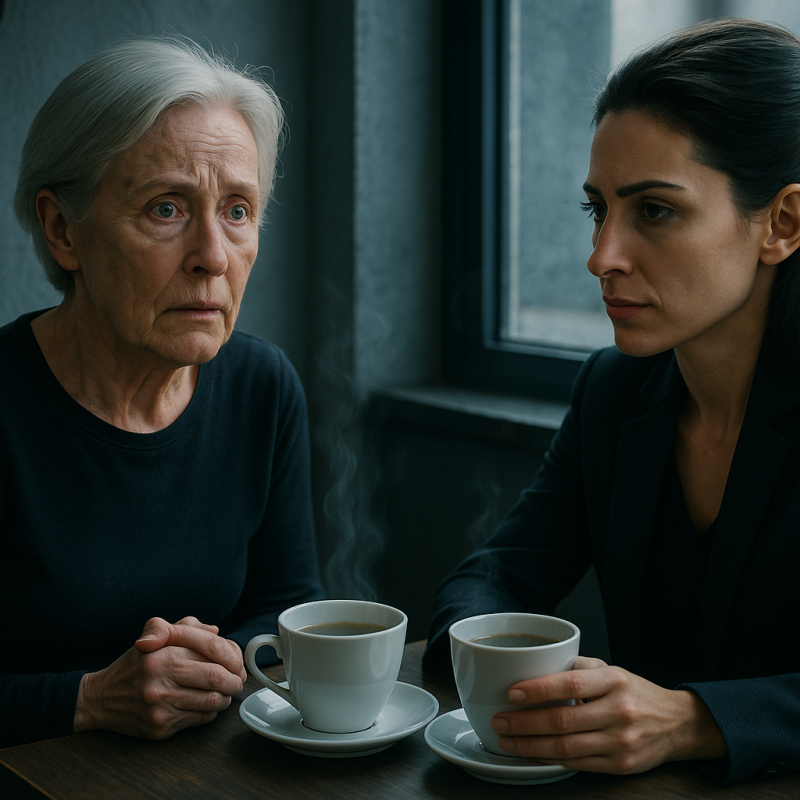 Image by RM AI
What She Witnessed
Jennifer described how Sarah had gradually stopped making decisions on her own. "She'd cancel plans at the last minute," Jennifer said. "Always apologizing, always saying Michael needed something or they had to do something else." She told me about Sarah's birthday party three years ago. "Sarah was nervous about everything—the food, the decorations, whether people were having fun. She kept asking me if things were okay, if she'd done something wrong." I listened, my tea going cold. Jennifer said Sarah had started apologizing constantly, for things that didn't need apologies. "She'd say sorry for talking too much, or not enough, or for having an opinion Michael disagreed with." The changes had been consistent but small, Jennifer emphasized. No dramatic moments, no obvious incidents. Just Sarah's confidence eroding bit by bit over the years. "She stopped trusting her own judgment," Jennifer said quietly. "She'd ask me if things were her fault, if she was being unreasonable, if she was remembering things wrong." I thought about Sarah's voice on the phone, how uncertain she'd sounded, how she'd questioned her own perceptions. Jennifer wasn't describing abuse in dramatic terms. She was describing something quieter and somehow worse—watching someone slowly stop believing in themselves. The worst part, Jennifer said, wasn't any single moment. It was watching Sarah start to believe she was the problem.
 Image by RM AI
I Was There
Jennifer leaned forward slightly. "Do you remember the family barbecue three summers ago? The one at your house?" I nodded slowly. "Sarah was telling a story about their vacation," Jennifer said. "Michael interrupted her, said she was mixing up the timeline. He took over the story, correcting details while Sarah just... stopped talking." My stomach tightened. I'd been at that barbecue. "I was standing right next to you," Jennifer continued. "I saw Sarah's face fall. But she smiled and nodded along while Michael finished the story his way." I tried to remember that afternoon, but it was hazy. "Michael made it seem so natural," Jennifer said. "Like he was just helping her get the facts straight. But Sarah barely spoke for the rest of the day." The memory was there, somewhere in my mind, but I'd filed it away as nothing important. A normal moment. A husband helping his wife with details. "You were there," Jennifer said gently. "You saw it happen." I had been there. I'd been standing nearby, probably smiling, probably thinking Michael was being helpful. I'd witnessed something significant and completely missed it. The realization made me feel sick—not just that it had happened, but that I'd been present and seen nothing wrong.
 Image by RM AI
Seeing It Again
After leaving the coffee shop, I drove home in a daze. I couldn't stop thinking about that barbecue, trying to pull the memory into focus. And then, sitting in my driveway, it came back. Sarah had been telling us about their trip to the coast, animated and smiling. Michael had interrupted—"Actually, honey, you're mixing up the days"—and taken over the story. I remembered Sarah's smile faltering for just a second. At the time, I'd thought Michael was being helpful, keeping the facts straight. That's what I'd told myself. Now I remembered how Sarah had gone completely quiet, how she'd stepped back slightly while Michael finished talking. She'd spent the rest of that afternoon in the background, quieter than usual. I'd assumed she was tired from the heat. But maybe it hadn't been the heat at all. Maybe it had been something else entirely. I tried to make the memory go back to how I'd understood it before—innocent, normal, nothing concerning. But I couldn't. The context had shifted, and with it, everything I'd seen but not noticed. Sarah's expression in that moment, which I'd dismissed as nothing at the time, now looked like something else entirely.
 Image by RM AI
Accumulated Weight
More memories surfaced throughout the rest of that day and into the evening. I remembered a Christmas dinner where we'd been discussing a movie. Sarah had loved it, told me so earlier in private. But when Michael dismissed it as pretentious, Sarah had immediately agreed with him. "You're right," she'd said. "I guess I wasn't thinking about it deeply enough." I remembered another time Sarah had brought a dish to our house, and Michael had insisted she'd made it wrong. She'd apologized and offered to remake it, even though it had tasted fine to me. I'd thought he was just particular about recipes. Now I wondered. I kept finding these moments—Michael speaking for Sarah when someone asked her a direct question, Sarah deferring to his opinions even about her own preferences, Sarah apologizing for things that weren't mistakes. At the time, I'd explained each one away. Michael was being considerate, saving Sarah from having to answer. He had strong opinions about food. They were just a couple who'd been together long enough to finish each other's sentences. But now, seeing them all together, those explanations felt hollow. The sheer number of incidents made dismissing them impossible. I'd explained away dozens of moments that now formed a pattern I could no longer ignore.
 Image by RM AI
The Text Message
I was looking for something else entirely when I found it—scrolling through old texts trying to remember when we'd scheduled that plumber last year. But there it was, a message from Sarah from two years ago, time-stamped on a Sunday afternoon. "Linda, I'm so sorry I can't make it to dinner today. I've had the flu since yesterday and I can't keep anything down. I feel terrible missing it. Hope you all have a wonderful time." I stared at that message for a long time. Because I remembered that dinner. I remembered Michael arriving alone and explaining that Sarah had stayed home. But his explanation had been different. He'd said Sarah was upset about a comment he'd made—something minor, he'd assured us—and she was being oversensitive about it. He'd seemed frustrated but understanding, like he was trying to be patient with her emotional reaction. The text was sent hours before Michael arrived at our house. Sarah had the flu. She'd apologized for missing dinner because she was sick. Both versions couldn't be true, and I had absolutely no reason to think Sarah would lie in a casual text message sent that same day.
 Image by RM AI
Robert's Concern
I showed Robert the text that evening. He read it twice, his reading glasses sliding down his nose the way they do when he's concentrating. "So she was sick," he said quietly. I explained what Michael had told us that night—the whole story about Sarah overreacting to a comment, choosing to stay home because her feelings were hurt. Robert was quiet for a long moment. He didn't dismiss what I was showing him, but he didn't jump to conclusions either. "How far are you planning to take this?" he asked. The question caught me off guard. "I'm just... I'm trying to understand what actually happened." "I know," Robert said. "But I'm worried about what this is doing to you. To us." He looked at me with concern that felt almost like fear. "What are you going to do if everything Sarah said turns out to be true?" I opened my mouth to answer and realized I didn't have one. I hadn't thought that far ahead. I'd been so focused on finding answers that I hadn't considered what those answers might require of me.
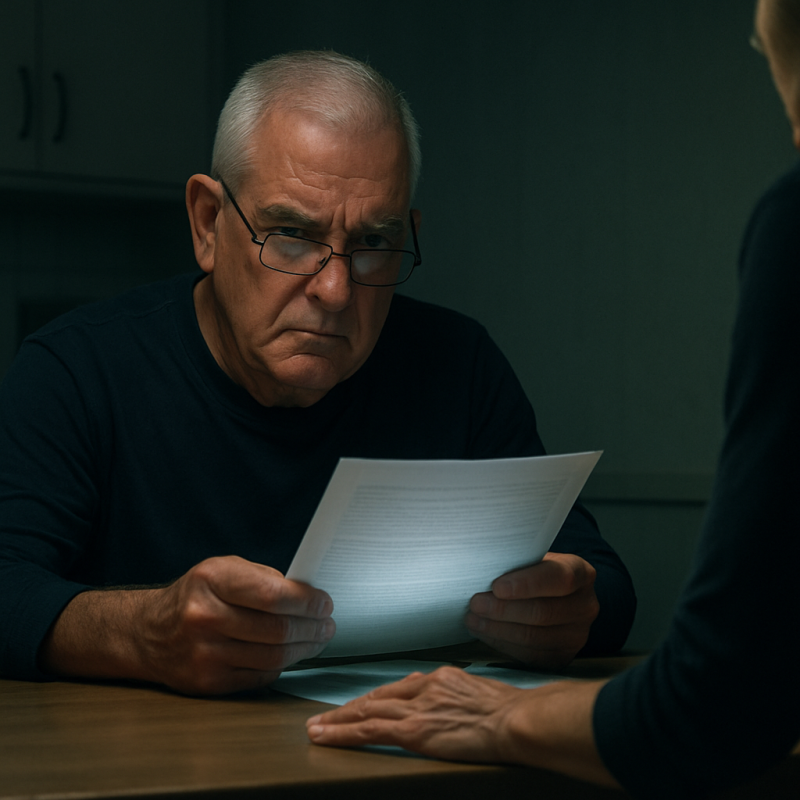 Image by RM AI
The Argument
The conversation didn't end there. It turned into something bigger, something we couldn't seem to navigate our way out of. Robert said we should talk to Michael before jumping to conclusions. I pointed out that Michael had already given us his version, and it didn't match the evidence sitting right there in my phone. "One text message doesn't prove there were systematic problems," Robert said. "It's not just one thing anymore," I told him. "It's everything adding up." Robert's face tightened. "Are you really willing to believe Michael has been lying to us for years?" "Are you willing to ignore what's right in front of us?" The words came out sharper than I intended. We sat there in our living room, the same room where we'd raised our son, where we'd celebrated holidays and birthdays, and we couldn't agree on this fundamental thing. The argument ended without resolution, both of us frustrated and hurt in ways we didn't know how to articulate. Robert went to bed early. I sat alone in the kitchen, feeling isolated even though my husband was just upstairs.
 Image by RM AI
Meeting Amanda
Michael called on a Thursday to ask if he could bring someone to Sunday dinner. "Her name's Amanda," he said, and I could hear the smile in his voice. "I think you'll really like her." I agreed, curious and apprehensive in equal measure. When they arrived, Amanda was carrying flowers and wearing a nervous smile that seemed genuine. She was friendly and warm, clearly wanting to make a good impression. "It's so wonderful to finally meet you," she said, and she seemed to mean it. Michael kept his hand on Amanda's back throughout the evening, guiding her through introductions. He told stories about how they'd met, about Amanda's quirks and habits, painting her as sweet and slightly naive. Amanda laughed and agreed with his characterizations. "He's right, I'm terrible with directions," she said when Michael described her getting lost on the way to their second date. I found myself studying their interactions more than participating in the conversation. Robert chatted easily with both of them, asking Amanda about her work, seeming pleased that Michael had found someone. But something about the dynamic made me deeply uneasy, though I couldn't point to anything specifically wrong.
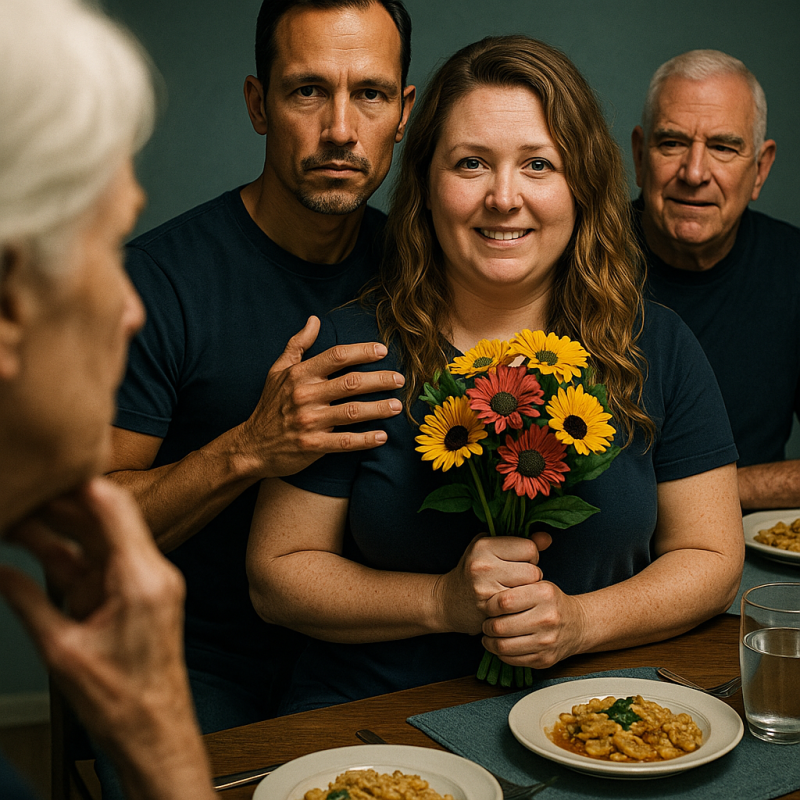 Image by RM AI
Close Observation
I watched them carefully throughout dinner. Michael corrected small details in Amanda's stories in ways that seemed helpful on the surface. When she mentioned a restaurant they'd tried, he gently corrected the name. When she described a movie they'd seen, he clarified which theater and what day. He answered questions directed at Amanda before she could respond—what she did for work, how she liked the city, whether she had siblings. When Amanda did express an opinion, Michael would add context that slightly shifted the meaning. "Amanda thinks the new park is nice, though it's pretty basic compared to some we've seen." I noticed Amanda checking Michael's face before finishing her sentences, like she was gauging his reaction. He had a way of guiding conversations that looked like active participation. Amanda deferred to Michael on several small decisions during dinner—whether she wanted more wine, whether she'd like dessert, whether she was too warm. Robert seemed to see Michael as attentive and engaged, a good boyfriend. But I saw something else in those small gestures and interruptions. When Amanda started to tell a story about her sister, Michael's hand tightened slightly on her shoulder, and Amanda's narrative shifted mid-sentence to something else entirely.
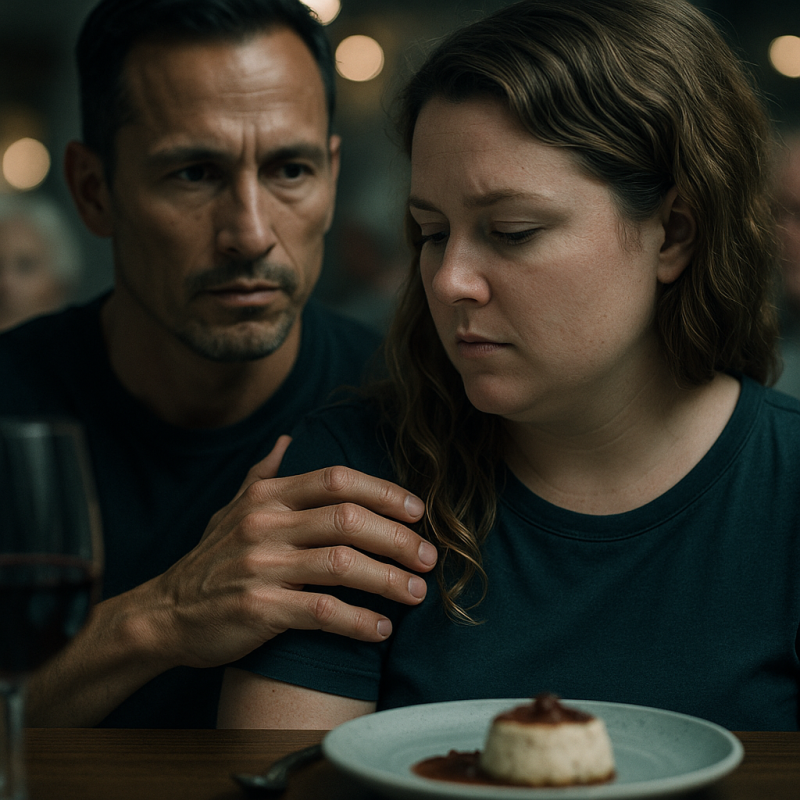 Image by RM AI
Familiar Patterns
Amanda's eagerness to please reminded me painfully of Sarah in the early years. The way Amanda sought Michael's approval before expressing opinions felt familiar in a way that made my chest tight. I remembered Sarah doing the same thing when they first met—that careful checking, that desire to get things right. Michael's treatment of Amanda matched what I now recognized from his first marriage. Attentive, guiding, slightly corrective. Always in a helpful tone. Amanda seemed happy, even grateful for Michael's attention and direction. She smiled when he corrected her, thanked him when he clarified her stories. Sarah had seemed happy too, at first. I'd thought they were a good match, that Michael was helping Sarah come out of her shell. I found myself mentally cataloging the similarities between now and then. The deference. The apologies. The way Amanda seemed to shrink slightly when Michael spoke. I wondered how long it had taken for Sarah to start withdrawing, for the light to go out of her eyes the way it had by the end. The possibility that I was watching the beginning of the same pattern made me feel physically sick, but I had no way to intervene without seeming like I was overreacting to a perfectly normal relationship.
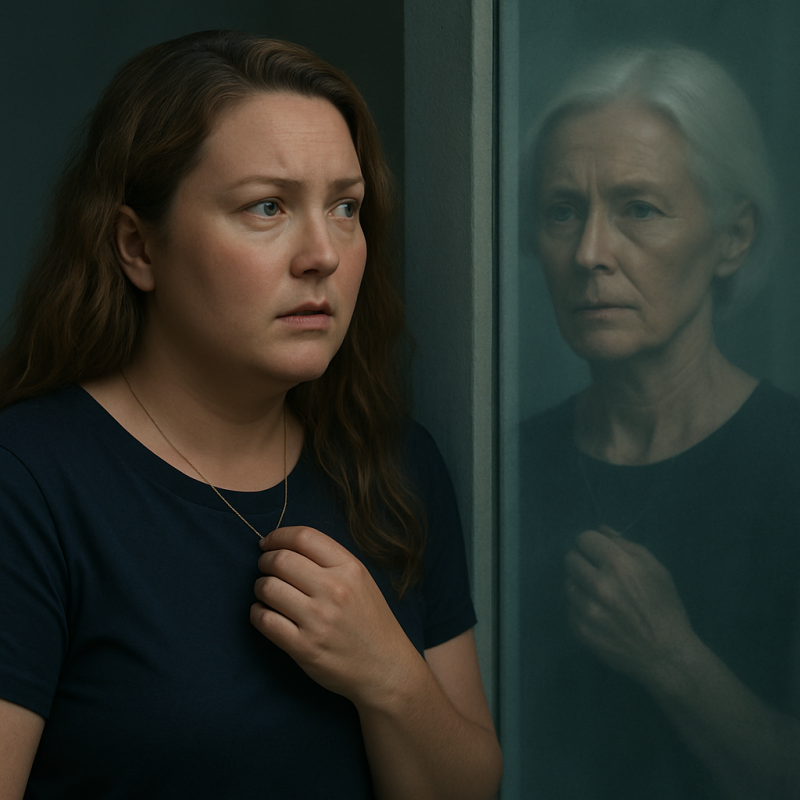 Image by RM AI
Small Corrections
Michael corrected Amanda when she mentioned where they'd gone on their first date. "It was the Italian place on Fifth, remember? Not the one on Third." He framed it as helping her remember accurately, and she thanked him. When Amanda described her job in marketing, Michael added clarifications that subtly undermined her competence. "She's being modest—it's more like an assistant role right now, but she's learning." Amanda accepted his additions and apologized for not explaining clearly. I started counting. Four separate corrections in the span of thirty minutes. Each time, Amanda seemed to shrink slightly and defer to Michael's version. "You're right, I should have said that better." Michael's tone remained pleasant and helpful throughout, like he was doing her a favor by keeping her stories accurate. Robert didn't seem to register anything unusual in the dynamic. He laughed at Michael's jokes, asked Amanda follow-up questions, seemed genuinely pleased that his son had found someone kind. But I felt increasingly desperate to say something, to tell Amanda she didn't need to apologize, that her version of events was fine. I had no opening that wouldn't seem strange or inappropriate, no way to intervene without making everyone uncomfortable.
 Image by RM AI
The Familiar Comment
Amanda was telling us about a situation at work when she paused and laughed self-consciously. "I got pretty emotional about it, honestly. I'm probably just being too sensitive." The phrase hit me like a physical blow. Sarah had said almost exactly that, multiple times over the years. Michael responded with understanding sympathy, reaching over to squeeze Amanda's hand. "That's one of the things I love about you," he said warmly. "You're so sweet and caring. You feel things deeply." The comment sounded supportive. Robert smiled. Amanda looked pleased. But I heard something else underneath those words. I remembered Michael saying similar things about Sarah before later describing her as overly emotional, as someone who couldn't handle normal feedback. Amanda seemed genuinely happy with his response, unaware of any subtext or pattern. She had no idea that I'd heard this exact dynamic before, watched it play out over years. I met Michael's eyes across the table, and he smiled at Amanda with what looked like patience and affection. The expression seemed kind on the surface, but I had seen it before in contexts that now seemed completely different, and I recognized that smile from a dozen memories I'd been slowly, painfully reinterpreting.
 Image by RM AI
The Warning She Couldn't Give
After dinner, as Michael and Amanda gathered their things to leave, I felt this urgent pull to say something to her. Just pull her aside for a moment, woman to woman. But what would I even say? That I had a bad feeling? That she reminded me of his ex-wife in ways that scared me? I had no proof of anything. Just suspicions and memories I'd been reinterpreting through a lens Sarah had given me. If I said something, I'd sound like an overreacting mother who couldn't let her son's first marriage go. What if I was completely wrong? What if Michael had learned from his mistakes, grown from that experience? What if this time was different and I was about to poison a healthy relationship with my paranoia? But then I watched him help Amanda with her coat, saw that patient smile, heard him say something that made her laugh and touch his arm. And I thought about Sarah saying almost those exact words Amanda had said at dinner. I thought about patterns I might be seeing or might be imagining. Amanda hugged me goodbye, thanking me for a lovely evening, her face so open and trusting. I let them walk out the door without saying a word, and as I watched them leave together, I couldn't shake the feeling that my silence made me complicit in whatever came next.
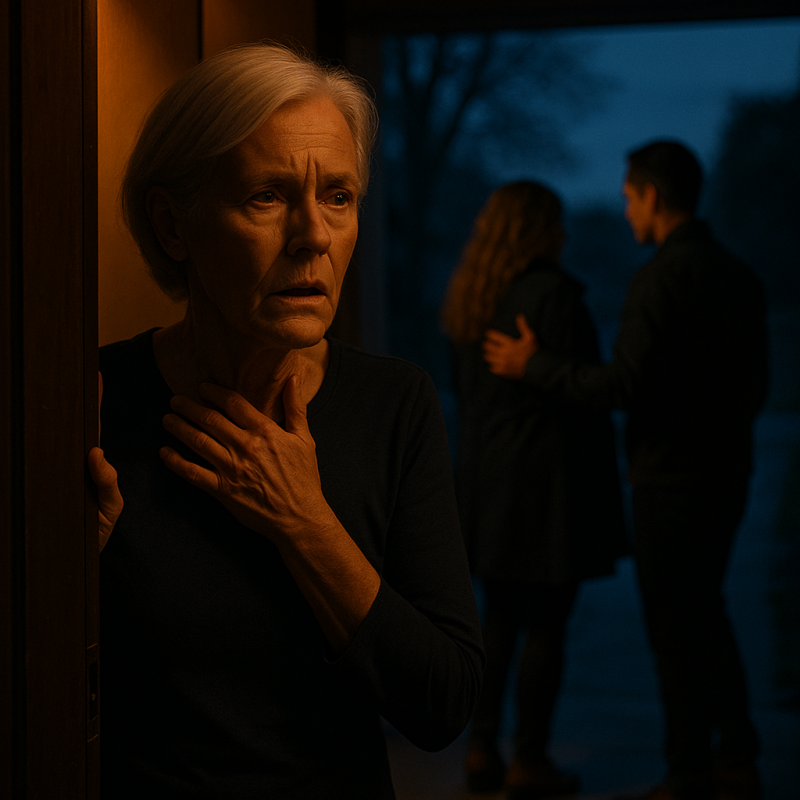 Image by RM AI
Calling Sarah Back
I couldn't sleep that night. Kept seeing Amanda's face, hearing her laugh off her own emotions the way Sarah used to. By morning, I'd made a decision before I could talk myself out of it. I called Sarah. My hands were shaking as I dialed, but I needed to understand more. When she answered, I didn't waste time with pleasantries. I told her I'd had dinner with Michael and his new girlfriend, and I was starting to see things I hadn't seen before. I said I needed to understand the full timeline of what happened during their marriage, not just pieces but the complete picture. The silence on the other end stretched so long I thought the call had dropped. When Sarah finally spoke, her voice was sad rather than satisfied or vindictive. She said she'd been hoping I would call back, but she'd prepared herself for the possibility I wouldn't. Most people didn't want to hear the full story, she said. Most people preferred the version that was easier to accept. She asked what specifically I wanted to know, and I told her everything. The whole seven years, start to finish. Sarah agreed, but something in her tone told me this conversation was going to be difficult for both of us.
 Image by RM AI
The Timeline
Sarah started at the beginning, with their first year of marriage when things were mostly good. She described small moments that seemed like care at the time—Michael wanting to know her schedule, offering to handle things for her, checking in frequently. Year two, he'd started expressing concern about some of her friendships, suggesting certain people weren't good influences or brought unnecessary drama into her life. Sarah said she'd thought he was being protective, looking out for her wellbeing. By year three, she realized she'd stopped making plans without checking with Michael first, though she couldn't pinpoint when that had started. Year four brought more frequent comments about her being too emotional or overreacting to normal situations. Sarah described how her confidence had eroded through constant small corrections, each one seeming reasonable in isolation. She said Michael had a way of making her question her own perceptions until she defaulted to his version of events. By year five, she'd believed most of the problems in their marriage were her fault, that she was the one who needed to change and improve. The scariest part, Sarah said, wasn't any single moment but the cumulative effect. By year five, she was so deep in it that she couldn't see how much she'd changed or recognize herself clearly anymore.
 Image by RM AI
The Isolation
Then Sarah described the isolation, and I felt something cold settle in my chest. She explained how her friendships had faded during the marriage. Michael never forbade her from seeing anyone—that would have been too obvious. Instead, he'd express concern about friends who seemed negative or dramatic. After visits, he'd consistently highlight problems or tensions Sarah hadn't noticed. She found herself defending her friends to Michael, then slowly seeing them less because it was easier than the conversations afterward. Family visits became fraught with Michael's stress beforehand or his comments afterward about what had gone wrong. Sarah said he had a way of making her feel like she was choosing others over their marriage, like caring about anyone else meant she didn't care enough about him. He framed all his concerns as caring about her, protecting their relationship. Each individual instance seemed like normal relationship navigation, the kind of thing couples work through. But the cumulative effect was that Sarah had ended up increasingly isolated, her world shrinking until Michael was at the center of everything. Then Sarah said something that made my stomach drop. She said I'd been part of this dynamic, though I hadn't realized it at the time. I'd been used in ways I never knew about.
 Image by RM AI
My Unknowing Role
Sarah's voice stayed gentle as she explained how Michael had used me. She described times he'd quoted me to prove his points during their arguments, telling Sarah that even I thought she was being too sensitive or difficult about something. Sarah mentioned a specific conversation where Michael had told her I agreed she'd overreacted about plans they'd made. I remembered that conversation—I'd said something mild to Michael, just a passing comment, but he'd apparently used it to validate his entire narrative to Sarah. She explained how effective this was because my opinion mattered to her. She'd wanted her mother-in-law to like her, to think well of her. When Michael would mention things I'd supposedly observed about Sarah's behavior, it reinforced his claims that the problems were hers. Sarah said she'd felt like even Michael's family could see she was the problem, which made her feel more isolated and more certain something was wrong with her. As she talked, I remembered those conversations with painful clarity. I'd provided Michael with ammunition without realizing it, given him tools to make Sarah doubt herself. The knowledge that I'd unknowingly helped isolate her made me feel physically sick. Sarah said she didn't blame me for not seeing it, that Michael had been careful and I'd had no reason to question him. But I blamed myself.
 Image by RM AI
Finding the Counselor
I needed outside confirmation, something beyond Sarah's account and my own reinterpretations. I remembered Michael mentioning their marriage counselor years ago, and after some searching, I found David's name and office number. I called and asked if I could speak with him about my son's marriage. David was immediately hesitant, citing confidentiality and professional boundaries. I understood, but I explained I was trying to understand what had happened, that Sarah had spoken to me and I was Michael's mother seeking clarity about a situation I hadn't fully grasped. David agreed to meet briefly but emphasized he couldn't discuss specifics without consent from his former clients. When we met at his office, I asked careful questions about whether he'd seen concerning patterns during their sessions. David said he couldn't comment on individual cases without permission, but his pauses were telling. The way he chose his words, the things he didn't say—they suggested he had observations he wished he could share. I asked if Sarah could provide consent for him to speak more freely about what he'd witnessed. David said that would change things considerably, and his expression told me he hoped she would.
 Image by RM AI
Patterns Confirmed
Sarah gave David permission, and he agreed to meet with me again. This time, he could discuss what he'd observed during their couples counseling sessions. David described patterns of one partner controlling the narrative, presenting himself as the reasonable party trying to help the other see things clearly. He said Michael often positioned himself as patient and rational while framing Sarah's reactions as overemotional or irrational. David mentioned Sarah's increasing self-doubt throughout their time in counseling—she would describe an incident, then defer to Michael's version when he disagreed with her account. He explained that Michael's language about Sarah had concerning elements, ways of describing her that undermined her perceptions and reality. David emphasized these were patterns he'd observed across multiple sessions, not isolated incidents. He said he'd recommended individual therapy for Michael specifically to address these dynamics, to work on how he communicated and related to his partner. Michael had declined, saying the marriage was the problem, not him. If they needed counseling, it should be couples work. David's careful therapeutic language couldn't hide his concern. He said he'd seen these dynamics before, and they rarely improved without significant individual work from the person exhibiting the controlling behaviors.
 Image by RM AI
Why He Stopped
I asked David why the couples counseling had ultimately ended. He explained that continuing the sessions was causing more harm than good. Michael was using therapy language to validate his perspective and make Sarah doubt her reality even more effectively. David described how Michael would reference things from their sessions to prove his points at home, weaponizing the counseling process itself. Sarah had told David this was happening, and it had made everything worse rather than better. David said couples counseling can sometimes give someone more tools to control their partner, more sophisticated language to justify their behavior. He'd recommended they stop joint sessions and pursue individual therapy instead. Michael had refused and said if David wouldn't work with them as a couple, they'd stop therapy entirely. Which they had. I sat there processing this, then asked the question I'd been avoiding. I asked if David had been concerned about Sarah's safety during their marriage. The pause before he answered was long enough that I understood even before he spoke. He said he'd been concerned about Sarah's emotional wellbeing and her ability to see the situation clearly. The way he said it, the things he carefully didn't say, told me everything I needed to know about how serious this had been.
 Image by RM AI
Needing to See
I sat there in David's office after he'd told me about his concerns for Sarah's safety, and I knew professional observations weren't enough anymore. I needed something concrete. Something I could hold in my hands and point to and say, this is real. David's careful therapeutic language, his measured concerns—they were important, but they were still interpretations. I told him I needed to see proof for myself before I could confront Michael about any of this. David nodded slowly, like he'd been expecting this. He said he understood, but he couldn't provide evidence beyond his clinical impressions. Everything from their sessions was confidential, and even if it wasn't, his notes were observations, not documentation of what had actually happened between them. I asked if there was anything documented, anything I could see for myself that would show me the truth. David was quiet for a long moment, his fingers steepled in that way he had when he was choosing his words carefully. Then he said Sarah had been advised to keep records during their sessions. He mentioned that many people in Sarah's position document things as a form of self-protection, to help them trust their own memory when it's being questioned. I felt my heart start pounding because I understood what he was telling me. He said if I wanted proof, Sarah was the one who could provide it—but I needed to be certain I was ready for what I might find.
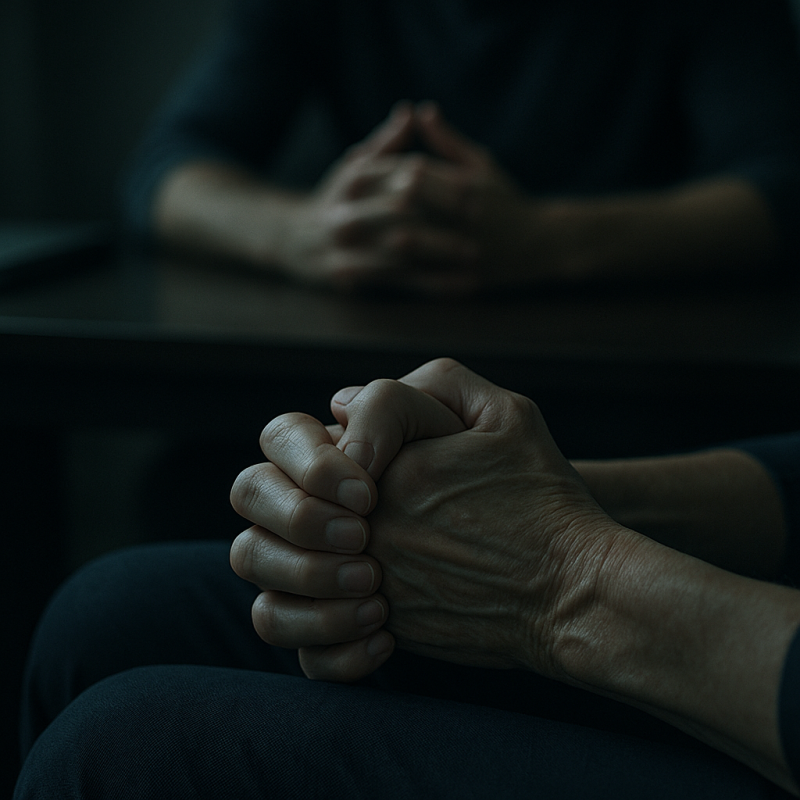 Image by RM AI
What Sarah Kept
I called Sarah that evening because I couldn't wait any longer. My hands were shaking when I dialed her number, and when she answered, I just asked her directly—did she have any documentation from the marriage? Any records she'd kept? Sarah was quiet for a moment, and in that silence I could hear her deciding whether to tell me. Then she said yes. She had saved text messages and screenshots of conversations. She'd kept them organized by date, stored them carefully like evidence she hoped she'd never need to use. Then Sarah mentioned she had also made a recording toward the end, when things got bad. I asked why she hadn't mentioned this before, why she'd never shown me any of it during our conversations. Sarah's voice was soft when she answered. She said she hadn't wanted to force me to see it—she needed me to want to know. She said the recording was difficult to listen to, and she wouldn't have shown it to me unless I asked. It would change things, she said, and there would be no going back. I told her I was asking now. I needed to see it for myself, whatever it was. Sarah agreed to meet and show me everything, but she warned me one more time that it would change things permanently.
 Image by RM AI
The Meeting
I drove to Sarah's apartment the next afternoon with my heart pounding so hard I could feel it in my throat. My hands shook as I knocked on her door, and when Sarah opened it, she looked tired but composed, like she'd been preparing for this moment. She welcomed me in quietly, and I noticed how neat and sparse her apartment was—the kind of space someone builds when they're starting over from nothing. Sarah offered tea, which I accepted just to have something to hold, something to do with my hands. We sat at her small kitchen table with a laptop between us, and Sarah explained she had organized everything chronologically. The text messages came first, then screenshots of conversations. The recording was from the last year of their marriage. She asked me one more time if I was certain I wanted to see this, and I could see in her eyes that she was giving me one last chance to walk away. I said I had to know, even if it hurt. Even if it changed everything. Sarah took a breath, the kind you take before jumping into cold water, and opened the laptop. She turned it toward me, and I understood that whatever came next, I had chosen it.
 Image by RM AI
His Words on the Screen
Sarah scrolled to the first set of messages, dated three years into the marriage. I read texts where Michael questioned Sarah's memory of events, telling her she was 'misremembering' conversations they'd had. In one exchange, Michael wrote that Sarah was making a big deal out of nothing, that she always did this. Another message said Sarah's friends were making her paranoid, turning her against him. I noticed Michael frequently used phrases like 'you always do this' and 'this is exactly what I mean'—the tone shifting between concerned and dismissive, often in the same message. He positioned himself as patient and reasonable while painting Sarah as unstable and emotional. And then I felt my stomach turn because I recognized the phrasing. Michael had used this exact language when discussing Sarah with me. The way he'd described Sarah's behavior to me matched how he spoke to Sarah directly, word for word. I'd heard these same concerns, these same patient explanations about Sarah's overreactions and emotional instability. The messages showed Michael telling Sarah she was the problem, and I realized with sickening clarity that I had believed this version of events completely. I had repeated his concerns back to him, validated his perspective, never once questioning whether what he was telling me was true.
 Image by RM AI
The Recording
Sarah said the recording was from the last six months of the marriage. She had recorded it on her phone during an argument Michael didn't know was being documented. I listened as Michael's voice filled the room, calm and patient in a way that felt wrong, like a mask. He told Sarah she was remembering things incorrectly again, that this always happened when she got emotional. Michael's voice explained to Sarah that she was too emotional to see clearly, and he listed instances where Sarah had supposedly overreacted, building his case against her piece by piece. Then Michael said the words that broke me: 'Even my mother sees it, Sarah. She's told me she's concerned about you.' I heard Michael use my name, my observations, my mild comments as proof that Sarah was the problem. Sarah on the recording began apologizing, her voice getting smaller, agreeing that maybe she was wrong, maybe she had misunderstood. Michael's voice softened once Sarah conceded, praising her for being reasonable, for finally seeing things clearly. The recording ended with Sarah sounding uncertain and defeated, agreeing to see things Michael's way. I sat in silence, tears streaming down my face, understanding that everything I'd believed about my son had been constructed from his words alone.
 Image by RM AI
What Cannot Be Unseen
The recording ended and neither of us spoke for several minutes. I stared at the laptop screen, now dark, seeing my son differently than I ever had before. Every memory from the past seven years recontextualized itself in my mind—times I had sympathized with Michael about Sarah's 'emotional' behavior, moments I had repeated his concerns back to him, validating his version of reality. I understood now that each of those conversations had become ammunition. Michael had taken my words to Sarah, used my authority as his mother to control his wife, to make her doubt herself. The systematic nature of it was what devastated me most—this wasn't temper or stress or a bad marriage. This was something Michael had done deliberately, over years, to a woman who loved him. Sarah sat quietly across from me, waiting for me to speak when I was ready, giving me space to process what I'd heard. Finally I asked her how she had survived this, how she had made it through. Sarah said some days she didn't think she would. We sat there in her small apartment, and I knew I would never be the same person I had been an hour ago.
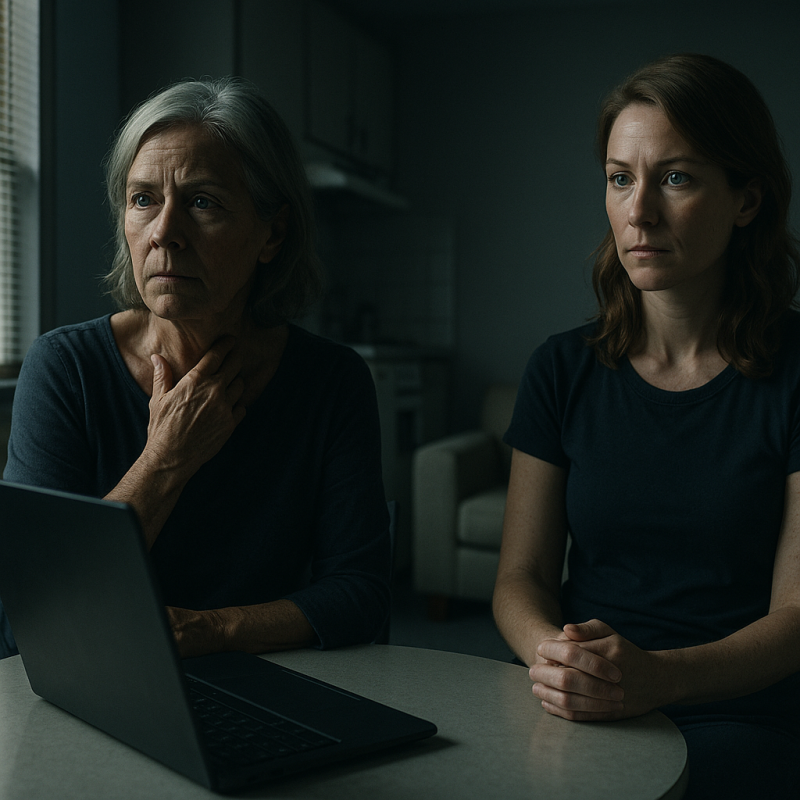 Image by RM AI
The Apology
I finally found words, though they came out broken and inadequate. I apologized to Sarah for everything—for not seeing sooner, for not asking the right questions, for making things worse without knowing it. I told her I had been so certain I knew my son that I'd never questioned what he told me about her. I acknowledged that Michael had used my trust in him against her, had weaponized my concern to hurt her more effectively. Sarah listened without interrupting, her own eyes wet. When I finished, Sarah thanked me for believing her now, for being willing to see the truth. She said she'd never blamed me because Michael was skilled at presenting exactly the version of himself he wanted people to see. She took my hands across the table and said what mattered was that I knew the truth now, that I believed her. I said knowing didn't undo what she'd suffered, didn't erase the years of damage. Sarah agreed but said it helped—being believed after years of doubting herself meant something. We sat together in that small apartment, two women connected by the same man's damage, grieving different losses. I grieved the son I thought I'd raised while Sarah grieved the marriage she'd lost.
 Image by RM AI
The Drive Home
I left Sarah's apartment as the sun was setting. The drive home took forty minutes, and I spent every moment thinking, planning, steeling myself. I replayed Michael's voice from the recording, the casual cruelty of it, the patience that was really control. I thought about how I would confront him, what I would say. I anticipated his responses—denial first, then confusion, then charm, then concern for me. Michael would try to make me doubt what I'd heard, just as he'd made Sarah doubt her own reality for years. He would sound reasonable and hurt and worried about my state of mind. I resolved to hold firm no matter how convincing he sounded. I would not give him room to minimize or redirect or explain this away. By the time I reached home, I had moved through devastation to determination. Robert was waiting when I walked in, and my face must have told him everything because he didn't ask how it went. I said I'd seen the proof, heard it with my own ears, and I needed to confront Michael. Robert didn't argue this time, didn't suggest I wait or think it through. He just asked when.
 Image by RM AI
The Invitation
The next morning, I picked up my phone three times before I actually made the call. My hands were shaking so badly I had to set it down and breathe. Robert was at work, but we'd talked it through the night before—he'd said he'd come home early, that he'd be there with me. I finally dialed Michael's number around ten. He answered on the second ring, his voice warm and easy like always. I asked if he could come by that evening, said I needed to talk to him about something important. There was a pause, then he asked if everything was okay, his tone shifting to that concerned son voice I'd heard a thousand times. I said I was fine, but there were things we needed to discuss. He agreed easily, too easily, and suggested he could bring dinner. I declined, keeping my voice steady, saying this wasn't that kind of visit. Michael's curiosity was audible in his next question, but he didn't press when I didn't elaborate. He said he'd be there around seven. After I hung up, I sat at the kitchen table with my phone still in my hand, knowing that in nine hours, everything would change. Michael had no idea what was coming, and somehow that made it worse.
 Image by RM AI
The Confrontation Begins
Michael arrived exactly at seven, greeting us with his usual warmth and that easy smile that had always made me feel like everything was fine. I noted how normal he seemed, how confident, how completely unsuspecting. I invited him to sit in the living room where Robert was already waiting. Michael noticed the formal arrangement immediately—both of us sitting across from him, no casual conversation, no offer of drinks. He asked what was going on, a slight edge creeping into his voice. I said I wanted to talk about his marriage to Sarah. His expression shifted, surprise flickering across his face before he controlled it. He said that was old history, asked why I was bringing it up now. I told him I'd been learning things that didn't match what he'd told me over the years. I mentioned the family dinner where Sarah had supposedly chosen not to come. Michael started to explain, but I cut him off with the text message contradiction—how he'd told her not to come, then told us she'd declined. I watched his smile fade as he realized I had specific information, not just vague concerns. Michael asked where this was coming from, his voice still controlled but harder now.
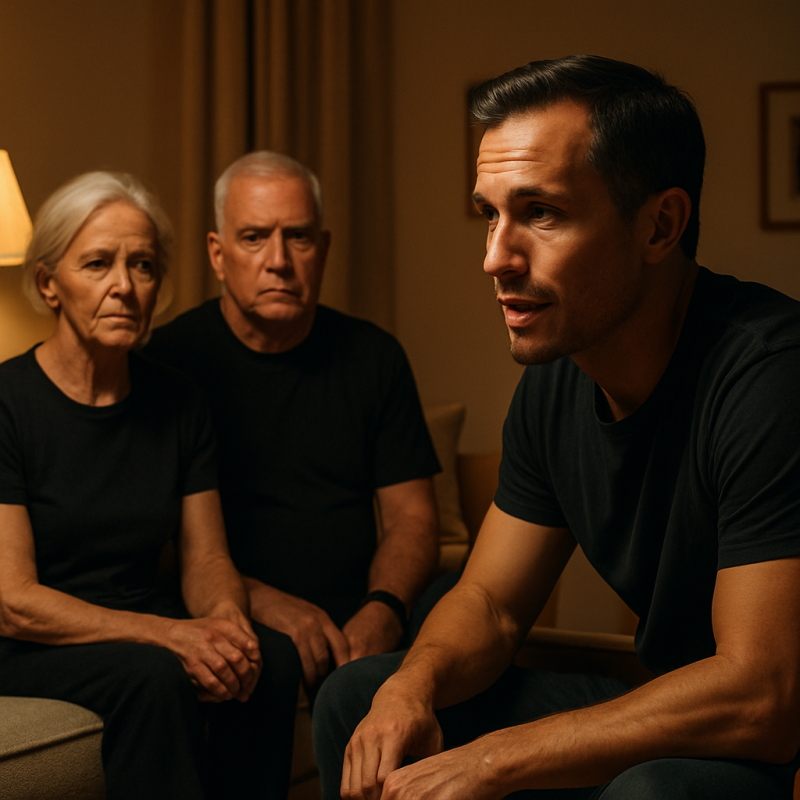 Image by RM AI
The Denial
Michael shifted into explanation mode, his voice taking on that patient, reasonable tone I'd heard him use with difficult clients. He said Sarah had never gotten over the divorce and was trying to poison things between us. I listened without interrupting as he cast her as emotional, vindictive, unable to move on. He said whatever Sarah had told me was colored by her hurt feelings and her need to blame someone. Michael reminded me of all the times he'd worried about Sarah's mental state during their marriage, how fragile she'd seemed. I recognized the script from the text messages I'd seen, the same phrases he'd used to undermine her. I asked Michael about specific things he'd said—exact words from the recorded conversation with David. He stumbled slightly, unable to place how I knew those precise phrases. I said I'd spoken to David, their marriage counselor. Michael's face tightened, but he recovered quickly, saying David had only heard Sarah's version of events, that therapists always sided with the more emotional spouse. Then I mentioned the recording. Michael went completely still. His expression froze for just a moment before he caught himself, but I'd seen it—the calculation, the realization that he was caught.
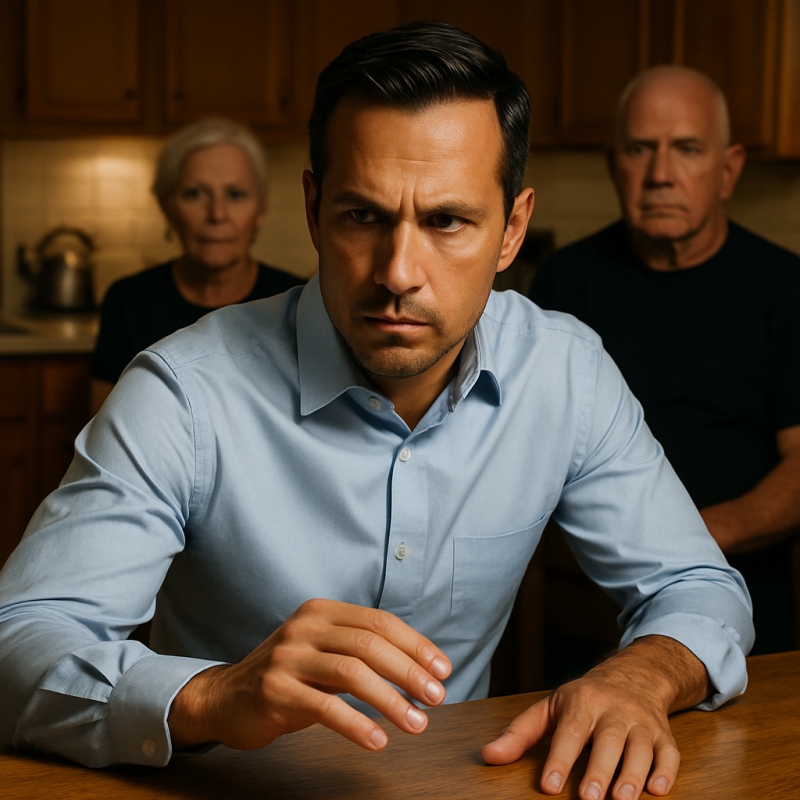 Image by RM AI
Holding Ground
Michael tried to redirect the conversation to my betrayal, expressing hurt that his own mother would investigate him behind his back. He said he couldn't believe I'd listened to Sarah's lies instead of coming to him first. I acknowledged his feelings but said I needed the truth more than his comfort. Michael attempted to minimize—said every marriage had rough patches, that he and Sarah had both made mistakes. He admitted things weren't perfect but insisted Sarah exaggerated everything, made mountains out of molehills. I quoted his own words from the recording back to him, the casual cruelty of how he'd described manipulating her. Michael claimed that was out of context, that I didn't understand the full situation or what their marriage had really been like. I said I understood exactly what systematic control sounded like. I listed the patterns I'd learned about: isolating Sarah from friends, undermining her confidence, using my words and Robert's as weapons against her. Michael's jaw tightened as I refused to accept his explanations. He stood up abruptly, his voice rising for the first time, demanding to know why I was taking Sarah's side over my own son. The question hung in the air between us, and I looked at him and saw someone I didn't recognize.
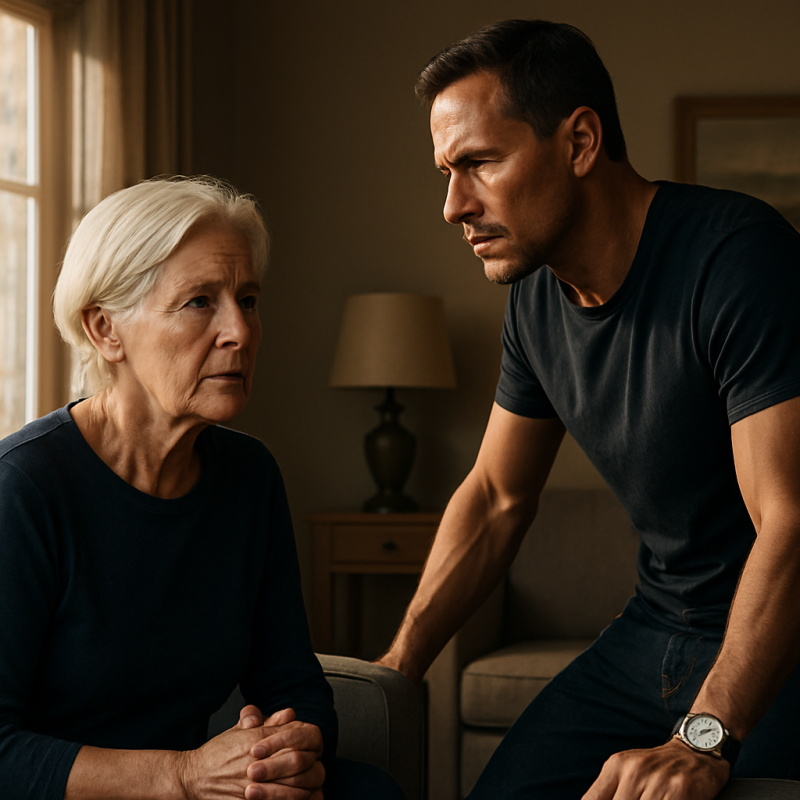 Image by RM AI
The Admission
Michael sat back down, running his hands through his hair in a gesture I'd seen since he was a teenager. He said fine, he hadn't been perfect—work had been incredibly stressful, the marriage was struggling, they'd both been unhappy. Michael admitted he'd sometimes been harsh with Sarah, that he'd lost patience with her. He said her emotional reactions had worn him down over the years, that she'd cry over everything and he'd had to be the rational one. Michael claimed he'd only ever tried to help her see things clearly, to be more logical and less reactive. He described what I now recognized as gaslighting as 'helping her be rational.' He said using my name had just been pointing out that others noticed the same issues he did, that he wasn't making things up. Michael seemed to genuinely believe his version—that he'd been managing a difficult, overly sensitive wife who couldn't handle reality. The lack of real remorse was more chilling than outright denial would have been. Michael said he was sorry if things had gotten out of hand, but Sarah wasn't blameless in how their marriage fell apart. He asked if we could move past this, suggesting it was all in the past now anyway. I stared at my son and saw clearly that he didn't understand what he'd done, didn't see anything truly wrong with it.
 Image by RM AI
Refusing the Excuse
I said what Michael described as 'losing patience' was systematic control, and I wasn't going to let him make it smaller than it was. I named it clearly: emotional abuse, gaslighting, isolation. Michael recoiled at the words, said I was being dramatic, using therapy language I didn't understand. I listed the specific behaviors—making Sarah doubt her own memory, isolating her from friends and family, using Robert and me as weapons to make her feel crazy. I said this wasn't stress or marriage problems, it was a pattern of deliberately breaking someone down. Michael tried to argue that those words were too strong, that I was overreacting to normal marital conflict. I said I'd seen the evidence, heard his voice on that recording, and I knew exactly what I was describing. Michael invoked our relationship—forty-one years of being my son, of me knowing him, versus one recording and Sarah's bitter accusations. I said the recording showed me the forty-one years more clearly, helped me understand things I'd missed or excused. I told him that loving him didn't mean I could ignore what he'd done to Sarah. The room fell silent as the weight of my words settled between us. Robert, who had stayed quiet through most of this, finally spoke—saying he'd heard enough to agree with me.
 Image by RM AI
The Door Closes
Michael stood, his face hard with anger rather than shame or regret. He said he couldn't believe his own mother would turn against him like this, choose to believe the worst instead of giving him the benefit of the doubt. I said I wasn't turning against him—I was seeing him clearly for the first time. Michael said if I chose to believe Sarah over him, that was my choice, but he wouldn't sit here and be accused of things I didn't understand. He gathered his jacket and keys, his movements sharp and controlled, every gesture radiating barely contained fury. At the door, he turned and said he hoped I would come to my senses, realize what Sarah was doing to our family. There was no apology, no acknowledgment of real wrongdoing, no moment of vulnerability or remorse. Michael walked out without looking back, and I didn't stop him or call after him. The door closed with a quiet click that seemed to echo through the house. Robert moved to sit beside me on the couch, putting his arm around my shoulders. I leaned into him and felt the grief of losing someone who was still alive, still out there in the world. The son I'd raised wasn't gone—I was realizing he might never have existed the way I'd believed.
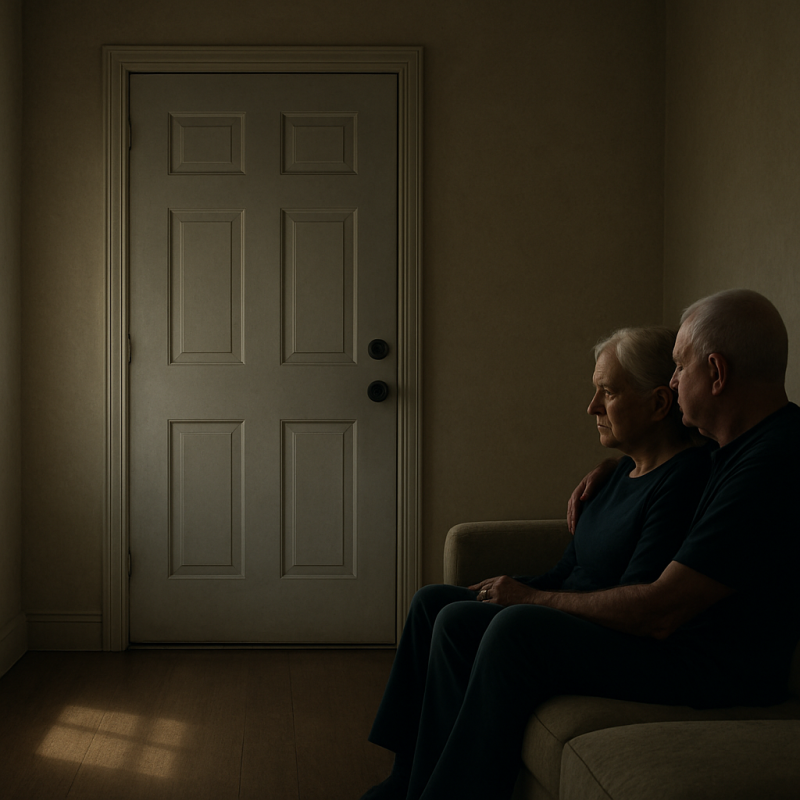 Image by RM AI
The Warning
Two days after Michael left, I found Amanda's contact information in my phone from when she'd sent me those cheerful family photos. I debated for hours whether to reach out, knowing it might make things worse, might push Michael further away or make me look vindictive. But I couldn't watch the same pattern begin with someone new without at least trying to intervene. I sent a careful message asking if we could meet for coffee, said I had something to share about Michael that she deserved to know. Amanda's response came hours later, cautious and confused. She agreed to meet but asked if Michael knew about this. I said no, and that it needed to stay between us for now. We arranged to meet the next afternoon at a quiet café across town. I spent that night thinking about what I would say and how to say it without sounding like a bitter ex-mother-in-law trying to sabotage my son's happiness. I knew I couldn't force Amanda to believe me, couldn't make her see what she wasn't ready to see. All I could do was plant a seed, share what I knew, and hope it took root before real damage was done. Amanda agreed to coffee, her voice cautious when she called to confirm, and I prayed I wasn't already too late.
 Image by RM AI
Planting the Seed
I met Amanda at a café forty minutes from home, somewhere Michael would never think to look. She arrived ten minutes late, her face tight with protective energy, and I could see she'd already decided I was the problem here. I started carefully, acknowledging how strange this must seem, a mother asking to meet her son's new girlfriend behind his back. I didn't attack Michael directly. I didn't mention the recording or Sarah's trembling voice. Instead, I described behaviors to watch for—small corrections in public, isolation from friends, making her doubt her own memory of conversations. I asked if she'd noticed Michael speaking for her, redirecting her opinions before she could fully express them. Something flickered across Amanda's face, recognition maybe, but she pushed it down fast. She insisted Michael was wonderful to her, that he was nothing like what I was describing, that maybe I just didn't understand their relationship. I told her I'd thought the same about how he treated Sarah, and I'd been wrong. I wasn't asking her to believe me immediately, I said, just to pay attention. She asked why I would say these things about my own son, her voice breaking slightly. I said because I'd failed to see the truth once and couldn't fail again. Amanda left saying she needed to think, her face conflicted, not convinced but not dismissing either, and I could only hope that thinking would be enough.
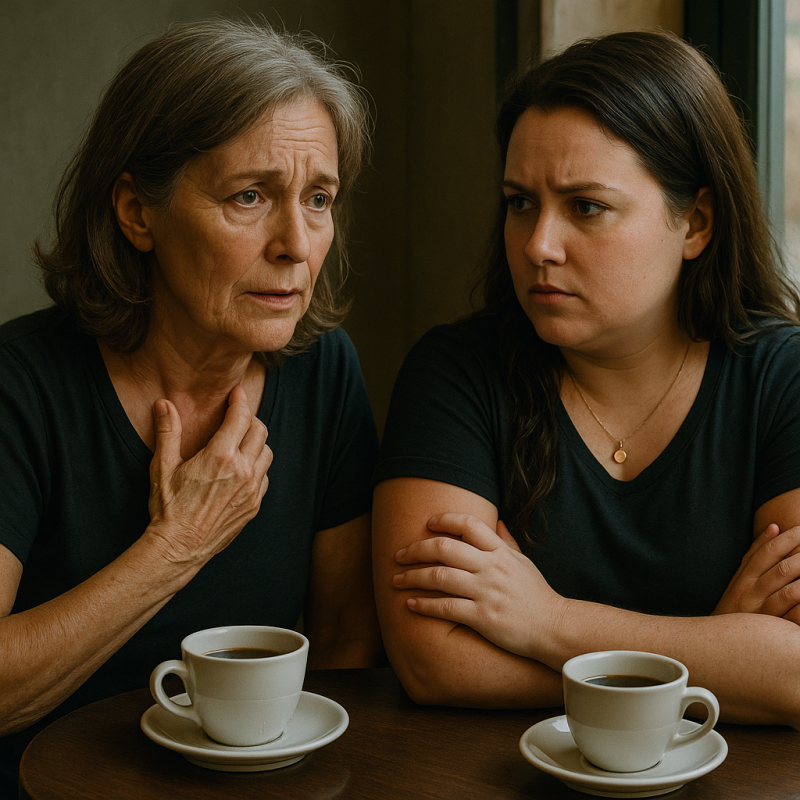 Image by RM AI
Finding Ground
Three weeks passed after the confrontation with Michael, and I spent most of them talking through everything with Claire and Robert, trying to find solid ground again. Claire came over twice a week, listening without judgment as I circled the same questions over and over. She helped me see that recognizing the truth was an act of courage, not betrayal, though it didn't always feel that way. Robert was quieter but present, processing in his own methodical way. We talked about Michael's childhood, looking for signs we'd missed, and some memories looked different now while others still seemed like the son we'd loved. I began to separate who Michael was from the son I'd imagined, stopped checking my phone constantly for messages from him. The grief came in waves—sometimes I could function normally, sometimes it leveled me completely. Claire brought groceries and sat with me in silence when words felt impossible. Robert took over more household tasks, giving me space to feel what I needed to feel without having to explain it. By the end of the third week, I noticed the weight had shifted somehow. It was still there, pressing down on my chest, but it wasn't crushing me the way it had been. For the first time since the confrontation, I woke up without dread sitting heavy in my chest.
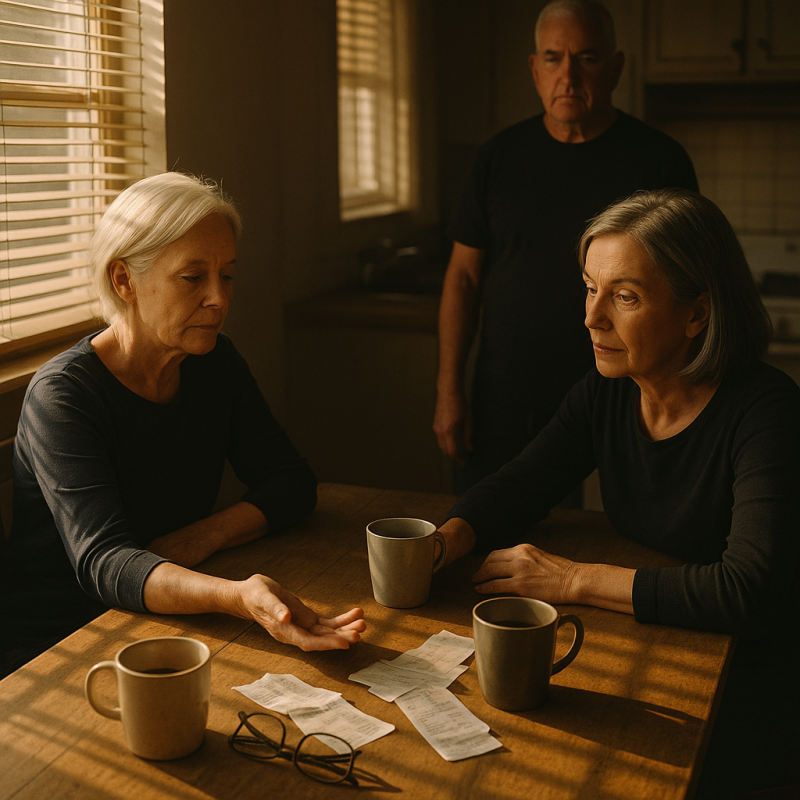 Image by RM AI
The New Distance
Michael started texting after two weeks of silence, testing the waters with light messages about work and casual questions about how I was doing. He didn't acknowledge the confrontation or apologize for how he'd left. I recognized the tactic immediately—act normal long enough and the problem disappears, reset to factory settings. I responded briefly but didn't engage in extended conversation. When Michael suggested Sunday dinner like nothing had happened, I told him I wasn't ready for that. He expressed hurt, asking how long I planned to punish him, and I felt that familiar pull to comfort him, to smooth things over. But I said this wasn't punishment—it was consequence. I told him I loved him but couldn't pretend I hadn't learned what I'd learned. His messages grew less frequent after that exchange, dropping from daily to weekly to occasional. He wasn't going to change or admit wrongdoing. He was just going to wait me out, assuming eventually I'd cave and return to our old dynamic. I accepted that the son who might apologize and grow didn't exist, or at least wasn't showing up. I began to build a life that included this truth instead of fighting it. Michael's messages eventually slowed, and I realized he wasn't going to change—only wait me out.
 Image by RM AI
Seeing Clearly
I stood at my kitchen window on a Sunday morning, thinking about everything that had changed in the past two months. I no longer expected Michael's call at our usual time, and the absence hurt, but it hurt less than pretending I didn't know the truth. I thought about Sarah, who was rebuilding her life with hard-won clarity somewhere I hoped was peaceful. Amanda had sent one brief message saying she was watching, paying attention—nothing more. I didn't know if it would be enough, but I'd done what I could. I thought about the son I'd raised and the man I now understood him to be. Both existed—the boy I'd loved and the man who'd hurt his wife systematically. I realized I could hold both truths without one erasing the other. I would always love Michael, but I would never again mistake love for blindness. Robert joined me at the window, and we stood together in comfortable silence, his hand finding mine. I felt sadder than I'd ever been, and also more at peace with what was real. The future was uncertain—maybe Michael would change, maybe he wouldn't, maybe Amanda would see what I'd seen. But I knew one thing with absolute certainty: I would never look away from the truth again.
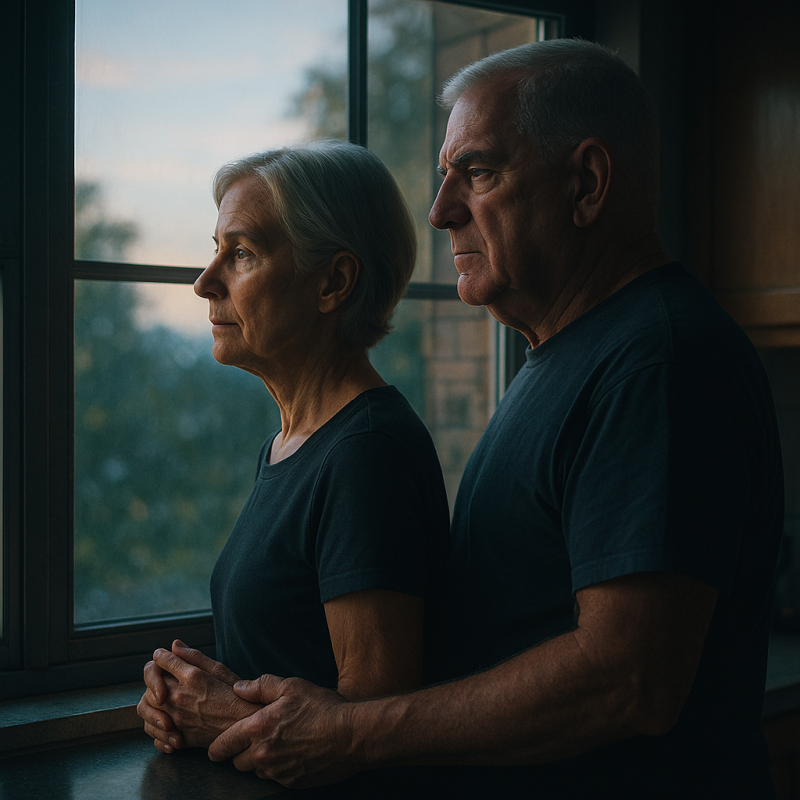 Image by RM AI
KEEP ON READING
The 20 Most Recognized Historical Figures Of All Time
The Biggest Names In History. Although the Earth has been…
By Cathy Liu Oct 4, 2024
10 of the Shortest Wars in History & 10 of…
Wars: Longest and Shortest. Throughout history, wars have varied dramatically…
By Emilie Richardson-Dupuis Oct 7, 2024
10 Fascinating Facts About Ancient Greece You Can Appreciate &…
Once Upon A Time Lived Some Ancient Weirdos.... Greece is…
By Megan Wickens Oct 7, 2024
20 Lesser-Known Facts About Christopher Columbus You Don't Learn In…
In 1492, He Sailed The Ocean Blue. Christopher Columbus is…
By Emilie Richardson-Dupuis Oct 9, 2024
20 Historical Landmarks That Have The Craziest Conspiracy Theories
Unsolved Mysteries Of Ancient Places . When there's not enough evidence…
By Megan Wickens Oct 9, 2024
The 20 Craziest Inventions & Discoveries Made During Ancient Times
Crazy Ancient Inventions . While we're busy making big advancements in…
By Cathy Liu Oct 9, 2024