

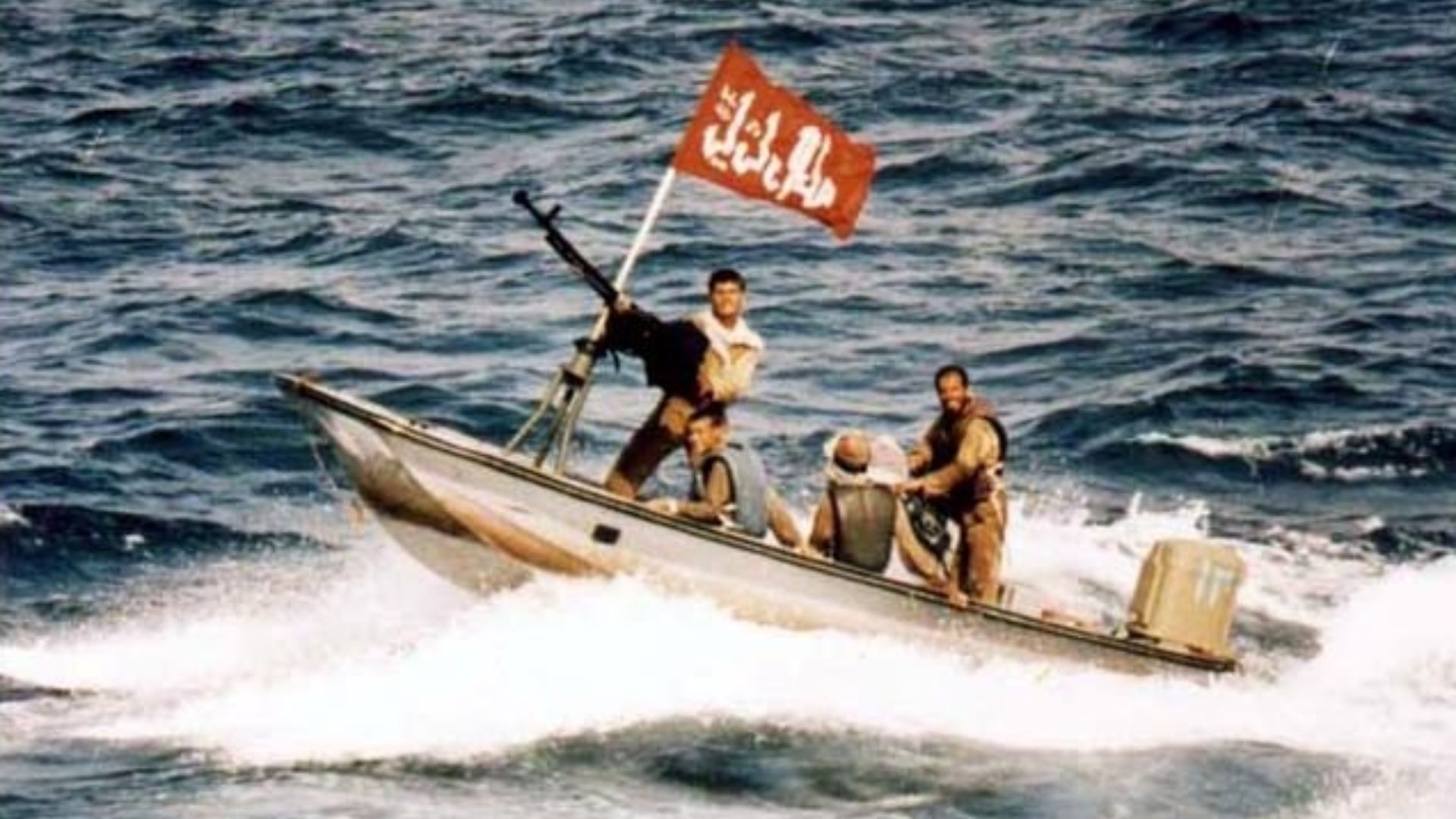
 Navy of the Army of the Guardians of the Islamic Revolution on Wikimedia
Every time the Strait of Hormuz starts flashing across headlines, the story tends to arrive in the same dramatic package. Oil shock. Tankers stuck. Global panic. The tone makes it sound like we are staring at some totally new nightmare, as if the map itself just became dangerous for the first time.
The problem is that this panic already had a full dress rehearsal in the 1980s, and it was uglier, longer, and more revealing than many people remember. During the Tanker War phase of the Iran-Iraq War, merchant shipping in the Gulf came under sustained attack, major powers got pulled in, mines turned ordinary routes into hazards, and the world discovered that keeping Hormuz open on paper was not the same as making it feel safe in practice.
The Last Time Shipping Turned Into A Battlefield
The Tanker War did not begin with one neat blockbuster moment. It built gradually out of the larger Iran-Iraq War, then escalated hard after 1984 as Iraq struck Iranian shipping and oil facilities more aggressively, and Iran retaliated against ships linked to Iraq’s backers in the Gulf. By the time the campaign burned itself out in 1988, a widely cited contemporary tally in Proceedings put the total at 451 ship attacks, with Iraq responsible for 283 and Iran for 168.
That number matters because it cuts through the usual fantasy that Hormuz panic is mostly about a hypothetical closure. The 1980s crisis was often less cinematic than a sealed strait and more corrosive than that. Ships still moved, but under threat. Insurance costs rose, routes became military problems, and every transit sat under the possibility of missile attack, mining, or harassment. That kind of disruption does not need a total shutdown to rattle markets and governments.
One of the clearest historical reminders came on the very first convoy of Operation Earnest Will in July 1987. The United States had reflagged Kuwaiti tankers and sent naval escorts, only for the reflagged tanker Bridgeton to strike an Iranian mine on that first run. The convoy kept moving, but the symbolism was brutal. A superpower had arrived to prove the route could be protected, and the sea answered by showing how cheap, quiet, and effective a mine could be.
The Strait Was Never Just About Oil
The modern Strait of Hormuz carries an extraordinary share of the world’s energy traffic. The U.S. Energy Information Administration says flows through the strait averaged 20.9 million barrels per day in the first half of 2025, about 20 percent of global petroleum liquids consumption and roughly one quarter of global maritime traded oil. That scale helps explain why every fresh threat produces instant commentary about crude prices and tanker charts.
The older Hormuz panic shows something more useful than raw scale. It shows how quickly a chokepoint becomes psychological as well as physical. In the 1980s, the issue was never only whether ships could technically pass. The real question was who would sail, who would insure the cargo, who would escort it, and how much military risk outside powers were willing to absorb to keep commerce moving. That is why the Tanker War kept widening. Once shipping lanes become a test of credibility, outside states start treating merchant traffic like a strategic obligation.
That widening dragged in the United States, other outside navies, and eventually the United Nations. Security Council Resolution 598, adopted on July 20, 1987, called for an immediate ceasefire and demanded an end to military action on land, at sea, and in the air. The wording is worth noticing now because even then, the strait problem was already bigger than a shipping inconvenience. It had become part of a broader international security crisis with diplomatic, legal, and military consequences all tangled together.
What The 1980s Still Gets Right
The main lesson from the last Strait of Hormuz panic is not that markets overreact. The lesson is that chokepoint fear can become rational very quickly, and it rarely stays confined to the neat scenario people start with. During the late stages of the Tanker War, direct U.S.-Iran clashes intensified, mines remained a serious threat, and the violence culminated in events that included the shooting down of Iran Air Flight 655 in July 1988, killing 290 civilians. A panic that begins with shipping can end somewhere much darker.
Another lesson is that military protection has limits. Operation Earnest Will was, according to the Naval History and Heritage Command, the largest naval convoy operation since World War II. That sounds reassuring until you remember what it was protecting against. Convoys can deter some attacks and complicate others, yet mines, missiles, and small-boat tactics still impose friction, cost, and fear. The route may remain open while confidence keeps leaking out of it.
The last useful lesson is emotional rather than tactical. Hormuz panic has happened before, and the earlier version did not end because everyone suddenly relaxed. It ended after years of attrition, outside intervention, a UN push for ceasefire, and a war so exhausting that even its leaders described accepting the end as swallowing poison. That history does not tell us every new crisis will replay the 1980s exactly. It does tell us the strait is one of those places where fear arrives fast, facts arrive slower, and the gap between the two can shape policy for years.
KEEP ON READING

Gregor MacGregor’s Fake Country
en:Samuel William Reynolds (1773–1835), after Simon Jacques Rochard (1788–1872) on…
By Cameron Dick Apr 23, 2026
The Strait Panic That Already Happened Once
Navy of the Army of the Guardians of the Islamic…
By Cameron Dick Apr 23, 2026
How Castles Were Designed To Withstand Siege Warfare
Nuria Duran on PexelsWhen you picture a medieval castle, it’s…
By Rob Shapiro Apr 23, 2026
20 Historical Figures Who Ruled From the Flat of their…
Power From the Sickroom. History likes its rulers upright, armored,…
By Cameron Dick Apr 23, 2026
10 Artists Who Captured History in Real Time & 10…
Two Ways Artists Preserve the Past. Art doesn’t just reflect…
By Rob Shapiro Apr 23, 2026
20 Scientific Frauds That Set Research Back for Years
Ruining The Fun for Everyone. One fake result can do…
By Elizabeth Graham Apr 22, 2026