

My Sister Said Mom Left Me Nothing—Then I Opened The Envelope She Didn't Know Existed
The Kitchen Confrontation
I drove to Mom's house that morning the same way I'd driven there a hundred times before — windows down, coffee in the cupholder, muscle memory doing most of the work. But when I walked through the front door, something felt different. The house smelled like lemon cleaner instead of the lavender candles Mom always kept on the windowsill, and there were boxes stacked against the hallway wall that I hadn't been told about. Diane was already there, standing at the kitchen counter with a manila folder pressed against her chest like she was guarding it. She looked up when I came in, gave me that tight smile she'd been perfecting since we were teenagers, and said we needed to talk. I set my purse down on the chair by the door — Mom's chair, the one with the worn armrest — and waited. Diane told me, in a voice that was almost gentle, that Mom's estate had been sorted. She said Mom had made her wishes very clear. She said I hadn't been left anything substantial. She held the folder out slightly, then pulled it back, like she was showing me a card she had no intention of letting me read. I didn't argue. I didn't cry. I just stood there looking past her at the kitchen window, at the light coming through the curtains Mom had sewn herself twenty years ago. The words sat between us in the quiet, and I let them.
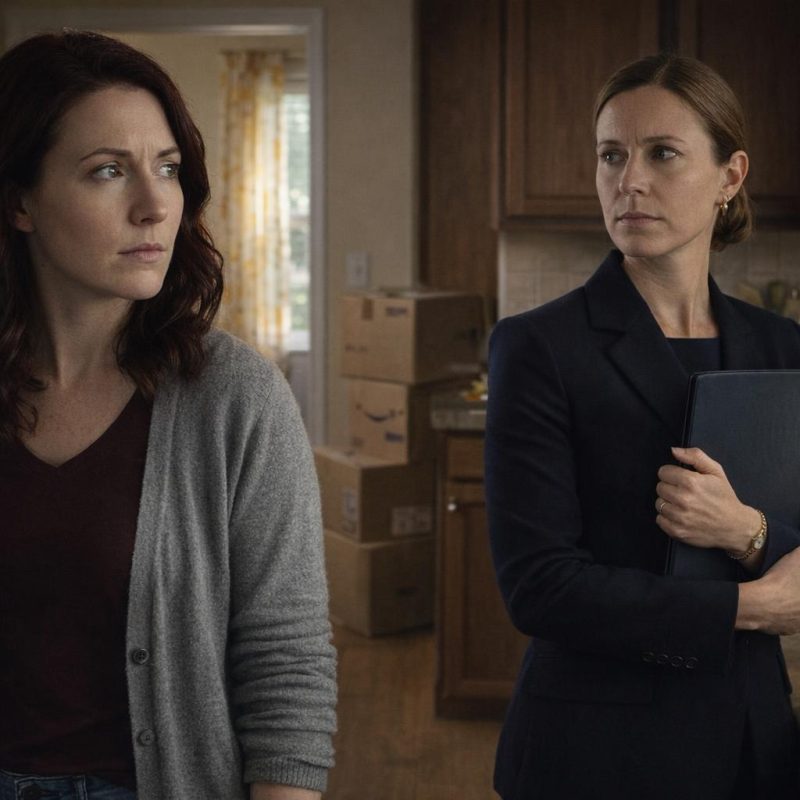 Image by RM AI
The Cookie Tin
Diane kept talking — something about the house, about accounts, about how Mom had always been practical — but her voice started to blur at the edges for me. I wasn't being rude. I just couldn't hold onto the words. My eyes drifted past her shoulder to the top of the refrigerator, where Mom's old cookie tin had sat for as long as I could remember. It was the one with the faded Dutch windmills on the lid, the one Mom always said held nothing important — rubber bands, expired coupons, a spare key to a lock nobody could identify anymore. I don't know why it caught my eye right then. But it did, and something shifted. And then, like a door opening in a room I'd forgotten existed, I remembered. Two weeks before Mom died, she had taken my hand in both of hers — her grip still surprisingly firm — and pressed an envelope into my palm. She'd looked at me with that careful, steady look she had when she meant every word. She told me not to open it yet. She said I'd know when the time was right, that I should wait until Diane showed me who she really was. I had tucked it into my coat pocket that afternoon and then, in the fog of the funeral and the grief and the logistics of those weeks, I had forgotten it entirely. Standing in that kitchen with Diane's voice filling the room, I remembered exactly where I had put it.
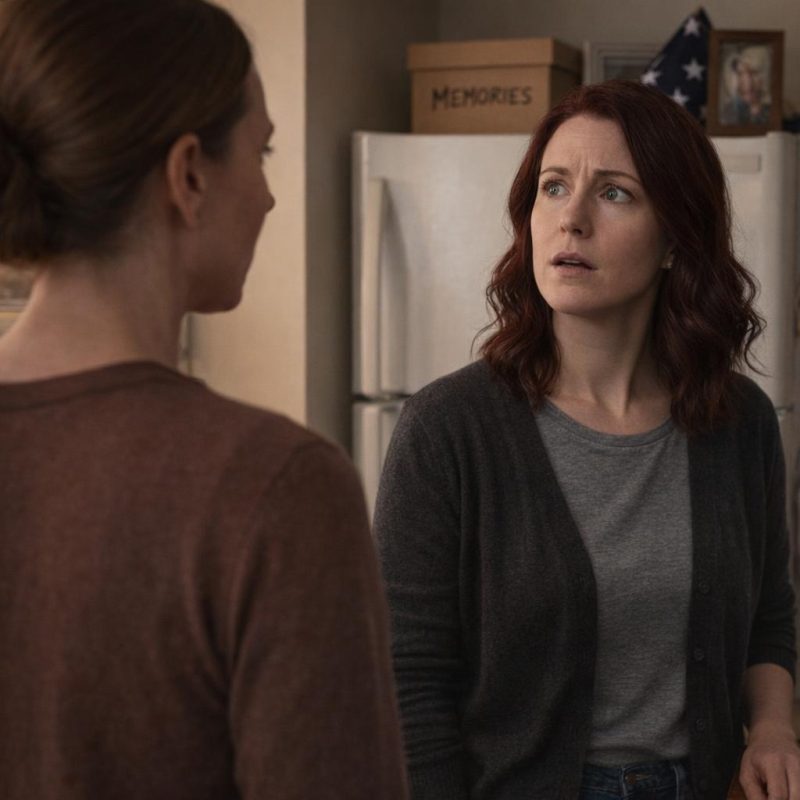 Image by RM AI
The Warm House
I don't know how long I stood there in that kitchen before my mind slipped backward. It does that sometimes — finds the past when the present gets too loud. I thought about the house the way it used to be, when Mom could make it feel warm even in February, even when the heat was turned down to fifty-eight because the bill was already too high. She'd put extra blankets on the couch and make soup from whatever was in the pantry, and somehow it always felt like enough. Dad left when I was twelve. Diane was sixteen. I remember the morning clearly — the particular quality of the silence after the door closed, the way Mom stood at the sink for a long time without turning around. I was sad in the way twelve-year-olds are sad, confused and quiet, not fully understanding what it meant yet. But Diane understood. Or she thought she did. She took it like a verdict, like something the family had done to her personally, and she never quite let go of that. I watched her change that year — not all at once, but steadily, the way a room gets colder when a window is left open. She got sharper. More guarded. She started keeping score in ways I didn't even notice until much later. After Dad left, every room in our house seemed to grow corners it hadn't had before, and Diane knew exactly where each one was.
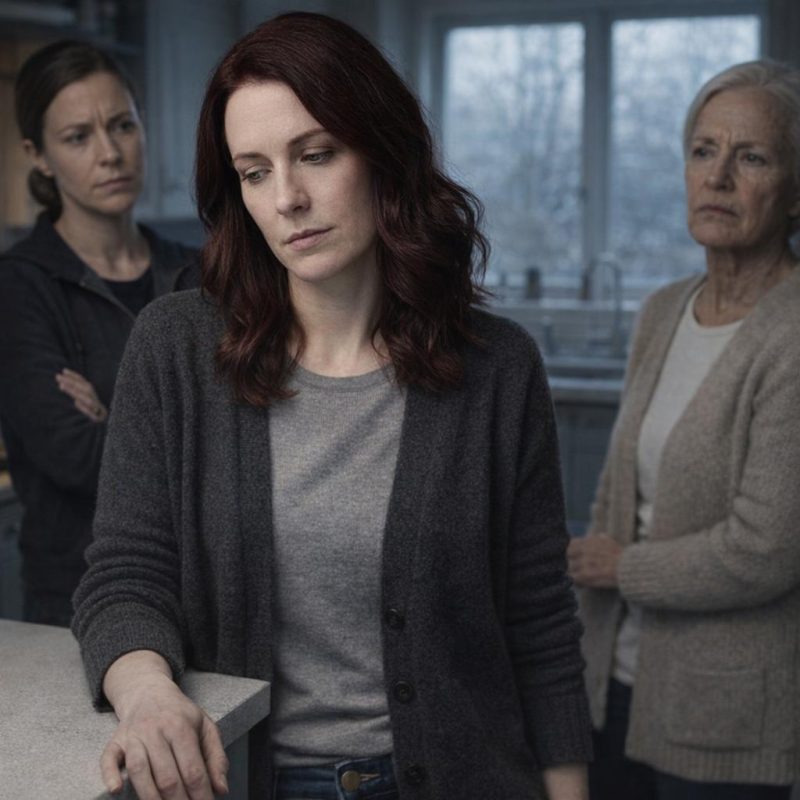 Image by RM AI
The Soft Place
Mom used to call me the soft place in the family. She didn't mean it as a criticism — she said it the way you'd describe a good chair, something reliable and easy to come back to. I helped with the laundry on Saturdays. I sat at the kitchen table sorting coupons with her on Sunday evenings. I learned to cook the things she liked because she'd taught me and because it made her happy to see me make them. Diane thought it meant Mom loved me more. I could see it in the way she'd go quiet when Mom and I were laughing about something small, the way she'd find a reason to leave the room. She brought it up once, directly, when we were in our twenties — told me I'd always been the favorite, that Mom made it obvious. I didn't know what to say to that. I didn't feel like a favorite. I felt like someone who showed up. There's a difference, though I couldn't have explained it to Diane in a way she would have accepted. She had built a whole story around it by then, and stories like that don't leave much room for other explanations. The truth, as I understood it standing in that kitchen all these years later, was simpler and less flattering to anyone: I stayed close because someone had to, and Diane had already decided that someone wasn't going to be her.
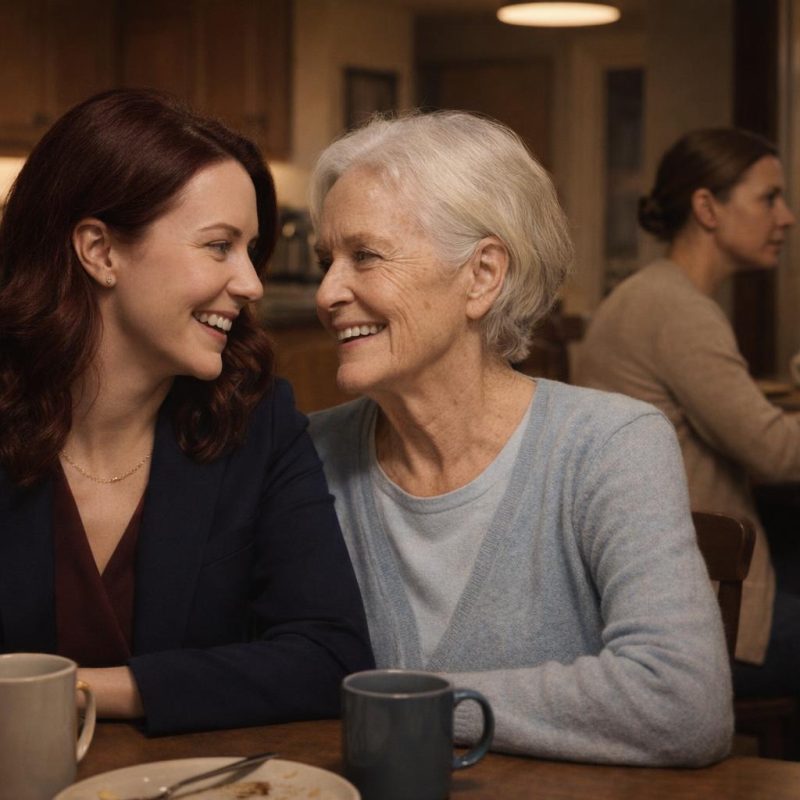 Image by RM AI
Three States Away
Diane left for college and didn't really come back. Not in the way that counts. She moved three states away after graduation, married Michael — the kind of man who wore an expensive watch even on weekends — and built the kind of life she liked to describe at holidays. Big house. Private school for the kids. A kitchen she'd had professionally renovated twice. She called Mom every few weeks, when it was convenient, and sent cards on birthdays that were always a little too formal, like she'd had an assistant pick them out. I stayed twenty minutes away. I worked in medical billing, raised my son Ryan after the divorce, drove a car with a hundred and forty thousand miles on it, and didn't think much about what I was or wasn't getting out of the arrangement. That was just life. Diane's visits were infrequent — maybe twice a year, sometimes less. When she did come, she arrived like an event. She'd bring gifts that still had the price tags on them, hug Mom a little too long for the cameras that weren't there, and then spend the first hour pointing out everything that needed updating. The kitchen was outdated. The carpet was tired. The gutters needed cleaning. She said it all with concern in her voice, like she was doing Mom a favor by noticing, and then she'd leave and I'd be the one calling the gutter company on a Tuesday afternoon.
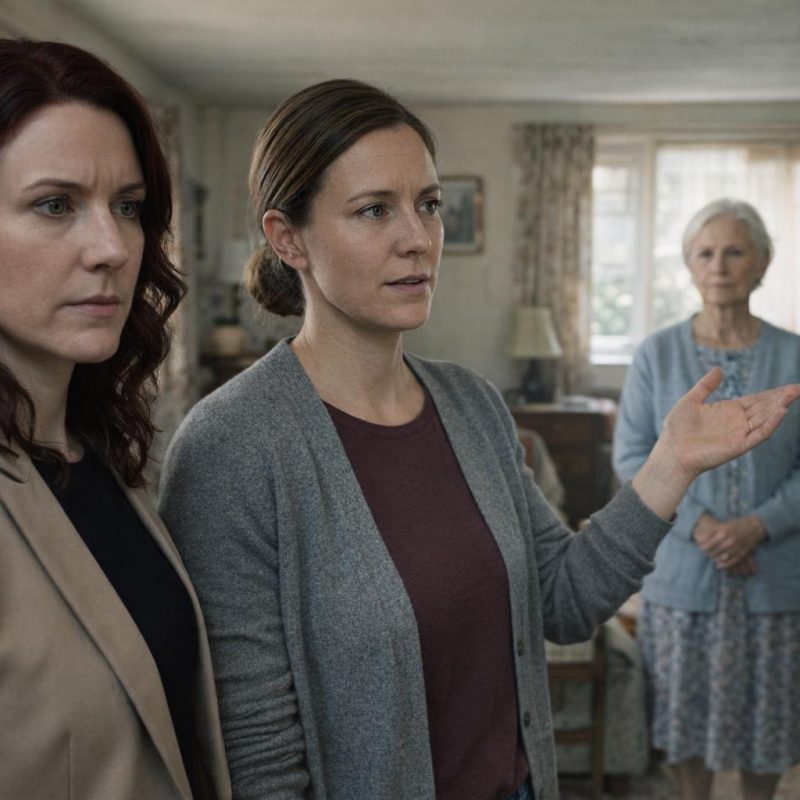 Image by RM AI
Coffee After Work
The evening visits started as something easy and ordinary. I'd finish work, pick up Ryan from school or practice, and swing by Mom's on the way home. We'd have coffee at the kitchen table, sometimes dinner if I'd made enough. Mom liked the company and I liked the ritual of it — the way her house smelled like the same hand lotion she'd used for thirty years, the way she always had the news on low in the background. Ryan would sit with her sometimes and let her ask him about school, patient in the way teenagers rarely are. It was good. For a while, it was just good. Then I started noticing small things. A bill paid twice in the same month — I only caught it because I was helping her organize the mail. A Tuesday when she couldn't remember whether she'd taken her blood pressure medication, then insisted she had, then wasn't sure again. I didn't say anything alarming. I just started paying closer attention. I told myself it was normal, that everyone forgot things, that she was in her seventies and entitled to a little scatter. But I began keeping a mental note of the dates, the incidents, the small moments that didn't quite add up. The electric bill came in and she'd already written a check for it — the envelope still sitting on the counter, sealed and stamped, next to a second check made out for the same amount.
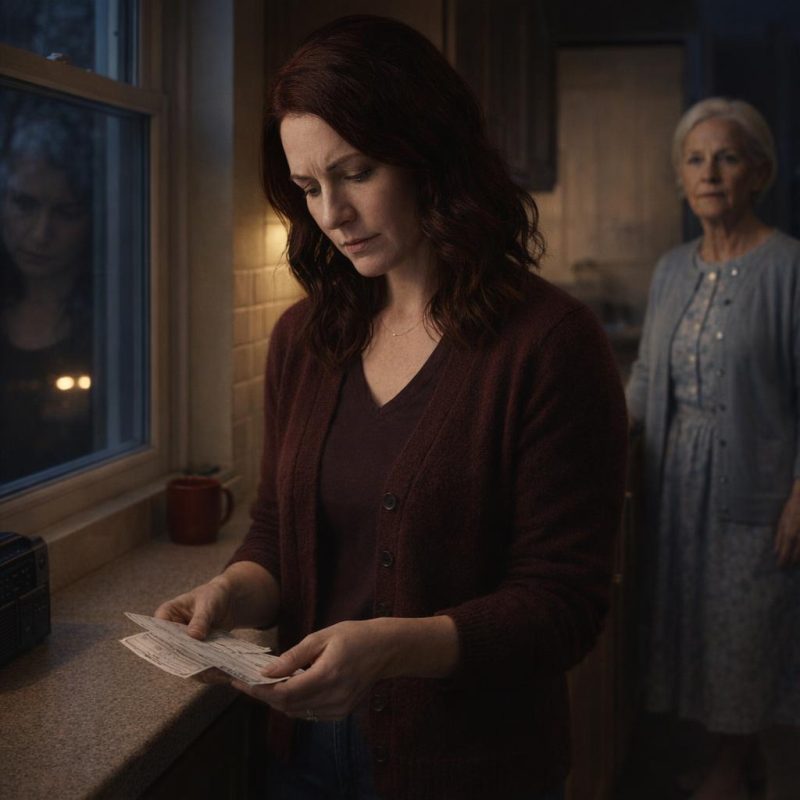 Image by RM AI
Blood Pressure and Forgetfulness
By the following spring, the small things had started to stack up in a way I couldn't keep explaining away. Mom's blood pressure was harder to manage — her doctor had adjusted her medication twice in three months, and she kept forgetting the new dosage even when I wrote it on a notecard and taped it to the bathroom mirror. The forgetfulness had shifted from occasional to something more like a pattern. She'd lose a word mid-sentence and look at me with a flash of frustration, then laugh it off. She'd ask me the same question twice in an hour and not remember asking the first time. I started keeping a small notebook in my purse — dates, symptoms, anything that seemed worth mentioning at her next appointment. I didn't tell Diane any of this yet. She called every few weeks, cheerful and brief, asking how Mom was doing in the way people ask when they're hoping for a short answer. I always gave her one. One evening I arrived to find Mom standing in the kitchen, phone on the counter with Diane's voice coming through the speaker, and Mom's fingers working slowly at the buttons of her cardigan — her hands trembling slightly, her brow furrowed in concentration, unable to get the small buttons through the loops while she tried to listen and respond at the same time.
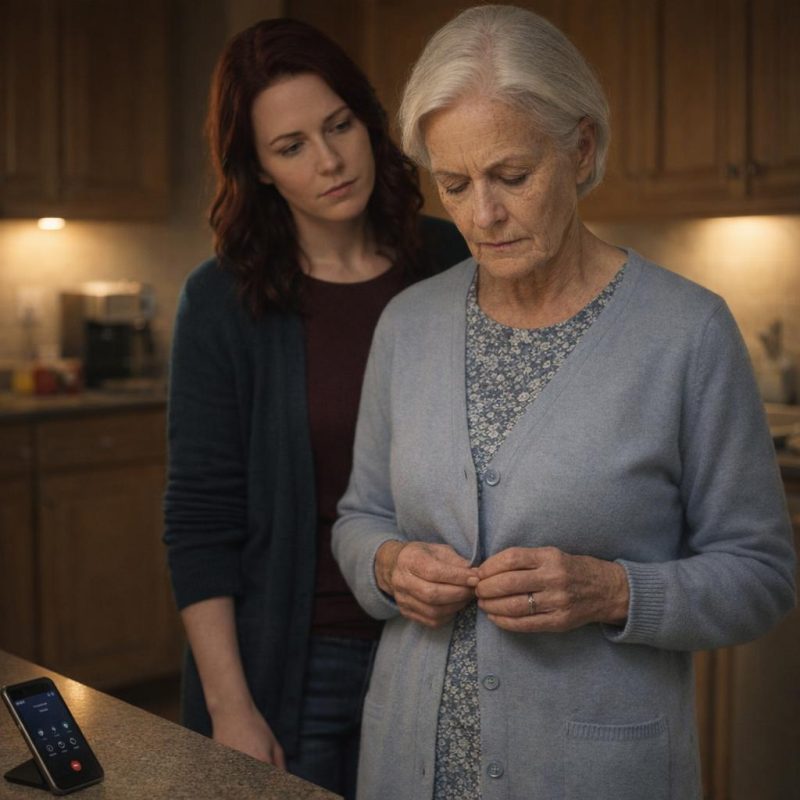 Image by RM AI
The Diagnosis Call
The diagnosis came on a Wednesday. Early-stage dementia — the doctor said it carefully, like he was handing us something fragile. I drove home with Mom in the passenger seat and she looked out the window the whole way, quiet in a way that was different from her usual quiet. That evening, after I'd gotten her settled, I called Diane. She cried. I'll give her that — the crying was real, or at least it sounded real, and for eleven minutes I sat on the edge of Mom's couch and listened to it. Then the crying stopped, and Diane started talking about logistics. The kids had activities. Michael was traveling for work. The flights were expensive right now, she said, like that was a fixed fact of the universe rather than a choice. She said she'd try to come when things settled down. Then she said it — the sentence that would end up defining the next four years of my life more than any other: 'You're better at this stuff anyway, Claire.' I didn't respond. I set the phone down on the cushion beside me and looked down the hallway at Mom, who was standing in the doorway of her bedroom, still working at the buttons of that same cardigan, her fingers slow and uncertain in the lamplight. Diane's words hung in the hallway air long after the call ended, and I sat with them in the quiet, not moving.
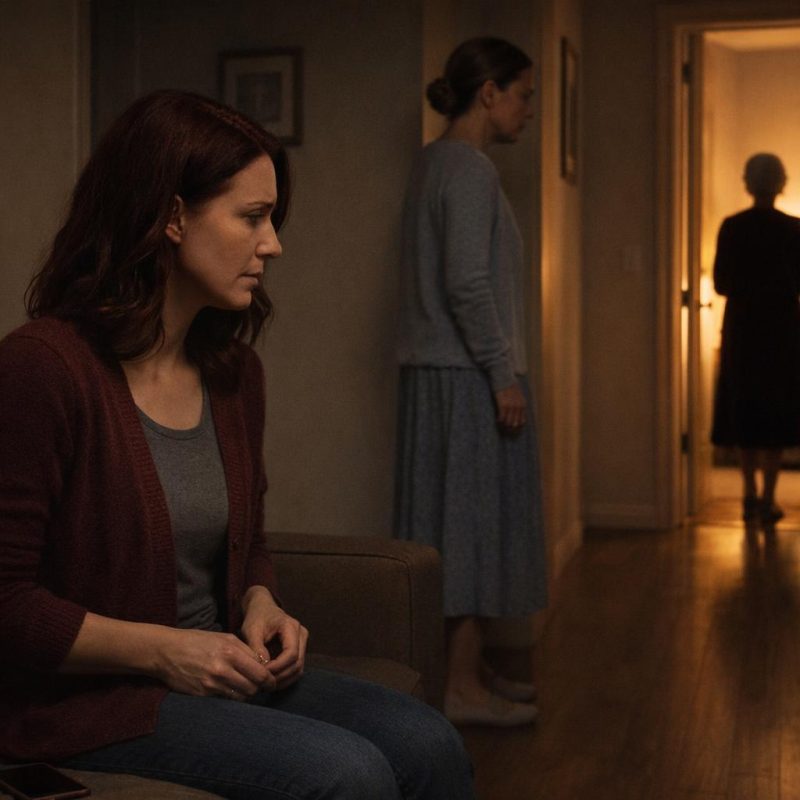 Image by RM AI
Better At
So I became better at things. That's the honest way to put it. I became better at doctor appointments — knowing which questions to ask, which answers to push back on, which forms to request before they even offered them. I became better at medication charts, color-coded by time of day, laminated and taped to the inside of the cabinet door so Mom could see them even on the hard mornings. I became better at arguing with insurance companies, at staying calm on hold for forty minutes, at knowing exactly which supervisor to ask for and what language to use to get a claim reconsidered. I became better at waiting rooms — bringing a book I never opened, learning to read the nurses' faces for information they weren't allowed to give me yet. I became better at cleaning up quickly and quietly, at redirecting Mom's attention before the shame could settle in, at smiling when she asked me the same question six times in an hour as if it were the first time every single time. I kept my job at the medical billing office, which at least meant I understood the paperwork better than most. I managed. That was the word I used when people asked. I managed. Diane, for her part, remained better at opinions — what the doctors should be doing differently, what I should be considering, what she would do if she were here. She was very good at that part. The house stayed quiet around us, Mom and me, and that was just how it was.
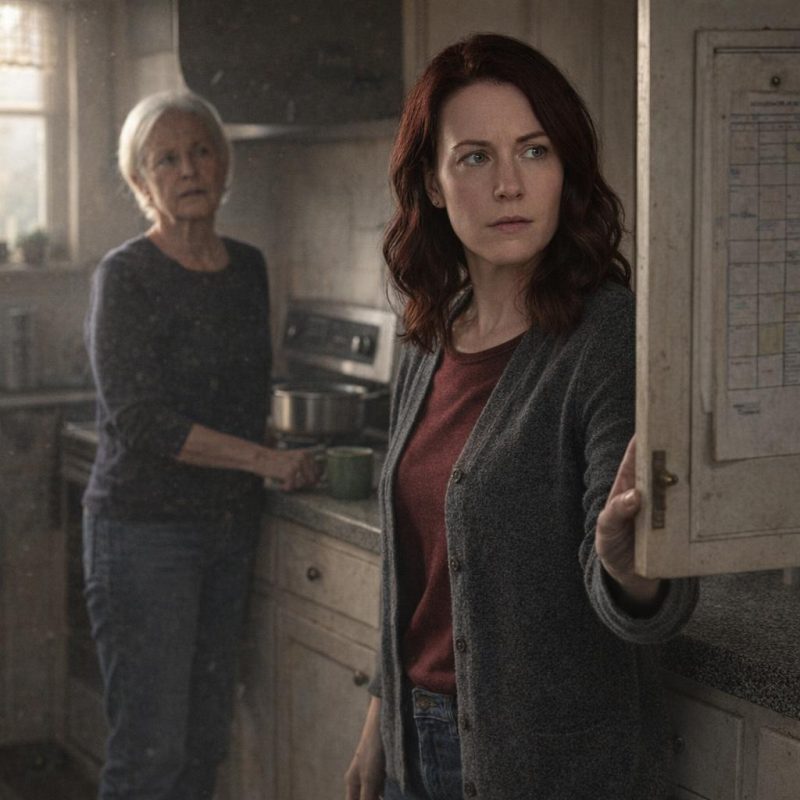 Image by RM AI
Two in the Morning
The call came at two-seventeen in the morning. Mom had gotten up to use the bathroom and fallen — she'd grabbed for the towel bar and it hadn't held. She wasn't badly hurt, just shaken and scared and sitting on the cold tile floor when her neighbor heard the noise and called me. I tried Diane first. I don't know why — habit, maybe, or some leftover instinct that sisters share emergencies. The phone rang four times and went to voicemail. I tried again. Same thing. I got in my car and drove to Mom's in the dark, and by the time I got there I'd stopped thinking about Diane at all. There was too much else to think about. I got Mom cleaned up and checked her over carefully — no broken bones, just a bruise forming along her hip and a look in her eyes that was more frightened than she wanted me to see. I made her tea. I sat with her until she fell back asleep, which took almost two hours. Then I sat in her kitchen alone for a while, too tired to drive home, not tired enough to sleep. My phone buzzed on the table sometime around eight-thirty in the morning. I picked it up. Diane's text read: "Hope she's okay."
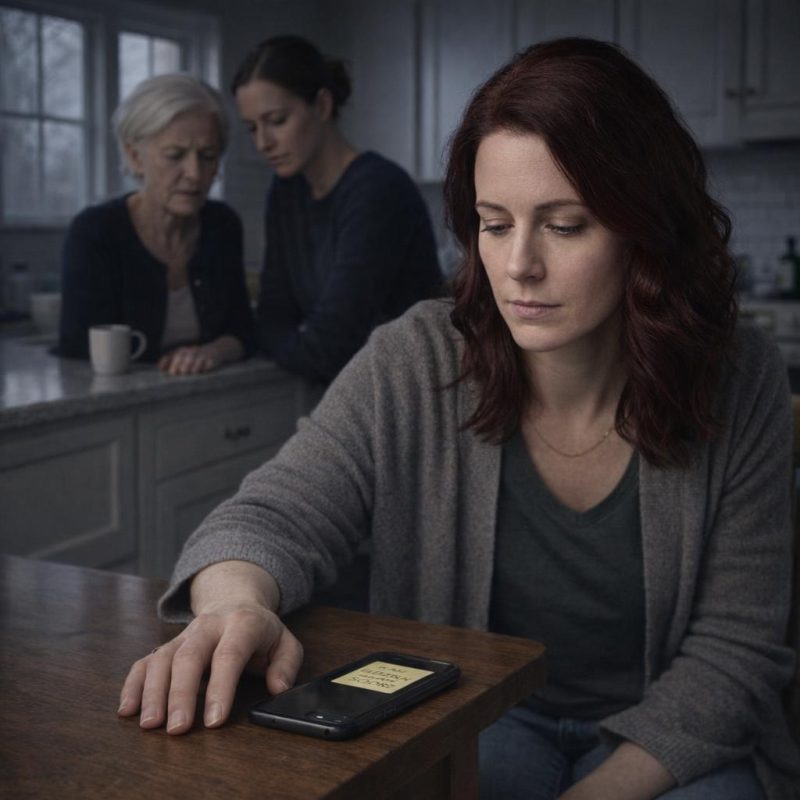 Image by RM AI
The ER Visit
The medication reaction happened on a Tuesday, which I remember because I had a billing audit due at work that afternoon and I had to call my supervisor from the hospital parking lot to explain why I wouldn't be submitting it. Mom had started a new prescription three days earlier — something for the anxiety that had been building alongside the dementia — and by mid-morning she was pale and trembling in a way that scared me badly enough that I didn't wait to see if it would pass. Six hours in the emergency room. They ran tests, adjusted things, monitored her. She was frightened and confused by the noise and the lights, and I held her hand and talked to her in a low voice about nothing in particular — the garden, the weather, a recipe she used to make — just to give her something familiar to hold onto. Diane texted three times asking for updates. I answered each one, keeping it factual, keeping it short. She didn't offer to come. She didn't ask if I needed anything. The nurses and the attending doctor spoke to me as though I were the only family, because in every way that mattered in that room, I was. At some point I noticed the fluorescent lights humming above us, steady and indifferent, and Mom's hand warm in mine, and I thought about how different it was — knowing what was happening versus being there while it happened.
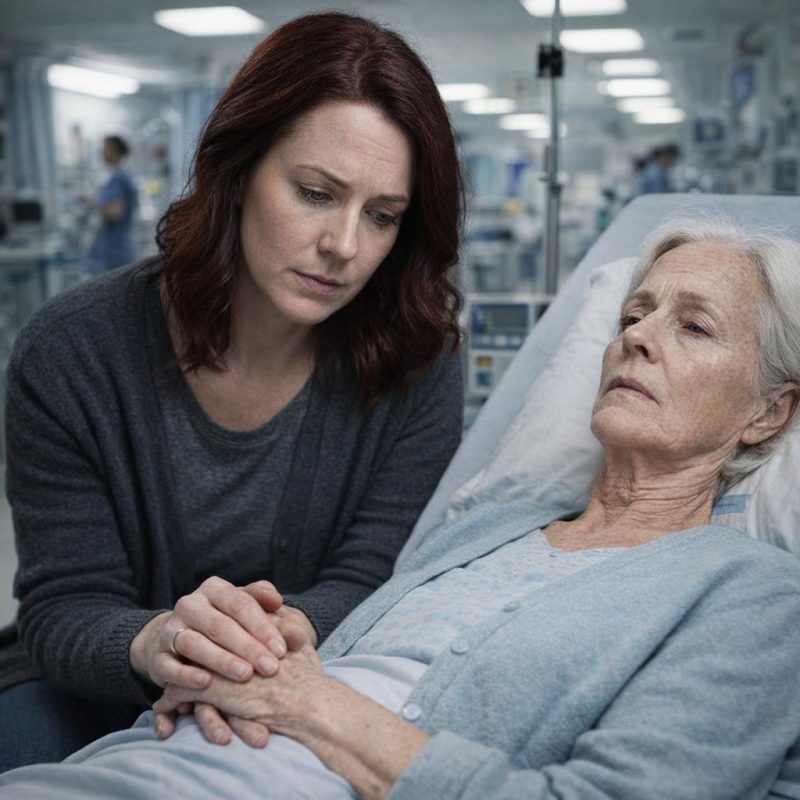 Image by RM AI
The First Year
The first year after the diagnosis didn't feel like a year. It felt like a long single day that kept resetting without ever letting me sleep properly. There were eleven doctor appointments in the first four months alone — neurologist, primary care, a geriatric specialist, a pharmacist consultation that turned into two follow-ups. I kept a binder. Color-coded tabs, appointment summaries, medication logs, insurance correspondence. My coworkers at the billing office started calling me the most organized person they'd ever met, and I never explained that the organization was the only thing keeping me functional. Mom's questions became more repetitive as the months went on — not dramatically, not all at once, but steadily, the way water wears at stone. She'd ask about her sister Margaret, who had been gone for twelve years. She'd ask what day it was, then ask again twenty minutes later, then look at me with a flicker of embarrassment when she caught herself. I learned to answer each time like it was the first time. I learned a lot of things that year that nobody teaches you. One afternoon in late October, about eleven months in, I was on the phone with an insurance representative disputing a claim for Mom's cognitive assessment — on hold, then transferred, then on hold again — and from the next room I could hear Mom asking what day it was. It was the fifth time that hour.
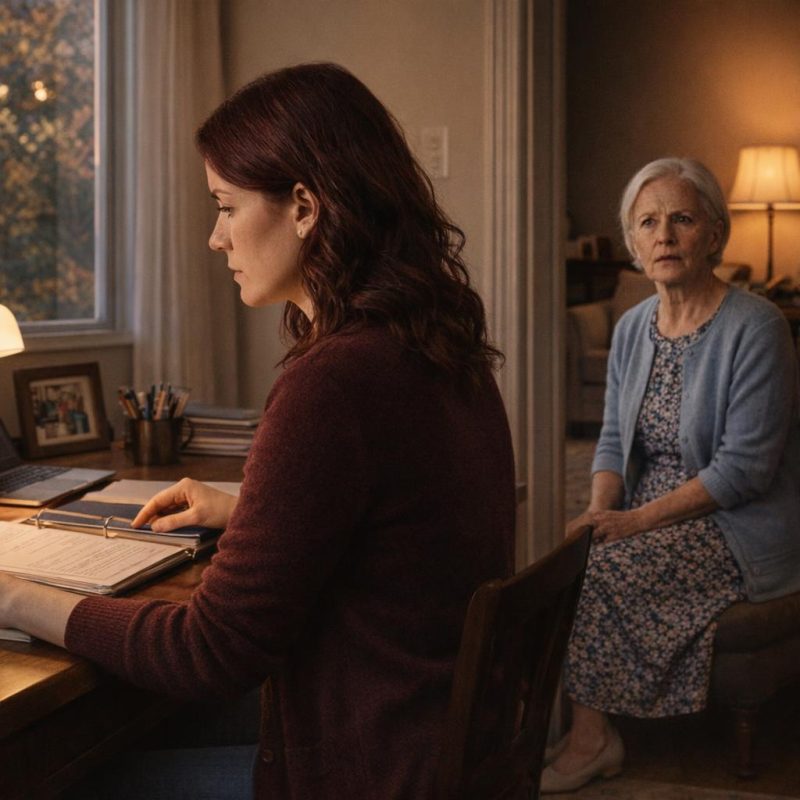 Image by RM AI
Accidents and Shame
There are parts of caregiving that nobody talks about at the dinner table, and I'm not going to be graphic about them here, but I'll say this: there were mornings that required a kind of quiet efficiency I had to teach myself, and a kind of deliberate blindness I had to practice even harder. Mom had always been a private person — neat, composed, careful about her appearance in the way that women of her generation often were. When her body started failing her in ways she couldn't control, the shame she felt was enormous and silent and heartbreaking. I learned to move quickly and matter-of-factly, to keep my voice even, to redirect her attention to something else before she had time to fully register what had happened. I learned to give her back her dignity in the small ways I could — fresh clothes laid out, a warm washcloth, a cup of tea waiting. And I learned to pretend I didn't hear her crying in the bathroom afterward, because she needed that privacy more than she needed my comfort. I never told anyone about those mornings. Not Ryan, not my coworkers, not the friends who occasionally asked how things were going and accepted 'fine, managing' as a complete answer. Some things you carry alone not because you have to, but because the person you're protecting deserves that much. Mom had spent her whole life holding herself together with quiet dignity, and I wasn't going to be the one to let that go.
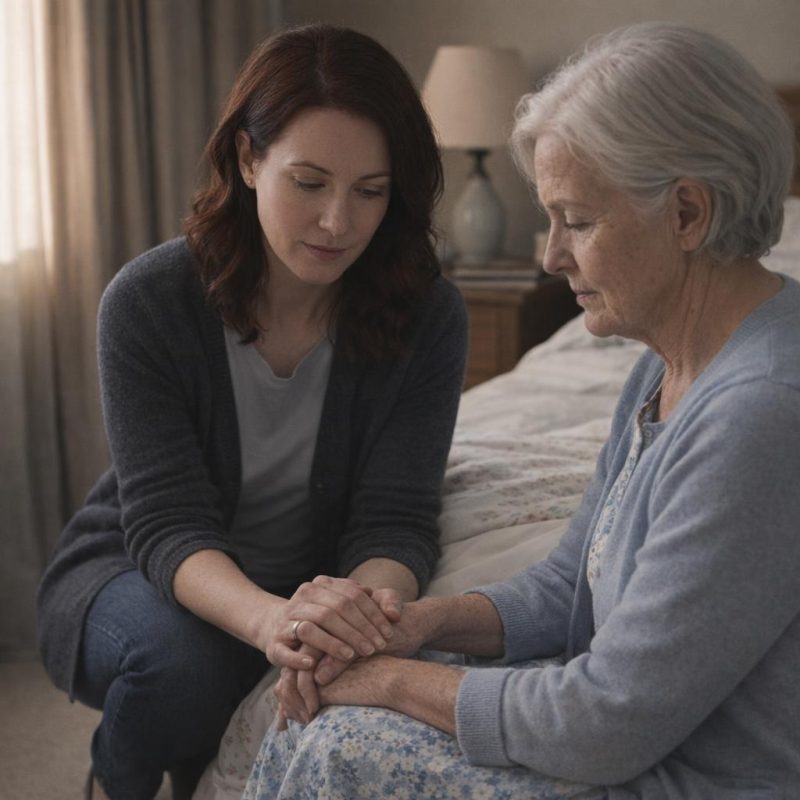 Image by RM AI
Forgetting My Name
It happened on a Thursday afternoon, about eighteen months in. I'd brought Mom her afternoon tea and she looked up at me from her chair with a perfectly clear expression and said, "Thank you, Margaret." Margaret was her sister. Her sister who had died in 2009. I said, "You're welcome," and set the cup down on the side table, and I kept my face completely still. She talked to me for a few minutes as Margaret — asked about Margaret's husband, mentioned something about a trip they'd taken together decades ago — and I answered carefully, staying close enough to the truth that I wasn't lying, far enough that I wasn't pretending to be someone I wasn't. I kept my voice light. I kept my hands steady. I did not cry. Then something shifted. It was subtle — a small change in her eyes, a kind of focusing, like a camera finding its subject. She looked at me, really looked, and I watched her face move through something I didn't have a name for. Not quite recognition, not quite confusion. Something in between, and something worse than either. The fog came back within seconds. She picked up her tea and looked out the window, and whatever had passed between us in that moment was already gone for her. I stayed until she fell asleep in her chair, and then I sat in the kitchen with my hands around a cold cup of coffee, and the afternoon light moved slowly across the floor.
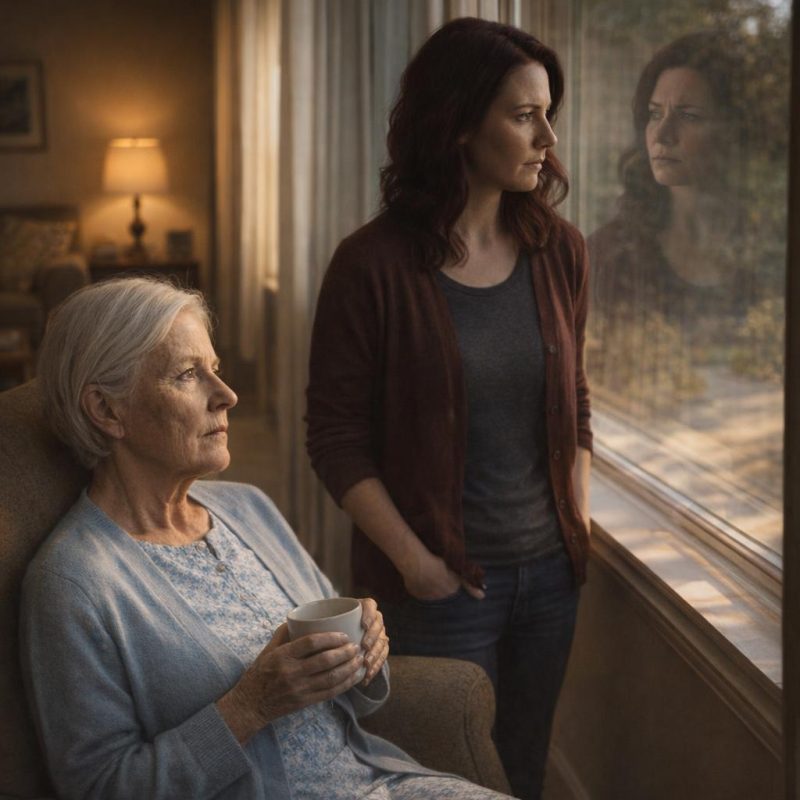 Image by RM AI
Opinions from a Distance
Diane called on a Sunday, which was when she usually called — Sunday afternoons, when I'd just finished the week's medication sort and was trying to decompress before Monday. She had ideas. She'd been thinking, she said, about the house. Mom didn't need all that space, and the upkeep was a lot, and had I looked into assisted living facilities in the area? There were some very good ones, apparently. She'd read about them. I told her Mom was still comfortable at home and that we were managing. Diane said I was too emotionally involved to be practical about it, which was probably true, but also wasn't the point. She said the house was an asset and it didn't make sense to let it sit there when it could be working for Mom's future care. I said Mom's future care was what I was doing every day, and the conversation went quiet for a moment. Then Diane said something that I kept turning over afterward, long after we'd hung up. She said that she worried I was making myself look more involved than I really was — that people might get the wrong idea about my motivations. I didn't respond right away. I wasn't sure what to say to that, or what exactly she thought my motivations were. I just held the phone and listened to the silence on the line, and something about the way she'd said it sat with me in a way I couldn't quite shake.
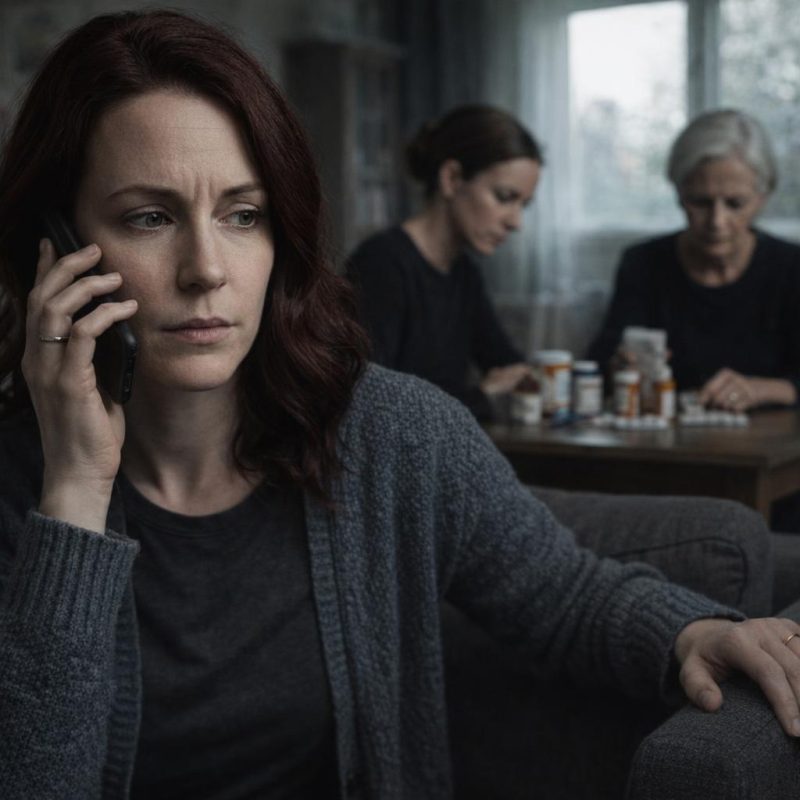 Image by RM AI
The Unanswered Phone
Mom's second fall happened fourteen months after the first. She caught her foot on the edge of the bathroom rug — the same bathroom, almost the same hour of the night — and this time there was a hairline fracture in her wrist that meant a hospital visit and a splint and a follow-up with an orthopedic specialist. I called Diane from the hospital waiting room. The phone rang once, twice, three times, four, five, six — and then her voicemail picked up, that bright recorded voice asking me to leave a message. I did. I kept it factual: the fall, the fracture, the hospital name, the doctor's name, the plan for the follow-up. I said I'd keep her updated. I ended the call and walked back through the double doors to the room where Mom was resting, her splinted wrist resting on top of the blanket, her eyes closed. I sat down in the chair beside her bed. The hospital was quiet at that hour — the particular quiet of a place that never fully sleeps, just dims. I looked at my phone once, then set it face-down on my knee. There was no anger in me right then, which surprised me a little. Just a kind of settling, like something that had been uncertain was no longer uncertain. The chair was hard and the room was cold and I pulled my cardigan tighter and stayed.
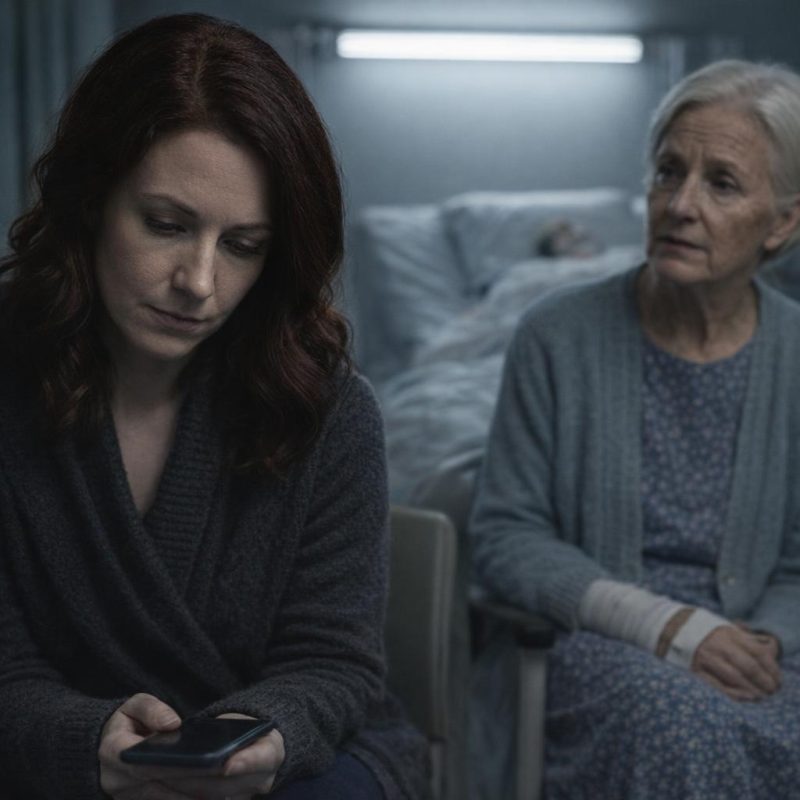 Image by RM AI
The Medication Reaction
The new medication was supposed to help with the anxiety. The doctor had explained the dosage, the adjustment period, what to watch for — I'd written it all down in the small notebook I kept in my purse. Three days in, Mom's hands started shaking in a way that was different from her usual tremor. By the fourth morning she couldn't keep water down, and her skin had gone a color that made my stomach drop. I got her into the car and drove to the ER with one hand on the wheel and one eye on her in the passenger seat, talking to her the whole way just to keep her focused. The next several hours were the kind that blur together in memory — triage, a curtained bay, a nurse asking questions I answered from the notebook, an IV line, a doctor explaining that yes, this was a reaction, yes, we'd need to monitor her overnight. I sat in the chair beside her bed and watched the IV drip and didn't think about much of anything except the next thing that needed doing. It was somewhere around hour three that my phone buzzed. Diane's name on the screen. A text: *Hey, just checking in — is everything okay?* I stared at it for a moment. Then I opened a reply, typed out the first sentence of what had happened, read it back, and deleted every word. I put the phone face-down in my lap and left it there.
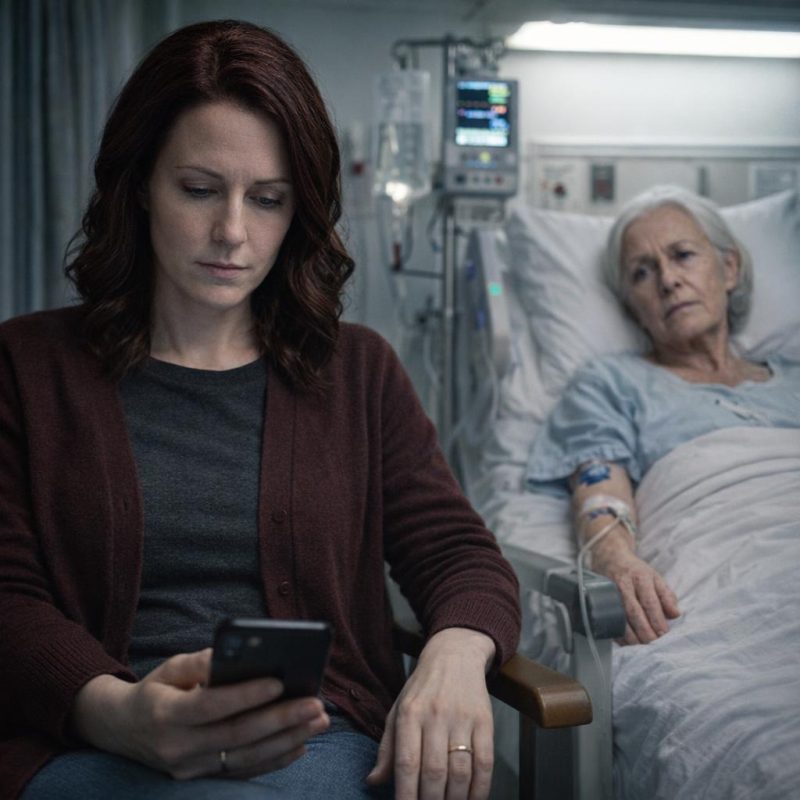 Image by RM AI
Hiding Cash
It started with the freezer. I was looking for the bag of peas Mom used on her wrist when it ached, and instead I found four twenty-dollar bills folded inside a zip-lock bag, tucked behind a container of chicken broth. I stood there holding them for a second, genuinely confused. Then I found another forty dollars inside a hollowed-out paperback on the living room shelf. Another twenty under the corner of her mattress. When I asked her about it, she got very still and said someone had been taking her money, that she could tell because the numbers weren't right. She said it quietly, matter-of-factly, the way she used to talk about the weather. I called Diane that evening. I wasn't sure what I expected — maybe some shared concern, maybe a plan. I explained what I'd found, the cash in the freezer, the books, the mattress, Mom's certainty that someone was stealing from her. There was a pause, and then Diane laughed. Not a nervous laugh — a light, easy one. She said not to take it personally, that it was just the dementia talking, that Mom had always been a little dramatic about money. I didn't say anything for a moment. I was still standing in Mom's kitchen, the folded bills in my hand, the freezer door still open beside me. Diane kept talking, her voice easy and unbothered, and the cold air from the freezer drifted out around me while she laughed.
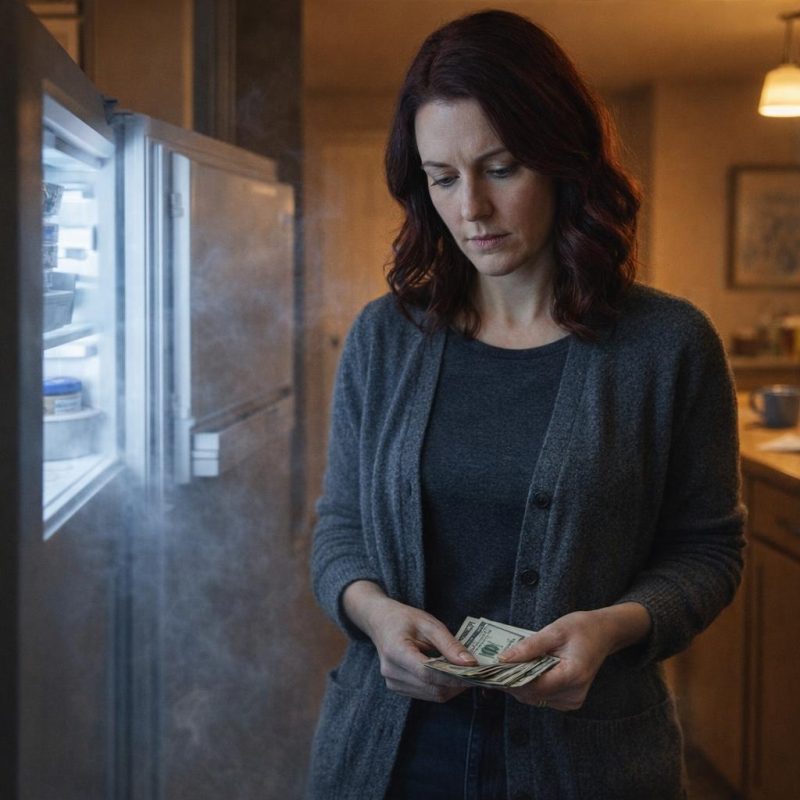 Image by RM AI
The Long Afternoons
The hardest afternoons weren't the ones where Mom didn't know where she was. Those were awful in their own way, but there was a kind of mercy in the confusion — she wasn't frightened by what she couldn't name. The harder ones were when she was clear. When she'd look at me with her full self behind her eyes and say something like, *I know what's happening to me, Claire.* She said it once in a way that made me set down my tea and just look at her. She wasn't asking for reassurance. She was just saying it out loud, the way you might acknowledge a storm coming in. Some afternoons she cried — not dramatically, just quietly, the way tired people cry. She'd ask me if she was going to forget Ryan, if she'd forget my face, if there would be a version of her left at the end that still felt like her. I didn't make promises I couldn't keep. I held her hand and told her she was still herself right now, in this room, in this afternoon, and that was true. I told her I wasn't going anywhere. That was true too. We sat like that through a lot of long hours, the light moving across the floor, neither of us pretending it wasn't what it was. I used to think the worst thing would be watching her disappear without knowing it. But sitting with her in those clear moments, I understood that the worst days were the ones when she knew exactly what she was losing.
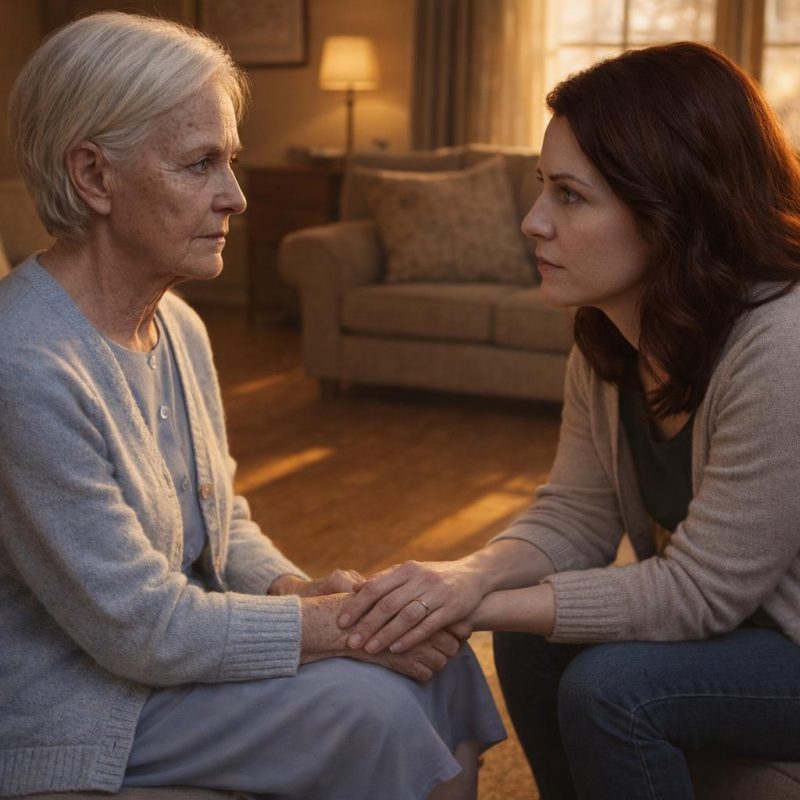 Image by RM AI
The Bank Trip
It was a Tuesday in October, about six months before she passed. I remember because the leaves had just started turning and Mom was having one of her good days — genuinely good, not just a quiet one. She was up before me, dressed in her pale blue sweater with her hair pinned back the way she used to wear it for church. She'd made coffee. When I came into the kitchen she looked at me and said she needed me to take her to the bank. Not the ATM, she said. The bank. I asked if everything was all right and she said yes, she just had something she needed to take care of. She said it the way she used to say things when she'd already made up her mind and wasn't interested in discussing it further. I drove her downtown. She was quiet in the car but alert, watching the streets go by with a kind of focused attention I hadn't seen from her in months. When we got there she walked in ahead of me, steady on her feet, and I followed. I assumed we'd go to a teller together, handle whatever it was, be done in ten minutes. But just inside the lobby she turned to me and said she needed to speak with someone privately, and asked me to wait. I started to say something — I'm not sure what — and she gave me a look that was so completely her, so entirely the mother I'd known my whole life, that I stopped. She turned and walked toward the service desk, and I stood alone in the lobby watching her go.
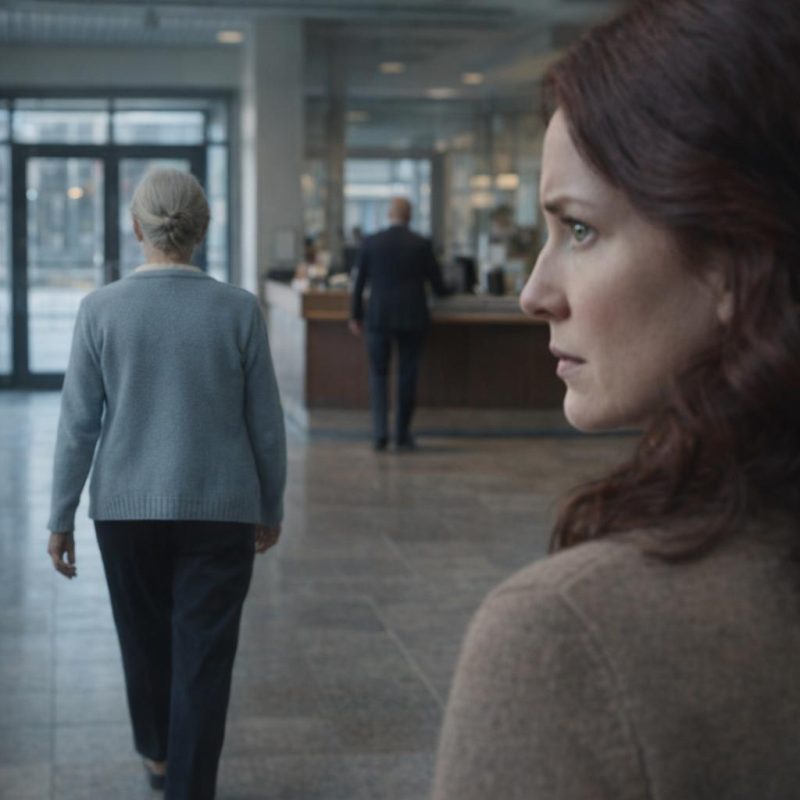 Image by RM AI
Thirty Minutes Alone
I sat in one of the lobby chairs and watched people come and go through the glass doors. A man in a heavy coat. A young woman with a stroller. A teller who smiled at me once and then looked away. I checked my phone, put it back in my bag, looked at the clock on the wall. Thirty minutes passed. I'd started to wonder whether I should go find someone to check on her when the door to the back offices opened and Mom came out. She looked tired — the kind of tired that comes after something that takes concentration — but there was something else in her face too. A settledness. Like she'd put something down that she'd been carrying for a while. She was holding a small manila envelope, the kind with the metal clasp, and as she walked toward me she tucked it into her purse in one smooth motion, the flap folded under. I stood up and asked if everything was okay. She said yes, everything was fine, and she was ready to go home. I didn't push. I didn't ask about the envelope. Something in her manner made it clear the conversation was closed, and I'd learned over the years that there were moments when the most loving thing I could do was leave space. We walked to the car and I drove, and for most of the ride home she sat with her hands folded in her lap, looking out the window at the trees going past, and the quiet on her face was something close to peace.
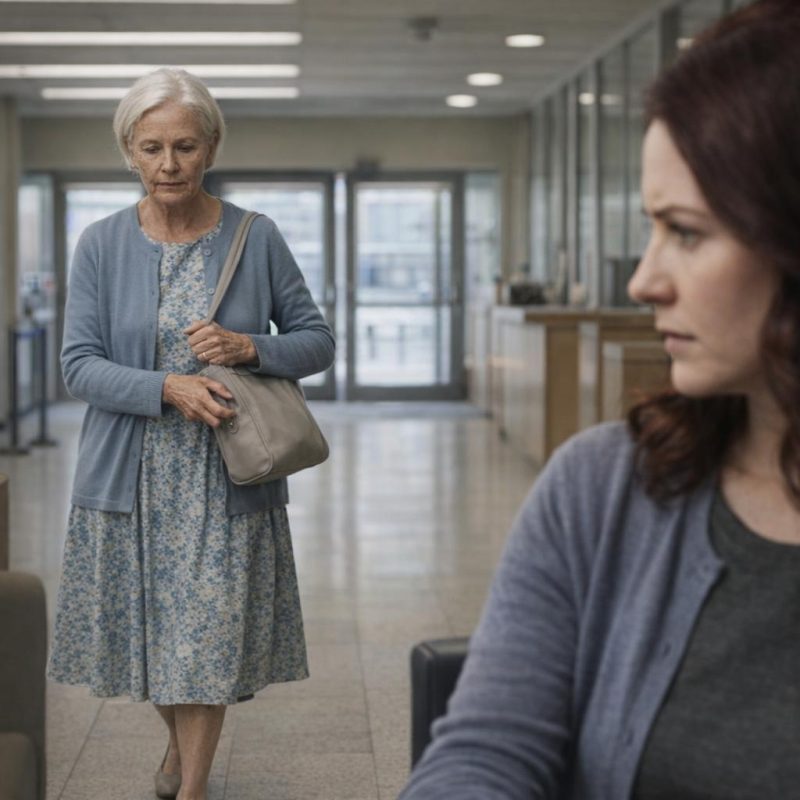 Image by RM AI
People Show You
We were almost home when she spoke. We'd been quiet for most of the drive — not an uncomfortable quiet, just the kind that settles between two people who don't need to fill every minute. I was watching the road, thinking about what I'd make for dinner, when she said it. *People show you who they are when they think there's something to gain.* Just like that, out of nowhere, in the same tone she might use to comment on the weather. I glanced over at her. She was still looking out the window, her hands folded in her lap, her expression unchanged. I asked her what she meant. She didn't answer right away. I waited, and then asked again, gently. She turned her head slightly toward the glass, as if she were watching something specific in the trees, and said nothing more. I thought maybe it was the dementia — a fragment of something surfacing, a sentence that had come loose from whatever context it belonged to. That happened sometimes. A phrase would arrive fully formed and then drift away before it could be connected to anything. I filed it away as one of those moments and let it go. I pulled into her driveway and helped her inside, and by the time I had her settled in her chair with a blanket over her lap, she seemed to have forgotten she'd said anything at all. The words stayed with me, though, sitting somewhere in the back of my mind without a place to land.
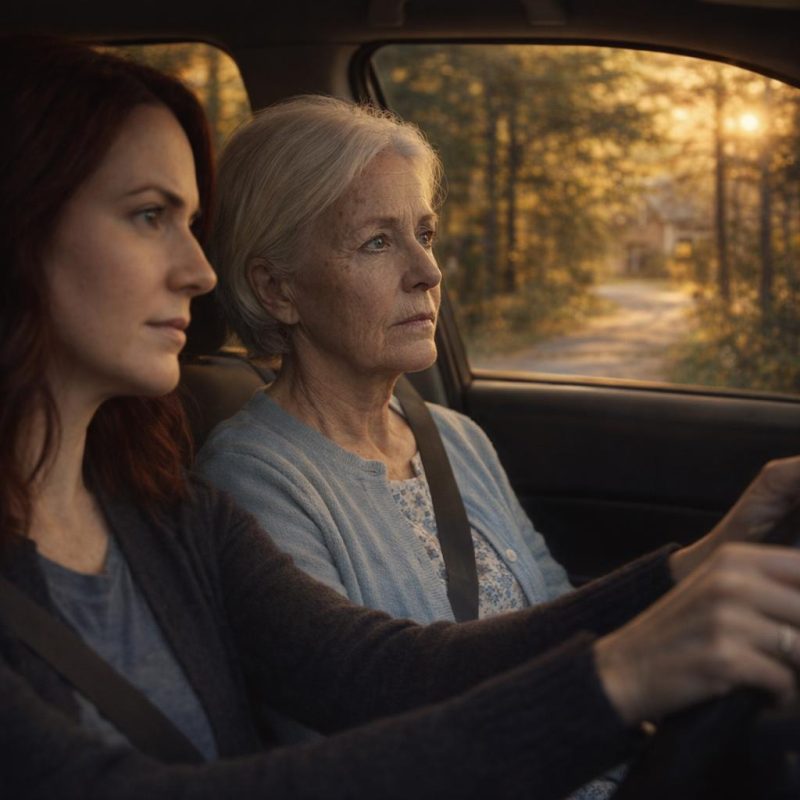 Image by RM AI
The Faster Decline
After the bank trip, the good days came less often. I don't know if it was the exertion of that afternoon, or just the natural progression of things, but the fog that had been rolling in gradually seemed to thicken faster after that. Some weeks there'd be one clear morning — maybe two — and then the rest would be a blur of half-finished sentences and faces she couldn't quite place. I started spending more nights at her house, sleeping on the couch with my phone on the cushion beside me in case she got up. Ryan was patient about it in the way teenagers sometimes are when they understand something matters even if they can't fully articulate why. I'd come home to find he'd made himself dinner, done his homework, left the porch light on for me. The nights at Mom's were long. I'd lie there listening to the house settle, tracking every sound — a creak, a shift, the particular silence that meant she was still in her room. Most nights she slept through. Some nights she didn't. I'd gotten good at moving quietly in the dark, at knowing which floorboards to avoid, at getting her a glass of water and talking her back to calm without fully waking either of us. One night I was almost asleep when I heard her in the hallway. I got up and found her standing just outside her bedroom door in her nightgown, looking past me with clear, searching eyes, calling out a name I didn't recognize — a name that, when I looked it up later, belonged to her brother, who had died before I was born.
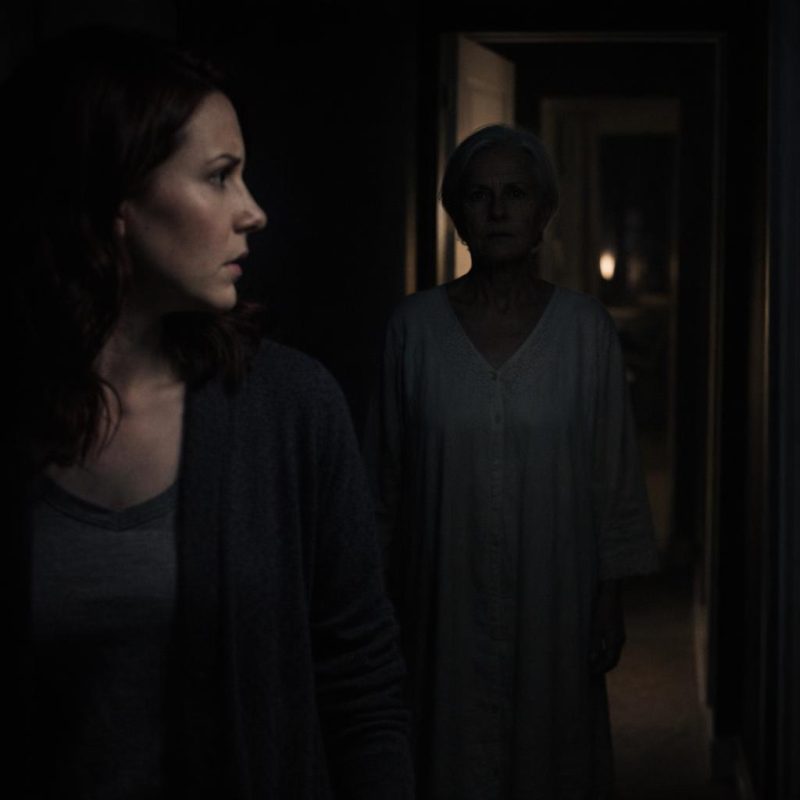 Image by RM AI
Folders, Not Help
Around that same time, Diane started coming around more. At first I was relieved — genuinely. I'd been running on empty for months and the idea of sharing even a fraction of the load felt like being offered a chair after standing all day. But the visits had a particular shape to them that I couldn't quite settle into. She'd arrive with a tote bag and a folder, sometimes two, and she'd sit at Mom's kitchen table and ask questions. Not questions about how Mom was sleeping or whether she was eating or what the doctor had said at the last appointment. Questions about the savings account, about whether there was a second account somewhere, about the insurance policies and whether they were current, about a deed she thought she remembered Dad mentioning once. She'd ask Mom directly sometimes, in a bright, patient voice, and Mom would try to answer, pulling at threads that weren't always there. I'd stand at the counter making tea and feel something I couldn't name — not alarm exactly, more like the low-grade unease of a sound you can't identify. Diane never once offered to sit with Mom while I ran an errand. She never made a meal or changed a sheet or asked if I needed a break. She'd close her folder, say she'd be in touch, and leave. Each time, I'd watch her car pull out of the driveway and try to put my finger on what felt wrong. The folders came in. Mom's name came up. My name did not.
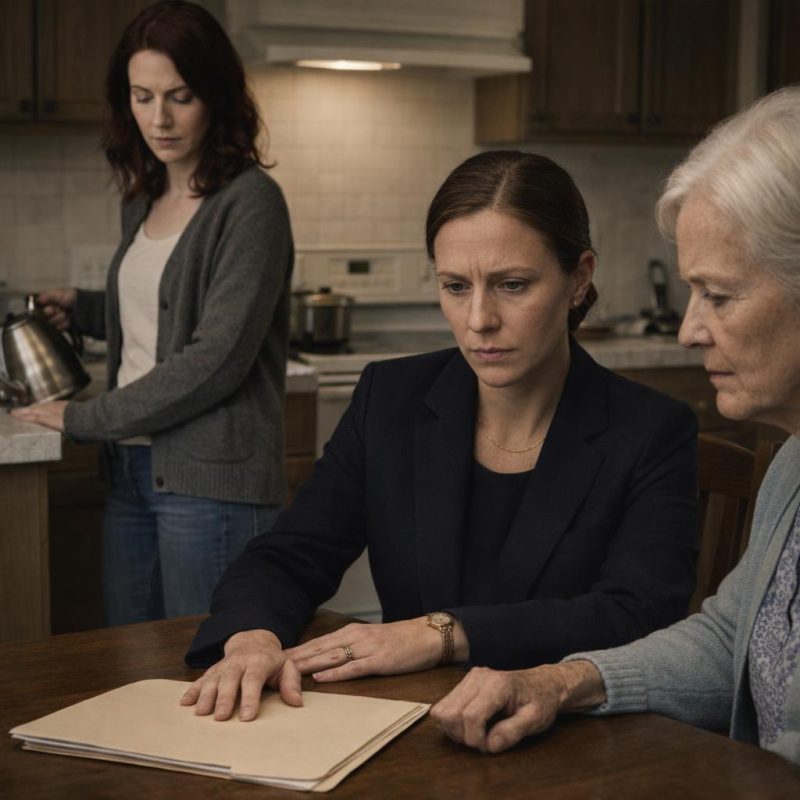 Image by RM AI
The Jewelry Question
The questions shifted after a while. It wasn't just the accounts and the insurance policies anymore — Diane started asking about things. Physical things. She asked Mom once about the pearl earrings, whether they were still in the jewelry box on the dresser or somewhere else for safekeeping. She asked about a coin collection she said she remembered Dad mentioning, a set of silver dollars he'd kept in a velvet pouch. Mom would try to answer, pulling at the edges of memories that didn't always hold their shape anymore. Some mornings she was sharper than others, but the afternoons were harder, and Diane had a way of arriving in the afternoons. I'd be in the kitchen or folding laundry down the hall and I'd hear Mom's voice go thin and uncertain, that particular note she got when she was tired and someone was asking too much of her. I'd come to the doorway and Diane would be sitting across from her, pen in hand, patient and bright, and Mom would be looking at her hands like she was trying to remember something she'd already lost. Once, Mom started to cry — just quietly, the way she did when she was overwhelmed and didn't want to make a fuss. Diane handed her a tissue and kept writing. I stood there watching, not sure what I was looking at, not sure what I had the right to say. The folder sat open in Diane's lap, and I could see Mom's name printed across the top of whatever was inside.
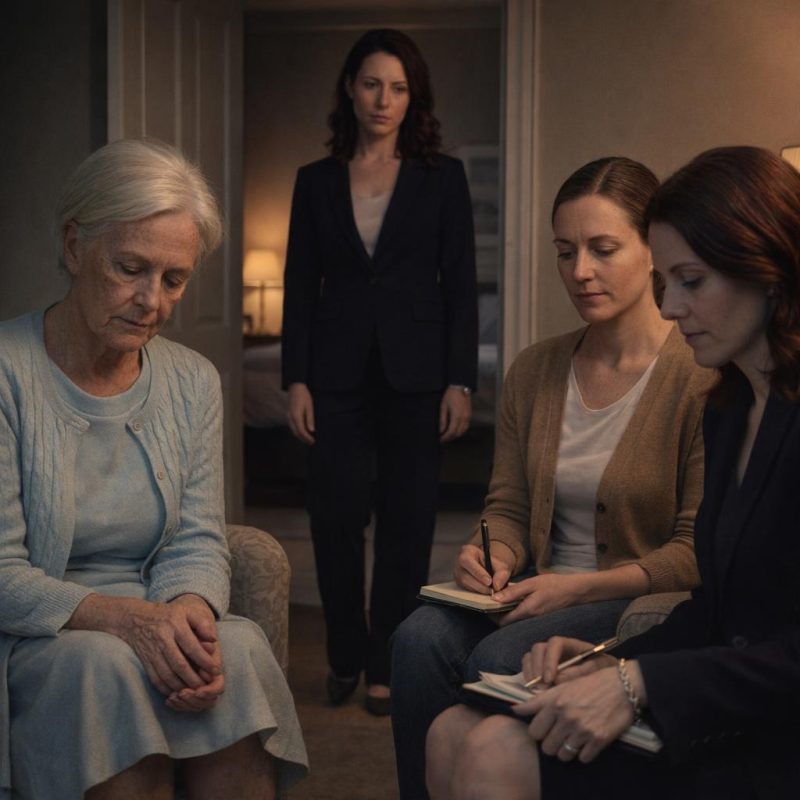 Image by RM AI
The Closet Search
I came in one afternoon to find Diane on her knees in front of the hallway closet, two boxes already pulled down from the top shelf and open on the floor beside her. Mom was in her recliner in the next room, and I could hear her from the doorway — that low, distressed murmur she made when something was wrong and she couldn't find the words for it. I stood there for a second, just taking in what I was seeing. "What are you doing?" I asked. Diane looked up without any particular expression, like I'd asked something obvious. "Getting organized," she said. "Someone has to." I told her she could have called me, that we could have done it together, that Mom was right there and could hear everything. Diane stood up and brushed off her knees. She said she wasn't trying to upset anyone, she was just trying to be practical. I said Mom was still here, still in her chair, still part of this house. Diane looked at me for a moment with something I couldn't quite read — not unkind exactly, but not soft either. "I know that," she said. "But someone needs to be realistic." She said it evenly, like it was a reasonable thing, like it was even a generous thing. I didn't have an answer for it. I went to sit with Mom and held her hand while she settled, and the word realistic hung in the air between the two rooms like something I hadn't been given permission to argue with.
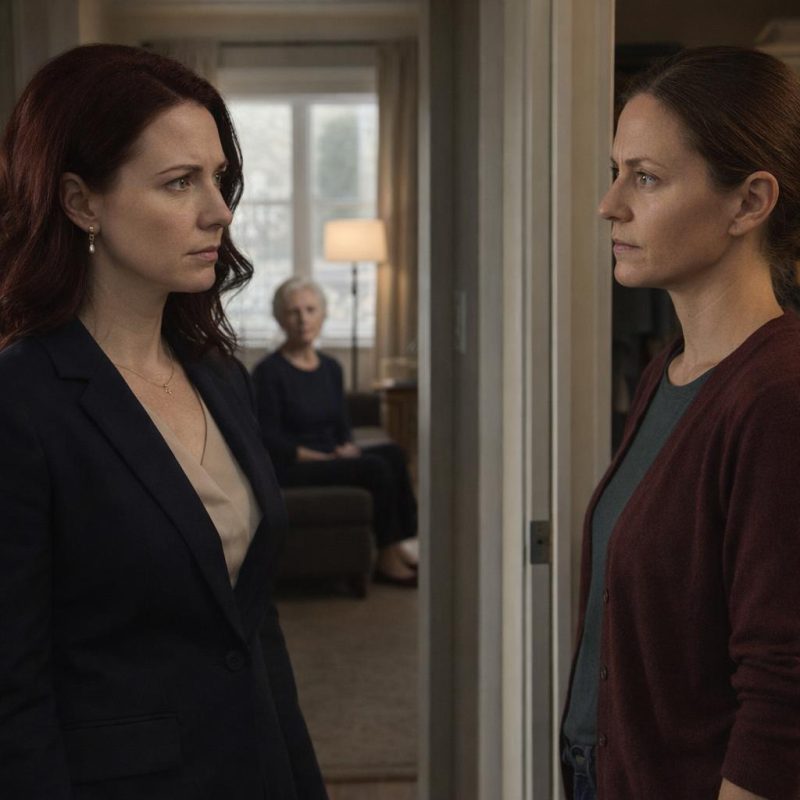 Image by RM AI
The Clear Morning
Mom had been restless the night before — not distressed exactly, just unable to settle — so I'd stayed over, sleeping on the couch with one ear open the way I'd learned to do. I woke just after sunrise to the sound of her voice, clearer than it had been in weeks. She was calling my name from the bedroom, not urgently, just calling, the way she used to when I was small and she wanted company for morning coffee. I got up and went to her. She was sitting up against her pillows, and her eyes were focused in a way that caught me off guard. There were mornings like this sometimes — windows, the hospice nurse called them — where she'd come back to herself for a little while, sharp and present and almost like before. She asked me to make tea. I did, and I brought it back to her on the little tray she liked, with a saucer and everything, because on mornings like this it felt important to do things properly. She wrapped both hands around the mug and looked out the window at the yard for a while without saying anything. I sat in the chair beside the bed and just let the quiet be quiet. Then she set the mug down on the nightstand and turned to look at me, and something in her expression made my chest go still. She patted the bed beside her, and I saw that her wedding ring had slipped loose around her thin finger, turning sideways as her hand moved.
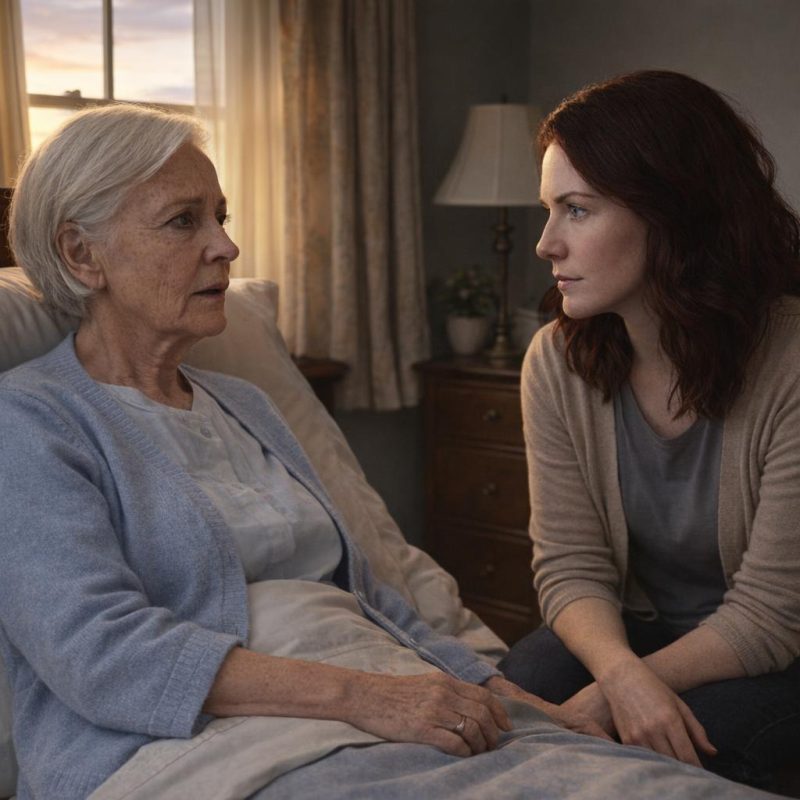 Image by RM AI
The Envelope Appears
I moved from the chair and sat on the edge of the bed beside her. She didn't say anything right away. She just looked at me for a moment with that particular steadiness she had on her clear mornings, like she was making sure I was really there. Then she reached under her pillow — slowly, carefully — and pulled out a manila envelope. I recognized it immediately, though I couldn't have said exactly why. It was the kind that banks use, the heavy cream-colored kind with the metal clasp, and it had been folded once along the middle. My name was written across the front in her handwriting. Not typed, not printed — her handwriting, the looping cursive she'd used my whole life, though the letters were shakier now, the pen having pressed harder in some places than others like she'd had to concentrate to keep them even. I felt something drop in my stomach when I saw it. I didn't reach for it. She held it in both hands, carefully, the way you'd hold something you'd been keeping safe for a long time, and she didn't offer it to me yet. She just let me look at it. The morning light was coming through the curtains in long pale strips, and the house was very quiet, and the envelope rested between us on the bed with my name facing up in her trembling script.
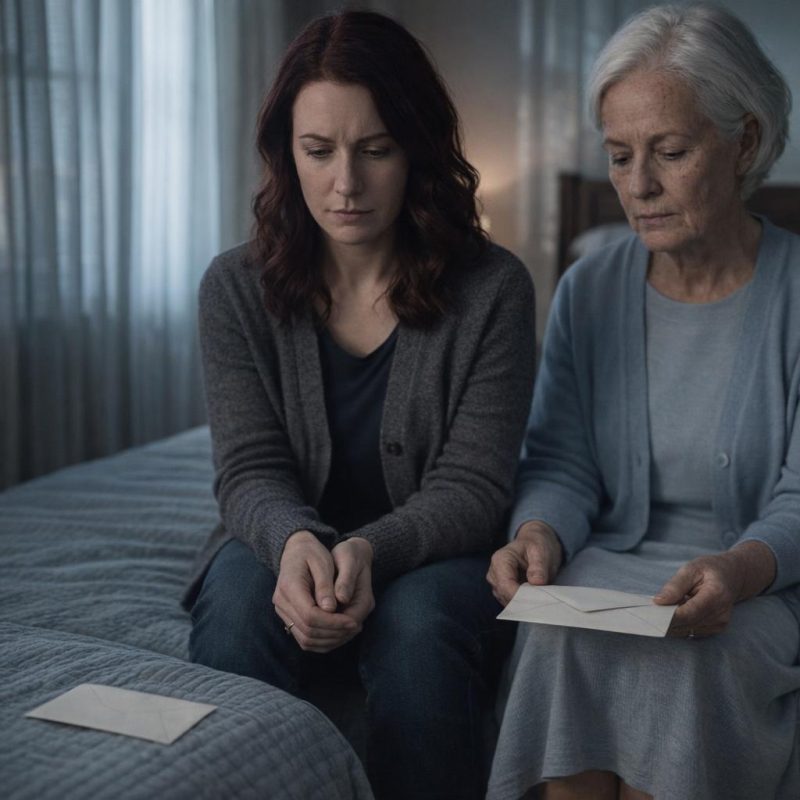 Image by RM AI
Don't Open It Yet
"Don't open it yet," she said. Her voice was thin — it had been thin for weeks — but there was nothing uncertain about the words. I asked her what was in it. She shook her head, just slightly, the way she did when a subject was closed. I asked again, softer, and she looked at me with an expression I didn't have a name for, something between sorrow and resolve. "Not yet," she said. "You'll know when." I wanted to push. I wanted to take the envelope from her hands right then and tear it open and make sense of whatever was inside, because the not-knowing felt worse than anything I could imagine finding. But I didn't. She was holding it so carefully, and she was looking at me with such deliberate calm, that pushing felt wrong in a way I couldn't explain. I sat there on the edge of her bed while the morning light shifted and the tea went cool on the nightstand, and I tried to find some reasonable explanation — maybe it was old documents, maybe it was something she'd been meaning to give me for years, maybe it was nothing that required this kind of weight. But I couldn't make myself believe any of that. The instruction settled over me the way a cold room settles over you when you first walk in — not all at once, but completely, until you can't remember what warm felt like.
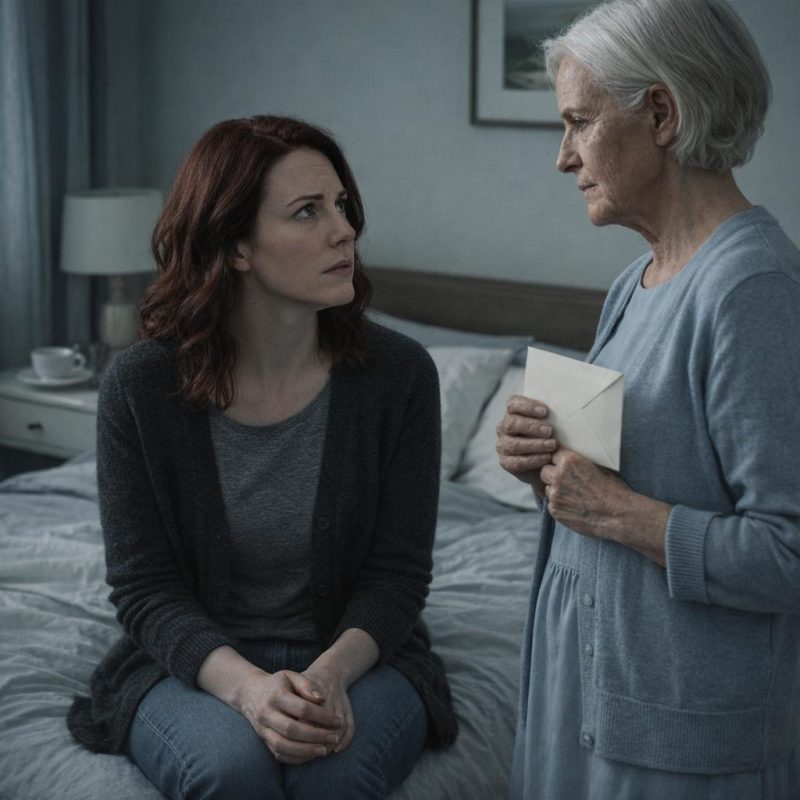 Image by RM AI
When Diane Shows You
She reached over and took my hand. Her grip was stronger than I expected — stronger than it had been in months — and it surprised me enough that I went still. She said she needed me to listen carefully. I told her I was listening. She said I should keep the envelope somewhere safe, somewhere no one would find it, and that I should not open it until Diane told me there was nothing for me. Those were her exact words. Nothing for you. I didn't understand what she meant. I asked her what she was talking about, what Diane had to do with any of it, and she just squeezed my hand and looked at me with that same steady expression, the one that meant the conversation was going the way she'd decided it would go and not any other way. I felt something cold move through me — not fear exactly, not yet, more like the feeling of standing at the top of a staircase in the dark and not knowing how many steps there are. I started to ask again, and she leaned in a little closer, her voice dropping to just above a whisper, and she said that Diane thought she didn't know what Diane had been doing.
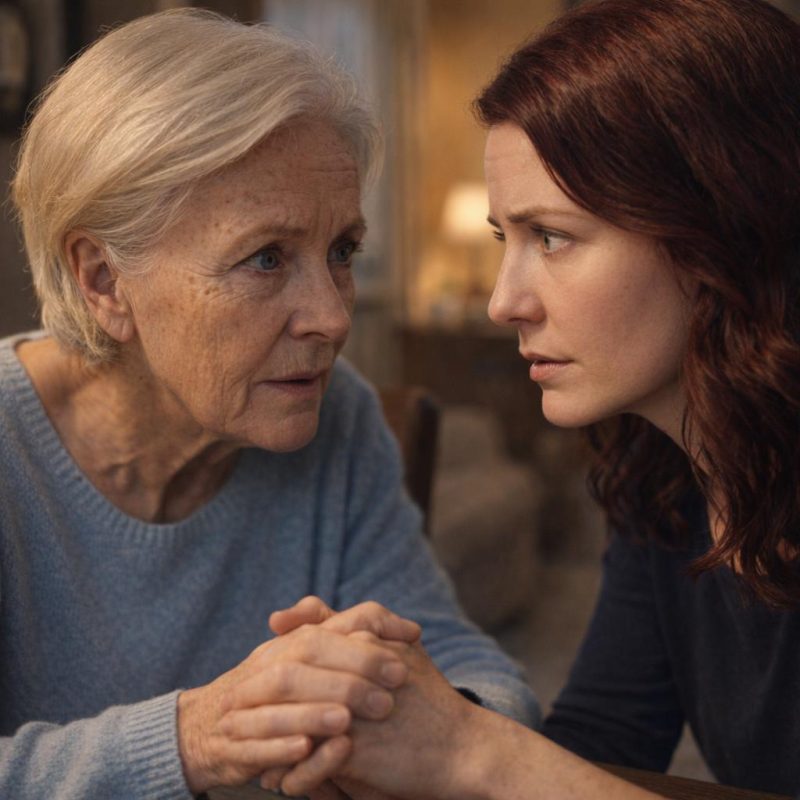 Image by RM AI
The Promise
I didn't know what to say to that. I sat there on the edge of her bed with her hand in mine and the envelope between us and I couldn't find a single word that felt adequate. She watched me, patient, waiting. Finally I told her I would wait. I told her I wouldn't open it until the time she'd described, whatever that meant, whenever that was. She searched my face for a moment like she was checking whether I meant it. I held her gaze and told her again — I promise, Mom. I'll wait. Something in her shoulders released. She leaned back against her pillow slowly, like a long breath going out, and the tension I hadn't even fully noticed in her face just went quiet. She held the envelope out to me then, and I took it. It was heavier than it looked. Not heavy the way a thick stack of papers is heavy, but heavy the way something important feels heavy — the weight of it in my hands had nothing to do with what was inside and everything to do with the way she'd handed it to me. She closed her eyes. I sat with it in my lap and listened to her breathing even out, and the morning settled around us, and I held the thing she'd trusted me with without understanding a word of why.
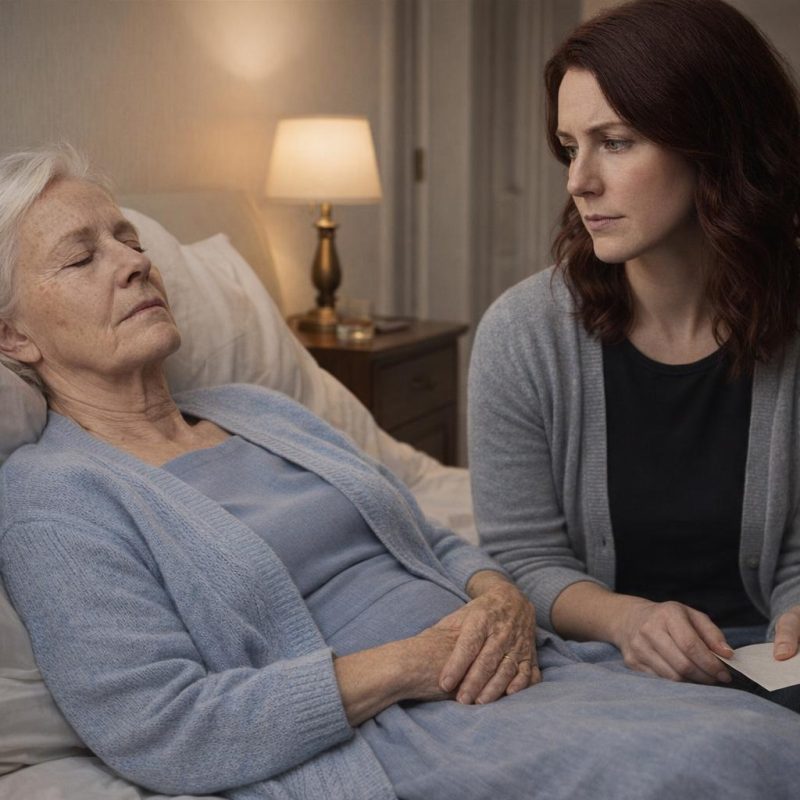 Image by RM AI
Hidden in the Dresser
I drove home that afternoon with the envelope on the passenger seat, face down. I didn't want to look at my own name written in her handwriting while I was trying to keep the car on the road. When I got home, Ryan was at school, the house was empty, and I stood in the bedroom for a long time just holding it. Then I put it in the bottom drawer of my dresser, underneath a stack of old tax files I never looked at, and I pushed the drawer shut. I told myself it was probably nothing — some old letter she'd been meaning to give me, a piece of jewelry she wanted me to have, something sentimental that her mind had built into something larger than it was. She'd been confused on other days. She'd told me once that my father had called, two years after he died. I loved her and I knew what the illness did, and I held onto that as a reason to keep my expectations low. But I couldn't stop seeing her face when she'd handed it to me. The steadiness in her eyes. The grip of her hand. The way she'd said Diane's name like it meant something specific, something she'd been carrying for a while. I didn't tell Ryan. I didn't tell anyone. The drawer stayed shut, and I went about the rest of the day, and I half-convinced myself it was nothing — but her tears from that morning stayed with me, quiet and insistent, long after everything else had faded.
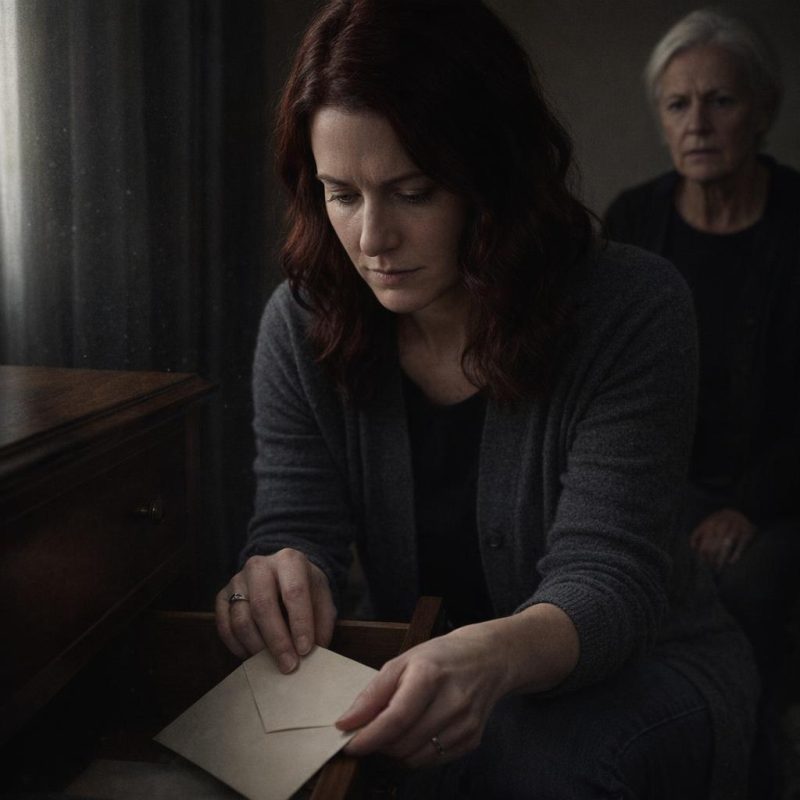 Image by RM AI
The Final Days
The hospice nurse arrived on a Thursday with a bag of supplies and a voice so quiet it barely disturbed the air. I had already moved the hospital bed into Mom's room by then — Ryan had helped me disassemble her old bed frame the week before, and we'd done it without talking much, which felt right. Mom had stopped recognizing me two days earlier. She'd look in my direction and something would flicker across her face, but it wasn't my name anymore. I sat beside her for hours at a stretch, holding her hand, listening to her breathe. The nurse showed me how to wet her lips with a small sponge. She showed me how to reposition Mom's arms so they wouldn't ache. I learned things in those days I never wanted to know. I called Diane on the Wednesday, told her the nurse had said it could be any time now. She said she'd look at flights. I didn't push. I told myself she was processing it in her own way, that grief does strange things to people, that distance isn't always physical. But the hours kept passing and the phone on Mom's nightstand never rang. The hospice nurse moved through the room in soft-soled shoes, checking vitals, adjusting the blanket, writing things in a small notebook. I sat in the chair I'd pulled close to the bed, and the house was so quiet I could hear the clock in the hallway. The phone sat there, dark and silent, no calls in the log.
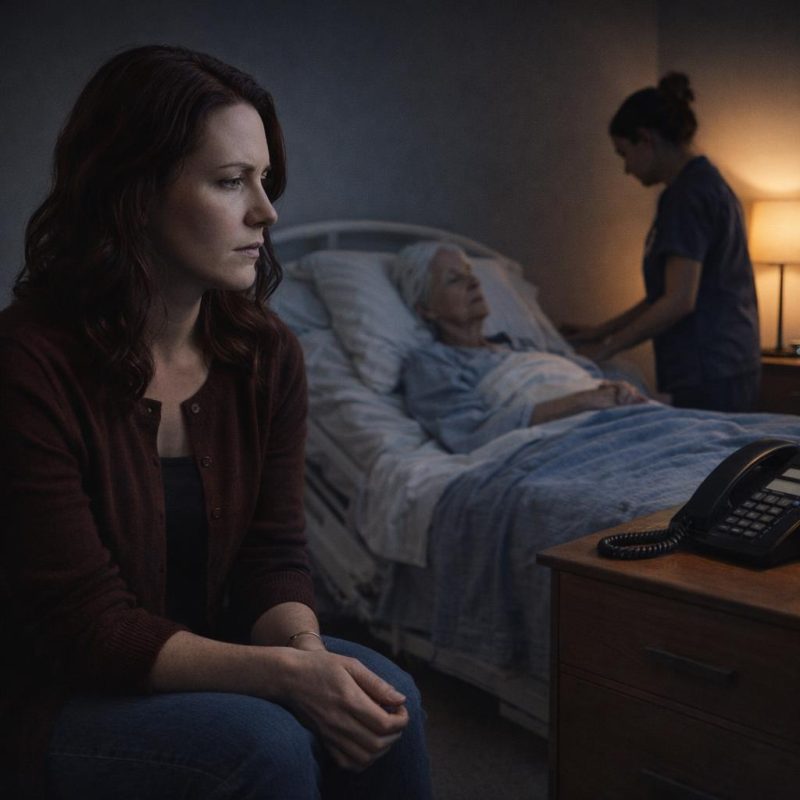 Image by RM AI
The Morning After
She died on a Tuesday morning, just after six. The light was coming in through the curtains in thin strips, and I was holding her hand when her breathing changed and then stopped. I sat there for a long time before I called anyone. I needed a few minutes that were just mine and hers. Then I called the hospice line, and then I called Diane. Diane picked up on the second ring. She said, 'Oh,' and then she said she'd be there as soon as she could. She arrived the next morning — Wednesday, just before noon — in a black coat and dark sunglasses even though the sky was overcast. Michael was with her. She walked into Mom's house like she was arriving at something she needed to manage, setting her bag down on the kitchen table, looking around the rooms with an expression I couldn't quite read. She hugged me, briefly, and said, 'You must be exhausted.' I was. But the way she said it made it sound like a task I'd completed rather than a loss I was still inside of. She cried later that afternoon, in the living room, with her hand pressed to her mouth and her shoulders shaking in a way that looked practiced even though I knew that wasn't fair to think. My own tears had been coming and going since Tuesday morning — quiet, inconvenient things that arrived without warning. Standing in the kitchen while Diane organized the condolence calls, I felt them start again, and I turned toward the window so no one would have to accommodate them.
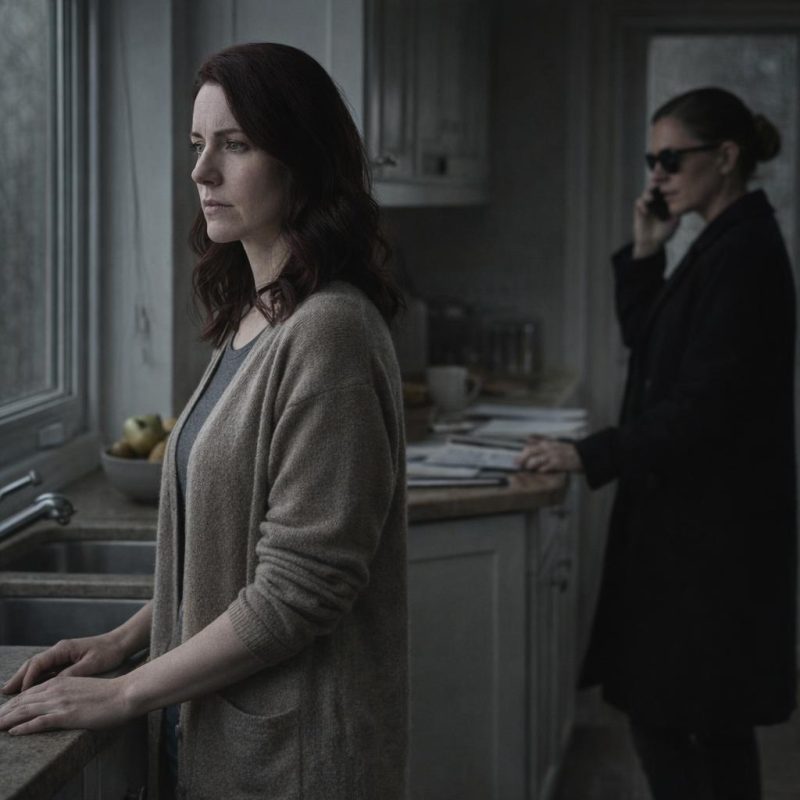 Image by RM AI
Choosing the Flowers
I had written the obituary the night before Diane arrived. It wasn't long — maybe three paragraphs — but I'd put care into it. I wrote about Mom's garden, the way she made soup from scratch every winter, the years she'd spent volunteering at the library. I wrote about the last few years too, carefully, without making it sound like a burden, because it hadn't been. It had been hard and it had been mine and I wanted people to know she hadn't been alone. Diane read it at the kitchen table the next morning with a red pen she'd found somewhere. I watched her go through it line by line. She crossed out the part about the volunteering — 'too much detail,' she said. She rewrote the opening sentence. She changed the tone of the closing paragraph to something that sounded more like a press release than a goodbye. Diane also chose the flowers without asking — white lilies, which Mom had never particularly liked. She called two of Mom's cousins and told them which stories were appropriate for the service. I told myself she was grieving too, that people handle loss by controlling what they can, that this was her way of coping. Then she got to the section about the caregiving years, the part I'd written most carefully, and I stood in the doorway of the kitchen and watched her draw a single red line through all of it.
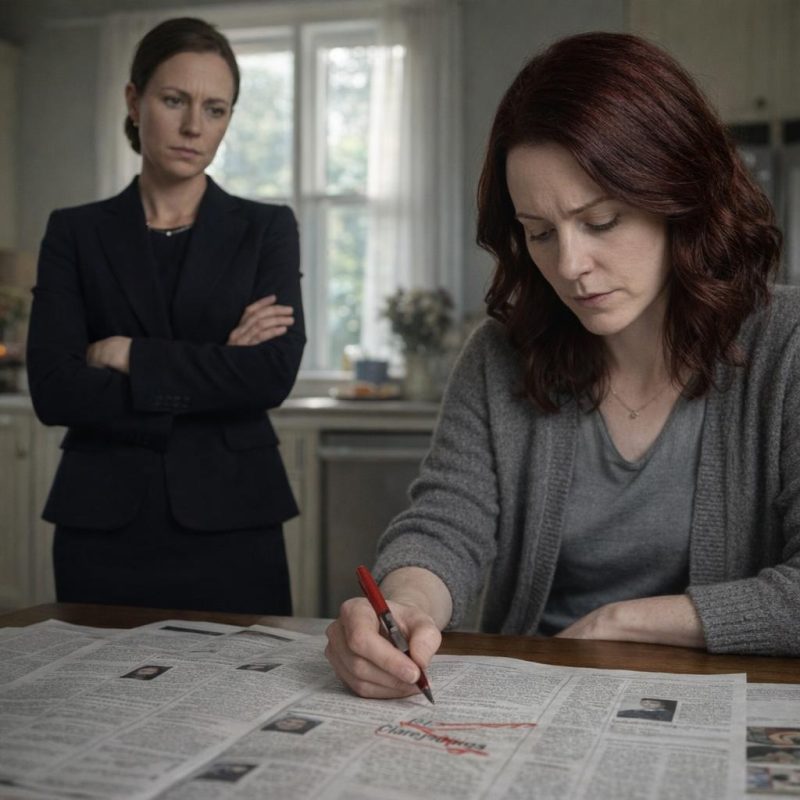 Image by RM AI
The Funeral
The service was held on a Friday afternoon at the funeral home on Clement Street, the one Mom had passed a hundred times on her way to the grocery store. Ryan sat beside me in the front row, close enough that his shoulder pressed against mine, and I was grateful for that in a way I couldn't have put into words. I had Mom's handkerchief in my hands — pale yellow cotton, embroidered with a small E in the corner — and I kept folding and unfolding it without meaning to. My tears came quietly, the way they had all week, arriving and receding without drama. Diane sat two seats down. About halfway through the service, when the pastor began reading a passage Mom had loved, Diane's grief arrived loudly. Her shoulders shook. She pressed a tissue to her face. A woman behind us leaned forward and touched her arm. Someone else murmured something kind. People turned, briefly, the way you do when you hear someone in real pain. I didn't turn. I kept my eyes on the pastor and kept folding the handkerchief. I wasn't angry — or I was trying not to be, which isn't the same thing. I just noticed that no one leaned forward to touch my arm. Ryan's shoulder stayed pressed against mine, steady and warm, and I held onto that. When the service ended and people began moving toward Diane with their condolences, I sat in the front row a moment longer, the handkerchief pressed flat against my knee, my tears already dry.
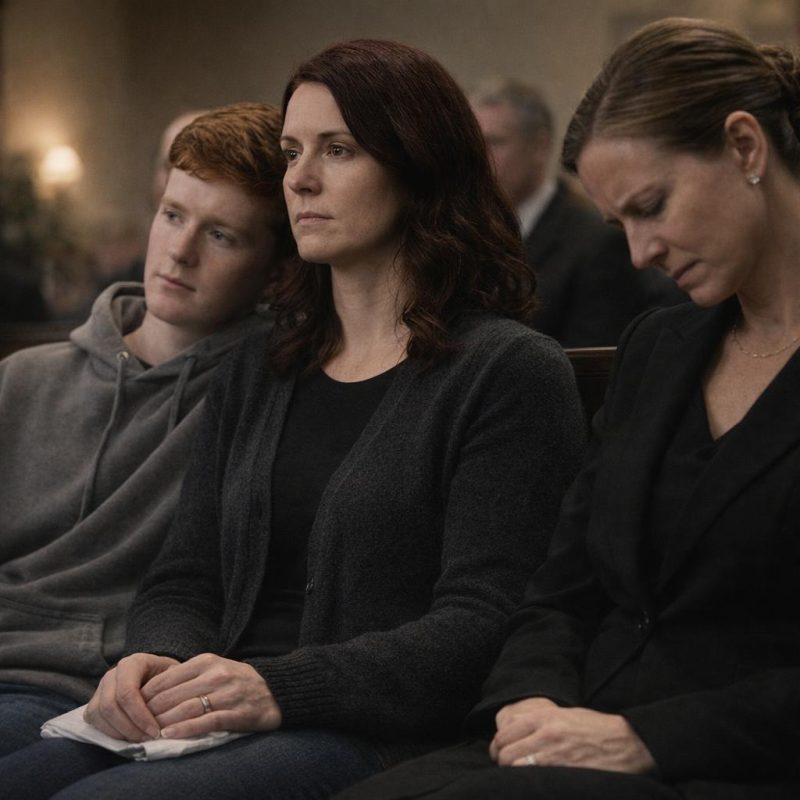 Image by RM AI
The Locksmith
Three days after the funeral, I drove to Mom's house to pick up a few things — some of her books I'd been meaning to bring home, a sweater I'd left in the hall closet. I pulled up to the curb and sat in the car for a moment before getting out, the way I'd been doing lately, giving myself a beat before walking into the empty house. There was a van parked in the driveway I didn't recognize. A man in a gray jacket was crouched at the front door with a drill. I got out of the car and walked up the path, and he looked up and said he'd been hired to change the locks. I asked by whom. He said a woman had called the order in that morning. I called Diane from the front step. She answered right away and said she'd been meaning to tell me — she'd arranged it for security, because the house was sitting empty and she didn't want anyone getting in. She said it calmly, like it was obvious, like of course this was the sensible thing to do. I said I still had a key. She said she'd get me a new one, that it was no trouble, that she just wanted to make sure the house was protected. I said okay. I didn't know what else to say. The man in the gray jacket finished with the drill and stood up, testing the new handle, and I was still standing on the front path holding the old key that no longer fit the lock he had just installed.
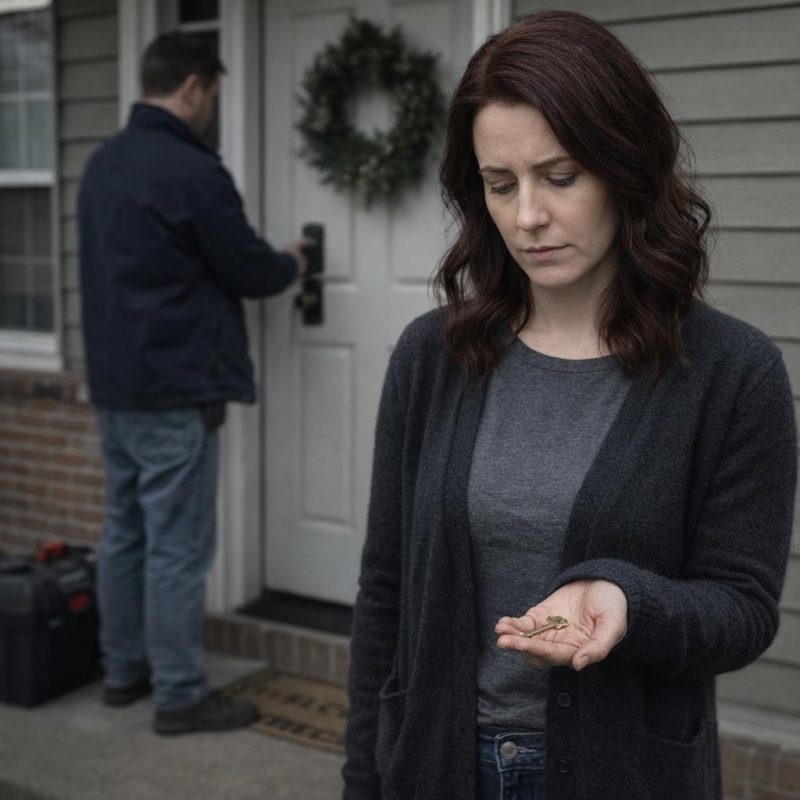 Image by RM AI
The Jewelry Box
I went back to Mom's house two days later, after Diane had dropped off the new key as promised. I let myself in and stood in the hallway for a moment, the way you do in a house that used to be full of someone and isn't anymore. I went through the kitchen first, then the living room, then made my way to the bedroom. I wasn't looking for anything specific — I just needed to be in her space for a while. The bedroom still smelled faintly like her, that particular mix of hand lotion and cedar from the closet. I stood at the dresser and that's when I noticed it. The jewelry box was gone. It had sat in the same spot on that dresser for as long as I could remember — a dark wooden box with a small brass clasp, the one that had belonged to my grandmother. I called Diane. She said she'd taken it home for safekeeping, that with the house sitting empty she hadn't wanted to leave valuables out. Then she said Mom had promised it to her years ago, that they'd talked about it, that it had always been understood. I had no memory of that conversation. The box had held things from my grandmother — a pearl brooch, a thin gold ring, a few small pieces that had no monetary value but felt irreplaceable. I couldn't prove the promise hadn't happened. I couldn't prove anything. I stood in the bedroom for a long time after I hung up, and the bare rectangle of dust on the dresser where the box had always been was the only thing I could look at.
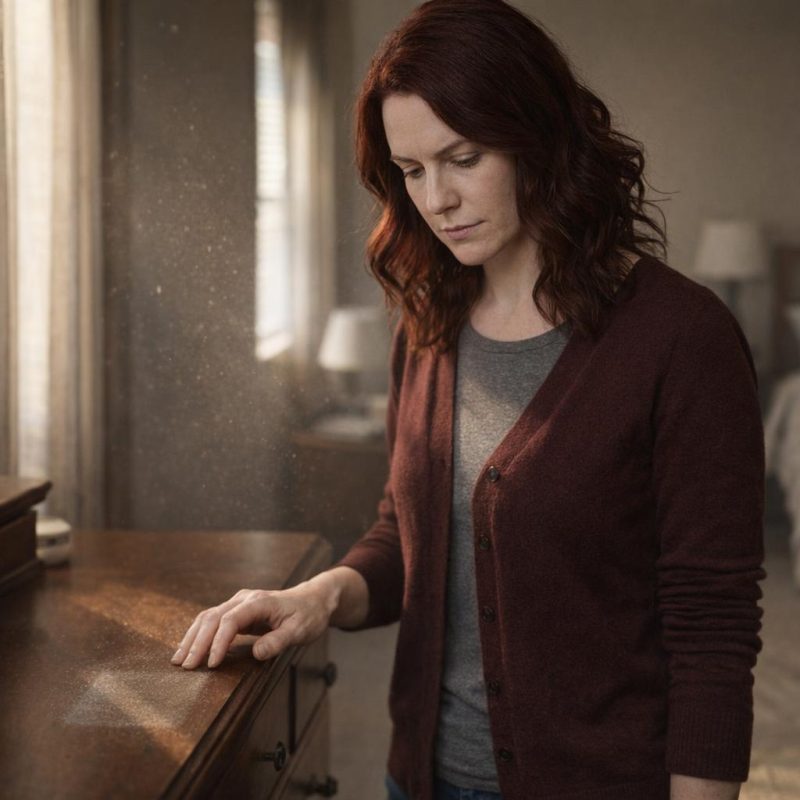 Image by RM AI
The Attorney Question
A week after the funeral, I asked Diane about the will. I'd been putting it off, telling myself there was no rush, that we were both still grieving, that the paperwork could wait. But the locks had been changed and the jewelry box was gone and I kept thinking about the envelope in my dresser drawer, the one I still hadn't opened, and I needed to understand what was happening. I called her on a Sunday evening. I asked if she could share the estate documents, just so I knew where things stood. There was a pause before she answered. She said the attorney was handling everything, that it was all being taken care of, that I didn't need to worry. I asked which attorney. She said she'd send me the contact information later in the week. I said I'd like to see the actual paperwork — the will, whatever documents Mom had signed. Another pause. Then she said, in a voice that had gone careful and even, that she hoped I wasn't going to make this ugly, that Mom had just died and we were family and this wasn't the time to start treating each other like adversaries. I said I wasn't trying to make anything ugly. I just wanted to see the documents. She said she understood, and that she'd be in touch, and then she ended the call. I sat with the phone in my hand for a long time after that — the name of the attorney she hadn't given me, the papers she hadn't offered, the promise to follow up that already felt like it wouldn't come.
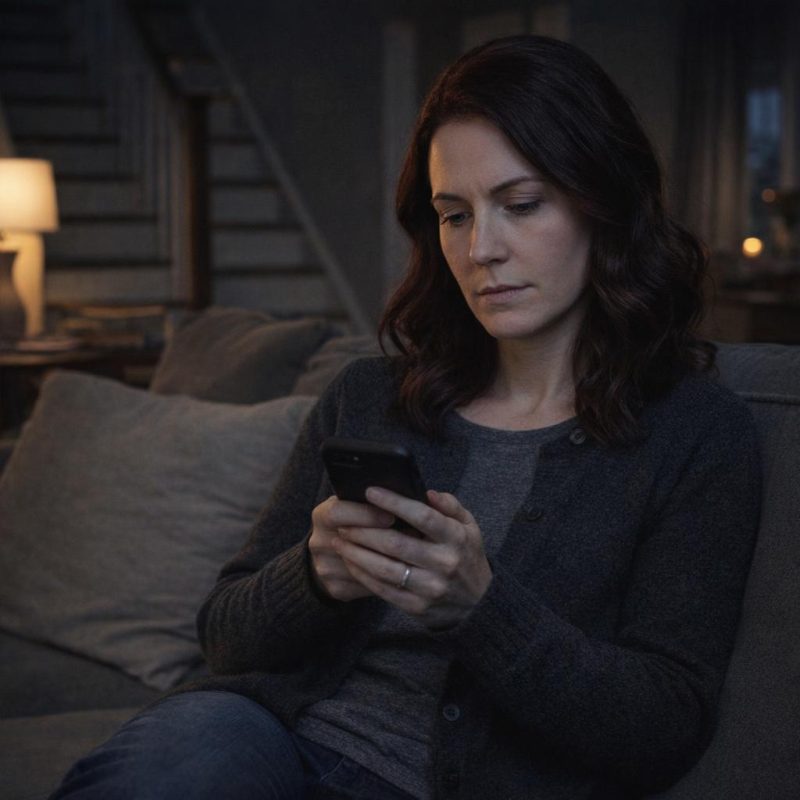 Image by RM AI
Saturday Morning
Diane called on a Friday and suggested we meet at Mom's house Saturday morning to go through sentimental items together. She said it in a warm voice, the kind she used when she wanted something to sound like an olive branch. I said yes without hesitating. I drove over the next morning telling myself that maybe this was the turn — that maybe she needed more time to grieve before she could let her guard down, and that going through Mom's things together might be the thing that finally cracked it open between us. I even stopped at the bakery on the way and picked up two coffees and a bag of the almond pastries Mom used to buy on Sunday mornings. I had my key. I let myself in. Diane's car was already in the driveway, which I'd expected. What I hadn't expected was the quiet. Not the quiet of an empty house, but the quiet of a house where work had already been done. I set the coffees on the hall table and walked into the living room: half of it was already packed into boxes, each one labeled in Diane's handwriting with her name.
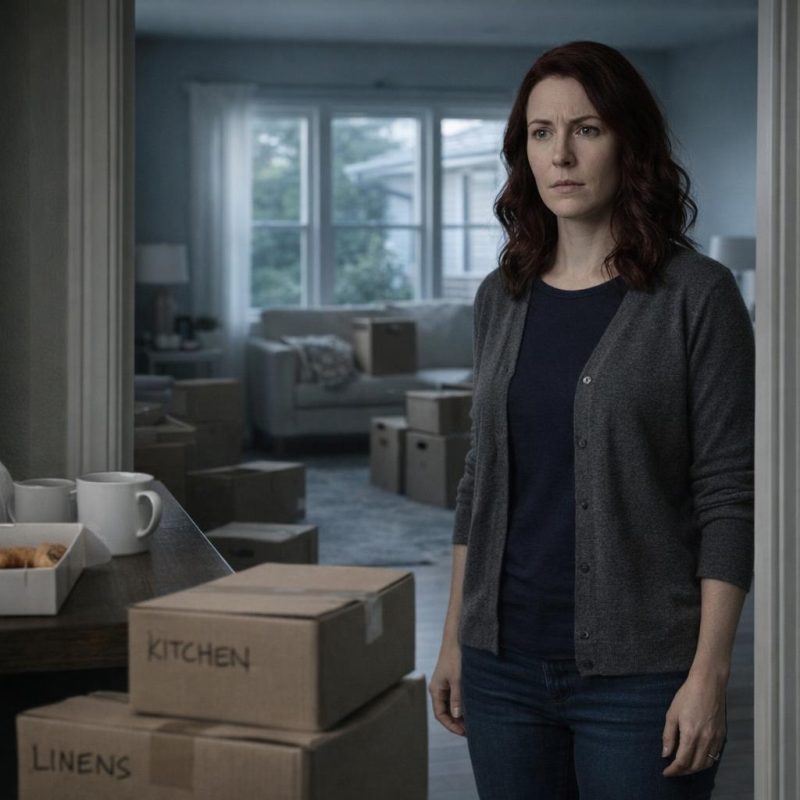 Image by RM AI
Weeks of Evasion
The weeks after the funeral moved slowly, and every time I tried to get a straight answer from Diane, I came away with nothing. I asked about the will the first week. She said the attorney was still processing paperwork and that these things took time. I asked which attorney. She said she'd send me the contact information and never did. I followed up by text. She replied that she'd been busy with the estate and would get back to me. I called her on a Tuesday evening and asked about Mom's outstanding medical bills — whether they'd been settled, whether there was anything I needed to sign. She said I wouldn't understand the finances and that she was handling it. I asked what that meant. She said it meant she was handling it. Every conversation ended the same way: me with a phone in my hand and no more information than I'd had before I called. I told myself she was grieving differently. I told myself the paperwork really did take time. But there was a pattern to it that I couldn't quite talk myself out of — the way each question got absorbed and redirected, the way every promise to follow up dissolved before it could be kept. I wasn't sure what I was looking at. I just knew that every time I reached for something solid, my hand closed around air.
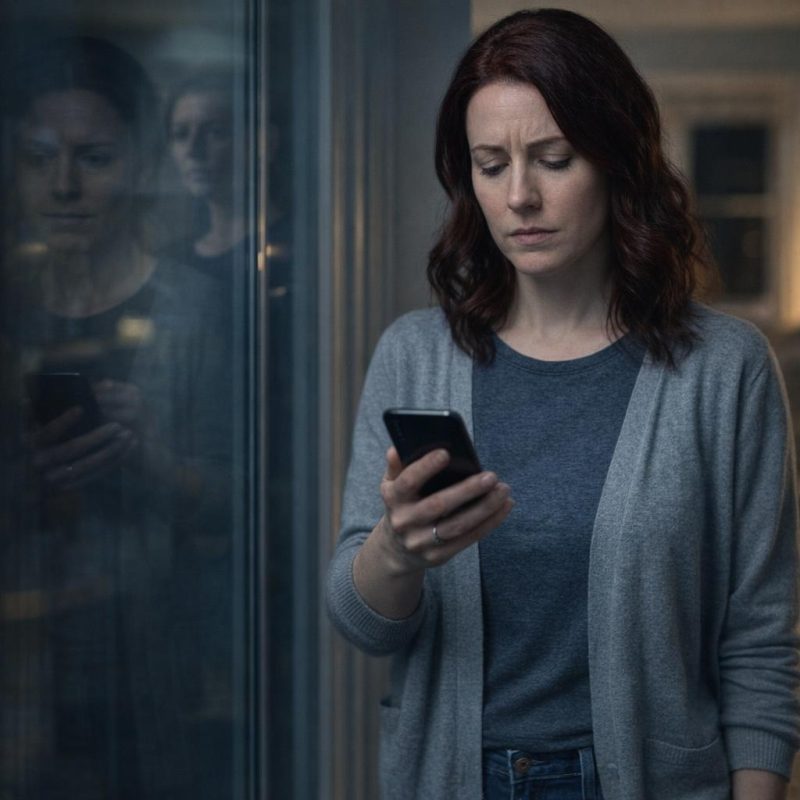 Image by RM AI
The Labeled Boxes
I stood in the living room with the two coffees going cold on the hall table and looked at what Diane had done. The boxes were everywhere — stacked along the wall, lined up near the front window, clustered around the armchair Mom used to read in. Each one had a label in Diane's handwriting. Her name, her address, a brief description of the contents. Mom's quilts — the ones she'd made herself over thirty years, the ones I used to pull off the back of the couch when I stayed over — were folded into a box marked for Diane. The photo albums were already claimed. The small framed pictures that used to line the hallway shelf. The blue ceramic lamp from the bedroom. I walked slowly through the room and read the labels one by one, and the almond pastries in the bag on the table felt like the most embarrassing thing I'd ever brought anywhere. She hadn't called me over to go through things together. I understood that now, standing in the middle of it. The decisions had already been made. I was there to see them. From the kitchen, Diane's voice came through the doorway, even and unhurried, saying she needed to talk to me about something. I didn't move right away. I just stood there in the quiet of that room, surrounded by boxes with someone else's name on them, and let the weight of it settle.
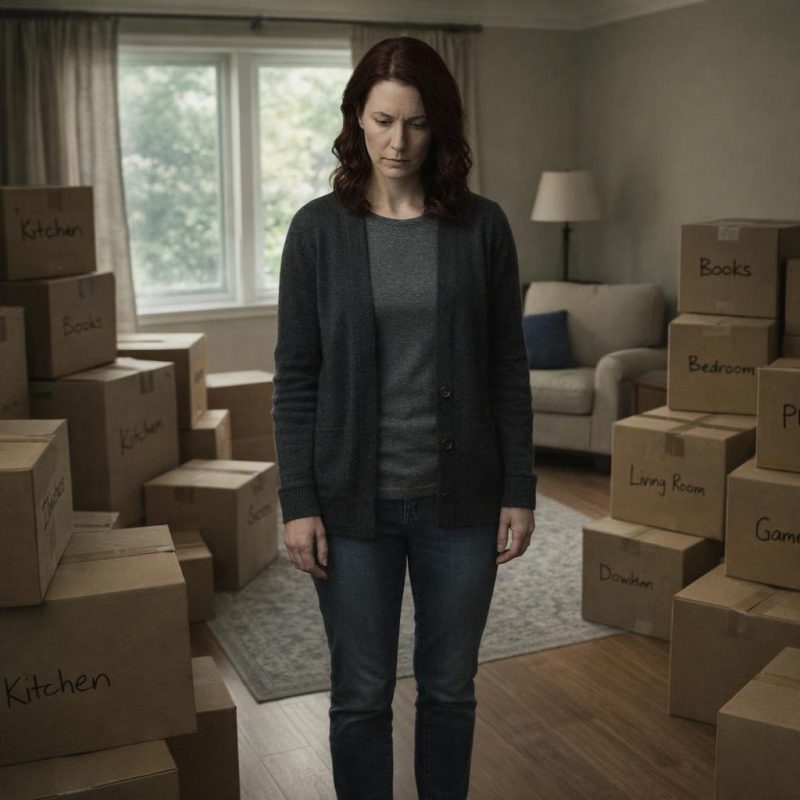 Image by RM AI
Mom Knew Who Was There
Diane was standing at the kitchen counter with a manila folder in front of her when I walked in. She looked composed — the way she always looked when she'd prepared for something. She said she wanted to be straightforward with me, that she thought I deserved to know where things stood. I said okay. She said Mom had left me nothing substantial. She said it the way you'd say something you'd turned over so many times it had gone smooth, like a stone worn flat. The house belonged to her. The accounts were hers to manage. She said Mom had understood, in the end, who was really there for her. She kept her hand flat on the folder the whole time, papers still tucked inside, and she looked at me with that careful, measured expression she used when she wanted to seem reasonable. I didn't say anything for a moment. I just stood there in Mom's kitchen, with the smell of old coffee in the air and the morning light coming through the window above the sink, and I heard the sentence again in my head. Mom had understood who was really there for her. And then I remembered — word for word, the way you remember something that mattered — what Mom had told me to do if I ever heard exactly that.
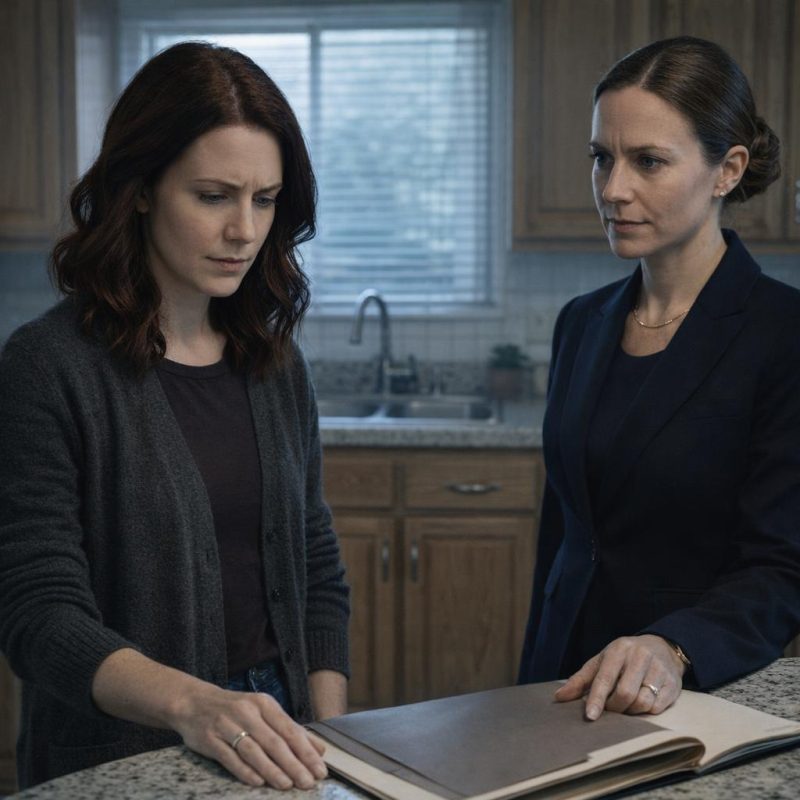 Image by RM AI
Making Yourself Look Involved
I asked Diane what she meant. She set the folder down and said it plainly: that I had made myself look more involved than I really was. She said the appointments and the daily check-ins and the nights I stayed over — none of it had mattered in the ways that counted. She said Mom had seen through it. That being around so much wasn't the same as actually helping. I stood there and let her finish. I thought about the night Mom's oxygen alarm went off at two in the morning and I drove over in the dark and sat with her until she stopped shaking. I thought about the medication chart I kept on my phone, updated every single day for four years. I thought about the hospital waiting rooms, the discharge paperwork, the conversations with nurses that Diane was never there for. I thought about Ryan, my son, eating cereal for dinner on the nights I couldn't get home in time because I was at Mom's. And then Diane said it again, a different way — that Mom had understood I wasn't helping out of love, just out of habit, maybe out of wanting to seem indispensable. Four years. She erased four years in two sentences. And standing there in that kitchen, I remembered exactly where Mom had told me to go and what she had told me to bring back.
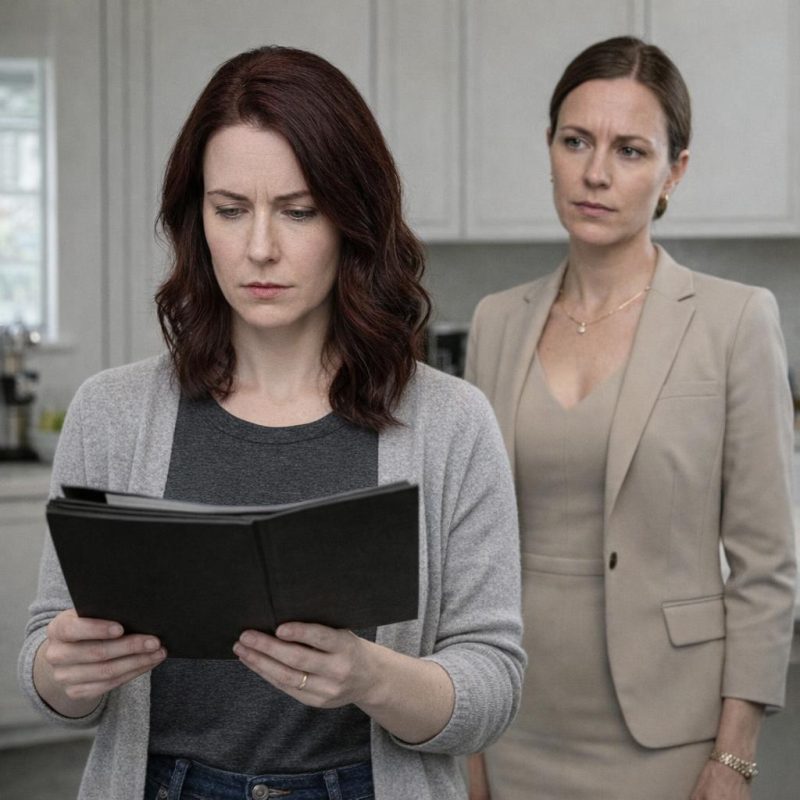 Image by RM AI
The Envelope Opens
I didn't argue with Diane. I just said I'd be right back, walked out to my car, and pulled the envelope from the zippered pocket of my bag where I'd kept it since the day Mom pressed it into my hands. I brought it inside and sat down at the kitchen table. Diane watched me from across the room, and something shifted in her face the moment she saw it — a flicker, quick and gone, but I caught it. I opened the envelope carefully. Inside was a handwritten letter in Mom's looping cursive, a small brass key taped to an index card, and a folded bank document with a notary seal on the front. I smoothed the letter flat on the table and started reading. Mom's handwriting was steady, clearer than it had been in her last months, which told me she'd written it on a good day when she wanted to be sure every word landed right. She wrote that Diane had come to her several times when she was tired and confused, asking her to sign papers, telling her that Claire — that I — was trying to get control of her money. She wrote that she hadn't known what to believe at first. She wrote that she'd been frightened. And then, near the bottom of the first page, she wrote the sentence that made my breath stop: that she had asked Diane to explain the papers, and Diane had told her not to worry, that it was just paperwork to protect the family.
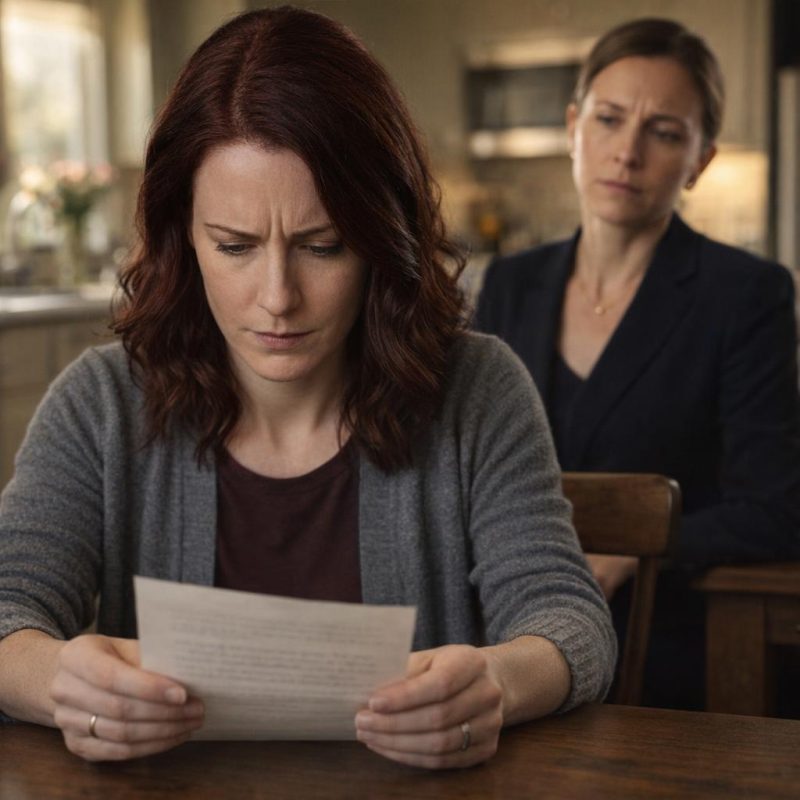 Image by RM AI
Diane's Face Goes Pale
Diane had moved closer to the doorway, like she was deciding whether to stay in the room. When I'd set the envelope on the table, the color had left her face — not gradually, but all at once, the way a light goes out. She asked where I'd gotten it. I told her Mom gave it to me. She said Mom hadn't been in her right mind near the end, that she'd been confused, that anything she'd written or signed in those last months couldn't be taken at face value. I looked up from the letter and told her that Mom had been clear the day she gave it to me. I told her I remembered exactly what Mom said, word for word. Diane opened her mouth and closed it again. The easy confidence she'd carried into every conversation since the funeral — the folder, the prepared answers, the measured tone — none of it was there anymore. She was still holding the folder, but her grip had changed. I watched her hands tighten around it, the knuckles going pale, the edges of the cardboard bending slightly under the pressure. She didn't say anything for a long moment. Neither did I. There was nothing to perform anymore, not for either of us, and the kitchen felt very small and very quiet. Her hands were shaking against the folder's cover.
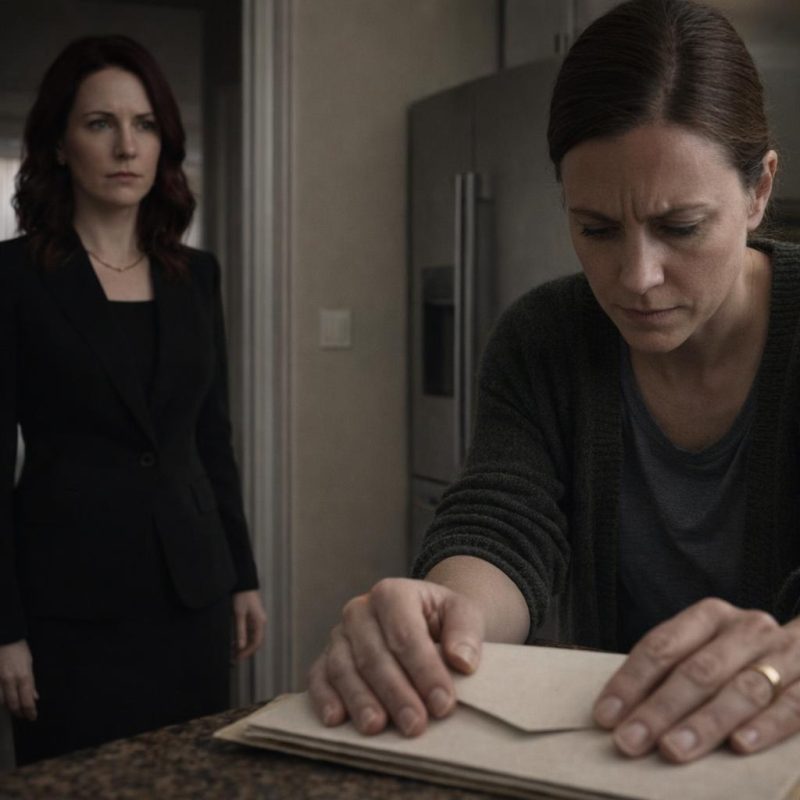 Image by RM AI
Unauthorized Transfers
I turned to the second page of Mom's letter. She wrote it carefully, the way she wrote grocery lists — specific, no extra words. She said that after she'd signed the papers Diane brought her, she started noticing things. Balances that looked different. Statements that didn't match what she remembered. She wrote that she hadn't said anything to me because she didn't want to worry me, and because she wasn't sure yet what she was seeing. So she'd gone to the bank. She'd sat down with Mr. Hanley, who had managed her accounts for over twenty years, and she'd asked him to go through everything with her. Mom wrote that Mr. Hanley had found transfers — money moved from her accounts into accounts she didn't recognize, accounts she'd never opened, with Diane listed as the authorized holder. The transfers were labeled as care expenses. Mom wrote that she had never seen a single one of those expenses. Not a receipt, not a bill, not a service. Diane looked up from across the table and said it had been a misunderstanding, that the money was always meant for Mom's care, that she could explain the accounting. Her voice was quieter than I'd ever heard it. I kept reading. Mom wrote that after Mr. Hanley showed her the full picture, she had contacted an attorney to document everything — and that the last paragraph of the letter would tell me what to do next.
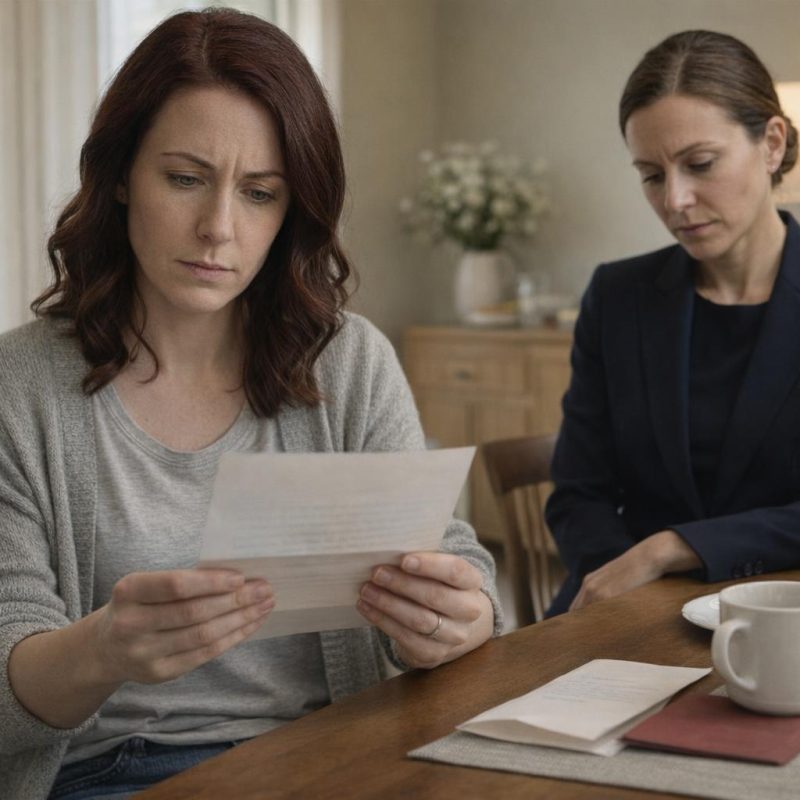 Image by RM AI
The House Was Always Mine
The bank document was folded inside the letter, and I opened it slowly. It was a notarized copy of an updated will, dated six weeks before Mom died. The language was formal and precise, the kind of thing an attorney drafts when they want every word to hold up. Mom had left the house to me. Not split, not shared — to me, as executor of the estate. Diane was listed for specific personal items and a modest sum, with a notation that her share had been reduced to account for the unauthorized transfers Mr. Hanley had documented. It was all there in black ink on paper with a notary seal, and there was nothing vague about any of it. Diane sat down heavily in the chair across from me. She didn't say anything. I folded the document back along its original creases and set it on the table between us. Then I turned to the last paragraph of Mom's letter. She wrote that she was sorry it had come to this. She wrote that she hoped I would be okay. And at the very end, almost as a footnote, she wrote that if Diane chose to contest any of it, I should call Mr. Hanley, because he had been present for a recorded conversation that he was authorized to release. I set the letter down. The kitchen held all of it — the document, the letter, the brass key, the years — and neither of us moved.
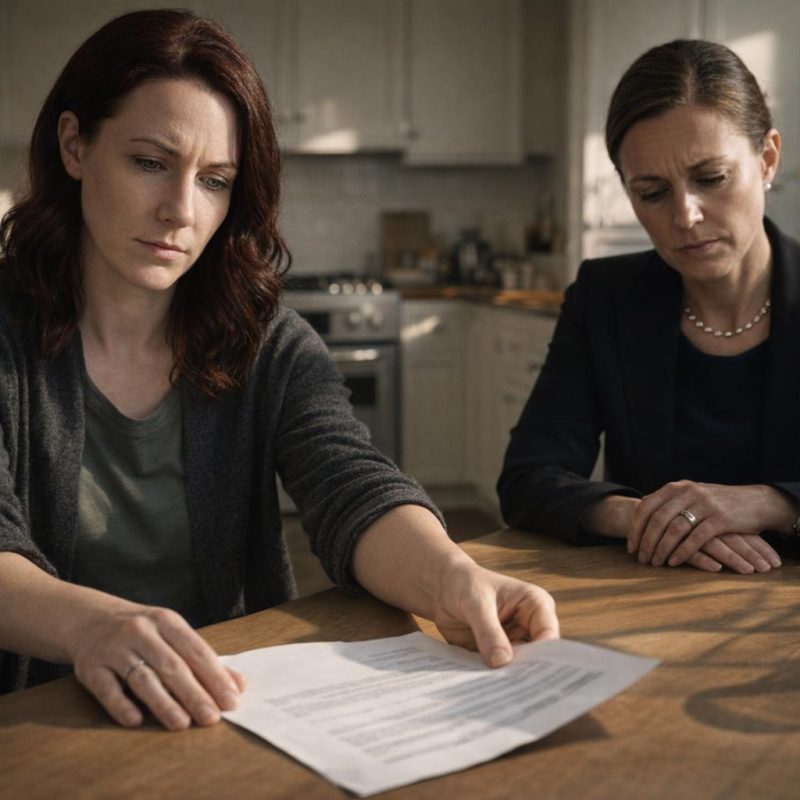 Image by RM AI
What Recording
I read that last line again, slowly, the one about the recording. Then I looked up at Diane. She was still sitting across from me, hands folded in her lap, and I asked her, as evenly as I could manage, what recording Mom was talking about. The change in her face was immediate. Not the slow crumple of grief I'd watched at the funeral — this was something else entirely. Her chin dropped first, then her shoulders, and then she was crying in a way that made the air in the kitchen feel different. Not sad. Desperate. I asked her again. I said, Diane, what is on that recording? She shook her head. She pressed her fingers against her mouth and shook her head again. She said, Claire, you need to listen to me. I said I was listening. She opened her mouth twice and closed it both times without a word coming out. She wasn't grieving. She wasn't missing Mom. Whatever was breaking open in her right now had nothing to do with the woman we'd buried. I sat very still and watched her try to find words she couldn't locate, and the crying just kept coming — ragged and airless and nothing at all like the composed, dabbing performance she'd given at the graveside. That difference sat with me long after the sound of it faded.
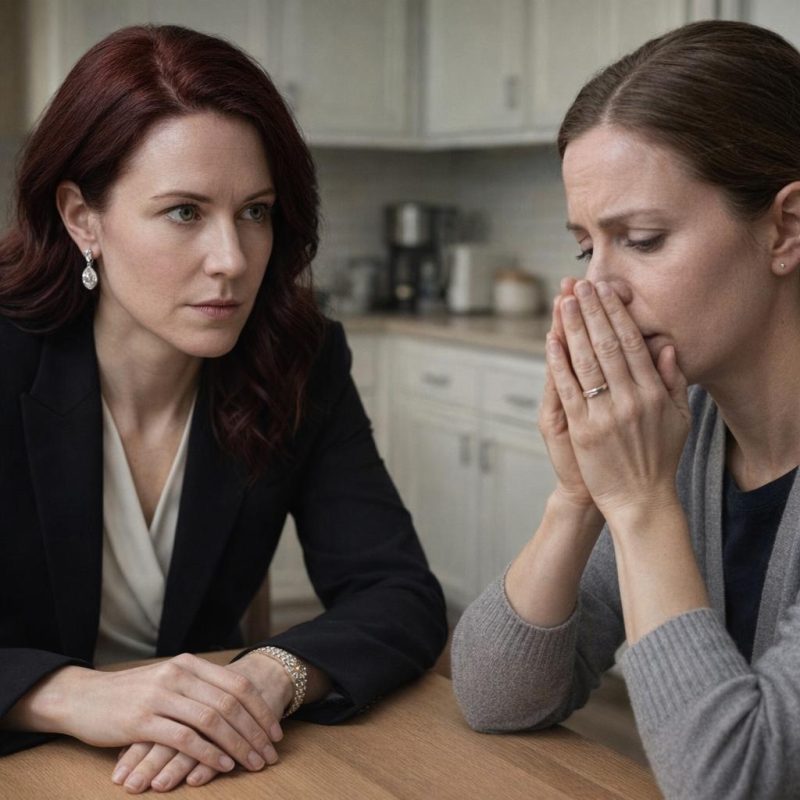 Image by RM AI
The Safe Deposit Box
I didn't sleep much that night. By eight the next morning I was in my car with the brass key in my jacket pocket, driving to the bank. I hadn't called ahead. I didn't want to give anyone time to prepare anything. Mr. Hanley was at his desk near the back when I walked in, and he stood the moment he saw me. He said he was so sorry about my mother. His voice was steady and kind, and I believed him completely. I told him I had the key. He nodded like he'd been expecting exactly that, and he walked me back to the safe deposit room himself without asking me to fill out anything extra. The box was a standard size, nothing remarkable from the outside. When I opened it, the first thing I saw was a manila envelope with my name written on it in Mom's handwriting — the same careful cursive from the letter. Inside were copies of everything: the bank statements with the transfers highlighted, the corrected will with the attorney's signature and notary seal, a short handwritten note from Mom listing Patricia Vance's phone number and the words call her first. And then, at the bottom of the envelope, a small digital recorder, no bigger than a thumb drive, with a strip of white tape on it. The date written on the tape was from eight months ago — the same week Diane had taken Mom to the bank.
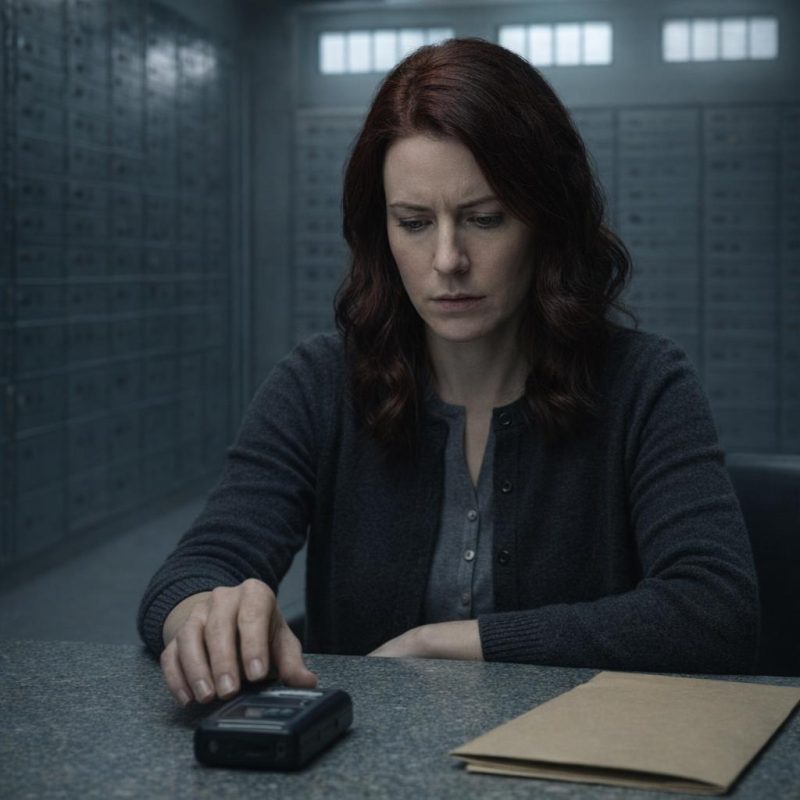 Image by RM AI
Calling the Attorney
I called Patricia Vance from the bank parking lot, still sitting in my car with the recorder in my hand. Her office picked up on the second ring. I told the receptionist I was Eleanor's daughter and that I needed to speak with Ms. Vance about my mother's estate. There was a brief hold, and then a woman's voice came on — measured, professional, unhurried. She asked me if I was Claire or Diane. Something about the way she said both names, like she already knew the difference mattered, made me grip the phone a little tighter. I told her I was Claire. There was a pause. Not a long one, but long enough to feel deliberate. Then she said she'd been expecting my call. She asked if I had opened the envelope. I told her I had everything — the documents, the recorder, all of it. She said good, and she said it quietly, like she meant it. We scheduled a meeting for Thursday morning. Before she hung up, she said I should bring the recorder and that I shouldn't listen to it alone beforehand. I sat in the parking lot after the call ended, the recorder still in my palm, the winter light flat and gray through the windshield. Somewhere along the way, while I had been changing bedsheets and managing medications and driving to appointments, other people had been quietly building a net to catch what was falling. That knowledge settled into me slowly, like warmth after a long cold.
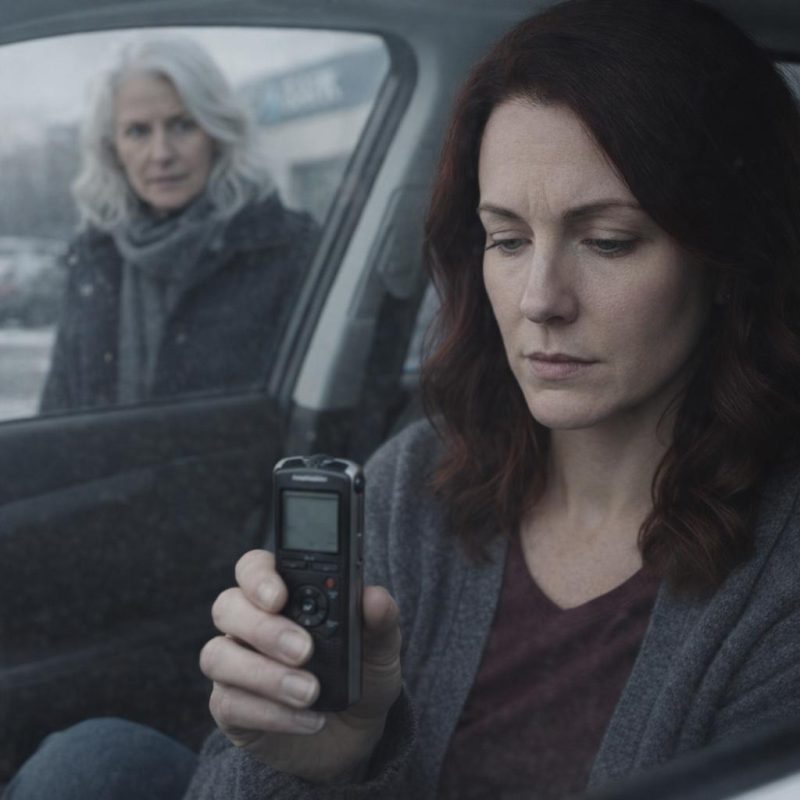 Image by RM AI
The Attorney's Office
Thursday came faster than I expected. I arrived at Patricia Vance's office ten minutes early and found Diane already there, sitting in one of the chairs along the wall with Michael beside her. Neither of them looked at me when I walked in. Michael's jaw was set, his expensive coat folded across his lap, his eyes fixed somewhere past the window. Diane had her hands clasped in her lap and her posture was perfect, the way it always was when she needed to look like she had nothing to hide. Patricia came out to greet me herself — reading glasses pushed up on her head, a file folder under one arm, the kind of calm that comes from having done this many times before. She introduced herself, shook my hand, and led us all into a conference room. She explained that she specialized in elder law, that Mom had come to her eight months ago with concerns, and that she had been working with Mr. Hanley since then to document what had happened. She said the bank had both security footage and an audio recording from the day Diane had brought Mom in to sign the transfer forms. She described, in plain and careful language, what the recording contained — the pressure, the false claims, Mom's confusion. Diane didn't move. Michael's hands tightened on his coat. Patricia set the recorder on the table, looked around the room, and asked if everyone was ready.
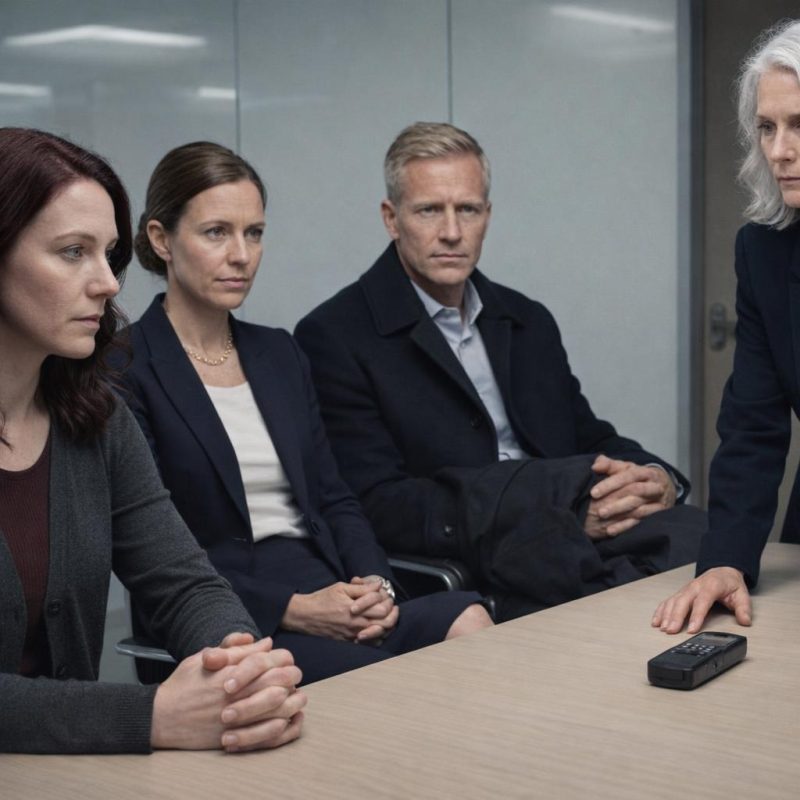 Image by RM AI
The Recording Plays
Patricia pressed play and the room went very quiet. The first voice on the recording was Diane's — smooth and patient in a way I recognized, the tone she used when she wanted something. She was telling Mom the forms were just to protect the house, that it was a simple thing, nothing to worry about. Mom's voice came next, thinner than I remembered it even from her last months, uncertain in a way that made my chest tighten. Mom asked what the forms were for exactly. Diane said they were standard, that everyone did this, and then she said — and I heard it clearly, no room for misunderstanding — that I had been moving money around, that I had been taking advantage, that Mom needed Diane to step in before it was too late. Mom's voice went smaller. She asked what I had done. She sounded genuinely confused, genuinely frightened, and I had to press my hand flat against the table to keep myself steady. Diane's voice on the recording stayed calm. She said I had been manipulating Mom for years, that I only helped with caregiving to get access to the accounts. Mom said she didn't understand. Diane said there wasn't time to explain everything, that Mom just needed to sign. There was a long pause on the recording. Then Mom's voice came back, quieter than before, and she said she wanted to speak to someone — just someone, alone, by herself, without Diane in the room.
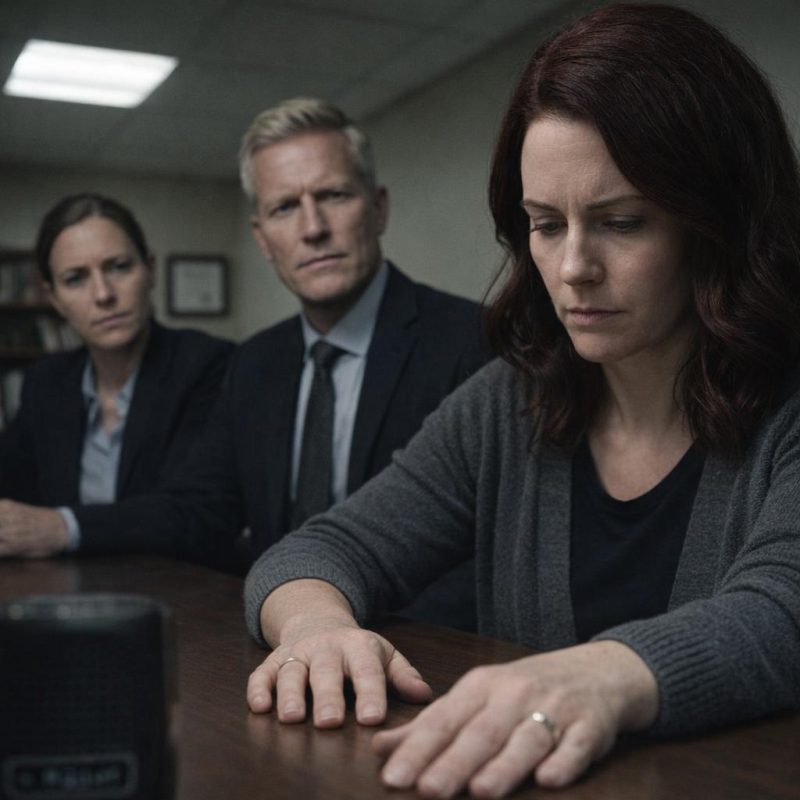 Image by RM AI
Mr. Hanley Intervened
Patricia stopped the recording there and set her hands flat on the table. She said that was the moment Mr. Hanley had stepped in. He had been watching through the glass partition, she explained, and when Mom asked to speak to someone privately, he came into the room himself and asked Diane to wait outside. Diane had objected. He had been polite but firm. He took Mom to his office, closed the door, and sat with her until she was calm. Mom told him she didn't understand what Diane wanted her to sign, that the forms had been put in front of her quickly and she hadn't had time to read them. Mr. Hanley reviewed the documents. They were transfer forms that would have moved the bulk of Mom's liquid assets into an account under Diane's sole control. He stopped the transaction on the spot. He referred Mom to Patricia that same afternoon, and over the following weeks, the two of them — Mr. Hanley and Patricia — helped Mom document everything, correct the will, and secure the safe deposit box. Patricia said Mom had been clear-minded throughout every step. She had known exactly what she was doing and exactly why. I looked at Diane across the table. She was staring at the surface in front of her, perfectly still, her hands folded and motionless, and she said nothing at all.
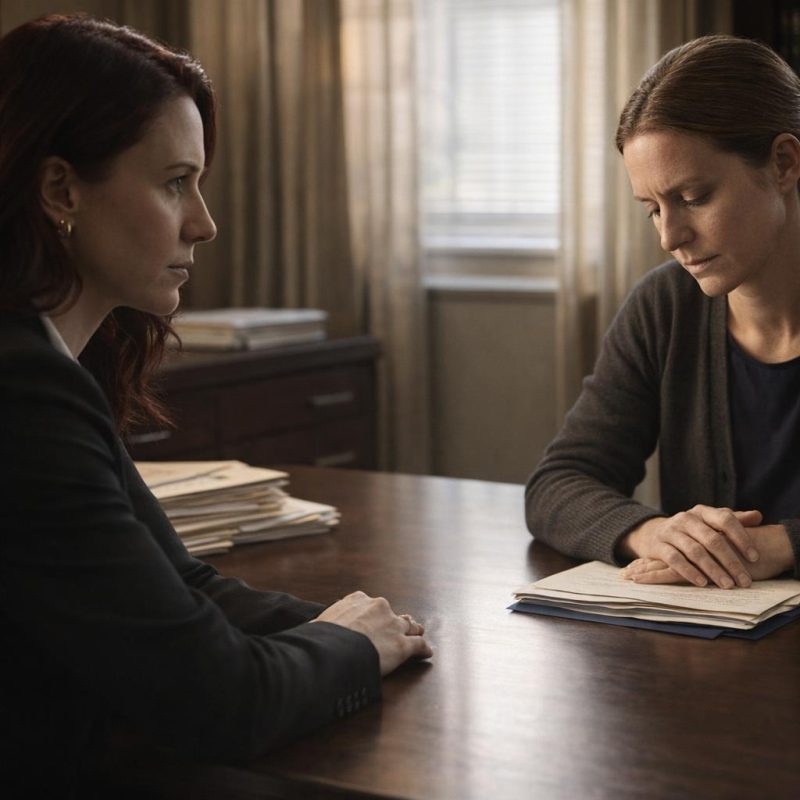 Image by RM AI
No Defense
Patricia finished laying out the evidence and let the silence sit for a moment. Michael was the first one to speak. He asked, quietly, if what he'd just heard was accurate. Patricia said it was documented and verified. He turned to Diane. He asked her if she had really told her mother that I was stealing from her. Diane looked at the table. Michael asked again, his voice pulled tight and flat. She still didn't answer. He asked how she could do that — to her own mother, to Eleanor — and his voice cracked slightly on the name. Diane opened her mouth. She closed it. She looked at her hands. I watched Michael's face move through something I didn't have a word for — not just anger, something deeper and more permanent, like a door closing on a room he'd thought he knew. He asked one more question, barely above a whisper: did she know what she was doing when she did it? Diane said nothing. Michael set his coat on the chair beside him with a careful, deliberate movement. He straightened his jacket. He looked at Diane for a long moment, and she didn't look back. Then he walked to the door, opened it, and left the office without turning his head.
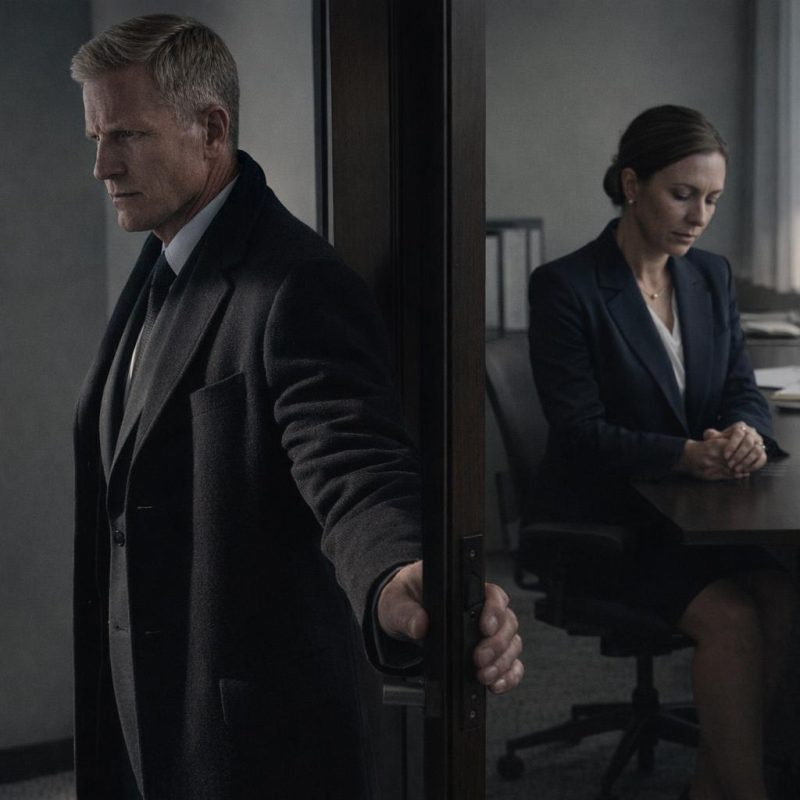 Image by RM AI
The Attorney's Warning
After the door closed behind Michael, the room felt smaller. Patricia gave it a moment, then she turned to Diane and spoke in the same measured tone she'd used for everything else — no satisfaction in it, no cruelty, just the plain shape of what was true. She said the evidence was overwhelming and that it had been carefully preserved. She said that if Diane chose to contest the will, the financial transfers would become a separate legal matter — one that fell under elder financial abuse statutes, which prosecutors in this state took seriously. She said Diane could face consequences that went well beyond losing her share of the inheritance. She advised Diane to accept the will as written and to make no further claims against the estate. Diane nodded once, a small mechanical movement, her eyes still fixed on the table. She didn't argue. She didn't cry. She just sat there in her immaculate coat in that quiet office, and I watched the version of herself she had spent years building — the composed older sister, the successful wife, the woman who always knew best — go completely still. I didn't feel what I thought I would feel. There was no relief, no satisfaction, nothing that resembled winning. There was only the hollow weight of it, settling into the space where my family used to be.
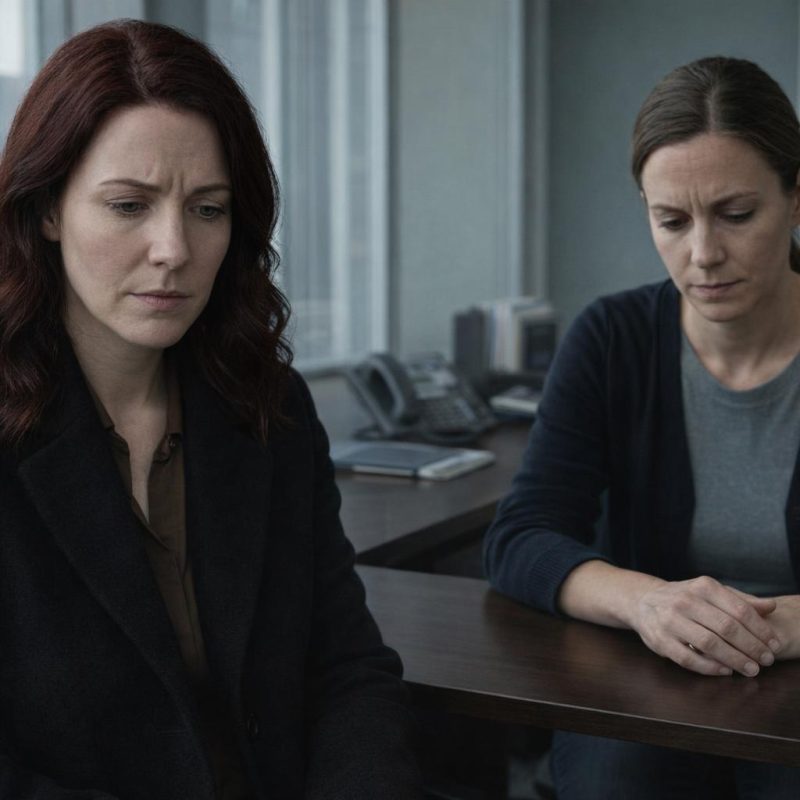 Image by RM AI
The Jewelry Box Returns
Two weeks after that meeting, a package arrived at Patricia's office. I drove over on a Tuesday afternoon and signed for it myself. The jewelry box was inside — Mom's, the small lacquered one with the brass clasp that Diane had taken from the house before the will was even read. It sat on Patricia's desk wrapped in brown paper, and I stood there holding it for a long moment before I could put it down. The recovered funds came through as a wire transfer, most of what had been moved, not all of it, but enough that Patricia called it a reasonable resolution. Diane signed the papers accepting the will as written. No contest, no counterclaim, no phone call to me explaining herself. Patricia handled every exchange. There were no more texts from Diane, no voicemails, no emails forwarded through Michael. The number I'd had for her since we were young women sharing a landline just went quiet. I kept waiting to feel something about that — grief, maybe, or anger, or even a small mean satisfaction. But what I felt, mostly, was the absence of dread. The particular tension of not knowing what she would do next, of bracing for the next move — it was gone. The silence between us wasn't a wound. It was just the shape of what we had finally, honestly become.
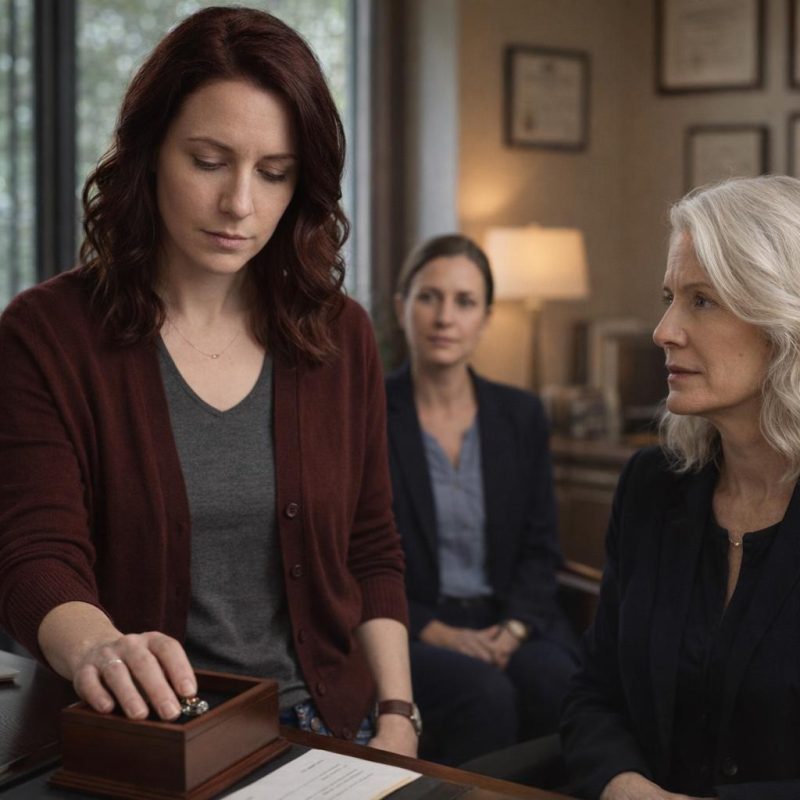 Image by RM AI
Room by Room
I didn't list the house right away. I wasn't ready, and for once I let myself not be ready. Ryan came with me on weekends, the two of us moving through the rooms at whatever pace felt right, which was usually slow. He carried boxes without being asked and didn't try to rush me through the hard parts. Mom's recipe cards were tucked in a drawer beside the stove — her handwriting on index cards, some of them stained with vanilla or butter, the measurements written in her particular shorthand that I'd spent years learning to read. I kept every one. The quilts came down from the cedar chest in the bedroom, folded and carried to my car with more care than I'd given most things in my life. I found lists in coat pockets — grocery lists, phone numbers, a note to herself that just said call Claire back. I found a birthday card I'd sent her years ago tucked inside a paperback on the nightstand, the spine cracked from reading. Ryan held it up and looked at me, and I just nodded and put it in the keep pile. The chipped yellow mixing bowl stayed. The plastic measuring cups with the faded markings stayed. I wasn't preserving a museum. I was just making sure the parts of her that mattered didn't get lost in the clearing out. By the time we locked up on those Sunday evenings, the house felt less like a place I was losing and more like something I was learning to carry.
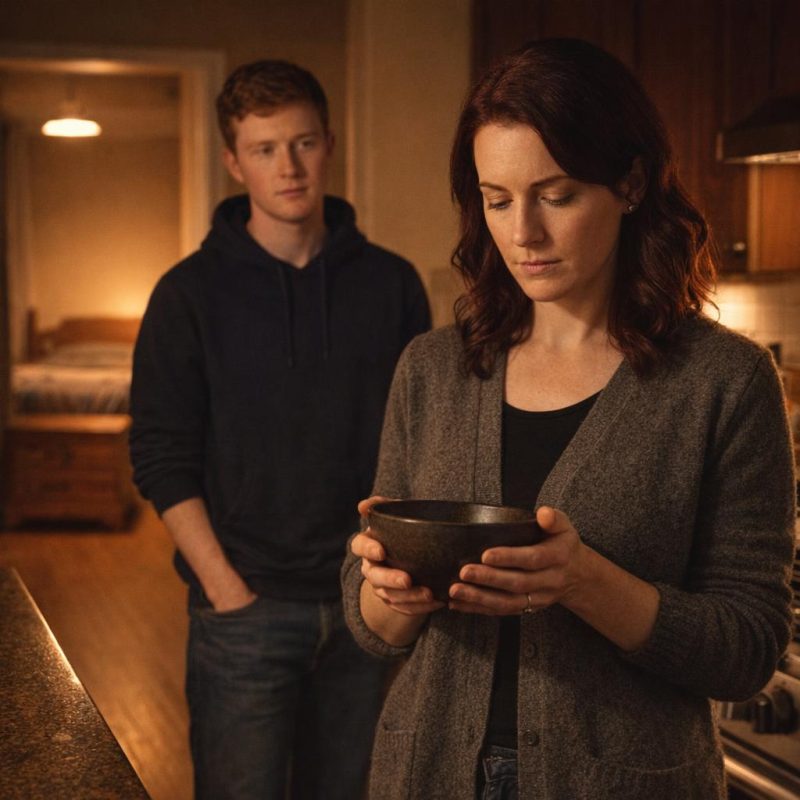 Image by RM AI
The Cookie Tin
The cookie tin had been on top of the refrigerator for as long as I could remember. It was red with a faded winter scene on the lid — a farmhouse, snow, a wreath on the door — and Mom had always waved it off when anyone asked about it. Nothing important, she'd say. Just odds and ends. I'd assumed for years that it held something she didn't want us to find, some small private thing. I finally lifted it down on a Saturday afternoon when Ryan had stepped outside to take a call. The lid came off with a soft pop. Inside: buttons in every size and color, a handful of rubber bands gone brittle with age, a few birthday candles still in their paper sleeves, a twist tie, a small spool of white thread. Nothing important. Exactly what she'd always said. I stood there at the kitchen counter holding the tin and felt something loosen in my chest. She hadn't been hiding anything. She'd just been keeping things the way she kept everything — carefully, quietly, in case they turned out to be useful. That was her. That was the whole of her, really. Not the house, not the accounts, not anything Diane had tried to claim or control. Just this: a woman who saved buttons and birthday candles and thought that someday they might come in handy. I set the lid back on and put the tin in the box marked keep, and the kitchen held the particular stillness of a place that had already said everything it needed to say.
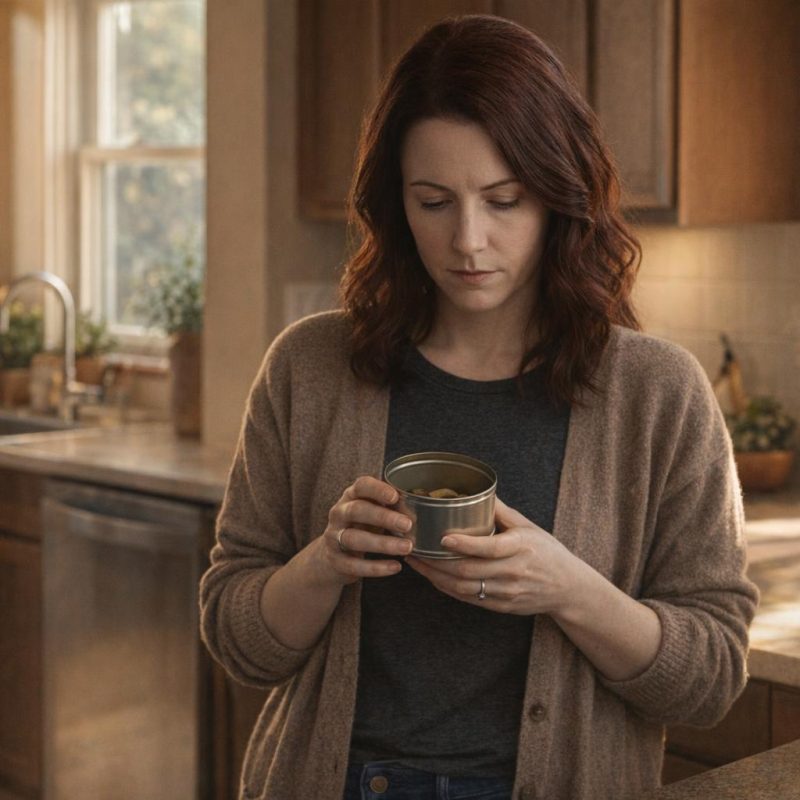 Image by RM AI
What Mom Knew
Months later I was still going back to the house on quiet mornings, before it sold, before I had to let it go entirely. I'd make tea in Mom's kettle and sit at the kitchen table the way she used to, hands wrapped around the mug, light coming in low through the window above the sink. I read her letter again on one of those mornings. I'd read it so many times by then that I knew the shape of every sentence, but I read it again anyway. She wrote that she saw what I did. Not in a grand way, not with ceremony — just plainly, the way she said most things. She wrote that she knew about the nights I'd slept in the chair beside her hospital bed, the medication charts I kept in a binder, the appointments I'd driven her to when she could barely manage the walk from the car to the door. She wrote that she knew Diane would make it hard, and that she was sorry for that, and that she wanted me to have something solid to stand on when it happened. Diane had believed, I think, that love was something you could measure in what got left behind — in property, in accounts, in who ended up with the jewelry box. Mom had understood something different. The hours no one witnessed, the promises kept in empty hospital rooms, the hands held in the dark — that was the inheritance. That was what she had been trying to give back to me all along.
 Image by RM AI
KEEP ON READING

20 Powerful Ancient Egyptian Gods That Were Worshipped
Unique Religious Figures in Ancient Egypt. While most people are…
By Cathy Liu Nov 27, 2024
The 10 Scariest Dinosaurs From The Mesozoic Era & The…
The Largest Creatures To Roam The Earth. It can be…
By Cathy Liu Nov 28, 2024
The 20 Most Stunning Ancient Greek Landmarks
Ancient Greek Sites To Witness With Your Own Eyes. For…
By Cathy Liu Dec 2, 2024
10 Historical Villains Who Weren't THAT Bad
Sometimes people end up getting a worse reputation than they…
By Robbie Woods Dec 3, 2024
One Tiny Mistake Exposed A $3 Billion Heist
While still in college, Jimmy Zhong discovered a loophole that…
By Robbie Woods Dec 3, 2024
30 Lost Treasures That Vanished From History
Buried treasure, missing artefacts, legends of ancient gold in them…
By Robbie Woods Dec 3, 2024