

My Neighbor's Luxury Car Collection Was Actually a Mobile Data Center Stealing My Identity—And the Whole Street Was In On It
My Neighbor's Luxury Car Collection Was Actually a Mobile Data Center Stealing My Identity—And the Whole Street Was In On It
The Showroom Next Door
I work from home, which means I spend a lot of time staring out my office window at the street. It's not intentional — it's just what happens when you're waiting for a build to finish or a test suite to run. So I noticed pretty quickly when Henderson's driveway started looking like a rotating dealership lot. First there was a silver Audi. Then a few days later, a black BMW. Then something low and red that I couldn't identify from my angle but that definitely cost more than my annual salary. Henderson himself seemed perfectly ordinary — silver-haired, always dressed like he'd just stepped off a golf course, the kind of guy who waves back when you wave at him. Which I did, one afternoon during a coffee break, and he smiled and lifted a hand like we'd been neighbors for years. I figured he had wealthy clients, or maybe he just really liked cars. Some people are into that. I filed it under 'interesting' and went back to my terminal. The street outside looked exactly like every other quiet suburban street in the county, and the cars in his driveway just sat there gleaming in the afternoon light, completely unremarkable.
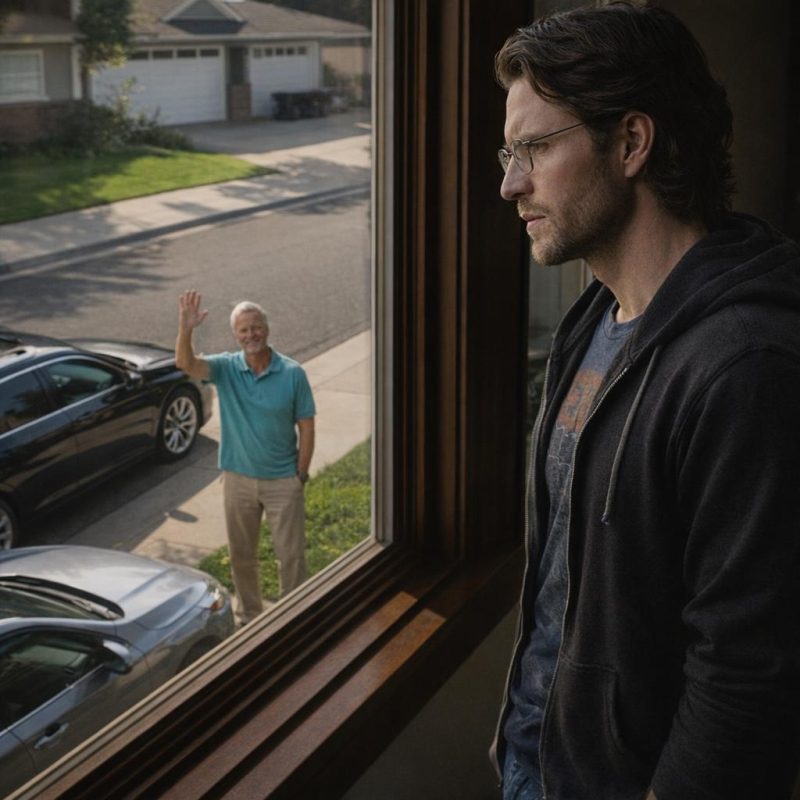 Image by RM AI
The First Drop
The call was going well, which is exactly when things go wrong. I was mid-sentence, walking my project lead through the new microservices architecture I'd spent three weeks designing, screen-sharing the diagram I'd built in Lucidchart, when everything just — stopped. My video froze. The audio cut. The little spinning wheel appeared in the corner of my browser tab like a bad omen. I grabbed my phone and checked the router app. All lights green. Signal strength showing full bars. I power-cycled the router anyway, standing there in my socks watching the lights blink through their restart sequence while my laptop sat frozen on the call screen. Five minutes later the connection came back, and I rejoined to find my project lead looking patient in the way that means she was actually annoyed. I apologized, blamed the ISP, and we picked up where we left off. It wasn't until I was closing my laptop that I glanced out the window and noticed the black Porsche sitting in Henderson's driveway — I didn't remember seeing it there before the call. I made a mental note to call my internet provider in the morning and didn't think about the Porsche again. Then I watched the signal bars on my phone drop to zero.
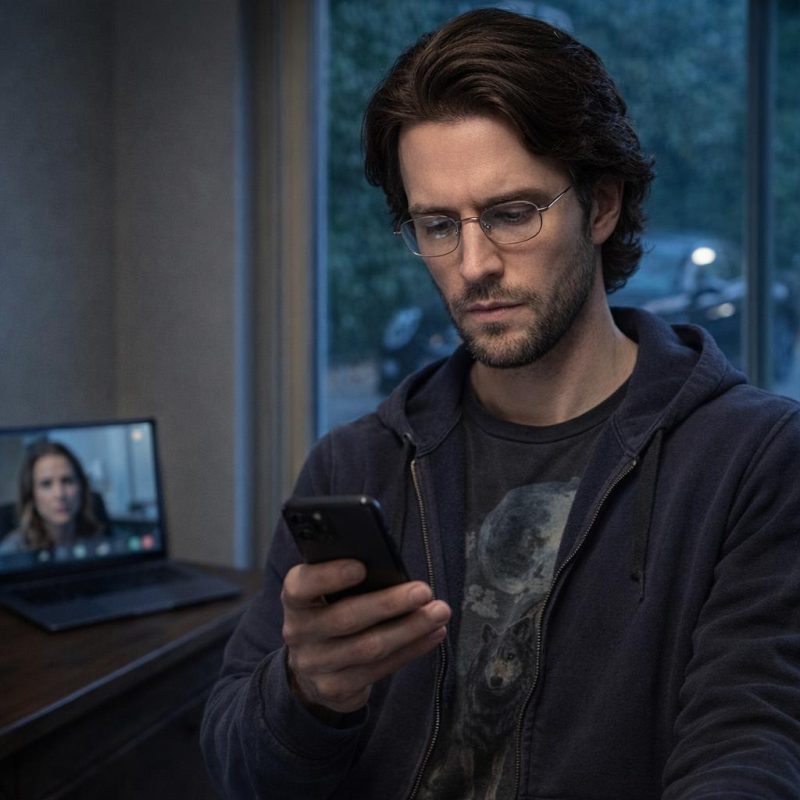 Image by RM AI
Troubleshooting in Circles
I'm a software developer. When something breaks, I debug it. That's not a personality trait, it's a reflex. So I spent most of that afternoon running every diagnostic I could think of. I rebooted the router four times. I checked the firmware — current, no updates pending. I swapped out the ethernet cable between the modem and router with a brand new Cat6 I had in a drawer. I ran speed tests every fifteen minutes for two hours, and when the connection was up, the results were completely normal. 180 megabits down, 20 up, latency under 10 milliseconds. Nothing wrong. I called my ISP and sat on hold for forty minutes before a technician told me their monitoring showed no issues on my line. I downloaded a network monitoring app and set it to log every drop with a timestamp. I even pulled up the modem's event log and stared at the error codes for longer than I'd like to admit, cross-referencing them against a forum thread I found on a cable modem subreddit. Everything pointed to a problem that didn't exist. The hardware was fine. The software was fine. The line was fine. I sat back in my chair and looked at a screen full of green checkmarks telling me nothing was wrong, and I had absolutely no idea why my internet kept failing.
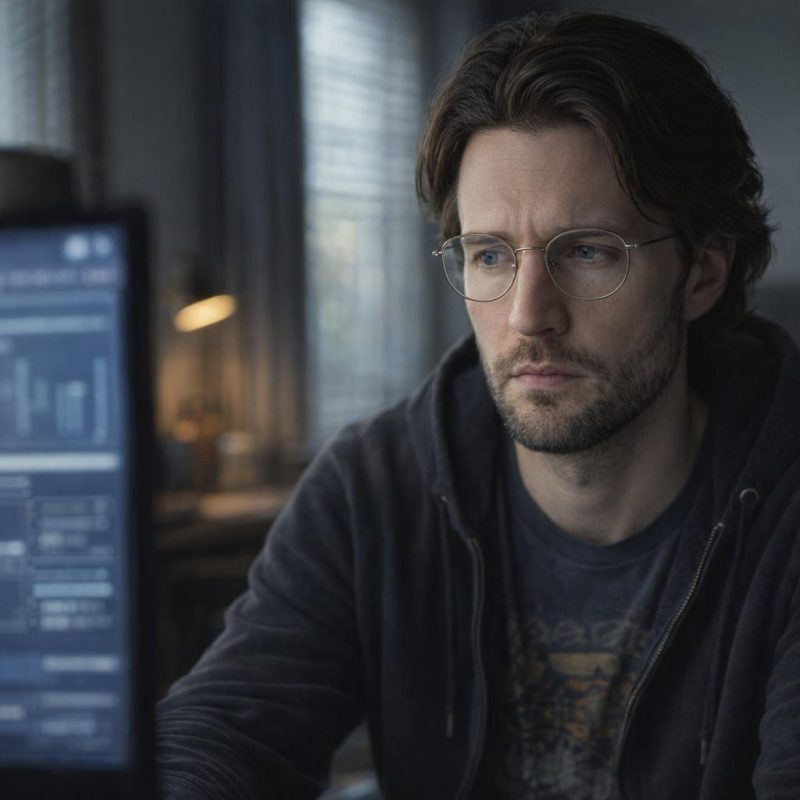 Image by RM AI
Cookies and Conversation
I was on the porch with my laptop and a cold coffee when Mrs. Caldwell came down the sidewalk carrying a plate covered in plastic wrap. White curly hair, floral dress, glasses hanging on one of those beaded chains — she looked like central casting's idea of a grandmother, and she was heading straight for me with a warm smile. She introduced herself, said she'd lived on the street for twelve years, and handed me the plate. Chocolate chip cookies, still slightly warm. I thanked her and offered her the other porch chair, and she sat down like she'd been waiting for an invitation. She asked what I did for work and I gave her the vague version — software, computers, working from home — and she nodded like that made perfect sense. She talked about her garden mostly, the roses along her back fence, how she was fighting aphids this year. She mentioned Henderson in passing, said he was a nice quiet neighbor, kept to himself but always waved. I said he seemed friendly enough. She stayed maybe twenty minutes, then gathered herself up and headed back down the sidewalk, telling me to come see the roses whenever I liked. I sat there with the half-eaten cookies and the quiet street in front of me, and for the first time in weeks, the isolation of working from home felt a little less sharp.
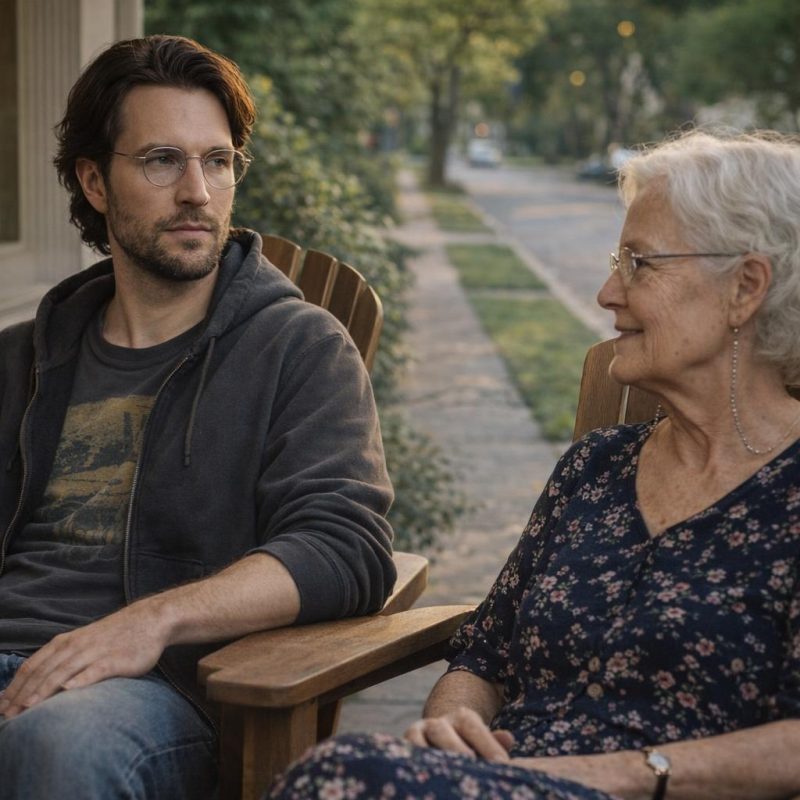 Image by RM AI
The BMW Arrives
I was deep in a refactoring session — the kind where you finally get into the zone and the code starts making sense — when the connection dropped again. No warning, no slowdown, just gone. I checked the monitoring app out of habit. The log showed a clean signal right up until 2:47 PM, then a flat line. I noted the time, pulled up the event log, and was about to start the usual troubleshooting cycle when something made me look out the window. A dark blue BMW was pulling into Henderson's driveway. I looked back at my screen. 2:47 PM. I looked back at the window. Henderson climbed out of the driver's side, walked to his front door, and went inside without looking around. The connection came back twenty-three minutes later, mid-afternoon, like nothing had happened. I sat there for a moment, then I opened a fresh page in the notebook I keep next to my keyboard and wrote down the time, the car model, and the color. I told myself it was probably nothing. Two data points don't make a pattern — that's basic statistics. But I'm a developer. I log things. And I stared at the network monitoring software showing the exact timestamp the BMW had pulled in.
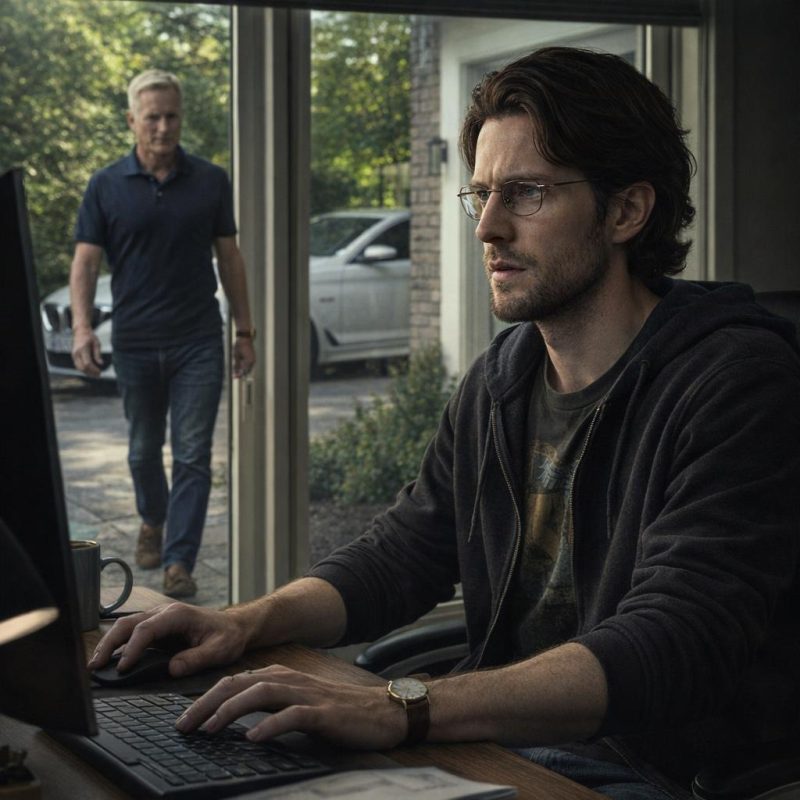 Image by RM AI
The Jogger
I'd been staring at the same function for forty minutes when I decided I needed to stand up and move. I pushed back from my desk, stretched my arms over my head until something in my shoulder popped, and walked to the window. The street was quiet. A car passed. A dog barked somewhere down the block. Then Mr. Vasquez came around the corner at a steady jog, moving like someone who runs the same route every day and knows exactly how long it takes. I raised a hand when he got close to my window and he caught it, flashing a bright smile without breaking stride. He had wireless earbuds in — not the standard white ones, something matte black and clearly high-end — and what looked like a Garmin running watch on his wrist, the kind with GPS mapping and heart rate monitoring that runs about four hundred dollars. His running shoes were the kind you see in tech-focused athletic ads. I watched him continue down the street and thought, vaguely, that he probably worked in tech. The neighborhood had a few of us. I went back to my desk and pulled up the function again. The earbuds he was wearing retailed for around three hundred and fifty dollars — I'd looked at the same model last month and decided they were too expensive.
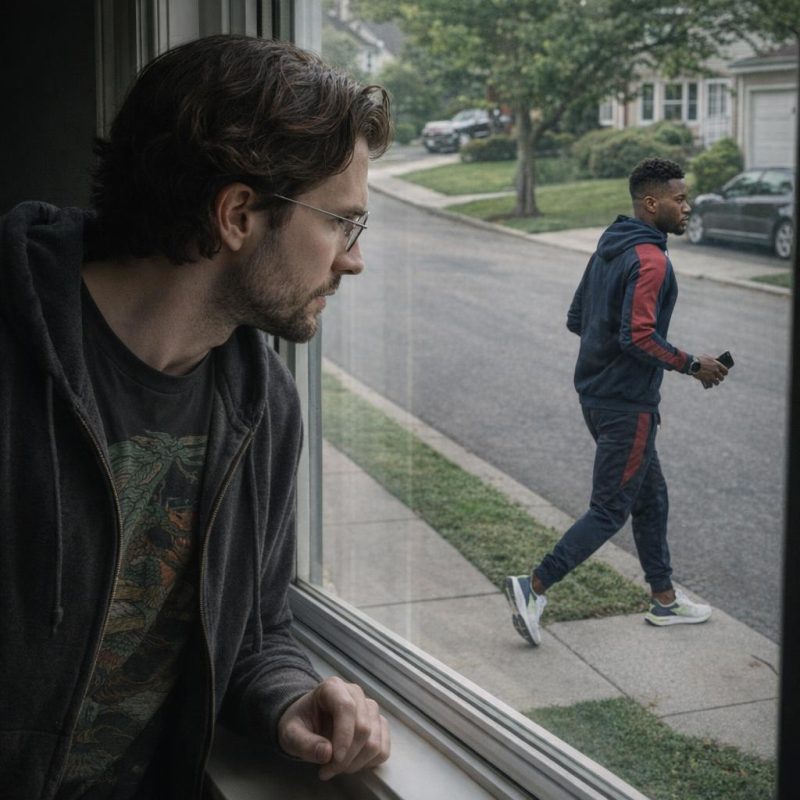 Image by RM AI
The Missed Deadline
I had been working on that repository for six weeks. The upload started at 4:51 PM, nine minutes before the deadline, which I thought was enough buffer. The progress bar climbed steadily — 40%, 60%, 80%, 87% — and then the connection dropped. Just like that. I sat there staring at the failed upload notification like it was written in a language I didn't speak. I tried to reconnect. I rebooted the router. I switched to my phone's hotspot and tried again, but the repository was large and the hotspot was slow and the deadline timestamp ticked past while I was watching the progress bar crawl. The email from my project manager arrived at 5:14 PM. The subject line was 'Re: Sprint Delivery' and the tone was the careful, measured kind that means someone is choosing their words. She said she understood technical issues happen, that we'd discuss it in the morning standup, that she hoped everything was okay. It was the kind of email that's professionally kind and personally devastating. I set my laptop on the coffee table and looked out the window. A white Tesla was parked in Henderson's driveway, silent and still in the early evening light. I read the disappointed email from my project manager while the Tesla sat there, and I felt my professional reputation doing something I couldn't quite name.
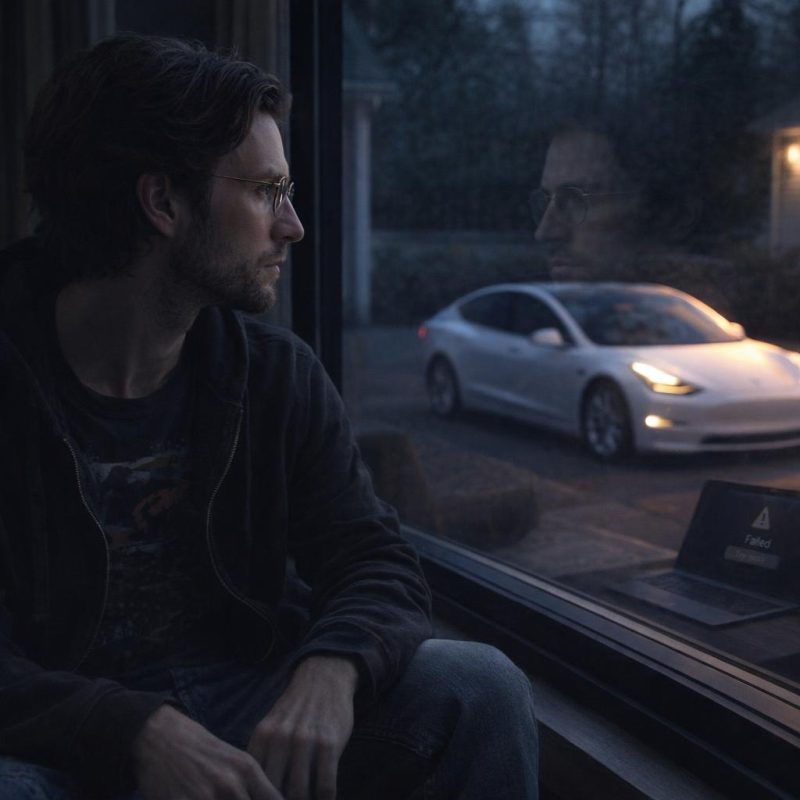 Image by RM AI
Electromagnetic Interference
I know it sounds ridiculous now, but at the time it felt like a reasonable hypothesis. Cars have engines. Engines generate electromagnetic fields. My Wi-Fi runs on radio frequencies. Maybe there was interference. It was a long shot, but I'd already ruled out everything else, so I opened a browser tab and started searching. I read three articles about RF interference in residential environments. I found a thread on a ham radio enthusiast forum where someone had asked almost exactly my question. I read through the replies carefully, the way I read documentation — looking for the part that confirms what I want to believe. It wasn't there. The consensus was clear and consistent: modern luxury vehicles are engineered with extensive electromagnetic shielding specifically to protect their own onboard electronics from interference. They don't emit meaningful RF noise. If anything, they absorb it. One reply put it bluntly — a parked car is about the least likely source of Wi-Fi interference you could name. I closed the tab and sat back. My car-interference theory was dead. I was back to square one, staring at a house with perfectly functional equipment and an internet connection that kept failing for no reason I could find, and the forum post sat on my screen confirming that modern luxury cars have shielding that prevents interference, not causes it.
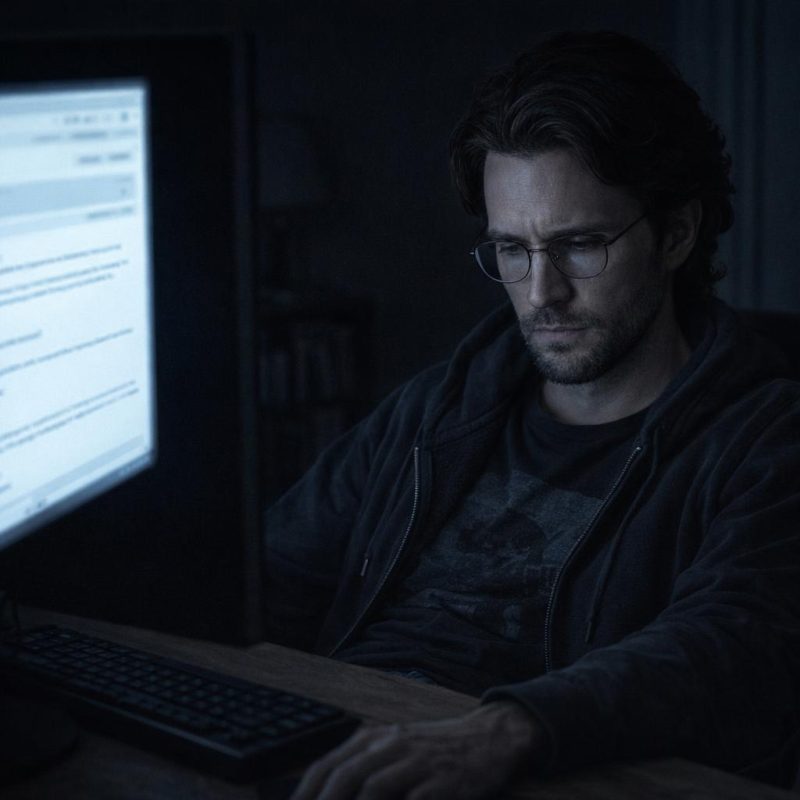 Image by RM AI
The Logging Begins
If I couldn't find the cause through theory, I'd find it through data. That's how I think — that's how I've always thought. I opened a fresh Google Sheet and built it out properly: columns for date, time, car model, license plate, signal strength in dBm, and a notes field for anything that didn't fit neatly into the other columns. I pulled my old notebook off the desk and started entering everything I'd already written down, filling in the historical rows from memory where the notes were thin. Then I wrote a simple bash script to run ping tests every sixty seconds and log the results to a CSV. Automated. Objective. No human error. I repositioned my second monitor so it sat at an angle where I could see Henderson's driveway without turning my chair. It wasn't surveillance — it was just keeping the data source in view. By the end of that first afternoon I had a clean, structured dataset and a methodology I could actually trust. The frustration that had been sitting in my chest all week didn't disappear exactly, but it shifted into something quieter and more useful, the way a messy codebase feels after you've finally refactored it into something legible.
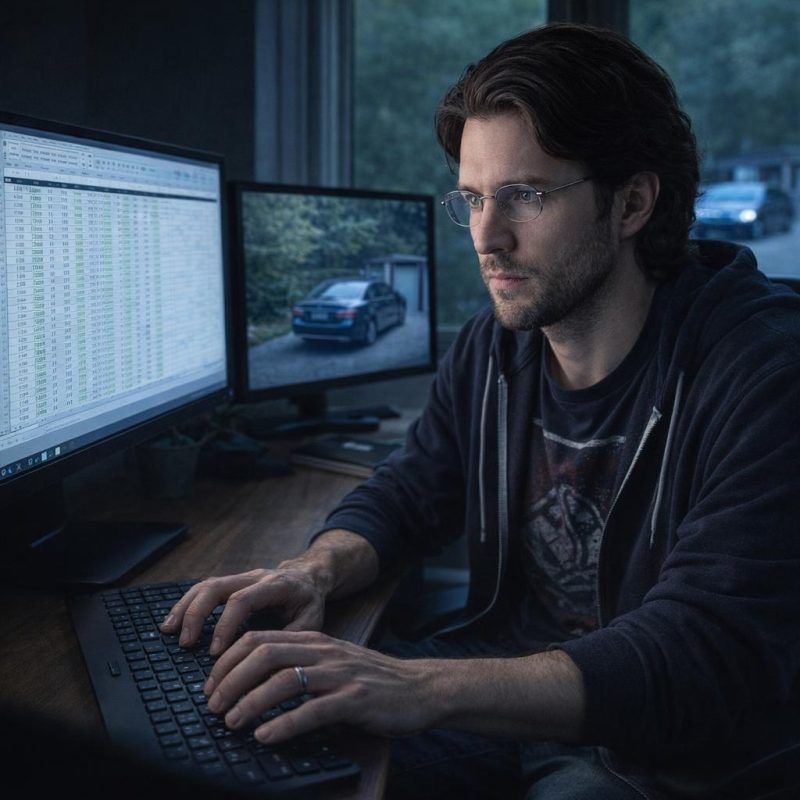 Image by RM AI
License Plates and Latency
Three days in, the data started talking. Monday, 9:15 AM — the Audi pulled into Henderson's driveway. My ping log showed a latency spike at 9:16 AM, jumping from a baseline of twelve milliseconds to over four hundred. Wednesday, 3:42 PM — a black Mercedes arrived. Connection dropped entirely at 3:43 PM, a full sixty-second outage. Friday, 11:08 AM — the Porsche was back. Bandwidth crashed at 11:09 AM, down to less than two percent of normal throughput. I built a scatter plot with car arrival times on the X axis and latency spikes on the Y. The correlation was almost vertical. I ran the numbers properly — calculated a p-value, the way you would for any dataset you were going to stake something on. It came back below 0.01. In statistics, that's not a maybe. That's not a coincidence you explain away over coffee. I sat back and looked at the graph for a long time. I still had no idea what was causing it, no mechanism I could point to, no explanation that made any technical sense. But the pattern was there in the numbers, clean and consistent, and for the first time in weeks I didn't feel like I was imagining things.
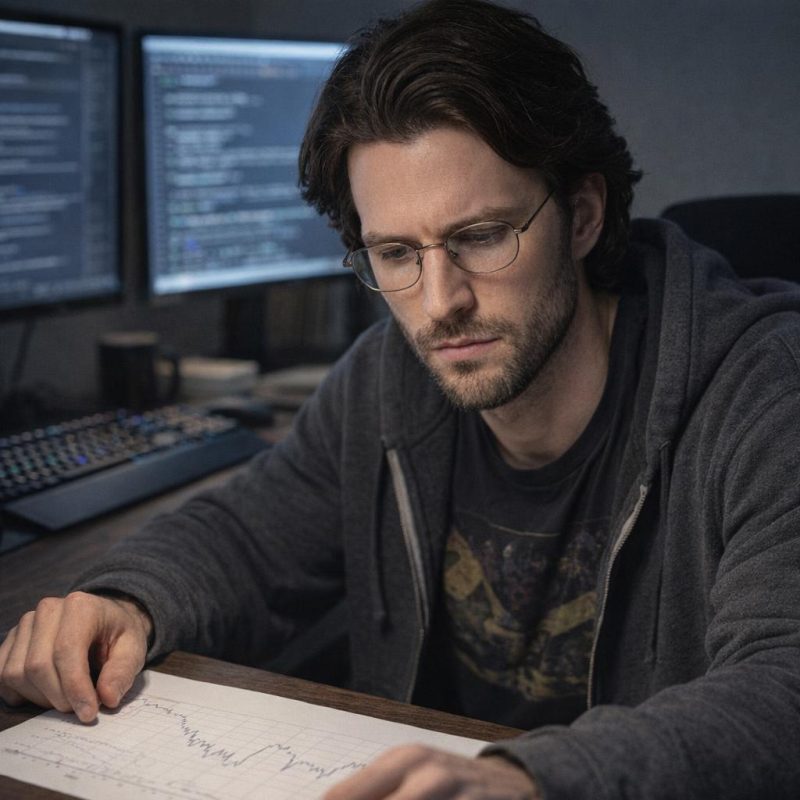 Image by RM AI
Window Watching
I told myself it was just efficient data collection. My desk was already positioned near the window, and keeping Henderson's driveway in my sightline meant I didn't have to interrupt my workflow to log a new arrival — I could just glance up, note the time, and keep working. That was the logic, anyway. The reality was that I started noticing things that had nothing to do with cars or latency. Henderson retrieving his mail during my Tuesday standup, moving with this unhurried, deliberate pace that felt out of place on a weekday morning. The way he'd walk the length of a newly arrived vehicle without getting in, just circling it slowly, checking his phone. He never seemed to drive any of them. They arrived, they sat, they left — and he was always just adjacent to them, never inside. I caught myself watching him during a client call, nodding along to something my project lead was saying while tracking Henderson's path from the front door to the mailbox and back. When the call ended I had no memory of the last five minutes of it. I opened my spreadsheet and added a new column: Henderson behavior. Then I sat there for a moment, looking at what I'd just done, not entirely comfortable with it.
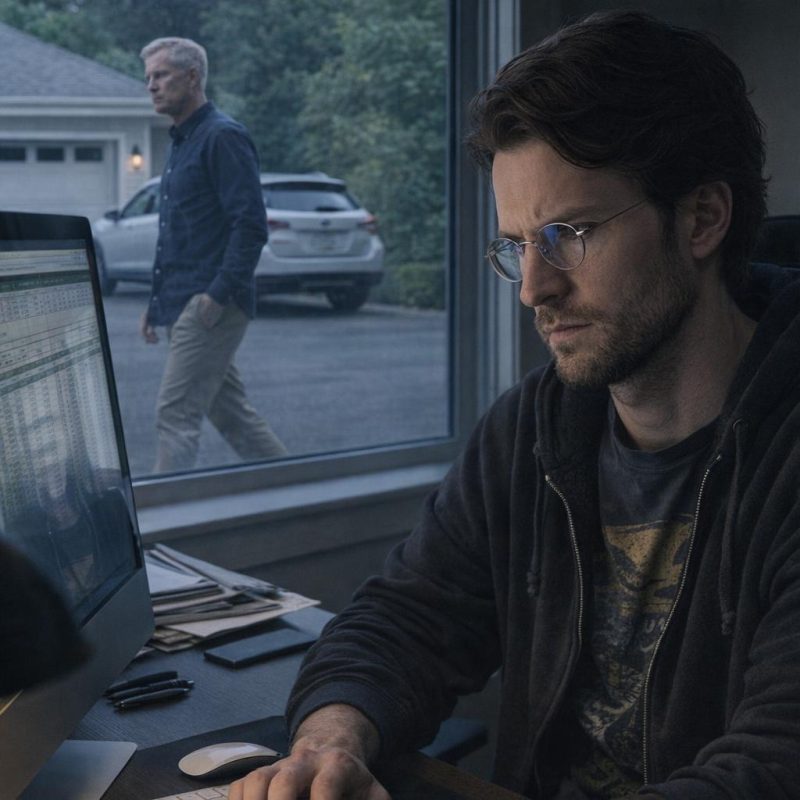 Image by RM AI
Dr. Patel's History Lesson
I almost never checked my physical mailbox — most of my life ran through email — but I'd gotten a notification about a package and figured I'd grab whatever had accumulated. Dr. Patel was already at the cluster of boxes when I got there, sorting through a small stack of envelopes with the careful attention of someone who reads every return address. He asked how I was settling in, and I told him two years felt pretty settled by now. He laughed at that, a warm sound, and started talking about the street the way longtime residents do — who'd been here longest, which families had come and gone, which houses had changed hands more than once. He mentioned a couple who'd moved to Portland, a retired teacher who'd downsized. Then, almost as an aside, he said Henderson had arrived about four years ago, not long after the previous owner left. A banker, Dr. Patel said. Left quite suddenly, apparently — a job opportunity overseas, or something along those lines. I asked if Henderson had ever mentioned what kind of consulting he did. Dr. Patel tilted his head and said something about business strategy, international clients, the kind of answer that sounds complete until you realize it contains nothing specific. I nodded and tucked my mail under my arm. Then Dr. Patel added that Henderson had moved in almost immediately after — within a week of the banker clearing out, he thought.
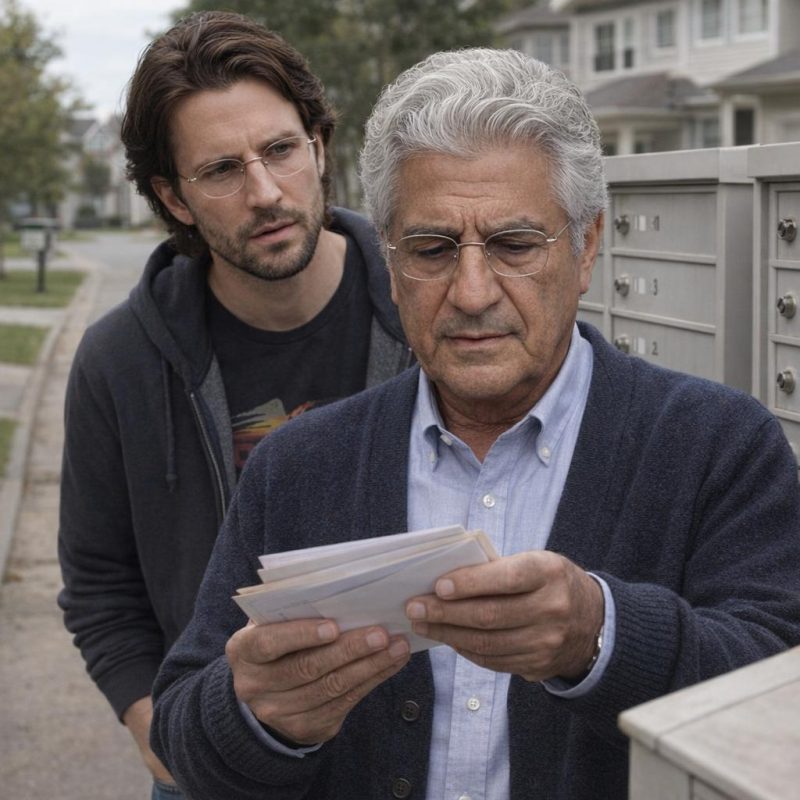 Image by RM AI
Forty-Eight Hours
I went back through two full weeks of logged data and added a new calculation: duration. For every vehicle, I recorded the timestamp it first appeared in the driveway and the timestamp it was gone. Then I subtracted. The Audi that arrived on a Monday morning left Tuesday night — forty-seven hours. The Mercedes that showed up Wednesday afternoon was gone by Friday evening — forty-nine hours. The Porsche, the second Audi, the BMW I'd logged last week — I ran the numbers on all of them. The average came out to 48.2 hours. Not roughly two days. Not approximately forty-eight hours. The variance across every single vehicle was less than two hours across a two-week window. I checked my arithmetic twice. I considered whether I'd made an error in the timestamps, went back to the raw log files, cross-referenced against my handwritten notes. The numbers held. I sat there trying to think of a legitimate reason someone would rotate cars on that kind of schedule — a rental arrangement, some kind of leasing deal, a hobbyist thing I wasn't aware of. None of it quite fit. Rental companies don't work that way. Leases don't turn over in forty-eight-hour cycles. The precision of it sat in my chest like something I couldn't swallow, quiet and exact and slightly wrong.
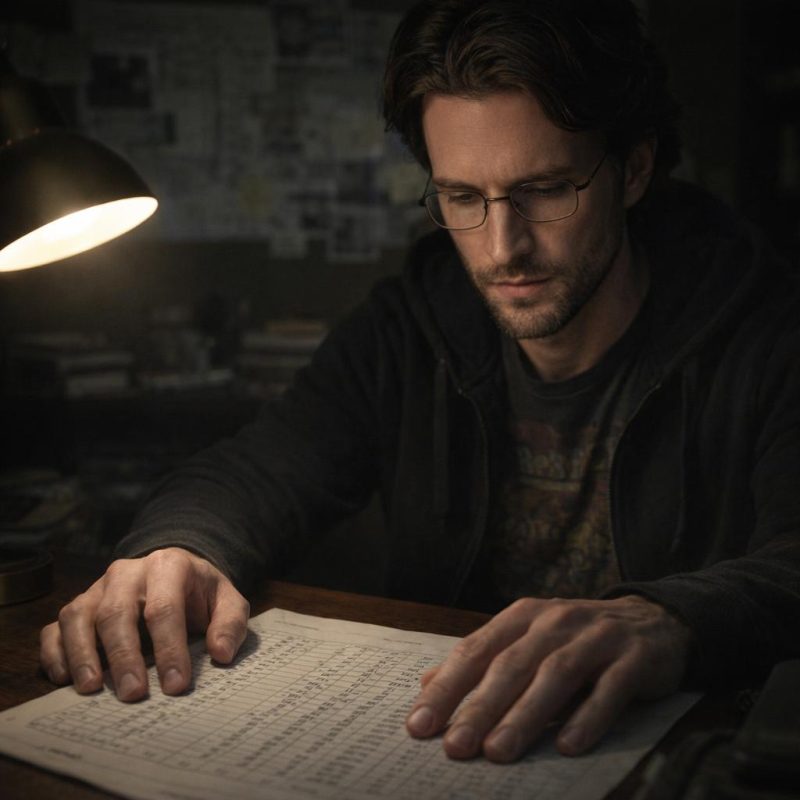 Image by RM AI
The Thick Stack of Mail
I'd been staring at my monitor for four straight hours and my eyes needed a break, so I stepped out onto the porch with a glass of water and no particular agenda. Henderson was across the street at his mailbox. I noticed him before he noticed me — he was pulling out a bundle of envelopes and small packages, the kind of stack that takes two hands to manage. It was thick enough that he had to tuck part of it under his arm to get the mailbox closed. When he looked up and saw me he raised his free hand and smiled, the easy, unhurried smile of someone with nothing on his mind. I waved back automatically, the way you do. But I stood there a moment longer than I needed to, watching the bundle under his arm. That was a lot of mail for one person. I'd seen my own stack after a week of not checking — it didn't look like that. I wondered if he ran some kind of home business, something that generated a lot of correspondence. It was a reasonable explanation. I went back inside and sat down at my desk. The smile had been perfectly friendly. I couldn't have told you what bothered me about it, only that something about the steadiness of it, the way it stayed fixed and even, stayed with me longer than it should have.
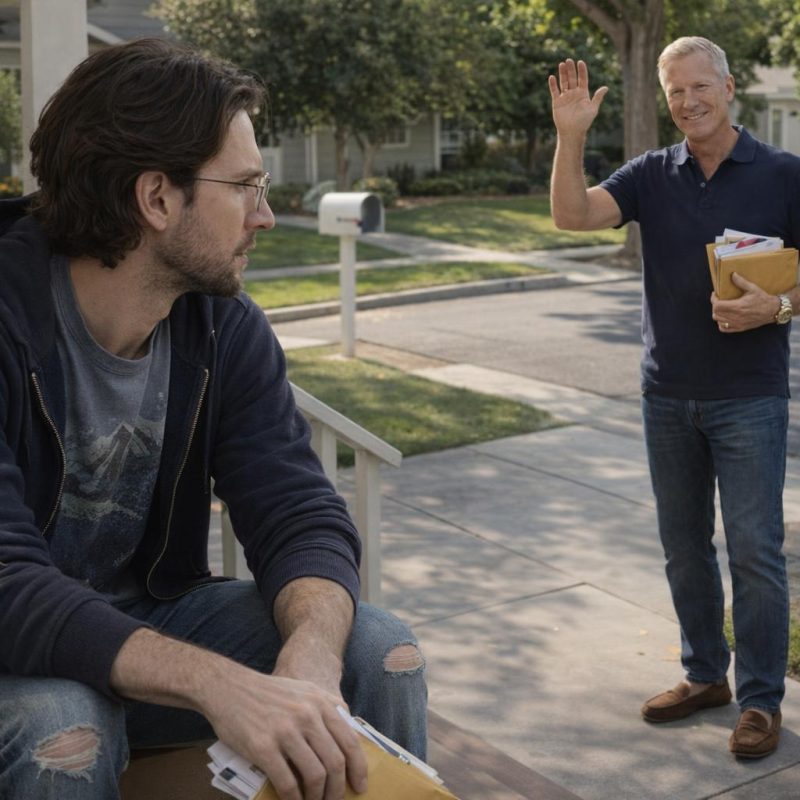 Image by RM AI
The Lost Interview
I'd spent three days preparing for that interview. I had my answers mapped out, my portfolio links ready, a second browser tab open with the company's engineering blog so I could reference their stack naturally. The first twenty minutes went well — we were deep into a conversation about distributed systems architecture and I could feel the rhythm of it, the back-and-forth that happens when an interviewer is actually engaged. Then the connection stuttered. The interviewer's face froze mid-sentence, pixelated into a grid of grey squares. Audio dropped. I watched the buffering icon spin for four seconds, eight seconds, twelve. I grabbed my phone and tried to switch to a hotspot, fumbling with the settings while the laptop kept trying to reconnect. By the time I got back into the call the interviewer was already wrapping up, his tone polite but clipped, the kind of professional courtesy that means the conversation is over. I apologized. He said these things happen. The call ended at 2:47 PM. I sat at my desk and stared at the wall. Thirty minutes later my inbox showed one new message — a polite two-paragraph rejection citing technical difficulties during the interview process — and when I looked up from my screen, there was a silver Audi sitting in Henderson's driveway that hadn't been there an hour ago.
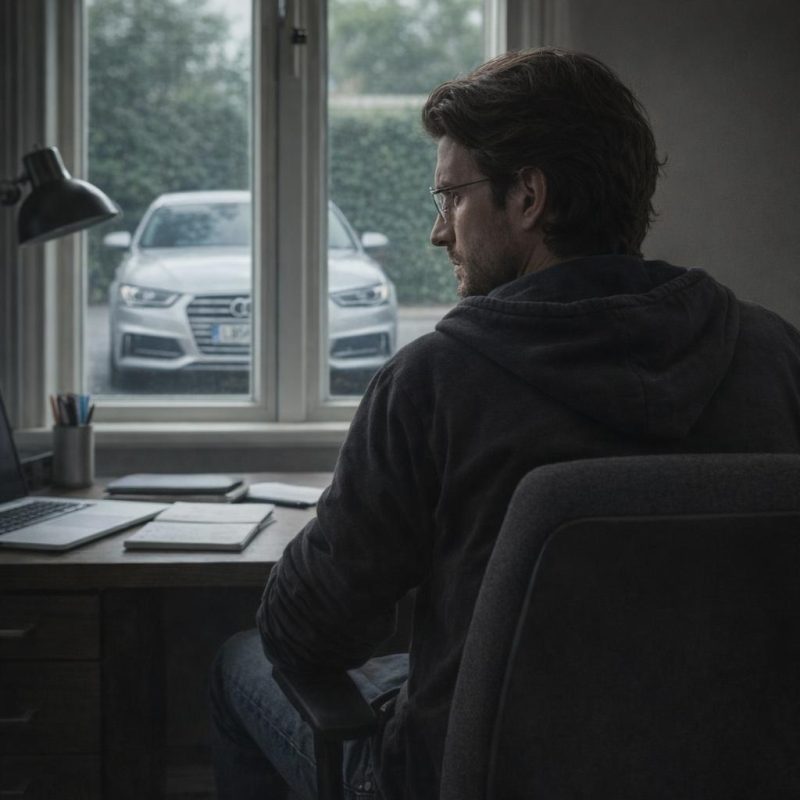 Image by RM AI
Two AM Arrival
I hadn't been sleeping well for days, and that night was no different. I was lying in the dark at 2 AM, running the forty-eight-hour averages through my head again, when I heard it — a car engine, low and careful, the kind of speed that's trying not to wake anyone. I got up and went to the bedroom window. A Porsche was rolling into Henderson's driveway with its headlights off, moving slowly enough that the tires barely made a sound on the asphalt. I checked my phone: 2:14 AM. I stood there watching, telling myself I'd go back to bed in a minute. Then Henderson's front door opened. He was already outside and moving toward the car before it had fully stopped, no pause at the threshold, no moment of adjustment to the dark — just the door swinging open and him walking out, like he'd been standing on the other side of it waiting.
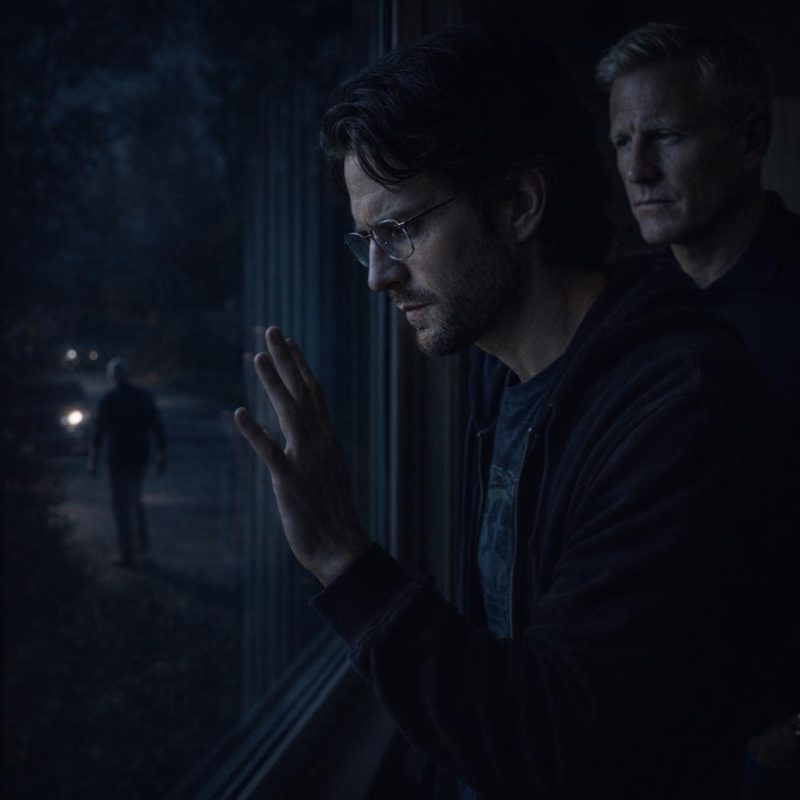 Image by RM AI
Cologne and Ozone
I started keeping a dedicated log file — encrypted, obviously — just for Henderson observations. Time-stamped entries, cross-referenced with the Wi-Fi anomaly data. I told myself it was methodical, not obsessive. There's a difference. Henderson was always immaculate: tailored chinos, leather loafers that caught the light, a dark sport coat even on weekday mornings when he was just walking to the mailbox. The cologne hit you from ten feet away — something expensive and heavy, cedar and something else I couldn't name. He never left for an office. No briefcase, no laptop bag, no 8 AM departure. Just a man who seemed to exist entirely within a quarter-mile radius of his own driveway. I noted all of it. I noted the way he moved between the cars sometimes, not driving them, just walking the row slowly, like he was checking something. And then there was the smell. Different from the cologne. Sharp and clean and faintly metallic, the kind of smell you catch near high-voltage equipment or after a lightning strike. I'd catch it standing near the property line, especially on warm evenings when the air was still. I wrote it down every time. My notes said the ozone smell was strongest near the cars.
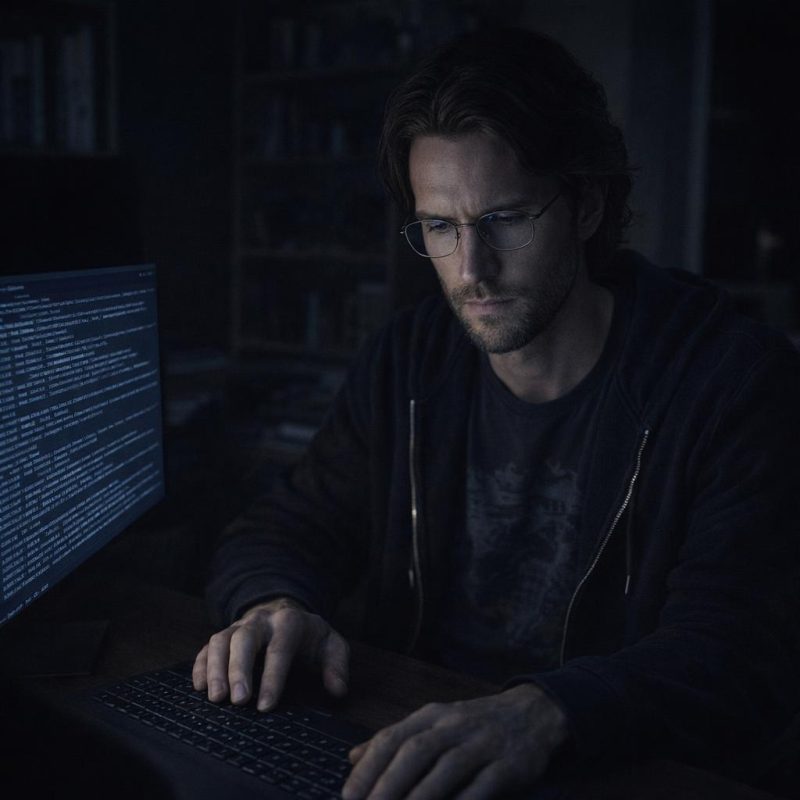 Image by RM AI
The Photo Archive
I ordered a 400mm zoom lens attachment for my phone camera. Told myself it was for nature photography. I hadn't been outside for anything resembling nature in four months. I set up at my office window with the phone propped on a stack of technical manuals, angled down at Henderson's driveway, and I started shooting. Every car got its own subfolder: date, time, plate number, make and model. I captured the plates from multiple angles, morning light and afternoon light, making sure the characters were legible. When Henderson appeared near the vehicles I photographed him too — the way he moved around them, where he paused, what he touched. The folder structure grew fast. I had a naming convention and everything: YYYY-MM-DD_VEHICLE_PLATE_ANGLE. My actual work project sat open in another window, the cursor blinking in the same function I'd been staring at for three days. I knew what this looked like from the outside. I knew the word for it. But every time I tried to close the camera app and go back to the code, I'd catch movement in the driveway and the phone would be back in my hands before I'd made a conscious decision. The folder on my desktop kept growing, a little heavier every day.
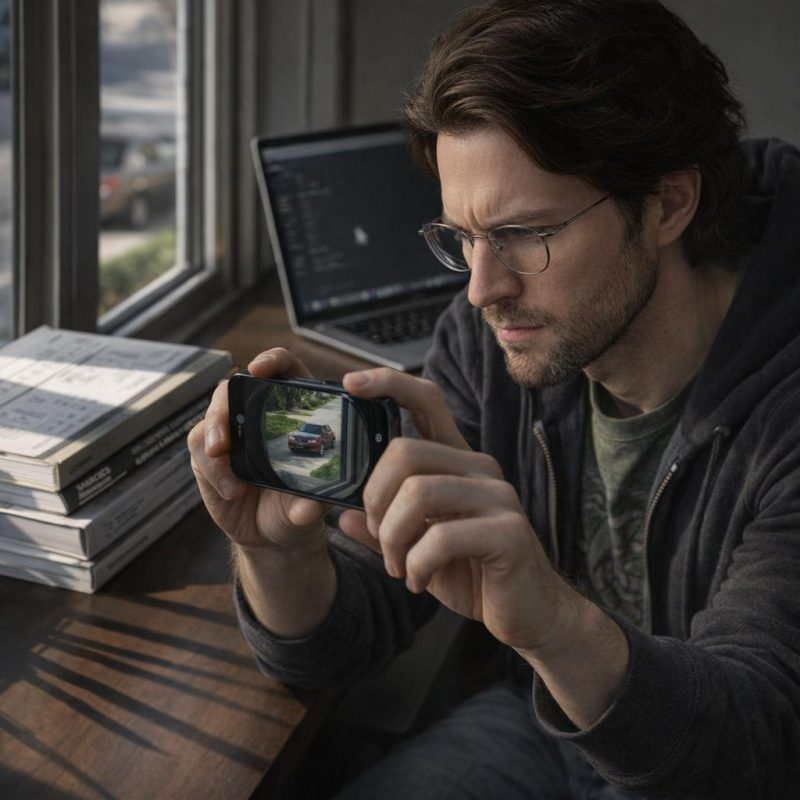 Image by RM AI
Searching for Escape
On a Wednesday afternoon I had four browser tabs open: my company's project management dashboard, a Stack Overflow thread I hadn't read, and two apartment rental sites. I told myself I was just looking. The listings across town had fiber internet reviews, quiet streets, no mention of neighbors with rotating luxury car collections. I pulled up a lease-break calculator and ran the numbers twice. It was expensive but not impossible. I thought about how I'd explain it to my older sister Lisa — that I was moving because of a feeling, because of a smell, because of a folder full of car photos that proved nothing. I couldn't finish that sentence even in my own head. The thing was, leaving meant Henderson won something, though I couldn't have said what exactly. It meant I'd spend the rest of my life wondering if I'd been right and just too tired to find out. I sat there with the rental listings open, scrolling through photos of clean empty rooms in buildings where nobody knew my name. I closed the browser without clicking apply on anything. The cursor hovered over the X and I just sat there, not quite ready to admit I wasn't going anywhere, feeling the particular hollowness of wanting to run from something I couldn't even properly describe.
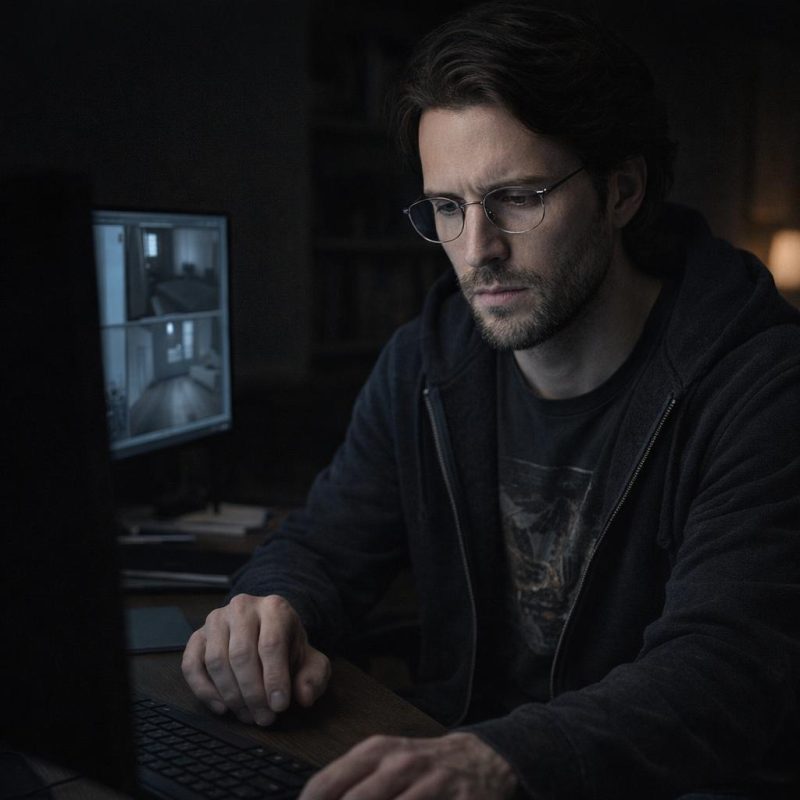 Image by RM AI
The Motherboard
The motherboard was a Threadripper-compatible ASUS WRX80E — not something you find at a local shop, not something you replace easily if it goes missing. I'd waited six weeks for it to come back into stock and paid overnight shipping on top of the already painful price tag. I checked the tracking page probably eleven times the morning it showed out for delivery. The mandatory all-hands development sync started at ten. Forty people on the call, screen share required, cameras on. I had the tracking page open in a minimized window and I kept alt-tabbing to it every few minutes while pretending to follow the sprint retrospective. At 10:47 the status updated to 'on vehicle for delivery.' I felt my stomach drop. At 11:03 I saw the brown delivery truck through my office window, rolling slowly down the street toward my block. The sprint lead was mid-sentence about velocity metrics. I couldn't mute, couldn't step away, couldn't do anything except watch the truck pull up and park directly in front of my house while the meeting kept going around me like nothing was happening.
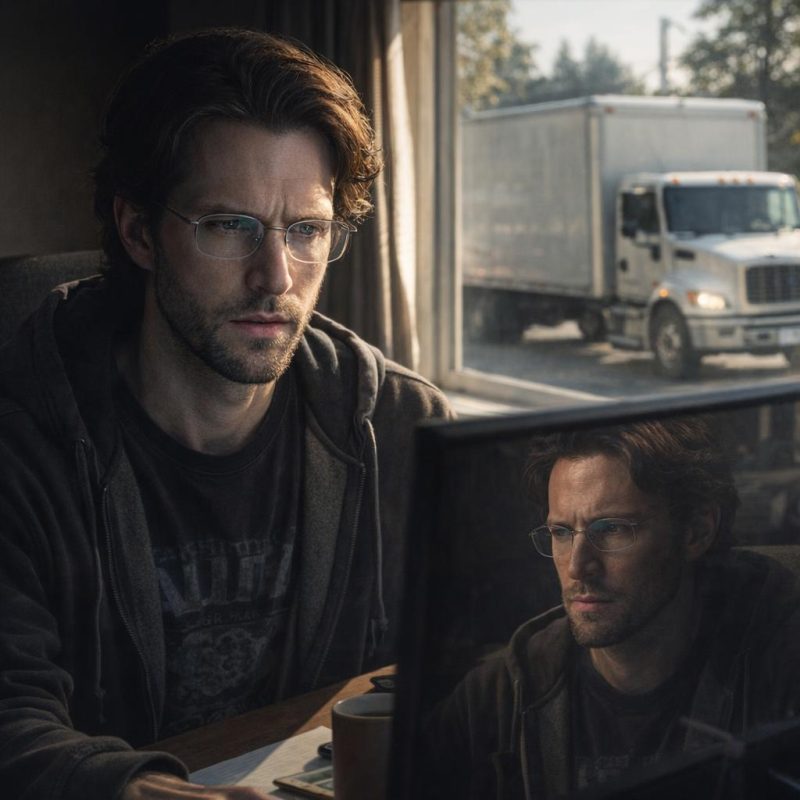 Image by RM AI
The Practiced Flourish
Henderson appeared from his front door before Tom had even set the parking brake. That was the first thing that struck me — the timing of it, how fast he was outside and moving down his driveway toward the truck. Tom climbed out with the scanner and the package, and Henderson was already there at the curb, smiling, one hand raised in a neighborly wave. I watched Tom show him the electronic signature pad. Henderson took it without any pause, signed in one smooth motion, and handed it back. Tom checked the screen, nodded, passed over the package. They exchanged a few words I couldn't hear through the glass. Tom waved again, got back in the truck, and pulled away. Henderson stood at the curb for a moment holding my package — a flat, clearly labeled box — then turned and walked back toward his house. My meeting was still going. Someone was asking about deployment timelines. I sat there with my camera phone in my hand, the meeting audio in my ears, watching Henderson carry the package through his front door, and what stayed with me afterward wasn't the anger — it was something I couldn't quite account for, the whole transaction sitting wrong in a way I couldn't name.
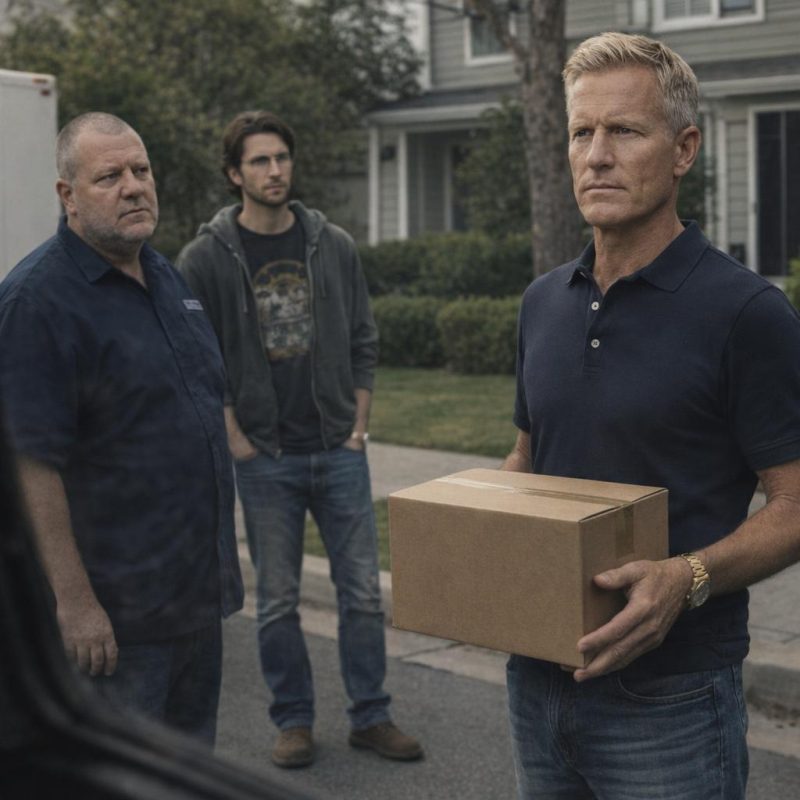 Image by RM AI
The Polite Knock
I knocked on Henderson's door at 12:40, about an hour after the meeting finally ended. My heart was going faster than I wanted it to. I'd rehearsed the opening line three times on the walk over — calm, neighborly, not accusatory. Henderson answered within seconds, which startled me. He was smiling before he'd fully opened the door, the warm easy smile of someone who has nowhere to be and nothing to hide. I told him I thought a delivery had come to my address while I was stuck in a work call, and I'd seen the truck stop out front — had he maybe picked something up by mistake? His expression didn't shift. He said he'd been inside all afternoon, hadn't heard a truck, hadn't seen any delivery. I described Tom, described the time, described the package dimensions. Henderson listened with his head slightly tilted, patient and attentive, and said he was sorry, he really hadn't seen anything, but these mix-ups happened and I should call the carrier. He offered to help me find the complaint number. I thanked him and walked back to my house. I stood in my kitchen for a long time afterward, replaying the conversation, and what I kept coming back to wasn't what he'd said — it was his eyes, which had shown nothing at all when I mentioned the delivery, not confusion, not recognition, just a flat and even blankness.
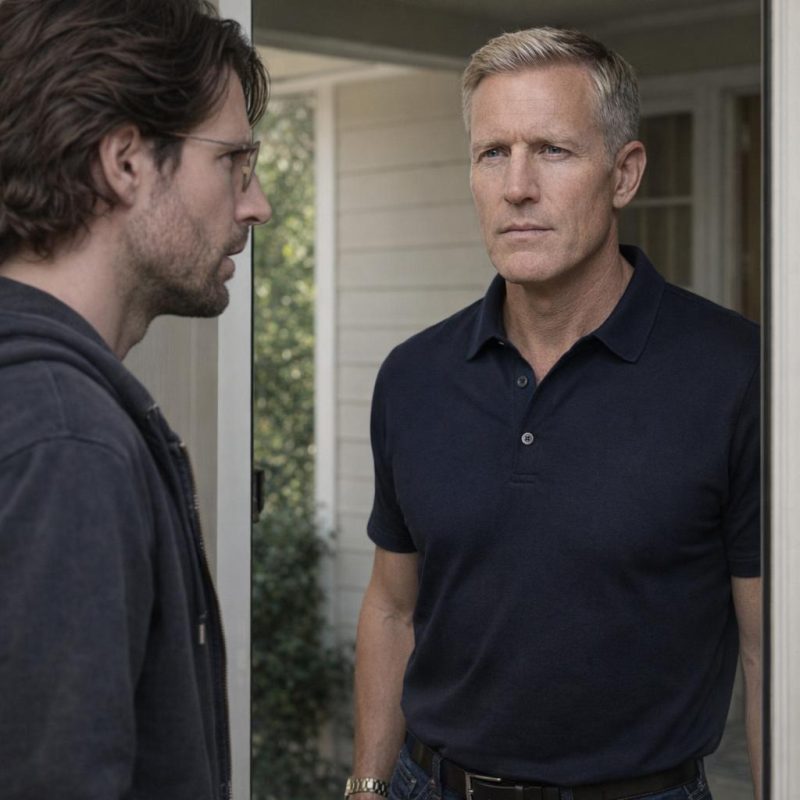 Image by RM AI
The Recycling Bin
I waited until after nine, when the street was quiet and the recycling bins were still out from Tuesday collection. I told myself I was just going for a walk. I had gloves in my pocket. The communal paper recycling bin at the end of the block was about two-thirds full — junk mail, flattened cardboard, a few grocery circulars. I worked through it methodically, pulling things out in layers, checking each piece under the streetlight. About halfway down I found it: a crumpled delivery confirmation slip, folded once and then crushed into a ball. I smoothed it out against my thigh. My address. The correct tracking number — I had it memorized. The timestamp matched. Everything matched. I tilted it toward the light to read the signature line at the bottom, and the air went out of me. The handwriting was mine. Not similar to mine — mine. The particular way I close the letter C, the slight leftward lean on the capital M, the way my R's finish. I'd been signing my name for thirty-seven years and I knew exactly what it looked like. I took a photo with my phone, pocketed the slip, and stood there under the streetlight staring at my own name written in handwriting that looked terrifyingly like my own.
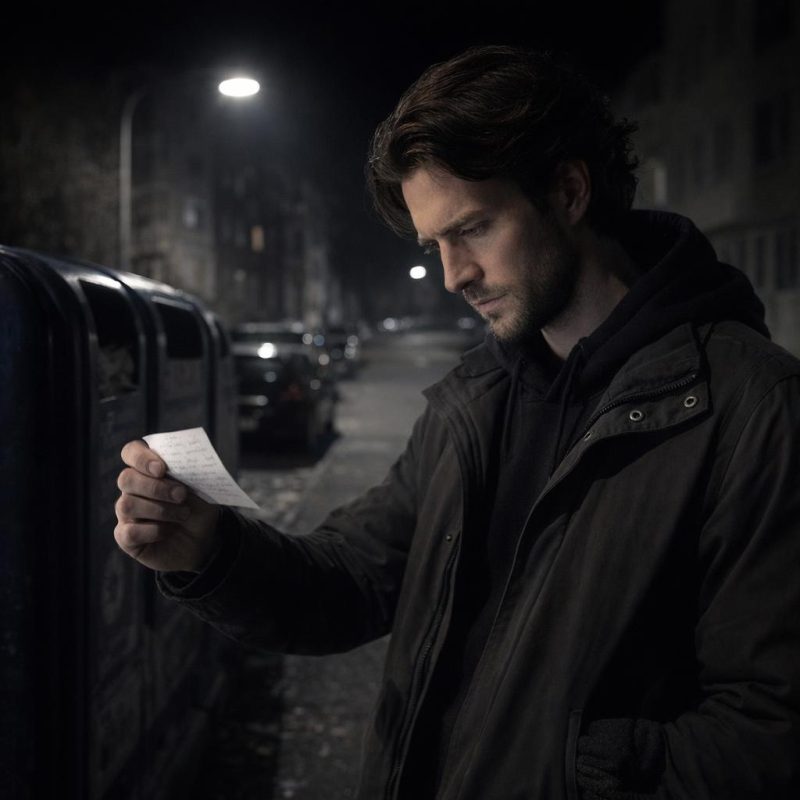 Image by RM AI
Lisa's Skepticism
I called Lisa from my office with the delivery slip on the desk in front of me, smoothed flat, my phone photo of it pulled up on my second monitor. She picked up on the second ring, which meant she wasn't busy, which meant I had no excuse to keep it short. I walked her through everything — the package, Henderson at the curb, the denial, the recycling bin, the signature. She listened without interrupting, which is unusual for her, and I took it as a good sign. Then she asked me to describe the signature again. I described it. She said signatures can look similar, especially under stress, especially under bad lighting. I told her it was a streetlight, not a cave. She asked how many hours I'd been working this week. I told her that wasn't relevant. She said it was relevant, actually, and asked when I'd last taken a full day off. I told her about the Wi-Fi drops, the cars, the ozone smell, the photo archive. There was a pause on her end. She said she wanted to come visit this weekend and that I should file a police report if I was certain something criminal had happened. I said I would. I thanked her. After we hung up I sat with the slip in my hand, and what I kept hearing on replay was the careful, measured way she'd asked if I'd been sleeping okay.
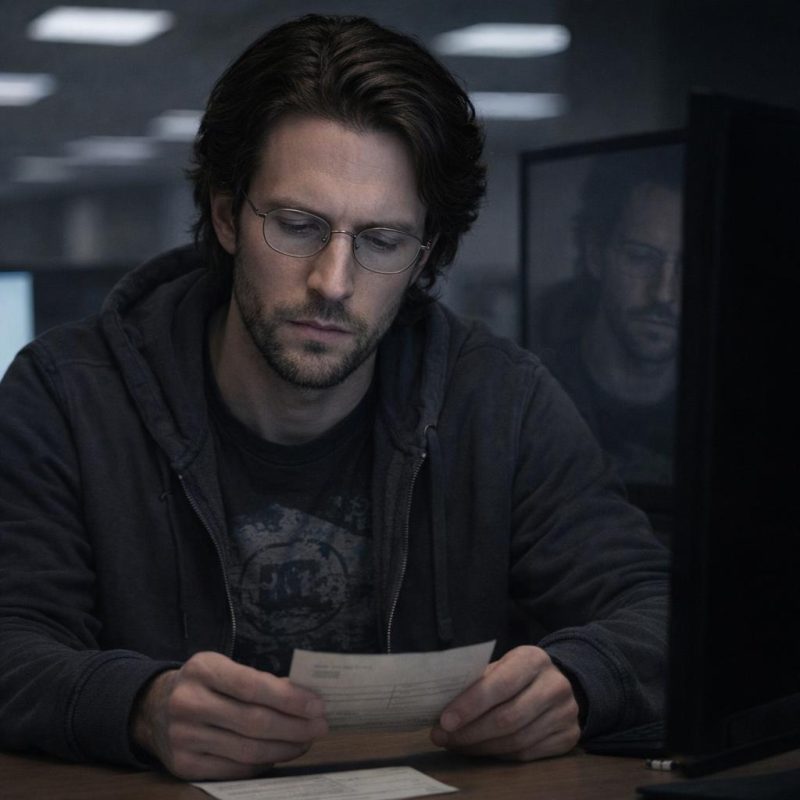 Image by RM AI
The Forged Hand
I pulled out my old lease agreement and two years of tax returns and spread them across the desk under the brightest lamp I owned. The delivery slip went in the center. I'd done enough code review to know how to look for patterns, and I started the same way I'd start debugging — methodically, left to right, letter by letter. Most of the signature was close but explainable. Stress, bad angle, someone rushing. I almost talked myself down. Then I got to the t's. I have this thing with my lowercase t's — the crossbar goes left-heavy, slightly downward, like a tiny ski slope. My third-grade teacher called it sloppy. I'd never corrected it. It's not something you'd notice unless you were looking, and it's not something you'd replicate unless you'd studied the original carefully. I photographed both documents side by side, zoomed in on my phone until the letters filled the screen. The crossbar on the delivery slip matched mine exactly. Same leftward lean. Same slight drop. Then I checked the a's. The loop closed the same way. I locked everything in my desk drawer and sat back in my chair, and the only thought I could hold onto was that someone had spent real time studying how I write my name.
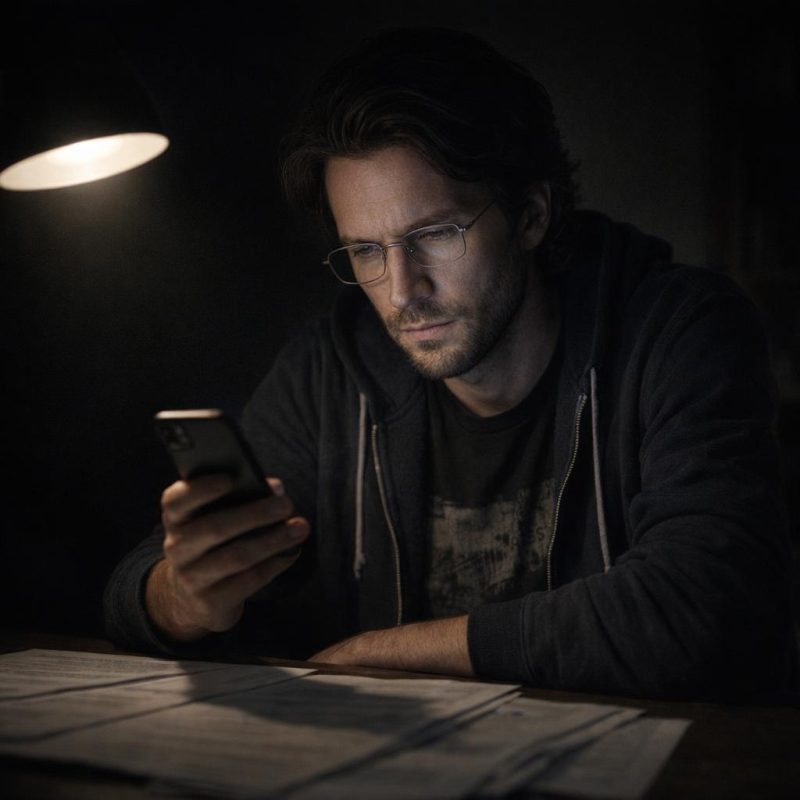 Image by RM AI
The Weight of Proof
I sat in the dark for a long time after I locked the drawer. Didn't turn the overhead light back on. The desk lamp was still aimed at where the documents had been, throwing a cone of yellow light onto empty wood. I ran through my options the way I'd run through a decision tree — police, lawyer, confronting Henderson again, saying nothing. The police option kept collapsing on itself. I'd walk in with a delivery slip and a side-by-side photo of two signatures and try to explain that my neighbor had somehow studied my handwriting. I could hear how it sounded. I had spreadsheets tracking Wi-Fi drops. I had photos of cars. I had a signature comparison that would mean nothing to anyone who hadn't spent an hour staring at it the way I had. Lisa would listen, but she'd ask the same question she always asked — had I slept, had I eaten, was I sure. And the honest answer to all three was not really. I thought about just ordering the replacement motherboard and letting it go. The thought lasted about four seconds. I couldn't unknow what I'd seen. I just couldn't figure out how to make anyone else see it too, and that gap — between what I knew and what I could prove to another person — sat in the room with me like a third presence.
 Image by RM AI
Two AM Surveillance
The Mercedes showed up at 1:07 AM. I know because I was still awake, still at my desk, and my Wi-Fi dropped the exact second I heard the engine cut out on the street. I watched from my bedroom window for a full hour. Nobody got out. No lights came on inside the car. The street went completely still, the kind of still that feels less like quiet and more like held breath. Around 2:15 I made a decision I knew was stupid even as I was making it. I changed into a dark hoodie and dark jeans, left my phone on the nightstand — no GPS, no screen glow — and went out through the back door in bare feet so my shoes wouldn't crunch on the driveway gravel. The grass was cold and damp. I moved along the edge of the lawn, staying out of the streetlight, cutting toward the curb at an angle. My heart was doing something uncomfortable and fast. I kept telling myself I just needed to see. One look. Something concrete I could point to. I reached the driver's side of the Mercedes, pressed my back against the door for a second to steady my breathing, then turned and cupped my hands against the tinted glass and looked through the window.
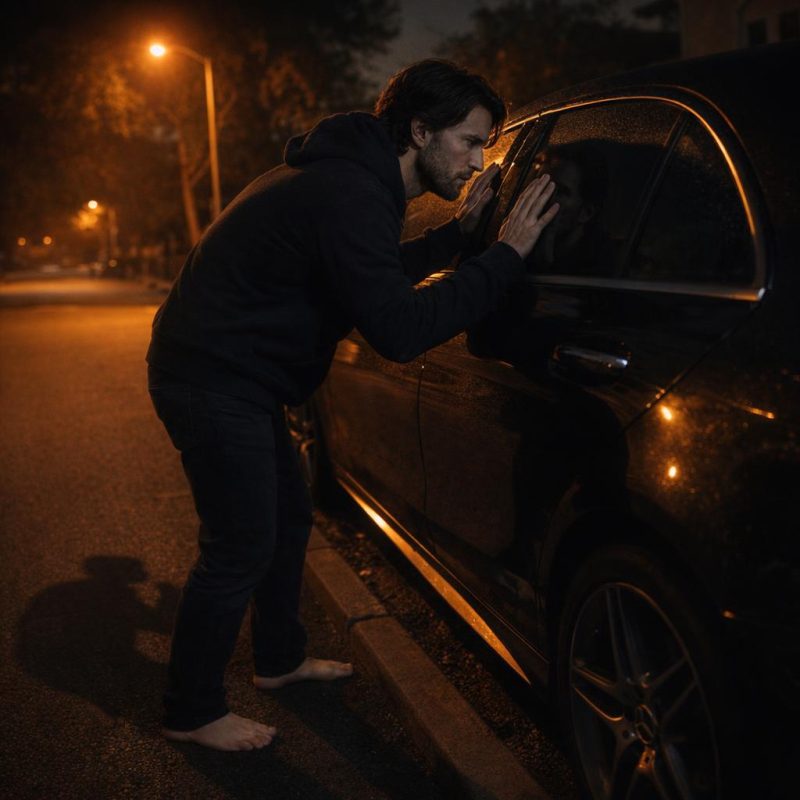 Image by RM AI
The Server Racks
There were no seats. That was the first thing my brain registered and then immediately rejected. No driver's seat, no passenger seat, nothing that looked like the interior of a car. What was there — bolted floor to ceiling on both sides of the gutted cabin — were server racks. Actual enterprise-grade rack-mounted servers, the kind I'd seen in data center walkthroughs at work, the kind that cost more per unit than my monthly rent. I counted at least six of them. Blue and green LEDs blinked in patterns along the front panels, and I could see the faint outlines of network cables bundled and routed along the interior walls with zip ties, the way someone careful and experienced would do it. There was a cooling unit mounted where the center console should have been, humming faintly through the glass. I stood there with my hands still cupped against the window and felt something shift in the back of my mind — the heat I'd noticed near the cars on warm evenings, the Wi-Fi interference, the forty-eight-hour rotation schedule I'd been tracking for weeks. Each piece clicked into something that almost made sense, and almost was the worst part. I didn't move for a long time. Through the glass, the blue and green lights kept blinking in their slow, synchronized rhythm, indifferent and steady.
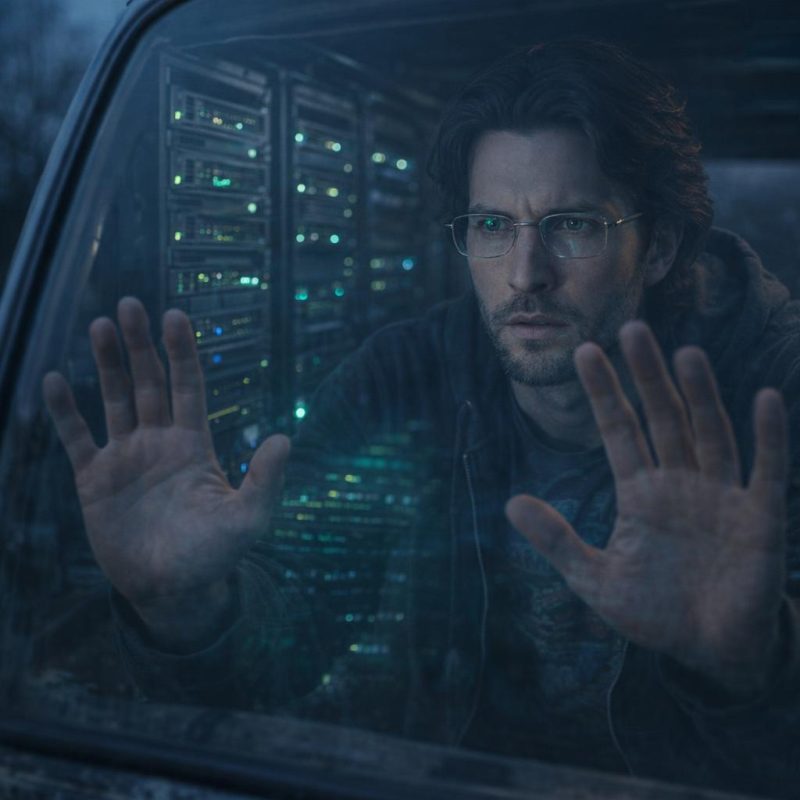 Image by RM AI
The Ghost Fleet
I backed away from the car slowly, the way you back away from something you're not sure is dangerous. My feet found the grass and I just stood there on the lawn in the dark, running the numbers. The forty-eight-hour rotation — I'd logged it as a quirk, maybe a lease arrangement, maybe Henderson flipping cars for profit. But mobile server racks don't need to move unless staying still creates a problem. A fixed installation leaves a footprint. Power draw, heat signature, a static IP that someone could eventually trace. A car that moves every two days is harder to pin down. It parks in a residential neighborhood, pulls bandwidth from nearby connections, runs its processing load, and disappears before anyone thinks to look twice — or so it seemed to me, standing there in the dark trying to make the pieces fit. The luxury shells made a certain kind of sense too. Nobody calls the police on a Porsche or a Mercedes sitting at the curb in a nice neighborhood. I thought about the Wi-Fi drops and felt something cold settle in my stomach — my connection might not just be disrupted. It might be part of whatever this was. I didn't know what kind of data needed that much distributed processing power, and I wasn't sure I wanted to. I stood on the wet grass in the dark, and what I kept coming back to was how clean the whole thing looked, how each piece seemed to fit the next without a single wasted edge.
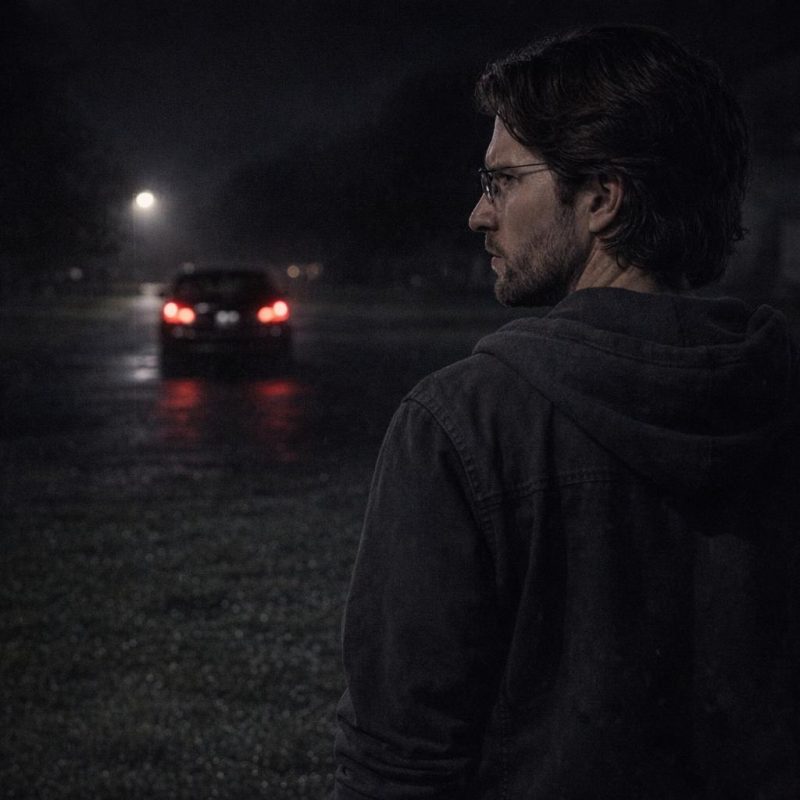 Image by RM AI
The Hand on My Shoulder
A hand came down on my shoulder and I came about six inches off the ground. I spun around so fast I nearly lost my footing on the wet grass. Henderson was standing behind me in a dark robe over pajamas, his silver hair slightly disheveled, his pale eyes catching the blue-green glow leaking through the Mercedes window. He wasn't holding anything. He wasn't tense. He looked like a man who had stepped outside to check on something he'd been expecting to find. I couldn't speak. My mouth opened and nothing came out. He didn't ask what I was doing there. He didn't tell me to get off his property. He just stood in the faint colored light and looked at me the way you look at a puzzle you've been working on for a while, and he almost — almost — smiled. His expression wasn't angry. It wasn't threatening. It was something closer to impressed, the way a professor looks when a student finally works out a problem on the board, and somehow that was so much worse than anger would have been.
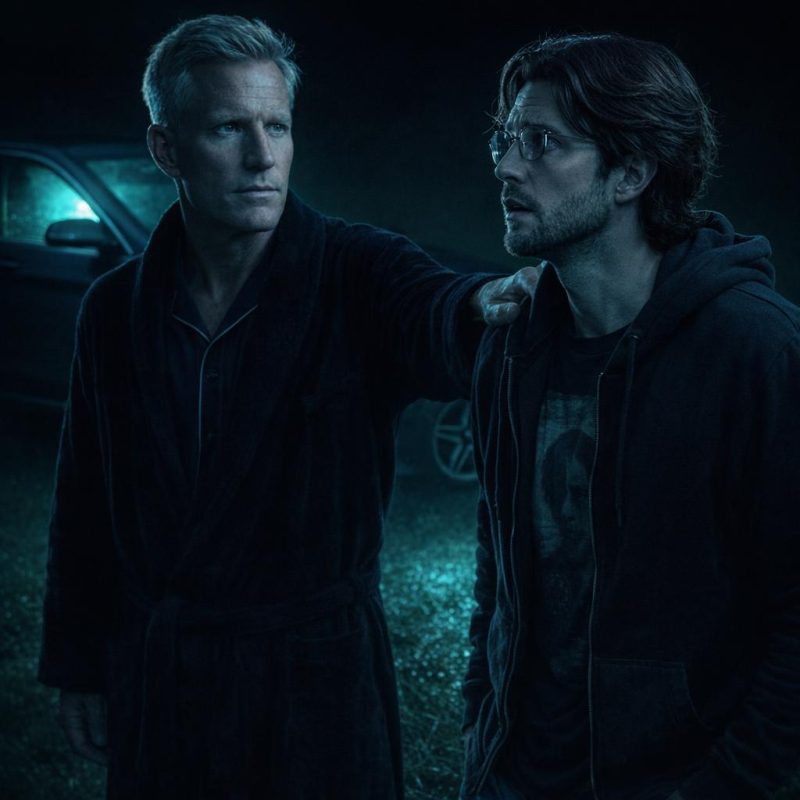 Image by RM AI
The Perfect Camouflage
He spoke quietly, barely above a murmur, like we were having a conversation at a dinner party and he didn't want to disturb the other guests. He said he'd been using my IP address, my accounts, my name attached to transactions and data routing for the better part of eight months. He said it the way someone describes a business arrangement — no apology, no hesitation, just the flat delivery of operational facts. He said my profile was useful. Clean credit history, stable employment, consistent online behavior, no flags anywhere in my record. He said developers with established digital footprints and no criminal history were harder to find than people assumed. The package signing, he said, was a small thing, a one-time logistical gap he'd needed to fill. The rest of it had been running quietly in the background the whole time I'd been sitting at my desk writing code and tracking Wi-Fi drops and thinking I was losing my mind. He didn't raise his voice. He didn't look away. He just talked, calm and even, while the server lights blinked behind me. I stood there in my bare feet on the cold grass and felt something I couldn't name — not quite fear, not quite anger — just the slow, nauseating sense that the person I'd been online for the last eight months hadn't entirely been me.
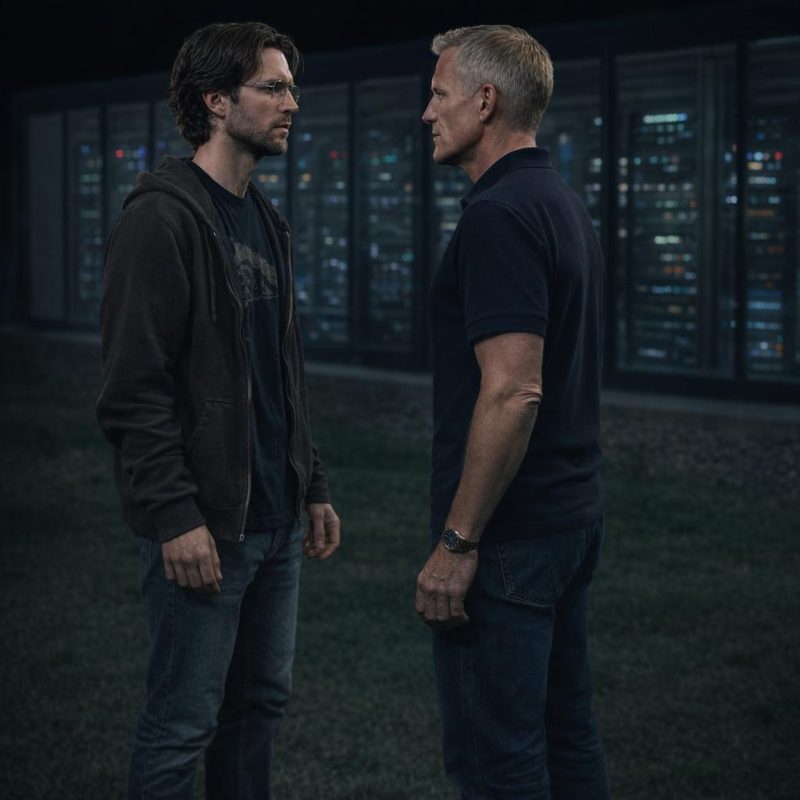 Image by RM AI
The Ultimatum
He gave me two options. He laid them out the same way he'd explained everything else — no drama, no raised voice, just the measured tone of someone presenting a business case. Option one: I call the police. He said I should think carefully about what that would look like from the outside. My IP address on eight months of transactions. My name on accounts I'd never opened. My digital footprint woven through an operation I'd have to spend years proving I hadn't built myself. Credit frozen, employment background checks failing, every login I'd ever made suddenly evidence in a case where I was the most obvious suspect. He said the legal untangling alone would take longer than I wanted to think about. Option two: I do nothing. I continue my normal life. I provide cover by simply existing the way I already exist — going to work, paying my bills, maintaining the clean record that made me useful in the first place. In exchange, he said, I'd receive a percentage of the processing fees. He quoted a number. Then he quoted it again, slower, like he wanted to make sure I'd heard it correctly. He said the processing fees alone would make my developer salary look like pocket change.
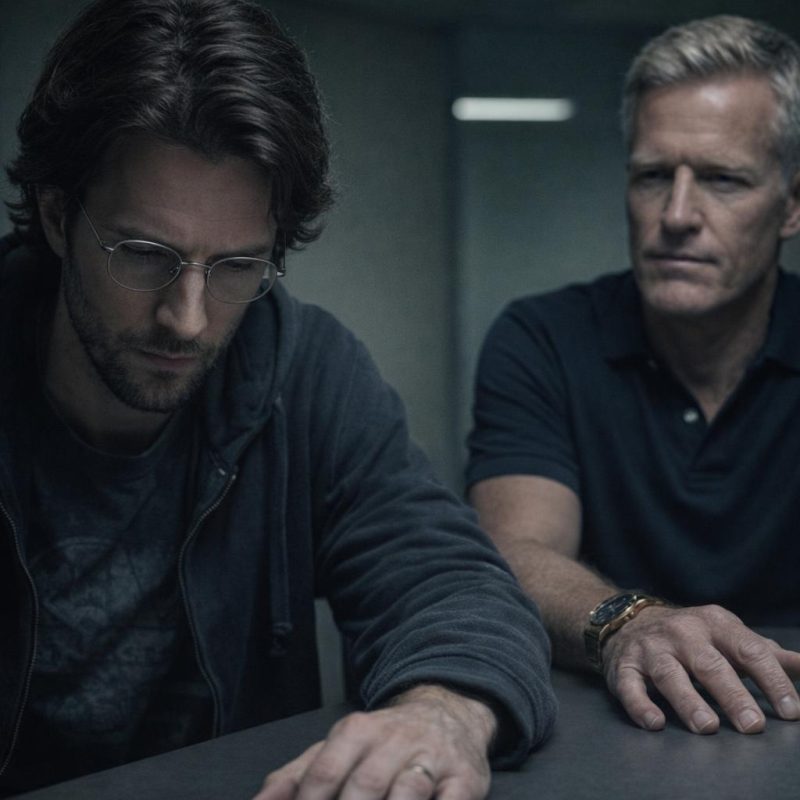 Image by RM AI
The Police Report
I drove to the station the next morning before I'd even had coffee. I had the delivery slip in a plastic sleeve — I'd seen enough crime shows to know not to handle evidence more than necessary. Officer Torres met me at the front desk, led me to a small room with a table and two chairs, and opened a notepad like she had all the time in the world. I walked her through everything. The package. The forged signature. Henderson's flat denial at the door. She wrote things down. She asked the right questions. She asked if I had video of Henderson actually taking the package, and I said no, just the delivery slip with a signature that wasn't mine. She nodded slowly and said that could be a neighborly thing — someone signing for a delivery to help out. I told her it wasn't helpful, it was theft. She nodded again. Same speed. Same expression. She filed the report, printed a case number, slid it across the table, and told me someone would follow up. I thanked her and walked back to my car holding that slip of paper. The case number felt real. The look in her eyes when she handed it over did not.
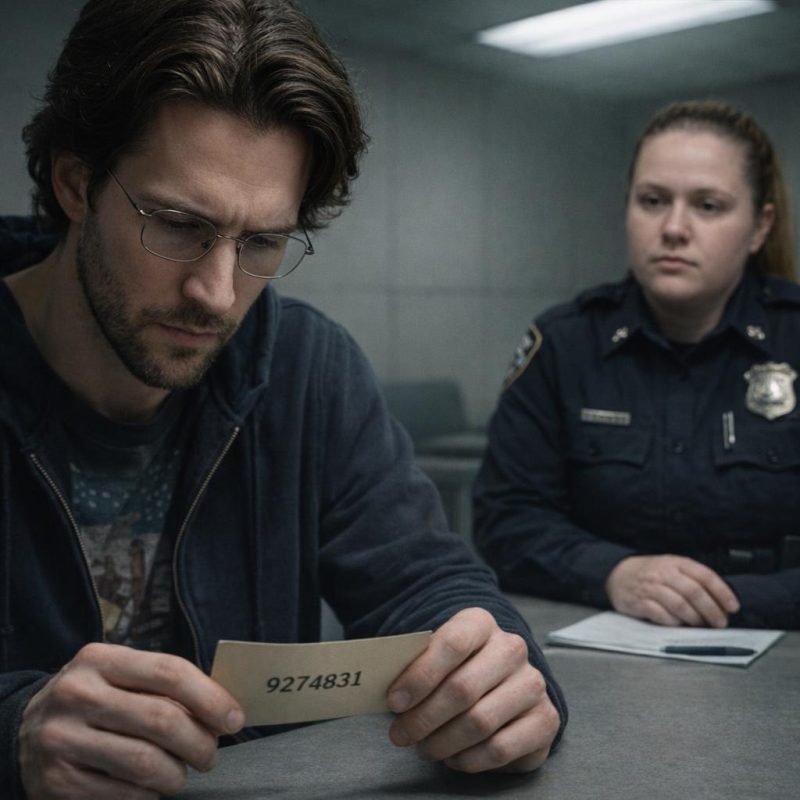 Image by RM AI
The Dismissive Follow-Up
Three days. I checked my phone every hour like that was going to make Torres call faster. When she finally did, I was mid-compile, and I almost knocked my coffee over grabbing the phone. She was polite. Measured. She said they'd spoken with Henderson, who denied any knowledge of the package. No physical evidence of theft. The delivery company had no record of a complaint from the driver. She suggested it might have been a routing error — wrong address, wrong door, happens all the time. She recommended I file a claim directly with the delivery company for a refund. I asked about the forged signature. She said handwriting analysis required a stronger evidentiary basis than a single disputed slip. I asked what that meant in plain English. She said it meant the case was being closed due to insufficient evidence. She told me to contact them if anything else came up. Her tone was perfectly professional. No irritation, no dismissal, nothing I could point to and call unfair. She just sounded like someone reading from a script they'd read a hundred times before. The line went quiet after she said goodbye, and I sat there holding the phone, the case number on my desk already starting to feel like a receipt for nothing.
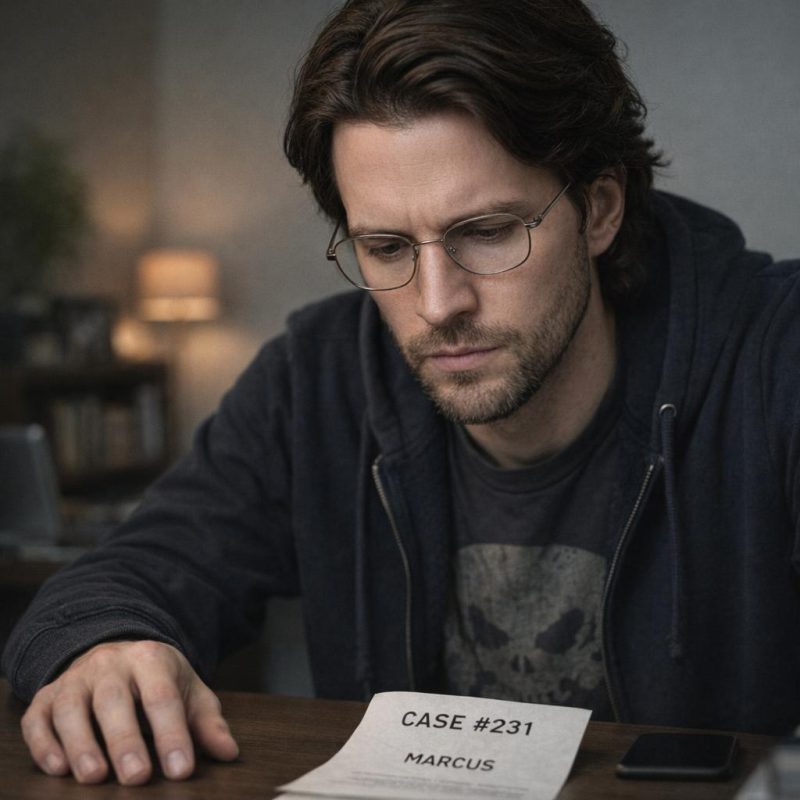 Image by RM AI
The Invisible Man
I'm a software developer. I know how to search. Not Google-and-scroll search — I mean actual Boolean operators, archived pages, WHOIS lookups, property record databases, the works. I spent four hours on Robert Henderson and came up almost completely empty. There were dozens of Robert Hendersons online. None of them were my neighbor. No Facebook. No LinkedIn. No Twitter, no Instagram, not even a Nextdoor profile complaining about leaf blowers. I pulled property records and confirmed his house sold four years ago, but the trail before that purchase was a dead end — no previous address history, no prior ownership records, nothing that placed him anywhere before he appeared on our street. I cross-referenced his name against local business filings, court records, alumni databases. Nothing. In 2024, a complete absence of digital footprint isn't something you stumble into by accident — real people leave traces. They get tagged in a coworker's retirement party photo. They show up in a 5K race result from 2019. Henderson had none of that. Then I found it: one professional headshot on a cached page from a defunct consulting firm's website, timestamped exactly four years ago — the same window Dr. Patel had mentioned when Henderson moved in.
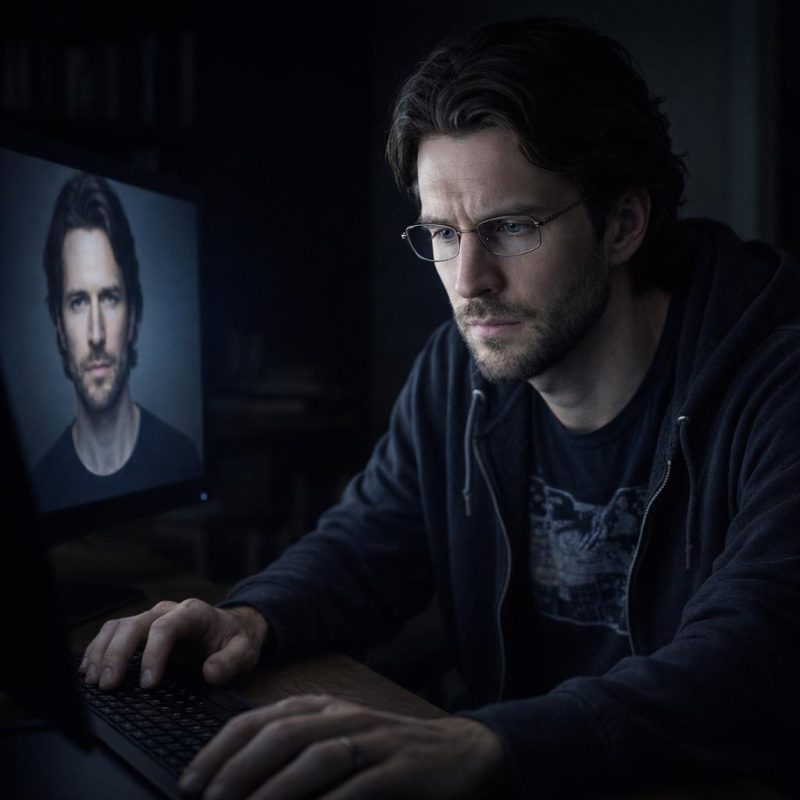 Image by RM AI
Photographing the Evidence
I set my alarm for 2:45 AM and didn't actually sleep. By three I was outside, phone in hand, moving along the edge of the driveway in the dark. The Mercedes was still there, same spot it had been for two days. I pulled up the camera app and switched to night mode. My hands were shaking badly enough that the first three shots were blurred. I steadied myself against the fence post and tried again. Through the window, the server racks came into focus — clean, deliberate rows of equipment, LED indicators blinking in slow cycles. I moved around the car, shooting from different angles. I got the rack labels. I got what looked like model numbers on the chassis faces. I got the cable bundles running along the floor where the rear seats used to be, and the small cooling unit mounted where the trunk partition had been cut away. I zoomed in until the image started to pixelate, then backed off one step. Twelve photos. Maybe fifteen. I uploaded everything to encrypted cloud storage before I'd even walked back inside. Then I looked at the last wide shot I'd taken and noticed something I hadn't registered in the moment — my own face reflected in the passenger window, lit blue by the LED glow, staring back at me.
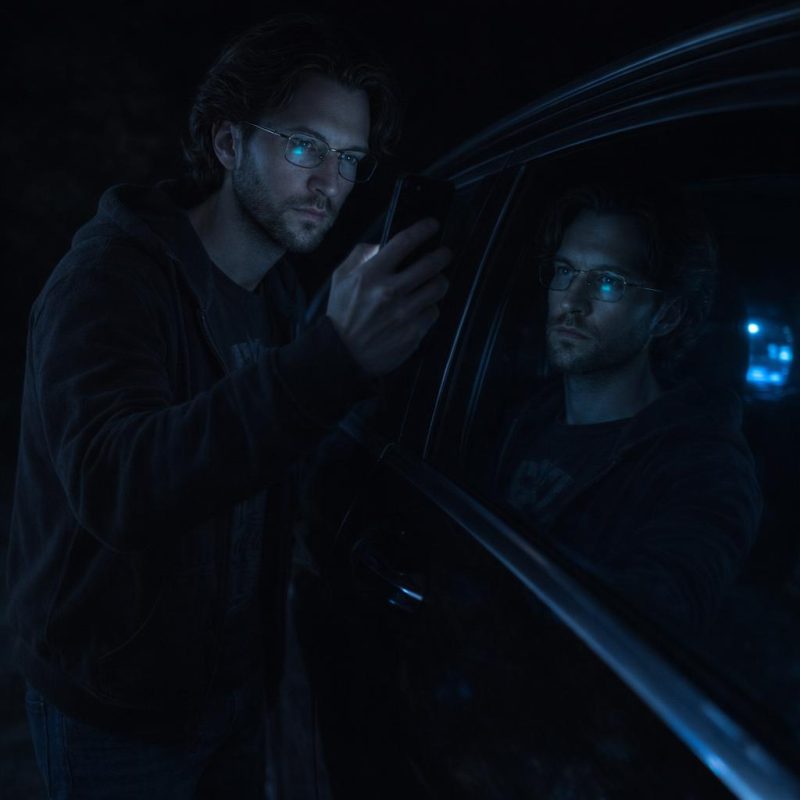 Image by RM AI
The Encrypted Backup
I spent the next two hours building the archive. Every photo, every spreadsheet tab, every timestamped note I'd written since the first package went missing — compressed, encrypted, uploaded to three separate cloud accounts I'd registered under names that weren't mine, using a VPN and a prepaid card I'd bought with cash six weeks earlier. I generated the password with a random string tool and wrote it on a piece of paper I folded into the spine of a paperback on my shelf. I set up a dead man's switch: if I didn't log in to confirm within seventy-two hours, the archive would auto-release to a public drop. Then I opened the emergency access field — the one that lets a second person retrieve the files if something happens to you. I stared at it for a long time. I typed Lisa's email address. My older sister, the only person I trusted without conditions. My finger hovered over the confirm button. I thought about what it would mean for her to receive that archive. What it would mean for her to be connected to any of this. Then I deleted it.
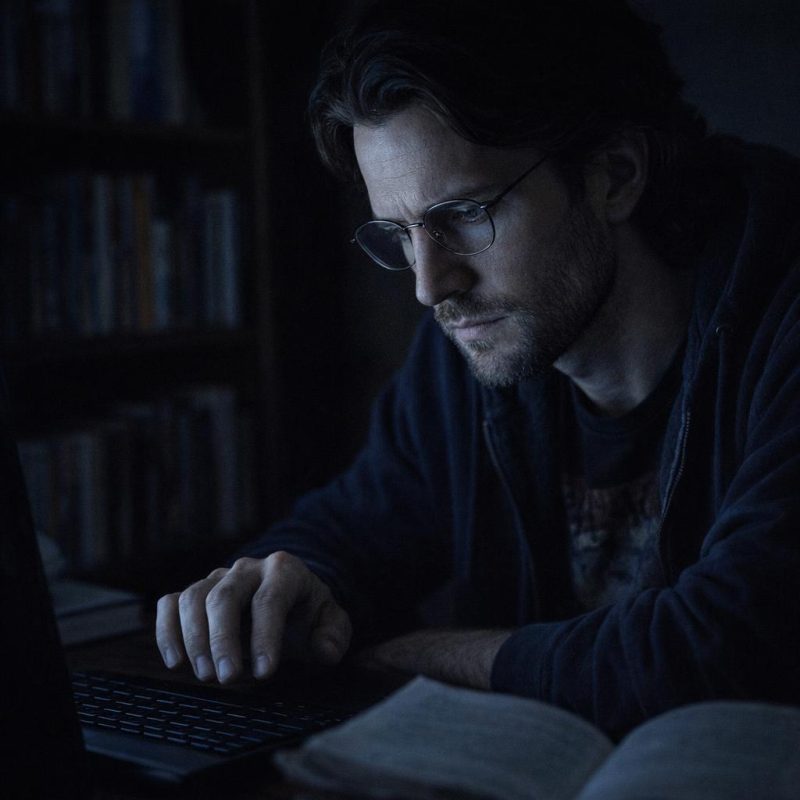 Image by RM AI
The Warning Visit
Torres knocked at 6:40 PM on a Tuesday. I hadn't called her. I hadn't filed anything new. I opened the door and she was in uniform, hands loose at her sides, expression set to something that read as concerned. She said she wanted to follow up in person. She asked if I'd been able to move past the package situation. Then she mentioned, almost as an aside, that she'd had a few neighbors reach out — said they'd noticed me outside at odd hours, taking photos, and they were worried about me. She said it gently. She said stress does things to people, especially when you work alone, especially when you start seeing patterns that might not be there. She suggested I take a break. Step back from whatever I was looking into. She said it like a doctor recommending rest, not like a cop delivering a warning. She left her card on the counter and told me to call if I needed anything. After she left I stood in the kitchen holding her card, turning it over in my fingers. She hadn't threatened me. She hadn't raised her voice. She hadn't said a single thing I could quote back to anyone as proof of anything. She'd just phrased it all so carefully — every word landing softly, wrapped in the language of concern.
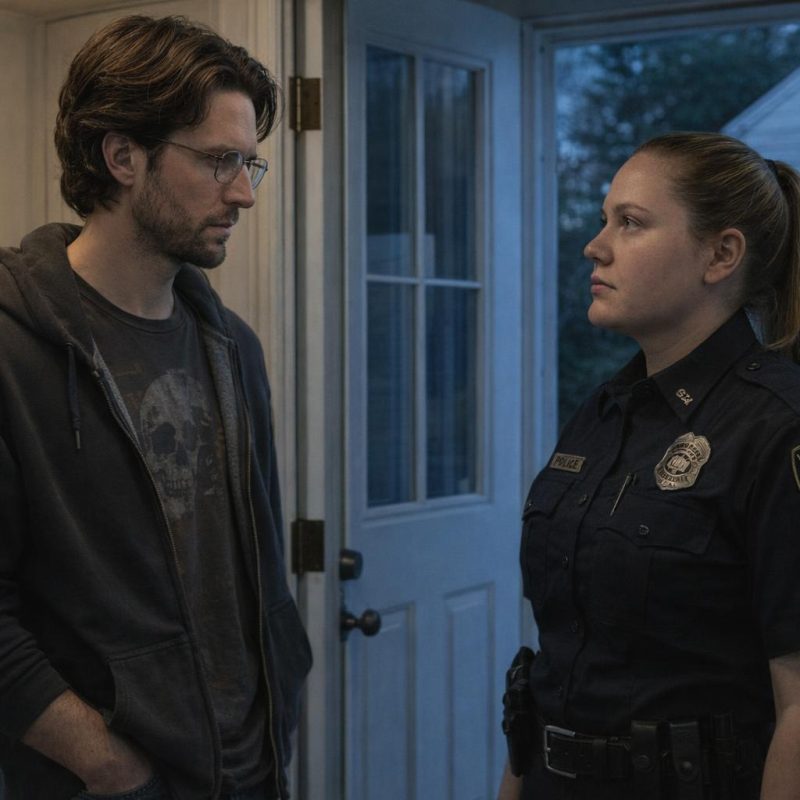 Image by RM AI
The Late Night Meeting
I couldn't sleep after Torres's visit. I'd been lying in the dark for two hours when I saw movement on the street. Mrs. Caldwell. I almost didn't recognize her — she wasn't in one of her floral dresses. Dark jacket, dark pants, moving at a pace that had nothing to do with an elderly woman out for a late stroll. I watched her cross toward Henderson's house. A minute later, Mr. Vasquez came from the other direction, still in athletic gear but without the usual AirPods, no phone in hand. They converged on Henderson's porch at the same moment. Henderson opened the door before either of them knocked. He'd been watching for them. The three of them stood together under the porch light, talking quietly. I couldn't hear words through the glass, just the low murmur of voices. No one looked around nervously. No one checked over their shoulder. The body language was unhurried, easy — the kind of ease that doesn't come from a single conversation. After about ten minutes they separated, each walking back to their own house without any visible goodbye. I stayed at the window after they'd gone inside, the street empty again. What stayed with me wasn't the meeting itself — it was how they'd stood together, the three of them, comfortable in a way I couldn't quite account for.
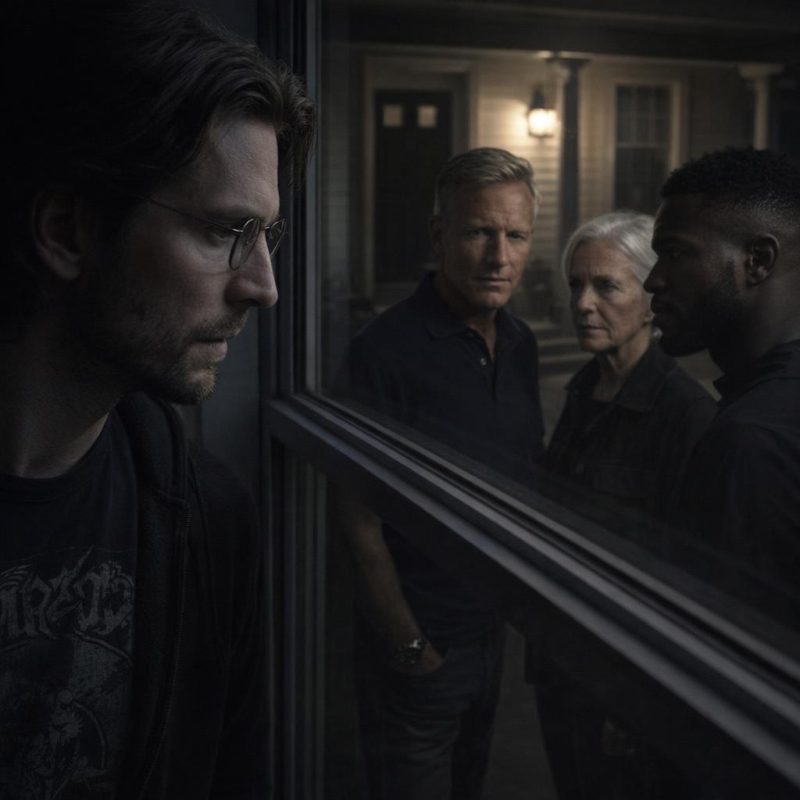 Image by RM AI
The Coordinated Fleet
I'd started keeping a log with timestamps. Not because I thought it would hold up in court — Torres had already shown me what that was worth — but because pattern recognition is the only thing I'm actually good at, and I needed to see the shape of what was happening. At 4:15 PM, an Audi pulled into Henderson's driveway. I noted it. At 4:17, a BMW turned onto the street and parked in front of Mrs. Caldwell's house. I noted that too. At 4:19, a Porsche rolled past my window and stopped at Mr. Vasquez's property. Four minutes. Three cars. Three separate addresses. I pulled up my spreadsheet and started cross-referencing against previous entries. The pattern was there — different days, same tight clustering, always within a few minutes of each other. I'd been watching Henderson's driveway like it was the whole picture. It wasn't. Whatever was happening, it seemed to reach across more than one house on this street. I was still processing that when my screen flickered. Then the browser dropped. Then the Wi-Fi indicator went gray. I checked my phone — no signal, no data, nothing. I looked back out the window just in time to watch all three neighbors step out of their front doors at the same moment, and then my internet died completely.
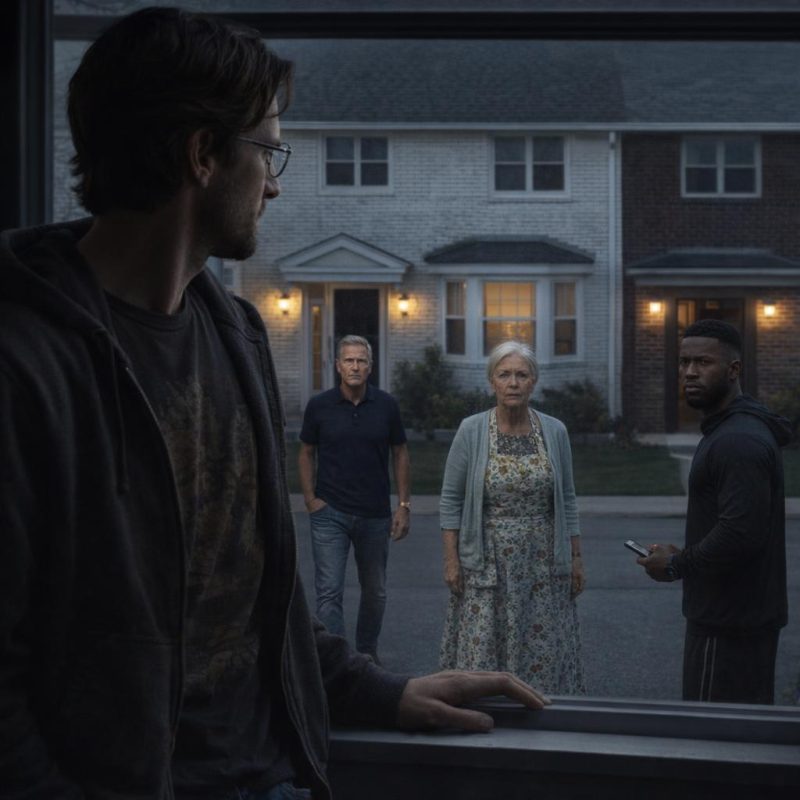 Image by RM AI
The Sister's Visit
Lisa showed up Saturday morning with two bags of groceries and that look she gets — the one that means she's already decided something is wrong and is waiting for me to confirm it. I'd spent the hour before she arrived closing browser tabs, minimizing spreadsheets, stacking printed photos face-down under a pile of tech manuals. The apartment looked almost normal by the time she knocked. We cooked together — she made her chicken thing with the lemon and capers, I handled the rice — and for a while it was easy to just be her brother. She talked about a difficult client, a promotion she was considering, a guy from her gym who kept finding reasons to talk to her. I laughed in the right places. Then she asked how I was doing, and I said fine, tired, work stuff. She looked at me over her wine glass and said I looked like I hadn't slept in a week. I told her the project was intense. She suggested a vacation. I changed the subject back to the gym guy. At one point she went to the bathroom and I drifted to the window without thinking, checking Henderson's driveway. When she came back I was already on the couch. We watched a movie I couldn't follow. The distance between what I was saying and what I was actually carrying sat quietly in the room between us all night.
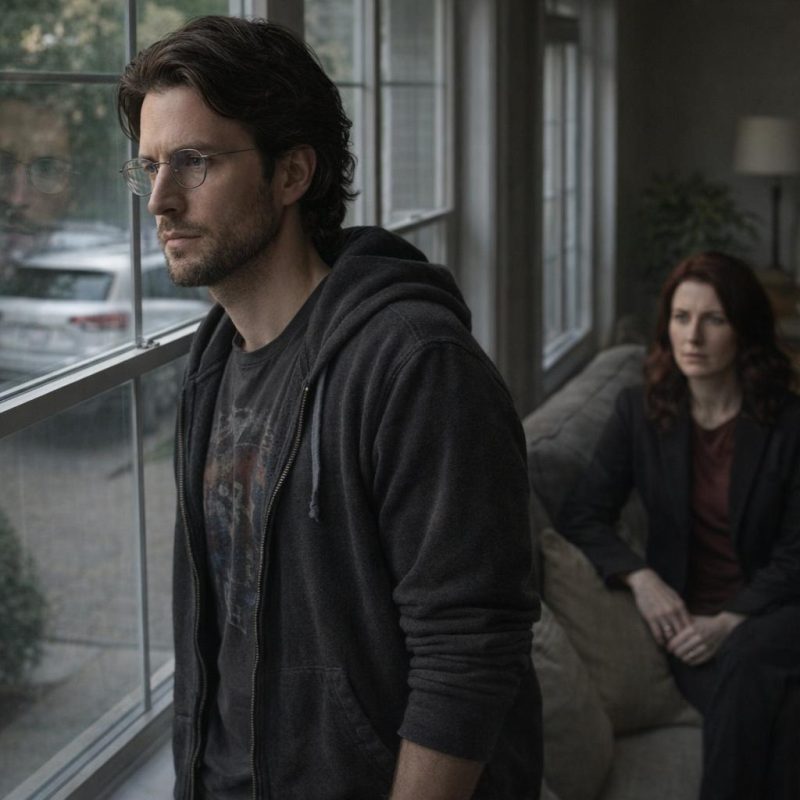 Image by RM AI
The Property Records
Sunday night, after Lisa left, I opened the county assessor's public records portal and started building a proper database. Every house on my street. Owner name, purchase date, assessed value, prior ownership history. It took three hours to pull and format it cleanly, but by midnight I had a spreadsheet that told a story I hadn't expected. Mrs. Caldwell bought her house six years ago. Mr. Vasquez, three years ago. Dr. Patel had been there fifteen years — longest tenure on the block by a wide margin. But the interesting part wasn't the individual dates. It was the clustering. Five properties had changed hands within a four-year window, all cash purchases, all through LLCs with names that resolved to registered agents in Delaware and Nevada. I cross-referenced against the vehicle registration data I'd pulled earlier. Most of the luxury cars that rotated through the driveways were also registered to LLCs — different names, but the same registered agent addresses kept reappearing. I built a visual map. Color-coded by ownership type, with timeline bars showing when each property flipped. Laid out like that, the street looked less like a neighborhood and more like something assembled. I didn't know what it meant yet. But I kept adding data points, kept drawing lines between nodes, and the map kept getting denser. I sat back and looked at what I'd built, and the shape of it felt like the beginning of something I wasn't going to be able to unsee.
 Image by RM AI
The Identical Pattern
I started searching delivery complaint forums and neighborhood watch threads, filtering by my zip code and street address range. It took a while to find anything useful — most posts were generic porch pirate complaints, nothing specific. But then I found three. Different usernames, different posting dates spread across four years, but the same street. The first described a package signed for by a neighbor, then denied when confronted — the signature looked authentic, almost too clean. The second mentioned luxury cars rotating through a nearby driveway and a neighbor who was always friendly but somehow never available when it mattered. The third described a forged delivery confirmation and a landlord who suddenly raised rent two months after the incident. All three posters mentioned moving away. I tried the contact links on their profiles. Two email addresses bounced immediately. The third returned a permanent delivery failure. I pulled up the current property records for the addresses they'd referenced. New owners in all three cases, each transfer completed within four months of the complaint posts going up. The complaints hadn't just stopped — the people who filed them had stopped existing on this street entirely. I checked the dates again, then checked the new ownership records again, then sat very still for a moment. The previous residents who'd filed those complaints weren't just gone — their forwarding addresses in the county records led nowhere I could verify.
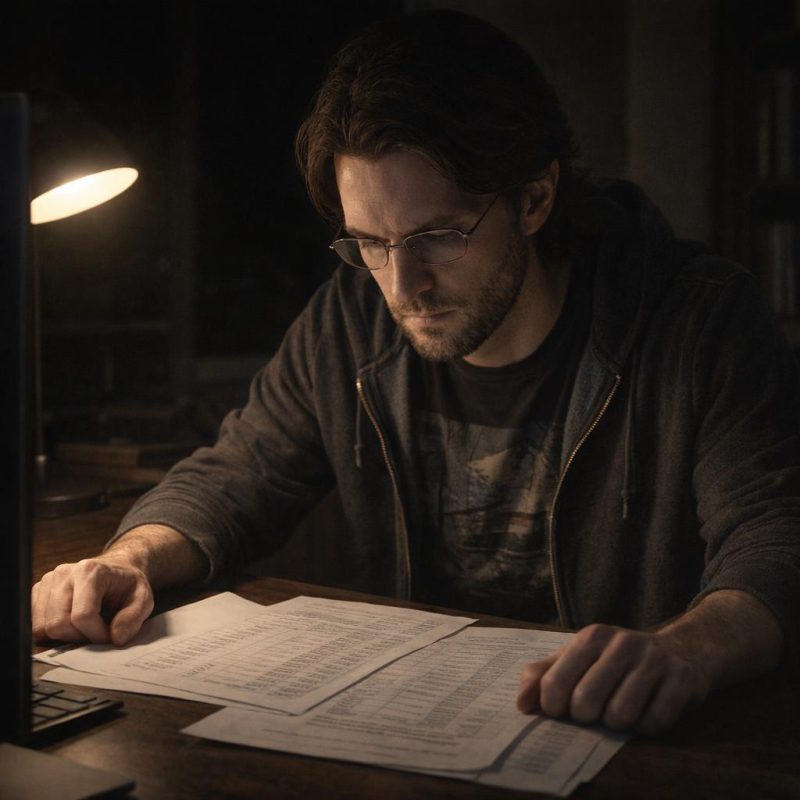 Image by RM AI
The Complete Shutdown
Monday morning I woke up and the internet was completely dead. Not slow — dead. Every device showed the same thing: connected to the router, no signal beyond it. I called the ISP. Their system showed no outage anywhere in my area. They offered to send a technician, and one arrived faster than I'd ever seen — under two hours, which felt off on its own. He tested the line at the junction box on the street. Active signal, strong and clean. He came inside and tested at the router. His meter showed data transmission occurring — packets moving, throughput registering. He frowned at it for a long time. He said the line was live, data was flowing, but it wasn't reaching my devices. He used the phrase 'redirected or intercepted at the equipment level' and then immediately walked it back, said it was probably just a faulty router. He swapped in a new unit from his truck. Same result. He tested again. Same readings — active transmission, nothing arriving at my end. He filed what he called an 'unusual configuration report' and said someone from the technical escalation team would follow up. He left looking genuinely puzzled. I stood in my living room staring at the new router's blinking lights, and his meter still sitting on my counter showed my line transmitting data I wasn't sending.
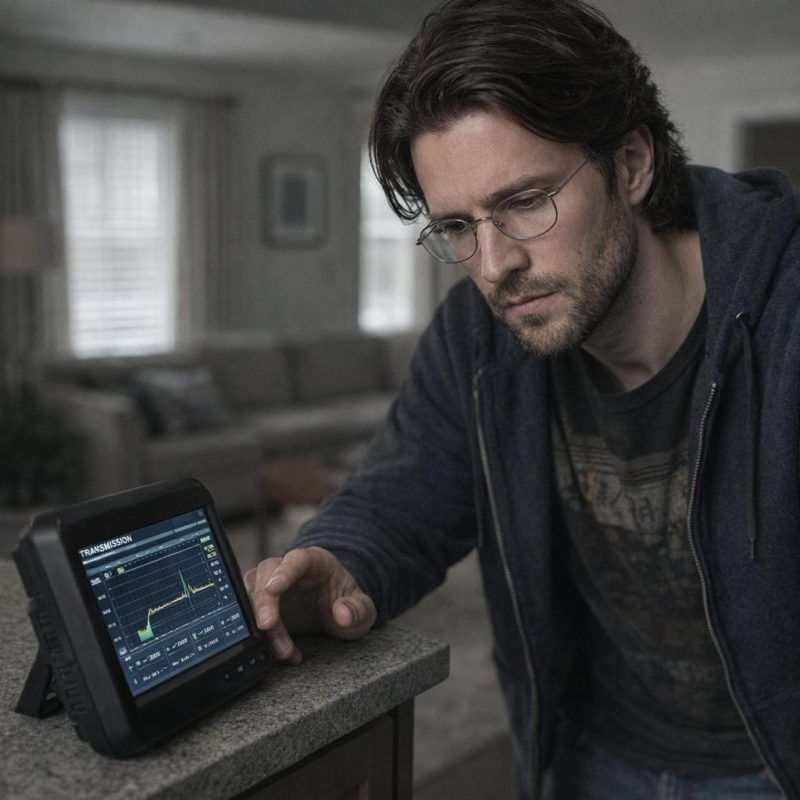 Image by RM AI
The Neighborhood of Ghosts
I used my phone's hotspot and spent six hours pulling everything together. Property records, LLC registrations, vehicle data, the forum complaints, the ownership timelines — all of it loaded into one document. And then I saw it. Every house that had flipped in that four-year window showed the same pattern: new owner, no prior digital footprint, LLC-registered vehicles, luxury cars rotating on a schedule. Not just Henderson. Not just Mrs. Caldwell and Vasquez. Seven properties. Then I checked the remaining houses and found the same signatures in the registration data. Fourteen addresses total. I thought about Mrs. Caldwell bringing cookies the week I moved in, asking which room faced the street. I thought about Dr. Patel's long story about the neighborhood's history, how he'd named every family who'd ever lived here. I thought about Vasquez jogging past my window every morning at the same time, AirPods in, eyes forward. The midnight meeting in Henderson's driveway wasn't a one-off. The coordinated car arrivals weren't coincidence. Every interaction I'd catalogued — the waves, the chats, the small friendly gestures — had been surveillance dressed as neighborliness. The entire street was a distributed criminal network, each house a node, each neighbor operating under a stolen name with a specialized role. I was surrounded. I'd been surrounded since the day I moved in. I was still sitting with that when the porch lights on every house on the block came on in sequence, one after another, east to west, like a signal running down a wire.
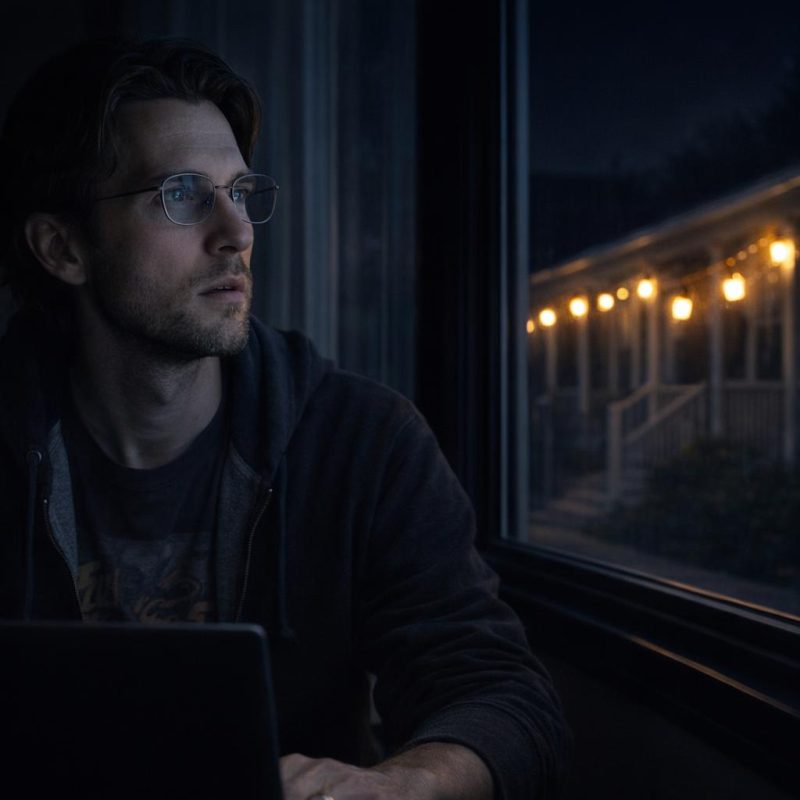 Image by RM AI
The Stolen Names
I started with Henderson. Searched his name against obituary databases, missing persons registries, social security death index. Robert Henderson — there was one in Seattle, reported missing in 2016, last seen leaving a storage facility. No body recovered. Clean credit history, no criminal record, owned a small landscaping business. I moved to Vasquez. David Vasquez, drowning victim, Clearwater Florida, 2017. Survived by a sister in Tampa. The obituary had a photo — nothing like the man jogging past my window every morning. Dr. Patel's name matched a retired physician in Tucson who died of cardiac failure in 2013. His colleagues had published a small memorial in a medical journal. I found it in thirty seconds. Then Mrs. Caldwell. Patricia Caldwell. I almost missed it because the accident was in Denver and I'd been searching locally. December 2015, icy overpass, single vehicle. She was sixty-three. The article had her photo — a woman with white curly hair and glasses on a beaded chain, smiling at what looked like a church fundraiser. I sat there looking at that photo for a long time. The woman tending the garden next door, the one who'd handed me cookies through a cracked door and asked which direction my bedroom window faced, was wearing that dead woman's name.
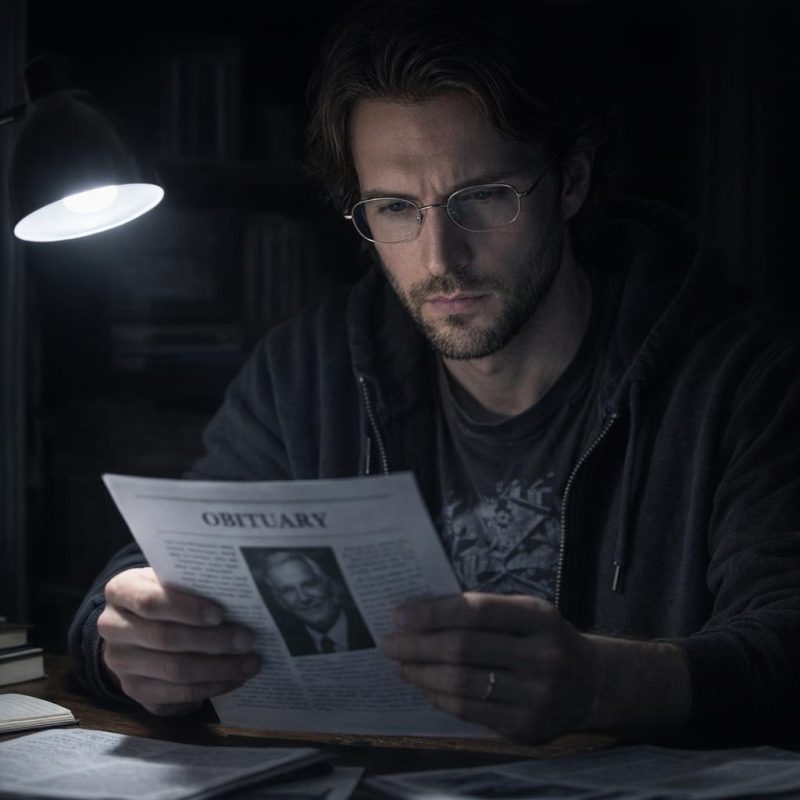 Image by RM AI
The Network Map
I built the network diagram properly this time — not a spreadsheet, an actual node graph. Fourteen houses, each one a vertex. I drew edges between them based on the LLC registration overlaps, the vehicle rotation schedules, the coordinated light signals I'd now logged three times. Henderson sat at the center. Every major connection ran through his address first. Mrs. Caldwell's node connected to Henderson's with the highest frequency — her house appeared in the vehicle rotation logs more than any other, which fit if she was handling scheduling and logistics. Vasquez's connections were mostly technical: his property showed up in the LLC registration chains for the server vehicles, and his jogging routes, when I mapped them against my window-observation logs, covered every house on the street in a single pass. Dr. Patel's edges were different — fewer, but they connected to external nodes I'd flagged as medical documentation sources. The ring wasn't just stealing identities. It was manufacturing them. Clean credit histories, medical records, professional backgrounds — all of it built from the bones of people who couldn't object anymore. My own data was somewhere in that system, one thread among hundreds being processed and sold. The diagram filled my screen, dense and precise and terrible. I sat back and looked at the whole thing, and the completeness of it — how nothing was missing, how every piece locked into every other piece — was the worst part of all.
 Image by RM AI
The Partial Replacement
I pulled my credit reports through my phone hotspot, all three bureaus. The first one loaded and I counted the accounts. Three credit cards I had never applied for — two opened eight months ago, one six months ago. All showing on-time payments, low utilization, responsible activity. A bank account at an institution I'd never walked into. A personal loan application submitted with my employer information, my salary, my address — all accurate, all current. I checked the email accounts associated with the flagged activity and found password reset attempts on four of my real accounts, all from the same IP block, all timestamped between 2 and 4 AM. There was a backup recovery email address attached to my primary account that I had never created. I searched my name in a tenant screening database I had access to through work. Three rental applications, two cities, apartments I had never visited. My medical records portal showed four appointments at a clinic forty minutes away, dates going back seven months. My credit score was eleven points higher than the last time I'd checked. The accounts were current, the payments clean, the profile tidy — whoever held my name in their system was keeping it in better shape than I ever had. I sat there with the credit report still open on my screen, looking at the life someone else was living in my name, and the wrongness of it had no bottom I could find.
 Image by RM AI
The Redirected Call
I looked up the FBI field office number through three different search engines, cross-referencing the results to make sure I had the right one. My hands were steadier than I expected when I dialed. The call connected on the second ring — faster than I'd anticipated. The agent identified himself, asked how he could help, and I started talking. I laid out everything: the vehicles, the server racks, the identity accounts, the neighborhood structure. He asked good questions. Detailed questions. He wanted documentation emailed to a specific address, asked me to spell my name twice, confirmed my home address. His tone was measured, professional, reassuring in exactly the right places. He promised a follow-up within forty-eight hours and gave me a badge number when I asked. I wrote it down. After the call I searched the badge number and got nothing — no directory match, no federal employee record, nothing. I called the callback number he'd given me and it rang to a generic voicemail. I sat there staring at my notes, replaying the call sentence by sentence, and something cold settled in my chest — his answers had come half a beat too fast, too smooth, like someone reading from a script they'd already memorized.
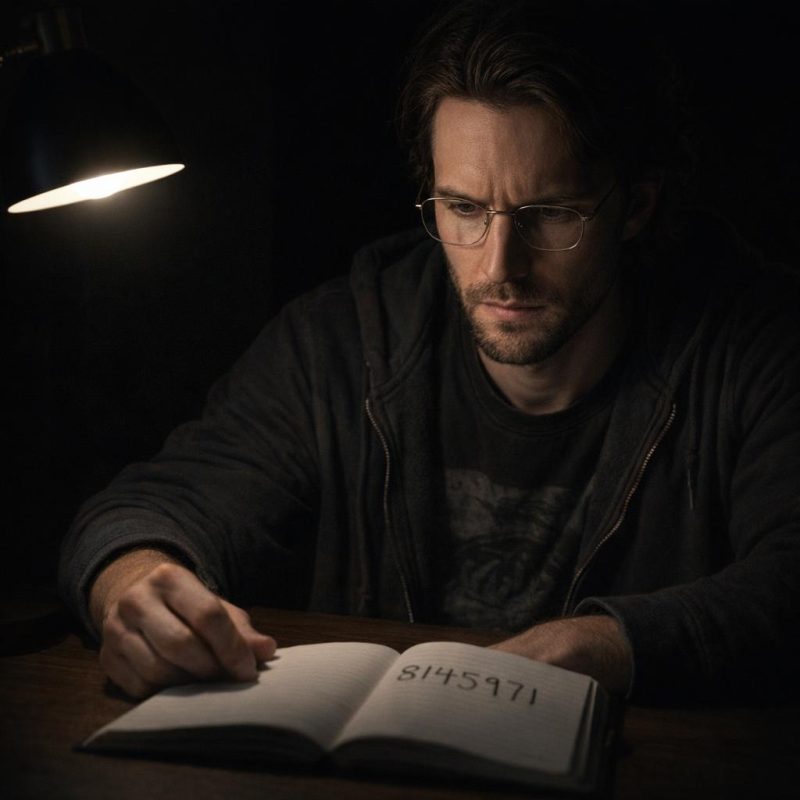 Image by RM AI
Henderson's Second Offer
Henderson knocked at eight on the dot. He didn't wait for me to say come in — he just opened the door and sat down on my couch like he owned the place, which I suppose, in every way that mattered, he did. He told me he'd heard I'd been busy. He said it the way you'd compliment a kid who'd figured out a card trick. He slid a folder across the coffee table: revised terms, a higher percentage, a cleaner arrangement. Then he opened his phone and showed me a photo. The man in it looked enough like me that my stomach dropped — same build, same glasses, same general dishevelment. Henderson said he'd been in training for two months. He knew my coffee order, my keyboard shortcuts, my habit of trailing off mid-sentence when I was thinking. He'd read two years of my emails. Henderson explained this was standard procedure. Previous residents who'd declined had simply stepped aside, one way or another, and the operation had continued without interruption. He said I had until Friday. Three days. He stood, straightened his jacket, and said, almost gently, that my replacement was already fully trained and ready to go.
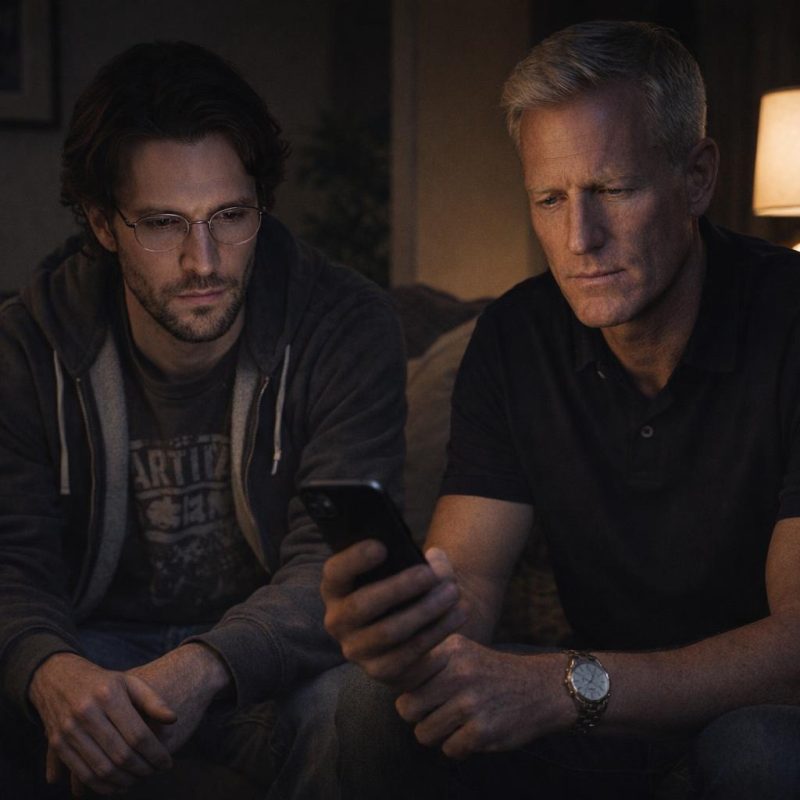 Image by RM AI
The Evidence Gathering
I waited until 2 AM. Dark clothes, rubber-soled shoes, USB drives in my jacket pocket along with a flathead screwdriver and my phone set to silent. I moved across the lawn in short bursts, staying low, keeping to the shadow line between the streetlights. Henderson's Mercedes sat in the driveway like it always did, patient and enormous. I photographed the server racks through the window first, flash off, letting the ambient glow from the equipment do the work. Then I found the external access panel on the rear quarter and popped it with the screwdriver. The port was right where I'd guessed it would be. I plugged in the drive and watched the copy progress in the dim light — routing tables, transaction logs, account structures, timestamps going back fourteen months. I pulled the drive when it hit a hundred percent and moved to Mrs. Caldwell's property, photographing the BMW interior, documenting every plate and VIN on the street, collecting discarded mail from the recycling bin near her gate. I recorded video of the synchronized porch light system, slow pan, steady hands. Back in my apartment I copied everything to three separate drives and hid them in different locations. I sat on the floor with my back against the wall, and the weight of the drive in my jacket pocket felt like the only solid thing I had left.
 Image by RM AI
The Drained Accounts
I drove to a coffee shop two towns over and used their Wi-Fi to check my accounts. The checking balance was off — not dramatically, not in a way that would have triggered anything automatic. I pulled the transaction history and started counting. Forty-three withdrawals over six weeks, each one under fifty dollars, spread across different merchants, different times of day. The savings account showed the same pattern, smaller amounts, longer intervals. The retirement account had a loan drawn against it that I had never initiated — the paperwork showed my digital signature, my security questions answered correctly, my device fingerprint. The credit cards had cash advances I hadn't made, each one just under the threshold that would have flagged for review. I added it up on a notepad. Fifteen thousand, two hundred and change, gone in increments so small and so clean that the banks' own systems had waved them through. I called the fraud line. I was on hold for twenty-two minutes. When someone finally answered, they told me the transactions appeared authorized. I called a second bank. Same answer. My own digital identity was being used to confirm that everything was fine, that I had done all of this myself. The precision of it was what stayed with me — not the amount, but the patience, the exact calibration of each transaction to land just below the threshold that would have made anyone look twice.
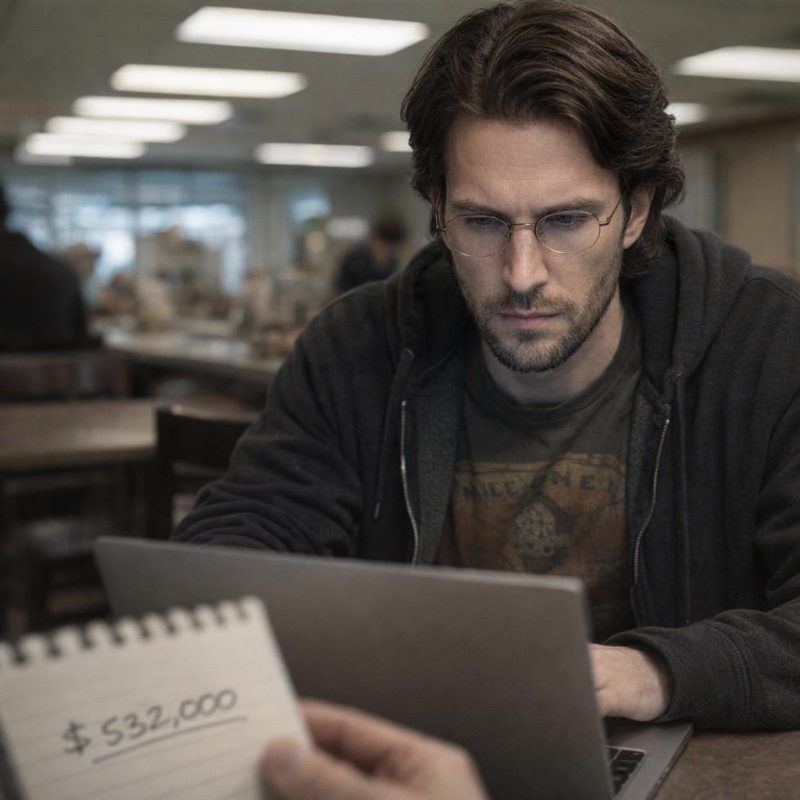 Image by RM AI
The Confrontation
I walked over Thursday evening with the printed documentation under my arm and three USB drives in my pocket. Henderson was watering his front lawn, and he looked up when he heard me coming without any surprise on his face at all. I told him I had everything — the server logs, the routing tables, the account structures, the VIN numbers, the transaction records. I told him I'd made copies and hidden them where he wouldn't find them, and that I was taking all of it to federal authorities outside the area, outside whatever communications net he'd built around this neighborhood. He turned the hose off. He listened to the whole thing without interrupting. Then he asked, quietly, whether I'd thought through what exposure would actually look like for me — a man whose digital identity was already compromised, whose accounts showed transactions he'd have to explain, whose name was on applications in two cities. He pointed out that I was not, from the outside, a clean witness. I told him I didn't care. He smiled at that — not a mocking smile, just a small, patient one — and said I was braver than most people who'd stood where I was standing. He suggested I sleep on it before Friday. I looked back at the houses on either side of the street and saw faces at windows, figures on porches, everyone watching, and Henderson's calm hadn't shifted by a single degree.
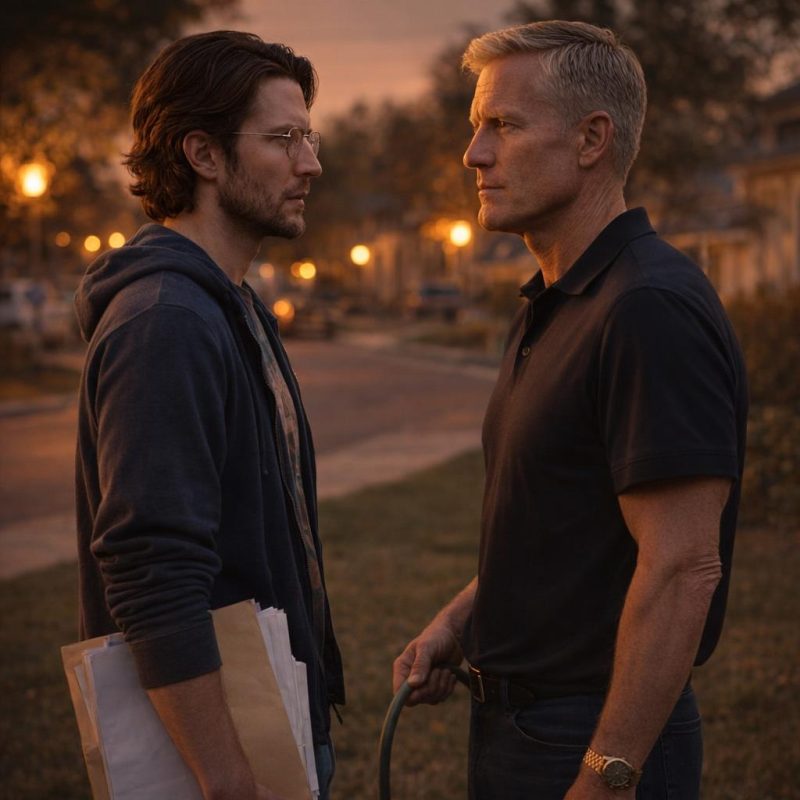 Image by RM AI
The Active Replacement
Henderson invited me inside. I followed him because I didn't know what else to do. He pulled up a laptop on his kitchen counter and turned it toward me. It was a live security feed from my office building — the angle looked like a camera mounted near the elevator bank on my floor. A man was sitting at my desk. He was wearing a grey hoodie, my glasses prescription give or take, and he was leaning back in my chair the way I do when I'm on a long call, one hand on the back of his neck. Henderson said he'd started that morning. He'd told my manager I needed better bandwidth and would be coming in from the office for a few days. Henderson scrolled through a thread of Slack messages the replacement had sent from my account — the syntax was close enough that I felt sick reading it. He showed me two social media posts made from my phone in the last four hours. Then Henderson closed the laptop and said this was what the transition looked like when it was running smoothly, and that most people on the outside never noticed the difference. I stood there trying to think of something to say. My phone buzzed in my pocket. I pulled it out. It was a text from my project manager saying thanks for the great presentation this morning, that the client had loved it.
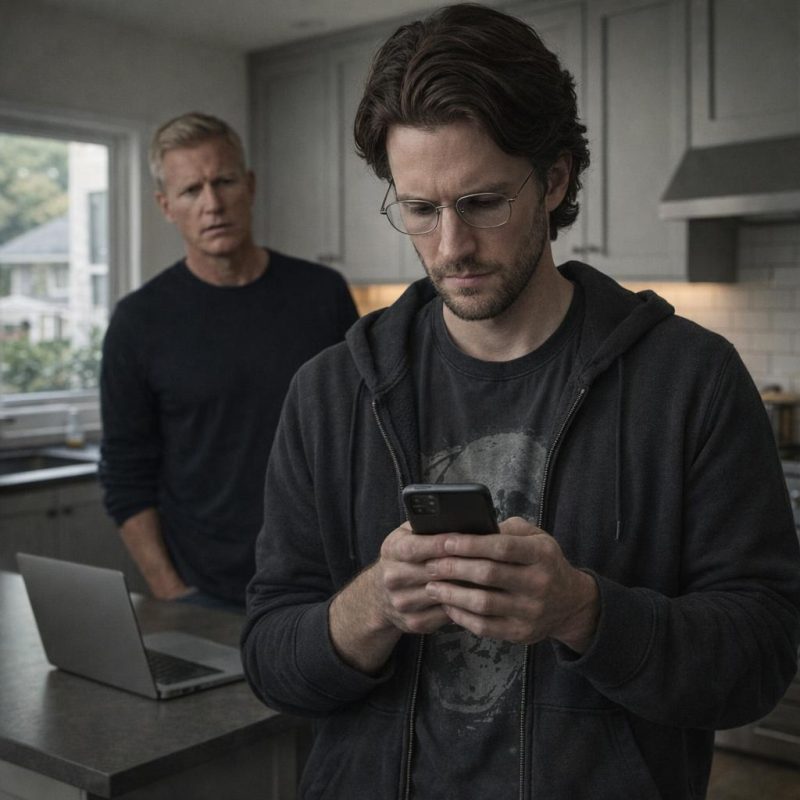 Image by RM AI
The Desperate Sabotage
I ran back to my apartment and pulled the tire iron out of the closet. I didn't think about it. I just ran. Henderson was still on his porch when I came back across the lawn at full speed, and he stepped aside without a word, like he'd been expecting this. I swung the tire iron into the Mercedes window and the glass came down in a sheet. I reached in and started pulling — server racks, cables, drives, anything I could get my hands on. I threw two hard drives onto the driveway and heard them crack. I ripped out a network switch and smashed the LED display on the nearest rack. Then I heard it: a high-pitched whine, rising fast, and progress bars appeared on the screens I hadn't destroyed yet. Upload in progress. Henderson said from the porch that every drive had real-time cloud backup, that the data existed in dozens of locations simultaneously, that I was essentially rearranging furniture. I kept smashing anyway because I had nothing else. Neighbors had come out of their houses and were standing on their lawns watching, arms folded, no one reaching for a phone. When I finally stopped, breathing hard, standing in broken glass and bent aluminum, Henderson walked over and said, almost appreciatively, that I'd just helped him identify a hardware vulnerability he'd been meaning to address. On the remaining screens, the upload bars read one hundred percent.
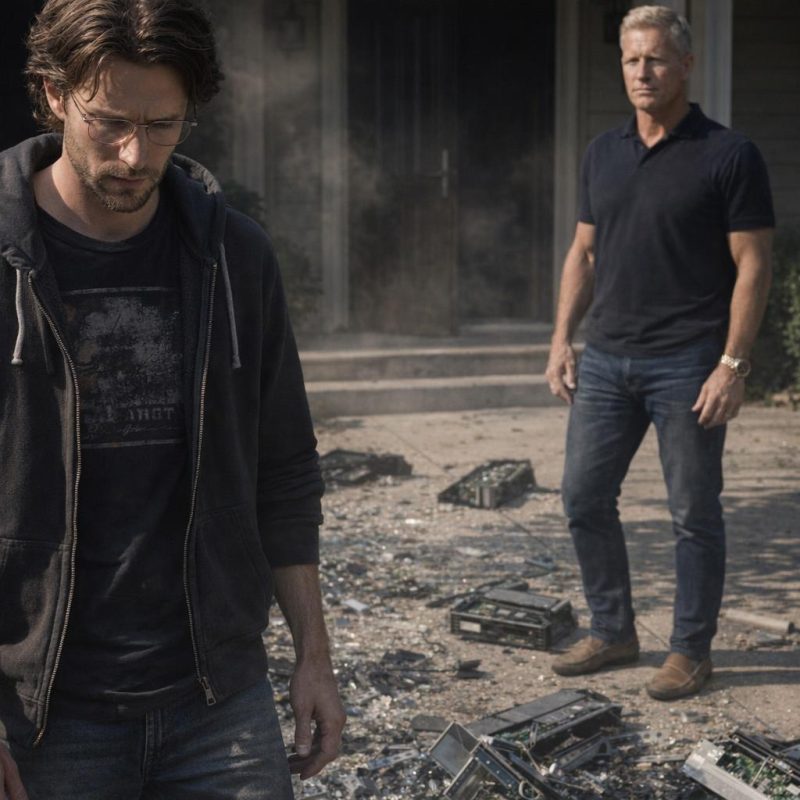 Image by RM AI
The Closing Circle
I looked up from the wreckage and they were already moving. Mrs. Caldwell came first, crossing her lawn in her floral dress, garden gloves still on her hands. Mr. Vasquez jogged over from the far end of the block in his running gear, AirPods in, like he'd just finished a route. Dr. Patel came last, moving slowly, that warm grandfather smile in place, hands clasped behind his back. Others I recognized from two years of waves and nods emerged from every house on the street. They arranged themselves around me without rushing, without raising their voices, without any visible anger about the destroyed equipment. Henderson stood at the edge of the circle and introduced each of them by function — Mrs. Caldwell on logistics and mail interception, Mr. Vasquez on technical infrastructure and encryption, Dr. Patel on medical records and documentation. The others handled financials, legal paperwork, identity maintenance. They spoke about it the way people talk about project management. Detached. Professional. Satisfied. No one touched me. No one threatened me. They just stood there, patient and unhurried, every familiar face from the last two years wearing the same calm expression. I turned slowly, looking for a gap, a driveway, a path between houses, any opening at all. I counted fourteen of them standing in a perfect circle around me, and every exit was gone.
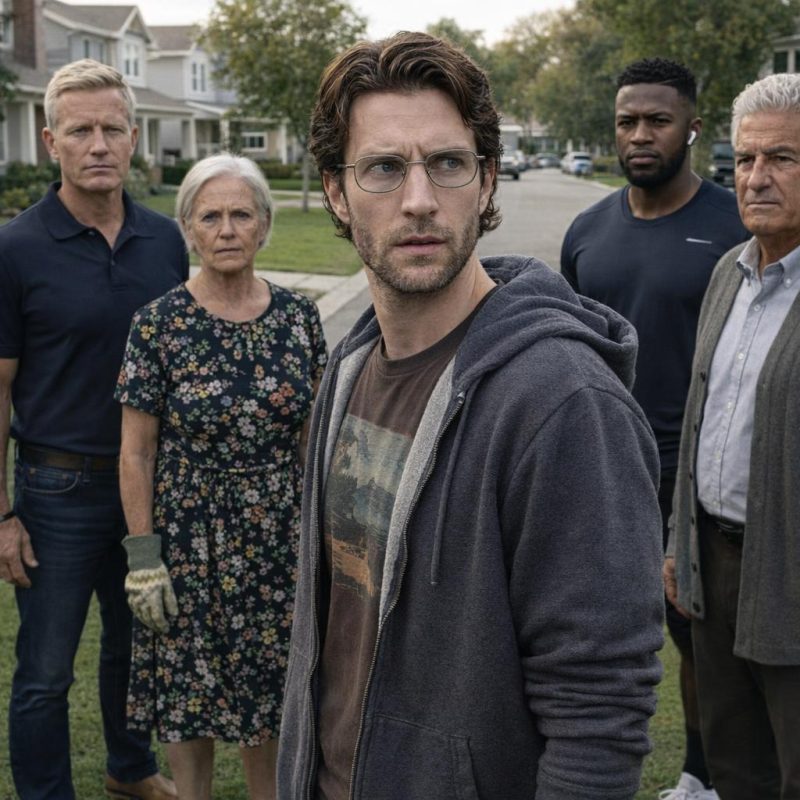 Image by RM AI
The Final Ultimatum
Henderson checked his watch without any drama. "Nine forty-seven," he said. "You have until ten." Thirteen minutes. He laid it out the way you'd explain a software licensing agreement — Option A, Option B, terms and conditions. Option A: I stay. Keep my job, my house, my name. Allow the routing to continue, sign for packages, attend the briefings. Monthly deposits to an offshore account, enough to retire in five years. My replacement gets reassigned to Portland, someone else's problem. Option B: I refuse. The replacement steps in, I get a new identity in another state, and everything I've built — my accounts, my career, my relationships — transfers to whoever's been waiting two blocks away. I start over with nothing, no proof I was ever who I said I was. And if I try to expose any of it, my own compromised identity becomes the evidence against me. I'm the thief. I'm the fraud. Henderson said most people choose Option A after they understand Option B. A few chose replacement and disappeared quietly. None of them ever successfully exposed the operation. He said it without gloating, the way you'd cite historical data. Mrs. Caldwell nodded. Dr. Patel folded his hands. Mr. Vasquez stared at his phone. "The replacement," Henderson said, "is parked on Birchwood, two blocks east."
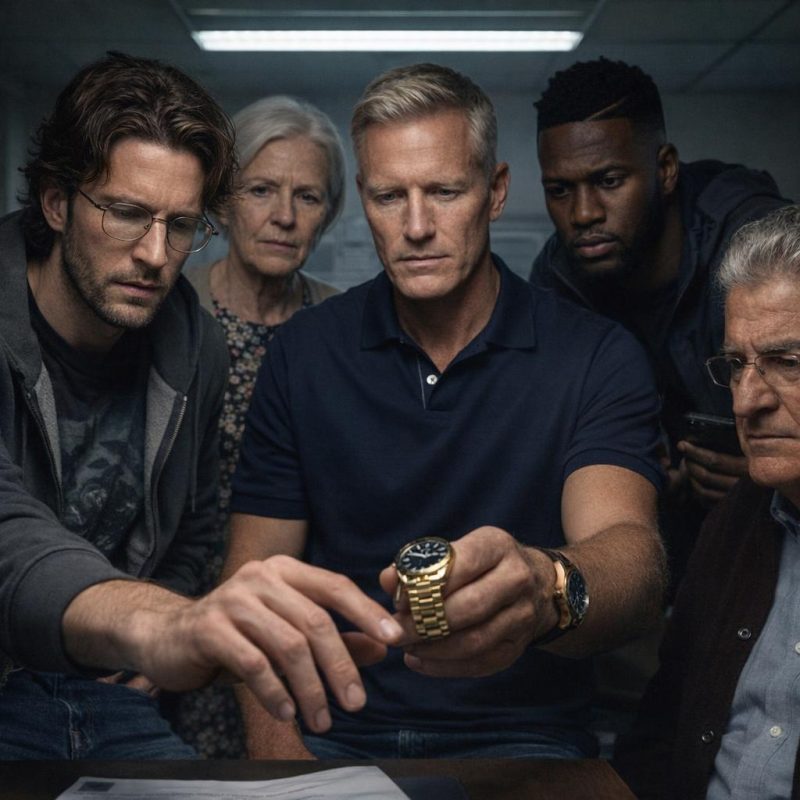 Image by RM AI
The Choice
I stood there and ran the numbers the only way I knew how. Running wasn't viable — fourteen people, one exit, and my legs already felt like bad code, full of errors. Calling Lisa meant pulling her into something she couldn't survive knowing. Going to the police meant Officer Torres, and I already knew how that ended. I thought about the replacement sitting in a car two blocks away, some other guy with a clean credit score and a quiet life, about to inherit mine. I thought about starting over in a state I'd never been to, with a name that belonged to a dead person, with zero proof I'd ever existed as myself. I thought about the victims — the real ones, the people whose data was already flowing through my router, whose lives were already fractured. Joining didn't fix that. It just added my name to the list of people who looked the other way. But refusing didn't fix it either. Refusing just meant someone else stood in my driveway and did the same thing with a cleaner conscience. I looked at Henderson. He wasn't impatient. He wasn't nervous. He was just waiting, the way a server waits for a response that's already been determined by the architecture. I said yes. The word came out flat and small, and the circle around me relaxed like a system returning to idle, and the weight of what I'd just agreed to settled into me and didn't move.
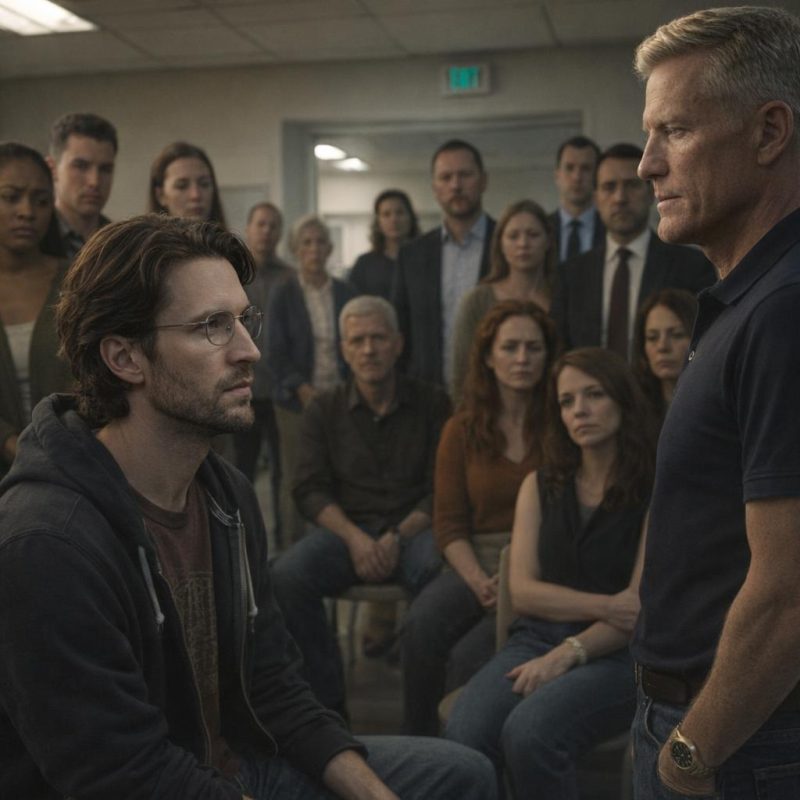 Image by RM AI
The New Normal
Three months in, I had a rhythm. Wake up, open the laptop, let the connection do what it was going to do. Sign for packages addressed to names I didn't recognize, stack them in the entryway, text Mr. Vasquez when the pile got high. Attend the Thursday evening meetings in Henderson's living room, where Mrs. Caldwell ran through routing schedules on a whiteboard like a project manager hitting her quarterly targets. The offshore account grew. I paid off my student loans in a single transfer and felt nothing. Mrs. Caldwell brought snickerdoodles to one of the briefings and we talked about bandwidth allocation while I ate three of them. I stopped keeping the spreadsheet. I stopped photographing license plates. I stopped caring when the Wi-Fi dropped at 2 AM because I already knew exactly what it meant and exactly who was using it. I called Lisa on a Sunday and told her things were finally looking up, that the neighborhood had turned out to be great, that I was sleeping better. All of it was true in the most useless possible way. The luxury cars rotated through the driveways on their usual schedule, and I watched them from my office window without writing anything down, and the hollow comfort of that — of knowing and doing nothing — had become the closest thing I had to peace.
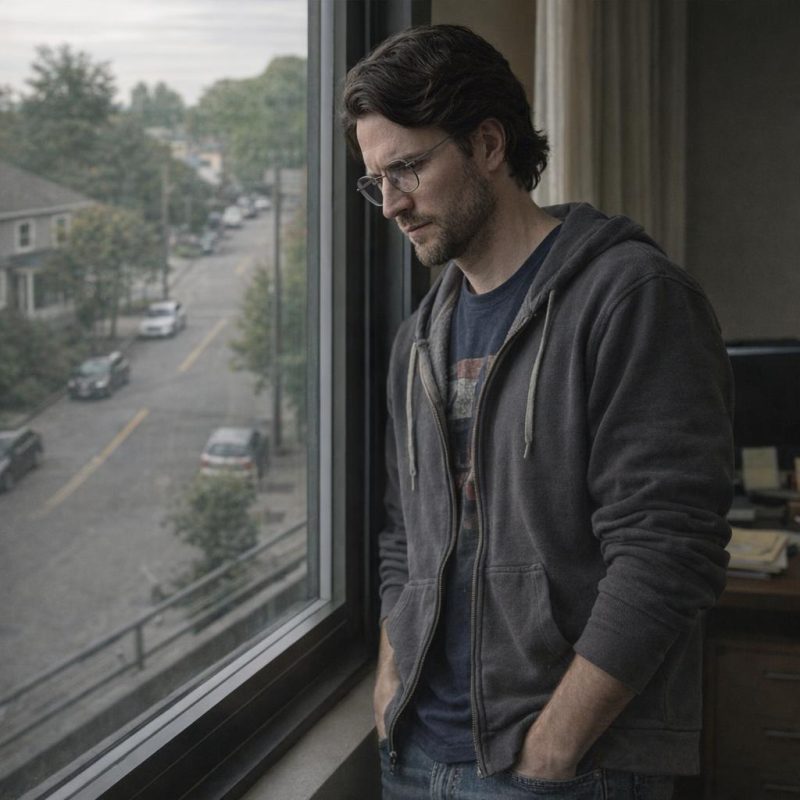 Image by RM AI
The Man in the Mirror
Six months after I said yes, I was sitting at my desk at eleven at night when the monitor went dark for a second — a power fluctuation, nothing serious — and I saw my own face reflected back at me in the black screen. I didn't recognize him right away. That sounds dramatic, but it's just true. The guy looking back had the same wire-frame glasses, the same dark circles, the same hoodie. But the man I remembered — the one who filled notebooks with license plate numbers and stayed up until 3 AM cross-referencing VINs — he was gone. I'd told myself I was surviving. I'd told myself there was no other move. Maybe that was even accurate. But the people whose data ran through my connection every night hadn't been given a choice at all, and I was the one cashing the deposits. I wasn't Henderson's victim anymore. I was his colleague. The neighborhood would keep running after I was gone — new residents, same ultimatum, same circle, same thirteen minutes. Some would join. Some would disappear. The operation didn't need loyalty. It just needed compliance, and compliance turned out to be the easiest thing in the world to manufacture. I'd spent months terrified that someone was stealing my identity. It turned out the theft that actually mattered wasn't anything Henderson had taken — it was what I'd handed over myself.
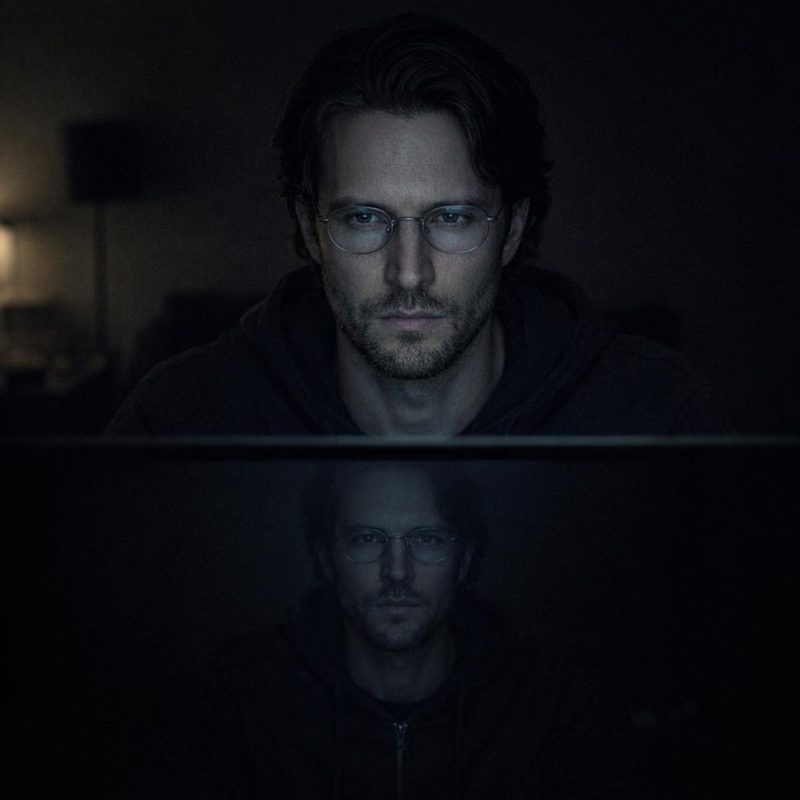 Image by RM AI
KEEP ON READING
From Heroes To Zeroes 20 Historical Figures Whose Heroism Was…
History is full of legends, but not every hero lived…
By Noone Feb 25, 2026
The Clueless Crush: How I Accidentally Invited a Hacker Into…
Fluorescent Lights and First Impressions. My name is Tessa, I'm…
By Ali Hassan Nov 4, 2025
This Infamous Ancient Greek Burned Down An Ancient Wonder Just…
History remembers kings and conquerors, but sometimes, it also remembers…
By David Davidovic Nov 12, 2025
Einstein's Violin Just Sold At An Auction—And It Earned More…
A Visionary's Violin. Wanda von Debschitz-Kunowski on WikimediaWhen you hear…
By Ashley Bast Nov 3, 2025
The Mysterious "Sea People" Who Collapsed Civilization
3,200 years ago, Bronze Age civilization in the Mediterranean suddenly…
By Robbie Woods Mar 18, 2025
Why the Titanic Didn’t Have Enough Lifeboats
Willy Stöwer on WikimediaThe Titanic disaster is often remembered as…
By Emilie Richardson-Dupuis May 21, 2026