


My Sister Excluded Me From Her 60th Birthday Party—Then I Got a Voicemail That Changed Everything
My Sister Excluded Me From Her 60th Birthday Party—Then I Got a Voicemail That Changed Everything
The Pattern I Couldn't Ignore
I spent three weeks planning ways to celebrate Janine's sixtieth birthday, which probably tells you everything you need to know about our relationship. I'd text her suggestions—a weekend trip to that spa she'd mentioned once, dinner at the new French place downtown, even just a small gathering at my house with her closest friends. Each message got the same response: 'Oh, Celeste, you don't need to make a fuss.' Or 'I'm really not doing anything this year.' Or my personal favorite, 'You know I hate being the center of attention.' I'd scroll back through our conversations and wonder if I was the only one who saw the pattern. Every birthday of mine she'd remember with a card two weeks late or a text that felt copy-pasted. But hers? I circled the date on my calendar like I was afraid I'd forget my own child's birthday. The last time I suggested brunch—just the two of us, nothing fancy—she actually laughed. Not a warm laugh. The kind that makes you feel like you've said something embarrassing at a dinner party. 'Celeste, seriously, stop making it a thing,' she'd said, and I could hear that edge in her voice that made me immediately apologize. Then Janine told me to stop making it a thing, and I should have known what that really meant.
 Image by RM AI
The Restaurant I Recommended
Two days before her birthday, I sent her one final suggestion. There was this charming Italian place called Bella Vita that had just opened across from the park—white tablecloths, twinkle lights, the kind of place that feels special without being pretentious. I'd driven past it twice specifically to see if it looked like somewhere Janine would approve of. I texted her the link with a simple message: 'No pressure, but if you change your mind about celebrating, this place looks perfect for you.' The response came back within minutes: three laughing emojis and 'You're overthinking again, C. I promise I'm just having a quiet night. Love you.' Those two words at the end—'love you'—should have felt reassuring, but they had this way of making me feel dismissed and grateful at the same time. I typed back 'okay' and put my phone face-down on the counter. My husband asked if everything was alright, and I told him I was just respecting Janine's wishes. That's what you do when you're the younger sister who's learned that pushing too hard gets you labeled as needy. I told myself I was being mature by backing off, but maturity and denial sometimes look identical.
 Image by RM AI
The Facebook Notification
Her birthday fell on a Thursday, and I spent the evening on the couch trying not to check my phone. I'd sent her a text that morning—'Happy birthday! Hope you have a beautiful day'—and gotten back a simple heart emoji around noon. By eight o'clock, I was scrolling through Facebook mindlessly, the way you do when you're avoiding something you can't quite name. That's when I saw it. A photo posted by one of Janine's friends, someone I'd met maybe twice at family gatherings. The image showed a long table filled with laughing people, wine glasses raised, and right in the center sat my sister wearing a birthday crown, her face lit up with genuine joy. The location tag said Bella Vita. My stomach dropped so fast I actually felt dizzy. I clicked through to the full album—twenty-three photos in total. There were balloons. There was a cake with '60' in gold numbers. There were at least fifteen people I recognized, some I'd specifically asked her about inviting to something, anything, weeks ago. The restaurant I'd suggested, the celebration she'd insisted she didn't want, all of it happening exactly as I'd imagined, just without me in the frame. I scrolled through photo after photo, and each one felt like a small, deliberate wound.
 Image by RM AI
The Voicemail From a Stranger
I didn't call Janine that night, or the next day. What would I even say that wouldn't make me sound petty or hurt in a way she'd just twist into me being oversensitive? I went through my routines—work, dinner, pretending everything was fine—while my phone sat on the counter like evidence I wasn't ready to examine. Then on Saturday afternoon, I got a voicemail from a number I didn't recognize. The woman's voice was hesitant, almost apologetic. 'Hi Celeste, this is Tasha—we met at your mother's funeral a few years back? I was friends with Janine in college. I'm calling because... well, I was at her birthday dinner Thursday night, and some things were said that I can't stop thinking about. Things about you. I don't know if it's my place, but I keep thinking if it were me, I'd want to know.' She paused, and I could hear her breathing, like she was gathering courage. 'It wasn't just mean talk, Celeste. There was... I don't know how else to say this. Janine mentioned paperwork. Legal paperwork. With your name on it. I think you deserve to know what was said. Call me back if you want. Or don't. I just... I couldn't not tell you.' She said it wasn't just mean—it involved paperwork.
 Image by RM AI
The Call I Almost Didn't Make
I listened to that voicemail four times in the span of an hour. Each time, I'd convince myself calling back would make me look paranoid, desperate, like I was hunting for reasons to be upset with my sister. But then I'd think about those Facebook photos—Janine's face, so happy, surrounded by people she'd claimed she didn't want to celebrate with—and something in my chest would tighten. What paperwork? What had she said about me to a table full of people I barely knew? My husband found me sitting on the edge of our bed, phone clutched in my hand. 'You okay?' he asked, and I realized I'd been staring at Tasha's number for twenty minutes. 'I don't know if I should call her back,' I admitted. 'What if she's exaggerating? What if I'm making drama out of nothing?' He sat down beside me, quiet for a moment. 'What if you're not?' That question unlocked something. All these years I'd trained myself to second-guess my own perceptions, to assume I was being too sensitive whenever something felt off with Janine. Maybe it was time to trust that tightness in my chest. I dialed the number before I could talk myself out of it, and Tasha answered on the first ring like she'd been waiting.
 Image by RM AI
The Toast That Changed Everything
Tasha's voice was steady but careful, like she'd rehearsed what she wanted to say. 'I almost didn't go to the party,' she started. 'Janine and I haven't been close in years, but she reached out specifically to invite me, which felt... I don't know, significant? Anyway, about halfway through dinner, she stood up to make a toast.' I pressed the phone closer to my ear, my heart racing. 'She thanked everyone for coming, said turning sixty felt like a fresh start. Then she raised her glass and said—I'm quoting here—"Here's to being free of old drama and the people who create it." Everyone kind of laughed uncomfortably, and then she added, "Don't worry, I have the papers to handle it if necessary."' I felt my breath catch. 'Papers? What papers?' Tasha sighed. 'That's exactly what someone at the table asked. Janine just smiled and said something about how some family members don't know when to let things go, and she'd consulted with lawyers about establishing boundaries. Legal boundaries.' My hands were shaking now. 'And then—God, Celeste, this is the part that made me sick—someone at the table even suggested Janine send you a cease-and-desist, and Janine smiled like it wasn't a joke.
 Image by RM AI
The File I Kept Hidden
After I hung up with Tasha, I sat in my kitchen for what felt like an hour, though the clock said it was only twelve minutes. Then I stood up, walked to my bedroom closet, and pulled down the wooden box from the top shelf where I keep documents I never look at—birth certificates, old tax returns, the deed to our house. Underneath everything, in a manila folder that had yellowed at the edges, was the file I'd kept from our parents' estate settlement twenty-five years ago. I'd put it there the week after everything was supposedly finalized, told myself I was just being organized, keeping copies for safekeeping. But that wasn't really true, was it? I'd kept it because even then, something had felt wrong. Janine had handled everything—she was the executor, the one who met with lawyers, who signed papers, who assured me repeatedly that our parents had wanted things 'simple.' I was thirty-three and drowning in my own life—new job, crumbling marriage, two young kids—so I'd let her take the lead. But I'd still made copies. I'd still tucked this folder away where my husband wouldn't accidentally throw it out. I hadn't opened it in decades because opening it meant admitting I'd never trusted my own sister.
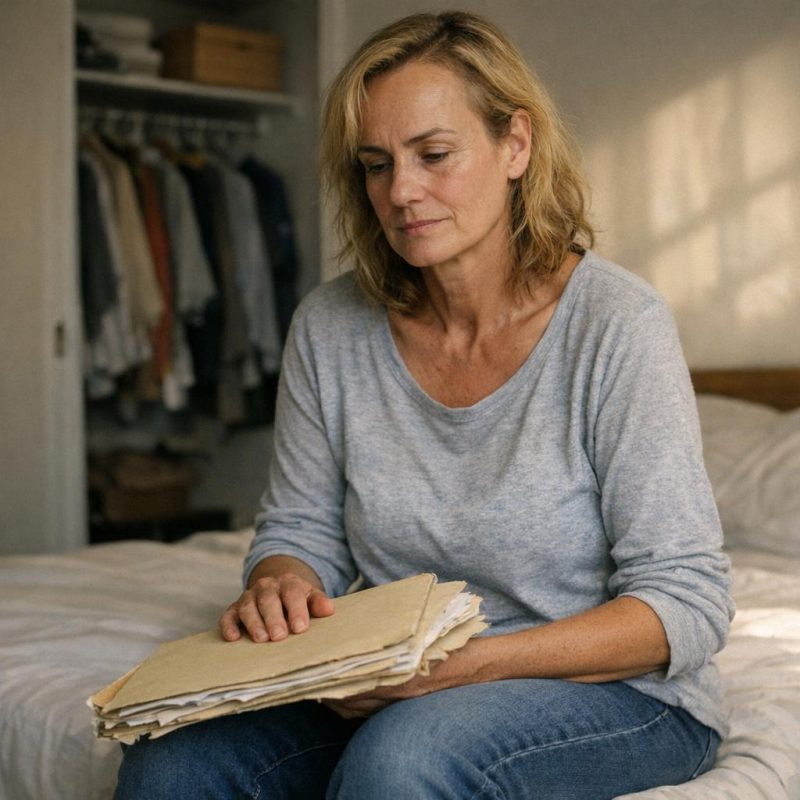 Image by RM AI
The Note I'd Forgotten
The folder was thicker than I remembered. Bank statements, property documents, a copy of the will, all paper-clipped in sections that my younger self had tried to organize. I flipped through pages I barely understood even now, looking for... what? I didn't know. Then, tucked between two bank statements, I found a small piece of notepaper in my mother's handwriting. The date at the top was from two weeks before she died. The note was simple, written in her shaky script: 'Celeste—safety deposit box at First National, both your names. Don't let Janine handle everything alone. You're more capable than you think. Trust yourself. Love, Mom.' I read it three times, my vision blurring. A safety deposit box. At First National. With both our names. I'd never heard anything about a safety deposit box. When I'd asked Janine about Mom's jewelry, her personal papers, anything that wasn't in the house, Janine had looked at me with such patient exhaustion and said, 'There wasn't anything else, Celeste. What you see is what there was.' And I'd believed her. Janine had told me the box was empty, and I'd believed her because I didn't know how to believe anything else.
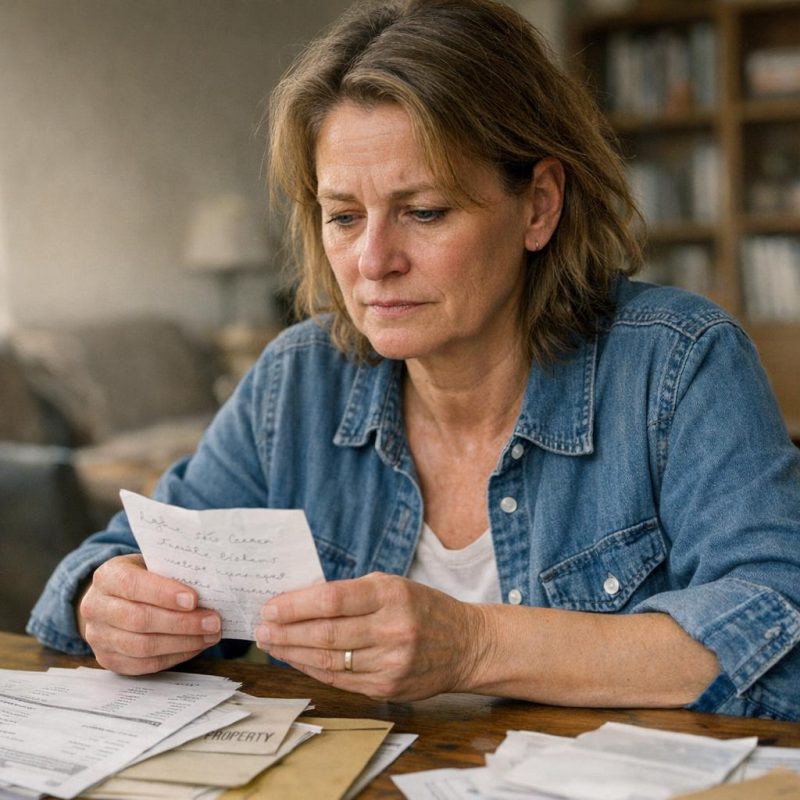 Image by RM AI
The Question I Should Have Asked Decades Ago
I called First National at 9:04 the next morning, right when they opened. My hands were shaking so badly I had to dial twice. A woman answered, pleasant and professional, and I explained that I was trying to locate information about a safety deposit box that might have been in my mother's name. I gave her Mom's full name, the approximate date of death, and then—because I had to know—I asked if my name had ever been listed as a joint holder. There was clicking in the background, keyboard sounds, the hum of hold music cutting in and out. I stood at my kitchen counter staring at the note in my mother's handwriting, those words 'both your names' blurring as I blinked too fast. The woman came back on the line and said, 'Yes, I do show a record here,' and my breath caught. Then she said she needed to verify some information before she could discuss details. I answered her security questions—Mom's birthdate, the street we grew up on, my own social security number. My voice sounded steadier than I felt. When I finished, the woman on the phone paused for a long time, and when she spoke again, her voice was careful.
 Image by RM AI
The Access That Was Removed
She told me there had been a joint safety deposit box, number 447, established in 1996 with my mother as primary and me as secondary. My heart was pounding so hard I thought she could hear it through the phone. Then she said the access had been updated. Updated. That was the word she used, like it was a software patch, something routine. I asked what that meant, and she explained that my name had been removed from the account. Removed. I asked who authorized it, even though I already knew. 'Janine Hartwell, as executrix of the estate,' the woman said, her tone still careful, still neutral. I felt the floor tilt under me. I gripped the counter and asked if there was any record of what had been in the box, and she said that information was confidential, available only to the current account holder. I could barely breathe. My voice came out thin and strange when I asked when the access had been updated, and the date she gave me was six months after our mother died.
 Image by RM AI
The Friend Who Saw It Differently
I needed to talk to someone who knew me, someone who would hear how insane this all was. So I called Karen, my friend from college who'd stayed in touch over the years, who'd always been a good listener. I told her about the birthday party, about finding Mom's note, about the safety deposit box and the removed access. I could hear her breathing on the other end, that slight hesitation that meant she was choosing her words. 'That does sound hurtful,' she said slowly. 'But maybe there's an explanation? Maybe Janine thought she was simplifying things?' I felt something inside me start to crumble. I tried again—told her about the timing, about the fact that I'd never been told, about how deliberate it all seemed. Karen was quiet for a moment, then said gently, 'I just wonder if maybe you're reading into it because you're already upset about the party. Janine's always been so organized, you know? She probably just handled what needed handling.' I felt my throat tighten. Karen said, 'Maybe Janine just wanted a quiet celebration,' and I realized how easy it was for everyone to believe Janine's version of me.
 Image by RM AI
The Copies I Made
I went to Staples and bought a small portable scanner, the kind that feeds pages through one at a time. At home, I spread everything from the folder across my dining room table and started working through it methodically. Bank statements first, then the property documents, then the handwritten notes and receipts I'd kept from phone calls and letters I'd sent years ago. The scanner hummed and beeped as each page went through, creating crisp digital copies that I saved in a folder on my laptop labeled simply 'Mom Estate.' I made a backup on a flash drive. Then I printed a second set of everything and put it in a separate folder I'd bought, this one fire-engine red so I couldn't miss it. The originals went back into the old manila folder, which I placed in my bedroom closet behind a box of winter sweaters. The whole process took four hours. My back ached from leaning over the table. My eyes burned from reading dates and dollar amounts that had once meant something I couldn't interpret. With each page I copied, I felt less like I was gathering evidence and more like I was building a defense against my own memory.
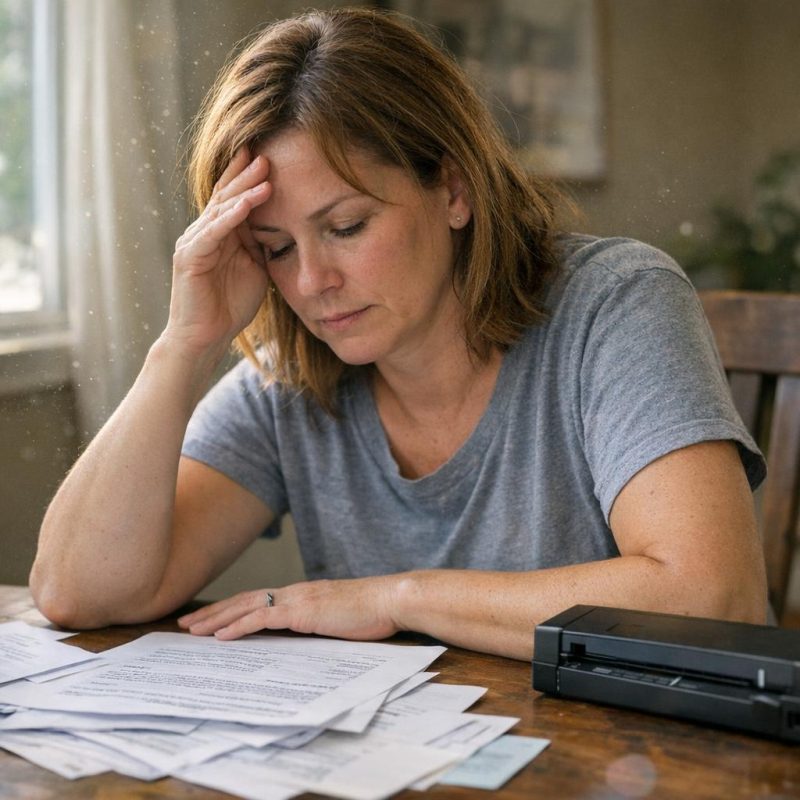 Image by RM AI
The Text I Didn't Send
That night I sat on my couch with my phone in my hand, opening and closing the text screen to Janine's number. I typed: 'I know about the safety deposit box. I know you removed my access. I need answers.' I read it twice, then deleted it. Too aggressive. She'd call me paranoid. I tried again: 'Can we talk about Mom's estate? I found some paperwork that's confusing and I'd like to understand what happened.' That felt weak, like I was apologizing for even asking. I deleted it. Third attempt: 'Why did you take my name off the safety deposit box six months after Mom died? What was in it?' My thumb hovered over the send button. I could feel my pulse in my ears. But then I imagined her response—the Patient Voice, the one she used when I was being 'difficult.' I could hear her saying, 'Celeste, we went over all this years ago. You're misremembering. You're getting worked up over nothing.' And the worst part was I could feel myself starting to believe it, even now, even with the evidence. I wanted her to know I knew, but part of me was terrified she'd just call me dramatic again and somehow make me believe it.
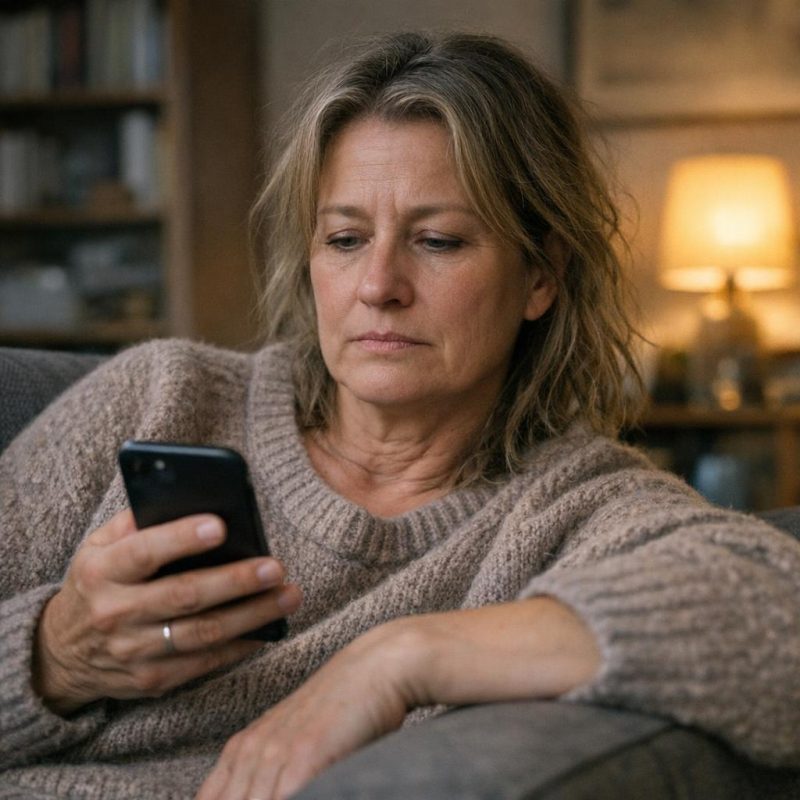 Image by RM AI
The Old Receipts
The next morning I went back through the red folder, looking at everything with fresh eyes. Tucked in the back, behind a copy of the will, I found a small stack of certified mail receipts, the old green-and-white kind with the return signature cards still attached. I'd forgotten about these. Each one was dated, each one addressed to Janine at her old house in Riverside. June 1999: 'Questions regarding estate account distribution.' September 1999: 'Request for copy of final accounting.' February 2000: 'Follow-up on previous requests.' Every single one had been signed for. I could see Janine's signature on the return cards, that confident scrawl I'd always envied. I remembered writing those letters, remembered feeling like I was going crazy because Janine kept insisting I'd never asked, that I was imagining things, that if I'd really wanted to know I should have said something. But I had said something. I had proof. Each receipt was proof that I had asked, that I hadn't imagined it, that I'd been erased on purpose.
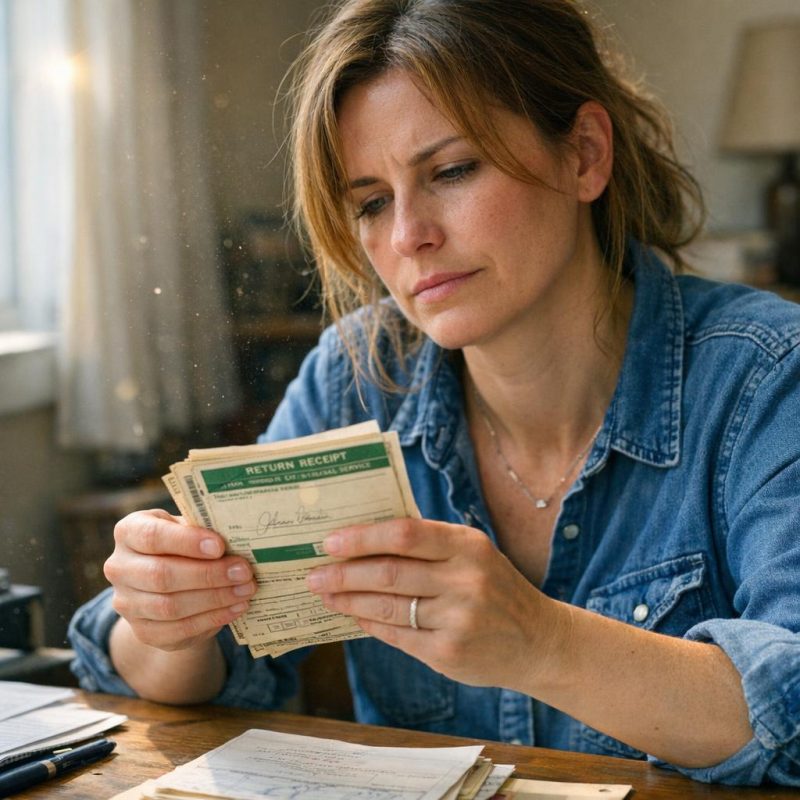 Image by RM AI
The Lawyer's Business Card
I almost missed it—a small cream-colored business card paper-clipped to one of the 1998 bank statements. The card was faded, the edges soft from age, but the name was still legible: 'Mitchell & Stowe, Attorneys at Law.' Below that, an address in Pasadena and a phone number with an old area code. I stared at it, feeling something cold move through my chest. Mitchell & Stowe. Where had I heard that name before? Then it hit me: the cease-and-desist letter. The one that arrived after I'd asked about the house sale. That had been from Mitchell & Stowe. I checked the envelope from three weeks ago, still sitting in my desk drawer, and yes—same firm name, same Pasadena address, though the suite number was different now. Probably expanded over the years. I looked back at the business card in my hand, at the date on the statement it was clipped to. 1998. Twenty-five years ago. The card was tucked behind a receipt from 1998, and suddenly the present didn't feel like an ending—it felt like a continuation.
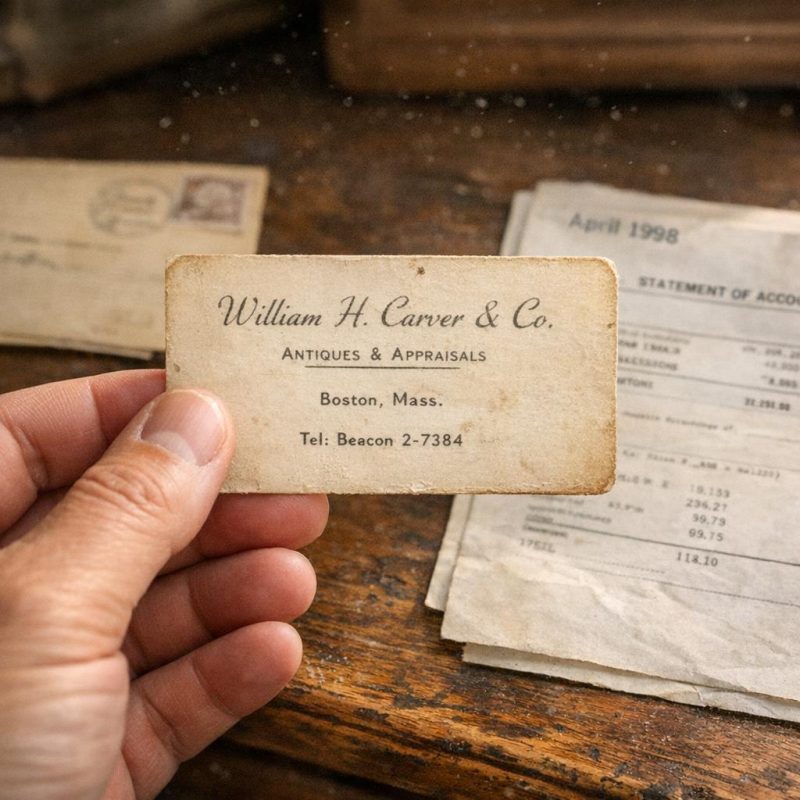 Image by RM AI
The Internet Search
I opened my laptop and typed 'Mitchell & Stowe Pasadena' into the search bar. Their website was sleek and professional, all navy blue and serif fonts. 'Serving California families since 1972,' the header read. I clicked through the practice areas: estate planning, probate litigation, trust administration. Then I saw it—a tab labeled 'Asset Protection.' I clicked. The page described their work helping families 'preserve wealth across generations' and 'defend estates against unfounded claims.' There were sections on 'Managing Complex Family Dynamics' and 'Protecting Beneficiaries from External Interference.' The language was careful, legal, but I could read between every line. They helped families keep money away from people who might claim they deserved it. They helped people like Janine. I scrolled down and found a bolded subheading: 'Protecting Family Assets From Frivolous Claims.' Below it was a paragraph about their success rate in 'resolving disputes efficiently while maintaining family privacy.' The website had a section titled 'Protecting Family Assets From Frivolous Claims,' and I felt my stomach turn.
 Image by RM AI
The Consultation Request
I found a different attorney through a Google search—someone who specialized in estate disputes but had no connection to Janine's firm. The office was in Glendale, which felt far enough away that I wouldn't accidentally run into anyone who knew my sister. When I called, I kept my voice steady and asked if they had availability for a consultation regarding estate administration and access to family documents. The receptionist was kind, professional, and scheduled me for Thursday at two o'clock. She asked for basic information—my name, a callback number, whether this was urgent. Then she asked what type of matter this concerned, and I paused because I didn't know how to categorize what was happening to me. 'Estate matter,' I finally said, which was technically true but felt inadequate. What I wanted to say was that this was about being written out of my own history, about discovering that the person I'd trusted most had spent decades positioning me as unreliable, about realizing that every time I'd questioned something, I'd been made to feel crazy for asking. But you can't say that to a receptionist taking appointment details. You can't say, 'I need help because I think my sister has been erasing me in increments so small I didn't notice until it was almost complete.' The receptionist asked if this was regarding an estate matter, and I said yes, but what I meant was: this is about being erased.
 Image by RM AI
The Consultation
David Marsh's office was smaller than I expected, lined with law books and family photos that made him seem more human than the attorneys on Janine's fancy website. He was maybe mid-fifties, with reading glasses on a chain and the kind of direct eye contact that told me he actually listened. I spread out everything I'd brought—the safety deposit box denial letter, the business card from twenty-five years ago, the bank statements showing my mother's accounts, the documentation of my removal from access. He went through each page methodically, making notes, occasionally asking questions about dates and my mother's mental state before she died. 'Did your mother ever express concern about your sister's financial management?' he asked. I told him no, that Mom had trusted Janine completely, that we all had. He nodded, kept reading. When he finished, he leaned back in his chair and removed his glasses. 'Ms. Patterson, I want to be clear about something,' he said. 'Removing a previously authorized individual from a safety deposit box requires specific procedures. There should be documentation. Your signature, at minimum.' I felt my heart speed up. 'I never signed anything,' I said. He tapped the bank letter. 'Then either there's been an administrative error, or someone represented themselves as you, or—' He paused. 'Or documents were created without your knowledge.' He looked up at me and said, 'This looks less like a misunderstanding and more like someone covering their tracks.'
 Image by RM AI
The Statute of Limitations
David explained that California had statutes of limitations on various estate claims—three years for most fraud allegations from the date of discovery, shorter windows for others. 'The good news,' he said, 'is that the clock starts when you discover the issue, not when it occurred.' He walked me through what we could do: request complete copies of all account access forms, subpoena bank records if necessary, file a petition for estate accounting if I believed assets had been mishandled. But he was also honest about the challenges. Some claims might be time-barred. Proving financial misconduct decades later was difficult without documentation I might not be able to access. And if Janine had been careful—if everything technically appeared legal on paper—it became a matter of intent, which was nearly impossible to prove. 'The question isn't just what your sister did or didn't do,' he said. 'It's whether you can demonstrate harm, and whether any documents bearing your signature were actually signed by you.' He pulled out a legal pad. 'I'm going to draft a records request to the bank. We'll ask for every document related to that safety deposit box and your mother's accounts. Every signature card, every access log, every change of authorization.' His pen hovered over the paper. 'But I need you to understand—this is going to get complicated, and it may get ugly.' He said, 'The question isn't just what happened—it's what you can prove and whether anyone forged your signature.'
 Image by RM AI
The Letter in the Mail
The letter was waiting in my mailbox when I got home, wedged between a grocery store flyer and my water bill. It was in a cream-colored envelope with a return address I didn't recognize at first—a law office in Pasadena. My hands shook as I opened it. The letterhead read 'Mitchell & Stowe, Attorneys at Law,' and the letter itself was dated two days earlier. It was addressed to me formally, coldly: 'Dear Ms. Patterson.' The first paragraph accused me of 'repeated harassment' of Janine regarding 'settled family matters.' The second paragraph claimed my 'unfounded allegations' were causing Janine 'severe emotional distress.' The third paragraph demanded I 'cease and desist all contact' regarding estate assets and warned that continued contact would result in legal action, including a restraining order. The language was formal, threatening, and completely distorted everything I'd done. I hadn't harassed anyone. I'd asked questions. I'd requested access to documents I had every legal right to see. But the letter made me sound unstable, obsessive, dangerous. It referenced my 'emotional state' and suggested my behavior was 'concerning to family members.' I felt sick reading it, recognizing the same phrasing Janine had used for years—making my reasonable questions sound like instability, my hurt sound like irrationality. I read the letter three times, and each time the word 'harassment' felt like a weapon Janine had been sharpening for years.
 Image by RM AI
The Firm Name That Matched
I pulled out the business card I'd found in my old file box—the one from twenty-five years ago, yellowed and bent at one corner. I held it next to the letterhead on Janine's cease-and-desist letter. Mitchell & Stowe. The same firm. The same address, though the suite number was different now. The partner's name on the old card—Gerald Mitchell—was still listed on the website as senior counsel. My sister had used this firm a quarter-century ago for something involving our family finances, something she'd never told me about, and now she was using them again to threaten me into silence. This wasn't a law firm she'd just hired in a panic after I started asking questions. This was a relationship. A long one. I thought about that old card tucked into files I was never supposed to see, about the current letter demanding I stop investigating, about how quickly the response had come after my bank visit. Janine hadn't scrambled to find an attorney. She'd made a phone call to people who already knew our family history, who'd already helped her with something decades ago, who knew exactly what to say to make me sound unstable. The connection wasn't just suspicious—it was damning. It wasn't a coincidence—it was a signature.
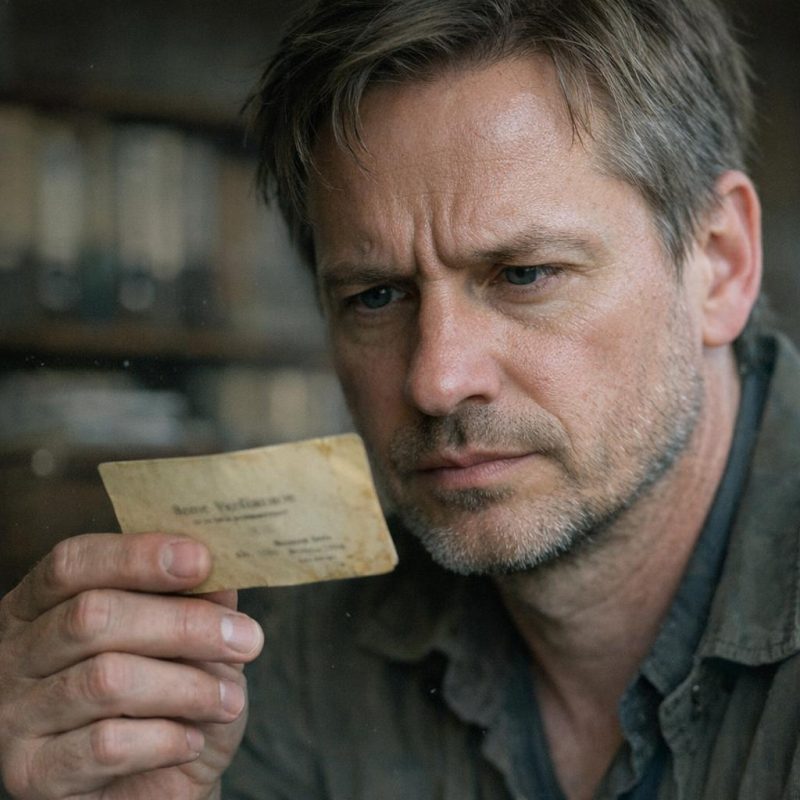 Image by RM AI
The Call to My Daughter
I called Rachel after dinner, when I knew she'd be home from work but before her kids' bedtime chaos started. I tried to explain everything calmly—the safety deposit box, the attorney letter, the firm connection, David's concerns about the documentation. Rachel listened, but I could hear the skepticism building in her silence. 'Mom,' she finally said, 'I know you're upset about the party and everything with Grandma's estate, but don't you think you might be reading too much into this?' I felt my chest tighten. 'Reading too much into a legal threat?' 'Aunt Janine probably just got scared when you started accusing her of things,' Rachel said. 'She's been handling everything alone for years. Maybe she feels attacked.' I tried to explain that I hadn't attacked anyone, that I'd only asked for access to documents. 'I know,' Rachel said, but her tone suggested she didn't entirely believe me. 'It's just—you've been really focused on this since the funeral. Dad's worried about you. I'm worried about you.' There it was. The suggestion that my concern was really grief, that my questions were really instability, that my anger was really just me not coping well. 'Rachel, I'm not imagining this,' I said. 'I know, Mom,' she said again, in that placating voice that meant the opposite. 'Just—please don't start a family war over something that might be a misunderstanding.' Rachel said, 'Mom, are you sure this isn't just grief?' and I realized even my own daughter had learned to doubt me.
 Image by RM AI
The Response I Drafted
David's office had that particular quiet that comes from thick carpet and closed doors designed to keep client conversations private. We'd been working on the response letter for over an hour, going through multiple drafts, making sure every word was legally sound and emotionally controlled. The final version was professional, measured, and firm. It stated clearly that I had every right to request estate records as an heir and potential beneficiary. It denied all accusations of harassment and noted that asking questions about estate administration did not constitute threatening behavior. It asserted that I had never authorized my removal from the safety deposit box access list and requested copies of any documents bearing my signature. It was everything I wanted to say, stripped of emotion and dressed in legal language. David printed two copies—one for his file, one for me to review. I read it again, feeling both empowered and terrified. This was real now. This was official. Once this letter went out, Janine would know I wasn't backing down, that I had legal representation, that I was serious about getting answers. There would be no more pretending this was just a family misunderstanding that would blow over. I looked at David, and he must have seen the fear in my face because his expression softened. 'Ms. Patterson,' he said, 'you have every right to do this. But I want you to understand what you're starting.' David looked at me and said, 'Once we send this, there's no going back quietly.'
 Image by RM AI
The Memories That Resurfaced
That night I couldn't sleep, so I lay in bed replaying conversations from across the years. I thought about the time I'd suggested Mom seemed confused about her medications and Janine had said I was overreacting, that Mom was fine. I thought about when I'd asked why the house sale happened so quickly and Janine had changed the subject to my divorce, making me feel selfish for asking. I thought about a dinner maybe fifteen years ago when I'd mentioned feeling left out of decisions and Janine had looked at everyone else at the table and said, 'Celeste is feeling sensitive today,' and they'd all nodded sympathetically like my hurt was a symptom of something wrong with me, not something wrong with how I was being treated. How many times had she rewritten what I'd said? How many times had she told other people her version of our conversations, versions where I was emotional, unreasonable, difficult? How many times had I accepted her narrative because it was easier than fighting, because I'd learned that disagreeing with Janine meant being painted as the problem? I tried to remember a single instance where she'd said, 'You're right,' or 'I'm sorry,' or 'I should have asked you first.' I couldn't. Thirty years of sisterhood, and I couldn't recall one moment of genuine accountability. I couldn't remember a single time Janine had said, 'You're right,' and that absence felt louder than any argument we'd ever had.
 Image by RM AI
The Old House Address
I found the paperwork three days later, buried in a file folder I'd almost thrown away. It was the closing statement from when Mom's house sold, two months after her funeral. I'd been too deep in grief to ask many questions at the time, and Janine had handled everything, saying it was better to sell quickly before the market shifted. But now, sitting at my kitchen table with the documents spread out in front of me, I saw the numbers for the first time. The house had sold for $287,000. I pulled up recent sales in Mom's neighborhood on my laptop, and comparable homes were going for $450,000 to $500,000. This wasn't just below market value. This was a fire sale. The kind of price you accept when you're desperate, when you need to move fast for reasons that have nothing to do with market conditions. Mom hadn't been desperate. She'd been dead. I looked at the signature lines. Only one name appeared as the seller's representative: Janine Catherine Morris, Executor. My name wasn't anywhere on the document, even though I was supposed to be co-beneficiary. And at the bottom, in the buyer's information section, there was a name I didn't recognize: Clearwater Holdings LLC. I stared at that name for a long time, trying to place it, trying to remember if Mom had ever mentioned it, if Janine had ever explained who was buying the house. She hadn't. The sale price was so low it looked like a favor, and I didn't recognize the buyer's name.
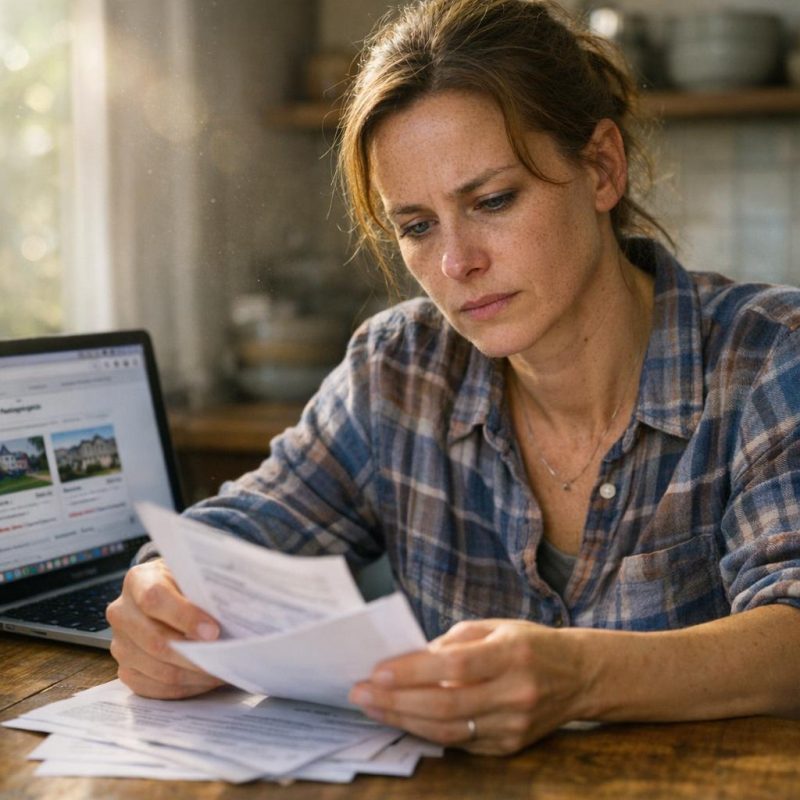 Image by RM AI
The Public Records Search
I'd never done a public records search before, but it turns out it's not that hard when you're looking for property transfers and business registrations. I found a website that charged twelve dollars for a detailed report, and I entered 'Clearwater Holdings LLC' with shaking hands. The results loaded in less than a minute. The LLC had been registered four months before Mom died. The registered agent was listed as Marcus Chen, Attorney at Law. And the beneficial owner, buried three clicks deep in the corporate structure, was listed as Mark Andrew Morris—Janine's ex-husband. I sat back from my laptop like it had burned me. Mark and Janine had divorced six years ago, a bitter split that Janine complained about constantly, but apparently not so bitter that they couldn't coordinate a real estate transaction together. The house hadn't been sold to a stranger. It had been transferred to Mark's shell company for $200,000 less than it was worth, with Janine signing off as executor and me completely left out of the process. I thought about calling Mark directly, but I didn't even have his number anymore. I thought about confronting Janine, but I could already hear her explanation, some reasonable-sounding story about protecting assets or tax advantages that would make me feel stupid for asking. Instead, I just sat there, staring at the screen, understanding something I'd been trying not to understand for weeks. The house never really left the family; it just left me.
 Image by RM AI
The Jewelry That Disappeared
That night I couldn't stop thinking about Mom's jewelry. After the funeral, I'd asked Janine about it—Mom had some beautiful pieces, including a ruby pendant Dad had given her for their twentieth anniversary and a sapphire bracelet that had belonged to my grandmother. Janine had looked genuinely upset when I brought it up. She'd said the jewelry box had gone missing during the estate cleanout, that she'd searched everywhere, that she felt terrible about it. She'd even cried a little, and I'd felt guilty for making her feel worse during an already difficult time. But now I wondered if anything Janine had told me was true. I started going through old photos on Facebook, looking at pictures from family events over the past five years. I scrolled through birthday parties and holidays and my niece Emma's college graduation. And then I found it: a photo album from Emma's wedding, five years ago. There were dozens of pictures, most of them the standard wedding shots, but one caught my eye. It was a candid photo of Janine and Emma laughing together during the reception, and there, clearly visible against Janine's navy blue dress, was a ruby pendant on a gold chain. I zoomed in until the image pixelated. It was Mom's pendant. I was absolutely certain. Same setting, same distinctive teardrop cut of the ruby, same delicate chain. The jewelry hadn't gone missing. I found a photo from Janine's daughter's wedding five years ago, and there, around Janine's neck, was my mother's ruby pendant.
 Image by RM AI
The Screenshot I Saved
I took a screenshot immediately, my hands trembling so badly I almost dropped my phone. Then I took three more screenshots from different angles, making sure the pendant was clearly visible in each one. I saved them all to a folder I labeled 'Evidence,' which felt both melodramatic and absolutely necessary. This wasn't me being paranoid. This wasn't me misremembering. This was proof that Janine had lied directly to my face about something concrete, something I could point to and say, 'This is real.' I opened my email and attached all four screenshots to a message to David. I kept the message short: 'Found this from my niece's wedding five years ago. The pendant Janine is wearing was my mother's—she told me it was lost after the funeral. Thought you should have this.' I hit send before I could second-guess myself. Then I sat on my couch, staring at my phone, feeling something I hadn't felt in weeks: certainty. Not about everything, not about the full scope of what Janine had done, but about this one thing. She had taken Mom's jewelry and lied about it. She had looked me in the eye, let me believe it was gone forever, and then worn it to her daughter's wedding like it was hers. My phone buzzed less than five minutes later. David's response was brief but energizing. David replied within minutes: 'This is good. Keep looking.'
 Image by RM AI
The Call From Mark
Mark called me on a Tuesday afternoon while I was sitting in my car outside the grocery store. I didn't recognize the number, and I almost didn't answer, but something made me pick up. 'Celeste? It's Mark. Mark Morris.' I went completely still. I hadn't spoken to Janine's ex-husband in probably seven years, not since before their divorce finalized. We'd never been close, but we'd been cordial at family gatherings, the kind of polite relationship you maintain with your sister's spouse. 'I heard you're asking questions about your mom's estate,' he said, and his voice sounded careful, like he was choosing each word deliberately. 'I think we should talk. In person, if you're willing.' I should have been suspicious. I should have wondered why he was calling now, after all this time, why he wanted to meet. But I was so tired of being alone with all these questions, so desperate for someone who might actually tell me the truth. 'What's this about?' I asked. There was a long pause. 'There are things you should know,' he said. 'Things Janine told me over the years, things I helped her with that I'm not proud of now. But I need to tell you face-to-face.' My heart was pounding. 'When?' 'Tomorrow. There's a coffee shop on Elm Street, the one near the old library. Ten a.m.?' I agreed before I could talk myself out of it. Before we hung up, he said something that made my blood run cold. He said, 'Janine told me you'd never ask questions, and I believed her—until now.'
 Image by RM AI
The Coffee Shop Meeting
The coffee shop was nearly empty when I arrived, just a couple of college students with laptops in the corner and an older man reading a newspaper. Mark was already there, sitting at a table in the back, and he looked older than I remembered, grayer and more worn. He stood when he saw me, and we did that awkward half-hug people do when they used to know each other but don't anymore. We ordered coffee neither of us really wanted, and then we sat down and he just started talking. 'The house sale,' he said. 'Janine came to me about four months before your mom died. She said she needed to set up an LLC for tax purposes, something about estate planning. I didn't ask too many questions because we were still married then, and I trusted her.' He looked down at his coffee. 'After your mom passed, Janine asked me to use the LLC to buy the house. She said it was temporary, that it was to protect the estate from creditors while everything got sorted out. I signed the papers. The house was transferred to Clearwater Holdings for $287,000, and Janine said she'd buy it back from me within a year.' I felt my chest tighten. 'Did she?' Mark shook his head. 'She sold it eight months later to a real buyer for $470,000. The profit went to her. I got my initial investment back, nothing more.' I stared at him. 'But Mom didn't have creditors,' I said slowly. Mark met my eyes. 'I know that now. Mark said, 'She told me it was to protect the estate from creditors, but your mother didn't have creditors.'
 Image by RM AI
The Divorce Papers
Mark pulled out his phone and started scrolling through old emails. 'When Janine and I divorced, my attorney noticed some irregularities in her financial disclosures. She was supposed to declare all assets, but there were gaps, money that should have been there but wasn't documented properly.' He found what he was looking for and turned the phone toward me. It was an email from his divorce attorney, flagging discrepancies in Janine's disclosure forms. 'My lawyer thought she was hiding marital assets, which she was, but when we dug deeper, we found transfers that predated our marriage. Money that had moved through accounts connected to your mother's estate.' I felt like I couldn't breathe properly. 'What kind of money?' 'I don't know all the details. Janine fought like hell to keep those records sealed, and eventually my attorney advised me to let it go because we'd already gotten a decent settlement on other things. But the point is, there's a paper trail. There's evidence that she was moving money around in ways that didn't add up.' He leaned forward. 'If you want to know what really happened with your mom's estate, those divorce records would show you. They'd show you everything she tried to hide.' I thought about David, about the case we were building, about how much stronger it would be with actual financial records. He said Janine had hidden assets during the divorce, and if I wanted proof, I should subpoena the divorce records.
 Image by RM AI
The Subpoena Request
I called David from my car before I even left the coffee shop parking lot. I told him everything Mark had said, about the LLC and the house sale and the divorce records, and I could hear him taking notes on the other end of the line. 'This is exactly what we need,' he said. 'Financial records from a legal proceeding. A judge already looked at these documents once, which means they exist and they're obtainable.' Three days later, David filed a formal motion to subpoena Janine's divorce records, arguing that they contained relevant information about the administration of our mother's estate and the distribution of assets that should have been shared between beneficiaries. He walked me through the filing over the phone, explaining that the court would notify Janine, that she'd have the opportunity to object, that this wasn't a guaranteed win. 'But here's what I want you to understand,' David said, and his voice was serious. 'If those records don't contain anything relevant, Janine will let this go. She'll provide them and move on. But if she fights to keep them sealed, if she hires attorneys and files motions and tries to block this, that tells us everything.' I understood what he was saying. Innocent people don't fight transparency. 'How long until we know?' I asked. 'Two weeks, maybe three. But Celeste, I need you to be ready. This is going to get ugly.' David warned me that Janine would fight this, and fighting it would tell us everything we needed to know.
 Image by RM AI
The Second Letter
The second letter arrived five days after David filed the motion to subpoena Janine's divorce records. It came from the same law firm, Whitmore & Associates, but this one was four pages long instead of two, and the tone had shifted from professional warning to something sharper. They were threatening a defamation lawsuit now, claiming that my 'malicious investigation' was damaging Janine's reputation and causing her emotional distress. The attorney—still Whitmore himself—wrote that my attempts to access sealed divorce records constituted harassment, that my allegations were baseless, and that if I continued this 'campaign of slander,' they would have no choice but to pursue legal remedies. I read it three times, standing at my kitchen counter with my coffee getting cold. The language was aggressive in a way the first letter hadn't been, almost personal despite the legal jargon. They cited specific statutes about defamation and intentional infliction of emotional distress. They mentioned potential damages. And then I noticed something that made my stomach drop. The word 'malicious' was bolded. Not underlined, not italicized—bolded. Like someone had wanted to make sure I saw it, that I understood the accusation wasn't just legal but moral. I realized that word was the one Janine had been saving for me all along.
 Image by RM AI
The Sister I Thought I Knew
That night, I couldn't sleep, so I pulled out the journal I'd been keeping since this whole thing started and I wrote about Janine. Not the Janine who was threatening to sue me or hiding financial records, but the sister I thought I'd had growing up. I wrote about the time she taught me to braid my hair when I was seven, sitting behind me on her bed with such patience. I wrote about how she used to call me 'Celery' instead of Celeste, a nickname that annoyed me then but that I'd give anything to hear now in that old affectionate tone. I wrote about believing, for so many years, that we had a relationship even when we barely spoke, that somewhere underneath the distance and the tension there was still love. And then I stopped writing because I realized something that hurt worse than any of the legal threats or financial discoveries. The sister I was remembering, the one who braided my hair and had a silly nickname for me—maybe she'd never really existed. Maybe I'd created her from scattered moments of ordinary decency and filled in the gaps with what I'd needed her to be. Maybe the Janine who was fighting so hard to keep me from seeing those records, who was calling my search for truth 'malicious'—maybe that was who she'd always been, and I just hadn't wanted to see it. I realized I'd been grieving Janine for years without knowing she was already gone.
 Image by RM AI
The New Attorney
David called me two days after the second letter arrived and said there was someone I needed to meet. 'Her name is Sarah Chen,' he said. 'She specializes in family fraud cases, estate abuse, financial exploitation within families. I think she can help you see this situation more clearly.' I met Sarah at her office downtown, a small suite with clean lines and walls covered in framed credentials that told me she was serious about her work. She was younger than I'd expected, maybe early forties, with sharp eyes that seemed to take in everything at once. I handed her the file I'd been building—copies of the letters from Janine's attorneys, the LLC documents Mark had found, the timeline I'd constructed of my mother's final months. She spent twenty minutes reading through everything while I sat there trying not to fidget, trying not to apologize for taking up her time. Finally, she looked up at me with an expression I couldn't quite read. 'Ms. Hartley,' she said, and her voice was gentle but firm, 'I want to be very clear about something before we go any further.' She tapped the file with one finger. Sarah looked at my file and said, 'This isn't a family dispute—this is financial abuse.'
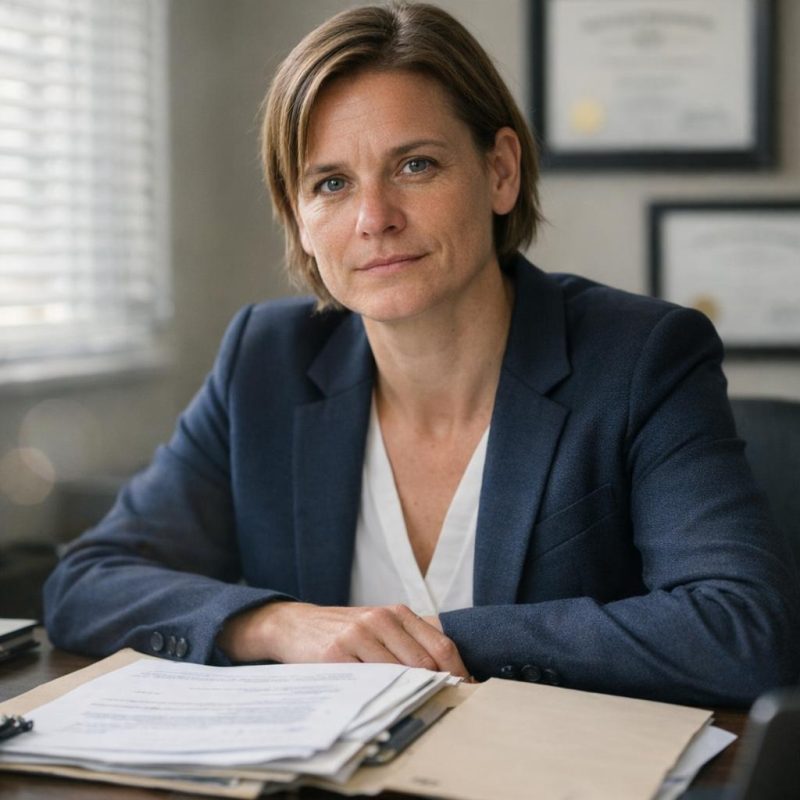 Image by RM AI
The Pattern Sarah Saw
Sarah explained that financial abusers follow patterns, that what I was describing wasn't unusual in her line of work. 'They isolate their victims emotionally first,' she said, leaning back in her chair. 'They create distance, they manufacture conflicts, they make the victim doubt their own perceptions and memories. And then, when the victim is sufficiently isolated and confused, they take the assets.' She asked me about my relationship with Janine over the past few decades, about when the distance had started, about specific incidents where I'd felt gaslit or dismissed. I told her about the years of being called too sensitive, about how Janine had slowly pulled away while making it seem like I was the one who couldn't maintain a relationship, about how I'd started to believe I was the problem. 'That's the setup,' Sarah said. 'The emotional groundwork. By the time there's money or property involved, you're already primed to accept their version of reality.' I sat there absorbing this, thinking about all the times I'd questioned my own memory, my own feelings, my own worth. Then Sarah said something that shifted everything. She looked at me directly, with the kind of clarity I'd been desperate for. She said, 'The birthday party wasn't cruelty—it was strategy,' and I felt something inside me finally break open.
 Image by RM AI
The Witness List
Sarah gave me homework before I left her office. She wanted me to compile a witness list—anyone who might have observed Janine's behavior toward me over the years, anyone who might have heard her make statements about Mom's estate or my mental state, anyone who could corroborate my version of events. I sat down with a legal pad that evening, pen in hand, ready to fill pages with names. I wrote down Mark, obviously. He'd witnessed some of the recent stuff, the deflection and the LLC revelation. I wrote down two cousins I'd been close to as a kid, though I hadn't spoken to either in years and didn't know if they'd remember much. I tried to think of Mom's friends who might have heard something, but most of them were dead or in memory care facilities themselves. I considered neighbors, old family friends, people from church. The list should have been long. It should have filled that legal pad with names of people who'd known me, who'd seen my relationship with Janine, who could speak to my character and my connection with Mom. But after twenty minutes, I had seven names. Seven. And three of those were question marks because I wasn't even sure they'd be willing to get involved. I started writing names and realized how small the list was—Janine had made sure of that.
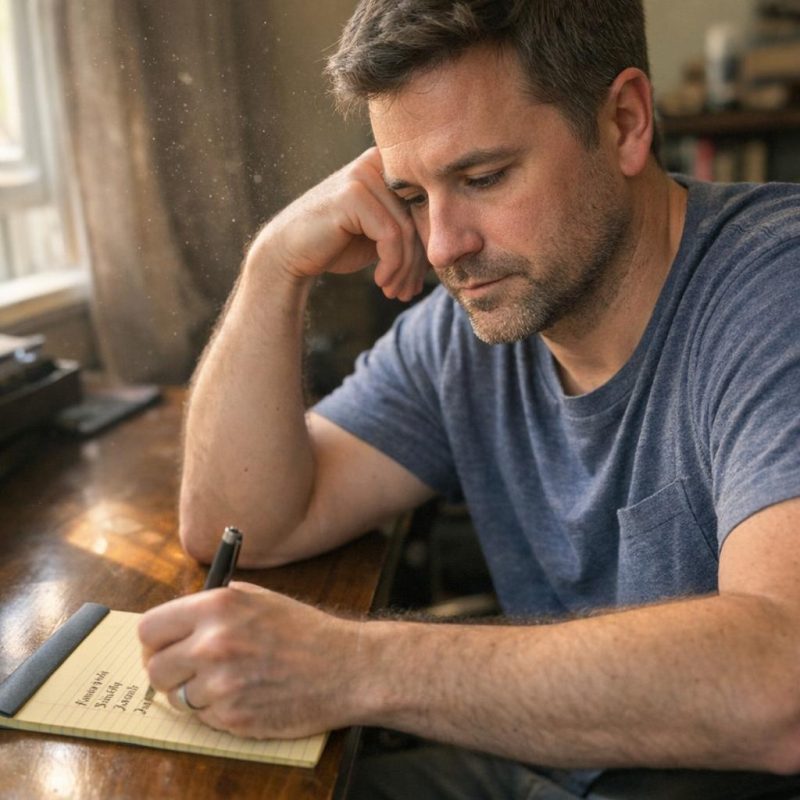 Image by RM AI
The Bank Records Request
With Sarah's guidance, I prepared a formal request to the bank for records related to Mom's accounts and the safety deposit box. Sarah had drafted the language carefully, citing my status as a beneficiary and my right to information about the estate's administration. We requested transaction histories, signature cards, access logs for the safety deposit box, and any documents related to changes in account ownership or beneficiary designations. I hand-delivered the request to the bank on a Tuesday morning, asking to speak with the manager. Mr. Peterson came out from his office, a man in his sixties with silver hair and the kind of careful professional demeanor that comes from decades of handling other people's money. He read through my request while I stood at the counter, my heart pounding so hard I thought he might hear it. When he looked up, something flickered across his face—not quite surprise, but recognition maybe, or concern. 'This will take some time to process,' he said slowly. 'Several weeks, possibly. We'll need to pull records from various departments, and some of this goes back several years.' I nodded, trying to appear patient. 'I understand,' I said. 'I can wait.' The bank manager, Mr. Peterson, said the request would take weeks to process, and his face told me there was something in those records Janine didn't want me to see.
 Image by RM AI
The Waiting
The waiting was its own special kind of torture. Three weeks, Mr. Peterson had said, possibly more. I marked the days on my calendar like a prisoner counting down a sentence. Every morning, I checked my mailbox before I even made coffee, standing there in my robe looking for a thick envelope from the bank. Every afternoon, I checked again when the mail carrier came by. Every evening, I'd remind myself that these things take time, that bureaucracy moves slowly, that I needed to be patient. But patience had never been my strong suit, and now, with everything I'd learned, with Sarah's words about strategy and isolation echoing in my head, I felt like I was crawling out of my skin. I tried to distract myself. I went to work and taught my classes and graded papers. I had dinner with Mark twice that week and let him talk about normal things, his job and his kids and the leaky faucet in his kitchen. But underneath everything, I was waiting. Obsessively, constantly, desperately waiting. I'd lie awake at night imagining what those records might show, what transactions or signatures or dates might finally prove what I knew in my bones had happened. I kept checking my mailbox like I was waiting for a verdict, because in a way, I was.
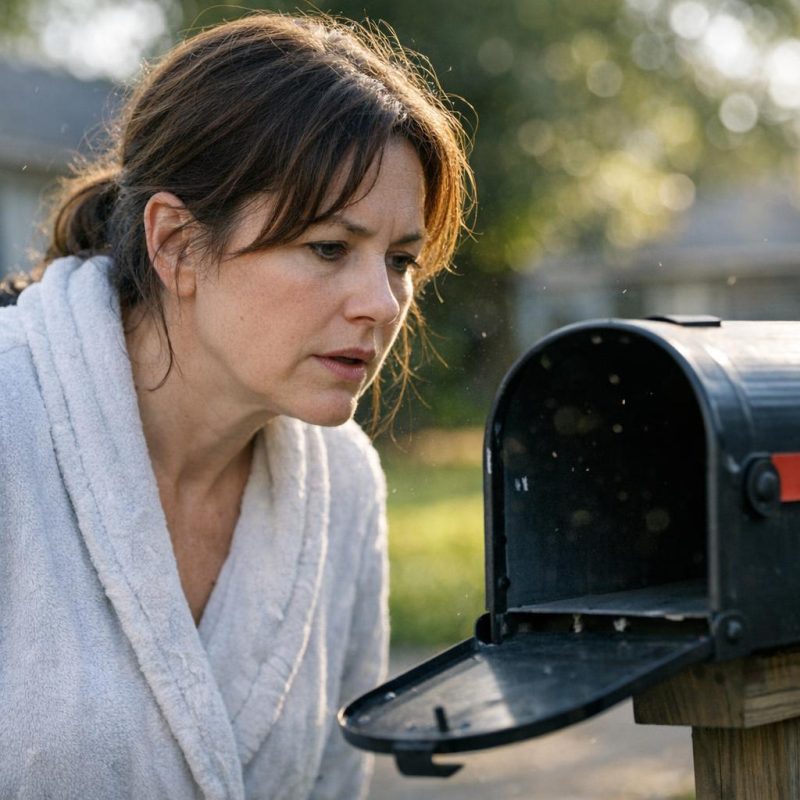 Image by RM AI
The Envelope That Arrived
The envelope arrived on a Thursday, twenty-two days after I'd submitted my request. It was thick, the kind of manila envelope that has to be reinforced with cardboard, and my name and address were printed on a white label in the bank's official font. I carried it inside with shaking hands, set it on my kitchen table, and just stared at it for a full minute before I could bring myself to open it. When I finally did, sliding my finger under the flap and pulling out the stack of documents inside, I had to sit down. There were account statements, transaction logs, signature cards, forms I didn't even recognize. I spread them across the table, trying to organize them chronologically, trying to make sense of the dates and the amounts and the account numbers. My hands were trembling. I picked up the first page of what looked like a change of beneficiary form, dated six months before Mom died. The account number matched one of the statements. The form indicated that I'd been removed as a beneficiary and replaced with Janine as the sole recipient. And there, at the bottom of the page, in the space marked 'Account Holder Signature,' was a signature that was supposed to be mine. The first page showed a signature—mine—on a document I'd never signed.
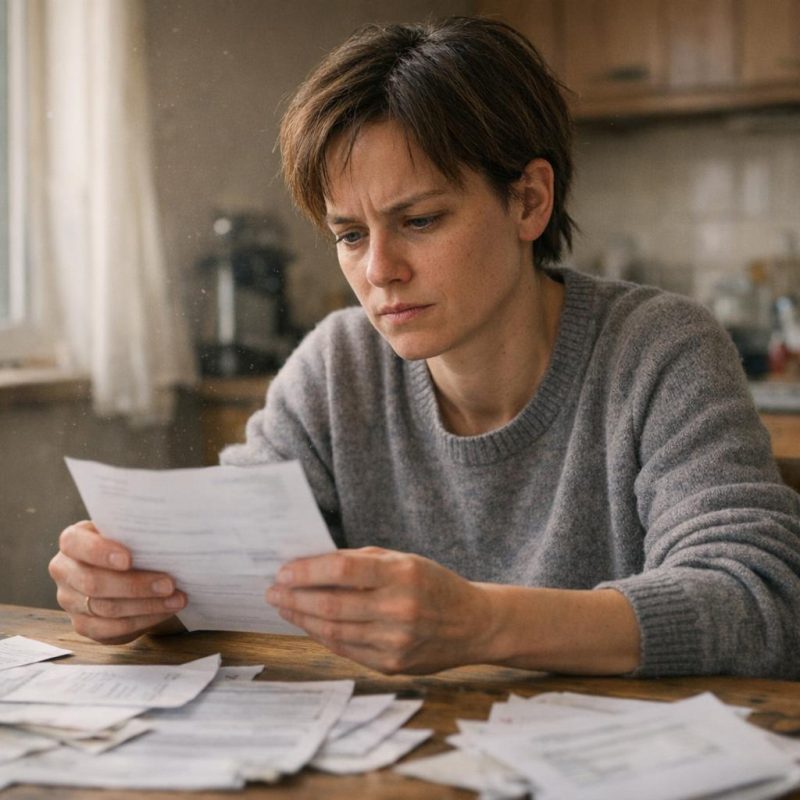 Image by RM AI
The Signatures That Didn't Match
I spent the next two hours going through every drawer in my desk, pulling out old birthday cards, letters from college, the few handwritten notes I'd kept over the years. Things I'd signed. Real signatures, ones I knew were mine because I remembered writing them. I laid them out on the kitchen table next to the forged bank documents, and the differences hit me immediately. My real signature had this little flourish at the end, a tail on the 'e' in Celeste that curved back under the letters. It was something I'd developed in high school and never really thought about—just muscle memory. The forged signature on the bank documents was close, I'll give whoever did it that much. The basic structure was there, the slant was right. But that tail? It was wrong. Too short, too stiff, like someone had seen my signature on something and tried to copy it without understanding the movement behind it. I pulled out my phone and took photo after photo, laying a real signature next to the forgery, zooming in on the differences. The 'C' was slightly different too—mine had a smoother curve, while the forged one had a little hitch at the top. It was undeniable. This wasn't a case of 'maybe she signed it and forgot.' This was fraud. I laid the pages side by side and took a photo, because this was the kind of proof that changes everything.
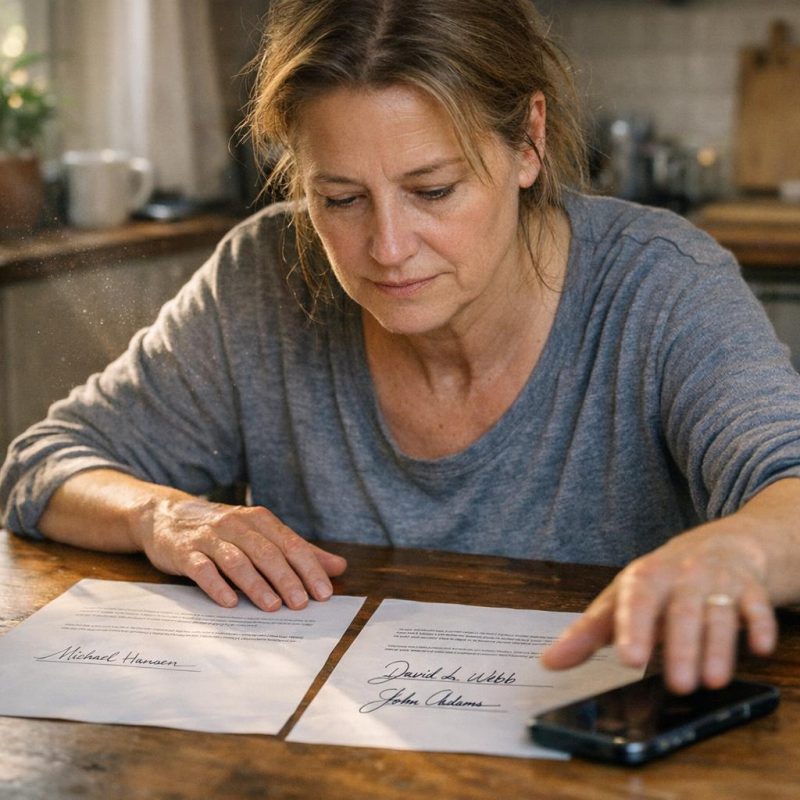 Image by RM AI
The Call to Sarah
I didn't wait until morning. I called Sarah at eight-thirty that night, and when she answered, I could hear dishes clattering in the background, the sound of a normal evening being interrupted. 'Sarah, I found something,' I said, and then I just started talking, telling her about the signatures, about the comparison, about the photos I'd taken. She went quiet for a moment, and then she said, 'Send them to me right now. All of them.' I did, standing in my kitchen with my phone pressed to my ear while I emailed her everything. I heard her computer chime on her end, heard her clicking through the images. 'Celeste,' she said finally, and her voice had changed, gotten sharper, more focused. 'This is good. This is really good. This isn't just a dispute over estate administration. This is forgery. This is fraud.' I felt something loosen in my chest, some knot I'd been carrying for weeks. 'So we can do something with this?' I asked. 'We can do a lot with this,' Sarah said. 'This isn't just estate fraud—it's identity theft,' and suddenly the word 'sisterhood' felt like a cruel joke.
 Image by RM AI
The Demand Letter
Sarah called me back the next morning with a draft of the demand letter. She read portions of it to me over the phone, her voice calm and professional, laying out the evidence point by point. The letter demanded a full accounting of the estate, return of all assets obtained through fraudulent means, and restitution for any funds already distributed. It referenced the forged signatures, the account changes, the pattern of exclusion from estate decisions. It gave Janine fourteen days to respond. 'Once I send this, things are going to move quickly,' Sarah said. 'She'll have to respond through her attorney, and they'll have to make a choice—settle this quietly or prepare for litigation.' I asked if she thought Janine would settle, and Sarah paused. 'Honestly? I don't know. It depends on whether she's willing to admit what she did, and from what you've told me, that doesn't seem likely.' I signed off on the letter that afternoon, electronically, and Sarah sent it via certified mail and email. Both methods, she said, so there'd be no question that Janine received it. Sarah said, 'Once she gets this, she'll either settle or fight, and either way, we'll learn who she really is.'
 Image by RM AI
The Silence That Followed
Five days passed. Then seven. Then ten. Sarah had said we should expect a response within a week, maybe sooner if Janine's attorney wanted to get ahead of things. But my phone stayed silent. My email inbox held nothing but junk and newsletters. The certified mail tracking showed that the letter had been delivered and signed for on day three, so I knew she had it. I knew she'd read it. But there was nothing. No call, no email, no letter from her attorney. Just this vast, echoing silence that somehow felt louder than any argument. I found myself checking my phone constantly, refreshing my email every twenty minutes, jumping every time a notification came through. Sarah texted me on day eight to say this wasn't unusual, that some people took time to strategize, but I couldn't shake the feeling that the silence itself was the strategy. That Janine was sitting somewhere, calm and collected, waiting for me to panic. Waiting for me to break. I'd lie awake at night imagining her reading the letter, setting it down, and then just... going about her day. Unbothered. Unmoved. I started wondering if silence was her final strategy—to wait until I gave up or broke down.
 Image by RM AI
The Phone Call From Janine
On day twelve, my phone rang. Not a number I recognized, but when I answered, her voice was unmistakable. 'Celeste,' Janine said, and she sounded... friendly. Almost warm, like we were just two sisters catching up. 'I got your attorney's letter, and I think we need to talk. Just you and me, without all these lawyers making things complicated.' I felt my stomach drop. I'd been expecting anger, defensiveness, maybe threats. But this? This conversational tone, like we were discussing dinner plans? 'I don't think that's a good idea,' I said carefully. 'Oh, come on,' she said, and I could almost see her waving a hand dismissively. 'We're adults. We can work this out. All this legal stuff is just making things worse. You know how Mom would have hated this.' There it was. The Mom card. The guilt. The suggestion that I was the one causing problems. 'Janine, you forged my signature on legal documents,' I said flatly. She laughed. Actually laughed. 'Celeste, that's ridiculous. Why would I do that? This whole thing is just a misunderstanding. If you'd just talk to me instead of hiding behind your lawyer, we could clear it up.' She said, 'This whole thing is just a misunderstanding,' and I realized she still thought I'd believe her.
 Image by RM AI
The Conversation I Recorded
I'd called Sarah the moment Janine hung up the first time, and she'd been clear: if Janine called again, I should record it. Washington was a two-party consent state, so I'd have to tell her I was recording, but Sarah said that was fine—we wanted everything documented. When Janine called back the next day, still trying to convince me to meet in person, I was ready. 'Before we continue,' I said, 'I need you to know I'm recording this conversation.' There was a pause. Then, 'Fine. Record it. I have nothing to hide.' Her voice had gotten sharper, less friendly. 'I just want you to understand that I did what I had to do to manage Mom's estate properly. You weren't around, Celeste. You weren't there for the difficult decisions.' 'What difficult decisions required forging my signature?' I asked. Another pause. 'I didn't forge anything. I handled things. I protected Mom's legacy. Someone had to make sure everything was done right, and you weren't in a position to help with that.' The way she said 'weren't in a position'—like I'd been incapable, incompetent. She said, 'I did what I had to do to protect Mom's legacy,' and I finally heard what she meant: protect it from me.
 Image by RM AI
The Meeting With Both Attorneys
Sarah and David met me at Sarah's office on a Wednesday afternoon. I brought everything—the bank documents, the signature comparisons, the recordings from my calls with Janine, every email and text message I'd saved. We spread it all across Sarah's conference table, and for two hours, they went through it piece by piece. David listened to the recordings twice, making notes in a legal pad, his expression getting grimmer each time Janine's voice came through the speaker. 'This is strong,' he said finally. 'The forgery evidence alone would be enough, but combined with her own admissions on these recordings? She's backed herself into a corner.' Sarah nodded. 'The question is whether she realizes it yet. Some people, when confronted with evidence this solid, will settle quickly to avoid court. Others will double down.' I asked which type they thought Janine was. They exchanged a glance. 'I don't know,' Sarah admitted. 'Everything you've told us suggests she's someone who's very controlled, very calculated. But we've also seen people like that make irrational decisions when their control is threatened.' David said, 'The question now is whether Janine will settle or if she's willing to let this go to court,' and I realized I didn't know my sister at all.
 Image by RM AI
The Pattern Tasha Saw
Tasha called me that Friday, her voice urgent. 'Celeste, I need to tell you something. I've been talking to some of the other women from the party, the ones I'm actually close with, and... it's worse than we thought.' She'd reached out to three different people, she said, women who'd known our family for years. And when she'd mentioned me, mentioned the estate situation, all three had said some variation of the same thing: that Janine had told them I'd been struggling. Unstable. Difficult. One woman said Janine had mentioned it years ago, before Mom even got sick. Another said Janine had brought it up last Christmas, preparing people for the possibility that I might 'cause problems' with the estate. 'She's been laying groundwork,' Tasha said. 'For years. Every time there was a family event, every time money or inheritance might come up, she'd plant these little seeds. Tell people you were fragile, unreliable, might not handle things well.' I felt cold all over. This wasn't reactive. This wasn't Janine responding to my legal actions. This was planned. Systematic. The party, the exclusion, the witnesses—it was all staged. Tasha said, 'She wasn't just excluding you—she was building a narrative so no one would believe you if you ever came forward,' and suddenly everything snapped into focus.
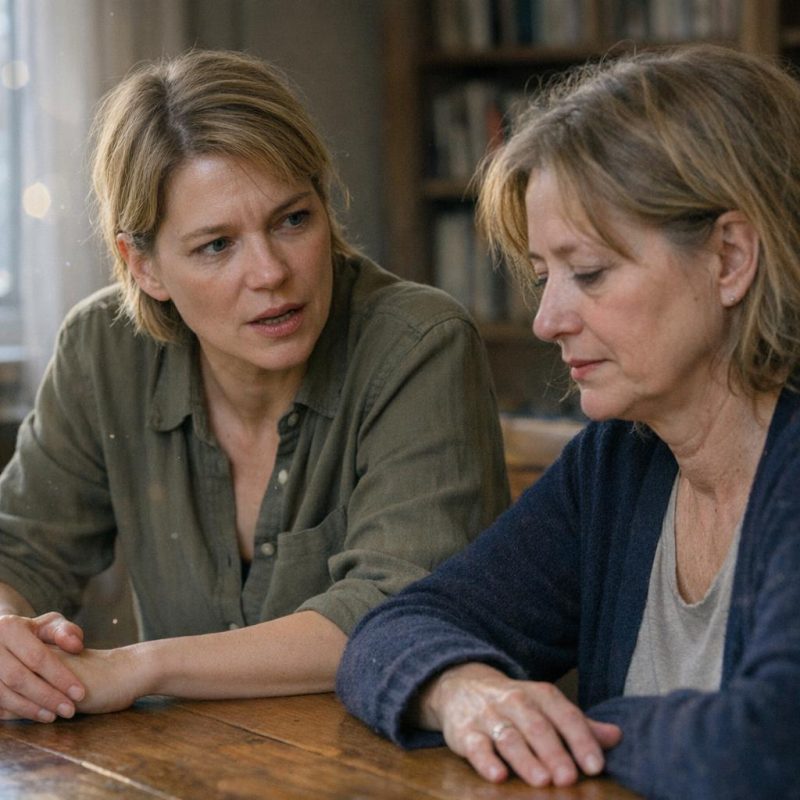 Image by RM AI
The Timeline I Reconstructed
I spent the entire weekend building the timeline, and what emerged made my hands shake. I took everything Tasha had told me—every conversation, every planted seed—and mapped it against the financial records I'd been collecting. On the left side of my dining room table, I laid out the times Janine had told people I was struggling. On the right, the major financial moves. In 1998, she'd told our cousin I was 'going through something difficult' at Thanksgiving. Two months later, Mom sold the rental property, and Janine handled the sale. In 2003, she'd mentioned to family friends that I was 'overwhelmed' by life. That spring, Mom updated her will, and Janine drove her to the attorney's office. In 2011, she'd expressed concern to our aunt about my 'emotional state.' Six months later, the joint account was opened. Every single time—every single time—Janine had planted doubt about my stability, a financial action followed within months. It wasn't reactive damage control. It wasn't Janine scrambling to explain away her actions after the fact. Every time Janine moved money or sold assets, she first planted seeds of doubt about me—it was a system.
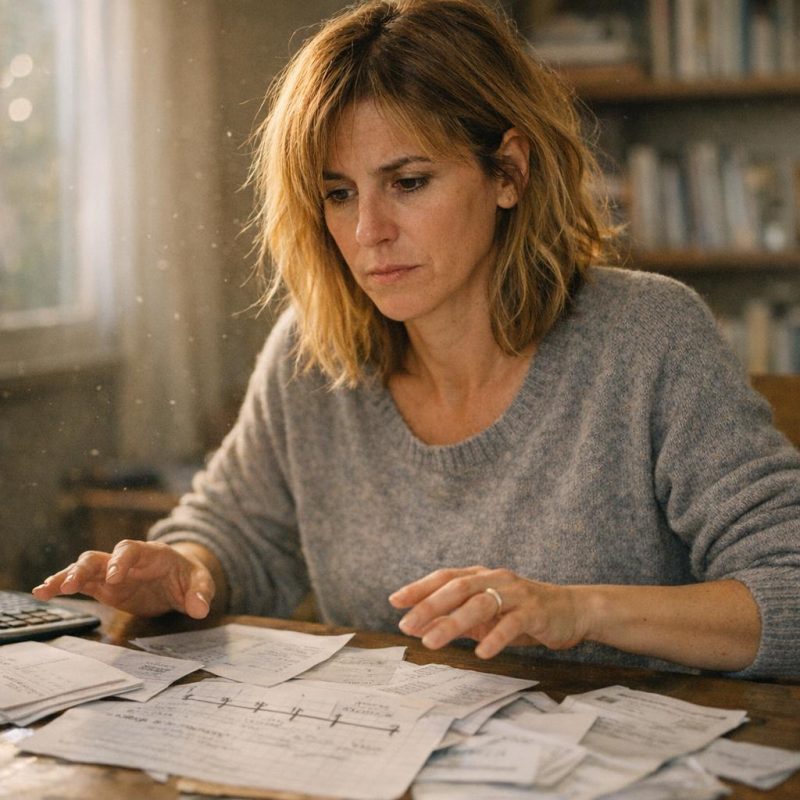 Image by RM AI
The Other Attorney's Receipt
With this new understanding, I went back through the boxes of paperwork with fresh eyes, looking for what I'd missed before. Near the bottom of the estate file, tucked behind a folder of medical bills, I found a receipt I'd overlooked the first time through. It was from David Marsh's firm, dated three days after Mom's funeral. A retainer payment. Five thousand dollars, paid by Janine from her personal account. I stared at it, my stomach turning over. Probate hadn't even been opened yet. Mom was barely in the ground. I'd still been in that fog of grief, barely able to get out of bed, and Janine had already hired an attorney. Not to handle probate—that would come later. This was earlier. Preparatory. I pulled out my phone and photographed the receipt, my hands steadier than they'd been in weeks. This wasn't Janine reacting to a complicated situation. This wasn't her making difficult decisions under pressure. She hired them before Mom's funeral, which meant she knew exactly what she was going to do.
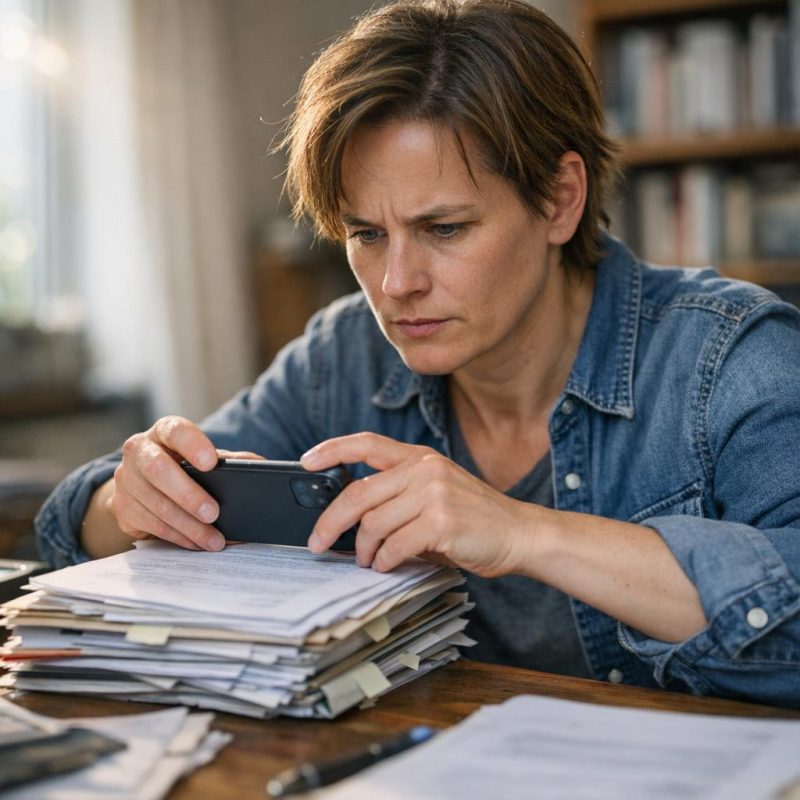 Image by RM AI
The Deposition Notice
Two days later, Sarah called with news. 'Janine's attorney has filed a motion to dismiss your claims,' she said. 'Standard defense tactic. But we're ready.' She'd already prepared our response, and it included something I hadn't expected: a motion to compel depositions. Janine would have to testify, under oath, about every document, every decision, every conversation. 'She'll have to sit across the table from you and answer questions,' Sarah explained. 'About the signature on the deed. About when she hired David Marsh. About the jewelry, the house sale, everything.' I felt something shift in my chest, something that had been locked down for months. 'When?' I asked. 'We're requesting it within thirty days,' Sarah said. 'I want to do this while we have momentum, while their side is still scrambling.' She paused. 'Are you ready for this? It won't be easy, seeing her, hearing her try to explain.' I thought about that timeline on my dining room table, about 25 years of systematic manipulation. 'I'm ready,' I said. Sarah said, 'We're going to make her answer for every signature, every story, every lie,' and I felt something like hope.
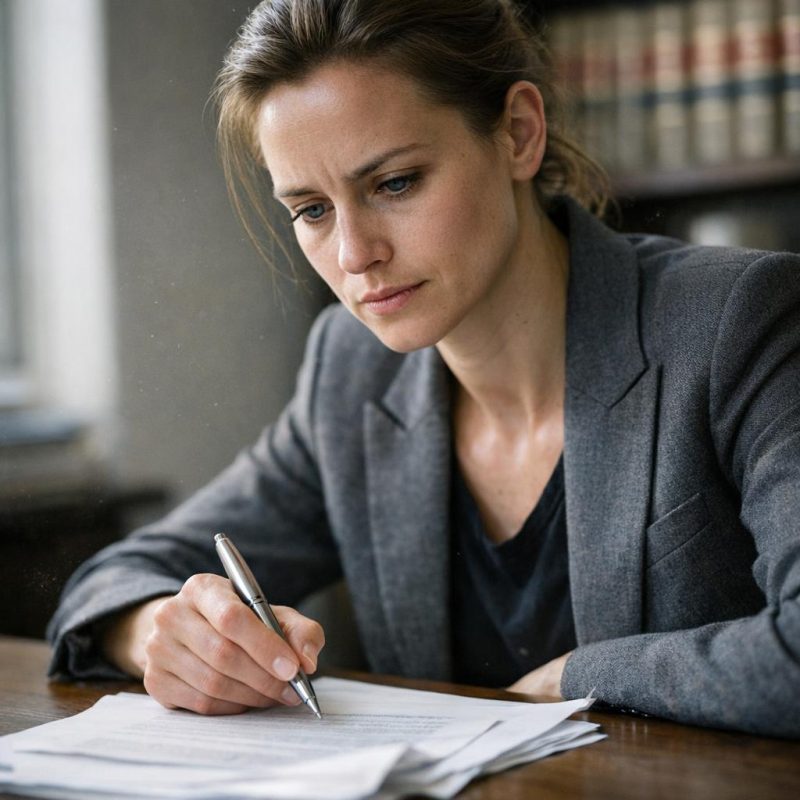 Image by RM AI
The Deposition Day
The deposition was scheduled for a Tuesday morning in a conference room downtown. I wore the navy dress I'd bought for Mom's funeral, the one I'd barely been able to look at since. Sarah met me in the lobby, her briefcase heavy with documents. 'She'll be calm,' Sarah warned me. 'She'll try to control the narrative, make herself seem reasonable. Don't let it shake you.' We walked into the conference room together. Janine was already there, sitting beside David Marsh, wearing a cream-colored suit I'd never seen before. She looked composed, professional, like she was there for a business meeting rather than to answer for fraud and theft. When I walked in, her eyes flicked to me and then away, so fast I almost missed it. No greeting. No acknowledgment. We sat across from each other, the court reporter between us, and I studied my sister's face like I was seeing it for the first time. The set of her jaw. The way she arranged her hands on the table, deliberate and controlled. Everything about her was a performance. Janine looked at me like I was a stranger, and I realized that's exactly what I'd always been to her—just an obstacle.
 Image by RM AI
The Questions Janine Couldn't Answer
Sarah started with simple questions—Janine's full name, her relationship to our mother, when she'd last seen her alive. Janine answered smoothly, her voice steady. Then Sarah moved to the signature on the quitclaim deed. 'Did you witness your mother sign this document?' Sarah asked. 'I don't recall,' Janine said. 'You don't recall being present when your mother signed away her house?' 'It was a difficult time. Many things happened.' Sarah pulled out another document. 'This is the receipt showing you paid attorney David Marsh's firm three days after your mother's funeral. Do you recall that?' Janine hesitated. 'I don't recall the exact date.' 'But you do recall hiring an attorney before probate opened?' 'I don't recall the timeline clearly.' Sarah went through the joint account next, then the missing jewelry, then the 'unstable sister' narrative Tasha had documented. With each question, Janine's answers became vaguer. 'I don't recall.' 'I can't say for certain.' 'That's not how I remember it.' I watched David Marsh's face tighten with each non-answer. She said she 'couldn't recall' seven times in ten minutes, and I watched her attorney's face go pale.
 Image by RM AI
The Evidence Presented
Sarah spread the documents across the table like she was dealing cards. The quitclaim deed with the signature that didn't match any of Mom's other legal documents. The bank statements showing the joint account Janine had emptied. The house sale records I'd tracked down, proving the property had been sold without my knowledge. The receipt showing Janine had hired David Marsh before Mom was even buried. And finally, the photograph—Janine at that Christmas party two years ago, wearing Mom's sapphire pendant. 'Can you explain why you're wearing jewelry that was supposed to be distributed equally between you and your sister?' Sarah asked. Janine looked at the photo for a long moment. I could see her calculating, trying to find an angle that would work. 'I don't remember where I got that necklace,' she finally said. Sarah raised an eyebrow. 'You don't remember? It's a distinctive piece.' 'I have a lot of jewelry.' 'From your mother's estate?' Silence. Janine's jaw tightened, but she didn't answer. Sarah let the silence stretch. When Sarah showed her the photo of her wearing Mom's pendant, Janine said nothing, and silence is the only honest thing she'd given me in 25 years.
 Image by RM AI
The Break in the Deposition
After two hours of questioning, David Marsh called for a break. Sarah gathered her documents while Janine left the room without looking at me. I went to the bathroom and splashed cold water on my face, trying to steady my breathing. When I came back, I found Sarah standing in the hallway, her expression carefully neutral. 'David wants to talk,' she said quietly. 'About?' 'He didn't say explicitly, but I can guess.' We went back into the conference room. David and Janine were already there, but the atmosphere had shifted. David's posture was different—less combative, more measured. 'My client would like to discuss the possibility of resolving this matter without further litigation,' he said. Sarah glanced at me, then back at David. 'We're listening.' 'We'd need time to discuss terms,' David continued. 'But we believe a settlement could be reached that would be satisfactory to both parties.' Janine stared at the table, her face unreadable. After we left, walking back to Sarah's car, she turned to me. Sarah whispered, 'They're offering to settle,' and I had to decide if justice meant money or something money couldn't buy.
 Image by RM AI
The Terms on the Table
The formal offer came two days later. Sarah read it to me over the phone: Janine would pay me $340,000—roughly half the estimated value of what I should have inherited—plus return all of Mom's jewelry still in her possession. In exchange, I would drop all legal claims and sign a non-disclosure agreement. 'It's a substantial offer,' Sarah said carefully. 'More than I expected them to start with.' I did the math in my head. It was real money, life-changing money. I could pay off my mortgage, finally take that trip to Italy I'd been dreaming about, stop worrying about retirement. But as Sarah continued reading the terms—the payment schedule, the NDA clauses, the mutual release—I kept waiting for something that never came. An acknowledgment. An explanation. 'Is there anything about her admitting what she did?' I asked. Sarah was quiet for a moment. 'No,' she said. 'Settlement agreements rarely include admissions of wrongdoing. That's part of why people settle—to avoid that.' I thought about Janine's face across that conference table, the way she'd looked through me like I wasn't there. The number was significant, but it didn't include an apology, and I realized I wanted her to say she was sorry more than I wanted the money.
 Image by RM AI
The Decision I Made
I called Sarah back the next morning and told her I'd accept the settlement, but only with one additional clause. 'I need her to acknowledge what she did,' I said. 'In writing. Not just a general release—an actual statement that she removed me from the estate distribution improperly.' Sarah was quiet for a long moment. 'That's unusual,' she finally said. 'Most people in your position would just take the money and run. Adding a requirement like that could kill the deal.' I understood that. I knew Janine would probably balk at admitting anything on paper, that David would advise her to walk away rather than create a written record of wrongdoing. But I also knew that if I took the money without the acknowledgment, I'd spend the rest of my life wondering if I'd imagined the whole thing—if maybe Janine's version was true and I really was just oversensitive, just making patterns out of nothing. 'I need it in writing,' I repeated. 'Because that's what she always does—she changes the story later, says she never said what she said, never did what she did. I've spent my whole life being told my memory is wrong.' Sarah said she'd present the condition to David, but she couldn't promise anything. I told her I understood. I wanted the truth on paper, because paper was the only thing in our family that lasted longer than lies.
 Image by RM AI
The Agreement Signed
The signing happened in David's conference room three weeks later. I didn't expect Janine to agree to my condition, but apparently David convinced her it was better than losing at trial. The acknowledgment was buried in the middle of page seven, in careful legal language that Sarah had negotiated: 'Janine Morris acknowledges that Celeste Morris was improperly excluded from distributions under the Estate of Patricia Morris, and that this exclusion was not consistent with the decedent's expressed wishes.' It wasn't an apology—David had drawn that line—but it was truth, documented and signed. We sat on opposite sides of the table again, but this time I wasn't shaking. Sarah had marked all my signature lines with little yellow tabs. I signed first, watching my own hand form the letters of my name. Then the documents slid across the polished wood to Janine. She didn't look at me as she signed, just moved through the pages with the same efficient precision she brought to everything. David witnessed, then Sarah. The whole thing took maybe ten minutes. When it was done, David stood and extended his hand to Sarah—professional courtesy between attorneys. Janine gathered her copy of the agreement into her leather portfolio. I watched Janine sign her name, and this time, I knew it was really hers.
 Image by RM AI
The Last Conversation
We ended up in the parking garage at the same time, walking toward our cars. I didn't plan to say anything—the papers were signed, the agreement was done—but then Janine stopped about ten feet from her silver Mercedes and turned around. 'You really weren't going to let it go, were you?' she said. Not angry, just stating a fact. I stopped too. 'No,' I said. 'I wasn't.' She looked at me for a long moment, and something shifted in her expression—not regret exactly, but maybe recognition. 'I thought you'd never notice,' she said quietly. 'I really did. You were always so busy trying to keep the peace, smoothing everything over. I thought you'd just—accept it. Like you always did.' The admission hung in the air between us, more honest than anything she'd said in that conference room. I could have asked why she did it, could have demanded to know when exactly she decided I didn't deserve my own mother's love, but I realized I didn't actually need those answers anymore. The pattern was clear. The acknowledgment was signed. 'I noticed everything,' I said. 'I just didn't know I was allowed to say it out loud.' Then I walked away.
 Image by RM AI
The Woman Who Noticed
Six months later, I met Rachel and Tasha for lunch at the same restaurant where I'd first told Rachel about the exclusion. It felt right somehow, closing that loop. Rachel had started texting me regularly after the settlement—awkward at first, apologizing over and over, but gradually finding our way back to the relationship we'd had before Janine made her choose. Tasha had sent me a long email the week after the signing, saying she wished she'd spoken up sooner, that she'd let her own complicated relationship with confrontation keep her silent when I needed support. I forgave them both, because I understood what it was like to doubt your own perception when someone skilled enough told you that you were wrong. We didn't talk about Janine that day—we talked about my upcoming trip to Florence, about Rachel's daughter starting college, about Tasha's new project at work. Normal sister things. Aunt things. I'd used some of the settlement money to pay off my mortgage, and the rest was sitting in investments, growing quietly. But the real dividend was this: I trusted myself now. When I noticed a pattern, I didn't second-guess it anymore. When something felt wrong, I said so. I'm still the kind of woman who notices patterns, but now I also notice when I'm being believed, and that changes everything.
 Image by RM AI
KEEP ON READING
The 20 Most Recognized Historical Figures Of All Time
The Biggest Names In History. Although the Earth has been…
By Cathy Liu Oct 4, 2024
10 of the Shortest Wars in History & 10 of…
Wars: Longest and Shortest. Throughout history, wars have varied dramatically…
By Emilie Richardson-Dupuis Oct 7, 2024
10 Fascinating Facts About Ancient Greece You Can Appreciate &…
Once Upon A Time Lived Some Ancient Weirdos.... Greece is…
By Megan Wickens Oct 7, 2024
20 Lesser-Known Facts About Christopher Columbus You Don't Learn In…
In 1492, He Sailed The Ocean Blue. Christopher Columbus is…
By Emilie Richardson-Dupuis Oct 9, 2024
20 Historical Landmarks That Have The Craziest Conspiracy Theories
Unsolved Mysteries Of Ancient Places . When there's not enough evidence…
By Megan Wickens Oct 9, 2024
The 20 Craziest Inventions & Discoveries Made During Ancient Times
Crazy Ancient Inventions . While we're busy making big advancements in…
By Cathy Liu Oct 9, 2024