

My Husband's Secret Son Showed Up at Our Door—Then I Discovered the Family Conspiracy That Had Been Hidden for 50 Years
My Husband's Secret Son Showed Up at Our Door—Then I Discovered the Family Conspiracy That Had Been Hidden for 50 Years
The Stranger at the Door
It was a Saturday in late September, the kind of day that makes you feel like everything is exactly where it should be. Sophie was inside watching cartoons, Richard was out back pushing the mower in those slow, deliberate rows he always made, and I was in the kitchen thinking about nothing more complicated than what to make for lunch. When the doorbell rang, I almost didn't answer it. We'd been getting a lot of solicitors that fall, and I wasn't in the mood. But something made me wipe my hands on the dish towel and go anyway. The man standing on the porch looked to be in his late fifties, gray-haired, a little rumpled, holding a worn leather folder against his chest like it was something he didn't want to drop. He glanced past me toward the house, then back at me, and gave me a nervous half-smile. I asked if I could help him. He said he was looking for Richard — said his full name, first and last — and that it was a personal matter. I told him to wait a moment and went to the back door to call Richard in. What happened next I've turned over in my mind a hundred times since. Richard came around the side of the house, still holding the mower handle, and the moment he saw the man on the porch, he stopped walking. The color left his face so completely and so fast that I thought for a second he might be sick. He didn't say a word. Neither did I. The silence that settled between the three of us felt heavier than the whole afternoon.
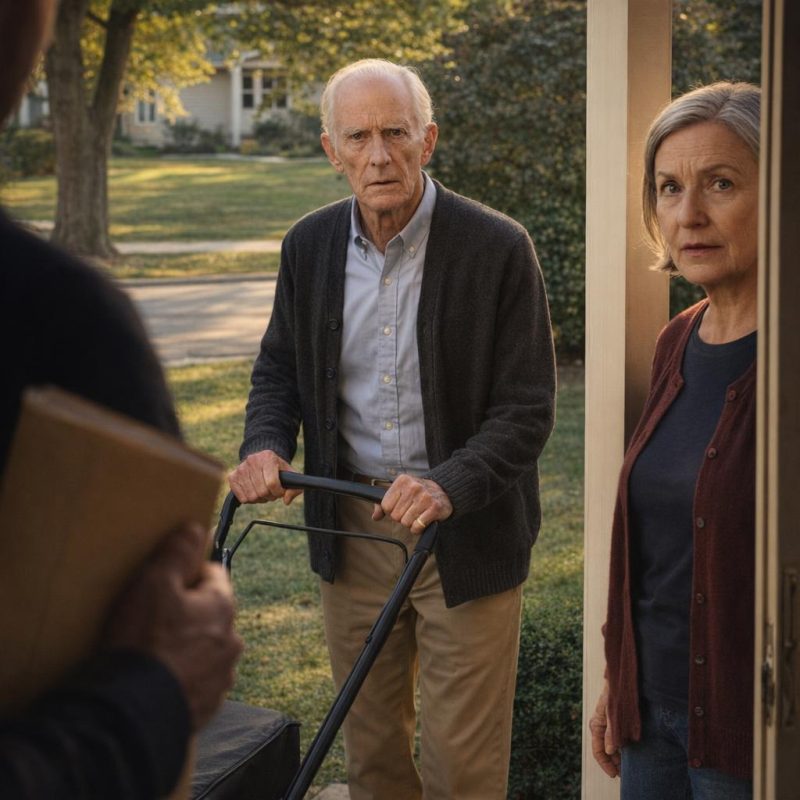 Image by RM AI
Twenty-Three Years of Trust
Twenty-three years is a long time to know someone. Long enough that you stop thinking about trust as a thing you have to maintain — it just becomes the air you breathe. Richard and I got married when I was in my early forties, both of us old enough to know what we were doing and why. We weren't kids swept up in romance. We chose each other deliberately, with our eyes open. We'd been through job losses together, a health scare with Richard's back that kept him out of work for four months, a stretch in our fifties when money was tight enough that we ate a lot of soup and didn't complain about it. None of it shook us. If anything, it made us more solid. Richard was the most predictable man I'd ever known, and I mean that as a compliment. He was steady. Reliable. The kind of person who did what he said he was going to do and didn't make a production out of it. People used to joke that you could set your watch by him. I believed I knew him the way you know a house you've lived in for decades — every creak, every draft, every place the paint was starting to peel. He used to say, sometimes, that some people go their whole lives never really knowing who they're married to. He'd shake his head when he said it, like it was a kind of tragedy. And I'd nod along, feeling quietly lucky, because I was certain — completely, unshakeably certain — that he had no secrets from me.
 Image by RM AI
Building a Family
We raised Emily in a house that wasn't big but always felt full. Richard coached her soccer team one season even though he knew nothing about soccer, and she never let him forget it. She grew up stubborn and sharp and kind, which I'll take credit for half of and give Richard the other half. When she finished college and started her career, I remember standing in the kitchen after she drove away and thinking — we did that. We actually did that. Then she met her husband, and the family got bigger, and a few years later Sophie arrived. Eight years old now, with her grandmother's stubbornness and her grandfather's patience, which is a combination that will either serve her very well or drive everyone around her absolutely mad. Richard took to being a grandfather the way some men take to retirement — like he'd been waiting for it his whole life without knowing it. Sunday dinners, birthday parties, the occasional chaotic holiday where someone always burned something and nobody minded. Emily would bring Sophie over for weekends sometimes, and the house would fill back up with noise and crayon drawings left on the coffee table. I used to sit in the evenings after everyone had gone home and look around at the ordinary mess of it all — the extra dishes in the sink, the throw blanket pulled off the couch — and feel something I can only describe as complete.
 Image by RM AI
A Man Without Secrets
If you had sat me down five years ago and asked me what Richard's biggest secret was, I would have laughed. Not a polite laugh — a genuine one. Because the honest answer was that I didn't think he had any. That's not naivety talking, or at least it didn't feel like it at the time. It felt like evidence. Twenty-three years of evidence. Richard left for work at the same time every morning, took the same route, stopped at the same gas station on Tuesdays for coffee. He ordered the same three meals on rotation at our favorite restaurant and got mildly annoyed when they changed the menu. He kept his side of the closet organized in a way that bordered on compulsive. He had no hidden accounts, no mysterious absences, no friends I hadn't met. His life, as far as I could see, was exactly what it appeared to be. I used to think that some people are just built that way — no hidden rooms, no locked drawers. Richard was one of them. Or so I believed. I knew his childhood stories, his work frustrations, his opinions on everything from local politics to the right way to load a dishwasher. He told me things he said he'd never told anyone else. I held all of it and never once thought to wonder what might be missing. The certainty I felt about who he was sat in my chest like something solid and permanent, something that didn't need to be checked on.
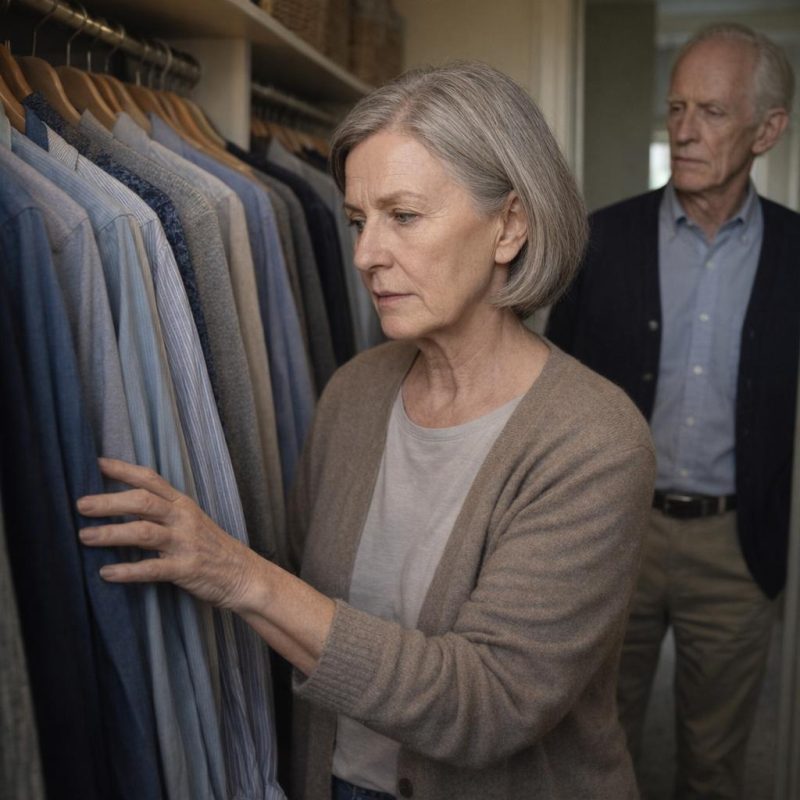 Image by RM AI
Small Warnings
Looking back now, there were moments. Small ones. The kind that don't register as anything at the time because they fit so easily into the ordinary texture of a life. Richard would sometimes take a phone call outside. Not often — maybe a handful of times over the years — but I noticed it the way you notice a neighbor's car parked in an unusual spot. You see it, you file it away, and then you forget about it because nothing about it demands your attention. He'd step out onto the back porch, pull the door mostly closed behind him, and come back in a few minutes later looking no different than when he left. I never asked who it was. It didn't occur to me to ask. There were certain topics that made him go quiet — not defensive, just quiet, like he was choosing his words more carefully than usual. His time working out of state in his twenties. A few names that came up once and never again. I noticed those too, in the same casual way, and let them pass. Everyone has corners of their past they don't feel like revisiting. I respected that. I thought I was being a good partner by not pushing. I thought his privacy was something I was giving him, not something he was taking. We'd been married long enough that I didn't feel the need to account for every silence. Then one evening last spring, I was reading in the living room when I heard the back door open and Richard's voice, low and careful, drifting in from the porch.
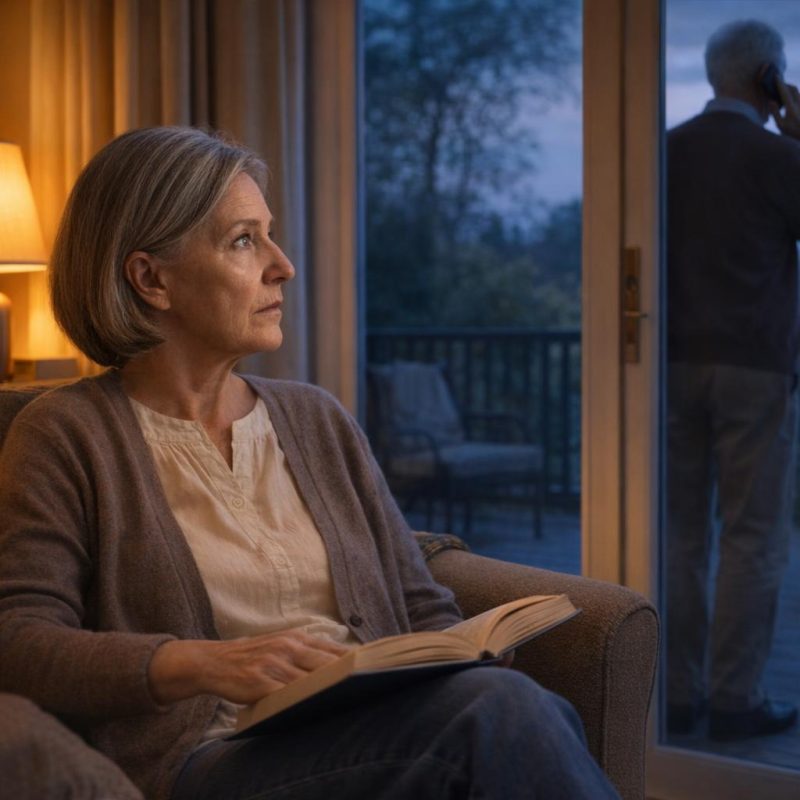 Image by RM AI
Questions About His Twenties
Richard's twenties were a gap in the map. Not a suspicious one — just a vague stretch of years he never seemed to have much to say about. When we were first dating, I'd ask the usual questions. Where did you live before here? What were you doing in your late twenties? He'd give me answers that were technically complete but somehow didn't add up to much. He'd worked a few different jobs, moved around a little, nothing that interesting. He'd redirect before I could follow up — ask me something about my own past, or remember something he needed to do, or just let the conversation drift somewhere else. I noticed the pattern eventually, the way you notice that a particular drawer in the kitchen always sticks. You learn to pull it differently and stop thinking about why it sticks. I assumed he'd had a rough patch he wasn't proud of. Maybe a relationship that ended badly. Maybe just years he'd rather not dwell on. I didn't push. It wasn't my business to excavate every corner of the man's history. One evening, early in our marriage, I asked him lightly about old girlfriends — just the kind of idle curiosity that comes up when you're still learning someone. He laughed it off, said there was nothing worth telling. But as he said it, something moved across his face — quick, almost imperceptible — and then it was gone, replaced by that easy smile I knew so well.
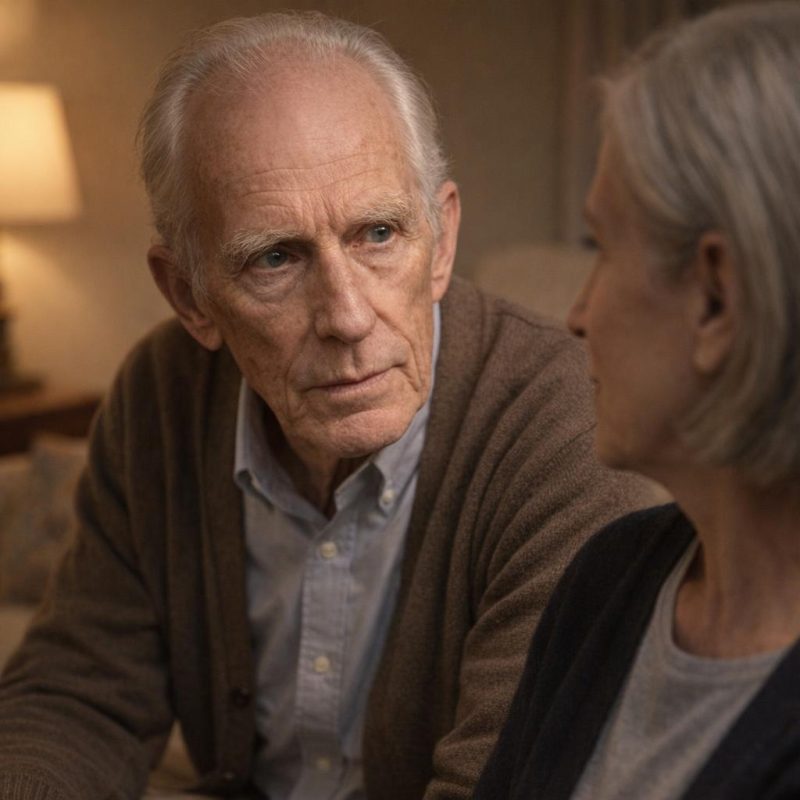 Image by RM AI
Grandchildren and New Beginnings
Whatever else I can say about Richard, and these days there is quite a lot I could say, the man was a wonderful grandfather. That part was real. I watched it happen and I know what I saw. Sophie would arrive on Friday evenings dragging her overnight bag and go straight past me to find him, and he'd act surprised every single time, like he hadn't been listening for her footsteps since four o'clock. He taught her card games and let her win at checkers and sat through approximately nine hundred viewings of the same animated movie without once complaining. Emily would watch them together from across the room with this expression she gets — half exasperated, half grateful — and I understood it completely. He was patient with Sophie in a way that seemed almost effortless, like that version of him had always been there waiting. I used to think that grandchildren bring out the best in people. That they give you a chance to do things over, slower and softer than the first time. Richard seemed to believe that too. One evening that summer, I was coming down the hallway and I heard his voice from Sophie's room, low and gentle. I stopped just outside the door without meaning to. Sophie had asked him something I didn't catch, and he told her, in that quiet way he had, that he would always tell her the truth.
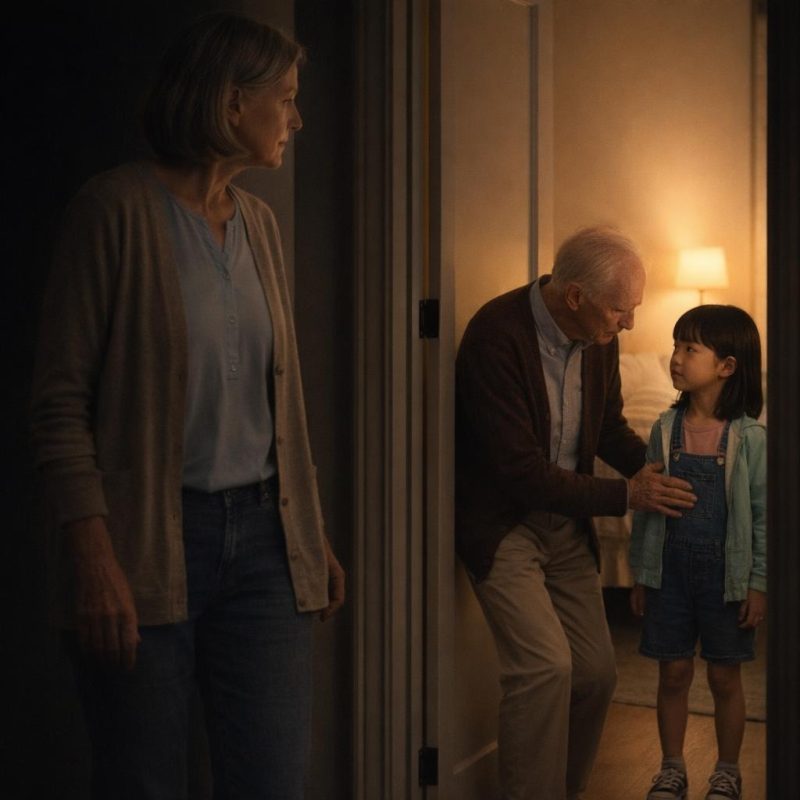 Image by RM AI
The Impossible Thought
If anyone had come to me a year ago — a friend, a neighbor, anyone — and told me that Richard was hiding something significant, I would have been genuinely confused by the suggestion. Not offended. Confused. Because it would have been like telling me the house was built on sand when I'd spent twenty-three years watching it stand through every storm. I knew this man. I knew how he took his coffee and which side of the bed he couldn't sleep without and what his face looked like when he was actually worried versus when he was just tired. I knew the sound of his breathing in the dark. You don't accumulate that kind of knowledge about a person and miss something enormous. That's what I believed. His predictability wasn't just a personality trait to me — it was a kind of proof. Steady people don't lead double lives. Quiet people don't carry catastrophic secrets. I had built my understanding of him on twenty-three years of consistent, unremarkable evidence, and it had never once given me reason to doubt. I couldn't have imagined him capable of a deception that size. The thought would have seemed not just unlikely but structurally impossible — like being told the sun rose in the west. I carried that certainty the way you carry something you've held so long you've stopped feeling its weight.
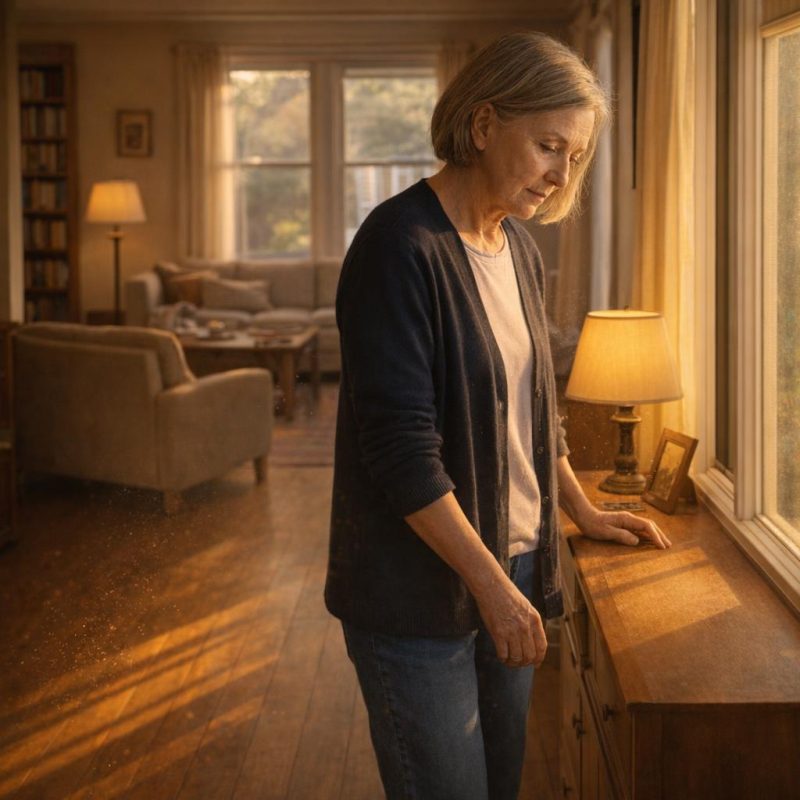 Image by RM AI
The Family Reunion
The reunion that summer was the same as every other one we'd had — folding tables dragged out to the backyard, the smell of charcoal and sunscreen, Sophie chasing the dog around the lawn until one of them gave up. Emily had brought a pasta salad nobody touched and Richard had burned the first round of burgers the way he always did, and I'd teased him about it the way I always did, and everything felt exactly right. That's what I keep coming back to. How right it all felt. We were maybe two hours in when I first noticed it — Richard glancing down at his phone. Not the casual, half-interested glance of someone checking the time. Something quicker than that. More deliberate. He'd look, then slide it back into his shirt pocket, then look again ten minutes later. I watched him do it four or five times before it even registered as a pattern. It wasn't like him. Richard was the man who left his phone on the kitchen counter for entire weekends without a second thought. He used to joke that retirement meant he'd finally earned the right to be unreachable. So the checking felt strange — not alarming, just out of place, the way a wrong note sounds in a song you've heard a hundred times. Sophie climbed into his lap at one point and he smiled and held her close, but even then his eyes drifted. I told myself he was probably just waiting on something minor. But I noticed the tightness in his shoulders each time he stared at that screen.
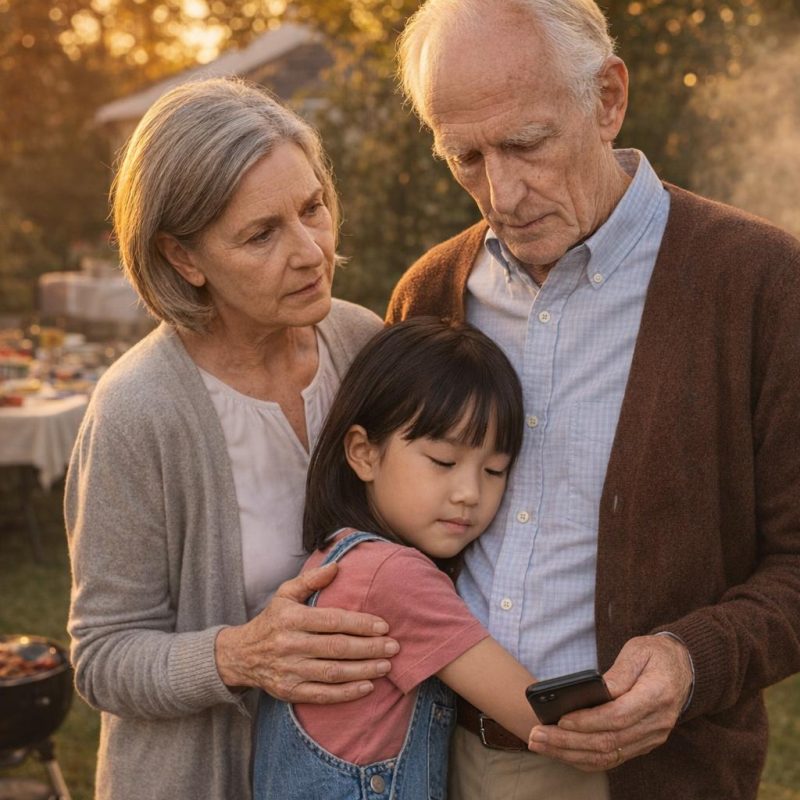 Image by RM AI
Behind the Garage
About an hour after I'd noticed the phone, I looked up from a conversation with Emily and Richard was just — gone. His lawn chair sat empty, his paper plate balanced on the armrest. I didn't think much of it at first. He probably needed a few minutes of quiet. Richard had always been that way at gatherings, needing to step back from the noise every so often. But when ten minutes passed and he still hadn't come back, I went looking. I found him behind the garage, standing with his back to the fence, phone pressed to his ear. He was speaking quietly — too quietly for me to catch any words — and his free hand was moving in that way it does when he's working something out in his head. The moment he saw me, he ended the call. Just like that. Mid-sentence, from the sound of it. He looked up and gave me a smile that arrived a half-second too late. I asked if everything was okay. He said it was fine, just a work thing he needed to sort out. I almost let it go right there. But something made me say it — I reminded him, lightly, that he'd been retired for two years. He laughed. Said it was an old colleague, something about a pension matter, nothing worth explaining. And I laughed too, because what else do you do. I walked back to the party and told myself it was nothing. But he'd been retired for two years.
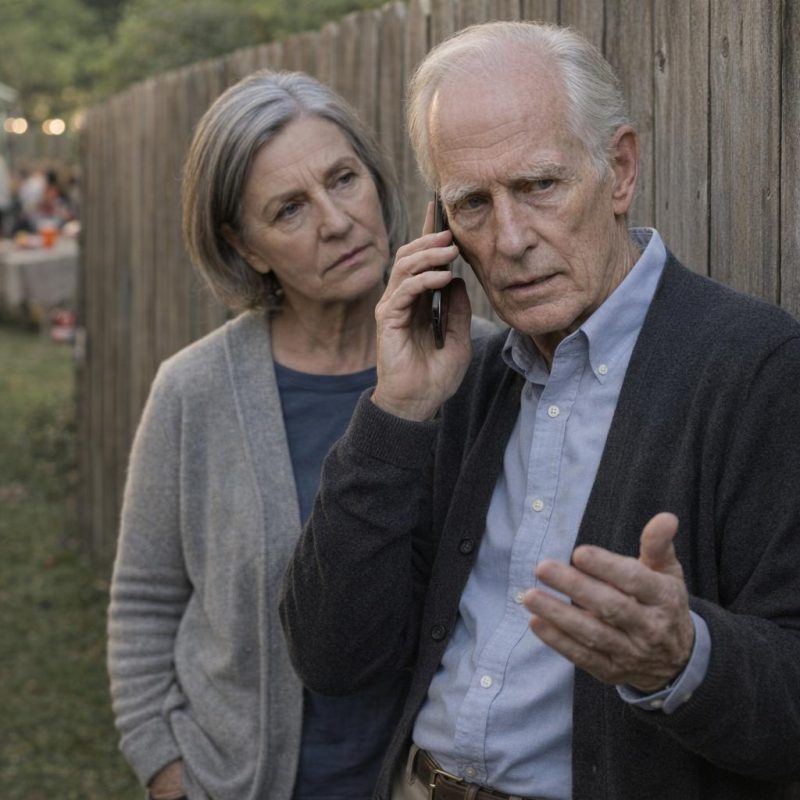 Image by RM AI
Forgetting the Incident
A week went by and I barely thought about it. That's the honest truth. Life has a way of filling in around the edges of things you don't quite understand, and by Monday morning the reunion felt like it belonged to a different season entirely. There were groceries to buy and a dentist appointment I'd rescheduled twice and a book club meeting I'd promised Emily I'd actually attend this time. Richard was back to his usual self — puttering in the garden, watching the evening news with his feet up, falling asleep in the armchair before nine. Everything was exactly as it had always been. I think that's what made it so easy to let go of. When someone has been steady for twenty-three years, you give them the benefit of the doubt without even deciding to. It's not a choice you make consciously. It just happens. The phone call behind the garage became one of those small, slightly odd moments that marriages accumulate over the decades — the kind of thing you file away under nothing and move on. I wasn't suppressing anything. I genuinely wasn't worried. I had a husband I trusted completely, a life that made sense, and no reason to go looking for trouble where there wasn't any. Looking back now, I'm struck less by what I missed than by the ease with which I let it go.
 Image by RM AI
The Letter Without a Return Address
It was a Tuesday, ordinary in every way, when the letter arrived. I almost missed it — it was tucked between a water bill and a furniture catalog, a plain white envelope with our address printed in block letters and nothing else on the front. No return address. Not even a postmark I could make sense of. I set the other mail down and stood at the kitchen counter turning it over in my hands for a moment before I opened it. Inside there was no note, no card, no explanation of any kind. Just a photograph. A single photograph, printed on the kind of glossy paper that feels slightly too thick, the way old photos do when someone's had them reproduced. The image showed a younger version of Richard — I'd say late twenties, maybe thirty — standing beside a woman I didn't recognize. She had dark hair and was smiling at the camera, and Richard had his arm around her shoulders in the easy, familiar way you do with someone you know well. My first thought was that it was an old girlfriend, something that had surfaced from someone's attic. People send things like that sometimes, thinking you'd want them. I turned the photograph over, looking for a name, a date, anything written on the back. There was nothing on the back either. I flipped it over again and looked more carefully at the image — and then I noticed the date printed in the corner of the photograph.
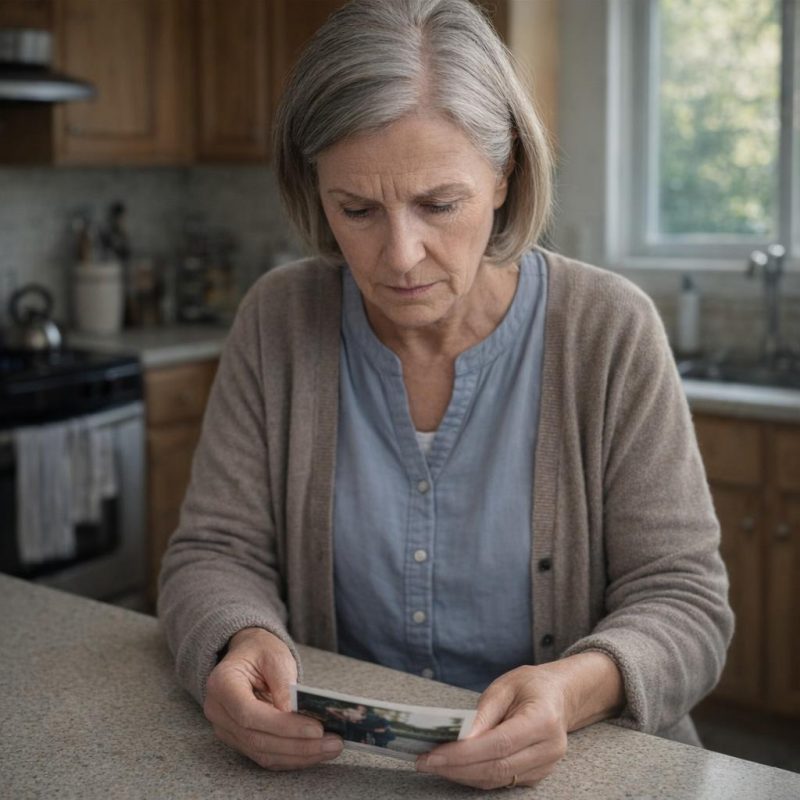 Image by RM AI
The Woman and the Baby
The date in the corner was small but clear enough — printed in that faded red font that old cameras used to stamp automatically. I did the math without meaning to. Richard would have been thirty-two. We'd been married for four years by then. I stood at the counter and looked at the photograph again, more carefully this time, and that's when I noticed what I'd missed on the first pass. The woman wasn't just standing beside him. She was holding something — a baby, wrapped in a pale blanket, cradled against her chest. The baby's face was turned slightly away from the camera, but you could see the small curve of a cheek, a tuft of dark hair. Richard's hand was still around the woman's shoulders. He was looking at the camera, not at the baby, and his expression was — I don't know how to describe it exactly. Not unhappy. Not quite at ease either. I set the photograph down on the counter and picked it up again. I told myself there were a dozen explanations. A cousin's baby. A friend's wife. A moment at a party that meant nothing. People appear in photographs all the time without it meaning anything. I wasn't alarmed. I was just — puzzled. The kind of puzzled that sits quietly at the back of your mind and doesn't make any noise. I stood there in the kitchen with the photograph in both hands, and the house was very still around me.
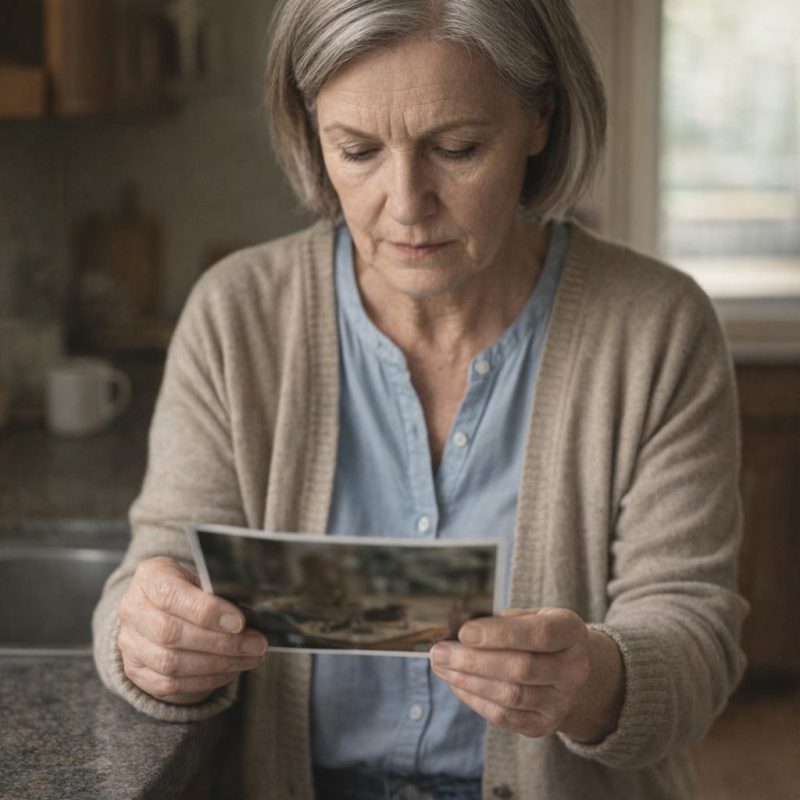 Image by RM AI
Richard's Hands Shake
I waited until after dinner to show him. I'm not sure why — maybe I wanted the dishes done and the kitchen clean, some sense of ordinary life in place before I introduced something that felt slightly unordinary. I set the photograph on the table in front of him while he was still holding his coffee cup. I told him it had come in the mail that day, no return address, nothing else inside. I asked if he knew what it was. He looked down at it. And then something happened to his face that I had never seen happen before in twenty-three years of marriage. It wasn't embarrassment. It wasn't the mild discomfort of someone caught in a small awkward memory. It was something closer to fear — fast and unguarded, the way a reaction looks before a person has time to manage it. His coffee cup went down on the table harder than he meant it to. He picked up the photograph with both hands and I watched the color leave his face. He didn't say anything for a long moment. I asked again — do you know who this is? He said yes, he said it was someone he'd known a long time ago, said it quietly and without looking up. His hands, which had been steady every day of our marriage through every difficult thing we'd ever faced, were trembling against the edges of that photograph.
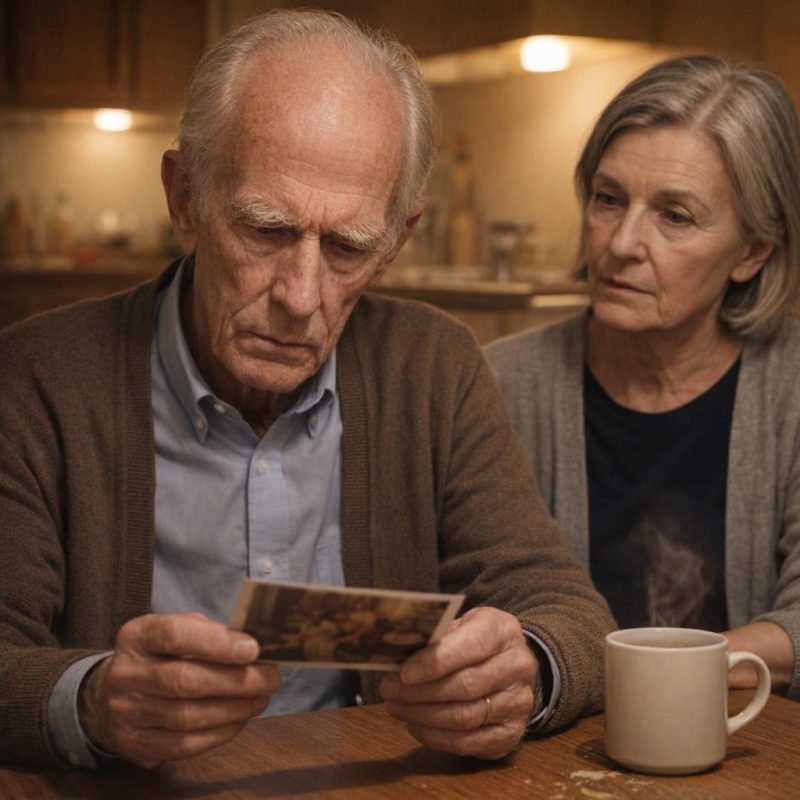 Image by RM AI
The Wrong Answer
He set the photograph down and told me she was someone he'd dated briefly, before we met. He said it the way you say something you've decided to say — flat and even, no hesitation. He said it hadn't been serious, that it was a long time ago, that he couldn't imagine why anyone would send it now. He said he didn't know who could have sent it. I nodded. I told myself that was a reasonable answer. Old relationships surface sometimes. People hold onto things. But I kept looking at his face, and his face didn't match the words. He wasn't embarrassed the way a person is when an old girlfriend comes up. He was still frightened. The color hadn't come back. His hands were steadier now but he'd pressed them flat against the table, and I noticed that. I noticed the effort of it. I turned the conversation over in my head while he carried his cup to the sink and said something about being tired. And then it caught up with me — the thing that had been sitting just out of reach since he started talking. I'd asked him who the woman was. That was my question. Who is she. And he'd answered a different one entirely — he'd told me he didn't know who had sent the photograph.
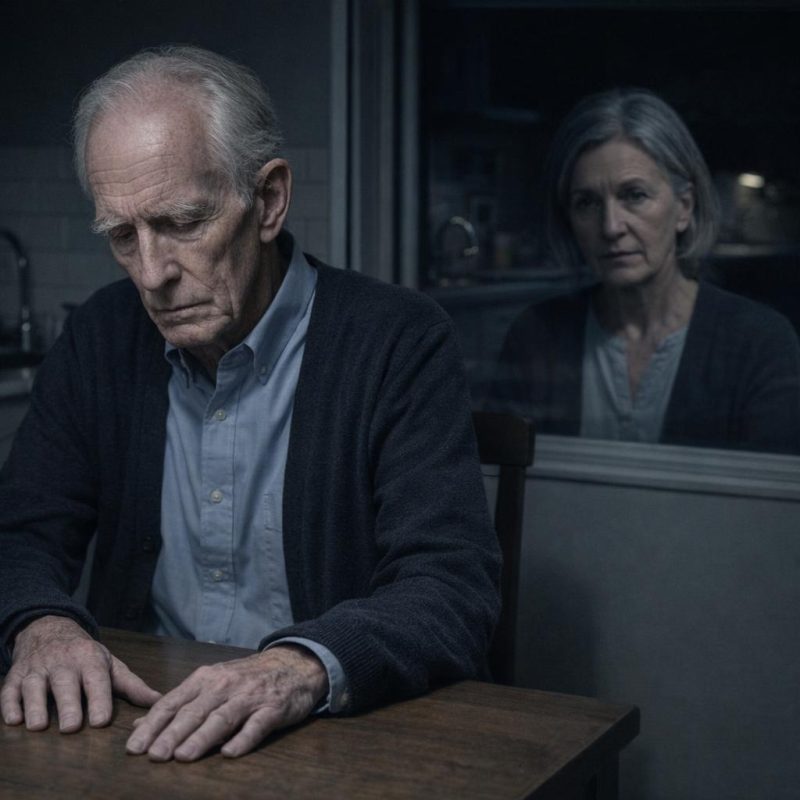 Image by RM AI
Watching the Mailbox
After that night, something shifted in Richard that I couldn't name and he wouldn't explain. He became quieter — not the comfortable quiet of a man at ease in his own home, but something more closed off, more careful. He slept badly. I'd wake at two or three in the morning and find his side of the bed empty, and I'd hear him downstairs, not doing anything in particular, just moving around in the dark. But the thing I noticed most was the mailbox. He started checking it the way some people check their phones — compulsively, without seeming to realize he was doing it. Once in the morning before breakfast. Again after lunch. Sometimes a third time in the late afternoon, walking out to the curb and back with the particular purposeful stride of someone who needed to look like they had a reason to be there. I watched from the kitchen window more than once. He never said anything about it and I never asked. I told myself he was expecting something — a document, a bill, something he'd ordered and forgotten to mention. I was good at finding reasonable explanations by then. But one afternoon I was standing at the sink when he came back up the front walk, and I could see his face clearly through the glass. The mail slot was empty again, and his expression when he registered that — tight, unreadable, somewhere between relief and dread — stayed with me long after he came back inside.
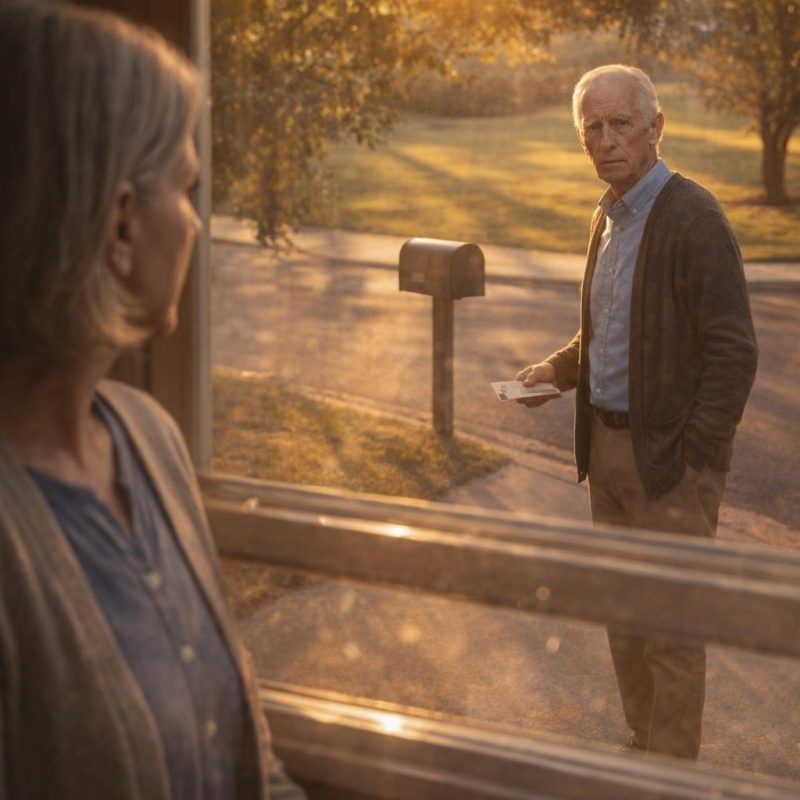 Image by RM AI
Three in the Morning
I woke up at three in the morning and his side of the bed was cold. Not just empty — cold, like he'd been gone a while. I lay there for a minute listening to the house, and then I got up. The kitchen light was on, that low amber glow from the range hood he always left burning when he couldn't sleep. I came around the corner and found him at the table, still in his undershirt and pajama pants, surrounded by photo albums. Not one — three of them, spread open like he was cross-referencing something. He didn't hear me come in. He was just sitting there in the half-dark, bent slightly forward, one hand resting flat on an open page. I stood in the doorway for a moment watching him. There was something about the stillness of it that made my chest tighten. This wasn't insomnia. This wasn't a man who couldn't sleep and needed something to do with his hands. He looked like a man revisiting something he'd been trying not to think about for a very long time. I said his name quietly and he startled — actually flinched — and then looked up at me with an expression I couldn't quite read. Guilty, maybe. Or caught. He said he was just looking at old pictures, couldn't sleep, nothing to worry about. I nodded and said okay. But as I moved toward the kettle, I glanced down at the album still open on the table, and I saw which page he'd been staring at.
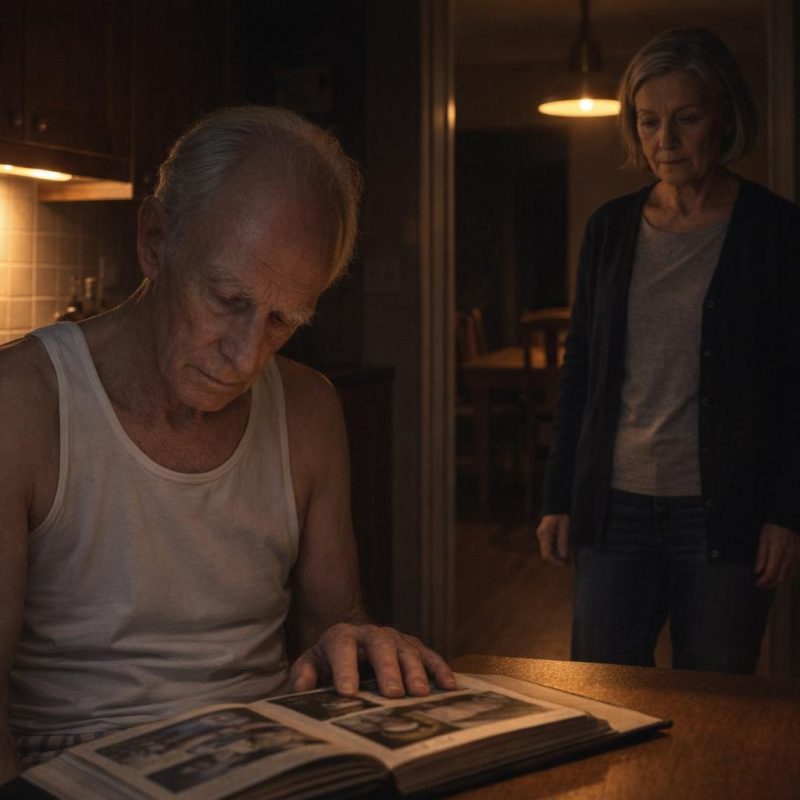 Image by RM AI
Brushing Her Off
I tried to talk to him the next morning, and the morning after that. I wasn't aggressive about it — I know how Richard shuts down when he feels cornered, so I kept it gentle. I asked if something was bothering him. He said no. I asked if he was worried about his health, his finances, anything at all. He said he was fine, just tired, just getting older. He said it the way you say something you've rehearsed enough times that it comes out smooth but lands flat. He wouldn't meet my eyes when he said it. He'd look just past my shoulder, or down at his coffee cup, or out the window at nothing in particular. I'd been married to this man for twenty-three years. I knew the difference between tired and troubled. I let it go each time because pushing Richard never worked — he'd just go quieter, pull further in, and I'd end up feeling like the problem. But the not-knowing had its own weight. I'd find myself watching him across the dinner table, trying to read something in the set of his jaw or the way he held his fork. He seemed to be waiting. For what, I couldn't say. Some days the house felt smaller than it used to, the silences between us longer and less comfortable than they'd ever been in all our years together.
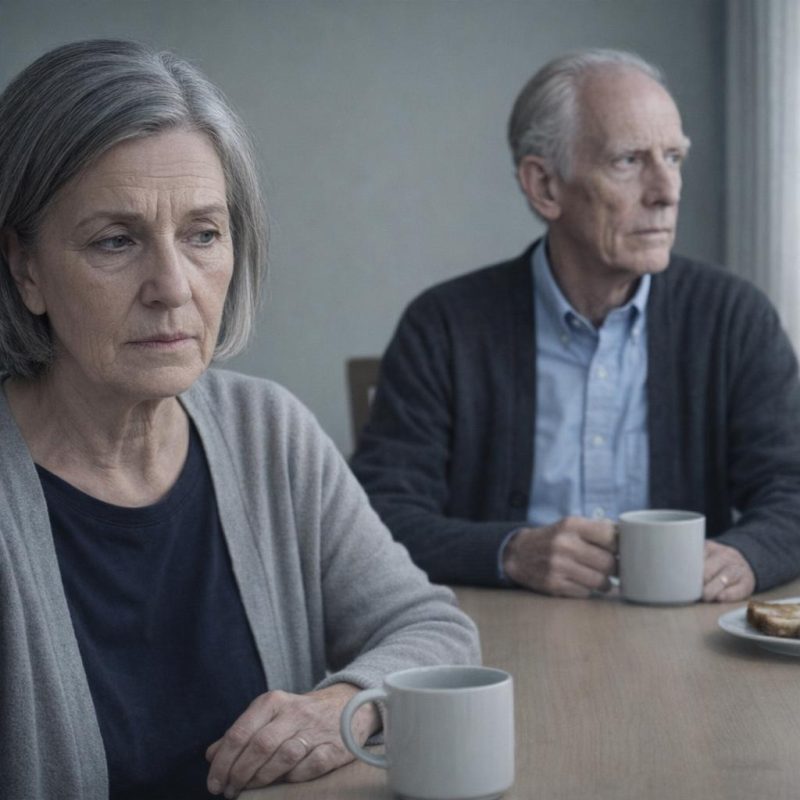 Image by RM AI
He Knows Now
The second letter came on a Tuesday, about three weeks after the first. I almost missed it — it was tucked between a water bill and a grocery store circular, no return address, same block printing on the envelope as before. I stood at the mailbox and opened it right there on the curb. There was no photograph this time. No explanation. Just a single folded piece of plain white paper, and when I opened it, three words were printed in the center of the page in the same careful block letters. Nothing else. No signature. No date. No context of any kind. I read it twice, then a third time, as if more words might appear. They didn't. I brought it inside and set it on the kitchen table and stood there looking at it for a long moment before I called Richard in from the other room. He came in wiping his hands on a dish towel, and I watched his face as he read it. Something moved behind his eyes — not surprise exactly, more like a door closing. He set the paper down carefully and didn't say anything for a beat too long. I asked him what it meant. He said he didn't know. But his hands had gone very still, and the dish towel was twisted tight between his fingers. I picked the note back up and read those three words again: *He knows now.*
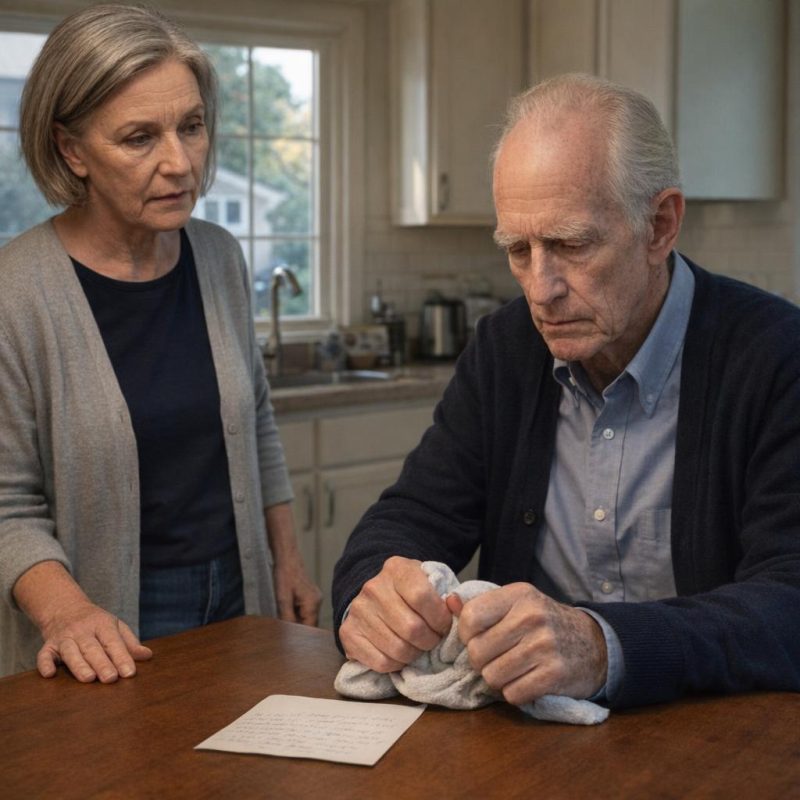 Image by RM AI
Waiting for Disaster
I told myself it was a prank. Someone with too much time and a mean streak, sending cryptic notes to rattle us. It wasn't unheard of — we'd had a neighbor dispute years back, and people could hold grudges longer than you'd think. The letters seemed designed to unsettle, I decided. Whoever sent them wanted us anxious and confused, and the best thing we could do was ignore them. Richard didn't agree with me, but he wouldn't say what he thought instead. He just got quieter. He stopped checking the mailbox compulsively — which should have been a relief, but wasn't, because now he seemed to have given up on whatever he'd been waiting for and moved into something that looked more like resignation. He slept even less. He ate without tasting anything. I'd catch him standing at the living room window in the evenings, not looking at anything in particular, just standing there. Two weeks went by. The tension in the house had settled into something almost physical, like a pressure change before a storm. I kept waiting for it to break — for him to tell me what was going on, or for the whole thing to turn out to be nothing. I was in the kitchen on a Saturday morning, hands wrapped around my coffee mug, when I heard the knock at the door.
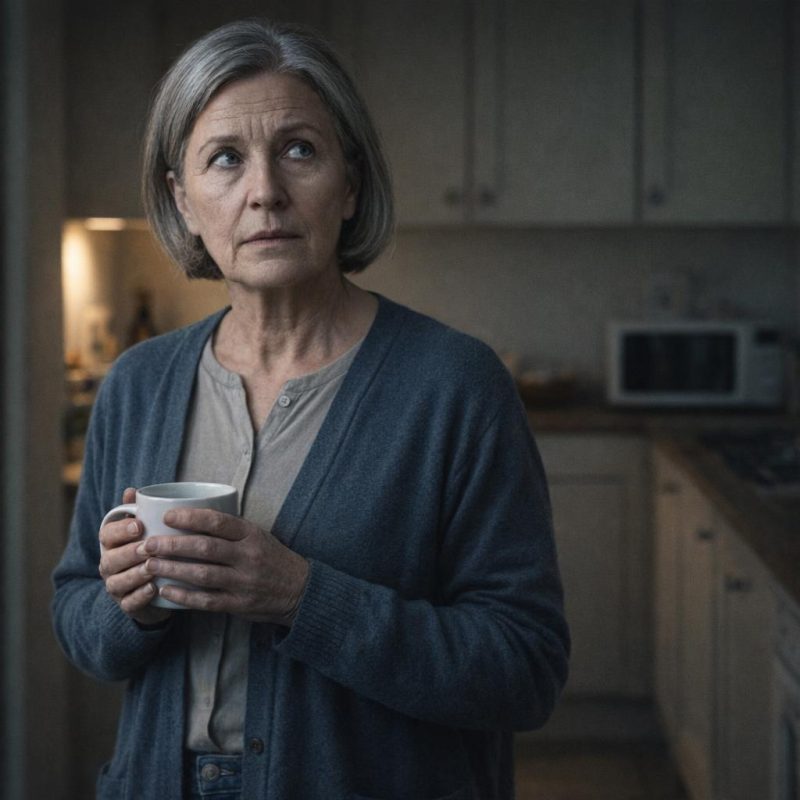 Image by RM AI
The Man Who Said Dad
I wasn't expecting anyone. Richard was in the hallway behind me when I opened the door, and for a second I just stood there taking in the man on the porch. He was somewhere in his late fifties, gray at the temples, wearing a jacket that looked like he'd put it on carefully that morning. He had a worn leather folder tucked under one arm and the expression of someone who had prepared for this moment many times and was now discovering that preparation hadn't been enough. He asked, very politely, if Richard was home. I said yes and started to turn, and that's when Richard stepped up behind me into the doorway. The two men looked at each other. I don't know how long it lasted — a few seconds, maybe more. Neither of them spoke. I looked from one face to the other, not understanding what I was seeing, just aware that something was happening that I wasn't part of. Then the man on the porch — this stranger I had never seen before in my life — looked at my husband and said one word. *Dad.* It hung there in the morning air between all three of us, and I felt the world tilt slightly on its axis, and none of us moved, and the word just stayed there.
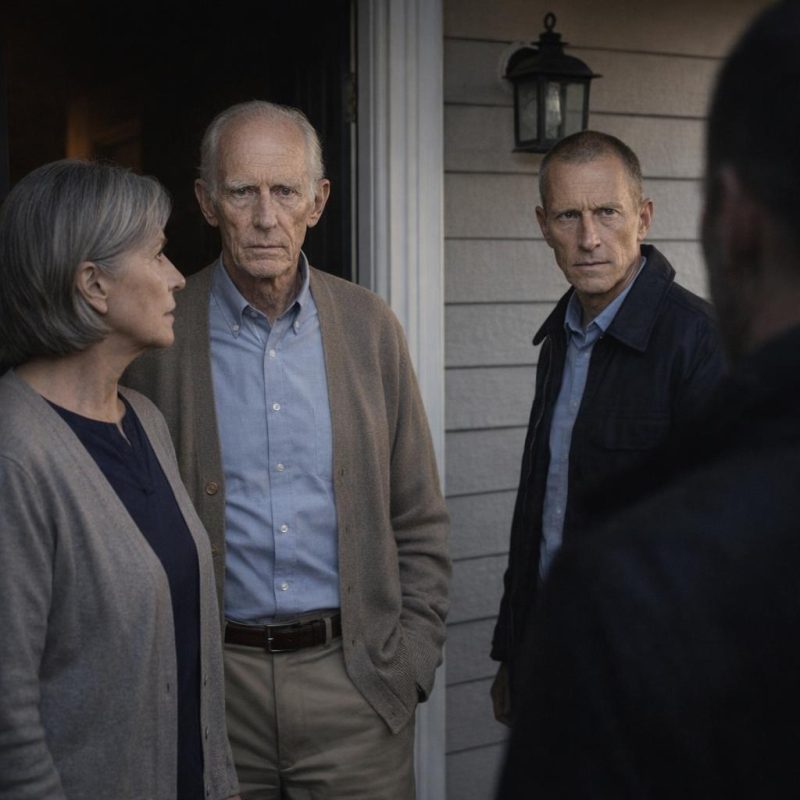 Image by RM AI
The Laugh That Wasn't Funny
I laughed. I'm not proud of it, but I laughed — a short, involuntary sound that came out before I could stop it, because my brain simply refused to process what I'd just heard. I looked at this man on my porch and I did the math without meaning to. Richard was seventy-two years old. This stranger looked fifty-five if he was a day. Which meant — if what he was implying was true — Richard would have been a teenager, barely out of his teens, when this man was born. I'd known Richard since he was forty-nine. I thought I understood who he was. I thought I had a clear picture of him. I said something like, I'm sorry, I think there must be some misunderstanding, because that was the only explanation that made any sense. A misunderstanding. A case of wrong address, wrong Richard, wrong everything. The man on the porch didn't laugh back. He didn't look offended either. He just waited, patient and still, with that worn leather folder under his arm, like a man who had expected exactly this reaction and had decided in advance to outlast it. I looked back at Richard, still half-expecting him to step forward and clear the whole thing up. The silence that followed my laughter was the loudest thing I'd ever heard.
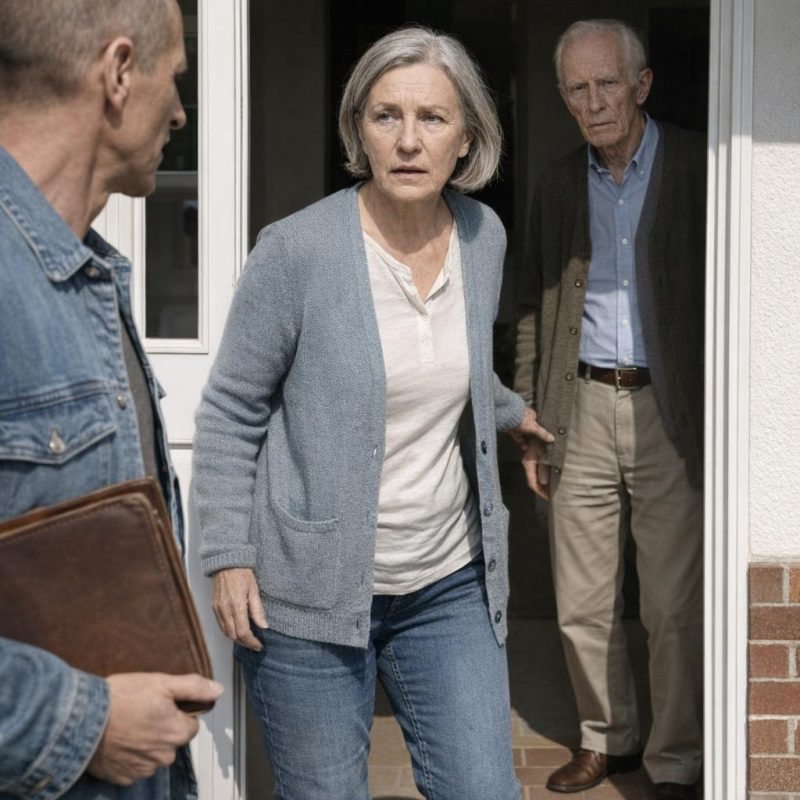 Image by RM AI
Richard's Silence
I waited for Richard to say something. That was the thing — I genuinely waited. I stood there in my own doorway expecting my husband of twenty-three years to put his hand on my shoulder and explain the confusion, the way you'd explain a stranger showing up at the wrong house. I gave him every second he needed. Daniel — the man on the porch — was watching Richard too, and there was something in his face that wasn't anger, wasn't accusation. It was closer to hope, which somehow made it worse. Richard looked at him. Just looked. His jaw was set and his hands were at his sides and he didn't move. The silence stretched out past the point where a denial would have been easy, past the point where it would have been believable, past the point where I could keep telling myself this was a misunderstanding. I felt something cold settle in my chest. I kept my eyes on Richard, willing him to speak, to say anything at all — the wrong name, the wrong city, anything that would give me something to hold onto. His mouth opened. No sound came out.
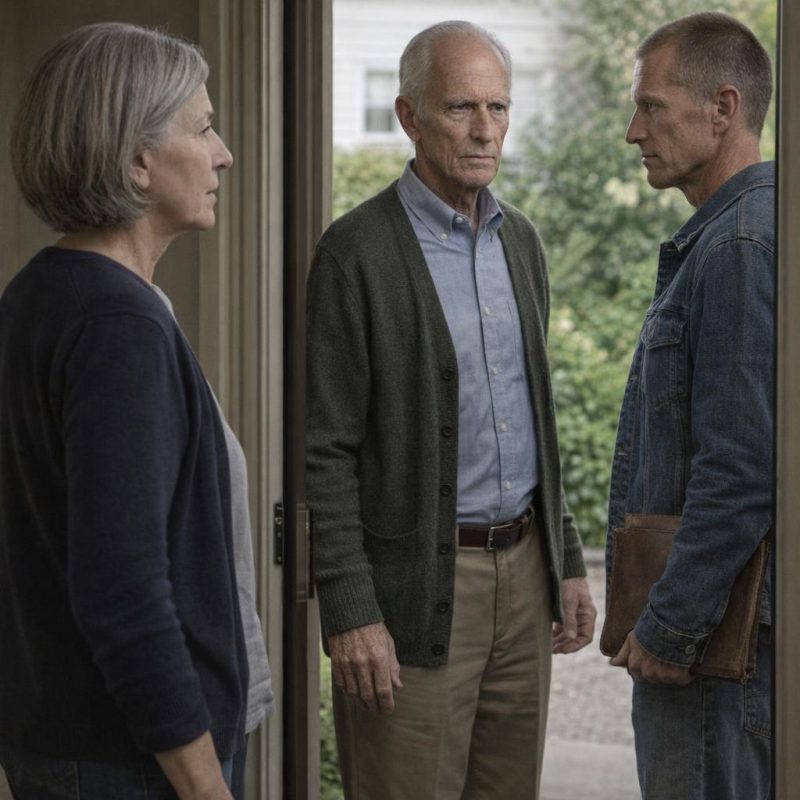 Image by RM AI
The Deathbed Confession
We ended up inside somehow — I don't remember making the decision to let him in, but there we were, the three of us in my living room, Daniel sitting on the edge of the armchair like he wasn't sure he'd been fully invited. He spoke carefully, choosing his words the way you do when you've thought about a conversation for a long time. His mother's name was Patricia. She had died six weeks ago, after a short illness, and in her final days she had told him something she'd kept to herself for his entire life. He said he'd grown up believing another man was his father — had called that man Dad, had grieved him when he died, had built his whole understanding of himself around that. And then Patricia, in a hospital bed with not much time left, had told him the truth. He said it without drama, just laid it out flat, and I sat across from him on my own sofa feeling like the floor had gone soft beneath me. Richard hadn't spoken. He was in the chair by the window, very still, hands folded in his lap. Daniel reached into the worn leather folder he'd carried in with him and drew out a photograph — old, slightly faded, the colors gone warm the way photographs from the seventies do — and held it out toward the center of the room.
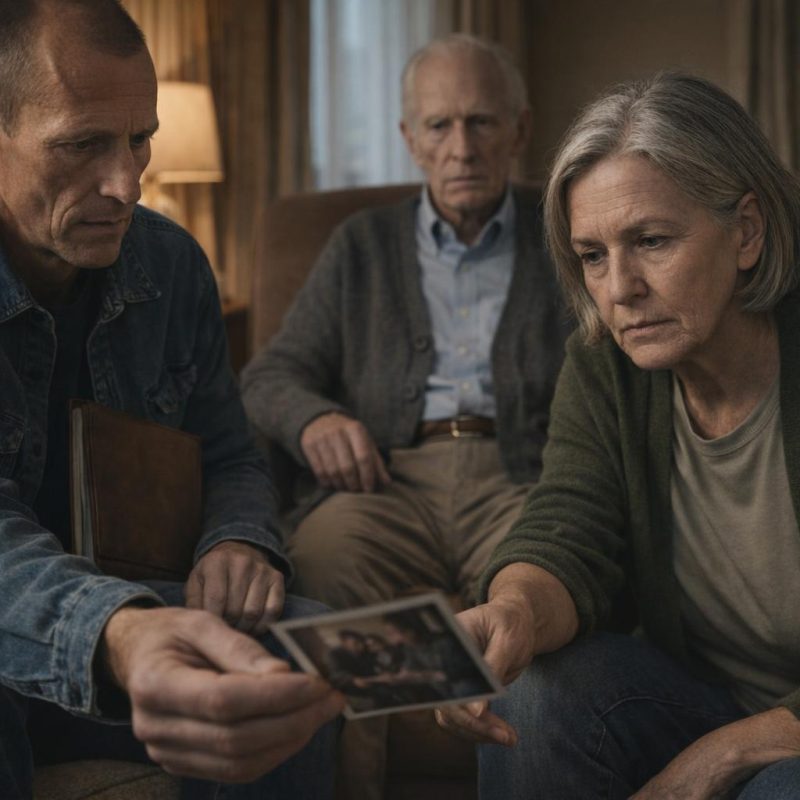 Image by RM AI
Older Than Me
Daniel said he was fifty-seven years old. I heard the number and something in my brain just stopped. I'm sixty-eight. I did the math without meaning to — the way you do when a number lands wrong and your mind won't let it go. Richard had a son before I was even born. Before we met, before we married, before any of it. I sat there on my own sofa trying to hold that thought steady and it kept sliding away from me. Twenty-three years of marriage. I had believed I knew this man — his history, his regrets, the shape of his life before me. And here was a fifty-seven-year-old man sitting in my armchair with Richard's eyes, and Richard was still not saying a word. The photograph Daniel had drawn from that worn leather folder sat in the middle of the room like something radioactive. Nobody had touched it. I looked at Richard then — really looked at him — and something in his face told me he wasn't surprised. Not by Daniel's age. Not by any of it. I kept my voice as level as I could manage. I asked him directly: did he know. And Richard, in a voice so quiet I almost missed it, said yes — he had always known about Daniel.
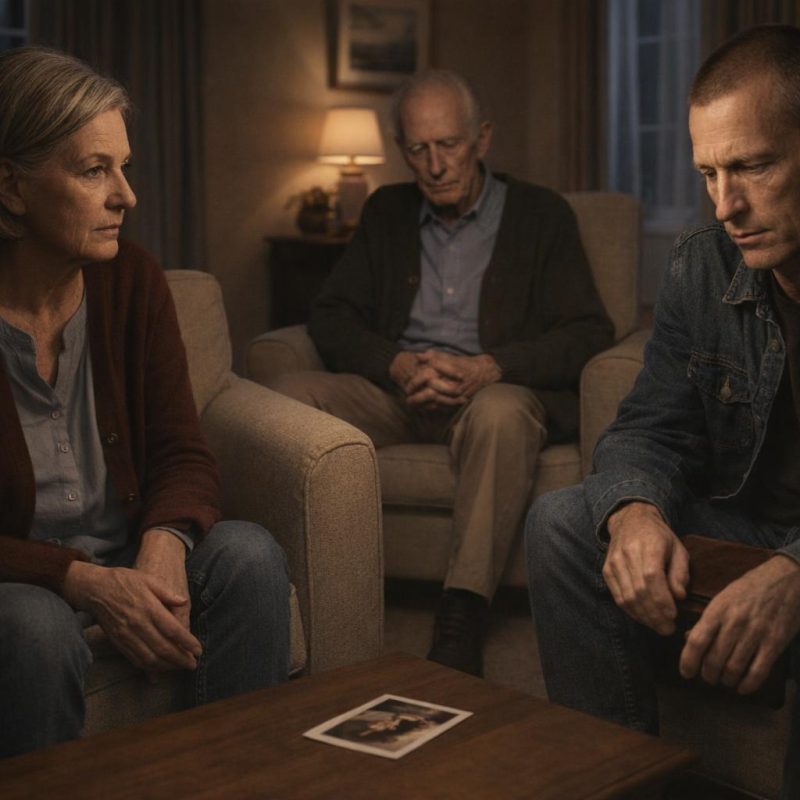 Image by RM AI
The Day Passes in a Blur
The rest of that afternoon passed the way bad dreams do — events happening in the right order but nothing feeling quite real. Daniel kept talking. Richard mostly listened. I sat in my own living room and felt like a stranger in it, like someone had swapped out the furniture and the walls while I wasn't looking and left everything just slightly wrong. I heard Daniel's words. I understood them individually. But they wouldn't arrange themselves into something I could hold. He talked about growing up in Ohio, about a man named Gerald who he'd called Dad, about Little League games and a kitchen table where Patricia made Sunday dinners. A whole life. A whole ordinary life that had been built on a foundation I was only now being shown. Richard had known about all of it. Every Sunday dinner Daniel described, Richard had been somewhere else — here, with me, in this house — and he had known. I kept looking at my hands in my lap. At one point I noticed my tea had gone completely cold. I don't remember making tea. The afternoon light shifted across the floor and I watched it move and thought about nothing in particular, because thinking about the particular things was more than I could manage. The sofa beneath me felt like the only solid thing left in the room.
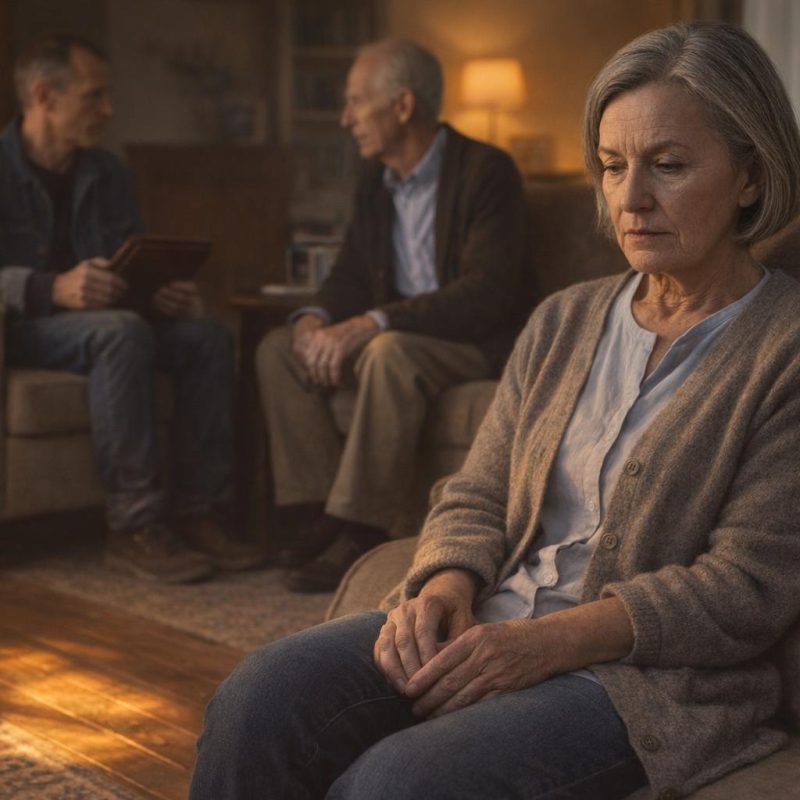 Image by RM AI
Patricia's Secret
Daniel explained it carefully, the way you explain something you've had to make sense of yourself before you could say it out loud to anyone else. Patricia had never told him the truth. Not when he was a child asking questions, not when he was a teenager, not when he buried Gerald and grieved him like a real father. She had a story and she kept to it. Gerald was his father. That was the story. Daniel said he'd had no reason to doubt it — Gerald had been present, had been kind, had been everything a father was supposed to be. It was only when Patricia got sick, when the illness moved fast and the doctors started using words like weeks instead of months, that she finally broke. He said she cried when she told him. Said she'd carried it so long she didn't know how to put it down. She told him Richard's name. Told him what she could remember — where Richard had been from, what he'd looked like when they were young. Daniel had spent the months since her death trying to find him. I listened to all of this and kept my eyes on Daniel's face, because looking at Richard felt like too much. Then Daniel said the name of the man he had called father his entire life — Gerald Marsh — and something about hearing that name, that specific ordinary name, made the whole story suddenly, terribly concrete.
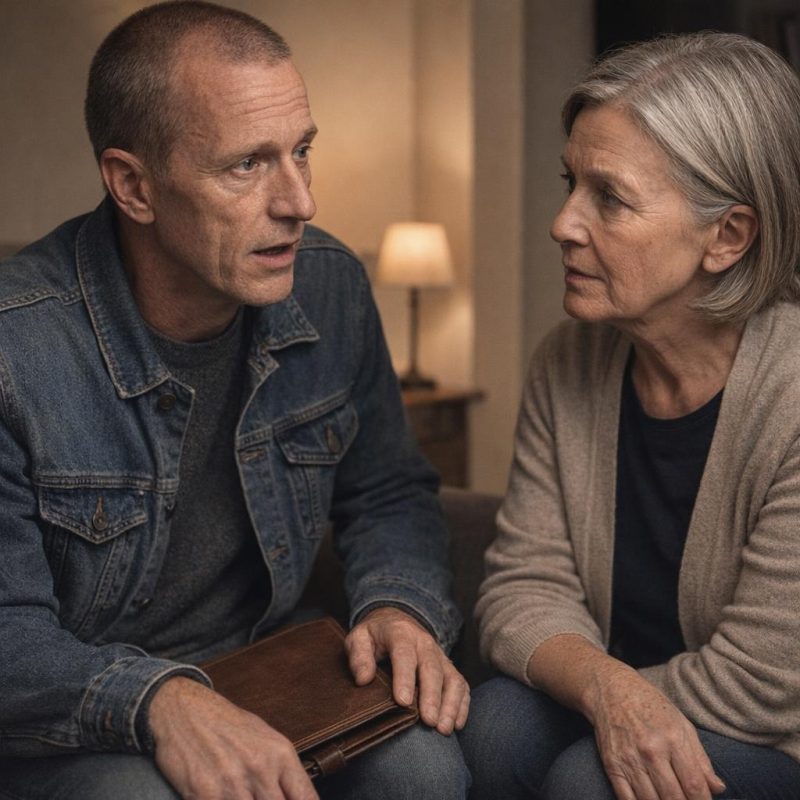 Image by RM AI
Twenty-Three Years Built on a Lie
Twenty-three years. I kept coming back to that number. We had been married twenty-three years, and for every single one of them Richard had known he had a son out there in Ohio calling another man Dad. Every anniversary dinner. Every conversation we'd ever had about honesty, about trust, about the kind of people we wanted to be. Every time I'd told him something hard because I believed that's what you did when you loved someone. He had sat across from me through all of it with this tucked away inside him. I wasn't just thinking about Daniel anymore. I was thinking about the version of Richard I had built in my head over two decades — the man I thought I'd married, the man I thought I knew down to his habits and his silences and the way he took his coffee. That version of him was still sitting right there in the chair by the window. He looked the same. He had the same hands, the same weathered face. But something had shifted underneath all of it, and I couldn't unfeel it. Daniel wasn't just a secret from before we met. He was a living person Richard had chosen, every single day, not to tell me about. That was the part that settled into me like cold water — not the past, but the choosing. Every day, for twenty-three years, a choice.
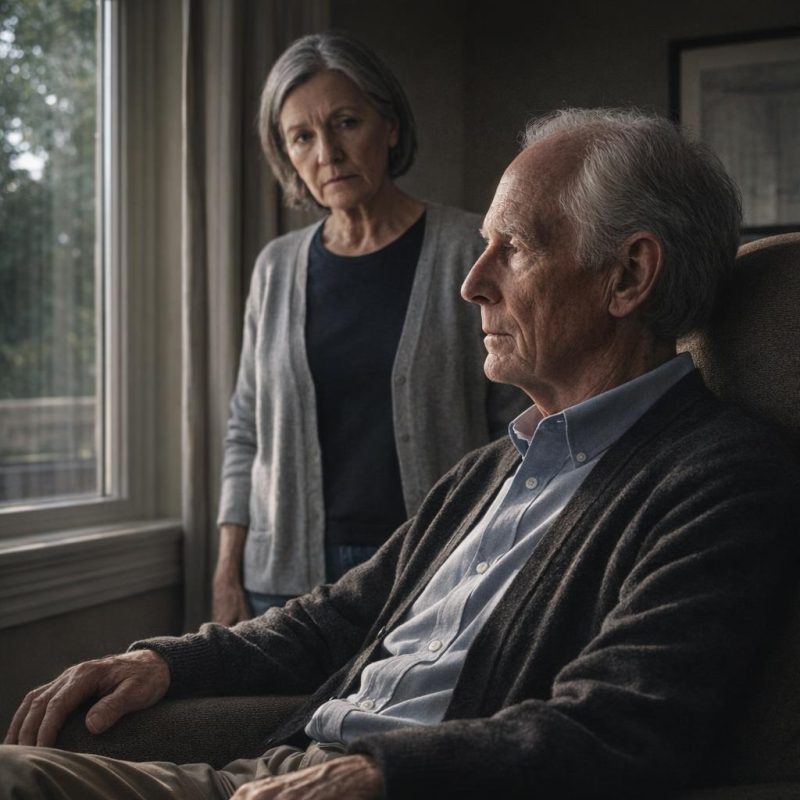 Image by RM AI
The Worst Part
I thought I had found the bottom of it. A secret son, a hidden past, fifty-seven years of silence — that felt like enough. That felt like more than enough. But I kept watching Richard's face while Daniel talked, and something about the way he was sitting didn't match a man who had simply been caught out. He wasn't relieved. He wasn't even particularly ashamed, not in the way you are when the worst thing finally surfaces. He looked like a man waiting for something else to land. Daniel was still talking — about the months after Patricia died, about the search, about finding Richard's name in old documents she'd kept in a shoebox. I was listening, but part of me had gone somewhere quieter, watching Richard from across the room. There was more. I didn't know what it was yet. I couldn't have named it. But I had been married to this man for twenty-three years and I knew his silences, and this one had a shape to it — careful, braced, like a person standing very still because they know the next thing is coming and there is nothing left to do but let it arrive. I sat with my hands folded in my lap and waited, and the waiting itself felt like its own kind of weight.
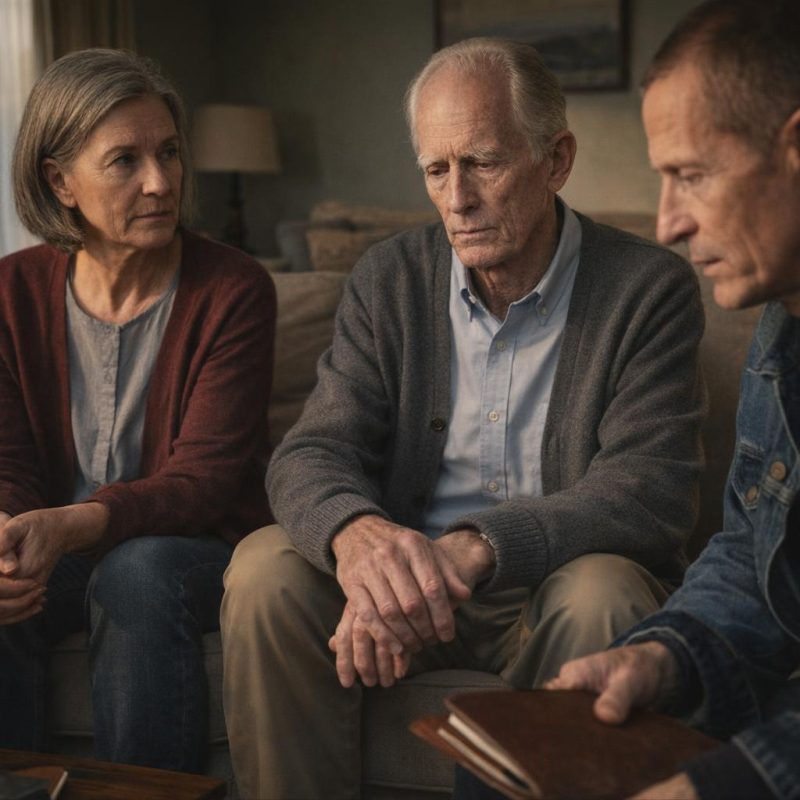 Image by RM AI
Richard Helped Her Hide It
Daniel paused, and then he said the part that changed the shape of everything. Richard hadn't just walked away from Patricia and never looked back. It hadn't been that simple, that passive. They had made an arrangement — that was the word Daniel used, arrangement, like it was a business matter — when Patricia was pregnant. Richard would remove himself entirely from Daniel's life. Patricia would tell Daniel that Gerald was his father. Richard had agreed to it. He had sat down with her and agreed to it and then he had walked away and built a different life and never said a word. I looked at Richard. He didn't look away. He didn't try to soften it or add context or explain the circumstances of 1966 or whatever he thought might make it land differently. Daniel said his mother had kept every part of the agreement. She had never contacted Richard, never asked for anything, never told a soul. And Richard had done the same. I waited for Richard to correct something, to say Daniel had a detail wrong, to offer anything at all. The room was very quiet. Then Richard said, in that same flat, quiet voice: it was my choice. I made it.
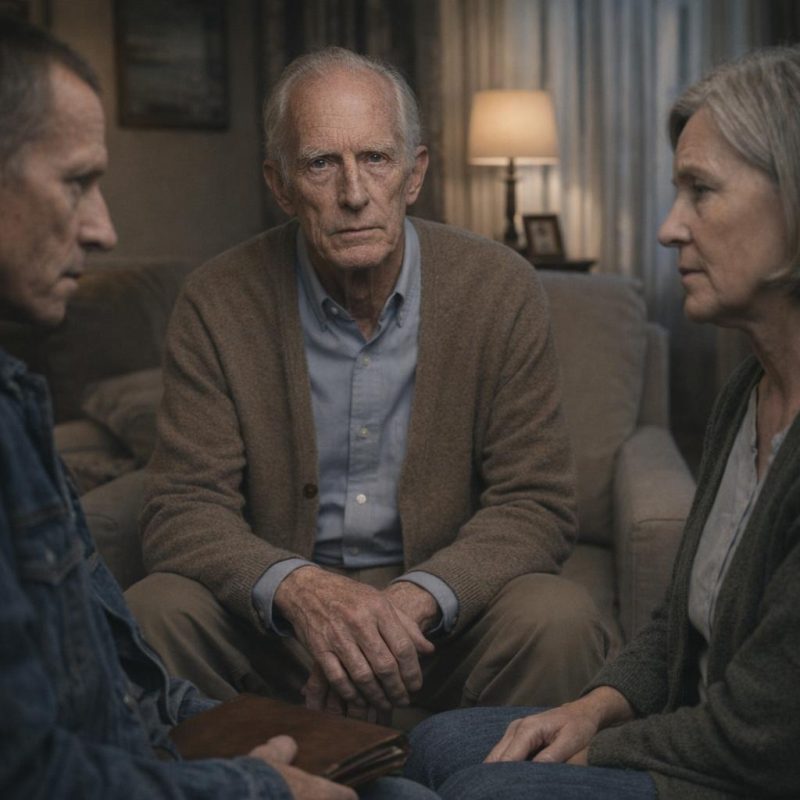 Image by RM AI
Photos and Documents
He came back the next day, and the day after that. Each time Daniel arrived he brought something new from a canvas bag he carried — photographs, folded documents, a small stack of letters Patricia had kept bundled with a rubber band. I sat at the kitchen table and went through everything he put in front of me. There were photographs of Daniel as a boy, gap-toothed and squinting into summer sun, and I could see Richard in the line of his jaw even then. There were documents with dates on them — a birth certificate, a letter with Richard's full name written in a woman's careful handwriting. There was a photograph of Patricia herself, young, standing in front of a car I didn't recognize, and she looked like someone who had made a decision and was already learning to live with it. I went through everything slowly. I was looking for the thing that didn't fit, the detail that would give me somewhere to push back. I turned pages and held photographs up to the light and read dates twice. Daniel sat across from me and let me look. He didn't rush me. He didn't explain unless I asked. By the third afternoon, I had run out of places to look. Every piece fit against every other piece, and the whole thing held together the way only true things do.
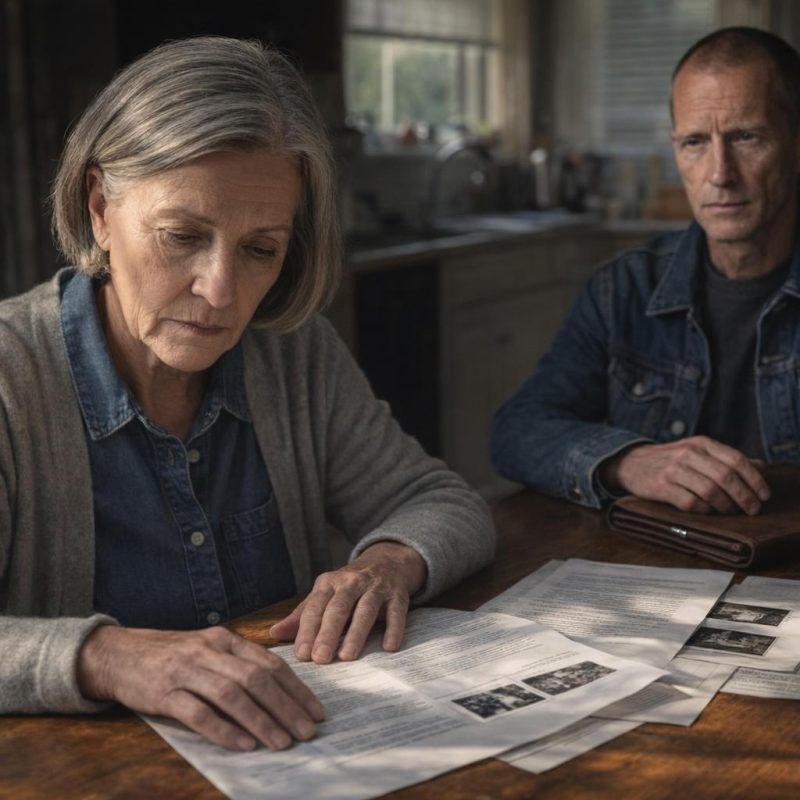 Image by RM AI
Not After Money
I watched Daniel carefully during those visits. I'm not proud of it, but I was looking for the angle — the thing he was building toward, the ask that would eventually come. People don't show up after fifty-seven years without wanting something. That's just experience talking. So I watched. He never mentioned money. Never asked about the house, about Richard's retirement, about what any of it might mean for him financially. When I tested the edges of it once — said something vague about how complicated these situations could get, legally speaking — he looked genuinely confused, like the thought hadn't occurred to him. He didn't ask to see Richard's financial records or talk to a lawyer or establish anything on paper. He brought photographs and he asked questions. He wanted to know what Richard had been like when he was young. He wanted to know if Richard had other children, and when I told him about my daughter Emily he went quiet in a way that seemed more tender than calculating. He asked once if Richard had ever mentioned Patricia, and when I said no, he just nodded slowly and looked out the window. One afternoon he said it plainly, almost to himself, not really asking me to respond: he said he just wanted to know his father.
 Image by RM AI
The Same Eyes
It happened gradually, and then all at once. I'd been watching Daniel for weeks by then — studying him the way you study a stranger you're not sure you trust — and somewhere in the middle of an ordinary afternoon visit, the resemblance just landed on me and wouldn't let go. It was the eyes first. Richard has this particular shade of gray-green, not quite either color, and Daniel had them exactly. Not similar. Exactly. Then it was the smile — that slow, slightly reluctant smile that Richard does when something genuinely amuses him, the one that starts on the left side before it spreads. Daniel did the same thing when I said something dry about the weather. I had to look away. And then there were the hands — the way Daniel set his coffee cup down with both hands wrapped around it, the way he tilted his head when he was listening. Richard does that. Richard has always done that. I'd watched Richard do that for twenty-three years and never thought anything of it. Now I couldn't stop cataloguing it. Every gesture Daniel made was a mirror I hadn't asked to look into. By the time he left that afternoon, I was sitting very still in my kitchen, and the certainty of it had settled somewhere deep, past the place where I could argue with it anymore.
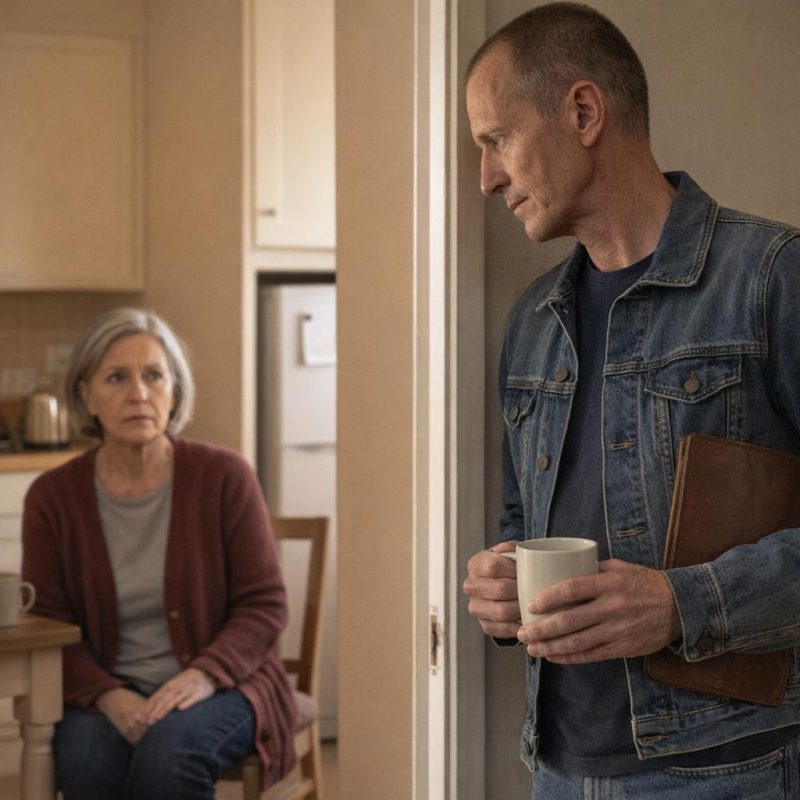 Image by RM AI
Emily Struggles
I told Emily in person. I didn't want to do it over the phone — some things you have to say while you're in the same room, so you can catch each other if it goes badly. She came over on a Saturday, and I made tea neither of us drank, and I told her everything from the beginning. She sat across from me at the kitchen table and listened without interrupting, which is not like her. Emily is a talker, a questioner. The silence scared me more than questions would have. When I finished, she was quiet for a long moment. Then she said, very carefully, that Daniel was older than me. Not older than her — older than me. Her father had a son who was born before her own mother came into the picture. I watched her turn that over in her mind, and I could see the moment it stopped being abstract and became real. She pressed her lips together the way she does when she's trying not to cry in front of me. She said she didn't know what she was supposed to feel. I told her I didn't either. We sat there for a while, not fixing anything, just sitting with it. She asked once, quietly, whether her father had ever tried to find Daniel, and I had to tell her I didn't know. The question hung in the air between us, and the hurt in her voice when she asked it was something I couldn't smooth over or take back.
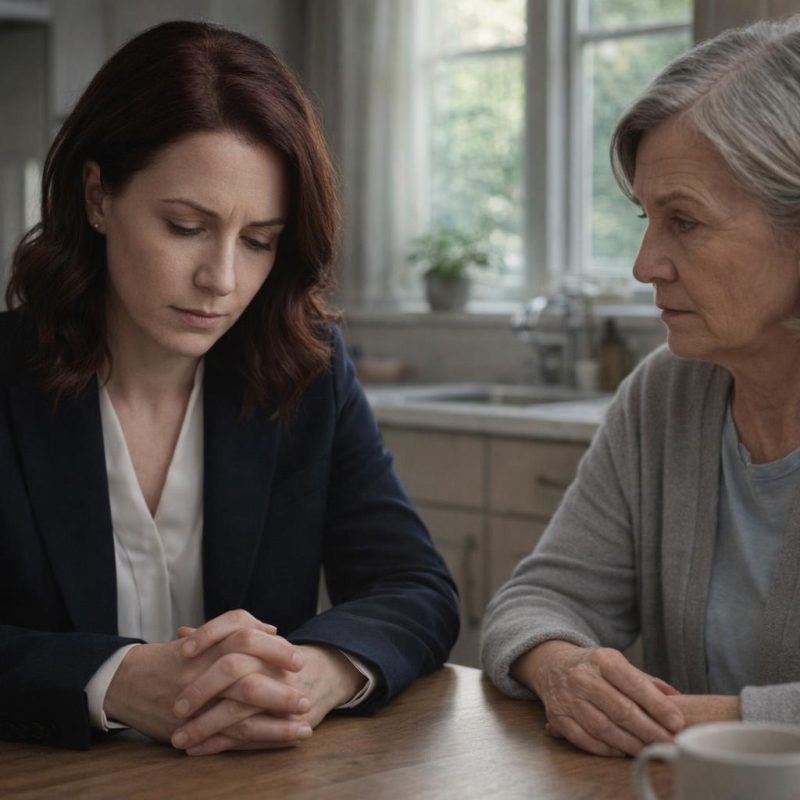 Image by RM AI
Richard's Apologies
Richard apologized a lot in those weeks. Morning apologies, evening apologies, apologies that arrived in the middle of conversations about completely unrelated things, as if the guilt had nowhere else to go. I listened. I'm a fair person — or I try to be — so I gave him the space to explain himself. Some of what he said made a partial kind of sense. He'd been twenty-two years old. He and Patricia weren't together in any serious way. He hadn't known she was pregnant until after, and by then he was already somewhere else, already trying to outrun a version of himself he didn't like. I could follow that logic, even if I didn't forgive it. What I couldn't follow were the years after. The decades. He'd had chances to say something — before we married, certainly, and a hundred times after. He talked around that part. He said he'd made a choice early on and then felt trapped by it. He said he told himself it wasn't hurting anyone. He said he thought about telling me more times than he could count. None of those explanations held up when I pressed on them. They were the explanations of a man who had gotten very good at not examining his own choices too closely. And then one evening, when I pushed him on why he'd kept it going so long, he stopped and looked at the floor and said, very quietly, that he'd been afraid.
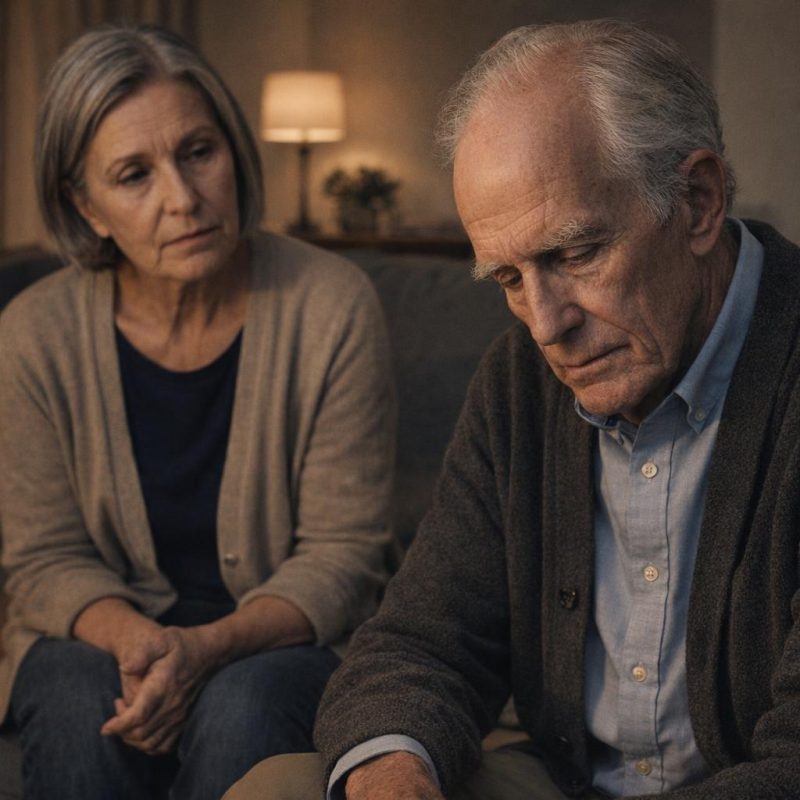 Image by RM AI
Fear Drove Everything
I sat with that word for a long time. Afraid. It would have been easier to dismiss it as an excuse, and part of me wanted to. But I've lived long enough to know that fear is a real engine — it moves people in directions that look, from the outside, like choices, but feel, from the inside, like being carried. Richard had been twenty-two and scared, and he'd made a decision that felt survivable in the moment. Then a year passed, and the decision calcified a little. Then five years, then ten. Each year that went by made the confession harder, not easier, because the confession would have had to account for all the years of silence too. I could see the mechanism of it, even if seeing it didn't make me feel better. At some point, he wasn't protecting himself from the consequences of what he'd done. He was protecting the secret itself — because the secret had become load-bearing. It was holding up the version of himself he'd built for fifty years. His marriage. His family. His sense of being a decent man. Pull the secret out and all of it would need to be re-examined. I looked at him across the kitchen table and I said that out loud — that at some point he stopped protecting himself and started protecting the lie. He didn't argue with me. He just sat there with his hands flat on the table, and the silence between us confirmed it more plainly than any answer could have.
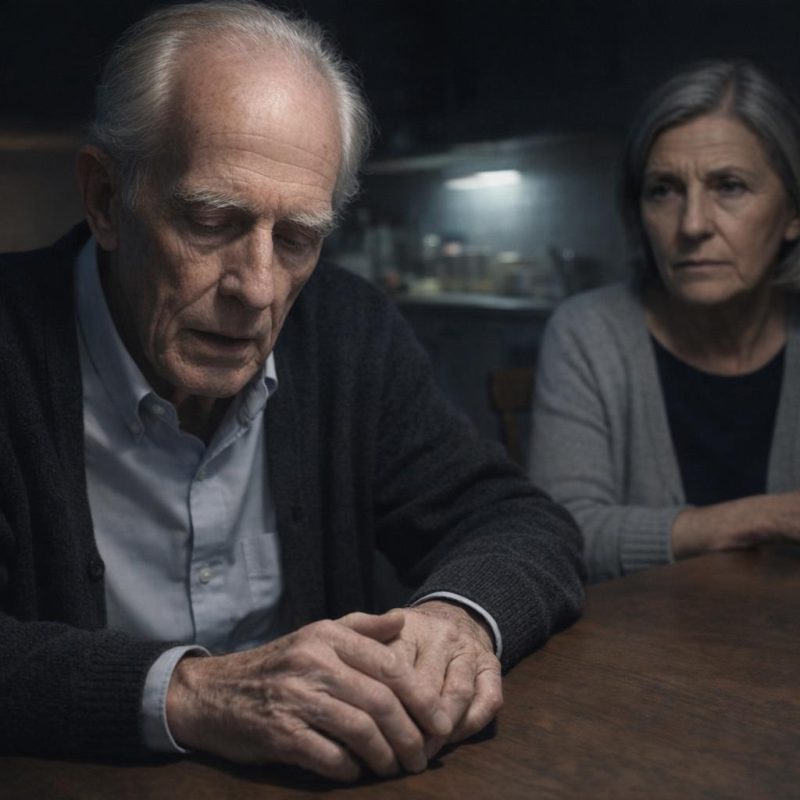 Image by RM AI
The Secret Grew Larger
I kept thinking about time — about what time does to a secret when you let it run long enough. In the beginning, a secret is just a thing you haven't said yet. It has edges. You can feel where it starts and stops. But the longer it lives inside you, the more it grows into the surrounding structure. It stops being a thing you're hiding and starts being part of how you hold yourself together. Richard had carried this for fifty-seven years. That's longer than our entire marriage, longer than Emily's whole life, longer than most of the things we'd built together. By the time I came into the picture, the secret wasn't separate from him anymore. It was woven into the way he presented himself to the world — the responsible man, the steady husband, the good father. I don't think he woke up every morning and consciously maintained it. I think it had just become the shape of him. That's what made it so hard to be angry in a clean, simple way. The anger was there, but it kept running into something more complicated underneath. One evening I asked him directly — not accusingly, just plainly — why he had never told me. Not in fifty-seven years, not before we married, not once in twenty-three years of marriage. And the look that crossed his face when I said it stopped me cold.
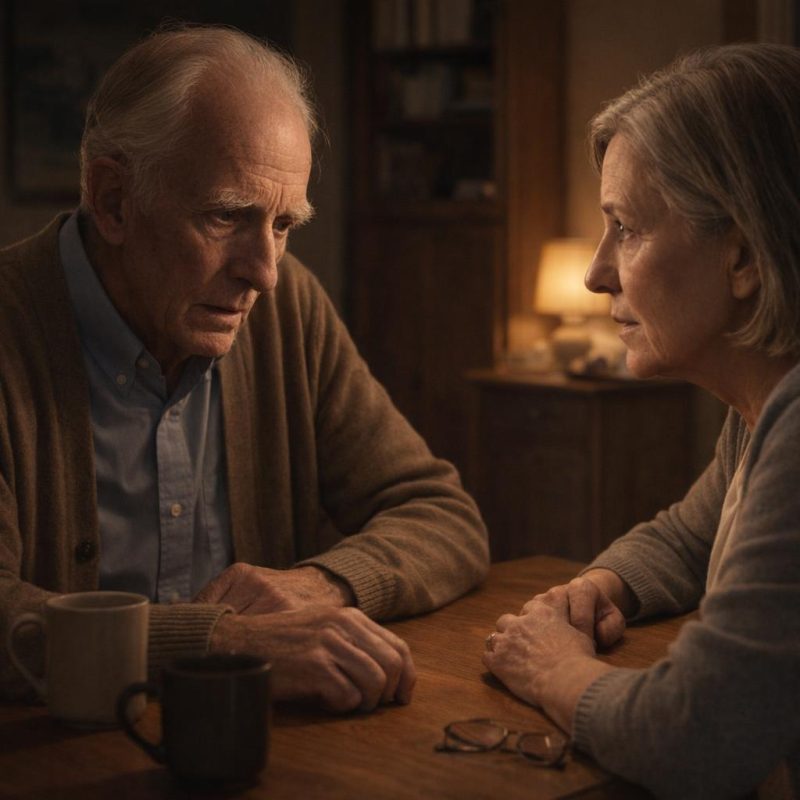 Image by RM AI
Barbara's Strange Reaction
I called Barbara a few weeks after everything came out. She's Richard's sister, and I'd known her for over two decades, and I thought — naively, maybe — that she'd be as blindsided as I was. I needed someone in his family to be as blindsided as I was. The call started normally enough. I told her about Daniel, gave her the broad strokes, waited for the shock. It didn't come the way I expected. She said 'oh' in a tone that was too flat, too contained, for someone hearing something for the first time. Then she said it was a lot to take in, which is what you say when you're buying yourself time to think. I asked her what she thought about it, and she shifted — I could hear it, even over the phone — and said something vague about family being complicated. She changed the subject twice. The second time, I'd barely finished a sentence about Daniel before she was talking about her garden, about a trip she was planning, about anything that wasn't what I'd just said. I let her redirect me the first time. The second time, I noticed it. I didn't say anything about noticing it. I just filed it away and kept talking, and when we hung up I sat there turning the conversation over in my mind. Barbara had always been composed, always careful with her words. But this had felt like something different from composure. The discomfort in her voice when Daniel's name came up sat with me in a way I couldn't set down.
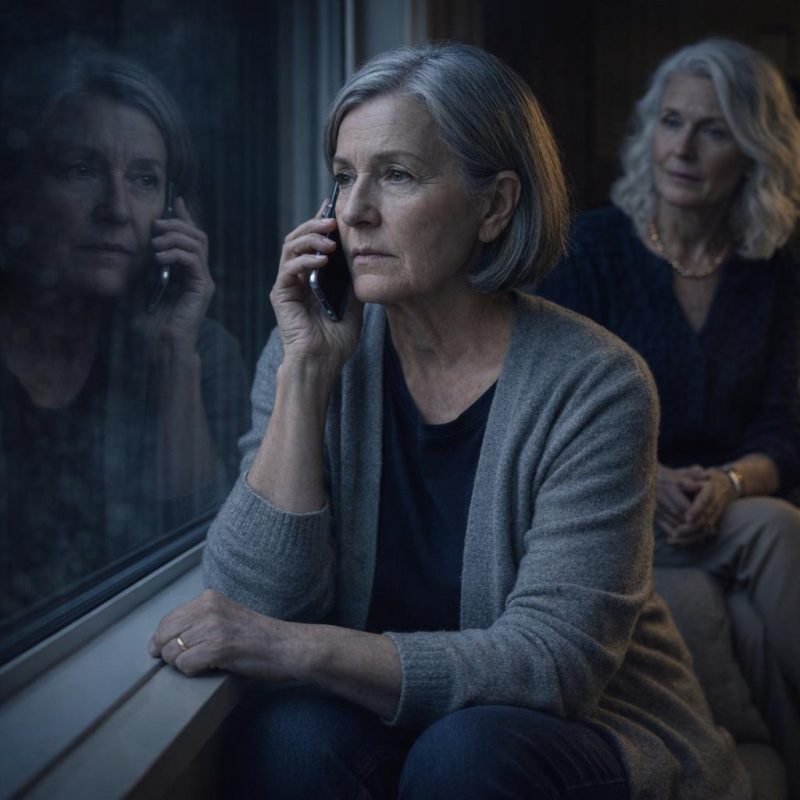 Image by RM AI
Tom's Cryptic Comment
Tom was next. Richard's older brother — stern, ex-military, the kind of man who considers emotional restraint a virtue and small talk a waste of oxygen. I'd never been particularly close to him, but I called because I felt like I was owed some kind of reaction from this family, some genuine surprise, some evidence that I wasn't the only one who hadn't known. Tom picked up on the third ring. I told him about Daniel. There was a pause — not a long one, but long enough — and then he said that the past was complicated. That was it. That was his response. Not 'what?' Not 'are you serious?' Just: the past is complicated. I asked him if he was surprised, and he said something careful about how families carry things they shouldn't have to carry. I pushed a little — asked him what he meant by that — and he pulled back, said he didn't want to speak out of turn, said it wasn't his place. He picked each word slowly, the way someone does when they're trying not to say the wrong thing. I didn't know what to do with that. I thanked him for his time, which is what I say when I don't know what else to say, and I hung up. I sat in the quiet of the living room afterward, and the weight of his careful, measured, entirely unsurprised words pressed down on me in a way I couldn't shake.
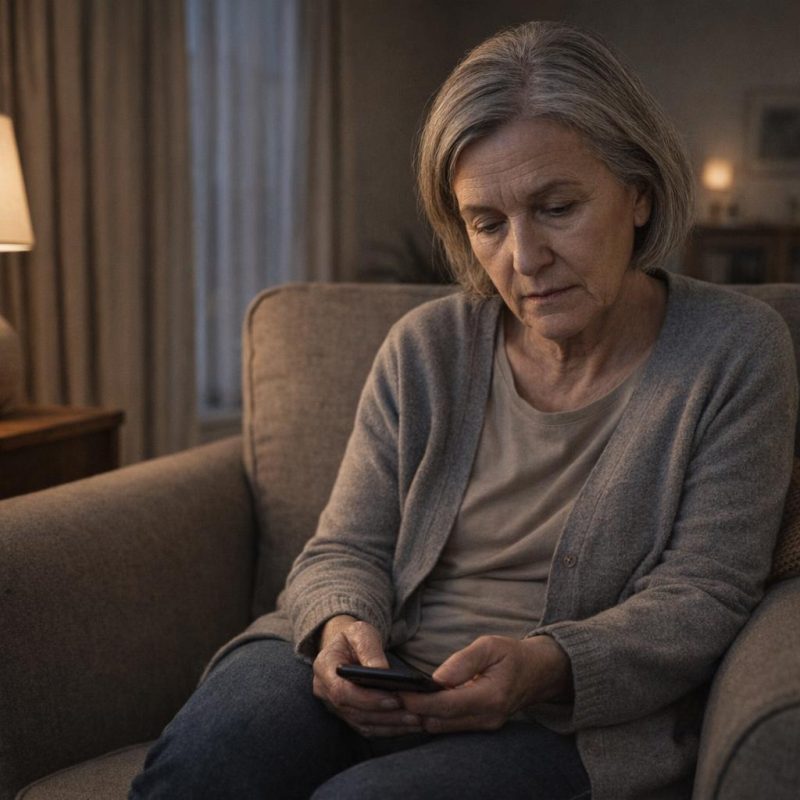 Image by RM AI
Oddly Coordinated
I laid it all out in my head that night. Barbara's flat 'oh.' The way she'd pivoted to her garden before I'd even finished a sentence. Tom's careful language, his talk of families carrying things, his complete and total absence of shock. I went back over both conversations looking for the moment either of them had sounded genuinely surprised, and I couldn't find it. Not a single beat of real surprise. People who hear unexpected news have a particular kind of stumble in their voice — a half-second where they're catching up to what they just heard. Neither of them had stumbled. They'd both landed smoothly, without that stumble, without that half-second of catching up. I tried to find another explanation for it. I told myself that people process shock differently, that some people go quiet instead of loud, that I was in a raw state and raw people look for patterns. I tried to talk myself out of it for most of the evening. But the feeling kept coming back, low and persistent, and by the time Richard came to bed I was sitting up with the lamp still on. I looked at him for a moment — this man I'd been married to for twenty-three years — and I heard myself ask him whether his family had known about Daniel.
 Image by RM AI
The Question I Didn't Want to Ask
He didn't answer right away. That was the first thing. I'd asked the question plainly — had his family known about Daniel — and Richard just sat there on the edge of the bed with his hands on his knees, looking at the floor. I watched his face the way you watch someone who's deciding something, not someone who's confused. There's a difference. Confusion moves across a face. This was stillness. The deliberate, careful stillness of a man choosing his next words. I didn't push. I'd learned over twenty-three years that pushing Richard when he went quiet only made him go quieter. So I waited. The lamp was still on. The clock on the nightstand said it was past midnight. I could hear the house settling around us, those small creaks and sighs an old house makes, and I sat there in the middle of all that ordinary sound and waited for my husband to tell me something I was already starting to dread. He closed his eyes. Just for a moment. And in that moment I felt the dread settle into something heavier — not quite certainty, but close enough to it that the difference didn't matter much. The silence between us stretched out, and I let it, because some part of me understood that whatever came next was going to change things, and the silence was the last moment before that happened.
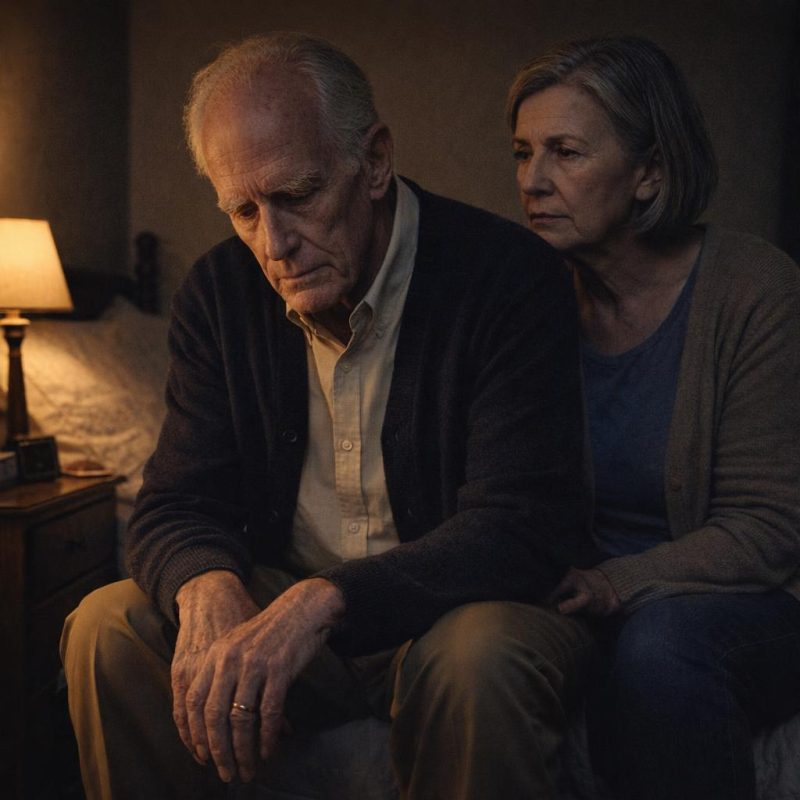 Image by RM AI
Barbara Knew
He said yes. One word, barely above a whisper, and then he said Barbara had known for years. Not recently. Not since Daniel showed up at our door. For years. I sat with that for a moment, trying to let it land properly. Barbara. My sister-in-law. The woman who'd sat across from me at every Christmas dinner for two decades, who'd helped me pick out Richard's birthday gifts, who'd called me after my mother died and said all the right things. I thought about the last time I'd seen her — the careful pivot to her garden, the flat 'oh' when I'd mentioned Daniel's name. She hadn't been surprised. She'd been managing me. I thought about Thanksgiving three years ago, when she'd pulled me aside to say how glad she was that Richard had me. I'd been touched by that. I'd told Richard about it afterward and he'd smiled and said Barbara had always liked me. I wondered now what that conversation had really been. I thought about every holiday, every birthday, every ordinary Sunday afternoon she'd spent in our house, smiling and talking and asking about the grandchildren, all while carrying this thing she'd never once let slip. Twenty-three years of family gatherings. Twenty-three years of Barbara knowing exactly what I didn't. The quiet of the bedroom felt different after that — heavier, like the air had taken on weight it hadn't had before.
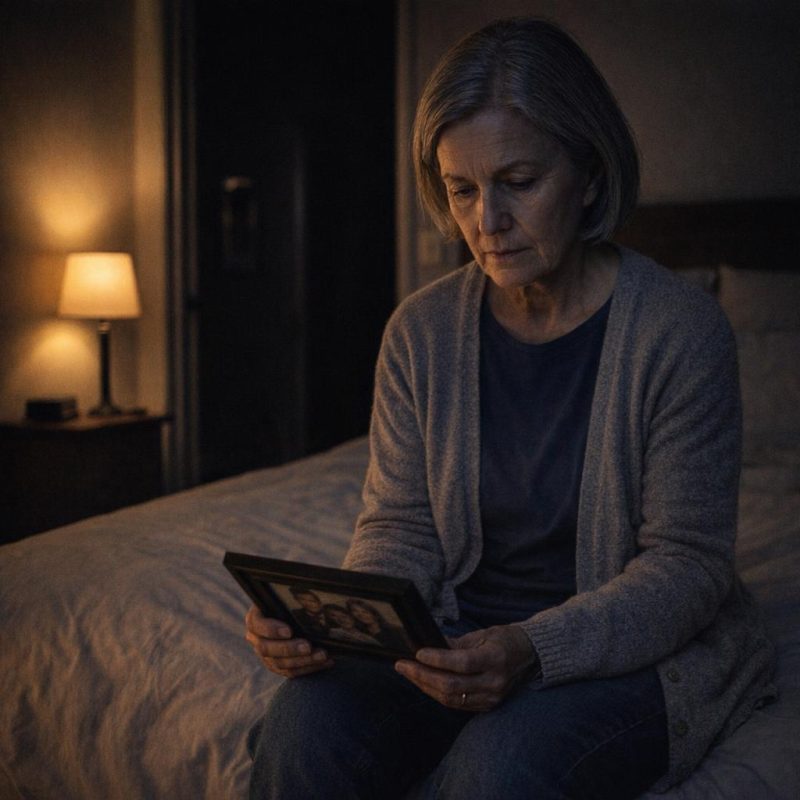 Image by RM AI
His Mother Knew Before She Died
I asked him who else. I needed to know the shape of it. Richard was quiet again, but this time the quiet was shorter — like he'd already decided to keep going and was just gathering himself. He said his mother had known. From the beginning, he said. From before Daniel was even born. I heard the words and I felt something go very still inside me. His mother. Margaret. I had loved that woman. I'd driven her to her chemotherapy appointments when she was sick, sat with her in waiting rooms reading old magazines, held her hand when the news was bad. I'd cried at her funeral. Genuinely cried, the kind that surprises you with how hard it hits. I'd thought of her as my own family — not a mother-in-law in the difficult sense, but a real one, the kind you're lucky to get. And she had known. She had sat across from me at her kitchen table, had asked me about my work and my friends and whether Richard was eating enough, had looked me in the eye through all of it, and she had known. Richard's voice was low when he said the next part. He said she'd made him promise. Before she died, when she was sick and they both knew the end was coming, she had made him sit beside her bed and promise that he would never tell me.
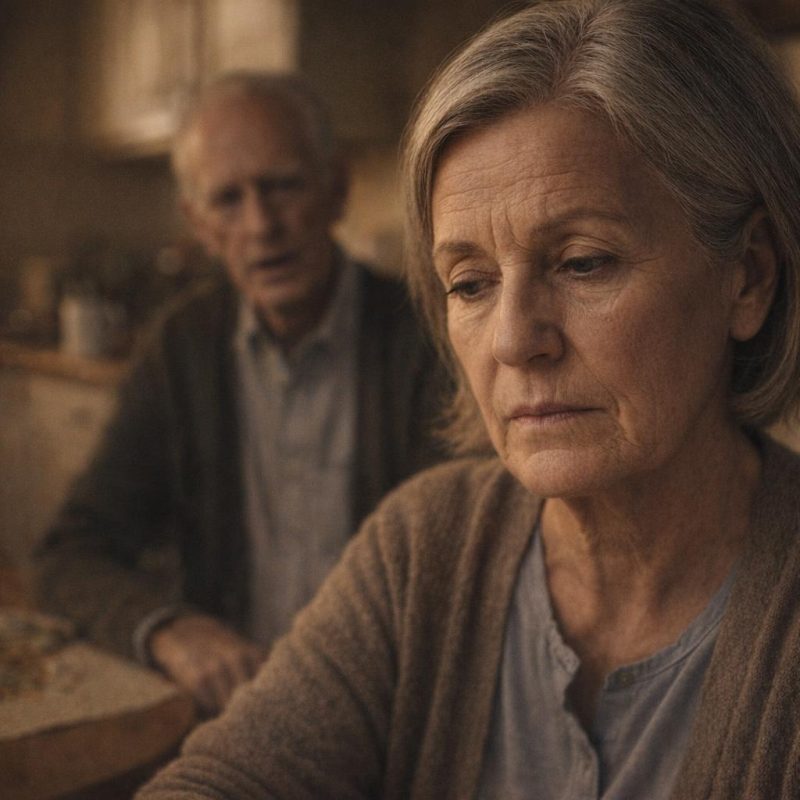 Image by RM AI
The Complete List
I asked him to keep going. I needed the whole list. I could hear something flat in my own voice by then — not calm exactly, more like the part of me that processes shock had simply run out of room for it and gone quiet. Richard said Tom had known. His older brother, the one with the military bearing and the careful language about families carrying things. I thought about our phone call, the way Tom had talked around the edges of everything without ever stumbling, and I understood now why he hadn't stumbled. He'd had decades of practice. Then Richard said Linda. His cousin Linda, who fidgeted and apologized and couldn't quite meet my eyes when Daniel's name came up. I'd read that as guilt about something small. It wasn't small. I asked Richard if there was anyone else. Anyone at all. He looked at me then — really looked at me, the first time he'd held my gaze since I'd turned the lamp on — and he said no. Those were the ones. Barbara. His mother. Tom. Linda. Four people. Four people who had known about Daniel for decades, who had sat at our table and eaten our food and celebrated our anniversaries and kept their mouths shut, every single one of them, for fifty years.
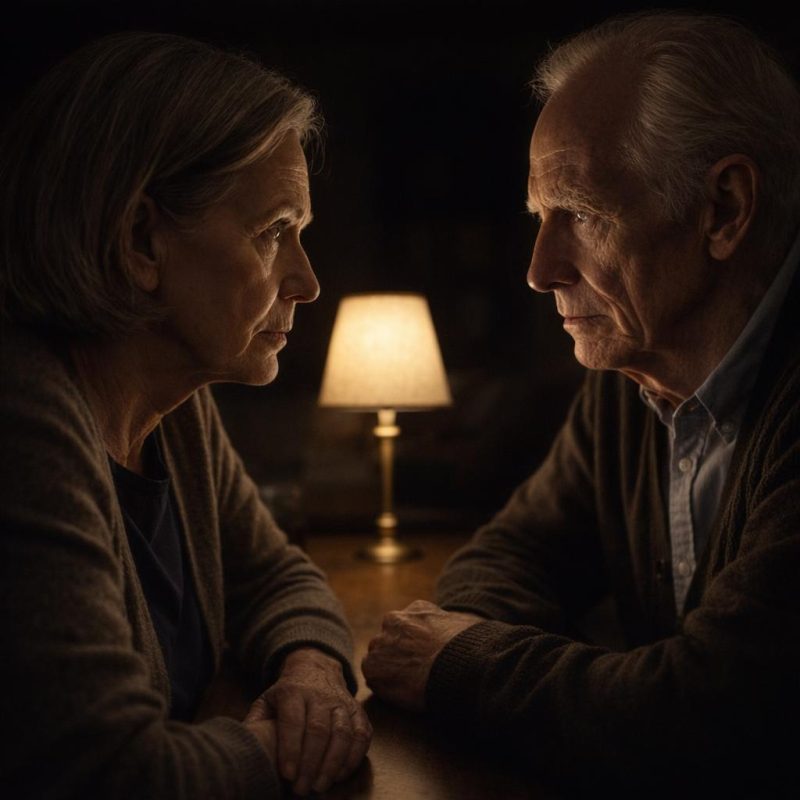 Image by RM AI
The Family Conspiracy
I sat there and let it settle. Four people. Not one person who'd slipped up and kept a secret out of loyalty to Richard. Four people who had made a choice — each of them, separately and together — to look me in the face for decades and say nothing. Barbara had known before I ever walked into that family. Tom had known. Margaret had known and then made Richard promise on her deathbed to keep knowing and keep quiet. Linda had known and fidgeted and apologized and still said nothing useful when I'd called her. This wasn't one person failing to speak up. This was a family that had closed ranks around a secret, leaving me on the outside of it. That Daniel didn't need to exist in my world. That the version of Richard they handed me — the husband, the father, the reliable man who showed up — was the only version I was entitled to. Every holiday. Every reunion. Every ordinary Sunday when someone from that family had sat in my living room and asked how I was doing. They had all known. They had coordinated around it, not loudly, not with meetings or plans written down, but in the quiet way families coordinate — through shared silence, through careful subject changes, through the unspoken agreement that some things stay buried. Fifty years. And then I thought about the specific moments — Barbara at Christmas, Tom at the reunion two summers ago, Margaret holding my hand in that waiting room — and I saw the same shape running through all of them.
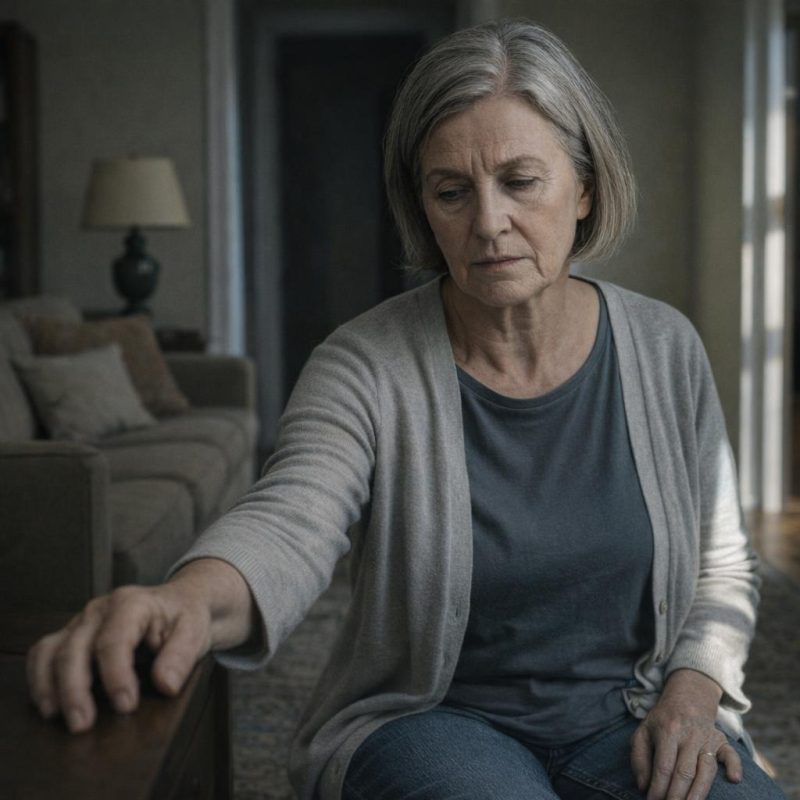 Image by RM AI
Every Gathering Was a Performance
I started going back through the years the way you go through a drawer you thought you knew — pulling things out and finding they weren't what you'd thought they were. Barbara at our twenty-year anniversary dinner, raising her glass and saying something about the foundation of a good marriage being trust. I'd thought that was sweet. I'd squeezed Richard's hand under the table. Tom at the family reunion two summers ago, telling the younger cousins that the measure of a family was what it protected. I'd nodded along. I'd thought he was talking about loyalty in the good sense. Linda at Thanksgiving, the year Emily brought Sophie for the first time, making a fuss over the baby and steering every conversation away from anything that might have gotten complicated. I'd thought she was just nervous around infants. Margaret, in the chemotherapy waiting room, asking me once whether I thought people could keep a secret out of love. I'd said I thought so. I'd meant it as a general thing, a philosophical thing. She'd nodded and looked out the window and said she supposed that depended on who was carrying it. I'd thought it was the medication making her reflective. I'd filed it away as one of those things sick people say when they're thinking about their own lives. And then I remembered Barbara, at a dinner years ago, leaning across the table and asking me what I thought real trust in a marriage actually looked like.
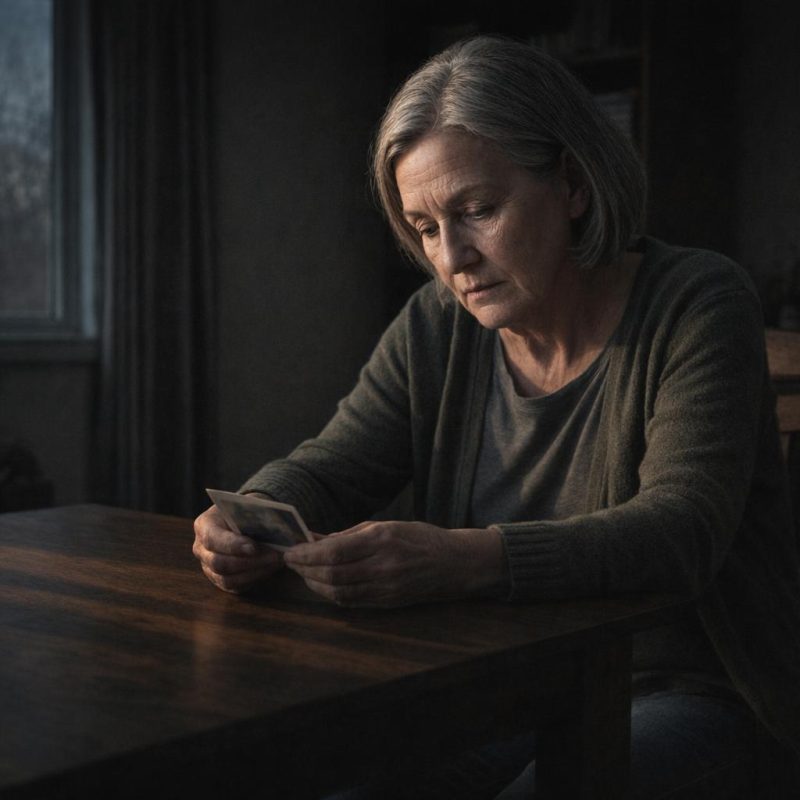 Image by RM AI
The Weight of Holidays
Richard had gone to the other room. I don't know when exactly — somewhere in the middle of all of it he'd gotten up and I hadn't stopped him. I sat on the edge of the bed where he'd been sitting and I thought about Christmas. Not one Christmas in particular, but all of them stacked together the way they get when you've had enough of them — the smell of Margaret's kitchen, the particular way Barbara arranged the table, Tom's voice carrying from the living room, the kids underfoot and the noise and the warmth of it. I had loved those Christmases. I had thought of them as mine, as ours, as the thing Richard and I had built together by marrying into each other's families and making something real out of it. I thought about the year Emily was pregnant with Sophie and we'd all crowded into Margaret's small dining room and someone had burned the rolls and we'd laughed about it for years afterward. I'd thought that was a real memory. A real moment of real people being genuinely happy together. I sat there and tried to find the lie in it and couldn't quite locate it, which was almost worse — because the warmth had been real, I thought, and the laughter had been real, and all of it had existed right alongside the secret they were all keeping, and I didn't know what to do with that. The joy I remembered felt like something I was holding that had quietly gone hollow.
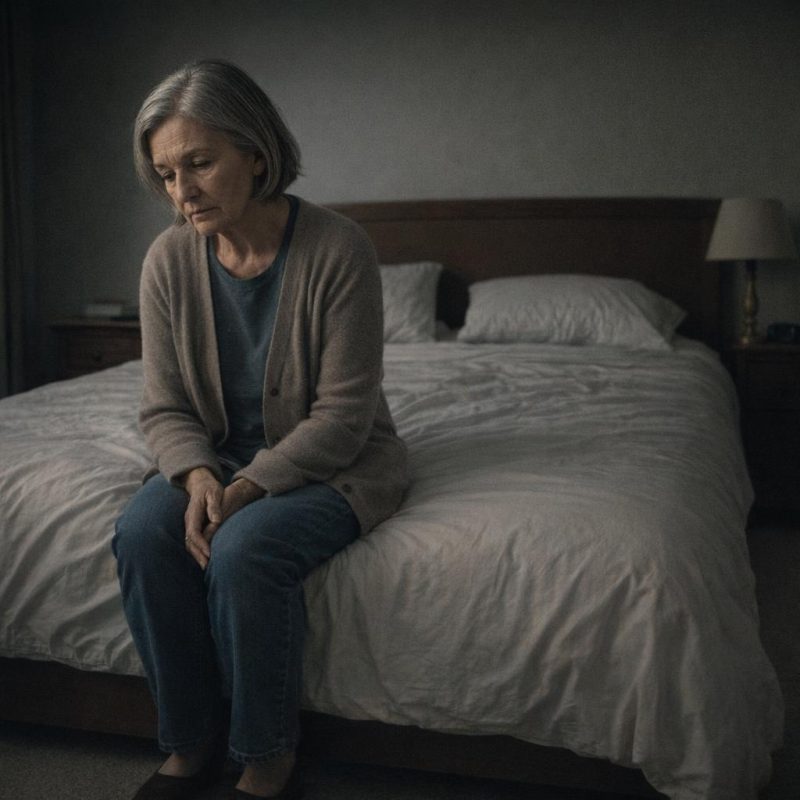 Image by RM AI
While Hiding Daniel
Richard came back and sat in the chair by the window. He didn't say anything and neither did I for a while. I was thinking about the way his family had treated me from the beginning — the warmth of it, the way Margaret had folded me in, the way Barbara had called me her sister and meant it, or seemed to. They had welcomed me. That part was real, or at least it had felt real, and I didn't think they'd been performing every single moment of it. But they had welcomed me while knowing. While knowing there was a boy out there who was Richard's son, who had grown up without a father, who had spent decades wondering. They had made room for me at the table and kept Daniel off it entirely. Every kind word, every holiday invitation, every phone call to check in — all of it had existed alongside that knowledge. They had chosen, over and over, across fifty years and every occasion that might have offered a moment of honesty, to keep choosing the same silence. I thought about what that actually meant — not the betrayal of it, which I'd already felt, but the sustained effort of it. The consistency. The way you'd have to make that choice again and again, year after year, every time you looked at me. I sat with that in the quiet of the room, and it settled into me the way cold does — not all at once, but slowly, until it was simply the temperature of everything.
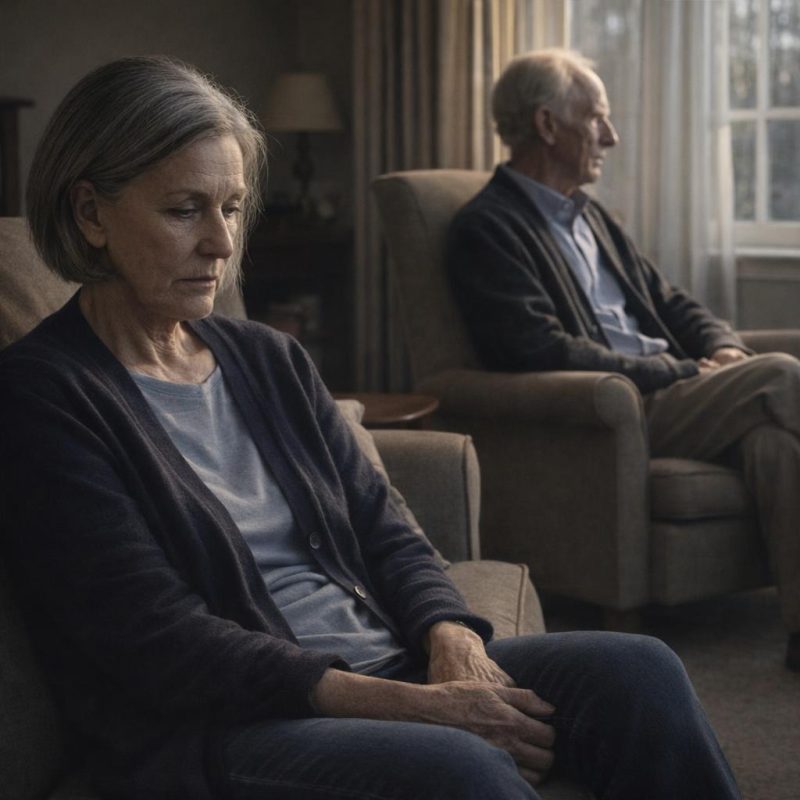 Image by RM AI
Confronting the Enablers
I called Barbara first. I don't know why I expected anything different — maybe some part of me still hoped she'd surprise me. She didn't. She picked up on the second ring and I didn't bother with pleasantries. I told her I knew everything. I told her I knew she'd known about Daniel for decades, that she'd sat across from me at every Christmas dinner and every birthday and every ordinary Sunday and said nothing. There was a pause, and then she started talking, and I just let her go. She said it had been complicated. She said Richard had been in a difficult position. She said she hadn't wanted to cause more pain than had already been caused. I asked her how she could look me in the eye — year after year, holiday after holiday — and lie to my face. She said it wasn't her secret to tell. I told her that was a coward's answer. She got quieter then, and I could hear her composure tightening, that careful image of hers pulling itself together. She said she'd done what any sister would do. I told her that wasn't sisterhood — that was choosing her brother's comfort over my entire life. She didn't have an answer for that, not a real one. And then, after a long pause, she said it in that flat, certain voice of hers: she was just protecting her brother.
 Image by RM AI
Pathetic Excuses
Tom was worse, in his way. He didn't hedge the way Barbara had. He just stated it, like it was obvious, like I was the one being unreasonable for even asking. He said it wasn't his place to interfere in his brother's marriage. He said Richard was a grown man and it had been Richard's choice to make. I told him that Richard's choice had consequences for me — that I was the one who'd lived inside that lie for twenty-three years — and he said he understood that, but his voice said he didn't, not really. He had the tone of a man who had decided the conversation was already over. I thanked him for nothing and hung up. Linda was harder to be angry at, which almost made it worse. She cried a little. She said she'd felt uncomfortable about it for years, that she'd never felt right about staying silent, but that she hadn't known how to say anything without making everything worse. She said she'd told herself it wasn't her business. I told her that was exactly the problem — that everyone had decided it wasn't their business while it was very much my life. She apologized in that soft, helpless way that doesn't actually change anything. I didn't have the energy to be cruel to her. But I didn't forgive her either. Tom's voice stayed with me longer than hers did. Flat and certain: it was Richard's choice to make.
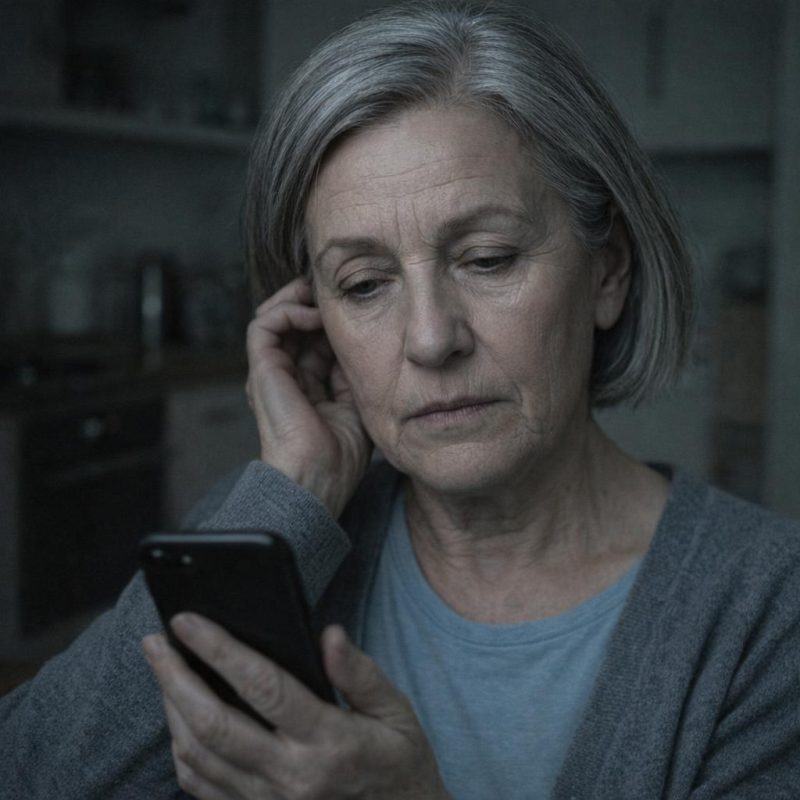 Image by RM AI
The Full Family Confrontation
I arranged for all of them to come to the house on a Saturday afternoon. Richard, Barbara, Tom, Linda — all four of them in the living room at the same time. I hadn't planned a speech. I just knew I needed them in the same room, needed to say it once and have all of them hear it. I stood in the middle of that room and I told them what they had done. Not what Richard had done — I'd already had that conversation. What they had done. I told them about every Christmas I'd spent in that family believing I was fully part of it. Every birthday, every phone call, every moment Barbara had called me her sister and Tom had shaken my hand and Linda had hugged me at funerals. I told them that every single one of those moments had existed alongside their knowledge of Daniel — a boy who had grown up without his father because they had all agreed, silently and collectively, that keeping Richard comfortable was worth more than the truth. I told them I wasn't interested in their reasons. I'd heard the reasons. I told them I wanted them to sit with what they'd actually done, not the version of it that made them feel like decent people. Nobody spoke. Barbara looked at her hands. Tom stared at a point somewhere past my shoulder. Linda's eyes were wet. Richard sat very still. The room held all of it, and none of them could give it back to me.
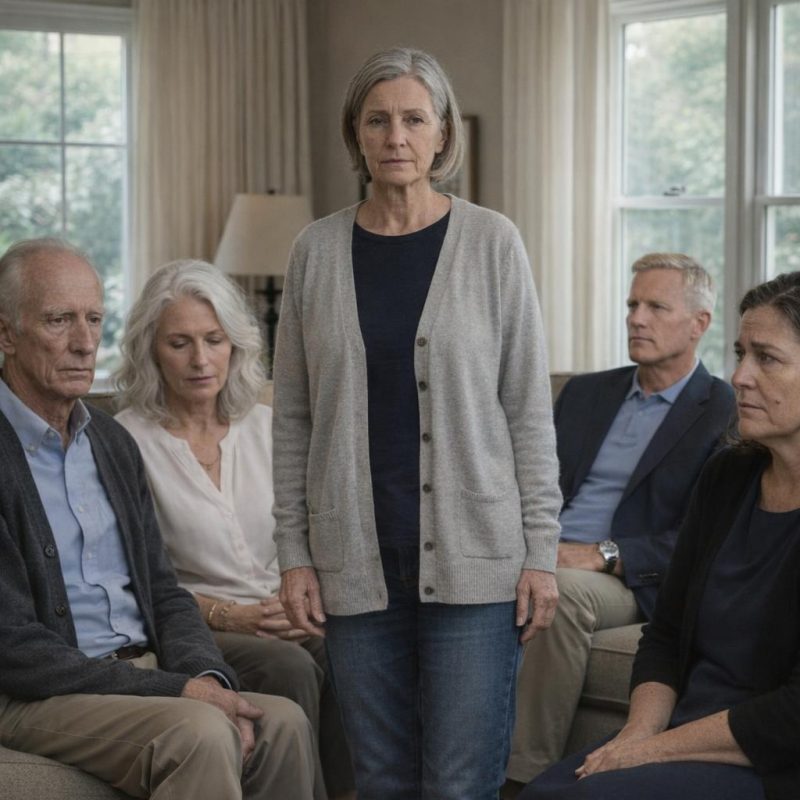 Image by RM AI
Defending the Indefensible
Barbara tried again after a few minutes of silence. She said they had been trying to protect the family. She said it in that careful way of hers, like the right phrasing might finally make me understand. Tom backed her up — said they'd been loyal to Richard, that loyalty meant something, that I might feel differently if I'd grown up with siblings. I told them I knew what loyalty was. I told them loyalty didn't require lying to someone's face for twenty-three years. I told them what they'd done wasn't loyalty — it was cowardice dressed up to look like it. They had chosen the easier thing, over and over, and called it virtue. Barbara's expression shifted, that tight smile going somewhere between hurt and indignant, like she genuinely couldn't understand why I wasn't accepting this. Tom's jaw set. Neither of them answered me. Not really. Barbara said something about how these things were complicated, and Tom said he'd done what he thought was right, and I realized then that they weren't going to get there — not today, maybe not ever. They had built a story about themselves in which they were the loyal ones, the protective ones, and I was asking them to tear that down. They couldn't do it. I stopped waiting for them to. The words they'd offered sat between us, and they weren't enough, and all of us knew it.
 Image by RM AI
Considering Leaving
After they left, I sat in the kitchen for a long time. The house was quiet in that particular way it gets when something large has just happened and the air hasn't settled yet. I thought about leaving. I'd been thinking about it for days, turning it over the way you turn something heavy in your hands, testing the weight of it. Twenty-three years. That was the number I kept coming back to. Twenty-three years of a life I had believed in completely, and underneath it, this — Daniel, Patricia, the whole family knowing, every holiday a performance I hadn't been told I was in. I thought about what leaving would actually look like. The house, the routines, the way Richard still made coffee every morning and set a cup on my side of the counter without being asked. I thought about what staying would look like too, and that wasn't simple either. Neither option gave me back what I'd lost. That was the thing I kept arriving at, no matter which direction I turned. Leaving wouldn't undo it. Staying wouldn't undo it. The years were gone either way, and the version of my marriage I'd believed in was gone, and no decision I made in this kitchen was going to change that. I didn't know yet what I was going to do. The not-knowing sat with me in the quiet, heavy and still.
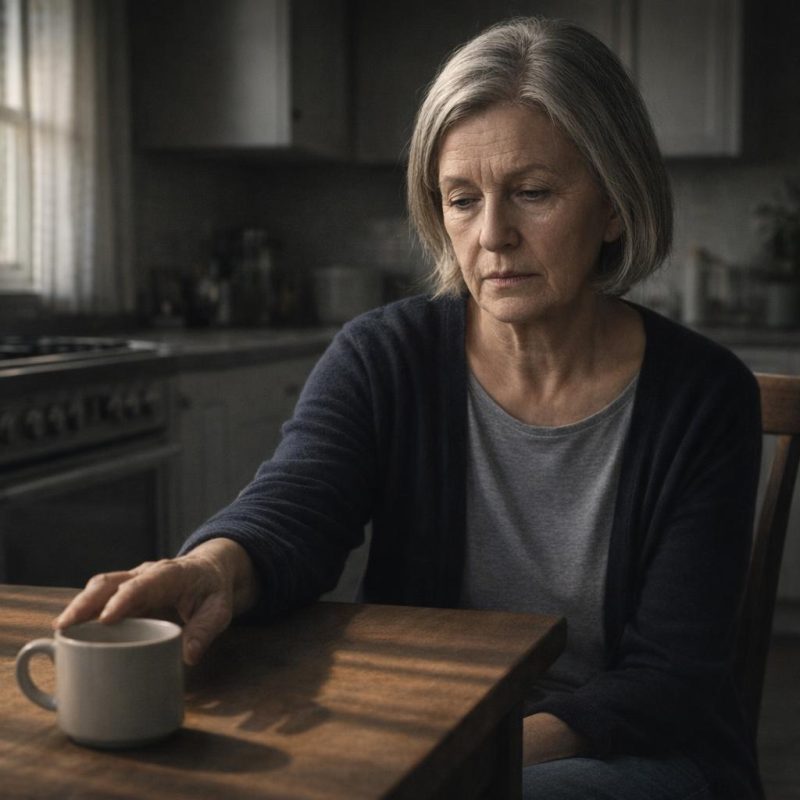 Image by RM AI
Protecting Emily
Emily came over on a Tuesday. I'd asked her to — I needed to tell her about Barbara and Tom and Linda before she heard it some other way. I tried to be careful about how much I gave her. She was already carrying enough, and she had Sophie to think about, and I didn't want to hand her the full weight of it. But she's my daughter, and she's not someone you can half-tell things to. She listened without interrupting, which isn't like her, and I watched her face do the thing it does when she's working very hard to stay composed. When I got to Barbara — when I told her that her aunt had known for decades — something shifted in Emily's expression that I hadn't seen before. Not anger exactly. Something quieter and more permanent than anger. She asked me a few questions. I answered what I could. I left out the parts that would only hurt without helping. We sat together for a while after that, not saying much, the way you do when there's too much to say and none of it fixes anything. She reached over and put her hand over mine at some point, and I let her. Then she looked at me with that steady, careful look she gets, the one that's so much like Richard's it used to make me smile, and she asked me if I was going to leave her father.
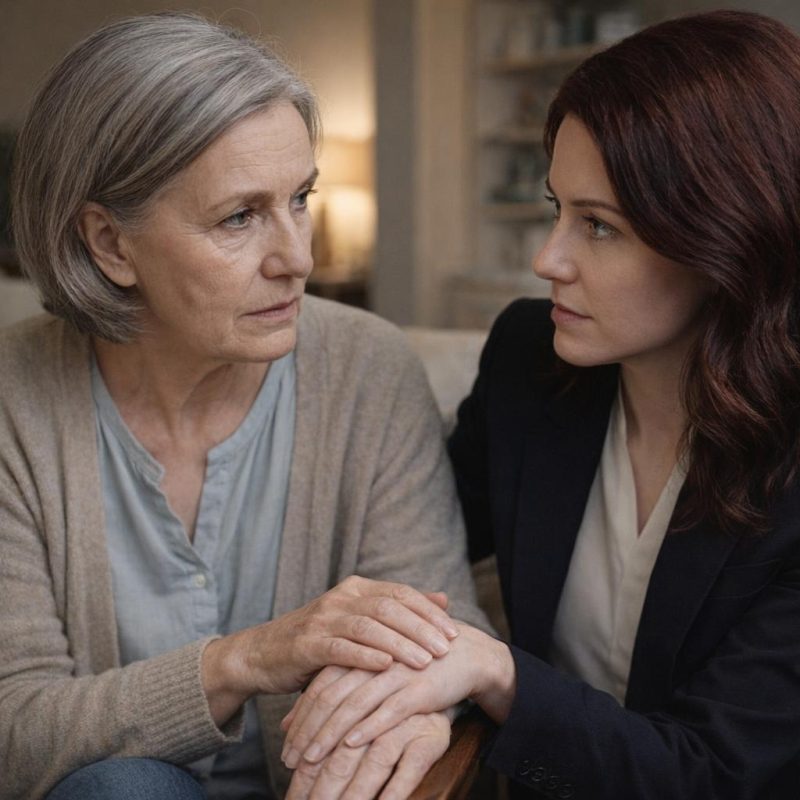 Image by RM AI
The Decision to Stay
I'd made my decision before Emily asked the question. I just hadn't said it out loud yet. I told her I was staying. She nodded, slowly, like she'd half-expected it and wasn't sure how she felt about that. I told her it wasn't forgiveness — I wanted to be clear about that, with her and with myself. It wasn't because the betrayal didn't matter or because I'd found some way to make peace with it. It was simpler and harder than that. Leaving wouldn't give me back the years. It wouldn't undo what Richard had done or what his family had done. It wouldn't make Daniel's childhood different or make the lies not have happened. I would just be alone with all of it instead of not alone, and I didn't see how that was better. Emily said she'd support whatever I decided, and I believed her. After she left, I went and found Richard in the study. He was sitting at his desk not doing anything, just sitting, the way he'd been doing a lot lately. I stood in the doorway for a moment. Then I walked in and sat down across from him and told him I was staying. He looked up at me, and I could see the relief starting to move across his face, and I stopped it. I told him this wasn't relief. I told him I had conditions, and he was going to hear every one of them.
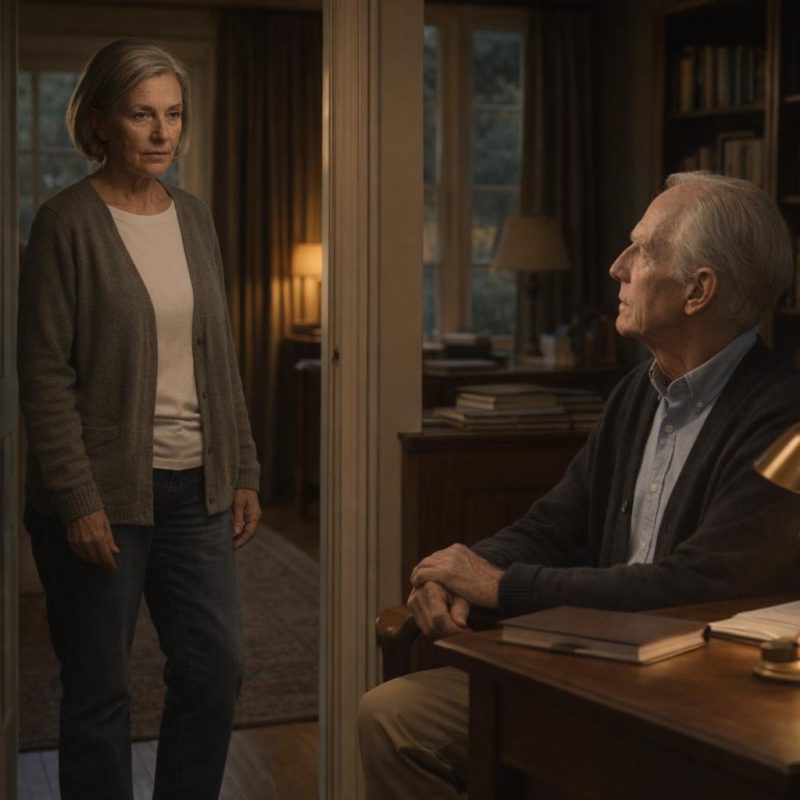 Image by RM AI
Setting Boundaries
I laid them out one by one. Complete honesty — not just about Daniel, about everything, from this point forward. No more secrets of any kind, no matter how small, no matter who it protected. He would cut contact with Barbara, Tom, and Linda. Not reduce it, not manage it carefully — cut it. I would not attend family gatherings where they were present, and I would not be asked to. He would support Daniel's place in our lives, whatever shape that took as we figured it out, without making me feel like I was being asked to absorb someone else's damage. And he would not ask me to pretend any of this was fine, or that we were fine, or that we would be fine anytime soon, because I didn't know that and I wasn't going to say it. I told him these were not starting points for a negotiation. He sat across from me and he listened to all of it without interrupting, without flinching, without trying to soften any of it. When I finished, the room was quiet. He looked at me for a long moment — that weathered face, those steady hands folded on the desk — and then he said yes. To all of it. Every term, without condition.
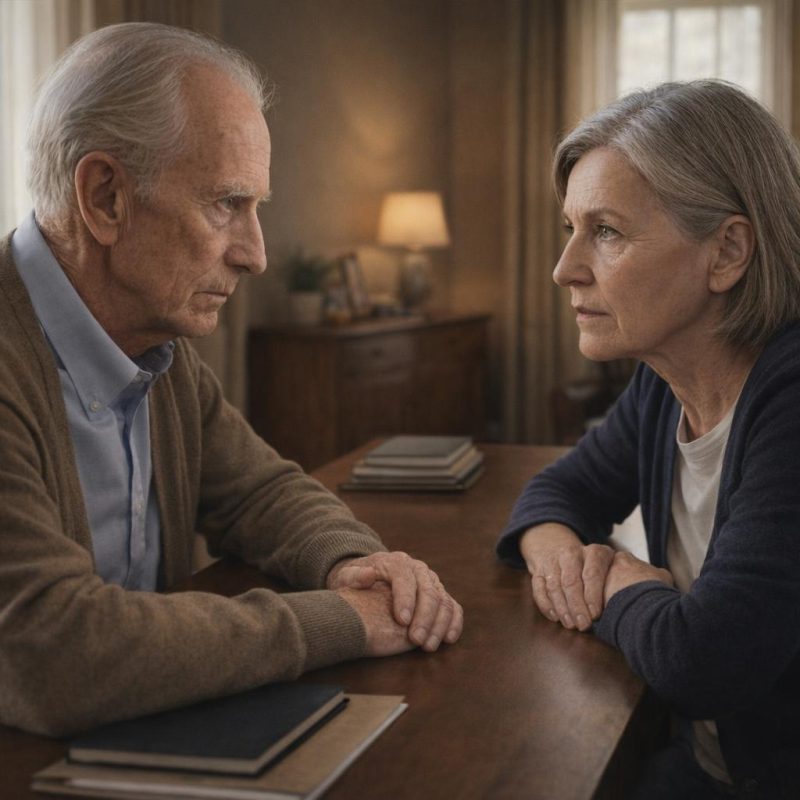 Image by RM AI
No More Secrets
After he said yes to every term, I wasn't done. I told him I needed one more thing — I needed him to sit there and tell me if there was anything else. Not just Daniel. Anything. Every secret he'd ever kept from me, every lie he'd smoothed over, every thing he'd decided I didn't need to know. I told him this was his one chance. If I found out later — from anyone, in any form — that he'd held something back, I was gone. Not angry-gone, not separation-gone. Gone. He didn't flinch at that. He sat very still for a moment, and I watched his face the way you watch someone deciding whether to jump. Then he started talking. He went back further than I expected — small things, old things, things that stung in their smallness because they showed me the habit of it. A loan he'd taken out and repaid before I knew. A falling-out with a colleague he'd never mentioned. A trip he'd taken before we were married that he'd described differently than it happened. None of it was Daniel. None of it came close. But he told me anyway, and I sat there and took it all in without stopping him. When he finally went quiet, I asked him if that was everything. He looked me straight in the eye and said yes. That was everything.
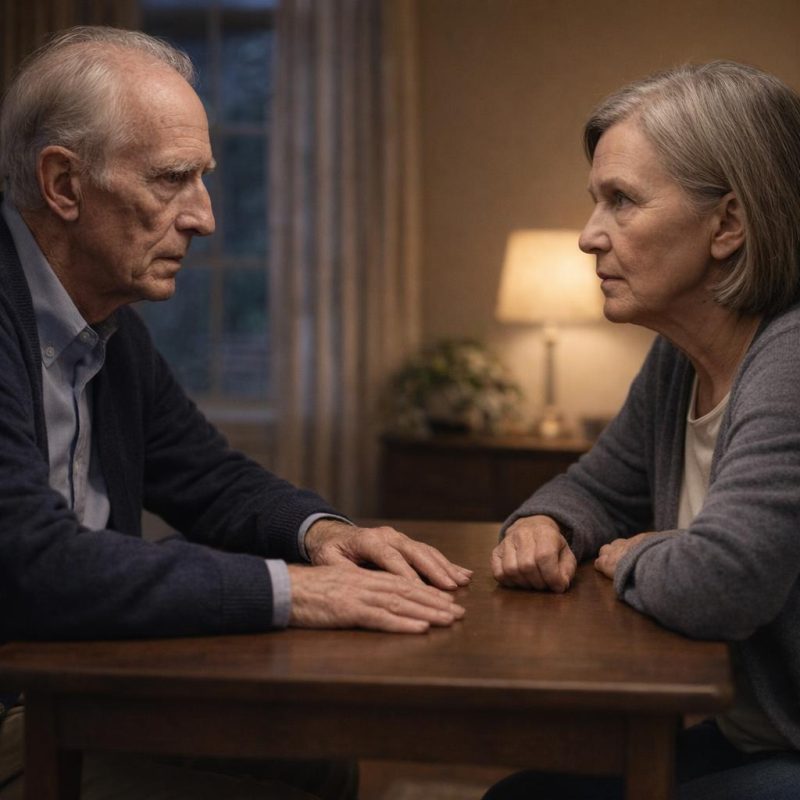 Image by RM AI
Daniel Becomes Part of Their Lives
Daniel started coming around about six weeks after that conversation. Not every week — we weren't ready for every week — but regularly enough that it stopped feeling like an event and started feeling like a pattern. He'd sit at the kitchen table with a cup of coffee and talk, and I'd sit across from him and listen. He told me about growing up, about his mother Patricia, about the things she'd told him and the things she'd kept from him until the very end. He wasn't angry when he talked about her. He was careful, the way people are when they're still sorting out how to feel about someone they loved who also hurt them. I understood that more than I wanted to admit. Richard was usually there too, quieter than either of us, learning how to be in the same room with the son he'd missed for decades without making it about his own guilt. That was its own kind of work, and I watched him do it imperfectly, which was the only honest way it could go. I won't pretend those early visits were comfortable. There were silences that lasted too long and conversations that stopped just short of the things we actually needed to say. But nobody was lying. That was new. That was the thing I kept coming back to — nobody in that kitchen was lying to anyone else, and after everything, that felt like enough to build on.
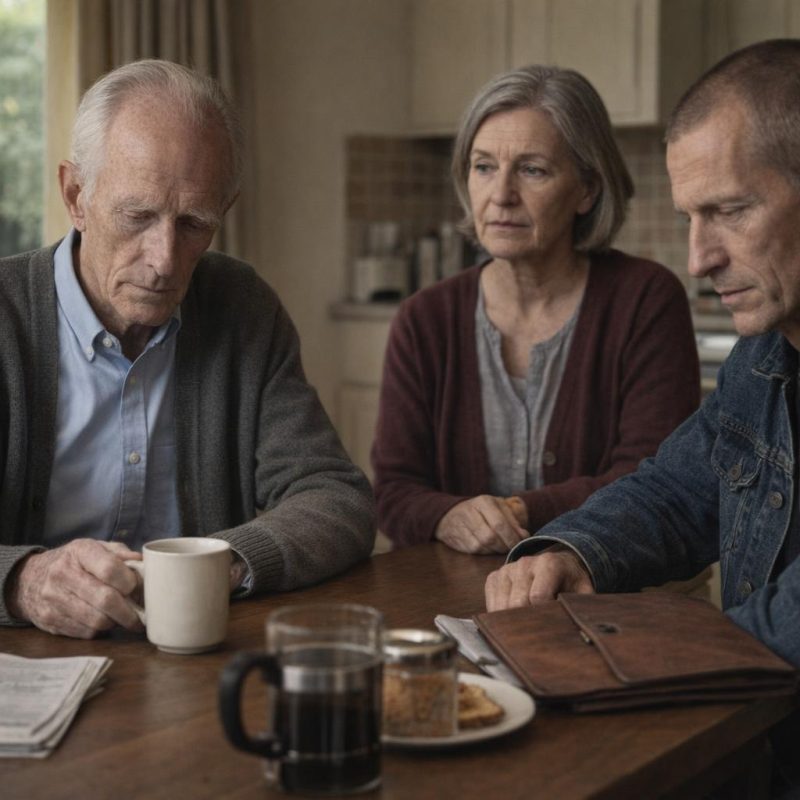 Image by RM AI
Slow Healing
People talk about healing like it has a shape — like if you do the right things in the right order, you arrive somewhere solid. That wasn't how it went for us. Some weeks felt like progress. Richard would do something small and honest, something he would have hidden before, and I'd notice it and feel something loosen slightly in my chest. Then a bad day would come — a family birthday where his absence from Barbara's table felt loud, or a moment when I'd catch myself wondering what else I didn't know — and whatever had loosened would pull tight again. Emily tried. She was polite to Daniel when their paths crossed, which was more than I'd asked of her and less than I'd hoped for, and I told myself that was fair. Sophie, being eight, simply accepted him the way children accept most things — as a fact of the world that had always been there and simply hadn't been mentioned yet. I hadn't forgiven Richard. I want to be clear about that, because I think people expect that part to come faster than it does. What I had done was decide to stay and see. To keep showing up to the kitchen table, to keep listening, to keep choosing the harder thing over the easier exit. Some mornings that felt like strength. Other mornings it just felt like stubbornness. Most mornings I couldn't tell the difference, and I'd stopped trying to figure out which one it was.
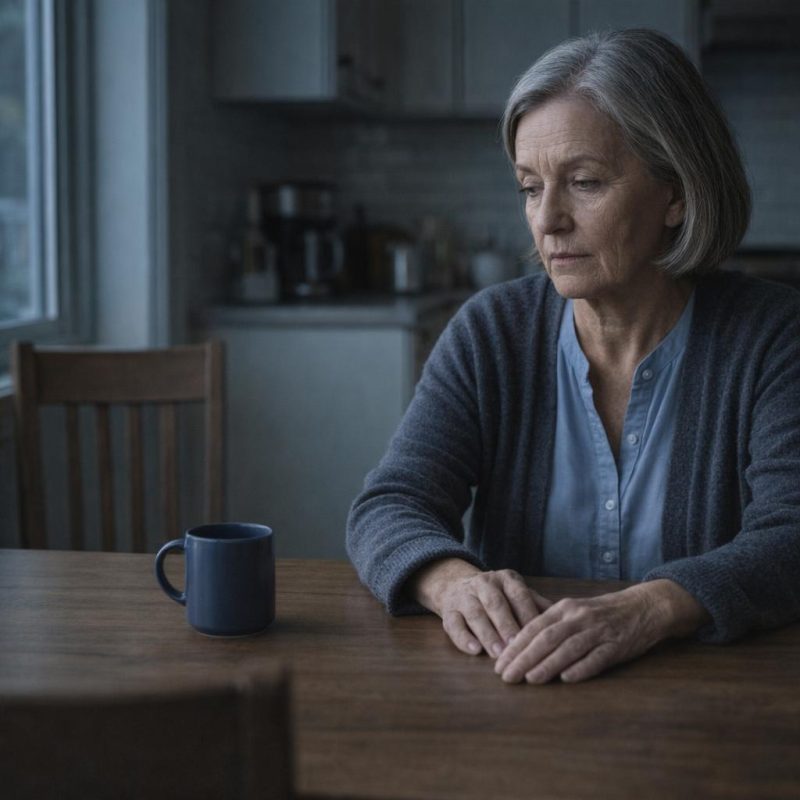 Image by RM AI
Truth Forces People Forward
If you'd asked me the day Daniel knocked on our door what the worst part would be, I would have said Richard. I would have said the man I'd been married to for twenty-three years had a son he'd never told me about, and that was the thing I'd have to survive. And it was. But it wasn't the only thing, and it wasn't even the sharpest thing, once I had time to sit with all of it. The sharpest thing was the list. Barbara, who'd smiled at me across holiday tables for two decades. Tom, who'd shaken Richard's hand at our wedding and said nothing. Linda, who'd sent Christmas cards every year and kept her mouth shut every year. All of them had known. All of them had looked me in the eye and chosen the family story over the truth, over and over again, for fifty years. Richard's lie was one man's failure. What they'd built around it was something else — a whole architecture of silence that I'd been living inside without knowing the walls were there. I don't know that I'll ever fully make peace with that part. What I know is that Daniel is at our kitchen table now, and the people who kept him a secret are not. That's not a happy ending. It's just what happened when the lying finally stopped and everyone had to figure out where they actually stood. Truth did that. It didn't ask any of us if we were ready.
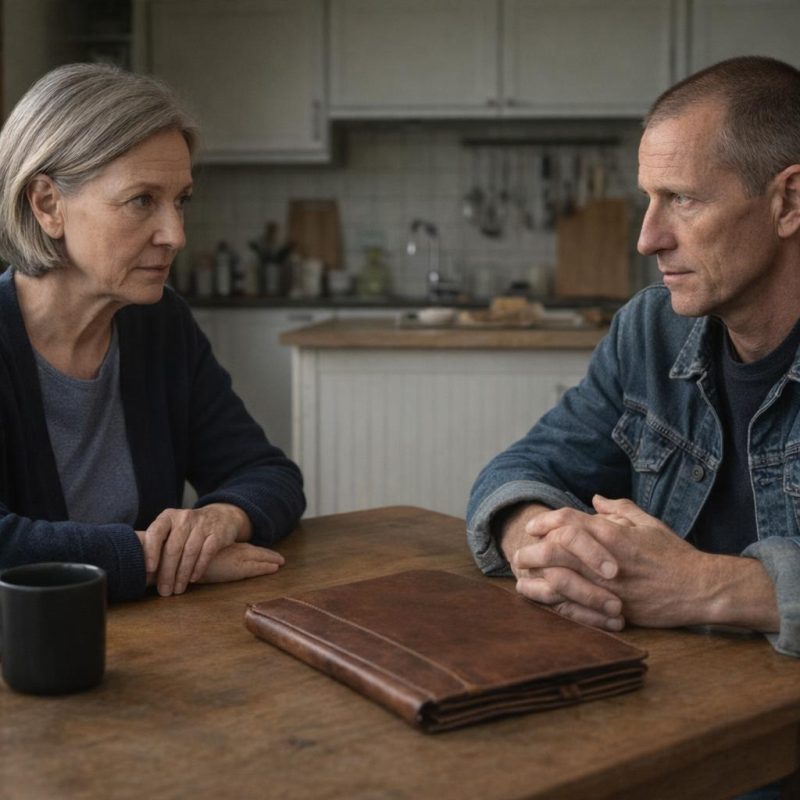 Image by RM AI
KEEP ON READING
20 Historical Figures Who Went by Fake Names
Famed Pseudonyms. Here's a fun fact for you: Pablo Picasso's…
By Christy Chan Jun 1, 2026
20 Forgotten Historical Inventors Who Need More Credit
Stepping Out of the Shadows. We all know the famous…
By Sara Springsteen Jun 1, 2026
20 Historical "Hustlers" Who Went from Rags to Riches
Chasing the Ultimate Dream. History is packed with individuals who…
By Sara Springsteen Jun 1, 2026
20 Famous Deaths That Created Centuries of Rumors
Some Endings Refuse to Stay Quiet. History loves a mystery,…
By Emilie Richardson-Dupuis Jun 1, 2026
10 Self-Proclaimed Historical Geniuses & 10 That Were Actually Smart
Changing History or Saying You Changed History. Genius is one…
By Elizabeth Graham Jun 1, 2026
20 Historical Figures Who Were Punished For Being Right Too…
History Has Always Hated a Know-It-All. There's a particular kind…
By Cameron Dick Jun 1, 2026