

My Husband Deletes Our Security Footage Every Night at 2AM — What I Found on My Hidden Camera Changed Everything
My Husband Deletes Our Security Footage Every Night at 2AM — What I Found on My Hidden Camera Changed Everything
The 2AM Alert
I'm a pretty solid sleeper — always have been. So when my phone buzzes at 2 AM, I don't just roll over and ignore it. I blink at the ceiling for a second, then reach for it on the nightstand, squinting against the brightness. It's a motion alert from the pool deck camera. I tap it half-awake, expecting to see a raccoon or maybe a branch that blew into frame. Derek is still out cold beside me, one arm thrown over his face the way he always sleeps, breathing slow and even. I think about nudging him, then decide against it — he has an early call in the morning and honestly, it's probably nothing. I set the phone face-down and tell myself I'll check the actual footage when I wake up. The pool deck is enclosed. We live in a quiet neighborhood. There's no reason to worry. I close my eyes and pull the blanket up, already drifting back toward sleep. But something keeps me just barely awake for another minute or two — not fear, just that low-grade itch of mild annoyance. I pick the phone back up one more time and look at the notification. The timestamp reads 2:00 AM exactly.
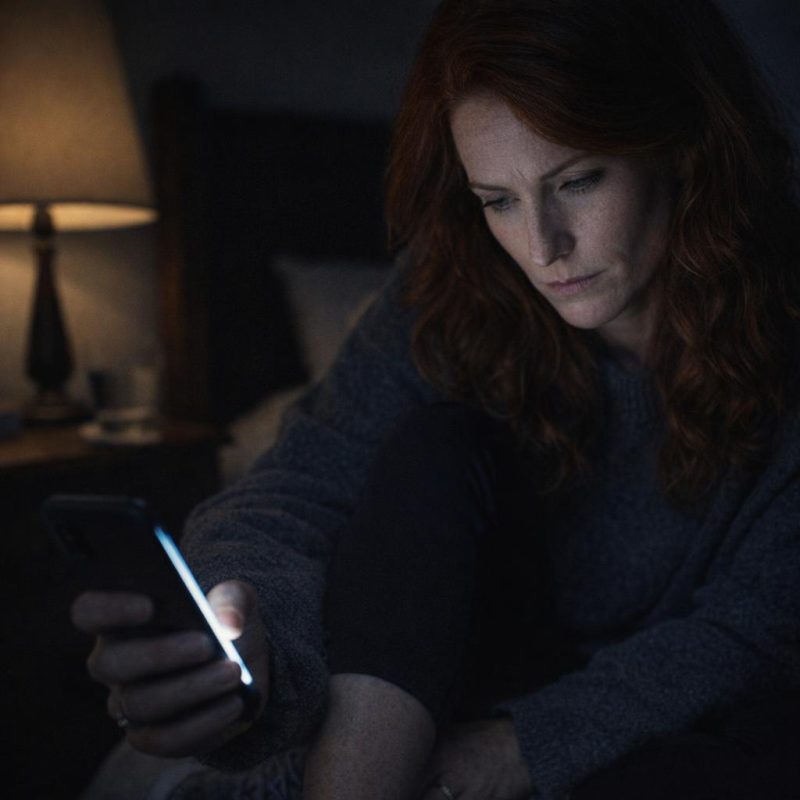 Image by RM AI
Derek's Explanation
The next morning I mention it to Derek over coffee, mostly just making conversation. I tell him the pool deck camera sent me an alert at two in the morning and ask if he thinks something's wrong with the sensor. He doesn't even look up from his phone at first. Then he sets it down, wraps both hands around his mug, and gives me that easy half-smile. 'Probably the sensitivity setting,' he says. 'It's been picking up shadows, reflections off the water — I've noticed it acting up.' He sounds completely unbothered, and honestly, that's enough for me. He knows more about the camera system than I do; he's the one who set the whole thing up. I nod and top off my coffee and that's basically the end of it, as far as I'm concerned. But then, a little later, I'm sitting at my desk and I think — I might as well just pull up the clip and see what triggered it. I open the camera app on my phone, navigate to the pool deck feed, and scroll back to the two AM window. The clip isn't there. The entire recording from that time slot is just gone.
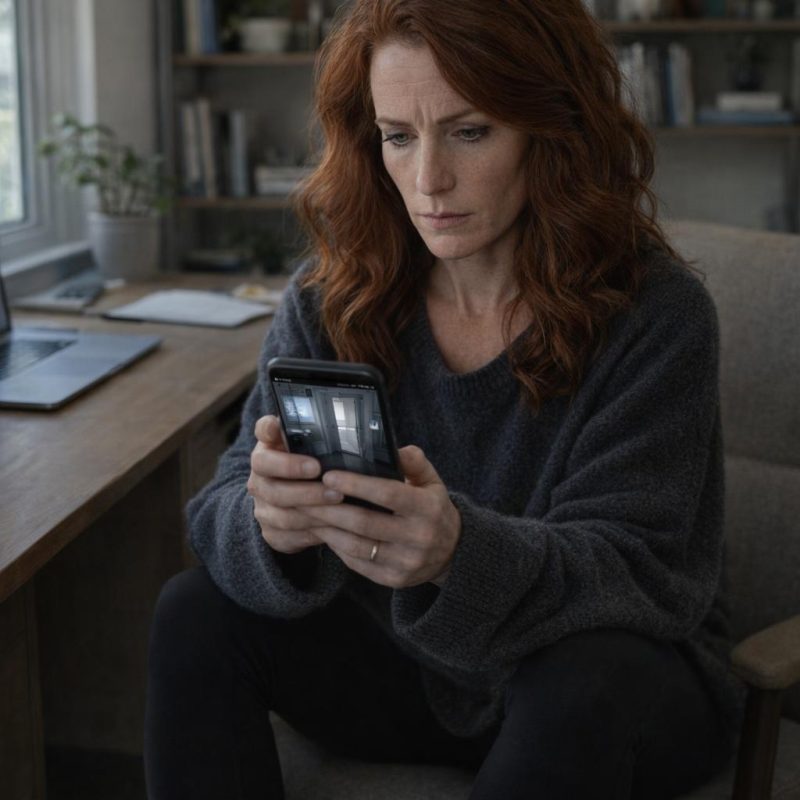 Image by RM AI
The Third Night
It happens again the second night. And then the third. Each time, my phone buzzes me out of sleep at exactly 2:00 AM, the notification sitting there bright and sharp on my screen. Each time, I reach for it in the dark while Derek barely stirs beside me — just a slow shift of his shoulder, a quiet exhale, nothing more. And each time, by the time I open the camera app and navigate to the pool deck feed, the footage is already gone. Not buffering, not loading slowly. Just gone, like it was never there. After the second night I figured it was still the glitch Derek mentioned. After the third, I lie there in the dark for a while, phone resting on my chest, staring up at the ceiling. I'm not scared. I'm not even really suspicious — I'm just tired, and a little fuzzy-headed, and trying to decide if this is worth bringing up again or if I'm making something out of nothing. Derek's breathing is slow and steady next to me. The house is completely quiet. I set the phone back on the nightstand and close my eyes. Three nights in a row, same time, same result.
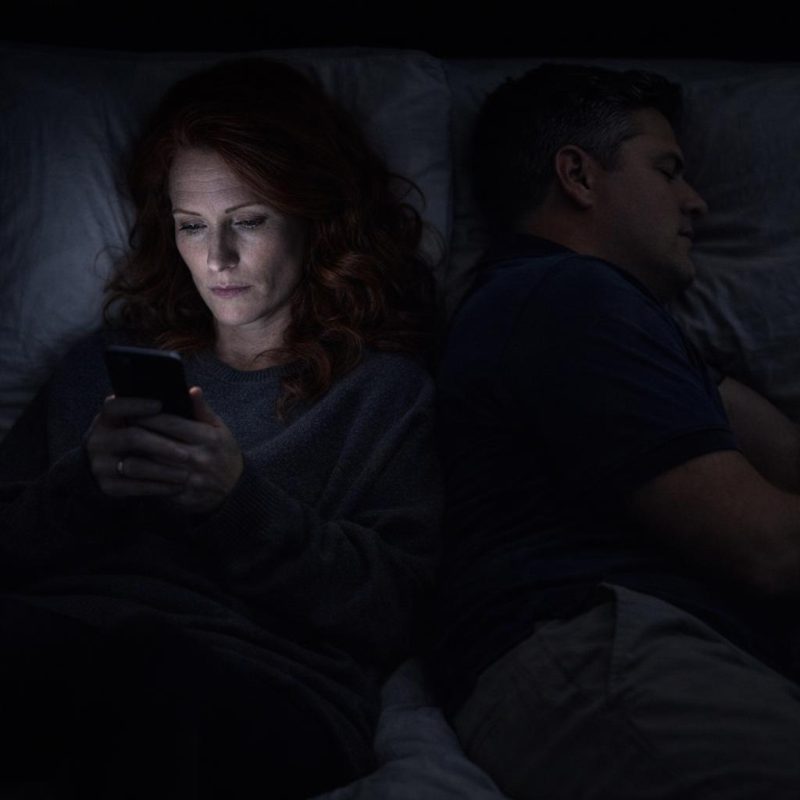 Image by RM AI
The Offer
I bring it up again over dinner — not in an accusatory way, just mentioning that the alerts are still waking me up and I'm starting to feel it during the day. Derek puts his fork down and looks genuinely apologetic. 'I should've dealt with it already,' he says. 'I'm sorry, that's on me.' He pulls out his phone right there at the table and opens the camera app, tilting the screen so I can see it too. He walks me through the motion sensitivity slider, explains how the pool deck setting is probably catching light bouncing off the water at night, and says he'll go out this weekend and physically reposition the camera angle so it's not pointed directly at the surface. He's patient about it. Thorough. He even mentions calling the camera company's support line if the repositioning doesn't fix it. By the time we're clearing the plates, I feel genuinely better — a little embarrassed, even, for letting it nag at me as long as it did. It's a camera glitch. He's going to fix it. That's all this is. Derek squeezes my shoulder on his way past me to the sink, and I let myself lean into it just slightly, the tension I'd been carrying quietly dissolving under the warmth of his hand.
 Image by RM AI
Every Night at Two
Three more nights pass. The alert comes at 2:00 AM each time, same as always. I keep waiting for it to stop — Derek said he'd adjusted the settings, said he'd look at the camera angle this weekend, and the weekend came and went without him mentioning it again. I didn't push. I figured he got busy. But by the fourth night after his promise, I'm lying awake at 2:17 AM, phone in hand, staring at another deleted footage notification, and something small and quiet shifts in the back of my mind. The next afternoon, while Derek is at work, I open the camera app and go into the settings menu. I find the pool deck camera in the device list and tap through to its configuration. I'm not sure what I'm expecting — maybe a note, maybe a change log, something that shows he went in and adjusted it. The motion sensitivity slider is sitting exactly where it's always been. Maximum. Not a single setting on any of the cameras has been touched. I sit there at the kitchen counter with my phone in my hand, the app still open on the screen.
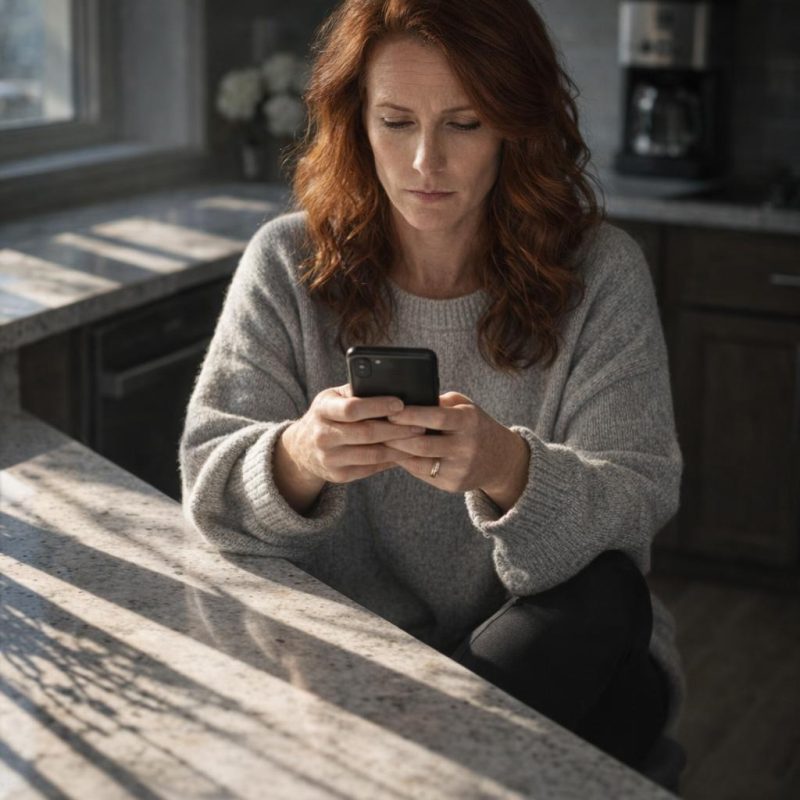 Image by RM AI
Staying Awake
I decide I'm just going to stay awake and see what happens. It feels a little dramatic, honestly — I keep telling myself it's just a camera glitch and I'm turning it into something it isn't. But I prop myself up against the headboard with my tablet and a cup of chamomile tea gone cold, and I read. Derek falls asleep fast, the way he always does, out within ten minutes of his head hitting the pillow. I get through two chapters of my book. Then three. Around 1:30 AM my eyes start doing that heavy, slow-blink thing, and I shake myself awake and switch to scrolling my phone instead, thinking the brighter screen will help. It doesn't. At some point the tablet slides off my lap. I don't remember putting it on the nightstand. I don't remember lying down. I just blink, and the room is dark, and my phone screen is lit up with a notification. The time reads 2:03 AM. The motion alert is there, same as every other night. I reach across the bed without thinking, my hand moving toward Derek's side — and the sheets are cold and flat and empty.
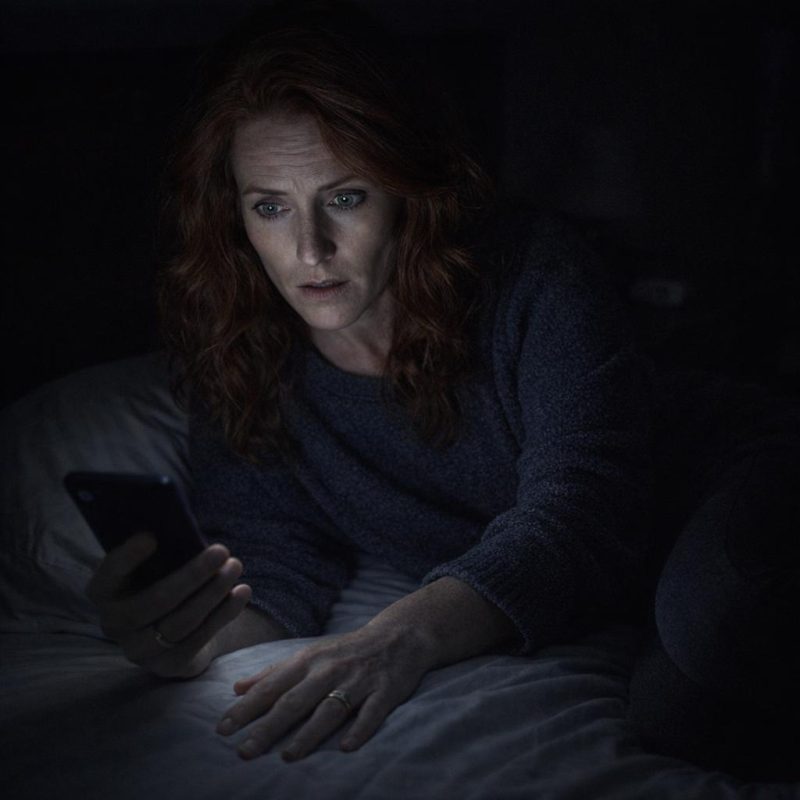 Image by RM AI
The Morning After
When I wake up at seven, Derek is right there beside me, on his back, one arm behind his head, already scrolling his phone like it's any other morning. I lie still for a moment, trying to piece together when he came back to bed. I have no memory of it — nothing, not even a half-conscious sense of the mattress shifting or the covers moving. I open the camera app while he's in the shower. The pool deck footage from 2 AM is gone, same as always. I set my phone down and sit with that for a minute. When Derek comes out, towel around his waist, I keep my voice easy and casual. I ask if he got up at all during the night. He doesn't miss a beat. 'Yeah, around two,' he says, pulling a shirt from the drawer. 'Couldn't sleep, went down for some water. Didn't want to wake you.' It's a perfectly reasonable answer. It matches the timeline. There's no reason it should bother me as much as it does. But I watch him button his shirt in the mirror, and when I ask the follow-up — just a small one, just whether he heard anything outside — his expression shifts in a way I can't quite name.
 Image by RM AI
Coffee with Marissa
I don't tell Derek I'm meeting Marissa. I just text her and say I need coffee and she sends back a string of emojis and a coffee shop address within thirty seconds, because that's who she is. We get our usual corner table and she's barely sat down before she's asking me what's going on, because apparently I have a face. I tell her about the alerts — the 2 AM notifications, the deleted footage, Derek's explanation about the camera glitch, the settings that were never actually changed. I try to keep it light, like I'm just venting about a weird technical annoyance. Marissa listens with her chin in her hand, glasses pushed up, and when I finish she asks the obvious question: has Derek ever explained why the footage keeps disappearing before I can see it? I tell her he said he clears it to free up storage. She tilts her head. 'Could be an animal,' she says. 'Raccoons, a cat, something setting it off at the same time every night.' She tells me to trust my gut but not to spiral before I have something concrete. It's practical advice. Grounded. Exactly what I needed to hear. But sitting there with both hands wrapped around my mug, I notice how much lighter I feel just from having said it out loud to another person.
 Image by RM AI
Small Changes
It's the small things that get you first. Not some big dramatic moment — just a slow, quiet shift you almost miss because life keeps moving around it. Derek used to ask about my day like he actually wanted to know the answer. Lately he asks and then looks back at his phone before I've finished the first sentence. Dinner has turned into this thing where we're both technically present but not really there — he pushes food around his plate, eyes somewhere else, and I find myself filling the silence with observations about the weather or something I saw online, just to hear a voice in the room. He's been staying up later too, laptop open on the kitchen table long after I've gone to bed, the blue light still glowing under the door when I get up to use the bathroom at midnight. I've tried asking about work. He says it's fine. I ask if everything's okay. He says of course. The answers are technically correct but they land flat, like a door closing politely in your face. Tonight we're watching TV and there's a full cushion between us on the couch, maybe two, and I can't remember when that started feeling normal.
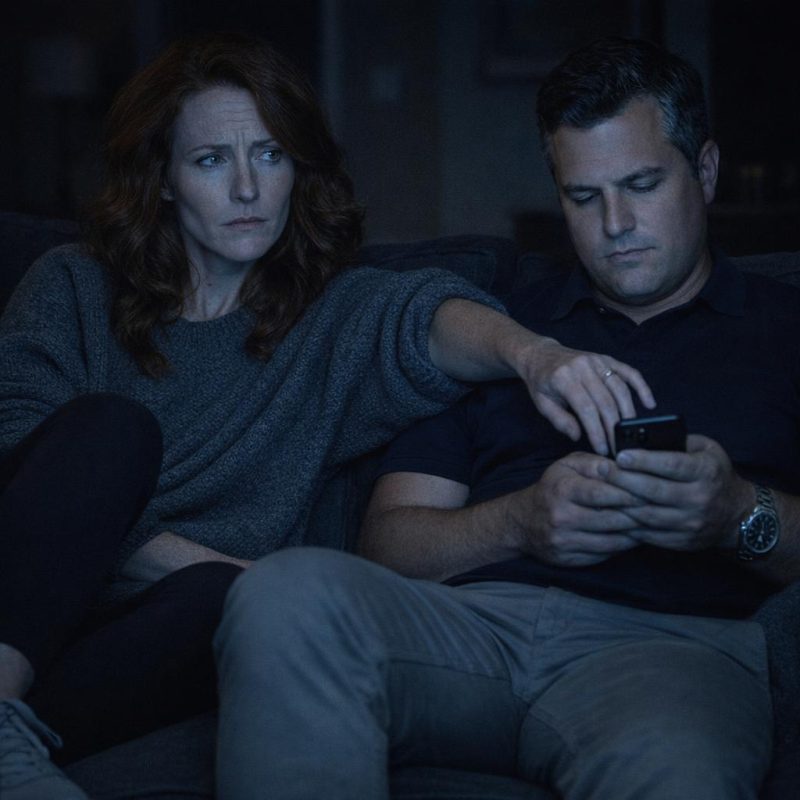 Image by RM AI
Before Breakfast
I wake up at 6:30 on a Tuesday and the house is already making sounds — the creak of the kitchen floor, the soft clink of a mug being set down. Derek's side of the bed is empty. I lie still for a second, listening, and something about the quiet makes me stay put instead of getting up. Through the open bedroom door I can see the top of the stairs, and if I angle myself just right against the pillow, I can see a sliver of the kitchen below. Derek is standing at the counter, back half-turned, phone in his hand. The screen throws a pale blue glow across his face. I know that interface — I've opened it myself a hundred times. The camera app. He's scrolling, then tapping, then scrolling again with the focused, unhurried movement of someone doing a routine task. Not checking. Doing. It takes maybe forty-five seconds. Then he sets the phone face-down on the counter and reaches for the coffee maker like nothing happened, like it's just another morning. I stay exactly where I am, breathing slowly, watching the back of his head. He closes the app, and the blue light disappears from his face.
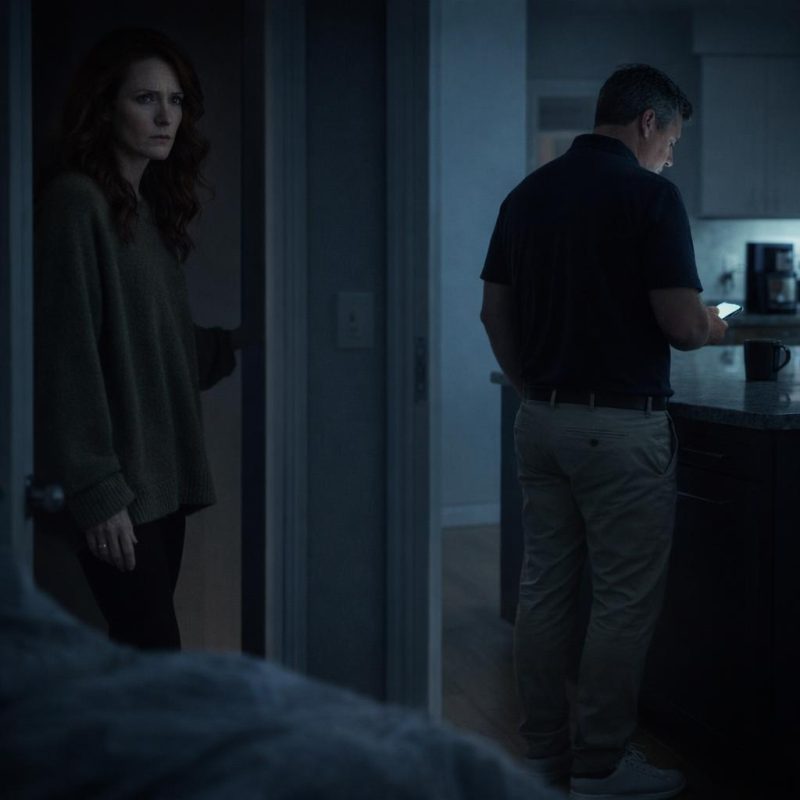 Image by RM AI
The Race
The next morning I set an alarm for 6 AM and put my phone under my pillow so the vibration won't wake Derek. When it goes off I'm already half-awake, heart already moving faster than it should be at that hour. I slide out of bed slowly, pick up my phone, and open the camera app right there in the dark, still standing next to the bed in my socks. The footage folder loads. I scroll back to the overnight window — 1 AM, 2 AM, 3 AM. Empty. All of it. The timestamps are there but the clips are gone, every single one, like they were never recorded at all. I stand there staring at the screen for a moment before I hear movement downstairs. By the time Derek appears in the bedroom doorway holding two mugs of coffee, I've already locked my phone and set it on the nightstand. He asks if I slept well. I tell him yes, great, thanks. He hands me a mug and smiles and I smile back and the whole thing is so ordinary it almost makes me dizzy. I wrap both hands around the warm ceramic and sit with the fact that I was too late again, and that this time I'd actually tried.
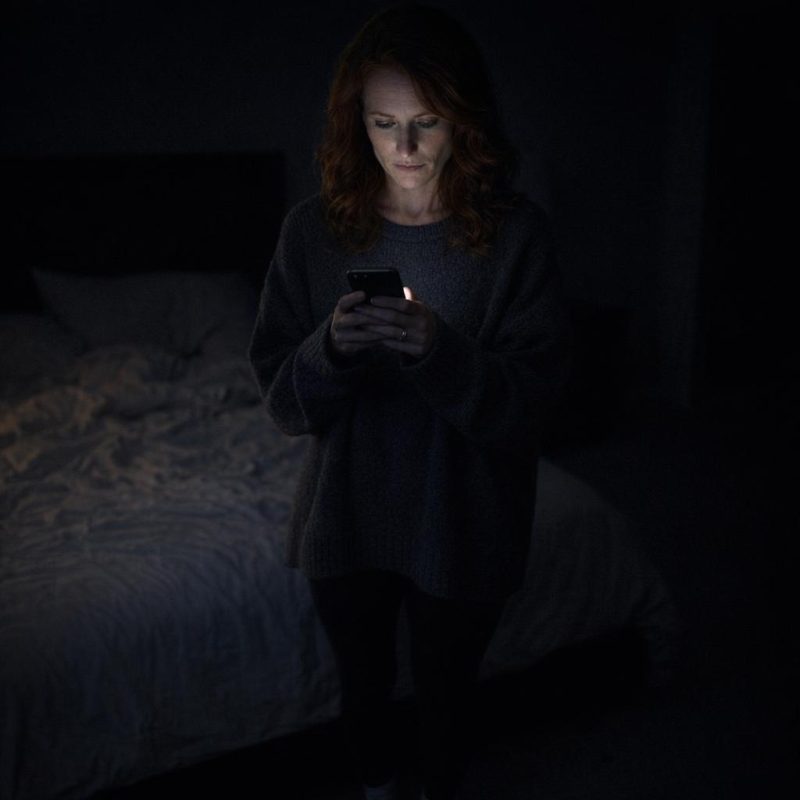 Image by RM AI
Technical Issues
I bring it up casually over breakfast — the alerts are still going off every night, I mention, and I still can't see what's triggering them. Derek looks up from his toast and says he's sorry, he thought the settings change would help, and he'll just call the camera company directly and get it sorted. He sounds completely reasonable. Patient, even. He picks up his phone and steps into his home office, pulling the door most of the way closed behind him. I stay at the kitchen table and I can hear the low murmur of his voice through the wall — not the words, just the rhythm of a conversation, back and forth, the way you talk when someone is actually on the other end. It lasts about five minutes. When he comes back out he says the company is pushing a firmware update and it should fix the false triggers within a day or two. He says it like he's just handled something minor, like scheduling a plumber. I tell him thank you and I mean it, or I want to mean it. I clear the plates and tell myself this is probably fine, that there's a reasonable explanation, that I should let the update do its job. I almost believe it. Then I hear his office door click shut again, and the murmur starts back up.
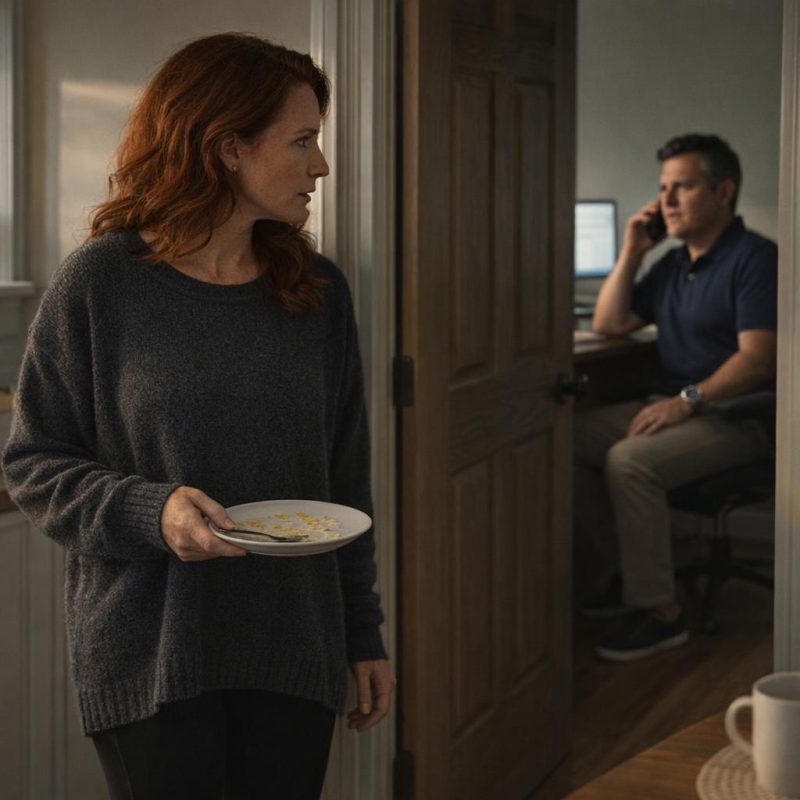 Image by RM AI
The Question
I wait until dinner to ask. I've been turning the words over in my head all day, trying to find a version that sounds casual, and by the time we're sitting across from each other with plates of pasta between us I've decided there's no casual version, so I just say it. I tell him I saw him on his phone this morning before I came downstairs, and it looked like he was in the camera app, and I'm just wondering — why does the footage keep getting cleared before I can see it? Derek's fork stops halfway to his mouth. He sets it down slowly. He asks me why I'm suddenly so focused on this. I say I'm not suddenly focused, I've been asking about it for weeks. He says there's nothing to see, it's just false triggers, motion from a branch or a passing car, nothing worth saving. His voice has an edge to it I don't usually hear at the dinner table — not loud, not angry, just tight, like a door that's been locked from the inside. I tell him okay, fine, and I go back to eating. He goes back to eating. The TV is off and the kitchen is quiet and the silence that settles between us feels different from the comfortable kind.
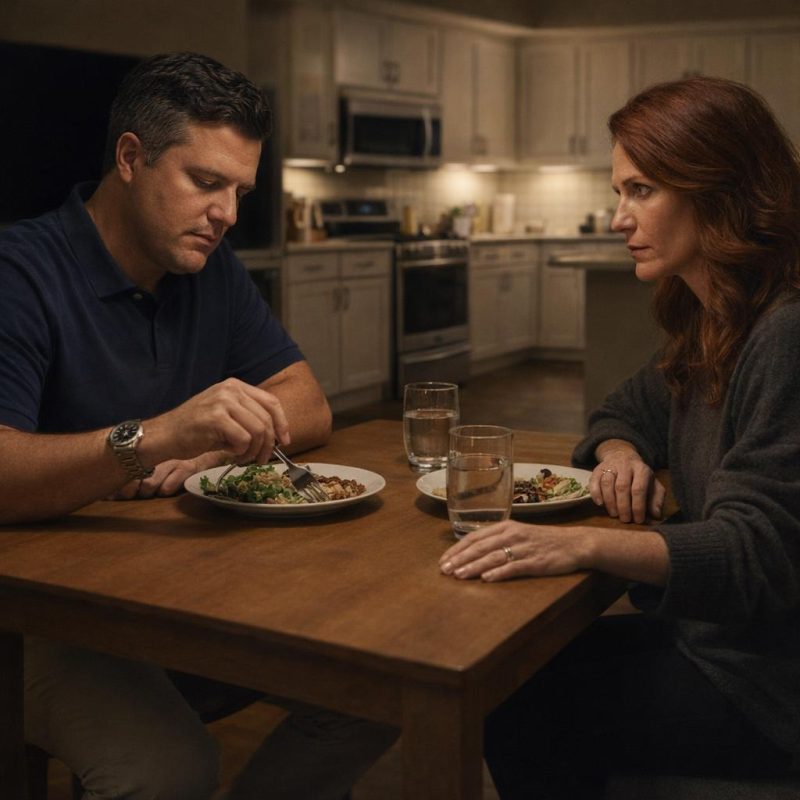 Image by RM AI
Considering Options
Derek leaves for work at eight and I sit at the kitchen table with my coffee going cold and my laptop open. I pull up a search for security camera technicians in the area and there are plenty — good reviews, reasonable rates, same-week availability. I read through a few profiles. I even get as far as hovering over a phone number. Then I close the tab. Because here's the thing: I don't actually know that anything is wrong. The alerts could be a genuine glitch. The firmware update might not have installed yet. Derek has always been the one who handles the home systems — the router, the thermostat, the cameras — and maybe I've just never paid close enough attention to how any of it actually works. Maybe I'm building a story out of bad timing and a few short conversations. I open the tab again. I close it again. I sit there for a while longer, listening to the refrigerator hum and the neighbor's dog bark twice and then go quiet. I tell myself to give it another week. I tell myself I'm probably overthinking. The coffee is completely cold by the time I stop staring at the ceiling, and the doubt just sits there with me, heavy and unhurried, not going anywhere.
 Image by RM AI
Derek's Insistence
I bring up the alerts again on Thursday evening, keeping my voice light, almost breezy, like it's barely worth mentioning. Derek is standing at the kitchen counter scrolling through his phone and he doesn't look up right away. When he does, he says the firmware update takes time to fully install, these things don't happen overnight. I say I understand that, I'm just saying the notifications are still coming through every night at the same time. He sets his phone down and looks at me with this expression that's patient in a way that doesn't feel patient — like patience being performed — and he says I really need to stop stressing about this, that I have a tendency to fixate on things that don't need fixing. He says it gently. That almost makes it worse. He goes back to his phone and I stand there for a second and then I go to the living room and open my laptop. I'm not even sure what I'm looking for at first. I type in wireless cameras, then small wireless cameras, then hidden wireless cameras, and I fall down a rabbit hole of product listings and comparison reviews. One comes up near the top — compact, magnetic mount, motion-activated, connects to its own separate app. I add it to my cart and check out before I can talk myself out of it, and then I sit there staring at the order confirmation with my heart going a little faster than usual. Then I notice the browser tab I'd left open from earlier — a product listing for a miniature camera system, still sitting there from before I'd even started searching.
 Image by RM AI
The Package
The package arrives on a Wednesday while Derek is at work. I see the delivery notification on my phone and I'm at the front door before the driver has made it back to the truck. I bring it inside, go straight upstairs, and close the bedroom door behind me. The box is smaller than I expected — about the size of a paperback novel — and inside, nestled in foam, is the camera itself. It's tiny. Genuinely matchbox-sized, matte black, with a small magnetic base and a lens so small you'd miss it if you weren't looking. I download the separate app, pair the device, and watch the live feed come up on my screen — a slightly fish-eyed view of the bedroom ceiling. It works. I sit on the edge of the bed reading through the instruction booklet and I'm maybe halfway through when I hear the sound I've been dreading: tires on the driveway. I shove the camera, the foam, the box, and the instruction booklet into my bottom dresser drawer and push it shut with my hip. By the time Derek's key is in the lock I'm back downstairs with a glass of water, leaning against the counter like I've been there all afternoon. He comes in and asks if any mail arrived today. I tell him just some junk catalogs. He nods and heads to the kitchen. I keep my expression easy and my breathing steady, and in my dresser drawer upstairs, the camera sits in the dark, waiting.
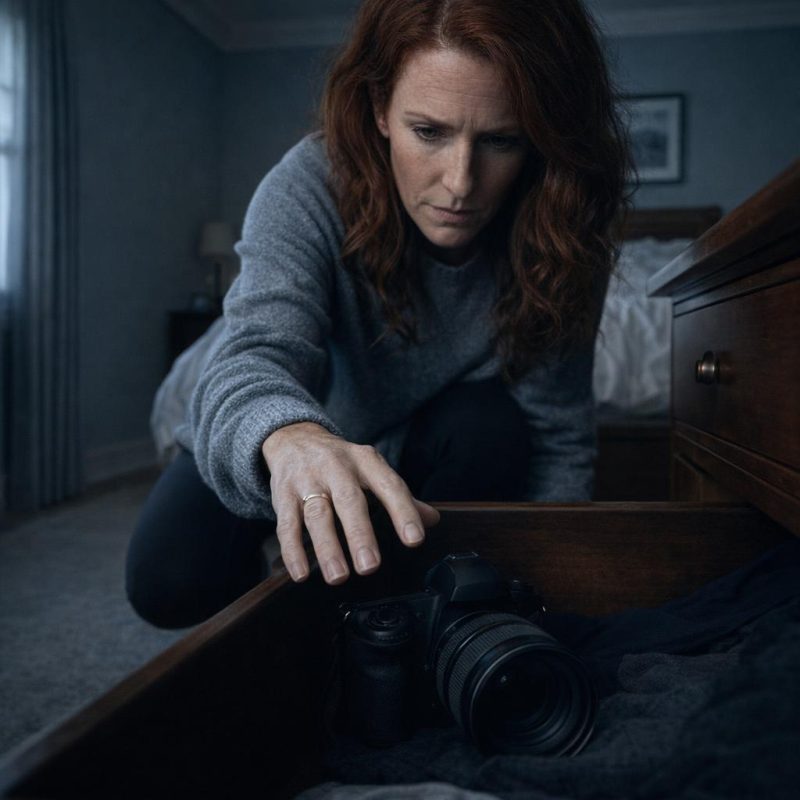 Image by RM AI
The Birdhouse
I wait until Derek's car disappears around the corner before I move. He mentioned a two-hour meeting downtown, which gives me a window, and I'm not wasting a second of it. I grab the camera from my dresser drawer, tuck it into my hoodie pocket, and pull the small stepladder from the garage. The decorative birdhouse has been mounted on a post near the pool for years — Derek bought it at some garden show and never gave it a second thought after that. I climb up, find the tiny latch on the back panel, and ease it open. The inside is hollow and dry, just enough space. I nestle the camera against the back wall, angling the lens toward the pool deck and the tree line beyond, and the fit is almost perfect — the lens sits just inside the entrance hole, barely visible unless you're standing on the ladder looking directly at it. I close the panel, climb down, and carry the ladder back to the garage. Then I pull out my phone and open the app. The screen loads for a second, and then the live feed appears — a wide, clear shot of the pool, the deck chairs, and the dark edge of the woods beyond the fence.
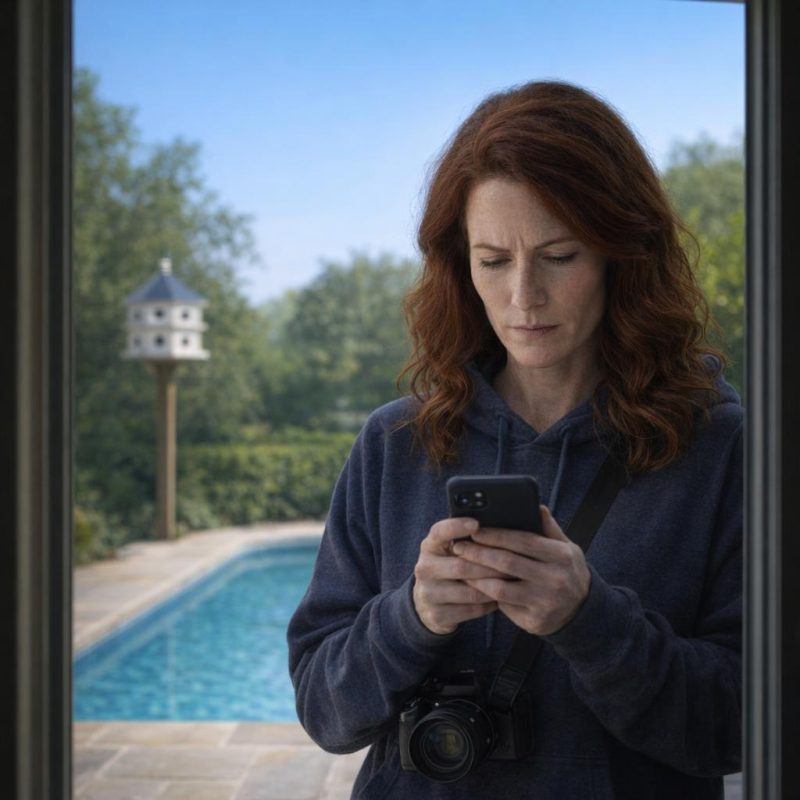 Image by RM AI
Waiting
Lying next to Derek that night feels different than it did a week ago. He falls asleep fast, the way he always does — out within ten minutes, breathing slow and even — and I'm left staring at the ceiling with my hands folded on my stomach like I'm practicing being a corpse. The camera is out there right now. Recording. Whatever happens at 2 AM, it's going to catch it. I keep running through the setup in my head, second-guessing the angle, wondering if the lens is too obscured by the entrance hole, wondering if the motion sensitivity is calibrated right. My phone is face-down on the nightstand and I make myself leave it there. I told myself I wouldn't check the app until morning, and I'm holding to that, even though every part of me wants to flip it over and watch the live feed. Derek shifts beside me and murmurs something in his sleep, and I go completely still. The room is dark and quiet. The clock on the dresser reads 11:47. I close my eyes and try to slow my breathing, and somewhere around 1 AM, exhaustion finally wins — but the quiet that pulls me under doesn't feel like rest.
 Image by RM AI
The First Night
I'm not sure I'm fully asleep when it happens. One second there's nothing, and then my phone buzzes against the nightstand and I'm wide awake, heart already going. I grab it before the second vibration. The screen lights up with two notifications stacked on top of each other — one from the main camera system, one from the hidden camera app — both timestamped 2:00 AM exactly. My thumb hovers over the screen. Derek is right beside me, breathing slow and steady, completely still. I want to open the footage so badly it feels physical, like a pull in my chest. But I don't. I made a rule: wait until morning, wait until he's gone, wait until I can watch it properly without him three feet away. I set the phone face-down on the nightstand and lie back. The ceiling is dark. The house is quiet. Derek doesn't stir. I lie there with both notifications sitting unread on my screen, and the waiting feels like the longest thing I've ever done.
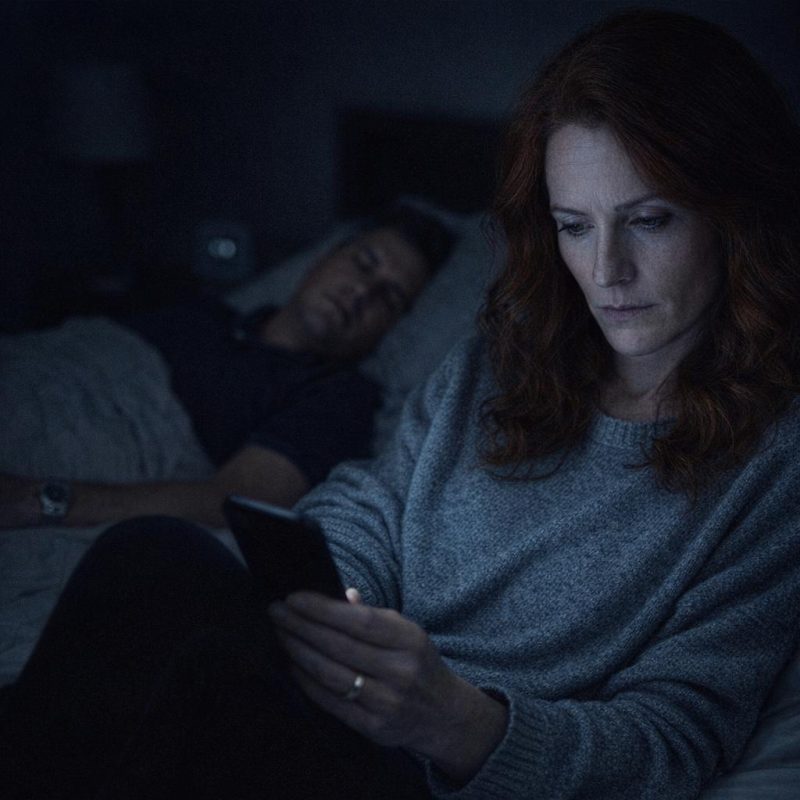 Image by RM AI
The Truth in the Footage
The second Derek's car clears the driveway I'm back upstairs with my phone, door locked, sitting on the edge of the bed. My hands are unsteady as I open the hidden camera app and scrub to 2:00 AM. The footage is dark at first — just the pool deck in the blue-grey wash of the motion-activated frame, the deck chairs, the still water, the black line of trees beyond the fence. Then Derek walks into frame. He's wearing dark clothes — dark pants, a dark jacket — and he's moving with a kind of quiet purpose that I've never seen from him at home. He crosses the deck and stops at the edge of the pool, facing the woods. He's carrying a flashlight. He stands there for a moment, completely still, and then he raises the flashlight and flashes it three times toward the trees.
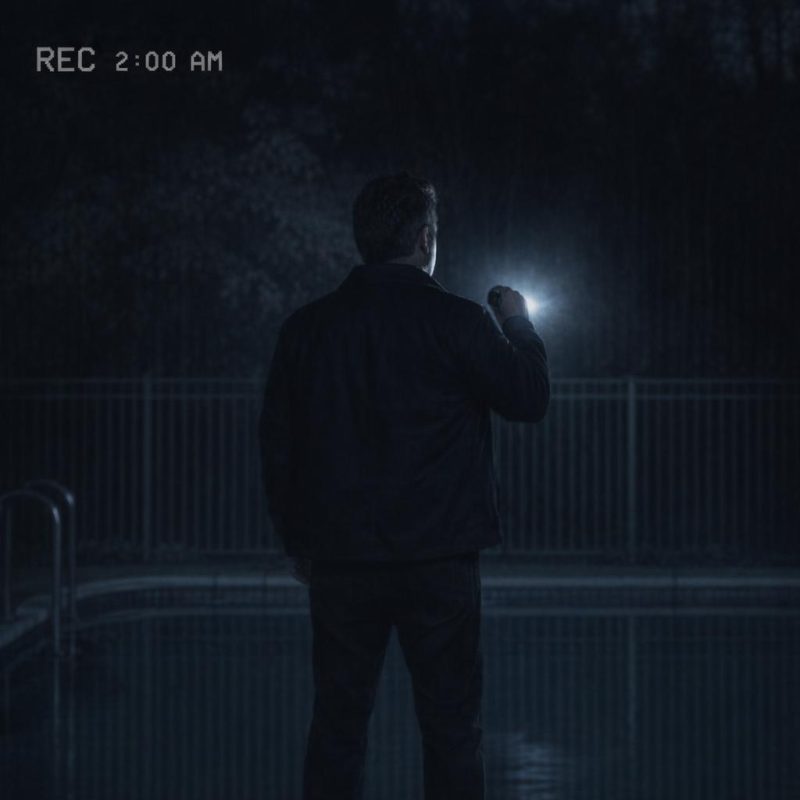 Image by RM AI
Watching It Again
I watch it again. Then a third time. I drag the scrubber back to 2:00 AM and let it play from the beginning, and each time it's the same — Derek in dark clothes, crossing the pool deck with that quiet, deliberate walk, stopping at the water's edge, facing the trees. Three flashes. Evenly spaced. I pause on his face and zoom in as far as the resolution allows. He doesn't look nervous. He doesn't look guilty the way I'd imagined guilt would look. His expression is focused, almost blank, like someone running through a checklist. I rewind again. Three flashes. The same spacing. The same stillness in his body before and after. I sit there on the edge of the bed with my laptop balanced on my knees and the footage paused on that last frame — Derek's face half-lit by the flashlight's glow, the dark tree line behind him — and I don't have a word for what I'm feeling, only the weight of it pressing down on my chest.
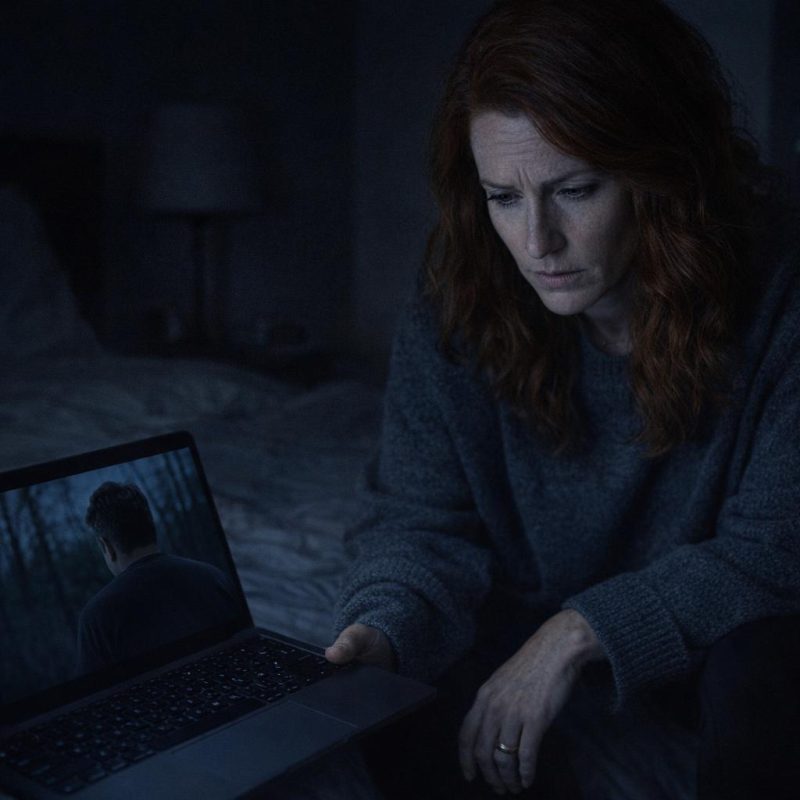 Image by RM AI
Someone Answers
I almost miss it. I'm so focused on Derek's face that I nearly forget to keep watching, and then movement catches the edge of the frame. I let the footage run. About thirty seconds after the third flash, the tree line shifts — a shadow separating from the dark — and a woman steps out of the woods. She's wearing dark athletic clothing and she moves carefully, like someone who knows exactly where she's putting her feet. She's carrying something: a black case, rectangular, about the size of a briefcase, with the dull sheen of something waterproof. Derek doesn't move toward her. He just watches her cross the lawn. I pause the video on her face. I don't recognize her. I've never seen her before — not at a work event, not in a photo on Derek's phone, not anywhere. I sit there with my thumb pressed against the screen, the image frozen, and the only sound in the room is my own breathing.
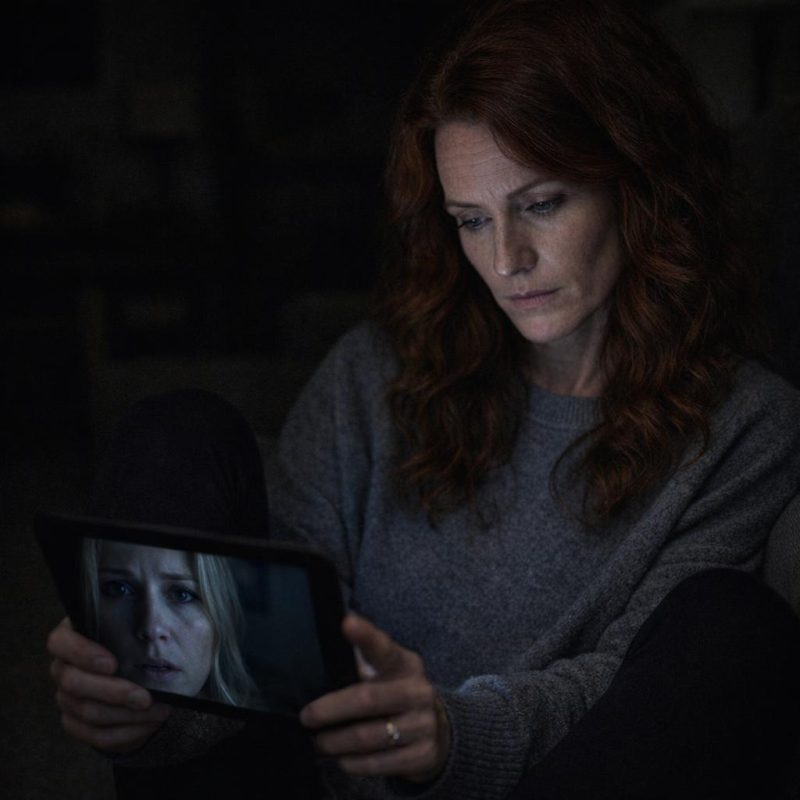 Image by RM AI
The Exchange
I unpause it. The woman walks up to Derek and they stop about three feet apart — no hug, no greeting, nothing. She sets the waterproof case down on the deck between them. Derek reaches into his jacket pocket and pulls out something small, something I can't quite make out at this resolution, and he holds it out toward her. She takes it, turns it over in her fingers for a moment, then gives a single nod. Derek bends down and picks up the waterproof case. The whole thing takes less than a minute. I rewind to the handoff and watch it again, trying to see what's in his hand — but the image is just slightly too dark, the object just slightly too small, and all I can make out is the shape of it passing from his palm to hers.
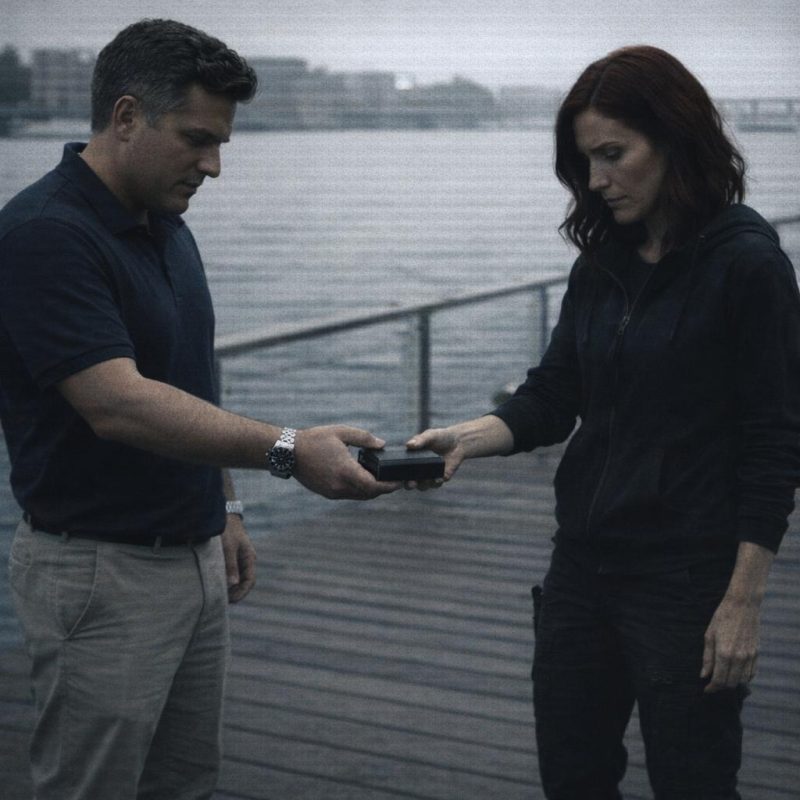 Image by RM AI
Assumptions
My first thought is the obvious one. Midnight meetings. Dark clothes. A woman stepping out of the shadows. Of course that's where my mind goes. I sit there on the bed telling myself I've just watched my husband meet someone in secret at 2 AM, and the sick feeling that comes with that thought is real and immediate. But then I watch it again, and something keeps snagging at me. There's no warmth in it. No touch, no leaning in, no moment where either of them closes the distance. They stand apart the whole time like two people at a transaction window. The woman's posture is straight, efficient, almost formal. I watch Derek's face for something — a softness, a flicker of feeling — and there's nothing there but concentration. This doesn't look like two people who want to be near each other. It doesn't look like anything I have a name for. They stand three feet apart on the pool deck, and the space between them stays exactly that wide the entire time.
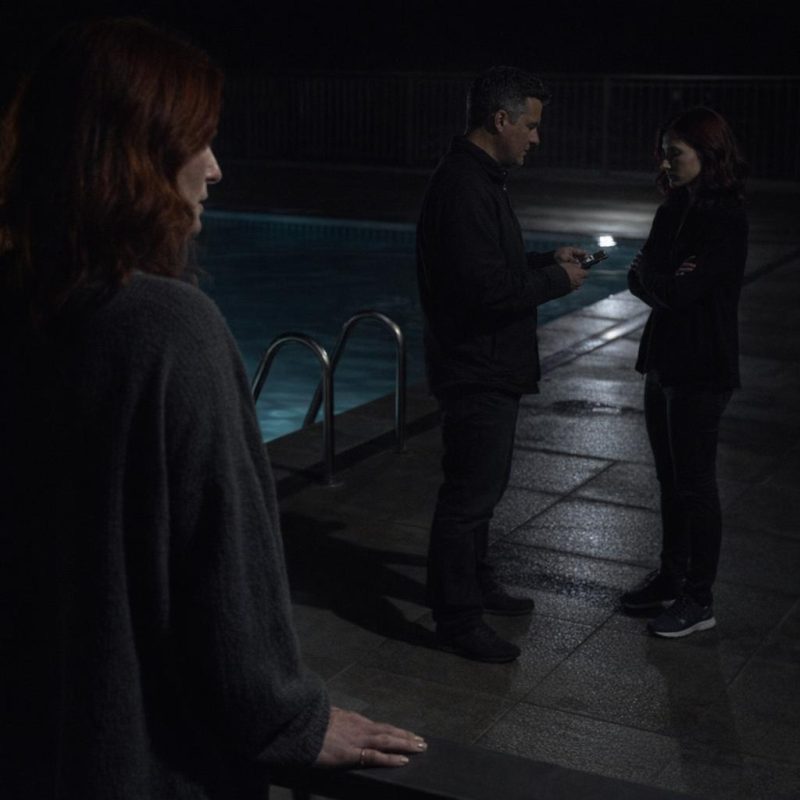 Image by RM AI
The Case
I rewind the footage and this time I'm not watching Derek or the woman — I'm watching what she's carrying. It's a case. Hard-sided, black, with metal latches along the front edge. She holds it at her side with one hand, arm straight, no strain in her shoulder. Not heavy, then. Or at least not heavy enough to matter. I pause on the clearest frame and zoom in as far as the resolution will let me. The latches look like the kind you'd see on camera equipment, or maybe dive gear — something that needs to stay dry. Waterproof. I keep coming back to that word. She carried it across the pool deck like it was routine, set it down between them, and after whatever passed between them, she turned and walked back toward the tree line without it. Just like that. Gone into the dark. Derek watches her go for a moment, then reaches down and picks up the case. He stands there holding it for a second, and then he turns and starts walking toward the far end of the pool deck — and I watch him disappear in the direction of the pool equipment shed.
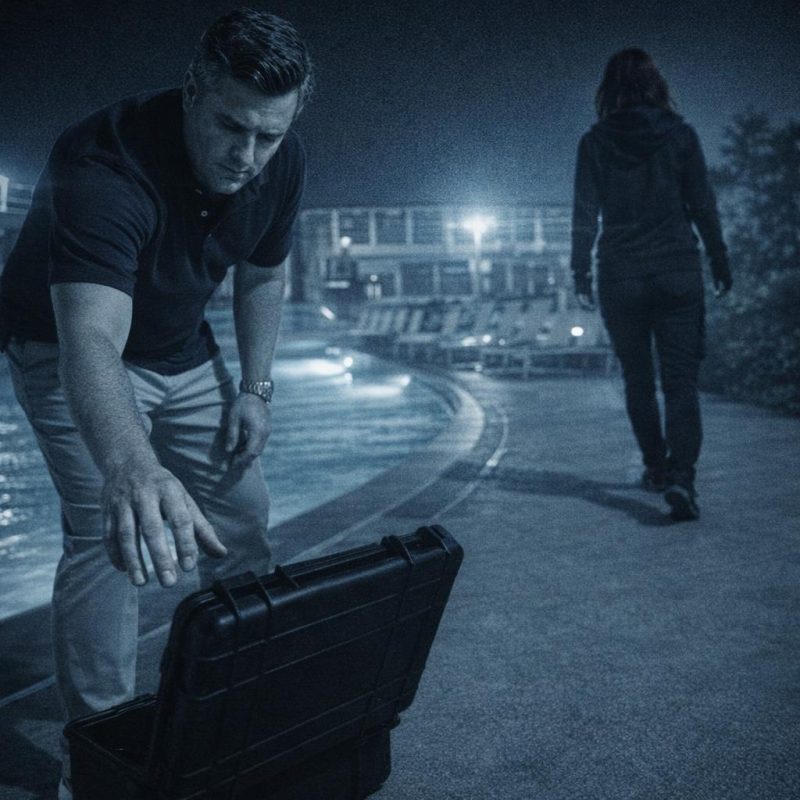 Image by RM AI
Multiple Nights
I don't stop at the one night. I scroll back through everything the hidden camera has saved since I installed it three days ago, and what I find makes my stomach drop in a slow, steady way. Night two, 2:00 AM — same thing. Derek steps out, gives the same signal toward the tree line, and the woman emerges. They stand the same distance apart. Something changes hands. She leaves. He carries the case to the shed. I check the first night's footage and there it is again, frame for frame, beat for beat. Three nights. Three identical meetings. I sit back and try to think about what that means. The hidden camera only goes back three days, but the main system — the one Derek wipes every morning — has weeks of deleted footage I'll never recover. Three nights is all I have, and every single one of them looks exactly the same. Same time. Same woman. Same case. Same walk to the shed. I don't know when this started. I don't know how many times it's happened before I started paying attention. I just know it's been going on long enough to become a routine, and there's something almost worse about the sameness of it all.
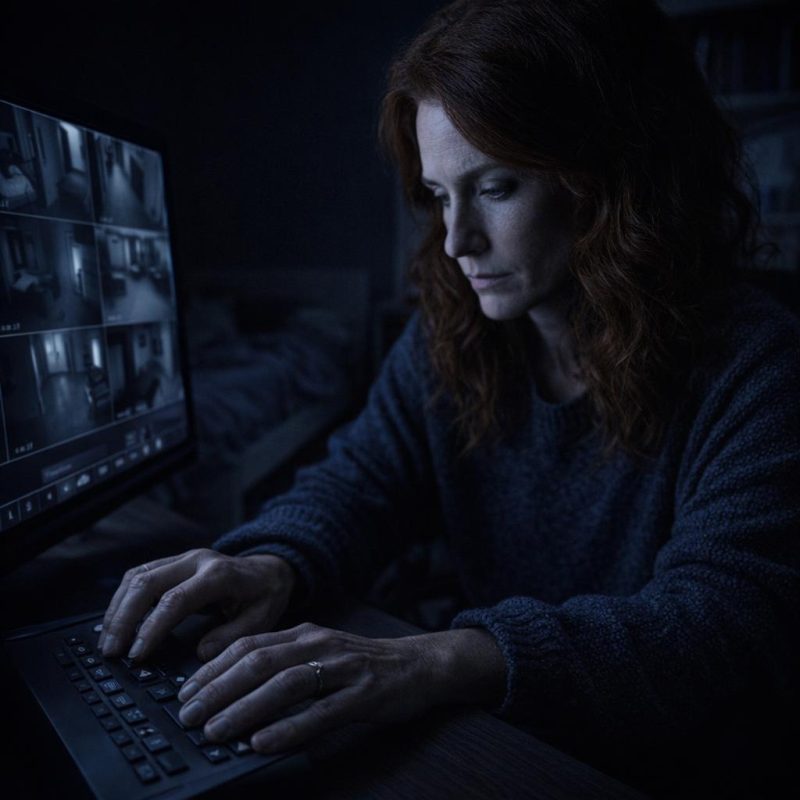 Image by RM AI
Capturing Her Face
I go back to the clearest stretch of footage and start hunting for a frame where the light catches her face at the right angle. It takes a while. She keeps her chin down, moves efficiently, like someone who knows where the shadows are. But there's one moment — maybe three seconds — where she turns slightly toward the pool light and I can actually see her. I pause it and take a screenshot. Then another. Then a few more from slightly different frames, building up a small collection on my phone. She looks to be in her mid-thirties. Dark hair, pulled back tight. Her face is lean, no expression at all, like she's running through a checklist in her head. I zoom in on her clothes next, looking for anything — a logo, a patch, a brand name on the zipper pull. Nothing. Just plain black athletic wear, the kind you could buy anywhere. I open a browser on my phone and hover over the reverse image search field for a long moment. Part of me wants to close the tab and pretend I never saw any of this. But I don't close it. I just sit there with the screenshots open, staring at the face of a stranger I don't recognize at all.
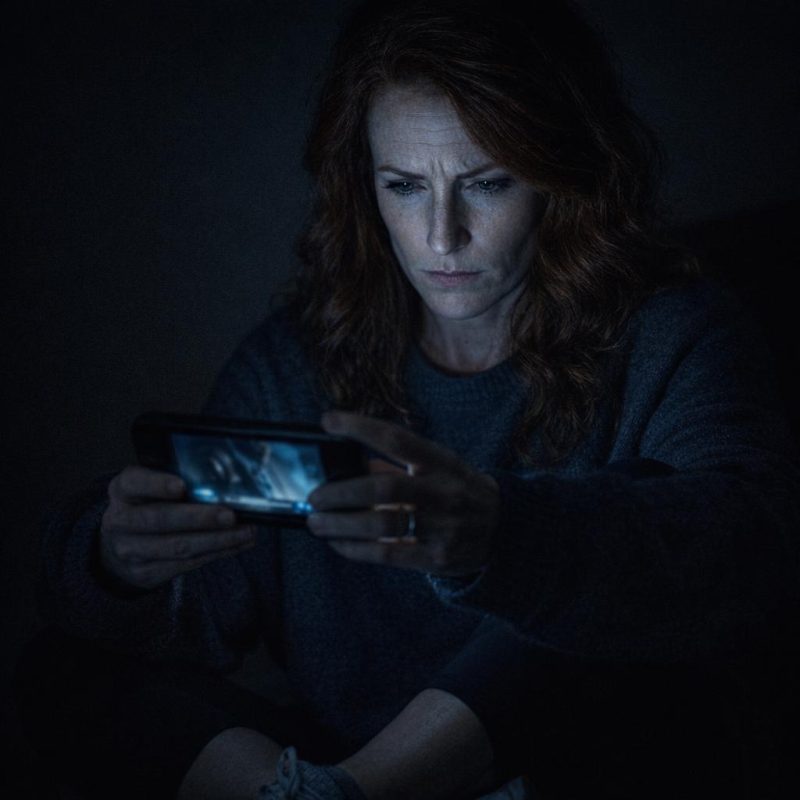 Image by RM AI
The Object
I go back to the exchange itself — the moment right before the woman takes the case and before she turns to leave. There's something else. Something small. I'd been so focused on the case that I almost missed it. I pause the footage just as Derek reaches into his jacket pocket. I zoom in as far as the app will let me, and the image gets grainy and soft at the edges, but I can still make out the shape of what's in his hand. It's small. Metallic. Elongated. He holds it between his thumb and forefinger, and even through the pixelation I can see the distinctive shape of the head — not flat like a house key, not the chunky profile of a car key. Something different. Something older-looking, more deliberate in its cut. He lowers his hand toward hers and she opens her palm to receive it. She looks at it for just a second, turns it once, then closes her fingers around it and slides it into her pocket. I screenshot the frame and zoom in on my phone screen, tilting it toward the light. There's no mistaking the shape in Derek's palm — it's a key.
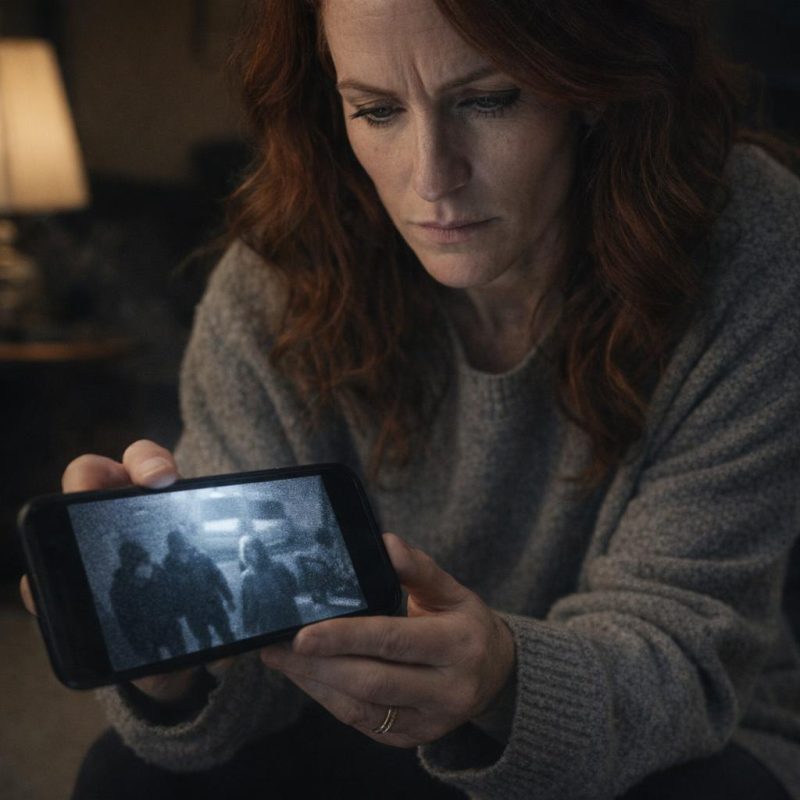 Image by RM AI
Recognition
I keep staring at the screenshot. There's something about the shape of that key that won't leave me alone — the oval head, slightly wider than a standard house key, with a flat face that looks like it should have something printed or stamped on it. I've seen that shape before. I just can't place it at first. I get up and go to Derek's home office, open the second drawer of his desk where we keep the important papers — insurance cards, the car titles, things like that. Near the back there's a small white envelope with our bank's name printed in the corner. I open it and tip it upside down. A single key slides into my palm. I hold it up next to my phone screen, next to the screenshot. The oval head. The flat stamped face. The same narrow cut along the blade. My hands start shaking before I've even fully processed what I'm looking at. Derek gave that woman our safe deposit box key. I set both of them down on the desk — the real key and the phone with the screenshot — and I just stand there, not moving, with the memory of the last time I even thought about that key, years ago, sitting heavy in my chest.
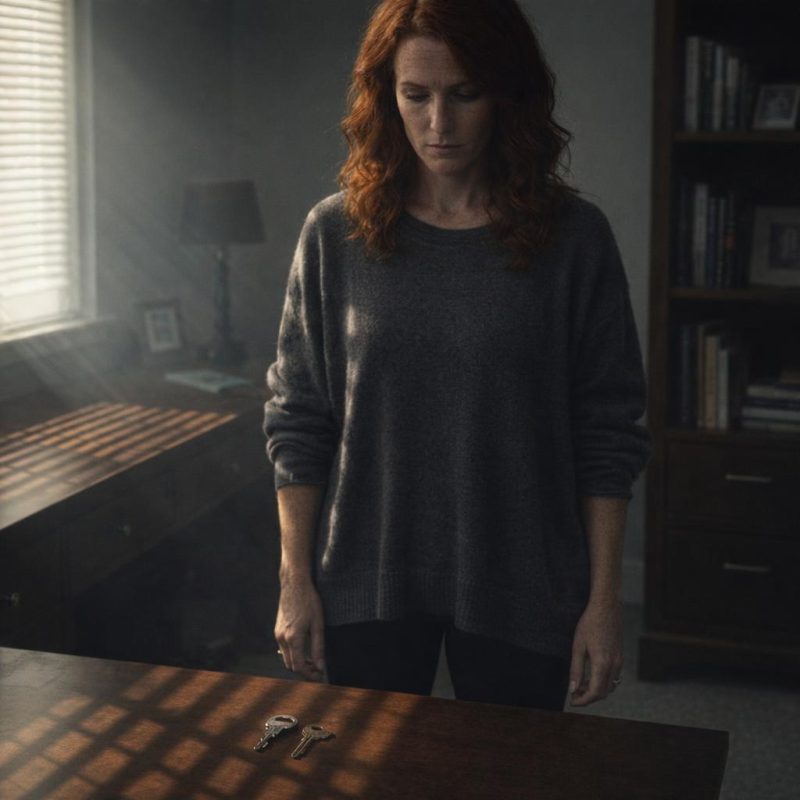 Image by RM AI
The Bank Records
I don't put the key back. I set it on the desk and start going through the file cabinet in the corner of Derek's office, the one I've never had a reason to open before. It's organized, which somehow makes it worse — labeled folders, everything in order, like someone who's thought carefully about what goes where. I find a folder marked 'Banking' about halfway through the second drawer. Inside there's a rental agreement from the bank, two pages, stapled together. The box was opened seven years ago. I scan down to the signature line, looking for my name, already half-expecting not to find it. I don't find it. There's one name on the authorized user line. Just Derek's. I read it twice to make sure I'm not misreading it. I'm not. I have no legal access to that box. I didn't even know it existed until two years ago, when Derek mentioned it casually — said it was for important documents, just in case, the kind of thing every couple should have. I never asked to see the paperwork. I never thought to. I set the rental agreement down on the desk and look at the single line where my name should have been, and it's the blank space next to Derek's signature that I can't stop staring at.
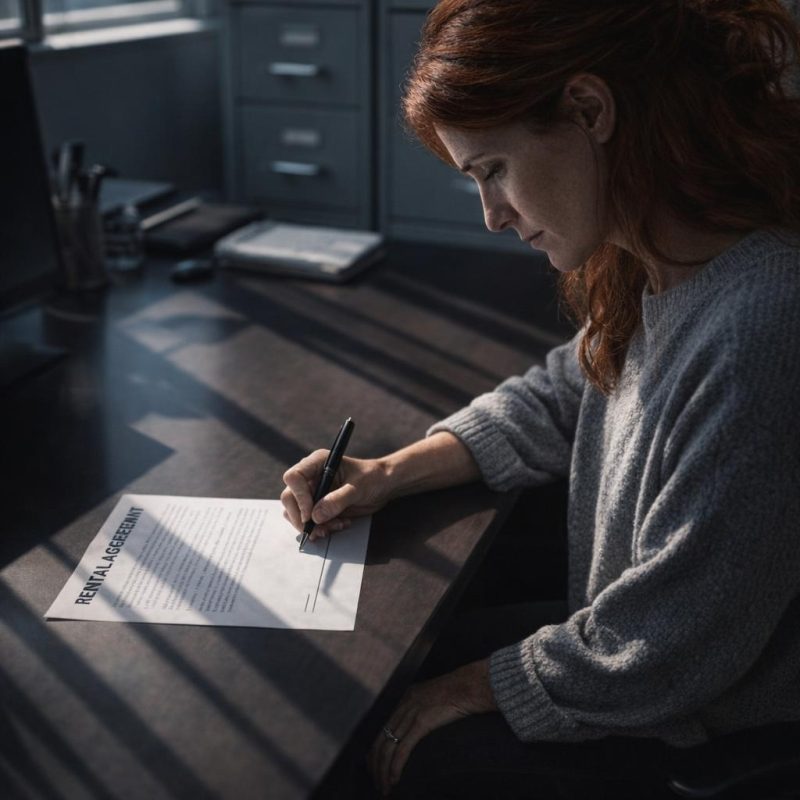 Image by RM AI
What's Hidden
I sit down in Derek's office chair with the rental agreement in my lap and try to think through what I actually know. The box has existed for seven years. Derek opened it before we moved to this house, before a lot of things. He never told me about it until two years ago, and even then it was just a passing comment — nothing to look at, nothing to question. Now he's given a key to a woman who meets him in the dark at 2 AM, which means she can walk into that bank and open that box whenever she wants. And I can't. I'm not on the paperwork. I have no access, no standing, no way to find out what's inside. Whatever is in there, it was important enough to keep secret for years. Important enough to meet someone at 2 AM. Important enough to delete the security footage every single morning so there'd be no record of any of it. I put the rental agreement back in the folder and close the file cabinet. I sit in the quiet of his office for a long time, and the not-knowing settles over me like something with real weight — the thought of that box sitting in a vault somewhere, locked, full of whatever Derek has never wanted me to find.
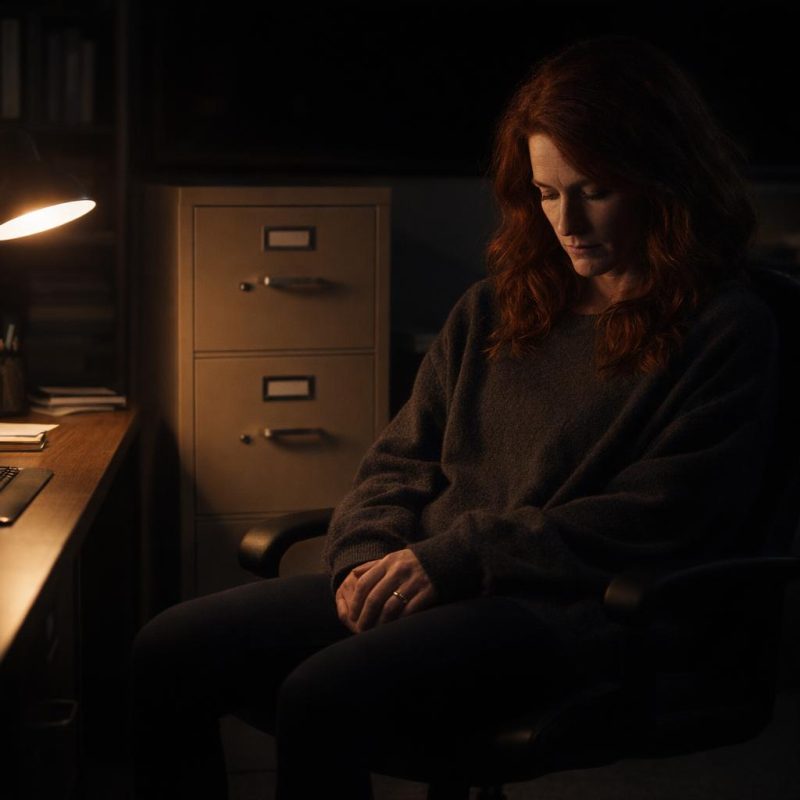 Image by RM AI
The Pool
I end up back in the bedroom, standing at the window, looking out at the pool. The water is still and blue-lit in the afternoon light, and at the far end, half-hidden behind the filter housing, is the equipment shed. Derek built it when we first moved in — said he wanted somewhere to keep the chemicals, the maintenance gear, all of it out of sight. I never had a reason to go in there. Pool maintenance was always his thing, and I was happy to let it be. But I'm thinking about that case now. Black, hard-sided, waterproof. He carried it across the deck and walked toward that shed and came back empty-handed. That was three nights ago, and as far as I know, nothing has moved since. Derek is at work. He won't be home for at least four hours. I could go out there right now and he'd never know I'd been anywhere near it. I've been standing at this window for ten minutes talking myself into it, and I think I've finally run out of reasons not to go. My eyes keep drifting back to the same spot at the far end of the yard — the pool equipment shed where Derek disappeared with the case.
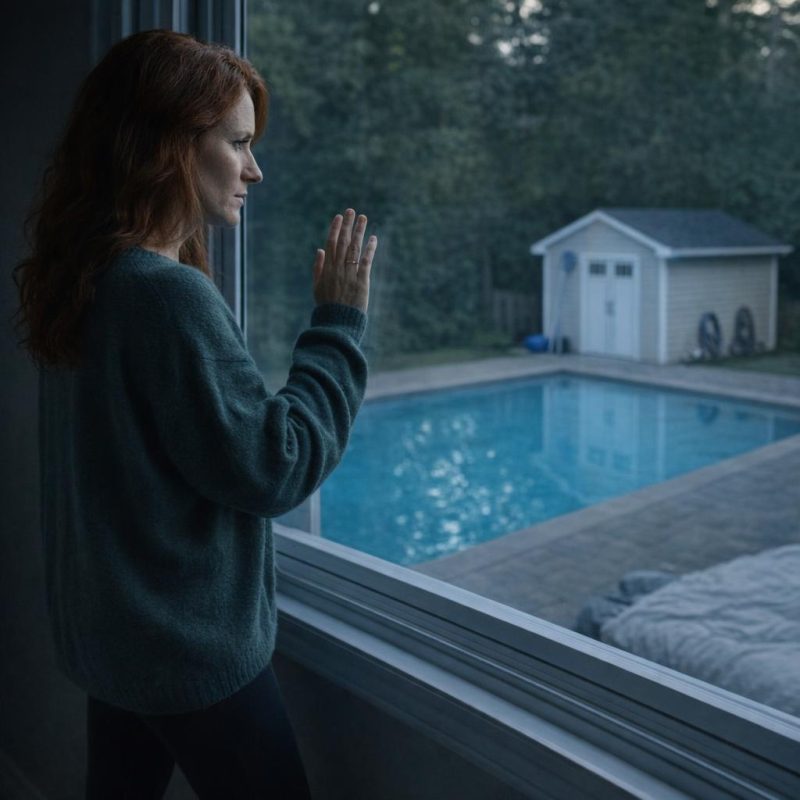 Image by RM AI
Searching
I walk out to the pool deck and the afternoon sun hits me full in the face, warm and ordinary, like nothing is wrong. The equipment shed door is unlocked — it's always unlocked, because Derek never thought anyone would bother. Inside it smells like chlorine and rubber and something faintly metallic. The pump hums in the corner. There are shelves along the back wall stacked with chemical jugs, a coil of hose, a net on a long pole. I check behind the pump first, crouching down and sweeping my hand along the concrete floor. Nothing. I check the shelves, lifting each jug, looking behind them. I check under the small workbench in the corner, running my hand along the underside. Still nothing. I step back outside and stand there squinting at the pool. The water is perfectly still. My eyes move along the edge of the deck — the skimmer basket, the return jets, the drain cover at the deep end. Then I notice the access panel on the side of the filtration housing, low to the ground, secured with four Phillips-head screws. I kneel beside it and try to work one loose with my thumbnail. It doesn't move. The screws are tight, and my hands smell like chlorine, and somewhere in the house the clock is ticking toward the time Derek gets home.
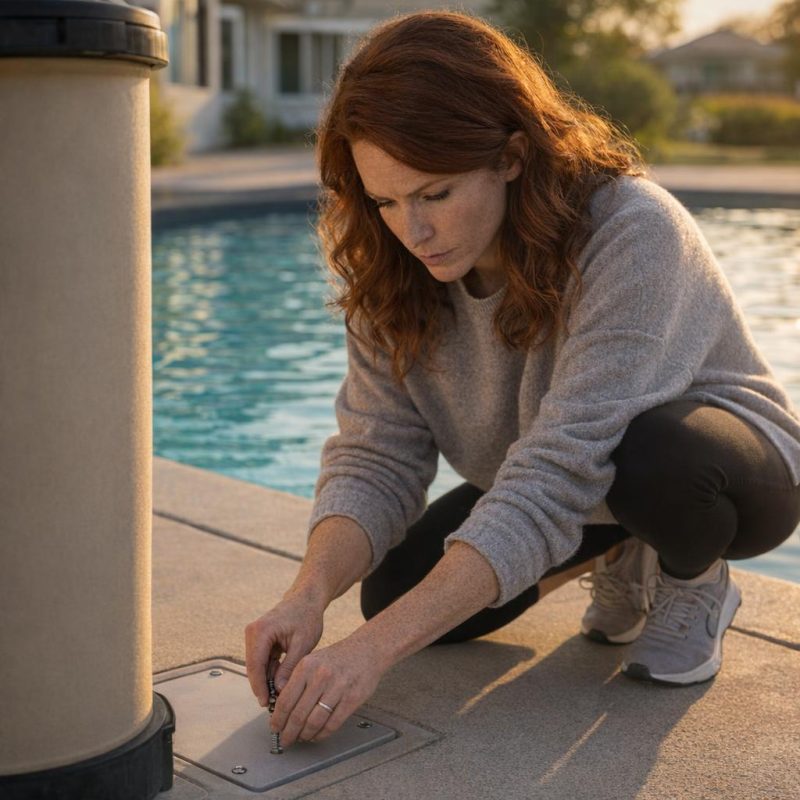 Image by RM AI
The Drain Housing
I go to the garage and find a screwdriver in the second drawer of Derek's tool chest — a Phillips-head, exactly what I need. Back at the pool I kneel on the warm concrete beside the access panel and start on the first screw. My hands are steadier than I expect. The screws come out one by one and I set each one carefully on the deck beside me so I don't lose any. The panel resists for a second, then pulls free. Inside is a tangle of pipes and fittings, the drain housing mechanism, everything coated in a faint film of mineral deposits. And there, wedged into the space beside the main pipe, is the black waterproof case. My heart slams against my ribs. I reach in with both hands and work it loose from the gap — it takes a moment, angled just right, and then it comes free. It's heavier than I expected, maybe ten pounds, solid and dense in my arms. I carry it quickly across the deck and in through the back door, not running but close to it. Upstairs I go straight to the bedroom, close the door, and turn the lock. I set the case on the bed and stand there looking at it, breathing. Whatever Derek has been hiding for the past twelve years, it's right here in front of me, and the weight of it in my hands still hasn't left my arms.
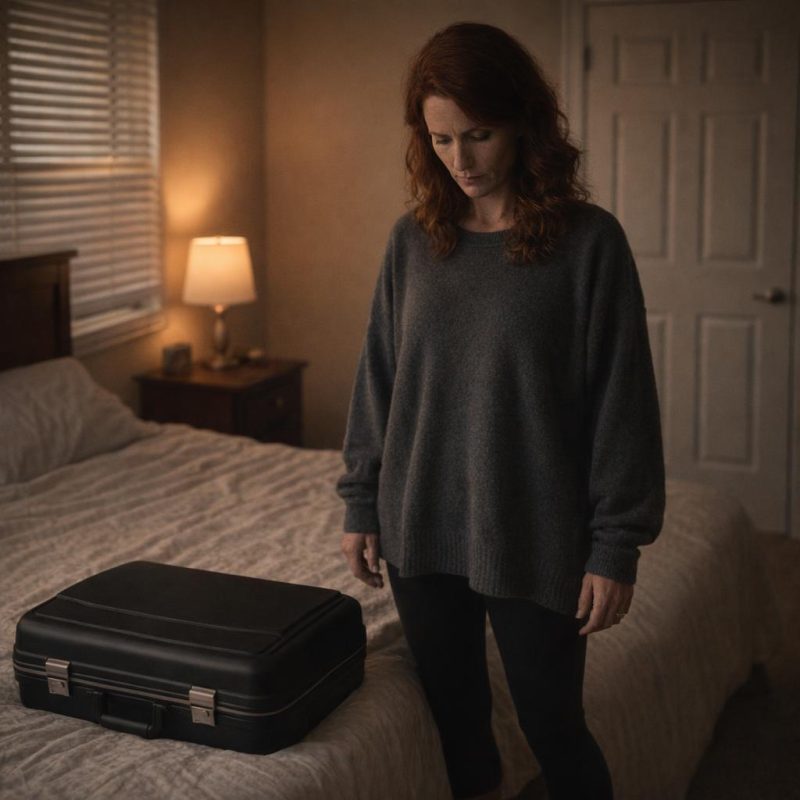 Image by RM AI
Locked
The case sits on the bed and I just stare at it for a second before I reach for the latches. There are two of them, one on each side, and they look simple enough — metal, spring-loaded, the kind you'd flip up with your thumb. Except they don't flip. I press harder. Nothing. I look closer and see it: each latch has a small built-in lock, a tiny keyhole, the kind that needs a specific key I obviously don't have. I try anyway, pressing and wiggling and pulling at the latches from different angles. They don't budge even a little. I grab the letter opener from the nightstand and try to work it into the seam along the edge of the lid. The case is built too well — there's no give, no flex, nothing. I think about forcing it, really forcing it, but if I damage the case Derek will know someone found it. I set the letter opener down and take a breath. Okay. I can't open it. But I can document it. I take out my phone and photograph the case from every angle — top, sides, the latches, the keyhole detail, the serial number stamped into the bottom corner. I check the time. Derek will be home in just over an hour. I need to put this back exactly where I found it, and I still have no idea what's locked inside it.
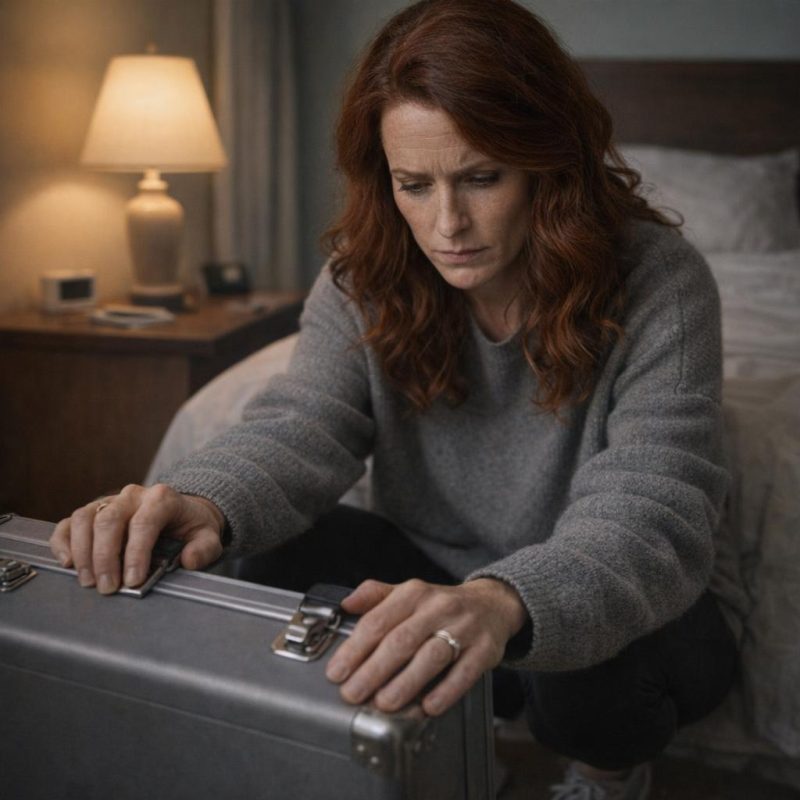 Image by RM AI
Returning It
I carry the case back downstairs with both hands, moving carefully, like the weight of it matters more now than it did an hour ago. Outside, the sun has shifted and the pool deck is half in shadow. I kneel beside the open access panel and ease the case back into the drain housing, angling it the way I found it, wedged snug against the main pipe. I take a moment to make sure it's sitting the same way — same orientation, same depth. Then I pick up the screws from where I lined them up on the deck and start threading them back in, one by one, tightening each one until it feels the way it did before. When the panel is back in place I wipe it down with the hem of my shirt, then wipe the screwdriver handle too. I return the screwdriver to the exact drawer in the garage. Back inside I wash my hands at the kitchen sink and check the clock on the microwave. Derek will be home in twenty-eight minutes. I dry my hands and stand there at the counter. I know where the case is. I have photos of the outside of it. And I have absolutely no idea what's sealed inside those latches, sitting in the dark behind that panel while Derek pulls into the driveway like any other evening.
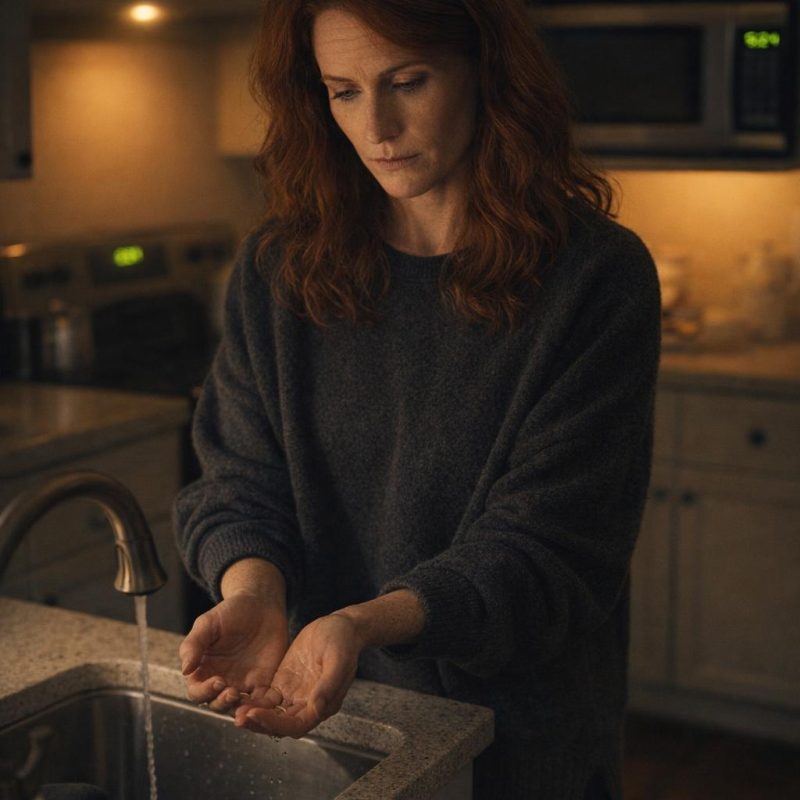 Image by RM AI
Digging Into the Past
Derek is downstairs watching something on TV — I can hear the low murmur of it through the floor. He came home, kissed me on the cheek, asked what was for dinner, and settled onto the couch like a man with nothing on his mind. I told him I had a headache and came upstairs. Now I'm sitting on the closet floor with the lid off one of the storage boxes we've had since before we moved here — the ones I always assumed were just old tax stuff. They are tax stuff, mostly. Pay stubs, W-2s, employment records going back fifteen years. I'm looking for anything from seven years ago, the same year the safe deposit box was opened. I find Derek's returns from that period, and the employer listed is Meridian Financial Group. I don't remember him talking much about that job. He was there for a few years and then he wasn't, and I never thought to ask why. I find a folder with the Meridian logo on the tab — performance reviews, some project documentation, a few internal memos. Most of it is dry corporate language that means nothing to me. But near the back of the folder there's a single document, separate from the rest, and stamped across the top in red block letters is the word CONFIDENTIAL.
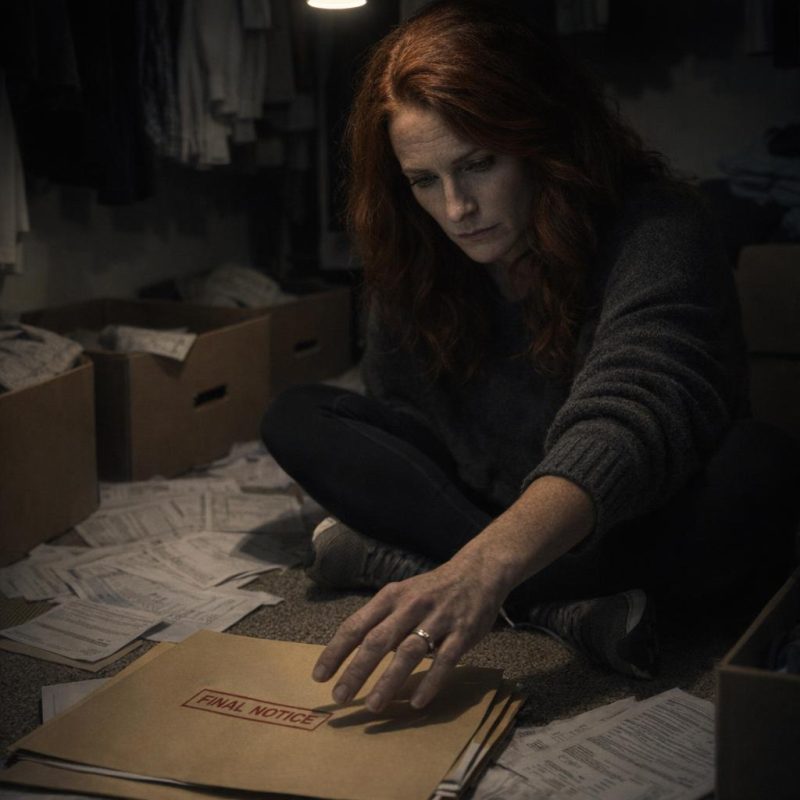 Image by RM AI
The Investigation
I wait until Derek is asleep before I open my laptop. The search takes about four seconds. Meridian Financial Group — and the results come back heavy, almost all of them news articles, and almost all of them from seven years ago. I start reading. Federal investigators alleged that executives at Meridian had diverted millions in client funds over a period of several years — embezzlement, fraud, the kind of thing that makes the national news for a few months and then quietly disappears. I read through article after article. Several employees were questioned. The investigation ran for months. And then, according to a follow-up piece I find buried on page three of the results, the case was dropped — insufficient evidence, the article said, and a separate piece mentioned that key evidence had gone missing before it could be examined. The case was never publicly resolved. No trial. No charges that stuck. I sit back and look at the ceiling for a moment, then look back at the screen. I pull up Derek's employment records from the box and check the dates against the articles. The Meridian investigation became public in the same month that Derek opened the safe deposit box. I read that line again, then set the paper down on the bed beside the laptop. The investigation that never went anywhere, the evidence that disappeared — it all just sits there on the screen, unresolved and quiet.
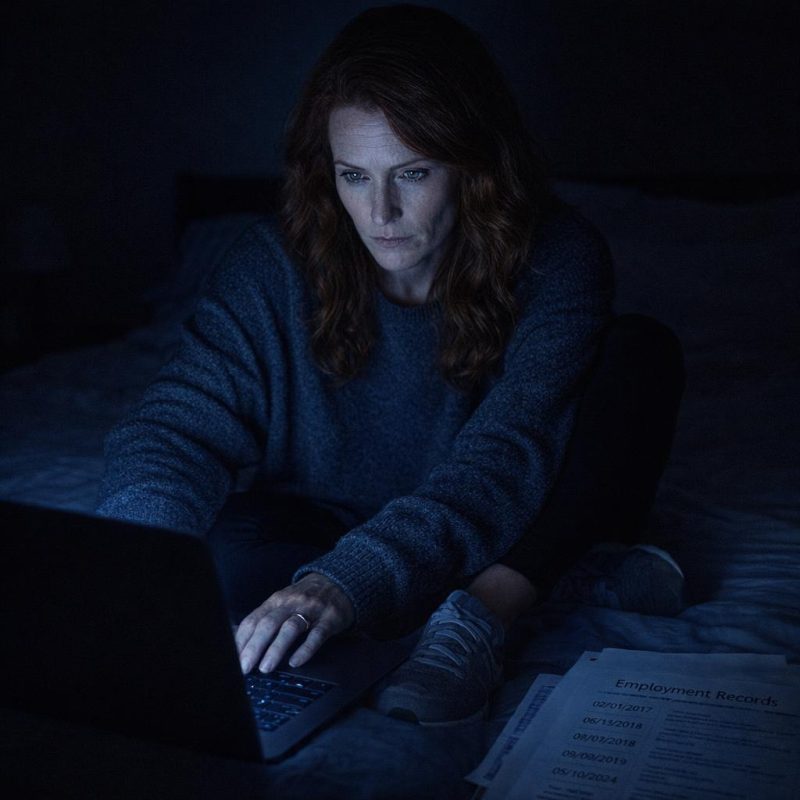 Image by RM AI
Derek's Timeline
I spread Derek's employment records out on the bed beside my laptop and start matching dates. He was at Meridian when the investigation went public — that much is clear from the pay stubs. His last recorded paycheck from them is dated six weeks after the first news article broke. Six weeks, and then nothing. No severance documentation, no letter of resignation in the folder, just a gap. I remember that stretch of time. Derek was home for two months, stressed in a way he didn't talk about, and when I asked he said the company had done layoffs, restructuring, the usual story. I believed him. I had no reason not to. I go back to the news articles and read through them again looking for any mention of layoffs. There's nothing. The articles talk about executives, about investigators, about missing funds — but not about layoffs, not about restructuring, not about anything that sounds like what Derek described. After those two months he found his current job, and we bought this house, and we moved, and life went on. I look at the timeline laid out across the bed — the articles on the screen, the pay stubs in a row, the gap where his employment just stops. He left Meridian six weeks after the investigation became public, with no job lined up and no explanation that matched what was actually happening at that company, and I have no idea what he knew or what he saw before he walked out.
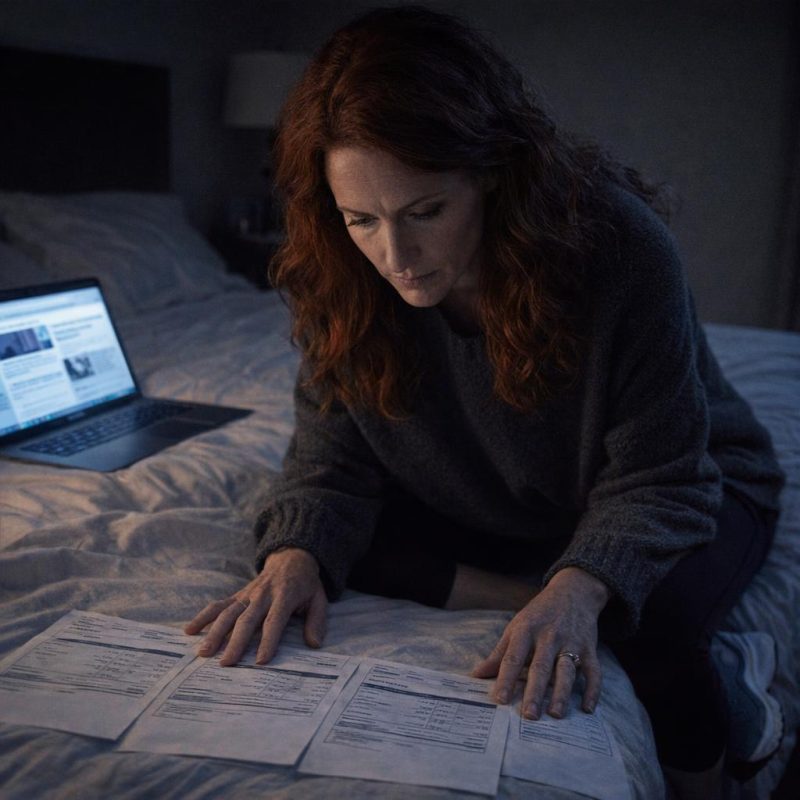 Image by RM AI
The Unresolved Case
I can't stop searching. I narrow the terms — Meridian Financial Group, federal investigation, current status — and the results shift. Most of the articles are still from seven years ago, but near the top there's one I almost scroll past. It's dated six months ago, a brief piece from a financial news outlet. I click it. The headline says the Meridian case remains open with federal authorities. I read it twice. Investigators never recovered the missing funds. Several individuals who were questioned at the time were never formally charged, and the article notes that the case could be reopened if new evidence came to light. Six months ago. This isn't something that got resolved quietly while I wasn't paying attention — it's still sitting on someone's desk in a federal building somewhere, technically active, waiting. I close the laptop and sit in the dark for a moment. The midnight deletions, the woman Derek meets, the safe deposit box key, the locked case in the pool drain — I don't know how it all fits together yet, but the Meridian investigation is still open, and Derek left that company under circumstances he lied to me about, and whatever is sealed in that case is sitting thirty feet from where he's sleeping right now.
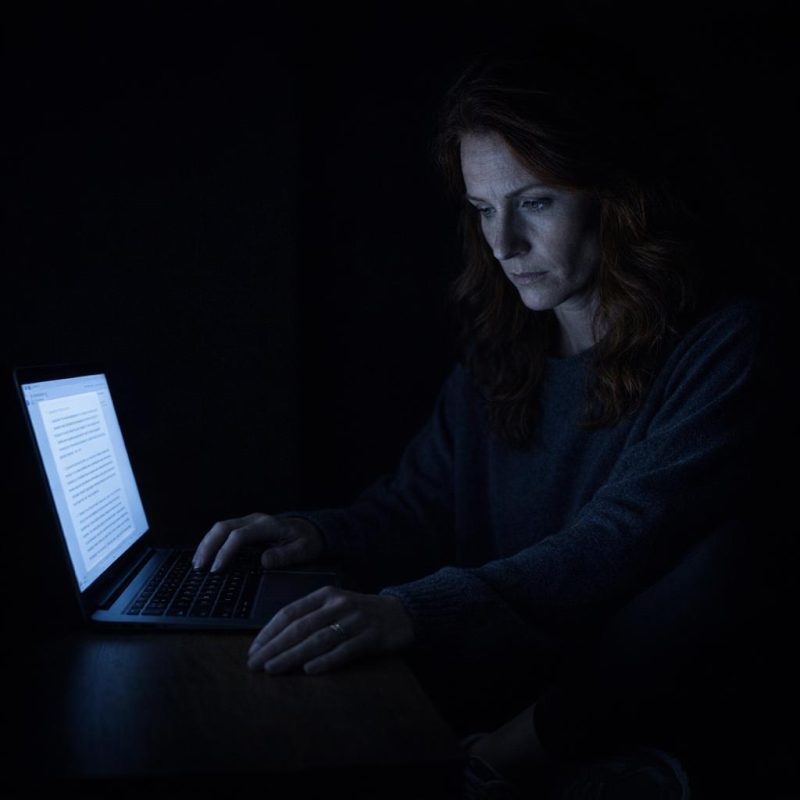 Image by RM AI
The Woman's Identity
I pull up the clearest screenshot on my laptop — the one where her face catches the edge of the flashlight beam — and drag it into a reverse image search. I wait. The little spinner turns. Nothing comes back. No matches. I crop the image tighter, just her face, and try again. Still nothing. I try a different search engine, then a third one. I search her physical description on every social media platform I can think of — tall, dark hair pulled back, athletic build, always in black. I scroll through hundreds of profiles and find no one who matches. I check local business directories, neighborhood apps, LinkedIn searches filtered by city. I even look up private investigator services for about twenty minutes before I close the tab — the cost alone would raise questions I can't answer, and the last thing I need is Derek finding a charge on our account for a PI firm. By midnight my eyes are burning and I have nothing. No name, no profile, no trace of her anywhere online. Whoever she is, she doesn't exist in any corner of the internet I know how to reach. I close the laptop and sit with the blank screen reflected back at me.
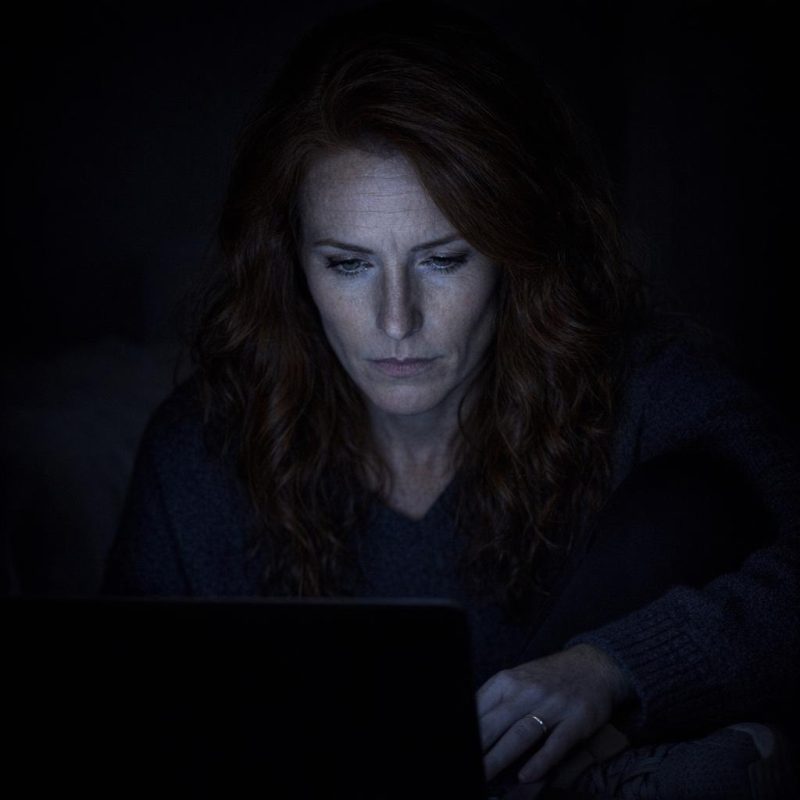 Image by RM AI
The Confrontation
I wait until after dinner, until Derek is settled on the couch with his laptop and the house feels quiet enough that there's nowhere for the conversation to go except between us. I sit down across from him and ask, as evenly as I can manage, whether he's been going outside at night lately. He looks up from the screen with this expression of mild confusion, like I've asked him something slightly absurd. He says, what do you mean? I tell him I've noticed him getting up around two in the morning, that I've heard the door. He shakes his head and says I must have been dreaming. I press him — I tell him I'm sure I heard him leave, more than once. His tone shifts then, just slightly, and he asks why I'm suddenly questioning him about everything. The words land harder than he probably meant them to. I back down. I say never mind, maybe I was wrong. But I'm not wrong, and we both sit there in the silence that follows, and the quiet between us feels like something with weight to it, something that's been accumulating for a long time.
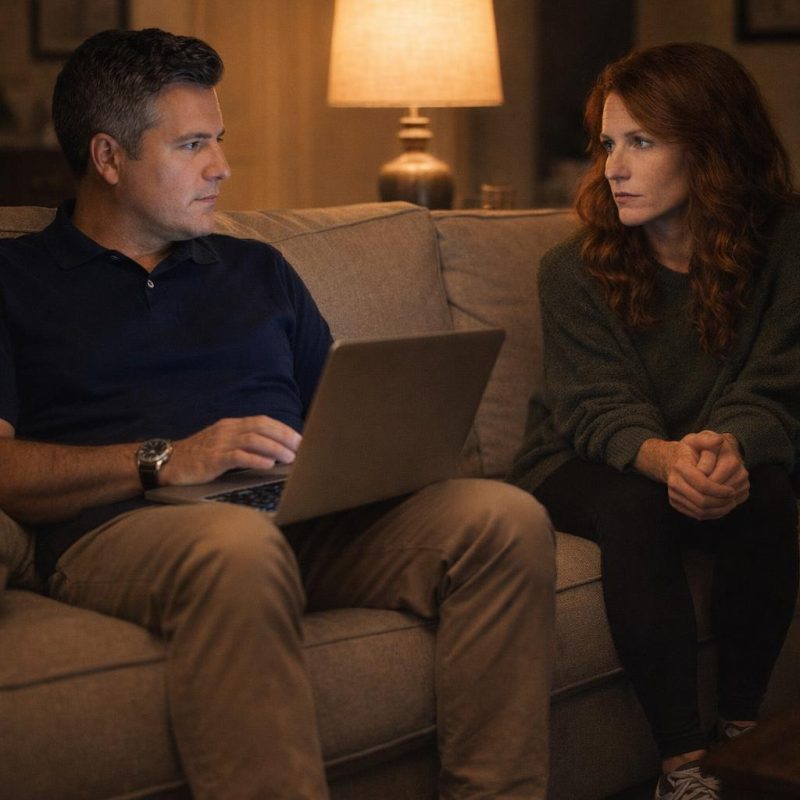 Image by RM AI
The Evidence
I don't sleep. I lie there for an hour staring at the ceiling, replaying the way he said maybe you were dreaming, and something in me just — stops being willing to let it go. I get up, go upstairs, and open the hidden camera app on my phone. I scroll back through the footage until I find the clearest clip — Derek at the pool, flashlight in hand, the woman standing a few feet away. It's unmistakable. I walk back downstairs. He's still on the couch, laptop open, and he glances up when I come in. I tell him I need to show him something. He sets the laptop aside, and I sit down next to him. My hands are steadier than I expect them to be. I open the video, let it load for a second, and then I turn the phone screen toward him.
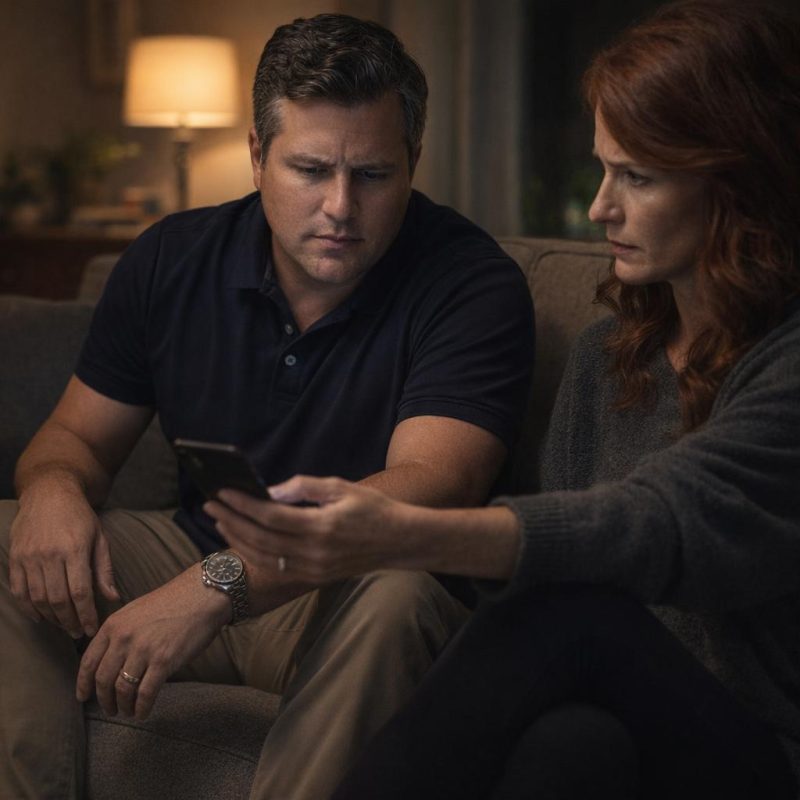 Image by RM AI
The Moment Before
He doesn't say anything. He just watches. I keep the phone steady between us and let the footage play — the flashlight, the pool, the woman stepping out of the tree line. I can see his jaw tighten. When the clip ends I pause it on the frame where her face is closest to the camera and I ask him who she is. He doesn't answer right away. He closes his eyes and takes a slow breath, the kind that isn't about being calm — it's about buying a few seconds. I ask how long this has been going on. He picks up the phone, looks at the frozen frame for a moment, then sets it face-up on the table between us. When he looks at me, his expression is something I don't have a word for — not guilt exactly, not fear exactly, something older and more tired than either of those. He says he needs to tell me something. I don't move. He opens his mouth, and his face goes somewhere I've never seen it go before.
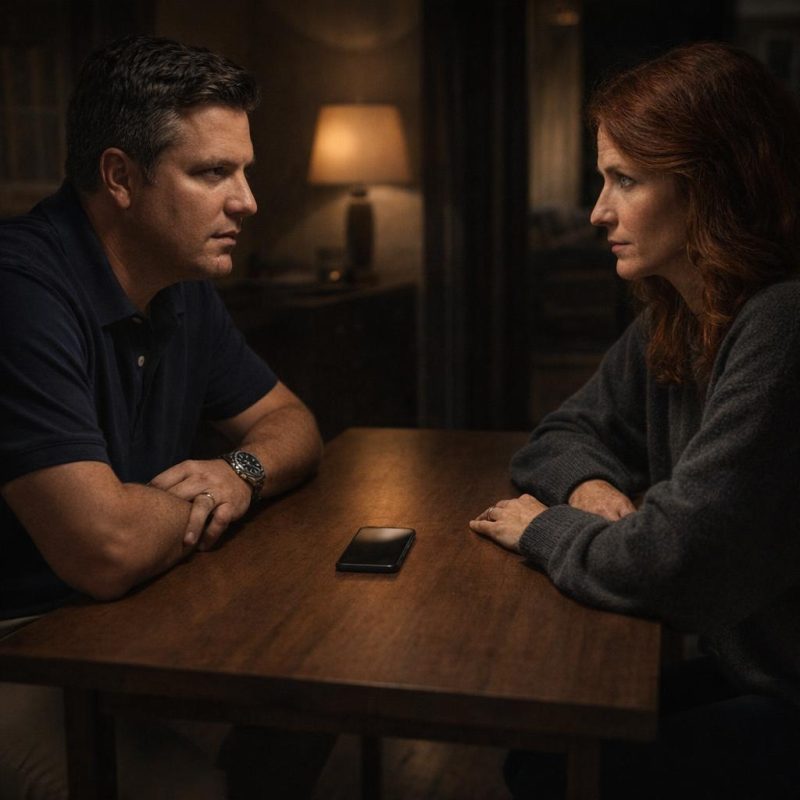 Image by RM AI
The Truth
He starts talking and I stop breathing. He says he worked in the accounting department at Meridian Financial. He says he found things — discrepancies, transfers that didn't add up, money moving into accounts that shouldn't have existed. He says he copied everything he could onto encrypted drives before anyone knew what he'd found, and then he left, and then he called federal investigators. He says the investigation went public but the key evidence disappeared — except for his copies. He says he's been working with a federal contact ever since, meeting monthly, handing over documentation updates, keeping the case alive. He says he couldn't tell me because if I didn't know, I couldn't become a target. He says the people involved are powerful and they've already made evidence disappear once. He's been protecting me by keeping me in the dark. And then he says the two phrases that stop everything — federal investigation, witness protection.
 Image by RM AI
Meridian
He keeps talking and I make myself listen. He says Meridian's accounting department was where he first noticed the numbers not matching — client funds going into transfers that routed through shell companies, then vanishing. He traced it back through months of records. At least fifteen million dollars, he says, maybe more. The executives running it had built the structure carefully, layered enough that most people would have missed it, but Derek had been auditing a specific client portfolio and the discrepancy was too large to explain away. He says he spent three weeks quietly documenting everything before he copied the files. He knew if he raised it internally it would disappear — the people signing off on the transfers were senior management. So he said nothing, copied everything onto two encrypted drives, and walked out. He contacted federal investigators the same week. The case went public within months, but by then the executives had moved or destroyed most of the internal records. His drives were the only complete documentation left. He's been sitting on that proof for seven years. The weight of that number — seven years — settles over the room like something physical.
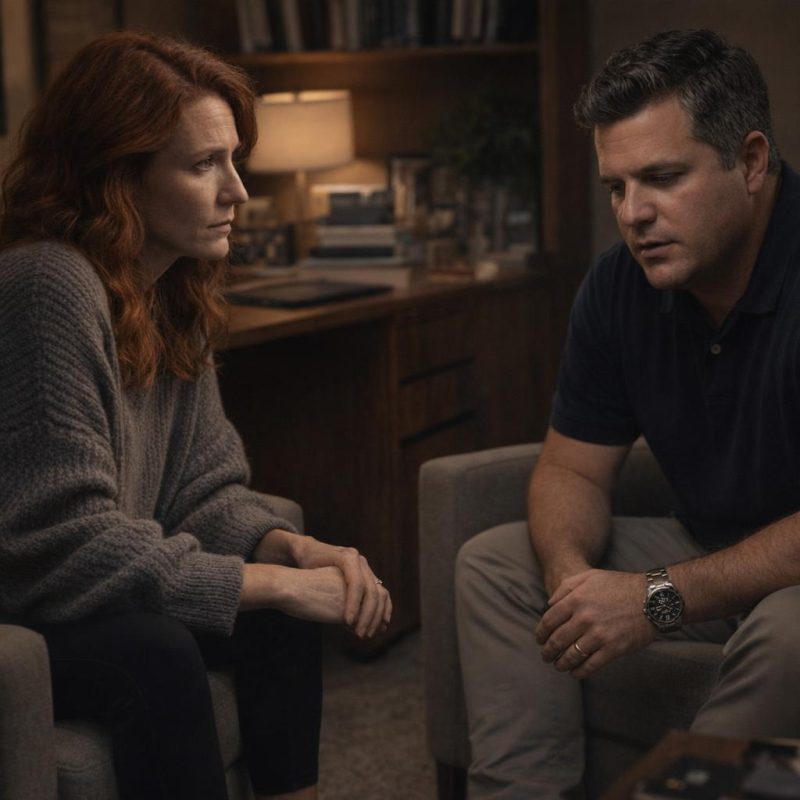 Image by RM AI
Seven Years
Seven years. I keep turning that over. We've been married for twelve, which means he was already carrying this when we met, already carrying it when we got engaged, when we bought this house. I ask him about the house. He pauses, then admits he chose it because it backed onto woods with no neighbors behind us. I ask about the pool. He says the installation gave him a legitimate reason to have outdoor equipment and cameras without it looking unusual. Every decision I thought we made together — the neighborhood, the yard, the layout of our life — had this underneath it. He says he's sorry. He says he was protecting me. I tell him I understand that, and I do, I genuinely do, but understanding something and not being hurt by it aren't the same thing. He nods like he knows. We sit there in the kitchen and I look at the table between us, at the phone still lying face-up with the frozen footage on the screen, and I think about all the ordinary evenings we've spent in this room, and how many of them had this secret sitting just underneath the surface.
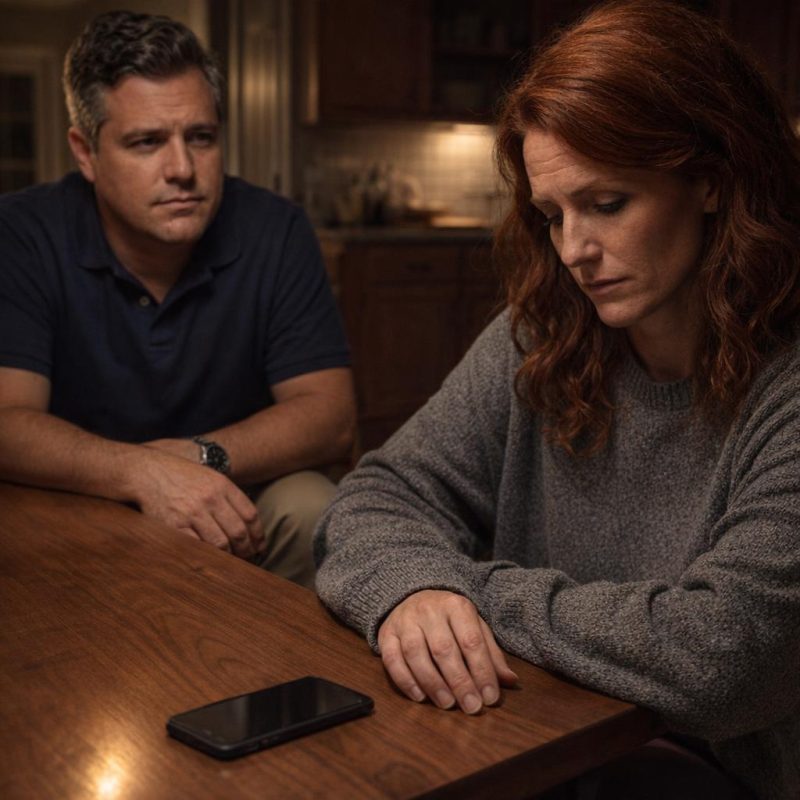 Image by RM AI
Agent Vega
I ask him one more time about the woman. He says her name is Simone Vega. He says she's a federal agent — his handler for the investigation. She's the only person he's been authorized to contact about the evidence. The midnight timing, the woods, the safe deposit box key — all of it is protocol. She takes copies of documents from the box during their meetings and he keeps the originals in the waterproof case in the pool drain. The two AM window exists because it guarantees no witnesses. I sit with that for a moment. Not an affair. Not a second life. A federal agent named Simone, standing in our backyard in the dark, doing her job. I feel something loosen in my chest that I didn't realize I'd been holding tight for weeks — and right behind it, moving in to fill the space, something that feels a lot like fury, because he let me think the worst, and he never once tried to stop me.
 Image by RM AI
Why He Couldn't Tell
He tells me the reason he couldn't say anything, and I have to sit with it because it's not a small reason. Two people who knew what he knew — two potential witnesses before the case even had a name — disappeared before they could talk. One was ruled a suicide. The other was never found. Derek says those words quietly, like he's been carrying them for a long time, and I believe him. He says the Meridian executives have connections that go well beyond a boardroom — organized crime connections, the kind that make problems disappear. If I had known about the evidence, I would have been a liability. Not because he didn't trust me, but because I would have been a target. He deleted the footage every night so that if anyone was watching, there was nothing to find. He couldn't risk me saying the wrong thing to the wrong person — not even to Marissa, not even by accident. The secrecy wasn't about keeping me out. It was about keeping me alive. I understand that now. I do. But understanding it doesn't stop the cold that settles in my stomach when I ask him what happens if the people from Meridian find out I already know.
 Image by RM AI
The Stakes
He doesn't flinch when I ask. He just exhales slowly and says the trial starts in three weeks. Three weeks. I repeat it back to him like maybe I heard it wrong, but I didn't. Federal prosecutors have been building this case for two years and they're finally ready to move. Derek will testify in the second week. Once he takes the stand, his name goes public — there's no protecting his identity after that. The people from Meridian will know exactly who preserved the evidence and handed it over. Agent Vega has been working on security protocols for months, and Derek was supposed to tell me all of this two weeks before the trial date. He had a plan. A timeline. He was going to sit me down and walk me through everything in a controlled way, with Simone present, with answers ready. Instead, I found the hidden camera footage and forced the conversation three weeks early, which means we're having it now, unprepared, with the clock already running. He says we have to move fast on the security measures. I ask him what fast means. He pulls out his phone and starts typing a message to Simone, and I watch the screen: the trial date sits there in the calendar notification, twenty-three days out.
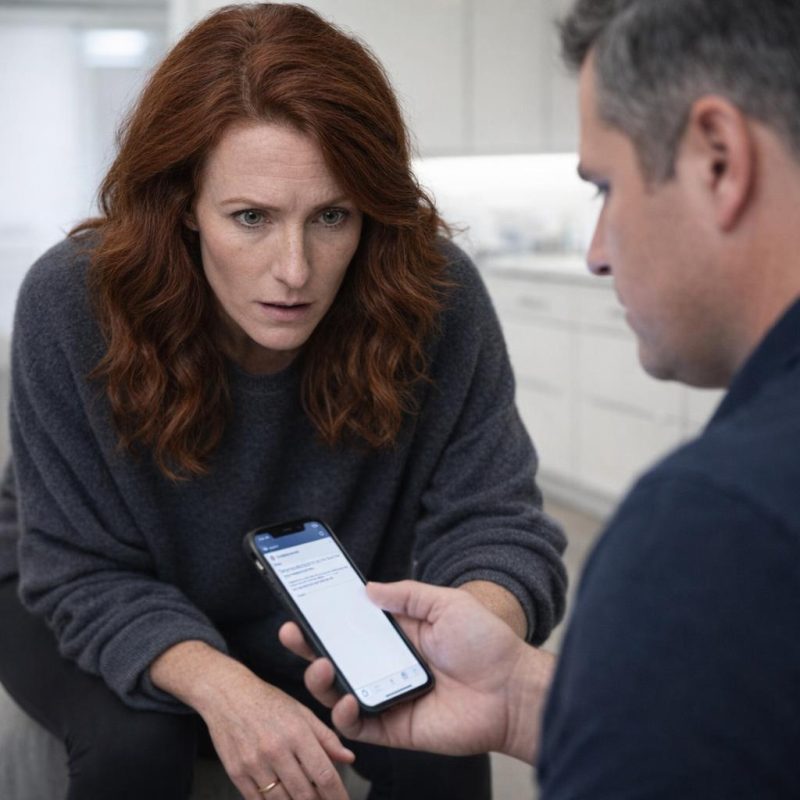 Image by RM AI
Meeting the Agent
He asks if I want to meet Agent Vega in person, and I say yes before he finishes the sentence. I need to look at her. I need to hear it from someone who isn't my spouse, someone without twelve years of reasons to manage what I know. Derek texts her right there at the kitchen table, and she responds within two minutes — she can come to the house tomorrow morning, nine o'clock. He sets the phone down and asks if there's anything I want to know before then, anything he can answer tonight. I ask him what she's like. He says she's careful. Methodical. That she doesn't say things she isn't sure of. I think about the woman I watched on that footage — the way she moved through our backyard like she'd mapped every inch of it, the way she handed Derek that envelope without hesitation. Careful and methodical sounds right. He apologizes again, for the third time tonight, and this time I don't deflect it. I tell him I understand why he did it. I tell him I'm not going anywhere. We sit there in the kitchen with the light on and the rest of the house dark around us, and for the first time in weeks, we're on the same side of something.
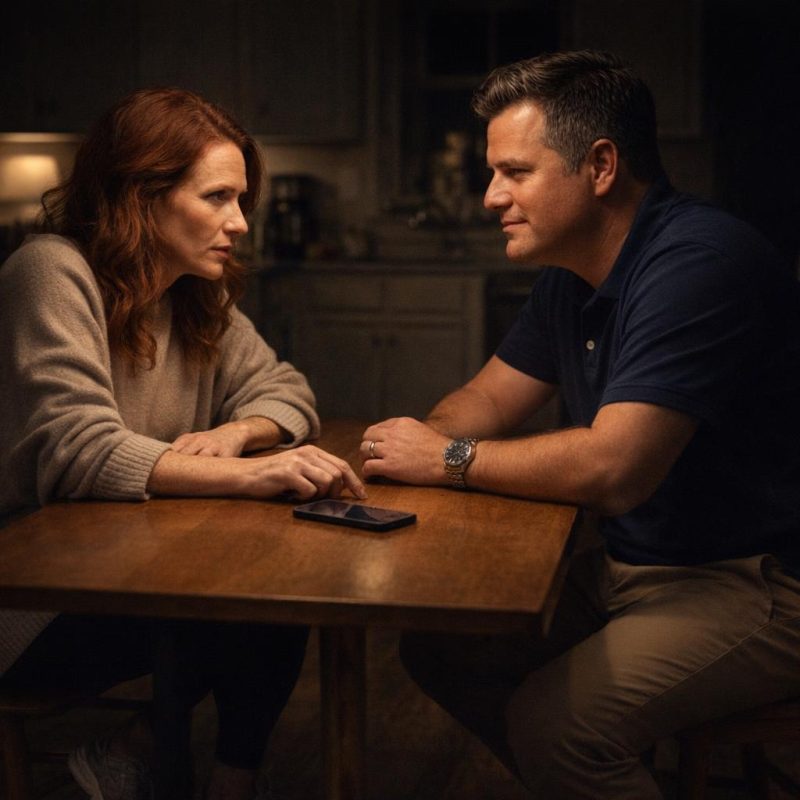 Image by RM AI
Agent Morrison
She arrives at nine on the dot, and she's not what I expected. Derek introduces her as Agent Rachel Morrison — lead investigator, senior to Simone, the person who has been overseeing this case from the beginning. She's sharp-featured, short blonde hair, a suit that means business, and she shakes my hand with the kind of grip that tells you she's done this a thousand times. She thanks me for my cooperation in a tone that's professional but not cold, and then she sits down at my kitchen table and lays out the full picture. Derek's testimony is the centerpiece of the prosecution's case. The financial documents he preserved are the only direct proof of the embezzlement scheme — without them, the case is circumstantial. Morrison explains the security plan in the same even voice: surveillance on the house starting today, panic buttons for both of us, secure phones, a protection detail in an unmarked car on the street around the clock. She says the defendants have significant resources and significant motivation to prevent Derek from taking the stand. She says it plainly, without drama, which somehow makes it worse. I'd told myself I understood the danger. Sitting across from Agent Morrison, I realize I'd only understood the outline of it.
 Image by RM AI
The Timeline
Morrison slides a printed schedule across the table and I look at it for a long moment before I pick it up. The trial begins in eighteen days. Derek testifies in week two — two full days on the stand, presenting the financial documents, walking the jury through every transaction, explaining what he witnessed and when. Morrison says the defense will cross-examine him hard. They'll try to discredit the chain of custody on the documents, question his motives, suggest he had reasons to fabricate. Derek says he knows. He says it like he's been rehearsing for it. Morrison tells us the most dangerous window is the two weeks before he testifies — that's when the pressure from the other side will be highest, when the desperation to stop him will peak. After he testifies, the calculus changes. The evidence is in the record. It can't be taken back. I ask what happens when it's all over — after the verdict, after sentencing, after the media moves on. Morrison pauses before she answers. She says the threat doesn't disappear overnight, but it diminishes significantly once the defendants are convicted. I fold the schedule in half and set it on the table in front of me, and the number eighteen sits in my chest like a stone I've agreed to carry.
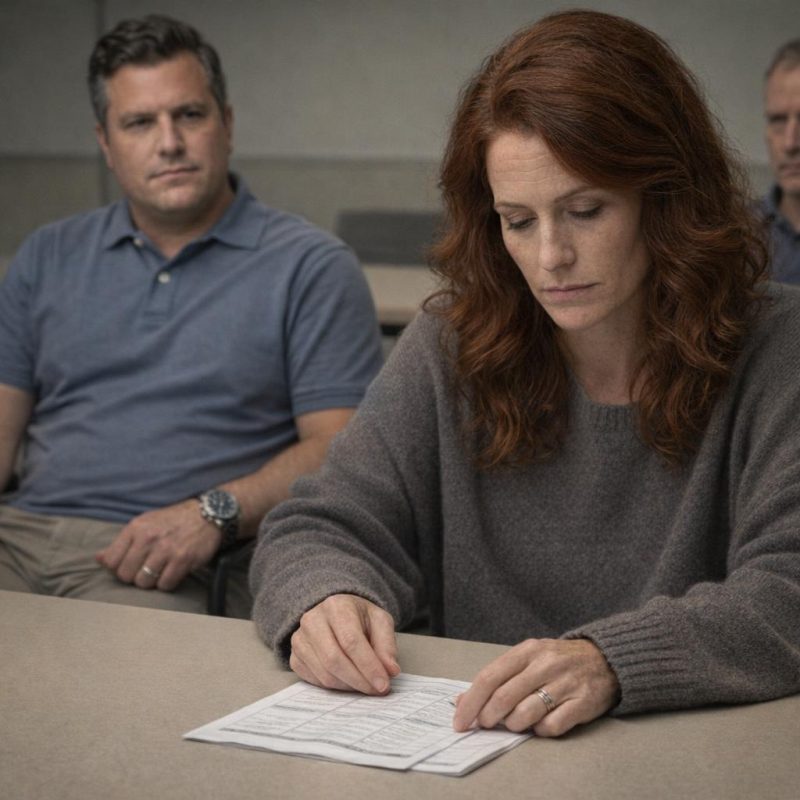 Image by RM AI
Fortifying
They arrive the next morning — three agents in plain clothes with equipment cases, moving through the house with quiet efficiency. New cameras go up inside and outside: hallway, front door, back door, garage. Motion sensors along the perimeter. Reinforced deadbolts on every exterior door, installed in under an hour. Morrison hands Derek and me each a small device, flat and black, about the size of a key fob. Panic button. She shows us how to use it. Press and hold for three seconds. Don't hesitate. I clip mine to my keychain and try to feel normal about it. An agent will be in an unmarked car on the street every night. Morrison runs through the communication protocols — which numbers to use, which to avoid, what to say if someone we don't recognize comes to the door. Derek stands beside me through all of it, nodding, asking the right questions. He's been living with this for seven years. For him, this is the part where things finally move. For me, it's the part where my house stops being my house. I walk through the kitchen after the agents finish and I don't recognize the corners of my own rooms anymore. Then I stop in the hallway and watch one of the agents mount the last interior camera above the coat closet, and something about the angle of it — pointed straight at the front door — makes my skin go cold.
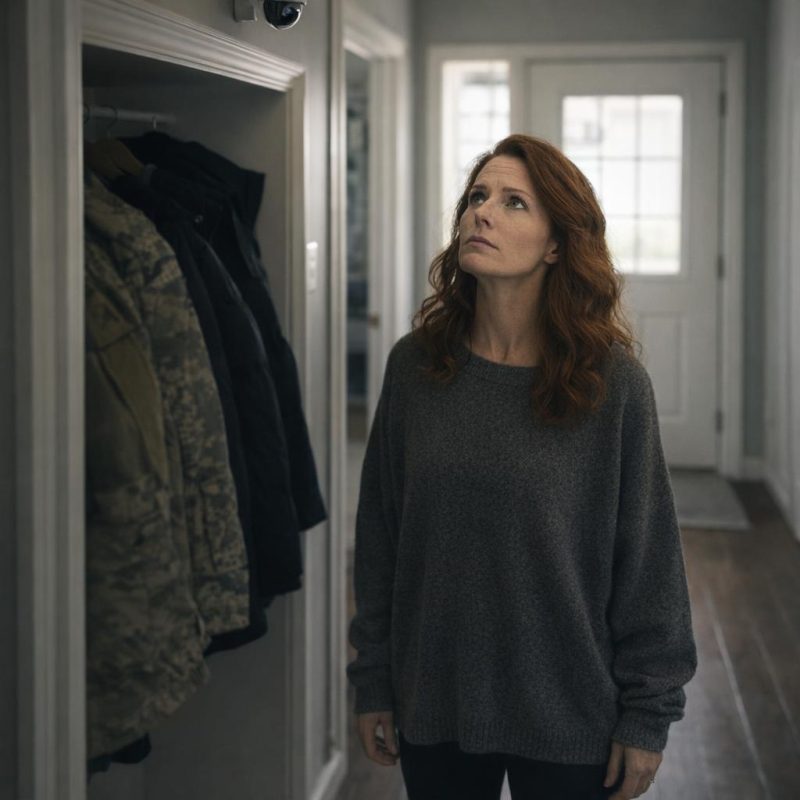 Image by RM AI
Testimony
I sit in the third row of the gallery and I keep my hands folded in my lap so they don't shake. Morrison is at the prosecution table, composed and still. Derek is sworn in, and I watch him settle into the witness chair like he's been waiting for this for a very long time — because he has. Seven years. He starts from the beginning: his role at Meridian Financial, the transactions that didn't add up, the night he first understood what he was looking at. His voice is steady. He walks the jury through the documents one by one, explaining each transfer, each falsified record, each layer of the scheme. The defense attorney objects twice in the first hour. The judge overrules both. On the second day, the cross-examination runs four hours and Derek doesn't break. He doesn't get flustered, doesn't contradict himself, doesn't give them anything to work with. I watch the jury watching him and I think: they believe him. I can see it in the way they lean forward. When the prosecutor asks Derek to identify the individuals responsible for authorizing the fraudulent transfers, Derek turns toward the defense table, and in a voice that carries clearly across the courtroom, he names each one.
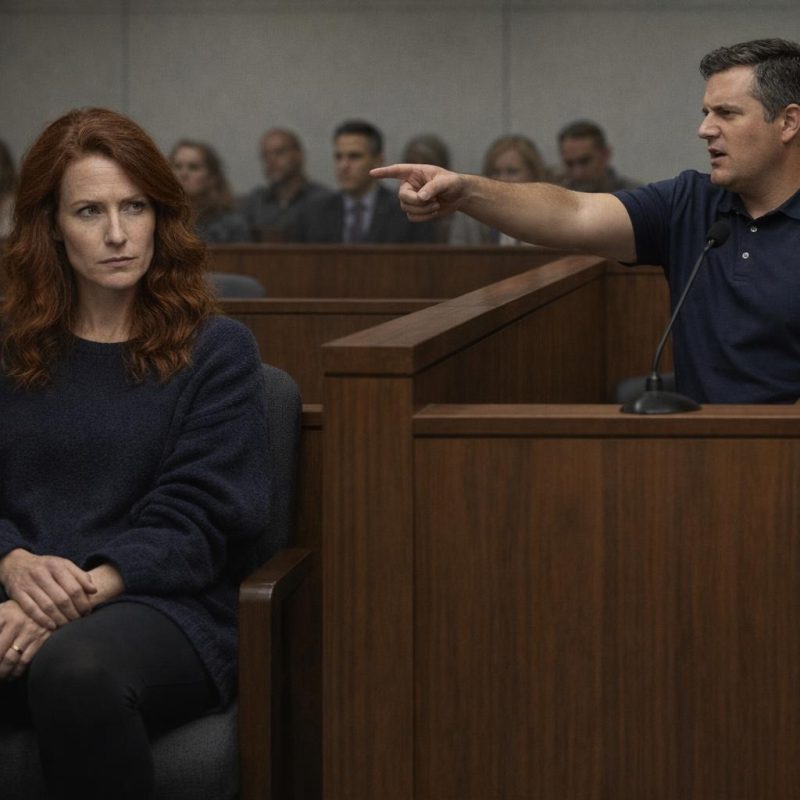 Image by RM AI
Verdict
The jury is out for two days and I don't sleep for either of them. We stay at the house under protection, and the waiting is its own kind of weight — heavier than the weeks before testimony, somehow, because now there's nothing left to do. Morrison calls at 10:47 on a Tuesday morning. The jury has a verdict. We're back in the courthouse by noon, and the room is packed — media, spectators, people I don't recognize filling every seat. Derek's hand finds mine before the jury files in. The foreperson stands. The judge asks for the verdict on the first count. I hear the word guilty. Then again on the second count. Guilty. Third count. Guilty. All three defendants, all counts, no exceptions. The defendants don't move, don't react, just stand there as the bailiffs step forward. Morrison catches my eye from across the room and gives one small nod. Outside in the hallway afterward, she tells us the immediate threat is over — the sentencing is six weeks out, but the danger has dropped significantly. Derek squeezes my hand and doesn't let go. Seven years of silence, and now the word that ends it keeps echoing in the marble corridor: guilty, guilty, guilty.
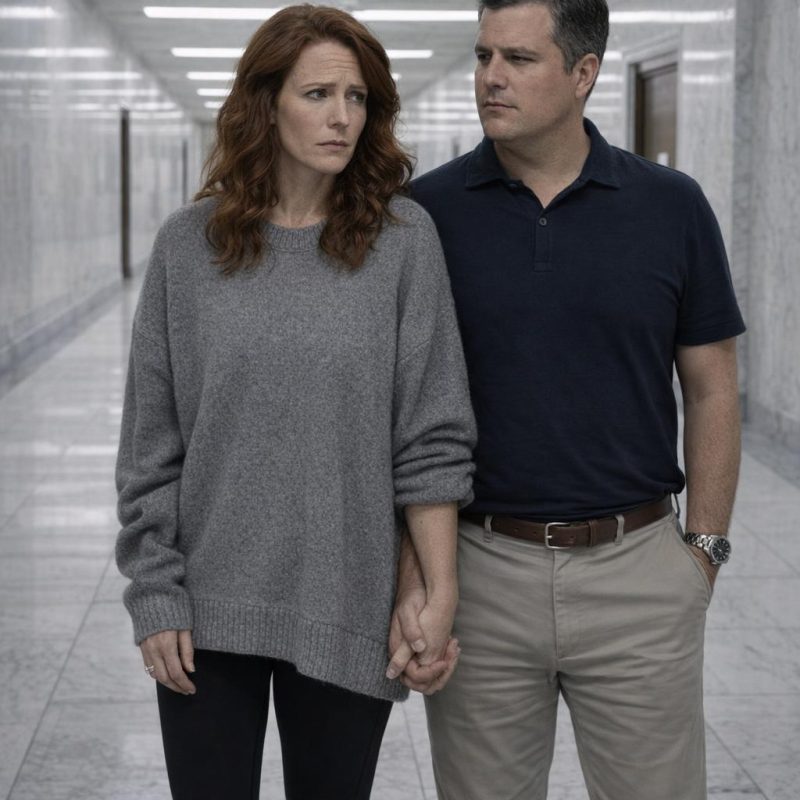 Image by RM AI
After
Morrison comes by the house three days after the verdict, and there's something different about the way she moves through the rooms — quieter, less tactical, like the building itself has been downgraded from a threat level. She walks us through what happens next: sentencing in six weeks, periodic check-ins from her office, a direct line if anything feels off. The defendants are in custody. The evidence is sealed in the court record. Derek's testimony did what it needed to do. Two agents start pulling the interior sensors from the hallway and the kitchen while we talk, and I stand there watching the walls go back to looking like walls. Morrison shakes Derek's hand, then mine, and says we did good — says it plainly, without ceremony, the way she says everything. Derek thanks her. I thank her. She nods once and walks out the front door. We follow her to the porch and watch the whole thing — the handshakes with the remaining agents, the equipment loaded into the back of the unmarked car, the quiet efficiency of people who do this for a living. Then the car pulls away from the curb and the street is just a street again, empty and ordinary, the way it used to be before any of this started.
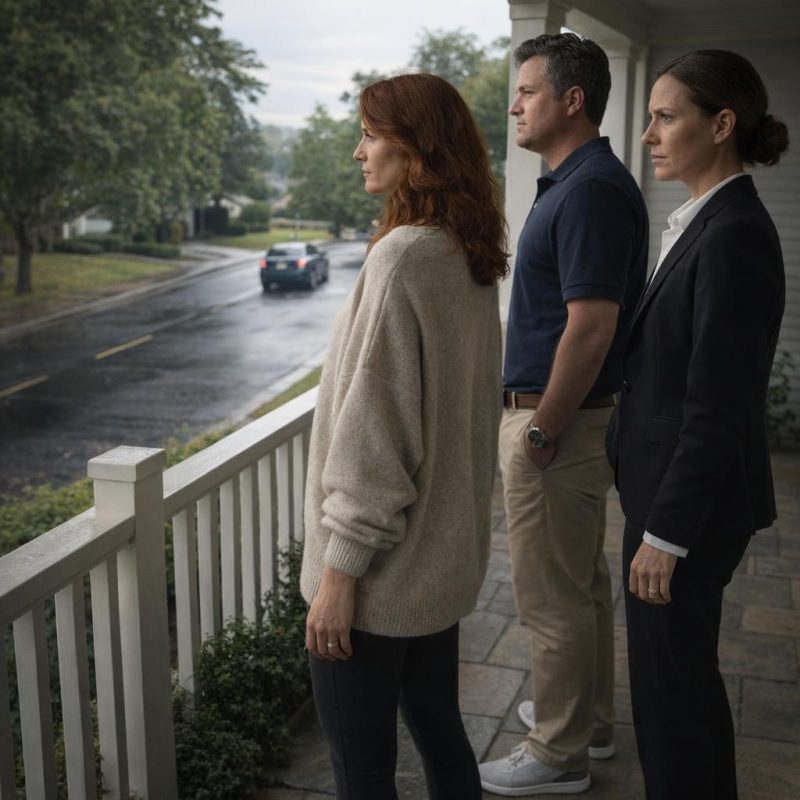 Image by RM AI
Rebuilding Trust
I'm the one who brings it up first. We're sitting at the kitchen table after dinner one night, and I just say it out loud: I think we need to talk to someone. Not to each other — to someone who knows how to help people put things back together. Derek doesn't hesitate. He says yes before I finish the sentence. We find a therapist who specializes in trauma and trust, and the first session is harder than I expect. I sit across from a stranger and try to explain seven years of secrets, and halfway through I start crying and can't stop. Derek talks about the choices he made and why, and his voice breaks when he gets to the part about what it cost me. The therapist doesn't rush us. She says both things can be true at once — that Derek had reasons, and that I still got hurt. That understanding why someone did something doesn't automatically make the wound close. I already knew that, somewhere. But hearing it said out loud in a calm, neutral room makes it feel like something I'm allowed to carry. Afterward, we sit in the car in the parking garage for a long time without saying anything, and the silence between us feels less like distance and more like two people finally standing in the same place, facing the same amount of work.
 Image by RM AI
Moving Forward
We make dinner together on a Thursday — nothing special, just pasta and whatever vegetables are left in the fridge — and somewhere between chopping and stirring we start actually talking. Not about the case, not about therapy homework, just about us. What we want. What we're afraid of. Derek says he wants to earn my trust back, not just ask for it. I tell him I want to feel like we're partners again, like I'm not always the last person to know something important. He listens without defending himself, which is new, and I notice it. We talk about the house — whether to stay or go, whether these rooms carry too much of the last few months to feel like home again. I say I'm not sure yet. He says he'll follow my lead. At some point I tell him that I know the marriage we had before is gone, and he nods like he's already made peace with that. But then I say maybe that's not the worst thing — maybe what comes next can be built on something more solid. He reaches across the table and covers my hand with his. He says he loves me. I say it back, and I mean it in a way that feels quieter and more deliberate than it used to, like something that's been tested and chose to stay.
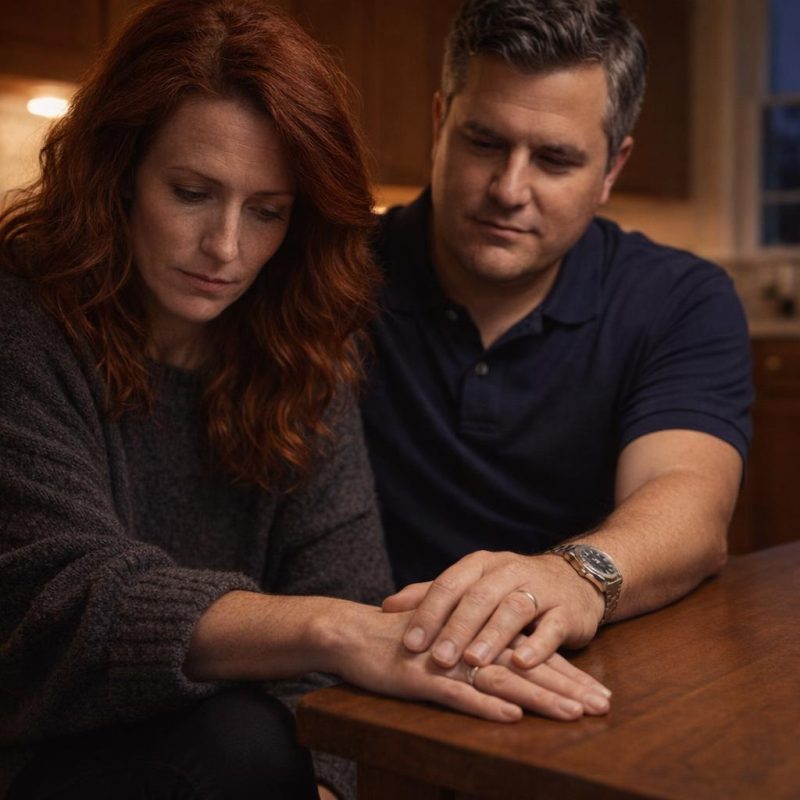 Image by RM AI
Starting Fresh
We do it on a Saturday morning, both of us in old clothes with coffee going on the counter. Derek gets the ladder and takes down the pool deck cameras one by one while I work through the rest of the house. The birdhouse is last. I carry it down from the shelf, open the back panel, and lift out the small camera that started all of this — the one I hid because I needed to know the truth. I hold it for a second, then set it in the box with the rest. We delete the footage from both systems, wipe the drives, and Derek breaks down the cardboard for recycling while I put the birdhouse back on the shelf, just a decoration again. We don't make a big moment out of it. There's no speech. We just move through the house together, room by room, taking back the space. Derek says it feels like he can finally breathe, and I know exactly what he means. We talk about a vacation — somewhere warm, somewhere neither of us has been, somewhere with no history attached to it. Derek says tropical. I say that sounds perfect. We go inside and pull up travel sites on the laptop, shoulders touching on the couch, and through the back window the pool deck sits open and unobserved in the morning light.
 Image by RM AI
KEEP ON READING

The 10 Youngest Monarchs In History & The 10 Oldest
Age Is Just A Number. Imagine being crowned king or…
By Chase Wexler Mar 11, 2025
You Think You Have Problems? These Royal Families Were Cursed
Boasson and Eggler St. Petersburg Nevsky 24. on WikimediaHeavy is…
By Ashley Bast Dec 5, 2025
You Can Thank This Greek-Canadian For Creating Pineapple On Pizza…
Love it or hate it, pineapple on pizza sparks debate…
By David Davidovic Dec 1, 2025
Yes, Female Gladiators Existed, And Here's Everything You Need To…
History of Women in Combat. Most people picture gladiators as…
By David Davidovic Jan 17, 2026
Yes, Australians Once Lost A Battle Against Flightless Birds
David Clode on UnsplashIn 1932, the Australian military went to…
By David Davidovic Nov 24, 2025
The Y2K Bug: Why Did Everyone Think Year 2000 Was…
Alan W on UnsplashOn December 31, 1999, people all over…
By Christy Chan Dec 22, 2025