

My Daughter-in-Law Handled My Husband's Funeral Arrangements, But When Guests Arrived, I Realized Something Was Terribly Wrong
My Daughter-in-Law Handled My Husband's Funeral Arrangements, But When Guests Arrived, I Realized Something Was Terribly Wrong
When Everything Stops
Harold died on a Tuesday morning while I was at the grocery store picking up his favorite coffee creamer, and when I came home to find the paramedics already there because our neighbor had heard the crash through the wall, I remember thinking how strange it was that I'd been comparing prices on orange juice while my husband of forty-three years was taking his last breath. The funeral home gave me pamphlets I couldn't read and forms I couldn't focus on, and I signed things people put in front of me without understanding what any of it meant. The house felt wrong in a way I couldn't articulate—too quiet, too full of his things, too empty of him. I kept expecting to hear him call from his workshop or shuffle into the kitchen asking what was for dinner, but there was only silence pressing against my eardrums until I thought I might go mad from it. People called and I answered, heard myself speaking words that sounded like they were coming from someone else's mouth, accepted casseroles I couldn't imagine eating. I'd find myself standing in rooms without remembering walking there, holding objects I didn't recall picking up, staring at walls while hours dissolved around me. The first night I slept in our bed, then the second night I couldn't, and by the third day I wasn't sleeping at all, just sitting in Harold's recliner watching darkness turn to dawn turn to darkness again. The doorbell rang again, pulling me from a fog—I'd been sitting in the same chair, though I couldn't say for how long.
 Image by RM AI
Someone Steps Forward
Melissa stood on my doorstep the morning after Harold died, perfectly put together in a way that made me suddenly aware I was still wearing yesterday's clothes, and she swept into the house with the kind of purposeful energy I couldn't begin to summon. She'd brought coffee and muffins I didn't want, set them on the kitchen counter with efficient movements, then turned to me with that tight smile she always wore and said we needed to talk about arrangements. I remember nodding, feeling grateful someone was thinking clearly because I certainly wasn't, and she pulled out a notebook already filled with lists and phone numbers and tasks that needed handling. The funeral home, the flowers, the obituary, the reception—she rattled through items I hadn't even begun to consider, and each one felt like another weight I didn't have the strength to carry. When she said she'd take care of everything, that I shouldn't worry about a single detail, that she knew exactly what needed to be done and I just needed to rest and grieve, I felt something like relief wash over me for the first time since I'd walked into that house and found the paramedics. She asked questions I answered automatically, made suggestions I agreed to without really processing, scheduled appointments and made phone calls right there in my kitchen while I sat at the table feeling like a guest in my own life. I heard myself saying yes to everything she suggested, grateful someone else could make decisions when I couldn't think straight.
 Image by RM AI
The World Keeps Moving
The sympathy cards arrived in waves, piling up on the coffee table in neat stacks I couldn't bring myself to open because reading other people's memories of Harold felt like it would make his death more real than I could handle. I sat in the living room for what might have been hours or days—time had stopped making sense—staring at those cream and white envelopes with their careful handwriting and knowing I should read them but unable to make my hands reach out and pick one up. Outside my window, I could see neighbors mowing lawns and walking dogs and loading groceries into cars, the whole world continuing its normal rhythm as though nothing catastrophic had happened, as though my entire existence hadn't just collapsed. Someone delivered a fruit basket I left untouched on the kitchen counter. The mailman knocked with a package that required a signature, and I signed my name without looking at what it was. My daughter-in-law's sister dropped off a casserole and tried to hug me, but I felt like I was watching the interaction from somewhere far away, like I was floating near the ceiling observing this sad woman who looked like me accepting condolences. The phone rang constantly—friends, distant relatives, Harold's former colleagues—and I answered because it seemed like what I was supposed to do, spoke in sentences that sounded appropriate, then forgot the conversations the moment they ended. Melissa called to update me on arrangements, but her voice sounded distant, like it was coming from underwater.
 Image by RM AI
Efficient Arrangements
Melissa moved through the funeral preparations with the kind of brisk efficiency I'd always associated with her corporate job, making phone calls from my kitchen while I sat motionless in the living room, her voice a steady hum of logistics and coordination that I couldn't quite follow. She'd taken over the dining room table as her command center, spreading out folders and lists and her laptop, transforming my home into a funeral planning headquarters while I drifted through rooms like a ghost haunting my own life. I heard her on the phone with the funeral home discussing casket options and service times, with the florist ordering arrangements in colors I assumed she thought Harold would have liked, with the church secretary booking the chapel for Thursday afternoon. She asked me questions occasionally—did Harold prefer lilies or roses, should the service be morning or afternoon, did I want a receiving line—and I answered with whatever came to mind first because I genuinely didn't care and couldn't imagine caring about anything ever again. When she said she needed photographs for the memorial display, pictures that really captured who Harold was and what his life had meant, I gestured vaguely toward the study where we kept decades of photo albums in the built-in shelves. She disappeared into that room for over an hour, and I heard her moving things around, opening drawers, but I didn't get up to see what she was doing. She mentioned needing photos that really captured Harold's life, and I vaguely gestured toward the albums in the study without looking at them myself.
 Image by RM AI
Writing His Story
The obituary needed to be written and submitted to the newspaper by end of day, and when Melissa volunteered to handle it I felt a wave of relief because the thought of summarizing Harold's entire existence into a few paragraphs made me want to crawl into bed and never emerge. She sat across from me with her laptop open, asking questions about his career and his hobbies and his accomplishments, and I answered in fragments that didn't quite connect into coherent sentences—something about his years at the engineering firm, his love of woodworking, the way he'd coached Little League when David was young. She typed quickly, her fingers flying across the keyboard with the confidence of someone who wrote professionally, nodding along as I spoke and occasionally asking for clarification on dates or details I couldn't quite remember. When she asked about his retirement years, what he'd been doing with his time these past few years since he'd left work, I said something vague about projects around the house and spending time with family, though honestly those years felt like a blur even before grief had scrambled my brain. She worked on the draft for maybe twenty minutes while I stared out the window, then looked up and said she had something she thought captured his spirit beautifully, asked if I wanted to review it before she submitted it to the paper. I told her I trusted her judgment completely, that I was sure whatever she'd written was perfect, that I couldn't bear to read it right now anyway.
 Image by RM AI
Forgetting to Eat
On the third day after Harold died, I stood in the kitchen and realized I couldn't remember the last time I'd eaten an actual meal, couldn't remember tasting food or feeling hungry or doing any of the basic human things that were supposed to happen automatically. I made toast because it seemed simple, put it on a plate and sat at the table staring at it, managed maybe three bites before the texture in my mouth felt wrong and I set it down and forgot about it entirely. The plate sat on the counter for hours, the toast going cold and hard, and I walked past it multiple times without seeing it or remembering I'd tried to eat. My body felt disconnected from my mind, like I was operating some kind of machine I didn't quite know how to control anymore, and basic functions like eating and sleeping and showering seemed impossibly complicated. The phone rang and it was Patricia, Harold's sister, calling from Arizona to check on me and ask if I needed anything, and I heard myself telling her I was fine, people were helping, everything was being handled. We talked for what must have been fifteen or twenty minutes based on what my phone log showed later, but afterward I couldn't remember a single thing we'd discussed, couldn't recall if she'd asked about the funeral or shared memories or made plans to fly in. My sister-in-law Patricia called to check on me, but I couldn't remember afterward what we'd talked about.
 Image by RM AI
Preparations Without Me
The days before the funeral blurred together into a continuous fog where I was vaguely aware of activity happening around me but couldn't quite connect with any of it in a meaningful way. Melissa was constantly in motion—on her phone coordinating with vendors, at her laptop updating spreadsheets, meeting with people at my front door to accept deliveries or discuss details I didn't understand. I'd hear fragments of her conversations from whatever room I'd ended up in, words like "memorial program" and "guest book" and "reception catering" floating past me without sticking to anything in my brain. She'd update me periodically, sitting down beside me to explain what she'd arranged, and I'd nod along like I was following but honestly I retained almost nothing she said. The funeral was in two days, then tomorrow, then the morning after that, and time kept jumping forward in ways that didn't make sense. She mentioned the memorial display being almost ready, said she'd put together a beautiful collection of photographs and mementos that told the story of Harold's life, and I nodded without asking what photos she'd chosen or what story she thought she was telling. Part of me knew I should be more involved, should be making these decisions myself or at least reviewing what was being decided, but I couldn't summon the energy or focus required to care about details. She mentioned something about the memorial display being almost ready, and I nodded without asking what it looked like.
 Image by RM AI
My Son Arrives
David came by the house the evening before the funeral, and we sat together on the couch in the living room where his father had spent so many evenings watching television and reading the paper, neither of us able to find words that felt adequate for the enormity of what had happened. He looked terrible—rumpled and exhausted, his eyes red-rimmed in a way that told me he'd been crying when no one could see—and I wanted to comfort him but I had nothing left to give, no reserves of strength to draw from when I was barely holding myself together. We sat in silence for maybe twenty minutes, just being in the same space, sharing the weight of Harold's absence that filled every corner of the house like a physical presence. I thought about all the things I should probably say to my son, all the mother-wisdom I should be offering, but my mind was blank and my throat was tight and the silence felt more honest than any platitudes I could manufacture. He held my hand and I held his back, and that simple connection was all either of us could manage. Before he left, he squeezed my hand and said Melissa was taking care of everything, which made me feel both grateful and strangely distant from my own husband's funeral.
 Image by RM AI
Strange Questions at the Visitation
The visitation began at two o'clock, and within the first hour three different people approached me with these careful, hesitant expressions that I couldn't quite read, asking questions that seemed to circle around something they were afraid to say directly. The first was Harold's golfing buddy Jim, who touched my elbow gently and asked whether Harold and I had been having any difficulties near the end, and I just stared at him because the question made no sense at all. Then Carol from the book club came over and said something about how hard it must have been when marriages go through rough patches, and I told her we hadn't been going through anything, we'd been perfectly happy. The third person was someone I barely knew, a woman from Harold's office, and she asked in this sympathetic whisper whether we'd been separated when he died, which was so absurd I actually laughed before I could stop myself. I kept telling them the same thing—that Harold and I had been happy right up until he died, that nothing had been wrong, that I didn't understand what they were talking about—but their faces stayed hesitant and sympathetic in a way that suggested they thought I was either lying or confused. Melissa was across the room greeting guests with her perfect hostess smile, and I wondered if she'd heard any of these strange questions, if she was as bewildered as I was. But their doubtful expressions when I insisted everything had been fine made my stomach twist uncomfortably, like they knew something I didn't.
 Image by RM AI
Hints of Trouble
More guests kept approaching throughout the afternoon with variations of the same gentle, probing questions, asking if Harold and I had quietly separated or whether he'd been unhappy in the marriage, and I found myself repeating the same defenses over and over like a broken record. I told them about our anniversary cruise to Alaska just three months ago, how we'd watched glaciers calve into the ocean and danced on the ship's deck under the midnight sun, how Harold had held my hand during the whole trip and told me it was the best vacation we'd ever taken. I mentioned our nightly dinners together, our morning coffee routine, the travel plans we'd been making for next spring, trying to paint a picture of the actual life we'd lived because clearly these people had gotten some completely wrong impression from somewhere. But they kept responding with these sympathetic nods and soft voices, like they were humoring someone in denial, and one woman actually patted my arm and said it was natural to remember the good times during grief, to focus on the happy memories instead of the difficult reality. I wanted to shake her and tell her I wasn't romanticizing anything, that I was describing what had actually happened, but she'd already moved on to sign the guest book. I stood there wondering if grief was somehow confusing me, if I was missing something obvious that everyone else could see, but when I tried to think of what that could possibly be, my mind came up completely blank.
 Image by RM AI
Mostly Alone
Harold's cousin Margaret pulled me aside near the refreshment table, and I could tell from her awkward expression that she was about to say something she found uncomfortable, the way she kept clutching her purse strap and not quite meeting my eyes. She said how sad it was that Harold had apparently spent his final years mostly on his own, that it must have been lonely for him even though he'd never complained about it, and I just stood there with my mouth half open because the statement was so completely absurd I couldn't even process it at first. Harold hadn't been on his own—we'd been together constantly since his retirement, traveling and going to shows and having friends over for dinner parties, living the life we'd planned for decades. I started to correct her, to explain that she had it completely wrong, but she was already patting my shoulder and moving away toward the guest book, leaving me standing there with half-formed words dying in my throat. The comment hung in the air like something solid I could almost touch, and I realized with a jolt that this wasn't just random confusion anymore—multiple people seemed to share this same bizarre belief that Harold and I had been living separate lives. I watched Margaret disappear into the crowd of mourners, and my hands were shaking slightly as I tried to understand where such a strange, specific idea could have possibly come from.
 Image by RM AI
Our Real Life
I stood in the funeral home trying to reconcile what people were saying with the actual life Harold and I had lived, running through memories like flipping pages in a photo album to prove to myself I wasn't crazy or confused. We'd traveled constantly since his retirement—the Alaska cruise in July, wine country in California last spring, that long weekend in Charleston where we'd walked the historic district holding hands like newlyweds. We had dinner together every single night at the kitchen table, talking about our days even though we'd spent most of them together anyway, and Harold always insisted on doing the dishes while I dried because he said it was our time to decompress. We'd gone to the symphony twice last month, and Harold had fallen asleep during the second half both times, his head tilting onto my shoulder in that way that always made me smile. We'd been planning a trip to Ireland for next summer, had the guidebooks spread out on the coffee table and sticky notes marking all the places we wanted to visit. Nothing about what these funeral guests believed matched our reality—not even close, not even a little bit—and I needed to figure out where this completely false impression was coming from. Something was creating this narrative that Harold and I had been distant or separated, and I couldn't shake the feeling that if I could just identify the source, everything would make sense again.
 Image by RM AI
Looking Closer
I stepped back from the cluster of guests and moved toward the memorial display Melissa had assembled near the front of the funeral home, really looking at it for the first time instead of just glancing past it the way I had when I'd first arrived. The display was large and prominent, positioned where everyone entering would see it immediately—three foam boards covered in photographs arranged in neat rows, with a small table in front holding Harold's favorite golf trophy and his reading glasses. I'd noticed it earlier in that vague, peripheral way you notice things when you're moving through grief like you're underwater, but I hadn't actually examined it, hadn't studied what Melissa had chosen to represent Harold's life. Now I stood in front of it with my arms crossed, scanning the dozens of photographs she'd selected and arranged so carefully, and something about the collection began to feel wrong in a way I couldn't immediately articulate. The photos were all good ones—clear, well-composed, showing Harold smiling and engaged—but as my eyes moved from image to image, a prickle of unease started at the base of my neck and spread slowly down my spine. I couldn't put my finger on what was bothering me yet, but something about the selection felt off, felt strange in a way that made my stomach tighten uncomfortably.
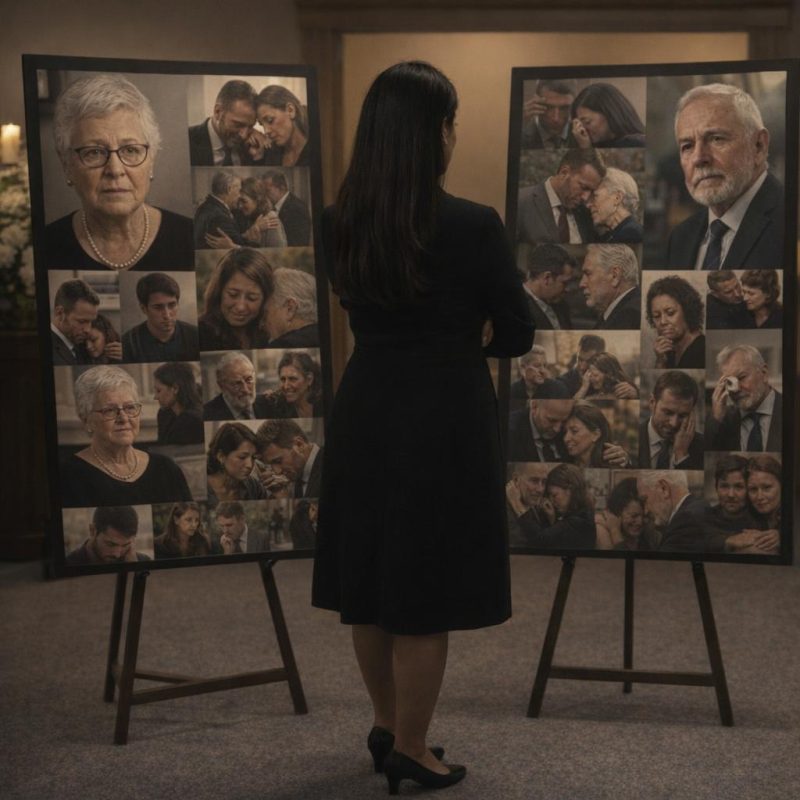 Image by RM AI
Selective Memories
The display contained dozens of photographs spanning Harold's entire life, but as I looked more carefully at what Melissa had actually chosen, my stomach tightened into a hard knot because the selection told a very specific story. There was Harold alone on the golf course, mid-swing with mountains in the background. Harold with his coworkers at some retirement party, everyone holding champagne glasses. Harold with David and the grandchildren at the zoo, at birthday parties, at Christmas morning with wrapping paper scattered around. Harold with his college buddies at their annual reunion, all of them gray-haired and grinning. Photo after photo showed Harold living his life, but they'd been chosen in a way that systematically erased me from the picture—almost no photographs of us together, nothing showing the partnership we'd built over forty-three years of marriage. I scanned the boards again, thinking I must have missed something, but the pattern held. There was one old anniversary photo tucked awkwardly near the bottom right corner of the third board, the two of us young and stiff in formal clothes from maybe twenty years ago, but nothing showing the life we'd actually shared recently—no cruise photos, no pictures from our travels, nothing from the past decade that would prove we'd been together and happy. The absence felt like a statement, like someone had taken an eraser to our marriage and carefully removed me from Harold's story.
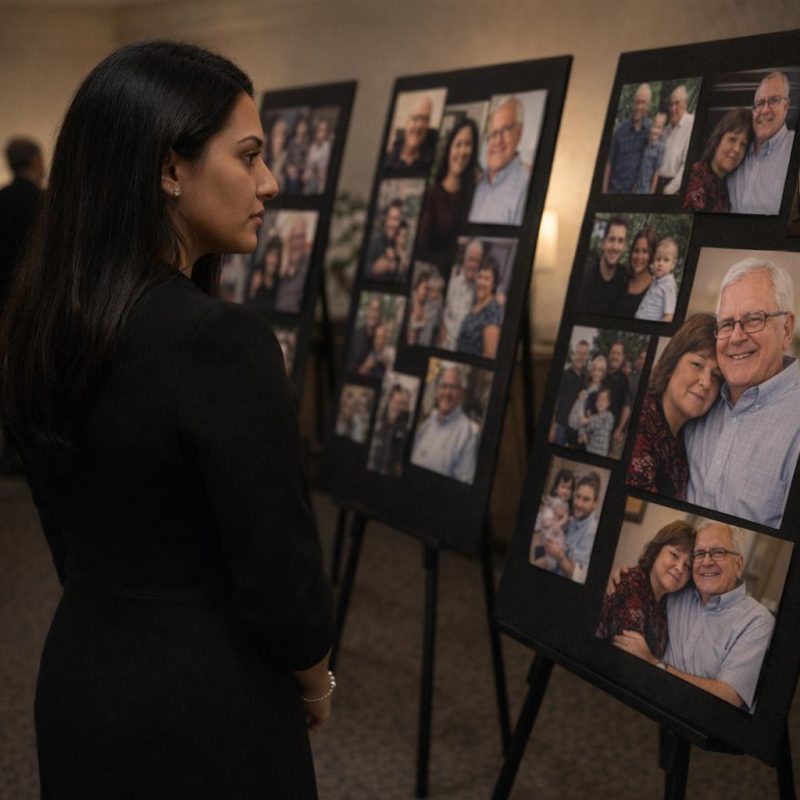 Image by RM AI
Longtime Companion
Tom, one of Harold's old coworkers who I'd always liked for his straightforward manner, pulled me aside near the entrance and quietly asked whether I'd personally approved the online obituary Melissa had posted, and something about the way he asked—careful but concerned—made my heart start beating faster. I told him I hadn't seen it, that Melissa had handled all those details, and he nodded slowly like that confirmed something he'd suspected. He pulled out his phone and brought up the obituary page, holding it out to me with an expression that was almost apologetic, and I took the phone with hands that suddenly felt clumsy and cold. The obituary was professionally written, the kind of thing that probably cost extra money for the fancy formatting and the large photo of Harold at the top, and I started reading through the standard biographical information—birth date, education, career highlights, survived by his son David and grandchildren. Then I got to the personal section, and the words seemed to jump off the screen in a way that made my vision narrow. The obituary referred to me as Harold's 'longtime companion,' not his wife, not his spouse, just his companion like I was someone he'd known casually for years rather than the woman he'd been married to for over four decades. I felt physically cold reading those words, like someone had opened a door and let winter air flood into the room.
 Image by RM AI
Renewed Independence
I kept reading the rest of the obituary with Tom standing quietly beside me, and the full picture of what Melissa had published became clear in a way that made my hands shake. The text described Harold as someone who 'found renewed independence and personal fulfillment in his later years,' painting a portrait of a man who'd somehow outgrown his marriage and discovered himself after retirement. It talked about his love of golf and travel—as if he'd done those things alone—and his dedication to his grandchildren, but it minimized my role in his life to almost nothing, reducing forty-three years of marriage to a footnote about his 'longtime companion Rita.' The language was careful and polished, the kind of thing that sounded nice if you didn't know the truth, but it created a narrative that bore absolutely no resemblance to the life Harold and I had actually lived together. Melissa had published this without showing it to me first, without asking for my input or approval, and now it was out there on the internet where strangers and distant relatives and everyone who couldn't make it to the funeral would read it and form their opinions about who Harold had been. I handed the phone back to Tom and realized with a sick feeling that this was where the false impression was coming from—Melissa had written Harold's life story in a way that erased our marriage, and now everyone believed her version instead of the truth.
 Image by RM AI
What People Believe
I stood there with Tom beside me, and suddenly everything clicked into place in a way that made my stomach drop. The obituary that described Harold as someone who'd found 'renewed independence' in his later years, the photo display that showed him alone or with the grandchildren but almost never with me, the careful language about his 'longtime companion'—they'd worked together to create a narrative that looked convincing if you didn't know the truth. That's why the guests kept asking if we'd been separated, why they looked at me with that mixture of sympathy and awkwardness, why some of them seemed surprised I was even there organizing things. Melissa had constructed a story about Harold's life that erased our marriage, and she'd done it so skillfully that people believed it without question. The obituary gave them the framework, and the photos provided the visual evidence, and together they painted a picture of a man who'd somehow outgrown his relationship and found fulfillment elsewhere. I could see now how it must have looked to everyone reading that obituary online or walking past those photo boards—they probably thought Harold and I had drifted apart years ago, that we'd stayed together out of habit or convenience but lived essentially separate lives. The worst part was how plausible it all seemed when you put the pieces together the way Melissa had arranged them. Everything people believed about my relationship with Harold was based on a story Melissa had constructed, and I didn't know why.
 Image by RM AI
Private Confrontation
I found Melissa standing near the guest book table, checking something on her phone with that focused expression she got when she was managing details. The main viewing room was full of people, but this corner was relatively quiet, and I knew if I didn't ask her now I'd lose my nerve. I walked over and kept my voice low and calm, the way you do when you're trying to have a difficult conversation in a public place. "Melissa, I need to ask you about the obituary," I said, and she looked up from her phone with a polite smile that didn't quite reach her eyes. "Why did it minimize my marriage to Harold? And why didn't you show it to me before you published it?" I wasn't angry yet, just confused, and I genuinely expected her to apologize or explain that there'd been some kind of miscommunication or editorial error. Maybe the funeral home had made changes without telling her, or maybe she'd been so overwhelmed with arrangements that she'd forgotten to run it past me first. But instead of softening or looking apologetic, her expression hardened in a way I hadn't expected, her jaw tightening slightly as she slipped her phone into her purse. "I thought it was appropriate," she said, her tone clipped and defensive, and I felt something shift in the air between us. Instead of apologizing or explaining, she became oddly defensive, her expression hardening in a way I hadn't expected.
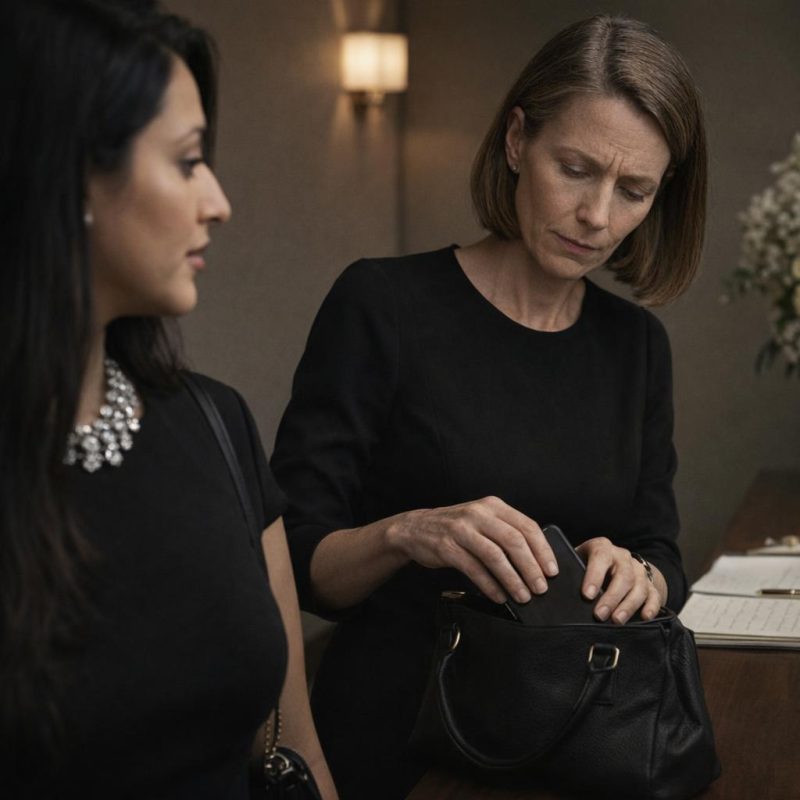 Image by RM AI
Celebrating Harold as an Individual
Melissa crossed her arms and looked at me with that tight polite smile she used when she wanted to end a conversation. "I was trying to celebrate Harold as an individual," she said, emphasizing the last word as if I'd somehow failed to understand that concept. "Not just as someone's husband, but as his own person with his own interests and accomplishments." The explanation sounded reasonable on the surface, the kind of thing that might make sense if you didn't think about it too hard, but it didn't address why she'd published it without showing me first or why she'd reduced forty-three years of marriage to a footnote. I started to respond, to point out that celebrating someone as an individual doesn't require erasing their relationships, but she cut me off before I could finish. "Sometimes widows romanticize marriages after someone passes," she said, her voice cold and pointed in a way that felt strangely personal, like she was making a judgment about me specifically rather than stating a general observation. "They remember things as better than they actually were." The comment hung in the air between us, sharp and deliberate, and I felt my face flush with a mixture of shock and anger. She wasn't apologizing or explaining—she was suggesting that my memories of my own marriage weren't reliable, that I was the one distorting reality. I stared at her, realizing this wasn't a misunderstanding or careless editing—something else was happening, though I couldn't yet see what.
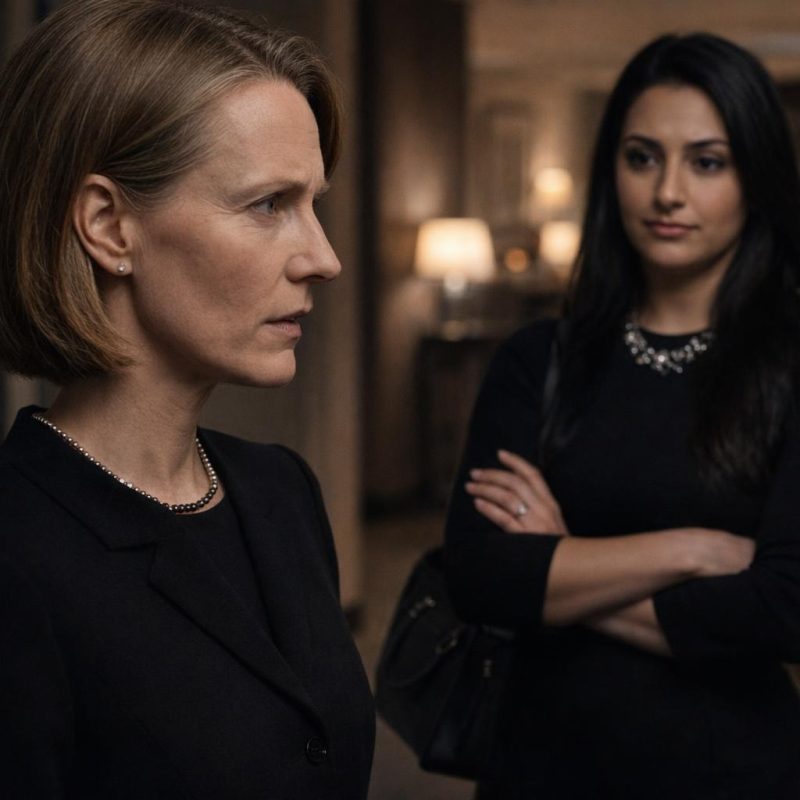 Image by RM AI
Not an Accident
Melissa's comment about widows romanticizing marriages stayed with me even after she walked away to greet another arriving guest, the coldness of it echoing in my head. The way she'd said it had been so specific, so pointed, like she'd been waiting for the right moment to deliver that particular observation. I'd expected confusion or maybe defensiveness about a mistake, but what I'd gotten instead was something that felt almost like an attack, a suggestion that I couldn't be trusted to remember my own life accurately. The obituary omissions weren't accidents—I understood that now with a clarity that made my hands shake. You don't accidentally write someone's life story in a way that erases their marriage, and you don't accidentally forget to show the widow the obituary before publishing it, and you definitely don't respond to questions about those choices by suggesting the widow is delusional. But if the omissions weren't mistakes, then what were they? What was Melissa actually trying to achieve by rewriting Harold's life this way? I watched her across the room, smiling and accepting condolences with that perfect funeral-appropriate expression, and felt something shift inside me from passive grief to active suspicion. I needed to review everything else Melissa had handled over the past few days, because if this wasn't an accident, what else had she changed?
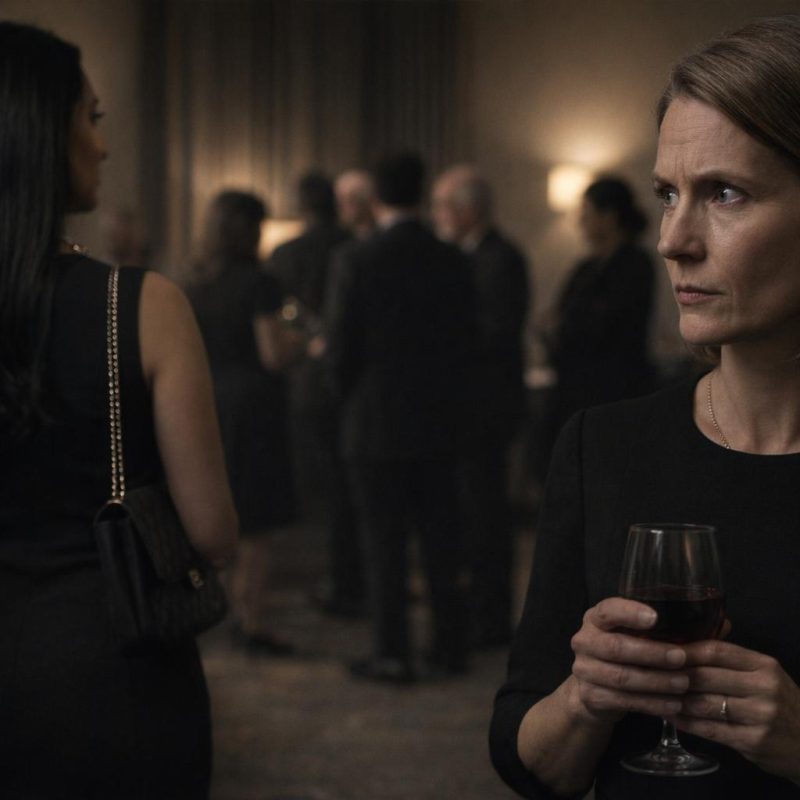 Image by RM AI
Reviewing the Details
I left the visitation early, telling Tom I wasn't feeling well, which wasn't exactly a lie since my stomach had been churning ever since my conversation with Melissa. The house felt too quiet when I got home, the kind of silence that usually made me think about Harold, but tonight my mind was focused on something else entirely. I went straight to the kitchen and pulled out every piece of paperwork Melissa had given me over the past few days—funeral home contracts, cemetery arrangements, memorial service details, all of it spread across the kitchen table in overlapping piles. I'd signed most of these forms in a fog of grief, trusting that Melissa was handling things correctly because that's what you do when family steps in to help during a crisis. But now I needed to actually read what I'd agreed to, to see what else might have been changed or omitted without my knowledge. I started with the funeral home contract, reading through each section carefully, and that's when I noticed something that made me pause. There were signatures on several forms that I didn't remember making, my name written in what looked like my handwriting but on documents I had no memory of reviewing. I started with the funeral home paperwork spread across my kitchen table, and immediately noticed signatures on forms I didn't remember approving.
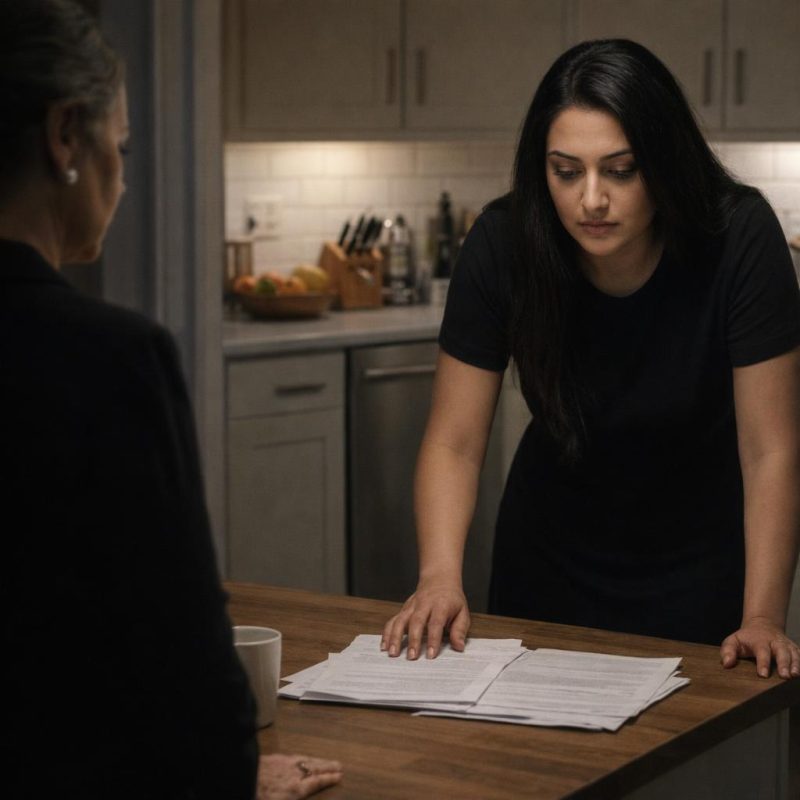 Image by RM AI
An Unfamiliar Account
I kept sorting through the paperwork, checking each form against my memory of what I'd actually signed, and that's when I found the memorial donation instructions tucked into a folder with the service program drafts. The page explained that in lieu of flowers, guests could make donations to a memorial account established in Harold's name, and it provided routing information for electronic transfers along with a mailing address for checks. I stared at the account details, feeling that same sick confusion I'd felt when reading the obituary, because I'd never heard of this account before. The routing number belonged to a bank we'd never used—Harold and I had kept our accounts at the same credit union for thirty years—and the email address listed for donation confirmations wasn't mine or Melissa's or anyone's I recognized. The account name included Harold's full name, Harold James Morrison Memorial Fund, which sounded official and appropriate, but I had no access to it, no way to see how much money had already been deposited or who controlled where it went. I pulled out my phone and searched for the bank's customer service number, my hands shaking slightly as I dialed. The account name included Harold's full name but was established at a bank we'd never used, and I had no access to see how much money had already been deposited.
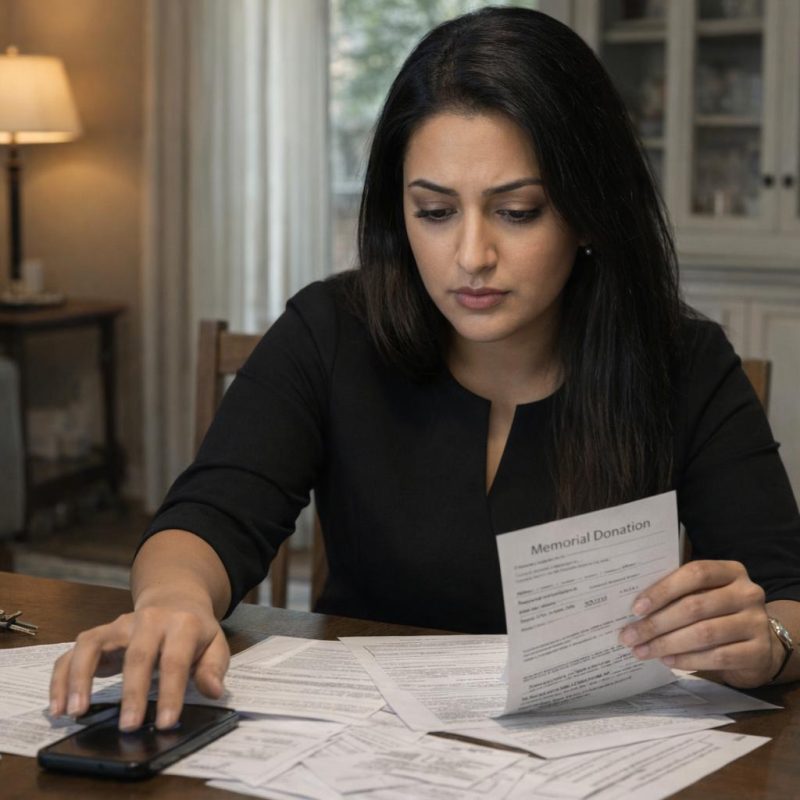 Image by RM AI
Who Created This
The bank representative who answered was polite but firm when I explained what I was calling about. Yes, they had an account under that name, and yes, it had been opened recently, but no, they couldn't provide me with details without proper authorization. "I'm his widow," I said, trying to keep my voice steady. "I should have access to any accounts established in his name." There was a pause, the sound of typing, and then the representative explained that the account had been opened three days after Harold's death by someone named Melissa Morrison, who'd listed herself as the primary account holder with Harold's estate as the beneficiary. Three days after he died—that would have been when I was still barely functional, when I couldn't get out of bed without crying, when Melissa had been so helpful and efficient about handling all the details I couldn't face. She'd opened a memorial account in Harold's name and made herself the person in control of it, and I'd had no idea it even existed until tonight. "Can I close the account?" I asked. "Or at least access the funds to see how much has been donated?" The representative's answer made my stomach drop. When I asked if the account could be closed or if I could access the funds, the bank representative said I'd need to speak with the account holder directly—meaning Melissa.
 Image by RM AI
Questions About Invitations
The phone calls started the next morning, one after another, all from people asking about the celebration-of-life event Melissa had organized for the following week. Harold's former colleague from the engineering firm called first, mentioning that he'd received an invitation and wanted to confirm the date, and something about the way he phrased his condolences made me ask if I could see what the invitation actually said. He read it to me over the phone, and I felt my jaw tighten as I listened to the language Melissa had chosen—words about Harold's 'journey toward independence' and his 'rediscovery of personal fulfillment' that echoed the same narrative from the obituary. Two more calls came that afternoon, both from acquaintances expressing surprise at the invitation wording, asking gentle questions about whether Harold had been struggling before he died or whether there were things about his final years they hadn't known. I hadn't seen the invitations myself, hadn't approved the language or even known they'd been sent out, and now I was fielding confused questions from people who'd gotten a completely distorted picture of Harold's life. Then Harold's golf friend Jim called, and after offering his condolences, he admitted something that made my blood run cold. One of Harold's golf friends admitted he'd almost not come because the invitation made it sound like Harold had been isolated and lonely before he died.
 Image by RM AI
The Isolation Narrative
I finally got my hands on an actual copy of the invitation when my neighbor Patricia stopped by with her mail—she'd received one and thought I might want to see it, given how confused she'd been by the wording. I sat down at the kitchen table and read through it slowly, feeling my chest tighten with each carefully chosen phrase. The celebration was described as honoring a man who had 'spent his final years seeking connection and meaning,' language that made Harold sound desperately alone, as though he'd been wandering through some emotional wilderness instead of living the comfortable retirement we'd planned together. There were references to his dedication to his hobbies, to the joy he found in time with his grandchildren, all framed in a way that suggested these were consolations for something missing rather than simply parts of a full life. I read it three times, trying to understand how someone could take a man who'd been content and twist the description into something so hollow. The invitation matched the obituary's tone perfectly, that same subtle implication that Harold had been searching for something he couldn't find at home. And then I reached the final paragraph, where it noted that 'despite personal challenges, Harold found solace in his hobbies and grandchildren,' and I felt something cold settle in my stomach because I understood exactly what that phrase was meant to suggest. The invitation was implying that I had somehow been one of those personal challenges he'd needed solace from.
 Image by RM AI
Beyond the Funeral
Sitting there with the invitation in my hands, I started thinking about every piece of communication Melissa had controlled since Harold's death, and I felt something shift in my understanding of what had happened. This wasn't just about one misleading obituary or a photo display that told the wrong story—the false narrative she'd created extended far beyond the funeral itself, seeping into every piece of communication that would shape how people remembered Harold and understood our marriage. The obituary had painted him as isolated and searching. The photos had suggested a man who found happiness only away from home. The invitations described someone seeking connection he couldn't find. Every single piece fit together, telling the same distorted story to different audiences, reaching Harold's colleagues and friends and extended family with a consistent message about a marriage that had somehow failed him. I pulled out my phone and started going through the condolence messages I'd received, seeing now how many of them reflected confusion or surprise, how many people had absorbed this narrative without questioning it because it came from family, from someone who should have known. My grief, which had been the dominant feeling since Harold died, was shifting into something sharper and more focused. This wasn't just about one misleading obituary or photo display—it felt like Melissa had been working to rewrite our entire history, though I still couldn't understand why.
 Image by RM AI
Waiting for Contact
I decided to wait and see if anyone else would reach out to me with concerns about the arrangements, suspecting that if I'd noticed these problems, others might have too. It seemed smarter to let people come to me rather than calling around asking questions that might make me sound paranoid or petty, especially when I was still trying to understand what was actually happening. So I went through the motions of those next two days—sorting through sympathy cards, responding to messages, handling the practical details that follow a death—while part of my mind stayed alert for any sign that someone else had seen what I was seeing. A few people called with standard condolences, and I listened carefully to their words, trying to detect whether they'd absorbed Melissa's narrative or whether they remembered Harold as he actually was. Most seemed genuine but slightly confused, as though they weren't quite sure how to talk about a man whose obituary and funeral arrangements had painted such an odd picture. I didn't push, didn't ask leading questions, just waited. Then, on the second afternoon, my phone rang with a call from a number I recognized—Kenneth Morrison, Harold's financial advisor—and something about the careful, measured tone in his voice when I answered told me immediately that this wasn't a routine condolence call.
 Image by RM AI
The Advisor's Concern
Kenneth started with the expected expressions of sympathy, but I could hear the hesitation in his voice, the way he was choosing his words more carefully than the situation seemed to require. Then he told me he was calling because Melissa had contacted him with questions that made him uncomfortable, particularly given how soon after Harold's death she'd reached out. He explained that she'd called his office asking about estate arrangements, about how certain accounts were structured, about beneficiary designations—questions that weren't necessarily inappropriate from family, but the timing and the specificity had struck him as odd. I felt my pulse quicken as I listened, understanding that whatever was happening had just expanded beyond funeral arrangements and false narratives into something involving Harold's financial affairs. Kenneth's voice remained professional, but I could hear the concern underneath as he asked his next question. He wanted to know if I'd authorized Melissa to make these inquiries on my behalf, if I'd asked her to reach out to him about estate matters. I told him no, I hadn't authorized anything of the sort, hadn't even known she'd contacted him. There was a long silence on the other end of the line, the kind of silence that carries weight, and I understood that Kenneth's discomfort had just shifted into something more serious.
 Image by RM AI
Detailed Questions
Kenneth cleared his throat and continued, explaining in more detail what Melissa had asked him. She'd wanted to know about trusts, about whether Harold had established any separate accounts or property transfers in recent years, about the structure of our estate plan and whether everything was held jointly or if there were individual assets. She'd asked specifically whether Harold had ever mentioned wanting to revise his beneficiary arrangements late in life, whether he'd expressed any dissatisfaction with how things were set up. The questions struck me as odd immediately because Harold and I had sat down with Kenneth just six months ago for our regular estate planning review, going through everything methodically the way we always did, and Harold had been completely satisfied with how everything was structured. He'd made a joke about how boring it was that we agreed on everything, how some couples apparently fought over estate plans but we'd never had a single disagreement about beneficiaries or trusts or any of it. I remembered that conversation clearly because it had been one of those moments of quiet contentment, both of us feeling grateful that we'd built something solid together. So hearing that Melissa had been asking whether Harold wanted changes, whether he'd been unhappy with the arrangements, felt wrong in a way I couldn't quite articulate. Kenneth was still talking, listing more of her questions, and I was beginning to understand that the stakes here were higher than I'd realized.
 Image by RM AI
The Timeline
Then Kenneth mentioned something that made my breath catch—Melissa had called him just two days after Harold's death, before the funeral arrangements were even finalized, before most people had even heard the news. Two days. I tried to imagine what those first forty-eight hours had been like for her, supposedly grieving her father-in-law, supposedly helping her husband through the loss of his father, and somewhere in that chaos she'd found time to call Harold's financial advisor with detailed questions about estate arrangements. Kenneth's voice carried the same disbelief I was feeling as he pointed out the timing, both of us recognizing how unusually quick that was for estate inquiries. Most people waited weeks, sometimes months, before dealing with financial matters after a death. I asked Kenneth what he'd told her, and he said he'd provided only general information, nothing specific about account balances or beneficiary details, just basic explanations of how estate processes typically worked. Then he added something that made everything feel more serious. He said quietly that something about her approach had felt off enough to prompt this call to me, that in twenty years of working as a financial advisor he'd developed instincts about these situations, and his instincts were telling him I needed to know about this contact.
 Image by RM AI
Emotional or Legal
I sat at the kitchen table after Kenneth's call ended, staring at the invitation that was still lying there, trying to fit the pieces together in a way that made sense. The question that kept circling through my mind was whether Melissa's rewriting of Harold's final years was about emotion and grief—some complicated psychological need to reshape the narrative—or about something more calculated involving the estate. The financial questions Kenneth had described suggested it might be the latter, but I couldn't quite connect how a false narrative about our marriage would serve any legal purpose. What would it matter to an estate settlement whether people believed Harold had been happy or unhappy at home? Beneficiaries were determined by legal documents, not by stories told at funerals or implications in obituaries. Unless there was something I didn't understand about how these things worked, some legal angle I wasn't seeing. I thought about calling Kenneth back to ask, but I wasn't even sure what question to pose. The whole thing felt like watching someone work on a puzzle when you could only see half the pieces—you knew there was a picture forming, but you couldn't make out what it was supposed to be. I kept coming back to those questions about whether Harold had wanted to change his beneficiary arrangements, about whether he'd been dissatisfied. Why would Melissa need to know that unless she was looking for some kind of opening, some way to challenge how things were set up?
 Image by RM AI
What Patricia Heard
My phone rang again that evening, and this time it was Patricia, Harold's sister, calling from Arizona. We'd talked briefly right after Harold died, but this call felt different—she had that tone people get when they're working up to saying something difficult. After a few minutes of small talk, she finally told me what was really on her mind. Melissa had told several extended family members over the past year that Harold was unhappy in retirement, that he felt unappreciated at home, that he'd been struggling with feeling like his contributions weren't valued anymore. Patricia listed the relatives who'd heard these comments—Harold's cousin in Michigan, his aunt in Florida, a few others I barely kept in touch with—and I felt something cold spreading through my chest as I realized how widely Melissa had been spreading this narrative. Then Patricia said something that made it even worse. She admitted, her voice apologetic, that she'd believed these comments at the time, had even mentioned to her husband that she was worried about Harold, that maybe retirement wasn't suiting him the way we'd hoped. I thanked her for telling me and ended the call as quickly as I could manage, but my hands were shaking as I set the phone down. Melissa had been planting seeds of doubt about my marriage long before Harold died.
 Image by RM AI
The Confidant Role
I called Patricia back the next morning because I needed to understand exactly what Melissa had been saying about Harold, and she walked me through it all with the kind of apologetic detail that made my stomach turn. Melissa had positioned herself as the person Harold confided in, Patricia explained, the one he turned to when he felt lonely or overlooked at home. She'd told Patricia and others that Harold would call her sometimes just to talk, that he'd share his feelings about retirement not being what he'd hoped, that he felt his contributions around the house weren't appreciated the way they should be. Patricia said Melissa had presented these conversations as private moments between them, intimate exchanges where Harold could be honest about his disappointments in ways he apparently couldn't be with me. The way Patricia described it, Melissa had painted herself as Harold's emotional support system during supposed marital difficulties, the understanding daughter-in-law who listened when his own wife didn't. What made it worse was how specific Melissa had been about one particular phrase—she'd told multiple family members, on separate occasions, that Harold 'deserved better' in his retirement years. Patricia remembered it clearly because Melissa had said it more than once, always with this sad, knowing tone, though she'd never actually elaborated on what 'better' meant or what Harold supposedly wanted instead. I thanked Patricia again and hung up, but I was shaking with anger at how systematically Melissa had undermined my marriage while positioning herself as Harold's confidant and ally.
 Image by RM AI
A Moment of Doubt
After Patricia's call ended, I sat alone in the living room wondering if there had been conversations between Harold and Melissa that I didn't know about, private moments where he'd expressed unhappiness he never shared with me. The doubt crept in slowly, insidiously, making me question whether I'd been as attentive as I thought, whether Harold had felt things he'd kept hidden because he didn't want to hurt me or because he'd found someone else who understood him better. I wondered if those phone calls Melissa mentioned had actually happened, if Harold had reached out to her during days when I was busy with my own activities, if there were feelings he'd confided to his daughter-in-law that his wife had somehow missed. The possibility made me feel sick, made me question everything I thought I knew about our last years together. But then I remembered the letter Harold had written me just two months before he died, the one I'd found tucked in my birthday card where he'd thanked me for making retirement the happiest time of his life, where he'd written in his careful handwriting that growing old with me was the greatest gift he'd ever received. I got up and found that card in my desk drawer, read his words again, saw the date he'd written it, and my doubt dissolved into absolute certainty that Melissa had been lying about everything.
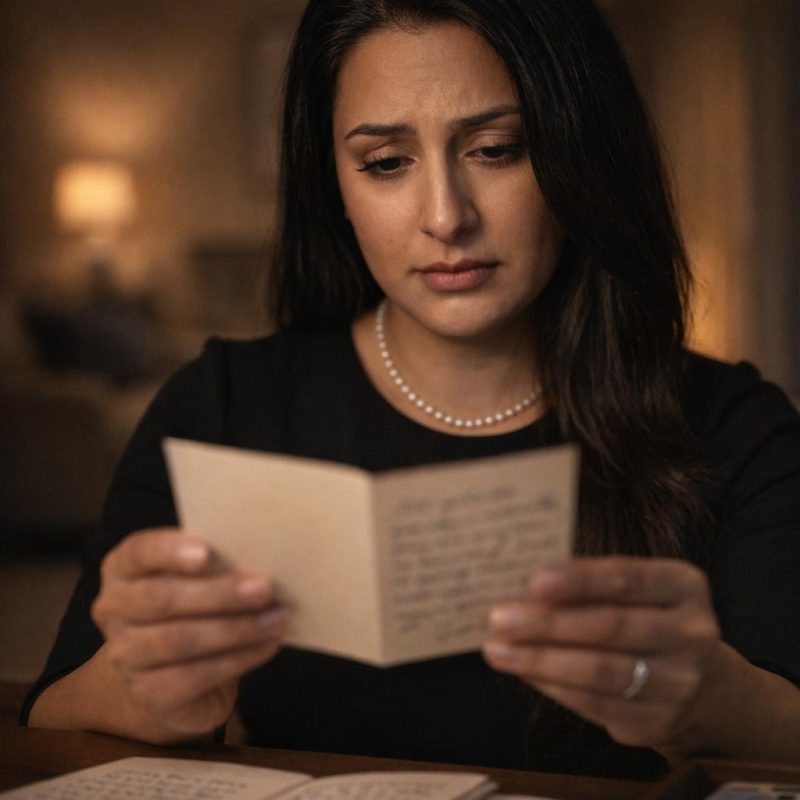 Image by RM AI
Searching His Office
I went to Harold's home office that afternoon with a sense of purpose I hadn't felt since before the funeral, determined to find something that might explain what Melissa was really after or prove what Harold truly felt about our life together. The office still smelled faintly of his cologne, and his reading glasses sat on the desk exactly where he'd left them, but I pushed past the wave of grief and started opening drawers systematically. I needed evidence, something concrete that would either confirm or deny the narrative Melissa had been spreading, something that might show me what she was trying to accomplish with all these lies. The desk drawers held years of financial records organized in Harold's meticulous way, travel itineraries from our trips to national parks and historical sites, correspondence with old colleagues and friends, insurance documents, and files labeled with dates and categories in his neat block letters. I pulled everything out carefully, stacking papers on the desk surface, knowing I needed to review it all methodically even though I wasn't entirely sure what I was looking for. Maybe there would be something in his financial records that explained Melissa's interest, or maybe his correspondence would show his true state of mind during retirement. I settled into his desk chair, surrounded by the documentary evidence of our shared life, and prepared to read through everything with the kind of attention Harold himself would have brought to an important task.
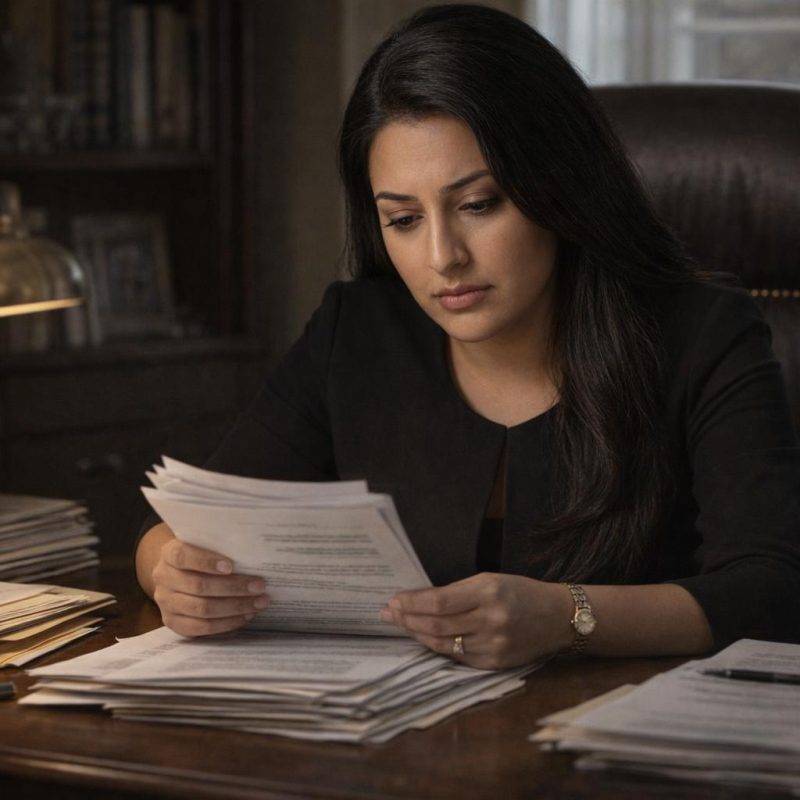 Image by RM AI
Methodical Review
I went through Harold's financial records and correspondence carefully over the next several hours, reading bank statements line by line, examining investment summaries for anything unusual, studying letters he'd exchanged with friends to see if he'd expressed concerns or unhappiness I hadn't known about. The bank statements showed routine transactions—groceries, gas, restaurant meals, the occasional larger purchase for home repairs or travel expenses. His investment summaries revealed careful management and steady growth, nothing alarming or out of the ordinary, just the kind of responsible planning Harold had always practiced. I read through emails he'd printed out from former colleagues, finding warm exchanges about golf games and lunch meetups, jokes about retirement life, questions about our latest trip or what project he was working on around the house. There were letters from his college roommate talking about their upcoming reunion, notes from his sister about family gatherings, correspondence that painted a picture of a man engaged with life and happy with his circumstances. I found careful records of our shared retirement activities too—receipts from the bed and breakfast in Vermont, tickets from the Civil War museum we'd visited, documentation of the garden renovation we'd planned together. Everything looked normal, routine, exactly what I remembered our life being. So far, nothing appeared that would support Melissa's claims or explain why she'd want to create such an elaborate false narrative about Harold's supposed unhappiness.
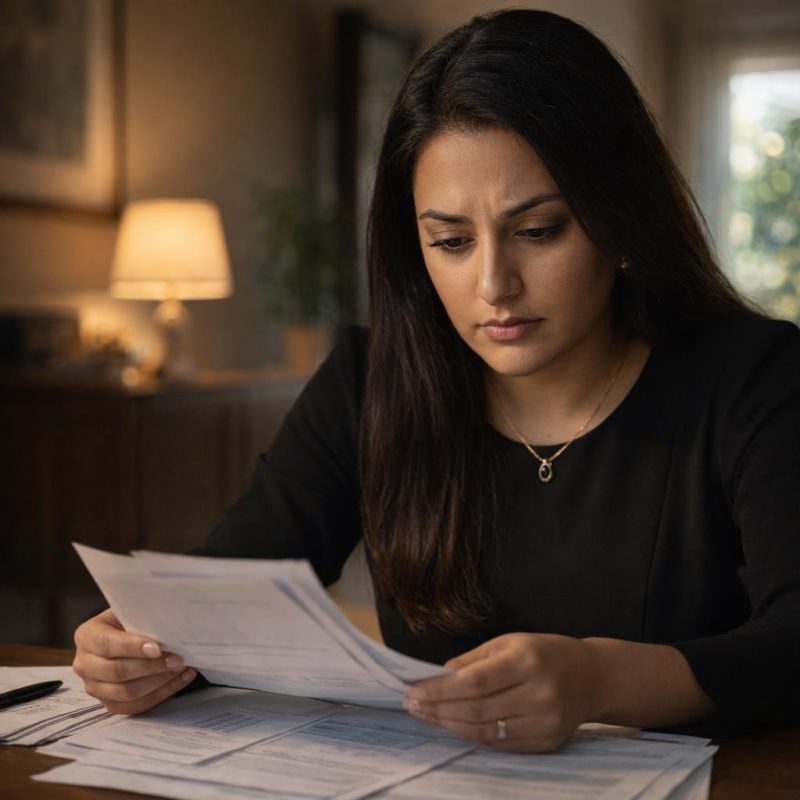 Image by RM AI
Normal and Happy
Harold's papers continued to show exactly what I remembered as I worked through more files—a normal, happy retirement filled with travel we'd planned together, family gatherings we'd hosted, and careful financial planning that reflected our shared goals and values. There were folders documenting our trip to Yellowstone, another for the kitchen remodel we'd discussed for months before starting, records of charitable donations we'd made to causes we both cared about. I found notes Harold had made about projects he wanted to tackle, lists of books he planned to read, ideas for day trips we could take when the weather improved. Everything pointed to a man who was content, engaged, looking forward to the future with his wife. There was no indication anywhere of unhappiness or dissatisfaction, no desire for changes to our estate planning or our living arrangements, nothing that suggested Harold felt overlooked or unappreciated or that he 'deserved better' than what we had. I felt reassured about the truth of our marriage, validated in my memories of those final years together, but I was also growing frustrated at not finding any explanation for why Melissa had constructed such an elaborate lie. I was beginning to think I wouldn't find anything useful when I noticed there were still several file boxes in the closet I hadn't checked yet, stacked on the upper shelf where Harold kept less frequently accessed documents.
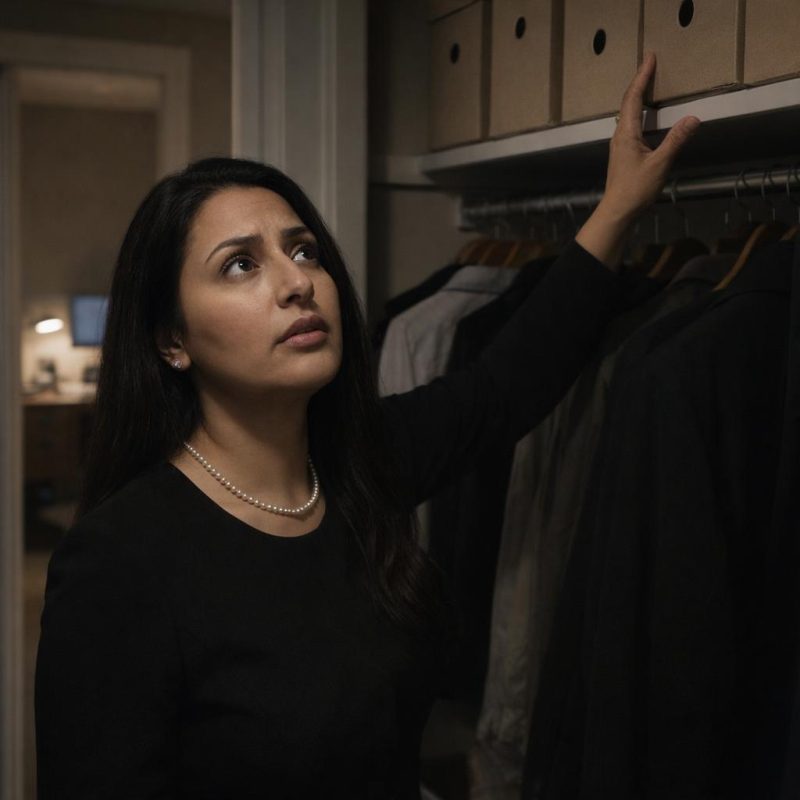 Image by RM AI
Nearly Finished
I was almost done searching Harold's office by late afternoon, having gone through nearly everything without finding any evidence of the unhappiness Melissa claimed or any explanation for why she'd want to create that false narrative about my husband's final years. My back ached from sitting in Harold's desk chair for hours, and my eyes were tired from reading through documents and correspondence, but I'd been thorough, checking every file folder and reading every piece of paper that might contain something relevant. The search had confirmed what I already knew—that Harold had been happy, that our retirement together had been good, that Melissa's version of events was completely fabricated—but it hadn't given me the answers I really needed about what she was trying to accomplish. I felt tired and increasingly frustrated, wondering if I was wasting my time looking through old papers when the truth might be something I'd never find documented anywhere. I pulled the last file box from the closet shelf, expecting more of the same routine documents I'd been finding all afternoon, tax returns from previous years or old insurance policies or receipts Harold had saved out of habit. But as I lifted the box down, I noticed a stack of papers wedged behind where the box had been sitting, pushed back against the closet wall where they wouldn't be visible unless you moved everything else out of the way.
 Image by RM AI
Hidden Papers
I set the file box aside on the floor and reached back into the closet to pull out the stack of papers that had been hidden behind it, my curiosity replacing the fatigue I'd been feeling moments before. The papers were printed emails, I realized as I brought them into the light, not the handwritten correspondence or official documents I'd been finding elsewhere but printed copies of email exchanges that appeared to involve Melissa based on the email address I could see at the top of the first page. They'd been tucked away deliberately, or at least that's how it seemed, pushed back where they wouldn't be noticed during normal use of the closet. The emails were dated from several months ago, I saw as I began reading them more carefully, from a period when Harold was still alive and we were planning our trip to visit the grandchildren. As I read through the first few exchanges, I realized they were discussing Harold's estate in ways that made my pulse quicken and my hands grip the papers tighter. The language was formal, businesslike, nothing like the casual family emails I'd been finding in Harold's other correspondence. These felt different, purposeful, like they were part of something planned rather than spontaneous family communication. I needed to read them more carefully to understand what I was looking at, but even from this first glance, I could tell I'd found something significant.
 Image by RM AI
Email Exchanges
I carried the stack of emails to Harold's desk and sat down, spreading them out so I could see the full exchange, and my hands started shaking as I read the first few messages more carefully. The emails were between Melissa and someone identified in the header as a legal consultant, not a family member or friend but a professional of some kind. I read the opening lines of the first email, seeing Melissa's name in the 'from' field and this consultant's name in the 'to' field, and the subject line that read 'Estate Planning Inquiry.' The messages contained phrases that made my breath catch—'estate arrangements,' 'beneficiary structure,' 'establishing grounds'—language that sounded legal and strategic in ways that made my stomach drop. These weren't casual questions about inheritance or simple requests for information. The tone was calculating, purposeful, like Melissa was consulting with someone about how to approach something specific related to Harold's estate. I could see there were multiple emails in the exchange, printed out and stacked in chronological order, a conversation that had apparently gone on for weeks. The emails contained phrases like 'estate arrangements,' 'beneficiary structure,' and 'establishing grounds,' and I knew I needed to read every word to understand what I'd just discovered.
 Image by RM AI
The Correspondence
I spread the printed emails across Harold's desk, arranging them so I could see the headers and dates, and my hands were still trembling as I started reading them in chronological order from the beginning. The first email was dated eight months ago, and I had to read that date twice to make sure I was seeing it correctly—eight months, which meant this correspondence had started long before Harold's death. The messages were between Melissa and a legal consultant specializing in estate matters, identified only by a professional signature line. I read through the early emails slowly, seeing Melissa's initial inquiry about estate planning procedures, the consultant's response explaining different types of beneficiary structures, and then a series of follow-up questions from Melissa that became increasingly specific. The language was careful, almost cautious at first, with Melissa asking general questions about how estates were typically divided and what factors influenced inheritance distribution. But as I moved through the stack, the tone shifted, becoming more focused and purposeful. I saw phrases like 'challenging existing arrangements' and 'grounds for modification' appearing in the responses, and my stomach tightened with each new message I read. The conversation had clearly evolved from general inquiry to something much more targeted, though I still couldn't quite grasp what Melissa had been planning. As I turned to the next page, I saw a subject line that made my stomach drop: 'RE: Estate Contest Viability.'
 Image by RM AI
Contest Viability
I stared at those three words—Estate Contest Viability—and felt my breath catch in my throat as I started reading the email thread beneath that subject line. The consultant's message explained in careful legal language that contesting an estate arrangement was possible under certain circumstances, particularly if evidence could be established that the deceased had intended to make changes to their beneficiary structure but had never formally completed those changes before death. I read that sentence three times, trying to understand what it meant, what Melissa had been asking about. The message went on to describe what kind of evidence would be needed—documentation of expressed intent, witnesses who could testify to conversations about changing the will, proof that the existing arrangement no longer reflected the deceased's wishes in their final years. My hands felt cold holding the pages as I continued reading, seeing Melissa's response asking more specific questions about what would constitute sufficient proof, what kind of testimony would be most compelling in such cases. The next email outlined different scenarios where estate contests had been successful, and I noticed the consultant kept returning to one particular theme—cases where the deceased had been distancing themselves from certain relationships or obligations prior to death. The language was clinical, professional, but there was something about the way these scenarios were described that made my pulse quicken. The consultant's next message asked a direct question that made me read it three times: 'What evidence exists of marital estrangement in the final years?'
 Image by RM AI
Marital Obligations
I felt my blood run cold as I read that question about marital estrangement, and I had to set the page down for a moment because my hands were shaking too badly to hold it steady. I picked it up again and forced myself to keep reading, finding the consultant's follow-up email where the specific legal requirements were spelled out. The message explained that successful grounds for contesting would need to demonstrate that Harold had been 'distancing himself from marital obligations' prior to his death—that phrase appeared in quotation marks, like it was specific legal terminology. I read those exact words over and over, feeling something shift in my chest as I processed them. Distancing himself from marital obligations. The phrase echoed in my mind, and suddenly I was thinking about the memorial display Melissa had created, the photographs she'd chosen that showed Harold alone or with David but almost never with me. I thought about the obituary language describing Harold's 'renewed independence' in recent years, the way it had portrayed him as someone who'd been living a separate life. I remembered the questions guests had asked me at the visitation—whether Harold and I had been separated, whether we'd been living apart, whether our marriage had been struggling. I stared at the phrase 'distancing from marital obligations,' and suddenly the memorial display, the obituary, the questions guests had asked me at the visitation began to align in a way that made my hands shake.
 Image by RM AI
The Strategy
I understood finally that every manipulated photograph, every rewritten memory, every carefully crafted omission in the obituary and memorial display had been designed to build legal grounds—Melissa was trying to establish evidence of marital estrangement so she could challenge Harold's will. The realization hit me like a physical blow, and I had to grip the edge of the desk to steady myself as all the pieces snapped into focus with terrible clarity. The photos showing Harold alone weren't just poor choices—they were deliberate documentation of a man living separately from his wife. The obituary language about independence and renewed purpose wasn't just insensitive—it was strategic narrative-building to support a claim of marital distance. The memorial display emphasizing Harold's individual pursuits while erasing our shared life wasn't just hurtful—it was evidence construction for a legal challenge. Every guest who'd asked me if we'd been separated, every relative who'd accepted Melissa's version of events, every person who'd left that visitation believing Harold and I had been living apart—they were all potential witnesses to testify that our marriage had been estranged. Melissa had seized control of the funeral arrangements not out of grief or helpfulness, but because she needed to reshape the public narrative about our marriage before the estate was settled. She'd used my shock and grief as cover while she built her case piece by piece. The funeral hadn't been a tribute to Harold; it had been the opening move in a legal attack on his estate, and she'd used my own grief as her cover.
 Image by RM AI
Eight Months Earlier
I checked the dates on the earliest emails again, needing to confirm what I'd seen, and my hands clenched around the pages as I verified that the first message in this exchange was from eight months ago—right around the time Kenneth had mentioned Melissa first inquiring about Harold's estate planning. Eight months ago, Harold had still been alive, still healthy, still coming home to me every evening and kissing my forehead before dinner. I'd been sleeping beside my husband every night while Melissa was already consulting with legal experts about how to challenge his will, already strategizing about how to establish grounds for contesting his estate arrangements. The timeline made me feel physically sick as I processed what it meant. This wasn't something Melissa had thought of in the chaos after Harold's death, some desperate idea that had occurred to her during the funeral planning. This was premeditated, calculated, planned over months while she smiled at family dinners and pretended everything was normal. She'd been building this strategy while Harold was still alive, while I was still making his coffee every morning and folding his shirts and believing we had years left together. I thought about all the times Melissa had visited during those eight months, how she'd asked casual questions about our routines, our activities, whether Harold had been traveling much for work. This wasn't opportunistic grief; this was premeditation that started while I was still sleeping beside my husband every night.
 Image by RM AI
The Beneficiary Structure
I read through more of the emails and found references to Harold's actual estate structure—details that made me realize Melissa must have gotten information from David about how the will was arranged. The consultant's messages referenced the fact that the estate heavily favored me during my lifetime, providing me with full access to assets and income while David and Melissa would receive only modest annual support until after my death. I saw the explanation to Melissa that this type of arrangement was common when the surviving spouse was expected to live for many more years, protecting them financially while ensuring children eventually inherited. But I also saw Melissa's response, where she'd calculated that with my age and health, she and David might be waiting twenty or thirty years before receiving their full inheritance. The financial pressure was right there in black and white—they needed money now, not decades from now. The consultant's follow-up email had been blunt about the implications: if Melissa could successfully challenge the will's terms by proving Harold had been estranged from me, by demonstrating he'd intended to change the beneficiary structure to provide more immediate support to David, then the estate distribution could be modified. If she could invalidate or modify the will's terms by proving estrangement, David's inheritance would come immediately rather than waiting decades for me to die.
 Image by RM AI
Failed Ventures
I sat back in Harold's chair and thought about David's financial situation, about all the failed business ventures he'd pursued over the past several years that Harold and I had watched with growing concern. There'd been the restaurant franchise he'd invested in three years ago, the one that had collapsed within eighteen months and lost most of his savings. Then the tech startup investment that had seemed so promising, the one Melissa had been particularly excited about, that had evaporated when the company went bankrupt. And just last year, the real estate development scheme that David had been certain would finally pay off, the one that had gone nowhere and left them with nothing but debt. I remembered now how Melissa had encouraged every single one of those ventures, how she'd been the one pushing David to take bigger risks, to invest more aggressively, to believe that the next opportunity would be the one that changed everything. And I remembered how Harold had refused to bail them out after each failure, how he'd maintained that his estate plan was designed to provide steady, modest support rather than enable more risky ventures. Harold had been trying to protect them from themselves, but all Melissa had seen was money being withheld, an inheritance locked away behind my continued existence. Their financial desperation wasn't accidental; it was the pressure that had made Melissa's scheme feel necessary.
 Image by RM AI
Building a Case
I understood now why Melissa had moved so quickly to seize control of the funeral arrangements, why she'd been so insistent about making all the decisions before I'd even had time to process Harold's death. She'd needed to reshape how people perceived our marriage immediately, before the estate went through probate, before everything was legally settled and unchangeable. Every choice she'd made at that funeral had been about creating a public record of supposed estrangement that could support later legal claims if she decided to contest the will. The memorial display, the obituary, the photo selections, the way she'd positioned herself as the primary griever while marginalizing me—it had all been strategic documentation. She'd been building a narrative that could be referenced in legal filings, that could be supported by witness testimony from everyone who'd attended. I thought about all those guests who'd left the visitation believing Harold and I had been separated, all those relatives who'd accepted Melissa's version of events without question, all those people who'd offered me condolences while clearly thinking our marriage had been troubled. Every guest who left the visitation believing Harold and I had been separated, every relative who accepted Melissa's version of events—they were all potential witnesses she could call upon if she ever contested the will.
 Image by RM AI
A Necessary Conversation
I gathered the printed emails carefully, my hands steadier than I expected them to be, and carried them to Harold's study where the fireproof safe sat in the corner behind his desk—the same safe where he'd kept our important documents for thirty-seven years. The combination was our wedding anniversary, something Melissa wouldn't know, something that felt like Harold's final gift of protection. I secured the emails inside along with the original will Kenneth had shown me, creating a record that couldn't be accidentally lost or conveniently destroyed. Then I sat at Harold's desk, in the chair that still held the impression of his body, and called David's cell phone. He answered on the second ring, his voice wary, probably expecting another call from Melissa coordinating some detail of the reception. I kept my tone neutral, almost businesslike, as I told him I needed to see him privately the following morning before the funeral reception began. He started to ask why, but I cut him off gently, saying only that it was important and that I needed to speak with him alone. He agreed, his voice tight with what might have been dread or guilt or both, and we set a time for eight o'clock at the house. After I hung up, I sat in the quiet study surrounded by Harold's books and photographs, steeling myself for what I needed to know. I needed to know how much my own son knew about what his wife had been building, and whether he had helped her or simply looked away.
 Image by RM AI
My Son's Silence
David arrived exactly at eight, looking like he hadn't slept, his suit rumpled in a way Harold never would have tolerated, his eyes refusing to meet mine as I led him into the study. I didn't waste time with pleasantries or offer him coffee or ease into the conversation the way I might have done before Harold's death, before I'd learned what people were capable of hiding. I simply placed the printed emails on the desk between us, the pages arranged in chronological order, and asked him directly whether he knew what Melissa had been planning. His face crumpled immediately, not with surprise but with something that looked horribly like relief at finally being caught, and his silence stretched between us like a chasm opening in the floor. I watched my son's mouth open and close without sound, watched him look at the emails and then away, watched his hands grip the arms of the chair as though he needed something solid to hold onto. He still couldn't speak, couldn't offer explanations or denials or even the comfort of claiming ignorance, and in that terrible quiet I understood that he'd known—maybe not everything, maybe not the full scope of what Melissa had orchestrated, but enough. Enough to have stopped her. Enough to have warned me. He couldn't meet my eyes, and in that moment I realized I was looking at a stranger wearing my son's face.
 Image by RM AI
Never Believed
David finally spoke, his voice barely above a whisper, saying he knew Melissa had been researching legal options for contesting the estate but he never actually believed she would go through with it, as though his passive awareness somehow absolved him of responsibility for what had happened at Harold's funeral. He said she'd been upset about the will, that she'd felt it was unfair, that she'd talked about challenging it but he thought it was just talk, just her way of processing disappointment. I listened to him try to minimize his involvement, to paint himself as an innocent bystander to his wife's schemes, and I felt something cold and hard settle in my chest where maternal forgiveness might once have lived. I asked him, my voice steady despite the fury building behind my ribs, if he would have stopped her if the scheme had succeeded—if he would have spoken up if I'd been successfully written out of Harold's legacy, if he would have corrected the record if everyone had left that funeral believing my marriage had been a sham. He opened his mouth immediately, probably ready with reassurances, but then something shifted in his expression and he hesitated, really hesitated, and I watched him realize he couldn't lie to me about this. His hesitation was its own damning answer.
 Image by RM AI
Public Truth
I told David, my voice calm and clear in a way that seemed to unsettle him more than anger would have, that I intended to address Melissa's lies publicly at the funeral reception that afternoon, that I would be correcting the record in front of everyone who had attended the visitation and believed her carefully constructed narrative. He immediately began begging me to handle it privately, to speak with Melissa alone, to avoid the embarrassment of a public confrontation at what was supposed to be a dignified gathering in Harold's memory. I let him finish his plea, let him exhaust all his arguments about family privacy and appropriate venues and not making a scene, and then I explained with perfect clarity that Melissa had made our marriage a public matter when she rewrote the obituary and staged that memorial display and told everyone who would listen that Harold and I had been estranged. She had chosen to lie publicly, to damage my reputation and Harold's memory in front of our entire community, so the truth would be public too. David's face went pale and he asked what exactly I was planning to do, what I was going to say, how I intended to handle the confrontation, his voice rising with each question. I told him he would find out along with everyone else.
 Image by RM AI
Allies and Evidence
I called Tom first, reaching him at home where he'd been preparing for the reception, and asked if he could help me prepare corrected copies of Harold's obituary along with a timeline of our actual marriage—the real story, not Melissa's revision. He agreed immediately, his voice steady and practical, asking what I needed and when. Then I called Kenneth and explained that I needed documentation proving the integrity of Harold's estate intentions, anything that showed Harold's state of mind and his clear wishes regarding the will. Kenneth was quiet for a moment, probably weighing professional ethics against personal loyalty, but then he said he could provide a letter Harold had written to accompany the will, along with dated correspondence that demonstrated Harold's consistent intentions over the years. Tom arrived within an hour with his laptop and printer, and together we assembled everything—the corrected obituary that accurately reflected our marriage, a timeline with specific dates and events that contradicted Melissa's vague implications of estrangement, copies of photographs from our travels with Harold's handwritten notes on the backs. Kenneth brought the documentation from Harold's estate file, including that letter Harold had written just two months before his death. By the time I was ready to leave for the funeral reception, I had everything I needed to dismantle what Melissa had spent months constructing.
 Image by RM AI
The Tearful Speech
I stood at the back of the funeral reception hall watching Melissa take the microphone, her blonde highlights catching the light as she arranged her face into an expression of practiced grief, her voice trembling with what I now recognized as performance rather than genuine emotion. She began speaking about Harold's final years, describing them as a time when he'd been 'searching for peace and understanding,' her words carefully chosen to suggest turmoil without making specific accusations, to imply marital discord without saying anything actionable. I watched her dab at her eyes with a tissue, watched David standing beside her with his shoulders hunched and his gaze fixed on the floor, watched Tom and Kenneth positioned near the front as we'd planned. Melissa continued her speech, talking about how difficult it had been to watch Harold struggle, how she hoped he'd found the peace he'd been seeking, each sentence another brick in the false narrative she'd been building since before Harold's body was cold. She thanked the gathered friends and family for supporting Harold through what she called 'difficult personal times,' her voice breaking on the words, and several people in the crowd nodded sympathetically while others glanced at me with expressions of pity. I began walking toward the front of the room.
 Image by RM AI
Walking Forward
I walked calmly to the front of the reception hall, not rushing, not storming, just moving with quiet purpose while carrying the photo album Harold and I had assembled together after his retirement—the thick leather-bound book filled with dated pictures from our travels, handwritten notes Harold had added describing our adventures, travel itineraries that proved we'd been together and happy, anniversary cards we'd exchanged over decades. I could feel eyes turning toward me as I moved through the crowd, could sense the confusion rippling through the room as people tried to understand what was happening, why the widow was approaching while the daughter-in-law was mid-speech. Melissa's voice faltered as she noticed the movement, her carefully rehearsed words stumbling over themselves as she tried to maintain her narrative while watching me draw closer. I kept my expression neutral, almost gentle, refusing to give her the angry confrontation she might have been able to spin as a grieving widow's instability. I stepped up beside her at the front of the room, close enough that she had no choice but to acknowledge my presence, and her speech died mid-sentence as I turned to face the crowd. I offered everyone a gentle smile before turning to face everyone who had believed the lies.
 Image by RM AI
The Real Story
I began speaking, my voice steady and clear, telling them the real story of our final years together—not the version Melissa had crafted, but the truth documented in Harold's own hand. I opened the photo album and showed dated photographs from our trip to the coast just six months ago, from our anniversary dinner at the restaurant where Harold had proposed thirty-seven years earlier, from the weekend we'd spent at the cabin last fall watching the leaves change. I read Harold's handwritten notes describing our happiness, his words about how retirement had given us time we'd never had before, his observations about finally being able to travel and explore and simply be together. Then I pulled out the letter he had written just two months before his death, the one Kenneth had brought from the estate file, and I read Harold's own words thanking me for making retirement the best years of his life, for being his partner and companion, for growing old with him exactly as we'd always planned. I spoke factually, without anger or accusation, simply presenting evidence that contradicted everything Melissa had told them, letting Harold's own documentation dismantle her lies more effectively than any emotional outburst could have done. The room had gone completely silent, and I watched faces shift from polite confusion to dawning understanding to quiet horror as they realized how thoroughly they had been deceived.
 Image by RM AI
Unraveling
Tom moved through the room with quiet efficiency, handing corrected copies of the obituary to clusters of guests while Kenneth followed behind distributing the accurate timeline of Harold's final years, and I watched faces shift as people read Harold's own words describing our happiness, our travels, our contentment in retirement. Kenneth stopped beside Harold's brother and his wife, speaking in his measured professional tone about the overwhelming documentation that existed to counter any claims of marital estrangement, and I saw understanding dawn in their expressions as they realized what Melissa had been building toward with her carefully constructed lies. He moved to Harold's cousin next, then to my sister-in-law, each time calmly explaining that any attempt to challenge the estate using false narratives would face not just my testimony but Harold's own written records, dated photographs, witness statements, and legal documentation that painted an irrefutable picture of our marriage. Tom handed another guest the corrected obituary, pointing to specific passages that contradicted what Melissa had told them, and I watched the information spread through the room like ripples across water, each person's realization leading to whispered conversations with their neighbors. Melissa stood frozen near the memorial table, her hands clutching her purse so tightly her knuckles had gone white, and I saw the exact moment she understood that her scheme had not just failed but had collapsed spectacularly in front of everyone who mattered. Her carefully maintained expression of tearful composure crumbled into something raw and panicked as she watched her entire narrative disintegrate before the room full of witnesses she had tried so hard to deceive.
 Image by RM AI
Complete Collapse
Guests began approaching me with quiet apologies, their faces flushed with embarrassment as they admitted they had believed Melissa's version of events, had accepted her implications about Harold's unhappiness, had even felt sympathy for what they thought was her burden of managing a difficult family situation. Kenneth stood beside David near the doorway, speaking in low tones that I couldn't hear but whose meaning was clear from David's slumped shoulders and defeated expression, and I knew Kenneth was confirming that the estate would proceed exactly as Harold had intended, that no challenge based on fabricated estrangement would succeed against the mountain of evidence we had assembled. Melissa tried to interject, stepping toward a group of Harold's colleagues with her hands raised in a gesture that might have been pleading or explaining, but they turned away before she could speak, their body language making clear they had no interest in hearing whatever justification she might offer. She moved toward Harold's brother next, her mouth opening to form words, but he simply shook his head and walked past her to embrace me instead, whispering an apology for not seeing through her manipulation sooner. I felt no triumph in watching her attempts fail, no satisfaction in her visible distress, only a somber recognition that truth had prevailed but at a cost that included my son's complicity and my family's fracture. The vindication I experienced was quiet and heavy, the kind that comes not from winning but from simply refusing to let lies become the permanent record of a life that deserved better.
 Image by RM AI
Family Fallout
In the days that followed, my phone rang constantly with calls from relatives who had initially sympathized with Melissa, their voices horrified as they pieced together what she had actually attempted, how she had tried to use Harold's death and my grief to rewrite our marriage and position herself to challenge his estate. Harold's cousin called to apologize for believing the implications about our separation, his wife sent flowers with a note expressing shame at not questioning the inconsistencies sooner, and even distant relatives I barely knew reached out to say they felt sick about how easily they had accepted Melissa's narrative. David came to the house three days after the reception, looking like he hadn't slept since the funeral, and we sat in Harold's study while he tried to explain how his financial desperation had made him vulnerable to Melissa's plans, how he had convinced himself that helping her was somehow protecting his family's future even as he watched her systematically erase me from his father's story. I listened to his explanations and apologies, heard the genuine remorse in his voice, but I also recognized that he had made choices, had enabled betrayal, had stood by while his wife tried to steal not just money but memory itself. When he finally left, promising to make things right somehow, I sat alone in the gathering darkness and acknowledged what I had been avoiding since the reception. My relationship with my son had been damaged in ways I wasn't certain could ever be repaired, and I didn't yet know if I wanted to try.
 Image by RM AI
What Grief Leaves Vulnerable
Weeks later I found myself sitting in Harold's study surrounded by the evidence of our real life together, the photo albums and letters and small mementos that told the true story of who we had been, and I finally understood something that had eluded me during those first numb days after his death. Grief leaves people dangerously vulnerable to those willing to reshape memories for their own purposes, because when you are drowning in loss, when every moment feels like moving through water, you grasp at anyone who seems to be throwing you a lifeline. I had handed over pieces of our story to Melissa believing she was helping me preserve them, never imagining she was collecting ammunition to erase me from the narrative entirely, and I had been too submerged in shock to recognize the pattern until it was nearly too late. She had understood that grief creates a fog where normal instincts fail, where warning signs get dismissed as paranoia, where you second-guess your own perceptions because surely no one would exploit such raw pain for personal gain. But she had exploited it, systematically and deliberately, and only Harold's own documentation had saved our story from being permanently rewritten. I looked at his photograph on the desk, his familiar smile captured in a moment of genuine happiness during our anniversary trip, and I made him a silent promise that our story would remain ours, protected now by truth, no matter who might try to rewrite it again.
 Image by RM AI
KEEP ON READING

20 Things You Never Knew About Snoopy
The Beagle Who Took Over the Funny Pages. Snoopy may…
By Annie Byrd May 20, 2026
20 Expeditions That Went Farther Than Anyone Expected
Journeys That Changed Exploration. Human history is filled with expeditions…
By Rob Shapiro May 20, 2026
There Have Been 5 Mass Extinctions. Are We Entering the…
Yasser Mokhtarzadeh on UnsplashEarth has a flair for dramatic resets,…
By Emilie Richardson-Dupuis May 19, 2026
The Historical Figure That Arguably Did The Most Good In…
Nobel Foundation on WikimediaWhen you think about the individuals who…
By Sara Springsteen May 19, 2026
The History of Bells, Sirens, and Other Sounds Used to…
Ashwini Chaudhary(Monty) on UnsplashLong before phones buzzed in pockets, public…
By Elizabeth Graham May 19, 2026
20 Historical Figures Who Struggled with Vision Problems
Through a Human Lens. Vision problems have affected people across…
By Christy Chan May 19, 2026