

My 32-Year-Old Boss Tried to Fire Me Over My 'Outdated' Wardrobe—She Had No Idea Who I Really Was
My 32-Year-Old Boss Tried to Fire Me Over My 'Outdated' Wardrobe—She Had No Idea Who I Really Was
Twenty-Five Years of Filing Cabinets and Survival
I came to Anderson & Klein at thirty-five with a cardboard box, a bruised sense of self, and absolutely nothing to lose. The divorce had taken the house, half my savings, and most of my confidence, and I needed somewhere to rebuild. What I found was a scrappy regional firm that ran on handshakes and paper calendars and the kind of institutional loyalty that doesn't really exist anymore. I started as a senior administrative coordinator, which was a generous title for someone who filed, tracked, and remembered everything. Over the next twenty-five years, I watched the firm grow from forty employees to nearly three hundred. I survived three CEO transitions, two major restructurings, and one acquisition attempt that nearly gutted the whole operation. I learned where every body was buried — metaphorically speaking — and which client relationships required a personal phone call versus a form letter. By sixty, I had become the kind of person a firm quietly depends on without ever quite saying so out loud. My navy slacks and cream blouses had become as much a part of the office landscape as the conference room on the fourth floor. I wasn't flashy. I wasn't ambitious in the way that gets you profiled in trade magazines. I was reliable, and at Anderson & Klein, reliable had always been enough. I assumed it always would be. Those twenty-five years had settled into my bones like something permanent.
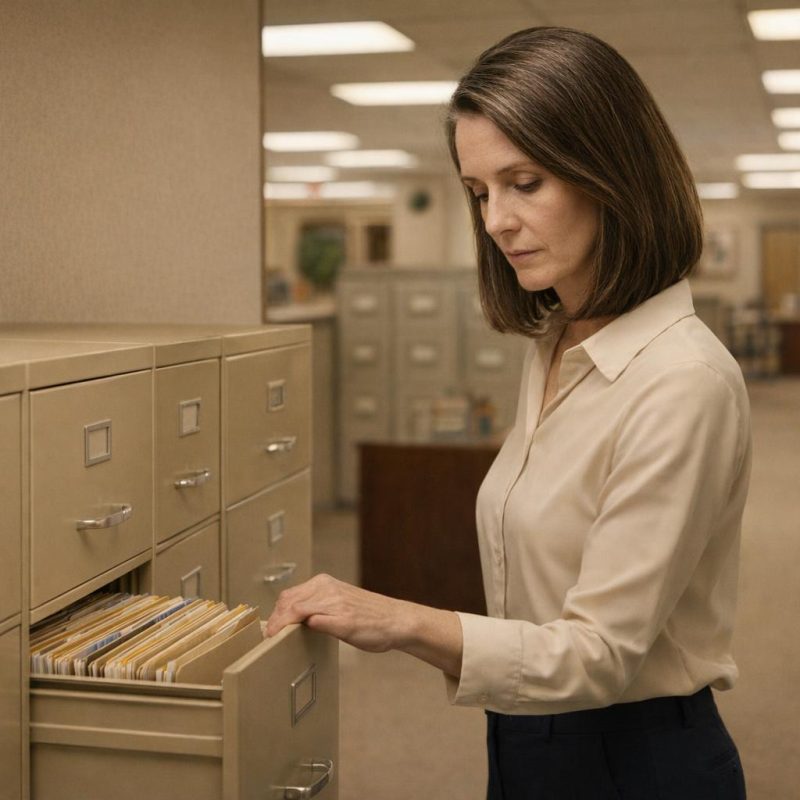 Image by RM AI
The Rhythm of Reliability
Most mornings followed the same comfortable rhythm. I arrived by eight, made a single cup of coffee, and worked through the quarterly reports before the open-plan office filled with noise. I had a system for everything — color-coded tabs, a running log of client follow-ups, a mental map of which partners needed hand-holding and which ones just needed space. That Tuesday I was cross-referencing billing cycles when David stopped by the printer near my desk. We talked about the Henderson account for a few minutes, nothing urgent, just the kind of easy back-and-forth that comes from years of working alongside someone. He mentioned the new copier was jamming again. I told him I'd already submitted the maintenance request. He laughed and said I'd probably submitted it before the jam even happened. It was that kind of morning — ordinary, unhurried, the sort of day that makes twenty-five years feel like a reasonable trade. I was wearing my navy slacks and a cream blouse, same as always, and I didn't give my clothes a second thought. I walked three departments over to drop off the Calloway file in person, because Patricia in accounts always appreciated the gesture, and small gestures were how relationships stayed intact. When I got back to my desk, there was a new email in my inbox: a mandatory department meeting scheduled for the following Thursday, with a note that a new supervisor would be introduced.
 Image by RM AI
Polished Like a Weapon
The meeting room on Thursday held maybe fifteen of us, arranged in the usual loose semicircle of people who'd rather be at their desks. The HR director stood at the front with the particular brightness she reserved for announcements she'd been told to make enthusiastically. She introduced Brianna as a symbol of the firm's forward momentum — those were her exact words — and emphasized that at thirty-two, Brianna brought a fresh perspective to a department that was, and I'm paraphrasing here, ready for evolution. Brianna walked in wearing a charcoal suit that fit like it had been made for her specifically, which it probably had. Her hair was perfect in the way that suggests either a great deal of effort or a great deal of money, and her smile was wide and practiced. She thanked the HR director warmly, said all the right things about collaboration and growth, and then let her eyes move around the room in that slow, assessing way some people have when they're taking stock of a new space. I noticed it because I've spent twenty-five years noticing things. Her gaze moved from face to face, pausing briefly on each person, and when it reached me it held for just a beat longer than it had on anyone else. I didn't read anything into it at the time. It was probably nothing. She had the quiet, settled look of someone taking inventory.
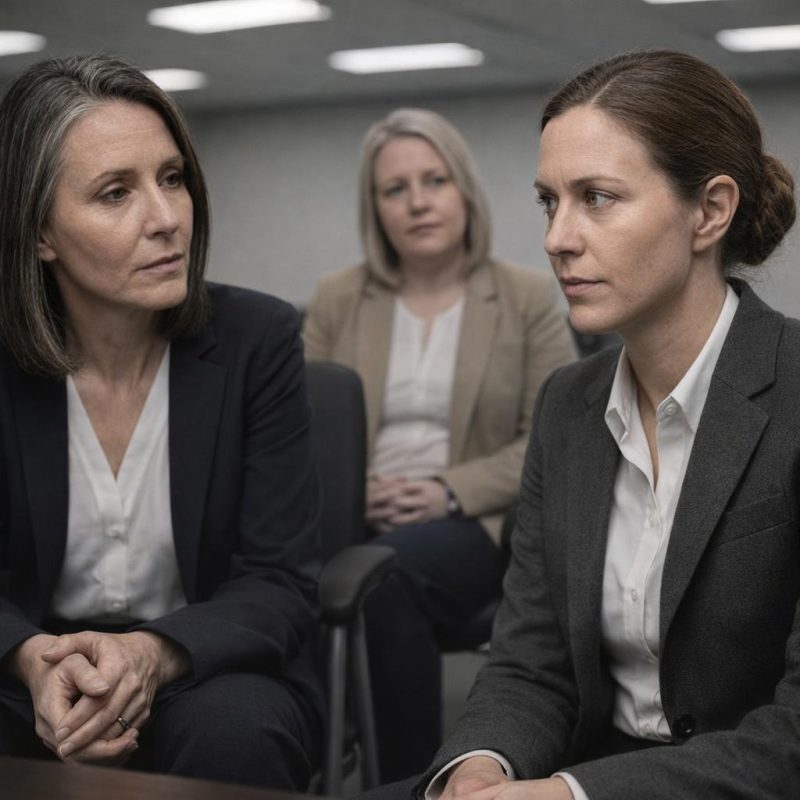 Image by RM AI
The Language of Synergy
Brianna held her first full team meeting the following Monday. She'd had a presentation prepared — slides, a color palette, the works — and she moved through it with the easy confidence of someone who had given versions of this talk before. The words came fast: synergy, optics, brand alignment, contemporary workplace culture, forward-facing identity. I wrote them all down. That's what I do — I document, I track, I keep the record straight. David sat two seats to my left, and at some point during the section on departmental optics I noticed him shift in his chair, just slightly, the way a person does when something lands a little sideways. I kept writing. Brianna talked about transformation with the kind of enthusiasm that's hard to argue with directly, because it's not attached to anything specific enough to push back on. She smiled frequently throughout, and the smile was warm enough on the surface, though I couldn't quite locate the warmth behind it. When she finished, she asked if there were questions. There were a few, polite and cautious. I had questions too, but they were the kind that felt premature to ask out loud — questions about what exactly was being transformed, and into what. I wrote those down as well, in the margin, in smaller letters. The meeting ended and people filed out, and I sat for a moment longer than necessary, the scratch of my pen the only sound left in the room.
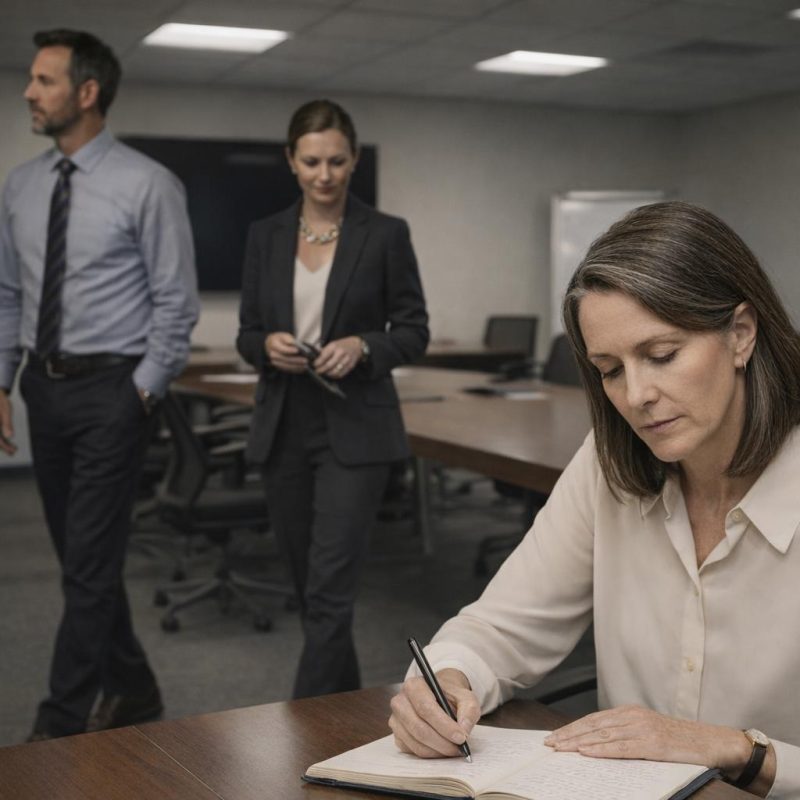 Image by RM AI
Contemporary Pieces
Three days after her arrival, Brianna's assistant sent me a calendar invite for a one-on-one. The subject line said 'Getting to Know the Team,' which seemed reasonable enough. I went in prepared to talk about the Henderson account, the Calloway transition, the quarterly cycle — the things I actually knew and could speak to with authority. Brianna was warm and attentive, and she asked good questions at first. She wanted to know how long I'd been managing certain client relationships, which partners I worked most closely with, what I considered my strongest contributions to the department. I answered honestly and felt, for a few minutes, genuinely seen. Then she tilted her head slightly, the way someone does before they change the subject, and said she'd been thinking about something she wanted to share with me. She said the firm was investing in its image, that every team member was part of that image, and that she had a personal shopper she absolutely loved who was wonderful at finding pieces that were — and she paused here — contemporary, but still flattering for different body types and, she added with a smile, different stages of life. I laughed, because I didn't know what else to do. I said something vague about appreciating the thought. She kept smiling and said she'd already made an appointment for next Tuesday.
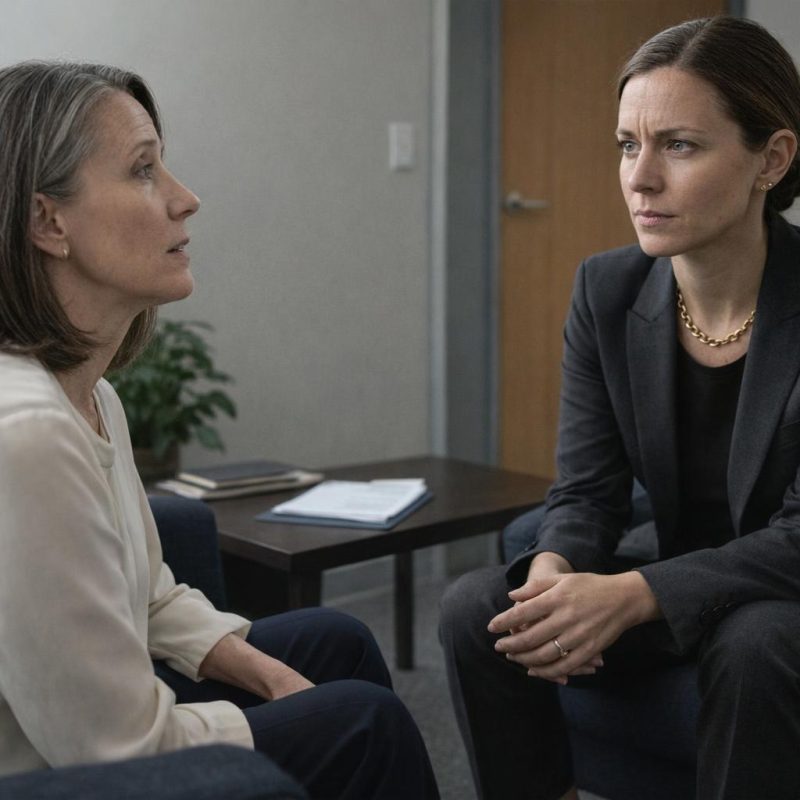 Image by RM AI
Practical as a Slur
The strategy session the following week was supposed to be about numbers. I had prepared a clean summary of the quarterly metrics — client retention rates, billing cycle efficiency, year-over-year comparisons — and I was three slides in when Brianna interrupted me. She didn't raise her hand or wait for a pause. She just spoke, her voice light and conversational, as if we were chatting over lunch rather than in the middle of a formal presentation. She said she'd been meaning to mention something, and she glanced down at my feet. My black flats. She said the word practical the way some people say sensible — not as a compliment, exactly, but not quite as a criticism either, hovering in that uncomfortable space between the two. She suggested that a low heel might elevate my overall professional look, that it was a small thing but small things added up. I said something like of course, thank you, and turned back to my slides. I found my place again, but the next data point came out slightly wrong — I caught it, corrected it, kept going. The room was quiet in the particular way rooms get when something has happened that no one is going to acknowledge out loud. I didn't look up from my notes. But when I finally did glance across the table, David's eyes had gone wide.
 Image by RM AI
Coffee Machine Warning
The next morning I was at the coffee machine when David appeared beside me, earlier than usual. He poured himself a cup without saying anything for a moment, which was unlike him — David was the kind of person who filled silences naturally. Then he said, quietly, that he'd noticed a few things since Brianna arrived. He said she seemed very focused on how the department looked, and he didn't mean the work product. I stirred my coffee and said something about new managers always having their own style. He nodded slowly, like he was choosing his next words carefully, and said that was probably true, but that I should keep my head down for a while. Just for a while. He said it the way you say something when you mean more than you're saying. I asked him what he meant exactly, and he said Brianna seemed to care a lot about image — more than substance, in his opinion — and that some people in that position tended to notice the people who didn't fit the picture they had in their heads. I told him I appreciated it, and I meant it, but I also thought maybe he was reading too much into a couple of offhand comments. I was probably overthinking the whole thing. He didn't push further. He just picked up his coffee, gave me a small nod, and glanced over his shoulder before walking away.
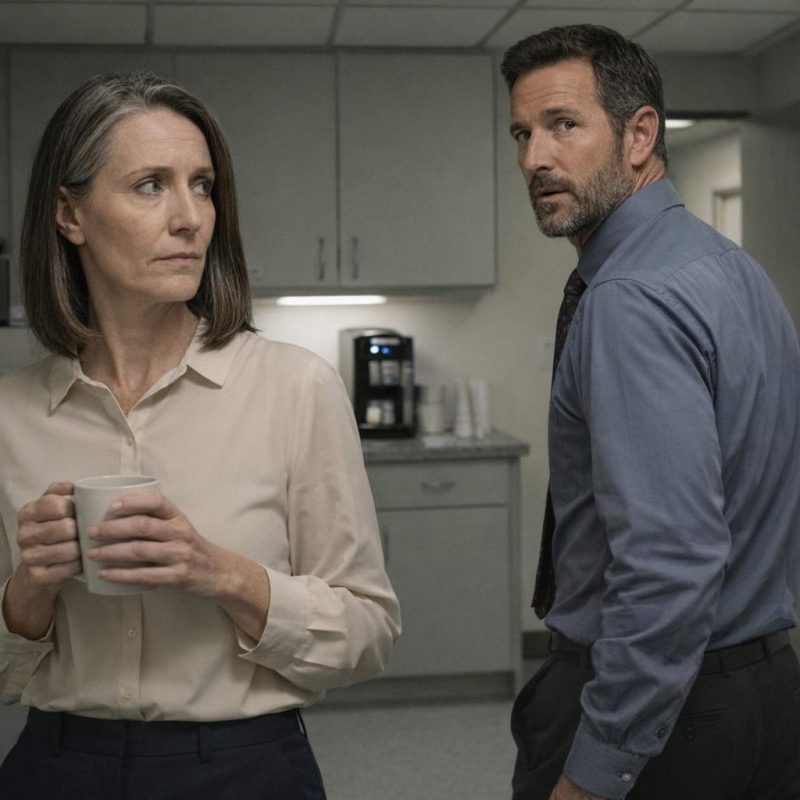 Image by RM AI
The Target on My Back
Back at my desk, I tried to settle into the morning's work. I had a client summary due by noon and a filing backlog that wasn't going to sort itself, and I told myself that was where my attention belonged. But David's words kept surfacing. I pulled up my calendar and scrolled back through the past week almost without meaning to — the one-on-one with Brianna, the personal shopper suggestion, the comment about my flats during the strategy session. Individually, each thing had a reasonable explanation. A new supervisor wanting to make an impression. An offhand remark about professional image. The kind of small adjustments any manager might suggest. I told myself that. I told myself it more than once. But there was something about the accumulation of it, the way each moment had been just pointed enough to land and just vague enough to dismiss, that I couldn't quite set aside. Maybe I was reading too much into it. I'd spent twenty-five years in this building without anyone questioning my value, and one week with a new supervisor wasn't going to change that. I opened the client summary and started typing. I focused on the work, the way I always had. But somewhere underneath the ordinary rhythm of the morning, I couldn't shake the feeling that someone had drawn a line around me in permanent marker.
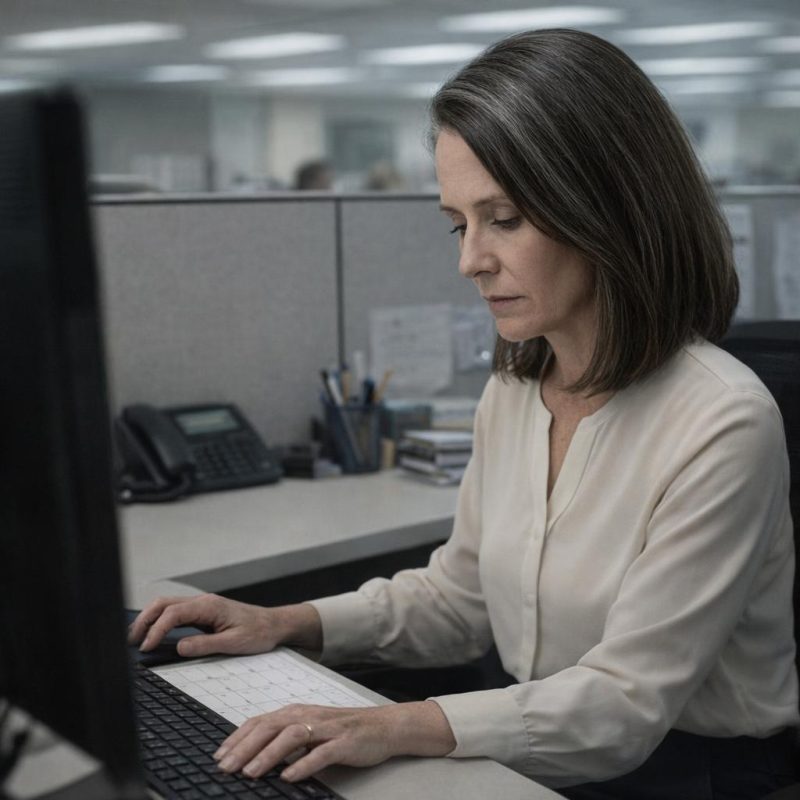 Image by RM AI
Excellence as Defense
I told myself the answer was simple: do the work better than anyone could question it. So that's what I did. I came in forty minutes early every morning that week, before the office filled up and the phones started, and I used that quiet time to go through client files with a level of attention I hadn't needed to apply in years — not because the work had ever slipped, but because I wanted it to be undeniable. I reorganized the Hendricks account documentation so thoroughly that the junior staff stopped having to ask me where things were. I caught a billing discrepancy in the Calloway file that would have caused problems at quarter-end. I drafted a process memo that streamlined how we handled incoming client correspondence, cutting the turnaround time by nearly a day. I stayed late twice to finish a summary report that didn't technically need to be done until Friday. I told myself this was just who I was — someone who took pride in the work. And that was true. But I'd be lying if I said there wasn't something else underneath it, some quiet need to build something solid enough to stand on. At the end of each day I straightened my desk, stacked my files, and sat for a moment in the particular stillness of an office winding down — the hum of the building, the faint smell of old paper and carpet — and it felt like enough.
 Image by RM AI
Faded Pastels and Disconnection
It was a Tuesday client prep meeting when it happened again. We were going over presentation materials for the Alderton account, and I'd put together a clean summary that I was genuinely proud of. Brianna was at the head of the table, flipping through the packet, and she paused — not at the content, but at me. 'Margaret,' she said, in that measured tone she had, 'I want to circle back to something we've been discussing as a team. There's a real risk of disconnection from current norms when our client-facing staff don't reflect a contemporary image.' She didn't look at me the whole time she said it. She didn't have to. I felt the eyes of the younger staff move in my direction anyway, quick and uncomfortable, the way people look at something they've been told not to stare at. David was across the table and he kept his gaze fixed on the packet in front of him, turning a page he'd already read. I kept my expression neutral. I said something about the summary figures and redirected the conversation, and Brianna let me, smiling pleasantly as if nothing had happened. But on the walk back to my desk I caught my reflection in the glass partition — my cream blouse, my navy slacks — and for the first time in twenty-five years I felt the heat rise in my neck.
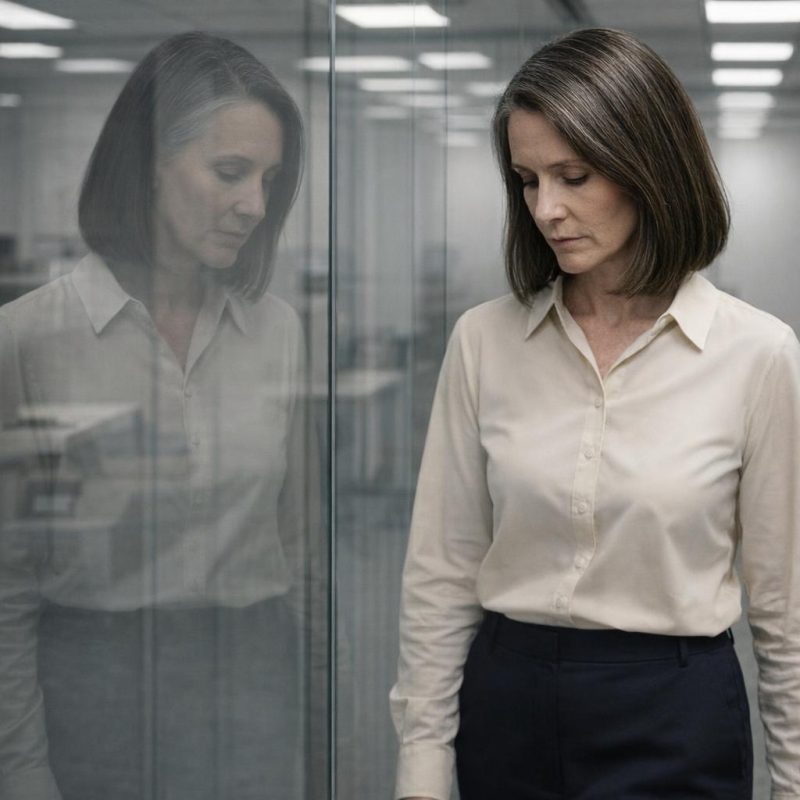 Image by RM AI
The Aesthetic of Success
I started paying attention in a different way after that. Not obsessively — I still had work to do — but I noticed things I'd been too busy to register before. The way Brianna's whole posture changed when she stopped by Cassie's desk, the twenty-six-year-old who wore structured blazers and color-blocked separates. She'd lean against the partition, laugh easily, ask about Cassie's weekend. She did the same with Tyler from analytics, who had recently started wearing slim-cut trousers and leather sneakers that probably cost more than my monthly grocery bill. With them, Brianna was warm in a way that felt genuine, or at least practiced enough to pass for it. With David, she was professional and efficient — not unkind, just neutral, like a thermostat set to a comfortable but unremarkable temperature. And with me, there was always that slight pause, that measured quality to her attention, as if she were noting something in a column I couldn't see. I told myself I might be reading into it. I'd spent enough years in offices to know that insecurity has a way of distorting your perception, making you see patterns in coincidence. Maybe Brianna simply connected more easily with people closer to her own age. Maybe I was letting David's warning color everything I observed. But the feeling stayed with me through the afternoon, quiet and persistent, like a photograph slowly coming into focus in a darkroom.
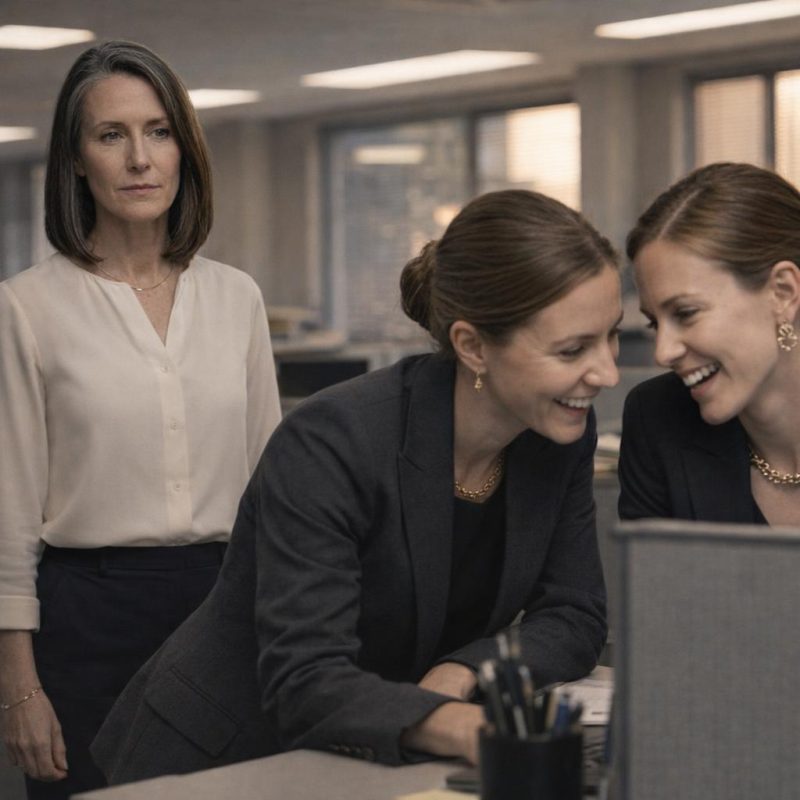 Image by RM AI
Professional Presentation Standards
It arrived on a Thursday afternoon, sandwiched between a calendar reminder and a vendor confirmation. The subject line read: Professional Presentation Standards — Department Policy Update. I almost scrolled past it. Department-wide emails from new managers weren't unusual — Brianna had sent three or four since she'd arrived, mostly about meeting protocols and response-time expectations. I clicked it open expecting the same kind of thing: a few bullet points, some corporate language about alignment and brand consistency, maybe a note about the upcoming client review cycle. The email itself was brief, just a paragraph directing staff to review the attached document and confirm receipt by end of week. The tone was pleasant, almost breezy. 'As we continue to elevate our department's professional profile,' it read, 'I want to ensure we're all working from the same framework.' I read that sentence twice. There was nothing in it I could point to as wrong, exactly. It was the kind of language that sounded reasonable in isolation, the sort of thing you'd nod along to in a staff meeting without a second thought. I set down my coffee. The attachment was a PDF titled Professional Presentation Standards, and I moved my cursor over it for just a moment before I clicked it open.
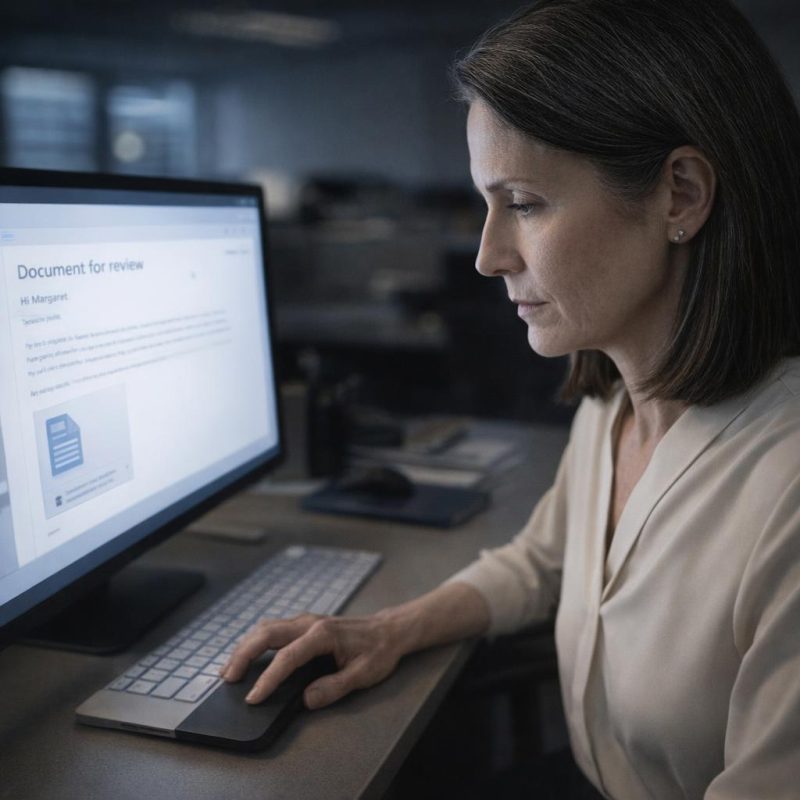 Image by RM AI
A Manifesto Against My Wardrobe
The document was four pages long and formatted like an official policy brief — headers, subheadings, a footer with the department name. I read it slowly. It opened with a section on 'client-facing image alignment' and the importance of projecting 'a contemporary, forward-looking professional identity.' By the second page it was describing, in careful corporate language, what it called 'presentation patterns inconsistent with current professional norms.' Muted or faded color palettes. Silhouettes that referenced earlier decades. Footwear prioritizing function over aesthetic. I sat very still. Each phrase landed with a specificity that unsettled me in a way I couldn't quite name. I was wearing a lavender blouse. I had worn some version of a lavender blouse, or a pale blue one, or a soft cream one, for the better part of two decades. I looked down at my sleeve. The fabric was fine — I took care of my clothes — but under the fluorescent light I could see where the color had softened slightly at the cuff from washing. The document used the phrase 'faded pastels' twice. I kept reading to the end, though I'm not sure why. By the time I set it down, there was a heaviness sitting in my chest that I didn't quite have a word for — something between embarrassment and something older and harder, the particular weight of being told, in four polished pages, that you no longer fit.
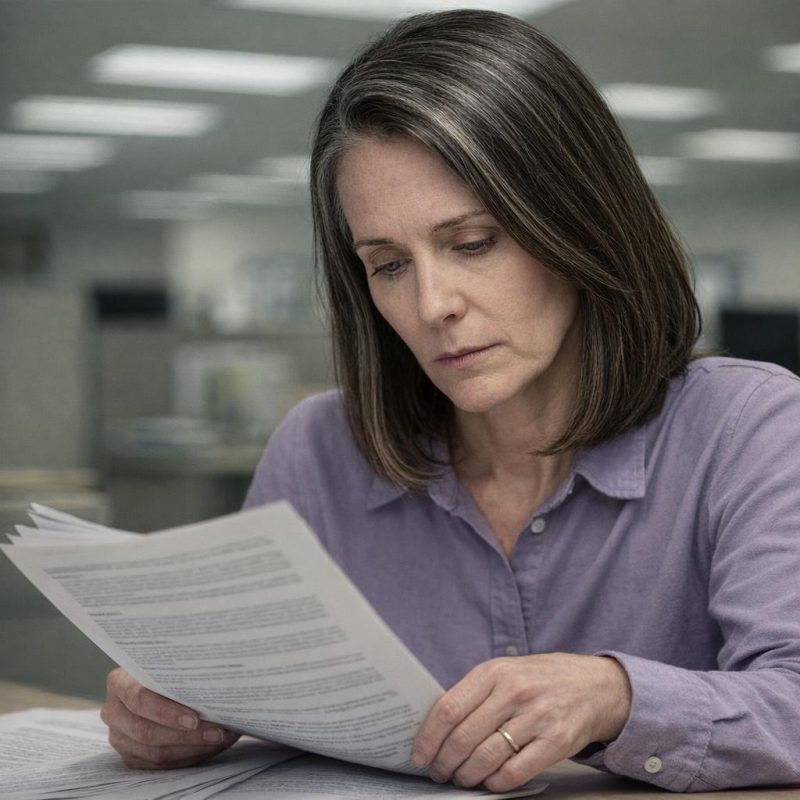 Image by RM AI
The Lavender Blouse
I waited until the hallway was quiet before I walked to the restroom. I needed a minute away from my desk, away from the screen with that document still open on it. The restroom on our floor had long mirrors above the sinks, lit from above by fluorescent panels that were unforgiving in the way only institutional lighting can be. I stood at the sink and looked at myself. The lavender blouse. I'd bought it three years ago from a department store I'd been shopping at for fifteen years, and I'd always thought it was a good color on me — soft, professional, appropriate. I looked at it now and tried to see it with fresh eyes. The fabric was still in good condition. The fit was fine. But the color — I could see it now, the way it had faded slightly at the shoulders, the way it sat in a palette that felt, under this light, like it belonged to a different era. I turned slightly and looked at the full picture: the navy slacks, the sensible flats, the practical cut of everything. It was the wardrobe of a woman who had spent twenty-five years being reliable and competent and present, and I had never once thought of it as a liability. I ran cold water over my wrists the way my mother used to tell me to when I was upset. The woman in the mirror looked back at me, and for the first time in a very long time, she looked old.
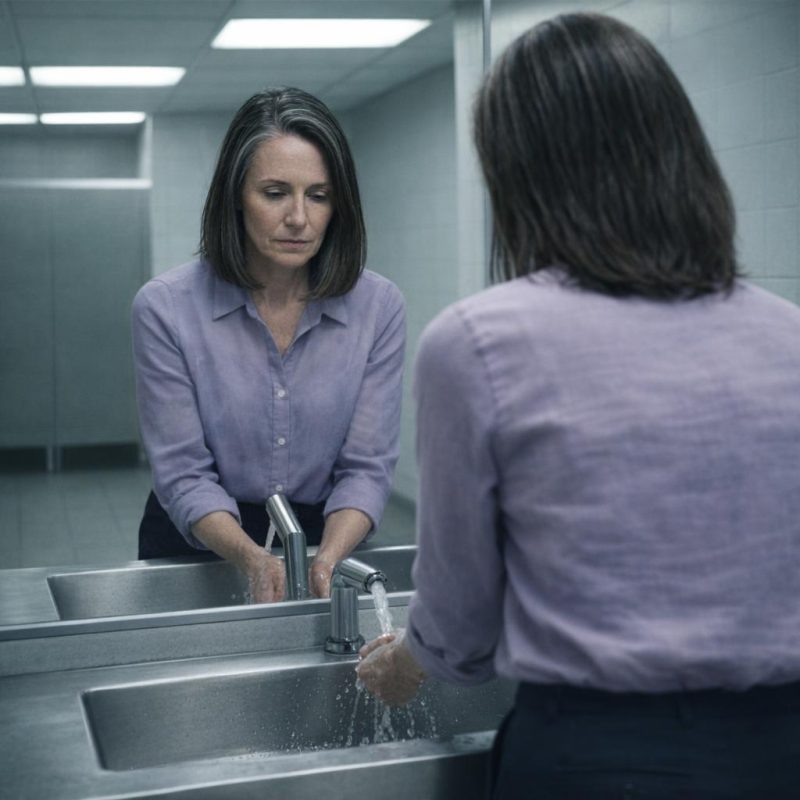 Image by RM AI
Two Weeks of Perfection
I went home that evening and made a decision. Not about the blouse, not about the wardrobe — about the work. Whatever Brianna thought of my clothes, I was going to make sure there was something else in the room that was impossible to ignore. The quarterly analysis was due in three weeks. I started on it that night. I pulled every data set I'd been tracking for the past year, cross-referenced the client retention figures with the workflow bottlenecks I'd been quietly documenting, and built a report that didn't just summarize the quarter — it mapped exactly where the department was losing time and money and showed, with specifics, how to fix it. I came in early every day for two weeks. I stayed late. I rebuilt the digital filing system that had been a source of low-grade chaos since the last software migration, the one three people had complained about and nobody had touched. I color-coded it, indexed it, wrote a one-page guide so anyone could use it without asking. I checked every figure in the analysis twice. I formatted the final report carefully — clean headers, clear charts, a summary page up front for anyone who wanted the short version. When I printed it on a Friday morning, the stack of pages felt solid in my hands, like something that had weight and substance and couldn't be argued with. I straightened the cover page, picked up the report, and walked toward Brianna's office.
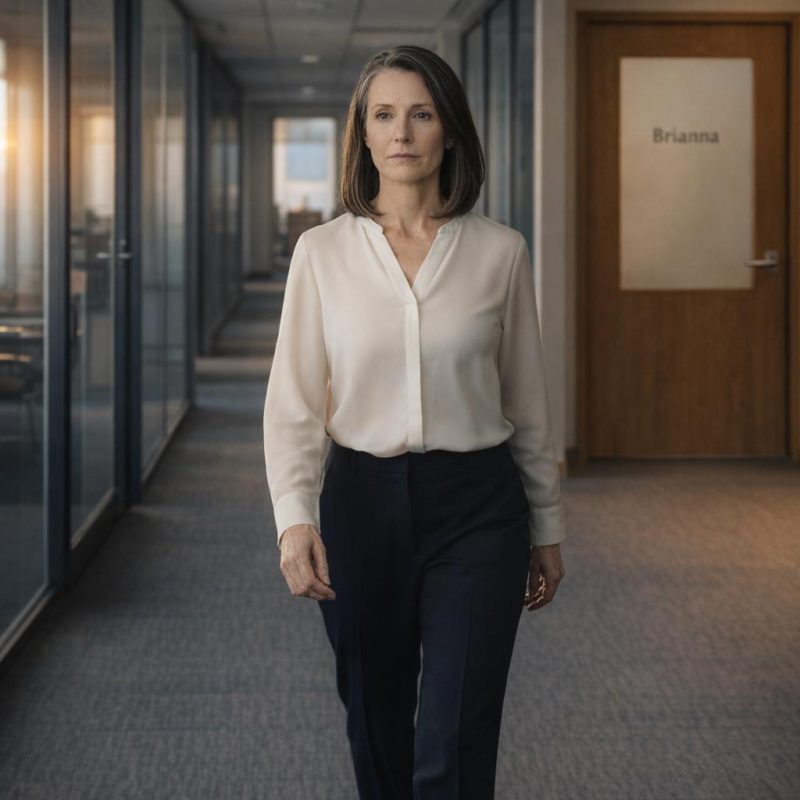 Image by RM AI
Two Seconds
Her door was open. I knocked on the frame and she looked up from her laptop with a smile that was perfectly calibrated — warm enough to be polite, brief enough to signal she was busy. I told her I'd completed the quarterly analysis and the workflow restructuring, and I set the report on her desk. I walked her through the summary page: the retention figures, the time savings from the new filing system, the projected impact on the department's efficiency numbers going into Q3. I kept my voice steady. I'd rehearsed none of it, but I'd lived with the data for two weeks and it came out clean and clear. Brianna looked down at the cover page. I watched her eyes move across it — not through it, just across the surface of it — for what I counted as approximately two seconds. Then she slid the report to the side of her desk with one hand, the way you'd move a coffee cup to make room for something else. She looked back up at me with the same pleasant expression she'd walked in with. 'That's great, I'll take a look,' she said. There was a small pause. 'By the way,' she added, tilting her head slightly, 'have you had a chance to make an appointment with the stylist I mentioned?'
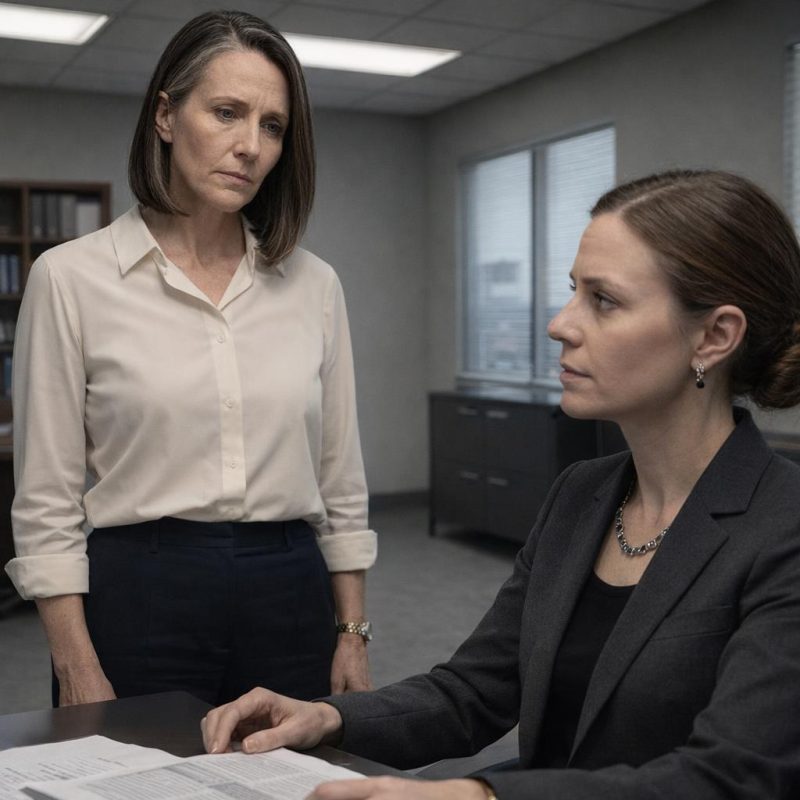 Image by RM AI
Quality Is Irrelevant
I walked back to my desk on autopilot, the report still vivid in my mind — two weeks of late evenings, cross-referenced data, a restructuring proposal I'd spent years quietly building toward. Two seconds. That's how long she'd looked at it. I set my bag down and stood there for a moment, staring at my monitor without turning it on. The quarterly numbers were solid. The workflow changes were already saving the department time. Any of my previous supervisors would have had follow-up questions by now, would have wanted to dig into the methodology. Brianna had slid it aside like a takeout menu she wasn't hungry for. I couldn't quite name what I was feeling — it wasn't anger exactly, more like the ground shifting slightly under my feet. Something felt off about the whole exchange, and I couldn't shake it. I sat down slowly and pulled up a blank document. If my work wasn't going to speak for itself, then maybe I needed something else to speak for me. I titled the document 'Log' and typed today's date, then the time, then a clean factual summary of exactly what had just happened in that office.
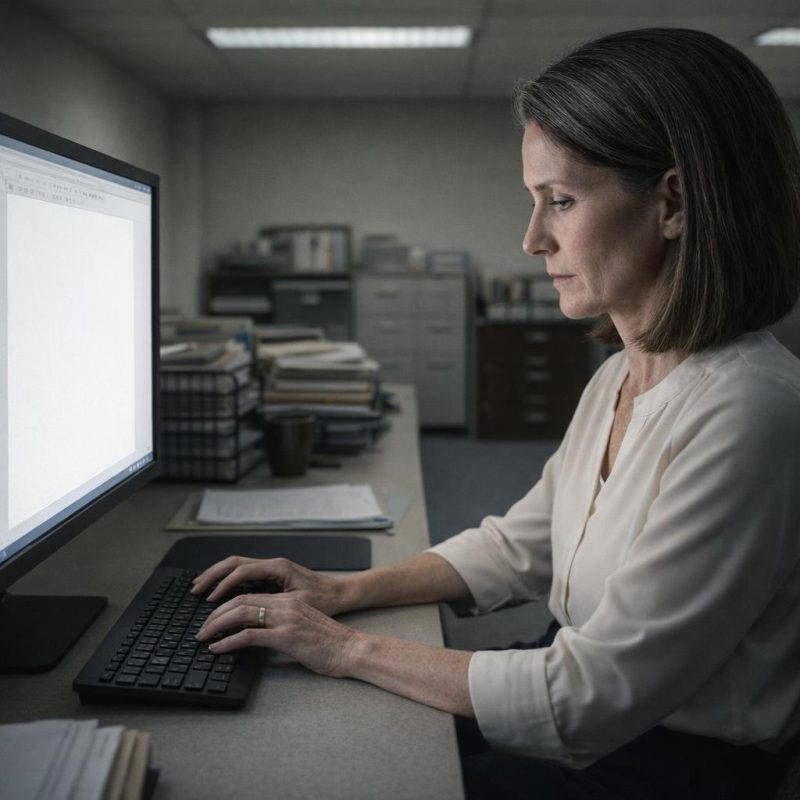 Image by RM AI
The Dismissal
I sat at my desk for a long time after that, not really working. The screen in front of me had a spreadsheet open but I wasn't seeing the numbers. I kept replaying those two seconds — the way her eyes had moved across the cover page without actually landing on anything, the way her hand had pushed the report to the side with such casual ease. I'd spent two weeks on that document. I'd come in early three Saturdays in a row. I'd pulled figures from archives that went back eight years because I wanted the trend lines to be airtight. And she'd said, 'That's great, I'll take a look,' in the same tone you'd use to tell someone their package had arrived. I found myself wondering what I could possibly do differently. Work harder? The work was already as good as I knew how to make it. Present it differently? I'd been clear, organized, concise. I turned the question over and couldn't find a bottom to it. The afternoon light shifted across my desk and I just sat there, the report somewhere on the other side of her office wall, already forgotten.
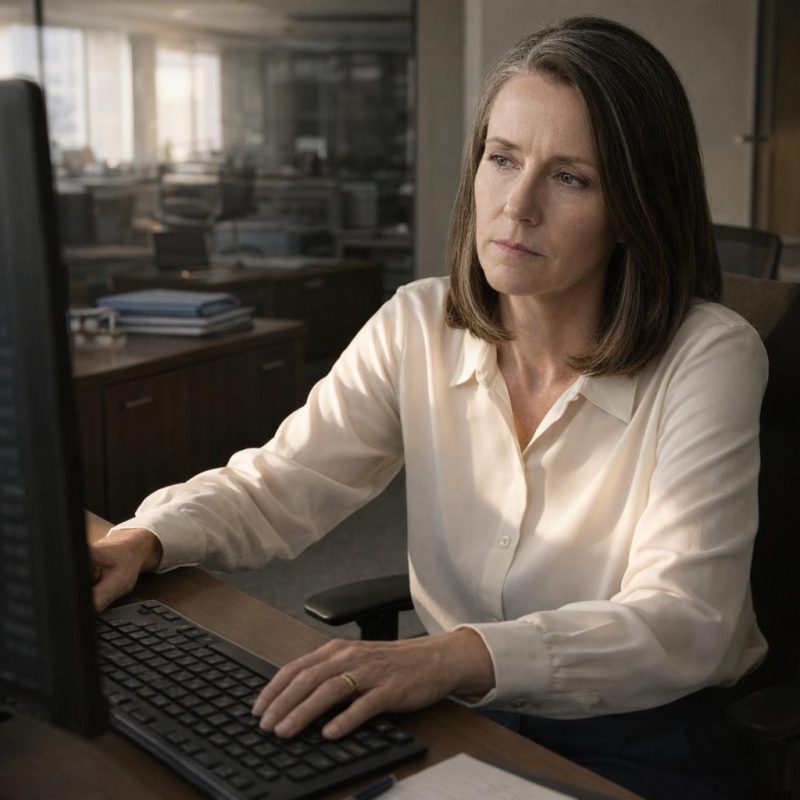 Image by RM AI
Watching the Pattern
Over the next few days I started paying closer attention to the room. Not in an obvious way — I'd been in offices long enough to know how to watch without appearing to watch. Brianna stopped by the marketing associate's desk twice in one morning, laughing at something on her screen, leaning in like they were old friends. When David submitted his revised budget projections — work I knew had taken him the better part of a week — she sent back a two-line email that said she'd circle back when she had bandwidth. I watched her pause at the desk of the youngest analyst on the team to compliment his slide deck, genuinely animated, asking questions. Then she walked straight past the desk of a colleague who'd been with the firm for nineteen years without so much as a glance. I told myself I was probably reading too much into it. People have preferences, rhythms, bad days. But I kept noticing it — who got the warm smile, who got the curt nod, who got nothing at all. Something about the shape of it unsettled me, though I couldn't yet say what I was actually seeing.
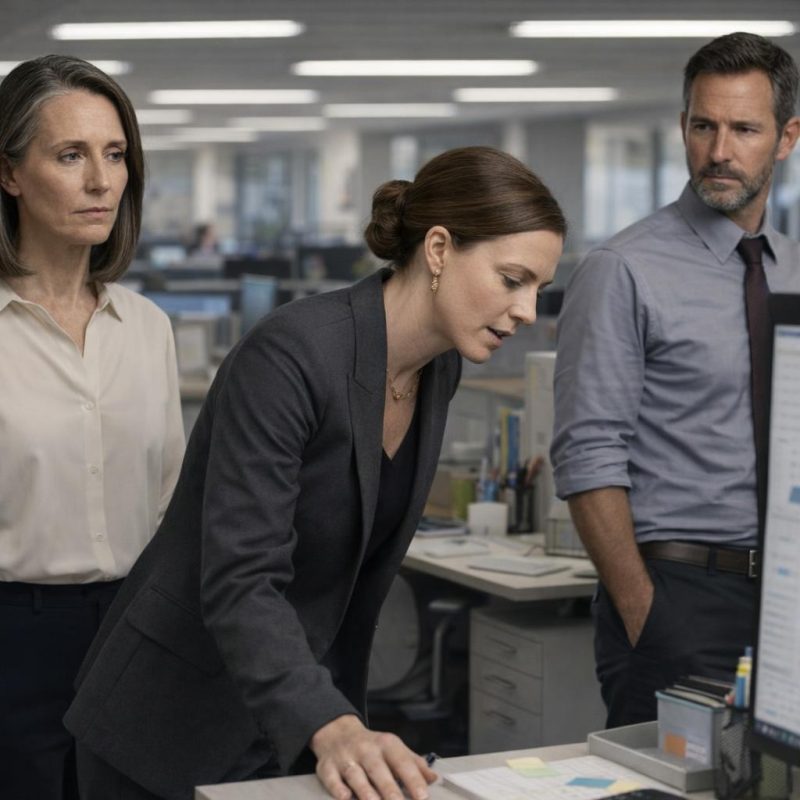 Image by RM AI
Thursday Morning Silence
Thursday morning I arrived at my usual time and the floor was almost completely empty. Not the quiet of an early hour — it was nearly nine-thirty, well past when the department normally filled up. I checked my calendar twice. No all-hands meeting, no off-site listed, no training session I might have missed. I walked the length of the floor slowly, coffee in hand, and counted maybe three people at their desks, all of them from other teams. I went back to my cubicle and checked my email for a forwarded invite, a group message, anything that might explain it. Nothing. I assumed maybe there was a late start I hadn't been looped in on, or a team breakfast somewhere that had run long. I got to work. I processed the morning's files, answered two client emails, updated the tracking sheet I maintained for the department. By noon the floor was still quieter than usual. I ate lunch at my desk the way I often did, half-reading an industry newsletter. It wasn't until I set down my sandwich and picked up my phone out of habit that I opened Instagram.
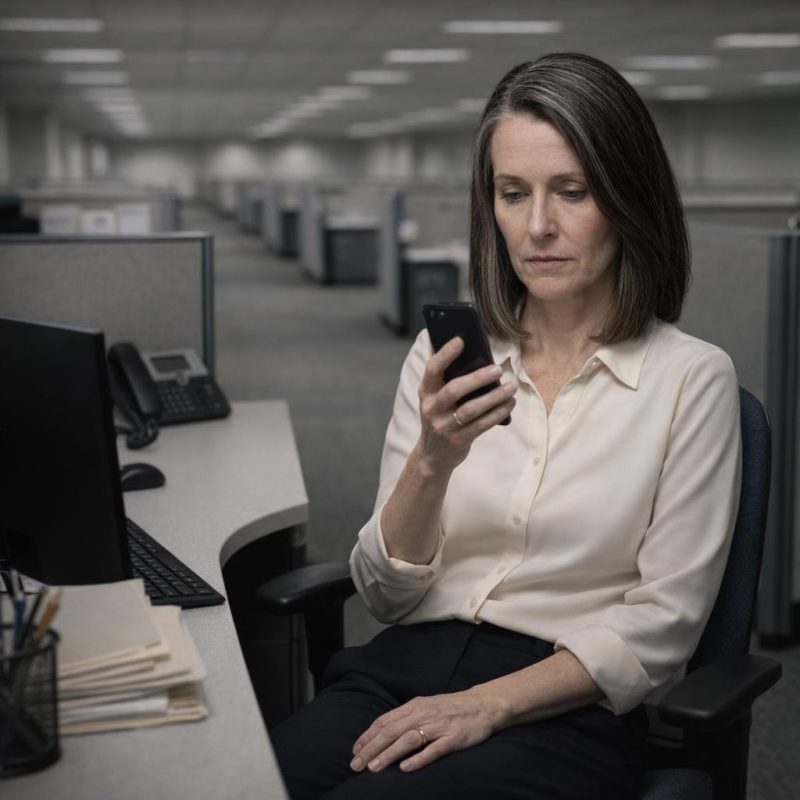 Image by RM AI
The Architecture of Exclusion
The photo had been posted two hours earlier. Marcello's — the Italian place three blocks from the office that the team had mentioned a few times in passing. I recognized the long table immediately, the dark wood and the low pendant lights. I zoomed in slowly, the way you do when you're hoping you're wrong about what you're seeing. I counted the faces. Seventeen people. I went through them one by one, matching names to profiles, to the backs of heads I'd sat near for months. There was the marketing associate. There was the analyst with the slide deck. There was David, near the far end, his face slightly turned. And there, at the head of the table, was Brianna, her hand raised mid-toast, her expression bright and easy. I set my phone face-down on the desk and looked at the half-eaten sandwich beside my keyboard. The newsletter was still open on my screen. The floor around me was quiet in a way it hadn't been all morning, and I understood now why. I sat in my cubicle with that understanding settling over me, heavy and still.
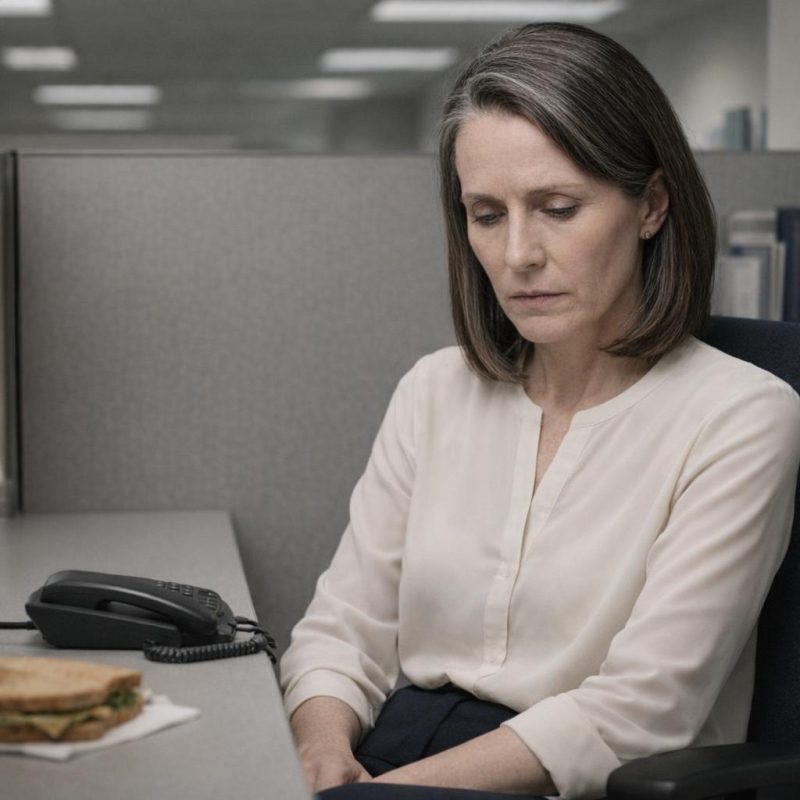 Image by RM AI
The Documentation Begins
I opened the log document after lunch and sat with the cursor blinking for a moment before I started typing. I entered the date and time first, the way I always did, then a plain description of what I'd found: the Instagram post, the restaurant, the headcount. I took a screenshot of the photo and saved it to the folder I'd created, then pasted the image link into the entry. Then I scrolled back through the earlier entries. The wardrobe comment from the first week. The report that had been set aside without being read. The two-line email David had received. The pattern of who got Brianna's attention and who didn't. I added a note about the Thursday morning quiet — the empty floor, the calendar with no explanation. I wasn't sure what I was building exactly. I told myself it was just good practice, the kind of careful record-keeping I'd always believed in. I saved the document and sat back, watching the list of dates and details fill the screen.
 Image by RM AI
The Return
They came back at two-thirty in a wave of noise and warmth, the kind of energy a long lunch with good wine leaves on a group. I heard them before I saw them — laughter from the elevator bank, someone finishing a story at volume, the particular looseness of an afternoon that had gone well. I kept my eyes on my screen. They filtered past in ones and twos, still talking, still carrying the meal with them. Someone mentioned the pasta. Someone else said something about the tiramisu and got a laugh. David came through with the rest of them, his jacket slightly rumpled, and walked past my desk with his eyes on the floor. He didn't slow down. He didn't look up. I watched the edge of my monitor and kept typing. The conversations continued around me, easy and warm, like water moving around a stone. Then Brianna's voice came from somewhere near the center of the floor, clear and carrying, asking if everyone had had a wonderful time.
 Image by RM AI
The Invisible Woman
The afternoon stretched out long and slow. The Marcello's conversation didn't stop — it just moved around the office in pieces, attaching itself to different desks, different clusters of people. Someone near the window talked about the wine list for a good ten minutes. The analyst stopped by a colleague's desk to show her something on his phone, and I caught the words 'the dessert menu' before their voices dropped into laughter. I kept working. I processed the afternoon's files. I updated the tracking sheet. I answered an email from a client who'd been waiting three days for a response that should have gone out before the lunch. David sat at his desk with his headphones in, eyes forward, not participating in the conversations but not looking my way either. At one point Brianna moved through the office in a slow loop, stopping at desks, asking questions, touching a shoulder here, laughing at something there. She passed my cubicle without breaking stride, her gaze moving past me the way it might move past a filing cabinet — present, noted, irrelevant.
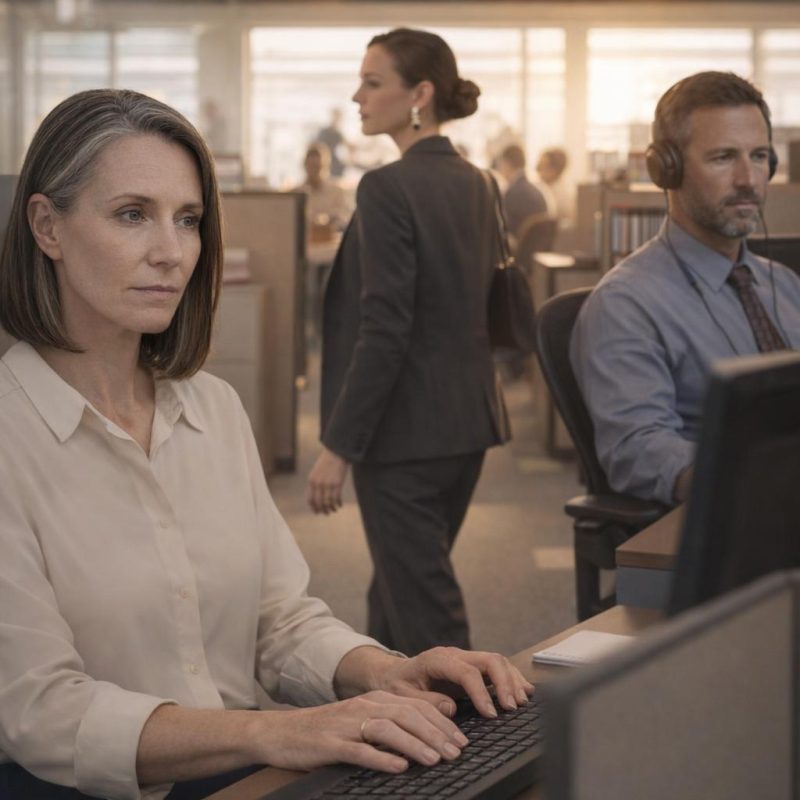 Image by RM AI
The Long Drive Home
I left at five on the dot, which I had done every day for twenty-five years, and nobody noticed that either. The elevator ride down felt longer than usual. I sat in the parking garage for a moment before starting the car, not ready for the drive yet, not sure what I was waiting for. Traffic on the 405 was the usual Friday crawl, and I found myself gripping the steering wheel tighter than I needed to, replaying the afternoon in pieces — the laughter from the restaurant, the Instagram photo on someone's screen, the way Brianna had walked past my cubicle without a flicker of acknowledgment. I thought about the team lunches I had attended over the years. The retirement parties I had helped organize. The holiday potlucks where I had always brought the same pecan pie and people had always asked for the recipe. I wondered if I had missed something earlier — some shift in the room's temperature that I should have caught. Maybe I had been too focused on the work to notice the walls going up around me. By the time I pulled into my driveway, the streetlights had come on. I sat in the car a little longer, the engine ticking as it cooled, and the quiet of the neighborhood settled around me like something I hadn't earned.
 Image by RM AI
The Morning After
I got in early Friday, which I also did most days, and for a few minutes the office had that particular stillness I had always liked — the hum of the HVAC, the distant sound of the elevator, the sense of the day not yet having started. I set my bag down on my chair and reached for my keyboard out of habit. That's when I saw it. A single sheet of paper, centered on my desk with the kind of deliberateness that made it impossible to mistake for something accidentally left behind. It was a printed copy of the Professional Presentation Standards document — the same one that had been distributed at the all-hands meeting two months ago. Someone had gone through it with a yellow highlighter. The phrases that were marked stopped me cold. 'Faded or washed-out color palettes inconsistent with a modern professional environment.' 'Silhouettes that read as dated rather than classic.' 'Footwear that prioritizes function over professional presentation.' I looked up slowly and scanned the room. Everyone was at their screens, heads down, the morning routine already underway. Nobody looked my way. I picked the document up carefully, as if it might tell me something more by touch, and the highlighted phrases stared back at me from the page.
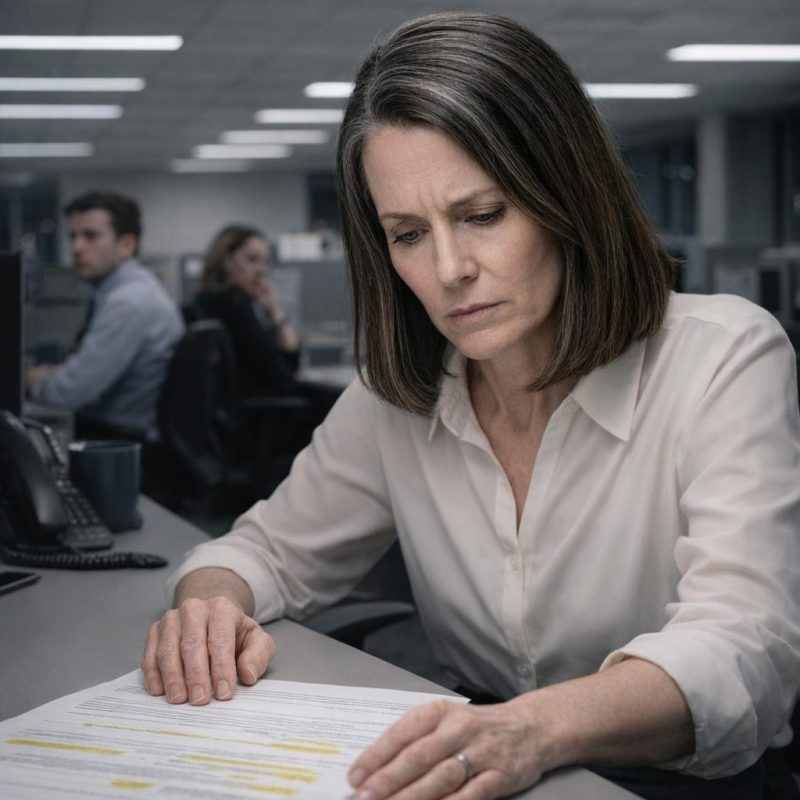 Image by RM AI
The Question I Couldn't Ask
I folded the document once, tucked it under my arm, and walked to the break room. I needed coffee and I needed a minute away from my desk. David was already there, standing at the coffee station with his back to the door, spooning sugar into his mug. I was glad it was him and not someone else. I opened my mouth to ask — I had the question right there, fully formed — whether he had come in early, whether he had seen anyone near my cubicle before the others arrived. But something about the way he was standing, shoulders slightly drawn in, made me hesitate. I said his name instead, just his name, and he turned around. His eyes dropped to the document under my arm and something moved across his face — not surprise exactly, more like recognition, and then something tighter than that. He said he had a meeting starting in five minutes, that he hadn't had a chance to check his email yet, that he'd catch up with me later. He was already moving toward the door before he finished the sentence. I stood there holding my coffee cup, watching him go. I hadn't even asked the question yet. I looked back at the counter where he'd been standing, and his spoon was still resting on the edge of the sugar bowl, the handle trembling slightly against the ceramic.
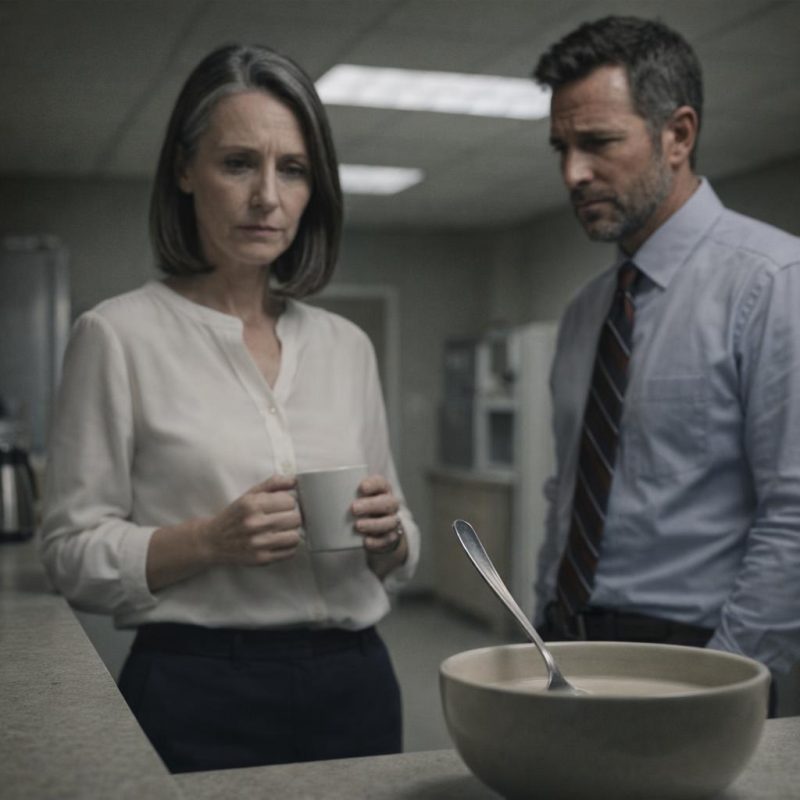 Image by RM AI
The Pattern Across Departments
I ate lunch at my desk most days, but that Friday I found myself walking. I told myself I needed to stretch my legs. I went to accounting first, on the pretext of dropping off a routing form I could have emailed. Robert was there — twenty-two years with the firm, longer than some of the current managers had been alive — eating a sandwich at his desk with his monitor as company. The rest of the department had cleared out. I recognized the particular quality of that silence. I kept walking. In marketing, I passed Linda's workstation near the window. She was alone too, a container of leftovers open beside her keyboard, scrolling through something on her screen with the careful attention of someone who has learned not to look up when the room empties around them. Down in operations it was the same story — the senior staff at their desks, the younger ones gone in clusters, the divide as clean as a line drawn with a ruler. I stood in the hallway for a moment, pretending to check my phone. I wasn't sure what I was looking at exactly, or what it meant. But Robert was at his desk, and Linda was at her desk, and I had been at my desk, and we were all roughly the same age, and the younger colleagues were somewhere else entirely.
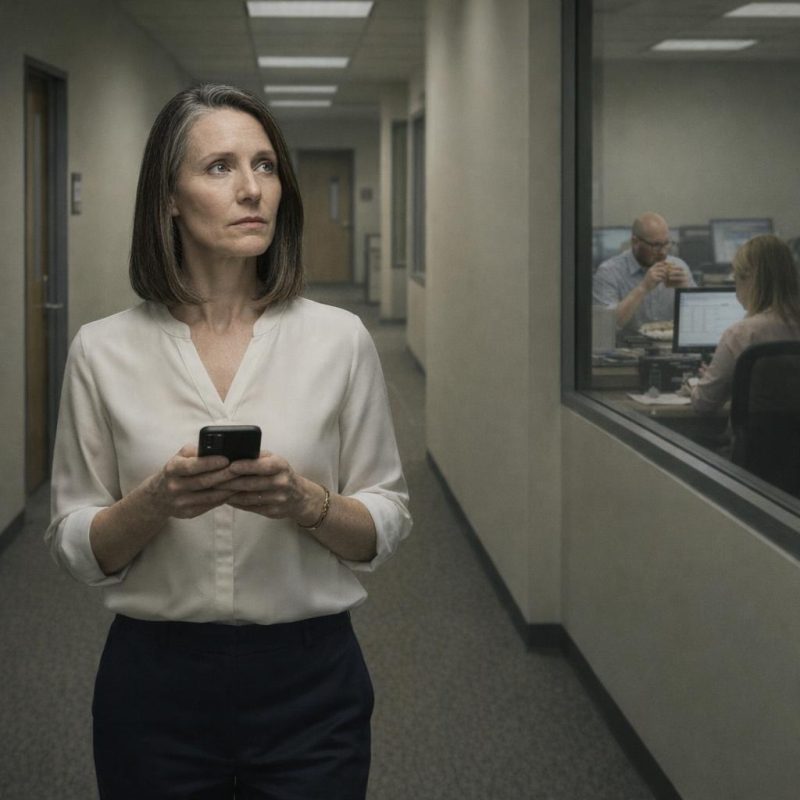 Image by RM AI
The Weight of Silence
I went back to my desk and sat down and didn't open a single file for a while. I just sat there. I thought about Robert eating his sandwich alone in accounting, the way he'd had his monitor angled slightly away from the empty room, like he was giving himself a little privacy inside his own isolation. I thought about Linda by the window in marketing, that careful way she'd been scrolling, not looking up. I had worked alongside people like them for most of my adult life. We had covered for each other during crises, trained the people who were now managing us, absorbed the institutional shocks that never made it into any official record. I wondered if they had received documents on their desks. I wondered if someone had circled phrases in their performance reviews, or left highlighted pages where they couldn't miss them. I didn't know. I had no way of knowing. But the feeling that had been sitting in my chest all week — the one I had been trying to name — had shifted into something heavier and more specific. It wasn't just about me anymore, and somehow that made it worse, not better. I opened my documentation file and stared at the list of entries, and the weight of it pressed down without lifting.
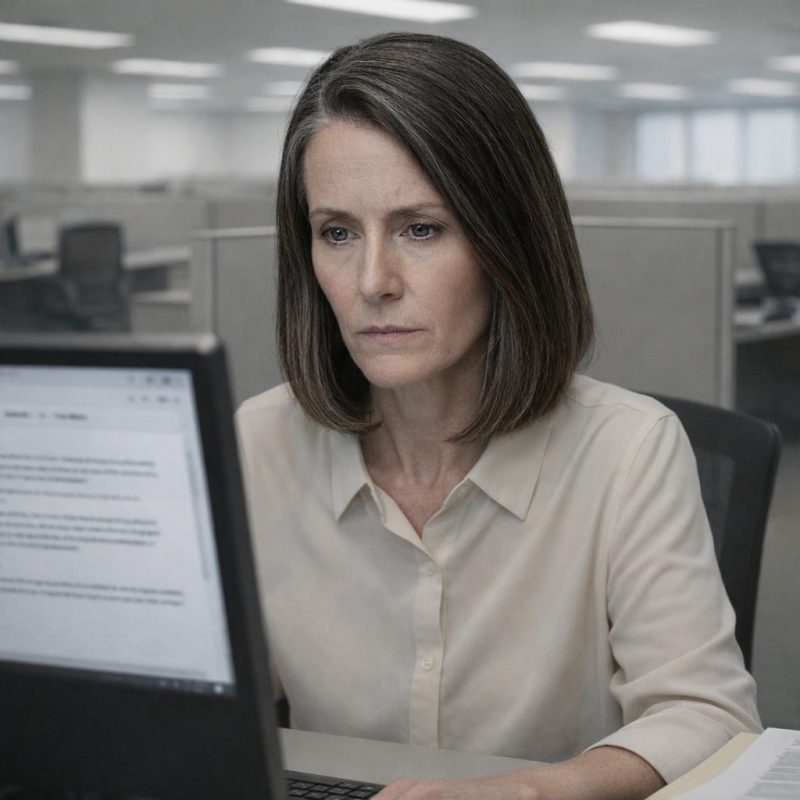 Image by RM AI
The Foundation She Didn't See
Late in the afternoon, when the office had gone quiet again and most people were heads-down finishing out the week, I found myself looking at my shoes. Black flats, sensible heel, good leather — I had bought them three years ago and they still looked professional because I had taken care of them. I thought about all the floors those shoes had covered. The client meetings where I had walked in knowing more about the account history than anyone else in the room. The hallway conversations that had quietly resolved problems before they became crises. The times I had stayed late to make sure a file was right, not because anyone asked, but because I understood what was at stake. Brianna had been in her role for eight months. The systems she used every day, the client relationships that kept renewing, the institutional shortcuts that made her look efficient — a significant portion of that infrastructure had my fingerprints on it, going back years before she had ever heard of this firm. She was standing on something she hadn't built and couldn't fully see. I wasn't sure yet what to do with that. But sitting there in the late afternoon quiet, looking at my practical shoes on the practical floor, I felt something settle in me that wasn't defeat — something older and steadier than anything that had happened this week.
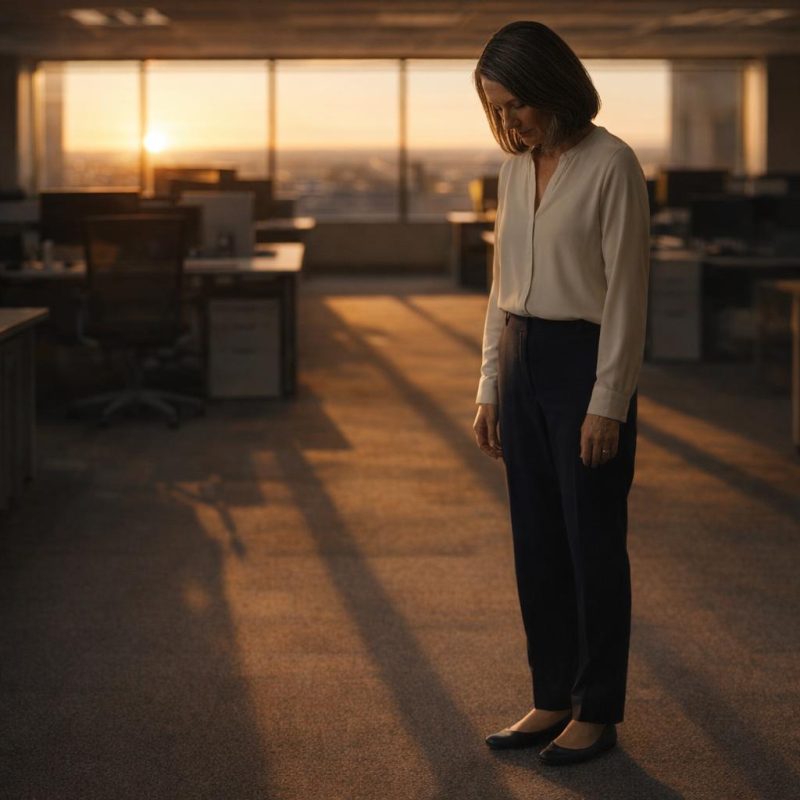 Image by RM AI
The Weekend of Reckoning
Saturday morning I made coffee before seven and spread everything across the kitchen table. I had printed the documentation file the night before — fourteen pages, single-spaced, going back to the first week Brianna had arrived. Reading it in my own kitchen, in daylight, away from the office, it looked different than it had felt in the moment. Each entry was precise: date, time, what was said, who was present, what the context had been. The wardrobe comment in the first week. The Marcello's lunch. The highlighted document left on my desk. The way David had gone pale in the break room. Laid out in sequence, the entries had a weight that individual incidents hadn't carried on their own. I thought about my twenty-five years. I thought about Robert and Linda eating alone at their desks. I thought about what it would mean to keep my head down and wait it out, and I thought about what it would mean not to. Staying quiet had felt like professionalism for a long time. Sitting at that table with fourteen pages in front of me, it started to feel like something else. I didn't make any calls. I didn't draft any emails. I just sat with the pages and the coffee going cold, and by the time the morning light had moved across the table, something in me had gone still and certain.
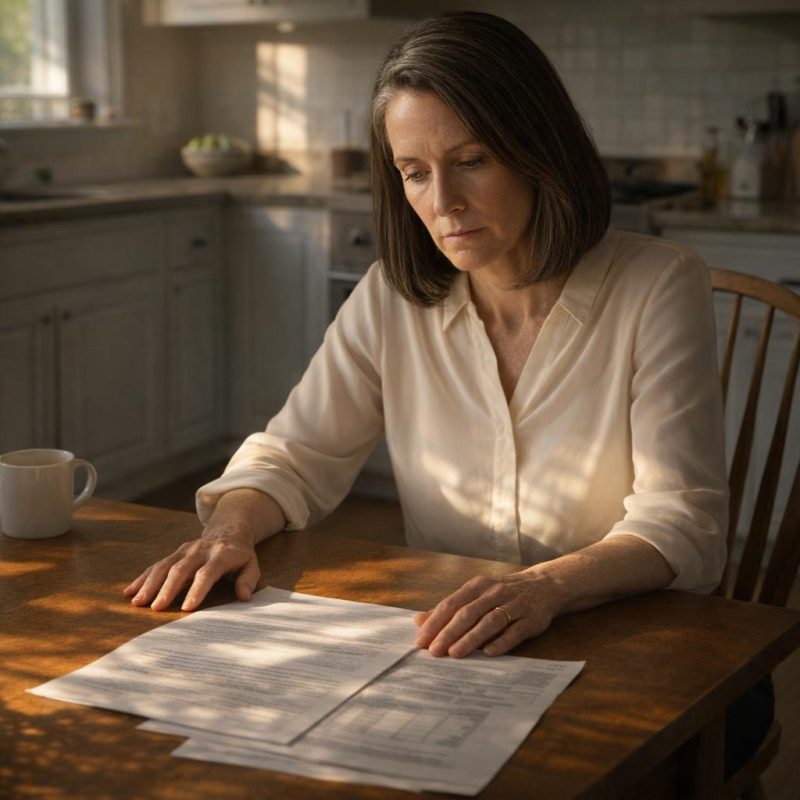 Image by RM AI
Monday Morning Decision
Monday morning I dressed carefully — navy slacks, cream blouse, the black flats — the same way I had dressed for twenty-five years. I printed nothing new. The folder I carried had been sitting on my kitchen counter since Saturday, the fourteen pages inside it in the same order I had left them. I drove in early, before the building filled up, and I took the stairs to my floor out of habit. I set the folder on my desk but I didn't sit down. I looked at my monitor, dark and waiting, and at the inbox tray with its stack of Friday's unfinished items, and I thought about Arthur — not the title, not the corner office, but the man I had watched navigate three recessions and two ownership changes and one near-catastrophic client exodus that nobody outside this building ever knew about. He knew what this firm was built on. He had been there when some of it was built. I picked up the folder. I walked past my cubicle toward the elevator without stopping, pressed the call button, and when the doors opened I stepped inside and pressed the button for the executive floor before I could talk myself out of it.
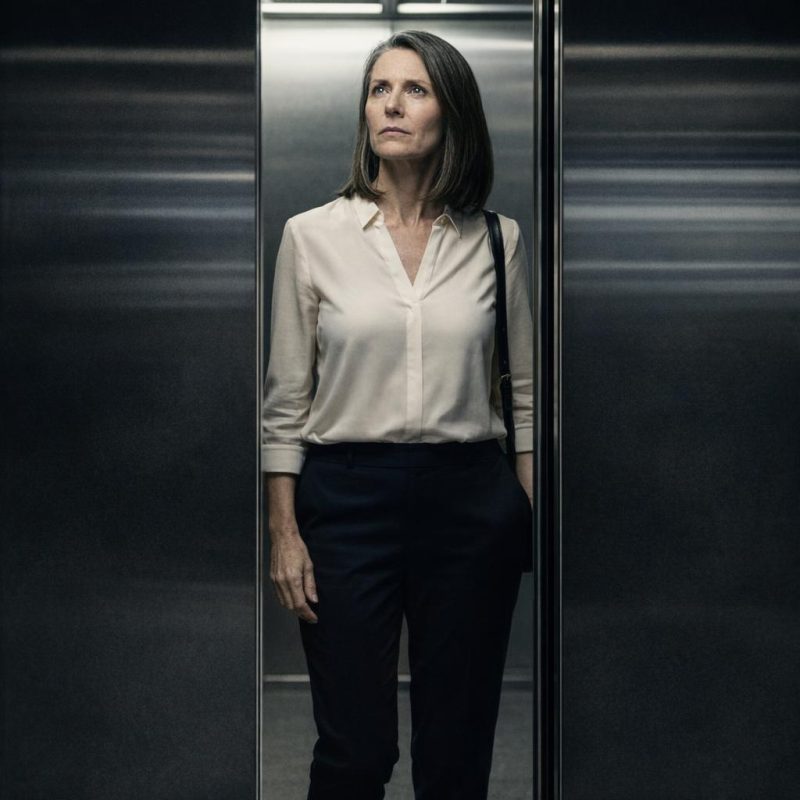 Image by RM AI
The Executive Floor
The elevator doors opened onto the executive floor and I stepped out into a quiet I had forgotten existed. Down on my floor there was always noise — keyboards, phones, the low hum of a printer that had needed servicing for three years. Up here the carpet was thicker, the lighting warmer, and the only sound was the faint tick of the antique clock that had sat on the credenza outside the boardroom since before I could remember. I had been up here dozens of times over the years — budget reviews, crisis meetings, the occasional holiday gathering that Arthur insisted on hosting in the large conference room rather than the lobby. I knew this hallway. I had walked it in better circumstances and worse ones. But something about it felt different now, with the folder tucked under my arm and my heart doing something irregular behind my ribs. I passed the offices of people I had worked alongside for decades — names on plaques I could have recited in my sleep. At the far end of the hall, Arthur's door stood half-open, a thin line of light falling across the carpet. I stopped a few feet short of it. The hallway I had always known felt, just then, like somewhere I had never quite been before.
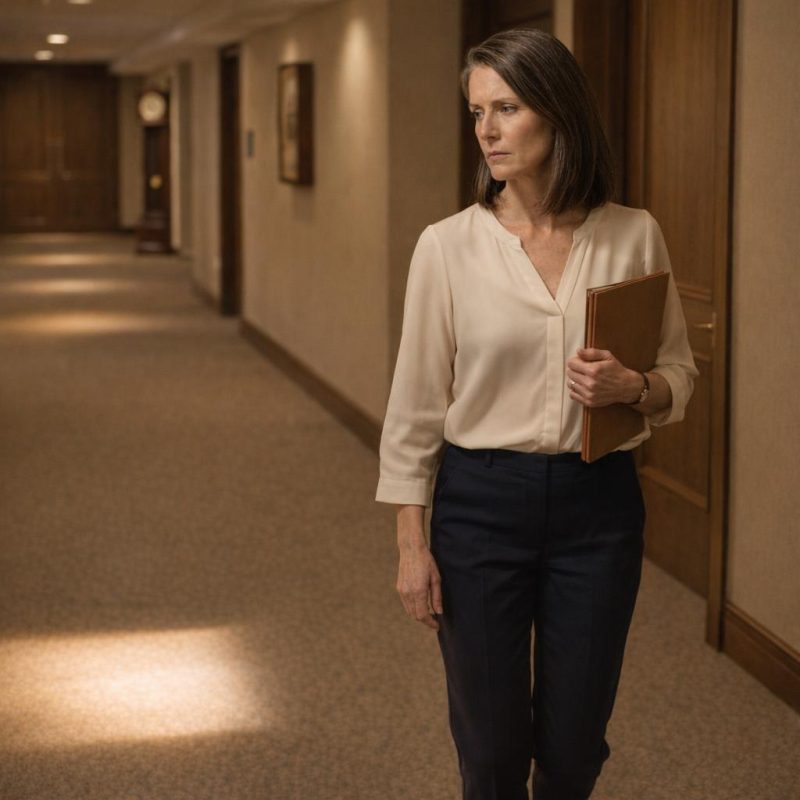 Image by RM AI
The History Between Us
I stood there in the quiet of that hallway and let myself go back. It was 1997, and Arthur had been a junior partner with a corner office he hadn't yet grown into — too much furniture, not enough confidence, a stack of files on his desk that seemed to reproduce overnight. The firm had been in real trouble that year, the kind of trouble that doesn't make the trade press because everyone involved is too frightened to let it. A major client had flagged irregularities in a quarterly report, and the window for correcting the record without catastrophic exposure was measured in days, not weeks. I had been the one who found the discrepancy thread. I had stayed until eleven, then midnight, then later, cross-referencing ledger entries that nobody else had thought to pull. Arthur had brought me coffee at two in the morning and set it on my desk without a word, and I had understood that as the kind of gratitude that doesn't need saying. We had fixed it. The client had stayed. The firm had survived. What had grown between us in those weeks wasn't friendship exactly — it was something quieter and more durable than that, built on shared pressure and mutual trust. I had never called in that trust before. Standing outside his door now, I wasn't certain I had the right to call it in at all.
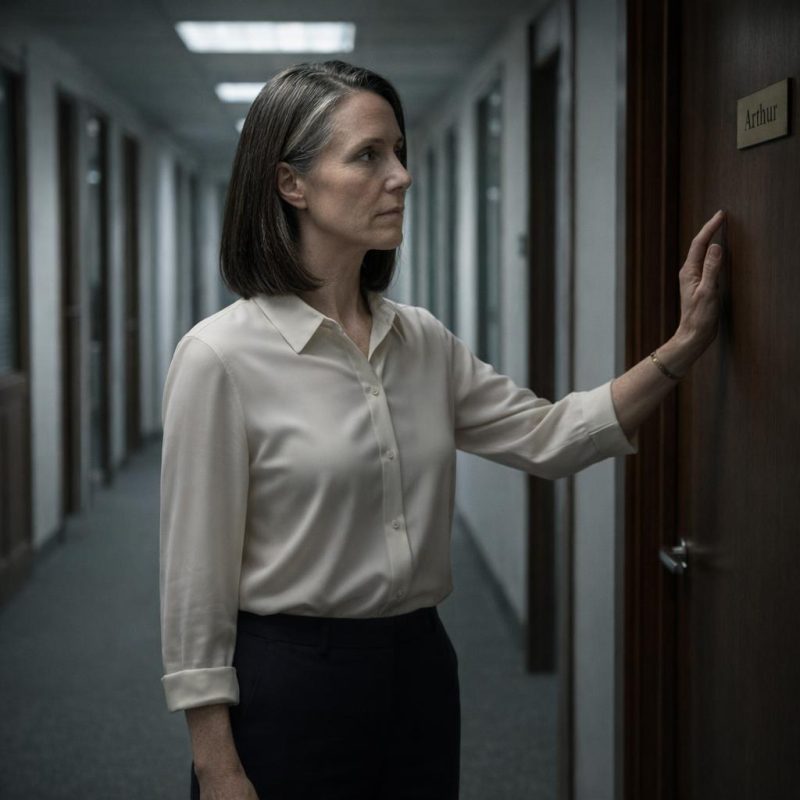 Image by RM AI
The Knock
I knocked twice on the door frame, lightly, the way you do when you're not entirely sure you should be there. Arthur looked up from a document spread across his desk, reading glasses pushed down his nose, and for a half-second his face held the polite, neutral expression he used for interruptions he hadn't invited. Then he saw me — really saw me — and the neutrality shifted into something else. He took off his glasses. He set his pen down on the desk with a small, deliberate click. I had worked in this building long enough to know that Arthur did not set his pen down for routine conversations. He did it when he was giving you his full attention, which was not the same thing as giving you his time. I tried to arrange my face into something that didn't look as unsteady as I felt. I was holding the folder against my side with both hands now, which probably told him more than my expression did. He looked at the folder, then back at me, and something moved across his face — concern, maybe, or recognition of a kind I couldn't quite read. He gestured toward the chair across from his desk. Then he said, "Close the door and sit down."
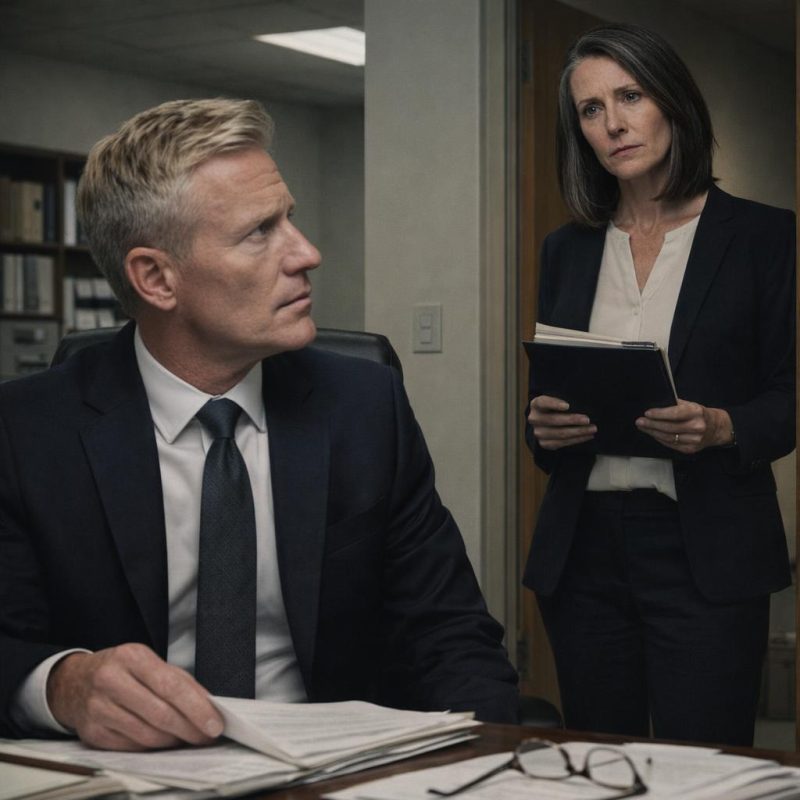 Image by RM AI
The Professional Presentation Standards
I didn't launch into an explanation right away. I set the folder on the edge of his desk, opened it to the highlighted page, and slid it across to him without saying anything. Sometimes the document does the talking better than you can. Arthur picked it up. He read slowly, the way he always read things that mattered — not skimming, not nodding along, but actually reading, his eyes moving line by line. I watched him reach the phrases I had highlighted. "Outdated patterns." "Faded pastels." "Contemporary professional standards." He read them twice. I could see it in the way his eyes tracked back to the top of the paragraph. He asked me, without looking up, when I had received it. I told him about the email, the printed copy left on my desk, the meeting where Brianna had walked me through it as though it were a routine administrative matter. He set the document down on the desk between us. He didn't say anything immediately, and I had learned over twenty-five years that Arthur's silences were not empty — they were where he did his thinking. When he finally looked up at me, the warmth that had been in his face when I walked in had gone somewhere else entirely, replaced by something flat and careful and very still.
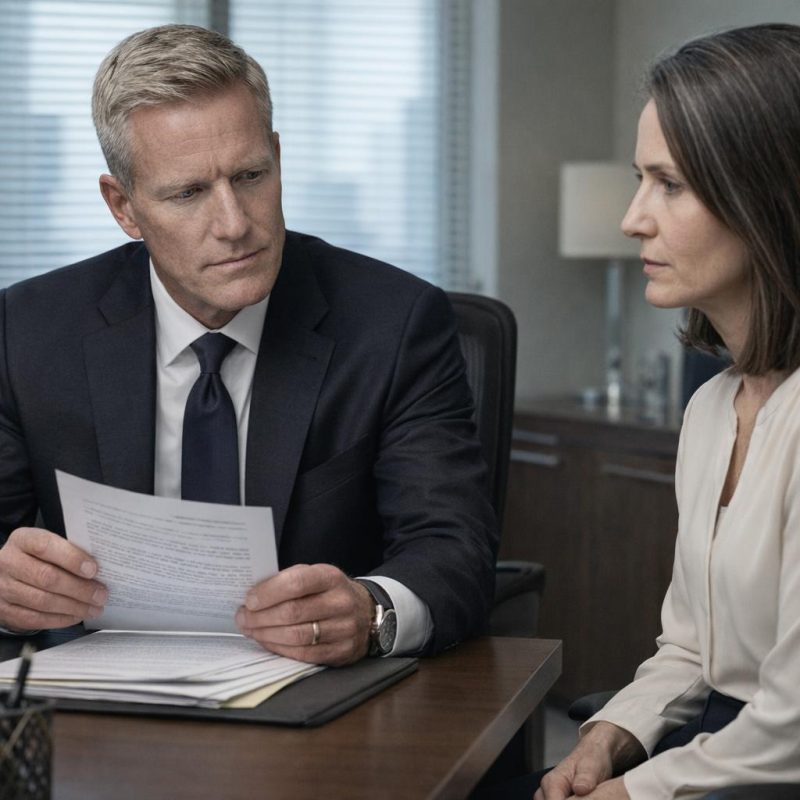 Image by RM AI
The Instagram Photo
He studied the document for another moment, then looked at me and asked if there was more. I told him there was, and I pulled out my phone. I had the Instagram photo bookmarked — I had looked at it enough times that finding it took no effort at all. I turned the screen toward him and let him look. He took the phone from me, which I hadn't expected, and held it closer, the way people do when they want to be sure of what they're seeing. I watched him count. I could tell he was counting because his eyes moved across the image in a way that wasn't casual. There were seven people at that table at Marcello's, and I could name every one of them, and not one of them had sent me a calendar invite or a text or even a passing mention in the hallway. Arthur asked me when the lunch had taken place. I gave him the date. He asked if I had been told about it afterward, by anyone. I said no. He handed the phone back to me and leaned back in his chair, and I could see him turning something over in his mind. Then he looked at me directly and asked, "How long has this been going on?"
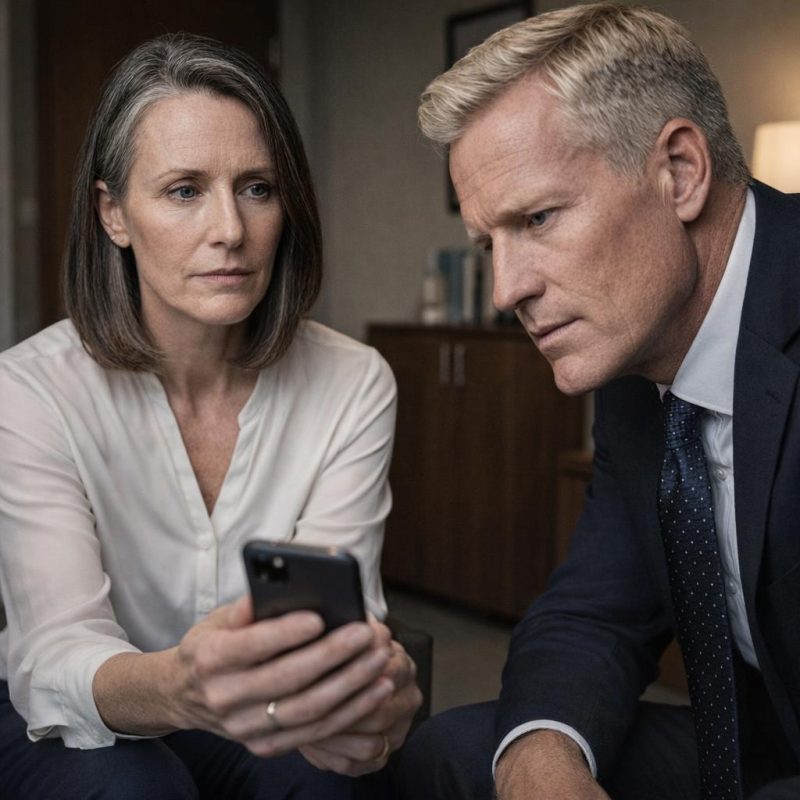 Image by RM AI
The Full Account
I told him everything. I started at the beginning — the personal shopper suggestion in Brianna's first week, delivered with that particular smile that made it hard to object to in the moment. I described the comments about my flats, the references to contemporary pieces, the way each remark had been framed as helpfulness rather than criticism. I walked him through the Professional Presentation Standards document, the Instagram lunch, the gradual narrowing of my involvement in meetings I had previously run. Arthur listened without interrupting, which was its own kind of gift. He had a legal pad in front of him and he wrote as I talked — not shorthand, but full notes, the pen moving in those precise, deliberate strokes that meant he was treating what I said as evidence rather than complaint. When I finished, the room was quiet for a moment. He asked me to confirm a few dates, and I confirmed them, and he wrote those down too. I had carried this account inside me for weeks, turning it over in private, wondering whether I was reading too much into things, whether I was being too sensitive, whether any of it would sound credible spoken aloud to someone else. Sitting across from Arthur, watching him fill that legal pad, I felt the weight of it lift, just slightly, from somewhere it had been sitting for a long time.
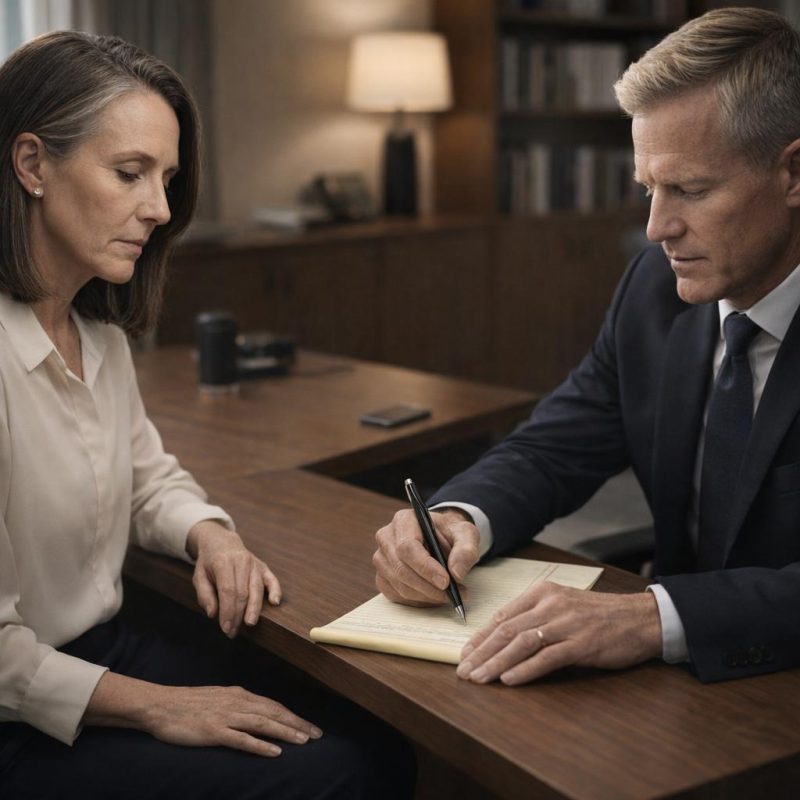 Image by RM AI
The Question of Others
Arthur capped his pen and looked at me for a moment before he asked the question. He asked whether I had noticed anything similar happening to other people — not just on my team, but across the floor, across departments. I told him I had. I described Robert in accounting, who had been with the firm for nineteen years and had spent the last two months eating lunch alone at his desk after his new supervisor restructured the team's daily check-ins in a way that left him outside the loop. I mentioned Linda in marketing, who had stopped being copied on the campaign briefs she used to help write. I told him about the pattern I had noticed — new supervisors arriving in clusters across different departments, all of them young, all of them with the same vocabulary around modernization and fresh perspectives and evolving team culture. I hadn't connected all of it into a single picture before I said it out loud. Saying it out loud to Arthur, watching his expression as I moved from one department to the next, I could see something shift in him — not surprise exactly, but a kind of gravity, a settling of the jaw that told me the shape of what I was describing meant something to him that it didn't yet mean to me. The room felt quieter when I finished than it had when I started.
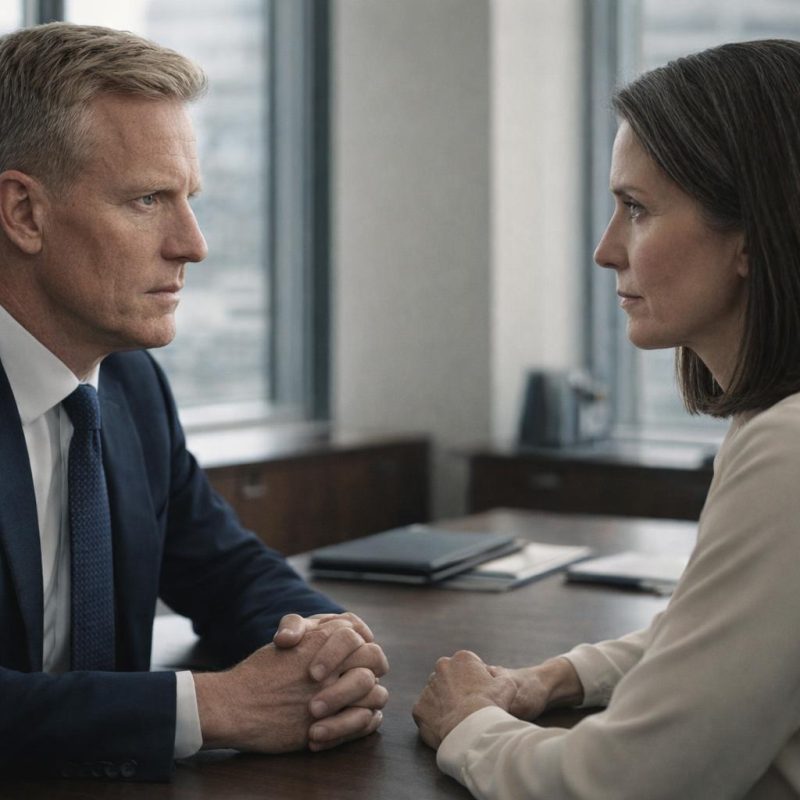 Image by RM AI
The Files He Needed
Arthur asked if I had kept records. I told him I had, and I opened the folder the rest of the way and laid it flat on the desk between us. Fourteen pages. Every incident logged with a date, a time where I had one, a description of what was said and by whom, and where possible a copy of the relevant email or document. He went through it page by page, not quickly. He paused on the entry for the Professional Presentation Standards email and read the full description I had written. He paused again on the log entry for the Marcello's lunch, where I had noted the date, the names of the attendees I could identify from the photo, and the fact that no invitation had been extended to me. He asked if I had digital copies of the emails. I told him everything in the folder had a corresponding file on my home computer, backed up twice. He nodded, and something in his posture shifted — a straightening, a settling into whatever he had decided to do next. He closed the folder carefully and set it to one side. Then he reached into the bottom drawer of his desk and pulled out a manila folder with a label on the tab, and he set it on the desk between us, and I could read the label clearly from where I was sitting: "Consulting Recommendations."
 Image by RM AI
The Folder from the Drawer
He opened the folder without ceremony, spreading it flat the way he had done with mine. I watched his eyes move across the first page, then the second. His jaw tightened almost imperceptibly — the kind of thing you only catch if you've spent years reading a room. He turned to the third page and paused there longer than he had on the others. He muttered something under his breath, too low for me to catch, and turned another page. I sat with my hands folded in my lap and said nothing. There was nothing to say. Whatever was in those pages, it was landing on him in real time, and I had the distinct sense that I was watching someone absorb information they had not expected to find. He turned another page. His expression didn't change exactly, but something behind it did — a settling, a tightening around the eyes. He closed the folder and set both hands flat on top of it. The room was very quiet. I had come in carrying fourteen pages of my own careful documentation, and somehow I had ended up sitting across from something that felt much larger than anything I had brought with me.
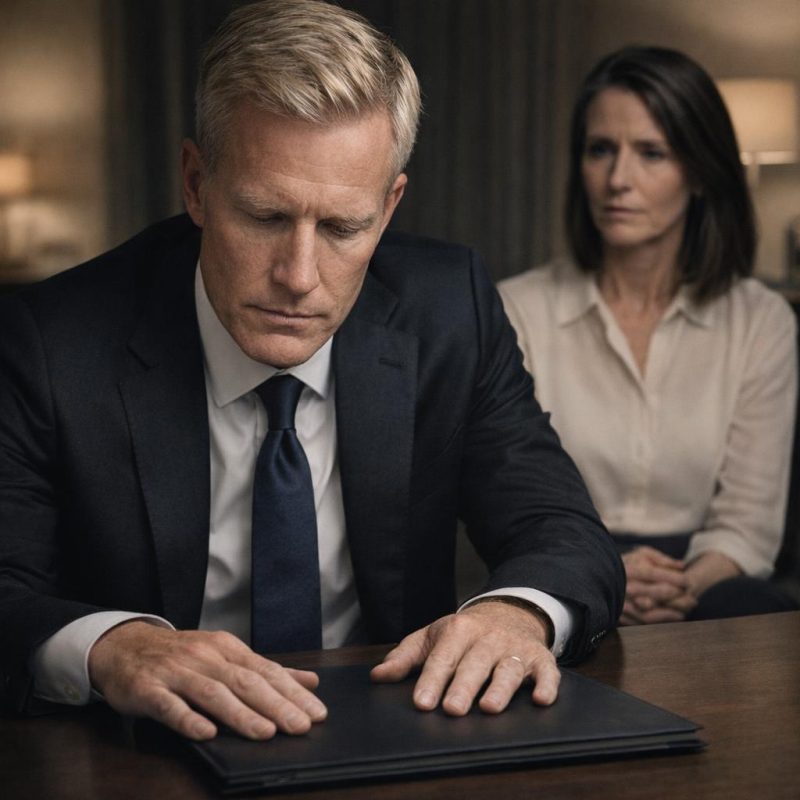 Image by RM AI
The Request for Access
Arthur kept both hands on the closed folder for a moment, then looked up at me. He asked if I still maintained the client account records for the accounts I had managed before the department restructuring. I told him I did — three years of them, organized by quarter, filed in the cabinet beside my desk. He asked about performance metrics. I said I had those too: department productivity reports, client retention figures, response-time logs. He nodded slowly, like he was checking items off a list he hadn't shown me. He said he needed records from before the past six months specifically, and he said it in a way that made me understand the timeframe mattered, even if I didn't yet know why. He told me to bring everything I had back to him within the hour. I said I would. I picked up my folder and stood, and he was already looking back down at the papers on his desk, his attention somewhere I couldn't follow. I walked out into the corridor and stood there for a moment, the folder pressed against my chest, turning over the careful precision of what he was building.
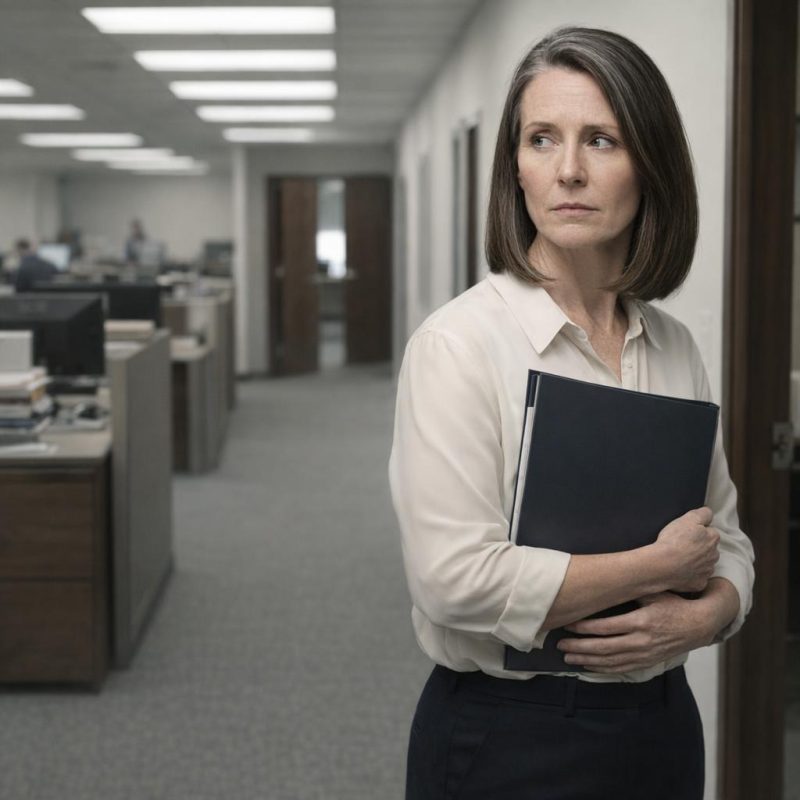 Image by RM AI
The Walk Back Down
The elevator ride down felt longer than it should have. I kept my eyes on the floor numbers and ran through the filing system in my head — which drawer, which tabs, which quarterly folders held what I needed. By the time the doors opened I had a clear picture of it, and I moved through the office with my head down and my pace steady, the way you do when you don't want anyone to ask you questions. I unlocked the cabinet beside my desk and started pulling folders. Client account records, three years of them. Performance metrics by quarter. The retention reports I had compiled every six months because no one had asked me to stop. I stacked them in order on the desk surface, smoothed the edges, checked the dates on the top sheets. It took maybe twelve minutes. I was reaching for the binder clip when I looked up, and Brianna was standing at her desk, perfectly still, watching me.
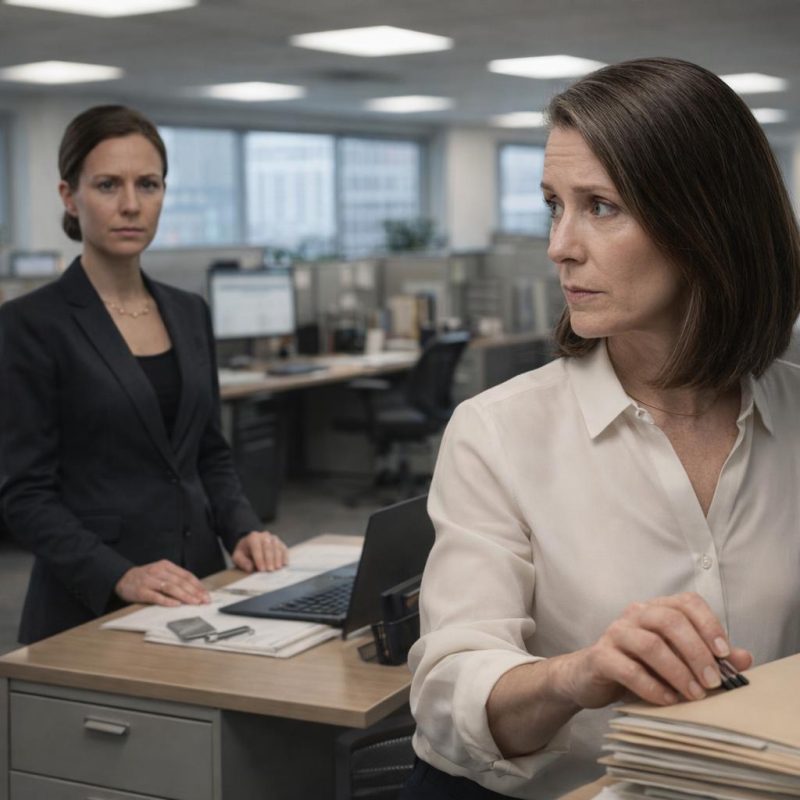 Image by RM AI
The Deflection
She walked over slowly, the way she always did when she wanted to seem unhurried. She asked what I was working on. I told her I was pulling archived records for a routine storage review — the kind of periodic housekeeping the firm required for older files. She looked at the stack on my desk. She picked up the top client account folder and turned it over in her hands, glancing at the label. She said these were very old records. I said yes, that was the point of an archival review. She set the folder back down without opening it, her eyes moving across the rest of the stack in a way I couldn't quite read — not alarmed, not disinterested, somewhere in between. Then she said something about letting me know if I needed help with the storage process, and she walked away. I waited until she turned the corner before I let out a slow breath. I straightened the folder she had touched, squared the edges of the stack, and looked at what I had assembled: three years of client accounts, retention figures, productivity reports — the stack of files that told the story of my value.
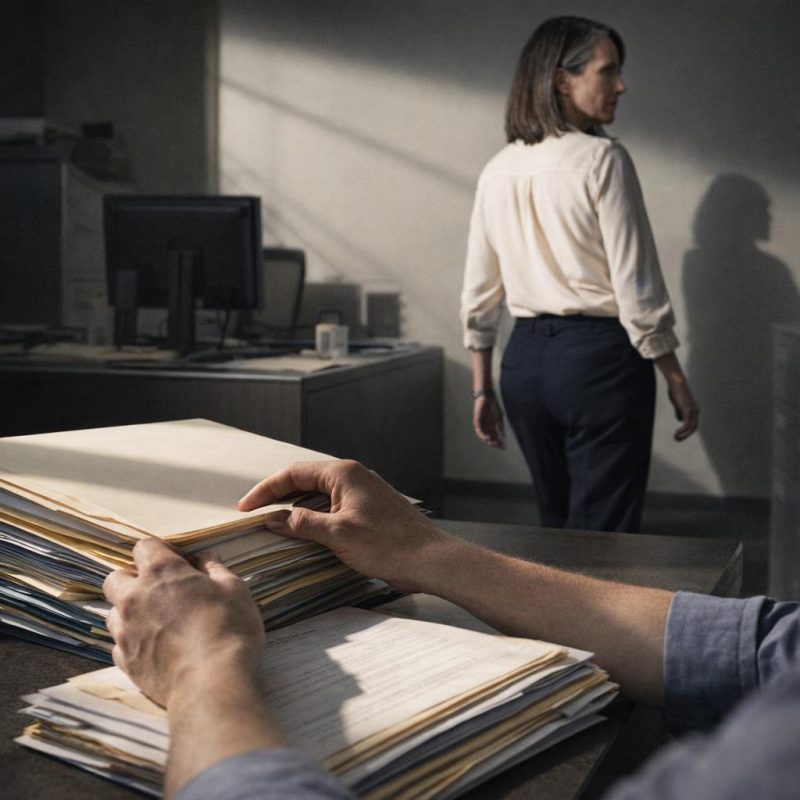 Image by RM AI
The Consulting Firm Memo
Arthur spread the memo across the desk the moment I set my files down. It had a consulting firm logo at the top — clean, corporate, the kind of branding that costs money to look that simple. He told me to read it. The document was titled 'Workforce Modernization Initiative: Phase One Implementation.' The language was smooth and bloodless. It described a cost-reduction strategy built around replacing senior staff with younger hires who could be brought in at entry-level salaries. It recommended installing young supervisors first, framing the transition as cultural modernization. It specified that appearance standards and presentation expectations were effective early-stage documentation tools. I read that sentence twice. Arthur pointed to a section near the bottom of the second page. The heading read 'Documentation Strategy for Performance Management,' and I stopped there, my finger on the page, reading the bullet points beneath it one by one.
 Image by RM AI
The Playbook Revealed
Arthur walked me through it section by section, his voice flat and controlled. The memo recommended beginning with appearance-based feedback as the first layer of documentation — low-stakes enough to seem reasonable, specific enough to create a paper trail. It suggested team-building events and informal gatherings that excluded targeted employees, framing the absences as the employee's own lack of engagement. It outlined the use of policy documents — formal, broadly worded — to establish behavioral standards that senior employees were statistically less likely to meet. Arthur turned to a page near the back and set it beside the Professional Presentation Standards email I had brought in my folder. The template in the memo and the email Brianna had sent me were not similar. They were nearly identical in structure, in phrasing, in the specific categories they cited. I looked at the lunch at Marcello's in my log, and I looked at the memo's language about 'voluntary social cohesion events.' I looked at the performance review language and found it on the page in front of me, word for word. Twenty-five years of my working life had been reduced to a line item in a corporate strategy document, and I was reading it in my own handwriting reflected back at me.
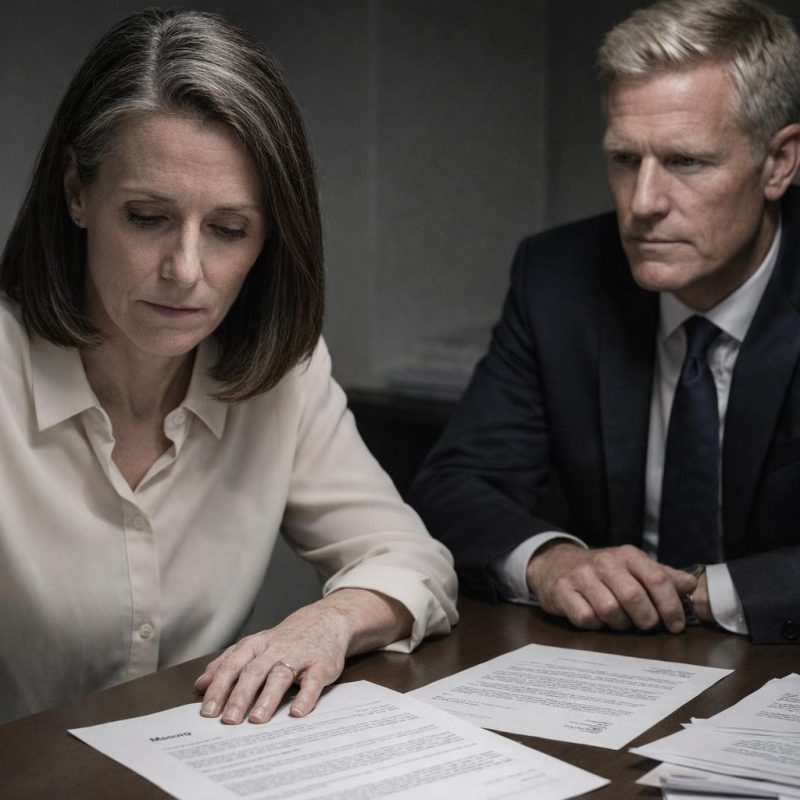 Image by RM AI
The Scope Across Departments
Arthur pulled a second sheet from the folder — a list, typed, eight names on it. He read them to me one by one. Robert in accounting, twenty-two years with the firm. Linda in marketing, eighteen years. Three others in operations and client services whose names I recognized from firm-wide meetings over the years. Each name had a corresponding supervisor listed beside it, all hired within the past six months. Arthur said he had started pulling personnel files after complaints came in from three separate departments — managers who had noticed the pattern independently and hadn't known what to make of it. He said every one of the new supervisors had come through the same candidate pipeline, recommended by the same consulting firm. He said the firm had been paid a substantial fee for what the contract called a modernization strategy. I looked at the list. Eight people. Eight careers built over decades, each one now sitting in the crosshairs of a process that had been designed in a boardroom by people who had never met any of us. The word that kept coming back to me wasn't anger, exactly. It was erasure — the quiet, systematic erasure of institutional knowledge that no spreadsheet would ever be able to measure or replace.
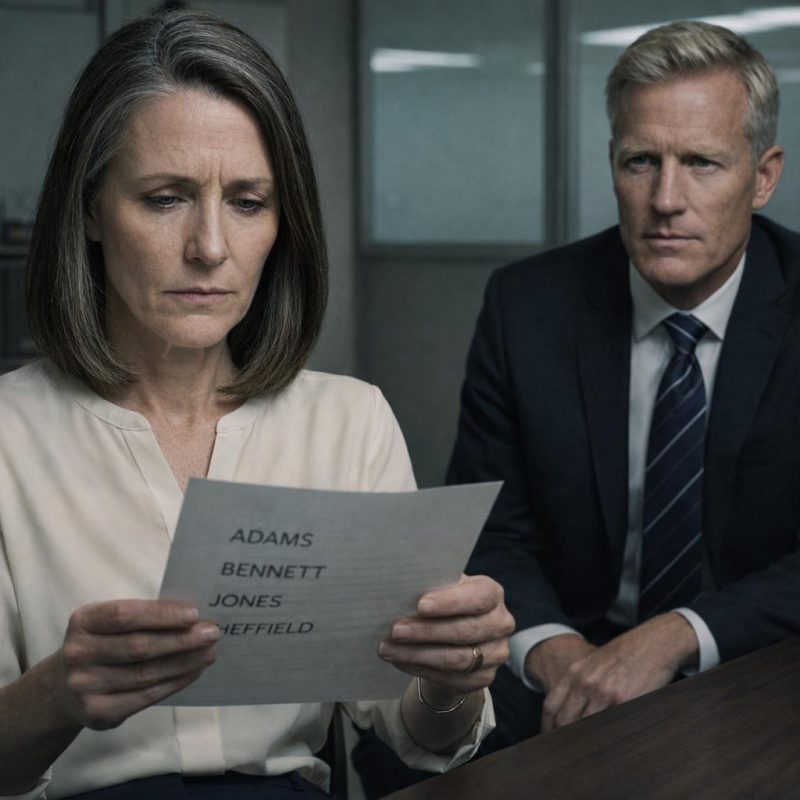 Image by RM AI
The Cost-Cutting Scheme
Arthur leaned back in his chair and told me the rest of it. The consulting firm had gone to the executive board eight months ago with a five-year projection. Thirty percent reduction in payroll expenses. The numbers had been clean and the presentation had been polished, and the board had approved it in a single session. The strategy was packaged as cultural modernization — bringing the firm's workforce demographics in line with industry trends, refreshing institutional energy. Arthur said the board had not been told, in plain language, that the plan required pushing out the firm's most experienced people. He said he had been excluded from those meetings because his position on long-term employee retention was already on record. He said it quietly, without drama, but I heard what was underneath it. I thought about twenty-five years of early mornings and late evenings, of client relationships built over decades, of institutional knowledge that lived in my head and in those filing cabinets and nowhere else. The board had signed off on dismantling all of it — not out of malice, Arthur said, but out of faith in a projection on a slide deck. That was almost harder to sit with than malice would have been: the betrayal of loyalty for a spreadsheet.
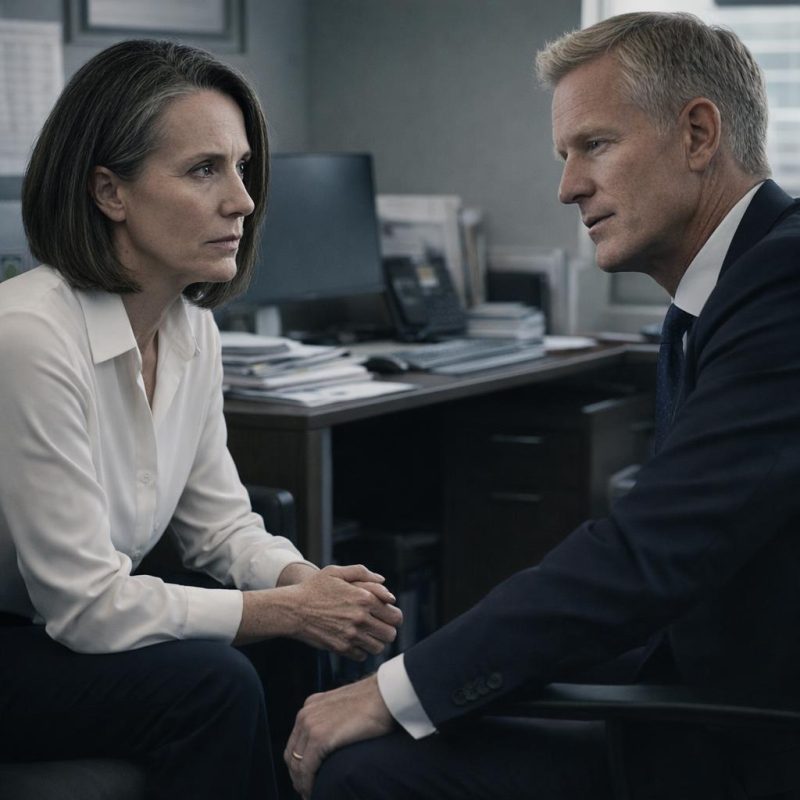 Image by RM AI
The Monday Board Meeting
Arthur didn't let the silence sit long. He leaned forward and told me he was calling an emergency board meeting for Monday morning at nine, and that Brianna would be required to attend without knowing the agenda. He said he'd already pulled the consulting firm's contract and the internal memos, and that he intended to present the full picture to the board himself. He asked me if I still had everything — the emails, the Professional Presentation Standards document, the Instagram photo, the timeline I'd built. I told him I had all of it, organized and dated. He nodded slowly, the way he does when he's already three steps ahead. He said the board needed to hear it from someone who had lived it, not just from a paper trail. He said the consulting firm evidence would establish the scheme, but my documentation would make it real. I sat there for a moment, feeling the full weight of what Monday would mean — not just for me, but for Robert and Linda and everyone else who hadn't had a seat at any table. Then Arthur looked at me steadily and said he needed me to tell the board exactly what I had told him.
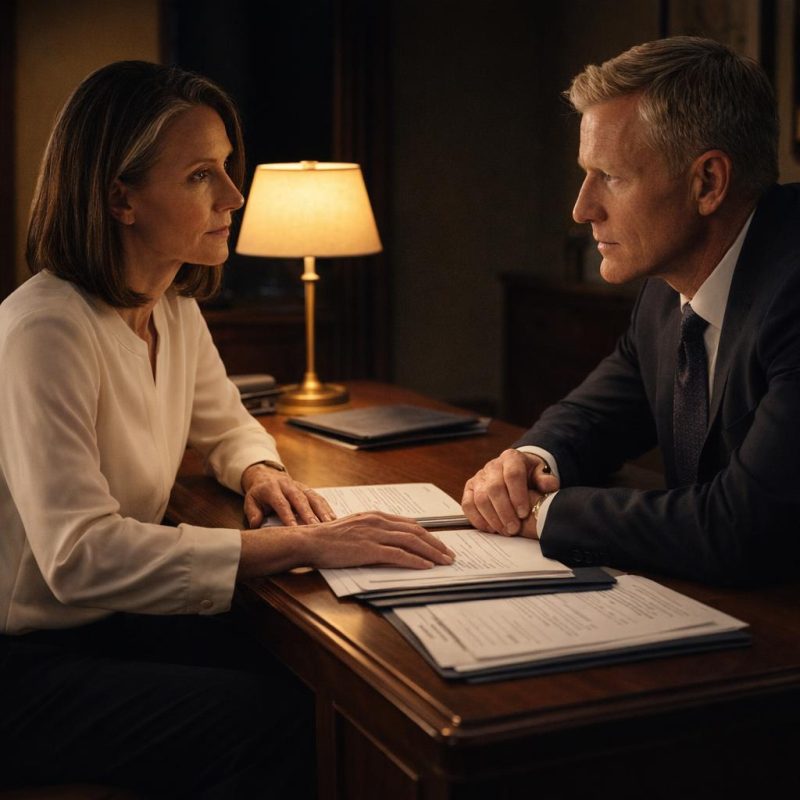 Image by RM AI
The Weekend of Preparation
I spent Saturday morning at my kitchen table with every document spread out in front of me. I sorted them into chronological order — the first meeting with Brianna, the personal shopper suggestion, the Professional Presentation Standards email, the Marcello's lunch I hadn't been invited to, the performance review language that had appeared out of nowhere. I made a clean copy of the timeline and printed two sets. Saturday afternoon I practiced saying it out loud, standing in my own living room, speaking to no one. I kept stumbling over the Marcello's part, not because the facts were complicated but because saying it plainly — that I had been excluded on purpose, that a photograph had ended up on Instagram while I sat at my desk — still stung in a way I hadn't fully expected. Sunday I thought about Robert, who had taken early retirement rather than fight. I thought about Linda, who had cried in the break room and then quietly disappeared. I thought about the others I suspected but couldn't name with certainty. By Sunday night I wasn't sleeping. I lay in the dark rehearsing sentences, and somewhere around two in the morning it settled into something clear: I wasn't walking into that room just for myself. I was walking in for all of them.
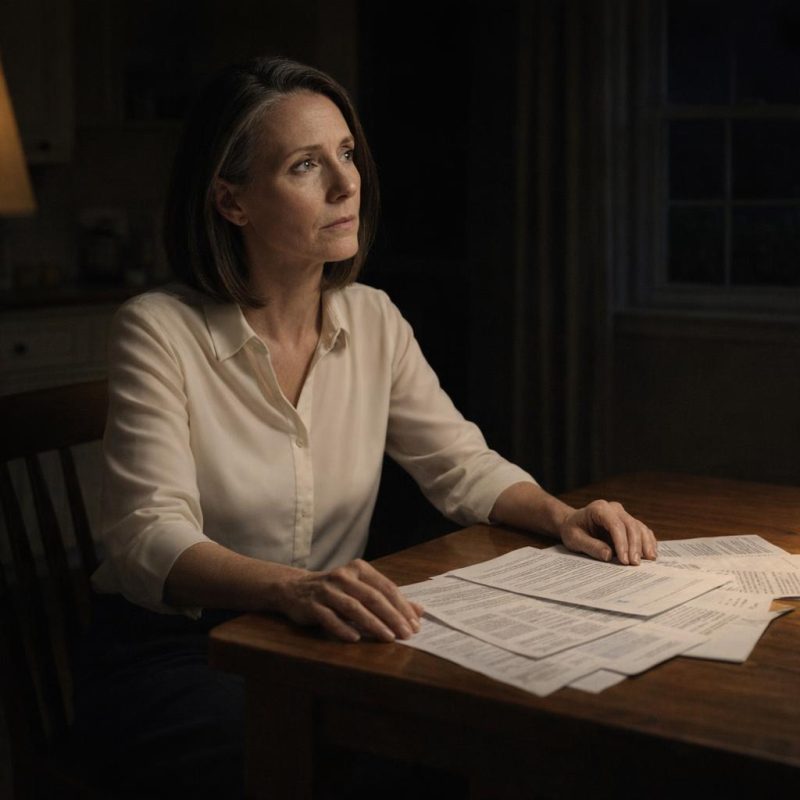 Image by RM AI
Monday Morning Arrival
I was in the building by seven-thirty. The lobby was nearly empty — just the overnight security guard and the hum of the HVAC system cycling on. I took the elevator to the executive floor and the doors opened onto that particular Monday-morning quiet that only exists before anyone else has arrived. I found the conference room at the end of the hall, the long mahogany table already set with water glasses and notepads. I chose a seat two chairs from the head of the table — close enough to be heard clearly, far enough not to seem presumptuous. I opened my folder and arranged the documents in the order I planned to present them: timeline first, then the emails, then the photo. I straightened the stack twice even though it didn't need straightening. Outside the floor-to-ceiling windows, the city was just beginning to wake up, pale light coming in low and flat across the rooftops. I had spent twenty-five years in this building. I knew where the coffee was kept and which elevator ran slow and which board member liked the blinds angled down. I sat with my hands folded on top of my folder and let the quiet hold me for a little while longer.
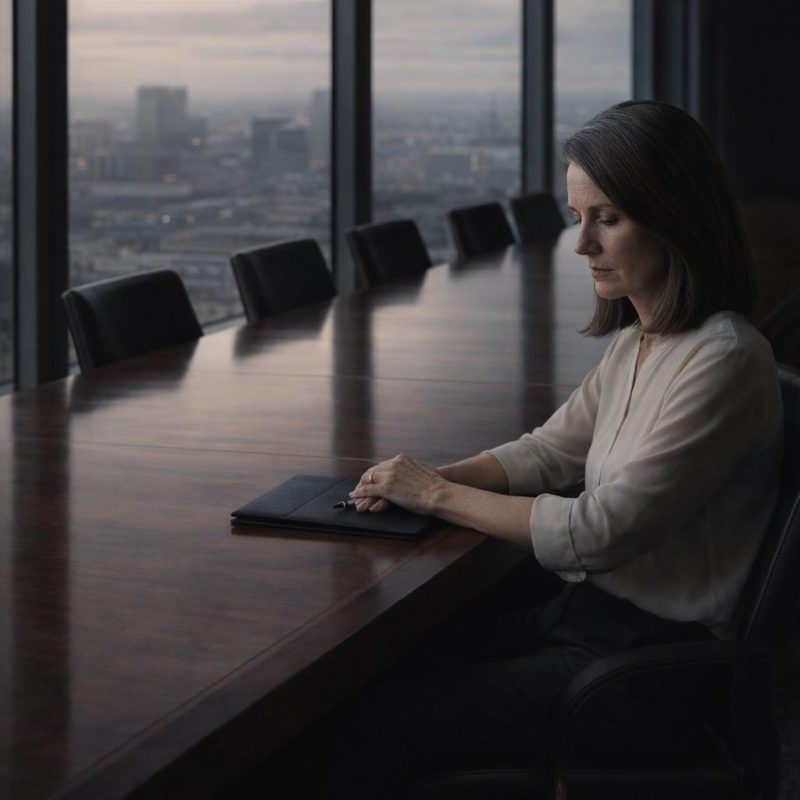 Image by RM AI
Brianna's Entrance
The board members began arriving at eight-forty, filing in with coffee cups and quiet conversation. I nodded when they glanced at me and didn't offer explanations. At eight-fifty the door opened again and Brianna walked in. She was wearing the charcoal suit — the one she seemed to reserve for days she wanted to project authority — and she was carrying a slim leather portfolio under one arm. Her hair was perfect. Her posture was perfect. She looked exactly like someone who had no idea what was about to happen. She scanned the room the way she always did, taking inventory, and then her eyes landed on me. She stopped moving for just a fraction of a second. It was small enough that someone who didn't know her might have missed it. I had been watching her for months, so I didn't miss it. She recovered quickly, crossed to a chair on the opposite side of the table, and set her portfolio down with a quiet, deliberate click. Then she looked at me again and asked, in a voice that was perfectly even, what I was doing in the executive conference room. I told her Arthur had requested my presence. She held my gaze for a moment, then opened her portfolio and looked down at it, and something in the set of her shoulders had gone very still.
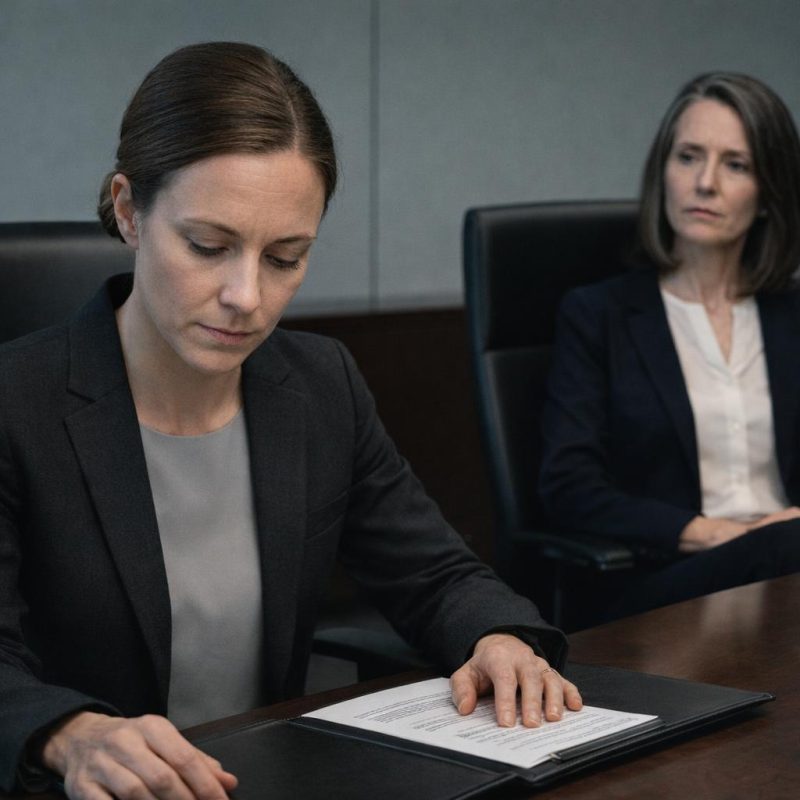 Image by RM AI
The Board Assembles
The last board member had barely settled when the conference room door opened one more time and Arthur walked in. He didn't rush. He carried a manila folder and a legal pad, and he closed the door behind him with a quiet click that somehow managed to feel final. He took his seat at the head of the table, set his folder down, and looked around the room once before he spoke. He thanked everyone for rearranging their Monday morning on short notice. He said he wouldn't waste their time with preamble. He said a management issue had come to his attention over the past several weeks — one serious enough that he felt the board needed to hear it directly rather than through a summary memo. Across the table, Brianna sat forward slightly, her expression attentive and composed, the leather portfolio open in front of her. She looked like someone prepared to contribute to a productive discussion. I kept my hands flat on the table and my breathing even. Arthur paused, looked down at his legal pad for just a moment, and then looked back up at the room. When he spoke again, his voice carried the particular weight of someone who has been in that chair for a long time and knows exactly what it means to use it.
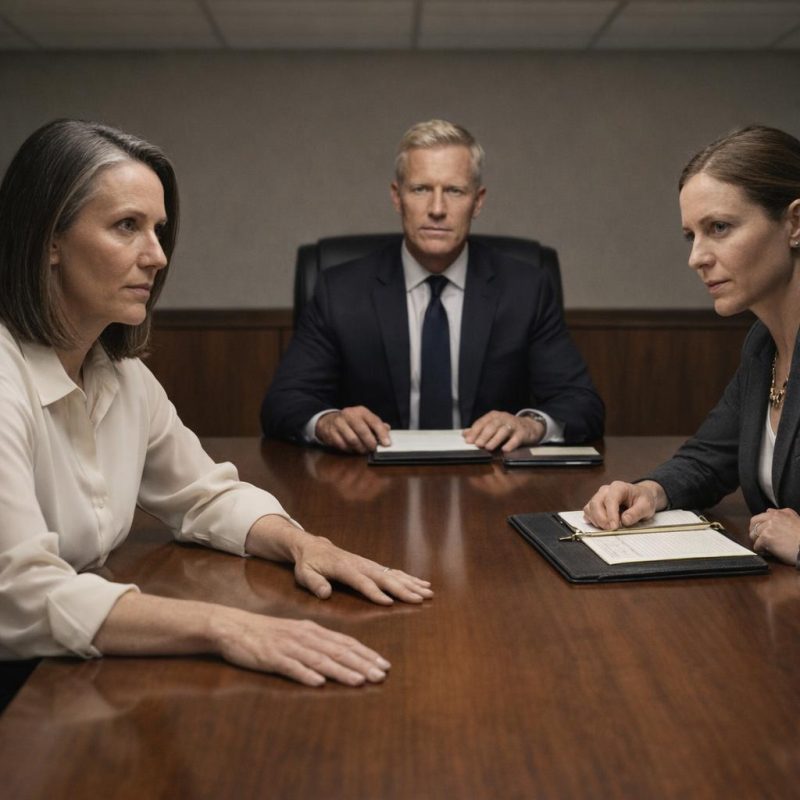 Image by RM AI
The Scathing Review
Arthur opened his folder and slid copies of the consulting firm memo down the table. I watched each board member pick one up. He gave them thirty seconds to scan the first page, then he began walking them through it — the five-year projection, the thirty percent payroll reduction target, the language about workforce demographic alignment. He was methodical and unhurried, and he didn't editorialize. He let the document speak first. Then he laid out Brianna's actions one by one: the Professional Presentation Standards email distributed within her first month, the pattern of excluding senior staff from client meetings, the performance review language that had appeared without prior feedback, the informal pressure on employees approaching retirement eligibility. He placed my highlighted copy of the standards document on the table beside the consulting firm memo and let the board see how closely the language tracked. A board member on my left asked Brianna directly whether the presentation standards policy had been reviewed by HR before distribution. Brianna said it had been an internal team communication. Another board member asked whether she had been in contact with the consulting firm during her tenure. There was a pause before she answered. I had been watching her face through all of it, and somewhere between the second question and her answer, the composure she had walked in with began to come apart.
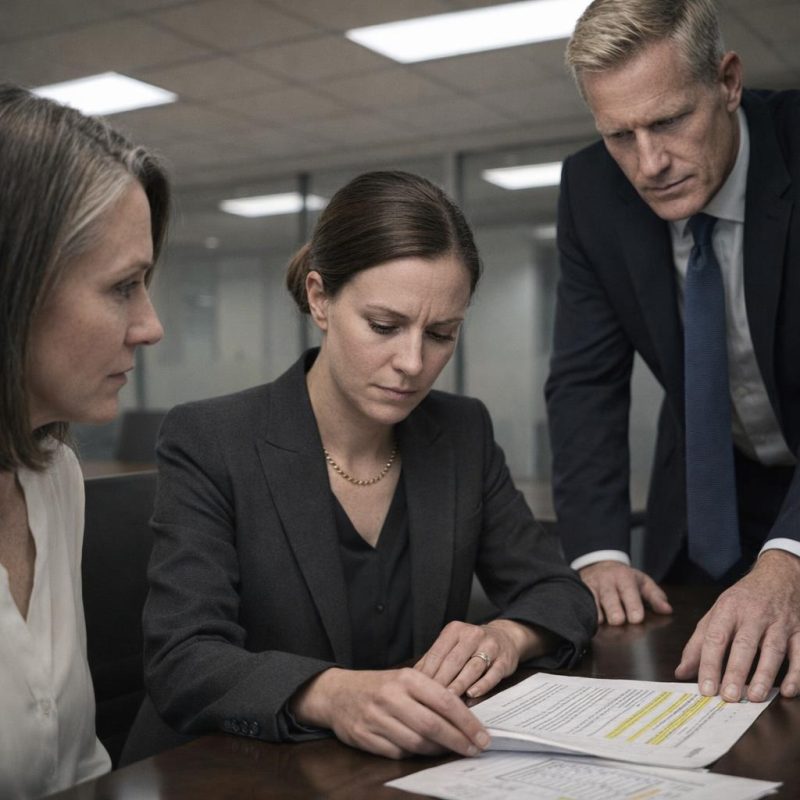 Image by RM AI
My Turn to Speak
Arthur turned to me and asked me to share what I had documented. I opened my folder. My hands were steady, which surprised me a little. I started at the beginning — the first one-on-one meeting with Brianna, the suggestion that I consider working with a personal shopper to update my professional image. I described it plainly, without editorializing, the way I had practiced. I showed the board the Professional Presentation Standards document with my annotations, pointing out the specific language that had no basis in any existing firm policy. I described the lunch at Marcello's — the client relationship meeting I had not been invited to despite managing that client account for eleven years — and I placed the printed Instagram photograph on the table. I walked them through the timeline, incident by incident, date by date. The room was very quiet. I could see board members making notes. Brianna sat across from me without speaking. I had expected her to interrupt or object, but she didn't. She sat with her portfolio closed in front of her and her eyes fixed somewhere just past my shoulder. When I finished, I closed my folder and set my hands on top of it. One of the board members looked up from his notes and said the documentation was thorough. The printed pages sat in a row down the center of the table, and every date on them was accurate.
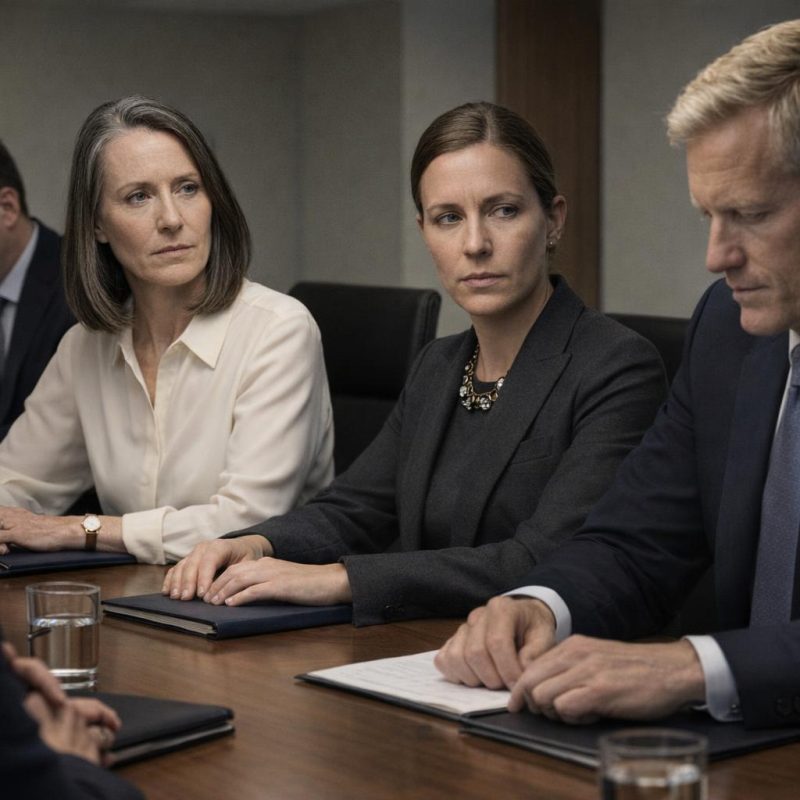 Image by RM AI
The Client Accounts
Arthur let the room settle for a moment after I finished, then he reached into his folder and pulled out the client account records I had provided him the previous week. He told the board that I personally managed relationships with eight of the firm's ten largest client accounts. He said those eight accounts represented forty-two percent of the firm's annual revenue. He said the relationships had been built over two decades and that several of the clients had specifically requested me by name in their service agreements. He placed the account summary on the table and gave the board a moment to look at it. Then he turned to Brianna and asked her, in the same measured tone he had used for everything else, if she could name those clients and describe their current needs. The question sat in the room. I didn't look at Brianna right away. I looked at the account summary on the table, at my own name appearing next to account after account, at twenty-five years of work made visible in a single page. Then I looked up. Brianna's mouth opened, and then it closed, and she said nothing at all.
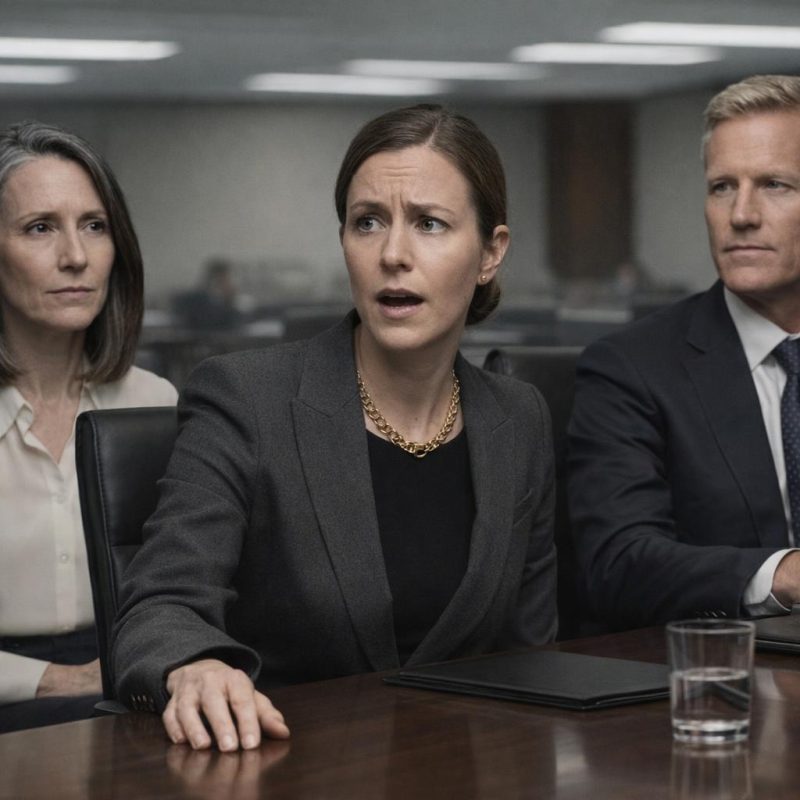 Image by RM AI
The Decision
The board members conferred among themselves for what felt like no time at all. I watched them lean toward each other, exchange a few quiet words, and then the senior member — a man in his late sixties who had been with the firm longer than almost anyone — straightened in his chair and turned to face Brianna directly. He said her management approach had been inconsistent with the firm's values and its obligations to its employees. He said it clearly, without drama, the way you say something that has already been decided. He told her to collect her personal belongings and leave the building immediately, effective that moment. Brianna didn't argue. She didn't look at me, and she didn't look at Arthur. She stood up from her chair, smoothed the front of her charcoal jacket with both hands, and turned toward the door. I heard it before I fully processed it — the sharp, deliberate rhythm of those expensive heels clicking across the conference room floor and out toward the exit.
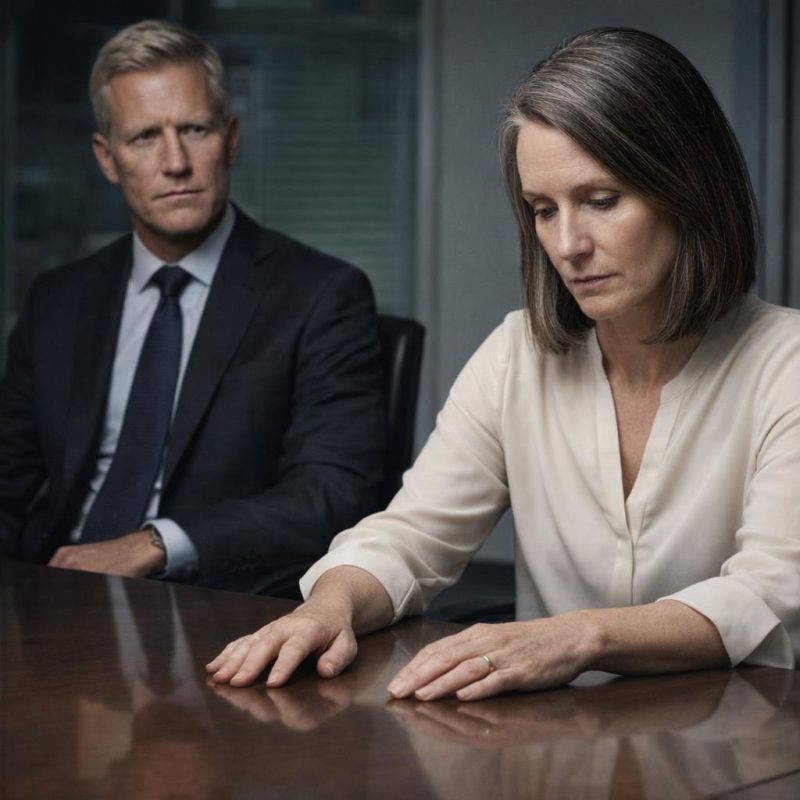 Image by RM AI
The Aftermath
The other board members filed out quietly, and then it was just Arthur and me in the conference room, the long table between us still covered in documents. He closed the folder in front of him and looked at me the way he used to look at me years ago, when things had been hard and we had both known it. He said he was sorry. He said the firm should have caught what the consulting group was doing far earlier, and that the failure was institutional, and that it was his responsibility. I told him I appreciated that. He said that the consulting firm's contract had been terminated that morning and that Robert, Linda, and the others who had been targeted would be protected — their positions secured, the documentation expunged. He thanked me for having the courage to bring it forward, and his voice was steady but quiet when he said it. I nodded and told him I had done what I thought was right. After he left, I stayed in my chair for a moment, the room still and the afternoon light coming through the windows, and let the weight of it settle.
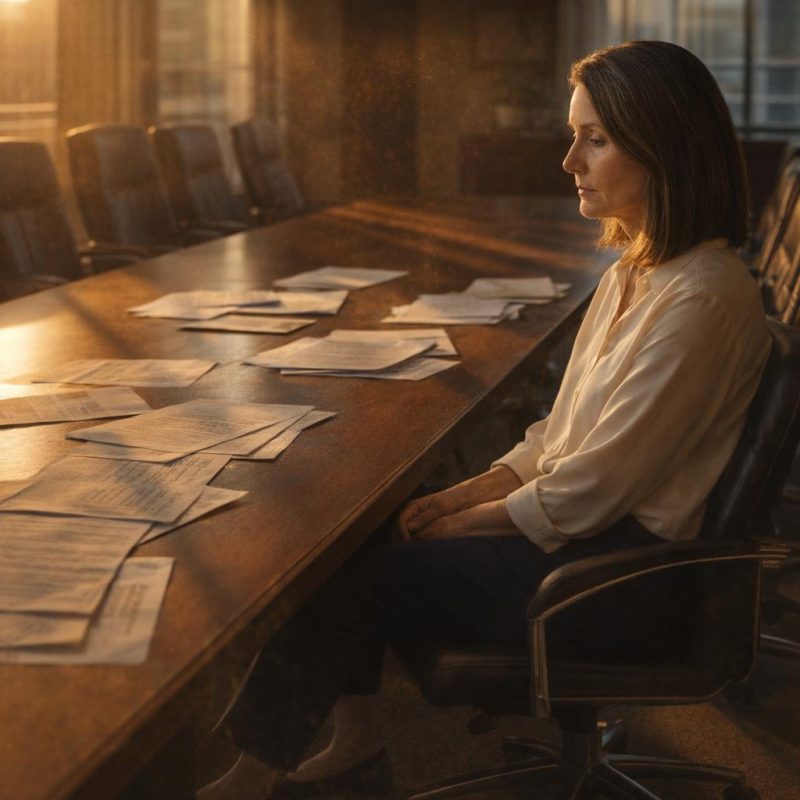 Image by RM AI
Return to Normal
I took the elevator back down to my floor alone. When the doors opened, the office looked exactly as it always had — the same carpet, the same low hum of keyboards, the same afternoon light falling across the rows of desks. My chair was where I had left it. My files were where I had left them. I sat down and ran my hand along the edge of the desk the way you do when you've been away somewhere and come back to find everything intact. David appeared at the edge of my cubicle a few minutes later, hands in his pockets, and asked if I was okay. I told him I was fine and that I was ready to get back to work. He nodded slowly, and there was something in his expression that didn't need words — just the quiet acknowledgment of someone who had been watching and waiting and was relieved by what he saw. I turned back to my screen, opened the first client file, and began working through the emails that had accumulated. The familiar rhythm of it settled around me like something I had never really left.
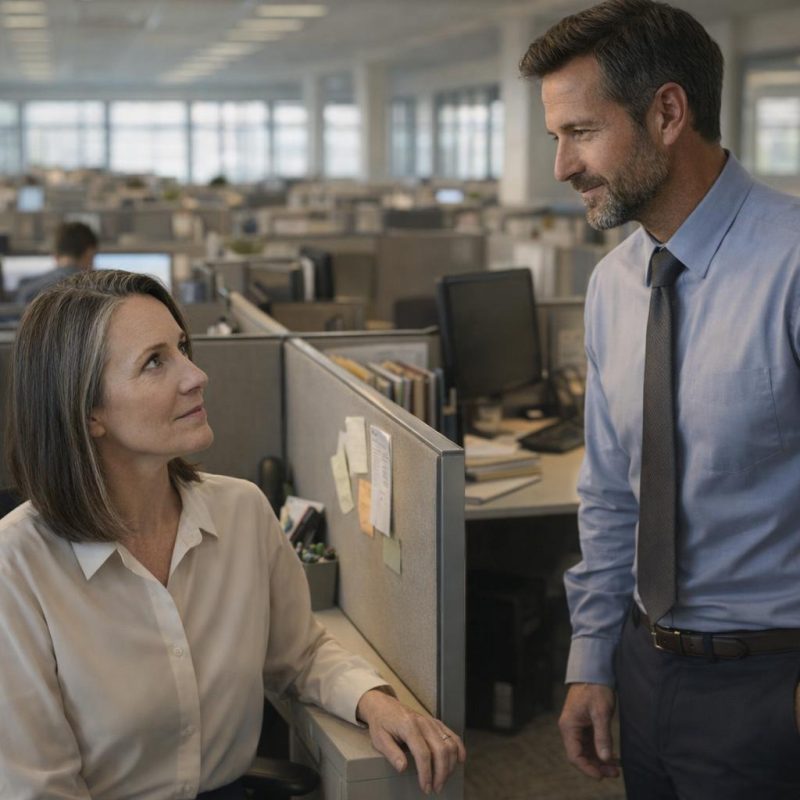 Image by RM AI
The Foundation That Held
I stayed at my desk well into the late afternoon, long after most of the floor had gone quiet. I worked through the client files the way I had worked through them for twenty-five years — methodically, carefully, with the kind of attention that only comes from knowing the history behind every account and every name. At some point I sat back in my chair and looked at the stack of folders beside my monitor, at the handwritten notes in the margins, at the names of clients who had asked for me specifically because they trusted that I would still be there when they called. The past several months had been the hardest of my career. Brianna had looked at me and seen something expendable — a woman in sensible flats and a cream blouse who didn't fit the image she was building. What she hadn't seen, what the consulting firm's reports had never measured, was the twenty-five years of relationships and institutional knowledge sitting quietly in those folders. You can replace a title. You can update a dress code. But the foundation that holds a firm together — the trust, the history, the memory of how things actually work — that is not something you can manufacture or replace.
 Image by RM AI
KEEP ON READING

The story of Ching Shih, the Woman Who Became the…
Unknown author on WikimediaFew figures in history are as feared…
By Emilie Richardson-Dupuis Dec 29, 2025
Einstein's Violin Just Sold At An Auction—And It Earned More…
A Visionary's Violin. Wanda von Debschitz-Kunowski on WikimediaWhen you hear…
By Ashley Bast Nov 3, 2025
This Infamous Ancient Greek Burned Down An Ancient Wonder Just…
History remembers kings and conquerors, but sometimes, it also remembers…
By David Davidovic Nov 12, 2025
The Mysterious "Sea People" Who Collapsed Civilization
3,200 years ago, Bronze Age civilization in the Mediterranean suddenly…
By Robbie Woods Mar 18, 2025
How Many Pilots Does It Take to Fix a Lightbulb?…
Mykyta Barko on PexelsOn December 29, 1972, Eastern Air Lines…
By Christy Chan Jun 16, 2026
20 Soldiers Who Defied Expectations
Changing the Rules of the Battlefield. You’ve probably heard plenty…
By Annie Byrd Feb 10, 2026