

I Went Undercover in My Own Restaurant and Discovered My Server Was Running a Terrifying Scam
I Went Undercover in My Own Restaurant and Discovered My Server Was Running a Terrifying Scam
The Unannounced Visit
I'd done this maybe a dozen times over the years — walked into my own restaurant like a stranger, just to see what a stranger would see. No announcement, no heads-up to the staff, just me in a plain jacket and a quiet Tuesday evening. The host stand was staffed by Eric, one of our newer hires, and he greeted me with a genuine smile that I'd noticed even during his interview. He didn't recognize me. Why would he? We'd only met once, briefly, during onboarding, and I'd been wearing my usual collared shirt with the top button done up. Tonight I'd left it open. He grabbed a menu without hesitation and led me to a two-top near the window, the one with the good sightline to the kitchen pass. I thanked him and he said, "Enjoy your evening, sir," like he meant it. I settled into the chair and opened the menu I'd read a thousand times. The amber lighting was doing exactly what I'd hoped it would — warm without being dim. I could hear the kitchen moving in that steady, controlled rhythm that takes years to build. There were wilted flowers in the bud vase and a scuff along the baseboard near the host stand that I'd need to mention to Mark. But the room itself felt right. It felt like mine.
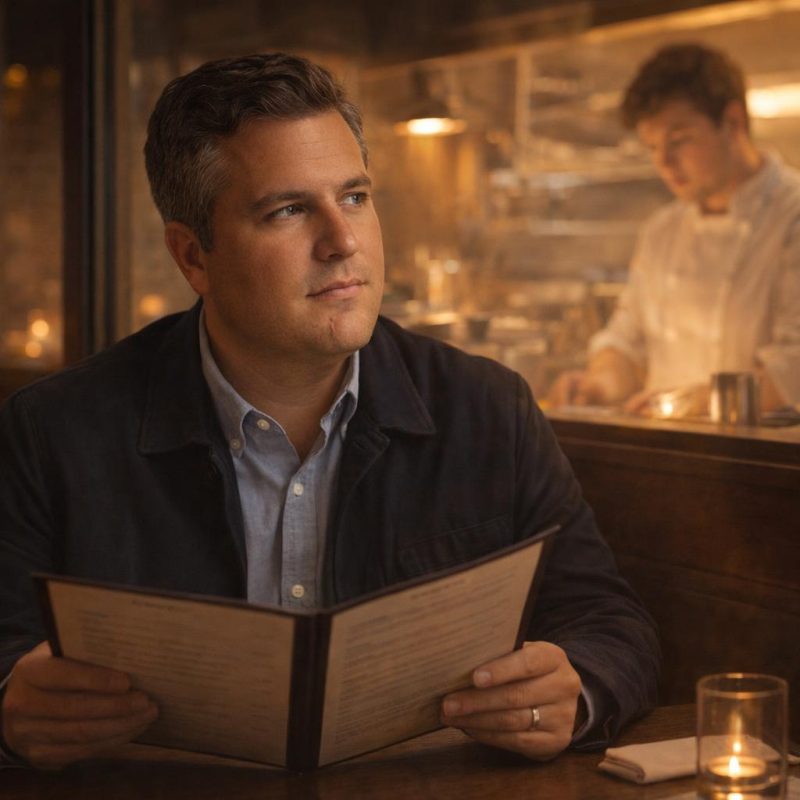 Image by RM AI
The Professional Approach
She came from the direction of the service station, moving with the kind of unhurried confidence that reads as professional rather than slow. Blonde, polished, a practiced smile already in place — the sort of smile you develop after a few years of working rooms like this one. I clocked her name tag as she crossed the dining floor: Jenna. I recognized the name from payroll reports. Mark had flagged her in his last two quarterly reviews as one of the stronger servers on the floor, reliable and guest-focused. This was the first time I'd actually seen her in person. I watched her approach and thought, good — this is exactly what I want to see. Then she got close enough to see me clearly, and something shifted. It was subtle, the kind of thing you might miss if you weren't paying attention, but I was paying attention — that was the whole point of being here. Her stride broke, just slightly. Her chin came up. The practiced smile didn't disappear exactly, but it tightened, pulled back from her eyes. She stopped a half-step short of the table, her shoulders going stiff in a way that had nothing to do with posture. I watched her eyes move across my face and drop to the scarring along my jaw and down my neck — and the smile went somewhere else entirely.
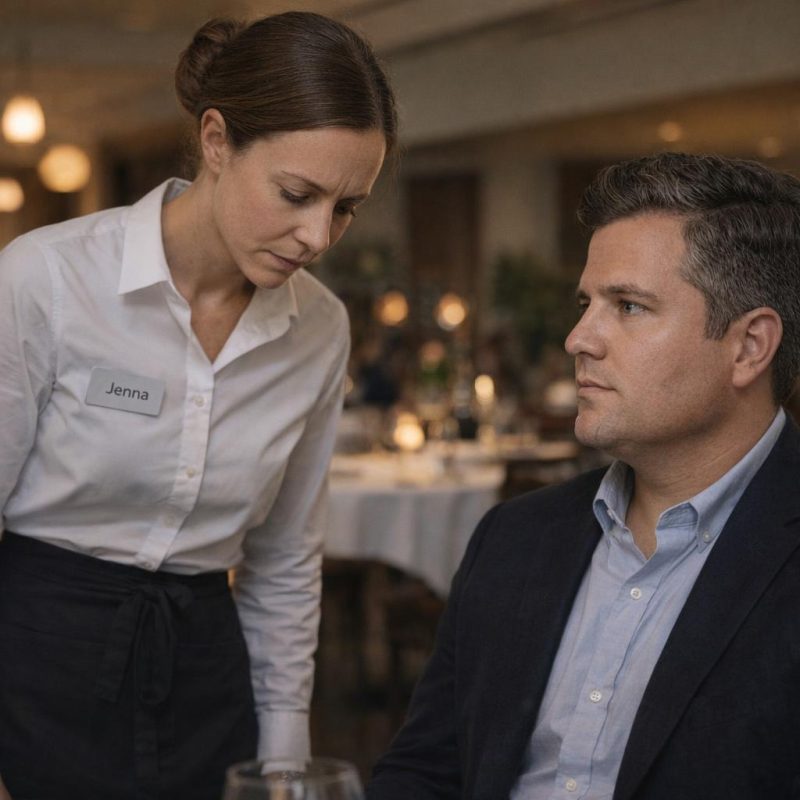 Image by RM AI
The Water Glass
I kept my voice easy. "Could I get some water to start?" Warm tone, no edge — the kind of opener I'd want any customer to use with my staff. Jenna nodded once, a tight little dip of the chin, and didn't reach for her notepad. She didn't ask still or sparkling. She didn't ask about lemon. Those are the first two questions we train every server to ask, the kind of small detail that signals you're paying attention. She just said, "Sure," in a voice that came out clipped and flat, and turned away before I could say anything else. I watched her walk back toward the service station with her shoulders drawn up, stiff in a way that didn't match the easy movement I'd seen when she crossed the floor a few minutes ago. I told myself maybe she was having a rough night. Maybe I'd caught her at a bad moment. People have bad moments — I know that better than most. She came back maybe two minutes later, set the glass down on the table, and the sound it made was harder than it needed to be. Not a slam, but not careful either. The kind of sound that lands in a quiet room and sits there. I wrapped my hand around the glass and tried to tell myself I was probably reading too much into it.
 Image by RM AI
The Double Standard
I pretended to study the menu. It gave me something to look at while I watched the rest of the room from the corner of my eye. A couple in their fifties had been seated two tables over, and Jenna was with them now. I almost didn't recognize her. She was leaning in slightly, the way good servers do when they want a table to feel like the only table in the room. She laughed at something the husband said — a real laugh, not the polished professional version — and launched into a recommendation for the salmon with the kind of enthusiasm that takes genuine engagement to pull off. She refilled their glasses before either of them reached for the water. She touched the wife's arm lightly when she took the menu back. Every instinct I'd spent years developing told me that was excellent service. The kind I'd built this place to deliver. I set my menu down and took a slow sip of water. The glass was still cold. The dining room was still warm and amber-lit and exactly what I'd designed it to be. And I sat there in the middle of all of it, at my own table, in my own restaurant, feeling the particular weight of being looked through rather than at — a weight I recognized from other rooms, other years, other people who had decided before I opened my mouth that I wasn't worth the full version of anything.
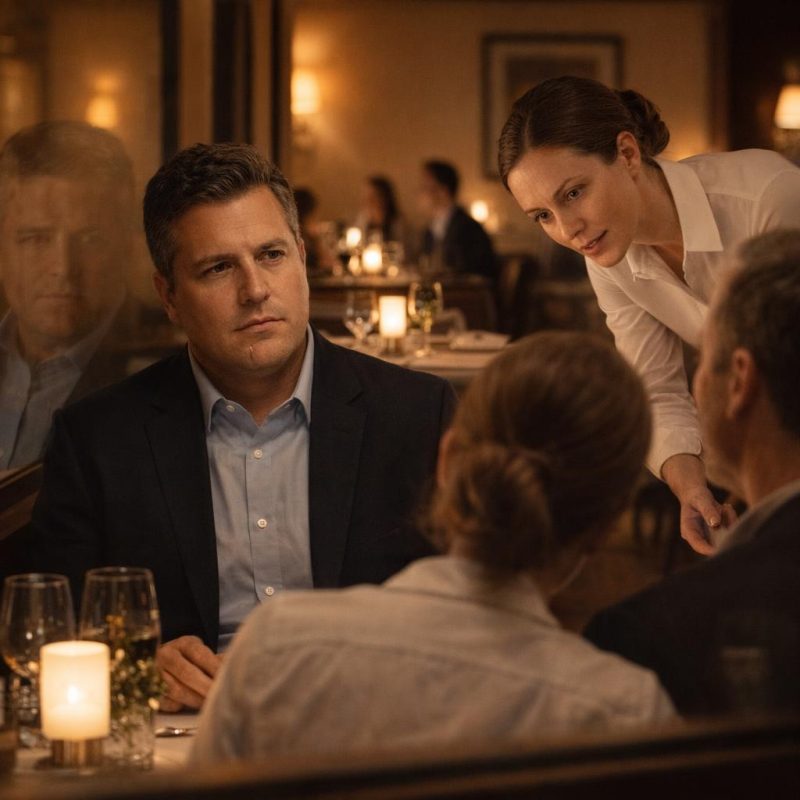 Image by RM AI
The Loyal Regular
Carmen came in around seven-fifteen. I recognized her immediately — she'd been coming in every other Thursday for as long as I could remember, always the corner booth, always the halibut when it was on the menu. She was one of those regulars who make a place feel like it's working the way it's supposed to. Jenna spotted her from across the room and her whole face opened up. She was at Carmen's table before Carmen had even settled her coat, greeting her by name, asking about her week with the kind of easy familiarity that takes real effort to build. I watched Jenna make consistent eye contact, lean in to listen, nod at the right moments. When Carmen's napkin slipped off her lap, Jenna had a fresh one unfolded and placed before Carmen had even noticed it was gone. It was flawless. It was exactly the standard I'd set for this floor. My water glass had been empty for ten minutes. No one had come by. I hadn't been offered a menu rundown, hadn't been checked on, hadn't been acknowledged since that first tight nod and the glass set down too hard. I sat with my hands around the empty glass and watched Jenna pour Carmen a second glass of wine with a smile that reached all the way up, and I felt the particular quiet of being the only person in a full room that no one seemed to see.
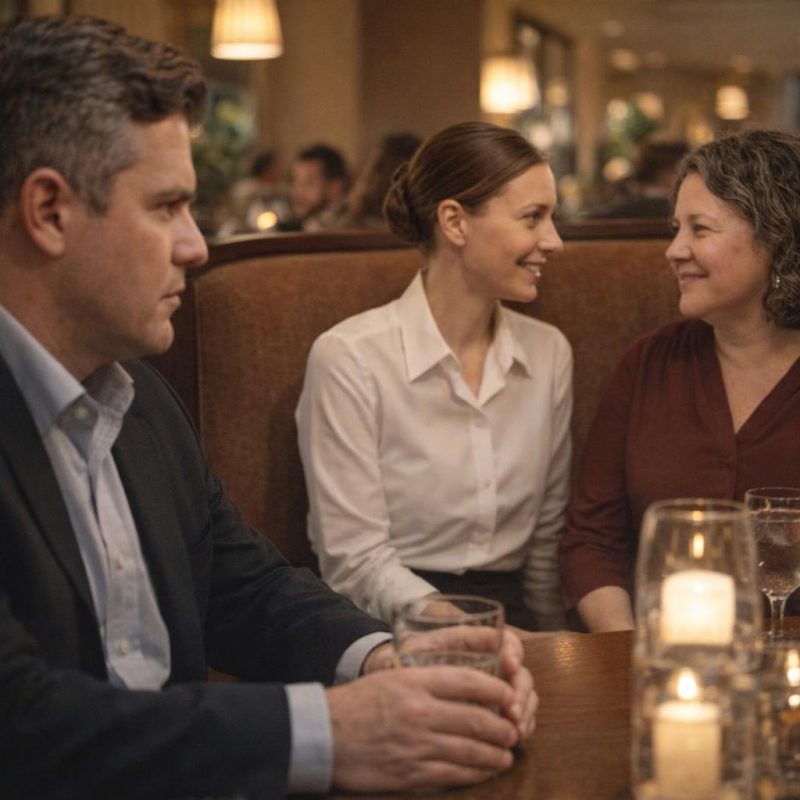 Image by RM AI
The Pattern Emerges
I stopped pretending to read the menu. There wasn't much point. I just watched. Jenna moved through the dining room with real efficiency — table four, table seven, the two-top near the bar — and at every stop she was present, attentive, the version of herself that Mark's reviews had described. She laughed. She listened. She anticipated. At one point she crouched down slightly to speak at eye level with an older gentleman who seemed hard of hearing, and I thought, that's good training, that's exactly right. Then she'd straighten up, and her eyes would sweep the room in that automatic server's scan, and they'd pass over my table — I could see the moment they landed — and then she'd turn. Not toward me. Away. Every time. It wasn't that she forgot. You don't forget a table in a section this size. The room wasn't loud, it wasn't chaotic, there was no reasonable explanation for why a server working eight tables would consistently look at one of them and then consistently look somewhere else. I'd been sitting there long enough that the ice in my water glass had melted completely. The bud vase with the wilted flowers was still the most attention my table had received. I sat with that fact the way you sit with something you don't quite want to name yet — the cold, specific reality of a wall built for one person, in a room full of open doors.
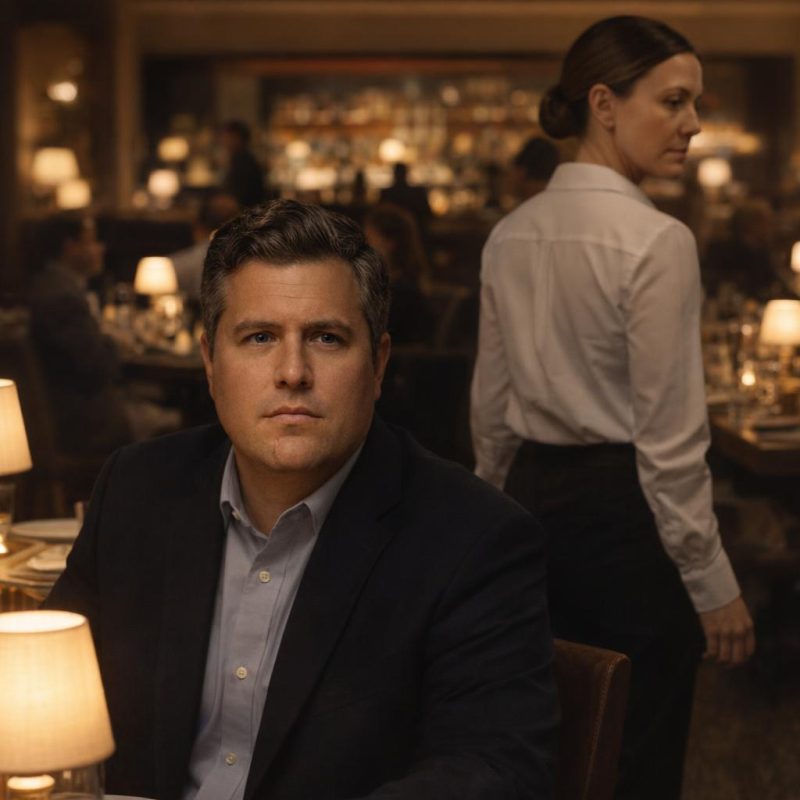 Image by RM AI
Fifteen Minutes
I started keeping track of the time at some point — not deliberately, just the way you do when you're waiting and the waiting starts to feel like something more than waiting. The couple in their fifties had ordered, received their food, and were halfway through their entrees. Carmen had been brought a dessert menu. A young woman who'd been seated after me, two tables to my left, had already had her order taken twice — once for drinks, once for food — and was now eating a bowl of soup with quiet contentment. My table had a glass of melted ice water and a menu I hadn't been asked about. Fifteen minutes is a long time to sit in a restaurant and be treated like a piece of furniture. I know the rhythms of a dining room. I know the difference between a server who's slammed and a server who's choosing. I'd been patient because I wanted to be fair, because I know bad nights happen, because I didn't want to be the kind of observer who jumps to conclusions. But patience has a floor. I straightened in my chair, caught Jenna's eye line as she came out of the service corridor, and raised my hand.
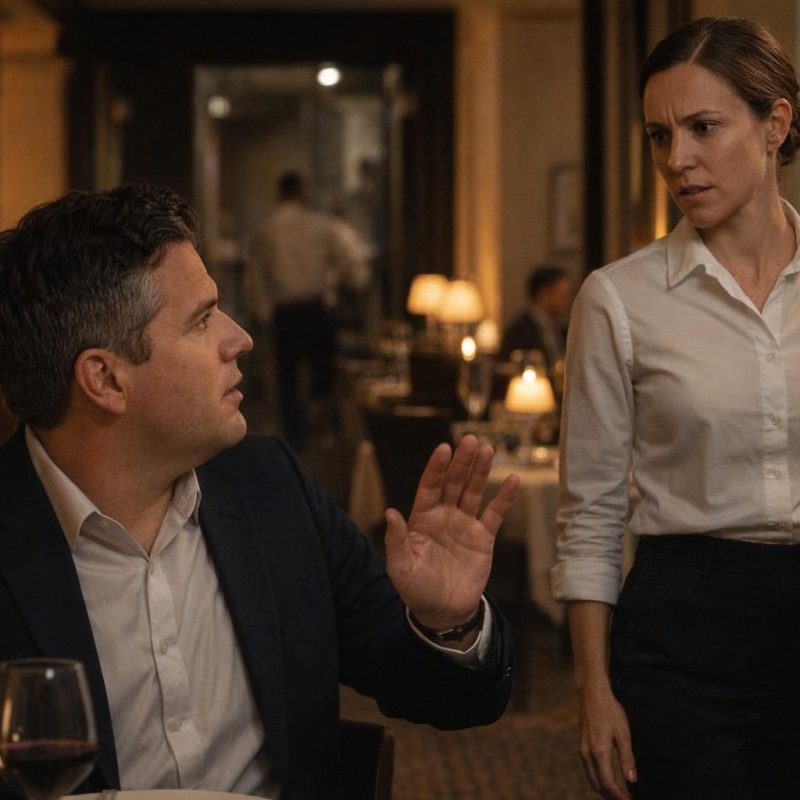 Image by RM AI
The Order Attempt
She took her time getting to me. Not the kind of delay that comes from being genuinely busy — she stopped to straighten a napkin on an empty table on the way over, which told me everything I needed to know about the pace she'd chosen. When she finally arrived, she was holding her notepad up in front of her chest like it was something to stand behind. She asked if I was ready to order while looking at a point somewhere past my left shoulder. I said yes. I ordered the duck confit, medium rare, and I felt a small, quiet lift of something like normalcy — this was a dish I'd spent three months perfecting with our head chef, adjusting the brine, the render time, the cherry reduction, until it was exactly right. It was the dish I was most proud of on that menu. Jenna wrote it down without comment, no upsell, no mention of the sides, no "excellent choice" or any of the standard affirmations we trained for. I watched her pen move across the notepad. And then her writing slowed, and her eyes drifted up from the page, and her gaze settled on the thick scarring along the side of my neck — and stayed there.
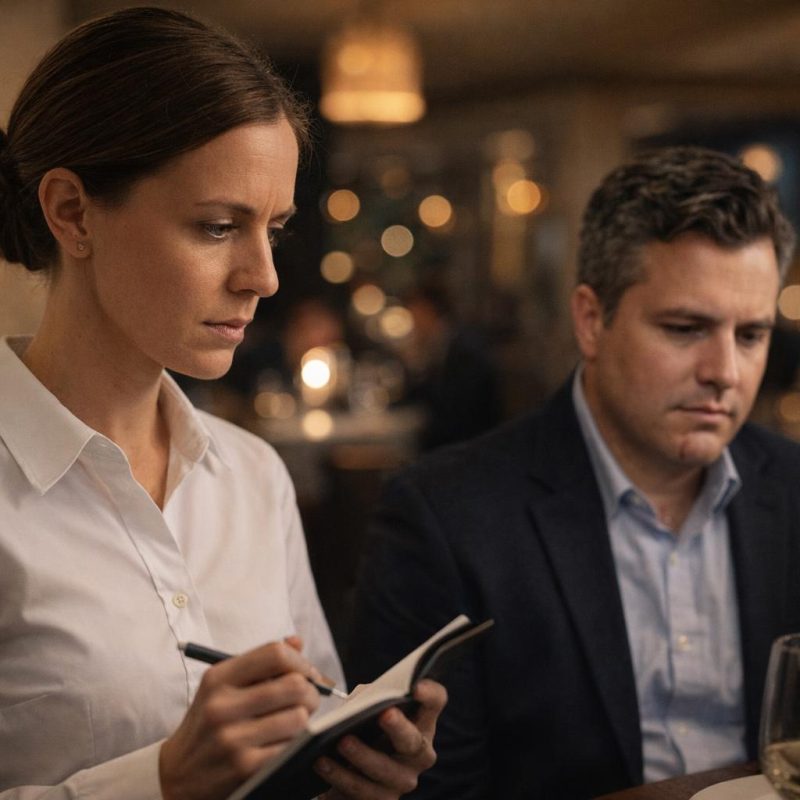 Image by RM AI
The Refusal
She stopped writing. Just stopped, mid-stroke, pen hovering over the notepad like she'd thought of something. I watched her eyes drift back to my neck — to the scarring along my jaw and down toward my collar — and stay there a beat too long. Then she lowered the notepad slightly and said she didn't think the duck was a good idea. I kept my expression neutral and asked her why, keeping my voice even, the way you do when you're not sure you heard what you think you heard. She hesitated. Her eyes moved again — not to my face, not to the menu, back to the scars. And then she said it plainly, without flinching: she didn't think the restaurant could serve me that dish. The table felt very still. The ambient noise of the dining room — the low conversation, the clink of glassware, the soft music I'd chosen myself — all of it continued around me like nothing had happened. Then I looked up at her and asked her to say that again.
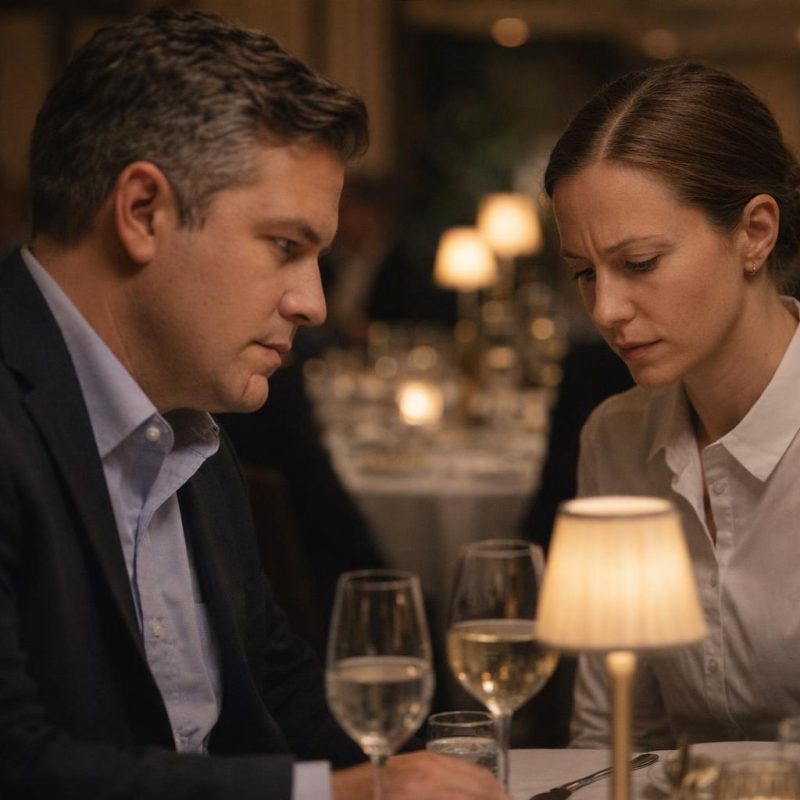 Image by RM AI
The Condition
She didn't hesitate the second time. She repeated it with the same flat calm, like she was reading from a script she'd rehearsed. She said she was concerned about my condition. That word — condition — landed somewhere between my ribs. I asked her what condition she meant, and she gestured vaguely toward my neck, toward the scarring, with a small tilt of her chin. She said there could be liability issues. She said the duck confit required a certain — and here she paused, choosing her words — a certain level of ease when eating, and she wasn't sure I'd be comfortable. Something moved through me as I took in what she was saying. The scarring on my neck and jaw. The liability concern. The careful suggestion that eating might cause problems for me. I kept my hands flat on the table. I kept my voice level. But something was moving through me that I hadn't felt in a long time — a slow, quiet burn that had nothing to do with the kitchen. I had spent two years rebuilding. And she had just looked at what remained and decided I was broken.
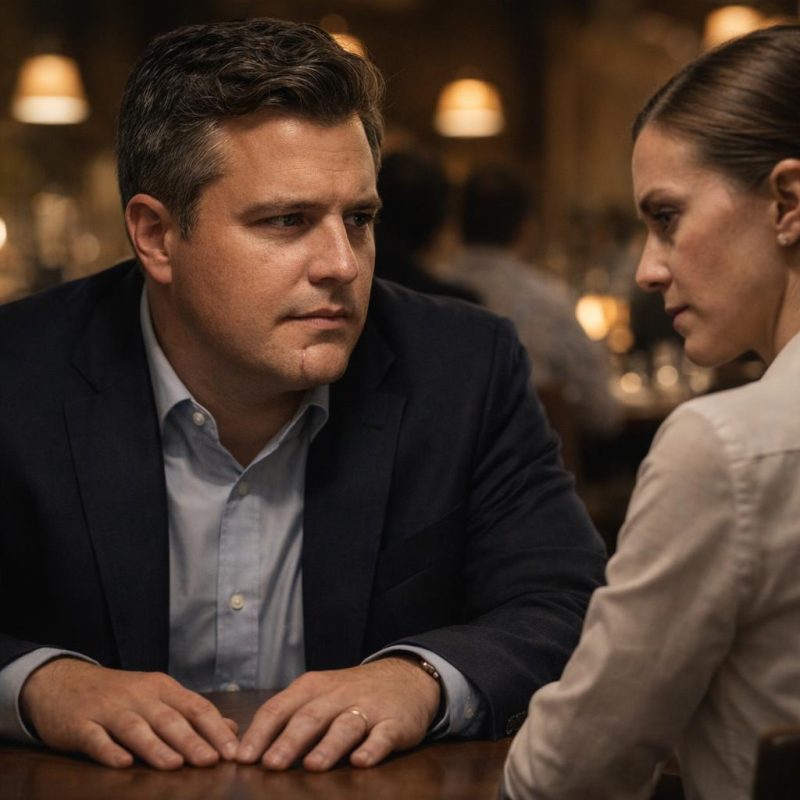 Image by RM AI
The Fake Policy
I told her, as clearly and calmly as I could manage, that I was perfectly capable of eating duck. That I had no difficulty eating. That whatever concern she had, it wasn't necessary. She shook her head. Not aggressively — almost gently, which somehow made it worse. She said she understood, but that this was restaurant policy. I asked her to repeat that. She said the restaurant had a policy regarding customers with special needs, and that the staff was trained to make accommodations. Special needs. I heard the phrase and felt it settle over me like something cold. I knew every policy in this restaurant. I had written most of them, reviewed the rest, and updated them after every health inspection and staff review for three years. There was no such policy. There had never been such a policy. Whatever she was reaching for with the careful language, the slow head shake, the measured tone — I couldn't place it yet. But it wasn't safety. I sat very still, the noise of the dining room carrying on around me, and let those two words sit in the air between us.
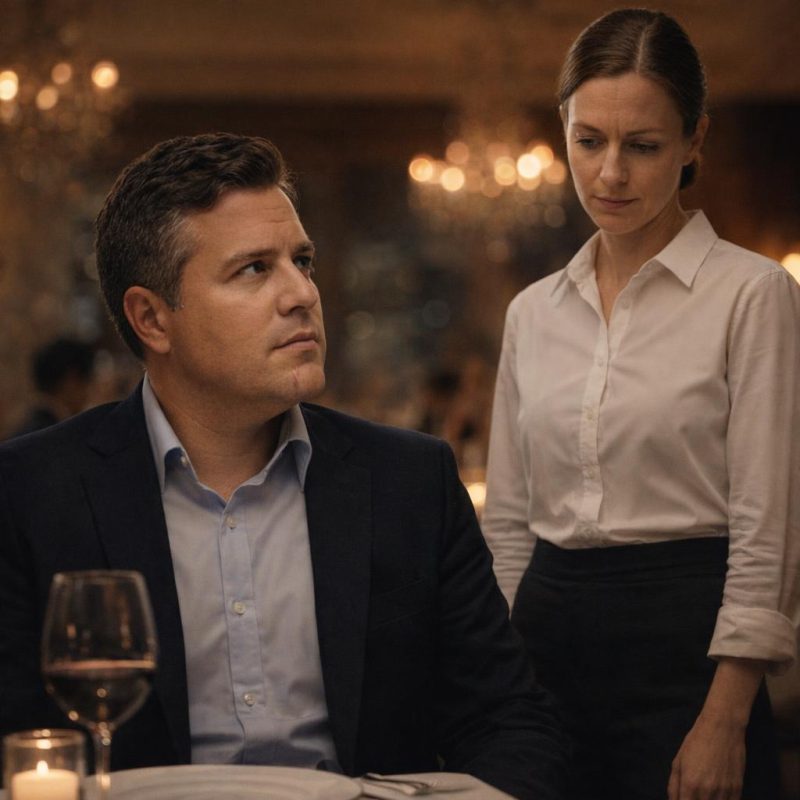 Image by RM AI
The Manager Request
I took a breath. A slow one, deliberate, the kind you take when you know the next thing you say matters. I counted to five in my head — one, two, three, four, five — the way I used to do in the early months after the accident, when everything felt like it was happening too fast and too loud. The dining room was full. There were people at the tables around me, conversations happening, a couple near the window sharing dessert. I was not going to make a scene. That wasn't what this moment called for. I looked up at Jenna and told her, quietly, that I'd like to speak with the manager. Something moved across her face — just for a second, a flicker of something that wasn't concern or professionalism. It was there and gone before I could fully read it. She gave a short nod and said she'd get him. I watched her turn and move toward the back of the restaurant, and I felt my heart going faster than I wanted it to, loud in my chest, steady and insistent. I had no idea what was about to happen. But I knew it wasn't going to be nothing.
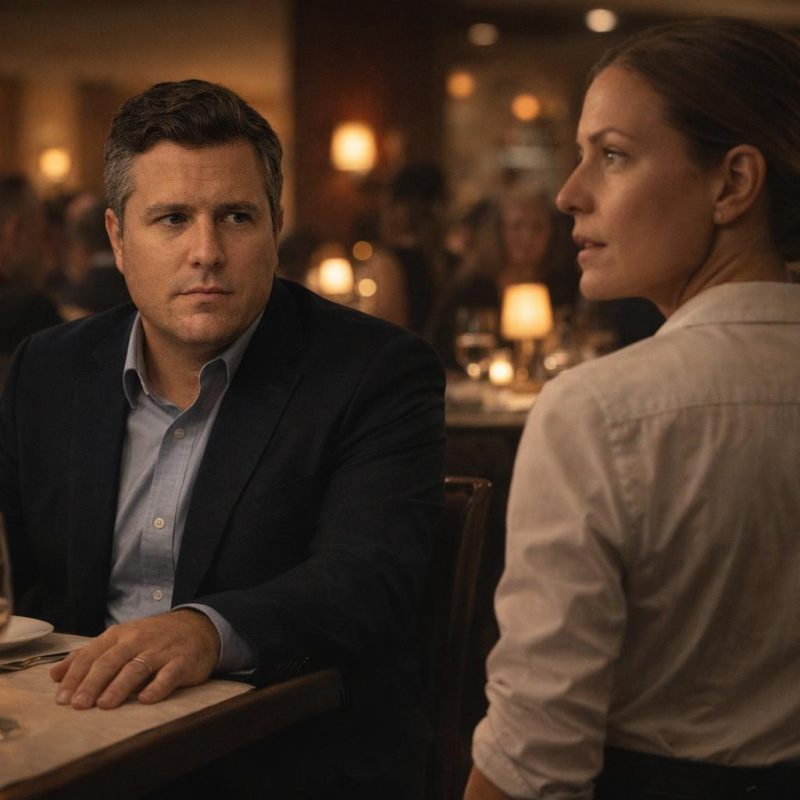 Image by RM AI
The Wait
She disappeared through the kitchen door and I was alone at the table. The couple by the window laughed at something. A server two sections over recited the evening specials to a four-top. Everything around me was exactly as it should be — the lighting warm, the tables properly spaced, the music at the level I'd always insisted on, low enough for conversation. I had built this room. I had chosen the chairs, argued over the paint color, spent a week getting the acoustics right so that a full house never felt loud. And now I was sitting in it like a stranger, waiting. Mark had been with me for two years. He'd been there through the worst of the recovery, through the soft reopening, through the first full-service weekend when I'd stood in the back and watched the dining room fill up and felt something close to whole again. He would know me the moment he walked through that door. He would know exactly who was sitting at table seven. And Jenna would be standing right there when he said it. I didn't know yet what I was going to do with any of this. I just sat with the weight of what was coming, and let the room carry on around me.
 Image by RM AI
The Manager Arrives
Mark came through the kitchen door with the expression he always wore when handling a complaint — composed, attentive, professionally neutral. I'd seen it dozens of times from the other side of the pass-through. He was good at it. He moved through the dining room with the quiet authority of someone who knew every table by number and every regular by name, Jenna a half-step behind him. He was looking toward table seven before he'd fully cleared the service station. And then he saw me. His stride didn't stop — it stuttered, just slightly, one foot landing a fraction of a second late, like his body had processed something his face hadn't caught up to yet. His eyes went wide for just a moment. Then they moved to Jenna. Then back to me. I watched the professional composure hold, barely, while something underneath it shifted into something I could only describe as dread. He knew. Of course he knew. He'd seen my face every week for two years. And now he was standing in the middle of my dining room, looking between the server he'd given glowing reviews and the owner she had just refused to feed, and I could see the exact moment the full shape of it landed on him.
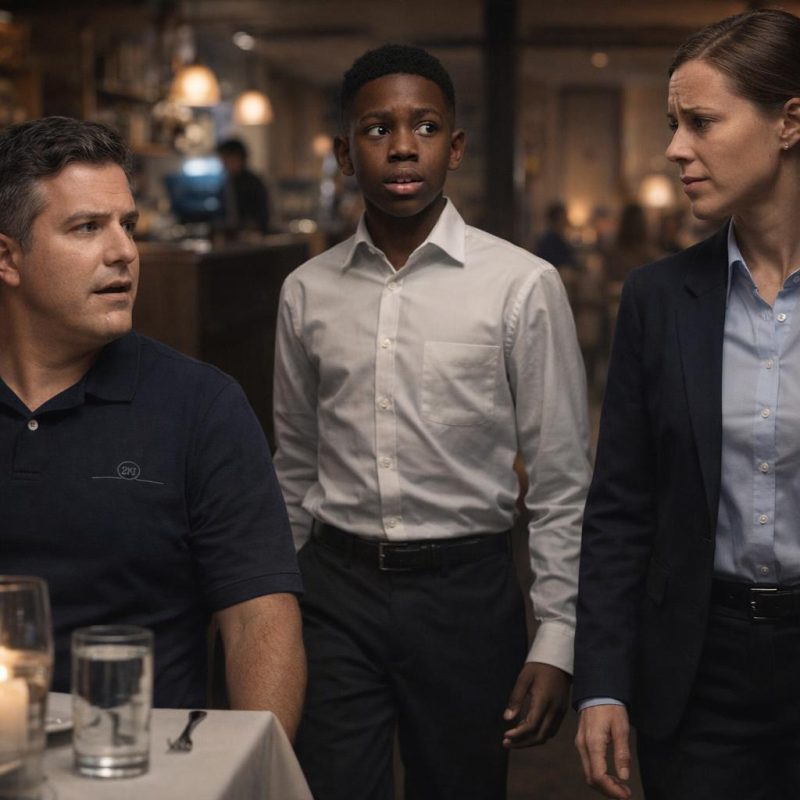 Image by RM AI
The Revelation
Mark stopped at the edge of the table. He looked at me for one long second — the kind of second that has a lot of things moving through it — and then he said my name. Not 'sir.' Not 'good evening.' My name, clearly, in the middle of the dining room. I heard Jenna go still behind him. I didn't look at her right away. I kept my eyes on Mark, who was doing an admirable job of holding himself together, though I could see the effort it was costing him. Then I looked at Jenna. She was standing just behind Mark's left shoulder, her notepad still in her hand, and she was staring at me with an expression I hadn't seen on her face before — not the practiced warmth, not the flat dismissal, not the careful concern she'd used to explain why I couldn't eat my own duck confit. This was something else entirely. She had heard Mark say my name. She had connected it to the name on the staff schedules, the name above the door, the name on every piece of correspondence that came through this restaurant. I watched her put it together in real time. And then I watched all the color leave her face.
 Image by RM AI
The Moment of Truth
Nobody moved for a moment. Mark stood between us, his weight shifted slightly forward like he wasn't sure which direction required him more. The notepad was still in Jenna's hand, angled down now, forgotten. The dining room continued around us — a server passed with a tray, someone laughed near the bar — but at table seven, everything had gone very quiet. I stayed in my seat. I didn't stand up, didn't raise my voice, didn't do anything that would draw the room's attention. I just watched. Jenna's eyes moved from Mark to me, then back to Mark, then settled on me again. The composure she'd carried through the entire interaction — the careful language, the slow head shakes, the measured concern — it was gone. What was left underneath it was something rawer and harder to name. Her jaw was tight. Her shoulders had pulled in slightly. The notepad dropped another inch in her grip. I had spent the last twenty minutes on the receiving end of something I still couldn't fully explain. And whatever had been running behind her eyes when she looked at my scars and decided what kind of customer I was — I could see it collapsing across her face in real time.
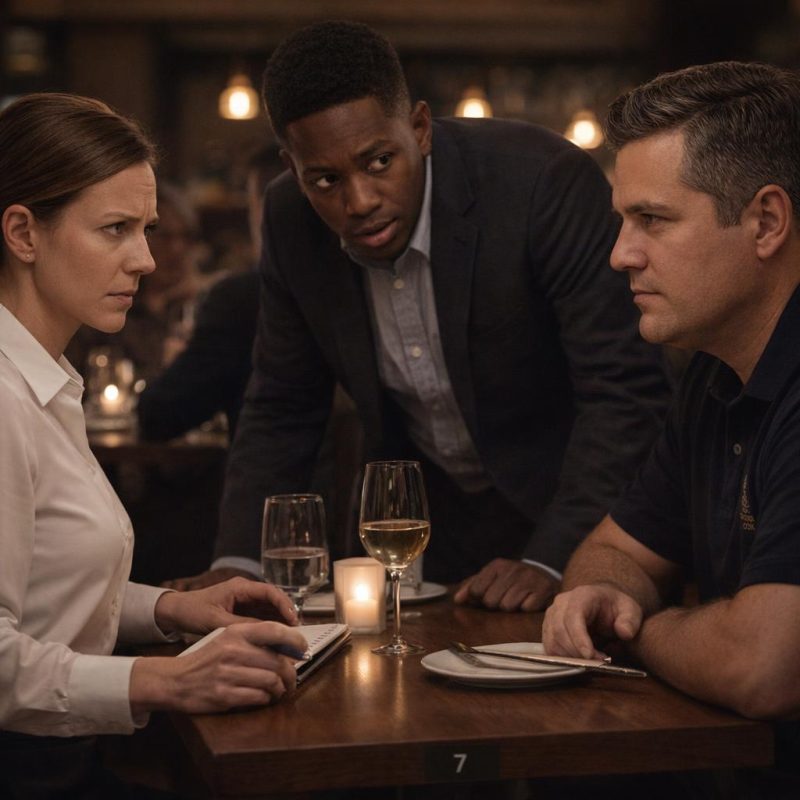 Image by RM AI
The Departure
She turned away from us without a word. No apology, no explanation, no final attempt to recover the professional mask she'd been wearing all evening. She just turned. Her shoulders were pulled in tight, rounded forward in a way that made her look smaller than she had all night, and she walked toward the back of the house with her head angled down. I watched her go. The dining room didn't notice. A couple near the window was laughing about something. A server refilled water glasses two tables over. The whole room kept moving, easy and warm, the way a good restaurant is supposed to feel on a Friday night. And I sat there in the middle of it, in my own restaurant, and felt something I hadn't expected. Not satisfaction. Not relief. There was no clean feeling of justice settling into place. What came instead was something quieter and harder — the particular weight of being right about something you'd hoped you were wrong about. Mark stayed near the table. He didn't say anything either. Some moments don't need filling. I just sat with the quiet, and it pressed down on me like something I'd have to carry for a while.
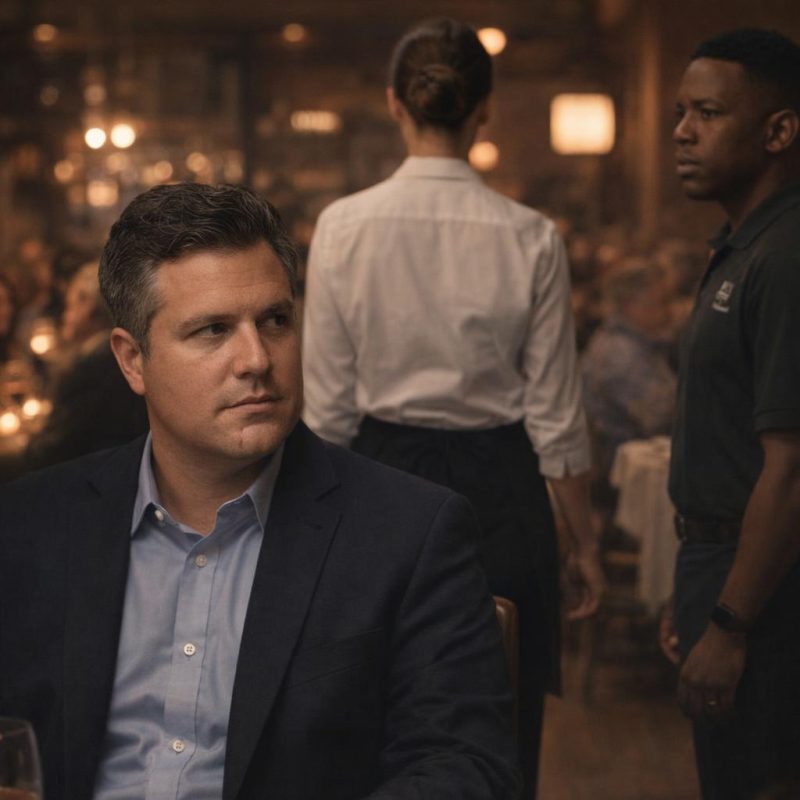 Image by RM AI
The Aftermath Begins
Mark pulled out the chair across from me and sat down. He didn't ask if I was okay. He knew me well enough not to. The dining room kept going around us — orders being called, glasses clinking, the low hum of conversation that I'd spent years building into something I was proud of. None of it had changed. The people at the other tables had no idea what had just happened four feet away from them. To them it was just another Friday. I turned my water glass slowly on the tablecloth and tried to think clearly. What I kept coming back to wasn't the refusal itself, or even the words she'd used — the liability, the condition, the special needs. It was her face when Mark said my name. That wasn't surprise. That was something else, something that moved too fast and pulled too tight to be simple embarrassment. I didn't know what she was going to do next. I didn't know if she'd call in sick, quit outright, or walk back out of that kitchen in twenty minutes like nothing had happened. Mark set his hands flat on the table across from me, and I understood, sitting there in my own restaurant with the room humming around us, that whatever had just happened was nowhere near finished.
 Image by RM AI
The Processing
I told Mark everything, start to finish, in the order it happened. The seating, the menu, the way she'd angled herself away from me when she took the order from the couple nearby. The duck. The way she'd said the word liability like she'd rehearsed it. Mark listened without interrupting, his elbows on the table, his expression getting heavier with every sentence. When I finished, he sat back and let out a slow breath through his nose. "She said 'condition,'" he repeated. Not a question. Just making sure he'd heard it right. "She said condition and special needs," I said. "In my restaurant. To me. About the food I put on the menu." Saying it out loud didn't make it smaller. It made it more concrete, more real, the way spoken words sometimes do. I'd been discriminated against before — after the accident, during the recovery, in rooms where people decided what I was capable of before I opened my mouth. I thought I'd built something here that was different. A place I controlled. A place where that couldn't reach me. The irony of it sat in my chest like something with weight and edges. This was my kitchen. My menu. My name on the lease. And I had been turned away from my own table like I didn't belong there.
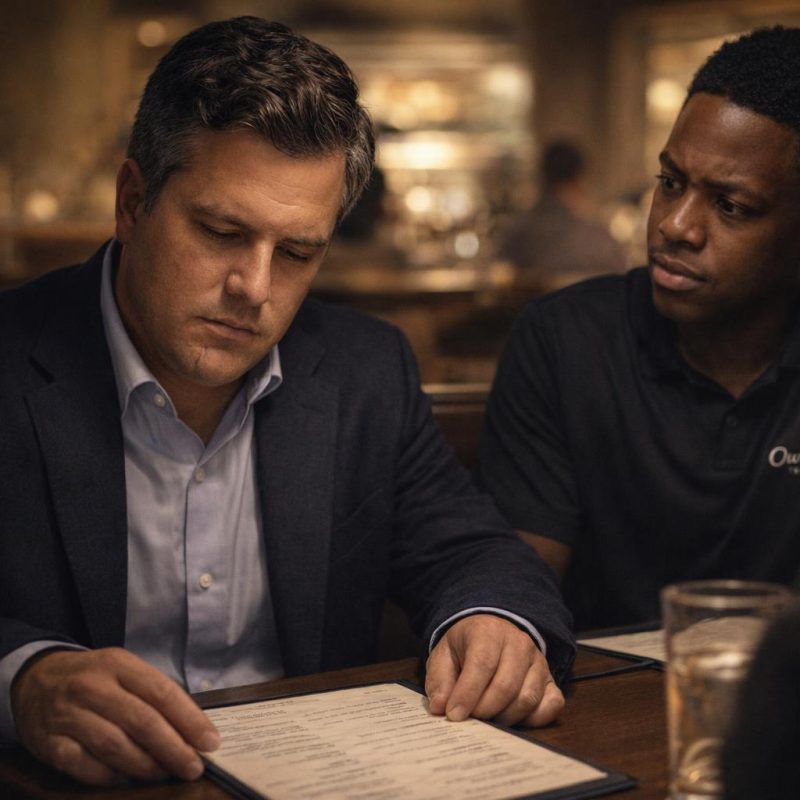 Image by RM AI
The Documentation
I told Mark we needed to write it all down before the details softened. He nodded immediately, no hesitation. He pulled out his phone and started typing while I talked — timestamps, exact phrasing, the sequence of tables she'd served and in what order. He confirmed he'd been watching from near the host stand for part of it, that he'd seen her body language shift when she approached my table versus the others. "I gave her strong reviews," he said, and there was something uncomfortable in his voice when he said it. Not guilt exactly, but the particular discomfort of someone who'd trusted their own judgment and was now questioning it. "You had no reason not to," I said. "You saw what she showed you." We went through it methodically. The refusal. The language. The contrast in how she'd handled Carmen's table — attentive, warm, unhurried — versus the way she'd stood at mine like she was managing a problem. Mark said he'd pull her personnel file in the morning. I said we should do it tonight. He agreed. Neither of us said much after that. Jenna's expression when she walked away stayed with me — something in it I couldn't quite name, something that didn't sit right. I didn't know what came next. But I knew we weren't done, and the quiet of the dining room around us felt less like peace than like the pause before something shifts.
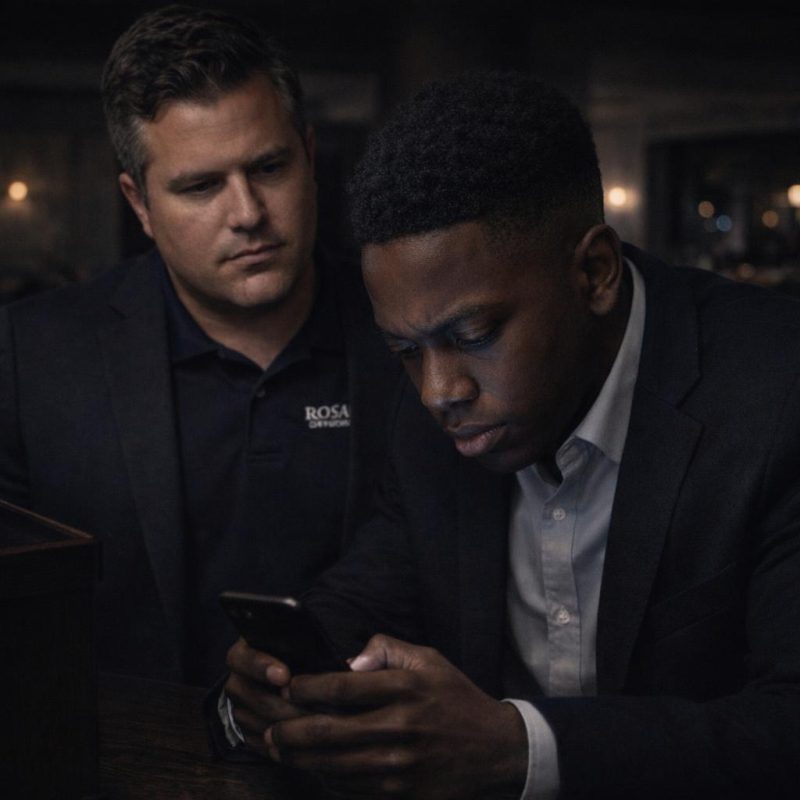 Image by RM AI
The Meeting with Mark
We moved to the office after the dinner rush thinned out. Mark pulled Jenna's file from the cabinet and set it on the desk between us — her application, her onboarding paperwork, three performance reviews, all of them positive. "Punctual, professional, excellent customer rapport," he read from the most recent one, and his jaw tightened slightly as he said it. I sat across from him with a legal pad and wrote down everything in the order it happened. Eric seating me. The wait. Jenna's approach. Her exact words when I ordered the duck — that she had concerns about my ability to manage the dish safely, that she wanted to flag it for liability reasons, that customers with my condition sometimes required additional accommodations. I wrote it word for word as best I could recall it. Mark documented his own observations separately — what he'd seen from the floor, when he'd intervened, what Jenna's demeanor had been when he said my name. We cross-referenced the two accounts and they matched cleanly. Mark stapled everything together and dated it. He looked at the stack of papers for a moment. "She never behaved this way in front of me," he said. "Not once." I believed him. That was almost the harder part — knowing that whatever this was, it had been invisible to the people around her. The file sat on the desk between us, and neither of us reached for it again.
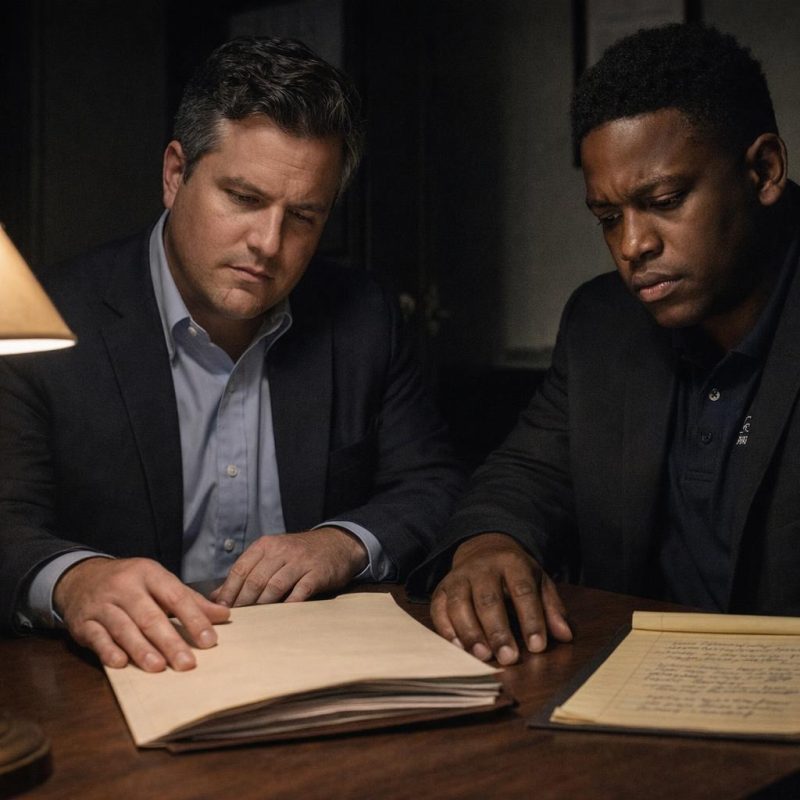 Image by RM AI
The Waiting Days
The days after that were strange. I came in every morning, did my walk-through, checked the prep lists, talked to the kitchen staff about the weekend specials. Everything looked normal from the outside. Jenna had called in the following day and not returned. Mark handled it without drama — noted the absence, arranged coverage, said nothing to the floor staff beyond what was necessary. I didn't ask him to explain it differently. We both understood we were in a waiting period, and neither of us knew how long it would last. I found myself checking the mail more than I usually did. Not obsessively, but with a kind of low-grade attention I couldn't quite turn off. Every morning I'd flip through whatever had come in — invoices, vendor correspondence, the usual stack — and set it aside. Mark noticed. He didn't comment on it directly, just started leaving the mail sorted on my desk before I arrived. Four days passed. Then five. On the sixth morning I came in to find Mark already at his desk, the sorted stack in front of him, and one envelope set apart from the rest. Heavier paper. A green return-receipt card still attached. He looked up when I walked in, and I looked at the envelope, and neither of us said anything. It was addressed to the restaurant, certified mail, and my name was on it.
 Image by RM AI
The Claim
I sat down before I opened it. I don't know why — some instinct that said whatever was inside deserved to be read from a stable position. Mark stood to my left, close enough to read over my shoulder. The letter was from an employment law firm I didn't recognize, two pages, single-spaced. I read it twice. Jenna was filing a formal discrimination complaint. According to the letter, she had raised legitimate safety concerns about a customer who appeared to have a medical condition affecting his motor control, and she had been publicly humiliated and subsequently forced out of her position in retaliation for doing so. She was claiming she had acted in the customer's best interest. She was claiming the restaurant had created a hostile work environment. She was claiming she had been targeted because she had spoken up. I set the letter down on the desk and looked at the wall for a moment. The words were all there in clean legal language — safety concerns, good-faith effort, protected activity — and every one of them was attached to an account of that evening that I barely recognized. Mark picked up the second page and read it without speaking. I didn't need to ask what he thought. The silence in that office had a particular quality to it, the kind that comes when something lands that you don't yet have the right words for.
 Image by RM AI
The Lawsuit
There was a second document folded behind the letter. A formal legal complaint, captioned with the court's name and a case number that already existed — she'd filed before sending this. I read through it slowly. Discrimination. Wrongful termination. Emotional distress. The complaint sought compensatory damages, punitive damages, and attorney's fees. It named me personally and the restaurant as a business entity. I set it flat on the desk and read the termination claim again, because that was the part that stopped me. Mark leaned over and pointed to the same line I was looking at. "She wasn't terminated," he said. "She called in and didn't come back. I haven't issued any termination paperwork. There's nothing in the file." I knew that. I had been there for all of it. But seeing the word in a legal document, attached to my name, in a complaint that had already been filed with a court — it was different from knowing it. The complaint described me as a business owner who had retaliated against an employee for protecting a vulnerable customer. It described the customer she had refused to serve. It described his visible disability. It was describing me. I sat with that for a long moment, the pages in front of me, the case number at the top of the document, and the particular weight of being accused of the thing that had been done to me.
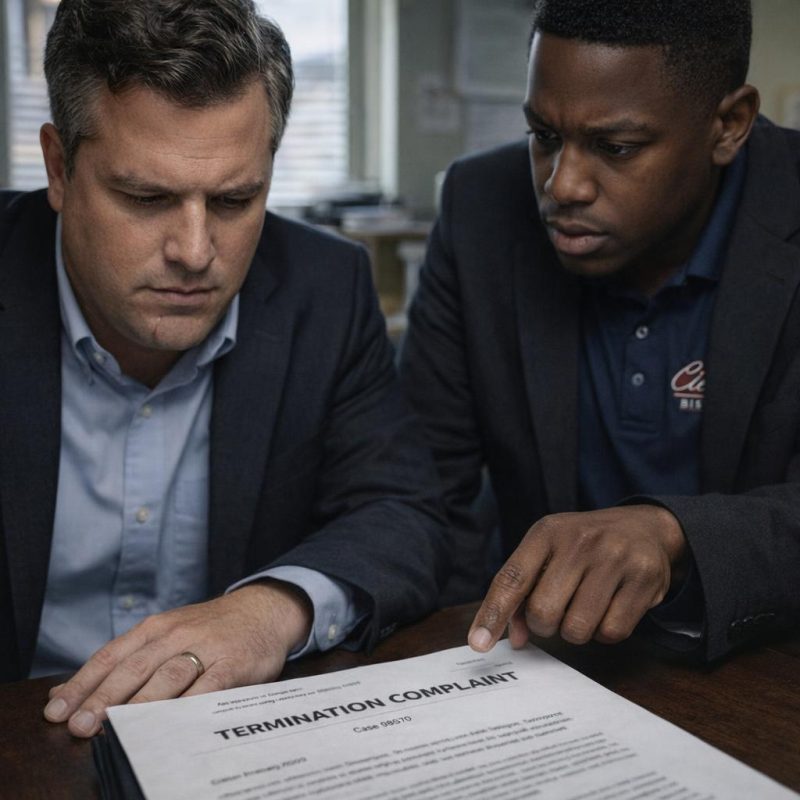 Image by RM AI
The Shock Settles
I read the complaint three times. Not because I didn't understand it the first time, but because some part of me kept expecting the words to rearrange themselves into something that made more sense. They didn't. The case number stayed the same. My name stayed the same. The word 'retaliation' stayed exactly where it was, attached to my name, in a document filed with an actual court. Mark sat across from me and didn't say much, which was the right call. There wasn't a lot to say. At some point he told me he would testify to everything he'd witnessed — the seating, the refusal, the way she'd spoken to him afterward. He said it quietly, like he was offering something he knew I needed but didn't want to have to ask for. I appreciated that more than I told him. But even with that, I kept coming back to the same thought: this was going to be public. A lawsuit meant filings, records, potentially a trial. It meant my name attached to a discrimination claim in a searchable database. The restaurant's name. Everything I had rebuilt. I set the papers down and looked at the wall for a moment. I wasn't going to settle. I wasn't going to let a false accusation sit unanswered. I needed a lawyer, and I needed one now.
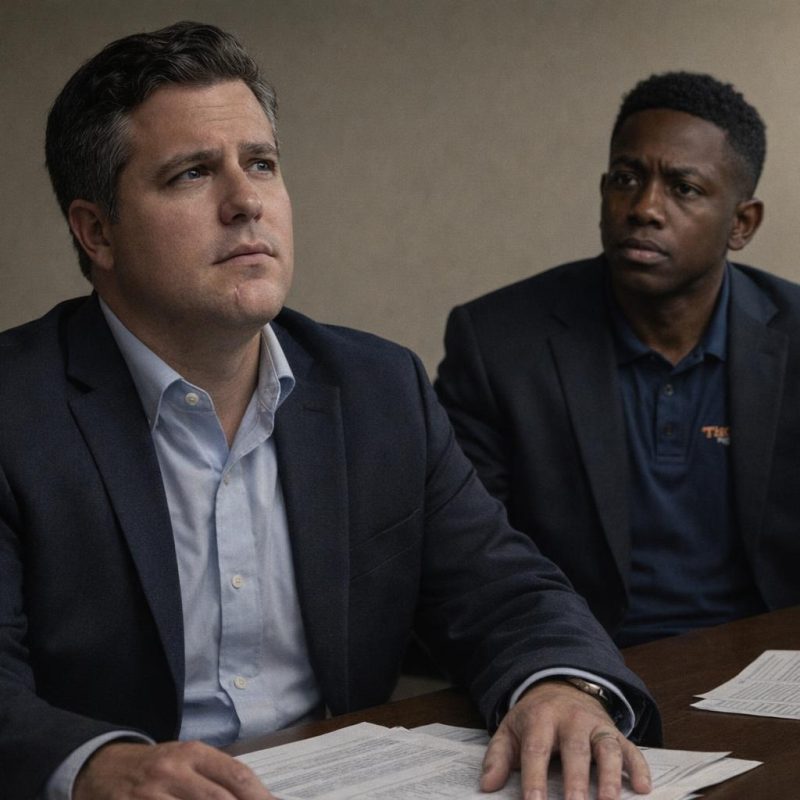 Image by RM AI
The Search Begins
I started that night, sitting at the kitchen table with my laptop open and a cold cup of coffee I kept forgetting to drink. I searched for employment discrimination attorneys, then narrowed it to ones who handled cases where the employer was the defendant in a wrongful termination claim. There were more than I expected. I read through websites, case summaries, client reviews. I looked at verdicts and settlements, trying to get a sense of who actually went to trial versus who pushed clients toward quick resolutions. I made a list. Then I sat back and looked at it, and the full weight of what I was doing settled over me. I was searching for a discrimination attorney because I had been discriminated against — and then accused of discrimination by the person who had done it. I had burn scars on my neck and jaw. I had been refused service in my own restaurant by my own employee because of how I looked. And now I was the one who needed to prove that. I was the defendant. I was the one who would have to walk into a courtroom and explain that the discrimination claim filed against me was filed by the person who had discriminated against me. I sat there with that for a long moment. The irony of it wasn't funny. It wasn't even interesting. It just sat there, flat and heavy, like something that had no good name.
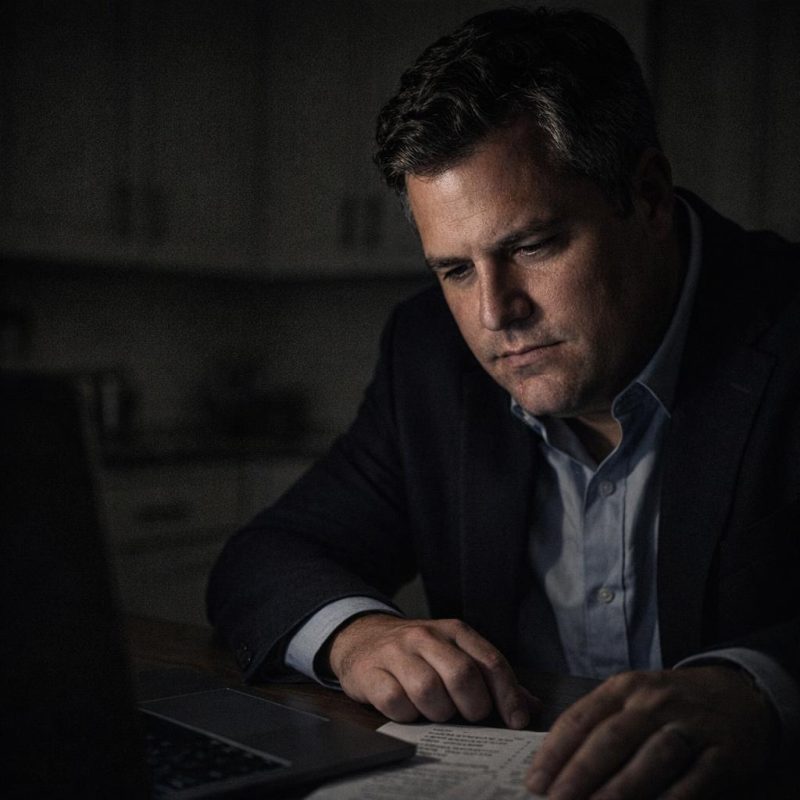 Image by RM AI
The Interviews
I scheduled three consultations over the following week. The first attorney was polished and confident, but he kept framing the case as a he-said-she-said situation, like the central question was credibility rather than documented fact. The second one was more careful, asked good questions, but seemed genuinely uncertain whether a jury would sympathize with a business owner over an employee claiming emotional distress. I understood the concern. I just didn't find it encouraging. By the third consultation I was tired in a way that had nothing to do with sleep. Telling the story again — the undercover visit, the seating, Jenna's refusal, the lawsuit arriving at my door — felt like pressing on something that hadn't stopped hurting. I was halfway through the timeline when the third attorney held up a hand and asked me to stop. She wanted to go back to the beginning. She asked about the exact words Jenna had used. She asked whether there had been any prior complaints about Jenna's service. She asked whether I had documentation of the undercover visit. Her questions were specific in a way the others hadn't been, and she was writing things down fast. When I finished, she looked up from her notes and said she thought the framing of the lawsuit had some serious problems — and that she wanted to look into Jenna's background before our next conversation.
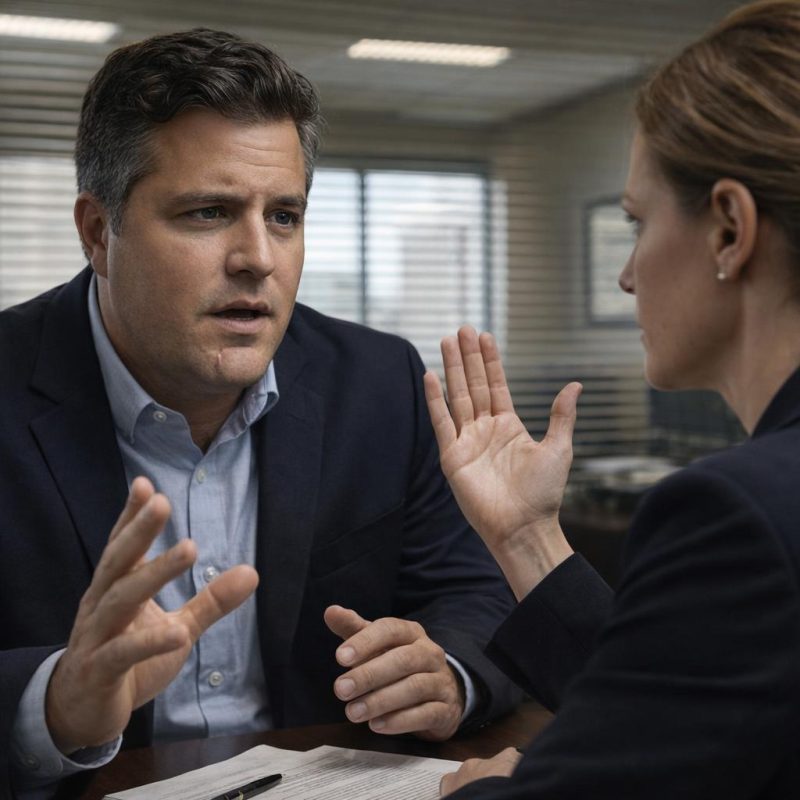 Image by RM AI
Meeting Lisa
Her name was Lisa, and her office was the kind of place that didn't try to impress you — just a clean desk, good light, and the quiet confidence of someone who had been doing this long enough to stop performing. She had already reviewed the complaint before I arrived. She asked me to walk her through the timeline anyway, and she listened without interrupting, which I noticed because the other attorneys had all jumped in early. When I finished, she went back through her notes and asked about specific details — the exact table Jenna had offered, the words she'd used when she spoke to Mark, whether the complaint I'd filed internally had been documented before the lawsuit arrived. She wasn't asking to fill time. Each question landed on something precise. At one point she looked up and said, 'She filed before she stopped showing up for shifts.' It wasn't a question. I said yes. Lisa wrote something down and was quiet for a moment. Then she said the complaint read like it had been drafted before the incident was over — like the legal framing came first and the facts were fitted around it afterward. She said she wasn't drawing conclusions yet, but that something about the structure of the claim felt off to her. I sat across from her and felt something I hadn't felt since the lawsuit arrived. The weight of it didn't lift exactly, but it shifted — like someone had finally put their hands on the other side of it.
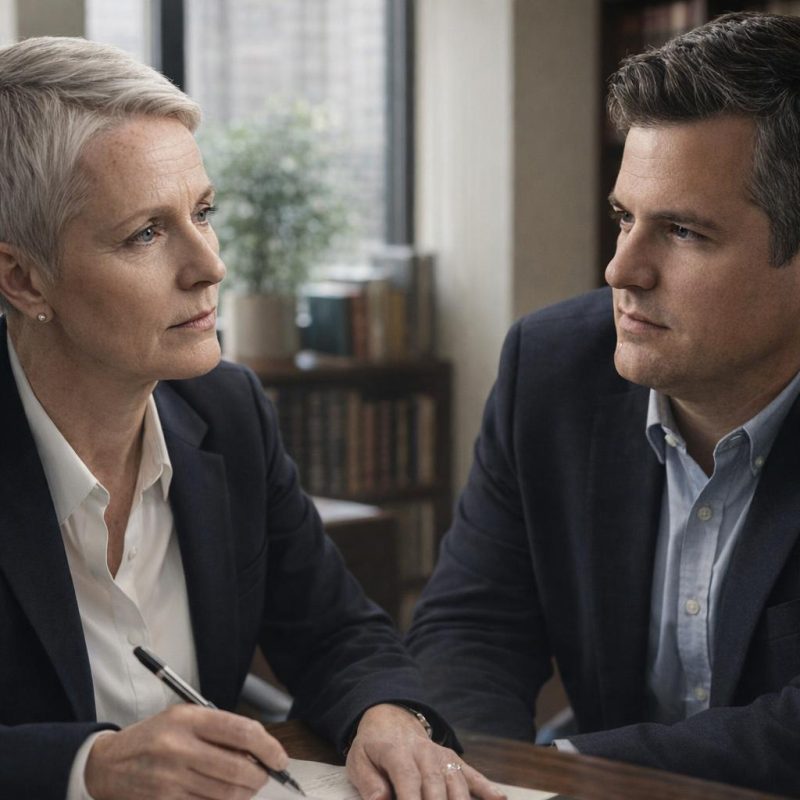 Image by RM AI
The Retainer
The retainer agreement was four pages. I read all of it, which Lisa seemed to expect — she didn't rush me or make small talk while I went through it. When I got to the section outlining her investigative authority, she explained that she wanted access to all personnel records related to Jenna, the internal complaint documentation, the security footage logs from the undercover visit, and any written communication between Jenna and restaurant staff. She said she was going to start with Jenna's employment history and work backward. I asked what she was looking for. She said she wasn't sure yet, but that the complaint had a quality she wanted to understand better — the language was precise in places where most first-time plaintiffs aren't precise, and vague in places where the facts should have been easy to state. She said that combination was worth examining. I signed the agreement. It was a straightforward moment, just a pen moving across a page, but it felt like something more than paperwork. I had spent weeks feeling like I was standing on the wrong side of something I hadn't done. Signing that page didn't fix that. But it meant someone was standing next to me now, someone who had looked at the same document I had and come away with questions instead of conclusions. I drove home with the copy folded on the passenger seat, and the quiet that settled in the car felt different from the quiet that had been there before.
 Image by RM AI
The First Suspicion
Lisa called on a Thursday afternoon, about ten days after I'd signed the retainer. I was in the back office going through invoices when my phone lit up with her name. She said she'd started pulling Jenna's employment records and had run into some things she wanted to flag before she went further. Her tone was measured, the way it always was, but there was something underneath it that made me set the invoices down. She said Jenna's work history had gaps that were hard to account for — stretches of several months between positions, at restaurants in different states, with no clear explanation in any of the documentation she'd been able to access so far. She said that on its own, that wasn't unusual. People move, situations change. But she'd also looked more carefully at the legal complaint itself, and she said the structure of it — the specific claims, the sequencing of the allegations, the way damages were framed — didn't read like something put together in the aftermath of a single upsetting incident. She said she wanted more time before she said anything definitive. She wasn't drawing conclusions. But then she said it plainly, in the same even voice she used for everything: the claims, taken together, didn't add up.
 Image by RM AI
The Background Check
After that call, waiting became its own kind of work. Lisa had said she needed time, and I understood that, but understanding it didn't make the days move faster. I kept the restaurant running — lunch service, dinner service, the ordinary rhythm of a place that had to keep functioning regardless of what was happening in the background. Mark asked for an update one afternoon while we were doing a walk-through before the dinner rush. I told him Lisa was looking into Jenna's employment history, that she'd found some things worth examining but wasn't ready to say more yet. He nodded and didn't push, which I appreciated. There were brief check-in calls from Lisa every few days — short ones, mostly just to say the investigation was ongoing and she'd be in touch when she had something concrete. I found myself picking up on the second ring every time. I wasn't sleeping as well as I should have been. I'd catch myself in the middle of a shift thinking about the complaint, about the case number, about what Lisa might be finding in whatever records she was pulling. The restaurant was full most nights. The work was real and immediate and it asked things of me that I could actually answer. But at the end of each shift, when the last table cleared and the kitchen went quiet, the waiting was still there, sitting in the silence like it had nowhere else to be.
 Image by RM AI
The First Breadcrumb
Lisa called on a Tuesday evening, and I could tell from the first few seconds that this wasn't a check-in. She said she'd been pulling records from Jenna's previous positions and had found something she wanted to share, with the caveat that she was still early in the process and wasn't ready to characterize it as anything definitive. There had been an incident at a restaurant in another state, about two years before Jenna came to work for me. A customer with a visible disability had been involved. The situation had ended in a legal settlement — the details were sealed, but the existence of the case was a matter of public record. Lisa said the broad outlines of what she'd found bore a resemblance to my situation, and that she was going to keep pulling records to see whether the resemblance held up or fell apart under closer examination. She said she'd call when she had more. I thanked her and set the phone down on the kitchen counter. I stood there for a moment in the quiet of the apartment, not moving. I didn't know what it meant. I wasn't sure I was ready to think about what it might mean. But the similarity sat with me in the stillness, the way certain things do when they don't have a clean explanation yet.
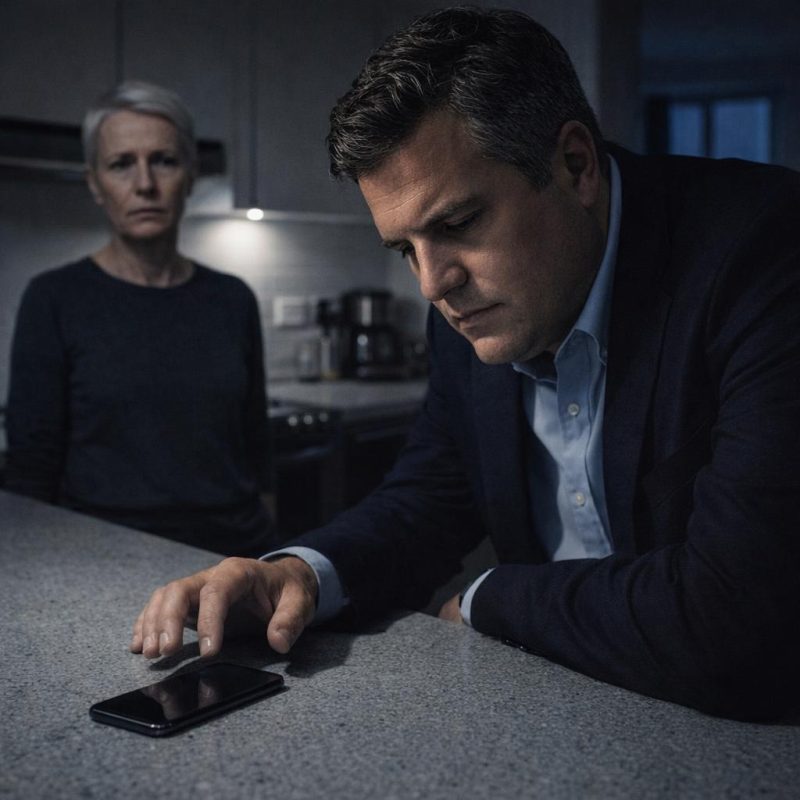 Image by RM AI
The Second Case
Lisa called again four days later, and this time she didn't open with a caveat. She said she'd found a second case. Different state, different restaurant, but the same basic shape — a customer with a visible disability, an incident on the floor, a settlement that got sealed behind an NDA. She read me a few details from the public record, the kind of dry legal language that doesn't tell you much on its own, but the outline was there. A high-end place, a server named in the complaint, a resolution that happened fast and quiet. She said the timing was what caught her attention — this one came roughly eighteen months before the first case she'd found, which put it earlier in the trail she was starting to map. I asked her what she thought it meant. She said she wasn't ready to say that yet, but that she was going to keep pulling. I stood at the kitchen window after we hung up, watching the street below without really seeing it. Two cases. Two different states. Two settlements sealed behind agreements that kept everything quiet. And then Lisa had called with a second case that matched the first one too closely to set aside.
 Image by RM AI
The Pattern Emerges
Lisa called the following week with a document she wanted to walk me through. She'd put together a timeline — employment records, public court filings, settlement dates — and she laid it out methodically, the way she did everything. Three separate cases across three different states. Three different high-end restaurants. In each one, a customer with a visible disability had been involved in an incident on the floor. In each one, the matter had been resolved through a financial settlement. In each one, the settlement had come with a non-disclosure agreement that sealed the details. She read the dates slowly, giving me time to follow along. I had a notepad in front of me and I wrote them down, though I'm not sure why — the numbers were already lodging themselves somewhere I wouldn't be able to ignore. When she finished, neither of us said anything for a moment. I looked at what I'd written. Three cases. Three NDAs. Three restaurants that had paid to make something go away. I didn't have a word for what I was looking at, but the shape of it was unmistakable — three data points, each one separated by months and miles, each one ending the same way.
 Image by RM AI
The Timeline
Lisa emailed the timeline the next morning, and I printed it out at the restaurant before anyone else arrived. Four pages. She'd laid it out chronologically — dates of employment, dates of incidents, dates of settlements, states. The geography of it was what hit me first. It moved. One state, then another, then another, then mine. Each position had lasted somewhere between six and nine months. Each one had ended with an incident and a sealed resolution. I spread the pages on the desk in the back office and read through them twice, slowly. The restaurants were all similar — upscale, the kind of places where the margins are tight and the reputation is everything, where a lawsuit is the last thing anyone wants to deal with publicly. I sat back in the chair and looked at the ceiling for a moment. I thought about my own restaurant. I thought about the morning I'd walked in wearing a cap and sat down in my own dining room and watched what happened. I thought about how ordinary it had all seemed, how unremarkable. I looked back down at the four pages spread across the desk, and what I saw wasn't three separate incidents anymore — it was a map.
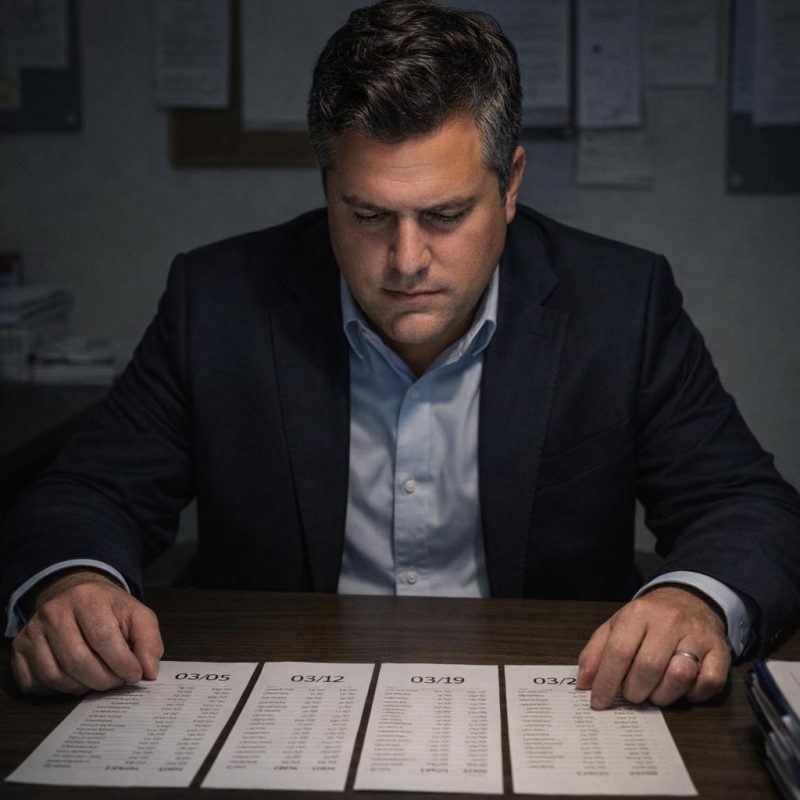 Image by RM AI
The Victims
Lisa said she'd identified contact information for the owners of the three previous restaurants — the ones who'd settled, the ones who'd signed the NDAs and moved on. She was careful about how she framed it. She said the NDAs created a real complication, that she couldn't ask anyone to violate a legal agreement, but that there were arguments to be made that a pattern of fraud could change the calculus around what those agreements could enforce. She said she wanted my authorization before she reached out, because once she made contact, things would start moving in a direction we couldn't easily reverse. I told her to go ahead. She warned me that not everyone would respond, that some of them might have put the whole thing behind them and have no interest in reopening it. I understood that. I'd spent enough time wanting to put my own experience behind me to know exactly what that felt like. But the idea that there might be other people out there who'd gone through something similar, who'd paid to make it disappear and then carried it quietly — that idea had settled into me and wouldn't let go. I wasn't alone in this. I didn't know yet whether anyone else would be willing to say so, but for the first time in months, the thought that I might not be fighting by myself felt like something I could actually hold onto.
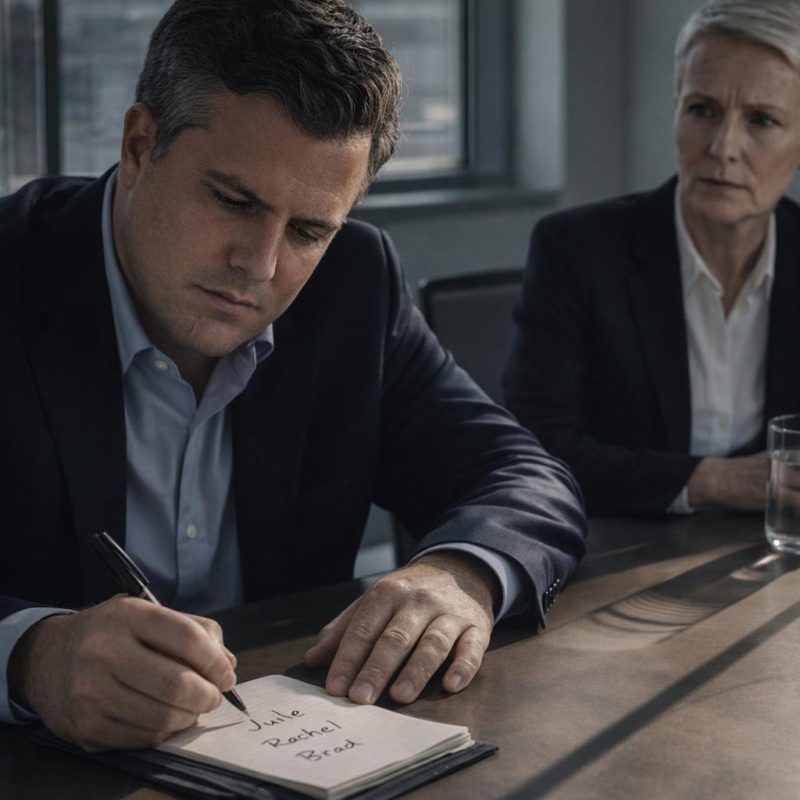 Image by RM AI
The Waiting
The days after Lisa sent her outreach letters moved slowly. I kept the restaurant running — lunch service, dinner service, the ordinary rhythm of it — and I tried not to check my phone every twenty minutes. Mark noticed something was off, the way he always did. He didn't push, just asked one afternoon after the lunch rush whether I was doing all right. I told him we were waiting on some responses related to the case, that Lisa had reached out to some people and we didn't know yet whether they'd reply. He nodded and said he thought they would. He said it the way he said most things — quietly, without drama, like he'd already thought it through and arrived at a conclusion he trusted. I appreciated it more than I told him. The truth was I wasn't sure. I knew what it felt like to want to seal something off and never look at it again. Some of those other owners had probably done exactly that — signed the paperwork, paid what they were asked, and built a wall around the whole experience. I couldn't blame them for it. But I lay awake more than one night that week turning the same question over: whether anyone on the other end of Lisa's letters would decide that the wall wasn't worth keeping.
 Image by RM AI
The First Response
Lisa called on a Thursday afternoon, and I could hear something different in her voice before she'd finished her first sentence. She said one of the previous restaurant owners had responded. His name was David. He'd received her letter, he'd read it carefully, and he'd called her back within twenty-four hours. She said he was willing to talk — not just willing, she said, but that he'd seemed almost relieved to have been contacted. He'd described an incident at his restaurant involving a customer with a visible disability, and the details he'd given her tracked closely with what I'd experienced. The same kind of setting. The same general sequence of events on the floor. The same pressure to resolve it quickly and quietly. Lisa said she was still in the early stages of gathering documentation from his side, that she wanted to be thorough before drawing any firm conclusions, but that the resemblance between his account and mine was significant enough that she'd wanted to call me right away. David had agreed to speak — and he was ready to go on record.
 Image by RM AI
The Confirmation
After I hung up with Lisa, I sat in the back office for a long time without moving. David's case, the way Lisa had described it, wasn't just similar to mine — it was close enough that hearing the details felt like listening to a version of my own story told by someone else. The same kind of restaurant. The same kind of customer. The same pressure that had come down fast and hard, pushing toward a settlement before anyone had time to think clearly. Lisa said she was gathering documentation from David's side, that she wanted everything in writing before she made any formal connections between the cases. I understood the caution. But the weight of what she'd told me was already sitting in the room with me, heavier than I'd expected. I'd spent months feeling like I was the one who'd done something wrong — like fighting back was the unreasonable position, like I was the problem. Hearing that someone else had been through something that looked this much like my experience shifted something in me. Not relief, exactly. It was harder than relief. The thought that there were other people who'd sat in a room like this one, carrying something like what I was carrying, and that they'd had to carry it alone — that thought didn't leave me quickly.
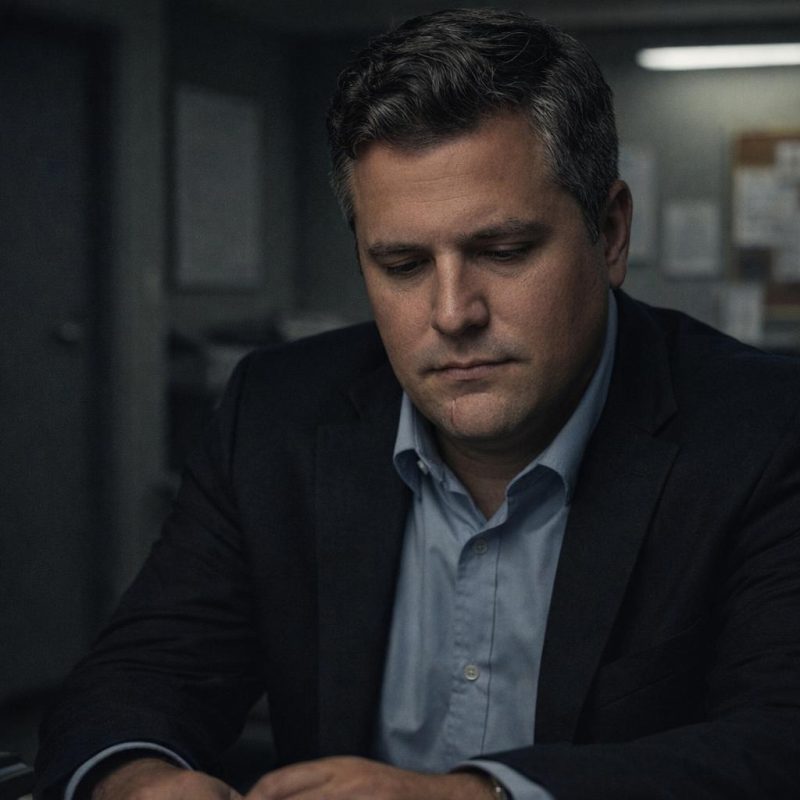 Image by RM AI
The Conference Call Preparation
Lisa called two days later to tell me she'd heard from a second previous owner — a man named James — and that he'd agreed to participate as well. She said she wanted to set up a conference call with both of them and me, that she thought it would be more useful for everyone to hear the accounts together rather than separately. She gave me a date and a time and said she'd send a dial-in number. I wrote it down and set the notepad on the desk. She briefed me on what to expect — that both David and James had been through experiences that tracked with mine, that the call would be structured but that she wanted space for each of us to speak, that she'd be guiding the conversation. I told her I understood. After we hung up, I sat with the phone in my hand for a moment before setting it down. I'd spent so much of the past months feeling like I was standing in a room by myself, making a case that no one else could see the shape of. Now there were two other people who'd agreed to get on a call and talk about what had happened to them. I didn't know their voices yet. I didn't know their stories in full. But the call was scheduled, and the time was written down, and something about that felt like the ground shifting slightly beneath me — steadier than it had been in a long time.
 Image by RM AI
The Conference Call
I dialed in five minutes early. The line had that hollow, waiting quality — a faint hiss of open air, nothing else. I sat at my desk with a notepad in front of me and a pen I kept clicking without realizing it. Lisa had sent the dial-in number the day before, along with a brief note reminding me to have any documentation nearby in case she needed to reference specific dates. I had the folder open. I had the notes I'd made after my own incident, the photographs from the restaurant, the timeline I'd typed up at two in the morning when I couldn't sleep. The line clicked once. Then again. Someone had joined. Then a third click, softer than the first two. Lisa's voice came through clearly — professional, unhurried — welcoming everyone and confirming that all participants were present. She explained that the call was confidential, that she'd be guiding the conversation, and that she wanted each person to have space to speak without interruption. My pen had gone still. She said she'd start with brief introductions, and then a voice I didn't recognize came through the line — steady, a little careful — and said his name was David.
 Image by RM AI
David's Story
David's voice had a slight tremor to it, not from nerves — he mentioned it himself, almost matter-of-factly, early on. Parkinson's, he said. Visible tremors in his hands, sometimes in his jaw. He'd owned his restaurant for eleven years. He described Jenna coming on as a server about two years back, polished and well-reviewed from her previous position. He said things had seemed fine at first. Then one afternoon he'd come out of the kitchen and sat down at a table near the service station — his usual spot when he reviewed the week's numbers — and ordered a bowl of soup from the server nearest to him, which happened to be Jenna. He said she'd looked at his hands on the table, then looked back at him, and told him she wasn't comfortable serving him because of liability concerns related to his condition. He said she'd used the phrase 'special accommodations' and suggested he speak with management. He was the management. He paused after that, and the line went quiet for a moment. I hadn't written anything on the notepad. I was just sitting there, holding the pen, because every word he'd said had landed somewhere I already knew.
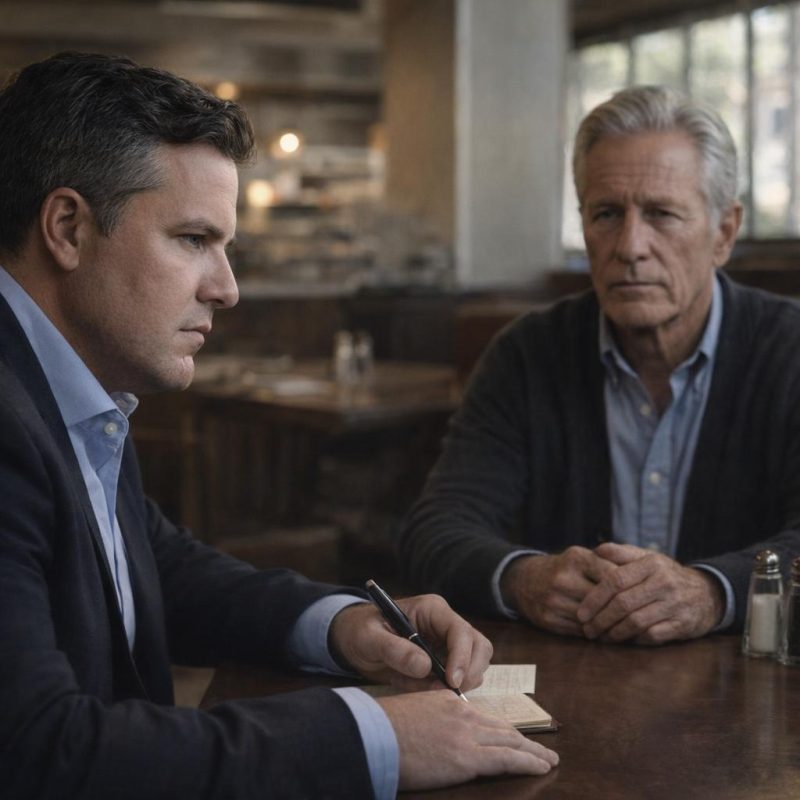 Image by RM AI
James Speaks
James came on after David finished. His voice was measured, deliberate — the kind of calm that comes from having told a hard story enough times that you've learned to hold it at arm's length. He said he'd been using a cane for about three years following a leg injury, and that it was visible, obvious, something anyone in the room with him would notice immediately. He'd owned a mid-sized place, upscale casual, the kind of restaurant that did steady weekend business and relied on a tight, experienced front-of-house team. He said Jenna had come in with strong references and had been professional for the first several weeks. Then one evening he'd come out to the dining room during service and asked her to bring him a plate of the evening special so he could check the presentation before it went to tables. He said she'd looked at his cane, then at him, and told him she had concerns about serving him given his mobility situation — that there were liability considerations she wasn't able to ignore. He said she used the words 'special needs' and suggested he might be more comfortable at a table near the exit. I pressed the pen flat against the notepad. Then James said she'd used the exact same phrase David had — word for word: liability concerns.
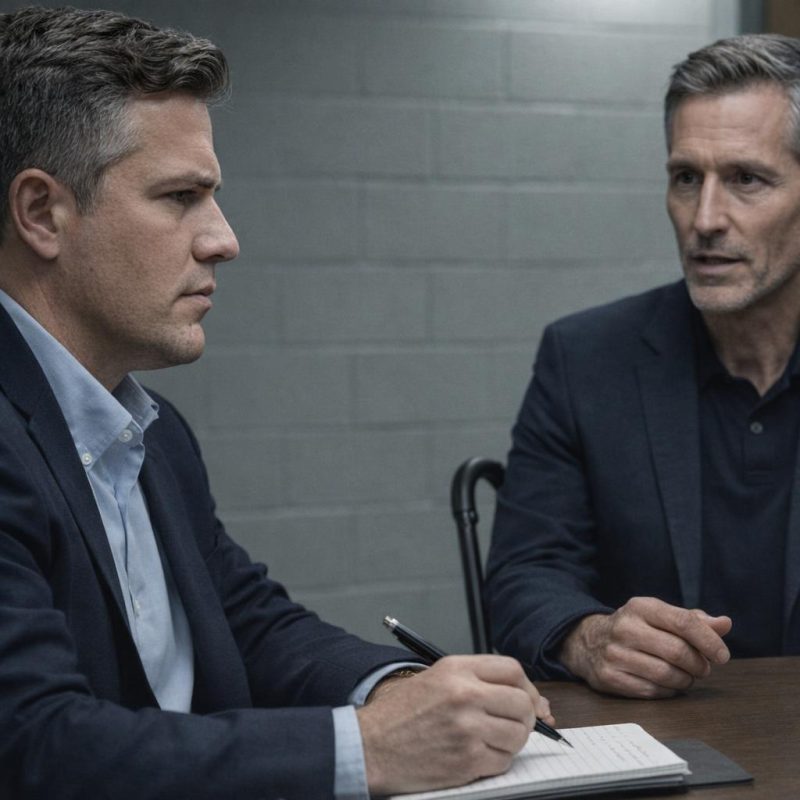 Image by RM AI
The Pattern Confirmed
After James finished, Lisa opened the floor to the others. There were four more voices — four more restaurant owners from four different states, each one describing a version of the same afternoon. A server who came well-recommended. A period of unremarkable performance. Then a moment when the owner appeared in the dining room with something visible — a tremor, a cane, a brace, a scar — and the same refusal, delivered with the same practiced concern. Every one of them mentioned the phrase 'liability concerns.' Three of them mentioned 'special accommodations.' Two used the word 'comfortable,' as in, I'm not comfortable serving you in this situation. Every case had ended in a lawsuit. Every case had settled. Every settlement had included a non-disclosure agreement. I had stopped taking notes somewhere around the third account. I was just listening, pen down, because there was nothing to write that wasn't already written in my own file. Lisa was quiet through most of it, asking a clarifying question here and there, but mostly letting each person speak. By the time the last voice finished, the line had gone still, and the same phrase had appeared in six separate stories told by six people who had never met each other: liability concerns.
 Image by RM AI
The Serial Scammer Revealed
Lisa let the silence sit for a moment before she spoke. Then she walked us through what she'd built. Jenna had worked at six high-end restaurants over four years, moving between states each time, never staying longer than eight or nine months. Lisa had pulled employment records, cross-referenced the lawsuit filings, and mapped the timeline. The pattern was the same at every stop: Jenna would establish a clean performance record, identify an owner or manager with a visible disability or injury, manufacture a refusal incident using a near-identical script, then file a discrimination claim positioning herself as a customer advocate who had been retaliated against for raising concerns. The NDAs weren't incidental — Lisa said they were the mechanism that made the whole thing work. Each settlement came with a confidentiality clause that prevented the victim from discussing the case, which meant every new employer Jenna approached had no way of knowing what had happened at the last one. She had kept each of us in separate rooms, unable to compare notes, unable to warn anyone. Lisa said it plainly: this was not a series of isolated complaints. This was a fraud scheme, deliberately constructed and repeatedly executed, and we were six of its targets. I sat back in my chair and felt something cold and clarifying move through me — because it had never been about me at all.
 Image by RM AI
The Decision to Unite
Nobody spoke for a few seconds after Lisa finished. Then David said, quietly but without hesitation, that he wasn't willing to stay silent anymore. James said the same thing, almost before David had finished. The others came in one by one — short, direct, no speeches. Lisa explained what a class-action filing would look like, what it would require from each of us, and what it would mean to go on record publicly rather than behind another NDA. She was honest about the exposure. She said Jenna's attorneys would push back hard, that the process would take time, and that there was no guarantee of a specific outcome. But she also said that six corroborating accounts with near-identical language, documented timelines, and matching settlement structures gave them something that a single plaintiff never could — a pattern that was very difficult to argue away in front of a judge. I told her I wasn't interested in another settlement. I said I'd spent months feeling like I was the only one, like maybe I'd misread the situation, like maybe I was making something out of nothing. I wasn't doing that again. One by one, each person on the line said they were in — and when the last voice confirmed it, something shifted in the room that I hadn't felt in a long time.
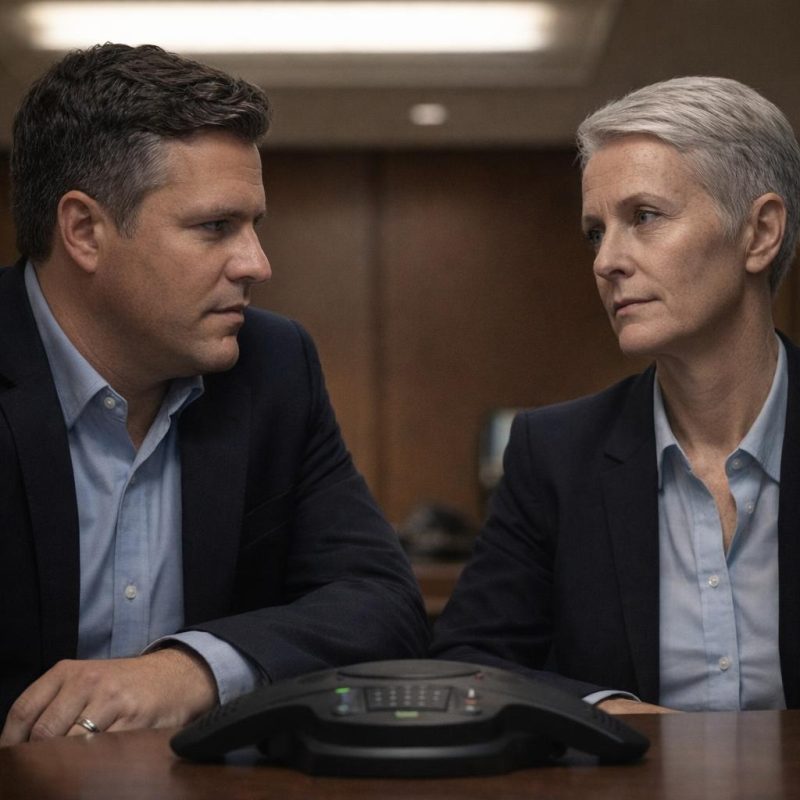 Image by RM AI
Building the Coalition
The days after the call had a different texture to them. I pulled every document I had — the incident notes, the photographs, the timeline, the original complaint filing, the correspondence with my previous attorney — and sent it all to Lisa in a single organized folder. She acknowledged receipt the same afternoon and said her team was already coordinating with the attorneys representing the other five. David emailed me directly two days later, just to check in. James followed the day after that. It was strange, hearing from them outside the structure of the call — stranger still to realize that these were people I'd never met in person, who ran restaurants in states I'd never visited, and yet the shape of what had happened to each of us was close enough that there wasn't much explaining required. We understood each other's shorthand. Lisa sent a group update at the end of the week laying out the next steps and confirming that all six case files were now consolidated into a single record. I read it at my desk after the dinner service had wound down, the restaurant quiet around me, and for the first time since any of this had started, the weight of it didn't feel like something I was carrying alone.
 Image by RM AI
Six Against One
Lisa called me at the end of the following week and asked if I had an hour. I did. She walked me through the consolidated case file — not a summary, the actual structure of it, piece by piece. Six plaintiffs. Six employment periods at six different establishments. Six incidents documented with dates, witness accounts where available, and in three cases, written records from the initial complaints. Six settlements, each with an NDA, each negotiated within a similar timeframe. And running through all of it, the same language — 'liability concerns,' 'special accommodations,' 'not comfortable' — appearing in incident reports and legal filings across four states, attributed to the same person. Lisa said that when a defense attorney looked at one discrimination complaint, they looked for inconsistencies in the plaintiff's account. When they looked at six complaints with matching language filed by the same defendant against six different plaintiffs, the question changed entirely. She said the NDA restrictions were also challengeable now, because the pattern itself constituted evidence of fraud, and fraud voided the confidentiality provisions. I sat with that for a moment after she finished. Six voices, six files, six sets of dates and phrases and settlements — and all of it pointing in the same direction, steady and undeniable.
 Image by RM AI
Legal Strategy
Lisa set up the conference call for a Tuesday morning, and I dialed in from my office with a legal pad and three pages of notes I'd already made. There were four attorneys on the line representing the six of us, and the conversation moved fast — faster than I expected. Lisa walked everyone through the consolidated evidence file, the matching language across six states, the NDA pattern, the timeline. The other attorneys had their own documentation, their own clients' accounts, and when you heard all of it laid out together in one call, it didn't sound like a collection of complaints anymore. It sounded like a blueprint. We talked about financial restitution first — return of every dollar from every settlement. Then the industry ban came up, and every attorney on the call agreed that had to be a hard requirement. No negotiating it away. But the piece I kept coming back to, the piece I raised when there was a pause in the discussion, was accountability. Not just money returned, not just a ban she could quietly work around. A public admission. David said it before I finished the sentence — 'If she signs another NDA, there will be a seventh victim.' James agreed. Lisa said she'd been thinking the same thing, and that a public admission was exactly the kind of term that made a settlement mean something. We were going to demand it.
 Image by RM AI
Filing the Lawsuit
I met Lisa at the courthouse on a Thursday morning, earlier than I'd been up in weeks. She had the complaint printed and bound — forty-three pages naming all six of us as plaintiffs, detailing every incident, every settlement, every piece of matching language across four states. I read the first page standing in the hallway outside the clerk's office while Lisa reviewed the filing checklist one last time. Seeing my name at the top of that document, listed as a plaintiff in a class-action fraud case, felt different than I'd anticipated. Not heavy exactly — more like solid. Like something that had been formless for months had finally taken a shape you could hold. We walked to the clerk's window together. Lisa handed over the complaint, the filing fee, the supporting documentation. The clerk processed it without ceremony, the way clerks do, stamping pages and entering case numbers into a system. And then it was done. Lisa turned to me and said the case number had been assigned. The complaint was officially entered into the court system, stamped and logged and real.
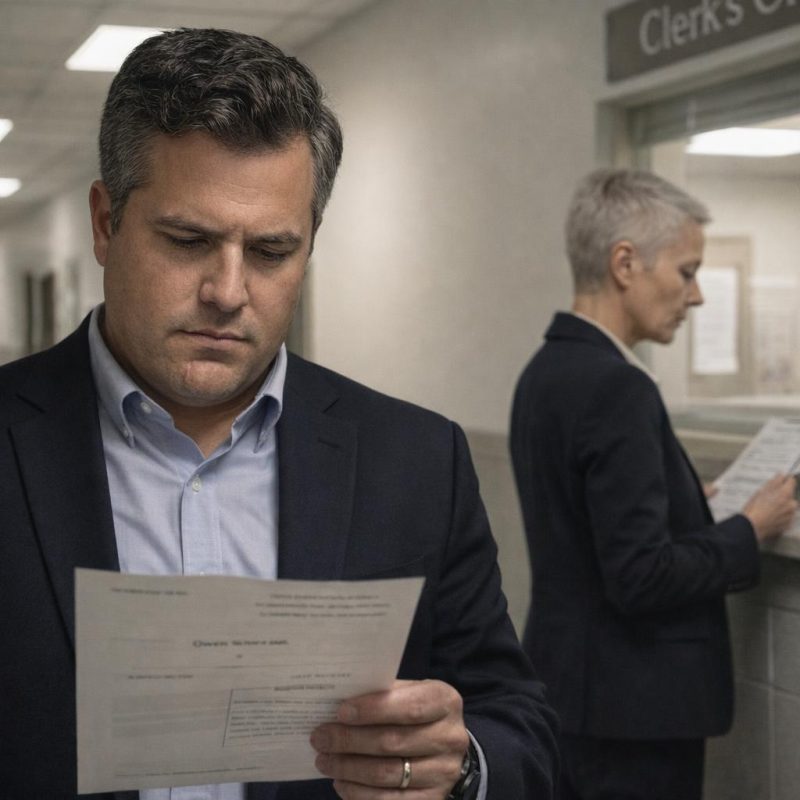 Image by RM AI
Jenna's Response
Lisa forwarded Jenna's legal response on a Friday afternoon with a short note that just said, 'Read it. Then call me.' I read it twice. Jenna's attorney had structured the defense around the argument that each incident was isolated — different employers, different circumstances, different complainants, no meaningful connection between them. The response described the matching language across six filings as coincidental, the kind of similarity that naturally emerges when people describe workplace conflicts. I called Lisa. She walked me through it methodically, pointing out what the response didn't address: it never explained why the same specific phrases appeared in incident reports filed in four different states. It never accounted for the NDA timeline. It offered no alternative explanation for the pattern — just the assertion that the pattern wasn't a pattern. Lisa said a strong defense would have come in with something — a counter-narrative, a procedural challenge, something to shift the ground. This response didn't do that. It restated Jenna's position without reinforcing it. I sat with the document open on my desk after we hung up, and the silence around it felt like the quiet before something gives way.
 Image by RM AI
The Attorney Withdraws
Lisa called on a Wednesday morning and asked if I was sitting down. I told her I was. She said Jenna's attorney had filed a motion to withdraw from the case. I didn't say anything for a moment. Lisa explained that attorneys file withdrawal motions for a range of reasons, but that withdrawing mid-case, after reviewing the full evidentiary record, carried a specific weight. She said the motion cited an inability to provide adequate representation given the documented record — which was attorney language for recognizing that the defense had no viable ground to stand on. She said in her experience, attorneys don't walk away from paying clients unless continuing would put their own professional standing at risk. That was the part that stayed with me. Jenna had hired someone to defend her, someone who had presumably reviewed the case and believed there was something to work with — and that person had looked at six victims, six matching filings, six NDAs, and decided they couldn't put their name on a defense of it. I thought about what it meant to be so thoroughly documented that even your own attorney steps back. The motion sat in my email, two pages long, and I didn't need to read it again to understand what it said.
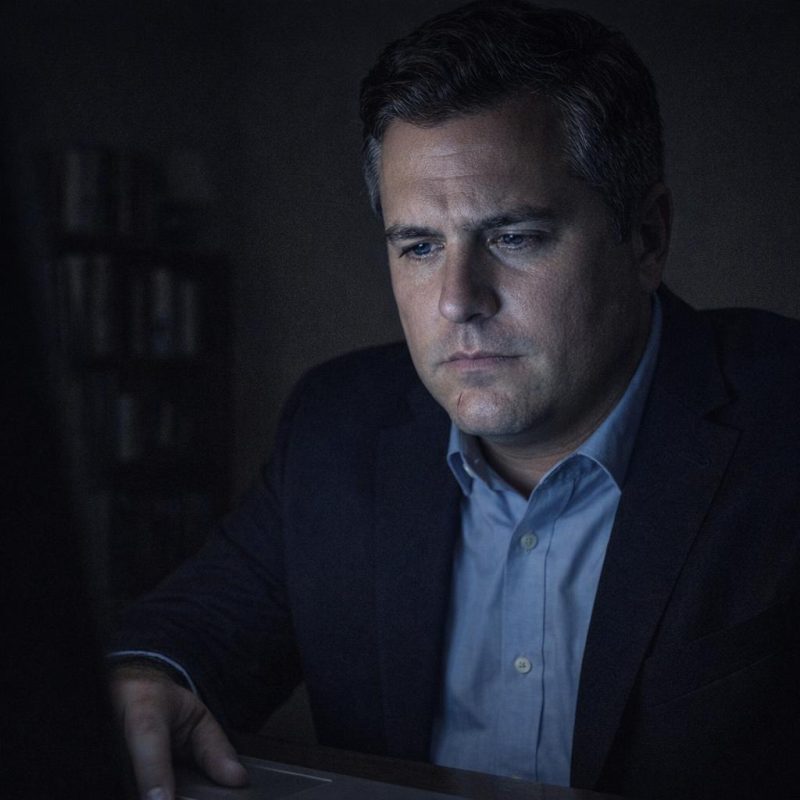 Image by RM AI
Standing Alone
Over the following two weeks, Lisa kept me updated as Jenna worked through her options. Three attorneys had declined to take the case after reviewing the file — Lisa heard this through the professional network the way attorneys do, indirectly but reliably. A fourth had apparently asked for a consultation and then gone quiet. The documented pattern wasn't just damaging in court; it was making it difficult for Jenna to find anyone willing to stand beside her in one. I thought about that more than I expected to. Jenna had built her whole approach around isolation — finding people who were alone, who had no connection to her other victims, who had no way of knowing they weren't the first. She had counted on each of us staying separate, staying quiet, staying behind our NDAs. And now she was the one who was isolated, standing on the other side of six united plaintiffs with strong legal representation, unable to find a single attorney willing to take her case. I didn't feel triumphant about it exactly. It was something quieter than that — the particular stillness of watching a situation finally reflect what it actually was.
 Image by RM AI
The Settlement Offer
Lisa called on a Monday afternoon, and I could tell from the first two words that the news was significant. She said Jenna had reached out through a newly retained attorney — someone who had apparently agreed to handle the settlement phase only, not a full defense — and that Jenna was offering to settle. Lisa walked me through what the offer included: financial restitution to all six plaintiffs, acknowledgment of the civil claims, a request for confidentiality. She said the offer was structured to resolve the case quickly and quietly, which told her everything she needed to know about how Jenna's side assessed their chances at trial. I asked Lisa what she thought. She said the offer confirmed what the withdrawal had already suggested — that Jenna understood she couldn't win. I sat with that for a moment. Months of documentation, six voices, forty-three pages filed with a court clerk, and it had come to this: Jenna wanted it to go away. Lisa asked how I wanted to proceed, and I told her I needed to talk to the others first. But I already knew what I was going to say when we got on that call.
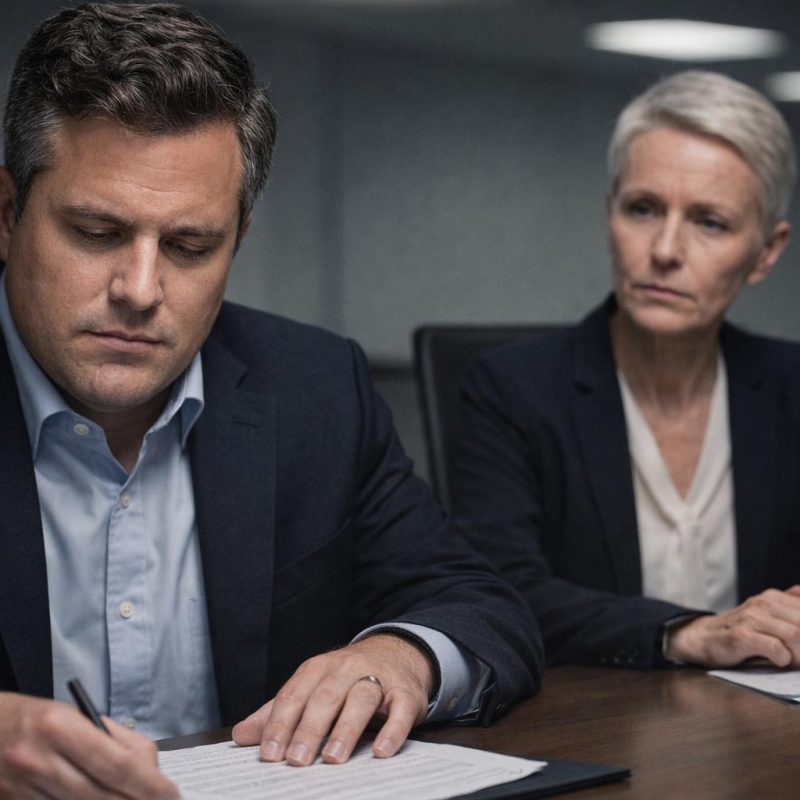 Image by RM AI
Our Terms
We got everyone on the call two days later. Lisa walked the group through the offer — the financial terms, the confidentiality request, the structure of it. Then she asked what we wanted to do. David spoke first. He said the money mattered, but what mattered more was making sure there wasn't a seventh person sitting where we'd all sat. James said the same thing in different words — that a quiet settlement with another NDA was just a reset, a way for Jenna to wait it out and start again somewhere new. I said we needed three things: every dollar from every original settlement returned, a permanent ban from the food service industry, and a public admission. Not a sealed document, not a confidential acknowledgment — a public statement, on record, describing what she had done and to whom. There was a pause on the line, and then David said, 'All of it. We want all of it.' One by one, the others agreed. Lisa said she would take our terms back to Jenna's attorney and make clear that the public admission was not a negotiating point. That afternoon, the counter-offer went out under all six of our names — three demands, none of them negotiable, the last one requiring her to say in public exactly what she had done.
 Image by RM AI
The Negotiation
Lisa negotiated for four days before she called me with an update. She said Jenna's attorney had come back on the financial terms — Jenna would return the settlement money. She'd also agreed, after some resistance, to the industry ban. Lisa said that part had taken most of the second day, but eventually Jenna's attorney had stopped pushing back on it. Then Lisa got to the third term. She said Jenna's attorney had described the public admission requirement as a dealbreaker — that Jenna was willing to resolve the financial claims, willing to accept the professional restrictions, but that she would not sign anything requiring her to make a public statement about what had happened. Lisa said the attorney had used the word 'punitive.' I asked Lisa what she'd said in response. She told me she'd said the term wasn't punitive — it was the term. I told her to go back in and hold the line. Lisa said she would, and that she'd be back in touch. But before she hung up, she told me Jenna's attorney had made clear his client would rather go to trial than sign a public admission.
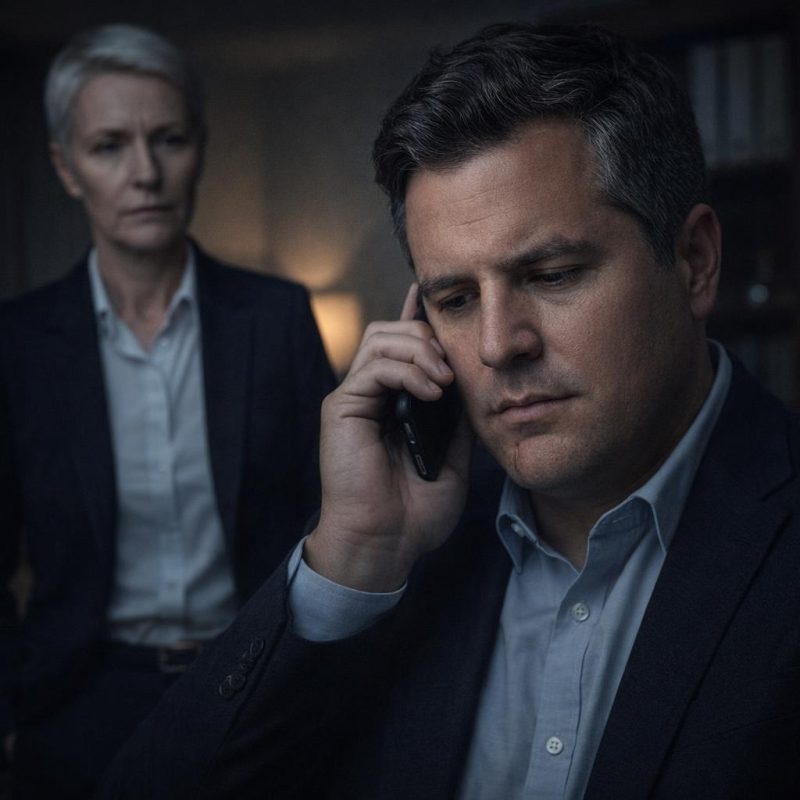 Image by RM AI
The Acceptance
Lisa called on a Thursday morning, and I knew from the first second of silence before she spoke that something had shifted. She said Jenna had accepted all terms. Every single one. The money would be returned to each victim in full. The permanent industry ban was in. And the public admission — the one her attorney had called a dealbreaker, the one Jenna had said she'd go to trial before signing — she'd signed it. Lisa read me the key language from the admission clause: Jenna would be required to publicly acknowledge that she had engaged in a systematic pattern of fraud targeting restaurant owners with visible disabilities across multiple states. I didn't say anything for a moment. Lisa asked if I was still there. I told her I was. She said the agreement was being finalized and that her office would have the executed documents within forty-eight hours. I thanked her, and I meant it in a way that didn't have a clean word attached to it. When I set the phone down, I sat at my kitchen table and let it land. Six people. Six people who had been targeted, humiliated, and left holding the damage. And now, in writing, with her signature on it, Jenna had admitted to all of it.
 Image by RM AI
The Settlement Finalized
Lisa's office sent the documents over on a Friday afternoon, and I printed every page. I sat at my desk and read through the settlement line by line, the way I used to read vendor contracts before I signed anything — slowly, looking for the gaps. There weren't any. The restitution section listed each victim by name with the exact dollar amount to be returned. My name was on the list. So were David's and James's and three others I'd come to know over the course of the case. The industry ban was permanent and enforceable across all fifty states, with a reporting mechanism built in if she attempted to re-enter food service under any name or entity. Then I got to the public admission. It ran almost a full page. In plain language, under her signature, Jenna acknowledged that she had deliberately targeted restaurant owners with visible physical disabilities, manufactured complaints to extract settlements, and done so across multiple employers over several years. I read that paragraph twice. Lisa had told me the language was strong, but seeing it in print was different from hearing about it. I set the last page down on the desk and didn't reach for anything else. The fight had taken everything it had taken, and now it was over, and the quiet that settled into the room felt like something I had earned.
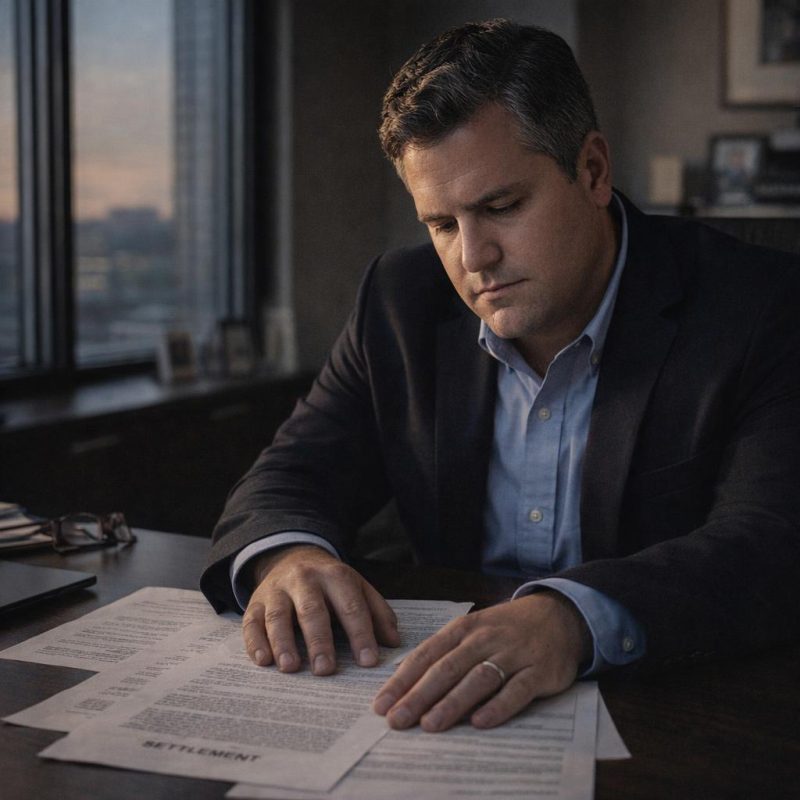 Image by RM AI
Six Months Later
Six months after the settlement closed, I walked through the front door of my restaurant on a Tuesday evening — not undercover, not in disguise, just myself. Mark was the first person I saw. He was standing near the host stand going over the reservation sheet, and when he looked up he gave me the kind of nod that meant things were running the way they were supposed to run. He told me we'd had three consecutive record weeks and that the team was solid. The bonuses had gone out two months earlier — a portion of the returned settlement funds distributed to the staff who had kept the place running through everything — and Mark said the effect on morale had been real and lasting. I made my way through the dining room. Every table was occupied. The noise was the right kind of noise: conversation, silverware, a table near the window laughing at something. Then I spotted Eric at the host stand, working a four-top arrival with the kind of calm confidence that takes time to grow into. He caught my eye and smiled — the same genuine smile from the night he'd seated me without knowing who I was, only steadier now. I stood near the back and watched the room for a while. This was what we had protected. Not just a business. The thing underneath it.
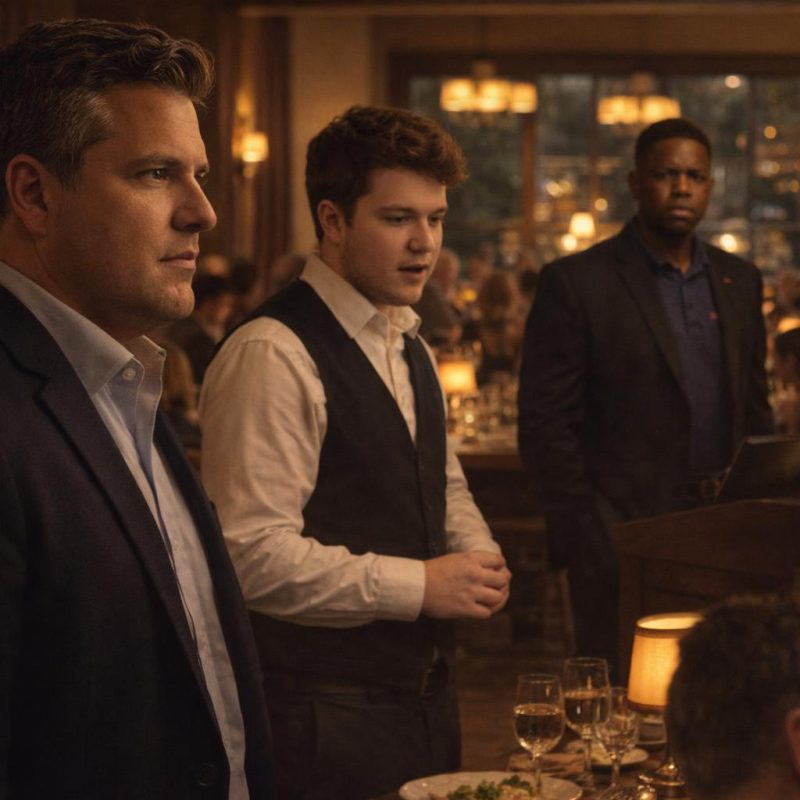 Image by RM AI
Strength Beneath the Surface
I had a spot in the back of the dining room — a corner table near the service corridor where I could see the whole floor without being in the middle of it. I sat there after close one night, the chairs already up on most of the tables, the kitchen quiet. I reached up and touched the scars along my jaw, the way I sometimes did without thinking about it. The texture was the same as it had always been. That hadn't changed and wasn't going to. What I kept coming back to was how differently I was carrying them now. There had been a version of me, not that long ago, who had walked into his own restaurant in a disguise because he couldn't face the possibility of being seen. I thought about the six of us — David, James, and the others — who had stood together and refused to let the same story keep ending the same way. I thought about what it had cost to fight back and what it would have cost not to. I used to think the scars were the most visible thing about me. Sitting there in the empty dining room, I understood that they were just the surface. What was underneath — the part that had held when everything else was being tested — that was the part that had never needed hiding.
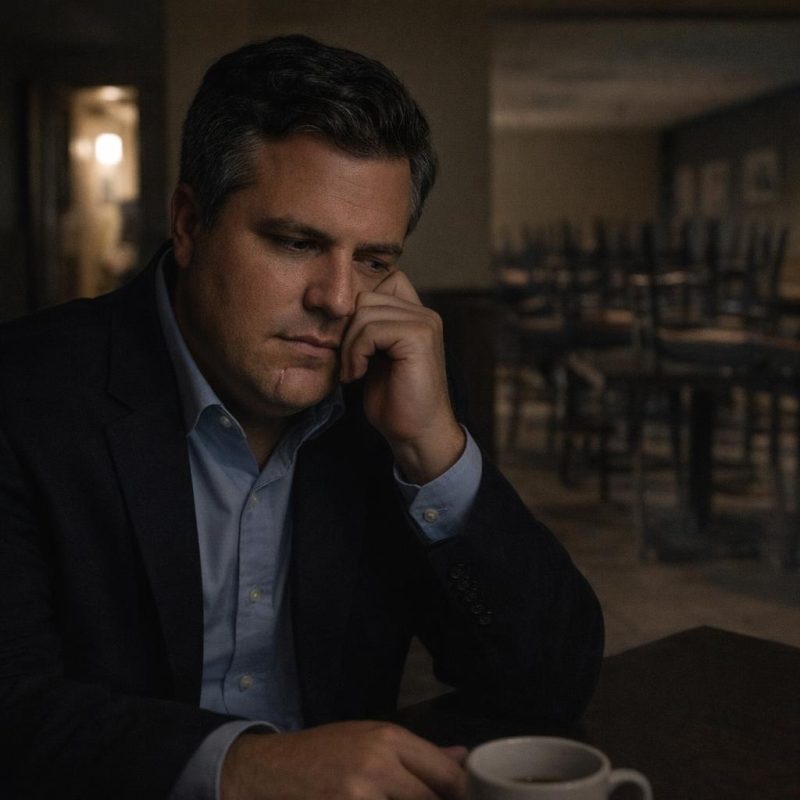 Image by RM AI
KEEP ON READING

The 10 Youngest Monarchs In History & The 10 Oldest
Age Is Just A Number. Imagine being crowned king or…
By Chase Wexler Mar 11, 2025
You Think You Have Problems? These Royal Families Were Cursed
Boasson and Eggler St. Petersburg Nevsky 24. on WikimediaHeavy is…
By Ashley Bast Dec 5, 2025
You Can Thank This Greek-Canadian For Creating Pineapple On Pizza…
Love it or hate it, pineapple on pizza sparks debate…
By David Davidovic Dec 1, 2025
Yes, Female Gladiators Existed, And Here's Everything You Need To…
History of Women in Combat. Most people picture gladiators as…
By David Davidovic Jan 17, 2026
Yes, Australians Once Lost A Battle Against Flightless Birds
David Clode on UnsplashIn 1932, the Australian military went to…
By David Davidovic Nov 24, 2025
The Y2K Bug: Why Did Everyone Think Year 2000 Was…
Alan W on UnsplashOn December 31, 1999, people all over…
By Christy Chan Dec 22, 2025