

The Smell of Damp Stone
They say power smells like perfume and candlewax. What no one tells you is that it also smells like damp stone — cold and permanent, seeping up through marble floors that no amount of gilding can warm. I have lived inside that smell for forty years. I have breathed it in the mornings when the mist came off the river and crept beneath the eastern doors, and I have breathed it at night when the palace settled into its own silence like an old man lowering himself into a chair. People look at the portraits that line the grand corridor — the ones painted in oils so thick you could press your thumb into them — and they see an empress. They see ermine and pearls and a gaze that does not flinch. They do not see the woman behind the frame, the one who learned very early that a gilded cage is still a cage, no matter how many servants polish the bars. My family made me a ghost before I was dead. They dressed the ghost in silk, seated her at the head of banquets, and called it honor. I have spent a long time deciding whether to speak. I am speaking now. And somewhere behind me, pressing against everything I became, are forty years of silence I can no longer hold.
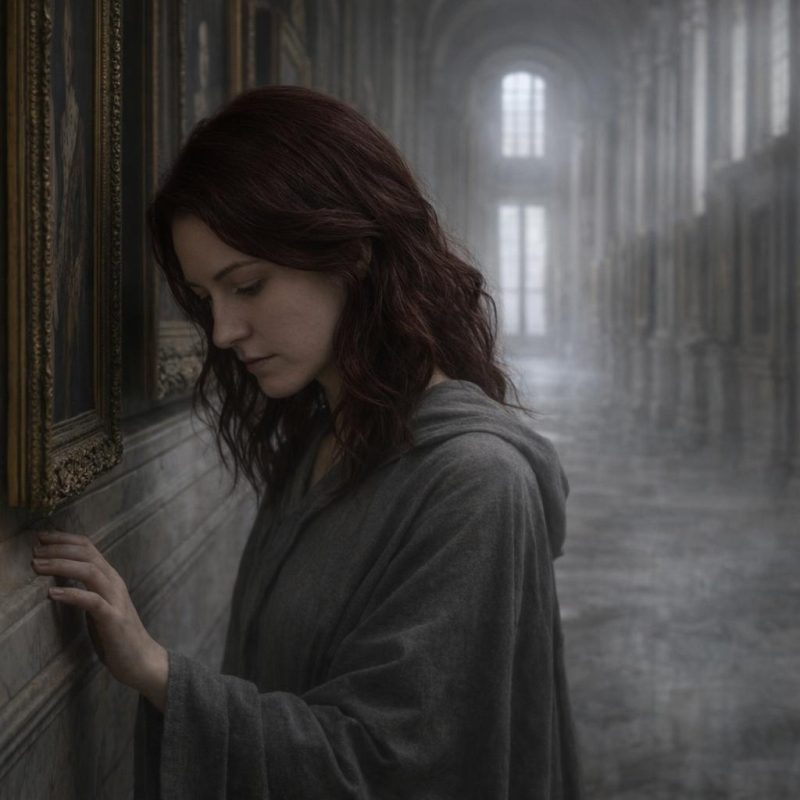 Image by RM AI
The Pawn's Value
My father, Grand Duke Alexei, had a way of entering a room that made the air go still. Not because he was loud — he was never loud. It was the quality of his attention, precise and cold as a surveyor's instrument, that made everyone around him straighten their spines and choose their words carefully. I learned this before I could read. I grew up in a household where the servants moved like shadows and the only laughter I ever heard came from somewhere far down the corridor, quickly muffled. Other children existed somewhere beyond our gates. I knew this the way I knew about foreign countries — as a fact, not an experience. My father reviewed my lessons each week at his desk, not to praise me but to measure me. He would ask me to recite in French, then in German, then to demonstrate the correct angle of a curtsy. If I hesitated, he did not raise his voice. He simply noted it, the way a merchant notes a flaw in merchandise. I was discouraged from asking questions about anything that did not pertain to my studies. Once, I asked him why I could not play with the steward's daughter. He looked at me for a long moment and said nothing. The answer, I would understand later, was already in his silence. I was perhaps nine years old the evening I crept to the top of the staircase and heard him tell a visiting dignitary that daughters were investments, not children.
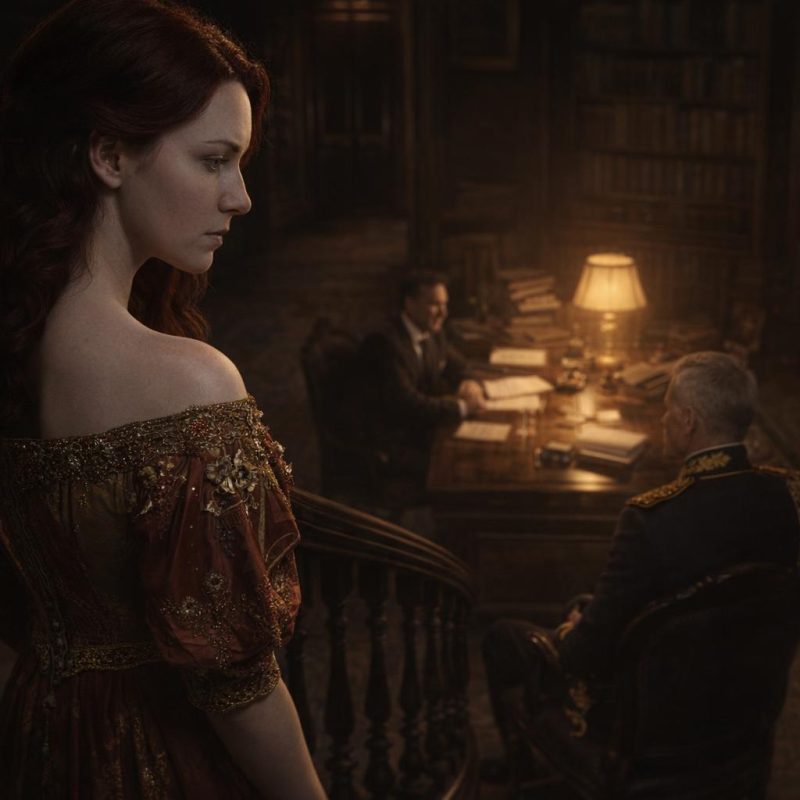 Image by RM AI
The Announcement
It was a winter morning, the kind where the frost made ferns across every window and the light came in white and flat, offering no warmth. My father summoned me to his study before breakfast. I remember the smell of it — leather and cold ash and something medicinal I never identified. He was standing at his desk when I entered, not seated, which I understood even then to mean the conversation would be brief. He told me I was to be married to Prince Konstantin. He said it the way he might announce a change in the household schedule. I stood very still and asked, as carefully as I could, whether I might meet the prince before the arrangements were finalized. My father looked at me with an expression that was not unkind so much as simply absent of any consideration for the question. He said it was unnecessary. He said that empresses serve the empire, not themselves, and that I would do well to remember the distinction. I asked about the prince's character, his temperament, whether he was a man of learning. My father turned back to his papers. The audience, I understood, was over. I walked back down the corridor to my room and sat on the edge of my bed and looked at my hands for a long time. Outside, the frost held the world in perfect stillness, and I sat inside it, understanding that the life I had imagined for myself had already been decided by someone else, in a room I had not been invited to enter.
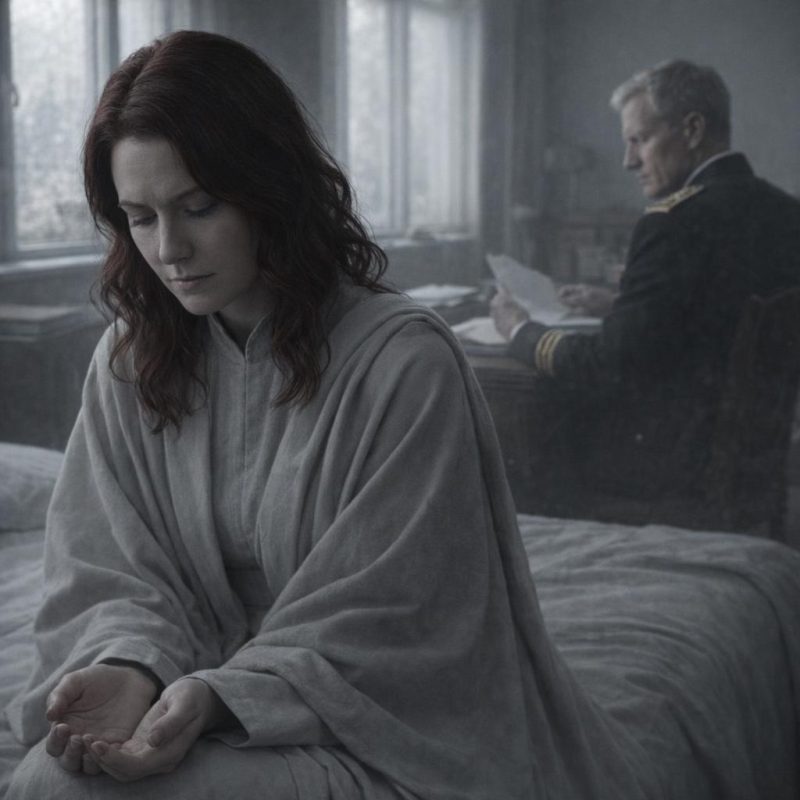 Image by RM AI
The Bride's Preparation
The weeks that followed the announcement moved with a strange, mechanical momentum, as though the wedding were a machine that had been set in motion long before I arrived and required nothing from me except my body. Seamstresses came in pairs and fitted me in silence, pinning and adjusting and stepping back to assess with the same detached professionalism my father had always shown. The gown was extraordinary — ivory silk with seed pearls along the bodice — and I understood I was not meant to have opinions about it. I was instructed in the order of the processional, the precise moment to lower my eyes, the correct way to receive a blessing without appearing to seek one. My father attended several of these sessions and corrected my posture with a single word or a gesture toward my shoulders. When I tried to write a letter to a cousin I had met once at a family gathering, I was told quietly but firmly that correspondence outside the household was not permitted during the preparation period. I had only a formal portrait of Konstantin — painted, I was told, three years prior. He looked composed in it. Handsome in a remote way, like a landscape you admire without wanting to enter. I studied that portrait in the evenings and tried to build a person from it, tried to imagine a voice, a laugh, a preference for one thing over another. But the portrait gave me nothing back. I was being dressed for display, and somewhere beneath the silk and the instruction, I had already begun to understand it.
 Image by RM AI
The Indifferent Groom
The cathedral was full of people I did not know, their faces turned toward me with the particular expression crowds wear when watching ceremony — attentive, expectant, already composing the story they would tell afterward. I walked the length of the aisle and I kept my eyes forward, the way I had been taught, and I thought: somewhere at the end of this, there is a man who will be my husband. I had rehearsed a hundred small hopes for that moment. That he might smile. That his eyes might hold something — curiosity, warmth, even simple acknowledgment. Konstantin was standing at the altar in full dress uniform, and he was, objectively, everything the portrait had promised. He glanced at me as I approached. It was a brief glance, the kind you give a door when it opens. The vows were spoken correctly on both sides. His voice was even and unhurried. My father stood in the front row with the expression of a man watching a contract being signed. The ceremony was attended by hundreds and felt, to me, like the loneliest hour of my life. Afterward, in the receiving line, Konstantin shook hands and accepted congratulations with practiced ease. He spoke to a general for several minutes about something that made them both laugh. I stood beside him and smiled at faces I could not name. Then, before the last blessing had fully faded from the air, I watched him turn away from me entirely to speak with his hunting master.
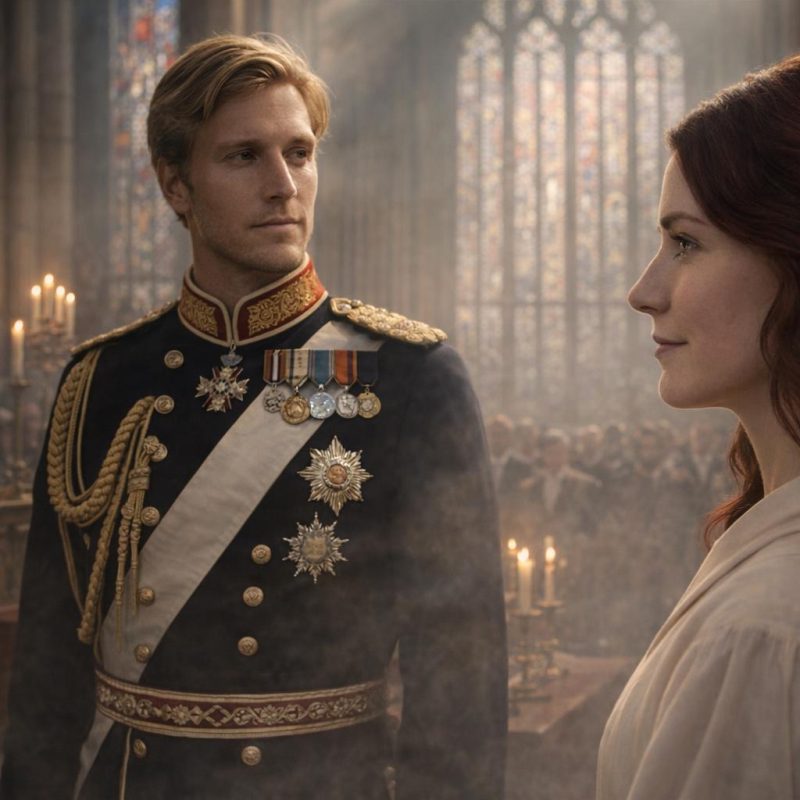 Image by RM AI
The Wedding Night
The attendants led me to the bridal chamber in silence, their candles throwing long shadows up the walls. The room was extraordinary — draped in ivory and gold, every surface arranged with the kind of deliberate beauty that announces an occasion. I sat on the edge of the bed in my wedding gown and waited. The candles burned down slowly. I listened to the palace settle around me, the distant sound of music from the reception hall growing quieter by degrees until it stopped altogether. Konstantin arrived sometime after midnight. He stood in the doorway in his uniform, still perfectly composed, and offered me a formal greeting — the kind one gives an acquaintance at a function. He said he hoped I had found the apartments comfortable. I said that I had. He nodded once, said goodnight, and left. I heard his footsteps in the corridor, measured and unhurried, growing fainter until the stone swallowed them entirely. The attendants returned later to extinguish the remaining candles. I lay in the dark and listened to the palace breathe and tried to understand what kind of life I had entered. I was seventeen years old. I had been married for six hours. I had spoken perhaps thirty words to my husband. When the first gray light came through the curtains, I turned and looked at the pillow beside me, smooth and undisturbed, without a single crease.
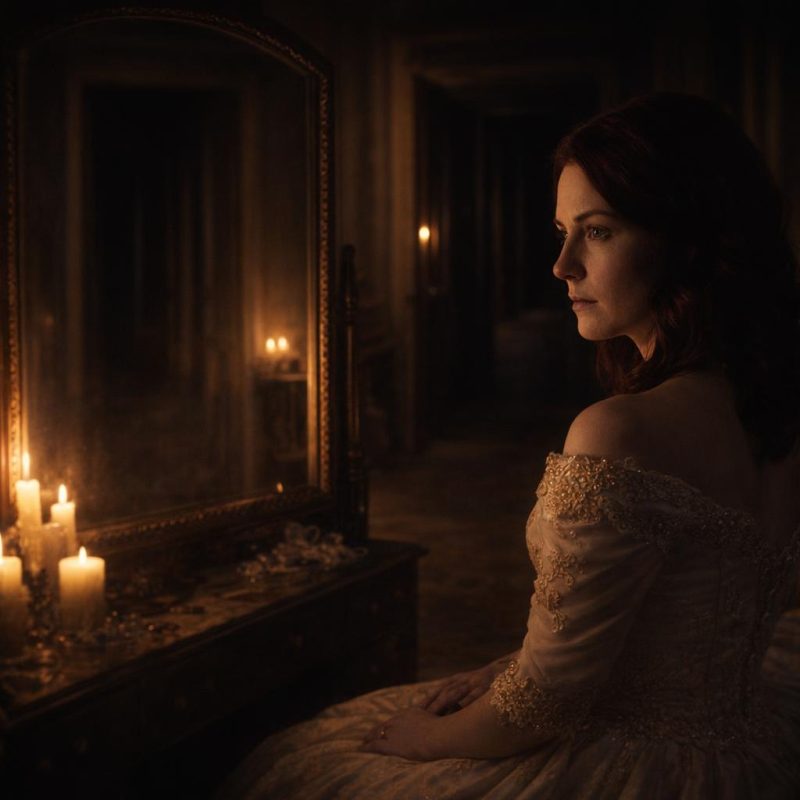 Image by RM AI
The Council's Instruction
Three days after the wedding, a servant arrived at my door with a formal summons to the council chamber. I had not been outside my apartments since the ceremony, and I followed the servant through corridors I had not yet learned, past doors that all looked the same. Chief Councilor Sokolov was waiting for me at a long table, alone. He was an imposing man — iron-gray hair, dark eyes that moved with the precision of someone accustomed to reading documents rather than people. He did not rise when I entered. He gestured to the chair across from him and placed a leather-bound volume on the table between us. He explained, in the measured tone of someone reciting a text they have recited many times, that the volume contained the imperial protocols governing the conduct of an empress. He went through them methodically. Empresses did not attend council meetings. They did not sign documents or correspond with foreign courts. They did not appear in public without prior approval from the council. I asked what my duties were, then, if not governance. He said my duty was to embody the empire — to be its living symbol, its sacred continuity. I asked whether I could at least write to my father. He said all correspondence would be reviewed before dispatch. I sat with that for a moment and then asked, perhaps unwisely, whether there was anything I was permitted to do on my own authority. Sokolov looked at me across the table and said, without any particular inflection, that an empress existed to be seen, never to speak.
 Image by RM AI
The Isolated Wing
A week after my meeting with Sokolov, servants arrived at my apartments before I had finished breakfast. They did not explain themselves. They simply began, with quiet efficiency, to pack. Trunks appeared from somewhere and were filled with my gowns, my books, the few small objects I had brought from my father's house. I asked one of the women where we were going. She said only that the empress's new quarters had been prepared. Sokolov arrived an hour later to escort me personally, which I understood was not a courtesy. He led me through the palace to the eastern wing — a part of the building I had not visited, separated from the main corridors by a long gallery that felt, even in daylight, like a passage between two different worlds. The apartments themselves were genuinely beautiful. High ceilings, tall windows overlooking a formal garden, furniture of obvious quality. Sokolov explained that empresses required privacy for the proper performance of their sacred duties, and that the eastern wing had been designated for that purpose since the previous century. I walked through the rooms while he spoke. I noted the single entrance. I noted the guards stationed at the far end of the gallery. I noted that the windows, though tall, looked down onto an enclosed courtyard with no gate I could see. Sokolov departed with a formal bow. The servants filed out behind him. The last one pulled the door closed with a soft, definitive sound, and I stood alone in the gilded silence.
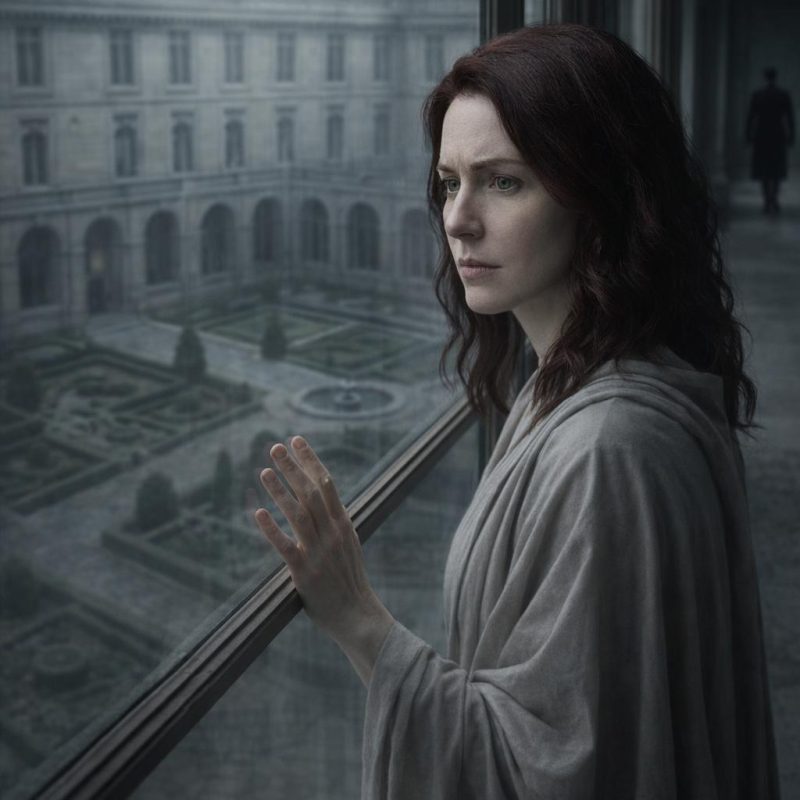 Image by RM AI
The Watchers
They arrived the morning after I had settled into the eastern wing — four women, led by Irina, who introduced herself and the others with the precise courtesy of someone reciting a prepared text. Their role, she explained, was to attend the empress at all times, to ensure my comfort and to assist with the duties of my station. I thanked her. I attempted, over the following days, to draw them into ordinary conversation — the weather, the gardens visible from my windows, the small domestic details that women share when they are simply together. Each response came back trimmed and formal, like letters written for an official record. On the third day I noticed that one of the women, seated always slightly apart, kept a small notebook open on her knee. She wrote in it without looking down, her eyes on me, her hand moving in a steady, unhurried way. I asked Irina, as pleasantly as I could manage, whether I might take a short walk in the gardens alone. She said the protocols did not permit it, and her expression did not change at all. I nodded and returned to my chair by the window. The four of them arranged themselves around the room, and I understood, without needing to say it aloud, that there was no angle from which I could not be seen. I sat with that knowledge the way you sit with a stone placed quietly in your chest.
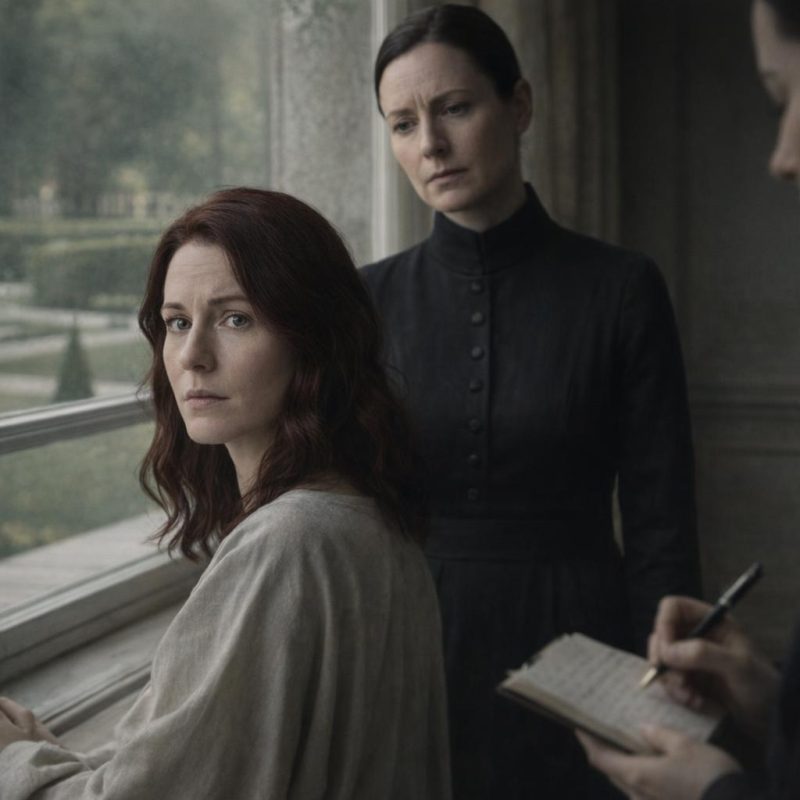 Image by RM AI
The Language of Silence
The first year passed in a rhythm so fixed it began to feel like the ticking of a clock I could not stop or silence. I learned quickly which subjects caused the woman with the notebook to lean forward almost imperceptibly — anything touching on my father, on Konstantin, on the council, on the world beyond the eastern wing. I learned to speak of embroidery and weather and the quality of the morning light. I began to place meaning in other ways: a particular arrangement of threads on my frame, a pause held a beat too long before answering a question, a sigh that carried more than a sigh was supposed to carry. None of it was recorded. Sighs did not go into notebooks. Pauses did not go into reports. I built a small interior country out of these unrecorded moments — a place where I could think a thought all the way to its end without it being observed and filed and carried somewhere I could not follow. Irina watched me with the same steady attention she always had, dutiful and correct, and I gave her nothing she could use. It was not much. It was, in those months, nearly everything. The thought I finished in silence that evening, the one that reached its conclusion without a single witness, felt like something I had managed to keep entirely my own.
 Image by RM AI
The Grass Beyond the Glass
I had stopped counting the days and begun counting the months, and then I stopped counting those too, because the number had grown large enough to frighten me. One afternoon I stood at the tall windows and watched the gardeners working in the flowerbeds below — an old man on his knees pressing bulbs into dark soil, a younger one raking the gravel paths into clean parallel lines. I watched them for a long time. I asked Irina, without much hope, whether I might go down. She said the protocols did not permit it. I did not argue. I pressed my palm flat against the glass instead, and felt the cold smoothness of it against my skin — not earth, not bark, not the give of wet grass underfoot, just glass, just the barrier between the image of the world and the world itself. I tried to remember the last time I had felt wind. I could not place it precisely. It had been before the eastern wing, before the wedding even, some afternoon in my father's garden when I had not yet understood what was coming. The gardener below pressed another bulb into the soil and patted the earth down with both hands, and I watched his hands with a longing I could not have explained to anyone who had not stood where I was standing. The cold of the glass stayed in my palm long after I had stepped away.
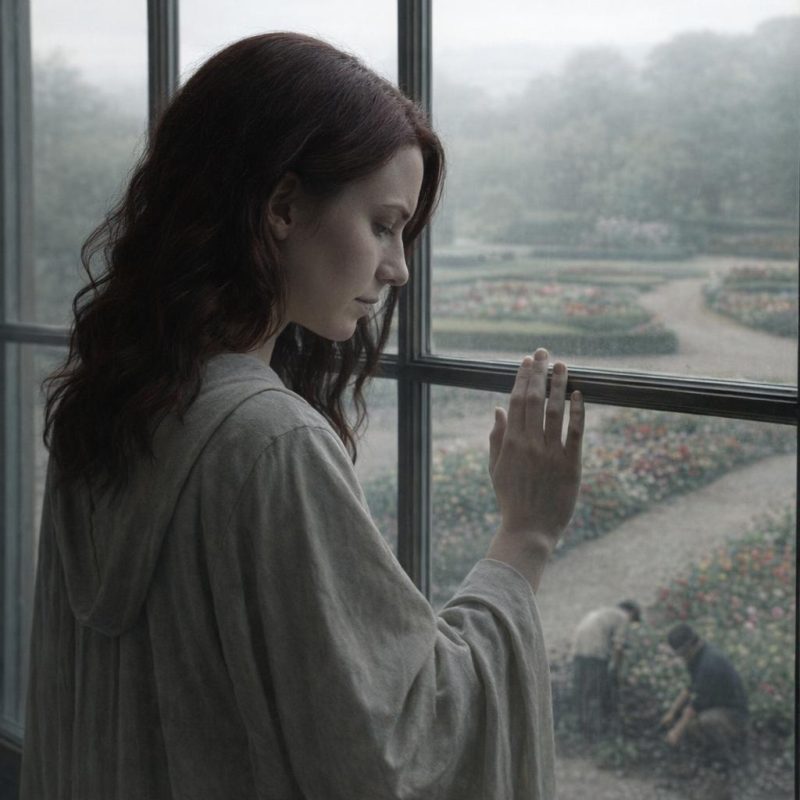 Image by RM AI
The Songs in the Street
It was a festival day — I knew it from the distant sound of bells and the way the servants moved with a slightly loosened step. By midmorning the singing had started somewhere below, in the streets beyond the courtyard wall, voices carrying upward in the way that outdoor voices do when the air is still. I moved to the window. The song was a simple one, the kind that passes easily between strangers — a melody built for crowds, with a refrain that repeated and swelled. I listened without understanding the words at first, and then the refrain came around again and I caught my own name in it. I asked Irina what the song was. She said it was a popular ballad, composed in honor of the empress. I asked her to tell me the words. She recited them without expression: the empress was kind, the empress was gracious, the empress was a blessing given by heaven to a grateful empire. I stood at the window and listened to the voices below singing about a woman who moved freely through her days dispensing grace and warmth to all who approached her. I asked Irina whether the people knew anything true about me. She said, without hesitation, that the people knew what they needed to know. The voices rose again in the street below, and they were singing my name.
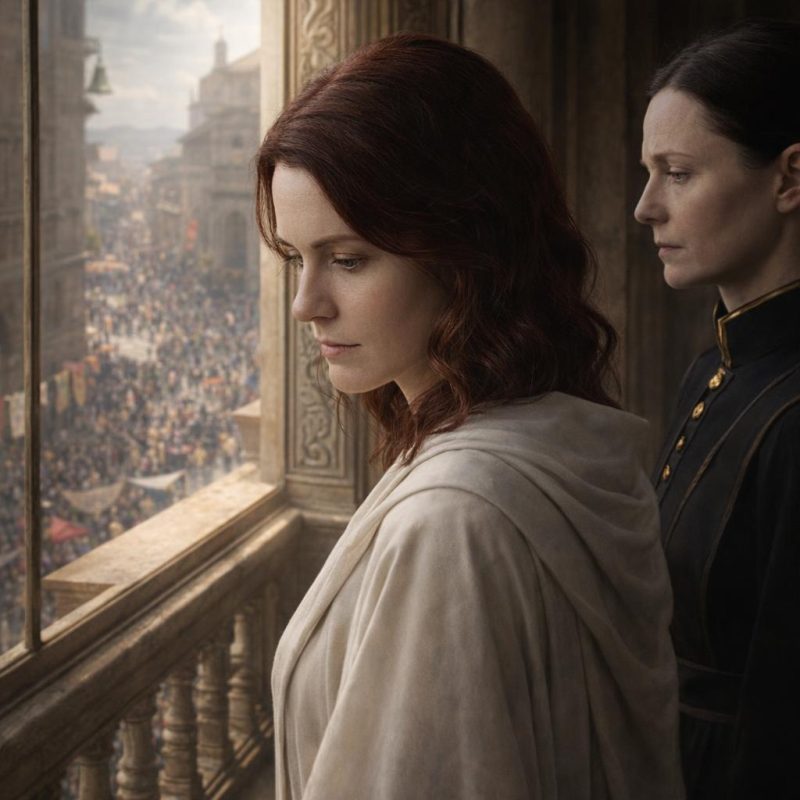 Image by RM AI
The Opened Letters
I had written to a friend from my childhood — a woman I had grown up beside, whose face I could still picture clearly even after years of distance. I kept the letter simple, or what felt simple to me: I said that the palace was very grand and very quiet, that I missed the sound of ordinary life, that I thought of her often and hoped she was well. I gave it to Irina to post. When the reply arrived some weeks later, it was warm but oddly careful, full of pleasantries arranged in neat rows, nothing that pressed against anything real. I asked Irina if I might see the letter I had sent. There was a pause — brief, controlled — and then she produced a document and placed it before me. I read it through. The handwriting was mine. The words were not. Every sentence that had carried any weight had been removed. What remained was a letter about the weather and the beauty of the palace gardens, signed with my name. I sat with the page in my hands for a long time. I had written those words in private, in the early morning before the room had fully filled, and someone had taken them apart and rebuilt them into something harmless. My name was at the bottom, in my own hand, beneath words I had not chosen. The feeling that settled over me then was not anger, not yet — it was something quieter and harder to name, like discovering that the floor beneath you is not quite solid.
 Image by RM AI
Five Years of Glass
I woke on the morning of my fifth wedding anniversary and lay still for a moment before I remembered what day it was. The room was the same room it had always been in the eastern wing — the same ceiling, the same quality of light through the tall windows, the same sounds of the household beginning its day beyond the door. I rose and went to the mirror. The woman looking back at me was not the woman who had arrived here five years ago. The cheekbones were sharper. The eyes had a stillness in them that had not been there before. I dressed without speaking. My companions arrived at the usual hour, arranged themselves in the usual positions, and the day proceeded in the usual way. The companions themselves had changed twice over the years — different faces, different names — but the arrangement never changed, the notebook was always present, the answers to my questions were always the same careful, formal things. I had stopped expecting otherwise. That was what struck me most, standing at the window that afternoon: not grief, not anger, but the simple absence of surprise. The routines that had once felt like a temporary imposition had become the only shape my days knew how to take, and the cage, I understood somewhere beneath words, no longer felt like something that would one day be lifted.
 Image by RM AI
The Quickening
I had been ill for several weeks before I allowed myself to consider what the illness might mean. When I finally told Irina, her expression shifted in a way I had not seen before — not warmth exactly, but a kind of heightened attention, as though a signal had been given that she had been waiting for. The physicians arrived within the hour, three of them, and they examined me with thorough, impersonal efficiency and conferred in low voices at the far end of the room. The confirmation came without ceremony: I was with child. Irina dispatched a messenger before the physicians had finished gathering their instruments. I lay back against the pillows and let myself think, for the first time in years, about something that felt like a future. I imagined a child in these rooms — a small presence that would be entirely mine to know, mine to teach, mine to love without protocol or surveillance intervening. I asked Irina about the nursery, whether it might be arranged within my apartments so that I could be close. She said the council would make all necessary decisions regarding the heir's arrangements. I nodded and said nothing more. But beneath my hands, pressed flat against the coverlet, something shifted — a flutter, faint and unmistakable, like a question asked from the inside — and for the first time in five years I felt something that might have been hope.
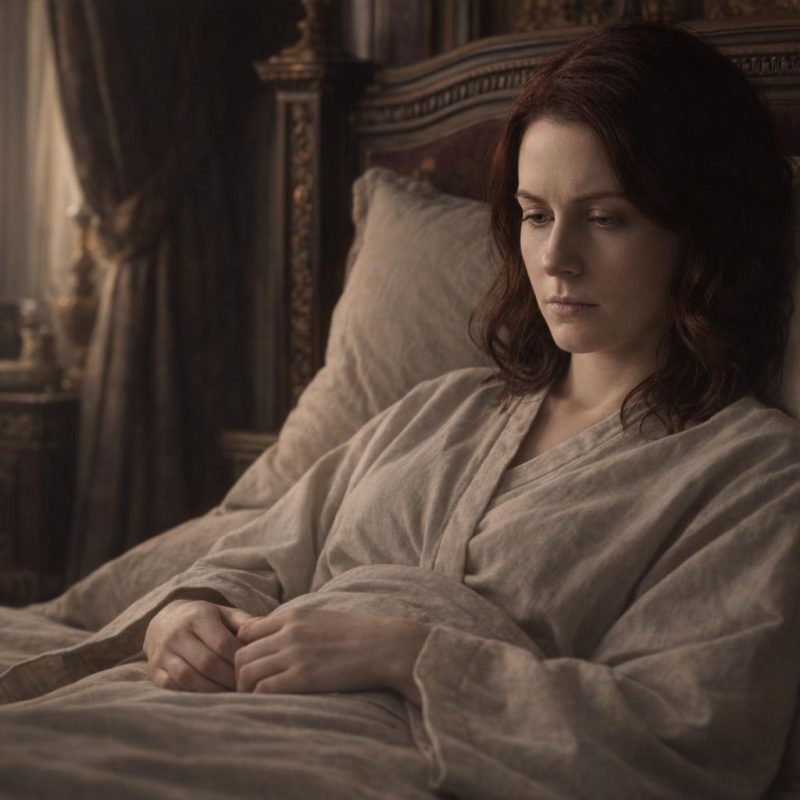 Image by RM AI
The Monitored Months
From the week the pregnancy was confirmed, the physicians came every seven days without fail. They measured and recorded and conferred in their low, careful voices, and their notes were sealed into a leather folder that left the room with them each time, carried by a junior attendant who walked quickly and did not meet my eyes. My diet was prescribed in writing and delivered to the kitchens directly — I was not consulted. Certain activities were forbidden: walking the length of the gallery, sitting at the embroidery frame for more than an hour, receiving any visitor not previously approved. Sokolov came in the fourth month, formal and unhurried, to discuss what he called the arrangements for the heir. I asked him, as plainly as I could, whether I would nurse the child myself. He said that the council would determine what arrangements best served the empire's interests, and moved on to the next item on whatever list he carried in his head. I pressed him. He acknowledged my question with a slight inclination of his head and said nothing further. After he left I sat with my hands over my abdomen and tried to hold onto the feeling from the previous month — that flutter, that small insistent presence — but the room felt different now, the walls a little closer. At the end of that week's examination, the physician sealed his report, handed it to the attendant, and the attendant carried it out the door toward the council chambers.
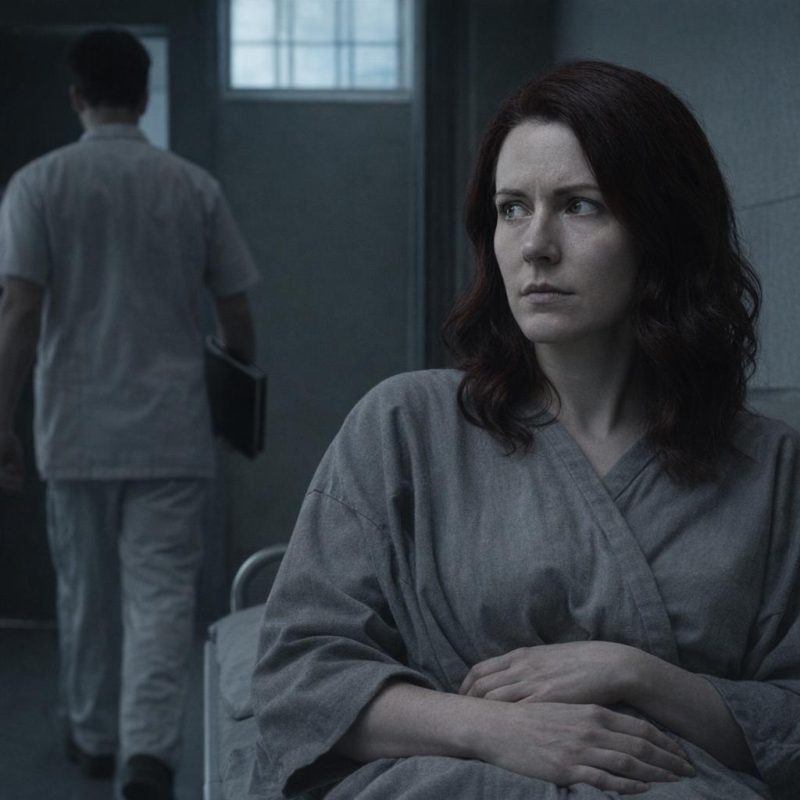 Image by RM AI
The Birthing Room
Labor came before dawn, in the deep quiet hours when even the palace seemed to hold its breath. By the time the physicians arrived, the room had already been arranged without my input — the bed positioned, the instruments laid out, the council observer's chair placed near the door. Sokolov was there before the worst of it began, standing at the periphery with his hands clasped and his expression unchanged, as though he were attending a committee meeting rather than a birth. The physicians spoke to each other, not to me. They measured and noted and conferred in their low professional voices, and when the pain became something I could no longer contain quietly, one of them placed a folded cloth in my hand and told me to breathe. I breathed. I counted the hours by the light shifting in the high windows. I thought of nothing except the next moment, and then the next. There was no one to hold my hand. There was no one who looked at my face and saw a person rather than a process. And then, after all of it — the hours and the silence and the clinical efficiency of strangers — I heard it: a cry, sharp and furious and unmistakably alive.
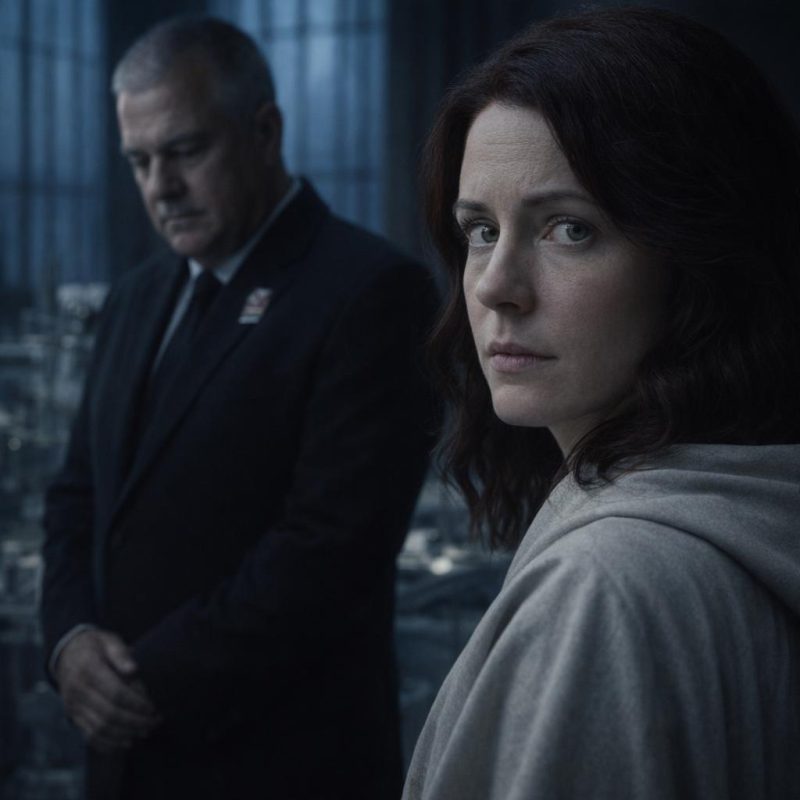 Image by RM AI
The Taking
They let me see him for less than a minute. He was red-faced and furious and perfect, and I reached for him with both arms before anyone could stop me, and for a moment — just a moment — I held him against my chest and felt his warmth and his weight and the impossible realness of him. Then Sokolov spoke from the doorway. He said the heir would be transferred to the nursery wing immediately, that the arrangements had been made, that the empress's sacred role precluded the ordinary burdens of child-rearing. I said no. I said it clearly, without trembling, which surprised me. One of the physicians stepped forward and lifted my son from my arms with the practiced efficiency of someone who had been told exactly what to do and when to do it. I tried to follow with my eyes as they carried him toward the door. Sokolov said something further — something about the empire's interests, about the council's determination — but I stopped hearing him. The door closed. The room was full of people and instruments and the smell of clean linen, and I lay there with my arms still curved in the shape of holding, and the weight that had been there was gone.
 Image by RM AI
The Separate Wing
In the days that followed, I asked every person who entered my apartments the same question. The physicians said it was not their concern. The attendants said they had no information. Irina said the prince was well and that I should rest. When Sokolov came at the end of the first week, I asked him directly, and he told me, with the patience of someone explaining something to a child, that Prince Dmitri had been established in his own household in the east wing, that a head governess and two under-nurses had been appointed, that a tutor had already been selected for his early education. I asked when I would be permitted to see him. Sokolov said that visits would be arranged in due course, once the prince had settled into his routine. I asked what routine a newborn infant required that his mother could not provide. Sokolov looked at me with something that was not quite pity and not quite contempt, and said that the heir's upbringing was a matter of imperial governance, not maternal preference. After he left, Irina remained by the door, her posture correct and her face carefully neutral. I sat at the window and looked out at the east wing's roofline, somewhere beyond the inner courtyard, and thought about all the walls and corridors and locked doors that now stood between us.
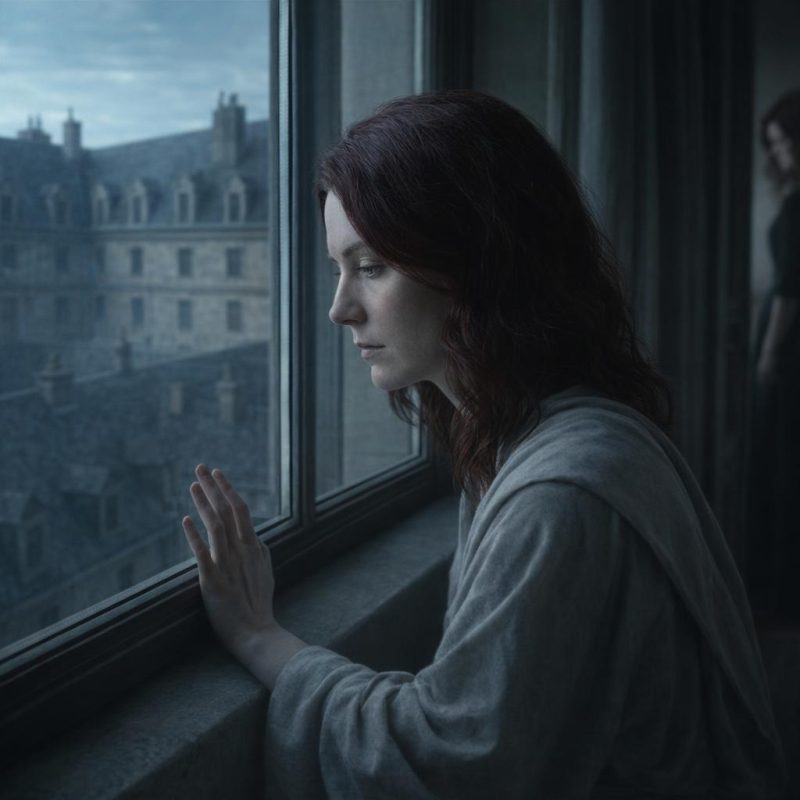 Image by RM AI
Thirty Minutes
Six weeks after the birth, Irina came to escort me to the formal reception room on the second floor — a room I associated with diplomatic audiences, not with my child. Dmitri was already there when I arrived, held by a woman I did not recognize, a wet nurse with a calm professional face who handed him to a governess as I entered. Sokolov stood near the window. Irina took her position by the door. I was directed to the chair nearest the center of the room and told I might sit close to the prince, but that I should not lift him without the governess present to assist. I sat. I looked at my son's face — the dark eyes, the small working mouth, the way his fingers curled and uncurled against the blanket — and I tried to press every detail into memory as though I might not see him again for a long time, because I had learned by then that I might not. I spoke to him softly. He did not know my voice. The governess watched my hands. Sokolov watched the room. And on the mantelpiece, the clock's minute hand moved in its slow, indifferent arc toward the end of my allotted thirty minutes.
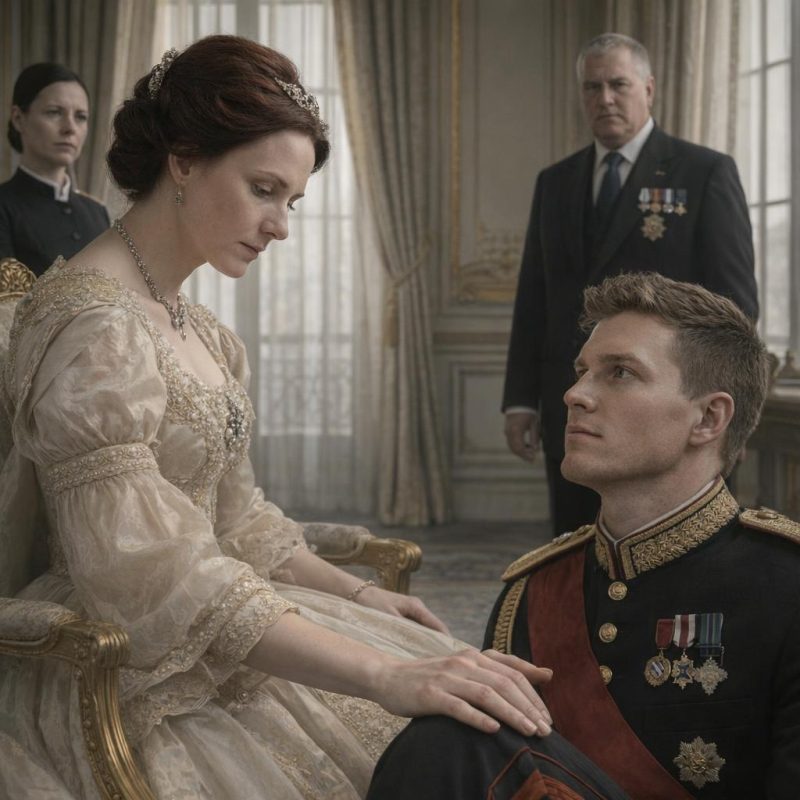 Image by RM AI
The Formal Visit
The second visit was arranged in the same room, under the same conditions. Dmitri was placed on a cushioned chair near the center, swaddled and drowsing, and I was told to remain seated and not disturb his rest. I sat three feet away and watched him breathe. His eyelashes were very fine. His hands were loosely fisted at his sides. I wanted to touch his fingers — just that, just the tips of his fingers — and I leaned forward slightly, and the governess said, in a voice that was perfectly pleasant and entirely immovable, that I should wait until he woke on his own. So I waited. When I spoke to him, quietly, just his name and a few soft words, the governess told me that a lower tone was preferable, that the prince was sensitive to sudden sound. I lowered my voice until I was barely speaking at all. He slept through the entire visit. When the time came to leave, I stood and looked at him one last moment — his chest rising and falling, his face turned slightly away — and I walked out of the room carrying nothing of him except the image, and the ache of having been so close and so entirely unable to reach him.
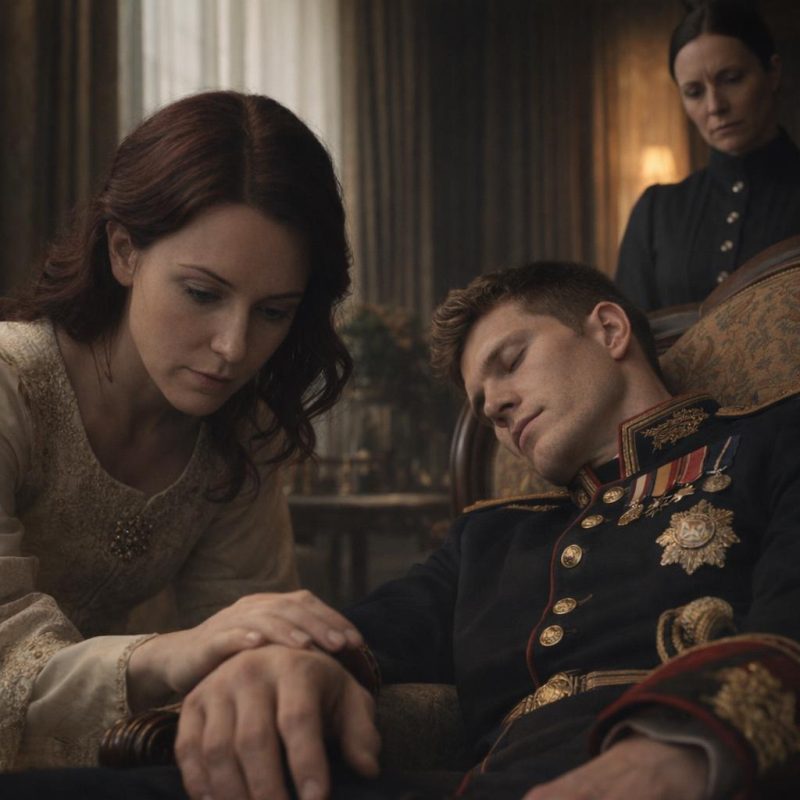 Image by RM AI
The Mother's Hands
On the third visit, the governess placed Dmitri in my arms. She did it with instruction: she told me to position my left arm so, to support the head precisely there, to keep my elbow at this angle. I did everything she said. I held my son. He was heavier than I remembered from that first terrible minute, and warmer, and he smelled of milk and clean linen, and I held him and felt something in my chest that had no name. Then I drew him closer, instinctively, the way every body knows to do, and the governess said that I was holding him too tightly against my chest and that it was not the approved position. She demonstrated the correct rocking motion — a shallow, measured movement, nothing like what my arms wanted to do. When I began to hum, very quietly, something I had known since childhood, she told me that the prince's musical program had been established and that unapproved songs could be disruptive to his routine. I stopped humming. I held him in the approved way, at the approved distance, and I felt his small weight in my arms and the eyes of strangers on my back, and I understood, in some wordless part of myself, what it meant to be taught how to mother your own child.
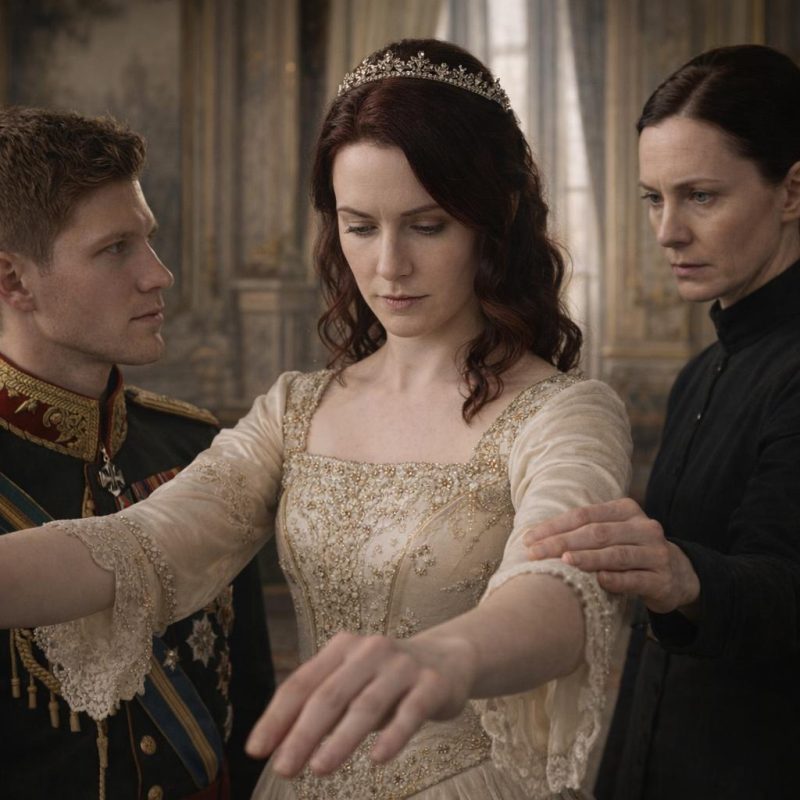 Image by RM AI
The Growing Stranger
The weeks accumulated into months, and the visits continued, and I watched my son become someone I did not know. He grew quickly — the dark eyes sharpening, the soft limbs lengthening, the formless infant face resolving into something particular and his own. He recognized the governess before he recognized me. He reached for her when she entered the room, his arms lifting with a certainty that I had never seen him direct toward me. I brought him a small carved horse one afternoon, something I had asked Natasha to find, and Irina intercepted it at the door and said it had not been submitted for approval. I sat through the visit with empty hands. He was beginning to make sounds that were almost words — not words yet, but the shapes of them, the intentions. The governess narrated his world to him in a low steady voice, naming things, and he watched her face with the focused attention of someone learning where safety lived. I sat in my chair and spoke to him when I was permitted, and he looked at me with the polite, mild curiosity he might have shown any visitor. And then one afternoon, reaching toward the governess as she leaned down to him, he made a sound — soft, insistent, unmistakable — that was shaped exactly like mama.
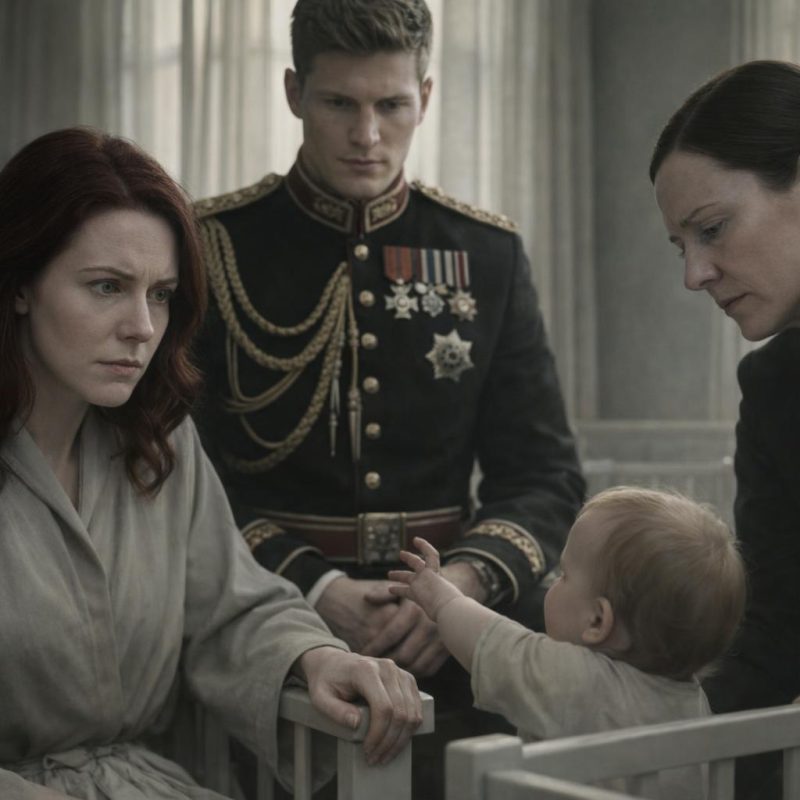 Image by RM AI
The Icon Lesson
I arrived early for the visit one afternoon — earlier than Irina had anticipated, I think, because she was still at the far end of the corridor when I reached the schoolroom door. It was not fully closed. I could hear a man's voice inside, measured and instructional, and I stopped without quite deciding to. The lesson was about the imperial household, about the nature and role of the empress. I heard the tutor explain that the empress was a sacred figure, elevated above the ordinary concerns of daily life, that she existed as a blessing upon the empire rather than a participant in its governance. He said that the empress was to be revered from a distance, as one revered an icon — approached only in formal ceremony, never casually, never as one approached a person one simply knew. I heard Dmitri's small voice ask something I could not make out. The tutor answered that this was the proper order of things, that it had always been so. I stood in the corridor with my back against the cold stone wall and did not move. Irina's footsteps were approaching from behind me. And the schoolroom door stood open by perhaps three inches, the tutor's voice continuing on the other side, unhurried and precise.
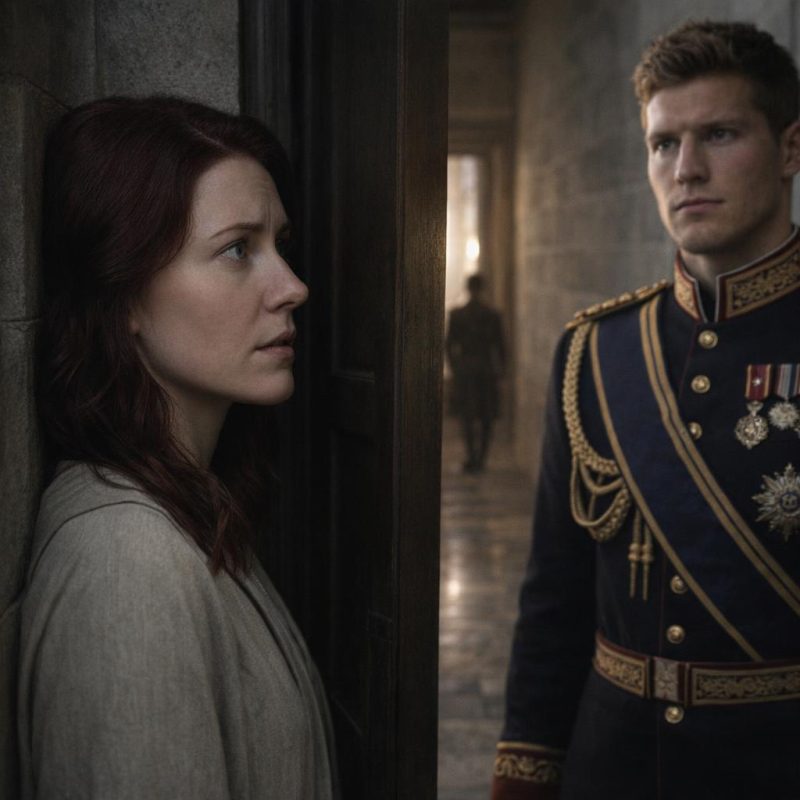 Image by RM AI
The Hardening
I walked back to my apartments without speaking to Irina, without looking at the tapestries or the gilded frames or any of the beautiful, indifferent things that lined the corridor. Dmitri had sat across from me for the better part of an hour and had addressed me as one addresses a portrait — politely, correctly, without warmth or curiosity or any of the small untidiness that belongs to love. He was seven years old and already he had learned the distance. I sat at my dressing table and looked at the woman in the mirror for a long time. She was composed. Her posture was correct. There was nothing in her face that anyone could have called grief, because grief requires the belief that something might yet be recovered, and I was no longer certain I held that belief. I had spent years pressing my hands against a wall and calling it hope. I heard Irina settle into her chair in the outer room, the familiar creak of it, the small domestic sound of my captivity continuing. Something shifted in me then — not breaking, not collapsing, but hardening, the way water becomes ice not through violence but through a long and patient cold. I stopped mourning what had been taken. I began, very quietly, to think about what I still had.
 Image by RM AI
The Whispers
My companions had grown careless, or perhaps they had simply forgotten that silence is its own kind of attention. I sat with my embroidery near the window one afternoon while two of them spoke in lowered voices by the far bookcase, their heads inclined together in the way of people who believe themselves unobserved. I caught fragments only — a province name I recognized, the word pamphlet, something about assemblies and a council that had not been sanctioned. They moved apart when they noticed me watching, and the conversation dissolved into remarks about the weather. I did not press them. I had learned long ago that pressing produced nothing but closed doors. But I kept the fragments, turned them over in the days that followed, fitted them against other small things I had noticed — a servant's hushed exchange in the corridor, a visiting official who had arrived looking shaken and left looking worse. The world outside my gilded rooms was moving in ways I had not been permitted to see, and something in me stirred at the thought of it, cautious and tentative, like a plant finding light through a crack in stone. Then one afternoon, while Irina stepped out to speak with a footman, I saw it on the side table: a folded newspaper, left unattended, its headline visible from where I sat.
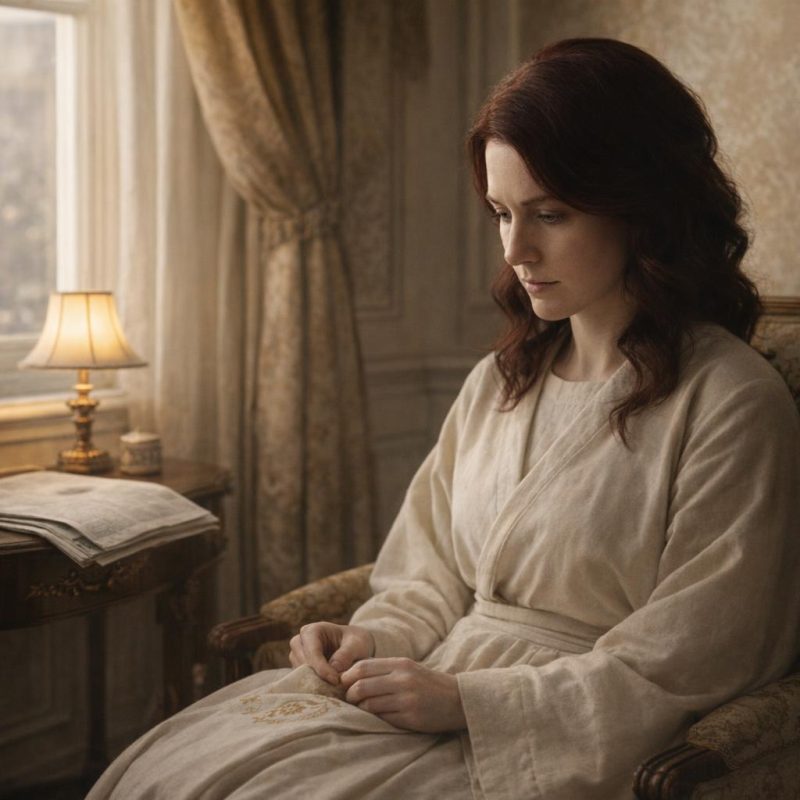 Image by RM AI
The First Contact
I requested the prayer book on a Tuesday, citing private devotions, and no one refused me — piety was one of the few appetites my keepers found acceptable. It arrived bound in worn brown leather, its pages soft with use, and I held it for three days before I did anything at all. I turned the risk over and over in my mind the way one turns a stone, looking for the place where it might give. On the fourth night, after my companions had retired and Irina's lamp had gone dark beneath the door, I took a pin from my dressing table and opened the book to its back binding. The words I scratched were few and careful: that I was not free, that I had heard there were those who believed things might be otherwise, that I wished only to know if anyone could hear me. My hand did not shake as much as I had expected. I wrapped the book in its cloth, set it with the items to be returned to the chapel, and went to bed. Two mornings later, during the brief window when the corridor was open for the chaplain's weekly collection, I watched from the doorway as the priest lifted the bundle from the table, tucked it under his arm, and walked away down the passage — and I did not know whether the words I had scratched into the binding would ever be found.
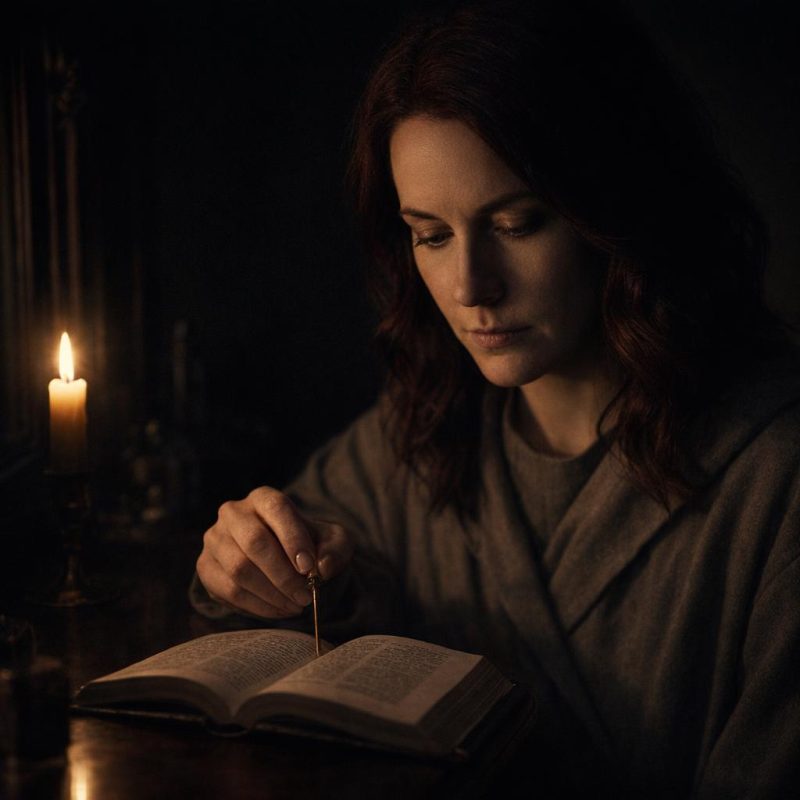 Image by RM AI
The Waiting
A week passed, and then another. The routines of my confinement continued with their usual indifference to my interior life — the morning audiences, the formal meals, the weekly visit to Dmitri's schoolroom where he received me with the careful courtesy of a child who has been well instructed. I watched my companions for any change in their manner, any flicker of heightened attention, any sign that something had been found and reported. There was nothing. Irina was as she always was — watchful, correct, giving nothing away. I began to wonder whether the pin-scratched words had been too faint to read, whether the binding had been examined at all, whether the book had simply been shelved in the chapel and forgotten. I considered trying again, and then considered the cost of trying again, and found I could not easily calculate it. Some mornings I was certain I had been foolish. Other mornings I thought that foolishness was perhaps the only form of courage available to me. I attended a formal dinner and smiled at the correct moments and said nothing that mattered. I returned to my rooms and sat by the window after the candles were trimmed, listening to the palace settle into its nighttime quiet, the distant sound of a clock marking the hour, the weight of not knowing pressing down on me like something with real and measurable mass.
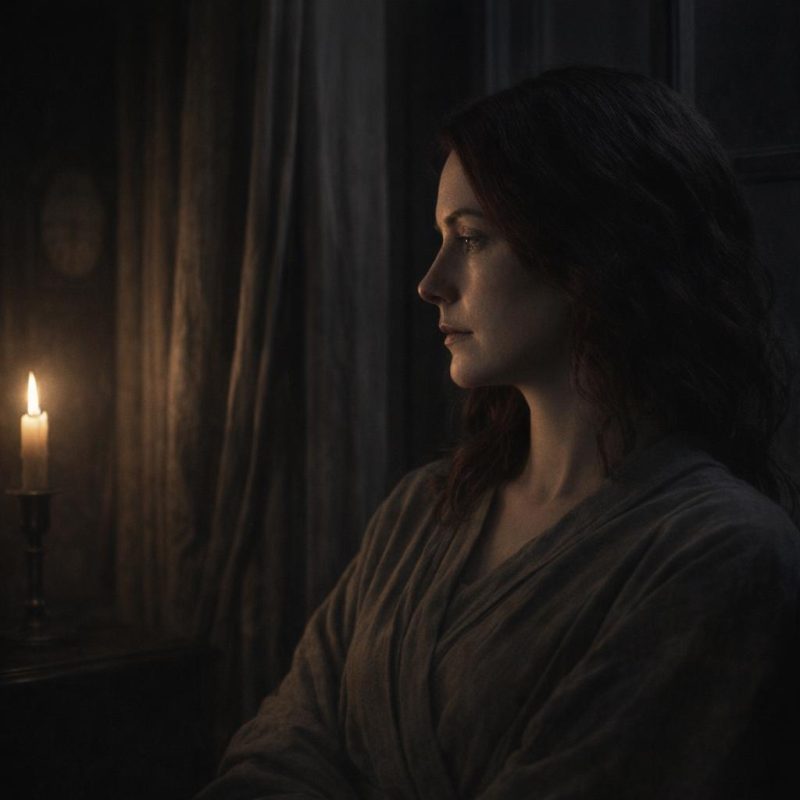 Image by RM AI
The Reply
The dress arrived on a Thursday, ahead of the portrait sitting — deep blue silk with ivory trim, the kind of thing chosen to make an empress look serene and unthreatening. I examined it as I always examined new garments, running my hands along the seams out of a habit I had developed without quite deciding to, checking for anything that did not belong. I found it in the hem near the left side panel: a stiffness that was not the fabric, a small resistance beneath my fingertips. I said nothing. I dressed in my morning clothes and waited until Irina was called to the outer corridor to receive a delivery, and then I went to my dressing room and closed the door. I worked the stitching loose with a hairpin, slowly, careful not to tear the silk. The paper inside was no larger than my thumbnail, folded twice, the writing so small I had to hold it near the window light to read it. I stood there for a moment after reading, the paper pressed flat against my palm. Then I crossed to the fireplace, held the corner to the flame, and watched it take. I set the ash apart from the other ash in the grate. I straightened, smoothed my skirt, and looked at my reflection in the dark glass of the window. The paper was gone. The single word it had carried was not.
 Image by RM AI
The Network
I learned the heel of a formal shoe holds more than one might expect. The cobbler who attended to my footwear was an old man who came monthly, and I had noticed that the shoes were always returned a day before he was scheduled to collect the next pair — a small gap, reliable as a tide. I began to use it. I wrote on paper so thin it was nearly translucent, in a script so compressed that a full page of thought occupied a space no larger than a calling card. The responses came back tucked inside the returned shoes, or pressed between the boards of a book sent for rebinding, or folded into the tissue wrapping of a repaired glove. I learned the rhythm of it the way one learns the rhythm of breathing — without thinking, and then impossibly aware of it. Through those small folded papers I began to understand that the movement outside the palace walls was larger and more organized than the fragments I had overheard had suggested. I shared what I could observe: the timing of council sessions, the names that appeared most often in official correspondence left briefly on tables, the mood of officials who passed through my formal audiences. It was not much. But it was something no one outside those walls had possessed before. At night, after Irina's lamp went dark, I lay still and felt the strange, unfamiliar weight of being useful.
 Image by RM AI
The Midnight Decrees
I began writing the decrees sometime in the third month of the correspondence, when the palace had gone quiet and the candle on my writing table was the only light in the room. I did not plan it. I had been drafting a message to send through the next shoe exchange and found, when I reached the end of what I needed to say, that I did not want to stop writing. So I kept going. I wrote a decree granting women the right to hold property in their own names, independent of father or husband. I wrote another establishing limits on the power of the imperial council, requiring that no law affecting the common population could pass without a body of elected representatives. I outlined a system of provincial assemblies, a free press, a judiciary that answered to law rather than to the throne. I knew, with the clear-eyed certainty of someone who has spent years learning the precise dimensions of her cage, that none of it would ever bear an imperial seal. I was not writing law. I was writing the shape of a world I could imagine but not inhabit. I hid the pages inside the covers of a devotional text on my shelf, layered between the boards and the endpaper. The candle burned low as I worked, the flame pulling sideways in some draft I could not locate, and the pages accumulated in the dark like a record no one had asked me to keep.
 Image by RM AI
The Exposure Plan
I had been careful for months — small messages, careful words, nothing that could not be explained away as the private musings of a pious and obedient empress. But the decrees I had written by candlelight had changed something in me, had shown me the distance between what I was permitted to be and what I was capable of being, and I found I could no longer content myself with fragments. I spent four evenings drafting the longest message I had yet attempted. I described my apartments, the schedule of my days, the laws that governed my movements and my speech and my correspondence. I wrote about the portrait sittings and the formal audiences and the weekly visits to a son who had been taught to regard me as an icon rather than a person. I wrote that the empire displayed its empress the way a jeweler displays a stone — behind glass, under controlled light, never to be touched. I asked whether the truth of that display, documented and witnessed, might be of use to those who believed the glass ought to be broken. I asked whether my story could become something more than a private grief. I folded the paper to its smallest possible size, worked it into the spine of a book of psalms, and placed it with the items set aside for the chapel exchange.
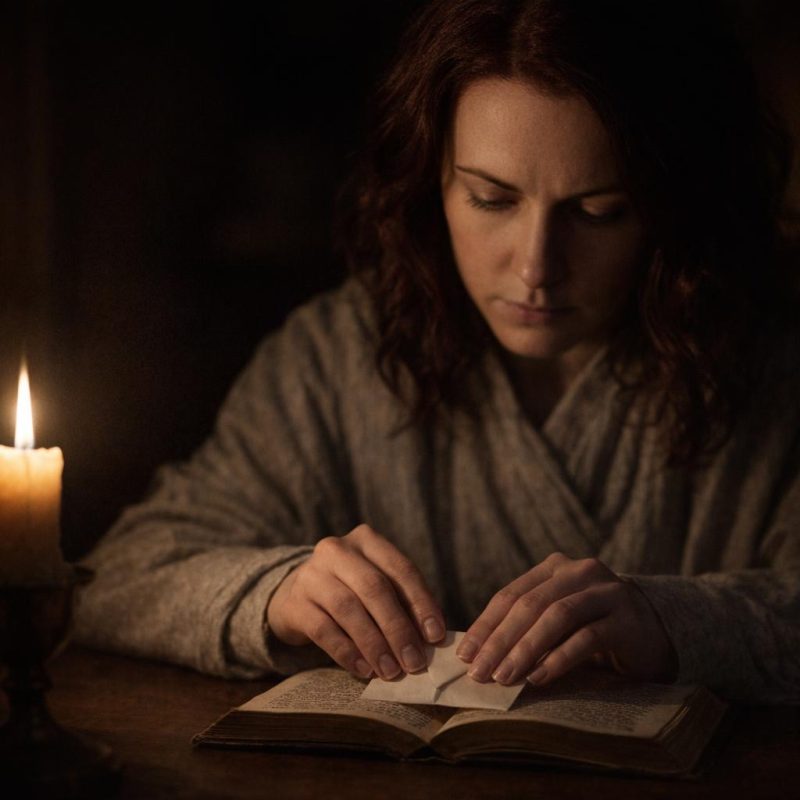 Image by RM AI
The Expanding Web
The psalms book had become a kind of miracle. I had expected silence in return — perhaps a single cautious reply, perhaps nothing at all. Instead, over the weeks that followed, the messages multiplied. Names I did not know. Hands I could not picture. People who had heard, through channels I could not trace, that the empress was willing. They wrote about printing presses hidden in cellar rooms, about newspapers passed hand to hand in market squares, about meetings held in the back rooms of bookshops after the doors were locked. They asked me for the things only I could provide — the rhythms of the palace, the schedules of the council, the small procedural details that meant nothing to me but everything to those trying to understand how power moved. I gave what I could. I was careful. I never wrote more than I could explain away, never used a name that could be traced, never let the messages grow so long that concealing them became its own risk. Irina moved through my apartments as she always had, watchful and correct, and I moved through my days as I always had, obedient and composed. But something had shifted beneath the surface of that composure — something that felt, for the first time in years, like weight worth carrying.
 Image by RM AI
The Near Miss
I had grown accustomed to the sounds of my own confinement — the particular rhythm of footsteps in the corridor, the interval between the changing of the guard, the precise moment each morning when Irina's key turned in the outer door. I had learned to work within those intervals the way a seamstress learns to work in failing light. That morning I was at my dressing table, the message folded to the width of two fingers, when I heard the footsteps come too early. Not the measured pace of the scheduled hour — quicker, purposeful, already close. I pressed the paper flat against my palm and closed my fingers around it. By the time the door opened I had my other hand raised to my hair, adjusting a pin that needed no adjusting. Irina entered and began reciting the day's schedule in her usual clipped manner — the afternoon audience, the chapel hour, the seamstress arriving at four. I answered each item in turn. The paper sat in my closed fist the entire time, its edges pressing into my skin. When she left, I did not move for a long moment. I set the message down on the dressing table and smoothed it flat with hands that had, by then, gone entirely still.
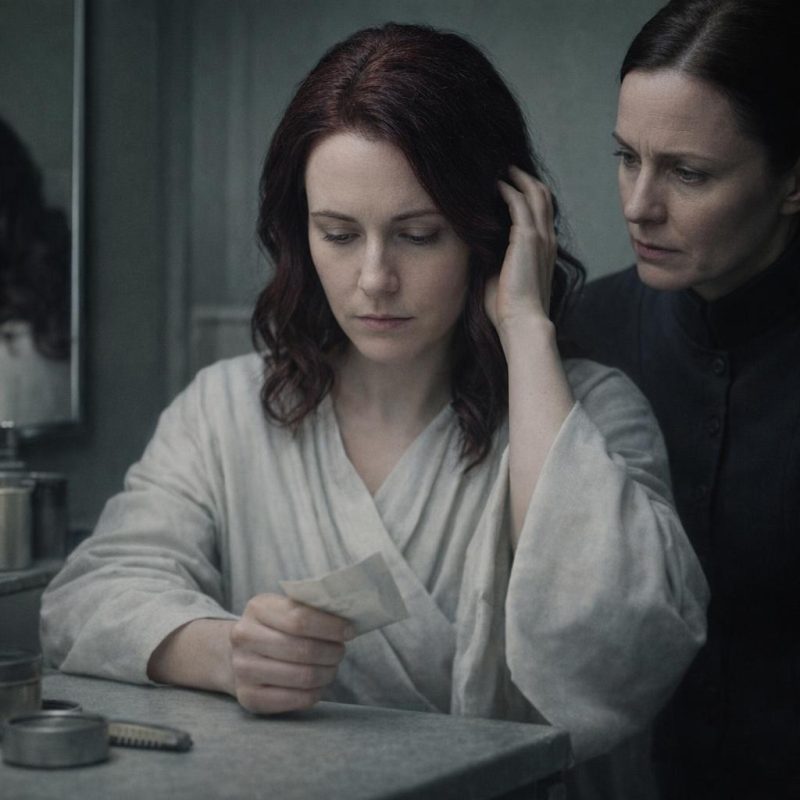 Image by RM AI
The Bolder Messages
There were things I had overheard for years without understanding their significance — fragments of council discussion that drifted through the wall of the adjoining chamber, numbers recited in the flat tones of men who believed themselves unheard. I had stored them the way one stores objects with no obvious use, not knowing when they might matter. They began to matter. The reformists had asked, in careful language, whether I had any knowledge of how public funds moved through the imperial accounts. I did. I had sat through enough formal audiences, had been present at enough ceremonial signings, to have absorbed more than anyone had intended me to absorb. I wrote about allocations I had heard discussed — sums designated for road works and hospital construction that appeared in the official reports at figures I did not recognize, smaller than what had been spoken aloud in those rooms. I wrote carefully, with no interpretation, only the numbers I had heard set against the numbers I had seen recorded. I pressed the paper into the spine of the book and set it with the chapel exchange — numbers that, in the right hands, could expose what the official reports had been written to conceal.
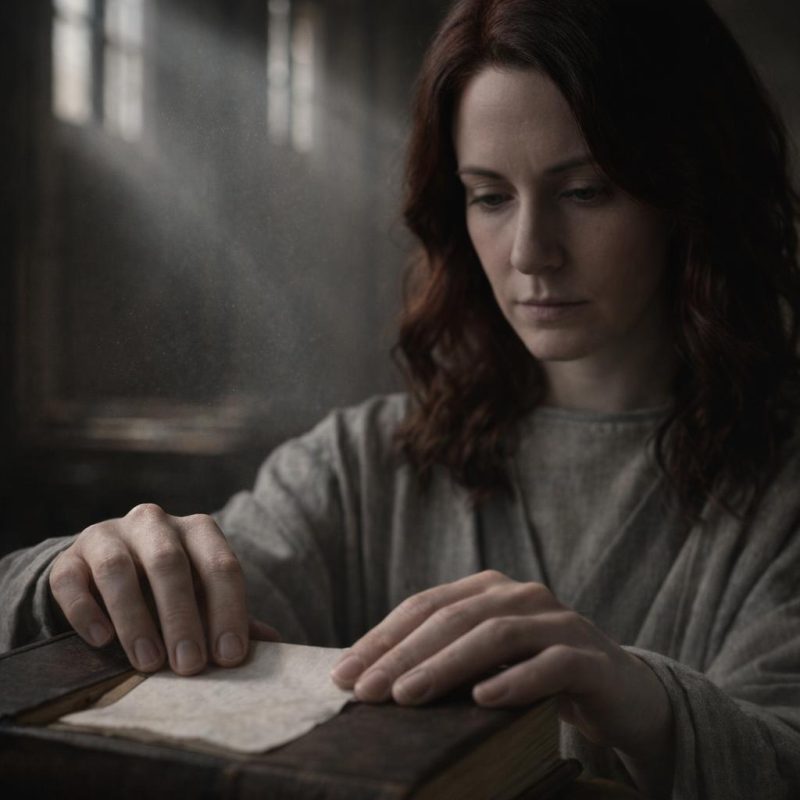 Image by RM AI
The Tightening
It began with small things, the kind I might have dismissed in an earlier season of my life. A second guard stationed at the end of the corridor where there had always been one. A trunk I had not opened in weeks left with its latch at a slightly different angle than I remembered. Irina conducting her morning review of the apartments with a thoroughness that went beyond her usual habit, opening drawers she had never opened before, running her fingers along the undersides of shelves. Then Sokolov came. He arrived without the advance notice his visits had always carried, and he moved through my rooms with the particular efficiency of a man reviewing a system rather than paying a courtesy call. He spoke to Irina in low tones near the window while I sat with my embroidery and kept my eyes on the cloth. I could not hear what passed between them. When he left, he did not address me directly, which was itself a kind of address. The following morning, a workman arrived with tools and spent the better part of an hour at the door to my private study. I did not ask what he was doing. When he gathered his things and left, I crossed the room and tried the handle. A new lock had been fitted to the door, and the key was not on the inside.
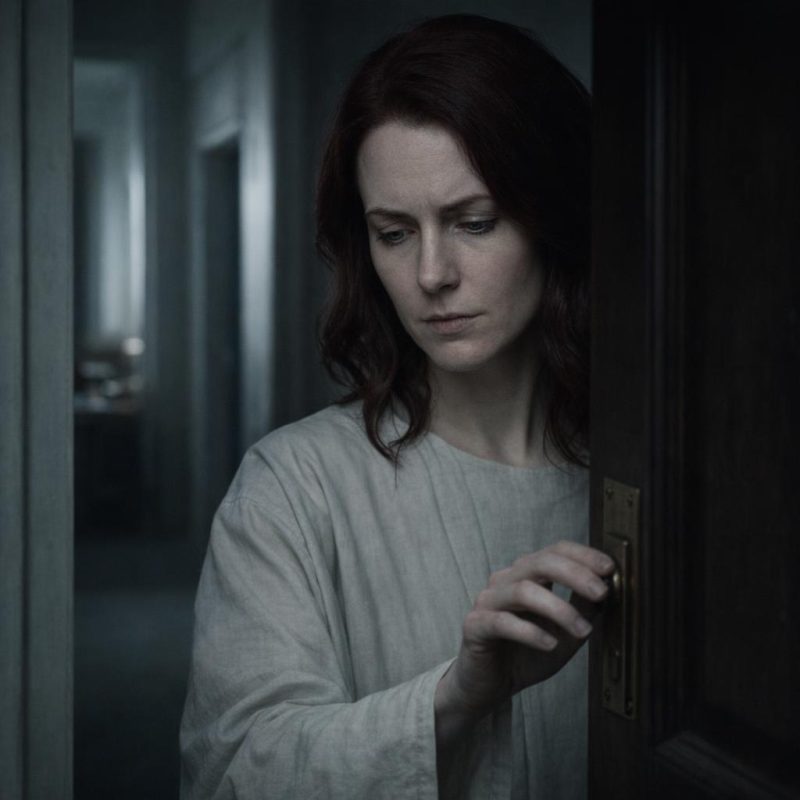 Image by RM AI
The Watchful Eyes
I had always been watched. That was not new. But there is a difference between surveillance that has settled into routine and surveillance that has been freshly reminded of its purpose, and I felt that difference now in every room I entered. Irina asked me, with perfect courtesy, how I had occupied my morning — a question she had never thought to ask before. One of the other companions lingered near the writing desk when I sat down to compose my weekly letter to Dmitri's household, a letter that was delayed in any case, returned to me with a note that the courier schedule had changed. I found my prayer book on the wrong shelf. I found the small lacquered box on my dressing table turned so that its clasp faced the wall rather than the mirror. Each thing alone was nothing. Together they accumulated into something I could not name but could not stop feeling. I began to move through my own apartments as though I were a guest in them — careful, deliberate, touching nothing I did not need to touch. I was crossing back from the window one afternoon when I stopped in the doorway of the sitting room. Irina was at the low table beside my chair, her hands moving through my embroidery basket.
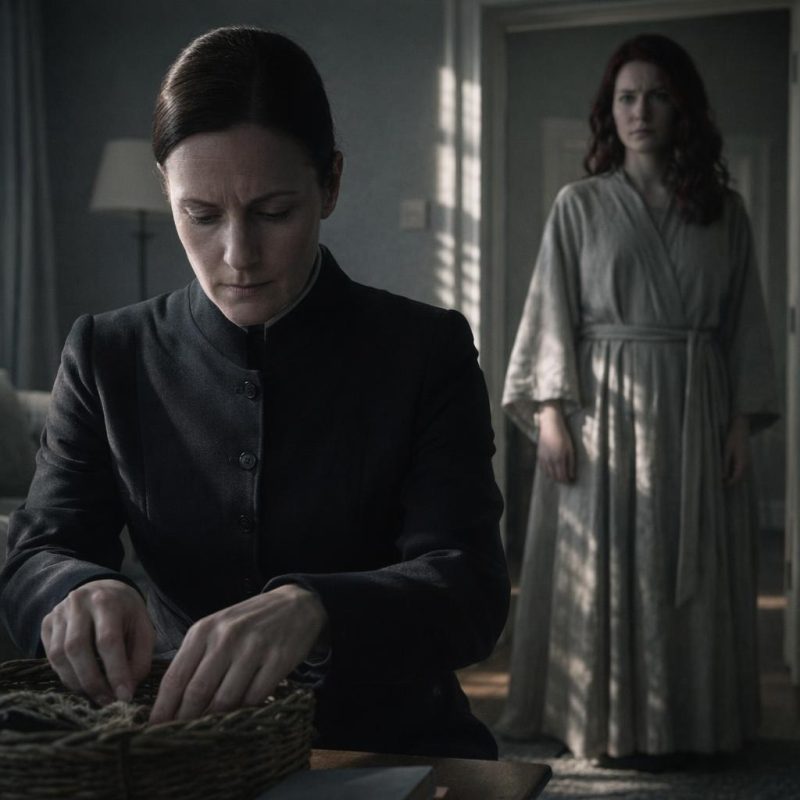 Image by RM AI
The Warning
I did not confront her. I said something ordinary — that I had come to fetch my shawl — and watched her straighten and compose herself and offer some explanation about a dropped thimble that I did not believe and did not challenge. But that evening, when the apartments had settled into their nighttime quiet and I was as certain as I could be that I was unobserved, I wrote the shortest message I had yet composed. I told them only what they needed to know: that the palace had changed around me, that new locks had appeared, that the inspections had grown more thorough, that they should reduce contact and move carefully until the atmosphere shifted. I wrote nothing that could identify me beyond what they already knew. I folded the paper to its smallest size and worked it into the binding of a devotional text set aside for the chapel exchange, the same route that had carried everything before. I had no way to know if the route was still clean. I had no way to know if the message would arrive, or arrive in time, or arrive to anyone still in a position to receive it. I set the book with the others and returned to my chair and sat with the thought that I might have drawn danger toward people who had trusted me with their safety.
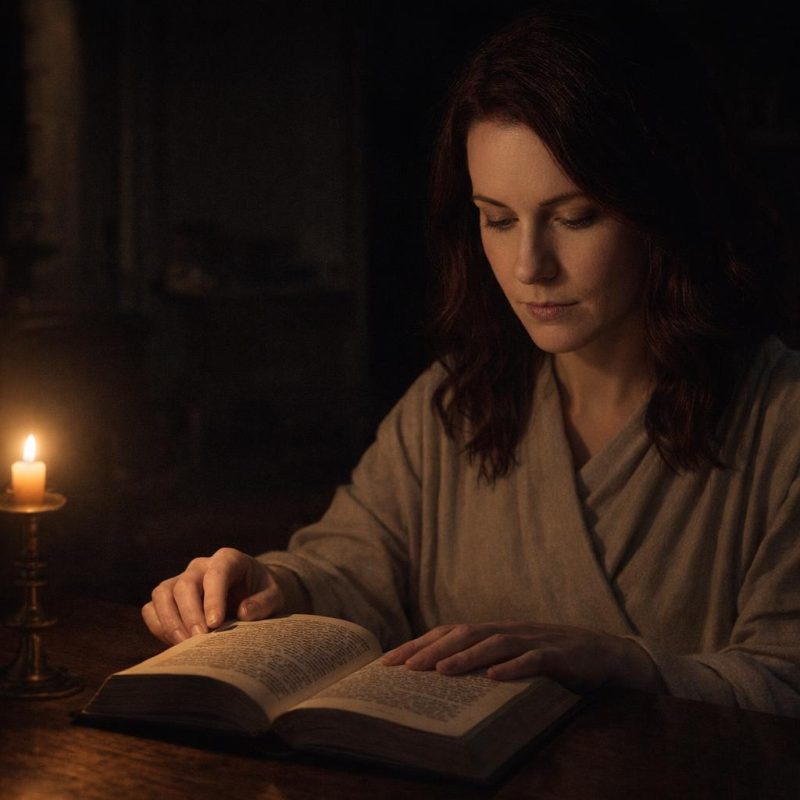 Image by RM AI
The Secret Police
The silence that followed was its own kind of information. No messages came through the chapel exchange. The devotional text I had sent was not replaced with another. I waited through one week and then a second, and the waiting had a texture to it that ordinary patience does not — a tightness behind the sternum, a habit of listening that never fully released. Then I overheard the companions talking in the outer room, their voices low but not low enough. There had been arrests in the city. Printers questioned. A bookseller whose shop I had never seen but whose name had appeared once in a message passed to me. Meeting places raided and emptied. The secret police, one of them said, had been very active. The other made a sound of agreement and said nothing more, and their voices dropped below what I could follow. I returned to my chair and picked up my embroidery and set it down again. I did not know which names from my correspondence were among those being questioned. I did not know if the routes I had used were known, or if the people who had written to me were safe, or if my warning had reached anyone before the silence closed over everything. The weight of not knowing settled over the room and did not lift.
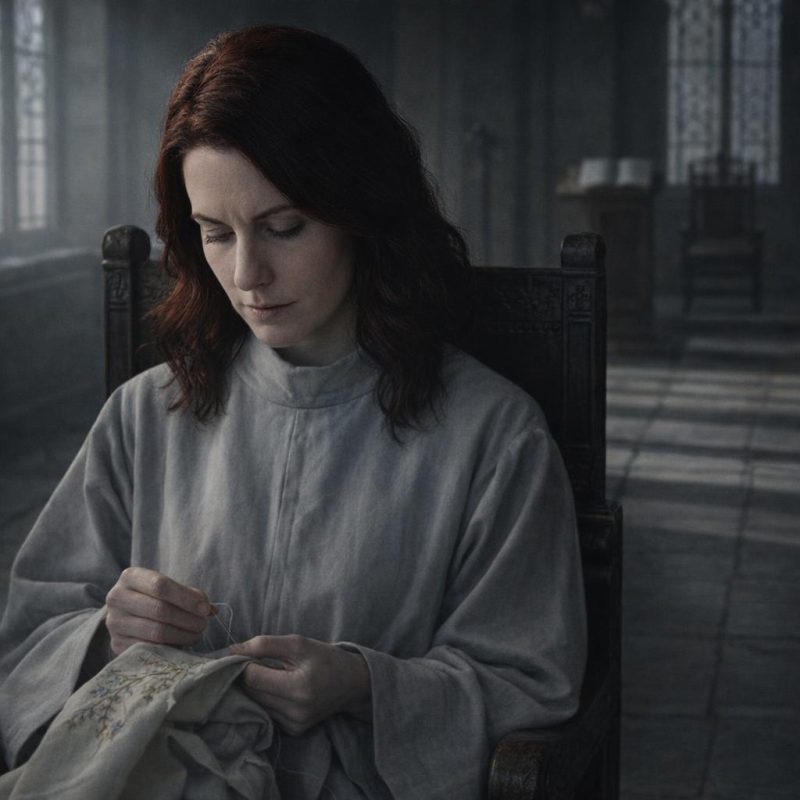 Image by RM AI
The Changed Natasha
Natasha had been my servant for long enough that I knew the particular way she moved through a room — the quiet efficiency of it, the small attentions she paid to things others overlooked. So I noticed immediately when she arrived that morning looking as though she had not slept, her face carrying a pallor that powder could not entirely conceal. I asked her how she was. She said she was well, in a voice that said nothing of the kind, and turned to the tea things with her back to me. I watched her hands as she poured. They were not steady. I tried again — something gentle, nothing that required an answer — and she gave me a reply so brief it was almost a refusal, and then found a reason to step into the adjoining room. She came back. She left again. Each time she returned her eyes went everywhere in the room except toward me, tracing the curtains, the floor, the middle distance, with the careful attention of someone who has been told not to look at a particular thing. Irina was present through most of this, seated near the window with her needlework, her own gaze lowered to the cloth. When Natasha finally excused herself for the last time that morning, she walked to the door with her hands pressed flat against her skirts, and I saw them trembling.
 Image by RM AI
The Summons
Sokolov arrived at my apartments just after the morning meal, and he did not knock the way a visitor knocks. He knocked the way a man knocks when the door is already his. Irina rose from her chair before I did, which told me she had been expecting him, or something like him. He stood in the doorway in his formal dress, his dark eyes moving across the room with the unhurried precision of someone taking inventory, and he presented the summons without preamble — a folded document, sealed, my name written across the front in a hand I did not recognize. He offered no explanation. I asked where I was being taken. He said only that the council wished to see me. I dressed without speaking. Irina helped me with my outer garments and her hands were careful and correct and entirely without warmth. We walked through the palace corridors in a silence that felt rehearsed, Sokolov ahead, Irina beside me, the guards at a distance that was close enough to mean something. Near the east gallery I saw Natasha. She was standing against the wall as though she had been placed there, and she did not look up as I passed. I did not stop. I could not have said what I felt in that moment — only that the corridor seemed very long, and the doors at the end of it were already opening, and I walked through them carrying the particular stillness of someone who has already begun to grieve.
 Image by RM AI
The Evidence
The table in the council chamber was long and dark and covered with papers, and it took me only a moment to understand what they were. My own handwriting looked strange from a distance — smaller than I remembered, more careful, the letters pressed close together as though they had been trying to take up less space. Sokolov stood behind the table with the composure of a man who had done this before and expected to do it again. He explained, in the measured tone of someone reading from a prepared text, that my servant had been found carrying correspondence. He did not say Natasha's name. He did not need to. He lifted one letter and read from it — passages about the movement of treasury funds, about the rotation of the household guard, about the conditions of my confinement described in my own words to people whose names I would not give them. I stood and listened. There was nothing else to do. Each sentence he read aloud had been written by my hand in what I had believed was safety, in what I had believed was purpose, and hearing them now in that room they sounded like something else entirely. Not resistance. Not testimony. Evidence. The letters lay spread across the table in the order he had arranged them, and I looked at them — my words, my ink, my careful script — and felt nothing that resembled surprise.
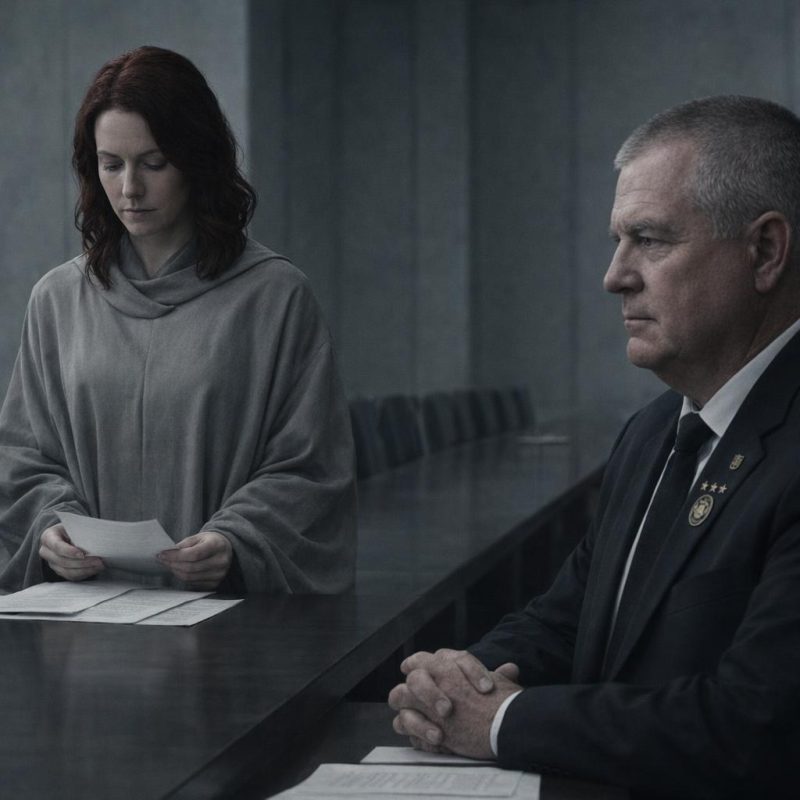 Image by RM AI
The Broken Girl
I asked Sokolov how it had happened. Not because I expected honesty, but because I needed to hear it said aloud. He told me with the same bureaucratic evenness he brought to everything — that Natasha had been under observation for some weeks, that the surveillance had been quiet and thorough, that when she was finally brought in for questioning she had held for longer than most. Three days, he said. I heard the words and understood what they meant and what they did not say. He told me she had tried. He said it almost gently, which was worse than if he had said it coldly. She had tried to protect the names, the methods, the contacts — and she had managed some of it, he allowed, with the faint approval of a man grading an examination. But three days is a long time, and she was not made for that kind of endurance, and eventually she had told them what they needed. I thought of her hands that morning, trembling against her skirts. I thought of how she had not looked at me in the corridor. I had known her for years. I had trusted her with things I had trusted to no one else, and I had done it without once asking what the cost might be for her if it went wrong. Then Sokolov said, with the same flat evenness he used for everything, that Natasha was being held in the palace dungeons pending further inquiry.
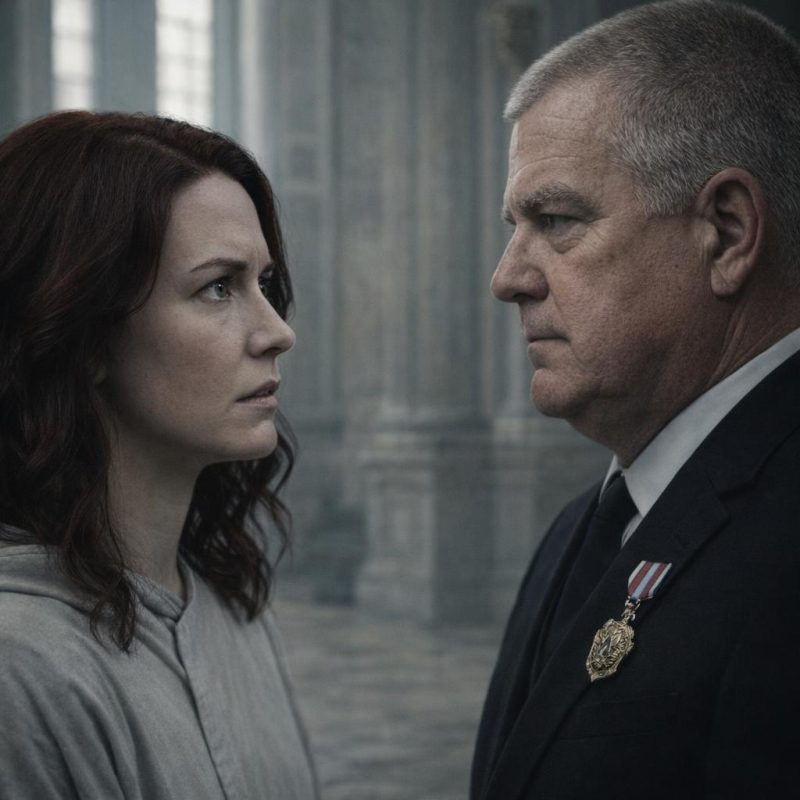 Image by RM AI
The Warrant
Sokolov reached beneath the papers on the table and produced a document I had not seen before. It was sealed with the council's mark, the wax still carrying the clean edges of something recently pressed. He set it before me without ceremony and explained what it contained before I could reach for it. Three rooms. Indefinite confinement. No correspondence of any kind, incoming or outgoing. Visitors restricted to approved medical staff. The language he used was formal and precise and left no openings. I asked about Natasha. He said her situation was separate and would be addressed separately. I asked about the grounds for such measures. He cited my mental stability — the phrase arrived in his mouth fully formed, as though it had been waiting there — and the matter of the letters, which he called treasonous activities, and I noticed that he did not distinguish between the two, that they had been folded together into a single justification as though one naturally produced the other. I asked who had authorized it. He did not answer immediately. He looked at me with those dark, unhurried eyes, and then he turned the document slightly on the table so that it faced me, and he broke the seal himself, and unfolded it, and smoothed it flat with one deliberate hand. The signature line was at the bottom of the page, and the name written there was not Alexei's.
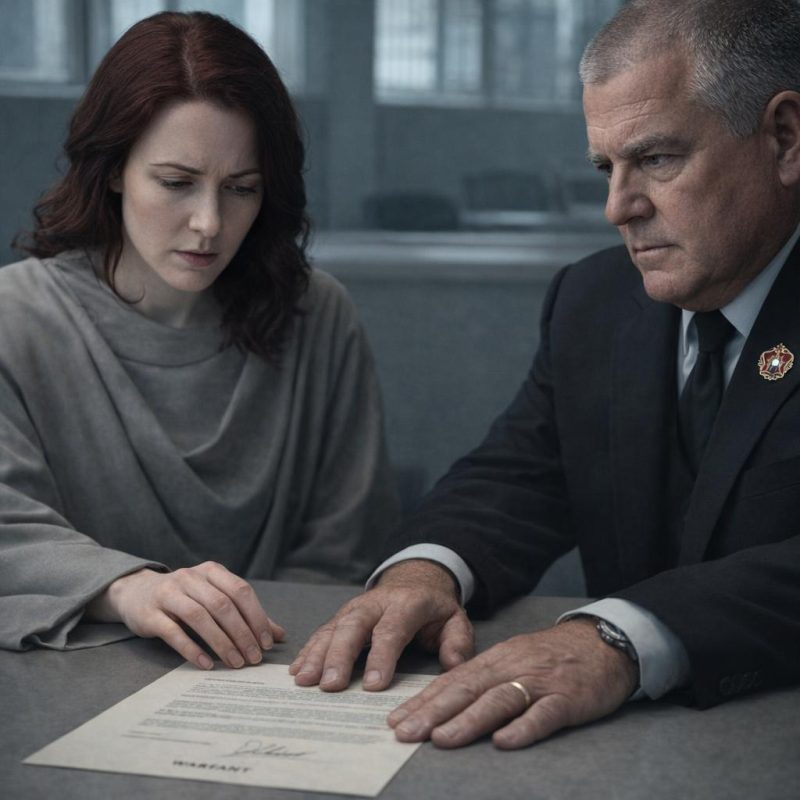 Image by RM AI
The Son's Signature
I read the name twice. Then I read it a third time, because the first two had not produced understanding — only a kind of blankness, the way the mind goes quiet when it encounters something it has not prepared itself to receive. I looked up. Dmitri was standing in the doorway — I had not heard him enter, or perhaps I had heard something and not registered it — and he was dressed formally, his bearing correct, his face arranged into an expression I could not read. He did not look at me. Sokolov said something about the prince having been informed of my deteriorating condition, about medical assessments, about the council's concern for my welfare, and the words moved past me like water past stone. Dmitri stood very still. I had carried him. I had sat beside his bed through fevers and nightmares and the long frightened nights of childhood, and he stood in that doorway now with his eyes fixed somewhere past my shoulder, and I understood with a clarity that felt like cold water that he believed it. He had been told I was mad, and he had believed them, and he had signed his name to it. I looked back down at the document: Prince Dmitri, my son's name, written in my son's formal hand, in the place where a mother's heart should have been protected.
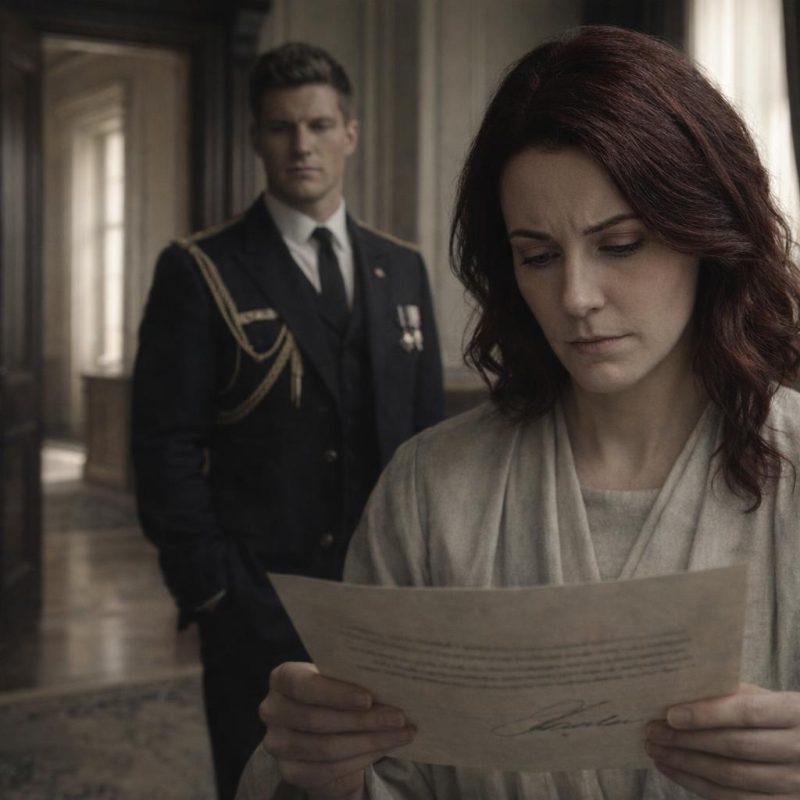 Image by RM AI
The Silent Son
The guards came for me quietly, the way everything in that palace happened — without announcement, without the dignity of a scene. Sokolov gave a small nod and they moved to either side of me, and I walked because there was nothing else to do. The route back through the corridor took us past the place where Dmitri still stood. I had perhaps four feet of distance between us as I passed, close enough to see the set of his jaw, the careful blankness of his expression, the way his eyes remained fixed on some point beyond me. I stopped. I do not know what I intended to say — something, anything, some word that might reach through whatever they had built between us. I said his name. He took one step back. Not away from the guards, not toward Sokolov — simply back, as though the sound of my voice required more space than he had allowed for. Sokolov moved then, placing a hand on Dmitri's shoulder, and something passed between them that I was not meant to see and could not interpret. I was moving again before I had decided to move, the guards' presence making the decision for me. I did not look back. I told myself I did not look back. But I heard, in the silence behind me, no footstep following, no voice calling after, and when I reached the turn in the corridor I glanced once over my shoulder and watched my son turn away from the space where I had been.
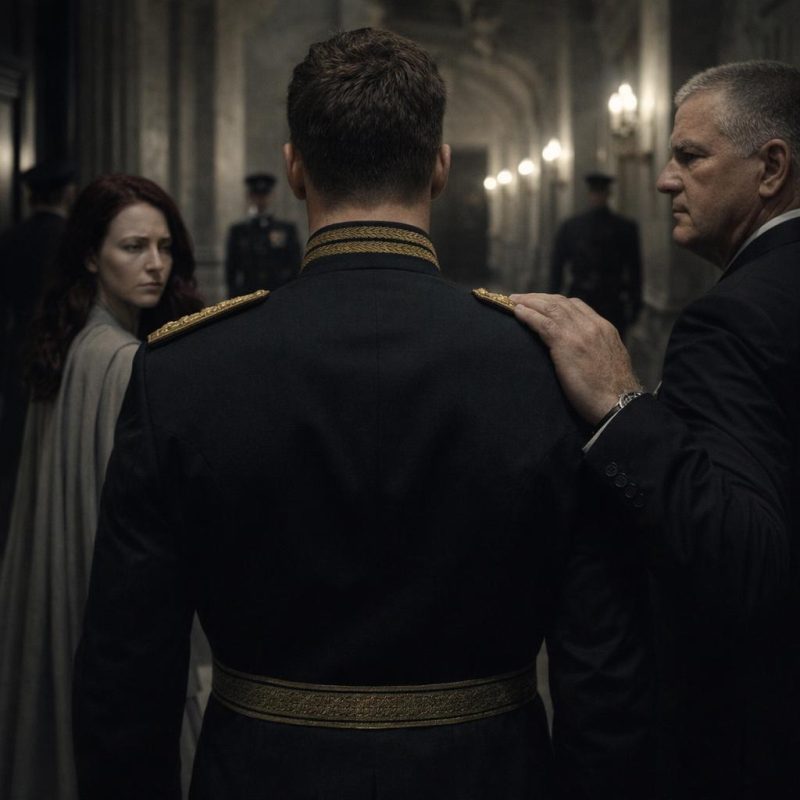 Image by RM AI
The Melancholy Diagnosis
Irina was waiting in my apartments when I returned. She had arranged herself near the window with the careful neutrality she wore when she had been given instructions she did not entirely approve of but intended to follow. I sat down without removing my outer garments. After a time she spoke. She told me, in the measured way she told me most things, that the prince had been shown reports — medical assessments prepared over the preceding months, she said, by physicians I had never been asked to see. The reports described my isolation. They described what they called unusual behaviors: the long silences, the refusal of certain visitors, the correspondence conducted in secret. They had taken the symptoms of confinement and written them into a document that called them evidence of a disordered mind. My secret letters, written because I had no other means of reaching the world, had been presented as proof of paranoid delusion. The resistance itself had become the diagnosis. I sat with that for a long time — the particular architecture of it, the way it closed on itself so completely. They had locked me away until the locking away produced in me the very qualities they now cited as justification for locking me away further. There was a terrible elegance to it, the kind that requires no malice to sustain itself, only patience and paperwork, and I felt the full weight of it settle over me like something that had always been there, waiting to be named.
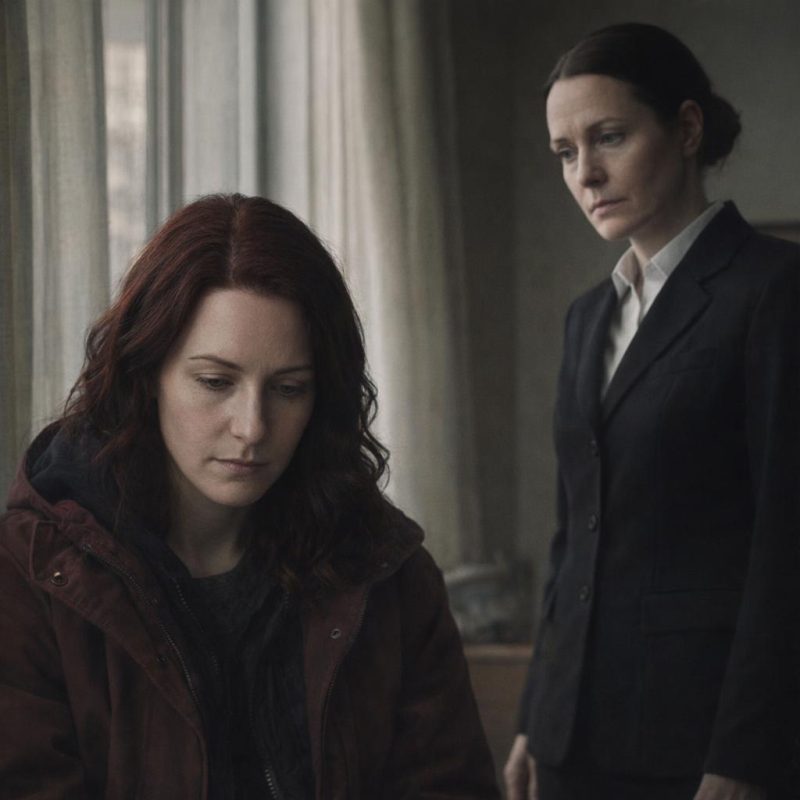 Image by RM AI
Three Rooms
They came the following morning to make the changes. I watched from the sitting room as men I did not know fitted iron to the window frames — decorative work, they had been told to say if asked, a matter of structural reinforcement. The ironwork was fine and dark and looked almost ornamental if you did not know what it was for. The doors to the outer corridor were locked from the outside with a sound I felt in my chest. The door to the small antechamber was sealed entirely. What remained was a bedroom, a sitting room, and a dressing room — three spaces that I had once moved through without thinking, that now constituted the whole of my geography. Meals arrived through a low door set into the wall near the kitchen passage, the kind of door designed to make the person receiving the meal feel the nature of their situation without anyone having to say it plainly. Irina remained. One other companion, a woman I barely knew, was assigned to share the hours. No one else came. I walked the sitting room that first evening — from the east wall to the window, from the window to the door that no longer opened, from that door back to the east wall. Fourteen steps. I counted them without meaning to, and then I counted them again, and by the third time I had stopped expecting the number to change.
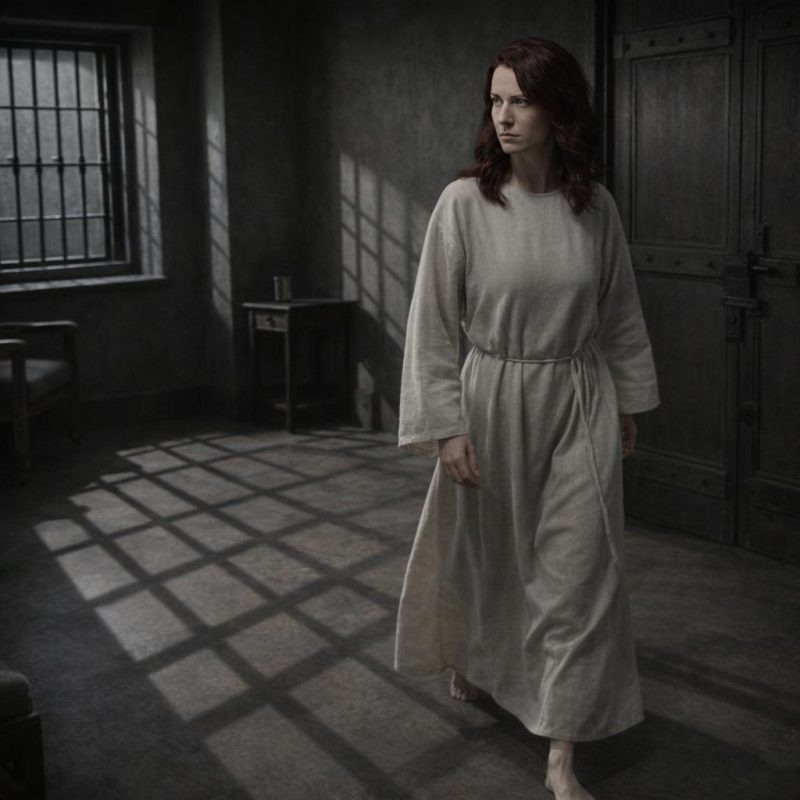 Image by RM AI
The Passing Years
The years did not pass so much as accumulate — layer upon layer of identical days pressed together until time lost its texture entirely. I stopped marking seasons by anything other than the quality of light through the barred windows: the thin pale wash of winter, the heavy gold of summer, the brief amber weeks in between that came and went before I had finished noticing them. Irina aged beside me in silence, her dark hair going gray and then silver, her movements slowing in ways she never acknowledged and I never named. My own hair had turned white sometime in the middle years — I could not say exactly when, because I had stopped looking at myself with any real attention. The routines held. Meals arrived through the low door. The embroidery frame stood in its corner. I stopped asking questions not because I had made peace with the silence but because the silence had simply become the shape of everything, and questions felt like pressing against a wall that had no other side. I had been a woman once — curious, frightened, full of plans. I was not certain what I had become. One evening I passed the dressing mirror without thinking, and the face that looked back at me was a stranger's — white-haired, sharp-boned, eyes that had gone very still — and I stood there unable to say with any certainty whose face it was.
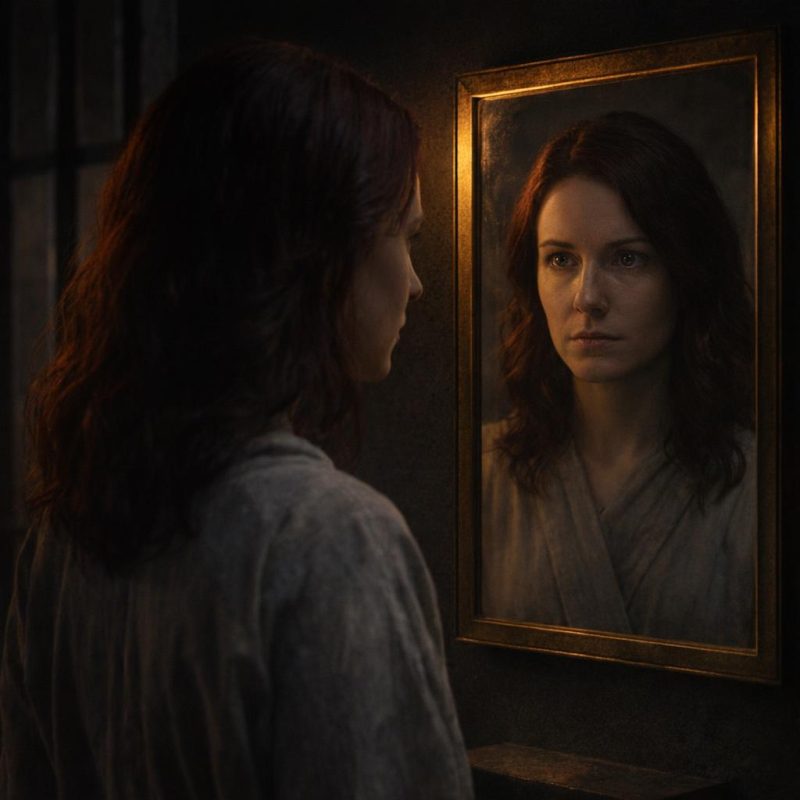 Image by RM AI
The Embroidered Chronicle
I asked Irina for embroidery materials in the thirty-second year of my confinement, and she brought them without comment — needles, thread in a dozen colors, linen stretched over a wooden frame. I think she understood, even then, what I intended. I began with the dates. The day I arrived at the palace as a bride. The day Dmitri was born. The day he was taken from my rooms and placed in the care of tutors I was not permitted to meet. I stitched the names of the reform proposals I had drafted in secret and passed through Natasha's hands — proposals that had reached the council and been quietly buried. I stitched the names of the women whose petitions I had read and could not answer. I stitched the dimensions of my three rooms, the number of steps from wall to window, the years and months and days. The linen filled slowly, and when it was full I began another panel, and then another. Irina watched without speaking. Sometimes she threaded a needle for me when my fingers stiffened in the cold. The panels accumulated along the walls until the sitting room was lined with them — a library made of silk and linen, a record that no one had thought to forbid because no one had imagined I would find a way to write. I set the final stitch in the last panel on a morning in the fortieth year, and held the needle still above the cloth.
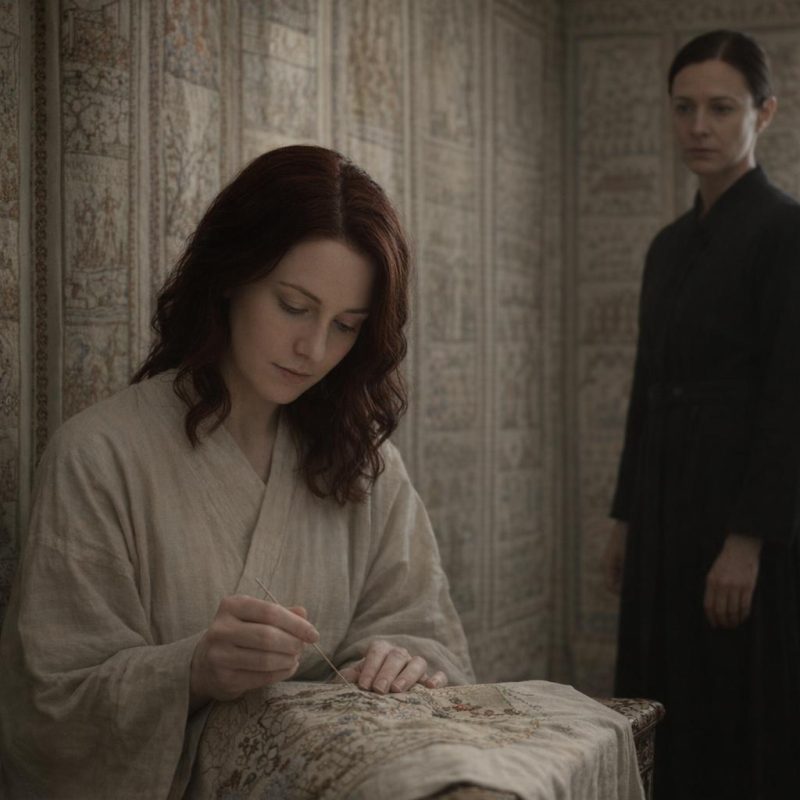 Image by RM AI
The Distant Thunder
The sounds began on an ordinary afternoon in late autumn — a low murmur at first, the kind of noise the city sometimes made during festivals or processions, and I paid it little attention. But it did not stop when evening came, and by the following morning it had grown into something with a different quality: rougher, less organized, carrying an edge that festivals did not carry. I moved to the window and stood at the bars and listened. There were voices in it — many voices, too far away to distinguish words, but the rhythm of them was not celebratory. Irina came and went with her eyes lowered. I asked her what was happening in the city and she said she did not know, which was the answer she gave when she knew and had been told not to say. The sounds continued for days. They swelled in the afternoons and quieted toward midnight and returned again with the morning. I found myself going to the window more often than I had in years — not with hope exactly, but with something that had not been there before, some faint stirring of attention that I had thought was gone from me entirely. On the fourth night I lay in the dark and listened to the city's distant voice, and somewhere in the middle distance came the sound of something breaking — glass, or stone, or something I could not name — and then silence, and then the low murmur beginning again.
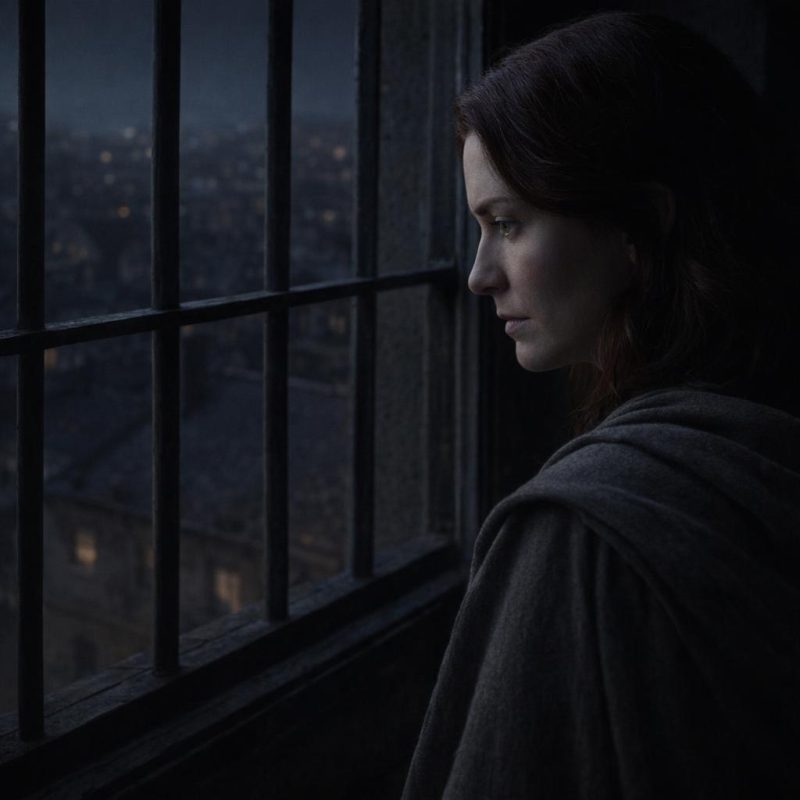 Image by RM AI
The Building Storm
By the second week I could see the smoke. It rose in thin columns at first, from points scattered across the city's eastern quarter, and I watched it from the window the way I had once watched weather — with the detached attention of someone who has no power to affect what they observe. Then the columns thickened and multiplied, and at night there was a dull orange glow along the horizon that had nothing to do with the setting sun. The sounds from the streets had become constant — a low roar that rose and fell but never fully ceased, punctuated by sharp reports I did not want to name. Irina stopped pretending that the routines were normal. She arrived late, left early, and moved through the rooms with a distracted urgency she could not quite conceal. I asked her once whether this was the reform movement — the one I had tried to reach from inside these walls, the petitions and the proposals and the names I had stitched into linen — and she stood very still for a moment before saying she could not say. I did not press her. I returned to the window and watched the smoke rise and drift and thin against the pale sky, and I thought about all the years I had spent trying to change things from inside a locked room, and I felt nothing in particular about any of it — only the faint, persistent smell of smoke drifting in through the iron bars.
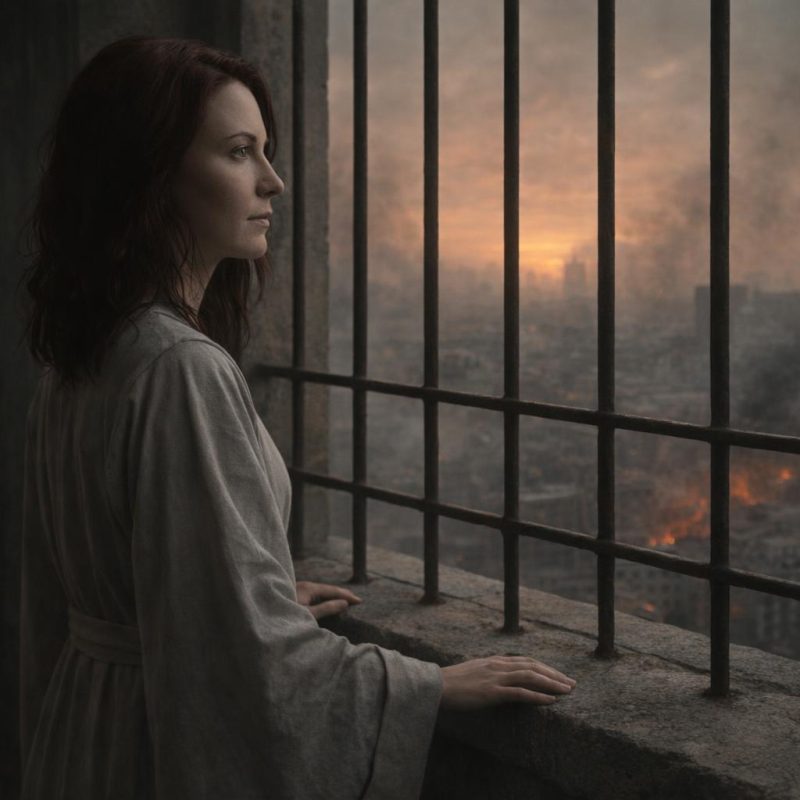 Image by RM AI
The Nervous Palace
The palace itself began to change in ways I could feel without seeing. The footsteps in the corridor outside my rooms — which had always moved at a measured, institutional pace — became hurried, irregular, sometimes running. I heard voices raised in the outer passages, which had never happened in all the years of my confinement. The meal through the low door arrived an hour late one morning, and then not at all the following evening. Irina came to me disheveled for the first time I could remember — her hair not fully pinned, her collar uneven — and I understood from the state of her that whatever was happening outside had reached the palace grounds. She admitted, when I asked directly, that there was serious trouble in the city. I asked whether the revolutionaries would reach the palace. She looked at me for a long moment with an expression I had not seen on her face before — not the careful blankness of a warden, but something unguarded and uncertain — and said she did not know. I nodded and returned to my embroidery frame. There was nothing else to do. I had lived inside this stillness for forty years while the world moved without me, and now the world was moving toward me, and I sat with my needle and my linen and felt the whole enormous weight of a thing about to break.
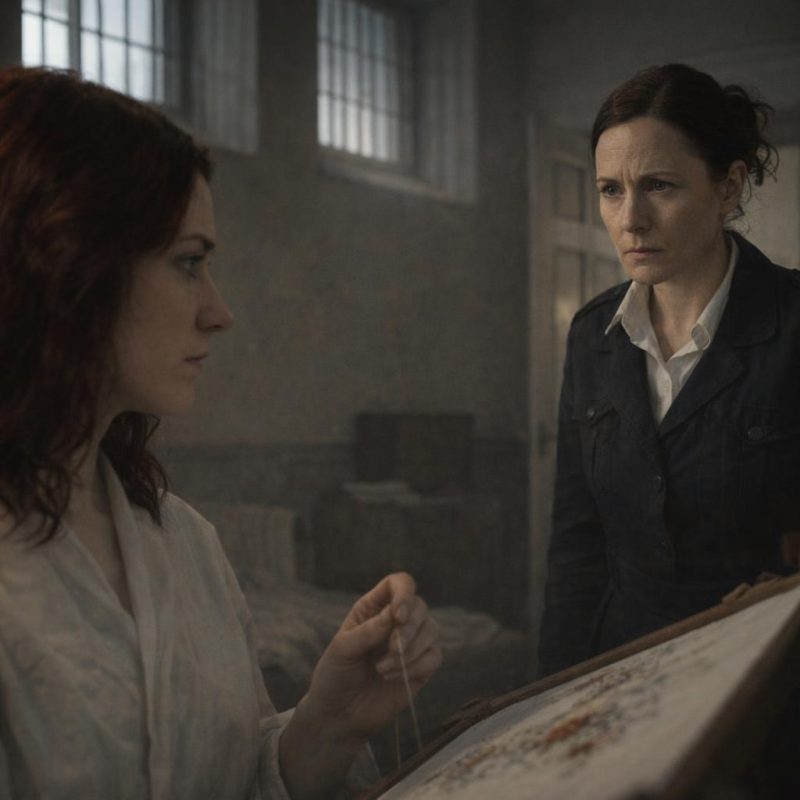 Image by RM AI
The Abandoned Posts
I heard them running in the early afternoon — not the hurried footsteps of servants but something faster, more disordered, the sound of people leaving rather than arriving. Irina went to the outer door to look and did not come back. I waited for her in the sitting room for what felt like an hour, listening to the sounds of the palace emptying around me — doors slamming in distant wings, voices calling out and then cutting off, the particular silence that follows when a building that has always been full of people suddenly is not. When I could no longer hear anything moving in the corridor, I went to the door myself. The handle turned. I stood with my hand on it for a moment, feeling the unfamiliar ease of it, and then I opened the door and looked out. The corridor stretched in both directions, long and dim and absolutely empty. The chair where the guard had sat for as long as I could remember stood vacant, pushed back at an angle as though its occupant had risen in a hurry. The sconces along the wall were still lit. Everything was in its place except the people, and the people were gone, and I stood at the threshold of my rooms looking out at a corridor I had not seen unguarded in forty years.
 Image by RM AI
The Breach
I went back inside and sat down among my embroidery panels and waited. There was nothing else to do, and I found I was not afraid — which surprised me, though perhaps it should not have. Fear requires something left to lose, and I had spent forty years losing things in increments small enough that I had barely felt each one. The sounds from outside the palace had grown very loud now — a roar of voices, the crash of something heavy, the particular percussion of a crowd that has stopped being a crowd and become something else. I heard them reach the outer gates. I heard the gates give. Then the voices were inside, filling the corridors of the palace with an anger that had been building in the streets for years, and I sat with my hands folded in my lap and listened to them move through the rooms below — overturning furniture, breaking glass, calling out to one another in voices raw with purpose. They were searching. I could hear them working their way through the building, wing by wing, room by room, growing closer. I smoothed the linen panel across my knees and waited. And then, from somewhere very close — the east corridor, I thought, the one that led directly to my wing — came the sound of the main palace doors breaking open.
 Image by RM AI
The Discovery
They came through my door with weapons raised — four of them, young men in rough coats with the look of people who had been awake for days and were running on something harder than sleep. They stopped when they saw me. I was sitting in the chair by the window, my embroidery panel across my lap, my white hair pinned back the way Irina had always pinned it. I looked at them and they looked at me, and for a moment no one spoke. I asked them, in a voice I kept very level, what they wanted. One of them — the youngest, I thought, though they all looked young to me now — said they were looking for the imperial family. I told him I was the Empress. I told him I had been a prisoner in these three rooms for forty years. I watched his eyes move to the barred windows, to the low meal door set into the wall, to the panels of embroidery lining every surface — names and dates and laws and losses stitched into forty years of linen. He looked back at me. Then he looked at the others. I had expected anger, or contempt, or the particular blankness of men who have decided in advance what they will find. What I had not expected was what I saw move across their faces then — the anger draining out, replaced by something they had not walked in carrying.
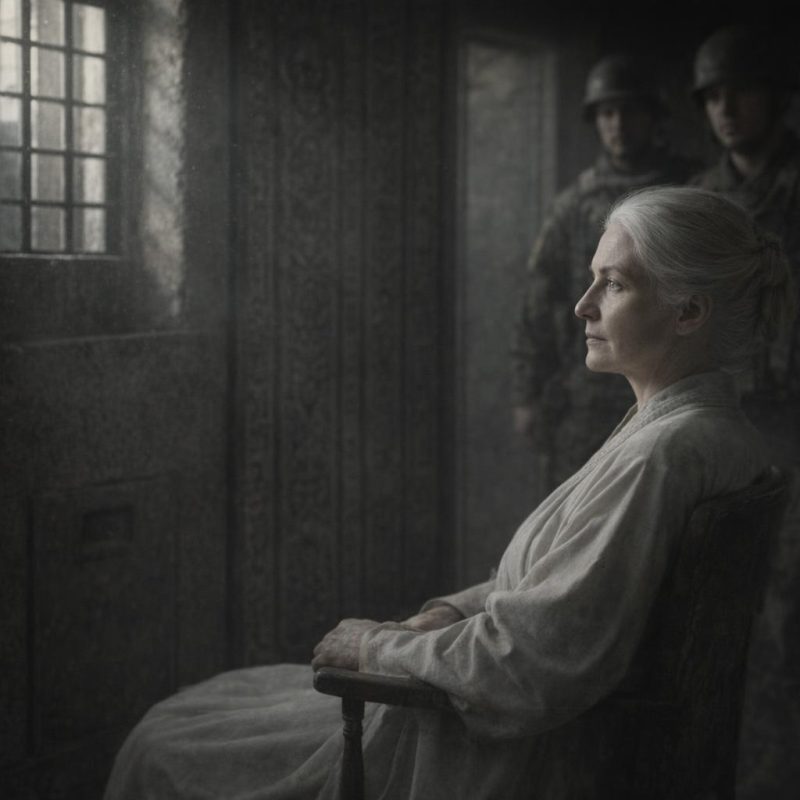 Image by RM AI
The Stitched Truth
The youngest one picked up the first panel carefully, the way you handle something you suspect might be fragile. It wasn't. I had stitched those pieces on linen that had outlasted three sets of curtains and two mattresses. He read slowly, his lips moving, and then he stopped moving them and just stared. The others gathered around him. I watched them trace the names — Dmitri's birth date, the decree that stripped me of correspondence rights, the amendment that transferred my household budget to Sokolov's office, the reformist proposals I had drafted in the language of needlework because no other language had been left to me. One of them — the one with the ink-stained fingers, the one who looked like he had spent time around documents — went very still when he reached the third panel. He said, quietly, that he recognized the framework. He said it matched proposals that had been circulating in underground pamphlets for fifteen years, attributed to an anonymous source. I told him the source was not anonymous. I told him the source had simply been locked in a room. He looked up at me then, and the others looked up too, and the panels lay open across the floor between us — forty years of testimony spread out in silk and silence, finally read.
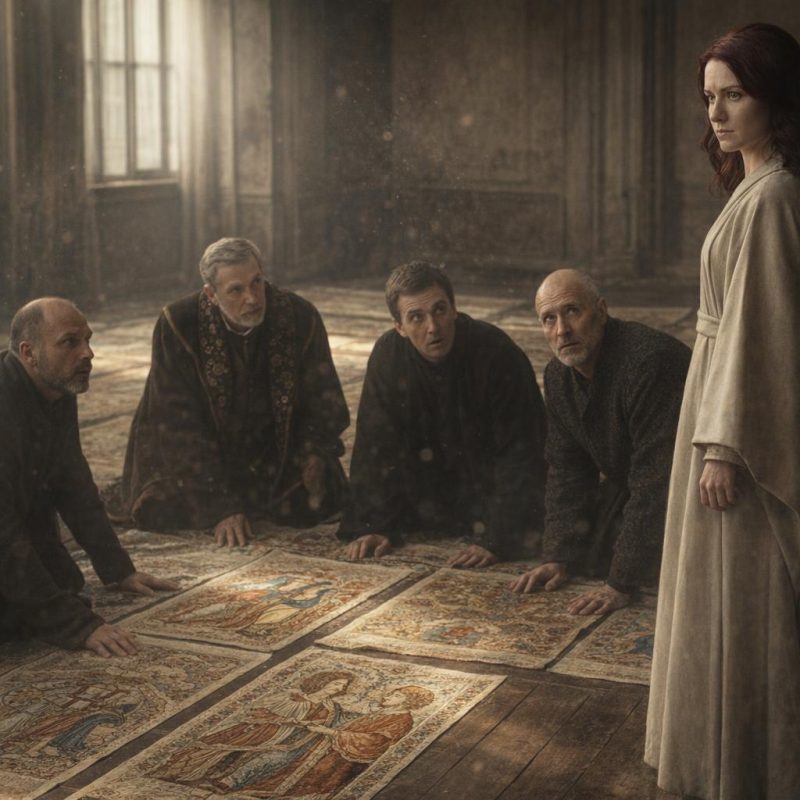 Image by RM AI
The First Sunlight
Two of them took my arms, not roughly, and I was grateful for that. My legs had not carried me farther than twelve paces in either direction for so long that the corridor felt like a foreign country — the ceilings higher than I remembered ceilings being, the floors stretching ahead in a way that made my chest tighten. We passed rooms I had only ever seen through a cracked door or imagined from the sounds that filtered through the walls. A ballroom. A library. A long gallery with portraits I did not recognize. I kept walking. The main doors were open, and the light coming through them was a different quality of light than anything that had reached me through barred glass — it moved, it shifted, it had warmth in it that glass had always filtered out. When I stepped through the doors and onto the steps, it hit my face all at once. I stopped. I could not help it. The air moved against my skin and I felt it the way you feel something you had stopped believing was real. One of the soldiers said something — I did not hear the words. I was standing in the open, under the sky, and the weight of every year I had not stood there settled into my bones and stayed.
 Image by RM AI
The People's Empress
They were gathered at the gates — more people than I had seen in one place since the last state ceremony I had been permitted to attend, which was so long ago I could not have named the year. When they saw me on the steps, they made a sound I felt before I heard it, a wave of voices rising together. Someone called out that the empress was free. Someone else called out that tyranny had fallen. They were looking at me the way people look at a symbol — with a kind of hunger that has nothing to do with the actual person standing in front of them. I understood it. I had once been trained to project exactly that kind of image. I stood very straight, the way I had always stood, and I looked at their faces — the hope in them, the relief, the uncomplicated joy of people who believed a rescue had just taken place. They thought I had been waiting. They thought I had been enduring, fragile and patient, until someone came to open the door. They were not entirely wrong. But what they could not see, what their celebration had no room for, was that the woman who had walked through that door was not the woman who had been put behind it — and the distance between those two people was not something that could be cheered away.
 Image by RM AI
The Glass Empress
I stood on those steps and looked back at the palace, and I thought about the girl who had walked through those doors at sixteen in a dress that cost more than most families earned in a year, believing that power was something that would be given to her. It had not been given. It had been withheld, and so I had built it from what they left me — thread and linen and forty years of silence that turned out not to be silence at all. I thought about Dmitri, raised to see me as a figure rather than a mother, and I wondered if he would read the panels, and whether reading them would change anything in him. I thought about Natasha, who had carried my words out of that room at great risk to herself, and whose name I had stitched into the border of every piece she had ever touched. I thought about Alexei, who had believed that a woman in a room could not matter. I had been transparent to all of them — visible and dismissed, present and ignored. But glass, I had learned, does not break the way they expect it to. It holds. It records. It lets the light through and keeps the shape of everything that pressed against it. The panels lay inside on the floor, forty years of law and loss and testimony, in my hand, in my voice, in silk.
 Image by RM AI
KEEP ON READING
The Day the Sun Didn’t Rise: The Unexplained New England…
Alina Nichepurenko on UnsplashImagine waking up on a spring morning,…
By Sara Springsteen Jun 18, 2026
20 Facts About Animal Symbolism In Paintings
The Sacred Clues Across History. Animal symbolism is a detail…
By Elizabeth Graham Jun 18, 2026
How a Single Telegram Pushed America Into World War I
Sammie Sander on PexelsThe year is 1917, and the United…
By Cameron Dick Jun 18, 2026
The Marriage Bed As A Political Object
Fæ on WikimediaA bed is naturally a private space—it's where…
By Elizabeth Graham Jun 18, 2026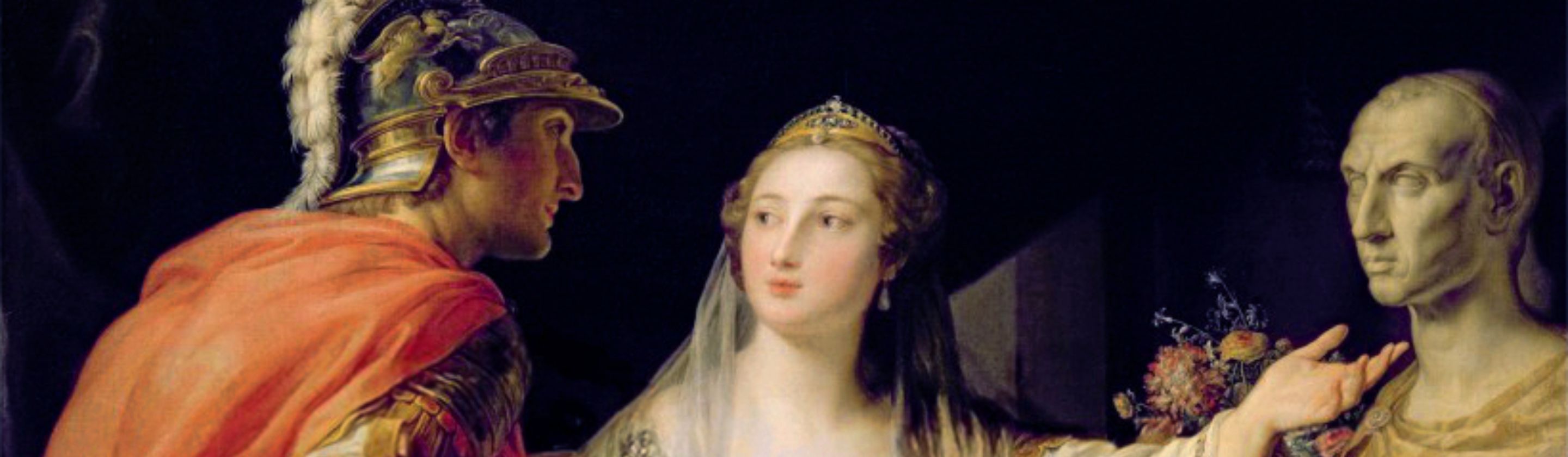
20 Most Inappropriate Relationships From History
Private Attachments With Public Consequences. It’s easy to think of…
By Annie Byrd Jun 18, 2026
How Early Navigation Techniques Guided Explorers Across Oceans
Maël BALLAND on PexelsLong before satellites, digital maps, and advanced…
By Rob Shapiro Jun 18, 2026