

The Weight of Lilies
They sent me to France because my eyes would not stop weeping. That is the plain truth of it, though the physicians dressed it in grander language — defluxion, they called it, a condition of the humours — as though naming the thing made it less pitiful. I was eight years old, small even for my age, and I arrived at my grandmother's court at Saint-Cloud with water running perpetually down my cheeks, so that every soul I met assumed I was already in mourning. Perhaps I was, though I could not have told you for what. My grandmother, Henrietta Maria, received me with the careful tenderness of a woman who had buried too much already. She was old and silver and very still, the way people become when grief has pressed them flat over many years. I watched her and tried to understand what she had survived — exile, the execution of a king, the loss of children — and I could not hold it in my mind. It was too large. She taught me to sit straight and speak French and not show my feelings at the table. And then, before the year was out, she was gone too, and I stood in the chapel where they had laid her in state, breathing in the thick sweetness of lilies banked around her coffin, not yet understanding that this was simply how my life would go.
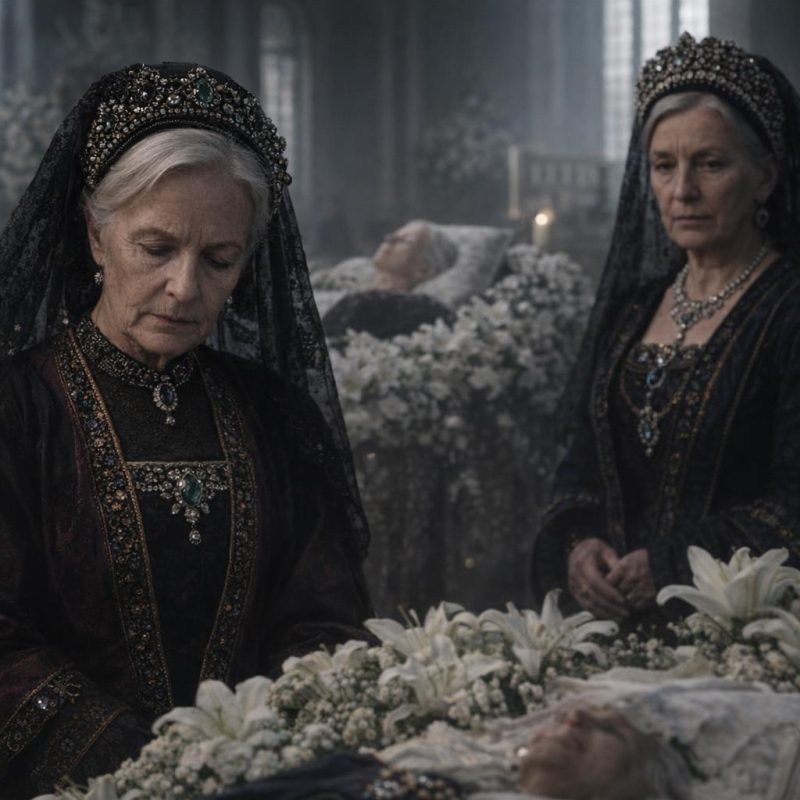 Image by RM AI
The Aunt's House
After my grandmother's funeral, I was moved to my aunt's household — another set of unfamiliar rooms, another arrangement of strangers who were obligated to care for me and did so with varying degrees of warmth. I was nine years old and had already learned not to unpack my heart too quickly in any new place. Still, I tried. There is something in a child that keeps trying, no matter how many times the ground shifts beneath her feet. My aunt's house had a garden with a pear tree that dropped fruit in the autumn, and I remember thinking, when the pears came in, that perhaps I would be allowed to stay long enough to see them fall again the following year. I settled into a routine of lessons and walks and quiet meals. The servants were kind enough, and my aunt herself was not unkind, though she was busy with her own concerns and I was, I understood, a responsibility rather than a joy. The months passed with a fragile steadiness that I was almost beginning to trust. Then one morning I came down to breakfast and found the kitchen girls speaking in low voices with their heads bent together, and one of them startled when she saw me standing in the doorway, and I heard the words before she could swallow them — that my aunt had taken ill in the night.
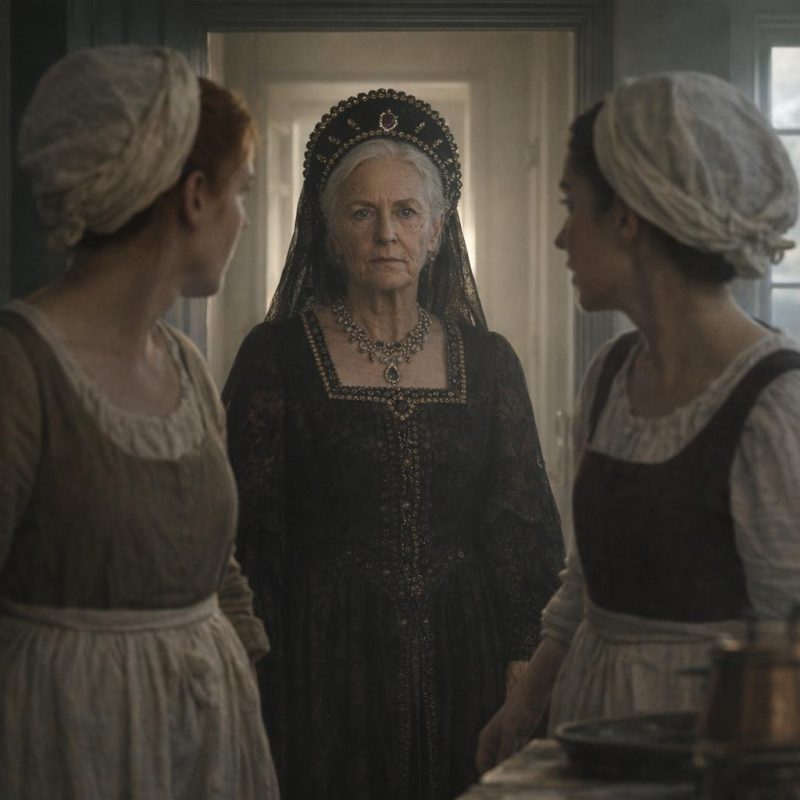 Image by RM AI
The Return to England
They brought me back across the Channel after my aunt died, and I told myself the whole crossing that England would be different. I was ten years old and I had been away long enough that I half-believed the homecoming might feel like something new. It did not. My father, James, met me with the distracted courtesy of a man whose mind was already elsewhere, his eyes moving past my shoulder toward some political horizon I could not see. My sister Mary was there too, taller than I remembered, with a composure about her that made me feel small and dishevelled by comparison. She embraced me correctly, the way one performs an embrace, and then we were all of us moving through corridors and I was following people who did not quite wait for me. My mother was in her rooms, and I was taken to see her only briefly. She lay in the great bed looking diminished, the cancer having done its quiet work while I was away in France. I had not known how ill she was. No one had thought to write it plainly. I stood at the foot of her bed and she looked at me with eyes that already seemed to be focusing on something beyond the room, and I understood in the wordless way that children sometimes do that she was not going to recover, and the knowledge settled into my chest like cold water finding its level, and stayed there.
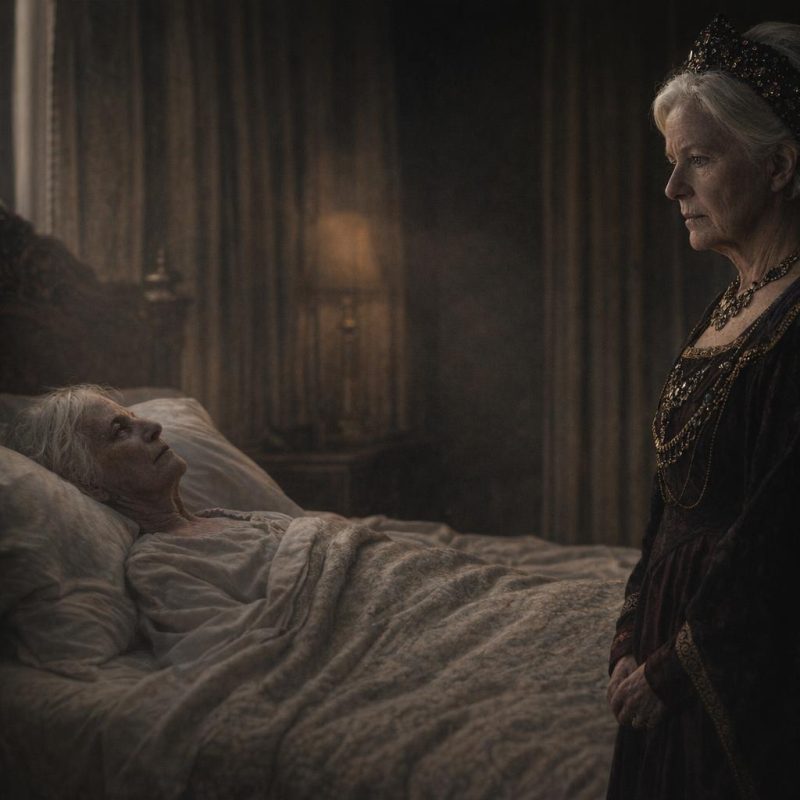 Image by RM AI
The Empty Halls
After my mother died, they sent me to Richmond Palace, and I think they believed they were doing me a kindness — giving me space and quiet and clean country air for my troublesome eyes. What they gave me was silence so complete it had a texture to it, like pressing your hands against stone. The palace was vast in the way that only royal buildings can be vast, corridor after corridor opening onto further corridors, rooms that had been furnished for occasions that never came. I walked those halls every day because there was nothing else to do. My father did not visit. My sister Mary was occupied with her own arrangements, her own future, which everyone seemed to understand was considerably more important than mine. The servants kept their distance from me with a politeness that was indistinguishable from indifference. I was the sickly younger princess, the one whose eyes wept without ceasing, the one who had already outlived a grandmother and an aunt and a mother in the space of two years. I was not yet twelve years old. I would sit sometimes at the window of my rooms and watch the light change on the grounds below, and the hours would pass, and no one would come, and the silence of the palace pressed down on me like something with actual weight, something I carried in my shoulders and my chest long after I had gone to bed.
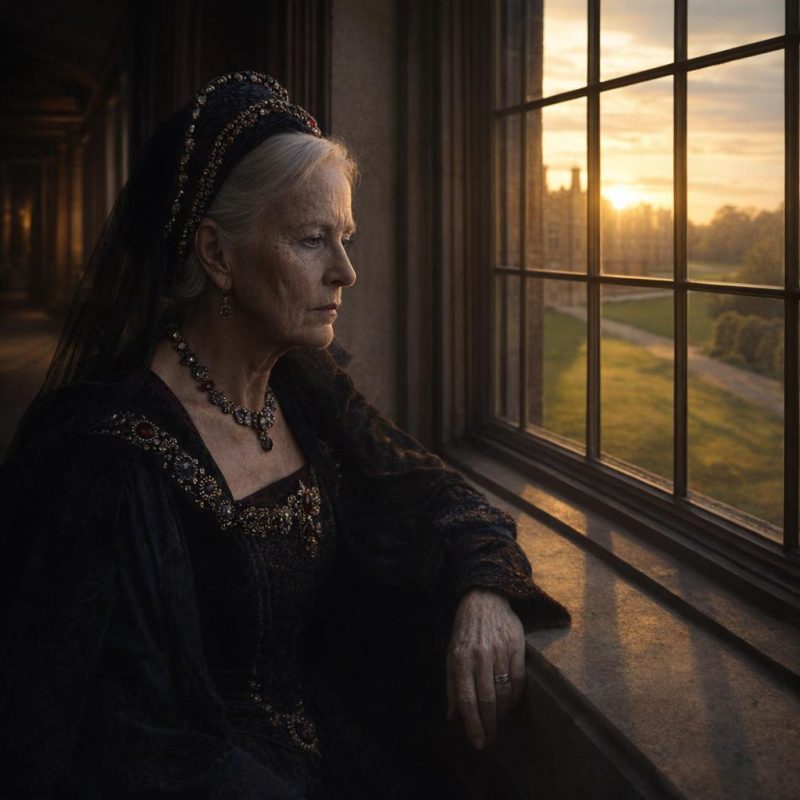 Image by RM AI
The Girl with Sharp Eyes
She arrived at court the way certain people do — not loudly, not with any particular announcement, but in such a way that the room reorganised itself around her without quite knowing it had done so. Sarah Jennings was thirteen to my eleven, and she moved through the household with a confidence I had never seen in anyone my own age, or indeed in most adults. I watched her from across the room for several days before she spoke to me. She had sharp dark eyes that missed nothing, and she laughed easily, and she said exactly what she thought in a way that should have been alarming but was instead, somehow, a relief. When she finally crossed the room and sat beside me and asked me, without preamble, what I was reading and whether it was any good, I was so startled I nearly dropped the book. I was not accustomed to being spoken to as though my answer might be interesting. We talked for an hour that first afternoon, about the book and then about other things — the dreariness of certain court ceremonies, the particular tedium of formal dinners — and she made me laugh twice, which was two more times than I had laughed in recent memory. When I said something that struck her as clever, she threw her head back and laughed, full and unguarded, and for the first time in longer than I could remember, the palace felt less empty.
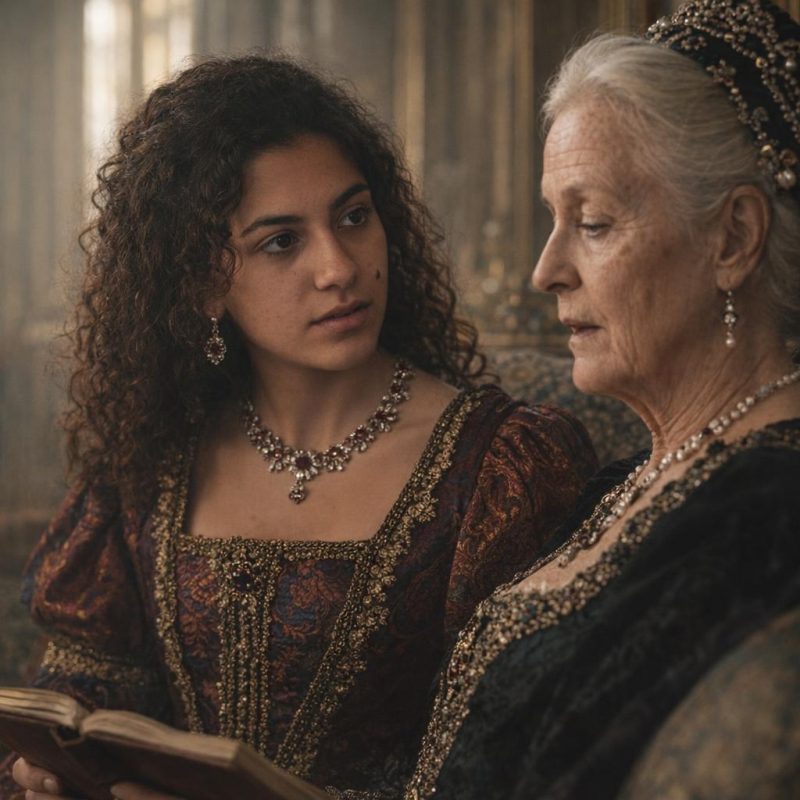 Image by RM AI
The Companion
Sarah became the fixed point of my days in a way I had not had since before France, before all the dying. She would appear each morning with some new observation or scheme — a walk she had planned, a book she had found, an argument she wanted to have about something she had read — and I would follow her into it gratefully, the way a person follows warmth. We walked the grounds together in all weathers. We read aloud to each other in the afternoons. She had opinions about everything and delivered them with such certainty that I found myself adopting them wholesale before I had even thought to examine them, and this did not trouble me at the time. It felt like education. It felt like someone finally paying attention. She listened when I spoke about my grandmother, about the chapel at Saint-Cloud, about the smell of lilies that I could not seem to get out of my memory. She listened about my mother's sickroom and my father's absence and the long silent months at Richmond. She did not offer empty comfort. She simply listened, and asked questions, and remembered what I had said the next day. One afternoon I stopped mid-sentence and understood, with a small shock, that I had told her things I had never spoken aloud to anyone — the particular shape of my loneliness, the fears I had not had words for before she gave them to me.
 Image by RM AI
The Catholic Bride
The news of my father's conversion did not arrive all at once — it gathered, the way a storm gathers, in whispers and averted eyes and conversations that stopped when I entered a room. James had been moving toward Rome for years, Sarah told me, in the matter-of-fact way she had of explaining things I had not seen. I was fourteen and I had not seen it. When it became public, the court cracked along a fault line that had apparently always been there, and suddenly every face I knew was arranged differently, allegiances visible in ways they had not been before. My father announced his marriage to Mary of Modena at nearly the same moment, and the two pieces of news arrived together like a double blow. She was barely older than I was — this young Italian woman who was now my stepmother — and when I met her she had the look of someone who had been transported to a foreign country and was still waiting to understand the language. I felt something for her that I could not quite name, some recognition. Sarah stood beside me at the reception and murmured observations in my ear that helped me make sense of what I was seeing. And then came the day I had been dreading without knowing I was dreading it — I stood in the chapel doorway and watched my father lower himself to his knees before a Catholic priest, his head bowed, and the distance between us became something I could measure.
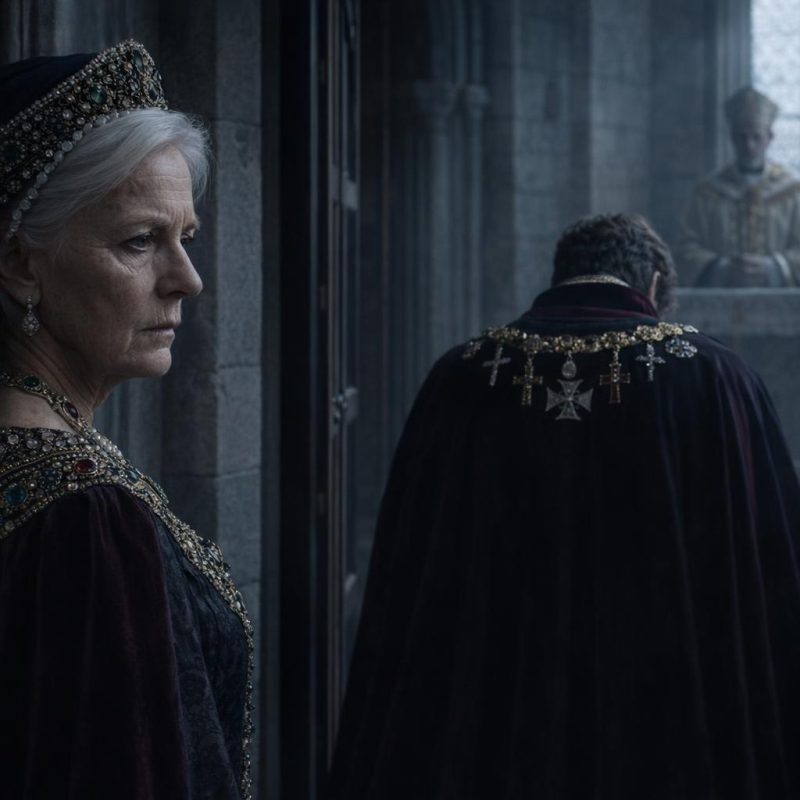 Image by RM AI
Ten Coffins in Ten Years
Mary of Modena was with child within the year, and the court held its breath. I watched her move through those months with a careful hopefulness that was painful to witness, because I had by then attended enough funerals to know what hope looked like when it was about to be broken. The child did not survive. Nor did the next one, nor the one after that. I stood in the royal vault more times than I could bear to count, watching tiny coffins carried to their places, and each time the grief in Mary of Modena's face was the same grief, only deeper, only more worn into the lines around her eyes. Sarah held my arm at those services and said nothing, which was the right thing. There are no words for that particular accumulation of loss. I began to dread the announcements of new pregnancies the way one dreads the announcement of a coming storm — not because the storm is certain, but because you have stood in enough of them to know what they cost. One afternoon, after the fourth or fifth burial, I found myself standing alone in the vault after the others had gone, and I looked at the dates carved into the stone markers, one after another, each only months apart, and the pattern of them was there in the cold air before me, plain as arithmetic.
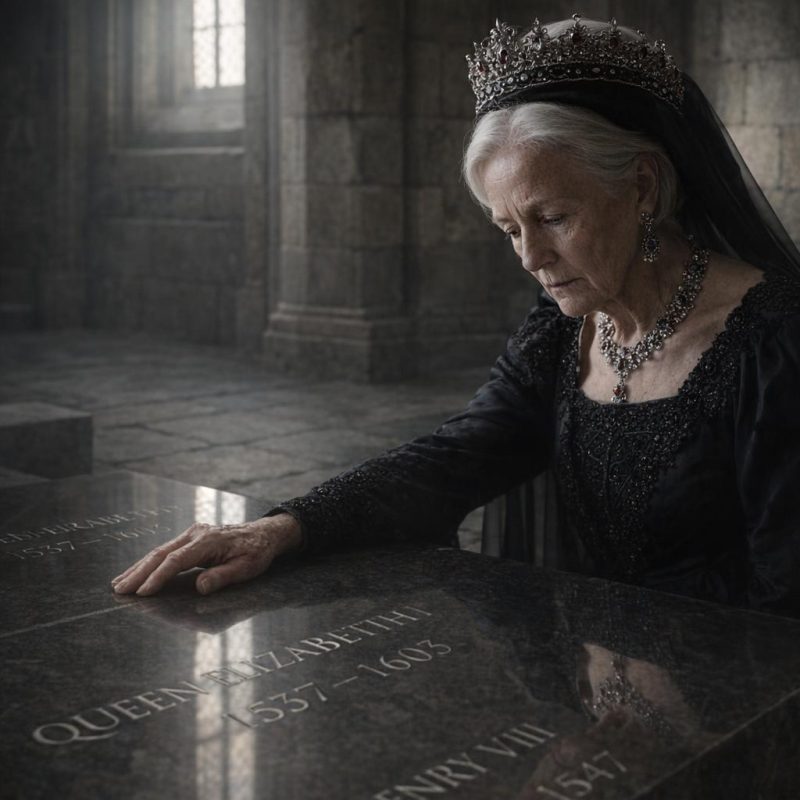 Image by RM AI
The Danish Prince
They told me I was to marry a Danish prince, and I confess my first feeling was not joy but a kind of braced resignation — the same feeling one has before a physician arrives. I had watched enough royal marriages to know they were arrangements, not promises, and I had learned not to expect warmth from arrangements. George arrived at court on a grey afternoon in July, and I studied him from across the room the way one studies a document one is about to sign. He was not remarkable. He was not tall or commanding or possessed of the kind of presence that fills a room. He had kind eyes and a pleasant, unhurried manner, and when he was brought to me and bowed and said my name, his voice held no performance in it whatsoever. Sarah had spent the morning lacing me into my best gown and telling me what to say, and I had listened dutifully, but none of her instructions proved necessary. George simply sat beside me and asked whether I preferred the gardens in summer or autumn, and I told him autumn, and he nodded as though this were the most reasonable thing he had ever heard. We talked for an hour about nothing of consequence. When the evening ended and I returned to my rooms, I found I was not dreading what came next. I sat with that small, unfamiliar feeling for a long time before I understood it was relief.
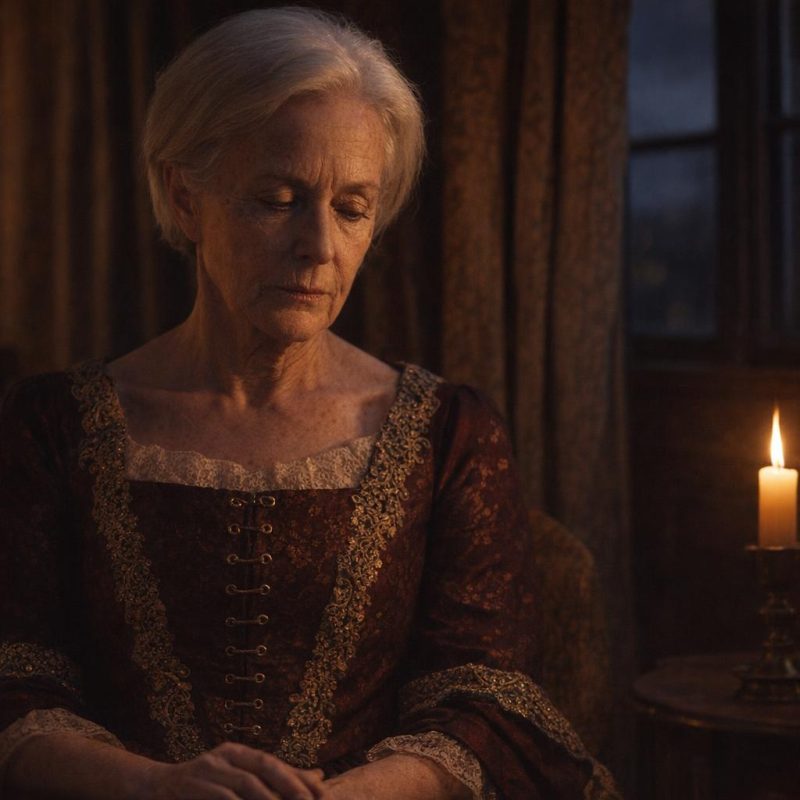 Image by RM AI
The Wedding
I wore my mother's pearls on my wedding day. They were the one thing of hers I had kept close through all the years of her absence, and I fastened them at my throat that morning with hands that trembled only a little. Sarah stood behind me and said I looked well, and I believed her, because Sarah always said things with a certainty that made them feel true. The chapel was full. James sat in the front with the expression of a man discharging a duty, and Mary stood beside him, composed and unreadable as she had always been with me. I did not look at them long. I looked at George, who was waiting at the altar with his hands clasped and his face open and unguarded in a way that I had not expected from any man in any ceremony. When he spoke his vows, he spoke them slowly, as though he meant each word to land before he moved to the next. I had been prepared for the performance of sincerity. What I received instead was the plain thing itself, and it undid me more than any grand gesture could have. We walked out of the chapel into the pale afternoon light, and George took my hand in his — a warm, unhurried grip, asking nothing — and the tightness I had carried in my chest for as long as I could remember loosened, just slightly, just enough.
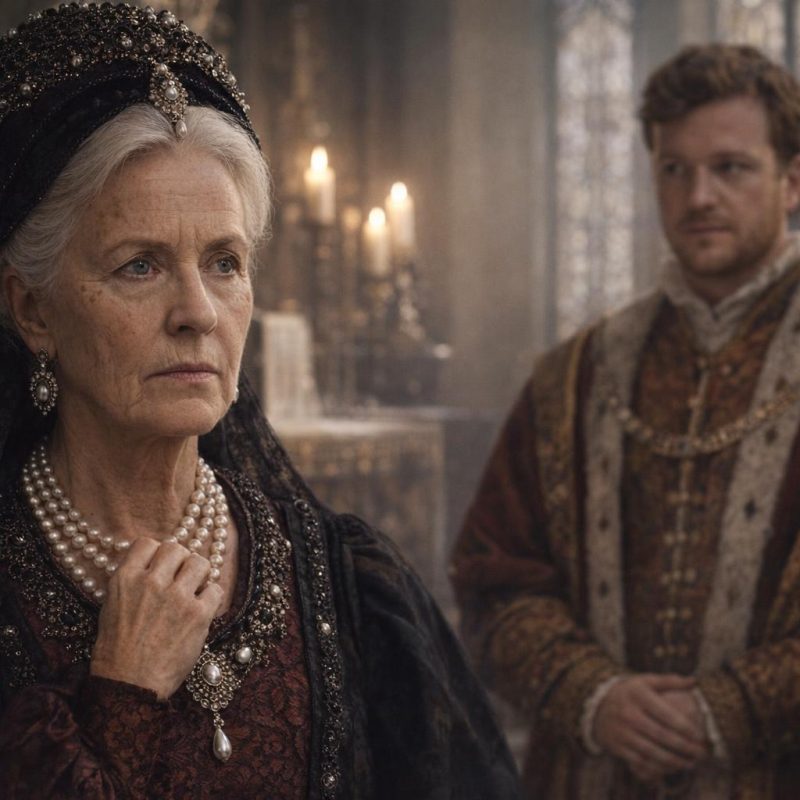 Image by RM AI
The First Quickening
I knew before the physician confirmed it. There is a particular quality to the body's silence when something new has taken root inside it — a heaviness, a stillness, as though the whole of you has turned inward to attend to something more important than the world outside. I told George first, and his face did what I had not dared hope a face could do — it simply opened, all the way, without reservation. He took both my hands and held them and said nothing for a moment, and that silence was the kindest thing anyone had offered me in years. Sarah came the following morning and embraced me and said we would have a fine, healthy child, and I let myself believe her. I tried not to think of Mary of Modena. I tried not to count the small coffins I had stood beside in the vault, not to hear the dates carved in stone. I told myself I was younger, that I was strong, that the pattern I had witnessed was not my pattern to inherit. For a time, I almost convinced myself. The months moved forward and the child moved with them, and one evening in the early autumn I lay still in the half-dark and felt the first flutter of movement — faint as a moth against glass — and I pressed my hand flat against my side and held my breath, caught between a joy so sharp it frightened me and a terror I could not yet name.
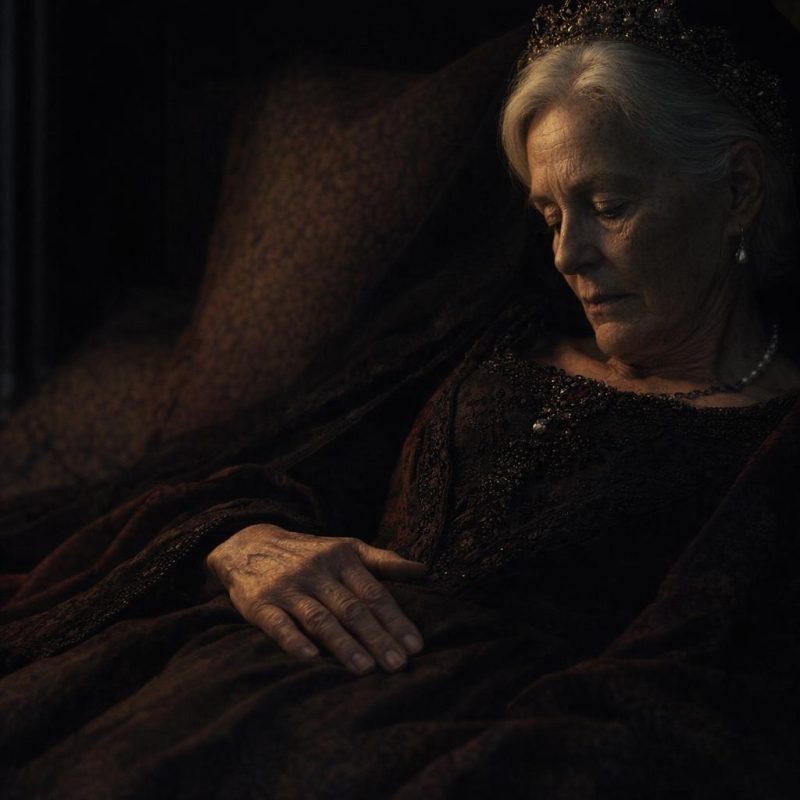 Image by RM AI
The First Coffin
She was born in the early hours of a May morning, and she was alive. I heard her cry before I saw her, and that sound — thin and furious and entirely real — was the most extraordinary thing I had ever heard in my life. George wept openly, which I had not expected, and I loved him for it. Sarah stood at the foot of the bed with her eyes bright and said she was perfect, and she was. We named her Mary, and I held her and counted her fingers and looked at her face and thought: here. Here is the thing that survives. For three weeks she was everything. She fed and slept and made the small sounds that infants make, and I watched her with a vigilance that was almost devotional. Then she began to struggle. The physicians came and went and spoke in careful voices and said what physicians say when they have no remedy to offer. George sat beside me through the nights and held my hand and neither of us slept. On the morning of the twenty-fourth day, the nursery fell quiet in a way that was different from all the other quiet mornings, and I knew before anyone came to tell me. I lay in my bed and listened to the sound of footsteps in the corridor, and then the soft, final click of the nursery door as it closed for the last time.
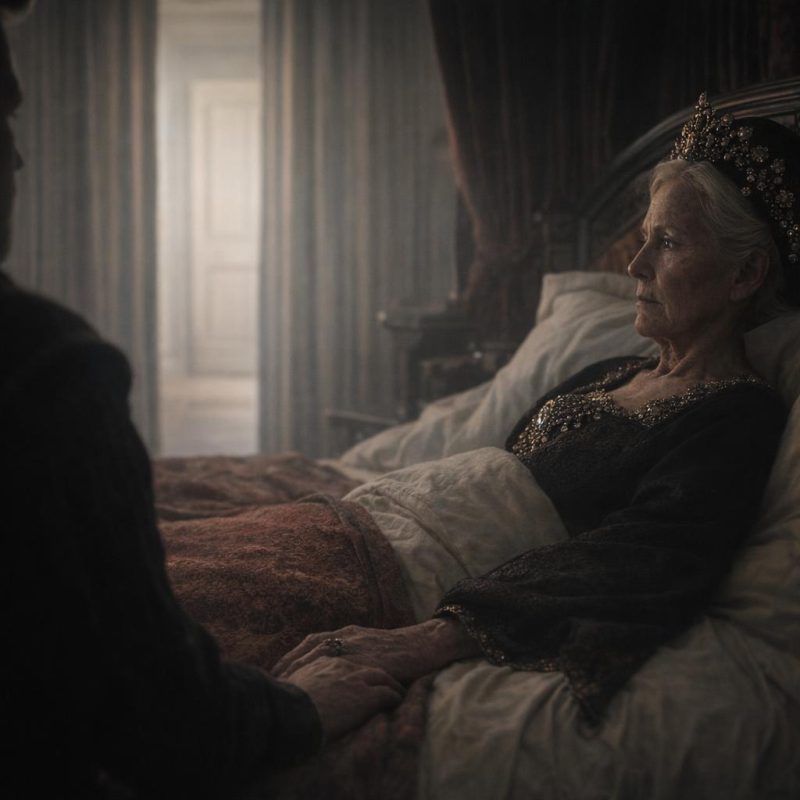 Image by RM AI
The Second Loss
I became pregnant again within the year. I did not allow myself to feel hope this time — or rather, I tried not to, the way one tries not to look at a wound. George was gentle with me through those months, careful in the way people are careful around something they fear might break. Sarah visited often and spoke of practical things, which I was grateful for, because practical things required no feeling. I carried the child through the winter and into the spring, and I prayed with a regularity and desperation that I had not brought to prayer since childhood. The labor began on a cold morning in March, and from the first hour something was wrong in a way I could feel but not name — a wrongness in the rhythm of it, in the quality of the pain. The physicians moved around me with faces that told me everything before their mouths did. When it was over, they placed the child in my arms, and she was still and perfect and entirely silent. I held her for a long time. George stood beside me with his hand on my shoulder and did not speak, because there was nothing to speak. I had thought I understood grief after the first loss. I had not understood it at all. The room around me was absolutely quiet, and that silence — the silence where a cry should have been — settled into me like cold water finding every hollow.
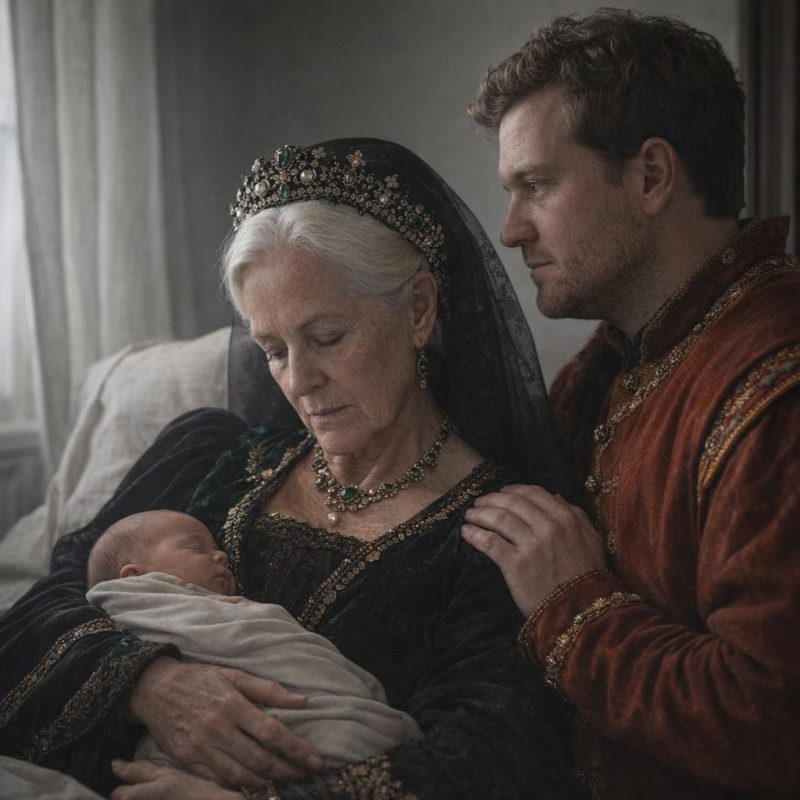 Image by RM AI
The Third Attempt
The third time, I did not tell anyone until I was certain. I kept the knowledge close and private, as though secrecy might protect it from the fate that had claimed the others. George knew, of course — he always knew — and he was tender with me in the particular way he had developed, a gentleness that asked nothing and promised nothing and simply remained. Sarah knew within a fortnight; she had an instinct for such things. She said the right words and I received them gratefully, though I noticed I was no longer able to fully believe them. The pregnancy seemed to hold through the early weeks, and I allowed myself a cautious, provisional hope — the kind one holds at arm's length, ready to release. Then one morning in the sixth week I woke to pain, and I knew before I rose from the bed what was happening. It was swift and merciless and left no room for anything but endurance. George sat outside the door because I would not let him in, and Sarah held my hand and said nothing, which was the right thing. When it was over, the physicians withdrew and the room emptied and George came and sat beside me on the bed and put his arm around me and I leaned into him and could not speak. I had asked God for so little, I thought. Only this. The bleeding had stopped, and the room was warm, and I felt nothing at all — not grief, not anger, only the vast and hollow quiet of a body emptied of everything it had tried to hold.
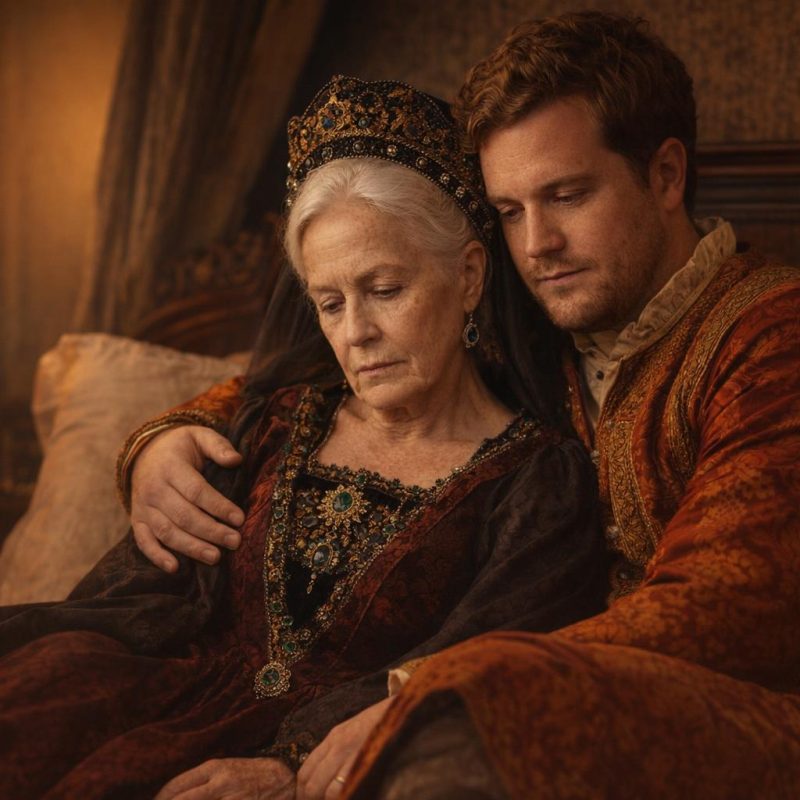 Image by RM AI
Sarah's Counsel
After the third loss, I stopped pretending I was managing. I had maintained the performance of composure through the first grief and the second, had received condolences with the appropriate dignity and returned to my duties with what I hoped looked like strength. By the third, I had no performance left in me. It was Sarah who filled the space that opened up. She came every morning and sat with me, sometimes for hours, and she did not require me to be anything other than what I was — which was, in those weeks, very little. She brought me books I did not read and food I barely touched and conversation that asked nothing of me in return. George was present and loving and entirely at a loss, because George's love was the kind that wanted to fix things, and there was nothing here to fix. Sarah's was different. She seemed to understand that what I needed was not solutions but witness — someone to sit in the wreckage with me and not flinch. I told her things in those weeks that I had never told another living soul: the fear that my body was broken beyond repair, the suspicion that God had turned His face from me, the terrible arithmetic of the vault with its small stone markers. She listened to all of it without pulling back. One afternoon, when I had run out of words and sat in silence staring at the window, she said, quietly and without ceremony, that I was stronger than I knew.
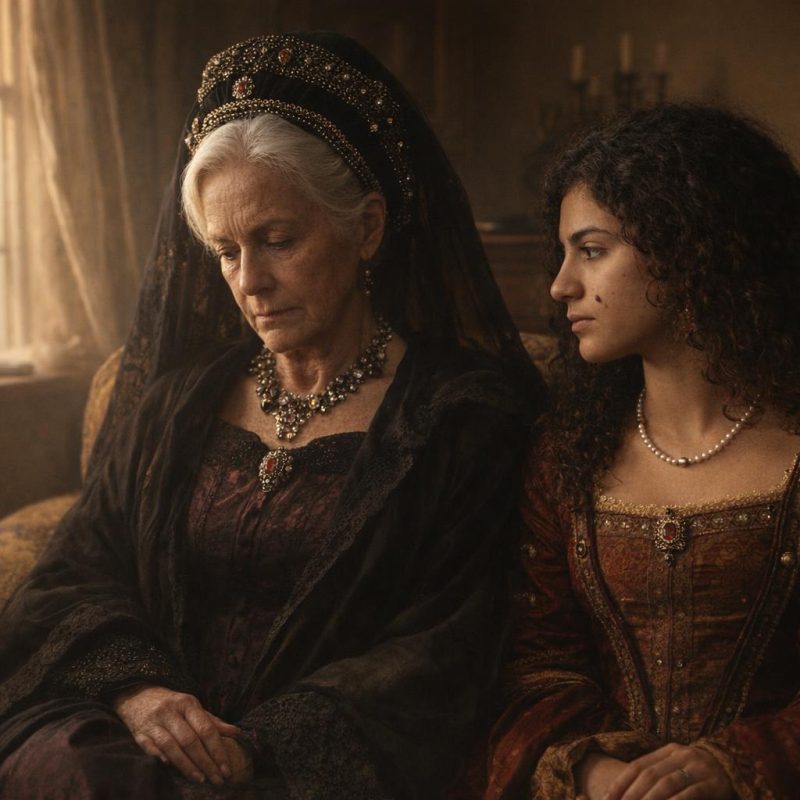 Image by RM AI
The Catholic Crisis
My father's policies had been alarming the Protestant nobility for some time before they alarmed me. I had watched James pursue his Catholic ambitions with the particular stubbornness of a man who believes God has personally endorsed his course, and I had told myself it was a matter between him and Parliament, between him and the bishops, between him and the history that would eventually judge him. I had told myself it was not a matter between him and me. Sarah disabused me of that notion with characteristic directness. She sat across from me one evening and laid out the political situation as plainly as a map, and the map showed clearly that there was no neutral ground left to stand on. Protestant England was organizing. The question being asked in every great house and every Parliament corridor was not whether resistance would come, but when, and who would stand where when it did. James had summoned me twice that month and spoken of loyalty and family and the duties of blood, and I had listened and said the careful things one says to a father who is also a king. But the careful things were becoming harder to say. One evening a sealed letter arrived by private messenger, and I recognized the seals of men whose names carried weight in Protestant England. I broke the wax and unfolded the page, and the words on it asked, plainly and without preamble, whether I would stand with the Protestant cause against the policies of my own father.
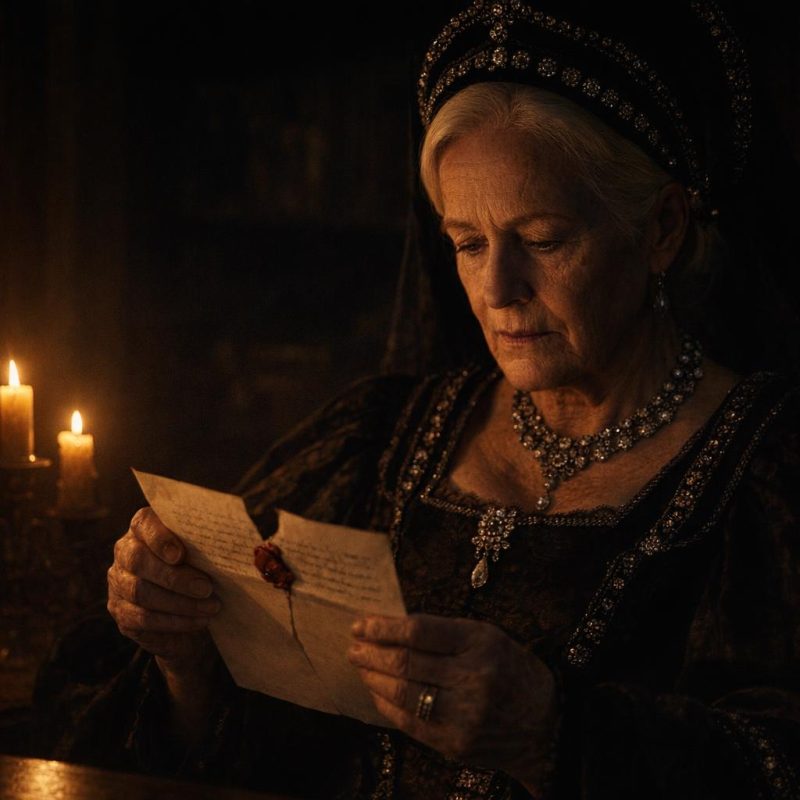 Image by RM AI
The Night Flight
I had told myself, in the weeks before, that I would know when the moment came. That some clarity would arrive and make the choice feel less like a knife turning in my chest. It did not. Sarah came to my chamber before the household had fully settled into sleep, her candle cupped against the draft, and she spoke in the low, urgent voice of someone who has already decided what must be done. I dressed in the dark, my fingers clumsy with the laces, my mind running ahead to my father's face and then flinching back from it. I took only what I could carry — a few letters, a small portrait of my mother, the things one grabs when one is trying not to think too clearly about what one is leaving behind. The servants Sarah had arranged were waiting in the courtyard. The night was cold and very still, the kind of stillness that makes every footstep sound like a confession. We moved quickly through the gate and into the dark street beyond, and I had almost convinced myself that the worst of it was over — and then I heard my father's voice behind me, calling my name into the darkness.
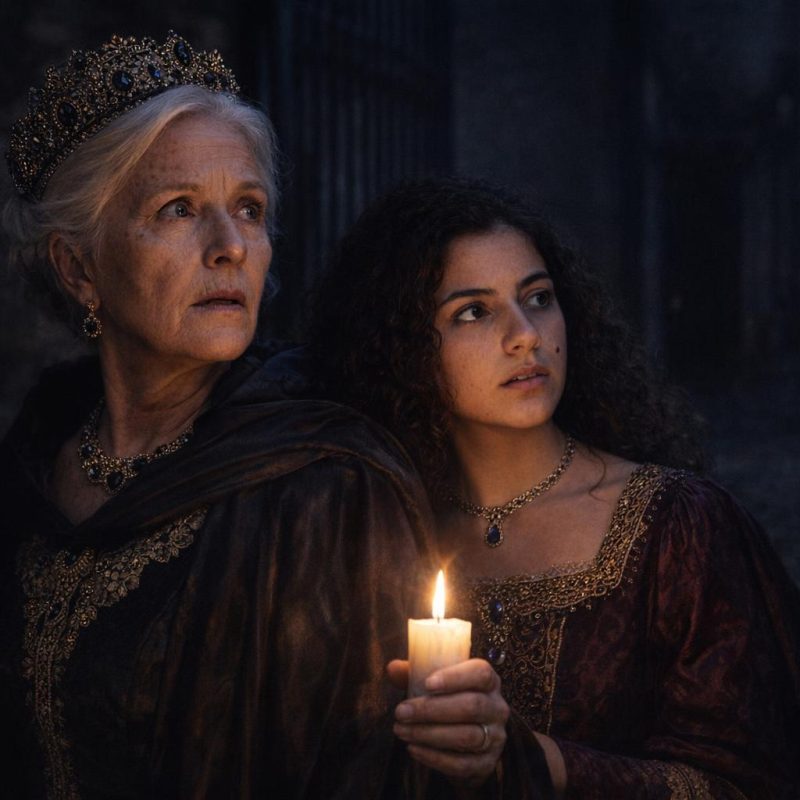 Image by RM AI
The Glorious Revolution
The weeks that followed moved with the strange speed of history when it has finally made up its mind. William's forces came ashore and my father's support dissolved the way ice dissolves in spring — not all at once, but steadily, inevitably, until there was nothing left to hold. I watched from a distance as the great machinery of the Glorious Revolution turned, and I told myself I had done what was necessary, what was right, what Protestant England required of me. Sarah said as much, and she said it with the kind of conviction that makes doubt feel like weakness. Mary and William were offered the crown jointly, and I attended the ceremony with my back straight and my expression composed, because that is what one does when one is a princess and the occasion demands dignity. James fled to France. My father — the King — fled to France, an exile in the country where his own mother had once taken refuge. I had helped make that happen. I had chosen a cause over a parent, a faith over a family, and the cause had won. Standing in that hall watching my sister receive what had been my father's crown, I felt nothing that resembled triumph — only a hollow ache that settled somewhere beneath my ribs and did not lift.
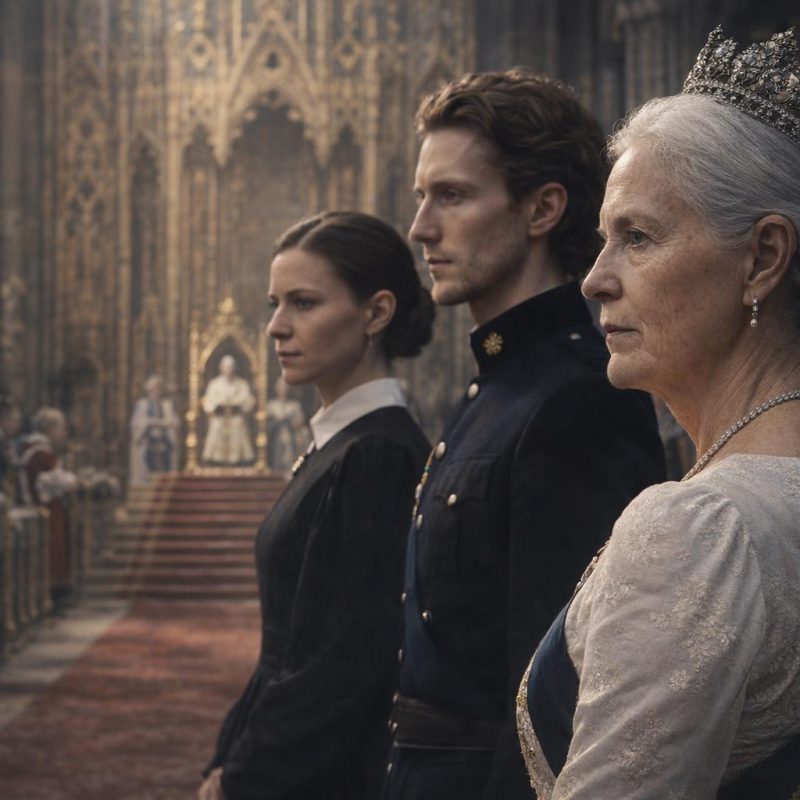 Image by RM AI
The New Court
I had hoped, foolishly perhaps, that Mary's court would feel like coming home. We had been close once, before politics and religion and the particular cruelties of royal life had carved the distance between us. But the sister who sat on that throne was not the girl I had grown up beside. She was a queen now, and queens, I was learning, do not easily share their warmth. Every time I attempted to involve myself in matters of state — a question here, a suggestion there — I was met with a politeness so precise it functioned as a wall. William showed even less interest in my counsel; he had his own advisors, his own Dutch sensibilities, his own vision of what England should become, and I was not part of it. Mary grew watchful when Sarah was near me, and I could not always read what moved behind her eyes. Sarah remained my steadiest comfort through those months, the one voice that did not carry the particular chill of the court. I suffered another loss during that time — a pregnancy that ended before it had properly begun — and I grieved it quietly, as I had learned to grieve, without making too great a spectacle of my sorrow. I asked Mary once if I might sit with her council on a matter that touched my household directly. She looked at me for a long moment, then said I need not trouble myself with it, in a voice that left no room for argument and no warmth at all.
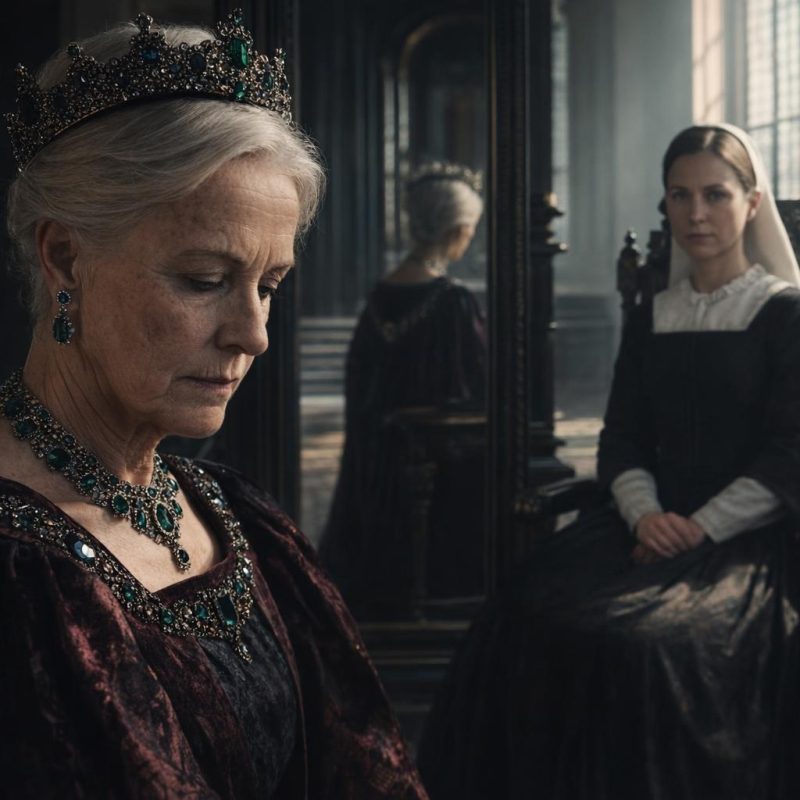 Image by RM AI
The Tenth Loss
By the tenth time, I knew the shape of grief before it arrived. I knew the particular silence of a room after the physician steps back from the bed. I knew the weight of a child who will never draw breath — lighter than one expects, and heavier than anything in the world. George held my hand through the labor, as he always did, his face composed into the careful steadiness he wore when he was most frightened, and I loved him for it even as I could not speak. Sarah sat near the window, and I was grateful she did not try to fill the silence with words. The child was a boy. I held him for a little while, because I had learned that I needed to, that the holding was part of the grieving, and that to refuse it was to refuse something essential. The physicians examined me afterward with the brisk efficiency of men who have decided that the body is a problem to be solved. They spoke to one another in low voices, and then the eldest turned to me with the expression I had come to dread — not sorrow, but a kind of determined optimism — and told me that my constitution remained sound, that there was every reason to hope, that many women had suffered such losses and gone on to carry children to term, and that I must not despair, for there would be more pregnancies, more attempts, as though my body were simply a mechanism that required more time to succeed.
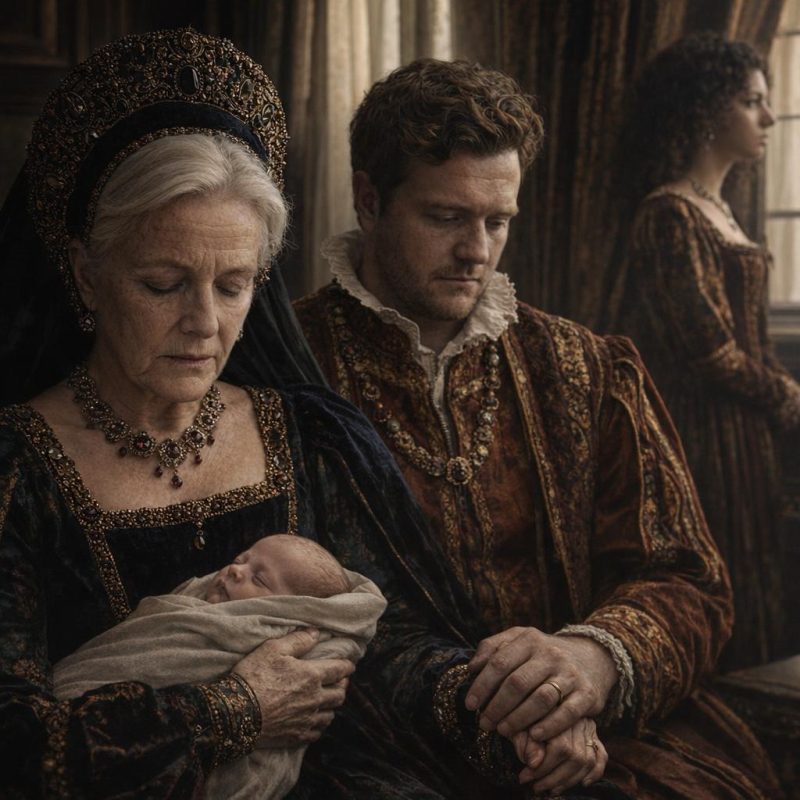 Image by RM AI
The Frozen Court
Mary's court had its own weather, and I had learned to read it the way one learns to read the sky before a storm. There were days when she received me with something approaching warmth — a brief softening around the eyes, a question about my health that sounded almost like it came from a sister rather than a sovereign. Those days grew rarer as the months passed. More often I arrived at her apartments to find the atmosphere already set against me, the ladies arranged with a particular formality, Mary's attention fixed on papers or petitions that seemed always to require her complete concentration the moment I entered. I tried to be useful. I tried to ask the right questions, to show interest in the matters she cared about, to be the kind of sister a queen might want nearby. It did not seem to help. Sarah watched all of this with sharp, quiet eyes and said little in those rooms, though she said a great deal more when we were alone. She was the one who told me plainly what I was too reluctant to name — that Mary did not trust me, that William did not want me close, and that I would need to be patient and careful. I asked Mary one afternoon, as gently as I could manage, whether I might attend the next council meeting, even as an observer. She did not answer immediately. She set down her pen, folded her hands, and the silence that followed was its own complete and sufficient reply.
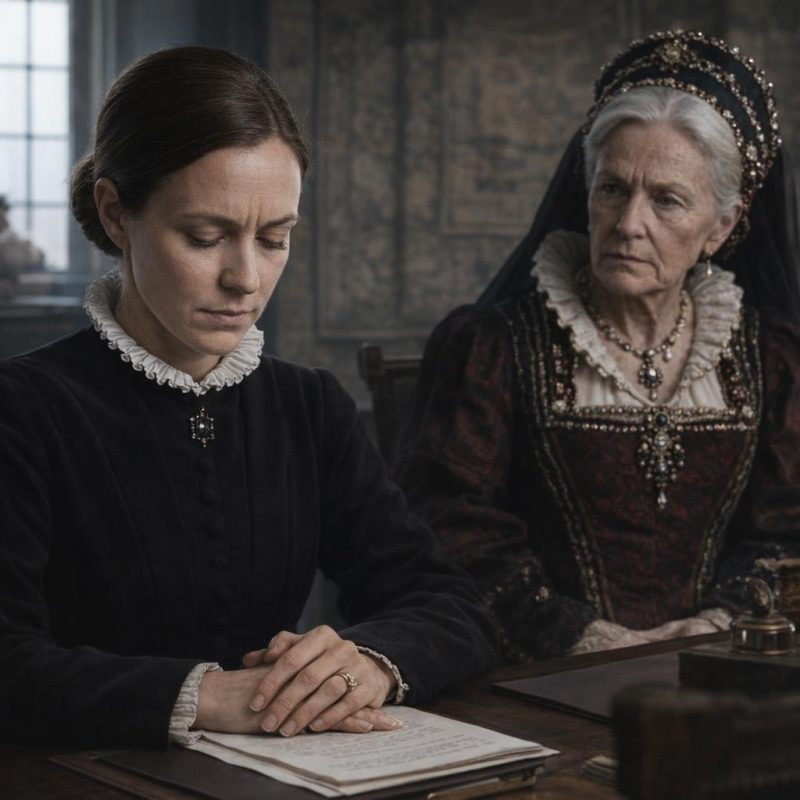 Image by RM AI
Sarah's Rising Star
Whatever I lacked in political instinct, Sarah possessed in abundance, and I was grateful for it in those years in a way I find difficult now to fully articulate. She moved through court functions with an ease that I had never managed — knowing which lord to approach, which lady to flatter, which conversation to enter and which to leave before it turned dangerous. I watched her work a room the way one watches a skilled musician play, with a kind of admiring helplessness, aware that the talent on display is simply not one you possess yourself. She reported back to me faithfully, or so it seemed — who had said what about the succession, which of William's advisors was losing favor, where the currents of influence were running. I relied on her account of the court because my own access to it was so limited, and because her account was always vivid and precise and delivered with the confidence of someone who had been in the room and paid close attention. There were moments when I wondered, briefly, whether I ought to be more present myself, more visible, less dependent on another's eyes and ears. But then I would think of Mary's cold formality, of William's indifference, and the wondering would pass. I sat one evening and watched Sarah hold the attention of half a dozen powerful men without apparent effort, and I felt, above all else, the simple relief of having someone capable standing in the places I could not reach.
 Image by RM AI
The Body's Rebellion
The gout had announced itself quietly at first — a tenderness in my right ankle that I attributed to the cold, to too much standing, to the general unreliability of a body that had already given me so many reasons for complaint. I was wrong to dismiss it. Within a fortnight it had become something else entirely, a pain with a personality, insistent and consuming, that arrived without warning and made the simplest movements feel like punishment. The physicians came and bled me and prescribed their purgatives and spoke of humors and excess and the need for rest, and none of it touched the pain in any meaningful way. George sat with me through the worst of the episodes, his hand over mine, his face carrying that particular helpless sorrow of a man who cannot fix what is breaking the person he loves. Sarah managed the household during those days when I could not rise, organizing the staff and the correspondence and the endless small machinery of a royal establishment with her customary efficiency. I tried to be grateful and not to show how frightened I was. The body I had always thought of as merely inconvenient — too prone to illness, too reluctant to carry children — was revealing itself to be something more actively hostile than I had understood. One morning I woke to find my right ankle swollen so grotesquely, so far beyond anything I had seen before, that the physician had to take his scissors to my shoe to free my foot.
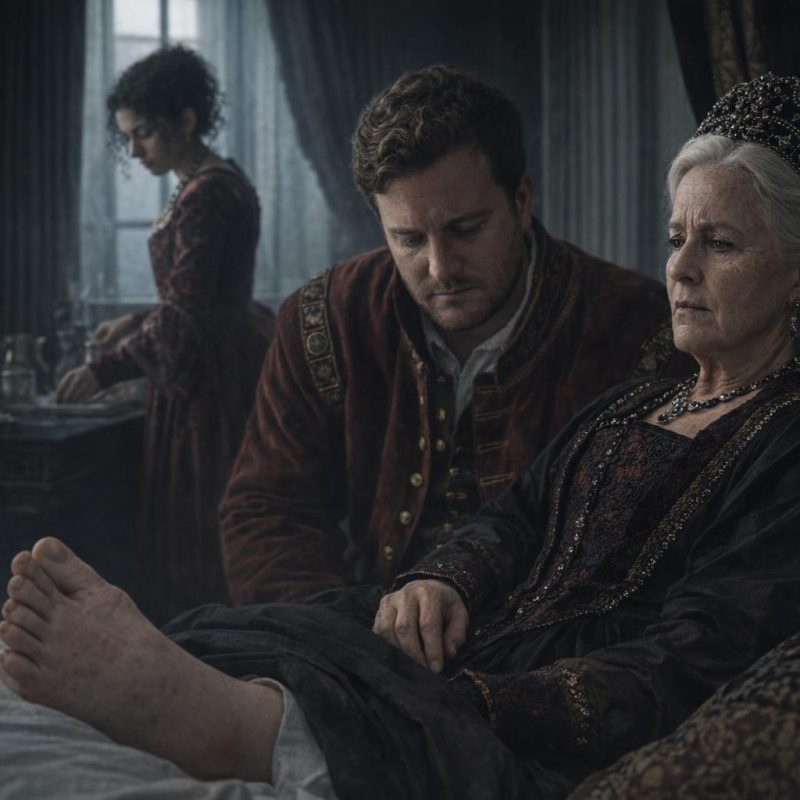 Image by RM AI
The Eleventh Child
The eleventh child was a daughter. I knew before the physician spoke — knew from the quality of the silence in the room, from the way George turned his face toward the window, from the absence of the sound I had spent seventeen years waiting to hear. They laid her in my arms and she was perfect and still, and I held her the way I had learned to hold all of them, with a completeness of attention that I could not have explained to anyone who had not done the same. George wept quietly beside me. Sarah stood near the door, and I was glad she was there, glad of the warmth of another living person in that cold room. The physicians withdrew to the corner and spoke in low voices for a long time. I could not hear all of it, but I heard enough — words about constitution, about the pattern of losses, about something in the composition of my blood that they could not account for and could not name. One of them approached me afterward, his expression carrying the careful gravity of a man delivering news he does not fully understand himself, and told me that they had begun to wonder whether there was something in my blood that worked, in some manner they could not yet explain, against the lives I was trying to bring into the world.
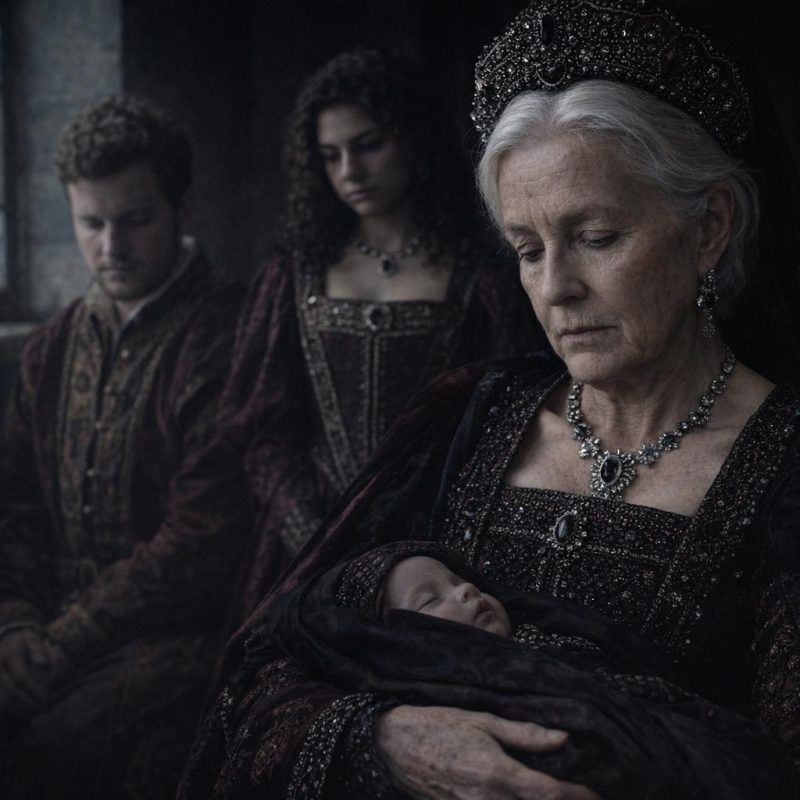 Image by RM AI
The Living Son
I had stopped allowing myself to hope. By the twelfth labor I had learned that hope was a kind of cruelty — something the body offered and then withdrew without apology. So when the pains began that February morning, I did not pray for life. I prayed only for the strength to endure whatever came next. George held my hand through the worst of it, his fingers steady where mine shook, and Sarah stood near the window with an expression I could not read. The room was the same room. The silence was the same silence I had come to dread. The physicians moved with their usual careful efficiency, and I closed my eyes and waited for the quality of that silence to tell me what I already feared. And then — something changed. There was a sound. Small at first, uncertain, like something testing the air for the first time. Then it grew, and it was unmistakable, and it was the most extraordinary thing I had ever heard in my life — my son drew breath, and cried.
The Fragile Heir
I did not sleep for the first three months of his life. Not truly. I would lie in the dark and listen for the sound of him breathing from the next room, and when I could not hear it clearly enough I would rise and stand over his cradle and watch the small rise and fall of his chest until I was satisfied. George would find me there in the early hours and say nothing, only rest his hand briefly on my shoulder before returning to bed. He understood. We had buried too many to pretend that survival was guaranteed by anything so simple as a heartbeat. William was small — smaller than I would have liked — and the physicians spoke carefully about his constitution, about the importance of warmth and rest and vigilance. Sarah helped manage the nursery with characteristic efficiency, ensuring the nurses were competent and the rooms properly aired. There were fevers in those early months, small ones that sent ice through my blood regardless of their mildness. Each recovery felt like a negotiation I had not expected to win. But he was sharp, even then — his dark eyes tracking movement with an alertness that surprised everyone who saw him. On the night he slept from dusk until dawn without disturbance, I sat in the chair beside his cradle, and the house was quiet around me, and for the first time in years I did not feel afraid.
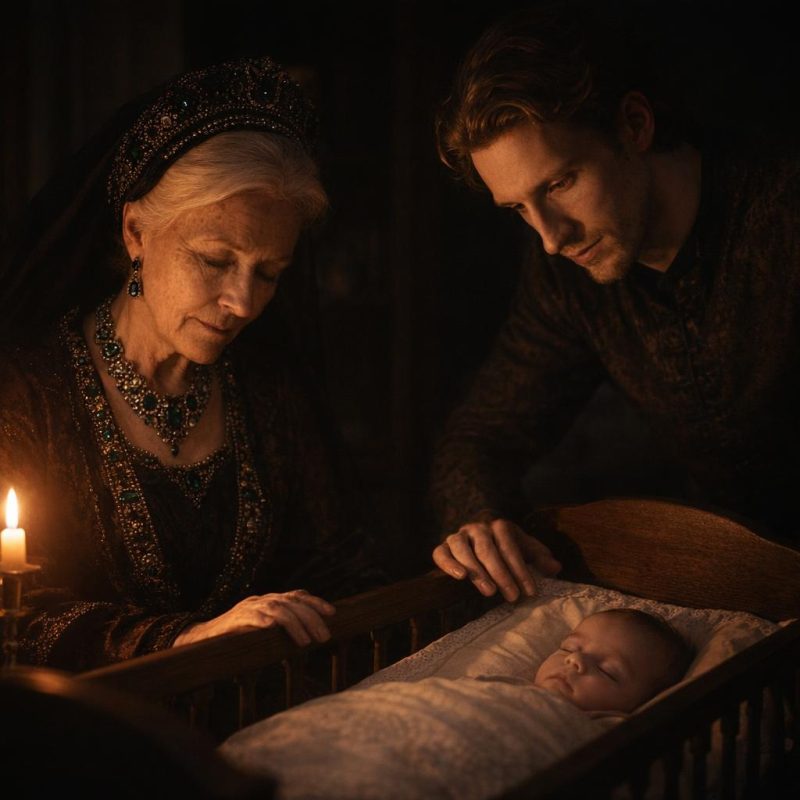 Image by RM AI
The Surviving Years
He turned one, and I wept. He turned two, and I wept again, though I tried to hide it from the servants. By his third birthday I had stopped hiding it entirely, because George wept too, openly and without embarrassment, and there was no shame in it — we had earned those tears. William walked late and spoke early, which the physicians said was not uncommon in children of delicate constitution, and his conversation by the age of four was remarkable enough that visitors remarked upon it with genuine surprise rather than courtly flattery. He was curious about everything — maps, mechanisms, the names of stars. He tired easily and could not run as other children ran, and I watched him sometimes from a window as he sat in the garden with a book while other boys his age chased each other across the lawn, and I felt a complicated tenderness that I could not entirely name. Sarah remained close through those years, present at celebrations and illnesses alike, her counsel steady and her affection for William apparently genuine. George devoted himself to the boy with a quiet completeness that moved me more than I could say. On his fifth birthday, William leaned forward over the cake with great seriousness and blew out every candle in a single breath, and the look on his face afterward — pure, uncomplicated triumph — settled into me like something I had been waiting to feel for a very long time.
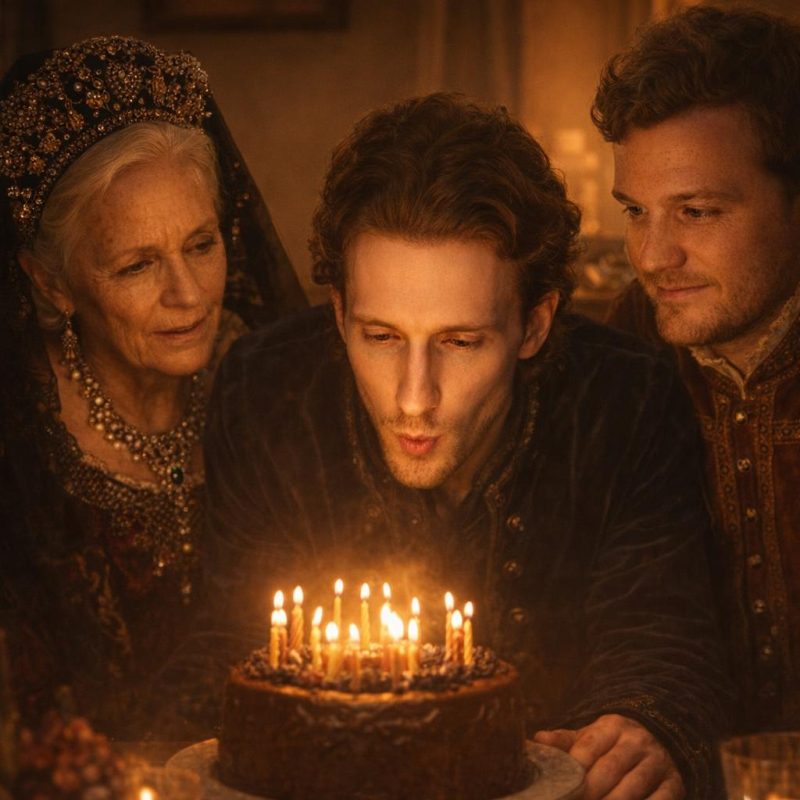 Image by RM AI
The Sister's Death
The news came in December, and it came quickly, the way the worst news always does — no warning, no gradual preparation, only a messenger and then a fact that could not be unmade. Mary had taken ill. Within days the illness had a name: smallpox. Within a fortnight, she was gone. I sat with that information for a long time before I could arrange it into anything resembling sense. We had not been close — not for years, not since the coldness had settled between us like a permanent weather. There had been moments when I thought reconciliation was possible, when I had composed letters in my head that I never sent, when I had imagined a conversation that never happened. Now it would never happen. George stood beside me at the funeral with his hand at my back, and Sarah was there too, her expression composed and watchful. William — the king, my brother-in-law — stood apart from everyone, his face unreadable, already somewhere else in his mind. I watched the earth receive my sister and thought about all the years we had wasted being strangers to each other, all the silences that had hardened into walls neither of us had known how to dismantle. She had been my sister before she had been my rival, and I had not remembered that often enough. I stood at the edge of that grave, and the ground was cold beneath my feet, and there was nothing left between us now that could ever be repaired.
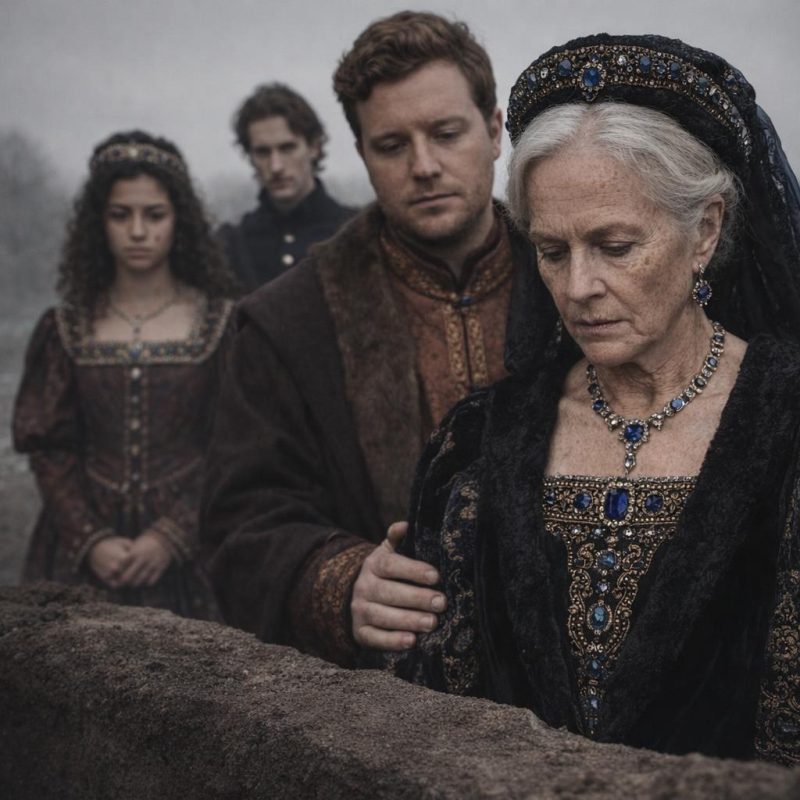 Image by RM AI
The Sole Ruler
William governed alone, and the court rearranged itself around his solitude the way water finds a new course after a stone is removed. Mary had been the warmth in that arrangement — or at least the familiarity, the English face on a Dutch enterprise — and without her the whole machinery of court felt colder and more foreign than it had before. I attended the functions required of me and said the things required of me and tried to understand what it meant to be one life away from the crown. It was a strange position, neither here nor there — too close to power to be ignored, too far from it to act. George remained steady and uninterested in the political calculations that consumed everyone around him, which I found both comforting and occasionally maddening. Sarah had opinions about all of it, naturally. She helped me understand which alliances mattered and which courtiers were worth cultivating, and I was grateful for her clarity in a landscape that felt perpetually shifting. William himself remained distant — civil when we met, but focused always on his wars and his strategies, as though England were a logistical problem to be solved rather than a country to be inhabited. I was heir to a throne held by a man who barely seemed to notice I existed. The crown felt very close some days, and on those days I would sit quietly and feel the strange, hollow weight of what that proximity actually meant.
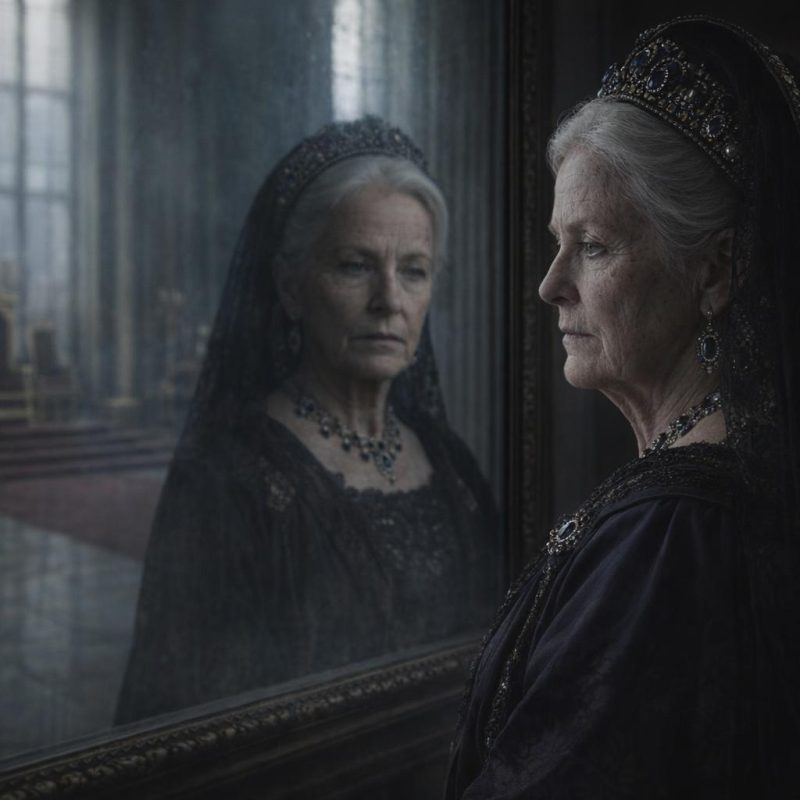 Image by RM AI
The Twelfth Loss
I conceived twice more in those years, and lost both. The first ended early, before I had allowed myself to fully believe in it, which I had thought might make it easier. It did not. The second lasted longer — long enough that I had begun, against every instinct I had carefully cultivated, to hope. That one ended in stillbirth, a daughter, perfect and silent in the way I had come to know too well. George held me afterward for a very long time and said nothing, because there was nothing left to say that had not already been said across seventeen losses. Sarah came the following morning and sat with me, and her presence was a comfort even when her words were not quite right. My body had begun to register its objections in ways that could no longer be ignored — the joints that ached through the night, the eyes that wept without cause, the exhaustion that sleep did not touch. The physicians conferred among themselves with increasing frequency and decreasing optimism. One of them came to me finally, his manner gentle and his words chosen with evident care, and told me that in his considered judgment, and in the judgment of his colleagues, it might be wise to consider whether further attempts were — and here he paused, searching for the word — advisable, as though hope were something I could simply choose to set down and walk away from.
 Image by RM AI
Sarah's Boldness
Sarah had always been decisive. It was one of the things I had loved about her from the beginning — that certainty, that clarity of purpose in a world that seemed to me perpetually murky and uncertain. But somewhere in those years after Mary's death, the decisiveness had shifted into something that felt different, though I could not have said precisely how. Her counsel had always been firm; now it arrived with an expectation of compliance that had not been there before, or that I had not noticed before. She would outline a course of action and then watch me with those sharp dark eyes as though the matter were already settled, as though my agreement were a formality rather than a decision. I told myself it was simply that she had grown more confident, that years of navigating court politics had sharpened her instincts and made her less patient with hesitation. I told myself I was fortunate to have someone so capable at my side. There were moments, though — small ones, easy to dismiss — when something felt slightly off, though I could not have named what it was or why it stayed with me. One afternoon in the drawing room, I had given an instruction to one of the household staff, and Sarah had turned and quietly countermanded it, in front of three other people, with a smoothness that suggested she had not considered that it might require any explanation. I felt the heat rise in my face, and then I felt it subside, and I said nothing.
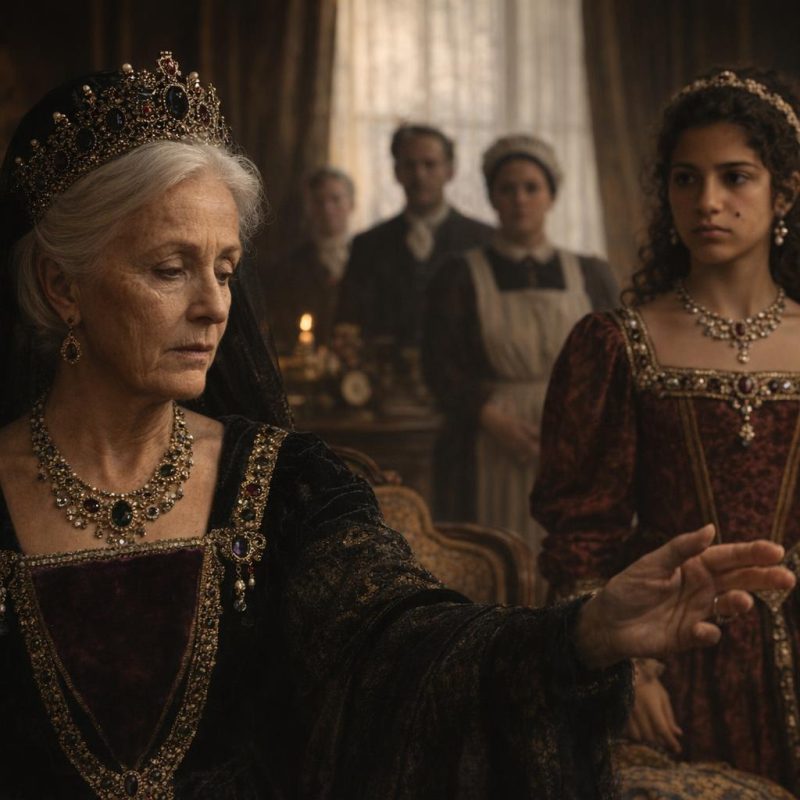 Image by RM AI
William's Eleventh Year
He turned eleven in July, and the day was warm and bright in the way that English summers occasionally condescend to be, as though the weather itself had decided to mark the occasion. We held a celebration in the garden — not a grand affair, but a real one, with other children invited and a table set with things William actually liked rather than things that looked well on a table. George moved through the afternoon with a contentment I had not seen on his face in years, stopping to speak with each small guest with the same gentle attention he gave to everyone. Sarah was there, dressed finely, her manner gracious and her conversation easy. I stood near the garden wall and watched it all and thought about the eleven years that had brought us to this afternoon — the vigils and the fevers and the prayers and the small recoveries that had accumulated, one by one, into a boy who was now old enough to have opinions about military history and strong preferences about his hat. He was still slight, still prone to tiring before the other children did, but he was here, and he was laughing, and I watched him run across the sunlit grass with the others.
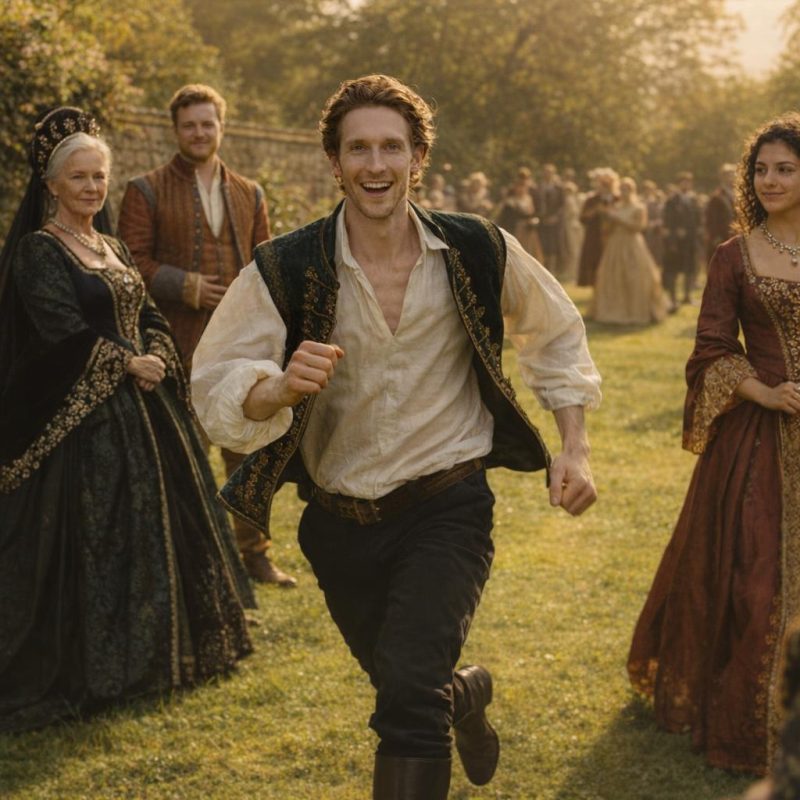 Image by RM AI
Sarah's Dismissal
I had not disagreed with Sarah often. In truth, I am not certain I had ever done so in any matter she considered important. But there was a question before me that autumn — a minor appointment, a name put forward for a household position — and I had my own view of it, formed quietly and without drama, and I held to it. I told her plainly that I had decided otherwise. The silence that followed was not the comfortable kind. Sarah looked at me with an expression I had not seen directed at me before, something cool and assessing, and when she spoke, her words were clipped and precise in a way that left no room for discussion. She said I had not thought it through. She said the matter was more complicated than I understood. I tried to explain my reasoning — I had reasons, good ones, I believed — but she turned slightly away as she listened, and when I finished, she said only that I would see, in time, that she had been right. She left shortly after, and the room felt different without her warmth in it. I sat for a long while, turning the conversation over, wondering whether I had been foolish, whether my judgment had failed me, whether I owed her an apology I could not quite bring myself to form.
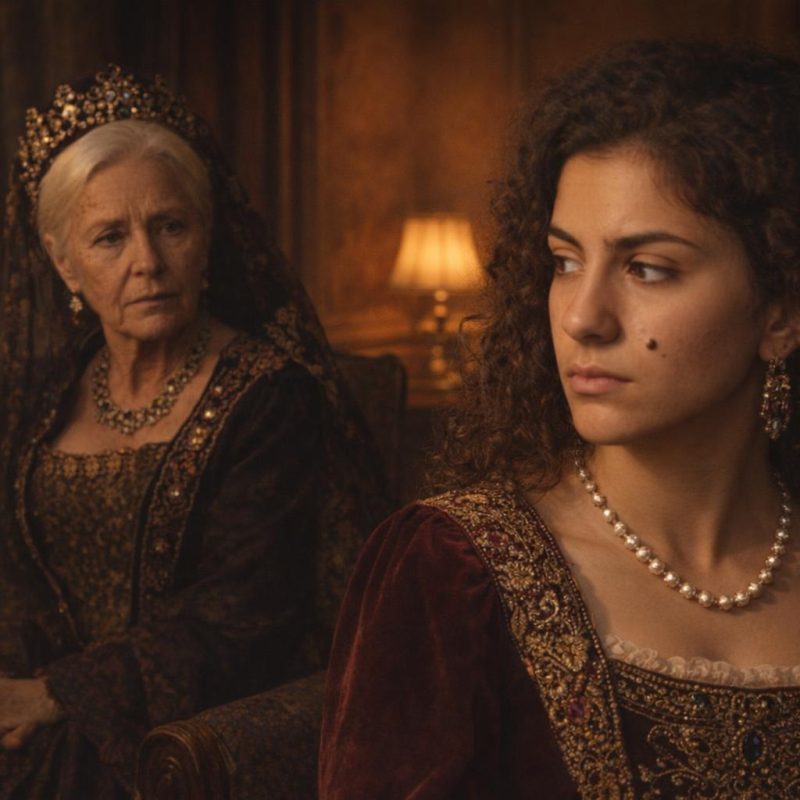 Image by RM AI
The Birthday Celebration
The day of William's birthday was everything I had spent eleven years hoping for and not quite daring to believe I would have. The hall was full — nobles and courtiers and children all pressed together in a brightness that felt almost unreal after so many years of mourning rooms and hushed voices. George moved through it all with a happiness so open and uncomplicated that it made my chest ache to watch him. Sarah was there, her manner easy and gracious, the earlier chill between us set aside for the occasion, and I was glad of it. William received his gifts with the particular seriousness of a boy who understood he was being observed and wished to conduct himself well, and then forgot himself entirely and laughed at something one of the other children said, and the laugh was so unguarded and so young that I had to look away for a moment. I had buried sixteen children. I had sat in sixteen rooms and watched sixteen small bodies be carried out of them. And here was this boy, eleven years old, with opinions about military campaigns and a strong preference for a particular style of hat, laughing in a room full of people who had come to honor him. When the evening grew late and the guests had gone, I held him close, and I felt his heart beating, steady and sure, against my own.
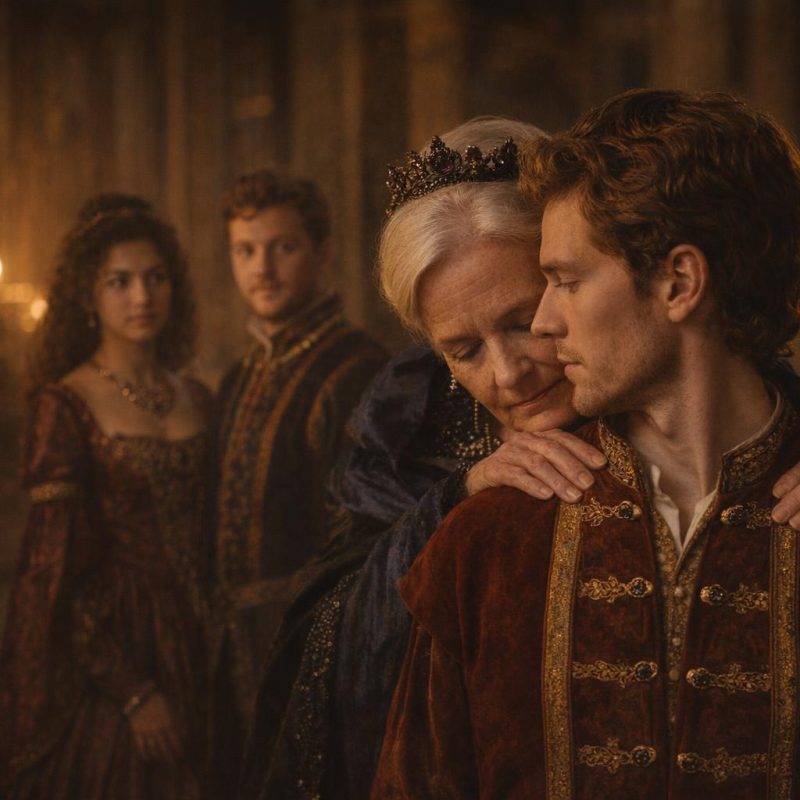 Image by RM AI
The Seventeenth Coffin
It began with a fever. That was all — a fever, the kind that had come and gone before, the kind we had learned to watch without immediately despairing. But this one did not break. Within two days his breathing had changed, and by the third day the physicians were speaking to one another in the low, careful voices I knew too well, the voices that meant they had run out of things to try. George sat at one side of the bed and I sat at the other, and we did not speak much, because there was nothing to say that would help and we both understood that. Sarah came and went. The room grew very quiet. On the morning of the fourth day, William died. He was eleven years old. I held him afterward for a long time, longer than was perhaps considered proper, but I could not make myself put him down. Seventeen. I had carried seventeen children into the world and watched every one of them leave it. The number settled into me like something final, like a door closing on a room I would never enter again. George wept openly, and I could not weep at all, which frightened me more than the grief itself. Later, when they had taken him and the nursery had been set in order, I heard the door at the end of the corridor pulled shut, and the sound of it echoed in a house that had gone completely still.
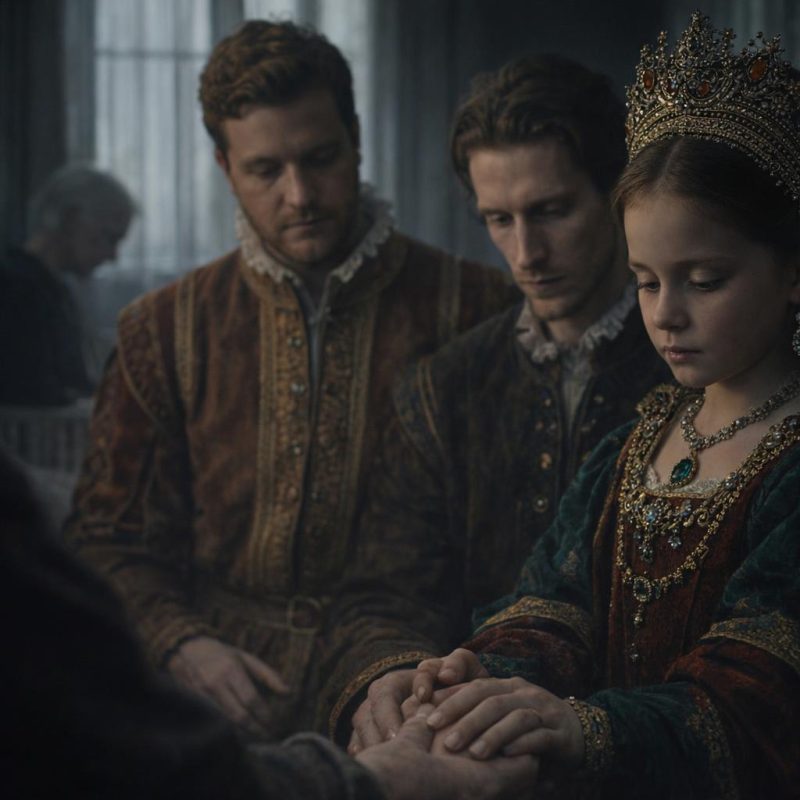 Image by RM AI
The Broken Queen
The weeks after William's death did not feel like weeks. They felt like a single long grey afternoon that refused to end. I could not eat with any regularity. I could not sleep without waking to a silence that pressed down on me like a physical weight. My gout, which had troubled me for years, worsened sharply — my joints swollen and hot, my feet barely able to bear me across a room. George grieved alongside me, and I was grateful for his presence even when neither of us could find words, but his grief was its own country and I could not always reach him across it. Sarah managed the household, the correspondence, the small daily machinery of a life I could not bring myself to operate. I let her. I had no will to do otherwise. I spent hours in the chair by the window where William used to sit when he came to read to me, and I thought about the arithmetic of my life — seventeen pregnancies, seventeen losses, a body that had been given over entirely to the work of bearing children and had nothing to show for it but an empty nursery and a succession in crisis. I had spent more years burying children than I had ever spent raising one.
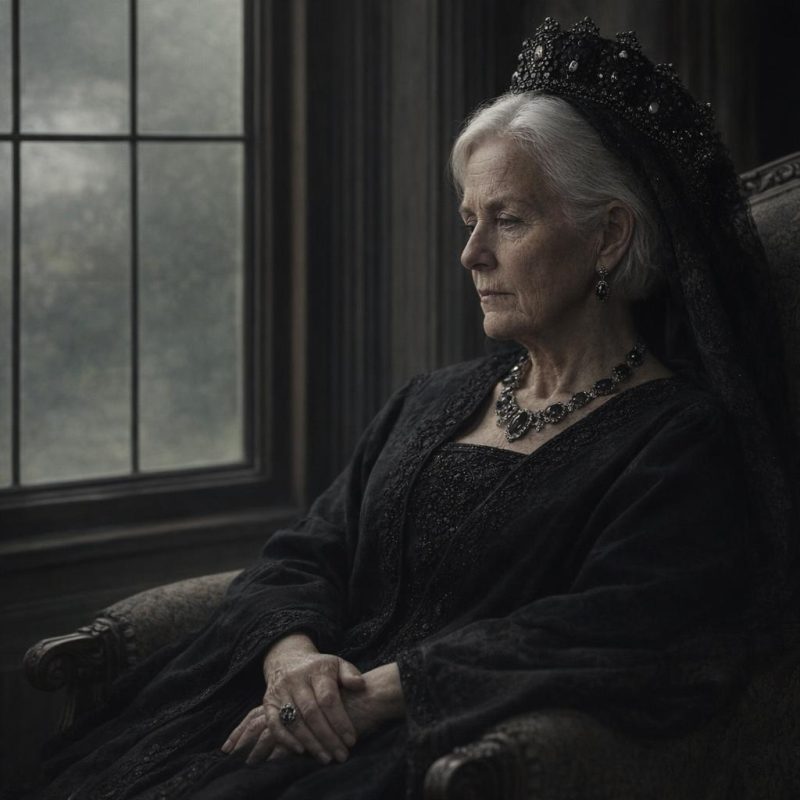 Image by RM AI
The Crown Approaches
William — the other William, the King — had never been a man who seemed likely to die quietly or conveniently, and yet that is precisely what he did, in the spring of 1702, thrown from his horse when it stumbled on a molehill, the injury compounding until there was nothing more to be done. I was told on a grey morning by men who stood very straight and spoke very carefully, and I remember thinking that I ought to feel something large and momentous, and instead I felt only a kind of exhausted recognition, as though the world were simply continuing to rearrange itself around me without asking my permission. I was still in mourning for my son. My body was swollen with illness, my joints aching with every step, and the thought of what was coming — the ceremonies, the weight of it, the sheer unrelenting publicness of a throne — sat in my chest like a stone. George took my hand and held it, and Sarah was already speaking about preparations, about what would need to happen and in what order, her voice brisk and certain in a way that I found both steadying and, in some corner of myself I could not quite name, faintly unsettling. I stood at the window and looked out at the grey English morning, and from somewhere below, carried up through the cold air, came the sound of voices proclaiming me Queen of England, Scotland, and Ireland.
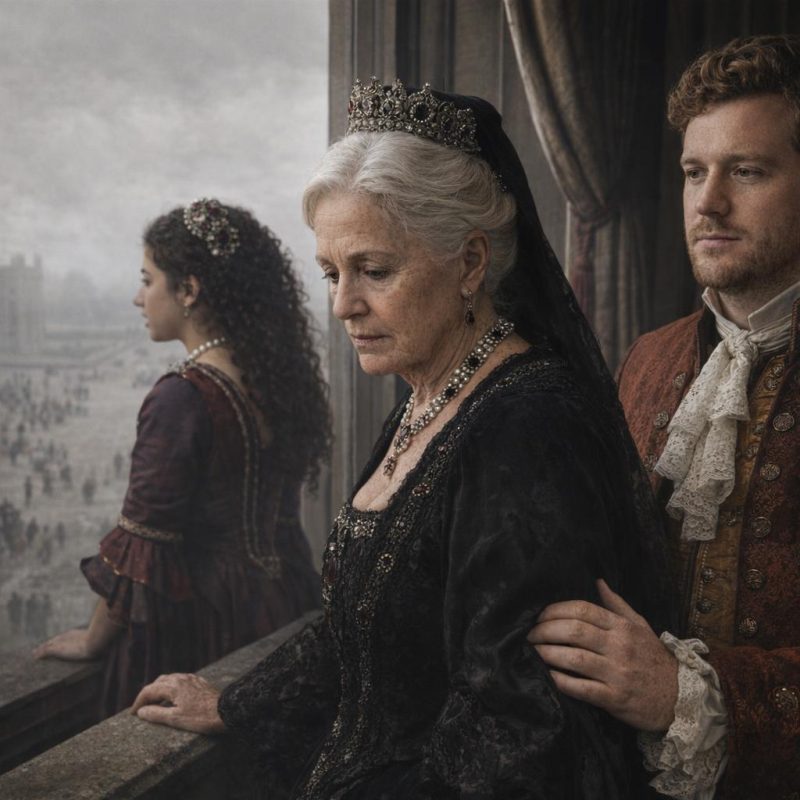 Image by RM AI
The Coronation
Westminster Abbey was cold in the way that very old stone buildings are cold — a chill that lives in the walls and does not leave regardless of the season or the number of candles burning. I was carried in a chair for part of the procession because my gout would not permit me to walk the full distance with any dignity, and I was aware, acutely, of how I must have appeared — swollen, slow, a woman held together by ceremony and duty rather than by any particular physical strength. George stood near me throughout, steady as he had always been, his face composed into the careful expression of a man who understood his role and intended to fulfill it without complaint. Sarah was positioned where she could be seen, and she was magnificent in the way she always was in public, her bearing impeccable, her attention moving through the room with a precision I had long admired. The Archbishop placed the crown upon my head, and it was heavy — heavier than I had expected, pressing down on my temples with a weight that was entirely physical and entirely real. I thought of seventeen small coffins. I thought of the rooms I had sat in, the prayers I had said, the hope I had carried and set down and carried again. The crown was heavy. It was not the heaviest thing I had ever borne.
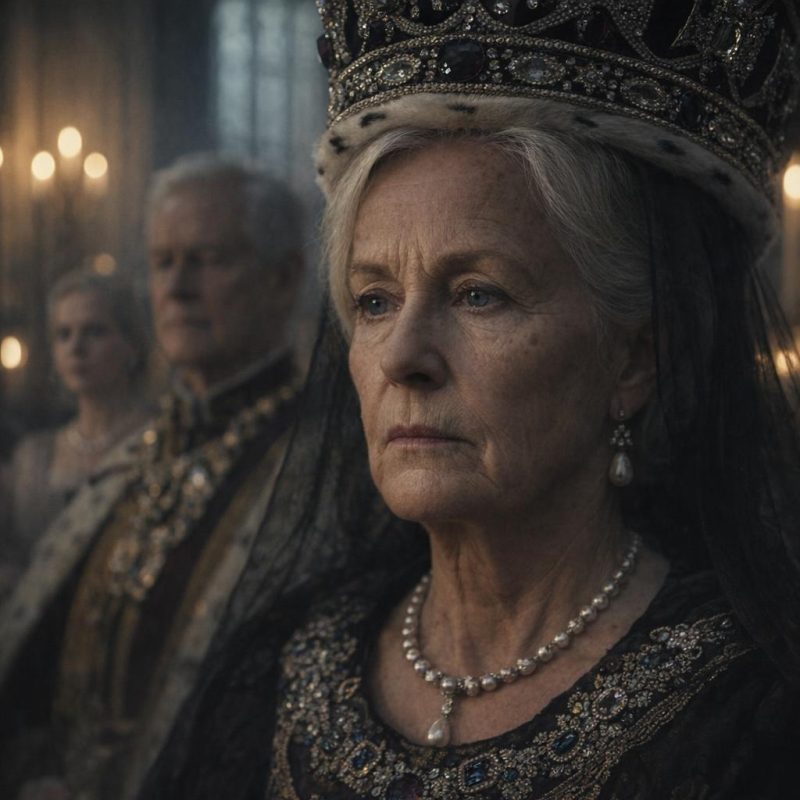 Image by RM AI
Sarah's Expectations
I had expected that becoming Queen would change the nature of things between Sarah and me. I had not expected it to change them in quite the direction it did. Within weeks of the coronation, I began to notice — and I use that word carefully, because I was not certain of what I was noticing — that Sarah's manner in our private conversations had shifted in some way I could not precisely name. She had always been confident. She had always spoken plainly, which I had valued. But there was something different now in the way she moved through my rooms, the way she referred to decisions I had made or was considering making, as though they were matters she had already weighed and settled in her own mind before I had finished forming them in mine. She would say things like, we ought to consider, or it would be better if, and the we and the if carried a weight that I felt but could not quite articulate. I told myself she was trying to help. I told myself that her experience and her judgment were genuine assets, that I was fortunate to have someone so capable beside me. And I believed that, mostly. But there were moments — small ones, easy to dismiss — when she spoke about what I would do next, and it sounded less like counsel and more like a conclusion she had already reached on my behalf.
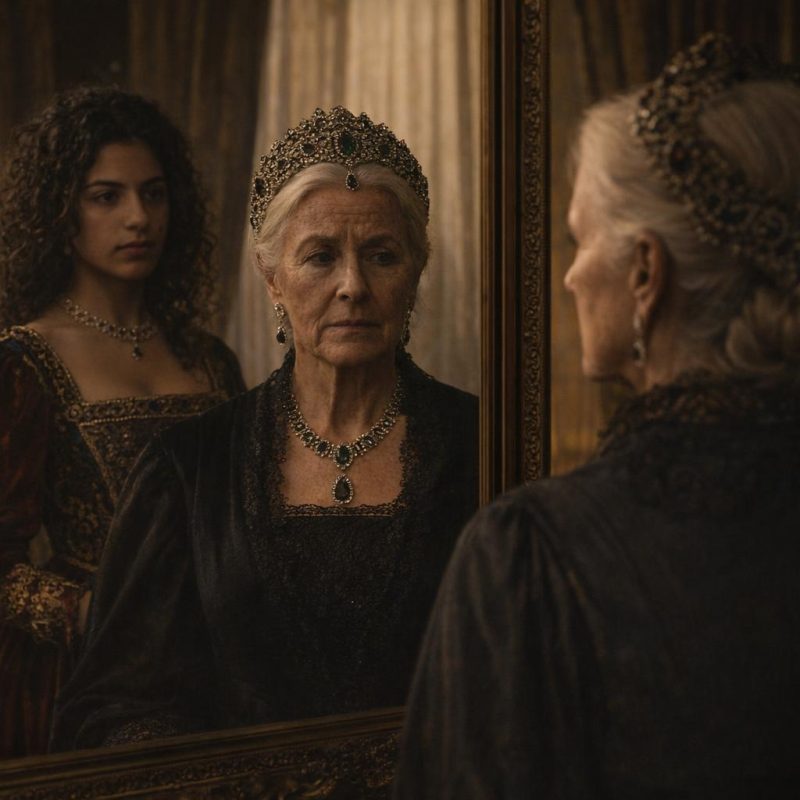 Image by RM AI
The Puppet Queen
There was a morning in council when I offered an opinion on a matter of appointment — a view I had formed carefully, over several days, with reference to what I knew of the man in question and what I believed the position required. I stated it plainly. I had learned, at least, to state things plainly. Sarah was present, as she often was in those early months, moving through the edges of my court with a familiarity that no one seemed to question, and when I finished speaking, she made a small sound — not quite a laugh, not quite a sigh — and then she spoke over the silence my words had left, redirecting the conversation with a brisk efficiency that suggested my contribution had been noted and set aside. She explained, to the room, what the situation actually required, using a tone that was patient in the particular way that patience becomes its own form of dismissal. The men around the table listened to her. I watched them listen to her. And then Sarah Churchill turned to the assembled council and explained, in that same patient voice, precisely what the Queen of Great Britain had failed to understand.
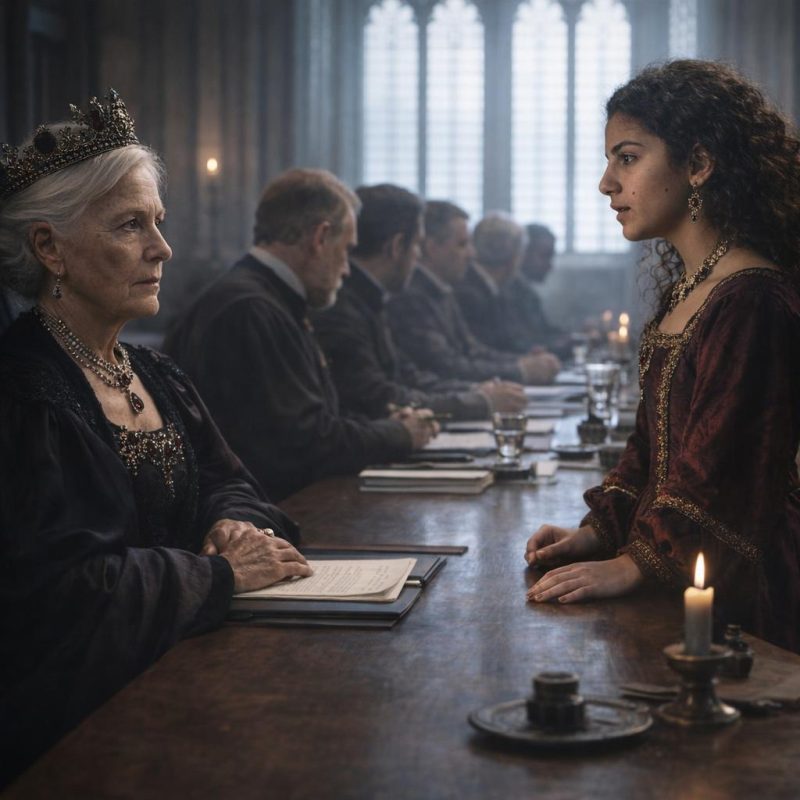 Image by RM AI
The Intolerable Heights
It happened again the following week, and the week after that, until I stopped counting the occasions and began simply bracing for them. Sarah would arrive at council already certain of the outcome, already certain of what I would say and what I would be persuaded to abandon, and when I did not perform according to her expectations, the correction came swiftly. She did not shout. She never needed to. She would simply speak over the space my words had occupied, filling it with her own certainty, and the men around the table would shift almost imperceptibly toward her voice. I watched it happen. I sat in my chair — my chair, at my table, in my palace — and I watched the room tilt away from me as though I were a guest who had spoken out of turn. There was a morning when I stated a preference regarding a military appointment, clearly and without hesitation, and Sarah turned to the assembled council with a small, patient smile and explained why my preference was mistaken. She did not look at me when she said it. She did not need to. Something in me went very still in the silence that followed, and I felt the weight of every eye in that room resting on me, waiting to see whether their Queen would answer — and I did not.
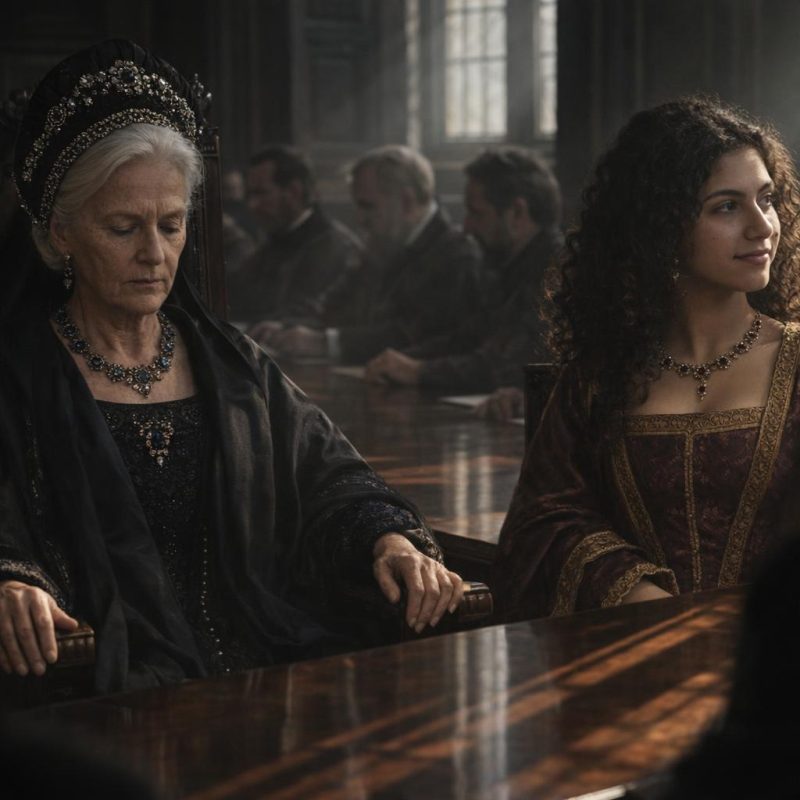 Image by RM AI
The Quiet Entrance
She came into my service so quietly that I nearly missed her arrival entirely. Abigail was a distant relation of Sarah's — a fact that should perhaps have given me pause — but she carried herself with none of Sarah's commanding certainty. She was soft-spoken and efficient, appearing at my elbow when something was needed and withdrawing the moment it was provided, asking nothing beyond the task at hand. I had grown so accustomed to every interaction carrying some weight of expectation that her simple, undemanding presence startled me. One afternoon, when my legs were particularly bad and the thought of another audience felt like a stone placed on my chest, she brought me a warm cloth without being asked and set it across my hands without a word. She did not linger to be thanked. She did not arrange her expression into something that required a response. Sarah swept through the outer rooms that same day, brisk and purposeful, barely glancing at the new woman folding linen in the corner. I found myself, in the days that followed, arranging small reasons to be in whatever room Abigail occupied. It was not a grand thing. It was simply the unfamiliar sensation of sitting beside someone who required nothing of me at all.
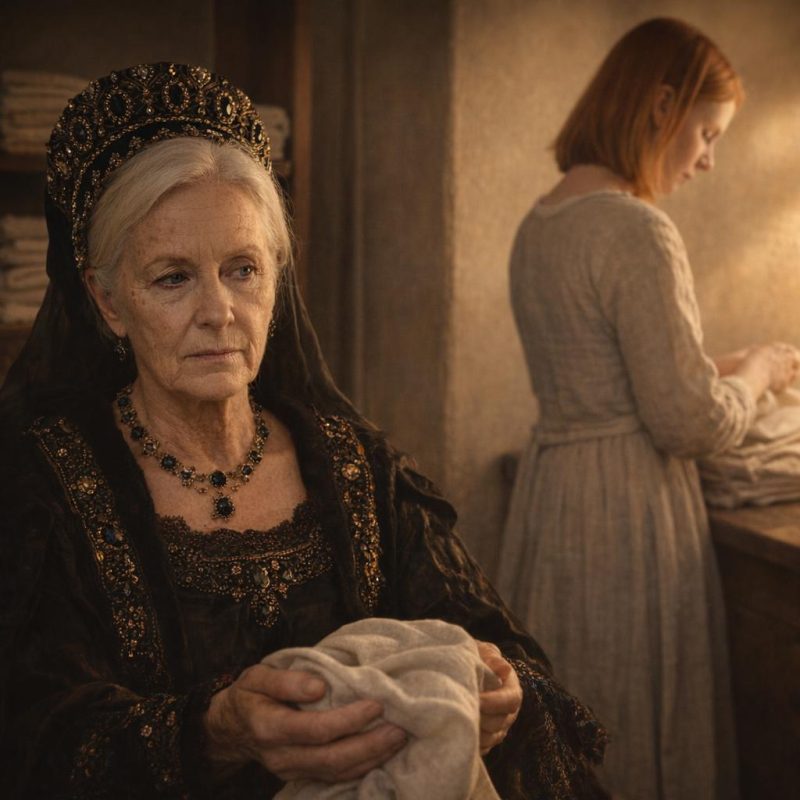 Image by RM AI
The Test
I chose the matter of the Whig appointment deliberately. It was significant enough that Sarah would feel the disagreement as a genuine challenge, and I stated my position before she had the opportunity to establish hers — clearly, in front of witnesses, with the kind of finality I had been practicing in the quiet of my own rooms. I watched her face as I spoke. She was still for a moment, the way a fire is still before it catches, and then she began. She told me I was mistaken. She told me I had not considered the full implications. She moved closer, her voice dropping to something that was not quite private and not quite public, and she explained, with a patience that had long since curdled into something else, why I would reconsider. I did not reconsider. I held her gaze and repeated my position in the same words I had used the first time, and the room went very quiet. I had seen Sarah angry before — at servants, at political opponents, at circumstances that failed to arrange themselves to her satisfaction. But I had never seen her look at me the way she looked at me then, and something in her expression, stripped of its usual careful management, made the air between us feel entirely different.
 Image by RM AI
The Private Calculations
Abigail came to me in the early evening, when the outer rooms had emptied and there was no one to observe her hesitation at the door. She stood for a moment without speaking, and I could see that whatever she had come to say was costing her something. I told her to sit. She did not sit. She said she had overheard something she did not know whether to repeat, and I told her, as gently as I could manage, that she must. She had been passing the corridor outside the small withdrawing room two days prior when she heard Sarah's voice — not raised, not agitated, but certain in the way that requires no audience to sustain it. Sarah had been speaking with someone Abigail did not recognise, discussing the recent appointment, discussing my handling of council, and then — Abigail paused here, and I waited — discussing me. Abigail's hands were folded very tightly in front of her. She said she was sorry. And then she repeated the words she had heard, quietly and without embellishment: that I would do as Sarah told me, because I always had.
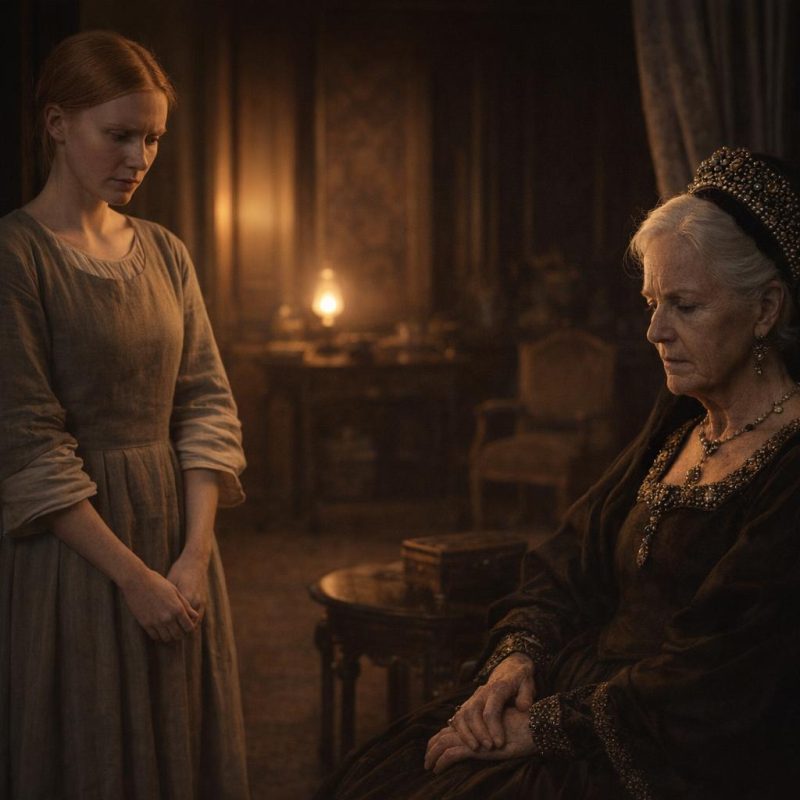 Image by RM AI
The Lifelong Scheme
I asked Abigail to tell me everything she had observed since entering my household, and she did — slowly, carefully, as though she understood that each piece of what she offered was a stone being added to a weight I was already struggling to carry. She had heard Sarah speak of me in similar terms on more than one occasion. She had seen letters passed, conversations redirected, advisors quietly discouraged from independent counsel with the Queen. And then she told me something she had learned from a woman who had served in the Churchill household for many years — that Sarah had spoken of me in those terms long before I was Queen, long before I was even a serious prospect for the throne. That she had seen, from the very beginning, what a sick and lonely royal child might one day become. That she had chosen me. I sat with that word for a long time. Chosen. Not befriended. Not loved. Chosen, the way one selects an instrument for a particular purpose, and then spends decades ensuring it remains tuned to your hand. Every comfort she had offered me, every hour of companionship through grief and illness and loss — I could feel the architecture of it shifting beneath me, and I understood then that I had never known what it was to have a friend at all.
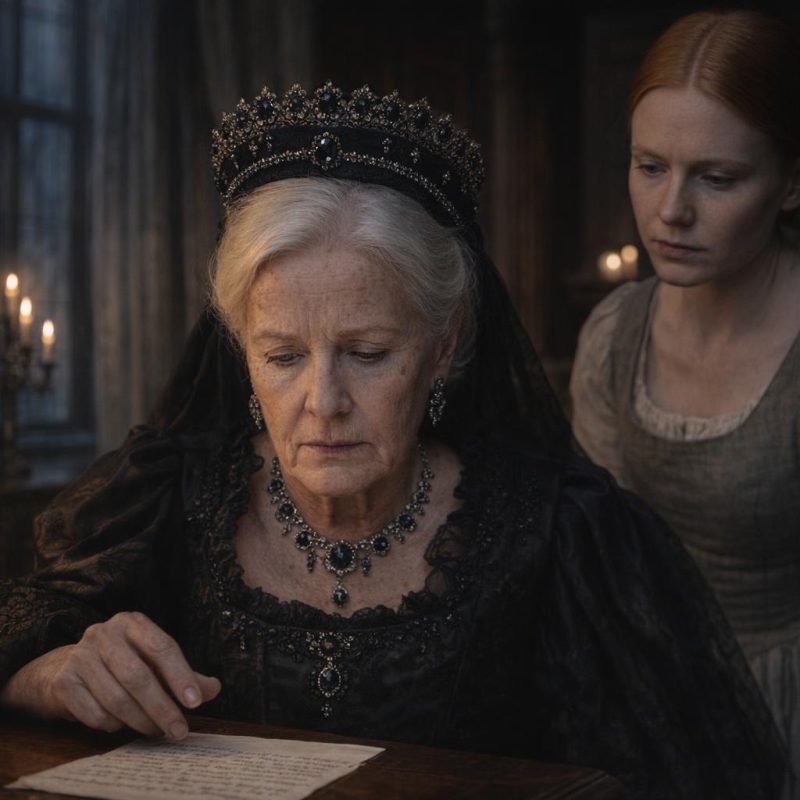 Image by RM AI
The Reframing
George found me in the small hours, sitting in the chair by the window with no candle lit. He did not ask what I was doing. He simply pulled a second chair close and sat beside me in the dark, and I was grateful he did not speak, because I had no words that would have made sense to him or to anyone. I was moving through memory the way one moves through a house after a fire — touching the walls to see what still holds. Sarah at Richmond, the first time, when I was small and frightened and she had appeared beside me with such warmth, such particular attention, as though I were the only person in the room worth knowing. I had believed that. I had believed it for forty years. I turned it over now and looked at the underside of it, and what I found there was not warmth at all but something far more patient and far more cold. Every pregnancy, every loss, every night I had wept and she had held my hand — I could see now how each of those moments had drawn the thread tighter, had made me more certain that she was the one fixed point in a life full of grief. George reached across and took my hand in the dark. I let him hold it. And then I heard her voice again as clearly as if she stood beside me — those first words at Richmond, the ones she had chosen so carefully, the opening move of a game I had not known we were playing.
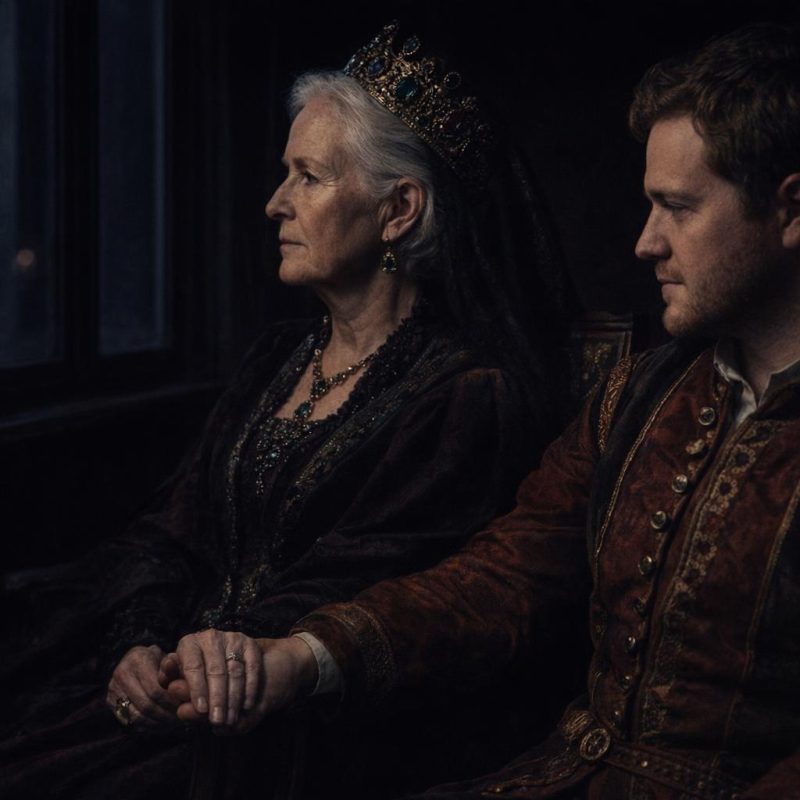 Image by RM AI
The Weight of Forty Years
George held me while I wept, and I wept in a way I had not permitted myself since William's death — without dignity, without restraint, without any thought for what a Queen was supposed to look like in her grief. He did not try to explain it away or offer me the comfort of alternative interpretations. He simply held on. I had buried seventeen children. I had buried my son. I had buried my sister and my father and the version of my life I had imagined when I was young and still capable of imagining. I had believed, through all of it, that I had not been entirely alone — that there had been one person who had chosen to be beside me not because of what I was but because of who I was. That belief had been the thing I returned to in the worst of the nights, the fixed point that made the losses bearable. And now I understood it had never existed. Sarah had not loved me. She had invested in me. Every tear she had witnessed, every hand she had held, every hour of companionship she had offered through my most broken moments — it had all been the careful tending of something she intended to use. George's arms were around me, and they were real, and I knew they were real, and still the loneliness of it settled into me like cold water finding the lowest place, because I had been alone in the ways that mattered most for the whole of my life.
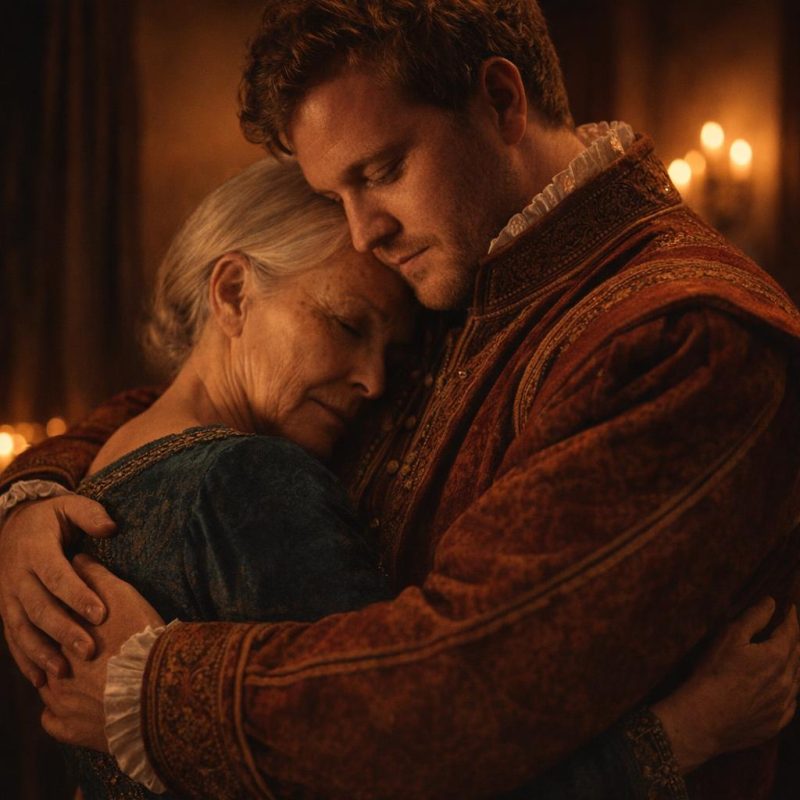 Image by RM AI
The Last True Ally
He had been unwell for some weeks before I allowed myself to understand how unwell. George was not a man who complained, and so I had taken his quietness for his usual quietness, his pallor for the pallor of autumn, his shortened breath for the damp air that troubled us both. By the time I could no longer pretend, he was already beyond what the physicians could do. I sat beside him through those final days and held his hand and talked to him about small things — the garden, the spaniel he was fond of, a letter I had received from the north that had made me laugh. I do not know whether he heard me. I hope he did. He died on a grey morning in October, with my hand in his and Abigail waiting quietly outside the door, and the world did not mark the moment with anything so dramatic as silence — the fire went on crackling, the clock went on measuring, and somewhere in the corridor a door opened and closed as though nothing had changed at all. Abigail came in afterward and stood near me without speaking, which was the right thing, the only thing. I let her stay. I did not sleep that night, nor the night after. I lay in the dark and felt the width of the bed beside me — the space where George had slept for more than twenty years, now simply space.
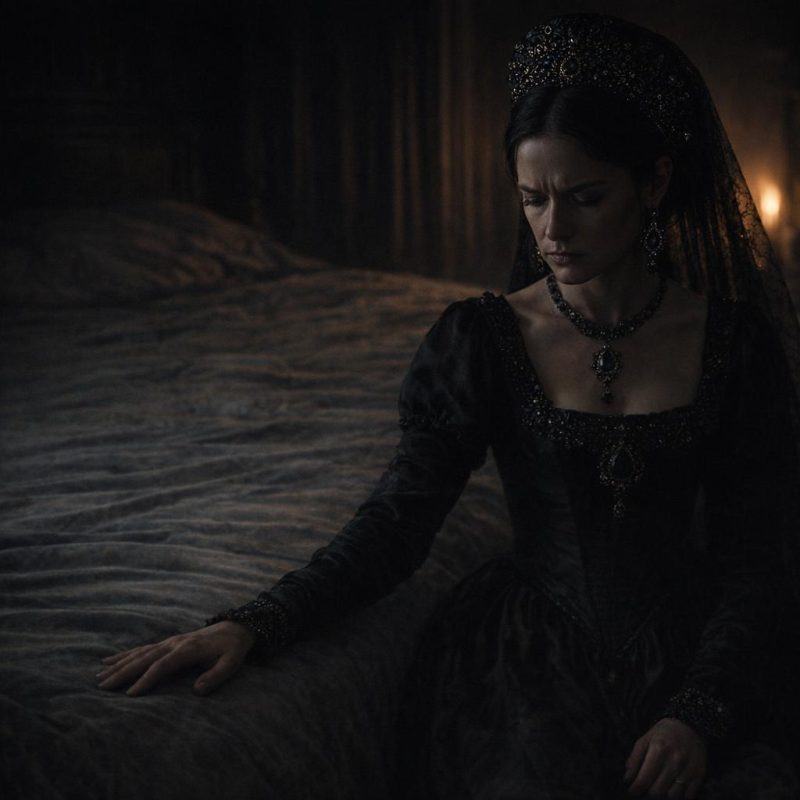 Image by RM AI
The Replacement
I had grieved long enough to know that grief, if you let it, will make every decision for you. I would not let it. George was gone, and the space he had left was real and permanent, but I was still Queen, and there were things that needed doing that I had put off for too long. I called the household together on a Tuesday morning — not a grand occasion, not a ceremony, simply the business of a court being set in order. I announced that Abigail Masham would henceforth hold the position of Keeper of the Privy Purse and take on the full duties of the Mistress of the Robes. I spoke clearly and without apology. Abigail stood to my left and received the announcement with the quiet grace that had always distinguished her — a small bow, a composed expression, no performance. The court understood immediately. These things are never truly about titles; they are about proximity, about trust, about who stands nearest to the Queen. I watched the room absorb it. And then I looked at Sarah, standing near the far window, and saw her face go absolutely still.
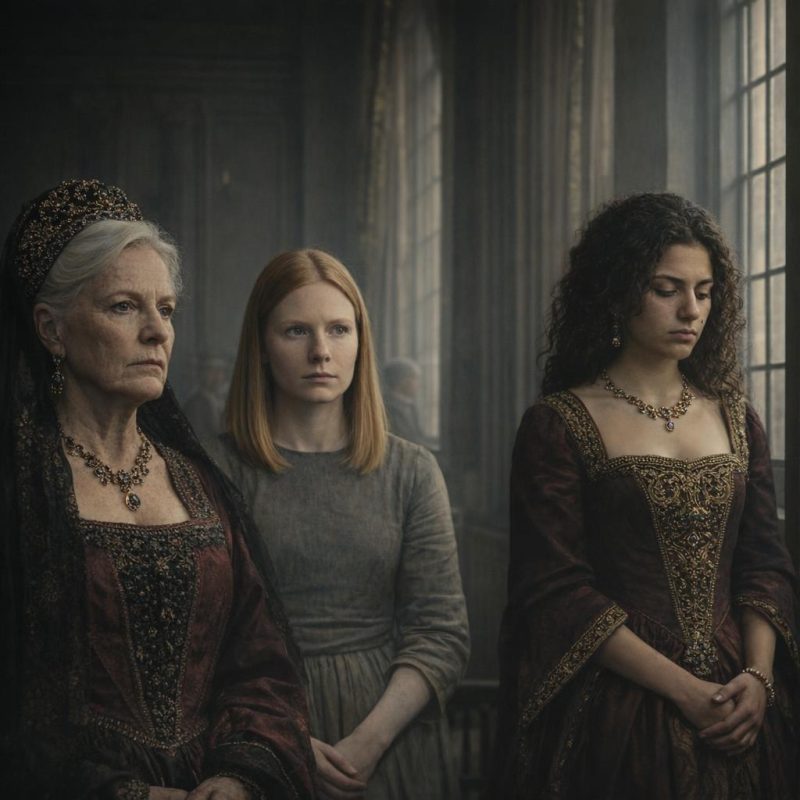 Image by RM AI
The Gathering Storm
The letter arrived two days later. I had expected it — had told Abigail as much the evening before, when we sat together by the fire and she helped me think through what I wished to say and what I did not. I had known Sarah for the better part of forty years. I knew how she moved when she was angry, how her sentences shortened and sharpened, how she could make a single word carry the weight of a sentence and a sentence carry the weight of a verdict. I was not afraid of her. I want to be clear about that, because I had spent so many years being afraid of her without knowing it, and I was done with that particular confusion. Abigail set the letter on the table before me without comment. I looked at it for a moment before I picked it up. The handwriting was exactly as I had anticipated — each letter pressed hard into the page, the lines slightly uneven, the whole thing radiating a fury that the formal phrasing could barely contain. She demanded an audience. She used the word demanded, and did not seem to notice, or perhaps did not care, that one does not demand an audience with one's Queen.
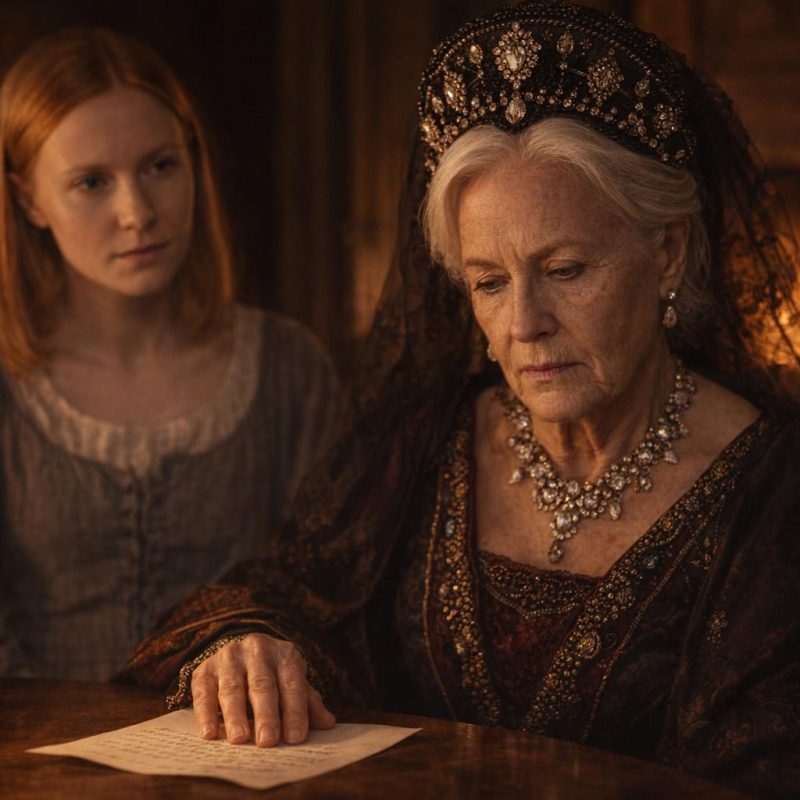 Image by RM AI
The Confrontation
She came in as she always had — as though the room belonged to her, as though I were the guest and she the hostess, as though forty years of habit had made the arrangement permanent. I let her settle into that assumption for exactly as long as it took her to open her mouth. Then I spoke first. I told her I knew what she had done. Not in the vague, apologetic way I might once have said it, hedging and softening and watching her face for permission to continue — but plainly, as a Queen speaks to someone who has forgotten their place. I told her I had seen the letters she had written about me to others, had heard the things she had said in rooms she believed I would never hear about. I told her I understood now what our friendship had been built upon, and what it had cost me. She tried to interrupt. She tried several times. I did not allow it. There was a moment — I remember it precisely — when something shifted in her expression, when she understood that the woman she had managed for four decades was no longer available to be managed. I told her our friendship was finished. My voice did not waver. I had not known, until that moment, how steady it could be.
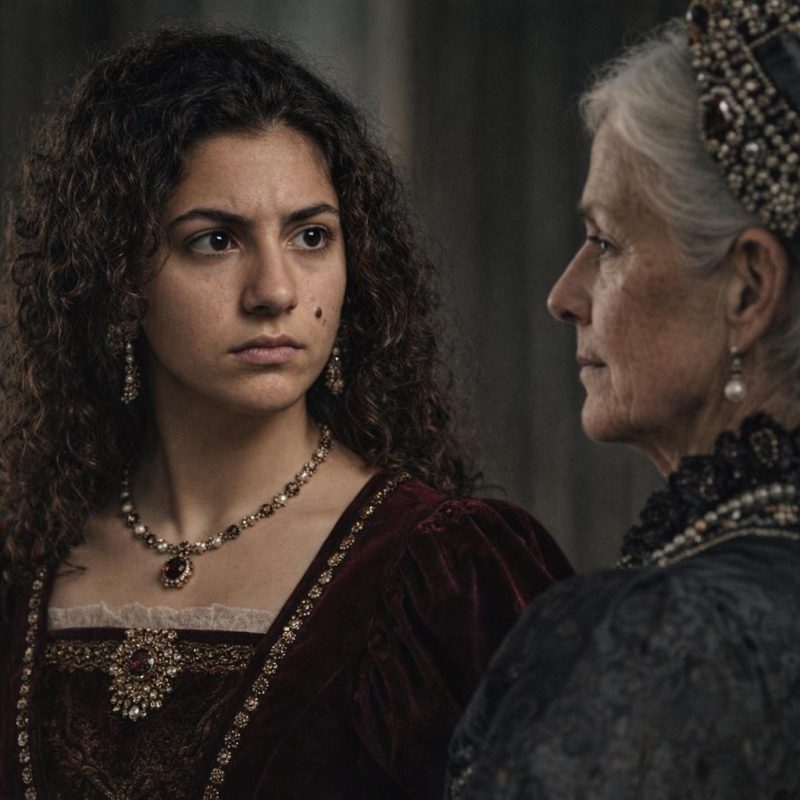 Image by RM AI
The Unleashed Fury
Then the composure broke. I had seen Sarah angry before — had seen her cold and cutting and precise in her cruelty — but I had never seen her like this. The mask came off entirely, and what was underneath it was not grief or hurt but contempt, pure and long-held. She called me dull. She called me a woman who had stumbled through her reign without understanding a single thing that had been done on her behalf. She said that without her I would have been nothing, that every decision I had ever made that mattered had been made by someone else while I sat in my chair and nodded. She said she would make sure the world knew it. She said she had letters, she had accounts, she had years of evidence of my ignorance and my weakness, and she would see to it that history remembered me exactly as I deserved to be remembered. I stood and listened. I did not flinch, and I did not answer, and I did not give her the satisfaction of seeing any of it land. But I will not pretend it did not land. It did. The words settled into the room like something that had always been waiting there, and the sound of her voice — certain and vicious and utterly without mercy — stayed with me long after she had finished speaking.
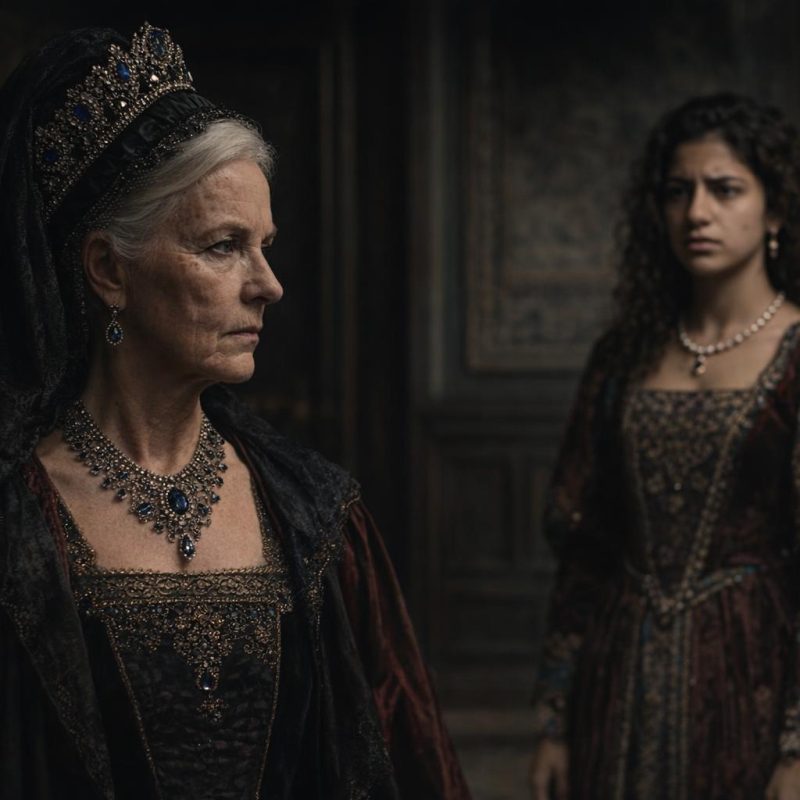 Image by RM AI
The Final Dismissal
When she had finished, I waited. I let the silence sit between us for long enough that she would feel it. Then I told her she was dismissed. Not from the conversation — from my service, from my household, from every position she held by my grace and my grace alone. I used the formal words because the formal words were the right ones, because they carried the weight of the Crown behind them and not merely the weight of a woman who was tired and grieving and had finally had enough. I told her she would surrender her keys before she left the palace. I told her she would not return. Abigail stood near the door and witnessed it all without expression, which was exactly what I needed from her. Sarah looked at me for a long moment — I think she was waiting for me to soften, to qualify, to find some way back to the familiar arrangement. I did not. She left. I heard her footsteps in the corridor, and then I heard nothing, and the room felt different in a way I had not anticipated — not lighter, exactly, but cleaner, as though something that had been pressing against the walls for years had finally been let out. I sat with that feeling for a long time, and did not try to name it.
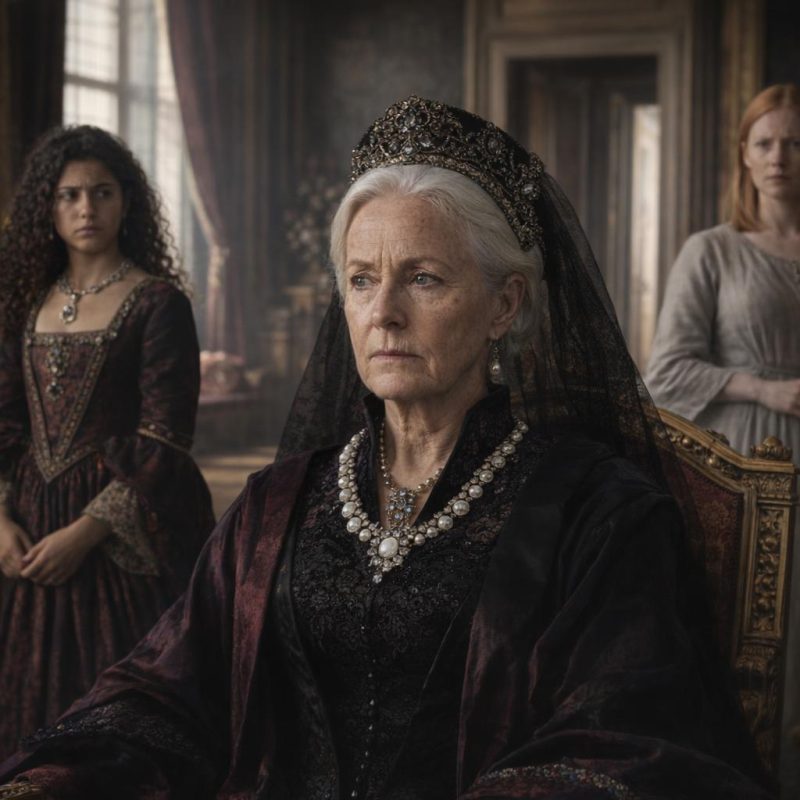 Image by RM AI
The Threatened Legacy
I had thought, perhaps foolishly, that the dismissal would be the end of it. That Sarah, having said what she came to say, would take her leave of court and occupy herself with her estates and her grievances in private, as disgraced favourites had done before her. I should have known better. The message came through an intermediary — not even the dignity of her own hand this time, though the words were unmistakably hers. She intended to publish. Not merely her recollections, but letters — my letters, written across decades in the privacy of friendship, in the shorthand of intimacy, in the unguarded language of a woman who had believed herself safe. She would write her memoirs, the message said, and she would write them honestly, and the world would see the Queen of Great Britain as Sarah Churchill had always seen her: limited, credulous, easily led, a figurehead propped up by cleverer people. Abigail read it with me and said nothing for a moment. Then she said, quietly, that we would need to think carefully about how to respond. I looked back at the page. Near the bottom, in language that left nothing to interpretation, Sarah had written that she possessed letters in my own hand that would make any reasonable reader question whether I had ever truly understood the business of governing at all.
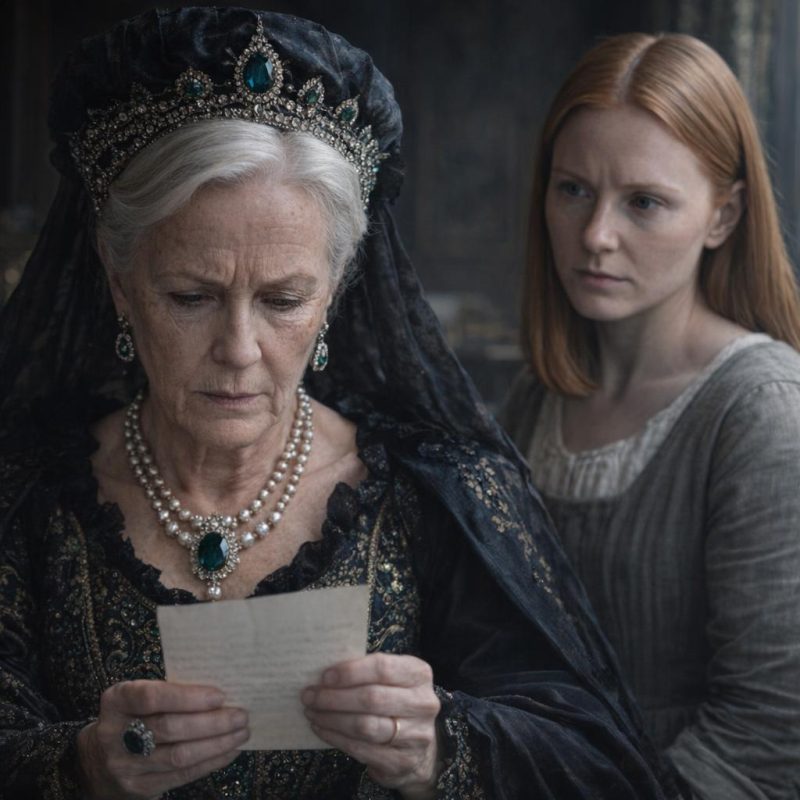 Image by RM AI
The Royal Authority
I did not sleep well that night, but by morning I knew what I would do. I had not survived seventeen losses and forty years of court politics and the slow dismantling of everything I had loved to be undone by a woman with a grievance and a writing desk. I dictated my response to Abigail, who wrote it out in a fair hand without comment, which was one of the many things I valued about her. The letter was not long. It did not need to be. I made clear that any publication of private correspondence belonging to the Crown would be treated as a matter of royal prerogative, that my legal counsel had already been consulted, and that the consequences of proceeding would be both immediate and considerable. I did not threaten in the way Sarah threatened — with heat and venom and personal malice. I stated facts. I described consequences. I signed it with my full title and had it sealed before the morning was out. The messenger was a young man I did not know, which was deliberate — I wanted no familiar face carrying this particular errand. Abigail and I watched from the upper window as he crossed the courtyard below, and I saw him pass through the gate and turn into the street without looking back.
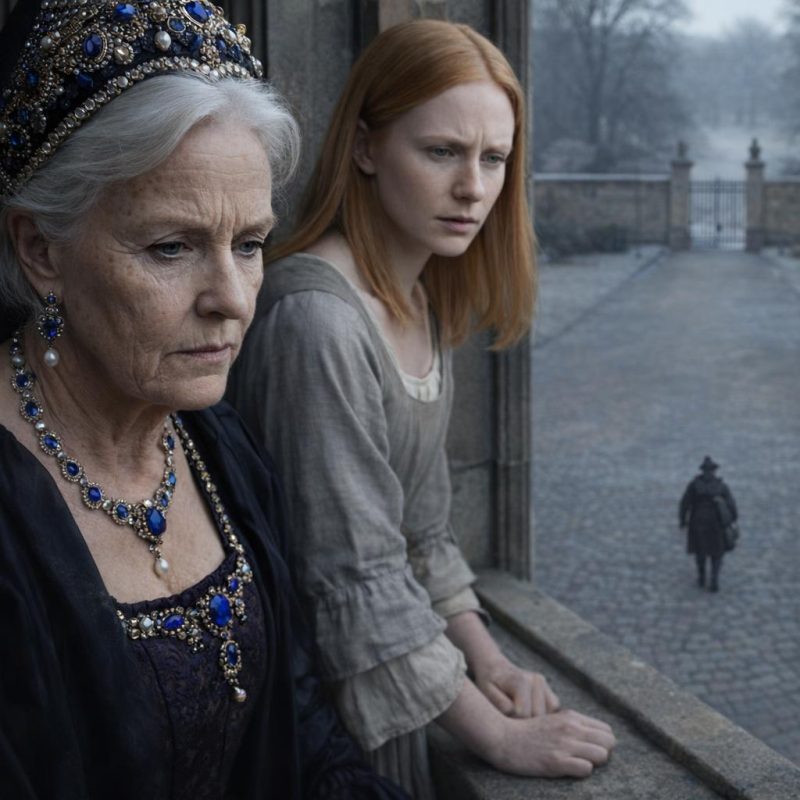 Image by RM AI
The Independent Reign
The weeks that followed were quieter than I had expected, and busier than I had feared. Without Sarah's voice in my ear — without the constant low current of her opinion running beneath every decision — I found that I could think more clearly than I had in years. I attended the cabinet meetings and I listened and I asked questions that were sometimes inconvenient and I made decisions that were sometimes unpopular, and the business of governing went on. I had always understood more than Sarah had believed I understood. I had simply, for too long, allowed her certainty to crowd out my own. I reviewed dispatches from the continent. I corresponded with my ministers on the matter of the succession, which remained unresolved and urgent. I made appointments. I declined appointments. I governed. Abigail kept the household running with the same quiet efficiency she had always shown, and I was grateful for her in the way one is grateful for solid ground. One afternoon, after a particularly long session on trade negotiations with the Dutch, one of my senior ministers paused at the door as the others filed out, turned back, and said that my grasp of the particulars had been, in his estimation, quite remarkable — that he had not expected such precision from any sovereign he had served.
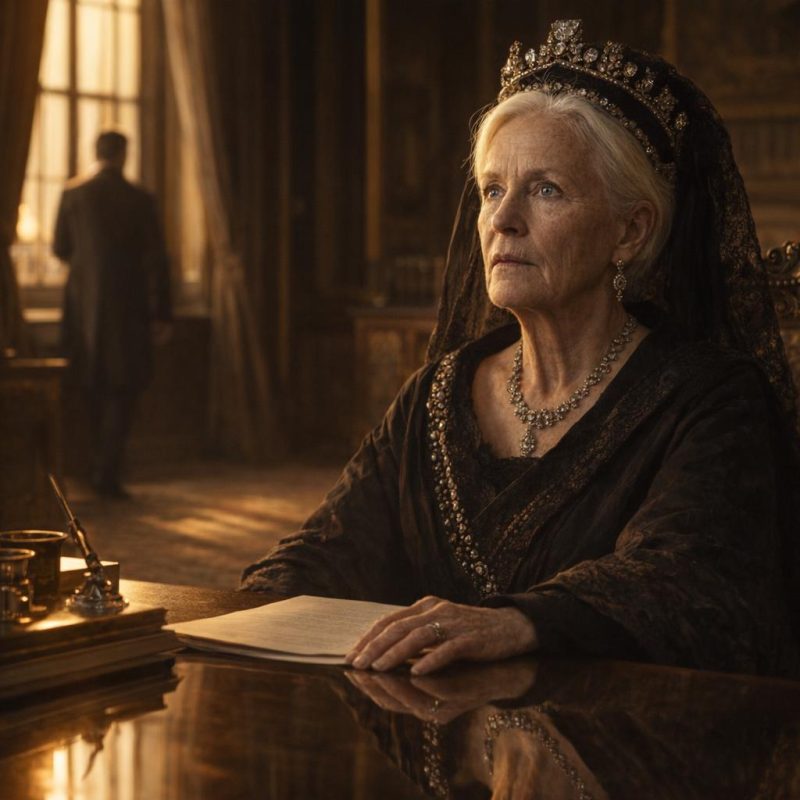 Image by RM AI
The Golden Age
There were mornings, in those middle years of my reign, when I would stand at the window — or rather, be helped to stand, for my legs were already beginning their long betrayal — and look out over London and feel something I had not expected to feel: satisfaction. Not happiness, exactly. I had buried too many children for happiness to come easily. But satisfaction, yes. The Act of Union had passed in 1707, and England and Scotland were one kingdom at last, Great Britain, and I had pressed for it and argued for it and signed it into law with my own hand. Marlborough's armies were winning battles on the continent that would be written into history books for centuries. Newton and Wren and Swift and Addison moved through my reign like bright lights. The empire was growing — trading posts and colonies and naval supremacy spreading outward from these islands like rings on water. Abigail brought me the dispatches one afternoon and I read them slowly, and when I set the last one down I said, quietly, that I thought we had done rather well. She said nothing, only smiled. And I understood then, sitting with those papers in my lap, that whatever Sarah had said about me — whatever she had written, whatever she had whispered — the record itself would answer her.
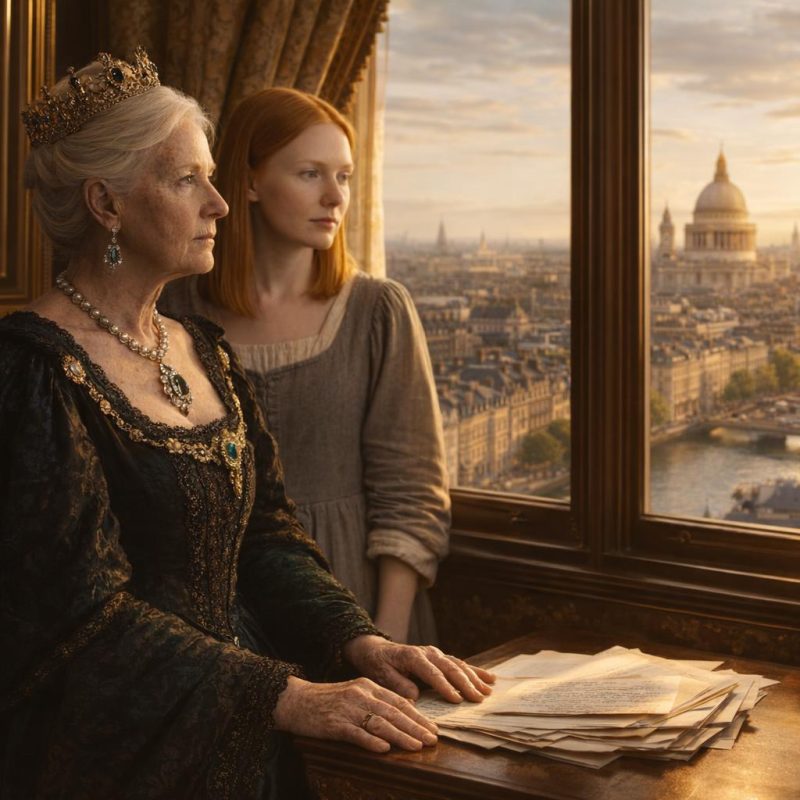 Image by RM AI
The Failing Body
By my final years, my body had become a country I no longer recognised. The gout had spread from my feet to my knees to my hands, and the swelling was such that my rings had to be cut from my fingers and my shoes could no longer be made to fit. I was carried from room to room in a chair, and then, when even that became difficult, on a litter borne by footmen who had learned to move in careful unison so as not to jostle me. The pain was constant — not the sharp, dramatic pain of injury, but the deep, grinding, relentless pain of a body consuming itself. I still held audiences. I still signed documents. I still received ministers and ambassadors and made decisions that affected millions of souls who would never know my name or my suffering. Abigail dressed my legs each morning with a gentleness that I had not known since childhood, and she never once let her expression betray what she must have felt at the sight of me. I was grateful for that more than I could say. I had been a queen. I had been a mother seventeen times over. I had been a wife and a sister and a daughter and a sovereign. And now I was this — a woman so heavy with years and grief and illness that the world had to come to me, because I could no longer go to it.
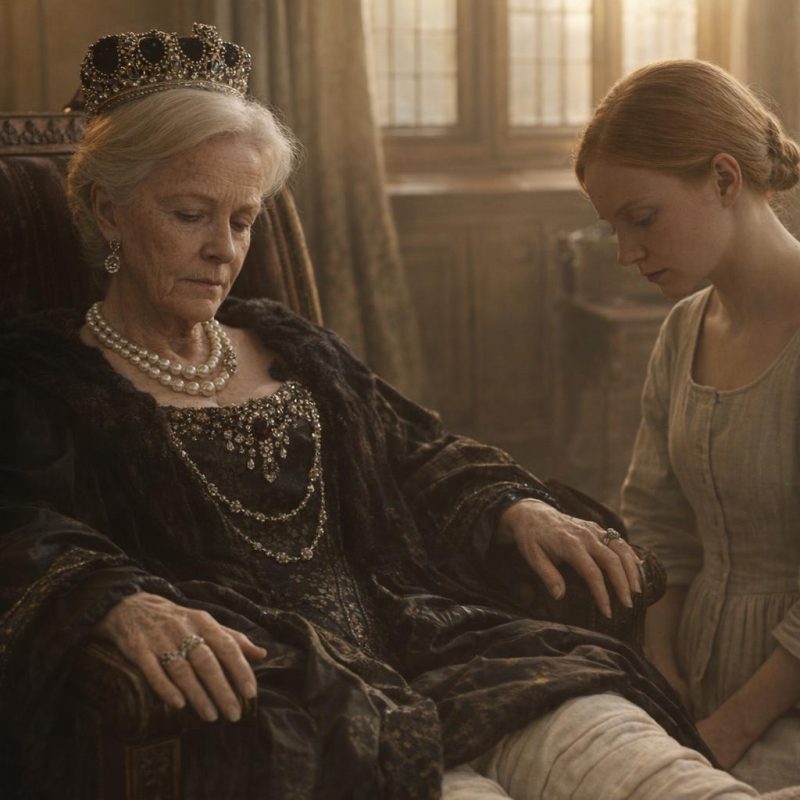 Image by RM AI
The Final Accounting
I counted them sometimes, in those last quiet hours when sleep would not come and the candles burned low and Abigail dozed in the chair by the door. Seventeen. I counted them the way one counts beads on a rosary — not for comfort, exactly, but for the discipline of it, for the insistence that they had existed and that their existence had mattered. There had been the ones who never drew breath, and the ones who drew it only briefly, and William, my William, who had lived eleven years and filled every one of them with more life than most men manage in seventy. I thought of Sarah, too — forty years of friendship that had been, in the end, a kind of long and elegant theft. She had taken my confidence and my trust and my ear, and she had used them for herself, and I had let her, because I had been lonely and she had been brilliant and loneliness makes fools of even queens. But I had survived her. I had governed without her. I had built something that would outlast us both. The empire I was leaving behind would shape the world for centuries, and my name would be on the age that produced it. Abigail's breathing was slow and even across the room. Outside, London went on as it always had. I lay still, and the weight of everything I had endured settled around me like a cloak I had finally earned the right to set down.
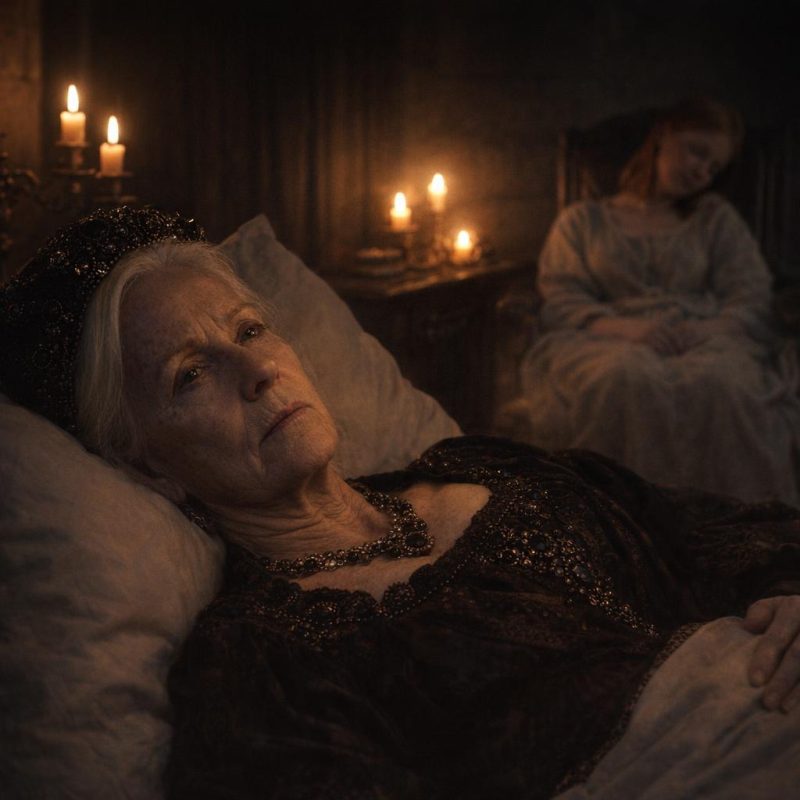 Image by RM AI
The Square Coffin
The stroke came in the early morning of the first of August, 1714, and it was not, in the end, a terrible way to go. There was a rushing sound, and then a great stillness, and then I was somewhere outside the pain for the first time in years. They built me a square coffin, because no ordinary coffin could contain what my body had become. Fourteen men were required to carry it. I have thought about that number. Fourteen men to carry the weight of a woman who had buried seventeen children, signed a kingdom into being, outlasted a betrayal that would have destroyed a lesser soul, and left behind an empire that would not reach its full height for another century. The weight of that coffin was nothing — nothing — against what I had carried living. I had carried grief enough to drown in. I had carried duty when my body screamed for rest. I had carried a crown that no one had expected me to wear well, and I had worn it. Abigail had been there at the end, her hand over mine, and that was enough. The square coffin, the fourteen men, the empire going on without me — I had carried all of it, and it had not broken me.
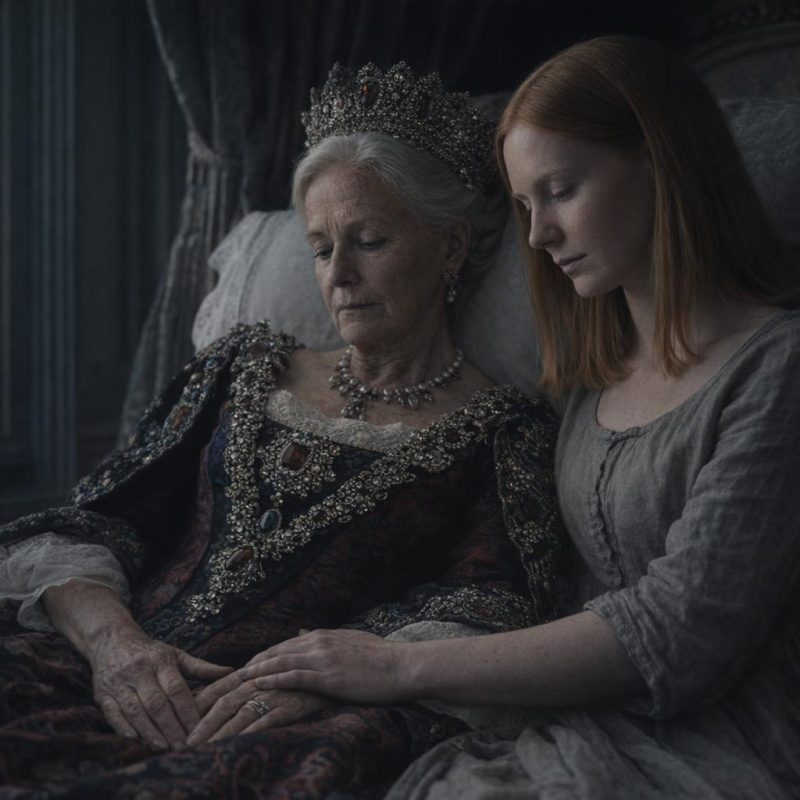 Image by RM AI
KEEP ON READING
The 20 Most Recognized Historical Figures Of All Time
The Biggest Names In History. Although the Earth has been…
By Cathy Liu Oct 4, 2024
10 of the Shortest Wars in History & 10 of…
Wars: Longest and Shortest. Throughout history, wars have varied dramatically…
By Emilie Richardson-Dupuis Oct 7, 2024
10 Fascinating Facts About Ancient Greece You Can Appreciate &…
Once Upon A Time Lived Some Ancient Weirdos.... Greece is…
By Megan Wickens Oct 7, 2024
20 Lesser-Known Facts About Christopher Columbus You Don't Learn In…
In 1492, He Sailed The Ocean Blue. Christopher Columbus is…
By Emilie Richardson-Dupuis Oct 9, 2024
20 Historical Landmarks That Have The Craziest Conspiracy Theories
Unsolved Mysteries Of Ancient Places . When there's not enough evidence…
By Megan Wickens Oct 9, 2024
The 20 Craziest Inventions & Discoveries Made During Ancient Times
Crazy Ancient Inventions . While we're busy making big advancements in…
By Cathy Liu Oct 9, 2024