

I Bought a Gallery in Secret—Then the Head Curator Tried to Throw Me Out for Looking Poor
I Bought a Gallery in Secret—Then the Head Curator Tried to Throw Me Out for Looking Poor
The Warehouse and the Invitation
I'd been in the warehouse since six in the morning, which meant by the time I finally looked up from the flat files, my back ached, my hands were chalked with dust, and I had approximately forty minutes to get across town. The lithographs were mid-century — a Calder, two Alberses, and a handful of lesser-known pieces I'd picked up at an estate sale in Connecticut — and they needed to be catalogued before the insurance rider updated at the end of the month. I loved that kind of work. Most people don't understand that. They think collecting is about the acquisition, the moment of purchase, the thrill. But the real pleasure is in the organizing, the handling, the slow accumulation of knowledge about what you actually own. I changed nothing about my appearance before I left. Paint-stained hoodie, leggings with a bleach spot near the left knee, sneakers that had seen better years. I drove my truck across town and pulled up in front of The Gilded Frame just as the evening light was catching the brass lettering above the door. Three days since the papers had closed. I stepped into the foyer and stood there quietly, taking in the high ceilings and the warm gallery light, and something in my chest settled into a feeling I hadn't expected — something that felt, unmistakably, like mine.
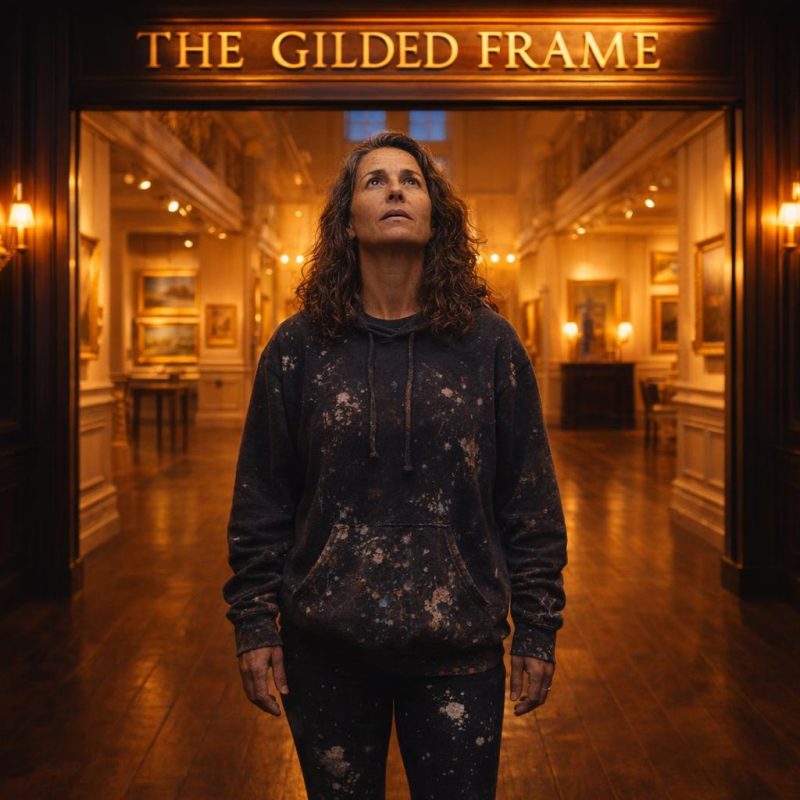 Image by RM AI
The Curator's Assessment
I was standing near a large oil canvas — a moody, overworked seascape that I was already mentally relocating to storage — when I became aware of someone approaching with the specific energy of a person who has decided something before they've finished walking. He was early forties, suit tailored to the millimeter, hair that looked like it had a weekly appointment. His eyes did a full sweep of me, starting at the hoodie and ending at my sneakers, and whatever conclusion he reached took about two seconds. 'The delivery entrance,' he said, 'is around the corner on Halsted.' I looked at him. 'I'm sorry?' 'Around the corner,' he repeated, slower this time, as if the problem might be comprehension. 'This is a private viewing.' I told him I was there for a meeting, that I had an appointment. He made a small sound — not quite a laugh, more like the noise you make when a child says something charmingly incorrect — and gestured toward the front door with two fingers. Behind him, at the marble reception desk, a young woman with dark hair was watching us with an expression I couldn't quite read. She didn't move. The man in the suit turned back to me, and his voice dropped into something that was clearly meant to be final: 'This is a private event for serious collectors. It's not a lounge for local transients.'
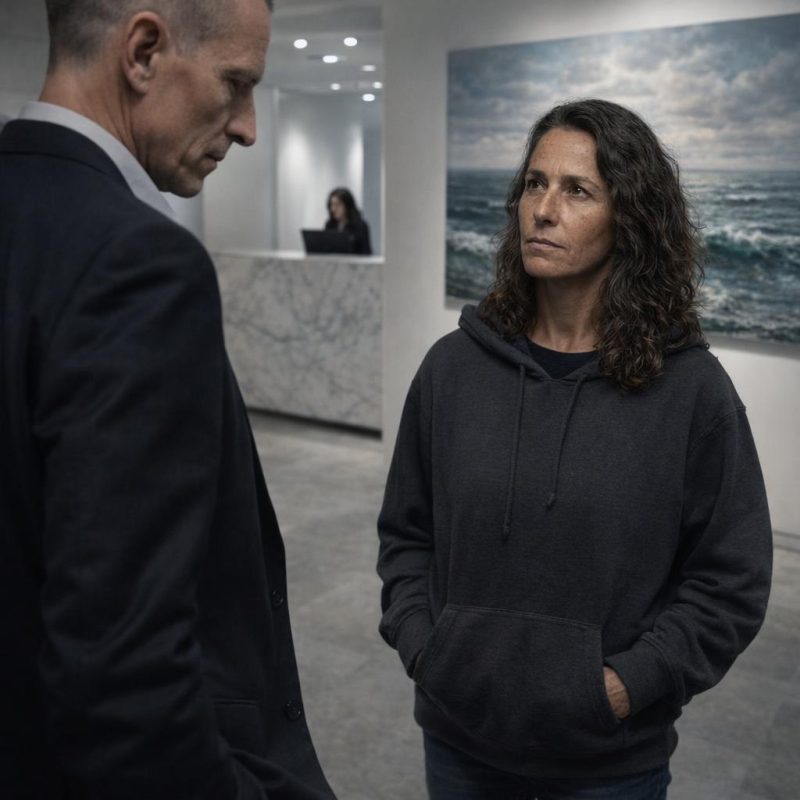 Image by RM AI
The Eyesore
There was a beat of silence after he said it. The kind that expands. Around us, a few patrons had stopped pretending to look at the art. I took a slow breath and kept my voice even, because I have found over the years that a calm voice in a loud situation is far more unsettling than matching the volume. 'You might want to reconsider your tone,' I said, 'if you're speaking to a potential patron.' He actually laughed at that. A full, performative laugh, the kind designed to be overheard. 'A patron.' He looked me up and down again, as if the second viewing confirmed the first. 'You couldn't afford the frame on any piece in this room.' He leaned in slightly and dropped his voice to something that was probably meant to be a whisper but carried anyway. 'Go back to whatever basement you crawled out of. You are ruining the experience for people who actually belong here. You are, frankly, an eyesore.' I glanced toward the marble desk. The young woman behind it had found something very important to look at on her computer screen. I looked back at him. His hand came up, not quite touching me, gesturing toward the exit like I was furniture to be rearranged. The anger was there — I won't pretend it wasn't — but it sat low and steady in my chest, and I let it stay exactly there.
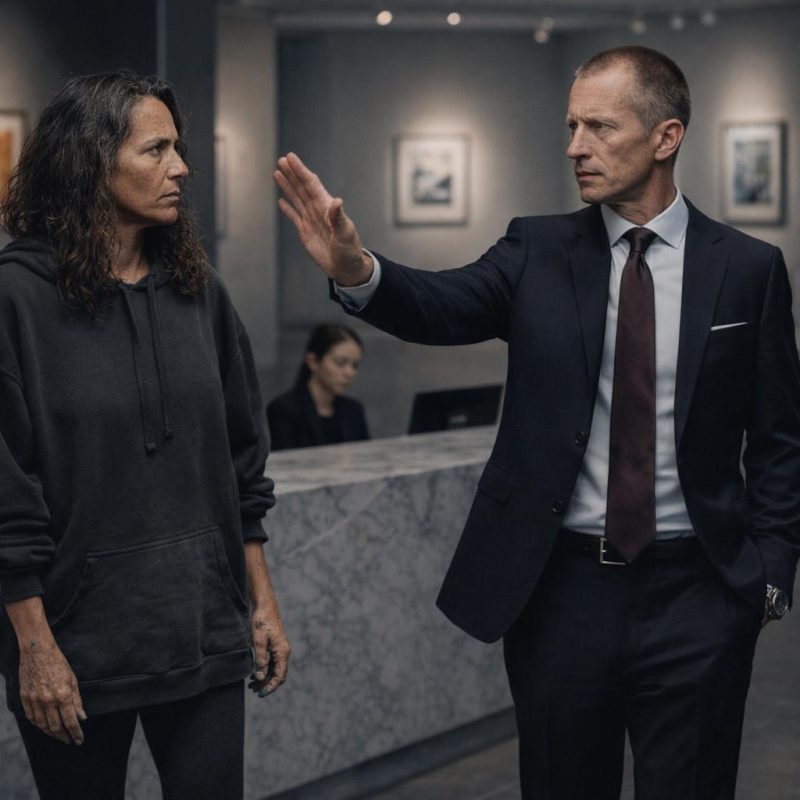 Image by RM AI
The Call to Arthur
I reached into the front pocket of my hoodie and pulled out my phone. He watched me do it with the expression of someone who has already won and is simply waiting for the other person to realize it. I found the number and pressed call. It rang twice. 'Arthur,' I said, when he picked up. 'I need you to bring the acquisition papers and the termination forms down to the foyer. Both sets.' There was a pause — Arthur is not a man who pauses often — and then he said, 'I'll be right down.' I kept my eyes on the man in the suit while I said it. The gallery had gone quiet in that particular way that happens when people sense something shifting. A woman near the far wall had stopped mid-conversation. Two men by the sculpture installation had turned. The man in the suit was still smiling, but it had changed quality — it was the smile of someone who has decided I was performing, playing some kind of character for an audience that wasn't going to materialize. He crossed his arms. He was so certain I was bluffing that he didn't even ask who Arthur was. He just stood there, composed and immovable, while the room held its breath around us, and I held mine.
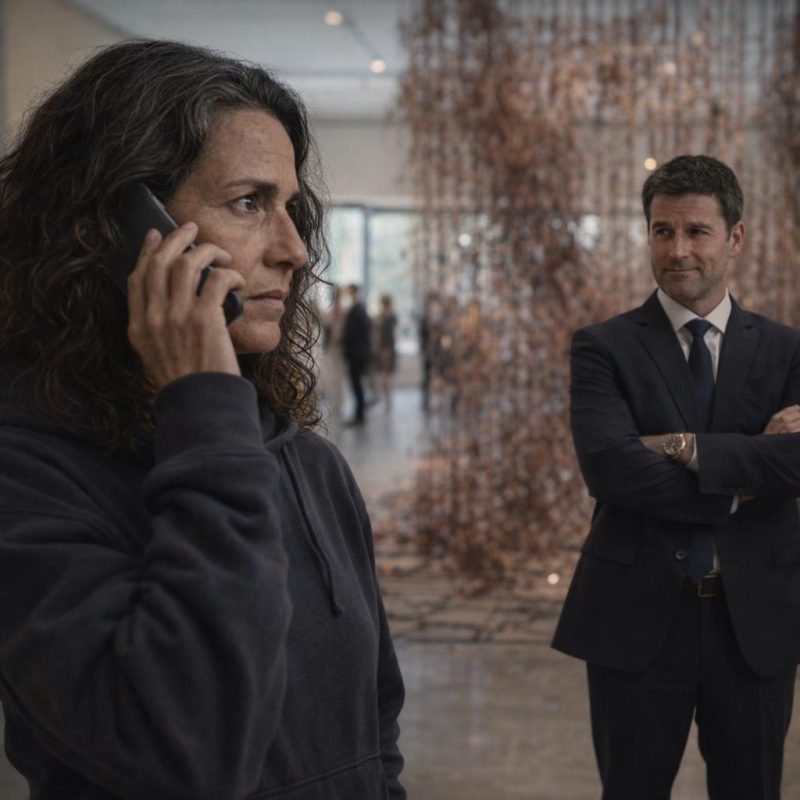 Image by RM AI
The Reveal
The sound of footsteps on the mezzanine stairs was unhurried and deliberate. I didn't look up right away. I kept my eyes on the man in the suit, watching the exact moment his gaze shifted past my shoulder toward the staircase. Whatever he saw there changed his face in a way that was almost interesting to observe. Arthur came down carrying a thick leather folder, the kind that closes with a brass clasp, and he was already looking at me when he reached the bottom step. He took in the scene — me, the man in the suit, the silent room — and his expression settled into something professionally neutral. 'Ms. Thorne,' he said, and his voice carried easily across the foyer. 'Is there a problem here?' The name landed in the room like a stone dropped into still water. I heard someone near the back draw a breath. The man in the suit went very still. The color left his face in a way that was almost gradual, like watching something drain. His jaw came slightly open. He put one hand back against the wall behind him, and I watched his composure — that immaculate, tailored composure — begin to come apart at the seams. Arthur crossed the floor and handed me the leather folder. I unclasped it, reached inside, and pulled out the signed deed of sale.
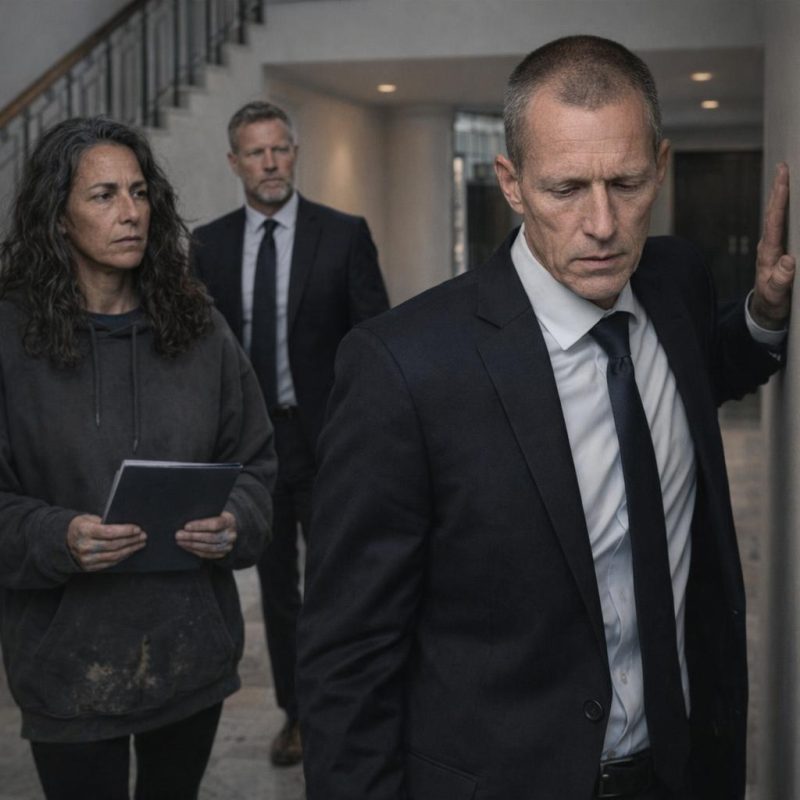 Image by RM AI
The Termination
I held the deed for a moment without saying anything. The room was completely silent — not the polite quiet of a gallery viewing, but the held-breath silence of people who have stopped pretending they aren't watching. Victor — I'd learned his name from the staff directory Arthur had included in the folder — had his mouth open and nothing coming out of it. Arthur stood to my left, steady and unhurried, the termination paperwork already separated from the rest of the documents. I looked at Victor and kept my voice at a conversational level, because I wasn't angry anymore. Anger had burned off somewhere around the second time he'd gestured me toward the door. What was left was considerably colder. 'You were right about one thing,' I said. 'This is a sanctuary of culture. I happen to agree with that.' I let that sit for a second. 'But in my sanctuary, people are not assessed by the condition of their clothing and then pointed toward the service entrance.' I set the deed on the reception desk where everyone could see it. 'You have spent your career obsessing over image, over surfaces, over who looks like they belong.' I glanced around the room — the art, the light, the high ceilings — and then back at him. 'This gallery just became mine. And your employment here is terminated, effective immediately.' Victor opened his mouth. Closed it. Arthur set the termination paperwork on the desk beside the deed, and said nothing, because nothing needed to be said.
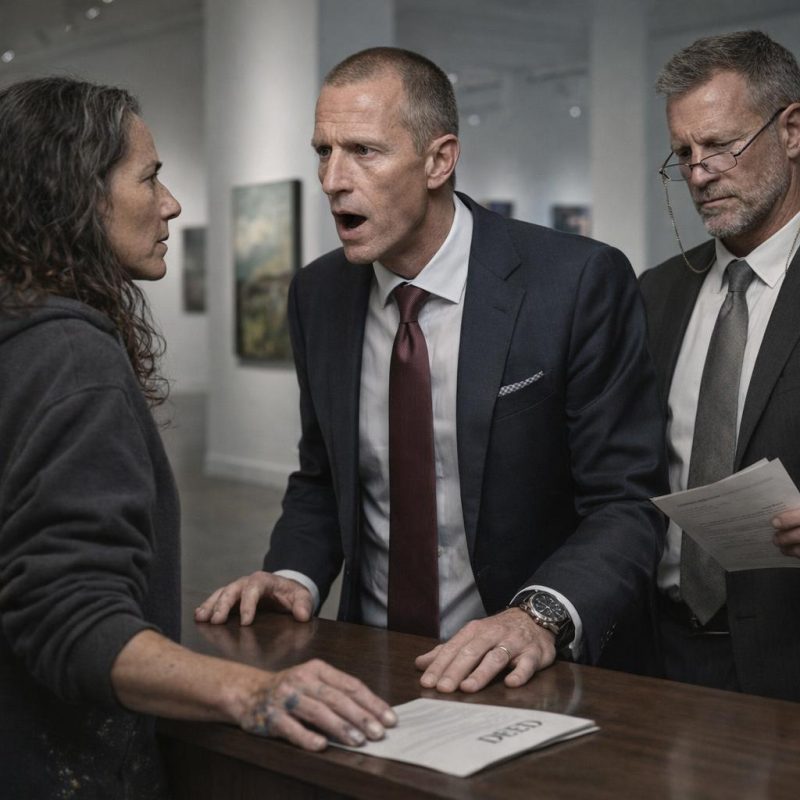 Image by RM AI
The Escort
Arthur made a quiet gesture toward the back of the gallery, and two members of the building security team appeared from the corridor near the storage rooms. I hadn't arranged that in advance — Arthur had. That's why I keep him around. Victor looked at the two men, then at Arthur, then at me, and something in him seemed to simply stop. He didn't argue. He didn't speak at all. One of the security team walked him toward the back hallway, toward his office, and the other waited near the front. I stayed where I was, in the foyer, holding the leather folder. The room around me was still quiet, though it had shifted from stunned silence into something more like careful attention. Maya had not moved from behind the marble desk. She was watching the hallway where Victor had disappeared, her hands flat on the desk surface, her expression difficult to read from where I stood. It took about ten minutes. Victor came back through the gallery carrying a small cardboard box — the universal symbol of an ending — and he walked with his eyes fixed somewhere past the front door, past the street, past anything in the room. He didn't look at me. He didn't look at Maya. He didn't look at the art on the walls that he had spent years curating. The security team walked him to the heavy glass doors, pushed them open, and Victor stepped through onto the street.
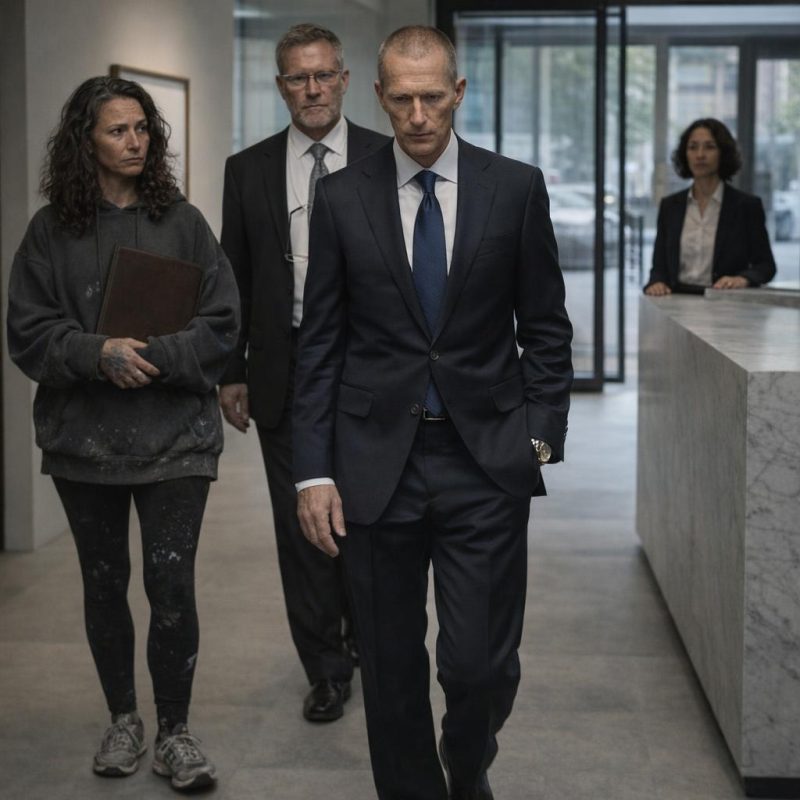 Image by RM AI
The New Owner
I set the leather folder on the reception desk and turned to face the room. There were maybe twenty people in it — staff clustered near the back hallway, patrons still holding their glasses of wine, everyone wearing some version of the same expression. I introduced myself. 'My name is Eleanor Thorne. As of three days ago, I am the owner of The Gilded Frame.' I paused and looked down at my hoodie, then back up. 'I came directly from my warehouse. I was cataloguing lithographs and I lost track of time, which is something that happens to me fairly regularly.' A few people exchanged glances. Someone near the sculpture installation let out a breath that was almost a laugh. 'The gallery will continue operating,' I said. 'The staff will remain in their positions. Nothing about the programming changes tonight.' Arthur stepped forward and offered a few words about the acquisition timeline — clean transfer, no outstanding liabilities, all licensing current — in the measured tone of a man who has delivered complicated news to rooms full of people and found that clarity is always the kindest approach. Maya was watching me from behind the desk, her expression no longer difficult to read. It had settled into something that looked, cautiously, like relief. I stood there in my paint-stained hoodie in front of the assembled staff and patrons of my new gallery, and I did not apologize for a single thing about how I looked.
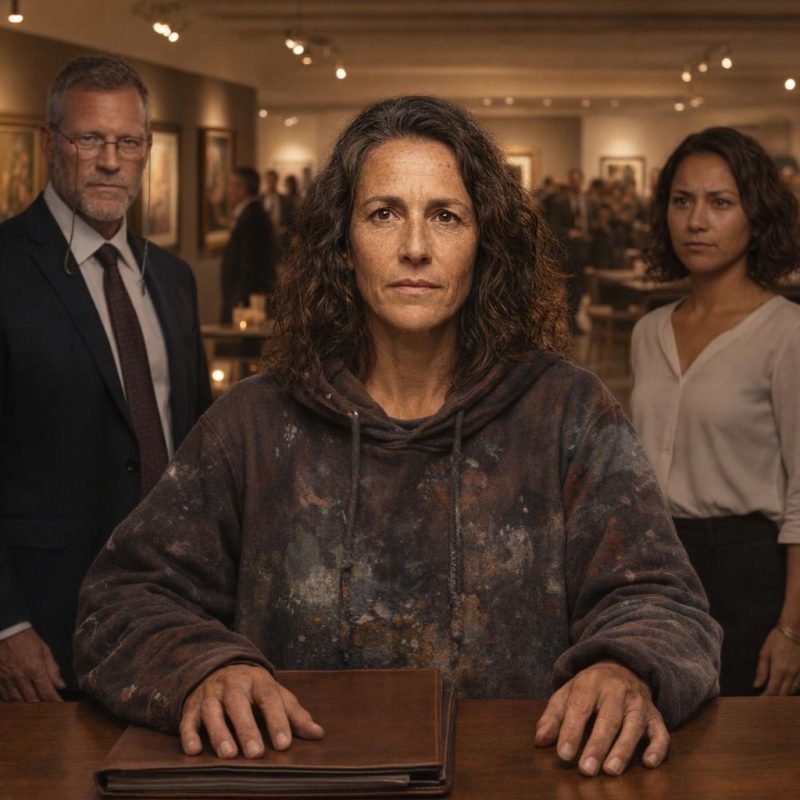 Image by RM AI
The Vision
After Arthur finished, I took a breath and kept going. I told them what I believed about this place — that a gallery's job is to be a serious steward of serious work, and that I intended to hold that standard without apology. The Gilded Frame would continue to pursue exceptional acquisitions. The curatorial bar would not drop. But I also wanted to be clear about something else, something I felt needed saying plainly: every person who walked through that door would be treated with basic human dignity. Every single one. It didn't matter what they were wearing, what they drove, or whether they looked like they belonged in a room full of six-figure paintings. Art has never required a dress code, and neither would this gallery. I watched a few of the patrons exchange glances — the good kind, the kind that meant something had landed. Maya's shoulders dropped about two inches, which I took as a positive sign. Arthur gave a single slow nod from his position near the wall, the kind of nod that means a lawyer agrees with you on principle and not just on paper. I meant every word. High standards and human decency are not mutually exclusive — and I was done pretending otherwise.
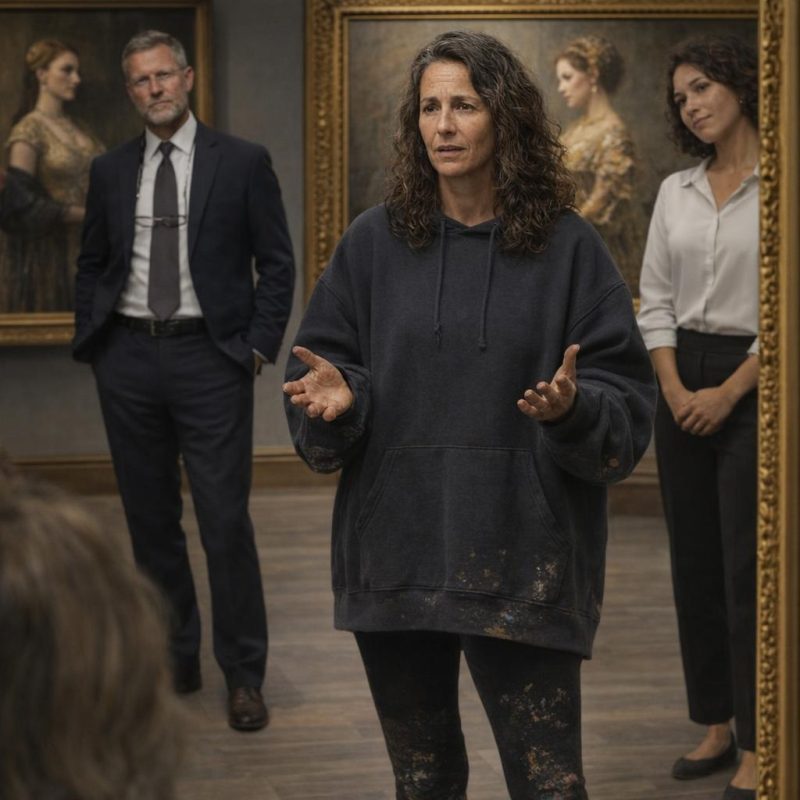 Image by RM AI
The First Week
The first week was quieter than I expected, which I appreciated. I moved into the owner's office — the one that had been Victor's — and spent the better part of Monday just sitting with the files Arthur had organized for me: financial summaries, vendor contracts, the exhibition schedule through the following spring. It was a lot to absorb. I met with each staff member individually, keeping the conversations short and low-pressure. I wanted them to know I was paying attention without making anyone feel like they were being evaluated. Most of them relaxed after about five minutes. Maya gave me a thorough tour of the storage and authentication areas on Wednesday, walking me through the inventory system with the careful precision of someone who had clearly been doing this job well for a long time and hadn't been told so nearly enough. I watched the gallery operate through two full business days — the rhythm of it, the way the light shifted across the main floor in the afternoon, the particular hush that settled when a serious buyer was in the room. By Friday evening, I was sitting at the desk with a stack of files on one side and a cold cup of tea on the other, and the office had already started to feel less like Victor's and more like mine.
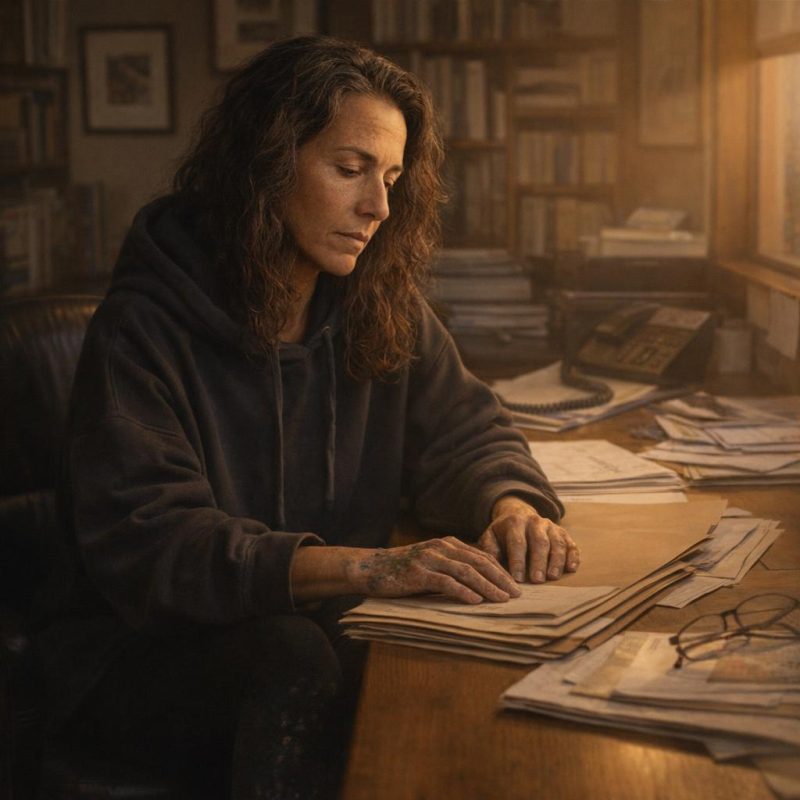 Image by RM AI
The Hesitation
It came up almost by accident. I was asking Maya about the filing system for acquisitions — specifically where the original intake documentation was stored — and she started to answer, then paused in a way that wasn't quite natural. She said that Victor had preferred to handle certain documentation himself. Her voice dropped a little when she said it, not dramatically, just enough that I noticed. I asked if that was standard practice, keeping it casual, and she said something about Victor being particular about his processes, that he liked things done a specific way. She glanced toward the door while she said it. I didn't push. It wasn't the moment for that, and I could tell that pressing harder would only make her close up entirely. She shifted the conversation to the upcoming group exhibition almost immediately — something about the installation timeline for the February show — and I let her redirect without comment. I made a note to myself to look at the acquisition files more carefully when I had time alone with them. But what stayed with me longer than the words was the way Maya had looked when she said Victor's name: careful, like someone choosing their footing on uncertain ground.
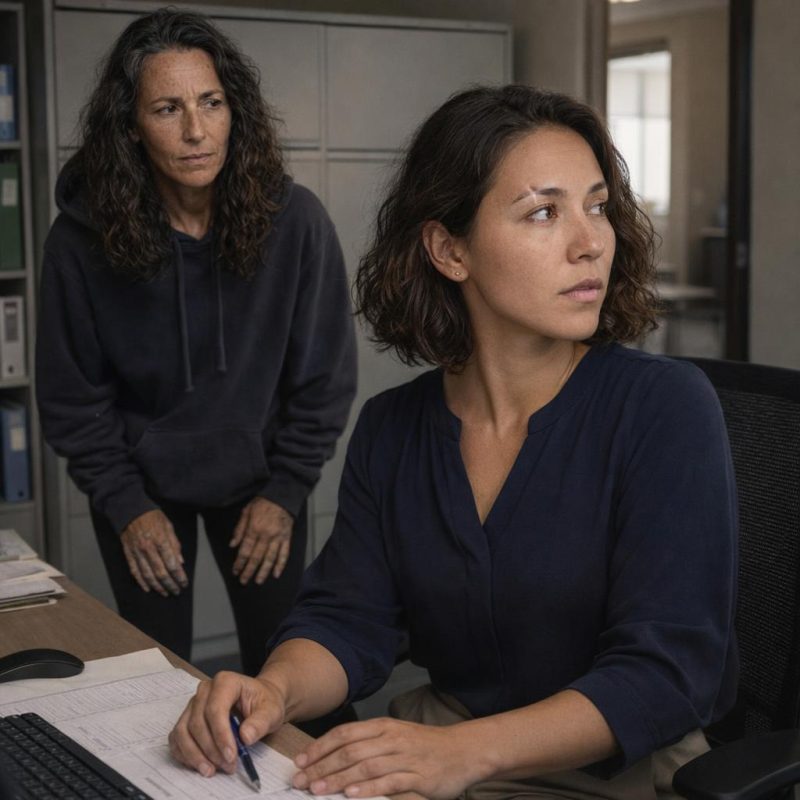 Image by RM AI
The Files
I pulled the acquisition files from the past two years on a Tuesday afternoon when the gallery was quiet. There were thirty-one files in total, and I went through them methodically, the way I'd been trained to approach any collection — systematically, without assumptions. Most were complete. Intake forms, condition reports, provenance certificates, authentication correspondence, sale records. Clean and thorough. But three of them weren't. I set those three aside and went back through them twice to make sure I hadn't missed anything. I hadn't. The provenance certificates — the original documents establishing ownership history — were simply absent. Photocopies of other paperwork, yes. Summary sheets, yes. But the certificates themselves were gone. I asked Arthur, who was working at the small table in the corner, whether this kind of gap was something he'd seen in the files he reviewed during the acquisition process. He looked up and said he hadn't been involved in those specific transactions — they'd been handled before Sterling brought him in to facilitate the sale. I spread the three files side by side on the desk. Every one of them had Victor's initials on the intake form. I told myself it could be poor record-keeping. Then I looked at the three files again, lined up in a row, each one missing the same document.
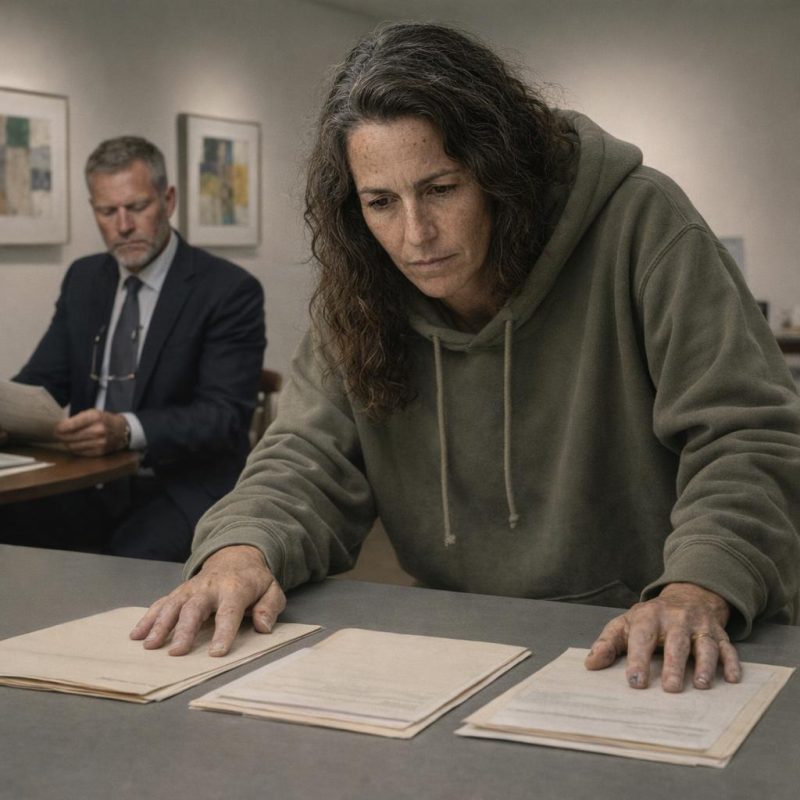 Image by RM AI
Sterling's Visit
Sterling came by on a Thursday, about ten days into my ownership. He said he wanted to see how the transition was going, and I believed him — he had the look of a man who had handed something over and wasn't entirely sure he'd done the right thing, checking in the way you do when you've sold a house you loved to someone you hope will take care of it. I made tea and we sat in the office, and I asked him about the gallery's operational history in what I hoped was a conversational way. He talked about the programming, the staff, the regulars. Then I asked about the major sales process, and something shifted in his expression — not alarm, more like fatigue. He said Victor had become very protective of the high-value transactions over time. Insisted on being the sole point of contact for significant clients. Handled the paperwork himself, start to finish. I asked if that had always been the arrangement. Sterling shook his head. He said it started roughly eighteen months ago. He admitted, with the particular weariness of someone confessing a failure of attention, that he'd been too consumed with the gallery's financial difficulties to question it. I sat with my tea going cold and listened to him describe how Victor had quietly drawn all the major transactions into his own hands.
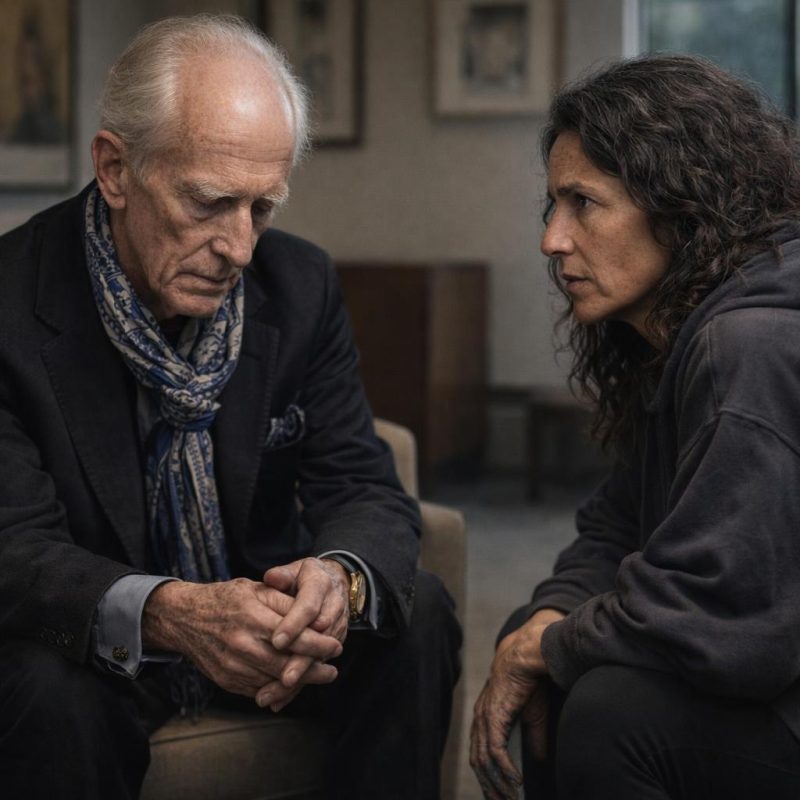 Image by RM AI
The Patron's Observation
Rebecca came back to the gallery on a Friday afternoon, about two weeks after the opening night. She was the kind of woman who moved through a room like she'd already decided she liked it, and she asked the front desk for me by name, which I found both flattering and slightly alarming. We sat in the small seating area near the east wall, and she told me she'd been thinking about what she'd witnessed that evening — Victor's behavior, the whole scene — and that she wanted me to know she thought I'd handled it well. I thanked her and asked, as naturally as I could manage, about her experience as a patron over the years. She was happy to talk. She described Victor as attentive to the point of being controlling — always present for authentication discussions, always the one to process her purchase paperwork personally. She mentioned that she'd once tried to finalize a payment through one of the other staff members when Victor was out, and he'd called her within the hour to say he'd handle it himself when he returned. She'd assumed it was just his style, his way of maintaining relationships with significant buyers. She said it with a small shrug, the way you describe something that seemed reasonable at the time and only looks different in retrospect. I thanked her again and sat with the quiet weight of everything she'd just described.
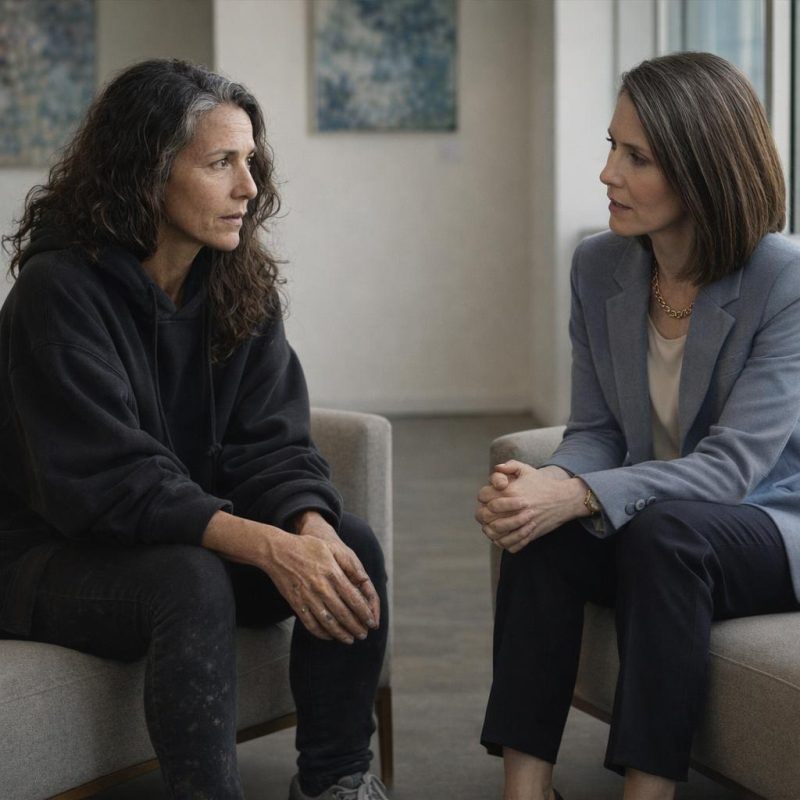 Image by RM AI
The Provenance Gap
Maya and I spent most of a Wednesday morning pulling every high-value acquisition file from the past two years and spreading them across the conference table. It looked like a paper archaeology dig — folders overlapping, sticky notes, my handwriting on a legal pad tracking what was present and what wasn't. I'd asked Maya to help because she knew the filing system better than anyone, and because I trusted her to be honest with me about what she found. We worked through the files methodically. The pattern emerged slowly, the way patterns do when you're not looking for one specifically — a gap here, a missing link in the ownership chain there, nothing that announced itself as a problem until you stepped back and looked at the whole table. I counted carefully. Seven pieces. Seven works with significant gaps in their provenance chains — missing ownership records, incomplete transfer documentation, periods of time where the history of the object simply went quiet. All seven had been acquired during Victor's tenure. Maya confirmed, without my asking, that Victor had handled each of those acquisitions personally. I wrote the number down on my legal pad and underlined it. Then I looked at the seven folders spread across the table, and the combined value listed on their summary sheets added up to just over two million dollars.
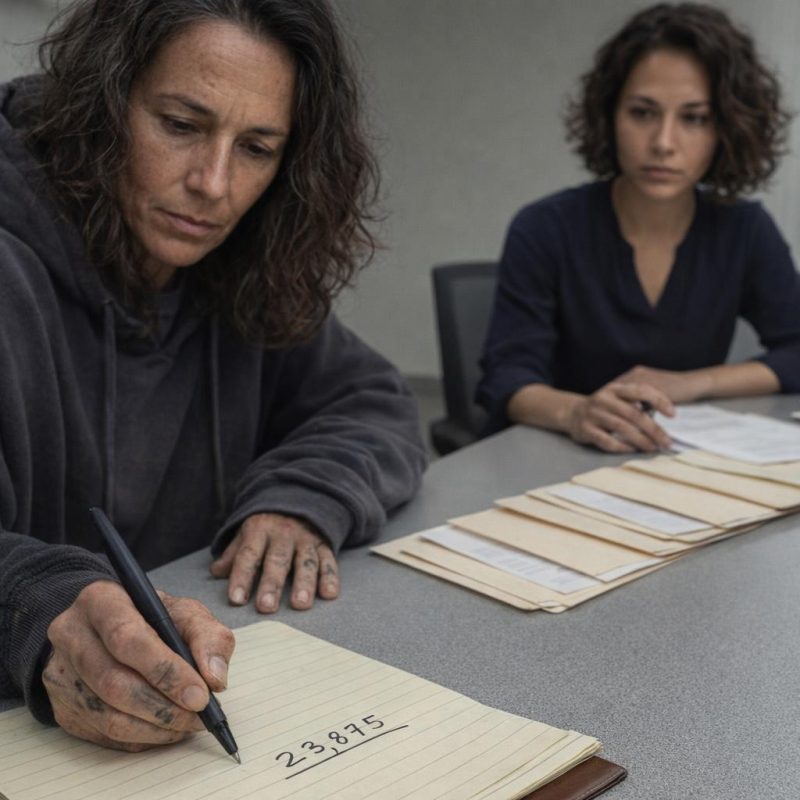 Image by RM AI
The Missing Invoices
Arthur came in on Friday with a printout of the financial records and a look on his face that I had already learned to read as controlled concern. He walked me through the accounting software Victor had implemented — a new system, he noted, installed about eighteen months ago — and showed me what he'd found. For several of the gallery's major sales, the detailed invoices were simply not there. What remained were summary entries: a date, a sale amount, a buyer code. The kind of record that tells you a transaction happened without telling you anything meaningful about how. I asked who had access to the original invoice storage. Arthur set his reading glasses on the desk and explained that when Victor built the new system, he'd structured the access permissions himself. The detailed invoice files were stored in a separate directory. Arthur had spent two days trying to locate the login credentials for that directory. There were no secondary users listed. No backup access assigned to any other staff member. I asked Arthur to confirm what he was telling me, and he did, in the careful way he had of stating facts that carried weight: Victor had been the only person with access to the original invoice files.
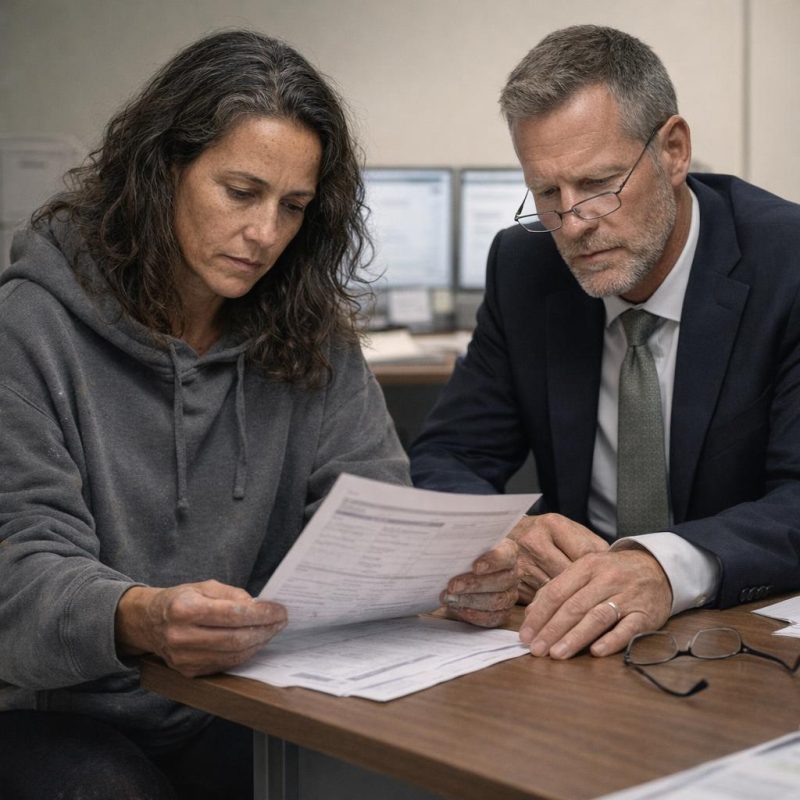 Image by RM AI
The Irregularities
I'd been in the inventory database for about an hour when Maya pulled her chair over and started walking me through how the system was organized. She was patient about it, the way someone is patient when they've had to explain the same thing to people who don't listen. I was listening. I noticed pretty quickly that the status fields weren't consistent — some pieces showed sold with full buyer records attached, name, contact, invoice number, the works. Others just showed sold and a payment amount. I asked Maya if that was normal. She frowned at the screen and said no, she always entered buyer information when she processed a sale. Always. I asked her to search for any entries where payment was recorded but the buyer name field was blank. She ran the filter. Five pieces came up. Arthur, who had been reviewing the financial ledger at the side table, confirmed without looking up that all five payments had cleared into the gallery account. I stared at the five line items — dates, amounts, nothing else. All five had been processed by Victor.
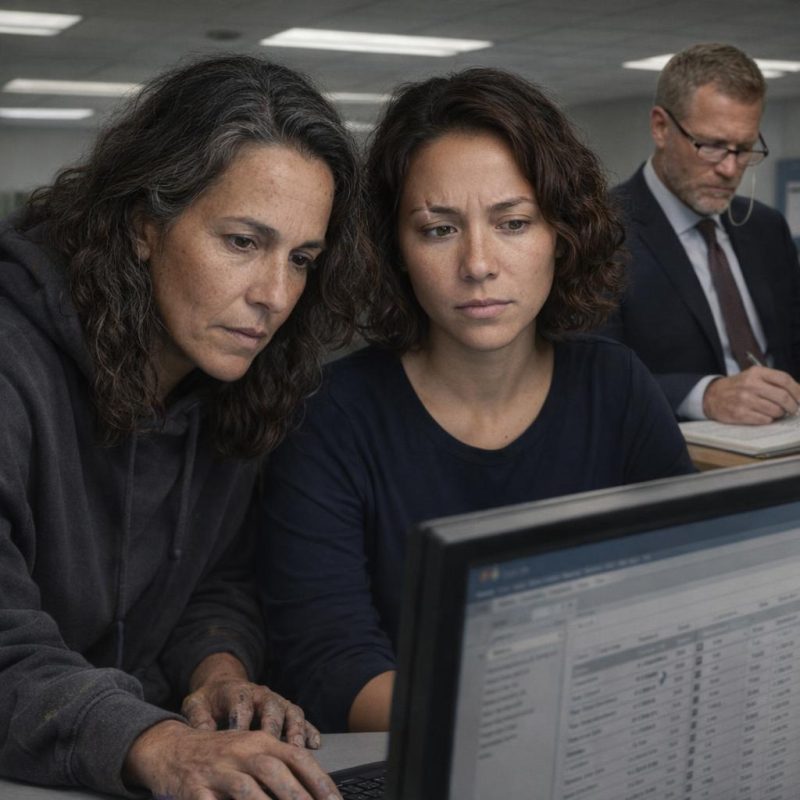 Image by RM AI
The Appraiser
I waited until the gallery was quiet before I called Arthur back into the office and closed the door. I told him about the five entries, about the missing buyer names, about the invoice gaps he'd already found. I laid it out flat, without editorializing, and watched him listen. He was quiet for a moment, then he recommended someone — an independent appraiser he'd worked with before, a specialist in authentication and collection valuation with a reputation for being thorough and discreet. I called her that afternoon. She had an opening the following week and said she could begin with a full collection review. I told the staff it was routine — standard practice for new ownership, nothing to worry about. Maya nodded. The others seemed to accept it without much interest. The week that followed was strange. I hosted two evening events, met with a collector who wanted to discuss a commission, answered emails, smiled at the right moments. Underneath all of it was a low, persistent hum of something I couldn't quite name. The appraiser was coming. Until she arrived, there was nothing to do but wait, and let the gallery keep moving around me.
 Image by RM AI
The First Flags
She arrived on a Tuesday with two cases of equipment and the unhurried manner of someone who had done this long enough to stop being surprised by anything. I gave her full access and stayed out of her way. Arthur sat in the office reviewing documents while she worked through the collection methodically, room by room. On the second afternoon she called me over to the east wall. She had three pieces laid out under her portable lighting rig and was holding a loupe she'd set down to speak to me directly. She explained that she'd found inconsistencies — paint composition that didn't match the period, aging patterns that looked accelerated rather than natural, brushwork in one piece that diverged from the attributed artist's documented technique. She was careful with her language. Questionable, she said. Warranting further analysis. Not her call to make definitively without lab results. I asked her to check the authentication records for those three pieces. She pulled them up on her tablet, scrolled briefly, and confirmed that all three had been certified by Victor. She recommended sending the pieces for laboratory analysis as soon as possible. I stood there while she packed her loupe away, and the quiet hum I'd been carrying all week settled into something heavier and much harder to ignore.
 Image by RM AI
The Quiet Continuation
Arthur read the written report twice before he set it down. I read it once and that was enough. The appraiser had been careful — her language was measured, professional, full of appropriate qualifiers — but the recommendation was unambiguous: forensic laboratory analysis, promptly. We met in the office with the door closed and agreed on next steps. I arranged for the three pieces to be transported to a forensic art laboratory Arthur had used before. When Maya asked why those particular works were being moved, I told her they were going out for routine conservation assessment, which was technically not a lie and also not the truth. She accepted it without pushing. The rest of the week I ran the gallery the way I always had — opened on time, kept the lighting right, talked to collectors, answered questions about pieces I was increasingly uncertain about. There was a strange discipline in it, maintaining the surface while the floor underneath felt less solid than it had a month ago. Then, on Thursday afternoon, the appraiser's formal written report arrived by courier, and the cover page recommended immediate forensic analysis of the flagged works.
 Image by RM AI
The Staff Meeting
I asked Maya to come into the office at the end of the day, after the other staff had gone. I kept it casual — just wanted to check in, get her perspective on how things had run before I arrived. She sat down across from me and was quiet for a moment in the way people are quiet when they're deciding how honest to be. Then she started talking. She said that a few of the staff had raised questions over the past year or so — about certain pieces, about whether the documentation looked right. She was careful about how she said it, but the shape of what she was describing was clear enough. Victor had dismissed every concern. He told them they weren't qualified to question his certifications, that their job was to sell and support, not to second-guess expert authentication. One of the junior staff had apparently asked twice about the same piece. After the second time, Victor had reassigned her to administrative work. I asked Maya if she'd written any of this down. She shook her head and said she'd been afraid to. I didn't push her on it. After she left I sat in the office for a long time, the room quiet around me, turning over the weight of what she hadn't been able to say out loud.
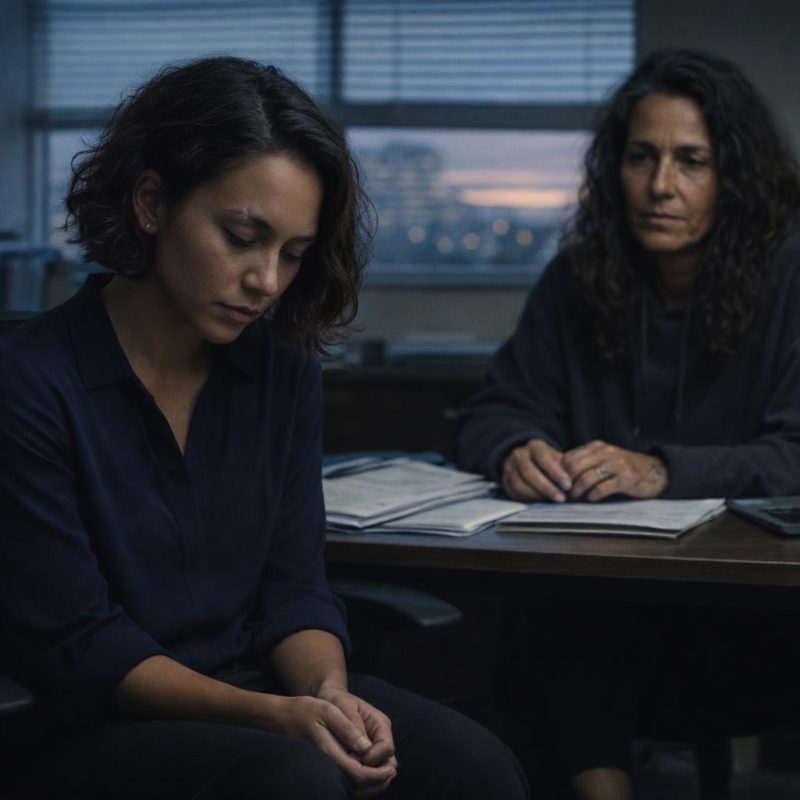 Image by RM AI
The Certification Records
I pulled every authentication certificate from the past two years and spread them across the conference table in chronological order. The older ones — anything from before about eighteen months ago — had multiple signatures. Two experts, sometimes three, co-signing on high-value pieces. Arthur confirmed that was standard practice in the industry: for anything above a certain price threshold, you got second opinions, you documented the process, you created a paper trail that could withstand scrutiny. Then the pattern changed. Eighteen months ago, the co-signatures stopped. Every certification after that point carried one name. I counted them twice to be sure. Twelve pieces, all authenticated by Victor alone, all in the higher value range, all processed through the new filing system he'd built. Arthur explained that some curators did operate as sole authenticators, particularly in smaller galleries, but that the shift from a multi-signature process to a single-signature process on high-value work, with no documented reason for the change, was not something he'd seen before. I didn't say what I was thinking. I just sat with the twelve certificates lined up in front of me, each one bearing only Victor's signature, and let the silence in the room do the work.
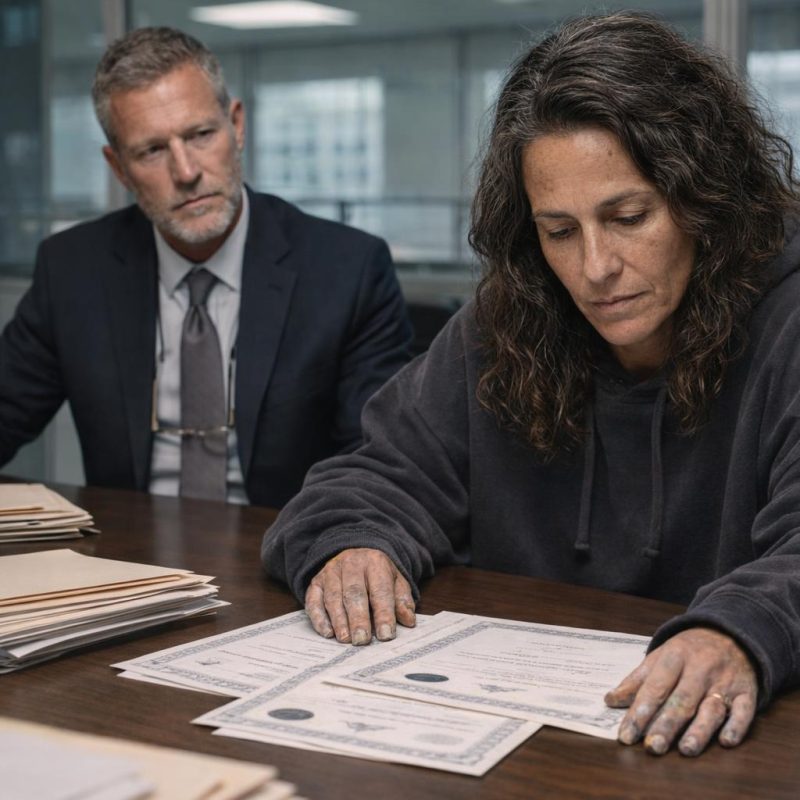 Image by RM AI
The Offshore Accounts
Arthur found them buried in the transaction memos — not in the main ledger entries, but in the notes fields that most people never read. Three separate transactions, each with a notation referencing an account number that didn't correspond to any of the gallery's operating accounts. I asked him what a legitimate reason for that might look like. He said galleries occasionally used offshore accounts for international sales — currency management, tax structuring, that kind of thing. Then he pointed out that all three of these transactions were domestic. No international buyer, no currency conversion, no obvious reason for the routing notation to be there at all. I asked whether Sterling would have known about an account like this. Arthur checked the dates. The account had been opened, based on when the first notation appeared, after Sterling had stepped back from reviewing daily operations. He set his reading glasses on the table and looked at me over the spread of documents. I looked back down at the page. The same account number appeared in all three memos, identical each time, written in the same format as if it had been copied from somewhere and pasted in without much thought about who might eventually read it.
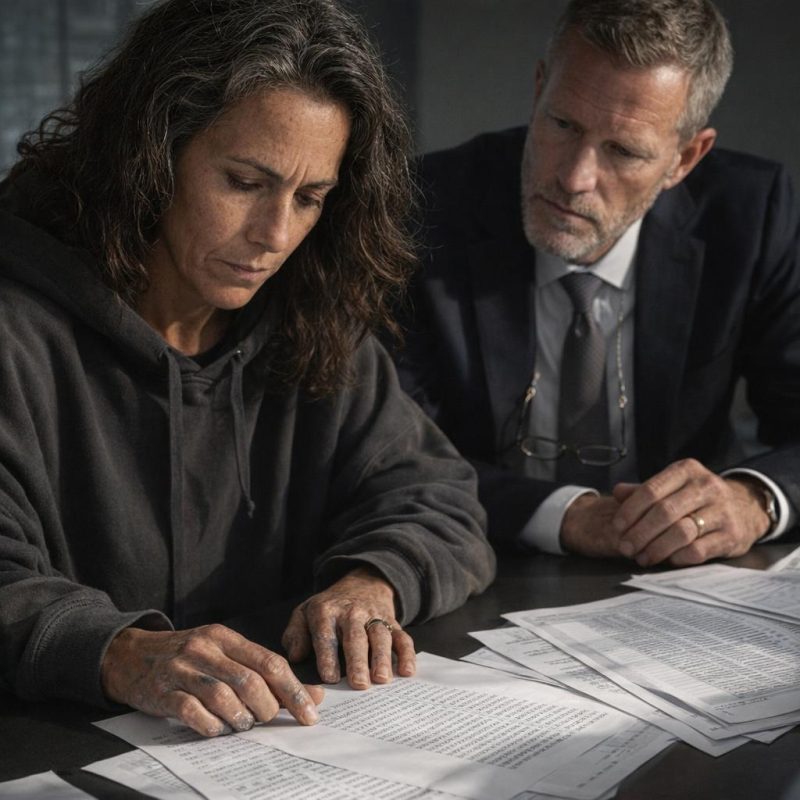 Image by RM AI
The Missing Funds
Arthur suggested we map it out, so we did — a simple timeline on paper, the gallery's reported revenue on one line, Sterling's documented financial position on another. I'd pulled Sterling's loan applications from the acquisition file; they were part of the due diligence package, and I'd read them before but not like this, not next to everything else. The gallery's reported income had stayed relatively stable. Sterling's personal finances had collapsed. The loans started eighteen months ago. The debt accumulated steadily after that, quarter by quarter, while the gallery's numbers on paper looked more or less fine. Arthur walked me through it without editorializing. He just pointed to where the lines diverged. I sat with it for a while, not saying anything, because I didn't have anything useful to say yet. Then Arthur laid the acquisition documents alongside the transaction records and pointed to the date Victor had implemented his new filing system. The gallery's financial decline, mapped against Sterling's personal records, began on the same line.
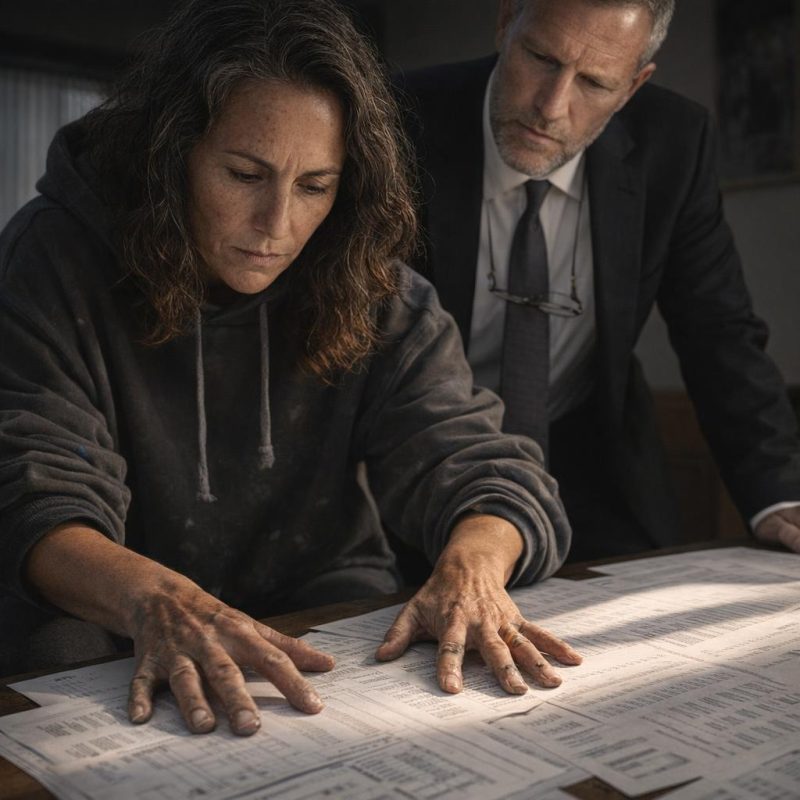 Image by RM AI
The Decision to Stay Quiet
I sat with the timeline for a long time after Arthur finished walking me through it. The lines on that paper were damning enough on their own, but damning wasn't the same as proven, and I knew the difference mattered enormously. Arthur was the one who said it first — that going to the authorities with what we had right now would be like showing up to a gunfight with a strongly worded letter. We needed documentation. We needed a paper trail that didn't have gaps. I asked him what happened if someone inside the gallery caught wind of what we were doing, and he gave me the kind of look that answered the question without words. Evidence disappears. People get careful. Arthur said we should treat this like we were the only two people in the world who knew, because for now, that was exactly what we needed to be. I thought about the gallery's reputation — what a public accusation without proof would do to it, to the artists whose legitimate work hung on those walls, to the collectors who'd trusted the name on the door. I told Arthur that nothing we'd found left this room until we had something concrete enough to stand on. He nodded once and said, "Agreed."
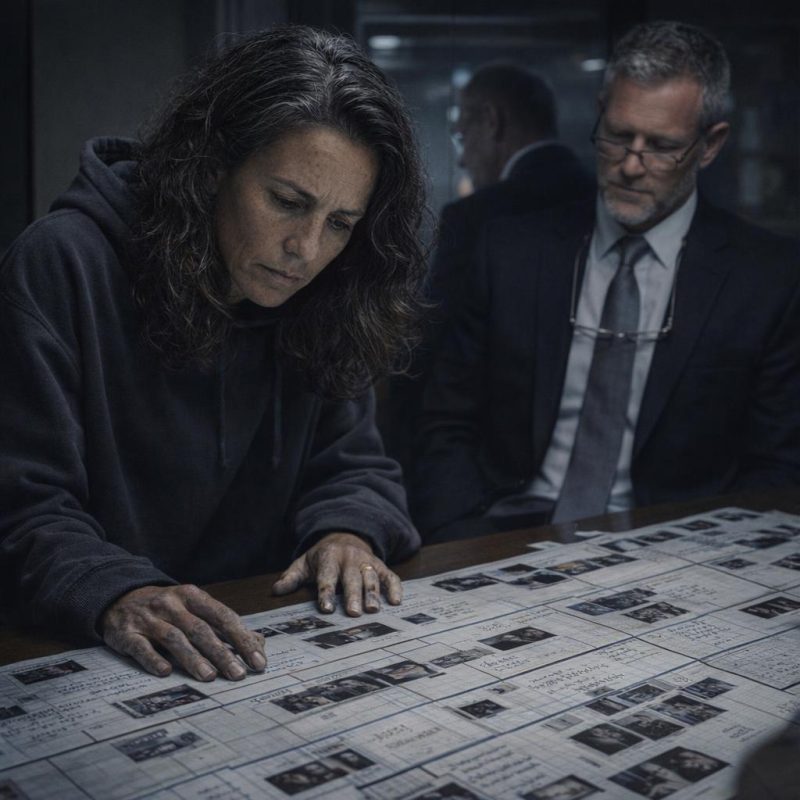 Image by RM AI
The Laboratory Results
The courier arrived mid-morning, and I signed for the envelope without letting myself think too hard about what was inside it. Arthur was already at the table with his reading glasses on. I set the envelope between us and opened it slowly, like that would somehow soften whatever was in there. The report was twelve pages. The executive summary was one. I read the first paragraph twice before I let myself move to the second. The laboratory had examined all three pieces using X-ray fluorescence, infrared reflectography, and paint sample analysis. The materials in two of the works included synthetic pigments that weren't commercially available until decades after the supposed creation dates. The third piece had a canvas weave inconsistent with the period. The language was precise and technical and completely unambiguous. I pulled the certification records from the folder Arthur had brought and checked each piece against the authentication log. Victor's signature appeared on all three. Arthur did the math quietly beside me while I was still reading. Three point four million dollars in certified value, sitting in the gallery's inventory records, backed by nothing. I looked back at the executive summary. The word forgery appeared in the first sentence, the third sentence, and again in the final line of the summary.
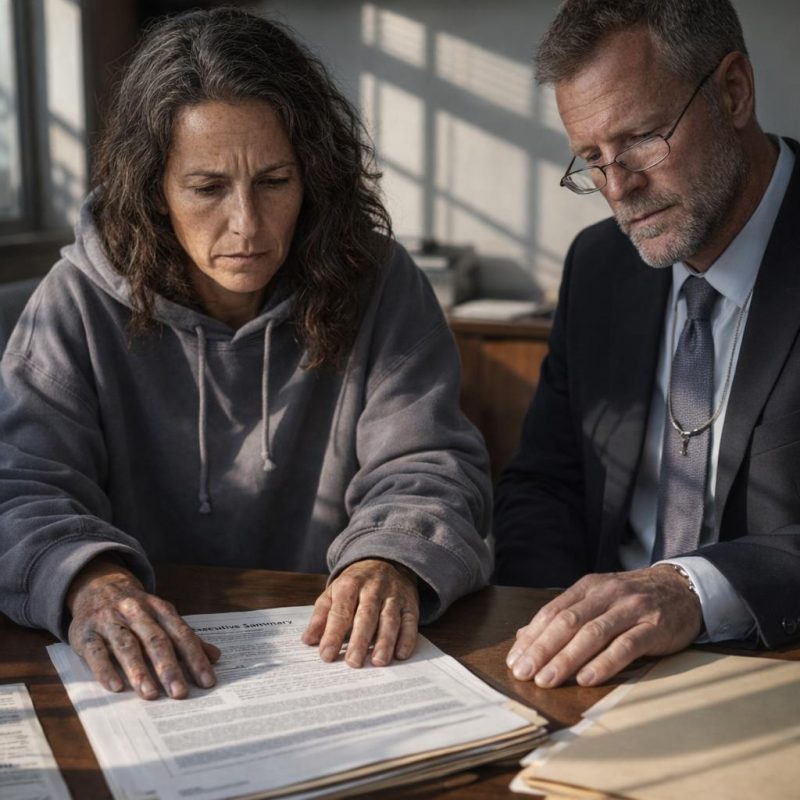 Image by RM AI
The Exclusive Dealers
I asked Maya to pull every acquisition record that had any kind of documentation gap — missing provenance, incomplete chain of title, anything that had made her pause when she filed it. She came back the next morning with a spreadsheet that ran to forty-seven rows. I sat with it for an hour before I noticed the pattern. Three names kept appearing in the dealer column. Not occasionally — consistently. I cross-referenced against the full acquisition log going back three years and the same three names accounted for every single piece with a documentation issue. When I mentioned it to Arthur, he pulled up his notes from the due diligence process and confirmed that Victor had insisted on working exclusively with those three dealers, turning down pieces from other sources without explanation. Maya, when I asked her carefully, said she'd always assumed it was a taste thing — that Victor had strong opinions about provenance and preferred sources he trusted. I looked up all three dealers online that afternoon. Minimal web presence. No gallery affiliations I could verify. No auction records. Arthur checked the dates their relationships with the gallery began. All three had started working with Victor eighteen months ago. I sat at my desk after Arthur left, the spreadsheet still open on the screen, every problematic piece tracing back to the same three names.
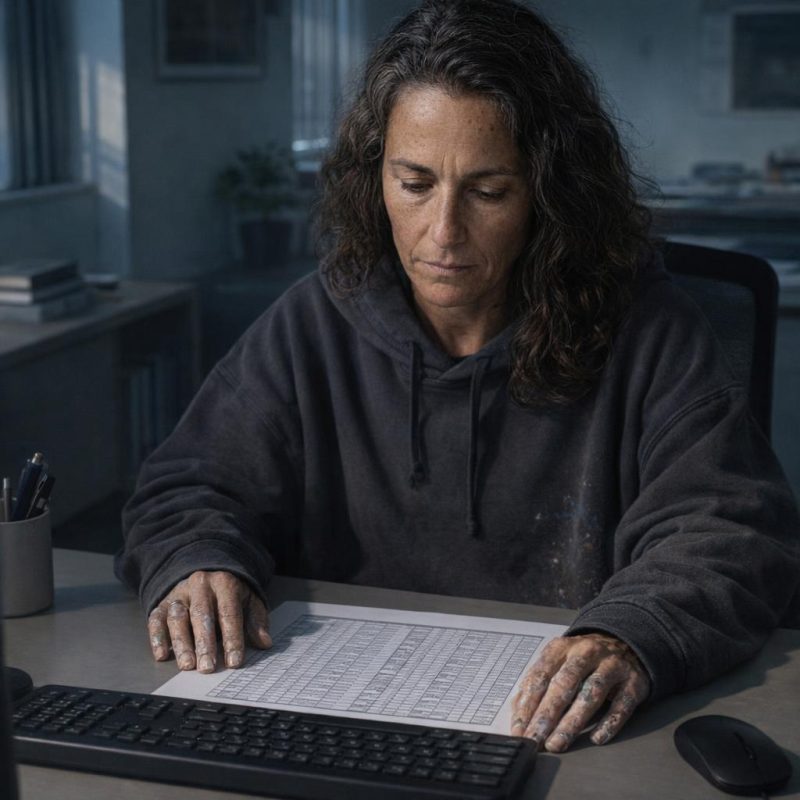 Image by RM AI
The Call to Detective Wu
Arthur had the number for the art fraud division already in his files, which told me something about how seriously he was taking all of this. He handed it to me on a notecard without comment. I called from the gallery office with Arthur sitting across the desk, and when I asked for Detective Wu, the person who answered didn't hesitate — just put me through. She picked up on the second ring. I explained who I was, that I'd recently acquired the gallery, and that I'd uncovered what a forensic laboratory had confirmed were sophisticated forgeries with fraudulent certifications, alongside financial irregularities I couldn't account for. Detective Wu didn't interrupt. She asked two clarifying questions — the total estimated value of the flagged pieces and whether I had the laboratory report in hand. I told her yes to both. She asked me to send everything I had to a secure email address she gave me, and she explained that art fraud investigations typically ran six to twelve months once a case was formally opened, sometimes longer. She said I should continue normal gallery operations and not discuss the matter with anyone connected to the gallery. I told her I understood. There was a brief pause, and then Detective Wu said she would open a case file immediately.
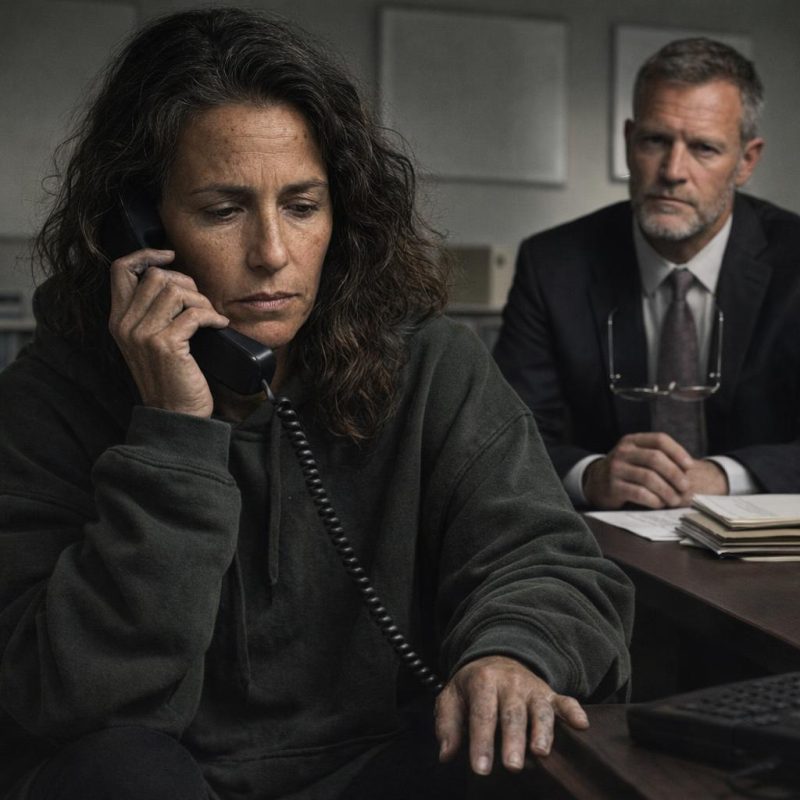 Image by RM AI
The Money Laundering Pattern
Detective Wu came to the gallery after closing, and she brought a legal pad and a recorder she set on the table without asking permission. Arthur had the financial files organized by date, which she seemed to appreciate. She started by explaining how art galleries get used for money laundering — the inflated sale prices, the cash transactions with minimal buyer documentation, the way a piece of art can move between private parties without triggering the same reporting requirements as a bank transfer. She described the pattern: a gallery acquires a piece at a documented price, sells it at a significantly higher price to a buyer whose identity is vague or offshore, and the difference moves through the system looking like legitimate art market profit. As she talked, I kept finding myself looking at Arthur, because she was describing line items I'd already seen. The offshore account references. The sales where the buyer was listed as a private collector with no further detail. The acquisition prices that didn't match anything I could find in comparable market records. Arthur slid the relevant folders across the table as she named each category, and she took them without breaking her explanation. I sat there with my hands flat on the table, listening to Detective Wu describe, in calm and methodical terms, exactly what had been sitting in those files all along.
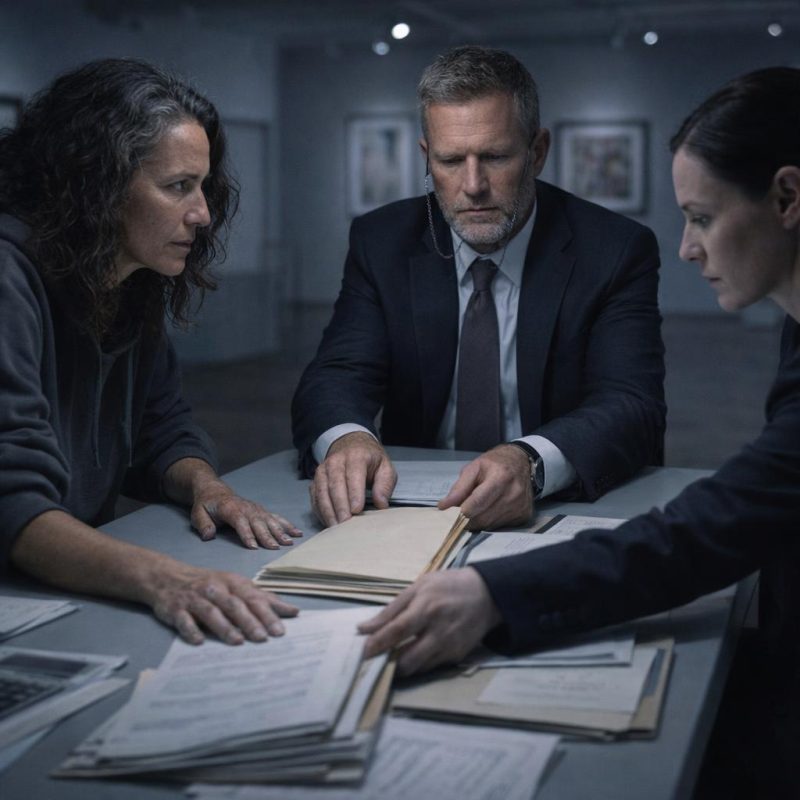 Image by RM AI
The Long Wait
Detective Wu stayed for nearly two hours, and by the time she left, I had a secure contact number, a case reference I wasn't supposed to write down anywhere connected to the gallery, and a very clear picture of what the next several months were going to look like. She'd been direct about the timeline — subpoenas took time, warrants took time, building a case that would hold up took time. She said the worst thing I could do was move the suspicious pieces or change anything about how the gallery operated, because any deviation from normal could signal to people who might be watching that something had shifted. I asked her what I was supposed to do if a collector asked about one of the flagged works. She said I should answer the same way I would have before I knew anything. I sat with that for a moment. Arthur walked her out, and I stayed at the table with the case reference number in my head and the financial files stacked in front of me. The gallery was quiet. Through the office window I could see the main floor, the lights still on, the pieces on the walls looking exactly as they always had. Months of this. Months of walking through that space and greeting collectors and talking about provenance and acting like the ground under my feet was solid.
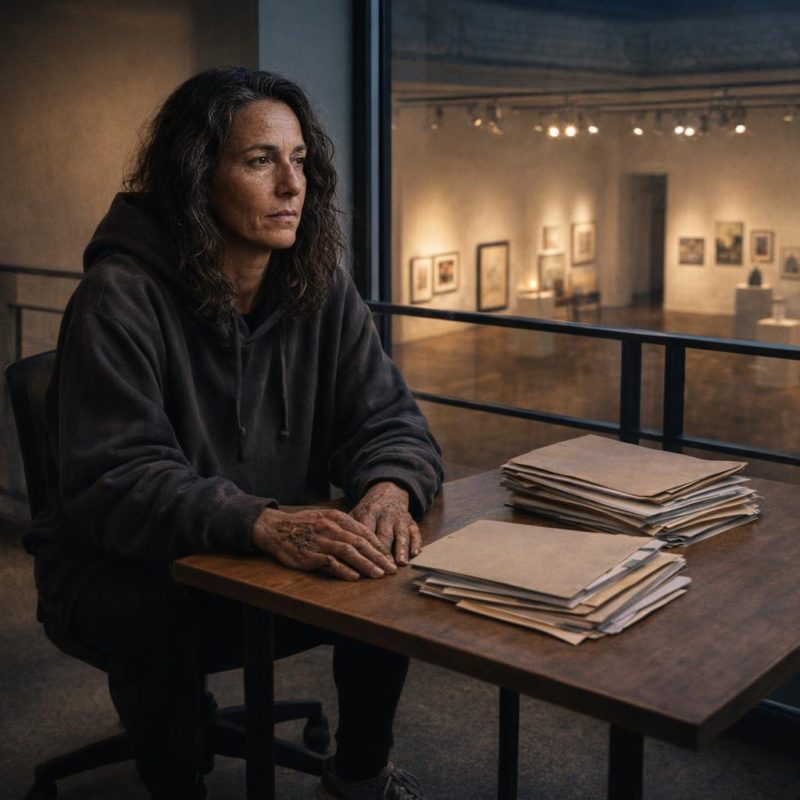 Image by RM AI
The Public Face
The opening went well, which was the strangest part. Rebecca arrived early and told me the space looked extraordinary, and she meant it — I could tell because Rebecca doesn't bother with compliments she doesn't mean. Maya had spent two days on the logistics and it showed: the lighting was right, the flow between rooms worked, the catering was understated in exactly the way the crowd expected. I moved through the evening on something that felt like autopilot, shaking hands and discussing brushwork and nodding at the right moments. A collector named Hargrove, who'd been buying from the gallery for years, spent twenty minutes in front of one of the pieces I'd flagged for Detective Wu — a mid-century work with documentation that didn't hold up under the laboratory's analysis. He asked me about the provenance. I told him what the certification said, because that was what I was supposed to do, and I kept my voice level and my expression interested and I did not let anything show. Rebecca caught my eye from across the room at one point and raised her glass slightly, which I think was meant to be encouraging. Maya appeared at my elbow every time I needed something before I knew I needed it. The evening was, by every visible measure, a success. Then Hargrove turned back to the painting and said it was exactly the kind of piece he'd been looking for, and I watched him pull out his phone to call his financial advisor.
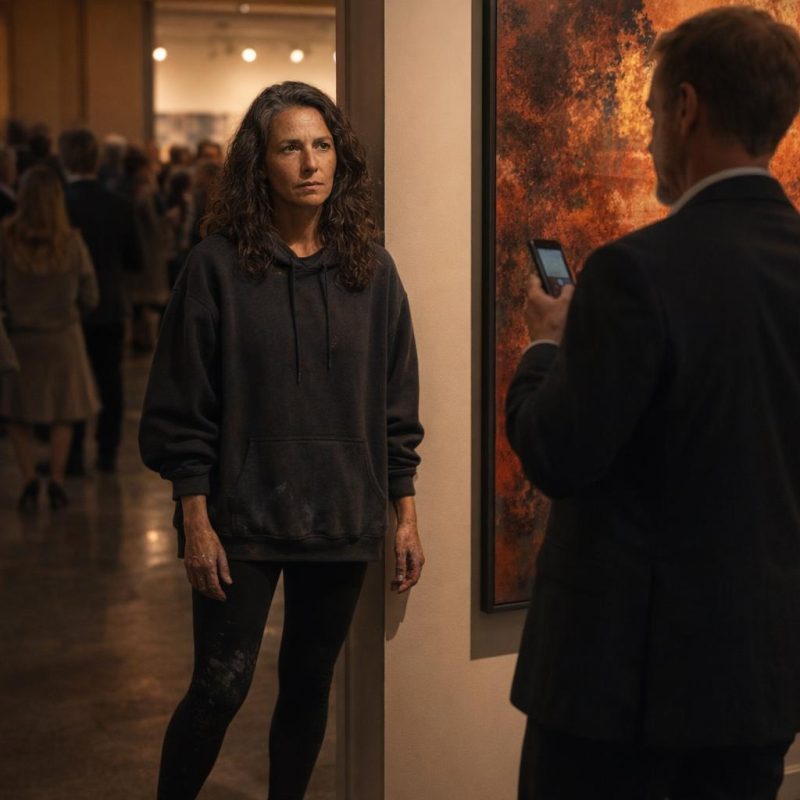 Image by RM AI
The Watcher
I noticed the figure for the first time on a Tuesday, late afternoon, when the light was going flat and the street outside was quiet enough that someone standing still stood out. They were across the street, partially in the shadow of the building opposite — not obviously watching, but not moving either. I mentioned it to Maya, who came to the window and looked, but by the time she got there the person had shifted position and she couldn't make out anything useful. I told myself it was nothing. The next day, same time, same spot. I went to the window more deliberately that time, and the figure turned and walked away before I could see their face clearly — unhurried, like someone who'd simply decided to leave, not like someone who'd been startled. I thought about calling Detective Wu, but I had nothing concrete to give her — no description, no photograph, no certainty that it was even the same person twice. Maya asked me if I wanted her to stay late, and I said no, that I was probably overthinking it. I stood at the window for a while after she left, watching the spot across the street where the figure had been, the pavement empty now, the ordinary foot traffic moving past it in both directions, and the unease that had settled in my chest didn't lift.
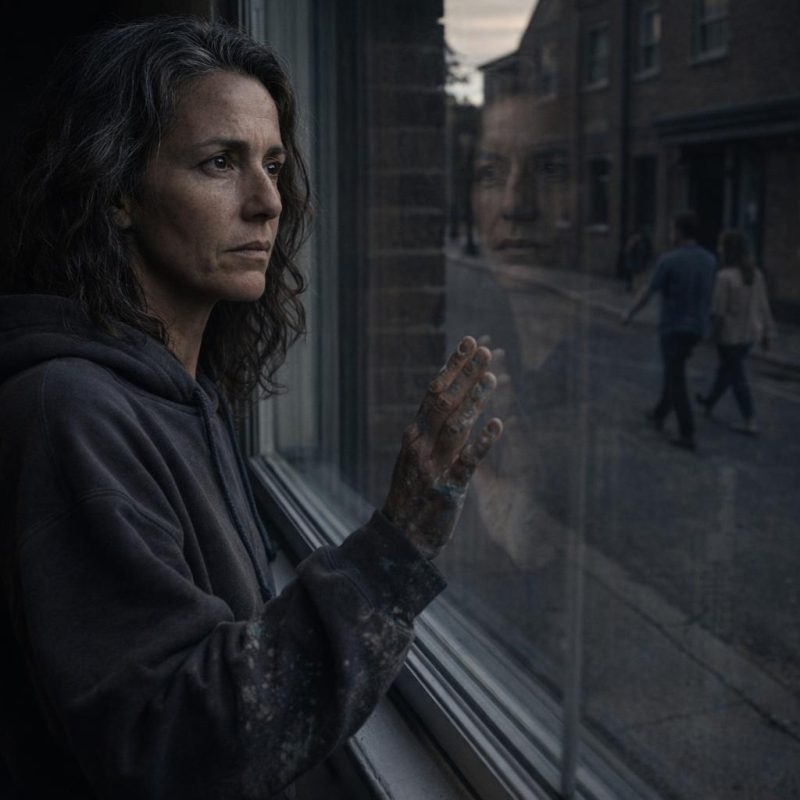 Image by RM AI
The Anonymous Calls
The first call came on a Wednesday afternoon, on the gallery line. I picked up expecting a client inquiry and got silence for a beat too long before a voice — flat, unhurried, neither young nor old — told me to stop asking questions. That was it. Stop asking questions. I asked who was calling and the line went dead. I stood there holding the receiver like an idiot for a moment, then set it down carefully, the way you do when you're trying not to show your hands are unsteady. The second call came the next day, same time, same flat voice, same vague instruction — mind my own business, leave things alone. I asked again who was calling. Same result. I called Arthur immediately and walked him through both conversations, and he listened without interrupting, which is how I knew he was taking it seriously. He told me to document everything — times, exact wording, duration — and to report it to Detective Wu without delay. I did both. I wrote it all down in a notebook I kept in my desk drawer, precise and factual, the way Arthur had taught me to think about evidence. That night, after I locked up, I sat in the quiet of the gallery and listened to the particular quality of silence that follows a call you can't explain.
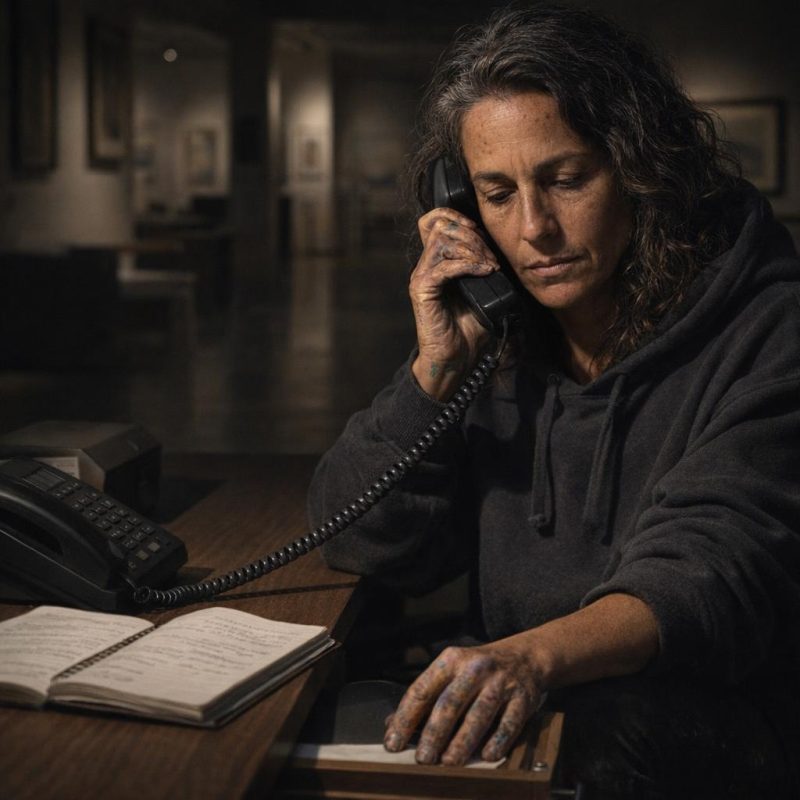 Image by RM AI
The Security Upgrade
I called the security company the morning after the second anonymous call. I didn't frame it as fear — I framed it as prudence, which is what it also was. A gallery holding work of this value should have had better coverage from the start, and I'd been meaning to address it. The timing was simply what it was. They sent a team out within forty-eight hours: new cameras at every entrance, the loading bay, the corridor between the main floor and the storage rooms, and one covering the street-facing window at an angle that caught the pavement across the road. Arthur came by while the installation was underway and walked the floor with me, nodding at each new position with the quiet approval of someone who prefers problems to have practical solutions. Maya noticed immediately, of course. She asked me about it with the careful neutrality of someone who suspects the real answer but isn't sure she wants it. I told her it was a routine upgrade — the collection had grown, the insurance company had flagged the gap, all of which was true enough. She accepted that, or at least she let it go. I stood with the lead installer while he walked me through the coverage map on his tablet, and I watched the live feeds from each new camera come online, one by one, until every entrance was accounted for.
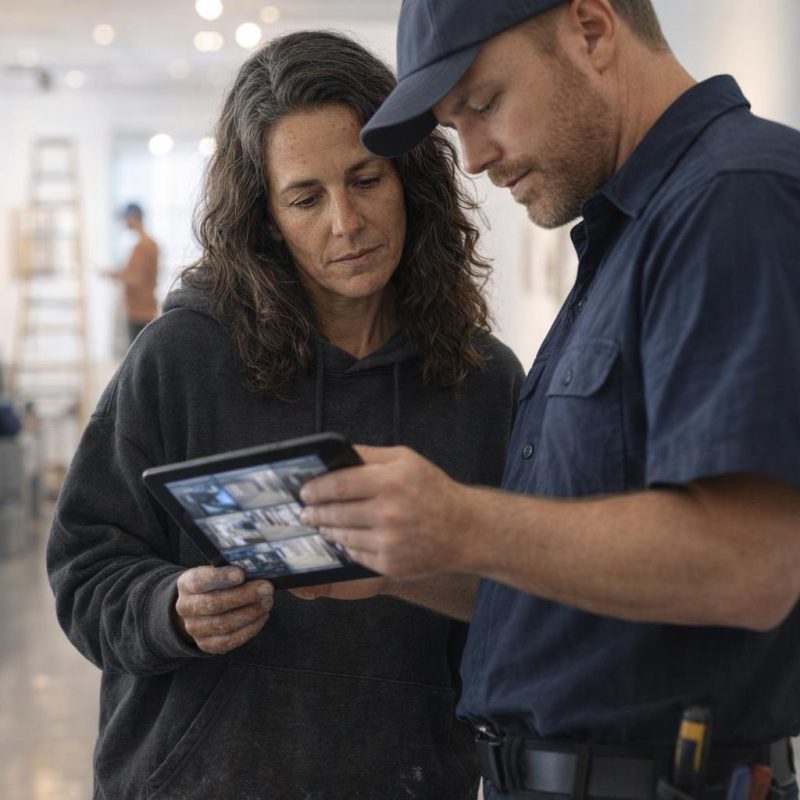 Image by RM AI
The Dealer Connection
Detective Wu called on a Thursday morning with the kind of measured tone that meant she had something concrete. She'd identified one of Victor's primary outside contacts — a dealer named James Cordell, operating out of a gallery in the city's financial district. She said his name had come up in fraud investigations in three other cities over the past several years, nothing prosecuted, but enough to put him on a list. She was sending me a photograph and a summary document. I opened the email while she was still on the line, and the photograph loaded — a man in his early fifties, expensive casual clothing worn with an easy confidence, a smile that arrived slightly ahead of his eyes. I knew that face. I'd seen it at the opening night, the private viewing before the gallery officially relaunched. He'd been charming, knowledgeable, the sort of person who seemed genuinely interested in whoever he was talking to. I'd assumed he was a collector. I told Wu he'd been there that night, that I'd spoken with him briefly near the Hartwell pieces. She asked me to write down everything I remembered about the conversation and to let her know immediately if he made contact again. I said I would, and I meant it.
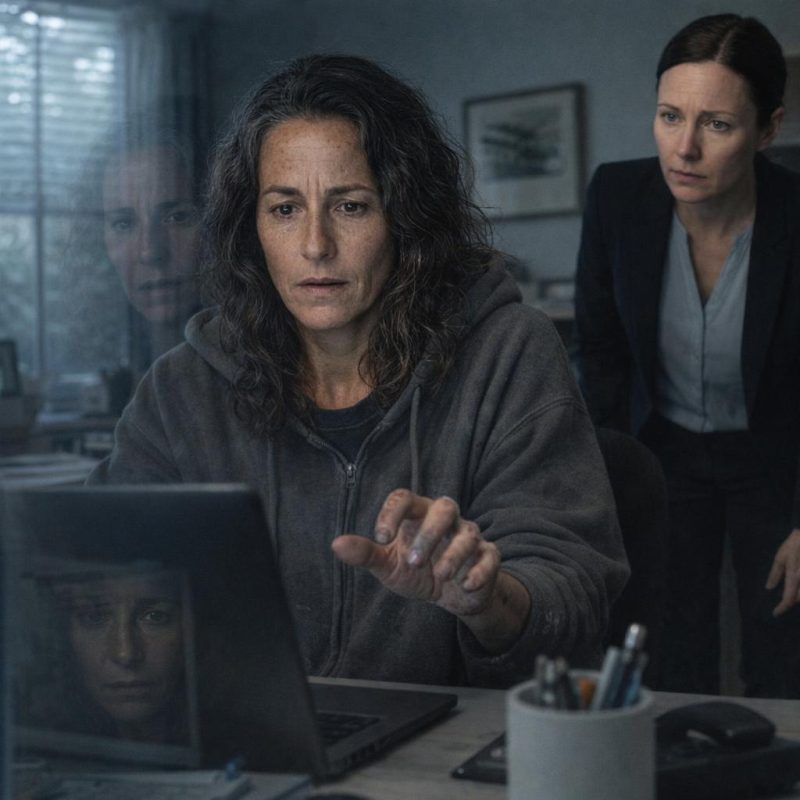 Image by RM AI
The Research
After I got off the phone with Detective Wu, I pulled up everything I could find on James Cordell online. It took about twenty minutes before a pattern started to emerge — not from any single source, but from the accumulation of them. A gallery in Seattle, opened with considerable fanfare, closed quietly eighteen months later. Another in Miami, same arc. One in Chicago, one in Boston. Arthur came in mid-afternoon and I showed him what I'd found, and he sat down at the desk beside me and started cross-referencing business registration databases while I kept searching. The galleries all had professional websites, good press at launch, no obvious complaints or negative coverage at closure — just a clean disappearance, with nothing dramatic to mark the ending. Arthur noted that the timing between openings and closures seemed consistent, almost rhythmic, though he was careful to say that alone didn't prove anything. I compiled everything into a folder — screenshots, registration records, dates, locations — and sent it to Detective Wu with a note flagging the timeline. Then I sat back and looked at the map I'd sketched on a notepad: four cities, four galleries, each one open for less than two years before James Cordell had moved on to the next.
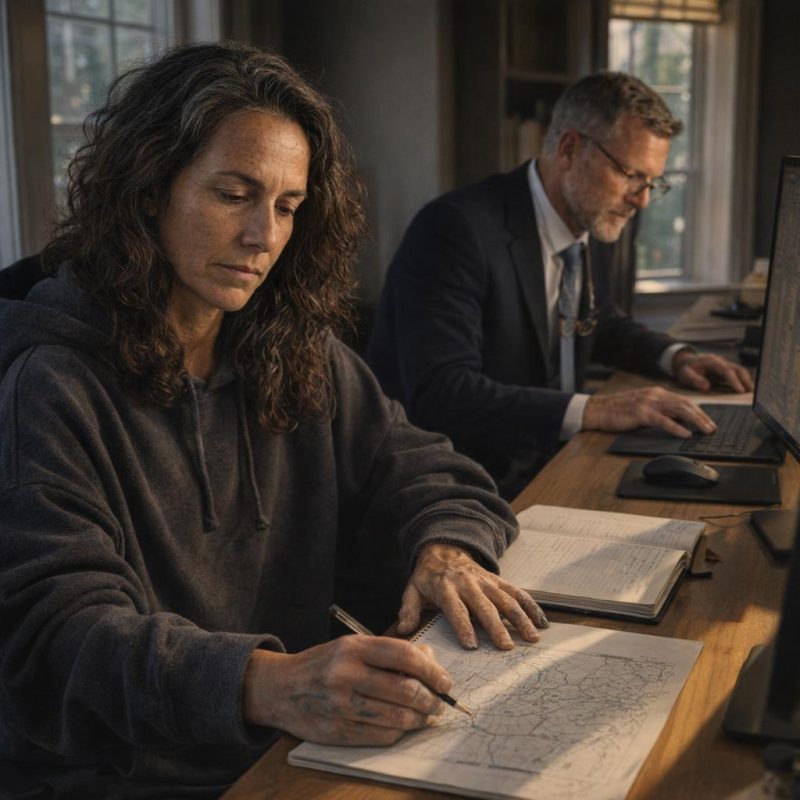 Image by RM AI
The Documentation
Maya knocked on my office door late on a Friday afternoon and asked if she could speak with me privately. She had a USB drive in her hand, which she set on the desk between us before she sat down. She said she'd been keeping copies of certain communications for about eight months — emails between Victor and outside dealers, mostly, things that had passed through the gallery's system while she was managing correspondence. She said she hadn't been asked to save them and hadn't told anyone she was doing it. She'd just felt, she said, that something wasn't right — the secrecy around certain transactions, the way Victor handled specific inquiries differently from others — and she'd wanted a record in case she ever needed one. She wasn't sure what she'd been afraid of, exactly. She just knew she'd been afraid. I thanked her, and I meant it more than I could easily say. I told her she'd done the right thing and that I'd make sure she was protected. After she left, I plugged in the drive and opened the first folder. Months of correspondence, organized by date, between Victor and James Cordell — pricing discussions, shipping logistics, references to pieces I recognized from the gallery's inventory. I sat there in the quiet of the office, reading through what Maya had quietly and carefully preserved, the cursor moving slowly down the screen.
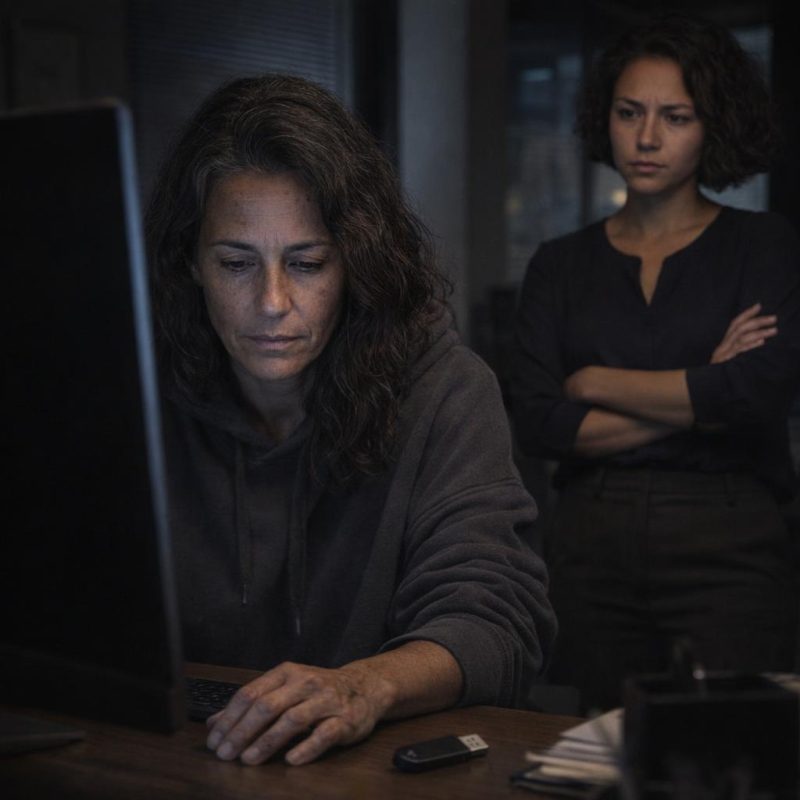 Image by RM AI
The Sales Pattern
Detective Wu spread the sales records across the conference table in three separate stacks — one for each gallery involved — and walked Arthur and me through what her team had pieced together. The scheme, as she explained it, involved selling pieces between galleries in transactions that looked legitimate on paper: proper invoices, documented transfers, market-rate pricing. The result was a paper trail of provenance and sales history that bore no relation to any real change in ownership or value. Arthur traced the money flows on a legal pad while Wu talked, drawing lines between gallery names and transaction dates, and the diagram got complicated quickly. What struck me most was the documentation Wu laid out showing the same works appearing in sales records at multiple galleries over an eighteen-month window — the same pieces, cycling through, accumulating a history with each pass. Wu said she needed more before she could move on arrests: the paper trail was suggestive but not yet airtight, and she wanted the case to hold when it got to a prosecutor. I understood the caution even if I found it difficult to sit with. After Wu and Arthur left, I stayed at the table for a while, the records still spread out in front of me, looking at the same titles appearing again and again across different cities and different dates.
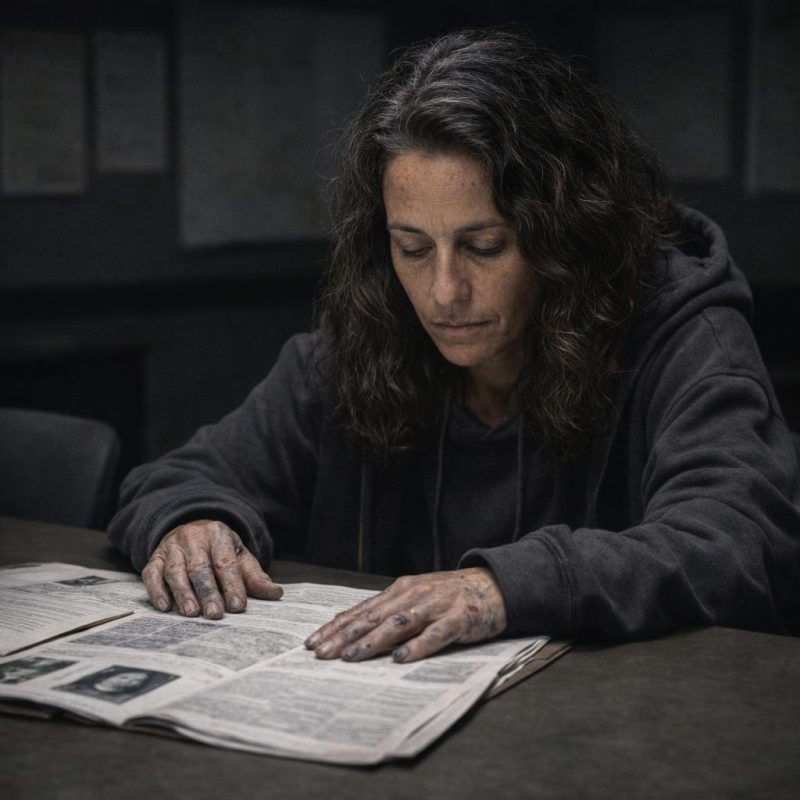 Image by RM AI
The Interview Plan
Detective Wu's proposal was straightforward in the way that only complicated things manage to be. Victor hadn't filed a wrongful termination claim yet — his lawyer had sent a letter, but nothing had been lodged with the court — which meant there was still a window to approach him through the civil process before he had reason to be fully defensive. Wu suggested framing a deposition request as part of a settlement discussion around the termination: routine, administrative, the kind of thing lawyers arrange between themselves without anyone's alarm bells going off. Arthur thought it was workable. He said the documentation he'd prepared around the termination was solid enough to justify the deposition on its own terms, independent of anything else. Wu walked me through the questions she wanted covered — financial arrangements with outside dealers, provenance documentation procedures, the approval process for acquisitions — all framed as standard operational inquiry. We rehearsed it twice, Wu playing a version of Victor that was more cooperative than I expected him to be, which she said was deliberate: prepare for the easier version and the harder one takes care of itself. I asked what role she'd play during the actual session. She said she'd be present as my consultant, which was accurate enough to be defensible. At the end of the meeting, I picked up the phone and called Arthur's contact at Victor's law firm to arrange a formal deposition.
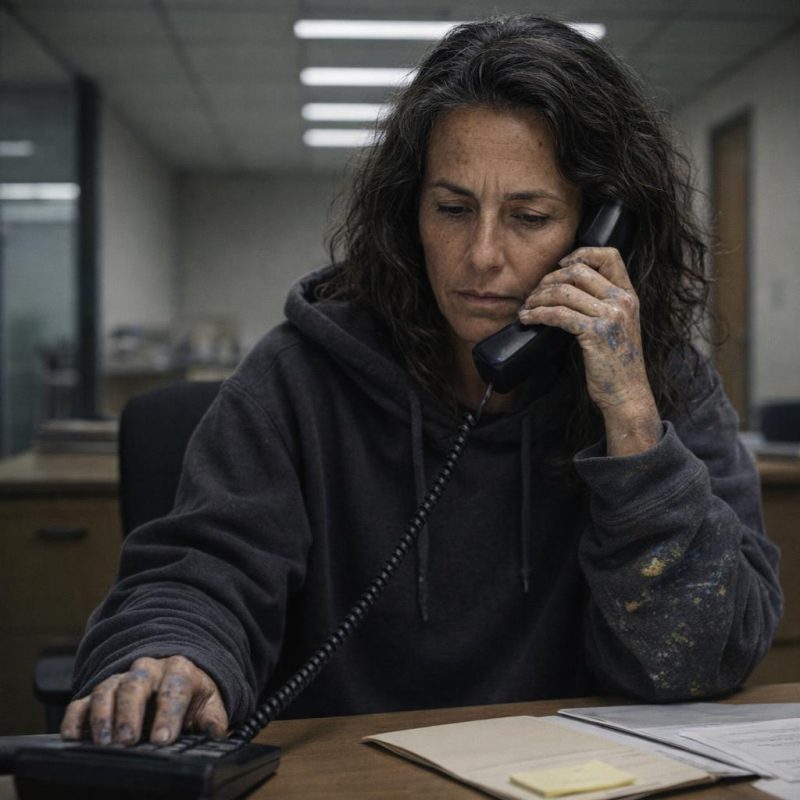 Image by RM AI
The Subpoena
The subpoena was served on a Tuesday. I wasn't there — Arthur had arranged it through a process server, and I'd deliberately kept myself away from anything that might look like personal involvement in the mechanics of it. Wu called me that afternoon to confirm it had been received and signed for. Victor's lawyer had apparently called Arthur's office within the hour, which Wu said was about what she'd expected. The deposition was scheduled for ten days out, which gave us time but not much of it. Arthur and I spent the next two evenings going through the questions in sequence, refining the order, making sure each one was grounded in documentation we could produce if challenged. Wu came by on the second evening and added three questions of her own, each one precise and quietly devastating in the way that only questions with known answers can be. I prepared the conference room myself — table cleared, chairs arranged, the recording equipment tested twice. The evidence folders were stacked in order on the credenza behind my seat. Everything that could be done before Victor walked through that door had been done. I sat in the prepared room after Arthur and Wu had gone, in the particular stillness of a space made ready for something that hadn't happened yet.
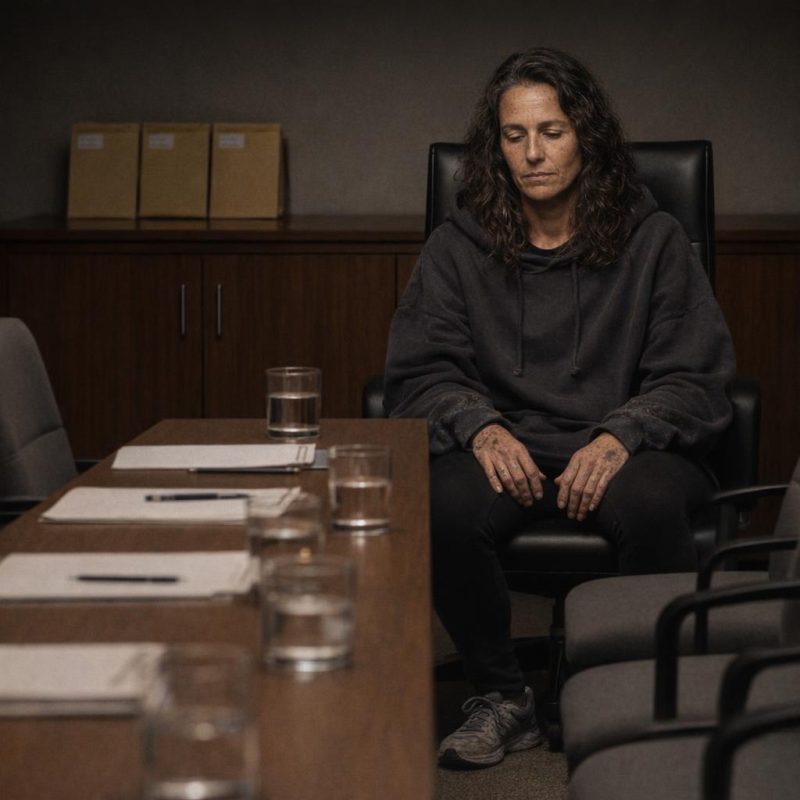 Image by RM AI
The Arrival
Victor arrived at nine-fifteen, which was fifteen minutes late and almost certainly intentional. He came in with a lawyer I didn't recognize — younger than I'd expected, with the kind of suit that announces itself before the person wearing it does. Victor himself looked exactly as I remembered: razor-sharp haircut, meticulously tailored jacket, the practiced ease of someone who has never once doubted that a room belongs to him. He didn't look at me when he walked in. Arthur was already seated to my left, the evidence folders arranged in front of him with quiet precision. Detective Wu sat at the far end of the table, a legal pad open, pen uncapped. I introduced her as my consultant without elaborating, and Victor's lawyer noted it without comment. The lawyer asked to review the deposition parameters before we began, which Arthur handled in the measured, unhurried way he handles everything. Victor took his seat across from me and kept his eyes on the table, or on his lawyer, or on the middle distance — anywhere, it seemed, but my face. The recording equipment hummed softly. Outside, the gallery was open, people moving through the rooms, entirely unaware of what was happening in here. I sat with the particular weight of that — four months of work, and now he was finally in the same room as the evidence.
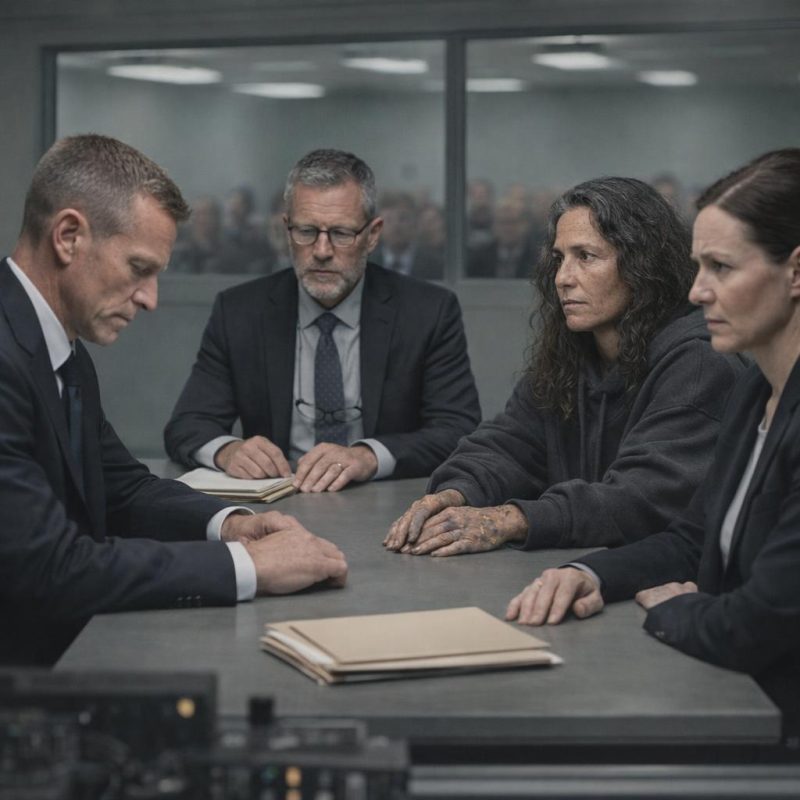 Image by RM AI
The Counterstrike
We hadn't been seated ten minutes when Victor's lawyer reached into his briefcase and slid a document across the table toward me. It landed with the flat, deliberate sound of something that had been rehearsed. "Ms. Thorne," he said, "my client is filing a wrongful termination lawsuit against you and the Thorne Group. You'll find the complaint outlines damages of eight million dollars, inclusive of lost compensation, reputational harm, and emotional distress." I looked at Arthur. His expression didn't change, but something behind his eyes did — a small, careful recalibration. Detective Wu didn't look up from her legal pad. I picked up the complaint and read the first page. Victor's name, my name, eight million dollars, wrongful termination without cause. The lawyer continued talking — something about proceeding regardless of today's deposition, something about the strength of their position — but his voice had gone slightly distant, the way sound does when your brain is working too hard on something else. Victor was watching me from across the table. I could feel it without looking up. I turned to the second page of the complaint, then the third. Arthur reached over and quietly asked to review the filing. I handed it to him and looked back at Victor's lawyer. Then Arthur set the document down between us, and I read the full damages figure again.
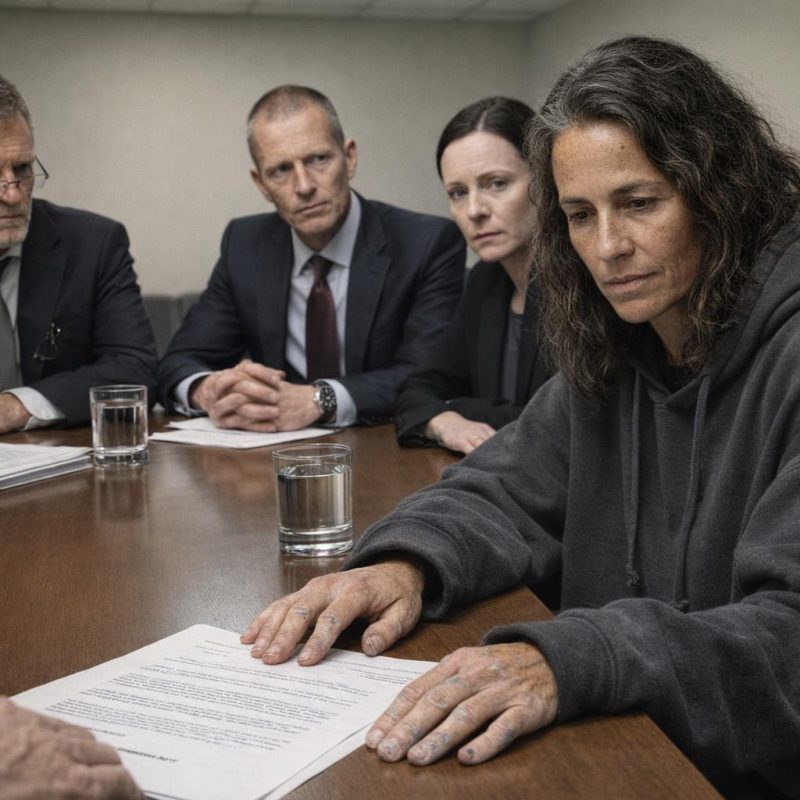 Image by RM AI
The Accusations
The lawyer's argument was almost elegant in its construction, which made it worse. He said Victor had been enforcing the gallery's established professional standards — standards, he noted, that had been praised by the previous ownership for years. He said I had taken personal offense at those standards because they reflected on my own appearance. He used the phrase "targeted enforcement" and then, without pausing, "discriminatory termination." Arthur objected to the characterization immediately, pointing out that I was the gallery's owner at the time of the incident and that an owner cannot discriminate against her own establishment's dress code by existing in it. The lawyer acknowledged the ownership point and then set it aside with practiced smoothness, arguing that ownership does not insulate an employer from wrongful termination claims. I said, evenly, that Victor had verbally abused a patron in front of witnesses. The lawyer said Victor had been protecting the gallery from a disruptive presence. I said the disruptive presence was me. The lawyer said that was precisely the problem — that I had used my ownership to retaliate against an employee for doing his job. Victor still hadn't spoken. He sat with his hands folded on the table, watching the lawyer work. The story being told in that room had almost nothing to do with what had actually happened, and the lawyer told it in a voice that was flat and certain and entirely without hesitation.
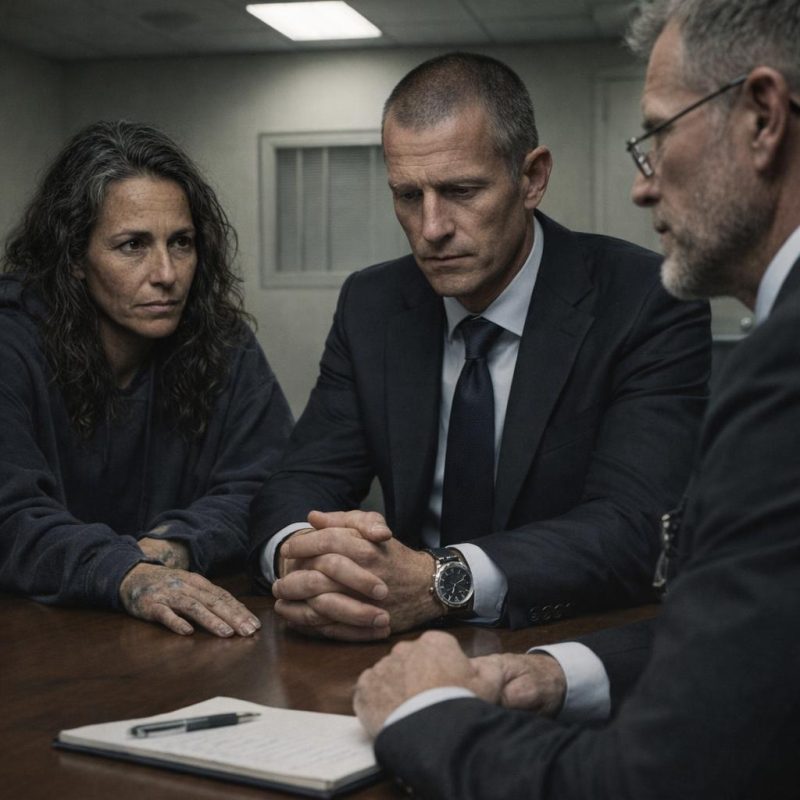 Image by RM AI
The Media Storm
The first article appeared two days after the deposition. By the third day there were four more. Maya brought them to me in a stack — printed from art world publications and two general interest sites that covered collector news — and set them on my desk with the careful expression of someone delivering bad news they wish they didn't have to deliver. The framing was consistent across all of them: prominent curator terminated by new gallery owner, lawsuit alleges discrimination and retaliation, sources close to Victor describing a professional with impeccable standards and a long record of institutional achievement. My name appeared in each piece. My hoodie appeared in two of them, described in ways that made it sound like evidence. Arthur called that afternoon and told me not to respond publicly under any circumstances — that anything I said would be used to complicate the fraud investigation, which could not be disclosed. Detective Wu said the same thing when she checked in that evening, more briefly and with less apology. I understood the logic. I even agreed with it. But understanding something and sitting inside it are different experiences entirely. My phone had seventeen missed calls from collectors I knew, and I hadn't returned any of them. I opened my laptop that night and read the headline again: *Gallery Owner Fires Award-Winning Curator for Enforcing Standards — Lawsuit Seeks Eight Million.*
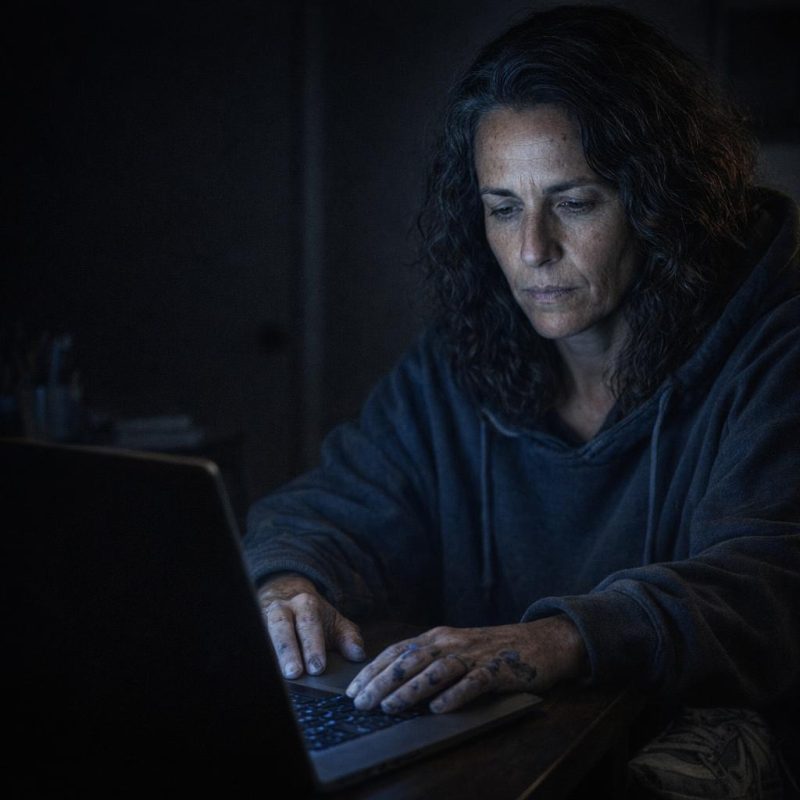 Image by RM AI
The Engineered Confrontation
Wu called on a Thursday morning and asked me to come in. Not to the gallery — to her office. Arthur was already there when I arrived, which told me something before anyone spoke. Wu had a laptop open on the conference table and a printed report beside it. She walked me through it without preamble. Victor's work computer, accessed under the warrant, showed a series of searches conducted four days before the confrontation: my name, the Thorne Group, the gallery acquisition, the press release Arthur had filed with the arts council. Wu showed me the browser history on screen — timestamps, search terms, the specific articles he'd clicked through. He had read the acquisition announcement. He had looked up my photograph. He had cross-referenced my other holdings. "He knew," Wu said. "When he walked up to you in that gallery, he knew exactly who you were." Arthur said something about the implications for the lawsuit, but I wasn't fully tracking it yet. Wu explained the rest: a comprehensive audit had been scheduled by Sterling before the sale closed, set to begin the week after the confrontation. Victor had known about it. Being terminated gave him grounds to refuse cooperation, to claim the audit was retaliatory, to put distance between himself and the gallery's books before anyone could look closely. Wu turned the laptop toward me and pointed to the final search in the log — conducted the morning of the confrontation, two hours before I walked through the door.
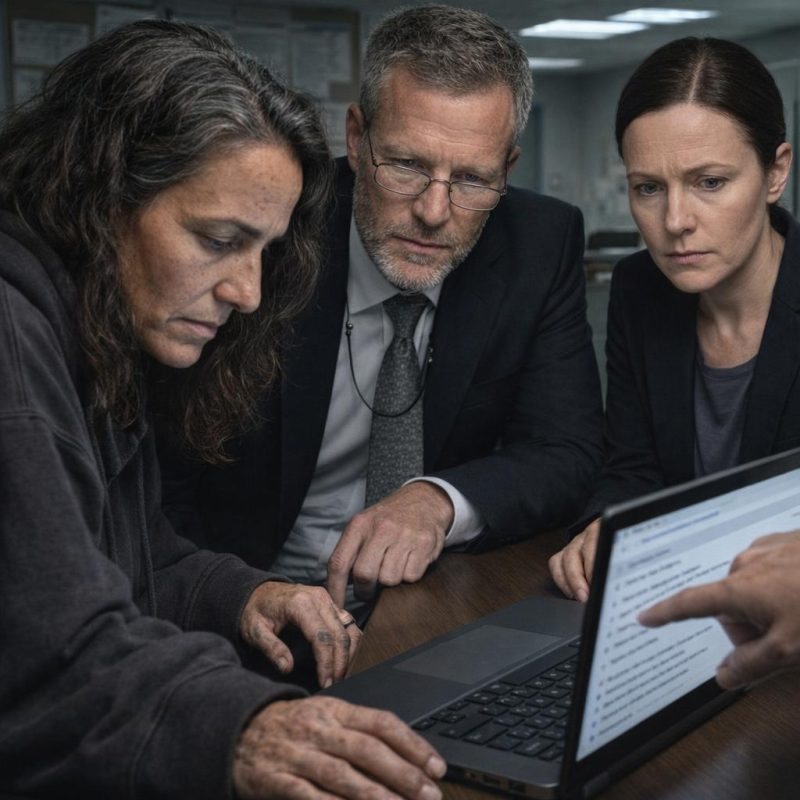 Image by RM AI
The Reframing
I drove back to the gallery and sat in my office without turning the lights on. Arthur came with me and made tea I didn't drink. I kept going back to the moment Victor had looked at my hoodie and said what he said — the specific words, the specific tone, the way he'd made sure the room could hear him. I had thought it was arrogance. I had thought it was the particular cruelty of someone who had never been told no. Arthur said, quietly, that Victor had needed the termination to be immediate and unambiguous. He'd needed me angry enough to act without hesitation, and he'd needed witnesses so the firing would be on record before anyone thought to ask questions. The refusal to check the guest list — that wasn't carelessness, Arthur said. That was Victor keeping his hands clean of any acknowledgment that he knew who I was. Every insult had been calibrated to land past the point of no return. I had fired him in front of four people within ten minutes of walking through the door, which was, Arthur said carefully, exactly what Victor had needed me to do. I sat with that for a long time after Arthur stopped talking. The tea went cold. The gallery hummed quietly on the other side of the wall, and I stayed in the dark with the hollow understanding that I had been useful to Victor in precisely the way he had required.
 Image by RM AI
The Audit Timeline
Arthur had found the audit documentation in the files Sterling had transferred at closing — a formal engagement letter from an independent accounting firm, dated six weeks before the sale. Sterling had ordered it himself, Arthur explained, after noticing irregularities in the quarterly reports. The audit was scheduled to begin on a Monday. I had fired Victor on the previous Tuesday. Seven days. Arthur laid the engagement letter on the desk beside the browser history Wu had printed, and the two documents sat there together in a way that didn't require much interpretation. Wu confirmed that the audit scope would have covered exactly the accounts where the embezzlement was concentrated — the acquisition fund, the consignment ledger, the private sales records. Being terminated, she explained, gave Victor a clean reason to be absent, to be uncooperative, to direct any questions to his lawyer. It also gave him a narrative: he hadn't fled, he'd been pushed out. The lawsuit wasn't just a counterstrike against me, Wu said. It was cover. It kept the story about wrongful termination instead of about what the auditors would have found. I looked at the two documents on the desk — the audit letter with its Monday start date, the browser search log with its Tuesday morning timestamp. Victor had had a window of days, and he had used every one of them.
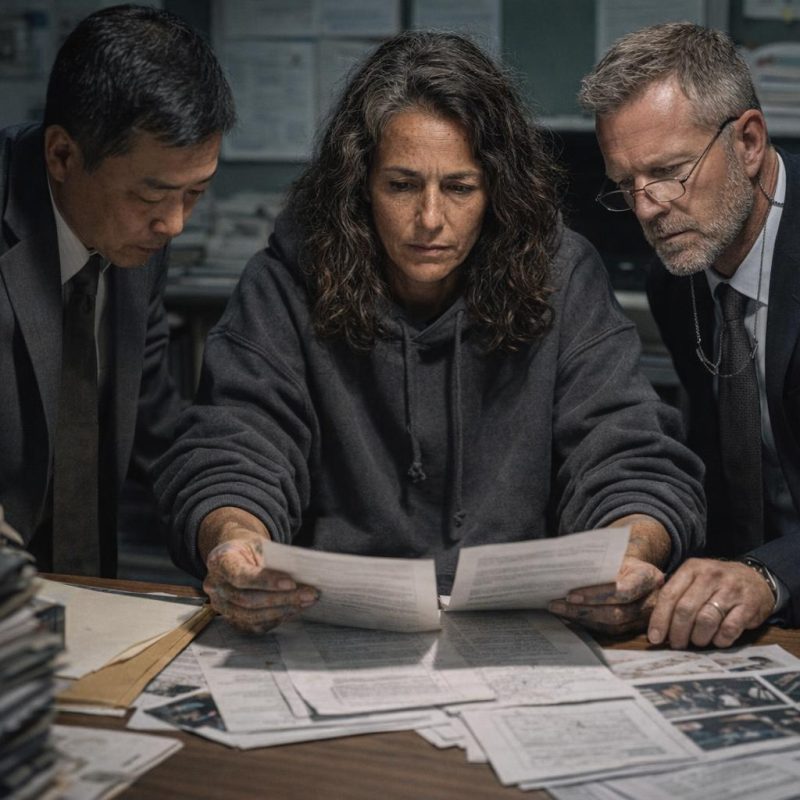 Image by RM AI
The Private Event
Wu came to the gallery the following week with a financial analyst from her unit and a binder that was two inches thick. She set it on the conference table and opened it to a section tabbed in red. The private viewing — the one I had walked in on, the one Victor had tried to remove me from — had generated just under three million dollars in sales over the course of that single evening. Wu walked me through the buyer list: shell companies registered in three different jurisdictions, two intermediary dealers with no verifiable client base, one private trust that her unit had already flagged in a separate investigation. The pieces sold that night were not what the certificates of authenticity said they were. Arthur asked about the provenance documentation, and Wu's analyst answered with the particular economy of someone who has explained something damning many times before. The money had moved through four accounts in two days and was effectively untraceable by conventional means. Wu said Victor had been running the private event circuit for at least two years, and that the night I walked in had been one of his larger operations. My arrival had compressed his timeline, she said — he'd had to close the event early and accelerate everything that followed. I turned to the transaction summary at the front of the binder: three million dollars, one evening, every sale a fiction. The number sat on the page in plain type.
 Image by RM AI
The Severance Strategy
Arthur laid it out in terms I couldn't misread. Victor's lawyer had filed the wrongful termination suit within seventy-two hours of his dismissal — faster than any legitimate grievance process would move, Arthur said, which told you everything about what the suit was actually for. Wu leaned forward and put it plainly: the eight million dollar demand wasn't about principle or lost wages. Victor had been liquidating assets for weeks. The offshore transfers Wu's unit had traced were moving in one direction. He needed liquid cash, and he needed it before the criminal charges caught up with him. The lawsuit was his exit fund. I sat with that for a moment — the idea that he expected me to write him a check that would put him on a plane somewhere without an extradition treaty. Arthur noted that Victor's lawyer had already made two informal settlement overtures, both framed as opportunities to avoid prolonged litigation. Wu said that was consistent with someone working against a deadline. I told them both I wasn't settling. Not for eight million, not for eight dollars. Wu said the fraud evidence would gut the wrongful termination claim anyway — you can't sue for lost employment when the employment itself was a criminal enterprise. Arthur agreed. I looked at the number on the page one more time and felt something settle in my chest that wasn't quite anger and wasn't quite calm, but sat somewhere between the two.
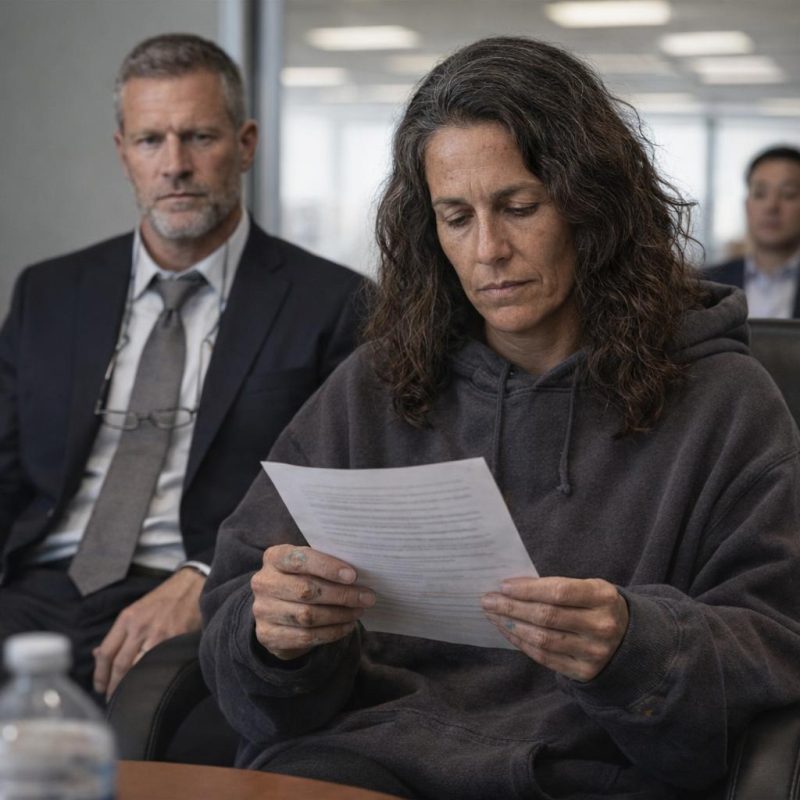 Image by RM AI
The Warrant
Wu arrived on a Tuesday with a sealed evidence folder and the particular expression of someone who has found exactly what they went looking for. The warrant had come through four days earlier, and her unit had spent the intervening time going through Victor's email accounts and financial records with the kind of thoroughness that makes defense lawyers nervous. She spread printed emails across the conference table in chronological order. The earliest ones were between Victor and James, dated fourteen months back, discussing authentication certificates and which provenance documents were easiest to replicate. The language was careful but not careful enough — they'd used personal accounts, not encrypted channels, which Wu said was the most common mistake people make when they think they're untouchable. Then she slid a page toward me and pointed to a thread from three weeks after my purchase of the gallery went through. I read it slowly. Victor had written to James that the timeline needed to move up. The new owner was asking questions, he said. She doesn't know what she's looking at yet, but she will. Wu watched me read it. Arthur made a note. I read the line again — she doesn't know what she's looking at yet, but she will — and felt something that wasn't quite vindication but was close enough to recognize.
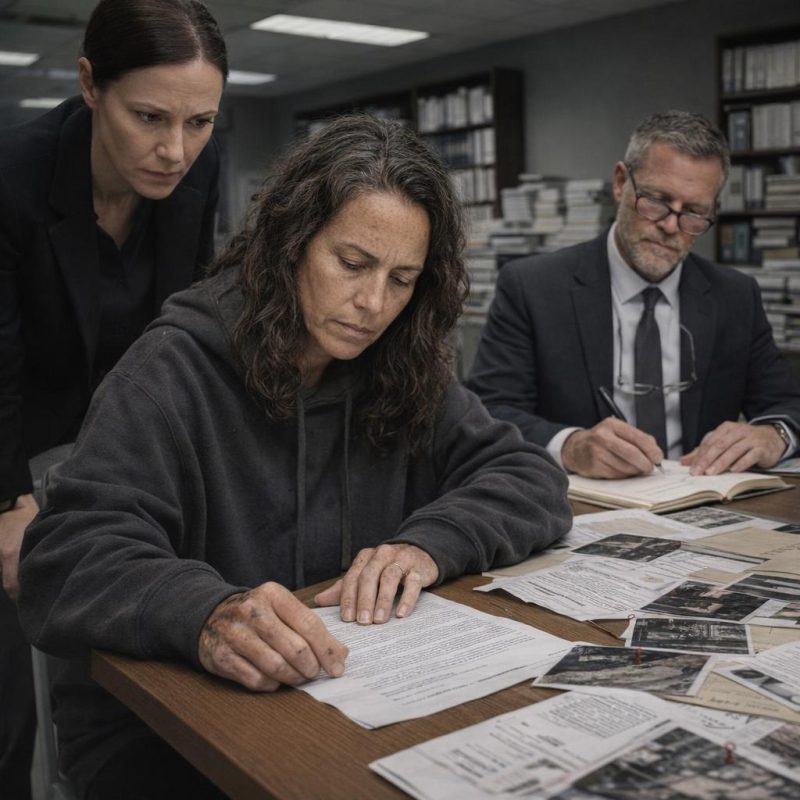 Image by RM AI
The Filing
Wu filed on a Thursday morning. Arthur and I were at the courthouse by eight-thirty, which felt early for something this significant, but the law keeps its own schedule. The charging documents ran to forty-one pages. Fifteen counts between the two of them — fraud, money laundering, embezzlement, conspiracy. Wu walked us through the summary version in a corridor outside the clerk's office while people moved past us with their own urgent business, none of them knowing what had just been set in motion. Arthur reviewed the language on the embezzlement counts and said it was airtight. Wu said the warrant evidence had given the prosecutors more than they needed. By noon, the filing was public record. By two o'clock, my phone had started ringing with numbers I didn't recognize — reporters, Arthur confirmed, after checking one of them. I didn't answer. I didn't need to say anything. The documents said it. I sat in Arthur's car in the courthouse parking structure while he handled a call, and I thought about Sterling, who had built that gallery over thirty years and had no idea what had been happening inside it. The charging documents were in a folder on my lap. The weight of them felt appropriate.
 Image by RM AI
The Flight Risk
Wu called at six-fifteen in the morning, which told me before she said a word that something had moved. James had been stopped at the international terminal the previous evening — carry-on luggage, a passport that didn't hold up to secondary screening, and just under two million dollars in banded cash distributed across three bags. Wu said he'd been booked on a flight to a country she named that I recognized immediately as one without an extradition arrangement with us. The cash was consistent with the offshore transfers her unit had been tracking. His lawyer had appeared within the hour and filed for bail, which the judge denied before the end of the hearing. Wu's voice was even when she told me all of this, the way it always was, but I'd learned to read the pauses. She was satisfied. I asked about Victor. She said warrants were active and his last known address had been checked, but he hadn't been located yet. I thanked her and stayed on the line a moment after she'd finished, looking out the window at nothing in particular. James had been forty minutes from a departure gate. The thought of how close it had come settled over me, and then the thought of where he was now — in a holding facility, bail denied, going nowhere — settled over that.
 Image by RM AI
The Deposition Revisited
Victor came in with his lawyer and sat down across the table like a man who had rehearsed composure so many times it had become a reflex. He looked the same — the tailored jacket, the careful posture, the expression that suggested mild inconvenience rather than criminal exposure. His lawyer had already filed three motions to limit the scope of questioning, all of which had been denied. Wu opened without preamble. She placed a printed email in front of him and asked him to confirm the account it came from. His lawyer objected. The objection was noted and overruled. Victor said he couldn't recall the specific correspondence. Wu placed a second email beside the first, then a third. Bank records followed — the offshore account numbers, the transfer dates, the amounts that matched the private viewing sales almost exactly. Victor's lawyer leaned in and whispered something. Victor straightened slightly and said he would need to consult with counsel before answering further questions. Wu slid one final page across the table — the email thread about accelerating the timeline, the one with the line about the new owner. I watched Victor's face as he read it. The practiced calm held for a moment, and then something underneath it shifted.
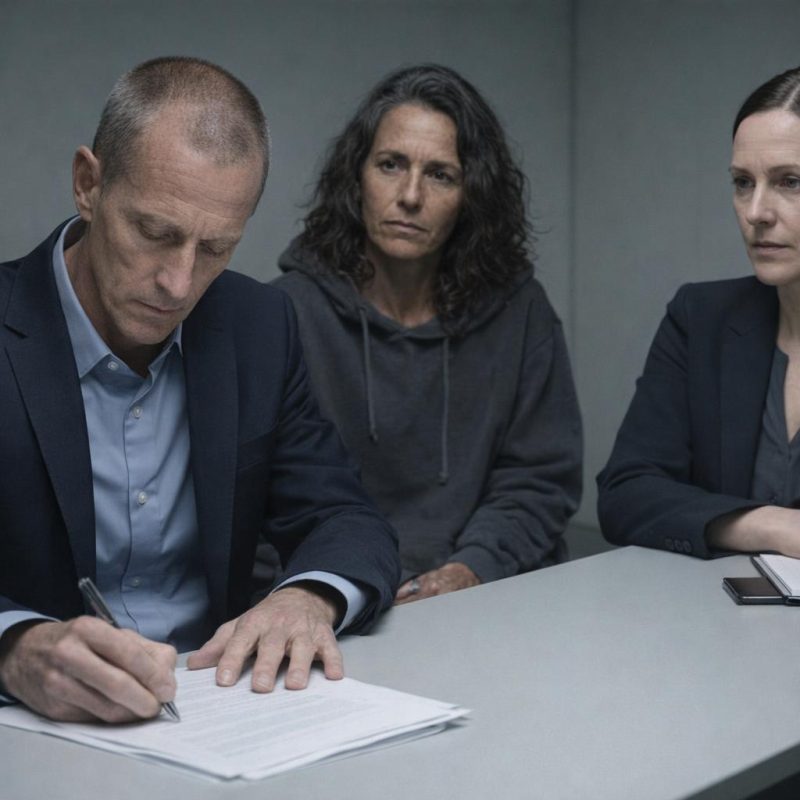 Image by RM AI
The Immunity Deal
The immunity deal took three days to negotiate. Victor's lawyer came back with conditions; the prosecutors came back with counter-conditions; Wu called me twice to explain where things stood and once to tell me the deal had been accepted. I wasn't in the room when Victor signed, but I was there two days later when he sat across from Wu and Arthur and me and began to talk. He was quieter than I'd ever seen him. The practiced performance was gone — no charm, no condescension, just a man reading from a prepared statement his lawyer had approved. He confirmed the fraud at the gallery. He confirmed the embezzlement from Sterling — four million dollars over six years, moved in increments small enough to avoid automatic flags. He described the money laundering structure in terms that were almost clinical. Arthur took notes without looking up. Then Wu asked Victor to describe the full scope of the network, and he did. He said it without hesitation, the way you say something you've been carrying for a long time and are finally allowed to put down. Fifteen galleries, he said. Six cities. The operation had been running for five years before I ever walked through the door of The Gilded Frame.
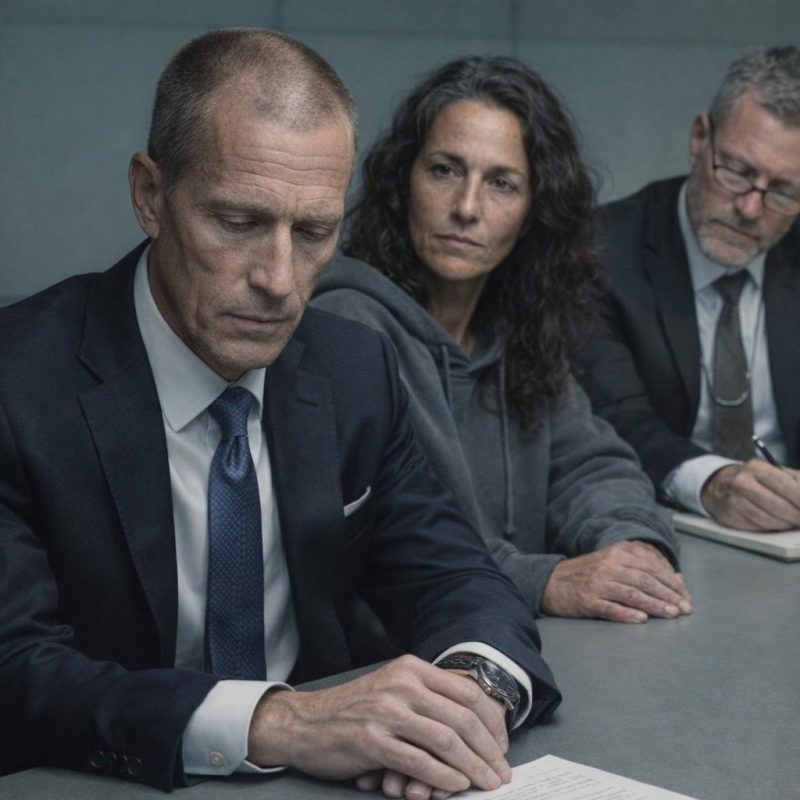 Image by RM AI
The Network Exposed
Wu brought the map to Arthur's conference room on a Friday afternoon — an actual printed map, the kind you pin things to, with colored markers and lines drawn between cities. Fifteen galleries. Six cities. Twelve dealers who had moved product through the network, some of them knowing exactly what they were handling, some of them — Wu was careful about this — still under investigation to determine which category they fell into. The total figure she put on the table was fifty-three million dollars. That was the conservative estimate, she said, based on confirmed transactions. The actual number was likely higher. Arthur asked about the galleries whose owners had been victims rather than participants. Wu said that determination was ongoing, but preliminary findings suggested at least four owners had been defrauded the same way Sterling had been — running what they believed were legitimate operations while someone on their staff was running something else entirely. I looked at the map. My gallery was marked with a small red dot near the center of the eastern cluster. One piece. Not even the largest piece. I had walked in on a single evening of a five-year operation and thought I was seeing the whole picture. Wu tapped the map and said the investigation would continue for at least another eight months.
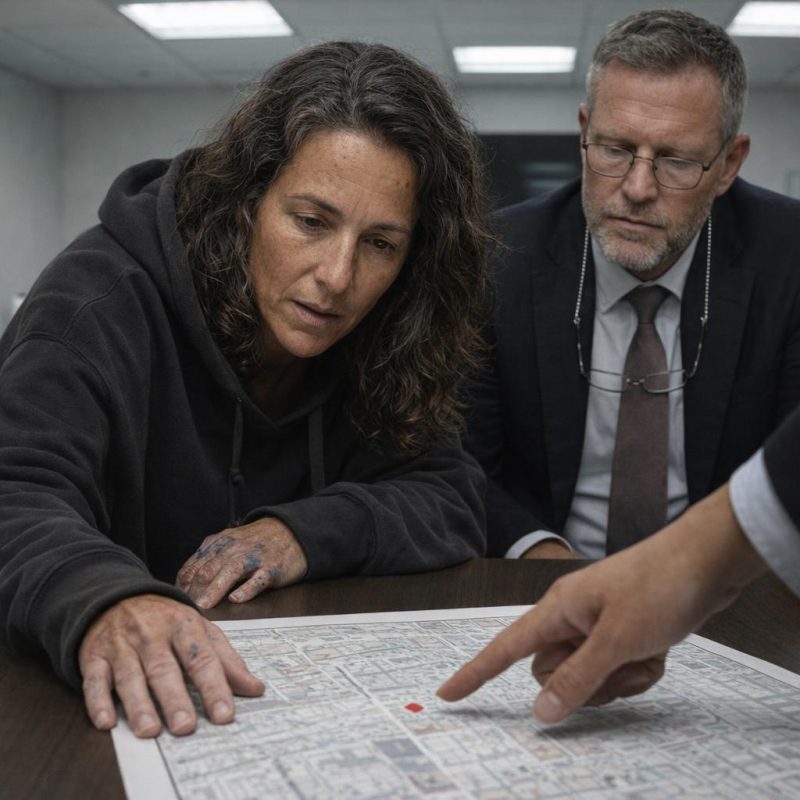 Image by RM AI
The Testimony
Arthur prepared me for the grand jury testimony over two sessions in his office, walking me through the questions I'd likely face and the ones I should answer carefully. Wu sat in on the second session and added her own notes. The morning of, I put on something that wasn't a hoodie, which felt like its own kind of statement. Arthur walked me into the courthouse and we sat in a corridor outside the jury room for twenty minutes without talking much. When they called me in, I sat down, stated my name, and began. I described the night I fired Victor — the private viewing, the attempt to remove me from my own gallery, the moment I understood what I was actually looking at. I described finding the provenance discrepancies, the financial irregularities, the emails. I described Sterling, who had spent thirty years building something and had it hollowed out from the inside. The grand jury asked questions I hadn't anticipated, and I answered them as precisely as I could. When it was over, I walked back out into the corridor where Arthur was waiting. I had been under oath for just over an hour. I had said everything I knew to be true, in a room where it would be recorded and used, and the steadiness I felt afterward was something I hadn't expected but recognized immediately as relief.
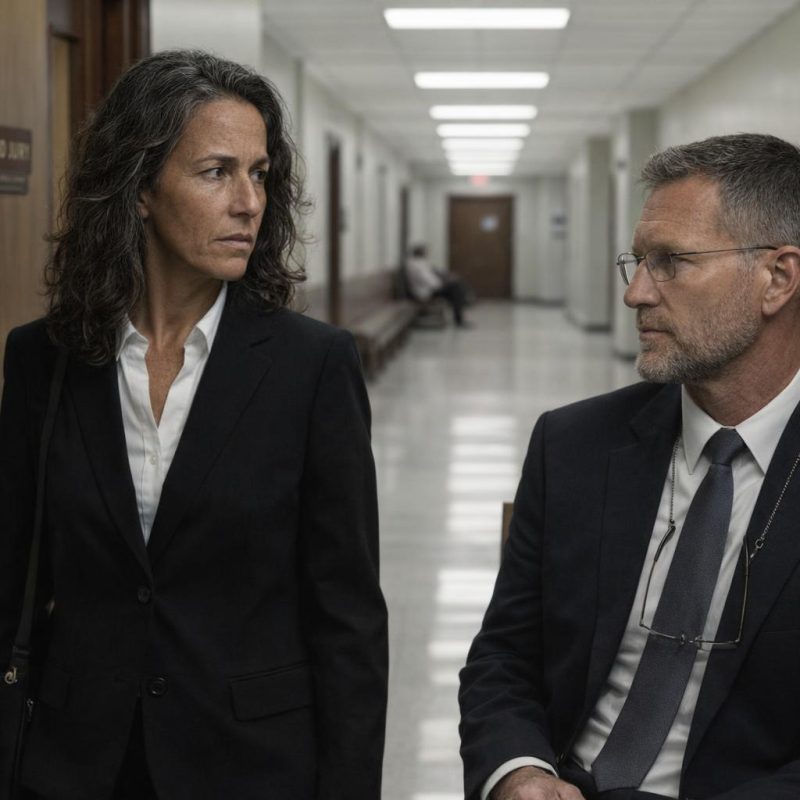 Image by RM AI
The Indictments
Wu called me on a Tuesday morning, and I knew from the first syllable that it was done. She didn't lead with pleasantries. She said the indictments had been filed, fourteen defendants in total, and that Victor and James were among them facing the most serious charges — fraud, money laundering, and conspiracy. I sat down on the edge of my kitchen counter and just listened. Arthur was already on his way over; Wu had called him first, which I appreciated more than I said. When Arthur arrived, he set his briefcase down, poured himself a coffee without asking, and told me that Victor's wrongful termination lawsuit had been dismissed. The prosecutor had cited the criminal evidence as proof of just cause, which meant the gallery was no longer carrying any legal liability. A few media outlets that had run the lawsuit story sent what amounted to apologies — carefully worded, legally hedged, but apologies nonetheless. I read through the indictment document that afternoon, sitting at the kitchen table with Arthur across from me. Fourteen names in a numbered list, and there, on the second page, were Victor's and James's, each followed by a column of charges that filled half the margin.
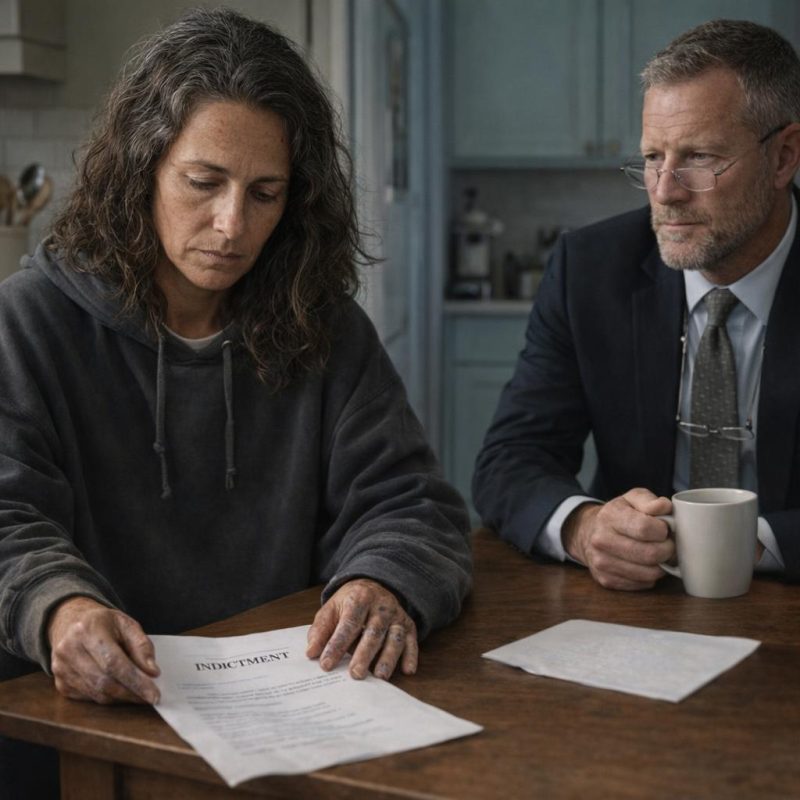 Image by RM AI
The New Protocols
Maya came in early every day that week, which told me everything I needed to know about where her head was. We spread the new authentication framework across the conference table — provenance checklists, multi-expert sign-off requirements, a transparent documentation chain that would follow every acquisition from first contact to final hanging. She had built most of it herself over the previous two weeks, and it was good work, careful and thorough. I added an independent oversight committee, three external specialists with no financial relationship to the gallery, and Arthur drafted the financial controls policy in language that left no interpretive wiggle room. Every major transaction would require multiple staff witnesses. Every provenance claim would be verified against at least two independent sources before any money moved. Maya trained the staff on the new procedures over three sessions, and I sat in on all of them. I watched her explain the documentation system with the kind of quiet authority that comes from having seen what happens when the systems fail. By the end of the week, the gallery felt different — not heavier, but more solid, like something that had been built to last rather than to impress. I started reaching out to collectors, one by one, and the steadiness in my own voice surprised me each time.
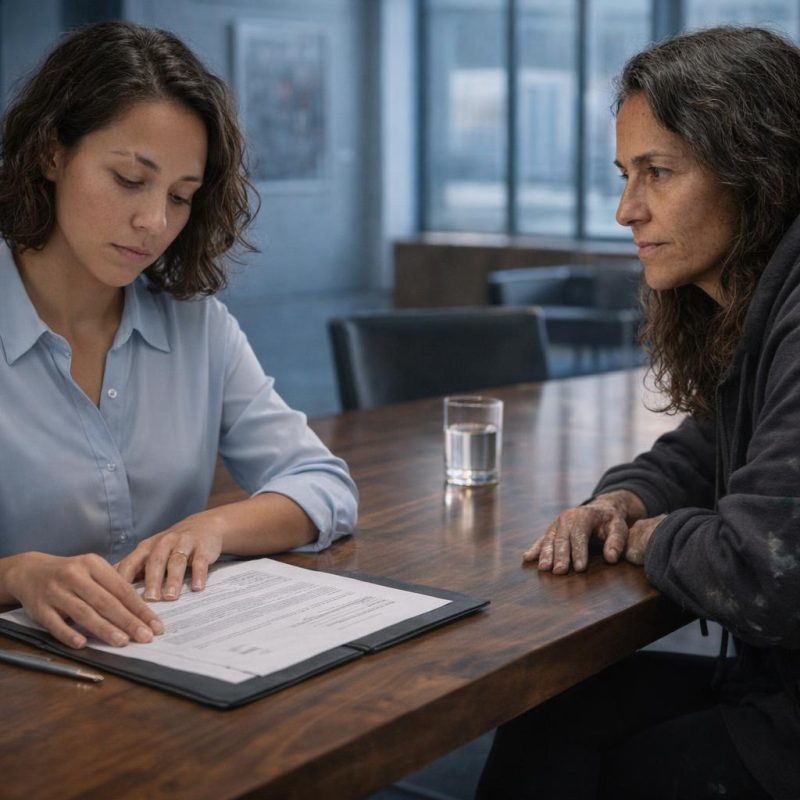 Image by RM AI
The Support
The reopening event was on a Thursday evening, and by seven o'clock the gallery was full in a way that felt earned rather than performed. Rebecca arrived early, which was not her habit, and she told me in front of three collectors that what I had done took more nerve than most people in this industry would ever admit to needing. I thanked her and meant it. Sterling came in near eight, moving carefully through the crowd, and when he found me he held my hand in both of his for a moment before he said anything. He told me he had spent thirty years building the gallery and had not seen what was happening inside it, and that he was grateful someone had. I didn't know what to say to that, so I just nodded. Maya spent the evening introducing me to collectors as the owner who had rebuilt the authentication standards, which was more generous than accurate but I let it stand. Arthur stayed near the back, nursing the same glass of wine for two hours, watching the room with the quiet satisfaction of someone whose paperwork had held up. Letters had come in from other gallery owners over the preceding week — some I knew, some I didn't — and I had read every one of them. By the time the last guests left, the hollow feeling I had carried for months had settled into something quieter and warmer, and I stood in the empty gallery and let it.
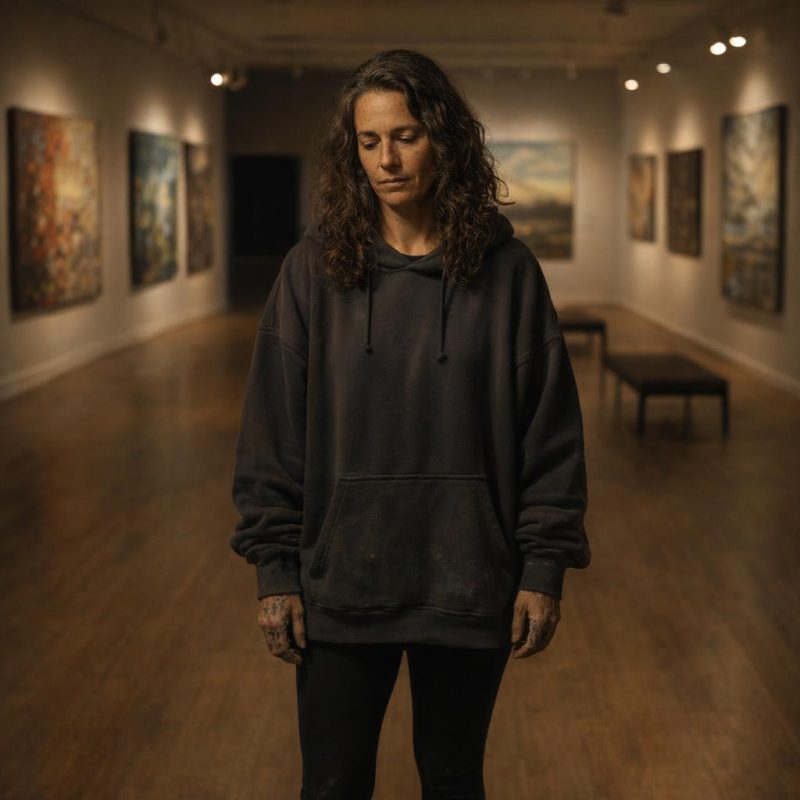 Image by RM AI
The Hoodie
The morning of the official public reopening, I stood in front of my closet for about thirty seconds before I reached for the hoodie. It was the same one — paint-stained across the left sleeve, faded at the collar, soft from too many washes. I pulled it on over my leggings and drove to the gallery. Maya was already there when I arrived, and when she saw what I was wearing she smiled the way people smile when something lands exactly right. Rebecca showed up an hour before opening and looked me over once, then said, 'Good. Don't change a thing.' Arthur arrived in his usual suit, took one look at me, and the corner of his mouth moved in a way I had learned to read as approval. The doors opened at ten. People came in and looked at the art. Nobody asked me what I was wearing. Nobody looked twice at the hoodie, or if they did, they kept it to themselves. I walked the floor, answered questions about the pieces, talked provenance with a collector who had driven two hours to be there. The gallery was full of people who were there for the work, not the performance. I had spent months fighting to prove that the institution deserved to survive, and standing there in my paint-stained hoodie among people who simply wanted to look at art, I felt, for the first time, entirely at home in my own building.
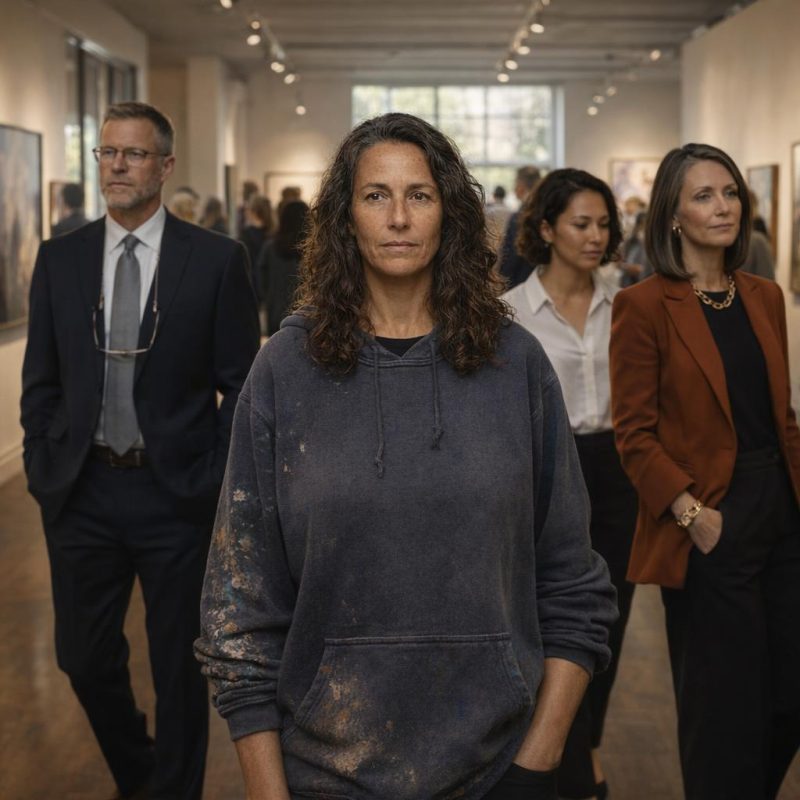 Image by RM AI
KEEP ON READING
The Day the Sun Didn’t Rise: The Unexplained New England…
Alina Nichepurenko on UnsplashImagine waking up on a spring morning,…
By Sara Springsteen Jun 18, 2026
20 Facts About Animal Symbolism In Paintings
The Sacred Clues Across History. Animal symbolism is a detail…
By Elizabeth Graham Jun 18, 2026
How a Single Telegram Pushed America Into World War I
Sammie Sander on PexelsThe year is 1917, and the United…
By Cameron Dick Jun 18, 2026
The Marriage Bed As A Political Object
Fæ on WikimediaA bed is naturally a private space—it's where…
By Elizabeth Graham Jun 18, 2026
20 Most Inappropriate Relationships From History
Private Attachments With Public Consequences. It’s easy to think of…
By Annie Byrd Jun 18, 2026
How Early Navigation Techniques Guided Explorers Across Oceans
Maël BALLAND on PexelsLong before satellites, digital maps, and advanced…
By Rob Shapiro Jun 18, 2026