

I Thought We Were Celebrating 27 Years Together—Then I Found The Recordings He'd Been Editing
I Thought We Were Celebrating 27 Years Together—Then I Found The Recordings He'd Been Editing
Twenty-Seven Years
Twenty-seven years is a long time to love someone, and I want to remember every detail of that night. The restaurant was the same one where David had taken me on our first date — a corner booth, low lighting, the kind of place that hasn't changed its menu in decades and is proud of it. He'd made the reservation himself, which he almost never does anymore, and when I walked in and saw the champagne already chilling in the bucket beside the table, I felt something loosen in my chest that I hadn't realized was tight. We toasted — his hand finding mine across the white tablecloth — and he said, 'Twenty-seven years and you still make me nervous.' I laughed so hard I nearly spilled my glass. He talked about the early years, the apartment with the broken radiator, the road trip where we got lost for four hours and ended up at a diner that served the best pie either of us had ever eaten. I told him I remembered every bad decision we'd made together and wouldn't trade a single one. By the time we walked to the car, the night air was cool and his arm was around my shoulders, and the warmth of the evening settled around us like something I could hold onto.
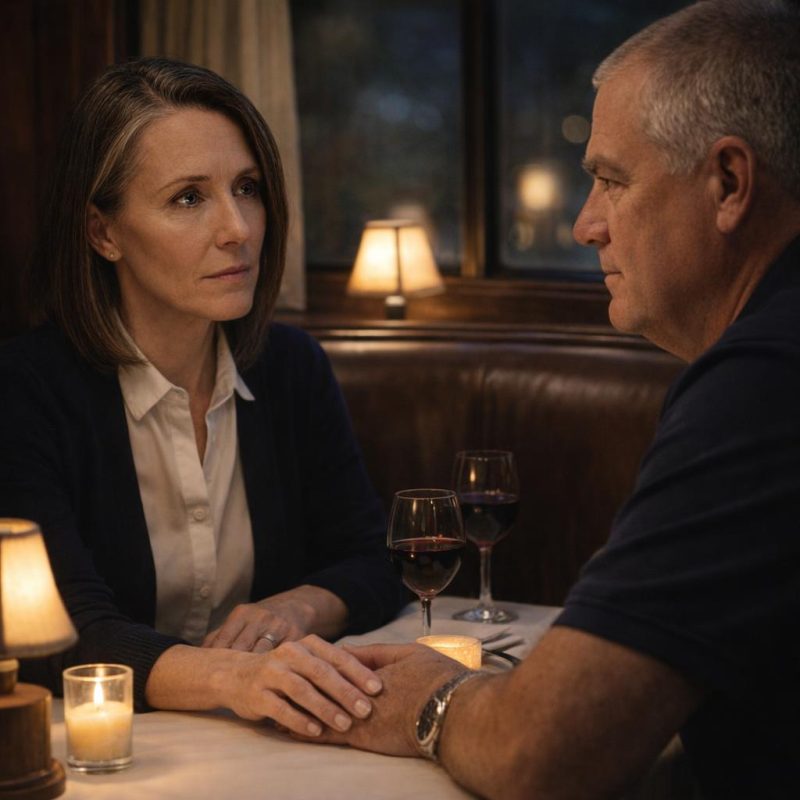 Image by RM AI
Morning Routines
The morning after our anniversary, I woke up to sunlight cutting across the bedroom ceiling and the smell of coffee already made — David's one reliable domestic contribution. I padded downstairs in my socks, still carrying that pleasant, well-fed feeling from the night before. He was at the kitchen table, phone in hand, scrolling with the focused expression he usually reserves for spreadsheets. 'Morning,' I said, reaching past him for a mug. He looked up and smiled, but it was a half-second delayed, like he'd had to pull himself back from somewhere. We talked about the dinner — he said the salmon had been overcooked, I said I hadn't noticed — and he agreed we should go back for our next anniversary too. But between sentences, his eyes kept drifting back to the phone. I didn't think much of it. Work emails don't respect weekends, and David has always been the kind of person who checks in constantly. I poured my coffee and leaned against the counter, watching the backyard through the window. I was still thinking about the pie story he'd told the night before, smiling to myself, when I turned back toward the table — and his phone screen went dark the moment my eyes landed on it.
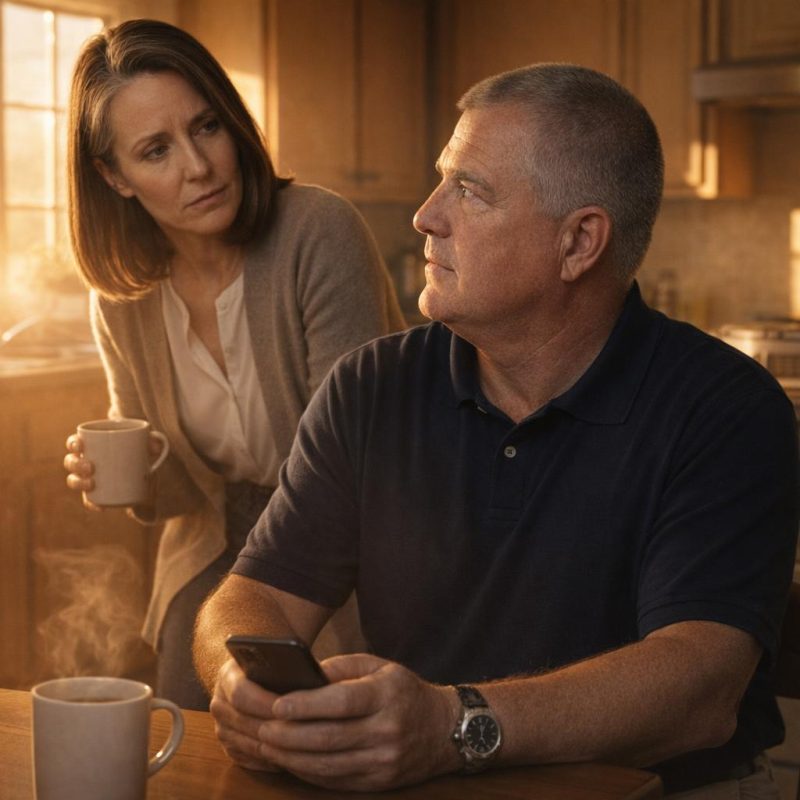 Image by RM AI
The Recording App
A few days later I was making dinner — a new pasta dish I'd bookmarked somewhere — and my phone was upstairs on the charger. David's was sitting right there on the counter, screen up, unlocked. I picked it up without a second thought and typed the recipe name into the browser. The search pulled up fine, but when I went to close the tab, I noticed the app sitting open underneath it. It wasn't anything I recognized — a clean, minimal interface, dark background, with a microphone icon at the top and a list of files below it, each one labeled with a date and a duration. A voice recorder. I stood there for a moment, pasta water starting to bubble behind me, just looking at it. It wasn't unusual for David to have work apps I'd never seen — he's always downloading something, testing some new productivity tool, then abandoning it after two weeks. I scrolled just enough to see the list without opening anything. There were a lot of files. More than you'd expect, maybe, but I told myself I was probably wrong about that. I heard his footsteps on the stairs and set the phone back on the counter, face up, exactly where I'd found it. I turned back to the stove, but the unfamiliar app icon was still glowing in my mind.
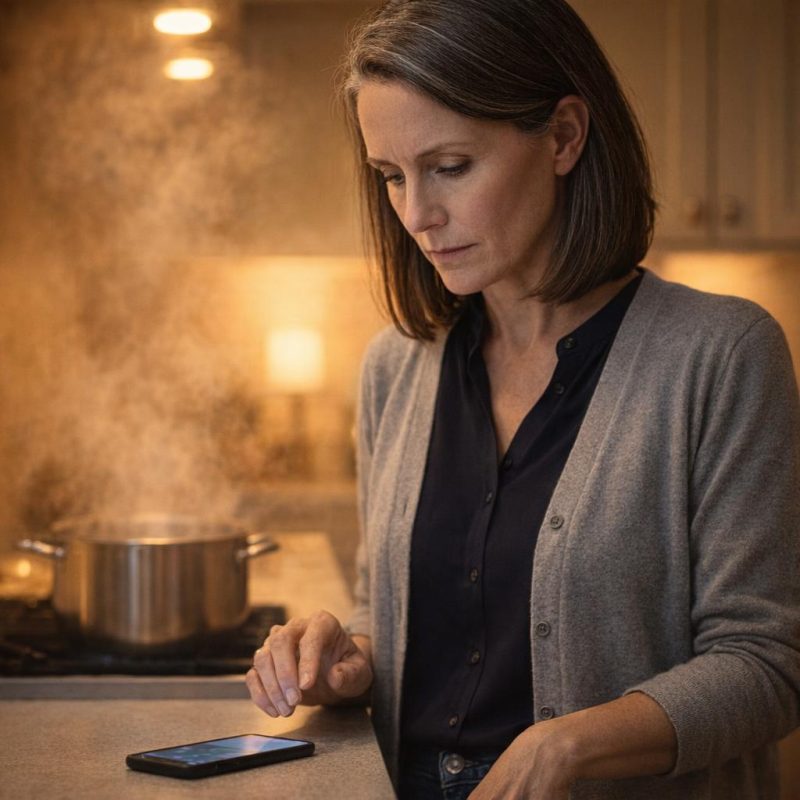 Image by RM AI
Work Meetings
I brought it up the next morning, casually, the way you mention something that's been sitting in the back of your head without quite knowing why. David was on his second cup of coffee, reading something on his tablet, and I said, 'Hey — what's that recording app on your phone? I saw it when I borrowed it for a recipe.' He looked up without any particular change in expression, set the tablet down, and said it was for work meetings. Said he'd started using it a few months back because he kept missing details in long calls and it was easier to record and replay than to take notes. He even laughed a little — said his handwriting had gotten so bad he couldn't read his own notes anymore. It made complete sense. I've sat through enough of his work dinners to know how much he juggles, and the explanation fit the person I knew. I nodded and said something like, 'That's actually smart,' and we moved on to talking about whether we wanted to drive up to see my mother that weekend. He was relaxed, open, not defensive at all. By the time I refilled my coffee, the question had dissolved back into the ordinary texture of the morning, and his explanation settled over the conversation like it had always been the obvious answer.
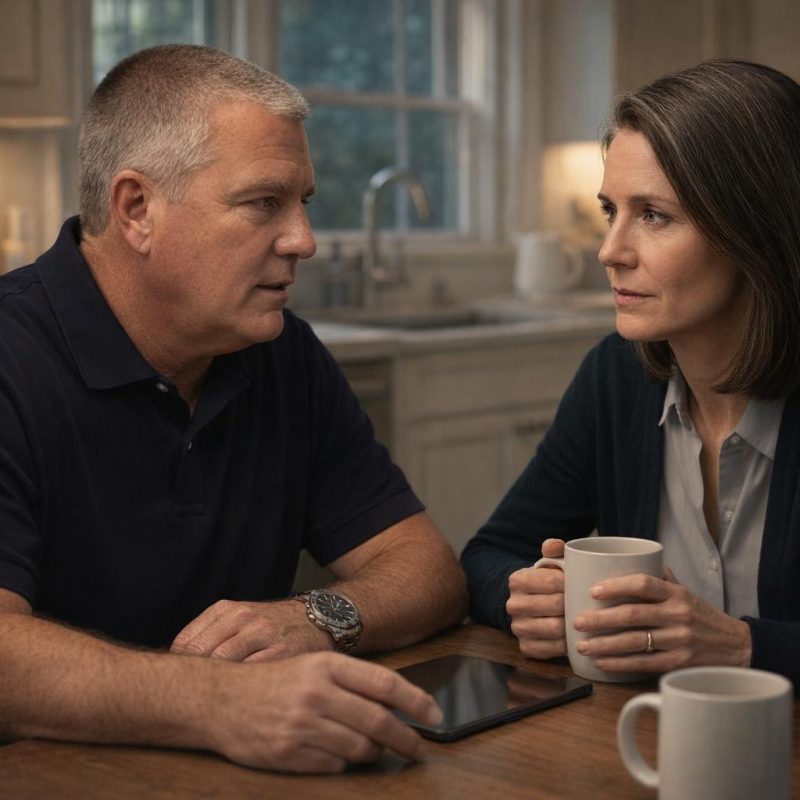 Image by RM AI
Personal Conversations
David left his phone on the counter when he went to shower on Saturday morning, and I don't know exactly what made me pick it up again. Habit, maybe. Or that small thread of curiosity I hadn't quite managed to put down. I opened the recording app — I told myself I was just going to glance at the list, confirm the files were clustered around business hours, and put it back. Most of them were. But then I scrolled a little further and the dates started to look different. There was a file from a Tuesday evening — I could see the timestamp, just after eight o'clock. I stood very still. That Tuesday, David had been home. We'd had dinner together, and afterward we'd sat at the kitchen table and I'd talked to him about my mother — about the appointment that hadn't gone well, about whether we needed to start thinking about next steps. It was a private conversation. A hard one. I scrolled a little more. There was another file from a Sunday morning, early, when we would have been the only two people in the house. I didn't open either file. I just stared at the timestamps, the shower running down the hall, trying to find a reasonable explanation that fit. The water shut off, and I set the phone down.
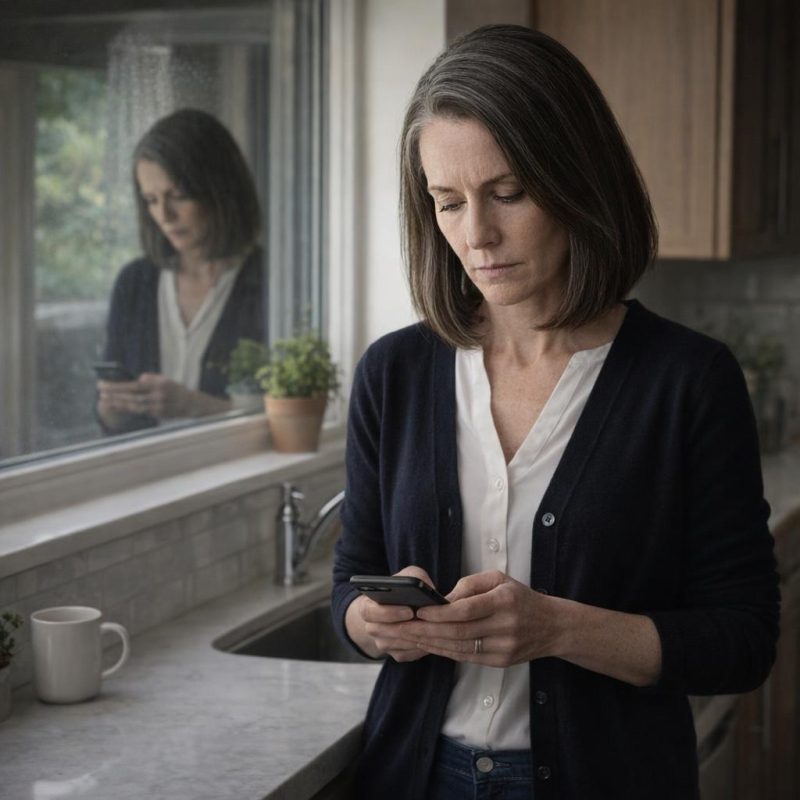 Image by RM AI
The Argument Over Nothing
I'd been folding laundry in the bedroom for maybe twenty minutes when David came in. I didn't think anything of it — he sometimes wanders in to talk while I do the mundane stuff, and I'd been half-hoping for the company. But the first thing he said was a comment about the closet, something about how I'd reorganized his side and moved his shirts. His tone had an edge I wasn't expecting. I said I'd just shifted a few things to make room, kept my voice easy. He said it wasn't the first time I'd rearranged things without asking. I put down the shirt I was folding and looked at him. He kept going — the way I'd handled the car insurance renewal, a dinner invitation I'd declined on both our behalf without checking with him first. Each thing on its own was small. Together they felt like a list someone had been keeping. I tried to stay calm, said I hadn't realized any of it bothered him, asked if we could just talk about it. He said there was nothing to talk about and walked out. I stood there in the middle of the bedroom, a half-folded shirt in my hands, not quite sure what had just happened. The argument had arrived and ended so fast I hadn't had time to find my footing, and the tension it left behind hung in the air between us long after his footsteps faded down the hall.
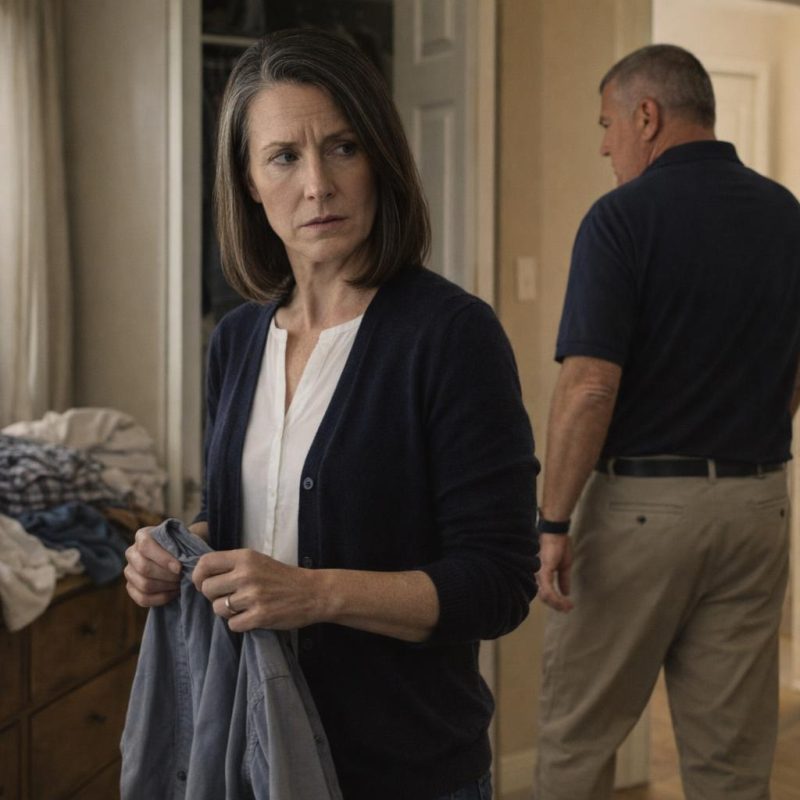 Image by RM AI
Calling Monica
I waited until I heard David's car back out of the driveway before I called Monica. She picked up on the second ring, bright and easy, asking how the anniversary dinner had gone. I told her it had been lovely — and then I kept talking. I told her about the recording app, the timestamps that didn't line up with work hours, the argument about the closet that had come out of nowhere and ended just as fast. I tried to keep my voice level, the way you do when you're not sure if you're being reasonable or paranoid. Monica didn't interrupt. She has this quality where she just listens until you've actually finished, which is rarer than it sounds. When I stopped, she asked me to walk her through the timestamps again — which evenings, which times. I did. She asked if David had ever mentioned recording anything at home before. I said no. She was quiet for a moment, and then she said, 'Okay. I'm not saying anything is wrong. But I think you should pay attention.' It wasn't alarming, exactly — it was careful. Measured. But something in the way she said it made me grip the phone a little tighter, and when she spoke again, her voice had shifted from the easy warmth it had started with into something quieter and more deliberate.
 Image by RM AI
Audio Editing Software
I needed to print a sign-up sheet for the library volunteer committee — nothing urgent, just something I'd been putting off. David's laptop was already open on his desk in the home office, and mine was buried under a pile of things in the bedroom, so I sat down at his without thinking twice about it. I found the documents folder and started looking for the shared drive where we keep household files. I didn't find it right away, so I clicked over to the applications folder to see if there was a shortcut I was missing. That's when I saw it — tucked between a project management tool and a PDF reader, an application I didn't recognize. The icon was a waveform. I leaned closer. The program name meant nothing to me, but when I hovered over it, the description that appeared used words like 'multi-track,' 'audio restoration,' and 'professional editing suite.' I sat back in the chair. David is not a musician. He has never mentioned anything about audio production. I thought about the recording app on his phone, the timestamps from Tuesday evening, the Sunday morning file. I hadn't connected anything yet — I was still just sitting with a feeling I couldn't name — when the garage door rumbled open below me. I closed the laptop and walked out of the office, the editing software icon still sharp in my mind.
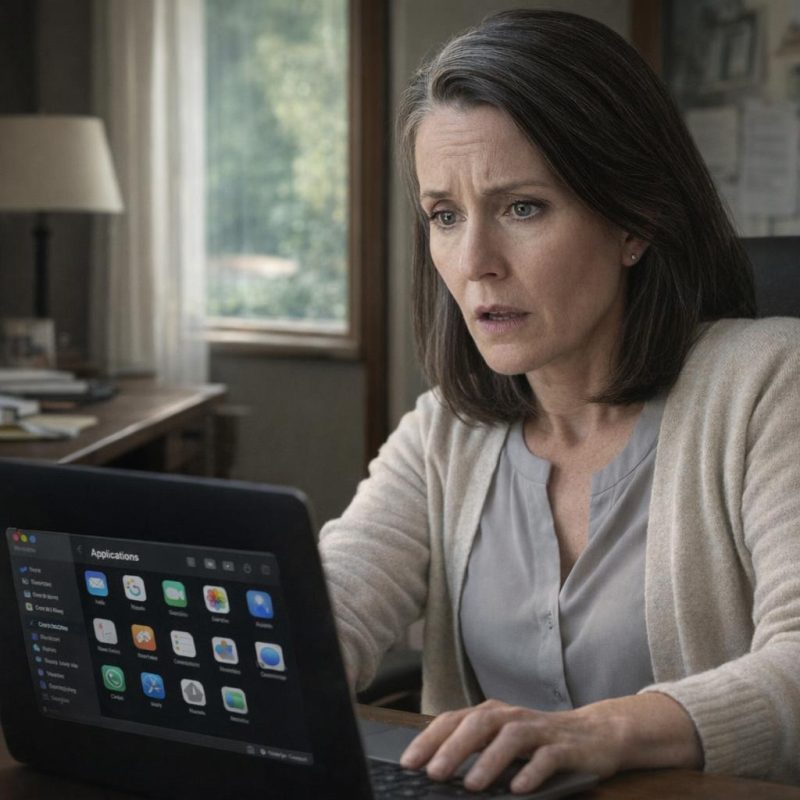 Image by RM AI
Spliced Confessions
David leaves for his morning meeting at eight, and I wait until I hear his car clear the end of the street before I move. His phone is still on the nightstand where he always leaves it when he's running late. My hands are shaking before I even pick it up. I find the recording app and open it, and the list of files is right there — dates, timestamps, all of it. I select one from three weeks ago and press play. The sentences are choppy in a way that's hard to catch at first — there's a rhythm to it, almost natural, but something keeps snagging. I start to recognize pieces. A phrase from when I was talking about missing a highway exit. A word from some conversation about the grocery store parking lot. They've been cut and rearranged. My stomach drops. I press play again, leaning against the wall, and this time I hear it clearly: my voice, my cadence, the way I trail off at the end of a sentence — but the words coming out of my mouth are a confession to something I have absolutely no memory of saying.
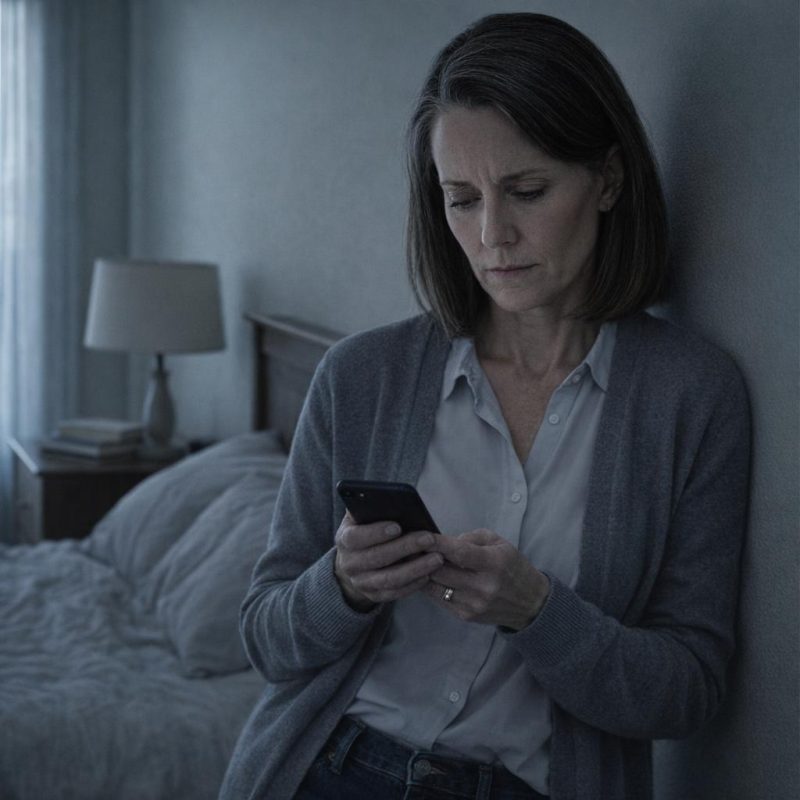 Image by RM AI
Documentation Begins
I buy the notebook at the drugstore on the corner, the small kind with a plain brown cover that looks like nothing. I pay cash. On the way home I keep it tucked under my arm like it's already something I need to protect. I hide it in the back of the closet, inside a box of old photo albums that neither of us has opened in years. Then I sit on the edge of the bed and I start writing. I write down the date I first saw the recording app on his phone. I write down the timestamps of the files I noticed — the Tuesday evening one, the Sunday morning one. I write down the argument he started about the library event, the way it came out of nowhere, the specific things he said. I write down the audio editing software I found on his laptop, the icon with the waveform, the words 'multi-track' and 'audio restoration.' I write down what I heard on that recording this morning — my voice, the wrong words, the choppy rhythm of it. My handwriting is small and careful, the way it gets when I'm trying to hold something steady. I close the notebook and slide it back behind the photo albums. The closet door clicks shut, and I stand there in the quiet with the full weight of what I've just written pressing down on me.
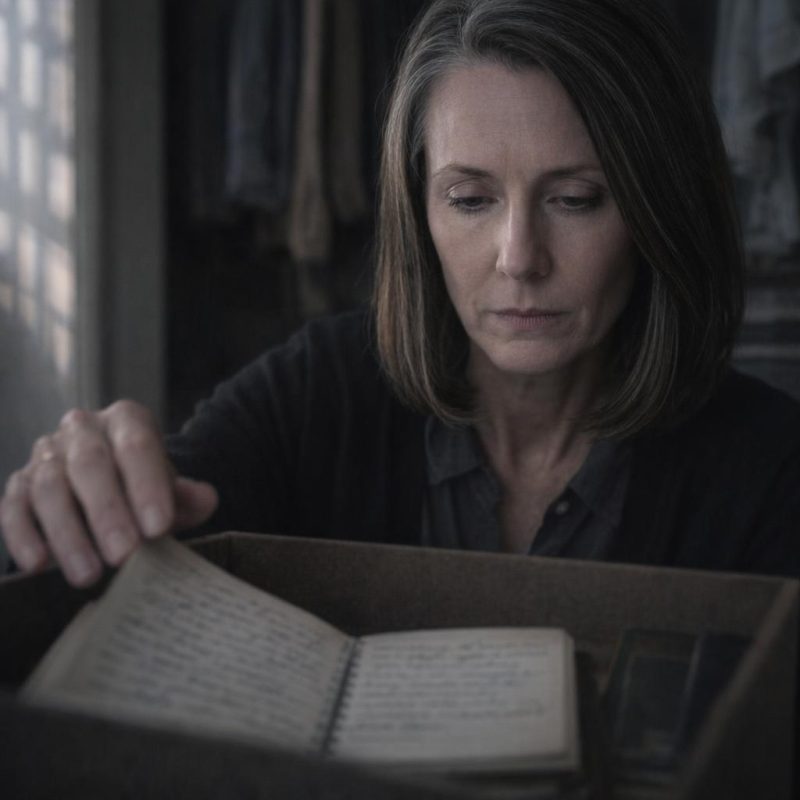 Image by RM AI
Hit-and-Run Reference
David is in the garage doing something with the car — I can hear the faint clank of tools through the wall. I take his phone from the kitchen counter where he left it and go to the bedroom. This time I have my notebook open beside me. I play the file again, and I listen differently now, slower, stopping and rewinding. I write down every phrase I can catch. There's a specific intersection mentioned — my voice says the name of it clearly, two cross streets I know. Then my voice says 'I didn't stop' and a beat later, 'I didn't see them in time.' I sit very still. I trace each fragment back. The intersection — I remember talking about missing a turn near there last spring, complaining about the confusing signage. 'I didn't stop' — that's from a conversation about a parking lot, a near-miss with a shopping cart, something I laughed about at the time. 'I didn't see them in time' — I think that came from a story I told about almost walking into someone at the farmers market. Each piece is real. Each piece is mine. But stitched together like this, in this order, they become something else entirely — a voice describing a hit-and-run, calm and specific and damning. I close the notebook over my pen and sit with that for a long moment.
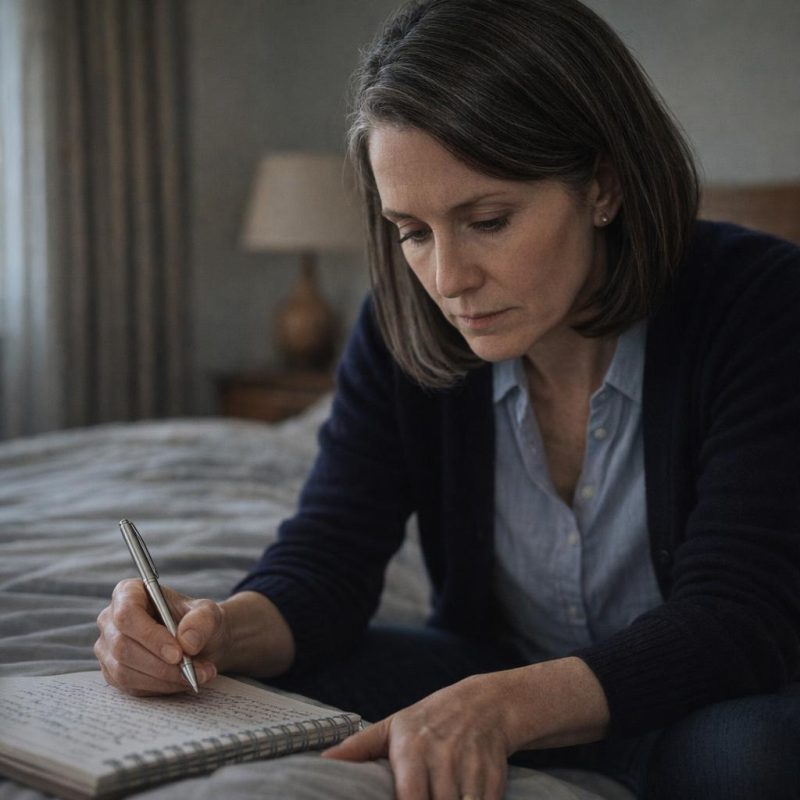 Image by RM AI
Searching the News
I lock the home office door and open an incognito browser window. My fingers feel clumsy on the keyboard. I search for hit-and-run accidents in our county, then narrow it by the cross streets I heard in the recording. I scroll through several articles — a fender-bender from last fall, a cyclist incident from the spring. Then I find one from six weeks ago. A pedestrian was struck near that intersection on a Thursday evening. The driver left the scene. The pedestrian was hospitalized with a broken leg and a concussion but survived. Police were asking for witnesses. The driver had not been identified. I sit back in the chair. Six weeks ago is right around the time I first noticed the recording app on his phone. I don't know what that means. I tell myself I don't know what that means. I screenshot the article and email it to my personal account with a subject line that says nothing — just a string of numbers. Then I clear the browser history, close the incognito window, and sit there staring at the blank screen. The article is still open in my mind: an unsolved hit-and-run, six weeks ago, at the exact intersection my own voice names in that recording.
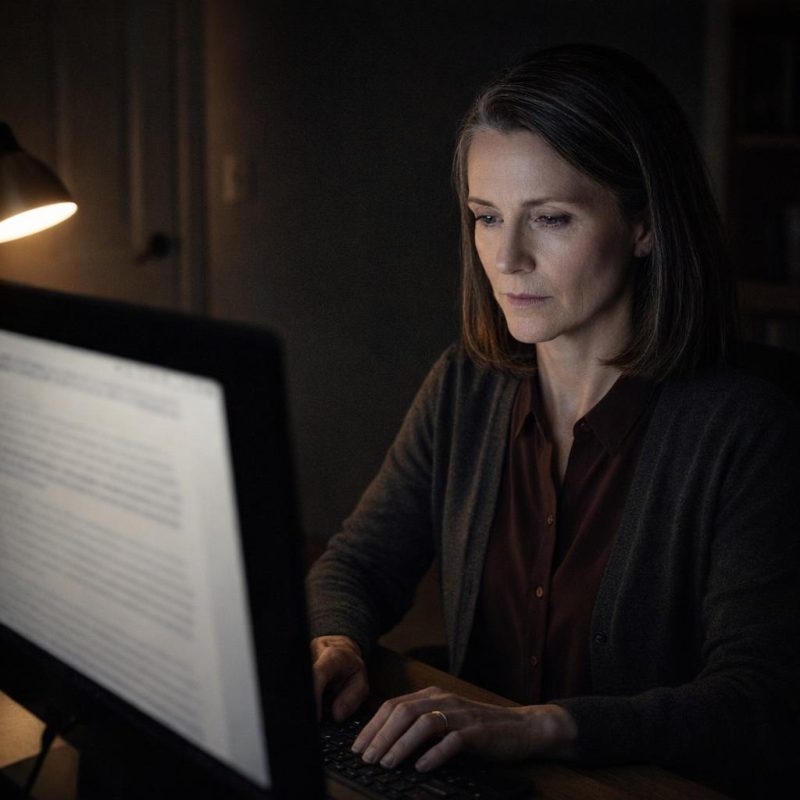 Image by RM AI
Provocation Attempt
I'm at the stove when David comes in, and I hear the shift in the air before he even speaks. He leans against the counter and mentions the scratch on the rear bumper — asks if I've been having trouble parking lately. His tone is light but pointed, the kind of light that has an edge underneath it. I glance over and I see his phone on the counter, screen facing up, positioned between us. Something goes very still in me. I turn back to the stove and say the scratch has been there for months, which is true. He pushes a little — asks about a near-miss I mentioned a while back, whether I've been feeling distracted behind the wheel. I say I'm fine and stir the pot. He tries a different angle, something about whether I've been sleeping well, whether stress affects my concentration. I say I've been sleeping fine. My voice stays even. I can feel my pulse in my throat but I keep my hands moving, keep my face neutral. He stands there for another minute, and I can feel him waiting for something I'm not going to give him. Eventually he picks up his phone and walks out. I stand at the stove alone, the burner hissing softly beneath the pot, my heart still loud in my chest but the kitchen around me perfectly quiet.
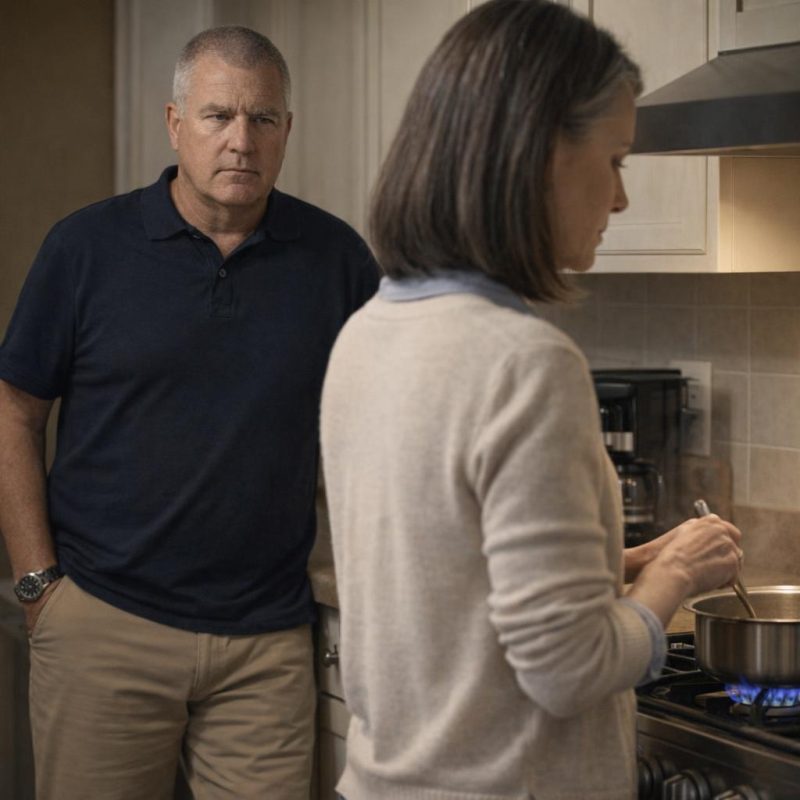 Image by RM AI
Strategic Silence
It goes on for days. He brings things up at dinner — a bill he thinks I mishandled, a commitment he says I forgot, a comment I apparently made that he's chosen to revisit. I answer in as few words as possible or I don't answer at all. I pass the bread. I refill my water glass. He tries a different approach the next morning, something softer, almost concerned — asks if I've been feeling like myself lately. I say yes and pour my coffee. His phone is on the table. It's always on the table now, or on the counter, or on the arm of the couch, always within a few feet of wherever we happen to be talking. I notice it every time and I say nothing about it. When he criticizes the way I loaded the dishwasher, I nod. When he brings up a trip I apparently ruined three years ago, I say I remember it differently and leave the room. I write everything down in the notebook that night — the date, what he said, how I responded, where the phone was sitting. The entries are getting longer. By Thursday I'm so tired of performing calm that I sit in the car in the driveway for ten minutes before going inside, just to have somewhere to breathe. The effort of it — the constant, careful, exhausting effort of saying nothing — settles into my bones like something I'll be carrying for a long time.
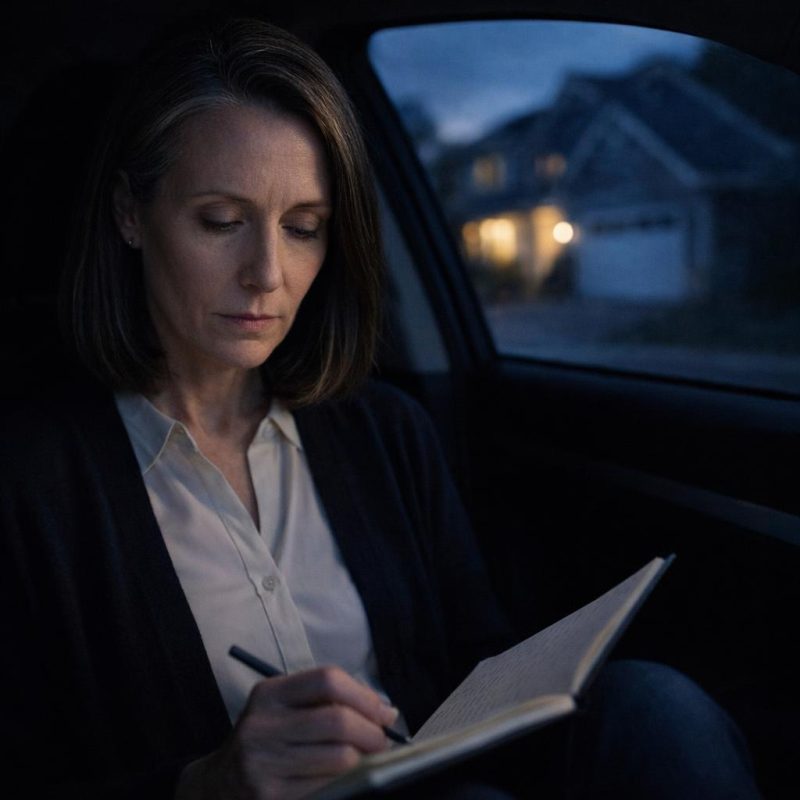 Image by RM AI
The Folder
David leaves for his Saturday golf game at seven-thirty, and I'm in his office before his car is out of the neighborhood. I open the laptop. My hands are steadier than I expect them to be, which feels strange. I navigate to the audio editing software and open it. There's a project folder in the sidebar labeled 'Archive.' I click it. A list of files populates the screen, and I go very still. Each file has a date and a label. I see 'Accident.' I see 'Mental State.' I see 'Affair.' I see 'Finances.' There are more below those — I have to scroll. I take out my phone and start photographing the screen, moving slowly down the list, making sure each file name is legible. My breathing is shallow. I keep scrolling. I keep photographing. Outside, a car door slams somewhere on the street and I freeze, but it's not the driveway, it's a neighbor, and I let out a breath and keep going. I close the software and the laptop and walk out of the office and into the hallway, leaning against the wall for a moment with my phone pressed to my chest. Then I look at the photos I just took. The folder contains forty-three separate files.
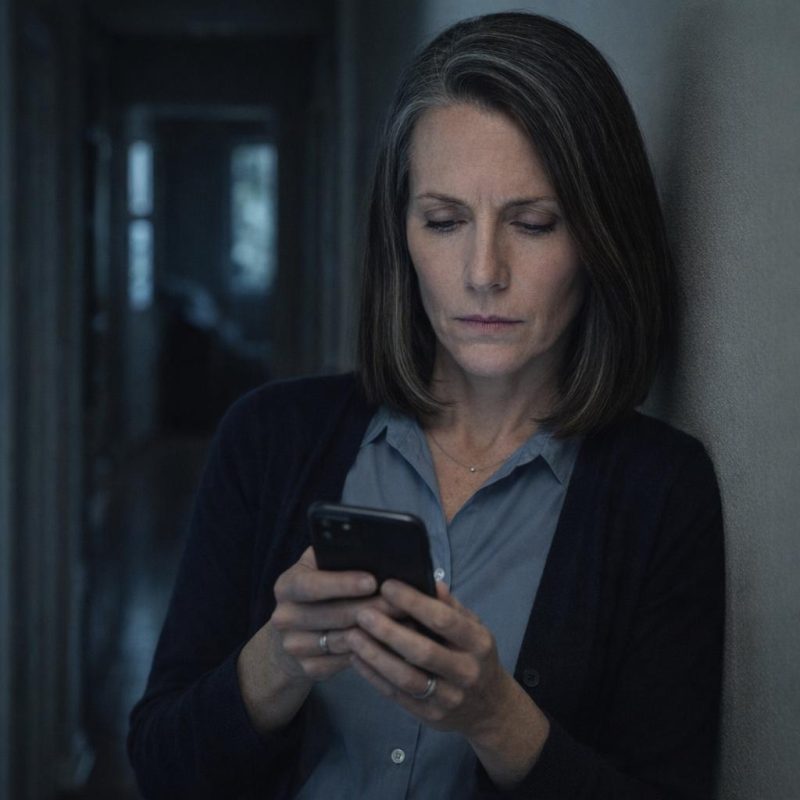 Image by RM AI
False Confessions
I wait until David's breathing goes deep and even, then I take his phone to the guest bathroom and lock the door. I sit on the tile floor with my back against the tub and put in my earbuds. I open the file labeled 'Affair.' My voice comes through the earbuds talking about meeting someone, feeling guilty, lying. I recognize the pieces almost immediately — a conversation about book club running late, a comment I made about feeling guilty for missing a friend's wedding, a throwaway line about not wanting to explain myself. Stitched together, they sound like a confession. I sit with that for a moment, then I open 'Mental State.' My voice describes confusion, forgetting things, feeling like I can't trust my own memory. I trace each fragment — an offhand joke about losing my keys, a conversation about feeling overwhelmed during a busy week, a moment where I said I wasn't thinking straight. All real. All mine. All rearranged into something clinical and damning. I open a third file, the one labeled 'Finances,' and it's the same — my words, my voice, a story I never told. I set the phone down on the tile beside me. The bathroom fan hums overhead. My hands have stopped shaking, which surprises me, because what I feel now isn't fear anymore — it's something harder and colder, sitting low in my chest like a stone. Then I press play on 'Affair' one more time, and my own voice fills the earbuds saying I had been seeing someone for months and that David had no idea.
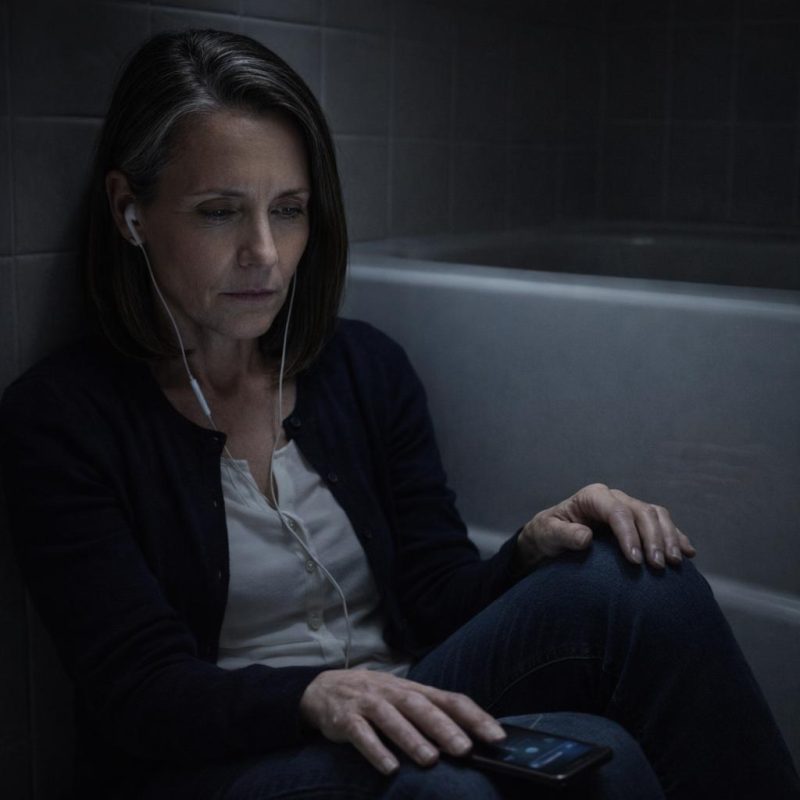 Image by RM AI
Isolation
I tell David I have a headache and move my pillow to the guest room. He says okay. Just — okay. I lie on top of the covers with my notebook open on my chest and a cold cup of coffee on the nightstand, and I build a timeline. Every file I found. Every fragment I recognized. Every date I can pin down. I write in small, careful letters like the act of being neat will keep me from falling apart. During the day I hear him moving through the house — the coffee maker, the shower, the front door. We pass each other in the hallway twice and exchange the kind of nod you'd give a coworker you barely know. He seems fine. More than fine, actually. Relaxed. He sleeps through the night while I stare at the ceiling counting the things I don't yet understand. By the third morning I've filled eleven pages and slept maybe nine hours total. I wash my face, put on lipstick, and walk into the kitchen like nothing has happened. I pour his coffee and hand it to him, and it's only in that moment — standing there, cup extended — that it hits me: two nights in the guest room, and he never once asked why.
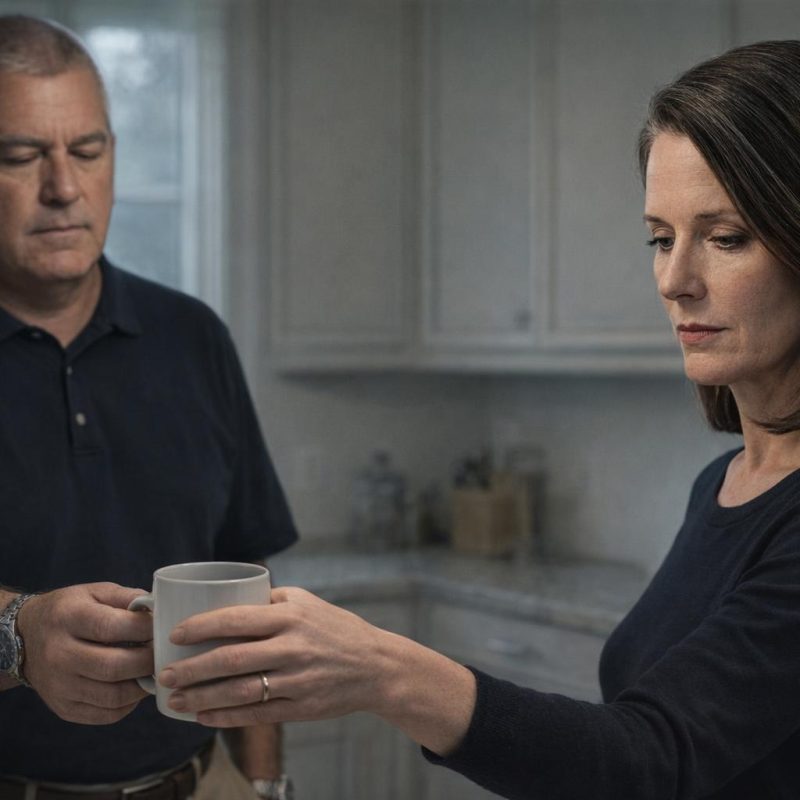 Image by RM AI
Validation
I wait until David leaves for work, then I drive straight to Monica's. She opens the door before I even knock — she must have seen my car — and pulls me inside without a word. We sit at her kitchen table with mugs of tea going cold between us and I pull out my phone. I tell her I need her to listen to something and I need her to tell me I'm not losing my mind. She nods and I press play on the first file. I watch her face as my own voice comes through the speaker talking about meeting someone, feeling guilty, covering my tracks. Monica's jaw tightens. She sets her mug down. I pause it and walk her through each fragment — the book club excuse, the wedding comment, the throwaway line about not wanting to explain myself — and I show her where each piece actually came from. She asks me to play the second one. I play the mental state file and she goes very still. She asks if David knows I found these. I tell her I don't think so. She says I need a lawyer, not next week, not after I gather more — now. I tell her I want more evidence first and she doesn't argue, but she reaches across the table and covers my hand with hers. The look on her face as the last file finished playing was something I hadn't been prepared for — not anger, not even shock, just a quiet, settled grief that I hadn't expected to see there.
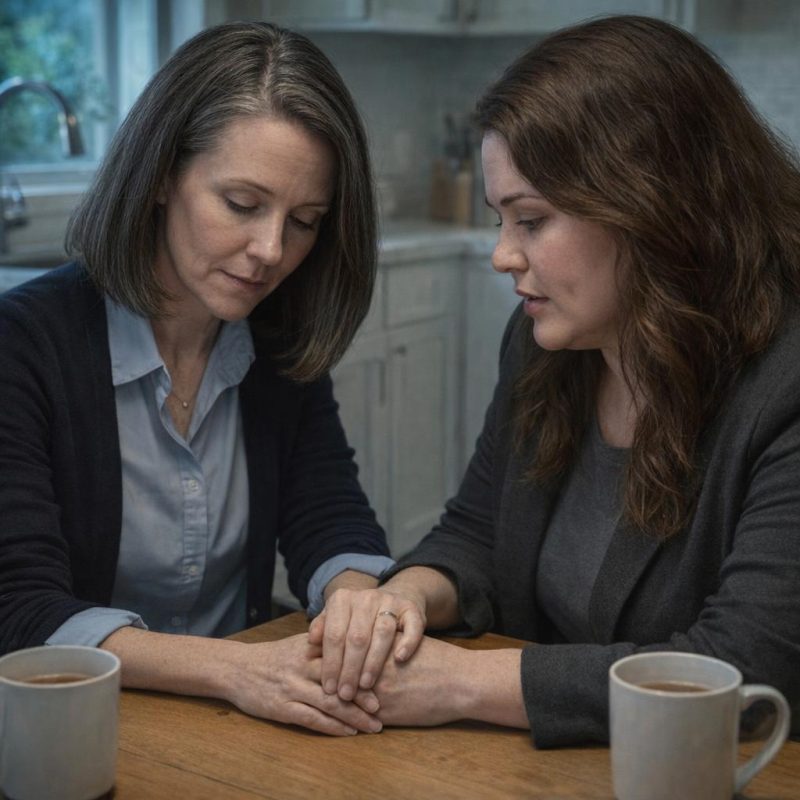 Image by RM AI
Legal Consultation
Monica doesn't let the subject drop. She opens her laptop right there at the kitchen table and starts pulling up attorney websites before I've even finished my tea. She finds Patricia Chen — family law specialist, sharp reviews, someone Monica says a friend used in a complicated case — and turns the screen toward me. I hesitate. I tell her I'm worried about the cost, about David finding out I've consulted someone, about what it means to walk through that door. Monica looks at me the way only a younger sibling can — patient and completely unmoved by my excuses. She says this isn't about divorce strategy yet, it's about protecting myself, and those are two different things. That lands. We draft a short email together, careful and factual, requesting a consultation. I read it over three times before I hit send. Then we talk through what I actually have — the audio files, my notebook, the timeline I've been building. Monica says the notebook is good but I need digital backups of everything, copies stored somewhere David can't reach. I admit I've been afraid to move anything in case he notices. She says that fear is exactly what I need to get ahead of. By the time I drive home, the fear is still there, but it has company now — something steadier sitting just underneath it, like ground I hadn't known was there.
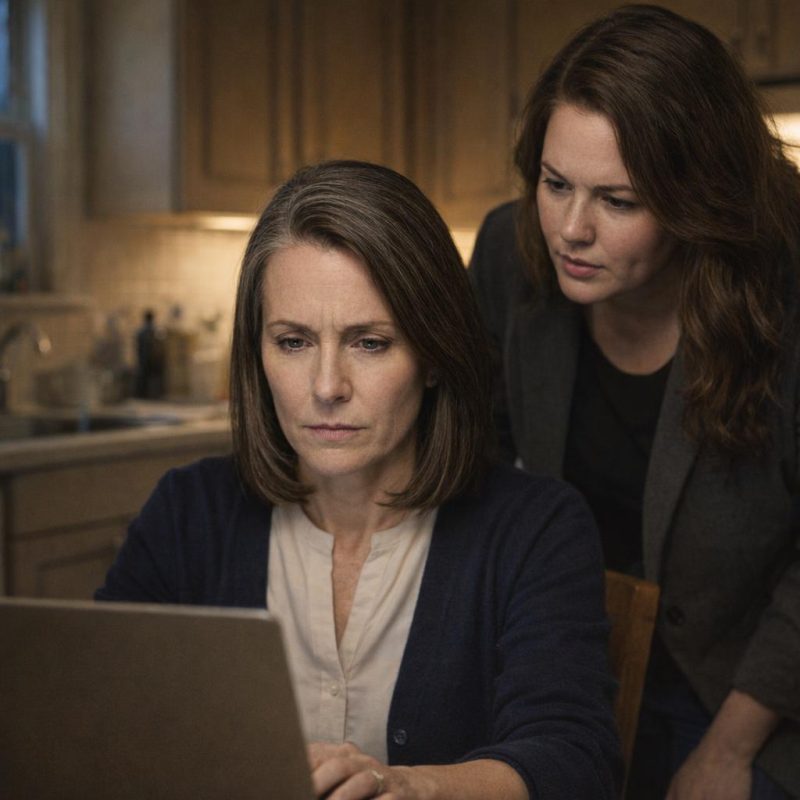 Image by RM AI
Performance
I get home an hour before David and I make pasta. I set the table. I open a bottle of wine and pour two glasses and put his on his side like I've done a thousand times. When he walks in he drops his keys on the counter and says it smells good and I smile and say thanks, it's nothing special. We eat and I ask about his day and he tells me about a meeting that ran long and a client who keeps changing his mind, and I listen and nod and refill his glass. I am aware of every word I choose. I notice where he sets his phone — face down, screen against the table — and I file that away without reacting. He seems at ease. Comfortable. He laughs at something he saw online and turns the phone toward me to show me, and I laugh too, and it sounds right, I think. After dinner we sit on the couch and watch something neither of us is really watching, and I keep my breathing even and my expression soft. He puts his hand on my knee at one point and I don't pull away. When I finally say I'm tired and head to bed, I pause in the doorway and look back at him settled into the cushions, remote in hand, completely at ease — and the man I see there is someone I no longer recognize at all.
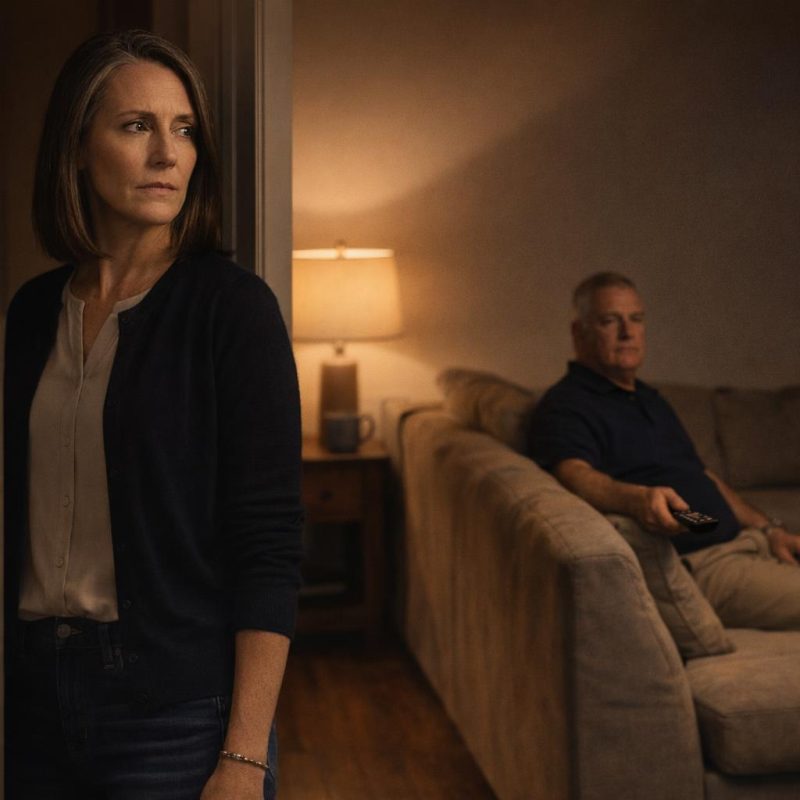 Image by RM AI
The Workshop
David leaves for his Sunday run at seven-fifteen. I watch from the kitchen window until his car clears the end of the street, then I give it another two minutes before I go to the hook by the back door and take the spare workshop key. The workshop is at the far end of the garage, a room he built out himself about six years ago. I almost never come in here. The smell hits me first — sawdust and machine oil and something faintly metallic — and for a second I just stand in the doorway letting my eyes adjust. Workbenches run along two walls, tools hanging on pegboard in neat rows, everything labeled and ordered in a way the rest of his life apparently isn't. Filing cabinets stand in the far corner. A metal cabinet is bolted to the wall beside them. I start at the workbench nearest the door, opening drawers slowly, methodically — receipts for lumber, instruction manuals still in their plastic sleeves, boxes of screws sorted by size. Nothing that means anything. I check my watch. I have maybe forty minutes before he's back, probably less. I move to the filing cabinets and try the top drawer. It slides open. The second one too. I flip through the folders quickly, looking for anything that doesn't belong. I find nothing that surprises me, but I keep going, because the alternative is going back inside and waiting, and I am done waiting. The quiet of the workshop settles around me, close and still, smelling of wood and work and a life I thought I understood.
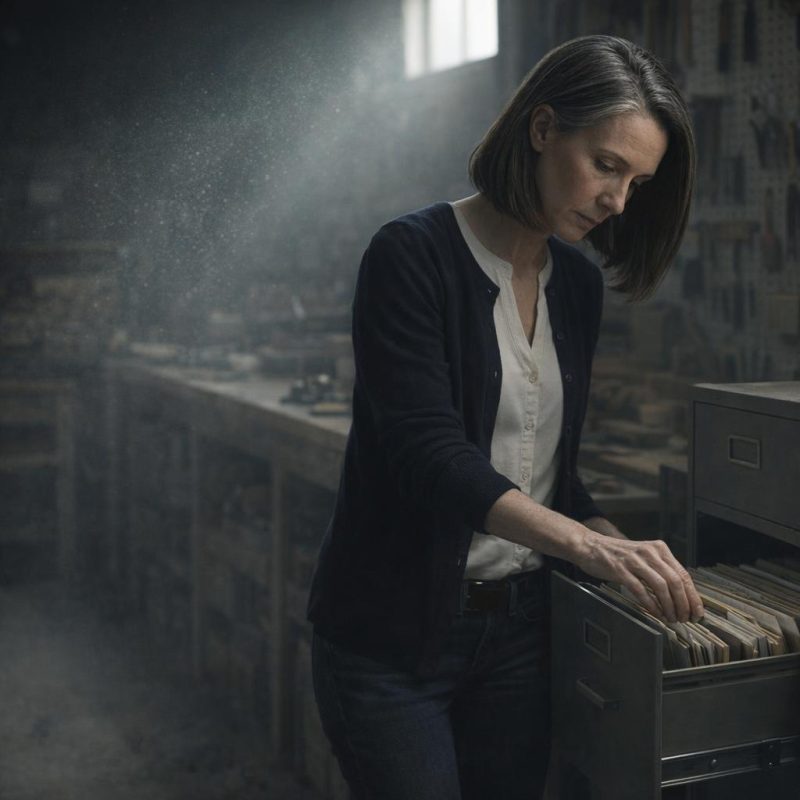 Image by RM AI
Locked Cabinets
The bottom drawer of the filing cabinet doesn't budge. I try it twice, rattle it once, and accept that it's locked. The metal cabinet against the wall is the same — solid, no give, a keyhole I don't have anything for. I check the obvious places first: the pegboard hooks, the shallow desk drawer near the door, the shelf above the workbench where he keeps spare batteries and a flashlight. Nothing. I try the coffee can on the corner shelf — just pennies and a stubby pencil. I crouch down and check under the workbench itself, running my hand along the underside of the surface, feeling for anything taped or wedged up there. Nothing on the first section. I move to the second, working my way toward the back, and then I try the underside of the bottom drawer — not the shelf, the actual drawer frame — and my fingers catch on something. A small bump. Smooth on one side, rough on the other. I pull my hand back and look. A key, maybe an inch long, held against the wood with a folded strip of duct tape. I work it free carefully, the tape releasing with a soft tearing sound, and I hold it up in the light from the single overhead bulb.
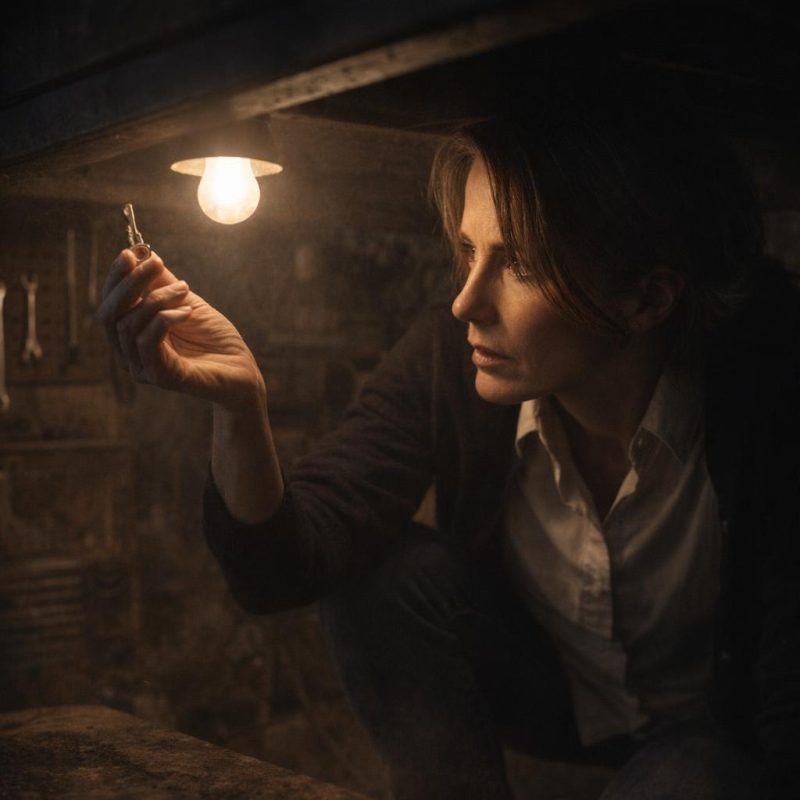 Image by RM AI
Tax Returns and Receipts
The key fits the bottom drawer. I feel the lock turn and the drawer slides open on smooth runners, like it's been opened recently. Inside, hanging file folders, neatly labeled in David's handwriting. I flip through them quickly — tax returns going back eight years, receipts for the table saw and the lathe, invoices for lumber and finishing supplies, a folder of business correspondence that looks like contractor estimates. I slow down and go through each one more carefully, checking behind the folders, running my fingers along the bottom of the drawer in case anything is tucked flat underneath. Nothing. Everything is exactly what it appears to be. I hear a car engine somewhere outside and I go completely still, hand pressed flat against the drawer. The sound grows and then fades — someone passing on the street. I let out a breath. I close the bottom drawer and try the same key in the metal cabinet on the wall. It doesn't fit. I try it again, angling it slightly, but the keyhole is a different size entirely. I stand there for a moment looking at the cabinet, then at the key in my hand, then back at the cabinet. I put the key in my pocket and look around the room. The ordinary folders sit in their ordinary drawer, and the flat, familiar disappointment of finding nothing settles over me like dust.
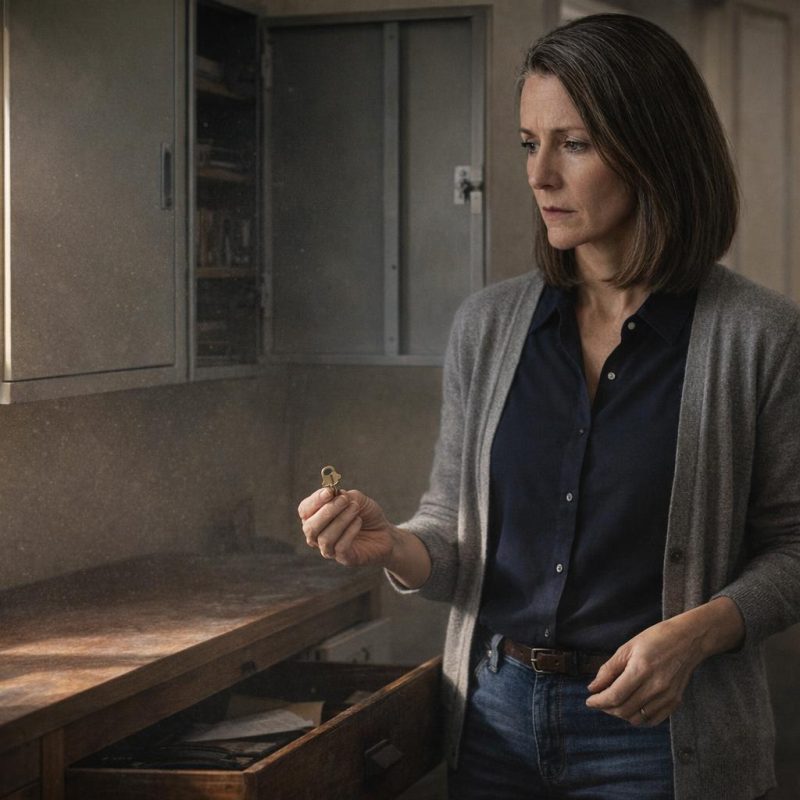 Image by RM AI
The Toolbox
The large red toolbox sits on the far end of the workbench, chest-high, the kind with multiple pull-out trays. I open the top compartment — screwdrivers lined up by size, a set of hex keys, a box cutter still in its packaging. I lift out the top tray and set it on the bench. Beneath it: pliers, a measuring tape, drill bits in a labeled case, a level. I lift that tray out too. The next layer is deeper — more tools, a few still in their original plastic, a coil of electrical wire. I work through it carefully, checking underneath each item, looking for anything that doesn't belong. At the bottom of the box I find a handful of loose screws and a fine layer of sawdust. I'm about to lower the second tray back in when something stops me. The depth is wrong. I look at the outside of the toolbox, then back at the interior, and the math doesn't add up — there should be another two or three inches at the bottom. I tap the floor of the box with my knuckle and hear it: a faint, hollow return, different from the solid thunk of the metal sides. I check my watch. Twenty minutes, maybe less. I run my fingers along the seam where the bottom meets the wall of the box, feeling for a gap or a latch, the weight of the toolbox solid and unyielding in my hands as I search.
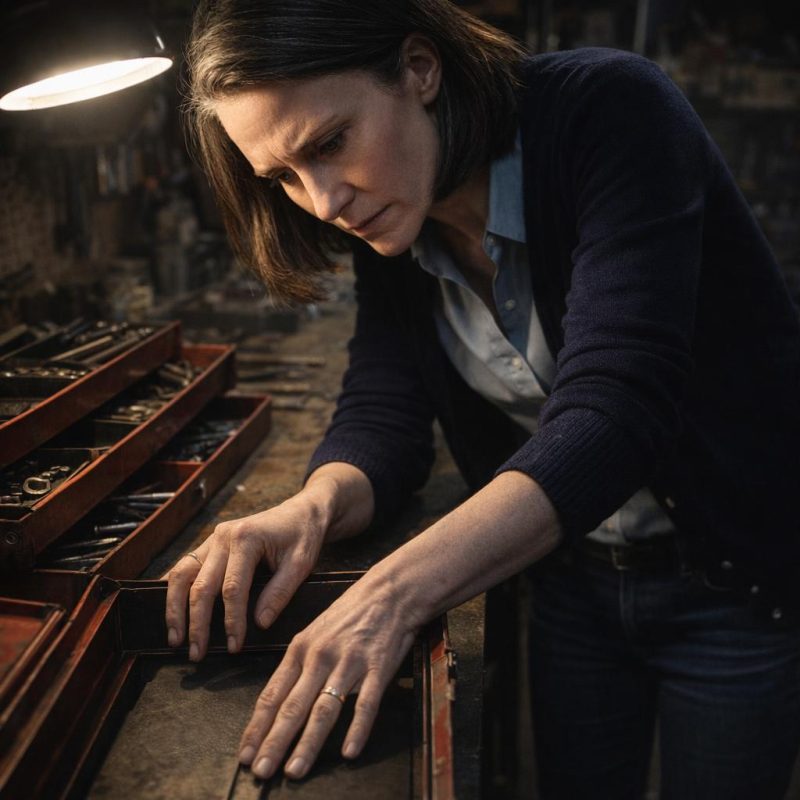 Image by RM AI
The Ledger
My fingers find the seam on the third pass — a thin groove running along the interior base, barely wider than a fingernail. I work the box cutter from the packaging, slide the tip into the groove, and apply steady pressure. The false bottom lifts with a soft pop, like something exhaling. Underneath it, sitting flat against the actual floor of the toolbox, is a black leather ledger. Not a notebook, not a folder — a proper ledger, the kind with a sewn binding and a ribbon marker. The leather is worn at the corners, the spine creased from repeated opening. This has been used. I lift it out with both hands and set it on the workbench. My ears go to the door — nothing, just the hum of the refrigerator from the kitchen and the distant sound of a neighbor's lawnmower. I stand there for a moment, just holding it, feeling the weight of it. Then I glance at the clock on my phone. Twelve minutes, maybe. I set the ledger flat on the workbench, take one more breath, and open the cover to the first page.
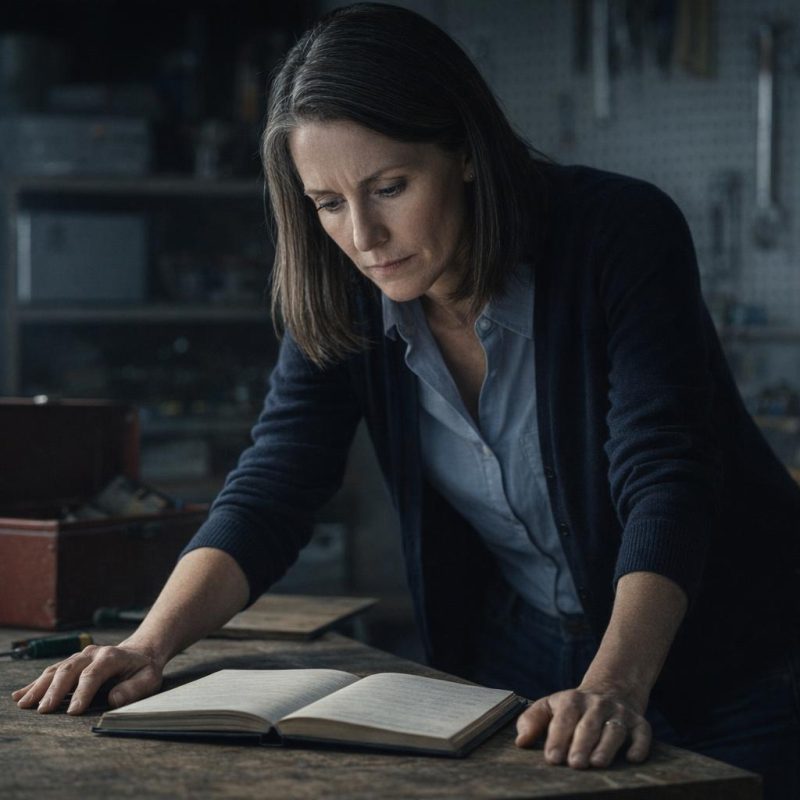 Image by RM AI
Fabricated Timeline
The first entry is dated eight months ago, written in David's neat, even handwriting — the same script I've watched sign birthday cards and grocery lists for twenty-seven years. 'Claire forgot dinner reservation at Marcello's. Seemed disoriented when reminded. Suggested she rest.' I stare at it. We didn't have a reservation at Marcello's that night. I remember that Tuesday — I made pasta at home, we watched something on television, nothing happened. I pull out my phone and start photographing. Hands steady. One page, then the next. 'Left stove burner on, no memory of cooking.' 'Became agitated when asked about the Hendersons' check.' 'Couldn't recall conversation from the previous afternoon, repeated questions.' Each entry is dated, timed, detailed. Some dates I can place clearly — ordinary evenings, nothing unusual. Others I can't pin down, which means nothing happened worth remembering. The entries span eight months, building a picture of someone losing her grip, one small incident at a time. I work through every page without stopping. I photograph the last page, the shutter clicking once on the final entry.
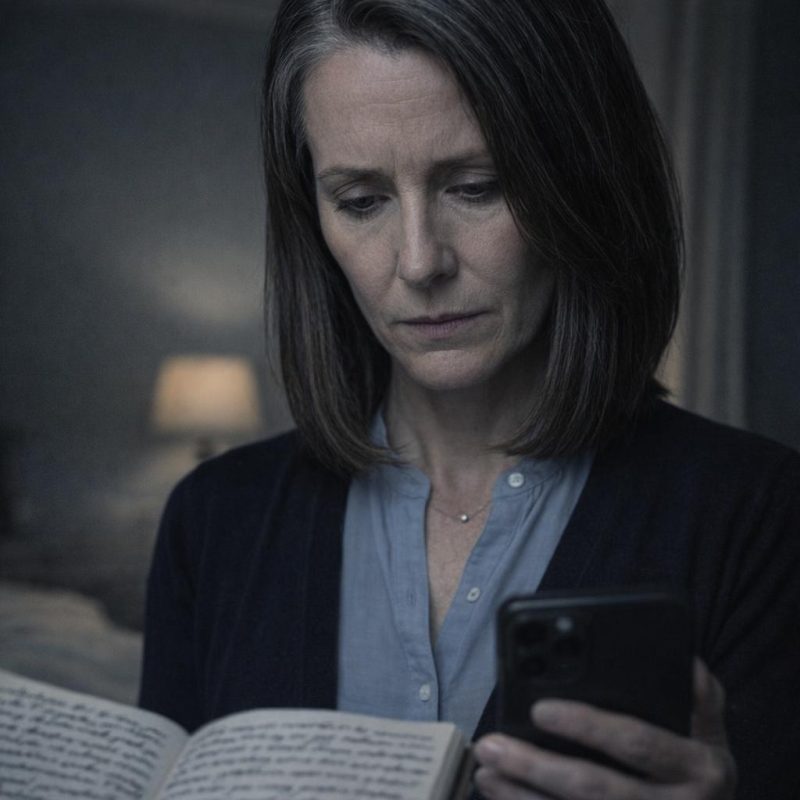 Image by RM AI
Attorney Chen
Patricia Chen's office is on the fourteenth floor of a building downtown, all clean lines and muted carpet. The receptionist shows me to a private conference room with a long table and a window that looks out over the city. I sit with my hands folded and wait. Patricia comes in carrying a leather portfolio, petite and precise, designer glasses catching the light. She shakes my hand, sits across from me, and opens to a blank page without preamble. I explain the situation in the order it happened — the audio files, the toolbox, the ledger. My voice stays level. I show her the photographs on my phone, scrolling slowly so she can read each entry. She examines them without speaking, making notes in a small, controlled hand. I play two of the edited audio clips. She listens with her pen resting against the page, not moving. I walk her through the timeline I've assembled, the dates that don't match, the incidents that never occurred. She asks about the prenuptial agreement — when it was signed, what it covers, whether there have been any amendments. I answer everything I can. When she finally sets her pen down and closes the portfolio, the room goes very quiet, and I sit with the weight of having said it all out loud for the first time.
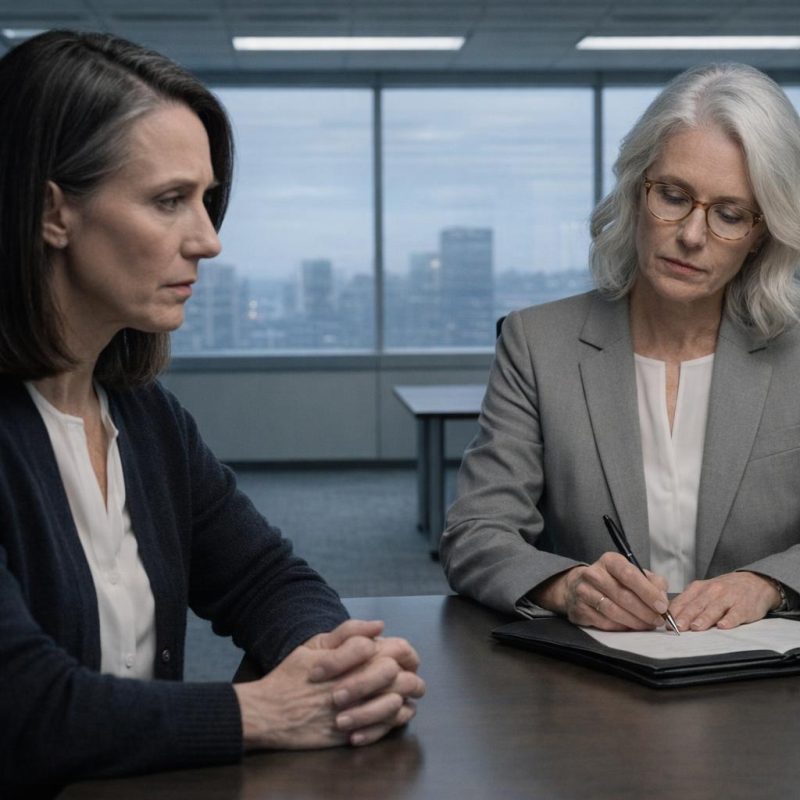 Image by RM AI
Legal Strategy
Patricia reopens the portfolio and speaks carefully. The evidence is strong, she says, but corroboration will matter — a single source is easier to challenge than a pattern. She advises me to keep documenting everything going forward: dates, times, anything unusual. Save emails, take screenshots, keep the notebook current. She asks about our financial accounts — joint, separate, investment. I walk her through what I know. She suggests I get copies of all statements going back at least two years and store them somewhere David can't access. Then she pauses. 'Don't confront him,' she says. 'Not yet. If he becomes aware that you know what you know, the dynamic changes — and not in your favor.' She asks, almost gently, whether I feel physically safe at home. I tell her yes, that David has never been that kind of person. She nods, writes something down, and slides a card across the table with her cell number handwritten on the back. We schedule a follow-up for two weeks out. I thank her and gather my things. Walking to the elevator, I feel something I can only describe as the opposite of relief — like someone has confirmed the storm is real and handed me an umbrella that might not be big enough.
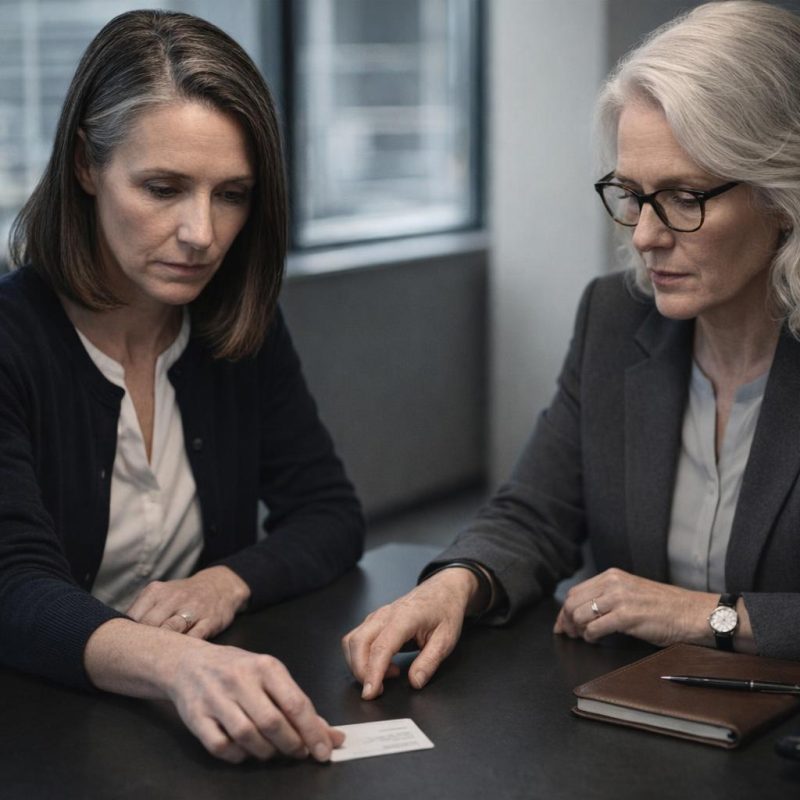 Image by RM AI
Dinner Performance
I get home forty minutes before David and change into the clothes I'd normally wear on a quiet evening — jeans, a soft sweater, nothing that says I've been anywhere important. I start dinner. Chicken, roasted vegetables, something that requires enough attention to justify the silence. David comes in just after six, sets his bag by the door, and kisses me on the cheek the way he has for years. 'Smells good,' he says. I ask about his day. He mentions a project deadline, a colleague who keeps missing meetings. I tell him I ran errands, had lunch with Monica. He nods, opens the wine, and we move around the kitchen in the familiar way — him setting the table, me finishing the vegetables, the two of us filling the space with the ordinary sounds of a shared life. We sit down and eat. He asks if I want more wine. He tells a story about someone in his office that makes him laugh at his own punchline. I watch his face across the table — relaxed, easy, nothing behind the eyes that I can read. I keep my voice warm and my expression open, and somewhere underneath all of it I'm counting the hours until I can be alone. He refills my glass and smiles at me across the kitchen, and I smile back.
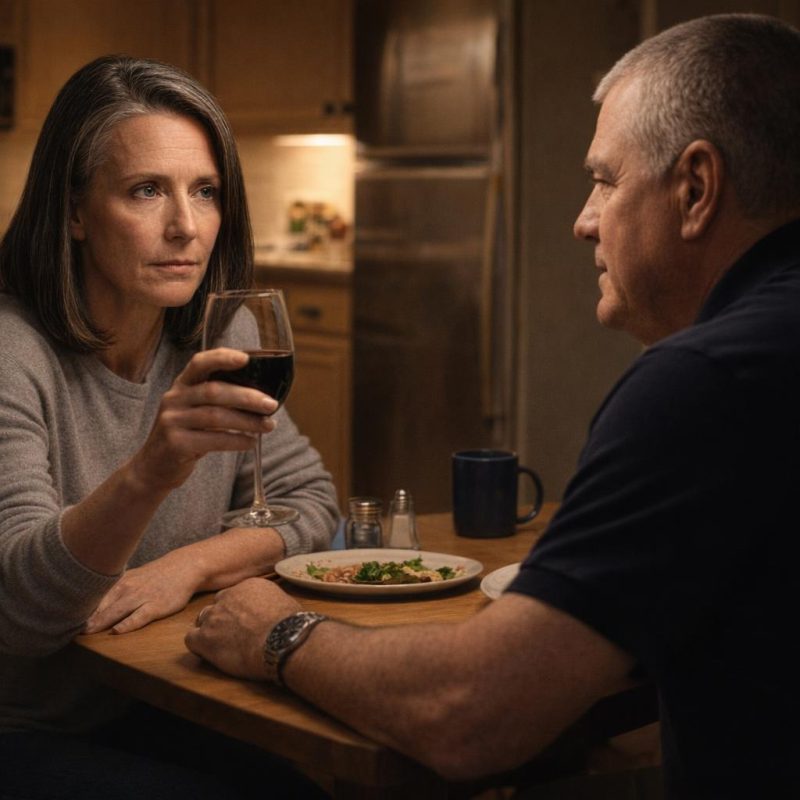 Image by RM AI
Unexplained Absences
Tuesday he mentions a meeting that runs late — leaves at six-thirty, back after ten, smelling faintly of a restaurant I don't recognize. Wednesday it's a client dinner. Thursday he goes to the gym and is gone for three hours, which is an hour longer than usual. I write each one down: time of departure, time of return, what he said, what he was wearing. I ask casual questions — 'How was the dinner?' 'Did you get a good workout?' — and his answers are easy and vague in equal measure. Friday he leaves after we eat, says he's meeting a colleague for a drink. I watch from the front window as his taillights disappear around the corner. I open the family tracking app and find him at a restaurant downtown, one I've never heard him mention. I screenshot the location and the timestamp. When he comes home an hour and a half later, he's relaxed, even cheerful, and tells me the colleague sends his regards. I write that down too. By the end of the week, I have seven entries in the notebook, and the shape of his schedule — the gaps in it, the soft edges of his explanations — has settled into something I can't quite name but can no longer ignore.
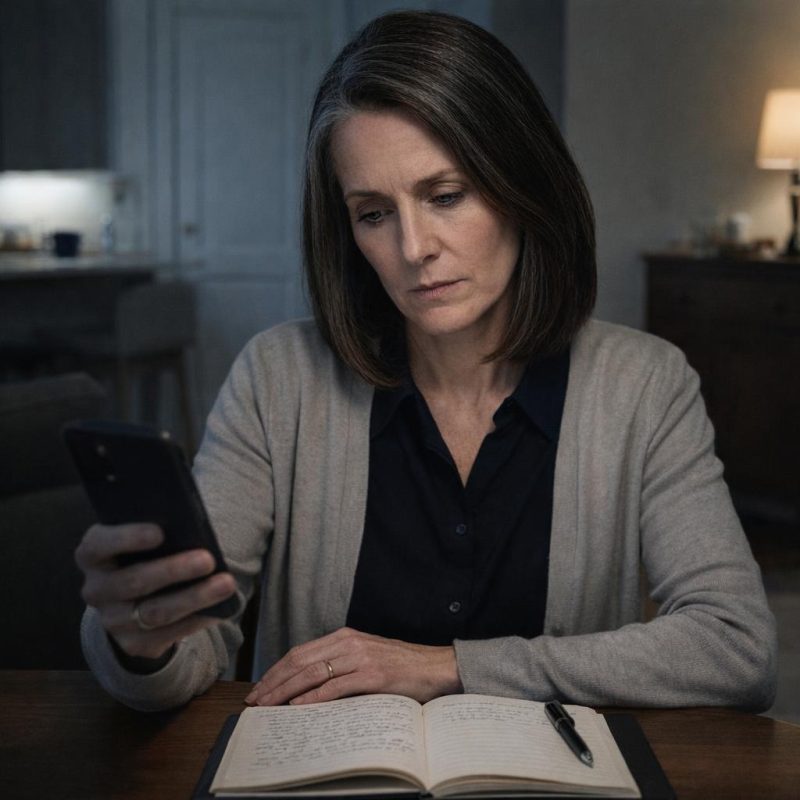 Image by RM AI
Credit Card Statements
I wait until David leaves for work on Monday morning, then I sit down at the kitchen table with my laptop and log into our online banking. I pull up the credit card statements for the past six months and start going through them line by line. There's a restaurant called Bello Vino — I've never been there, never heard David mention it — charged four times in three months, always on evenings he said he was working late. A department store in Westfield, a suburb we have no reason to visit. A grocery store on the east side of the city, charged on two consecutive Saturdays when David said he was golfing. I cross-reference the dates against my calendar and the notebook. The overlap is consistent. I download each statement as a PDF and email them to myself, then open a spreadsheet and start entering the unfamiliar charges: date, merchant, amount, what David said he was doing that day. The list fills faster than I expect. Some charges are small — twenty, thirty dollars. Others are over a hundred. None of them are places I recognize as part of our life together. I sit back and look at the screen, the cursor blinking at the bottom of the spreadsheet, the column of unfamiliar names running longer than I want it to.
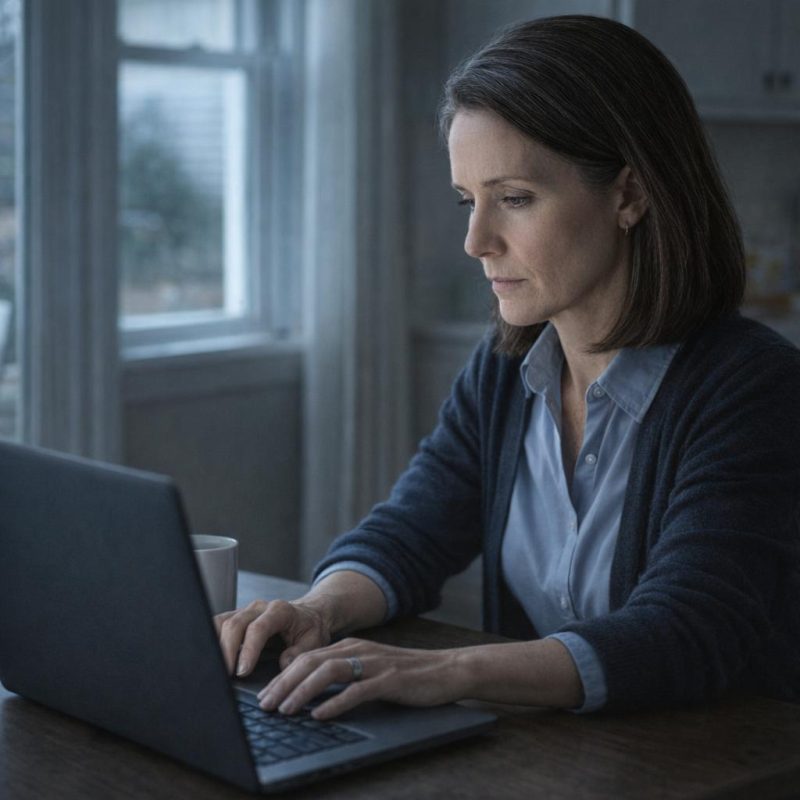 Image by RM AI
Tony
I go back through the statements a second time, slower, and that's when I notice the payments to T. Rizzo. They don't look like restaurant charges or retail purchases — they're listed as direct transfers, and they recur every two to three weeks without fail. Two hundred dollars. Three-fifty. Five hundred. The amounts shift but the name doesn't. I type 'Tony Rizzo' into the search bar and work through the results. There's a business listing — sparse, just a phone number and an email — under the heading 'Sports Betting Consultation.' I search deeper and find his name scattered across a handful of gambling forums, always in the context of someone who handles action on games, someone you call when you want to place a bet outside the usual channels. Small-time, from what I can tell, but consistent. I sit back. Then I remember the audio file — the edited one, the conversation with the clipped silences — and the name Tony surfacing in it, brief and unremarked. I'd noted it at the time and moved on. I pull up the spreadsheet and add a new row: T. Rizzo, sports betting consultant, payments going back at least five months. I screenshot the business listing and save it to the folder. I stare at the name on the screen and wonder what David would need with a bookie.
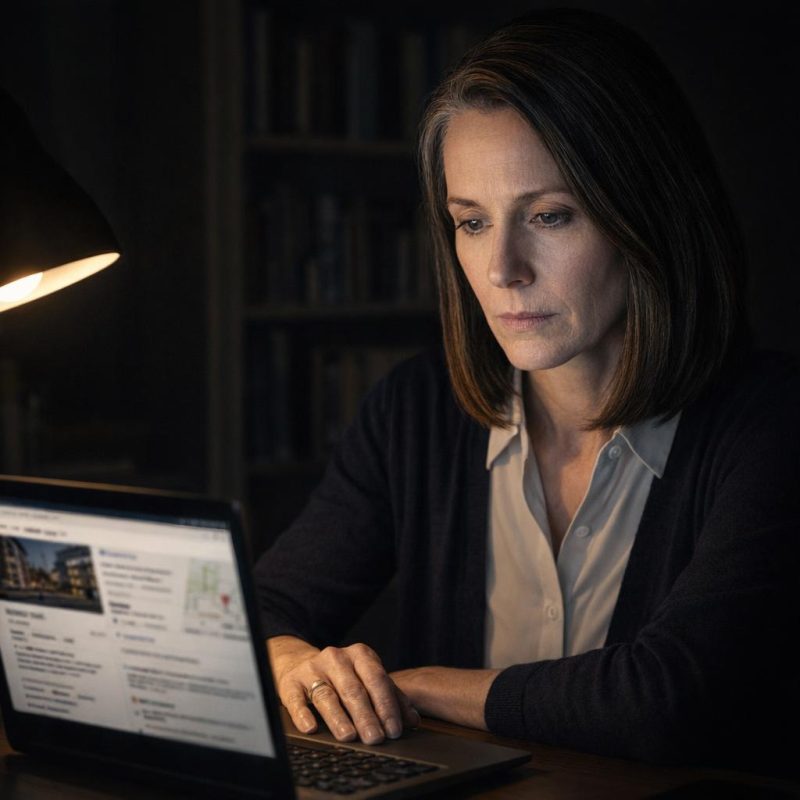 Image by RM AI
The Bookie's Location
I find the address listed under Tony Rizzo's business name on a commercial directory site — a suite number on Kellerman Avenue, in a strip of low-rise office buildings on the east side of town. I pull up a map and drop a pin. Then I open the spreadsheet where I've been tracking the credit card charges and scroll to the restaurant entries — the ones I didn't recognize, the ones David never mentioned. The nearest one is four blocks from Tony's address. I zoom out slightly and there's the grocery store, the one with the unfamiliar loyalty card number, sitting two streets over. I check the dates on the restaurant charges against the calendar I've been keeping of David's unexplained absences. Three of them line up. Not perfectly, but close enough that I write the word 'overlap' in the margin and circle it twice. I tell myself it could still be a gambling problem — the payments to Tony, the trips across town, the careful distance from anything I'd recognize. That would be a clean explanation. Tidy. I print the map and slide it into the folder with everything else, and I sit there looking at the cluster of pins on the screen, all of them pulling toward the same corner of the city.
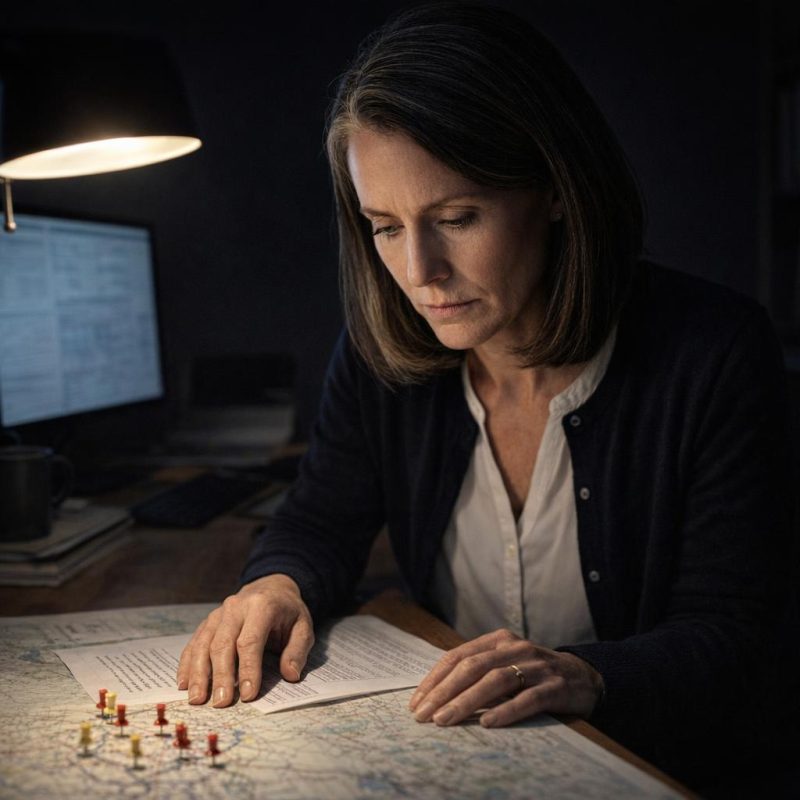 Image by RM AI
Staged Photographs
David leaves Saturday morning with his gym bag and a vague mention of errands, and I wait until his car clears the end of the street before I go to his office. His laptop is on the desk, lid half-closed. I open it and navigate to the photo library, sorting by recent uploads. Most of it is unremarkable — screenshots, work documents, a few dinner photos I remember taking. Then I find a folder labeled 'Misc' near the bottom of the library. Inside are images I don't recognize at all. My car. Parked on a street I've never been on, the license plate sharp and legible in the frame. I zoom in on the metadata. The location tag reads Kellerman Avenue. The timestamp is from two weeks ago, a Tuesday afternoon. I was at a volunteer meeting that day — I have the sign-in sheet, I have the emails. I scroll further. Three more photos, different dates, same general area. My car, always clearly identifiable, always near Tony Rizzo's address. I set the laptop down on the desk and don't touch it again for a long moment. The impossibility of it sits in the room with me, quiet and very heavy.
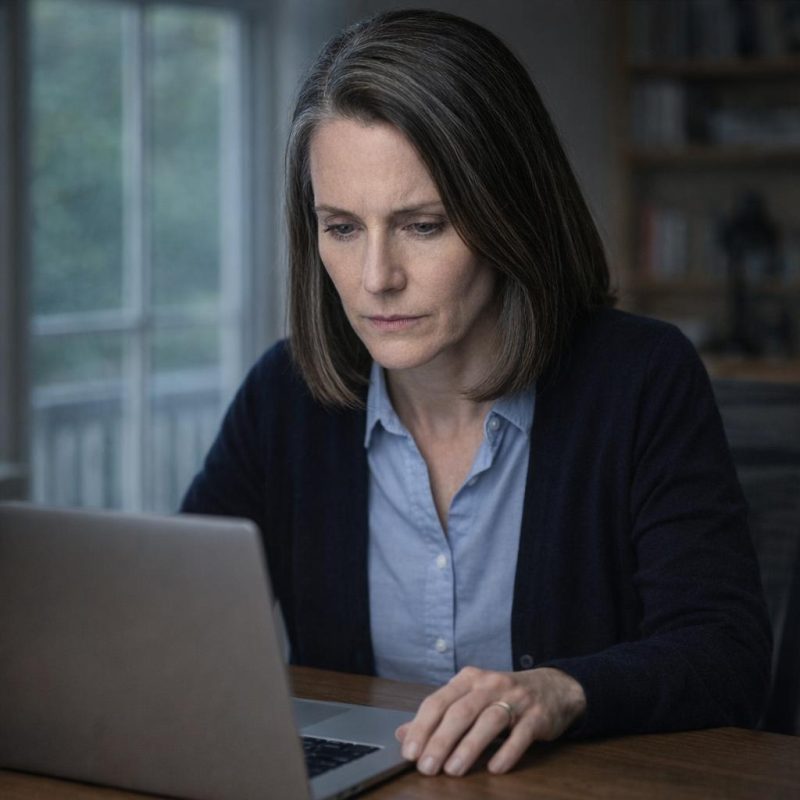 Image by RM AI
The Prenuptial Agreement
I go to the bedroom safe while David is still out. I haven't opened it in months — maybe longer. The combination comes back to me on the second try, and I pull out the prenuptial agreement from beneath the insurance folders. The pages are crisp, barely handled. I sit on the edge of the bed and read through it slowly, the way I should have read it years ago. The first six pages are what I remember: my inheritance protected, my separate assets ring-fenced, a clean division in the event of divorce. I'd always thought of it as a formality, something our lawyers insisted on. I get to page seven. The infidelity clause is written in plain language, no ambiguity. If either party is found to have committed adultery, all protections under this agreement are void. I read it twice. Then I sit there with the staged photos in my mind, and the edited audio file with Tony's name surfacing in it, and the payments that would look, to anyone reviewing them, like I'd been meeting a man across town for months. I think about the notes in the ledger describing my confusion, my instability, my unreliable memory. My hands are very still on the page, and the clause stares back at me, and something cold moves through me as the pieces arrange themselves on the table.
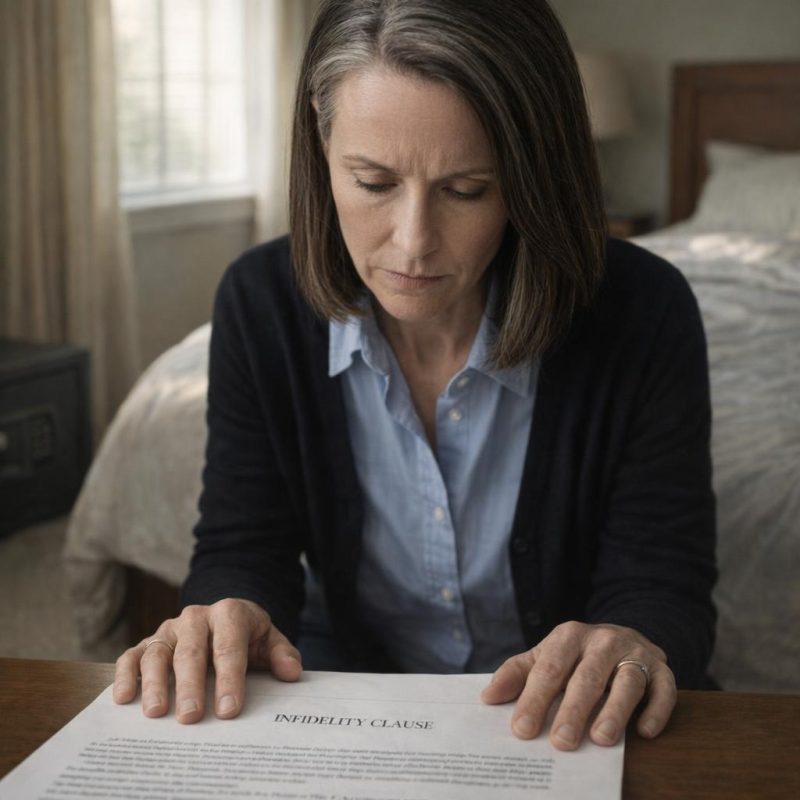 Image by RM AI
Financial Records
I wait until I hear David's car leave the driveway Monday morning before I start. I pull the filing cabinet open and work through it drawer by drawer — bank statements, investment account summaries, property deeds, insurance policies, a folder of documents I've never looked at closely. I scan everything with the printer, saving each file to a cloud account I opened last week under an email address David doesn't know exists. I photograph the originals with my phone as a second backup. I make an inventory list as I go, noting account numbers, balances, and dates in a separate document. Midway through the investment folder I find something I don't recognize: a savings account statement in David's name only, opened three years ago, with a balance I wasn't aware of. I photograph it twice, front and back. I keep moving. When I'm done, I return every original to its exact position in the cabinet and close each drawer carefully. I upload the full folder to the secure link Patricia gave me at our first meeting. Then I go to the guest room, where the printed copies are stacked in neat piles across the bed, and I look at what three hours of quiet, methodical work has produced.
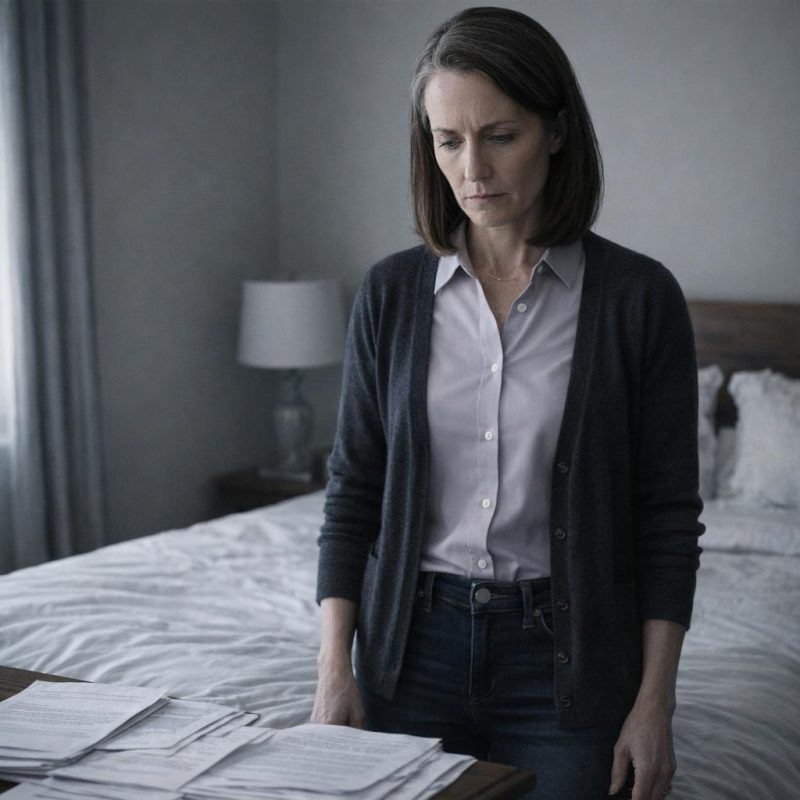 Image by RM AI
Timeline of Deception
I spread everything across the guest room bed and open a new document on my laptop. I start with the date I first noticed the recording app on David's phone — that's the anchor. From there I work forward, entering each piece in order: the ledger entries with their notes about my memory and confusion, the edited audio files and the dates they were created, the staged photos and their timestamps, the credit card charges near Kellerman Avenue, the payments to Tony Rizzo, the absences that align with all of it. I cross-reference as I go, drawing lines between entries that share dates or locations. The pattern that emerges isn't chaotic. Each element lands on the others — the recordings leaving a record of instability, the ledger reinforcing it in writing, the photos placing me somewhere I've never been. I add a column for David's unexplained absences and another for the dates I can verify my own whereabouts. I save the document, attach it to an email, and send it to Patricia. Then I scroll back to the top and read the timeline from the beginning, and what I'm looking at spans eight months of entries, each one building on the last.
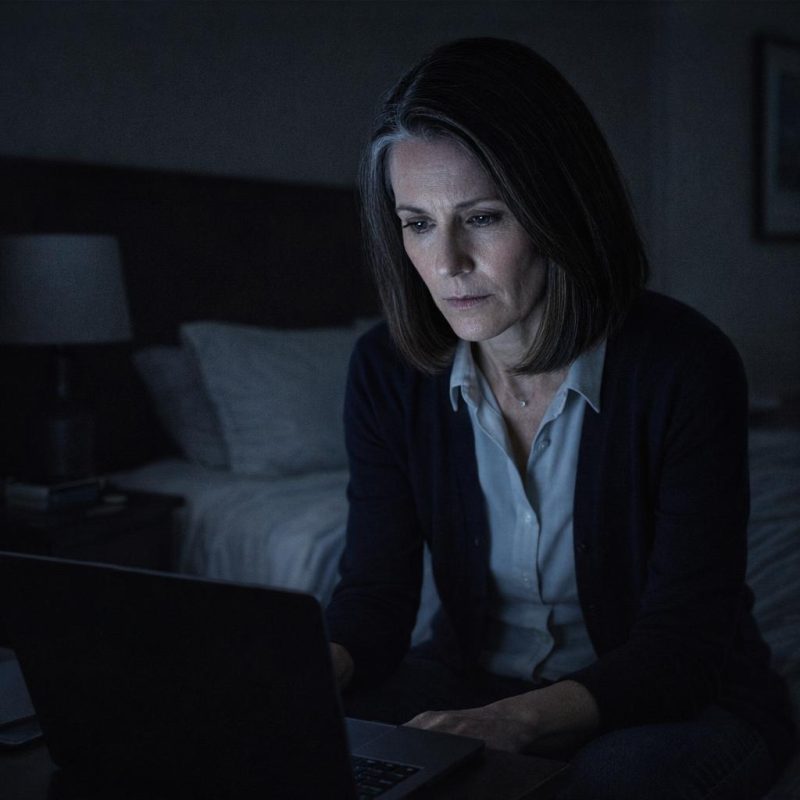 Image by RM AI
Second Meeting
Patricia's office feels smaller the second time, or maybe I just bring more into it. I set the printed copies on her desk in the order I assembled them — timeline first, then the staged photos, then the prenuptial agreement with page seven marked, then the audio transcripts. She works through everything without rushing, reading the timeline twice and holding each photo up to the light before setting it down. She listens to the audio clips on her laptop with her glasses pushed up and her expression neutral. When she's done she asks me about David's behavior over the past few weeks — whether he's been provoking arguments, whether anything has felt staged. I tell her about the comments at dinner, the pointed questions about my memory, the way he repeats things I've already answered as though testing whether I'll give the same response. She nods slowly. She says the mental decline narrative and the affair evidence don't read as separate problems — they seem to reinforce each other, and together they could leave me without credibility and without the protections the prenup provides. She says we need to document what David is actually doing, in his own words, unedited. She slides a notepad across the desk and tells me to start thinking about where in the house he talks most. The weight of what she's laid out settles between us, and neither of us speaks for a moment.
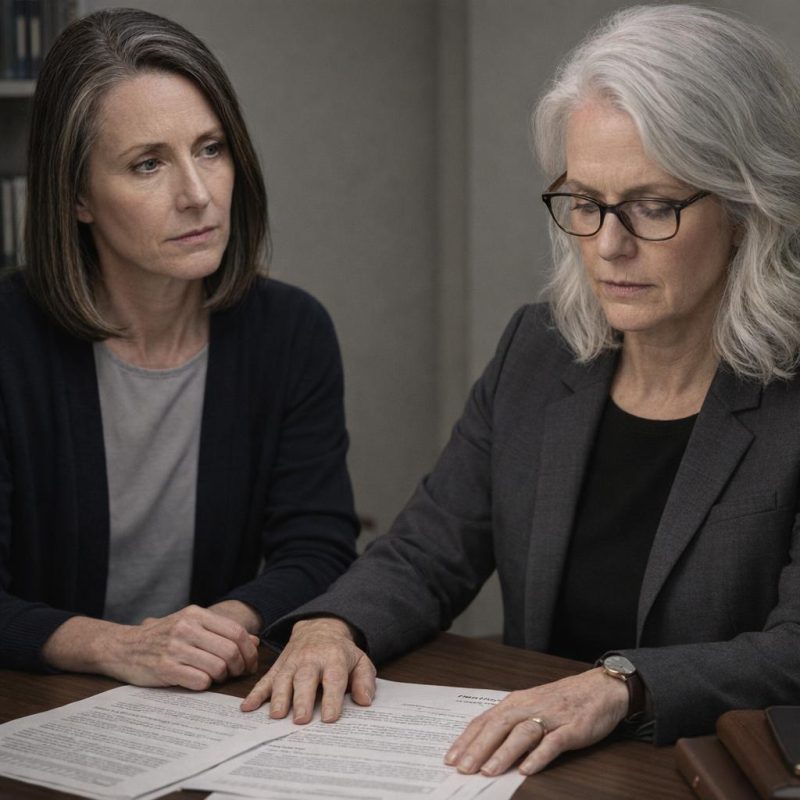 Image by RM AI
Recording Devices
I drive to an electronics store on the far side of town, one I've never been to before. I pay cash for two small voice-activated recorders, buying them at separate registers a few minutes apart. In the car I read the instructions twice. The devices are straightforward — they activate on sound, store hours of audio, and are small enough to sit behind a book or under a shelf lip without being visible. I drive home slowly, thinking through the rooms. The kitchen is where most of it happens — the pointed comments over dinner, the questions that circle back on themselves, the tone that shifts when he thinks I'm not paying attention. The living room is where we spend evenings, where the longer conversations happen. His office is off-limits; the risk of him finding something there is too high. I settle on the kitchen and the living room. I can move them if I need to. I leave them in my purse until David's next absence gives me a clear window. That evening I sit in the kitchen while David watches television in the other room, and I think about Patricia's voice across the desk, steady and matter-of-fact. When I finally go to bed I set my purse on the nightstand, and the two small devices sit cold and quiet inside it.
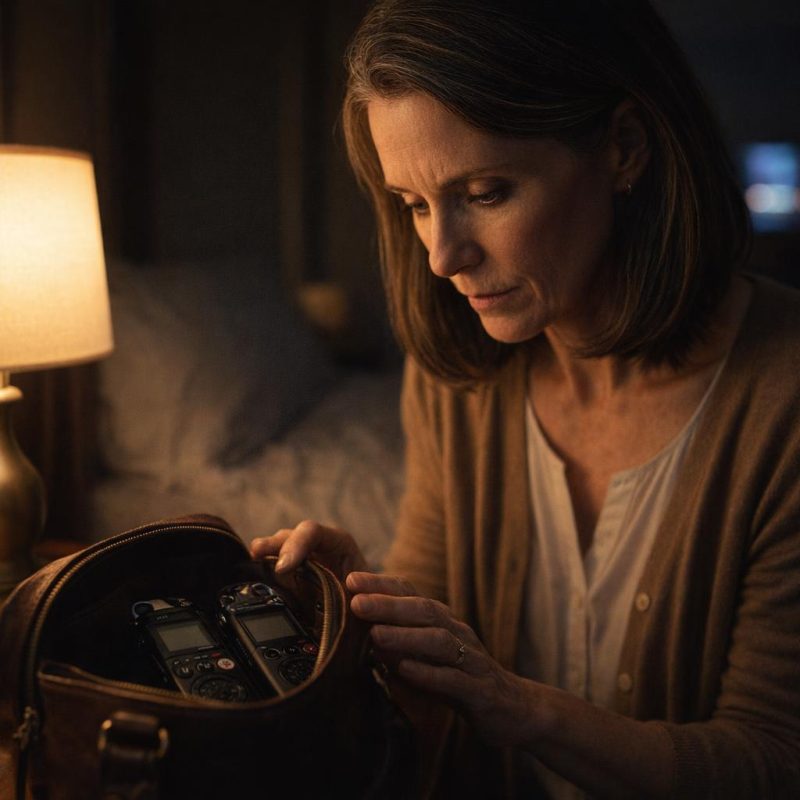 Image by RM AI
Turning the Tables
David leaves for work at his usual time and I give it ten minutes before I start. I take the first recorder from my purse and go to the kitchen. I slide it behind the row of cookbooks on the shelf above the counter, angling it toward the table. I press record, walk to the far end of the room, and say a few words at normal volume. I play it back. The audio is clean — voices at the table will come through clearly. I take the second recorder to the living room and tuck it behind the framed photo on the middle bookshelf, the one that hasn't moved in years. I activate it and test it the same way. The quality is good, maybe better than the kitchen. I'm adjusting the frame by a few millimeters, making sure nothing looks disturbed, when I hear David's car roll into the driveway.
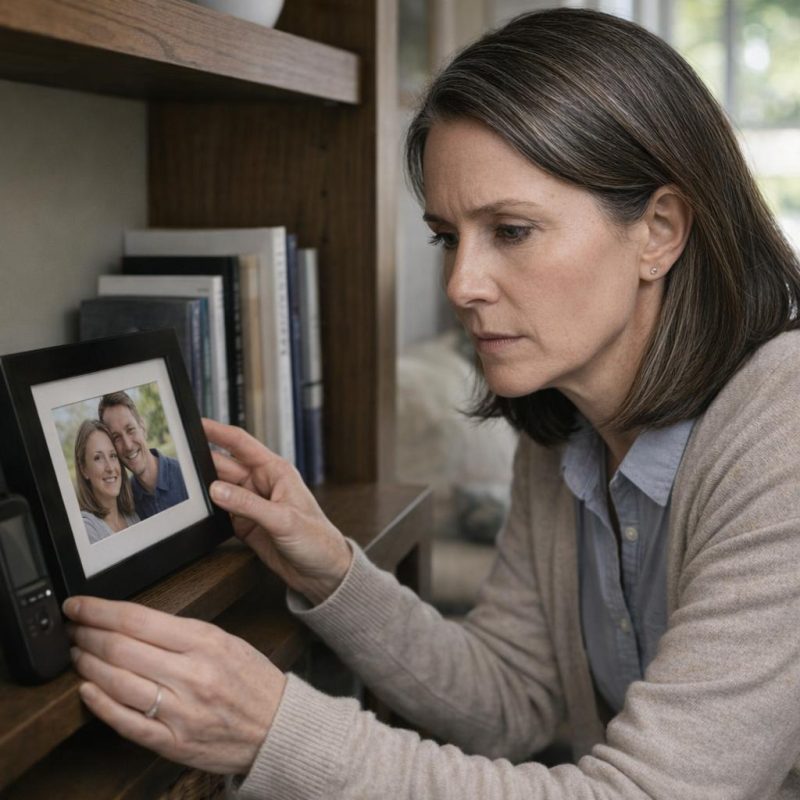 Image by RM AI
Escalation
The arguments start at breakfast on Tuesday. David sets down his coffee and tells me I've been spending recklessly — a charge card bill he's pulled up on his phone, numbers he reads aloud like an indictment. I keep my voice even. I tell him I remember every purchase. He says I don't, that I've been confused about money for months, that he's had to quietly cover things I've forgotten. I don't raise my voice. I don't take the bait. I just say, calmly, that I'd like to see the statements myself. He pushes back from the table and calls me dismissive. That evening he starts in about my mother — her decline, how I've been showing the same patterns, how he's worried. I let him talk. I sit with my hands folded and I let every word land on the recorder sitting twenty feet away behind the bookshelf. He raises his voice twice. I excuse myself both times. Later, after he's asleep, I retrieve the kitchen recorder and back up the files to the cloud. I sit on the edge of the guest bed in the dark, and the weight of performing calm all day settles into me like something physical.
 Image by RM AI
Evidence Captured
I wait until I hear his car leave the driveway before I move. I retrieve both recorders — the one from behind the cookbooks, the one from the bookshelf — and carry them to the guest room with my laptop. I plug in the kitchen recorder first and press play. His voice fills the small room, sharp and certain, the accusations landing one after another. My own responses are so measured they barely register — short sentences, flat affect, nothing he can use. I listen to the whole thing without stopping. Then I switch to the living room recording. More of the same: the raised voice, the references to my mother, the manufactured concern. Hearing it played back is different from living through it. In the moment I was managing him, watching my words, staying small. On the recording, what he's doing is just — obvious. I label each file with the date and timestamp and a brief description. I upload both to the cloud folder Patricia can access and send her a short email flagging the new files. Then I return both recorders to their positions, adjust the frame on the bookshelf by a millimeter, and stand in the quiet living room with his voice still clear in my head.
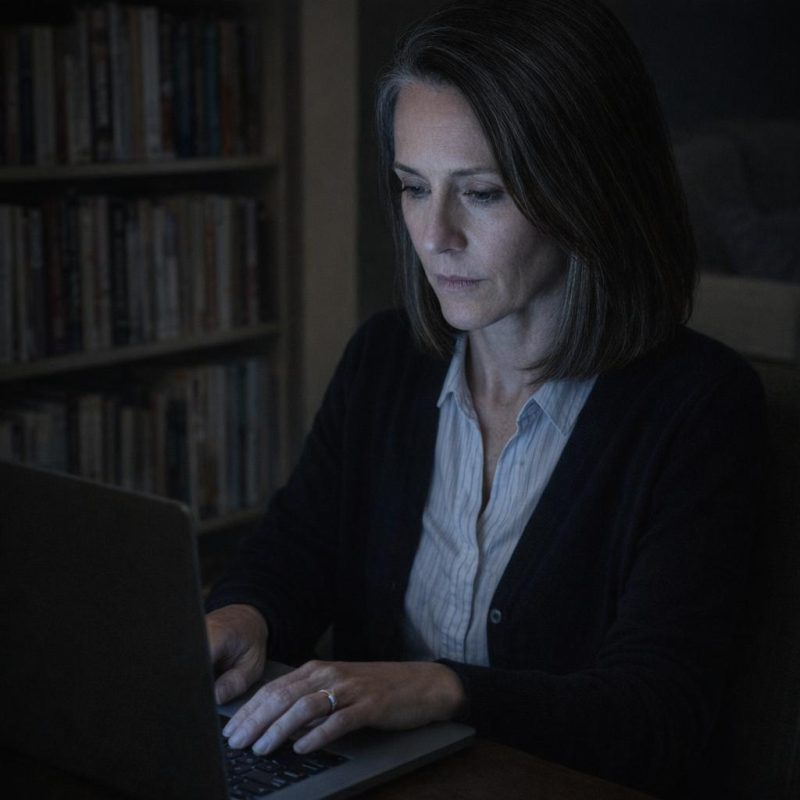 Image by RM AI
Following Him
He mentions the meeting at dinner — casual, almost an afterthought. Evening appointment, shouldn't be late. I tell him I'm going to stop by Monica's. He nods and goes back to his phone. I watch him leave from the front window, give it two full minutes, then get in my car. I pick him up on the highway three cars back and stay there. He drives like he always does — steady, unhurried, left lane. After about twenty minutes he exits into a suburb I don't recognize, the kind of place with wide streets and mature trees and houses set back from the road. I drop further back. My hands are tight on the wheel. He moves through a series of turns without hesitation, no GPS glances, no slowing to check street signs. He knows exactly where he's going. The neighborhood is quiet and well-kept — I pass a basketball hoop at the end of a driveway, a swing set visible in a side yard. Everything looks ordinary and settled, the kind of street where people have lived for years. I pull over half a block back and cut my lights. His taillights disappear around a corner, and after a moment I ease forward and follow him around the turn.
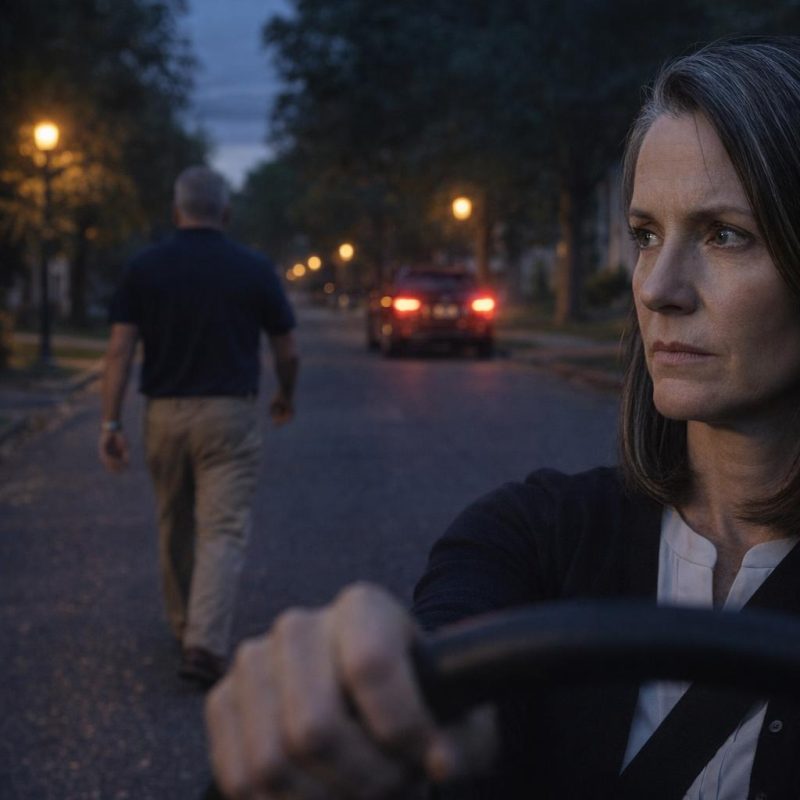 Image by RM AI
The Other House
His car is in the driveway of a two-story colonial about four houses down. I pull over and cut the engine. The house is well-maintained — dark shutters, a wreath on the front door, flower beds along the walkway. There's a basketball hoop mounted above the garage. The windows on the ground floor are lit, warm yellow light behind curtains. I watch David get out of his car. He doesn't look around. He walks up the driveway with the ease of someone who has done it a thousand times, and he doesn't knock. He just opens the front door and goes in. I sit there gripping the steering wheel. My phone is in my hand before I've decided to reach for it. I photograph the house, the address numbers above the door, David's car, the license plate. My hands are shaking enough that I have to take each shot twice. I don't know what I'm looking at. I don't know what explanation fits a man who walks into a stranger's house like it's his own. I sit in the dark and watch the lit windows, waiting for something to make sense, and then the porch light comes on as the front door opens.
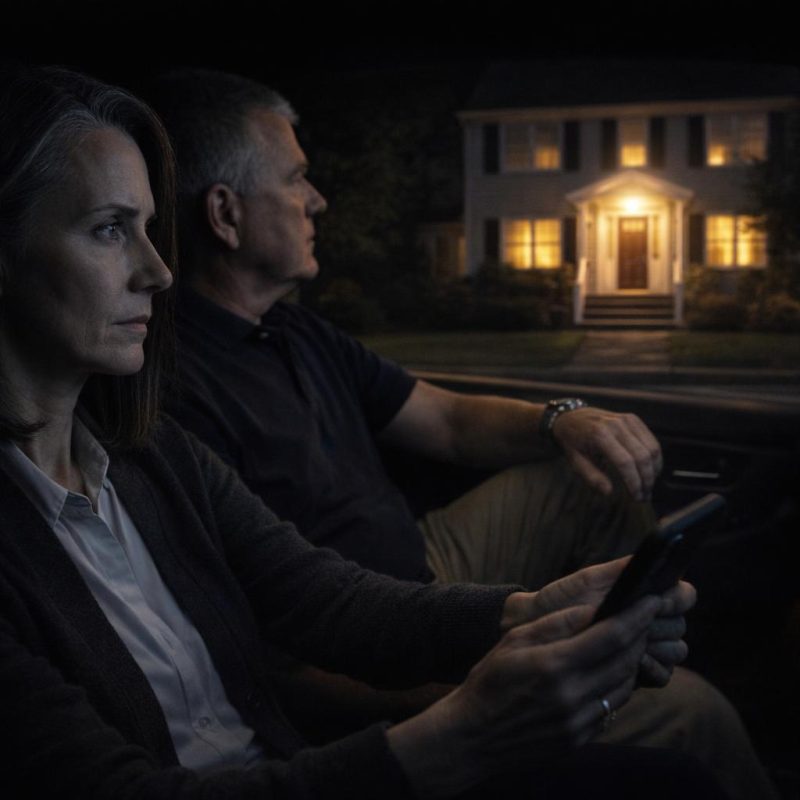 Image by RM AI
The Second Family
A woman steps onto the porch — blonde, mid-forties, wearing a cardigan, smiling at something over her shoulder. She kisses David on the cheek. Not a greeting-kiss, not a polite one. The kind that belongs to a routine. A boy appears behind her in the doorway, tall, maybe eighteen or nineteen, in a t-shirt and basketball shorts. David reaches up and ruffles his hair and the boy ducks away, grinning. They all go inside together and the door closes behind them. I don't move. I can't. I sit in the dark car on this quiet suburban street and something cold moves through me as every disconnected piece of the last year shifts and locks into a shape I can't unfocus my eyes from. The credit card charges in towns I didn't recognize. The weekends that ran long. The desperate push to void the prenuptial agreement. The ledger of manufactured incidents. He wasn't building a case to leave me. He was protecting something he already had. I lift my phone and photograph the lit window, then lower it when the boy crosses in front of the glass and turns toward the street. I see his face clearly in the porch light: David's jaw, David's eyes, looking back at me from a face I've never seen before.
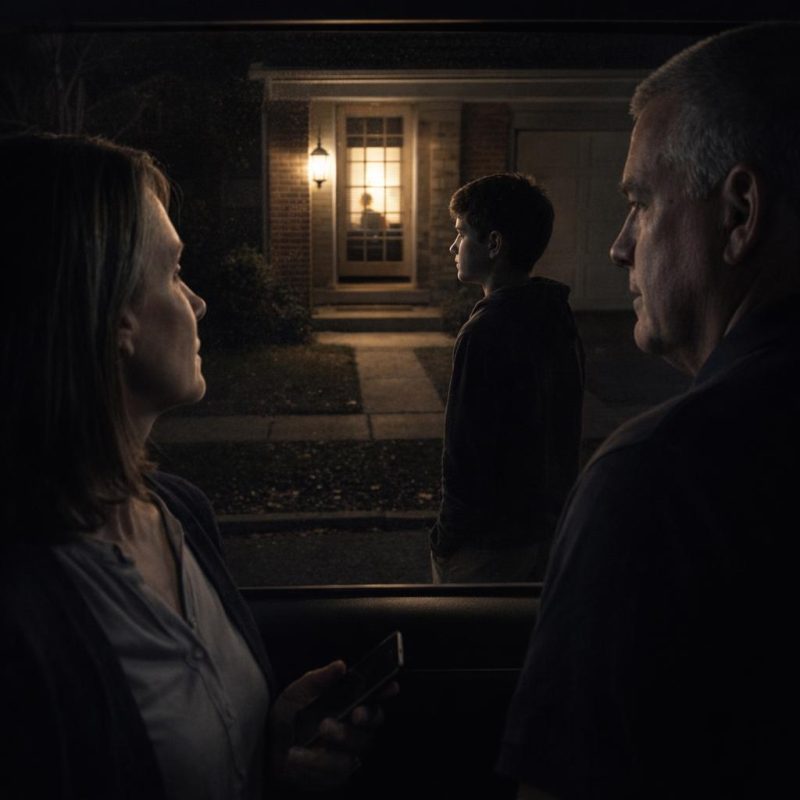 Image by RM AI
Documentation
I make myself breathe. Then I make myself work. I photograph the house from three angles, zooming in on the address numbers until they're sharp and readable. I photograph both cars in the driveway and get close enough on the plates to read them clearly. I open my phone's browser and search the property address. The county assessor's record loads in under a minute — deed recorded three years ago, joint ownership. I screenshot it before I read it twice. Then I search Rebecca Harrison. Social media profiles come up immediately, public and unguarded. Photos of the three of them at a lake house, at a graduation, at what looks like a birthday dinner with candles and a cake. David in every one, relaxed and smiling, his arm around her shoulders. The boy in a baseball uniform, David in the stands behind him. I save everything — the deed, the screenshots, the profile photos — into a folder on my phone. Through the window I can see them still at the table, unhurried, ordinary. I sit in the dark car with my phone screen casting light across my hands, and the deed record sits open on my screen: David Harrison and Rebecca Harrison, joint owners.
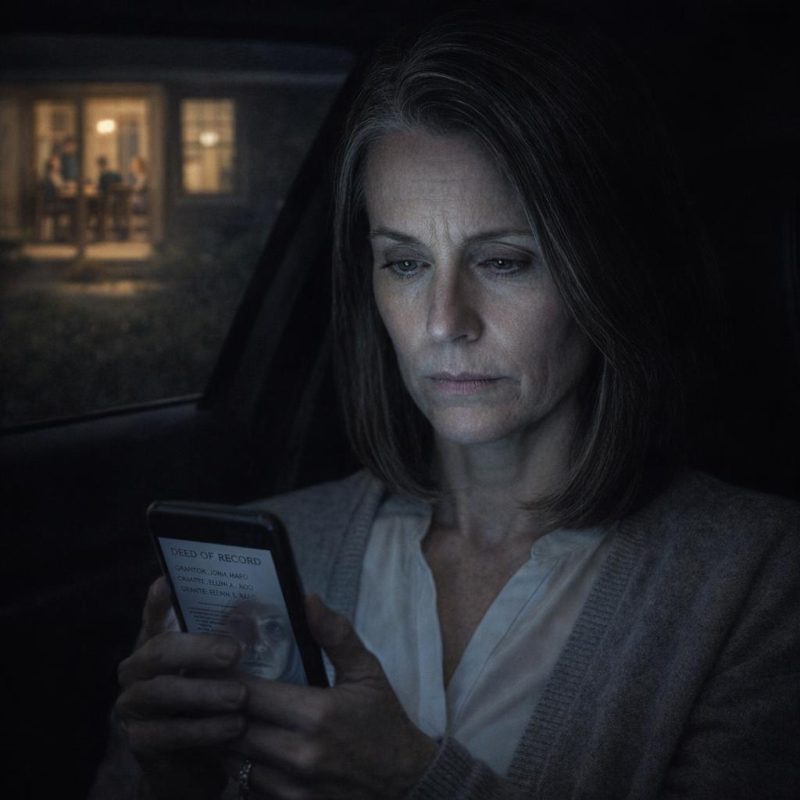 Image by RM AI
The Drive Home
I start the car and pull away slowly, headlights off until I reach the corner. On the highway my hands won't stop trembling against the wheel. I think about every business trip I packed his bag for. Every late meeting I kept dinner warm through. Every Saturday golf game that ran until dark. Twelve years of it, if the deed is right. Twelve years of him leaving this house and coming home to me and sitting across the dinner table and asking about my day. The frame-up makes a terrible kind of sense now — the manufactured incidents, the ledger, the push to void the prenup. He needed me discredited and financially stripped before he could walk away clean. I don't cry on the drive home. I'm not sure I'm capable of it yet. I pull into my own driveway and sit there for a long moment with the engine running, looking at the dark front windows. Then I turn the engine off. I go inside. The house is quiet in the way it always is when he's not here, except tonight I understand that quiet differently — it's the sound of half a life, and I've been living in it without knowing.
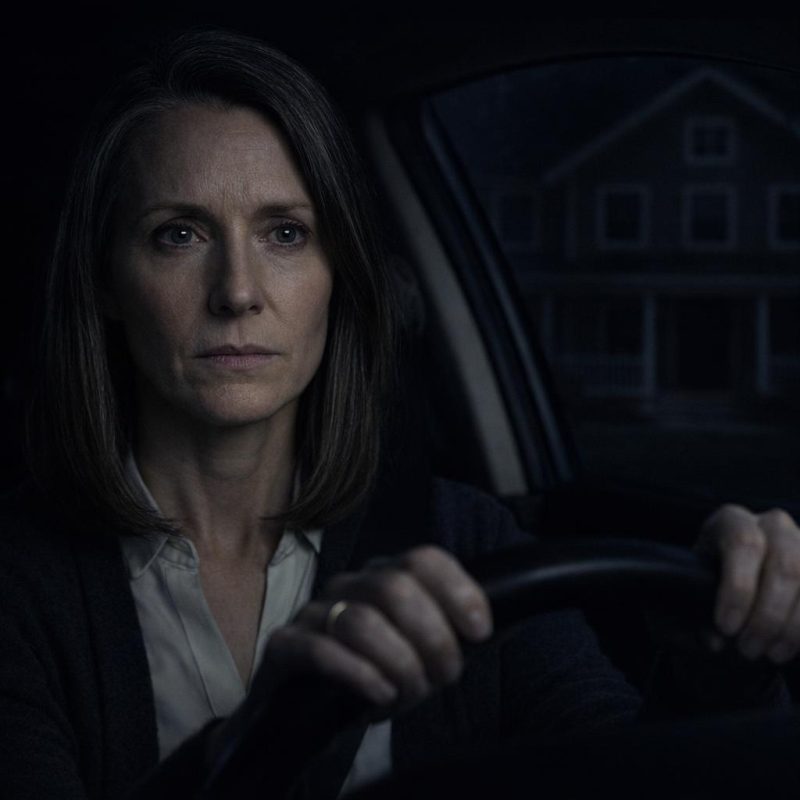 Image by RM AI
Research
I take my laptop to the guest room and close the door. I search for Rebecca Harrison's marriage certificate first. It comes up in a neighboring county's public records — David Mitchell Harrison and Rebecca Lynn Brennan, married twelve years ago, four months after our fifteenth anniversary. I sit with that for a moment. Then I search birth records. Jacob David Harrison, born nineteen years ago, which means David was already married to me when Jake was conceived. I write that down. I find school records, a sports team roster, a local paper's photo of Jake at a baseball tournament with David visible in the background. I find Rebecca's social media going back years — holidays, birthdays, a post about their tenth anniversary with a photo of the four of them at a restaurant. I create a folder on my desktop and label it Second Family. I download everything into it, organized by year. I work through the night, methodical and cold, building a record that can't be argued with. When I hear David's car in the driveway at seven in the morning, I don't move from the chair. I just sit there with twelve years of another life spread across my laptop screen, and the weight of it is absolute.
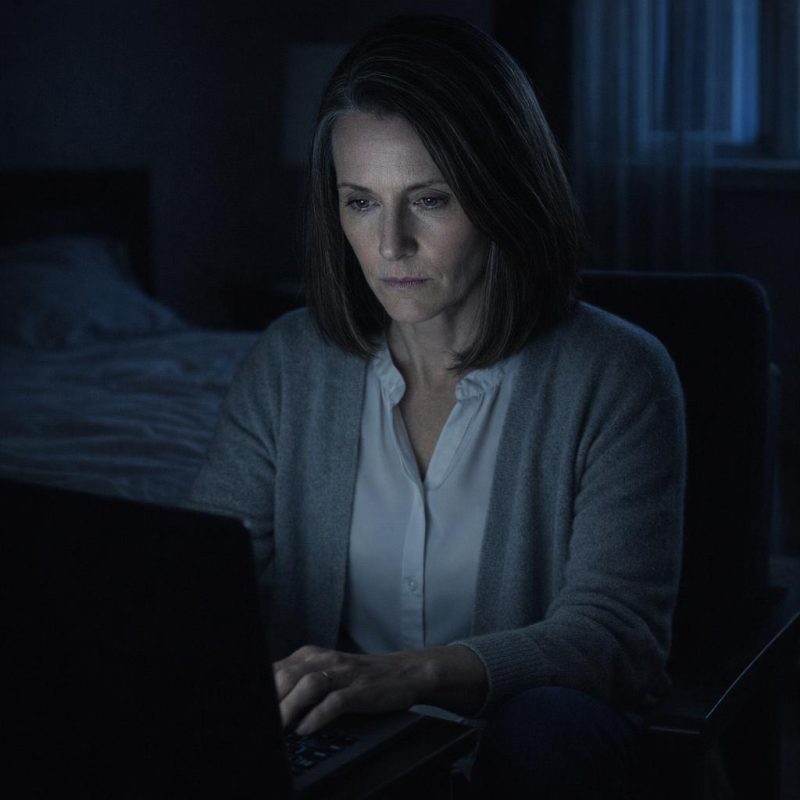 Image by RM AI
Emergency Meeting
I call Patricia's office at eight in the morning. The receptionist starts to tell me about available appointments and I say, 'Please tell her it's an emergency. Tell her it's Claire.' Patricia picks up within thirty seconds. I don't waste time on pleasantries. I tell her I spent the night doing research and that I found something she needs to see in person. She asks if I can come in this morning. I say I'm already in the car. I drive downtown with a flash drive in my jacket pocket — marriage certificate, birth records, property deed, social media archives, school rosters, a newspaper photo with David standing in the background at a baseball tournament. Everything organized by year, labeled, timestamped. When I arrive, Patricia closes her office door and sits across from me without a word. I pull up the files one by one. She reviews each document carefully, asking precise questions about dates and counties and how I found each record. When I get to Jake's birth certificate — born nineteen years ago, four years into my marriage to David — Patricia goes very still. I tell her what that date means. There is a long pause, and then I hear her sharp intake of breath.
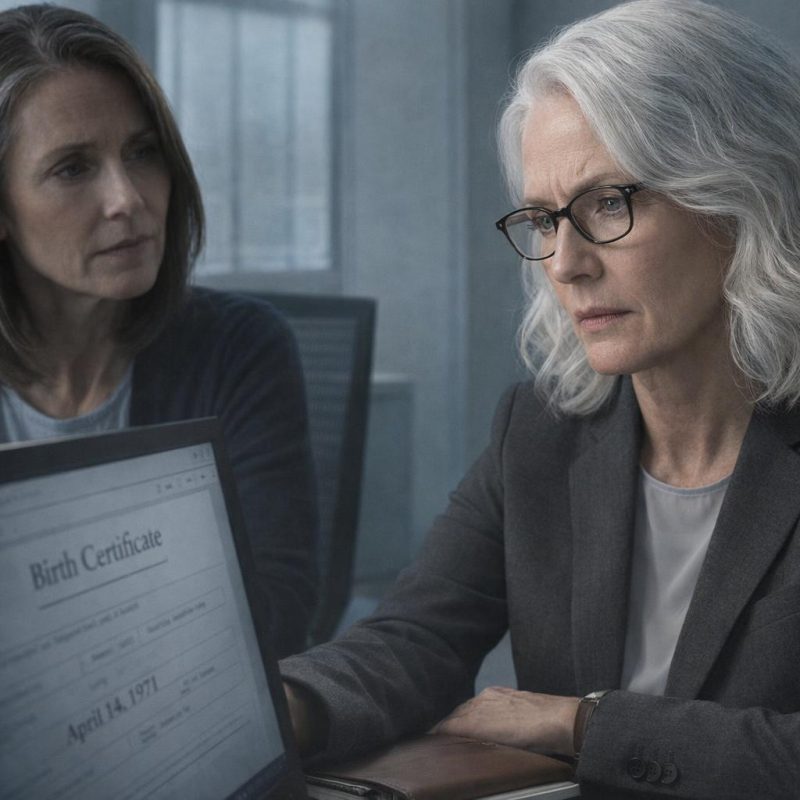 Image by RM AI
The Plan
Patricia sets down the birth certificate and looks at me with an expression I haven't seen from her before — something past professional concern, something closer to controlled fury on my behalf. She says a private confrontation gives David too much room to maneuver. She says we need witnesses. I mention Eric Lambert's spring party — mutual friends, David has already RSVP'd for both of us, next Saturday. Patricia says that's exactly right. Neutral ground, people who know him, no way to quietly contain it afterward. I call Monica and ask her to come to the office. She arrives in under thirty minutes, still in her jacket from wherever she'd been. I tell her everything — the second marriage, Jake, twelve years of a parallel life. Monica goes quiet in a way that is worse than shouting. Then she says, very evenly, 'We're going to end this.' Patricia outlines the plan: I contact Rebecca directly, invite her and Jake to the gathering, and we present everything in front of the room. Documentation packets for key witnesses. Monica agrees to stand beside me. We go through the details twice, making sure nothing is left to chance. When we finish, the invitation to Eric's party is sitting on Patricia's desk.
 Image by RM AI
The Message
I sit in my car outside Patricia's office for twenty minutes before I open Facebook. I find Rebecca's profile easily — her photo is the same one I'd seen in the folder I built overnight, the one from their tenth anniversary dinner. I open a new message and I start typing. I introduce myself as David Mitchell's wife. I tell her we were married twenty-seven years ago, give her the date, our address, the county where we filed. I tell her I know she's been married to him for twelve years and that I'm not writing to blame her. I attach a photo of David and me at our wedding — him younger, thinner, the same jaw, the same smile he apparently never stopped using. I tell her there's a gathering at a friend's house this Saturday evening and that she and Jake deserve to be there. I tell her we both deserve the truth in the same room at the same time. I read the message three times. I think about what it will feel like when her phone buzzes and she opens it. I think about her sitting somewhere ordinary — her kitchen, maybe — and having the floor go out from under her. Then I press send. The quiet that follows fills the car completely.
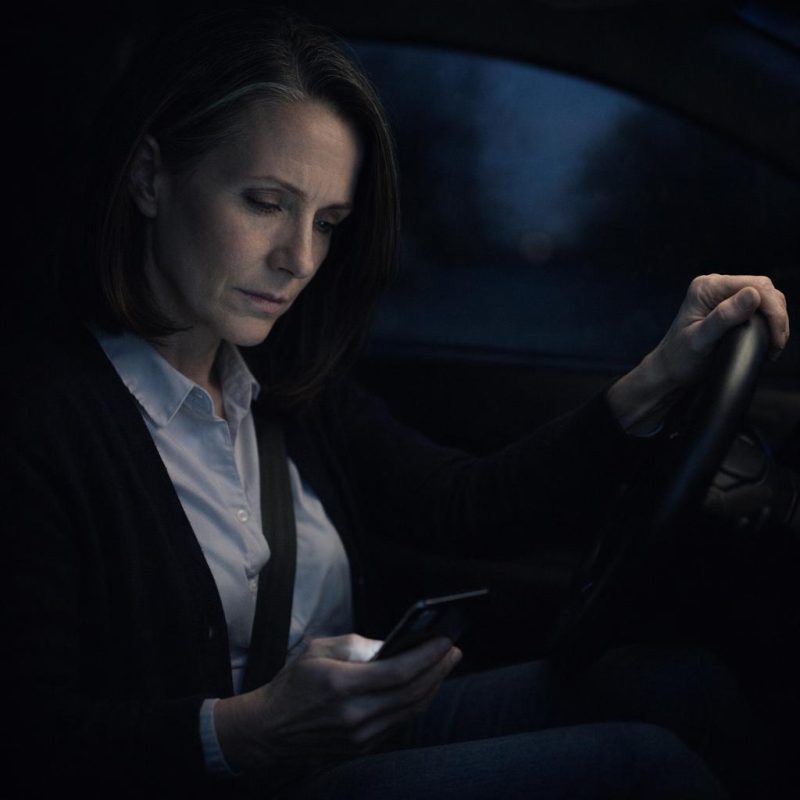 Image by RM AI
Waiting
Rebecca doesn't respond Wednesday. She doesn't respond Thursday. I make breakfast both mornings. I fold laundry. I run to the grocery store and pick up the brand of coffee David likes. He's been in a good mood all week — relaxed in a way that used to feel like warmth and now feels like something else entirely. Wednesday night he talks about a project at work. Thursday he mentions he's looking forward to Eric's party, says it'll be good to see everyone. I say that sounds nice and pass him the salt. I watch him across the dinner table and I see him with a clarity that is almost clinical. Every easy laugh, every offhand comment about the weekend — I catalog it without reacting. Friday morning I check my phone before he's up. Still nothing from Rebecca. I wonder if she deleted the message. I wonder if she showed it to David. I keep my face neutral all day. Friday night David kisses me goodnight and says he'll set the alarm for eight. I say that's fine. I lie in the dark listening to his breathing slow and even out, and the ordinary sounds of the house settle around me like they always have.
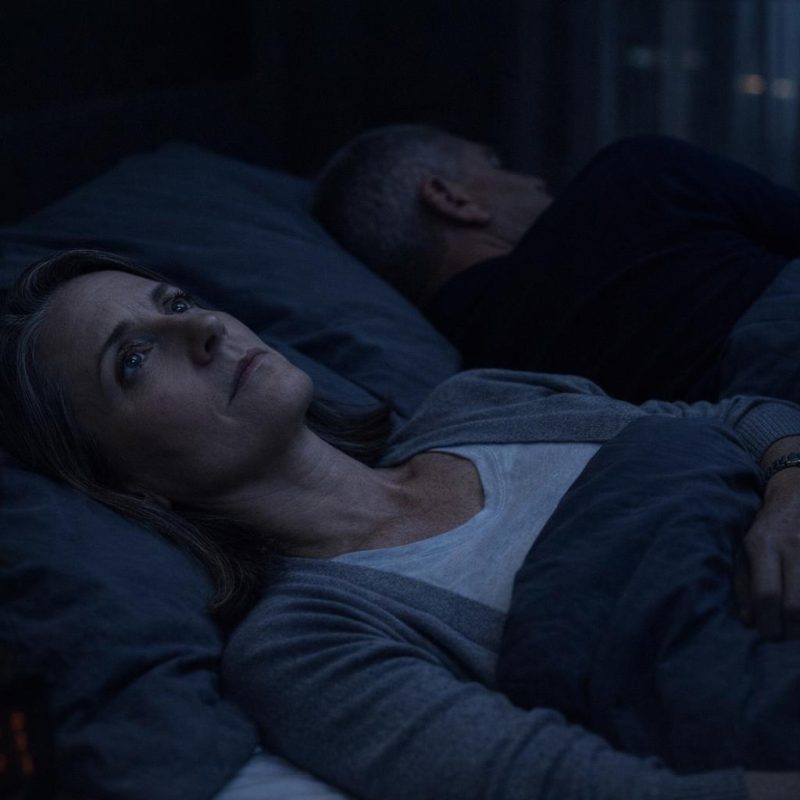 Image by RM AI
Rebecca's Reply
Saturday morning I'm in the bathroom when my phone buzzes on the counter. The name on the screen is Rebecca Harrison. I lock the door before I open it. Her message is short and her sentences break apart in places, like she typed and deleted and typed again. She says she didn't know. She says David told her I was an ex-wife, that things had ended badly years before they met. She says she's been sick since Wednesday when she first read my message and couldn't make herself respond until now. She says she and Jake will be there tonight. She says she needs to understand what's real. I read it twice, then I type back: 'So do I. See you tonight.' I delete the thread, wash my face, and unlock the door. David is at the kitchen table with the newspaper when I come out. He asks if I'm ready for the party. I tell him yes, almost. I excuse myself to the back porch and call Patricia, then Monica. Patricia says everything is in place. Monica says she'll be there by five-thirty. I go back inside and David is rinsing his coffee cup, humming something under his breath, and the weight of what I'm carrying settles into something solid and still.
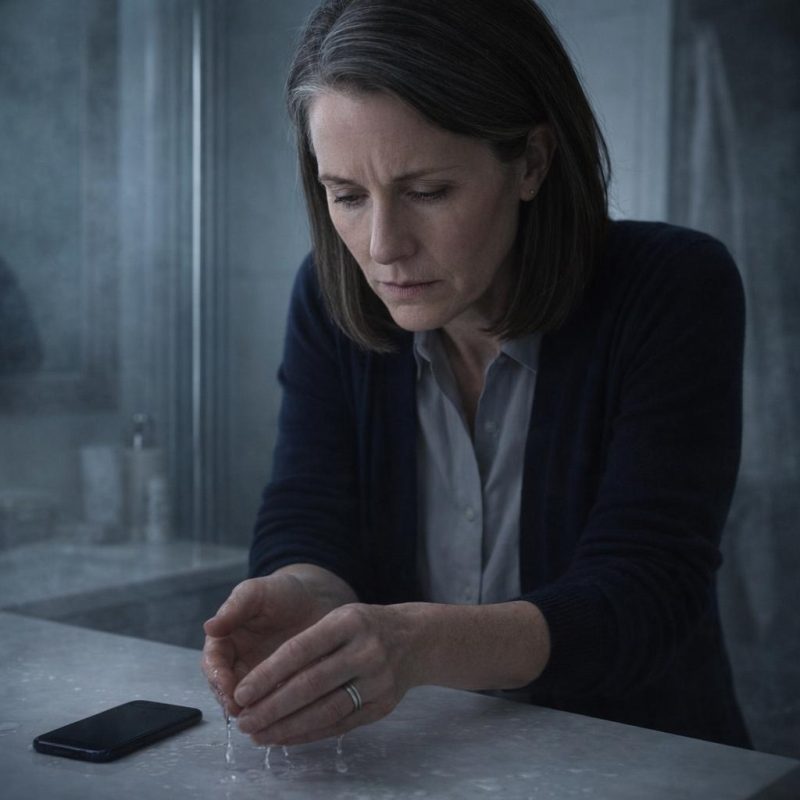 Image by RM AI
The Gathering
We arrive at Eric's at six. The house is already full — twenty people or so, music low, the smell of something grilling out back. Eric opens the door with a wide smile and a beer in his hand, clapping David on the shoulder, telling us to grab drinks and make ourselves at home. David does exactly that. Within five minutes he's across the room with a group of people I half-recognize, laughing at something, completely at ease. I find Monica near the kitchen. She hands me a glass of water and doesn't say anything, just holds my gaze for a second and nods. Patricia is near the front hallway, leather portfolio under her arm, positioned where she can see the door. I stay close to the window that faces the street. David drifts through the room like he owns it, refilling his drink, touching someone's arm, the same easy charm he's always had. At six-thirty a car I don't recognize pulls up along the curb. I set my glass down. The passenger door opens first, then the driver's side. Rebecca steps out, smoothing her jacket, and Jake comes around from the other side looking uncertain. They stand on the sidewalk for a moment. Then they walk up the front path toward the door.
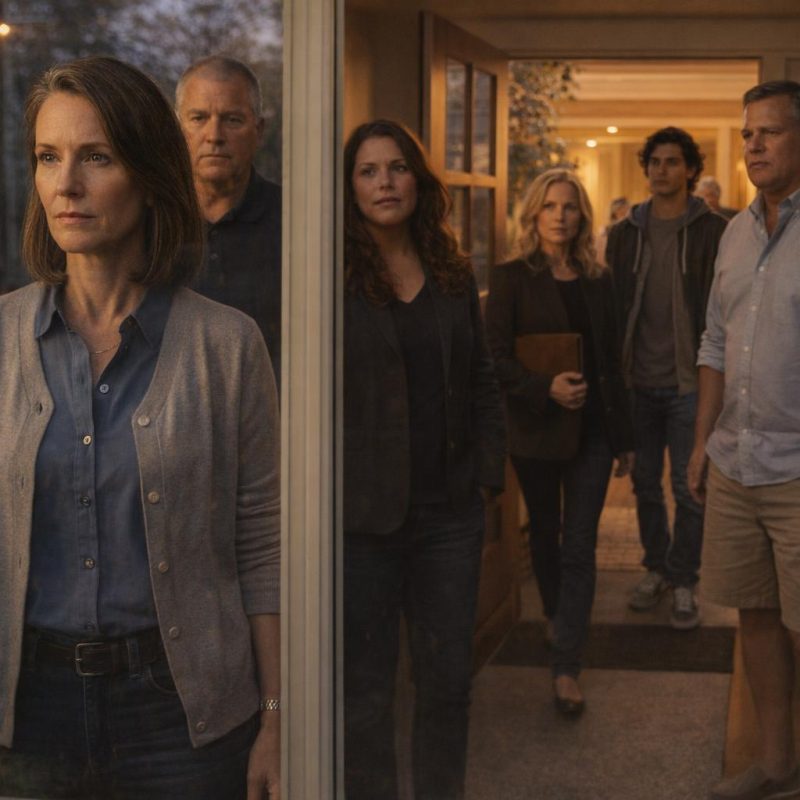 Image by RM AI
The Introduction
Eric opens the door and Rebecca and Jake step inside. I watch David from across the room. He turns toward the door the way anyone does when new guests arrive — and then he goes completely still. I don't give him time to think. I walk to the center of the room and I ask for everyone's attention. The conversations drop away. People turn. David's eyes find mine and I see something move through his face that I don't have a name for. I keep my voice level. I say I want to introduce two people — Rebecca Harrison and her son Jake Harrison. I say Rebecca has been married to David for twelve years. I say Jake is David's son. The room breaks into confused murmurs. Eric looks at me like I've said something in a language he doesn't speak. David opens his mouth and I keep going. I say I have been married to David for twenty-seven years. I hold up my phone with our wedding photo on the screen. Rebecca makes a sound I won't forget. Jake turns to look at David and his face is open and young and completely undone. Monica steps up beside me. Patricia moves forward with the documentation portfolio. And then the room goes completely silent.
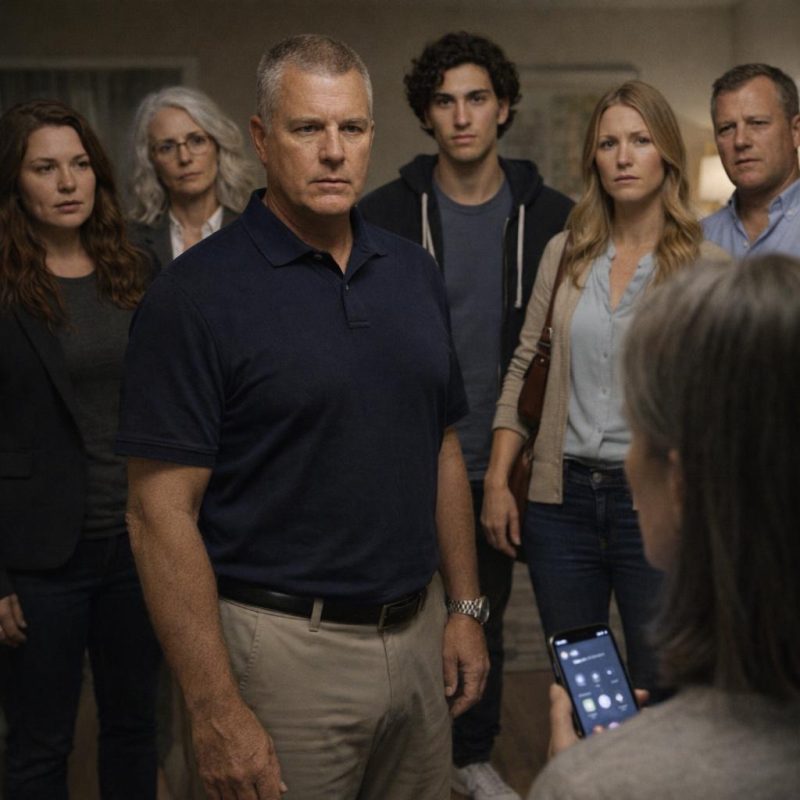 Image by RM AI
The Evidence
Patricia hands me the tablet and I press play. My own voice fills the room — clipped, rearranged, confessing to a hit-and-run I was nowhere near, describing an affair that never happened. I let it run for thirty seconds, then I pause it. I tell the room that David spliced those recordings together from years of ordinary conversations. I show them the ledger — entries in David's handwriting documenting a mental decline I don't have, dated across eighteen months. I pull up the staged photos of my car near Tony's address, photos I never took and was never told existed. I explain the prenuptial agreement and what voiding it would have meant for me financially. Then I show the property deed for the house where Rebecca and Jake have been living, David's name on it alongside hers. The marriage certificate. Jake's birth certificate, the date circled, four years into our marriage. Rebecca is crying quietly, Jake's arm around her shoulders. Someone near the back of the room says something under their breath. David has been trying to speak for the last two minutes — short starts, half-sentences, nothing that lands. I look at him directly and I say he built all of this so he could walk away and leave me with nothing. Then Patricia presses play on the second audio file, and I watch David's face as his own edited version of my voice fills the room again.
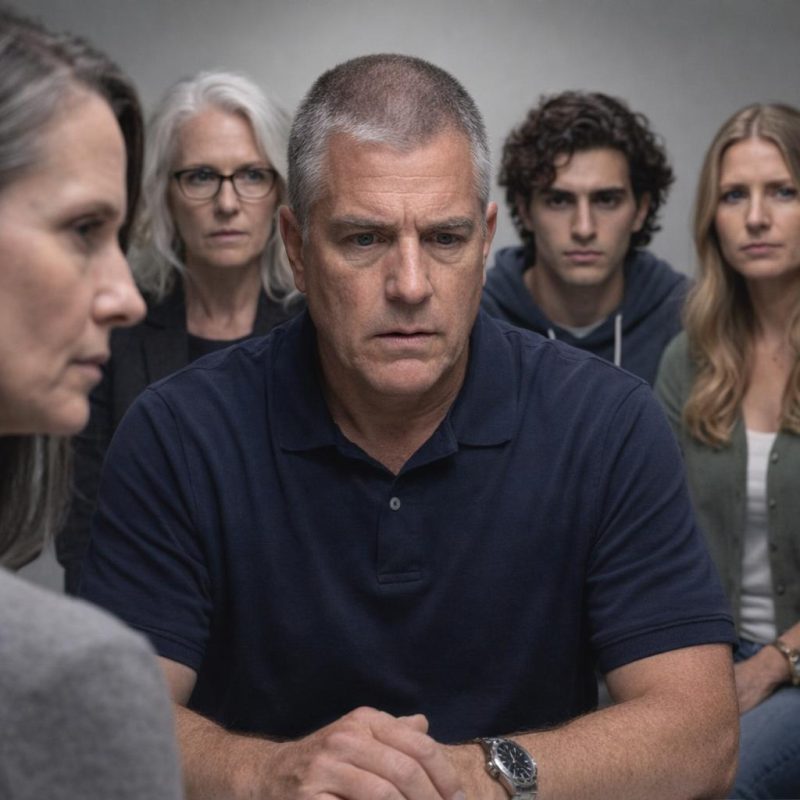 Image by RM AI
Confrontation
Rebecca steps forward before I can say another word. Her voice is shaking but it doesn't break. She asks David how long he planned to keep lying to her — to both of us. He moves toward her and she steps back, one clean motion, like she's been rehearsing it without knowing. Jake is standing near the wall and he won't look at his father. Not once. David starts talking — context, misunderstanding, things taken out of proportion — and Patricia sets the tablet on the coffee table and plays both audio files simultaneously. His fabrication on one speaker, the original on the other. The room goes completely still. When the files finish, Rebecca asks, quietly, whether he ever actually loved her or whether she was just convenient. David says he loves them both. I laugh. I can't help it — it comes out sharp and short and I don't apologize for it. I tell him he doesn't love anyone but himself, that he was willing to burn my entire life down to protect what he'd built. Rebecca asks how many other lies there are. He has no answer. Eric tells us all, in a voice that's gone flat and tired, that it's time to leave his house. Monica puts her arm around me. Patricia closes her portfolio. David stands in the center of the room, and no one is looking at him anymore.
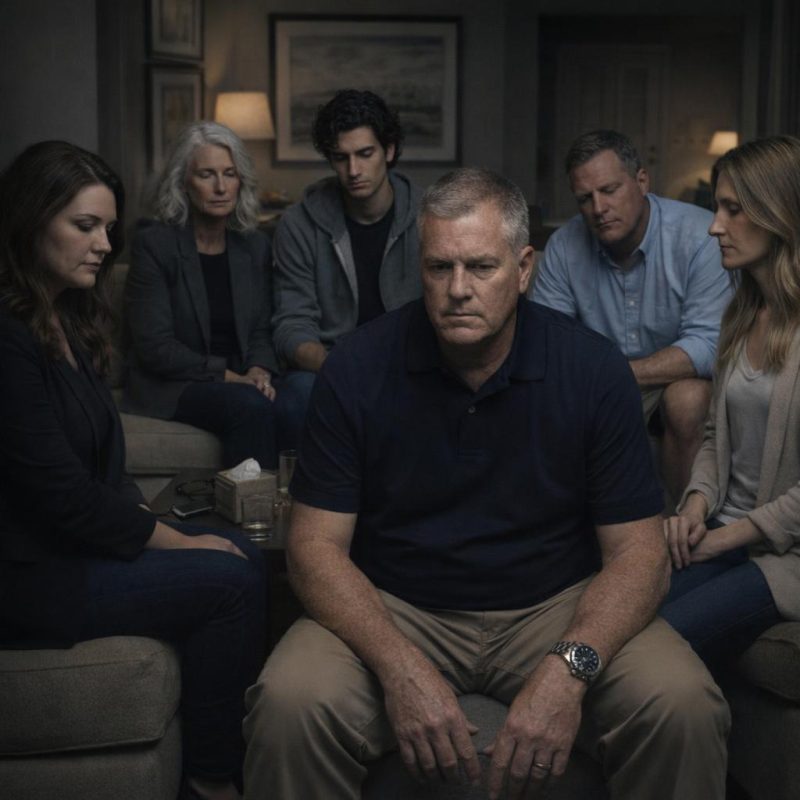 Image by RM AI
Aftermath
Monday morning, Patricia files the divorce papers before nine. The prenuptial agreement holds — David's frame-up failed, and every piece of fabricated evidence he built against me is now evidence against him instead. She files criminal complaints the same day: evidence tampering, fraud. The edited recordings, the staged photographs, the ledger in his handwriting — all of it goes to the prosecutor's office in a single organized binder. I spend two hours with the prosecutors giving testimony, Monica sitting in the waiting room the whole time, there when I walk out. Rebecca files for divorce that same week. We speak once, briefly, in the parking lot outside Patricia's office. We're not friends. We're not going to be. But we look at each other and something passes between us that doesn't need a name. Patricia tells me David has moved out of both houses and is staying in a hotel. His firm has placed him on administrative leave. I drive home in the late afternoon and let myself in through the front door. I walk through every room slowly — the kitchen, the hallway, the study where I found the first recording. The house feels different now. Quieter, but not empty. More like mine than it has been in years, and I stand in the middle of it and let that settle.
 Image by RM AI
Exposure
The district attorney pursues the charges without hesitation. Evidence tampering, fraud, bigamy — his lawyer tries to negotiate but Patricia tells me the evidence is too clean, too thorough, too documented to bargain away easily. My recordings of David's provocations establish intent. The fabricated ledger establishes premeditation. The prenup is enforced in full. I keep the house, my inheritance, every separate asset I came into the marriage with. His accounts are frozen pending the criminal case. I change the locks on a Tuesday afternoon and it takes less than an hour. Monica helps me clear his things — we donate everything to a shelter two towns over, three carloads, and neither of us says much while we do it. I go back to my volunteer work the following week. Friends call, horrified and kind. I start seeing a therapist on Thursday mornings, a woman with a calm office and no clocks on the walls, and I begin to understand that processing this is going to take longer than exposing it did. I sleep through the night for the first time in months on a Wednesday in late October. I wake up to rain on the windows and lie there for a while, not reaching for my phone, not bracing for anything, just listening to the sound of it, and the morning feels like something that belongs to me.
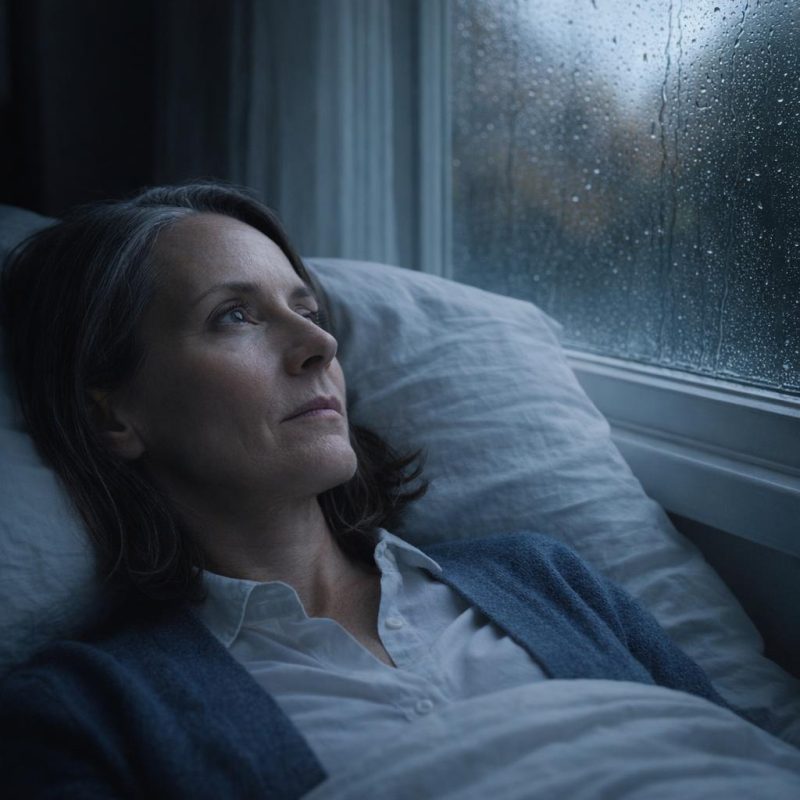 Image by RM AI
Twenty-Seven Years
Six months out, David pleads guilty to fraud and evidence tampering. Probation, a fine, his reputation in pieces. Both divorces are finalized the same week, two separate courtrooms, two women who trusted the same man walking out of different doors into the same gray afternoon. I sell a few investments and donate a portion to a domestic abuse organization — it feels like the right place for that money to go. I start a blog about financial literacy and protecting yourself inside a marriage. Other women write to me. More than I expected. Their stories are different from mine and also not different at all. Monica visits most weekends now. She brings coffee and stays too long and I don't mind. I have coffee with Rebecca once, at a neutral café, and we sit across from each other for an hour and talk carefully and honestly and part ways without making plans to do it again. It's enough. I look at old photos sometimes — twenty-seven years of them — and I let myself grieve what I thought I had. The life I believed in was real to me, even if it wasn't real. That matters. But I don't regret finding out. I'm clearer now, steadier, more certain of my own ground than I have been in a very long time. I have a trip to Italy booked, a writing class starting in the spring, and a garden that finally looks the way I always wanted it to. I stand in my house — truly mine — and I recognize the woman standing in it.
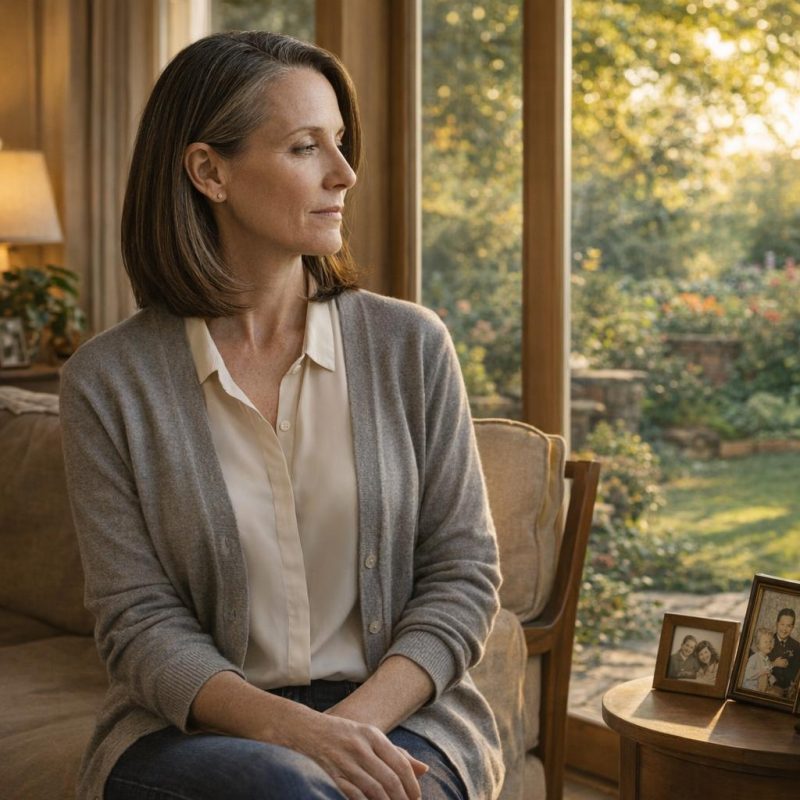 Image by RM AI
KEEP ON READING

The story of Ching Shih, the Woman Who Became the…
Unknown author on WikimediaFew figures in history are as feared…
By Emilie Richardson-Dupuis Dec 29, 2025
Einstein's Violin Just Sold At An Auction—And It Earned More…
A Visionary's Violin. Wanda von Debschitz-Kunowski on WikimediaWhen you hear…
By Ashley Bast Nov 3, 2025
This Infamous Ancient Greek Burned Down An Ancient Wonder Just…
History remembers kings and conquerors, but sometimes, it also remembers…
By David Davidovic Nov 12, 2025
The Mysterious "Sea People" Who Collapsed Civilization
3,200 years ago, Bronze Age civilization in the Mediterranean suddenly…
By Robbie Woods Mar 18, 2025
20 Greatest Ancient Athletes In History
Ancient Olympics. Long before modern stadiums and multimillion-dollar endorsements, athletes…
By Sara Springsteen May 1, 2026
20 Soldiers Who Defied Expectations
Changing the Rules of the Battlefield. You’ve probably heard plenty…
By Annie Byrd Feb 10, 2026