

I Thought My Daughter's Best Friend's Parents Were Perfect—Until I Found Out What They Let Happen in Their Basement
I Thought My Daughter's Best Friend's Parents Were Perfect—Until I Found Out What They Let Happen in Their Basement
The Silent Ride Home
I pulled up to Linda and Steve's house at noon on Sunday, same as I always did, expecting the usual five-minute wait while Emily said her goodbyes. That girl could stretch a farewell into a full production — hugs, promises to text, one last thing she forgot to say. But this time the front door opened almost before I'd put the car in park, and Emily came out alone, overnight bag already on her shoulder, no Ava trailing behind her, no Linda waving from the doorway. She climbed into the passenger seat and buckled up without a word. I asked how the sleepover was. She said fine. I asked what they did. She said stuff. I tried a few more questions on the drive home — did they watch movies, did they stay up late, did they do their nails like they'd been planning — and each answer came back flat and short, like she was reading from a script she hadn't bothered to memorize. I told myself she was tired. Ten-year-olds at sleepovers never actually sleep, and Emily had probably been up until two in the morning giggling about nothing. I kept my eyes on the road and let the quiet sit. She turned toward the window and didn't look back at me once, and the weight of that silence filled the whole car.
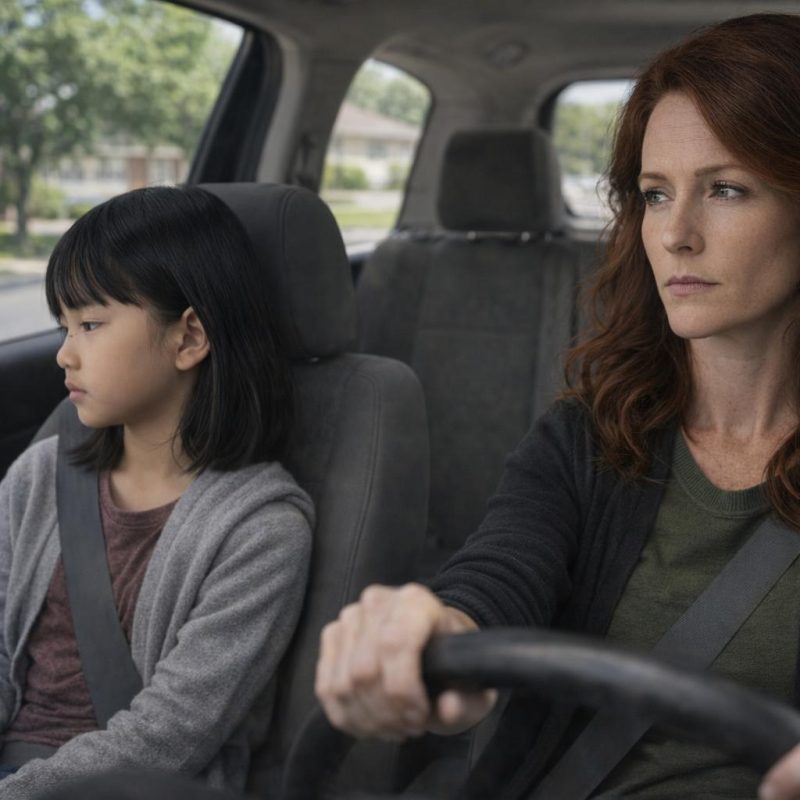 Image by RM AI
Sitting in the Dark
When we got home I carried the heavier part of her bag up the stairs and set it on her bed, expecting her to start pulling things out the way she always did — dumping her pajamas on the floor, hunting for her phone charger, narrating every detail of the night whether I asked or not. Instead she just stood there looking at the bag like it had nothing to do with her. I offered to make grilled cheese, her favorite. She shook her head and said she wasn't hungry. I suggested soup. Another no. I told her to at least drink some water and she nodded in that way kids do when they're agreeing just to end the conversation. I figured she needed sleep more than food, so I left her to it and went downstairs to start a load of laundry. Around mid-afternoon I heard her door click shut, soft and deliberate. I gave her an hour. Then another. At three o'clock I went up and knocked gently, expecting to find her curled under her comforter, dead asleep. I pushed the door open a few inches and stopped. The curtains were drawn, the lights were off, and Emily was sitting on the edge of her bed in the dark, completely still, not reading, not on her phone, not doing anything at all.
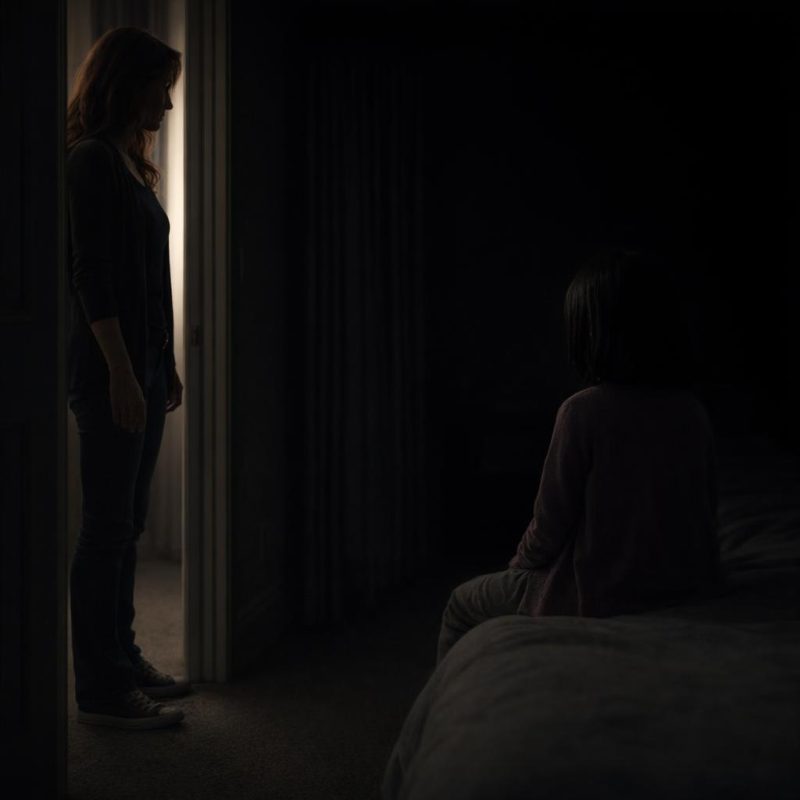 Image by RM AI
Two Years of Trust
I pulled the door closed quietly and stood in the hallway for a moment, trying to talk myself down. Kids have off days. Sleepovers can be overstimulating. I knew that. But standing there in the dim hallway I found myself running back through two years of history, looking for something to hold onto. Emily and Ava had met in second grade, first week of school, and by the end of that week they were inseparable. Same lunch table every day, same soccer team every fall, the kind of friendship that forms fast and sticks. Over two years I counted roughly twelve sleepovers at the Chen house, and Emily had come home from every single one of them bright-eyed and talking so fast I could barely keep up. She'd tell me about the movies they watched and the snacks they ate and whatever drama was happening in their friend group, and I'd sit at the kitchen table and just let her go. Linda had always texted me when Emily arrived — every time, without fail — and Steve was quiet but present, the kind of dad who showed up to soccer games and knew all the kids' names. Their house was warm and well-kept, family photos on every wall. And last Sunday night when I'd dropped Emily off, Linda had stood in the doorway and waved with a wide, easy smile that I hadn't thought twice about until now.
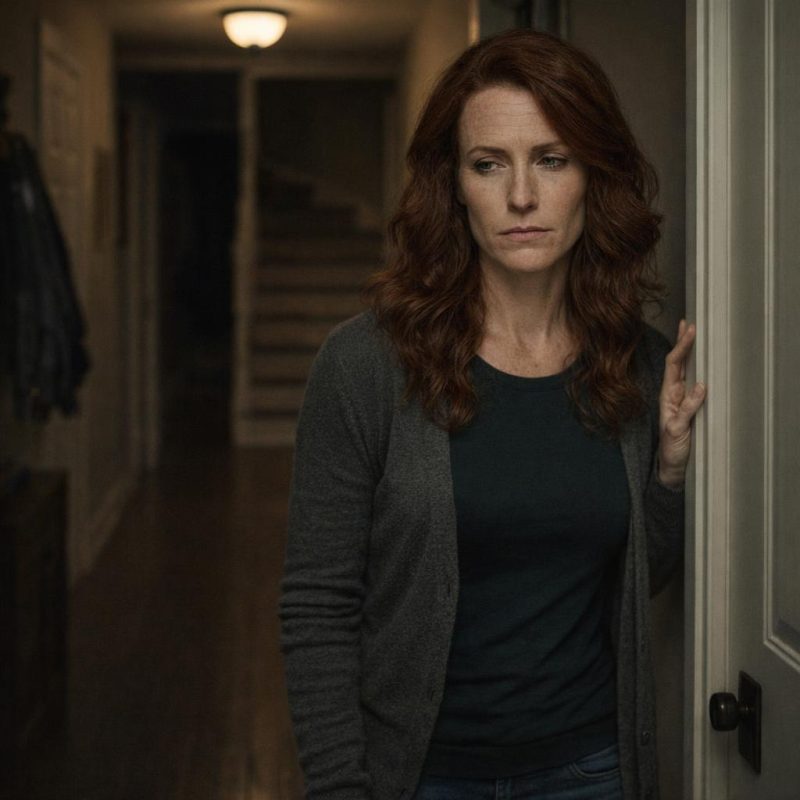 Image by RM AI
The Long Evening
I made pasta for dinner around six, something simple that I knew Emily liked. I called up the stairs and she came down, which I took as a small good sign. She sat across from me at the table and moved the food around her plate more than she ate it. I asked if her stomach was bothering her. She said no. I asked if something had happened at school on Friday. She shook her head. I didn't push. I'd read enough parenting articles to know that pressing a quiet kid too hard usually just drove them further in, so I kept the conversation light, told her about something funny I'd heard on the radio, and she gave me a small smile that didn't quite reach her eyes. When she asked to be excused she'd barely touched her food. I heard her door close upstairs a few minutes later. I sat at the table for a while after that, then moved to the living room and turned on the television without really watching it. Every few minutes I'd glance toward the stairs. No footsteps, no music, no sound of her moving around the way she usually did before bed. I thought about going up. I decided to give her more time. The evening stretched on around me, and the silence from upstairs didn't break.
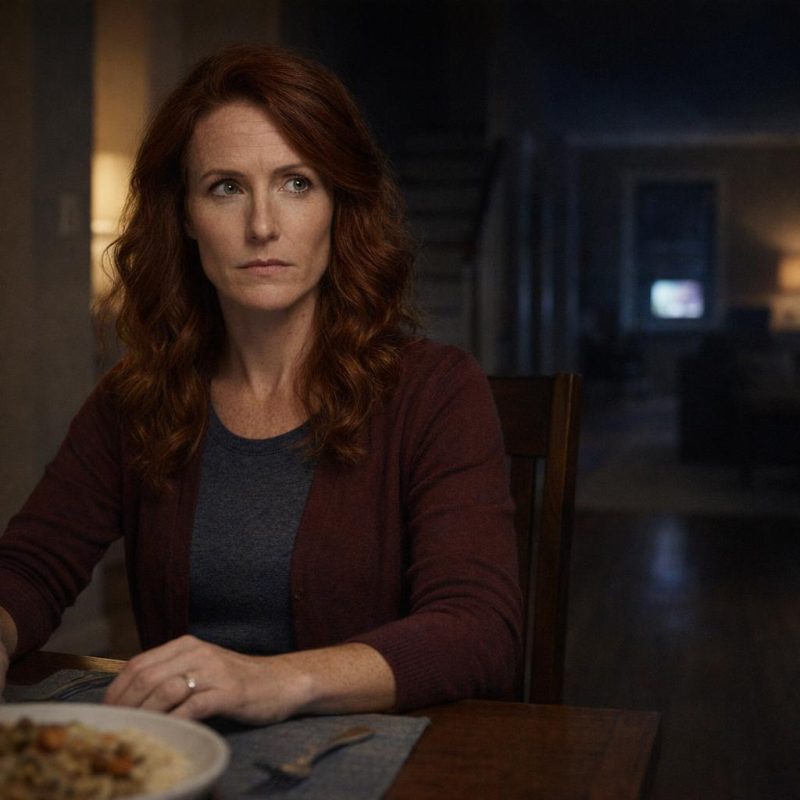 Image by RM AI
Unknown Number
I was still on the couch at ten o'clock, the TV murmuring something I hadn't been following for the past hour, when I picked up my phone out of habit. I had a text. Unknown number, no name attached, sent just a few minutes earlier. My stomach dropped a little the way it always does with unknown numbers at night — spam, wrong number, something from a school system I hadn't saved. I opened it anyway. The message was short. It said there was something I needed to know about, something that had happened this past weekend. Then it said it involved Emily. I read it once and my heart kicked hard against my ribs. I read it again, slower, trying to find a way to make it mean something less alarming. I sat up straight on the couch, the TV still going in the background, and read it a third time. My mind started running through possibilities — had Emily gotten hurt and nobody told me, had something happened at the house, was this some kind of mistake. The number had no area code I recognized. There was no name, no context, nothing to tell me who was on the other end or why they were texting me at ten o'clock on a Sunday night about my daughter.
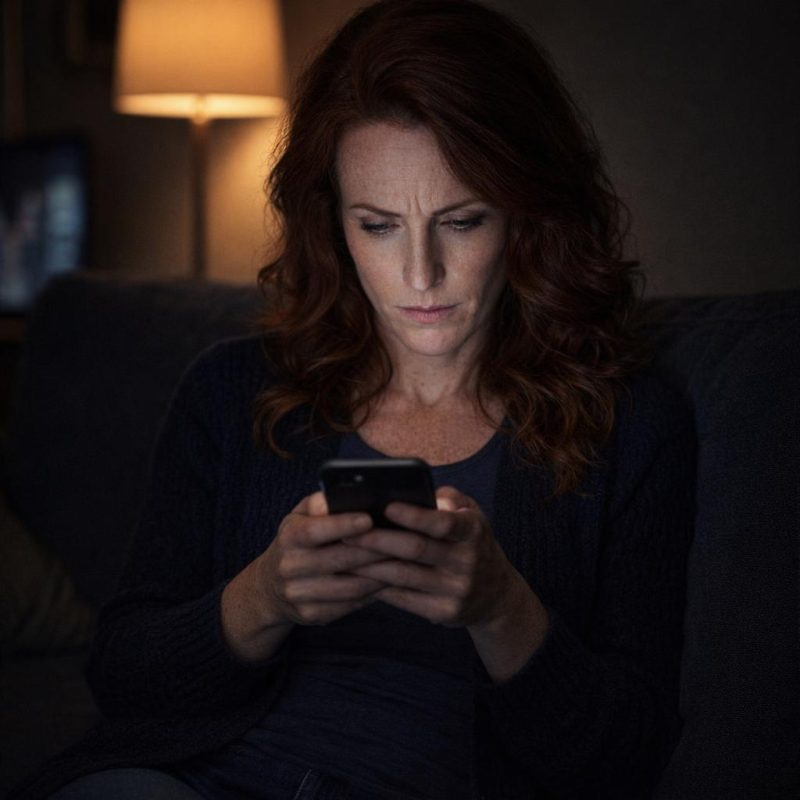 Image by RM AI
Madison
My fingers were already moving before I'd fully decided what to type. I sent back one line: who is this? The three dots appeared almost immediately, which somehow made it worse — whoever this was, they were sitting there waiting for me to respond. Then the dots disappeared. I set the phone on the arm of the couch and stared at it. They came back. Disappeared again. I counted to thirty before the reply finally came through. The message said her name was Madison. It said she was Ava's older sister. I read that twice. I had a vague memory of Emily mentioning something once, months ago — a passing reference to a girl who'd gone off to college, someone older who didn't really factor into the world of ten-year-olds. I hadn't thought about it since. Madison's next message came through before I could respond. She said she didn't live at the house anymore, that she had her own place now, but that she'd been visiting this past weekend. She said she was there when Emily was there. Then she said she saw something she thought I should know about. I sat with that for a moment — this young woman I'd never met, Ava's older sister, reaching out to me at ten o'clock on a Sunday night — and I couldn't quite fit the pieces together yet.
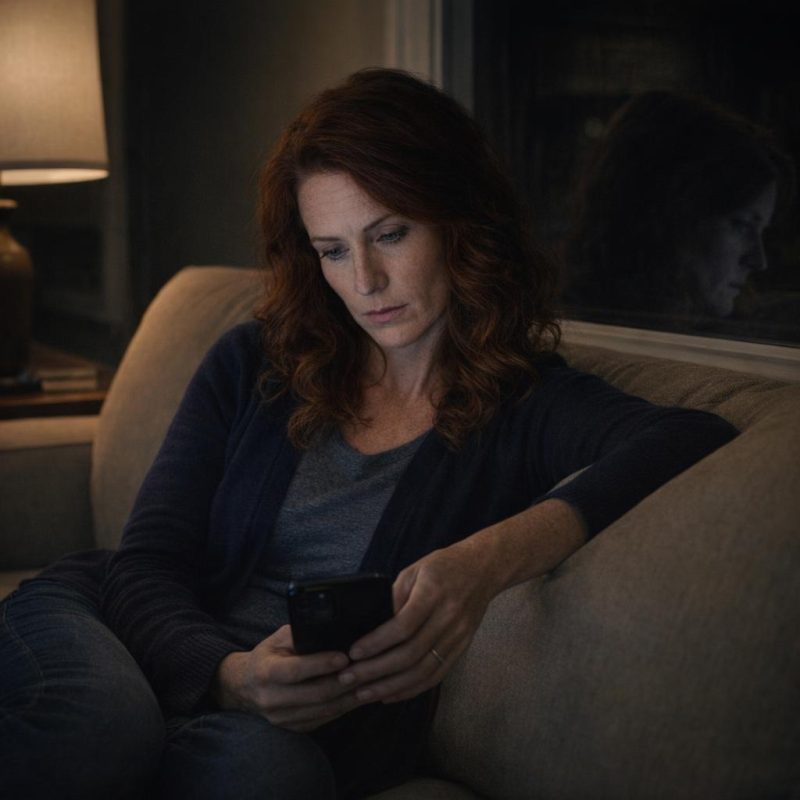 Image by RM AI
Alone in the Basement
I typed back fast. I asked what happened and whether Emily was okay. Then I set the phone face-up on the kitchen counter because I'd moved there without realizing it, and I ran water into a glass and tried to drink it. The three dots appeared after about two minutes. Then they stopped. Then they came back. I watched the counter, not the phone, because watching the phone felt like it would make the waiting worse. When the message finally came through I read it once quickly, the way you do when you're bracing for something, just trying to get the shape of it. Then I made myself go back to the beginning and read it again, word by word. Madison said that Emily had spent most of the weekend alone in the basement. She said the other girls had gone out, done things together, been upstairs. She said Emily had been down there by herself for most of it. I stood at the kitchen counter and read those sentences again. I kept looking for the part I'd misread, the word that would shift the meaning into something that made sense — maybe Emily had wanted to be down there, maybe there was a TV she liked, maybe this was just how the weekend had gone and it was fine. But the words didn't change no matter how many times I looked at them.
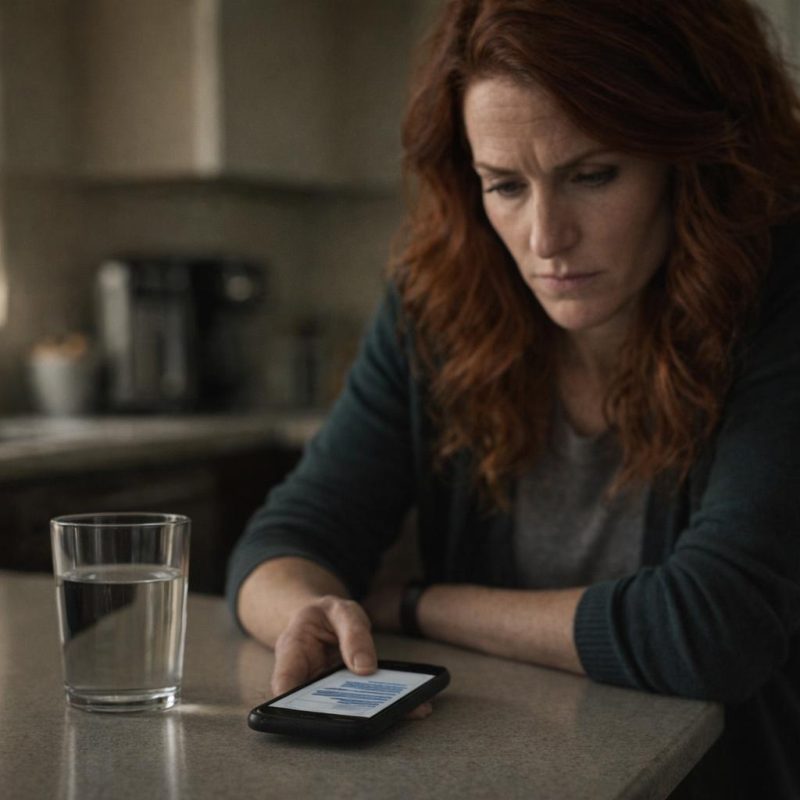 Image by RM AI
It Was Fine
I typed back carefully, trying not to sound as unsteady as I felt. I asked Madison what she meant exactly. I asked whether Emily had wanted to be downstairs, whether she'd chosen to be there on her own. I needed there to be an explanation that made this feel normal, something I could hold up against the image of my daughter sitting alone in a basement and have it make sense. Madison's reply came back faster this time. She said yes, she had actually gone down and asked Emily if she was okay, if she wanted to come upstairs. Emily had said it was fine. She'd said she didn't mind. But Madison said she didn't think it was fine. She said the other girls had been upstairs the whole time, loud and laughing, and Emily had just been sitting there by herself with her phone. I read that twice. Something shifted in me when I did — not a loud feeling, more like a floor settling wrong underfoot, a small drop you feel in your stomach before you understand what caused it. My daughter had spent a weekend in someone else's basement, alone, while the other girls were upstairs laughing, and when someone asked if she was okay, she'd said she was fine.
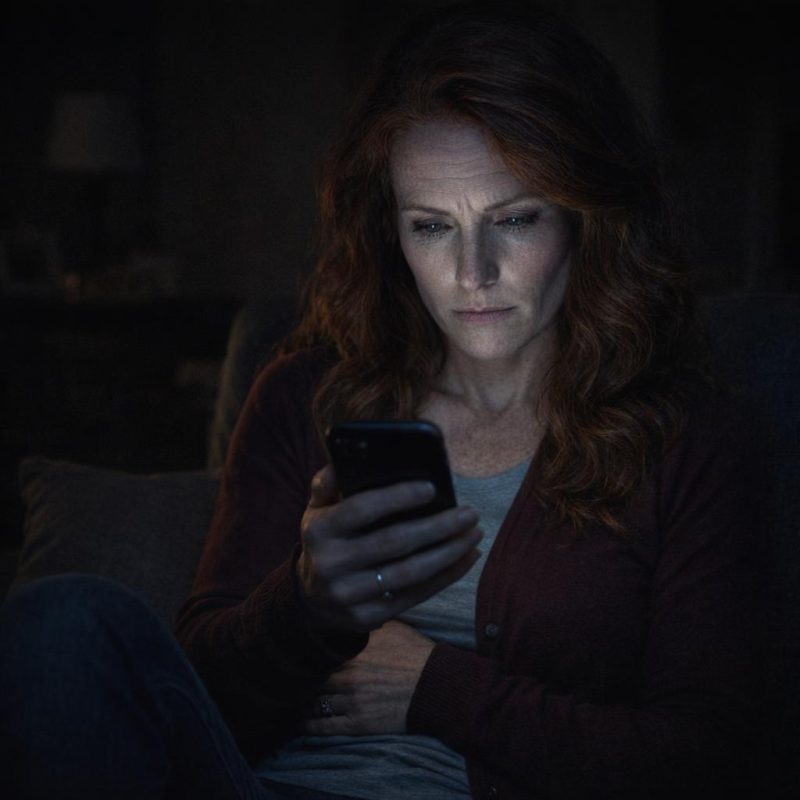 Image by RM AI
Not the First Time
I typed back asking if this was a one-time thing. I tried to keep the message short, neutral, like I wasn't already gripping the edge of the counter. I asked whether this was just something that happened this one weekend, maybe a mix-up, maybe the girls had just drifted into different activities and Emily had ended up downstairs by accident. I needed it to be that. I set the phone face-up on the counter and watched the screen. The little dots appeared, then disappeared. Then nothing. A minute passed. Then two. I picked the phone up and put it back down. Almost five minutes went by before anything came through, and when it did, I had to read it twice to make sure I was understanding it correctly. Madison said it wasn't a one-time thing. She said this had been happening for months.
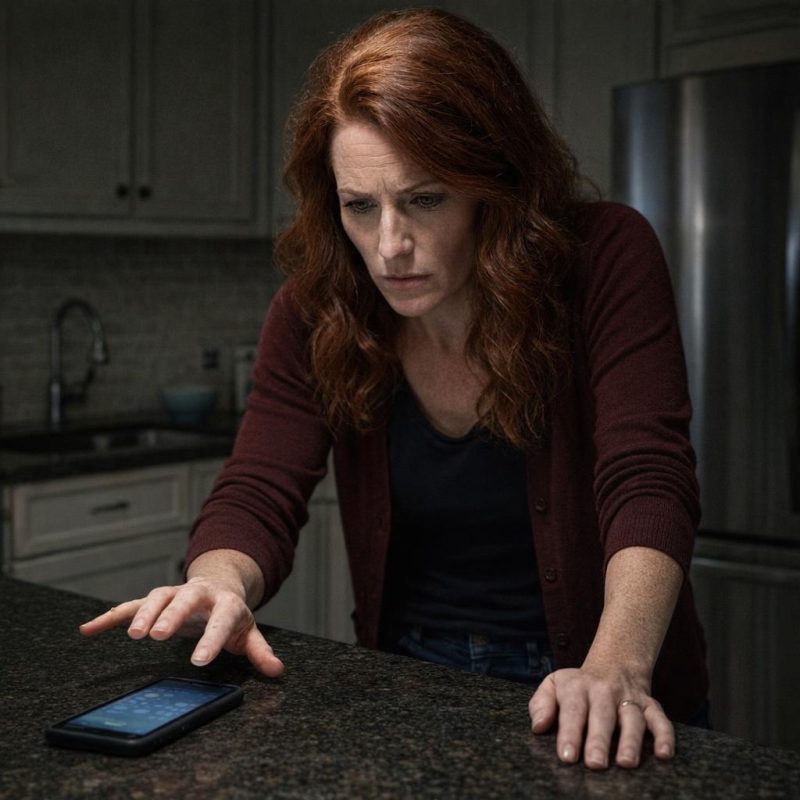 Image by RM AI
Sleepless
I turned the lights off at eleven but I didn't sleep. I lay there staring at the ceiling while the house went quiet around me, and Madison's words just kept cycling through my head. Months. Not once. Not a misunderstanding. Months of my daughter sitting alone in someone's basement while other girls laughed upstairs. I kept trying to find the version of this that made sense, the one where it was all just a series of small accidents that added up to something that looked worse than it was. I couldn't find it. I thought about Emily's face when I'd picked her up from those sleepovers — the way she'd climb into the car and go quiet, and how I'd told myself she was just tired. I made a plan. In the morning, before school, I would sit down with her. I would ask her directly, gently, and I would listen. I would not push too hard. I would just open the door and see if she walked through it. I watched the ceiling for a long time after that, the weight of all those months pressing down in the dark.
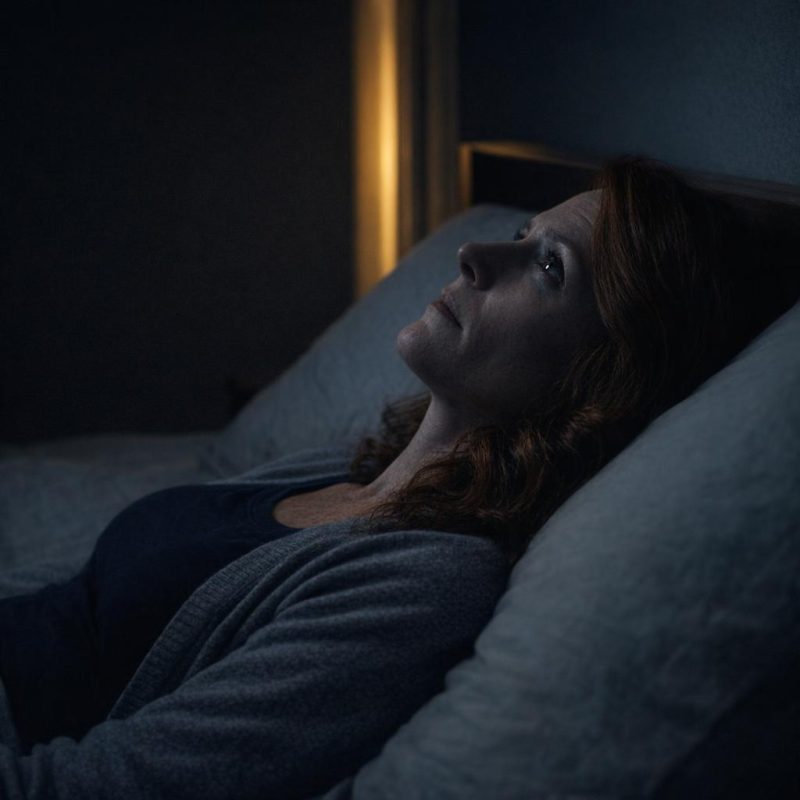 Image by RM AI
Monday Morning
I was up before six. I made scrambled eggs and toast, poured two glasses of orange juice, and sat at the kitchen table waiting. I heard Emily's alarm go off upstairs, then the shuffle of her feet, then the bathroom faucet. When she came downstairs she looked tired in that particular way kids do when they've been carrying something — not just sleep-tired, but heavier than that. She was wearing her blue hoodie and her hair was still damp. I told her breakfast was ready and she sat down across from me without saying much. I watched her pick up her fork and I thought about all the things I needed to ask her, all the careful ways I'd rehearsed them in the dark at two in the morning. I asked her how she was feeling about the weekend. She looked at her plate. I kept my voice easy, unhurried, like we were just talking. I wasn't going to push. I just wanted her to know the door was open. I sat there across from her in the quiet kitchen, waiting for her to find a way in.
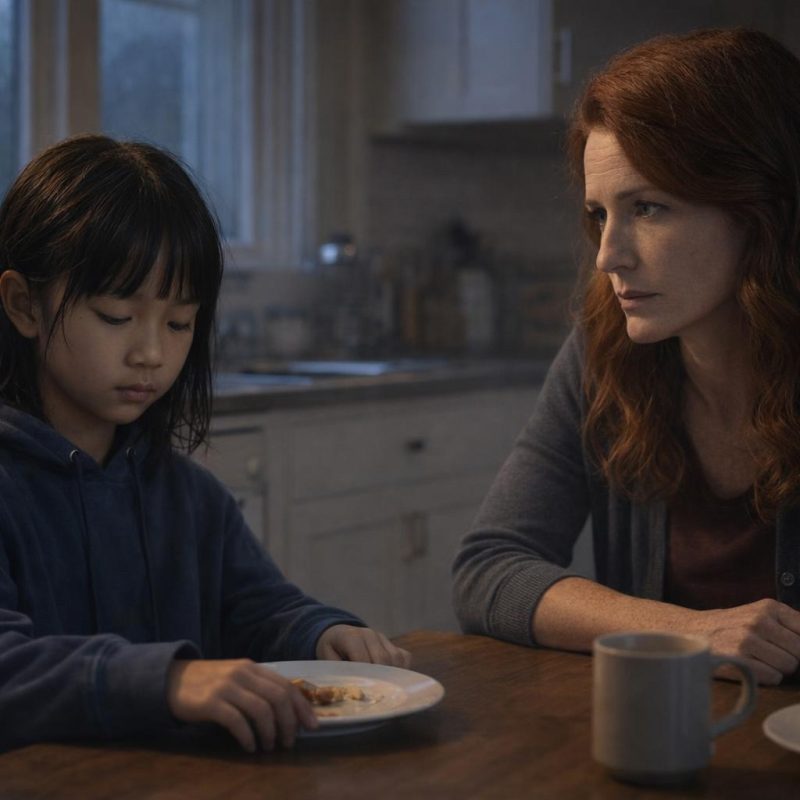 Image by RM AI
Everything Is Fine
I asked her if something had happened at Ava's house over the weekend. She said everything was fine. I asked if she'd had fun with Ava and the other girls, and she gave me a small shrug and said yeah, it was fine. She wasn't looking at me. She was moving her eggs around the plate in a way that meant she wasn't going to eat them. I tried a different angle — I asked what they did, whether they watched movies, played games. She said she didn't really remember. I told her she could talk to me if something was bothering her, that I wasn't going to make a big deal out of it, I just wanted to know she was okay. She said she was fine, Mom, and there was something in the way she said it that closed a door. Then she checked the time on her phone and said she needed to go or she'd miss the bus. She carried her plate to the sink, grabbed her backpack from the hook by the door, and walked out without looking back, and I stood there watching the door fall shut behind her with everything still unsaid between us.
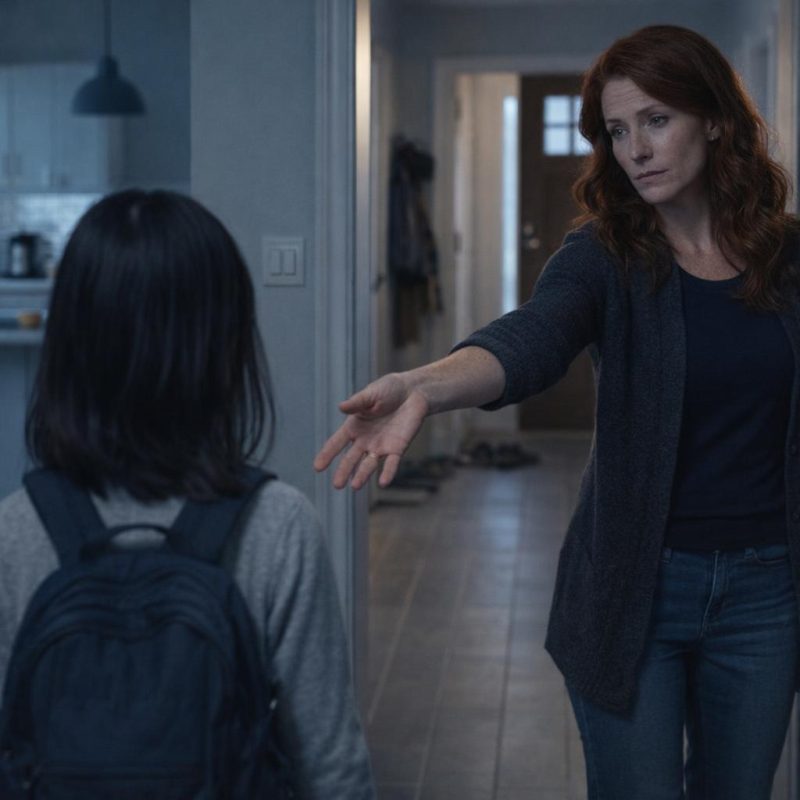 Image by RM AI
More Details
I stood in the kitchen for a while after the door closed, just listening to the quiet. Then I picked up my phone and opened the thread with Madison. I typed slowly, trying to be specific. I told her I'd tried to talk to Emily and gotten nowhere, and that I needed to understand what she'd actually seen. I asked her to walk me through it — not just the broad strokes, but the details. What time did she get there. Where exactly was Emily. What did the house feel like. I asked her to tell me everything she could remember. I hit send and set the phone down on the counter. The message showed delivered almost immediately. I washed the breakfast dishes. I wiped down the counter. I folded the dish towel and hung it back on the oven handle. I picked up my phone twice and set it back down both times. Madison didn't respond right away, and I told myself that was fine, that she was probably at work or in class, that she'd get back to me when she could. The message just sat there, delivered and unanswered, while I stood in my kitchen trying to think about anything else.
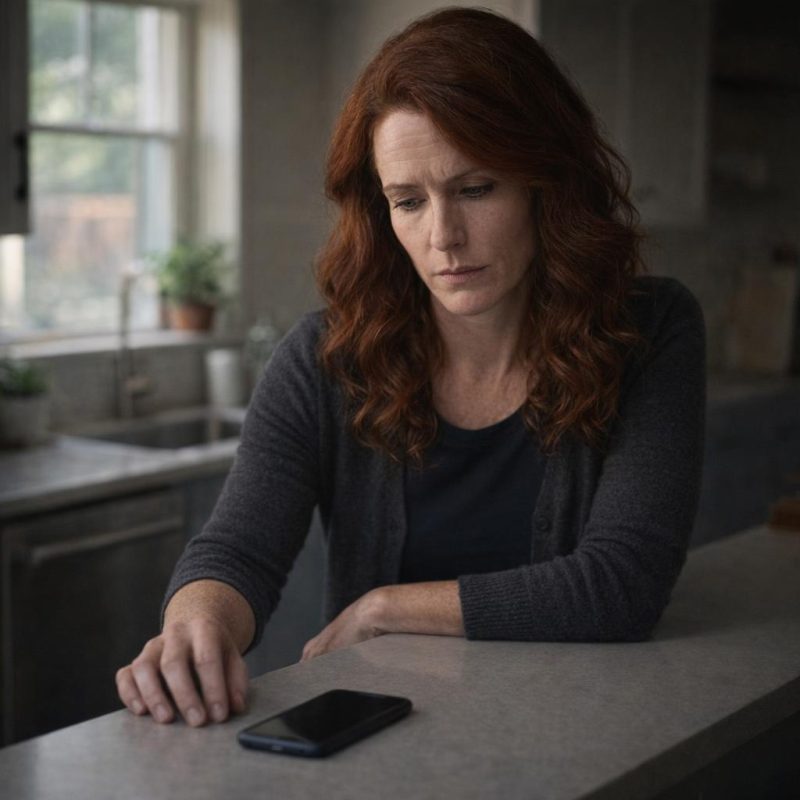 Image by RM AI
Upstairs Laughter
Madison's response came through around ten-thirty. I was folding laundry when my phone buzzed and I sat down on the edge of the bed to read it. She said she'd arrived at the house Saturday afternoon, around two. She could hear Ava and the other girls upstairs in Ava's room — music, laughing, the kind of noise a group of ten-year-olds makes when they're having a good time. She'd gone downstairs to grab something from the storage area and that's when she found Emily. Sitting on the couch by herself, phone in her lap, not really doing anything. Madison said she'd stopped and asked Emily if she wanted to come upstairs, if she wanted to hang out with the group. Emily had said she was fine down there. Madison said she'd gone back upstairs, and the other girls were in the middle of some game, all of them together, and she could still hear them laughing from the hallway. She said she kept thinking about Emily one floor below, alone in the quiet, while all of that noise carried on above her. I set the phone down on the laundry pile and just sat there with that image — my daughter on that couch, the laughter coming through the ceiling like it belonged to a different world.
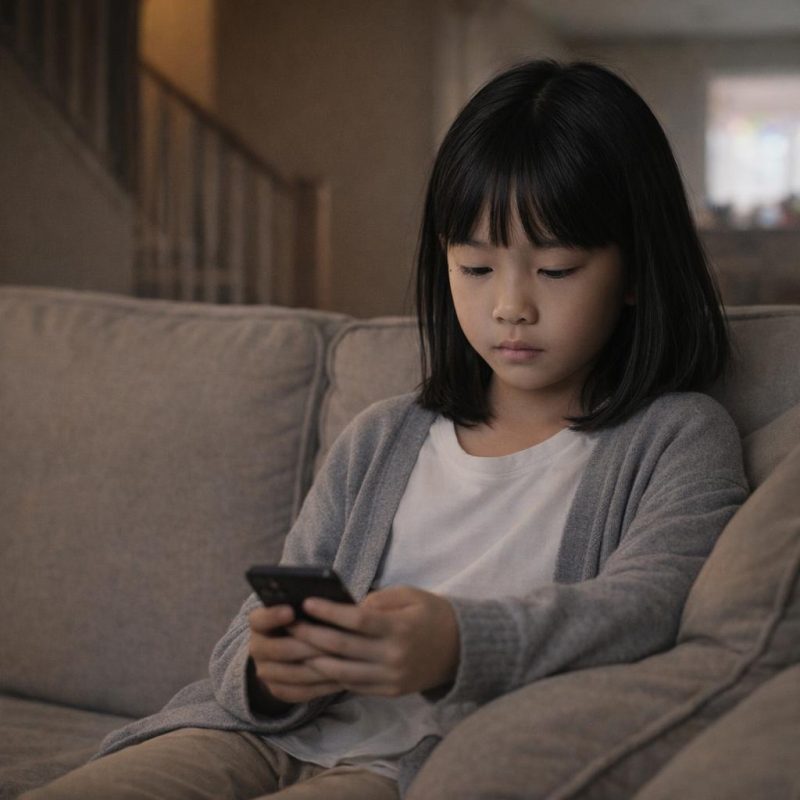 Image by RM AI
Looking Back
I sat at the kitchen table after that and started going back through the last few months in my head, pickup by pickup. There had been maybe four or five sleepovers at Ava's since the school year started. I tried to remember each one — what Emily had looked like when I pulled up, what she'd said on the drive home. Most of it had blurred together the way ordinary Sundays do. But there was one pickup, about three weeks ago, that I kept landing on. Emily had come out of the house fast, backpack already on, like she'd been waiting by the door. I'd thought she was just eager to get home. I remembered Linda standing in the doorway behind her, smiling and waving, looking completely at ease. I'd waved back. I'd thought nothing of it. And there was another time, maybe a month before that, when Emily had gotten in the car and gone straight to her phone and barely said a word the whole drive. I'd told myself she was tired. I'd told myself that's just how kids are sometimes. I kept coming back to Emily's face at that pickup three weeks ago — the way she'd moved toward the car before I'd even put it in park — and I couldn't see it the same way anymore.
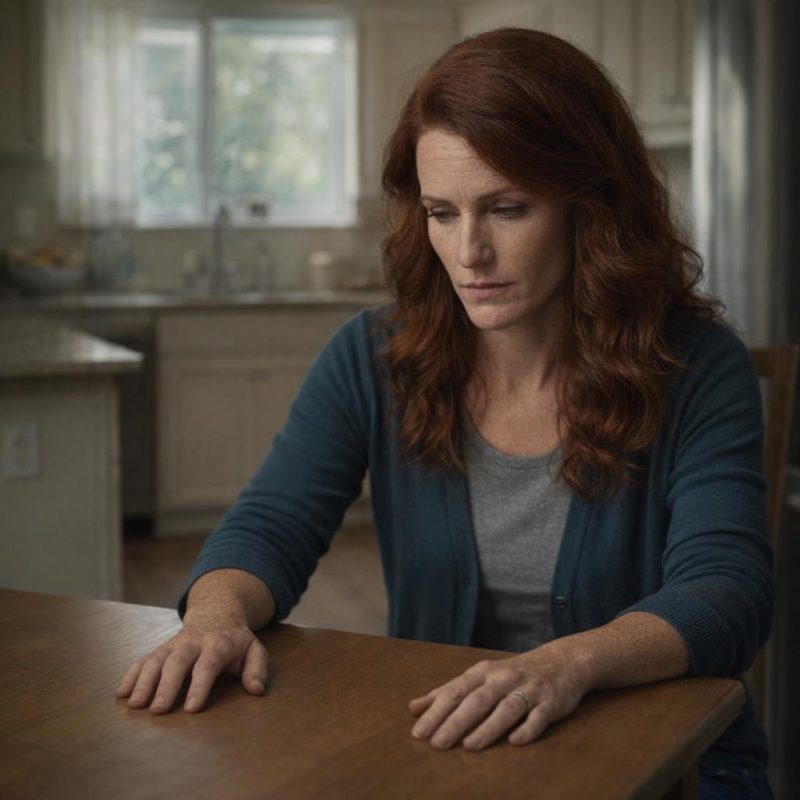 Image by RM AI
Perfect Smiles
I kept thinking about Linda. Every single pickup, she had been there at the door. Perfectly put together — hair done, a real smile, the kind of easy warmth that makes you feel like everything is fine and you're maybe even a little lucky to be on the receiving end of it. She always asked how I was doing. She always said something about what a great time the girls had, how well they got along, how Emily was such a sweet kid. I'd always left those pickups feeling reassured. I'd driven away thinking we were lucky to have found such a solid family for Emily to spend time with. I thought about that now — the way I'd felt standing in Linda's driveway, the way her friendliness had settled over the whole thing like a warm blanket. I couldn't point to a single moment where something had seemed wrong. Not one. And that was the part I couldn't shake. Because now, sitting at my kitchen table with Madison's words still in my head, Linda's smile didn't feel the same in my memory — it felt like something I hadn't looked at closely enough.
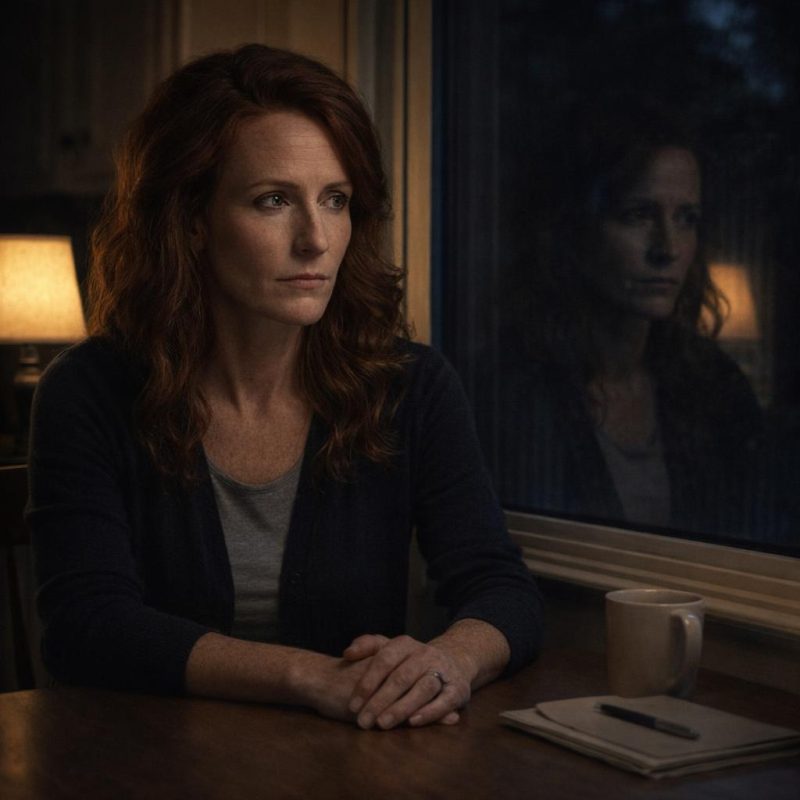 Image by RM AI
After School
I spent the whole afternoon trying to figure out how to do this right. Not just what to say, but how to say it — how to open the door without making Emily feel like she was in trouble, or like I was coming at her with a list of accusations. I knew how she got when she felt cornered. She'd go quiet, give me one-word answers, and I'd lose her for the rest of the evening. I couldn't afford that. I made myself a cup of coffee I barely touched and sat at the kitchen table going over it in my head. Start soft. Ask about her day. Let her settle in before I brought up anything real. I rehearsed a few different openings and discarded all of them. Too direct. Too leading. Too much like I already had the answer and just needed her to confirm it. What I wanted was for her to feel safe enough to actually talk to me. I checked the clock more times than I could count. The afternoon light shifted across the kitchen floor and I moved to the living room, pulled back the curtain, and stood there watching the end of the driveway for the school bus.
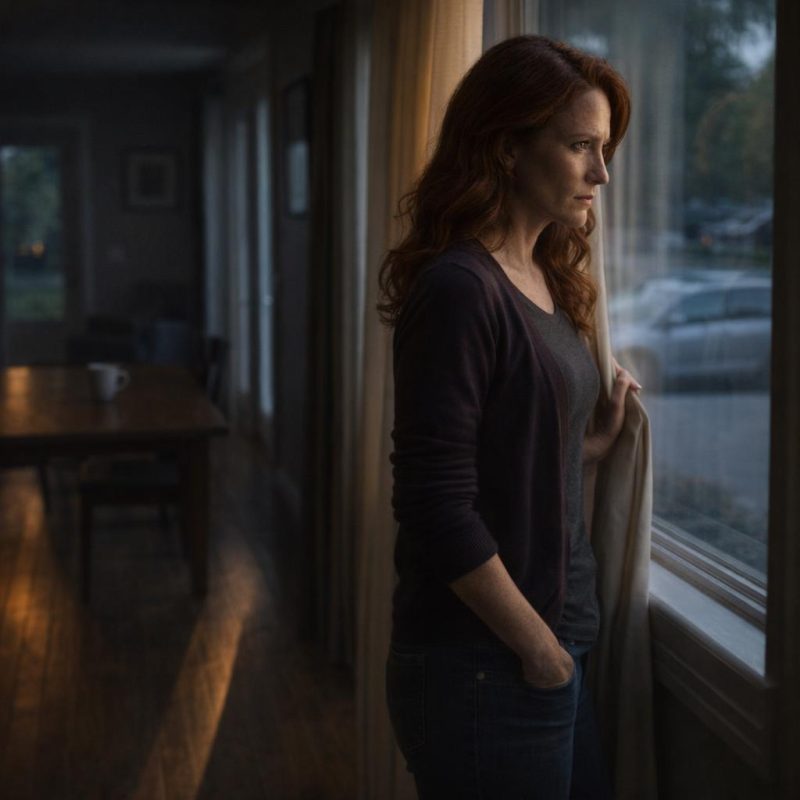 Image by RM AI
The Basement
She came through the door the way she always did — backpack half-hanging off one shoulder, shoes squeaking on the entryway tile. I called her into the kitchen and asked her to sit down for a minute. She looked at me the way kids do when they're trying to figure out if they're in trouble, then dropped into the chair across from me. I kept my voice easy. I told her I just wanted to talk, that she wasn't in trouble, that I'd heard a few things and I wanted to understand. Then I asked her, as gently as I could, whether she'd ever spent time in the basement at Ava's house during the sleepovers. Something shifted in her face — surprise, maybe, or the particular look of someone who wasn't expecting that specific question. She looked down at the table. Then she said yes, sometimes she'd gone downstairs. I asked her what she did down there. She shrugged and said she just hung out, watched stuff on her tablet, it was no big deal. I told her I wasn't upset, I just wanted to understand. She nodded, but her shoulders stayed up near her ears, and I could feel the weight of everything she wasn't saying settling into the space between us.
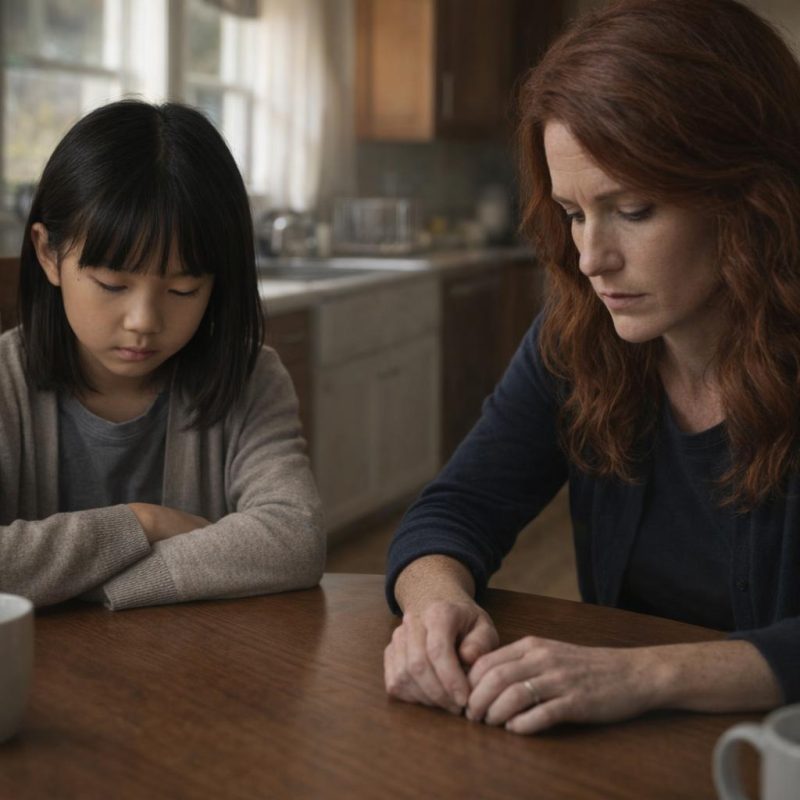 Image by RM AI
New Friends
I gave her a moment, then asked why she'd been downstairs if the sleepover was happening upstairs. She picked at the edge of her sleeve and didn't answer right away. I waited. Finally she said, quietly, that Ava had new friends now. I asked her what she meant by that. She said Ava had started hanging out with a different group of girls a few months ago — girls from her dance class, I think she said — and that when those girls came to the sleepovers, things were different. I asked her how they were different. She said Ava just kind of didn't really include her when the other girls were there. I asked if she meant the other girls were upstairs together while Emily was downstairs, and she nodded without looking at me. Just nodded, like it was a fact she'd already made peace with, like it wasn't the kind of thing that needed much explaining. I sat there looking at my daughter — ten years old, spending her weekends alone in someone's basement while a party happened one floor above her — and I had to press my lips together and breathe through it. She'd been carrying this for months and I hadn't seen it. That was the part that sat heaviest with me.
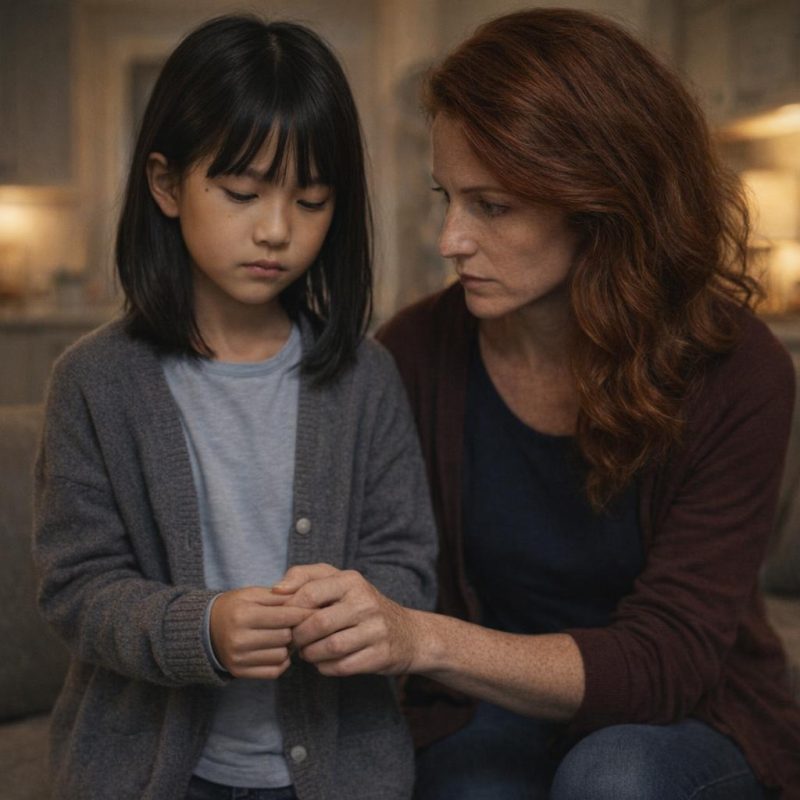 Image by RM AI
Not Wanting to Lose Her
I asked her why she kept going. If Ava wasn't including her, if she was spending the whole time downstairs by herself, why did she keep saying yes when the invitations came? Emily's eyes filled up fast, the way they do when she's been holding something in for too long. She blinked hard and looked at the table. She told me Ava had been her best friend for two years. That she kept thinking if she just kept showing up, maybe things would go back to the way they were. That if she stopped coming, Ava would just forget about her entirely, move on, and that would be it. She wiped her eyes with the back of her hand and said she knew it probably sounded stupid. I told her it didn't sound stupid at all — and I meant it, because it didn't. It sounded like someone who loved her friend and was terrified of losing her. But sitting there watching her cry, I felt something crack open in my chest. Then she looked up at me, voice gone small and unsteady, and said she just didn't want to lose Ava completely.
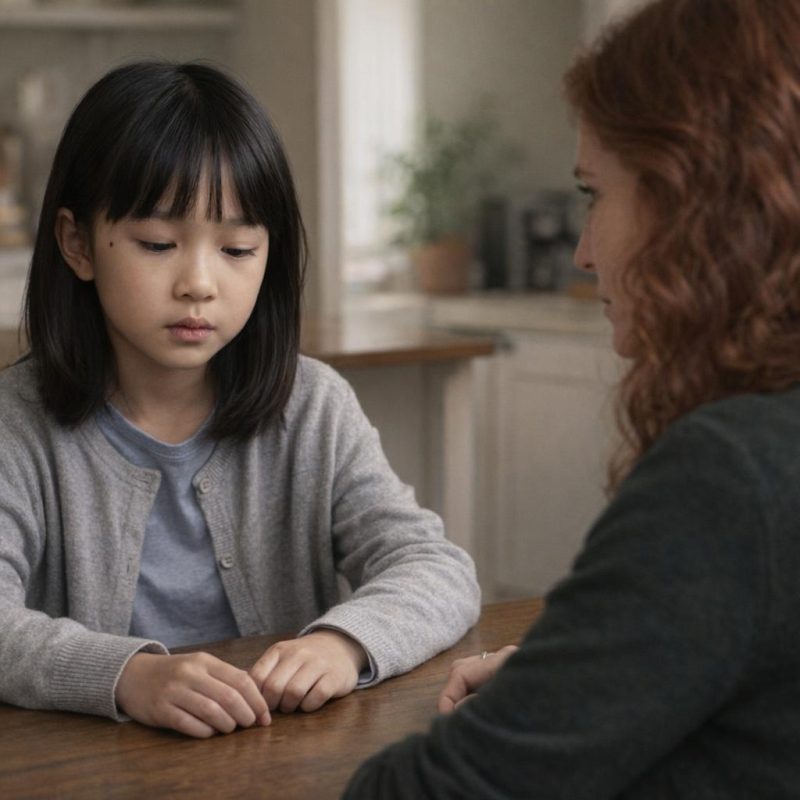 Image by RM AI
Where Were They
After a few minutes I asked her where Linda and Steve were during all of this. She wiped her face and said they were upstairs, with the other girls mostly. I asked if either of them ever came downstairs to check on her — to see where she was, make sure she was okay. She shook her head. She said she didn't think they noticed she was down there. I kept my voice steady and asked how that was possible, how they wouldn't notice one of the kids was missing from the group. Emily shrugged and said the other girls were loud, always doing something, and that kept the adults busy. Then she said something that stopped me — she said it wasn't their fault because she never told them anything was wrong. She said it like she believed it, like she'd already worked through the logic of it and landed on a conclusion that let everyone else off the hook. I didn't push back. But I sat there thinking about a house full of adults and children, a whole weekend, and a ten-year-old girl alone in a basement that no one thought to check on. I didn't know what to do with that question yet. I just knew I couldn't stop turning it over.
The Question That Would Not Leave
Emily went upstairs to rest and I stayed at the kitchen table. The house got quiet in that particular way it does in the late afternoon — the kind of quiet that makes everything feel a little too still. I kept replaying what she'd told me. A whole weekend. Multiple adults in the house. Other children upstairs, loud enough to keep everyone occupied, Emily had said. And somehow, across all of that time, no one had come downstairs to check on her. I told myself maybe they were distracted. Maybe they assumed she was with the group. Maybe no one thought to count heads. I'd been in busy houses before — I knew how easy it was to lose track of the noise and the movement and just assume everyone was fine. I tried to hold onto that. But the more I sat with it, the harder it was to make the math work. A child in your home, in your basement, for an entire weekend — and you don't notice she's not with the others. I wasn't ready to say what that meant. I wasn't even sure I knew. But the question kept coming back, quiet and persistent, no matter how many reasonable explanations I tried to set in front of it.
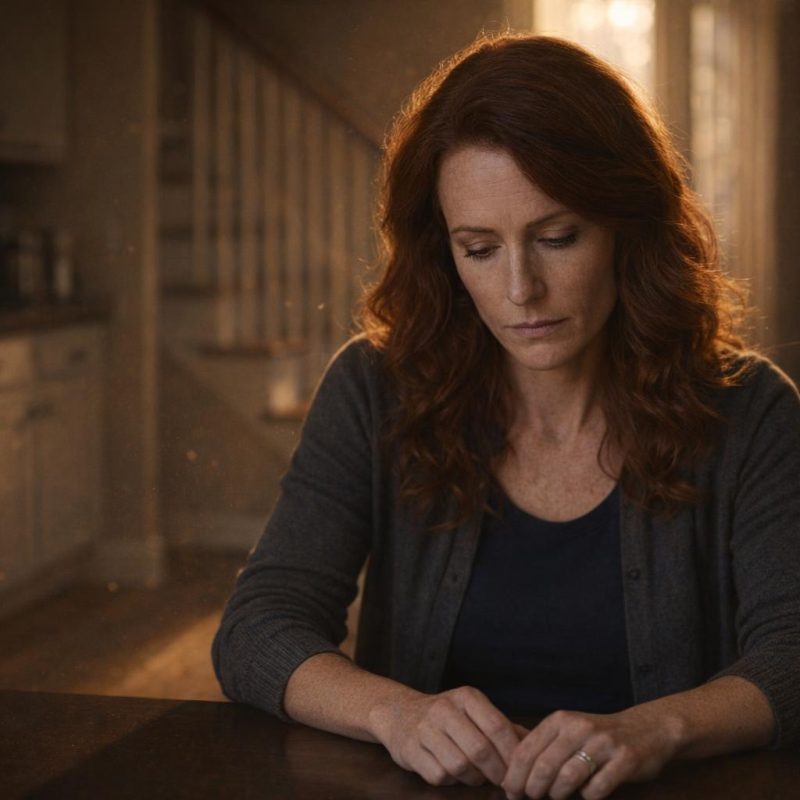 Image by RM AI
Reaching Out
I needed to know if anyone else had seen what I was starting to see. I picked up my phone and scrolled through my contacts, looking for names I trusted — parents who were around, who paid attention, whose kids moved in the same circles as Emily and Ava. I found Jessica Torres first. Her daughter Sophia was in Emily's class and had been at a few of the same birthday parties over the years. Jessica was the kind of person who noticed things and wasn't afraid to say so. I typed out a message asking if she had a few minutes to talk, kept it casual, said I had some questions about the girls and wanted another perspective. I stared at it for a while before I hit send. It felt like a line I was crossing — like once I started asking other people, this became something more than just a conversation at my kitchen table. But I thought about Emily upstairs in her room, exhausted from crying, and I hit send. Then I opened two more contacts from the soccer team and started composing a second message, choosing my words carefully, trying to sound like a concerned parent and not like someone building a case. I sent that one too, then set my phone face-up on the counter and waited.
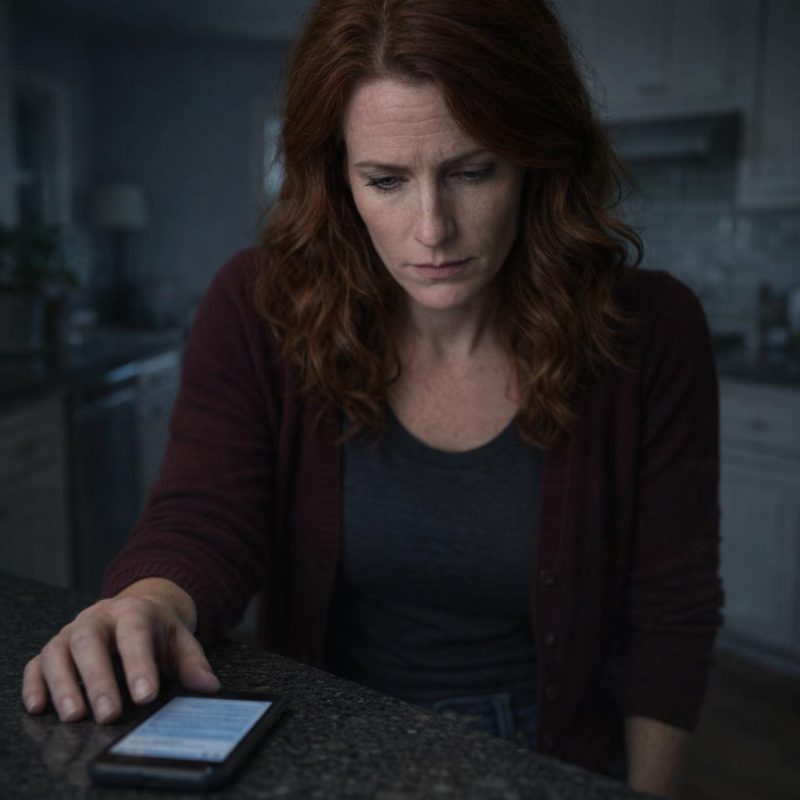 Image by RM AI
Jessica's Observation
Jessica responded in less than an hour. I picked up my phone and read her message twice. She said she was really glad I'd reached out, that she'd actually been thinking about Emily lately. She said Sophia had mentioned something a few weeks back — that Emily seemed left out when Ava was with her new group of friends. She said Sophia had noticed Ava spending more and more time with the other girls and kind of pulling away from Emily, and that Sophia had felt bad about it but hadn't known what to do or say. Jessica asked if everything was okay, said she hoped Emily was doing all right. I typed back a quick thank-you and told her I was trying to get a clearer picture of things. Then I set the phone down and just sat with it for a second. It wasn't new information exactly — Emily had told me the same thing herself. But there was something about seeing it confirmed by someone outside our house, someone whose kid had watched it happen from the outside, that made it feel more solid. Jessica's message read: *Sophia said Emily always seemed kind of on the edge of the group when Ava's new friends were around — like she was there but not really included.*
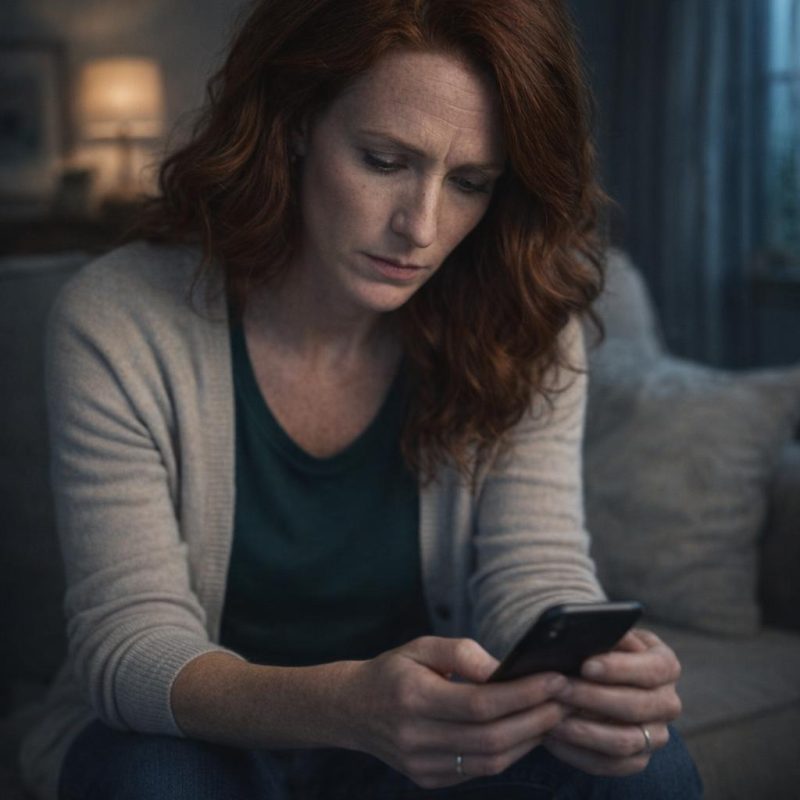 Image by RM AI
Different Crowd
Another parent got back to me the next morning — a woman named Renee whose daughter had been in the same class as Ava and Emily since second grade. I hadn't reached out to her directly, but Jessica had apparently mentioned I was asking around, and Renee said she was happy to share what she'd noticed. She said Ava had been spending most of her time with a different group of girls — three or four kids who had come up through a different elementary school and joined their class this year. She said it had been going on for a few months, that she'd noticed it at drop-off and at soccer. I asked her when she first really picked up on it, and she said around the beginning of the school year, maybe a little before. I thanked her and set my phone down. September. That was the same window Madison had described. And it was the same window I kept coming back to when I thought about Emily — the quieter car rides home, the way she'd stopped mentioning Ava's name the way she used to, the sleepovers where she came back a little smaller than she'd left. The beginning of the school year matched exactly when Emily's behavior had started to change.
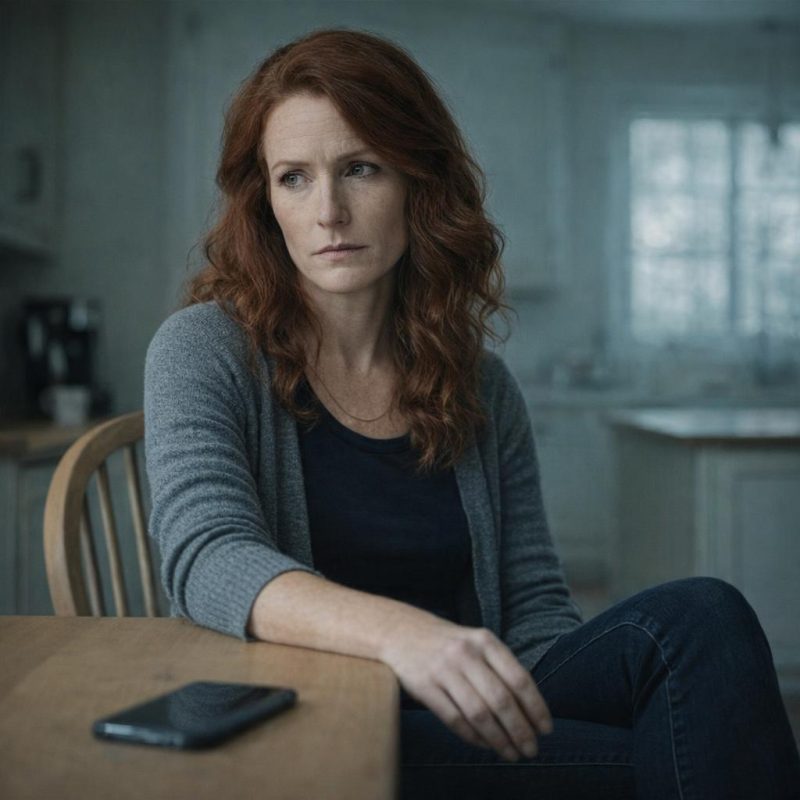 Image by RM AI
Preparing to Confront
I sat at the kitchen table for a long time after that, just thinking. I'd been circling around this for weeks — talking to other parents, reading between the lines of what Emily said and didn't say, trying to build a picture I could actually stand behind. And now I had enough of one. I needed to talk to Linda. I opened a new message and stared at the blank text field for a while. I typed something direct and deleted it. I typed something softer and deleted that too. I didn't want to accuse her of anything, not yet. I just needed to get in the same room with her. I finally settled on something simple: that I'd been wanting to connect, that I had some things on my mind about the girls, and that I'd love to find a time to meet and talk in person if she had a few minutes this week. I mentioned the sleepovers specifically — just the word, nothing more. I read it three times. It was polite. It was clear. It left no room to be brushed off with a quick reply. I took a breath and hit send. The message shifted to delivered, and I set my phone face-down on the table.
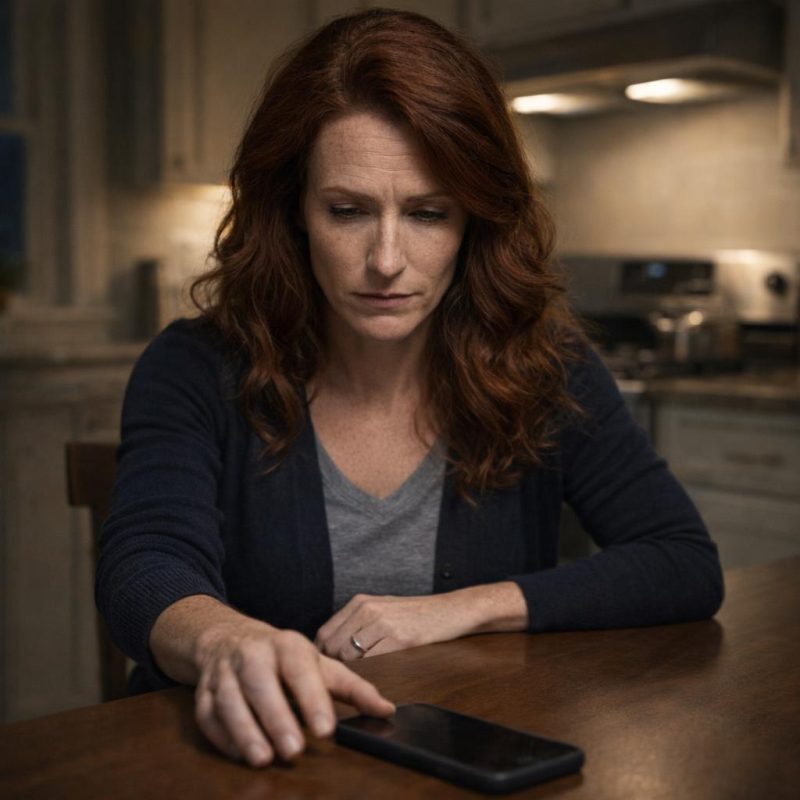 Image by RM AI
Warm and Unworried
I didn't have to wait long. Twenty minutes later my phone buzzed, and I turned it over to find Linda's name on the screen. I read her message slowly. She said of course, she'd love to catch up, that it had been too long. She suggested the coffee place on Birchwood — our usual spot from the days when we used to meet after school drop-off — and said tomorrow morning worked perfectly if that was good for me. She added a smiley face at the end. Said she was always happy to chat. I read it again. The tone was completely easy, completely warm, like I'd texted her about nothing more pressing than comparing soccer schedules. There was nothing in it that suggested she had any idea what I actually wanted to talk about. Maybe she didn't. Maybe the word sleepovers hadn't registered as anything significant. Or maybe it had and she just wasn't showing it. I couldn't tell, and that was the part that sat uneasily with me. I typed back that tomorrow morning worked and confirmed the time. Then I put my phone down and stared at the wall for a second. Linda's message read: *Can't wait — see you at 9! 😊*
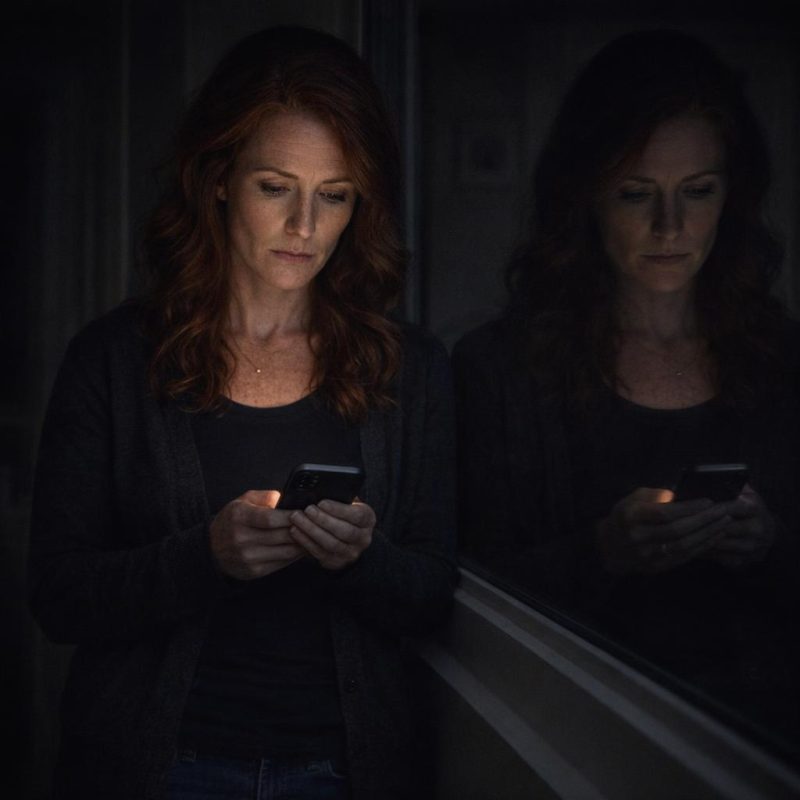 Image by RM AI
The Coffee Shop
I got to the coffee shop a few minutes early, but Linda was already there when I walked in — seated at a corner table, coat draped over the back of her chair, hands wrapped around a mug like she'd been there long enough to get comfortable. She stood up when she saw me and pulled me into a hug, the kind that comes with a cheek press and a little squeeze. We ordered, we sat down, and she asked how I'd been, how Emily was doing, whether I was surviving the school year. I gave her short answers and let her talk for a minute. Then I told her I wanted to get to the reason I'd reached out. I said I'd learned that Emily had spent part of a recent sleepover alone — downstairs, while the other girls were upstairs together. I kept my voice even. I watched her face as I said it, specifically when I got to the part about Emily being alone in the basement. Linda's expression shifted — her brows pulled together, her chin tilted slightly, and for just a moment something moved behind her eyes before the practiced look of concern settled back into place.
 Image by RM AI
Girls Have Their Dynamics
Linda said she had no idea Emily had felt left out. She said it with her hand pressed briefly to her chest, like the thought genuinely pained her. Then she said girls this age have their own social dynamics — that friendships shift and change, that it's just part of growing up. She said Emily had always seemed perfectly fine during her visits, that she'd never picked up on anything being wrong. I asked her directly whether she'd noticed Emily was in the basement while the other girls were upstairs. She said she'd assumed the girls were just moving around the house the way kids do, that sometimes kids like having their own space. She said it so reasonably, so gently, that for a half second I almost let it land. But I pressed a little more — asked what specifically she'd seen, what she'd observed. Her answers stayed smooth and general. Emily seemed fine. Kids need space. Friendships are complicated at this age. Every sentence was technically true and completely beside the point. I sat across from her and felt the frustration building quietly in my chest, the kind that doesn't have anywhere to go when the other person keeps smiling at you. The words settled between us like something solid neither of us was going to move.
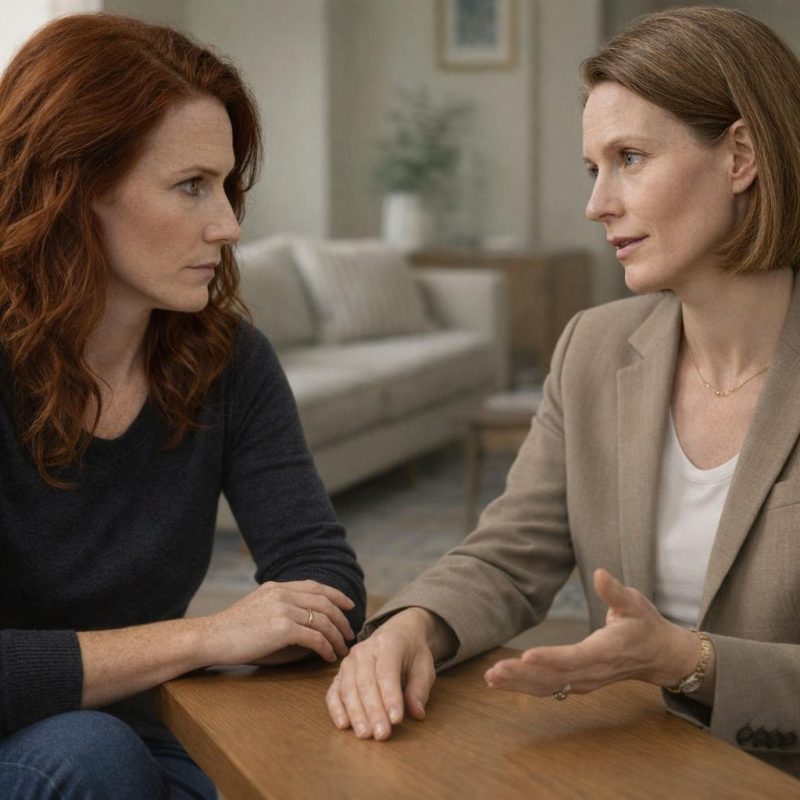 Image by RM AI
Emily Chose to Be There
I pushed a little harder. I asked Linda directly — if she saw Emily alone in the basement, why didn't she bring her upstairs with the other girls? Linda's expression stayed measured. She said she had checked on Emily, that she'd asked her if she wanted to come up. She said Emily told her she was fine where she was, that she had her phone and seemed content. I sat with that for a second. Then I said that a ten-year-old being left alone in a basement while a group of girls her age were upstairs together wasn't really a choice a ten-year-old should be making on her own. Linda's eyes shifted slightly at that — not much, just a small tightening around the corners. She said she respected what Emily told her, that she didn't want to force a child to do something she said she didn't want to do. She said it like it was the reasonable position, like she was the one being thoughtful. I didn't say anything for a moment. I just looked at her. The idea that Emily had chosen this — had chosen to sit alone downstairs while her former friend laughed with other girls one floor above her — pressed down on me in a way I couldn't shake off.
 Image by RM AI
Subtle Shift
I told Linda I was concerned about what had happened in her home, and something in the room shifted. The smile she'd been wearing since I walked in didn't disappear exactly — it just got tighter, pulled in at the edges. She said she ran a good household, that the girls were always supervised, that she took her responsibilities as a host seriously. I said I understood that, but that Emily had been isolated, and that was the part I couldn't let go of. Linda said she couldn't monitor every moment of every child's experience during a sleepover — that she had her own daughter to focus on. The word daughter landed with a particular flatness. I noticed her posture had changed too, shoulders squaring slightly, chin lifting just enough. She said it sounded like I was implying something about her parenting. I said I wasn't implying anything, I just wanted to understand what had happened. She said she understood that, of course she did, but her tone said something different. The warmth she'd walked in with was gone. What was left was something more careful, more contained — the voice of someone who had decided to stop being generous with me and hadn't quite announced it yet.
 Image by RM AI
A Promise to Talk to Ava
Linda said she would talk to Ava about being more inclusive, that she would make sure Emily felt welcome at future sleepovers. She said it the way people say things when they want a conversation to be over. I asked her if she really thought that would change anything, and she said girls need guidance about friendship, that it was a process. Then she added — almost as an afterthought — that maybe Emily and Ava just needed a little time apart, that sometimes friendships need room to breathe. I didn't respond to that. She picked up her bag, said she really needed to get going, and gave me a hug on the way out — brief, stiff, the kind that means the opposite of what a hug is supposed to mean. I watched her walk out the door and then I sat there for another minute before I got up. I paid for my coffee and pushed through the door into the cold air outside. I didn't think Linda's promise would amount to anything — but I had no way of knowing what she'd actually do when she got home.
 Image by RM AI
Were They Home
I sat in my car outside the coffee shop for a few minutes after Linda left, not ready to drive yet. The cold had settled into the windows and I didn't turn the engine on. I kept thinking about the way she'd hugged me on the way out — that stiff, performative thing that meant nothing — and about the phrase she'd used. Room to breathe. I pulled out my phone and scrolled to Madison's number. I'd been turning a question over in my head since the last time we'd talked, and I needed to ask it directly. I typed slowly, choosing each word. I asked her whether Linda and Steve had been home during the times Emily was in the basement — whether they were in the house when the other girls were upstairs. I asked if she'd ever seen either of them go downstairs to check on Emily, or if she'd seen them at all during those visits. I read it back twice, then hit send. The message showed delivered almost immediately. I started the engine and pulled out of the parking lot, but I kept glancing at the phone on the passenger seat the whole drive home. By the time I got there, Madison still hadn't answered. The question just sat there between us, waiting.
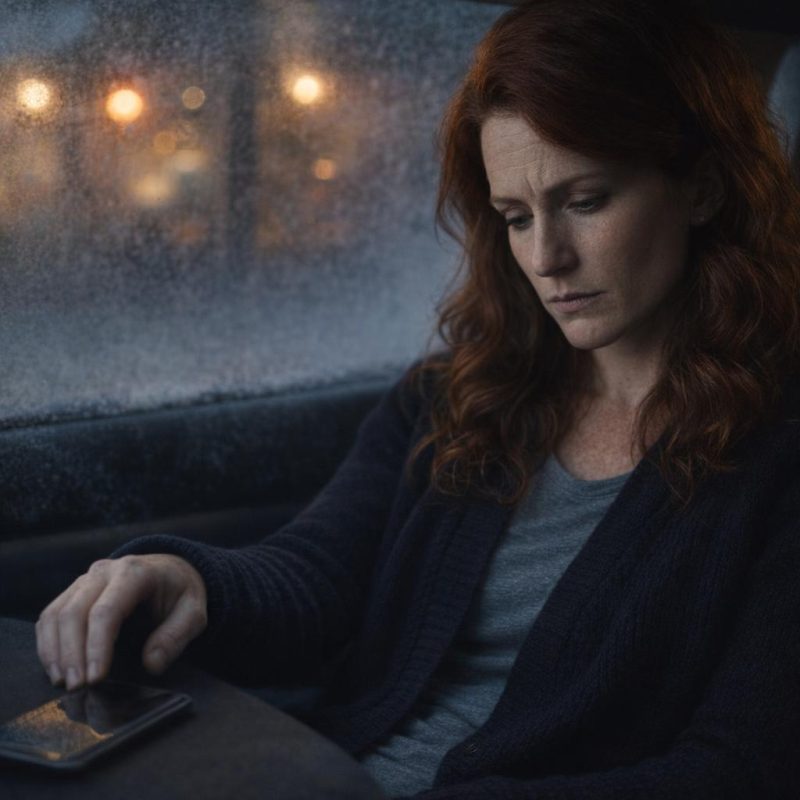 Image by RM AI
Always Home
Madison's response came that evening, while I was standing at the kitchen counter pretending to sort through mail. My phone buzzed and I picked it up before the screen even finished lighting. She said yes — Linda and Steve were always home. Always. She said she'd seen them herself on the visits she'd made to the house, that they were upstairs the whole time, in the kitchen or the living room, with Ava and the other girls. She said she was certain of it. I read the message once, then again, then a third time. I set the phone down on the counter and stood there. The mail was still in my hand. I thought about the layout of that house — the stairs, the basement door, the distance between one floor and the next. I thought about Emily down there, alone, while a group of adults and children moved around above her. I thought about how small that house actually was. How sound travels. How you would have to work not to notice a child who wasn't where everyone else was. I put the mail down. I didn't move for a while. The fact of it — that they were there, that they were home the entire time — settled over me like something I couldn't shake off.
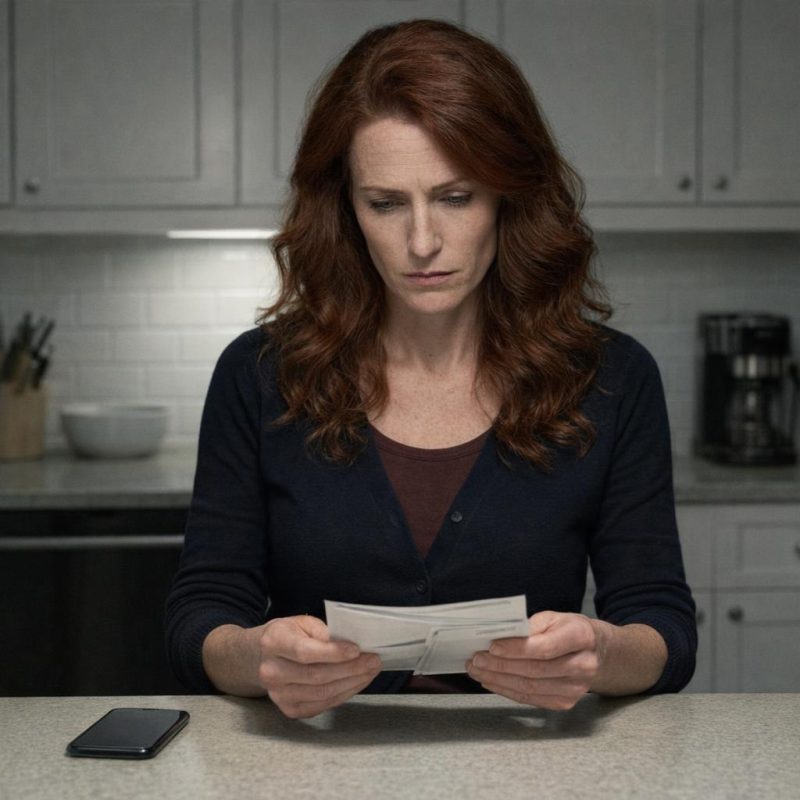 Image by RM AI
They Had to Know
I couldn't stop thinking about the layout of that house. I'd been inside it enough times to picture it clearly — the open kitchen, the living room just off the entryway, the staircase that led down to the basement. It wasn't a big house. It wasn't the kind of place where you could lose track of a child. If you were standing in the kitchen, you would know exactly how many kids were in the room with you. You would notice if one was missing. I kept trying to find a version of events where they genuinely hadn't noticed Emily was downstairs — where they'd assumed she was with the group, where no one had thought to count. But I couldn't make it work. There were too few kids, too small a space, too many hours for it to have gone unnoticed by accident. At some point during each of those sleepovers, someone upstairs would have looked around and seen that Emily wasn't there. Someone would have noticed. I thought about my daughter sitting alone in that basement while the adults one floor above her went about their evening — and I felt something cold move through me that I couldn't name. The question I couldn't get past was simple and terrible: had anyone ever gone downstairs to check on her at all?
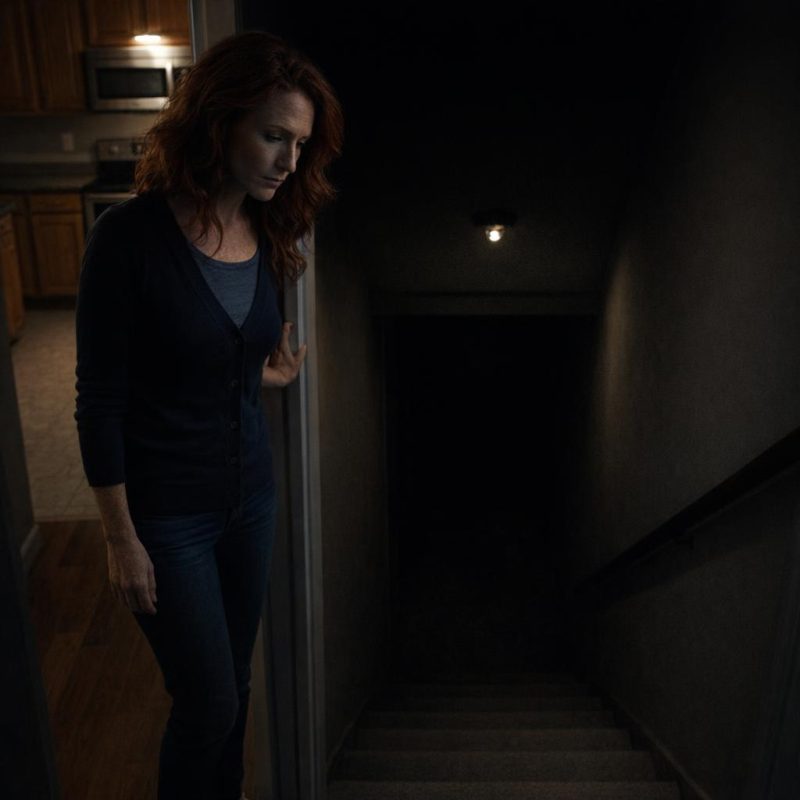 Image by RM AI
Did They Acknowledge It
I gave myself one night before I texted Madison again. I didn't want to push too hard, but I also couldn't let it go. The next morning I picked up my phone and typed out a second message, more specific this time. I asked her if she'd ever seen Linda or Steve say anything about Emily being downstairs — whether they'd mentioned her, whether they'd seemed concerned, whether she'd ever heard either of them talk about going down to check on her. I asked if they'd acknowledged, even once, that Emily wasn't with the group. I kept the message as straightforward as I could and hit send before I could second-guess the wording. Then I waited. I made coffee. I cleaned the counter that didn't need cleaning. I checked my phone every few minutes and tried not to read anything into the silence. An hour passed. Then most of another one. Madison didn't respond. I paced the kitchen a couple of times, phone in hand, wondering if I'd pushed into territory she wasn't ready for. The question was sitting out there now, specific and direct, and I had no way of knowing whether she'd answer it or go quiet on me entirely. I set the phone face-up on the counter and stared at it: had Linda or Steve ever said a single word about where Emily was?
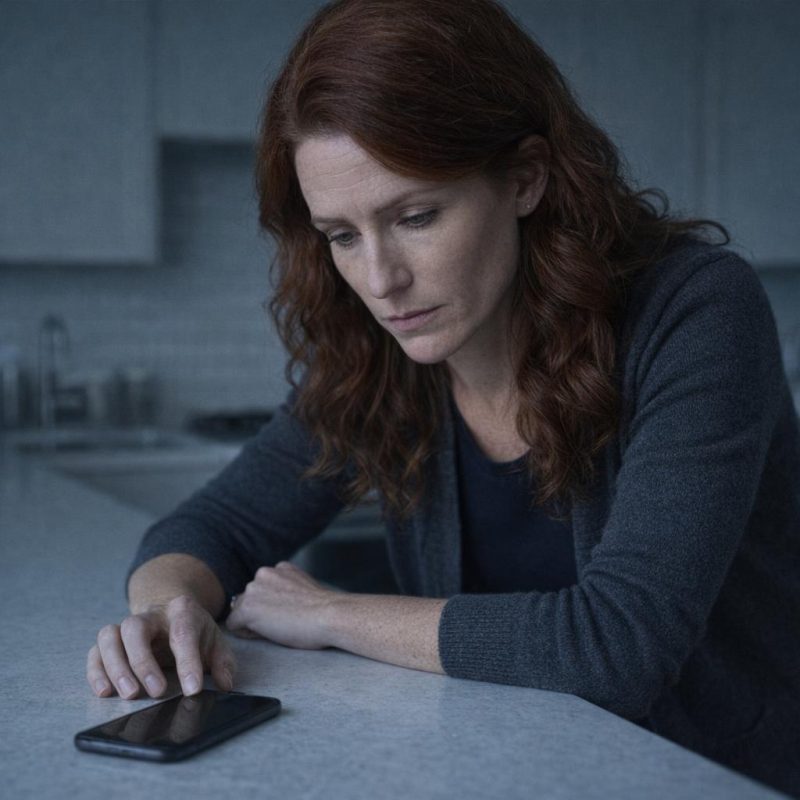 Image by RM AI
There Is More
The response finally came about two hours later, while I was sitting on the couch not really watching television. My phone lit up and I grabbed it. Madison's message was short. She said she didn't know how to answer that in a text. She said it was complicated. She said there was more I needed to know — more than she'd told me so far — and that she didn't think she could explain it properly over the phone. My heart rate went up immediately. I typed back asking what she meant, what kind of more, and she said she thought we should talk in person. She said she wanted to explain everything but needed to do it face to face. I typed yes before I'd even finished reading her message. I told her I could meet whenever she was free. She said she could do tomorrow if that worked. I said it worked. I set the phone down and sat there with the television still going in the background, some show I hadn't been paying attention to. I kept turning her words over — more I needed to know, complicated, face to face. None of it told me anything specific, but all of it told me something. I picked the phone back up and read her last message again: there was more she needed to explain.
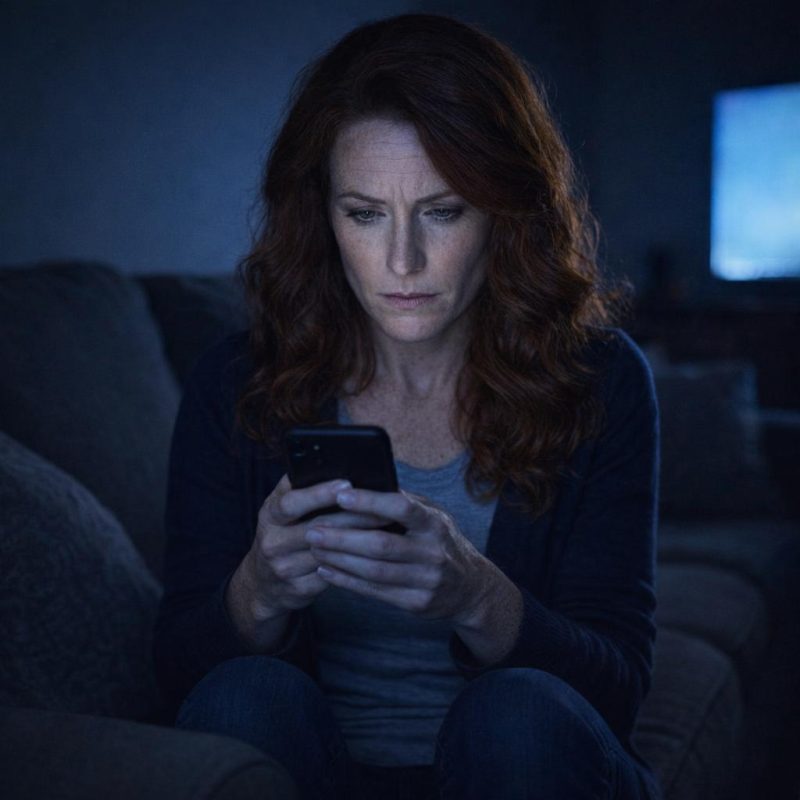 Image by RM AI
The Park
We sorted out the details in a few more messages. Madison suggested a park near her apartment — she said it was usually quiet on weekday afternoons and we'd be able to talk without running into anyone she knew. I said that was fine. We settled on two o'clock the next day. She said she'd explain everything then, that she'd been thinking about how to say it and just needed to do it in person. I told her I was grateful she was willing to talk at all. She wrote back after a pause and said she should have said something sooner. I didn't push on that. I just told her I was glad she was saying something now. The conversation ended there, the plan confirmed, and I put the phone on the nightstand and tried to sleep. I didn't sleep much. I lay there going through everything I already knew, trying to figure out what piece was still missing — what Madison had seen or heard that she couldn't put into a text message. I thought about Emily. I thought about that basement. I thought about Linda's face across the coffee shop table, so composed, so practiced. Two o'clock felt very far away, and the dark and quiet of the room offered nothing to fill the space between now and then.
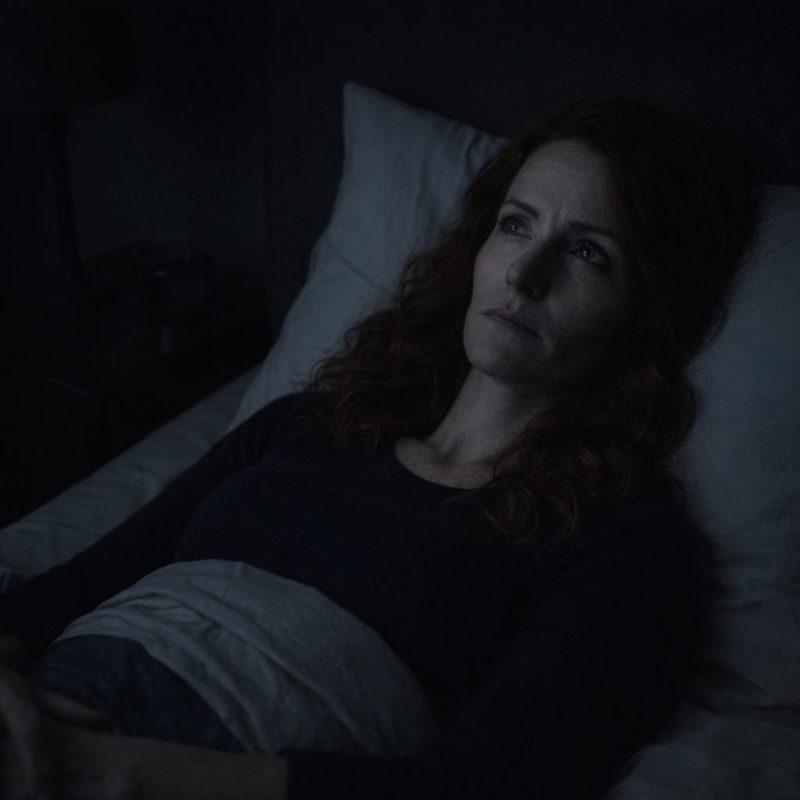 Image by RM AI
Waiting at the Bench
I got to the park fifteen minutes early and found a bench near the edge of the playground, away from the families with strollers. It was a cold afternoon, clear and still, and I sat with my hands in my coat pockets and watched a couple of kids take turns on the swings. My mind wouldn't settle. I kept running through the possibilities — what Madison might say, what she might have seen, what piece of this I still didn't have. I wondered if she'd overheard a specific conversation. I wondered if there was something she'd witnessed that she hadn't known how to name until now. I checked the time more than I needed to. A dog walker went past. A woman jogged by with earbuds in. I watched the entrance to the park without meaning to, tracking every figure that came through the gate. At about five minutes to two, I saw someone turn in from the street — younger, moving a little carefully, like someone who wasn't sure they were doing the right thing. It took me a second and then I recognized Madison's walk, her posture, the way she held herself. I stood up from the bench as she got closer, and the cold air sat heavy around me, and the swings behind me creaked once in the wind.
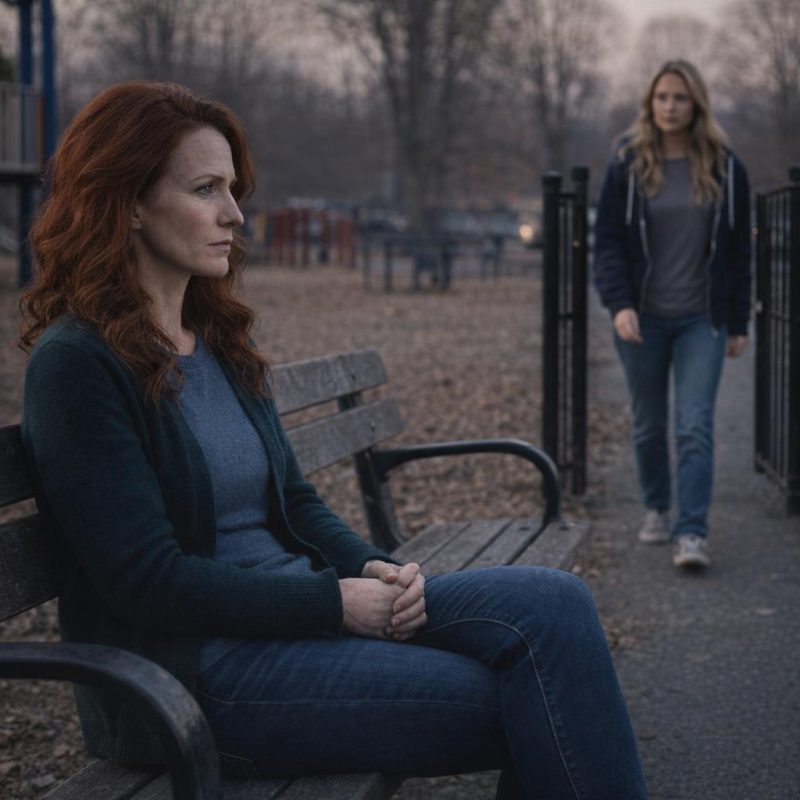 Image by RM AI
Struggling to Begin
Madison reached the bench and gave me a small, tight smile — the kind that's more apology than greeting. We sat down together and she pulled her jacket tighter around herself even though the wind had mostly died down. She said she was sorry for being cryptic in her messages, that she hadn't known how to start. I told her I was just glad she'd come. She nodded and looked out at the playground for a moment, and I could see her working through something, trying to find the right entry point. I told her to take her time. She thanked me for that. She said she'd been thinking about this since our first conversation — about how much to say and where to begin — and that she kept running into the same problem, which was that none of it made sense without some background. She said I needed to understand what it was like growing up in that house before she could explain what she'd seen happen to Emily. She picked at a thread on her sleeve. She looked at me, then back at the ground. Then she took a slow breath and said she needed to tell me about how she grew up.
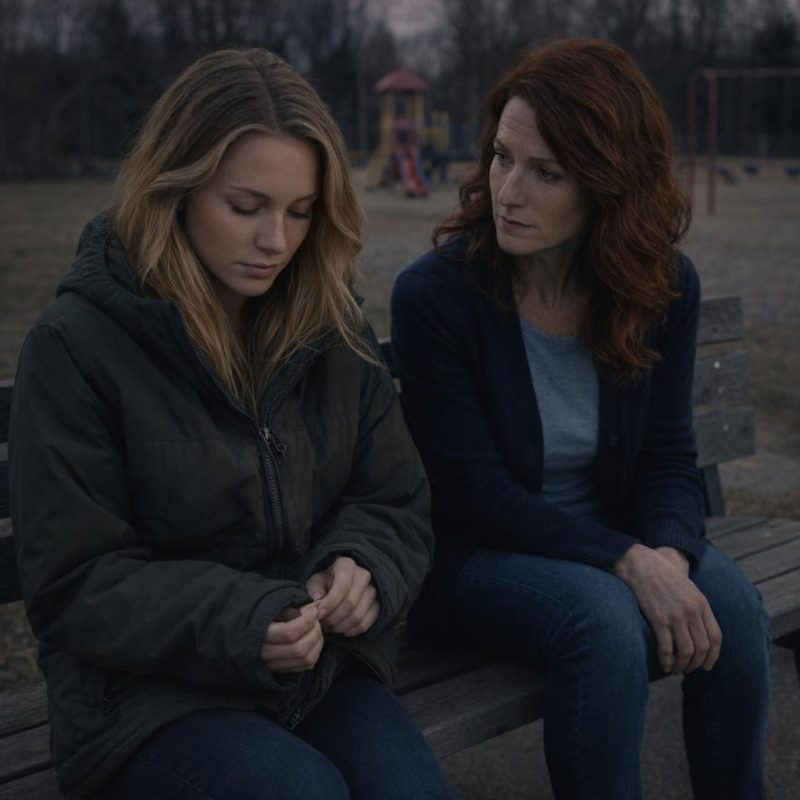 Image by RM AI
Image and Status
Madison took a breath and started at the beginning — not with Emily, not with the sleepovers, but with what it was like to grow up as Linda's daughter. She said the first thing I needed to understand was that her mother had always cared more about how things looked than how they actually were. Everything in that house was curated. The lawn, the holiday cards, the clothes they wore to school events — all of it was managed with the same careful attention. She said Linda volunteered at the school every year, not because she loved being there, but because being visible mattered to her. Being known. Being seen as the kind of mother who showed up. Madison said she used to think all families were like that, that everyone's mom tracked the social landscape the way hers did, and it wasn't until she got older that she understood how unusual it was. She picked at the thread on her sleeve again. She said her mother made decisions — big ones, small ones — based on what the neighbors would think, what the other parents would say, what story it would tell about their family. I sat with that for a moment, turning it over quietly, feeling the shape of the household Madison had grown up inside.
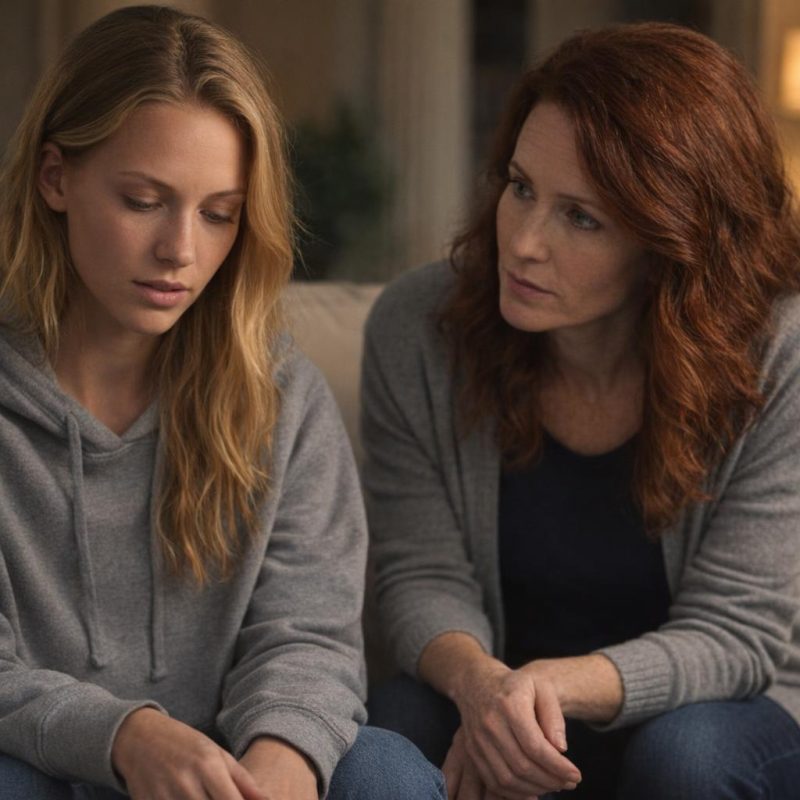 Image by RM AI
Particular About Friendships
Then Madison shifted to Ava, and that's when the unease started creeping in. She said her mother had always been particular about who Ava spent time with — not in a casual, protective-parent way, but in a deliberate, managed way. She said Linda would arrange playdates with certain families and find quiet reasons to discourage others. A kid would be mentioned at dinner and Linda would say something like, 'I'm not sure that family is the right fit,' and that would be the end of it. I asked if Linda ever explained what she meant by that. Madison gave a short, humorless laugh. She said Linda would talk about wanting the best for Ava, about surrounding her with the right influences, but it always came back to the same thing — the other family's standing in the community, whether they were the kind of people Linda wanted to be associated with. She said Ava learned early to check with her mother before getting too close to anyone. To read her mother's reaction before deciding how much she liked someone. I asked how young Ava was when that started. Madison said she couldn't remember a time when it wasn't happening. I sat there on the bench, the playground quiet around us, and let that settle.
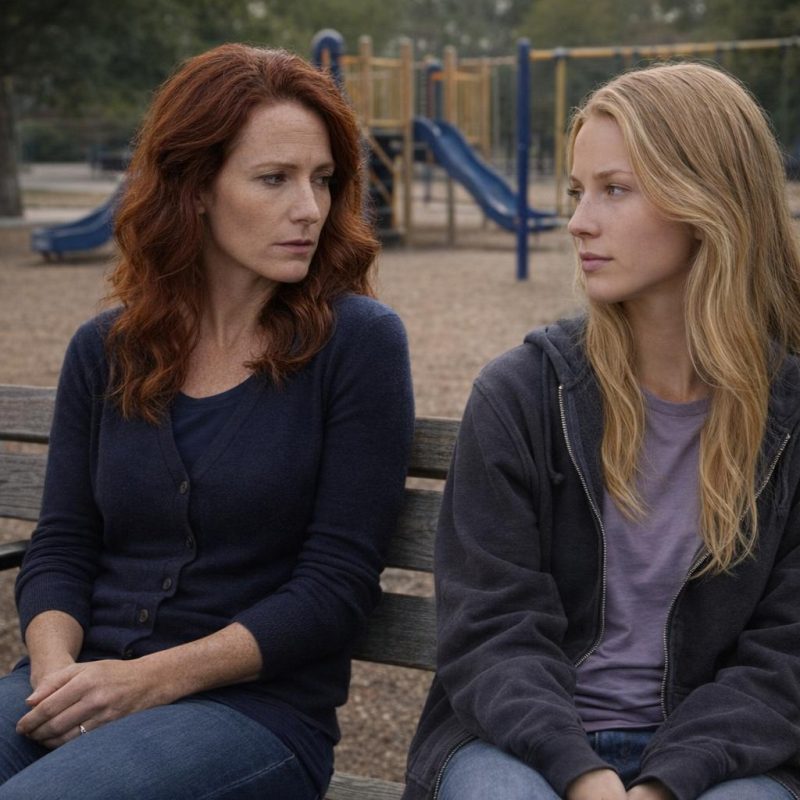 Image by RM AI
The Overheard Conversation
Madison went quiet for a moment, and I could tell she was moving toward something harder. She straightened up slightly, like she was bracing herself. She said that when she visited last weekend, she'd overheard something — that she hadn't meant to, she'd just been walking down the hallway toward the kitchen and the door was partly open. I told her to take her time. She nodded. She said her mother and Ava were talking, and at first she thought it was just ordinary conversation, the kind of back-and-forth they always had. But then she stopped walking because she heard them mention the sleepovers. I felt my pulse pick up. I asked what they said. Madison looked down at her hands. She said she stood there in the hallway for a few minutes, not moving, just listening. She said they were talking about the sleepovers, about the arrangements, about who was coming and who wasn't. And then she heard them say Emily's name — more than once, clearly, like Emily was the subject of the whole conversation. My hands tightened around the edge of the bench, and I waited for Madison to tell me what came next.
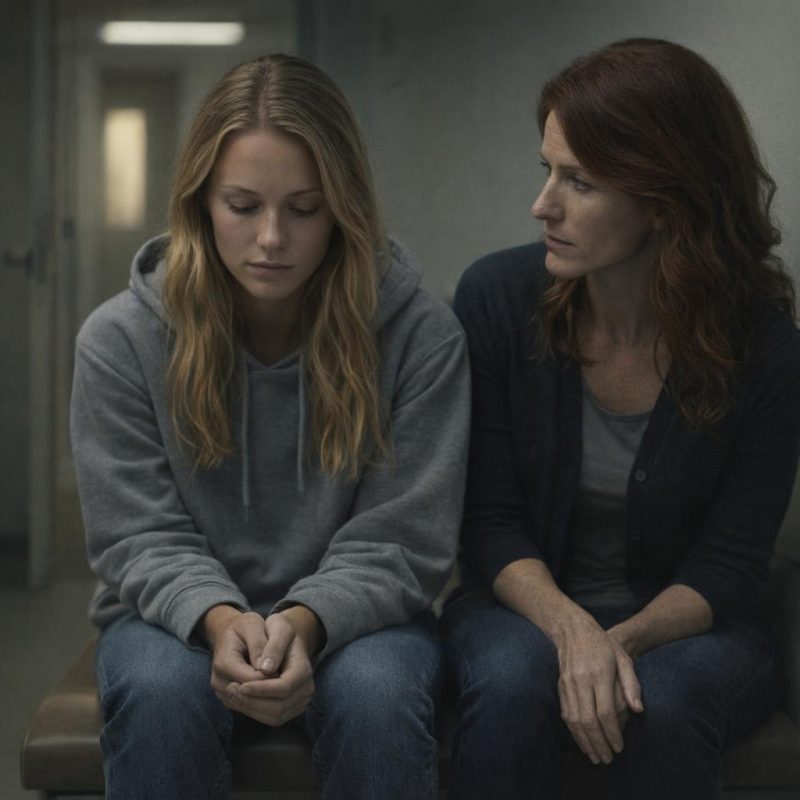 Image by RM AI
Keep Inviting Her
Madison looked at me with something between guilt and resolve, like she'd already decided to say it but still had to push herself through the door. She said she heard Linda tell Ava to keep inviting Emily to the sleepovers. I felt my stomach drop. She said Ava had been complaining — that she didn't want to include Emily anymore, that she wanted the sleepovers to just be her new group of friends. And Linda had told her no. She'd told Ava she needed to keep extending the invitation. I asked why. Why would Linda insist on that? Madison said that was exactly what she was trying to get to, that there was more to the conversation, that what she heard next was the part she hadn't been able to stop thinking about since she left the house. She looked at me steadily. My hands had gone cold. And Madison's expression — the guilt in it, the weight of it — told me that whatever came next was going to be worse than anything I'd already imagined.
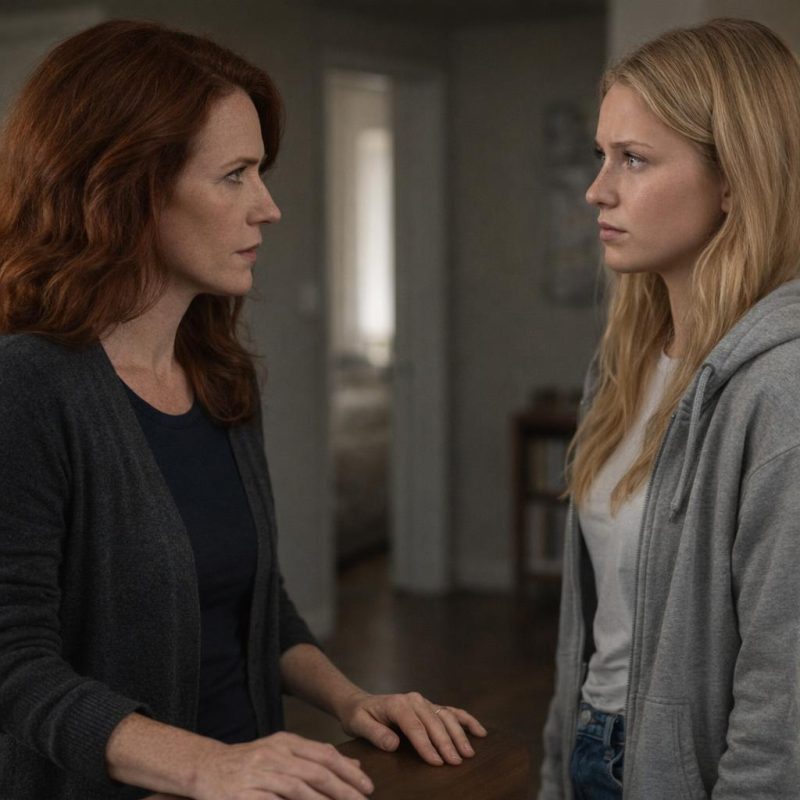 Image by RM AI
They Knew
Madison said Linda told Ava the invitations were cover. That was the word she used — cover. She said Linda wanted to stay on my good side, that she saw me as a useful connection at the school, and that cutting Emily out completely would cause problems. So Ava was told to keep inviting her. And when Emily showed up, it was fine to let her stay in the basement. Linda had actually said that — that Emily could entertain herself down there, that it was fine, that this was just how friendships naturally changed. Madison's voice was steady but her hands weren't. She said Steve was in the room for at least part of that conversation and didn't say a word against it. I couldn't speak for a moment. I just sat there on that bench while Madison looked at me, and the full shape of what had been happening to my daughter — in that house, with those people smiling at me in the school parking lot — finally came into focus: Linda and Steve had known Emily was sitting alone in that basement, and they had told Ava it was acceptable, framing it to their ten-year-old as a lesson in how social dynamics work.
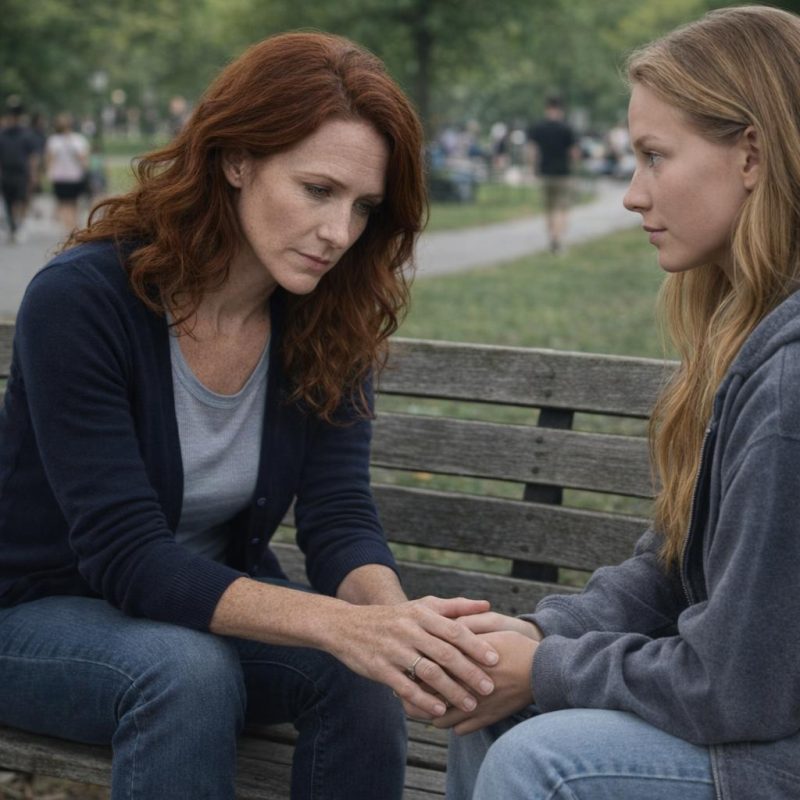 Image by RM AI
Maintaining the Appearance
I asked Madison to say it again — not because I hadn't heard her, but because some part of me needed to hear it a second time to make it real. She said it again. Linda had wanted to keep me close because I was useful. She'd told Ava that some friendships were more valuable than others, that Emily's family wasn't really in their circle, but that it was important to keep up appearances with certain people. The basement arrangement, Madison said, had been framed to Ava as natural. Linda had told her that Emily would figure it out eventually — that she didn't quite fit, that this was just how things worked. Steve had nodded along. I thought about every friendly text Linda had sent me. Every warm smile at pickup. Every time she'd said we should get together soon, said it like she meant it, like we were friends. Every single one of those moments rearranged itself in my mind into something else entirely. The rage that moved through me was quiet and cold, which somehow felt worse than if it had been loud. I thought about my daughter sitting alone in that basement while the girls laughed upstairs, and I thought about Linda knowing it and calling it a lesson.
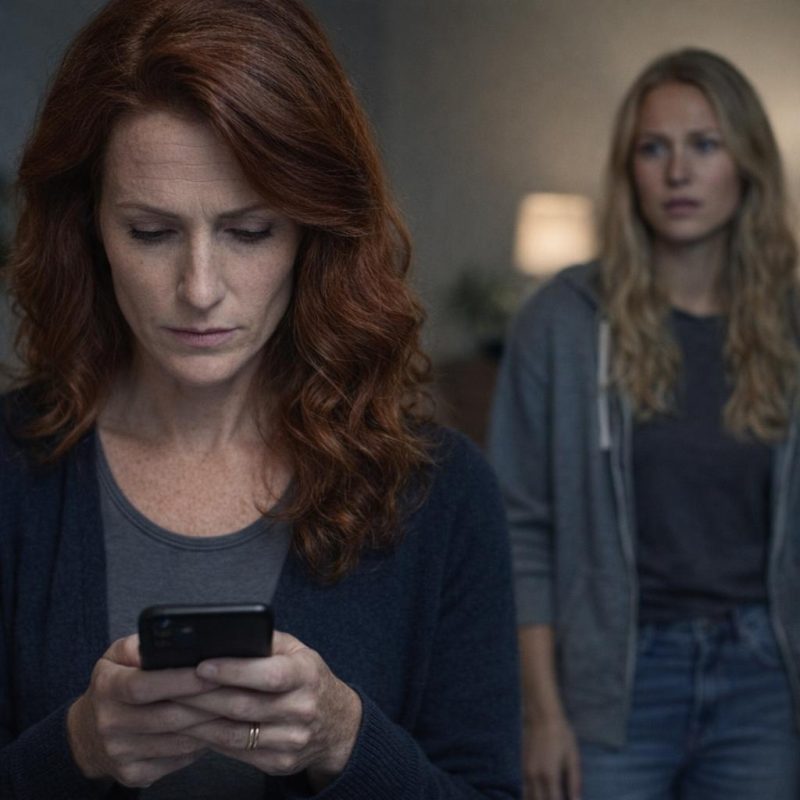 Image by RM AI
Madison's Guilt
Madison said she was sorry. She said it plainly, without dressing it up, and I could hear that she meant it. She said she should have told me sooner — that she'd known something was wrong when she saw Emily at that sleepover, sitting alone downstairs while everyone else was up in Ava's room, and that she'd felt sick about it on the drive home. But she'd been afraid. She said that was the honest answer, that she'd spent her whole life being afraid of her mother's reaction, of what happened when you went against her. She said part of why she'd moved out was to get some distance from that dynamic, to stop making herself smaller to keep the peace. She said she'd waited until she was back in her own apartment before she texted me, because she knew if her mother found out she'd come forward, there would be consequences. I told her she'd done the right thing. I meant it completely. Whatever anger I was carrying about the situation, none of it belonged to Madison — she was the one person in that family who had looked at what was happening and decided it wasn't okay. The courage that took, given everything she'd just described, settled over me quietly.
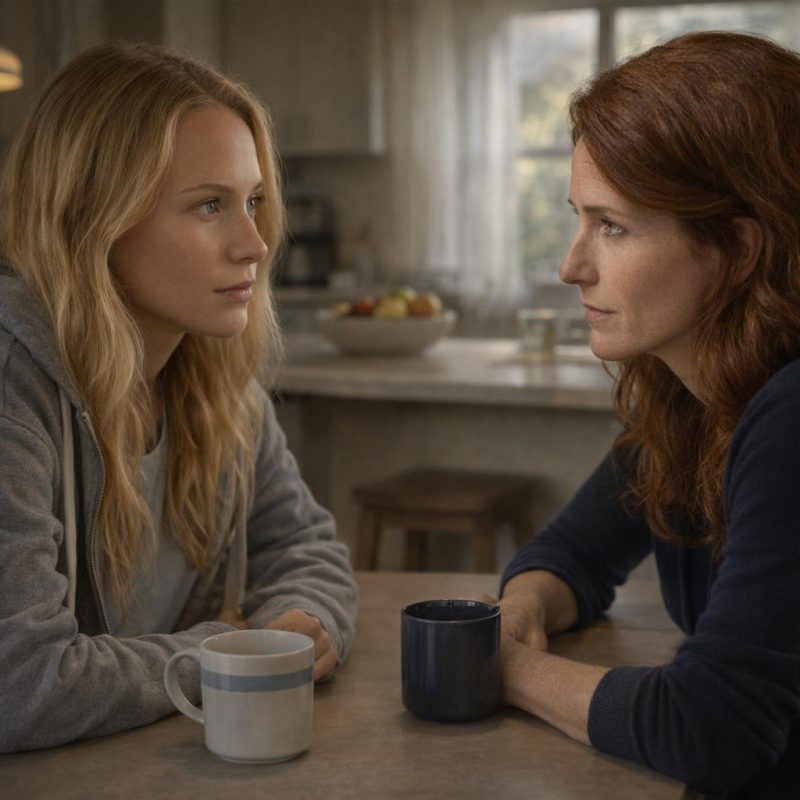 Image by RM AI
What Comes Next
I thanked Madison again before we stood up from the bench. She asked what I was going to do, and I told her I was still working through the order of it, but that I knew the school needed to be involved and that I was going to talk to Linda and Steve directly. She didn't flinch at that. She said she'd back me up — that if I needed her to confirm what she'd told me, she would. I asked if she was sure, knowing what that might cost her with her mother. She said yes without hesitating. I told her I was grateful, and I meant every word of it. She warned me that Linda would deny everything, that her mother was very good at that, at making you feel like you'd misunderstood or overreacted. I told her I was prepared for that. We said goodbye at the edge of the parking lot and I watched her walk to her car. Then I sat with what I was going to do — not the anger, not the hurt, but the plan — and for the first time in weeks, the path forward felt solid beneath me.
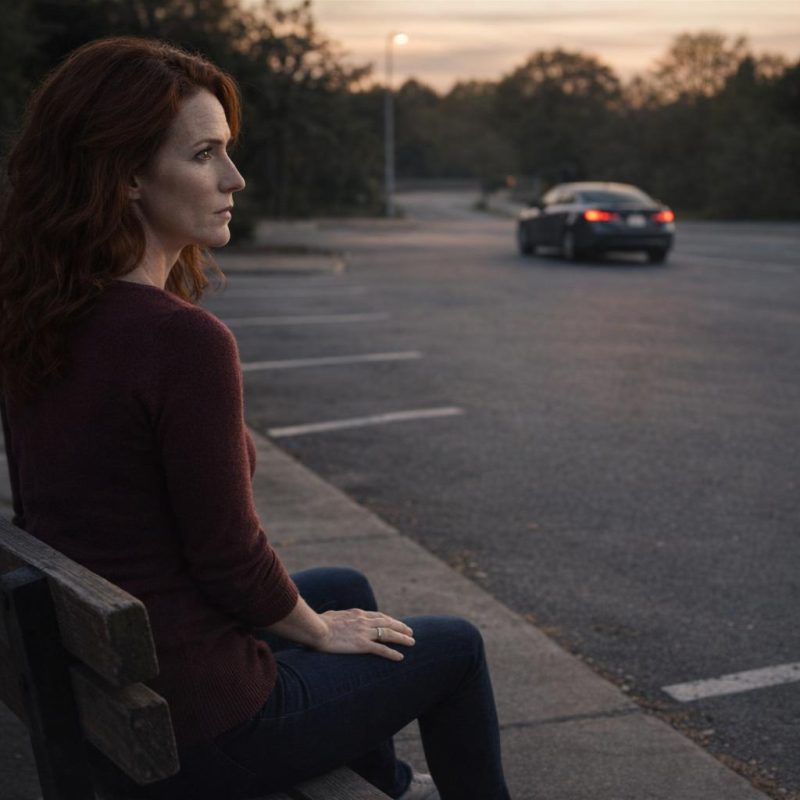 Image by RM AI
The Documentation
I drove home with my hands steady on the wheel, which surprised me. I'd expected to feel shaky, undone — but what I felt instead was focused. The moment I got inside, I sat down at the kitchen table with my phone and started screenshotting every message Madison had sent me. Every single one. I saved them to my photos, then emailed them to myself, then saved them again to a folder on my laptop labeled simply with the date. I wasn't taking any chances. Then I opened a blank document and started writing. I put down every sleepover date I could remember, cross-referencing the ones I'd noted in my calendar app. I wrote down when Emily's behavior first started shifting — the quieter dinners, the flinching when I asked about Ava, the way she'd stopped talking about the sleepovers at all. I documented what Madison had told me, word for word as best I could recall it. I included the coffee shop meeting with Linda, the careful way she'd smiled and redirected every concern I'd raised. I wrote it all down in order, with dates where I had them and approximate timeframes where I didn't. When I was done, I printed two copies and saved the file in three places. The printed pages sat on the kitchen table in front of me, and looking at them, I felt something settle into place.
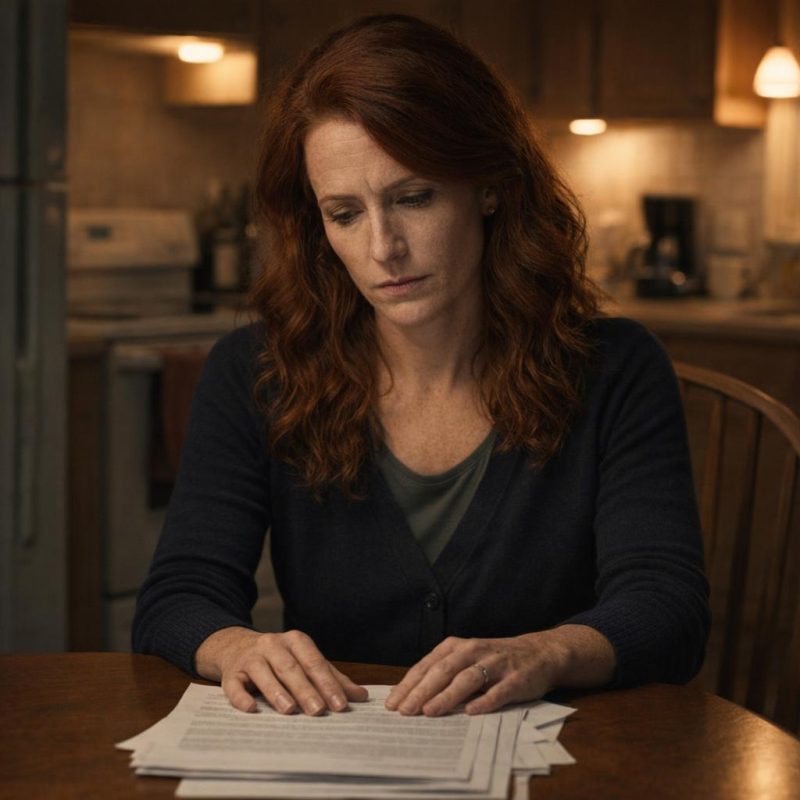 Image by RM AI
Talking to Emily
I found Emily in her room, lying on her bed with her headphones around her neck but not on her ears — the way she did when she wanted to look unavailable but wasn't really. I asked if I could sit with her for a minute. She nodded and pulled her knees up to make room. I told her I needed to talk to her about something important, and I watched her go still in that particular way she had, the way that meant she was bracing herself. I told her I'd spoken with someone who had been at Ava's house during the sleepovers. Her eyes went wide. I said it was Madison — Ava's older sister. Emily looked surprised, then uncertain. I told her that Madison had seen what was happening, and that I knew now Emily had been telling me the truth about everything. Every single thing. Emily's chin started to tremble. I told her none of it was her fault. I said the adults in that house were supposed to protect her, and they didn't, and that was on them — not on her, not even a little. She started crying then, quietly, the way she cried when she'd been holding something in for a long time. I pulled her in and held her, and I told her I was so proud of her for being honest with me. Her whole body relaxed against mine, and when she finally looked up, the relief in her face was something I hadn't seen in months.
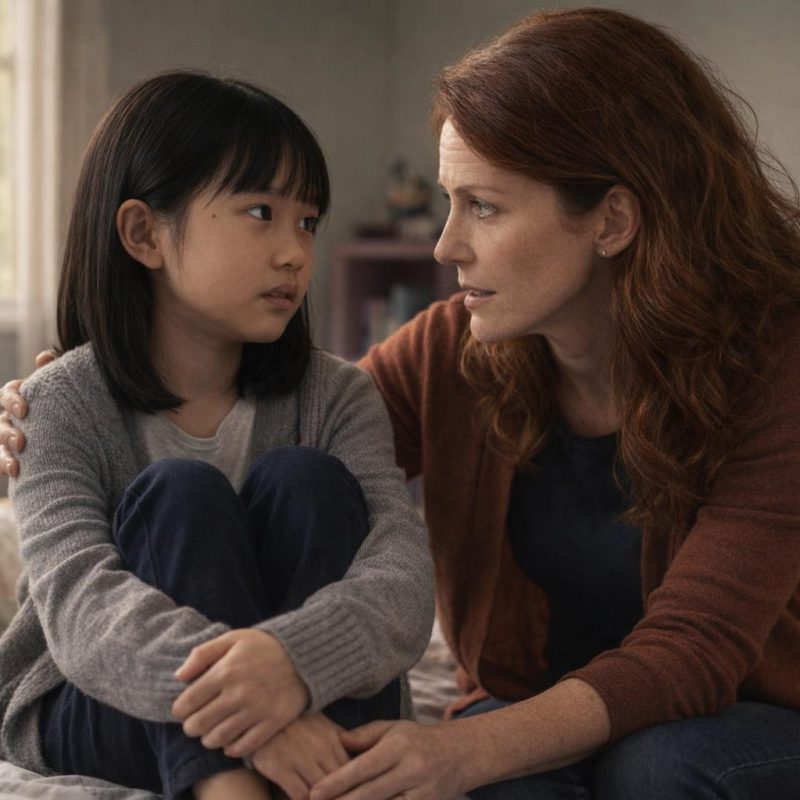 Image by RM AI
The Email
After Emily was asleep, I sat back down at the kitchen table with my laptop open and Linda and Steve's email addresses pulled up from the school directory. I'd been composing this email in my head for days, and now I just needed to get it out of my head and into words they would have to read. I kept it short. I addressed them both by name. I said I needed to meet with them in person, at their home, the following evening, and that I expected them both to be available. I said I had learned what had actually taken place during Emily's sleepovers at their house, and that I had documentation I intended to discuss with them directly. I didn't list everything I knew. I didn't want to give them time to coordinate a story. I kept the tone professional — not cold, not warm, just clear. I said the meeting was not optional. I read it three times, checking every sentence, making sure nothing in it could be dismissed as emotional or imprecise. Then I moved the cursor to the send button and held it there for just a moment. I thought about Emily's face earlier, the way the relief had moved through her like something finally letting go. I hit send, and watched the message leave my outbox, and sat in the quiet of the kitchen with the weight of what was already in motion.
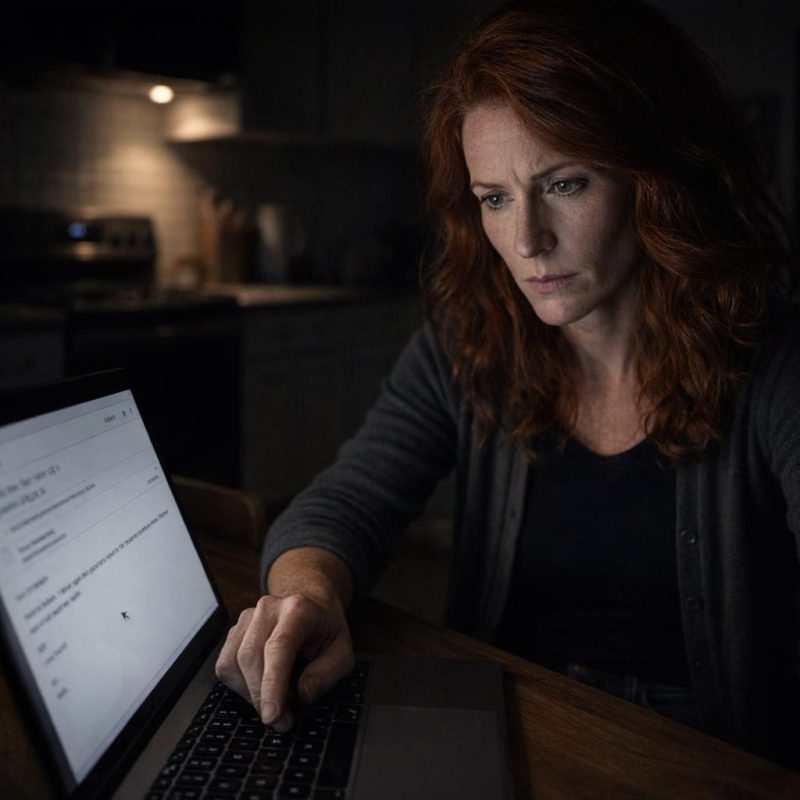 Image by RM AI
At Their Door
I pulled up to their house at exactly the time I'd specified in the email. The porch light was on. Linda opened the door before I even knocked, which told me she'd been watching for me. Her smile was the practiced kind — tight at the edges, not reaching her eyes. Steve was already standing in the living room with his hands in his pockets, and he gave me a small nod that didn't quite land as a greeting. Linda gestured toward the couch and started to say something about sitting down, and I said no thank you, I'd rather stand. I set my folder on the arm of the chair nearest me and looked at them both. I said I was there to talk about what happened to Emily in their home. Linda's expression shifted — not surprise exactly, more like a recalibration. She asked what I meant. I said I meant the sleepovers. I said I meant the basement. I said I meant the fact that Emily had been left alone and excluded while the other girls were upstairs, and that they had known about it and allowed it to continue. I said I had spoken with Madison. The name landed. Linda's face went somewhere I couldn't quite read, and Steve shifted his weight from one foot to the other without saying a word. I had said what I came to say, and the truth of it sat in that room between all of us, solid and unmovable.
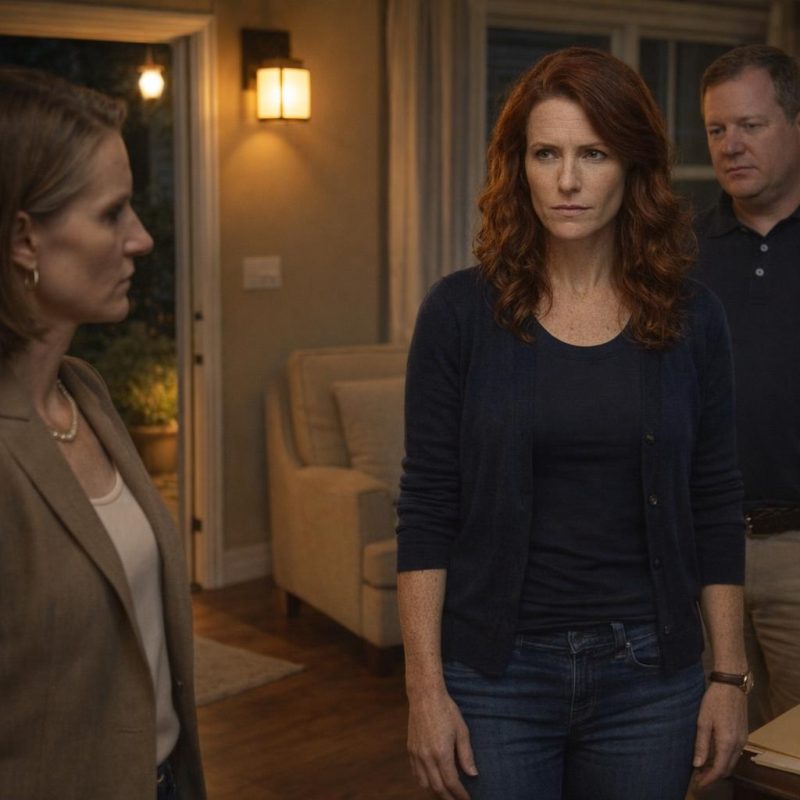 Image by RM AI
Denial and Silence
Linda recovered fast — I'll give her that. She said I had been misinformed. She said Madison had a history of misunderstanding situations, of blowing things out of proportion. Her voice was smooth, almost sympathetic, like she was gently correcting a child. Steve looked at the floor. I opened my folder and pulled out the printed timeline and set it on the coffee table between us. I pointed to the first date — the first sleepover, the first time Emily had come home quieter than she'd left. I walked through each one. I described what Madison had overheard, the specific conversation, the specific words. Linda said Madison had always been dramatic, that she'd moved out because she couldn't accept reasonable boundaries. I said I also had text messages from Madison, sent to me directly, and that I had saved and documented all of them. Something moved across Linda's face then — not quite panic, but close to it. Her voice rose just slightly when she said Madison had no idea what she was talking about. Steve still hadn't spoken. He was looking at a spot on the carpet somewhere between his feet and the coffee table. I didn't raise my voice. I didn't need to. The timeline sat on the table in front of them, every date and detail in plain black ink, and there was nothing in that room that could make it disappear.
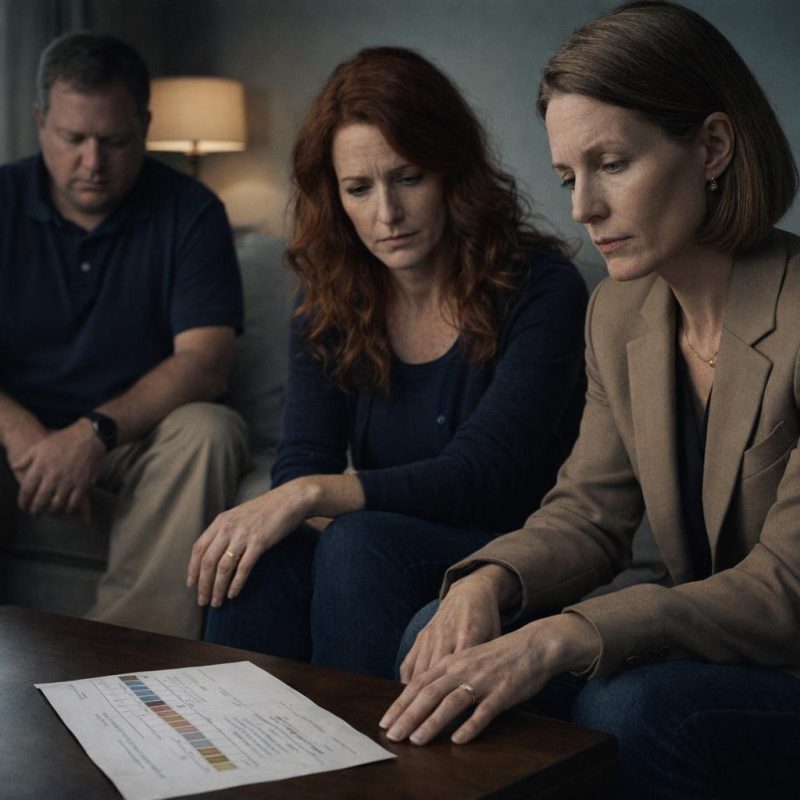 Image by RM AI
Attacking the Messenger
Linda pivoted then, the way I'd expected her to. She said Madison had always had issues with their family. She said Madison had moved out because she refused to follow the rules of their household. She said Madison had been looking for a way to cause trouble for years, and that I was being used. I let her finish. Then I said this wasn't about Madison's relationship with her parents. I said what mattered was what happened to my daughter in their home. Linda said I was choosing to believe lies over the word of people who had welcomed Emily into their family. I said I had also spoken with other parents who had noticed changes in their children after time spent at this house. Linda's eyes sharpened. She asked who I'd spoken to. I said that wasn't information I was going to share. She said I was turning people against her family based on the word of a troubled young woman with an agenda. Steve finally spoke. He asked, quietly, what I actually wanted from this conversation. I said I wanted them to acknowledge what they had allowed to happen. Linda didn't acknowledge anything. Instead she straightened, and in a voice that had gone flat and certain, she said Madison had always been the one who caused problems in this family.
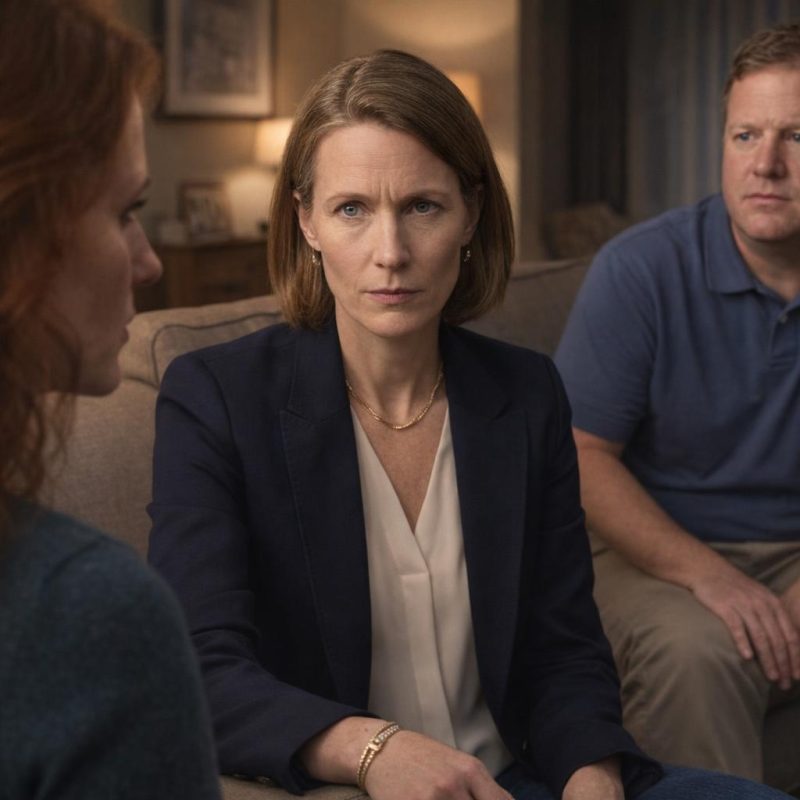 Image by RM AI
The School Knows
I let that sit for exactly one second. Then I told them I had already been in contact with the school. The change in the room was immediate. Linda's face went pale — not the flush of anger but the drain of it, color leaving all at once. Steve's head came up for the first time since I'd arrived. He asked what I had told them. I said I had provided Principal Hayes with a full written account of what had happened, including the documentation I had compiled, and that the school was now aware of the situation. Linda said I had no right to involve the school in a private matter between families. I said it stopped being a private matter the moment it involved children who attended that school together. I said Emily had been socially isolated and excluded in a way that affected her daily life at school, and that the school had every right to know. Linda said I was going to regret this. Steve asked, very quietly, whether I had spoken to a lawyer. I didn't answer that. Linda's expression hardened into something I hadn't seen from her before — the practiced warmth was completely gone now, and what was underneath it was something colder and more deliberate. Steve's jaw went tight, and neither of them spoke, and the silence told me everything the words hadn't.
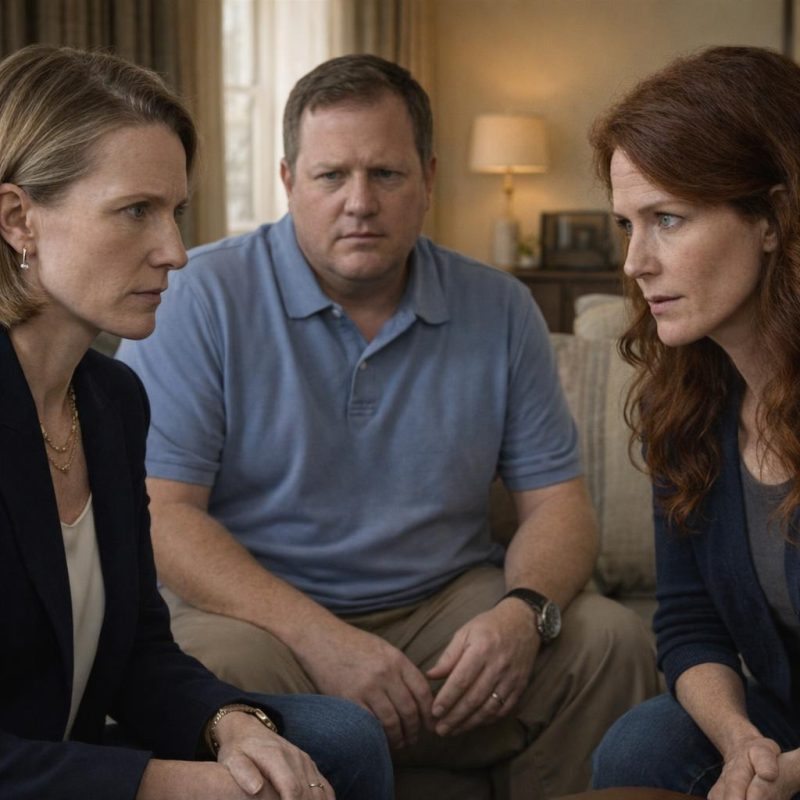 Image by RM AI
Walking Away
Linda told me that if I continued down this path, she would be contacting her attorney. She said the word defamation like she'd been saving it. I told her she could do whatever she felt she needed to do. I picked up my folder from the arm of the chair. I said the friendship between our families was over — not paused, not strained, over. I said Emily would not be setting foot in their house again, and they would not be having any contact with her. Linda said I was overreacting, that I was blowing this completely out of proportion. I said I was protecting my daughter from people who had hurt her and called it hospitality. Steve spoke then, and his voice was quieter than anything else that had happened in that room. He said they had never meant for Emily to be hurt. I looked at him and I said that their intentions didn't change what the result had been for a ten-year-old girl who trusted them. Then I walked to the door. Nobody said goodbye. I opened it, stepped through, and pulled it shut behind me, and I stood on their porch for just a moment in the cold air before I walked to my car — and I never looked back at that house again.
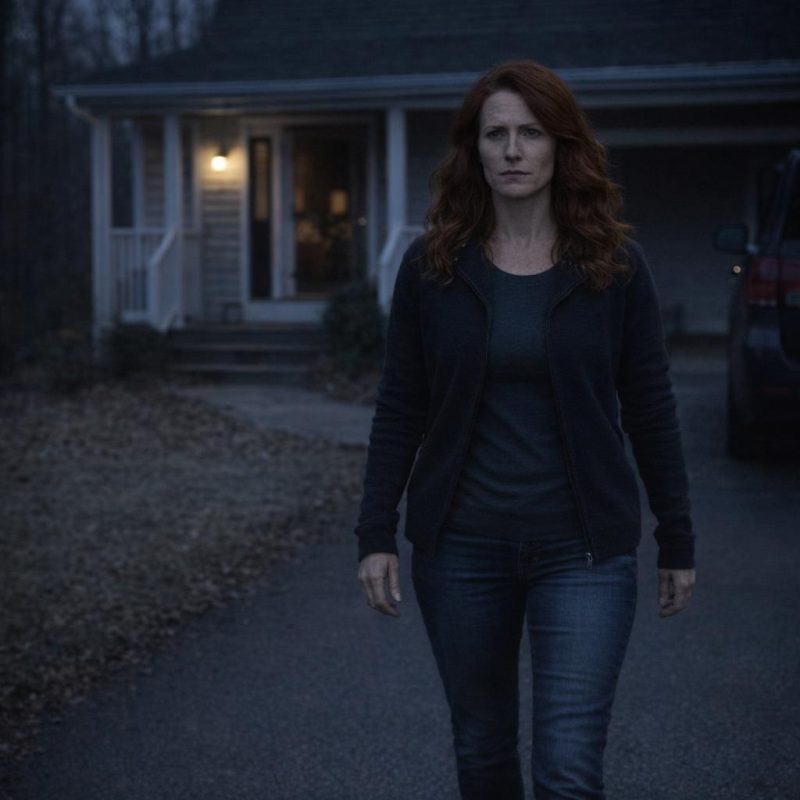 Image by RM AI
Community Response
I made the appointment with Principal Hayes the morning after I walked out of that house. I brought the folder — the screenshots, the timeline, the notes I'd kept — and I laid it all out on her desk without apology. She listened without interrupting, which I hadn't expected, and when I finished she said the school took social exclusion and targeted cruelty seriously, and that she would be looking into the matter. Linda's name came up twice. Both times, Principal Hayes wrote something down. Within the week, I heard through Jessica that Linda's volunteer coordinator role had been quietly discontinued. Jessica had been the first person I called after I left the Chens' porch, and she'd listened to everything without once telling me I was overreacting. She helped me figure out which other parents to talk to — the ones I trusted, the ones who'd known Emily since kindergarten. The response surprised me. More than one parent said they'd always felt something was slightly off at those gatherings but hadn't been able to name it. By the following Friday at school pickup, I watched from across the parking lot as Linda walked toward the usual cluster of parents near the entrance — and one by one, the group shifted, turned away, and closed itself off before she reached them.
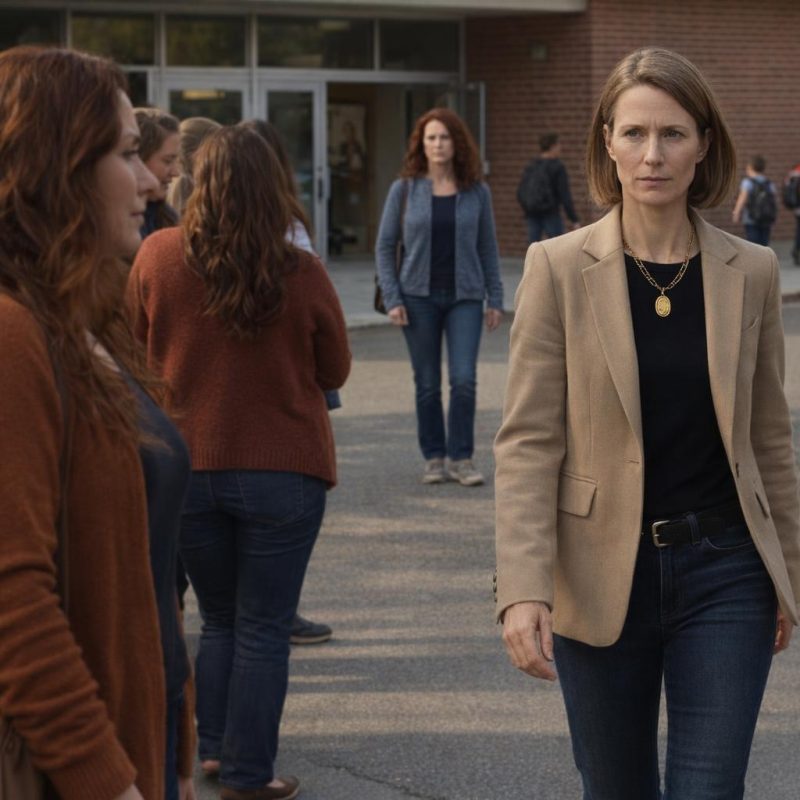 Image by RM AI
Beginning to Heal
The therapist's name was Dr. Reyes, and her office had a small sand tray in the corner and a lamp that gave off warm yellow light instead of the overhead fluorescent kind. Emily noticed the lamp first. She pointed at it and said it looked like the light at Grandma's house, and something in my chest loosened just a little at that. The first session was mostly Dr. Reyes asking gentle questions and Emily answering in short sentences, her hands folded in her lap the way she did when she was being careful. But by the third session, Emily started talking about how it felt to sit at lunch and watch Ava look through her like she wasn't there. She said it made her feel invisible. She said she'd started wondering if she'd done something wrong. Dr. Reyes told her, clearly and without any softening, that she had not done anything wrong. I watched Emily's face when she heard that. We started having longer conversations at home too — not forced ones, just the kind that happened naturally when I asked the right questions and then actually waited. It was slow, and some days were harder than others, but we were doing it together, and that felt like enough.
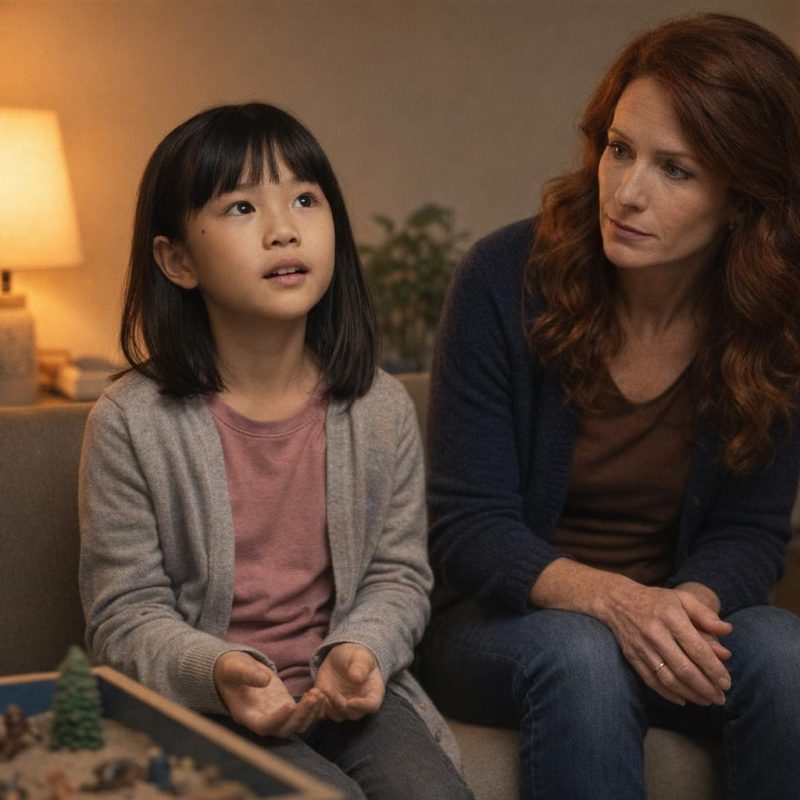 Image by RM AI
New Connections
Jessica's daughter Sophia was in Emily's class, and I don't know why it took us so long to arrange a playdate — maybe because everything before had felt so tangled up in the Chens' orbit. The first time Sophia came over, the two of them disappeared into Emily's room for three hours and came out only for snacks, talking over each other about some game they'd invented involving stuffed animals and an elaborate court system. I stood in the kitchen doorway and just watched for a moment. Emily had joined an art club after school, and she'd made two more friends there — a girl named Priya and a quiet kid named Theo who apparently shared her love of drawing maps of imaginary places. I got to know their parents slowly, carefully, asking different questions than I used to ask. I paid attention to how they talked about their kids — whether they listened or just performed listening. Jessica and I started walking together on Saturday mornings while the girls played, and she became the kind of friend I realized I'd needed for a long time. The sleepover at Sophia's house was the real turning point. Emily came home the next morning with her hair a mess and her eyes bright, already talking before she was fully through the door, and the sound of her laughing as she described their midnight snack raid was the most ordinary, beautiful thing I'd heard in months.
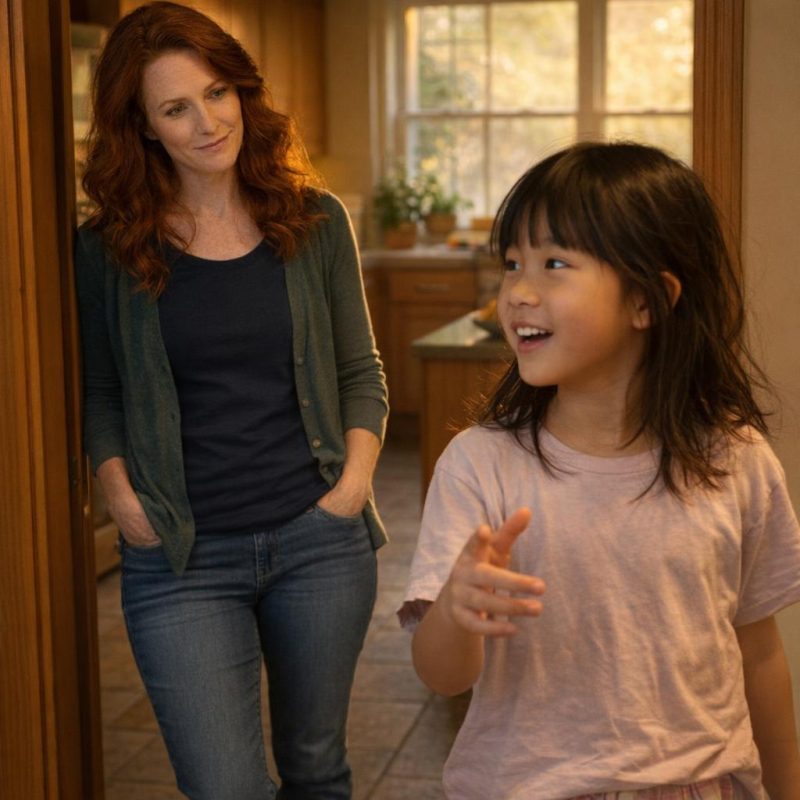 Image by RM AI
Moving Forward
I thought about it sometimes in quiet moments — how close I came to missing it entirely. Emily had been shrinking for months before I really saw it, and I'd been so charmed by the idea of the Chens, by Linda's easy confidence and the beautiful house and the sense that my daughter had landed in exactly the right friendship, that I'd let myself stop looking closely. That was the part I had to sit with. Not with anger, but with honesty. I'd trusted too fast and asked too little, and a ten-year-old paid for it in ways she was still learning to name. But I also thought about Madison, who had walked into a coffee shop and told me the truth when she didn't have to, and about Dr. Reyes, and about Jessica, and about the look on Emily's face the morning she came home from Sophia's sleepover. Emily had learned something hard and real — that not every friendship is safe, and that it's okay to say so. I'd learned to ask better questions, to trust the small signals, to believe my daughter when something felt wrong before she even had the words for it. We were both different now than we'd been at the start of all this. I watched Emily from the back window one afternoon, running across the yard with Sophia, her arms out, her head thrown back — and I felt the ground under me hold steady.
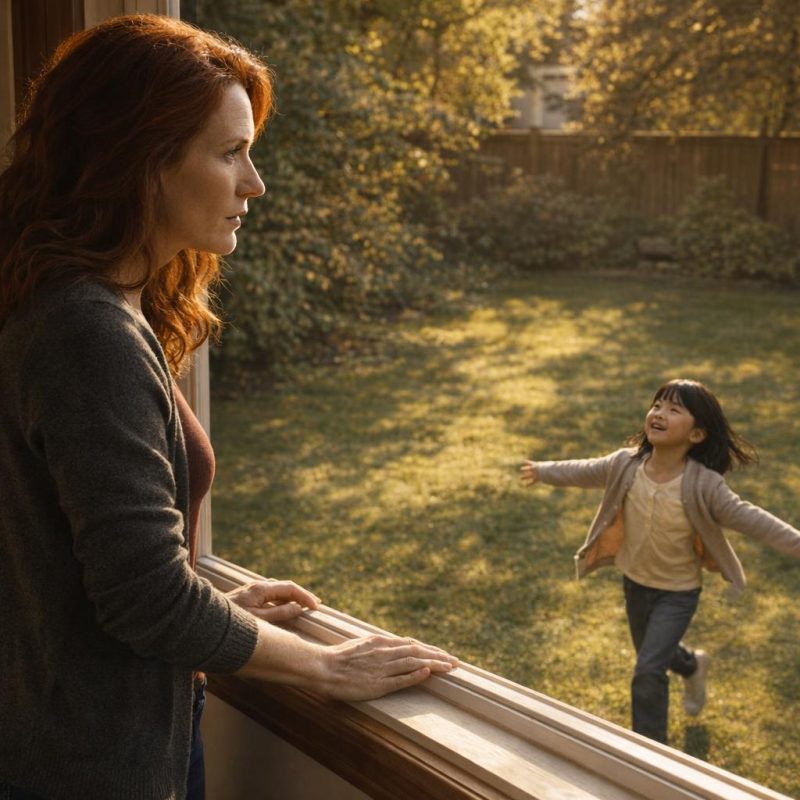 Image by RM AI
KEEP ON READING
The 20 Most Recognized Historical Figures Of All Time
The Biggest Names In History. Although the Earth has been…
By Cathy Liu Oct 4, 2024
10 of the Shortest Wars in History & 10 of…
Wars: Longest and Shortest. Throughout history, wars have varied dramatically…
By Emilie Richardson-Dupuis Oct 7, 2024
10 Fascinating Facts About Ancient Greece You Can Appreciate &…
Once Upon A Time Lived Some Ancient Weirdos.... Greece is…
By Megan Wickens Oct 7, 2024
20 Lesser-Known Facts About Christopher Columbus You Don't Learn In…
In 1492, He Sailed The Ocean Blue. Christopher Columbus is…
By Emilie Richardson-Dupuis Oct 9, 2024
20 Historical Landmarks That Have The Craziest Conspiracy Theories
Unsolved Mysteries Of Ancient Places . When there's not enough evidence…
By Megan Wickens Oct 9, 2024
The 20 Craziest Inventions & Discoveries Made During Ancient Times
Crazy Ancient Inventions . While we're busy making big advancements in…
By Cathy Liu Oct 9, 2024