

I Shared My Wi-Fi Password With My Best Friend of 12 Years—Then I Discovered What He'd Been Doing With It
I Shared My Wi-Fi Password With My Best Friend of 12 Years—Then I Discovered What He'd Been Doing With It
The Man Next Door
I moved to Miller Lane in October of 2012 with a rented truck, two friends who bailed by noon, and a sectional sofa that absolutely refused to fit through the front door. I was sweating through my second t-shirt of the day, standing in the driveway trying to figure out if I could just live without a couch, when I heard boots on gravel. The man from next door was already crossing the lawn before I could wave him off — silver-haired, broad-shouldered, wearing a flannel shirt with the sleeves rolled up. He introduced himself as David and didn't ask if I needed help. He just grabbed the other end of the sofa. We got it through the door in about four minutes. Turns out the trick was tilting it at an angle I never would have figured out on my own. Afterward we stood in the driveway catching our breath, and he told me he'd lived on Miller Lane for over twenty years, that the neighborhood was quiet and the neighbors minded their own business, which he said like it was the highest possible compliment. He had this way of talking — unhurried, like he had nowhere else to be. When we shook hands before he headed back across the lawn, his grip was firm and warm, and it felt like the beginning of something genuinely good.
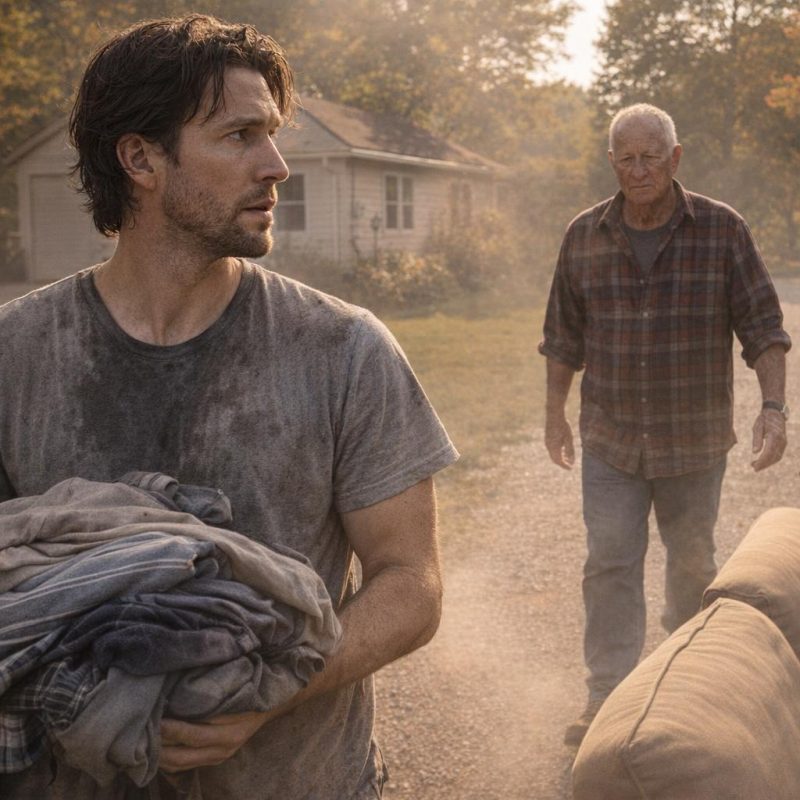 Image by RM AI
The Woodworker's Hands
A few weeks after moving in, David invited me over to see his backyard workshop, and I said yes mostly out of politeness. I wasn't prepared for what was back there. The shed was bigger than it looked from the street — maybe twelve by sixteen feet — and every inch of it was organized with the kind of precision that made my own desk look like a crime scene. Oak bookshelves lined one wall, a half-finished dining table sat in the center, and the smell of sawdust and linseed oil hit me the moment he pulled the door open. He walked me through pieces he'd made over the years: a rocking chair for a former student's wedding gift, a jewelry box he'd built for his wife on their thirtieth anniversary, a set of kitchen cabinets he'd installed himself. He talked about thirty years of teaching — shop class in the mornings, history in the afternoons — and about the students who still sent Christmas cards. He had this quiet pride about the work, not boastful, just settled. I admitted I didn't know one end of a chisel from the other, and he laughed and said that was fine, everyone started somewhere. He offered to show me the basics sometime, and I said I'd like that. Then he switched on the overhead light and I saw the far wall — floor to ceiling, shelf after shelf of finished pieces, each one smoother and more careful than the last.
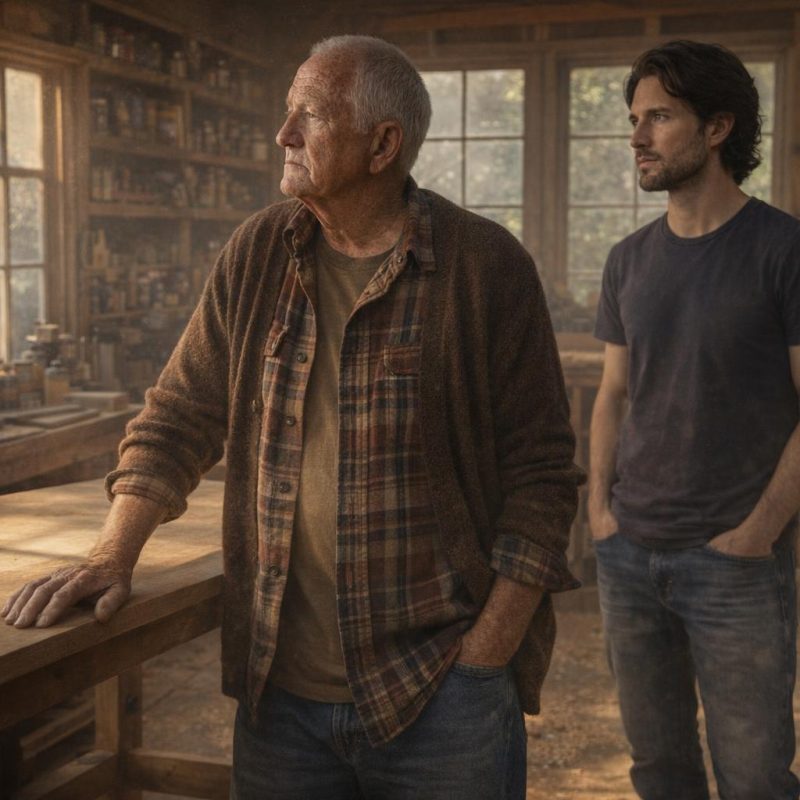 Image by RM AI
Hammer Lessons
The kitchen cabinet door had been hanging crooked since I moved in, and I'd been ignoring it the way you ignore a lot of things when you're new to owning a house and slightly terrified of making it worse. When it finally fell off the hinge entirely one Tuesday morning, I texted David mostly as a joke. He showed up forty minutes later with a proper toolbox and the calm energy of someone who had fixed a thousand things and expected to fix a thousand more. He didn't take over — that was the thing I noticed. He handed me the screwdriver and talked me through it, explaining why the hinge had stripped and how to set it properly so it wouldn't happen again. Then he found the dripping bathroom faucet I'd been putting off for two months and walked me through that too, showing me how to shut off the water supply and replace the washer without calling a plumber. He taught me how to use a level, how to read a drill's torque settings, how to actually measure before you cut. Before he left, he wrote his cell number on a piece of masking tape and stuck it to the inside of the cabinet door. He said to call anytime, day or night, if something broke. I stood in the kitchen after he left, cabinet door swinging smooth and even on its new hinge, and felt something I hadn't expected — a quiet, solid satisfaction at having fixed something with my own hands for the first time.
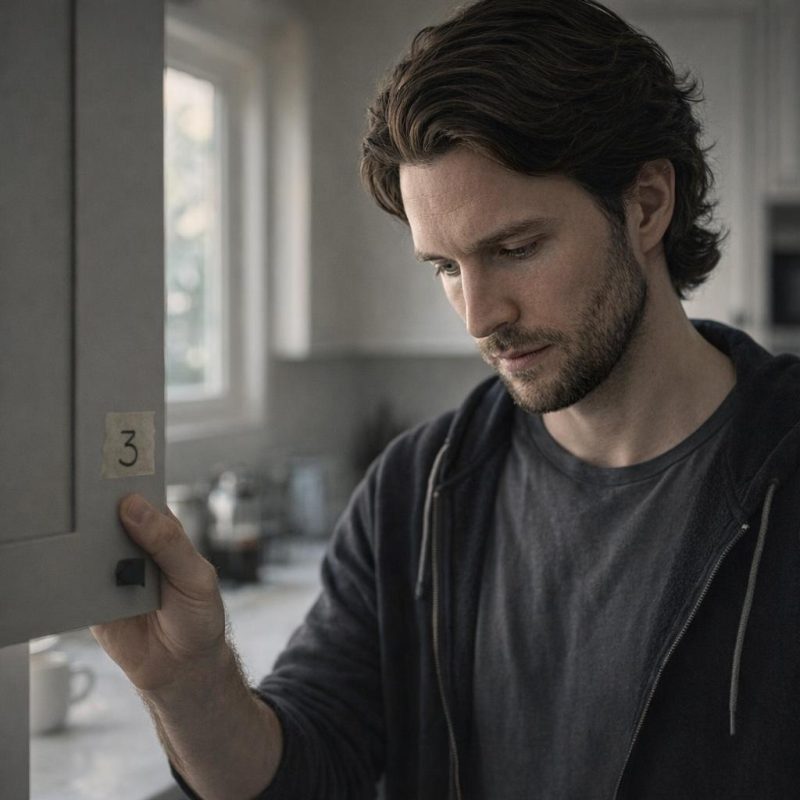 Image by RM AI
Friday Night Bourbon
It started with one Friday evening in late November — David knocked on my back door around seven, holding a bottle of bourbon that cost maybe twelve dollars and looked like it had been on the shelf since the nineties. He said he had nowhere to be and asked if I did. I didn't. We sat on the back porch in the cold with our jackets on and talked for three hours about nothing in particular: local politics, the neighbor two doors down who mowed his lawn at seven in the morning, my freelance design work, David's daily walks around the block. He asked good questions and actually listened to the answers, which sounds like a low bar but isn't. By the time the bottle was half gone, it felt like we'd been doing this for years. The next Friday he showed up again, same time, same bottle. After that we stopped pretending it needed an invitation. It just became the thing we did — Friday nights on the porch, cheap bourbon, whatever was on our minds. Some nights we talked for hours. Some nights we barely talked at all, just sat there listening to the neighborhood settle into dark and quiet, and that was fine too. There was a particular kind of ease in those silences, the kind you can't manufacture, where neither of us felt the need to fill the space with noise just to prove we were comfortable.
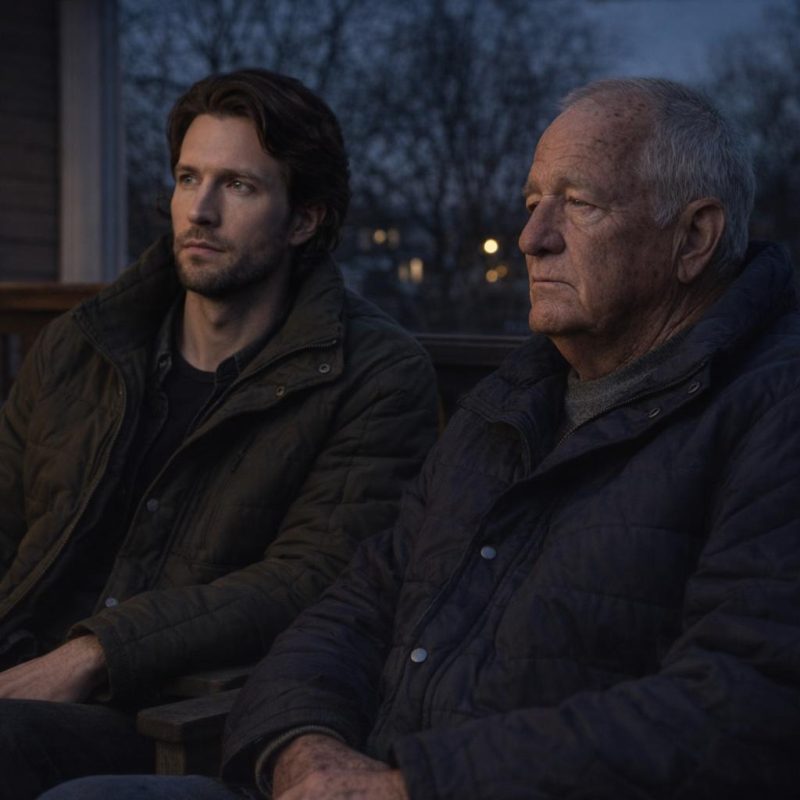 Image by RM AI
The Late Wife
It was a Friday in February, maybe three months into our porch tradition, when David went quiet mid-conversation and came back inside with something in his hand. He set it on the table between us — a framed photograph, the kind with a white border that told you it was from another decade. A woman in a cream-colored dress, laughing at something off-camera, her hand on David's arm. He told me her name was Margaret. A librarian. They'd been married forty-two years before she passed, five years back, and he still talked about her birthday in March like it was a date he kept in his chest rather than on a calendar. He told me about the way she organized their bookshelves by color, which drove him crazy, and the way she'd leave notes in his coat pockets that he'd find weeks later. I told him a little about my own family — my mother, my sister Emma, the particular kind of distance that grows between people who love each other but don't always know how to say it. He listened without interrupting. Then he said something that caught me off guard: that I reminded him of what he imagined a son might have been like. I didn't know what to say to that. I looked at the photograph again, at the woman laughing in the cream dress, and at the way David's eyes had gone somewhere far away and tender and still raw around the edges.
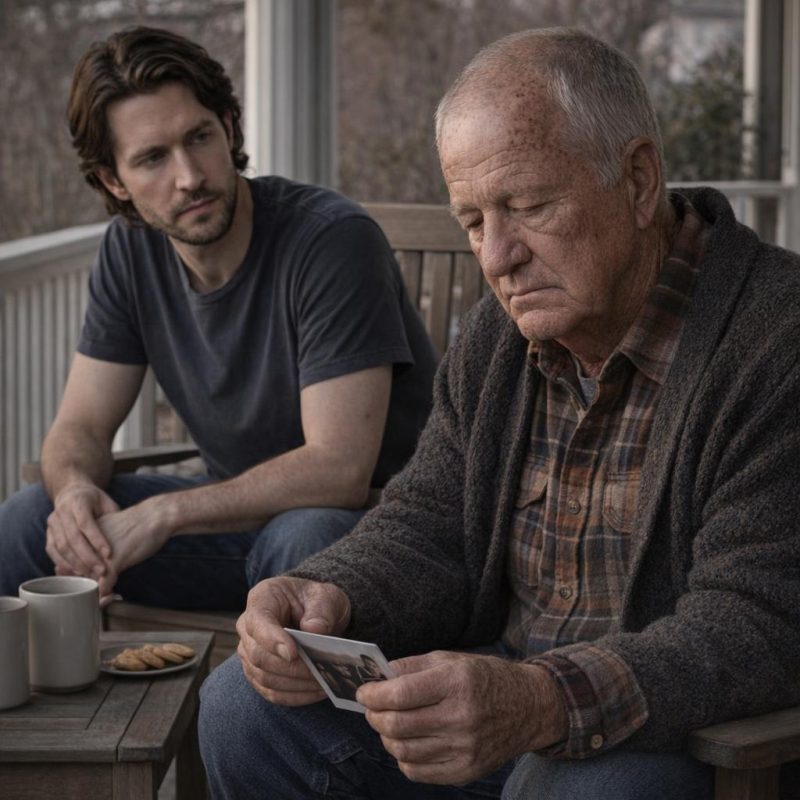 Image by RM AI
The Shed Combination
It was sometime in the spring of our second year when David brought up the shed in a different way than usual. He mentioned he sometimes needed to borrow a tool and didn't want to bother me if I wasn't home, and I told him to take whatever he needed, anytime. He waved that off and said the same went for me — that I should be able to get into his workshop without having to track him down. A few days later he showed up at my door with a small square of paper, the kind torn from a notepad, with four numbers written on it in his careful block handwriting. The combination to the padlock on his shed. He said there was no reason to knock anymore, that we were past that. I told him I felt the same way and went inside and came back with the spare key to my front door — the one I'd been meaning to give someone for emergencies anyway. He took it without making a big deal of it, just slipped it into his shirt pocket and nodded. He said something then that I've thought about many times since: that he trusted me with everything he had, and that at his age, that wasn't something he said lightly. I didn't have a response that felt big enough, so I just nodded back. He pressed the small square of paper into my palm, four numbers in block print, and I folded it into my wallet.
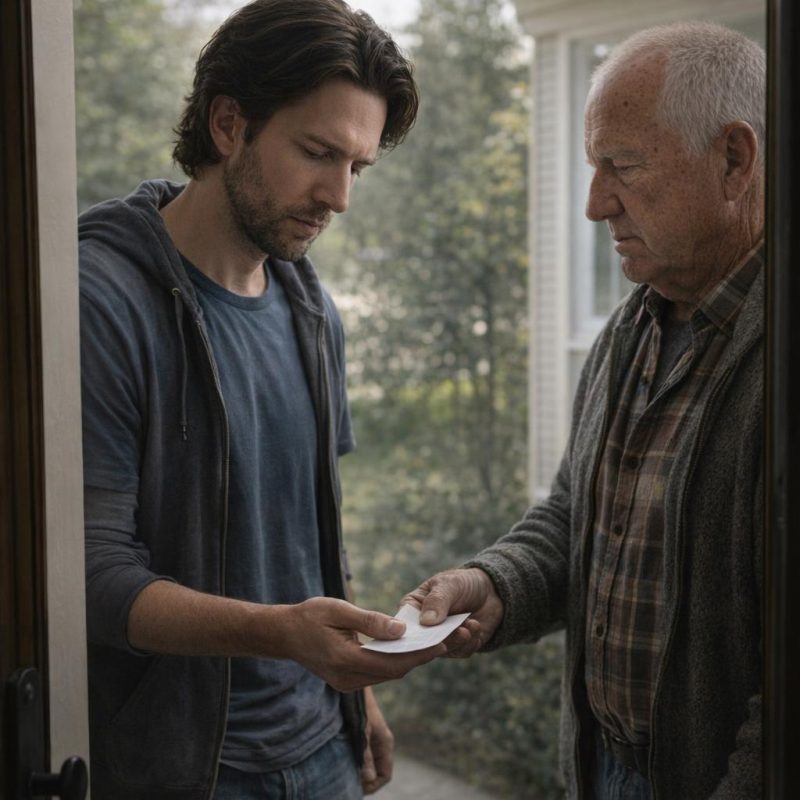 Image by RM AI
Fatherly Advice
I'd been going back and forth for weeks about dropping a client — a small business owner who paid on time but made every revision feel like a negotiation for my dignity. I'd laid the whole thing out for David one Friday, expecting him to tell me to be practical, to keep the income, to not burn bridges. He listened to the full story without interrupting, which took longer than I expected because I had a lot of feelings about it. Then he was quiet for a moment, turning his glass in his hands. He told me about a student he'd had in his third year of teaching — a kid who was genuinely talented but kept shrinking himself to fit what other people expected. David said he'd watched that happen and hadn't said anything, and it was one of the professional regrets he carried. He said the work you do shapes the person you become, and that you don't always notice the shaping until it's already happened. He talked about the difference between caution and fear, and how they feel identical from the inside but lead to completely different places. I sat there listening and felt something loosen in my chest that had been tight for weeks. I dropped the client the following Monday. But what stayed with me longer than the decision itself was something David said near the end of the conversation — that the biggest risks he'd ever regretted weren't the ones he'd taken, but the ones he'd been too careful to try.
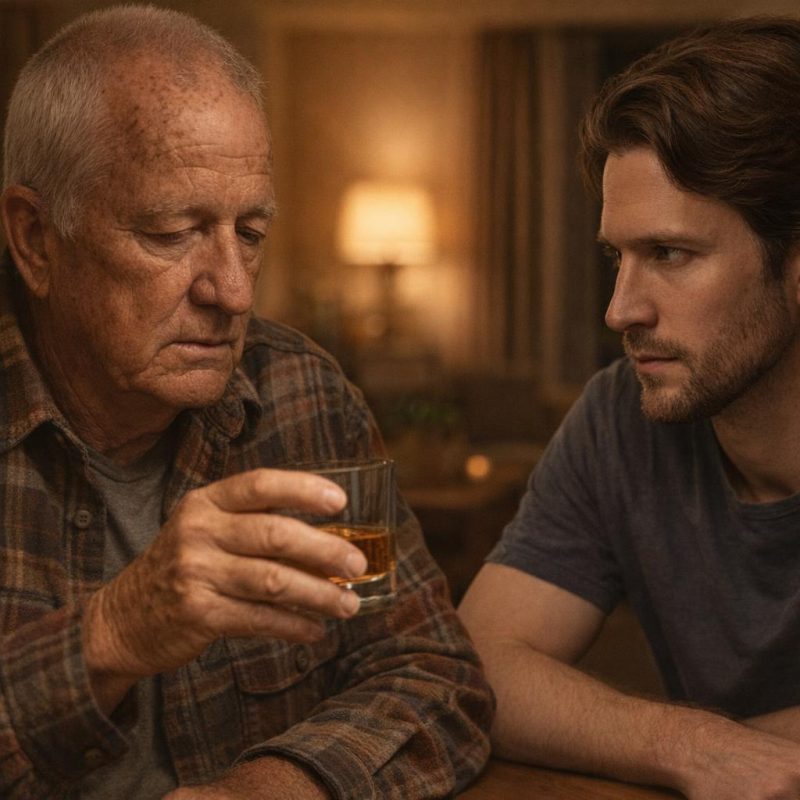 Image by RM AI
Sister Troubles
Emma sent me an email on a Thursday afternoon that managed to be both perfectly reasonable and completely infuriating, which is a skill she has always had. It was about our mother — about who was handling what, about whether I was doing my share, written in that careful measured tone she uses when she's actually furious but wants to seem like the calm one. I brought it to the porch that Friday still annoyed, and David listened the way he always did, without jumping in to fix it or take sides. He asked a few questions about Emma — what she was like, how we'd always gotten along, whether this was new friction or old friction with a new surface. I found myself explaining things I hadn't put into words before: that Emma and I loved each other but operated on completely different frequencies, that she processed everything out loud and I processed everything alone, and that we'd been bumping against that difference our whole lives. David nodded and said sibling relationships were their own particular kind of complicated, that the people who knew you longest sometimes had the hardest time seeing who you'd become. He shared a little about his own brothers, both gone now, and the things left unsaid between them. By the time the bourbon was low and the porch had gone cold, the tightness in my shoulders had eased in a way it never quite did after talking to my actual family, and I sat with that strange, quiet relief for a long time after David went home.
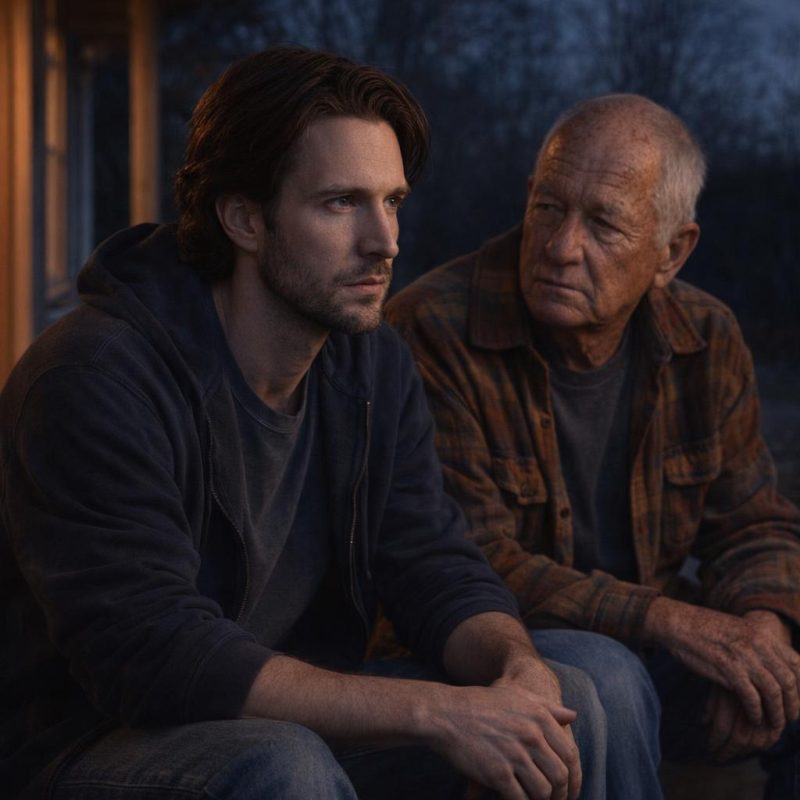 Image by RM AI
The Internet Bill
It was a Tuesday evening when David came over with his internet bill in hand — actually printed it out and brought it over, which told me everything about how annoyed he was. His provider had bumped his monthly rate from forty dollars to a hundred, just like that, no warning, no explanation beyond some fine-print notice buried in an email he'd almost missed. He set the paper on my kitchen table and tapped it with one weathered finger like it had personally offended him. I told him that was highway robbery, and he agreed, and we spent a good twenty minutes talking about corporate greed and what these companies got away with because people had no real alternatives. David said he barely used the thing anyway — just checked his email in the mornings and read the news online, maybe looked up a woodworking technique now and then. He said he was seriously thinking about canceling the service entirely. I didn't say anything right away, but I was already doing the math in my head. My router sat maybe fifteen feet from our shared wall. My signal was strong enough that I picked it up clearly from my back porch. I sat there listening to him talk and thought about how easy it would be to just offer.
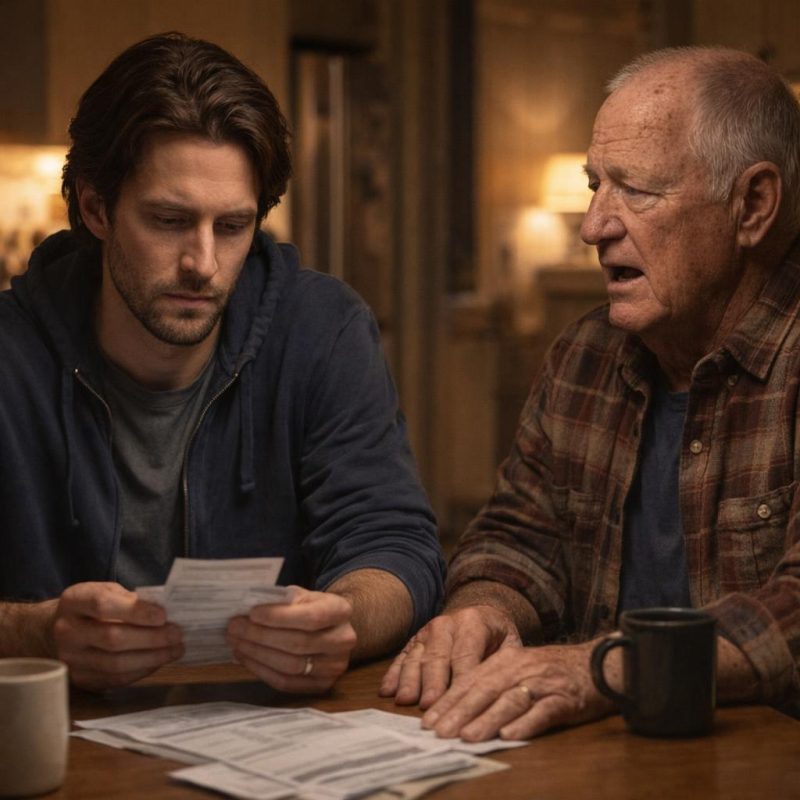 Image by RM AI
The Password
I brought it up the next Friday, casual as I could manage, like it had just occurred to me. I told David he could use my Wi-Fi — that it cost me nothing extra, that my router was practically in his living room anyway, and that there was no reason he should be paying a hundred dollars a month for something I could just share. He pushed back immediately, the way he always did when he thought he was imposing. Said he couldn't do that, said it wasn't right, said he'd figure something out. I told him to stop being stubborn. I wrote the network name and password on a sticky note right there at the kitchen table and slid it across to him. He looked at it for a moment, then folded it carefully and put it in his shirt pocket like it was something worth keeping. The next morning, before I'd even had my first cup of coffee, there was a knock at the door. David was standing on my porch holding a tray of cinnamon rolls, still warm, wrapped in a dish towel that smelled like butter and brown sugar. He shook my hand with both of his, the way older men do when they mean it, and the grip of it felt less like a thank-you and more like something being sealed between us.
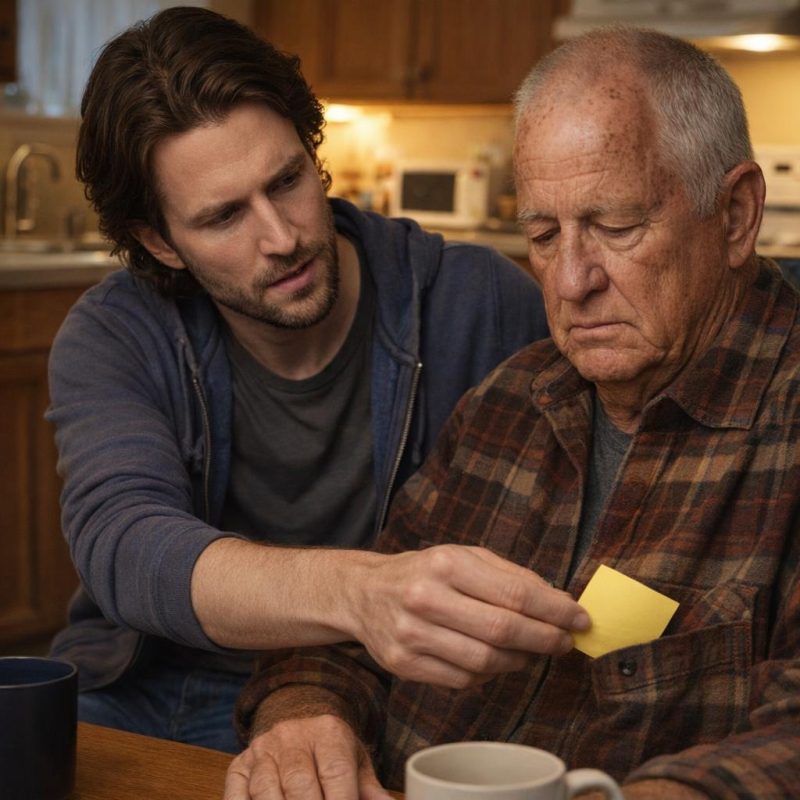 Image by RM AI
Years of Fridays
Three years went by the way good years do — quietly, without you noticing how much ground you've covered until you stop and look back. The Friday nights never broke. Not for bad weather, not for holidays, not for the stretches when work got brutal and I didn't feel like talking to anyone. I'd show up anyway, and David would have something cold or something warm depending on the season, and we'd pick up wherever we'd left off. I called him once from the side of the road when my car made a sound I'd never heard before and I didn't know if I should keep driving. He walked me through it over the phone like he'd been under that hood a hundred times. I vented about clients who moved goalposts and paid late and acted like my time was a courtesy rather than a service, and David would listen and then say something so plainly sensible that I'd wonder why I hadn't thought of it myself. I helped him set up a new tablet when his old one died, showed him how to video call his daughter out west. It wasn't dramatic. It wasn't the kind of friendship that made for good stories. It was just steady — the kind of steady that you stop noticing because it's always there, the way you stop noticing the sound of a house you've lived in long enough.
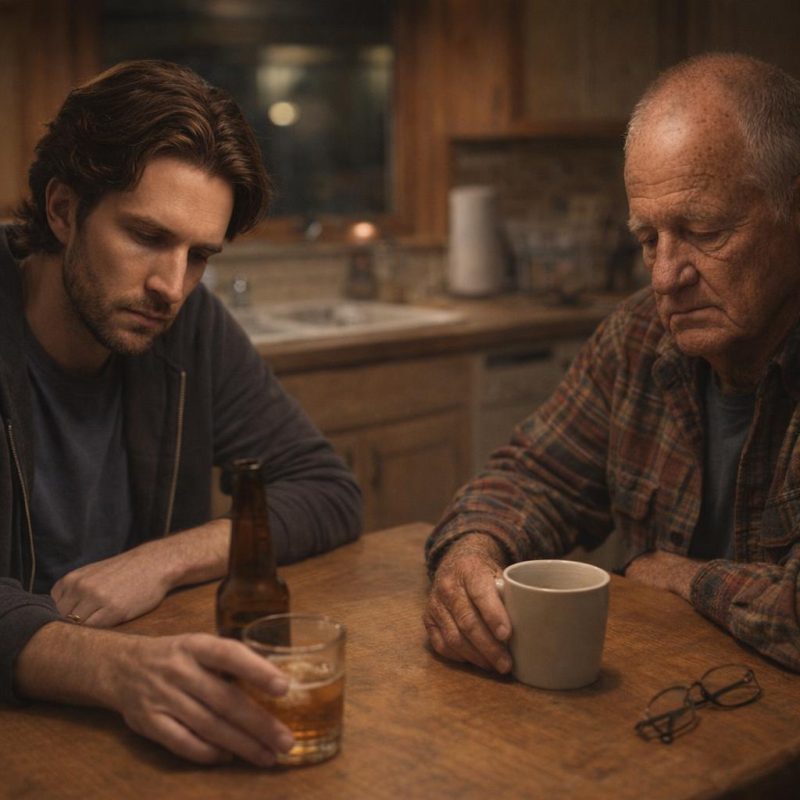 Image by RM AI
Late Night Calls
I have always been a late-night phone call kind of person. Something about the dark makes it easier to say the things that feel too heavy for daylight. My mother — Margaret — was usually awake when I called, or close enough to it, and she'd listen while I talked through whatever was sitting on my chest. Work stress, mostly. The low-grade loneliness of working from home. The occasional spiral about whether I was doing enough with my life. She never tried to fix it, just listened and made small sounds that meant she was still there. What I didn't expect was David. The morning after one of those late calls, he knocked on my door and asked how I was doing — not the polite version, the real version, with his head tilted slightly and his eyes steady on mine. I told him I was fine. He said I didn't sound fine yesterday. I remember standing there in my doorway trying to figure out how he'd known. He said he'd heard me on the porch, that sound carried between the houses. It made sense. I didn't think about it further. What stayed with me was how present he seemed — that he'd ask follow-up questions weeks later about things I'd mentioned in passing, that he'd bring up my mother's health or my sister Emma's job situation in a way that made them feel like they mattered. It felt like being known, and that was not a small thing.
 Image by RM AI
Memorial Days
March was always a quieter month for David. His wife had been born in March, and even years after losing her, the month seemed to settle on him differently. I started bringing flowers around her birthday — nothing elaborate, just whatever looked right at the grocery store — and he'd take them and set them in front of her photograph on the mantle without saying much. We'd sit for a while and he'd tell me something about her, a small story, the kind that didn't have a point except to keep her present in the room. I looked forward to those conversations in a way I couldn't quite explain. My own birthday fell in February, and David always remembered without being reminded — showed up with a cake he'd baked himself, lemon with white frosting, because I'd mentioned once that I didn't like chocolate cake and he'd filed it away. His birthday was in July, and I'd fire up the grill and we'd eat outside until the mosquitoes drove us in. The rhythm of it — the flowers in March, the cake in February, the barbecue in July — started to feel like its own kind of calendar, a way of marking time that had nothing to do with work deadlines or bills. I walked over one afternoon to drop off the flowers and found him standing at the mantle, his back to me, shoulders low, and when he turned around his eyes were wet.
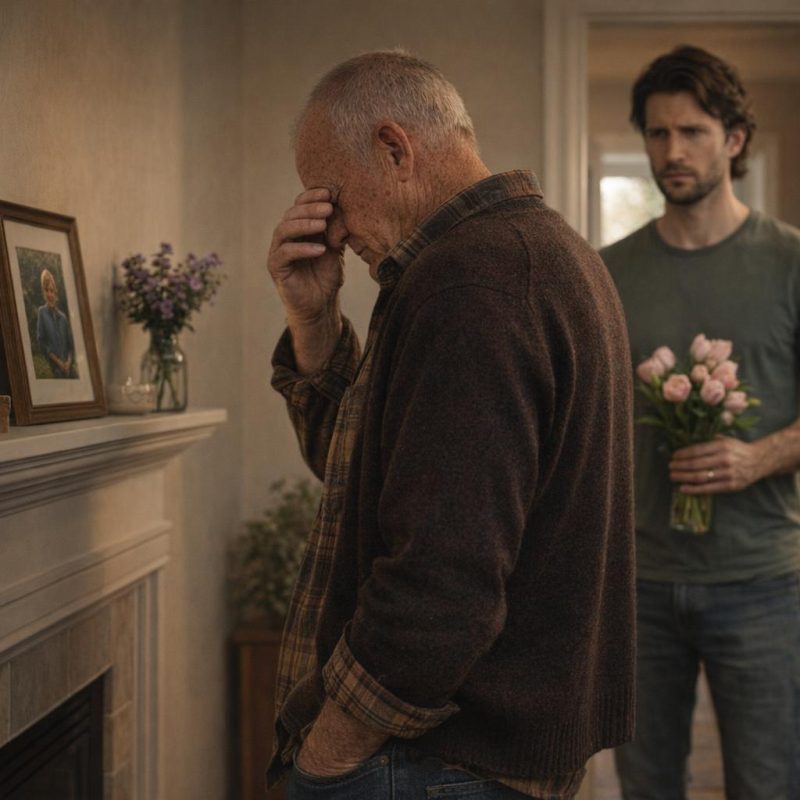 Image by RM AI
Oak and Opinions
David had opinions, and he was not shy about them. Local politics especially — he had strong feelings about the school board, about the way the city handled road maintenance, about a rezoning proposal that had been dragging through committee for two years. I didn't always agree with him. We had a running argument about education funding that never fully resolved, where we'd each make the same points in slightly different arrangements and then concede just enough to keep the peace. National news was trickier territory, and we learned early to approach it carefully, like a table with one short leg. But woodworking was where David was completely in his element, and I never argued with him there because he was simply right. He'd been working with wood since before I was born and he knew things about grain and finish and joinery that I couldn't have gotten from any YouTube tutorial. One Friday he was refinishing a small oak side table he'd built from scratch, and he walked me through the staining process with the patience of someone who had taught before — the direction of the stroke, the way you had to work with the grain and not against it, when to wipe and when to wait. He handed me the cloth and talked me through one pass, then took it back and showed me the difference between what I'd done and what he meant, and the wood came alive under his hands in a way that was almost embarrassing to watch.
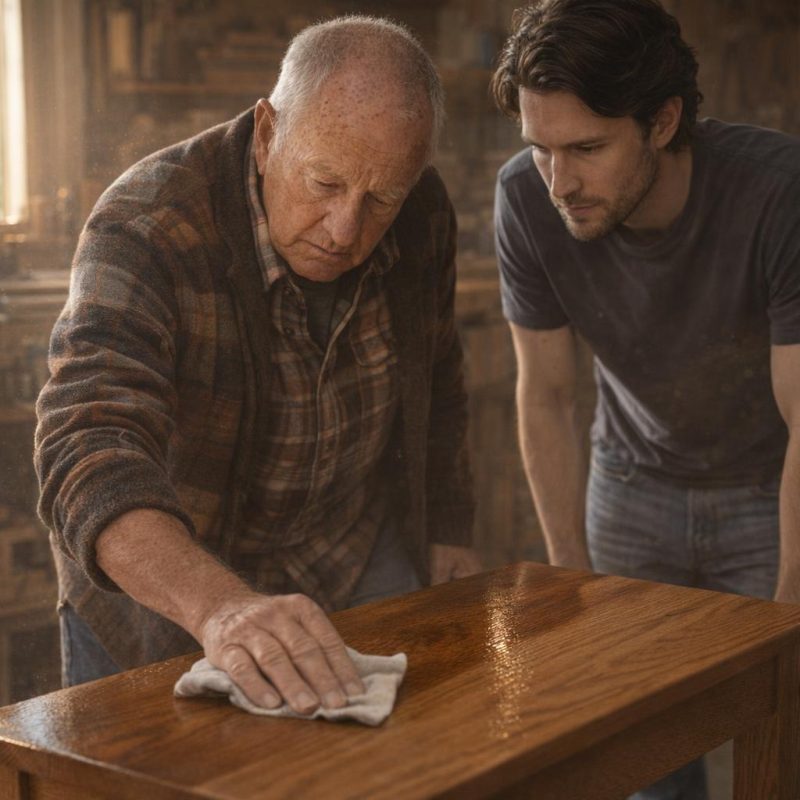 Image by RM AI
No Boundaries
At some point the knocking stopped. I'm not sure exactly when — it just faded out the way formalities do when they stop feeling necessary. David would let himself in if I'd left the door unlocked, which I usually did, and I'd do the same at his place when I was dropping something off or checking in. He knew I took my coffee black with one sugar, and he'd have it ready if I came over in the morning. I knew he took his blood pressure medication with breakfast and his cholesterol pill at night, and I'd pick both up from the pharmacy without being asked when I was already heading that direction. When I traveled for work, he watered my plants and collected my mail and texted me if anything looked off. I did the same for him when his daughter came to visit and he went out of town for a few days. It had stopped being a friendship in the formal sense and become something more like a household that happened to be split across two addresses. One afternoon I came home from a grocery run and David was already on my porch, coffee in hand, waiting. He said he figured I'd be back around that time. I laughed and asked how he knew, and he shrugged and said I was a creature of habit. He wasn't wrong — my days had a rhythm to them that anyone paying attention could have read.
 Image by RM AI
The Package
It was a Wednesday, ordinary in every way. I was deep in a project, headphones on, the kind of focus where you lose track of time and forget to eat lunch. I heard a knock at the door mid-afternoon and it was David, just stopping by to return a socket wrench he'd borrowed. We talked for a few minutes on the porch, nothing important, and then he mentioned almost in passing that my package had arrived. I hadn't heard the delivery truck. I hadn't seen any notification on my phone. I hadn't even remembered I was expecting something until he said it. I asked him how he knew, and he nodded toward his front window and said he'd seen the truck pull up while he was having his afternoon coffee. His window faced the street, and he spent a lot of afternoons in that chair — it was a reasonable enough explanation. I went around to the front and sure enough, there was a box sitting by the door. I brought it inside and set it on the counter and went back to my project. But somewhere in the back of my mind, in the part that wasn't focused on the work, there was a small quiet thing I couldn't quite name — not suspicion, not worry, just the faint texture of a moment that had felt, for just a second, slightly out of place.
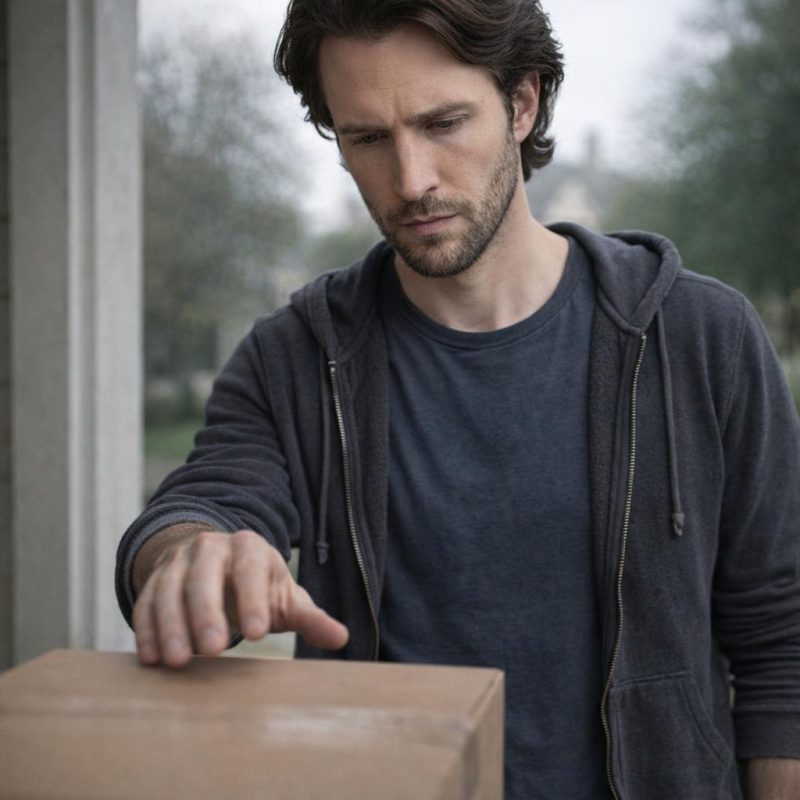 Image by RM AI
Porch Conversations
A few days after the package thing, Emma called while I was sitting out on the front porch. It was one of those late-afternoon calls that stretches longer than you expect — she was venting about a situation with her landlord, and I was half-watching a squirrel work its way across the power line while I listened. We talked for maybe forty minutes. David's truck was in his driveway the whole time, but I didn't see him out front. I figured he was inside or in his workshop around back. That evening he came over to return a casserole dish Margaret had sent with him the week before, and we ended up talking on my porch steps the way we usually did. At some point he mentioned that the landlord situation sounded stressful, and that Emma was right to push back. I nodded along for a second before it caught up with me. I hadn't told David about Emma's call. I was almost certain of it. I ran back through the afternoon in my head, trying to place him — in the yard, near the fence, anywhere close enough to hear. Then David said he'd been pulling weeds along the side fence most of the afternoon, and that settled it, more or less. But I kept turning it over. He'd used almost the exact words Emma said.
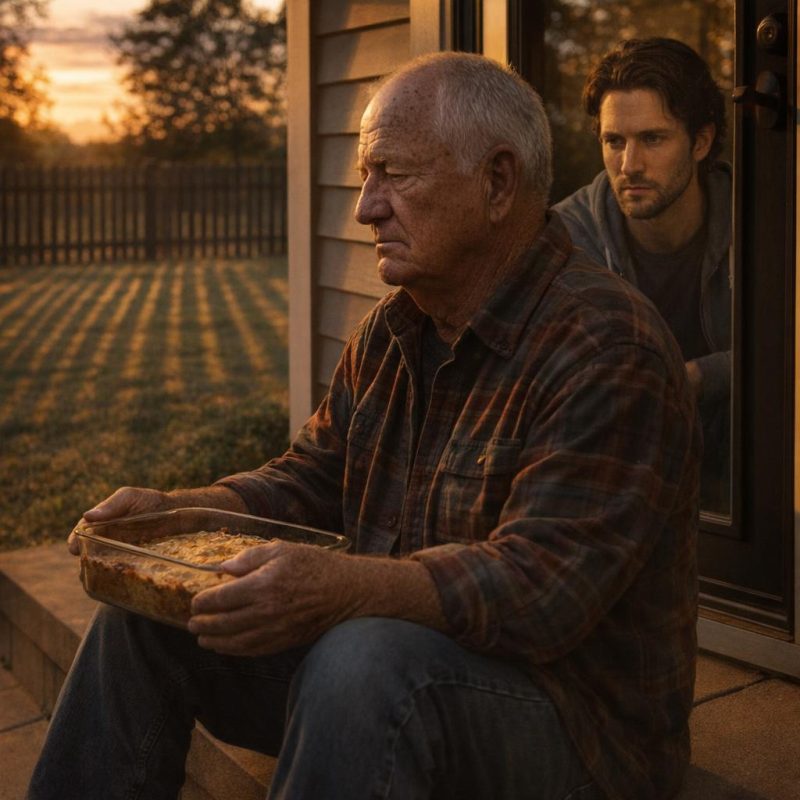 Image by RM AI
Sharp Hearing
I spent the next morning turning it over while I made coffee, the way you do when something small won't quite let go. Our cul-de-sac is genuinely quiet — no through traffic, no kids running around, just the occasional dog walker and the sound of whoever's mowing their lawn. On a calm afternoon, sound carries in a way that still surprises me sometimes. I've heard my other neighbor's television through two walls of siding. I've had full conversations drift back to me from across the street. And David had mentioned more than once that his hearing was still sharp — better than most men his age, he'd say, with a kind of quiet pride. He spent hours out in that yard. He was always trimming something, pulling something, fixing something along the fence line. It wasn't hard to picture him crouched near the side gate, close enough to catch the shape of a conversation drifting off my porch. I'd probably said Emma's name at some point. I'd probably repeated something she said while I was processing it out loud, the way I do. By the time I finished my second cup, the whole thing had smoothed itself out into something ordinary. The neighborhood was just quiet, David's ears were just good, and I had probably talked louder than I thought.
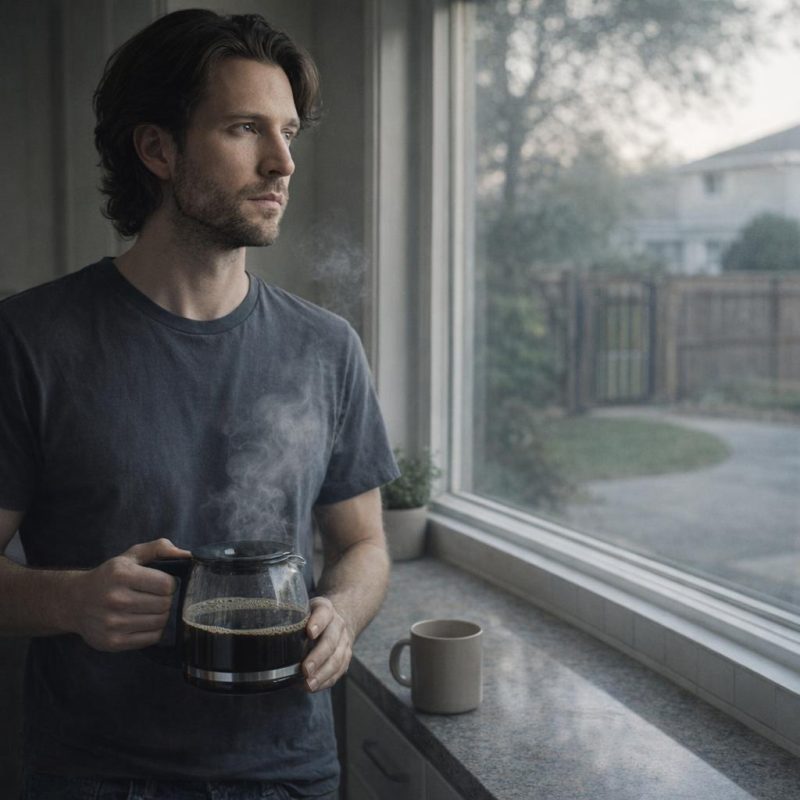 Image by RM AI
The Quiet Street
What I kept coming back to, honestly, was how rare it was. Most people in my life — family included — had a way of half-listening. You'd mention something important and two weeks later they'd have no memory of it. Emma was good, but she had her own life pulling at her attention. My mother tried, but she'd get tangled up in the worry and miss the actual details. David wasn't like that. He'd ask about a client project I'd mentioned in passing three days earlier, and he'd remember the name of the company, the thing that was frustrating me about it, the deadline I was anxious about. He'd circle back to things I'd said and ask how they turned out. It felt like being genuinely seen, the way you feel when someone proves they were actually listening. I remember thinking that was the thing about a long friendship — it built up this texture of small remembered details that made you feel less alone. He'd ask about my work the way a good father might, with real interest and no agenda. I'd grown up wanting that kind of steady attention, and somewhere along the way David had become the person who gave it to me. Sitting with that thought on a quiet Tuesday, it just felt like something to be grateful for.
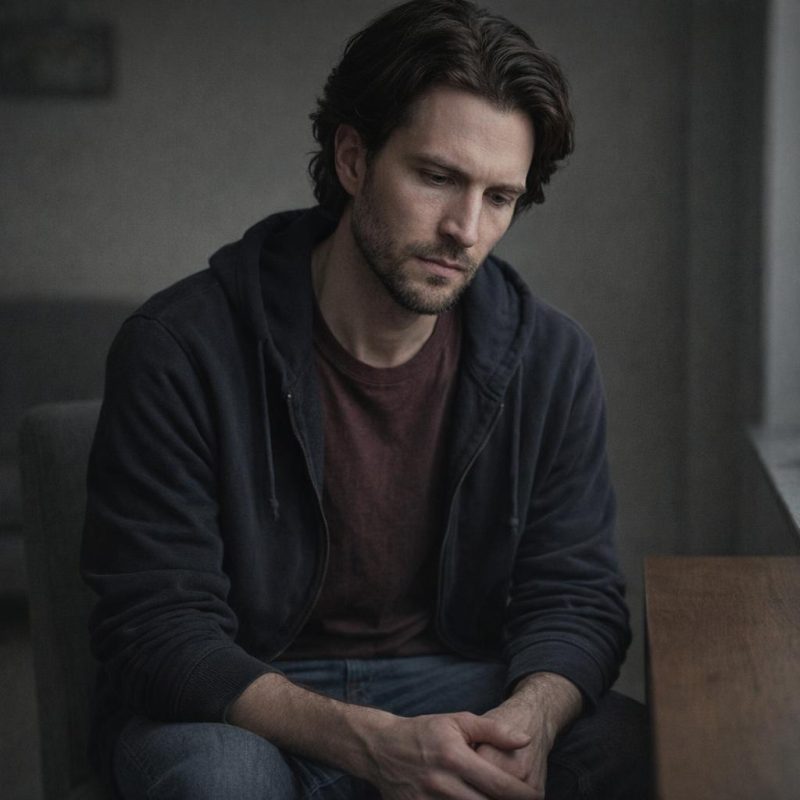 Image by RM AI
Small Purchases
We were standing in his driveway one afternoon, talking about nothing in particular — the weather, a pothole on the main road that had been there since spring — when he asked how the book was coming along. I smiled and started to answer before I caught myself. I hadn't mentioned any book. I was almost sure of it. I'd ordered it online maybe a week earlier, a thick paperback on network architecture that I'd been meaning to read for months, and it had arrived in one of those padded envelopes that don't look like much. I hadn't brought it up in conversation because it wasn't the kind of thing that came up naturally. I asked him how he knew about it, and he said he'd seen the envelope on my porch when he was walking past. That made sense, I supposed — he walked that route most mornings. Then a few minutes later he mentioned the Thai place I'd tried the previous weekend, said he'd heard it was good and asked if I'd recommend it. I hadn't told him about that either. I tried to remember if I'd mentioned it to someone else within earshot, or posted something somewhere he might have seen. I couldn't place it. Each thing on its own was nothing. But standing there in his driveway, I felt the faint edge of something I couldn't quite name — and then he asked me how I'd liked the book.
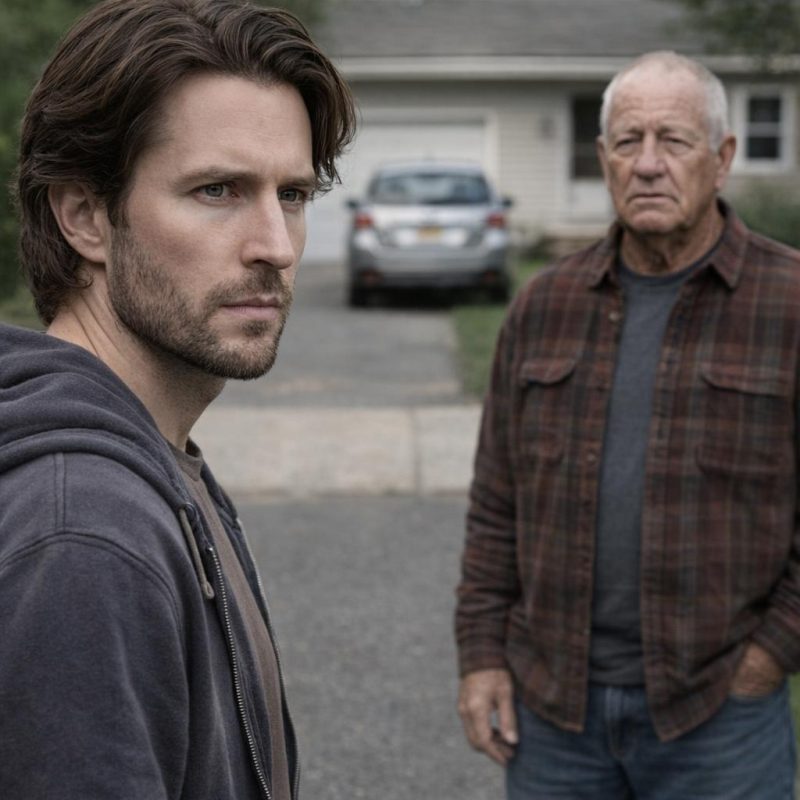 Image by RM AI
The Pattern Emerges
I started keeping a loose mental list, the way you do when you're not sure if you're noticing something real or just looking for a pattern that isn't there. There was the Emma conversation. The book. The Thai restaurant. Then one afternoon David mentioned a client by name — not a company, a person's name — and I went quiet for a second because I was almost certain I'd only written that name in an email. I hadn't said it out loud, not to David, not to anyone nearby. I tried to think back. Maybe I'd been on a call with the window open. Maybe I'd said the name while I was reading the email and didn't realize it. A few days after that, he asked how my dentist appointment had gone, and I hadn't mentioned scheduling one. I'd booked it online, gotten a confirmation email, put it in my calendar. I stood there trying to reconstruct every conversation we'd had in the past two weeks, looking for the moment I could have let that slip. I couldn't find it. None of these things were big enough to say anything about on their own. But they were starting to stack up in a way that sat differently than before, a low-grade unease I couldn't quite shake loose, even when I told myself I was probably just forgetting things.
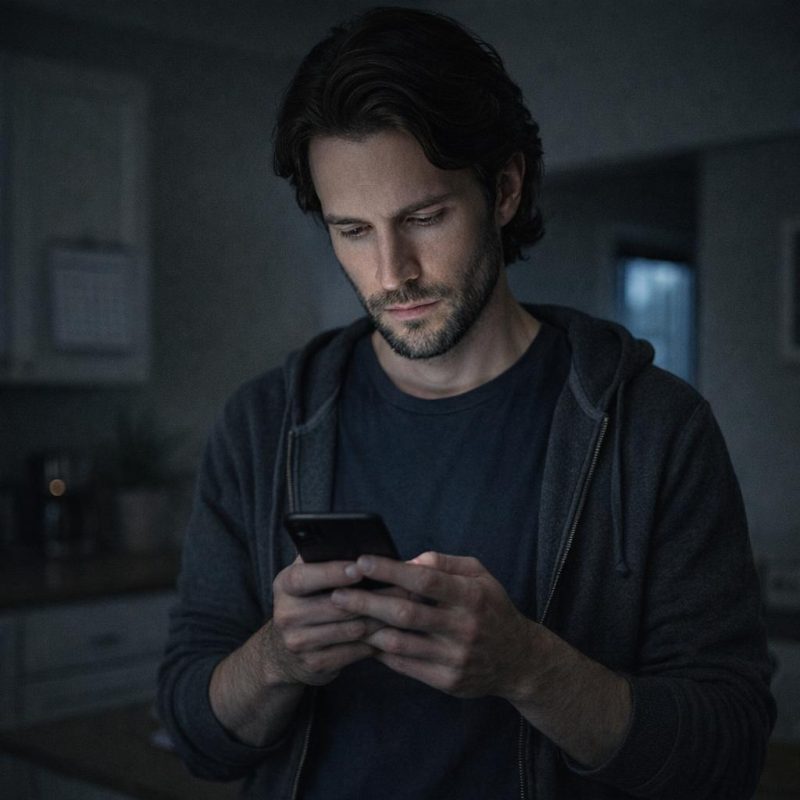 Image by RM AI
Spending Habits
It shifted a little when he started in on my spending. We were having coffee on his back porch — his idea, which was normal enough — and he brought up the equipment I'd bought the month before. A new monitor and a mechanical keyboard, nothing extravagant, just things I'd been putting off for a while. He said something about being careful, that it added up faster than you thought, and I nodded because that's what you do. But then he mentioned a number. Not a round number, not an estimate — a number that was close enough to what I'd actually spent that it stopped me mid-sip. I hadn't told him what I'd paid. I hadn't told anyone. I'd bought everything online, gotten the receipts by email, and that was the end of it. I asked, as casually as I could manage, how he'd come up with that figure, and he waved it off — said he'd priced out similar gear himself once, knew roughly what things cost. It was a reasonable answer. It probably was roughly accurate just from knowing the market. I told myself that. But the defensiveness I felt didn't go away when the conversation moved on. It sat in my chest for the rest of the afternoon, that particular sting of feeling watched without being able to say why.
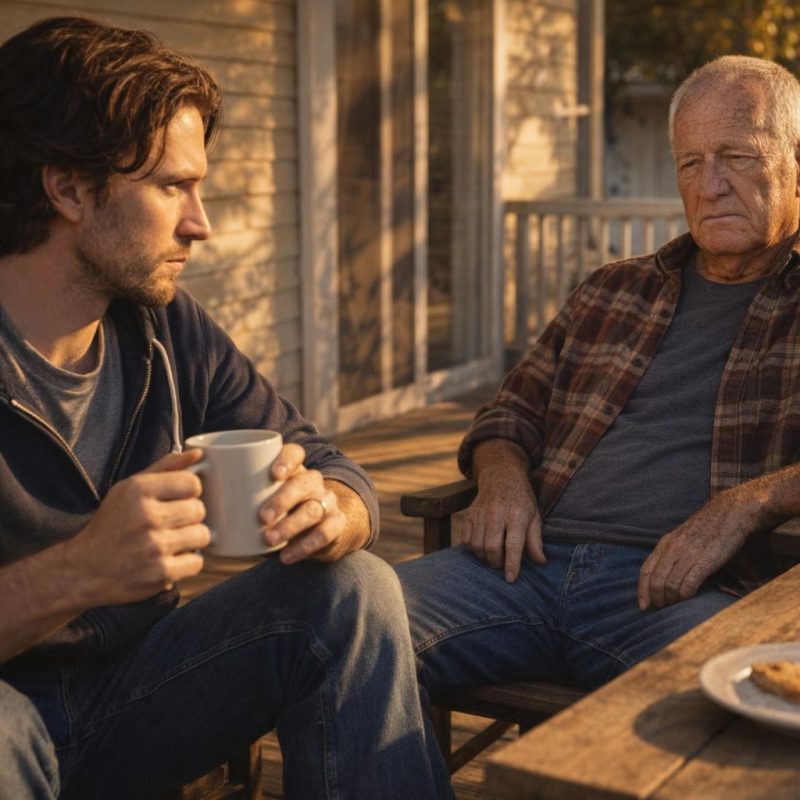 Image by RM AI
The Dating Comment
I'd been seeing someone for about three weeks — nothing serious yet, just a few dinners, the kind of early thing you don't announce because you don't know what it is yet. I hadn't mentioned it to David. I was pretty deliberate about that, actually, because I knew he'd have opinions and I wasn't ready for them. So when he brought her up one evening while we were out front, I felt the ground shift a little under me. He asked how things were going with her, casual as anything, like it was a topic we'd already opened. I said something vague, trying to figure out how he knew, and he said he'd spotted us together at the coffee shop on Meridian. That was plausible — it was a public place, he drove that road sometimes. I was ready to let it go at that. But then he used her name — just dropped it into the sentence, casual as anything, like of course he already knew it.
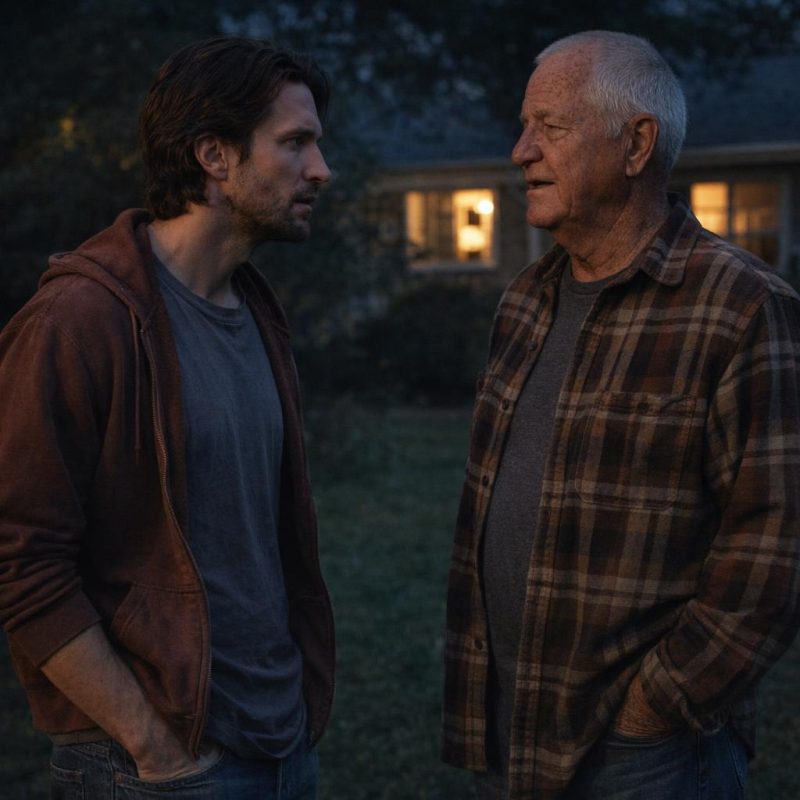 Image by RM AI
Too Specific
That night I sat at my desk and just let myself think. I went back through the past few weeks the way you replay a conversation after it goes wrong, looking for the moment you missed. The client name I'd only written in an email. The dentist appointment booked through an online portal. The spending figures that were too close. Emma's words repeated back almost verbatim. Her name, dropped casually into a sentence. I kept trying to build innocent explanations — sharp ears, good memory, lucky guesses, a neighborhood where nothing stays private for long. Some of them held up individually. But I'd been stacking them up for weeks now, and the pile didn't feel like coincidence anymore. It felt like something else, something I didn't have a word for yet. I pulled up my email and started scrolling, not sure what I was looking for. I found the thread with the client whose name David had used. I found the dentist confirmation. And then I noticed something that made me stop scrolling — two emails David had referenced in conversation, both timestamped hours before I'd mentioned anything to anyone.
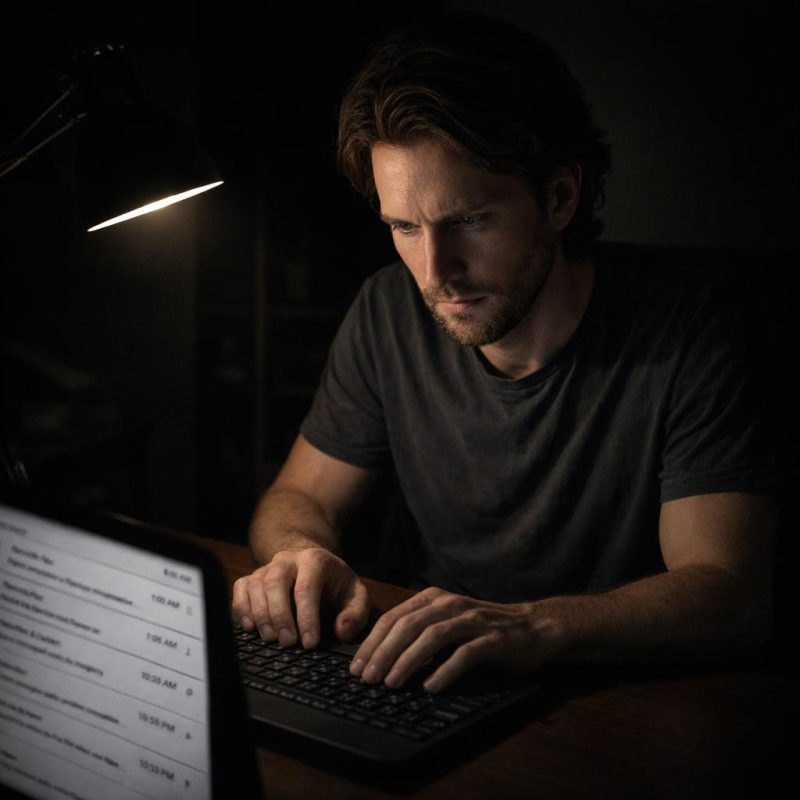 Image by RM AI
Curtains Drawn
I'm not sure exactly when I started closing the curtains during the day, but at some point it became a habit I didn't question. I told myself it was the glare on the monitor. That was true enough — the afternoon sun hit my desk at a bad angle. But I also started working in the back office more, the room that faced the yard instead of the street, and the glare wasn't the reason for that. I stopped sitting on the front porch with my coffee in the mornings. I stopped leaving the front windows cracked when the weather was nice. The house felt better closed off, quieter somehow, and I couldn't explain that to anyone without sounding like I was losing it. I kept telling myself I was being paranoid. I had a bad feeling I couldn't name, and no evidence to hang it on, just a low-grade discomfort that had settled into my daily routine like a change in barometric pressure. I'd catch myself mid-thought and think: you're being ridiculous. And then I'd go back to the back office anyway. One evening I sat down to work and reached for my laptop — and stopped to check the front window first before I opened it.
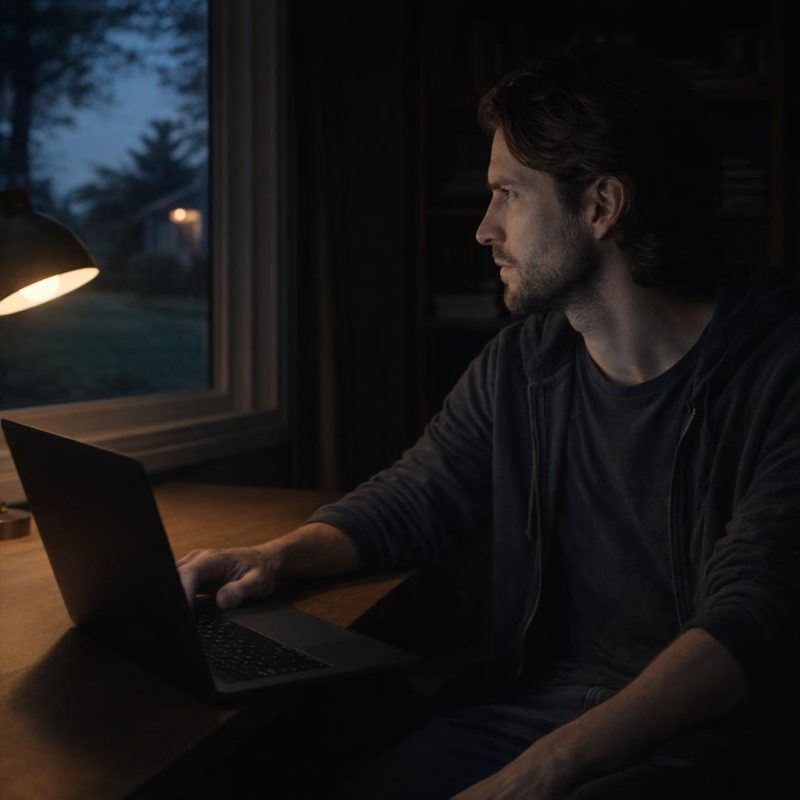 Image by RM AI
The Prickle
It happened on a Tuesday afternoon. I was at my desk in the back office, headphones on, half-focused on a spreadsheet, when I caught movement in my peripheral vision. David's shadow crossed the narrow gap in the side window curtain — just a shape, just a silhouette moving along the fence line. And something happened at the base of my skull. A prickle. Immediate and physical, like the feeling you get when you hear a sound in a dark house and your body responds before your brain does. I pulled my headphones off and sat very still. A few seconds later he appeared at the front, and I could see him through the thin gap in the curtain — flannel shirt, work boots, raising one hand in a wave toward my window. The friendly gesture of a neighbor who'd known me for twelve years. I lifted my hand and waved back, a small automatic motion, but I didn't get up. I didn't go to the door. I just sat there, watching the gap, until his shadow moved back across the fence and disappeared. My shoulders dropped about an inch when it did. I hadn't noticed I'd been holding them up. The spreadsheet was still open on my screen, but I didn't go back to it. I just sat in the quiet, with that low animal awareness that something nearby was paying attention.
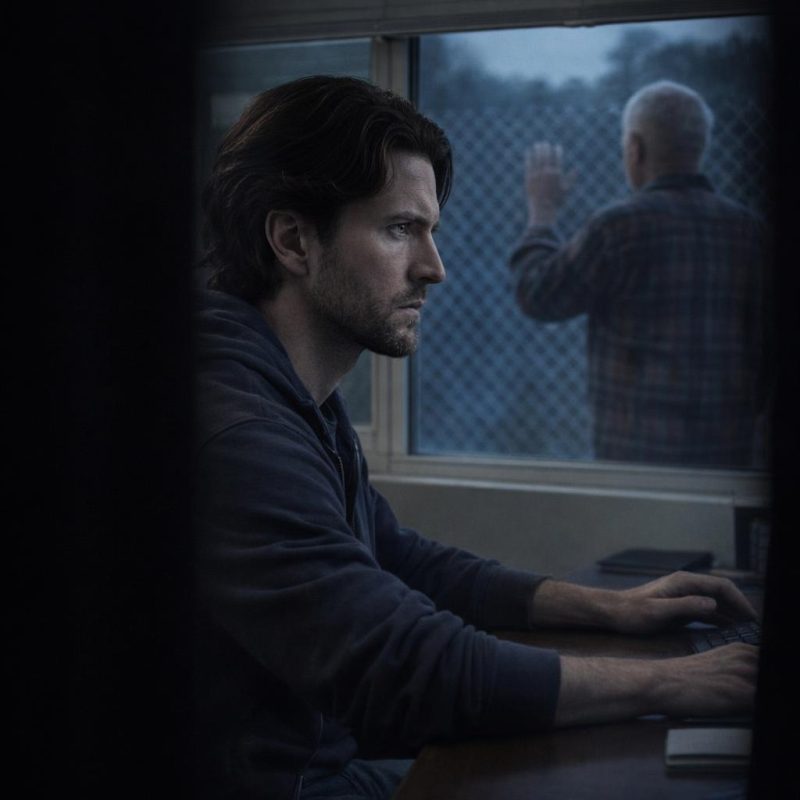 Image by RM AI
Friday Decline
Friday came around the way it always did, and I sat on the edge of my bed at six-thirty in the evening and did not move toward the door. David texted at seven: *You coming over? Got the good stuff out.* I stared at it for a minute, then typed back that I had a deadline, a client thing, couldn't get away. He replied almost immediately — *No worries, another time* — and that was it. I felt the relief first, clean and immediate. Then the guilt came in behind it. We'd done Friday nights for years. Bourbon on his porch, the kind of conversation that goes nowhere in particular and lasts two hours anyway. It had been one of the steadiest things in my life, and I was lying my way out of it because of a feeling I couldn't put into words. I stood at the back window and watched the light on his porch come on in the dark. I could see the outline of his chair, the small table where he kept the glasses. He was out there. Probably alone. And I was in here, in the dark, holding my phone. I didn't know what I was protecting myself from. I just knew I wasn't ready to sit across from him and pretend everything was the same as it had always been. The guilt of that sat with me long after his porch light finally went out.
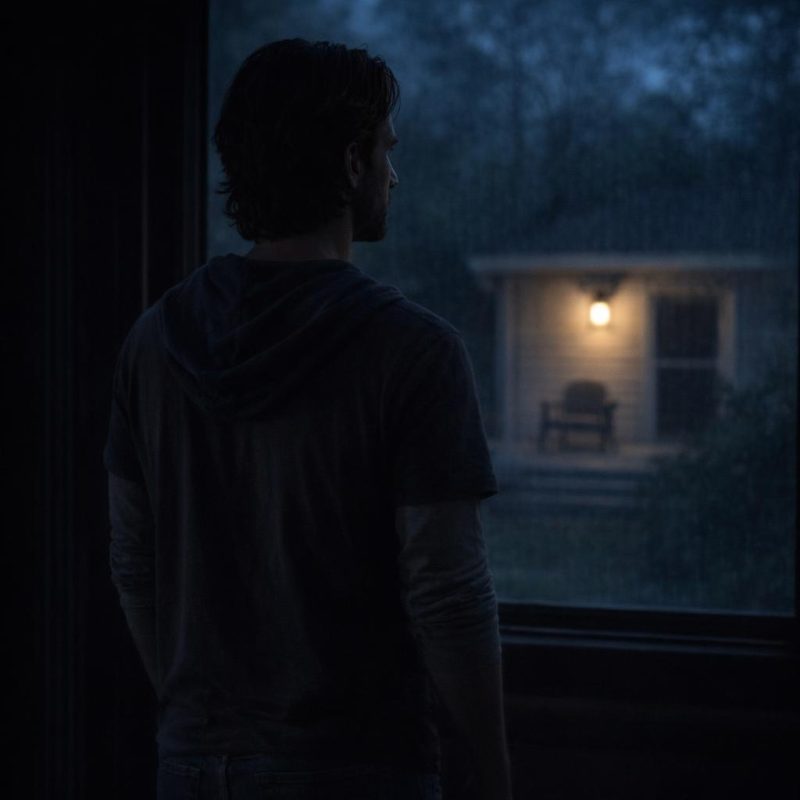 Image by RM AI
Replaying Words
I started lying awake doing the thing where you replay conversations, except instead of cringing at something you said, you're trying to figure out what the other person knew and when they knew it. I kept landing on a specific memory — maybe six weeks back, a morning when David had knocked to drop off some tomatoes from his garden. We'd talked for a few minutes on the porch, and at some point he'd asked how my mother was doing, whether her knee was giving her trouble again. I remembered thinking it was a kind question. I remembered answering it. What I couldn't remember was ever telling him about her knee. She'd mentioned it to me on the phone, and I'd made a note to call her doctor, but I didn't think I'd brought it up with David. I lay there in the dark trying to reconstruct the timeline. Maybe I had mentioned it. Maybe weeks earlier, in passing, and I'd just forgotten. That was possible. Memory is unreliable, especially for small talk. I tried to hold onto that explanation. But the more I turned it over, the less certain I felt about what I'd actually said versus what he'd somehow already known. I couldn't prove anything. I couldn't even prove I hadn't told him myself. But the question kept circling back — he'd asked about her knee before I'd said a word about the appointment.
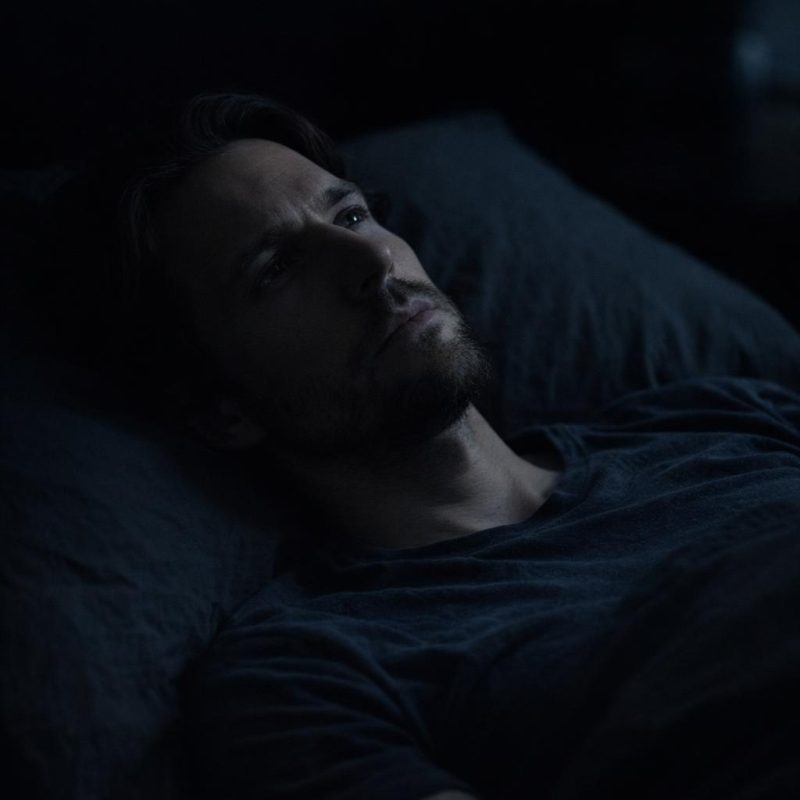 Image by RM AI
Polite Distance
We ran into each other at the mailbox on a Wednesday, the way neighbors do, and I gave him the version of me that was fine. Short answers, a nod, a half-smile. He asked how the work project was going and I said good, getting there, you know how it is. He asked if I'd been sleeping okay and I said sure, just busy. There was a pause that lasted a beat too long, and he looked at me with those kind crinkled eyes and said, "Everything alright, son?" That word — *son* — landed somewhere uncomfortable. I told him I was just swamped, nothing to worry about, and I pulled my mail out of the box and said I had a call to get back to. He nodded slowly, and I could see something shift in his expression — not quite hurt, but close to it, the look of someone who notices a door closing and doesn't understand why. I walked back to my house and didn't look back. Inside, I stood in the hallway for a moment with the mail in my hand. Twelve years of Friday nights and borrowed tools and conversations that ran long into the evening, and now I was giving him the same polite nothing I'd give a stranger at a bus stop. He was still standing there, probably, on the other side of my front door. The loneliness of that — of losing someone who was still right there — settled into the room around me.
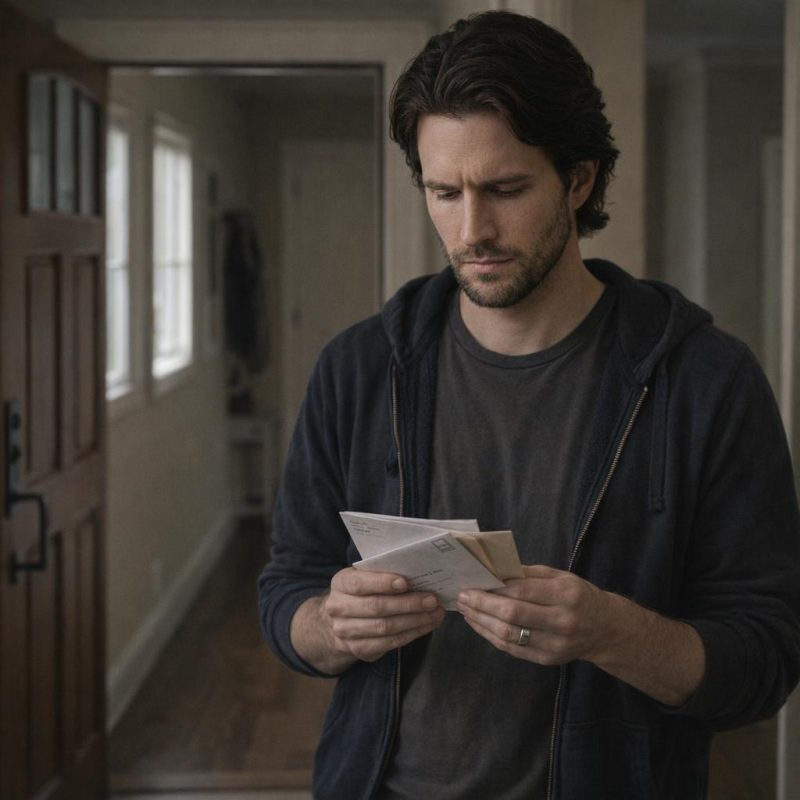 Image by RM AI
The Withdrawal
The knocks started coming more often. Not aggressive, nothing like that — just more frequent. Tuesday morning, Thursday afternoon, Saturday around noon. Sometimes he'd leave a folded note tucked into the door frame: *Thinking of you. Let me know if you need anything.* The texts picked up too. A check-in on Monday, a photo of something he'd grilled on Wednesday, a message on Friday that just said *Miss our evenings. Hope you're okay.* I read them all and answered maybe one in three, keeping it brief. I told myself I was managing the distance carefully, that I wasn't being cruel, just cautious. But the attention had a weight to it that was hard to describe. It wasn't threatening. It was just — a lot. More than it used to be. I'd catch myself tracking his movements through the gap in the curtain, watching to see if he was in the yard, if his truck was in the driveway. One afternoon I was in the kitchen when I heard his footsteps on the porch — that particular sound of his work boots on the boards — and I stood completely still, back against the counter, and waited. Three knocks. A pause. Then nothing. I heard him walk back down the steps. I stayed where I was until the sound of his boots faded, and I did not go to the door.
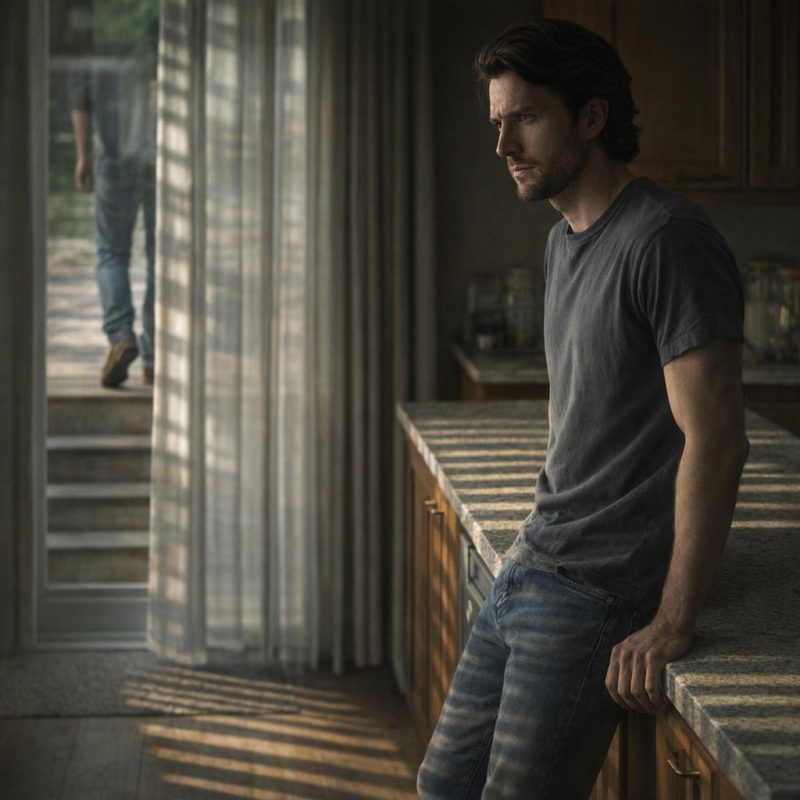 Image by RM AI
The Guilt
There were moments — usually late at night, when the whole thing felt most absurd — where I'd sit with the thought that I might just be a bad person. Not paranoid. Not cautious. Just cruel. David was in his late sixties. He lived alone. His wife had been gone for years, and as far as I could tell, I was the closest thing he had to regular company. And here I was, going dark on him because of a handful of coincidences I couldn't even fully reconstruct. I thought about all the years he'd been there — the time my car wouldn't start and he drove me to the shop without being asked, the winter I had the flu and he left soup on the porch, the way he'd always remembered things I'd mentioned in passing. That last one snagged on something, but I pushed past it. I tried to imagine how it looked from his side: a friend of twelve years suddenly going cold, not returning calls, not answering the door. No explanation. No fight. Just absence. That was a particular kind of cruelty, the kind that doesn't announce itself. I thought about texting him an apology. I drafted it twice and deleted it both times. The instinct to stay away hadn't gone anywhere. But neither had the terrible possibility that I was pulling away from someone who had done absolutely nothing wrong.
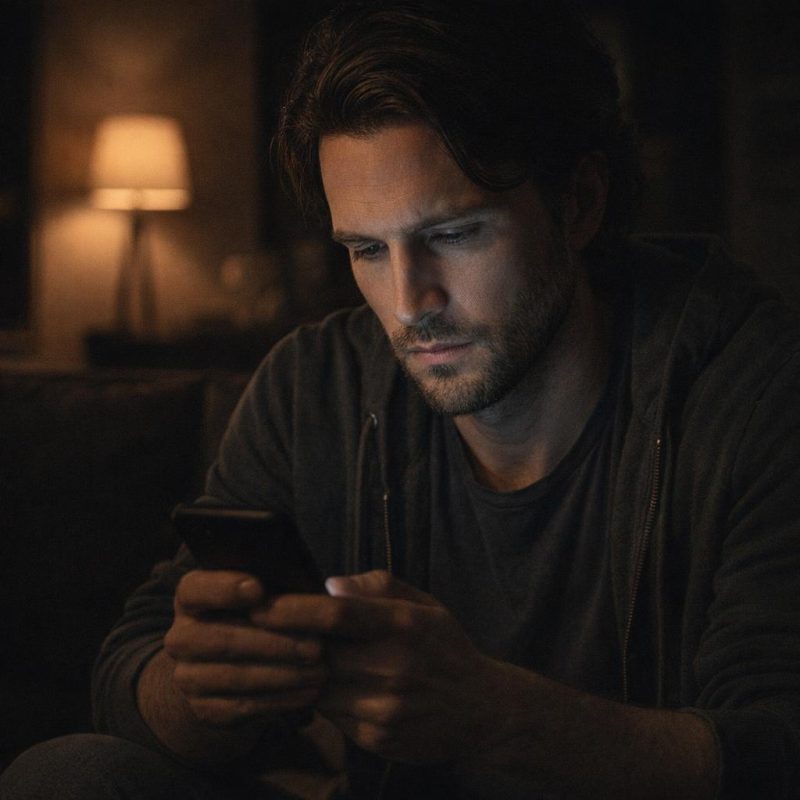 Image by RM AI
Loneliness Theory
I built myself a theory, the way you do when the alternative is sitting with something you can't resolve. David was a widower. He was older, more isolated than he let on, and I was — had been — his anchor to something resembling a normal social life. Friday nights, borrowed tools, someone to wave at across the yard. When that started slipping away, maybe he'd overcorrected. Maybe the questions that felt too specific were just his way of staying connected, of proving he'd been listening, that he mattered to me. Grief does strange things to people. Loneliness does stranger things. I thought about how it might feel to be in your late sixties with an empty house and one real friend, and to feel that friend pulling back without explanation. You'd probably reach out more. You'd probably pay closer attention. You'd probably ask about the knee, about the client, about the sister — because those details were the thread, and you were terrified of losing the thread. I turned it over for a long time, and the more I looked at it from that angle, the more I started to feel like the problem in the story was me. It wasn't a comfortable feeling. But it was almost easier than the alternative — and I held onto it like it was something solid.
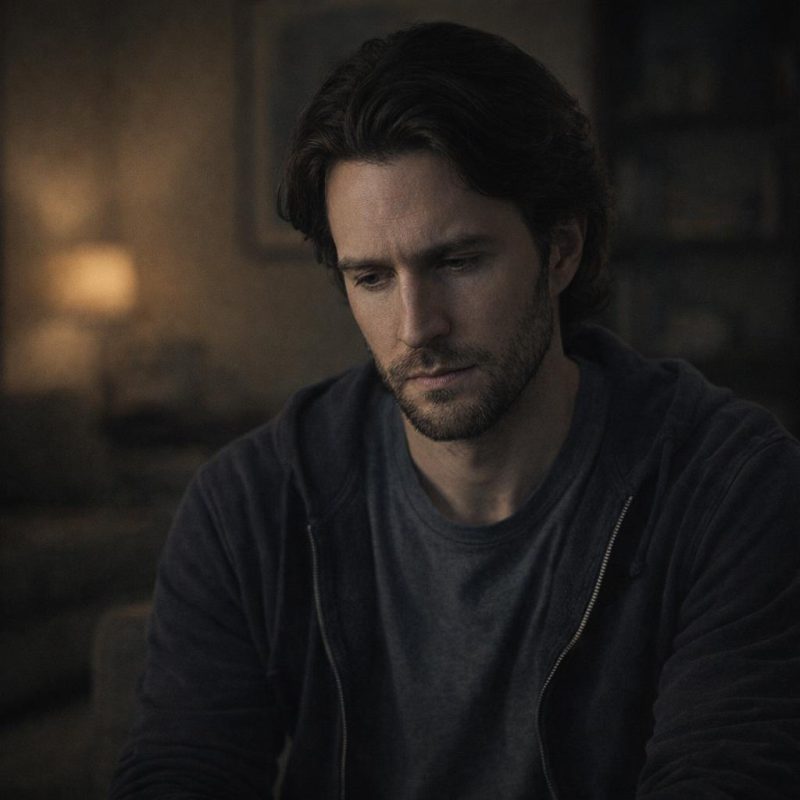 Image by RM AI
The Angle
I'd been telling myself the loneliness theory all week, and it was almost working. Then David came out to the driveway while I was checking my tire pressure — just wandered over the way he always did, hands in his flannel pockets, that easy smile. We talked about nothing for a few minutes. The weather. His gutters. I kept it light, kept it easy, the way I had been doing. I have a bird feeder — a little ceramic thing my mother gave me years ago, hanging in the corner near the window above the sink. I'd never mentioned it to David. Not once. My kitchen window doesn't face his property. It doesn't face the street. It faces the side yard, and the only way you'd see that feeder is if you were standing inside my house, or pressed up against the glass from outside. David kept talking, easy as anything, and then he mentioned the bird feeder — how it was a nice touch, how the cardinals had been coming around.
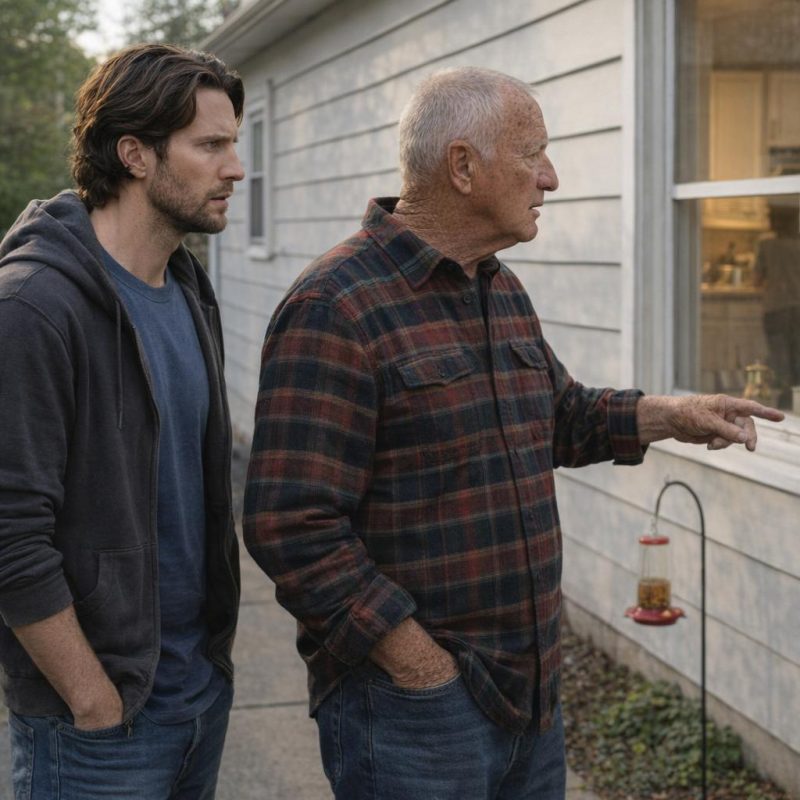 Image by RM AI
The Test
I gave myself two days to think it through before I did anything. Then I decided to run a test — nothing dramatic, just a controlled silence. There were two things I deliberately kept out of every conversation: a new project I'd picked up from a client in Portland, and a situation with my sister Emma that had been weighing on me all week. I didn't mention either one. Not to David, not in any shared space, not anywhere he could have overheard. I kept our driveway talk surface-level — weather, sports scores, whether the hardware store was open on Sundays. Friendly. Normal. I was careful about it. Three days in, David leaned against his truck and asked how the Portland project was going. He used the client's industry. He got close enough to the specifics that my stomach turned over. Then, almost as an afterthought, he asked if things had smoothed out with my sister. He didn't say Emma's name. He didn't have to. I stood there with a completely neutral expression and said things were fine, just fine, and I excused myself. Inside, I sat at the kitchen table and stared at the wall. I hadn't told him. I hadn't told anyone who would have told him. But he knew.
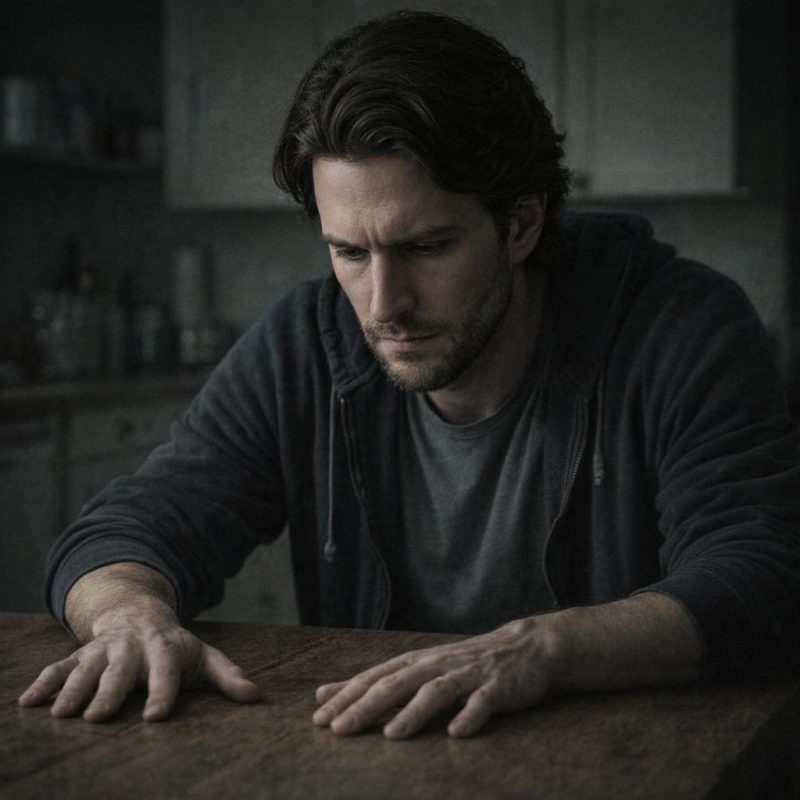 Image by RM AI
Looking for Explanations
I sat down with a notepad — actual paper, which felt absurd — and started writing out every instance I could remember. The knee surgery comment. The client deadline. The bird feeder. The Portland project. Emma. I filled half a page before I stopped counting. Then I started working through explanations, the way you do when you're desperate to find one that fits. Maybe someone was talking to him — but who? Emma didn't know David. My mother had met him twice. Maybe he was reading my mail, but most of what he knew wasn't the kind of thing that shows up in an envelope. Maybe my phone was compromised somehow, but I'd had the same number for years and the things he knew weren't always things I'd texted or called about. I went through every scenario I could construct. Overheard conversations through an open window. A mutual acquaintance I wasn't aware of. Some kind of lucky guessing from context clues. I tried each one on and none of them held. The details were too specific, too consistent, too current. You can explain away one coincidence. You can stretch to cover two. But I was looking at a list that went on and on, and every innocent explanation I reached for had a hole in it I couldn't patch, and eventually I ran out of explanations that made any sense at all.
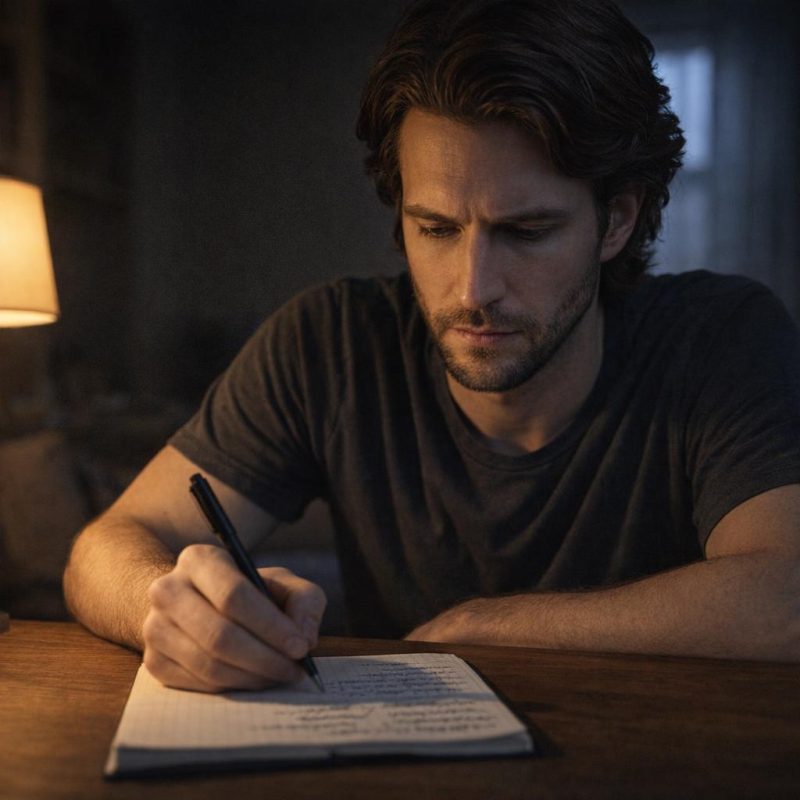 Image by RM AI
Checking Locks
I started checking the locks before bed. Not once — three times, sometimes four. Front door, back door, the sliding glass panel in the dining room that had always felt a little flimsy. I'd test the handle, walk away, come back and test it again. I told myself it was just good habit, the kind of thing you should be doing anyway. Then I started on the windows. I'd go room to room pressing the latches, checking the seals, looking for anything that seemed disturbed — a smudge on the sill, a gap in the frame, anything that didn't look the way I'd left it. I never found anything. The house was exactly as I'd left it every single time. No signs of entry. No evidence of anything. Just my own hands moving over the same latches in the same order, night after night, because I couldn't stop. I knew how it looked. I knew what someone watching from outside would think if they saw me moving through the rooms with a flashlight at eleven o'clock, checking things I'd already checked. I felt foolish every time. But the feeling that something had gotten in — not through a door, not through a window, but somehow — wouldn't leave me alone, and the checking was the only thing that came close to quieting it, even for a little while.
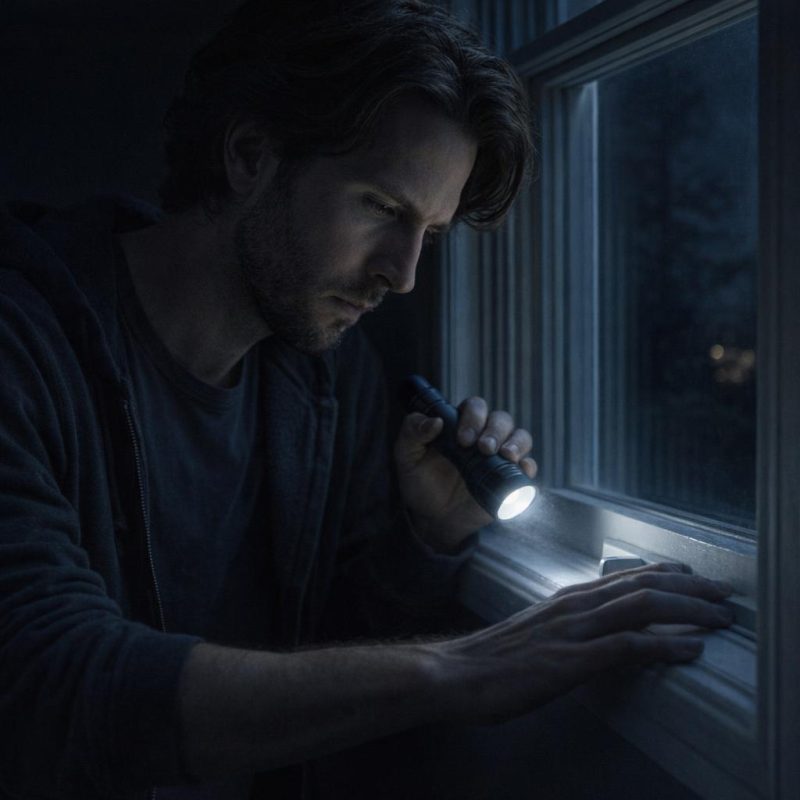 Image by RM AI
Overreacting
About a week into the lock-checking routine, I sat on the edge of my bed and had a different kind of thought: what if I was losing it? Not dramatically, not in a way anyone would notice, but quietly — the way stress accumulates when you work alone and don't get out enough and spend too much time inside your own head. David was in his late sixties. He talked too much. He asked too many questions. He was lonely and a little socially clumsy and I had built an entire architecture of suspicion around a man who had been nothing but kind to me for twelve years. The bird feeder — maybe he'd seen it through the window when I'd had the back door open. The Portland project — maybe I'd mentioned the industry in passing and forgotten. Emma — I talked about her enough that he could have pieced something together. I sat there and genuinely tried to believe that. And for about twenty minutes, I almost did. Then I thought about the notepad, the list, the half-page of specifics that didn't have a clean explanation, and the doubt came back. That was the worst part — not the fear, not the suspicion, but the cycling. Not knowing whether to trust what I was seeing or trust that I was the problem, and having no way to tell the difference.
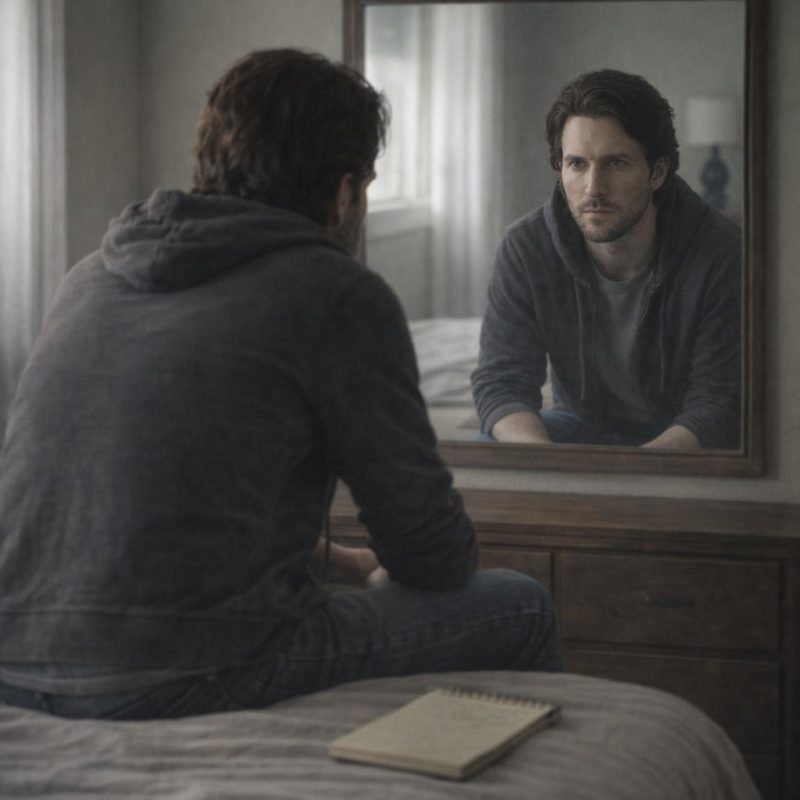 Image by RM AI
The Amazon Purchase
I'd been going back and forth for weeks, and I was exhausted by it. Then, on a Tuesday night around midnight, I ordered a replacement cable for my monitor — a specific brand, a specific model, the kind of thing you look up because your current one is starting to flicker and you want an exact match. I ordered it on my laptop, alone, in my home office with the door closed. No one was on the phone with me. I hadn't texted anyone about it. The package hadn't arrived yet. The next afternoon, David was out front when I pulled in, and we exchanged the usual few words. He asked how the home office setup was holding up. I said fine. I kept my face still and my voice even. And then he named it — the brand, the type, close enough to the exact product that the air went out of me — and said it like he was just making conversation, like of course he would know what I'd ordered at midnight on a Tuesday.
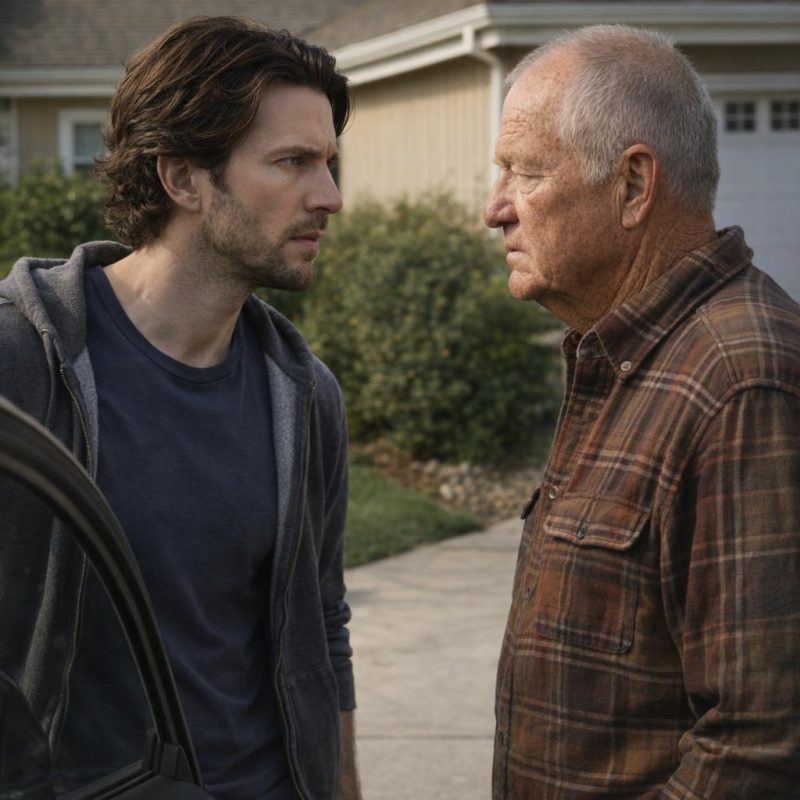 Image by RM AI
Something Wrong
I stopped trying to argue myself out of it after that. I sat in the kitchen the next morning with my coffee going cold and I just let myself sit with what I knew. David had information he shouldn't have. Not once, not twice — consistently, specifically, over a stretch of time I couldn't fully measure. The bird feeder. The Portland project. Emma. The cable. Each one on its own might have had an explanation I could live with. Together, they didn't. I didn't know what he was doing. I didn't know how. I couldn't prove any of it in a way that would mean something to someone else. But something had gone wrong — in the way you sense it when a room has changed before you can see what's different — and the shape of it was too consistent to dismiss. Whatever had been happening between us, it wasn't the friendship I thought I had. I felt it settle into me the way cold does, not all at once but slowly, working its way in until it reached somewhere deep and stayed there.
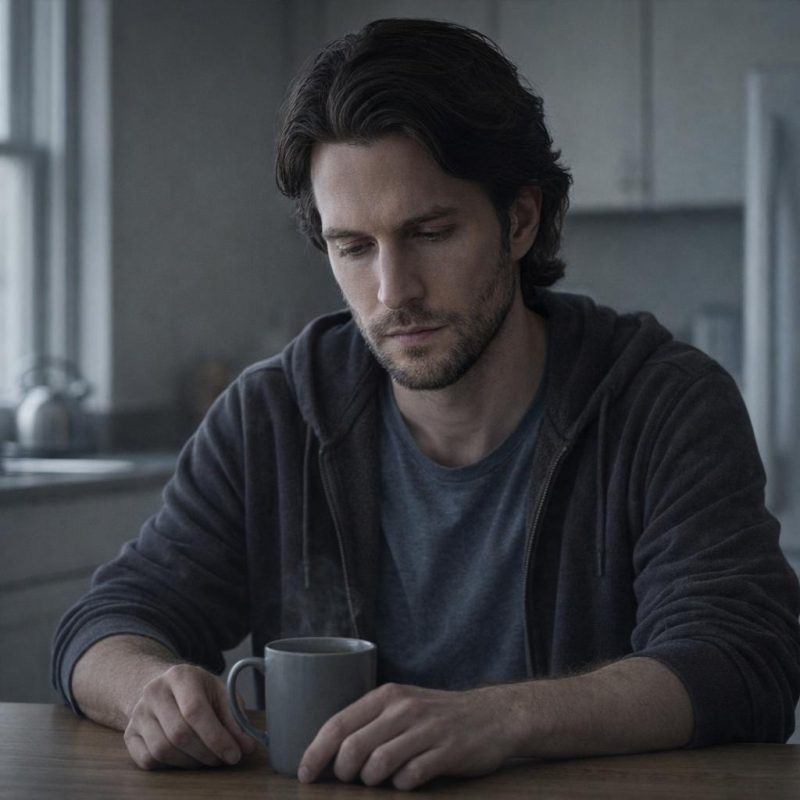 Image by RM AI
Complete Avoidance
I stopped going outside. Not officially, not with any announcement — I just started timing things differently. Groceries ordered for delivery. Car left in the driveway. Blinds angled so I could see out without being seen. If David's truck was visible, I stayed in. If I heard his door, I stepped back from the window. His texts came in every couple of days at first — just checking in, hope you're well, let me know if you need anything — and I read every one of them and put my phone face-down on the counter without responding. Then the calls started. I'd watch the screen light up with his name and wait for it to go dark. A few times I saw him come out onto his porch and stand there, facing my windows, for longer than felt casual. I'd move to the side of the room where I couldn't be seen and wait. The house that had always felt like mine — the place I'd worked in and eaten in and slept in without thinking twice — had started to feel like somewhere I was hiding. Twenty feet of driveway between us, and I couldn't find a way across it, and I couldn't stop watching it either.
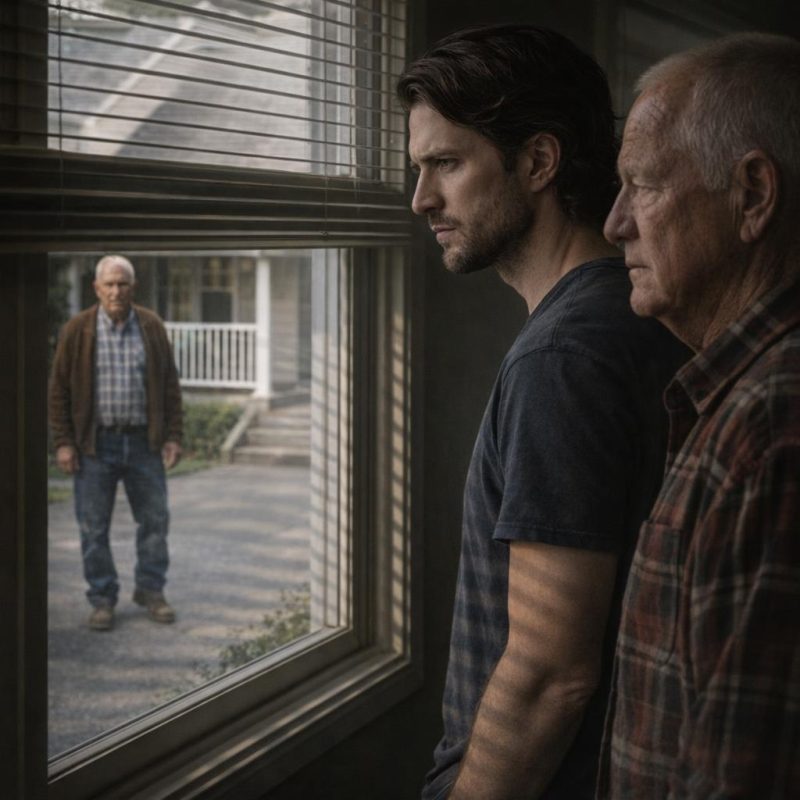 Image by RM AI
The Insistent Knock
It happened on a Thursday evening, just after dark. I was in the kitchen heating up leftovers when the knock came — three solid raps, the kind that assume you're home. I set the bowl down and didn't move. Another knock, then his voice, muffled through the door but unmistakably cheerful. He said something about bourbon, about Friday nights, about how long it had been. I stood in the kitchen with the microwave still running and my socks on the cold tile and I did not move toward the door. The peephole showed his shadow, that familiar flannel silhouette, shifting his weight from foot to foot. He knocked again. Said he missed our evenings. Said he wasn't trying to bother me, just wanted to check in. I pressed my back against the wall beside the door and breathed through my nose and counted the seconds. The microwave beeped. I didn't touch it. His shadow stayed for what felt like a full minute after the knocking stopped. Then I heard his voice one more time, quieter now, almost gentle: "Alex, I just want to talk."
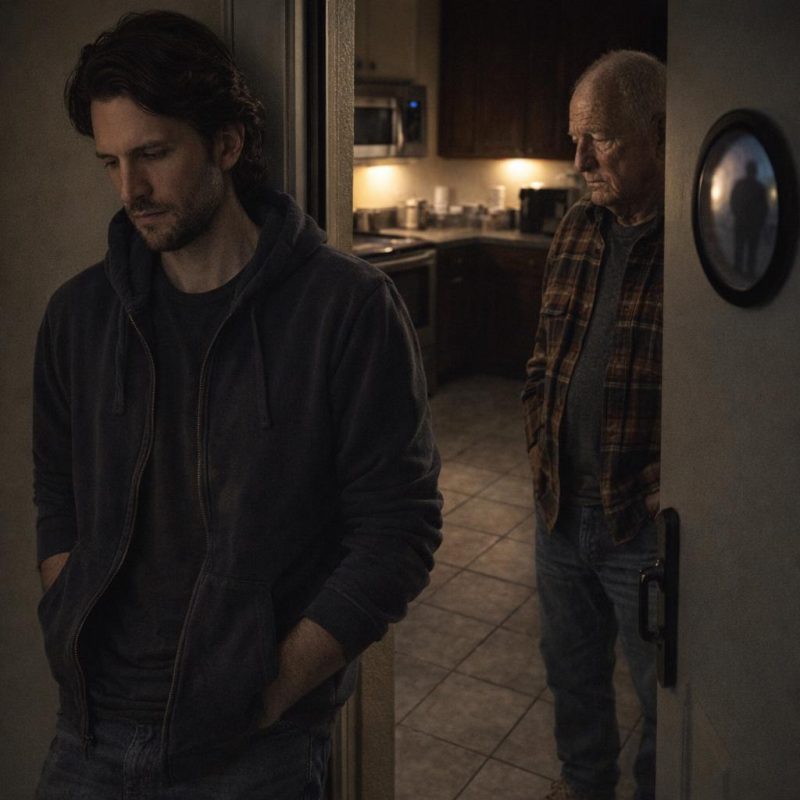 Image by RM AI
The Rainy Tuesday
The rain started around noon that Tuesday and hadn't let up by the time I sat down to work. I had a design package due to a client by five — a full brand rollout, logo files, style guides, the works — and the upload was supposed to take maybe twenty minutes on a good day. It did not take twenty minutes. The progress bar crept to eleven percent and stalled. Then the connection dropped entirely and the upload restarted from zero. I checked my laptop settings, restarted the browser, switched from Wi-Fi to the ethernet cable I kept coiled behind my desk. Same result. My phone showed full bars. My tablet connected fine. Everything on my end looked normal, which made it worse, because there was nothing obvious to fix. I emailed the client asking for a thirty-minute extension and got back a one-word reply: sure. That bought me nothing. By four-fifteen the file had failed to upload three times and the progress bar was sitting at thirty-four percent, crawling, while the rain hammered the window and the deadline sat there like something with teeth, and the bar dropped back to zero again.
 Image by RM AI
The Network Panel
I'd never had a reason to open the router admin panel before. I knew it existed the way I knew my car had a fuse box — theoretically, somewhere, accessible if things got bad enough. Things had gotten bad enough. I typed the gateway address into my browser, entered the default credentials I'd never changed, and the dashboard loaded. There was my laptop. My phone. My tablet. Three devices, exactly what I expected. I was about to close the tab and call my ISP when I scrolled down and saw the fourth entry sitting below the others, quiet as anything. Not a phone. Not a smart TV. The device name read Storage-Server-1102. I didn't own a storage server. I'd never set one up, never bought one, never heard of that model designation. I sat back in my chair and stared at it. My first thought was that David had bought some new piece of equipment and connected it to my network without mentioning it — he'd done things like that before, small assumptions about shared space. I clicked on the IP address almost without deciding to, just to see what would come up.
 Image by RM AI
The Blue Light
The page that loaded wasn't a settings screen. It was a file directory — rows and rows of folders, organized by date, going back further than I could take in at first glance. The rain was still hitting the window. I hadn't turned on the overhead light and the room had gone dark around me without my noticing, so the only thing illuminating my face was the monitor, that flat blue glow. I leaned closer. The folders were labeled by year and month. 2024. 2023. 2022. I scrolled down and the years kept going. 2019. 2017. 2015. My hand was on the mouse and I became aware that my hand was shaking slightly, just a fine tremor I couldn't stop. I didn't know what was in those folders. I told myself I didn't know. But my chest had gone tight in a way that had nothing to do with the deadline or the rain or the slow upload, and my heart was hitting hard enough that I could feel it in my throat. I moved the cursor to the most recent folder — 2024-09 — and held it there, not clicking, just hovering, while the blue light sat on my face and the room held its breath around me.
 Image by RM AI
The Archive
I clicked. The folder opened into thumbnails, dozens of them, and it took my brain a full three or four seconds to understand what I was looking at. Screenshots. My screenshots — or rather, screenshots of my screens. I recognized the interface of my own email client. I recognized a conversation thread with Emma, a private back-and-forth about our mother's health that I'd had two years ago and never shown anyone. There were images of my bank statements, transaction by transaction. There were logs that looked like browser history, organized by date and time. And then, near the bottom of the thumbnail grid, there were photos — actual photographs, low-angle shots taken from outside, showing my backyard, my patio furniture, the sliding glass door. I scrolled back to the top and opened the folder index again and looked at the dates. The archive went back to October 2012. I sat there with my hand on the mouse and the blue light on my face and I understood, with a completeness that left no room for doubt, that David had been using my Wi-Fi to capture everything — every message, every search, every transaction — from the month I handed him that password. Then I scrolled to a thumbnail I hadn't opened yet, and I saw the inside of my own living room staring back at me from his files.
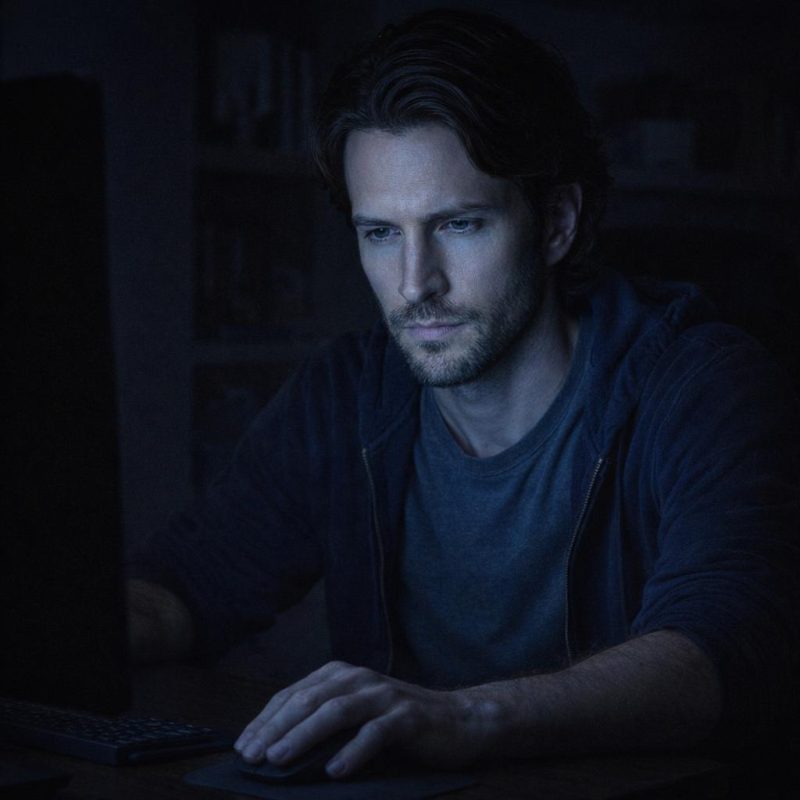 Image by RM AI
The Nausea
I pushed back from the desk and put my head between my knees. The floor was cold through my socks. I stayed like that for a while, breathing carefully, the way you do when your body is deciding whether to be sick. I thought about the conversation David had with me two years ago about my spending — how he'd said, gently, that I seemed to be stretching myself thin, that maybe I should look at my subscriptions. I'd thought he was perceptive. I thought about the time he mentioned, offhand, that Emma seemed stressed, that I should check in on her. I'd thought he was intuitive. Every piece of advice, every well-timed observation, every moment of fatherly concern — it had all come from the same place. He hadn't read me. He'd read my data. The emails between me and my sister. The bank statements. The intercepted calls. I sat back up and looked at the screen and my hands were still shaking and my stomach hadn't settled and I couldn't make myself scroll any further. Twelve years of what I'd called friendship, and the whole time I'd been a file directory he was maintaining. The air in the room felt thin, and each breath I pulled in didn't seem to reach the bottom of my lungs.
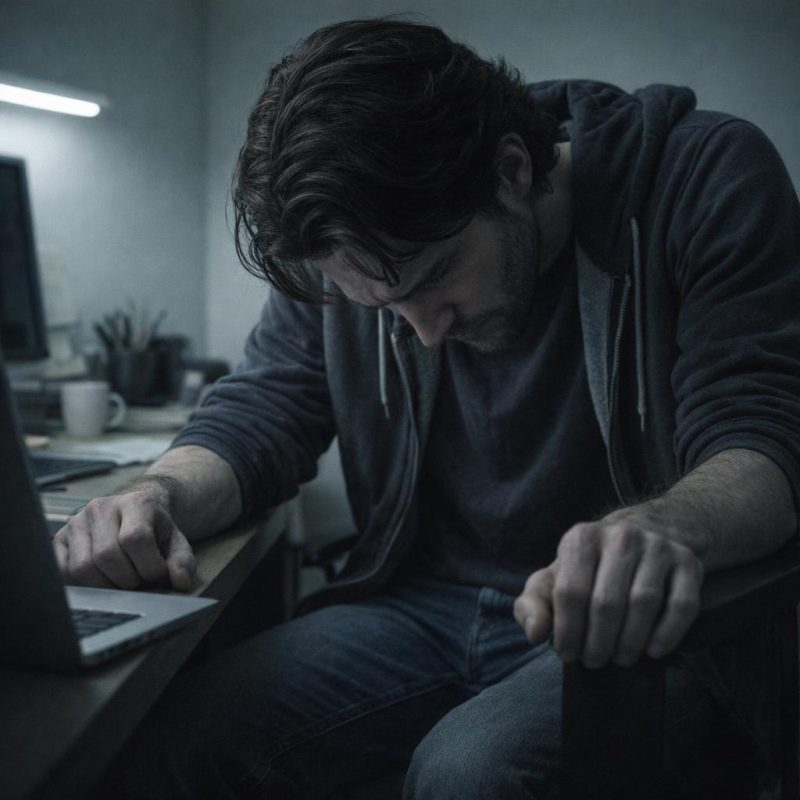 Image by RM AI
The Timestamps
I made myself scroll to the bottom of the archive. I don't know why — some need to see the whole thing, to not look away from it. The oldest folder sat at the very end of the list, and I clicked on it before I could talk myself out of it. Inside were the same kinds of files: screenshots, logs, a few low-resolution images. My hands had stopped shaking and gone cold instead, which felt worse somehow. I thought about that October. I'd been in the house maybe three months. David had come over with cinnamon rolls and we'd stood in the driveway and I'd given him the password and shaken his hand and felt, genuinely felt, like I'd found something good in a new place. I remembered the warmth of that. I remembered being glad. And according to the timestamp on the oldest file in this folder, he had the surveillance running within days of that handshake. I sat there staring at the screen. The folder was labeled 2012-10.
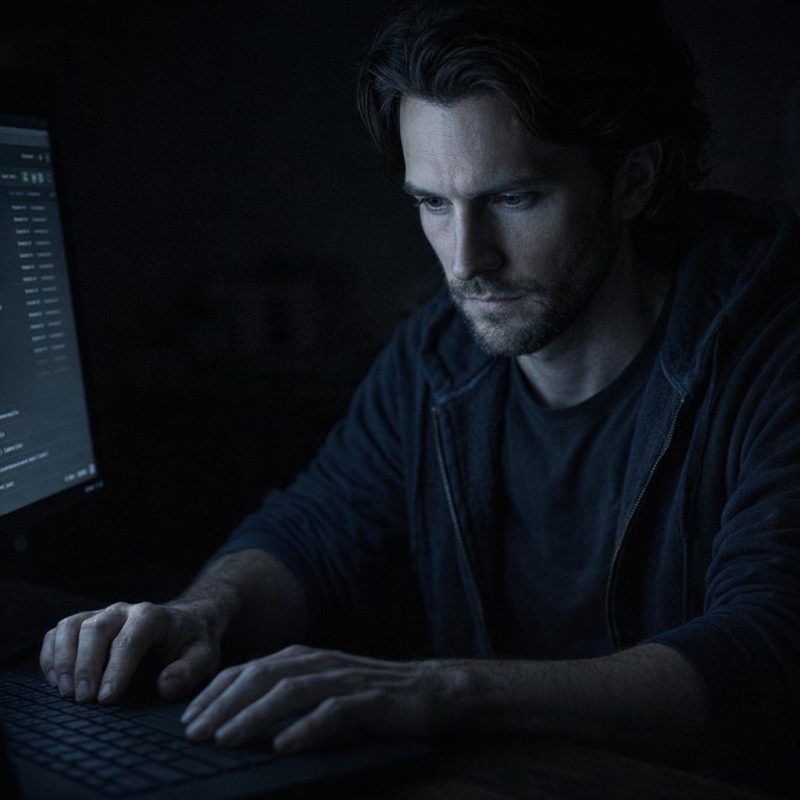 Image by RM AI
The Predator
I turned off the monitor and sat in the dark for a long time. I thought about every moment I'd felt it — the prickle at the back of my neck when I was working late, the vague unease I'd brush off as introversion or anxiety or too much coffee. I'd spent years apologizing to myself for those feelings, filing them under overthinking, under social anxiety, under the general category of things wrong with me. But my body had been registering something real. Not paranoia. Not neurosis. Something closer to what prey feels in the presence of a predator — that low, animal awareness that the space around you is not safe. David had sat in that house twenty feet away and fed on everything I trusted him with, and some part of my nervous system had known it and tried to tell me, over and over, in the only language it had. The grandfather figure, the flannel shirts, the bourbon and the cinnamon rolls — all of it a surface. Underneath, just the patient, methodical work of someone who had decided I was worth watching. I sat with that in the dark, and the knowing settled into my bones like cold.
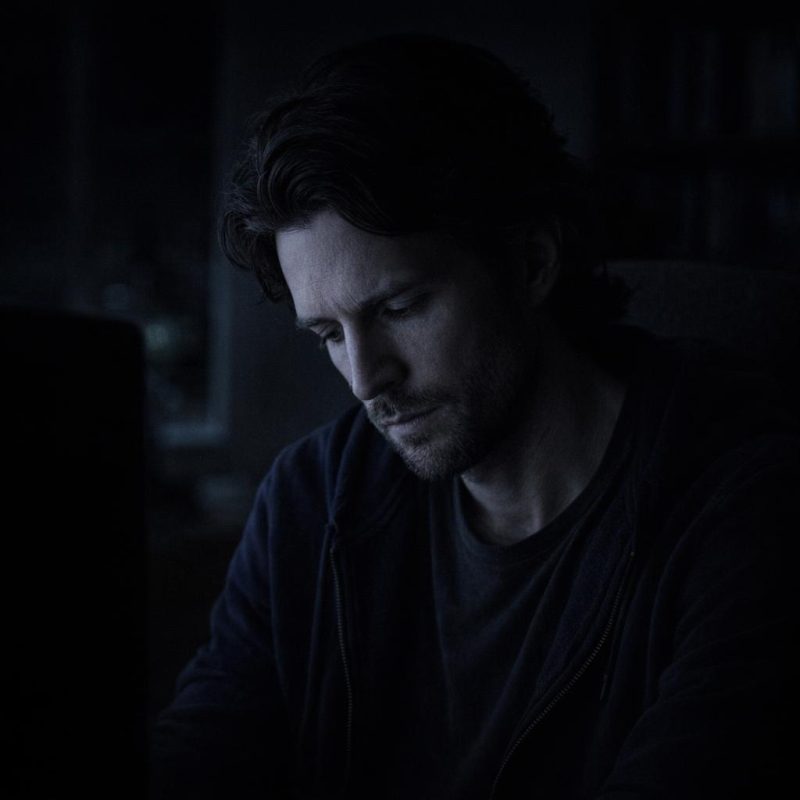 Image by RM AI
The Password Change
I didn't slam anything. I didn't send a message. I just opened a browser tab, typed in the router's IP address, and logged into the admin panel with the same quiet focus I'd use to fix a broken CSS file. The surveillance folders were still open in the other window — all those timestamps, all those file names — and I closed them one by one before I started. I didn't want to look at them anymore. I navigated to the wireless settings, found the password field, and typed in a random string of characters I generated on the spot: uppercase, lowercase, numbers, symbols, the kind of thing no one memorizes and no one guesses. I hit save. The router blinked once. That was it. No confrontation. No speech. No dramatic moment. Just a single click that cut a wire David didn't know I knew about. I leaned back in my chair and looked at the ceiling. Twelve years of borrowing and lending and trusting, and it ended with a configuration change at eleven-fifteen on a Tuesday night. The house was exactly as quiet as it had been before. But the quiet felt different now — like something I'd chosen rather than something that had happened to me.
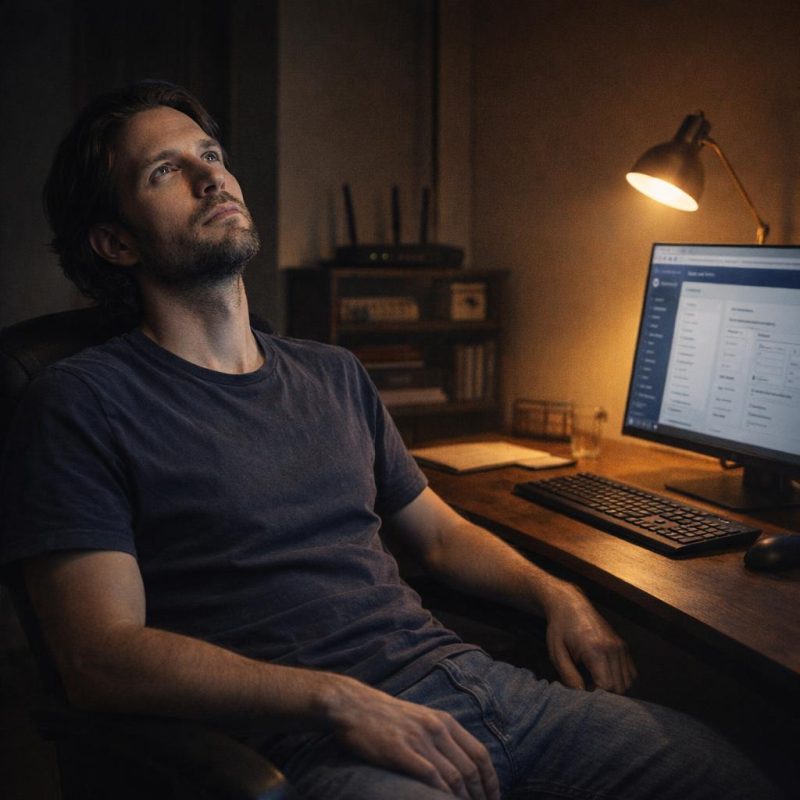 Image by RM AI
The Hungry Look
I turned off my lamp and sat by the window in the dark, which I'm aware sounds dramatic, but I needed to see without being seen. Ten minutes passed. Maybe twelve. Then David's kitchen lights came on — that warm yellow glow I'd watched a hundred times from this same window, the one I used to find comforting. His silhouette moved through the kitchen, stopped, moved again. I could tell he was checking something. A phone, a tablet, a laptop — I couldn't see which. He stood in one spot for a long time. Then the back door opened and he came out onto the porch. He looked toward my house. My lights were off, my car in the driveway, no sign of life. He checked his phone. Checked it again. Paced the length of the deck — four steps one way, four steps back — the way you pace when something isn't working and you can't understand why. He looked up at my dark windows a second time. And that's when I saw it: not confusion, not mild annoyance, but something rawer than that. His jaw was set hard, his mouth pulled tight at the corners, and his eyes — even from across the yard — had gone flat and cold.
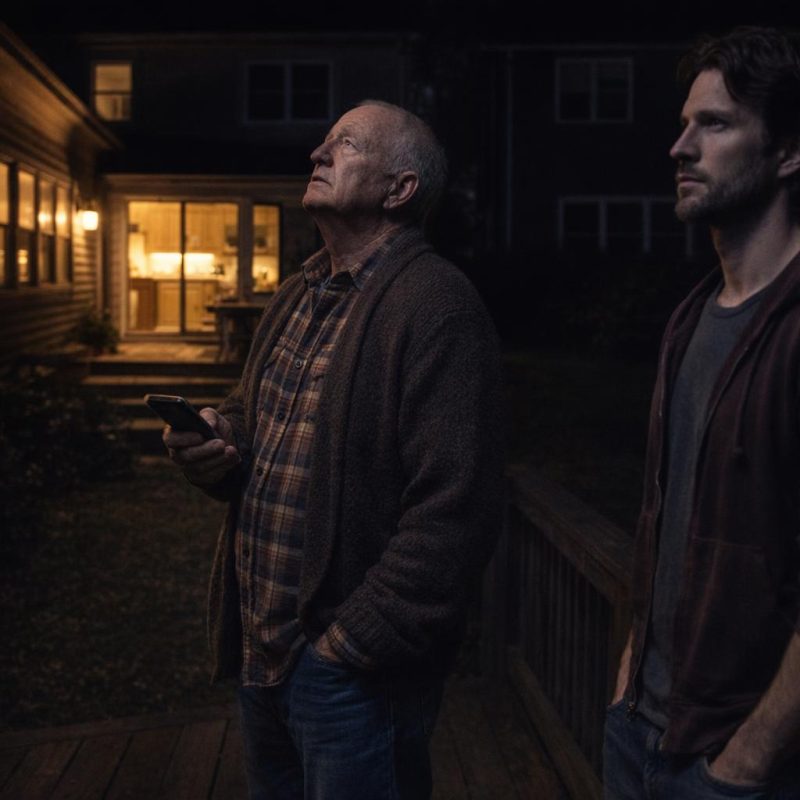 Image by RM AI
The Text
I was still sitting in the dark when my phone buzzed against the desk. I knew before I picked it up. The screen lit with David's name and a message that read: 'Hey kid, looks like the internet is acting up again. Give it a reset?' I read it once. Then again. Then a third time, slower, the way you read something when you're trying to make sure you're understanding it correctly. The casual tone of it — hey kid, acting up again, give it a reset — like we were still the same two neighbors we'd always been, like the last twelve years were still intact and this was just a Tuesday-night technical hiccup. He was asking me to hand him the key back. Framing it as a favor, a small thing, the kind of thing friends do without thinking. I set the phone face-up on the desk and watched the screen. I didn't type anything. I didn't open the message thread to show him I'd read it. I just watched the notification sit there until the screen timed out and went dark. The silence I sent back was the only answer I had, and it was the most honest thing I'd said to him in weeks.
 Image by RM AI
Murky Legalities
I drove to the police station the next morning with my laptop and a folder of screenshots I'd printed at the library, because I didn't trust my home printer not to jam at the worst possible moment. Officer Mills met me in a small room off the main lobby — the kind of room with a table bolted to the floor and fluorescent lights that hum just loud enough to notice. He was patient. He listened to the whole thing without interrupting, looked at every screenshot I put in front of him, and asked clarifying questions in a tone that told me he believed me. That part was a relief. What came after wasn't. He explained that because I'd voluntarily shared the password, the legal picture got complicated fast. The device David used was on David's property. The network access had been given, not taken. There were no wiretapping statutes that clearly applied, no computer fraud angle that held up cleanly given the voluntary sharing arrangement. Civil court was possible, he said, but slow and expensive with no guaranteed outcome. He suggested I document everything, change all my passwords, and consider a consultation with a privacy attorney. He said it carefully, professionally, and I could tell he meant it kindly. Then he said there wasn't much they could do.
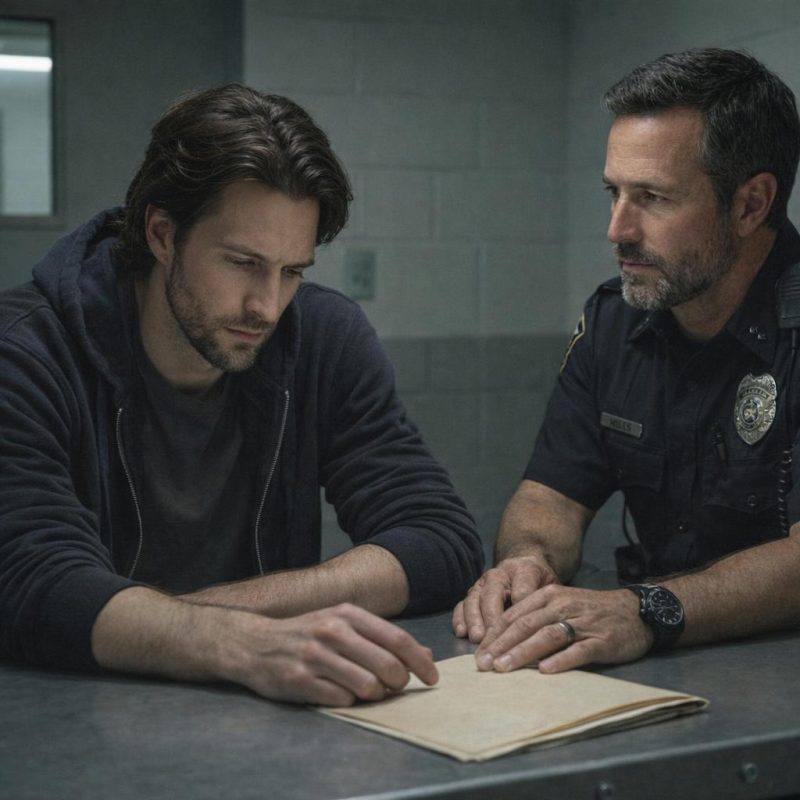 Image by RM AI
The Sweep
I called a private security firm the morning after the police station, the kind that does sweeps for corporate clients and occasionally takes residential cases. Two technicians arrived the next afternoon in an unmarked van — a man and a woman, both in dark polos, both carrying cases that looked like they belonged in an airport security checkpoint. They were methodical and quiet. They went room by room with handheld RF detectors and lens-detection equipment, checking every outlet, every smoke detector, every light fixture, every vent cover. They pulled the cover off the bathroom exhaust fan. They scanned behind the television. They checked the basement ceiling joists. I followed them through the house and tried not to hold my breath. It took about two hours. When they were done, the woman set her equipment on the kitchen table and told me they hadn't found anything — no cameras, no microphones, no physical transmitters of any kind. Whatever David had done, he'd done it entirely through the network. He'd never been inside my walls. I let that land for a moment. Then the technicians installed a new encrypted router, configured it with a hidden SSID and a password that was thirty-two characters long. When they left, I stood in the middle of my living room and the house felt, for the first time in a long time, like mine.
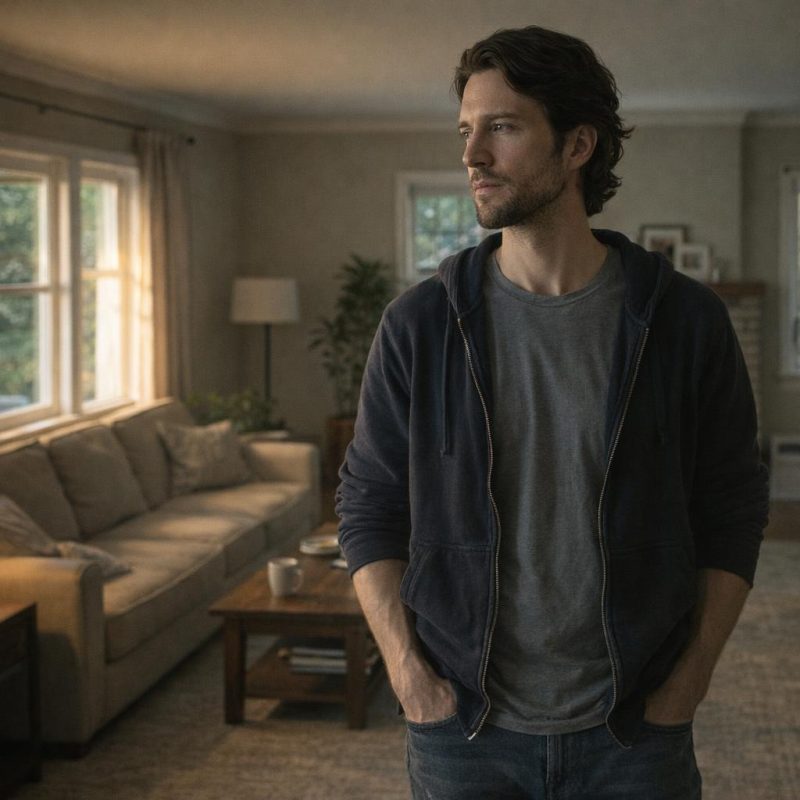 Image by RM AI
Forced Cheerfulness
Three days after the password change, there was a knock at my front door. I was at my desk and I heard it and I didn't move. Then David's voice came through, easy and warm, the same voice that had handed me bourbon on a Friday night and told me I was like a son to him. 'Hey, Alex — you in there? Thought we could grab a drink, catch up a little. Been worried about you, buddy.' I stood up slowly and walked to the door. I looked through the peephole. He was standing on my porch in his flannel shirt, hands in his pockets, a relaxed smile on his face that didn't quite reach his eyes. I didn't open the door. I didn't make a sound. He knocked again, harder this time. 'Everything okay in there?' A pause. He shifted his weight, looked toward the street, looked back at the door. The smile had tightened. He stood there another minute or two, and I watched him through the peephole the whole time, not breathing much. Then he said, in a voice that had dropped about half an octave and lost most of its warmth: 'Come on now. Can't we just talk about this like adults?'
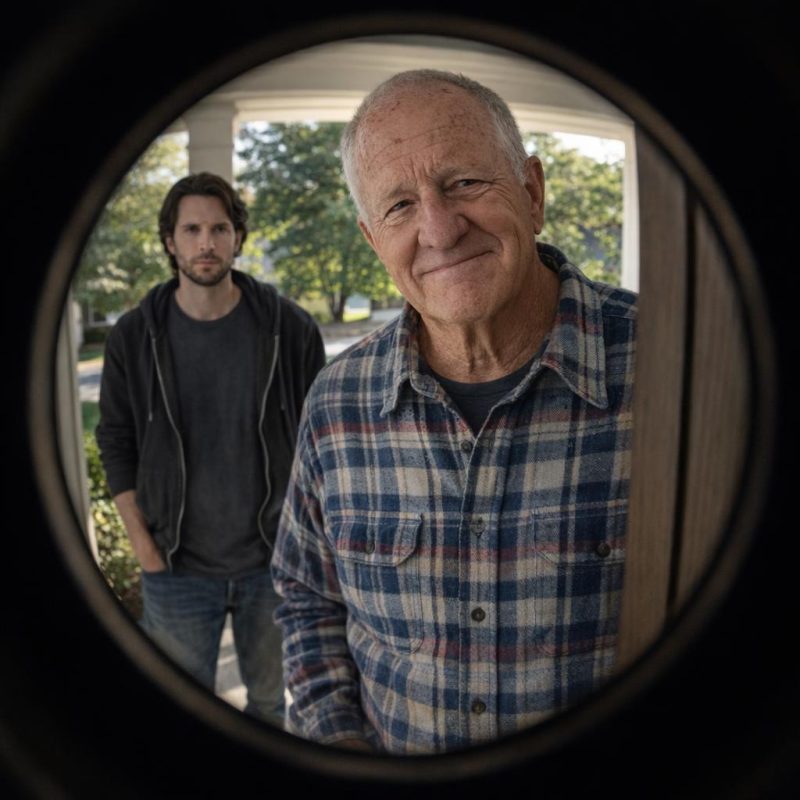 Image by RM AI
The Second Visit
He came back two days later. I heard his footsteps on the porch before he knocked — I'd started recognizing the particular weight of them, the way they landed on the second board from the top, which always creaked. He knocked three times, waited, knocked again. 'I don't know what I did,' he said. His voice had lost the cheerfulness entirely. It sounded older, rougher around the edges. 'If I overstepped somehow, I'm sorry. I miss talking to you. Twelve years, man. That's not nothing.' I stood in the hallway with my back against the wall, arms crossed, not moving. He tried the doorknob. It was locked, had been locked since the night I changed the password. He stood on the porch for what felt like a long time — I could hear him shifting his weight, could hear him exhale once, long and slow, like a man setting something down he'd been carrying too long. Then the knocking stopped. I heard him say something under his breath that I couldn't make out. And then his footsteps crossed the porch, went down the two steps to the path, and faded out across the yard until there was nothing left of them but the ordinary sounds of the neighborhood settling around me.
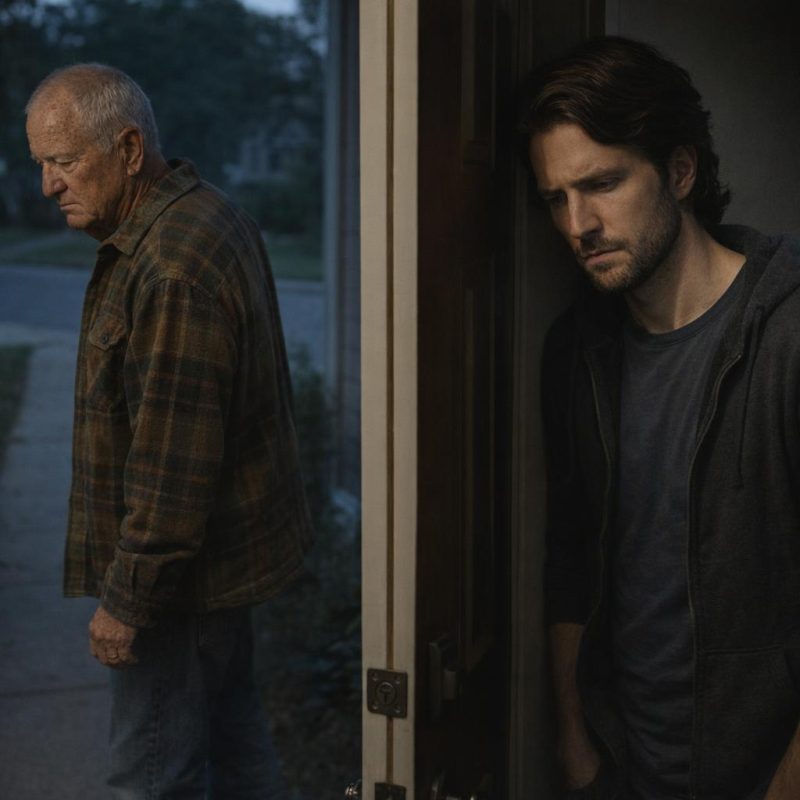 Image by RM AI
The Silence
After that, nothing. No more knocks. No more texts. No more silhouette moving past the kitchen window at eleven at night. I watched David's house the way you watch a place you used to love — carefully, from a distance, without expecting anything. He was still there. I'd see his truck in the driveway, see a light on in the back room. But the porch stayed dark on Friday nights. The chair he used to sit in, the one angled toward my side of the yard, sat empty. The cul-de-sac felt like it had lost a frequency — some low background hum I hadn't consciously registered until it stopped. Twelve years of borrowing sugar and sharing bourbon and talking about nothing important on warm evenings, and it had come down to this: two men in adjacent houses who no longer acknowledged each other's existence. I wasn't sure what I'd expected to feel. Triumph, maybe, or grief, or some clean version of closure. What I felt instead was a kind of hollow stillness, the way a room feels after furniture has been moved out — the same walls, the same light, but the shape of the space changed in a way you keep noticing. The absence of his knock had become its own presence, and I sat with it in the quiet of my house, not moving.
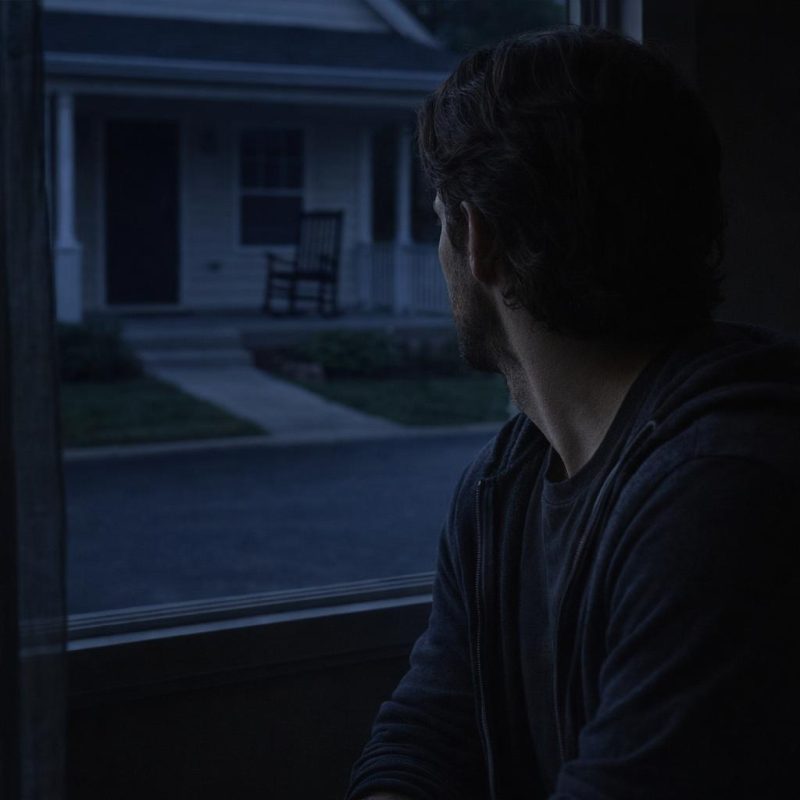 Image by RM AI
Changed Demeanor
I started watching him the way you watch a storm that's already passed — not out of fear, just out of something I couldn't quite name. David moved through his house like a man who had forgotten what rooms were for. I'd catch him through the kitchen window, standing at the counter without doing anything, just standing there. The workshop light, which used to glow until ten or eleven most nights, stayed dark. His truck sat in the driveway for days without moving. The flannel shirts and work boots were still there, but the energy inside them was gone — he looked smaller somehow, like something structural had been removed. Some evenings I'd see him lower himself into a chair near the front window and just sit, no television light flickering, no lamp on, nothing. Just a man in the dark. I didn't feel sorry for him. I want to be honest about that. Whatever I might have felt twelve years ago for the person I thought he was, that person wasn't real, and I had no grief left to spend on a fiction. I just watched, the way you watch anything that used to matter. His face appeared once at the window, pale and hollow in the afternoon light.
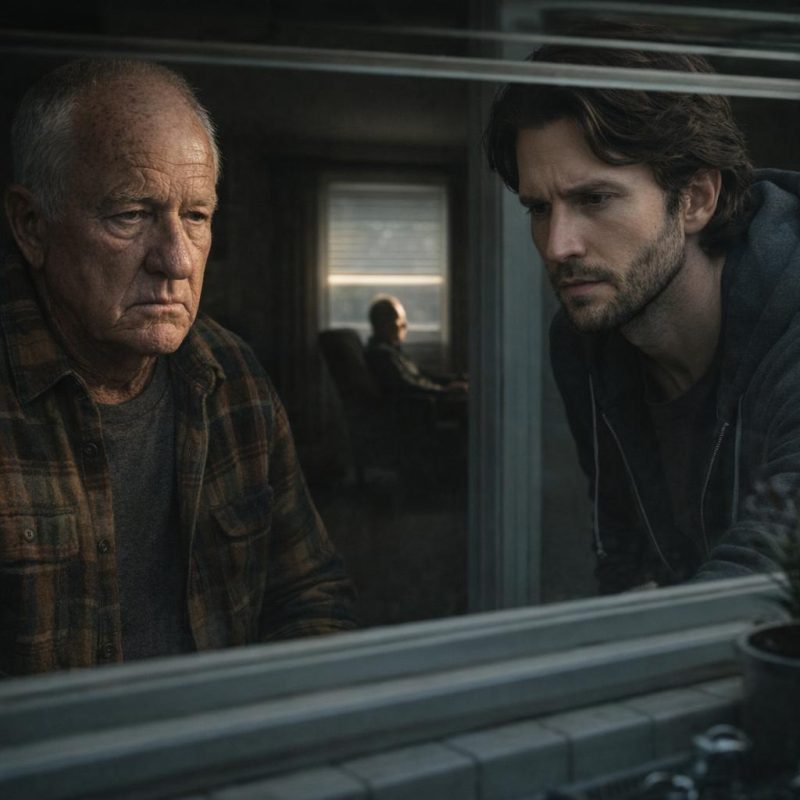 Image by RM AI
The For Sale Sign
Three months of that silence, and then one Tuesday morning I looked out my front window and there it was — a For Sale sign staked into David's lawn, white and clean and completely unsurprising. I stood there with my coffee going cold in my hand and felt something loosen in my chest, not quite relief, not quite anything I had a clean word for. Two weeks after the sign went up, I woke at two in the morning to the sound of a truck idling in the street. I didn't turn on any lights. I stood back from my window in the dark and watched. David carried boxes and furniture out in careful, quiet trips, the kind of efficiency that suggested he'd been planning this for a while. No movers. Just him, working alone in the dark, loading his life into the back of a truck. He never looked toward my house. By the time the sky started going gray at the edges, the truck was gone. No note on my door. No text. No wave from the driveway. Just an empty house with a For Sale sign still planted in the yard, and the particular silence of a place where someone used to be.
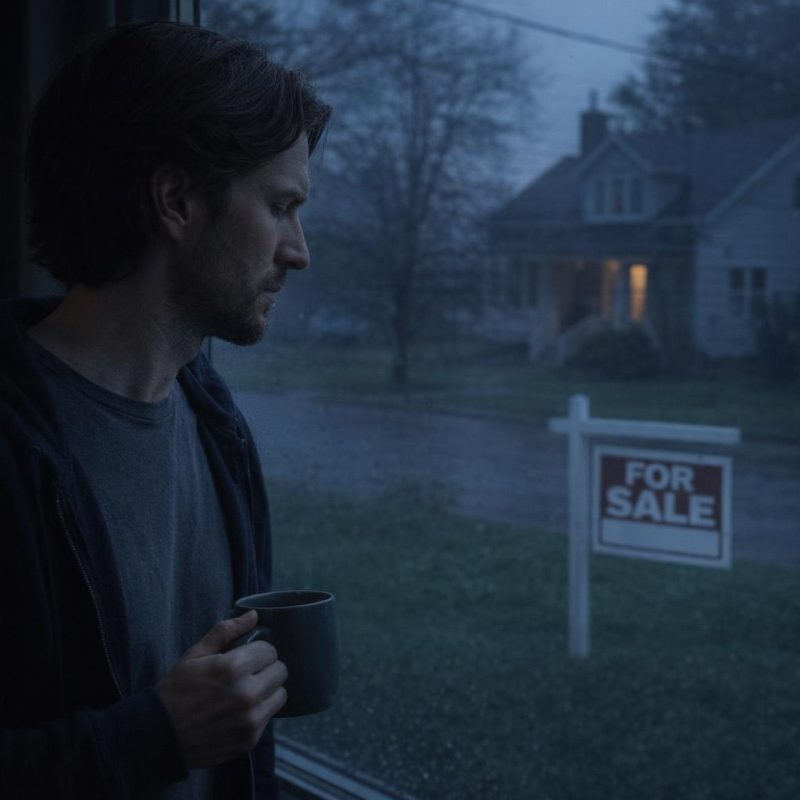 Image by RM AI
The Fake Rock
The new neighbors moved in six weeks later — a woman named Sarah and her family, with the kind of cheerful chaos that comes with a full moving truck and kids who keep running the wrong direction. I introduced myself at the property line and offered to help carry boxes, which felt like the right thing to do, the normal-neighbor thing. Sarah asked about the previous owner while we were hauling a bookcase through the front door. I told her he'd moved away, kept it at that. We worked through the afternoon, and at some point I started moving planters in the shared garden bed between the houses to clear a path for a piece of furniture. One of them was a rock — or what looked like a rock, one of those rough gray decorative ones people put near flower beds. I picked it up and it was wrong immediately, too light, hollow-feeling. I turned it over. The bottom was open. I set it down and crouched to look closer — and that's when I saw the cable running from inside it along the base of the fence, tucked under the soil, terminating at an outdoor outlet mounted on my side of the fence: a small wireless range extender, still plugged into my power, its indicator light blinking a slow, patient green.
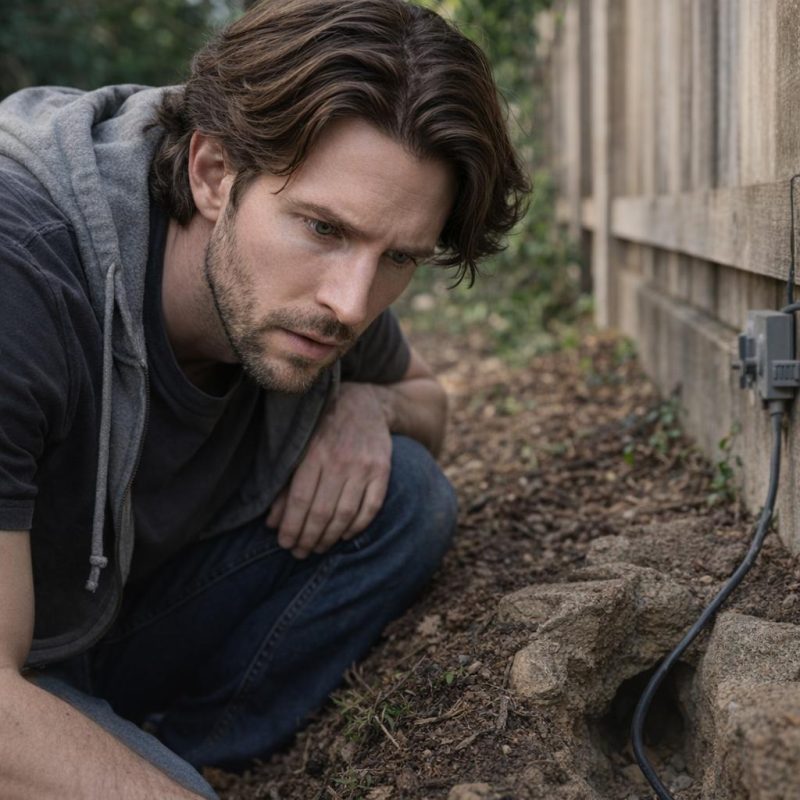 Image by RM AI
What Never Existed
I stood there in the garden holding it for a long time. It was a cheap-looking thing, matte black plastic, nothing remarkable — except that someone had bought a fake rock specifically to hide it, had run a cable under the dirt, had plugged it into my outlet and left it there to quietly extend my Wi-Fi signal across the property line. This wasn't opportunism. This wasn't someone who stumbled into a bad habit. The rock had to be sourced. The cable had to be buried. The outlet had to be identified and used. Every step of it was done before I ever handed over a password, maybe before I ever thought of him as anything more than a neighbor. I walked to my trash can at the side of the house and dropped the device in. It made a hollow plastic sound at the bottom of the can. I stood there in the space between the houses — my yard on one side, his empty house on the other — and I tried to locate the friendship in my memory, tried to find the version of David that had been real. The bourbon on the porch. The easy conversation. The way he'd called me son once, just once, and I'd let myself feel it. None of it had a foundation. The man I'd mourned for twelve years was a character someone had built and worn.
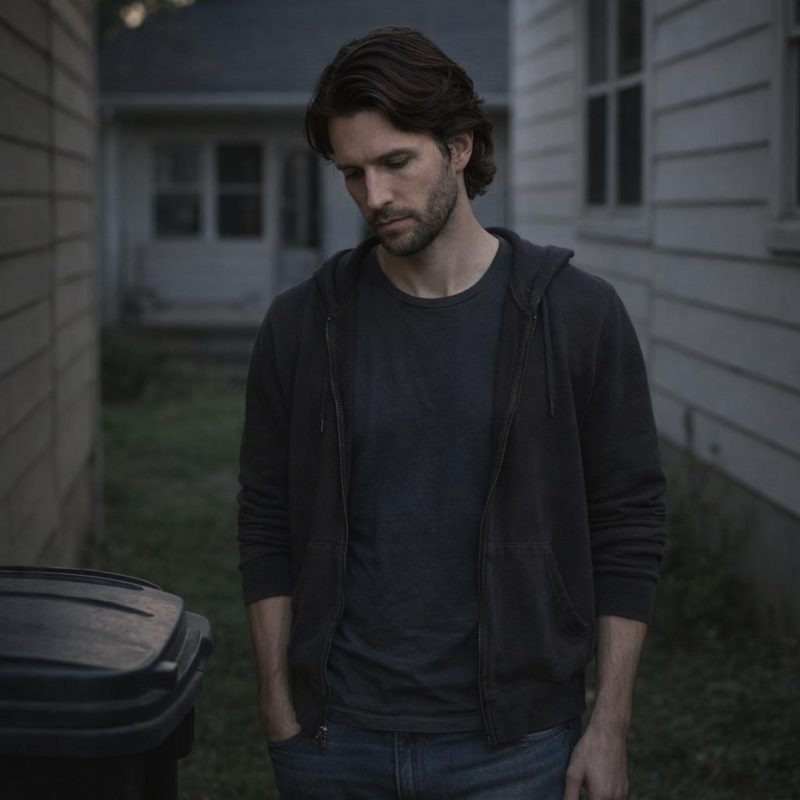 Image by RM AI
KEEP ON READING

The story of Ching Shih, the Woman Who Became the…
Unknown author on WikimediaFew figures in history are as feared…
By Emilie Richardson-Dupuis Dec 29, 2025
Einstein's Violin Just Sold At An Auction—And It Earned More…
A Visionary's Violin. Wanda von Debschitz-Kunowski on WikimediaWhen you hear…
By Ashley Bast Nov 3, 2025
This Infamous Ancient Greek Burned Down An Ancient Wonder Just…
History remembers kings and conquerors, but sometimes, it also remembers…
By David Davidovic Nov 12, 2025
The Mysterious "Sea People" Who Collapsed Civilization
3,200 years ago, Bronze Age civilization in the Mediterranean suddenly…
By Robbie Woods Mar 18, 2025
20 Most Notorious Criminals in History
A Closer Look at Infamy. History is fraught with horrible…
By Christy Chan Jun 19, 2026
20 Soldiers Who Defied Expectations
Changing the Rules of the Battlefield. You’ve probably heard plenty…
By Annie Byrd Feb 10, 2026