

I Spent Two Weeks With My Grandkids While My Son Was in Italy—Then I Overheard Something That Changed Everything
I Spent Two Weeks With My Grandkids While My Son Was in Italy—Then I Overheard Something That Changed Everything
The Call That Changed Everything
It was a Tuesday evening in early October when Brandon called, and I almost didn't pick up because I had flour on my hands and a pie crust that was finally cooperating. But I wiped off on a dish towel and answered, and within about thirty seconds I'd forgotten all about the pie. He and Melissa had finally booked it — the Italy trip they'd been talking about for years. Two weeks. Rome, Florence, the Amalfi Coast. And would I be able to come stay with Sophie and Jake while they were gone? I said yes before he even finished the sentence. Melissa got on the phone next, warm and grateful, walking me through the basics — school pickup times, soccer practice on Tuesdays and Thursdays, Jake's thing about crusts on sandwiches. I was already mentally packing my bag. Two whole weeks with my grandchildren, no rushing off after Sunday dinner, no quick goodbye hugs at the door. When we hung up, I stood in my kitchen for a moment with the phone still in my hand, the pie forgotten on the counter, and the quiet that settled around me felt like the beginning of something good.
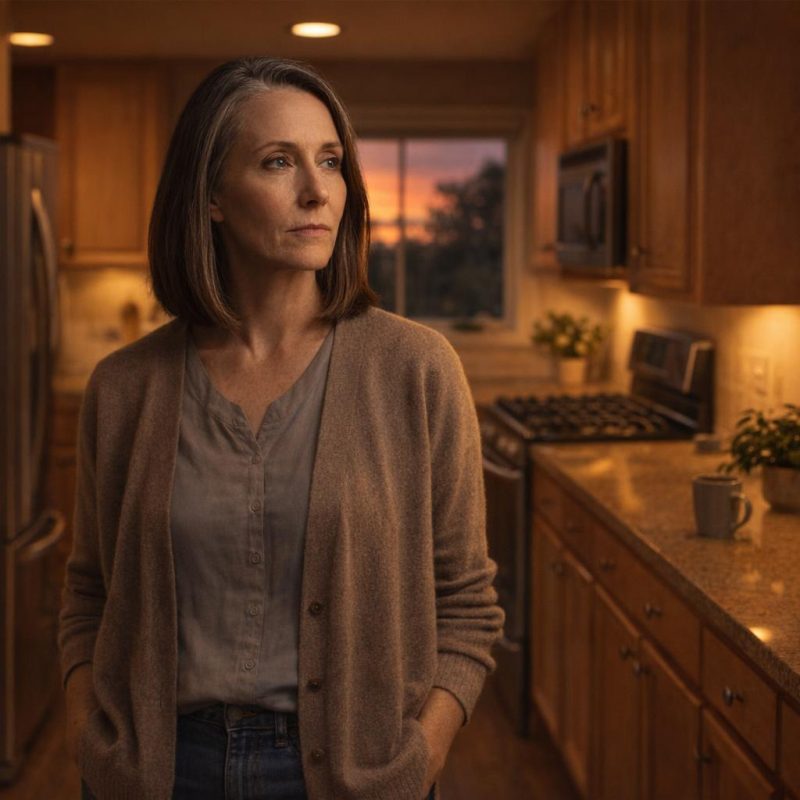 Image by RM AI
Color-Coded Instructions
Melissa called three days later with what she described as "just a few details," and I settled into my armchair with a cup of tea, expecting maybe ten minutes. Forty-five minutes later, I was still on the phone and had filled both sides of a notepad. She had prepared a color-coded printed schedule — green for school days, blue for soccer, yellow for any appointments — and she walked me through every column. The pediatrician's number was at the top in bold. The neighbor two doors down, Carol, was listed as a backup contact. There were reading logs Sophie needed to fill out each night, a specific brand of granola bar Jake would actually eat, and a note about which soccer cleats fit properly versus which ones gave him a blister. I kept saying, "Got it, got it, I've raised children before," and Melissa kept laughing and saying she knew, she knew, she just wanted to make sure. I didn't mind, honestly. It was sweet, the way she'd thought of everything. I hung up smiling, already looking forward to putting that color-coded schedule to use — though I did wonder, just briefly, how many backup plans one two-week trip actually needed.
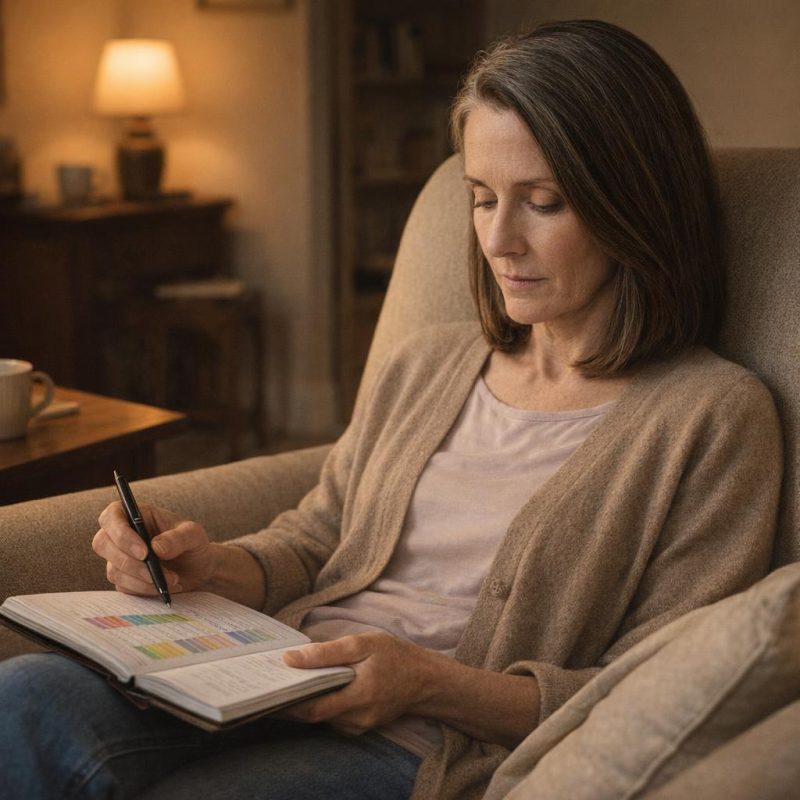 Image by RM AI
Departure Morning
I pulled into their driveway at seven sharp that Friday morning with a travel mug of coffee and my overnight bag already packed for the full two weeks. The kitchen light was on, and I could smell something — toast, maybe, or the tail end of breakfast. Brandon came downstairs first, dragging a rolling suitcase that looked like it weighed as much as he did, and Melissa followed with her carry-on and a tote bag over each shoulder. They checked their passports at the kitchen counter, then checked them again, laughing at themselves for it. Sophie and Jake appeared at the top of the stairs in their pajamas, hair still flattened from sleep, blinking in the light. Jake made it about halfway down before he spotted his father and launched himself the rest of the way, wrapping both arms around Brandon's leg and refusing to let go. Sophie came to Melissa more quietly, tucking herself in for a long hug that lasted just a beat longer than usual. Brandon squeezed my shoulder on his way out the door and said, "Thank you, Mom. Really." I stood on the front step and watched them back out of the driveway, and I kept watching until the red glow of their taillights curved around the corner and disappeared into the morning.
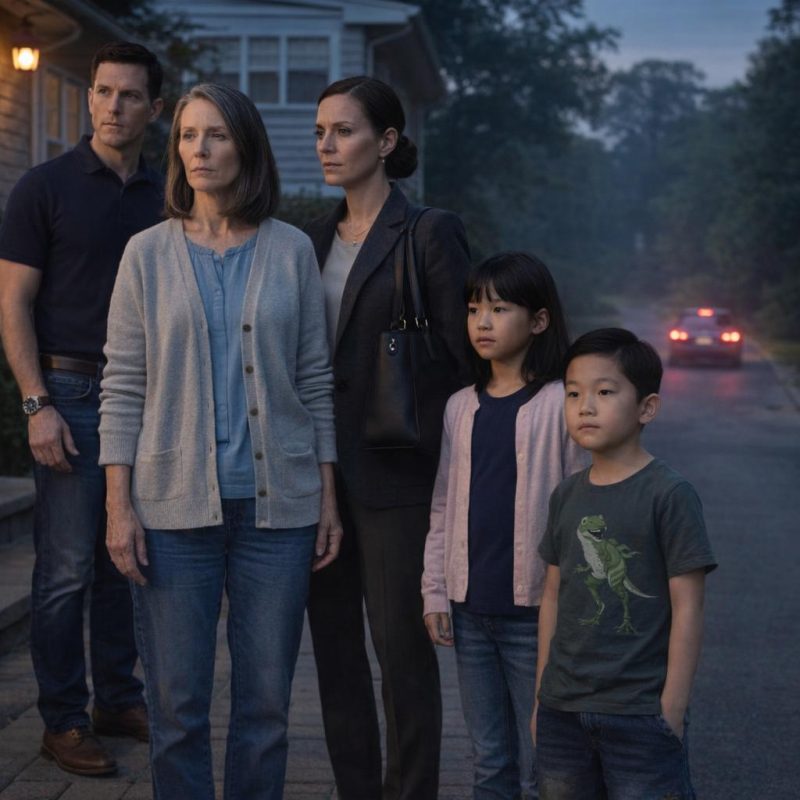 Image by RM AI
First Morning Rhythms
The first morning was a negotiation I hadn't fully anticipated. Jake came downstairs announcing he wanted scrambled eggs, then changed his mind to oatmeal somewhere between the second and third stair, then changed it back to eggs when he saw the pan come out. Sophie, bless her, had already checked her backpack twice and was sitting at the counter with her reading log open, calm as anything. I made the eggs, packed two lunches — Jake's with the crusts cut off, as instructed — and located Sophie's library book under a throw pillow on the couch. I told them both that at my house, homework came first before any screens or playing, and that the same rule would apply here. Jake looked at me like I'd suggested something genuinely unreasonable. Sophie just nodded and said that was fine. We made it out the door with five minutes to spare, which felt like a victory. I walked back inside to a kitchen that smelled like butter and toast, dishes soaking in the sink, two backpacks gone from their hooks by the door. The house held that particular stillness that only comes after children leave for school, and I stood in the middle of it for a moment, hands wrapped around my coffee mug, feeling more settled than I had in years.
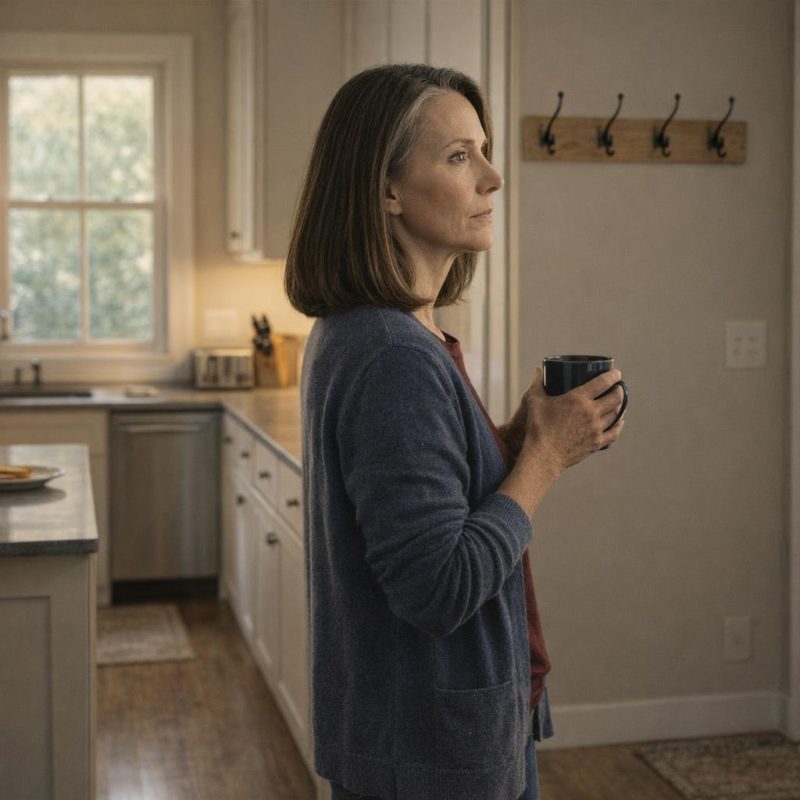 Image by RM AI
After-School Negotiations
By day two, I had the after-school pickup down to a rhythm. I was parked in the carpool line ten minutes early, which meant I had time to watch the other parents and grandparents doing the same thing — all of us just waiting, engines idling, ready. Jake came out first, backpack bouncing, and climbed into the back seat already talking about something that had happened at lunch. Sophie appeared a minute later, more measured, sliding in beside him and immediately telling him to buckle his seatbelt. Back at the house, I set out a snack and announced the homework rule again. Jake negotiated — could he have twenty minutes of free time first, just twenty, Grandma, please — and I held firm, and he grumbled his way to the kitchen table and opened his folder. Sophie had already pulled out her reading log without being asked. Within the hour, both folders were closed and both kids were free, and I felt the particular satisfaction of a household running the way it was supposed to. I was rinsing the snack dishes when I heard Sophie's voice drifting down from upstairs, low and intent, talking to Jake about something — and then Jake's voice, quieter than usual, answering her.
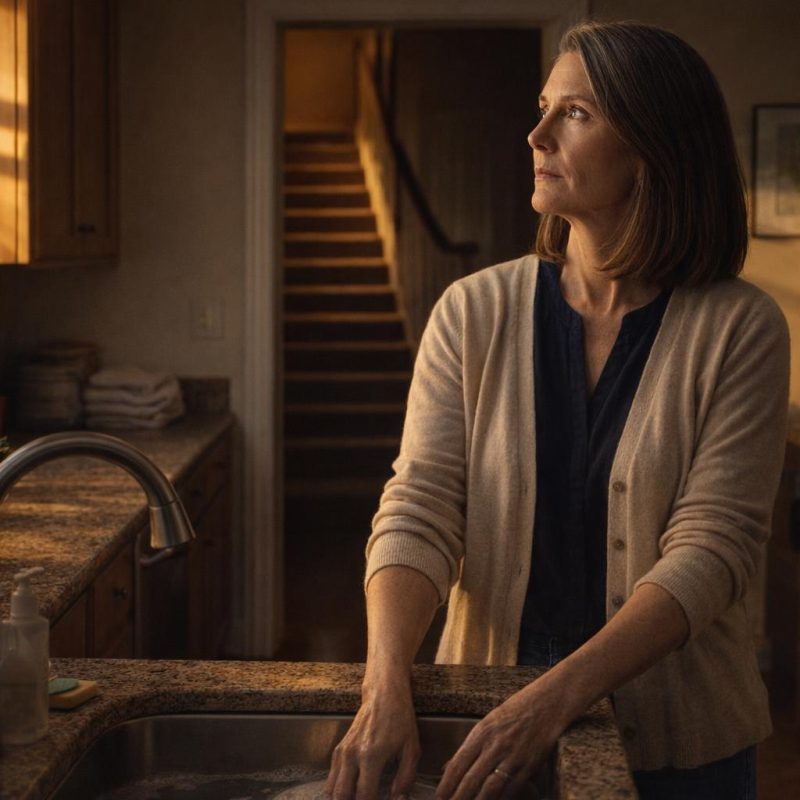 Image by RM AI
The Curator's Collection
Jake appeared in the doorway of the living room on Wednesday afternoon with the gravity of someone about to conduct an important tour. "Grandma," he said, "do you want to see my cars?" I set down my book and said I absolutely did. His room was tidy in the specific way of a child who cares deeply about one particular thing — the floor had its share of socks and a stray sneaker, but along the windowsill, his toy car collection was arranged with the precision of a museum exhibit. He walked me through each one. This red one was the fastest. This silver one was the rarest. This blue one had a door that actually opened, which was apparently a significant engineering achievement. He picked each car up carefully, explained its merits, and set it back in exactly the right spot. I sat on the edge of his bed and listened with genuine attention, because there is nothing quite like a seven-year-old who has found his thing. Then he picked up a yellow car near the end of the row and held it a little differently — more carefully, almost — and said his dad had promised him a new one to add to the collection when they got back.
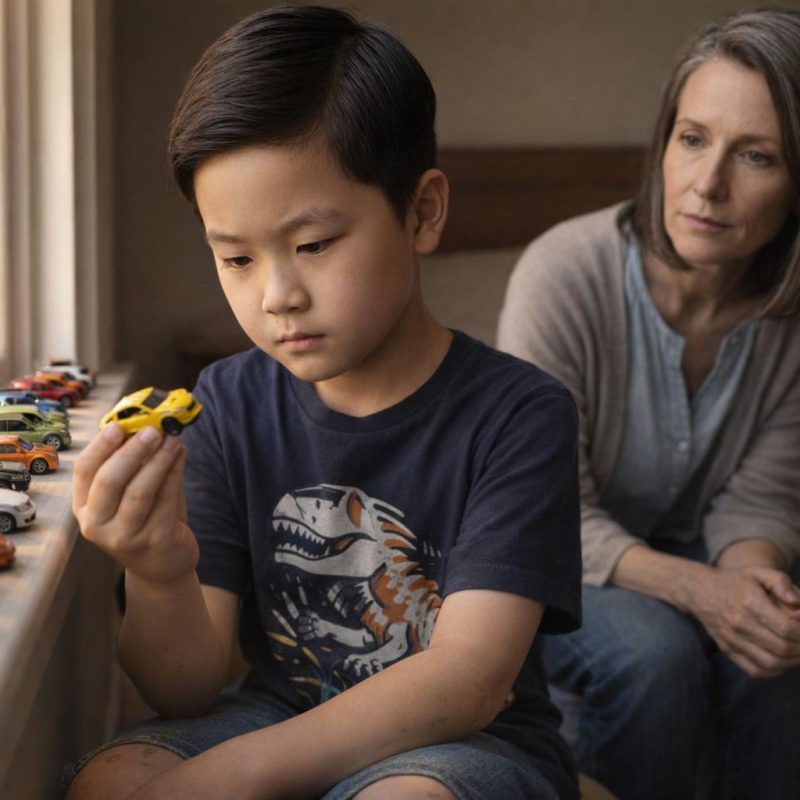 Image by RM AI
Kitchen Geography
Sophie appointed herself my kitchen guide sometime around day four, and I was grateful for it. Melissa's kitchen was organized in ways that made perfect sense once you knew the system, but finding the colander on your own could take a while. Sophie showed me where the good mixing bowls lived — bottom cabinet, left side, behind the pot lids — and where Melissa kept the extra dish towels folded in a drawer I never would have opened. She moved through the kitchen with a quiet confidence, pointing things out the way someone does when they're proud to know something useful. I told her she was an excellent guide, and she stood up a little straighter when I said it. We reorganized the pantry shelf together so I could reach the things I'd be using most, and Sophie handed me items one by one with a seriousness that made me smile. I was sliding a stack of cookbooks back into place on the counter shelf when something caught my eye — a manila folder tucked behind the last cookbook, slightly thicker than I'd have expected, with "Italy" written across the front tab in Melissa's neat handwriting.
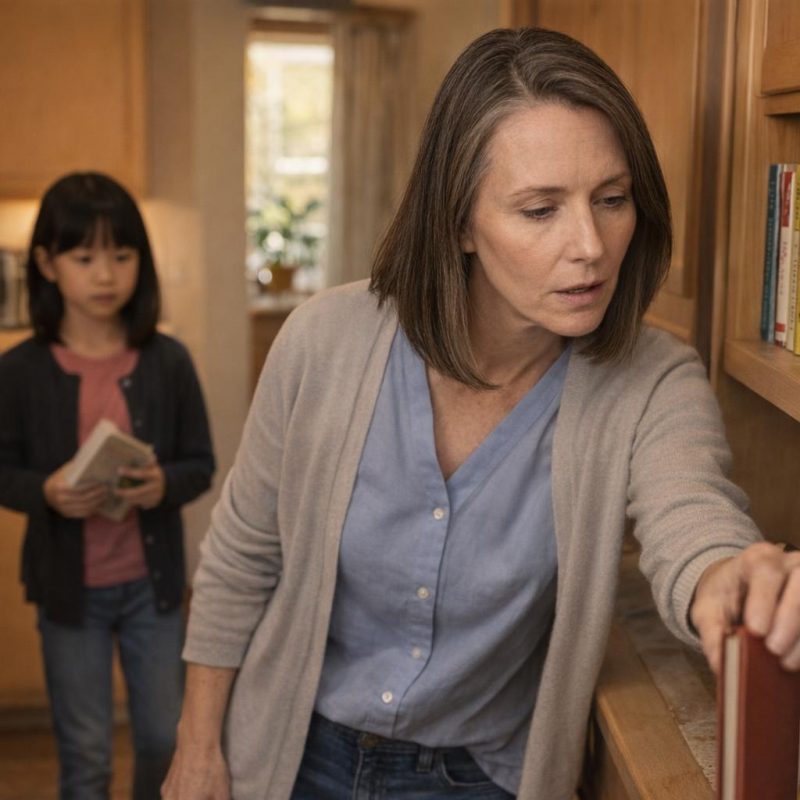 Image by RM AI
Postcards from Rome
The photos arrived on a Thursday morning while I was making oatmeal, my phone buzzing twice on the counter in quick succession. Brandon had sent three pictures from Rome. The first showed him and Melissa standing in front of the Colosseum, both of them squinting a little into the sun, grinning the way people do when they can't quite believe they're actually somewhere. The second was a wide piazza with a fountain at the center, the kind of photo you take because you want to remember the light. The third was a plate of carbonara so good-looking it made me feel slightly envious from across an ocean. His message underneath said the weather was perfect and the food was, and I quote, "unbelievable, Mom, actually unbelievable." I called Sophie and Jake in from the living room and held the phone out so they could see. Jake pointed at the pasta and said he wanted that for dinner. Sophie studied the Colosseum photo for a long moment before handing the phone back. I set it on the counter and went back to the oatmeal, and the warmth of seeing them so happy and so far away settled over the kitchen like morning light coming through the window.
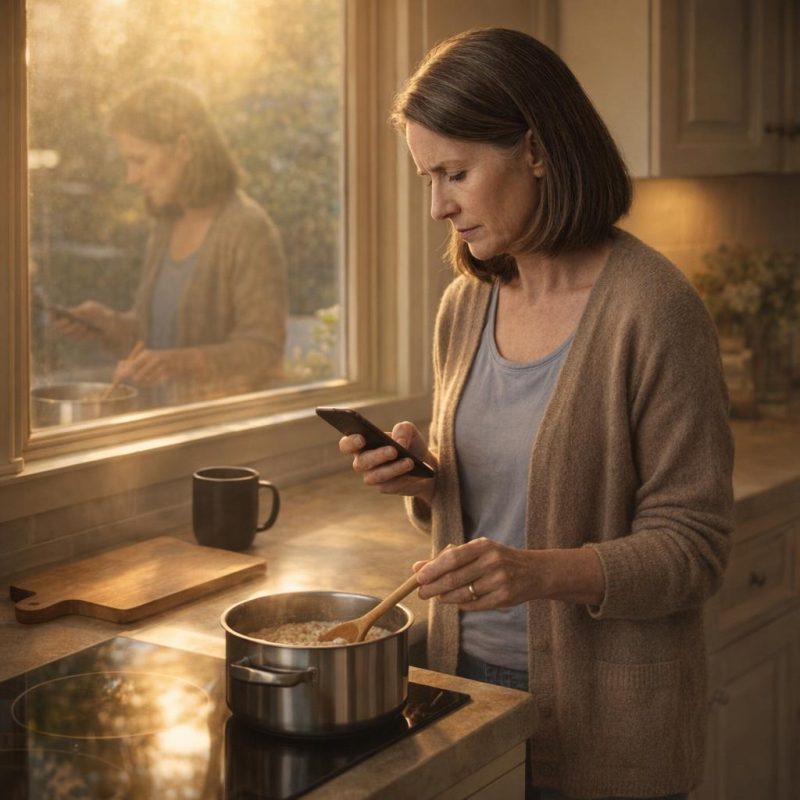 Image by RM AI
Gladiators and Questions
After breakfast I spread Brandon's photos out on the table — well, held the phone flat so both kids could lean in properly. Jake went straight for the Colosseum, the way seven-year-olds always go straight for the thing with the most obvious drama. 'Is that where the gladiators fought?' he asked, and I told him yes, that's exactly where they fought, thousands of years ago, right there in that building. His eyes went wide and he announced, very seriously, that he was going to go there someday and that he would bring a sword. I told him that sounded like a solid plan. Sophie didn't say anything about the gladiators. She held the phone a little closer and looked at the photo of her parents standing in front of the Colosseum — not at the building behind them, but at their faces. She tilted the screen slightly, the way you do when you're trying to read something small. Then she set the phone down, picked up her spoon, and went back to her oatmeal without a word. I poured myself more coffee and watched the morning light move across the kitchen floor. There was something quietly tender about the way she had studied her mother's face in that photo, making sure of something only she needed to know.
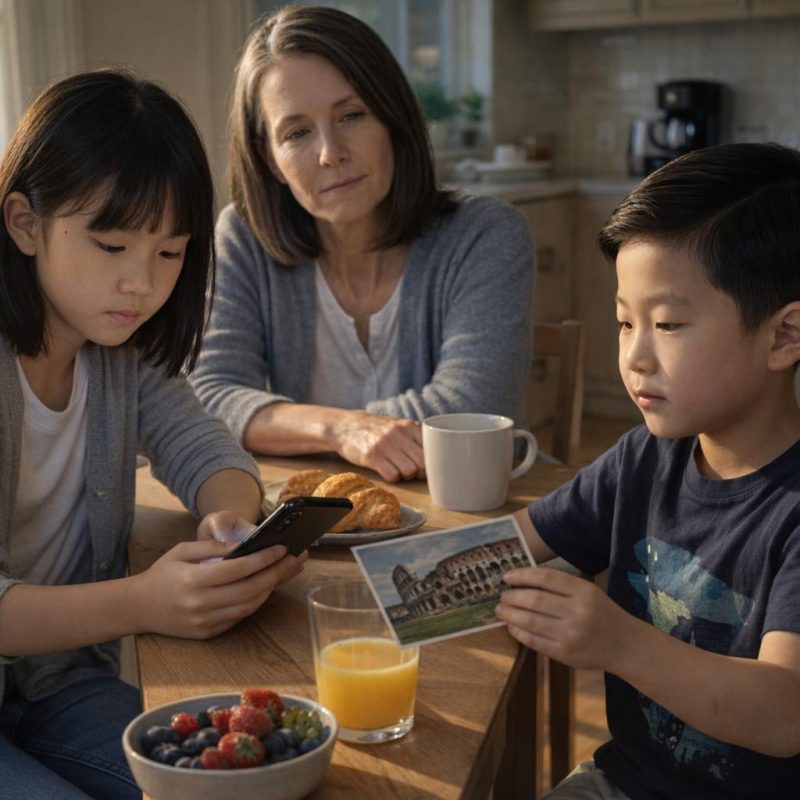 Image by RM AI
Morning Coffee Ritual
By the fourth morning I had the routine down without thinking about it. Coffee first, before anyone else was up — two scoops, the good stuff I'd found in the back of Brandon's cabinet, brewed a little strong the way I like it. I'd carry my mug to the kitchen table and sit with it in both hands while the house was still quiet, just the refrigerator hum and the occasional creak of the building settling. Then Jake would appear in the doorway in his pajamas, hair going in four directions, and the day would begin. Lunches to pack, shoes to locate, the ongoing negotiation about whether Jake had actually brushed his teeth or just run water over the brush. It had found its shape, this little life we'd built inside their bigger one. I was washing the breakfast dishes one morning, looking out the window at the neighbor's maple tree, when it occurred to me that I hadn't thought about my own house in days. Not the quiet of it, not the particular way the afternoon light came through my kitchen window, not the absence of anyone to cook for. I hadn't missed it. The two weeks had simply filled up with something else, and I hadn't noticed the space close over.
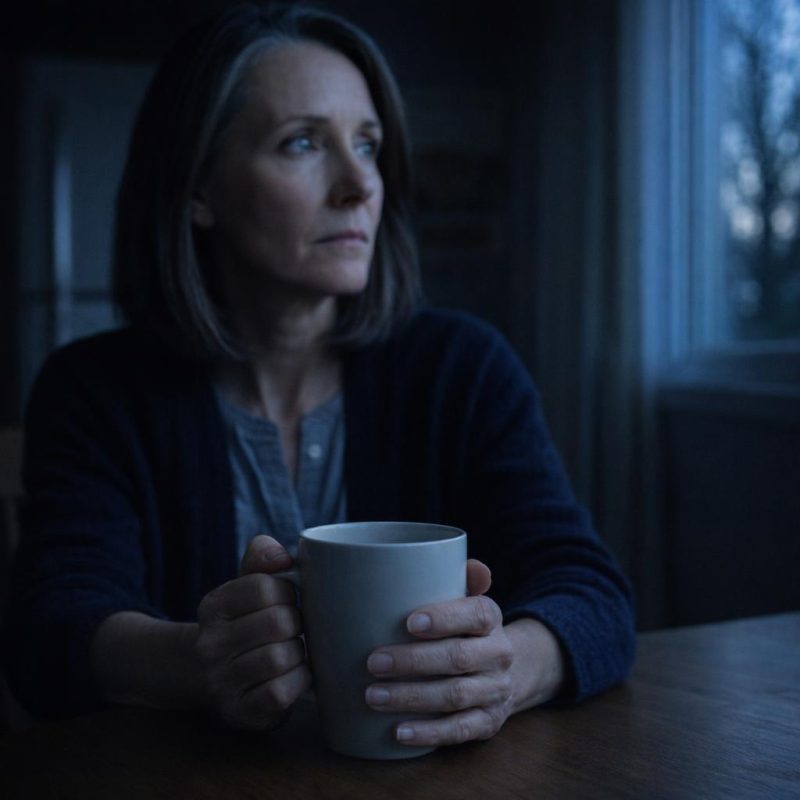 Image by RM AI
Hand-Clap Games
Sophie taught me the hand-clap game on the second morning at the park, standing across from me on the path near the big oak tree while Jake ran circuits around the swings behind us. She demonstrated it once, slowly, narrating each step like a patient schoolteacher — clap, cross, clap, tap, clap, cross, tap-tap, and so on through what felt like fourteen distinct moves, each one flowing into the next with the easy confidence of someone who had done it ten thousand times. Then she held out her hands and looked at me expectantly. I made it to step six on the first try, which Sophie generously called 'pretty good for a first attempt.' By the third attempt I was getting tangled somewhere around step nine, my hands going left when they should have gone right, and Sophie would stop, press her lips together to hold back the smile, and say 'Okay, let's go again.' We practiced for the better part of an hour. I never did get all fourteen steps in the right order. But I kept trying, partly because I genuinely wanted to get it right, and partly because of the sound Sophie made when I got it wrong — this bright, helpless laugh that she couldn't quite contain, spilling out of her like she hadn't meant to let it go.
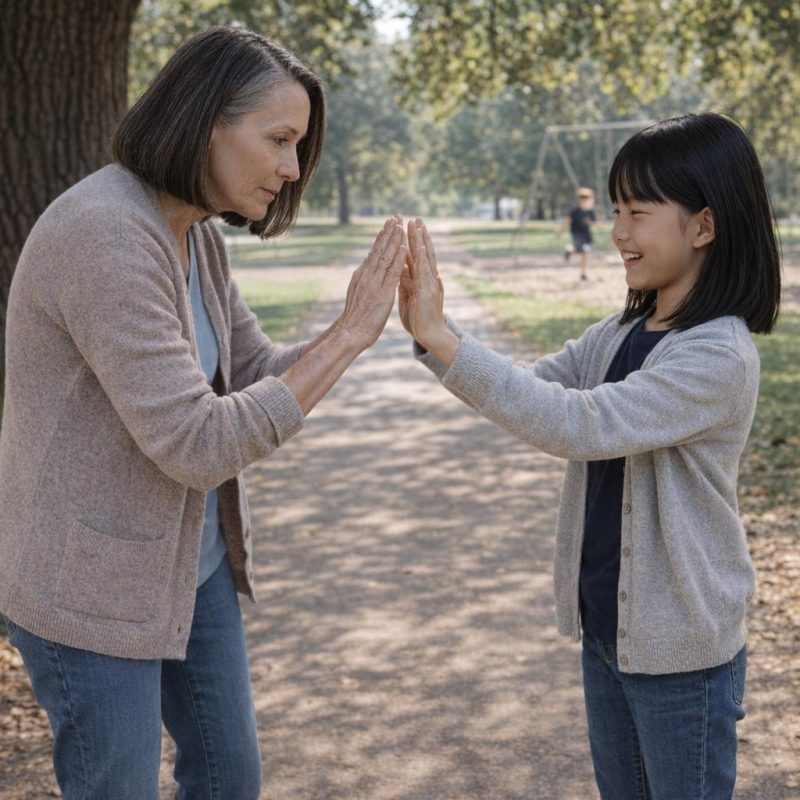 Image by RM AI
The Imaginary Castle
Jake found the stick near the park entrance, a good solid one about the length of his arm, and he knew immediately what it was for. By the time we reached the swings he had declared himself the defender of a castle — the castle being, as far as I could tell, the area between the second swing and the climbing frame — and he was deep into battle with an enemy only he could see. I sat on the bench and watched him for the better part of an hour, this small serious boy lunging and parrying and occasionally announcing the outcome of individual combat to no one in particular. It was the kind of play that doesn't need an audience but doesn't mind having one. Another child drifted over from the sandbox, a boy about Jake's age, and stood watching for a moment before Jake lowered his sword and extended the invitation to join. They conferred in the serious way of children establishing the rules of an imaginary world. I wasn't trying to listen — I was watching a sparrow on the path — but Jake's voice carried, and I heard him tell the other boy that they could use the castle for now, but that he was going to have a different one someday.
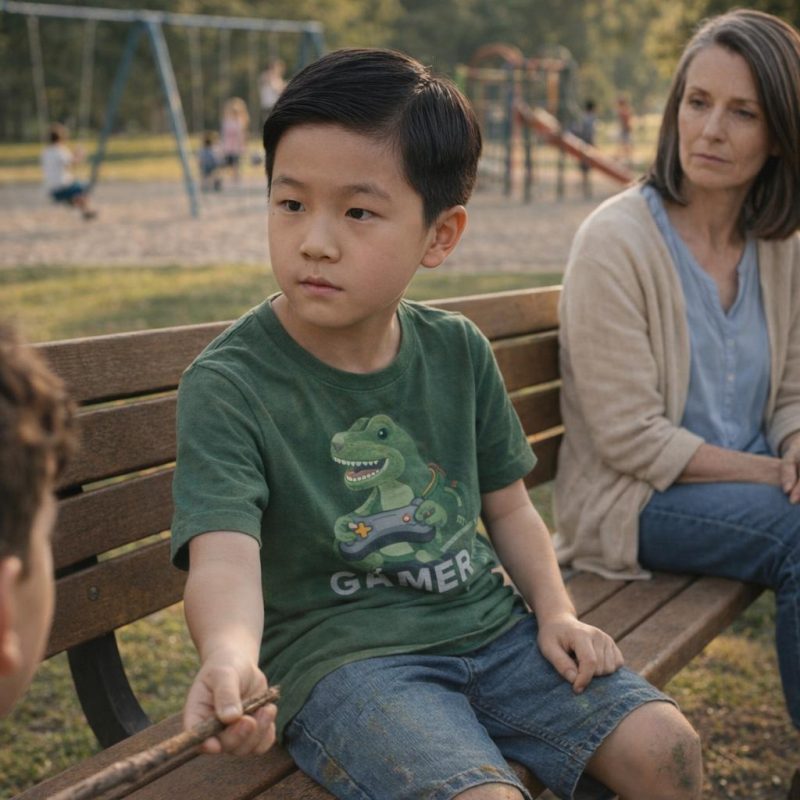 Image by RM AI
Grandmother's Prerogative
I decided on cookies that afternoon the way you decide on cookies when you're a grandmother with two children and a free afternoon — without much deliberation. Sophie found the chocolate chips in the pantry and Jake dragged a chair over to the counter so he could reach, and we made a proper mess of it. I let them both lick the spoon, which I was fairly certain Melissa would have opinions about, but that is precisely what grandmothers are for. Jake ate four cookies while they were still warm, one after another with the focused efficiency of someone who has identified a limited resource and is acting accordingly. At dinner he pushed his pasta around the plate and announced that he wasn't very hungry. I kept my expression neutral and said that was fine, that sometimes that happened. Sophie caught my eye across the table and pressed her lips together in a way that was trying very hard not to be a smile. We cleaned up the kitchen together afterward, the three of us, flour still on the counter and a chocolate smear on Jake's chin he hadn't noticed. There is something about breaking small rules together — the shared look, the unspoken agreement — that settles into a warmth you carry for a long time after.
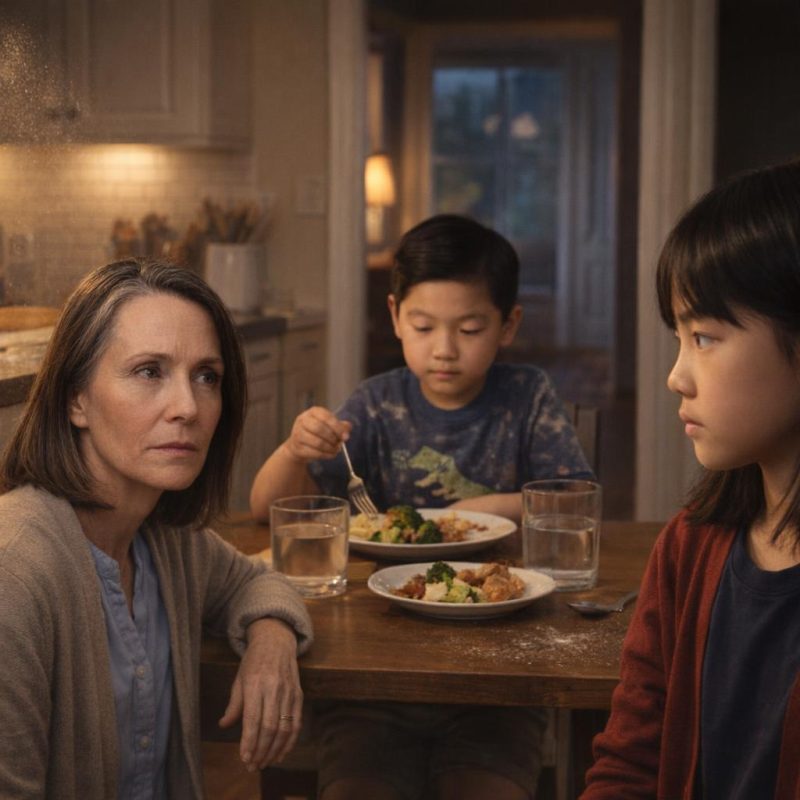 Image by RM AI
Best Friend Stories
Sophie had a particular way of setting a table — placemats first, perfectly straight, then silverware laid out with more precision than most adults bother with. I handed her the forks and she placed them without looking, already talking about her best friend, a girl named Cora who apparently had a dog named Biscuit and a trampoline in her backyard and an impressive collection of gel pens. They spent recesses together and ate lunch at the same table every day and had a system for passing notes in class that Sophie described with the pride of someone who had engineered something genuinely clever. I listened and asked questions and felt the particular pleasure of being let in on the small important world of a ten-year-old. Sophie set the last glass down and smoothed the edge of the placemat, and then she said something about how she and Cora were going to be in the same class next year, she hoped. The word 'hoped' caught in the air between us. Something moved across her face — not quite worry, not quite sadness, something more careful than either — and then she picked up the napkins and began folding them, and the moment passed before I could find a way to reach for it.
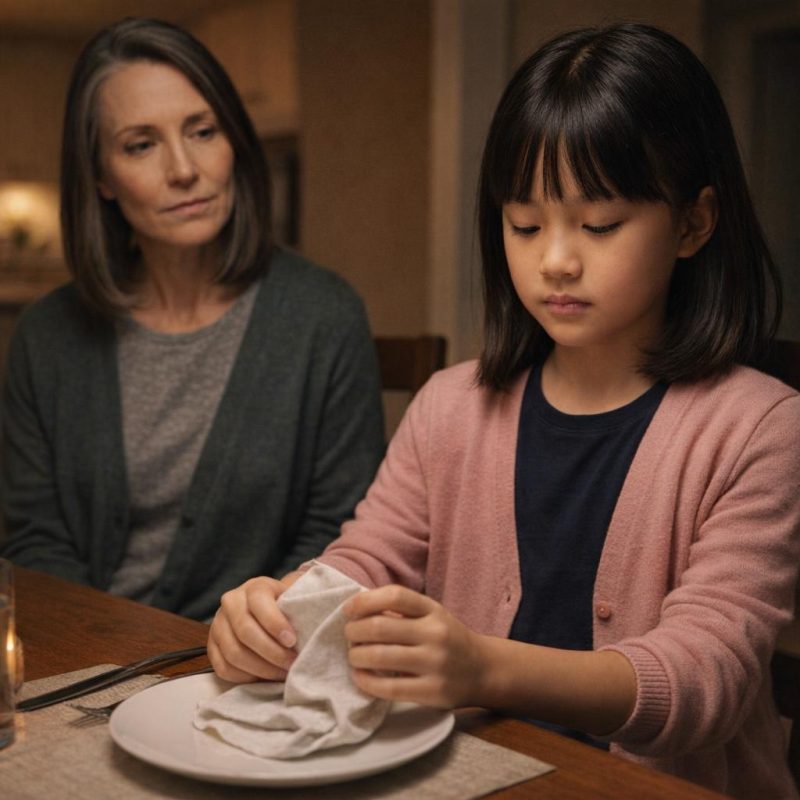 Image by RM AI
The Whisper I Wasn't Meant to Hear
I was folding laundry in the hallway outside the children's room, working through a basket of clean towels, when I heard Sophie's voice through the half-open door. She was using the tone she reserved for instructing Jake — patient, slightly elevated, the voice of someone who has explained something before and is prepared to explain it again. I couldn't make out every word, just the rhythm of it at first, the cadence of an older sister delivering important information to a younger brother. Then a gap in the noise of the building, and her words came through clearly. She told him to remember not to talk about the thing Dad said. Jake said something back that I couldn't catch — his voice was lower, or he'd turned away from the door. Sophie said something else, shorter, and then the conversation shifted into an argument about whose turn it was to pick the game, which was apparently a matter of some urgency. I stood in the hallway with a folded towel in my hands and didn't move. Down the hall, the argument about the game continued, perfectly ordinary, perfectly loud. I stood there a moment longer, then set the towel in the basket and reached for the next one.
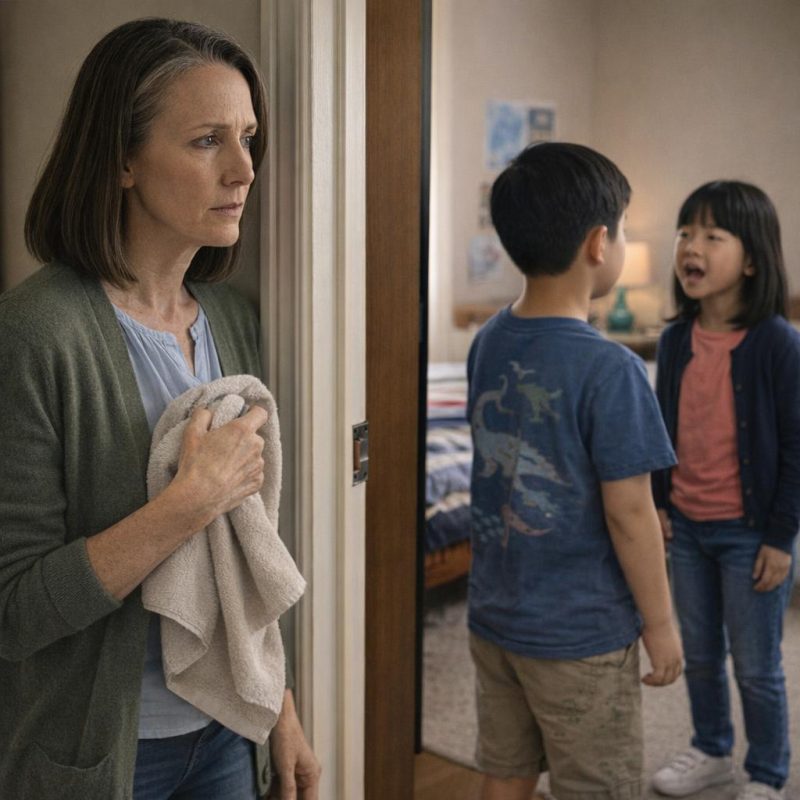 Image by RM AI
Probably Nothing
I finished the laundry and carried the basket to the linen closet at the end of the hall, stacking the towels on the second shelf the way Melissa kept them, folded edges out. Children kept secrets all the time — that was simply true. Jake had probably been told not to mention a birthday surprise, or there was some rule about screen time that Brandon had laid down before the trip and didn't want undermined while he was away. That was the kind of thing parents did. I closed the linen closet and stood there for a moment with my hand on the door. It was nothing. I was a grandmother folding towels in a quiet hallway, and the children were arguing about a board game, and dinner needed to be started, and it was nothing. I went to the kitchen and began pulling things out of the refrigerator. But somewhere between the linen closet and the cutting board, a small feeling had settled in behind my sternum — not alarm, not even worry exactly, just a quiet insistence that I should hold onto this moment, that it might matter later.
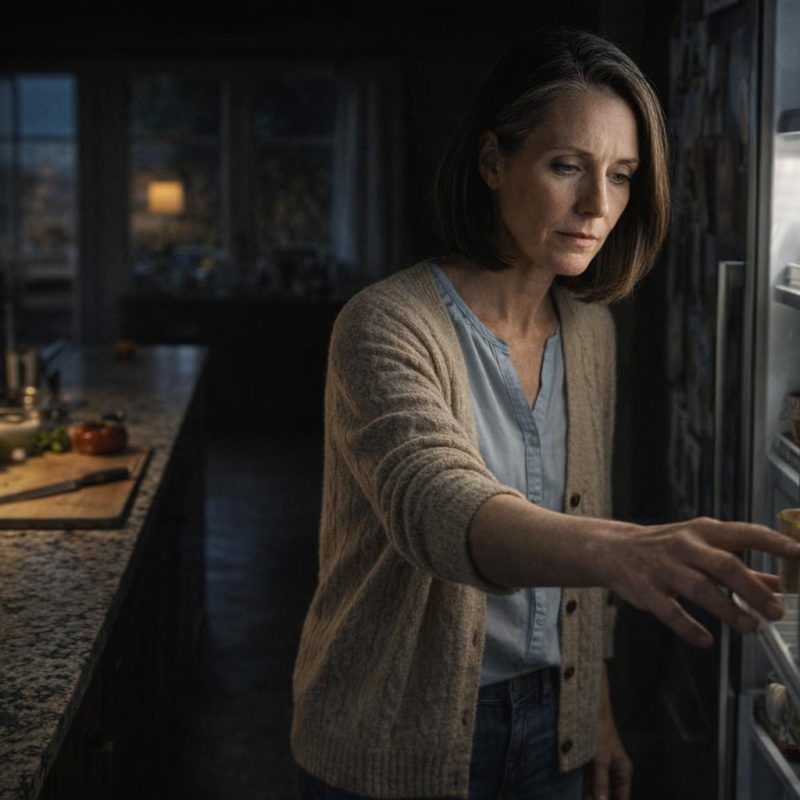 Image by RM AI
Smooth Days
The rest of that first week settled into something I hadn't expected — ease. Real ease, not the kind you perform when you're trying to prove you can handle things. By Thursday I knew which drawer Sophie kept her colored pencils in, and I knew that Jake needed exactly one glass of water and one trip to the bathroom after lights-out before he'd actually stay put. Homework happened at the kitchen table without argument, mostly because I'd learned to put a small snack out first and let them decompress for twenty minutes before I even mentioned backpacks. Dinner was simple — pasta one night, soup the next, grilled cheese on Friday because it was Friday and that felt right. We had a rhythm. I'd wash up while they set the table, and Jake would fold the napkins into what he called "fancy triangles" even though they were just rectangles, and Sophie would correct him every single time, and he would laugh every single time. Standing at the sink one evening, I watched them bicker cheerfully over the napkins and thought: they're not just tolerating this. They've made room for me in their week like I'd always been here. I wasn't sure when that had happened.
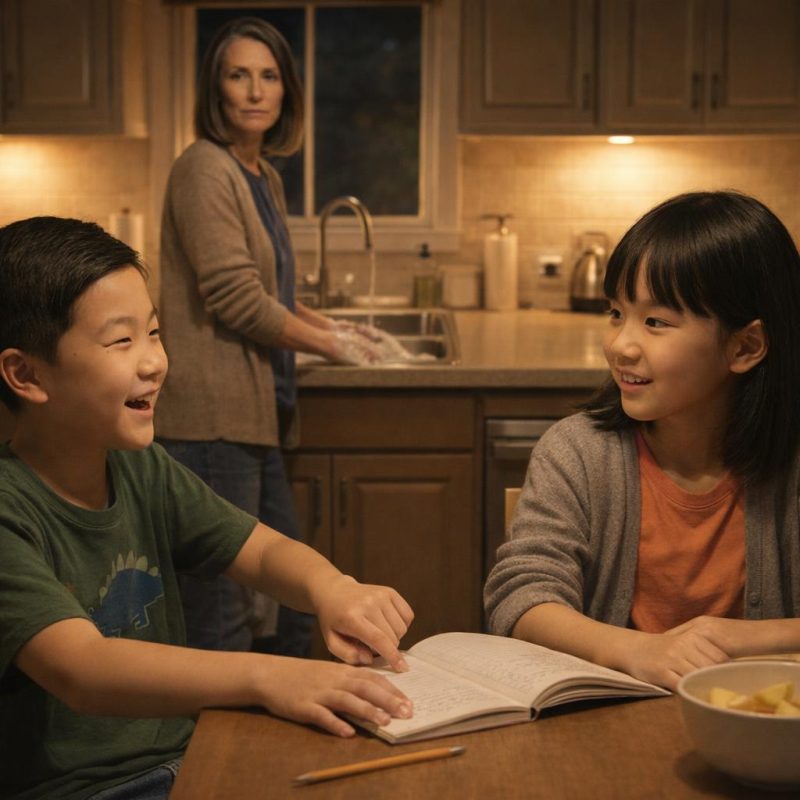 Image by RM AI
Soccer and Homework
Melissa had left a color-coded schedule on the refrigerator, and I'll be honest — the first time I looked at it, I felt a little intimidated. Soccer practice was on Wednesdays, highlighted in green. Homework before screens, underlined twice. Sophie's reading log needed a parent signature every Thursday. It was thorough in the way Melissa did everything, and I respected that even as I quietly hoped I wouldn't mix anything up. But I didn't mix anything up. Wednesday I had Jake at the field ten minutes early, shin guards on the right legs, water bottle full. Sophie sat at the kitchen table with her book open before I even asked, working through her reading log while her brother ran drills in the afternoon light. I signed the log Thursday morning without being reminded. I checked the schedule each morning like it was my own calendar, and by the middle of the week I'd stopped needing to check it at all — I just knew. There was something quietly satisfying about that, about honoring the structure someone else had built and keeping it intact. The house ran the way it was supposed to run, and I was part of the reason why.
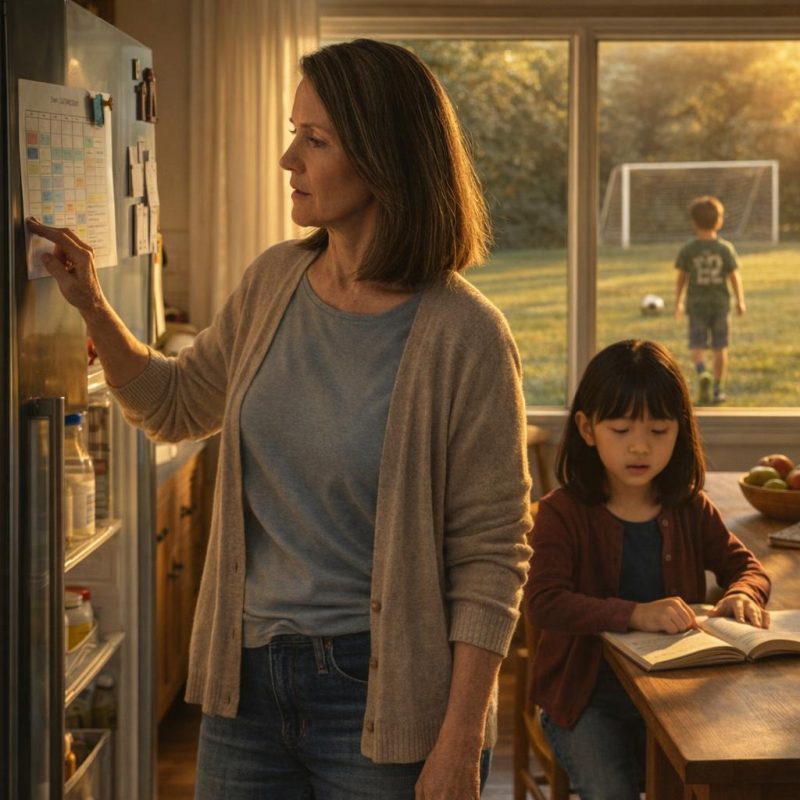 Image by RM AI
The Warning
I was putting the dinner dishes away when I heard Sophie's voice carry down from upstairs — not loud, but serious in a way that made me go still. She had that tone she sometimes used when she was being the older one, the responsible one, and it cut right through the sound of the cabinet door I'd been about to close. I couldn't make out every word at first, just the cadence of it, careful and low. Then Jake said something, and Sophie's answer came through clearly enough: "No. Dad said not to tell anyone. Not even Grandma." There was a pause. Jake said something I couldn't hear. Sophie said, "I know, but we're not supposed to. Just don't bring it up." Then footsteps moved toward the back bedroom and a door clicked shut. I stood at the counter with a bowl in my hand and didn't move for a long moment. It wasn't a birthday surprise kind of voice. It was the voice Sophie used when something actually mattered to her. I set the bowl down carefully on the shelf and closed the cabinet. The quiet that followed felt heavier than the words themselves.
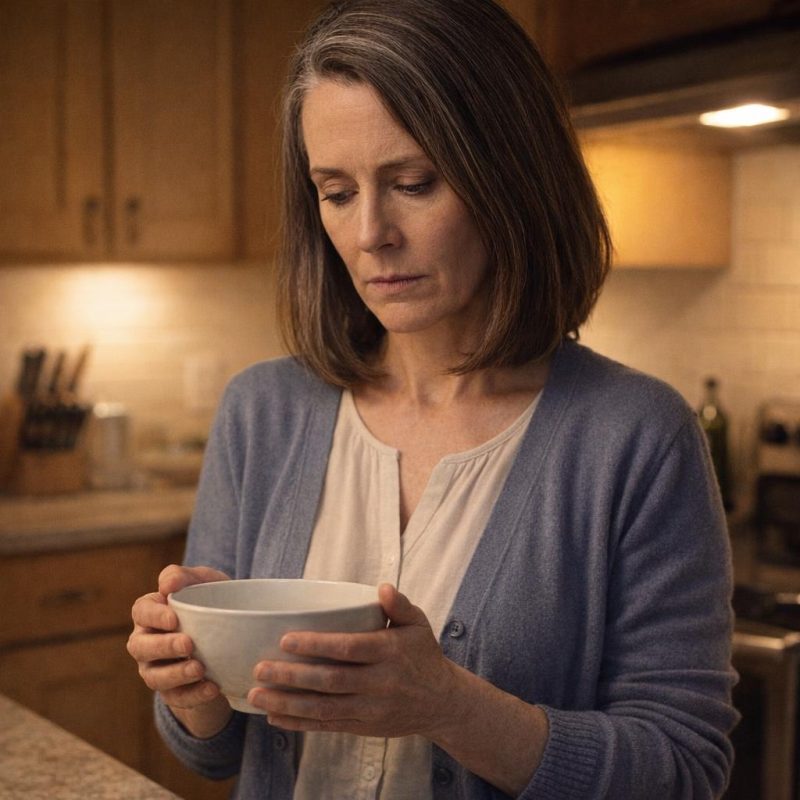 Image by RM AI
Birthday Surprise
I told myself it was a birthday surprise. That was the most sensible explanation, and I held onto it while I wiped down the counters and turned off the kitchen light. My birthday was in March — not far off, really — and it would be just like Brandon to have the children in on something he was planning. Maybe a trip somewhere, or a dinner, or one of those photo books Melissa was so good at putting together. Children that age couldn't keep that kind of secret quietly; they always got a little too careful, a little too deliberate about not mentioning it. That was probably all this was. Sophie's seriousness made sense if she'd been told the surprise depended on her. Jake's eagerness to tell me made sense too — he'd never been able to sit on good news for long. I rinsed out the dish cloth and hung it over the faucet. The explanation fit well enough that I could set the whole thing down, at least for now. But I decided that when Brandon came home, I'd mention it to him — not to make anything of it, just to let him know I'd overheard, just to clear the air. I'd ask him then.
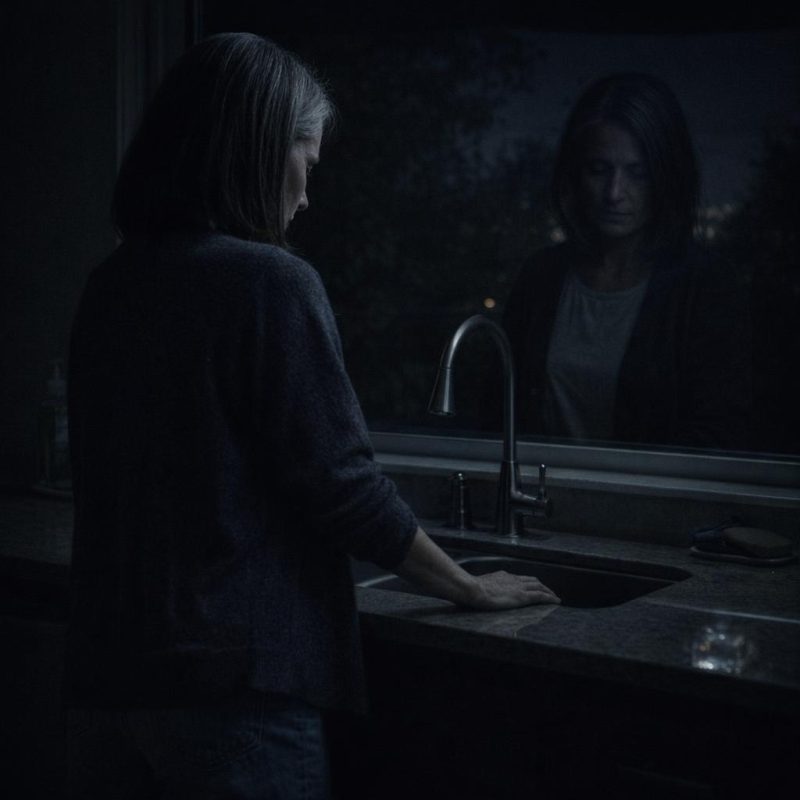 Image by RM AI
Venice Morning
Sunday morning I was still on my first cup of coffee when my phone lit up with photos from Brandon. Venice. I hadn't quite pictured it — the canal was narrower than I'd imagined, the water a deep greenish gray, and a gondola sat low in it with a man in a striped shirt standing at the back with a long oar. There was a stone bridge arching over the water, old and worn at the edges, and the buildings on either side were the color of faded terracotta. Melissa was in one of the photos, sunglasses pushed up into her hair, laughing at something off-camera. She looked relaxed in a way I didn't often see her. I brought the phone to the breakfast table and held it out so both children could see. Jake leaned in immediately. "Do the boats ever crash into each other?" he asked. Sophie considered this with the gravity she brought to most things. "The gondoliers are probably very good at their jobs," she said. Jake seemed to accept that. We looked through the photos together while the toast went cold, and for a little while the kitchen felt connected to somewhere very far away. The morning settled back into its usual shape after that, unhurried and ordinary, and I found I was glad for both things at once.
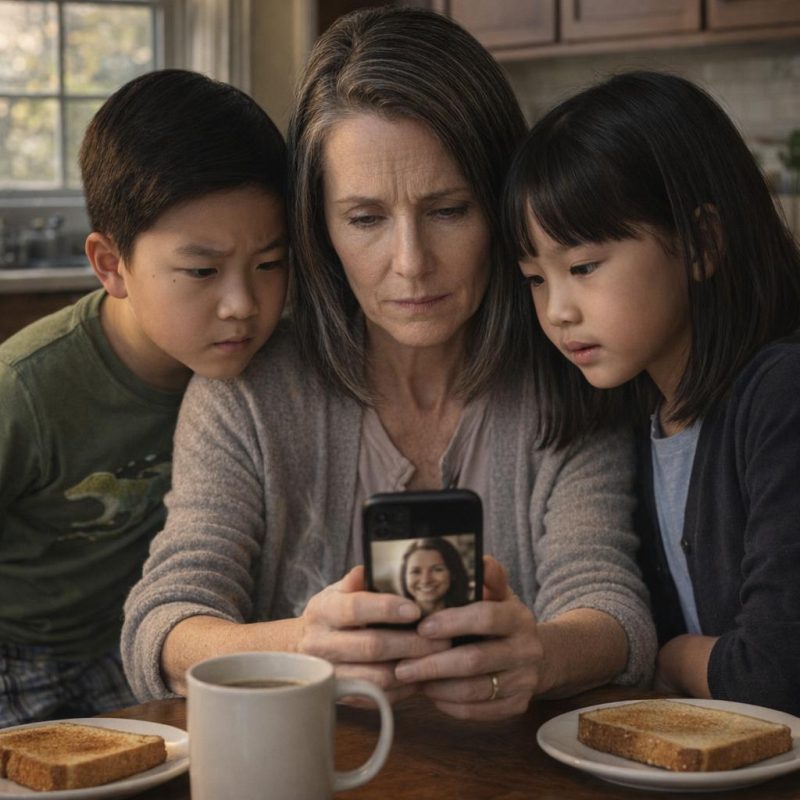 Image by RM AI
Quieter Than Usual
Sophie was quieter than usual at breakfast that Monday. Not upset, not sulking — just quieter, more inside herself. She answered when I asked her things, passed the butter when I needed it, ate her toast without complaint. But there was a thoughtfulness to her that morning that I noticed the way you notice a change in the light — not dramatic, just different. I asked her if she'd slept all right. She said yes. I asked if she had anything due at school that week. She said a reading response, but she'd already started it. All perfectly normal answers. I didn't push. She was ten, and ten-year-olds had interior lives that didn't always need explaining, and I knew better than to make something out of nothing. But I made a small note of it in the back of my mind, the kind of note you file away without quite meaning to. I'd mention it to Brandon when he got back — not as a worry, just as something I'd noticed, the way you pass along small observations to the people who know a child better than you do. Jake chattered through the whole meal and Sophie let him, and the morning moved on the way mornings do.
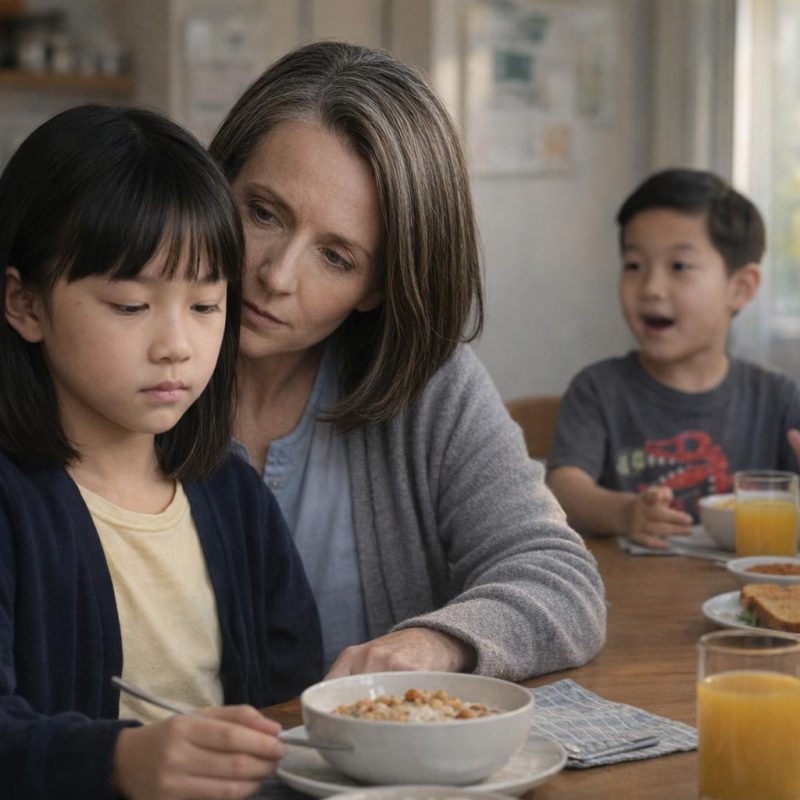 Image by RM AI
School Project Supplies
Sophie mentioned the school project on Tuesday afternoon — something about ecosystems, with a display board and labeled diagrams. We sat at the kitchen table and went through what she'd need: poster board, colored markers, a glue stick, index cards. I wrote it down on the back of an envelope while she sorted through her backpack, pulling out folders and crumpled worksheets and a library book that was due back Thursday. I added that to the list. She was organized about it in her careful way, stacking things into piles, smoothing out the creases in her papers. Near the bottom of the bag she pulled out a yellow folder and handed me a stack of loose papers to hold while she looked for something else. I was straightening them when one slipped partway out — a permission slip, the kind with a tear-off at the bottom. I glanced at the date for the field trip without meaning to make anything of it. It was late spring. Several months away. I set it back with the other papers without saying anything, but I held onto the date for a moment longer than I needed to, turning it over quietly in my mind.
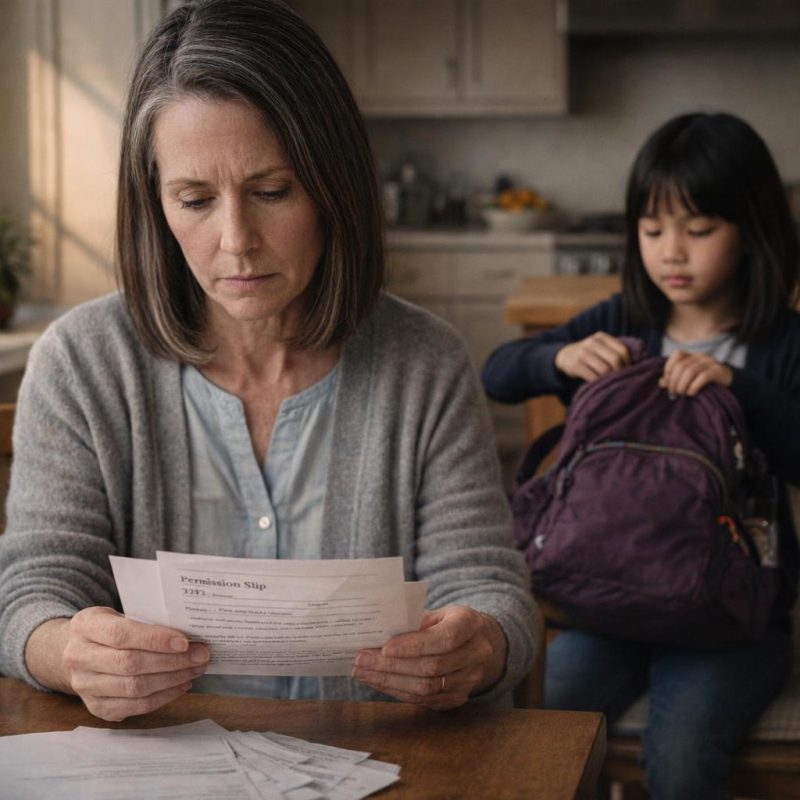 Image by RM AI
Wednesday Soccer
Jake had been talking about Wednesday's soccer game since Monday. He told me at breakfast, reminded me at dinner, and mentioned it again Tuesday night while I was tucking him in, just to make sure I hadn't forgotten. I hadn't forgotten. Wednesday afternoon I helped him find his shin guards — one under the bed, one behind the bathroom door — and watched him pull his jersey over his head with the focused ceremony of someone suiting up for something that genuinely mattered. He was seven years old and completely serious about it, and I loved that about him. I packed his water bottle and found a folding chair in the garage and drove him to the field with ten minutes to spare. He ran straight to his teammates without looking back, which felt right. I set up my chair on the sideline and watched him take his position, all that restless energy suddenly pointed in one direction. It was a good afternoon — cool enough for a jacket, bright enough to squint. Somewhere between the first whistle and halftime, I caught myself thinking about next Wednesday's game, and the one after that, and how many of these I'd missed over the years living two hours away.
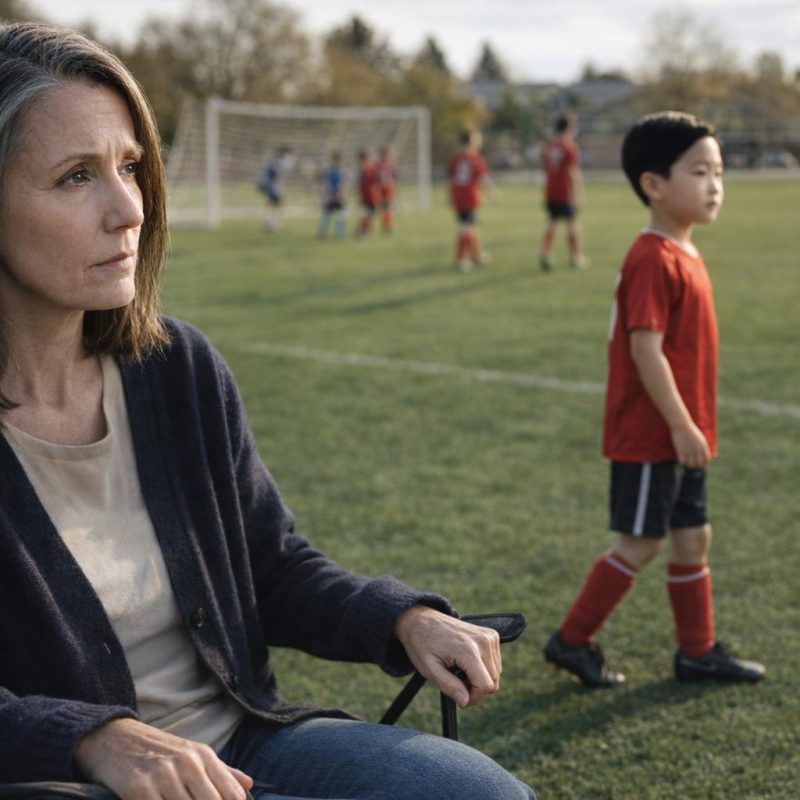 Image by RM AI
The Sidelines
Jake waved at me from the field before the whistle blew — a quick, unselfconscious wave, the kind that assumes you'll be there. I waved back and settled into my folding chair, and for a while I just watched him run. He had this way of chasing the ball with his whole body, arms pumping, completely committed, and it made me smile every time. The parents around me were easy company — the kind of sideline crowd that shares snacks and groans together at near-misses. A woman in a green fleece had been standing near me most of the first half, and we'd fallen into the comfortable small talk of people who show up to the same place every week. She asked how Jake was doing in school, and I told her what I knew. She nodded like she already had a sense of him. Then, somewhere near the end of the second half, she said it almost as an aside — how nice it must be, living so close, being able to come to all his games. I smiled and said something vague, but the words stayed with me long after the final whistle.
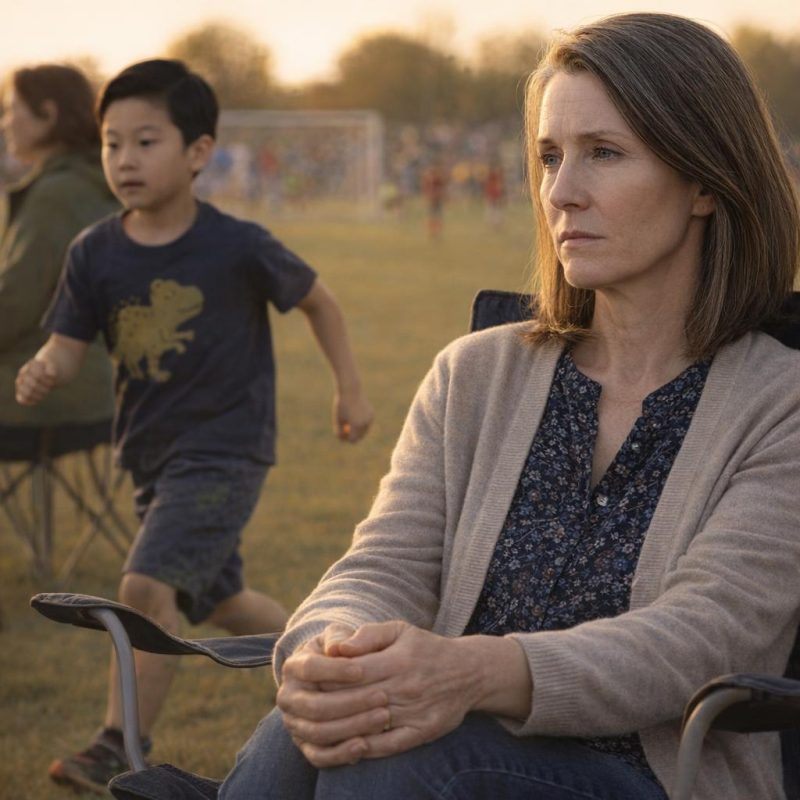 Image by RM AI
Careful Words
I made pasta that evening — nothing complicated, just something warm that would get eaten without complaint. Sophie sat at the kitchen table with her homework spread out while Jake worked through his reading at the other end, narrating every sentence under his breath the way he always did. I asked Sophie about her day while I stirred, the kind of easy question I'd asked a hundred times before. She answered, but there was something different in the way she did it. A small pause before she spoke. A careful selection of words, like she was choosing from a menu rather than just talking. She told me about a project, about lunch, about something her teacher said — all perfectly normal things — but each answer felt slightly trimmed, like she'd considered it first. Jake chattered without stopping, filling every silence with whatever crossed his mind. Sophie listened to him with a patient half-smile and said nothing extra. I didn't push. I just kept stirring and listening, and by the time dinner was on the table, I'd stopped waiting for her to say more. The quiet around what she wasn't saying had its own kind of weight.
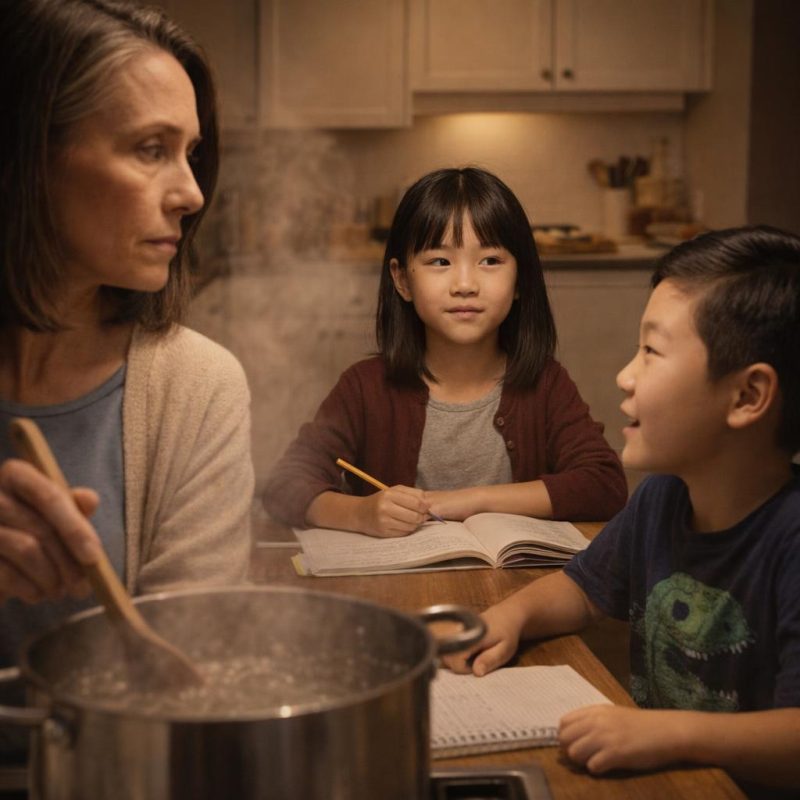 Image by RM AI
Excessive Preparation
After the kids were in bed, I found myself at the kitchen counter with Melissa's folder spread open in front of me. I'd consulted it plenty of times over the past week — the color-coded schedule, the laminated emergency sheet, the typed notes about routines and preferences. It had all seemed so thoughtful when they first handed it to me. Thorough. Loving, even. But standing there in the quiet of the kitchen, I read through it again with different eyes. Every hour of every day was accounted for. Not just the school pickups and the soccer practice, but the backup plans — what to do if the carpool fell through, who to call if the pediatrician's office was closed, which neighbor had a spare key and which one was better for last-minute help. There were three separate notes about the children's bedtime routines, each one slightly more detailed than the last. I turned a page and found a second emergency contact sheet, nearly identical to the first, tucked behind the laminated one. I stood there and counted the contingency plans — more than I could account for by the length of the trip alone, more than I would have thought to write down for anyone.
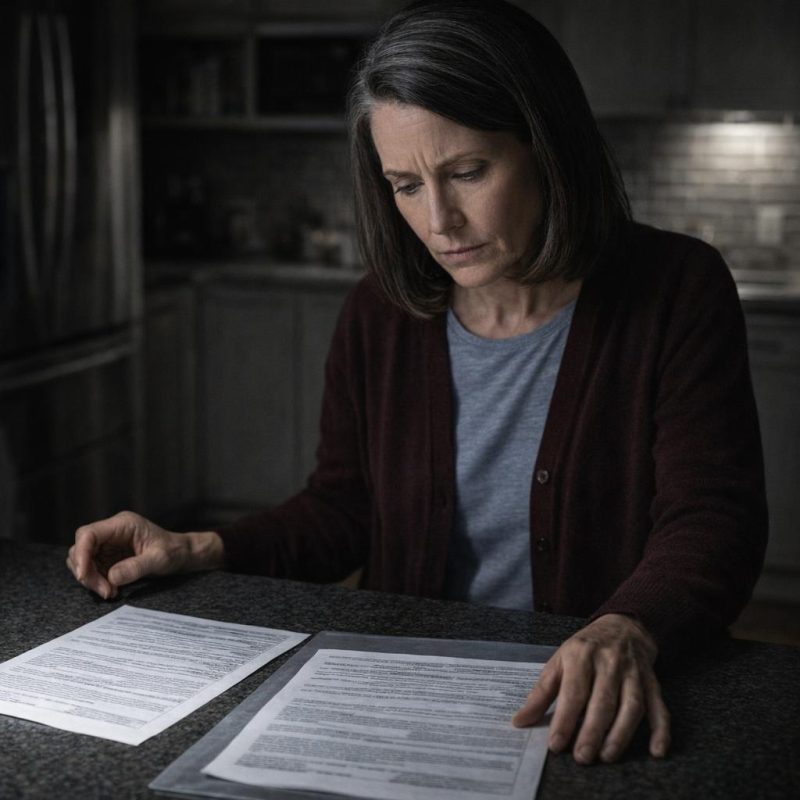 Image by RM AI
Two Weeks
I woke up early the next morning and sat with my coffee before the house stirred. The light came in low and pale through the kitchen window, and I just sat with it for a while. Two weeks. I kept turning the number over in my mind. Most of my visits had been long weekends — a Thursday to Sunday, maybe five days at the holidays if schedules allowed. Two weeks was different. Two weeks was a school schedule, a soccer game, a full rotation of homework nights and grocery runs. It was long enough to feel like something more than a visit. I tried to think of other times I'd stayed this long and couldn't come up with one. I told myself it made sense — Italy was far, the time difference was significant, it was easier for everyone if I was settled in rather than rushing. All of that was true. But the number kept sitting there in my mind, not quite answering the question I couldn't fully form. I wrapped both hands around my mug and watched the steam rise. Two weeks felt like exactly enough time for something, and I couldn't say what.
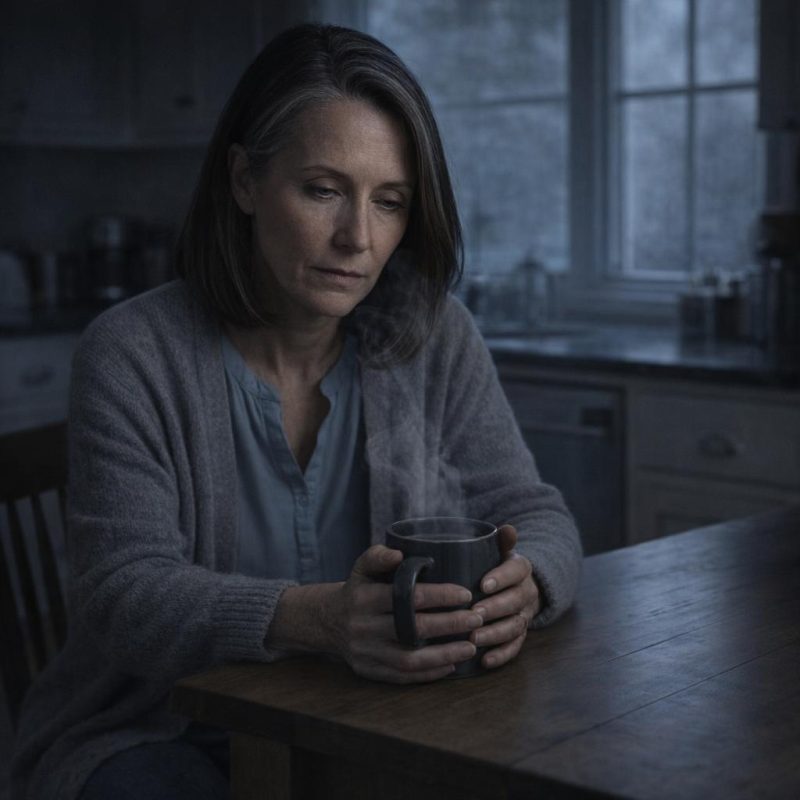 Image by RM AI
Echoes of Gratitude
I thought about the phone call again — the one the night before they left, when Brandon had called to go over the last few details. He'd thanked me at least three times before we hung up. Not the quick, reflexive kind of thanks you toss at the end of a conversation, but something more deliberate. He'd said it was such a big help, that he didn't know what they'd do without me, that he really meant it. And then, right before he said goodbye, he'd said it again — 'Really, Mom.' Just like that. Melissa had thanked me twice on the morning they left, once at the door and once from the driveway. At the time it had all felt warm. Generous, even. I'd been touched by it. But sitting with it now, in the quiet of the afternoon, the gratitude felt like it had more weight than the occasion called for. I turned it over carefully, not wanting to land anywhere I couldn't come back from. Something about the repetition nagged at me — the way you keep returning to a word you can't quite place. But I kept hearing his voice — the particular way he'd said 'really, Mom' — and I couldn't quite set it down.
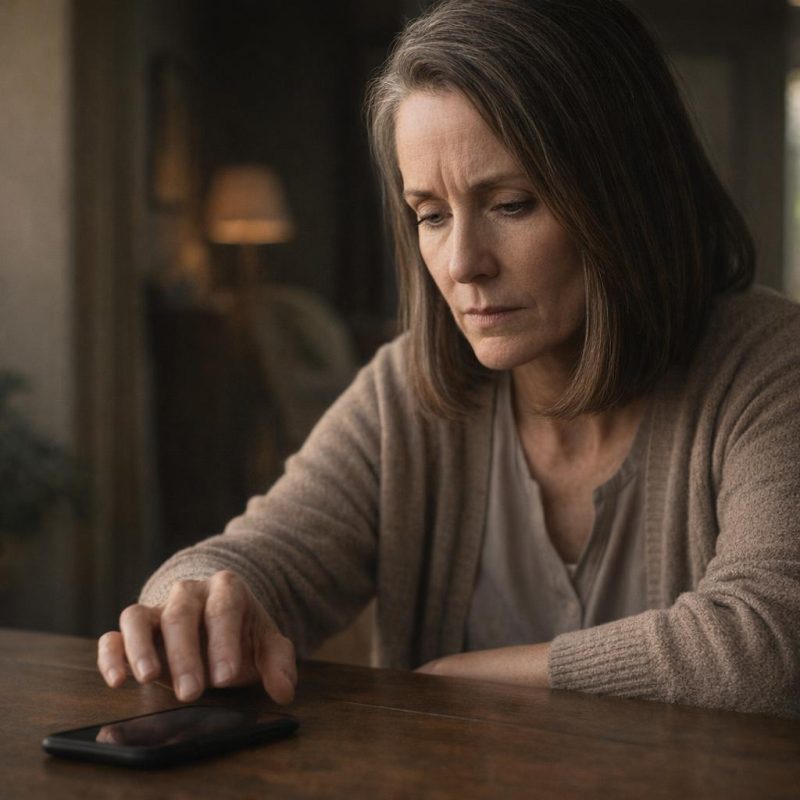 Image by RM AI
Investment
Brandon had been talking about Italy for years. I remembered the first time he mentioned it — Sophie was still in preschool, and he'd described it as something they'd do when the kids were old enough to appreciate it. Then Jake came along and the timeline shifted. There were a few years when money was tighter, and the trip got set aside without much discussion. Then work got busy for both of them, and it came up less often. I'd stopped expecting it to actually happen. But this year, something changed. Brandon brought it up in the spring with a kind of quiet certainty I hadn't heard from him about it before. The flights were booked within a few weeks. The hotel was chosen quickly. Melissa had mentioned the itinerary once on a phone call, and even then her voice had sounded more settled than excited — calmer than I might have expected. I hadn't thought much of it at the time. But now I found myself wondering what had shifted, why this year had been the year, what had made it suddenly possible when so many other years hadn't been. The question didn't have an answer I could reach, and the weight of all those years of waiting sat with me in the silence.
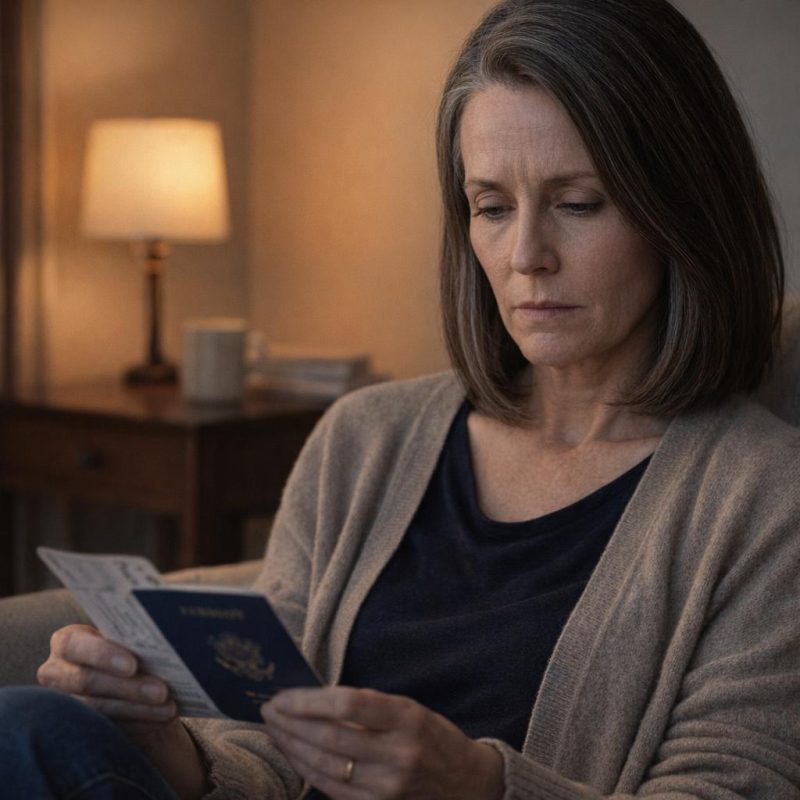 Image by RM AI
Departure Morning Revisited
I kept going back to the morning they left. I'd replayed it before, but now I found myself slowing it down, looking at the edges of it. Brandon had checked his passport twice — once at the kitchen table and once again at the door, which I'd noticed but hadn't thought about. Melissa had done a slow walk through the downstairs before they called the kids — I remembered watching her move from room to room without quite registering it at the time. Jake had wrapped himself around Brandon's leg and had to be gently untangled, laughing and protesting at the same time. Sophie had held on to Melissa for a beat longer than usual — not dramatically, just a moment that stretched slightly past what I'd expected. I'd stood in the doorway and watched them load into the car, and Brandon had turned back once to wave. It had all seemed like a normal goodbye. But thinking about it now, there was a care to it — a deliberateness in the way each of them had said goodbye — that I hadn't registered in the moment. The memory of it settled over me quietly, the way certain things do when you finally let yourself look at them straight.
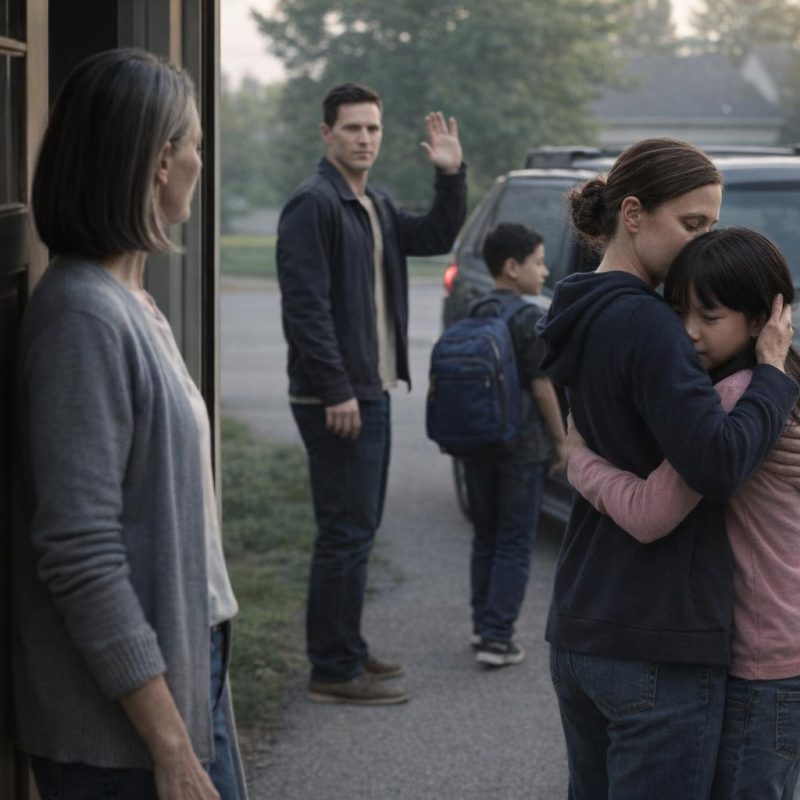 Image by RM AI
Florence Arrives
More photos came through that afternoon — Florence this time. The Duomo filled one entire frame, shot from below so the dome took up most of the sky. There were narrow streets, a stone archway, a piazza I didn't recognize. I looked at them the way I'd looked at all the others, but something made me slow down. I went back to the beginning and scrolled through again. Melissa appeared in two of the newer ones, standing at a distance in both, the kind of shot where someone else is clearly holding the phone. Most of the images were buildings. Facades, doorways, rooflines, the angles of streets. I told myself that was just how Brandon photographed — he'd always been drawn to architecture, to the bones of places. But I kept scrolling anyway, studying the backgrounds, the framing, the way certain streets appeared more than once from slightly different angles. Something about the collection felt different from the earlier photos, though I couldn't have said exactly what. I set the phone down and picked it up again. I counted the photos in the last batch: eleven images, and nine of them showed buildings with no people in them at all.
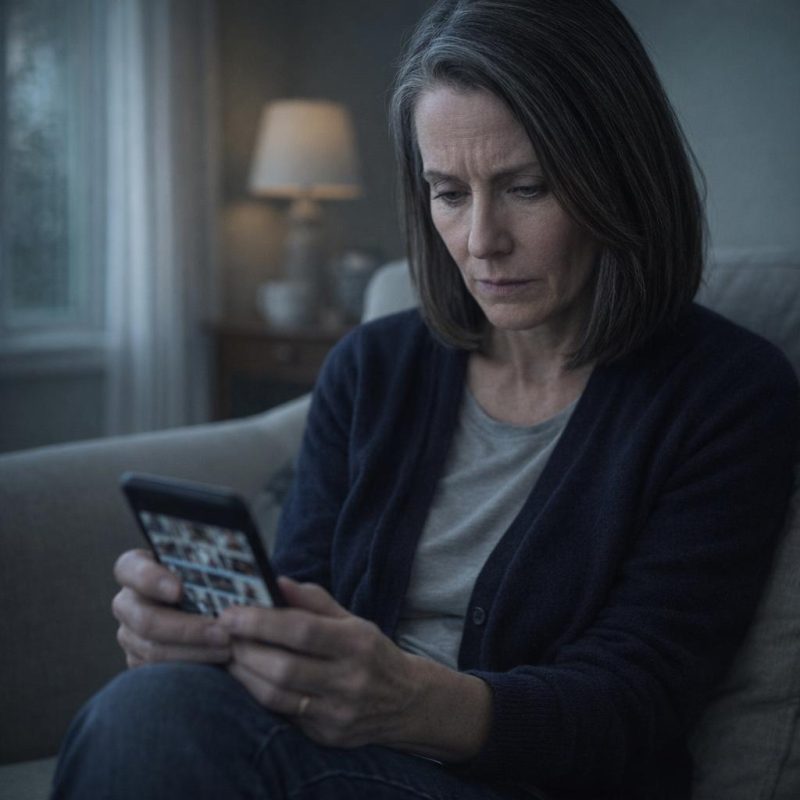 Image by RM AI
Carefully Normal
Sophie and Jake came back into the house like they always did — shoes dropped near the door, Jake already talking about something that had happened at the park, Sophie moving toward the kitchen to get a glass of water. It looked exactly right. That was the thing. Every piece of it looked exactly right, and I stood there watching them move through their afternoon routines and felt something I couldn't quite name. Jake set up his cars on the living room rug the way he always did. Sophie settled at the kitchen table with a book. They answered my questions about their afternoon with easy, complete little answers — not too short, not too long. When I asked if they were hungry, they said yes at almost the same moment and then laughed at themselves for it. Normal. All of it was normal. But I'd spent enough time with these two to know what effortless looked like, and this wasn't quite that. There was a steadiness to them that felt maintained rather than natural, like they were both quietly working at something I wasn't supposed to see. By the time I turned the stove on to start dinner, I felt more tired than the afternoon had earned.
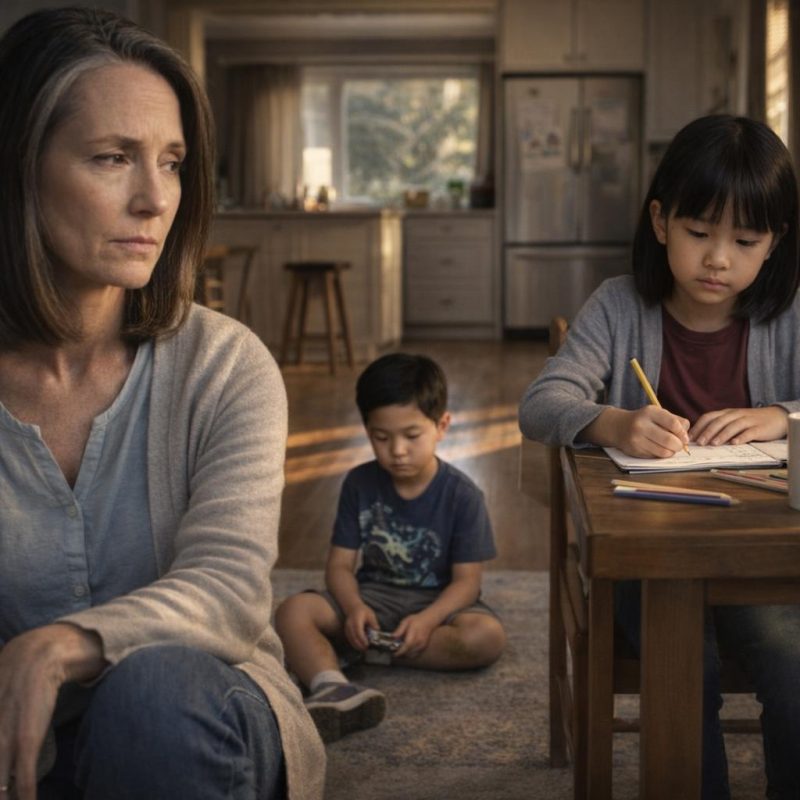 Image by RM AI
Topic Avoidance
Sophie and I had a good stretch of time together that evening after Jake fell asleep on the couch. I asked her about school — her current project, the book report she'd mentioned earlier in the week — and she answered all of it easily, with the kind of detail that told me she genuinely liked talking about those things. But when I asked what she was looking forward to in sixth grade, something shifted. Not dramatically. She didn't freeze or look away. She just tilted her head slightly and said, 'Oh, did I tell you about Avery's birthday party? It's going to be at that place with the climbing walls.' And we were talking about Avery's party. I let it happen. I asked about the climbing walls, and she lit up describing them, and the conversation moved on the way conversations do. But I noticed. I noticed because it happened again when I mentioned the fall, and again when I brought up the new school year. Each time, Sophie found something else — something real, something she actually wanted to talk about — and the subject changed so smoothly I almost missed it. Almost. There was a grace to the way she moved around certain topics that I couldn't stop thinking about long after she'd gone to bed.
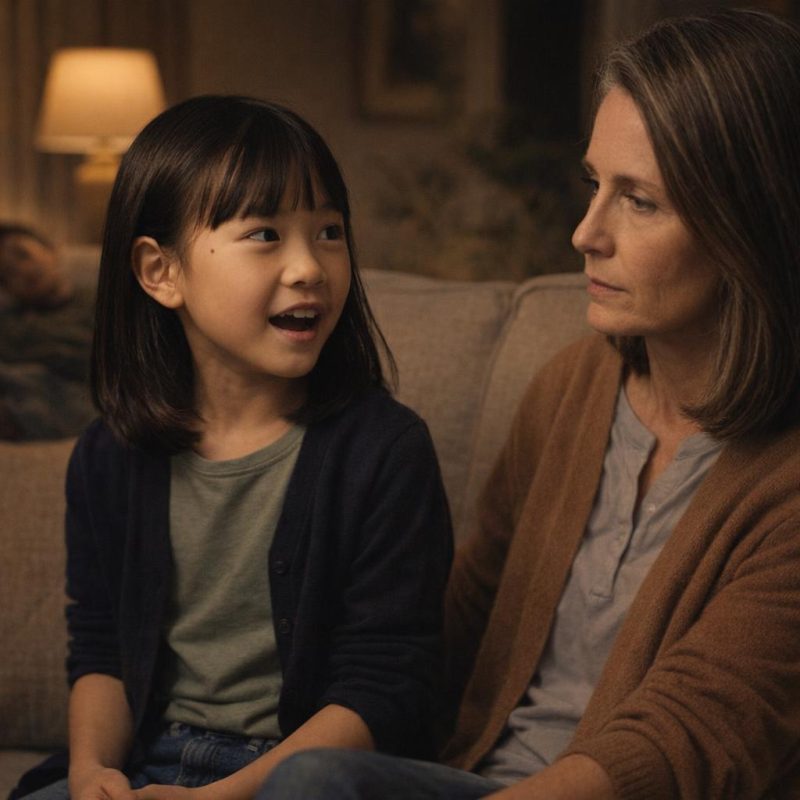 Image by RM AI
Preparation, Not Help
I found the schedule on the counter again that night — the one Melissa had left, printed and laminated, color-coded by day and time. I'd looked at it a dozen times already. I picked it up and read through it slowly, the way you read something when you're not sure what you're looking for. Every routine was there. Morning drop-off, afternoon pickup, Jake's allergy medication, Sophie's reading time before bed, the foods each of them wouldn't eat, the shows they were allowed to watch and for how long. It was thorough in a way I'd appreciated at first. Melissa was organized — I'd always known that about her. But standing there in the quiet kitchen, I turned it over and read it again from the top. There was nothing on it that assumed I already knew these children. It explained everything, as if to someone starting from scratch. The medication instructions included the pharmacy address. Sophie's bedtime routine was written out in four steps. Jake's preferred breakfast options were listed with brand names. I set it down on the counter and looked at it for a long moment, a feeling I couldn't shake settling somewhere behind my ribs — this didn't read like a note left for a grandmother. It read like a document written for someone who would need to learn these children from the beginning.
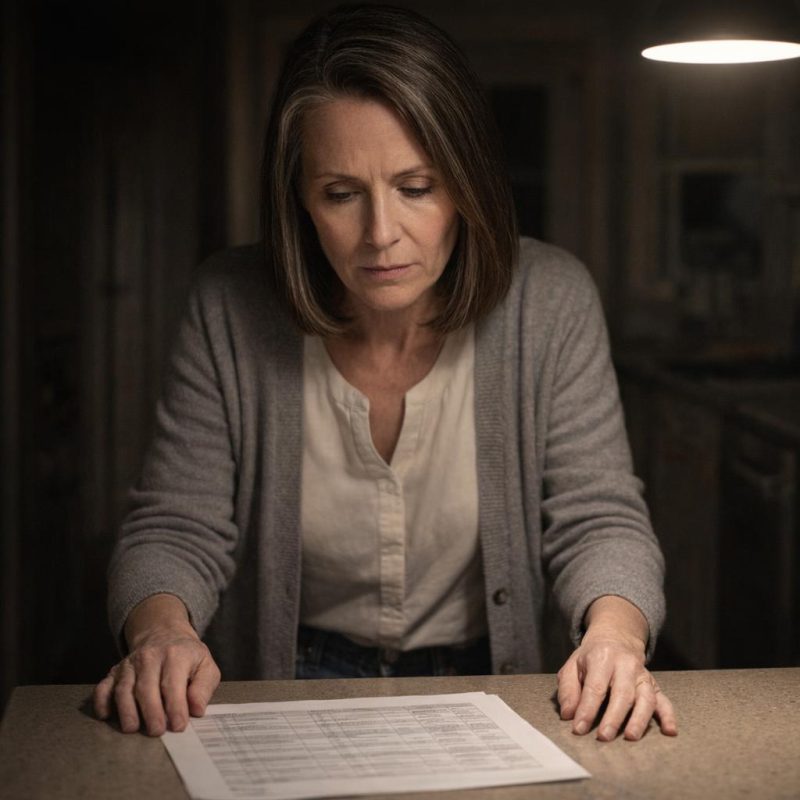 Image by RM AI
Favorite Photos
The next afternoon I pulled up the Italy photos on my phone while Sophie was sitting beside me on the couch. I scrolled through slowly, letting her look, and after a moment I asked her which ones were her favorites. She leaned in and took the phone from me, which I hadn't expected — she scrolled back through the whole collection herself, more carefully than I had. She looked at the Duomo shot, the narrow streets, the piazza. She didn't say anything for a moment. I watched her face without making it obvious I was watching. Then she scrolled back to one of the earlier photos — her parents at a small restaurant table, candles between them, both of them looking at the camera. She handed the phone back to me and said that one was her favorite. I told her it was a nice one. She agreed and reached for her book. It was a perfectly ordinary answer. But I kept thinking about the pause before she gave it — the way she'd moved through all those images of streets and buildings and doorways without settling on any of them, as if she were looking for something specific and deciding, at the last moment, not to choose it.
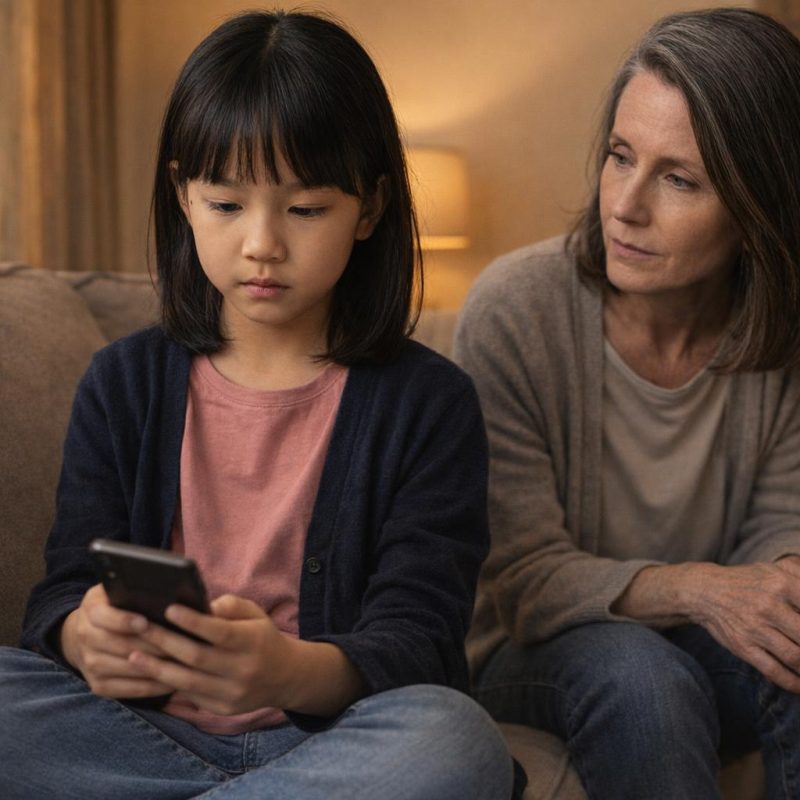 Image by RM AI
Where We're Going
Jake was on the living room floor with his cars the next morning, running two of them along a track he'd built from couch cushions and hardcover books. I was sitting nearby with my coffee, not really talking, just keeping him company the way he liked. He was narrating to himself — the cars had names, apparently, and complicated histories — and I was only half-listening until he said something about the ones his dad had promised him. I asked what he meant, and he said his dad told him there were good ones in Italy, the kind you couldn't get here. I smiled and said that sounded fun, and he nodded seriously and kept driving his cars along the cushion track. Then he said, almost to himself, that his dad said they'd find them when they lived there. I set my coffee mug down on the side table. I kept my voice easy and asked him what he'd said. He looked up at me with that uncomplicated seven-year-old face, already moving on to something else in his head — and said it again, the same words, the same easy tone: when we live there.
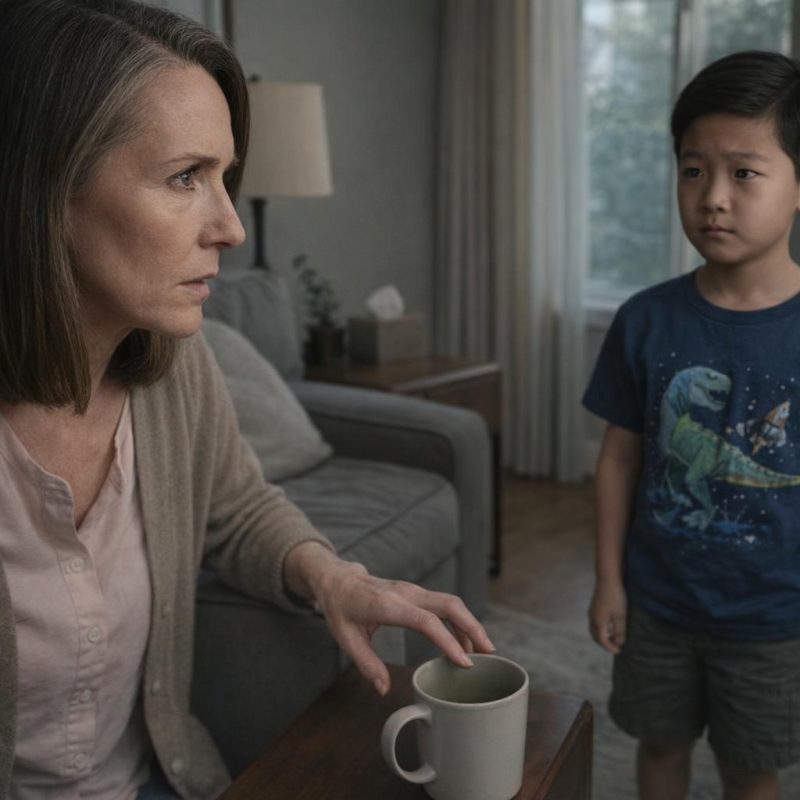 Image by RM AI
Future Visits
I made pasta for dinner that night, the simple kind with butter and parmesan that both of them liked, and we sat together at the kitchen table the way we had every evening. It felt ordinary enough that I let myself ease into it a little. After a while, I mentioned that I'd been thinking about summer — that maybe I could come stay again, or they could come visit me, whichever worked best. I said it lightly, the way you mention something you're not too attached to. Sophie looked up from her plate. Jake looked at Sophie. Neither of them said anything for a moment that went on just a beat too long. Then Sophie said, 'That would be nice,' in a voice that was flat in a way I felt more than heard. Jake turned back to his pasta and didn't add anything. I kept eating. I told them we didn't have to figure it out now, that it was just a thought. Sophie said 'mm-hmm' and reached for her water glass. Jake pushed a piece of pasta around his plate with his fork. The table held all of it — the unanswered question, the careful non-answers, the sound of forks against ceramic — and none of us said anything more about it.
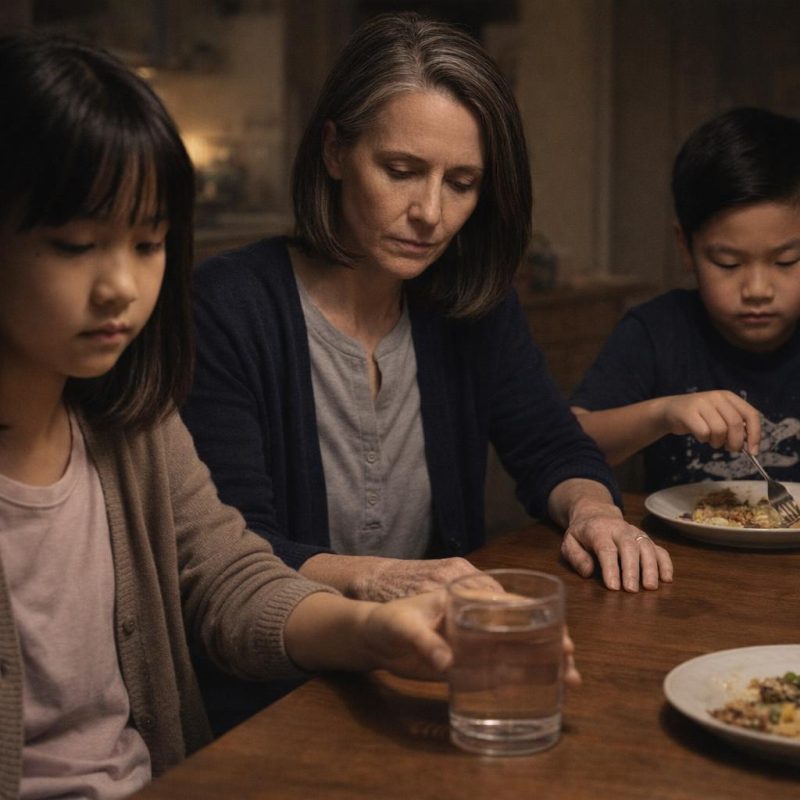 Image by RM AI
Subject Change
I waited until we'd cleared the plates before I tried again. I kept it casual — I mentioned that Sophie's school year was coming up fast, asked if she knew yet which classes she'd be taking in the fall. It was the kind of question I'd asked a hundred times before, the kind she usually had opinions about. She was halfway through stacking the dishes when she said, 'Oh, Grandma, can we have the rest of that chocolate cake? I think there's still some left.' Jake was already moving toward the refrigerator before she finished the sentence. And just like that, we were talking about cake. I got out the plates. I cut two slices. I listened to Jake debate whether the frosting or the actual cake part was better, and Sophie weighed in with great seriousness, and the kitchen filled up with that easy noise again. I let it. I didn't push. But I stood at the counter with the cake knife still in my hand, and what stayed with me wasn't the question I hadn't gotten an answer to — it was how quickly and cleanly Sophie had made it disappear, as if she'd done it so many times by now that it had stopped feeling like effort at all.
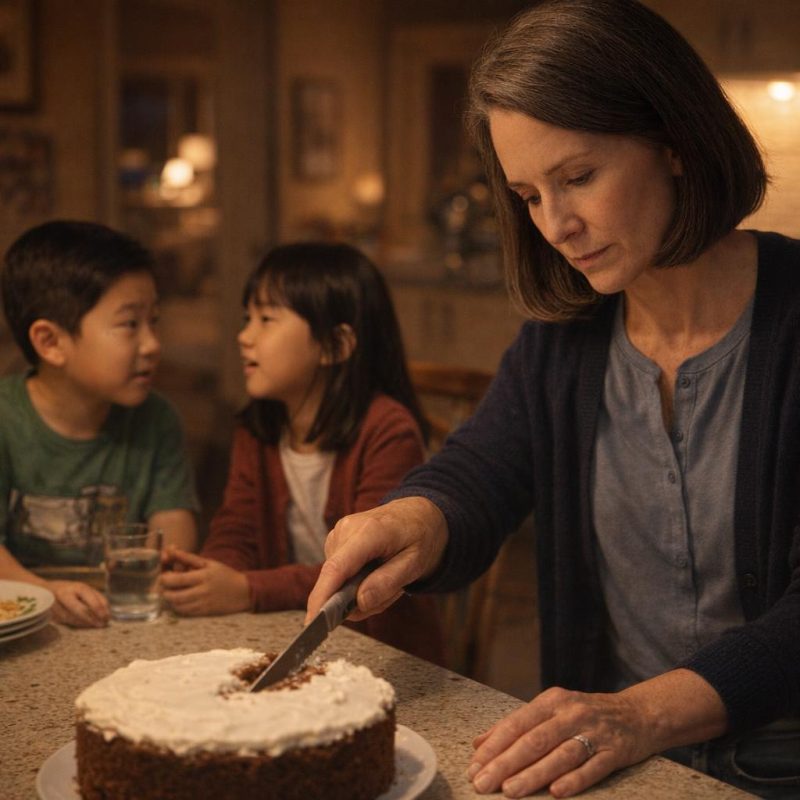 Image by RM AI
Something Bigger
After both children were in bed and the house had gone quiet, I sat down at the kitchen table and didn't get up for a long time. I went back through everything in my head — not in a panicked way, just slowly, the way you turn something over when you're trying to understand its shape. Jake's words about living there. Sophie's pause over the photos. The way she'd redirected every conversation that pointed past next month. The schedule that read like a handoff. The photos of buildings and streets that looked less like vacation snapshots and more like someone studying a place. The overheard whisper between the two of them weeks ago, the careful way they'd both been carrying themselves since. I didn't have proof of anything — I knew that. But something had been pulling at me for days, a feeling I couldn't set down no matter how many times I told myself to wait, to let Brandon explain when he got home. I looked at my phone on the table in front of me. Two more weeks until they were back. I thought about Sophie's face when I'd asked about fall classes. I thought about Jake saying it like it was nothing. I couldn't keep waiting for Brandon to decide when I was allowed to know — I needed to find out for myself.
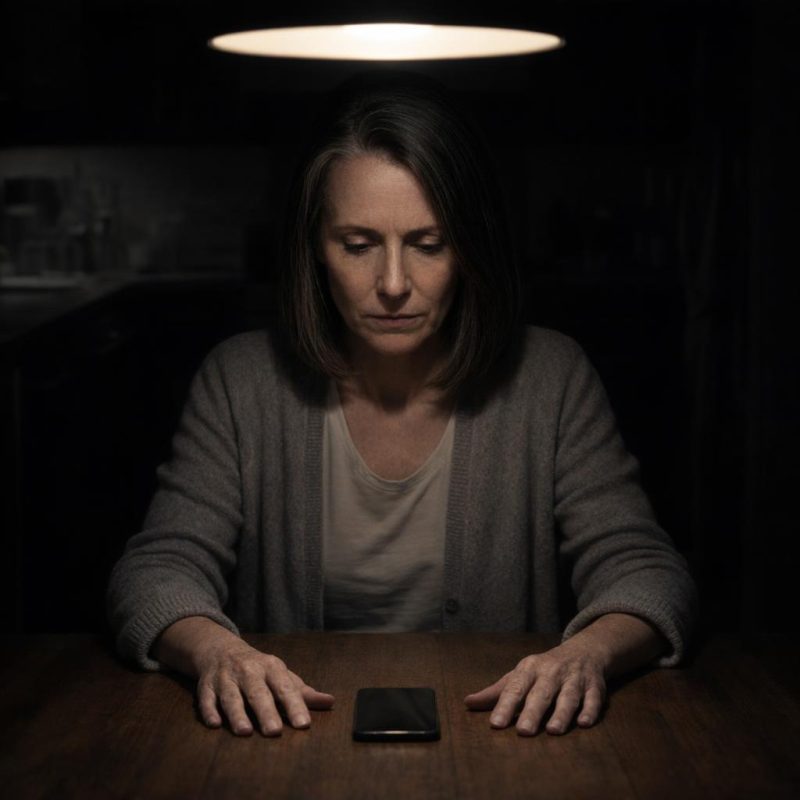 Image by RM AI
Final Days
The last few days before Brandon and Melissa came home were the strangest kind of slow. I kept the routines going — breakfast at the same time, the same afternoon walks, the same bedtime stories — because the children needed that, and honestly, so did I. But something had shifted in me, and I couldn't fully hide it. Sophie noticed first, the way she always did. She'd look up from her book and catch me staring at nothing, and I'd smile and ask if she wanted a snack, and she'd say yes even when she didn't. Jake was harder to read, but even he got quieter in the evenings, sitting closer to me on the couch than usual, his small shoulder pressed against my arm. I didn't push anything. I asked about school friends and favorite colors and whether they wanted to try making homemade pizza. I laughed at Jake's jokes and braided Sophie's hair and did everything I was supposed to do. But underneath all of it, the questions I'd been carrying for days had grown heavier, not lighter. Every hour that passed felt like it was pulling me closer to something I wasn't sure I was ready for, and the weight of it never quite left my chest.
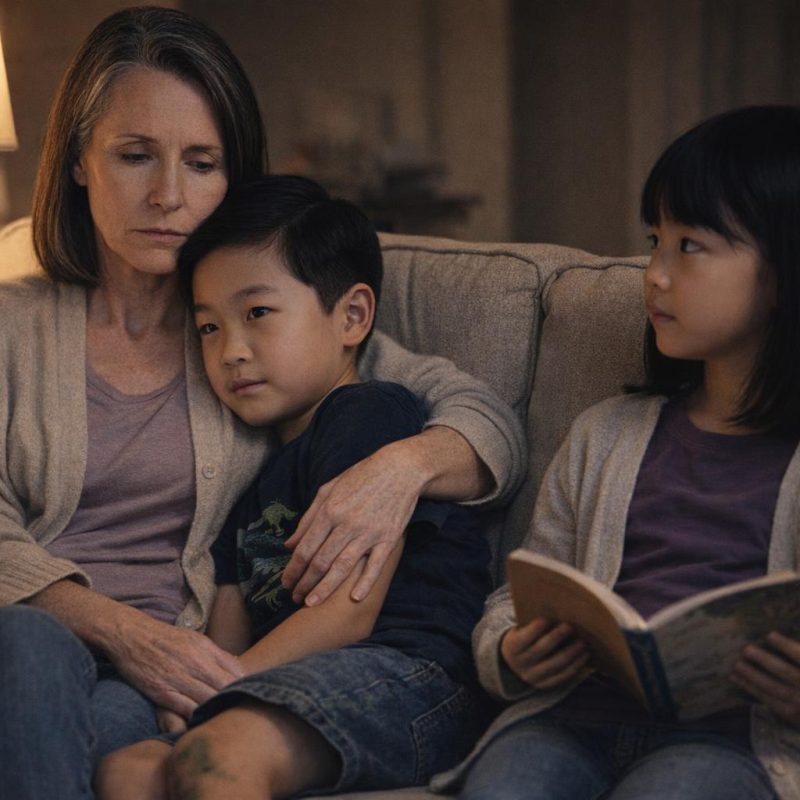 Image by RM AI
The Decision
The night before they were due home, after both children were asleep, I sat in the kitchen with a cup of tea I never drank and made myself a promise. I wasn't going to wait for Brandon to bring it up on his own timeline. I wasn't going to smile and say everything was fine and let the visit end without answers. I'd spent two weeks watching and wondering and talking myself out of my own instincts, and I was done with that. I rehearsed it in my head — how I'd say it calmly, without accusation, just a simple question: what is it the children aren't supposed to tell me? I knew it might be uncomfortable. I knew Brandon might deflect, might laugh it off, might look at Melissa in that way they had of communicating without words. But I also knew I couldn't walk out of that house still carrying this. Whatever they were keeping from me, I deserved to know it. I was their mother. I was those children's grandmother. I had earned the right to the truth. The tea went cold in front of me, and I sat with my hands folded on the table, and something in me went quiet and still — not peaceful exactly, but settled, the way a decision feels once you've finally made it.
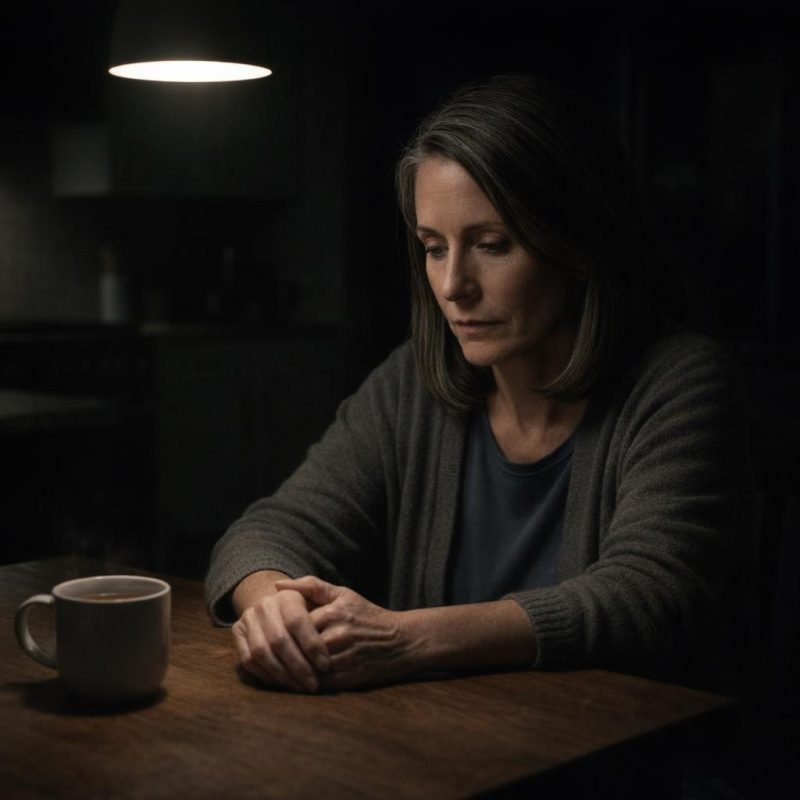 Image by RM AI
Last Supper
For their last dinner, I made everything from scratch. Macaroni and cheese for Jake — the real kind, with the breadcrumb topping he always asked for — and lemon chicken for Sophie, because she'd mentioned it twice in the first week and I'd been saving it. I set the table properly, with the cloth napkins and the good glasses, and I put a little vase of flowers in the middle that I'd cut from the garden that afternoon. Jake came downstairs in his pajamas already, which made me laugh, and Sophie helped me carry the dishes without being asked. We ate slowly, the three of us, and the kitchen felt warm and full in a way that made my chest ache a little. I wanted to hold onto it — the sound of Jake's fork scraping his bowl, Sophie's careful way of cutting her chicken into even pieces, the easy back-and-forth of their voices. I knew tomorrow everything would change, one way or another. But for that hour, I let myself just be there with them. When the plates were nearly empty and the conversation had gone soft and easy, I rested my chin in my hand and asked them what their favorite moment from the past two weeks had been.
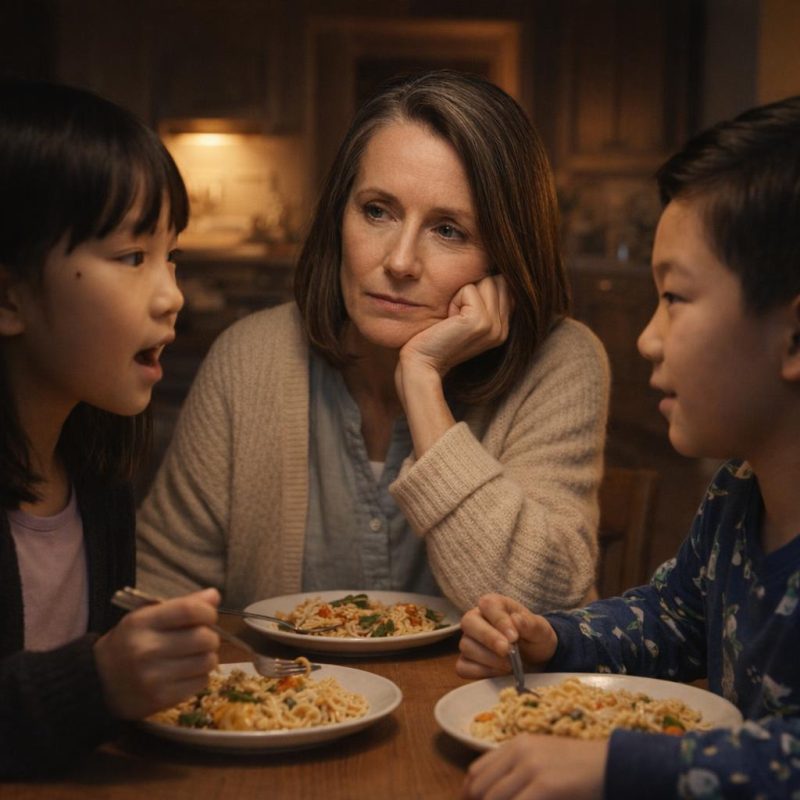 Image by RM AI
Favorite Moments
Jake answered immediately, without even putting down his fork. The soccer game, he said — the one where he'd scored twice and I'd cheered so loud the neighbors looked over. He demonstrated his winning kick from his chair, nearly knocking over his milk, and I caught the glass just in time and we both laughed. Sophie took longer. She looked down at her plate for a moment, turning her fork over in her fingers, and I watched her the way I'd been watching her all week — carefully, quietly, trying not to let it show. Then she said the morning we'd made pancakes outside on the back porch, when the light was coming through the trees and Jake had gotten syrup on his elbow and hadn't noticed for twenty minutes. She smiled at the memory, and it was a real smile, the kind that reached her eyes. But then she added something else, almost as an afterthought, her voice going a little softer. She said she was glad we'd had this time together. That she was glad they'd gotten to be here with me — while they still could.
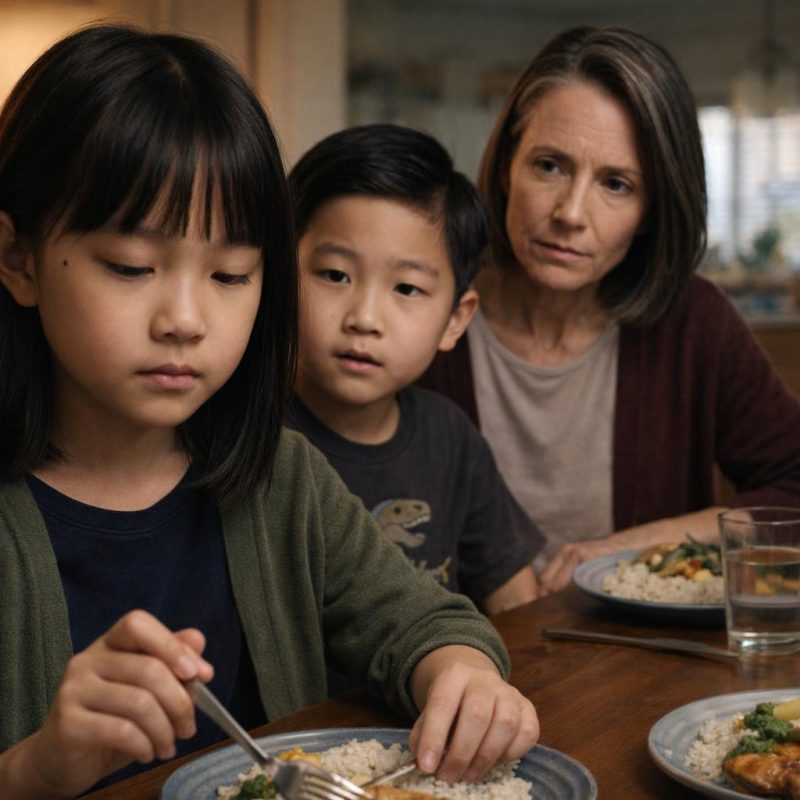 Image by RM AI
The Truth Slips Out
I set my glass down and looked at Sophie. I kept my voice as even as I could manage. I asked her what she meant by that — while they still could. She looked up at me, and I saw it happen in real time, the moment she understood what she'd said. Her face went pale. Jake's eyes went wide and he looked at his sister the way children do when they know something has gone wrong. Sophie shook her head a little, started to say it was nothing, that she hadn't meant anything by it. But her voice was unsteady, and she couldn't quite meet my eyes, and I just waited. I didn't push. I didn't have to. After a few seconds that felt much longer, Sophie put her fork down very carefully on the edge of her plate. She looked at me with an expression I will never forget — part guilt, part relief, part something that looked almost like sorrow. And then she said it. She said they were moving to Italy. Not for a trip. Not for a visit. She said her mom and dad had been planning it for a long time, that the trip they were on right now was to find them a place to live, and that the whole family was going to move there permanently. I sat completely still as the words settled over the table like something falling from a very great height.
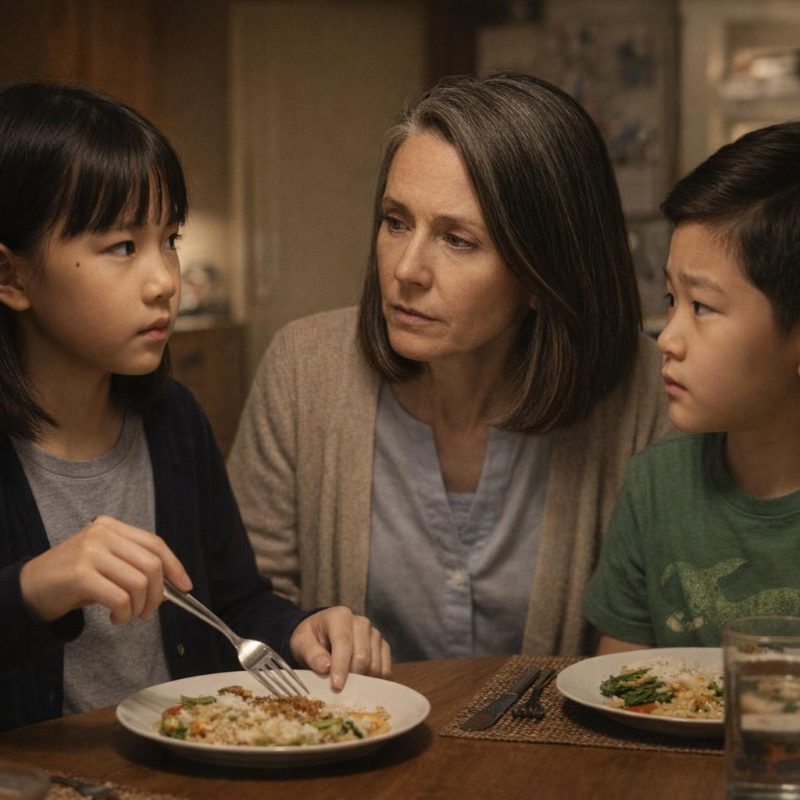 Image by RM AI
After the Words
Nobody spoke for a moment. Sophie was watching me with her hands pressed flat on the table, like she was bracing for something. Jake looked between the two of us, his face scrunched with confusion, and asked in a small voice if he was in trouble. I heard myself say no, sweetheart, nobody's in trouble. I don't know how my voice came out that steady. Sophie started to cry then — not loudly, just quietly, the way she did everything, tears sliding down her face while she apologized over and over. She said her dad had told them not to tell anyone, that it was supposed to be a surprise, that she hadn't meant to say it. I reached across the table and put my hand over hers and told her it was all right, that she hadn't done anything wrong. I meant it. She was ten years old. None of this was hers to carry. I sat with them for a few more minutes, keeping my voice soft, making sure Jake finished the last of his macaroni, making sure Sophie understood she wasn't in trouble. Then I told them both to head upstairs and get ready for bed, that I'd come up to say goodnight in a little while. I watched them go, Sophie's hand on Jake's shoulder as they climbed the stairs, and then I heard their footsteps overhead, and then nothing.
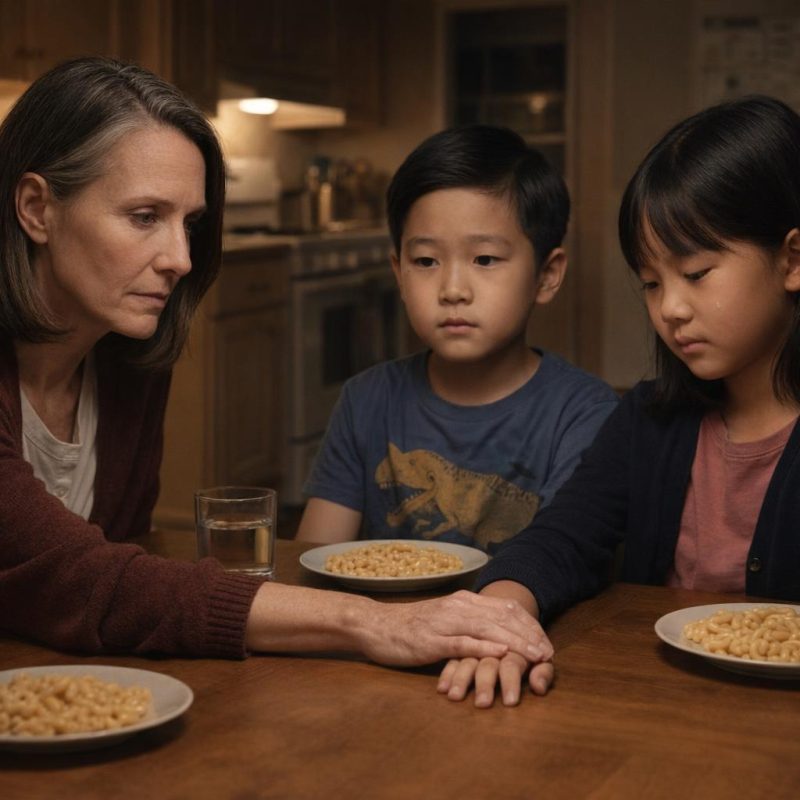 Image by RM AI
Alone With It
I didn't move for a long time. The children's plates were still on the table — Jake's bowl scraped clean, Sophie's chicken only half-finished, her fork resting at an angle the way she'd left it when she'd put it down to tell me. I looked at those plates for a while without really seeing them. Italy. Permanently. The words kept arriving in my head the same way they had at the table, like they hadn't quite finished landing yet. I thought about what it meant — not in an abstract way, but in the specific, ordinary way that actually hurts. No more Saturday mornings. No more braiding Sophie's hair before school. No more Jake running through my front door with his shoes on the wrong feet. An ocean between us, and a life I wouldn't be part of, and two children growing up in a place I'd never been, becoming people I'd only know through a screen. Brandon and Melissa had made this decision — had been making it, apparently, for a long time — and somewhere in all of that planning, they had decided I didn't need to know. I had been here for two weeks, loving those children with everything I had, and the whole time I was just a placeholder in an arrangement I hadn't been told about. The kitchen was very quiet around me, and the flowers I'd cut from the garden that afternoon sat in their little vase in the center of the table, and the silence pressed in from every direction.
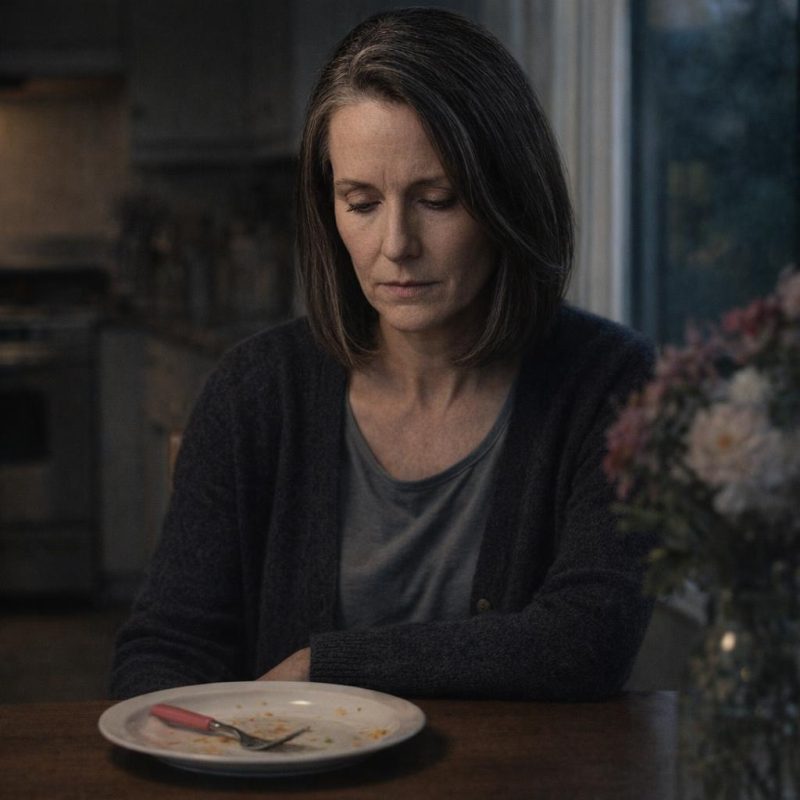 Image by RM AI
Reframing Everything
I started going back through everything, and once I started I couldn't stop. Brandon's phone calls from Italy — all those warm thank-yous, the way he'd said we really appreciate this, Mom, more than you know. At the time it had felt like gratitude. Now it felt like something else entirely. Melissa's color-coded schedule, every hour accounted for, every preference noted — I'd thought she was being thorough. Now it read like instructions left for someone who would need to know these things for longer than two weeks. The photographs Sophie had been looking at — those streets, those buildings, that light. Not vacation snapshots. Someone choosing a neighborhood. Jake saying where we're going like it was a fact he'd been living with for months. Sophie redirecting every conversation that pointed past the summer. All of it had been there, and I'd noticed it, and I'd talked myself out of it every single time because I trusted them. Because I loved them. Because it hadn't occurred to me that the people I loved most could look me in the eye — or in this case, look me in the voice, across a phone line — and let me believe something that wasn't true. I sat at that table with the flowers wilting slightly in their vase, and the weight of how carefully and completely they had kept this from me settled over me like something I would be carrying for a very long time.
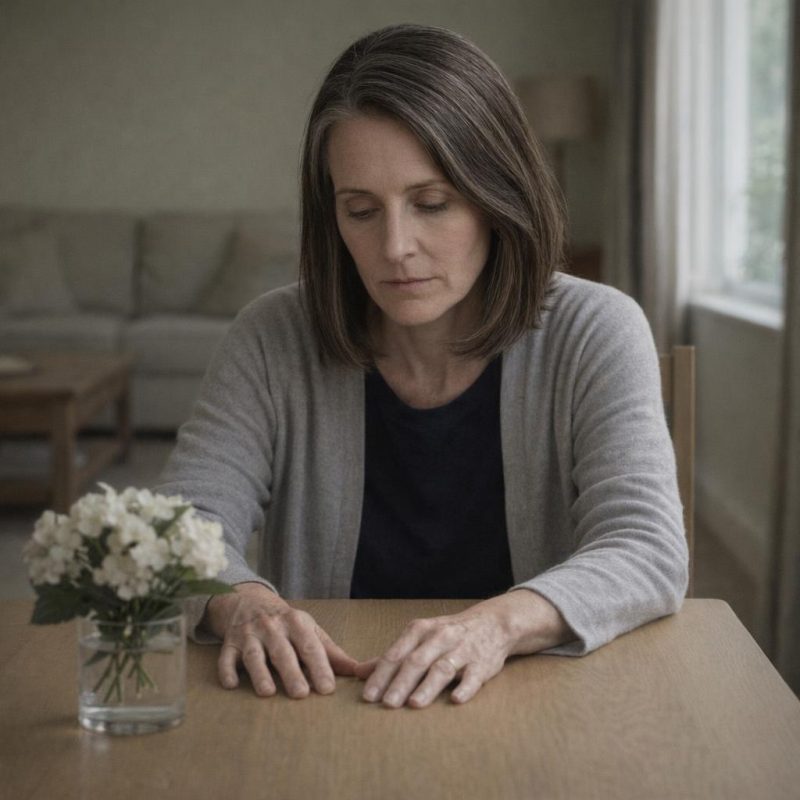 Image by RM AI
The Long Night
I didn't sleep. Not really. I lay in the guest room with the ceiling fan turning slow overhead and the house quiet around me, and I went through it all again — every phone call, every careful word, every moment I'd talked myself out of what I was seeing. By two in the morning I'd stopped crying. By three I was just angry. By four something had settled in me that felt less like anger and more like resolve. They were coming home tomorrow afternoon. Brandon and Melissa, tanned and smiling, full of stories about Florence. And I was going to be there when they walked through that door. I wasn't going to make a scene in front of Sophie and Jake — I'd made myself that promise and I intended to keep it. But after the children went upstairs, after the bags were brought in and the hugs were given and the house felt like a family home again, I was going to sit them both down. I practiced it in the dark, the exact words, the exact tone. Not shouting. Not crying. Just clear. I knew what I was going to say the moment they walked through that door.
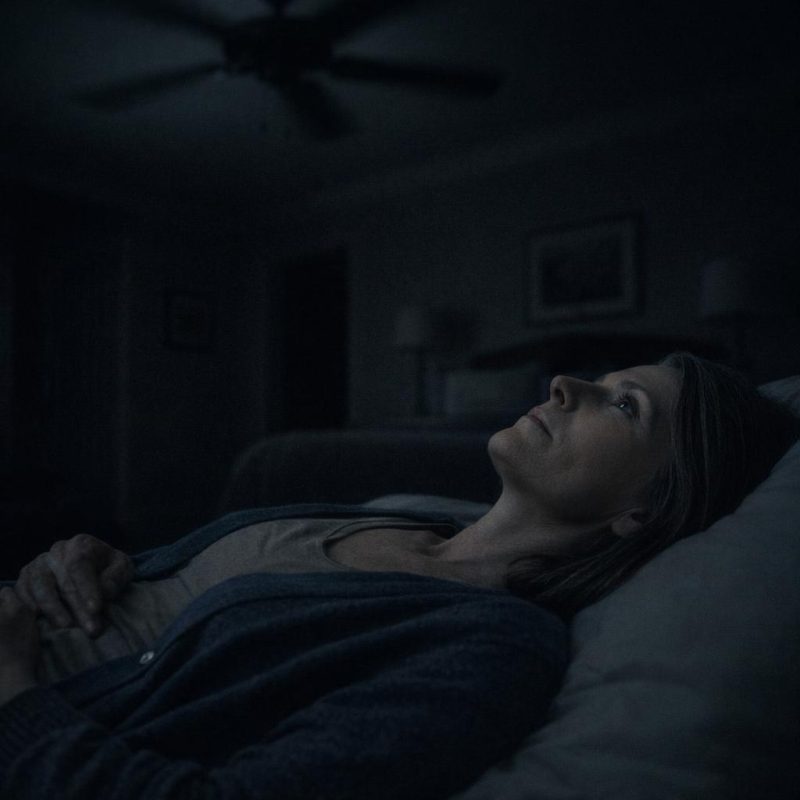 Image by RM AI
Last Morning
I made pancakes that last morning — the ones with the blueberries, the ones Jake always asked for. He ate three and talked the whole time with his mouth half full, and I didn't correct him once. Sophie sat across from him with her hands wrapped around a glass of orange juice, and something about her was different. Lighter. The weight she'd been carrying all two weeks had lifted, and she talked about Florence the way a child is supposed to talk about something exciting — openly, without watching herself. She described the apartment they'd looked at, the tall windows, the courtyard with the lemon tree. Jake said his new school had a football pitch, which he'd apparently decided was the most important detail. I asked gentle questions and kept my voice even and let them talk. I was glad they could. I was glad the secret wasn't pressing down on them anymore. But every detail they offered — the neighborhood, the school, the apartment — landed in my chest like something I'd have to learn to carry. Sophie looked up at me at one point, her serious eyes searching my face, and said, "Are you okay, Grandma?" I told her I was just happy to have had this time with them. She reached across the table and put her hand over mine.
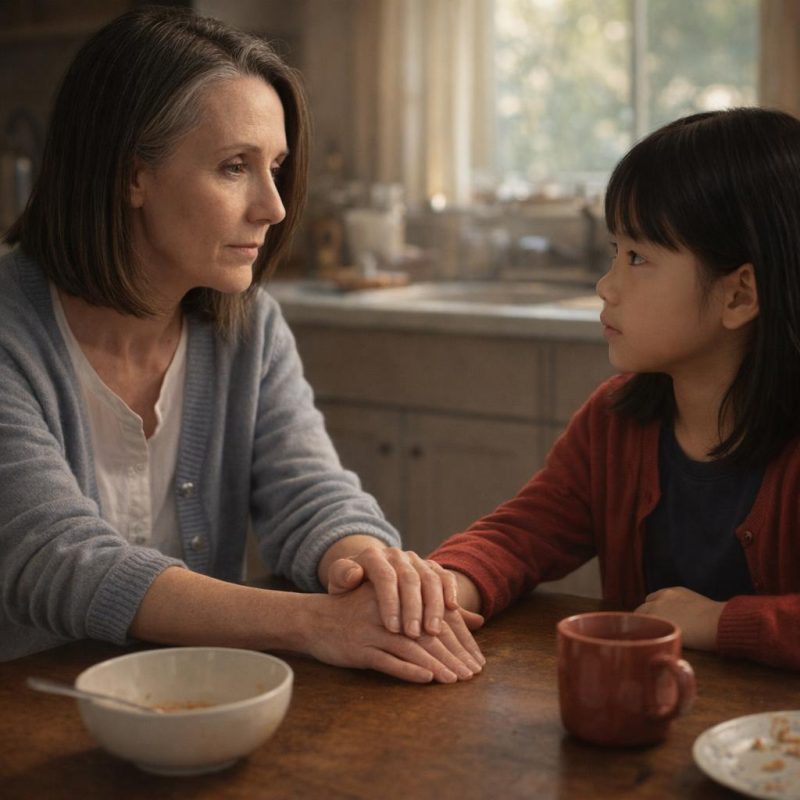 Image by RM AI
They're Home
Their car pulled into the driveway just after four. I heard it before I saw it — the crunch of tires, then Jake's shriek from the front window where he'd been watching for the past twenty minutes. He and Sophie were out the door before I'd even stood up from the kitchen chair. I watched through the window as Brandon stepped out first, tanned and easy, laughing as Jake launched himself into his arms. Melissa came around from the passenger side looking rested and beautiful, and Sophie walked into her hug with the careful composure she always carried. They looked happy. They looked like a family returning from a wonderful trip. I dried my hands on the dish towel and went to the door. Brandon hugged me and said, "Mom, we can't thank you enough," and his voice was warm and his smile was real, and I said it was my pleasure because the children were standing right there. Melissa squeezed my hand and said the house looked wonderful. I said I'd tried to keep things running smoothly. We all moved inside together, and I put the kettle on, and the house filled with noise and luggage and the ordinary chaos of a homecoming. I stood at the kitchen counter and watched it all and kept my face very still, waiting for the moment the children would go upstairs.
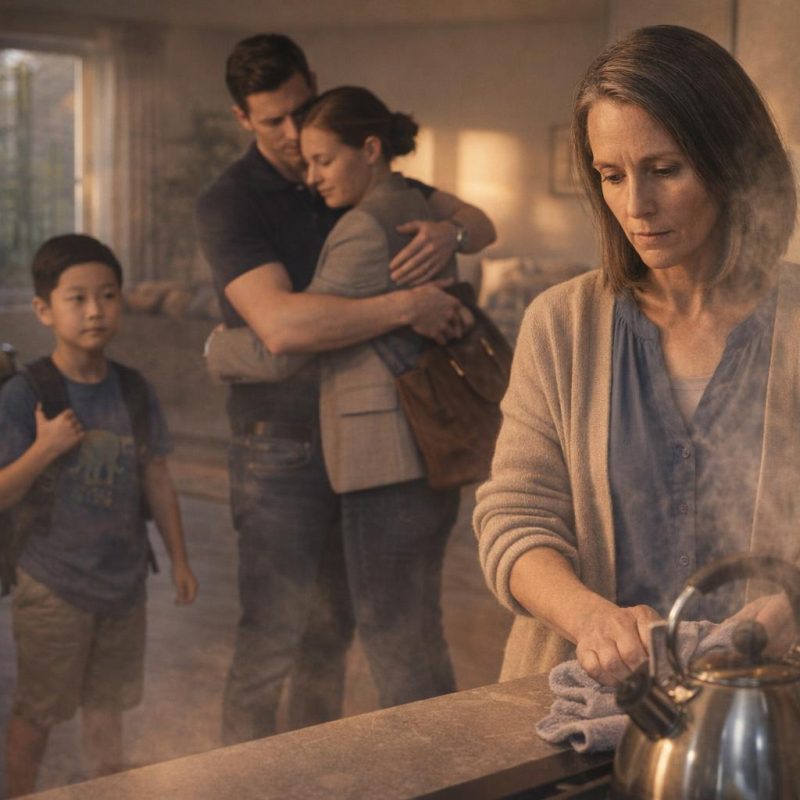 Image by RM AI
After the Children Go Up
It didn't take long. Sophie herded Jake upstairs to unpack — she'd always been good at reading a room — and the moment I heard their footsteps on the landing I turned around. Brandon was pouring himself a glass of water. Melissa was leaning against the counter, still smiling from something he'd said. I said, "I need you both to sit down." Something in my voice made them both go still. Brandon set the glass down. Melissa straightened. I waited until they were at the kitchen table, and then I sat across from them and I folded my hands and I said, "I know about Italy. I know you're not going on vacation. I know you're moving there." The silence that followed was absolute. Brandon's face went through several things at once. Melissa's hand moved to the table and stopped. I said, "Sophie told me. Not on purpose — she was trying to protect Jake from saying something. But I know. I've known for a few days now, and I've had time to think about what I want to say to you." Brandon started to speak and I held up one hand. "Not yet," I said. "I want you to tell me everything. From the beginning. All of it." The look on their faces — that particular combination of guilt and exposure — settled into the space between us and stayed there.
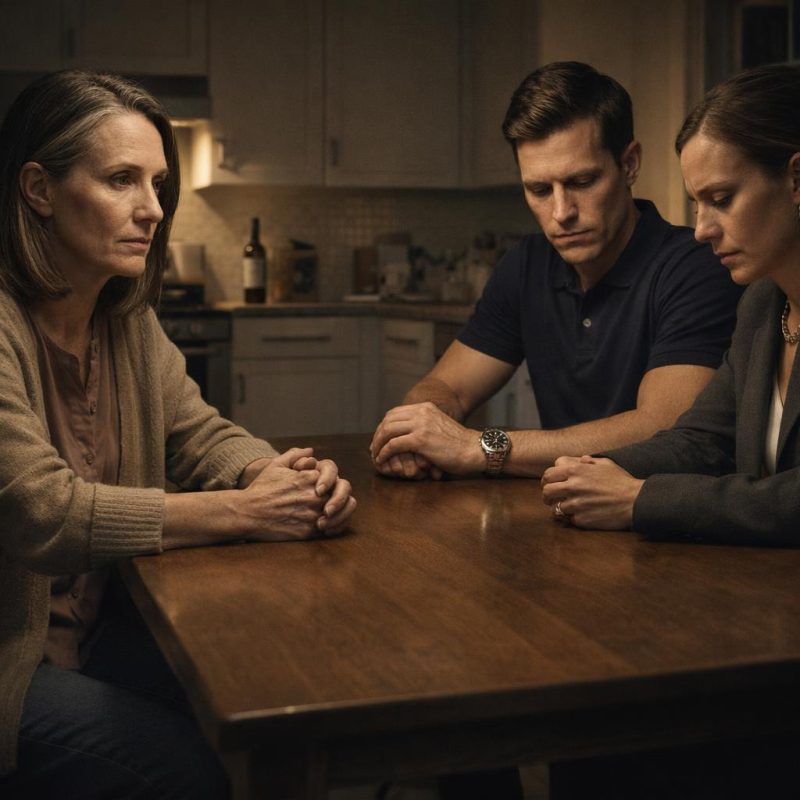 Image by RM AI
The Confirmation
Brandon spoke first. He said yes, they were moving to Italy. He said it the way you say something you've been rehearsing — carefully, with pauses in the right places. Florence, specifically. He'd been offered a position with an international firm there, a role he'd been working toward for years. They'd been planning it for six months. Six months of phone calls and emails and decisions made and apartments viewed and schools researched, and not one word to me. Melissa confirmed the details in her measured way — the neighborhood, the school the children would attend, the timeline. They were leaving in August. Eight weeks. I sat and listened to all of it and kept my hands flat on the table. When they got to the part about why they hadn't told me, Brandon said they hadn't wanted to upset me before everything was finalized. Melissa said they thought it would be easier for everyone if the decision was already made. Brandon said they were going to tell me when they got back from this trip — that was always the plan. I looked at him when he said that. I looked at him for a long moment. They believed what they were saying, I think. They'd told themselves this story long enough that it had started to feel true. But sitting there listening to it, all I could feel was how thin it sounded, how completely insufficient, how far it fell from anything that could reach me.
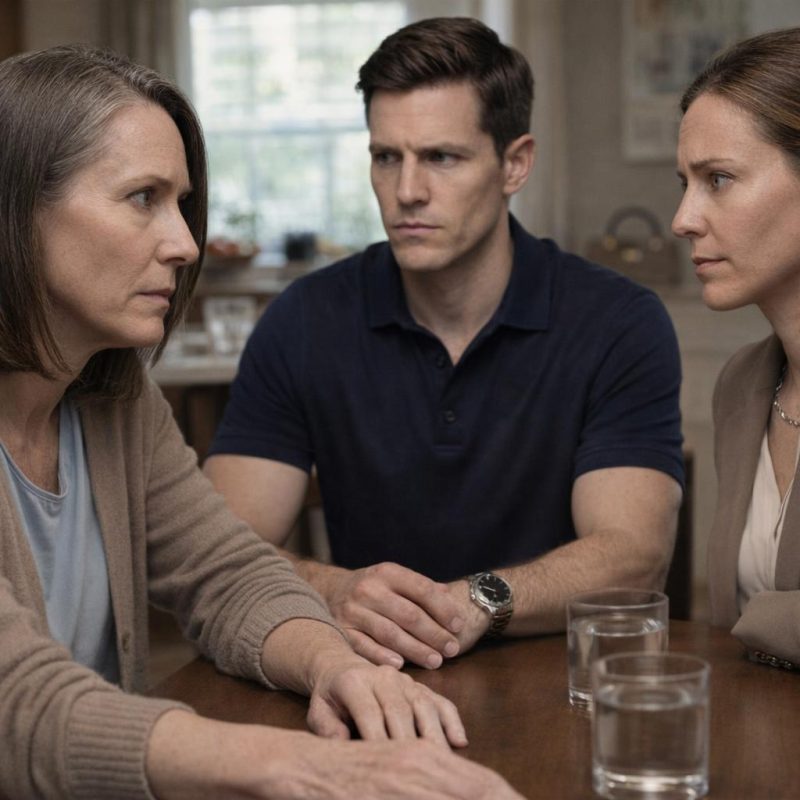 Image by RM AI
Why They Kept It Secret
I asked Brandon to explain it to me again — the part about protecting me. He said they knew I'd worry. He said they knew I'd have a hard time with it, and they hadn't wanted me spending months anxious and upset over something that was already decided. He said it gently, like he was being kind. Melissa added that telling me earlier would only have made things harder, that there was nothing I could have done to change it anyway. I let that sit for a moment. Then I asked about the two weeks. I asked whether asking me to come and stay — the phone call, the careful request, the two weeks of school runs and bedtimes and homework — whether any of that had been about needing to know I could manage a longer stretch. Whether they'd needed to see how I'd do. Brandon said that wasn't it, that they'd genuinely needed the help. But he didn't quite meet my eyes when he said it. I thought about the color-coded schedule. I thought about every preference noted, every routine documented. I thought about how thorough it had all been. And then I looked at my son — my son, who I had loved his entire life — and I asked him quietly how long exactly they had planned to keep using me before they got around to telling me the truth.
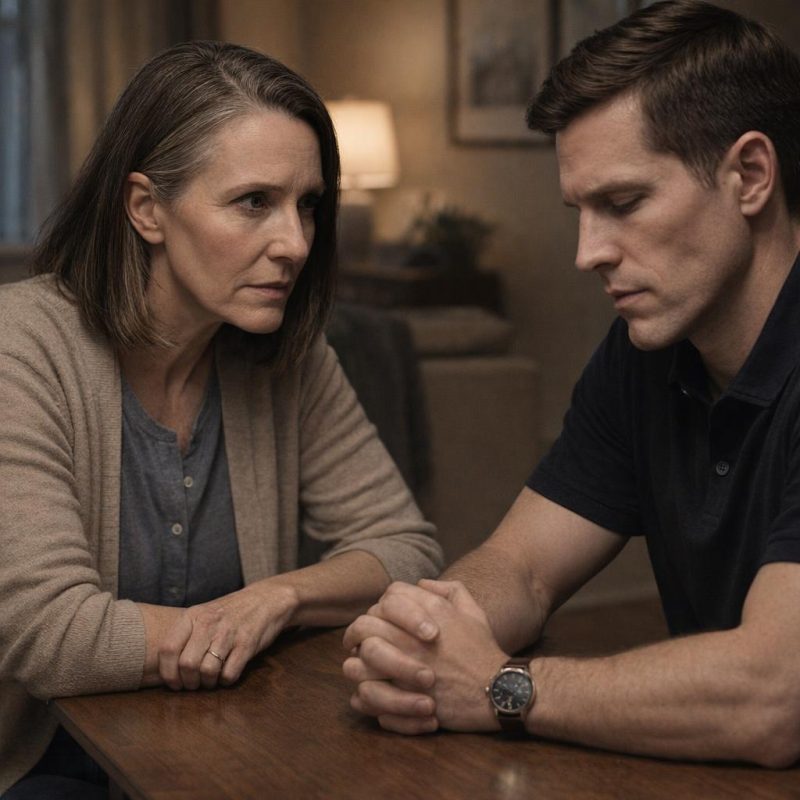 Image by RM AI
Melissa's Defense
Melissa answered before Brandon could. She said this wasn't about using anyone. She said this was a once-in-a-lifetime opportunity for their family, that Brandon had worked toward something like this for his entire career, and that they had to do what was right for their children. Her voice was steady and her posture was straight and she looked at me the way someone looks at you when they've already decided the conversation is going to be difficult and have prepared themselves accordingly. I asked if they had considered me at all in those six months of planning. She said of course they had. She said they loved me and they knew it would be hard and they were sorry for the way it had come out. But then she said — and this is the part I keep coming back to — that ultimately this was their decision to make. That they had the right to choose what was best for their family without needing anyone's approval. She said it without cruelty. She said it like it was simply true, like it was a reasonable thing to say to the woman who had just spent two weeks caring for her grandchildren while they arranged to take those grandchildren to another continent. Brandon sat beside her and said nothing. "We have the right to make this choice," Melissa said again, her voice pulled flat and certain.
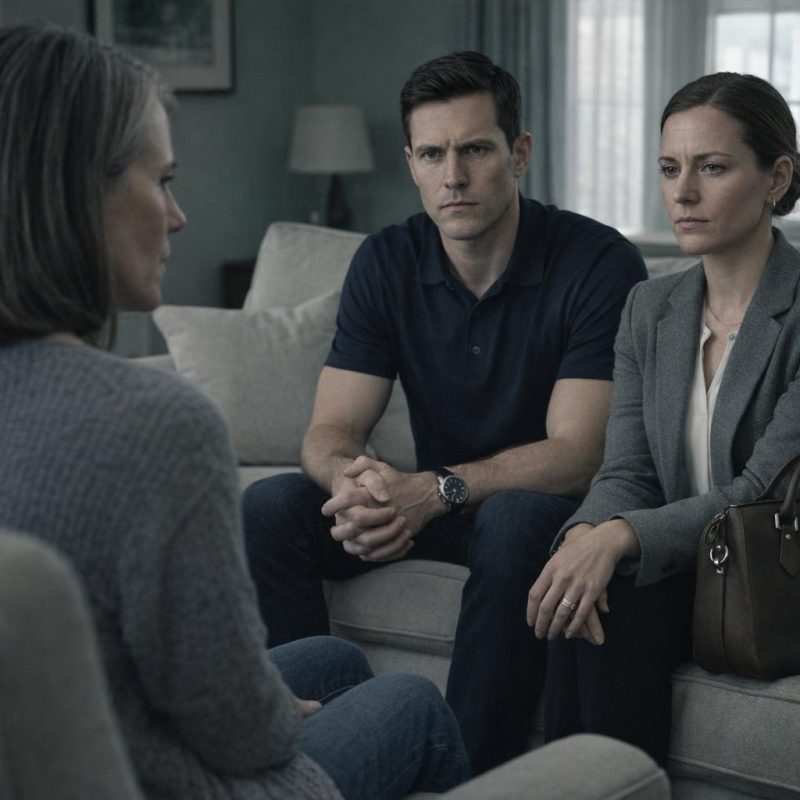 Image by RM AI
What She's Losing
I let her finish. I sat with it for a moment, the word right hanging in the air between us. Then I told them what they were taking from me. I told them about the school pickups — Sophie's face when she spotted me at the gate, Jake running across the car park with his backpack bouncing. I told them about bedtime stories and Saturday mornings and the ordinary unremarkable moments that are the whole substance of a relationship with a child. I told them that I would become a voice on a phone screen. A visitor at Christmas if the flights worked out. I told them that Sophie and Jake would grow up and I would not be there — not for the small things, not for the things that don't seem important until years later when you realize they were everything. Brandon said we can visit, Mom, we'll make sure you visit, and I looked at him and said that visits were not the same as being there, that he knew that, that he had always known that. My voice didn't shake. I was proud of that. I looked at both of them — my son and my daughter-in-law, sitting at the kitchen table in the house I'd kept running for two weeks — and I told them that what they had done was take my grandchildren away from me.
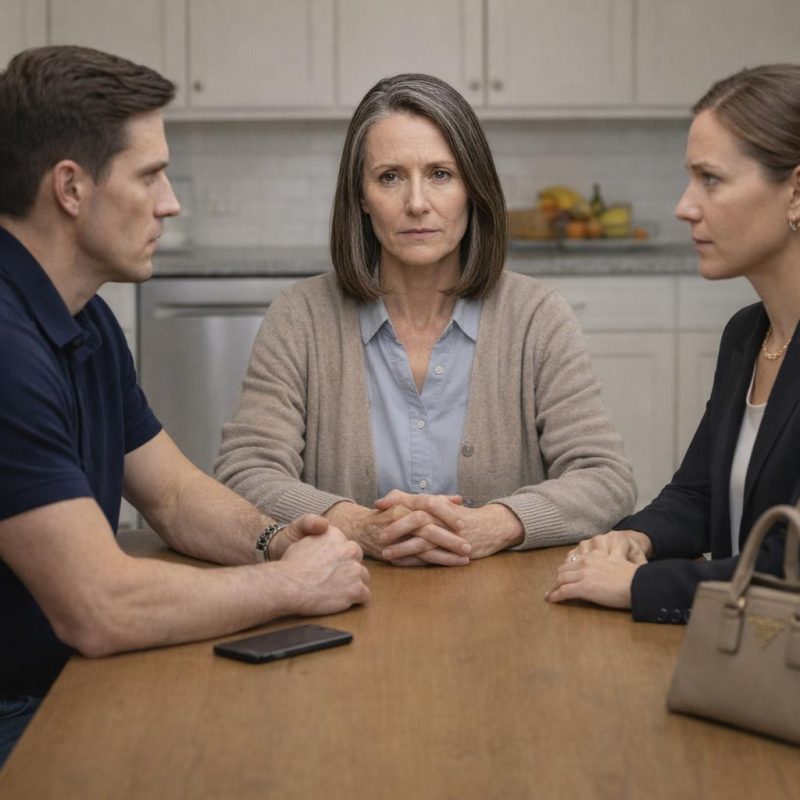 Image by RM AI
Leaving
I stood up from the table without deciding to. My body just did it — pushed back the chair, got to my feet. I told them I couldn't stay in this house tonight. Brandon was up immediately, saying Mom, please, don't leave like this, and Melissa said we should all sleep on it, that we could talk more in the morning with clearer heads. I told them there was nothing more to say. I meant it. I went to the guest room and pulled my things out of the wardrobe — the cardigan I'd hung up on the first night, my toiletries lined up on the bathroom shelf like I lived there, like I belonged. I stuffed everything into my bag without folding any of it. Brandon was in the doorway when I came out, and he started to say something about how sorry he was, how they'd wanted to find the right moment, and I walked past him. I didn't go to Sophie's room. I didn't go to Jake's. I told myself they were asleep. I told myself it was better this way. I walked out the front door and pulled it shut behind me, and the latch clicked into place in the dark.
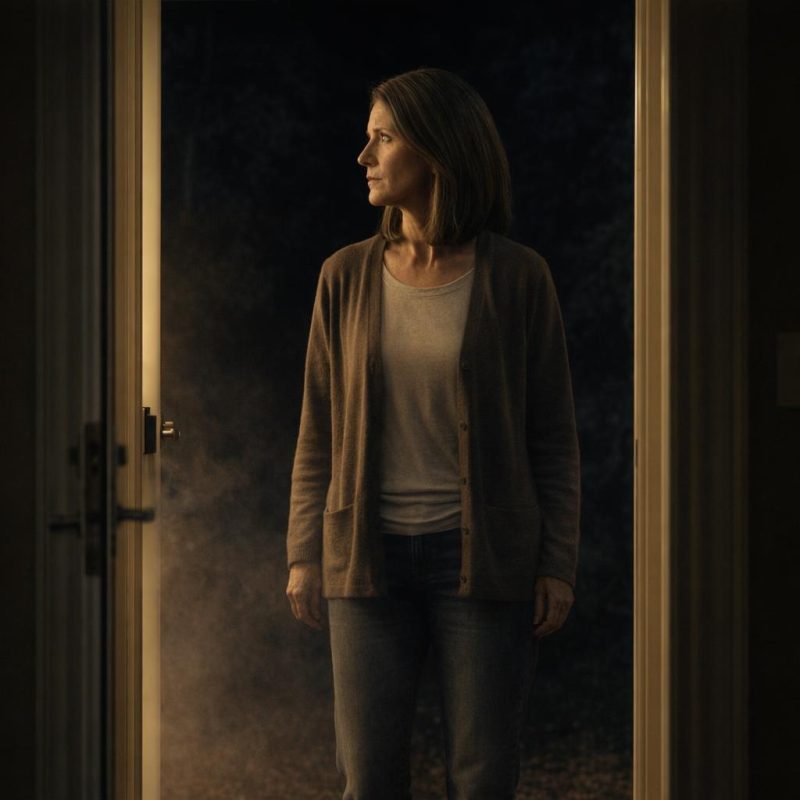 Image by RM AI
The Days After
I didn't answer Brandon's calls for three days. I'd hear the phone buzz on the kitchen counter and I'd look at his name on the screen and I'd let it go to voicemail. I wasn't ready. I wasn't sure what I'd say if I picked up — whether I'd cry or shout or just go silent, and none of those felt like something I could afford yet. So I moved through my house instead. I watered the plants. I made tea I didn't drink. I sat in the armchair by the window where I used to read to Sophie when she was small enough to fit in my lap, and I let myself feel the full weight of it. I thought about those two weeks — the school runs, the bedtime stories, Jake's drawings stuck to the fridge with magnets, Sophie helping me fold laundry and chattering about her friends. I had thought it was a gift. I understood now that it was also a goodbye they hadn't told me I was saying. The anger was still there, but underneath it something else had started to settle — something quieter and harder to name. My house felt the same as it always had, and completely different at the same time.
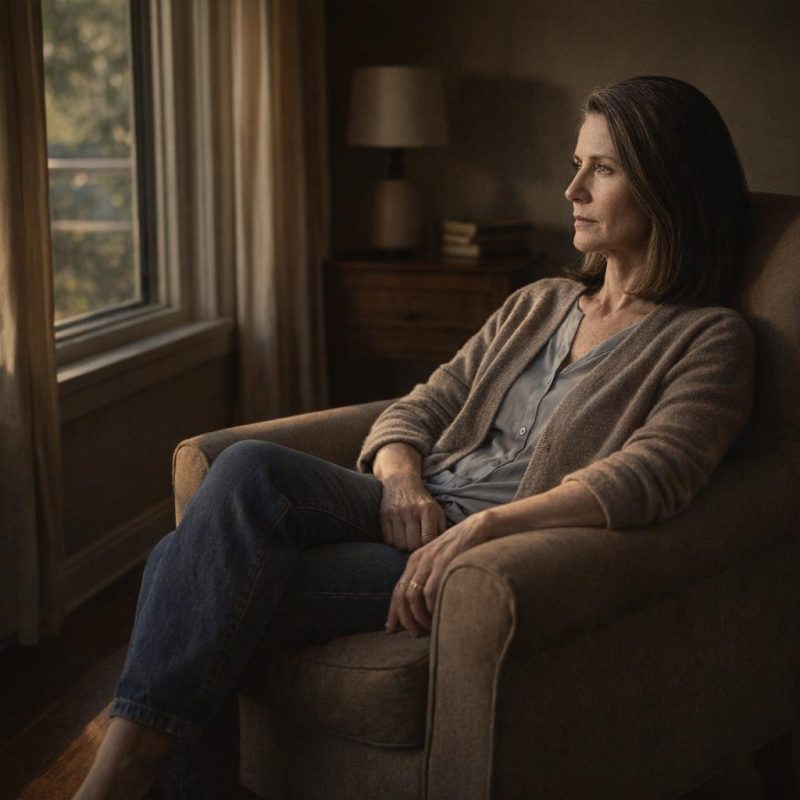 Image by RM AI
Seeing Their Side
I kept coming back to a memory I hadn't thought about in years — me at thirty-four, sitting at a kitchen table in a different house, telling my own mother that we were moving three states away for a job that would change everything for us. I remembered how certain I'd been that it was right, and how I'd dreaded telling her, and how I'd put it off longer than I should have. I hadn't handled it well either. I thought about Brandon's face at that table — not the polished, composed version of him I'd been angry at, but the younger version underneath it, the one who still wanted his mother to be proud of him. I thought about what it must have cost Melissa to keep that secret while I was in her house, cooking in her kitchen, tucking her children in at night. They had been afraid of exactly what happened — of my grief, of my anger, of this. That didn't make the deception right. But I could hold both things at once: they had hurt me, and they had not been wrong to want a better life for their family. Sophie and Jake deserved parents who chased the best possible future for them. That was not something I could be angry about, no matter how much it cost me.
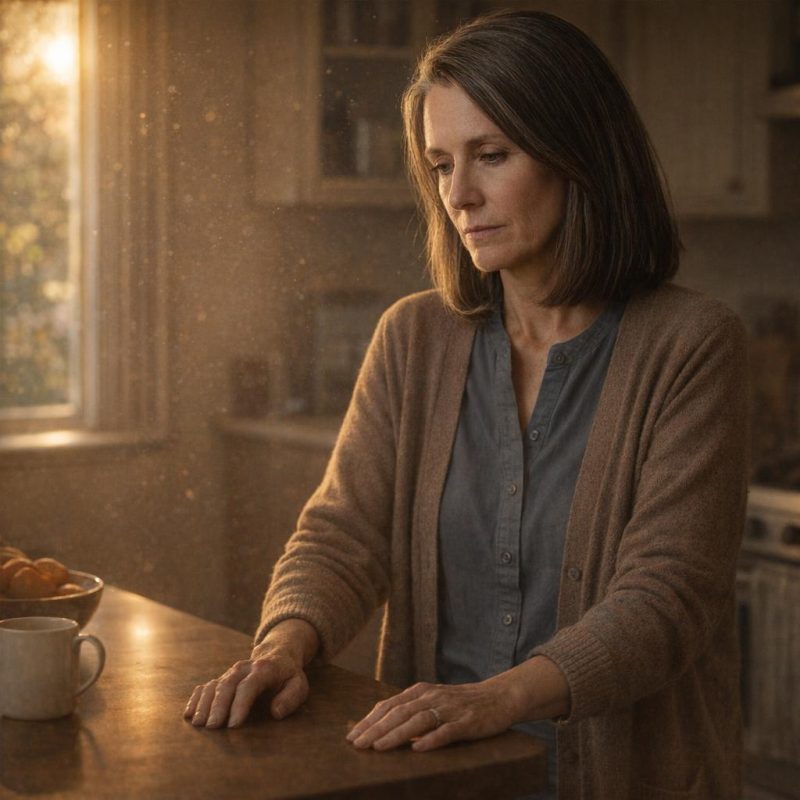 Image by RM AI
For Sophie and Jake
I called Brandon on a Thursday morning, before I could talk myself out of it. He picked up on the second ring, and I could hear the careful way he said hello — like he wasn't sure which version of me was on the other end. I told him I'd been doing a lot of thinking. I told him I understood why they'd made this choice, even if I wished they'd trusted me enough to make it with me instead of around me. He started to apologize again and I let him, and then I told him to stop. I said I wasn't calling to relitigate it. I said I was calling because Sophie and Jake are my grandchildren and I am not going to let my hurt feelings be the reason they grow up without their grandmother in their lives. His voice went quiet in a way that told me he was trying not to cry. He promised video calls every week, visits as often as they could manage, and I said I was going to hold him to every single one of those. It wasn't the life I'd imagined. It wasn't what I would have chosen. But I knew what I was choosing now — I picked up the phone, and I was going to keep picking it up, every week, for as long as they'd let me.
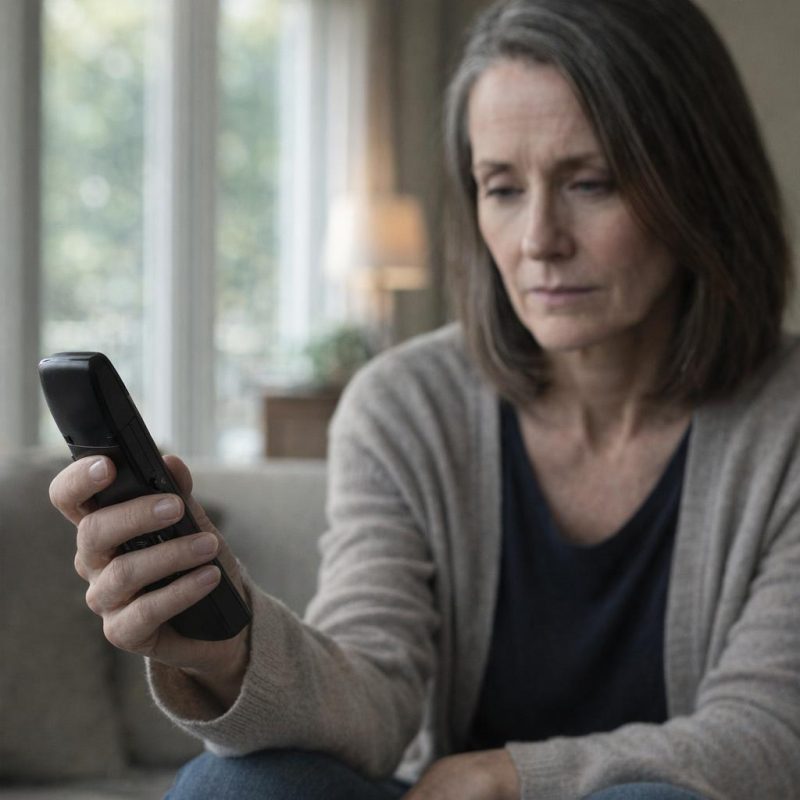 Image by RM AI
KEEP ON READING
20 Most Notorious Criminals in History
A Closer Look at Infamy. History is fraught with horrible…
By Christy Chan Jun 19, 2026
20 Historical Relationships Ruined by Terrible Timing
Love Doesn’t Always Conquer All. Love often struggles when entangled…
By Elizabeth Graham Jun 19, 2026
20 Women In History Punished for Loving the Wrong Person
When Love Became a Public Offense. History has never been…
By Annie Byrd Jun 19, 2026
Sin Eaters: 20 Bizarre Jobs in History Created To Deal…
Making a Living Off the Afterlife. Death has always been…
By Sara Springsteen Jun 19, 2026
20 Dangerous Household Items Families Used Daily in the 1990s
The Danger Lurking in Your 1990s Living Room. Growing up…
By Sara Springsteen Jun 19, 2026
20 Times Royal Jealousy Got Completely Out of Hand
Crowned Rivalries . Royal courts were built on ceremony and carefully…
By Annie Byrd Jun 19, 2026