

I Planned My Parents' 40th Anniversary Party Alone. When My Mother Credited My Sister, I Finally Snapped.
I Planned My Parents' 40th Anniversary Party Alone. When My Mother Credited My Sister, I Finally Snapped.
The Promotion No One Heard
I'd been waiting six years for this promotion. Six years of early mornings and late nights, of proving myself on every project, of being the one who stayed when everyone else went home. So when I walked into my parents' house that Friday night, I actually thought they'd be excited. I sat down at the dinner table, waited for a natural pause in the conversation, and said it: 'I got the promotion. Senior architect. I'm leading the historic downtown project.' My mother looked up from her salad and gave me this distracted smile, the kind you'd give someone who just told you they bought new dish soap. 'That's nice, dear,' she said, and then her attention swiveled to Maya like a spotlight finding its mark. 'Maya, tell us about the Bali campaign. Your father and I have been dying to hear about the resort.' And just like that, Maya was off, describing infinity pools and sunrise yoga sessions, her hands painting pictures in the air. My father laughed at something she said about the hotel staff mixing up her smoothie order, his whole face lighting up in a way I couldn't remember seeing when he looked at me. I pushed cold potatoes around my plate and had this weird thought: I could probably get up and leave right now, and no one would notice until they were ready for dessert.
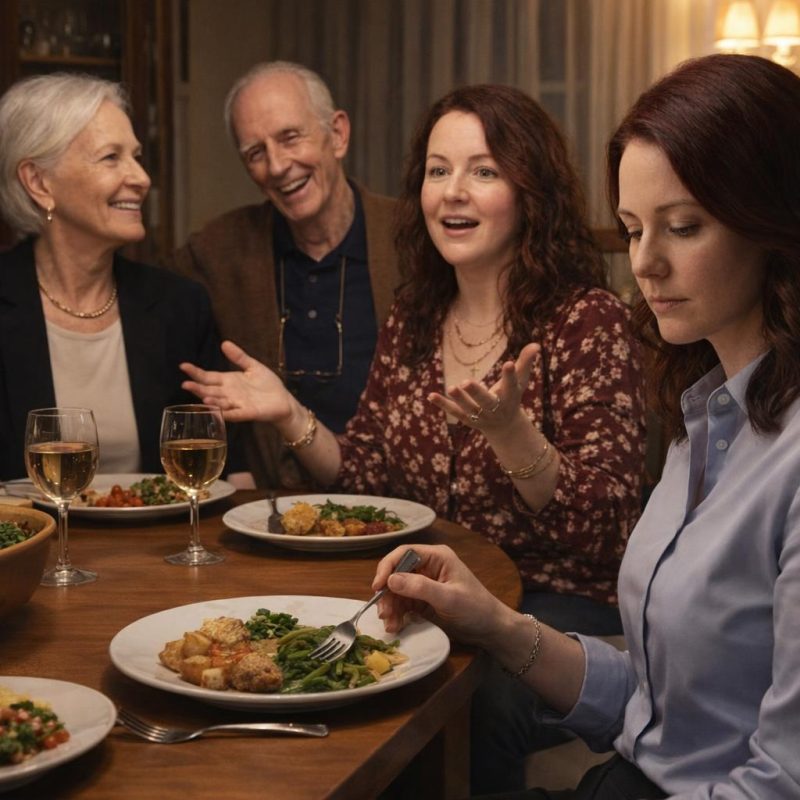 Image by RM AI
The Space Where Questions Should Be
Dinner kept going like that, everything flowing around Maya like she was the sun and we were all just orbiting. My mother wanted to know about the resort's architecture, which would've been funny if it didn't sting. That was literally my job, and she was asking Maya about it. My father kept asking to see photos, leaning over to look at her phone, making these appreciative sounds. I finished my chicken and vegetables while they discussed camera angles and lighting. When my mother brought out her famous chocolate cake, she cut Maya an extra-large slice and asked about the brand partnership details. My father wanted to know if Maya had met anyone famous at the resort. I ate my dessert and contributed the occasional 'mm-hmm' when someone glanced my way. When I finally said I should get going, they all hugged me warmly, told me to drive safe, said we should do this again soon. I walked to my car in the driveway, keys in hand, and sat there for a minute before starting the engine. The drive home was quiet, just me and the radio playing songs I didn't really hear. It wasn't until I was pulling into my apartment complex that it hit me: not one of them had asked a single follow-up question about my promotion. Not about the raise, not about my new office, not about the team I'd be leading. The omission sat in my chest like something cold and heavy.
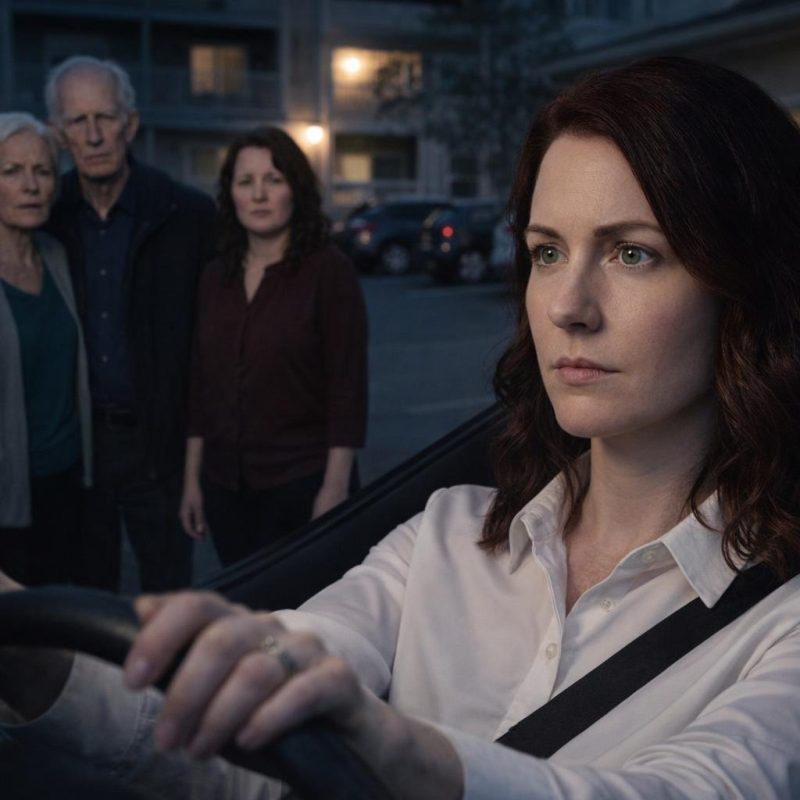 Image by RM AI
Calling Back for Seconds
I woke up Saturday morning still thinking about it. The promotion, I mean. The thing I'd worked toward for six years, the achievement that should've felt bigger than it did. I kept replaying dinner in my head, trying to figure out if maybe I just hadn't explained it well enough. Maybe I'd been too brief, too casual about it. Maybe they just needed more details to understand why it mattered. So during my lunch break on Monday, I called my mother. I told myself it was just bad timing at dinner, that's all. Everyone had been tired, distracted by Maya's visit. My mother answered on the third ring, her voice warm and familiar. 'Sarah! How are you, honey?' I settled into my desk chair and started explaining properly this time. The promotion meant a corner office with windows overlooking the city. It meant leading a team of five junior architects. It meant a twenty percent raise and my name on the building permits for the historic renovation project downtown. I was mid-sentence, describing the scope of the project, when my mother cut in. 'Oh, that reminds me. Have you seen Maya's new photos? The ones from the resort?' My explanation just sort of trailed off, the words dissolving in my mouth like sugar in water.
 Image by RM AI
Try Being More Like Her
My mother didn't seem to notice I'd stopped talking. She launched into this detailed description of Maya's latest Instagram post, going on about the composition, the way the light hit the water, how the resort's aesthetic was just perfect. She used words like 'curated' and 'authentic' in the same sentence, which would've made me smile on a different day. She talked about Maya's eye for these things, her natural talent for capturing moments. I made small sounds of acknowledgment, holding the phone to my ear, watching people walk past my office door. Then my mother said it, casual as anything, like she was suggesting I try a new recipe: 'You know, Sarah, you should really try to be more like your sister. She just has this way of making everything look effortless.' The words hit me but didn't quite land, like I was hearing them through water. I stood up from my desk without meaning to, walked to my office window. My mother kept talking, something about lighting choices and Instagram algorithms, her voice bright and animated in a way it hadn't been when I was talking about my promotion. I made the appropriate noises, said the right things, and when we hung up a few minutes later, I stood in my kitchen at home that evening, staring at nothing. The call had ended with the usual pleasantries, but they felt hollow, like biting into beautiful fruit and finding it tasteless.
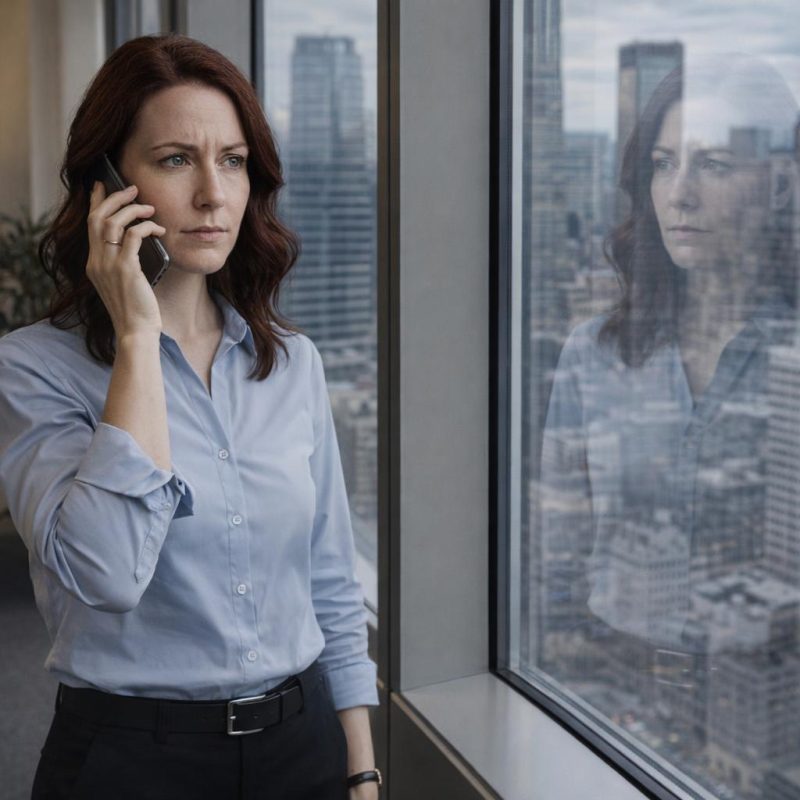 Image by RM AI
Standing Still
I don't know how long I stood there in my kitchen after hanging up. Long enough that the afternoon light had shifted across the counter, creating new shadows I hadn't noticed before. The phrase kept replaying in my head: 'try to be more like your sister.' My mother had said it the way she'd say 'try the chicken instead of the fish' or 'try taking the highway instead of side streets.' Just helpful advice from someone who knew better. I looked around my apartment, really looked at it. The architecture books lined up on my shelf, organized by period and style. The building models on my desk from projects I'd worked on, each one representing months of problem-solving and creativity. The framed photo of the first building I'd helped design, a small community center that won a local award. I tried to shake off the feeling, told myself I was being too sensitive, that my mother hadn't meant anything by it. But the feeling wouldn't leave. It sat in my chest like something that had been there all along and I was only now noticing its weight. Something had shifted in how I heard my mother's voice, in how I understood the space I occupied in my family. I realized I'd been standing completely still for several minutes, just staring at my own reflection in the darkening window. The feeling settling inside me wasn't anger, exactly. It was colder than that, more like recognition.
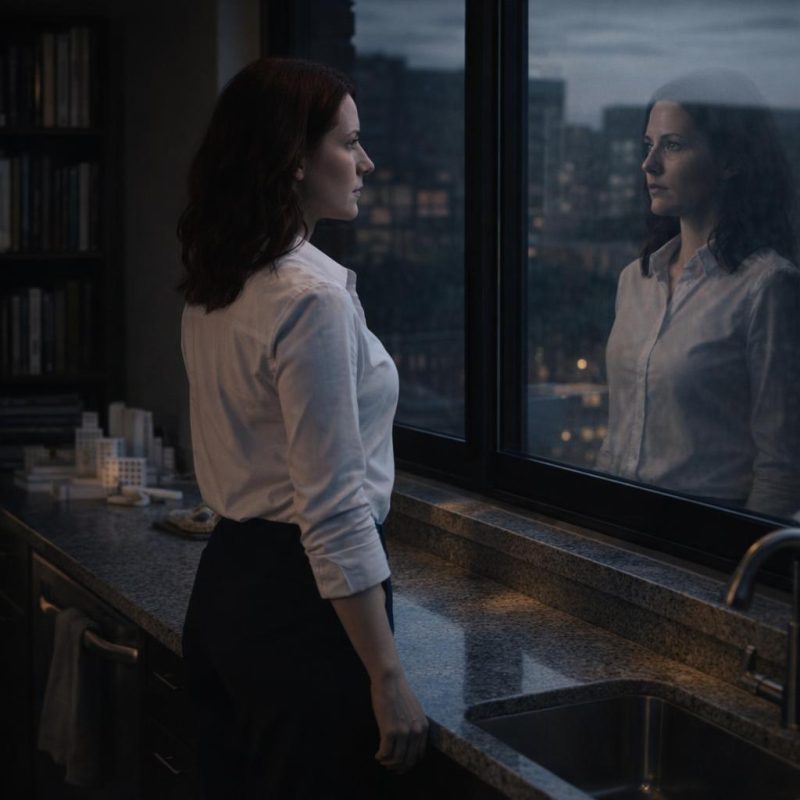 Image by RM AI
Where People Listen
Monday morning's design meeting was in the large conference room with the wall of windows. I'd spent the weekend refining my revisions to the historic building project, and I laid out the updated plans across the table. My team gathered around, and I walked them through the changes I'd made to the facade restoration. People leaned forward when I spoke, studying the details I pointed out. Someone asked about the structural challenges of preserving the original brick while meeting modern safety codes, and I explained my solution. They nodded, following my reasoning. The client representative said she trusted my judgment on the material selections, that my track record spoke for itself. One of the junior architects complimented how I'd solved the problem with the load-bearing walls, said he'd been stuck on that exact issue for days. I noticed it then, really noticed it: people were actually listening when I spoke. They asked questions because they wanted to understand my thinking. They valued my expertise. The meeting ended with everyone agreeing to move forward with my proposed direction, and I gathered up my plans feeling that particular satisfaction of being heard. Walking back to my office, I thought about the difference between this room and my parents' dinner table. The contrast between people leaning in to catch my words and my mother's distracted 'that's nice, dear' hit me harder than it probably should have.
 Image by RM AI
Solid Ground
Back at my desk, I pulled up the full project file for the historic building. It was complicated work, the kind that required both imagination and discipline. The building was from 1924, all ornate details and craftsmanship you don't see anymore, but it needed to function as modern office space. I had to balance preserving its character with meeting current building codes, accessibility requirements, fire safety standards. My team trusted me to navigate all of it, to make the calls that would honor the building's history while making it viable for the next century. I was leading this entire redesign from concept to completion, my name on every permit, my vision guiding every decision. I walked through the structural calculations I'd been working on, checked the aesthetic choices against the historical photos we'd found. There was this particular satisfaction in solving a complex problem, in seeing all the pieces come together. I felt solid here. Valued. Seen. Then my phone buzzed on my desk, and I glanced down at the notification. Family group chat. My stomach did this weird little drop, and I realized I was dreading opening it. The solid feeling I'd had just seconds before started to crack, like ice under too much weight, and I hadn't even read the messages yet.
 Image by RM AI
The Family Chat Scroll
I finished up my work around five and walked out to my car in the parking garage. Instead of starting the engine right away, I just sat there in the driver's seat and opened the family group chat. Seventeen new messages, all from the last two hours. I scrolled through them, watching the conversation unfold. My mother had sent three messages in a row, each one more excited than the last, all exclamation points and heart emojis. Maya had landed a collaboration with some luxury travel brand, and my mother was over the moon about it. My father had jumped in asking questions about the brand's reach, whether they'd feature Maya in their magazine ads. Maya shared behind-the-scenes details with laughing emojis, talking about the contract negotiations and the creative direction they wanted to take. My mother sent another message saying how proud she was, how this was such a big opportunity. I scrolled up, looking for my own message from that morning. There it was: two sentences about my promotion and the new leadership role I'd be taking on. I'd sent it at eight-thirty, right after I got to the office. I counted the responses to my message. Zero. Not even a thumbs-up reaction or a heart. The chat had just moved right past my news like it was a weather report no one cared about, and landed on Maya with all the enthusiasm I'd been hoping for.
 Image by RM AI
The Date No One Mentioned
I was eating lunch at my desk on a Wednesday, scrolling through my personal calendar while I picked at a turkey sandwich. The office was quiet, most people had gone out to grab food, and I was using the time to map out the next quarter. Doctor's appointment in May, that work conference in June, my parents' fortieth wedding anniversary in early July. I stopped mid-bite. Fortieth anniversary. That was three months away. I opened the family group chat and scrolled back through two weeks of messages. Nothing about the anniversary. No one had mentioned planning anything. Maya hadn't brought it up, my parents hadn't said a word about it. I checked the calendar again, like maybe I'd gotten the date wrong, but no, there it was. If I didn't do something, the date would just drift closer and closer with no plan at all. I thought about how other families handled these milestones, the big parties with speeches and photo slideshows, everyone gathering to celebrate. I could see it in my mind, something thoughtful and beautiful, every detail chosen with care. I set down my sandwich and thought about what it would mean to create something beautiful enough that they'd finally have to see me.
 Image by RM AI
The Perfect Party
I decided that night to plan the entire party myself. Every detail, every decision, something so perfect they couldn't help but notice the work behind it. I pulled out a fresh notebook and opened it to the first page, writing 'Mom and Dad's 40th Anniversary' across the top. Venue options, theme ideas, guest list, catering, music, decorations. I started brainstorming, thinking about what would make them happiest, what would capture forty years of their life together. I could picture their faces when they walked into the space I'd created, see my mother's hand flying to her chest the way it did when she was moved. This was about celebrating their marriage, I told myself. About honoring what they'd built together. But I couldn't stop imagining the moment they realized I'd planned everything, couldn't stop picturing them thanking me specifically, finally seeing all the effort I put into things. I created a timeline for the next three months, breaking down tasks week by week. The project energized me in a way work hadn't in months. I decided not to ask Maya for help. I'd do this myself, make it undeniable. I told myself I was doing it for them, but Rachel's question three weeks later would force me to wonder if that was true.
 Image by RM AI
Touring Venues
I spent Saturday morning driving between venues with my notebook and a folder of questions. The hotel ballroom felt too impersonal, all beige walls and corporate lighting. The restaurant private room was too small, couldn't fit the guest list I was building. The third place had beautiful gardens but the parking situation was a nightmare. The fourth venue was too modern, all glass and steel when my parents preferred traditional elegance. The fifth venue was a historic estate with gardens and string lights already installed in the trees. I stood in the garden space imagining my parents walking through, pictured where the band would set up, where we'd put the tables. The coordinator was professional and warm, showing me the indoor backup space in case of rain. She asked about capacity, dietary restrictions, bar preferences. I took notes on everything, asked about acoustics and lighting options. Then she turned to me with her tablet and asked who else was on my planning team, who should be her point of contact. I realized in that moment how I must look, one person doing all this alone. 'Just me,' I said, and heard how that sounded hanging in the air between us. The coordinator didn't comment but the moment felt telling.
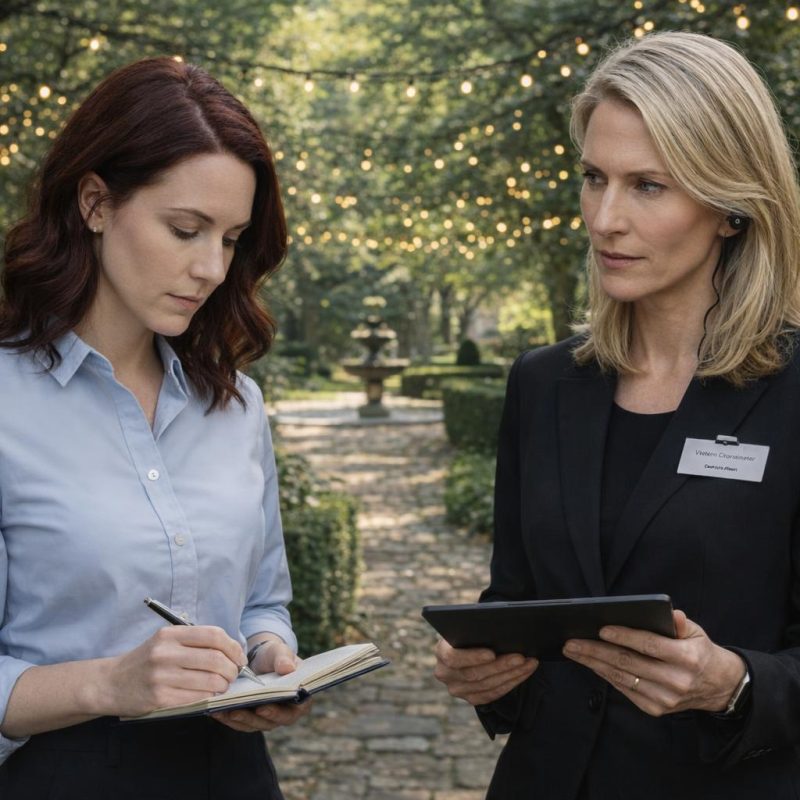 Image by RM AI
The Music They Loved
I spent Tuesday evening researching jazz musicians, looking for someone who could play the standards my parents loved. I found a quartet that specialized in music from the sixties and seventies, their website full of song lists that looked exactly right. I called the bandleader and asked if I could hear some samples. He played three recordings over the phone, the sound warm and nostalgic, exactly what I'd been hoping for. 'This is perfect,' I told him. 'What songs are special to the couple?' he asked. I didn't have to think about it. 'The Way You Look Tonight, the Sinatra version. My dad loves that one. And At Last by Ella Fitzgerald, my mother always hums along when it comes on.' I listed two more without hesitation, songs I'd heard them play on Sunday mornings, songs that made my mother smile and my father reach for her hand. I knew these things because I'd been paying attention for years, actually listening when they talked about music, noticing what made them happy. We negotiated the price and I booked them for four hours. I added the song selections to my planning notebook, feeling proud of this choice. The bandleader asked what songs were special to the couple, and I realized I knew exactly which ones because I'd actually been listening.
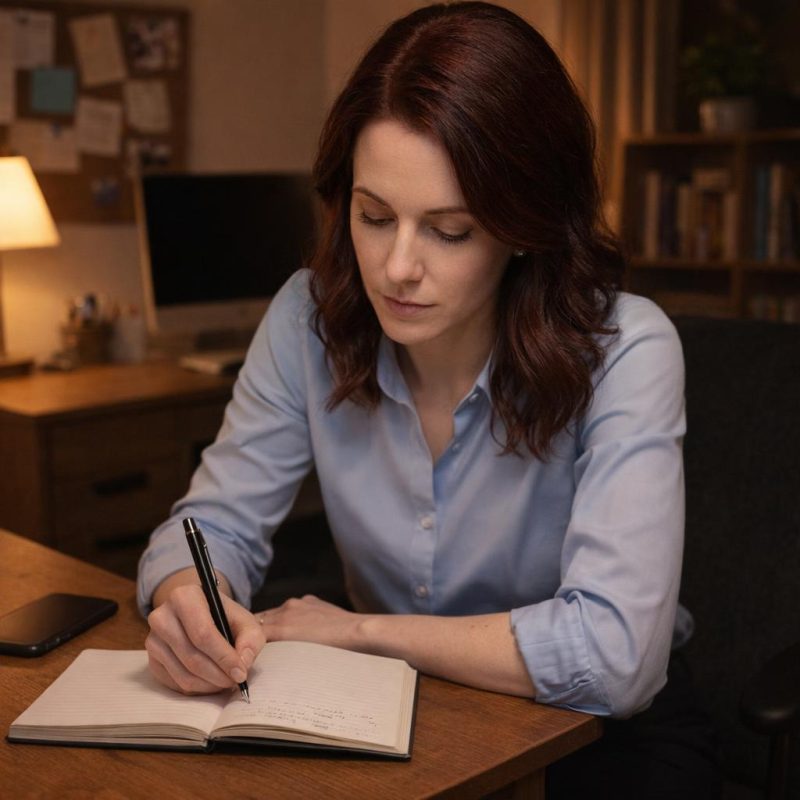 Image by RM AI
Designing in Detail
I cleared my drafting table on Wednesday night and spread out my initial sketches for the invitations. This was what I did for a living, designing spaces and creating visual presentations, and I was going to use every bit of that training here. I chose typography that balanced formality with warmth, created a layout that felt elegant without being stuffy. The design incorporated subtle elements that referenced forty years, proportions and spacing that I adjusted until everything felt exactly right. I worked late into the evening, moving between hand sketches and digital software, refining the concept until it captured my parents' aesthetic perfectly. By eleven I had the final version saved and ready to send to the printer. I stepped back and looked at it on my screen. It was beautiful, sophisticated, exactly what an anniversary invitation should be. The design reflected everything I knew about what they valued, what they'd appreciate. I saved the file and closed my laptop, satisfied with what I'd created. Then I thought about the party itself, about Maya being there, about how people would probably assume she'd had something to do with the invitations. The design came together perfectly, and I saved the file thinking Maya would probably get compliments on it anyway.
 Image by RM AI
Coffee with Rachel
I met Rachel at our usual coffee shop on Sunday, grateful for the excuse to get out of my apartment. We ordered our drinks and found a corner table away from the weekend crowd. 'How've you been?' she asked. 'What's new?' I started telling her about the anniversary party, just meaning to mention it briefly, but then I was describing the venue and the garden space, the jazz quartet I'd hired, the invitation design I'd finished. I talked about the guest list I was building, the catering options I was comparing, the timeline I'd created to keep everything on track. Ten minutes passed and I was still talking, my enthusiasm more visible than I usually let it show. I could hear it in my own voice, this energy I'd been pouring into the planning. Rachel listened without interrupting, just watching my face while I described my vision for the evening. When I finally finished, she took a sip of her coffee and set the cup down carefully. Her expression was gentle but serious, the look she got when she was about to say something I might not want to hear. She listened quietly until I finished, then asked a question I didn't want to hear.
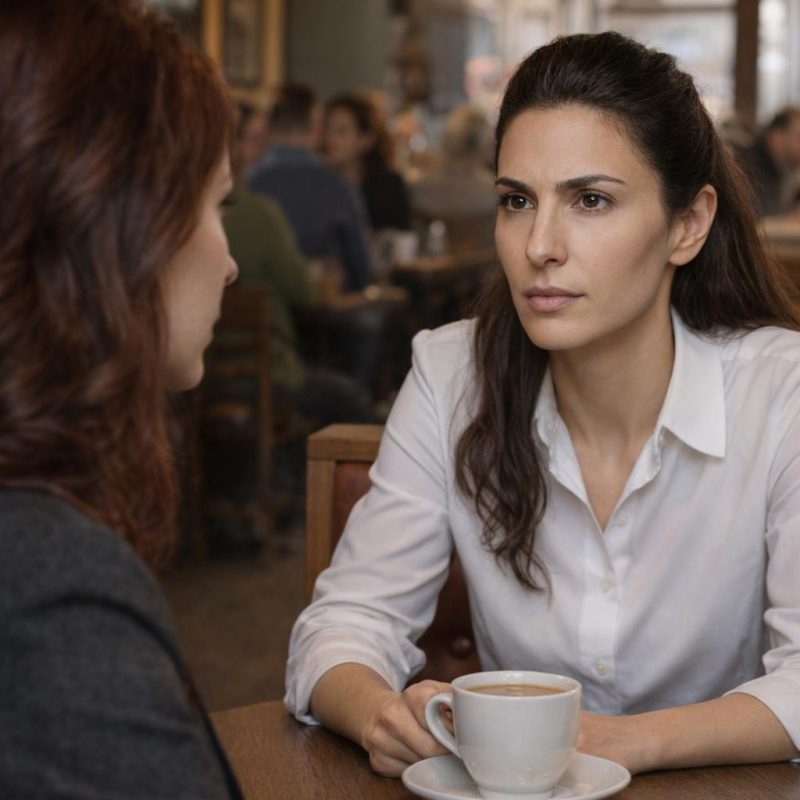 Image by RM AI
The Question
'Are you doing this for them,' Rachel asked, her tone careful and kind, 'or because you hope they'll finally notice you?' The question landed with uncomfortable precision, like she could see something I'd been keeping hidden even from myself. I felt exposed, caught in something I hadn't meant to reveal. 'It's for their anniversary,' I said, hearing the defensive edge in my voice. 'It's about celebrating forty years of their marriage. You're reading too much into a simple gesture.' Rachel nodded slowly, said 'okay' in a way that suggested she didn't quite believe me. She didn't push it, didn't argue, just let the moment sit there between us. I changed the subject to her work, asked about a project she'd mentioned last time, and the conversation moved on. But it felt strained now, like we were both pretending that question hadn't happened. We finished our coffee and hugged goodbye in the parking lot. I walked to my car feeling unsettled, Rachel's words echoing in my head despite how quickly I'd dismissed them. I felt something defensive rise in my chest and told her she was overthinking it.
 Image by RM AI
The Rationalization
I sat in my car before starting the engine, Rachel's question replaying in my mind. She was wrong. She didn't understand the situation, didn't see that this was just what families did for milestone anniversaries. I was planning this party because I loved my parents, because forty years of marriage deserved to be celebrated properly. This wasn't about me needing their approval. It was about being a good daughter, about creating something meaningful for them. I started the car and pulled out of the parking lot, still arguing with Rachel in my head. This was normal. This was what people did. I turned onto the main road, telling myself I was overthinking her question, letting it get under my skin when it shouldn't. But then I caught myself mid-thought, realized I'd been imagining the moment my parents would realize I'd planned everything. I could see their faces so clearly, the surprise and gratitude, the moment they'd finally understand how much work I put into things, how much I did for them. The fantasy felt too vivid, too important, like I'd been rehearsing it without meaning to. I almost believed it until I caught myself imagining their faces when they realized I'd done everything.
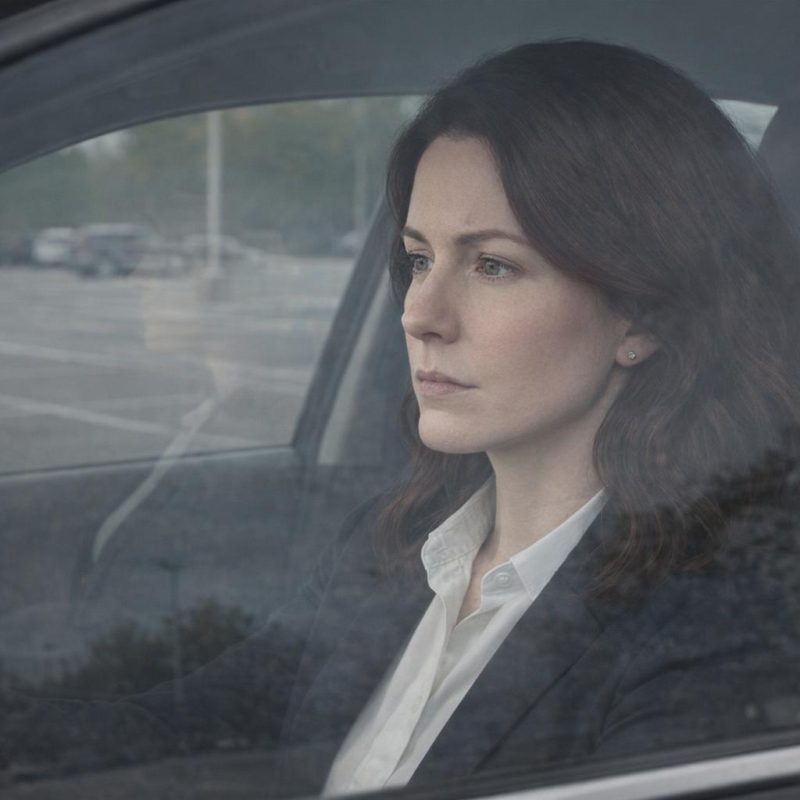 Image by RM AI
The Words That Stay
Rachel's question stayed with me through the following days, surfacing at odd moments while I finalized catering menus and confirmed the photographer. Monday at work, I was reviewing proposals when it hit me between salmon and chicken options. I pushed it away, focused on dietary restrictions and plating presentations. Tuesday evening, I called the photographer to book their services and found myself explaining why the party mattered, my voice taking on this defensive edge I couldn't quite control. Wednesday, a colleague asked about my weekend plans and I mentioned the party planning, then caught myself emphasizing how much work it was, like I needed her to understand the scope of my effort. Thursday, confirming floral arrangements, Rachel's question was there again, quiet but persistent underneath every decision. I tried to ignore it but noticed it had changed how I talked about the party, changed the words I chose. The phrase 'they'll finally see' kept almost slipping out when I explained things to vendors, to coworkers, to myself. I stopped myself each time, but I couldn't unhear the words anymore, couldn't pretend I wasn't thinking them.
 Image by RM AI
Balancing Acts
I juggled party planning with leading my building project team, both demanding attention I gave willingly to work and compulsively to the anniversary. I arrived early to review structural engineering reports, presented well in our morning meeting, but my mind kept drifting to seating arrangements and timeline logistics. That afternoon, I took a call from the venue coordinator with my office door closed, discussing table configurations like they were load-bearing calculations. I returned to work emails but checked my party planning notebook twice within an hour. My assistant brought in documents to sign and asked casually if I was okay, said I seemed distracted lately. I insisted I was fine, just busy with a family event, and she nodded but looked concerned as she left. I closed my office door and stared at my calendar, counting how many times I'd thought about the party today. Every hour, at least. I had three work deadlines this week but kept mentally rehearsing the party instead. The anniversary was still six weeks away. I couldn't figure out when it had become this consuming, this urgent, like something I needed to prove rather than something I wanted to create.
 Image by RM AI
The Silence in the Thread
I checked the family group chat during lunch and noticed Maya hadn't said a single word about the anniversary party in the three weeks since I'd mentioned it. I scrolled back through the messages, counting. I'd posted four updates about planning progress, shared photos of the venue, mentioned hiring the jazz quartet, asked about guest list preferences. Maya had responded to plenty of other messages in that same timeframe. She'd posted about a new restaurant she tried, shared photos from a brand photoshoot, replied to Mother's question about her schedule. But she hadn't responded to any party-related messages. Not even a thumbs up or acknowledgment. I counted again to be sure. Maya had posted seventeen times about her own life in three weeks. Zero responses to anything about the anniversary. The pattern felt conspicuous somehow, like a space she was carefully stepping around. I wondered if she was just busy, if I was reading too much into silence. But the selective engagement was hard to ignore. She was actively posting about everything else in her life, but the party existed in a silence that felt conspicuous.
 Image by RM AI
The Predictable Pattern
I sat with my party planning notebook that evening and noticed Maya wasn't helping with a single detail, yet somehow I suspected that if the night went well, people would find a way to attach her to it. Every page was filled with my handwriting, my research, my decisions. Venue selected and booked by me. Jazz quartet hired by me. Invitations designed by me. Catering menu chosen by me. Photography arranged by me. Guest list compiled by me. Maya hadn't contributed anything concrete, hadn't offered to help, hadn't asked questions. But I could picture exactly what would happen. If the party was beautiful, people would assume Maya had something to do with it. They always did, assumed the creative, charming daughter was involved somehow. I'd seen this pattern my entire life. Maya got credit for things by proximity, by assumption. I did the work and people's eyes slid past me to her, like I was just the scaffolding for her shine. The realization sat heavy in my chest. It wasn't even anger anymore, just tired recognition. The knowing felt worse than the work, like I'd trained myself to expect my own erasure before anyone else could do it for me.
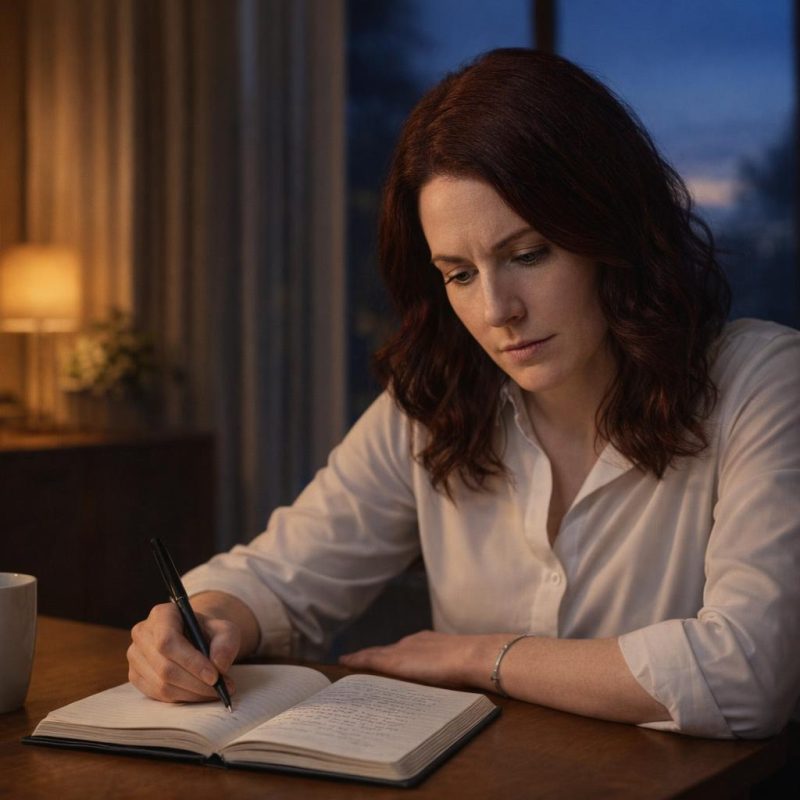 Image by RM AI
Final Confirmations
I spent Tuesday evening finalizing the catering menu and confirming the quartet could play through cocktail hour and dinner. I called the caterer first, went through vegetarian options and dietary accommodations, reviewed the timeline for cocktail service and dinner courses. Then I called the jazz quartet to confirm their performance schedule, asked them to play through both segments, made sure they had the four special songs I'd requested. I updated my planning notebook with final confirmations, checking items off my list with mechanical precision. Everything was falling into place smoothly, each piece clicking together exactly as I'd planned. But the satisfaction felt different than I'd expected. There was an urgency underneath I couldn't quite explain, this pressure building in my chest that had nothing to do with deadlines or logistics. Like I was racing toward something, building toward a moment I couldn't name. The party was five weeks away but felt both too close and too far, like time was moving at the wrong speed. I checked my list again even though nothing had changed. Everything was falling into place with a precision that should have felt satisfying but instead felt urgent, like I was building something against a deadline I couldn't name.
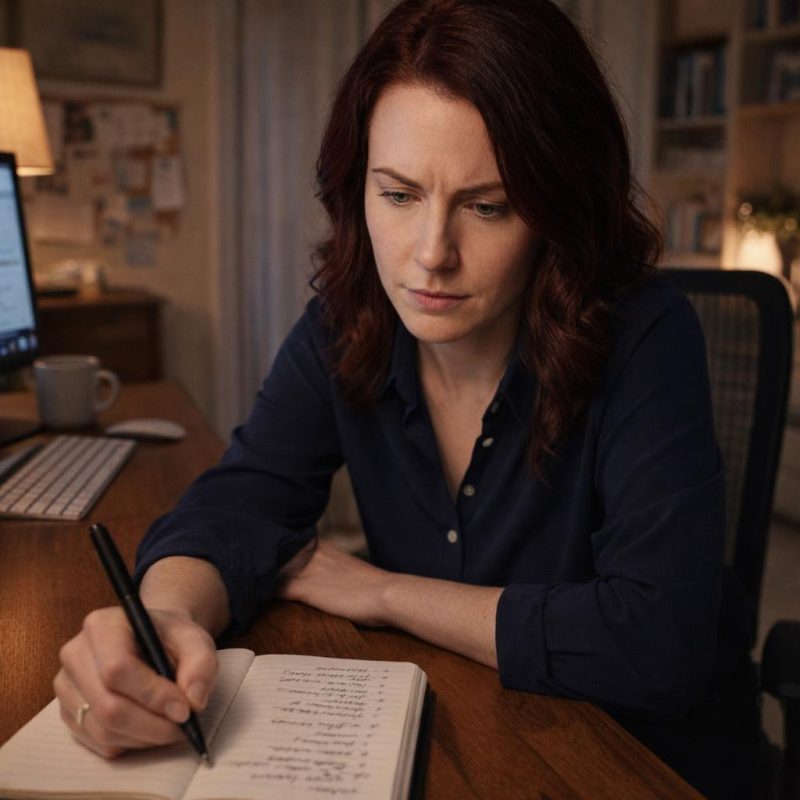 Image by RM AI
Splitting Credit
The venue coordinator called about the invoice the next day and asked who to bill, and I heard myself say 'Sarah and Maya' without thinking. The words came out automatically, like they were pre-loaded, ready before she'd even finished asking. She confirmed 'Sarah and Maya, got it' and moved on to discussing final guest count. We finished the call, logistics and numbers, everything professional and efficient. I hung up and sat very still, staring at my phone. Realized what I'd just said. Maya hadn't done a single thing for this party. I'd handled every detail, every decision, every payment, every phone call, every confirmation. But I'd given her credit without anyone asking, without even pausing to consider. The reflex was immediate, unconscious, like breathing. Like I'd been trained to share accomplishments that were entirely mine alone. I wondered how many times I'd done this before, how many times I'd split credit for work I'd done solo. The thought sat cold in my stomach. I hung up and stared at my phone, wondering how long I'd been trained to erase myself before anyone else could do it for me.
 Image by RM AI
The Trained Response
I sat in my car after the venue call and saw the splitting of credit as something I'd learned to do long before I could name what I was doing. I replayed the phone call in my mind, the way 'Sarah and Maya' had come out so automatically, so reflexively. I tried to remember when I'd started doing this. Science fair projects in middle school, always said 'we' even when I'd worked alone. College applications, downplayed my own achievements when discussing them with family. Job promotion announcements, minimized my role in front of my parents. Even small things, recipes I'd created, articles I'd written, always found a way to deflect or share credit. I never claimed something as entirely mine. The pattern went back as far as I could remember. It wasn't something I'd decided to do. It was something I'd learned, absorbed, became. Making myself smaller to leave room for Maya. And no one had ever told me I didn't have to. No one had ever said 'this is yours, claim it.' The silence had taught me as much as any words could have. The thought arrived with cold clarity: I had been making myself smaller my entire life, and no one had ever asked me to stop.
 Image by RM AI
Gathering Evidence
I started pulling old family photos from albums and digital folders to build the anniversary slideshow, telling myself I was creating something beautiful even as I braced for what I might find. I set up my laptop and scanner at the dining table, pulled out three family photo albums from storage, opened my parents' shared digital folder. I planned to select photos spanning their forty years together, organize them chronologically. The early photos were normal, just my parents young and happy before kids. Then I came to family photos from my childhood. I selected a Christmas morning photo from when I was seven, scanned it, pulled it up on screen. Maya was in perfect focus, center frame, holding a doll, everyone's attention on her. I was at the edge of the frame, slightly out of focus. Not completely cropped out but not quite sharp either. I looked at the next photo from that same Christmas. Maya opening presents, everyone watching. Me in the background again. I told myself it might be coincidence, just how the photographer had framed the shots. But something tight formed in my chest. The first photo I scanned showed Christmas morning when I was seven, and Maya was centered in perfect focus while I stood at the frame's edge, slightly blurred.
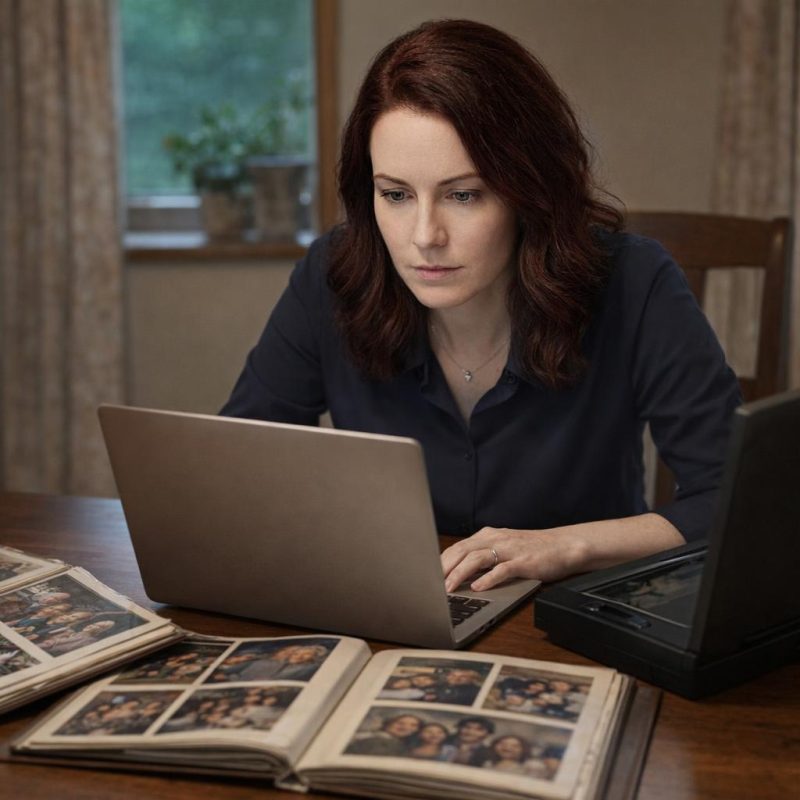 Image by RM AI
Center Frame
I kept scanning. One photo after another, methodically building the digital archive while something cold settled in my chest. Birthday parties from different years - Maya centered at the table, candles lit, everyone leaning in toward her. Family vacations - Maya in sharp focus on the beach while I stood further back, slightly blurred by distance. Thanksgiving dinners where the photographer had positioned Maya at the emotional center of the frame, the turkey and family arranged around her like she was the sun. School photos, holiday cards, random Sunday afternoons. I created a folder on my desktop, saved each file with careful labels. Twenty photos now. Different occasions, different photographers, different cameras spanning years. But the composition choices were consistent. Maya always drew the eye. Maya always in focus. Maya always positioned where the frame's energy concentrated. I tried to rationalize it as I worked. She was younger, more naturally photogenic. Photographers instinctively center on certain subjects. This was just how family photos looked, wasn't it? But my hands shook slightly as I saved each file, and I had to set down my coffee because I didn't trust myself not to spill it.
 Image by RM AI
The Margins
I started looking specifically for myself in the photos, tracking my own presence with growing discomfort. There I was at the edges, in the corners, half-turned away from the camera like I'd been caught mid-motion. Multiple shots where I was mid-blink, mouth half-open, captured at unflattering angles while Maya looked perfect. In group photos, I stood at the end of the line. In candid shots, I appeared in the background, slightly out of focus compared to whoever occupied the foreground. I made a mental catalog of these positions. The margins. Always the margins. Then I found my high school graduation photo and had to stop breathing for a second. There I was in cap and gown, holding my diploma, the achievement I'd worked four years for. But Maya stood in the foreground, mouth open mid-laugh, having apparently said something hilarious. Mom and Dad were both angled toward her, their attention completely captured by whatever joke she'd made. I stood in my graduation regalia with my diploma and my accomplishment, and no one in the frame was looking at me. The composition told the whole story without a single word.
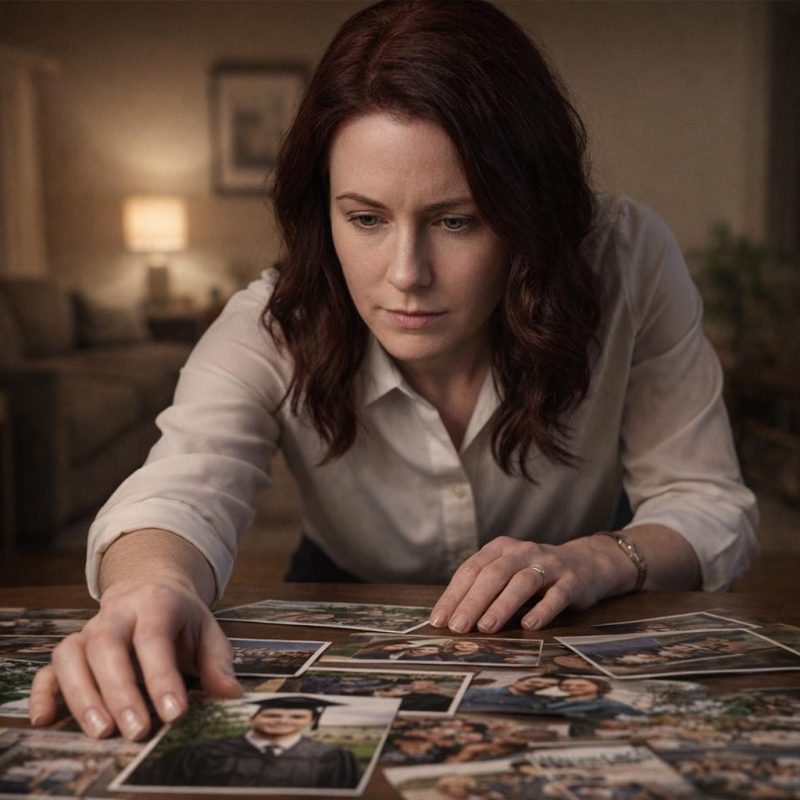 Image by RM AI
The Science Fair
I found the photo I'd been half-looking for without realizing it. My sixth-grade science fair. I remembered that day clearly - the pride of winning first place for my volcano demonstration, the blue ribbon pinned to my display board. I scanned the photo and enlarged it on my screen, studying every detail. There I was at twelve years old, standing beside my project with that ribbon visible in the frame. But every single person in the photo was turned away from me. Mom, Dad, my teacher, two other parents - all of them looking to the right of the frame where Maya stood at age nine, apparently mid-sentence, her mouth open and one hand gesturing. I was the one who'd won. I was the one being honored at that moment. But the photo captured everyone's attention on Maya instead. I stared at this image for several minutes, feeling something shift in my understanding. This wasn't selective memory playing tricks. This wasn't me being oversensitive or reading too much into things. This was evidence, and I'd just found thirty years of it.
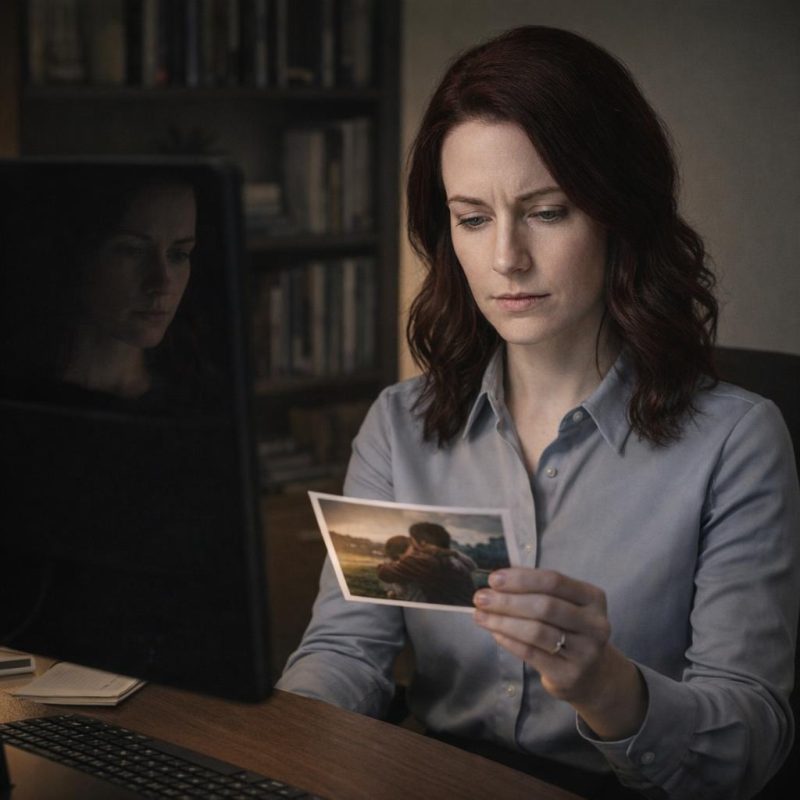 Image by RM AI
The Event I Almost Skipped
I almost didn't go to the networking event Thursday evening. I was exhausted from party planning and photo scanning, and the idea of making small talk with strangers felt like too much effort. But my colleague texted asking if I was coming, said it would be good for my career, and I reluctantly agreed to show up for an hour. The venue was a modern downtown space with floor-to-ceiling windows and too many people in business casual. I mingled briefly, exchanged pleasantries with a few architects I'd met before, then headed to the drinks table for water. A man around my age was also getting a drink. He introduced himself as James, a structural engineer. We exchanged names and firms, the standard networking script. Then he asked what projects I was working on currently, and something in his tone felt different. Not just networking politeness. Genuine curiosity. I started to give a brief answer about the historic building renovation, expecting him to nod and redirect to his own work. But he maintained eye contact, asked a follow-up question about the preservation requirements. I found myself giving more detail, and I realized I wanted to answer. The feeling was unfamiliar - someone actually curious about my work.
 Image by RM AI
Actually Listening
James asked about the specific challenges of balancing modern building codes with historic preservation, and I explained the facade restoration complications. He nodded, asked about the structural engineering team and how we coordinated. I described our collaborative approach, the compromises needed for safety updates while preserving character. I kept talking, explaining the original construction techniques and how we were updating systems without destroying what made the building significant. He listened to all of it without checking his phone, without scanning the room for someone more important to talk to, without interrupting to redirect the conversation to his own projects. I finished explaining a particularly complex structural solution we'd developed, and he smiled. Said I clearly loved this work. The observation was simple, almost throwaway. But I realized I'd been talking for ten minutes straight, and no one had interrupted me once. Not once. At work meetings, people interrupted constantly. At family dinners, I rarely finished a sentence. But this near-stranger had just listened to me talk about load-bearing walls and historic masonry for ten solid minutes, and he'd seemed genuinely interested the entire time.
 Image by RM AI
Lighting Up
James said I lit up when I talked about design. Just a casual observation, the kind of thing people say in conversation without thinking much about it. But the words landed with unexpected weight. It was such a simple thing to notice - that someone became animated discussing their passion. My family had known me for thirty-two years. They'd watched me go through architecture school, seen me build my career, heard me mention projects and deadlines and site visits. Not once had anyone mentioned noticing that I loved this work. Not once had they observed that I lit up when I talked about it. This stranger saw it in twenty minutes. I thanked him for the conversation, and we exchanged business cards professionally. Then I walked away, stood near the windows looking out at the city lights, and felt something I couldn't quite name. It wasn't attraction, not exactly. It was the experience of being seen. Of having someone notice what I cared about, what made me come alive. The feeling was both good and painful. Good because it had happened. Painful because it was so rare that a simple observation from a stranger could hit this hard.
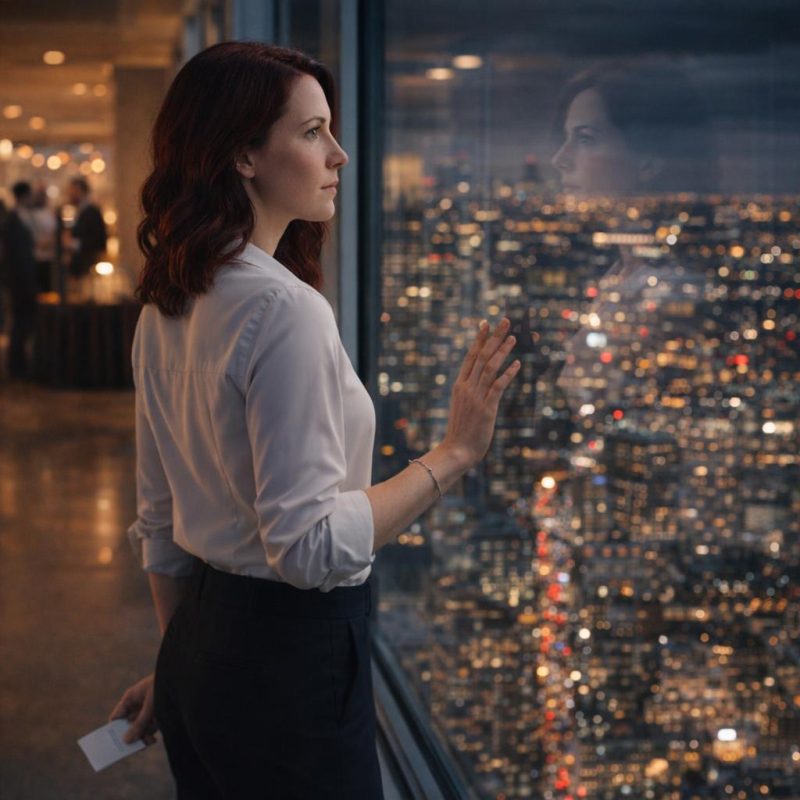 Image by RM AI
The Award I Won
Monday morning, Tom Chen pulled me aside before I'd even settled at my desk. We stepped into a conference room, and he told me the historic building project had won a regional design award for preservation excellence. The award was significant in our field, the kind of recognition that elevated a firm's reputation. I felt pride beginning to rise in my chest. Then Tom continued - he'd recommended me for a major leadership position at the firm. I would oversee multiple project teams, represent the firm at regional conferences, participate in strategic planning meetings. This was the kind of recognition I'd worked years for, the career milestone that should have had me floating. Tom congratulated me, said I'd earned it. I thanked him, shook his hand, tried to match his enthusiasm. But my first thought wasn't celebration. It was calculating whether telling my family would be worth the inevitable disappointment. Mom would probably ask if Maya had seen the news. Dad would be distracted by something else. The award would get a polite 'that's nice' at most, if it registered at all. I realized I was already resigned to their inattention before I'd even told them, and the achievement felt smaller when I imagined sharing it.
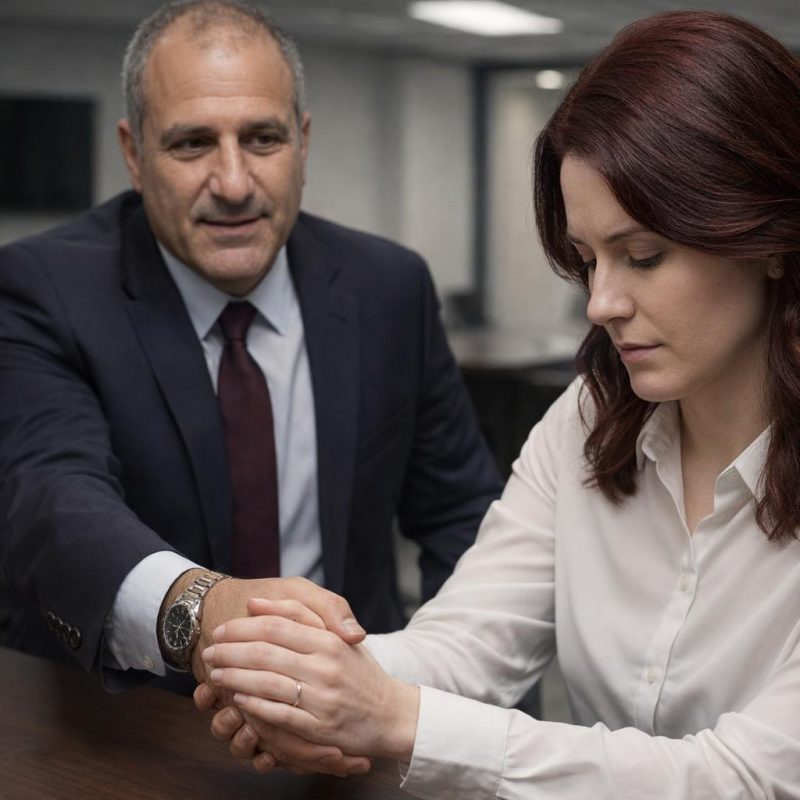 Image by RM AI
Recommended
Tom described the leadership role in more detail. I'd mentor three junior architects, lead client presentations for major projects, shape the firm's strategic direction. As he talked, I felt the disconnect sharpen between who I was here and who I became at home. At work, I was confident and respected. People sought my opinion, trusted my judgment. I led meetings, made decisions, shaped projects that would stand for decades. But in family settings, I became smaller. My confidence deflated, my voice got quieter. Professional achievements became difficult to mention, like bragging about something no one cared to hear. Same person, two completely different experiences of existing in the world. Tom asked if I had questions about the role. I said I was honored and excited, and we discussed timeline and next steps. I left his office with career-defining news and walked back to my desk feeling strangely hollow. I opened my phone to the family group chat, typed a message about the award, then deleted it before sending. I knew it wouldn't land, wouldn't matter. So I decided not to bother, and I left his office knowing I probably wouldn't mention it in the family group chat.
 Image by RM AI
Not Worth Mentioning
I sat at my desk with the award announcement still open on my screen and Tom's words about the leadership role still echoing in my head, and I understood with perfect clarity that I wouldn't tell my family. Not because I forgot, not because I was too busy. Because I could already write the entire script. I'd post in the family group chat - something casual but proud, trying not to sound like I was bragging. Mother would respond six or seven hours later with a single word: 'Congratulations.' Maybe a period, maybe not. Father might send a thumbs up emoji if he saw it at all. Maya wouldn't acknowledge it. Within twenty-four hours, someone would share something about Maya's latest Instagram post or her new apartment or her weekend plans, and my news would scroll up and disappear. I'd seen this exact sequence play out so many times I could predict it beat by beat, pause by pause, emoji by emoji. The certainty sat in my chest like something heavy. I'd become fluent in my own erasure, an expert in the specific grammar of being overlooked. I could anticipate the timing, the tone, the exact shape of the silence. The prediction felt worse than the silence would have - I'd become so fluent in my own invisibility that I could write the script before it played out.
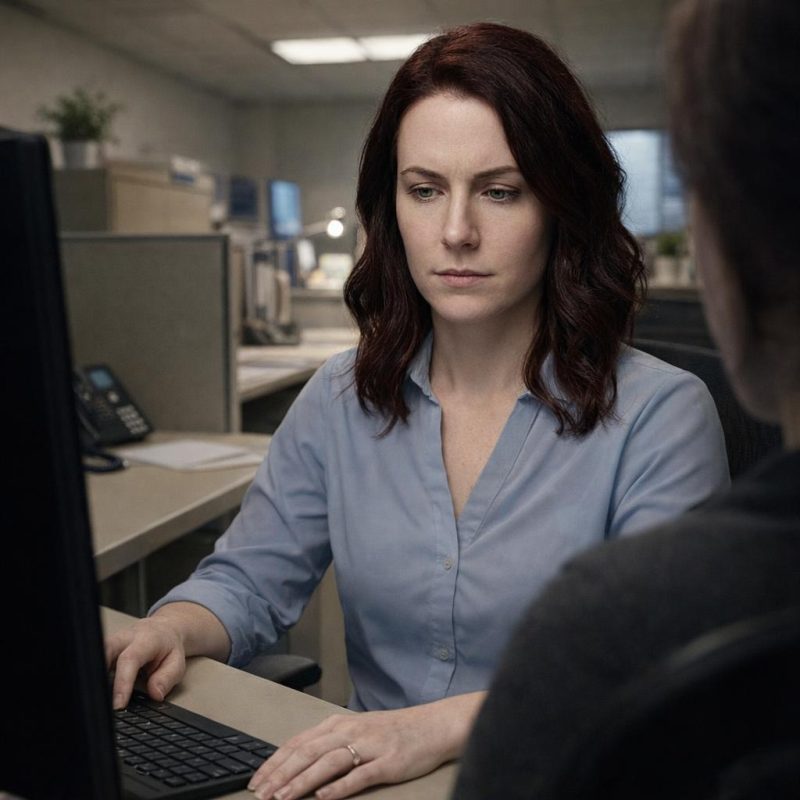 Image by RM AI
Details Upon Details
The party planning rolled forward through the following week as I added final touches nobody asked for but I couldn't stop creating. I designed custom menu cards for each place setting, using my architecture software to create elegant layouts that matched the invitations. I ordered welcome signs for the venue entrance and hand-lettered the text myself, spending an entire evening getting the calligraphy exactly right. I researched photo booth backdrops and designed one with the anniversary theme woven through it, then found a printing service that could produce it in time. My planning notebook expanded with new pages constantly - each detail got its own section, its own notes, its own documentation. The work had become more elaborate than any anniversary party needed to be. I told myself it was about honoring my parents properly, about making the celebration perfect. But underneath that, something else was driving me forward. Each detail felt like documentation, like I was building a record that would prove something I couldn't name yet. I was creating evidence of hours spent, decisions made, work completed. I didn't fully understand why proof mattered. Each detail felt like building a case I couldn't name yet, evidence of effort I was documenting without knowing why I needed proof.
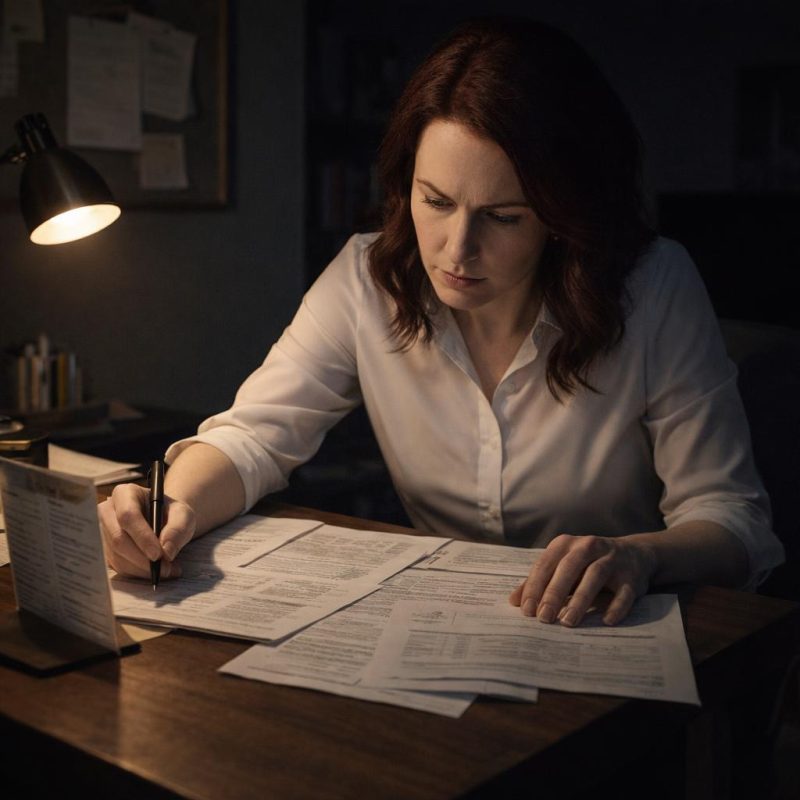 Image by RM AI
String Lights and Gardens
I met with the venue coordinator to confirm the string light installation across the garden, and we walked the perimeter together while she showed me exactly where the lights would be strung. Between the oak trees, across the main seating area, over the dance floor - the whole space would glow at dusk. I stood there imagining how it would look at sunset, the warm light against the garden greens, my parents walking into this space I'd created for them. The coordinator confirmed the installation timeline, assured me the crew would arrive early the morning of the event. We discussed backup plans if the weather turned, though the forecast looked clear. I'd thought through every contingency, every possible complication. She smiled and said something about how lucky my parents were to have daughters - plural, daughters - who cared so much about making this special. I opened my mouth to correct her, to explain that actually it was just me, just one daughter doing all of this. Then I didn't. I just nodded and said thank you, let the assumption stand there unchallenged. The coordinator kept talking about setup details, and I kept listening, adding this moment to the long list of times I'd accepted being erased. She mentioned how lucky my parents were to have daughters who cared so much, and I didn't correct her.
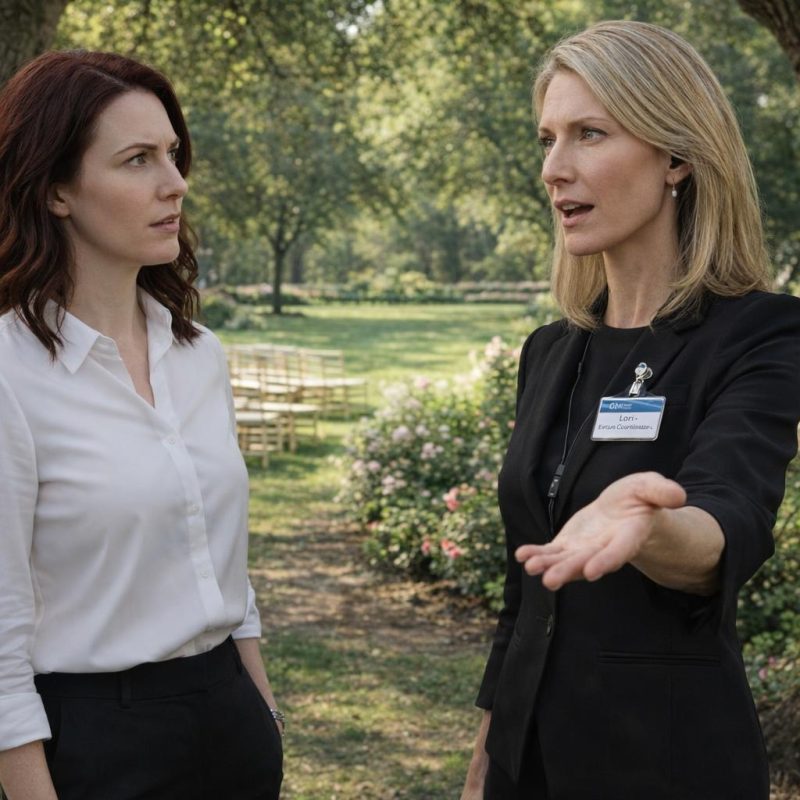 Image by RM AI
The Timeline
I sat at my kitchen table reviewing the party timeline for the third time that week, spreading my planning materials across the surface and going through each item systematically. Ten days until the event. Venue confirmed and deposit paid. Catering finalized with the exact guest count. Jazz quartet booked with the song list provided. Invitations sent weeks ago, RSVPs tracked and organized. Slideshow completed and ready to present. String lights and garden setup scheduled. Photography booked with the timeline shared. Custom menu cards ordered and already delivered. Welcome signs designed, printed, and waiting in my closet. Everything was checked off or on schedule, no detail left unmanaged. I should have felt satisfied - the planning had been meticulous, flawless even. But there was this feeling I couldn't name, like I was preparing for something bigger than an anniversary party. The anticipation felt too large for the event itself, like I was getting ready for something else entirely. I didn't know what I was waiting for, couldn't identify what was coming. The party was ten days away, and I felt both ready and unmoored, like I was preparing for something other than an anniversary celebration but couldn't say what.
 Image by RM AI
Assembling the Memories
I finished the slideshow by arranging all the family photos into a chronological narrative, watching decades condense into forty minutes of carefully timed images. I'd scanned over a hundred photos, selected the best ones, organized them from my parents' early marriage through to present day. I added transition effects and timing, selected gentle jazz instrumentals for background music, created title slides for each decade marker. The narrative was clear and touching - forty years of love and family. But the pattern was equally clear in the assembled collection. Maya centered, me on the margins. Across every era, every occasion, every type of photo. Birthday parties, holidays, vacations, graduations, school achievements, family dinners, casual moments. The evidence was all right there in sixty slides. I hadn't set out to build a case, hadn't planned to create documentation of anything except happy memories. But that's what I'd done. Thirty years of the same dynamic, visible in thumbnail view, undeniable when you saw it all at once. I saved the final file and sat staring at the thumbnail grid, seeing the pattern laid out across sixty slides like a case I'd built without meaning to.
 Image by RM AI
Thirty Years
I watched the completed slideshow from beginning to end, forty minutes of family history playing out on my laptop screen. My parents young and in love in the pre-children photos. Then baby me, toddler me. Maya arriving when I was three. And from that point forward, the pattern held constant. Maya in focus, me peripheral. Maya centered, me on the edges. Every type of photo, every occasion, every year. Different photographers, different cameras, different locations, different decades. The dynamic never changed. I'd spent years telling myself I was imagining it, convincing myself I was too sensitive, that I was reading too much into things. But the photos didn't lie. This wasn't interpretation or selective memory. This was documented reality - physical evidence spanning my entire life. Birthday parties where Maya blew out candles in the center of the frame while I stood to the side. Holidays where she opened presents in focus while I was half-cropped out. Graduations where her achievements were commemorated with dozens of photos while mine got two or three. Thirty years of proof, undeniable and complete. The pattern wasn't in my head, wasn't selective memory or sensitivity - it was real, documented, undeniable, and I had just spent weeks compiling the proof.
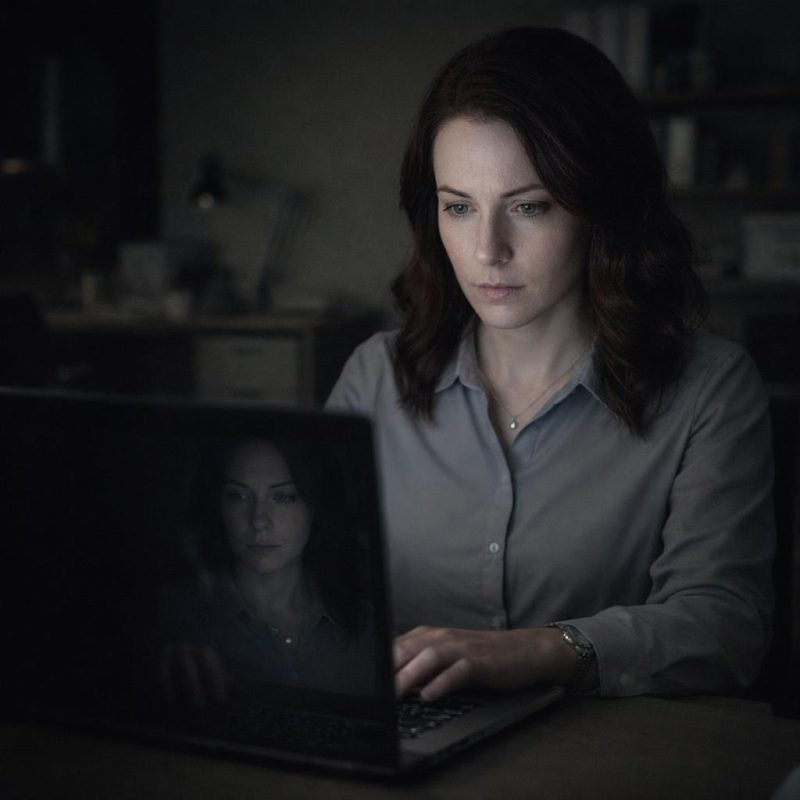 Image by RM AI
The Quartet Rehearsal
I attended the jazz quartet's rehearsal at the venue to confirm they knew my parents' favorite songs, arriving as they set up their instruments in the garden space. I introduced myself as the event organizer, and they went through the song list I'd provided. When they started playing 'The Way You Look Tonight,' the sound was beautiful in the open air - exactly the right tone for the anniversary. I confirmed they knew all four special songs, and they played samples of each one. Sinatra, Ella Fitzgerald, all the standards my parents loved. The bandleader asked about timing for different parts of the event, and I explained the schedule precisely. They were professional and well-prepared. The music would be perfect. The garden was ready. The whole party was coming together exactly as I'd planned. I stood in the empty space listening to them play, imagining it filled with guests in a week, picturing my parents' faces when they walked in. And I knew with certainty how the night would go. The party would be beautiful, everyone would have a wonderful time, and somehow Maya would get credit while I disappeared into the background again. The music was perfect, the space was ready, and I stood there knowing everything was in place for a party that would probably end with me being invisible again.
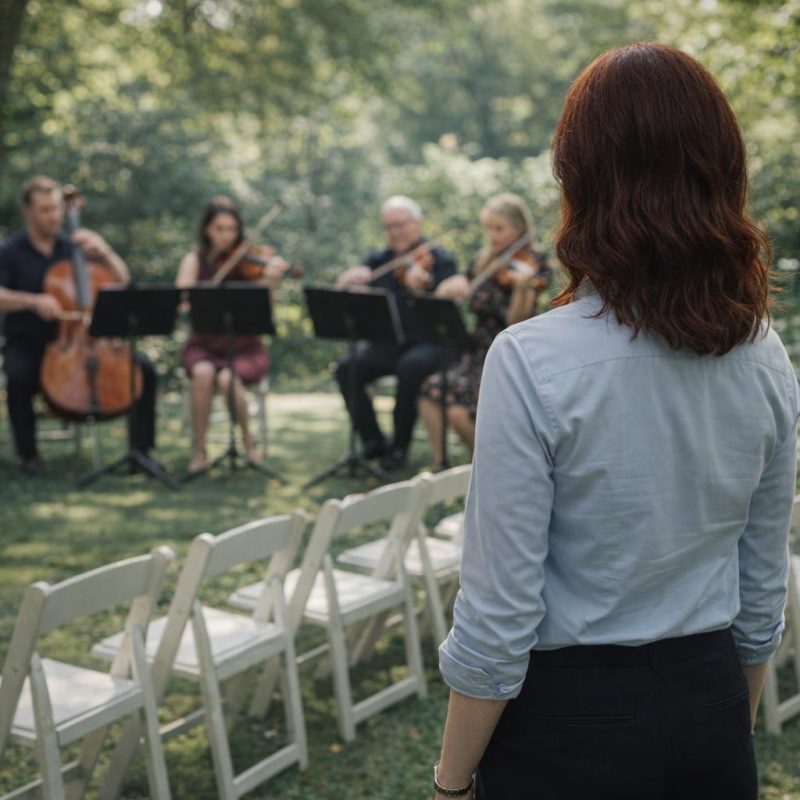 Image by RM AI
Everything in Place
I did a final walkthrough of the venue three days before the party, meeting the coordinator at the entrance and going through the entire space together. We checked table arrangements against my seating chart, confirmed string light installation points, reviewed the catering staging area, verified sound system placement for the quartet. We inspected the photo booth location and tested the slideshow projection equipment. Everything was in place. The garden was pristine, tables would be set up the morning of the event, all vendors confirmed and scheduled. My planning notebook had every detail covered, every contingency addressed. The coordinator said everything looked perfect, and I agreed - it was perfect. I'd executed this flawlessly, managed every element with precision. I stood in the center of the garden space and looked around at what I'd created. I felt satisfied with the work, proud of what I'd accomplished. But I also felt something else, something I couldn't quite name. A readiness for something beyond the party itself. Not just for the celebration, but for whatever came after. Something was coming, something bigger than string lights and jazz quartets and custom menu cards. I stood in the center of the garden I'd planned for three months and felt ready for something I couldn't name - not the party itself, but whatever came after.
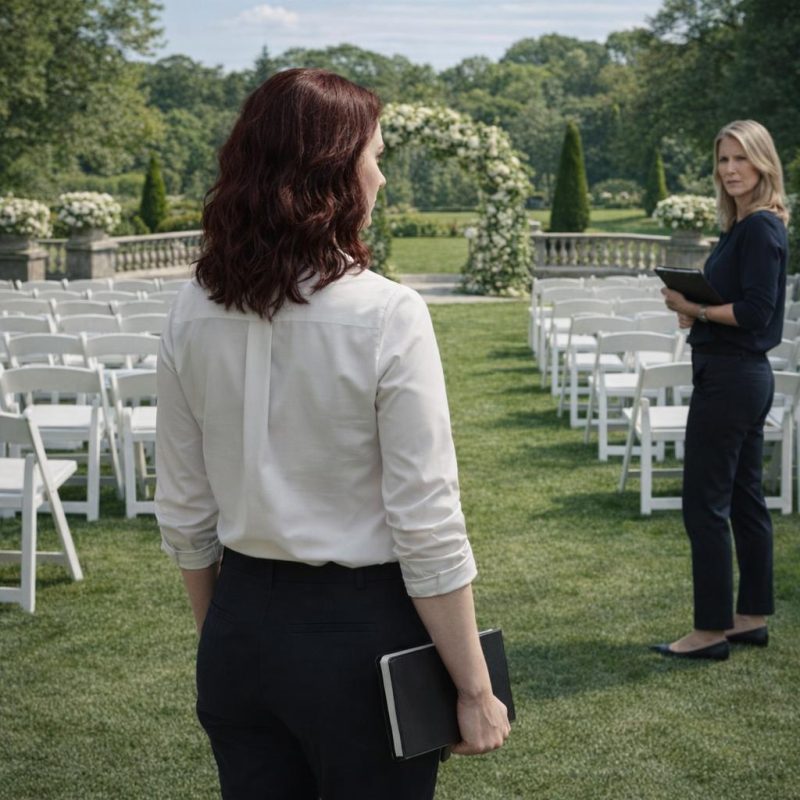 Image by RM AI
The Day Before
I woke up the day before the party and felt something I hadn't let myself feel in months—actual pride. Not the quiet satisfaction of checking off a task, but real pride in what I'd built. I pulled out my planning notebook and went through the checklist one more time. Venue confirmed, deposit paid, final walkthrough complete. Caterer locked in, menu finalized, dietary restrictions noted. String quartet booked, setlist approved, sound system tested. Slideshow loaded with forty years of photos I'd scanned and organized chronologically. Invitations sent six weeks ago, RSVPs tallied and organized by table. I walked through the timeline in my mind—setup at three, vendors arriving at four, guests at six. Every detail accounted for. Three months of work, hundreds of decisions, countless hours of coordination. I'd done this alone, and I'd done it well. The party would be beautiful and thoughtful and exactly what our parents deserved. I let myself sit with that feeling for most of the afternoon, this rare moment of uncomplicated accomplishment. Then, late in the day, my phone buzzed on the counter. A text notification lit up the screen. Maya's name appeared, and something in my chest shifted before I even read the words.
 Image by RM AI
A Rare Text
I picked up my phone and opened the message. It was short, almost formal: "What time should I arrive tomorrow?" No emoji, no exclamation point, no casual tone. Just a straightforward question. I stared at it for a moment, trying to remember the last time Maya had texted me directly instead of posting in the family group chat. I couldn't think of one. We didn't really text each other. Our communication happened in group threads or in person at family dinners. This felt different somehow, though I couldn't pinpoint why. I typed back quickly: "5pm, an hour before guests arrive." Sent it and watched the screen. Three dots appeared immediately, like she was typing a response. Then they disappeared. I waited, phone in hand, expecting a follow-up. A thanks, a question about what to wear, something. Nothing came. I set the phone down on the counter but kept glancing at it, waiting for the screen to light up again. The brief exchange sat in my mind, circling. Something about Maya's tone felt off, too careful or too distant. I couldn't identify exactly what.
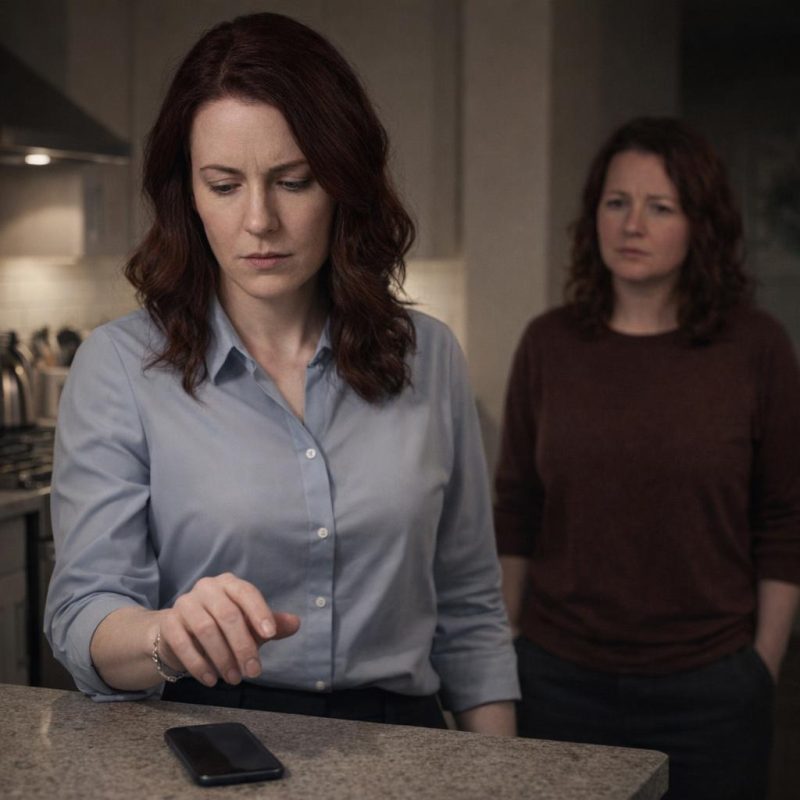 Image by RM AI
The Distance in Digital
That evening, I couldn't stop thinking about Maya's text. I pulled it up again and reread it. The words were completely neutral—just a simple logistics question. But they felt weighted somehow, like they were holding something back. Maya could have asked in the family group chat where Mom and Dad would have seen it too. She'd chosen to text me directly instead. And there was no mention of the party itself, no excitement or compliment about all the planning I'd done. Just that one practical question. I wondered if I was reading too much into it. Maybe Maya was just busy with work. Maybe this was how she texted when she was distracted. But we so rarely texted directly that I had no baseline to compare it to. The formality nagged at me. I tried to focus on final preparations—confirming the morning timeline with the venue coordinator, double-checking my outfit for tomorrow. But my mind kept circling back to those few words on my screen. Why did that message feel so distant? Why did it feel like she was keeping something from me? I fell asleep still wondering, my phone on the nightstand, Maya's text still open.
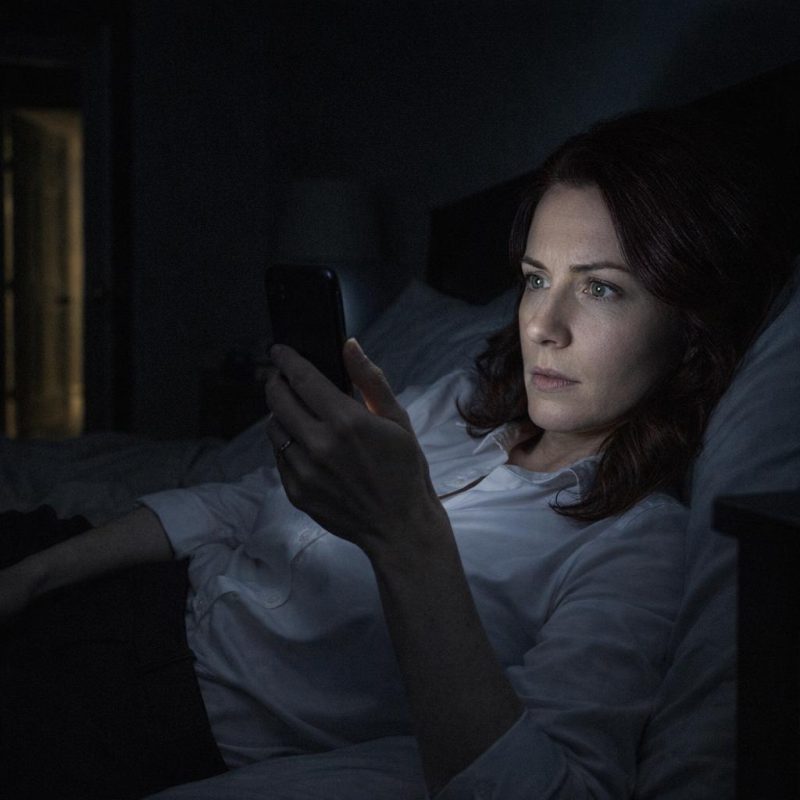 Image by RM AI
Before the Party
My phone buzzed again the next morning while I was getting ready. Another text from Maya: "Can we talk privately before the party starts? I'll be at the venue early." I read it twice, my stomach tightening with something I couldn't name. Maya had never asked to talk to me privately before. Never. I typed back a quick agreement and suggested meeting an hour before the setup crew arrived. The rest of the morning passed in a blur of nervous energy I couldn't quite explain. I got dressed, checked my bag three times, drove to the venue earlier than I'd planned. The string lights were already being installed when I arrived, venue staff moving efficiently between tables. I walked toward the garden entrance and saw her there, waiting. Maya stood with her back to the garden, arms crossed loosely, looking out toward the parking area. Her posture was different than usual—less of that easy confidence, more uncertainty in the way she held herself. I approached slowly, and she turned when she heard my footsteps. Something in her expression stopped me. Not her usual camera-ready smile. Something heavier, more uncertain. Something I'd never seen her show me before.
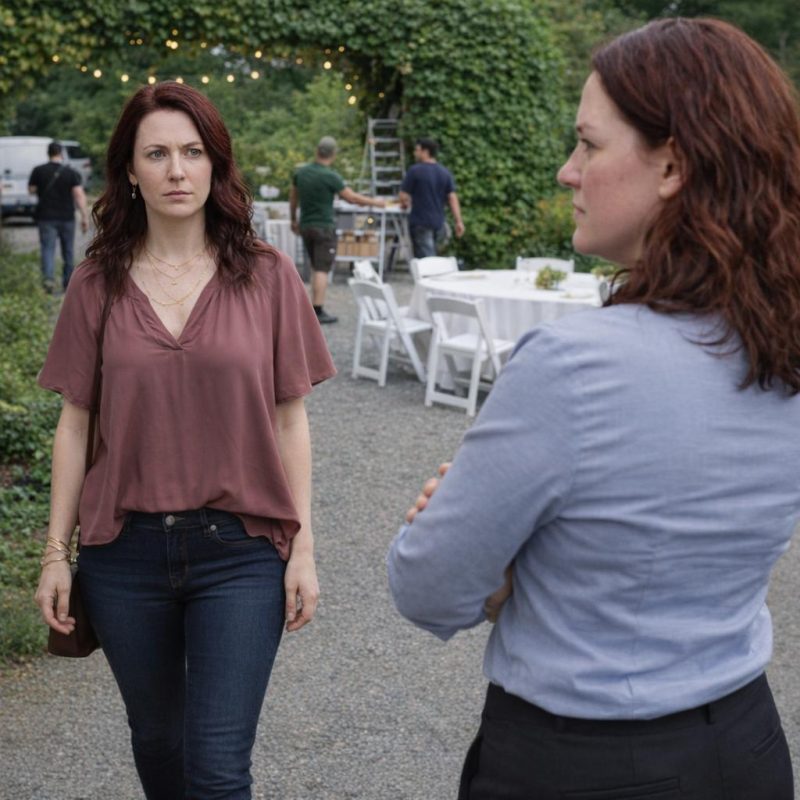 Image by RM AI
What She Tried to Tell Them
Maya looked at me for a long moment before speaking. "I need to tell you something I've never had the courage to say before." Her voice was quiet, almost shaky. I waited, completely unprepared for what came next. She told me she'd spoken to our parents about the favoritism. Multiple times over the years. She'd asked them to pay more attention to me, pointed out my accomplishments they'd overlooked, told them directly that they were always focusing on her and missing me. After my college graduation they barely mentioned. After my first architecture job. After my first major project completion. Every time, she'd tried to make them see the pattern. And every single time, they'd dismissed her. Said she was imagining things. Said they loved both daughters equally. Refused to acknowledge any imbalance. She kept trying, kept bringing it up, but they kept waving her off with reassurances that meant nothing. Eventually she stopped, but the guilt never went away. I stood there in the garden, string lights being hung above us, and felt my entire understanding of my sister shift. She wasn't oblivious. She'd been aware for years. She'd tried to advocate for me, and they'd dismissed her every single time.
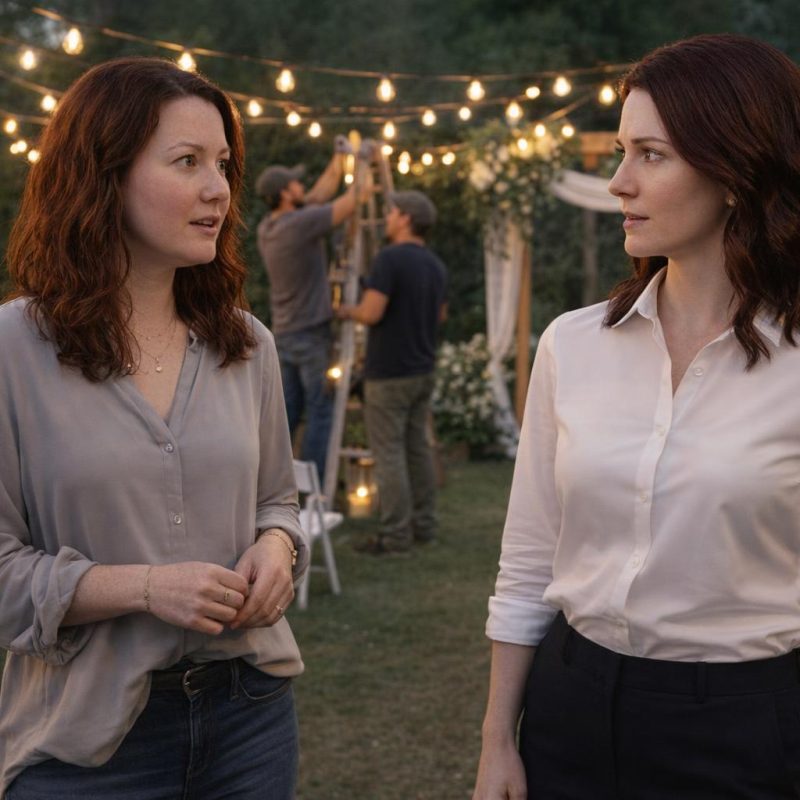 Image by RM AI
Dismissed Every Time
Maya kept talking, her words coming faster now like she'd been holding them in too long. She described specific conversations, moments I'd never known about. After my college graduation when they'd barely mentioned it at dinner, she'd brought it up later that night. They told her she was wrong, that they'd been proud. When I got my first architecture job and they'd spent the whole celebration dinner talking about Maya's latest campaign, she'd pointed it out the next day. They said they were proud of both of us equally. After my first major project completion, she'd asked why they didn't make a bigger deal of it. They told her I didn't seem to want attention, that I was more private. Every time she raised the issue, they found ways to minimize it or redirect. They claimed equal love, equal attention. They couldn't see what she was pointing out, or wouldn't. I heard myself ask how many times she'd tried. Maya looked at me with something like shame in her expression. "I lost count somewhere around your twenty-fifth birthday," she said quietly. Seven years of trying before she gave up. The scope of it landed heavily between us.
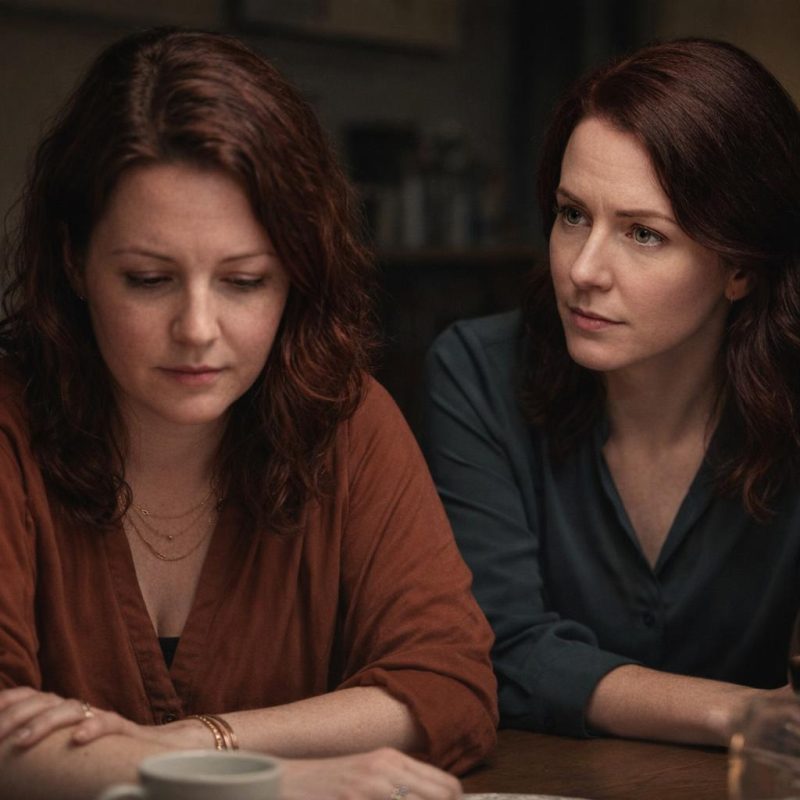 Image by RM AI
Willful Blindness
I stood there processing what Maya had just told me, and something fundamental shifted in my understanding. My parents hadn't failed to notice me through innocent oversight. They'd been told directly, repeatedly, by their other daughter. Maya had handed them the awareness on a plate, pointed out the pattern, given them every opportunity to change. And they'd chosen not to see it. Not ignorance but active choice. They'd decided my invisibility was acceptable, or convinced themselves it wasn't happening despite evidence to the contrary. Either way, they'd had the information and pushed it away. The betrayal I thought I understood doubled in that moment. I'd spent years believing they just didn't notice, that I wasn't visible enough to register. But they'd been given chances to notice. Multiple chances over multiple years. And they'd dismissed every single one. The pattern wasn't accidental. It was maintained despite intervention. Willful blindness. Chosen comfort over uncomfortable truth. I looked at Maya differently now, seeing her not as complicit but as someone who'd tried to help and failed. Someone who'd carried guilt for years because our parents refused to change.
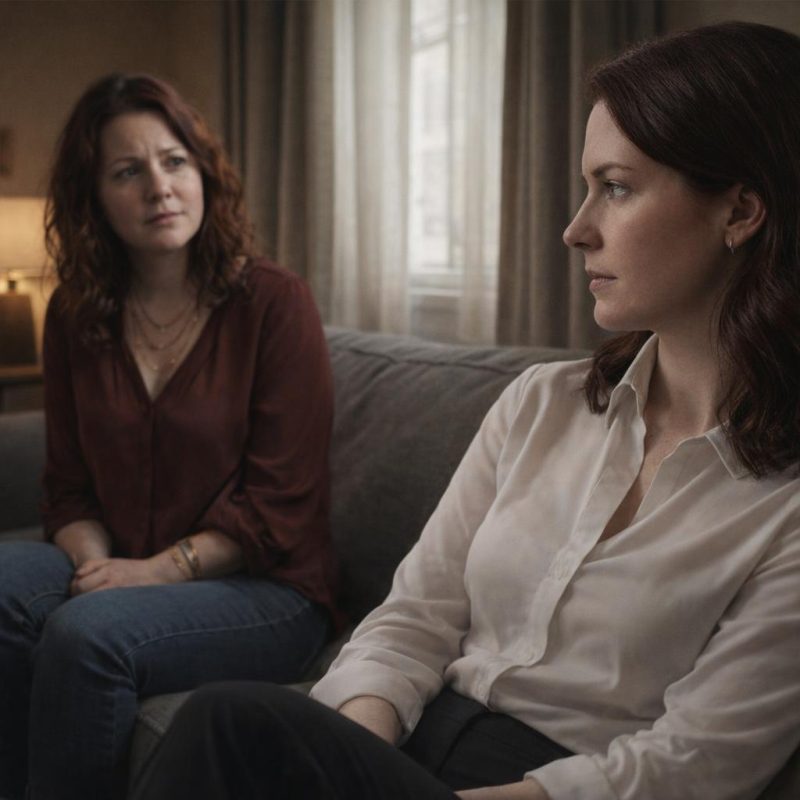 Image by RM AI
The Golden Cage
Maya's voice got quieter. "I've felt trapped in this role they gave me," she said. "Always the center of attention whether I wanted it or not. I couldn't redirect their gaze no matter how hard I tried." She described the weight of being the favorite, the constant performance pressure, the expectations that came with being the visible daughter. She'd watched me be dismissed over and over, tried to intervene and failed, and eventually felt complicit just by existing in the role they'd assigned her. The guilt had accumulated over years until it felt like something she carried everywhere. She said being the favorite felt like a job she'd never applied for and couldn't quit, and for the first time I saw my sister as something other than lucky. Different cage, still a cage. The family dynamic had trapped us both, just in different ways. Maya had been burdened by visibility the same way I'd been hurt by invisibility. Neither of us had chosen our roles, and neither of us could change them alone. I stood there in the garden where I'd planned our parents' perfect party and felt something shift toward my sister—not forgiveness exactly, but understanding.
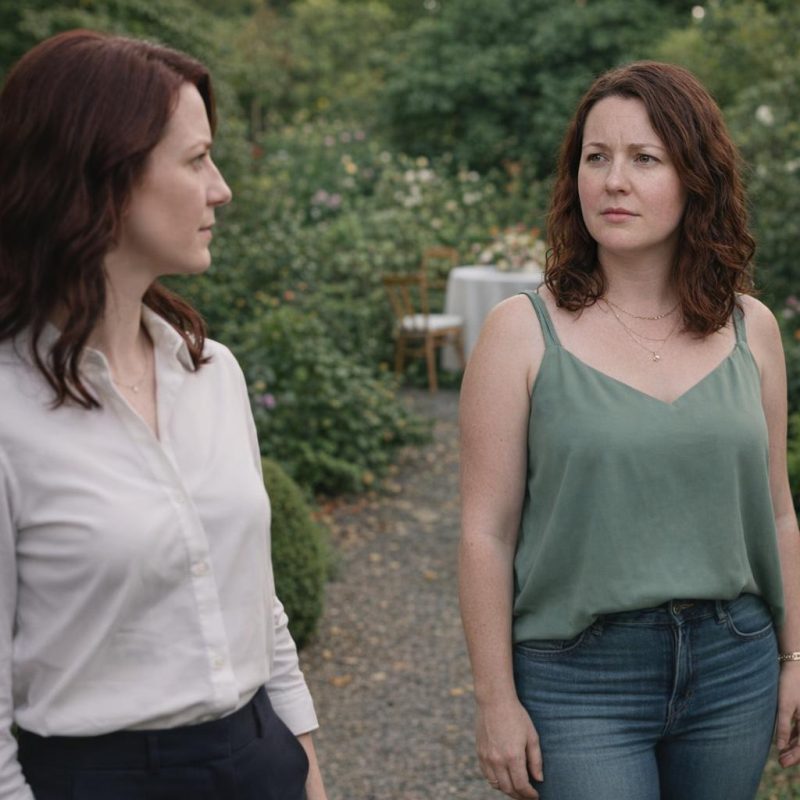 Image by RM AI
Even Advocacy Failed
I asked her why she stopped trying. The question came out quieter than I intended, but Maya heard it. She looked down at her hands, and when she spoke her voice had this exhausted quality I'd never heard before. She said every conversation went nowhere. She'd bring up something I'd accomplished, and our mother would smile and change the subject. She'd point out when I was being overlooked, and our father would look confused like he didn't see what she meant. They found ways to dismiss her concerns without ever actually addressing them. She started to feel like she was making it worse, drawing more attention to herself by bringing it up. The guilt transformed from something she could act on into something she just carried silently. She stopped raising it because continuing made her feel complicit in a pattern she couldn't change alone. But the guilt never really went away, she said. It just became this constant awareness she lived with. I stood there absorbing this, understanding the depth of my isolation in a way I hadn't before. Even Maya advocating directly, using her position as the favorite to redirect their attention, hadn't been enough to shift anything. The resistance was that strong, the preference that ingrained. If her voice couldn't change things, what hope had I ever had?
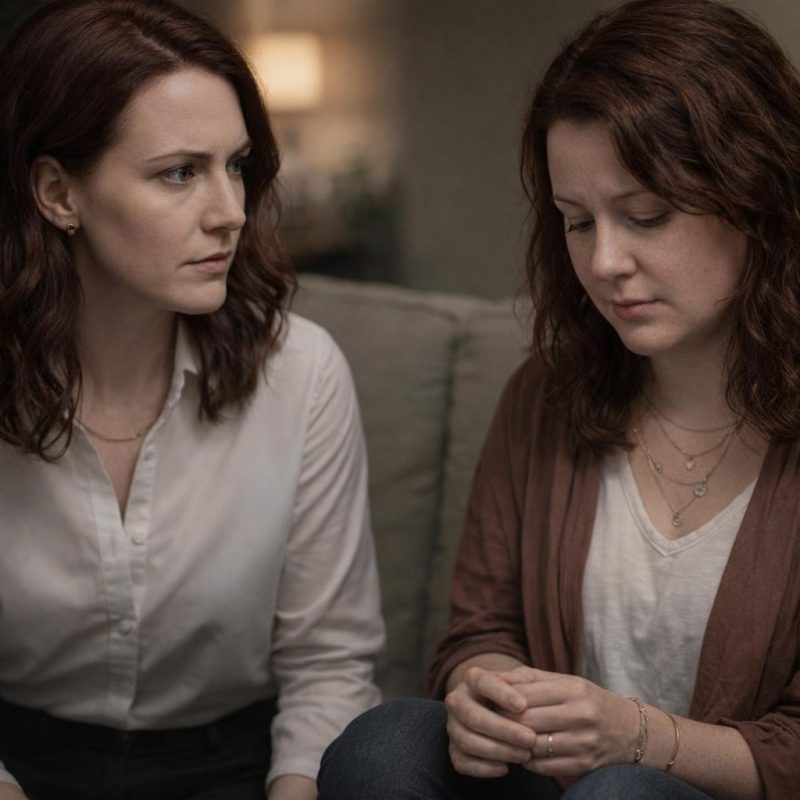 Image by RM AI
The Garden Glows
The venue coordinator arrived with her staff just as the sun started its descent toward the horizon. I watched them move through the space with practiced efficiency, and then the string lights came on across the garden. The whole space transformed in an instant, glowing warm against the deepening blue of early evening. Tables were set with the linens I'd chosen, flowers arranged exactly as I'd specified, the jazz quartet warming up near the small stage area. Maya stayed beside me watching the setup, neither of us speaking much. We hadn't fully processed our conversation, but something had shifted between us. The garden looked exactly like what I'd envisioned during all those planning sessions. Every detail was right. Guests would arrive in an hour. My parents would walk into this space I'd created, see the slideshow I'd built, hear the music I'd selected. But my certainty had shifted. I'd come here knowing the pattern existed. Now I knew it had been maintained deliberately, that my parents had chosen their blindness even when confronted. I didn't know what I wanted anymore—to be seen, to confront, to just survive the evening. The party was about to start regardless of my readiness.
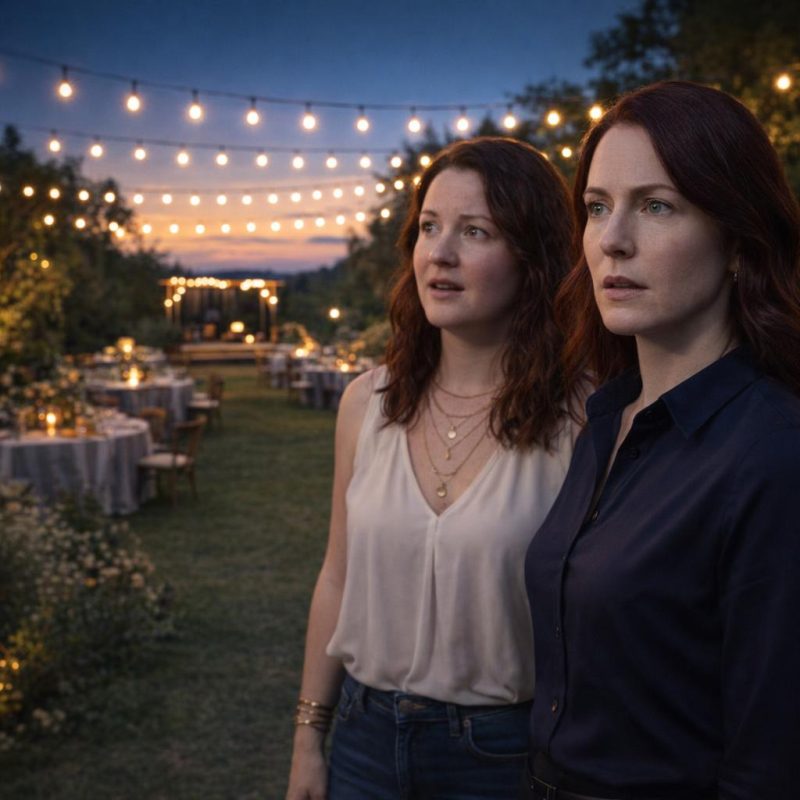 Image by RM AI
Everything She Made
The first guests arrived as the sky turned that perfect shade of purple-blue, and I watched them move through the garden with visible delight. They exclaimed over the string lights, commented on the elegant table settings, praised the quartet's song selection. I greeted people and accepted compliments, letting myself feel something I usually didn't allow—pride. Each detail I'd planned was receiving recognition. Then my parents arrived and stopped at the garden entrance. My father looked around with this expression of genuine surprise, and my mother's hand went to her chest. They walked through slowly, taking everything in. My mother started crying when she really saw the lights, the flowers, how beautiful it all was. My father kept saying he couldn't believe this, shaking his head in wonder. Guests gathered around them offering congratulations on forty years. I stood nearby watching, and for the first time all evening I let myself really feel it. Three months of work had made this. Every decision had been mine. The venue, the caterer, the music, the flowers—all of it. For one suspended hour, watching my mother's tears and my father's amazed smile, I actually believed this might be enough.
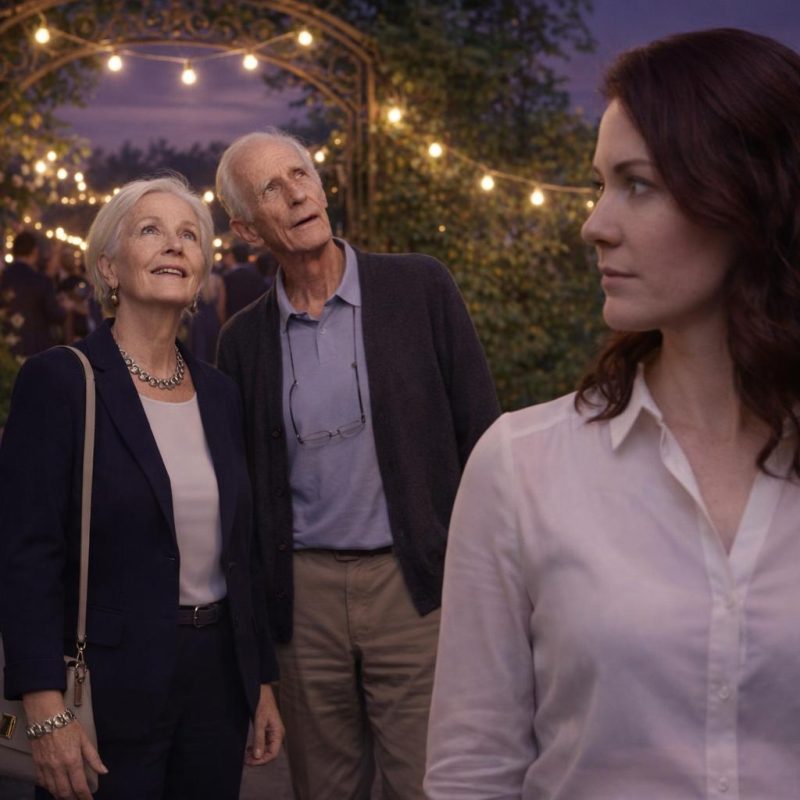 Image by RM AI
Watching Them Watch
I called for everyone's attention and the garden lights dimmed. The slideshow began on the large screen I'd had installed, and I watched from the back as photos spanning forty years played across it. Their courtship, the wedding, their first home. Then us as children, growing up, family moments I'd carefully selected and arranged. The music I'd chosen played softly underneath. My mother started crying within the first minute. My father put his arm around her, and they stood there watching themselves across decades. The guests had gone quiet, moved by what they were seeing. I'd built this slideshow over weeks, selecting each photo, constructing a narrative of their life together. When it ended, applause filled the garden. My parents embraced, both wiping tears. I felt the success of the moment settle over me like something tangible. This was working. They were moved. Everyone could see what I'd created. Then I heard voices near the bar—my mother's laugh, distinctive even from a distance. I moved closer, not really thinking about it. When the music swelled on the final image, I thought maybe this was the moment everything changed—and then I heard my mother's voice near the bar.
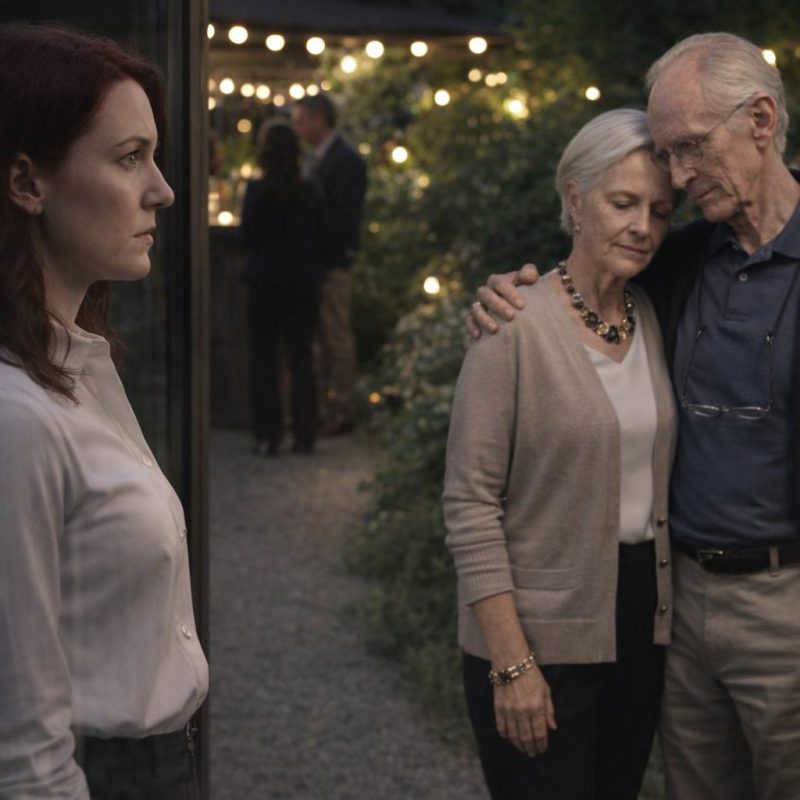 Image by RM AI
Credit Given Elsewhere
I got close enough to hear clearly. My mother was talking to one of her friends, still wiping tears from the slideshow. She was praising the party details—the lights, the flowers, how perfect everything was. Then she said Maya had always had such a gift for these things. Called her the creative one in the family, the one with the eye for beauty. Her friend agreed enthusiastically about Maya's taste. My mother went on, describing touches I'd agonized over, assuming without question that Maya was responsible. I stood there frozen, every word erasing three months of work. The venue I'd toured alone on a Tuesday afternoon. The invitations I'd designed at my kitchen table. The caterer I'd selected after tasting seven different menus. The quartet I'd hired after listening to samples for hours. The slideshow I'd built photo by photo, memory by memory. All of it attributed to Maya without hesitation, without doubt. The pattern playing out exactly as I'd known it would, as Maya had warned me it would. I felt something collapse inside my chest, that fragile hope I'd been holding shattering into something sharp. I felt the bottom drop out of everything I'd convinced myself this night could be.
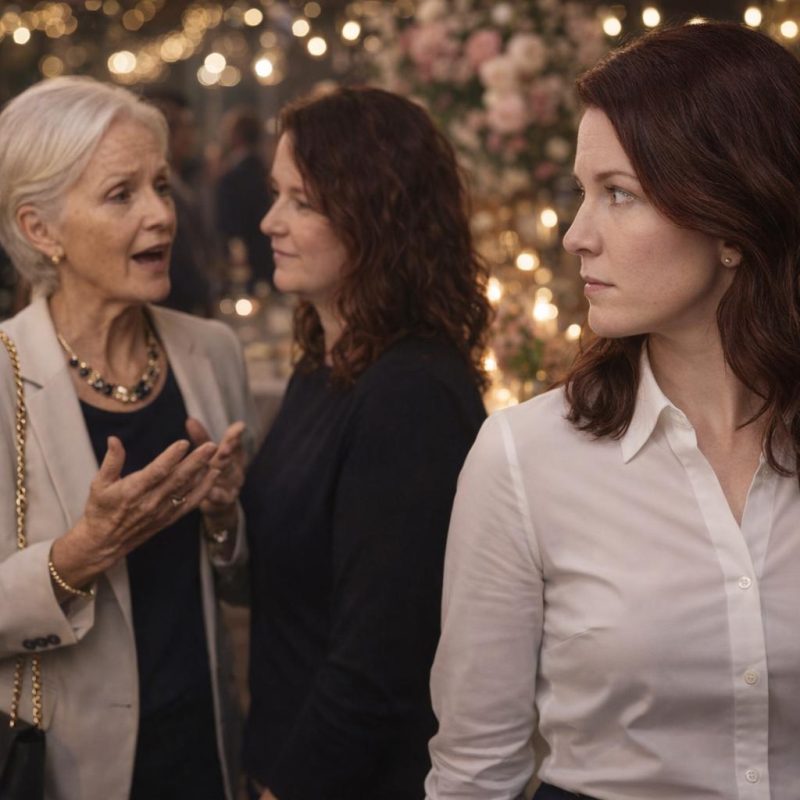 Image by RM AI
The Toast
My father tapped his glass with a fork, and the garden quieted. He thanked everyone for coming, his voice warm and a little emotional. He thanked my mother for forty wonderful years, got choked up talking about their life together. Then he pivoted to thank those who made tonight possible. He looked toward where Maya and I stood, but his eyes landed on her and stayed there. That smile, the one I'd seen my whole life—warm, familiar, automatic. He said he wanted to thank the girls, using the plural, but his gaze didn't move to include me. It stayed fixed on Maya like she was the sun and he was just naturally drawn to her light. The room followed where he looked. Guests smiled at Maya, their attention flowing in the direction he'd pointed it. I stood maybe three feet away, technically included in his words, practically invisible in the actual moment. The pattern playing out in front of everyone, public and undeniable. Nothing had changed. Not the slideshow, not the tears, not the three months of work. He started thanking the girls, but his eyes stayed on her, and the whole room followed his gaze.
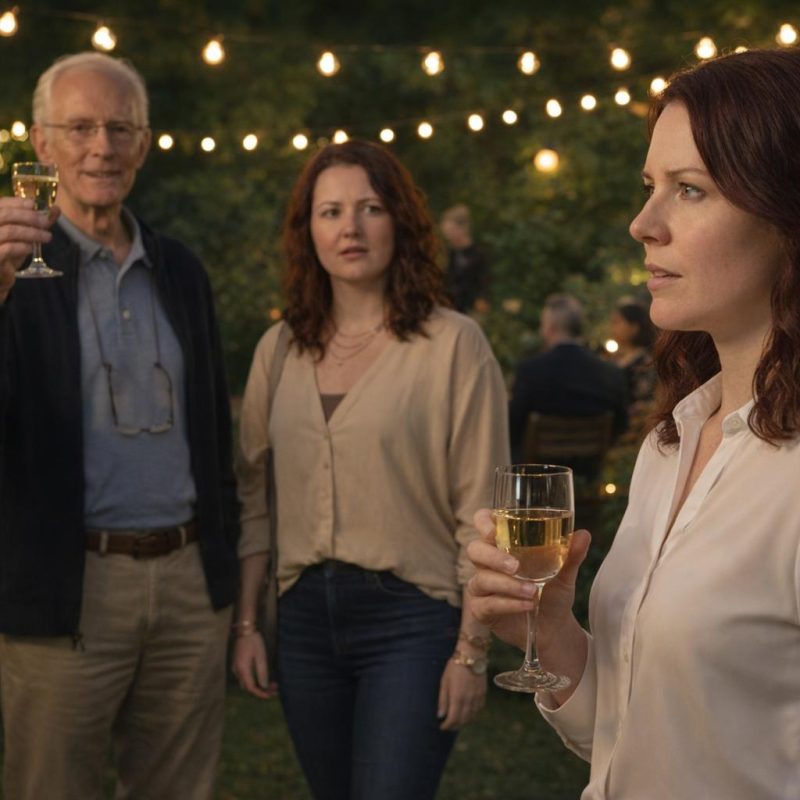 Image by RM AI
The Line Giving Way
The applause came and people raised their glasses. Conversations resumed around the garden, the party flowing on like nothing had happened. But I stood frozen in place, everything Maya had told me earlier crashing together with what I'd just witnessed. Every ignored message about my promotion. Every conversation redirected away from my life. The award I'd stopped mentioning because no one asked. Three months of work attributed to Maya without question. The slideshow full of evidence of who I was, who I'd been, completely unseen. Thirty years of this exact dynamic, and I'd thought one perfect party might change it. Something shifted inside me then. Not a decision exactly—more like a structure finally giving way. A wall I'd built to contain all of this, to keep functioning in this family, crumbling under accumulated weight. I found myself moving before I could think about it. Standing up straighter. Walking toward where my parents stood near the center of the garden, surrounded by guests. My heart was pounding but my feet kept moving. I stood in the garden I had created watching everyone's attention flow toward my sister, and felt something inside me finally break. Before I could talk myself out of it, I was standing up.
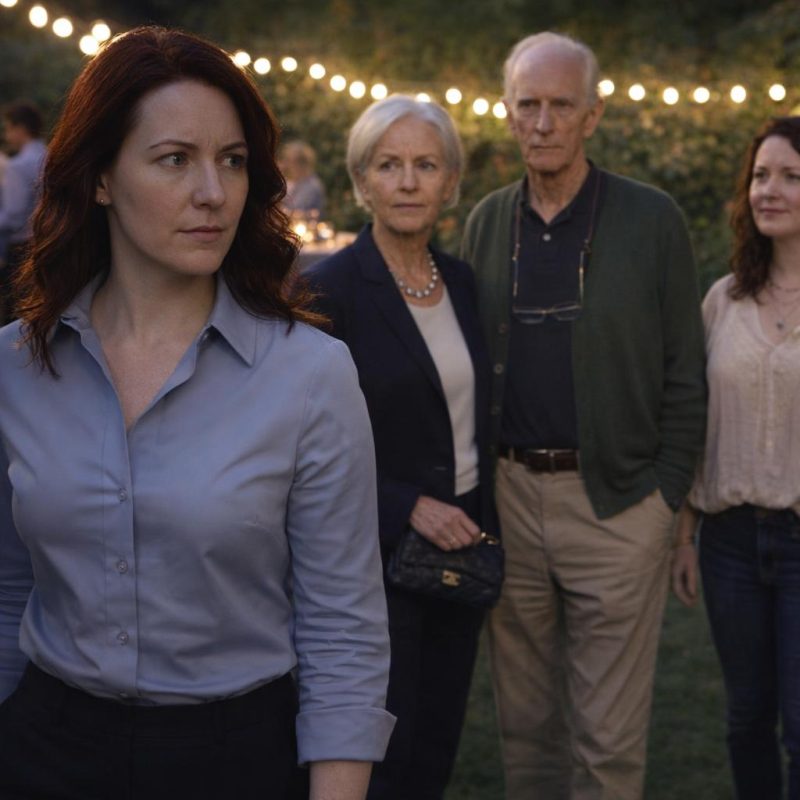 Image by RM AI
The First Words
I spoke loud enough to be heard over the ambient conversation. Said I was glad they loved the party. My voice shook on those first words, trembling with something I couldn't name. But then it steadied as I kept going. I said that I had planned this party. All of it. The venue they were standing in right now. The invitations they'd received weeks ago. The music playing at this exact moment. The caterer, the flowers, the slideshow they'd just watched. Every single detail had been my decision, my work, my three months of planning. I saw surprise ripple across the faces nearest me. My father's expression shifted from contentment to confusion. My mother's mouth opened slightly, her wine glass pausing halfway to her lips. Maya stood off to the side, her face unreadable. But I kept going because now that I'd started, I couldn't stop. The words were flowing out of me like something that had been dammed up too long, finally breaking through. I was claiming what I'd built, saying it out loud in front of everyone who mattered. The words kept coming and I couldn't stop them.
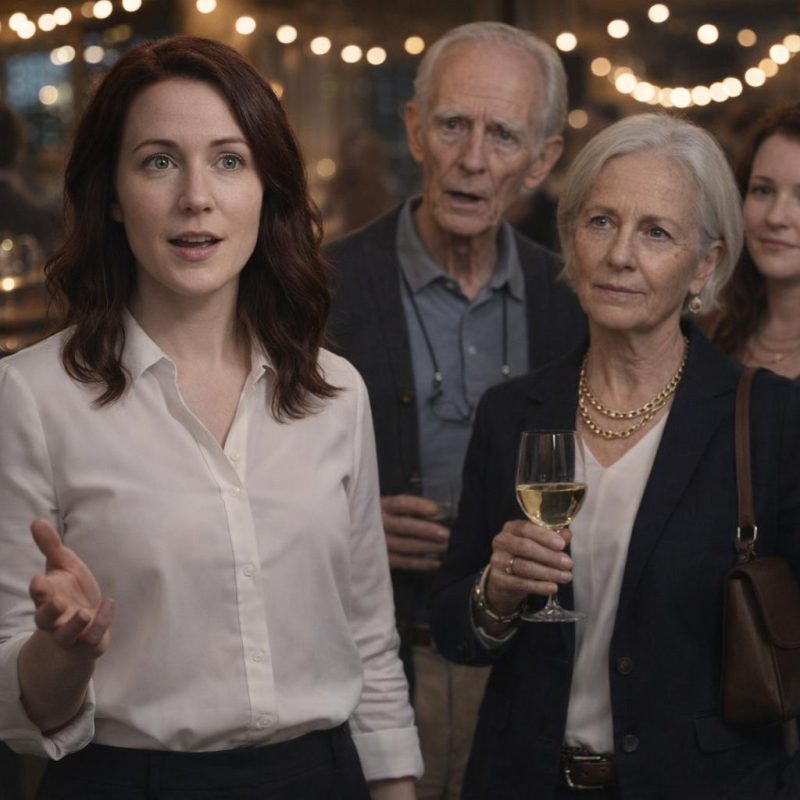 Image by RM AI
Thirty Years Out Loud
I told them I was tired of spending my life being treated like a background character in my own family. The words came out steady now, no longer shaking. I mentioned the promotion I'd gotten six months ago that no one had asked about. The award I'd won for a building design that I hadn't even bothered sharing because I knew it would get a distracted nod before the conversation shifted to Maya's latest photoshoot. I told them my work mattered everywhere except at home. That making this slideshow had forced me to really see what I'd been living with for thirty years. All those photos where I was on the edges, half out of frame, or missing entirely. The pattern was right there in our family history, documented in hundreds of images. I said I loved them, but I was done. Done making myself smaller. Done pretending not to notice. Done helping them misunderstand me, done doing the work of being invisible. The garden went completely silent. No one interrupted. No one argued. Guests stood frozen holding their drinks. My father had sat down heavily in his chair. My mother looked stricken, her face pale. Maya watched without surprise, like she'd been waiting for this. I finished speaking and just stood there in the silence I'd created, having finally said what I'd spent thirty years swallowing.
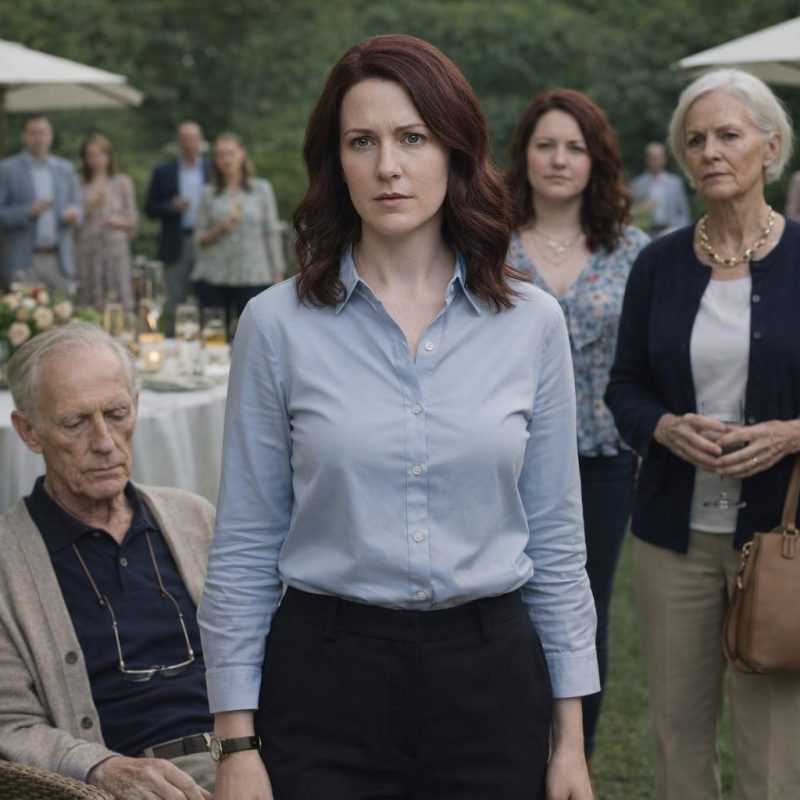 Image by RM AI
Maya Speaks First
The silence stretched for what felt like minutes but was probably only seconds. Guests looked between us, uncertain whether to stay or slip away. No one seemed to know what to do with what I'd just said. Then Maya stepped forward. She spoke in a quiet, clear voice that carried across the garden. She said I was right. That I had done everything for this party. The venue we were standing in, the invitations everyone had received, the caterer, the slideshow, every single detail. She said she'd let them assume otherwise because it was easier than correcting them. She confirmed it all, point by point, with a precision that felt like its own kind of apology. She said she hadn't done anything except show up and look good in photos, which was apparently enough. This confession landed in the garden like a second shock. My mother's expression shifted, something breaking through the careful composure she always maintained. She looked at Maya as if seeking confirmation of something she didn't want to believe. Then she looked at me. Her face began to crack, the wall of denial starting to crumble in a way I'd never seen before.
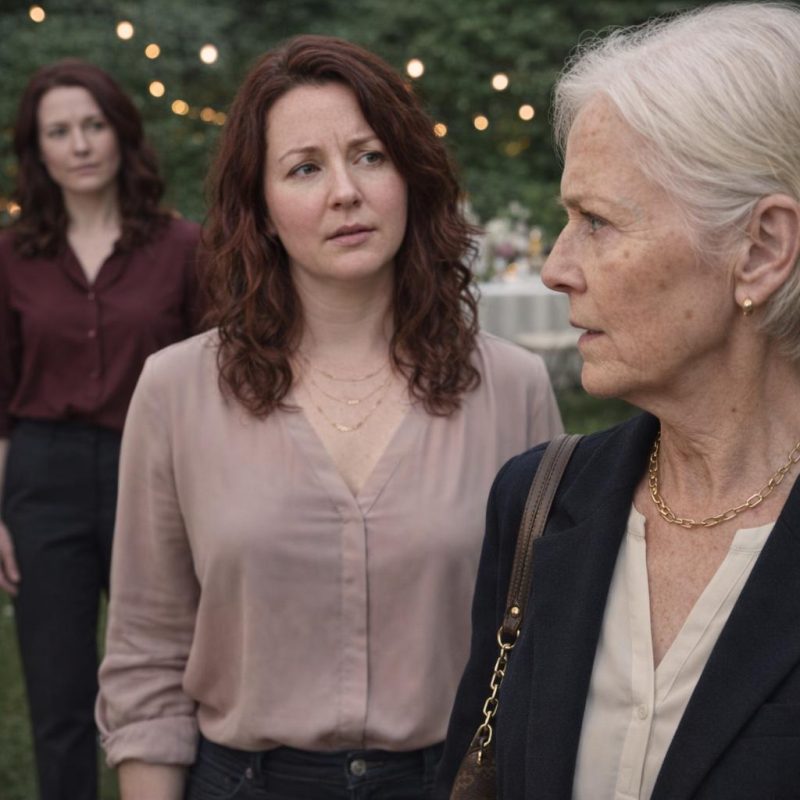 Image by RM AI
Without Defensiveness
My mother started crying. Not the moved tears from earlier when she'd watched the slideshow, but different tears, harder ones that seemed to come from somewhere deeper. She said she hadn't realized. Hadn't seen how often they'd overlooked me, how consistently they'd given credit to the wrong daughter. My father remained seated, looking stunned. He said there was no excuse. That he should have seen it sooner. They both should have. Neither of them argued with what I'd said. Neither told me I was being too sensitive or that I was misremembering. Neither redirected the conversation to defend themselves or explain it away. The response shocked me almost as much as my own speaking had. I'd expected dismissal, or anger, or the familiar dance of deflection. Instead I was receiving acknowledgment. The party continued awkwardly around us. Guests gave us space, pretending to be absorbed in their own conversations. I stood with my family in a configuration that felt entirely new. Something had shifted between us. Not everything was fixed, not even close. Thirty years didn't reverse in one conversation. But the ground had moved beneath us, and we all felt it.
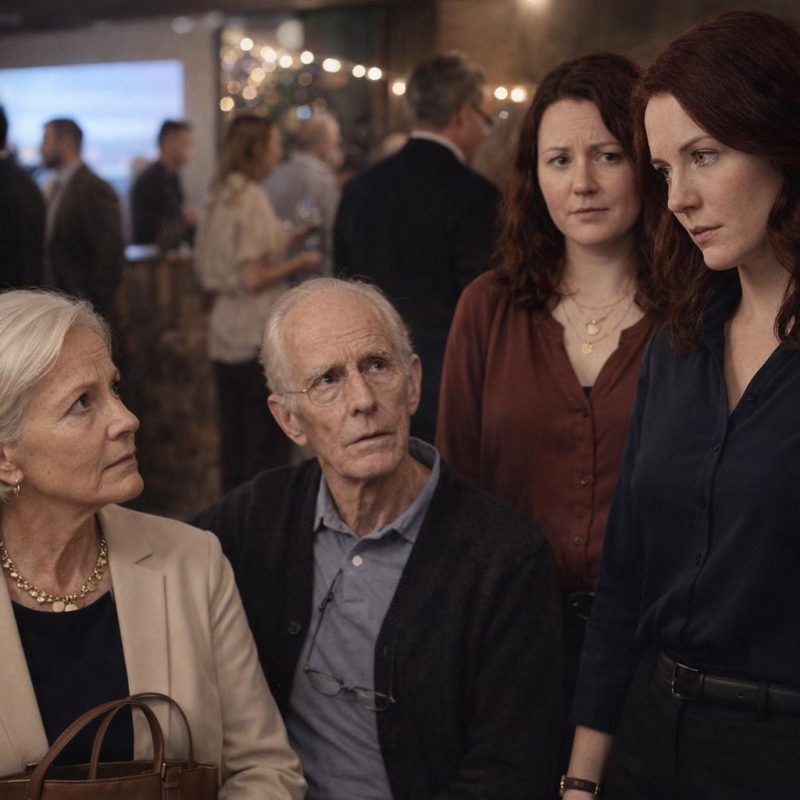 Image by RM AI
Beginning to Be Seen
The day after the party was quiet. I woke up uncertain what happened next, whether the previous night had been real or would be forgotten by morning. Then my phone rang. It was my mother, and she asked about my promotion. She wanted to hear the details, the raise, the new office, the team I was managing. She didn't sound distracted. She asked follow-up questions and actually listened to my answers. A week later, my father called asking if he could see the building project, the one that had won the award. He wanted me to show him what I'd been working on, to walk him through the design choices. Even Maya started reaching out differently, making space in conversations, redirecting attention toward me when it naturally drifted her direction. The changes were small but consistent. My family hadn't transformed overnight. Thirty years of patterns don't reverse in days. But something fundamental had shifted. I was being seen now, being asked about my life and my work. The recognition I'd always wanted was starting to arrive, imperfectly but genuinely. What shocked me most wasn't that my family had failed to see me for so long—I had known that already—it was that when I finally spoke up, they listened.
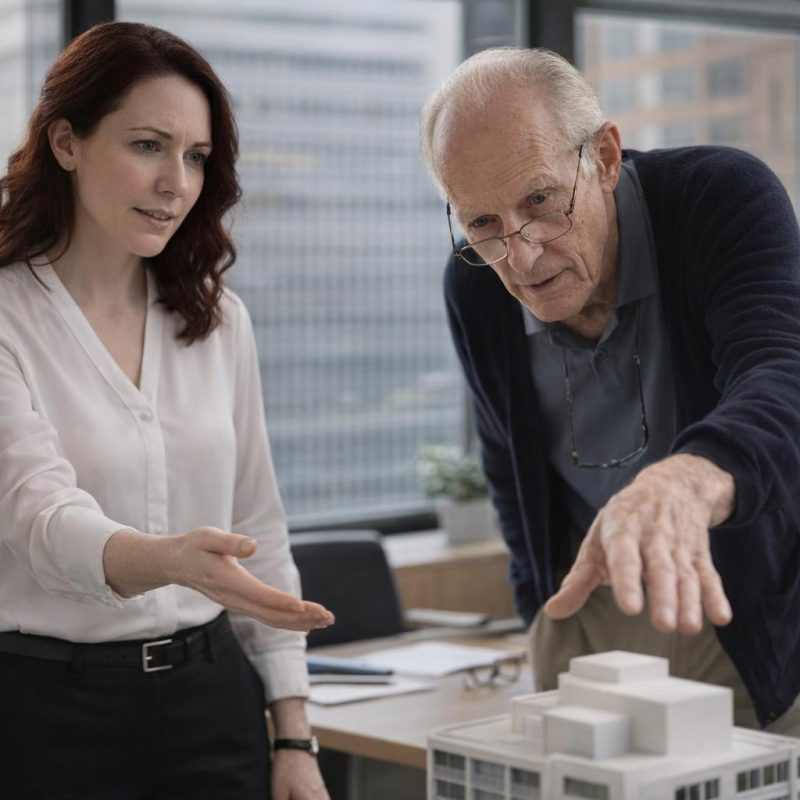 Image by RM AI
KEEP ON READING
The story of Ching Shih, the Woman Who Became the…
Unknown author on WikimediaFew figures in history are as feared…
By Emilie Richardson-Dupuis Dec 29, 2025
Einstein's Violin Just Sold At An Auction—And It Earned More…
A Visionary's Violin. Wanda von Debschitz-Kunowski on WikimediaWhen you hear…
By Ashley Bast Nov 3, 2025
This Infamous Ancient Greek Burned Down An Ancient Wonder Just…
History remembers kings and conquerors, but sometimes, it also remembers…
By David Davidovic Nov 12, 2025
The Mysterious "Sea People" Who Collapsed Civilization
3,200 years ago, Bronze Age civilization in the Mediterranean suddenly…
By Robbie Woods Mar 18, 2025
20 Greatest Ancient Athletes In History
Ancient Olympics. Long before modern stadiums and multimillion-dollar endorsements, athletes…
By Sara Springsteen May 1, 2026
20 Soldiers Who Defied Expectations
Changing the Rules of the Battlefield. You’ve probably heard plenty…
By Annie Byrd Feb 10, 2026