

I Overheard My Family Planning to Scam My Fiancé to Fund My Sister's Wedding—Where I Wasn't Even Invited
I Overheard My Family Planning to Scam My Fiancé to Fund My Sister's Wedding—Where I Wasn't Even Invited
The Surprise That Wasn't
I almost didn't go that night. I'd had a long week, my feet hurt, and honestly the couch was calling my name. But I'd picked up a nice bottle of Pinot Noir on the way home from work, and something about the idea of surprising my parents — just showing up, no agenda, no occasion — felt right. I let myself in through the side door the way I always did, the key still on the same ring it had been since college. The house smelled like my mom's pot roast and something warm and familiar that I couldn't name but always associated with being home. I could hear voices from the living room before I even got my shoes off — my mom's soft murmur, my dad's low rumble, and Sarah's laugh cutting through both of them like it always did. I remember thinking how nice it was, that they were all together. I took a few steps down the hallway, the wine bottle tucked against my chest, and then something in the tone of the conversation made me slow down. Not the words — I couldn't make them out yet. Just the tone. Something about it felt off in a way I couldn't name. I stopped a few feet from the living room door, hand not quite reaching for the knob, and stood there in the dim hallway while the weight of what I'd heard settled into my bones.
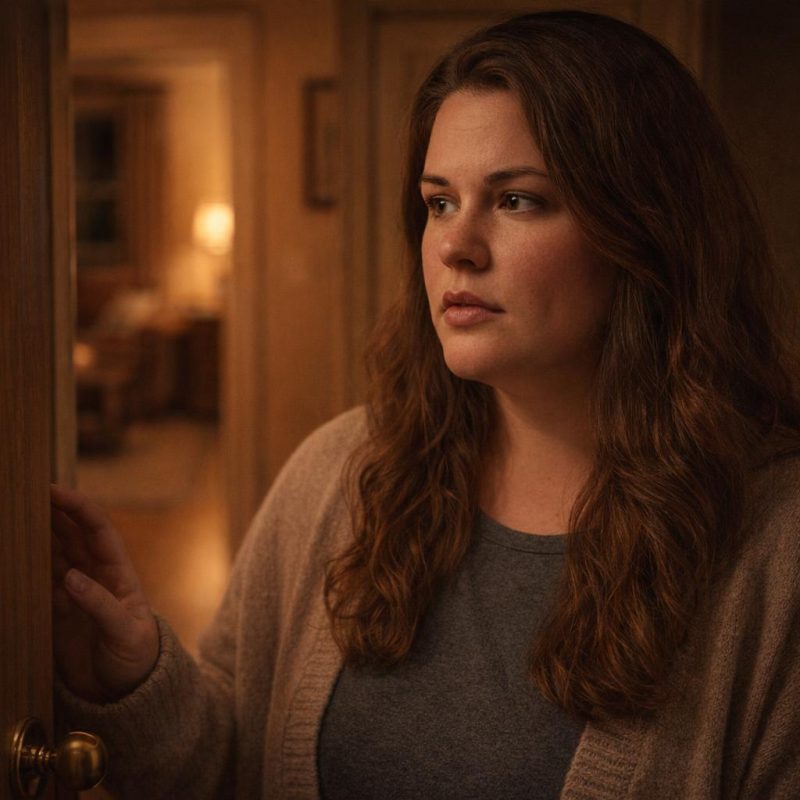 Image by RM AI
Excluded
I told myself I was being paranoid. It was probably nothing — just Sarah being Sarah, holding court the way she always did. But my feet wouldn't move. I leaned a little closer to the door, close enough that I could feel the faint warmth coming through the gap at the bottom. Sarah's voice came through clearer now, bright and clipped and carrying that particular edge she got when she was pleased with herself. She was talking about the wedding. The guest list, specifically. I heard my mom say something about table arrangements, and my dad made a sound that was either agreement or indifference — with him it was hard to tell the difference. Then Sarah laughed again, and this time I caught the words. She was talking about keeping things 'clean' and 'on-brand,' about not wanting anything to disrupt the aesthetic she'd spent months building. I pressed my palm flat against the wall to steady myself. I kept waiting for one of my parents to push back, to ask a question, to say something that would make this make sense. Instead I heard my mom laugh along, soft and accommodating, the way she always did when Sarah was on a roll. And then Sarah said my name — and right after it, without a pause, without any hesitation at all, the word 'uninvited.'
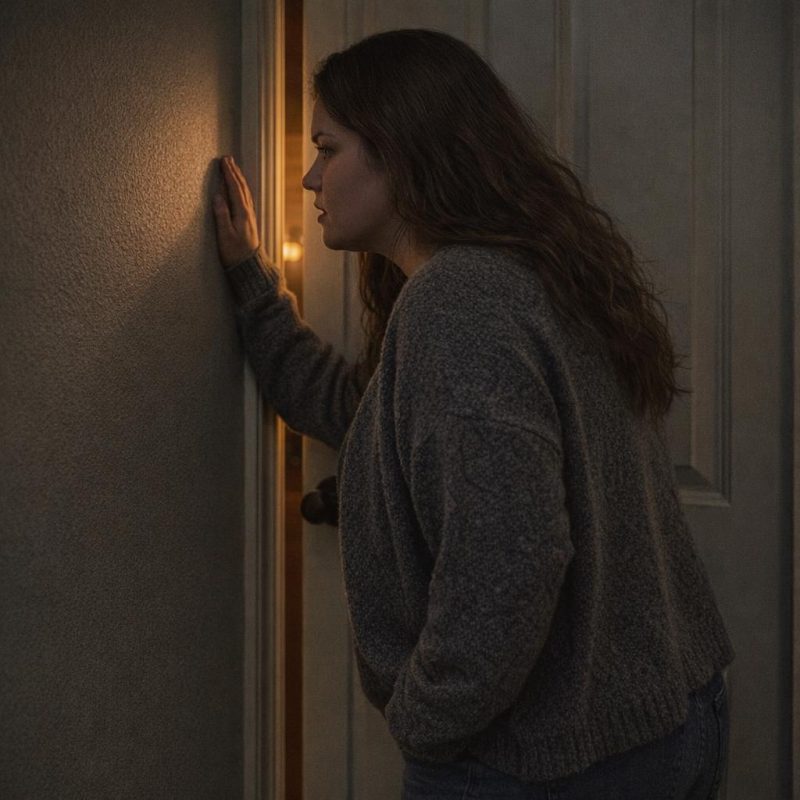 Image by RM AI
The Real Plan
For a second I genuinely thought I'd misheard. I pressed closer to the door, my shoulder nearly touching the frame, and made myself breathe through my nose so they wouldn't hear me. Sarah kept talking. Her voice had that smooth, practiced quality it got when she'd already thought something through and was just presenting the finished version. She said Mark had a good salary — she used the word 'comfortable,' which coming from Sarah meant she'd looked into it. She said his savings were probably substantial for someone in tech. She talked about how the wedding budget had 'gaps' that needed filling, and how the right approach, the right framing, could make Mark feel like he was doing something generous rather than something he'd been maneuvered into. My parents didn't object. My dad asked something about timing. My mom suggested it would go over better if they implied I was too overwhelmed, too fragile to handle the stress of attending. Sarah laughed at that — a short, satisfied sound — and said that was actually perfect. I stood in that hallway with the wine bottle still pressed against my chest, and I couldn't feel my hands. I kept waiting for the punchline, for someone to say they were joking. Nobody did. The full scope of what they were planning just sat there in the air around me, heavy and airless and completely real.
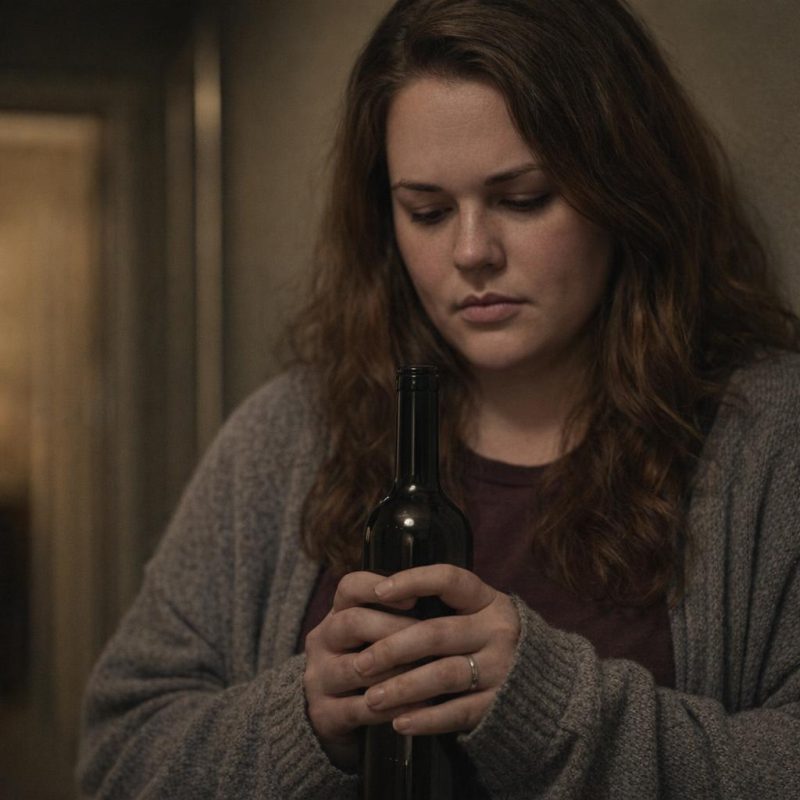 Image by RM AI
The Strategy Session
They kept going. That was the part that got me — they just kept going, like they were planning a dinner party, like this was a completely normal thing to sit around and workshop on a Tuesday evening. My mom suggested specific phrases. She said Mark seemed like the kind of person who responded to family loyalty, so they should lean into that. Lead with how much the wedding meant to Sarah, how hard she'd worked on it, how a contribution from someone who loved me would really be an act of love for the whole family. My dad weighed in on timing — he thought approaching Mark before the engagement party would be better, catch him when he was still in the honeymoon phase of being welcomed into the family. Sarah practiced her delivery out loud. I'm not exaggerating. She actually said the words in a softer, more concerned version of her voice, the one she used when she wanted to seem like she was doing you a favor. She talked about my 'sensitivity' and my 'tendency to catastrophize.' My parents made small sounds of approval. There was no hesitation in any of it, no awkward pause where someone almost said wait, this isn't right. Just the easy, comfortable rhythm of people who were very comfortable with what they were doing, and the practiced ease in their voices settled over me like something cold.
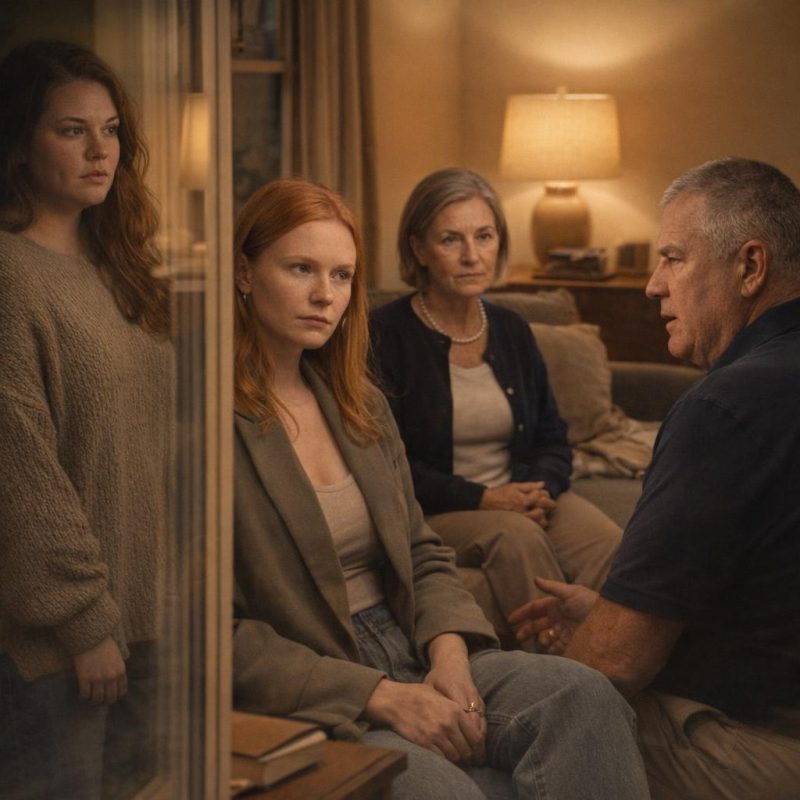 Image by RM AI
The Escape
I don't know how long I stood there before my body finally decided to move. It felt like a long time. My legs were stiff when I shifted my weight back from the door, and I had to concentrate on every single movement — heel first, then toe, the way you walk when you're trying not to make a sound. I knew this house. I'd grown up in it. I knew the third floorboard from the bathroom squeaked, and the one just before the entry table was worse. I mapped the route in my head before I took a single step. The wine bottle was still in my hand and I almost set it down on the hallway table before I caught myself — the clink of glass on wood would have carried straight through that door. I tucked it tighter against my ribs and moved. The hallway felt about three times longer than it actually was. I kept my eyes on the entry table where I'd left my purse, focused on it like a fixed point. I got my keys out of the side pocket without letting them jingle, wrapped them in my fist so the metal was muffled against my palm. I was two steps from the front door, close enough to feel the draft coming under it, when I heard footsteps crossing the living room floor toward the hallway.
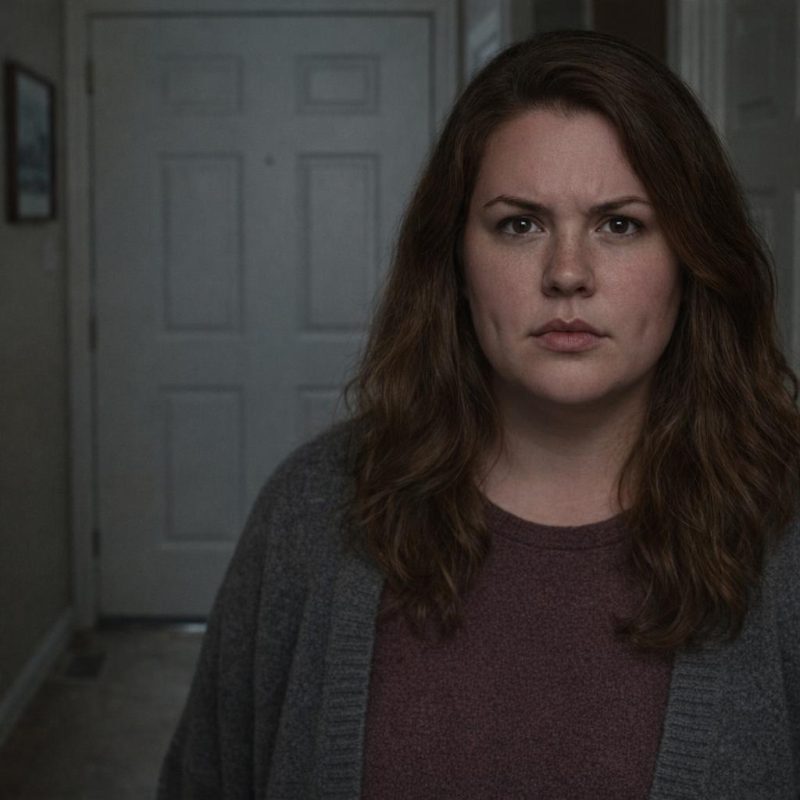 Image by RM AI
Tunnel Vision
I don't remember the drive. I know I made it because I ended up in Mark's parking lot, but the twenty minutes between his building and my parents' street are just gone — streetlights and stop signs and my own hands on the wheel, none of it registering. I must have been running on something purely automatic, some part of my brain that knew the route and kept the car between the lines while the rest of me was still standing in that hallway. Sarah's voice kept replaying in my head. The smooth, practiced way she'd said Mark's name. The way my mom had laughed. The way my dad had talked about timing like it was a business meeting. I had a death grip on the steering wheel — I noticed it when I finally pulled into the lot and my knuckles ached from the pressure. I'd parked crooked, one tire over the line, and I couldn't bring myself to care. I sat there for a moment with the engine still running, not quite ready to move, not quite ready to say out loud what I'd heard. And then I looked up at the building, and on the second floor, through the familiar window with the slightly bent blind, Mark's living room light was on.
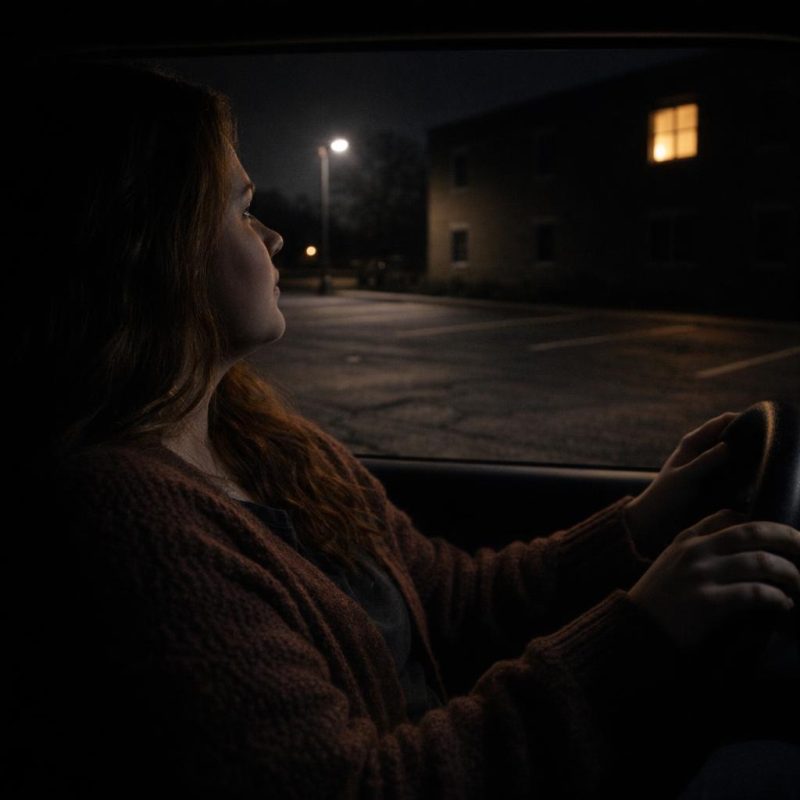 Image by RM AI
Safe Harbor
I took the stairs two at a time. I wasn't thinking about what I was going to say or how I was going to explain it — I just needed to get to that door. My fist hit it harder than I meant it to, three fast knocks that probably sounded frantic from the inside, because they were. I heard movement, the familiar sound of his footsteps crossing the hardwood, and then the door swung open and there he was — book in hand, reading glasses pushed up on his forehead, the easy smile already forming on his face. The smile didn't last. I watched it change the second he actually looked at me, the way his expression shifted from welcome to something sharper and more careful. He didn't ask what was wrong. He didn't say anything at all. He just stepped back, pulled the door open wider, and reached out to draw me inside with one hand on my arm. The door clicked shut behind me, and the sound of the hallway — the distant TV from a neighbor's unit, the hum of the building — cut off completely. I made it about two steps into the apartment before my legs stopped cooperating, and I collapsed against him with everything I'd been holding in the car finally giving way.
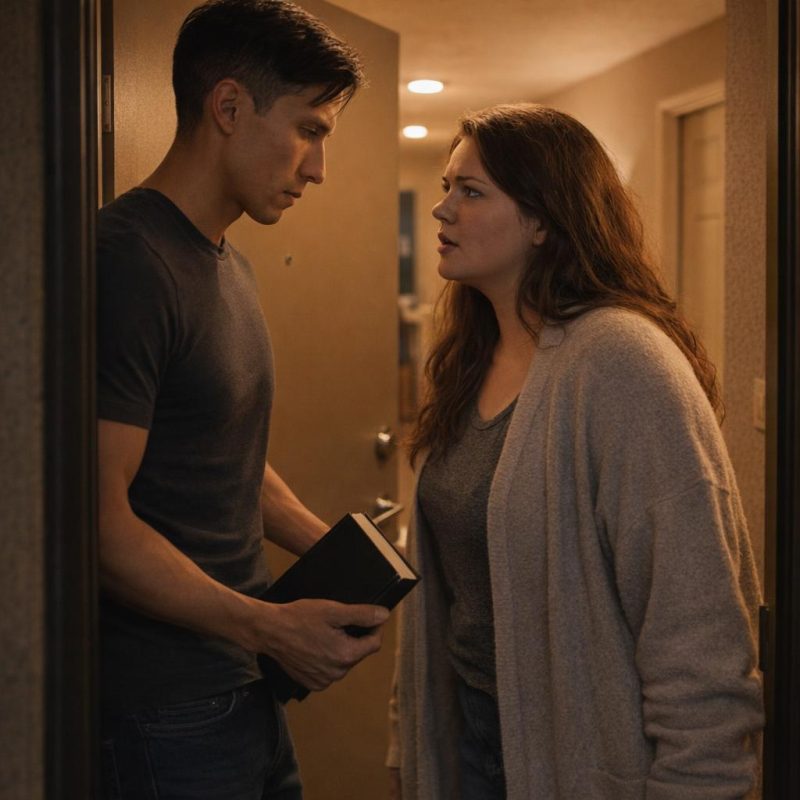 Image by RM AI
Everything Spills Out
He guided me to the sofa without a word, sat me down on the grey cushions, and then pulled the coffee table close and sat on it facing me, knees almost touching mine. He took both my hands in his and just waited. I took a breath that came out shakier than I intended and started from the beginning — the wine, the side door, the pot roast smell, the voices. I told him about stopping in the hallway. I told him what I'd heard Sarah say about the guest list, about my name and the word that came after it. I watched his jaw tighten. I kept going. I told him about the money — about Sarah saying his name, about the salary comments, about the plan to approach him with a story about me being too fragile to attend my own sister's wedding while they asked him to fund it. I told him about my mom's suggested phrasing and my dad's thoughts on timing. I told him about Sarah practicing her concerned voice out loud in my parents' living room. With each piece of it, something in his face went quieter and colder in a way I'd never seen before. I got to the end of it and just stopped, because there was nothing left to say. His hands tightened around mine, fingers pressing firm and steady against my knuckles.
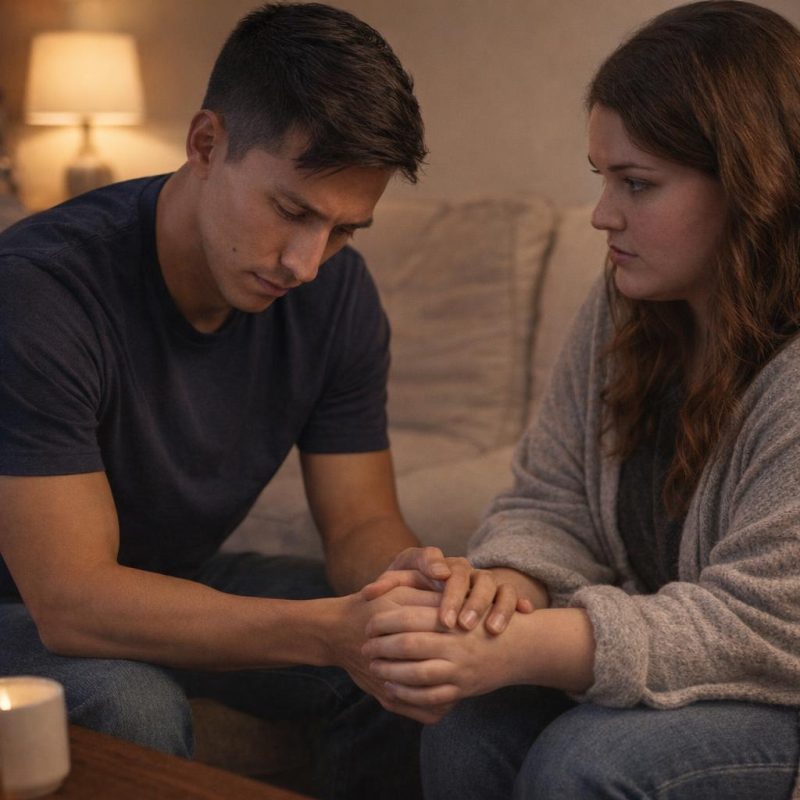 Image by RM AI
The Decision
He let go of my hands and stood up so fast the coffee table scraped back an inch across the hardwood. He didn't say anything at first — just started moving, back and forth across the length of his apartment, hands shoved in his pockets, jaw tight. I watched him and didn't try to fill the silence. There was something almost methodical about the way he was processing it, like he was sorting through every piece of what I'd told him and deciding what to do with each one. He stopped at the window, stared out for a second, then turned around and looked at me with an expression I hadn't seen on him before — not angry exactly, but resolved in a way that felt final. He said we were done with them. All of them. No calls, no texts, no showing up to explain ourselves or justify anything. He said they wouldn't get a single dollar or a single minute of our time, and he said it the way people say things they've already decided. I sat there on his sofa and felt something loosen in my chest — something I hadn't even known was wound that tight. For the first time since I'd stood frozen in that hallway, I didn't feel alone with it.
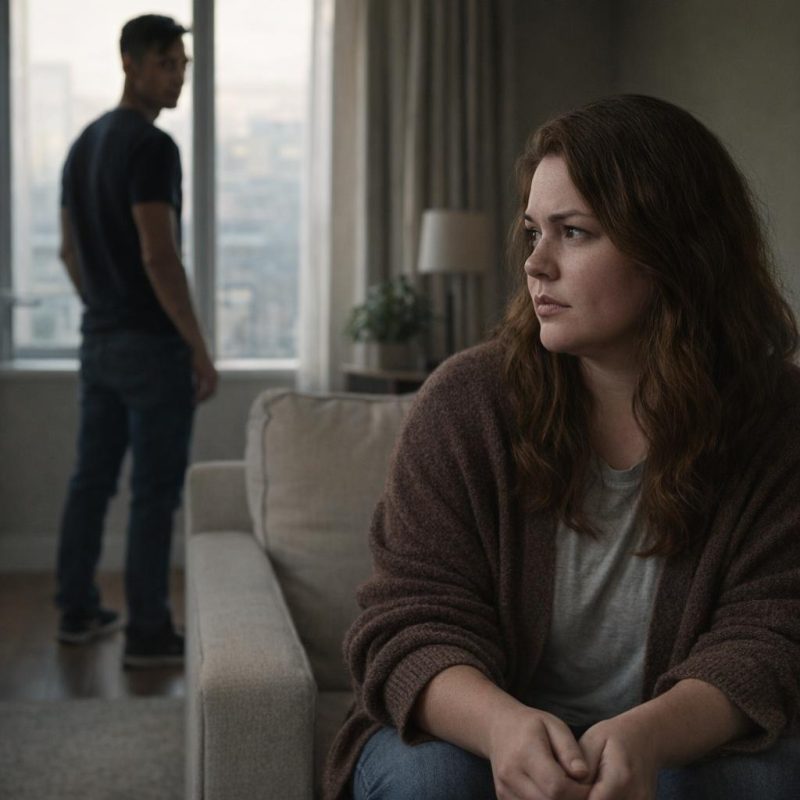 Image by RM AI
The Pact
We stayed up past midnight working through the details, sitting side by side on the sofa with my legs tucked under me and his laptop open on the cushion between us. It wasn't dramatic — it was almost practical, the way you'd plan for a storm you knew was coming. Mark said the most important thing was consistency. No partial responses, no 'just this once' exceptions, no letting guilt crack the door open an inch. I told him I was worried about them showing up somewhere — at my apartment, at his place, somewhere we couldn't just swipe to dismiss. He said we'd handle that when it happened, together, and the word 'together' landed somewhere solid in my chest. We agreed on no explanations and no justifications, because we both knew that engaging at all would just hand them something to argue against. I kept waiting to feel guilty about it, kept poking at the decision the way you'd press a bruise to see if it still hurt. But every time I thought about Sarah's voice running through that script in my parents' living room, the guilt didn't come. What came instead was something quieter — a steadiness I hadn't felt in years, sitting there in the low lamp light with his shoulder against mine.
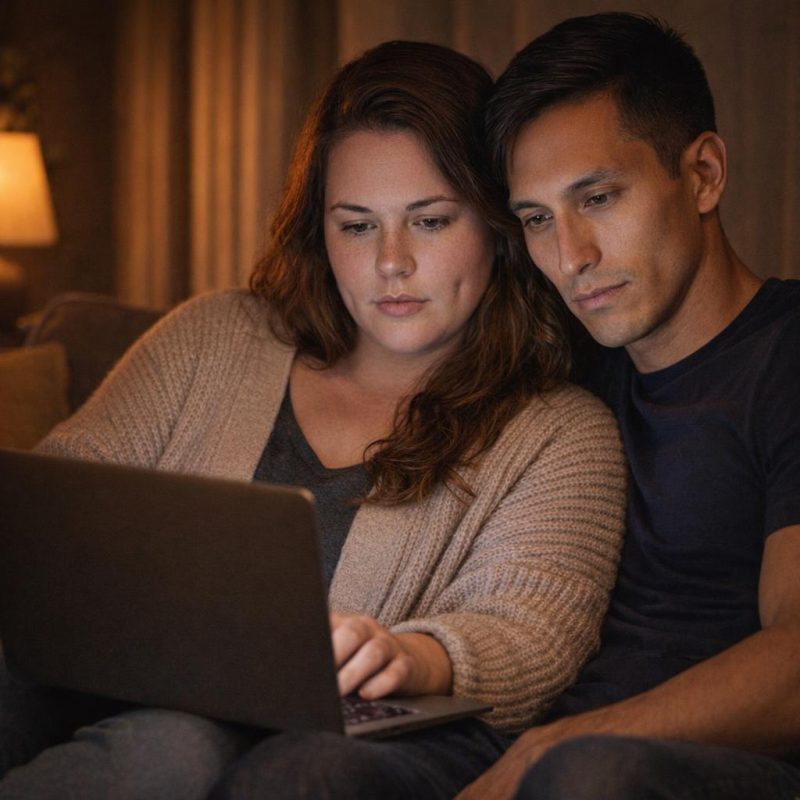 Image by RM AI
The First Volley
The first text came the next morning while I was still in Mark's kitchen, waiting for coffee to finish brewing. I heard the buzz and looked down at the counter where my phone was sitting face-up, and Sarah's name was already on the screen. Then another. Then another. I picked it up and read the previews without opening any of them — just enough text to see the tone. Hey you! So much to catch up on. And then: Been thinking about you, we should grab lunch this week! And then something about how exciting everything was and how she couldn't wait for us all to be together. Each one landed with this relentless brightness, like a string of exclamation points doing the work of actual warmth. Mark came up beside me and read over my shoulder without saying anything. I set the phone back down on the counter, face-up, and we both watched another notification slide in. There was something almost impressive about the cheerfulness of it — how none of them mentioned anything specific, how they just kept arriving like nothing had happened at all. The false brightness in every single one of them sat there on my screen, glowing.
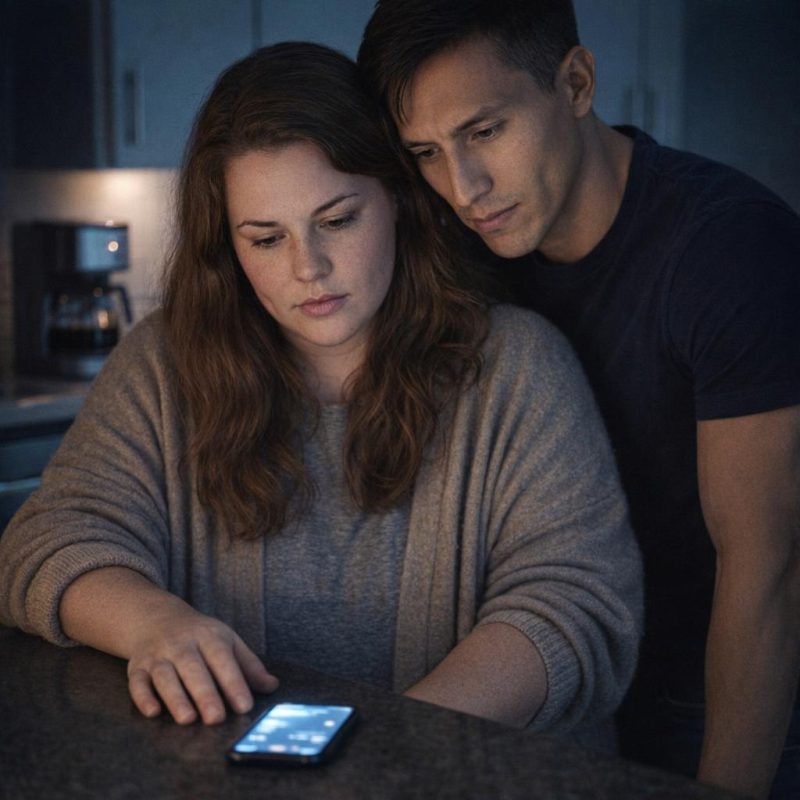 Image by RM AI
The Hook
By the afternoon, the tone shifted. I was back at my own apartment by then, phone on the kitchen table, and I'd been leaving Sarah's messages unread all day. Then a new one came in and something in the preview made me actually open it. She'd written about how much the wedding meant to the whole family, how she wanted everything to feel special and inclusive, how Mark was already such an important part of everything. I read it twice. Then I got to the part near the bottom where she mentioned that venues in the area were running so much more expensive than expected, and how these things really did take a village, and how she just knew that people who loved her would want to be part of making it happen. I took a screenshot and sent it to Mark without a word. He responded in about thirty seconds with a single question mark, and I almost laughed, because what else was there to say. I scrolled back to the top and read it again slowly, and there it was, right at the end: had Mark given any thought to contributing to the celebration.
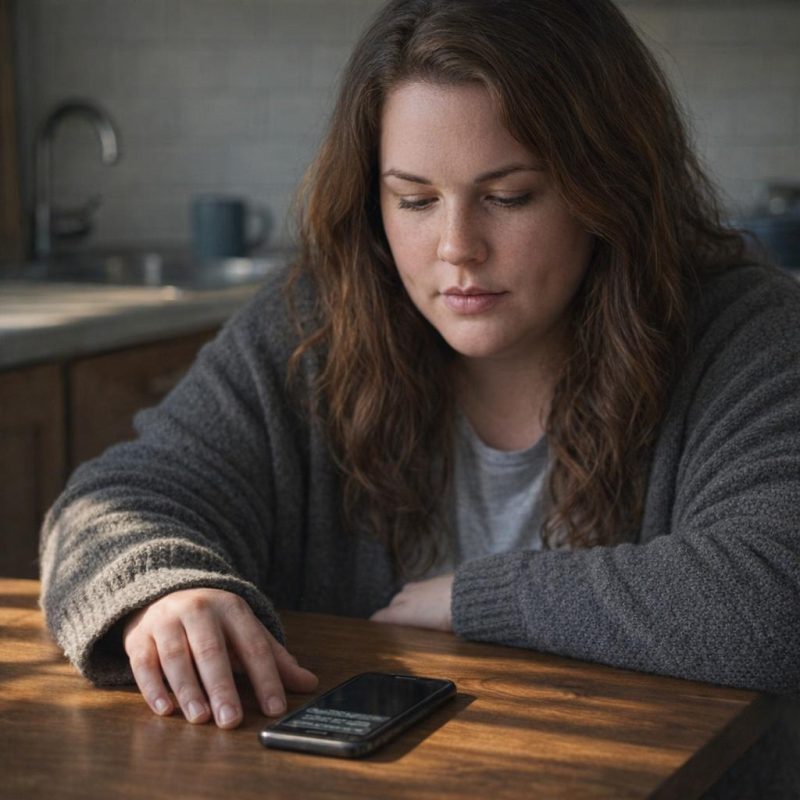 Image by RM AI
The Block
I blocked Sarah first. Mark sat beside me on my couch, close enough that his arm was against mine, and I opened her contact and held my thumb over the block option for just a second before I tapped it. Confirmed. Her name went grey and then disappeared from my recent messages like she'd never been there. I sat with that for a moment, then kept going. My mother's contact was next — Barbara, listed under 'Mom' with a little phone emoji I'd added years ago when I was still the kind of person who did things like that. I tapped block and confirmed again. Then my father's. Richard. Gone. Each one took maybe four seconds, and each one felt like closing a door I'd been standing in the frame of for most of my life, not quite able to step through. I wasn't crying, which surprised me. I'd expected to cry. Instead there was just this strange, hollow stillness — grief and something that felt uncomfortably close to relief, braided together so tightly I couldn't separate them. Mark put his hand on my shoulder and didn't say anything. I set the phone face-down on the cushion beside me and the room went quiet.
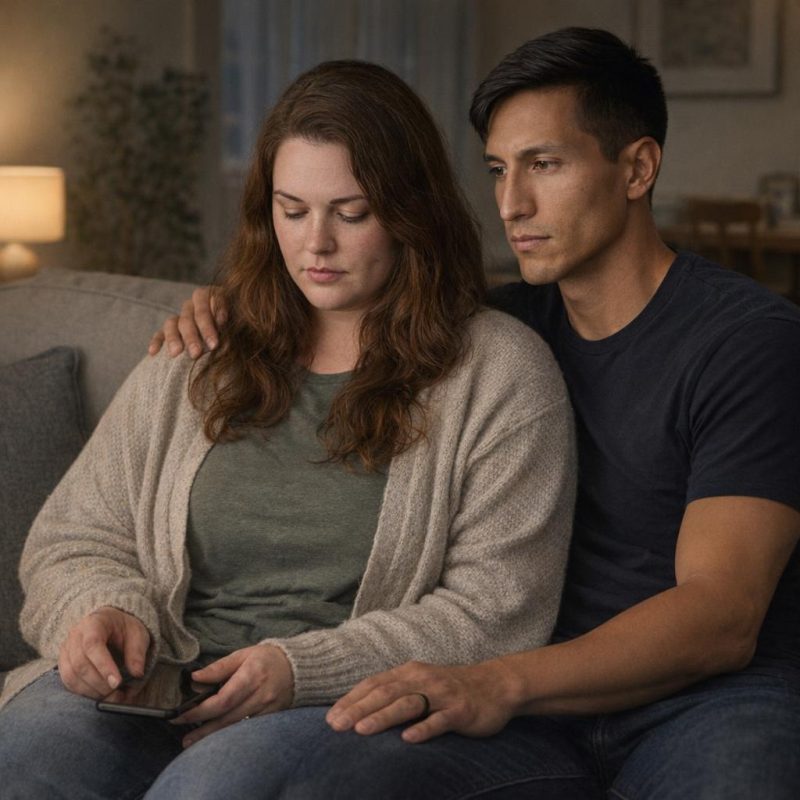 Image by RM AI
Rachel Knows
I called Rachel from Mark's spare room that evening, sitting cross-legged on the guest bed with the door half-closed. She picked up on the second ring, which was so Rachel that I almost lost it right there before I'd said a single word. I told her everything — the hallway, the voices, the pot roast, Sarah running through her script, my mother suggesting the exact phrasing to use on Mark, my father weighing in on timing like it was a business meeting. I told her about the texts, about the message asking Mark to contribute to the celebration, about blocking all three of them that afternoon. Rachel listened without interrupting, which she almost never does, and that silence told me she understood this wasn't a normal vent session. When I finally stopped talking, I asked her the thing I'd been afraid to ask Mark because I already knew what he'd say — I asked her if I was overreacting. If I was being cruel. If maybe I'd misread the whole thing and blown it into something it wasn't. There was a pause, short but deliberate, and then Rachel said: absolutely not. Not even close. The certainty in those three words settled over me like something warm.
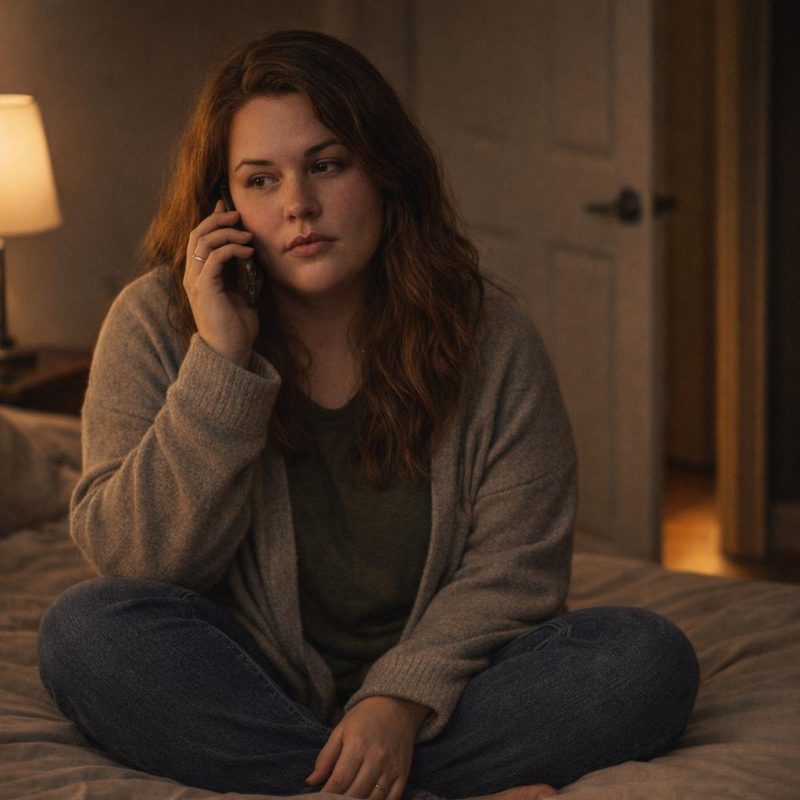 Image by RM AI
Not Normal
Rachel didn't let it go at 'absolutely not.' She kept going, and I sat there on the guest bed with my knees pulled to my chest, listening. She brought up the time Sarah submitted a group project at work — the one I'd spent two weekends helping her with — and took sole credit in front of her entire team. She mentioned my college graduation, how my parents had spent most of the dinner talking about Sarah's upcoming semester abroad. She listed the 'emergencies' — the car, the security deposit, the last-minute bridesmaid dress that somehow became my financial problem — and as she named each one, I felt something shift, like furniture being moved in a room I'd lived in so long I'd stopped seeing the layout. Mark was leaning in the doorway by then, arms crossed, nodding slowly at things he was only hearing one side of. Rachel said the word 'gaslighting' and I didn't flinch the way I might have a week ago, because by then it just sounded like the right word for the right thing. She said my confusion wasn't a character flaw, it wasn't weakness, it wasn't me being dramatic. Then her voice pulled flat and even, and she said: 'You've been trained to accept this.'
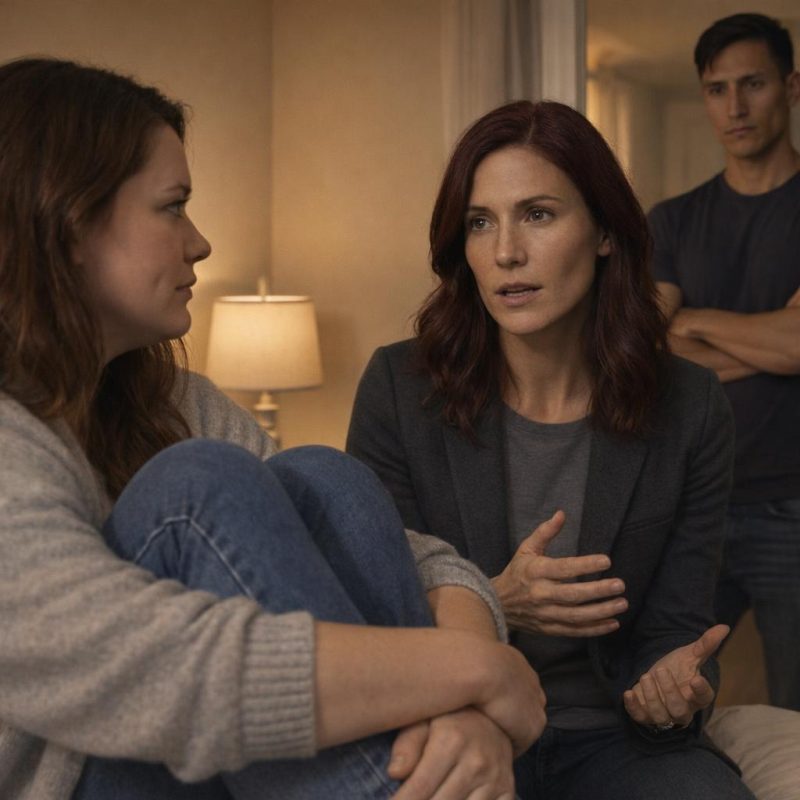 Image by RM AI
The Workplace Ambush
The workday ended the way workdays do when you're running on four hours of sleep and too much coffee — slowly, and then all at once. I shut down my computer, grabbed my bag, said goodbye to the two people still at their desks, and pushed through the glass door into the parking lot. The afternoon light was flat and grey, the kind that makes everything look slightly washed out. I was already thinking about what I was going to eat for dinner, already half-composing a text to Mark, when I scanned the lot for my car. I found it. And standing beside the driver's door, arms folded, wearing the camel coat I'd seen a hundred times, was my mother.
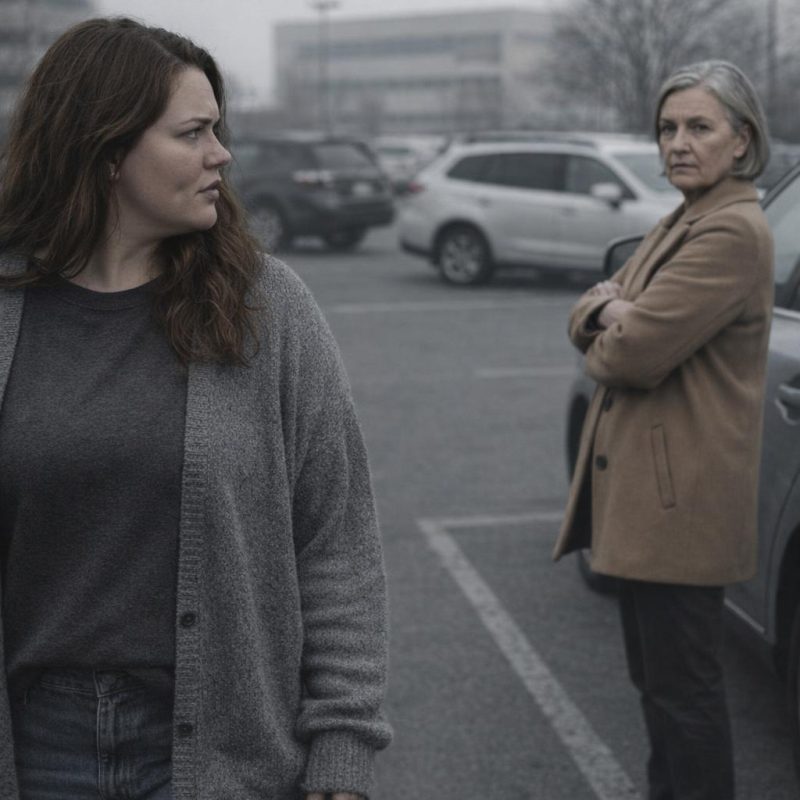 Image by RM AI
The Parking Lot
She was already talking before I got within ten feet of my car. That was the thing about my mother — she never waited for you to be ready. Her voice came out soft and wounded, the tone she reserved for moments when she needed something and wanted you to feel like the villain for not giving it. She said she was worried about me. She said the whole family was worried. She mentioned Sarah's wedding like it was a fragile thing I was threatening just by existing at a distance from it. Then she said I was breaking my sister's heart, and I felt the old pull in my chest — that trained reflex, years deep, that said *apologize, smooth it over, make it okay*. I kept walking. She said Mark would want us to have family harmony. I pressed the unlock button on my key fob. She said my name in that particular way, the one that used to stop me cold. I opened the door, got in, and pulled it shut behind me. She was still talking through the glass. I started the engine, checked my mirrors, and backed out of the space while she called after me across the parking lot.
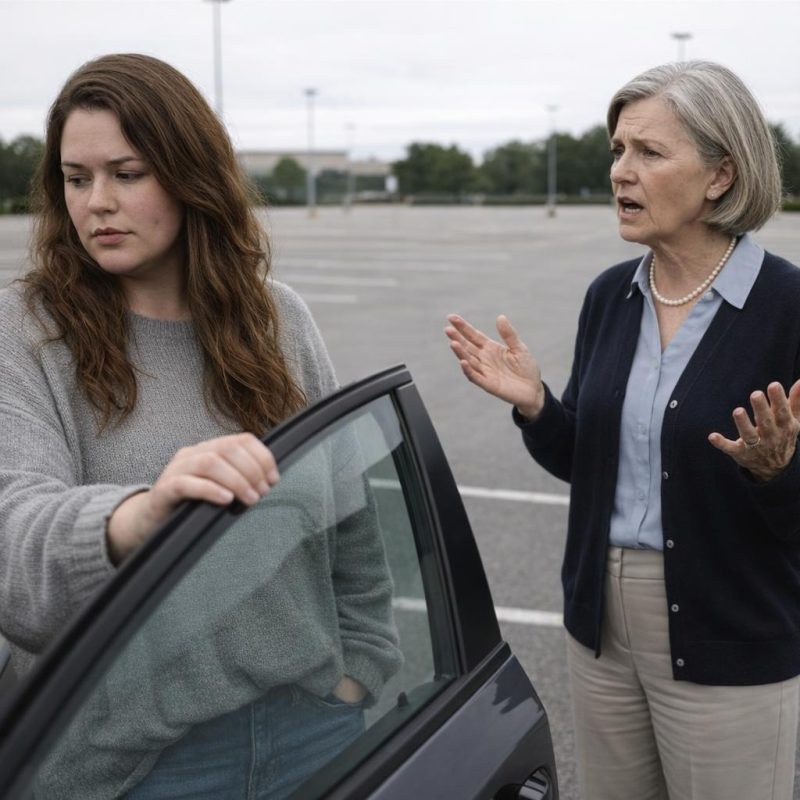 Image by RM AI
The Aftermath
My hands were shaking on the steering wheel the whole way home. Not from fear — or not only from fear. I kept replaying her voice, the soft wounded delivery, the way she'd said my name. The guilt came up automatically, the way it always did, like a reflex I'd never managed to fully retrain. *You're hurting your family. You're ruining Sarah's day. Mark would want harmony.* I heard every word again in the right lane of the highway, and I felt the familiar pull to turn around, to call her back, to apologize for something I hadn't done. But then I thought about what I'd overheard in that kitchen. I thought about Sarah and the plan to use Mark. And the guilt didn't disappear exactly, but something sharper moved through it — something that felt like anger, and underneath the anger, something steadier. I had walked away. She had talked and I had gotten in my car and driven away, and the world had not ended. My hands were still shaking when I pulled into my parking spot. I sat there for a moment with the engine off, and what I felt, underneath all of it, was something I hadn't expected: I was proud of myself.
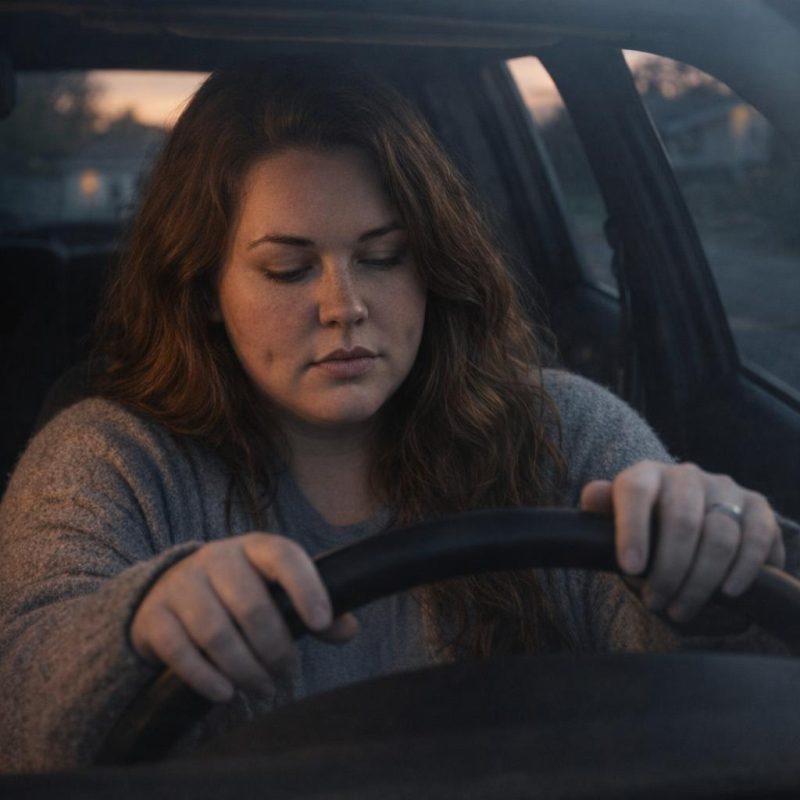 Image by RM AI
The Email
I opened my laptop that evening to check my work email and saw it sitting there in my personal inbox — a message from my father's address, subject line reading *Family Meeting Required*. I stared at those three words for a moment before I clicked. The email was formal in the way he got when he wanted to remind you who was in charge. He used phrases like *resolve this misunderstanding* and *address the situation as a family*, and he set a specific date and time — a Saturday, two weeks out — as though my attendance were already confirmed. He implied, without quite saying it, that I was creating unnecessary drama. That reasonable people sat down and talked things through. That my behavior was causing distress to people who loved me. I'd read versions of this email my whole life, just delivered in person across a dinner table. The tone that said *this is not a request* while using the grammar of one. I felt it move through me, that old automatic response — the one that straightened my spine and made me want to type back *yes, of course, I'll be there*. I closed the laptop without replying. The command in his words sat in the room long after the screen went dark.
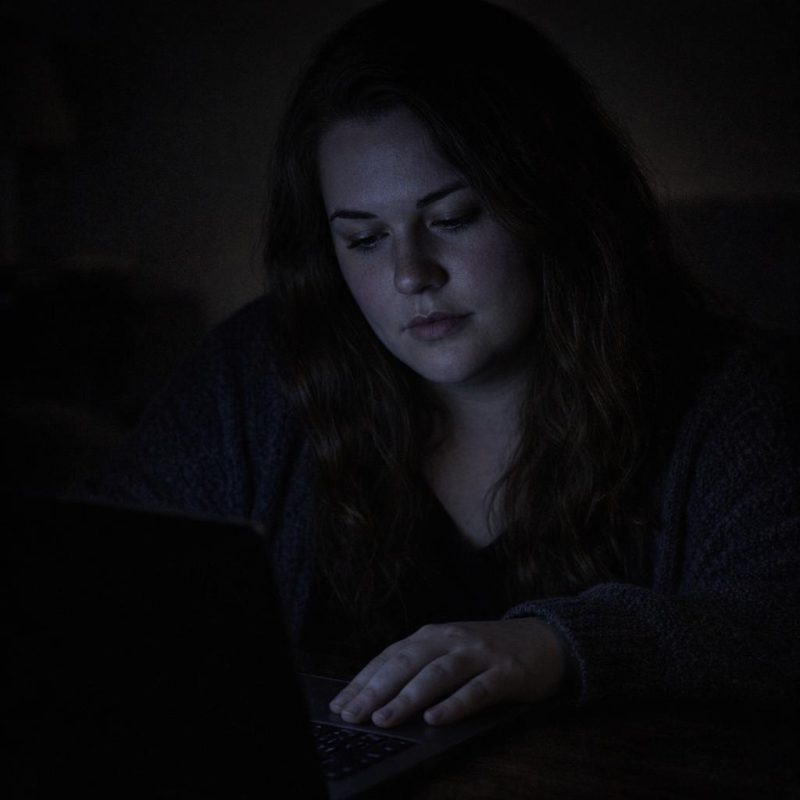 Image by RM AI
The Pattern
I couldn't sleep. Mark was out beside me, breathing slow and even, and I lay there staring at the ceiling with my mind running laps. I kept thinking about what Rachel had said — about patterns, about how you don't see them when you're standing inside them. I started going back through things. Not systematically, just the way your brain does at two in the morning, pulling up old moments and holding them up to the light. The times my parents had called with something urgent. The times Sarah had needed help and I'd been the one to provide it. There was a rhythm to it, I thought, though I couldn't have said exactly what the rhythm meant. I turned memories over one by one, looking for the shape of something I couldn't quite name. And then, lying there in the dark, one memory surfaced and wouldn't let go: a call from two years ago, Sarah's voice cracking, saying her car had been totaled and she needed five thousand dollars to get back on her feet.
 Image by RM AI
The Evidence Folder
The next morning I made a folder on my phone and labeled it simply *Family*. It felt strange to do it — clinical, almost cold — but I did it anyway. I screenshotted Sarah's texts before anything could disappear. I saved Barbara's voicemails without listening to them again, just archived them where I could find them later. I forwarded Richard's email to a separate account I'd set up years ago and barely used. Mark watched me do it over coffee and didn't say anything for a moment, then suggested I back everything up to the cloud so there was no single point of failure. I looked at him and felt something loosen slightly in my chest. He wasn't asking why. He already understood why. I kept adding to the folder over the following days — each new text, each missed call logged in my notes with a timestamp. Part of me felt like I was being paranoid, documenting my own family like they were strangers I didn't trust. But another part of me kept adding to it anyway, because the alternative — having nothing, being able to prove nothing — felt worse. The folder grew quietly in the background of my phone, and its weight was not nothing.
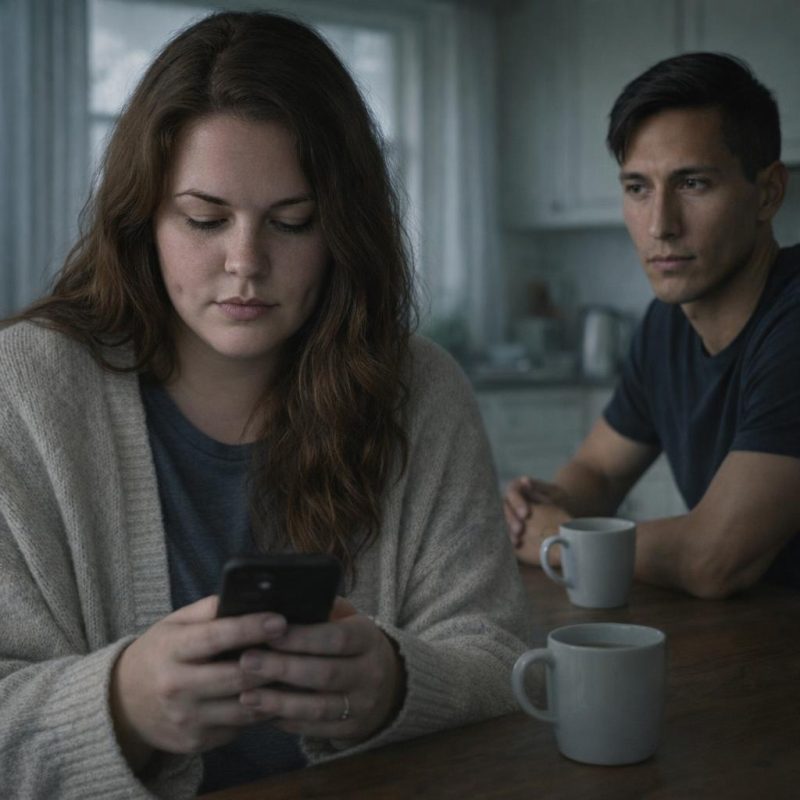 Image by RM AI
The Memory Spiral
I ate lunch in my car that day, which I almost never do. I just didn't want to make conversation with anyone. I opened the notes app on my phone and started a list — every time my family had asked me for money, as far back as I could remember. Sarah's car emergency two years ago, five thousand dollars. My mother's medical bill the year before that, she'd said insurance hadn't covered it, twelve hundred dollars. My father's request for a short-term loan for something to do with his business, three thousand, which he'd called temporary. Sarah's security deposit when she moved into her current apartment, two thousand. Smaller things scattered between — a few hundred here, a few hundred there, always urgent, always with a reason that made saying no feel cruel. I kept going. I scrolled back through old texts to check dates and amounts. None of it had ever been repaid. I'd never pushed for repayment, and no one had ever offered it. I'd told myself that was fine, that family didn't keep score. My hands started shaking somewhere around the third page. I kept writing anyway, because stopping felt worse than knowing. The list ran across two full pages, and I sat with it in my lap, not moving.
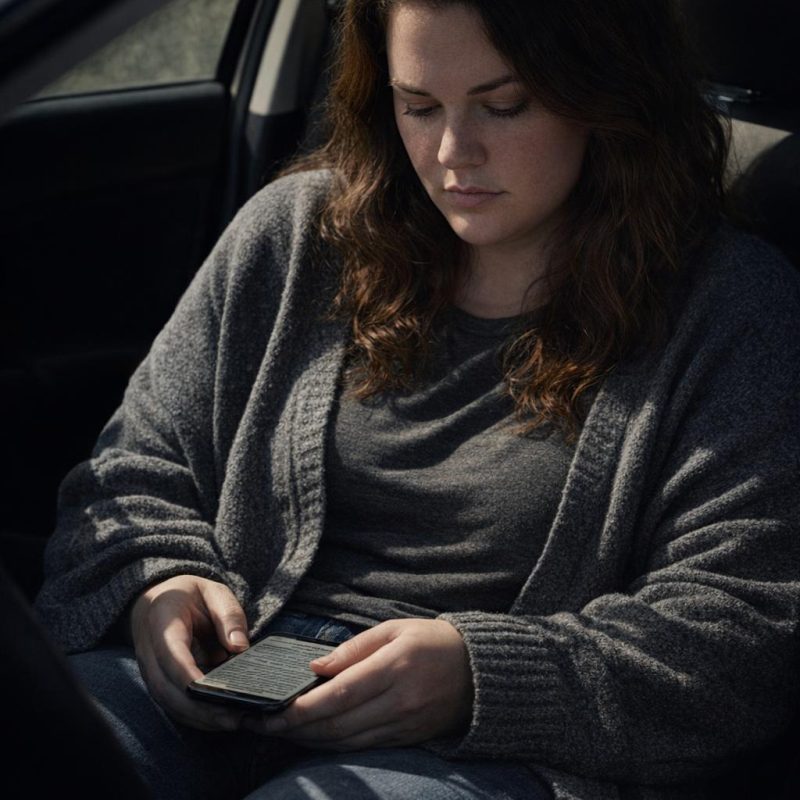 Image by RM AI
Sarah's Car
I don't usually take that route home. I'm not sure why I did that evening — maybe I was on autopilot, maybe some part of me had been circling the thought since the night I lay awake doing the math. Either way, I found myself driving past Sarah's apartment complex just after six. I glanced toward the parking lot out of habit, the way you do when you pass somewhere familiar. And then I slowed down. There was a car in the visitor row that I recognized immediately — the shape of it, the color, the particular dent in the rear bumper on the driver's side. I knew that dent. I'd seen it a hundred times. I pulled over to the curb and sat there with my hazards on. I got out my phone and pulled up the old text thread from two years ago, the one where Sarah had sent me a photo of the damage and said the car was totaled, said she didn't know what she was going to do. I held the phone up and looked from the photo to the car in the lot: same plate, same dent, no signs of repair, no mismatched paint, nothing — sitting there in the afternoon light as though it had never been touched.
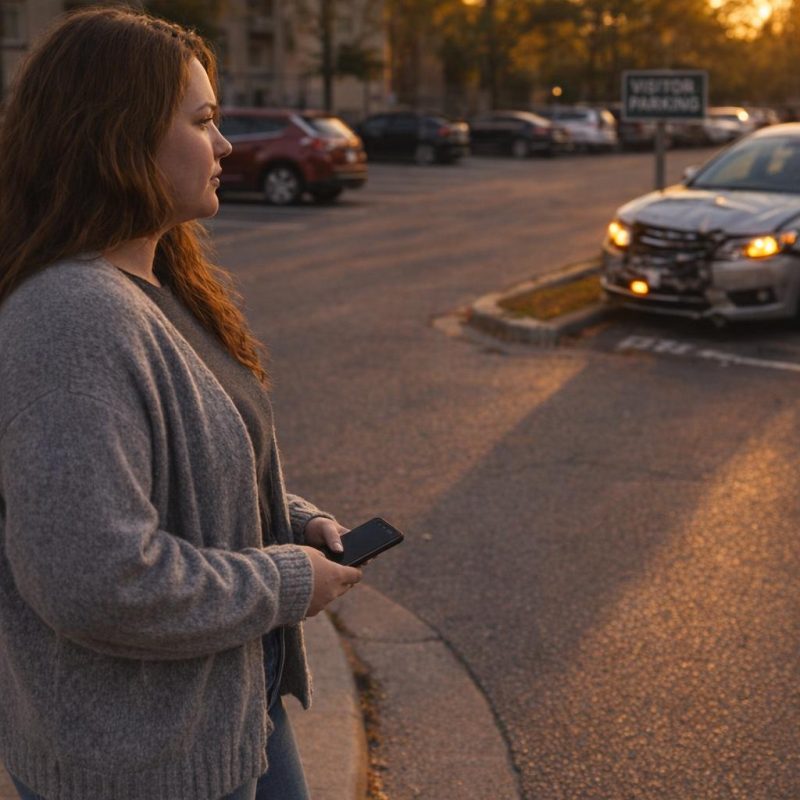 Image by RM AI
The Photograph
I didn't say anything to Mark that night until after dinner. I sat on the couch and scrolled back through my photos, looking for anything from around that time. I found what I was looking for in a birthday album — Sarah's birthday party, the one her friends had thrown at that rooftop bar. I remembered going, remembered feeling like an afterthought the whole evening. In the background of one of the group shots, visible over someone's shoulder in the parking structure below, was a car. I zoomed in. Same color, same body style, same rear bumper. I called Mark over and showed him the photo, then pulled up the text thread with the totaled-car story and laid them side by side on the screen. He looked at both without speaking for a moment. I watched his jaw tighten. Then I checked the date stamp on the birthday photo — six months after Sarah had called me crying about the accident, six months after I'd sent the five thousand dollars. The date sat there on the screen in small grey numbers, and neither of us said a word.
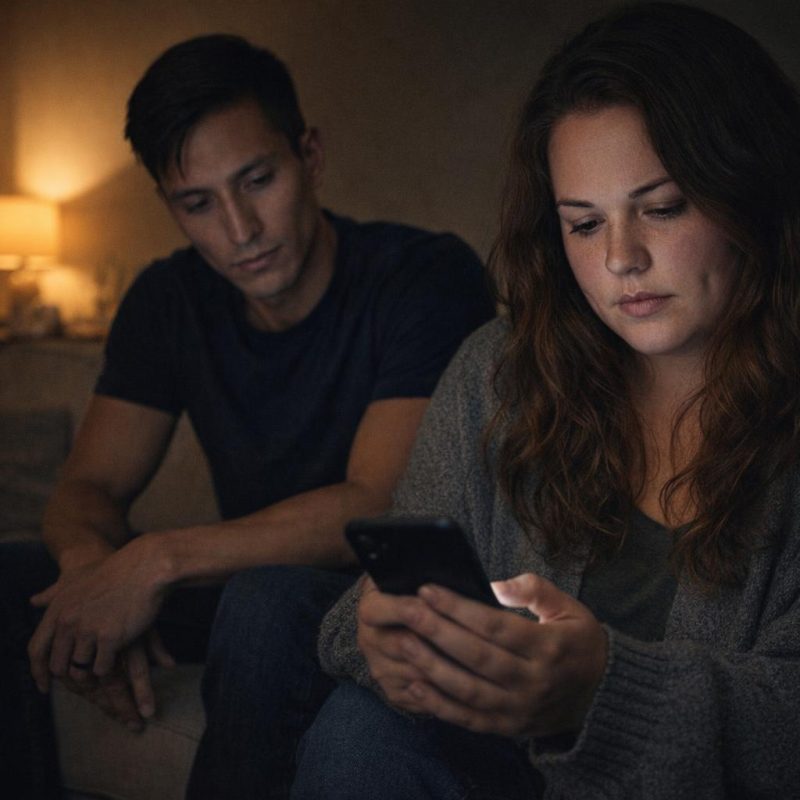 Image by RM AI
The Medical Bill
The hospital call was something I'd been putting off for two days. I finally made myself do it on my lunch break, sitting in my car in the parking garage with the engine off. I'd found the text thread from last year — my mother's message about the emergency procedure, the urgent tone, the way she'd said the billing department needed payment before they'd schedule anything. Three thousand dollars. I'd sent it the same afternoon. I pulled up the hospital name from the texts, called the billing department, and gave them my mother's full name and the approximate date. The representative put me on hold twice. When she came back, she said she'd searched the system thoroughly and couldn't find any patient record under that name for that month. I asked her to try a wider date range. She did. Still nothing. No outstanding balance, no procedure on file, no record of my mother as a patient at all during that period. She sounded genuinely puzzled, like she was wondering if she'd misheard me. I thanked her and ended the call. I sat there in the parking garage with my phone in my lap, the representative's confused tone still in my ear.
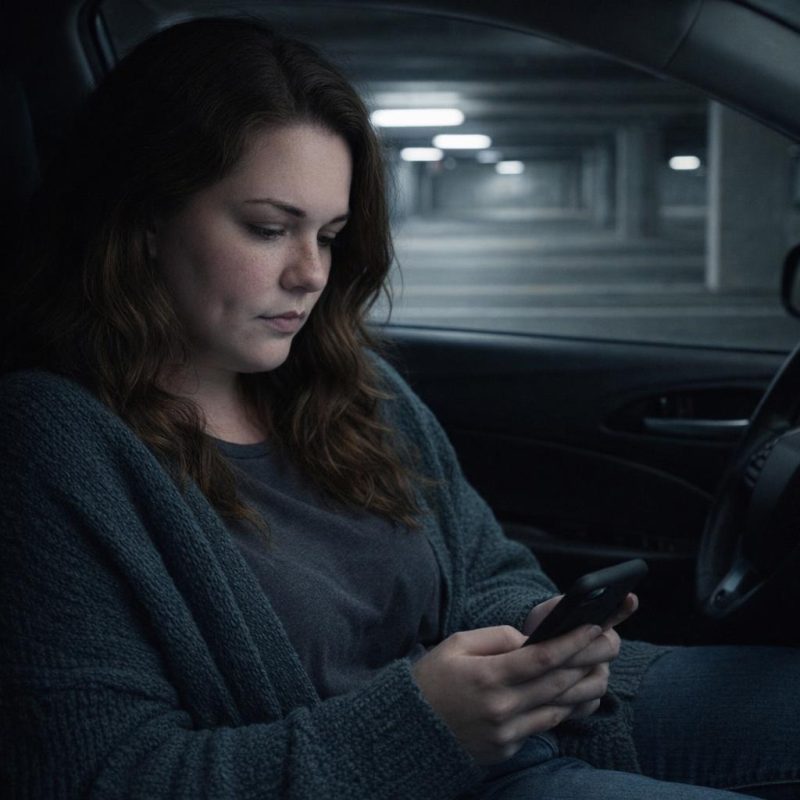 Image by RM AI
The Running Total
We sat at Mark's dining table that night with my laptop open and a blank spreadsheet on the screen. I didn't want to do this. But I also couldn't not do it anymore. I started typing. Sarah's car emergency: five thousand dollars. My mother's medical bill: three thousand. Then I pulled up an older email thread — my father's business loan, the one he'd said was just to cover a cash flow gap for sixty days. Eight thousand dollars. That one I'd almost forgotten about. Mark sat beside me and helped me cross-reference dates against my old bank records. Then I started remembering the smaller ones. An apartment deposit for Sarah when she'd moved. A utility shutoff notice. A few hundred here, a few hundred there. I added them all. We worked quietly for almost an hour, neither of us saying much. When I finally added the last figure and let the spreadsheet calculate, I just stared at the number. Mark put his hand over mine on the table. More than twenty thousand dollars, sitting there in a cell in plain black font, and I felt like the floor had dropped out from under me.
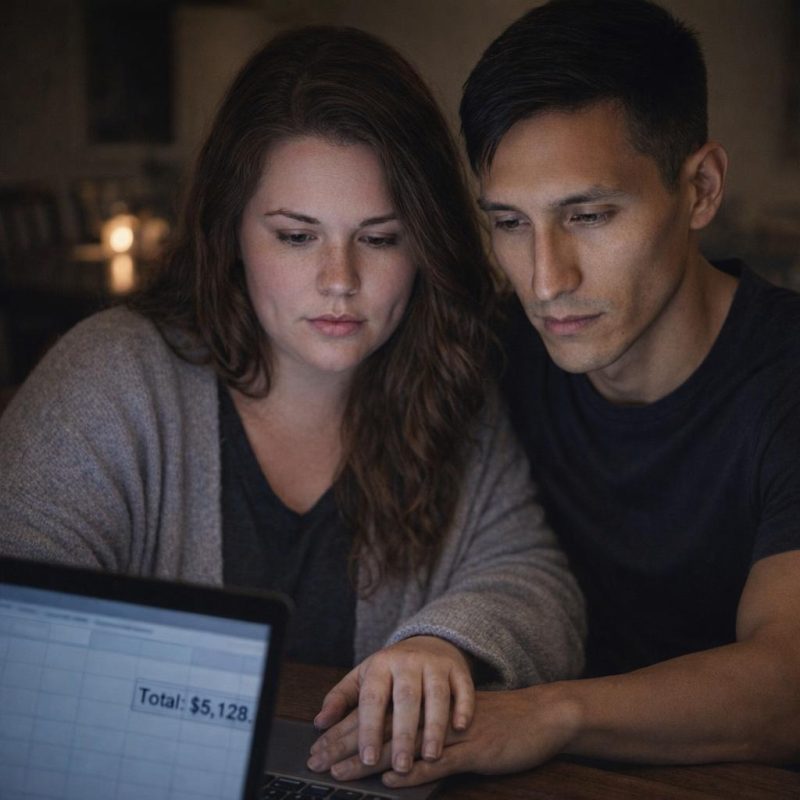 Image by RM AI
The Bank Statements
I called the bank on my break the next day, standing outside near the building's side entrance where it was quieter. I asked for five years of statements on my personal checking account, explained I needed paper copies mailed to me. The representative walked me through the verification questions — account number, last four of my social, current address. Routine stuff. I answered everything and she confirmed the request. Then she paused and said something about needing to note the joint account activity as well, and asked if I wanted those statements included. I asked her to repeat that. She said it again — joint account, listed under my name alongside two other account holders. I told her I didn't know what she was referring to. She read back the account number slowly. I didn't recognize it. I asked her whose names were on it. She gave me two names. I stood there against the brick wall with the phone pressed hard against my ear, the ambient noise of the parking lot suddenly very far away. I told her yes, send everything, all of it. Then I asked her to send the statements from that account too.
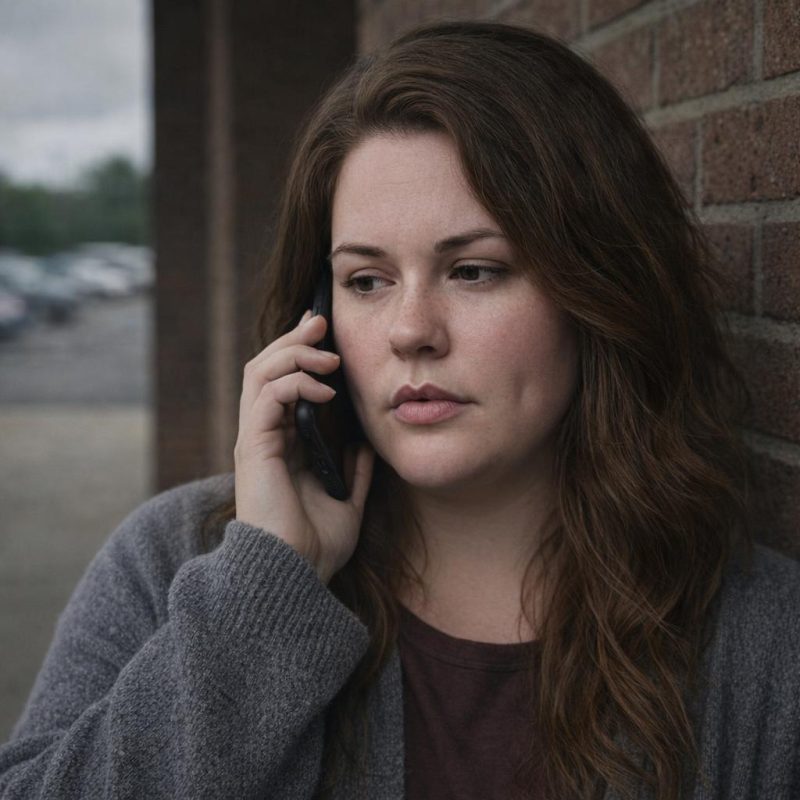 Image by RM AI
The Wait
Three days had never felt so long. I checked the mailbox every evening when I got home, sometimes twice — once when I pulled in and once before bed, like the envelope might have materialized in the hour since I'd last looked. It hadn't. At work I kept losing the thread of conversations, nodding at the right moments while my mind circled back to that account number the representative had read to me. I tried to remember if I'd ever signed anything at a bank with my parents present. A college account, maybe? Something I'd been too young to fully understand? I couldn't land on anything solid. Mark kept telling me we'd know soon, that the statements would answer the questions better than speculation would. He was right, and I knew he was right, and it didn't help at all. I'd lie awake running through worst-case scenarios until I made myself stop, and then I'd just lie there in the dark instead, which was somehow worse. The not-knowing had a weight to it that I couldn't put down, even when I tried.
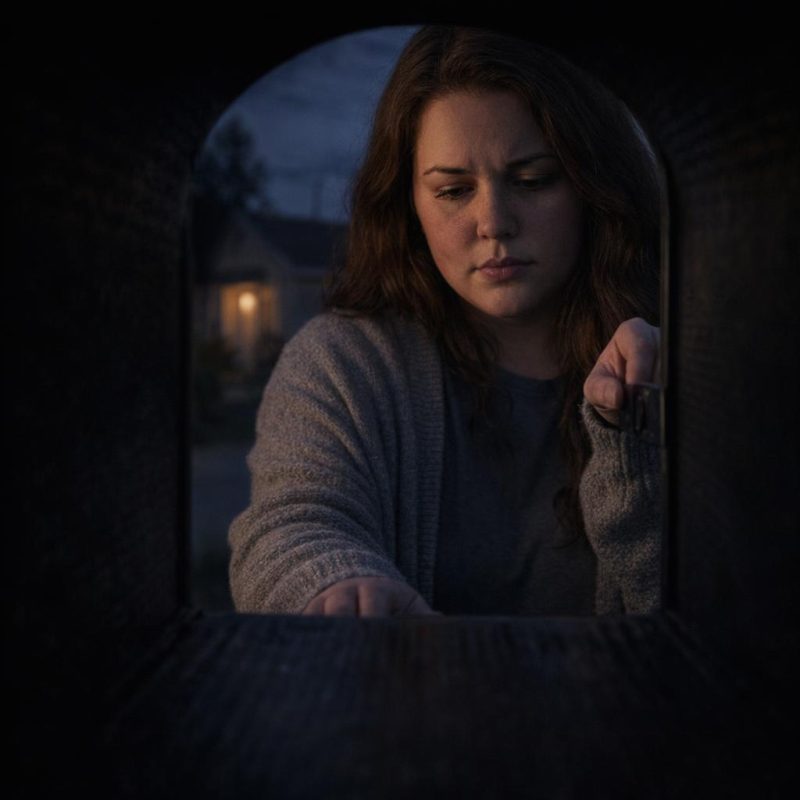 Image by RM AI
The Attorney Suggestion
Mark brought it up carefully, the way he does when he's been thinking about something for a while before saying it out loud. We were doing dishes after dinner and he said he thought I should talk to an attorney — someone who handled financial matters, specifically fraud cases. I told him I didn't think we were there yet. He set down the dish he was drying and turned to look at me. He said the fake emergencies alone — the ones we'd already confirmed — could constitute fraud. He said the joint account I didn't recognize was a separate issue on top of that, and that we were past the point where I should be navigating this without professional guidance. I stood there with my hands still in the soapy water. I knew he was right. I just hadn't wanted to say the word out loud, hadn't wanted to make it that real. Fraud. Criminal. Those were words for other people's families, not mine. Except apparently mine. I told him I'd look into it. After he went to bed I sat at the kitchen table with my laptop and started searching for attorneys who specialized in financial fraud, and the word sat in every search result like something I couldn't take back.
 Image by RM AI
The Envelope
The envelope was in the mailbox on a Thursday. I saw the bank's return address before I'd even fully pulled it out — thick, heavier than I'd expected, the kind of envelope that means a lot of pages. I carried it inside with both hands. Mark was already home and he saw my face when I came through the door. We sat down at the kitchen table together and I set it in front of me and just looked at it for a moment. My hands had started shaking somewhere between the mailbox and the front door and hadn't stopped. Mark asked if I wanted him to open it. I nodded. He worked the flap open carefully and pulled out the stack of papers inside. He set the first page in front of me — my personal checking account, the oldest statements in the set. I scanned the columns, expecting the regular rhythm of my life in numbers. Then I saw them: withdrawals I didn't recognize, amounts that didn't match anything in my memory, dates that meant nothing to me.
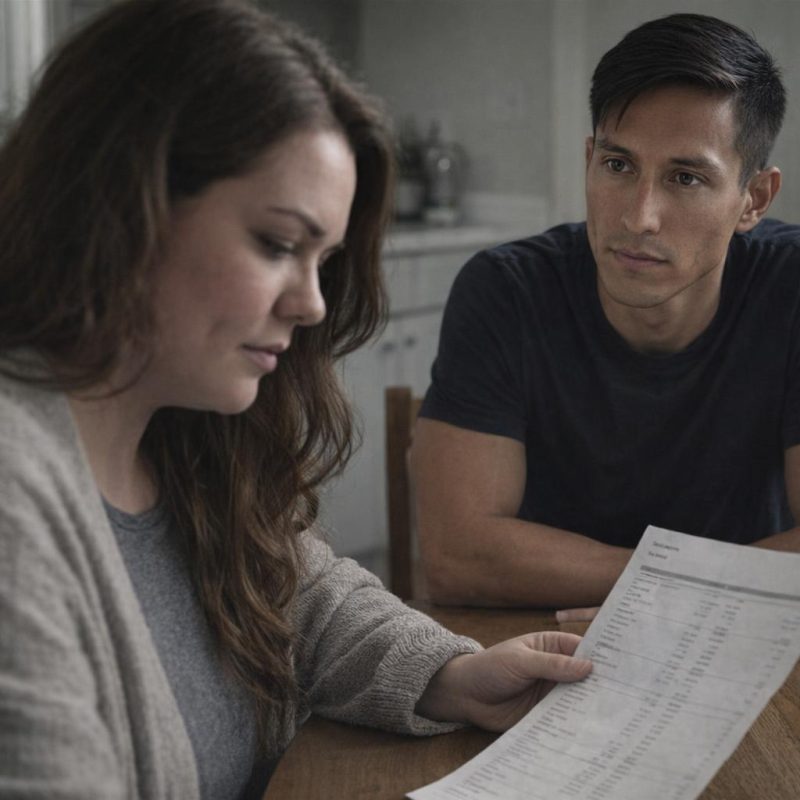 Image by RM AI
The Formal Invitation
The cream envelope arrived at Mark's apartment on a Saturday, addressed only to him in handwriting I recognized immediately. I was there when he brought the mail in. He looked at it, then looked at me, and we both knew before he'd even opened it. He slit the envelope at the kitchen counter and pulled out a formal wedding invitation — heavy card stock, embossed lettering, the whole production. Only his name on it. Not mine. Not 'and guest.' Just his name, as if I didn't exist, as if we weren't engaged. A smaller folded note fell out when he tilted the card. He picked it up and read it, then handed it to me without a word. It was in Sarah's handwriting. She wrote that she hoped he'd consider supporting the family celebration, that a monetary gift would be most meaningful, and she'd even included a suggested amount — four figures, written out plainly like it was the most natural thing in the world to ask. No mention of me anywhere in the note. Not my name, not my absence, not a single acknowledgment that I existed in relation to either of them. Mark and I stood at that counter for a long moment, and I kept reading the suggested amount, unable to quite believe the nerve of it.
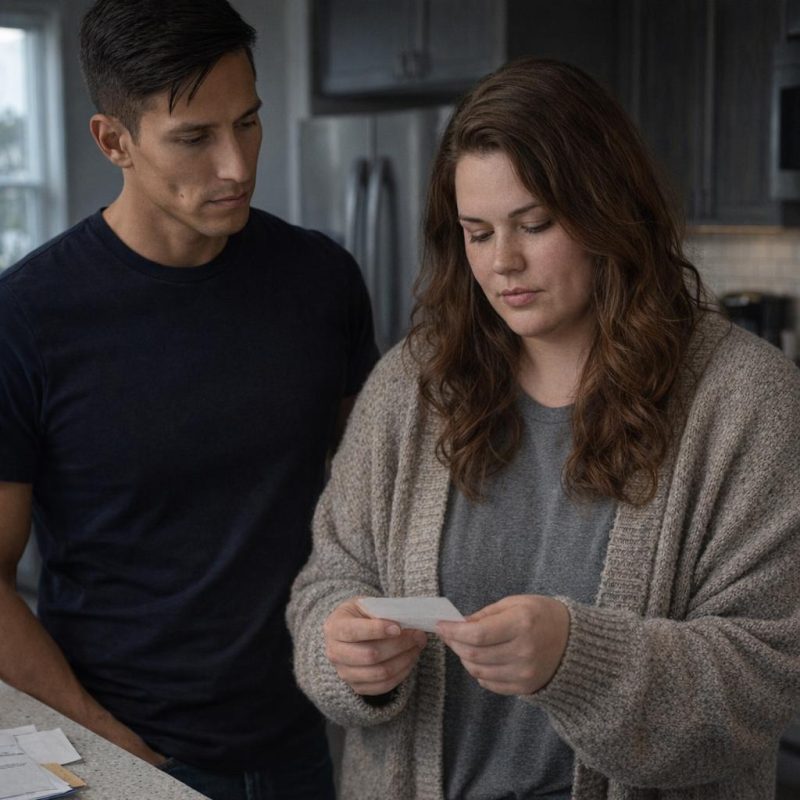 Image by RM AI
The Gift Registry
I opened the laptop mostly out of morbid curiosity, if I'm being honest. Mark looked over my shoulder as I found Sarah's wedding website — it took about thirty seconds, she'd made it easy to find — and clicked through to the registry. I don't know what I'd expected, but it wasn't this. Every single item was a brand name I recognized from the kind of magazines I'd never actually bought anything from. A stand mixer that cost more than my first month's rent. Bedding sets listed at eight hundred dollars each. A luggage collection — a whole matching set — that ran close to three thousand. Electronics, furniture, kitchen appliances that belonged in a showroom. Mark started doing rough math out loud and I started adding along with him in my head. We got to thirty thousand before we were halfway through the list. By the time we reached the end, the number was somewhere north of fifty thousand dollars. I sat back in my chair and looked at the screen. Sarah had never held a job that would cover a fraction of this. Neither had James, from what I understood of his situation. The registry just sat there on the screen, cheerful and completely unbothered by its own absurdity.
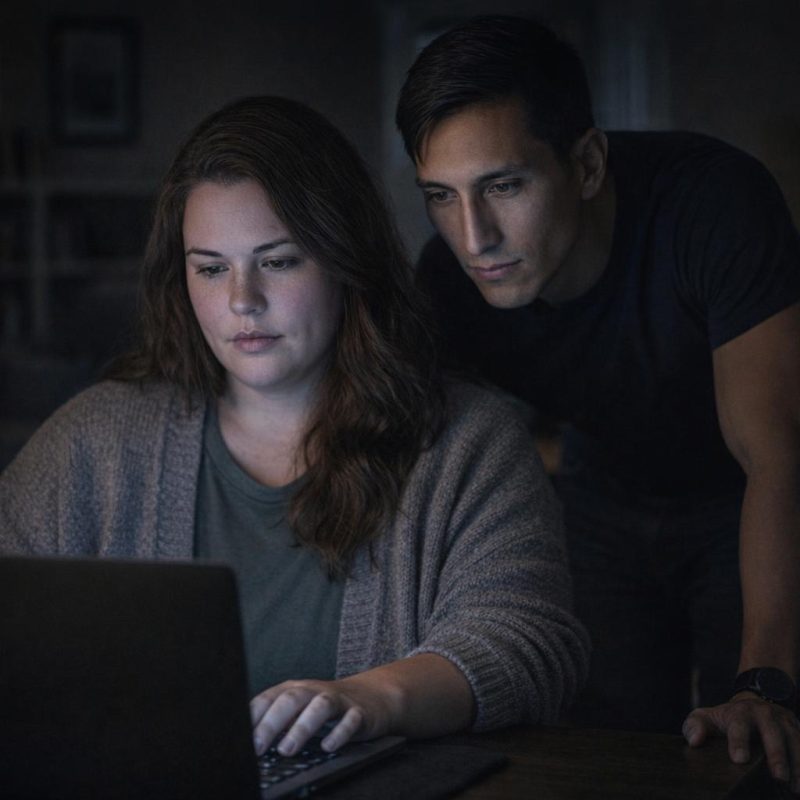 Image by RM AI
The Phone Call
I was at my desk when Mark texted me: *call me when you get a minute, it's important*. I stepped outside on my lunch break and he picked up on the first ring. He told me Sarah had called him that morning from a number he didn't recognize — and that he'd started recording the moment he heard her voice. Fifteen minutes, he said. He'd let her talk the whole time. He sent me the audio file while we were still on the phone, and I sat on a bench outside my office building and put my earbuds in. Sarah's voice came through warm and practiced, all soft concern and careful pauses. She asked if he'd received the wedding invitation. She said how much it meant to the family that he was going to be part of it. She talked about wanting him to feel included, welcomed, loved. Then she brought me up — casually, like an afterthought — and said I'd been going through something lately. That the wedding planning had been stressful for everyone. That she was worried about me. The warmth in her voice didn't waver once. Not until she got to the part where she asked if he'd be willing to contribute financially, to help make the day special for the whole family. I sat very still on that bench, the city noise going on around me like nothing had happened. Then I heard Sarah's voice say, clear as anything, that I was too unstable to handle family events right now.
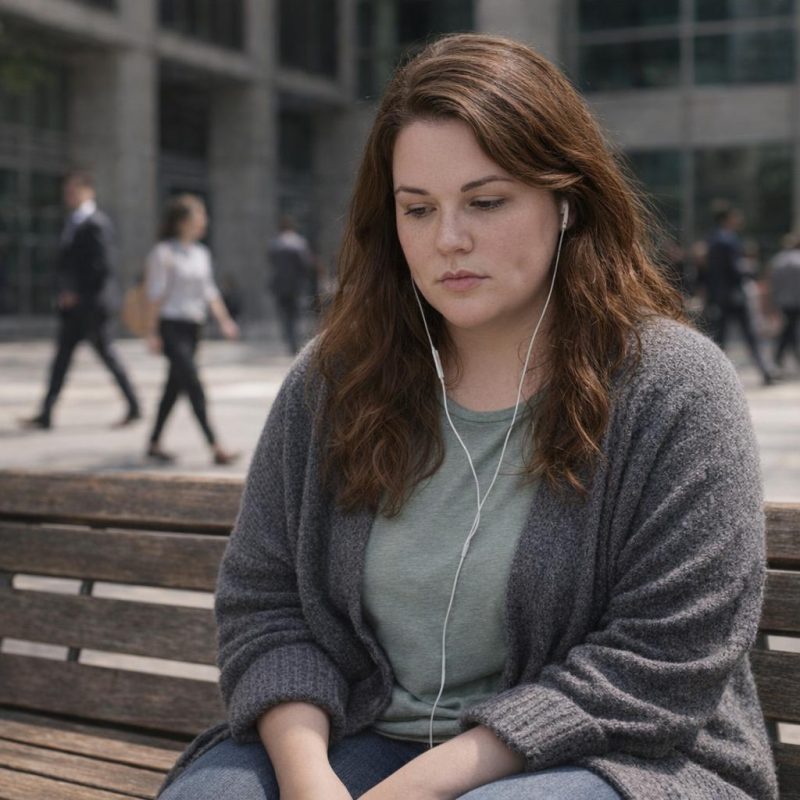 Image by RM AI
The Refusal
That evening Mark called her back. I sat right beside him on the couch, close enough that I could hear both sides through the speaker without him even turning the volume up. Sarah answered on the second ring, cheerful and bright, like she'd been expecting good news. Mark thanked her for the invitation and said he appreciated her reaching out. I watched his face — completely calm, completely steady. Then he said it: he wouldn't be contributing any money to the wedding. Just like that. No apology, no softening. Sarah's voice shifted into something that sounded like gentle confusion, like she must have misunderstood. She started explaining again — the family support angle, how meaningful it would be, how much it would mean to everyone. Mark said, just as evenly, that he understood, and that it still wasn't his responsibility. There was a pause on the line that stretched long enough to feel deliberate. Then Sarah asked why he was being so difficult about this. Mark said simply that he wasn't being difficult, he just wasn't sending money. Another silence. Her goodbye, when it finally came, was three words, clipped and flat, and the call ended before I'd even processed that she'd spoken. I exhaled slowly. Mark set the phone down on the cushion between us. Sarah's voice had gone from honey to ice the moment the charm stopped working.
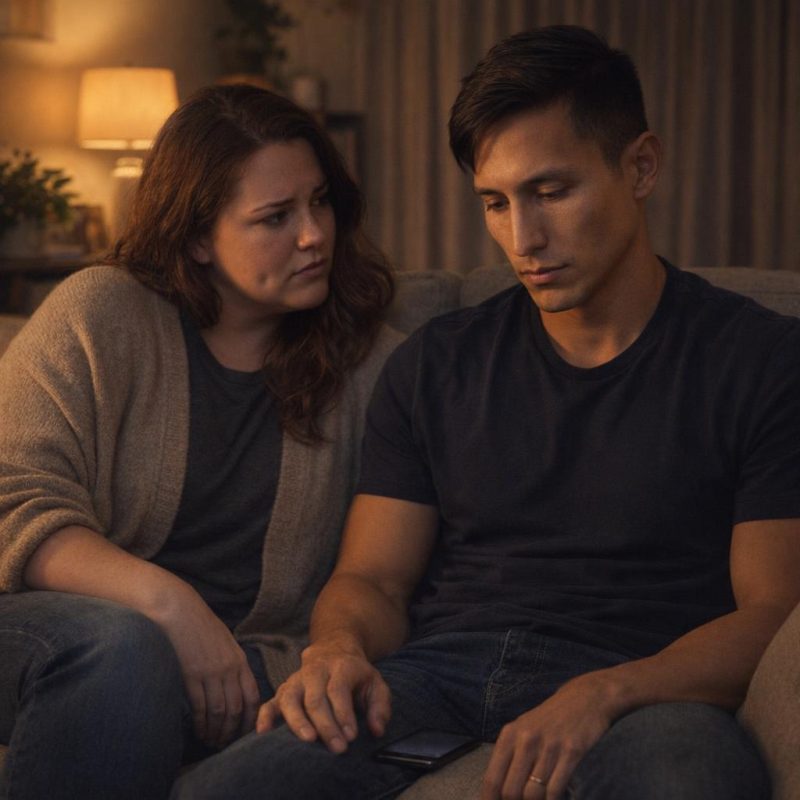 Image by RM AI
The Trust Fund
I went back to my parents' house while they were out — I still had a key, though I'd been thinking lately about whether that needed to change. I told myself I was just picking up some old documents I'd left in my childhood bedroom closet, tax records and college paperwork I'd never bothered to move. The closet still smelled the same, that particular mix of cedar and old carpet, and for a second I just stood there in the doorway feeling twelve years old again. I pulled down a box from the top shelf and started going through it. Mostly cards — birthday cards, graduation cards, a few holiday ones from relatives I barely remembered. My grandmother's handwriting was easy to spot, big looping cursive on cream-colored envelopes. I went through three of them before I noticed one that felt different. Thicker. Stiffer. I opened it carefully. Inside was a folded letter on heavier paper, formal-looking, dated the week before my eighteenth birthday. My grandmother had written that she wanted to do something meaningful for my future. She described a trust fund she'd established in my name. She wrote about monthly distributions that were supposed to start when I turned eighteen — money meant for college, for getting started, for whatever I needed. I stood there in the closet holding the letter. I had never received a single distribution. Not one.
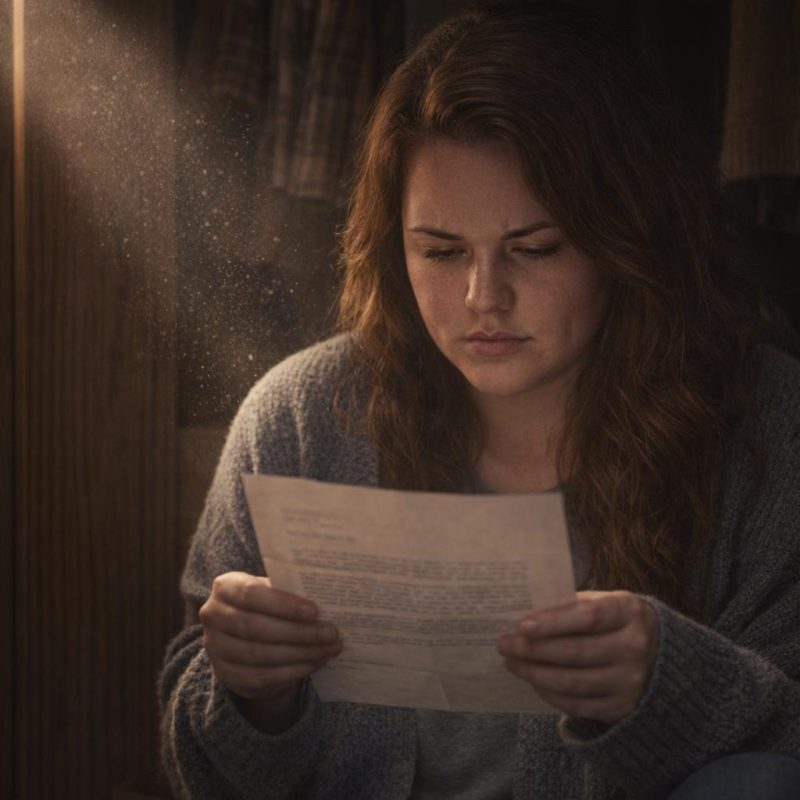 Image by RM AI
The Math
I brought the letter straight to Mark. I sat down at the kitchen table and smoothed it flat and just pointed at the relevant paragraph without saying anything, because I didn't quite have words yet. He read it twice. Then he looked up at me and asked, very carefully, if I was sure I'd never received any of it. I told him I was sure. I would have remembered fifteen hundred dollars a month. I would have remembered anything. He picked up his phone and opened the calculator without being asked. Fifteen hundred a month. Twelve months a year. I'd turned eighteen eleven years ago. He typed it in slowly, like he was hoping the math would come out different. It didn't. The number on the screen was a hundred and ninety-eight thousand dollars. We both stared at it. I felt something cold move through my chest — not quite nausea, not quite anger, something that hadn't found its name yet. The fake emergencies, the borrowed money I'd scraped together and sent home, the guilt trips about not doing enough for the family — all of it suddenly looked very small next to that number. Mark set the phone down between us on the table, the calculator still open, and neither of us said anything for a long time.
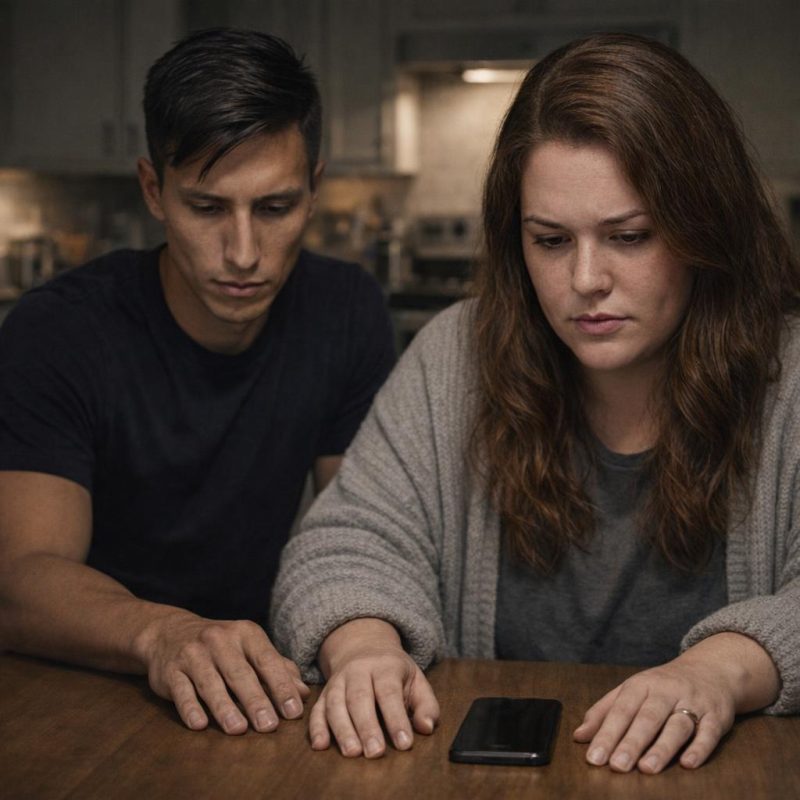 Image by RM AI
The Trust Documents
The bank's name was printed at the top of my grandmother's letter in small, formal type. I found the trust department's number online and called from my car on my lunch break, parked in a lot two blocks from my office where no one would walk past and hear me. A representative picked up and I gave her my grandmother's full name, my own name, my date of birth. She was quiet for a moment, typing. Then she confirmed the account — yes, the trust had been established exactly as the letter described, yes it was still in the system. I asked about the distribution history. She said distributions had been made monthly, as scheduled, to the beneficiary. I told her I was the beneficiary. I told her I had never received any money. There was a pause on her end that lasted just a beat too long — the kind of pause that means someone is choosing their next words carefully. She said she could send me the complete records, all of it, every transaction. I said yes, please, everything, as soon as possible. She said she'd process the request right away. I sat in my car after I hung up, hands still on the steering wheel, staring at the parking lot. Then her words came back to me, flat and factual: the account shows regular distributions to the beneficiary.
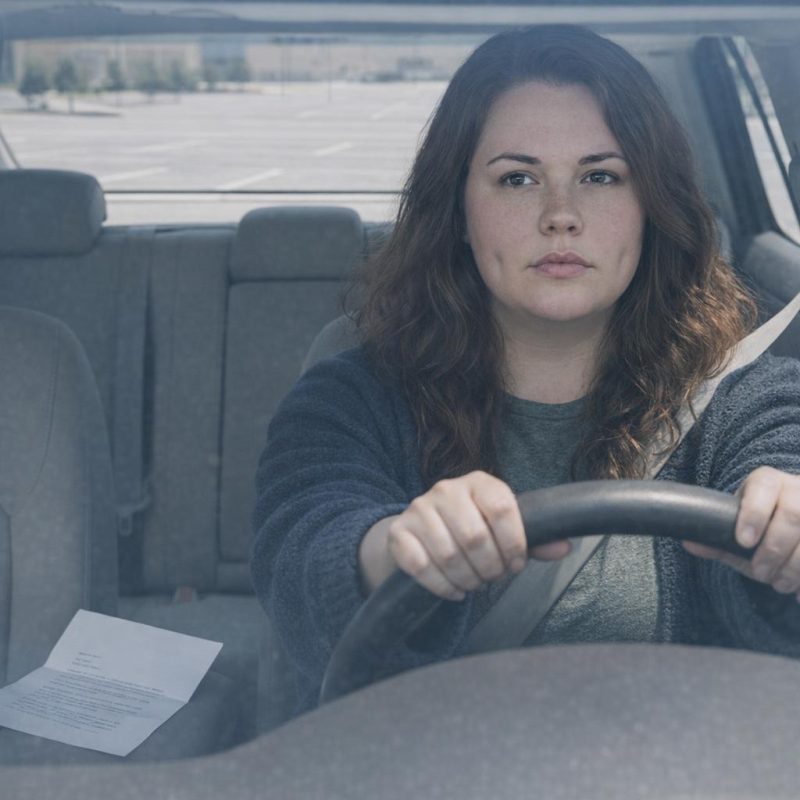 Image by RM AI
Attorney Mitchell
Attorney Mitchell's office was quieter than I expected — no phones ringing, no one rushing past in the hallway. She shook our hands at the door and led us into a conference room with a long table and good light, and something about the steadiness of her movements made me feel, for the first time in weeks, like I was in the right place. I spread everything out on the table in the order I'd organized it the night before: my grandmother's letter, the bank statements I'd pulled together, the list of every fake emergency and every dollar I'd sent home over the years, and my phone with Sarah's recorded call queued up. Attorney Mitchell sat across from us and went through each item without rushing. She put on her reading glasses and held the grandmother's letter up to the light for a moment. She took notes in a small, precise hand. When she played the recording she listened to the whole thing without expression, then played a section back twice. She asked me detailed questions — who had access to my grandmother's accounts, whether I'd ever signed anything related to the trust, whether my parents had ever mentioned it directly. I answered everything I could. By the time I'd finished, her notepad had two full pages of notes and her expression had settled into something careful and serious that I found both reassuring and frightening at the same time.
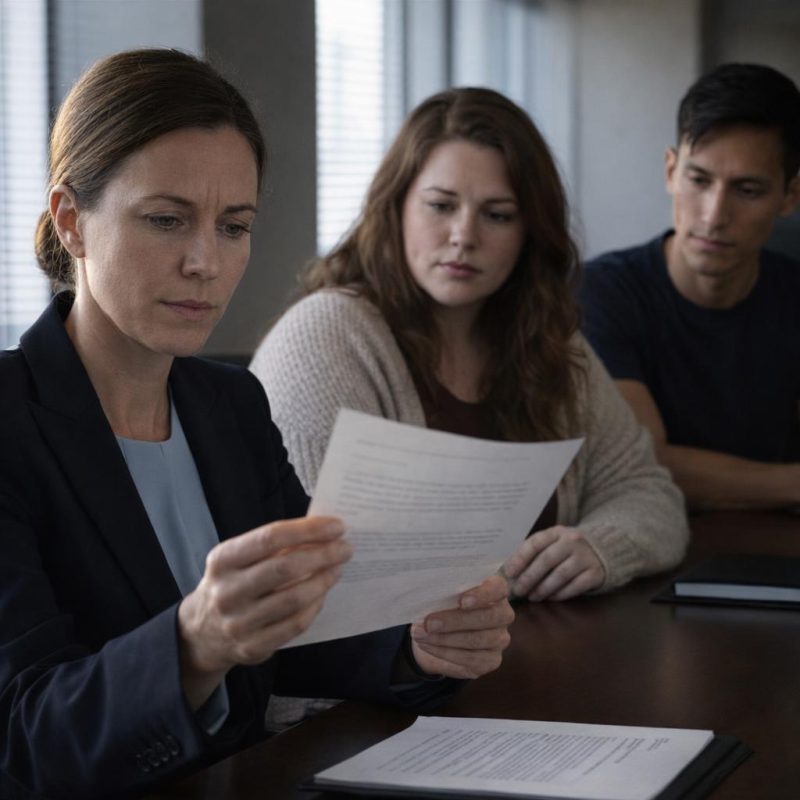 Image by RM AI
Forensic Accounting
Attorney Mitchell set her pen down and folded her hands on the table. She said what we had was a significant pattern of financial irregularities and that before she could advise us on next steps, she needed a forensic accounting review. She explained what that meant — tracing every transaction connected to the trust, examining the authorization signatures on any withdrawal documents, requesting the full distribution records directly from the bank. She said it would take approximately two weeks to do it properly. She said it would cost several thousand dollars. I didn't hesitate. I said yes before she'd finished the sentence. Mark reached over and said he'd cover the retainer, and I started to object and he just shook his head once, quietly, and I let it go. Attorney Mitchell said she'd start the process immediately and that she'd contact us with preliminary findings as soon as she had something concrete. She walked us to the door and shook our hands again, and her grip was firm and unhurried. Mark and I drove home mostly in silence. I kept thinking about the two weeks stretching out ahead of me — fourteen days of not knowing, of waiting for someone to confirm or deny what the number on that calculator screen had already suggested. The not-knowing sat heavy in my chest the whole drive home.
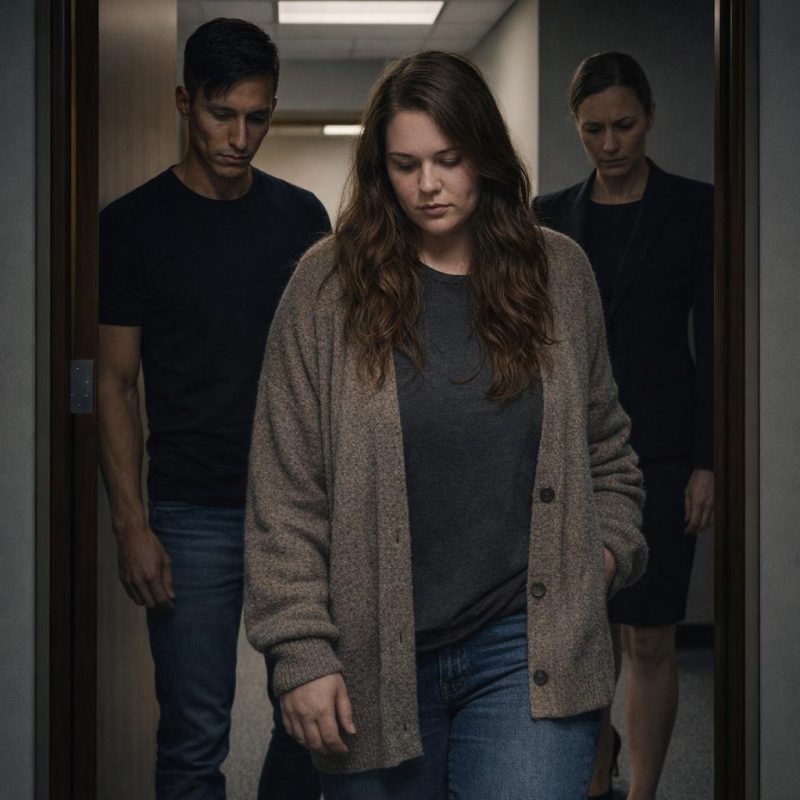 Image by RM AI
The Confrontation Threat
The doorbell rang on a Tuesday evening, no warning, no text. I looked through the peephole and my stomach dropped. My father was standing in the hallway, jaw set, hands at his sides. Mark came up behind me without me having to say anything — he just read my face — and stood beside me as I opened the door. Richard didn't say hello. He asked, immediately, why I had contacted the trust bank. He said I was creating unnecessary problems. He said I was being ungrateful after everything the family had done for me, that I had no idea how much they'd sacrificed. He used the phrase family loyalty three times in the first two minutes. Mark stayed quiet beside me, and I kept my voice level and didn't offer explanations, which seemed to make my father angrier than anything I could have said. His voice got tighter. He mentioned defamation. He said I was embarrassing people who didn't deserve it. I stood in my own doorway and felt the old familiar pull to apologize, to smooth it over, to make the discomfort stop — and I didn't move. Then Richard looked directly at me, and his voice dropped into something flat and deliberate, and he said I was going to regret making this a legal matter.
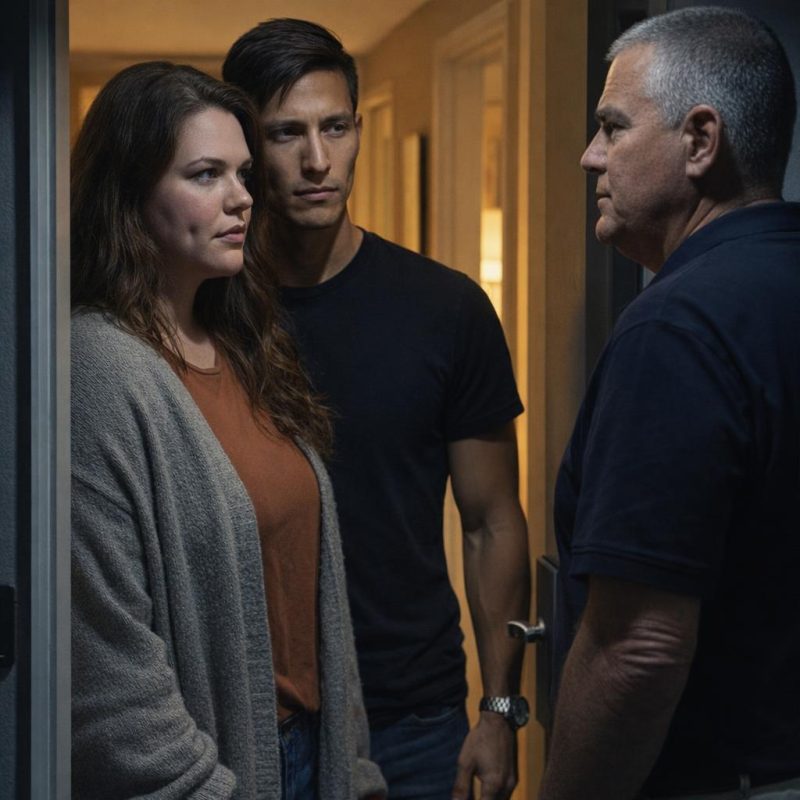 Image by RM AI
The Standoff
Richard's face had gone the color of old brick by the time I said it — that I had every right to check my own accounts. He said I was being manipulated by people who didn't understand how families worked. He said I was going to destroy everything they'd built. Mark's hand came to rest on my shoulder, steady and warm, and something in me stopped bracing and just stood still. I didn't apologize. I didn't explain. I told my father, in a voice I barely recognized as mine, that he needed to leave. He stared at me for a long moment like he was waiting for me to flinch. I didn't. His jaw tightened. He said I would regret this. He said the family was done extending grace to someone who treated them like criminals. Then he turned and walked down the hallway without another word, and I closed the door behind him and leaned against it. Mark didn't say anything right away. Neither did I. The apartment was quiet, and I was still standing, and somewhere underneath the adrenaline there was something that felt, unexpectedly, like solid ground.
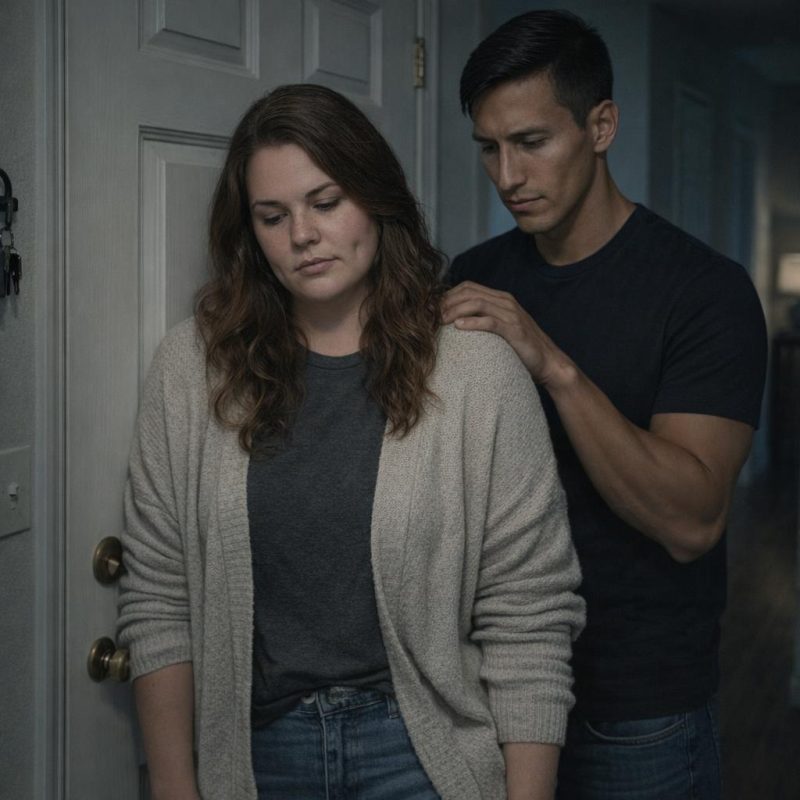 Image by RM AI
The Accusation
The email arrived the next morning while I was still in my pajamas. The subject line said 'Your Behavior' and I almost didn't open it, but I did. My father had written it like a legal brief — formal, cold, each sentence its own paragraph. He accused me of harassing elderly parents. He used the phrase elder abuse twice. He said I was making false financial claims driven by mental instability and vindictiveness, and that he was prepared to file a formal report with the appropriate authorities if I didn't cease immediately. I read it once. Then I read it again. Mark looked over my shoulder and let out a slow breath. Neither of us laughed, exactly, but there was something almost surreal about it — the man who had shown up at my door making threats was now casting himself as the victim. I forwarded the entire email to Attorney Mitchell without adding a single word of my own. Her reply came within the hour: three sentences, no pleasantries, just the information that communications like this one were useful to have on record. I set my phone face-up on the counter and left it there. There was something almost dizzying about being called the abuser by the people I was investigating.
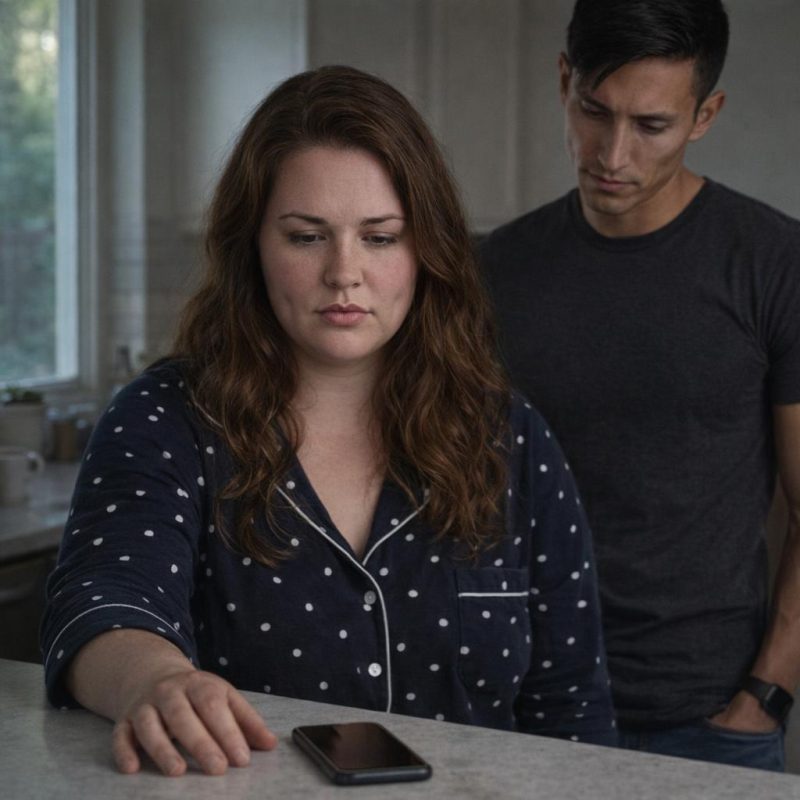 Image by RM AI
The Defamation Threat
The voicemail came from a blocked number two days later. I almost deleted it without listening, but something made me hit play. My mother's voice filled the room — formal in a way Barbara never was, each word placed carefully, like she'd written it out first. She said I was spreading malicious lies about the family. She said the damage to their reputation was real and serious. She said if I continued, she would have no choice but to pursue legal action for defamation. Her voice stayed controlled through most of it. She mentioned Sarah's wedding, how I was poisoning something that should have been a joyful time. She said she was giving me one last chance to stop before things became irreversible. Mark was standing in the kitchen doorway listening, and when it ended he said, quietly, that she sounded scared. I saved the voicemail to the evidence folder and sent a copy to Attorney Mitchell without responding. I played it back one more time, not because I needed to, but because I wanted to hear it again — the place near the end where my mother said the word 'lies' and her voice cracked clean in half.
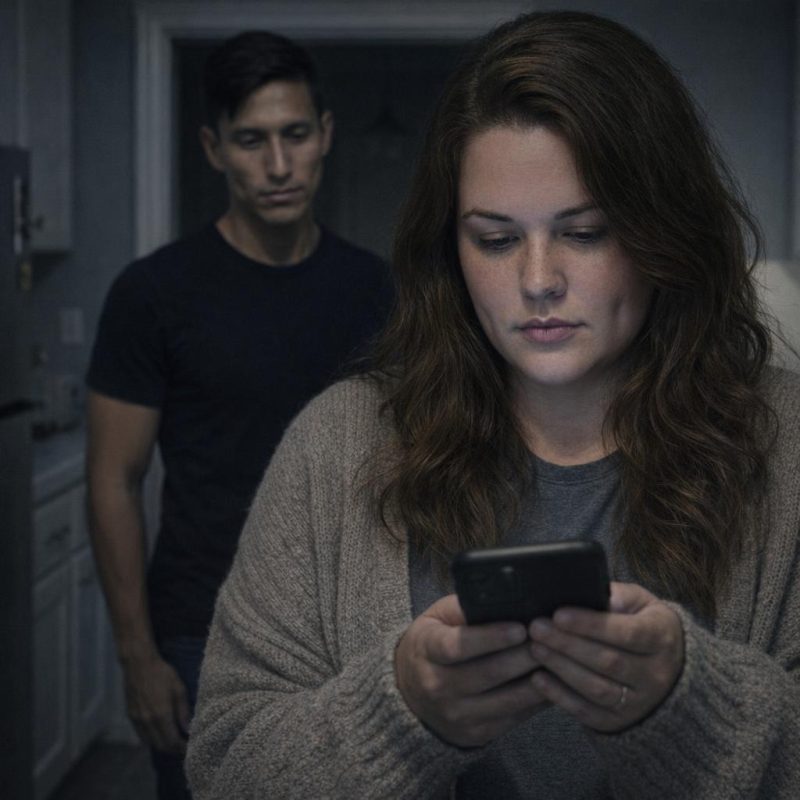 Image by RM AI
The Cornered Rats
That evening Mark spread everything out on the kitchen table — printed emails, a log of missed calls, the voicemail transcript, the text messages. We laid them out in order, oldest to newest, and just looked at them. The first week after I'd contacted the trust bank, the messages had been almost casual. Friendly, even. How are you doing, we should talk, your father just wants to understand. The second week shifted. The tone got firmer. There were demands wrapped in concern. By the third week it was threats, formal language, accusations. Mark traced the timeline with one finger and said it looked like a pressure campaign that kept ratcheting up every time I didn't respond. I didn't say anything for a moment. Something about seeing it laid out like that — the progression, the escalation, the way each message arrived faster and harder than the one before — made my stomach tighten. The forensic report was due in three days. I checked the calendar on my phone and set it back down. The messages on the table told their own story: three weeks of increasing desperation, each one more urgent than the last.
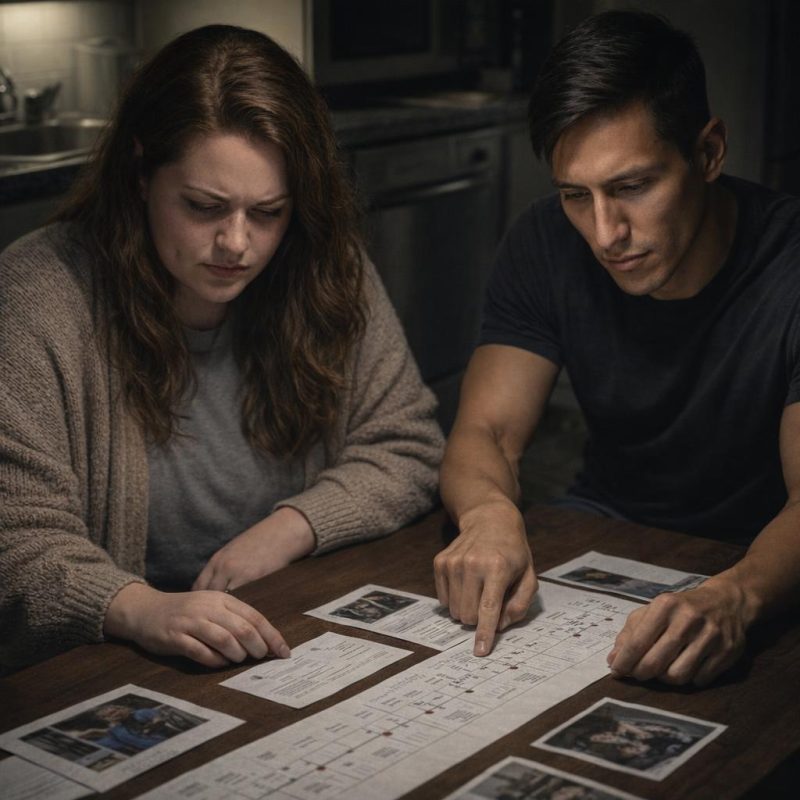 Image by RM AI
The Truth in Numbers
Attorney Mitchell's conference table had a thick bound report sitting in the center of it when Mark and I walked in. She didn't open with small talk. She said the forensic accountant had completed the analysis and that we needed to go through it together. The trust fund had received and distributed two hundred and twelve thousand dollars over five years. I had received none of it. Every single distribution authorization bore a signature with my name on it. She slid a page across the table — a side-by-side comparison, my actual signature from a bank form on the left, the authorization signatures on the right. They weren't even close. The loops were wrong. The slant was wrong. Someone had practiced, maybe, but not enough. Attorney Mitchell walked me through each withdrawal — a car emergency, a medical bill, a business shortfall — and explained how the forensic accountant had traced each one back through fabricated documentation. My parents had retained signature cards from an old joint account I'd had at eighteen, and those cards had given them the template. Five years. Sixty separate transactions. I sat there with the report open in front of me and turned to the page she indicated, and there they were — dozens of withdrawal authorizations, each one signed with a version of my name that I had never written.
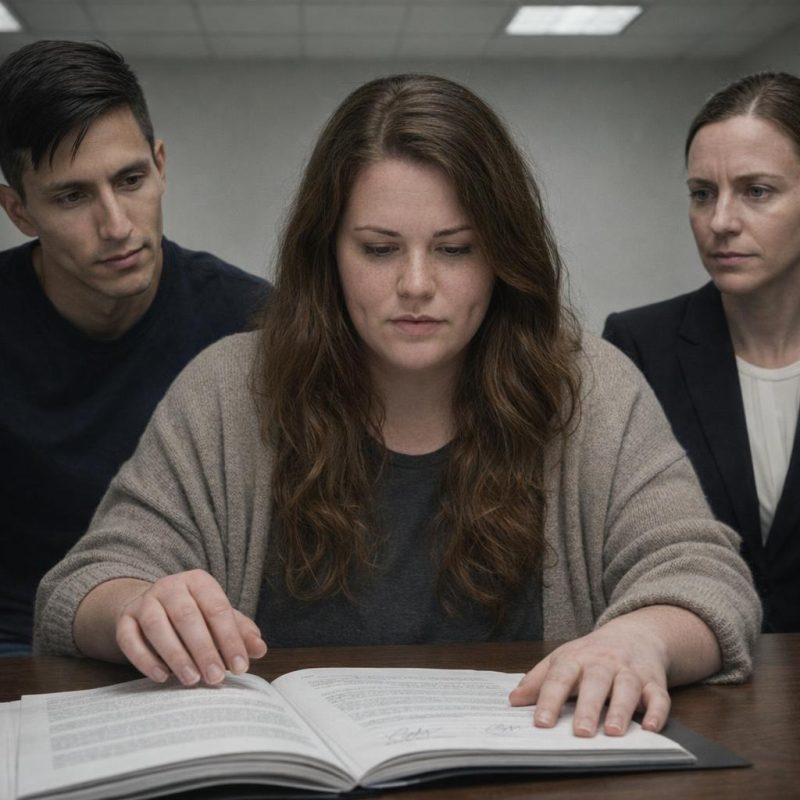 Image by RM AI
The Systematic Betrayal
Attorney Mitchell didn't rush. She walked through the timeline from the beginning, page by page, and I sat there and let it land. The first forged withdrawal had been processed one month after my eighteenth birthday. One month. Every month after that, without exception, there had been another. The fake emergencies weren't random — they were timed, she explained, to coincide with the trust distributions so that any questions I might have asked would get absorbed into the drama of whatever crisis had just been manufactured. My mother's medical bills. My father's business. Sarah's car. Each one a distraction. Each one a theft. Attorney Mitchell said my younger sister had been aware of the arrangement and had participated in at least three of the fabricated requests. The wedding scam, she said, was the same pattern — just larger, and aimed at a new target. Mark's hand found mine under the table and held on. I couldn't feel my face. I was looking at the pages but I wasn't really seeing them anymore, just the shape of five years rearranging itself into something I didn't have words for yet. Attorney Mitchell set down her pen, looked at me directly, and said, 'This is criminal fraud on a massive scale.'
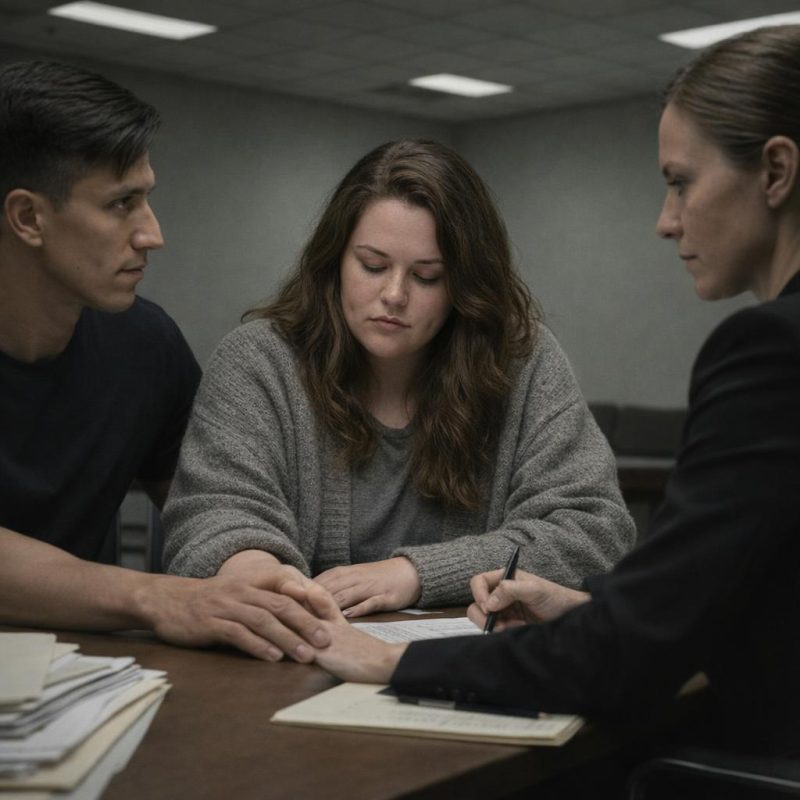 Image by RM AI
The Choice
She gave me a few minutes before she laid out the options. Criminal prosecution meant a police report, a formal investigation, and if the evidence held — which she believed it would — potential felony charges for all three of them. Forgery. Fraud. Conspiracy. She said the statute of limitations hadn't expired and that the documentation was strong. The civil route was different: a lawsuit focused on financial recovery, quieter, less public, potentially faster. She said civil cases involving family were harder to win and often settled for less than the actual loss. Her recommendation was criminal, given the scope and the paper trail. I sat with that for a moment. I had spent so much of my life trying not to cause problems in that family, trying to take up less space, trying to make things easier for people who were, it turned out, stealing from me the entire time. Mark said he would support whatever I decided, and he meant it — I could hear it. Attorney Mitchell said there was no rush, that I could take a few days. I told her I didn't need a few days. But I sat quietly for another minute anyway, feeling the full weight of what it meant to hold someone else's consequences in my hands.
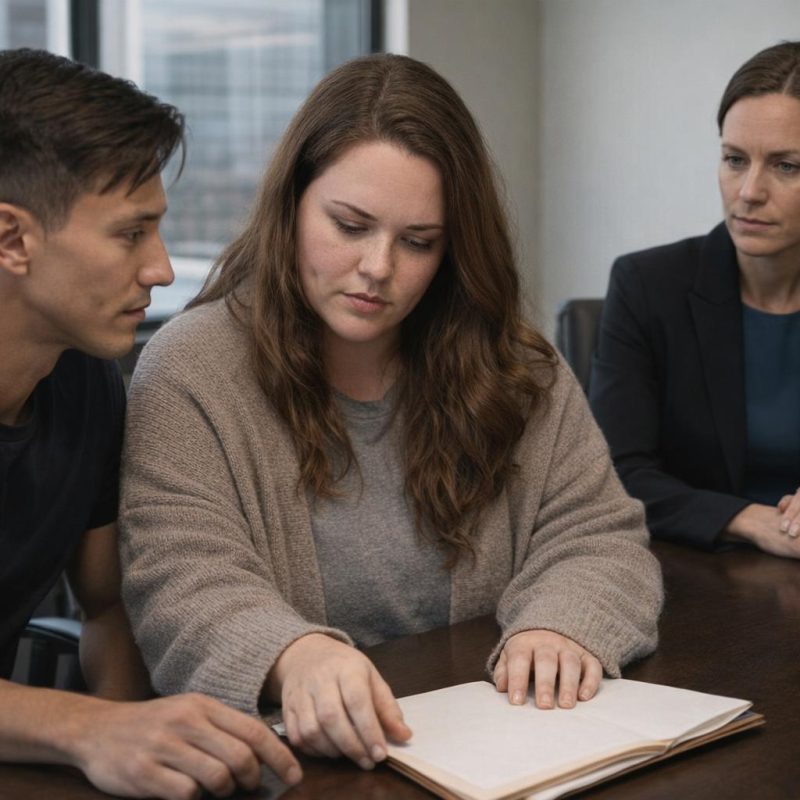 Image by RM AI
The Plan
I told Attorney Mitchell I wanted criminal prosecution. I wanted the full accounting, the charges, the record — all of it. She nodded like she'd expected that answer. Then she asked if I had any thoughts on timing, and I looked at Mark, and something passed between us that didn't need words. I asked her if it was possible to file during Sarah's wedding week. Attorney Mitchell was quiet for a moment, then said that from a purely procedural standpoint, there was nothing preventing it, and that in terms of the family's ability to coordinate a response, the timing would be — she chose the word carefully — disadvantageous for them. She said she would prepare all the documentation and that a police report could be filed the morning of the wedding. The charges would become public record immediately. I thought about the five years of forged signatures. I thought about the voicemail where my mother's voice cracked. I thought about standing in my own doorway while my father threatened me. Mark reached over and squeezed my hand once. I told Attorney Mitchell to go ahead and prepare the filing. I drove home that evening with the window down and the city moving past me, and somewhere in my chest, quiet and settled, was the cold satisfaction of knowing exactly when it would all come due.
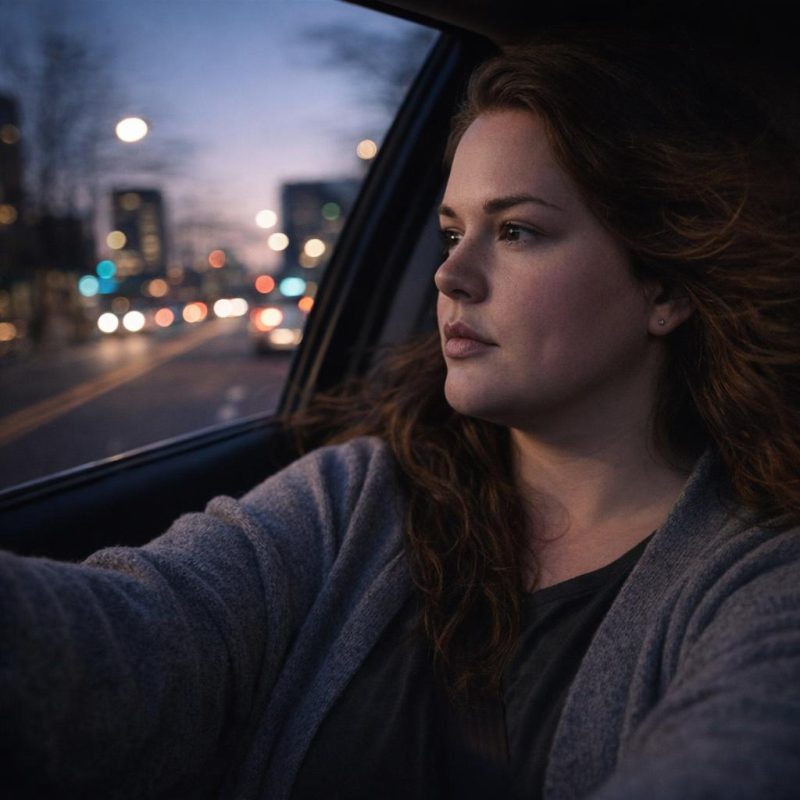 Image by RM AI
The Getaway
We were sitting on the couch with Mark's laptop between us, and I had a glass of wine in my hand that I kept forgetting to drink. He'd pulled up a resort in Kauai — ocean-view room, private lanai, the kind of place that shows up in travel magazines and makes you feel guilty for wanting it. I didn't feel guilty at all. We went through the excursions together: a sunset cruise, a snorkeling trip, a spa day with couples massages. Mark kept pointing at things and raising his eyebrows like, yes? And I kept nodding. Yes. All of it. We were going to spend every dollar on ourselves, on something real, on a week that actually belonged to us. The dates lined up perfectly with the wedding weekend, which wasn't an accident. Attorney Mitchell had the filing scheduled for that Saturday morning. We'd be somewhere over the Pacific when it happened. Mark suggested we turn our phones off entirely once we landed, and I loved him for saying it out loud. I picked up my wine, finally, and took a long sip while he scrolled to the checkout screen. He looked at me once. I nodded. He clicked confirm booking.
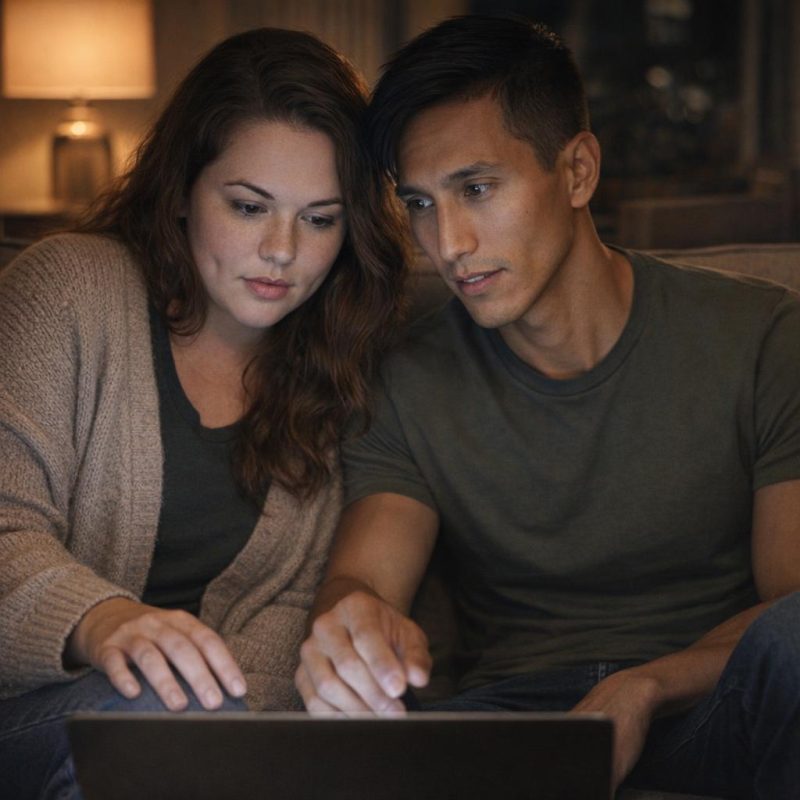 Image by RM AI
The Final Demand
We were in the kitchen making dinner when Mark's phone buzzed on the counter. He glanced at it, went still for a second, then picked it up and read whatever was on the screen without saying anything. I watched his face. He set the phone down and slid it across the counter toward me without a word. It was a text from my younger sister Sarah — or rather, it was a wall of text, the kind that takes up the whole screen and keeps going when you scroll. She was asking Mark to reconsider. The venue needed the final deposit in three days or they'd release the date. She said the family would be humiliated. She said — and this part I had to read twice — that I would want him to help, that deep down I understood how important this day was. She used the word please four times. I read the whole thing standing at the counter with a wooden spoon still in my hand. Mark asked if I wanted him to respond. I set the spoon down, slid the phone back to him, and said no. Don't respond. Don't acknowledge it. Just let it sit there. The desperation bled through every single line of that message, and I felt absolutely nothing.
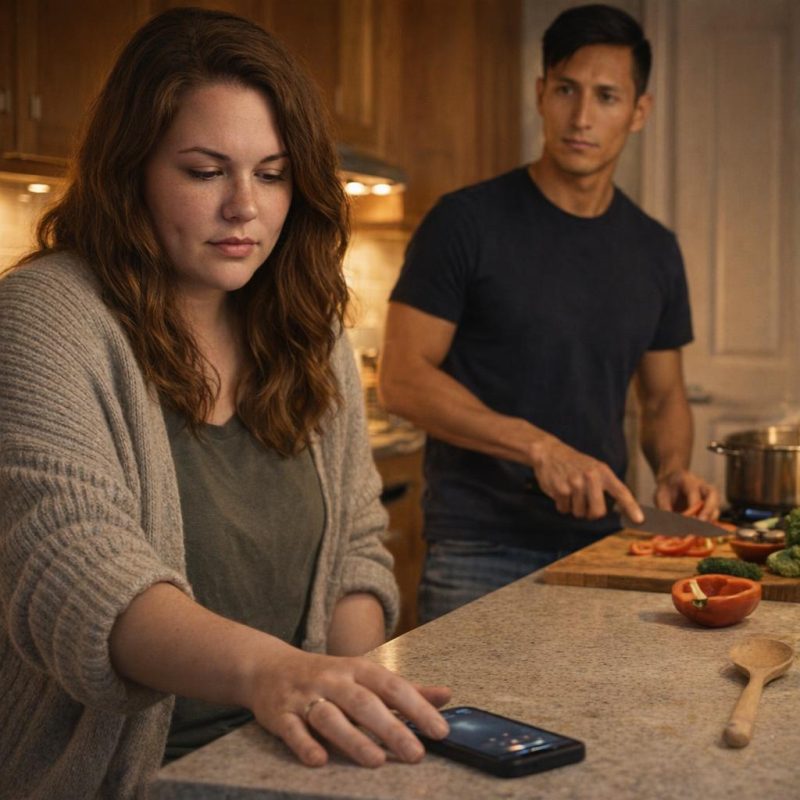 Image by RM AI
The Countdown
Three days out, I pulled my suitcase from the closet and started packing like it was the most ordinary thing in the world. Sundresses. Swimsuits. The good sandals I'd been saving for somewhere worth wearing them. Mark had his bag open on the other side of the bed, folding things with that quiet efficiency he has, and we moved around each other without needing to talk much. My phone was on the nightstand and it buzzed constantly — Sarah's name, then my mother Barbara's name, then a number I recognized as my father Richard's. I didn't open any of them. I didn't listen to the voicemails. I just let the screen light up and go dark again while I decided between the blue wrap dress and the yellow one and chose both. Attorney Mitchell had texted earlier to confirm everything was in order — the filing was scheduled, the documentation was complete, the timing was set. I put my phone face-down after that and went back to packing. There was no dread in my chest, no guilt crawling up the back of my throat the way it used to. Just the soft weight of folded fabric in my hands and the quiet, settled certainty of knowing exactly what the next morning would bring.
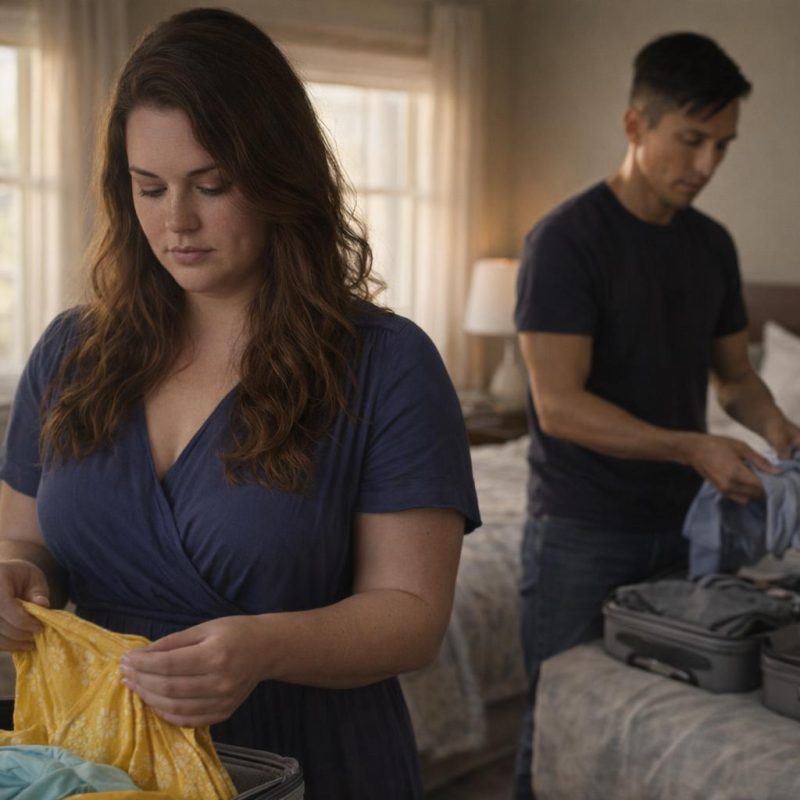 Image by RM AI
The Venue Crisis
Two days before the wedding, my best friend Rachel sent me a screenshot with a single laughing emoji above it and nothing else. I opened it and had to read it twice to believe it was real. My younger sister Sarah had posted publicly — not in a private group, not in a story, but on her main feed — asking friends for emergency financial help. The post said unexpected venue costs had come up and she needed loans to save the wedding. She used the word devastated. She used the phrase dream day. The comments were a mix of confused concern and gentle questions about why family wasn't stepping in, and Sarah had replied to one of them saying the family was dealing with its own crisis. I showed Mark and he let out a slow breath through his nose. Rachel followed up with a second message saying Sarah was also texting people individually, working through her contacts list. The post had a frantic quality to it, the kind of thing you can't unread once you've seen it — the careful, polished image my sister had spent years constructing, starting to come apart at the seams in full public view. I set the phone down on the kitchen table and sat with the quiet, grim weight of watching it all unravel.
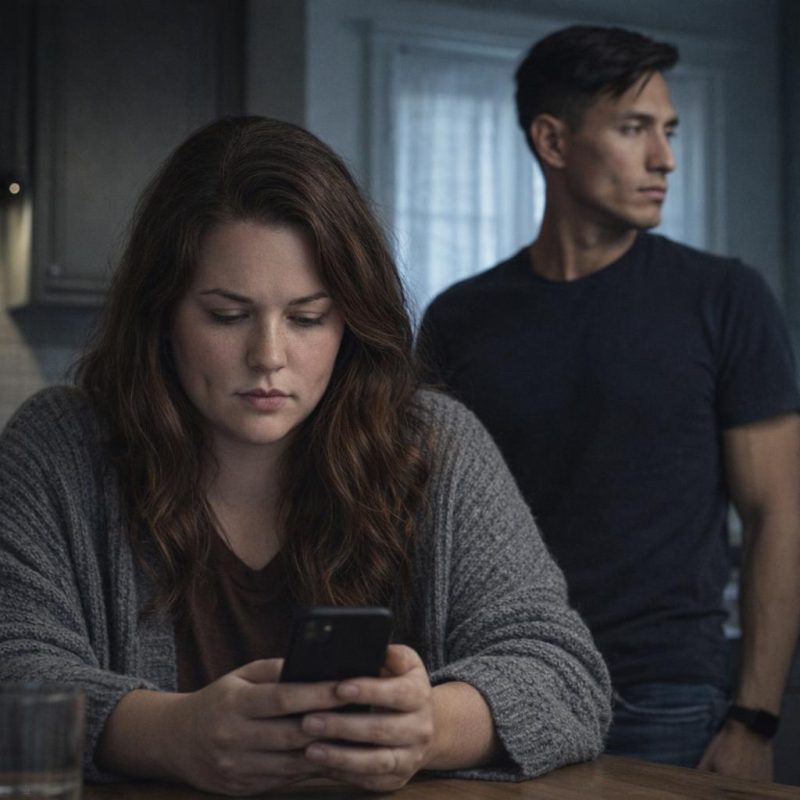 Image by RM AI
The Morning Of
We were up before the sun. I made coffee while Mark loaded the bags into the car, and neither of us said much. The drive to the airport was dark and quiet, the city still mostly asleep, and I sat in the passenger seat with my hands in my lap feeling something I didn't have a word for yet — not quite calm, not quite excitement, something in between. We checked in, got through security, found our gate. Attorney Mitchell's text came through while I was standing at the coffee kiosk: filing confirmed, police report submitted, all three names on the record. I read it once, put my phone in my pocket, and ordered a second coffee. Mark was already at the gate when I got back. We boarded without ceremony, found our seats, and I tucked my bag under the seat in front of me like any other traveler going anywhere. The plane pushed back from the gate right on schedule. I watched the terminal slide past the window, then the tarmac, then the city spreading out below us as we climbed. I switched my phone to airplane mode and slid it into the seat pocket. The ground disappeared beneath the clouds, and somewhere down there the morning was just beginning for everyone else.
 Image by RM AI
The Collapse
We landed in Kauai in the early afternoon and I turned my phone on while we waited for our bags. The notifications came in like a wave breaking — mostly Rachel, message after message, each one timestamped minutes apart. I opened them in order. The caterer had walked out when the payment didn't clear. The florist had pulled the arrangements. The DJ had packed up his equipment and left before the ceremony even started. The photographer had never shown at all. Rachel had somehow gotten photos — guests arriving to a half-decorated room, people standing around in formal wear looking confused, someone holding up their phone showing what looked like a news alert. Word had spread through the venue fast. Mark read over my shoulder without saying anything. More photos came through as I scrolled: Barbara and Richard moving through the crowd with tight, fixed expressions, James standing near the entrance with his arms crossed and his jaw set. Rachel's final message in the thread was just an image. I expanded it with my fingers and there was my younger sister Sarah, alone at the head table in her wedding dress, mascara streaked down both cheeks, crying into her hands while the empty chairs stood around her and the gutted room stretched out behind her.
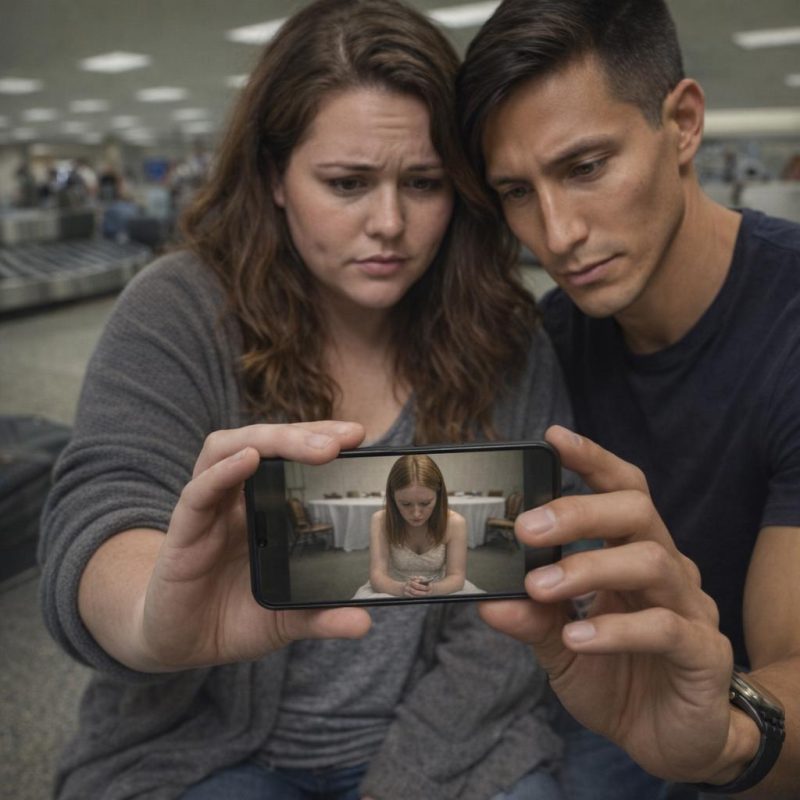 Image by RM AI
The Beach Photo
The resort room had a lanai that faced the water, and by late afternoon the light was doing that thing it does in Kauai where everything turns gold and you feel like you're inside a painting. I changed into my swimsuit and we walked down to the beach. Mark had his phone out and I let him take a few shots — me standing at the waterline, the sun low behind me, looking like someone who had just exhaled for the first time in years. Then we took one together, his arm around me, both of us squinting into the light and grinning. I sat down in the sand and wrote the caption carefully. Something about not being invited to the wedding. Something about deciding to spend the budget on ourselves instead. A line wishing everyone luck with the venue bill. I tagged the location. I read it over once, posted it, and handed the phone to Mark. He turned it off and put it in his pocket. Then I stood up and we walked into the water together, the waves coming in cold and clean around our ankles, and behind us on the sand sat the phone, dark and silent, a single photo already out in the world doing exactly what it was meant to do.
 Image by RM AI
The Aftermath Reports
Three days in, I was lying in a beach chair with a book I'd barely read and a drink I'd barely touched, and I decided to turn my phone back on. I told myself it would be quick — just a check, just to make sure nothing urgent had come through. The screen lit up with a stack of notifications so tall I had to scroll just to see the bottom of it. I went straight to Rachel's messages. She'd been sending updates in real time for three days: the fallout from the charges, the social media spiral, the family going into full damage-control mode. I read through them slowly, sitting up in the chair. Sarah was staying with my parents Barbara and Richard. The post had been deleted but screenshots were everywhere. And then, near the bottom of the thread, a message Rachel had sent that morning, just six words: James found out everything and he's done.
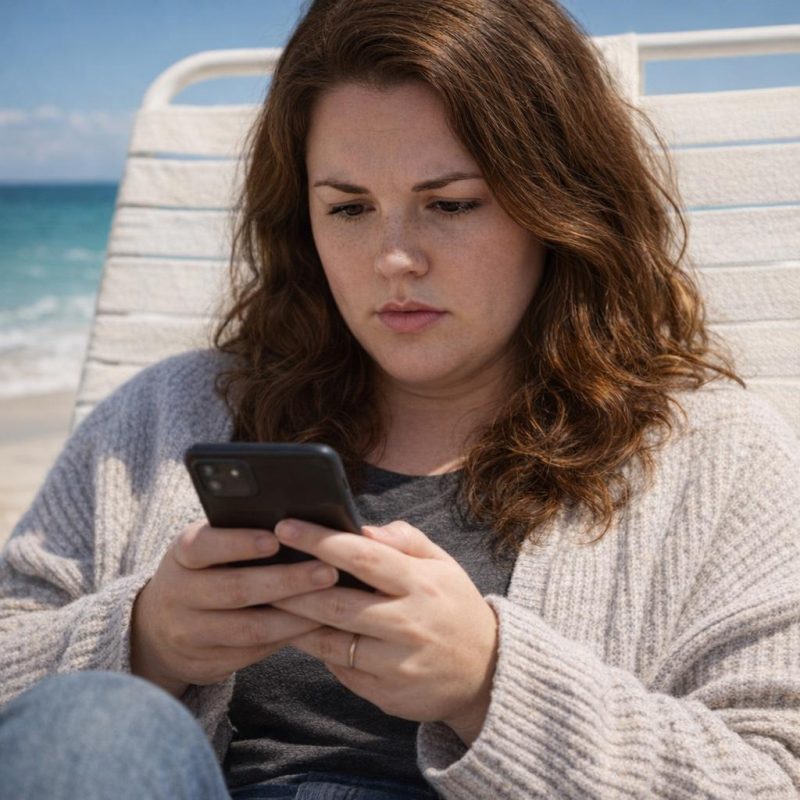 Image by RM AI
The Ripple Effect
I read Rachel's update twice, sitting up in the beach chair with the sun already high and Mark asleep beside me. She'd sent it in one long message, the kind she only writes when she needs to get everything out at once. Sarah's friends had started comparing notes — apparently the fake emergencies had been running across the whole group for years. A sick grandmother here, a car breakdown there, a medical bill that never quite got paid back. Once one person said it out loud, the rest followed. Someone made a group chat. Someone else started posting screenshots. Rachel said it spread faster than anything she'd ever seen. Sarah lost her job when the fraud charges went public — her employer found out the same way everyone else did, through social media. James's family was threatening a separate civil suit on top of everything else. My parents Barbara and Richard were facing a criminal trial, and there was talk of the family home being seized for restitution. Sarah had moved back in with them. The friends she'd spent years performing for, the carefully curated social circle, the image she'd built post by post — all of it was gone. Rachel ended the message with four words: she lost everything, Lily. I set the phone down on the armrest and stared out at the water, and for the first time in longer than I could remember, I felt the knot in my chest finally let go.
 Image by RM AI
The Healing Week
I turned the phone off again after that and didn't touch it for the rest of the trip. Mark didn't ask me to explain. He just handed me a fresh drink and pulled my chair closer to his, and that was enough. We spent the days the way I'd always imagined a real vacation could feel — slow mornings, long walks along the water, a sunset cruise where we stood at the railing and watched the sky go orange and pink over the ocean. We got a couples massage at the resort spa and I actually fell asleep on the table, which made Mark laugh so hard the therapist had to ask him to keep it down. We talked about our wedding — not the performance version, not the one designed to impress anyone, just ours. Small. Meaningful. Something that actually felt like us. We talked about the apartment, about maybe moving somewhere with a yard, about a dog we'd been half-joking about for two years. I laughed more that week than I had in years. I slept through every night without waking up anxious at three in the morning. I ate whatever I wanted without the low-grade guilt that had followed me through every family dinner I could remember. Lying on the beach one night, watching the stars come out over the water with Mark's hand warm in mine, I felt something I hadn't felt in so long I'd almost forgotten what it was — just light, just easy, just free.
 Image by RM AI
Coming Home
We landed on a Tuesday and I had a locksmith at the apartment by Wednesday morning. Mark stayed while the guy worked through every lock on every door, and I stood in the kitchen with a coffee I wasn't really drinking, going through the checklist Attorney Mitchell had sent over. She'd been thorough — she always was. The restraining order paperwork covered all three of them: Sarah, Barbara, and Richard. Attorney Mitchell had walked me through the process before we left Hawaii, and by the time we touched down it was mostly a matter of signatures and filing. I updated building security with their photos and asked the front desk to flag any attempt at contact. I changed my email address. I got a new phone number and gave it to exactly seven people. I blocked every account, every platform, every back channel I could think of. Mark helped with each step, not hovering, just present — handing me things, making more coffee, sitting close enough that I knew he was there. I kept waiting to feel guilty. I kept waiting for the old pull, the one that had spent thirty years telling me that family was family no matter what they did. It didn't come. Each lock that turned, each form that got signed, each number that got blocked felt less like loss and more like a door I was finally allowed to close. By evening the apartment felt different — quieter, steadier, entirely mine.
 Image by RM AI
The Real Wedding
A few weeks later, Mark and I sat at his kitchen table with a notepad, a bottle of wine, and Rachel on the couch with her feet tucked under her, already vetoing venues she didn't like the sound of. The guest list came together in about twenty minutes. That's how we knew we were doing it right. Close friends, people who had actually shown up — not a single name on the list that made my stomach tighten. Rachel was maid of honor before I even finished the sentence, and she immediately pulled out her phone and started sending me photos of a garden venue she'd apparently been saving for months, just in case. It was beautiful — string lights, old trees, a ceremony space that felt like somewhere real people actually got married rather than somewhere designed to impress a photographer. I tried on dresses with Rachel the following Saturday and I laughed the whole time, the easy kind of laughing that doesn't have anything to prove. There was no anxiety in it, no performance, no mental calculation of who would judge what. Mark made a toast that night back at the table, something short and honest about the future, and we clinked glasses and I looked around at the two of them — the people who had chosen me as clearly as I had chosen them — and understood, in a way I felt all the way through, that this was what family had always been supposed to feel like.
 Image by RM AI
KEEP ON READING
The Day the Sun Didn’t Rise: The Unexplained New England…
Alina Nichepurenko on UnsplashImagine waking up on a spring morning,…
By Sara Springsteen Jun 18, 2026
20 Facts About Animal Symbolism In Paintings
The Sacred Clues Across History. Animal symbolism is a detail…
By Elizabeth Graham Jun 18, 2026
How a Single Telegram Pushed America Into World War I
Sammie Sander on PexelsThe year is 1917, and the United…
By Cameron Dick Jun 18, 2026
The Marriage Bed As A Political Object
Fæ on WikimediaA bed is naturally a private space—it's where…
By Elizabeth Graham Jun 18, 2026
20 Most Inappropriate Relationships From History
Private Attachments With Public Consequences. It’s easy to think of…
By Annie Byrd Jun 18, 2026
How Early Navigation Techniques Guided Explorers Across Oceans
Maël BALLAND on PexelsLong before satellites, digital maps, and advanced…
By Rob Shapiro Jun 18, 2026