

The Anniversary Dinner
We've been coming to Marcello's since our first anniversary, and tonight feels exactly the way it always does — the low lighting, the smell of garlic and rosemary, the same corner booth Mark reserved weeks in advance. He orders the Barolo without looking at the menu, which makes me smile because he's done it every single time. Ten years. I keep turning that number over quietly while he talks about a commercial deal he's been closing, his hands moving the way they do when he's excited about something. I tell him about the Henderson account, and he actually listens, nodding in the right places, asking a follow-up question that shows he caught the detail. The waiter brings bread and we tear into it without thinking, the way you do with someone whose habits have become your own. Mark raises his glass and says something about a decade being just the beginning, and I clink mine against his and mean it. The candle between us throws warm light across the table. Outside, the city moves at its usual pace, indifferent and busy, but in here everything feels contained and familiar, like a room we've always known how to be in together. I settle back into the booth and let the evening hold me.
 Image by RM AI
The Envelope
Dessert arrives — the tiramisu we always split — and something shifts in Mark's posture. It's subtle, the way he straightens slightly and sets down his fork with a kind of deliberateness that doesn't match the mood. I notice it the way you notice a draft in a warm room, not alarming, just present. He says my name once, quietly, and then he says he needs to talk to me about something important. I wait. The restaurant noise carries on around us — someone laughing two tables over, a cork being pulled at the bar — and I'm still half-expecting him to produce a gift, maybe tickets somewhere, something to mark the occasion. He reaches into the inside pocket of his jacket, and I watch his hand come back out holding a manila envelope, thick and slightly creased at the corner. He sets it on the table between us, and I can see the embossed name of a law firm in the upper left corner. He says the word divorce in the same tone he might use to describe a contract amendment, measured and flat, and the tiramisu sits untouched between us while the candle keeps burning like nothing has changed. Then he slides the envelope across the table toward me.
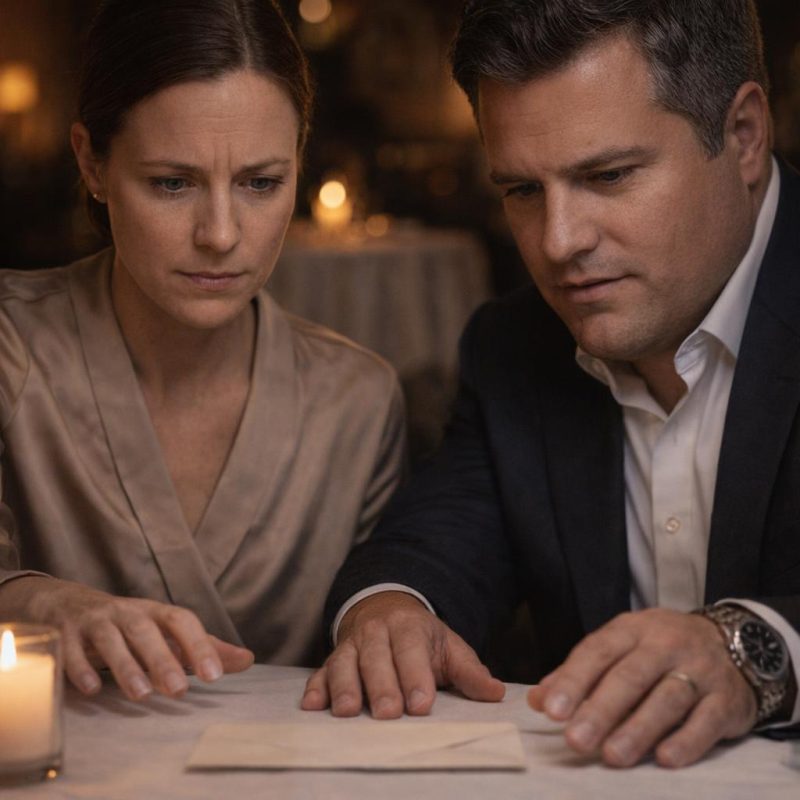 Image by RM AI
His Reasons
I don't pick it up right away. I just look at it sitting there on the white tablecloth, and then I look at Mark, and he's watching me with an expression I can't quite name — patient, maybe, or braced. He starts talking. He says we've been growing apart for the better part of a year, that he's been doing a lot of thinking, that he wants different things now than he did when we were thirty. I hear the words but they arrive strangely, like they're traveling a long distance before they reach me. I ask him when, and the question comes out smaller than I intend it to. He says it's been building gradually, that he doesn't think either of us is to blame. I ask if there's someone else and he says no, directly, without flinching. He talks about handling everything amicably, about keeping lawyers out of it as much as possible, about a clean and respectful process. He uses the word respectful twice. The restaurant keeps moving around us — plates cleared, wine poured at other tables — and Mark keeps talking in that same even register, like he's already on the other side of this conversation and I'm still finding the door. I sit with my hands in my lap and listen to the careful distance in his voice.
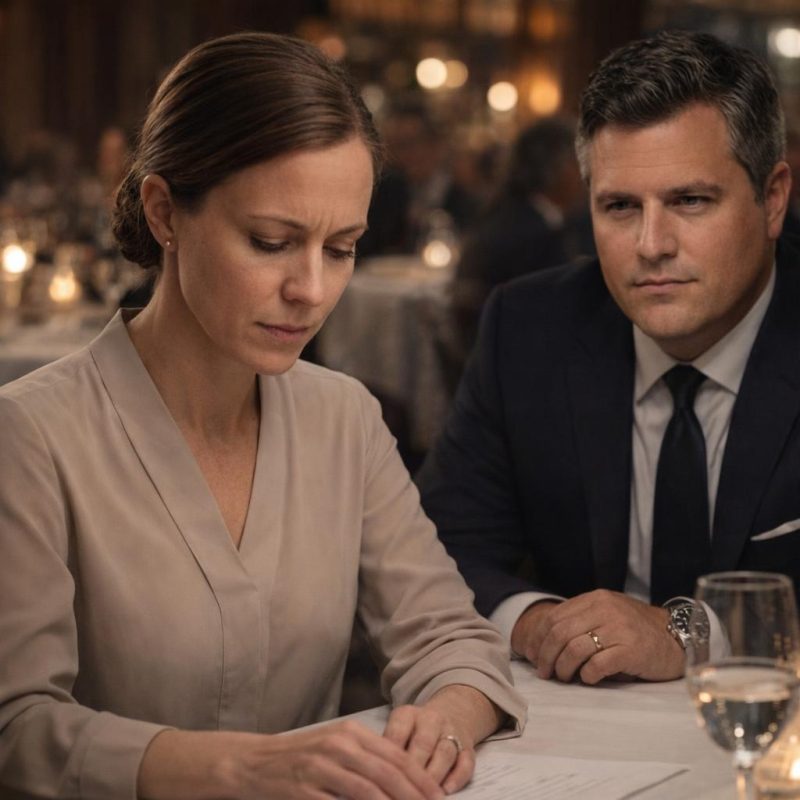 Image by RM AI
The First Night
Mark takes a hotel room. He offers to call a car for me, and I tell him I'm fine, and neither of us argues about it. The drive home feels longer than it should, the city lights blurring a little at the edges. I let myself into the house and stand in the front hallway for a moment without turning on more than the entry light. Eventually I carry the envelope to the dining table and spread the pages out, one by one, the way you might lay out a puzzle you're not sure you want to solve. The document is thorough. Forty-one pages, tabbed and organized, with a cover sheet listing the law firm's address and a case number that already exists somewhere in a system. I read through the sections on asset division, the commercial properties listed by address, the proposed settlement figures. Mark's handwriting isn't anywhere on it yet — just the blank signature lines waiting at the back. I read the same paragraph about the property management arrangements three times without fully absorbing it. At some point I realize I've been sitting here for over two hours. I get up and pour a glass of water I don't drink and come back to the table. The pages are still there, spread out under the dining room light, and the silence of the house presses in around me.
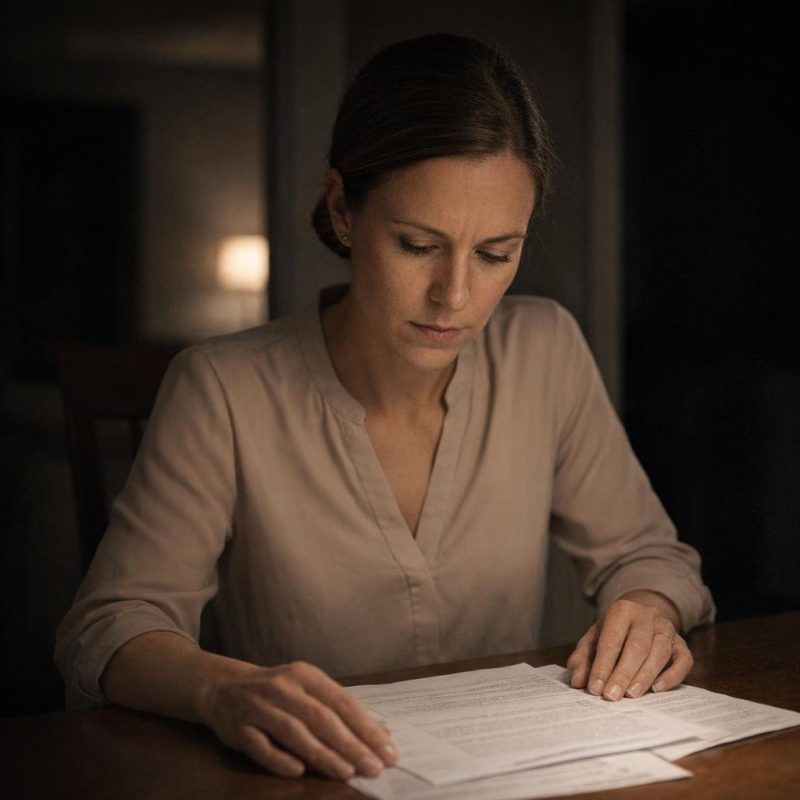 Image by RM AI
The Asset Discussion
Mark comes by two days later, mid-morning, dressed like he's heading to the office afterward. He doesn't sit down right away. He stands near the kitchen island and walks me through the settlement terms the way he might walk a client through a deal structure — organized, efficient, no wasted words. He's separated everything into categories: the residential property, the investment accounts, the commercial holdings. When he gets to the commercial properties, he talks about them differently than the rest, with a kind of ease that catches my attention without quite landing anywhere. He says he'll continue managing the estate holdings after the divorce, that the arrangement makes practical sense given his existing relationships with the tenants and contractors. He says it like it's already decided, like the management role is simply a fact of the landscape rather than something that requires my agreement. I ask a few questions and he answers them smoothly. He mentions wanting everything finalized before our eleventh anniversary, says a clean break before that date makes more sense logistically. I nod along, still trying to find the shape of what I'm agreeing to. He gathers his copy of the documents, says he'll have his attorney follow up with mine, and mentions his plans to continue managing the commercial properties after the divorce.
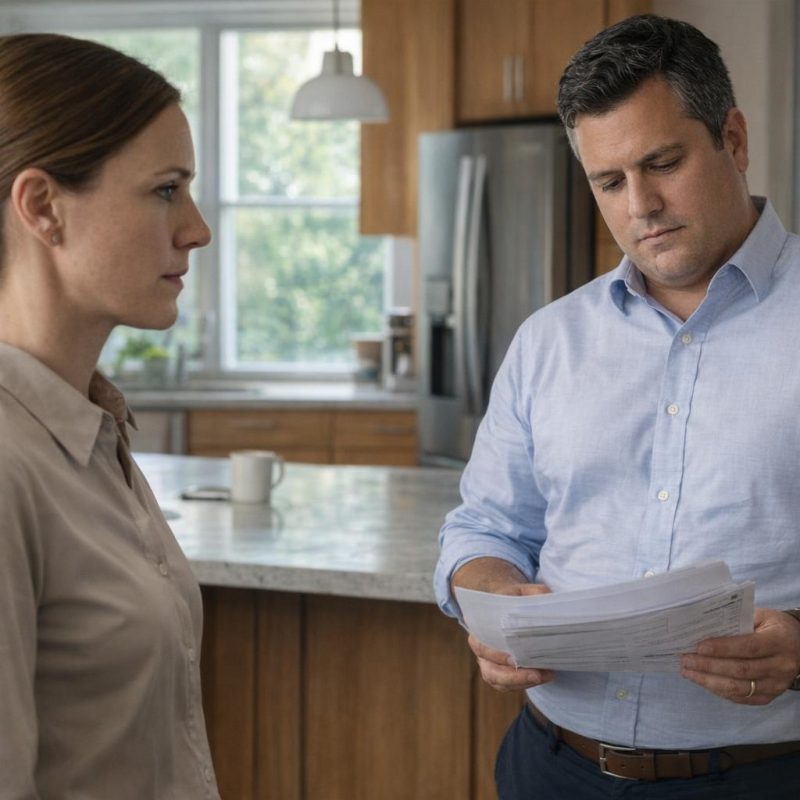 Image by RM AI
The Estate Office
I spend the following week in the estate office, a room I've walked past a thousand times without really entering. My family used it for everything — property records, trust correspondence, tax filings going back decades. The filing cabinets are labeled in my aunt's handwriting and my mother's, two different systems layered on top of each other over the years. I pull the folders on the commercial properties first, spreading them across the wide oak desk. The management agreements are more layered than I expected — multiple entities, staggered lease terms, a structure that took years to build. I find Mark's employment contract tucked behind the property deeds, a document I signed off on years ago without reading closely. The equity arrangements are outlined in an addendum I don't remember seeing before. I sit with it for a long time, reading the same clauses twice, trying to understand what I actually own versus what I've simply assumed I own. The afternoon light moves across the desk as the hours pass. By the time I push back from the chair, my eyes are tired and the desk is covered in paper. I haven't found anything alarming, exactly, but I haven't found the clarity I came looking for either. The weight of responsibility settles over me as I look at what's left to go through.
 Image by RM AI
Martha's Archive
I come back to the estate office the next morning with coffee and a legal pad, determined to work through the remaining files systematically. The bottom two drawers of the far cabinet are ones I haven't touched yet. Most of what's inside is older correspondence and property tax records, nothing that seems immediately relevant. I'm about to move on when I notice a section of folders near the back, separated from the rest by a cardboard divider. The labels are in Aunt Martha's handwriting — her particular style, the letters slightly forward-leaning, the ink always a deep navy blue. She organized things differently than anyone else in the family, with a precision that sometimes felt excessive until you needed something and found it exactly where it should be. Behind those folders, pushed to the very back of the shelf above the cabinet, sits a metal file box I don't recognize. It's not large, maybe the size of a shoebox, painted dark green with a small combination lock on the front. Aunt Martha's name is written on a strip of masking tape along the side, in the same navy ink, in the same careful hand. I reach up and pull it forward, and it's heavier than I expected. I set it on the desk and stand there looking at it, and then I go back to the drawer to look for a key.
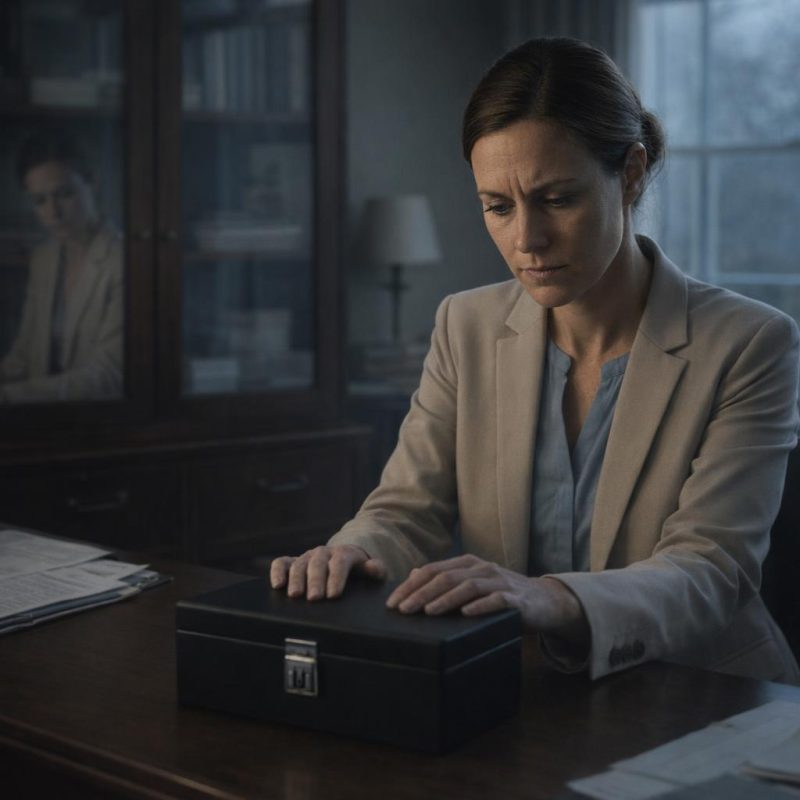 Image by RM AI
The Fidelity Clause
The key is in the back of Aunt Martha's center desk drawer, taped to the inside of a small envelope with the word 'box' written on the front. It fits. Inside, the documents are organized the way everything she touched was organized — chronologically, labeled, with a brief index card at the front of each section describing the contents. I lift out the first section and read the index card: Trust Amendment — Marital Provisions and Estate Protections. The amendment is dated five years ago, notarized, with Aunt Martha's signature on the final page alongside the estate attorney's. I read through it slowly. The language is precise and dense, the kind of drafting that doesn't leave room for interpretation. Several clauses address the conditions under which management rights and equity interests in the family holdings revert exclusively to the named family beneficiary. I turn to the next page and find the specific provision. It states that in the event of a divorce initiated by either party prior to the completion of the eleventh year of marriage, all management authority and associated equity positions held by the non-family spouse revert immediately and without compensation to the family trust. I read it again. At the bottom of the clause, in a bracketed note in Aunt Martha's own handwriting, is the date of our wedding anniversary — and beside it, the words: eleventh year threshold.
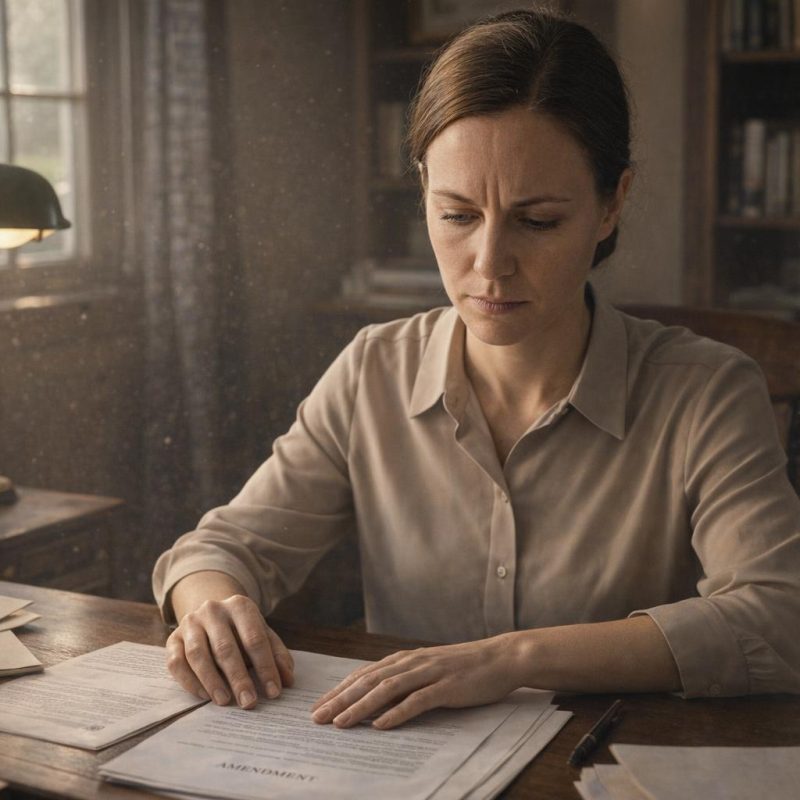 Image by RM AI
The Timeline
I set the document down and pick up my phone. The calendar app opens to the current month, and I scroll forward slowly, counting. Our wedding anniversary falls on the fourteenth — eleven years. I count the weeks from today. Six. Maybe a little less. Then I pull up the email Mark sent last week with the proposed signing date for the divorce papers. I read it again. The date he suggested is three weeks before the anniversary. Three weeks before the eleventh year threshold Aunt Martha wrote in her own hand at the bottom of that clause. I go back to the amendment and reread the specific language: initiated by either party prior to the completion of the eleventh year. I'm not a lawyer, but the words don't feel ambiguous. I set the phone down beside the documents and just sit there for a moment, the two dates sitting side by side in my head. When I pick the phone back up, the gap between the proposed signing date and our anniversary stares back at me — twenty-two days.
 Image by RM AI
The Question
I stay at the desk for a long time after that, the trust amendment open in front of me and my phone face-down beside it. I try to think through what Mark would have had access to over the years. He managed the operational side of the properties — leases, contractors, tenant relationships. The legal architecture of the trust was always handled separately, through Diana's office. I try to remember whether he ever sat in on estate meetings. Once, maybe twice, early in the marriage, but those were general overviews. Nothing that would have gone into the amendment language. I think about Aunt Martha. She was careful with information. She shared what she thought people needed and nothing more. Whether she ever discussed the specific provisions with Mark — I genuinely don't know. I turn that question over slowly. His proposed timeline could mean he found something I haven't. Or it could mean nothing at all. I can't tell from where I'm sitting, and I'm not sure I should assume either way. The not-knowing settles over the room like a second layer of quiet.
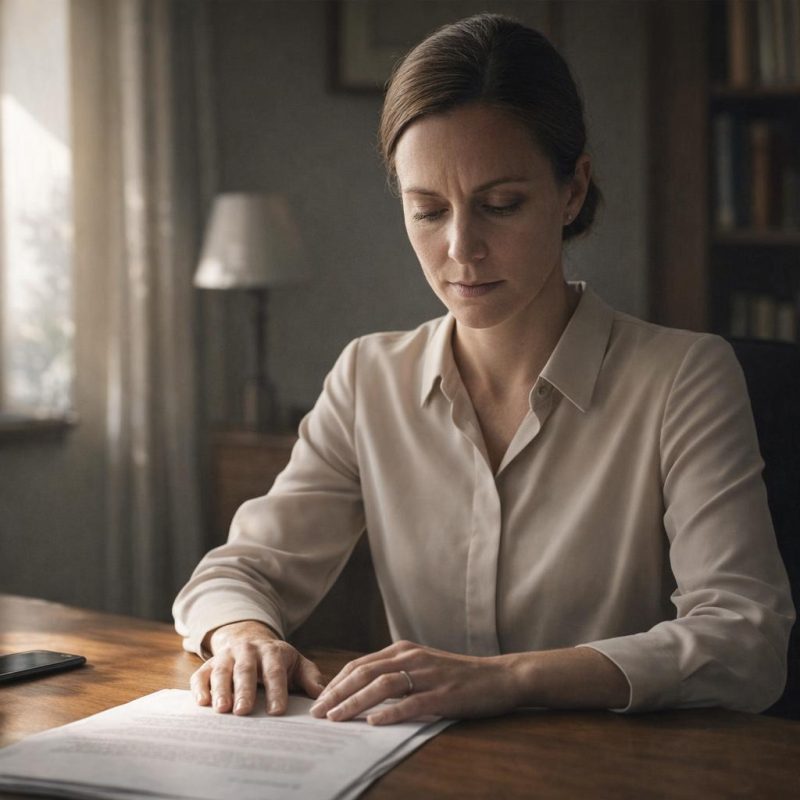 Image by RM AI
The Push
My phone rings mid-morning, and Mark's name comes up on the screen. I answer on the third ring, keeping my voice even. He gets to the point quickly — he wants to know where I am on scheduling the attorney meeting. I tell him I'm still reviewing things. He says he'd like to move forward within the week, that he thinks a clean break is better for both of us, that dragging it out only makes things harder. I ask him why the timing matters so much right now. There's a brief pause. He says it doesn't matter specifically, he just doesn't see the point in waiting. He mentions a fresh start, a phrase he uses twice in the space of a minute. I don't push back. I say I'll be in touch once I've had a chance to look at my schedule. He says okay, but the word comes out clipped, like he's holding something back behind it. After we hang up, I sit with the phone in my hand for a moment. The conversation itself was ordinary enough. But the pressure underneath it — the way he kept circling back to speed without quite explaining why — stayed with me longer than the words did.
 Image by RM AI
Diana's Office
I wait until the afternoon to make the call. Diana has handled Reed family legal matters for as long as I can remember — she was at the estate closing when Aunt Martha first transferred the properties into the trust, and she drafted most of the amendments that followed. If anyone can tell me what I'm actually looking at, it's her. I dial her direct line from memory. She picks up on the second ring, and I keep my voice steady when I tell her I need to meet privately, that it's about the estate documents and that I'd prefer to keep the appointment between us for now. She doesn't ask me to explain further. She says she can see me first thing tomorrow morning, before her other appointments. I thank her and tell her I'll bring the relevant files. After I hang up, I gather the trust amendment, the index cards, and the section of documents Aunt Martha organized under the marital provisions tab. I stack them carefully and set them beside my bag. Then I pick up my phone and dial Diana's office number again to confirm the time.
 Image by RM AI
The Confirmation
Diana's office is on the fourteenth floor of a building downtown, quiet and precisely ordered in the way that serious legal offices tend to be. She meets me at the door herself and closes it behind us without involving anyone else. I lay the trust amendment on the table between us and let her read. She takes her time. She turns pages without comment, occasionally going back to reread a section. When she finishes, she sets the document down and folds her hands on top of it. She tells me the amendment is properly executed — notarized, filed with the estate, witnessed correctly. She says the language around the marital provisions is unambiguous: divorce initiation by either party before the completion of the eleventh year of marriage triggers immediate forfeiture of all management authority and associated equity held by the non-family spouse. No compensation. No grace period. She explains that the filing date, not the finalization date, is what the clause treats as initiation. I ask her if there's any room for interpretation. She looks at me steadily and says no. The word lands flat and clean in the quiet of the room, and I sit with the weight of it long after she stops speaking.
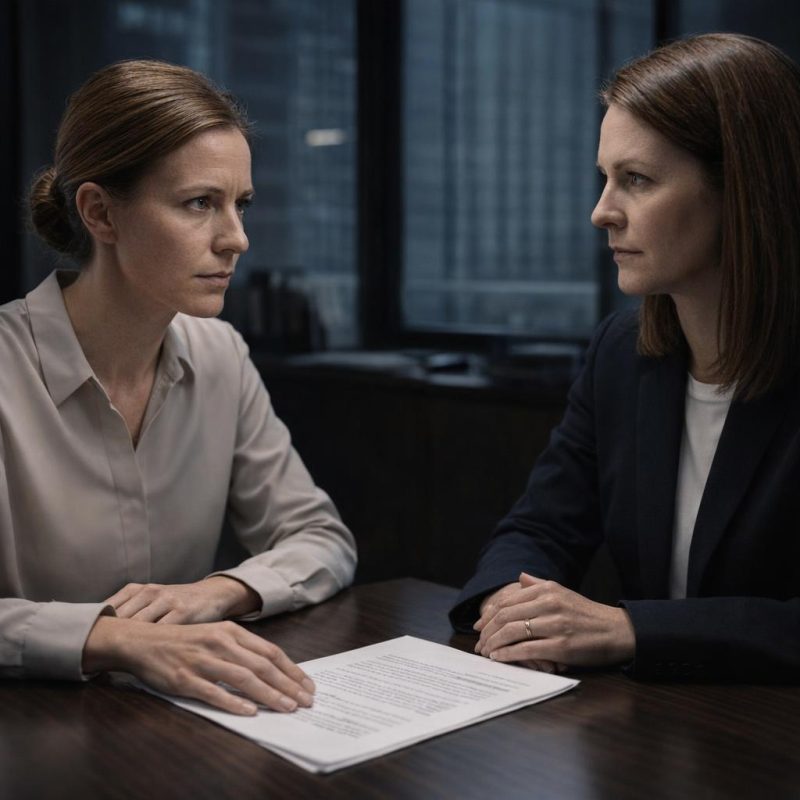 Image by RM AI
His Confidence
Mark comes by two days later to collect some things from the study. I'm in the kitchen when he arrives, and I stay there, listening to him move through the house with the easy familiarity of someone who still considers it partly his. He finds me eventually, sets a box on the counter, and starts talking. He mentions a property in the north corridor he's been watching — says he's thinking about moving on it early next year, once everything is settled. He talks about expanding the portfolio, about a contact of James's who's been circling a commercial listing. His voice has a looseness to it, a forward momentum, like he's already standing in the next chapter of his life and just stopping by to collect the last few things from this one. I listen and say very little. He mentions his equity position at one point, offhand, the way you mention something you're not worried about. He doesn't linger on it. He picks up the box, says he'll be in touch about the attorney meeting, and heads for the door. I stay at the counter after he leaves, and the ease in his voice when he talked about his future stays in the room with me.
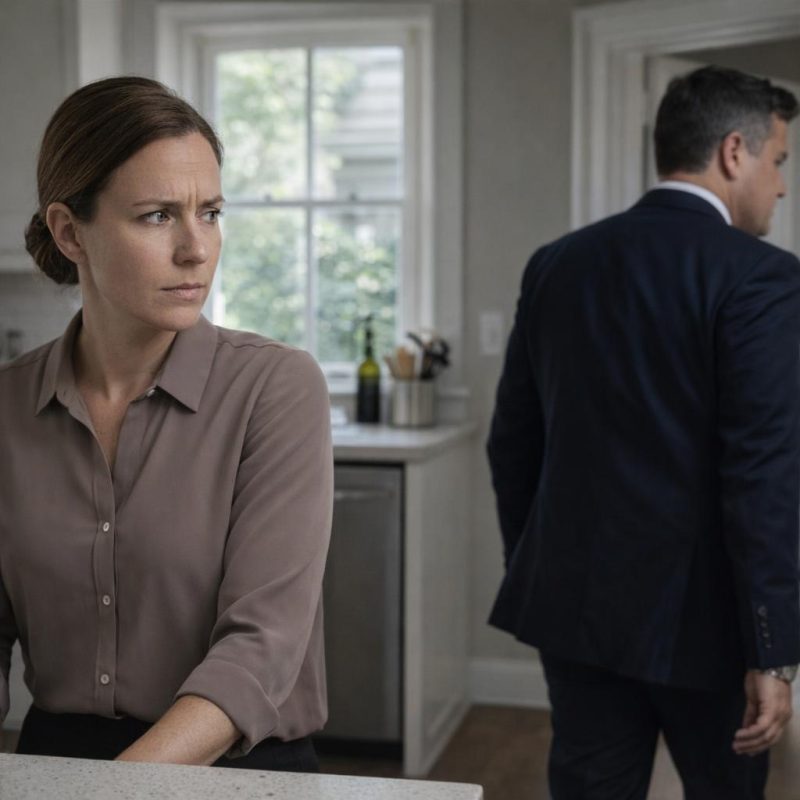 Image by RM AI
The Test
He's still near the door when I ask him, keeping my tone light, whether he ever spent much time going through the trust documents when Aunt Martha was managing things. He turns back, not suspicious, just mildly curious. He says he always left the legal side to the attorneys — his focus was operations, the day-to-day. I nod and say something about how dense the language gets in those amendments. He agrees, says he never had much patience for that kind of reading. I ask whether Aunt Martha ever walked him through any of the specific provisions — the ones that touched on the management structure. He thinks about it for a second, then shakes his head. He says she kept that side of things pretty close. He mentions that she was always cordial with him but that she ran the estate the way she ran everything else — on a need-to-know basis. I smile at that, because it's probably the most accurate thing he's said about her. He shifts the box under his arm, ready to go. I keep my voice easy and ask him if he ever had a chance to review the trust amendments she filed in the last few years with her.
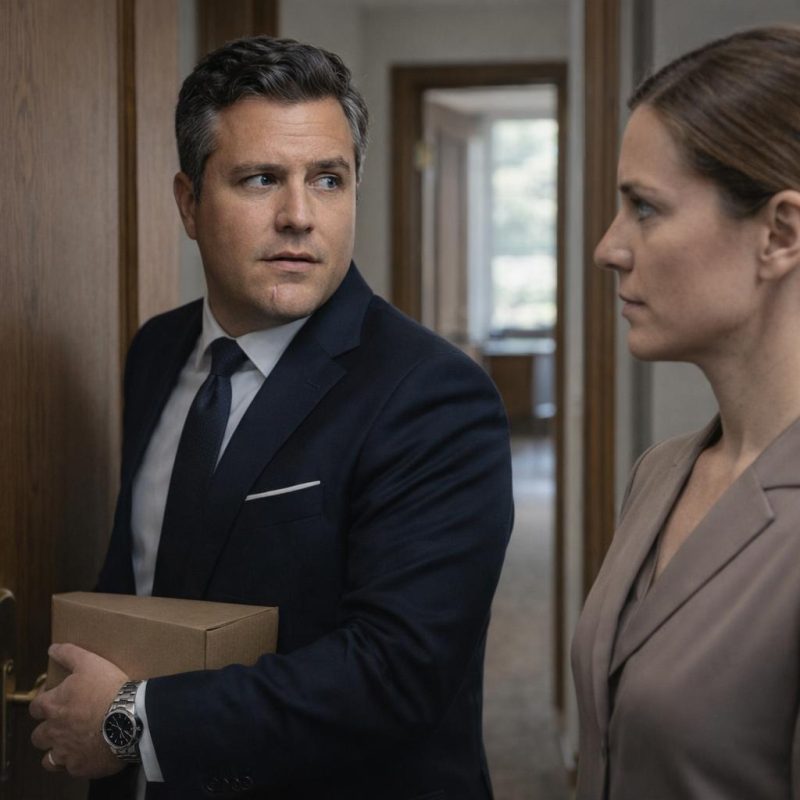 Image by RM AI
The Blindness
He pauses at that, and I watch his face. There's no flicker of recognition, no careful neutrality — just a mild, genuine blankness. He says he didn't even know she'd filed amendments recently. He asks if it matters for the settlement. I tell him probably not, just something I came across going through her files. He accepts that without question and shifts the conversation back to the divorce terms, mentioning his management contract as though it exists in a separate universe from the trust structure entirely. He talks about his continued role in the properties as a given, something already decided, a line item in a future he's already drafted in his head. I ask a follow-up question about the trust's governing provisions, something general, and he answers it with the confidence of someone who has never read the relevant page. He doesn't know about the clause. Not the language, not the threshold, not the forfeiture condition. His face, open and unbothered, shows no sign that any of it has ever crossed his desk.
 Image by RM AI
The Acceptance
We meet at the coffee shop on Meridian, the one he suggested, the one that's closer to his office than mine. He's already there when I arrive, jacket on, coffee in hand, looking like a man who expects good news. I sit down and order something I won't finish, and I let him talk first. He goes through the settlement terms again, the same points he's been circling for weeks, and I listen with my hands folded around my cup. Then I tell him I've reviewed everything. I tell him the timeline works for me. I watch something in his posture ease — shoulders dropping a fraction, jaw unclenching — and he nods like he's confirming something he already suspected. He asks if I have concerns about the signing date. I say no. He says good, that it's cleaner this way, better for both of us to move forward without dragging it out. I agree with him. I keep my voice even and my expression somewhere between tired and resigned, because that's what this moment calls for. He picks up his coffee and says he'll have his attorney send the final paperwork by end of week. I tell him I'll sign on his schedule.
 Image by RM AI
The Strategy
He doesn't leave right away. He orders another coffee and settles back in his chair like a man with nowhere pressing to be, which surprises me a little. Then he starts talking about his investment portfolio — not the marital assets, he's careful to say, his personal holdings. He mentions accounts he's been building separately, references a structure he set up through an advisor two years ago. He talks about bonuses he's taken as equity stakes rather than cash, about positions he holds in two commercial funds that he describes as entirely his own. He uses the word 'protected' more than once, though not in a way that sounds defensive — more like satisfied, like a man reviewing a checklist he's already completed. I ask a few light questions, the kind that sound like mild curiosity, and he answers them easily. He talks about year-end distributions and what he expects to clear once the divorce is finalized. He seems comfortable, almost expansive, like the conversation is a reward he's been saving for himself. I keep my expression neutral and my coffee cup close. What stays with me, long after he finally stands to leave, is not what he said but the ease underneath all of it — the assumptions he hasn't thought to question.
 Image by RM AI
The Scope
That evening I sit at the kitchen table with a legal pad and write it all down. The commercial property equity — his estimate puts it somewhere north of four hundred thousand, based on what he said about the fund positions. The management compensation, which he described as substantial and ongoing. The offshore accounts he mentioned, structured separately, outside the marital pool. I write each item in a column and look at the total shape of it. Then I pull out the trust documents and set them beside the legal pad. The clause Diana flagged is still there, same language, same threshold, same forfeiture condition. I read it again, slowly, the way you read something when you want to be sure you haven't misunderstood it. I haven't. I sit with both documents for a long time, not moving between them, just looking at the gap between what Mark described this afternoon and what the trust actually says. He's built something in his mind — a careful picture of what he walks away with, what's his, what's protected. The scale of what he believes he's secured sits in the room with me, quiet and enormous.
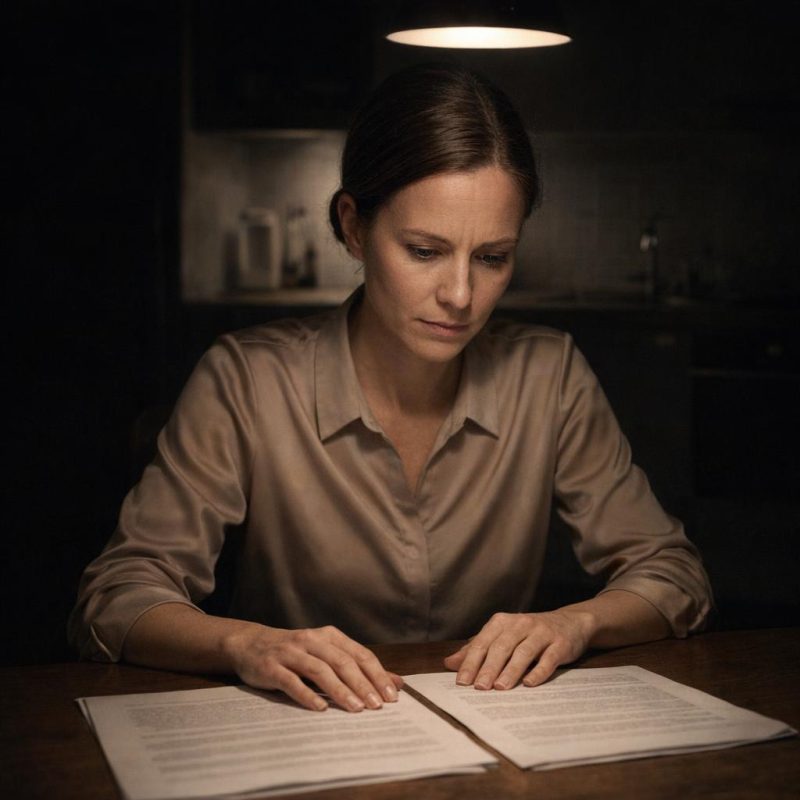 Image by RM AI
The Record
The next morning I buy a plain manila folder and a new notebook, the kind with a hard cover. I date the first page and start from the beginning — the dinner where he first mentioned the timeline, the coffee shop conversation, the things he said about his accounts. I write down dates, locations, the specific words I remember. I note the signing schedule he proposed and the exact phrasing he used when he said he'd have his attorney send the paperwork by end of week. I make copies of the estate documents Diana gave me and add them to the folder in order. I add the legal pad from last night, the one with the asset columns. I go back through my phone and note the dates of his texts about the settlement, the times he called to check on my decision. I'm not sure yet what shape this record needs to take or who might eventually need to see it. I only know that details have a way of blurring, that memory is unreliable under pressure, and that whatever happens next, I want the facts to be somewhere I can find them. I label the folder, set it on the shelf above my desk, and open a second file on my laptop to begin logging every detail of Mark's statements and the timeline he's given me.
 Image by RM AI
The Associate's Comment
I run into James outside the coffee shop on Thursday — the one near the Hargrove building, where Mark's firm keeps its satellite office. James is coming out as I'm going in, and he holds the door with the easy courtesy he always has, the kind that makes you feel like you've been friends longer than you have. We exchange the usual pleasantries, and he asks how I'm holding up, which is what people ask when they don't know what else to say. I tell him I'm managing. He nods and mentions he's been deep in year-end portfolio work with Mark, that it's been a busy stretch. Then, almost as an aside, he says Mark seems eager to get the personal side of things wrapped up — that he's been mentioning the timeline more than James would expect, given everything else on his plate. James says it like it's a small observation, nothing pointed, just something he noticed. I smile and say I think we're both ready to move forward. James seems satisfied with that and says goodbye with a wave. I watch him go, then step inside and order my coffee and find a corner table. I sit with my hands around the warm cup, and the weight of what James said settles somewhere in my chest and stays there.
 Image by RM AI
The Early Years
I met Mark at a commercial real estate conference eight years ago, in a hotel ballroom that smelled like carpet cleaner and fresh coffee. He was presenting a panel on mixed-use development, and he was good at it — confident without being loud, knowledgeable in a way that felt earned rather than performed. He came and found me afterward, which I remember thinking took a certain kind of nerve. He'd done his homework on the Reed family holdings, knew the portfolio better than most people I'd met in that room, and he asked questions that were genuinely sharp. It didn't feel like flattery. It felt like interest. The courtship that followed was easy in a way I hadn't expected — he fit into my life without friction, got along with Aunt Martha, understood the rhythms of estate management without needing them explained. I remember thinking that was rare. I remember feeling lucky. We married two years later in the garden at the estate, and for a long time after that, things were good, or at least they seemed to be. Sitting here now, I don't try to reread those years as something other than what they felt like at the time. What I keep coming back to is simpler than that — how completely at ease I felt with him then.
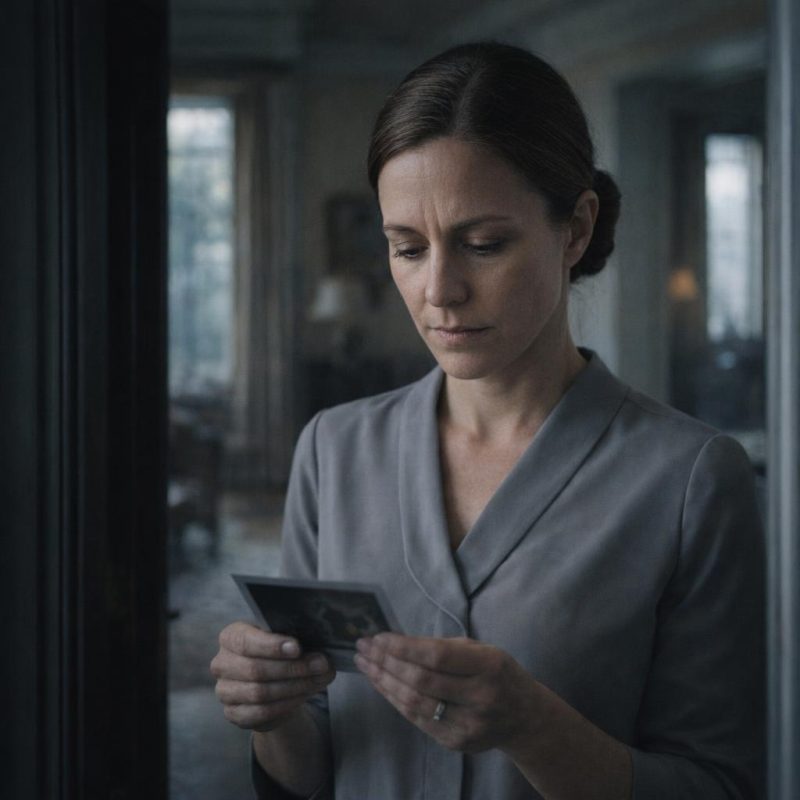 Image by RM AI
The Pattern
I pull out the old journals from the box in the closet — three of them, covering the years between the wedding and now. I'm not looking for anything specific, just reading. But patterns have a way of surfacing when you're not forcing them. There are entries where Mark suggested expanding his management role, framed as efficiency, as making better use of his expertise. There are notes from conversations about equity arrangements, moments where I remember thinking his reasoning made sense and agreeing without much pushback. I find a calendar from four years ago with a meeting marked in his handwriting — a lunch with someone from the trust's administrative office. I don't have any record of that meeting in my own notes from that period. Each thing, on its own, seemed reasonable at the time. Each thing had an explanation that fit. I'm not sure now whether I'm seeing something real or whether I'm reading backward from where I currently stand, finding shapes in what might just be ordinary decisions. I close the second journal and reach for the third, and near the back, tucked between two pages, I find a folded note in my own handwriting — a question I'd written to myself three years ago about a property management decision I hadn't understood.
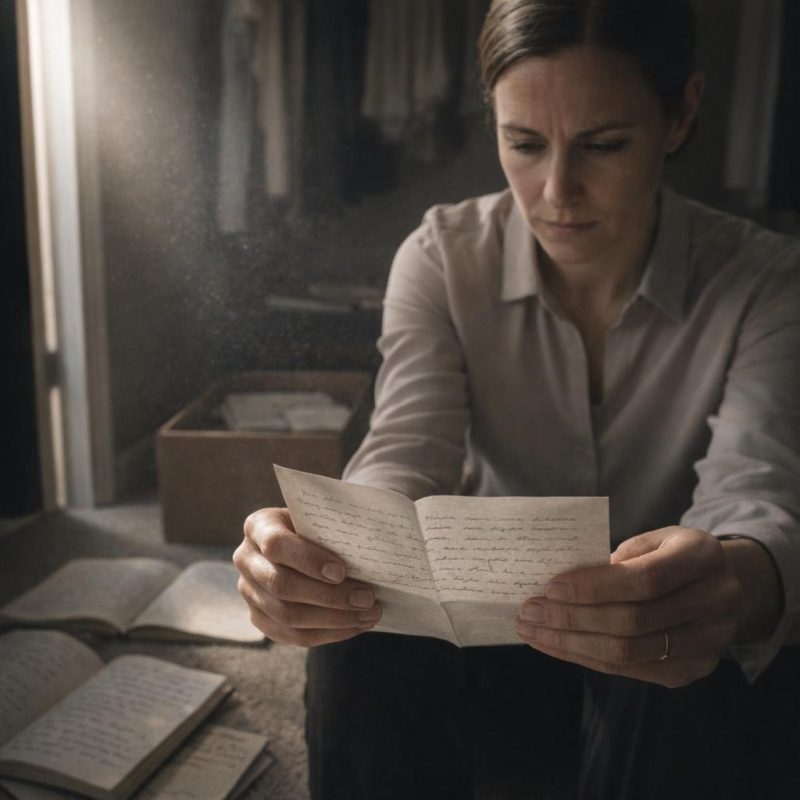 Image by RM AI
The Choice
I sit at the desk with the trust documents on one side and my notes on the other, and I let myself actually think about it. The honest question. I could tell him. I could send a message tonight, or call Diana and ask her to reach out to his attorney, and the clause would be on the table before anyone signs anything. That option is there. It's real. Part of me turns it over seriously — the idea that transparency is its own kind of integrity, that whatever he's done or hasn't done, walking into something without knowing the full terms isn't something I'd wish on anyone. But then I think about the accounts he described so easily, the word 'protected' said with such satisfaction, the assets he's been careful to keep separate. I think about Aunt Martha's amendments and what she understood about this estate that I'm still learning. I think about the note in my own handwriting, the question I asked myself three years ago that I never followed up on. I'm not certain about any of it. I'm not certain what I owe him, or what fairness looks like from where I'm standing. I sit with the documents for a long time. Then I close the folder, set it squarely on the desk, and the decision settles into place.
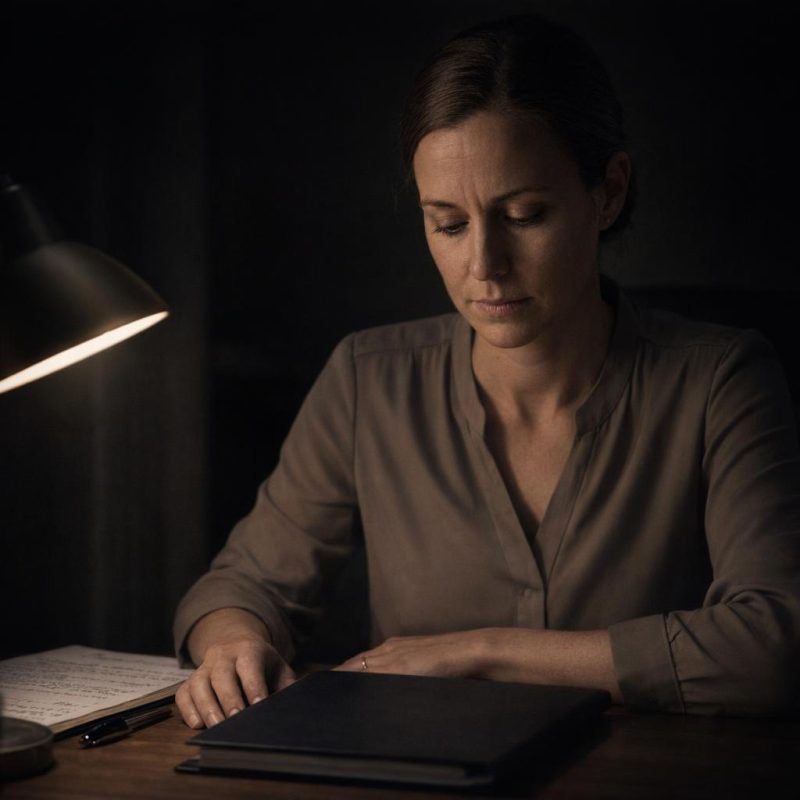 Image by RM AI
The Silence
I sit with the closed folder for a long time after the decision settles. Not because I'm second-guessing it — I'm not. But because I want to be honest with myself about what I'm doing and why. I'm not staying silent to punish him. I'm not staying silent because I want to watch something fall apart. I'm staying silent because this estate — what Aunt Martha built, what my family structured over decades — deserves to be protected by someone who took the time to understand it. The documents were available. Diana's office has been accessible. The amendments were filed and on record. I didn't hide anything. I didn't move anything. I simply stopped explaining things that weren't mine to explain. Mark has had attorneys. He's had time. He's had every opportunity to ask the questions that would have mattered. I think about the word 'protected' again, the easy way he said it, the confidence behind it. I think about what Aunt Martha wrote into those amendments and what she understood about stewardship that I'm still learning to carry. I fold my hands on the desk. The decision doesn't feel sharp or triumphant. It feels like ground — solid and quiet beneath me.
 Image by RM AI
The Performance
His temporary apartment is on the fourteenth floor of a building downtown, all clean lines and rented furniture. Mark opens the door looking relaxed, unhurried, like a man who has already sorted the difficult parts in his head. I follow him inside and take the chair he gestures toward, and I make sure my posture says uncertain, a little tired, still finding my footing. It isn't hard. Some of it is even true. He walks me through the settlement terms with the patience of someone explaining a flight delay — inconvenient, but manageable, nothing to panic about. I ask about the property valuations and whether the numbers reflect current market conditions, and I let the question sound like I'm not sure what I'm asking. He nods and says his team has handled it. I ask about the timeline and whether there's flexibility, and he says the date he's proposed works well for everyone. I say I think I can be ready by then. He seems satisfied with that. I watch him pour water from a glass pitcher on the counter, unhurried, already somewhere past this conversation in his mind. I keep my expression soft and a little vague, and I say almost nothing that I actually mean.
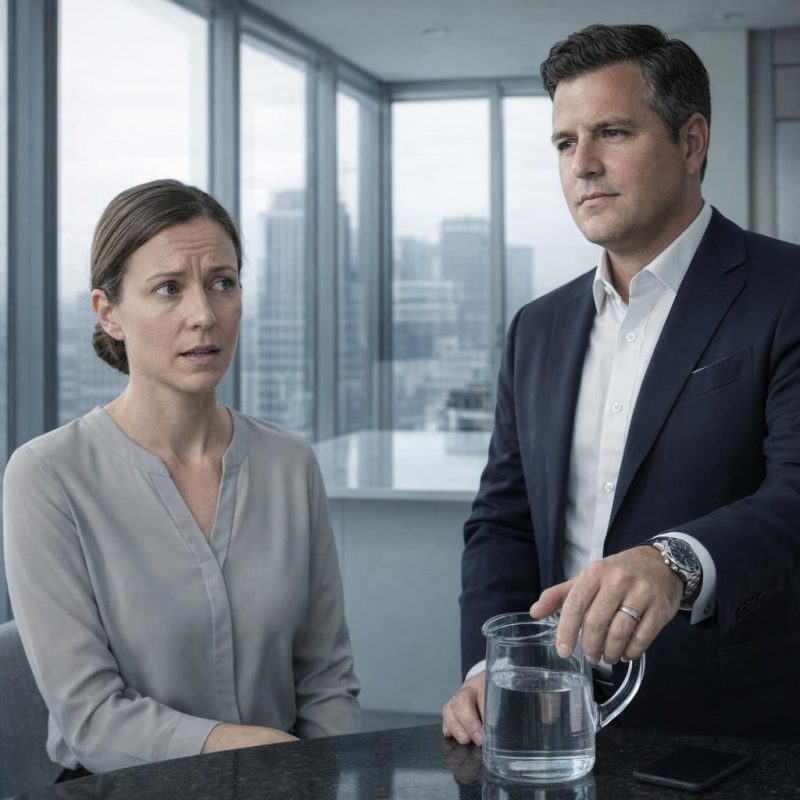 Image by RM AI
Diana's Confirmation
Diana's office feels quieter than usual when I arrive, or maybe I'm just more aware of the quiet. She closes the door behind me without being asked and takes her seat across the desk with the same composed attention she always brings. I tell her I have one specific question before we move forward with the transition preparations. She waits. I ask her about the operational contracts first, just to establish the ground, and she walks me through what's been filed and what's pending. Then I ask about the amendment documents — Aunt Martha's amendments specifically — and whether they were ever requested by anyone outside the immediate estate counsel. Diana opens the records on her screen and takes a moment. She says the amendments were filed with the county recorder and available through standard request channels. She says her office sent the full document package to Mark's attorney at the start of the proceedings, the standard disclosure set. Then I ask her directly: did Mark himself, or anyone acting on his behalf, ever follow up to request the amendment documents specifically.
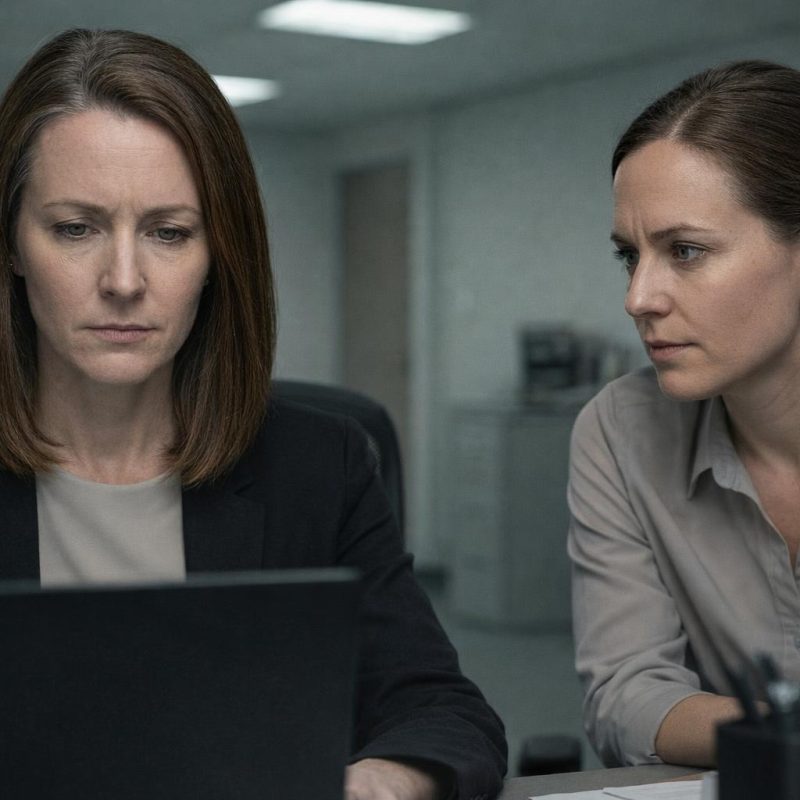 Image by RM AI
The Countdown
I mark both dates on the paper calendar I keep in the desk drawer — the one I don't photograph or sync to anything. Seventeen days to the signing date Mark proposed. Twenty-one days to the eleventh anniversary. Four days between them, and everything that lives in that gap. I pull out the clause language and read it again, not because I've forgotten it, but because I want to be precise about what I'm looking at. The language around forfeiture is unambiguous on its face — no waiting period, no review window, the marital provision tied directly to the execution of the papers. I set the page down and look at the two dates side by side. Seventeen days. Twenty-one days. Mark has been moving toward the earlier date with the kind of focus he usually reserves for acquisitions — efficient, forward-leaning, already past the finish line in his head. I think about the way time works when you're watching two things approach each other from different directions. The calendar sits open on the desk, both dates circled in the same ordinary ink, the distance between them smaller than it looks.
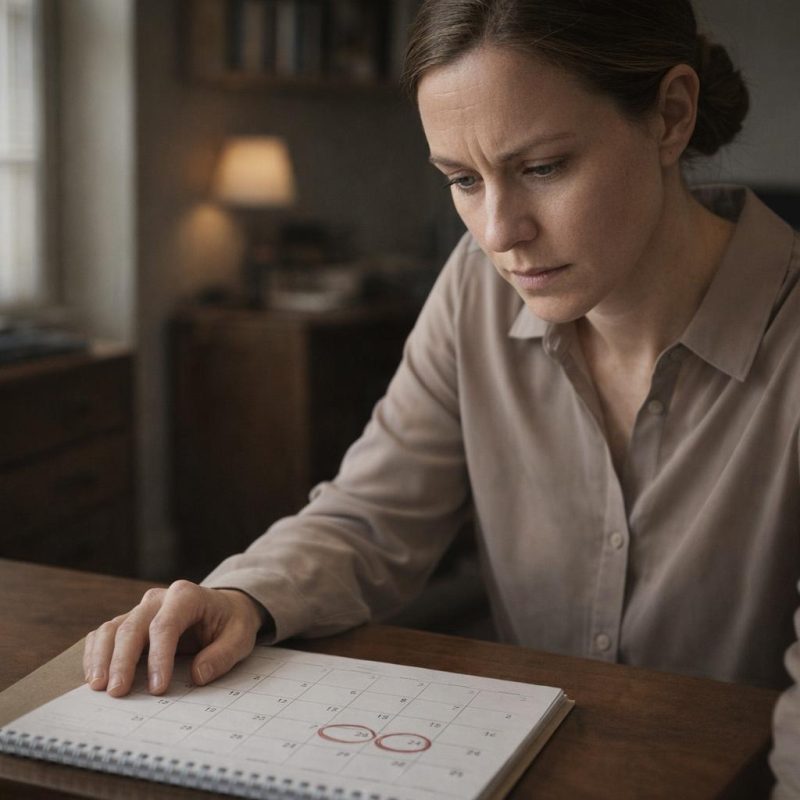 Image by RM AI
The Question Game
We meet for coffee near his building, and I bring a notepad like I'm still trying to organize my thoughts about the estate structure. I ask him to help me understand how the trust actually governs the properties — not the financials, I say, just the management side, how decisions get made. He leans back and explains the operational framework the way he always has, fluently, with the confidence of someone who has run those meetings for years. He covers the property management contracts, the vendor relationships, the approval thresholds for capital expenditures. I nod and write things down. Then I ask about Aunt Martha's role in how the estate was originally structured — whether her amendments changed anything on the management side. He pauses for just a moment, then says the legal architecture is really Diana's territory, that he's always focused on the operational side of things. I ask if he ever went through the amendment documents when they came in. He says he had his team review the standard disclosures. I write that down too, though I don't let him see what I've written. I ask one more question about the trust's governance provisions, and he gives me an answer that is confident and almost entirely beside the point. I keep my expression attentive and say that makes sense.
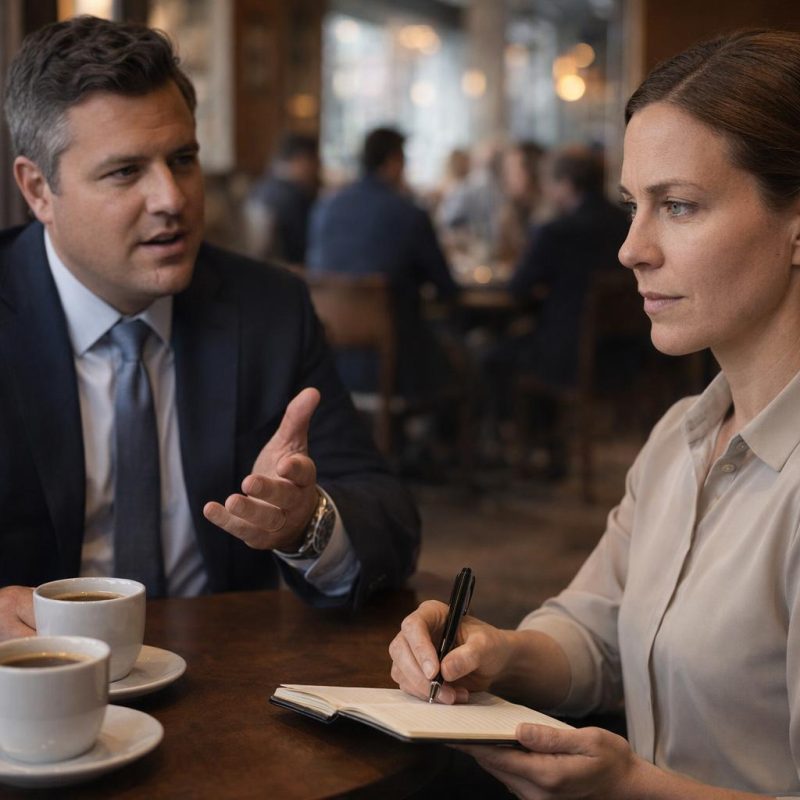 Image by RM AI
The Assumption
He calls me two days later, not about the settlement, just to talk through some numbers he's been running on the commercial portfolio. I listen from my kitchen, phone against my ear, watching the light change on the window. He talks about a mixed-use development he's been tracking in the north corridor, a property he thinks is undervalued, a timeline he's mapped out for the next acquisition cycle. He talks about the equity position he's planning to leverage — his stake in the current holdings, the way it compounds over a five-year horizon. He talks about where he wants the portfolio to be by the time he's fifty-five. He mentions a partnership structure he's been sketching out with James, contingent on having the capital base secured. His voice is even and certain, the voice of a man who has done the math and likes what he sees. I ask a few small questions to keep him talking — what corridor, what timeline, what kind of partnership structure — and he answers each one with the ease of someone who has been thinking about this for a long time. He says once the personal side is resolved, he can move quickly. He describes his equity stake as the foundation everything else is built on.
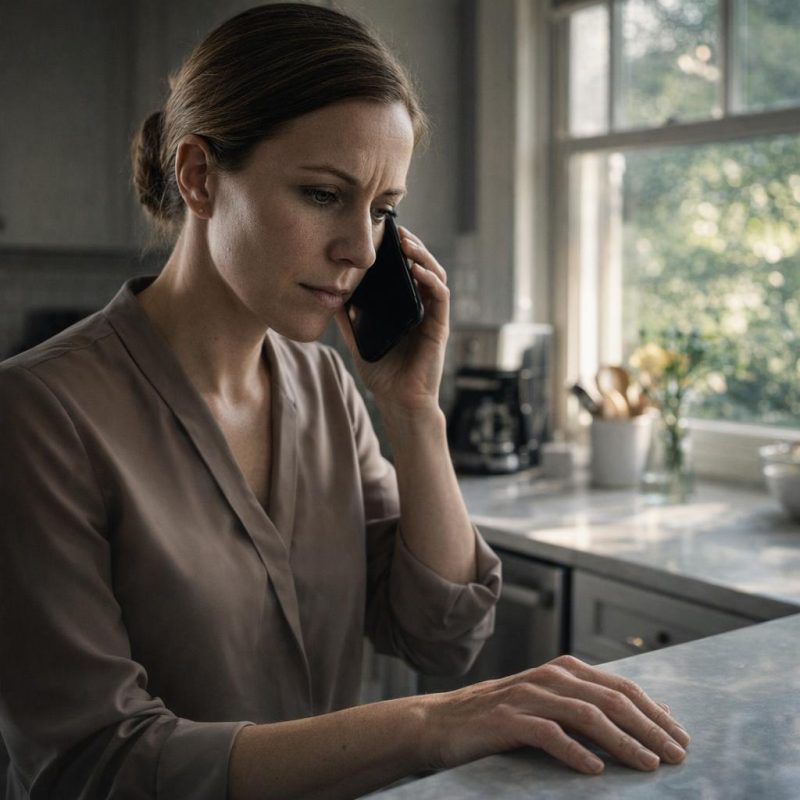 Image by RM AI
The Expansion Plans
He wants to meet again before the signing, and I agree. We sit across from each other at a restaurant near the courthouse, and he has a folder with him this time, actual printed pages, which surprises me a little. He opens it and walks me through what he's been researching — a market segment he's been watching for the better part of a year, a cluster of light industrial properties in a corridor that's been quietly appreciating. He's mapped out a phased entry strategy, identified two anchor properties, and sketched a rough financing structure. He talks about it the way he talks about things he's already decided. I ask about the timeline and he says he'll be ready to move within sixty days of the divorce being finalized. He says the personal disruption has been a distraction, but once it's behind him, he'll have full clarity to execute. He mentions the equity again — the stake he's counting on to anchor the financing. I ask a few questions that sound like curiosity, and he answers them with the patience of someone who has already thought three steps ahead. I look at the printed pages spread across the table between us, the careful columns of numbers, the properties listed by address, the scope of everything he's mapped out.
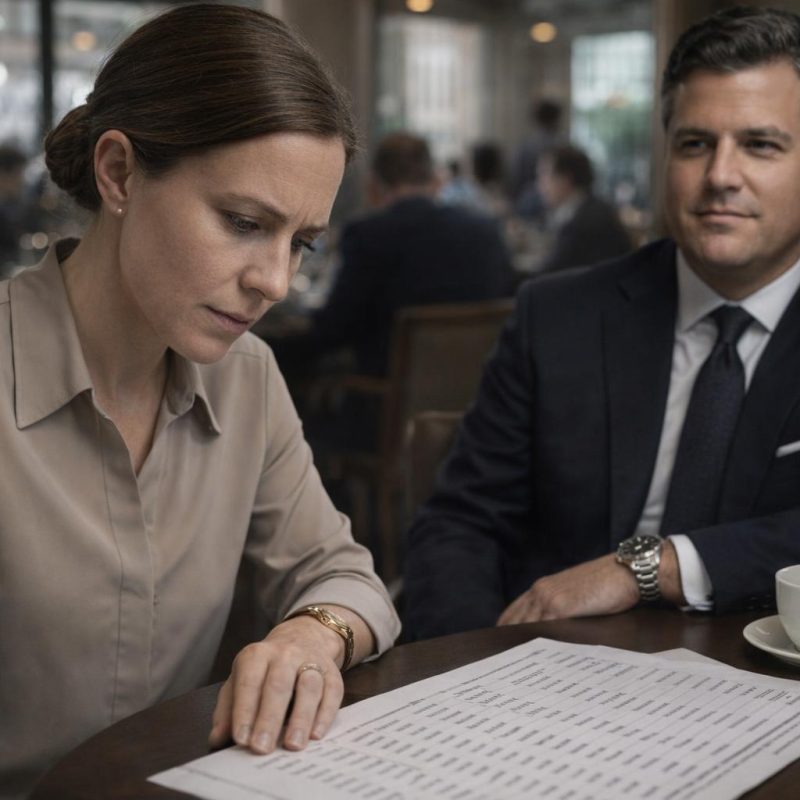 Image by RM AI
The Management Role
He refills his coffee and leans back in his chair, and the conversation shifts without any particular signal. He starts talking about the estate holdings the way he always has — as operational territory, his domain, the thing he understands better than anyone else involved. He describes the management structure as though he's already past the divorce and into the next phase, talking about vendor contracts he wants to renegotiate, a property manager he's been considering replacing, a maintenance schedule he thinks has been running inefficiently. I ask a few vague questions and give answers that don't commit to anything. He nods along, not really needing my input, just thinking out loud in my direction. He says the transition will actually be cleaner this way — no overlap, no ambiguity about who's making decisions. He says it's better for the properties, better for the tenants, better for everyone. I say I haven't really thought that far ahead yet. Then he looks at me across the table with an expression that is almost kind, and asks whether I'm planning to stay involved in the business side of things or whether I'd rather leave the management to him. I hold his gaze and say I'm not sure yet.
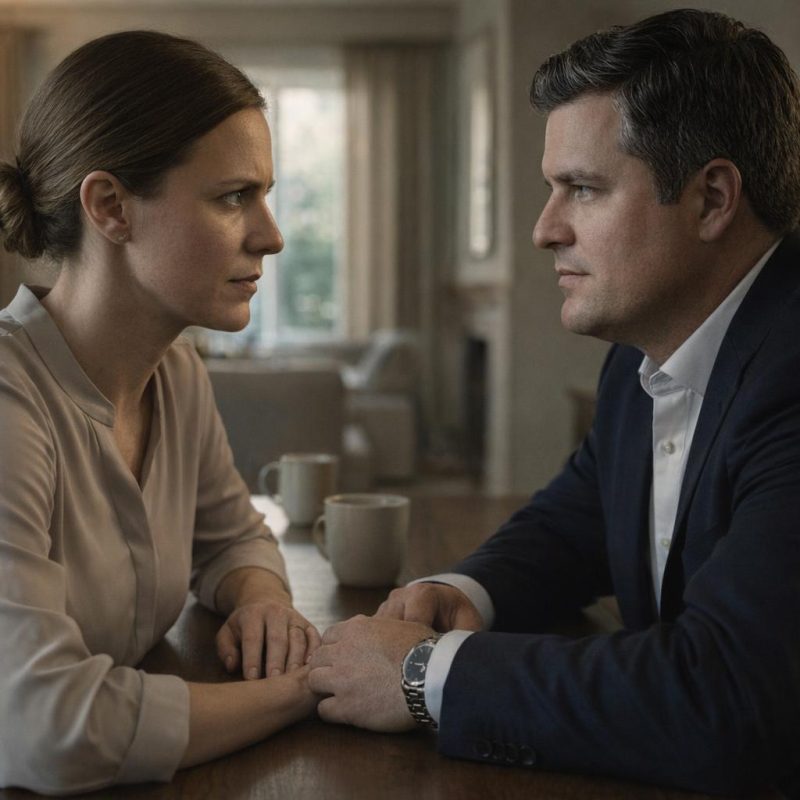 Image by RM AI
The Documentation
After he leaves, I sit at the kitchen table with my laptop open and a legal pad beside it. I type out everything he said, as close to verbatim as I can manage — the vendor contracts, the property manager he wants to replace, the maintenance schedule he called inefficient. I note the time, the date, the setting. I note that he spoke about the management structure in the present tense, as though the transition had already happened and he was simply describing his current responsibilities. I write down the phrase he used: cleaner this way. I write down the question he asked me about staying involved in the business side of things, and I write down my answer, and I write down the expression on his face when I gave it. The file has been growing for weeks now — dates down the left margin, direct quotes in the center, context notes on the right. Nothing in it is my interpretation. It is only what was said, and when, and by whom. I save the document, back it up to the secure drive Diana set up for me, and close the laptop. The legal pad goes into the folder with the others, and the folder goes back into the drawer. It is a quiet kind of work, and it leaves the room feeling very still.
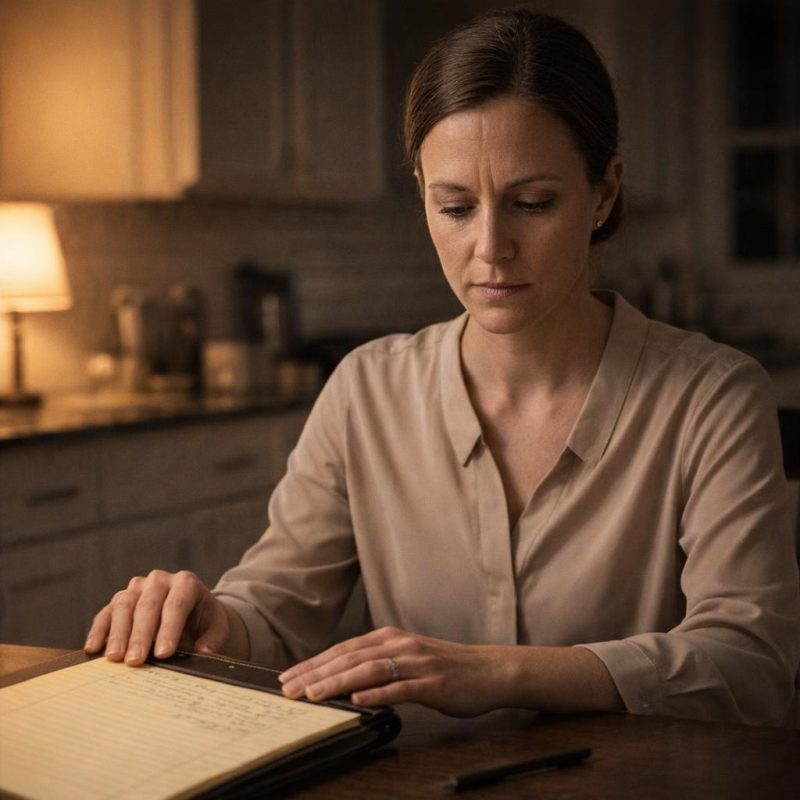 Image by RM AI
The Confusion Act
We meet at a coffee shop near the attorney's office, and I bring a printed copy of the settlement outline with handwritten question marks in the margins. I've put them there deliberately — small, uncertain loops next to terms like equitable distribution and deferred asset valuation. Mark arrives looking unhurried, and when he sees the papers spread across the table he settles into his chair with the ease of someone who expected exactly this. I ask him what deferred valuation actually means in practice, and whether it affects the timeline. He explains it slowly, using his hands. I nod and write something in the margin that looks like a note but is mostly just a word I've already underlined. I ask about the management clause and whether it changes anything for the properties going forward. He says it doesn't, not really, and explains the structure to me the way you'd explain a lease agreement to someone who has never signed one. I let him. I ask one more question about the equity split, and he answers it with the patience of someone who believes he is the only person in the room who understands what any of this means. I fold the papers carefully and say I think I'm starting to follow it. The drive home, I keep both hands on the wheel and let the performance settle quietly behind me.
 Image by RM AI
The Transition Documents
Diana's office is on the fourteenth floor, and the view from her conference room looks out over the financial district in a way that always makes the city feel orderly and legible. She has the documents laid out when I arrive — two sets, separated by a thin divider, each page tabbed in blue. She walks me through the post-divorce transition procedures the way she walks through everything: methodically, without editorializing, pausing only when she wants to make sure I've understood something before she moves on. She explains the process for formalizing my full control of the estate holdings, the steps for removing Mark from his management position, the timeline that kicks in the moment the divorce filing is complete. She answers two questions I ask and anticipates a third before I finish asking it. When we're done, she slides a sealed envelope across the table and tells me these are my copies to keep secure until the signing. I pick it up. It is heavier than I expected for something that is mostly paper.
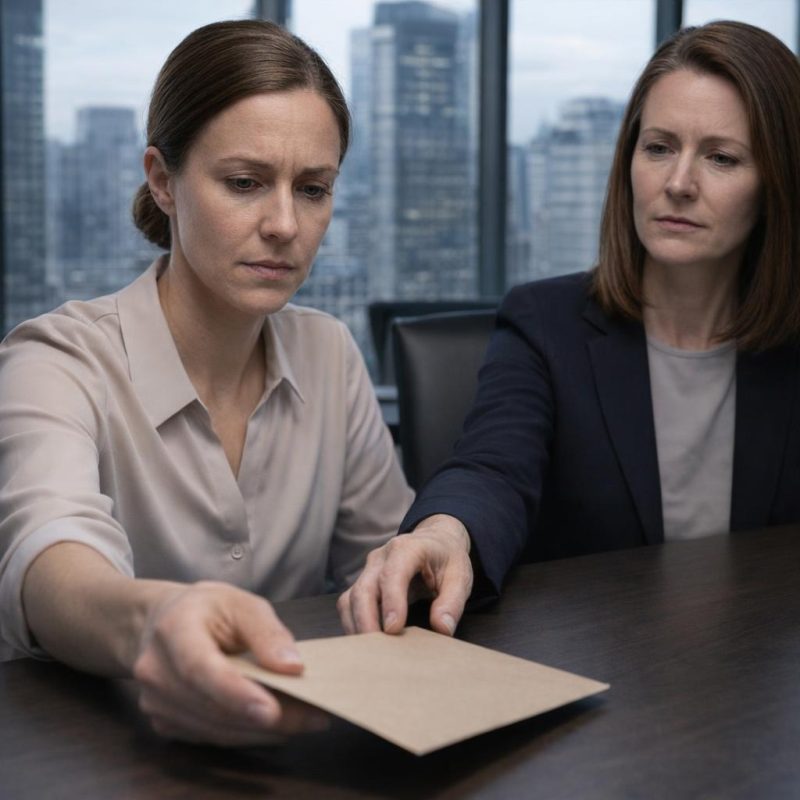 Image by RM AI
The Pressure Increases
He calls on a Tuesday afternoon, and I can hear it in his voice before he finishes his first sentence — something tighter than usual, clipped at the edges. He says he needs the divorce finalized within the week. I ask him why the timeline has changed. He says there are business opportunities that require clarity about his status, that things are moving and he can't have loose ends. I ask what kind of opportunities, and he says it's complicated, that I wouldn't need to worry about the details, that what matters is the timing. I tell him a week feels fast. He says three days, actually — he wants to sign in three days, and he's already spoken to his attorney about availability. I don't say anything for a moment. He fills the silence by saying it's better for both of us to move quickly, that dragging it out only makes things harder. I tell him I'll need to check with Diana. He says to check today. When he hangs up, I set the phone down on the counter and stand there. His voice had been pulled flat and tight the whole call — no give in it, no room to push back.
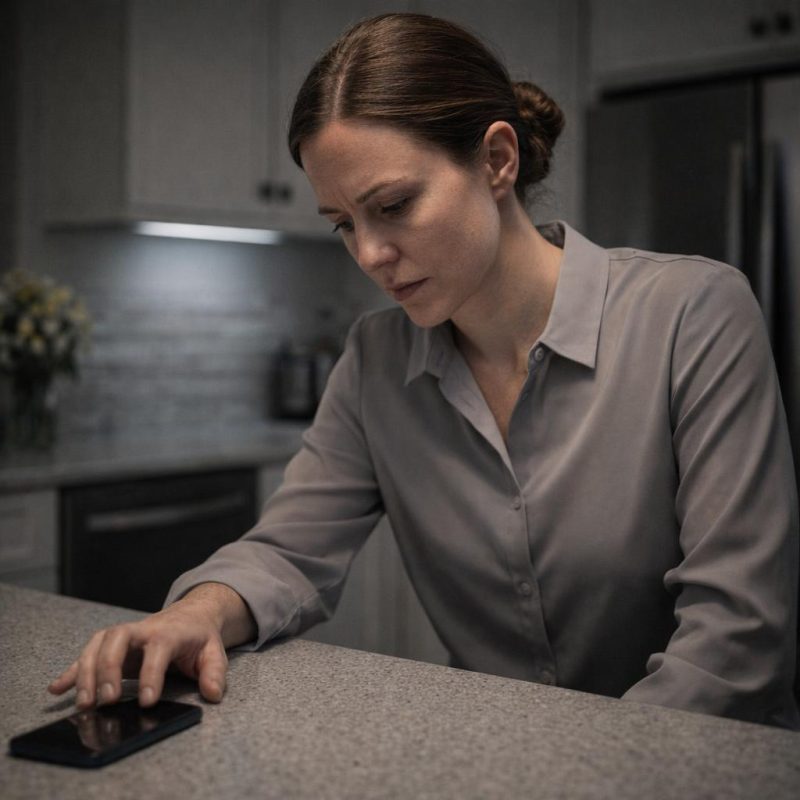 Image by RM AI
The Crack
I meet him at the same coffee shop, and I don't bother with the printed papers this time. I sit down across from him looking exactly as tired as I've let myself appear for the past two weeks — shoulders forward, hands wrapped around a cup I've barely touched. He asks if I've talked to Diana. I say I have. He waits. I tell him I'm exhausted. I tell him the whole process has been harder than I expected and that I keep going in circles trying to figure out what I want, and that maybe the problem is I've been trying to want something when I should just be trying to get through it. He nods slowly, and something in his posture eases. He says that's understandable. He says it's a lot to process. I look at the table and say I can't keep fighting it. I say I just want it to be over. He's quiet for a second, and then he says that's probably the healthiest thing I've said in months. I don't look up. I tell him I'll sign whenever he wants.
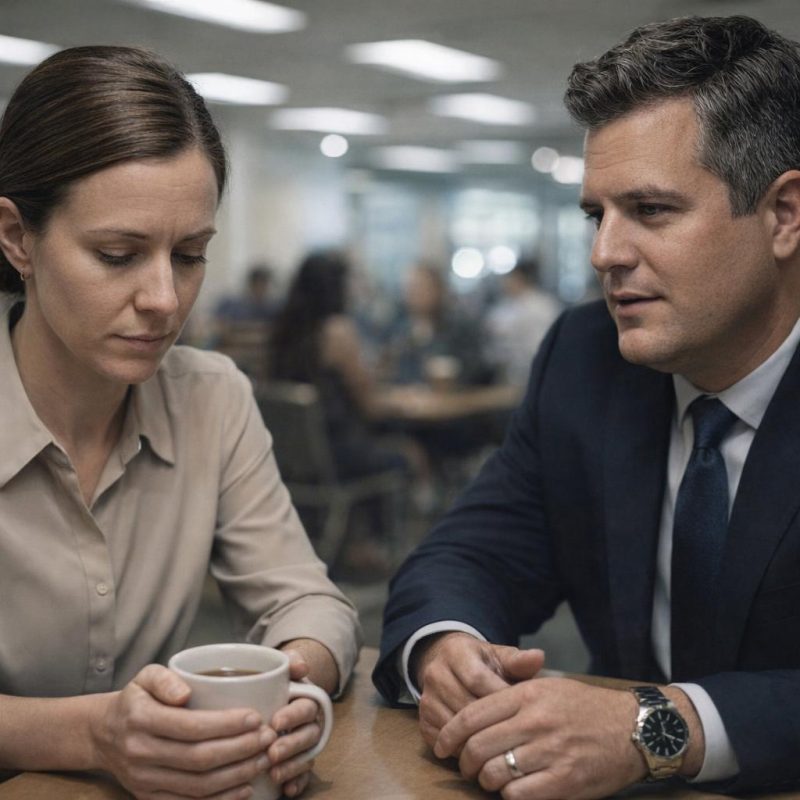 Image by RM AI
The Final Deadline
He texts me the appointment details that evening — the address, the time, the name of the conference room. The date sits at the top of the message in plain digits, and I read it twice. Two days before our eleventh anniversary. I don't respond right away. I set the phone face-down on the nightstand and lie back on the bed with the ceiling above me and the room very quiet. He's already confirmed with his attorney, the text says. He'll bring his own witness. Everything is arranged. I think about the date again — not what it means to me, but simply what it is, a point on a calendar that he chose without hesitation or apparent awareness of what it sits beside. I pick the phone back up and type that I'll be there, and I send it before I can think about the wording any further. Then I set it down again. The date he's chosen has a particular kind of weight to it, the way a closed door has weight — not loud, just final.
 Image by RM AI
The Agreement
He calls the next morning to confirm, and I answer on the second ring. He goes through the logistics — arrival time, parking, which entrance to use, whether I'm bringing my own attorney or relying on Diana. I tell him Diana will be there. He says good, that keeps things straightforward. I tell him I've reviewed the settlement terms and that I accept them. He pauses for just a moment, and then he says he's glad we got here, that he knows it wasn't easy. I say it wasn't. He says he thinks this is the right thing for both of us, that we'll both be better positioned going forward. I say I hope so. He asks if I have any last questions about the documents. I tell him no. He says he'll see me tomorrow, then, and I say yes, tomorrow. After he hangs up, I stay on the line for a second longer than I need to, listening to the silence where his voice had been. When I finally set the phone down, what I notice most is how steady my own voice had sounded through all of it — quiet, and flat, and entirely without argument.
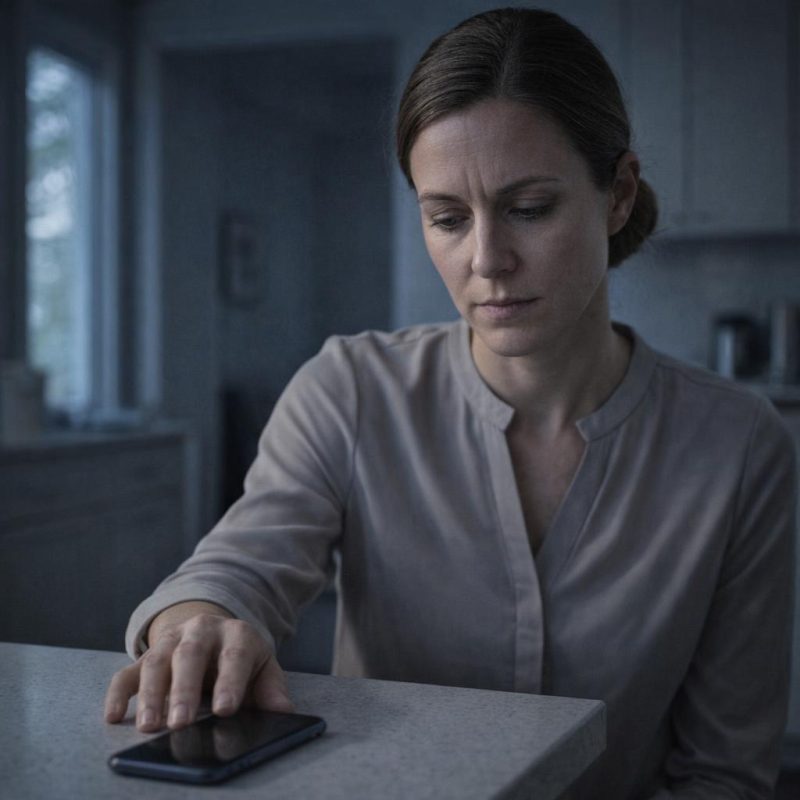 Image by RM AI
The Signing Day
I dress carefully in the morning — dark slacks, a grey blouse, low heels. Nothing that reads as anything other than someone going through a difficult administrative process with as much composure as she can manage. I check the sealed envelope from Diana once before I leave, confirm it's in my bag, and zip the bag closed. The drive downtown takes twenty minutes, and I spend most of it with the radio off. Diana's building has a revolving door that opens into a marble lobby, and I take the elevator to the fourteenth floor without stopping at the desk. The receptionist recognizes me and waves me through. The hallway to the conference suite is carpeted and quiet. I push open the glass door at the end of it, and Mark is already there — standing near the window in a dark suit, coffee in hand, looking out at the city with the ease of someone who has been waiting comfortably and expects the rest of the morning to go exactly as planned.
 Image by RM AI
The Night Before
The estate office is quiet by nine o'clock, the kind of quiet that settles into old rooms and stays there. I sit at the desk with the trust documents spread in front of me — not because I need to read them again, but because I need to feel the weight of them one more time before tomorrow. The marital fidelity clause is on page eleven. I've read it so many times the language has worn smooth in my mind, every condition and consequence as familiar as my own handwriting. I check the calendar on the desk — the signing is two days before the anniversary, exactly where it needs to be. My coffee has gone cold. I don't get up to warm it. Outside, the street is dark and the house makes its small settling sounds around me, and I sit with all of it — the documents, the date, the particular shape of what tomorrow holds. There's nothing left to prepare. There's nothing left to second-guess. I fold my hands on top of the papers and let the stillness come in around me, and it does.
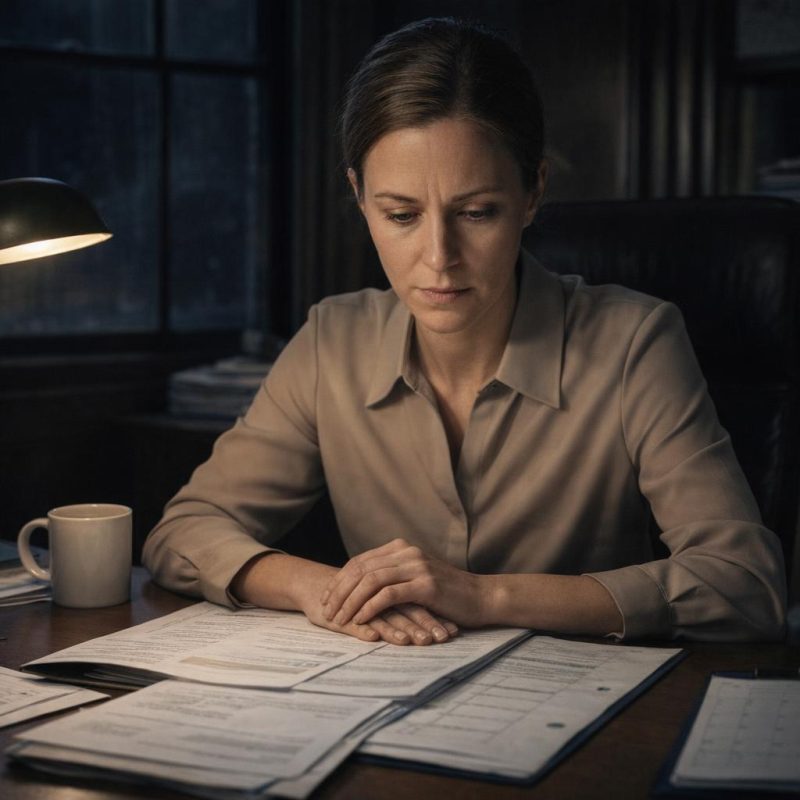 Image by RM AI
Morning Preparation
I'm awake before the alarm. I lie still for a moment in the grey early light, listening to the house, and then I get up. The closet takes longer than it should — I stand in front of it for a full minute before I reach for the dark slacks and the grey blouse. Subdued. Professional. The kind of outfit that says someone going through a difficult administrative process with as much composure as she can manage. I check my reflection in the bathroom mirror and I practice the expression — the one that reads as tired, as resigned, as someone who has accepted that this is simply how things end. It isn't hard to find. I've been wearing it for weeks. I gather the documents from the desk in the estate office, tuck them into my bag beside Diana's sealed envelope, and zip it closed. The drive downtown takes twenty minutes. I spend most of it with the radio off, hands steady on the wheel, watching the city come into focus through the windshield. By the time Diana's building appears ahead of me, the calm has settled all the way down to the bottom of things, and I carry it in with me like something I've always owned.
 Image by RM AI
The Conference Room
The conference room is exactly as I expected — long table, neat stacks of paper, morning light coming in flat through the blinds. Diana is standing near the credenza when I push open the glass door, and she gives me a professional nod, the kind that carries no warmth and no judgment, just acknowledgment. She indicates my chair on the left side of the table. I set my bag down and take my seat without looking across the room right away. When I do look, Mark is already there — settled into his chair with the ease of someone who arrived early and has been comfortable ever since. His attorney sits beside him with a pen already out. The documents are arranged in neat stacks between us, tabbed and ordered, everything in its proper sequence. Diana begins explaining the process in her measured, unhurried way — which pages require signatures, which require initials, what the order of execution will be. I keep my hands folded in my lap and my expression still. Mark catches my eye once across the table and gives me a small, almost imperceptible nod, the kind that says this is almost over. His pen is uncapped and resting between his fingers, already ready.
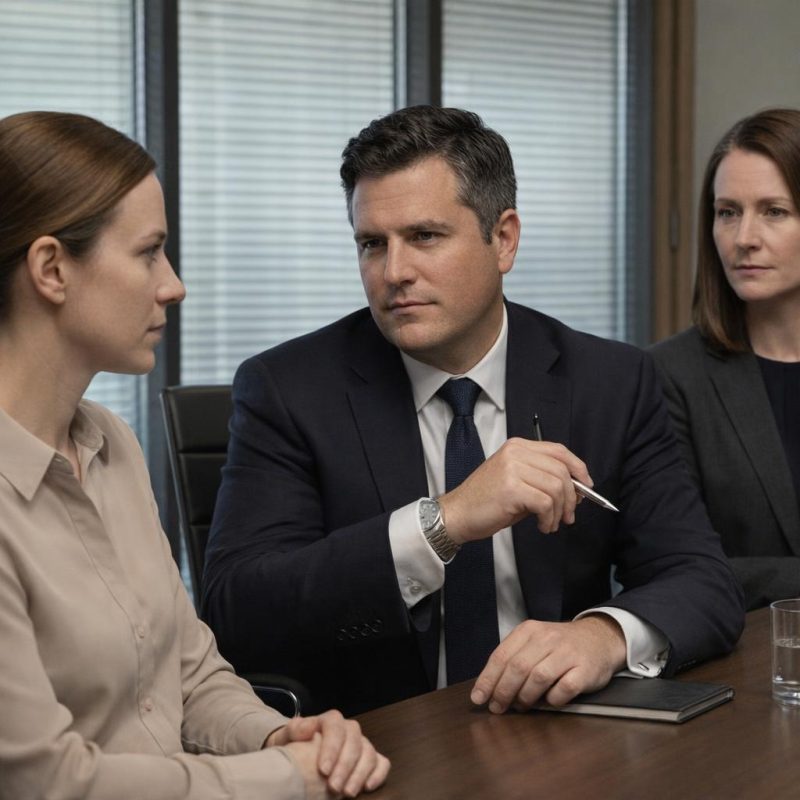 Image by RM AI
The Signatures Begin
Diana starts with the financial disclosure pages. Mark signs the first one without pausing — a clean, confident stroke across the signature line, the pen barely lifting before he moves to the next tab. His attorney initials the witness sections in sequence. I sign my own pages when Diana slides them across to me, and I keep my hand steady and my face neutral. Mark doesn't look up much. He moves through the stack with the efficiency of someone who has done a great deal of paperwork in his life and finds none of it particularly troubling. There's a rhythm to it — Diana names the document, Mark signs, his attorney initials, Diana moves to the next. I watch the stack diminish. I watch the tabs disappear one by one. Diana sets the final document in front of Mark — the petition itself, the one that makes everything that follows legally operative — and he smooths the page flat with his palm before he signs it, his name moving across the bottom of the page in one unhesitating line.
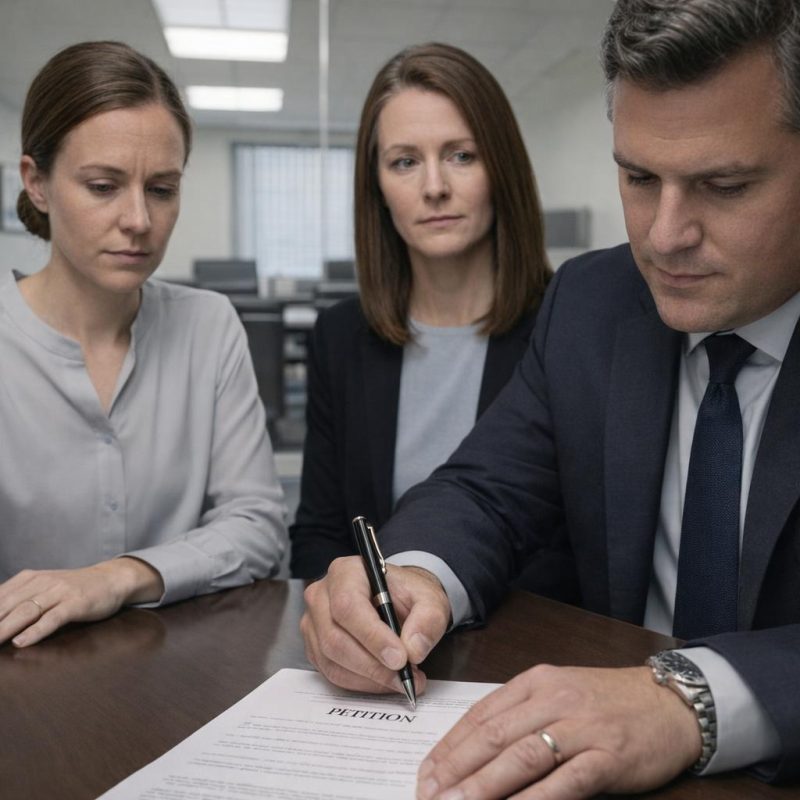 Image by RM AI
The Truth Revealed
I sign my portion of the petition and set the pen down. Mark leans back slightly in his chair, and I can see the tension leave his shoulders — the particular release of someone who believes the hard part is finished. Diana begins gathering the executed pages into their folders. I let the moment sit for a breath, and then I say, quietly, that there's something Mark should know about the trust before we leave. He looks at me across the table with mild curiosity, the expression of a man who expects a minor administrative footnote. I tell him I found Aunt Martha's documents. I tell him I found them weeks ago — the full trust instrument, the amendments, all of it. His expression doesn't change right away. I tell him I've known about the marital fidelity clause since nearly the beginning of this process. The room goes very still. Diana continues organizing her folders without looking up. Mark's attorney sets his pen down. I hold Mark's gaze across the table and I say it plainly: I've known about the clause since chapter eight of this, since before any of the confusion he watched me perform, and I let him sit with that.
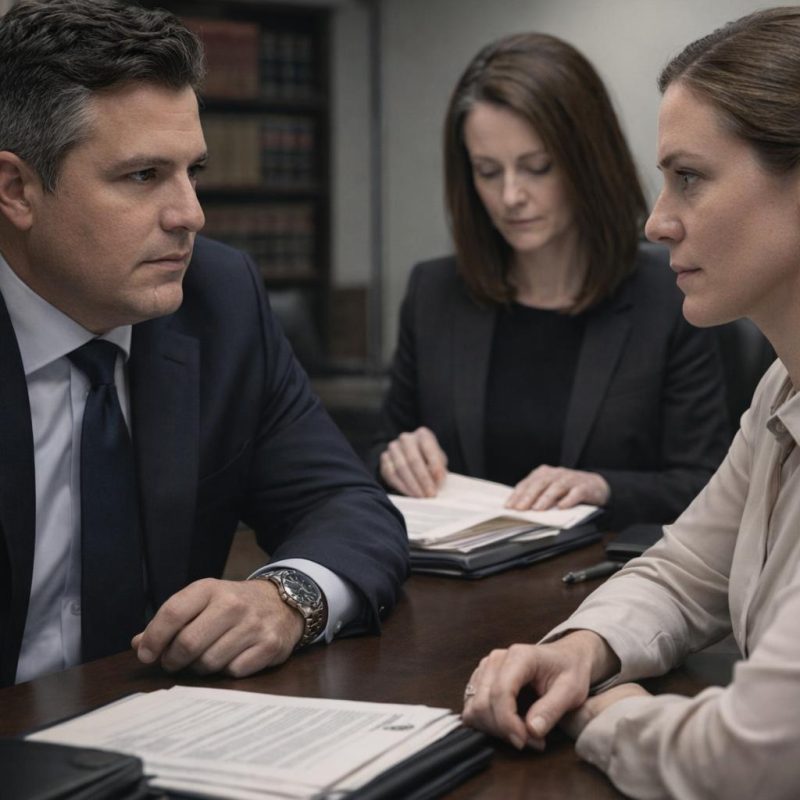 Image by RM AI
The Forfeiture
I explain it the way Diana explained it to me the first time — clearly, without rushing. The marital fidelity and longevity clause in Aunt Martha's trust amendment requires that both spouses remain married through the eleventh anniversary for Mark's management rights and equity stake to vest fully. Divorce initiated before that date triggers forfeiture. The filing date is two days before the anniversary. Mark's pen is still in his hand. I watch him process the sequence — the filing date, the anniversary, the gap between them. I tell him his management rights over the commercial holdings revert to me immediately upon the filing becoming operative. I tell him his equity stake in those holdings is also forfeited under the same provision. He starts to say something and stops. I tell him Diana has reviewed the clause and confirmed it is legally valid and enforceable. Mark turns to look at Diana. She meets his gaze with the same professional neutrality she has maintained all morning, and she gives him a single, measured nod. I watch the color shift in his face — something moving behind his eyes, working through the arithmetic of dates and documents and what he put his name to twenty minutes ago.
 Image by RM AI
The Strategic Silence
He asks me why I didn't say anything. It's a fair question, and I answer it honestly. I tell him I chose not to. I tell him that from the moment I found Aunt Martha's documents, I understood that telling him would only give him the chance to slow things down, to find a workaround, to push the filing past the anniversary and let the clause expire. So I didn't tell him. I let him believe I was overwhelmed. I let him watch me ask questions that seemed confused and frightened, and every one of those questions was designed to confirm what he thought he already knew — that I didn't understand the trust, that I was cooperating out of exhaustion, that I had simply accepted the terms he preferred. Mark's attorney is very still across the table. Mark himself is looking at me with an expression I haven't seen on him before — not anger yet, something quieter than that, something that looks like recalibration. I tell him I'm not proud of the performance, exactly. But I maintained it because it was necessary, and I maintained it all the way to the moment he signed his name on the final page.
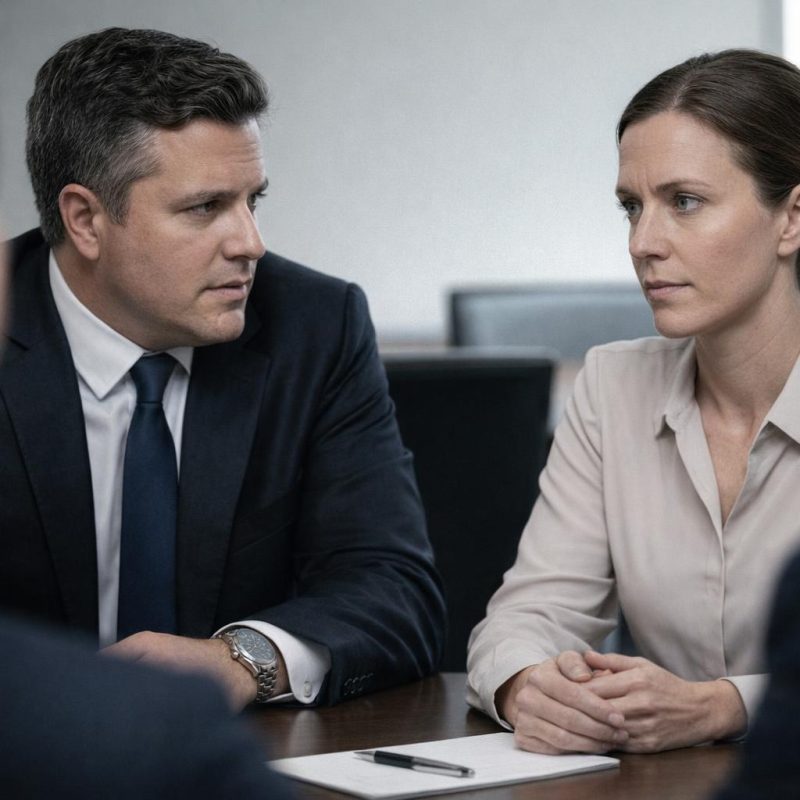 Image by RM AI
The Documentation
I reach into my bag and set the file on the table between us. It's not thick, but it's thorough — a documented timeline going back to the early weeks of the process. I open it and turn it so Mark can read the first page. His own words, dated and sourced: his statements about his protected management position, his assumptions about the equity stake, the conversation where he described his five-year business plan for the commercial holdings as though the assets were already his to keep. There are notes from phone calls. There are summaries of things he said in rooms he thought were casual. There is a section near the back where he discussed the offshore account structure with James, and I had been in the next room with the door not fully closed. Mark looks at the pages without touching them. He reads for a moment and then stops reading. The file sits open on the table between us, his own words arranged in careful order on the page, and I leave it there.
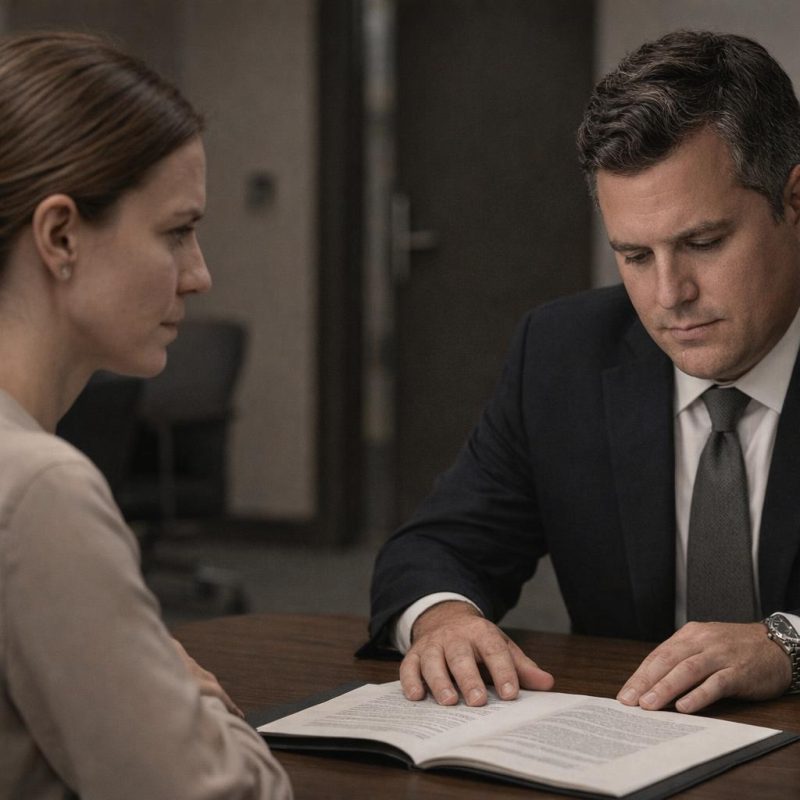 Image by RM AI
The Filing
Diana steps into the conference room quietly, the way she always does — no announcement, no ceremony. She sets her own folder on the table beside mine and looks at Mark first, then at me. Mark is still standing. He hasn't sat back down since he stopped reading. He asks Diana, in a voice that comes out flatter than I think he intended, whether there's any way to pull back the signatures. Diana doesn't hesitate. She explains that a signed divorce petition cannot be unilaterally withdrawn once both parties have executed it. She tells him the documents are leaving this office within the hour. Mark asks again, differently this time, as though the phrasing might change the answer. Diana's response is the same. I keep my hands folded on the table and say nothing. There's nothing left for me to add. The file is still open between us, his words still visible on the page, and the room is very quiet. Diana glances at her watch, then back at Mark, and tells him the filing will be submitted to the court before the end of the business day — within the hour.
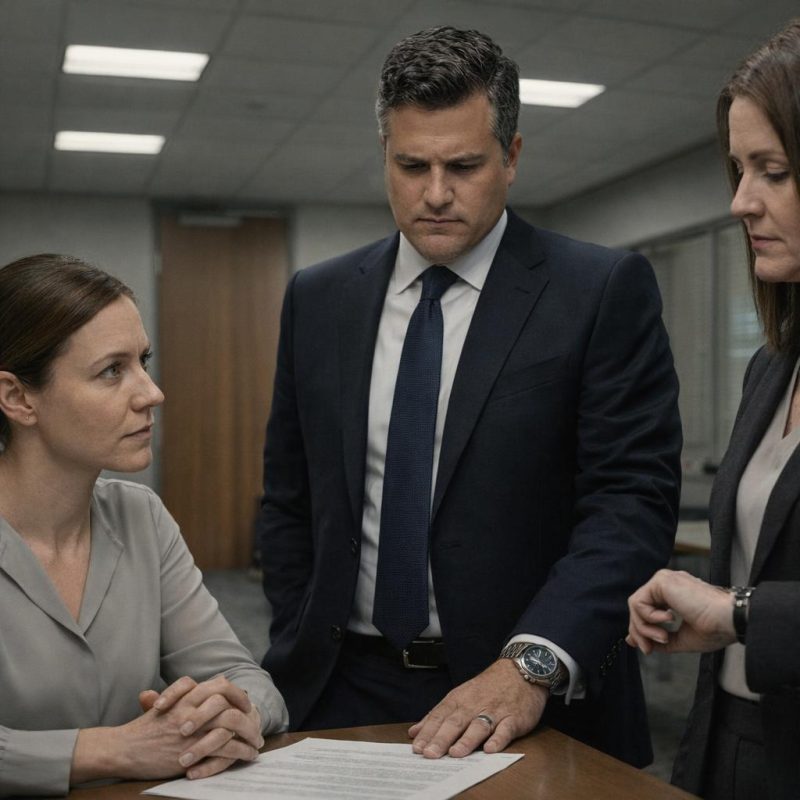 Image by RM AI
The Transition
Mark leaves without another word. The door closes behind him and the room settles. Diana waits a moment, then opens her folder and begins laying documents across the table in a precise row. These are the transition papers — the ones that formalize my assumption of full management authority over the estate holdings. I've seen drafts of most of them, but seeing them printed and ready for signature is different. Diana walks me through each one methodically: the management transfer, the staff notification protocol, the process for informing the business associates who worked directly with Mark. I sign where she indicates. My handwriting is steady. We discuss the timeline for the notifications — Diana recommends a structured sequence, starting with the senior staff and working outward. I agree. She makes a note. When we've covered everything on her list, she reaches into the inner pocket of her folder and sets a sealed envelope on the table between us — the one she told me weeks ago she had prepared and set aside.
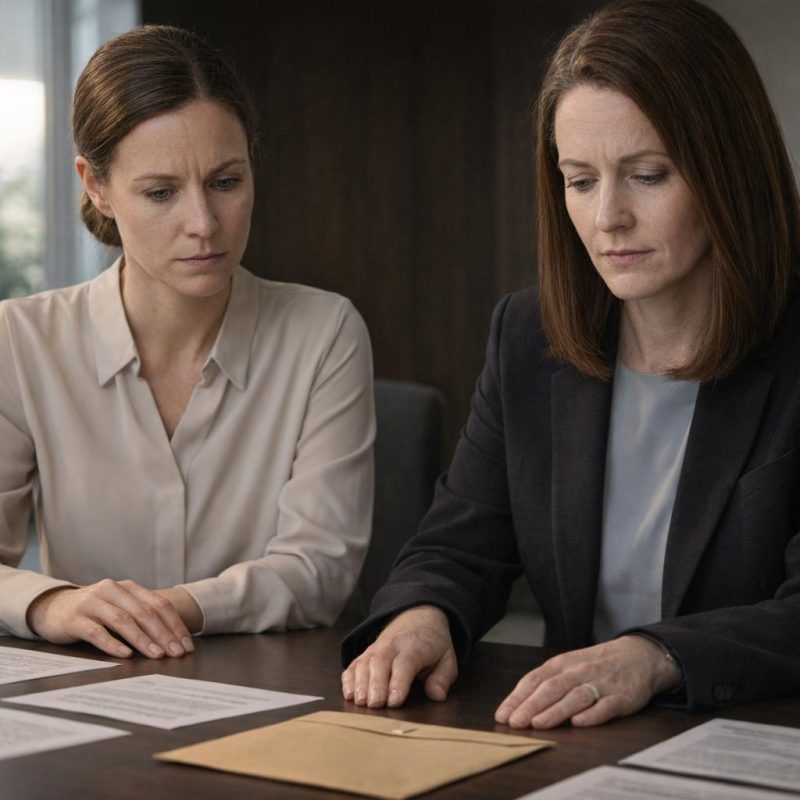 Image by RM AI
The Confrontation
He comes back that evening. I'm not surprised. I hear the knock and open the door and Mark is standing on the step with his jacket still on, his jaw set, and something behind his eyes that hasn't settled into any one thing yet. He wants to know why I didn't tell him. That's the first thing he says — not hello, not anything else. Just: why didn't you tell me. I let him in because the conversation needs to happen somewhere, and I'd rather it be here than on the doorstep. I tell him I had no obligation to walk him through documents he had equal access to. He says that's not what he's asking. He says I knew what would happen and I let him sign anyway. I tell him that's true. He goes quiet for a moment and then the words come faster — that I deceived him, that I set a trap, that no matter what the paperwork says, what I did wasn't honest. I don't raise my voice. I tell him the documents were available to him for ten years. The anger in his voice when he says my name — the sheer incomprehension underneath it — fills the room long after he stops speaking.
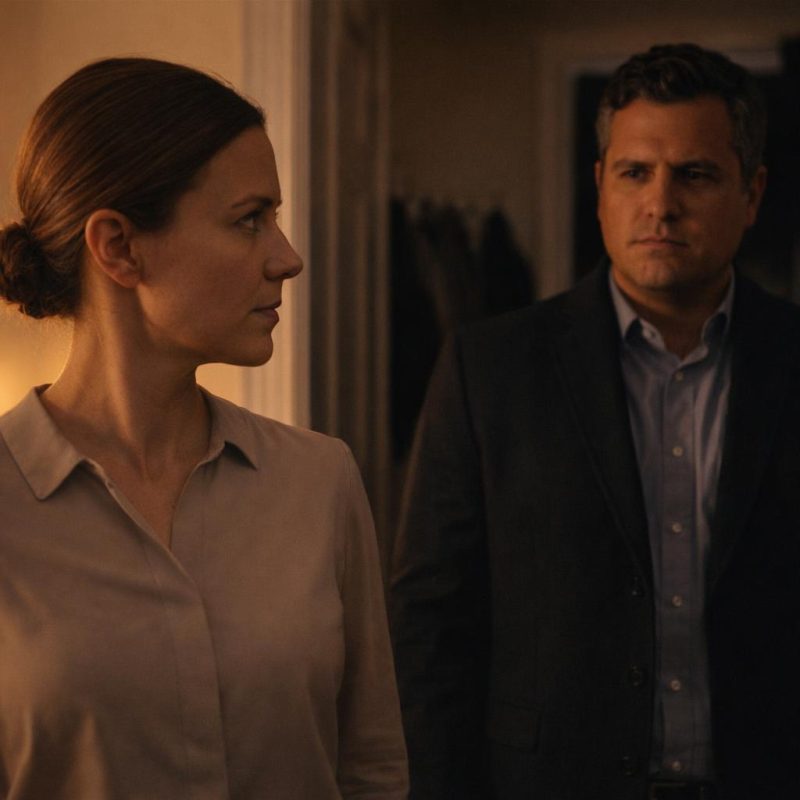 Image by RM AI
The Realization
I set Aunt Martha's trust amendment on the table in front of him. It's a single page, the relevant clause marked with a small tab. Mark picks it up. He reads it once, then reads it again. I watch his face move through something I don't have a clean word for — not quite disbelief, not quite anger, something that sits underneath both of those. He sets the page down. He says he never saw this. I tell him it was filed with the estate records the year after we married. He says no one told him. I tell him it was his responsibility to review the documents governing the assets he was managing. He's quiet for a long time after that. He looks at the clause again — the language about forfeiture upon divorce before the ten-year anniversary, the automatic transfer of management authority, the provisions that make his offshore accounts and personal holdings beside the point. He had built a five-year plan around assets that were never fully his to keep. He looks up from the page, and the expression on his face is the one that comes when a person finally stops arguing with a fact and simply holds it.
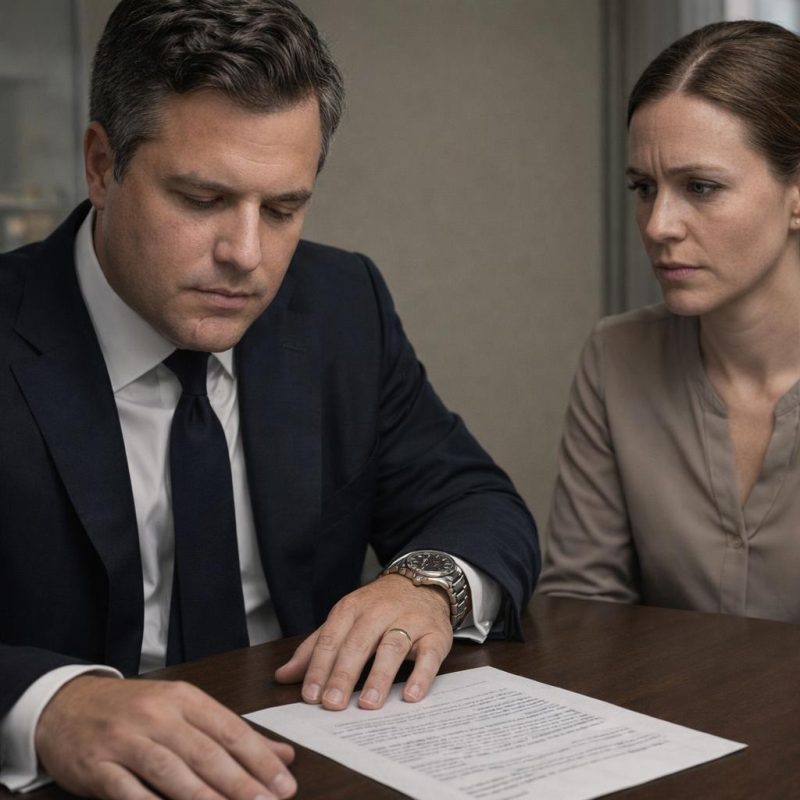 Image by RM AI
The Accusations
He tries several approaches. First he tells me I manipulated the situation — that I timed the filing, that I engineered the outcome. I let him say it. Then he tells me I have the authority to reverse the forfeiture, that if I wanted to I could instruct Diana to find a remedy. I tell him the trust provisions aren't discretionary. They're not something I can override because he's asked me to. He shifts then, and the tone changes. He talks about ten years. He says that has to count for something, that we built something together, that I owe him at least a conversation about what comes next for him. I tell him we are having that conversation. He doesn't like that answer. He tries once more — a harder edge this time, something closer to a demand than a request — telling me I need to fix this, that I have to find a way. I tell him there is no way. The room goes still. I watch the last of his confidence leave his face, and what replaces it is something rawer and smaller — the particular desperation of a man who has run out of moves and knows it.
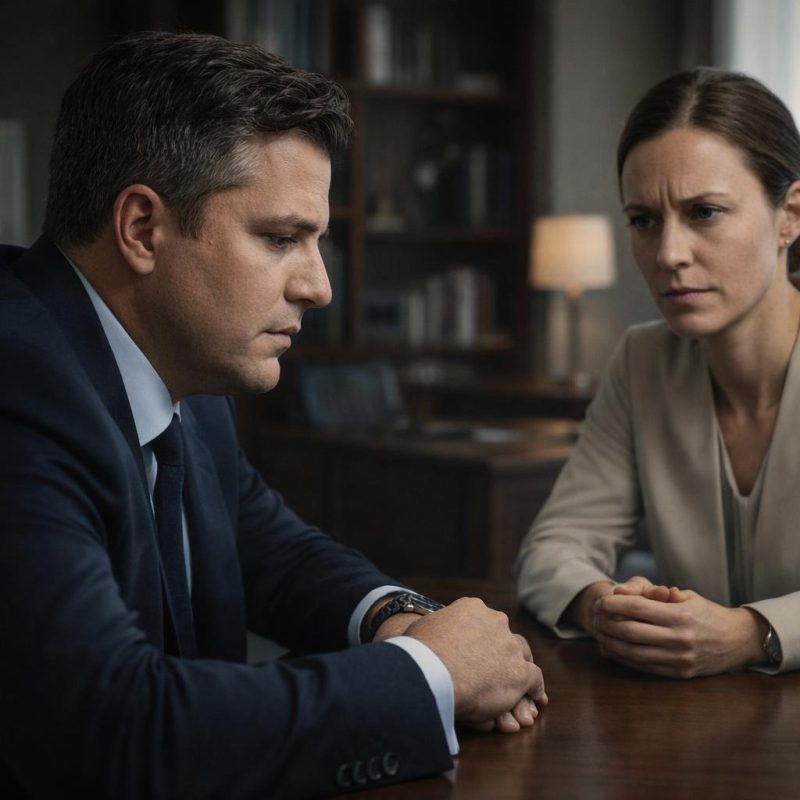 Image by RM AI
The Offshore Accounts
He tells me I've taken everything. I let that sit for a moment, and then I tell him I haven't — that he still has what he moved offshore. He goes very still. I reach into the folder I brought with me and set the records on the table: the account transfers, the bonus structures routed through the holding company, the timeline of deposits going back three years. I tell him I've known about the offshore accounts for some time. I tell him I understood what he was trying to protect when he started moving funds — that he was building a floor for himself in case the divorce didn't go the way he wanted. He stares at the documents. He doesn't deny them. He asks how I found out. I tell him it doesn't matter how I found out. What matters is that the careful financial architecture he spent years constructing was built around the assumption that the estate assets would anchor it — and that anchor is gone now. I slide the records across the table so they're directly in front of him, and I watch him look at his own account transfers laid out in order by date.
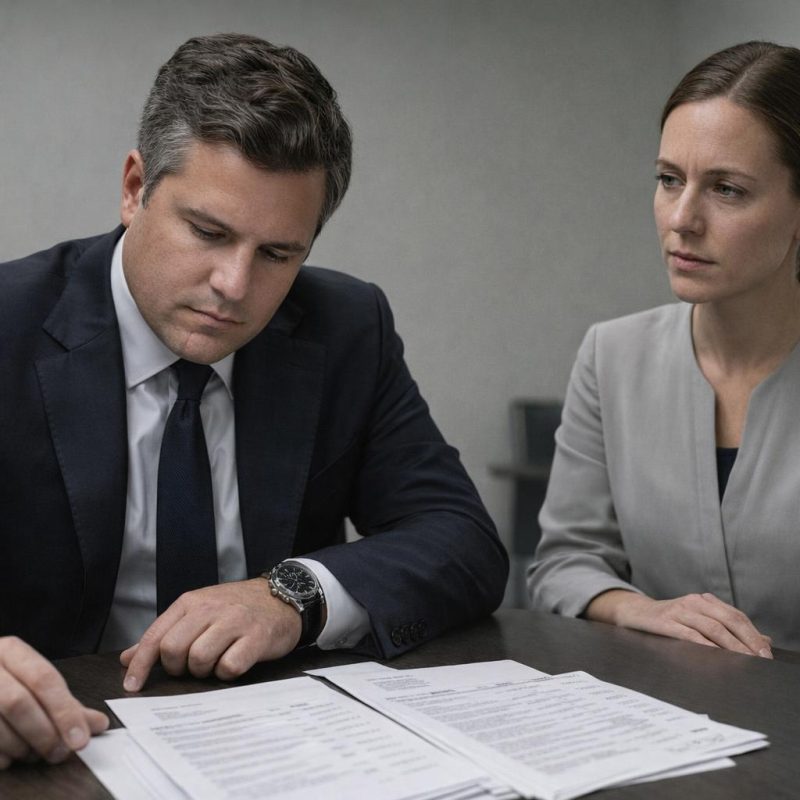 Image by RM AI
The Legal Finality
Diana arrives at the front door at half past six. I let her in and she comes through to the sitting room where Mark is still standing near the window. She doesn't look at him right away. She opens her case and takes out a single printed page and sets it on the table. It's the court filing confirmation — the petition stamped and logged, the timestamp printed clearly in the upper right corner. She tells Mark that the divorce petition was filed at four forty-seven this afternoon, prior to the anniversary date. She tells him the trust provisions took effect automatically upon filing. She tells him his management authority over the estate holdings is legally terminated as of that timestamp. Mark picks up the page. He reads the timestamp. He sets it back down. Diana tells him that any challenge to the trust provisions would need to be directed to the estate's legal counsel, and that she is not in a position to advise him further. The page sits on the table between all three of us: the filing timestamp reading 4:47 PM, the case number assigned, the forfeiture complete.
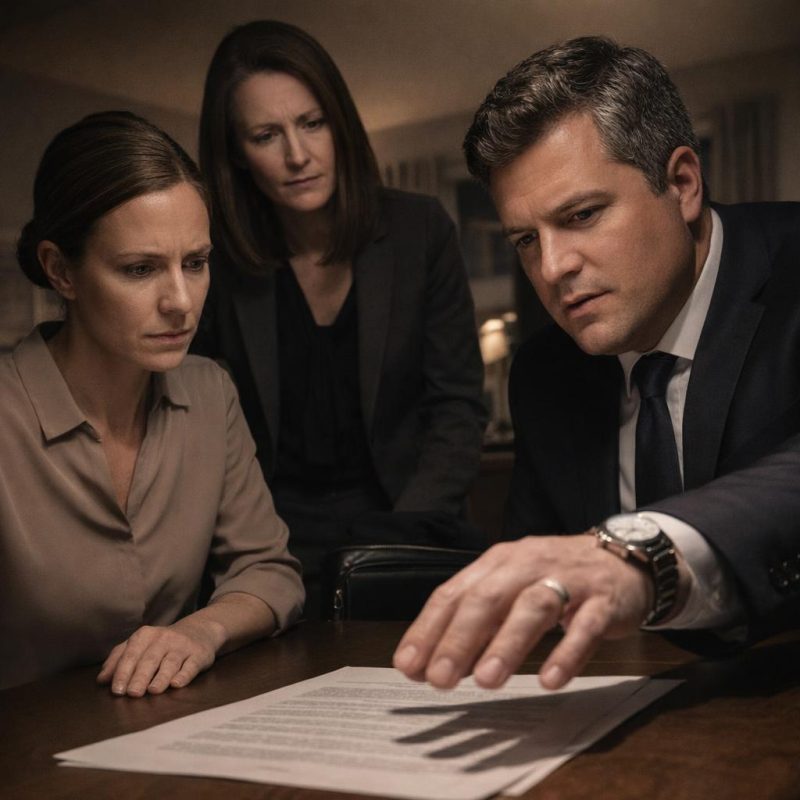 Image by RM AI
The Final Exchange
Diana excuses herself and steps into the hallway, giving us the room. Mark turns to me. He says there has to be something — a consulting role, a transition arrangement, some acknowledgment of the work he put in over the past decade. I tell him he was compensated for that work. He was paid a management salary and received bonuses that are documented in the records now sitting on the table. He says that's not what he means. I tell him I know what he means, and the answer is no. He changes direction then — his voice dropping, taking on a harder quality — and tells me he'll challenge the trust provisions in court, that he has grounds, that I haven't heard the last of this. I look at him for a moment. I tell him that any legal correspondence should go through Diana's office, and that I won't be responding to him directly going forward. I walk to the door and open it. I tell him to leave, and not to come back.
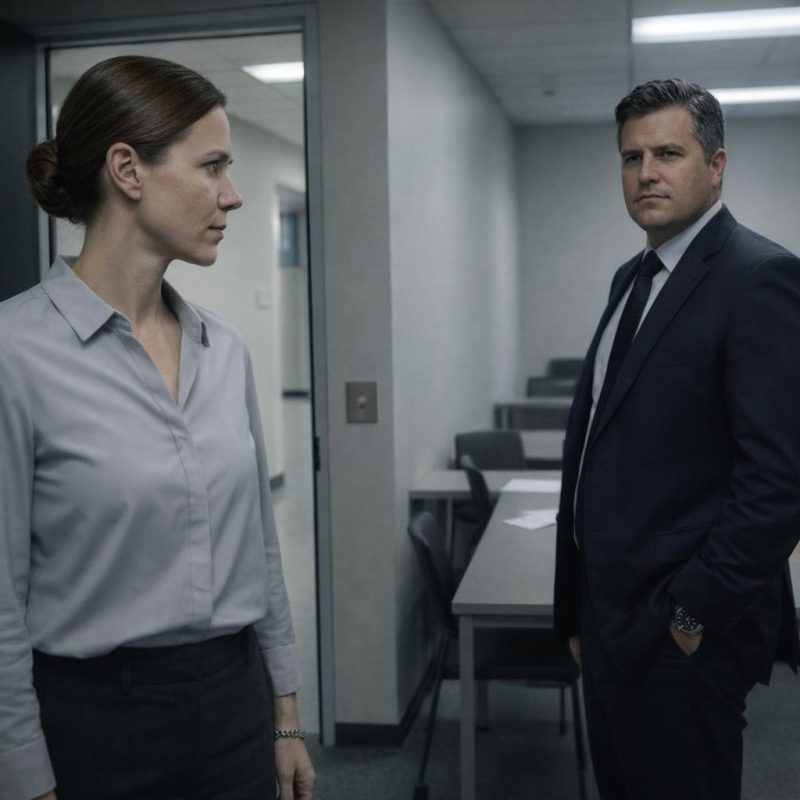 Image by RM AI
The Departure
He takes less than I expected. Two bags, a box of files, the watch his father left him. I stand in the doorway of the study and watch him move through the house with the efficiency of someone who has already made peace with leaving. He doesn't linger. He doesn't look at the photographs on the mantle or pause in the kitchen the way I half-expected him to. He just moves, room to room, collecting what is his and leaving the rest. I follow at a distance, not to supervise, just because standing still feels impossible. At the front door, he picks up the last box and looks at me for a moment — not with anger, not with anything I can name — and then he walks out. I stay in the doorway until his car reaches the end of the drive. I listen to the engine fade. Then there is nothing. No sound from the street, no creak from the house settling, just the particular quiet that fills a space when something that has been present for a very long time is suddenly, completely gone.
 Image by RM AI
Taking Control
Diana spreads the portfolio across the conference table — twelve commercial properties, two mixed-use developments, and a land holding in the eastern corridor that Aunt Martha had been sitting on for years. I look at each file in turn. Diana walks me through the management contracts that are up for renewal, the ones she recommends we renegotiate, and the two property managers she has concerns about. I ask her to schedule reviews for both of them within the month. She makes a note without comment. We spend the next two hours going through the staffing structure, and I flag three positions I want to restructure before the end of the quarter. Diana tells me the estate staff has been notified of the transition and that the response has been, in her word, settled. I take that as a good sign. By the time we finish, the afternoon light has shifted across the table and the portfolio is covered in my handwriting — questions, decisions, initials where decisions have already been made. I cap my pen and sit back, and the weight of it doesn't feel like a burden so much as something I have been carrying toward for a long time.
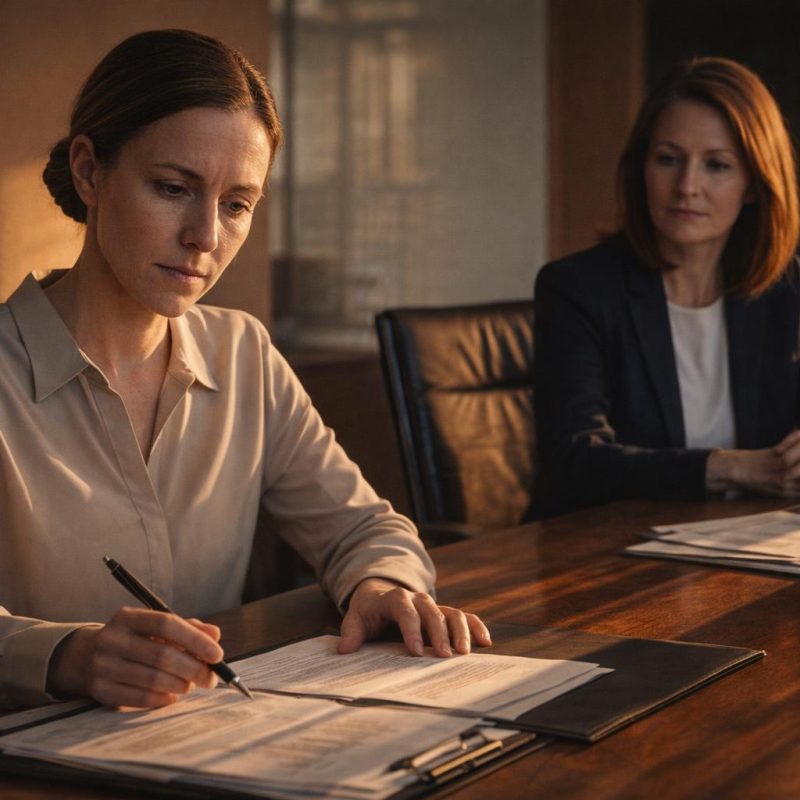 Image by RM AI
New Foundations
James arrives exactly on time, which I appreciate. He's been managing the day-to-day operations on two of the larger commercial properties for the past several years, and his relationship with the tenants is solid — that much is clear from the files. Diana sits to my left. I tell James directly that I'm restructuring the management layer and that I want to talk about what his continued role looks like under the new arrangement. He listens without interrupting, which I also appreciate. He asks two practical questions — both about reporting lines and decision authority — and I answer them plainly. By the end of the meeting, we have a framework. It isn't everything, but it's a foundation. After James leaves, Diana and I spend another hour mapping out the strategic priorities for the next eighteen months. Aunt Martha had a vision for these holdings — patient, long-term, rooted in the community the properties served — and I intend to honor that. But I'm also adding my own direction now, and for the first time in a long time, the plans on the page feel genuinely mine. I sit with that for a moment before closing the folder.
 Image by RM AI
Moving Forward
I think about that anniversary dinner sometimes. The way Mark set the papers on the table like he was doing me a favor. The way I sat there and read every line and understood, before he finished his first sentence, exactly what he had set in motion — and exactly what he hadn't. I think about the weeks that followed. The calls with Diana. The quiet afternoon I spent reading Aunt Martha's trust provisions for the third time, making sure I understood what staying silent would mean and what it would cost me. It cost me something. I won't pretend otherwise. Ten years is ten years, and the end of a marriage leaves marks even when the marriage had already been hollowing out for longer than I wanted to admit. But I also think about sitting at that conference table with the portfolio spread in front of me, my handwriting across every page. I think about James asking his practical questions and Diana making her notes and the estate staff carrying on because the work continues regardless. I made a choice in that dining room, and I let it play out, and I am standing on the other side of it now with my eyes open and the path forward clear before me.
 Image by RM AI
KEEP ON READING

The Brutal Realities Of Gladiator Life Beyond the Arena
David Cruz asenjo on PexelsWhen most people think of gladiators,…
By Rob Shapiro Mar 31, 2026
The Volcano Winter That Nearly Toppled Europe
Collin Ross on UnsplashMost people, if asked to name a…
By Cameron Dick Mar 31, 2026
From School Plays To Starting A Cult: 20 Of The…
The Books That Made Us. Many people will tell you…
By Farva Ivkovic Jan 31, 2025
20 Facts About Jane Grey, The Forgotten Queen Of England
A Quick, Messy, and Tragic Reign. Lady Jane Grey never…
By Maria Cruz Jan 31, 2025
20 Priceless Historical Art Pieces Rescued By The Monuments Men
Protecting Human History. While the soldiers on the front lines…
By Sara Springsteen Mar 31, 2026
Almost Every Ancient Statue Has a Missing Nose, And It's…
Gary Todd from Xinzheng, China on WikimediaWalk through the classical…
By Elizabeth Graham Mar 31, 2026