

I Found My Dead Father's Secret Storage Unit in the Meadowlands—What Was Inside Changed Everything I Knew About Him
I Found My Dead Father's Secret Storage Unit in the Meadowlands—What Was Inside Changed Everything I Knew About Him
The Sound of the Cadillac at Dawn
There was a sound I grew up with that I never thought to question — the low, particular rumble of a 1975 Fleetwood Cadillac easing into the driveway before the sun came up. I'd hear it through the wall of sleep, that engine dropping to idle, then cutting out. The creak of the car door. The soft click of the side entrance. I'd lie there in the dark, maybe seven years old, maybe ten, and just listen. It happened enough times that my body learned to expect it the way it expected the radiator to knock in January or the garbage truck to grind past on Thursdays. My father came home before dawn. That was just a fact of the house, like the water pressure or the smell of my mother's coffee starting up an hour later. I never lay awake worrying about it. I never asked where he'd been. The Cadillac meant he was back, and back was enough. Some mornings I'd drift off again before I even heard his footsteps reach the stairs. Those early hours had a particular stillness to them — the neighborhood quiet, the sky still dark at the edges, everything held in that suspended moment just before the world started up again.
 Image by RM AI
Silk and Cigar Smoke
One morning I was up before I should have been — stomach cramp, glass of water, the usual — and I caught him coming in. The clock on the microwave read 5:47. He came through the side door the way he always did, quiet and deliberate, and I pulled back into the hallway shadow without thinking about it. His suit was charcoal silk, and even at that hour it looked like he'd put it on twenty minutes ago. Not a wrinkle. Not a hair out of place. He set his briefcase down beside the counter with both hands, careful, the way you'd set down something that mattered. Then he moved to the sink and poured himself a glass of water and stood there drinking it, looking at nothing in particular through the window above the faucet. The cigar smoke came off him in a faint cloud — that part I knew, that was familiar. But underneath it there was something else. Something I couldn't name. Not cologne. Not food. Something sharper, maybe chemical, maybe just the particular smell of wherever he'd spent the night. I stood there in the dark hallway trying to place it, and I couldn't.
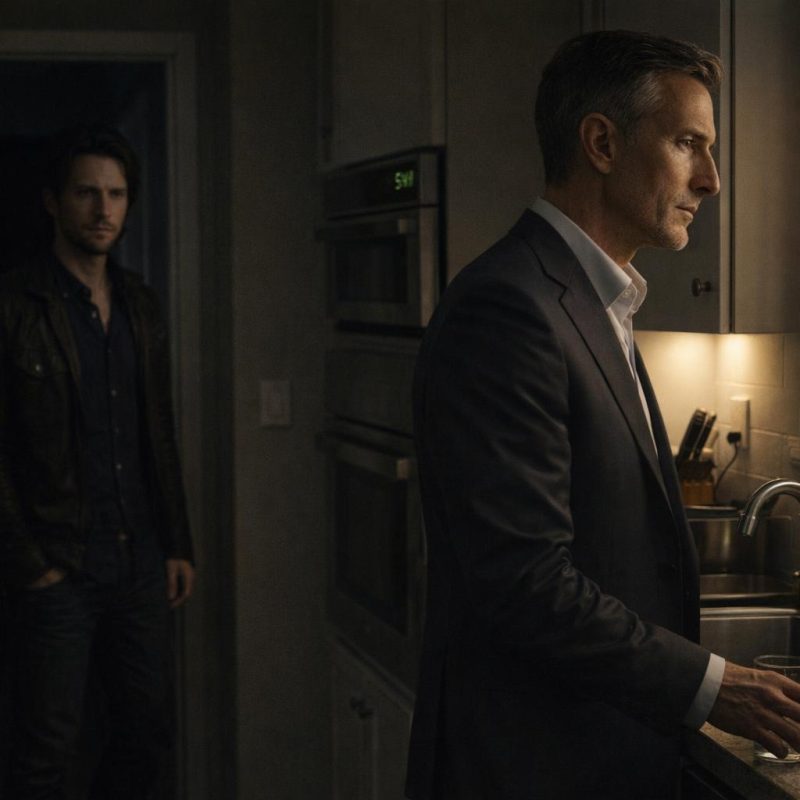 Image by RM AI
Rose's Morning Routine
By six-thirty my mother was already moving through the kitchen like the morning had a schedule she'd memorized years ago. Plates set out, three of them. Eggs cracked into the pan, toast in the toaster, coffee percolating on the counter. She didn't ask where my father had been. She didn't look at the clock or make any comment about the hour. She just cooked, moving from counter to stove to table with that quiet efficiency she had, the kind that looked effortless because she'd done it so many times. My father came down around seven, showered and changed into slacks and a flannel shirt, looking like a man who'd slept eight hours. He sat at his usual chair and she poured his coffee without being asked. They talked about my science test that week, about whether the gutters needed cleaning before the weather turned. The newspaper sat folded beside his plate the whole meal and he never opened it. I ate my eggs and listened to them talk and it felt, the way it always felt, like a perfectly ordinary morning. Whatever the night had been, it was already behind them — folded away somewhere I couldn't see, in the quiet understanding that had settled between them long before I was old enough to notice it.
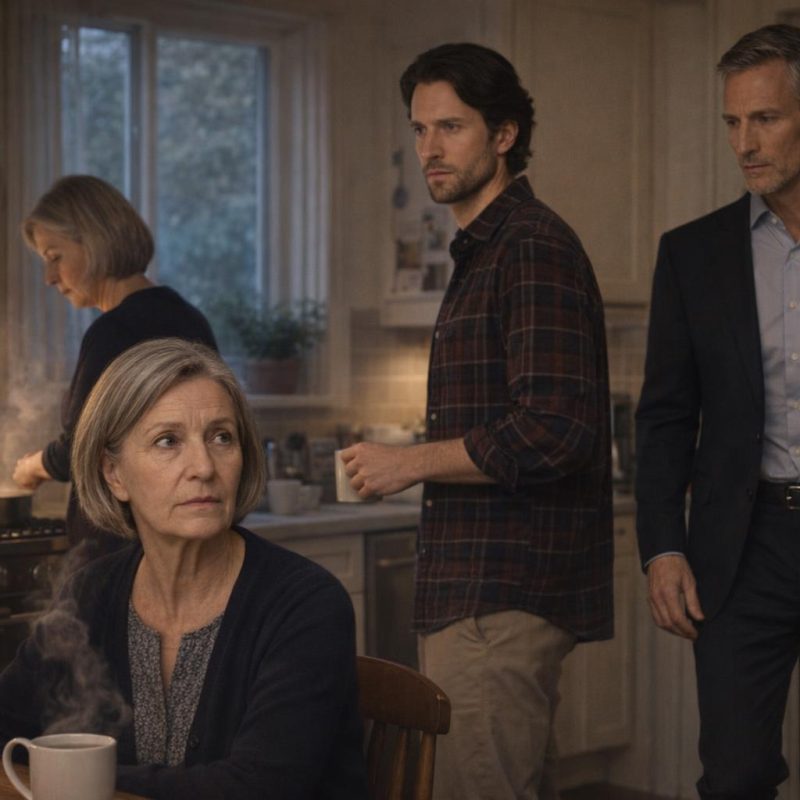 Image by RM AI
The Consultant
I asked him once at dinner — I must have been twelve, maybe thirteen — what exactly he did for work. Not the first time I'd wondered, but the first time I'd asked directly. He set his fork down and gave me his full attention, which was its own kind of answer. He said he was a consultant. He helped businesses figure out where they were losing money, where things weren't running the way they should. Efficiency, he said. Resource management. I asked what kind of businesses, and he listed a few — a couple of restaurants in the city, a small manufacturing operation out in Bergen County, a few others he mentioned without naming specifically. It all sounded reasonable. It sounded like the kind of work a serious man in a good suit would do. My mother cleared the salad plates while he talked, moving around us without joining in. When I asked if he had a boss, he smiled a little and said he worked for himself, always had. Then he asked me about my math homework, and just like that the conversation shifted, and I let it shift, because there was nothing in what he'd said that gave me any reason not to. The answers had been complete. They just hadn't quite connected to the questions I'd actually been asking.
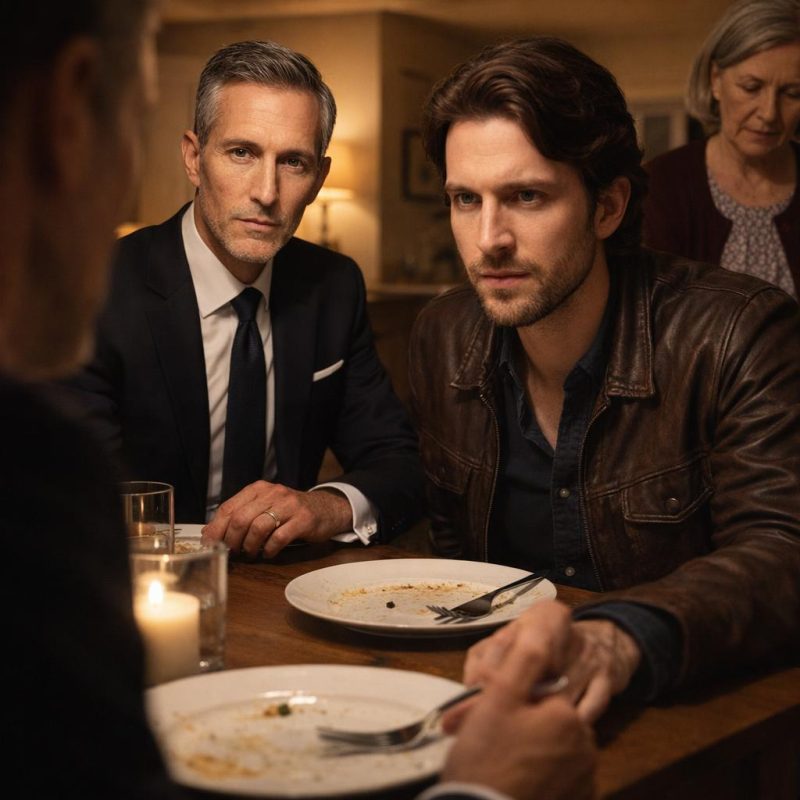 Image by RM AI
The Closed Door
I was heading down the hall to ask him something about a permission slip — something ordinary, something that could have waited — when I heard his voice through the study door. It wasn't raised. If anything it was quieter than usual, which was what made me stop. The door was pulled almost shut but not latched, and his voice came through the gap in low, clipped pieces. Numbers, mostly. A reference to Tuesday. Something about an arrangement being confirmed. I stood there without meaning to, one hand still raised toward the door, and I told myself I'd knock in a second. Then he said a name. Just a name, dropped into the middle of a sentence I couldn't fully hear. But I knew it. I'd seen it on the blue-and-white signs that had been going up on telephone poles all over the neighborhood for the past month — the kind of signs that meant someone was running for something. I stood there another moment, not moving. Then I lowered my hand and walked back down the hall to my room, and I sat on the edge of my bed and stared at the carpet, and I didn't knock.
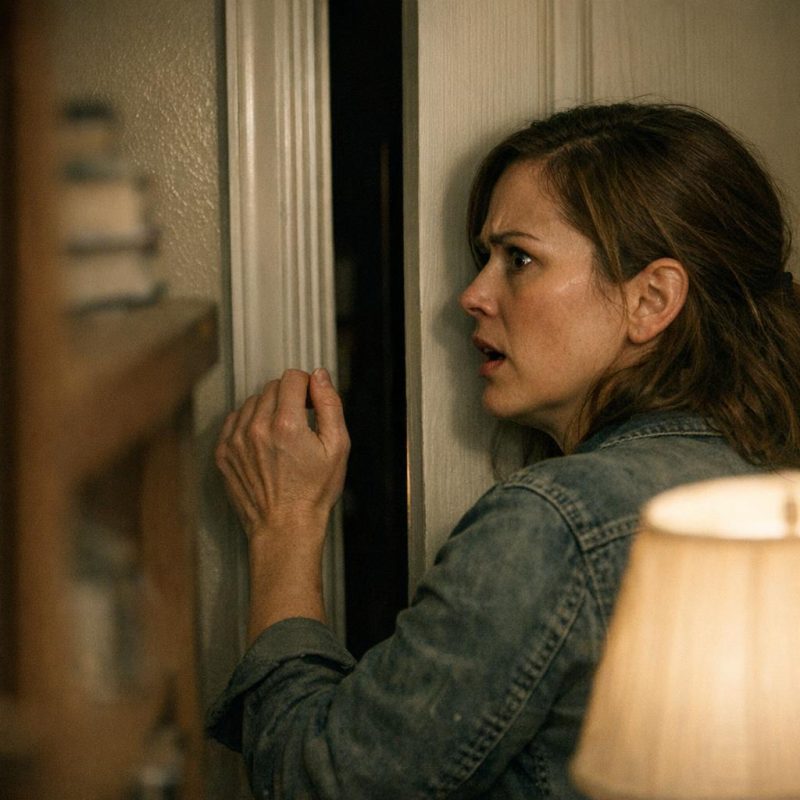 Image by RM AI
The Briefcase
He left the briefcase in the living room one afternoon while he went upstairs to change. I was on the couch doing homework, and it sat on the coffee table maybe two feet from my knee. I'd seen it a hundred times — he carried it the way other men carried their keys, always present, always in hand. But I'd never had it this close without him in the room. The leather was dark brown and scuffed at the corners, the kind of wear that comes from years of use rather than carelessness. Two brass clasps ran across the front, the kind that snap open with a press of the thumb. I looked at it the way you look at something you're not supposed to touch — which is to say, longer than I should have. Then I noticed the third thing. Below the clasps, threaded through a small loop in the leather, was a combination padlock. Compact, black-faced, the kind with a four-digit dial. I hadn't seen it before, or maybe I hadn't been looking. He came back downstairs a few minutes later, picked the briefcase up without glancing at me, and carried it to the study. The door closed behind him. I went back to my homework.
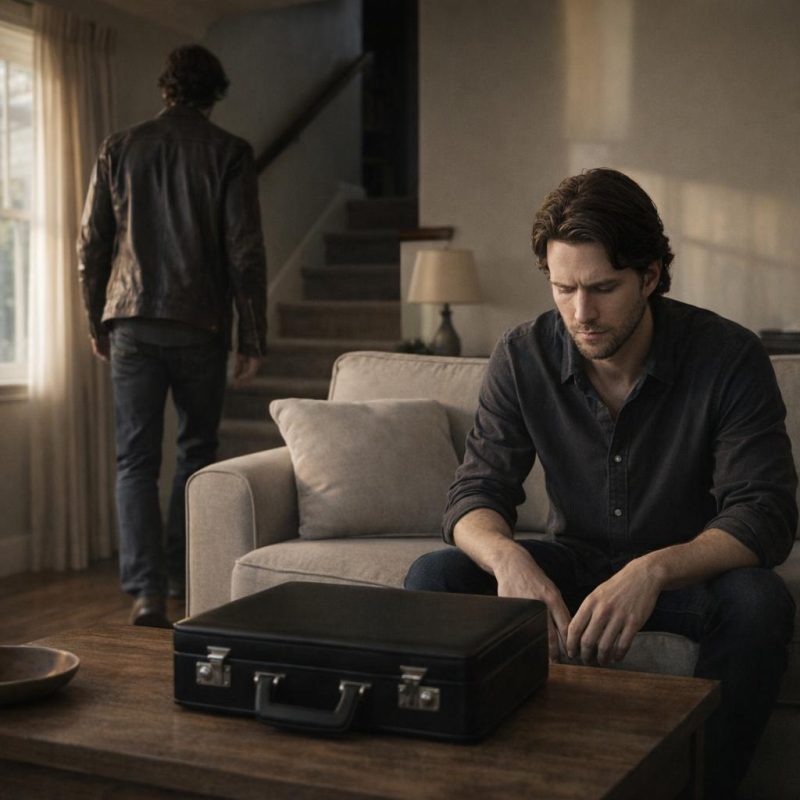 Image by RM AI
Sunday Dinner
Sunday dinners with all three of us at the table were rarer than they should have been, so when my father walked through the door at four in the afternoon — earlier than I'd seen him on a weekend in months — my mother didn't say anything, just adjusted the timing on the roast. We sat down together around six, pot roast with potatoes and carrots, the good plates out, the kind of meal that felt like it was trying to hold something in place. He asked about my science fair project and actually listened to the answer, offered a suggestion about the display board that was genuinely useful. My mother brought out the apple pie and we stayed at the table the way we almost never did. It felt close to normal. It felt like the version of things I wanted to believe in. Then I noticed him glance at his watch while he was still eating his pie. A minute later, again. The phone rang once from the kitchen and nobody moved to answer it. He picked up his fork, set it down, and when my mother stood to clear the plates, he checked his watch a third time.
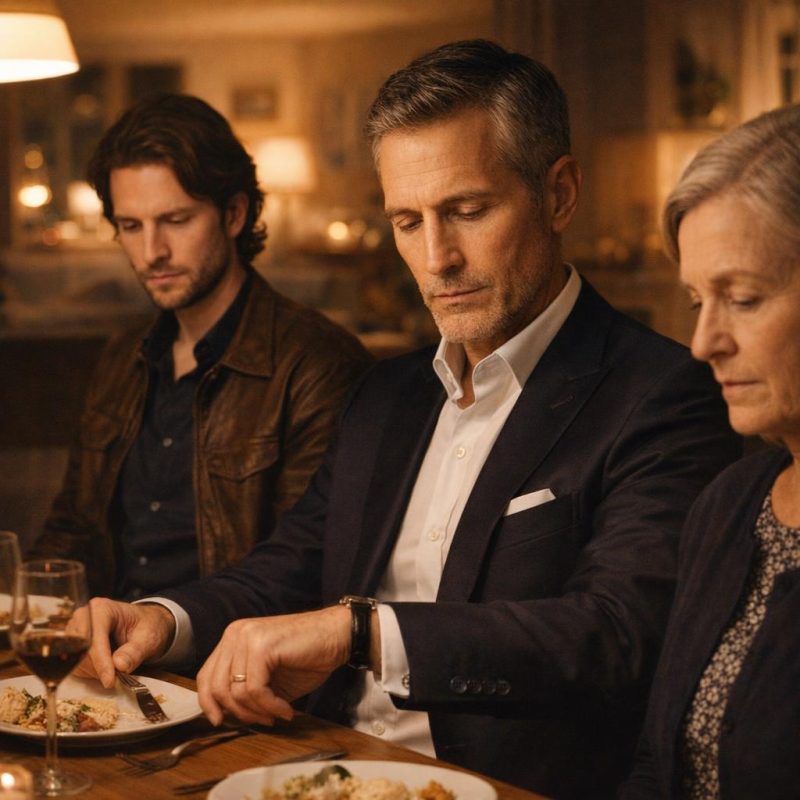 Image by RM AI
Sal's Visit
The doorbell rang at seven on a Wednesday, which was unusual enough that I looked up from the television. My father answered it himself, which he didn't always do. I heard him say the name from the living room — Sal — in the same tone he used for people he'd known a long time. The man who stepped inside was stocky, thinning gray hair, dark suit, no tie. He carried nothing — no briefcase, no folder, no papers. They shook hands in the entryway and went directly to the study without stopping in the living room, without any of the small talk that usually accompanied a guest. The door closed. I could hear the low register of voices through the wall but nothing distinct, no words, just the rhythm of two men talking in measured tones. Fourteen minutes later Sal came out, buttoning his jacket as he walked. My father walked him to the front door and they shook hands again on the step, brief and formal, and then the door closed and my father went back to the study without comment. I turned back to the television. The house had gone quiet again, but there was a particular quality to that quiet — something formal, something that didn't quite dissipate the way ordinary silence did.
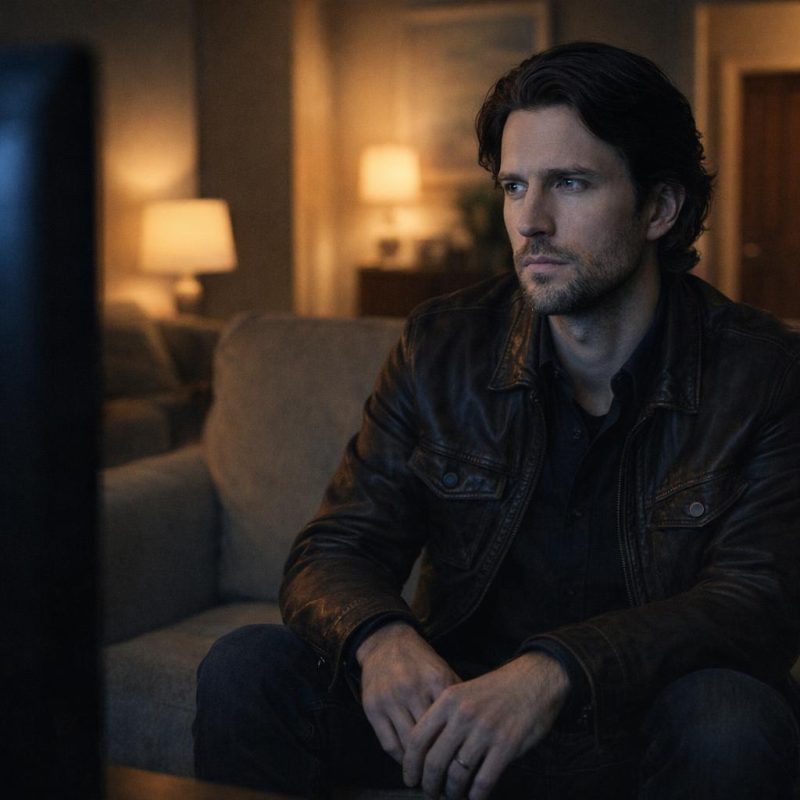 Image by RM AI
The Departure Ritual
It happened the same way every night he went out. By eight o'clock the shower was running upstairs, and the smell of his shaving soap — something cedar-based, something I associated entirely with him — would drift down the hallway. My mother pressed his shirt earlier in the evening, always the same careful attention to the collar and cuffs, hanging it on the back of the study door where he could reach it without asking. By eight-thirty he was dressed — navy silk suit, pocket square set at a precise angle — moving through the bedroom with the quiet efficiency of a man who had done this ten thousand times. He checked his wallet at the dresser, patted his jacket pockets, then went to the study for the briefcase. My mother met him at the front door. She kissed him on the cheek. He said something low, something I never caught from the top of the stairs, and then the door closed. From my bedroom window I watched him cross the driveway to the Cadillac, open the door, set the briefcase on the passenger seat. The engine turned over. Headlights swept across the lawn in a slow arc. By nine-oh-three the taillights were gone, and the street was dark, and the house settled back into its ordinary quiet — the same quiet it always found at exactly that hour.
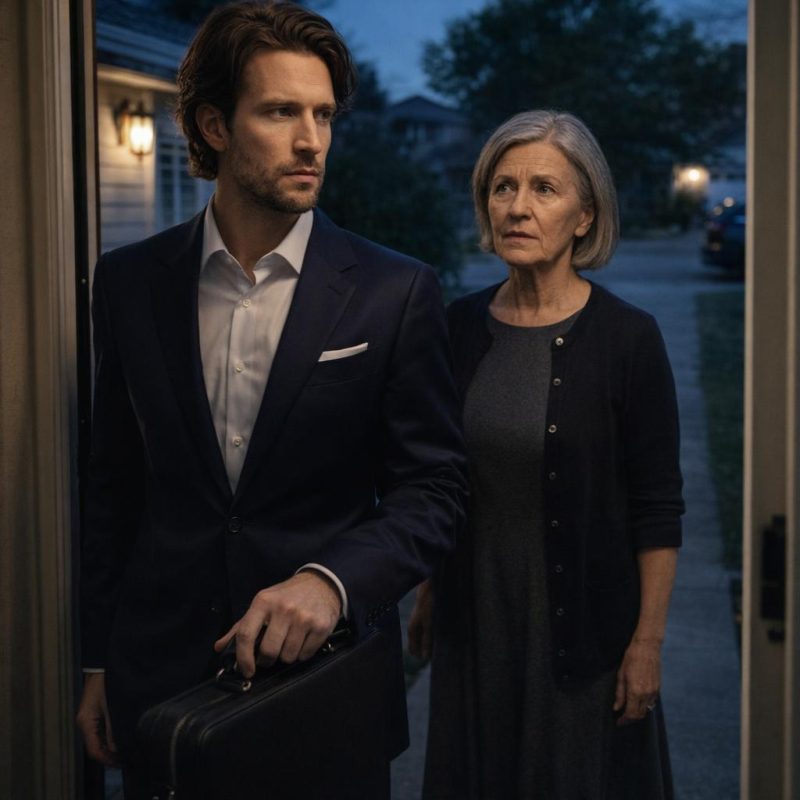 Image by RM AI
Growing Up in the Gaps
The years moved the way years do when nothing dramatic interrupts them — in accumulations of small sameness. I turned sixteen and my father drove me to the DMV in the Cadillac, waited in a plastic chair with his newspaper folded to the crossword, and shook my hand when I came out with the license. Sunday dinners continued when his schedule allowed. My friends came and went through the house and none of them ever asked what my father did for work, which I only noticed later, when I thought about it — the way the question simply never arose. The Cadillac was always back in the driveway by morning. I graduated high school and he sat in the third row in a gray suit, and my mother took photographs with a disposable camera, and afterward we went to a restaurant he chose, somewhere with white tablecloths. I enrolled in community college the following fall. The household routine did not change. He left at nine, returned before dawn, pressed his shirts, carried his briefcase. I stopped wondering where he went. I stopped wondering about the briefcase, about Sal's visits, about the phone calls behind the closed study door. At some point — I couldn't have told you exactly when — I had simply stopped asking questions altogether, and the strange part was that I hadn't even noticed it happening.
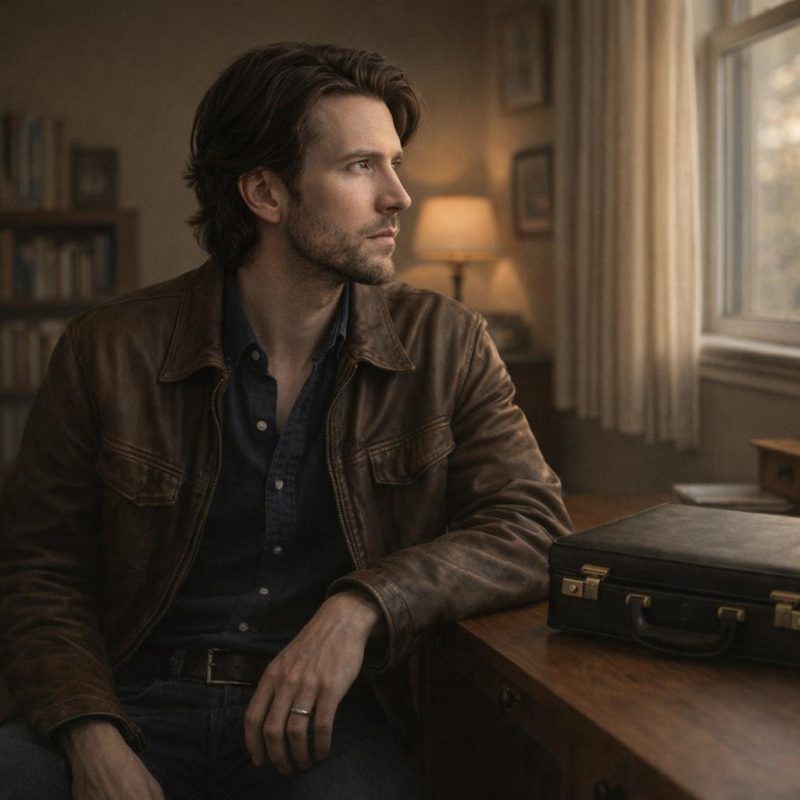 Image by RM AI
The Expensive Watch
It was a Sunday in late October, the kind of morning where the light comes in low and sharp through the kitchen windows. My father was already at the table when I came down, buttering toast, the newspaper open beside his plate. I poured myself coffee and sat across from him, and that's when I saw it — a watch on his left wrist that hadn't been there the week before. Platinum band, substantial, the kind of piece that caught the light every time his hand moved. He reached for his coffee mug and the face caught the sun and threw a small bright point across the wall. I looked at it the way you look at something that doesn't quite fit the frame of what you're expecting. My mother moved behind us, refilling mugs, and said nothing about it. At some point I mentioned it — something casual, something that wasn't quite a question. My father glanced at his wrist as if he'd nearly forgotten it was there. A gift, he said. From a client who was satisfied with the outcome of a project. He went back to his toast. I went back to my eggs. But the watch kept catching the light throughout the meal, that quiet platinum gleam, and I found myself thinking that it probably cost more than the used Civic I'd been saving toward — and that a satisfied client was a very vague thing to be.
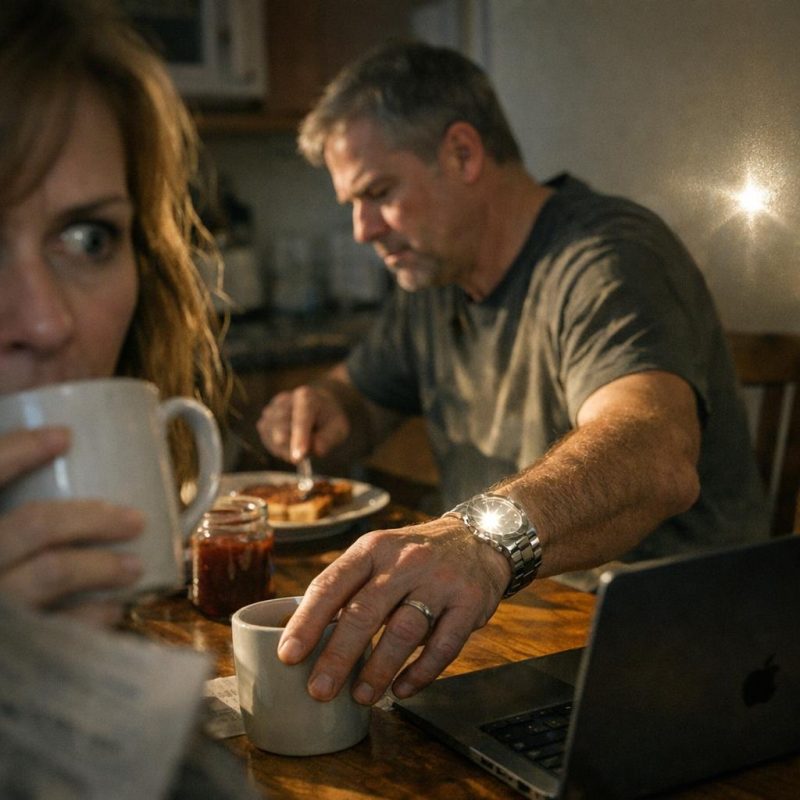 Image by RM AI
Consulting Pays Well
I asked him directly one morning, not long after the watch appeared. We were alone in the kitchen — my mother had gone to run errands — and I put it plainly: how does consulting pay for all of this? The house, the suits, the watch. He set down his newspaper and looked at me with the particular patience he reserved for questions he had already decided how to answer. Specialized knowledge, he said. The kind that takes years to develop and that most people don't have. He folded his hands on the table. Discretion, he continued, is rarer than people think. Clients who need problems solved quietly — and solved correctly — will pay a premium for someone they can trust absolutely. I asked if that meant confidentiality agreements, the kind lawyers use. He said yes, something like that. Some clients prefer minimal documentation. It keeps things clean for everyone involved. He picked up his newspaper again, which was the signal that the conversation had reached its natural end. I thanked him and took my coffee to the other room. The explanation had been complete, unhurried, reasonable — every piece of it fitting neatly against the next. I turned it over in my mind for a moment and then let it settle. Something about the way it had come out so evenly — no pause, no search for the right word — stayed with me longer than I expected.
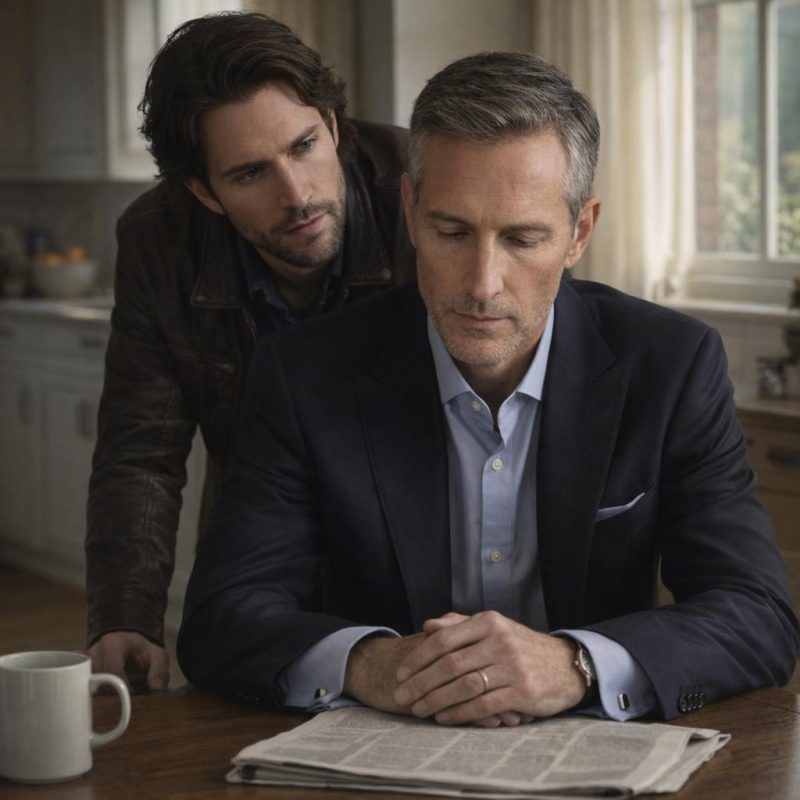 Image by RM AI
The Tense Call
I came home from class on a Tuesday afternoon in November and heard his voice before I reached the front door. The study door was ajar — unusual for that hour — and his voice was coming through the gap in a register I hadn't heard before. Not loud. My father was never loud. But there was something stripped away from it, something that made the hair on my arms stand up before I'd even processed what I was hearing. I stopped in the hallway without deciding to stop. His words came in fragments through the gap: Tuesday is not negotiable. A pause. Then something I couldn't make out, lower, directed at whoever was on the other end. Then, clearly: you know what happens if this doesn't get handled. Another pause. I don't make the rules. I moved quietly toward the kitchen, set my bag down on the counter, and opened the refrigerator as if I'd just walked in. A minute later I heard the study door open fully. He came into the kitchen, saw me, and his face arranged itself back into its usual composure — unhurried, unreadable. He asked how class had gone. I told him fine. He poured himself a glass of water and went back to the study. I stood at the counter for a long moment, staring at nothing, and then I heard him say: you know what happens if this doesn't get handled.
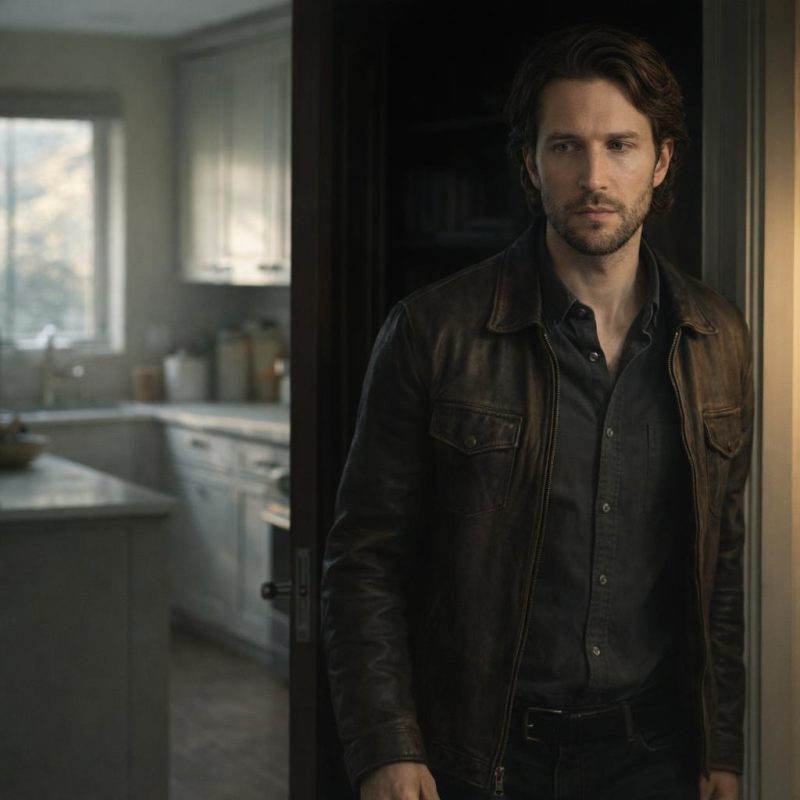 Image by RM AI
Later and Later
It started the Monday after Thanksgiving. I was awake early — couldn't sleep, some restlessness I couldn't name — and I heard the Cadillac pull into the driveway at five forty-seven in the morning. I lay there in the dark and thought about that. The next night I stayed half-awake on purpose, and the engine came at six-oh-two. Wednesday it was five fifty-five. Thursday, six-fourteen. Friday, six twenty-three. I told myself I was just noticing, the way you notice anything that shifts slightly from what you're used to. But the following week the pattern held — later each time, the gap between his departure and his return stretching in a direction that didn't have an obvious explanation. One morning the Cadillac didn't come until six forty-one. I lay in the dark listening to him move through the kitchen below me, careful and quiet, the way a man moves when he doesn't want to wake anyone. I heard the tap run briefly. The refrigerator open and close. Then his footsteps on the stairs, measured and even. I reached for the notepad on my nightstand — the one I used for class notes — and I wrote down the time. Six forty-one. I looked at the column of numbers I'd been keeping without quite deciding to keep them, and I had no good answer for why I'd started writing them down.
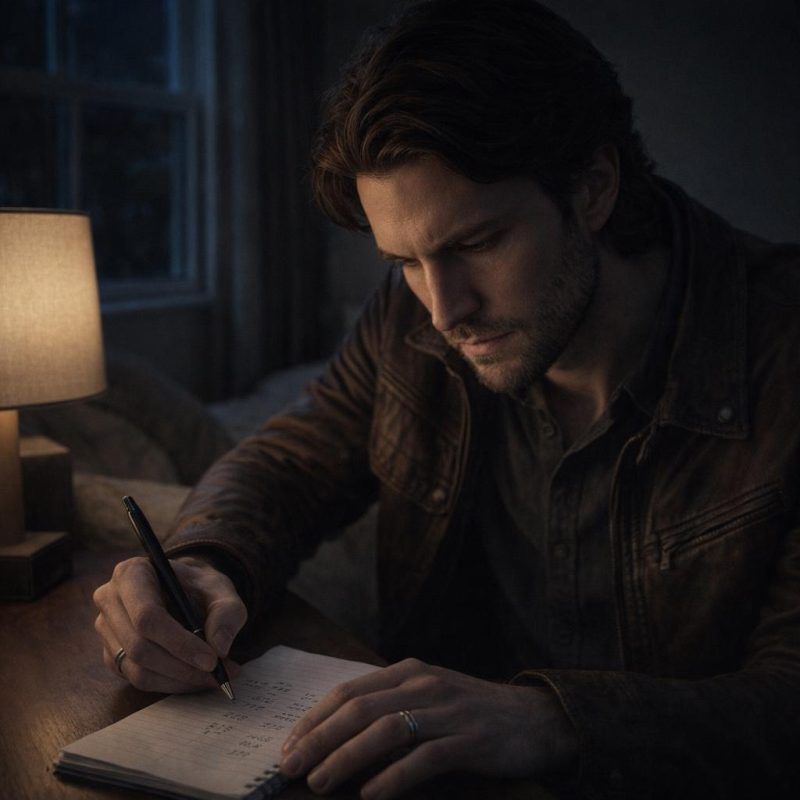 Image by RM AI
The Controlled Man
He came down to breakfast that morning at eight-fifteen, ninety minutes after I'd heard the Cadillac in the driveway. He was showered, dressed in a dark henley and slacks, hair combed. He moved to the coffee maker with the same unhurried efficiency he brought to everything — no hesitation, no stiffness in his joints, no particular care in how he set his feet. My mother was at the counter slicing fruit and they exchanged a few words about her plans for the afternoon, something about a dentist appointment and whether she needed the car. He said she could take it. He poured his coffee and carried it to the table and opened the newspaper to the sports section. I watched him from across the table over the rim of my own mug. His breathing was even. His posture was easy. He turned a page of the newspaper with the same deliberate calm he always had. At some point he reached for the coffee pot to refill his mug, and I watched his hand close around the handle and lift — and his hand was completely steady, not a tremor, not a suggestion of one, the coffee rising in a smooth unbroken arc into the cup.
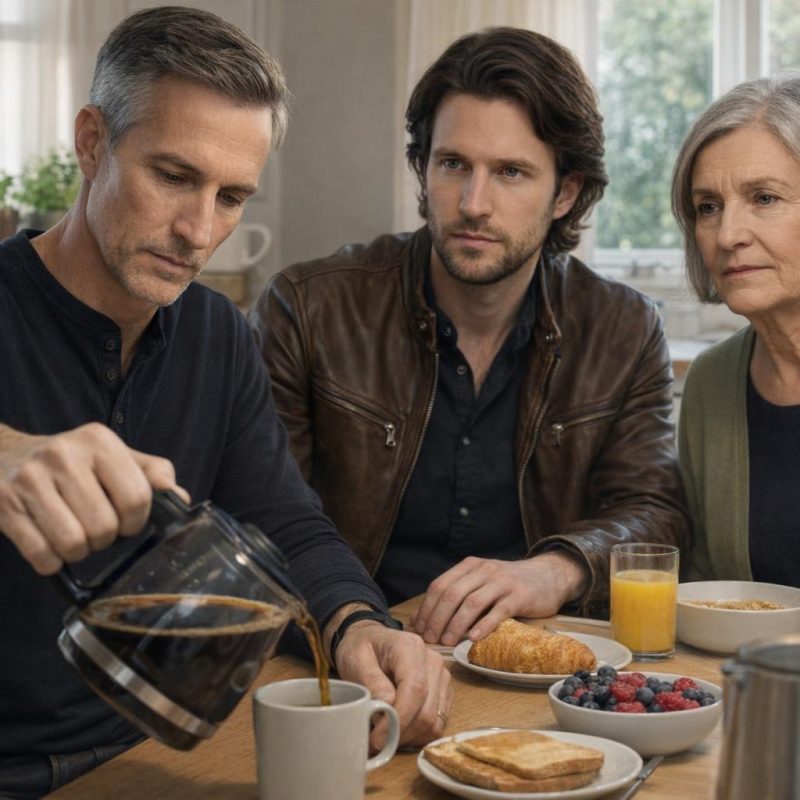 Image by RM AI
The Call That Changes Everything
The call came at two-seventeen on a Thursday afternoon. I was at the kitchen table with a textbook open in front of me when my phone rang — a number I didn't recognize, a 201 area code. A woman identified herself as an administrator from St. Michael's Medical Center. She asked if I was the son of Vincent Romano. I said yes. She told me that my father had been brought in by ambulance earlier that afternoon and that he had been pronounced dead at one fifty-three PM. Cardiac arrest, she said. Sudden onset. I asked where he had been when it happened. She said he had been found in his car in a parking garage downtown. I thanked her. I don't know why I thanked her. I set the phone down on the table and sat there for a moment looking at the textbook, at the words on the page that had stopped meaning anything. Then I got up and walked to the kitchen doorway. My mother was at the stove, her back to me, stirring something in a pot. I said her name. She turned. I told her. Her face went still — not crumpled, not collapsed, just still, the way a face goes when the mind hasn't caught up yet. She sat down at the table without speaking, without pulling out the chair, just lowering herself into it. I sat across from her. The pot was still on the stove. Neither of us moved to turn off the burner, and the house held that particular silence — the kind that doesn't feel like quiet at all.
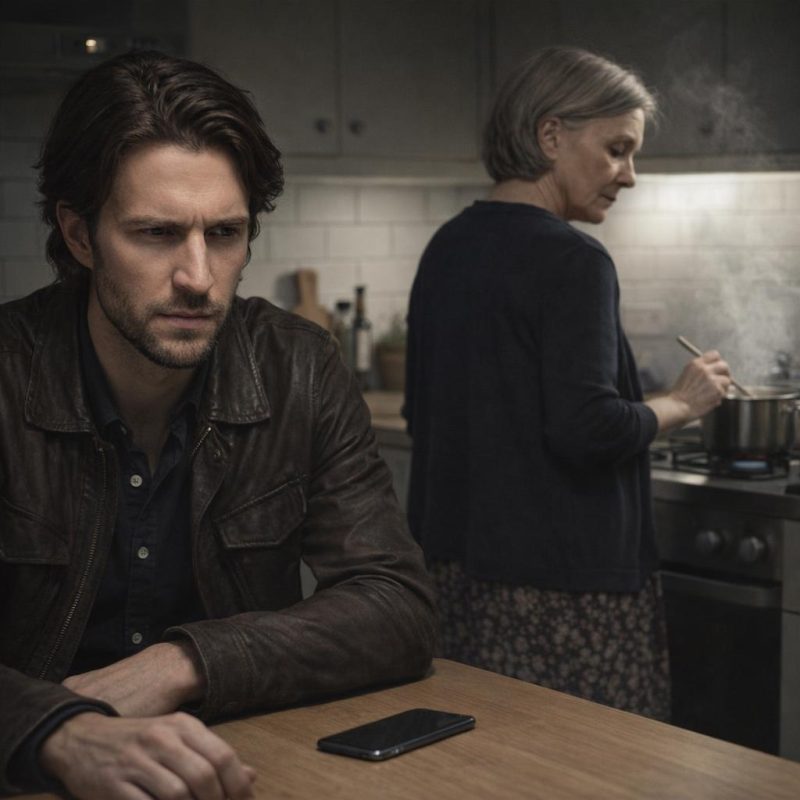 Image by RM AI
Arrangements
By Friday morning David is on the phone with Caruso Funeral Home on Bloomfield Avenue, walking through casket options and service times while Rose sits at the kitchen table with her hands folded in her lap. He picks a mahogany casket because it seems like something his father would have chosen himself — solid, dark, no ornamentation. The service is set for Monday at ten. He calls the three names he has for his father's associates, leaves messages, and figures that is the extent of it. Then the funeral home calls back that afternoon. The director says they have been receiving calls all morning — people confirming attendance. He reads David a few names. David doesn't recognize any of them. He writes them down anyway, a list that keeps growing through Saturday, names he has never heard his father mention, men who somehow already know where and when to show up. He asks Rose if she recognizes any of them. She looks at the paper for a moment and shakes her head. David goes back to the phone. The last call comes around seven that evening. The man on the other end doesn't give his name. He says, in a voice that is flat and unhurried, that the family will be there — and then the line goes dead.
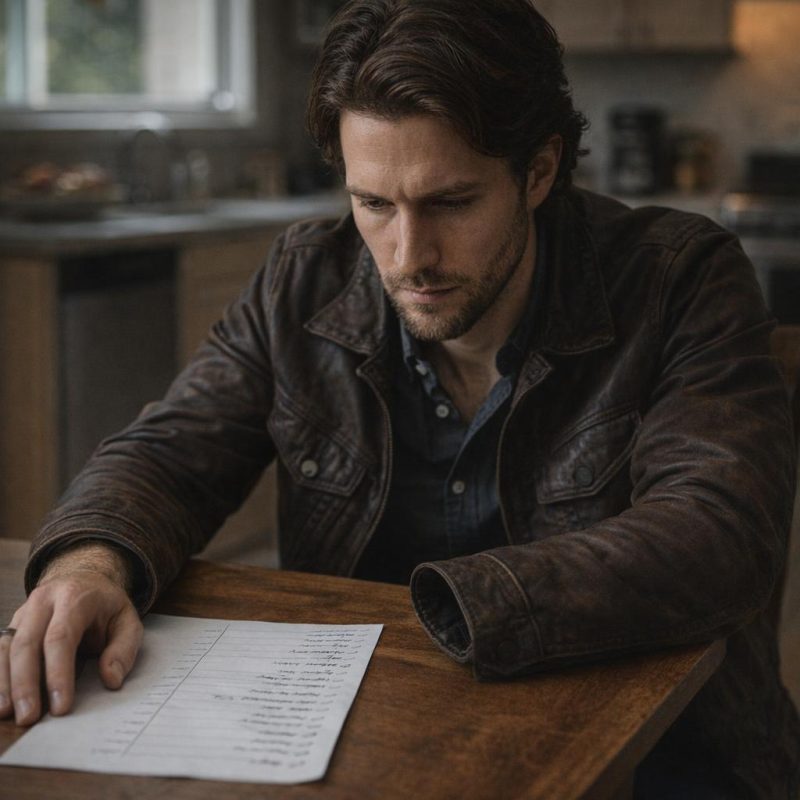 Image by RM AI
Rose's Silence
Saturday evening David sits with Rose in the living room, the attendee list on the cushion between them. The television is off. The house has that particular stillness it gets when there is nothing left to arrange and nothing left to say. He asks her if any of the names mean anything to her. She picks up the paper, holds it at arm's length the way she does when she has forgotten her reading glasses, and sets it back down. She says she doesn't recognize them. He asks how so many people could have known his father well enough to show up at his funeral without being called. She says he had business relationships. People he dealt with over the years. David asks if she ever met any of them. She says no — Vincent kept work separate from home. Always had. David asks if that ever bothered her. She is quiet for a moment. Then she says she learned a long time ago not to ask questions about it. There is nothing sharp in her voice when she says it, no resentment, no wound still open. It is the tone of someone who made a decision years ago and has simply lived inside it ever since. She stands and goes to the kitchen, and David sits there with the list in his hands and the quiet she has left behind.
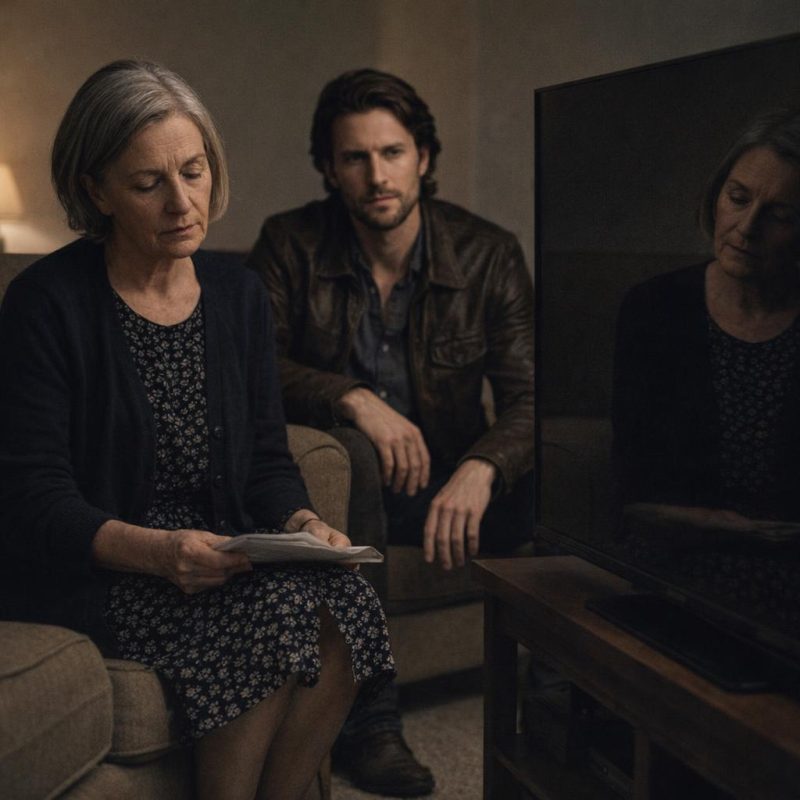 Image by RM AI
The Suit Selection
Sunday morning David goes into his parents' bedroom to find something to bury his father in. Rose is downstairs. He opens the closet door and stands there for a moment before he moves. Two dozen suits hang in neat rows, shoulder to shoulder, organized by shade — charcoal, navy, black, with a few deep grays at the far end. He touches the sleeve of the nearest one. Silk, cool and smooth under his fingers, the kind of fabric that costs more than most people spend on a month of groceries. He checks a label. Custom tailored, a name he doesn't recognize, an address in midtown. He checks another. Same story. He works his way down the row, pulling lapels aside, reading labels, doing the math in his head and not liking where it lands. His father had been a careful man, quiet about money, never flashy at home. But this closet tells a different story — or maybe the same story in a language he hadn't known how to read. He pulls a charcoal suit his father wore to his college graduation, finds a white dress shirt and a burgundy tie, and lays them across the bed. Then he turns back to the closet. The suits hang there in their rows, each one pressed and waiting, and he has the feeling he is looking at a wardrobe that belonged to someone he never quite met.
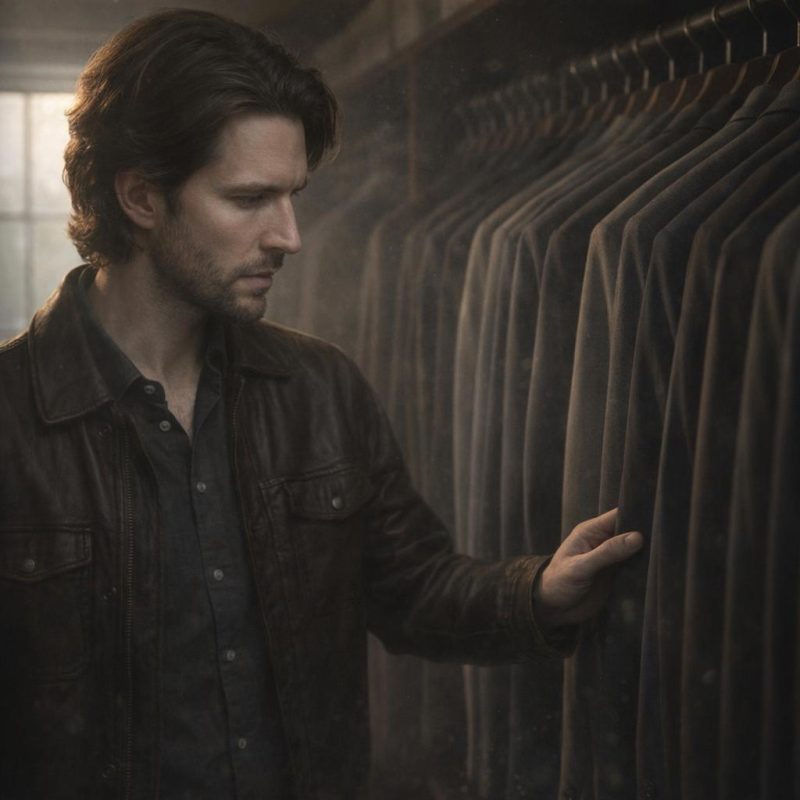 Image by RM AI
The Morning of the Funeral
They leave the house at nine and pull into the funeral home parking lot at nine-thirty. David notices the cars before he notices anything else — dark sedans, most of them late model, parked in careful rows along the far end of the lot. He counts fifteen before he stops counting. Men stand in clusters near the entrance and along the side of the building, all of them in dark overcoats despite the mild April morning. He helps Rose out of the passenger seat and they walk toward the front doors. None of the men look at them. That is the thing that stays with him — not that they are there, but that not one of them turns their way. No nod, no eye contact, no acknowledgment that they are the family of the man these men have come to bury. They keep their conversations low and their faces forward. Rose walks beside him with her chin up and her eyes straight ahead, as if she decided before they left the house that she would not let herself be unsettled. He holds the door for her and pauses on the threshold. He looks back across the lot. Thirty men, at least, standing in their small groups in the April light, and not one of them has so much as glanced in their direction.
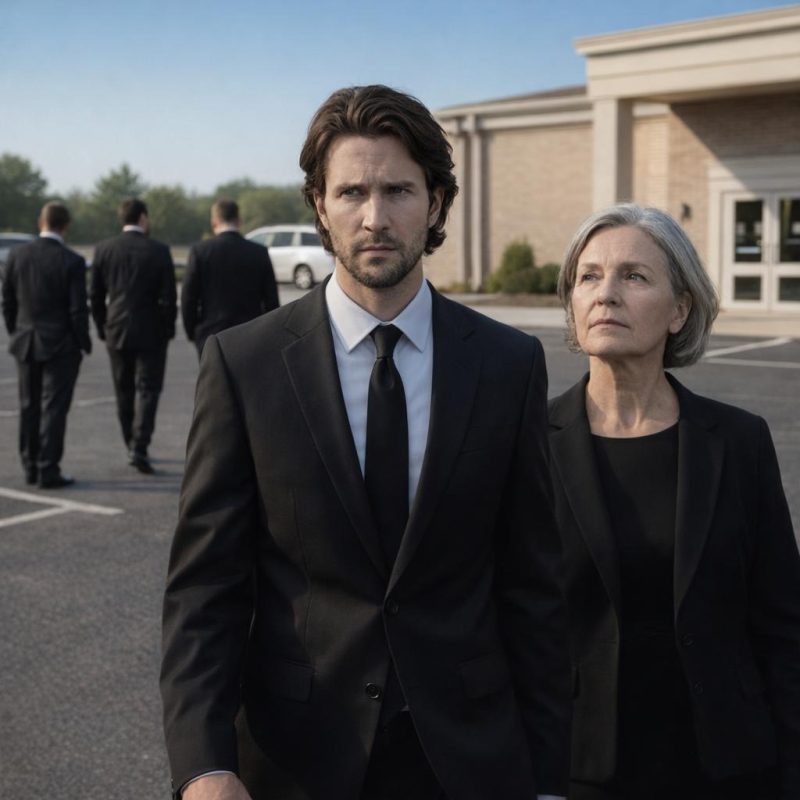 Image by RM AI
The Men in Overcoats
At nine fifty-five the chapel doors open and the men begin to come in. They move in groups of three and four, unhurried, each group filing into a pew and settling without a word exchanged between them. They take the back half of the chapel, row by row, filling from the aisle inward with a kind of quiet efficiency David has never seen at a funeral before. He sits in the front row beside Rose and watches them in his peripheral vision, not wanting to turn around and stare. Their overcoats come off in the same motion, folded the same way, placed across their laps. No one speaks above a murmur. No one approaches the casket. No one comes to the family section to offer condolences. By ten o'clock David counts close to forty of them seated behind him, and the chapel, which had felt cavernous when they arrived, now feels full and close. The funeral director appears at his elbow and says they are ready to begin. David nods. The minister takes his place at the front. He hears the room settle behind him — not the restless shuffle of a normal congregation finding its footing, but something quieter than that, forty men going still at nearly the same moment, the silence arriving all at once.
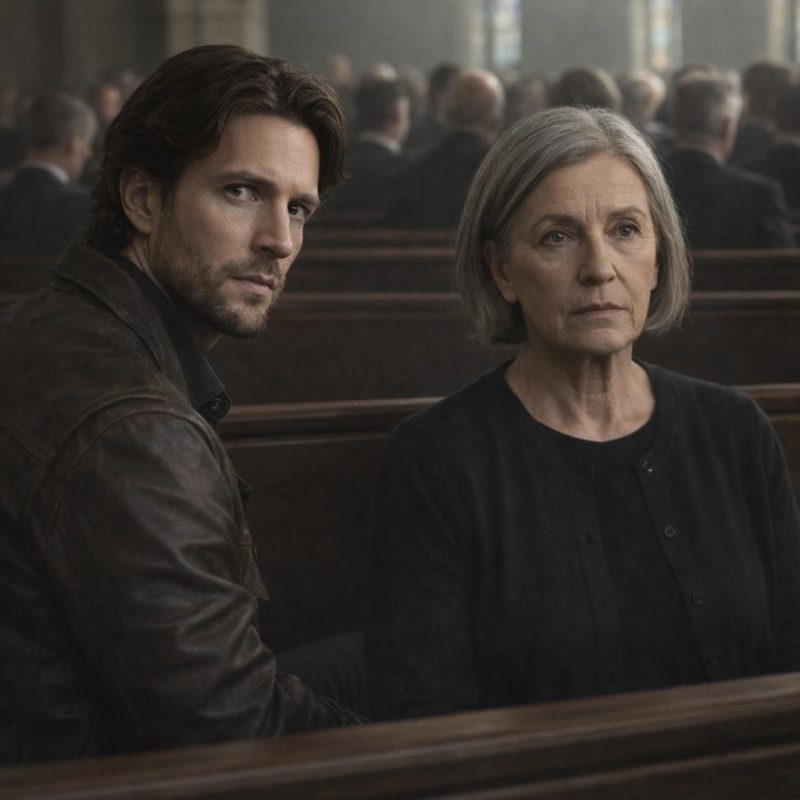 Image by RM AI
The Envelope
The minister finishes the opening prayer and the congregation rises for the first hymn. David stands with Rose, holding the order of service without reading it. That is when he notices movement in the side aisle — a broad-shouldered man making his way forward from the back rows, unhurried, keeping close to the wall. David doesn't register him as heading their way until he is already beside their pew. He stops at David's elbow. He extends a manila envelope, thick and heavy, held flat across both hands. David takes it without thinking — the way you take something when it is offered with that kind of quiet certainty. The man's right hand passes close to David's as he withdraws it, and David sees the scar across his knuckles, a pale ridge running the width of his hand. He holds David's gaze for exactly one second. Then he turns and walks back up the side aisle to his seat, and the hymn continues around them as if nothing has happened. Rose glances down at the envelope in David's hands. She doesn't ask. David sets it on his lap and keeps his eyes forward, the minister's voice rising and falling at the front of the room. The envelope is heavier than paper has any right to be, and the scar across Frank's right knuckles stays with him long after the man's face has blurred.
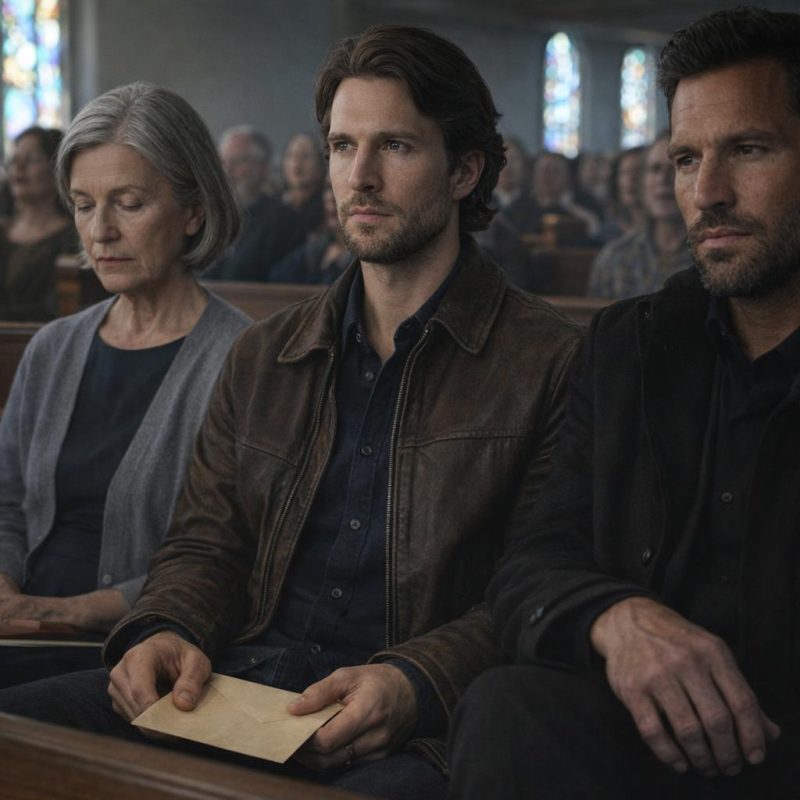 Image by RM AI
Silent Witnesses
The minister concludes at eleven-fifteen with a benediction, and before the last word has settled the men in the back rows are already rising. They move the same way they entered — in groups, row by row, filing toward the chapel doors without breaking formation. None of them stop at the casket. None of them come toward the family section. Rose and David sit in the front row while the funeral director hovers nearby, waiting to speak with them about the burial. David watches the men move past in his peripheral vision, dark overcoats back on, faces composed, the whole procession taking less than three minutes. The chapel empties with a speed that feels practiced. He keeps the envelope flat on his lap, both hands resting on it. When he finally turns to look at the doors, the last man is already in the threshold. He is heavyset, gray at the temples, and he has stopped moving. He stands in the doorway and turns his head and looks directly at David across the length of the empty chapel — a long, steady look that lasts two or three seconds — and then he steps outside and is gone.
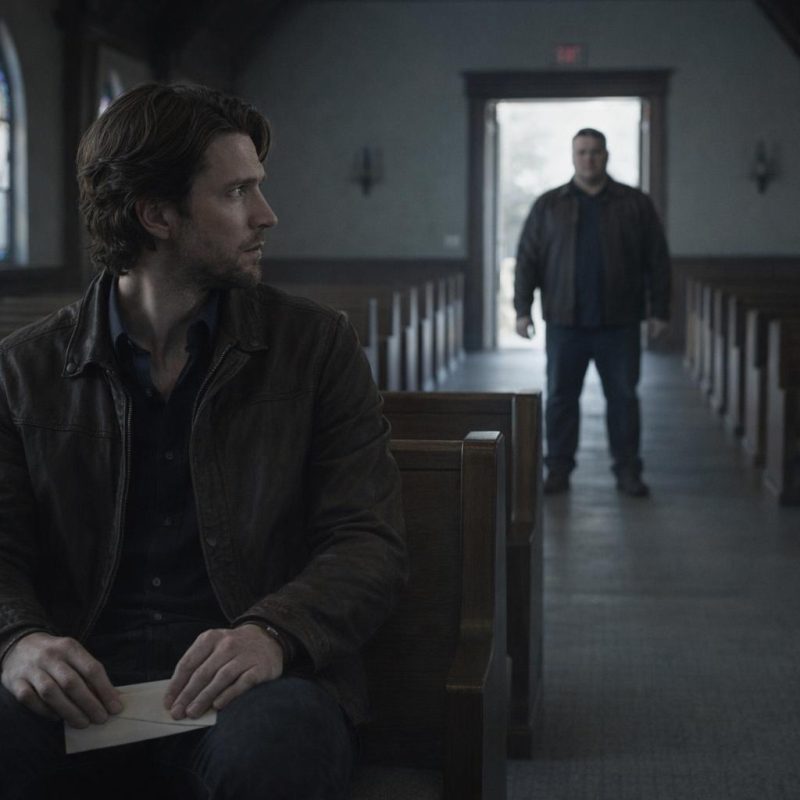 Image by RM AI
The Burial
The burial is at one o'clock at Greenwood Cemetery, a flat stretch of grounds off the highway where the headstones run in long even rows and the trees are still thin enough in April to let the wind through. David and Rose stand at the graveside with the funeral director and a handful of distant relatives — an aunt David hasn't seen in years, two cousins who drive up from Trenton and stand with their hands clasped and their eyes down. The minister reads the committal. The casket is lowered. Rose places a white rose on the lid and David places one beside it. He has the envelope in his jacket's inside pocket, its weight pressing against his ribs the whole time. At some point during the reading he looks up and sees them — the men in overcoats, parked along the cemetery road in their dark sedans, standing in a loose group fifty yards back from the grave. They are visible between the headstones, still and upright, watching the service from that fixed distance. When the relatives begin to leave and the minister folds his notes, David looks back toward the road. The men are still there, none of them having moved a step closer, standing in a line along the far edge of the grounds — observers, not mourners, keeping the same fifty yards between themselves and the grave.
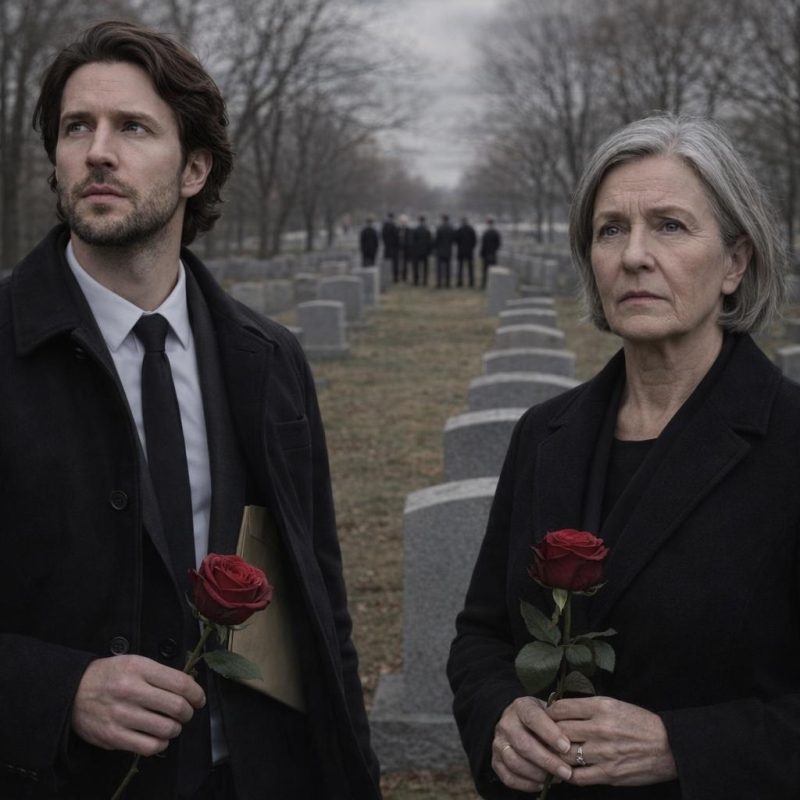 Image by RM AI
The Return Home
They get back to the house a little after two-thirty. Rose goes straight to the kitchen without being asked — the tap runs, the kettle settles onto the burner, the familiar sounds of her managing grief the only way she knows how. David tells her he needs to lie down for a bit. She nods without turning around. Upstairs, his old bedroom is exactly as it always was: the same narrow bed, the same water stain on the ceiling above the window, the same smell of closed air and old carpet. He closes the door and sits on the edge of the mattress. The envelope has been pressing against his ribs since the cemetery, and he pulls it out and holds it in both hands. The seal is plain — no markings, no return address, nothing. He tears it open along the top edge. Inside is a single brass key on a plain metal ring, no tag, no engraving, nothing to identify what it opens. Beneath it, folded twice, is a sheet of standard paper printed with a map. No note. No explanation. Just the key and the map, sitting in his palm while the kettle begins to whistle downstairs. He unfolds the map and smooths it flat against his knee.
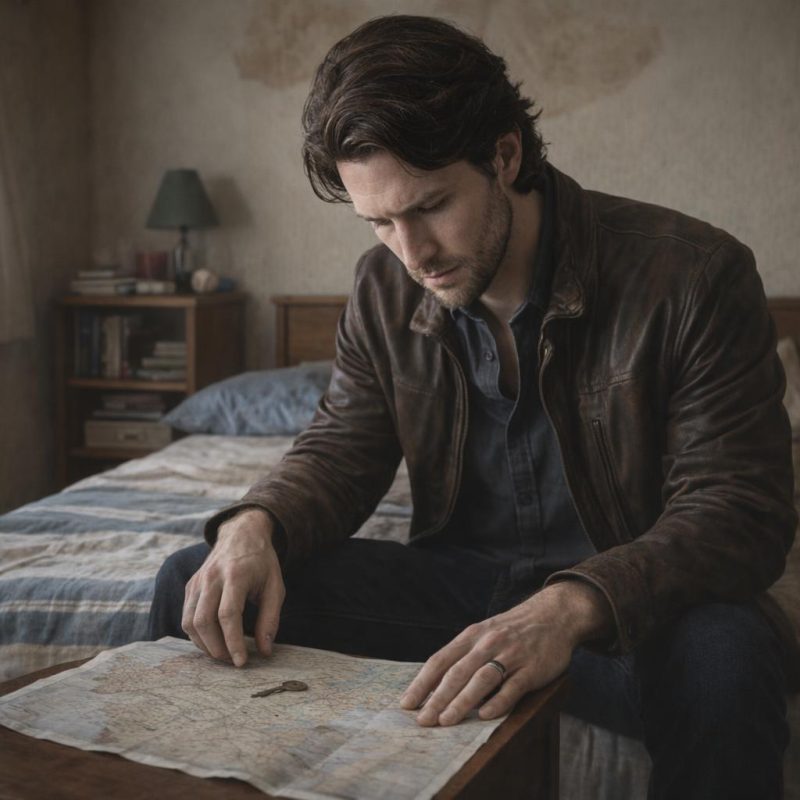 Image by RM AI
The Map
He spreads the map across the bed and leans over it. The print is clean — computer-generated, not hand-drawn — showing a stretch of Route 3 east of the highway interchange, the sports complex visible as a labeled block in the upper corner. Off the main road, two turns in, a facility is circled in red ink: Meadowlands Self Storage. He knows the area. He has driven past it a dozen times without ever registering it as anything more than a row of orange doors behind a chain-link fence. In the same red ink, just inside the circle, someone has written a unit number: 247. That is all. No name, no instructions, no date. He turns the map over. The back is completely blank. He picks up the key again and holds it under the light from the window — brass, medium weight, the kind of cut that belongs to a standard padlock. Nothing stamped on the bow, nothing on the blade. He folds the map carefully along its original creases and slides it into his wallet. The key goes into his front pocket. He sits there for a moment with his hands on his knees, the afternoon light coming through the thin curtains, thinking about how much information that single sheet of paper contained and how completely it explained nothing.
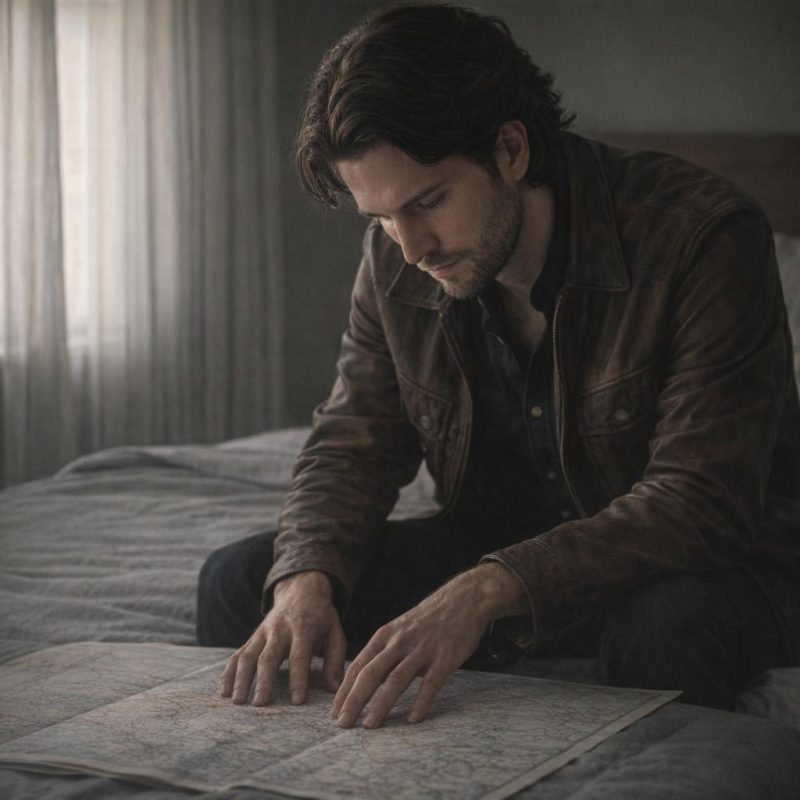 Image by RM AI
Rose's Questions
He comes back downstairs at quarter past three. Rose is in the living room with her tea, sitting in the chair she always sits in, the one angled toward the window. She looks up when he comes in and asks if he is feeling better. He tells her yes and takes the seat across from her. For a moment neither of them says anything. Then she asks, quietly, what the man gave him during the service — the one in the dark coat. He keeps his voice even. He tells her it was a condolence card, from some of his father's business associates, that they couldn't make it in person. Rose nods once and lifts her cup. She doesn't ask to see it. She doesn't ask which associates, or how they knew the time and place, or why a man with a scar across his knuckles was the one delivering condolences. She just nods and sips her tea and looks back toward the window. He asks if she needs anything. She says no, she's fine. They sit in silence for a few minutes, the house settling around them, the afternoon going gray outside. He tells her he's going to take a short walk and she says that sounds like a good idea. The lie had come out so smoothly it almost surprised him, and her acceptance of it settled over the room like something that had always been there.
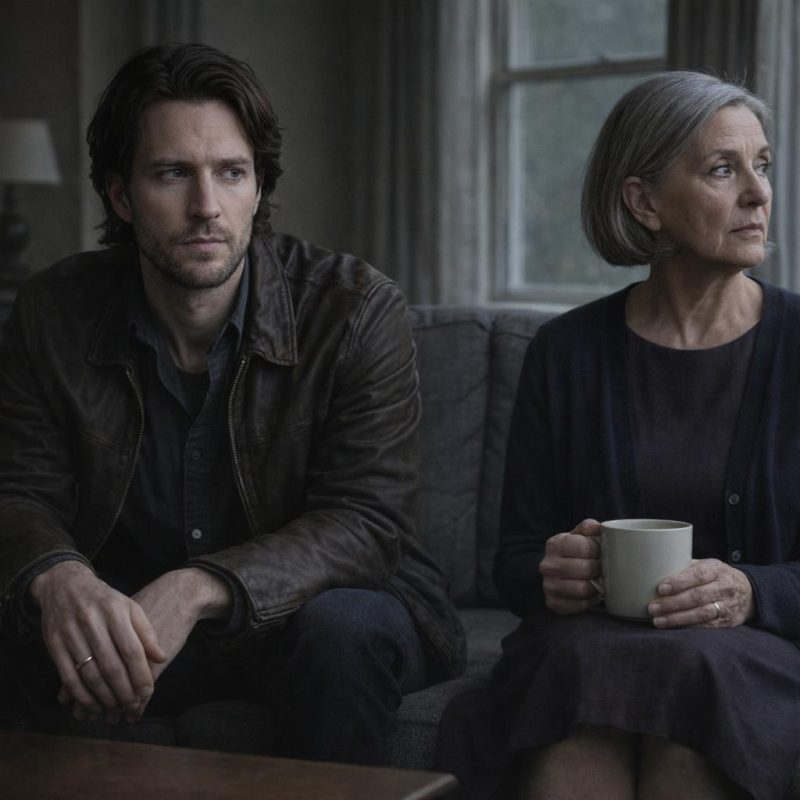 Image by RM AI
The Decision
The neighborhood is quiet in the late afternoon, the kind of quiet that only exists on weekdays when everyone is somewhere else. David walks the long block past the park where he used to play — the same chain-link backstop, the same cracked asphalt path around the perimeter — and lets his mind work through it. The men in overcoats. The envelope passed hand to hand at a graveside. A key with no markings and a map with no explanation. He thinks about asking Rose. He turns the idea over for half a block and then lets it go. Whatever his father left in that unit, he had it delivered to David specifically — not to both of them, not to her. The scarred man had looked at David and only David when he pressed that envelope into his hand. That meant something, even if it was impossible to say what yet. He passes the park a second time without meaning to, having looped back without noticing. The sun is dropping behind the rooflines, throwing long shadows across the sidewalk. By the time he turns back toward the house, the decision has settled into place on its own: he will go tomorrow morning, early, before Rose is fully awake. He will not tell her where he is going. He will not tell anyone.
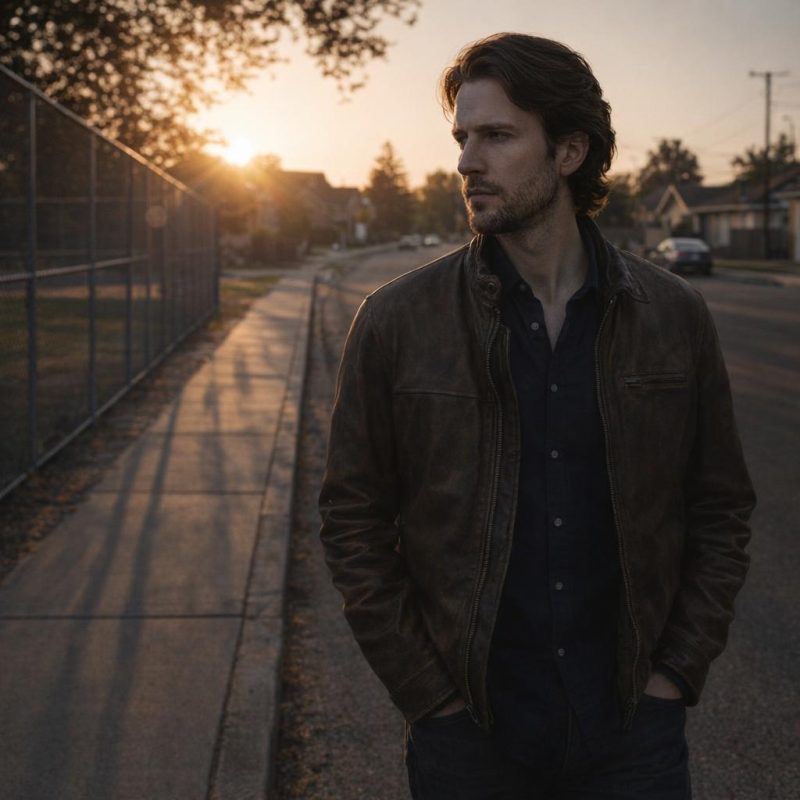 Image by RM AI
The Sleepless Night
David is in bed by ten but sleep does not come anywhere close. He lies on his back staring at the ceiling, the same ceiling he stared at as a kid, and his mind keeps pulling up the same images in no particular order. The Cadillac rolling into the driveway at five in the morning, his father stepping out in a suit that still looked pressed. The locked briefcase he carried to the study and never left open. Sal sitting at the kitchen table for twenty minutes, speaking in a low voice, leaving without staying for dinner. The phone calls his father took in the hallway with the door pulled almost shut. The watch — the one he never explained and Rose never asked about. The men at the cemetery, standing in a line fifty yards back, not mourning, just watching. The scarred man's face, completely still, giving nothing away. He checks the clock at some point: 1:47 in the morning. He gets up and stands at the window. The driveway is empty — the Cadillac sitting dark at the curb, the street beyond it quiet. He goes back to bed. He turns onto his side, then his back again. Sleep finally comes sometime after four, thin and restless, and underneath it, all those years of unanswered questions sat waiting, patient as stones.
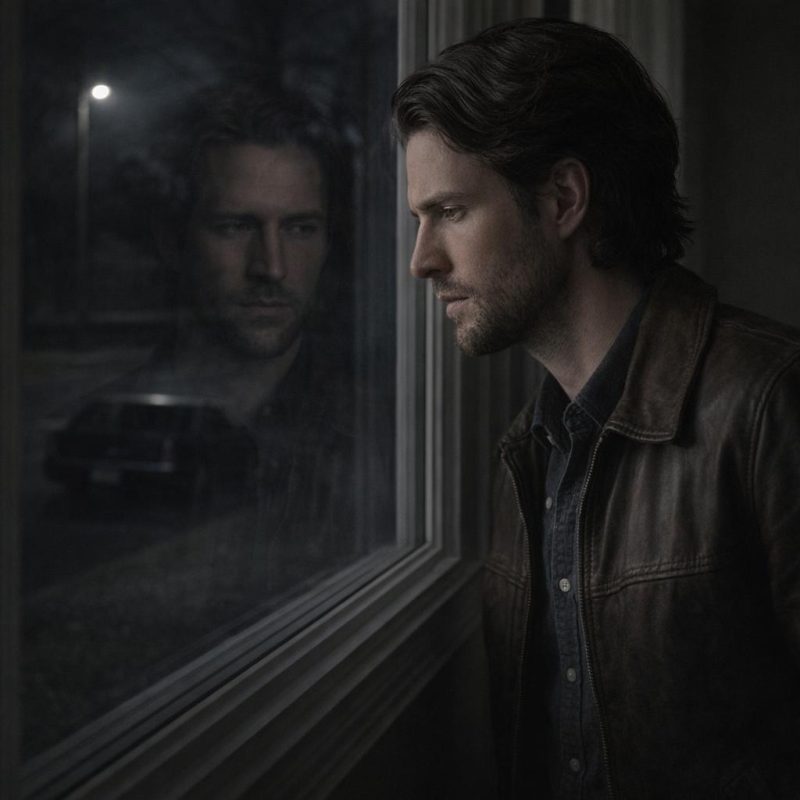 Image by RM AI
The Drive to the Meadowlands
David is up at seven after maybe three hours. He showers, dresses, and comes downstairs to find Rose already at the stove. She has made eggs. He tells her he has some errands to run — vague, nothing specific — and she asks if he will be back for lunch. He tells her probably not. She does not push it. He takes the Cadillac keys from the hook by the door, the same hook they have hung on for thirty years, and backs the car out of the driveway. It handles heavier than his own, the engine quieter than he expects. He takes Route 3 east, the sports complex rising up on the left after a few miles, its upper decks catching the morning light. He keeps his eyes on the road and follows the map from memory — two turns off the main road, a short stretch of access road running parallel to a chain-link fence. The sign appears on the right before he is fully ready for it: Meadowlands Self Storage, white letters on a green background, ordinary as anything. He turns into the entrance. The parking lot is half full, a few trucks and sedans scattered across the asphalt. Ahead, stretching back from the office building in long parallel rows, orange metal doors run in both directions as far as he can see.
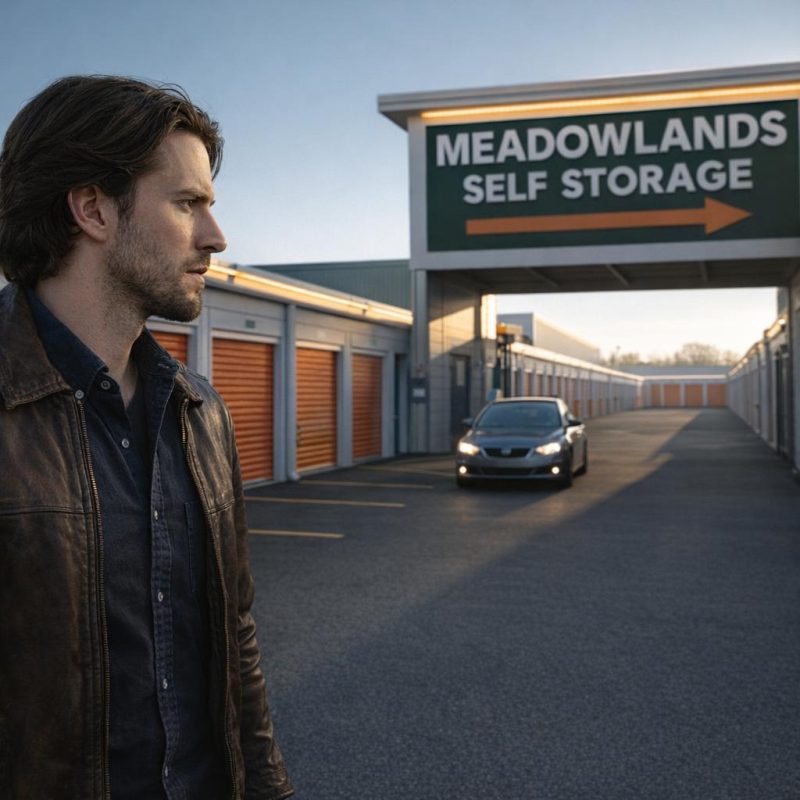 Image by RM AI
The Facility
David locks the Cadillac and walks toward the rows. The facility is organized by section — lettered signs on posts at each intersection, the unit numbers painted in black on every door. He passes Section A without slowing, the numbers running from 100 upward along both sides of the lane. A woman near the far end is loading flat boxes into the bed of a pickup truck, working steadily, not looking up. He turns at the sign for Section B. Units 150 through 199 line both sides of the next lane, most of them padlocked, a few with combination locks looped through the latches. A man in gray coveralls comes toward him pushing a hand dolly stacked with plastic bins, and David steps to the side to let him pass. He nods without making eye contact and keeps moving. David reaches Section C. The sign says 200-249. He follows the numbers along the left side of the lane — 220, then 225, the gap between them longer than it looks on the map. The morning sun hits the orange doors at a low angle and throws the numbers into sharp relief. Around him, the facility goes about its business — engines idling somewhere behind the rows, a lock clicking open two units down — the whole place as unremarkable as a parking garage on a Tuesday morning.
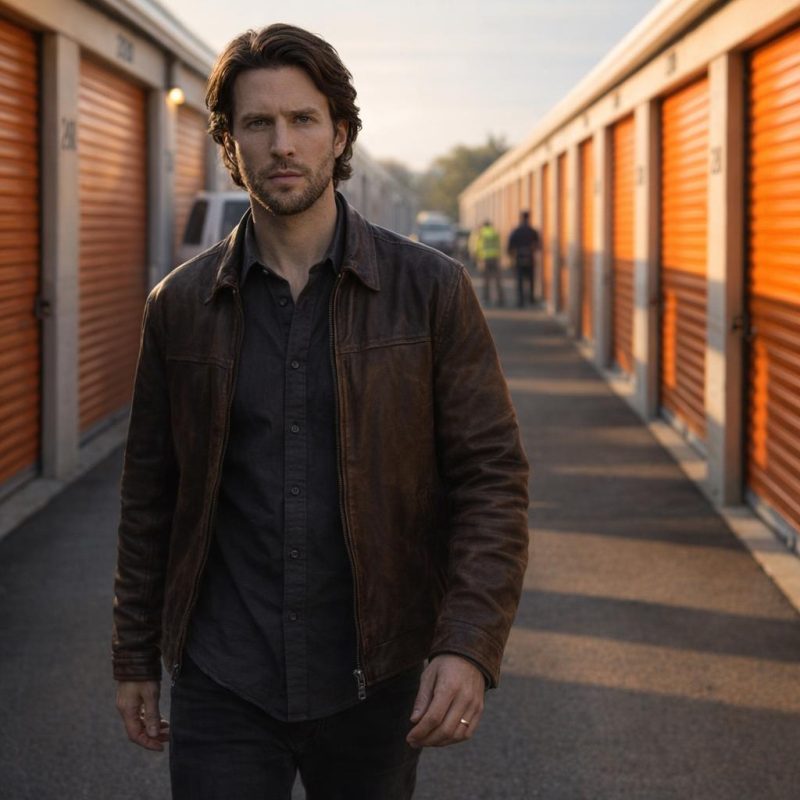 Image by RM AI
Unit 247
Unit 247 is at the end of the row, last door before the lane dead-ends at a concrete wall. The orange door looks identical to every other door he has passed — same corrugated metal, same latch, same standard padlock hanging through the hasp. The number 247 is stenciled in black paint above the latch, the same size and font as every other number in the section. David takes the key out of his pocket. The brass catches the light for a moment, bright and plain. He looks back down the lane — no one nearby, the nearest customer two sections over, not paying attention. He steps up to the door. The padlock is a standard model, nothing unusual about it. He fits the key into the cylinder and feels it seat cleanly, no resistance, a perfect match. His hand stays there, fingers wrapped around the key, not turning it. The number 247 sits at eye level in front of him, the paint slightly worn at the edges. Somewhere behind him, a car door closes and an engine starts and pulls away, and then the lane is quiet again. He stands there with the key in the lock and the door still shut, holding the last moment before whatever his father had left behind became something he could not unknow.
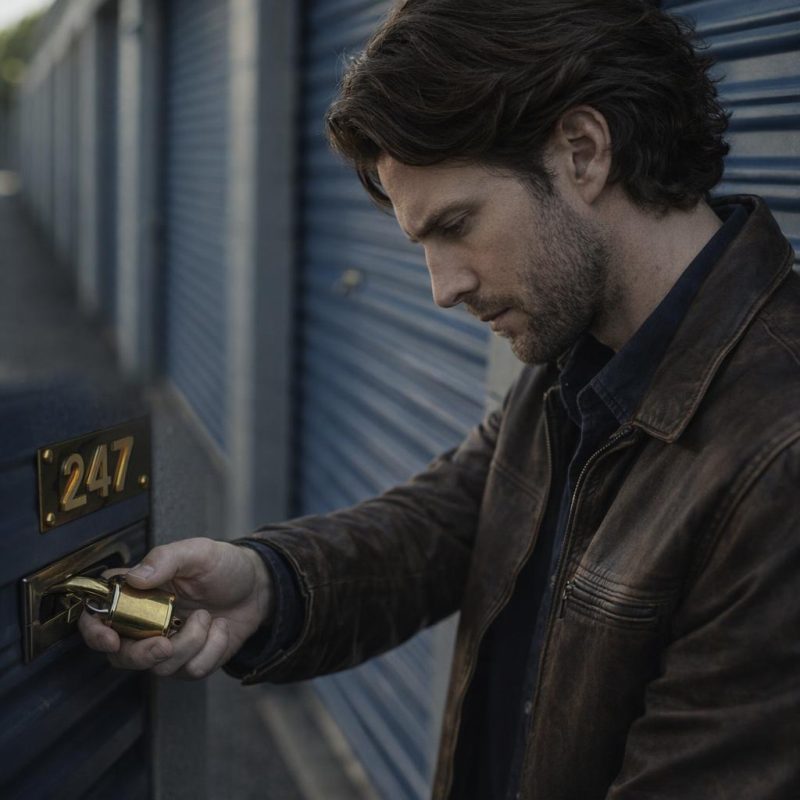 Image by RM AI
The Lock Turns
The key turns clockwise with almost no resistance, a clean quarter-rotation, and the padlock clicks open in David's hand like it has been waiting. He pulls it free from the hasp and sets it on the ground beside his foot. The latch swings clear. He grips the door handle — a simple metal bar, cold through his palm — and lifts. The door rises with a metallic rattle that echoes off the concrete wall at the end of the lane, loud enough that he glances back over his shoulder before it finishes moving. Nobody. Just the empty lane and the flat afternoon light. He turns back and looks inside. No cash stacked in duffel bags. No weapons case, no safe, no lockbox. A single bare bulb hangs from the ceiling on a short cord, and beneath it, four filing cabinets stand flush against the back wall, dark gray, institutional. Cardboard boxes are stacked on both sides, floor to ceiling, each one labeled in black marker. The space is maybe ten feet by ten feet, and every inch of it is used. Everything is organized. Everything is labeled. He steps across the threshold and stands in the middle of it, the door still rattling faintly above him, trying to make sense of what he is looking at.
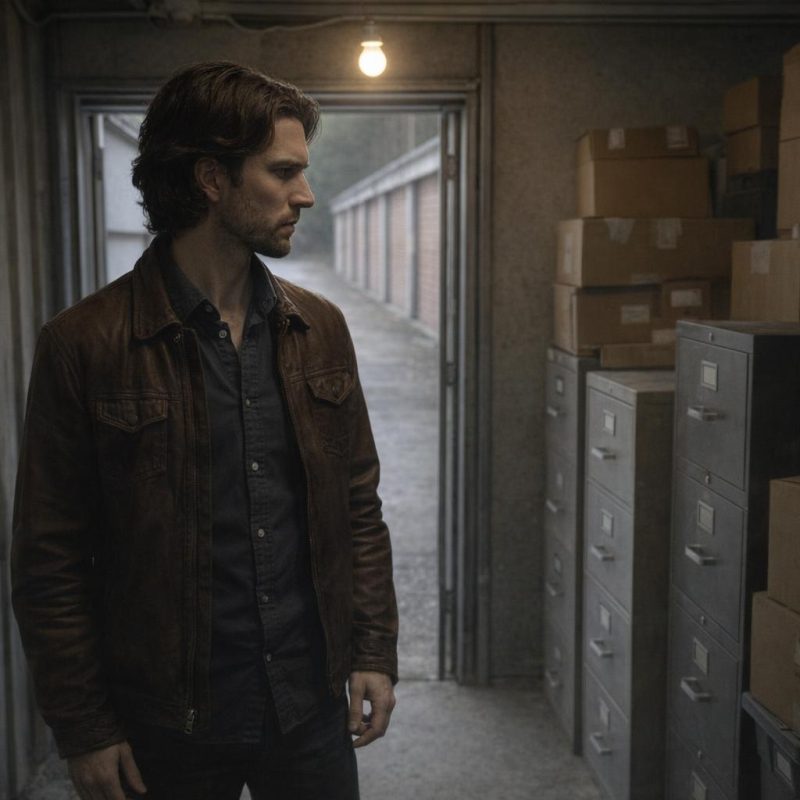 Image by RM AI
The Ledgers
The first filing cabinet is closest to the door, and David pulls the top drawer open. It slides out smoothly, no sticking, well-maintained. Inside, leather-bound ledgers stand upright in a row, their spines facing up, each one stamped with a year in gold lettering. He pulls the first one out: 1962. The leather is dark and worn at the corners, soft from handling. He sets it aside and counts the rest of the drawer — twelve ledgers, running from 1962 through 1973. He opens the second drawer. More ledgers, the same format, 1974 through 1985. Third drawer: 1986 through 1997. Fourth drawer: 1998 through the current year, the most recent volume sitting at the front of the row. He pulls that one out. The leather is dark brown, barely broken in compared to the early ones, the spine still crisp. He opens it to the first page. The handwriting is his father's — he knows it immediately, that precise, controlled script used for everything. He closes it without reading further and looks back at the cabinet, then at the three remaining cabinets behind it, all of them closed, all of them presumably full. The earliest ledger is dated 1962. His father would have been twenty-four years old.
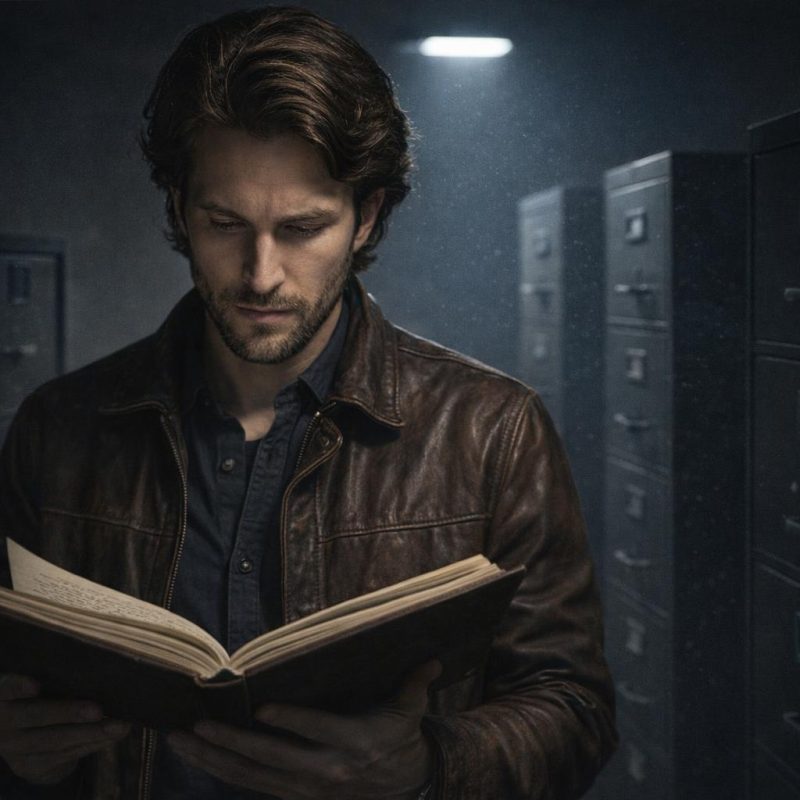 Image by RM AI
Names and Numbers
David drags a cardboard box over and sits on it with the most recent ledger open across his knees. Each page holds ten to fifteen entries, names listed in alphabetical order down the left margin. Beside each name: a date, a dollar figure, and a notation in the margin — two letters and a number. TP-3. CR-7. ZV-2. None of it means anything to him yet. The amounts vary. Some entries are in the hundreds. Others climb into the thousands. He turns a few pages and stops at a name he recognizes: Hayes, Robert. Councilman Hayes, who gave a eulogy at his father's funeral three days ago and shook his hand at the reception. His entry shows a date from eight months back and a figure of $47,000. He keeps reading. A county judge. A zoning board member whose name he has seen on development signs along Route 3. A police captain from the third precinct. A state assemblyman. Some entries have checkmarks beside them in pencil. Others have small red asterisks. A handful are marked PAID in red ink, the letters pressed hard into the page. The handwriting throughout is unmistakably his father's — precise, controlled, the same hand that signed his report cards and birthday cards for thirty years. He turns the page, and the notation system shifts — new codes he hasn't seen yet, a second column of abbreviations running alongside the first.
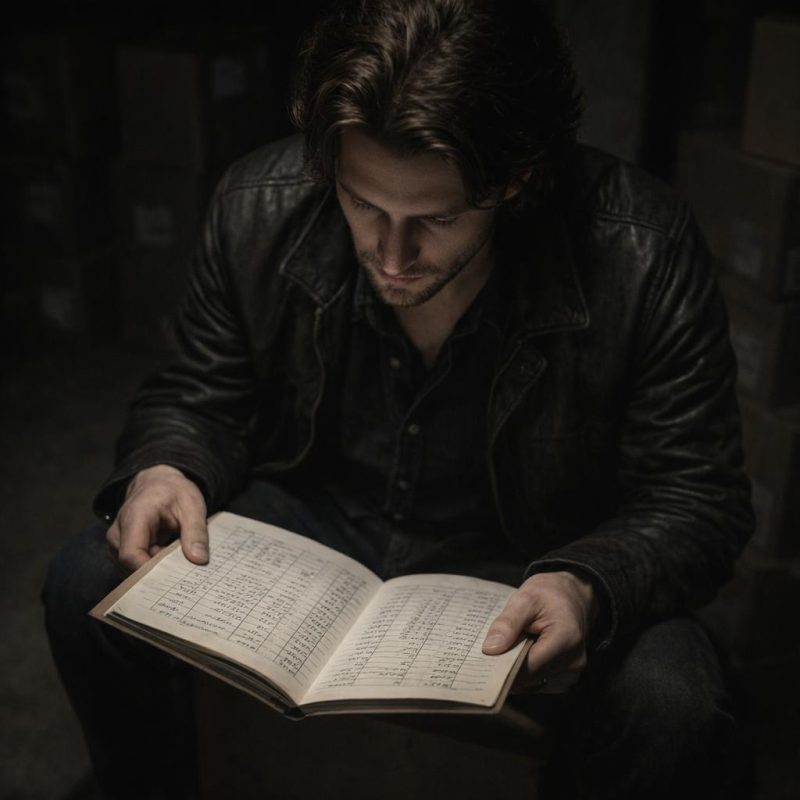 Image by RM AI
The Pattern Emerges
David pulls three more ledgers from the cabinet and spreads them open on the concrete floor, side by side, spines up. He finds Hayes in each one. His first entry is in the 1998 volume — $1,200, notation TP-3. By 2005 the figure beside his name has climbed to $11,000. By 2012 it is $29,500. The most recent ledger has him at $47,000, notation TP-9. He checks the police captain next. His name appears starting in 2001 and runs without interruption through every volume after that, the amounts growing in irregular jumps, not steady increases but lurches — flat for two years, then a sudden spike, then flat again. The superior court judge enters the record in 2003. A county supervisor he doesn't recognize shows up in 2007 and appears in every subsequent ledger. He notices the dates cluster — not randomly, but in patterns he can't quite name yet, something about the spacing that feels significant without his being able to say why. The unpaid entries, the ones without the red PAID stamp, add up to figures he has to recount twice to believe. He sits back on his heels and looks at the three open ledgers on the floor, the names and numbers running across the pages in his father's careful hand, and the longer he looks at them the less they resemble anything he would call a business record.
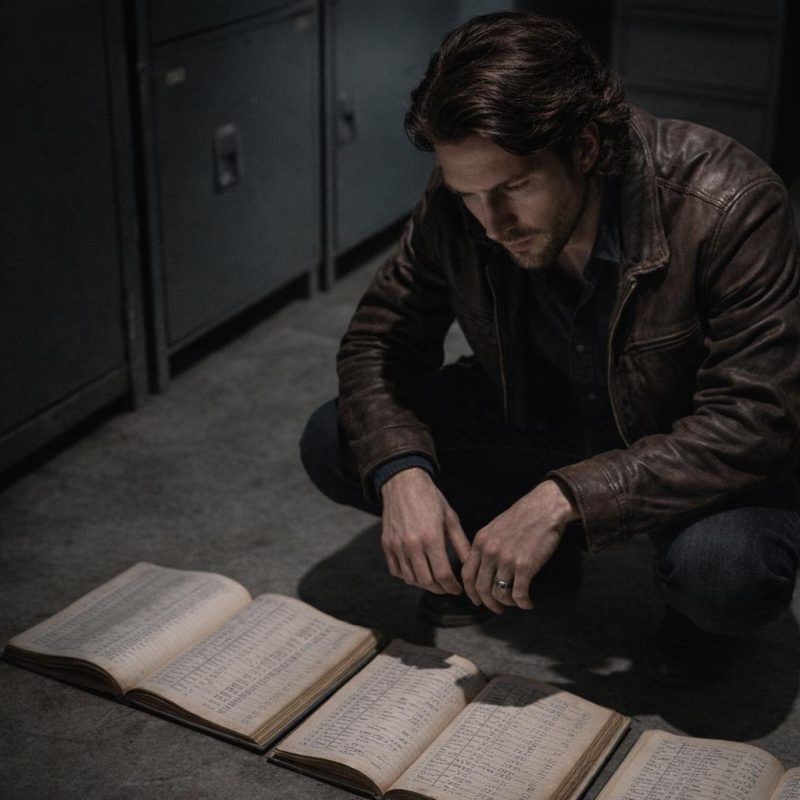 Image by RM AI
The Boxes
David stands and moves to the left stack of boxes. The top one is sealed with packing tape that has dried and loosened at the edges — he pulls it free without much effort. Inside are manila folders standing upright, each one labeled with a name in the same black marker used on the outside of the box. He finds Hayes, Robert near the front and pulls it out. Inside: casino receipts from Atlantic City, three of them, dated across different years. Betting slips, handwritten, the amounts matching figures already seen in the ledgers. Two photographs, printed on plain paper — Hayes entering what looks like a casino entrance, head down, collar up. And a handwritten note in his father's script, clipped to the inside cover: Prefers blackjack. Poor impulse control. He sets the folder down and pulls another. A judge's name on the tab. Casino receipts again, betting records, a photograph of the judge seated at a restaurant table with a woman he doesn't recognize. A third folder: a zoning board member, similar contents, similar structure. Every folder is organized the same way — receipts first, then photographs, then notes. His father's handwriting on every annotation, the same controlled script, the same measured observations. He stands there holding the third folder and feels the particular stillness that comes when something large and shapeless begins to take on edges.
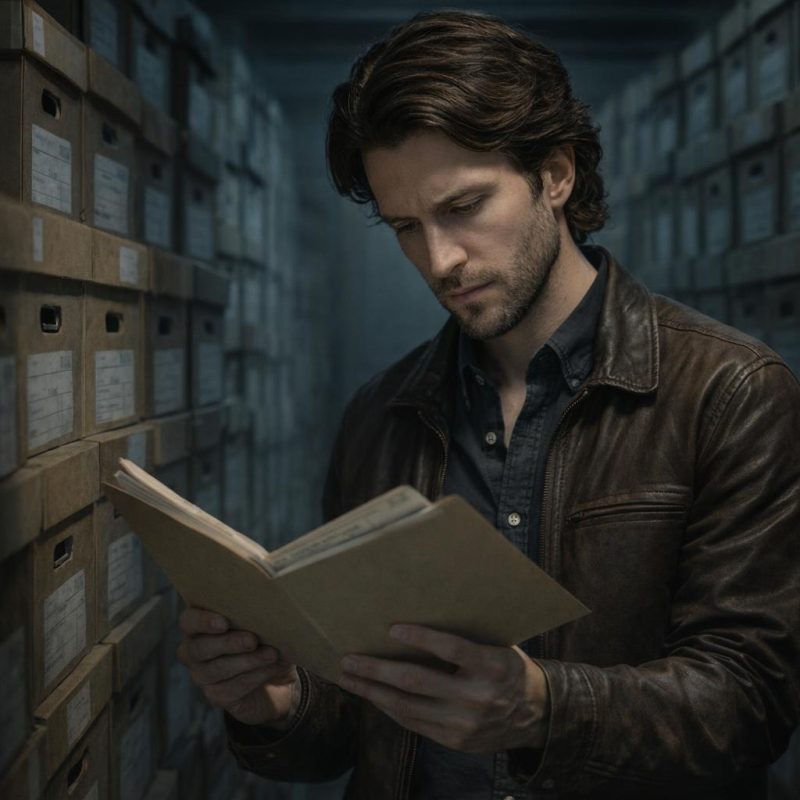 Image by RM AI
The Watcher
David needs air. He sets the folder down on top of the box and steps out of the unit into the lane, leaving the door halfway up behind him. The afternoon has gone flat and gray while he was inside, the light thinner now, the shadows longer between the rows. He walks a few steps out into the open area where the lanes intersect and stops. Three rows over, a dark sedan sits parked against the chain-link fence. It wasn't there when he arrived — he's almost certain of that. A man sits in the driver's seat. He is lean, middle-aged, wearing what looks like a rumpled suit jacket. He is not looking at his phone. He is not reading anything. He is looking directly at David. David stops walking. The distance between them is maybe sixty feet, enough that he can't make out the man's face clearly, but not enough to mistake the direction of his attention. David stares back. The man doesn't move. Doesn't reach for anything. Doesn't start the engine. David holds his gaze for what feels like a long time, and the man holds it back without any sign of discomfort, and then David turns and walks back to the unit and pulls the door down to halfway, and when he glances back over his shoulder through the gap, the sedan is still there and the man is still watching.
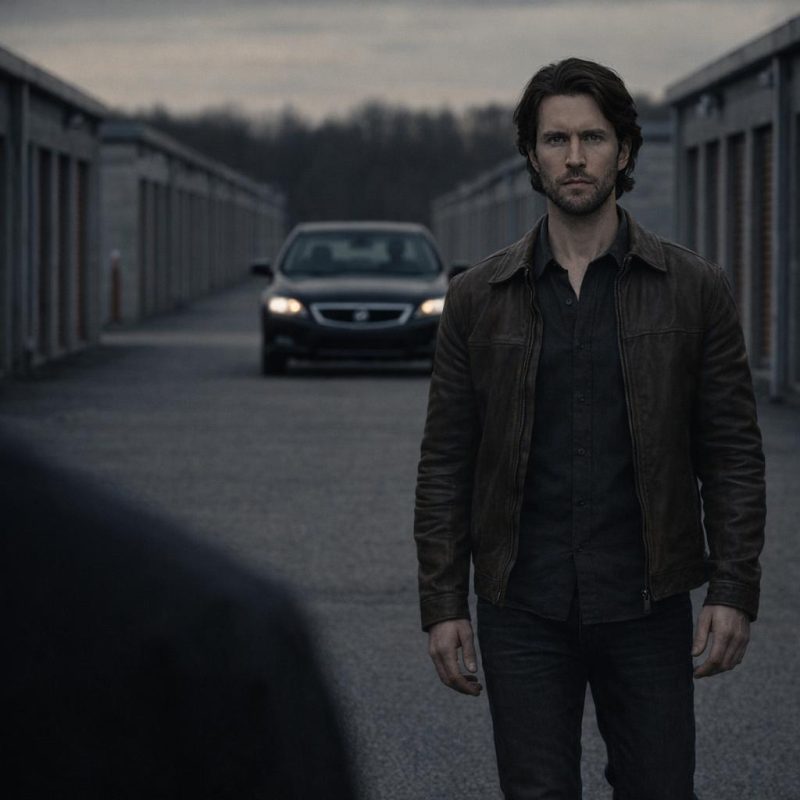 Image by RM AI
The Scope of It
David sits back down with the ledgers and a piece of scrap paper he finds folded inside the back cover of the 1998 volume. He starts making a list — unique names, one per line, no repeats. Councilmen. Judges. Police officials. Zoning board members. Building inspectors. A state assemblyman. Two county supervisors. A port authority commissioner whose name he half-recognizes from a corruption story he read years ago and forgot. He works through all four drawers, cross-checking as he goes, and when he finishes he counts the lines on the paper. Sixty-three names. Some appear in a single ledger, a single entry, and then never again. Others run across decades, their amounts growing year by year, the notations beside their names shifting through higher and higher codes. The unpaid figures, when he adds them roughly, come to something north of two million dollars. He looks at the four filing cabinets, all of them full, and then at the stacked boxes along both walls, and then at the bare bulb overhead throwing its flat light across all of it. His father had maintained this alone, as far as he can tell — the handwriting always his, the organizational system consistent across sixty years, the patience required for it almost impossible to hold in mind. He sets the scrap paper down on top of the nearest ledger and sits with the weight of sixty-three names pressing against his chest like something physical.
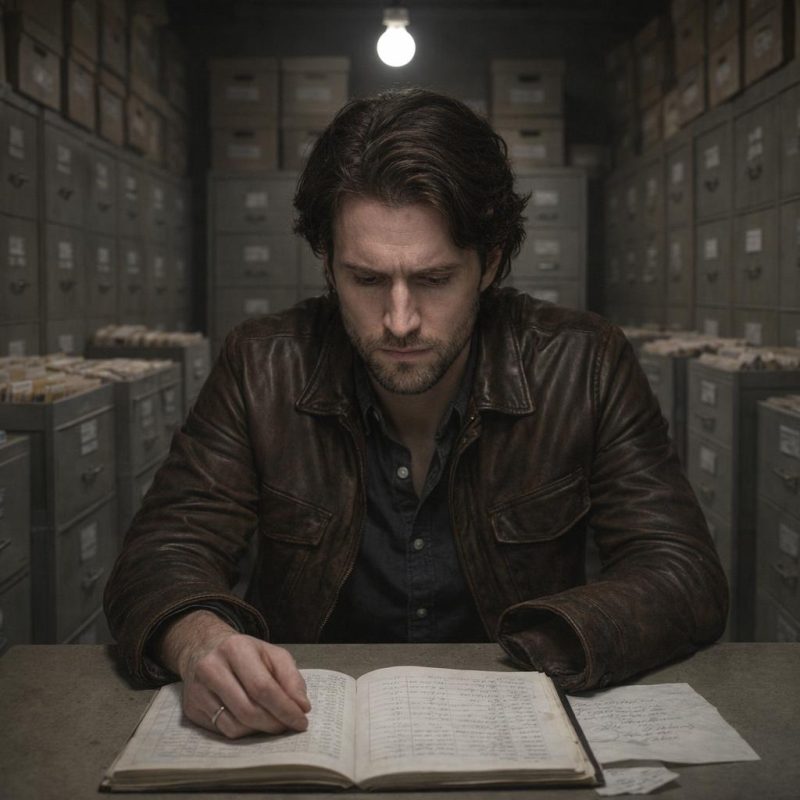 Image by RM AI
The Question
David closes the most recent ledger and holds it in his lap for a moment before setting it back in the drawer. He stacks the others in behind it, in order, the way he found them, and pushes the drawer shut. The cabinet closes with a soft metallic click. He looks around the unit — the boxes, the remaining cabinets, the bare bulb still humming faintly on its cord. There is no letter anywhere. No envelope addressed to him, no note tucked inside the front cover of any ledger, no instructions taped to the inside of the door. His father left him the key and the unit number and nothing else. He doesn't know what his father expected him to do with any of this. Keep it here and say nothing? Take it somewhere? Take it to someone? The men at the funeral move through his mind — the broad-shouldered man with the scar across his knuckles who pressed the envelope into his hand, the lean figure in the rumpled suit still sitting in that sedan three rows over. Someone knows this unit exists. Someone may have known before he did. He has sixty-three names on a piece of scrap paper and four cabinets full of documentation and no idea what any of it is supposed to mean for him, and the bulb hums overhead in the silence, indifferent to all of it.
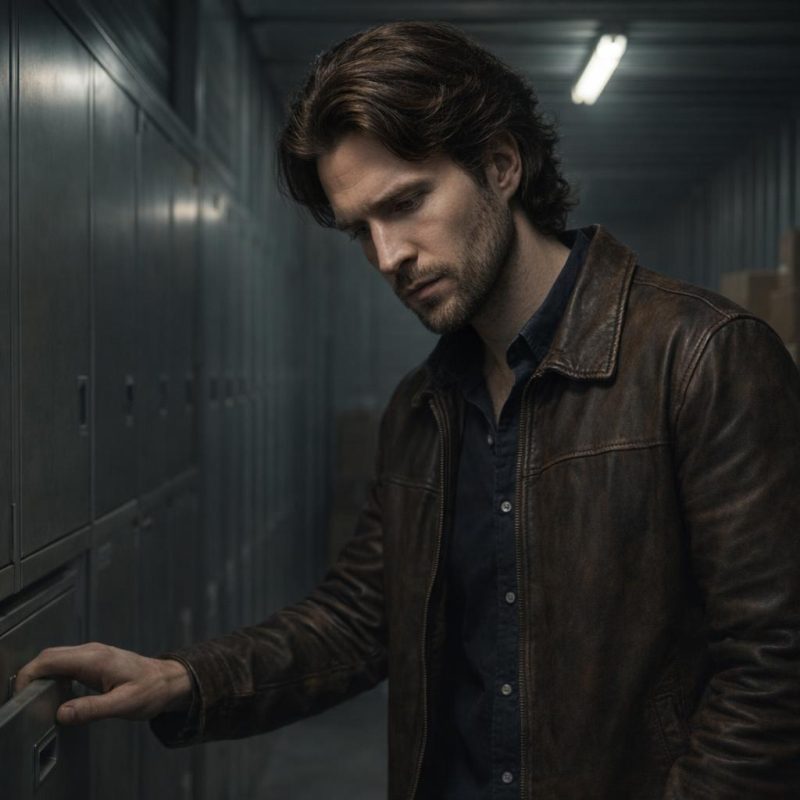 Image by RM AI
The Photographs
I pull my phone out and open the camera. The light in the unit is thin but steady — enough. I start with the current year's ledger, the first page, holding the phone flat and level over the columns until the image locks sharp. Then I move. Page by page, methodical, the way my father would have done it. Names, dates, amounts, the notation codes I don't fully understand yet. I photograph Hayes's complete entry history — every payment, every date, every code beside his name. The judge's folder. The casino receipts bundled with rubber bands. The betting slips with handwritten totals in the margins. I check each image before moving to the next, zooming in to confirm the text is legible. Forty-three photographs by the time I reach the last cabinet. I find a laminated card tucked inside a manila folder and photograph both sides before I even read it. Then I close the ledgers, return them to the drawers in order, and push the cabinets shut the way I found them. I step toward the door and look through the gap into the lot. The dark sedan that had been parked three rows back is now sitting directly in front of unit 247.
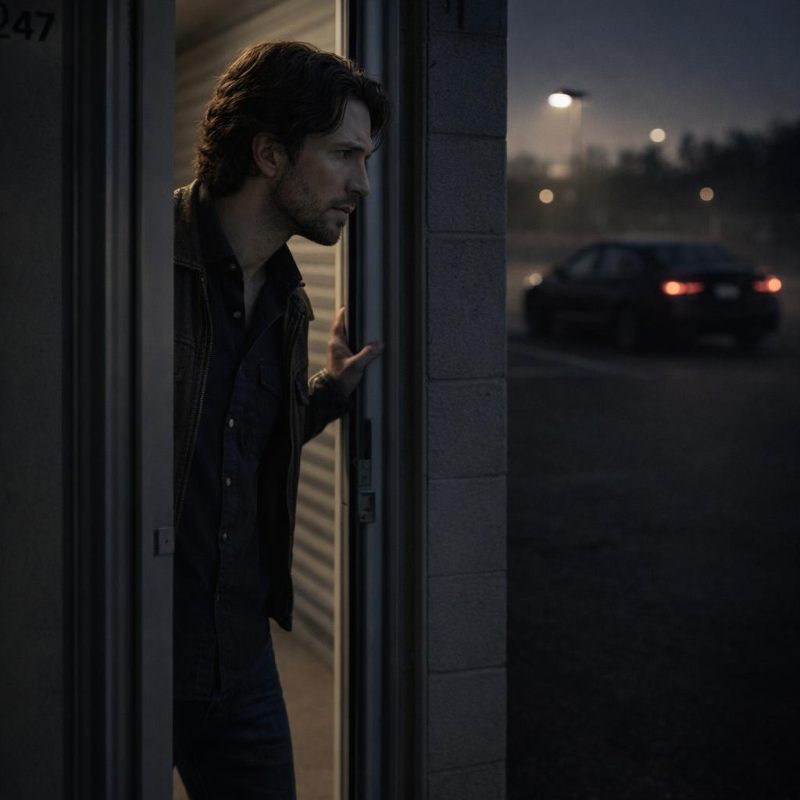 Image by RM AI
The Notation System
I go back to the filing cabinet. The laminated card is still in my hand. I set it on top of the nearest cabinet and read it under the bare bulb. It's a reference sheet — compact, precise, the kind of thing you'd laminate because you intended to use it often. The codes run down the left column. TP — Third Party, followed by a severity number one through ten. CR — Career Risk, same scale. ZV — Zone Violation, which I take to mean zoning or permit leverage. FM — Family Matter, personal vulnerability. Each category has a brief descriptor beside it, clinical and flat, like entries in a manual. I cross-reference it against the ledger pages I've already photographed. Hayes carries a TP-9 and a CR-7. The judge shows FM-8 and CR-9. I go through three more entries and the pattern holds — every person in those ledgers has at least two codes, sometimes four, each one rated for severity. My father hadn't just tracked what people owed. He had catalogued, in careful shorthand, exactly what each of them stood to lose. The card lists the categories: 'family pressure point' and 'career-ending exposure.'
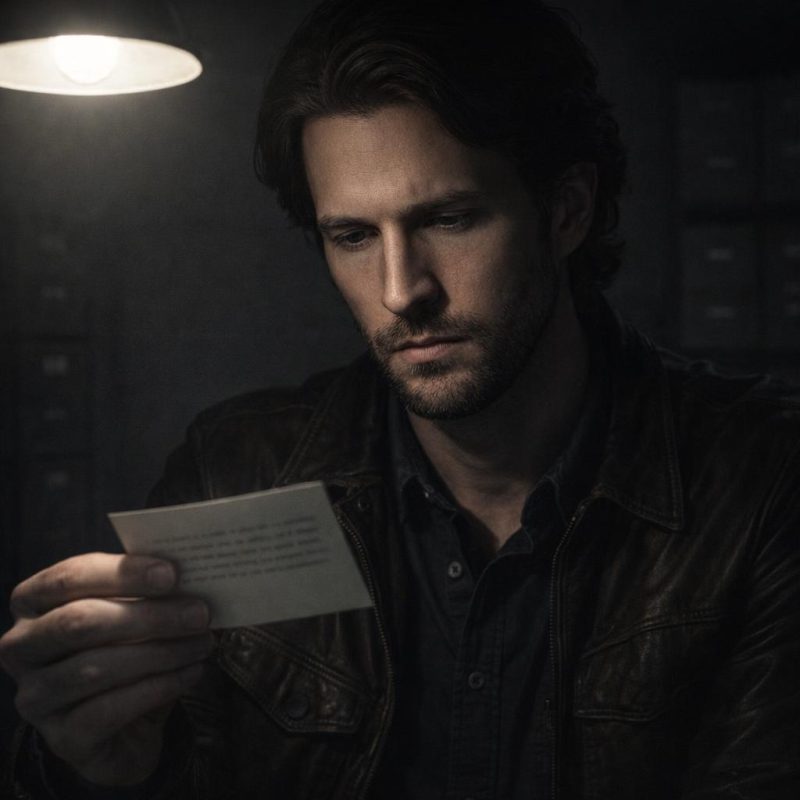 Image by RM AI
The Coded References
I bring the reference card back to the ledgers and go through the margin notes slowly this time, reading each one against the key. A building inspector: permit fraud, Riverside project, forty thousand dollars, the amount written out in full like it mattered to be precise. A councilman two pages over: mistress, apartment 7B, photos dated across three years. Each note is specific. Verifiable, probably. The kind of detail that doesn't come from rumor — it comes from documentation, from someone who was there or knew someone who was. A judge's entry carries a note about a case dismissal in 2009, a mob defendant whose name I half-recognize from old newspaper coverage. I photograph every page of margin notes, working carefully, making sure nothing is cut off at the edge of the frame. The weight of it settles somewhere behind my sternum as I work. My father hadn't just tracked debts. He had built insurance into every single one. Then I turn to the next page and find a notation beside a police captain's name that reads: evidence room, 2007, narcotics case 4471.
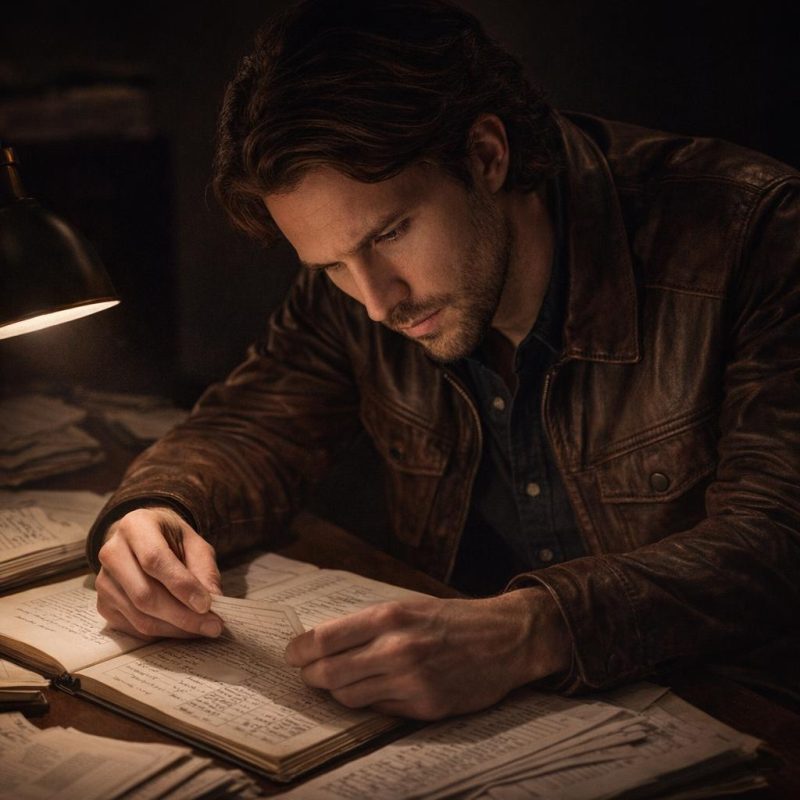 Image by RM AI
The Weight of Paper
I close the last ledger and set it back in the drawer. I don't push the drawer shut right away. I just stand there with my hand on the metal edge, looking at the row of cabinets against the concrete wall. Four of them. Decades of work filed in order, coded and cross-referenced, maintained with a precision I recognize from the man who taught me to balance a checkbook at age nine. Sixty-three names. Specific incidents. Severity ratings. The silk suits make sense now. The locked briefcase he carried to the car every Thursday night. The way he'd answer questions about work with a single word and a look that closed the subject. I used to think that look was dignity. I used to think the distance was just how he was built. I sit down on the concrete floor with my back against the cabinet and stay there. The bulb hums overhead. Somewhere outside, a car door closes, and the sound carries through the thin metal wall and fades. I don't move. The unit smells like dust and old paper and something faintly chemical, and the silence that fills it now feels like the only honest thing left in the room.
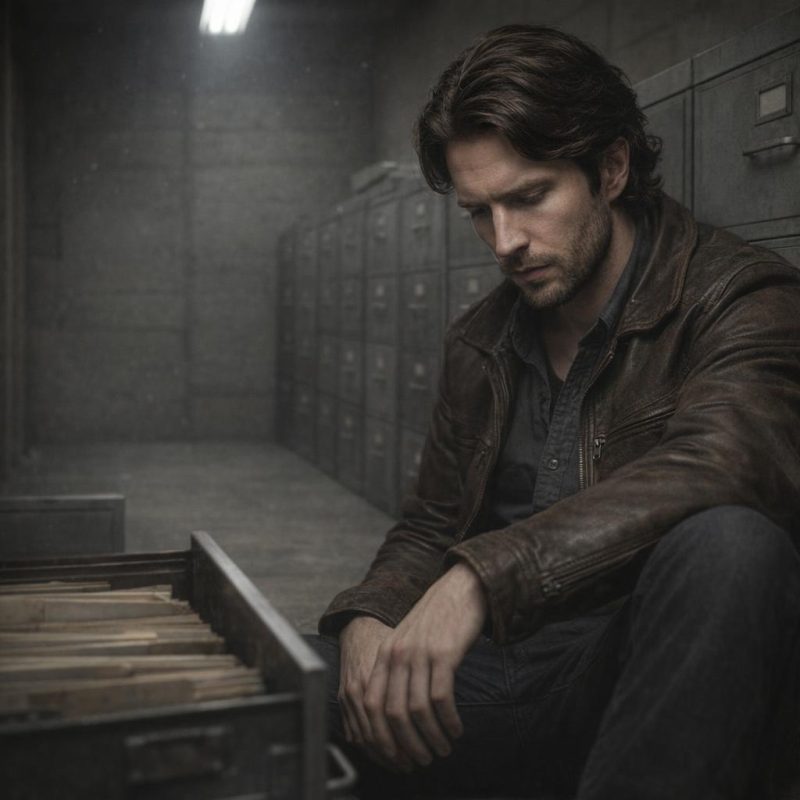 Image by RM AI
The True Purpose
There's one box I haven't opened. It's been sitting in the back corner since I first came in, unmarked on the outside, smaller than the others. I pull it forward and lift the lid. Inside is a single folder, red ink on the tab: Structure. I open it. Hand-drawn organizational charts, multiple pages, each one dense with names and connecting lines. At the top of the first chart, three family names I know from newspaper coverage going back twenty years — organized crime families, regional, the kind that show up in federal indictments every decade or so. Below them, centered on the page, connected upward by lines to all three: my father's name. And below my father's name, lines running down to every name I've spent the last two hours photographing. Councilmen. Judges. Police officials. Building inspectors. Each one connected to Vincent, each one connected upward through Vincent to the families above. Notes in the margins, in my father's handwriting: VR maintains all documentation and leverage. Payment collection and compliance enforcement. No family member handles evidence directly. He wasn't caught up in this. He wasn't pressured into it or trapped by debt or circumstance. He built it. He ran it. He was the reason it worked. I look at his name at the center of the chart, connecting the mob families above to every compromised official below, and I don't move for a long time.
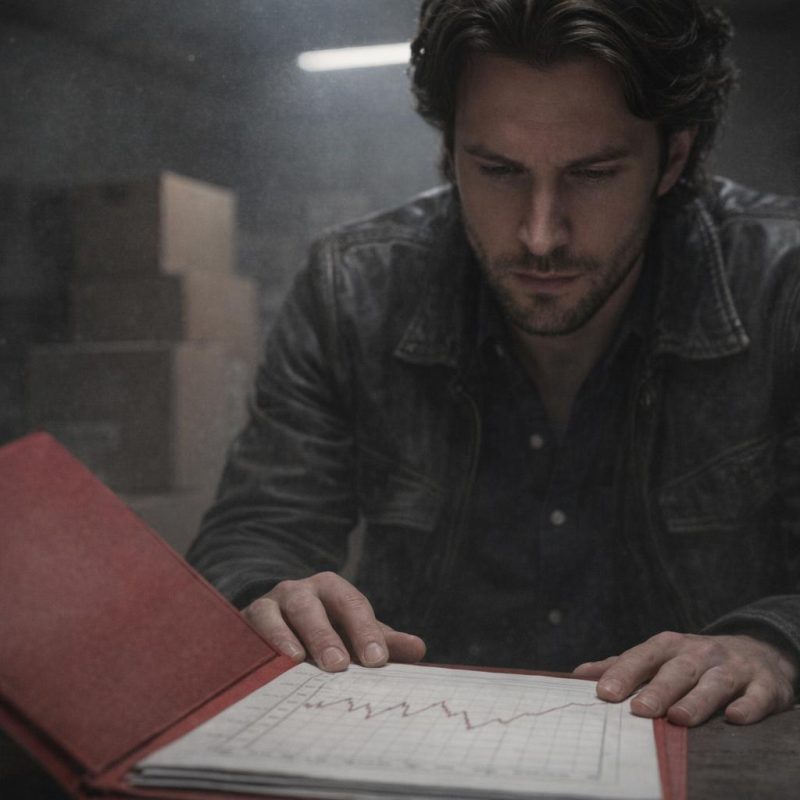 Image by RM AI
The Councilman's Visit
I get home at two in the afternoon. Rose's car is in the driveway. There's a black town car parked at the curb that I don't recognize. I go in through the front door. Rose is on the couch, hands folded in her lap, her face the color of old paper. Across from her, sitting in my father's chair, is Councilman Hayes. I know the face from the ledgers — the photographs, the news coverage, the entry marked TP-9, CR-7. He stands when I come in, smooth and unhurried, and extends his hand with a smile that has been practiced until it looks natural. I don't take it. He says he came to offer his condolences, that he and Vincent went back many years. Rose hasn't spoken. I ask how he got in. She says she answered the door. Hayes has been here twenty minutes. I tell him it's time to go. He doesn't argue. He picks up his coat, sets a business card on the coffee table with two fingers, and says we should talk soon, that there are matters worth discussing. Then he's gone. I lock the door behind him and turn back to the room. Rose is still on the couch, hands still folded, and the fear behind her eyes hasn't moved.
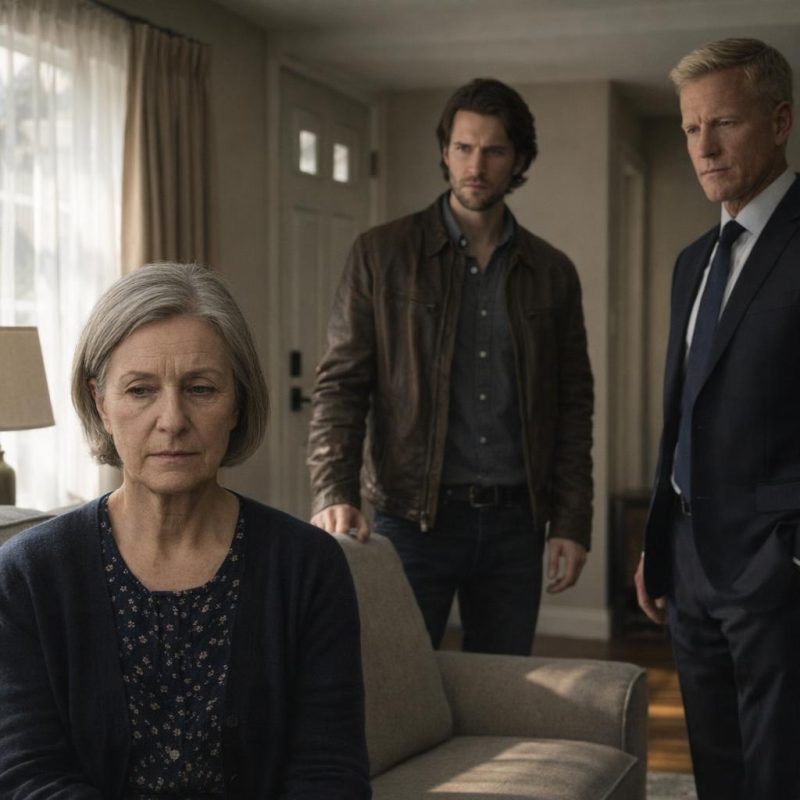 Image by RM AI
Rose Knew
I sit down beside Rose and don't say anything for a moment. The house is quiet in the way it gets when something has already happened and the air hasn't settled yet. I ask her what she knew about my father's work. She doesn't answer right away. She looks at her hands. Then she says she knew enough to be afraid. She knew the men who came to the house on Thursday nights were not business associates in any ordinary sense. She knew the money that paid for the house and the car and my school came from something she couldn't ask about. She made a decision early on, she says, to not ask. I ask why she stayed. She says she had a child. She says leaving would have been more dangerous than staying, and she believed that then and she still believes it now. I ask if she knew about the ledgers. She says no — but she knew he kept records. She knew there was a briefcase she was never to touch. She never looked for it. I tell her about the storage unit, about the cabinets, about what's in them. She closes her eyes. She doesn't ask me to explain further. She sits with it the way someone sits with news they have been half-expecting for thirty years.
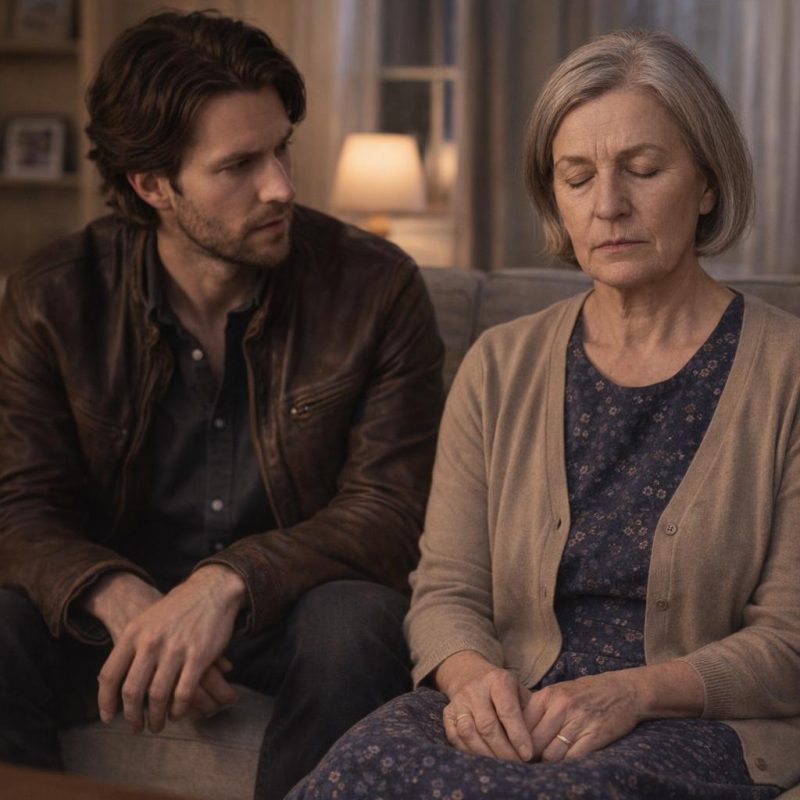 Image by RM AI
Frank's Call
My phone rings at eight o'clock. Unknown number on the screen. I step into the kitchen and answer. The voice on the other end is flat and unhurried, the kind of voice that doesn't need to raise itself to be heard. The man says his name is Frank Delano. I place it immediately — the broad shoulders at the funeral, the scar across the knuckles, the envelope pressed into my palm without a word. He says we need to discuss Vincent's property. I ask what property. He says I know what he's talking about. I don't confirm or deny. There's a pause, brief and deliberate on his end, and then he says people are asking questions. He says it the way you'd say the weather is changing — informational, not alarmed, which somehow makes it worse. Rose calls from the other room, asking who's on the phone. I tell her wrong number. I keep my voice even. Frank's next words come through flat and clear: tomorrow, ten AM, the diner on Route 3 — come alone.
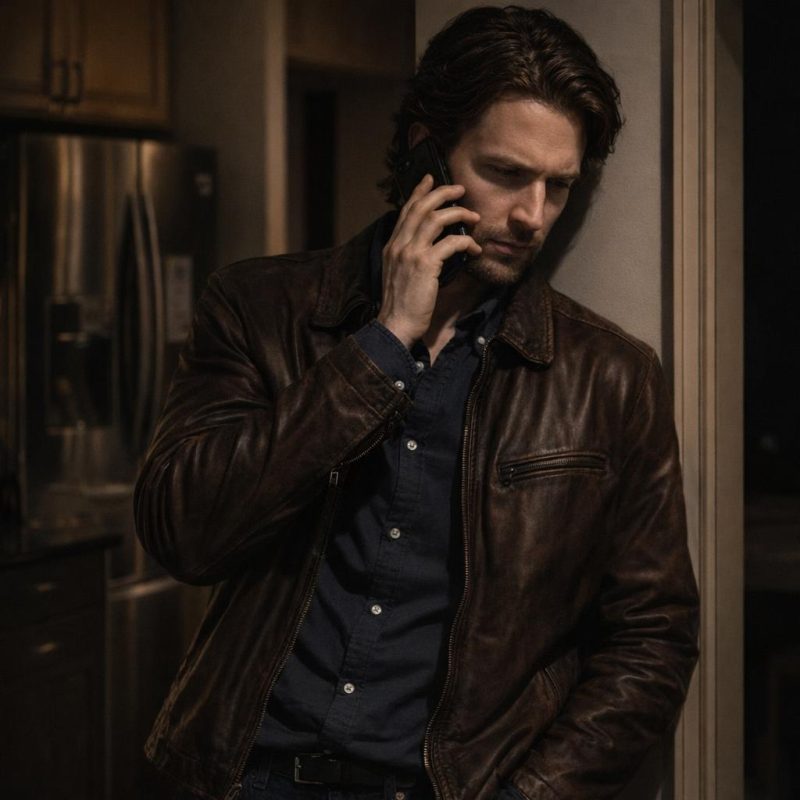 Image by RM AI
The Expectations
I get to the diner at 9:55. Frank is already in the back booth, coffee ordered for both of us, like he knew exactly when I'd walk through the door. He doesn't stand. Doesn't offer a hand. Just watches me sit down with those flat, expressionless eyes. He says Vincent's death created a problem. The system — his word, system — requires someone to maintain the records, collect payments, ensure that the right people stay compliant. He says it the way an accountant explains a quarterly report. No heat. No drama. Just facts. I tell him I want no part of it. He nods slowly, like he expected that, like it's a position he's heard before and found unpersuasive. He says it isn't a choice. The ledgers exist. The debts exist. The families trusted Vincent, and now they need someone they can trust in his place. He says I'll be compensated generously, the same as my father was. I ask what happens if I refuse. He wraps both hands around his coffee cup and says that would be unfortunate — for me, and for Rose. He doesn't elaborate. He doesn't need to. The coffee sits between us, going cold, and the ordinary noise of the diner — forks, voices, a television above the counter — feels very far away.
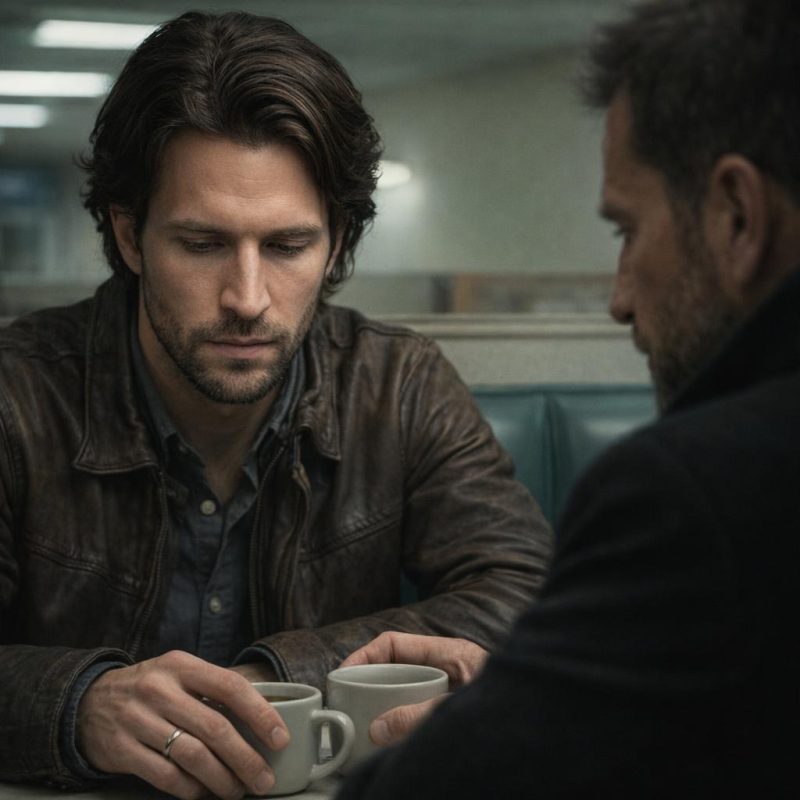 Image by RM AI
The Inheritance of Power
I drive back to the storage facility without deciding to. My hands just take me there. I unlock unit 247 and stand in the doorway looking at the filing cabinets, the ledgers, the careful architecture of my father's other life. He had decades. That's what keeps landing on me. Decades to choose someone else, to destroy the records, to walk away from all of it. Instead he maintained everything until the day he died, then arranged for me to receive it — not Rose, not a lawyer, not some trusted associate. Me. Specifically. I think about the distance he kept. The closed doors. The questions he answered with silence or a half-smile that gave nothing away. I used to think that was just who he was. Now I stand here and see it differently. He watched me. He observed how I handled uncertainty, how I sat with things I didn't understand, how I never pushed past the boundaries he set. I thought I was respecting him. I was passing tests I didn't know I was taking. The silk suits, the controlled demeanor, the careful way he moved through every room — none of it was just personality. The filing cabinets stand in a row before me, and I understand now that I was never finding my father's secret. I was being handed his throne.
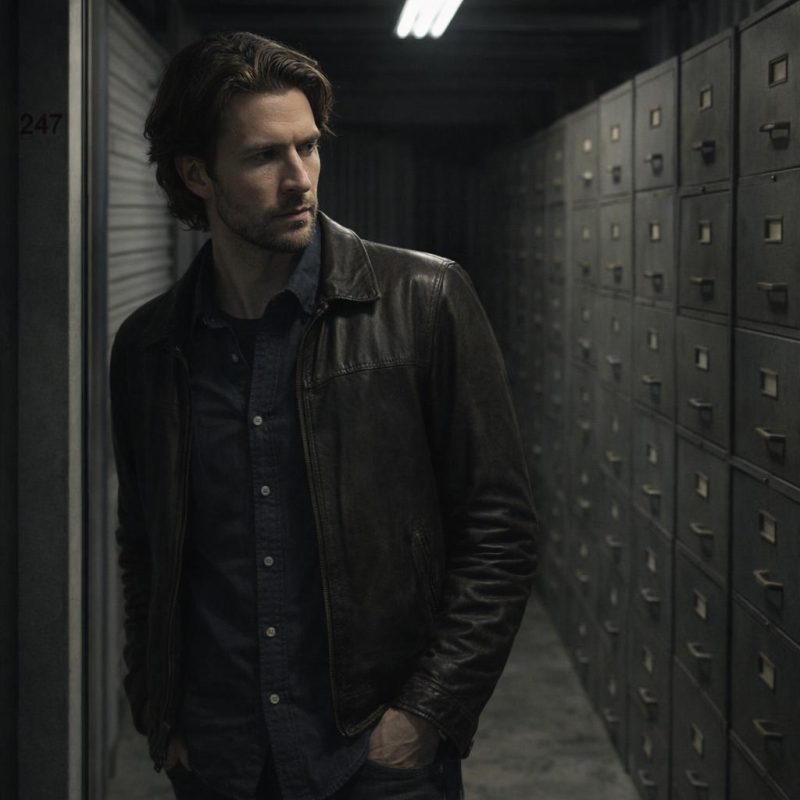 Image by RM AI
The Refusal
I sit in my car outside the facility for a long time before I dial. Frank picks up on the second ring. I tell him I've made my decision. I say it plainly, no preamble — I will not continue my father's work. I want no part of the operation, the ledgers, the families, any of it. There's silence on his end. Not the brief pause of someone thinking, but the longer kind, the kind that has weight. Then he asks, quietly, if I understand what I'm saying. I tell him yes. He says I should think carefully. I tell him I have. He says the families will not accept this easily. I tell him that isn't my problem. He says it will become my problem. I say I'm willing to accept that. Another silence. He tells me he'll pass along my decision, and he suggests I use the next twenty-four hours to reconsider. I tell him I won't change my mind. He doesn't argue. He doesn't threaten. He simply ends the call, and the line goes dead in my hand. Outside the windshield, the storage facility sits quiet in the gray afternoon light, and the silence that follows feels like the moment before weather changes — still, and absolute, and already too late to take shelter.
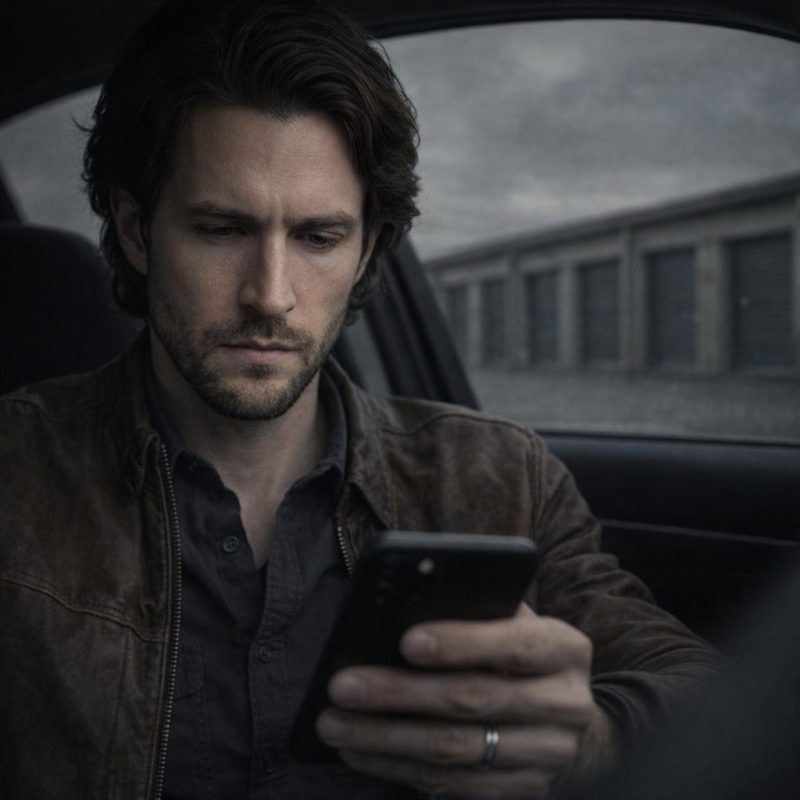 Image by RM AI
The Pressure Mounts
The first call comes at 2 AM. I pick up and there's nothing — just open air, faint static, then the click of a disconnect. It happens again at 3, again at 4. I stop answering unknown numbers after that. In the morning I find all four tires on the Cadillac slashed clean through, the car sitting low and flat in the driveway like something defeated. I get them replaced and say nothing to Rose. That afternoon a dark sedan follows me to the grocery store, hangs two car lengths back the whole way, parks across the lot while I'm inside. It's outside the house when I get home. Rose sees it from the kitchen window and asks what's happening. I tell her I'm handling it. She looks at me the way she used to look at my father — like she already knows the answer and is deciding whether she wants to hear it out loud. The calls keep coming through the night. I go outside at midnight and walk toward the sedan and it pulls away before I reach the curb. The next day my mailbox is knocked flat. The morning after that, a brick comes through the garage window. I stop sleeping in any real sense. I lie in the dark and listen to the house, and the house gives nothing back but the sound of my own breathing.
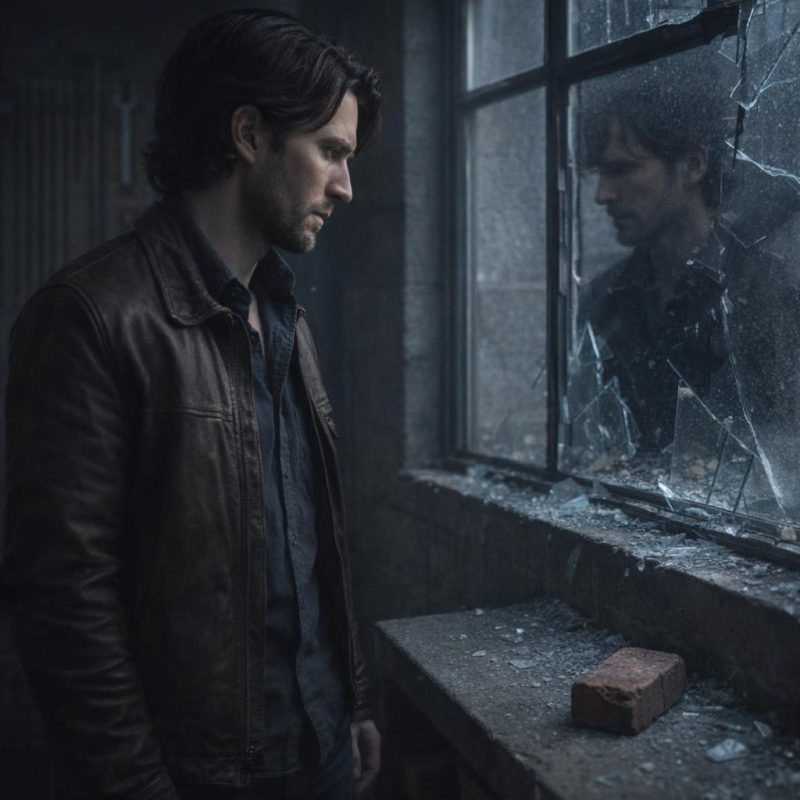 Image by RM AI
Morrison's Offer
I'm at the mailbox when he approaches — lean man, close-cropped gray hair, rumpled jacket that's seen better years. He holds up a badge before I can say anything. Detective Marcus Morrison. He says he's been watching the house. He knows about the calls, the tires, the sedan. He says he's been investigating my father's associates for two years, that he knows about the ledgers, that he knows I visited the storage unit. I don't confirm or deny. I just watch him. He says he wants the documentation — all of it, ledgers, files, photographs, everything in unit 247. I ask what happens to the people named in the ledgers. He says many will be prosecuted. Some will cooperate and testify in exchange for consideration. I ask about the families — the ones who aren't officials, the ones who got caught in the system sideways. He says dismantling the operation is the goal, and that process is never clean. He hands me a card and says I have forty-eight hours before the offer expires. I look down at the card, then back up at him. He says, steady and without decoration, "I can protect you and your mother if you cooperate with us."
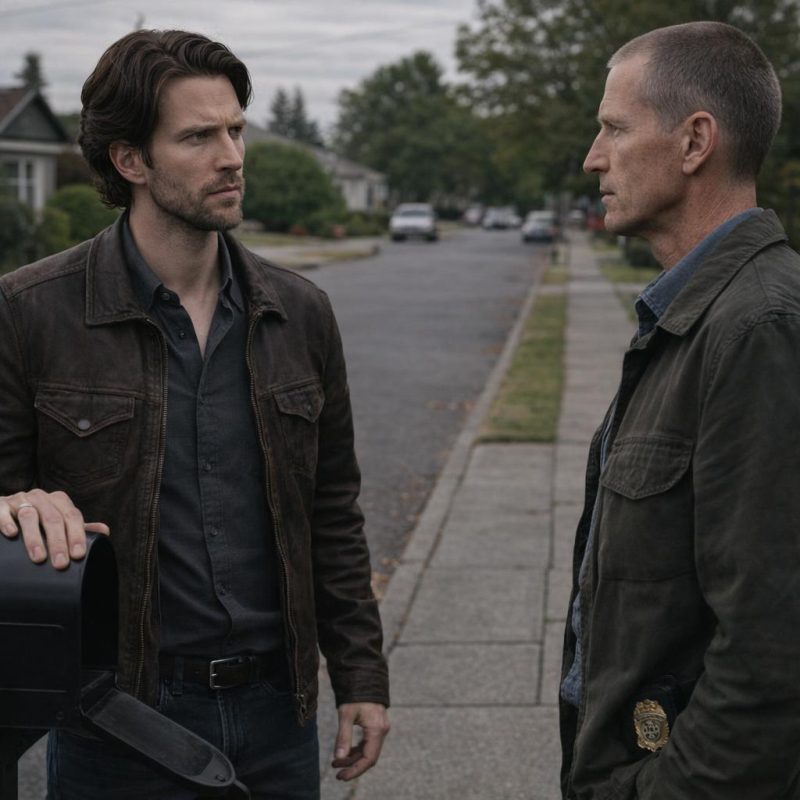 Image by RM AI
The Weight of Choice
I drive back to unit 247 and sit on the floor between the filing cabinets with Morrison's card in my hand. I go through it slowly. Option one: I continue my father's work. Collect the debts, maintain the leverage, serve the families. Rose and I stay safe. I become what he was. Option two: I give everything to Morrison. The families get prosecuted. So do the judges, the councilmen, the police captains whose names fill these ledgers. Some of them are corrupt to the bone. Some of them, I suspect, got pulled in the same way I almost did — one compromise at a time until the door closed behind them. Their families don't disappear when they go to prison. Option three: I destroy everything. Burn the ledgers, erase the records, walk away clean. Except the families would never believe I hadn't kept copies. Rose and I would spend the rest of our lives looking over our shoulders. I sit with all three options until the light through the unit door shifts and the afternoon goes gray. Every path leads somewhere I don't want to go. Every choice breaks something that can't be put back together. I set Morrison's card on top of the nearest cabinet and look at the rows of ledgers my father spent a lifetime building, and every name inside them belongs to someone whose life I'm about to change.
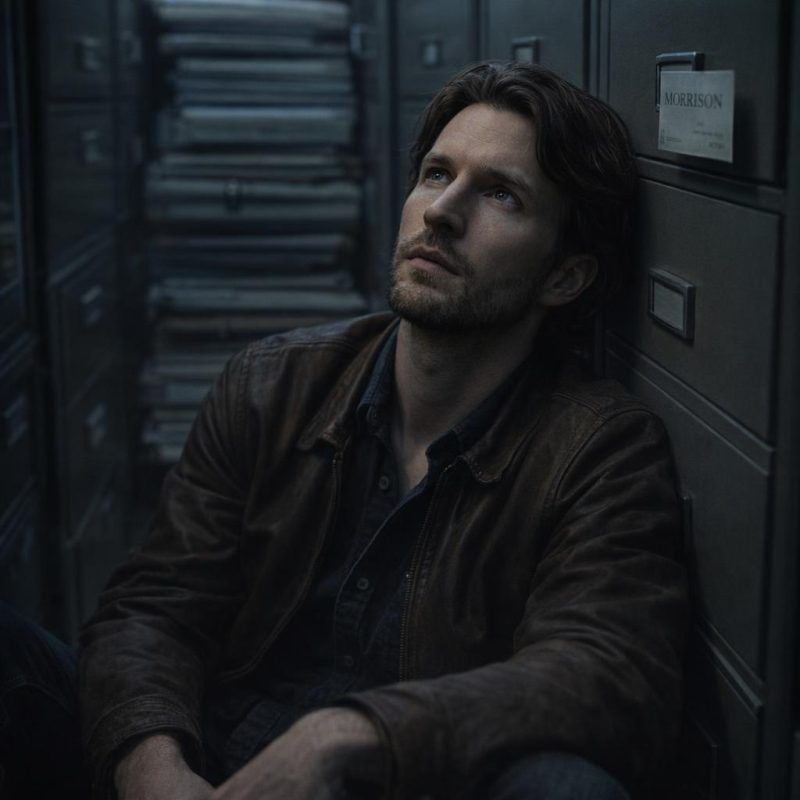 Image by RM AI
The Confrontation
I'm reading through the last ledger when I hear footsteps on the concrete outside — more than one set, unhurried, deliberate. Frank appears in the entrance with two men I don't recognize flanking him. They fill the doorway. Frank steps inside. The other two stay at the threshold, blocking the light. Frank says my time is up. He asks for my decision, the same flat tone as the diner, like we're finishing a conversation that was always going to end here. I stand up and face him. I tell him I won't continue the operation. He nods, the same slow nod as before, and says that's unfortunate. He moves further into the unit. The two men at the entrance don't move. Frank says the families aren't patient people, that I've created a problem, and that problems need to be solved. I ask what happens now. He says that depends entirely on me — I can agree to cooperate, or I can refuse and accept the consequences. My phone is in my jacket pocket. Morrison's card is in my wallet. I can feel both of them like they have weight. Frank's hand moves toward the inside of his jacket, slow and unhurried, and his eyes stay on mine as he says, flat and clear, "Last chance, David."
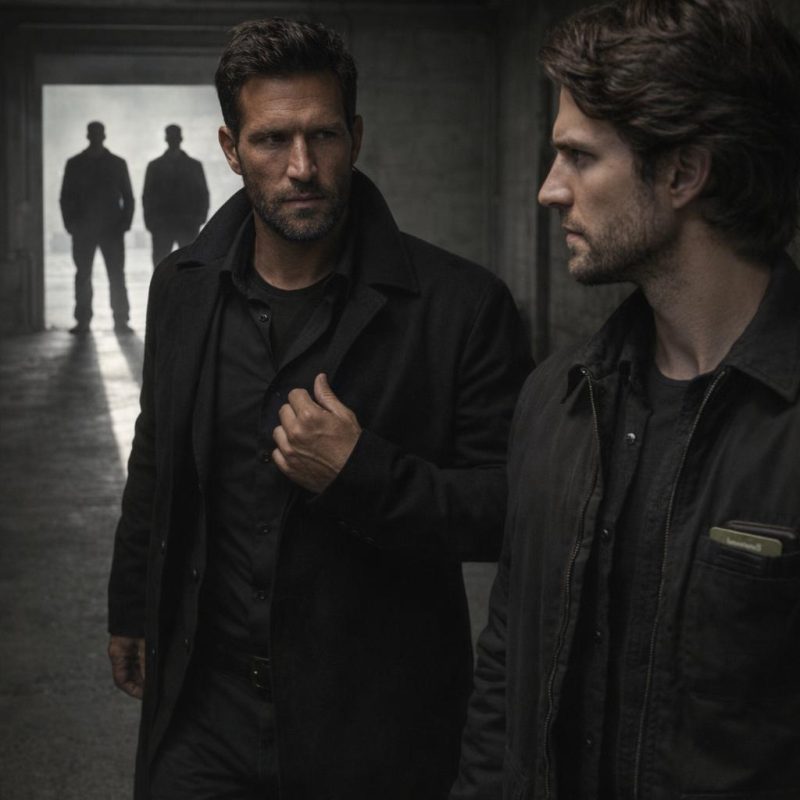 Image by RM AI
The Aftermath
I have the phone out before Frank's hand clears his jacket. Three minutes. That's how long it takes. I hear the sirens before I see the lights, and then four patrol cars are pulling into the facility lot and Morrison is stepping out of the first one. Officers move fast and direct. Frank and the two men are ordered to the ground and they go down without resistance, like men who've done this before and know how the math works. Morrison comes into the unit and asks if I'm hurt. I tell him no. He says I made the right choice. I'm not sure I believe him, but I don't argue. Officers handcuff Frank and walk him and the others toward the patrol cars. Morrison asks me to show him the ledgers. I open the filing cabinets one by one and he photographs everything, methodical and thorough, the same way my father must have built it all. He says they'll transport everything as evidence. He says Rose and I will need to relocate within the week, that witness protection will be arranged, that someone will be in touch. I nod. Through the open unit door I watch Frank being placed in the back of a patrol car. Before the door closes he turns and finds me through the window, and his expression carries nothing — no anger, no surprise, just the same flat, patient stillness, as though he has already calculated what comes next and is content to wait.
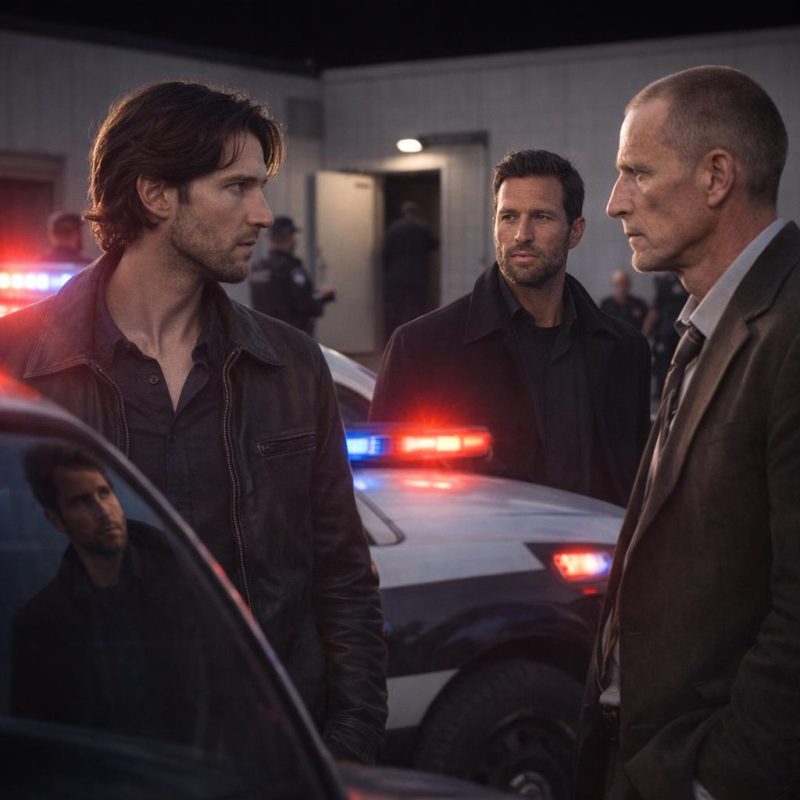 Image by RM AI
The Unraveling
Morrison comes to the safe house every few days, and each visit brings a new name, a new charge, a new face I recognize from the news. The first arrests happen within a week of Frank going into custody. Three family bosses are taken in the same morning, coordinated, quiet, the way these things apparently work when the paperwork is already done. Frank is charged with extortion and conspiracy. Councilman Hayes is arrested at his office on a Tuesday — I watch it on the television in the safe house living room, the camera catching him mid-stride between two federal agents, his silver hair still perfectly in place. His wife and children are standing on the steps behind him and I have to look away. Rose sits beside me and says nothing. Morrison tells us the judge, the police captain, the building inspector — forty-seven people indicted in the first month. He calls it the largest corruption case in state history. I ask him what that means for us. He says it means the trials will take years, that I will need to testify in multiple proceedings, that our old address is no longer an option. Rose asks if we can ever go home. Morrison looks at her with something close to apology and says probably not. The name on the indictment list that appears most often alongside my father's is mine.
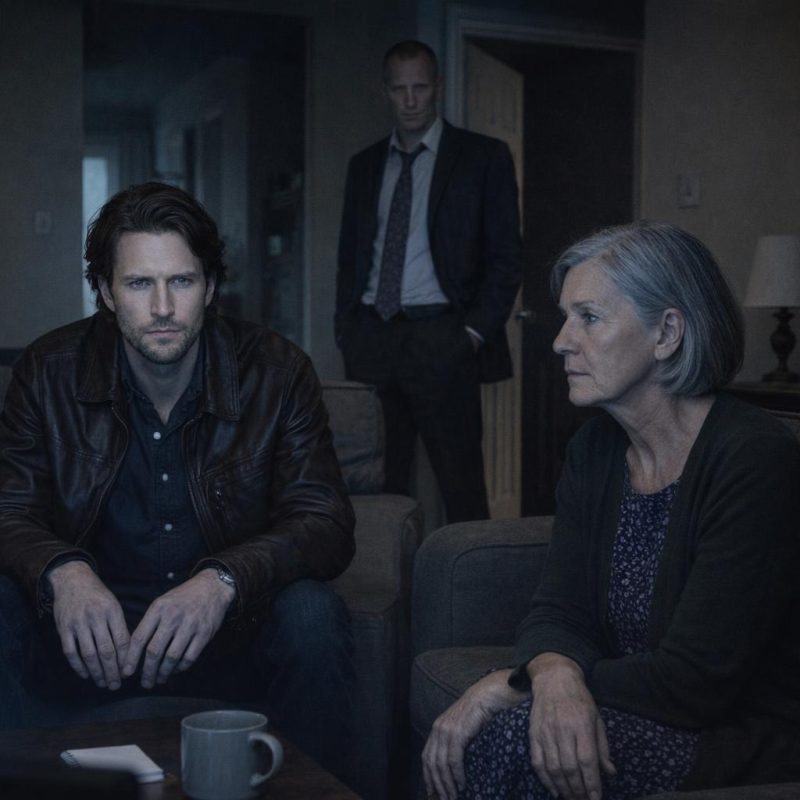 Image by RM AI
The New Names
Three months after the arrests, a government car takes us west. Oregon. A town small enough that nobody has a reason to look twice at two people starting over. Rose is Helen Porter now. I am Michael Porter. The documents are clean, the backstory is simple, and the house they give us has a porch that faces a stand of Douglas firs that turn dark green in the rain. I find work at a hardware store. Rose volunteers at the local library three mornings a week. Neighbors ask where we are from and I say Pennsylvania, keep it vague, let them fill in whatever they need. Rose attends a grief support group on Thursday evenings. She tells them her husband died suddenly. It is true enough. Some nights I lie awake thinking about the trials still moving through the courts back east, about the forty-seven names on that indictment list, about the families sitting in courtrooms I will eventually have to walk into. I think about whether my father would recognize what I have done with what he left me. Rose seems steadier than I expected. She has made one friend at the library, a woman who lends her paperbacks and asks no difficult questions. I am grateful for that. When the hardware store manager calls across the floor and says Michael, it still takes me a half-second too long to turn.
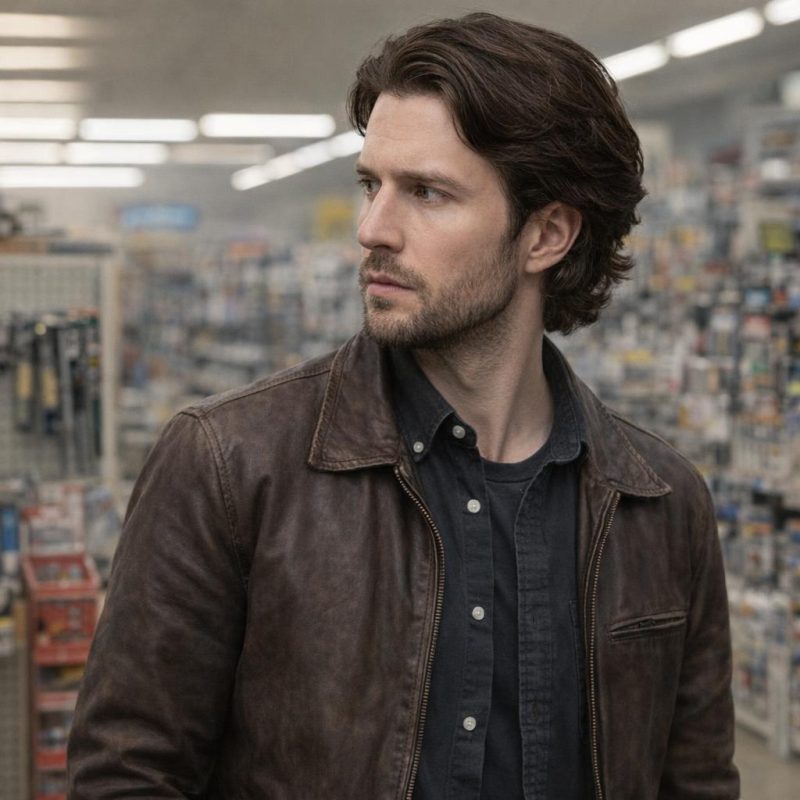 Image by RM AI
The Letter
Six months in, a package arrives through Morrison — a padded envelope with a handwritten note clipped to the front saying it was found in my father's safe deposit box, with instructions to forward it to me if I chose to cooperate. Inside the envelope is a smaller one, sealed, my name written on it in handwriting I would know anywhere. I sit at the kitchen table for a long time before I open it. Inside is a single sheet of paper. One sentence in my father's careful, deliberate hand: If you are reading this, you chose better than I did. I read it three times. Then I bring it to Rose. She reads it standing at the counter and her hands go still and she begins to cry — not loudly, just the quiet kind, the kind that has been waiting a long time for a reason to arrive. I ask her what she thinks it means. She says Vincent knew what he was building. She says he knew it was wrong and could not stop himself, but that he hoped I would be stronger than he was. I fold the letter carefully and put it in the drawer beside the stove. I do not need to read it again. The kitchen is quiet around us, and the firs outside the window hold their dark color against the gray afternoon light.
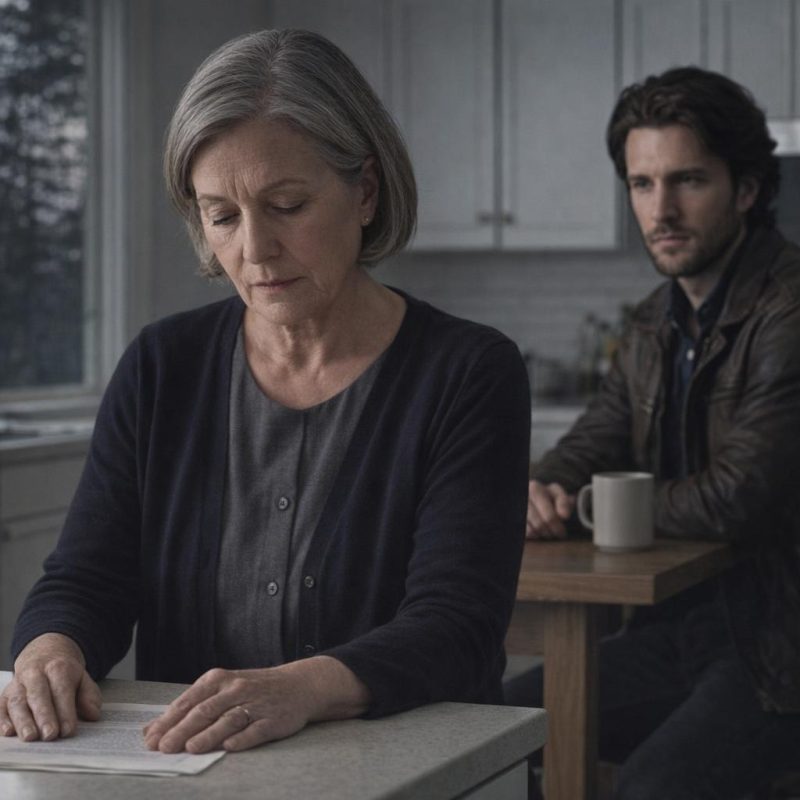 Image by RM AI
The Inheritance
Eight months in Oregon and the rhythms of this life have started to feel like something I can carry. Morrison calls every few weeks with updates — most defendants are taking plea deals, the families' operations have been dismantled piece by piece, and I will need to testify next spring. I am prepared for that. Rose has made friends at the library. I have been promoted to assistant manager at the hardware store. We have dinner together every evening, and sometimes we talk about Vincent. Rose says she thinks he loved us in his way. I agree. I think about the Cadillac arriving at dawn when I was a boy, the silk suits, the locked briefcase, the controlled way he moved through a room as though he had already accounted for every variable. He built a kingdom of secrets and kept me at its edge, close enough to inherit it, far enough to still have a choice. I used to think that distance was indifference. I do not think that anymore. The letter in the kitchen drawer says everything he could not say across a dinner table or in a car on the way to school. He left me the key and trusted me to decide what to do with the door. I carry his name in a drawer now, not on my back, and the weight of that is something I can live with.
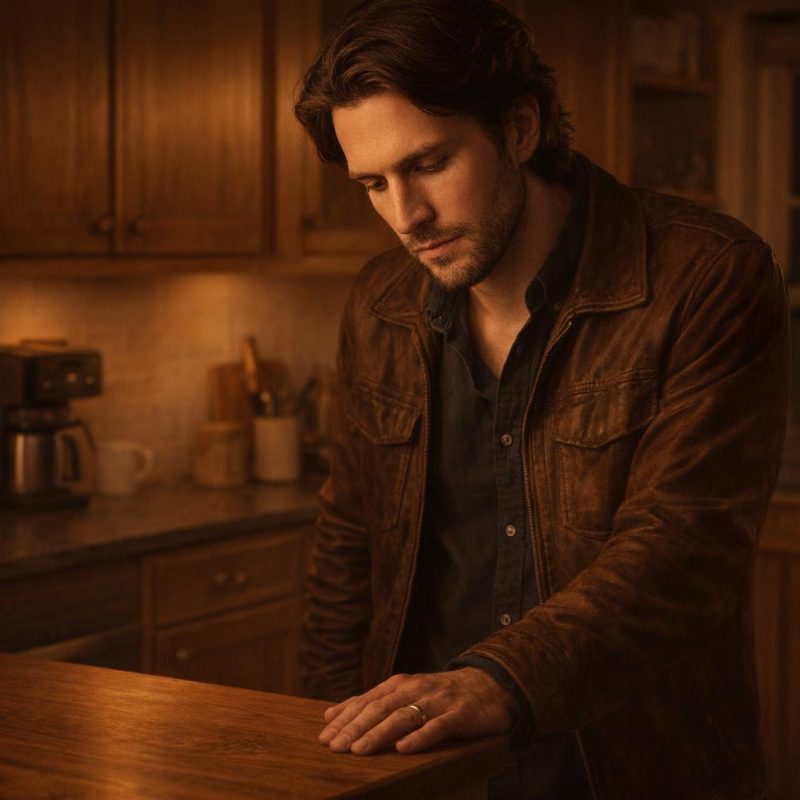 Image by RM AI
KEEP ON READING
The Day the Sun Didn’t Rise: The Unexplained New England…
Alina Nichepurenko on UnsplashImagine waking up on a spring morning,…
By Sara Springsteen Jun 18, 2026
20 Facts About Animal Symbolism In Paintings
The Sacred Clues Across History. Animal symbolism is a detail…
By Elizabeth Graham Jun 18, 2026
How a Single Telegram Pushed America Into World War I
Sammie Sander on PexelsThe year is 1917, and the United…
By Cameron Dick Jun 18, 2026
The Marriage Bed As A Political Object
Fæ on WikimediaA bed is naturally a private space—it's where…
By Elizabeth Graham Jun 18, 2026
How Early Navigation Techniques Guided Explorers Across Oceans
Maël BALLAND on PexelsLong before satellites, digital maps, and advanced…
By Rob Shapiro Jun 18, 2026
20 Most Inappropriate Relationships From History
Private Attachments With Public Consequences. It’s easy to think of…
By Annie Byrd Jun 18, 2026