


The Last Envelope
I turned twenty-one on a Tuesday, which felt weirdly anticlimactic until Mom handed me the envelope. You know the one—cream-colored, my name written in Dad's careful handwriting, the annual ritual we'd maintained since his death six years ago. He'd left them with his lawyer, one for each birthday until I turned twenty-five. My hands were already shaking before I even opened it. The letter inside was shorter than usual, just a few lines about how proud he was, how much he wished he could see the woman I'd become. Standard Dad stuff that still made my throat tight. But then I tilted the envelope and heard something slide. A key fell into my palm—brass, old-looking, with the number 847 engraved on the side. Mom's face went pale when she saw it. 'Did you know about this?' I asked her. She shook her head, but I caught something in her expression—not quite surprise, more like dread. I looked back at the letter, at the final line I'd almost missed: 'This key will lead you to something I've kept secret your entire life, something you deserve to know now that you're an adult.' The key had a number engraved on it, and my father's letter said it would lead me to something he'd kept secret my entire life.
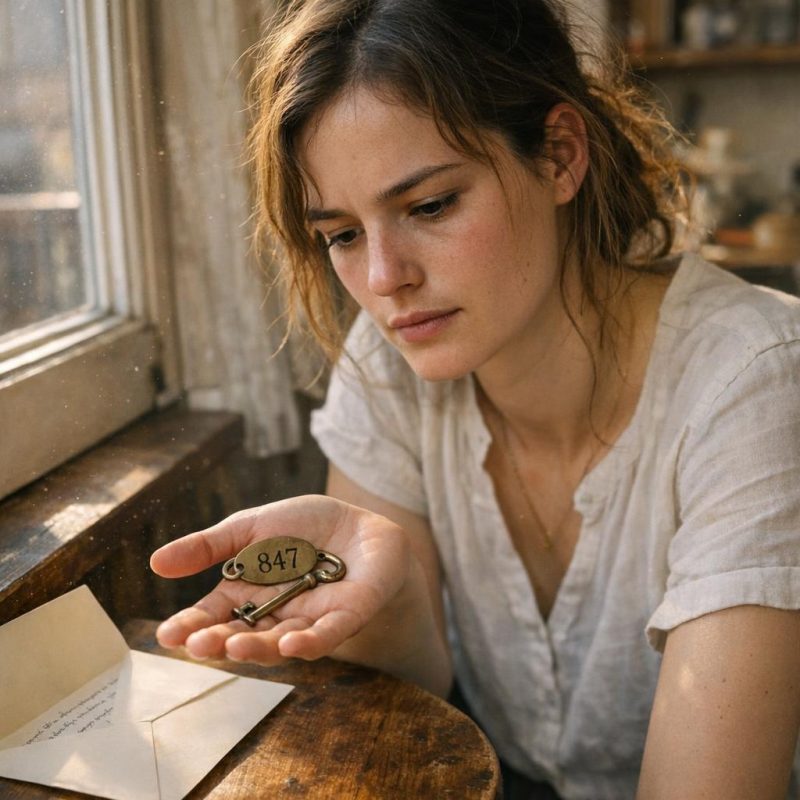 Image by RM AI
Six Years of Letters
Let me back up for a second because you need to understand what these letters meant to me. Dad died when I was fifteen—sudden heart attack, no warning, no goodbye. For months afterward, I felt like I was drowning in his absence. Then, on my sixteenth birthday, Mom gave me the first envelope. His lawyer had handed her a box containing ten letters, each marked with a year. Reading his words felt like getting him back, just for a moment. Every birthday became sacred. I'd lock myself in my room, light a candle, and spend hours with whatever he'd written. He'd tell me stories about his childhood, give me advice about college, remind me that grief doesn't mean love ends. Those letters were my lifeline. They proved he'd thought about my future, about all the birthdays he'd miss. I memorized every word, every dad joke, every 'I love you' he'd signed off with. The ritual became part of my identity—I was the girl whose dead father still sent birthday wishes. But this letter felt different from the start—heavier, more deliberate, like he'd been holding back something big for years.
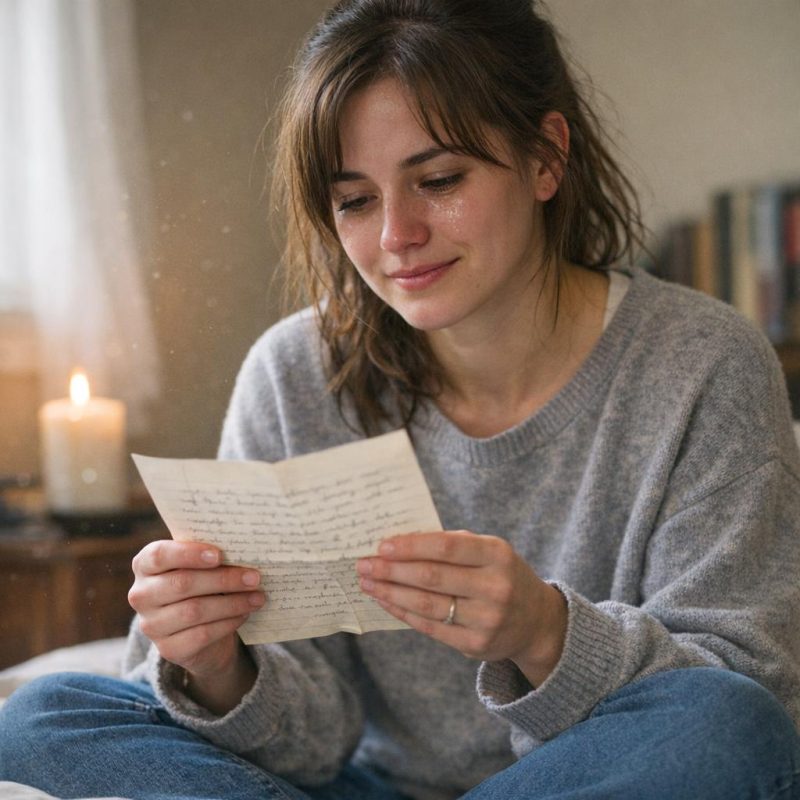 Image by RM AI
The Bank Visit
Jessica came with me to the bank because there was no way I could do this alone. She'd been my best friend since freshman year of college, the kind of person who shows up without asking questions when you text 'emergency' at 7 AM. 'You okay?' she kept asking during the drive. I wasn't, but I nodded anyway. The bank was sterile and cold, all marble floors and fluorescent lighting that made everything feel surreal. I showed the key to a woman at the information desk, and she led us through a maze of corridors to a private room. Jessica squeezed my hand before they closed the door, leaving me alone with a bank employee who looked bored by the whole thing. He disappeared into the vault and returned carrying a long metal box that looked ancient, like something from a noir film. 'Take your time,' he said, setting it on the table before leaving. I stared at that box for what felt like hours but was probably thirty seconds. My heart was pounding so hard I could hear it in my ears. What could Dad have kept secret? An inheritance? Old documents? Love letters to Mom? When they placed the metal box in front of me, my hands were shaking so badly I almost couldn't lift the lid.
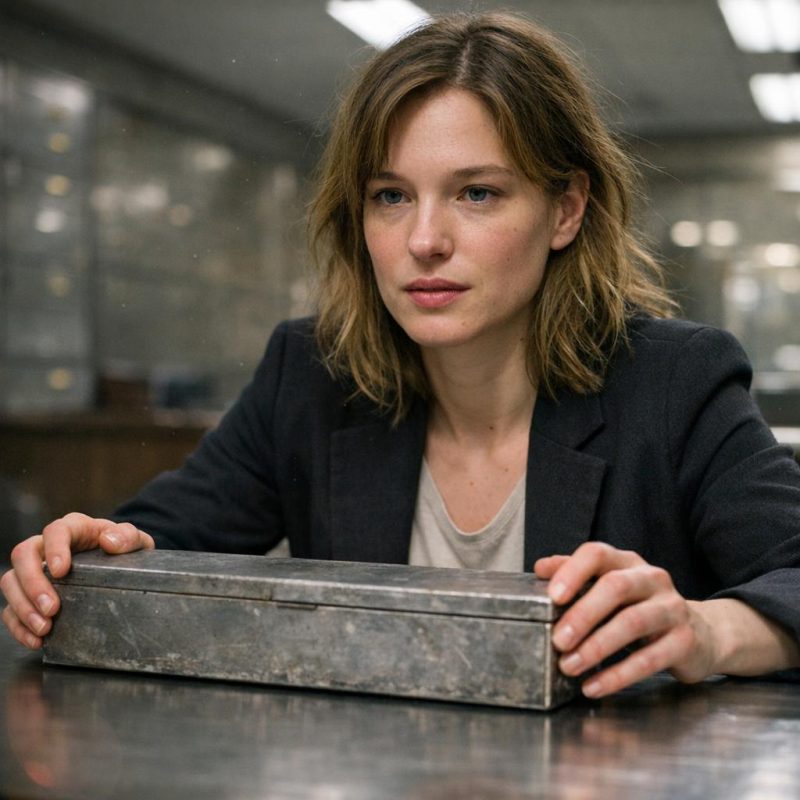 Image by RM AI
The Photograph
Inside was a manila folder, another sealed envelope, and a photograph lying face-up on top. I picked up the photo first because it was right there, impossible to ignore. Dad looked young in it—maybe mid-twenties, before the gray in his temples, before the reading glasses. He was standing outside some hospital, wearing jeans and a flannel shirt I'd never seen before. Next to him stood a woman I didn't recognize at all—brown hair, tired smile, holding a bundle wrapped in a pink blanket. A baby. The woman wasn't Mom. The timeline wasn't right anyway; this photo had that faded quality of early nineties film, years before my parents even met. Dad's arm was around the woman's shoulders, protective, intimate. But it was his expression that gutted me completely. He was looking down at that baby with such tenderness, such unmistakable love. I'd seen that look before—in photographs of him holding me as a newborn. Who were these people? Why had he hidden this photo in a safety deposit box instead of keeping it in our family albums? The woman's face was unfamiliar, but the way my dad looked at that baby—it was the same way he used to look at me.
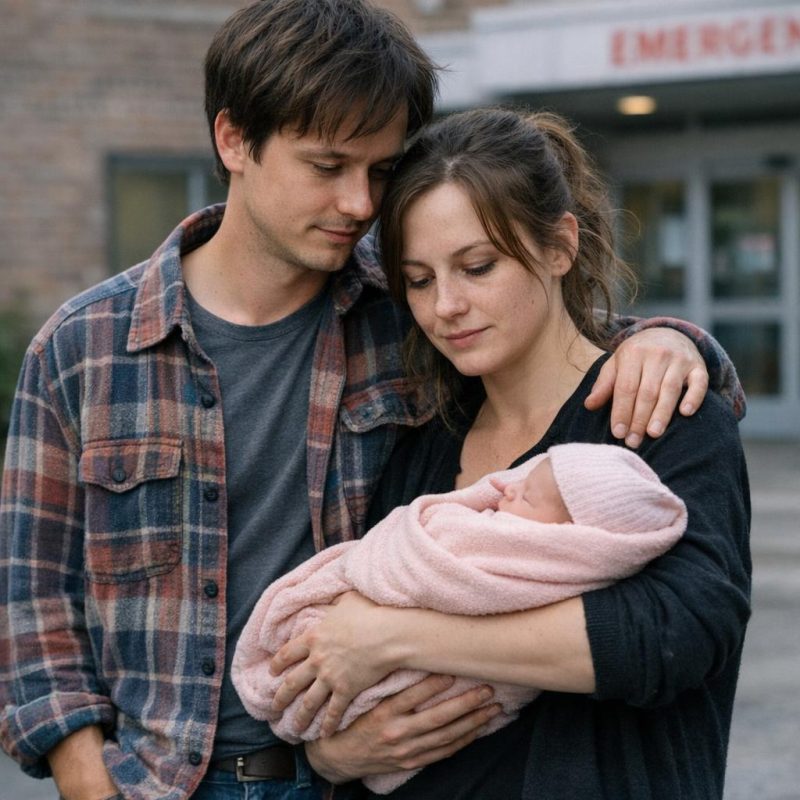 Image by RM AI
The Confession Letter
I set the photo down and opened the second envelope with trembling fingers. Dad's handwriting filled three pages, and I had to read the first paragraph twice before it made sense. 'Emma, if you're reading this, you're twenty-one now, old enough to understand complicated truths.' He wrote that when he was twenty-four, before he met Mom, he'd gotten his girlfriend pregnant. They were broke, unprepared, terrified. They'd made the hardest decision of their lives and placed the baby—a girl—for adoption. 'I thought about her every single day,' he wrote. 'I wondered if I'd made the right choice, if she was happy, if she ever thought about me.' He'd never told Mom about this during their engagement, afraid she'd judge him. But a few months before his heart attack, he'd registered with a DNA database, hoping his daughter might be searching for him someday. He died before any match came through. 'You have a sister,' he wrote. 'Half-sister, technically. I never met her, but I wanted you to have the chance I didn't get.' At the bottom of the page, he'd written a name: Claire Sullivan, and an address from a DNA registry.
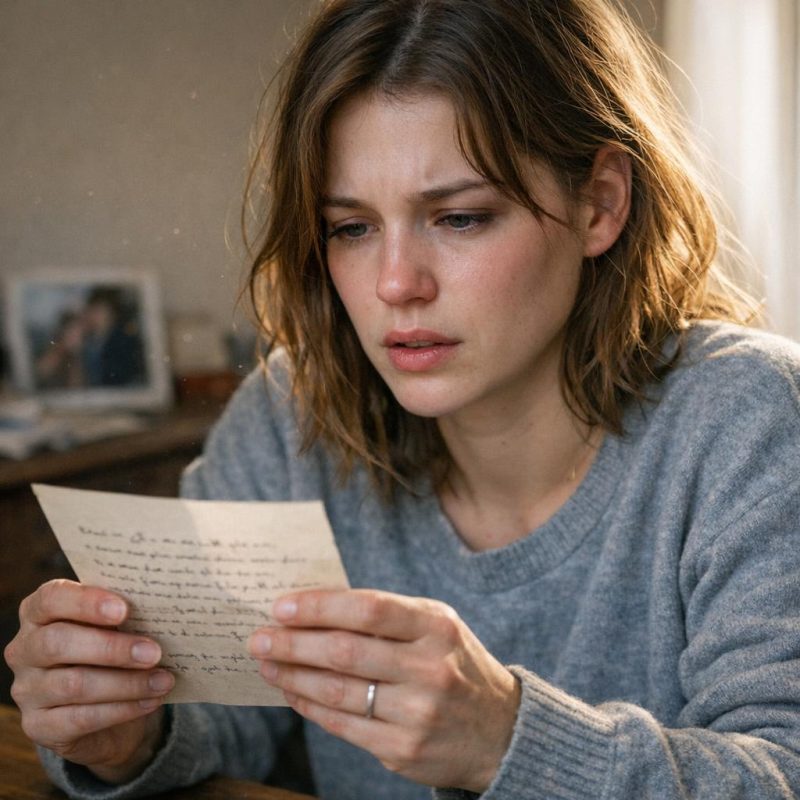 Image by RM AI
Telling Mom
I drove straight to Mom's house, letter in hand, ready for answers. She was in the kitchen making coffee when I walked in, and the second she saw my face, she knew. 'You opened the box,' she said quietly. It wasn't a question. 'You knew?' My voice came out louder than I intended. 'You knew Dad had another daughter and you never told me?' Mom set down her mug carefully, like she was buying time. Then she sat at the table and gestured for me to join her. 'Yes, I knew about the adoption,' she admitted. 'Your father told me before we got married. He was honest about his past, about the choice he'd made.' I felt betrayed and confused all at once. 'Why didn't you tell me?' She reached for my hand, but I pulled away. 'It wasn't my secret to tell, Emma. Your father wanted to be the one to explain it when you were ready.' Her eyes were red now, tears threatening to spill. 'I had no idea he'd left you a way to find her. He never told me about the safety deposit box or the DNA registry.' Mom looked at me with tears in her eyes and said, 'He made me promise not to tell you until you were ready—but I never thought he'd leave you a map to find her.'
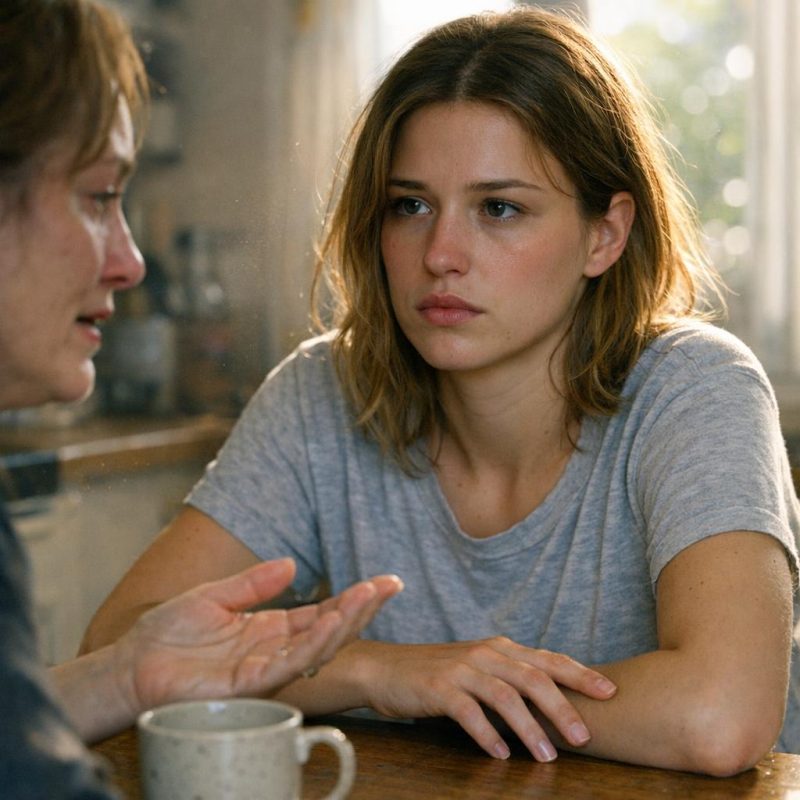 Image by RM AI
The Search Begins
I spent the next three days doing what anyone my age would do—I became a social media detective. Claire Sullivan wasn't hard to find once I had her name and approximate age. Her Facebook profile was sparse, set to mostly private, but I could see her profile picture and a handful of public posts. She looked like Dad. Same nose, same sharp jawline, same slight smile that didn't quite reach the eyes. It was surreal, seeing my own features reflected in a stranger's face. Her Instagram was even more minimal—just three photos total, all recent. One showed her at a coffee shop, sitting alone. Another was a sunset taken from what looked like an apartment window. The third was a selfie in a bathroom mirror, no caption, no tags. No friends commented on any of them. Her LinkedIn said she worked in medical billing, lived in the same city Dad had lived in before he met Mom. Everything about her online presence screamed isolation—no tagged photos with friends, no birthday wishes on her timeline, no evidence of family or community. There were only three photos on Claire's profile, and in every single one, she was alone.
 Image by RM AI
Jessica's Advice
Jessica came over that night with wine and Chinese takeout, ready to hear everything. I showed her Claire's photos on my phone, and she studied them carefully. 'So what are you going to do?' she asked. I'd been asking myself the same question for days. 'I don't know. Send her a message? Show up at her door? Pretend I never found out?' Jessica set down her wine glass and looked at me seriously. 'Emma, you have to reach out. Think about it from her perspective—she probably spent her whole life wondering about her biological parents. Your dad's dead, but you're here. You could give her answers.' She made it sound so simple, so obvious. 'What if she doesn't want to know me?' I asked. 'What if opening this door ruins everything?' Jessica squeezed my hand. 'Everyone deserves to know where they come from. You'd want someone to reach out if the situation were reversed.' She was right, logically. But Jessica didn't know what it felt like to have a secret sibling suddenly appear in your life like a ghost from your father's past.
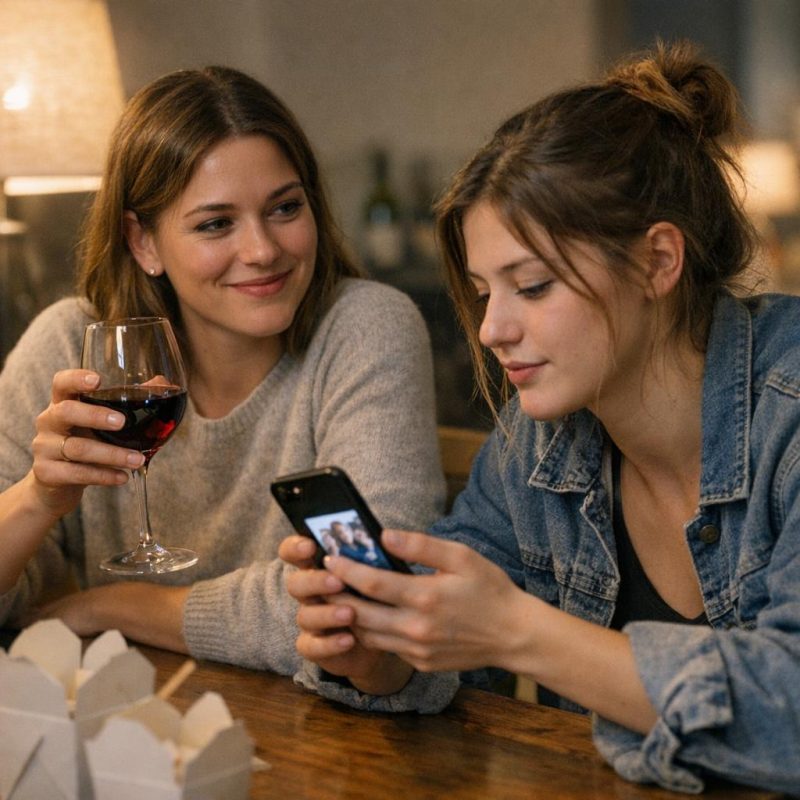 Image by RM AI
The First Message
I spent two hours crafting that message, deleting and rewriting every sentence until my eyes burned. How do you introduce yourself to a sister you never knew existed? I kept it simple—told her who I was, explained about Dad's letter, attached a photo of him from when he was younger. My hands shook as I typed the last line: 'I know this must be shocking, but I'd really like to talk to you if you're open to it.' Looking back, I realize how naive that message was, how trusting. I thought I was extending an olive branch to someone who'd been searching for answers her whole life. I thought we'd both been victims of the same secret, that we were in this together. Jessica had gone home an hour earlier, so I was alone in my apartment when I finally worked up the courage. I read the message one last time, my finger hovering over the send button. What if she rejected me? What if she blamed me somehow for being the daughter Dad kept while she was given away? But Jessica's words kept echoing in my head—everyone deserves to know where they come from. I hit send before I could change my mind, and then I stared at my phone for three hours, waiting for a response that never came.
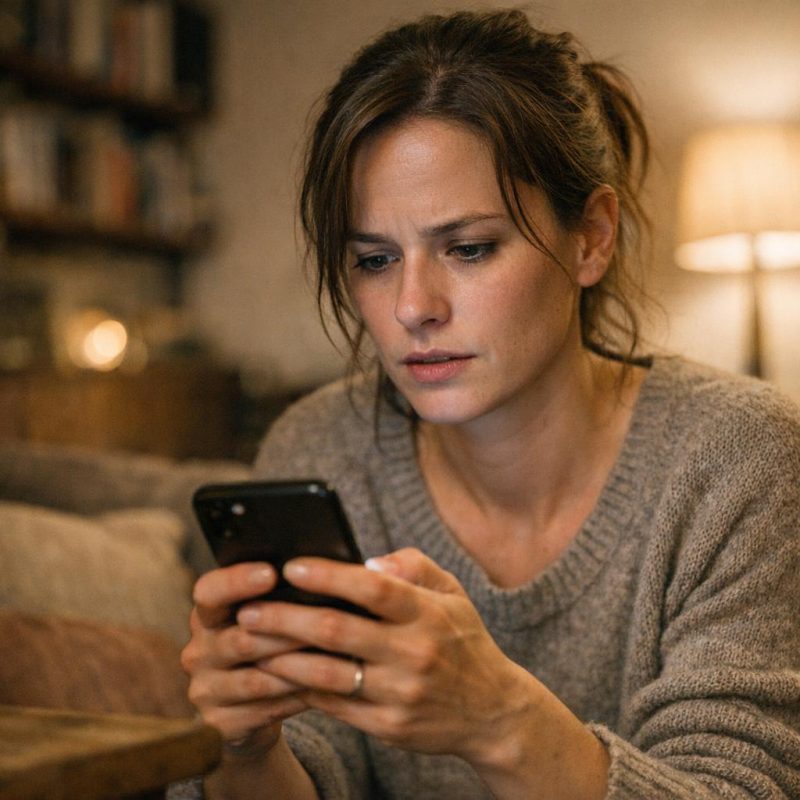 Image by RM AI
Sleepless Nights
The next seventy-two hours were torture. I checked my messages every ten minutes, analyzed whether she'd seen it, whether her silence meant anger or indifference or something worse. I couldn't eat. Couldn't focus on anything. Jessica tried to reassure me that people need time to process big news, but every hour that passed felt like a rejection. I started second-guessing everything—maybe my message had been too casual, or too formal, or maybe I should've waited longer before reaching out. Maybe I should've sent a letter instead, something less intrusive. At night, I'd lie awake imagining all the reasons she might not want to know me. Maybe she'd built a happy life with her adoptive family and didn't want reminders of being given up. Maybe she hated our father for abandoning her. Maybe she hated me by extension. I refreshed my inbox so many times I memorized the pattern of spam emails. Mom called twice, but I didn't pick up—I couldn't explain what I was going through when I didn't understand it myself. Then, three days later, a notification lit up my screen: Claire Sullivan had replied.
 Image by RM AI
Claire's Reply
My heart was pounding so hard I thought I might pass out. I sat down on my couch before opening the message, needing to be steady for whatever I was about to read. Claire's reply was shorter than mine had been, but every word felt heavy with emotion. She wrote that she'd been searching for information about her birth parents for years, that she'd registered with adoption databases and DNA websites, hoping for any connection. She said seeing my message felt like a dream, like something she'd imagined so many times it couldn't possibly be real. There was a vulnerability in her words that hit me right in the chest—she talked about growing up with questions nobody could answer, about feeling like part of her identity was missing. She said she'd looked at the photo of our father for an hour, studying his face, trying to see herself in him. Her adoptive parents had been loving, she assured me, but that didn't erase the need to know where she came from. I found myself crying as I read it, feeling this sudden connection to someone I'd never met. She ended the message with: 'Can we meet? I need to see you in person. I need to know this is real.'
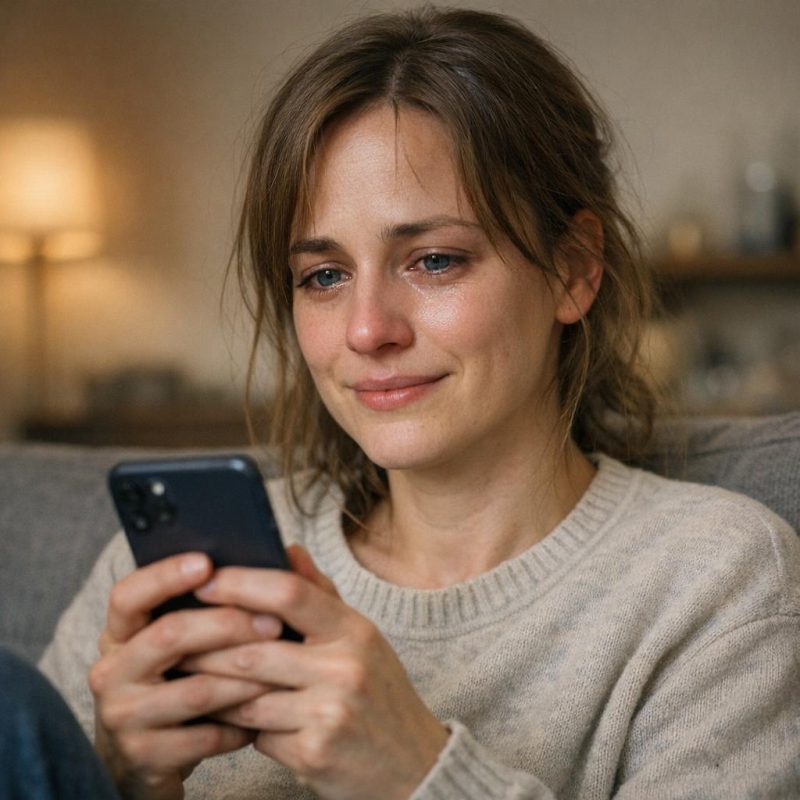 Image by RM AI
Planning the Meeting
Over the next week, Claire and I exchanged messages almost daily. They started cautious and formal, but gradually became more personal. She told me about her life in the city, her job as a graphic designer, how she'd always felt drawn to creative work. I shared stories about Dad, about what kind of person he'd been—or at least, what kind of person I'd thought he was. We agreed to meet at a neutral coffee shop downtown, a place neither of us had been before. I suggested it because I wanted somewhere public, somewhere safe, though I didn't examine too closely why safety felt like a consideration. Looking back, maybe some part of me sensed something was off, but I buried that instinct under excitement and curiosity. Claire seemed just as nervous as I was, which made me feel less alone in this weird situation. She asked thoughtful questions about Dad, about our family, about me. Every message made me feel more connected to her, more certain that reaching out had been the right choice. The night before we were supposed to meet, Claire sent a photo of herself—and the resemblance to our father was unmistakable.
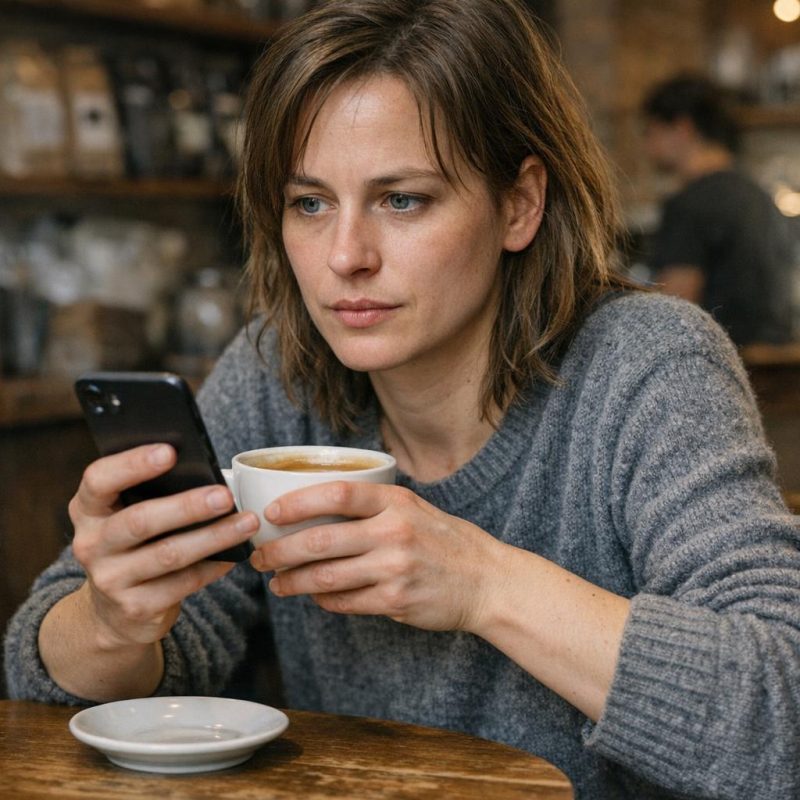 Image by RM AI
Mom's Warning
Mom showed up at my apartment that morning unannounced, which should've been my first clue something was wrong. She had this look on her face—not quite disapproving, but worried in a way that made my stomach tight. I'd finally told her about Claire a few days earlier, and she hadn't taken it well. Now she sat at my kitchen table, hands wrapped around a coffee mug she wasn't drinking from. 'I just think you should be careful,' she said, her voice gentle but firm. 'You don't know anything about this woman except what she's told you.' I bristled at that, defensive in a way I couldn't quite explain. 'She's Dad's daughter. She's my sister.' Mom's expression softened, but the worry didn't leave her eyes. 'Maybe she is. But Emma, people can want things from us that aren't always obvious at first. I'm not saying don't meet her—I'm saying don't rush into trusting someone just because you want to believe in a connection.' Her words annoyed me more than they should have. I told her she was being paranoid, that she was letting her hurt about Dad's secret make her suspicious of an innocent person. She squeezed my hand and said, 'Just remember, sweetheart—wanting something to be true doesn't make it safe.'
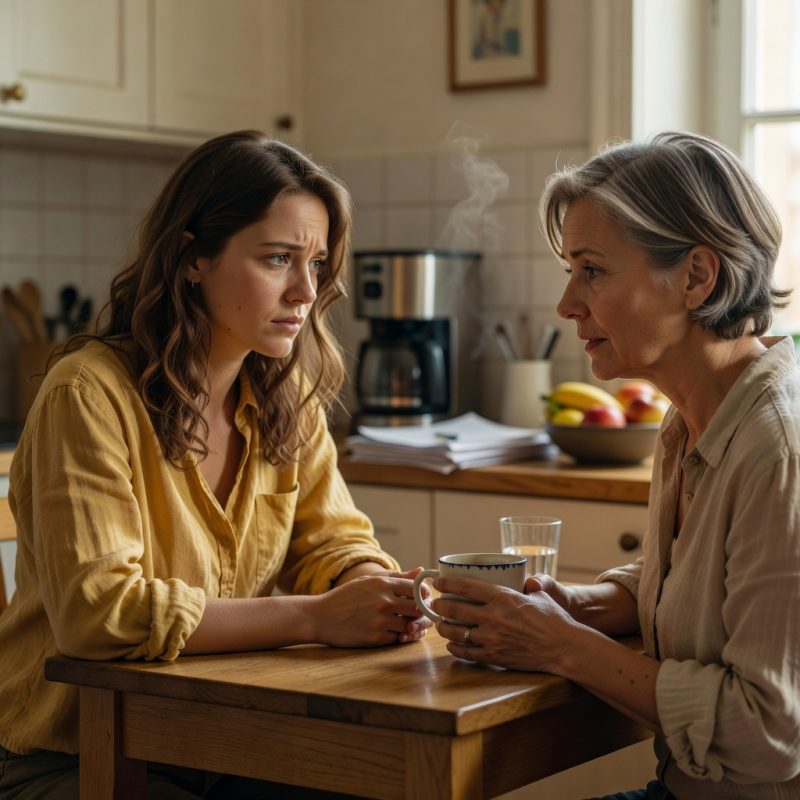 Image by RM AI
Marcus Weighs In
Marcus called that afternoon, and somehow he already knew about the meeting. Mom must've told him, which irritated me—I was twenty-one, not a child who needed family supervision. But Marcus wasn't judgmental about it. He just said, 'Hey, I know you're meeting this Claire person today. Want me to tag along? I'll sit at another table, won't even make it weird.' His offer touched me more than I wanted to admit. Marcus had always been like a protective older brother, especially after Dad died. He'd been the one who helped me move into my first apartment, who taught me how to change a tire, who showed up with pizza whenever I was having a rough day. Part of me wanted to say yes, wanted that safety net of having someone I trusted nearby. But another part of me—the part that was tired of everyone treating this like something dangerous—needed to prove I could handle this alone. I told him no, that I needed to do this alone—but part of me wished I'd said yes.
 Image by RM AI
The Coffee Shop
I got to the coffee shop twenty minutes early, which was a mistake because it gave me too much time to spiral. The place was one of those trendy spots with exposed brick and mismatched furniture, busy enough that we wouldn't stand out but quiet enough to actually talk. I ordered a latte I didn't want and claimed a table near the window where I could watch the door. Every time someone walked in, my heart jumped. I kept rehearsing what I'd say, how I'd greet her—should I hug her? Shake her hand? Just wave awkwardly? My phone showed 2:58 PM. We'd agreed on 3:00. I watched the seconds tick by on my phone screen, each one stretching impossibly long. A woman with red hair came in—not her. A couple with a stroller—not her. An older man—definitely not her. At exactly 3:02, I started wondering if she'd changed her mind. Maybe she'd driven here, sat in her car, and decided this was too weird, too much. Maybe I'd pushed too hard. Then the door opened, and a woman with my father's eyes walked straight toward me.
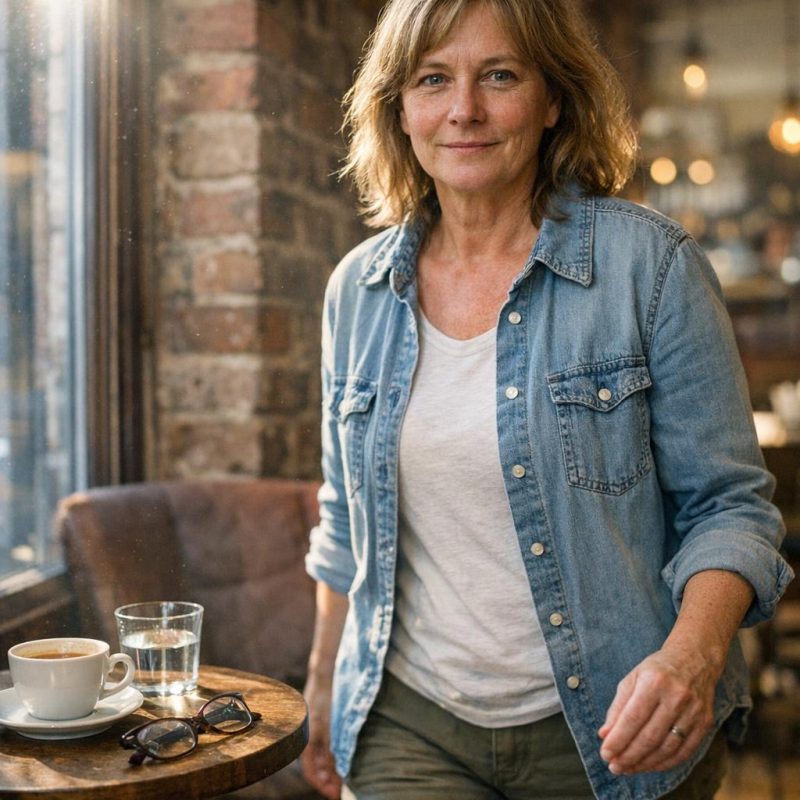 Image by RM AI
Face to Face
We both started crying immediately, which wasn't what I'd planned but felt completely natural. Claire stood in front of my table, and I stood up, and for a moment we just stared at each other. The resemblance was even stronger in person—she had Dad's eyes, his cheekbones, even some of his mannerisms in the way she tucked her hair behind her ear. 'Emma?' she said, her voice breaking, and I nodded because I couldn't speak. Then we were hugging, both of us shaking, and I felt this overwhelming rush of emotion I wasn't prepared for. When we finally sat down, we couldn't stop looking at each other. She kept saying 'I can't believe this is real' and I kept saying 'I know, I know.' Every few seconds one of us would start crying again and the other would hand over a napkin. She told me she'd been so nervous she'd almost turned around three times on the drive over. I confessed I'd been rehearsing what to say for the past week. There was this instant understanding between us, like we'd known each other forever instead of just minutes. Claire reached across the table, grabbed my hand, and whispered, 'I've been looking for him my whole life—and now I've found you instead.'
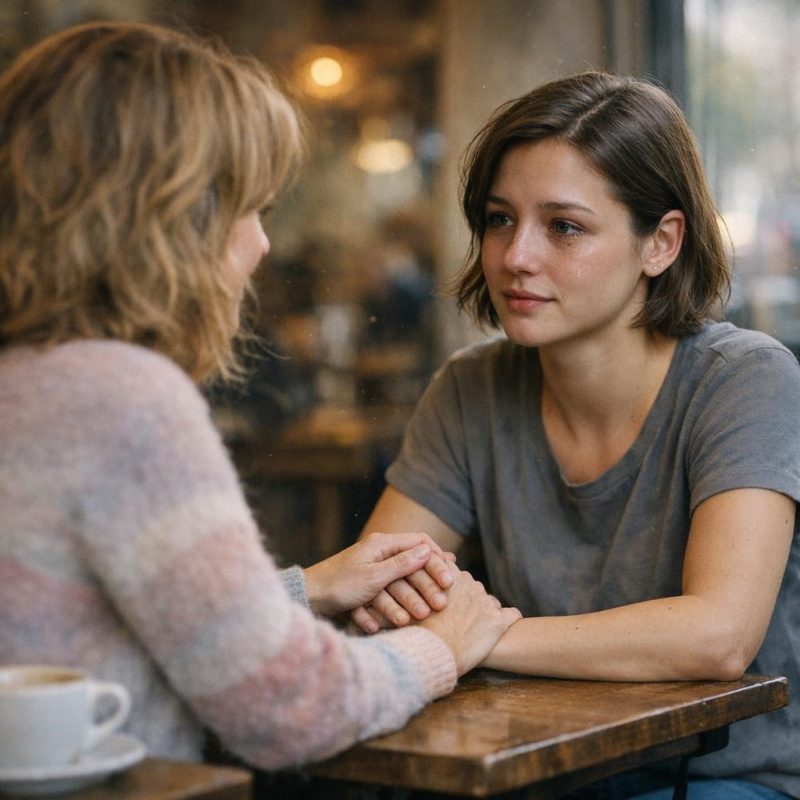 Image by RM AI
Claire's Story
Claire's story came out slowly, between sips of cooling coffee and crumpled napkins. She'd grown up in Portland with parents who loved her—she made that clear right away, like she didn't want me to think she'd had a terrible life. But they were older when they adopted her, and they'd always been closed off about where she came from. No birth certificate with real names, no details, just a sealed adoption through some agency that no longer existed. She said she'd spent her teenage years searching online databases, sending away for records, hitting dead end after dead end. 'They were good people,' she told me, wiping her eyes. 'But there was always this gap, you know? Like I was walking around with half my identity missing.' I understood that feeling more than I could say. Since Dad's death, I'd felt like I was discovering that my own life had gaps I'd never noticed. Claire reached for my hand again. 'I always felt like something was missing, like I was supposed to be somewhere else—and now I understood why.'
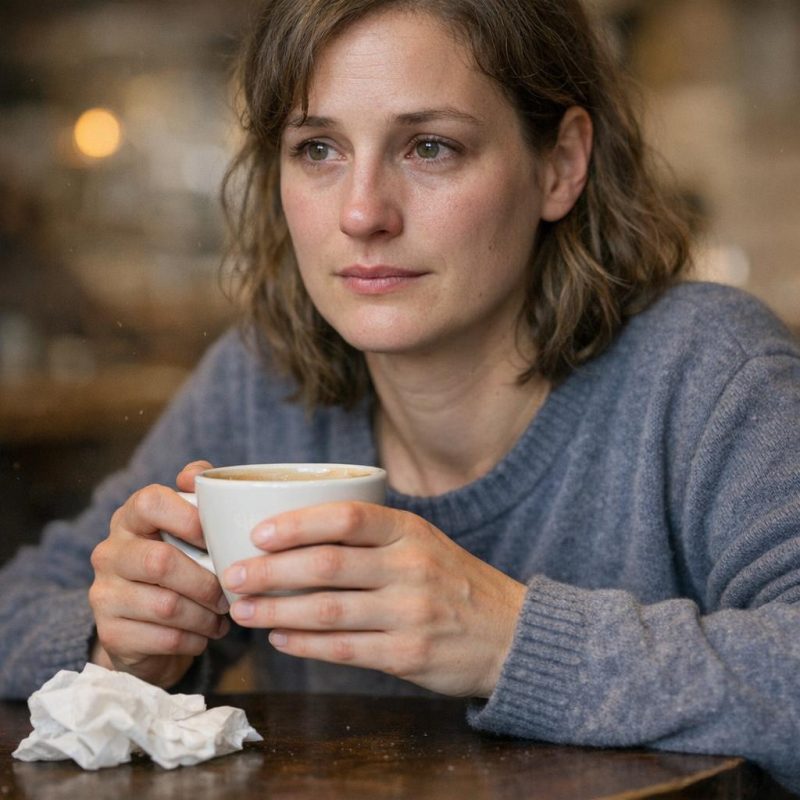 Image by RM AI
Shared Genetics
The more we talked, the more I noticed these little things that made my chest tight with recognition. We both laughed the same way—this kind of surprised snort that turned into giggles. We both tucked our hair behind our left ear when we were thinking. She loved old movies, especially film noir from the forties, which had been Dad's favorite genre. When she mentioned she couldn't stand cilantro, I actually gasped because I have that same genetic thing where it tastes like soap. We compared our hands and they were shaped identically, long fingers with square nail beds. Even our voices had the same cadence when we got excited about something. It was like looking into a mirror that showed me a slightly older, slightly different version of myself. I'd read about genetic traits and mannerisms being inherited, but experiencing it in real time was surreal. When Claire mentioned her birthday was exactly five years before mine, I felt like Dad had been trying to tell me something all along.
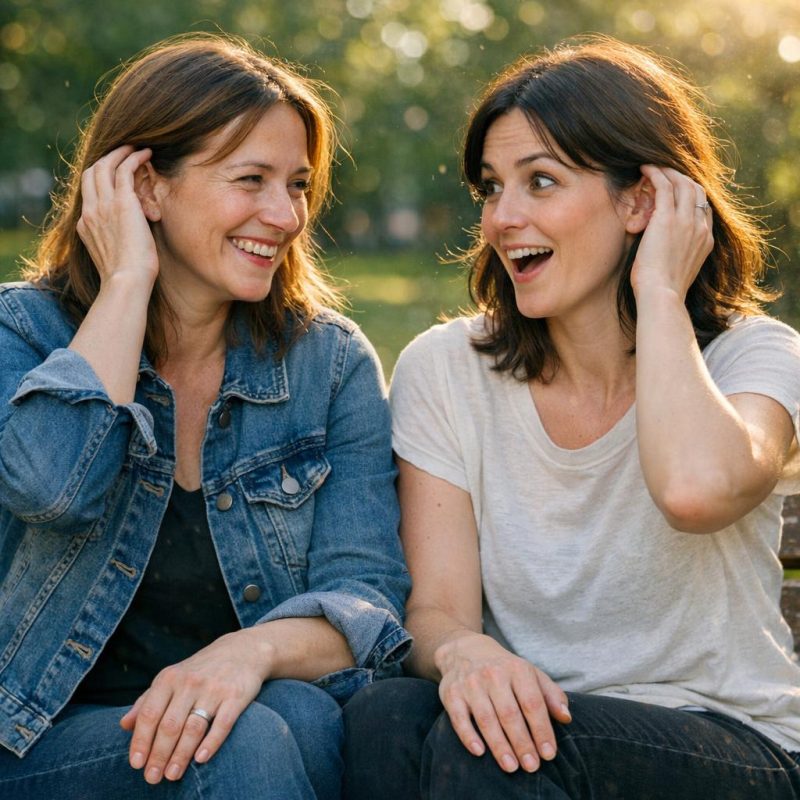 Image by RM AI
The Photograph Exchange
I'd brought my bag with me, and inside was a copy of the photograph from the safety deposit box—young Dad with the mystery woman and baby. My hands shook as I slid it across the table. Claire picked it up, and I watched her face transform. Her eyes filled with tears, and she brought the photo close to her face, studying every detail. 'That's him?' she whispered. 'That's our father?' I nodded, and she made this sound—half sob, half gasp—that broke my heart. She traced Dad's face with her finger, so gentle, like she was afraid the image would disappear. 'I've never seen him before. Not once.' We sat there crying together while other coffee shop customers pretended not to notice. She must have stared at that photo for ten minutes straight, memorizing every pixel. Finally, she looked up at me with red, swollen eyes. Through her tears, Claire asked if she could keep the photo—just for a little while—and I didn't have the heart to say no.
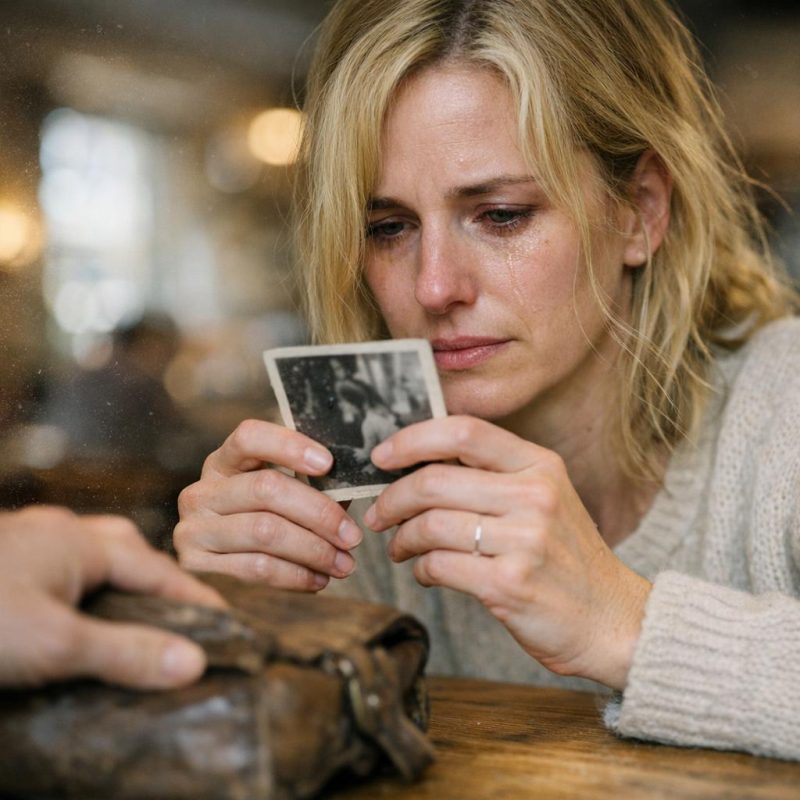 Image by RM AI
The Next Steps
Before we left the coffee shop, Claire brought up something I hadn't even considered. 'We should take a DNA test,' she said, pulling out her phone to look up options. I was surprised—honestly, the evidence seemed pretty overwhelming to me. We looked alike, we had Dad's letter, we had the photograph, we had all these shared traits. But Claire scrolled through a testing website with this intense focus. 'I know it seems obvious,' she said, 'but I need to see it in writing. I've spent my whole life wondering, and I need something concrete.' I understood that, I guess. She'd been searching for so long, she probably needed official confirmation to really believe it was real. We ordered two kits right there, shipping them to our respective addresses. The whole thing felt a bit excessive to me, but I wasn't going to argue. When I suggested we didn't really need it, her face fell. 'Please,' she said quietly. 'I need something concrete—something that proves I'm not alone anymore.'
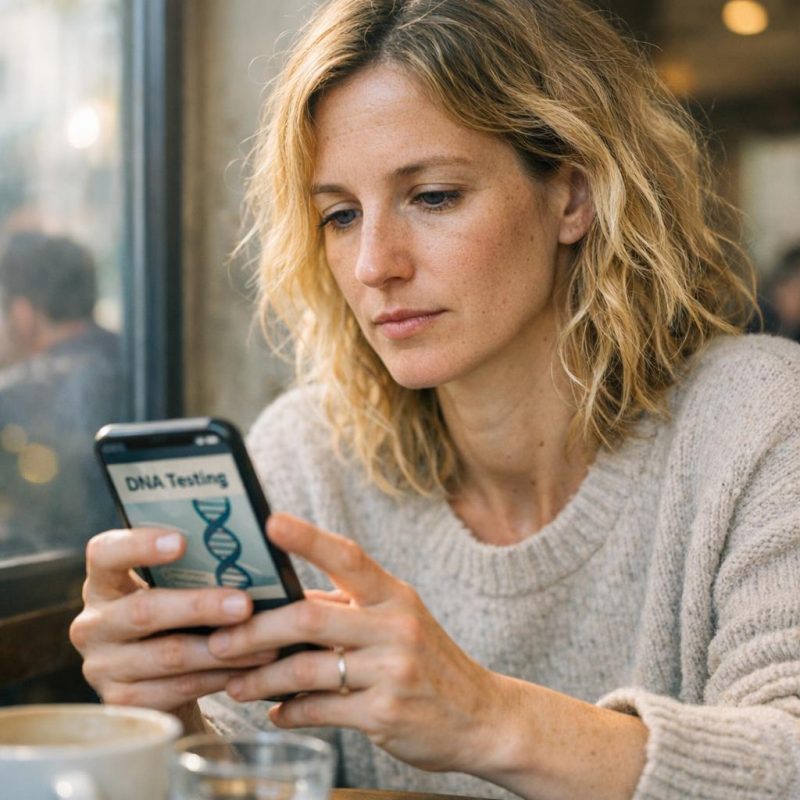 Image by RM AI
Meeting Mom
I spent three days preparing Mom for the meeting. I tried to make it sound casual—just coffee at the house, nothing formal, just two people processing Dad's complicated past together. Mom had been weird about the whole Claire situation from the beginning, but I thought once she met her, once she saw how genuine and sweet Claire was, she'd understand. I thought maybe it would even help her heal, give her someone else who understood what losing Dad meant. Claire arrived right on time, holding a small bouquet of flowers for Mom, which I thought was such a thoughtful touch. I opened the door feeling optimistic, like we were about to have this beautiful moment of family expansion and understanding. But when Mom came around the corner and saw Claire standing there in the doorway, her face went completely pale.
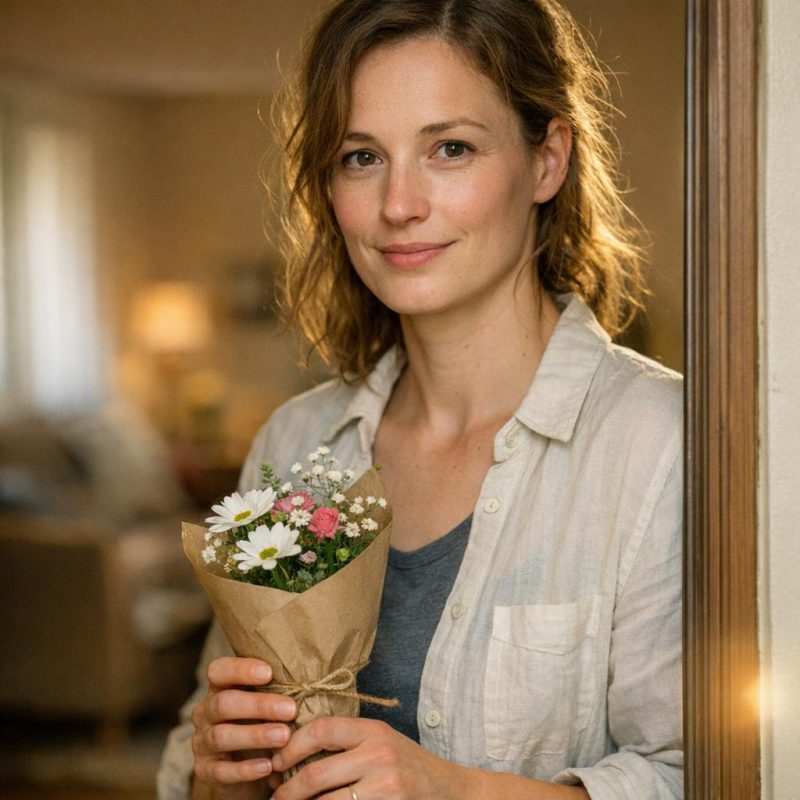 Image by RM AI
An Awkward Dinner
We sat down to dinner—I'd made pasta, trying to keep things simple and comfortable—but the atmosphere was all wrong. Mom asked polite questions but in this distant, formal tone, like she was interviewing a stranger for a job she didn't want to fill. Claire seemed oblivious to the tension, talking warmly about her adoptive parents, about growing up in Portland, about her work as a graphic designer. I kept trying to catch Mom's eye, to silently ask her what was wrong, but she wouldn't look at me. She pushed food around her plate and sipped wine with shaky hands. Claire talked about her adoptive father, how he'd passed away two years ago from cancer, how much she'd loved him despite always wondering about her biological family. 'His name was Daniel Sullivan,' she said with this sad smile. 'He was the best dad I could have asked for, even if he wasn't—' Mom's fork clattered against her plate, and the room went silent.
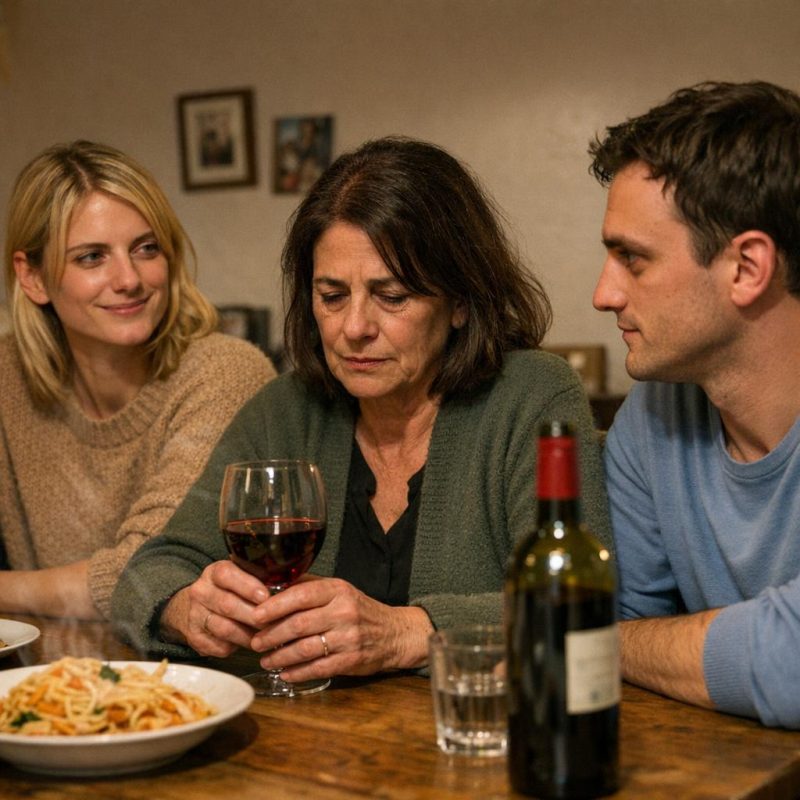 Image by RM AI
Mom's Reluctance
After Claire left—promising to text me when she got home safe—I found Mom in the kitchen, gripping the counter like she might fall over. 'What was that?' I demanded. 'Why were you acting so strange?' She turned to me with exhausted eyes and said she was just overwhelmed, that it was a lot to process, that seeing Claire brought back painful memories of Dad's betrayal. It sounded reasonable, but something in her voice felt off. I pushed harder, asking why she'd reacted so strongly to Daniel Sullivan's name, but she just shook her head and said she didn't know what I was talking about. We argued in circles for twenty minutes, getting nowhere. Finally, frustrated and confused, I told her I was going to bed. I was halfway up the stairs when I heard her voice, so quiet I almost missed it. As I walked away, I heard her whisper to herself, 'This isn't what Robert wanted,' and my blood ran cold.
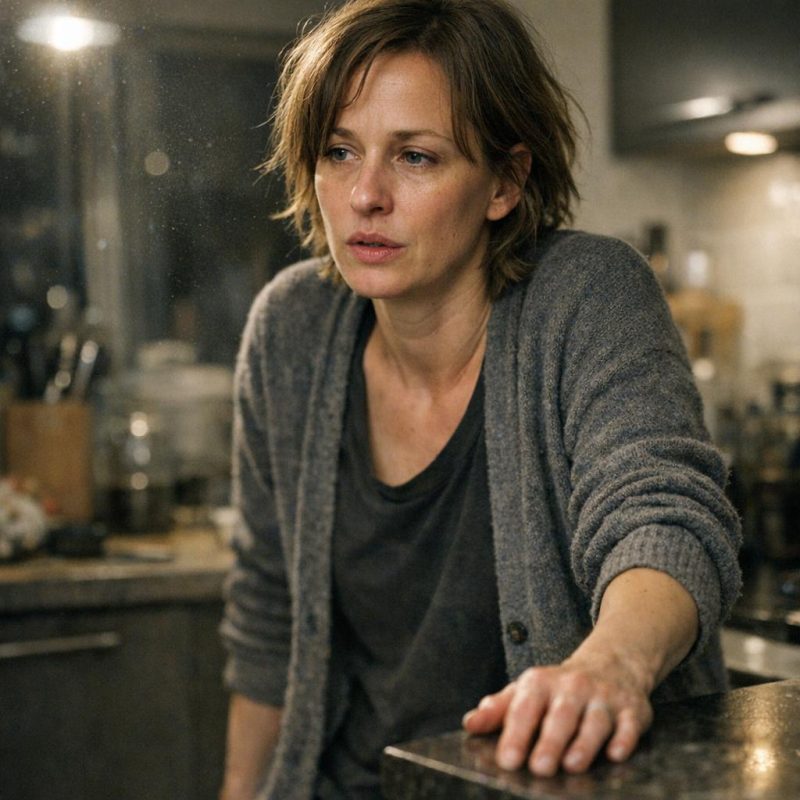 Image by RM AI
DNA Results
The DNA results arrived two weeks later in a plain white envelope that felt like it weighed a thousand pounds. I sat in my car outside the mailbox facility where I'd had them delivered, too nervous to open it in front of Mom. My hands shook as I tore the envelope open. The numbers swam before my eyes until I found the key phrase: 99.9% probability of half-sibling relationship. There it was, official and undeniable. Claire and I shared a father. All the doubts I'd pushed down, all of Mom's weird behavior, none of it mattered against cold scientific fact. I called Claire immediately, barely able to get the words out through my excitement and relief. She answered on the first ring. 'We're sisters,' I said, my voice breaking. 'It's official. The test confirms it.' There was a pause, and then she laughed. 'Now we can make it official—now you can't get rid of me,' she said, and laughed in a way that made me uncomfortable.
 Image by RM AI
Claire's Requests
Claire started texting me constantly after the DNA results came through, which honestly felt amazing at first—like we were making up for lost time. But then her requests got more specific. She wanted to see Dad's study, the room where he'd spent most of his time working and thinking. She asked about his old letters, his journals, anything handwritten. And then she mentioned the wooden box—the one with my birthday letters. 'I just want to feel close to him,' she said over coffee one afternoon. 'I want to understand who he was.' That seemed reasonable, right? She'd never gotten a single birthday letter from him. Never heard his voice. Never experienced any of those small moments that add up to knowing a person. But something in my chest tightened when she said it. I found myself making excuses, saying I needed to organize things first, that Mom might not be ready for someone going through his belongings. When I hesitated, Claire's smile faltered for just a second, and I saw something hard flash across her face before the warmth returned.
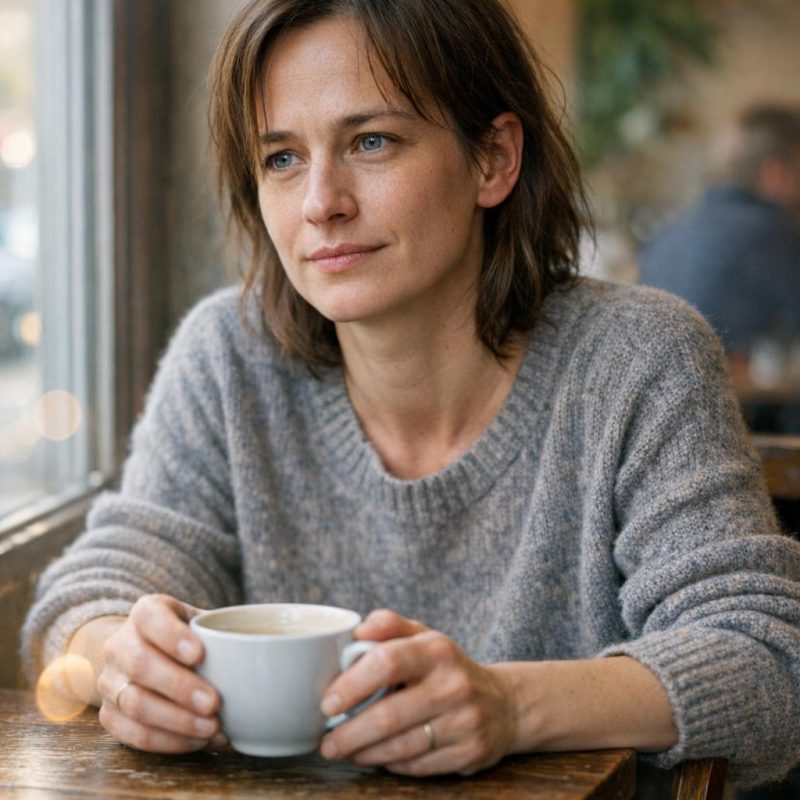 Image by RM AI
The Grave Visit
The cemetery visit was Claire's idea, and I couldn't say no—not without seeming like a terrible sister. She wanted to meet Dad, she said, even if it was just at his grave. So we drove out there on a gray Saturday morning, the kind of day where the sky pressed down on everything. I brought flowers. She brought nothing, which struck me as odd but I didn't mention it. We walked through the rows of headstones until we reached his plot, and I stood back to give her space. She knelt down slowly, placing both hands flat on the grass above where he lay. 'I'm here now, Dad,' she whispered, but her voice carried in the cemetery quiet. 'I'm home.' The possessiveness in her voice made my stomach turn. Not 'I'm here' or 'I wish I'd known you'—but 'I'm home,' like she was claiming a space that had been kept from her. Like she was arriving to take what should have been hers all along. I stood there behind her, suddenly cold despite my jacket, wondering why those two words felt so much like a threat.
 Image by RM AI
Jessica's Observation
I'd been wanting Jessica to meet Claire for weeks—I needed my best friend to see what this new relationship meant to me. We met for drinks at our usual spot downtown, and Claire was charming as always, asking Jessica all the right questions, laughing at her jokes. It seemed fine. Great, even. But when Claire excused herself to the bathroom, Jessica leaned across the table with this look on her face I'd never seen before. 'So,' she said carefully, 'how well do you actually know her?' I immediately got defensive, explaining the DNA test, the letters, everything. Jessica listened, then shook her head. 'I'm not saying she's lying about being your sister,' she said. 'But Em, I've been watching her watch you. The way she laughs, the way she tilts her head—it's like she's studied you.' I wanted to argue, but my mouth went dry. 'I can't explain it,' Jessica continued, lowering her voice as Claire headed back toward our table, 'but it's like she's playing a part, and you're the audience.'
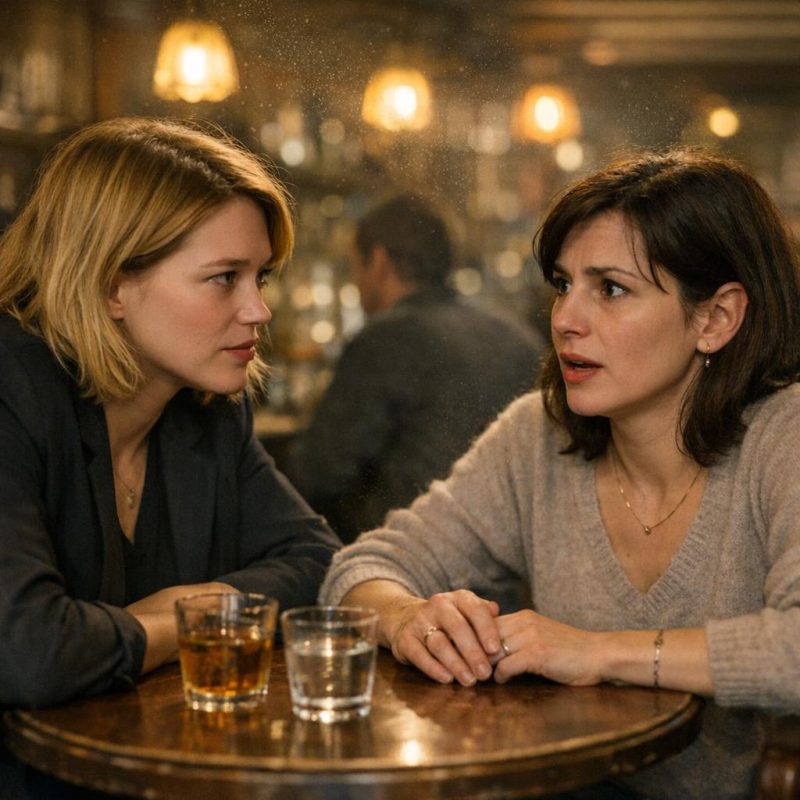 Image by RM AI
The Family Gathering
I thought bringing Claire to our family gathering would help—that once everyone met her, they'd understand why this mattered so much to me. We held it at Mom's house, just extended family, nothing formal. Marcus was there, a few aunts and uncles, some cousins I only saw at holidays. Claire arrived with wine and compliments, working the room like she'd known everyone for years. But then the questions started. She asked my uncle about Dad's law practice, whether he'd been successful, what happened to the client list after he died. She asked my aunt about the house, when it had been purchased, if it was paid off. She cornered Marcus and asked whether Dad had any investments, any property aside from the house. At first people answered politely, probably thinking she was just curious about her father's life. But the questions kept coming, always circling back to finances, assets, what he'd owned and where it all went. I saw Marcus and Mom exchange looks across the room. My face burned with embarrassment as I realized everyone noticed Claire spent the entire evening asking questions about Dad's finances, his property, and what he'd left behind.
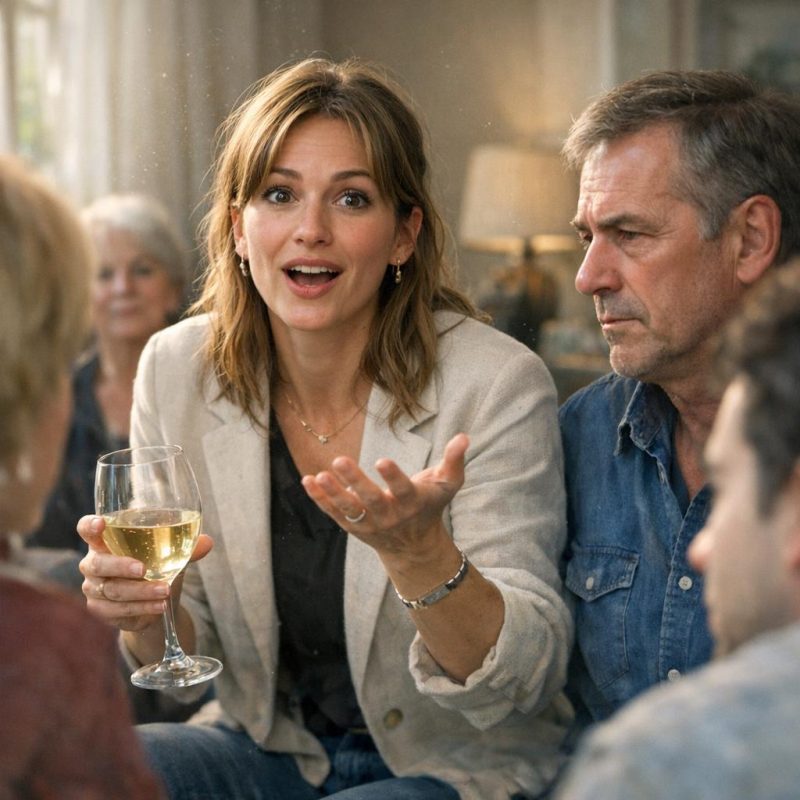 Image by RM AI
Marcus's Warning
Marcus caught me alone as I was carrying dishes to the kitchen. 'Can we talk for a second?' he asked, his voice low. I knew what was coming and I already felt defensive. 'Look,' he started, 'I'm not trying to be an asshole here, but that whole evening was weird, right? You noticed?' I started to make excuses—she was curious, she wanted to know Dad, she'd missed out on so much. Marcus cut me off gently. 'Em, she didn't ask what his favorite book was. She didn't ask what made him laugh. She asked about his bank accounts.' I felt my throat tighten. 'She's processing things differently,' I said, but it sounded weak even to me. Marcus put a hand on my shoulder. 'I love you, and I want you to be happy. But I watched her tonight, and she seemed more interested in what Dad left than who he was.' He paused, choosing his words carefully. 'I'm not trying to hurt you, but you need to ask yourself—what does she actually want from you?'
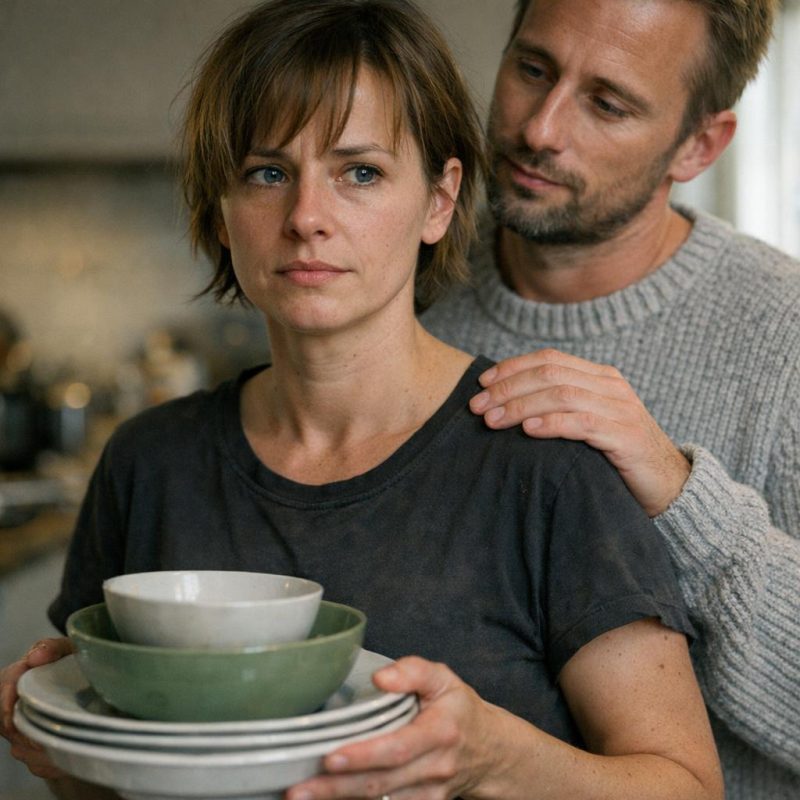 Image by RM AI
The Will
Claire brought it up casually over lunch, like she was mentioning the weather. 'Have you ever looked at your dad's will?' she asked, stabbing at her salad. I blinked, caught off guard. 'His will? I mean, there wasn't much. Mom handled everything.' Claire set down her fork. 'But you checked, right? To see if he left anything specific? Property, investments, accounts you might not know about?' A cold feeling crept up my spine. 'Claire, Dad was a small-town lawyer. He had the house, some savings. Nothing hidden.' She leaned back, studying me with an expression I couldn't quite read. 'It's just that sometimes people don't realize what's there until they look properly,' she said. 'We should both have a claim to his estate, legally speaking. I've been reading about inheritance law.' My hands felt clammy. 'There's nothing to claim,' I said quietly. When I told her Dad didn't have much to leave, her expression darkened, and she said, 'Are you sure about that?'
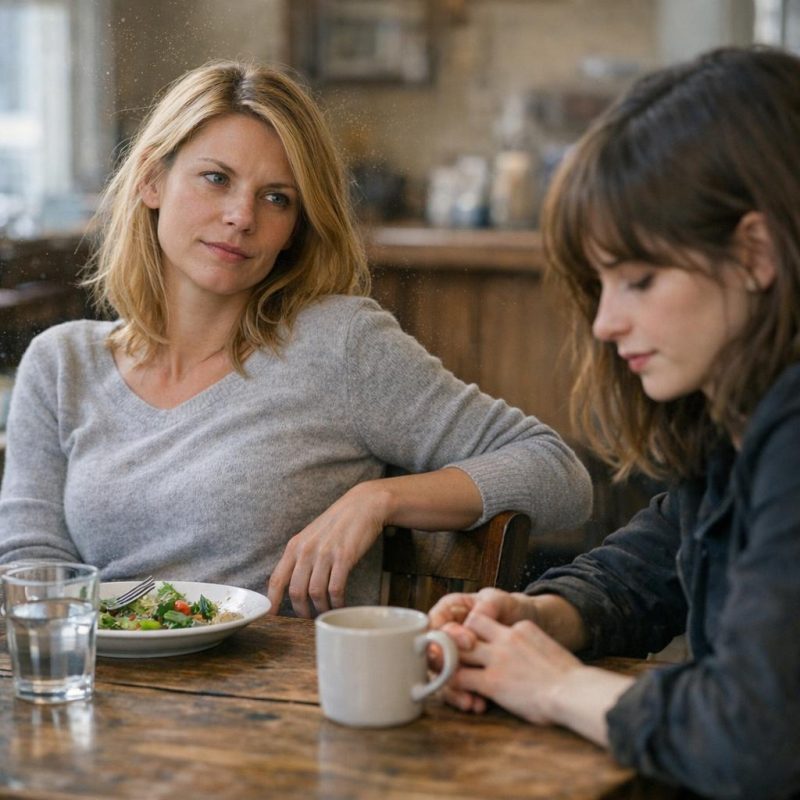 Image by RM AI
Research
I couldn't sleep that night, so I did what any millennial does at 2 AM when they're spiraling—I started googling. 'Adoption reunion' plus 'money' brought up more results than I expected. There were whole forums dedicated to reunion stories, and not all of them were heartwarming. I found threads about biological relatives who showed up asking about inheritance before asking about favorite memories. Stories about people who used DNA sites to find families with assets. One woman wrote about her half-brother who tried to contest their father's will despite never having met him. 'He wanted money, not a relationship,' she'd posted. 'I ignored the red flags because I wanted to believe in the fairy tale.' I scrolled deeper, my stomach knotting tighter with each story. Some were probably paranoid. Some were probably exaggerated. But then I found one post that made me stop breathing: 'Trust your gut—if someone shows up asking about inheritance before asking about memories, run.'
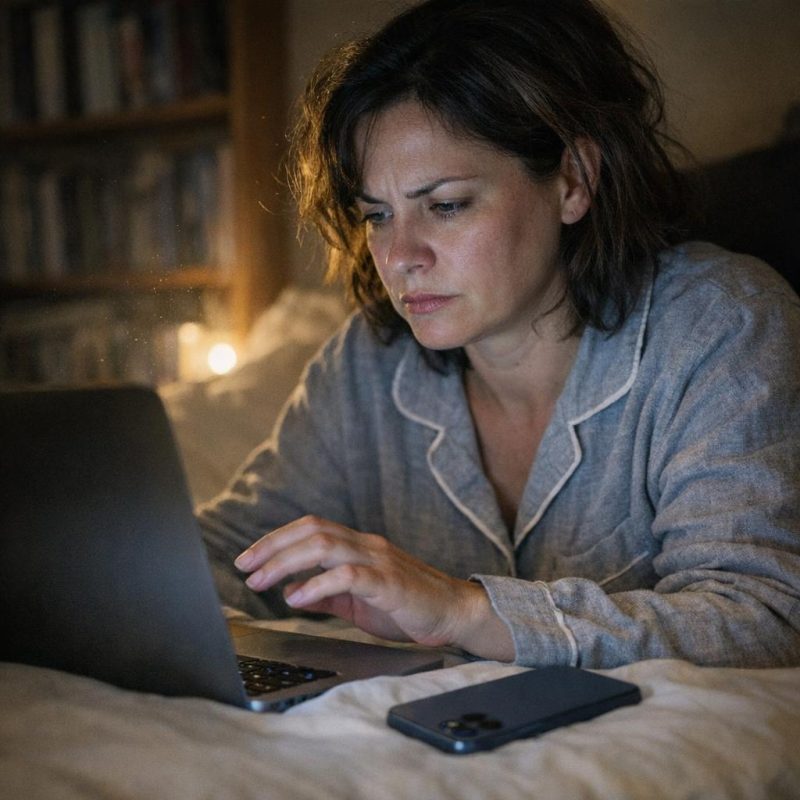 Image by RM AI
Confronting Claire
I asked Claire to meet me at the coffee shop where we'd first talked in person—it felt like neutral ground. My heart hammered the entire drive there. When she arrived, smiling like nothing was wrong, I just came out with it. 'Why do you keep bringing up Dad's possessions and money?' I asked, my voice shaking slightly. 'Why does every conversation circle back to what he owned?' Her smile disappeared. 'What are you talking about?' she said, but there was an edge to it. I pushed forward. 'The will, the property, asking everyone at the gathering about his finances. I want a relationship with you, Claire, but it feels like you're more interested in his stuff than in actually knowing who he was.' The silence between us stretched out painfully. Then her eyes filled with tears—sudden, dramatic tears that made me instantly feel like a monster. 'You got twenty-one years with him,' she said, her voice breaking. 'I'm just trying to have something of him too.'
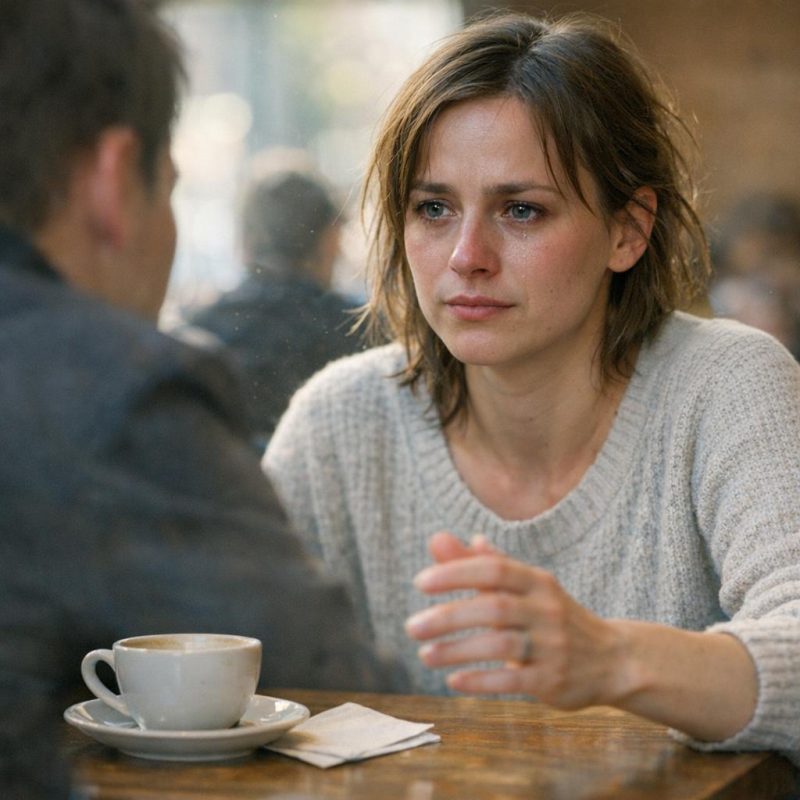 Image by RM AI
The Apology
She reached across the table and took my hand, her eyes still wet. 'I'm so sorry, Emma,' she said, and her voice sounded genuinely broken. 'I've been awful. I know I have.' She explained that her adoptive family had always made her feel like she was an obligation, never really theirs. Every achievement got a polite nod while their biological son got celebrations. Every request was met with 'You should be grateful for what you have.' She'd grown up feeling like she had to prove her worth constantly, like she had to justify taking up space in their lives. 'I think I carried that into this,' she said, wiping her eyes. 'Like I had to establish some concrete connection to your dad—our dad—because just being his daughter wasn't enough.' It made so much sense. I felt my anger dissolving, replaced by sympathy. We stood up, and she pulled me into a hug. 'You're all I have now,' she whispered against my shoulder. Her arms tightened around me, squeezing harder and harder until my ribs ached. I tried to shift away slightly, but her grip was locked, almost desperate. When she finally let go, she was smiling again, but something about the pressure of that embrace stayed with me like a bruise.
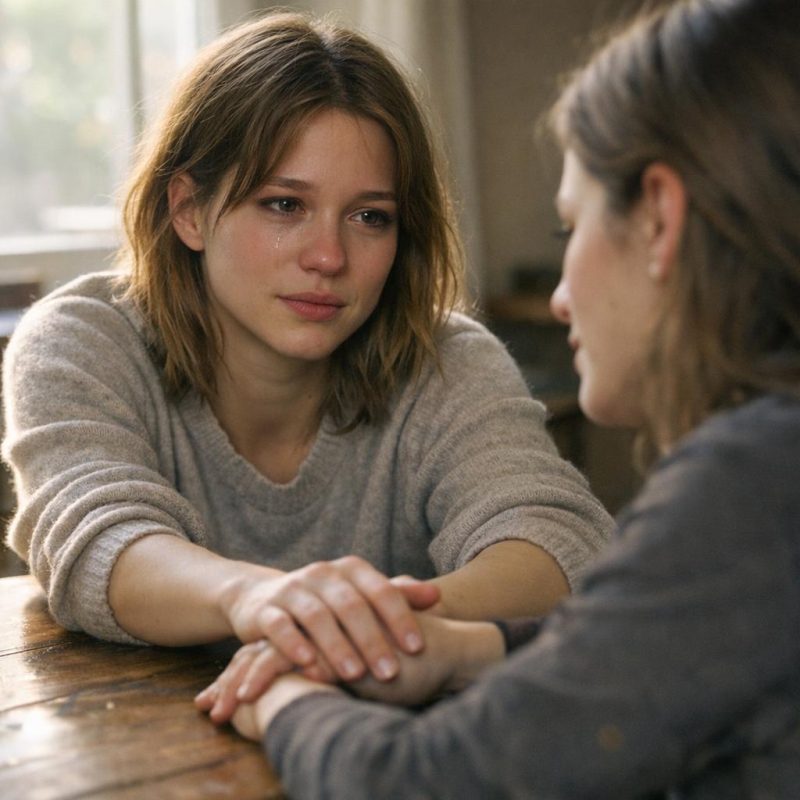 Image by RM AI
The Lawyer's Call
Three days later, my phone rang with a number I didn't recognize. It was a lawyer from the firm handling Dad's estate—a courtesy call, he said, to inform me that my half-sister had made inquiries about contesting the will. I felt the blood drain from my face. 'Contesting it?' I repeated. 'On what grounds?' He explained that Claire had argued she was an undisclosed heir who should have been included in the estate distribution. She'd sent documentation, asked detailed questions about the probate timeline, requested copies of asset valuations. My hands started shaking. 'When did she contact you?' I asked. There was a pause. 'About three weeks ago,' he said. 'Before the memorial gathering?' I asked, my voice barely working. Another pause. 'Actually, her first inquiry was about two months ago—shortly after your father's death was published in the obituaries.' The room tilted. Two months ago. Before I'd even found the letter. Before I'd reached out to her. The lawyer's voice continued, almost apologetic: 'She's been very thorough—she clearly knew about your father long before you reached out to her.'
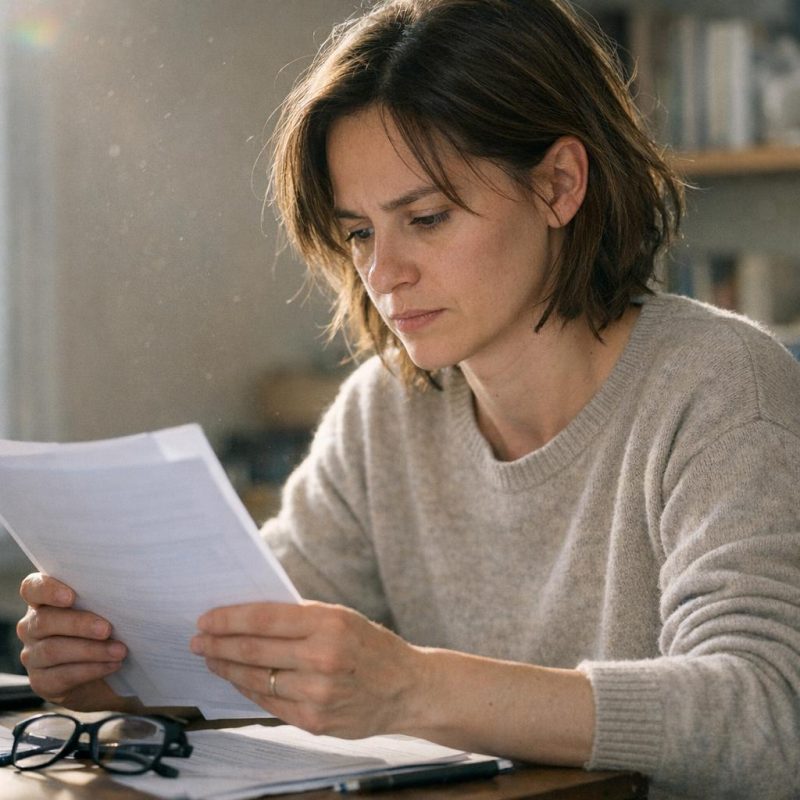 Image by RM AI
Finding Linda
I needed answers that Claire clearly wasn't going to give me. The photograph with Linda's name—it was my only other lead. It took me two days of internet searches, public records, and one extremely awkward phone call to a genealogy forum before I found her. Linda Hartley, living about ninety miles away in a small town I'd never heard of. I didn't call ahead. I was afraid she'd refuse to see me, or worse, that Claire would somehow find out I was coming. The drive felt endless, my mind spinning through every possible explanation. Maybe Linda could tell me who Claire really was, what she actually wanted. Maybe she'd know if this was all a misunderstanding, if I was overreacting because of grief and paranoia. When I finally found the house—a modest ranch with flower boxes in the windows—I sat in my car for ten minutes, trying to steady my breathing. Then I walked up and knocked. The woman who answered had kind eyes and graying hair. She looked at me, and I watched her face change from polite curiosity to something like fear. 'Did Claire send you?' she asked, her hand tightening on the doorframe. 'Because if she did, you need to leave now.'
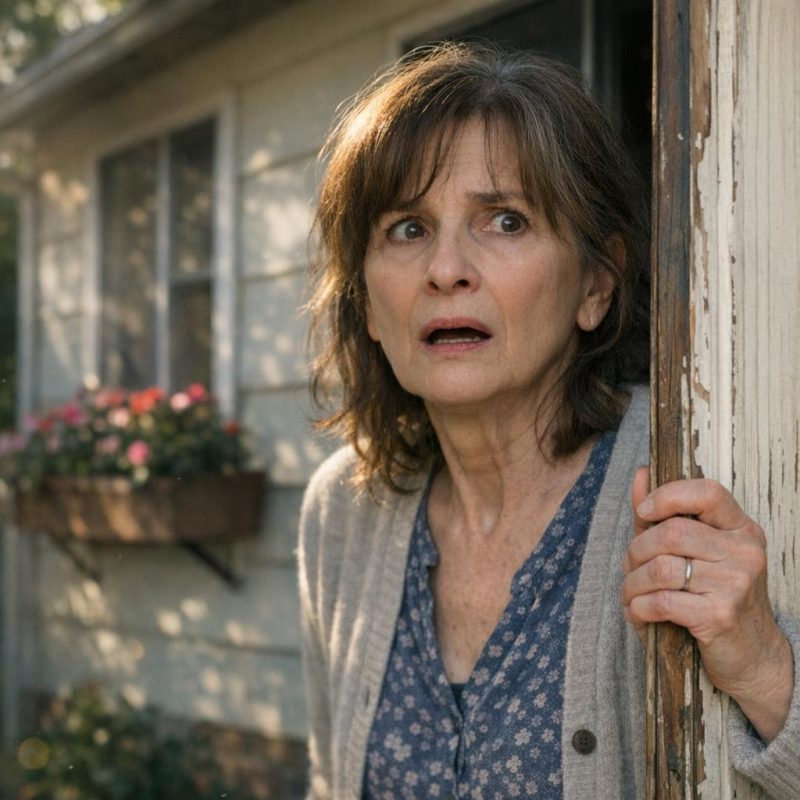 Image by RM AI
Linda's Fear
I quickly explained who I was—Emma, not sent by Claire, desperately trying to understand what was happening. Linda's expression softened slightly, but the wariness didn't leave. She let me inside, though she kept glancing toward the window like she expected someone to be watching. We sat in her living room, and she made tea neither of us drank. 'She's been contacting me for almost eight years,' Linda finally said. 'At first it was just letters, asking about her father, about why I gave her up. I answered honestly—I was young, broke, terrified. I thought she deserved to know.' But the questions had shifted. Claire started asking about money, about what Linda owed her for 'stealing her life.' The requests became demands. When Linda said she had nothing to give, Claire's messages turned ugly. She showed up at Linda's workplace twice. She sent letters to Linda's husband, implying things about Linda's past that weren't true. 'I had to get a restraining order three years ago,' Linda said quietly. 'It helped for a while, but she still finds ways.' She looked at me with something like pity. 'Your father had no idea what kind of person she became—and now she's doing to you what she did to me.'
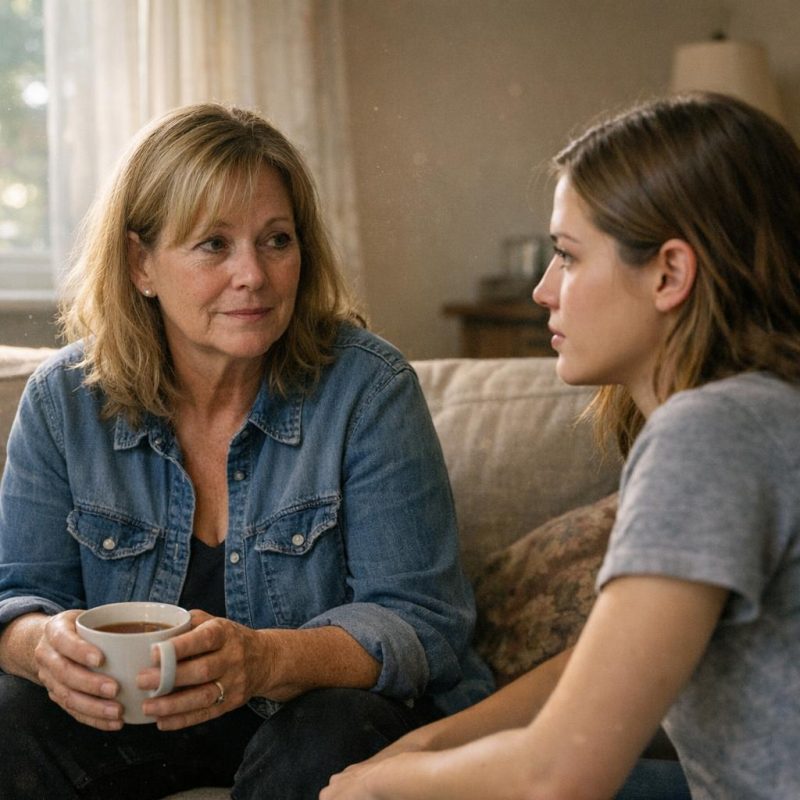 Image by RM AI
The Threats
Linda went to a drawer and pulled out a folder, worn at the edges from handling. Inside were printed emails, screenshots of text messages, even handwritten letters. She spread them across the coffee table, and I read them with growing horror. The early ones were manipulative—'You owe me a real family,' 'You took away my chance at a normal life.' Then they escalated: 'I deserve compensation for what you did,' 'You'll pay for abandoning me one way or another.' The most recent ones were openly threatening. 'I know where you work. I know your husband's name. I know everything.' One message described Linda's daily routine in creepy detail—what time she left for work, which grocery store she used, where she got her car serviced. 'She wanted me to know she was watching,' Linda said. 'She wanted me afraid.' I felt sick. This wasn't grief or insecurity. This was calculated intimidation. Linda pointed to the last message in the stack, dated about four months ago. I read it twice, my hands trembling. The words were burned into my vision: 'You took everything from me—but I'll get what I deserve, one way or another.'
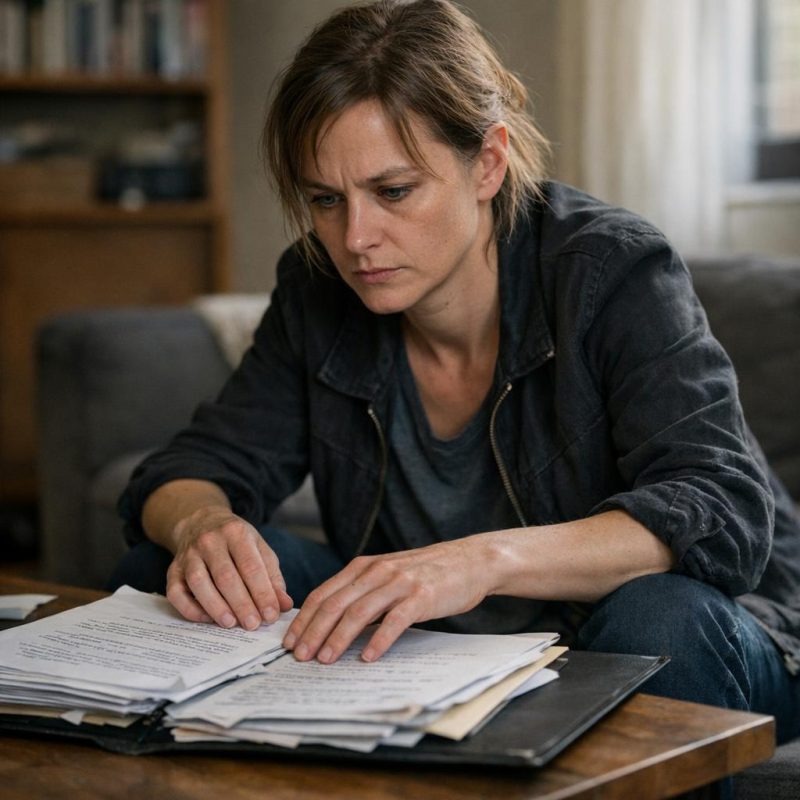 Image by RM AI
Researching Daniel
I left Linda's house with copies of everything and a knot of fear in my stomach. If Claire had done this to her birth mother, what was she planning for me? I needed to know more about her life, her history, her adoptive family. That night, I started digging into Daniel Sullivan, Claire's adoptive father. It wasn't hard to find information—he was a successful commercial real estate developer, the kind of person with a Wikipedia page and archived news articles. But what I was looking for wasn't in the business profiles. I found it in legal databases and probate records: Daniel Sullivan had updated his will eighteen months ago, explicitly disinheriting Claire. The language was cold and formal, but the meaning was clear. She had been removed 'due to irreparable breach of familial trust.' I kept searching and found the supporting documentation, exhibits filed with the probate court after Daniel's recent death. One document made my blood run cold. Daniel's attorney had written a detailed explanation for the disinheritance, claiming Claire had 'engaged in fraudulent behavior' and was 'a danger to family harmony.' The phrase 'danger to family harmony' kept echoing in my head. What had she done to make her own father write that?
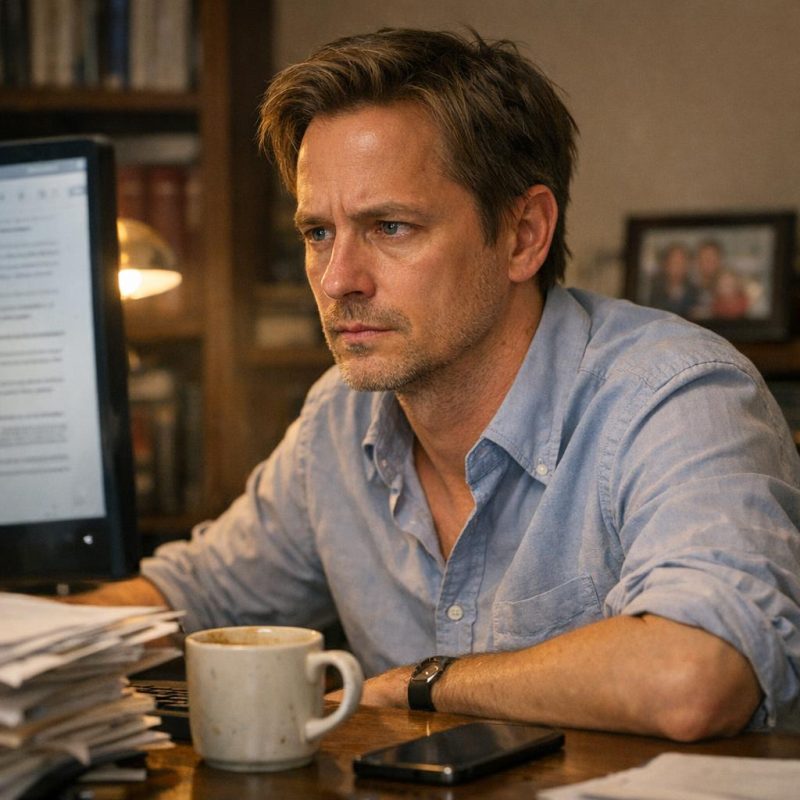 Image by RM AI
The Timeline
I couldn't sleep. I kept going back over everything—the timeline, the conversations, the lawyer's revelation that she'd contacted him before I even knew she existed. I opened my laptop at two in the morning and started putting it all together in a document, like I was building a case. Dad died in November. The obituary ran in mid-November. The lawyer said Claire's first inquiry came in late November. But when had she actually registered with the DNA database? I logged into my account and checked the message history. Her profile showed the registration date: May. Six months before Dad died. I sat there staring at the screen, my heart pounding. People register with DNA sites for all kinds of reasons—to find family, to explore heritage, to solve medical mysteries. But Claire had been adopted, had a family, had known Linda's identity for years according to her own stories. She'd registered in May, and by December, she was contacting lawyers about contesting Dad's estate. This wasn't a daughter searching for connection. Claire hadn't been searching for family at all. She'd been searching for a target.
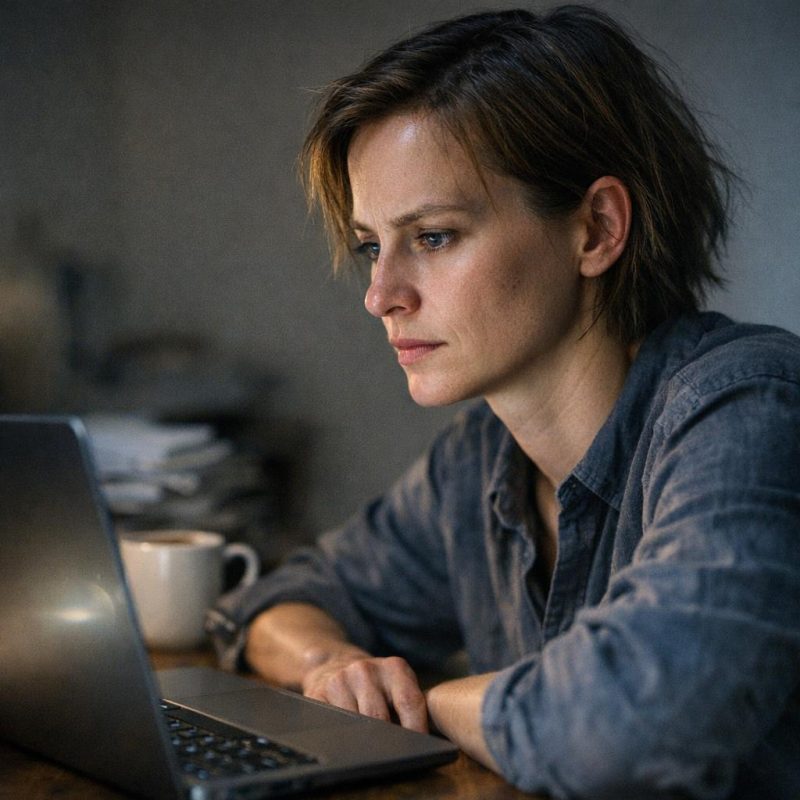 Image by RM AI
Mom's Truth
I drove to Mom's house at eight in the morning, still wearing the same clothes from the night before. When she opened the door and saw my face, she knew. 'What did you find?' she asked quietly. I laid it all out—the lawyer, Linda, the disinheritance, the timeline. I watched her face as I spoke, and I realized she wasn't surprised. 'You knew something,' I said, and it wasn't a question. Mom closed her eyes, and when she opened them, they were filled with regret. 'Not everything,' she said. 'But I knew enough to be worried.' She told me that about four years ago, a lawyer representing Daniel Sullivan had sent a letter to our house. It was a warning, carefully worded to avoid legal liability but clear in its message: Claire had a history of targeting family members, of manipulation and financial schemes, and Daniel wanted to make sure Dad knew what he might be dealing with if she ever made contact. 'Your father read it and threw it away,' Mom said. 'He said it was just a bitter old man trying to poison him against his own child. He refused to believe it.' She looked at me, tears spilling over. 'He told your father that Claire was dangerous—but your dad refused to believe that his child could be a threat to anyone.'
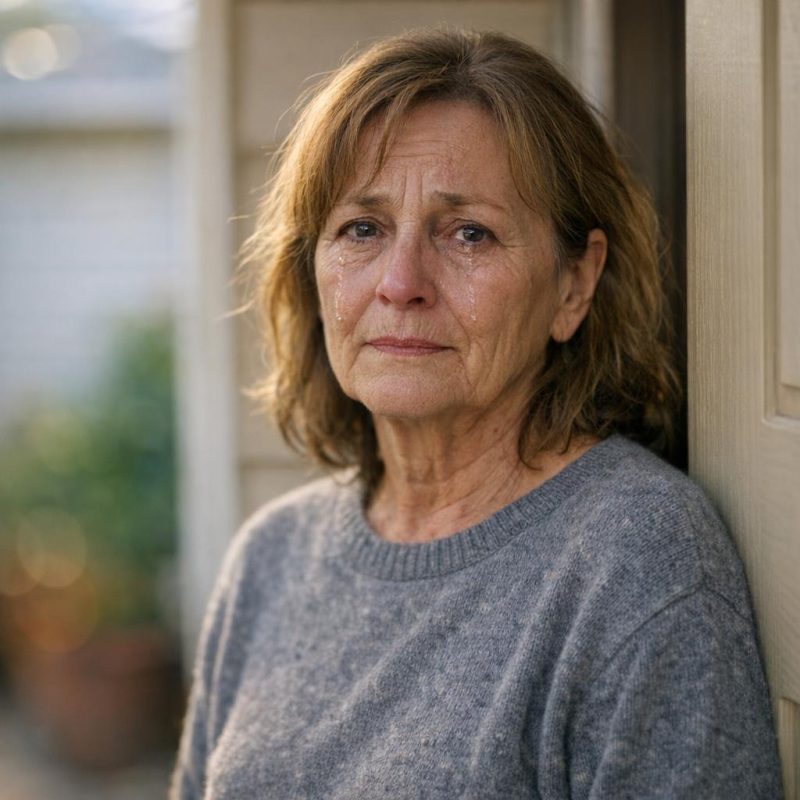 Image by RM AI
Gathering Evidence
I called Marcus first, then Jessica. We met at my apartment that afternoon, and I spread everything out on my dining table like we were building a case for trial. The lawyer's business card. My notes from the conversation with Linda. The timeline I'd pieced together—adoption to abandonment, four years of radio silence, then suddenly Claire reappearing in Dad's life right when he got sick. Marcus took photos of everything with his phone, organizing them into folders with dates and labels. Jessica made a spreadsheet, cross-referencing events with what Claire had told me versus what we now knew was true. 'She lied about when she first found him,' Jessica said, pointing at the screen. 'She said it was two years ago, but Linda said it was four.' I felt this strange mix of gratitude and dread watching them work. They believed me without question, but their efficiency made it real in a way that terrified me. This wasn't just family drama anymore—this was evidence. Documentation. Proof of something deliberately malicious. Marcus looked up from his phone, his face grim. 'We need to figure out what she's actually planning—because whatever it is, she's not done yet.'
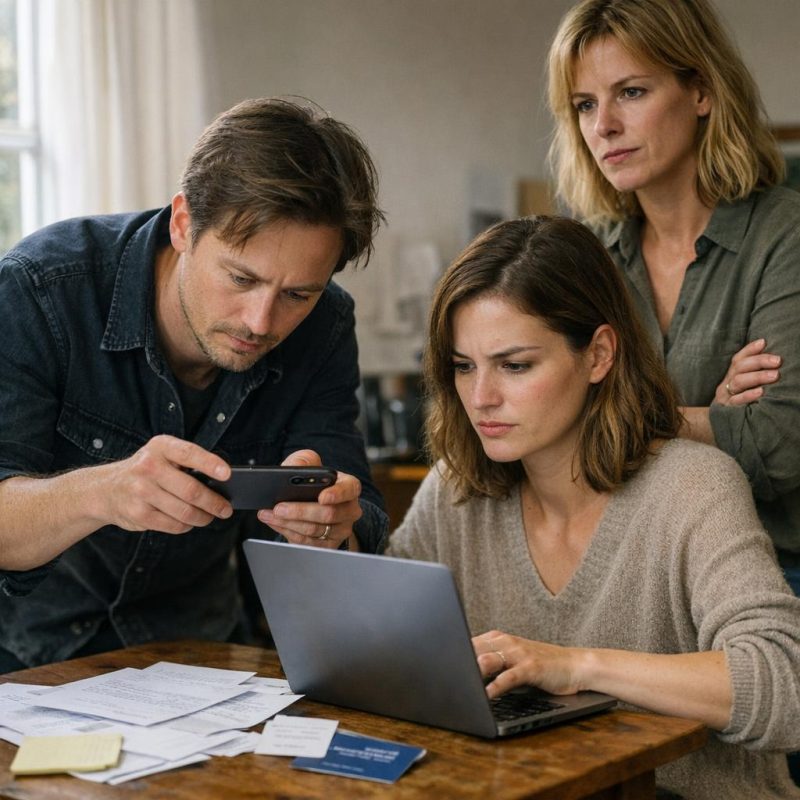 Image by RM AI
The Setup Revealed
I couldn't sleep that night, so I did what any millennial does at 2 AM—I started googling. I found Claire's Facebook profile easily enough. It was set to public, which should have been my first warning sign. I scrolled back through months of posts, and my stomach dropped with each one. There were photos of Dad's house with captions like 'Finally finding my roots' and 'Trying to connect with family, but some doors stay closed.' There were vague posts about 'biological siblings who won't accept me' and 'being shut out of my father's legacy.' She'd even posted a photo of herself outside the cemetery after Dad's funeral—a funeral she hadn't attended—with a caption about 'saying goodbye alone.' The comments were full of sympathy, people telling her how sorry they were, how cruel her family must be. I took screenshots of everything, my hands shaking. She'd been building this narrative for months, carefully constructing a version of events where she was the victim reaching out to a cold, rejecting family. Every post was carefully worded to make Claire look like a victim—and me like the villain keeping her from her birthright.
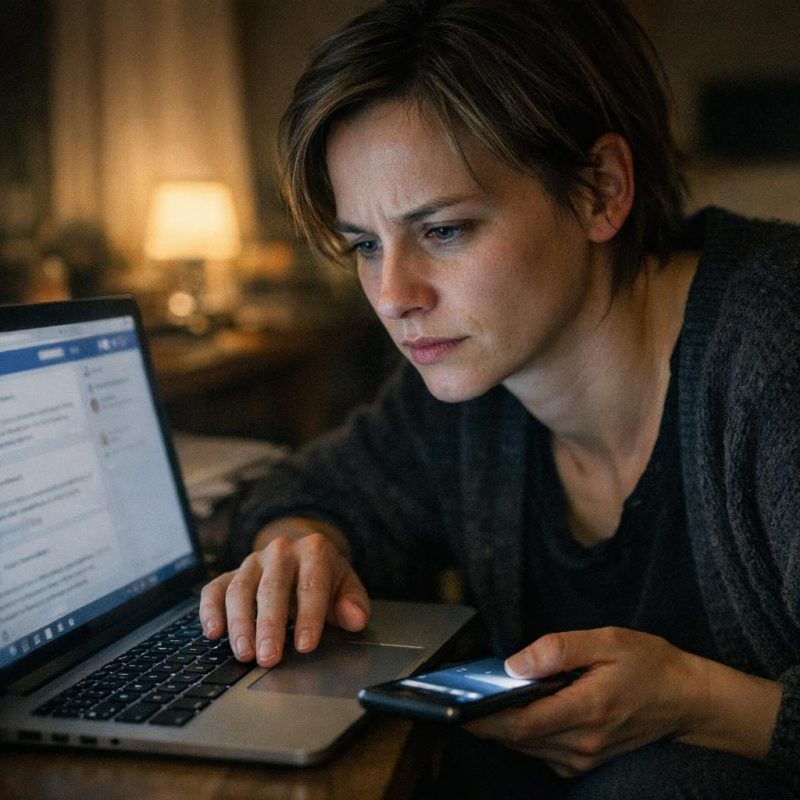 Image by RM AI
Claire's Demands
She called me two days later. I almost didn't answer, but something told me I needed to hear what she had to say. 'Emma,' she said, and the warmth was gone from her voice. Completely gone. 'I think we need to have an honest conversation.' My pulse hammered in my ears. 'I'm listening.' 'I've been patient,' she said. 'I've tried to do this the nice way. But you're making this very difficult, and I don't think you understand the position you're in.' I stayed silent, gripping the phone so hard my knuckles went white. 'Our father owned a house, had savings, left behind assets,' she continued, her voice cold and businesslike. 'I'm entitled to half of everything. And if you don't agree to that voluntarily, I'll sue you for emotional damages, for being excluded from his life, for the intentional infliction of emotional distress.' 'You were disinherited,' I said, my voice barely steady. 'By a man who was manipulated by his bitter ex-wife,' she snapped back. 'A court will see it differently. So here's what's going to happen—you're going to work with me, or this gets ugly.' She said, 'You had a father—I had nothing. It's time to pay up, little sister.'
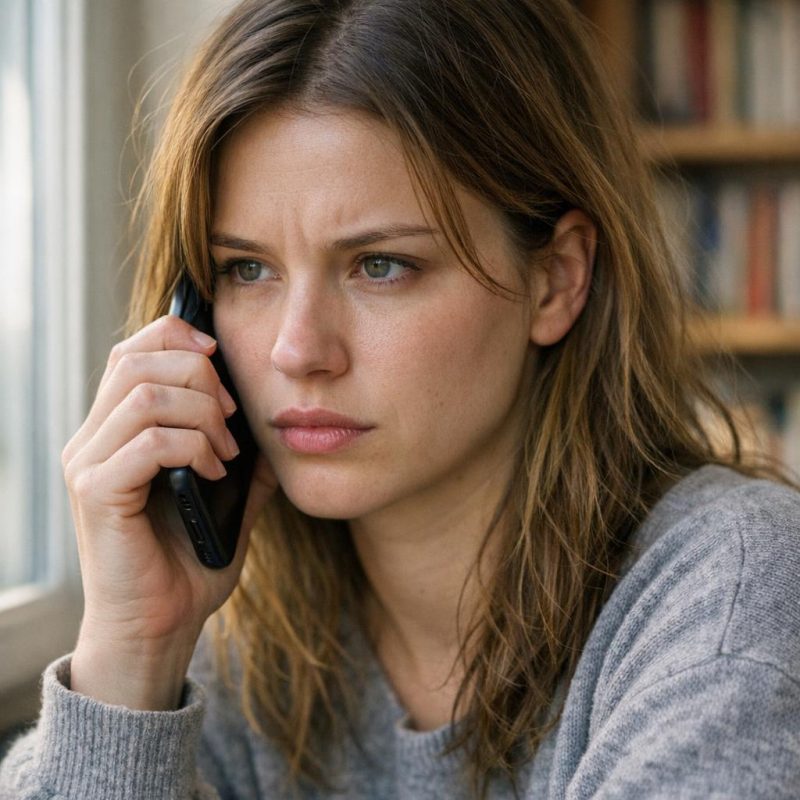 Image by RM AI
Legal Consultation
I met with a lawyer the next morning. Her name was Patricia Chen, and Marcus had recommended her—she specialized in family law and estate disputes. I showed her everything: the disinheritance letter, Claire's demands, the social media posts, the timeline. Patricia listened carefully, taking notes, her expression neutral and professional. When I finished, she leaned back in her chair. 'Legally, she has a very weak case,' Patricia said. 'Your father explicitly disinherited her, and he was of sound mind when he did it. A court would almost certainly uphold his wishes.' Relief flooded through me, but Patricia held up a hand. 'However,' she continued, 'that doesn't mean she won't sue. And litigation is expensive—emotionally and financially. Even if you win, you'll spend months or years dealing with depositions, court dates, legal fees. That's the real weapon here.' I stared at her. 'So what do I do?' 'You need to understand what you're dealing with,' Patricia said quietly. 'This isn't really about the law or the money. The lawyer said, 'People like this don't care about winning in court—they care about punishing you for existing.'
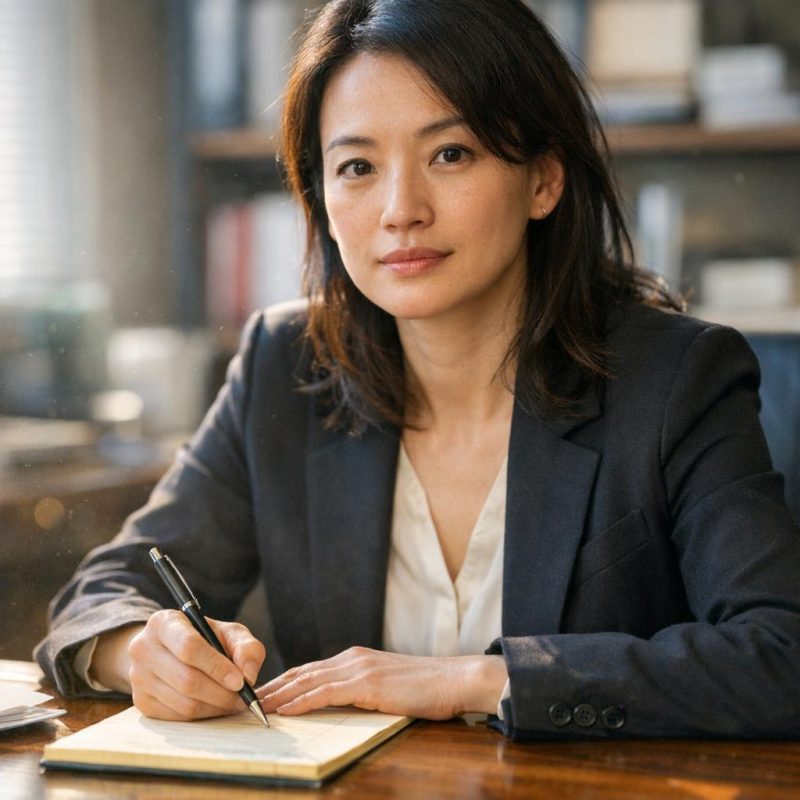 Image by RM AI
The Forgery
I found it three days later, tucked inside my screen door. A cream-colored envelope with my name written in handwriting that looked almost exactly like Dad's. My heart stopped. For one wild, impossible moment, I thought—but no. That was crazy. I brought it inside and opened it with shaking hands. The letter inside was written on the same stationery Dad had used for his real letter, the one that started this whole nightmare. 'My dearest Emma,' it began. 'If you're reading this, I need you to do something for me. Your sister Claire reached out to me before I died, and I want you to know that I regretted not being able to make things right with her. Please share what I've left behind—it's what I would have wanted, to give both my daughters what they deserve.' I read it twice, three times. Something felt wrong. The handwriting was close but not quite right—the loops on the 'g's were too round, the slant slightly off. Dad never called Claire my 'sister' in his real letter, always 'your half-sister.' The fake letter asked me to share Dad's inheritance with Claire 'to honor his wishes'—and I realized she'd been in my house without permission.
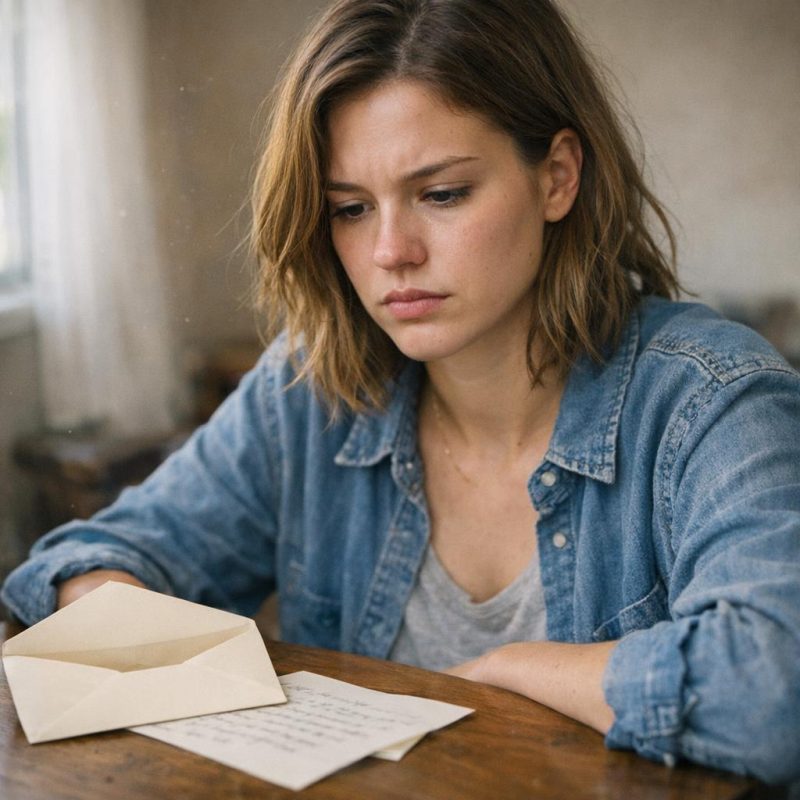 Image by RM AI
Tracing the Pattern
I took the forged letter to Patricia, and she made some calls. Within a week, she'd uncovered something that made my blood run cold. Claire had done this before. Not once, but twice. Patricia had connected with lawyers in two other states who'd represented families that Claire had targeted. The pattern was identical: find the biological family through DNA testing, make initial contact that seemed genuine and emotional, then escalate to demands and threats when money didn't materialize fast enough. In Connecticut, she'd contacted a biological father who'd given her up at birth. She'd built a relationship over six months, then demanded $50,000 as 'compensation' for being abandoned. When he refused, she'd threatened to destroy his reputation in his small town. He'd paid her to go away. In Oregon, she'd found a half-brother through Ancestry.com. Same pattern—connection, manipulation, demands. That family had paid her $35,000 to sign a legal agreement never to contact them again. Patricia slid the documentation across her desk to me. 'She's a professional,' she said quietly. Both times, the families had paid her off just to make her go away—and Claire was counting on me to do the same.
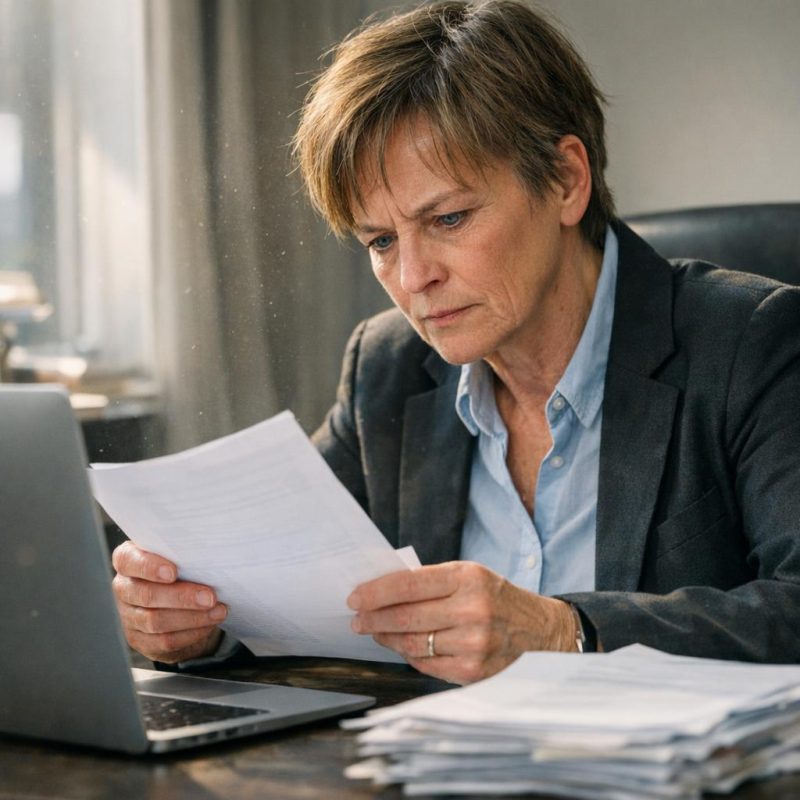 Image by RM AI
The Surveillance
That night, I went through my email, my social media, my phone records—looking for anything I might have missed. And I found it. Evidence that Claire had been researching me long before she ever sent that first message. My LinkedIn profile had been viewed by an anonymous account six months before she made contact. Someone had requested my friend Jessica on Facebook around the same time—an account with no photos and three friends, all fake. There were Google alerts set up for my name, which I only discovered when I checked my own digital footprint. She'd known where I worked, where I lived, who my friends were. She'd probably known about Mom and Dad's divorce, about Dad's illness, about the inheritance. All of it. She'd watched and waited and planned her approach like a military operation. Every question she'd asked me hadn't been curiosity—it was confirmation of intel she'd already gathered. Every tear, every vulnerable moment she'd shared, had been calculated to build trust so she could exploit it later. I felt physically sick. She'd been watching me long before I knew she existed—and every tear, every hug, every moment of connection had been a performance.
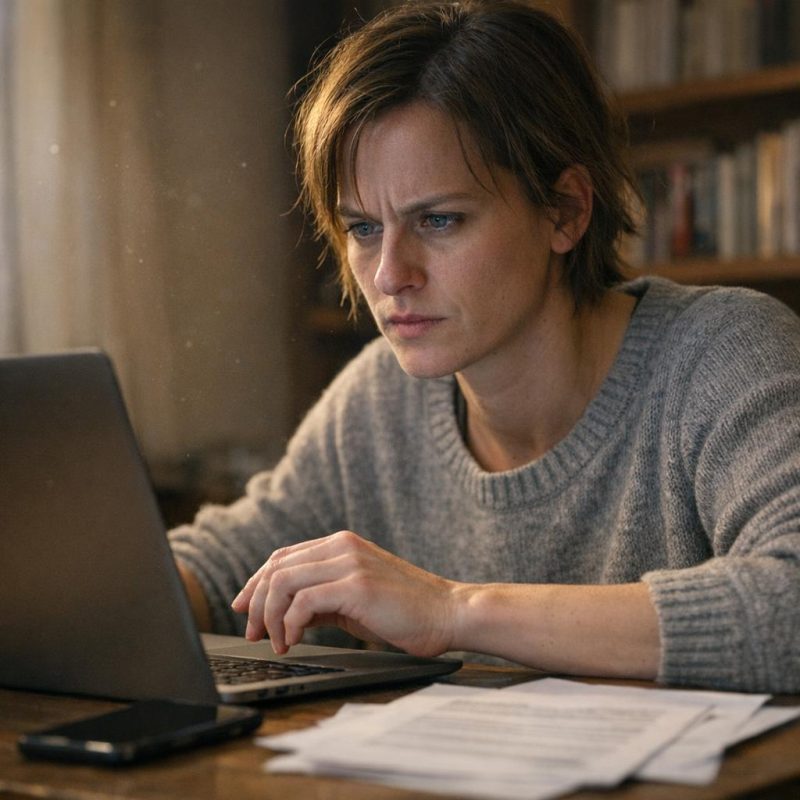 Image by RM AI
The Master Plan
I couldn't let it go. I kept digging, going through everything Patricia had given me, cross-referencing it with what I knew, with what Claire had said and done. And then I found it—buried in the documentation from the Connecticut case. A text message that the biological father had saved, one that Claire had sent late at night when she'd been drinking and her guard was down. 'You got to be the parent. You got to keep your other kids. You got to have the normal life. I'm taking back what should have been mine.' It wasn't about the money. It had never been about the money. Claire wanted what those families had—she wanted to erase the children who'd been kept and claim their place. She wanted to be the daughter who'd never been abandoned. And with me, she'd found the perfect target: an only child whose father had just died, leaving behind a hole that could theoretically be filled. She wanted the house, yes, but more than that—she wanted my relationship with Mom, my memories, my identity as Dad's daughter. She wanted to destroy me and step into the space I'd left behind. Claire wanted to erase me and take my place—she'd said it herself in a message I found: 'I should have been the daughter he kept.'
 Image by RM AI
The Counterplan
I called everyone together the next morning—Mom, Marcus, and Jessica. We sat around Mom's kitchen table with coffee none of us drank, and I spread out everything I'd found: the text messages from the Connecticut case, the pattern of escalation, the documentation Patricia had given me. Mom kept touching her throat like she couldn't breathe properly. Jessica just stared at the papers with this horrified expression. But Marcus—Marcus went into strategy mode immediately. He'd worked in corporate law before switching to nonprofit work, and he understood how to build a case. 'She's done this before,' he said, tapping the Connecticut documents. 'Which means she has a pattern. Patterns are prosecutable.' We spent three hours mapping out what we knew and what we needed. Mom wanted to just get a restraining order and be done with it, but Marcus shook his head. 'She'll violate it. She always escalates. We need something she can't talk her way out of.' Jessica suggested going public, exposing her online, but I knew that would just make her more dangerous. We needed something concrete, something legally bulletproof. Marcus leaned back in his chair, thinking, and then he said it: 'We need to catch her in the act—we need her to confess or make a mistake she can't take back.'
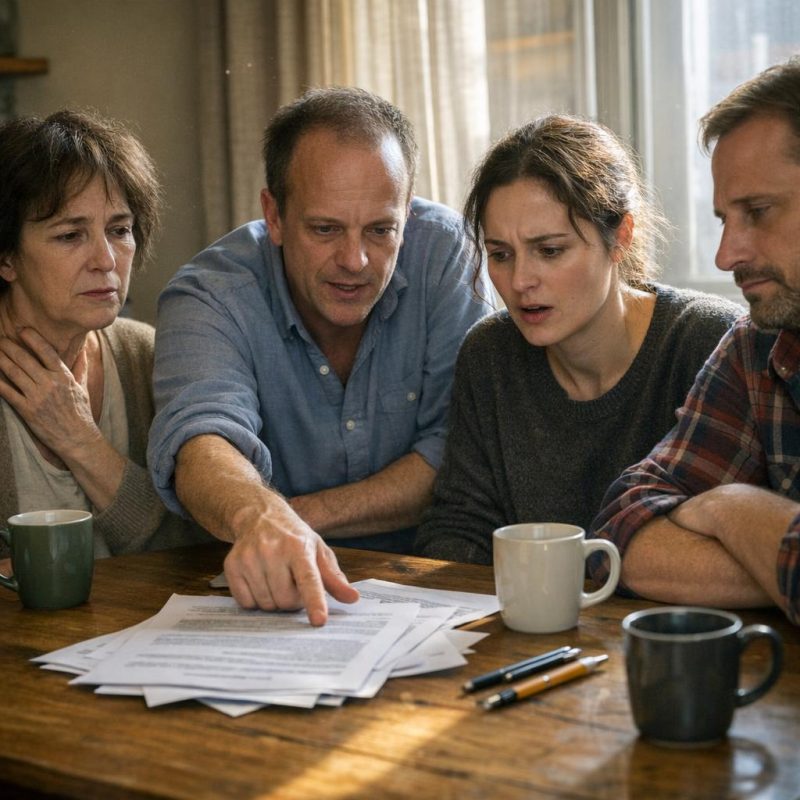 Image by RM AI
Setting the Trap
The trap was surprisingly simple. I texted Claire saying I was exhausted, that I couldn't fight anymore, and that I wanted to discuss a settlement. She responded within five minutes—five minutes—saying she'd already drafted terms and could meet the next day. Marcus made sure we were in a one-party consent state for recording, which we were. He set up his phone in his jacket pocket, tested the audio quality three times, and positioned himself at a nearby table in the coffee shop where we'd agreed to meet. I felt sick the entire morning, rehearsing what I'd say, how I'd keep my face neutral even if she said something horrible. Jessica texted me every twenty minutes asking if I was okay, if I wanted her there too, but I knew Claire would smell a setup if too many people showed up. Mom made me promise to leave if things felt dangerous. I promised. When I walked into that coffee shop, my hands were shaking so badly I had to grip my bag strap to steady them. Marcus was already there, laptop open, looking like any other remote worker. And then Claire walked in with a smug smile, holding a contract she'd already prepared—and I knew we had her.
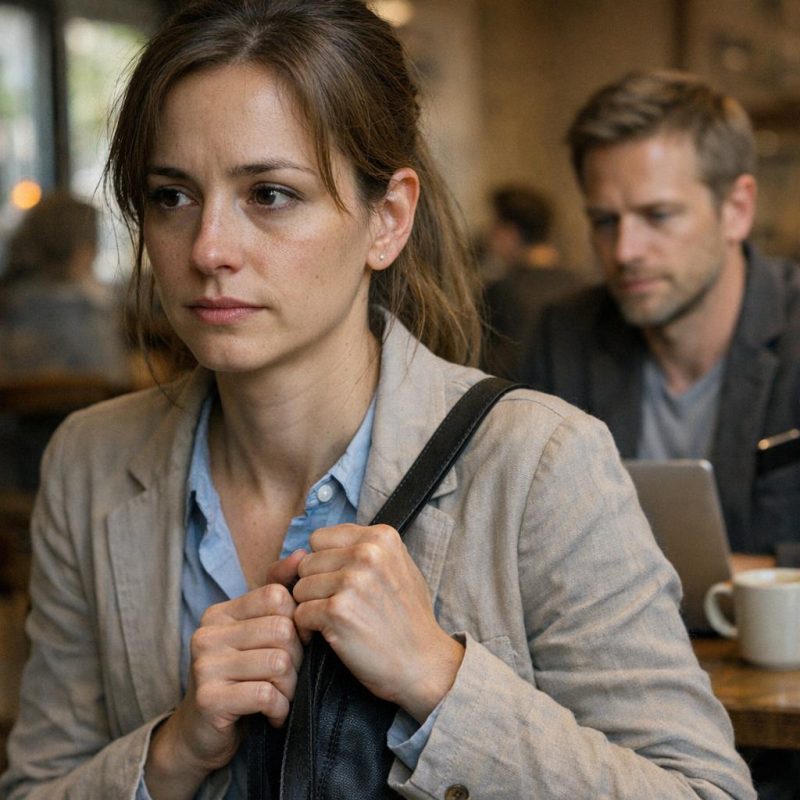 Image by RM AI
The Recording
She sat down across from me like she'd already won. The contract was thick—she'd actually had it professionally bound—and she slid it across the table with this satisfied little smile. 'I made it simple,' she said. 'You sign over the house and half of the liquid assets, and I'll drop the legal challenge. We can tell everyone it was an amicable resolution between sisters.' I forced myself to look uncertain, to pick up the contract and flip through it like I was actually considering it. 'I don't know,' I said quietly. 'This seems like a lot.' And that's when she leaned in, her voice dropping to something almost intimate. 'Emma, you were never going to win this. From the moment I contacted you, I knew exactly how it would end. You're too soft, too emotional, too desperate for family. I played you perfectly.' She was so confident, so absolutely sure of herself. 'The other families, they fought harder—but you? You practically handed me everything. Your father should have kept me instead of having you. I'm smarter, stronger, and more deserving than you ever were.'
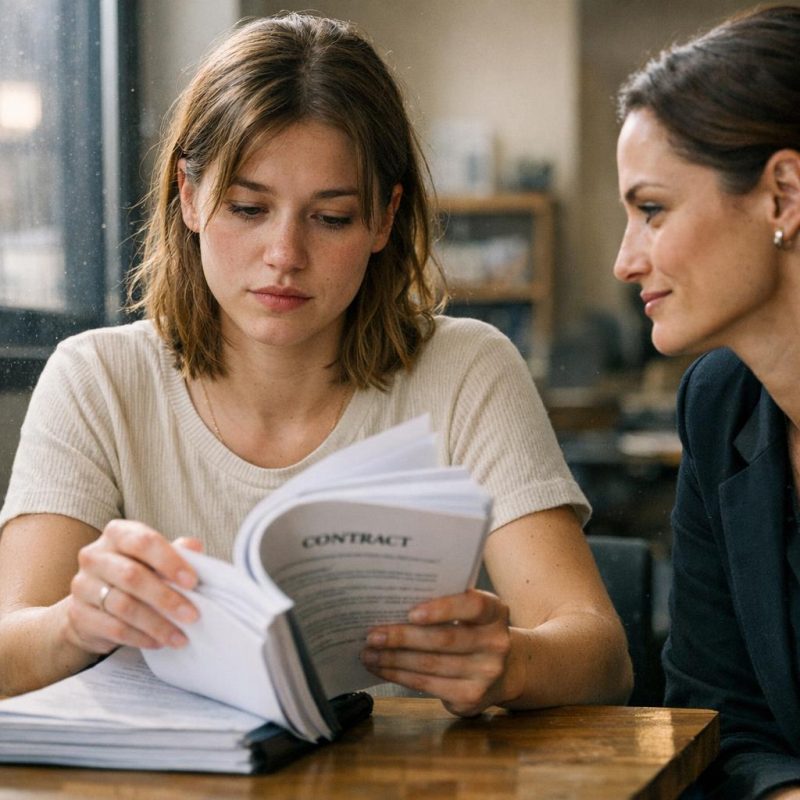 Image by RM AI
The Reveal
I let the silence hang there for a moment. Then I pulled out my phone and played the recording back—her own voice, crystal clear, admitting everything. Her face did this incredible thing where the smugness just drained away, replaced by this dawning horror. 'That's illegal,' she said immediately, but her voice was shaking. 'Actually, it's not,' Marcus said, appearing beside our table with his phone in hand. 'One-party consent state. Emma consented to being recorded. You just confessed to fraud, manipulation, and attempted theft.' I watched her process it, watched her try to find an angle, a way out. 'You can't use this,' she said, but she didn't sound sure anymore. 'We already sent copies to our attorney,' I said quietly. 'And we'll be filing a police report this afternoon. Everything you just said is documented.' For a second, I thought she might just leave, might cut her losses and run. But instead, her face twisted into something ugly, something desperate and furious, and she lunged across the table, screaming that I'd ruined everything.
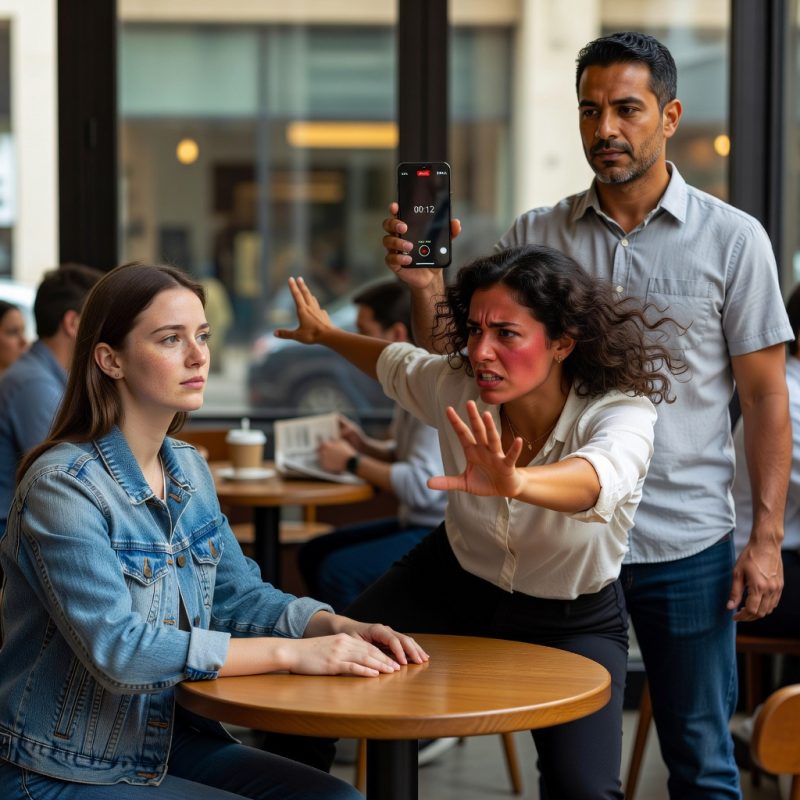 Image by RM AI
The Confrontation
Marcus grabbed her arm before she could reach me, and the coffee shop manager was already calling security. Claire was screaming, this raw, broken sound that made everyone in the place stop and stare. 'You don't understand!' she kept saying. 'You don't know what it's like! He threw me away! He kept you and threw me away!' And God help me, part of me felt it—that pain, that abandonment. But I'd learned enough by now to know that pain doesn't excuse what she'd done. It doesn't justify the families she'd destroyed, the people she'd manipulated and threatened. 'I'm sorry that happened to you,' I said, and I meant it. 'But that doesn't give you the right to do this to other people.' She tried pleading then, switching tactics so fast it was almost impressive. She said she'd get help, that she'd leave me alone, that she just needed one more chance. But I'd heard these same words in the Connecticut case files, and I knew how they ended. Security arrived—the manager had called them when Claire lunged—and they asked if we wanted her escorted out. I nodded. As they walked her toward the door, she turned back and screamed: 'He should have kept me! I should have been you!'
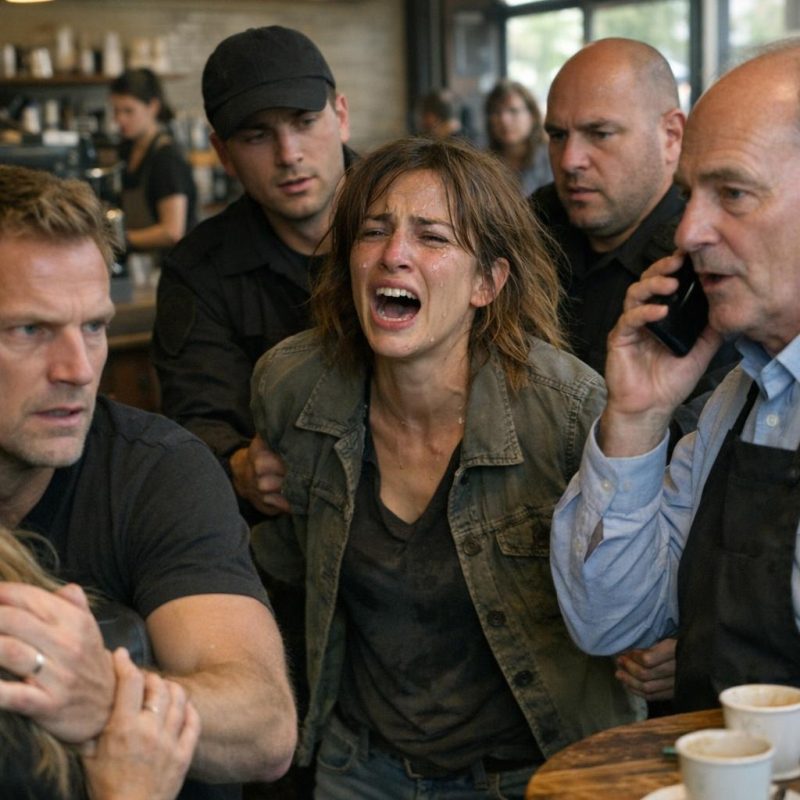 Image by RM AI
Police Involvement
The police station was this surprisingly mundane place—fluorescent lights, scuffed floors, a receptionist who looked bored until I explained why I was there. They took me to a detective's office, a woman named Rivera who'd apparently seen everything and wasn't impressed by much. But when I played her the recording and showed her the documentation of Claire's pattern—the forged documents, the threatening messages, the Connecticut case—her expression changed. She listened to the whole thing, taking notes, asking clarifying questions. 'How long has this been going on?' she asked. I told her everything, from that first Facebook message to the coffee shop confrontation three hours earlier. She made copies of everything, including the recording, and had me write out a formal statement. It took almost two hours. When we finished, she leaned back in her chair and said something that made my stomach drop: 'You're the third person to file charges against her this year—she won't get away with this again.'
 Image by RM AI
Restraining Order
The restraining order hearing was faster than I expected. My attorney presented the recording, the threatening messages, the pattern of escalation. Claire's public defender tried to argue that she was just exercising her rights as a biological relative, but the judge wasn't having it. He granted the order immediately—Claire was prohibited from contacting me, Mom, or Marcus, and she couldn't come within 500 feet of our homes or workplaces. I felt this rush of relief, like I could finally breathe again. But my attorney warned me: 'People like this don't respond well to boundaries. Be careful for the next few weeks.' She was right to warn me. When the officer went to serve Claire the papers at her hotel, she completely lost it. According to the police report I saw later, she tore the papers up, threw them at the officer, and started screaming that the order was illegal and she had rights. The officer arrested her on the spot for contempt of court.
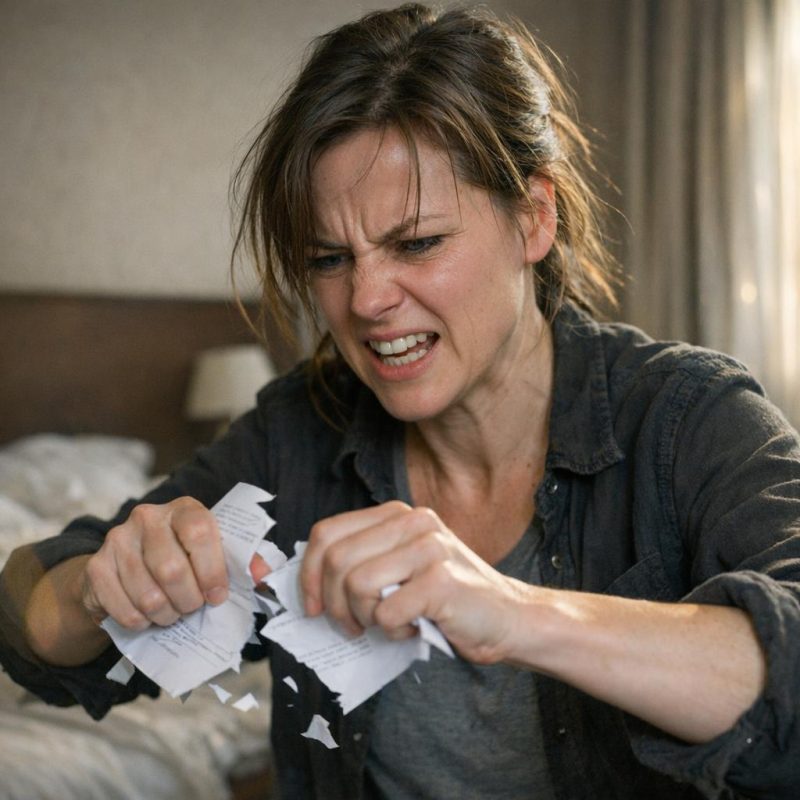 Image by RM AI
Processing the Truth
That evening, I sat with Mom in her living room—the same room where this had all started, where I'd first opened Dad's letter. We didn't talk much at first. She just held my hand while I cried, not for Claire exactly, but for the sister I'd imagined having, for the relationship I'd hoped we could build. 'I really wanted it to be real,' I said finally. 'I know,' Mom said softly. 'And that's not a weakness, sweetheart. That's who you are.' We talked about Dad then, about whether he'd known this might happen, whether the letter had been a warning or just information. Mom thought he'd trusted me to handle whatever came, to protect myself if I needed to. 'He knew you were strong enough,' she said. We sat there as the light faded outside, processing everything that had happened, everything we'd lost and learned. I thought about Dad's letter, about truth and family and all the complicated ways people can hurt each other. Finally, Mom squeezed my hand and said: 'Your father would be proud of how you protected yourself—that's the real legacy he left you.'
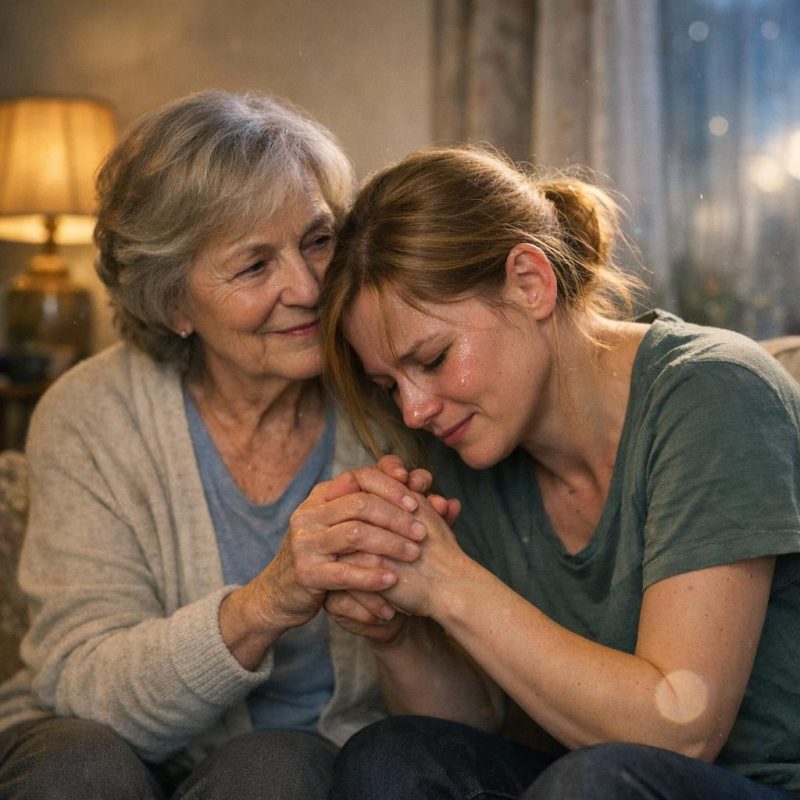 Image by RM AI
The Real Gift
I spread all twenty-one letters across my bedroom floor that night, reading them in order from the beginning. Dad's handwriting looked different now—not just familiar, but intentional. Every story he'd shared, every piece of advice, every seemingly random detail about his life—it all connected. He wasn't just giving me breadcrumbs to find Claire. He was teaching me how to recognize manipulation, how to trust my instincts, how to value myself enough to walk away from people who would use me. The letter about his former business partner who'd exploited their friendship? That was about recognizing when someone sees you as a resource, not a person. The one about choosing quality over quantity in relationships? That was about not accepting less than I deserved just because I was grieving and lonely. I sat there with tears streaming down my face, but they weren't sad tears anymore. They were grateful ones. Dad had known he couldn't protect me forever, so he'd done something better—he'd taught me to protect myself. The key to the safety deposit box had seemed like the gift, the dramatic revelation that would change everything. But that wasn't it at all. He hadn't just scheduled himself into my future—he'd given me the tools to protect my future from people who would try to take it.
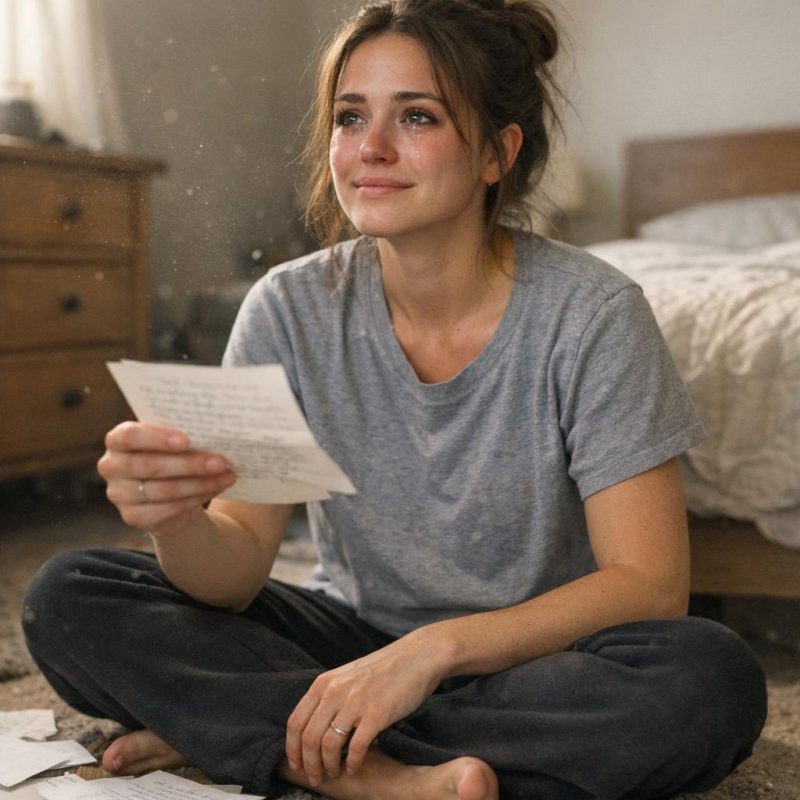 Image by RM AI
Moving Forward
Mom helped me find a therapist who specialized in grief and family trauma. I wasn't great at asking for help—never had been—but I was learning that strength sometimes meant admitting you couldn't do everything alone. Dr. Martinez was in her fifties, with kind eyes and zero patience for bullshit, which I appreciated. We talked about Dad, about Claire, about how grief had made me so desperate for connection that I'd ignored every red flag waving in my face. 'You weren't naive,' she said during our third session. 'You were hopeful. There's a difference.' We worked on rebuilding my ability to trust without being reckless about it, to be open without being vulnerable to exploitation. It was hard work, honestly. Some days I wanted to just shut everyone out, build walls so high nobody could ever hurt me again. But that wasn't living—that was just existing in a different kind of prison. Dr. Martinez asked what I'd learned from the whole experience, and I thought about it for a long moment before answering. 'That grief makes you vulnerable,' I said finally, 'but it doesn't have to make you a victim.'
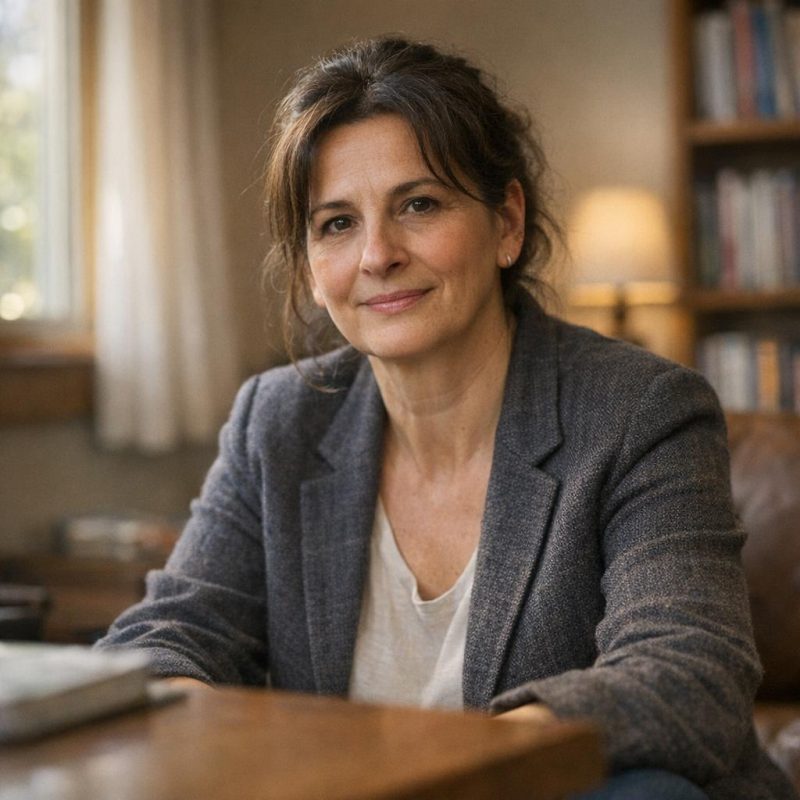 Image by RM AI
A New Tradition
My twenty-second birthday fell on a Saturday, and Mom and Jessica insisted on taking me out to dinner—nothing fancy, just our favorite Italian place downtown. We laughed about normal things, stupid things, the kind of easy conversation I'd forgotten was possible. After dinner, Mom gave me a gift: a beautiful leather journal and a box of nice pens. 'I thought you might want to start your own tradition,' she said quietly. That night, I sat at my desk and wrote my first letter to my future self. I told her about this year—about Dad's letters, about Claire, about learning that sometimes the people who hurt you most are the ones who were never really family at all. I wrote about the strength I'd discovered, the boundaries I'd learned to set, the difference between being alone and being lonely. I told her she was enough, all by herself, without needing validation from strangers who shared her DNA. When I finished, I folded the letter carefully and slid it into an envelope. I sealed it with wax—dramatic, I know, but it felt right. I sealed the first envelope and wrote on it, 'Open when you need to remember you survived'—and I knew Dad would understand.
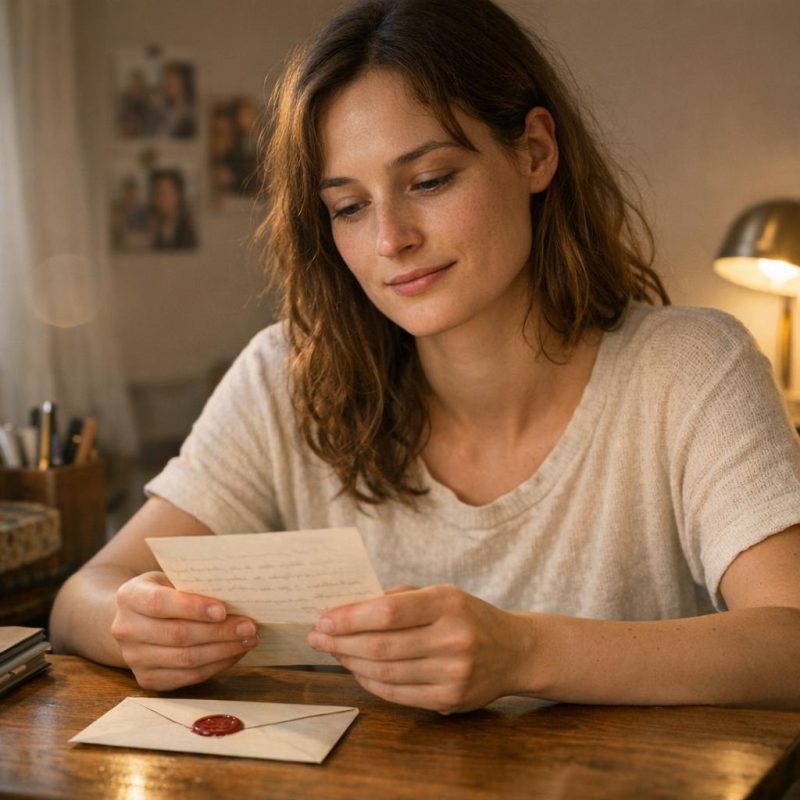 Image by RM AI
The Final Letter
Three days later, I drove to the cemetery alone. It was early morning, the kind of quiet where you can hear birds and distant traffic and your own breathing. I sat by Dad's grave and pulled out one more letter—this one addressed to him. I'd written it the night before, trying to find the words to thank him for a gift I hadn't understood at first. I thanked him for the twenty-one letters, for the stories and advice and warnings disguised as memories. I thanked him for teaching me that family isn't just about blood—it's about who shows up, who stays, who protects you even when they're gone. I told him I was sorry it took me so long to understand what he'd really been trying to say. And I told him I was going to be okay. Not perfect, not undamaged, but okay. Strong. Careful. Hopeful in a wiser way. I left the letter weighted down with a smooth stone on his headstone and stood there for a few more minutes, feeling the morning sun on my face. I left the letter at his grave and walked away knowing he'd given me exactly what I needed: not a perfect family, but the ability to protect the one I had.
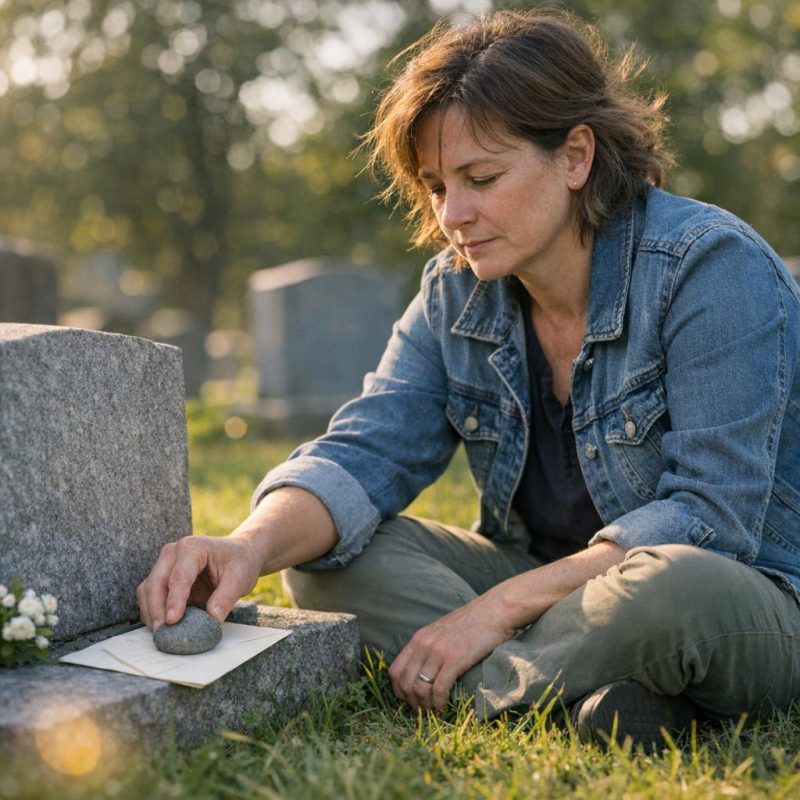 Image by RM AI
KEEP ON READING

20 Greek Gods We Don't Often Talk About
Step Aside, Zeus. Greek mythology isn’t only about Zeus and…
By Elizabeth Graham Jan 16, 2026
10 Historic Courtship Practices That Should Be Brought Back &…
Old-School Dating Was a Mix of Charming & Unhinged. Historic…
By Emilie Richardson-Dupuis Jan 20, 2026
Legendary Tales: 20 Most Fascinating Mythical Creatures from Folklore
Mythological Beasts. Stories about mythical creatures endure for a simple…
By Christy Chan Jan 16, 2026
Pooches Of The Past: Extinct Dog Breeds
Unknown authorUnknown author on WikimediaDogs have been showing up in…
By Elizabeth Graham Jan 27, 2026
The 20 Craziest Silent Films Ever Made
When Silence Let the Madness Speak. Silent cinema didn’t just…
By Chase Wexler Jan 5, 2026
The three most expensive historical artifacts ever sold at auction
Attributed to Leonardo da Vinci on WikimediaAuctions are where history…
By Emilie Richardson-Dupuis Jan 9, 2026